EP0000330B1 - Lipopeptides, procédé pour leur préparation et compositions pharmaceutiques les contenant - Google Patents
Lipopeptides, procédé pour leur préparation et compositions pharmaceutiques les contenant Download PDFInfo
- Publication number
- EP0000330B1 EP0000330B1 EP78100149A EP78100149A EP0000330B1 EP 0000330 B1 EP0000330 B1 EP 0000330B1 EP 78100149 A EP78100149 A EP 78100149A EP 78100149 A EP78100149 A EP 78100149A EP 0000330 B1 EP0000330 B1 EP 0000330B1
- Authority
- EP
- European Patent Office
- Prior art keywords
- ser
- compounds
- ala
- formula
- palmitoyl
- Prior art date
- Legal status (The legal status is an assumption and is not a legal conclusion. Google has not performed a legal analysis and makes no representation as to the accuracy of the status listed.)
- Expired
Links
- GNGMAAZBQVNEFF-UHFFFAOYSA-N CCCOC#[N]C Chemical compound CCCOC#[N]C GNGMAAZBQVNEFF-UHFFFAOYSA-N 0.000 description 1
- 0 CN(C*)OO* Chemical compound CN(C*)OO* 0.000 description 1
- GPWYBXDQHZIBPR-UHFFFAOYSA-N NC(CSCC(CO)O)C(O)=O Chemical compound NC(CSCC(CO)O)C(O)=O GPWYBXDQHZIBPR-UHFFFAOYSA-N 0.000 description 1
Classifications
-
- C—CHEMISTRY; METALLURGY
- C07—ORGANIC CHEMISTRY
- C07K—PEPTIDES
- C07K7/00—Peptides having 5 to 20 amino acids in a fully defined sequence; Derivatives thereof
- C07K7/04—Linear peptides containing only normal peptide links
- C07K7/06—Linear peptides containing only normal peptide links having 5 to 11 amino acids
-
- A—HUMAN NECESSITIES
- A61—MEDICAL OR VETERINARY SCIENCE; HYGIENE
- A61P—SPECIFIC THERAPEUTIC ACTIVITY OF CHEMICAL COMPOUNDS OR MEDICINAL PREPARATIONS
- A61P37/00—Drugs for immunological or allergic disorders
-
- C—CHEMISTRY; METALLURGY
- C07—ORGANIC CHEMISTRY
- C07K—PEPTIDES
- C07K14/00—Peptides having more than 20 amino acids; Gastrins; Somatostatins; Melanotropins; Derivatives thereof
- C07K14/195—Peptides having more than 20 amino acids; Gastrins; Somatostatins; Melanotropins; Derivatives thereof from bacteria
- C07K14/24—Peptides having more than 20 amino acids; Gastrins; Somatostatins; Melanotropins; Derivatives thereof from bacteria from Enterobacteriaceae (F), e.g. Citrobacter, Serratia, Proteus, Providencia, Morganella, Yersinia
- C07K14/245—Escherichia (G)
-
- C—CHEMISTRY; METALLURGY
- C07—ORGANIC CHEMISTRY
- C07K—PEPTIDES
- C07K5/00—Peptides containing up to four amino acids in a fully defined sequence; Derivatives thereof
- C07K5/04—Peptides containing up to four amino acids in a fully defined sequence; Derivatives thereof containing only normal peptide links
- C07K5/06—Dipeptides
- C07K5/06008—Dipeptides with the first amino acid being neutral
- C07K5/06017—Dipeptides with the first amino acid being neutral and aliphatic
- C07K5/06026—Dipeptides with the first amino acid being neutral and aliphatic the side chain containing 0 or 1 carbon atom, i.e. Gly or Ala
-
- C—CHEMISTRY; METALLURGY
- C07—ORGANIC CHEMISTRY
- C07K—PEPTIDES
- C07K5/00—Peptides containing up to four amino acids in a fully defined sequence; Derivatives thereof
- C07K5/04—Peptides containing up to four amino acids in a fully defined sequence; Derivatives thereof containing only normal peptide links
- C07K5/06—Dipeptides
- C07K5/06008—Dipeptides with the first amino acid being neutral
- C07K5/06017—Dipeptides with the first amino acid being neutral and aliphatic
- C07K5/0606—Dipeptides with the first amino acid being neutral and aliphatic the side chain containing heteroatoms not provided for by C07K5/06086 - C07K5/06139, e.g. Ser, Met, Cys, Thr
- C07K5/06069—Ser-amino acid
-
- C—CHEMISTRY; METALLURGY
- C07—ORGANIC CHEMISTRY
- C07K—PEPTIDES
- C07K5/00—Peptides containing up to four amino acids in a fully defined sequence; Derivatives thereof
- C07K5/04—Peptides containing up to four amino acids in a fully defined sequence; Derivatives thereof containing only normal peptide links
- C07K5/08—Tripeptides
- C07K5/0802—Tripeptides with the first amino acid being neutral
- C07K5/0804—Tripeptides with the first amino acid being neutral and aliphatic
- C07K5/081—Tripeptides with the first amino acid being neutral and aliphatic the side chain containing O or S as heteroatoms, e.g. Cys, Ser
-
- C—CHEMISTRY; METALLURGY
- C07—ORGANIC CHEMISTRY
- C07K—PEPTIDES
- C07K5/00—Peptides containing up to four amino acids in a fully defined sequence; Derivatives thereof
- C07K5/04—Peptides containing up to four amino acids in a fully defined sequence; Derivatives thereof containing only normal peptide links
- C07K5/08—Tripeptides
- C07K5/0802—Tripeptides with the first amino acid being neutral
- C07K5/0812—Tripeptides with the first amino acid being neutral and aromatic or cycloaliphatic
-
- C—CHEMISTRY; METALLURGY
- C07—ORGANIC CHEMISTRY
- C07K—PEPTIDES
- C07K5/00—Peptides containing up to four amino acids in a fully defined sequence; Derivatives thereof
- C07K5/04—Peptides containing up to four amino acids in a fully defined sequence; Derivatives thereof containing only normal peptide links
- C07K5/10—Tetrapeptides
- C07K5/1002—Tetrapeptides with the first amino acid being neutral
- C07K5/1005—Tetrapeptides with the first amino acid being neutral and aliphatic
- C07K5/1013—Tetrapeptides with the first amino acid being neutral and aliphatic the side chain containing O or S as heteroatoms, e.g. Cys, Ser
-
- A—HUMAN NECESSITIES
- A61—MEDICAL OR VETERINARY SCIENCE; HYGIENE
- A61K—PREPARATIONS FOR MEDICAL, DENTAL OR TOILETRY PURPOSES
- A61K38/00—Medicinal preparations containing peptides
Definitions
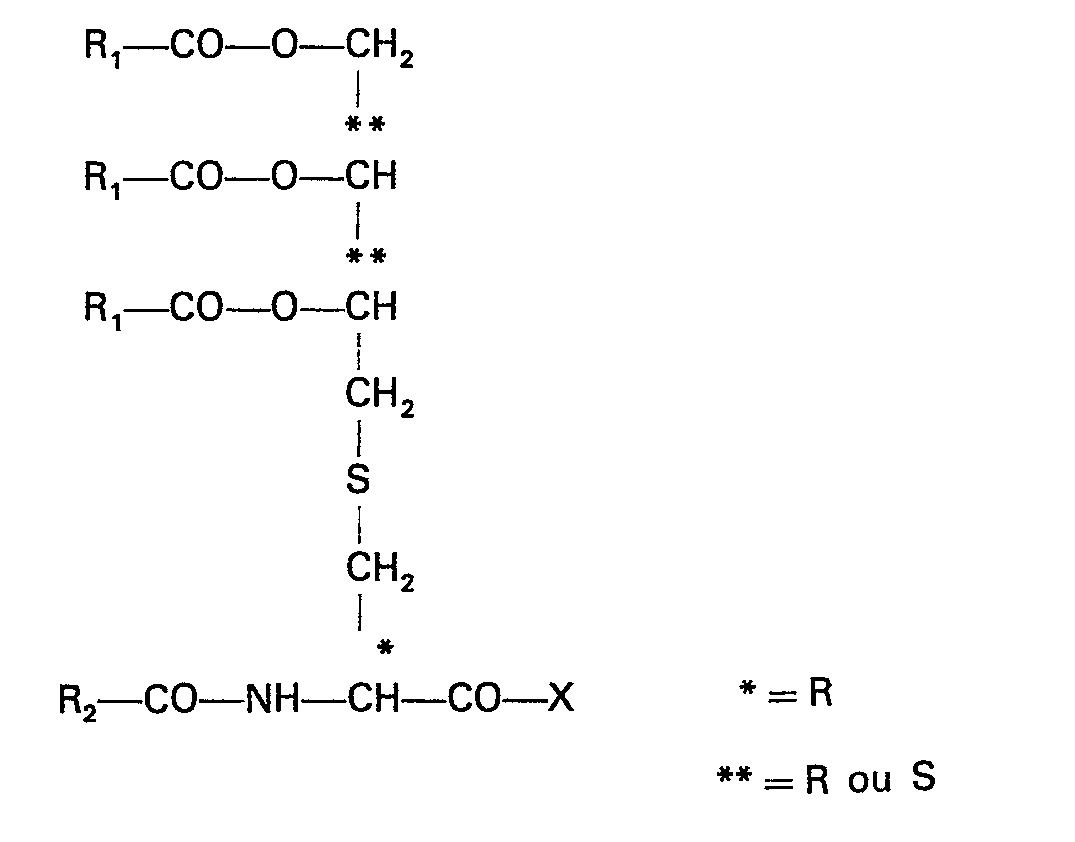
- the invention relates to new lipopeptides of the formula wherein R, and R 2 each represent a saturated or unsaturated, aliphatic or mixed aliphatic-cycloaliphatic, optionally also substituted by oxygen functions, hydrocarbon radical having 11-21 carbon atoms, R 3 hydrogen or the radical R 1 ⁇ CO ⁇ O ⁇ CH 2 - where R , has the same meaning, and X is a peptide-bonded natural aliphatic amino acid with free, esterified or amidated carboxyl group, or an amino acid sequence of 2-10 natural aliphatic amino acids whose terminal carboxyl group is in free, esterified or amidated form, the with * or ** designated asymmetry centers which have the absolute R or S or R configuration, and optionally mixtures of the R and S compounds which are epimeric on the C ** atoms, and optionally salts and complexes of these compounds, and methods for their synthetic production, and pharmaceutical preparations containing one or more of these lipopeptides together with one pharmaceutical carrier material and optionally together with
- Lipopeptides have already been described as degradation fragments of lipoproteins.
- Hantke and Braun (Eur. J. Biochem. 34, 284-296 (1973) were able to isolate lipopeptides or lipopeptide mixtures in an impure form from the murein lipoprotein of the outer cell wall of Escherichia coli by enzymatic degradation following structure or corresponding formulas with a shortened polypeptide chain, where Y "Y 2 , Y 3 represent acyl residues of various higher saturated and unsaturated fatty acids, such as those with 14-19 C atoms and others.
- the degradation lipopeptides obtained from murein protein contain the "glycerylcysteine" underlying.
- these fragments were not products with a well-defined composition and were obviously complicated mixtures of condensation products from the peptide portion mentioned and very different acyl derivatives of glycerylcysteine.
- the lipopeptides of the present application now differ from the named degradation products of murein proteins in several respects: they represent lipopeptides of precisely defined, uniform chemical constitution and configuration, which are synthetically accessible and are therefore suitable for therapeutic use; the group they form includes compounds in which the rest of the erythritol takes the place of the glycerol portion in the "glycerylcysteine" and / or those in which an amino acid sequence other than that given above for the known degradation-lipopeptide mixtures in formula (11), or in its place there is also only a single amino acid, and finally also derivatives such as amides and esters of the terminal carboxyl group.
- R i and R 2 are saturated or unsaturated, aliphatic or aliphatic-cycloaliphatic, optionally also substituted by oxygen functions, hydrocarbon radicals with 11-21 carbon atoms, ie the acyl radicals are derived from saturated or unsaturated, aliphatic or cycloaliphatic, optionally oxygenated in the hydrocarbon radical with 12-22, preferably with 14-18, carbon atoms.
- the saturated or unsaturated fatty acids such as lauric acid, myristic acid, palmitic acid, margaric acid, stearic acid, arachic acid, oleic acid, elaidic acid, linoleic acid, a- and ⁇ -elaostearic acid, stearolic acid, a-linolenic acid, and also among the cycloaliphatic-aliphatic, for example, are to be mentioned as such the dihydrosterculic acid, malvalic acid, hydnocarpusic acid, and chaulmoograsic acid.
- Oxygenated acids of this type which are also suitable for the acyl radicals R, CO and R 2 CO, are, for example, those by epoxidation of the above-mentioned olefinic fatty acids and.
- Resulting cycloaliphatic-aliphatic acids for example the ⁇ , i-epoxystearic acid, furthermore derivatives of the abovementioned acids which have, for example, one or more hydroxyl groups, such as, for example, ricinoleic acid.
- the groups R 1 and R 2 can be identical to one another or different from one another. Preference is given to compounds in which all three or four acyl radicals are identical, and in particular those in which these represent the palmitoyl, stearoyl or oleoyl radical.
- the peptide sequence X in the compounds of the formula (I) or in their salts is composed of a maximum of 10 natural aliphatic amino acids, preferably at least half carrying a hydrophilic group, such as, in particular, hydroxyl, amino, carboxyl, carbamide, guanidino or imidazolyl groups.
- a hydrophilic group such as, in particular, hydroxyl, amino, carboxyl, carbamide, guanidino or imidazolyl groups.
- aspartic and glutamic and oxyglutamic acids bearing the acidic groups are to be emphasized, and lysine, ornithine, arginine and histidine are among the basic groups bearing.
- Amides with a neutral character are especially the amides, such as asparagine, glutamine and hydroxyl groups, primarily serine and threonine.
- X in formula (I) represents the amino acid mentioned, it is also e.g. bearing one of said hydrophilic groups, e.g. especially serine or threonine.
- the unsubstituted ones should be mentioned in particular, e.g. Glycine, alanine, valine, norvaline, leucine, isoleucine, but also some substituted ones that have a non-hydrophilic character, such as methionine.
- the order of the amino acids mentioned in the peptide chain X can be arbitrary, but preference is given to those sequences in which all amino acids with hydrophilic groups are bonded directly to one another, and in turn those in which those sequences of the hydrophilic amino acids are attached to the carboxyl group of the cysteine in Triacyl-Glycerylcystein or Tetraacyl-Erythritylcystein part is bound.
- a second group of compounds [Group II] according to the invention are compounds according to formula IV above, but in which the configuration at the C ** atom is S instead of R, and the mixtures of the R and S diastereomers, as described, for example may arise in the synthetic representation.
- Specific types and compounds in this group also correspond to those particularly emphasized above for the "R" group (formula IV).
- a fourth group [Group IV] of the lipopeptides according to the invention comprises compounds of the formula (I) in which R 3 represents the radical R 1 ⁇ CO ⁇ O ⁇ CH 2 -, in which the configuration on the C ** atoms is any , in particular also mixtures of diastereomers.
- Subgroups are compounds of the formula in particular those with an R configuration on the C ** atoms, in which X has the meaning given for formula (IV).
- the acyl radicals R, -CO- and R 2- CO- are preferably the same and especially again palmitoyl, stearoyl or oleoyl; however, they can be discussed for the other groups as above. be available in all combinations and / or variations.
- Preferred types and compounds of this class are again those in which X has the meanings specified above.
- X is preferably an amino acid or a sequence of 2-5 amino acids, in particular one of those designated as preferred for the other three groups of lipopeptides.
- X can also represent one of the amino acid sequences with 6-10 amino acids described for the third group of lipopeptides of the present application, in particular those specifically mentioned for that group.
- N-acyl-0-0-di-acyl-Cys does not mean the glycerylcysteine portion, but the erythritylcysteine residue, and which is replaced by the Serine by threonine, glutamic acid, glutamine, aspartic acid or asparagine and by lysine by glutamic acid and, if desired, simultaneously by Asn by phenylalanine compounds.
- the terminal carboxyl group may be in amidated form.
- amides of lower aliphatic amines with 1-7 C atoms are suitable, such as methylamine, ethylamine, propylamine, butylamine, dimethylamine, diethylamine or propyl- and isopropylamine, furthermore aromatic amines, especially monocyclic, such as aniline or toluidine, araliphatic, such as Benzylamine or heterocyclic amines, such as the aminopyridines.
- the secondary aliphatic amines can also be ring-closed nitrogen bases, e.g. Pyrrolidine, piperidine or piperazine.
- Specific amides are e.g. the unsubstituted or the methyl, ethyl, dimethyl or diethylamides of all of the above-mentioned specific lipopeptides according to the present invention or such amides of the compounds described in the illustrative examples.
- the alcohol component is preferably derived from lower aliphatic alcohols with 1-7 C atoms, such as methyl, ethyl, n-propyl, isopropyl or the butyl alcohols.
- the esterifying alcohols can also be polyvalent, such as ethylene glycol or propylene glycol or glycerin.
- araliphatic alcohols especially monocyclic lower aliphatic with 1-7 C atoms in the aliphatic part, such as Benzyl alcohol, or heterocyclic alcohols, such as tetrahydrofuranol or tetrahydropyranol, can be used for the esterification.
- esters of this type of lipopeptides according to the invention are e.g. the methyl, ethyl and ethylene glycol or propylene glycol esters of all of the specific lipopeptides listed above or those described in the illustrative examples.
- the present new lipopeptides are neutral, acidic or basic compounds depending on the nature of their substituents. If there are excess acidic groups, they form salts with bases, such as ammonium salts or salts with alkali or alkaline earth metals, for example sodium, potassium, calcium or magnesium; however, if excess basic groups are present, they form acid addition salts.
- Acid addition salts are particularly pharmaceutically acceptable, non-toxic acid addition salts such as those with inorganic acids, e.g. Hydrochloric, hydrobromic, nitric, sulfuric or phosphoric acids, or with organic acids such as organic carboxylic acids e.g.
- Methanesulfonic acid ethanesulfonic acid, 2-hydroxyethanesulfonic acid, ethane-1,2-disulfonic acid, benzenesulfonic acid, p-toluenesulfonic acid or naphthalene-2-sulfonic acid, as well as other acid addition salts, e.g. as intermediates, e.g. for cleaning the free compounds or in the production of other sa! zes, as well as for characterization, e.g. those with picric, picrolonic, flavian, phosphotungstic, phosphomolyde, chloroplatinic, pure corner or perchloric acid.
- Complexes are those with metal salts, e.g. compounds formed with heavy metal salts, such as copper, zinc, iron or cobalt salts.
- the phosphates, pyrophosphates and polyphosphates of these metal salts are preferably used to form such complexes, optionally in combination with acidic organic substances, e.g. acidic group-containing polysaccharides, such as carboxymethyl cellulose, tannic acid, polyglutamic acid or partially hydrolyzed gelatin, and also alkali metal polyphosphates such as e.g. "Calgon N", “Calgon 322", “Calgon 188" or "Plyron B 12".
- the compounds of the present invention according to formula (1) above, their salts and complexes and mixtures have valuable pharmacological properties, in particular a pronounced immunopotentiating effect.
- the compounds in the dose range of 0.5-320 / l g / ml stimulate the proliferation of B lymphocytes, determined in vitro by means of thymidine incorporation, 20- to 50-fold compared to non-stimulated control lymphocytes.
- the extent of the stimulation corresponds to that which is achieved with the most effective known B cell mitogens [dextran sulfate, E. coli lipopolysaccharide, PPD (purified protein derivative)], with the new compounds of the present application also high concentrations not being lymphocytotoxic Act.
- the new compounds of formula (1), their salts and complexes and mixtures are also able to induce the formation of antibody-producing cells in concentrations of 0.3-60 / l g / ml in spleen cell cultures of normal mice (increase in 19S- plaque-forming cells by a factor of 20 to 50 above the control value (in the absence of the stimulating substances):
- specific antibodies against sheep erythrocytes are formed in the presence of the compounds mentioned, without adding sheep erythrocytes to the cultures for immunization.
- the substances mentioned in the same concentration range can also increase the immunological reactivity of T cell-depleted spleen cell cultures (from congenitally athymic nu / nu mice) compared to a normally thymus-dependent antigen (sheep erythrocytes) (factor 10 to 40 compared to untreated control cultures).
- the compounds mentioned not only directly or indirectly induce proliferation and synthesis performance of B-lymphocytes (ie of potentially antibody-forming cells) in vitro, but also effects on T-lymphocytes (which include regulatory active helper and suppressor cells and cytotoxic effector cells ), conveyed.
- the compounds mentioned in a concentration range of 10-100 pg / ml can significantly (up to 10-fold) potentiate the reactivity of cortisone-resistant thymus cells with allogeneic irradiated stimulator lymphocytes.
- CSA is a biological mediator that is necessary for the differentiation of bone marrow stem cells into macrophages and polymorphonuclear leucocytes.
- the compounds mentioned thus bring about an increased replenishment of cells which are of central importance for the non-specific resistance and for the induction, amplification and expression of specific (lymphocyte-mediated) immune reactions.
- the compounds of the formula (I), their salts or complexes or mixtures are capable of antibody production against five days in a row after intraperitoneal or subcutaneous administration of 0.03-3 mg / kg animal before or after immunization with BSA To significantly increase BSA.
- the lipopeptides according to the present invention are also not very toxic: 5 times intraperitoneal application in a dose of 10 mg / kg / day on five consecutive days was apparently tolerated without symptoms by mice. Since the doses required for immunostimulation are very small, the therapeutic breadth of the new compound is very large.
- the new lipopeptides according to the present invention can thus significantly increase the cellular and especially the humoral immunity, both in a mixture with the antigen itself (adjuvant effect in the narrower sense) and with a supply that is separate in time and place from the antigen injection (systemic immunopotentiation).
- the new lipopeptides according to the present invention can thus be used as adjuvants in admixture with vaccines to improve the vaccination success and to improve the protection against infection mediated by humoral antibodies and / or cellular immunity against bacterial, viral or parasitic pathogens.
- the compounds described, in a mixture with various antigens are suitable as adjuvants in the experimental and industrial production of antisera for therapy and diagnosis and in the induction of immunologically activated lymphocyte populations for cell transfer processes.
- the new lipopeptides can also be used without the simultaneous supply of antigen to promote immune reactions in humans and animals that are already taking place.
- the compounds are therefore particularly suitable for stimulating the physical defense, e.g. in chronic and acute infections or in selective (antigen-specific) immunological defects, as well as in congenital, but also in acquired general (ie non-antigen-specific) immunoligical defect states, such as those in old age, in the course of severe primary diseases and especially after therapy with ionizing radiation or with immunosuppressive hormones occur.
- the substances mentioned can therefore preferably also be administered in combination with antibiotics, chemotherapeutic agents or other therapeutic methods in order to counteract immunological damage.
- the substances described are also suitable for the general prophylaxis of infectious diseases in humans and animals.
- the protective groups in the process according to variant a) are particularly known from the synthesis of peptides.
- Protecting groups for amino groups, acyl or aralkyl groups such as formyl, trifluoroacetyl, phthaloyl, benzenesulfonyl, p-toluenesulfonyl, o-nitrophenylsulfenyl, 2,4-dinitrophenylsulfenyl groups (these sulfenyl groups can also be formed by the action of nucleophilic reagents, eg sulfites, e.g.
- sulfites are split off), optionally substituted, such as benzyl groups, or diphenyl or triphenylmethyl groups substituted by lower alkoxy groups, especially o- or p-methoxy groups, or groups derived from carbonic acid, such as optionally in the aromatic rings, e.g. by halogen atoms such as chlorine or bromine, nitro groups, lower alkyl or lower alkoxy groups or coloring groups, e.g.
- Arylmethyloxycarbonyl groups substituted in azo groups in which the methylene group can be substituted by a further aryl radical and / or one or optionally two lower alkyl radicals, such as benzyl, benzhydryl or 2-phenyl-isopropyloxycarbonyl groups, e.g.
- the amino groups can also be formed by formation of enamines obtained by reacting the amino group with 1,3-diketones, e.g. Benzoylacetone, acetylacetone or dimedone.
- 1,3-diketones e.g. Benzoylacetone, acetylacetone or dimedone.
- Carboxyl groups are protected, for example, by amide or hydrazide formation or by esterification.
- the amide and hydrazide groups can be optionally substituted, the amide group e.g. by the 3,4-dimethoxybenzyl or bis- (p-methoxyphenyl) methyl group, the hydrazide group e.g. by the carbobenzoxy group, the trichloroethyloxycarbonyl group, the trifluoroacetyl group, the trityl group, the tert-butyloxycarbonyl group or the 2- (p-biphenylyl) isopropyloxycarbonyl group.
- Suitable for esterification are e.g.
- lower optionally substituted alkanols such as methanol, ethanol, cyanomethyl alcohol, benzoylmethyl alcohol or in particular tert-butanol, furthermore aralkanols such as aryl lower alkanols, e.g.
- benzyl alcohols or benzhydrols such as benzhydrol, p-nitrobenzyl alcohol, p-methoxybenzyl alcohol, 2,4,6-trimethylbenzyl alcohol optionally substituted by lower alkyl or lower alkoxy groups or halogen atoms, phenols optionally substituted by electron-withdrawing substituents and thiophenols such as thiophenol, thiocresol, p-nitronol 4,5- and 2,4,6-trichlorophenol, pentachlorophenol, p-nitrophenol, 2,4-dinitrophenol, p-cyanophenol or p-methanesulfonylphenol, further, for example N-hydroxysuccinimide, N-hydroxyphthalimide, N-hydroxypiperidine, 8-hydroxyquinoline.
- the hydroxyl groups of the serine and threonine residues can e.g. be protected by esterification or etherification.
- Suitable acyl radicals in the esterification are, in particular, radicals derived from carbonic acid, such as benzoyloxycarbonyl or ethyloxycarbonyl.
- Groups suitable for etherification are, for example, benzyl, tetrahydropyranyl or tert-butyl radicals.
- suitable for protecting the hydroxyl groups the in Ber. 100 (1967), 3838-3849, describes 2,2,2-trifluoro-1-tert-butyloxycarbonylamino or -1-benzyloxycarbonylaminoethyl groups (Weygand).
- the tert-butyl ester group or the benzhydrol group is preferably used to protect the carboxyl group of the side chains and optionally the terminal carboxyl group, the tert-butyloxycarbonyl group to protect the amino groups of the side chains, for the hydroxyl groups of serine or threonine, the tert-butyl ether group, and if desired, the 2,2,2-trifluoro-1-tert-butyloxycarbonylaminoethyl group to protect the imino group of the histidine.
- the process-related removal of the protective groups with acidic agents under mild conditions is carried out e.g. in a manner known from peptide chemistry, e.g. by treatment with trifluoroacetic acid.
- a special protective group for carboxyl groups which can be split off under neutral conditions is the group of the general formula described, for example, in German Offenlegungsschrift 27 06 490 where R 1 , R 2 and R 3 each represent a hydrocarbon radical, where the radicals can also be linked to one another by a simple CC bond, in particular alkyl radicals having 1-5 C atoms.
- Protecting groups of this type are, for example, the 2- (dimethyl-tert-butylsilyl) ethyl, the 2- (dibutyl-methyl-silyl) ethyl and especially the 2- (trimethylsilyl) ethyl group.
- protective groups can also be split off under basic conditions, their splittability under neutral conditions is of particular interest, namely by the action of a salt of hydrofluoric acid.
- the protective group is advantageously removed in an aprotic organic solvent; the presence of solvents which are able to solvate the fluoride anion, such as water or lower aliphatic alcohols, is preferably avoided.
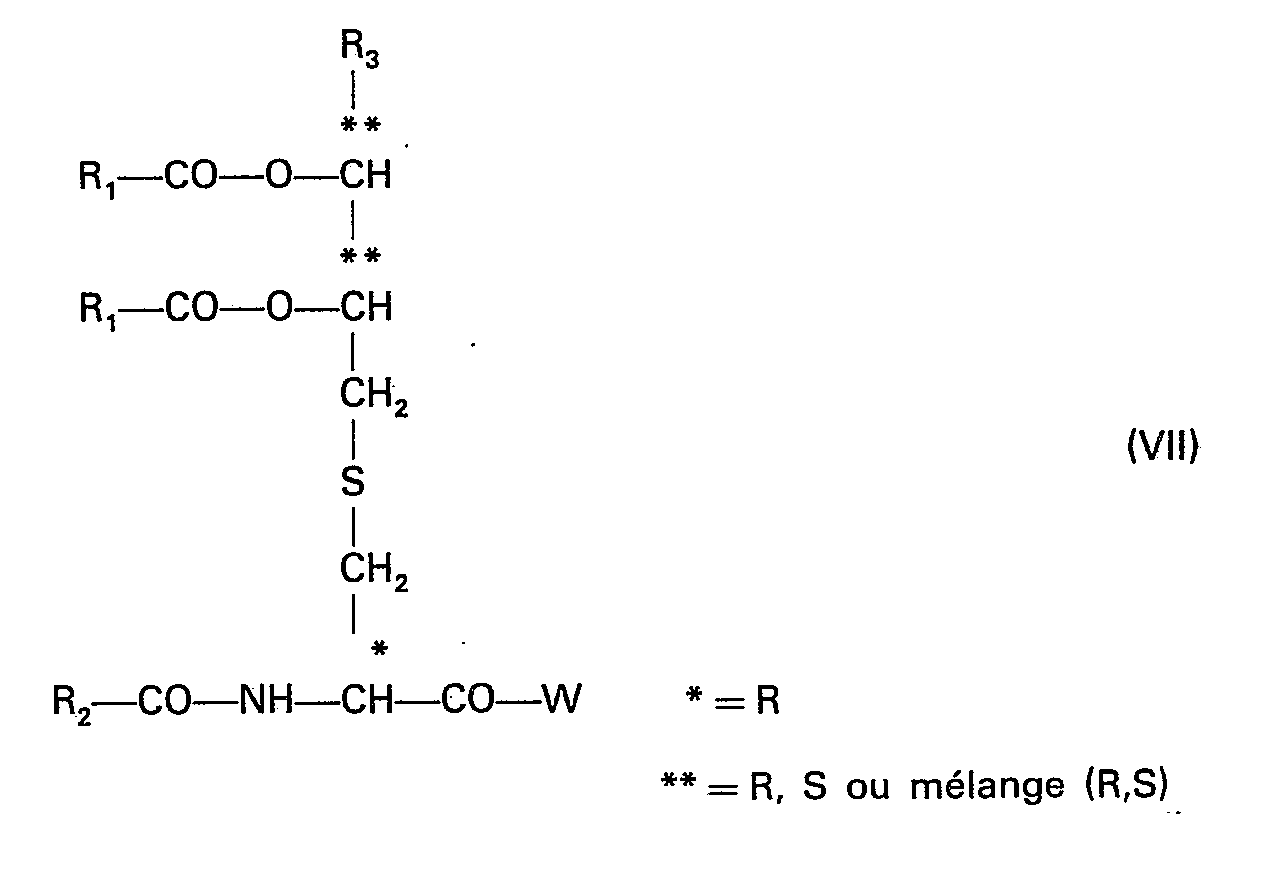
- the condensation according to variant b) of the compound of formula (VII) with the compound of formula (VIII) takes place e.g. in such a way that the compound (VII) is reacted with (VIII) in the form of the activated carboxylic acid, or in that the acid (VII) is reacted with the compound (VIII), the amino group of which is present in activated form.
- the compounds (VII) or (VIII) are used for the condensation in the form of their salts.
- the carboxyl group of the compound (VII) can be converted, for example, into an acid azide, anhydride, imidazolide, isoxazolide or an activated ester, such as cyanomethyl ester, carboxymethyl ester, thiophenyl ester, p-nitrothiophenyl ester, thiocresyl ester, p-methanesulfonylphenyl ester, p-nitro , 4-dinitrophenyl ester, 2,4,5- or 2,4,6-trichlorophenyl ester, pentachlorophenyl ester, N-hydroxysuccinimide ester, N-hydroxyphthalimide ester, 8-hydroxyquinoline ester, 2-hydroxy-1,2-dihydro-1-carbäthoxy-quinoline- esters, N-hydroxypiperidine esters or an enol ester obtained with N-ethyl-5-phenyl-isoxazolium-3-sulfonate [Wo
- the amino group of the compound (VIII) can be activated, for example, by reaction with a phosphite.
- condensations can be carried out using the Merrifield method.
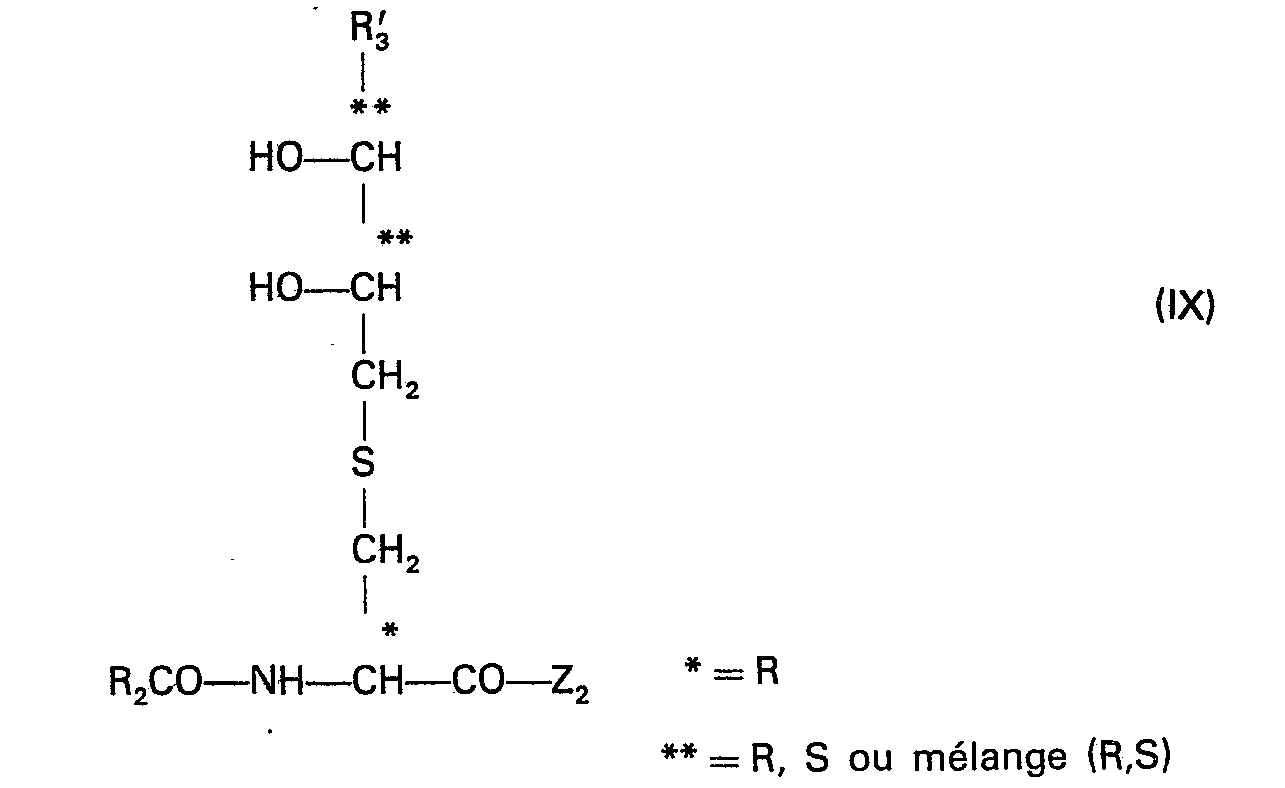
- the free hydroxyl groups in the glyceryl or erythrityl radical are acylated in compounds of the formula (IX) which may not contain any free hydroxyl groups in part Z Z.
- This acylation can be carried out in a manner known per se, for example by reaction with a reactive functional derivative of the acid corresponding to the radical to be introduced, such as the anhydride or an acid halide, preferably in the presence of a tertiary base such as pyridine or collidine.
- This process is particularly suitable for the production of process products according to formula I in which the acyl residues in the glyceryl or. Erythrityl residue and the cysteine residue are different.
- This variant is used for compounds of the formula (IX) in which, in part Z 2, the terminal carboxyl group is protected by other protective groups, in addition to being protected by an amide or ester radical, as provided for X, and / or one or more of the existing hydrophilic groups in a protected form, as described above, there are also starting compounds for variant a) above.
- lipopeptides according to formula I obtained by any of the described process variants, in which a free terminal carboxyl group is present in part X, the same can be used in a manner known per se, e.g. be converted into the amide or ester group by one of the methods customary in peptide chemistry.
- the 1-0-tosyl-2 (R) -O, 3-0-isopropylidene glycerol thus obtained is condensed with N-acyl- (R) -cysteine in the presence of a basic agent, for example potassium carbonate, and the N-acyl- S- [2 (R), 3-isopropylenedioxy-propyll- (R) -cysteine, which is acidified, for example with acetic acid.
- a basic agent for example potassium carbonate
- N-acyl-S- [2 (R), 3-dihydroxypropyll- (R) -cysteine thus obtained can, if desired, be in the 2- and 3-position of the glycerol portion, preferably with temporary protection of the carboxyl group, for example by means of the Trimethylsilylethyl group described above, or preferably the benzhydryl ester group, can be further acylated.
- amino acids or peptides to be used for the production of the new lipopeptides according to the process are known or can be prepared by methods known per se.
- the lipopeptides obtained can be converted into their salts in a manner known per se, e.g. by reacting acidic compounds obtained with alkali or alkaline earth metal hydroxides or basic compounds obtained with acids.
- the corresponding salts are to be understood in the preceding and following as appropriate and expediently, if appropriate, the corresponding salts.
- Isomer mixtures obtained can be separated in a known manner on the basis of the physico-chemical differences in the constituents, for example by chromatography and / or fractional crystallization. The more effective of the isomers is advantageously isolated.
- the methods described above are e.g. carried out according to methods known per se, in the absence or preferably in the presence of diluents or solvents, if necessary, with cooling or heating, under elevated pressure and / or in an inert gas, such as a nitrogen atmosphere.
- an inert gas such as a nitrogen atmosphere.
- the invention also relates to those embodiments of the process in which one starts from a compound obtainable as an intermediate at any stage of the process and carries out the missing process steps, or terminates the process at any stage, or forms a source material under the reaction conditions or in the form of a reaction capable derivative or salt used.
- the starting materials used are preferably those which, according to the process, lead to the compounds described above as being particularly valuable.
- the present invention also relates to pharmaceutical preparations which contain the described new lipopeptides according to the invention, both those of the formula (I) and those of the formula (VII), their mixtures, salts or complexes.
- Table preparations are those for enteral, such as oral or rectal, as well as parenteral administration to warm-blooded animals, which contain the pharmacologically active substance alone or together with a pharmaceutically usable carrier material.
- the dosage of the active ingredient depends on the warm-blooded species, the age and the individual condition, as well as on the mode of administration.
- the new pharmaceutical preparations contain from about 10% to about 95%, preferably from about 20% to about 90% of the active ingredient.
- Pharmaceutical preparations according to the invention can e.g. in unit dose form, such as coated tablets, tablets, capsules, suppositories or ampoules.
- the pharmaceutical preparations of the present invention are manufactured in a manner known per se, e.g. manufactured using conventional mixing, granulating, coating, solution or lyophilization processes.
- Suitable carriers are in particular fillers such as sugar, e.g. Lactose, sucrose, mannitol or sorbitol, cellulose preparations and / or calcium phosphates, e.g. Tricalcium phosphate or calcium hydrogen phosphate, further binders such as starch paste using e.g.
- ком ⁇ онентs such as the above-mentioned starches, also carboxymethyl starch, cross-linked polyvinyl pyrrolidone, agar, Alginic acid or a salt thereof, such as sodium alginate, are primarily flow regulators and lubricants, for example Silicic acid, talc, stearic acid or salts thereof, such as magnesium or calcium stearate, and / or polyethylene glycol.
- Dragee cores are provided with suitable, possibly enteric coatings, whereby one of the things Concentrated sugar solutions, which may contain arabic gum, talc, polyvinylpyrrolidone, polyethylene glycol and / or titanium dioxide, lacquer solutions in suitable organic solvents or solvent mixtures or, for the production of gastric juice-resistant coatings, solutions of suitable cellulose preparations, such as acetyl cellulose phthalate or hydroxypropylmethyl cellulose phthalate. Colorants or pigments, e.g. for identification or for labeling different doses of active ingredient.
- Concentrated sugar solutions which may contain arabic gum, talc, polyvinylpyrrolidone, polyethylene glycol and / or titanium dioxide, lacquer solutions in suitable organic solvents or solvent mixtures or, for the production of gastric juice-resistant coatings, solutions of suitable cellulose preparations, such as acetyl cellulose phthalate or hydroxypropylmethyl cellulose phthalate.
- Colorants or pigments e.g. for
- the lipopeptide [N-palmitoyl-S-2 (R), 3-dipalmitoyloxypropyl) -Cys-Ser (Bu t ) -Ser (Bu t ) -Asn-OBu t shows in the system chloroform-methanol (9: 1) on silica gel an Rf value of 0.75.
- the mixtures of di- and mono-palmitoyl-cysteine are dissolved in methanolic solution with the addition of an aqueous solution of 12 g sodium sulfide with 2 ml conc. Sodium hydroxide solution treated for 15 minutes at room temperature. After evaporating off the methanol and acidifying the residue with 2N Hydrochloric acid gives the remaining N-palmitoyl-cysteine by chloroform extraction, which is also recrystallized from gasoline.
- the ethyl acetate solution is evaporated and the foam left is the Z-Ala-Glu (OBu t ) 2 with the Rf value 0.60 (in chloroform-methanol 95: 5), which is directly processed further: 8.5 g are made in 60 ml of methanol dissolved and after adding 0.8 mg of Pd carbon (10%) hydrogenated at 20 ° for 2 hours.
- the catalyst is filtered off and the filtrate is evaporated.
- the H-Ala-Glu (OBu t ) 2 is obtained as a white foam which has the Rf 0.36 in chloroform-methanol 9: 1.
- the N is obtained by reacting the N-palmitoyl-2- [2 (R, S), 3-dihydroxypropyl] - (R) -cysteine with diphenyldiazomethane, as indicated above for the R compound S, and subsequent palmitoylation, as also stated above -Palmitoyl-S- [2 (R, S), 3-dipalmitoyloxypropyl] - (R) -cysteine-benzhydryl ester: colorless crystals of mp 84-85 °.
- N-Palmitoyl-S-2 (R), 3 (R), 4-trihydroxybutyl- (R) -cysteine is obtained in the following way.
Landscapes
- Chemical & Material Sciences (AREA)
- Organic Chemistry (AREA)
- Health & Medical Sciences (AREA)
- Life Sciences & Earth Sciences (AREA)
- Medicinal Chemistry (AREA)
- General Health & Medical Sciences (AREA)
- Proteomics, Peptides & Aminoacids (AREA)
- Molecular Biology (AREA)
- Genetics & Genomics (AREA)
- Biophysics (AREA)
- Biochemistry (AREA)
- General Chemical & Material Sciences (AREA)
- Immunology (AREA)
- Pharmacology & Pharmacy (AREA)
- Public Health (AREA)
- Veterinary Medicine (AREA)
- Nuclear Medicine, Radiotherapy & Molecular Imaging (AREA)
- Chemical Kinetics & Catalysis (AREA)
- Animal Behavior & Ethology (AREA)
- Bioinformatics & Cheminformatics (AREA)
- Engineering & Computer Science (AREA)
- Gastroenterology & Hepatology (AREA)
- Peptides Or Proteins (AREA)
- Medicines That Contain Protein Lipid Enzymes And Other Medicines (AREA)
- Organic Low-Molecular-Weight Compounds And Preparation Thereof (AREA)
- Medicines Containing Antibodies Or Antigens For Use As Internal Diagnostic Agents (AREA)
Claims (33)





Applications Claiming Priority (2)
| Application Number | Priority Date | Filing Date | Title |
|---|---|---|---|
| LU77584 | 1977-06-20 | ||
| LU77584 | 1977-06-20 |
Publications (2)
| Publication Number | Publication Date |
|---|---|
| EP0000330A1 EP0000330A1 (fr) | 1979-01-24 |
| EP0000330B1 true EP0000330B1 (fr) | 1981-08-05 |
Family
ID=19728618
Family Applications (1)
| Application Number | Title | Priority Date | Filing Date |
|---|---|---|---|
| EP78100149A Expired EP0000330B1 (fr) | 1977-06-20 | 1978-06-14 | Lipopeptides, procédé pour leur préparation et compositions pharmaceutiques les contenant |
Country Status (18)
| Country | Link |
|---|---|
| EP (1) | EP0000330B1 (fr) |
| JP (2) | JPS549224A (fr) |
| AT (1) | AT364095B (fr) |
| AU (1) | AU525005B2 (fr) |
| CA (1) | CA1139305A (fr) |
| DD (1) | DD139257A5 (fr) |
| DE (1) | DE2860893D1 (fr) |
| DK (1) | DK275178A (fr) |
| ES (3) | ES470961A1 (fr) |
| FI (1) | FI781933A7 (fr) |
| GR (1) | GR71681B (fr) |
| IE (1) | IE46957B1 (fr) |
| IL (1) | IL54950A (fr) |
| NO (1) | NO148921C (fr) |
| NZ (1) | NZ187611A (fr) |
| PL (3) | PL216739A1 (fr) |
| PT (1) | PT68188A (fr) |
| ZA (1) | ZA783504B (fr) |
Families Citing this family (21)
| Publication number | Priority date | Publication date | Assignee | Title |
|---|---|---|---|---|
| EP0014815A3 (fr) * | 1978-12-20 | 1980-10-29 | Ciba-Geigy Ag | Dérivés peptidiques, procédé pour leur préparation et intermédiaires, et compositions pharmaceutiques contenant un de ces composés |
| DE3485094D1 (de) * | 1983-01-25 | 1991-10-31 | Ciba Geigy Ag | Neue peptidderivate. |
| FR2546164B1 (fr) * | 1983-05-16 | 1987-07-17 | Centre Nat Rech Scient | Nouveaux derives de peptides, leur preparation et leur application comme inhibiteurs de l'elastase |
| DE3546150A1 (de) * | 1985-06-24 | 1987-01-22 | Hoechst Ag | Membrananker-wirkstoffkonjugat, seine herstellung sowie seine verwendung |
| US6024964A (en) * | 1985-06-24 | 2000-02-15 | Hoechst Aktiengesellschaft | Membrane anchor/active compound conjugate, its preparation and its uses |
| US6074650A (en) * | 1985-06-24 | 2000-06-13 | Hoechst Aktiengesellschaft | Membrane anchor/active compound conjugate, its preparation and its uses |
| DE3522638A1 (de) * | 1985-06-25 | 1987-01-08 | Diamalt Ag | Neue somatostatin-derivate |
| FR2611205B1 (fr) * | 1987-02-20 | 1990-03-02 | Serbio | Dipeptides, procede de preparation et utilisation dans le dosage de proteases |
| EP0306912A3 (fr) * | 1987-09-08 | 1989-07-05 | Albany Medical College | Ensemble immunogène capable de provoquer sélectivement la production d'anticorps et compositions pharmaceutiques l'utilisant. |
| DE4119856A1 (de) * | 1991-06-17 | 1992-12-24 | Hoechst Ag | N-acyl-s-(2-hydroxyalkyl)-cysteine, deren herstellung sowie deren verwendung als zwischenprodukte zur herstellung von synthetischen immunadjuvantien und synthetischen impfstoffen |
| SG47406A1 (en) * | 1991-12-19 | 1998-04-17 | Ciba Geigy Ag | Aminosulfonic acid derivatives and processes for their preparation |
| EP0604945A1 (fr) | 1992-12-28 | 1994-07-06 | Takeda Chemical Industries, Ltd. | TAN-1511, dérivés, préparation et utilisation |
| AU666789B2 (en) * | 1992-12-28 | 1996-02-22 | Takeda Chemical Industries Ltd. | 2-amino-6,7-dihydroxy-4-thiaheptanoic acid derivatives, production and use thereof |
| EP0641776A3 (fr) * | 1993-09-08 | 1997-05-02 | Takeda Chemical Industries Ltd | Dérivés de thioglycérol. |
| GB9930591D0 (en) * | 1999-12-23 | 2000-02-16 | Univ London | Component for vaccine |
| DE10048840A1 (de) * | 2000-10-02 | 2002-04-11 | Biotechnolog Forschung Gmbh | Verwendung von Lipopeptiden oder Lipoproteinen zur Behandlung von Lungeninfektionen und -tumoren |
| FR2816060A1 (fr) * | 2000-10-27 | 2002-05-03 | Pf Medicament | Procede d'identification de nouvelles molecules se liant au recepteur lox et utilisation de ces molecules |
| WO2006138238A2 (fr) | 2005-06-13 | 2006-12-28 | Cleveland Biolabs, Inc. | Methodes de protection contre l'apoptose utilisant des lipopeptides |
| AU2006272647A1 (en) * | 2005-07-25 | 2007-02-01 | Therimunex Pharmaceuticals, Inc. | Peptidyl diacylglycerides |
| DE102016005550B4 (de) | 2016-05-09 | 2024-09-26 | Hans-Georg Rammensee | Adjuvans zur lnduzierung einer zellulären lmmunantwort |
| US10907764B2 (en) * | 2017-11-06 | 2021-02-02 | Crown Equipment Corporation | Industrial vehicle layover system |
Family Cites Families (3)
| Publication number | Priority date | Publication date | Assignee | Title |
|---|---|---|---|---|
| BE785933A (fr) * | 1971-07-07 | 1973-01-08 | Ciba Geigy | Procede de preparation de peptides contenant de la cystine |
| ZA735680B (en) * | 1972-09-21 | 1974-07-31 | Hoffmann La Roche | Polypeptides |
| DE2706490A1 (de) | 1976-02-20 | 1977-08-25 | Ciba Geigy Ag | Neue carbonsaeureester |
-
1978
- 1978-06-14 EP EP78100149A patent/EP0000330B1/fr not_active Expired
- 1978-06-14 DE DE7878100149T patent/DE2860893D1/de not_active Expired
- 1978-06-16 CA CA000305645A patent/CA1139305A/fr not_active Expired
- 1978-06-16 FI FI781933A patent/FI781933A7/fi not_active Application Discontinuation
- 1978-06-19 AT AT0445178A patent/AT364095B/de not_active IP Right Cessation
- 1978-06-19 ZA ZA00783504A patent/ZA783504B/xx unknown
- 1978-06-19 DK DK275178A patent/DK275178A/da not_active Application Discontinuation
- 1978-06-19 NO NO782138A patent/NO148921C/no unknown
- 1978-06-19 DD DD78206107A patent/DD139257A5/xx unknown
- 1978-06-19 PT PT68188A patent/PT68188A/pt unknown
- 1978-06-19 IL IL54950A patent/IL54950A/xx unknown
- 1978-06-19 AU AU37230/78A patent/AU525005B2/en not_active Expired
- 1978-06-19 NZ NZ187611A patent/NZ187611A/xx unknown
- 1978-06-19 IE IE1227/78A patent/IE46957B1/en unknown
- 1978-06-20 JP JP7382878A patent/JPS549224A/ja active Granted
- 1978-06-20 PL PL21673978A patent/PL216739A1/xx unknown
- 1978-06-20 GR GR56557A patent/GR71681B/el unknown
- 1978-06-20 ES ES470961A patent/ES470961A1/es not_active Expired
- 1978-06-20 PL PL21674078A patent/PL216740A1/xx unknown
- 1978-06-20 PL PL20776678A patent/PL207766A1/xx not_active IP Right Cessation
-
1979
- 1979-03-16 ES ES478718A patent/ES478718A1/es not_active Expired
- 1979-03-16 ES ES478717A patent/ES478717A1/es not_active Expired
-
1987
- 1987-05-21 JP JP62122684A patent/JPS6372671A/ja active Granted
Also Published As
| Publication number | Publication date |
|---|---|
| EP0000330A1 (fr) | 1979-01-24 |
| ZA783504B (en) | 1979-06-27 |
| NO782138L (no) | 1978-12-21 |
| PT68188A (de) | 1978-07-01 |
| FI781933A7 (fi) | 1978-12-21 |
| DK275178A (da) | 1978-12-21 |
| DE2860893D1 (en) | 1981-11-05 |
| IL54950A0 (en) | 1978-08-31 |
| IE781227L (en) | 1978-12-20 |
| AU525005B2 (en) | 1982-10-14 |
| NO148921C (no) | 1984-01-11 |
| DD139257A5 (de) | 1979-12-19 |
| ES478718A1 (es) | 1979-12-16 |
| ES470961A1 (es) | 1980-03-01 |
| NO148921B (no) | 1983-10-03 |
| AT364095B (de) | 1981-09-25 |
| IE46957B1 (en) | 1983-11-16 |
| JPS549224A (en) | 1979-01-24 |
| PL216740A1 (fr) | 1980-05-19 |
| AU3723078A (en) | 1980-01-03 |
| JPS6372671A (ja) | 1988-04-02 |
| JPS6360760B2 (fr) | 1988-11-25 |
| GR71681B (fr) | 1983-06-21 |
| JPS641466B2 (fr) | 1989-01-11 |
| ATA445178A (de) | 1981-02-15 |
| NZ187611A (en) | 1981-07-13 |
| CA1139305A (fr) | 1983-01-11 |
| IL54950A (en) | 1983-10-31 |
| PL216739A1 (fr) | 1980-05-19 |
| ES478717A1 (es) | 1979-12-16 |
| PL207766A1 (pl) | 1979-11-19 |
Similar Documents
| Publication | Publication Date | Title |
|---|---|---|
| EP0000330B1 (fr) | Lipopeptides, procédé pour leur préparation et compositions pharmaceutiques les contenant | |
| EP0114787B1 (fr) | Dérivés peptidiques | |
| EP0014815A2 (fr) | Dérivés peptidiques, procédé pour leur préparation et intermédiaires, et compositions pharmaceutiques contenant un de ces composés | |
| EP0025495B1 (fr) | Muramyl peptides à activité lipophyle, procédés pour les préparer et leur utilisation | |
| DE3100974A1 (de) | Thymosin(alpha)(pfeil abwaerts)1(pfeil abwaerts)-fragmente enthaltende arzneimittel mit immunregulierender wirkung, und thymosin(alpha)(pfeil abwaerts)1(pfeil abwaerts)-fragmente | |
| DD217807A5 (de) | Verfahren zur herstellung neuer substituierter tetrapeptide | |
| EP0236872A2 (fr) | Dérivés hydroxylamine, leur préparation et emploi comme médicaments | |
| EP0832900A1 (fr) | Peptide et procede de production | |
| EP0548024A2 (fr) | Dérivés d'acides aminosulfoniques et procédé pour leur préparation | |
| DE3887362T2 (de) | Thymopentin-Retro-Inverso-Analoga und deren Fragmente, Verfahren zu deren Herstellung und so erhaltene Zwischenprodukte. | |
| DE69600244T2 (de) | Basische prolinamid derivate von ge2270 und ge2270-ahnlichten antibiotika | |
| CH615904A5 (en) | Process for the preparation of L-leucine-13-motilin | |
| DE69936052T2 (de) | N1 modifizierte glycopeptide | |
| EP0338308A2 (fr) | N-glycosylamides substitués, leur procédé de préparation et leur utilisation comme médicaments | |
| AT398765B (de) | Verfahren zur herstellung von neuen lipopeptiden | |
| CH639941A5 (en) | Polypeptides, process for their preparation and their use | |
| US4256736A (en) | Psychopharmacological peptides | |
| EP0134986A2 (fr) | Heptapeptides à activité biologique, agents les contenant et leur emploi | |
| CH640217A5 (en) | Polypeptides, their preparation and pharmaceutical preparations | |
| EP0307553B1 (fr) | Splénopentines modifiées, leur procédé de préparation et leur emploi | |
| DE68913936T2 (de) | Retro-Inverso-Thrymopentin-Analoge, Verfahren zu deren Herstellung und deren Verwendung für die Zubereitung von pharmazeutischen Zusammensetzungen. | |
| EP0056594B1 (fr) | Fragments de thymosine alpha-1 et compositions pharmaceutiques à action immunorégulatrice qui les contiennent | |
| US3093627A (en) | Polypeptides and process for their manufacture | |
| DE69024839T2 (de) | Retro-Inverso-Peptide, Analoga von Thymopenthin, die eine oder mehrere Bindungen tragen, Verfahren zu deren Herstellung und deren Verwendung zur Zubereitung eines Medikamentes | |
| DE3789729T2 (de) | Peptidderivate und Verfahren zu deren Herstellung. |
Legal Events
| Date | Code | Title | Description |
|---|---|---|---|
| PUAI | Public reference made under article 153(3) epc to a published international application that has entered the european phase |
Free format text: ORIGINAL CODE: 0009012 |
|
| AK | Designated contracting states |
Designated state(s): BE CH DE FR GB LU NL SE |
|
| 17P | Request for examination filed | ||
| GRAA | (expected) grant |
Free format text: ORIGINAL CODE: 0009210 |
|
| AK | Designated contracting states |
Designated state(s): BE CH DE FR GB LU NL SE |
|
| REF | Corresponds to: |
Ref document number: 2860893 Country of ref document: DE Date of ref document: 19811105 |
|
| ITCP | It: supplementary protection certificate |
Spc suppl protection certif: CCP 439 |
|
| EPTA | Lu: last paid annual fee | ||
| EAL | Se: european patent in force in sweden |
Ref document number: 78100149.0 |
|
| REG | Reference to a national code |
Ref country code: CH Ref legal event code: PFA Free format text: CIBA-GEIGY AG TRANSFER- NOVARTIS AG |
|
| PGFP | Annual fee paid to national office [announced via postgrant information from national office to epo] |
Ref country code: FR Payment date: 19970404 Year of fee payment: 20 |
|
| PGFP | Annual fee paid to national office [announced via postgrant information from national office to epo] |
Ref country code: NL Payment date: 19970416 Year of fee payment: 20 Ref country code: DE Payment date: 19970416 Year of fee payment: 20 |
|
| REG | Reference to a national code |
Ref country code: GB Ref legal event code: 732E |
|
| PGFP | Annual fee paid to national office [announced via postgrant information from national office to epo] |
Ref country code: GB Payment date: 19970519 Year of fee payment: 20 |
|
| PGFP | Annual fee paid to national office [announced via postgrant information from national office to epo] |
Ref country code: CH Payment date: 19970523 Year of fee payment: 20 |
|
| NLS | Nl: assignments of ep-patents |
Owner name: NOVARTIS AG |
|
| PGFP | Annual fee paid to national office [announced via postgrant information from national office to epo] |
Ref country code: SE Payment date: 19970611 Year of fee payment: 20 |
|
| PG25 | Lapsed in a contracting state [announced via postgrant information from national office to epo] |
Ref country code: SE Free format text: LAPSE BECAUSE OF NON-PAYMENT OF DUE FEES Effective date: 19970615 |
|
| PGFP | Annual fee paid to national office [announced via postgrant information from national office to epo] |
Ref country code: BE Payment date: 19970805 Year of fee payment: 20 |
|
| PGFP | Annual fee paid to national office [announced via postgrant information from national office to epo] |
Ref country code: LU Payment date: 19971007 Year of fee payment: 20 |
|
| REG | Reference to a national code |
Ref country code: FR Ref legal event code: TP |
|
| BE20 | Be: patent expired |
Free format text: 980614 *NOVARTIS A.G. |
|
| PG25 | Lapsed in a contracting state [announced via postgrant information from national office to epo] |
Ref country code: GB Free format text: LAPSE BECAUSE OF EXPIRATION OF PROTECTION Effective date: 19980613 Ref country code: CH Free format text: LAPSE BECAUSE OF EXPIRATION OF PROTECTION Effective date: 19980613 |
|
| PG25 | Lapsed in a contracting state [announced via postgrant information from national office to epo] |
Ref country code: NL Free format text: LAPSE BECAUSE OF EXPIRATION OF PROTECTION Effective date: 19980614 Ref country code: LU Free format text: LAPSE BECAUSE OF EXPIRATION OF PROTECTION Effective date: 19980614 |
|
| REG | Reference to a national code |
Ref country code: GB Ref legal event code: PE20 Effective date: 19980613 |
|
| REG | Reference to a national code |
Ref country code: CH Ref legal event code: PL |
|
| NLV7 | Nl: ceased due to reaching the maximum lifetime of a patent |
Effective date: 19980614 |
|
| EUG | Se: european patent has lapsed |
Ref document number: 78100149.0 |
|
| PLBE | No opposition filed within time limit |
Free format text: ORIGINAL CODE: 0009261 |
|
| STAA | Information on the status of an ep patent application or granted ep patent |
Free format text: STATUS: NO OPPOSITION FILED WITHIN TIME LIMIT |