EP0001631A1 - Mercaptane auf festen Trägern und deren Verwendung zum Stabilisieren von chlorhaltigen thermoplastischen Kunststoffen - Google Patents
Mercaptane auf festen Trägern und deren Verwendung zum Stabilisieren von chlorhaltigen thermoplastischen Kunststoffen Download PDFInfo
- Publication number
- EP0001631A1 EP0001631A1 EP78101166A EP78101166A EP0001631A1 EP 0001631 A1 EP0001631 A1 EP 0001631A1 EP 78101166 A EP78101166 A EP 78101166A EP 78101166 A EP78101166 A EP 78101166A EP 0001631 A1 EP0001631 A1 EP 0001631A1
- Authority
- EP
- European Patent Office
- Prior art keywords
- composition according
- formula
- mercaptans
- carrier material
- mercaptan
- Prior art date
- Legal status (The legal status is an assumption and is not a legal conclusion. Google has not performed a legal analysis and makes no representation as to the accuracy of the status listed.)
- Withdrawn
Links
- ZAMOUSCENKQFHK-UHFFFAOYSA-N Chlorine atom Chemical compound [Cl] ZAMOUSCENKQFHK-UHFFFAOYSA-N 0.000 title claims abstract description 11
- 239000000460 chlorine Substances 0.000 title claims abstract description 11
- 229910052801 chlorine Inorganic materials 0.000 title claims abstract description 11
- 239000007787 solid Substances 0.000 title claims abstract description 11
- RWSOTUBLDIXVET-UHFFFAOYSA-N Dihydrogen sulfide Chemical class S RWSOTUBLDIXVET-UHFFFAOYSA-N 0.000 title claims description 21
- 239000000969 carrier Substances 0.000 title abstract 3
- 230000006641 stabilisation Effects 0.000 title description 5
- 239000012815 thermoplastic material Substances 0.000 title 1
- 239000003381 stabilizer Substances 0.000 claims abstract description 25
- 150000001875 compounds Chemical class 0.000 claims abstract description 13
- 229920001169 thermoplastic Polymers 0.000 claims abstract description 11
- 239000004416 thermosoftening plastic Substances 0.000 claims abstract description 11
- 229910052751 metal Inorganic materials 0.000 claims abstract description 9
- 239000002184 metal Substances 0.000 claims abstract description 9
- 150000007942 carboxylates Chemical class 0.000 claims abstract description 8
- 229920001807 Urea-formaldehyde Polymers 0.000 claims abstract description 4
- 239000000203 mixture Substances 0.000 claims description 33
- 239000012876 carrier material Substances 0.000 claims description 17
- LSDPWZHWYPCBBB-UHFFFAOYSA-N Methanethiol Chemical compound SC LSDPWZHWYPCBBB-UHFFFAOYSA-N 0.000 claims description 13
- 125000000217 alkyl group Chemical group 0.000 claims description 8
- 239000004033 plastic Substances 0.000 claims description 8
- 229920003023 plastic Polymers 0.000 claims description 8
- VYPSYNLAJGMNEJ-UHFFFAOYSA-N Silicium dioxide Chemical compound O=[Si]=O VYPSYNLAJGMNEJ-UHFFFAOYSA-N 0.000 claims description 7
- 125000004432 carbon atom Chemical group C* 0.000 claims description 6
- 229920000642 polymer Polymers 0.000 claims description 6
- 125000001931 aliphatic group Chemical class 0.000 claims description 5
- 125000002496 methyl group Chemical group [H]C([H])([H])* 0.000 claims description 5
- 229910052791 calcium Inorganic materials 0.000 claims description 4
- 229920001577 copolymer Polymers 0.000 claims description 4
- 229930195733 hydrocarbon Natural products 0.000 claims description 4
- 229920005862 polyol Polymers 0.000 claims description 4
- 150000003077 polyols Chemical class 0.000 claims description 4
- 229910052725 zinc Inorganic materials 0.000 claims description 4
- 239000004215 Carbon black (E152) Substances 0.000 claims description 3
- BZHJMEDXRYGGRV-UHFFFAOYSA-N Vinyl chloride Chemical compound ClC=C BZHJMEDXRYGGRV-UHFFFAOYSA-N 0.000 claims description 3
- 229910052788 barium Inorganic materials 0.000 claims description 3
- 229910052793 cadmium Inorganic materials 0.000 claims description 3
- 150000002009 diols Chemical class 0.000 claims description 3
- 230000000087 stabilizing effect Effects 0.000 claims description 3
- 125000004434 sulfur atom Chemical group 0.000 claims description 3
- 125000004183 alkoxy alkyl group Chemical group 0.000 claims description 2
- 125000002947 alkylene group Chemical group 0.000 claims description 2
- 125000002993 cycloalkylene group Chemical group 0.000 claims description 2
- 229910052749 magnesium Inorganic materials 0.000 claims description 2
- 239000000377 silicon dioxide Substances 0.000 claims description 2
- 125000004429 atom Chemical group 0.000 claims 1
- 150000002739 metals Chemical class 0.000 claims 1
- 125000004430 oxygen atom Chemical group O* 0.000 claims 1
- ODGAOXROABLFNM-UHFFFAOYSA-N polynoxylin Chemical compound O=C.NC(N)=O ODGAOXROABLFNM-UHFFFAOYSA-N 0.000 claims 1
- -1 mercapto esters Chemical class 0.000 abstract description 26
- CWERGRDVMFNCDR-UHFFFAOYSA-N thioglycolic acid Chemical class OC(=O)CS CWERGRDVMFNCDR-UHFFFAOYSA-N 0.000 abstract description 11
- 150000001298 alcohols Chemical class 0.000 abstract description 7
- 235000012239 silicon dioxide Nutrition 0.000 abstract description 4
- RMAQACBXLXPBSY-UHFFFAOYSA-N silicic acid Chemical compound O[Si](O)(O)O RMAQACBXLXPBSY-UHFFFAOYSA-N 0.000 abstract description 2
- PMNLUUOXGOOLSP-UHFFFAOYSA-N 2-mercaptopropanoic acid Chemical class CC(S)C(O)=O PMNLUUOXGOOLSP-UHFFFAOYSA-N 0.000 abstract 1
- 239000004964 aerogel Substances 0.000 abstract 1
- 239000011256 inorganic filler Substances 0.000 abstract 1
- 229910003475 inorganic filler Inorganic materials 0.000 abstract 1
- YXFVVABEGXRONW-UHFFFAOYSA-N Toluene Chemical compound CC1=CC=CC=C1 YXFVVABEGXRONW-UHFFFAOYSA-N 0.000 description 9
- RTZKZFJDLAIYFH-UHFFFAOYSA-N Diethyl ether Chemical compound CCOCC RTZKZFJDLAIYFH-UHFFFAOYSA-N 0.000 description 8
- PEDCQBHIVMGVHV-UHFFFAOYSA-N Glycerine Chemical compound OCC(O)CO PEDCQBHIVMGVHV-UHFFFAOYSA-N 0.000 description 6
- 239000000243 solution Substances 0.000 description 5
- HDFRDWFLWVCOGP-UHFFFAOYSA-N carbonothioic O,S-acid Chemical class OC(S)=O HDFRDWFLWVCOGP-UHFFFAOYSA-N 0.000 description 4
- 125000001495 ethyl group Chemical group [H]C([H])([H])C([H])([H])* 0.000 description 4
- 239000000049 pigment Substances 0.000 description 4
- 238000011105 stabilization Methods 0.000 description 4
- XLYOFNOQVPJJNP-UHFFFAOYSA-N water Substances O XLYOFNOQVPJJNP-UHFFFAOYSA-N 0.000 description 4
- MQIUGAXCHLFZKX-UHFFFAOYSA-N Di-n-octyl phthalate Natural products CCCCCCCCOC(=O)C1=CC=CC=C1C(=O)OCCCCCCCC MQIUGAXCHLFZKX-UHFFFAOYSA-N 0.000 description 3
- LYCAIKOWRPUZTN-UHFFFAOYSA-N Ethylene glycol Chemical compound OCCO LYCAIKOWRPUZTN-UHFFFAOYSA-N 0.000 description 3
- VZCYOOQTPOCHFL-OWOJBTEDSA-N Fumaric acid Chemical compound OC(=O)\C=C\C(O)=O VZCYOOQTPOCHFL-OWOJBTEDSA-N 0.000 description 3
- BJQHLKABXJIVAM-UHFFFAOYSA-N bis(2-ethylhexyl) phthalate Chemical compound CCCCC(CC)COC(=O)C1=CC=CC=C1C(=O)OCC(CC)CCCC BJQHLKABXJIVAM-UHFFFAOYSA-N 0.000 description 3
- 239000011575 calcium Substances 0.000 description 3
- 230000000694 effects Effects 0.000 description 3
- 150000002148 esters Chemical class 0.000 description 3
- 238000001704 evaporation Methods 0.000 description 3
- 239000000945 filler Substances 0.000 description 3
- ZFSLODLOARCGLH-UHFFFAOYSA-N isocyanuric acid Chemical compound OC1=NC(O)=NC(O)=N1 ZFSLODLOARCGLH-UHFFFAOYSA-N 0.000 description 3
- 238000000034 method Methods 0.000 description 3
- 239000000843 powder Substances 0.000 description 3
- 238000002360 preparation method Methods 0.000 description 3
- 235000012424 soybean oil Nutrition 0.000 description 3
- 239000003549 soybean oil Substances 0.000 description 3
- 239000011701 zinc Substances 0.000 description 3
- DKIDEFUBRARXTE-UHFFFAOYSA-N 3-mercaptopropanoic acid Chemical compound OC(=O)CCS DKIDEFUBRARXTE-UHFFFAOYSA-N 0.000 description 2
- NIXOWILDQLNWCW-UHFFFAOYSA-N Acrylic acid Chemical compound OC(=O)C=C NIXOWILDQLNWCW-UHFFFAOYSA-N 0.000 description 2
- OYPRJOBELJOOCE-UHFFFAOYSA-N Calcium Chemical compound [Ca] OYPRJOBELJOOCE-UHFFFAOYSA-N 0.000 description 2
- SNRUBQQJIBEYMU-UHFFFAOYSA-N Dodecane Natural products CCCCCCCCCCCC SNRUBQQJIBEYMU-UHFFFAOYSA-N 0.000 description 2
- VGGSQFUCUMXWEO-UHFFFAOYSA-N Ethene Chemical compound C=C VGGSQFUCUMXWEO-UHFFFAOYSA-N 0.000 description 2
- DNIAPMSPPWPWGF-UHFFFAOYSA-N Propylene glycol Chemical compound CC(O)CO DNIAPMSPPWPWGF-UHFFFAOYSA-N 0.000 description 2
- ZJCCRDAZUWHFQH-UHFFFAOYSA-N Trimethylolpropane Chemical compound CCC(CO)(CO)CO ZJCCRDAZUWHFQH-UHFFFAOYSA-N 0.000 description 2
- 239000000654 additive Substances 0.000 description 2
- 125000006350 alkyl thio alkyl group Chemical group 0.000 description 2
- 238000004458 analytical method Methods 0.000 description 2
- 125000001204 arachidyl group Chemical group [H]C([*])([H])C([H])([H])C([H])([H])C([H])([H])C([H])([H])C([H])([H])C([H])([H])C([H])([H])C([H])([H])C([H])([H])C([H])([H])C([H])([H])C([H])([H])C([H])([H])C([H])([H])C([H])([H])C([H])([H])C([H])([H])C([H])([H])C([H])([H])[H] 0.000 description 2
- TZCXTZWJZNENPQ-UHFFFAOYSA-L barium sulfate Chemical compound [Ba+2].[O-]S([O-])(=O)=O TZCXTZWJZNENPQ-UHFFFAOYSA-L 0.000 description 2
- 238000009835 boiling Methods 0.000 description 2
- WERYXYBDKMZEQL-UHFFFAOYSA-N butane-1,4-diol Chemical compound OCCCCO WERYXYBDKMZEQL-UHFFFAOYSA-N 0.000 description 2
- 125000002704 decyl group Chemical group [H]C([H])([H])C([H])([H])C([H])([H])C([H])([H])C([H])([H])C([H])([H])C([H])([H])C([H])([H])C([H])([H])C([H])([H])* 0.000 description 2
- 235000014113 dietary fatty acids Nutrition 0.000 description 2
- 238000002845 discoloration Methods 0.000 description 2
- 125000003438 dodecyl group Chemical group [H]C([H])([H])C([H])([H])C([H])([H])C([H])([H])C([H])([H])C([H])([H])C([H])([H])C([H])([H])C([H])([H])C([H])([H])C([H])([H])C([H])([H])* 0.000 description 2
- 239000000194 fatty acid Substances 0.000 description 2
- 229930195729 fatty acid Natural products 0.000 description 2
- 150000004665 fatty acids Chemical class 0.000 description 2
- 125000004051 hexyl group Chemical group [H]C([H])([H])C([H])([H])C([H])([H])C([H])([H])C([H])([H])C([H])([H])* 0.000 description 2
- 125000002887 hydroxy group Chemical group [H]O* 0.000 description 2
- 125000001449 isopropyl group Chemical group [H]C([H])([H])C([H])(*)C([H])([H])[H] 0.000 description 2
- 239000000463 material Substances 0.000 description 2
- 238000002156 mixing Methods 0.000 description 2
- 238000000465 moulding Methods 0.000 description 2
- 125000001421 myristyl group Chemical group [H]C([*])([H])C([H])([H])C([H])([H])C([H])([H])C([H])([H])C([H])([H])C([H])([H])C([H])([H])C([H])([H])C([H])([H])C([H])([H])C([H])([H])C([H])([H])C([H])([H])[H] 0.000 description 2
- 125000001400 nonyl group Chemical group [H]C([*])([H])C([H])([H])C([H])([H])C([H])([H])C([H])([H])C([H])([H])C([H])([H])C([H])([H])C([H])([H])[H] 0.000 description 2
- 125000000913 palmityl group Chemical group [H]C([*])([H])C([H])([H])C([H])([H])C([H])([H])C([H])([H])C([H])([H])C([H])([H])C([H])([H])C([H])([H])C([H])([H])C([H])([H])C([H])([H])C([H])([H])C([H])([H])C([H])([H])C([H])([H])[H] 0.000 description 2
- WXZMFSXDPGVJKK-UHFFFAOYSA-N pentaerythritol Chemical compound OCC(CO)(CO)CO WXZMFSXDPGVJKK-UHFFFAOYSA-N 0.000 description 2
- 125000001147 pentyl group Chemical group C(CCCC)* 0.000 description 2
- 150000003254 radicals Chemical class 0.000 description 2
- 239000002904 solvent Substances 0.000 description 2
- 125000004079 stearyl group Chemical group [H]C([*])([H])C([H])([H])C([H])([H])C([H])([H])C([H])([H])C([H])([H])C([H])([H])C([H])([H])C([H])([H])C([H])([H])C([H])([H])C([H])([H])C([H])([H])C([H])([H])C([H])([H])C([H])([H])C([H])([H])C([H])([H])[H] 0.000 description 2
- 125000000999 tert-butyl group Chemical group [H]C([H])([H])C(*)(C([H])([H])[H])C([H])([H])[H] 0.000 description 2
- KFUSEUYYWQURPO-OWOJBTEDSA-N trans-1,2-dichloroethene Chemical compound Cl\C=C\Cl KFUSEUYYWQURPO-OWOJBTEDSA-N 0.000 description 2
- QXJQHYBHAIHNGG-UHFFFAOYSA-N trimethylolethane Chemical compound OCC(C)(CO)CO QXJQHYBHAIHNGG-UHFFFAOYSA-N 0.000 description 2
- 125000002948 undecyl group Chemical group [H]C([*])([H])C([H])([H])C([H])([H])C([H])([H])C([H])([H])C([H])([H])C([H])([H])C([H])([H])C([H])([H])C([H])([H])C([H])([H])[H] 0.000 description 2
- LGXVIGDEPROXKC-UHFFFAOYSA-N 1,1-dichloroethene Chemical compound ClC(Cl)=C LGXVIGDEPROXKC-UHFFFAOYSA-N 0.000 description 1
- SMZOUWXMTYCWNB-UHFFFAOYSA-N 2-(2-methoxy-5-methylphenyl)ethanamine Chemical compound COC1=CC=C(C)C=C1CCN SMZOUWXMTYCWNB-UHFFFAOYSA-N 0.000 description 1
- JAHNSTQSQJOJLO-UHFFFAOYSA-N 2-(3-fluorophenyl)-1h-imidazole Chemical compound FC1=CC=CC(C=2NC=CN=2)=C1 JAHNSTQSQJOJLO-UHFFFAOYSA-N 0.000 description 1
- OEPOKWHJYJXUGD-UHFFFAOYSA-N 2-(3-phenylmethoxyphenyl)-1,3-thiazole-4-carbaldehyde Chemical compound O=CC1=CSC(C=2C=C(OCC=3C=CC=CC=3)C=CC=2)=N1 OEPOKWHJYJXUGD-UHFFFAOYSA-N 0.000 description 1
- WMYINDVYGQKYMI-UHFFFAOYSA-N 2-[2,2-bis(hydroxymethyl)butoxymethyl]-2-ethylpropane-1,3-diol Chemical compound CCC(CO)(CO)COCC(CC)(CO)CO WMYINDVYGQKYMI-UHFFFAOYSA-N 0.000 description 1
- 229910002012 Aerosil® Inorganic materials 0.000 description 1
- 229910018072 Al 2 O 3 Inorganic materials 0.000 description 1
- 239000005995 Aluminium silicate Substances 0.000 description 1
- 0 C*N(C(C)=O)C(N(*)C(N*)=O)=O Chemical compound C*N(C(C)=O)C(N(*)C(N*)=O)=O 0.000 description 1
- 229910021532 Calcite Inorganic materials 0.000 description 1
- OKTJSMMVPCPJKN-UHFFFAOYSA-N Carbon Chemical compound [C] OKTJSMMVPCPJKN-UHFFFAOYSA-N 0.000 description 1
- FBPFZTCFMRRESA-FSIIMWSLSA-N D-Glucitol Natural products OC[C@H](O)[C@H](O)[C@@H](O)[C@H](O)CO FBPFZTCFMRRESA-FSIIMWSLSA-N 0.000 description 1
- FBPFZTCFMRRESA-KVTDHHQDSA-N D-Mannitol Chemical compound OC[C@@H](O)[C@@H](O)[C@H](O)[C@H](O)CO FBPFZTCFMRRESA-KVTDHHQDSA-N 0.000 description 1
- FBPFZTCFMRRESA-JGWLITMVSA-N D-glucitol Chemical compound OC[C@H](O)[C@@H](O)[C@H](O)[C@H](O)CO FBPFZTCFMRRESA-JGWLITMVSA-N 0.000 description 1
- 239000004908 Emulsion polymer Substances 0.000 description 1
- 239000004386 Erythritol Substances 0.000 description 1
- UNXHWFMMPAWVPI-UHFFFAOYSA-N Erythritol Natural products OCC(O)C(O)CO UNXHWFMMPAWVPI-UHFFFAOYSA-N 0.000 description 1
- 239000005977 Ethylene Substances 0.000 description 1
- 229930195725 Mannitol Natural products 0.000 description 1
- 229920000877 Melamine resin Polymers 0.000 description 1
- 239000004965 Silica aerogel Substances 0.000 description 1
- NINIDFKCEFEMDL-UHFFFAOYSA-N Sulfur Chemical compound [S] NINIDFKCEFEMDL-UHFFFAOYSA-N 0.000 description 1
- 229910010413 TiO 2 Inorganic materials 0.000 description 1
- ATJFFYVFTNAWJD-UHFFFAOYSA-N Tin Chemical compound [Sn] ATJFFYVFTNAWJD-UHFFFAOYSA-N 0.000 description 1
- 239000007983 Tris buffer Substances 0.000 description 1
- HCHKCACWOHOZIP-UHFFFAOYSA-N Zinc Chemical compound [Zn] HCHKCACWOHOZIP-UHFFFAOYSA-N 0.000 description 1
- RUDUCNPHDIMQCY-UHFFFAOYSA-N [3-(2-sulfanylacetyl)oxy-2,2-bis[(2-sulfanylacetyl)oxymethyl]propyl] 2-sulfanylacetate Chemical compound SCC(=O)OCC(COC(=O)CS)(COC(=O)CS)COC(=O)CS RUDUCNPHDIMQCY-UHFFFAOYSA-N 0.000 description 1
- 239000006096 absorbing agent Substances 0.000 description 1
- 239000002156 adsorbate Substances 0.000 description 1
- 150000007933 aliphatic carboxylic acids Chemical class 0.000 description 1
- 125000003545 alkoxy group Chemical group 0.000 description 1
- 235000012211 aluminium silicate Nutrition 0.000 description 1
- 239000003963 antioxidant agent Substances 0.000 description 1
- 239000010425 asbestos Substances 0.000 description 1
- DSAJWYNOEDNPEQ-UHFFFAOYSA-N barium atom Chemical compound [Ba] DSAJWYNOEDNPEQ-UHFFFAOYSA-N 0.000 description 1
- BDOSMKKIYDKNTQ-UHFFFAOYSA-N cadmium atom Chemical compound [Cd] BDOSMKKIYDKNTQ-UHFFFAOYSA-N 0.000 description 1
- 238000003490 calendering Methods 0.000 description 1
- 239000006229 carbon black Substances 0.000 description 1
- 150000004649 carbonic acid derivatives Chemical class 0.000 description 1
- 125000003178 carboxy group Chemical group [H]OC(*)=O 0.000 description 1
- 150000001735 carboxylic acids Chemical class 0.000 description 1
- 230000015556 catabolic process Effects 0.000 description 1
- 239000012230 colorless oil Substances 0.000 description 1
- 239000003431 cross linking reagent Substances 0.000 description 1
- 125000000753 cycloalkyl group Chemical group 0.000 description 1
- BTESITKZPALADZ-UHFFFAOYSA-N cyclohexane-1,1,2,2-tetrol Chemical compound OC1(O)CCCCC1(O)O BTESITKZPALADZ-UHFFFAOYSA-N 0.000 description 1
- 125000000113 cyclohexyl group Chemical group [H]C1([H])C([H])([H])C([H])([H])C([H])(*)C([H])([H])C1([H])[H] 0.000 description 1
- 125000004956 cyclohexylene group Chemical group 0.000 description 1
- 125000001511 cyclopentyl group Chemical group [H]C1([H])C([H])([H])C([H])([H])C([H])(*)C1([H])[H] 0.000 description 1
- 230000006735 deficit Effects 0.000 description 1
- 238000006731 degradation reaction Methods 0.000 description 1
- GPLRAVKSCUXZTP-UHFFFAOYSA-N diglycerol Chemical compound OCC(O)COCC(O)CO GPLRAVKSCUXZTP-UHFFFAOYSA-N 0.000 description 1
- 229910000514 dolomite Inorganic materials 0.000 description 1
- 239000010459 dolomite Substances 0.000 description 1
- 238000000921 elemental analysis Methods 0.000 description 1
- 239000003995 emulsifying agent Substances 0.000 description 1
- UNXHWFMMPAWVPI-ZXZARUISSA-N erythritol Chemical compound OC[C@H](O)[C@H](O)CO UNXHWFMMPAWVPI-ZXZARUISSA-N 0.000 description 1
- 235000019414 erythritol Nutrition 0.000 description 1
- 229940009714 erythritol Drugs 0.000 description 1
- 230000032050 esterification Effects 0.000 description 1
- 238000005886 esterification reaction Methods 0.000 description 1
- ZHJWYNABZXBYAX-UHFFFAOYSA-N ethane-1,2-diol;propane-1,2,3-triol Chemical compound OCCO.OCC(O)CO.OCC(O)CO ZHJWYNABZXBYAX-UHFFFAOYSA-N 0.000 description 1
- 230000008020 evaporation Effects 0.000 description 1
- 238000001125 extrusion Methods 0.000 description 1
- 206010016256 fatigue Diseases 0.000 description 1
- 230000002349 favourable effect Effects 0.000 description 1
- 235000013312 flour Nutrition 0.000 description 1
- 239000001530 fumaric acid Substances 0.000 description 1
- 229910021485 fumed silica Inorganic materials 0.000 description 1
- FBPFZTCFMRRESA-GUCUJZIJSA-N galactitol Chemical compound OC[C@H](O)[C@@H](O)[C@@H](O)[C@H](O)CO FBPFZTCFMRRESA-GUCUJZIJSA-N 0.000 description 1
- 239000011521 glass Substances 0.000 description 1
- 150000002314 glycerols Chemical class 0.000 description 1
- 239000010439 graphite Substances 0.000 description 1
- 229910002804 graphite Inorganic materials 0.000 description 1
- 239000010440 gypsum Substances 0.000 description 1
- 229910052602 gypsum Inorganic materials 0.000 description 1
- 150000008282 halocarbons Chemical class 0.000 description 1
- 239000011346 highly viscous material Substances 0.000 description 1
- 239000008240 homogeneous mixture Substances 0.000 description 1
- 150000001469 hydantoins Chemical class 0.000 description 1
- 150000002430 hydrocarbons Chemical class 0.000 description 1
- 238000010348 incorporation Methods 0.000 description 1
- 238000001746 injection moulding Methods 0.000 description 1
- 229910052500 inorganic mineral Inorganic materials 0.000 description 1
- 125000000959 isobutyl group Chemical group [H]C([H])([H])C([H])(C([H])([H])[H])C([H])([H])* 0.000 description 1
- NLYAJNPCOHFWQQ-UHFFFAOYSA-N kaolin Chemical compound O.O.O=[Al]O[Si](=O)O[Si](=O)O[Al]=O NLYAJNPCOHFWQQ-UHFFFAOYSA-N 0.000 description 1
- 239000004611 light stabiliser Substances 0.000 description 1
- 239000007788 liquid Substances 0.000 description 1
- 239000000314 lubricant Substances 0.000 description 1
- 239000011777 magnesium Substances 0.000 description 1
- 159000000003 magnesium salts Chemical class 0.000 description 1
- 239000000594 mannitol Substances 0.000 description 1
- 235000010355 mannitol Nutrition 0.000 description 1
- 238000004519 manufacturing process Methods 0.000 description 1
- 235000012054 meals Nutrition 0.000 description 1
- 229910044991 metal oxide Inorganic materials 0.000 description 1
- 150000004706 metal oxides Chemical class 0.000 description 1
- LVHBHZANLOWSRM-UHFFFAOYSA-N methylenebutanedioic acid Natural products OC(=O)CC(=C)C(O)=O LVHBHZANLOWSRM-UHFFFAOYSA-N 0.000 description 1
- 125000004372 methylthioethyl group Chemical group [H]C([H])([H])SC([H])([H])C([H])([H])* 0.000 description 1
- 239000010445 mica Substances 0.000 description 1
- 229910052618 mica group Inorganic materials 0.000 description 1
- 239000011707 mineral Substances 0.000 description 1
- 239000003607 modifier Substances 0.000 description 1
- 239000012170 montan wax Substances 0.000 description 1
- 125000004108 n-butyl group Chemical group [H]C([H])([H])C([H])([H])C([H])([H])C([H])([H])* 0.000 description 1
- 125000004123 n-propyl group Chemical group [H]C([H])([H])C([H])([H])C([H])([H])* 0.000 description 1
- 239000003921 oil Substances 0.000 description 1
- 235000019198 oils Nutrition 0.000 description 1
- 239000003960 organic solvent Substances 0.000 description 1
- 239000002245 particle Substances 0.000 description 1
- 150000002989 phenols Chemical class 0.000 description 1
- AQSJGOWTSHOLKH-UHFFFAOYSA-N phosphite(3-) Chemical class [O-]P([O-])[O-] AQSJGOWTSHOLKH-UHFFFAOYSA-N 0.000 description 1
- OJMIONKXNSYLSR-UHFFFAOYSA-N phosphorous acid Chemical compound OP(O)O OJMIONKXNSYLSR-UHFFFAOYSA-N 0.000 description 1
- 239000004014 plasticizer Substances 0.000 description 1
- 229920000573 polyethylene Polymers 0.000 description 1
- 229920000098 polyolefin Polymers 0.000 description 1
- 239000010453 quartz Substances 0.000 description 1
- 238000010992 reflux Methods 0.000 description 1
- 229910052895 riebeckite Inorganic materials 0.000 description 1
- 239000004576 sand Substances 0.000 description 1
- 150000004760 silicates Chemical class 0.000 description 1
- HBMJWWWQQXIZIP-UHFFFAOYSA-N silicon carbide Chemical compound [Si+]#[C-] HBMJWWWQQXIZIP-UHFFFAOYSA-N 0.000 description 1
- 229910010271 silicon carbide Inorganic materials 0.000 description 1
- 239000010454 slate Substances 0.000 description 1
- 239000000344 soap Substances 0.000 description 1
- 239000000600 sorbitol Substances 0.000 description 1
- 238000001179 sorption measurement Methods 0.000 description 1
- 238000005507 spraying Methods 0.000 description 1
- 238000003756 stirring Methods 0.000 description 1
- 229910052712 strontium Inorganic materials 0.000 description 1
- CIOAGBVUUVVLOB-UHFFFAOYSA-N strontium atom Chemical compound [Sr] CIOAGBVUUVVLOB-UHFFFAOYSA-N 0.000 description 1
- 239000000126 substance Substances 0.000 description 1
- 150000005846 sugar alcohols Polymers 0.000 description 1
- 239000011593 sulfur Substances 0.000 description 1
- 229910052717 sulfur Inorganic materials 0.000 description 1
- 150000003467 sulfuric acid derivatives Chemical class 0.000 description 1
- 239000000725 suspension Substances 0.000 description 1
- 229920001059 synthetic polymer Polymers 0.000 description 1
- 239000000454 talc Substances 0.000 description 1
- 229910052623 talc Inorganic materials 0.000 description 1
- NJRXVEJTAYWCQJ-UHFFFAOYSA-N thiomalic acid Chemical compound OC(=O)CC(S)C(O)=O NJRXVEJTAYWCQJ-UHFFFAOYSA-N 0.000 description 1
- VZCYOOQTPOCHFL-UHFFFAOYSA-N trans-butenedioic acid Natural products OC(=O)C=CC(O)=O VZCYOOQTPOCHFL-UHFFFAOYSA-N 0.000 description 1
- 239000010456 wollastonite Substances 0.000 description 1
- 229910052882 wollastonite Inorganic materials 0.000 description 1
- 239000002023 wood Substances 0.000 description 1
Classifications
-
- C—CHEMISTRY; METALLURGY
- C08—ORGANIC MACROMOLECULAR COMPOUNDS; THEIR PREPARATION OR CHEMICAL WORKING-UP; COMPOSITIONS BASED THEREON
- C08K—Use of inorganic or non-macromolecular organic substances as compounding ingredients
- C08K5/00—Use of organic ingredients
- C08K5/36—Sulfur-, selenium-, or tellurium-containing compounds
- C08K5/37—Thiols
-
- C—CHEMISTRY; METALLURGY
- C08—ORGANIC MACROMOLECULAR COMPOUNDS; THEIR PREPARATION OR CHEMICAL WORKING-UP; COMPOSITIONS BASED THEREON
- C08K—Use of inorganic or non-macromolecular organic substances as compounding ingredients
- C08K9/00—Use of pretreated ingredients
- C08K9/12—Adsorbed ingredients, e.g. ingredients on carriers
-
- C—CHEMISTRY; METALLURGY
- C08—ORGANIC MACROMOLECULAR COMPOUNDS; THEIR PREPARATION OR CHEMICAL WORKING-UP; COMPOSITIONS BASED THEREON
- C08L—COMPOSITIONS OF MACROMOLECULAR COMPOUNDS
- C08L101/00—Compositions of unspecified macromolecular compounds
- C08L101/02—Compositions of unspecified macromolecular compounds characterised by the presence of specified groups, e.g. terminal or pendant functional groups
- C08L101/04—Compositions of unspecified macromolecular compounds characterised by the presence of specified groups, e.g. terminal or pendant functional groups containing halogen atoms
-
- C—CHEMISTRY; METALLURGY
- C08—ORGANIC MACROMOLECULAR COMPOUNDS; THEIR PREPARATION OR CHEMICAL WORKING-UP; COMPOSITIONS BASED THEREON
- C08L—COMPOSITIONS OF MACROMOLECULAR COMPOUNDS
- C08L2201/00—Properties
- C08L2201/08—Stabilised against heat, light or radiation or oxydation
Definitions
- the present invention relates to a stabilizer composition comprising one or more mercaptans which are applied to a solid carrier material, and to the use of such compositions for stabilizing chlorine-containing thermoplastics.
- the object of the present invention is to provide a stabilizer composition with mercaptans which does not have the disadvantages mentioned above.
- the carrier material can be colored, for example if it is a pigment. It is preferably colorless or white.
- Suitable carrier materials are, for example, the materials known for polymers as natural or synthetic fillers and pigments. Examples are: carbonates such as chalk, calcite and dolomite, mineral silicates such as mica, talc, wollastonite, kaolin and asbestos, glass powder, silicon dioxide in the form of sand, quartz powder or pyrogenic silica (silicic acid airgel, which is available as "Aerosil”), sulfates such as Gypsum or barium sulfate, metal oxides such as ZnO , TiO 2 , Sb 2 O 3 , Fe 2 O 3 , Sn0 2 , Al 2 O 3 , B 2 O 3 , oxidic pigments, lihopones, slate meal, carbon black, graphite, silicon carbide.
- the carrier material can also be organic in nature, for example wood or shell flour or synthetic polymers such as urea-formaldehyde resins or melamine-formaldehyde resins.
- Solid metal soaps in particular Ca, Mg, Zn, Ba and Cd carboxylates and mixtures thereof, are also suitable as a carrier material.
- the trigger material is preferably powdery, the particle size and shape practically having only an insignificant rapid flow on the stabilizer effect.
- Preferred carrier materials are powdered urea-formaldehyde resins and metal carboxylates, but especially synthetic silica aerogels.
- the mercaptans used according to the invention as stabilizers are esters of mono- and especially polyfunctional alcohols and mercaptocarboxylic acids, namely mercaptoacetic acid and mercaptopropionic acid.
- the mono- and polyfunctional alcohols correspond to the formula R (OH) n, where n is a number from 1 to 6, especially 2 to 4.
- Examples are ethylene, 1,2- or 1,3-propylene, 1,2-, 1,3- or 1,4-butylene, pentylene, neopentylene, hexylene, octylene, dodecylene, cyclohexylene, 1,4-cyclohexane bismethylene, oxapentylene , Thiapentylene, and the residues of polyethene diols such as the tri-, tetra-, penta- or hexamers of ethylene glycol, 1,2-propylene glycol or tetramethylene glycol.
- R can also represent the residue of an aliphatic or cycloaliphatic trihydric to hexavalent polyol.
- R preferably contains 3 to 10 carbon atoms.
- trihydric alcohols examples include glycerol, 1,1,1-trimethylolethane, 1,1,1-trimethylolpropane or 1-hydroxy-2, b-bis-hydroxymethylcyclohexane.
- tetravalent alcohols examples include erythritol and pentaerythritol, diglycerol ether, ethylene glycol bisglycerol ether, tetrahydroxycyclohexane, bistrimethylolpropane ether.
- hexavalent alcohols examples include the hexites such as sorbitol, mannitol and dulcitol.
- Preferred compounds of the formula I are the mercaptocarboxylic acid esters of glycerol, trimethylolpropane, trimethylolethane and pentaerythritol.
- the mercaptans of the formula I according to the invention are partly known, partly new compounds. Insofar as they are new compounds, they can be prepared in analogy to the known compounds by esterifying the alcohols R (OH) n with a mercaptocarboxylic acid HS-C m H 2m -COOH getting produced.
- the polyols used for this are known compounds and can be prepared by hydroxyethylation of the corresponding hydantoins or isocyanuric acid.
- the mercaptans can be applied to the carrier materials by customary mixing processes. If the mercaptan is a low viscosity liquid, the carrier can be added directly to the mercaptan with stirring. However, most of the mercaptans are highly viscous materials. In this case, the mercaptan is diluted with an organic solvent before the carrier is added, or a solution of the mercaptan is added to the carrier, for example by spraying. The solvent is then removed by evaporation. Particularly suitable solvents are ether, hydrocarbons and halogenated hydrocarbons.
- weight ratio is chosen essentially depends on the desired aspect of the stabilized plastic. If relatively little mercaptan is applied to the carrier material, a relatively higher amount of this stabilizer composition must be used in order to achieve the effect which a composition with a higher mercaptan content has.
- the weight ratio of carrier material to mercaptan is preferably 3: 1 to 1:12, in particular 1: 1 to 1:10.
- the stabilizer compositions thus obtained represent adsorbates of the mercaptans on the solid supports. They are free-flowing powders which can be incorporated into the thermoplastics to be protected without any problems. The unpleasant smell of the mercaptans is surprisingly hardly noticeable. It is considered particularly surprising that, despite the strong adsorption of the mercaptans, the same or only a slightly reduced effect compared to the pure mercaptans is found.
- the stabilizer compositions according to the invention are therefore outstandingly suitable for stabilizing chlorine-containing thermoplastics against heat degradation.
- the carrier material can take on the function of a filler, in the case of metal carboxylates also the function of an additional stabilizer.
- the amount of stabilizer composition added depends on the desired stabilization. In general, the addition of 0.01 to 10% by weight, based on the chlorine-containing plastic, is sufficient. 0.5 to 3% by weight is preferably used.
- plastics are post-chlorinated polyolefins.
- the stabilizer composition is incorporated into the thermoplastic by known methods, optionally together with other stabilizers.
- a homogeneous mixture of stabilizer and PVC can be achieved, for example, with the help of a two-roller mixer at 150-210 ° C.
- other additives can also be incorporated together with the stabilizer, such as lubricants, preferably montan waxes or glycerol esters, plasticizers, fillers, modifiers, such as impact additives, pigments, light stabilizers, UV absorbers, antioxidants or costabilizers such as phosphites.
- the thermoplastics can be processed into molded parts using the customary molding processes, for example by extrusion, injection molding or calendering.
- Barium, strontium, calcium, zinc, cadmium, lead, tin or magnesium salts of phenols or of carboxylic acids (fatty acids, epoxidized fatty acids) can also be used as costabilizers. Mixtures of calcium and zinc carboxylates with 8 to 20 carbon atoms have proven to be particularly favorable.
- a dry blend consisting of 100 parts of S-PVC (K value 65), 20 parts of dioctyl phthalate, 4 parts of epoxidized soybean oil (Reoplast 39), 0.5 part of phosphite stabilizer (Irgastab CH 300) and 2.0 parts of stabilizer composition is placed on a mixing mill Rolled at 170 ° C for 5 minutes and then test piece pieces of 0.3 mm thickness removed.
- the film samples are thermally stressed in an oven at 180 ° C. and the yellowness index (YI) is determined every 15 minutes on a sample in accordance with ASTM D 1925-70.
- Table 2 shows the results obtained when 1.5 parts of calcium zinc carboxylate (Irgastab CZ 11) are used.
- a mixture of 100 parts of S-PVC (K value 65), 20 parts of dioctyl phthalate, 3 parts of epoxidized soybean oil and the parts of mercaptan-metal carboxylate mixture shown in Table 4 is converted into a film of 0.3 mm thickness as described in Example 4 processed and aged at 180 ° C.
- Table 4 shows the yellowness index according to ASTM D 1925-70 as a measure of the discoloration. As a comparison, films were examined which contain a metal carboxylate without mercaptan.
Landscapes
- Chemical & Material Sciences (AREA)
- Health & Medical Sciences (AREA)
- Chemical Kinetics & Catalysis (AREA)
- Medicinal Chemistry (AREA)
- Polymers & Plastics (AREA)
- Organic Chemistry (AREA)
- Compositions Of Macromolecular Compounds (AREA)
Abstract
Auf einen festen Träger aufgebrachte Mercaptoacetate und Mercaptopropionate von 1 bis 6-wertigen Alkoholen können als rieselfähige und gerucharme Stabilisatoren für chlorhaltige Thermoplaste, insbesondere für PVC, verwendet werden. Geeignete Träger sind z.B. anorganische Füllstoffe, Metallcarboxylate, Harnstoff-Formaldehyd- Harze, insbesondere aber Kieselsäureaerogele. Die Mercaptoester sind zum Teil neue Verbindungen, insbesondere die Mercaptoestervon N-Hydroxyäthyl-isocyanurat und -hydantoinen.
Description
- Die vorliegende Erfindung betrifft eine Stabilisatorzusammensetzung aus einem oder mehreren Mercaptanen, die auf einem festen Trägermaterial aufgebracht sind, sowie die Verwendung solcher Zusammensetzungen zum Stabilisieren von chlorhaltigen thermoplastischen Kunststoffen.
- Es ist schon vorgeschlagen worden, Mercaptane wie zum Beispiel Pentaerythroltetrathioglykolat in chlorhaltigen Polymeren als Vernetzungsmittel (US-PS 2,598,407) oder als Stabilisatoren (US-PS 3,144,422) zu verwenden.
- Obwohl es sich um gute Stabilisatoren handelt, haben sie keine Bedeutung erlangen können, da diesen Mercaptanen und den unter Verwendung dieser Stabilisatoren hergestellten Fertigartikeln ein unangenehmer Geruch anhaftet. Ein weiterer Nachteil ist die schwierige Einarbeitung der Mercaptane in das zu stabilisierende Polymer, da es sich in der Mehrzahl um Substanzen mit hochviskoser oder zäh-sirupöser Konsistenz handelt.
- Aufgabe vorliegender Erfindung ist es, eine Stabilisatorzusammensetzung mit Mercaptanen zu schaffen, die die zuvor erwähnten Nachteile nicht aufweist.
- Gegenstand der vorliegenden Erfindung ist eine Stabilisatorzusammensetzung aus einem oder mehreren Mercaptanen der Formel I, II, III oder IV,


- n eine ganze Zahl von 1 bis 6,
- R einen n-wertigen, gegebenenfalls durch 0- oder S-Atome unterbrochenen oder durch OH substituierten aliphatischen oder cycloaliphatischen Kohlenwasserstoffrest,
- R 1 und R2 Alkyl mit 1 - 4 C-Atomen und
- X eine Gruppe -O-CO-CmH2m-SH darstellen, wobei
- m 1 oder 2 ist,
- Das Trägermaterial kann gefärbt sein, wenn es z.B. ein Pigment darstellt. Vorzugsweise ist es farblos, bzw. weiss. Geeignete Trägermaterialien sind z.B. die für Polymere als natürliche oder synthetische Füllstoffe und Pigmente bekannten Materialien. Beispiele sind: Carbonate wie Kreide, Kalkspat und Dolomit, mineralische Silikate wie Glimmer, Talk, Wollastonit, Kaolin und Asbest, Glaspulver, Siliziumdioxid in form von Sand, Quarzmehl oder pyrogener Kieselsäure (Kiesalsäureaerogel, das als "Aerosil" erhältlich ist), Sulfate wie Gips oder Bariumsulfat, Metalloxide wie ZnO , TiO2, Sb2O3, Fe2O3, Sn0 2, Al2O3, B2O3, oxidische Pigmente, Lihopone, Schiefermehl, Russ, Graphit, Siliciumcarbid. Las Trägermaterial kann auch organischer Natur sein, z.B. Holz- oder Schalenmehl oder synthetische Polymere wie Harnstoff-Formaldehyd-Harze oder Melamin-Formaldehyd-Harze. Auch feste Metallseifen, insbesondere Ca-, Mg-, Zn-, Ba- und Cd-Carboxylate and deren Gemische, eignen sich als Trägermaterial. Das Trigermaterial ist vorzugsweise pulverförmig, wobei die Partikelgrösse und -gestalt praktisch nur einen unwesentlichen Eilfluss auf die Stabilisatorwirkung hat.
- Bevorzugte Trägerma srialien sind pulverförmige Harnstoff-Formaldehyd-Harze un Metallcarboxylate, besonders aber synthetische Kieselsareaerogele.
- Die erfindungsgemäss als Stabilisatoren verwendeten Mercaptane sind Ester von mono- und besonders von polyfuntionellen Alkoholen und Mercaptocarbonsäuren, nämlich von Mercaptoessigsäure und Mercaptopropionsäure.
- Die mono- und polyfunktionellen Alkohole entsprechen der Formel R(OH) n, worin n eine Zahl von 1 bis 6, besonders 2 bis 4 ist.
- Für n=1 kann R z.B. C1-C18-Alkyl, C5-C6-Cycloalkyl, C3-C14-Alkoxyalkyl oder Alkylthioalkyl sein. R in seiner Bedeutung als Alkyl kann beispielsweise sein:
- Methyl, Aethyl, n- oder i-Propyl, n-, i- oder t-Butyl, Pentyl, Hexyl, n-Octyl, 2-Aethylhexyl, Nonyl, Decyl, Undecyl, Dodecyl, Tetradecyl, Hexadecyl, Octadecyl, Eicosyl.
- R als Cycloalkyl kann z.B. Cyclopentyl oder Cyclohexyl sein. R in seiner Bedeutung von Alkoxy- und Alkylthioalkyl kann beispielsweise sein:
- Methoxyäthyl, 2-Methoxypropyl, Octoxyäthyl, Dodecyloxy- äthyl, Methylthioäthyl, Octylthioäthyl.
- R als zweiwertiger Rest (n=2) kann z.B. C2-C12-Alkylen, -Oxaalkylen oder-Thiaalkylen, C6-C14-Cycloalkylen oder der Rest eines C6-C24-Polyoxyalkylendioles darstellen. Beispiele sind Aethylen, 1,2- oder 1,3-Propylen, 1,2-, 1,3- oder 1,4-Butylen, Pentylen, Neopentylen, Hexylen, Octylen, Dodecylen, Cyclohexylen, 1,4-Cyclohexanbismethylen, Oxapentylen, Thiapentylen, sowie die Reste von Polyätherdiolen wie die Tri-, Tetra-, Penta- oder Hexameren des Aethylenglykols, des 1,2-Propylenglykols oder des Tetramethylenglykols.
- R kann auch den Rest eines aliphatischen oder cycloaliphatischen drei- bis sechswertigen Polyols darstellen.
- In diesem Fall enthält R bevorzugt 3 bis 10 C-Atome.
- Beispiele für 3-wertige Alkohole sind Glycerin, 1,1,1-Trimethyloläthan, 1,1,1-Trimethylolpropan oder 1-Hydroxy-2,b-bis-hydroxymethylcyclohexan. Beispiele für vierwertige Alkohole sind Erythrit und Pentaerythrit, Diglycerinäther, Aethylenglykolbisglycerinäther, Tetrahydroxycyclohexan, Bistrimethylolpropanäther. Beispiele für sechswertige Alkohole sind die Hexite wie Sorbit, Mannit und Dulcit.
- Bevorzugte Verbindungen der Formel I sind die Mercaptocarbonsäureester von Glycerin, Trimethylolpropan, Trimethylol- äthan und Pentaerythrit.
- Von den Verbindungen der Formel III und IV sind diejenigen bevorzugt, in denen R1 und R2 Methyl sind.
- Die erfindungsgemässen Mercaptane der Formel I sind zum Teil bekannte, zum Teil neue Verbindungen, Soweit sie neue Verbindungen sind, können sie in Analoge zu den bekannten Verbindungen durch Veresterung der Alkohole R(OH)n mit einer Mercaptocarbonsäure HS-CmH2m-COOH hergestellt werden.
- Bei mehrwertigen Alkoholen kann hierbei ein Unterschuss an Mercaptocarbonsäure eingesetzt werden, wodurch man zu partiell veresterten Produkten gelangt, die noch freie Hydroxylgruppen enthalten. Diese freien Hydroxylgruppen können, falls gewünscht, mit anderen aliphatischen Carbonsäuren verestert werden.
- Die Mercaptane der Formeln II, III und IV sind neue Verbindungen. Sie können ebenfalls durch direkte Veresterung der Polyole (Formel II, III und IV, X = OH) mit Mercaptoessigsäure oder Mercaptopropionsäure hergestellt werden. Nähere Details können den später folgenden Beispielen entnommen werden. Die hierzu verwendeten Polyole sind bekannte Verbindungen und können durch Hydroxyäthylierung der entsprechenden Hydantoine oder von Isocyanursäure hergestellt werden.
- Das Aufbringen der Mercaptane auf die Trägermaterialien kann nach Ublichen Misch-Verfahren geschehen. Wenn das Mercaptan eine Flüssigkeit von niedriger Viskosität ist, so kann der Träger direkt zum Mercaptan unter Rühren zugegeben werden. Meist handelt es sich jedoch bei den Mercaptanen um hoch-viskose Materialien. In diesem Falle verdünnt man das Mercaptan mit einem organischen Lösungsmittel vor der Zugabe des Trägers oder man gibt eine Lösung des Mercaptanes zum Träger, beispielsweise durch Aufsprühen. Das Lösungsmittel wird anschliessend durch Verdunsten entfernt. Als Lösungsmittel eignen sich vor allem Aether, Kohlenwasserstoffe und Halogenkohlenwasserstoffe.
- Es hängt im wesentlichen vom gewünschten Aspekt des stabilisierten Kunststoffes ab, welches Gewichtsverhältnis gewählt wird. Wenn verhältnismässig wenig Mercaptan auf das Trägermaterial aufgebracht ist, muss eine relativ höhere Menge dieser Stabilisatorzusammensetzung eingesetzt werden, um die Wirkung zu erzielen, die eine Zusammensetzung mit höherem Mercaptangehalt aufweist. Das Gewichtsverhältnis von Trägermaterial zu Mercaptan beträgt bevorzugt 3:1 bis 1:12, insbesondere 1 : 1 bis 1:10.
- Die so erhaltenen Stabilisatorzusammensetzungen stellen Adsorbate der Mercaptane auf den festen Trägern dar. Sie sind rieselfähige Pulver, die problemlos in den zu schützenden Thermoplasten eingearbeitet werden können. Der unangenehme Geruch der Mercaptane ist überraschend höchstens noch schwach wahrnehmbar. Als besonders tiberraschend wird es angesehen, dass trotz der starken Adsorption der Mercaptane eine gleiche oder nur wenig verminderte Wirkung gegenüber den reinen Mercaptanen gefunden wird.
- Die erfindungsgemässen Stabilisatorzusammensetzungen eignen sich daher hervorragend zur Stabilisierung von chlorhaltigen Thermoplasten gegen Wärmeabbau. Das Trägermaterial kann dabei die Funktion eines Füllstoffes Ubernehmen, im Falle von Metallcarboxylaten auch die Funktion eines zusätzlichen Stabilisators. Die Menge der zugesetzten Stabilisatorzusammensetzung richtet sich nach der gewUnschten Stabilisierung. Im allgemeinen ist der Zusatz von 0,01 bis 10 Gew.-%, bezogen auf den chlorhaltigen Kunststoff,ausreichend. Vorzugsweise verwendet man 0,5 bis 3 Gew.-%.
- Als chlorhaltige Thermoplaste werden bevorzugt Vinylchloridpolymere oder -copolymere verwendet. Bevorzugt sind Suspensions- und Massepolymere und ausgewaschene, also emulgatorarme Emulsionspolymere. Als Comonomere für die Copolymerisate kommen z.B. in Frage:
- Vinylidenchlorid, Transdichloräthylen,Aethylen, Propylen, Butylen, Maleinsäure, Acrylsäure, Fumarsäure, Itaconsäure.
- Weitere geeignete Kunststoffe sind nachchlorierte Polyolefine.
- Das Einarbeiten der Stabilisatorzusammensetzung in den thermoplastischen Kunststoff erfolgt nach bekannten Verfahren, gegebenenfalls zusammen mit anderen Stabilisatoren. Eine homogene Mischung von Stabilisator und PVC kann z.B. mit Hilfe eines Zweiwalzenmischers bei 150-210°C erzielt werden. Je nach dem Verwendungszweck der Formmasse können zusammen mit dem Stabilisator auch weitere Zusätze eingearbeitet werden, wie Gleitmittel, bevorzugt Montanwachse oder Glycerinester, Weichmacher, Füllstoffe, Modifikatoren, wie etwa Schlagzäh-Zusätze, Pigmente, Lichtstabilisatoren, UV-Absorber, Antioxidantien oder Costabilisatoren wie z.B. Phosphite. Die Thermoplaste können nach den dafür gebräuchlichen Formgebungsverfahren, z.B. durch Extrusion, Spritzgiessen oder Kalandrieren zu Formteilen verarbeitet werden.
- Als Costabilisatoren können Barium-, Strontium-, Calcium-, Zink-, Kadmium-, Blei-, Zinn- oder Magnesiumsalzen von Phenolen oder von Carbonsäuren (Fettsäuren, epoxidierte Fettsäuren) mitverwendet werden. Als besonders günstig haben sich Mischungen von Calcium- und Zinkcarboxylaten mit 8 bis 20 C-Atomen erwiesen.
- Die folgenden Beispiele beschreiben die Herstellung der neuen Mercaptoverbindungen sowie die Verwendung der erfindungsgemässen Stabilisatorzusammensetzungen. Teile sind darin Gewichtsteile.
- Herstellung von 1,3-Di-[(β-mercaptoacetyloxy)-äthyl]-5,5-dimethylhydantoin.
- 31,7 g 1,3-Di-ß-hydroxyäthyl-5,5-dimethylhydantoin und 27,6 g Thioglykolsäure werden in 100 ml Toluol gelöst und die Lösung unter Verwendung eines Wasser-Abscheiders zum RUckfluss erhitzt. Nach 8 Stunden ist die theoretische Menge von 5,4 ml Wasser abgeschieden. Die Lösung wird im Vakuum eingedampft, der Rückstand stellt ein farbloses viskoses Oel dar. Es enthält gemäss Elementaranalyse 17,1% Schwefel (berechnet 17,8%).
- Herstellung von 1,1'-Di-[(β-mercaptoacetyloxy)-äthyl]-4,4,4',4'-tetramethyl-3,3'-methylenbishydantoin.
- 35,6 g 1,1'-Di-ß-hydroxyäthyl-4,4,4',4'-tetramethyl-3,3'-methylenbishydantoin (0,1 Mol) und 18,4 g Thioglykolsäure (0,2 Mol) werden wie in Beispiel 1 beschrieben in siedendem Toluol (100 ml) verestert. Nach Abscheidung der theoretischen Wasser-Menge wird der Ester durch Eindampfen der Lösung im Vakuum isoliert.
Analyse: S = 11,9% (theor. 12,7%). - Herstellung von Tris-[(ß-mercaptoacetyloxy)-äthyl]-isocyanurat.
- 26,1 g Tris-ß-hydroxyäthyl-isocyanurat (0,1 Mol) und 27,6 g Thioglykolsäure (0,3 Mol) werden wie in Beispiel 1 beschrieben in 200 ml siedendem Toluol verestert. Nach Abscheidung der theoretischen Menge Wasser wird der Ester durch Eindampfen der Lösung im Vakuum als viskoses farbloses Oel isoliert.
Analyse: S = 20,6% (theor. 20,5%). - Stabilisierung von PVC mit Mercaptanen der Formel I.
- Ein Dryblend, bestehend aus 100 Teilen S-PVC (K-Wert 65), 20 Teilen Dioctylphthalat, 4 Teilen epoxidiertem Sojabohnenöl (Reoplast 39), 0,5 Teilen Phosphitstabilisator (Irgastab CH 300) und 2,0 Teilen Stabilisatorzusammensetzung wird auf einem Mischwalzwerk 5 Minuten bei 170°C gewalzt und danach Testfolienstücke von 0,3 mm Dicke entnommen.
- Die Folienproben werden in einem Ofen bei 180°C thermisch belastet und alle 15 Minuten an einer Probe der Yellowness-Index (YI) nach ASTM D 1925-70 bestimmt.
- Die Ergebnisse sind in Tabelle 1 zusammengefasst.
- In Tabelle 2 sind die Ergebnisse wiedergegeben, die bei der Mitverwendung von 1,5 Teilen Calcium-Zinkcarboxylat (Irgastab CZ 11) erhalten werden.


- Stabilisierung von PVC mit Mercaptanen der Formeln II und III.
- Eine Mischung aus 100 Teilen S-PVC (K-Wert 65), 20 Teilen Dioctylphthalat, 3 Teilen epoxidierten Sojabohnenöl (Reoplast 39), 1,5 Teilen Calcium-Zinkcarboxylat ( Irgastab CZ 11) und 2 Teilen eines Mercaptan-Träger-Gemisches wird wie in Beispiel 4 beschrieben zu 0,3 mm dicken Folien verarbeitet. Die Folienproben werden auf 180°C erhitzt und alle 15 Minuten ihre Verfärbung nach HSTM D 1925-70 bestimmt. Die Ergebnisse sind in Tabelle 3 zusammengestellt.

- Stabilisierung von PVC mit Metallcarboxylat-Stabilisatoren.
- Eine Mischung von 100 Teilen S-PVC (K-Wert 65), 20 Teilen Dioctylphthalat, 3 Teilen epoxidiertem Sojabohnenöl und den in Tabelle 4 angegebenen Teilen Mercaptan-Metallcarboxylat-Gemisch wird wie in Beispiel 4 beschrieben zu einer Folie von 0,3 mm Dicke verarbeitet und diese bei 180°C gealtert. Tabelle 4 gibt den Yellowness-Index gemäss ASTM D 1925-70 als Mass der Verfärbung an. Als Vergleich wurden Folien untersucht, die ein Metallcarboxylat ohne Mercaptan enthalten.

und einem festen Trägermaterial.
Claims (16)
1. Stabilisatorzusammensetzung aus einem oder mehreren Mercaptanen der Formel I, II, III oder IV


worin
und einem festen Trägermaterial.
n eine ganze Zahl von 1 bis 6,
R einen n-wertigen, gegebenenfalls durch O- oder S-Atome unterbrochenen oder durch OH substituierten aliphatischen oder cycloaliphatischen Kohlenwasserstoffrest,
R 1 und R2 Alkyl mit 1-4 C-Atomen und
X eine Gruppe -O-CO-CmH2m-SH darstellen, worin
m 1 oder 2 ist,
und einem festen Trägermaterial.
2. Zusammensetzung gemäss Anspruch 1, dadurch gekennzeichnet, dass das Gewichtsverhältnis von Trägermaterial zu Mercaptan 3:1 bis 1:12, vorzugsweise 1:1 bis 1:10 beträgt.
3. Zusammensetzung gemäss Anspruch 1, dadurch gekennzeichnet, dass das feste Trägermaterial ein pulverförmiges Harnstoff-Formaldehyd-Polymer ist.
4. Zusammensetzung gemäss Anspruch 1, dadurch gekennzeichnet, dass das feste Trägermattrial ein synthetisches Kieselsäureaerogel ist.
5. Zusammensetzung gemäss Anspruch 1, dadurch gekennzeichnet, dass das feste Trägermaterial ein Metallcarboxylat von einem der Metalle Ca, Mg, Zn, Ba oder Cd ist.
6. Zusammensetzung gemäss Anspruch 1, dadurch gekennzeichnet, dass das Mercaptan eine Verbindung der Formel I ist, worin R C1-C18-Alkyl, C5-C6-Cycloalkyl, C3-C8-Alkoxyalkyl, C3-C8-Alkylthioalkyl, C2-C12-Alkylen, Oxaalkylen oder Thiaalkylen, C6-C14-Cycloalkylen, den Rest eines C6-C24 Polyoxyalkylendiols oder den Rest eines aliphatischen oder cycloaliphatischen drei- bis sechswertigen Polyols mit 3-10 C-Atomen darstellt.
7. Zusammensetzung gemäss Anspruch 1, dadurch gekennzeichnet, dass das Mercaptan eine Verbindung der Formel III oder IV ist, worin R1 und R2 Methyl darstellen.
8. Zusammensetzung gemäss Anspruch 1, dadurch gekennzeichnet, dass das Mercaptan eine Verbindung der Formel I ist, worin n 3 ist und R ein Rest der Formel
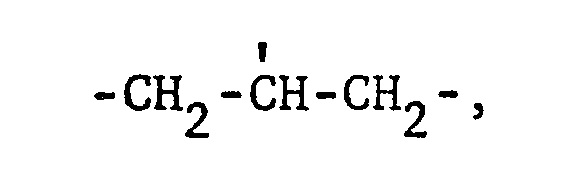
CH3-C(CH2-)3, C2H5-C(CH2-)3 oder n 4 und R ein Rest der Formel C(CH2-)4 ist.
9. Verwendung von Mercaptanen der Formel I, II, III oder IV


worin
zum Stabilisieren von chlorhaltigen thermoplastischen Kunststoffen, dadurch gekennzeichnet, dass die Mercaptane auf einem festen Trägermaterial aufgebracht sind.
n eine ganze Zahl von 1 bis 6,
R einen n-wertigen, gegebenenfalls durch 0- oder S-Atome unterbrochenen oder durch OH substituierten aliphatischen oder cycloaliphatischen Kohlenwasserstoffrest,
R1 und R2 Alkyl mit 1-4 C-Atomen und
X eine Gruppe -O-CO-CmH2m-SH darstellen, worin
m 1 oder 2 ist,
zum Stabilisieren von chlorhaltigen thermoplastischen Kunststoffen, dadurch gekennzeichnet, dass die Mercaptane auf einem festen Trägermaterial aufgebracht sind.
10. Verwendung gemäss Anspruch 8, dadurch gekennzeichnet, dass der Kunststoff ein Homo- oder Copolymerisatvon Vinylchlorid ist.
11. Verwendung gemäss Anspruch 8, dadurch gekennzeichnet, dass man, bezogen auf den Kunststoff, 0,01 bis 10, vorzugsweise 0,5 bis 3 Gew.-% des auf Träger aufgebrachten Mercaptanes verwendet.
12. Kunststoffzusammensetzung, enthaltend einen chlorhaltigen Thermoplast und eine Stabilisatorzusammensetzung gemäss Anspruch 1.
13. Kunststoffzusammensetzung gemäss Anspruch 12, dadurch gekennzeichnet, dass der chlorhaltige Thermoplast ein Homo- oder Kopolymer des Vinylchlorids ist.
14. Kunststoffzusammensetzung gemäss Anspruch 12, dadurch gekennzeichnet, dass die Stabilisatorzusammensetzung darin in einer Menge von 0,01 bis 10, vorzugsweise 0,5 bis 3 Gew.-%, bezogen auf den chlorhaltigen Thermoplast, enthalten ist.
15. Verbindungen der Formel II, III oder IV


worin R1 und R2 Alkyl mit 1-4 C-Atomen und X eine Gruppe -O-CO-CmH2m-SH darstellen und m 1 oder 2 ist.
16. Verbindungen der Formel III oder IV gemäss Anspruch 14, worin R1 und R2 Methyl sind.
Applications Claiming Priority (2)
| Application Number | Priority Date | Filing Date | Title |
|---|---|---|---|
| CH1301677 | 1977-10-26 | ||
| CH13016/77 | 1977-10-26 |
Publications (1)
| Publication Number | Publication Date |
|---|---|
| EP0001631A1 true EP0001631A1 (de) | 1979-05-02 |
Family
ID=4388527
Family Applications (1)
| Application Number | Title | Priority Date | Filing Date |
|---|---|---|---|
| EP78101166A Withdrawn EP0001631A1 (de) | 1977-10-26 | 1978-10-17 | Mercaptane auf festen Trägern und deren Verwendung zum Stabilisieren von chlorhaltigen thermoplastischen Kunststoffen |
Country Status (2)
| Country | Link |
|---|---|
| EP (1) | EP0001631A1 (de) |
| JP (1) | JPS5471142A (de) |
Cited By (4)
| Publication number | Priority date | Publication date | Assignee | Title |
|---|---|---|---|---|
| EP0133130A1 (de) * | 1983-08-02 | 1985-02-13 | Societe Nationale Elf Aquitaine | Verfahren zur Wärmestabilisierung von Polyvinylhalogeniden und die so stabilisierten Harze |
| FR2567898A2 (fr) * | 1984-07-18 | 1986-01-24 | Elf Aquitaine | Procede de stabilisation thermique de polymeres halogeno-vinyliques et resines ainsi stabilisees |
| US5030671A (en) * | 1988-10-20 | 1991-07-09 | Ciba-Geigy Corporation | Mercaptobenzoates as stabilizers for chlorine-containing polymers |
| EP0745646A1 (de) * | 1995-05-31 | 1996-12-04 | Ciba-Geigy Ag | Auf Trägermittel fixierte Antioxidantien und Lichtschutzmittel als Füllstoffe und Stabilisatoren |
Families Citing this family (1)
| Publication number | Priority date | Publication date | Assignee | Title |
|---|---|---|---|---|
| US4770806A (en) * | 1983-06-09 | 1988-09-13 | Monsanto Company | Deodorized compositions |
Citations (7)
| Publication number | Priority date | Publication date | Assignee | Title |
|---|---|---|---|---|
| GB771857A (en) * | 1954-08-26 | 1957-04-03 | Metal & Thermit Corp | Composition |
| FR1318826A (fr) * | 1961-01-26 | 1963-02-22 | Carlisle Chemical Works | Perfectionnements aux stabilisants d'action synergique pour résines halogénées |
| US3144422A (en) * | 1962-01-03 | 1964-08-11 | Carlisle Chemical Works | Polyolefins stabilized with pentaerythritol mercapto esters |
| US3676440A (en) * | 1970-02-26 | 1972-07-11 | Grace W R & Co | Isocyanurate-containing polythiols |
| JPS5040649A (de) * | 1973-08-17 | 1975-04-14 | ||
| FR2297882A1 (fr) * | 1975-01-16 | 1976-08-13 | Cincinnati Milacron Inc | Compositions stabilisantes synergiques pour resines vinyliques et leurs applications |
| US4002798A (en) * | 1974-04-15 | 1977-01-11 | W. R. Grace & Co. | Curable polyene-polythiol compositions |
-
1978
- 1978-10-17 EP EP78101166A patent/EP0001631A1/de not_active Withdrawn
- 1978-10-26 JP JP13208378A patent/JPS5471142A/ja active Pending
Patent Citations (7)
| Publication number | Priority date | Publication date | Assignee | Title |
|---|---|---|---|---|
| GB771857A (en) * | 1954-08-26 | 1957-04-03 | Metal & Thermit Corp | Composition |
| FR1318826A (fr) * | 1961-01-26 | 1963-02-22 | Carlisle Chemical Works | Perfectionnements aux stabilisants d'action synergique pour résines halogénées |
| US3144422A (en) * | 1962-01-03 | 1964-08-11 | Carlisle Chemical Works | Polyolefins stabilized with pentaerythritol mercapto esters |
| US3676440A (en) * | 1970-02-26 | 1972-07-11 | Grace W R & Co | Isocyanurate-containing polythiols |
| JPS5040649A (de) * | 1973-08-17 | 1975-04-14 | ||
| US4002798A (en) * | 1974-04-15 | 1977-01-11 | W. R. Grace & Co. | Curable polyene-polythiol compositions |
| FR2297882A1 (fr) * | 1975-01-16 | 1976-08-13 | Cincinnati Milacron Inc | Compositions stabilisantes synergiques pour resines vinyliques et leurs applications |
Non-Patent Citations (1)
| Title |
|---|
| CHEMICAL ABSTRACTS, vol. 83, nr. 116050j, 1975, Columbus, Ohio, (USA) SHINKAWA et al: "Stabilized halogen containing resins"; & JP-A-50 040 649 (KYODO YAKUHIN) (14-04-1975) * |
Cited By (6)
| Publication number | Priority date | Publication date | Assignee | Title |
|---|---|---|---|---|
| EP0133130A1 (de) * | 1983-08-02 | 1985-02-13 | Societe Nationale Elf Aquitaine | Verfahren zur Wärmestabilisierung von Polyvinylhalogeniden und die so stabilisierten Harze |
| AU570990B2 (en) * | 1983-08-02 | 1988-03-31 | M. & T. Chimie S.A. | Stabilization of halo-vinyl resins |
| FR2567898A2 (fr) * | 1984-07-18 | 1986-01-24 | Elf Aquitaine | Procede de stabilisation thermique de polymeres halogeno-vinyliques et resines ainsi stabilisees |
| US5030671A (en) * | 1988-10-20 | 1991-07-09 | Ciba-Geigy Corporation | Mercaptobenzoates as stabilizers for chlorine-containing polymers |
| EP0365483B1 (de) * | 1988-10-20 | 1993-12-29 | Ciba-Geigy Ag | Mercaptobenzoesäureester als Stabilisatoren für chlorhaltige Polymerisate |
| EP0745646A1 (de) * | 1995-05-31 | 1996-12-04 | Ciba-Geigy Ag | Auf Trägermittel fixierte Antioxidantien und Lichtschutzmittel als Füllstoffe und Stabilisatoren |
Also Published As
| Publication number | Publication date |
|---|---|
| JPS5471142A (en) | 1979-06-07 |
Similar Documents
| Publication | Publication Date | Title |
|---|---|---|
| DE69610660T2 (de) | Latente Merkaptane als multifunktionelle Additive für halogenhaltige Polymerzusammensetzungen | |
| DE69008067T2 (de) | Bitumen-/Polymerzusammensetzung mit einem bei Lagerung bei erhöhter Temperatur sich nicht ändernden Haftvermögen und Verfahren zur Herstellung derselben. | |
| DE2540066C3 (de) | Synergistische Stabilisatorkombination und diese enthaltende Polymerisatmassen auf Vinylhalogenidbasis | |
| CH624972A5 (de) | ||
| DE1544729B2 (de) | Stabilisierte polyvinylchlorid und oder polyvinylidenchlorid formmasse | |
| DE2629202A1 (de) | Hitzestabilisierungszusammensetzung | |
| EP0001803A1 (de) | Polymere substituierter Piperidine, ihre Herstellung und Verwendung | |
| DE2454986A1 (de) | Vinylhalogenidharz-stabilisatorzusammensetzung | |
| DE2910586B2 (de) | Füllstoff enthaltende Polyolefin-Formmasse und Verfahren zu ihrer Herstellung | |
| DE69912338T2 (de) | Ein latentes Merkaptan als Wärmestabilisator | |
| DE2559820C3 (de) | Monooctylzinntristhioglycolsäuretetradecylester | |
| DE68920139T2 (de) | Stabilisierungsmittel für halogenhaltige polymere. | |
| EP0001631A1 (de) | Mercaptane auf festen Trägern und deren Verwendung zum Stabilisieren von chlorhaltigen thermoplastischen Kunststoffen | |
| DE60024164T2 (de) | Verfahren zur Verbesserung der Haftung von wässrigen Tinten auf Halogen-enthaltenden Harzgegenständen | |
| EP0015241B2 (de) | Aus einem Organozinnalkoholat und einem Organozinnmercaptid bestehende Stoffgemische; ihre Verwendung für die Stabilisierung chlorierter Polymere | |
| EP0012107A1 (de) | Flammgeschützte, plastifizierte PVC-Mischung | |
| DE2703904C3 (de) | Synergistische Stabilisatorkombination und diese enthaltende Polymermaterialien auf Vinylhalogenidbasis | |
| DE2802531A1 (de) | Stabilisierte vinylhalogenidharze | |
| EP0000746B1 (de) | Neue Organozinnverbindungen, ihre Herstellung und ihre Verwendung | |
| DE2811029A1 (de) | Organozinnmercaptoalkanolestersulfid-stabilisatoren und damit stabilisiertes polymermaterial | |
| EP0032106B1 (de) | Gemische von n-Octylzinn-Verbindungen, Verfahren zu ihrer Herstellung und ihre Verwendung als Stabilisatoren für halogenhaltige Thermoplaste | |
| US4340514A (en) | Non-toxic liquid stabilizer for halogenated hydrocarbon resins and process for stabilizing such resins | |
| DE2441740A1 (de) | Alkylzinnpolysulfidthioester | |
| EP0001421A1 (de) | Verwendung von Mercaptanen zur Wärmestabilisierung chlorhaltiger Thermoplaste | |
| DE1924858B2 (de) | Stabilisierte Massen auf der Basis von Halogen enthaltenden Polymerisaten |
Legal Events
| Date | Code | Title | Description |
|---|---|---|---|
| PUAI | Public reference made under article 153(3) epc to a published international application that has entered the european phase |
Free format text: ORIGINAL CODE: 0009012 |
|
| AK | Designated contracting states |
Designated state(s): BE CH DE FR GB NL SE |
|
| 17P | Request for examination filed | ||
| STAA | Information on the status of an ep patent application or granted ep patent |
Free format text: STATUS: THE APPLICATION HAS BEEN WITHDRAWN |
|
| 18W | Application withdrawn |
Withdrawal date: 19801205 |
|
| RIN1 | Information on inventor provided before grant (corrected) |
Inventor name: WEHNER, WOLFGANG, DR. Inventor name: ABELER, GERD, DR. |