EP0077826B1 - Agents permettant d'arreter des infections se developpant subitement - Google Patents
Agents permettant d'arreter des infections se developpant subitement Download PDFInfo
- Publication number
- EP0077826B1 EP0077826B1 EP82901777A EP82901777A EP0077826B1 EP 0077826 B1 EP0077826 B1 EP 0077826B1 EP 82901777 A EP82901777 A EP 82901777A EP 82901777 A EP82901777 A EP 82901777A EP 0077826 B1 EP0077826 B1 EP 0077826B1
- Authority
- EP
- European Patent Office
- Prior art keywords
- colloidal silica
- hemoglobin
- iron
- agents
- haptoglobin
- Prior art date
- Legal status (The legal status is an assumption and is not a legal conclusion. Google has not performed a legal analysis and makes no representation as to the accuracy of the status listed.)
- Expired
Links
- 208000015181 infectious disease Diseases 0.000 title abstract description 25
- VYPSYNLAJGMNEJ-UHFFFAOYSA-N Silicium dioxide Chemical compound O=[Si]=O VYPSYNLAJGMNEJ-UHFFFAOYSA-N 0.000 claims abstract description 74
- 239000003795 chemical substances by application Substances 0.000 claims abstract description 65
- 108010054147 Hemoglobins Proteins 0.000 claims abstract description 50
- 102000001554 Hemoglobins Human genes 0.000 claims abstract description 50
- 239000008119 colloidal silica Substances 0.000 claims abstract description 41
- 102000014702 Haptoglobin Human genes 0.000 claims abstract description 35
- 108050005077 Haptoglobin Proteins 0.000 claims abstract description 35
- 239000000203 mixture Substances 0.000 claims abstract description 15
- 210000003743 erythrocyte Anatomy 0.000 claims abstract description 14
- 239000002131 composite material Substances 0.000 claims abstract description 13
- 229920002367 Polyisobutene Polymers 0.000 claims abstract description 12
- 239000000758 substrate Substances 0.000 claims abstract description 9
- 239000003957 anion exchange resin Substances 0.000 claims abstract description 7
- 229920001971 elastomer Polymers 0.000 claims abstract description 4
- 239000000806 elastomer Substances 0.000 claims abstract description 4
- 102000004338 Transferrin Human genes 0.000 claims description 26
- 108090000901 Transferrin Proteins 0.000 claims description 26
- 239000012581 transferrin Substances 0.000 claims description 25
- 230000000536 complexating effect Effects 0.000 claims description 11
- 208000035143 Bacterial infection Diseases 0.000 claims description 10
- 208000022362 bacterial infectious disease Diseases 0.000 claims description 10
- 102000013271 Hemopexin Human genes 0.000 claims description 8
- 108010026027 Hemopexin Proteins 0.000 claims description 8
- 238000011282 treatment Methods 0.000 claims description 8
- 239000003814 drug Substances 0.000 claims description 6
- JVIPLYCGEZUBIO-UHFFFAOYSA-N 2-(4-fluorophenyl)-1,3-dioxoisoindole-5-carboxylic acid Chemical compound O=C1C2=CC(C(=O)O)=CC=C2C(=O)N1C1=CC=C(F)C=C1 JVIPLYCGEZUBIO-UHFFFAOYSA-N 0.000 claims description 5
- 229920001425 Diethylaminoethyl cellulose Polymers 0.000 claims description 5
- 239000002250 absorbent Substances 0.000 claims description 5
- 230000002745 absorbent Effects 0.000 claims description 5
- 150000001875 compounds Chemical class 0.000 claims description 5
- 239000011347 resin Substances 0.000 claims description 5
- 229920005989 resin Polymers 0.000 claims description 5
- 108010089814 Plant Lectins Proteins 0.000 claims description 4
- 238000004519 manufacturing process Methods 0.000 claims description 4
- 239000003726 plant lectin Substances 0.000 claims description 4
- 235000000346 sugar Nutrition 0.000 claims description 3
- 150000008163 sugars Chemical class 0.000 claims description 3
- 125000003396 thiol group Chemical group [H]S* 0.000 claims description 3
- 229920002873 Polyethylenimine Polymers 0.000 claims description 2
- 230000004931 aggregating effect Effects 0.000 claims description 2
- 229920002307 Dextran Polymers 0.000 claims 1
- XEEYBQQBJWHFJM-UHFFFAOYSA-N Iron Chemical compound [Fe] XEEYBQQBJWHFJM-UHFFFAOYSA-N 0.000 abstract description 77
- 229910052742 iron Inorganic materials 0.000 abstract description 39
- 210000004369 blood Anatomy 0.000 abstract description 24
- 239000008280 blood Substances 0.000 abstract description 24
- 210000001124 body fluid Anatomy 0.000 abstract description 11
- 239000010839 body fluid Substances 0.000 abstract description 11
- 239000000463 material Substances 0.000 abstract description 8
- 238000000034 method Methods 0.000 abstract description 4
- 230000015556 catabolic process Effects 0.000 abstract description 3
- 239000000969 carrier Substances 0.000 abstract 1
- 230000003100 immobilizing effect Effects 0.000 abstract 1
- 230000005789 organism growth Effects 0.000 abstract 1
- 241000894006 Bacteria Species 0.000 description 33
- 230000012010 growth Effects 0.000 description 30
- 238000012360 testing method Methods 0.000 description 23
- 241000700159 Rattus Species 0.000 description 22
- 241000588724 Escherichia coli Species 0.000 description 21
- 102000004169 proteins and genes Human genes 0.000 description 14
- 108090000623 proteins and genes Proteins 0.000 description 14
- 230000001580 bacterial effect Effects 0.000 description 13
- 230000000694 effects Effects 0.000 description 12
- 208000014674 injury Diseases 0.000 description 11
- 210000001519 tissue Anatomy 0.000 description 11
- 230000008733 trauma Effects 0.000 description 11
- 108010001708 stroma free hemoglobin Proteins 0.000 description 10
- 238000000338 in vitro Methods 0.000 description 9
- 239000002245 particle Substances 0.000 description 9
- 241001465754 Metazoa Species 0.000 description 8
- 239000002054 inoculum Substances 0.000 description 8
- 230000000699 topical effect Effects 0.000 description 8
- 239000001963 growth medium Substances 0.000 description 7
- 239000000243 solution Substances 0.000 description 7
- 239000007924 injection Substances 0.000 description 6
- 238000002347 injection Methods 0.000 description 6
- 238000002360 preparation method Methods 0.000 description 6
- 238000002560 therapeutic procedure Methods 0.000 description 6
- 230000001133 acceleration Effects 0.000 description 5
- 229960004642 ferric ammonium citrate Drugs 0.000 description 5
- 239000012530 fluid Substances 0.000 description 5
- 235000000011 iron ammonium citrate Nutrition 0.000 description 5
- 239000004313 iron ammonium citrate Substances 0.000 description 5
- 239000000377 silicon dioxide Substances 0.000 description 5
- 239000000725 suspension Substances 0.000 description 5
- 102000009027 Albumins Human genes 0.000 description 4
- 108010088751 Albumins Proteins 0.000 description 4
- FRHBOQMZUOWXQL-UHFFFAOYSA-L ammonium ferric citrate Chemical compound [NH4+].[Fe+3].[O-]C(=O)CC(O)(CC([O-])=O)C([O-])=O FRHBOQMZUOWXQL-UHFFFAOYSA-L 0.000 description 4
- 230000002401 inhibitory effect Effects 0.000 description 4
- 239000012071 phase Substances 0.000 description 4
- 108090001090 Lectins Proteins 0.000 description 3
- 102000004856 Lectins Human genes 0.000 description 3
- 229920000297 Rayon Polymers 0.000 description 3
- 206010040047 Sepsis Diseases 0.000 description 3
- 150000001450 anions Chemical class 0.000 description 3
- 230000003115 biocidal effect Effects 0.000 description 3
- 230000000740 bleeding effect Effects 0.000 description 3
- 230000000052 comparative effect Effects 0.000 description 3
- 230000007773 growth pattern Effects 0.000 description 3
- BTIJJDXEELBZFS-QDUVMHSLSA-K hemin Chemical compound CC1=C(CCC(O)=O)C(C=C2C(CCC(O)=O)=C(C)\C(N2[Fe](Cl)N23)=C\4)=N\C1=C/C2=C(C)C(C=C)=C3\C=C/1C(C)=C(C=C)C/4=N\1 BTIJJDXEELBZFS-QDUVMHSLSA-K 0.000 description 3
- 229940025294 hemin Drugs 0.000 description 3
- 230000005764 inhibitory process Effects 0.000 description 3
- 238000011081 inoculation Methods 0.000 description 3
- 239000002523 lectin Substances 0.000 description 3
- 230000001665 lethal effect Effects 0.000 description 3
- 235000016709 nutrition Nutrition 0.000 description 3
- 230000035764 nutrition Effects 0.000 description 3
- 210000002381 plasma Anatomy 0.000 description 3
- 239000002964 rayon Substances 0.000 description 3
- 208000013223 septicemia Diseases 0.000 description 3
- 210000002966 serum Anatomy 0.000 description 3
- 229910002027 silica gel Inorganic materials 0.000 description 3
- 239000000741 silica gel Substances 0.000 description 3
- 239000008174 sterile solution Substances 0.000 description 3
- -1 2-hydroxypropyl Chemical group 0.000 description 2
- 239000004215 Carbon black (E152) Substances 0.000 description 2
- VEXZGXHMUGYJMC-UHFFFAOYSA-M Chloride anion Chemical compound [Cl-] VEXZGXHMUGYJMC-UHFFFAOYSA-M 0.000 description 2
- 108010062580 Concanavalin A Proteins 0.000 description 2
- 101150101454 HBBC gene Proteins 0.000 description 2
- 241000282412 Homo Species 0.000 description 2
- 101000766306 Homo sapiens Serotransferrin Proteins 0.000 description 2
- 102000008133 Iron-Binding Proteins Human genes 0.000 description 2
- 108010035210 Iron-Binding Proteins Proteins 0.000 description 2
- 229920005987 OPPANOL® Polymers 0.000 description 2
- 206010052428 Wound Diseases 0.000 description 2
- 208000027418 Wounds and injury Diseases 0.000 description 2
- 239000000654 additive Substances 0.000 description 2
- 230000002411 adverse Effects 0.000 description 2
- 230000008901 benefit Effects 0.000 description 2
- 239000011230 binding agent Substances 0.000 description 2
- 210000004027 cell Anatomy 0.000 description 2
- 239000008139 complexing agent Substances 0.000 description 2
- 239000002657 fibrous material Substances 0.000 description 2
- 150000003278 haem Chemical class 0.000 description 2
- 108010036302 hemoglobin AS Proteins 0.000 description 2
- 229930195733 hydrocarbon Natural products 0.000 description 2
- 150000002430 hydrocarbons Chemical class 0.000 description 2
- 238000007912 intraperitoneal administration Methods 0.000 description 2
- 238000011835 investigation Methods 0.000 description 2
- 159000000014 iron salts Chemical class 0.000 description 2
- 230000002262 irrigation Effects 0.000 description 2
- 238000003973 irrigation Methods 0.000 description 2
- 239000011159 matrix material Substances 0.000 description 2
- 230000003472 neutralizing effect Effects 0.000 description 2
- 230000001575 pathological effect Effects 0.000 description 2
- 210000004303 peritoneum Anatomy 0.000 description 2
- 239000000047 product Substances 0.000 description 2
- XNSAINXGIQZQOO-SRVKXCTJSA-N protirelin Chemical compound NC(=O)[C@@H]1CCCN1C(=O)[C@@H](NC(=O)[C@H]1NC(=O)CC1)CC1=CN=CN1 XNSAINXGIQZQOO-SRVKXCTJSA-N 0.000 description 2
- RMAQACBXLXPBSY-UHFFFAOYSA-N silicic acid Chemical compound O[Si](O)(O)O RMAQACBXLXPBSY-UHFFFAOYSA-N 0.000 description 2
- 235000012239 silicon dioxide Nutrition 0.000 description 2
- 238000001356 surgical procedure Methods 0.000 description 2
- 230000001225 therapeutic effect Effects 0.000 description 2
- VXEGSRKPIUDPQT-UHFFFAOYSA-N 4-[4-(4-methoxyphenyl)piperazin-1-yl]aniline Chemical compound C1=CC(OC)=CC=C1N1CCN(C=2C=CC(N)=CC=2)CC1 VXEGSRKPIUDPQT-UHFFFAOYSA-N 0.000 description 1
- 206010067484 Adverse reaction Diseases 0.000 description 1
- 238000012935 Averaging Methods 0.000 description 1
- BVKZGUZCCUSVTD-UHFFFAOYSA-M Bicarbonate Chemical compound OC([O-])=O BVKZGUZCCUSVTD-UHFFFAOYSA-M 0.000 description 1
- 244000045232 Canavalia ensiformis Species 0.000 description 1
- 235000010520 Canavalia ensiformis Nutrition 0.000 description 1
- 102000014914 Carrier Proteins Human genes 0.000 description 1
- 241000700198 Cavia Species 0.000 description 1
- 241000700199 Cavia porcellus Species 0.000 description 1
- 229920003043 Cellulose fiber Polymers 0.000 description 1
- 241000196324 Embryophyta Species 0.000 description 1
- 102000008857 Ferritin Human genes 0.000 description 1
- 108050000784 Ferritin Proteins 0.000 description 1
- 238000008416 Ferritin Methods 0.000 description 1
- 102000006395 Globulins Human genes 0.000 description 1
- 108010044091 Globulins Proteins 0.000 description 1
- 244000068988 Glycine max Species 0.000 description 1
- 235000010469 Glycine max Nutrition 0.000 description 1
- 206010018910 Haemolysis Diseases 0.000 description 1
- 241000700721 Hepatitis B virus Species 0.000 description 1
- 101001078385 Homo sapiens Haptoglobin Proteins 0.000 description 1
- VEXZGXHMUGYJMC-UHFFFAOYSA-N Hydrochloric acid Chemical compound Cl VEXZGXHMUGYJMC-UHFFFAOYSA-N 0.000 description 1
- 241000699670 Mus sp. Species 0.000 description 1
- 229920005654 Sephadex Polymers 0.000 description 1
- 208000002847 Surgical Wound Diseases 0.000 description 1
- 108010046516 Wheat Germ Agglutinins Proteins 0.000 description 1
- 238000012084 abdominal surgery Methods 0.000 description 1
- 238000005299 abrasion Methods 0.000 description 1
- 230000000996 additive effect Effects 0.000 description 1
- 230000006838 adverse reaction Effects 0.000 description 1
- WQZGKKKJIJFFOK-DVKNGEFBSA-N alpha-D-glucose Chemical compound OC[C@H]1O[C@H](O)[C@H](O)[C@@H](O)[C@@H]1O WQZGKKKJIJFFOK-DVKNGEFBSA-N 0.000 description 1
- 238000010171 animal model Methods 0.000 description 1
- 108091008324 binding proteins Proteins 0.000 description 1
- 239000002981 blocking agent Substances 0.000 description 1
- 229920002678 cellulose Polymers 0.000 description 1
- 239000001913 cellulose Substances 0.000 description 1
- 239000011248 coating agent Substances 0.000 description 1
- 238000000576 coating method Methods 0.000 description 1
- 238000011161 development Methods 0.000 description 1
- 125000004177 diethyl group Chemical group [H]C([H])([H])C([H])([H])* 0.000 description 1
- 239000006185 dispersion Substances 0.000 description 1
- 238000001704 evaporation Methods 0.000 description 1
- 230000008020 evaporation Effects 0.000 description 1
- 238000002474 experimental method Methods 0.000 description 1
- 239000011152 fibreglass Substances 0.000 description 1
- 235000013305 food Nutrition 0.000 description 1
- 229910021485 fumed silica Inorganic materials 0.000 description 1
- 239000003102 growth factor Substances 0.000 description 1
- 238000010438 heat treatment Methods 0.000 description 1
- 230000008588 hemolysis Effects 0.000 description 1
- 102000050796 human HP Human genes 0.000 description 1
- 230000007062 hydrolysis Effects 0.000 description 1
- 238000006460 hydrolysis reaction Methods 0.000 description 1
- 238000010348 incorporation Methods 0.000 description 1
- 239000007928 intraperitoneal injection Substances 0.000 description 1
- JEIPFZHSYJVQDO-UHFFFAOYSA-N iron(III) oxide Inorganic materials O=[Fe]O[Fe]=O JEIPFZHSYJVQDO-UHFFFAOYSA-N 0.000 description 1
- 208000017169 kidney disease Diseases 0.000 description 1
- 231100000518 lethal Toxicity 0.000 description 1
- 150000002632 lipids Chemical class 0.000 description 1
- 230000002906 microbiologic effect Effects 0.000 description 1
- 206010034674 peritonitis Diseases 0.000 description 1
- 229920001296 polysiloxane Polymers 0.000 description 1
- 239000011148 porous material Substances 0.000 description 1
- 239000002244 precipitate Substances 0.000 description 1
- 238000001556 precipitation Methods 0.000 description 1
- 230000010076 replication Effects 0.000 description 1
- 230000004044 response Effects 0.000 description 1
- 238000012552 review Methods 0.000 description 1
- 150000003839 salts Chemical class 0.000 description 1
- 238000000926 separation method Methods 0.000 description 1
- 230000009919 sequestration Effects 0.000 description 1
- 150000003377 silicon compounds Chemical class 0.000 description 1
- 239000005049 silicon tetrachloride Substances 0.000 description 1
- 239000007787 solid Substances 0.000 description 1
- 239000002904 solvent Substances 0.000 description 1
- 238000001179 sorption measurement Methods 0.000 description 1
- 239000003381 stabilizer Substances 0.000 description 1
- 239000000126 substance Substances 0.000 description 1
- 230000004083 survival effect Effects 0.000 description 1
- 239000012808 vapor phase Substances 0.000 description 1
- 230000002792 vascular Effects 0.000 description 1
- XLYOFNOQVPJJNP-UHFFFAOYSA-N water Substances O XLYOFNOQVPJJNP-UHFFFAOYSA-N 0.000 description 1
Images



Classifications
-
- A—HUMAN NECESSITIES
- A61—MEDICAL OR VETERINARY SCIENCE; HYGIENE
- A61L—METHODS OR APPARATUS FOR STERILISING MATERIALS OR OBJECTS IN GENERAL; DISINFECTION, STERILISATION OR DEODORISATION OF AIR; CHEMICAL ASPECTS OF BANDAGES, DRESSINGS, ABSORBENT PADS OR SURGICAL ARTICLES; MATERIALS FOR BANDAGES, DRESSINGS, ABSORBENT PADS OR SURGICAL ARTICLES
- A61L15/00—Chemical aspects of, or use of materials for, bandages, dressings or absorbent pads
- A61L15/16—Bandages, dressings or absorbent pads for physiological fluids such as urine or blood, e.g. sanitary towels, tampons
- A61L15/42—Use of materials characterised by their function or physical properties
- A61L15/46—Deodorants or malodour counteractants, e.g. to inhibit the formation of ammonia or bacteria
-
- A—HUMAN NECESSITIES
- A61—MEDICAL OR VETERINARY SCIENCE; HYGIENE
- A61K—PREPARATIONS FOR MEDICAL, DENTAL OR TOILETRY PURPOSES
- A61K31/00—Medicinal preparations containing organic active ingredients
- A61K31/74—Synthetic polymeric materials
-
- A—HUMAN NECESSITIES
- A61—MEDICAL OR VETERINARY SCIENCE; HYGIENE
- A61K—PREPARATIONS FOR MEDICAL, DENTAL OR TOILETRY PURPOSES
- A61K33/00—Medicinal preparations containing inorganic active ingredients
-
- A—HUMAN NECESSITIES
- A61—MEDICAL OR VETERINARY SCIENCE; HYGIENE
- A61K—PREPARATIONS FOR MEDICAL, DENTAL OR TOILETRY PURPOSES
- A61K38/00—Medicinal preparations containing peptides
- A61K38/16—Peptides having more than 20 amino acids; Gastrins; Somatostatins; Melanotropins; Derivatives thereof
- A61K38/168—Peptides having more than 20 amino acids; Gastrins; Somatostatins; Melanotropins; Derivatives thereof from plants
-
- A—HUMAN NECESSITIES
- A61—MEDICAL OR VETERINARY SCIENCE; HYGIENE
- A61K—PREPARATIONS FOR MEDICAL, DENTAL OR TOILETRY PURPOSES
- A61K38/00—Medicinal preparations containing peptides
- A61K38/16—Peptides having more than 20 amino acids; Gastrins; Somatostatins; Melanotropins; Derivatives thereof
- A61K38/17—Peptides having more than 20 amino acids; Gastrins; Somatostatins; Melanotropins; Derivatives thereof from animals; from humans
- A61K38/1703—Peptides having more than 20 amino acids; Gastrins; Somatostatins; Melanotropins; Derivatives thereof from animals; from humans from vertebrates
- A61K38/1709—Peptides having more than 20 amino acids; Gastrins; Somatostatins; Melanotropins; Derivatives thereof from animals; from humans from vertebrates from mammals
-
- A—HUMAN NECESSITIES
- A61—MEDICAL OR VETERINARY SCIENCE; HYGIENE
- A61K—PREPARATIONS FOR MEDICAL, DENTAL OR TOILETRY PURPOSES
- A61K38/00—Medicinal preparations containing peptides
- A61K38/16—Peptides having more than 20 amino acids; Gastrins; Somatostatins; Melanotropins; Derivatives thereof
- A61K38/17—Peptides having more than 20 amino acids; Gastrins; Somatostatins; Melanotropins; Derivatives thereof from animals; from humans
- A61K38/40—Transferrins, e.g. lactoferrins, ovotransferrins
-
- A—HUMAN NECESSITIES
- A61—MEDICAL OR VETERINARY SCIENCE; HYGIENE
- A61P—SPECIFIC THERAPEUTIC ACTIVITY OF CHEMICAL COMPOUNDS OR MEDICINAL PREPARATIONS
- A61P31/00—Antiinfectives, i.e. antibiotics, antiseptics, chemotherapeutics
- A61P31/04—Antibacterial agents
-
- A—HUMAN NECESSITIES
- A61—MEDICAL OR VETERINARY SCIENCE; HYGIENE
- A61L—METHODS OR APPARATUS FOR STERILISING MATERIALS OR OBJECTS IN GENERAL; DISINFECTION, STERILISATION OR DEODORISATION OF AIR; CHEMICAL ASPECTS OF BANDAGES, DRESSINGS, ABSORBENT PADS OR SURGICAL ARTICLES; MATERIALS FOR BANDAGES, DRESSINGS, ABSORBENT PADS OR SURGICAL ARTICLES
- A61L2300/00—Biologically active materials used in bandages, wound dressings, absorbent pads or medical devices
- A61L2300/20—Biologically active materials used in bandages, wound dressings, absorbent pads or medical devices containing or releasing organic materials
- A61L2300/252—Polypeptides, proteins, e.g. glycoproteins, lipoproteins, cytokines
-
- A—HUMAN NECESSITIES
- A61—MEDICAL OR VETERINARY SCIENCE; HYGIENE
- A61L—METHODS OR APPARATUS FOR STERILISING MATERIALS OR OBJECTS IN GENERAL; DISINFECTION, STERILISATION OR DEODORISATION OF AIR; CHEMICAL ASPECTS OF BANDAGES, DRESSINGS, ABSORBENT PADS OR SURGICAL ARTICLES; MATERIALS FOR BANDAGES, DRESSINGS, ABSORBENT PADS OR SURGICAL ARTICLES
- A61L2300/00—Biologically active materials used in bandages, wound dressings, absorbent pads or medical devices
- A61L2300/40—Biologically active materials used in bandages, wound dressings, absorbent pads or medical devices characterised by a specific therapeutic activity or mode of action
- A61L2300/404—Biocides, antimicrobial agents, antiseptic agents
Definitions
- the present invention relates to animal tissue infections, and particularly to the use of.agents for the manufacturing of medicaments useful in the control and inhibition of such infections.
- Bacterial infections and particularly those that develop at the site of tissue trauma, or at any location where bleeding takes place have long been of concern, and, as such, the subject of investigation, for the purpose of developing procedures for their control. Thus, whether topical or peritoneal in location, these bacterial infections - frequently become fulminating in nature and can, in some instances result in death.
- GB-A-2020551 discloses the use of silica gel for the purpose of reducing the lipid concentration in the blood of a patient.
- DE-A-2652088 discusses the use of silica in an appliance as illustrated in the figures, as an absorbent.
- transferrin acts in conjunction with other globulins, which are fractions of the blood plasma, to achieve whatever inhibitory result is observed.
- transferrin may play a role in resistance to infection is not to say that transferrin can arrest infection single handedly.
- the Bullen article comes prior to the article by Archibald and DeVoe it must be considered that the latter article is far more dispositive of the activities and capabilities of transferrin than the former.
- the earlier discussed article suggests that the role of transferrin could not include or contemplate the complete inhibition of infection, when the authors findings suggest that the bond between transferrin and iron can be broken.
- the present invention concerns the use of various agents for the manufacture of medicaments for the treatment of bacterial infections in animals whereby said agents in use will form complexes inhibiting or eliminating bacterial growth. Although reference is made in the following to administering of the agents it will be appreciated that such agents are in the medicament form manufactured using the agents.
- agents capable of aggregating red blood cells and/or hemoglobin selected from the complexing proteins haptoglobin; hemopexin; transferrin; a mixture of haptoglobin, hemopexin and transferrin; plant lectins specific for sugars, and mixtures thereof, colloidal silica, anion exchange resins, resins capable of binding compounds having available sulfhydryl groups, a composite of colloidal silica and polyolefinic elastomer, and mixtures thereof for the manufacture of a medicament for the treatment of bacterial infections.
- Agents include those materials that are capable of forming an immobilised complex with red blood cells as well as with hemoglobin.
- the agent may be used to make the complex with the red blood cells or the hemoglobin fraction of free blood in the vicinity of a tissue trauma to make the new tissue unavailable to infection-promoting bacteria, so that the bacteria cannot abstract the iron necessary for their growth.
- a wide variety of bacteria thrive on available iron, and range in activity from lethal, infection-causing varieties, to those that cause the evolution of undesirable odor during their life cycle.
- the agents used in the present invention may include cellulose-based resins, and oxygenous haptoglobin.
- the agent utilised comprises colloidal silica suspended in a matrix of polyisobutylene.
- the agent may include hemoglobin, as well as heme or other iron salts
- the agent may include haptoglobin in combination with other proteins, such as transferrin or hemopexin, individually and in mixtures with each other.
- a sterile solution containing the agent may be prepared in a concentration that may range from 1.0 to 100 mg./ml. Administration may be either by direct dosage or by incorporation into conventional irrigation fluids.
- the agents must be disposed on the topical application or carrier in a manner such that the agent is available for surface contact with the blood or hemoglobin.
- the complexing proteins may either be derived from human plasma, or may be synthetically prepared. Such complexing proteins are universally compatible with animal tissue and animal body fluids, so that the risk of adverse reactions to their administration is non-existent.
- an agent is used to provide a medicament for producing a complex for arresting tissue infection in the presence of a body fluid containing iron accessible to the infection-promoting bacteria.
- the agent is administered to the locus of infection and is such as to produce a complex for providing that the iron is made nitritionally unavailable to the bacteria.
- the agent is adminstered in an amount sufficient to form a complex immobilising either the red blood cells or the hemoglobin present in the blood adjacent the bacteria.
- the amount of the agent administered which is significant will therefore be proportional to the amount of the component of the blood sought to be immobilised and herein lies novelty of application not heretofore suggested.
- Agents according to the invention for producing the complex useful in the immobilisation of blood may be divided into two categories, depending upon the component of the blood for which immobilisation is desired.
- the agents may comprise antibodies against the red blood cell colloidal silica, anion resins and plant lectins capable of binding sugars, such as Concanavalin A.
- the agent may be selected from antibodies against hemoglobin, colloidal silica, anion exchange resins and complexing proteins such as haptoglobin.
- the present invention relates to the provision of a variety of agents to be utilised both peritoneally and topically, in amounts sufficient to bind either -available red blood cells or available hemoglobin to prevent either of the two from being broken down by the undesired bacteria for the purpose of abstracting the iron contained therein.
- the iron-containing fractions of blood are maintained secure against breakdown by association with certain complexing proteins.
- the fraction hemoglobin is secured by association with the protein haptoglobin, while the heme fraction is bound by the protein hemopexin, and iron occurring as iron salts is bound by the protein transferrin.
- Each of the foregoing binding or complexing proteins is present in relatively small amounts under normal circumstances.
- Increases of the levels of these proteins can occur gradually by normal body functions, in response to the onset of certain internal pathological conditions; however, the body is not equipped to rapidly provide the relatively massive amounts of these proteins necessary to maintain iron in the unavailable sequestered state, such as in the instance where tissue trauma takes place and the blood is released from the vascular system into the peritoneum and thereby into contact with infection-promoting bacteria. Similarly, in the instance where natural release of blood takes place, or in the instance of topical abrasions and cuts, the quantity of blood released is frequently far in excess of the capability of these natural complexing agents.
- the difficulty engendered by this problem is apparent from a consideration that the red blood cells derived from 1 milliliter of blood can yield up to 150 milligrams of hemaglobin after red cell breakdown, a value that far exceeds the capacity of any haptoglobin normally present in that quantity of blood.
- the agent comprises a complexing protein derived in exogenous form it is preferably administered in a sterile solution.
- the quantity of agent may naturally vary, in relation to the nature and extent of body fluid liberated by the trauma.
- the proteins haptoglobin, hemopexin and transferrin exist in human blood in amounts of approximately 1.2 mg/ml, the quantities of such materials administered in accordance with the present method exceeds these amount substantially and herein lies the novel therapeutic method, and generally varies in relation to the amount of body fluid released by the trauma, in a ratio with respect thereto ranging up to 3 to 1.
- the ratio of the amount of agent administered with respect to body fluid released may preferably range from 2 to 1 to 3 to 1.
- the foregoing proportions are provided herein as illustrations only, and in instances therefore where iron content may vary, the proportion of the agent administered with respect to body fluid released, may likewise differ, provided that the quantity administered is sufficient to render the iron nutritionally unavailable to the organisms.
- the agent is preferably utilised in conjunction with conventional antibiotic therapy, and provides the advantage of preventing the acceleration of bacterial growth that has rendered such therapy inadequate in the past.
- Bacterial growth generally occurs slowly during the initial 24 hours of innoculation, during which time growth is characterised by a lag phase. After this period is surpassed, accelerated or logarithmic growth commences, and full infection of the tissues become pronounced and severe. It has been found that control of the spread of bacterial infection can be achieved if growth during this initial 24 hour period can be either restrained or reduced in rate.
- the new therapeutic application proposes administering relatively large amounts of agents capable of binding either the red blood cells or the hemoglobin component of the blood released in any of these situations.
- a sterile solution containing the agent of the present invention may be directly administered by injection or otherwise, or may be incorporated in an irrigation fluid that is utilised to wash body wound areas.
- the agent may be affixed to a surgical sponge which may then be utilised in contact with the blood.
- the solutions of the agent may be prepared to concentrations of up to 100 milligrams per milliliter, and preferably from 1.0 to 100 milligrams per milliliter.
- the agent may be disposed on various topical appliances, such as bandages and gauze pads, as well as sanitary and catamenial devices such as tampons.
- the agent may be disposed within a container in a tampon or within the pores of the absorbent material, as disclosed, respectively, in US-A-3,842,166 to Bucalo and US-A-3,850,160 to Denson cited herein as exemplary only.
- a particular form of silica used for the colloidal silica comprises that known as "Cab-0-Sit®".
- This product is manufactured by the Cabot Corporation, Boston, Massachusetts, and is generally known for its use as an anti- agglomerative in various compositions, and as a general absorbent.
- “Cab-0-Sil ®” comprises sub- microscopic, pyrogenic silica prepared in a hot, gaseous environment by a vapor phase flame hydrolysis, at high temperature (around 1100°C) of a silicon compound, such as silicon tetrachloride.
- silica gel obtained by precipitation of silicic acid from an aqueous silicone solution, and hardening of the precipitate.
- Silica gel, thus formed is internally porous, whereas “Cab-0-Sil ® " has an enormous external surface area and no internal porosity.
- Cab-0-Sil® contains no water-soluble inorganic salts. It is of high chemical purity, low water content and has a high degree of particle separation. The properties and composition of a grade of "Cab-0-Sil®” are listed as follows:
- a finer grade of "Cab-O-Sil°” has the above- characteristics but a particle size range of 0.007-0.010 ⁇ m, a surface area of substantially 325 m 2 /g, and a refractive index of 1.46.
- “Cab-O-Sil®” colloidal silica may be utilised alone in solution form as the agent. In the instance, however, where it is to be disposed either within or upon a carrier or substrate, it is preferably prepared in a composite particulate form with a polyolefinic elastomeric organic binder. In particular, food grade polyisobutylene may be utilised. In such instance, the colloidal silica is suspended in a dilute hydrocarbon solution of the elastomer, and the resulting suspension is spread on an appropriate surface and dried to form the flake-like particles of the composite.
- composition of the colloidal silica and the polyisobutylene is prepared in proportions of approximately 85% colloidal silica, 15% polyisobutylene, such proportions determined by weight of the composite. This material may then be affixed by conventional procedures to a variety of substrates for further use.
- the colloidal silica was incorporated within a variety of fibrous materials which were then tested in contact with blood and bacteria on an in vitro basis, the materials ranged from rayon filament, to rayon staple, and fibres of various sizes, prepared from silica, silicic acid and fiber glass. In each instance, the colloidal silica was found to be inactive and infection proceeded unabated.
- the preparation of the colloidal silica-polyisobutylene composite offers the same activity as that of the colloidal silica alone, when disposed on, or within, a carrier or substrate.
- anion exchange resins such as diethylaminoethylcellulose (DEAE-Cellulose), guanidoethylcellulose, diethyl (2-hydroxypropyl)aminoethyldextran (QAE-Sephadex @ ), and resins capable of binding compounds having available sulfhydryl groups, such as polyethyleneimine.
- DEAE-Cellulose diethylaminoethylcellulose
- QQAE-Sephadex @ diethylaminoethylcellulose
- QAE-Sephadex @ diethylaminoethylcellulose
- resins capable of binding compounds having available sulfhydryl groups such as polyethyleneimine.
- complexing proteins may be utilised as the agent, and in addition to haptoglobin and transferrin, complexing proteins such as the macromolecular binding materials known as plant lectins, may be utilised either in solution, or disposed on a substrate.
- Lectins are known carbonhydrate-binding proteins derived from plants, having a wide variety of specificity.
- Concanavalin A a jack bean lectin
- soybean lectins show specificity for a and ⁇ - D - N - acetylgalactosamine and a - D - galactose units
- wheat germ lectin is specific for ⁇ - D - N - acetylglucosamine.
- the specific complexing proteins selected and utilised will vary with the nature of the bacteria to be inhibited, as well as the conditions in which the bacteria are found.
- agents of the present invention may be utilised invididually or in mixture, depending upon the environment in which use is contemplated.
- a quantity of DEAE-Cellulose with "Cab-O-Sil®” colloidal silica for use, for example, in the treatment of surgical wounds.
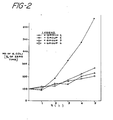
- the data from the respective groupings is identified by the corresponding graphical symbol set forth in the legends accompanying each Figure.
- the data points plotted in Figure 1 represent the respective mean and standard deviation values determined from a comparison of three samples of each groupings observed and counted at the indicated time interval.
- the rate of growth of the bacteria E. coli alone can be seen to be relatively flat, so that the initial or lag phase of bacterial growth is apparent.
- the addition of the hemoglobin to the growth medium alone results in a domestic acceleration in bacterial growth.
- This growth is neutralised in the instance of Group 3, wherein a comparable quantity of haptoglobin is introduced together with the hemoglobin, and is similar to rate to the growth pattern of the bacteria inoculated with haptoglobin alone.
- the results of the Group 4 media illustrates the specificity of haptoglobin for hemoglobin.
- haptoglobin was introduced, however hemin, containing a variant form of available iron was provided in place of hemoglobin.
- Haptoglobin proved ineffective in this instance, and greatly accelerated growth of the bacteria was in evidence.
- the bacteria utilised in this test- was isolated from a fatal human case of septicemia. After injection, the rats were placed under observation for a period of 72 hours, to note the adverse effect, if any, caused by the respective injections. The rats were regularly observed during this period, and the results regarding survival were gathered and are presented in graphical form in Figure 3. The identity of the results of the respective groups may be determined from the legends accompanying the graph.
- haptoglobin in Group 3 appears to counteract the lethal effects of the hemoglobin, as all of the rats in this grouping survived the entire test period.
- results of this example illustrates that haptaglobin exerts a neutralizing effect upon hemoglobin in the presence of bacteria in an in vitro situation.
- the second battery of tests were performed with three groups of eight rats each, the rats otherwise identical to those utilised in the first battery of testing.
- the inocula utilised in the second battery of tests are set forth below.
- the growth media comprised 5 milliliter aliquot portions of heat-inactivated human serum. Media were prepared with variant additives, and thereafter equal quantities of the bacteria were added. The media were thereafter inoculated with equal quantities of the bacteria. For primary groupings of inocula were developed as follows:
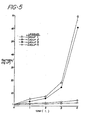
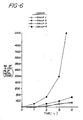
- the data from the respective groupings is identified by the corresponding graphical symbols set forth in the legend.
- the data points plotted in Figure 5 represent the respective mean and standard deviation values determined from a comparison of 3 samples of each grouping observed and counted at the indicated time interval.
- Group 4 In Group 4, however, where both hemoglobin and Cab-O-Sil O colloidal silica were added, the acceleration of bacterial growth evident with Groups 2 and 3 was absent and had apparently been neutralised. Thus, Group 4 exhibited a growth pattern similar in rate to that of Group 1, comprising the low-iron containing serum alone.
- a specific preparation of a composite useful for coating or adsorption on solid substrates was prepared.
- a quantity of Cab-O-Sil® Grade M-5 colloidal silica and a polyisobutylene identified as Oppanol® Grade B-150 were combined in the ratio of 85% Cab-O-Sil® colloidal silica to 15% polyisobutylene.
- a dilute hydrocarbon solution of Oppanol @ B-150 was prepared and the Cab-O-Sil O colloidal silica was suspended therein. The suspension was thereafter cast on a flat surface and dried, and yielded a flake-like composite in which the Cab-O-Sil® particles were bound to the polyisobutylene matrix.
- the present invention includes coated articles useful to dispense the blood or hemoglobin-immobilising agents.
- fibrous materials such as rayon, cellulose fiber and others utilised in the preparation of products such as gauze pads and skin bandages, may be impregnated or otherwise coated with the agents disposed in a solution or suspension, after which the resulting coating-article may be appropriately dried to volatize off any undesired vehicle.
- the suspension of Cab-O-Sil® particles is prepared as set forther in Example VI, above, the intended suspension prior to the evaporation of the solvent, so that the resulting particles or flakes may be fixed to the substrate when dry.
- the present invention carries a broad spectrum of uses, going beyond the treatment of peritoneal infection.
- the use of the agents used in the invention may extend to topical treatments and other personal hygiene instances where a fluid and a bacteria are in contact with each other, and where that fluid may contain a quantity of blood.
Landscapes
- Health & Medical Sciences (AREA)
- Life Sciences & Earth Sciences (AREA)
- Animal Behavior & Ethology (AREA)
- Chemical & Material Sciences (AREA)
- Veterinary Medicine (AREA)
- Public Health (AREA)
- General Health & Medical Sciences (AREA)
- Epidemiology (AREA)
- Medicinal Chemistry (AREA)
- Pharmacology & Pharmacy (AREA)
- Engineering & Computer Science (AREA)
- Bioinformatics & Cheminformatics (AREA)
- Proteomics, Peptides & Aminoacids (AREA)
- Immunology (AREA)
- Gastroenterology & Hepatology (AREA)
- Zoology (AREA)
- Hematology (AREA)
- Materials Engineering (AREA)
- Inorganic Chemistry (AREA)
- Botany (AREA)
- Marine Sciences & Fisheries (AREA)
- Chemical Kinetics & Catalysis (AREA)
- Oncology (AREA)
- Communicable Diseases (AREA)
- General Chemical & Material Sciences (AREA)
- Nuclear Medicine, Radiotherapy & Molecular Imaging (AREA)
- Organic Chemistry (AREA)
- Medicines That Contain Protein Lipid Enzymes And Other Medicines (AREA)
- Pharmaceuticals Containing Other Organic And Inorganic Compounds (AREA)
- Absorbent Articles And Supports Therefor (AREA)
- Materials For Medical Uses (AREA)
- Organic Low-Molecular-Weight Compounds And Preparation Thereof (AREA)
Claims (7)
Priority Applications (1)
| Application Number | Priority Date | Filing Date | Title |
|---|---|---|---|
| AT82901777T ATE40293T1 (de) | 1981-05-04 | 1982-05-03 | Mittel zur hemmung fulminanter infektion. |
Applications Claiming Priority (2)
| Application Number | Priority Date | Filing Date | Title |
|---|---|---|---|
| US260144 | 1981-05-04 | ||
| US06/260,144 US4405606A (en) | 1981-05-04 | 1981-05-04 | Method for arresting fulminating infection |
Publications (3)
| Publication Number | Publication Date |
|---|---|
| EP0077826A1 EP0077826A1 (fr) | 1983-05-04 |
| EP0077826A4 EP0077826A4 (fr) | 1984-01-16 |
| EP0077826B1 true EP0077826B1 (fr) | 1989-01-25 |
Family
ID=22987948
Family Applications (1)
| Application Number | Title | Priority Date | Filing Date |
|---|---|---|---|
| EP82901777A Expired EP0077826B1 (fr) | 1981-05-04 | 1982-05-03 | Agents permettant d'arreter des infections se developpant subitement |
Country Status (8)
| Country | Link |
|---|---|
| US (1) | US4405606A (fr) |
| EP (1) | EP0077826B1 (fr) |
| JP (2) | JPS58500566A (fr) |
| AU (1) | AU555515B2 (fr) |
| CA (1) | CA1197779A (fr) |
| DE (1) | DE3279385D1 (fr) |
| WO (1) | WO1982003770A1 (fr) |
| ZA (1) | ZA823057B (fr) |
Families Citing this family (8)
| Publication number | Priority date | Publication date | Assignee | Title |
|---|---|---|---|---|
| SE460017B (sv) * | 1984-03-14 | 1989-09-04 | Landstingens Inkopscentral | Bakterieadsorberande komposition i vattenoloeslig form |
| US4692462A (en) * | 1985-03-18 | 1987-09-08 | Menley & James Laboratories, Ltd. | Compositions and method of controlling transdermal penetration of topical and systemic agents |
| JPH06145068A (ja) * | 1992-04-02 | 1994-05-24 | Imuno Japan:Kk | 生体防御能賦活剤・感染症治療剤・生体防御能賦活性食品 |
| DE4311546A1 (de) * | 1993-04-07 | 1995-01-19 | Emmanuel Dr Rer Nat Bisse | Verwendung von kolloidalem Siliciumdioxid zur Behandlung der Sichelzellanämie, der Malaria sowie exogen induzierter Leukopenien |
| US20050020672A1 (en) * | 1994-04-08 | 2005-01-27 | The Procter & Gamble Company | Methods of extending mammalian life span via iron chelating compounds that reduce free radical damage in mammals |
| DE69627367T2 (de) * | 1995-10-26 | 2004-02-12 | Baxter International Inc., Deerfield | Therapeutische anwendung eines hemoglobins zur förderung der wundheilung |
| KR20020023208A (ko) * | 2001-12-31 | 2002-03-28 | 박상율 | 성인병 병원 해충의 응집 및 이의 치료 방법 |
| GB2393656B (en) * | 2002-10-01 | 2005-11-16 | Johnson & Johnson Medical Ltd | Enzyme-sensitive therapeutic wound dressings |
Family Cites Families (17)
| Publication number | Priority date | Publication date | Assignee | Title |
|---|---|---|---|---|
| US1920492A (en) * | 1925-02-18 | 1933-08-01 | Heyden Chem Fab | Therapeutic silica compounds and method of making the same |
| US2312715A (en) * | 1939-10-04 | 1943-03-02 | Stanco Inc | Emulsion for burn treatment |
| US2581035A (en) * | 1949-03-26 | 1952-01-01 | Nat Drug Co | Anion exchange resin antacid |
| US2728732A (en) * | 1952-01-25 | 1955-12-27 | Du Pont | Modified silica powders having organophilic properties and their preparation |
| GB896439A (en) * | 1959-12-28 | 1962-05-16 | Glaxo Lab Ltd | Cellulose derivatives useful as anion-exchange materials and their application |
| FR161M (fr) * | 1960-08-09 | 1961-02-13 | Manuel | Support émulsionnant et adhérent associé a des préparations thérapeutiques. |
| DE1617799A1 (de) * | 1966-09-27 | 1971-04-08 | Alois Seidl | Verfahren zur Herstellung eines Bades,das Sonnenbrand,Veraetzungen und Verbrennungen der Haut zu heilen,imstande ist |
| US3864473A (en) * | 1972-06-12 | 1975-02-04 | Avon Prod Inc | Substantive polymeric sunscreen composition |
| US4248685A (en) * | 1972-07-10 | 1981-02-03 | Johnson & Johnson | Method for making hydrophilic random interpolymer compositions |
| US3922342A (en) * | 1973-05-07 | 1975-11-25 | Univ Minnesota | Poison ivy and poison oak treatment utilizing hydrophilic anion exchange material |
| US4137307A (en) * | 1973-11-15 | 1979-01-30 | The Green Cross Corporation | Process for preparing haptoglobin aqueous solution using strong anion exchanger |
| US4061735A (en) * | 1973-11-15 | 1977-12-06 | The Green Cross Corporation | Haptoglobin in aqueous solution and process for preparing the same |
| US4029770A (en) * | 1974-03-26 | 1977-06-14 | Caw Industries, Inc. | Method of therapeutically treating damaged and/or infected tissue and relieving stress and shock in warm blooded animals |
| IT1052819B (it) * | 1975-12-12 | 1981-07-20 | Fargal Pharmasint Lab Biochim | Preparato inibitore dell assorbimento dei lipidi a base di dietilamminoetildestrano |
| DE2652088A1 (de) * | 1976-11-16 | 1978-05-18 | Rudolf Marx | Bakteriostatisches adsorbenz und dessen verwendung |
| US4174277A (en) * | 1977-12-02 | 1979-11-13 | Melnick Joseph L | Resin and method for removing antimicrobials from body fluids |
| US4180566A (en) * | 1978-05-15 | 1979-12-25 | W. R. Grace & Co. | Silica gel method of reducing blood lipid concentration |
-
1981
- 1981-05-04 US US06/260,144 patent/US4405606A/en not_active Expired - Fee Related
-
1982
- 1982-05-03 AU AU85250/82A patent/AU555515B2/en not_active Ceased
- 1982-05-03 JP JP57501766A patent/JPS58500566A/ja active Granted
- 1982-05-03 DE DE8282901777T patent/DE3279385D1/de not_active Expired
- 1982-05-03 EP EP82901777A patent/EP0077826B1/fr not_active Expired
- 1982-05-03 CA CA000402167A patent/CA1197779A/fr not_active Expired
- 1982-05-03 WO PCT/US1982/000584 patent/WO1982003770A1/fr not_active Ceased
- 1982-05-04 ZA ZA823057A patent/ZA823057B/xx unknown
-
1990
- 1990-03-12 JP JP2062492A patent/JPH03205058A/ja active Granted
Also Published As
| Publication number | Publication date |
|---|---|
| CA1197779A (fr) | 1985-12-10 |
| EP0077826A4 (fr) | 1984-01-16 |
| JPH0251404B2 (fr) | 1990-11-07 |
| US4405606A (en) | 1983-09-20 |
| ZA823057B (en) | 1983-03-30 |
| WO1982003770A1 (fr) | 1982-11-11 |
| AU555515B2 (en) | 1986-09-25 |
| AU8525082A (en) | 1982-11-24 |
| JPH03205058A (ja) | 1991-09-06 |
| EP0077826A1 (fr) | 1983-05-04 |
| DE3279385D1 (en) | 1989-03-02 |
| JPS58500566A (ja) | 1983-04-14 |
| JPH0478309B2 (fr) | 1992-12-10 |
Similar Documents
| Publication | Publication Date | Title |
|---|---|---|
| US4828832A (en) | Method of manufacturing a composition for treating skin lesions | |
| Smack et al. | Infection and allergy incidence in ambulatory surgery patients using white petrolatum vs bacitracin ointment: a randomized controlled trial | |
| Moyer et al. | Treatment of large human burns with 0.5% silver nitrate solution | |
| Castellano et al. | Comparative evaluation of silver‐containing antimicrobial dressings and drugs | |
| White | An historical overview of the use of silver in wound management | |
| US8435960B2 (en) | Devices for improved wound management | |
| CN102492182B (zh) | 含稀土元素的壳聚糖和/或其衍生物生物薄膜 | |
| EP0077826B1 (fr) | Agents permettant d'arreter des infections se developpant subitement | |
| AU758264B2 (en) | Inorganic nitrite and organic acid in combination as topical antiviral composition | |
| CA1088423A (fr) | Sels de cerium hydrosolubles utilises dans le traitement des brulures | |
| EP0136768A2 (fr) | Composition et méthode de traitement de lésions cutanées | |
| EP2794645A1 (fr) | Peptides cationiques et utilisation de ces peptides en vue d'inhiber la production d'exotoxine | |
| US4462989A (en) | Method and agents for arresting infection | |
| RU2146136C1 (ru) | Антисептическое средство "катацел" | |
| Singer et al. | Octylcyanoacrylate for the treatment of partial‐thickness burns in swine: a randomized, controlled experiment | |
| WO2013056116A1 (fr) | Pansement hémostatique pour saignement artériel | |
| Lipsky et al. | Sparfloxacin versus ciprofloxacin for the treatment of community-acquired, complicated skin and skin-structure infections | |
| Boyce et al. | Attachment of an aminoglycoside, amikacin, to implantable collagen for local delivery in wounds | |
| GB2084464A (en) | Povidone-iodine Powders | |
| Weinberg | Bacitracin | |
| CA2135139A1 (fr) | Antibacterien topique | |
| Altemeieb et al. | Infected burns with hemorrhage | |
| Hooper et al. | Clinical use and efficacy of furacin: a historical perspective | |
| Fox Jr | Control of Infection in Wounds and Burns by Silver-Zinc and Cerous Sulfadiazine | |
| RU2174389C2 (ru) | Мазь для заживления ожоговых и инфицированных ран |
Legal Events
| Date | Code | Title | Description |
|---|---|---|---|
| PUAI | Public reference made under article 153(3) epc to a published international application that has entered the european phase |
Free format text: ORIGINAL CODE: 0009012 |
|
| 17P | Request for examination filed |
Effective date: 19830118 |
|
| AK | Designated contracting states |
Designated state(s): AT BE CH DE FR GB LI LU NL SE |
|
| GRAA | (expected) grant |
Free format text: ORIGINAL CODE: 0009210 |
|
| AK | Designated contracting states |
Kind code of ref document: B1 Designated state(s): AT BE CH DE FR GB LI LU NL SE |
|
| REF | Corresponds to: |
Ref document number: 40293 Country of ref document: AT Date of ref document: 19890215 Kind code of ref document: T |
|
| REF | Corresponds to: |
Ref document number: 3279385 Country of ref document: DE Date of ref document: 19890302 |
|
| ET | Fr: translation filed | ||
| PG25 | Lapsed in a contracting state [announced via postgrant information from national office to epo] |
Ref country code: LU Free format text: LAPSE BECAUSE OF NON-PAYMENT OF DUE FEES Effective date: 19890531 |
|
| PLBE | No opposition filed within time limit |
Free format text: ORIGINAL CODE: 0009261 |
|
| STAA | Information on the status of an ep patent application or granted ep patent |
Free format text: STATUS: NO OPPOSITION FILED WITHIN TIME LIMIT |
|
| 26N | No opposition filed | ||
| PGFP | Annual fee paid to national office [announced via postgrant information from national office to epo] |
Ref country code: CH Payment date: 19900409 Year of fee payment: 9 |
|
| PGFP | Annual fee paid to national office [announced via postgrant information from national office to epo] |
Ref country code: LU Payment date: 19900430 Year of fee payment: 9 |
|
| PGFP | Annual fee paid to national office [announced via postgrant information from national office to epo] |
Ref country code: AT Payment date: 19900518 Year of fee payment: 9 |
|
| PGFP | Annual fee paid to national office [announced via postgrant information from national office to epo] |
Ref country code: SE Payment date: 19900521 Year of fee payment: 9 |
|
| PGFP | Annual fee paid to national office [announced via postgrant information from national office to epo] |
Ref country code: FR Payment date: 19900529 Year of fee payment: 9 |
|
| PGFP | Annual fee paid to national office [announced via postgrant information from national office to epo] |
Ref country code: NL Payment date: 19900531 Year of fee payment: 9 |
|
| PGFP | Annual fee paid to national office [announced via postgrant information from national office to epo] |
Ref country code: DE Payment date: 19900726 Year of fee payment: 9 |
|
| PGFP | Annual fee paid to national office [announced via postgrant information from national office to epo] |
Ref country code: GB Payment date: 19910424 Year of fee payment: 10 |
|
| PG25 | Lapsed in a contracting state [announced via postgrant information from national office to epo] |
Ref country code: AT Effective date: 19910503 |
|
| PG25 | Lapsed in a contracting state [announced via postgrant information from national office to epo] |
Ref country code: SE Effective date: 19910504 |
|
| PGFP | Annual fee paid to national office [announced via postgrant information from national office to epo] |
Ref country code: BE Payment date: 19910513 Year of fee payment: 10 |
|
| PG25 | Lapsed in a contracting state [announced via postgrant information from national office to epo] |
Ref country code: LI Effective date: 19910531 Ref country code: CH Effective date: 19910531 |
|
| PG25 | Lapsed in a contracting state [announced via postgrant information from national office to epo] |
Ref country code: NL Effective date: 19911201 |
|
| NLV4 | Nl: lapsed or anulled due to non-payment of the annual fee | ||
| PG25 | Lapsed in a contracting state [announced via postgrant information from national office to epo] |
Ref country code: FR Effective date: 19920131 |
|
| REG | Reference to a national code |
Ref country code: CH Ref legal event code: PL |
|
| PG25 | Lapsed in a contracting state [announced via postgrant information from national office to epo] |
Ref country code: DE Effective date: 19920303 |
|
| REG | Reference to a national code |
Ref country code: FR Ref legal event code: ST |
|
| PG25 | Lapsed in a contracting state [announced via postgrant information from national office to epo] |
Ref country code: GB Effective date: 19920503 |
|
| PG25 | Lapsed in a contracting state [announced via postgrant information from national office to epo] |
Ref country code: BE Effective date: 19920531 |
|
| BERE | Be: lapsed |
Owner name: EVREKA INC. Effective date: 19920531 |
|
| GBPC | Gb: european patent ceased through non-payment of renewal fee |
Effective date: 19920503 |
|
| EUG | Se: european patent has lapsed |
Ref document number: 82901777.1 Effective date: 19911209 |