EP0130756B1 - Prokaryotische Carbonyl-Hydrolasen, Verfahren, DNA, Vektoren und transformierte Wirte zu ihrer Herstellung und diese Hydrolasen enthaltende Detergenszusammensetzungen - Google Patents
Prokaryotische Carbonyl-Hydrolasen, Verfahren, DNA, Vektoren und transformierte Wirte zu ihrer Herstellung und diese Hydrolasen enthaltende Detergenszusammensetzungen Download PDFInfo
- Publication number
- EP0130756B1 EP0130756B1 EP84304252A EP84304252A EP0130756B1 EP 0130756 B1 EP0130756 B1 EP 0130756B1 EP 84304252 A EP84304252 A EP 84304252A EP 84304252 A EP84304252 A EP 84304252A EP 0130756 B1 EP0130756 B1 EP 0130756B1
- Authority
- EP
- European Patent Office
- Prior art keywords
- enzyme
- mutation
- subtilisin
- dna
- mutant
- Prior art date
- Legal status (The legal status is an assumption and is not a legal conclusion. Google has not performed a legal analysis and makes no representation as to the accuracy of the status listed.)
- Expired
Links
- 0 CC1/*=*/*(C*#C)CCC(C)(C2)C1(C)CC2C(C)(*)C(C)(*)I Chemical compound CC1/*=*/*(C*#C)CCC(C)(C2)C1(C)CC2C(C)(*)C(C)(*)I 0.000 description 1
Images








Classifications
-
- C—CHEMISTRY; METALLURGY
- C11—ANIMAL OR VEGETABLE OILS, FATS, FATTY SUBSTANCES OR WAXES; FATTY ACIDS THEREFROM; DETERGENTS; CANDLES
- C11D—DETERGENT COMPOSITIONS; USE OF SINGLE SUBSTANCES AS DETERGENTS; SOAP OR SOAP-MAKING; RESIN SOAPS; RECOVERY OF GLYCEROL
- C11D3/00—Other compounding ingredients of detergent compositions covered in group C11D1/00
- C11D3/16—Organic compounds
- C11D3/38—Products with no well-defined composition, e.g. natural products
- C11D3/386—Preparations containing enzymes, e.g. protease or amylase
-
- C—CHEMISTRY; METALLURGY
- C12—BIOCHEMISTRY; BEER; SPIRITS; WINE; VINEGAR; MICROBIOLOGY; ENZYMOLOGY; MUTATION OR GENETIC ENGINEERING
- C12N—MICROORGANISMS OR ENZYMES; COMPOSITIONS THEREOF; PROPAGATING, PRESERVING, OR MAINTAINING MICROORGANISMS; MUTATION OR GENETIC ENGINEERING; CULTURE MEDIA
- C12N1/00—Microorganisms; Compositions thereof; Processes of propagating, maintaining or preserving microorganisms or compositions thereof; Processes of preparing or isolating a composition containing a microorganism; Culture media therefor
- C12N1/20—Bacteria; Culture media therefor
- C12N1/205—Bacterial isolates
-
- C—CHEMISTRY; METALLURGY
- C12—BIOCHEMISTRY; BEER; SPIRITS; WINE; VINEGAR; MICROBIOLOGY; ENZYMOLOGY; MUTATION OR GENETIC ENGINEERING
- C12N—MICROORGANISMS OR ENZYMES; COMPOSITIONS THEREOF; PROPAGATING, PRESERVING, OR MAINTAINING MICROORGANISMS; MUTATION OR GENETIC ENGINEERING; CULTURE MEDIA
- C12N15/00—Mutation or genetic engineering; DNA or RNA concerning genetic engineering, vectors, e.g. plasmids, or their isolation, preparation or purification; Use of hosts therefor
- C12N15/09—Recombinant DNA-technology
- C12N15/10—Processes for the isolation, preparation or purification of DNA or RNA
- C12N15/102—Mutagenizing nucleic acids
-
- C—CHEMISTRY; METALLURGY
- C12—BIOCHEMISTRY; BEER; SPIRITS; WINE; VINEGAR; MICROBIOLOGY; ENZYMOLOGY; MUTATION OR GENETIC ENGINEERING
- C12N—MICROORGANISMS OR ENZYMES; COMPOSITIONS THEREOF; PROPAGATING, PRESERVING, OR MAINTAINING MICROORGANISMS; MUTATION OR GENETIC ENGINEERING; CULTURE MEDIA
- C12N15/00—Mutation or genetic engineering; DNA or RNA concerning genetic engineering, vectors, e.g. plasmids, or their isolation, preparation or purification; Use of hosts therefor
- C12N15/09—Recombinant DNA-technology
- C12N15/63—Introduction of foreign genetic material using vectors; Vectors; Use of hosts therefor; Regulation of expression
- C12N15/74—Vectors or expression systems specially adapted for prokaryotic hosts other than E. coli, e.g. Lactobacillus, Micromonospora
- C12N15/75—Vectors or expression systems specially adapted for prokaryotic hosts other than E. coli, e.g. Lactobacillus, Micromonospora for Bacillus
-
- C—CHEMISTRY; METALLURGY
- C12—BIOCHEMISTRY; BEER; SPIRITS; WINE; VINEGAR; MICROBIOLOGY; ENZYMOLOGY; MUTATION OR GENETIC ENGINEERING
- C12N—MICROORGANISMS OR ENZYMES; COMPOSITIONS THEREOF; PROPAGATING, PRESERVING, OR MAINTAINING MICROORGANISMS; MUTATION OR GENETIC ENGINEERING; CULTURE MEDIA
- C12N9/00—Enzymes; Proenzymes; Compositions thereof; Processes for preparing, activating, inhibiting, separating or purifying enzymes
- C12N9/14—Hydrolases (3)
- C12N9/48—Hydrolases (3) acting on peptide bonds (3.4)
- C12N9/50—Proteinases, e.g. Endopeptidases (3.4.21-3.4.25)
- C12N9/52—Proteinases, e.g. Endopeptidases (3.4.21-3.4.25) derived from bacteria or Archaea
- C12N9/54—Proteinases, e.g. Endopeptidases (3.4.21-3.4.25) derived from bacteria or Archaea bacteria being Bacillus
-
- C—CHEMISTRY; METALLURGY
- C12—BIOCHEMISTRY; BEER; SPIRITS; WINE; VINEGAR; MICROBIOLOGY; ENZYMOLOGY; MUTATION OR GENETIC ENGINEERING
- C12R—INDEXING SCHEME ASSOCIATED WITH SUBCLASSES C12C - C12Q, RELATING TO MICROORGANISMS
- C12R2001/00—Microorganisms ; Processes using microorganisms
- C12R2001/01—Bacteria or Actinomycetales ; using bacteria or Actinomycetales
- C12R2001/07—Bacillus
Definitions
- This invention relates to the production and manipulation of proteins using recombinant techniques in suitable hosts. More specifically, the invention relates to the production of procaryotic proteases such as subtilisin and neutral protease using recombinant microbial host cells.
- Bacillus species produce two major extracellular proteases, a neutral protease (a metalloprotease inhibited by EDTA) and an alkaline protease (or subtilisin, a serine endoprotease). Both generally are produced in greatest quantity after the exponential growth phase, when the culture enters stationary phase and begins the process of sporulation.
- the physiological role of these two proteases is not clear. They have been postulated to play a role in sporulation (J. Hoch, 1976, "Adv. Genet.” 18: 69-98; P. Piggot et al., 1976, "Bact. Rev.” 40: 908-962; and F. Priest, 1977, "Bact.
- subtilisin has found considerable utility in industrial and commercial applications (see U.S. Patent No. 3,623,957 and J. Millet, 1970, "J. Appl. Bact.” 33: 207).
- subtilisins and other proteases are commonly used in detergents to enable removal of protein-based stains. They also are used in food processing to accommodate the proteinaceous substances present in the food preparations to their desired impact on the composition.
- proteases which are excreted by Bacillus. For one thing, since at least two such proteases exist, screening for the loss of only one is difficult. Additionally, the large number of pleiotropic mutations affecting both sporulation and protease production make the isolation of true protease mutations difficult.
- Temperature sensitive mutants of the neutral protease gene have been obtained by conventional mutagenic techniques, and were used to map the position of the regulatory and structural gene in the Bacillus subtilis chromosome (H. Uehara et al., 1979, "J. Bact.” 139: 583-590). Additionally, a presumed nonsense mutation of the alkaline protease gene has been reported (C. Roitsch et al., 1983, "J. Bact.” 155: 145-152).
- Bacillus temperature sensitive mutants have been isolated that produce inactive serine protease or greatly reduced levels of serine protease. These mutants, however, are asporogenous and show a reversion frequency to the wild-type of about from 10- 7 to 10- 8 (F. Priest, ld. p. 719). These mutants are unsatisfactory for the recombinant production of heterologous proteins because asporogenous mutants tend to lyse during earlier stages of their growth cycle in minimal medium than do sporogenic mutants, thereby prematurely releasing cellular contents (including intracellular proteases) into the culture supernatent. The possibility of reversion also is undesirable since wild-type revertants will contaminate the culture supernatant with excreted proteases.
- Bacillus sp. have been proposed for the expression of heterologous proteins, but the presence of excreted proteases and the potential resulting hydrolysis of the desired product has retarded the commercial acceptance of Bacillus as a host for the expression of heterologous proteins.
- Bacillus megaterium mutants have been disclosed that are capable of sporulation and which do not express a sporulation-associated protease during growth phases.
- the assay employed did not exclude the presence of other proteases, and the protease in question is expressed during the sporulation phase (C. Loshon et a/., 1982, "J. Bact.” 150: 303-311). This, of course, is the point at which heterologous protein would have accumulated in the culture and be vulnerable.
- Bacillus strain that is substantially free of extracellular neutral and alkaline protease during all phases of its growth cycle and which exhibits substantially normal sporulation characteristics.
- Enzymes having characteristics which vary from available stock are required.
- enzymes having enhanced oxidation stability will be useful in extending the shelf life and bleach compatibity of proteases used in laundry products.
- reduced oxidation stability would be useful in industrial processes that require the rapid and efficient quenching of enzymatic activity.
- Modifying the pH-activity profiles of an enzyme would be useful in making the enzymes more efficient in a wide variety of processes, e.g. broadening the pH-activity profile of a protease would produce an enzyme more suitable for both alkaline and neutral laundry products. Narrowing the profile, particularly when combined with tailored substrate specificity, would make enzymes in a mixture more compatible, as will be further described herein.
- procaryotic carbonyl hydrolases (principally proteases but including lipases) will facilitate preparation of a variety of different hydrolases, particularly those having other modified properties such as Km, Kcat, Km/Kcat ratio and substrate specificity. These enzymes can then be tailored for the particular substrate which is anticipated to be present, for example in the preparation of peptides or for hydrolytic processes such as laundry uses.
- a process which comprises effecting a mutation in a Bacillus subtilisin enzyme or its pre- or preproenzyme in one or more of the positions corresponding to Tyr-1, Asn+155, Tyr+104, Met+222, Gly+166, Gly+169, Glu+156, Ser+33, Phe+189, Tyr+217 and Ala+152 in B. amyloliquefaciens subtilisin or its pre- or prepro-enzyme, and
- mutant subtilisin having a desired activity change it can then be manufactured as required, and for example used in the production of a detergent composition.
- a DNA sequence encoding it can be expressed in a recombinant host cell operably transformed therewith, to obtain the mutant subtilisin, pro- or preprosubtilisin, which can then be used for example in the production of a detergent composition.
- a convenient method for saturation mutagenesis, thereby enabling the rapid and efficient generation of a plurality of mutations at any one site within the coding region of the subtilisin comprises:
- a mutation is introduced into isolated DNA encoding a procaryotic carbonyl hydrolase which, upon expression of the DNA, results in the substitution, deletion or insertion of at least one amino acid at a predetermined site in the hydrolase.
- This method is useful in creating mutants of wild type proteins (where the "precursor” protein is the wild type) or reverting mutants to the wild type (where the "precursor” is the mutant).
- Mutant enzymes are recovered which exhibit oxidative stability and/or pH-activity profiles which differ from the precursor enzymes.
- Procaryotic carbonyl hydrolases having varied Km, Kcat, Kcat/Km ratio and substrate specificity also are provided herein.
- mutant enzymes obtained by the methods herein are combined in known fashion with surfactants or detergents to produce novel compositions useful in the laundry or other cleaning arts.
- Procaryotic carbonyl hydrolases are enzymes which hydrolyze compounds containing bonds in which X is oxygen or nitrogen.,They principally include hydrolases, e.g. lipases and peptide hydrolases, e.g. subtilisins or metalloproteases.
- Peptide hydrolases include a-aminoacylpeptide hydrolase, peptidylamino-acid hydrolase, acylamino hydrolase, serine carboxypeptidase metallocarboxypeptidase, thiol proteinase, carboxylproteinase and metalloproteinase. Serine, metallo, thiol and acid proteases are included, as well as endo and exo-proteases.
- Subtilisins are serine proteinases which generally act to cleave internal peptide bonds of proteins or peptides.
- Metalloproteases are exo- or endoproteases which require a metal ion cofactor for activity.
- enzymes and their genes may be obtained from many procaryotic organisms. Suitable examples include gram negative organisms such as E. coli or pseudomonas and gram positive bacteria such as micrococcus or bacillus.
- the genes encoding the carbonyl hydrolase may be obtained in accord with the general method herein. As will be seen from the examples, this comprises synthesizing labelled probes having putative sequences encoding regions of the hydrolase of interest, preparing genomic libraries from organisms expressing the hydrolase, and screening the libraries for the gene of interest by hybridization to the probes. Positively hybridizing clones are then mapped and sequenced.
- the cloned genes are ligated into an expression vector (which also may be the cloning vector) with requisite regions for replication in the host, the plasmid transfected into a host for enzyme synthesis and the recombinant host cells cultured under conditions favoring enzyme synthesis, usually selection pressure such as is supplied by the presence of an antibiotic, the resistance to which is encoded by the vector. Culture under these conditions results in enzyme yields multifold greater than the wild type enzyme synthesis of the parent organism, even if it is the parent organism that is transformed.
- an expression vector which also may be the cloning vector
- “Expression vector” refers to a DNA construct containing a DNA sequence which is operably linked to a suitable control sequence capable of effecting the expression of said DNA in a suitable host.
- control sequences include a promoter to effect transcription, an optional operator sequence to control such transcription, a sequence encoding suitable mRNA ribosome binding sites, and sequences which control termination of transcription and translation.
- the vector may be a plasmid, a phage particle, or simply a potential genomic insert. Once transformed into a suitable host, the vector may replicate and function independently of the host genome, or may, in some instances, integrate into the genome itself.
- "plasmid” and “vector” are sometimes used interchangeably as the plasmid is the most commonly used form of vector at present. However, the invention is intended to include such other forms of expression vectors which serve equivalent functions and which are, or become, known in the art.
- Recombinant host cells refers to cells which have been transformed or transfected with vectors constructed using recombinant DNA techniques. As relevant to the present invention, recombinant host cells are those which produce procaryotic carbonyl hydrolases in its various forms by virtue of having been transformed with expression vectors encoding these proteins. The recombinant host cells may or may not have produced a form of carbonyl hydrolase prior to transformation.
- operably linked when describing the relationship between two DNA regions simply means that they are functionally related to each other.
- a presequence is operably linked to a peptide if it functions as a signal sequence, participating in the secretion of the mature form of the protein most probably involving cleavage of the signal sequence.
- a promoter is operably linked to a coding sequence if it controls the transcription of the sequence; a ribosome binding site is operably linked to a coding sequence if it is positioned so as to permit translation.
- proteolytic enzyme refers to a hydrolase which contains additional N-terminal amino acid residues which render the enzyme inactive but, when removed, yield an enzyme. Many proteolytic enzymes are found in nature as translational proenzyme products and, in the absence of post-translational products, are expressed in this fashion.
- Presequence refers to a signal sequence of amino acids bound to the N-terminal portion of the hydrolase which may participate in the secretion of the hydrolase. Presequences also may be modified in the same fashion as is described here, including the introduction of predetermined mutations.
- the subject protein When bound to a hydrolase, the subject protein becomes a "prehydrolase". Accordingly, relevant prehydrolase for the purposes herein are presubtilisin and preprosubtilisin. Prehydrolases are produced by deleting the "pro" sequence (or at least that portion of the pro sequence that maintains the enzyme in its inactive stage) from a prepro coding region, and then expressing the prehydrolase. In this way the organism excretes the active rather than proenzyme.
- the cloned carbonyl hydrolase is used to transform a host cell in order to express the hydrolase. This will be of interest where the hydrolase has commercial use in its unmodified form, as for example subtilisin in laundry products as noted above.
- the hydrolase gene is ligated into a high copy number plasmid.
- This plasmid replicates in hosts in the sense that it contains the well-known elements necessary for plasmid replication: a promoter operably linked to the gene in question (which may be supplied as the gene's own homologous promoter if it is recognized, i.e., transcribed, by the host), a transcription termination and polyadenylation region (necessary for stability of the mRNA transcribed by the host from the hydrolase gene) which is exogenous or is supplied by the endogenous terminator region of the hydrolase gene and, desirably, a selection gene such as an antibiotic resistance gene that enables continuous cultural maintenance of plasmid-infected host cells by growth in antibiotic-containing media.
- a promoter operably linked to the gene in question which may be supplied as the gene's own homologous promoter if it is recognized, i.e., transcribed, by the host
- a transcription termination and polyadenylation region (necessary for stability of the mRNA transcribed by the
- High copy number plasmids also contain an origin of replication for the host, thereby enabling large numbers of plasmids to be generated in the cytoplasm without chromosonal limitations.
- a precursor enzyme is the enzyme prior to its modification as described in this application. Usually the precursor is the enzyme as expressed by the organism which donated the DNA modified in accord herewith.
- the term "precursor" is to be understood as not implying that the product enzyme was the result of manipulation of the precursor enzyme perse.
- the gene may be deleted from a recombinant positive (rec + ) organism containing a homologous gene. This is accomplished by recombination of an in vitro deletion mutation of the cloned gene with the genome of the organism. Many strains of organisms such as E coli and Bacillus are known to be capable of recombination. All that is needed is for regions of the residual DNA from the deletion mutant to recombine with homologous regions of the candidate host.
- the deletion may be within the coding region (leaving enzymatically inactive polypeptides) or include the entire coding region as long as homologous flanking regions (such as promoters or termination regions) exist in the host.
- Acceptability of the host for recombination deletion mutants is simply determined by screening for the deletion of the transformed phenotype. This is most readily accomplished in the case of carbonyl hydrolase by assaying host cultures for loss of the ability to cleave a chromogenic substrate otherwise hydrolyzed by the hydrolase.
- Transformed hosts containing the protease deletion mutants are useful for synthesis of products which are incompatible with proteolytic enzymes. These hosts by definition are incapable of excreting the deleted proteases described herein, yet are substantially normally sporulating. Also the other growth ; characteristics of the transformants are substantially like the parental organism. Such organisms are useful in that it is expected they will exhibit comparatively less inactivation of heterologous proteins than the parents, and these hosts do have growth characteristics superior to known protease-deficient organisms. However, the deletion of neutral protease and subtilisin as described in this application does not remove all of the proteolytic activity of Bacillus.
- intracellular proteases which are not ordinarily excreted extracellularly "leak” or diffuse from the cells during late phases of the culture. These intracellular proteases may or may not be subtilisin or neutral protease as those enzymes are defined herein. Accordingly, the novel Bacillus strains herein are incapable of excreting the subtilisin and/or neutral protease enzymes which ordinarily are excreted extracellularly in the parent strains. "Incapable" means not revertible to the wild type.
- Reversion is a finite probability that exists with the heretofore known protease-deficient, naturally occurring strains since there is no assurance that the phenotype of such strains is not a function of a readily revertible mutation, e.g. a point mutation. This to be contrasted with the extremely large deletions provided herein.
- the deletion mutant-transformed host cells herein are free of genes encoding enzymatically active neutral protease or subtilisin, which genes are defined as those being substantially homologous with the genes set forth in Figs. 1, 7 or 10. "Homologous" genes contain coding regions capable of hybridizing under high stringency conditions with the genes shown in Figs. 1, 7 or 10.
- the microbial strains containing carbonyl hydrolase deletion mutants are useful in two principal processes. In one embodiment they are advantageous in the fermentative production of products ordinarily expressed by a host that are desirably uncontaminated with the protein encoded by the deletion gene.
- An example is fermentative synthesis of amylase, where contaminant proteases interfere in many industrial uses for amylase.
- the novel strains herein relieve the art from part of the burden of purifying such products free of contaminating carbonyl hydrolases.
- subtilisin and neutral protease deletion-mutant strains are useful in the synthesis of protein which is not otherwise encoded by the strain. These proteins will fall within one of two classes.
- the first class consists of proteins encoded by genes exhibiting no substantial pretransformation homology with those of the host. These may be proteins from other procaryotes but ordinarily are eucaryotic proteins from yeast or higher eucaryotic organisms, particularly mammals.
- the novel strains herein serve as useful hosts for expressible vectors containing genes encoding such proteins because the probability for proteolytic degradation of the expressed, non-homologous proteins is reduced.
- the second group consists of mutant host genes exhibiting substantial pretransformation homology with those of the host. These include mutations of procaryotic carbonyl hydrolases such as subtilisin and neutral protease, as well as microbial (rennin, for example rennin from the genus Mucor). These mutants are selected in order to improve the characteristics of the precursor enzyme for industrial uses.
- procaryotic carbonyl hydrolases such as subtilisin and neutral protease
- rennin for example rennin from the genus Mucor
- a novel method is provided to facilitate the construction and identification of such mutants.
- the gene encoding the hydrolase is obtained and sequenced in whole or in part. Then the sequence is scanned for a point at which it is desired to make a mutation (deletion, insertion or substitution) of one or more amino acids in the expressed enzyme. The sequences flanking this point are evaluated for the presence of restriction sites for replacing a short segment of the gene with an oligonucleotide pool which when expressed will encode various mutants. Since unique restriction sites are generally not present at locations within a convenient distance from the selected point (from 10 to 15 nucleotides), such sites are generated by substituting nucleotides in the gene in such a fashion that neither the reading frame nor the amino acids encoded are changed in the final construction.
- flanking region which does not contain a site.
- Mutation of the gene in order to change its sequence to conform to the desired sequence is accomplished by M13 primer extension in accord with generally known methods.
- the gene Once the gene is cloned, it is digested with the unique restriction enzymes and a plurality of end termini-complementary oligonucleotide cassettes are ligated into the unique sites.
- the mutagenesis is enormously simplified by this method because all of the oligonucleotides can be synthesized so as to have the same restriction sites, and no synthetic linkers are necessary to create the restriction sites.
- a suitable DNA sequence computer search program simplifies the task of finding potential 5' and 3' unique flanking sites.
- a primary constraint is that any mutation introduced in creation of the restriction site must be silent to the final constructed amino acid coding sequence.
- a candidate restriction site 5' to the target codon a sequence must exist in the gene which contains at least all the nucleotides but for one in the recognition sequence 5' to the cut of the candidate enzyme.
- the blunt cutting enzyme Smal (CCC/GGG) would be a 5' candidate if a nearby 5' sequence contained NCC, CNC, or CCN.
- N needed to be altered to C this alteration must leave the amino acid coding sequence intact.
- a cassette having termini ranging from a blunt end up to a four base-overhang will function without difficulty.
- this hypothetical EcoRV site would have significantly shortened the oligonucleotide cassette employed (9 and 13 base pairs) thus allowing greater purity and lower pool bias problems. Flanking sites should obviously be chosen which cannot themselves ligate so that ligation of the oligonucleotide cassette can be assured in a single orientation.
- the mutation perse need not be predetermined.
- an oligonucleotide cassette or fragment is randomly mutagenized with nitrosoguanidine or other mutagen and then in turn ligated into the hydrolase gene at a predetermined location.
- mutant carbonyl hydrolases expressed upon transformation of the suitable hosts are screened for enzymes exhibiting desired characteristics, e.g. substrate specificity, oxidation stability, pH-activity profiles and the like.
- a change in substrate specificity is defined as a difference between the Kcat/Km ratio of the precursor enzyme and that of the mutant.
- the Kcat/Km ratio is a measure of catalytic efficiency. Procaryotic carbonyl hydrolases with increased or diminished Kcat/Km ratios are described in the examples.
- the objective will be to secure a mutant having a greater (numerically larger) Kcat/Km ratio for a given substrate, thereby enabling the use of the enzyme to more efficiently act on a target substrate.
- An increase in Kcat/Km ratio for one substrate may be is accompanied by a reduction in Kcat/Km ratio for another substrate. This is a shift in substrate specificity, and mutants exhibiting such shifts have utility where the precursors are undesirable, e.g. to prevent undesired hydrolysis of a particular substrate in an admixture of substrates.
- Kcat and Km are measured in accord with known procedures, or as described in Example 18.
- Oxidation stability is a further objective which is accomplished by mutants described in the examples.
- the stability may be enhanced or diminished as is desired for various uses.
- Enhanced stability is effected by deleting one or more methionine, tryptophan, cysteine or lysine residues and, optionally, substituting another amino acid residue not one of methionine, tryptophan, cysteine or lysine.
- the opposite substitutions result in diminished oxiation stability.
- the substituted residue is preferably alanyl, but neutral residues also are suitable.
- a pH-activity profile is a plot of pH against enzyme activity and may be constructed as illustrated in Example 19 or by methods known in the art. It may be desired to obtain mutants with broader profiles, i.e., those having greater activity at certain pH than the precursor, but no significantly greater activity at any pH, or mutants with sharper profiles, i.e. those having enhanced activity when compared to the precursor at a given pH, and lesser activity elsewhere.
- mutants preferably are made within the active site of the enzyme as these mutations are most likely to influence activity. However, mutants at other sites important for enzyme stability or conformation are useful.
- mutations at tyrosine-1, aspartate+32, asparagine+155, tyrosine+104, methionine+222, glycine+166, histidine+64, glycine+169, phenylalanine+189, serine+33, serine+221, tyrosine+217, glutamate+156 and/or alanine+152 produce mutants having changes in the characteristics described above or in the processing of the enzyme.
- amino acid position numbers are those assigned to B. amyloliquefaciens subtilisin as seen from Fig. 7. It should be understood that a deletion or insertion in the N-terminal direction from a given position will shift the relative amino acid positions so that a residue will not occupy its original or wild type numerical position. Also, allelic differences and the variation among various procaryotic species will result in positions shifts, so that position 169 in such subtilisins will not be occupied by glycine. In such cases the new positions for glycine will be considered equivalent to and embraced within the designation glycine+169. The new position for glycine+169 is readily identified by scanning the subtilisin in question for a region homologous to glycine+169 in Fig. 7.
- amino acid residues may be mutated.
- the enzymes herein may be obtained as salts. It is clear that the ionization state of a protein will be dependent on the pH of the surrounding medium, if it is in solution, or of the solution from which it is prepared, if it is in solid form. Acidic proteins are commonly prepared as, for example, the ammonium, sodium, or potassium salts; basic proteins as the chlorides, sulfates, or phosphates. Accordingly, the present application includes both electrically neutral and salt forms of the designated carbonyl hydrolases, and the term carbonyl hydrolase refers to the organic structural backbone regardless of ionization state.
- the mutants are particularly useful in the food processing and cleaning arts.
- the carbonyl hydrolases including mutants, are produced by fermentation as described herein and recovered by suitable techniques. See for example K. Anstrup, 1974, Industrial Aspects of Biochemistry, ed. B. Spencer pp. 23-46. They are formulated with detergents or other surfactants in accord with methods known per se for use in industrial processes, especially laundry. In the latter case the enzymes are combined with detergents, builders, bleach and/or fluorescent whitening agents as is known in the art for proteolytic enzymes.
- Suitable detergents include linear alkyl benzene sulfonates, alkyl ethoxylated sulfate, sulfated linear alcohol or ethoxylated linear alcohol.
- compositions may be formulated in granular or liquid form. See for example U.S. Patents 3,623,957; 4,404,128; 4,381,247; 4,404,115; 4,318,818; 4,261,868; 4,242,219; 4,142,999; 4,111,855; 4,011,169; 4,090,973; 3,985,686; 3,790,482; 3,749,671; 3,560,392; 3,558,498; and 3,557,002.
- Plasmids are designated by a small p preceeded and/or followed by capital letters and/or numbers.
- the starting plasmids herein are commercially available, are available on an unrestricted basis, or can be constructed from such available plasmids in accord with published procedures.
- Klenow treatment refers to the process of filling a recessed 3' end of double stranded DNA with deoxyribonucleotides complementary to the nucleotides making up the protruding 5' end of the DNA strand. This process is usually used to fill in a recessed end resulting from a restriction enzyme cleavage of DNA. This creates a blunt or flush end, as may be required for further ligations.
- Treatment with Klenow is accomplished by reacting (generally for 15 minutes at 15°C) the appropriate complementary deoxyribonucleotides with the DNA to be filled in underthe catalytic activity (usually 10 units) of the Klenow fragment of E. coli DNA polymerase I ("Klenow"). Klenow and the other reagents needed are commercially available. The procedure has been published extensively. See for example T. Maniatis et al., 1982, Molecular Cloning, pp. 107-108.
- “Digestion” of DNA refers to catalytic cleavage of the DNA with an enzyme that acts only at certain locations in the DNA. Such enzymes are called restriction enzymes, and the sites for which each is specific is called a restriction site. "Partial” digestion refers to incomplete digestion by a restriction enzyme, i.e., conditions are chosen that result in cleavage of some but not all of the sites for a given restriction endonuclease in a DNA substrate.
- the various restriction enzymes used herein are commercially available and their reaction conditions, cofactors and other requirements as established by the enzyme suppliers were used.
- Restriction enzymes commonly are designated by abbreviations composed of a capital letter followed by other letters and then, generally, a number representing the microorganism from which each restriction enzyme originally was obtained. In general, about 1 pg of plasmid or DNA fragment is used with about 1 unit of enzyme in about 20 ⁇ l of buffer solution. Appropriate buffers and substrate amounts for particular restriction enzymes are specified by the manufacturer. Incubation times of about 1 hour at 37°C are ordinarily used, but may vary in accordance with the supplier's instructions. After incubation, protein is removed by extraction with phenol and chloroform, and the digested nucleic acid is recovered from the aqueous fraction by precipitation with ethanol.
- "Recovery” or “isolation” of a given fragment of DNA from a restriction digest means separation of the digest on 6 percent polyacrylamide gel electrophoresis, identification of the fragment of interest by molecular weight (using DNA fragments of known molecular weight as markers), removal of the gel section containing the desired fragment, and separation of the gel section containing the desired fragment, and separation of the gel from DNA.
- This procedure is known generally. For example, see R. Lawn et al., 1981, "Nucleic Acids Res.” 9: 6103 ⁇ 6114, and D. Goeddel et al., (1980) "Nucleic Acids Res.” 8: 4057.
- Southern Analysis is a method by which the presence of DNA sequences in a digest or DNA- containing composition is confirmed by hybridization to a known, labelled oligonucleotide or DNA fragment.
- Southern analysis shall mean separation of digests on 1 percent agarose and depurination as described by G. Wahl et al., 1979, "Proc. Nat. Acad. Sci. U.S.A.” 76: 3683-3687, transfer to nitrocellulose by the method of E. Southern, 1975, "J. Mol. Biol.” 98: 503-517, and hybridization as described by T. Maniatis et al., 1978, "Cell” 15: 687-701.
- Transformation means introducing DNA into an organism so that the DNA is replicable, either as an extrachromosomal element or chromosomal integrant.
- the method used herein for transformation of E. coli is the CaCl 2 method of Mandel et al., 1970, "J. Mol. Biol.” 53: 154, and for Bacillus, the method of Anagnostopolous et al., 1981, “J. Bact.” 81: 791-746.
- Ligase DNA ligase
- Preparation of DNA from transformants means isolating plasmid DNA from microbial culture. Unless otherwise stated, the alkaline/SDS method of Maniatis et al., ld. p. 90, was used.
- Oligonucleotides are short length single or double stranded polydeoxynucleotides which were chemically synthesized by the method of Crea et al., 1980, "Nucleic Acids Res.” 8: 2331-2348 (except that mesitylene nitrotriazole was used as a condensing agent) and then purified on polyacrylamide gels.
- the known amino acid sequence of the extracellular B. amyloliquefaciens permits the construction of a suitable probe mixture.
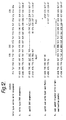
- the sequence of the mature subtilisin is included (along with the additional information contributed by the present work) in Figure 1. All codon ambiguity for the sequence of amino acids at position 117 through 121 is covered by a pool of eight oligonucleotides of the sequence AA( )AA( )ATGGA( )GT.
- Cells from the transformation mixture were plated at a density of 1-5 x 10 3 transformants per 150 mm plate containing LB medium + 12.5 ⁇ g/ml chloramphenicol, and grown overnight at 37°C until visible colonies appeared.
- the plates were then replica plated onto BA85 nitrocellulose filters overlayed on LB/ chloramphenicol plates.
- the replica plates were grown 10-12 hours at 37°C and the filters transferred to fresh plates containing LB and 150 pg/ml spectinomycin to amplify the plasmid pool.
- Bacillus subtilis I-168 (Catalog No. 1-A1, Bacillus Genetic Stock Center) was transformed with pS4 and a single chloramphenicol resistant transformant then grown in minimal medium. After 24 hours, the culture was centrifuged and both the supernatant (10-200 ul) and pellet assayed for proteolytic activity by measuring the change in absorbance per minute at 412 nm using 1 ml of the chromogenic substrate succinyl-L-ala-ala-pro-phe-p-nitroanilide (0.2 ⁇ M) in 0.1 M sodium phosphate (pH 8.0) at 25°C.
- succinyl-L-ala-ala-pro-phe-p-nitroanilide 0.2 ⁇ M
- 0.1 M sodium phosphate pH 8.0
- subtilis 1-168 culture transformed with pBS42 used as a control showed less than 1/200 of the activity shown by the pS4 transformed culture. Greater than 95 percent of the protease activity of the pS4 culture was present in the supernatant, and was completely inhibited by treatment with phenylmethylsulfonyl fluoride (PMSF) but not by EDTA.
- PMSF phenylmethylsulfonyl fluoride
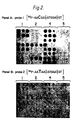
- Lane 2 which is the supernatant from pBS42 transformed B. subtilis, does not give the 31,000 MW band associated with subtilisin which is exhibited by Lane 1 from pS4 transformed hosts.
- the approximately 31,000 MW band result for subtilisin is characteristic of the slower mobility shown by the known M.W. 27,500 subtilisin preparations in general.
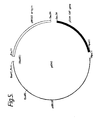
- pBS42 is formed by three-way ligation of fragments derived from pUB110, pC194, and pBR322 (see Figure 5).
- the fragment from pUB110 is the approximately 2600 base pair fragment between the Hpall site at 1900 and the BamH1 site at 4500 and contains an origin of replication operable in Bacillus: T. Grycztan, et al., 1978 "J. Bacteriol.," 134: 318 (1978); A. Jalanko, et al., 1981 "Gene", 14: 325.
- the BamHl site was tested with Klenow.
- the pBR322 portion is the 1100 base pair fragment between the Pvull site at 2067 and the Sau3A site at 3223 which contains the E.
- the pC194 fragment is the 1200 base pair fragment between the Hpall site at 973 and the Sau3A site at 2006 which contains the gene for chloramphenicol resistance expressible in both E. coli and B. subtilis: S. Ehrlich, "Proc. Natl. Acad. Sci. (USA)", ' 74: 1680; S. Horynuchi et al., 1982, "J. Bacteriol", 150: 815.
- pBS42 thus contains origins of replication operable both in E. coli and in Bacillus and an expressible gene for chloramphenicol resistance.
- B. subtilis 1168 chromosomal DNA was digested with EcoRl and the fragments resolved on gel electrophoresis.
- a single 6 kb fragment hybridized to a [ ⁇ - 32 P] CTP nick translation - labelled fragment obtained from the C-terminus of the subtilisin structural gene in pS4, described above.
- the 6 kb fragment was electroluted and ligated into pBS42 which had been digested with EcoRI and treated with bacterial alkaline phosphatase.
- E coli ATCC 31446 was transformed with the ligation mixture and transformants selected by growth on LB agar containing 12.5 ug chloramphenicol/ml. Plasmid DNA was prepared from a pooled suspension of 5,000 transformed colonies.
- This DNA was transformed into B. subtilis BG84, a protease deficient strain, the preparation of which is described in Example 8 below. Colonies which produced protease were screened by plating on LB agar plus 1.5 percent w/w Carnation powdered nonfat skim milk and 5 pg chloramphenicol/ml (hereafter termed skim milk selection plates) and devisving for zones of clearance evidencing proteolytic activity.
- Plasmid DNA was prepared from protease producing colonies, digested with EcoRl, and examined by Southern analysis for the presence of the 6 kb EcoRl insert by hybridization to the 32 P-labelled C-terminus fragment of the subtilisin structural gene from B. amyloliquefaciens. A positive clone was identified and the plasmid was designated pS168.1.
- B. subtilis BG84 transformed with pS168.1 excreted serine protease at a level 5-fold over that produced in B. subtilis 1168.
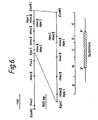
- FIG. 6 A restriction map of the 6.5 kb EcoRl insert is shown in Fig. 6.
- the subtilisin gene was localized to within the 2.5 kb Kpni-EcoRl fragment by subcloning various restriction enzyme digests and testing for expression of subtilisin in B. subtilis BG84.
- Southern analysis with the labelled fragment from the C-terminus of the B. amyloliquefaciens subtilisin gene as a probe localized the C-terminus of the B. subtilis gene to within or part of the 631 bp Hincll fragment B in the center of this subclone (see Fig. 6).
- the tandem Hincll fragments B, C, and D and Hincll-EcoRl fragment E Fig.
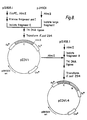
- pS168.1 which contained the 6.5 kb insert originally recovered from the B. subtilis genomic library as described in Example 5 above, was digested with EcoRl, the reaction products treated with Klenow, the DNA digested with Hincll, and the 800 bp EcoRl-Hincll fragment E (see Fig. 6) that contains, in part, the 5' end of the B. subtilis subtilisin gene, was recovered.
- This fragment was ligated into pJH101 (pJH101 is available from J. Hoch (Scripps) and is described by F. A.
- pIDV1 The resultant plasmid, pIDV1 contained fragment E in the orientation shown in Fig. 8.
- pS168.1 was digested with Hincll and the 700 bp Hincll fragment B, which contains the 3' end of the subtilisin gene, was recovered.
- plDV1 was digested at its unique Hincll site and fragment B ligated to the linearized plasmid, transformed E. coli ATCC 31,446, and selected on LB plates containing 12.5 pg chloramphenicol/ml or 20 pg ampicillin/ml.
- pIDV1.4 contained fragment B in the correct orientation with respect to fragment E.
- This plasmid pIDV1.4 shown in Fig. 8, is a deletion derivate of the subtilisin gene containing portions of the 5' and 3' flanking sequences as well.
- B. subtilis BG77 a partial protease-deficient mutant (Prt +/- ) prepared in Example 8 below was transformed with pIDV1.4.
- Two classes of chloramphenicol resistant (Cm r ) transformants were obtained. Seventy-five percent showed the same level of proteases as BG77 Prt +/- ) and 25 percent were almost completely protease deficient (Prt-) as observed by relative zones of clearing on plates containing LB agar plus skim milk.
- the Cm r Prt- transformants could not be due to a single crossover integration of the plasmid at the homologous regions for fragment E or B because, in such a case, the gene would be uninterrupted and the phenotype would be Prt +/- .
- the labelled pool containing sequences conforming closest to a unique sequence in a B. subtilis genome was selected by digesting B. subtilis (1A72, Bacillus Genetic Stock Center) DNA with various restriction enzymes, separating the digests on an electrophoresis gel, and hybridizing each of the four probe pools to each of the blotted digests under increasingly stringent conditions until a single band was seen to hybridize.
- Increasingly stringent conditions are those which tend to disfavor hybridization, e.g., increases in formamide concentration, decreases in salt concentration and increases in temperature.
- a lambda library of B. subtilis strain BGSC 1-A72 was prepared in conventional fashion by partial digestion of the Bacillus genomic DNA by Sau3A, separation of the partial digest by molecular weight on an electrophoresis gel, elution of 15-20 kb fragments (R. Lawn et al., 1981, "Nucleic Acids Res.” 9: 6103 ⁇ 6114), and ligation of the fragments to BamHl digested charon 30 phage using a Packagene kit from Promega Biotec.
- E. coli DP50supF was used as the host for the phage library, although any known host for Charon lambda phage is satisfactory.
- the E coli host was plated with the library phage and cultured, after which plaques were assayed for the presence of the neutral protease gene by transfer to nitrocellulose and screening with probe pool 4 (Benton and Davis, 1977, "Science” 196: 180-182). Positive plaques were purified through two rounds of single plaque purification, and two plaques were chosen for further study, designated ⁇ NPRG1 and ⁇ NPRG2.
- DNA was prepared from each phage by restriction enzyme hydrolysis and separation on electrophoresis gels. The separated fragments were blotted and hybridized to labelled pool 4 oligonucleotides.
- ⁇ NPRG1 contained a 2400 bp Hindlll hybridizing fragment, but no 4300 EcoRI fragment
- ⁇ NPRG2 contained a 4300 bp EcoRl fragment, but no 2400 bp Hindlll fragment.
- the 2400 bp ⁇ NPRG1 fragment was subcloned into the Hindlll site of pJH101 by the following method.
- ⁇ NPRG1 was digested by Hindlll, the digest fractionated by electrophoresis and the 2400 pb fragment recovered from the gel.
- the fragment was ligated to alkaline phosphatase-treated Hindlll digested pJH101 and the ligation mixture used to transform E coli ATCC 31446 by the calcium chloride shock method of V. Hershfield et al., 1974, "Proc. Nat. Acad. Sci. (U.S.A.)" 79: 3455-3459).
- Transformants were identified by selecting colonies capable of growth on plates containing LB medium plus 12.5 ⁇ g chloramphenicol/ml.
- Transformant colonies yielded several plasmids.
- the orientation of the 2400 bp fragment in each plasmid was determined by conventional restriction analysis (orientation is the sense reading or transcriptional direction of the gene fragment in relation to the reading direction of the expression vector into which it is ligated). Two plasmids with opposite orientations were obtained and designated pNPRsubH6 and pNPRsubH1.
- the 4300 pb EcoRl fragment of ⁇ NPRG2 was subcloned into pBR325 by the method described above for the 2400 bp fragment except that ⁇ NPRG2 was digested with EcoRl and the plasmid was alkaline phosphatase-treated, EcoRl-digested pBR325.
- pBR325 is described by F. Bolivar, 1978, "Gene” 4: 121-136.
- Two plasmids were identified in which the 4300 bp insert was present in different orientations. These two plasmids were designated pNPRsubRI and pNPRsubRlb.
- the pNPRsubH1 insert was sequentially digested with different restriction endonucleases and blot hybridized with labelled pool 4 in order to prepare a restriction map of the insert (for general procedures of restriction mapping see T. Maniatis et al., ld., p. 377).
- a 430 bp Rsal fragment was the smallest fragment that hybridized to probe pool 4.
- the Rsal fragment was ligated into the Smal site of M13 mp8 (J. Messing et a/., 1982, "Gene” 19: 269-276 and J. Messing in Methods in Enzymology, 1983, R.
- the sequences of the various fragments from restriction enzyme digests were compared and an open reading frame spanning a codon sequence translatable into the amino and carboxyl termini of the protease (P. Levy et al., ld.) was determined.
- An open reading frame is a DNA sequence commencing at a known point which in reading frame (every three nucleotides) does not contain any internal termination codons.
- the open reading frame extended past the amino terminus to the end of the 2400 pb Hindlll fragment.
- the 1300 bp Bglll-Hindlll fragment was prepared from pNPRsubRlb (which contained the 4300 bp EcoRl fragment of ⁇ NPRG2) and cloned in M13 mp8.
- the sequence of this fragment which contained the portion of the neutral protease leader region not encoded by the 2400 bp fragment of pNPRsubH1, was determined for 400 nucleotides upstream from the Hindlll site
- Fig. 10 The entire nucleotide sequence as determined for this neutral protease gene, including the putative secretory leader and prepro sequence, are shown in Fig. 10. The numbers above the line refer to amino acid positions.
- the underlined nucleotides in Fig. 10 are believed to constitute the ribosome binding (Shine-Dalgarno) site, while the overlined nucleotides constitute a potential hairpin structure presumed to be a terminator.
- the first 27-28 of the deduced amino acids are believed to be the signal for the neutral protease, with a cleavage point at ala-27 or ala-28.
- the "pro" sequence of a proenzyme structure extends to the amino-terminal amino acid (ala-222) of the mature, active enzyme.
- a high copy plasmid carrying the entire neutral protease gene was constructed by (Fig. 11) ligating the Bglll fragment of pNPRsubR1, which contains 1900 bp (Fig. 9), with the Pvull-Hindlll fragment of pNPRsubH1, which contains 1400 bp.
- pBS42 (from Example 4) was digested with BamHl and treated with bacterial alkaline phosphatase to prevent plasmid recircularization.
- pNPRsubR1 was digested with Bglll, the 1900 bp fragment was isolated from gel electrophoresis and ligated to the open BamHl sites of pBS42. The ligated plasmid was used to transform E.
- coli ATCC 31446 by the calcium chloride shock method (V. Hershfield et al., ld.), and transformed cells selected by growth on plates containing LB medium with 12.5 ⁇ g/ml chloramphenicol.
- a plasmid having the Bgl II fragment in the orientation shown in Fig. 11 was isolated from the transformants and designated pNPRsubB1.
- pNPRsubB1 was digested (linearized) with EcoRl, repaired to flush ends by Klenow treatment and then digested with Hindlll. The larger fragment from the Hindlll digestion (containing the sequence coding for the amino terminal and upstream regions) was recovered.
- the carboxyl terminal region of the gene was supplied by a fragment from pNPRsubH1, obtained by digestion of pNPRsubH1 with Pvull and Hindlll and recovery of the 1400 bp fragment.
- the flush end Pvull and the Hindlll site of the 1400 bp fragment was ligated, respectively, to the blunted EcoRl and the Hindlll site of pNPRsubB1, as shown in Fig. 11.
- This construct was used to transform B, subtilis strain BG84 which otherwise excreted no proteolytic activity by the assays described below. Transformants were selected on plates containing LB medium plus 1.5 percent carnation powdered nonfat milk and 5 pg/ml chloramphenicol. Plasmids from colonies that cleared a large halo were analyzed. Plasmid pNPR10, incorporating the structural gene and flanking regions of the neutral protease gene, was determined by restriction analysis to have the structure shown in Fig. 11.
- B. subtilis strain BG84 was produced by N-methyl-N'-nitro-N-nitrosoguanidine (NTG) mutagenesis of B. subtilis 1168 according to the general technique of Adelbert et al., 1965, "Biochem. Biophys. Res. Commun.” 18 788-795.
- Mutagenized strain 1168 was plated on skim milk plates (without antibiotic). Colonies producing a smaller halo were picked for further analysis. Each colony was characterized for protease production on skim milk plates and amylase production on starch plates.
- the protease deficiency mutation was designated prt-77.
- the prt-77 allele was moved to a spoOA background by congression as described below to produce strain BG84, a sporulation deficient strain.
- BG84 was completely devoid of protease activity on skim milk plates and does not produce detectable levels of either subtilisin or neutral protease when assayed by measuring the change in absorbance at 412 nm per minute upon incubation with 0.2 ⁇ g/ml succinyl (-L-ala-L-ala-L-pro-L-phe) p-nitroanilide (Vega) in 0.1 M sodium phosphate, pH 8, at 25°C. BG84 was deposited in the ATCC as deposit number 39382 on July 21, 1983. Samples for subtilisin assay were taken from late logarithmic growth phase supernatants of cultures grown in modified Schaeffer's medium (T. Leighton etal., 1971, "J. Biol. Chem.” 246: 3189-3195).
- BG84 transformed with pNPR10 was inoculated into minimal media supplemented with 0.1 percent casein hydrolysate and 10 ⁇ g chloramphenicol and cultured for 16 hours. 0.1 ml of culture supernatant was removed and added to a suspension of 1.4 mglml Azocoll proteolytic substrate (Sigma) in 10 mM Tris-HCI, 100 mM NaCI pH 6.8 and incubating with agitation. Undigested substrate was removed by centrifugation and the optical density read at 505 nm. Background values of an Azocoll substrate suspension were subtracted. The amount of protease excreted by a standard protease-expressing strain, BG16 was used to establish an arbitrary level of 100.
- the two Rsal bounded regions in the 2400 bp insert of pNPRsubH1, totalling 527 bp, can be deleted in order to produce an incomplete structural gene.
- the translational products of this gene are enzymatically inactive.
- a plasmid having this deletion was constructed as follows. pJH101 was cleaved by digestion with Hindlll and treated with bacterial alkaline phosphatase. The fragments of the neutral protease gene to be incorporated into linearized pJH101 were obtained by digesting pNPRsubH1 with Hindlll and Rsal, and recovering the 1200 bp Hindlll-Rsal and 680 bp Rsal-Hindlll fragments by gel electrophoresis.
- Plasmid pNPRsubh1 ⁇ was transformed into B. subtilis strain BG2019 (the subtilisin deleted mutant from Example 6) and chromosomal integrants were selected on skim milk plates. Two types of Cm' transformants were noted, those with parental levels of proteolysis surrounding the colony, and those with almost no zone of proteolysis. Those lacking a zone of proteolysis were picked, restreaked to purify individual colonies, and their protease deficient character on skim milk plates confirmed. One of the Cm', proteolysis deficient colonies was chosen for further studies (designated BG2034).
- Cm s revertants of BG2034 were isolated by overnight growth in LB media containing no Cm, plating for individual colonies, and replica plating on media with and without Cm. Three Cm s revertants were isolated, two of which were protease proficient, one of which was protease deficient (designated BG2036). Hybridization analysis of BG2036 confirmed that the plasmid had been lost from this strain, probably by recombination, leaving only the deletion fragments of subtilisin and neutral protease.
- proteases The growth, sporulation and expression of proteases was examined in strains lacking a functional gene for either the neutral or alkaline protease or both.
- the expression of proteases was examined by a zone of clearing surrounding a colony on a skim milk plate and by measurement of the protease levels in liquid culture supernatants (Table B).
- pS4-5 a derivative of pS4 made according to Wells et al., "Nucleic Acids Res.”, 1983, 11: 7911-7924 was digested with EcoRl and BamHl, and the 1.5 kb EcoRl-BamHl fragment recovered. This fragment was ligated into replicative form M-13 mp9 which had been digested with EcoRl and BamHl (Sanger et al., 1980, "J. Mol. Biol.” 143 161-178. Messing et al., 1981, “Nucleic Acids Research” 9, 304-321. Messing, J. and Vieira, J. (1982) Gene 19,269-276).
- the M-13 mp9 phage ligations were used to transform E. coli strain JM101 and single stranded phage DNA was prepared from a two mL overnight culture.
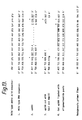
- An oligonucleotide primer was synthesized having the sequence This primer conforms to the sequence of the subtilis gene fragment encoding amino acids 216-232 except that the 10 bp of codons for amino acids 222-225 were deleted, and the codons for amino acids 220, 227 and 228 were mutated to introduce a Kpnl site 5' to the met-222 codon and a Pstl site 3' to the met+222 codon. See Fig. 12.
- Substituted nucleotides are denoted by asterisks, the underlined codons in line 2 represent the new restriction sites and the scored sequence in line 4 represents the inserted oligonucleotides.
- the primer (about 15 ⁇ M) was labelled with [ 32 p] by incubation with [y 32 p]-ATP (10 ⁇ L in 20 ⁇ L reaction) (Amersham 5000 Ci/mmol, 10218) and T 4 polynucleotide kinase (10 units) followed by nonradioactive ATP (100 ⁇ M) to allow complete phosphorylation of the mutagenesis primer.
- the kinase was inactivated by heating the phosphorylation mixture at 68°C for 15 min.
- the primer was hybridized to M-13 mp9 SUBT as modified from Norris et al., 1983, "Nucleic Acids Res.” 11, 5103-5112 by combining 5 ⁇ L of the labelled mutagenesis primer ( ⁇ 3 ⁇ M), 1 ⁇ g M-13 mp9 SUBTtemplate,1 ⁇ L of 1 pM M-13 sequencing primer (17-mer), and 2.5 ⁇ L of buffer (0.3 M Tris pH 8,40 mM MgCl 2 , 12 mM EDTA, 10 mM DTT, 0.5 mg/ml BSA). The mixture was heated to 68°C for 10 minutes and cooled 10 minutes at room temperature.
- the remainder of the digested reaction mixture was diluted to 200 ⁇ L with 10 mM Tris, pH 8, containing 1 mM EDTA, extracted once with a 1:1 (v:v) phenol/chloroform mixture, then once with chloroform, and the aqueous phase recovered.
- 15 ⁇ L of 5M ammonium acetate (pH 8) was added along with two volumes of ethanol to precipitate the DNA from the aqueous phase.
- the DNA was pelleted by centrifugation for five minutes in a microfuge and the supernatant was discarded. 300 ⁇ L of 70 percent ethanol was added to wash the DNA pellet, the wash was discarded and the pellet lyophilized.
- pBS42 from example 4 above was digested with BamH1 and EcoRI and purified on an acrylamide gel to recover the vector.
- 0.5 ⁇ g of the digested vector, 50 pM ATP and 6 units ligase were dissolved in 20 ⁇ l of ligation buffer. The ligation went overnight at 14°C.
- the DNA was transformed into E. coli 294 rec + and the transformants grown in 4 ml of LB medium containing 12.5 pg/ml chloramphenicol. Plasmid DNA was prepared from this culture and digested with Kpnl, EcoRl and BamHI. Analysis of the restriction fragments showed 30-50 percent of the molecules contained the expected Kpnl site programmed by the mutagenesis primer.
- the plasmid population not including the Kpnl site resulted from M-13 replication before bacterial repair of the mutagenesis site, thus producing a heterogenous population of KpnI + and KpnI - plasmids in some of the transformants.
- the DNA was transformed a second time into E. coli to clone plasmids containing the new Kpnl site. DNA was prepared from 16 such transformants and six were found to contain the expected Kpnl site.
- Preparative amounts of DNA were made from one of these six transformants (designated pA222) and restriction analysis confirmed the presence and location of the expected Kpnl and Pstl sites.
- 40 pg of pA222 were digested in 300 ⁇ L of Kpnl buffer plus 30 pL Kpnl (300 units) for 1.5 h at 37°C.
- the DNA was precipitated with ethanol, washed with 70 percent ethanol, and lyophilized.
- the DNA pellet was taken up in 200 ⁇ L Hindlll buffer and digested with 20 ⁇ L (500 units) Pstl for 1.5 h at 37°C.
- the aqueous phase was extracted with phenol/CHCI 3 and the DNA precipitated with ethanol.
- the DNA was dissolved in water and purified by polyacrylamide gel electrophoresis. Following electroelution of the vector band (120 v for 2 h at 0°C in 0.1 times TBE (Maniatis et al., Id.)) the DNA was purified by phenol/CHCI 3 extraction, ethanol precipitation and ethanol washing.
- a large excess of cassettes ( ⁇ 300x over the pA222 ends) was used in the ligation to help prevent intramolecular Kpnl-Kpnl ligation.
- the reaction was diluted by adding 25 ⁇ L of 10 mM tris pH 8 containing 1 mM EDTA.
- the mixture was reannealed to avoid possible cassette concatemer formation by heating to 68°C for five minutes and cooling for 15 minutes at room temperature.
- the ligation mixtures from each pool were transformed separately into E. coli 294 rec + cells.
- a small aliquot from each transformation mixture was plated to determine the number of independent transformants. The large number of transformants indicated a high probability of multiple mutagenesis.
- the rest of the transformants were cultured in 4 ml of LB medium plus 12.5 ⁇ g chloramphenicol/ml. DNA was prepared from each transformation pool (A-D). This DNA was digested with Kpnl, ⁇ 0.1 ⁇ g was used to retransform E. coli rec + and the mixture was plated to isolate individual colonies from each pool. Ligation of the cassettes into the gene and bacterial repair upon transformation destroyed the Kpnl and Pstl sites. Thus, only pA222 was cut when the transformant DNA was digested with Kpnl. The cut plasmid would not transform E coli. Individual transformants were grown in culture and DNA was prepared from 24 to 26 transformants per pool for direct plasmid sequencing. A synthetic oligonucleotide primer having the sequence 5'-GAGCTTGATGTCATGGC-3' was used to prime the dideoxy sequencing reaction. The mutants which were obtained are described in Table C below.
- Two codon+222 mutants (i.e., gln and ile) were not found after the screening described.
- a single 25mer oligonucleotide was synthesized for each mutant corresponding to the top oligonucleotide strand in Figure 12.
- Each was phosphorylated and annealed to the bottom strand of its respective nonphosphorylated oligonucleotide pool (i.e., pool A for gin and pool D for ile). This was ligated into Kpnl and Pstl digested pA222 and processed as described for the original oligonucleotide pools.
- the frequency of appearance for single mutants obtained this way was 2/8 and 0/7 for gln and ile, respectively.
- top strand was phosphorylated and annealed to its unphosphorylated complementary pool.
- the heterophosphorylated cassette was ligated into cut pA222 and processed as before.
- the frequency of appearance of gln and ile mutants was now 7/7 and 7/7, respectively.
- a biased heteroduplex repair observed for the completely unphosphorylated cassette may result from the fact that position 222 is closer to the 5' end of the upper strand than it is to the 5' end of the lower strand (see Figure 12). Because a gap exists at the unphosphorylated 5' ends and the mismatch bubble in the double stranded DNA is at position 222, excision repair of the top strand gap would more readily maintain a circularly hybridized duplex capable of replication. Consistent with this hypothesis is the fact that the top strand could be completely retained by selective 5' phosphorylation. In this case only the bottom strand contained a 5' gap which could promote excision repair. This method is useful in directing biased incorporation of synthetic oligonucleotide strands when employing mutagenic oligonucleotide cassettes.
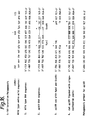
- Examples 13-14 The procedure of Examples 13-14 was followed in substantial detail, except that the mutagenesis primer differed (the 37 mer shown in Fig. 13 was used), the two restriction enzymes were Sacl and Xmalll rather than Pstl and Kpnl and the resulting constructions differed, as shown in Fig. 13.
- Bacillus strains excreting mutant subtilisins at position 166 were obtained as described below in Example 16.
- the mutant subtilisins exhibiting substitutions of ala, asp, gin, phe, his, lys, asn, arg, and val for the wild-type residue were recovered.
- B. subtilis strain BG2036 obtained by the method of Example 11 was transformed by the plasmids of Examples 14,15 or 20 and by pS4-5 as a control. Transformants were plated or cultured in shaker flasks for 16 to 48 h at 37°C in LB media plus 12.5 pg/ml chloramphenicol. Mutant enzymatically active subtilisin was recovered by dialyzing cell broth against 0.01 M sodium phosphate buffer, pH 6.2. The dialyzed broth was then titrated to pH 6.2 with 1 N HCI and loaded on a 2.5 x 2 cm column of CM cellulose (CM-52 Whatman).
- subtilisins Except mutants at position +222, were eluted with the same buffer made 0.08 N in NaCI.
- the mutant subtilisins at position +222 were each eluted with 0.1 M sodium phosphate, pH 7.0.
- the purified mutant and wild type enzymes were then used in studies of oxidation stability, Km, Kcat, Kcat/Km ratio pH optimum, and changes in substrate specificity.
- Subtilisins having cysteine and alanine substituted at the 222 position for wild-type methionine were assayed for resistance to oxidation by incubating with various concentrations of sodium hypochloride (Clorox Bleach).
- the Kcat/Km ratio for each of the mutants varied from that of the wild-type enzyme. As a measure of catalytic efficiency, these ratios demonstrate that enzymes having much higher activity against a given substrate can be readily designed and selected by screening in accordance with the invention herein. For example, A166 exhibits over 2 times the activity of the wild type on sAAPFpN.
- the pH profile of the Cys+222 mutant obtained in Example 16 was compared to that of the wild type enzyme. 10 ⁇ l of 60 mg/ml sAAPFpN in DMSO, 10 ⁇ l of Cys+222 (0.18 mg/ml) or wild type (0.5 mg/ml) and 980 pl of buffer (for measurements at pH 6.6, 7.0 and 7.6, 0.1 M NaP0 4 buffer; at pH 8.2, 8.6 and 9.2, 0.1 M tris buffer; and at pH 9.6 and 10.0, 0.1 M glycine buffer), after which the initial rate of change in absorbance at 410 nm per minute was measured at each pH and the data plotted in Fig. 15.
- the Cys+222 mutant exhibits a sharper pH optimum than the wild type enzyme.
- Bacillus strains excreting mutant subtilisins at position 169 were obtained as described below in Example 16.
- the mutant subtilisins exhibiting substitutions of ala and ser for the wild-type residue were recovered and assayed for changes in kinetic features.
- the assay employed SAAPFpN at pH 8.6 in the same fashion as set forth in Example 18. The results were as follows:
- Position 166 mutants from Examples 15 and 16 were assayed for alteration of specific activity on a naturally occurring protein substrate. Because these mutant proteases could display altered specificity as well as altered specific activity, the substrate should contain sufficient different cleavage sites i.e., acidic, basic, neutral, and hydrophobic, so as not to bias the assay toward a protease with one type of specificity. The substrate should also contain no derivitized residues that result in the masking of certain cleavage sites. The widely used substrates such as hemoglobin, azocollogen, azocasein, dimethyl casein, etc., were rejected on this basis. Bovine casein, a and a 2 chains, was chosen as a suitable substrate.
- a 1 percent casein (w/v) solution was prepared in a 100 mM Tris buffer, pH 8.0, 10 mM EDTA.
- the assay protocol is as follows:
- This assay mixture was mixed and allowed to incubate at room temperature for 20 minutes. The reaction was terminated upon the addition of 100 pl 100 percent trichloroacetic acid, followed by incubation for 15 minutes at room temperature. The precipitated protein was pelleted by centrifugation and the optical density of the supernatant was determined spectrophotometrically at 280 nm. The optical density is a reflection of the amount of unprecipitated, i.e., hydrolyzed, casein in the reaction mixture. The amount of casein hydrolysed by each mutant protease was compared to a series of standards containing various amounts of the wild type protease, and the activity is expressed as a percentage of the corresponding wild type activity. Enzyme activities were converted to specific activity by dividing the casein hydrolysis activity by the 280 nm absorbance of the enzyme solution used in the assay.
Landscapes
- Life Sciences & Earth Sciences (AREA)
- Chemical & Material Sciences (AREA)
- Health & Medical Sciences (AREA)
- Engineering & Computer Science (AREA)
- Genetics & Genomics (AREA)
- Organic Chemistry (AREA)
- Wood Science & Technology (AREA)
- Bioinformatics & Cheminformatics (AREA)
- Zoology (AREA)
- Biotechnology (AREA)
- Biomedical Technology (AREA)
- General Engineering & Computer Science (AREA)
- General Health & Medical Sciences (AREA)
- Microbiology (AREA)
- Biochemistry (AREA)
- Molecular Biology (AREA)
- Physics & Mathematics (AREA)
- Biophysics (AREA)
- Plant Pathology (AREA)
- Medicinal Chemistry (AREA)
- Crystallography & Structural Chemistry (AREA)
- Tropical Medicine & Parasitology (AREA)
- Virology (AREA)
- Oil, Petroleum & Natural Gas (AREA)
- Chemical Kinetics & Catalysis (AREA)
- Micro-Organisms Or Cultivation Processes Thereof (AREA)
- Enzymes And Modification Thereof (AREA)
- Detergent Compositions (AREA)
- Saccharide Compounds (AREA)
- Preparation Of Compounds By Using Micro-Organisms (AREA)
- Measuring Or Testing Involving Enzymes Or Micro-Organisms (AREA)
Claims (22)
Prüfen in bezug auf eine gewünschte Aktivitätsveränderung in dem Enzym umfaßt, die sich aus der genannten Mutation ergibt.
Priority Applications (3)
| Application Number | Priority Date | Filing Date | Title |
|---|---|---|---|
| AT87200690T ATE88750T1 (de) | 1983-06-24 | 1984-06-22 | Bacillus, der weder subtilisin noch neutrale protease ausscheiden kann. |
| AT84304252T ATE60797T1 (de) | 1983-06-24 | 1984-06-22 | Prokaryotische carbonyl-hydrolasen, verfahren, dna, vektoren und transformierte wirte zu ihrer herstellung und diese hydrolasen enthaltende detergenszusammensetzungen. |
| SG675/93A SG67593G (en) | 1983-06-24 | 1993-05-21 | Dna mutagenesis method |
Applications Claiming Priority (12)
| Application Number | Priority Date | Filing Date | Title |
|---|---|---|---|
| US50741983A | 1983-06-24 | 1983-06-24 | |
| US61461684A | 1984-05-29 | 1984-05-29 | |
| US61461584A | 1984-05-29 | 1984-05-29 | |
| US61449184A | 1984-05-29 | 1984-05-29 | |
| US61461784A | 1984-05-29 | 1984-05-29 | |
| US507419 | 1984-05-29 | ||
| US614616 | 1984-05-29 | ||
| US614617 | 1984-05-29 | ||
| US614491 | 1984-05-29 | ||
| US614612 | 1984-05-29 | ||
| US614615 | 1984-05-29 | ||
| US06/614,612 US4760025A (en) | 1984-05-29 | 1984-05-29 | Modified enzymes and methods for making same |
Related Child Applications (5)
| Application Number | Title | Priority Date | Filing Date |
|---|---|---|---|
| EP87200690A Division EP0246678B1 (de) | 1983-06-24 | 1984-06-22 | Bacillus, der weder Subtilisin noch neutrale Protease ausscheiden kann |
| EP89202584A Division EP0357157A3 (de) | 1983-06-24 | 1984-06-22 | Prokaryontische Carbonylhydrolasen und Mutanten von diesen sowie Verfahren zu deren Herstellung und deren Verwendung |
| EP87200689.5 Division-Into | 1987-04-13 | ||
| EP87200690.3 Division-Into | 1987-04-13 | ||
| EP89202584.2 Division-Into | 1989-10-13 |
Publications (3)
| Publication Number | Publication Date |
|---|---|
| EP0130756A1 EP0130756A1 (de) | 1985-01-09 |
| EP0130756B1 true EP0130756B1 (de) | 1991-02-06 |
| EP0130756B2 EP0130756B2 (de) | 2000-06-28 |
Family
ID=27560079
Family Applications (4)
| Application Number | Title | Priority Date | Filing Date |
|---|---|---|---|
| EP87200689A Expired EP0247647B1 (de) | 1983-06-24 | 1984-06-22 | Verfahren zur Mutagenese von DNS |
| EP87200690A Expired - Lifetime EP0246678B1 (de) | 1983-06-24 | 1984-06-22 | Bacillus, der weder Subtilisin noch neutrale Protease ausscheiden kann |
| EP89202584A Withdrawn EP0357157A3 (de) | 1983-06-24 | 1984-06-22 | Prokaryontische Carbonylhydrolasen und Mutanten von diesen sowie Verfahren zu deren Herstellung und deren Verwendung |
| EP84304252A Expired - Lifetime EP0130756B2 (de) | 1983-06-24 | 1984-06-22 | Prokaryotische Carbonyl-Hydrolasen, Verfahren, DNA, Vektoren und transformierte Wirte zu ihrer Herstellung und diese Hydrolasen enthaltende Detergenszusammensetzungen |
Family Applications Before (3)
| Application Number | Title | Priority Date | Filing Date |
|---|---|---|---|
| EP87200689A Expired EP0247647B1 (de) | 1983-06-24 | 1984-06-22 | Verfahren zur Mutagenese von DNS |
| EP87200690A Expired - Lifetime EP0246678B1 (de) | 1983-06-24 | 1984-06-22 | Bacillus, der weder Subtilisin noch neutrale Protease ausscheiden kann |
| EP89202584A Withdrawn EP0357157A3 (de) | 1983-06-24 | 1984-06-22 | Prokaryontische Carbonylhydrolasen und Mutanten von diesen sowie Verfahren zu deren Herstellung und deren Verwendung |
Country Status (8)
| Country | Link |
|---|---|
| EP (4) | EP0247647B1 (de) |
| JP (3) | JP2594533B2 (de) |
| AT (2) | ATE60356T1 (de) |
| DE (3) | DE3486139T2 (de) |
| DK (3) | DK175278B1 (de) |
| HK (3) | HK75393A (de) |
| IE (1) | IE81141B1 (de) |
| NZ (1) | NZ208612A (de) |
Cited By (87)
| Publication number | Priority date | Publication date | Assignee | Title |
|---|---|---|---|---|
| EP0133756A3 (de) * | 1983-07-06 | 1986-10-01 | Genex Corporation | Vektor für die Expression von Polypeptiden |
| DE3527913A1 (de) * | 1985-08-03 | 1987-02-12 | Henkel Kgaa | Alkalische protease, verfahren zur herstellung von hybridvektoren und genetisch transformierte mikroorganismen |
| EP0149241A3 (en) * | 1983-12-28 | 1987-05-27 | Agency Of Industrial Science And Technology | Dna base sequence containing regions involved in the production and secretion of a protein, recombinant dna including the whole or a part of the dna base sequence, and method of producing proteins by use of the recombinant dna |
| WO1987004461A1 (en) * | 1986-01-15 | 1987-07-30 | Amgen | THERMALLY STABLE AND pH STABLE SUBTILISIN ANALOGS AND METHOD FOR PRODUCTION THEREOF |
| EP0245051A1 (de) * | 1986-05-06 | 1987-11-11 | The Board Of Trustees Of The Leland Stanford Junior University | Cytotoxische Zusammensetzung aus "Killer"-Zellen |
| EP0195078A4 (de) * | 1984-09-21 | 1988-01-25 | Genex Corp | Bazillus-stämme mit erniedrigten extrazellularen proteasespiegeln. |
| EP0213085A3 (en) * | 1985-07-10 | 1988-03-16 | Eniricerche S.P.A. | Vector for the expression and secretion of heterologous gene products in bacillus subtilis |
| EP0162067A4 (de) * | 1983-10-28 | 1988-03-22 | Genetics Inst | Herstellung des faktors viii und damit verwandte erzeugnisse. |
| EP0260350A1 (de) * | 1986-09-05 | 1988-03-23 | Cetus Oncology Corporation | Oxidationsresistente Muteine von beta-Interferon, deren Herstellung und diese Muteine enthaltende Präparate |
| US4752585A (en) * | 1985-12-17 | 1988-06-21 | Cetus Corporation | Oxidation-resistant muteins |
| EP0200280A3 (en) * | 1985-01-18 | 1988-08-24 | Cetus Corporation | Oxidation resistant il-2 muteins and their production, formulations containing such muteins, and dna sequences and expression vectors coding for such muteins and corresponding transformed host cells |
| EP0199405A3 (en) * | 1985-04-15 | 1988-08-31 | The Procter & Gamble Company | Liquid detergents containing surfactant, proteolytic enzyme and boric acid |
| EP0199404A3 (en) * | 1985-04-15 | 1988-08-31 | The Procter & Gamble Company | Liquid detergents containing anionic surfactant, builder and proteolytic enzyme |
| WO1988006623A1 (en) * | 1987-02-27 | 1988-09-07 | Gist-Brocades N.V. | Stable gene amplification in chromosomal dna of prokaryotic microorganisms |
| WO1988006624A3 (en) * | 1987-02-27 | 1988-11-17 | Gist Brocades Nv | Molecular cloning and expression of genes encoding proteolytic enzymes |
| EP0251446A3 (en) * | 1986-04-30 | 1988-11-23 | Genentech, Inc. | Non-human carbonyl hydrolase mutants, dna sequences and vectors encoding same and hosts transformed with said vectors |
| EP0283075A3 (de) * | 1987-02-27 | 1988-12-14 | Gist-Brocades N.V. | Molekulare Klonierung und Expression von proteolytische Enzyme kodierenden Genen |
| US4801537A (en) * | 1984-06-08 | 1989-01-31 | Genex Corporation | Vector for expression of polypeptides in bacilli |
| WO1989004361A1 (en) * | 1987-11-02 | 1989-05-18 | Novo-Nordisk A/S | Enzymatic detergent composition |
| WO1989004866A1 (en) * | 1987-11-27 | 1989-06-01 | Celltech Limited | Bacillus cells |
| EP0316018A3 (de) * | 1985-03-29 | 1989-07-26 | Cetus Oncology Corporation | Modifikation von DNS-Sequenzen |
| US4853871A (en) * | 1987-04-06 | 1989-08-01 | Genex Corporation | Computer-based method for designing stablized proteins |
| EP0328229A1 (de) * | 1988-02-11 | 1989-08-16 | Genencor International Inc. | Proteolytische Enzyme und ihre Verwendung in Waschmitteln |
| US4865983A (en) * | 1987-12-04 | 1989-09-12 | W. R. Grace & Co.-Conn. | Cleaning compositions containing protease produced by vibrio and method of use |
| WO1989009830A1 (en) * | 1988-04-12 | 1989-10-19 | Genex Corporation | Subtilisin mutations |
| EP0260105A3 (en) * | 1986-09-09 | 1990-02-14 | Genencor, Inc. | Preparation of enzymes having altered activity |
| US4908773A (en) * | 1987-04-06 | 1990-03-13 | Genex Corporation | Computer designed stabilized proteins and method for producing same |
| US4939666A (en) * | 1987-09-02 | 1990-07-03 | Genex Corporation | Incremental macromolecule construction methods |
| EP0309879A3 (de) * | 1987-10-01 | 1990-07-11 | W.R. Grace & Co.-Conn. | Molekulare Klonierung und Expression von Neutral-Protease-Genen |
| EP0407225A1 (de) * | 1989-07-07 | 1991-01-09 | Unilever Plc | Enzyme und enzymhaltiges Reinigungsmittel |
| EP0414297A1 (de) * | 1989-08-11 | 1991-02-27 | Gist-Brocades N.V. | Ergiebige Herstellung von Protease-Mutanten |
| WO1991006637A1 (en) * | 1989-10-31 | 1991-05-16 | Genencor International, Inc. | Subtilisin mutants |
| EP0430637A1 (de) * | 1989-11-27 | 1991-06-05 | NIHON CHEMICAL RESEARCH KABUSHIKI KAISHA also known as JAPAN CHEMICAL RESEARCH CO., LTD | Fibrinolytisches Protein und Herstellungsweise dafür |
| US5030378A (en) * | 1990-01-02 | 1991-07-09 | The Procter & Gamble Company | Liquid detergents containing anionic surfactant, builder and proteolytic enzyme |
| US5041378A (en) * | 1987-08-11 | 1991-08-20 | Cetus Corporation | Procaryotic xylose isomerase muteins |
| EP0415296A3 (en) * | 1989-08-31 | 1991-10-02 | Kali-Chemie Aktiengesellschaft | High alkaline proteases |
| EP0462632A1 (de) * | 1983-10-28 | 1991-12-27 | Genetics Institute, Inc. | Verfahren zur Herstellung von gewünschten menschlichen Proteinen durch Rekombinant-DNA-Techniken |
| US5118623A (en) * | 1988-05-27 | 1992-06-02 | Solvay Enzymes, Inc. | Bleach stable enzymes |
| US5246849A (en) * | 1988-04-12 | 1993-09-21 | Enzon, Inc. | Thermally stable serine proteases |
| US5316935A (en) * | 1992-04-06 | 1994-05-31 | California Institute Of Technology | Subtilisin variants suitable for hydrolysis and synthesis in organic media |
| US5324653A (en) * | 1988-02-11 | 1994-06-28 | Gist-Brocades N.V. | Recombinant genetic means for the production of serine protease muteins |
| US5352603A (en) * | 1989-08-31 | 1994-10-04 | Kali-Chemie Ag | Highly alkaline proteases |
| US5364554A (en) * | 1986-06-09 | 1994-11-15 | The Clorox Company | Proteolytic perhydrolysis system and method of use for bleaching |
| US5389307A (en) * | 1990-11-14 | 1995-02-14 | Novo Nordisk A/S | Detergent composition comprising an alkyl sulfate and a subtilisin variant |
| US5411873A (en) * | 1984-05-29 | 1995-05-02 | Genencor, Inc. | Process for producing heterologous polypeptides |
| US5419853A (en) * | 1992-05-13 | 1995-05-30 | The Procter & Gamble Company | Liquid detergents containing anionic surfactant, carboxylate builder, proteolytic enzyme, and alkanolamine |
| US5482849A (en) * | 1990-12-21 | 1996-01-09 | Novo Nordisk A/S | Subtilisin mutants |
| US5741664A (en) * | 1995-03-03 | 1998-04-21 | Genentech, Inc. | Subtilisin variants capable of cleaving substrates containing dibasic residues |
| US5824532A (en) * | 1993-02-11 | 1998-10-20 | Genencor International, Inc. | Oxidativley stable alpha-amylase |
| US5837516A (en) * | 1995-03-03 | 1998-11-17 | Genentech, Inc. | Subtilisin variants capable of cleaving substrates containing basic residues |
| US5840570A (en) * | 1988-07-01 | 1998-11-24 | Berka; Randy M. | Aspartic proteinase deficient filamentous fungi |
| US5840522A (en) * | 1984-09-20 | 1998-11-24 | Chiron Corporation | Recombinant lectins |
| WO1999032613A1 (en) | 1997-12-20 | 1999-07-01 | Genencor International, Inc. | Matrix granule |
| US5955340A (en) * | 1984-05-29 | 1999-09-21 | Genencor International, Inc. | Modified subtilisins having amino acid alterations |
| US5958739A (en) * | 1996-06-06 | 1999-09-28 | Genencor International Inc. | Mutant α-amylase |
| US6087315A (en) * | 1993-04-01 | 2000-07-11 | Novo Nordisk A/S | Protease variants |
| US6136553A (en) * | 1991-05-29 | 2000-10-24 | Christianson; Teresa | Mutant proteolytic enzymes and method of production |
| US6156722A (en) * | 1996-12-31 | 2000-12-05 | The Procter & Gamble Company | Laundry detergent compositions comprising dye fixatives |
| US6194370B1 (en) | 1996-12-31 | 2001-02-27 | The Procter & Gamble Company | Cost effective stain and soil removal aqueous heavy duty liquid laundry detergent compositions |
| US6197589B1 (en) | 1994-02-24 | 2001-03-06 | Henkel Kommanditgesellschaft Auf Aktien | Enzymes for detergents |
| US6221825B1 (en) | 1996-12-31 | 2001-04-24 | The Procter & Gamble Company | Thickened, highly aqueous liquid detergent compositions |
| US6287841B1 (en) | 1988-02-11 | 2001-09-11 | Genencor International, Inc. | High alkaline serine protease |
| US6310027B1 (en) | 1998-11-13 | 2001-10-30 | Genencor International, Inc. | Fluidized bed low density granule |
| US6413749B1 (en) | 1998-10-27 | 2002-07-02 | Genencor International, Inc. | Granule containing protein and corn starch layered on an inert particle |
| US6423517B2 (en) | 1997-12-20 | 2002-07-23 | Genecor International, Inc. | Granule containing protein and salt layered on an inert particle |
| US6509021B1 (en) | 1995-08-23 | 2003-01-21 | Henkel Kommanditgesellschaft Auf Aktien | Use of mutated subtilisin protease in cosmetic products |
| US6534466B2 (en) | 1999-01-08 | 2003-03-18 | Genencor International, Inc. | Low-density compositions and particulates including same |
| US6558939B1 (en) | 1999-08-31 | 2003-05-06 | Novozymes, A/S | Proteases and variants thereof |
| US6602841B1 (en) | 1997-12-20 | 2003-08-05 | Genencor International, Inc. | Granule with hydrated barrier material |
| US6653093B1 (en) | 1997-12-20 | 2003-11-25 | Genencor International, Inc. | Accelerated stability test |
| US6855548B2 (en) | 2000-02-08 | 2005-02-15 | F. Hoffman-La Roche Ag | Use of acid-stable proteases in animal feed |
| US6929939B2 (en) | 2001-03-23 | 2005-08-16 | Genencor International, Inc. | Proteins producing an altered immunogenic response and methods of making and using the same |
| US6960462B2 (en) | 2000-02-08 | 2005-11-01 | Dsm Ip Assets B.V | Use of acid-stable subtilisin proteases in animal feed |
| EP1632561A1 (de) | 1999-10-15 | 2006-03-08 | Genencor International, Inc. | Proteinhaltige Körnchen und Granulatformulierungen |
| US7217554B2 (en) | 1999-08-31 | 2007-05-15 | Novozymes A/S | Proteases and variants thereof |
| US7332320B2 (en) | 2001-12-31 | 2008-02-19 | Genencor International, Inc. | Protease producing an altered immunogenic response and methods of making and using the same |
| US7537922B2 (en) | 1999-08-31 | 2009-05-26 | Novozymes A/S | Proteases and variants thereof |
| US8076113B2 (en) * | 2001-04-02 | 2011-12-13 | Danisco Us Inc. | Method for producing granules with reduced dust potential comprising an antifoam agent |
| US8293702B2 (en) | 2002-10-08 | 2012-10-23 | Danisco Us Inc. | Phenolic binding peptides |
| US8636918B2 (en) | 2011-08-05 | 2014-01-28 | Ecolab Usa Inc. | Cleaning composition containing a polysaccharide hybrid polymer composition and methods of controlling hard water scale |
| US8679366B2 (en) | 2011-08-05 | 2014-03-25 | Ecolab Usa Inc. | Cleaning composition containing a polysaccharide graft polymer composition and methods of controlling hard water scale |
| US8841246B2 (en) | 2011-08-05 | 2014-09-23 | Ecolab Usa Inc. | Cleaning composition containing a polysaccharide hybrid polymer composition and methods of improving drainage |
| US8853144B2 (en) | 2011-08-05 | 2014-10-07 | Ecolab Usa Inc. | Cleaning composition containing a polysaccharide graft polymer composition and methods of improving drainage |
| US8945314B2 (en) | 2012-07-30 | 2015-02-03 | Ecolab Usa Inc. | Biodegradable stability binding agent for a solid detergent |
| US20150152404A1 (en) * | 2001-12-31 | 2015-06-04 | Danisco Us Inc. | Proteases producing an altered immunological response and methods of making and using the same |
| US9267097B2 (en) | 2007-02-15 | 2016-02-23 | Ecolab Usa Inc. | Fast dissolving solid detergent |
| US9365805B2 (en) | 2014-05-15 | 2016-06-14 | Ecolab Usa Inc. | Bio-based pot and pan pre-soak |
Families Citing this family (137)
| Publication number | Priority date | Publication date | Assignee | Title |
|---|---|---|---|---|
| NZ208612A (en) | 1983-06-24 | 1991-09-25 | Genentech Inc | Method of producing "procaryotic carbonyl hydrolases" containing predetermined, site specific mutations |
| JPH0659224B2 (ja) * | 1983-09-12 | 1994-08-10 | 工業技術院長 | Dνa塩基配列及びそのdνa塩基配列を含む組換え体プラスミドの創製法 |
| US6084073A (en) * | 1985-03-25 | 2000-07-04 | Chiron Corporation | Recombinant ricin toxin |
| EP0285123A3 (de) * | 1987-04-03 | 1989-02-01 | Stabra AG | Verfahren zur vollständigen Mutagenese von Nucleinsäuren |
| DE3856593D1 (de) * | 1987-04-06 | 2007-10-04 | Novozymes As | Regelung von elektrostatischen interaktionen an metallionen-Bindungsstellen zur Stabilisierung von Proteinen |
| US4914031A (en) * | 1987-04-10 | 1990-04-03 | Amgen, Inc. | Subtilisin analogs |
| IT1228925B (it) * | 1987-08-07 | 1991-07-10 | Eniricerche Spa | Procedimento per la preparazione dell'ormone della crescita umano |
| EP0319759B1 (de) * | 1987-12-11 | 1993-01-07 | Abbott Laboratories | Verfahren zur Mutagenese mittels oligonukleotid-gerichteter Reparatur eines Strandbruchs |
| DK6488D0 (da) * | 1988-01-07 | 1988-01-07 | Novo Industri As | Enzymer |
| HU200796B (en) * | 1988-07-14 | 1990-08-28 | Richter Gedeon Vegyeszet | Process for producing expression vectors ensuring insertion of nucleotide sequences into e. coli chromosome |
| US5665587A (en) * | 1989-06-26 | 1997-09-09 | Novo Nordisk A/S | Modified subtilisins and detergent compositions containing same |
| US5658871A (en) * | 1989-07-07 | 1997-08-19 | Lever Brothers Company, Division Of Conopco, Inc. | Microbial lipase muteins and detergent compositions comprising same |
| NL8902010A (nl) * | 1989-08-04 | 1991-03-01 | Nl Zuivelonderzoek Inst | Dna-fragment met ten minste een protease-gen, een dergelijk dna-fragment bevattende cloneringsvektor, een gastheercel getransformeerd met een dusdanig opgebouwde cloneringsvektor, alsmede de met dergelijke gastheercellen geproduceerde proteasen resp. bereide produkten zoals voedingsmiddelen. |
| US6271012B1 (en) * | 1989-10-11 | 2001-08-07 | Genencor International, Inc. | Protease muteins and their use in detergents |
| DE69133491T2 (de) * | 1990-01-04 | 2006-07-27 | Genencor International, Inc., Palo Alto | Glucose-Isomerase mit geändertem pH-Optimum |
| IT1239733B (it) * | 1990-02-23 | 1993-11-15 | Eniricerche Spa | Mutanti della proteasi neutra termostabili e mezzi e metodi per la loro preparazione |
| DE4037530A1 (de) * | 1990-11-26 | 1992-05-27 | Henkel Kgaa | Faellungsverfahren fuer exocellulaere proteine |
| US5702931A (en) * | 1991-07-01 | 1997-12-30 | Berlex Laboratories, Inc. | Mutagenesis methods and compositions |
| US5770410A (en) * | 1992-01-30 | 1998-06-23 | Genzyme Corporation | Chiral synthesis with modified enzymes |
| JP3431146B2 (ja) * | 1992-01-30 | 2003-07-28 | ジェンザイム・リミテッド | 改変した酵素によるキラル合成 |
| US5869644A (en) * | 1992-04-15 | 1999-02-09 | The Johns Hopkins University | Synthesis of diverse and useful collections of oligonucleotidies |
| WO1994002597A1 (en) * | 1992-07-23 | 1994-02-03 | Novo Nordisk A/S | MUTANT α-AMYLASE, DETERGENT, DISH WASHING AGENT, AND LIQUEFACTION AGENT |
| US6440717B1 (en) * | 1993-09-15 | 2002-08-27 | The Procter & Gamble Company | BPN′ variants having decreased adsorption and increased hydrolysis |
| US6436690B1 (en) * | 1993-09-15 | 2002-08-20 | The Procter & Gamble Company | BPN′ variants having decreased adsorption and increased hydrolysis wherein one or more loop regions are substituted |
| EP1921147B1 (de) | 1994-02-24 | 2011-06-08 | Henkel AG & Co. KGaA | Verbesserte Enzyme und Detergentien damit |
| USH1468H (en) | 1994-04-28 | 1995-08-01 | Costa Jill B | Detergent compositions containing cellulase enzyme and selected perfumes for improved odor and stability |
| US6599730B1 (en) * | 1994-05-02 | 2003-07-29 | Procter & Gamble Company | Subtilisin 309 variants having decreased adsorption and increased hydrolysis |
| EP0693549A1 (de) | 1994-07-19 | 1996-01-24 | The Procter & Gamble Company | Feste Bleichaktivatorzusammensetzungen |
| PL318209A1 (en) * | 1994-08-11 | 1997-05-26 | Genencor Int | Improved cleaning composition |
| GB9416841D0 (en) * | 1994-08-19 | 1994-10-12 | Finnfeeds Int Ltd | An enzyme feed additive and animal feed including it |
| US6455295B1 (en) * | 1995-03-08 | 2002-09-24 | The Procter & Gamble Company | Subtilisin Carlsberg variants having decreased adsorption and increased hydrolysis |
| US6475765B1 (en) * | 1995-03-09 | 2002-11-05 | Procter & Gamble Company | Subtilisin DY variants having decreased adsorption and increased hydrolysis |
| IL117350A0 (en) * | 1995-03-09 | 1996-07-23 | Procter & Gamble | Proteinase k variants having decreased adsorption and increased hydrolysis |
| US6682924B1 (en) * | 1995-05-05 | 2004-01-27 | Novozymes A/S | Protease variants and compositions |
| ES2115338T3 (es) | 1995-07-13 | 1998-06-16 | Procter & Gamble | Composicion de espumacion para envasado. |
| EP0753567A1 (de) | 1995-07-14 | 1997-01-15 | The Procter & Gamble Company | Beim Waschen weichmachende Zusammensetzungen |
| EP0778342A1 (de) | 1995-12-06 | 1997-06-11 | The Procter & Gamble Company | Waschmittelzusammensetzungen |
| AU5725996A (en) | 1996-05-03 | 1997-11-26 | Procter & Gamble Company, The | Detergent compositions comprising polyamine polymers with improved soil dispersancy |
| US5858948A (en) * | 1996-05-03 | 1999-01-12 | Procter & Gamble Company | Liquid laundry detergent compositions comprising cotton soil release polymers and protease enzymes |
| US6165966A (en) * | 1996-09-24 | 2000-12-26 | The Procter & Gamble Company | Liquid detergents containing proteolytic enzyme and protease inhibitors |
| JP2000506931A (ja) * | 1996-09-24 | 2000-06-06 | ザ、プロクター、エンド、ギャンブル、カンパニー | タンパク質分解酵素とプロテアーゼインヒビターを含有した液体洗剤 |
| US6180586B1 (en) | 1996-09-24 | 2001-01-30 | The Procter & Gamble Company | Liquid laundry detergent compositions containing proteolytic enzyme and protease inhibitors |
| KR19990076798A (ko) * | 1996-10-29 | 1999-10-15 | 요트.게.아. 롤페즈 | 텔레비젼 수상기 |
| JP4044143B2 (ja) | 1996-11-04 | 2008-02-06 | ノボザイムス アクティーゼルスカブ | ズブチラーゼ変異体及び組成物 |
| EP0932667B1 (de) | 1996-11-04 | 2008-10-01 | Novozymes A/S | Subtilase varianten und verbindungen |
| BR9714194A (pt) * | 1996-12-31 | 2000-03-28 | Procter & Gamble | Composições detergentes para a lavagem de tecidos com poliamidas-poliaminas para proporcionar benefìcios na aparência aos tecidos lavados com as memas |
| DE19717346C2 (de) * | 1997-04-24 | 1999-05-20 | Max Planck Gesellschaft | DNA-Sonden, Verfahren und Kit zur Identifizierung Antibiotika-resistenter Bakterienstämme |
| US6080568A (en) * | 1997-08-19 | 2000-06-27 | Genencor International, Inc. | Mutant α-amylase comprising modification at residues corresponding to A210, H405 and/or T412 in Bacillus licheniformis |
| BR9811248B1 (pt) | 1997-08-29 | 2011-10-04 | variante de enzima subtilase derivada de uma subtilase originária selecionada a partir do sub-grupo i-s1 ou do sub-grupo i-s2, dita variante tendo melhorado desempenho de lavagem em detergentes em comparação com a subtilase originária, sequência de dna isolada, vetor de expressão, célula hospedeira microbiana, processo para produzir uma variante, composição, uso de uma variante de subtilase. | |
| JP2001514846A (ja) | 1997-08-29 | 2001-09-18 | ノボ ノルディスク アクティーゼルスカブ | プロテアーゼ変異体及び組成物 |
| EP1032655B1 (de) | 1997-11-21 | 2005-06-29 | Novozymes A/S | Protease-varianten und zusammensetzungen |
| US6773907B2 (en) | 1997-11-21 | 2004-08-10 | Peter Kamp Hansen | Subtilase enzymes |
| US6780629B2 (en) | 1997-11-21 | 2004-08-24 | Novozymes A/S | Subtilase enzymes |
| US6908757B1 (en) | 1998-03-26 | 2005-06-21 | The Procter & Gamble Company | Serine protease variants having amino acid deletions and substitutions |
| ATE504651T1 (de) | 1998-12-18 | 2011-04-15 | Novozymes As | Subtilase enzyme der i-s1- und i-s2-untergruppen mit einem zusätzlichen aminosäurerest in einer aktiven schleifenregion |
| WO2000071688A1 (en) | 1999-05-20 | 2000-11-30 | Novozymes A/S | Subtilase enzymes of the i-s1 and i-s2 sub-groups having at least one additional amino acid residue between positions 126 and 127 |
| ATE408679T1 (de) | 1999-05-20 | 2008-10-15 | Novozymes As | Subtilase enzyme der i-s1 und i-s2 untergruppen mit mindestens einer zusätzlichen aminosäure zwischen position 127 und 128 |
| AU4393000A (en) | 1999-05-20 | 2000-12-12 | Novozymes A/S | Subtilase enzymes of the i-s1 and i-s2 sub-groups having at least one additionalamino acid residue between positions 128 and 129 |
| ATE402996T1 (de) | 1999-05-20 | 2008-08-15 | Novozymes As | Subtilase-enzyme der i-s1 und i-s2 untergruppen mit wenigstens einem zusätzlichen aminosäurerest zwischen positionen 125 und 126 |
| ATE408676T1 (de) | 1999-05-20 | 2008-10-15 | Novozymes As | Subtilase enzyme der i-s1 und i-s2 untergruppen mit mindestens einer zusätzlichen aminosäure zwischen position 132 und 133 |
| DE60040284D1 (de) | 1999-05-20 | 2008-10-30 | Novozymes As | Subtilase enzyme der i-s1 und i-s2 untergruppen mit mindestens einer zusätzlichen aminosäure zwischen position 129 und 130 |
| BR0012660A (pt) | 1999-07-22 | 2002-04-09 | Procter & Gamble | Variante de protease tipo subtilisina; composição de limpeza; e composição de cuidado pessoal |
| MXPA02000842A (es) | 1999-07-22 | 2002-07-30 | Procter & Gamble | Conjugados de proteasa que tienen sitios de corte protegidos estericamente. |
| US6946128B1 (en) | 1999-07-22 | 2005-09-20 | The Procter & Gamble Company | Protease conjugates having sterically protected epitope regions |
| CN1373802A (zh) | 1999-07-22 | 2002-10-09 | 宝洁公司 | 在特定表位区域具有氨基酸缺失和取代的枯草杆菌蛋白酶变体 |
| BR9917481A (pt) * | 1999-09-09 | 2002-05-21 | Procter & Gamble | Composição detergente contendo uma protease |
| CN1398235A (zh) | 1999-09-22 | 2003-02-19 | 宝洁公司 | 手持液体容器 |
| US6727085B2 (en) * | 1999-12-15 | 2004-04-27 | Fanoe Tina Sejersgaard | Subtilase variants having an improved wash performance on egg stains |
| US6777218B1 (en) | 2000-03-14 | 2004-08-17 | Novozymes A/S | Subtilase enzymes having an improved wash performance on egg stains |
| EP1328612B1 (de) | 2000-10-27 | 2007-04-25 | Genencor International, Inc. | Teilchen beschichtet mit substituiertem polyvinylalkohol |
| US6803222B2 (en) * | 2000-11-22 | 2004-10-12 | Kao Corporation | Alkaline proteases |
| US7157416B2 (en) | 2001-07-20 | 2007-01-02 | Genencor International, Inc. | Stabilization of enzymes |
| US7153820B2 (en) | 2001-08-13 | 2006-12-26 | Ecolab Inc. | Solid detergent composition and method for solidifying a detergent composition |
| DE10153792A1 (de) | 2001-10-31 | 2003-05-22 | Henkel Kgaa | Neue Alkalische Protease-Varianten und Wasch- und Reinigungsmittel enthaltend diese neuen Alkalischen Protease-Varianten |
| DE10162727A1 (de) | 2001-12-20 | 2003-07-10 | Henkel Kgaa | Neue Alkalische Protease aus Bacillus gibsonii (DSM 14391) und Wasch-und Reinigungsmittel enthaltend diese neue Alkalische Protease |
| DE10162728A1 (de) | 2001-12-20 | 2003-07-10 | Henkel Kgaa | Neue Alkalische Protease aus Bacillus gibsonii (DSM 14393) und Wasch-und Reinigungsmittel enthaltend diese neue Alkalische Protease |
| DE10163884A1 (de) | 2001-12-22 | 2003-07-10 | Henkel Kgaa | Neue Alkalische Protease aus Bacillus sp. (DSM 14392) und Wasch- und Reinigungsmittel enthaltend diese neue Alkalische Protease |
| DK1495128T3 (da) * | 2002-03-29 | 2014-08-11 | Genencor Int | Forstærket proteinekspression i Bacillus |
| US7888093B2 (en) * | 2002-11-06 | 2011-02-15 | Novozymes A/S | Subtilase variants |
| DE602004007766T2 (de) | 2003-02-07 | 2008-06-05 | Novozymes A/S | Proteasen |
| JP4819670B2 (ja) | 2003-05-07 | 2011-11-24 | ノボザイムス アクティーゼルスカブ | 変異体スブチリシン酵素(サブチラーゼ) |
| DE602004030595D1 (de) | 2003-10-10 | 2011-01-27 | Novozymes As | Proteasevarianten |
| ATE516347T1 (de) | 2003-10-23 | 2011-07-15 | Novozymes As | Protease mit verbesserter stabilität in detergentien |
| BRPI0511171A (pt) | 2004-05-17 | 2007-12-04 | Procter & Gamble | composição de alvejamento compreendendo um carboidrato oxidase |
| ES2380105T3 (es) | 2004-06-21 | 2012-05-08 | Novozymes A/S | Proteasas de Nocardiopsis |
| JP4681283B2 (ja) | 2004-11-18 | 2011-05-11 | 独立行政法人海洋研究開発機構 | 新規な高アルカリプロテアーゼ及びその利用 |
| JP4485341B2 (ja) | 2004-12-20 | 2010-06-23 | 花王株式会社 | 組換え微生物 |
| EP1700904A1 (de) | 2005-03-11 | 2006-09-13 | Unilever N.V. | Flüssige Waschmittelzusammensetzung |
| EP1700907A1 (de) | 2005-03-11 | 2006-09-13 | Unilever N.V. | Flüssige bleichmittelzusammensetzung |
| US7666963B2 (en) | 2005-07-21 | 2010-02-23 | Akzo Nobel N.V. | Hybrid copolymers |
| WO2011017223A1 (en) | 2009-07-31 | 2011-02-10 | Akzo Nobel N.V. | Hybrid copolymer compositions for personal care applications |
| PT2007942E (pt) | 2006-04-14 | 2014-10-07 | Danisco Us Inc | Tratamento de têxteis num passo |
| US20090215663A1 (en) | 2006-04-20 | 2009-08-27 | Novozymes A/S | Savinase variants having an improved wash performance on egg stains |
| US20080020961A1 (en) | 2006-07-21 | 2008-01-24 | Rodrigues Klin A | Low Molecular Weight Graft Copolymers |
| NO20073834L (no) | 2006-07-21 | 2008-01-22 | Akzo Nobel Chemicals Int Bv | Sulfonerte podede kopolymerer |
| WO2008134343A1 (en) | 2007-04-30 | 2008-11-06 | Danisco Us Inc., Genencor Division | Use of protein hydrolysates to stabilize metalloprotease detergent formulations |
| SG148934A1 (en) | 2007-06-11 | 2009-01-29 | Novozymes As | A process for combined biopolishing and bleach clean-up |
| WO2009009493A2 (en) | 2007-07-09 | 2009-01-15 | THE UNITED STATES OF AMERICA, as represented by THE SECRETARY, DEPARTEMENT OF HEALTH AND HUMAN SERVICES | Aegyptin and uses thereof |
| WO2009050684A2 (en) | 2007-10-18 | 2009-04-23 | Ecolab Inc. | Pressed, waxy, solid cleaning compositions and methods of making them |
| DK2205731T3 (da) * | 2007-10-31 | 2013-03-11 | Danisco Us Inc | Anvendelse og fremstilling af citrat-stabile, neutrale metalloproteaser |
| MX346974B (es) | 2008-02-14 | 2017-04-07 | Danisco Us Inc | Granulos pequeños que contienen enzimas. |
| US8293697B2 (en) | 2009-03-18 | 2012-10-23 | The Procter & Gamble Company | Structured fluid detergent compositions comprising dibenzylidene sorbitol acetal derivatives |
| US8153574B2 (en) | 2009-03-18 | 2012-04-10 | The Procter & Gamble Company | Structured fluid detergent compositions comprising dibenzylidene polyol acetal derivatives and detersive enzymes |
| WO2010138347A1 (en) | 2009-05-26 | 2010-12-02 | The Procter & Gamble Company | Aqueous liquid composition for pre-treating soiled dishware |
| DE102009027045A1 (de) * | 2009-06-19 | 2010-12-30 | Henkel Ag & Co. Kgaa | Neue Proteasen und Mittel enthaltend diese Proteasen |
| WO2011005623A1 (en) | 2009-07-09 | 2011-01-13 | The Procter & Gamble Company | Laundry detergent composition comprising low level of bleach |
| US20110009307A1 (en) | 2009-07-09 | 2011-01-13 | Alan Thomas Brooker | Laundry Detergent Composition Comprising Low Level of Sulphate |
| KR101802988B1 (ko) | 2010-05-14 | 2017-12-14 | 헨켈 아이피 앤드 홀딩 게엠베하 | 중합체 함유 세정 조성물, 이의 제조 방법 및 용도 |
| US20130224757A1 (en) * | 2010-08-19 | 2013-08-29 | Novozymes A/S | Induced sporulation screening method |
| JP6023180B2 (ja) | 2011-05-20 | 2016-11-09 | エコラボ ユーエスエー インコーポレイティド | 物品洗浄のための、アルカリ/酸交替系における非ホスフェート洗剤及び非リン酸 |
| CA2856820C (en) | 2011-05-20 | 2019-10-29 | Ecolab Usa Inc. | Acid formulations for use in a system for warewashing |
| JP2014532791A (ja) | 2011-11-04 | 2014-12-08 | アクゾ ノーベル ケミカルズ インターナショナル ベスローテン フエンノートシャップAkzo Nobel Chemicals International B.V. | ハイブリッド樹状コポリマー、その組成物及びそれを製造する方法 |
| US9051406B2 (en) | 2011-11-04 | 2015-06-09 | Akzo Nobel Chemicals International B.V. | Graft dendrite copolymers, and methods for producing the same |
| WO2013088266A1 (en) | 2011-12-13 | 2013-06-20 | Ecolab Usa Inc. | Concentrated warewashing compositions and methods |
| JP6040987B2 (ja) * | 2012-07-06 | 2016-12-07 | 東洋紡株式会社 | 改変型アルカリホスファターゼ |
| WO2014018309A1 (en) | 2012-07-26 | 2014-01-30 | The Procter & Gamble Company | Low ph liquid cleaning compositions with enzymes |
| US9745543B2 (en) | 2012-09-10 | 2017-08-29 | Ecolab Usa Inc. | Stable liquid manual dishwashing compositions containing enzymes |
| WO2014055107A1 (en) | 2012-10-04 | 2014-04-10 | Ecolab Usa Inc. | Pre-soak technology for laundry and other hard surface cleaning |
| US9139458B2 (en) | 2013-03-15 | 2015-09-22 | Janet Angel | Compositions and methods of use |
| CA2921800C (en) | 2013-09-09 | 2018-10-02 | Ecolab Usa Inc. | Synergistic stain removal through novel chelator combination |
| MX394036B (es) | 2013-09-09 | 2025-03-24 | Ecolab Usa Inc | Eliminacion sinergica de manchas a traves de una combinacion de quelacion novedosa. |
| MX395198B (es) | 2013-10-24 | 2025-03-25 | Ecolab Usa Inc | Composiciones y metodos para eliminar suciedades de las superficies. |
| EP3174446B1 (de) | 2014-08-01 | 2019-01-30 | Ecolab USA Inc. | Verfahren zur manuellen reinigung einer oberfläche mit reinigungstextilien und zum waschen dieser reinigungstextilien |
| US10577571B2 (en) | 2016-11-08 | 2020-03-03 | Ecolab Usa Inc. | Non-aqueous cleaner for vegetable oil soils |
| WO2020099491A1 (en) | 2018-11-14 | 2020-05-22 | Novozymes A/S | Oral care composition comprising a polypeptide having dnase activity |
| CN114207101B (zh) | 2019-07-31 | 2024-05-31 | 埃科莱布美国股份有限公司 | 免用个人防护设备的脱灰剂组合物 |
| US11873465B2 (en) | 2019-08-14 | 2024-01-16 | Ecolab Usa Inc. | Methods of cleaning and soil release of highly oil absorbing substrates employing optimized extended chain nonionic surfactants |
| CN110760466B (zh) * | 2019-11-18 | 2021-04-20 | 山东隆科特酶制剂有限公司 | 一株产耐高温中性蛋白酶的枯草芽孢杆菌及其应用 |
| WO2022010893A1 (en) | 2020-07-06 | 2022-01-13 | Ecolab Usa Inc. | Foaming mixed alcohol/water compositions comprising a combination of alkyl siloxane and a hydrotrope/solubilizer |
| WO2022010906A1 (en) | 2020-07-06 | 2022-01-13 | Ecolab Usa Inc. | Peg-modified castor oil based compositions for microemulsifying and removing multiple oily soils |
| CA3185062A1 (en) | 2020-07-06 | 2022-01-13 | Gang Pu | Foaming mixed alcohol/water compositions comprising a structured alkoxylated siloxane |
| US20230332124A1 (en) | 2020-08-24 | 2023-10-19 | Novozymes A/S | Oral care composition comprising a fructanase |
| CN117677689A (zh) | 2021-05-18 | 2024-03-08 | 诺力昂化学品国际有限公司 | 在清洁应用中的聚酯聚季铵盐 |
| EP4341317A1 (de) | 2021-05-20 | 2024-03-27 | Nouryon Chemicals International B.V. | Hergestellte polymere mit veränderter oligosaccharid- oder polysaccharid-funktionalität oder verringerter oligosaccharidverteilung, verfahren zu ihrer herstellung, zusammensetzungen damit und verfahren zu ihrer verwendung |
| WO2023275269A1 (en) | 2021-06-30 | 2023-01-05 | Nouryon Chemicals International B.V. | Chelate-amphoteric surfactant liquid concentrates and use thereof in cleaning applications |
| WO2023057367A1 (en) | 2021-10-08 | 2023-04-13 | Unilever Ip Holdings B.V. | Laundry composition |
| EP4558596A1 (de) | 2022-07-20 | 2025-05-28 | Ecolab USA Inc. | Neue nichtionische verlängerte tenside, zusammensetzungen und verfahren zur verwendung davon |
Family Cites Families (26)
| Publication number | Priority date | Publication date | Assignee | Title |
|---|---|---|---|---|
| US362957A (en) * | 1887-05-17 | haig-ht | ||
| US3557002A (en) | 1967-11-15 | 1971-01-19 | Procter & Gamble | Stabilized aqueous enzyme preparation |
| US3558498A (en) | 1967-11-29 | 1971-01-26 | Procter & Gamble | Granular detergent composition containing enzymes and environmental control components |
| GB1240058A (en) | 1968-04-12 | 1971-07-21 | Procter & Gamble | Enzyme-containing detergent compositions |
| US3623957A (en) | 1970-01-21 | 1971-11-30 | Baxter Laboratories Inc | Preparation of microbial alkaline protease by fermentation with bacillus subtilis, variety licheniformis |
| BE785666A (fr) | 1971-07-01 | 1973-01-02 | Procter & Gamble | Procede pour la production de compositions enzymatiques en granules |
| BE792982A (en) | 1971-12-20 | 1973-06-19 | Procter & Gamble Europ | Proteolytic enzymes detergent - contg cationic and anionic surfactants |
| US4011169A (en) | 1973-06-29 | 1977-03-08 | The Procter & Gamble Company | Stabilization and enhancement of enzymatic activity |
| IT1106254B (it) | 1976-03-08 | 1985-11-11 | Procter & Gamble Europ | Composizione detergente liquida contenente enzimi |
| US4090973A (en) | 1976-06-24 | 1978-05-23 | The Procter & Gamble Company | Method for making stable detergent compositions |
| DE2633601A1 (de) | 1976-07-27 | 1978-02-02 | Henkel Kgaa | Fluessiges, als wasch- und reinigungsmittel verwendbares, enzymhaltiges konzentrat |
| GB1603640A (en) | 1977-07-20 | 1981-11-25 | Gist Brocades Nv | Enzyme particles |
| US4261868A (en) | 1979-08-08 | 1981-04-14 | Lever Brothers Company | Stabilized enzymatic liquid detergent composition containing a polyalkanolamine and a boron compound |
| US4302544A (en) * | 1979-10-15 | 1981-11-24 | University Of Rochester | Asporogenous mutant of B. subtilis for use as host component of HV1 system |
| US4318818A (en) | 1979-11-09 | 1982-03-09 | The Procter & Gamble Company | Stabilized aqueous enzyme composition |
| JPS5950280B2 (ja) | 1980-10-24 | 1984-12-07 | 花王株式会社 | 酵素入り漂白剤組成物 |
| JPS5786299A (en) * | 1980-11-19 | 1982-05-29 | Dai Ichi Seiyaku Co Ltd | Plasmid and its preparation |
| CA1170202A (en) * | 1981-01-15 | 1984-07-03 | Susan Mickel | Process for cloning the gene coding for a thermostable alpha-amylase into escherichia coli and bacillus subtilis |
| US4404128A (en) | 1981-05-29 | 1983-09-13 | The Procter & Gamble Company | Enzyme detergent composition |
| DE3122216A1 (de) * | 1981-06-04 | 1982-12-23 | Boehringer Mannheim Gmbh, 6800 Mannheim | Verfahren zur herstellung eines mikroorganismus, welcher (alpha)-galactosidase, aber keine invertase bildet, so erhaltener mikroorganismus und seine verwendung |
| EP0080748B1 (de) | 1981-11-13 | 1985-07-10 | Unilever N.V. | Enzymatische flüssige Reinigungsmittel-Zusammensetzung |
| JPS58162291A (ja) * | 1982-03-23 | 1983-09-26 | Res Dev Corp Of Japan | 耐熱性プロテア−ゼの製造法 |
| FI88932C (fi) * | 1982-04-15 | 1993-07-26 | Genentech Inc | Framstaellning av funktionellt maenskligt urokinasprotein |
| JPS5959190A (ja) * | 1982-09-29 | 1984-04-04 | Agency Of Ind Science & Technol | プロテア−ゼの製造法 |
| DK135983D0 (da) * | 1983-03-25 | 1983-03-25 | Novo Industri As | Maltogen amylaseenzymprodukt og fremgangsmade til dets fremstilling og anvendelse |
| NZ208612A (en) | 1983-06-24 | 1991-09-25 | Genentech Inc | Method of producing "procaryotic carbonyl hydrolases" containing predetermined, site specific mutations |
-
1984
- 1984-06-21 NZ NZ208612A patent/NZ208612A/en unknown
- 1984-06-21 IE IE156784A patent/IE81141B1/en unknown
- 1984-06-22 DK DK198403059A patent/DK175278B1/da not_active IP Right Cessation
- 1984-06-22 EP EP87200689A patent/EP0247647B1/de not_active Expired
- 1984-06-22 DE DE87200690T patent/DE3486139T2/de not_active Expired - Fee Related
- 1984-06-22 EP EP87200690A patent/EP0246678B1/de not_active Expired - Lifetime
- 1984-06-22 DE DE8484304252T patent/DE3484079D1/de not_active Expired - Lifetime
- 1984-06-22 EP EP89202584A patent/EP0357157A3/de not_active Withdrawn
- 1984-06-22 AT AT87200689T patent/ATE60356T1/de not_active IP Right Cessation
- 1984-06-22 JP JP59129928A patent/JP2594533B2/ja not_active Expired - Lifetime
- 1984-06-22 AT AT84304252T patent/ATE60797T1/de not_active IP Right Cessation
- 1984-06-22 EP EP84304252A patent/EP0130756B2/de not_active Expired - Lifetime
- 1984-06-22 DE DE8787200689T patent/DE3484019D1/de not_active Expired - Lifetime
-
1993
- 1993-07-08 DK DK199300822A patent/DK175768B1/da not_active IP Right Cessation
- 1993-07-08 DK DK082393A patent/DK82393A/da not_active Application Discontinuation
- 1993-07-29 HK HK753/93A patent/HK75393A/en not_active IP Right Cessation
- 1993-07-29 HK HK754/93A patent/HK75493A/en not_active IP Right Cessation
- 1993-09-23 HK HK992/93A patent/HK99293A/en not_active IP Right Cessation
- 1993-09-30 JP JP5244823A patent/JP2889095B2/ja not_active Expired - Lifetime
- 1993-09-30 JP JP5244837A patent/JPH06315378A/ja active Pending
Cited By (116)
| Publication number | Priority date | Publication date | Assignee | Title |
|---|---|---|---|---|
| EP0133756A3 (de) * | 1983-07-06 | 1986-10-01 | Genex Corporation | Vektor für die Expression von Polypeptiden |
| EP0162067A4 (de) * | 1983-10-28 | 1988-03-22 | Genetics Inst | Herstellung des faktors viii und damit verwandte erzeugnisse. |
| EP0462632A1 (de) * | 1983-10-28 | 1991-12-27 | Genetics Institute, Inc. | Verfahren zur Herstellung von gewünschten menschlichen Proteinen durch Rekombinant-DNA-Techniken |
| EP0149241A3 (en) * | 1983-12-28 | 1987-05-27 | Agency Of Industrial Science And Technology | Dna base sequence containing regions involved in the production and secretion of a protein, recombinant dna including the whole or a part of the dna base sequence, and method of producing proteins by use of the recombinant dna |
| US5955340A (en) * | 1984-05-29 | 1999-09-21 | Genencor International, Inc. | Modified subtilisins having amino acid alterations |
| US5939315A (en) * | 1984-05-29 | 1999-08-17 | Adams; Robin Margaret | Process for producing heterologous polypeptides |
| US5411873A (en) * | 1984-05-29 | 1995-05-02 | Genencor, Inc. | Process for producing heterologous polypeptides |
| US4801537A (en) * | 1984-06-08 | 1989-01-31 | Genex Corporation | Vector for expression of polypeptides in bacilli |
| US5840522A (en) * | 1984-09-20 | 1998-11-24 | Chiron Corporation | Recombinant lectins |
| US4828994A (en) * | 1984-09-21 | 1989-05-09 | Genex Corporation | Bacillus strains with reduced extracellular protease levels |
| EP0195078A4 (de) * | 1984-09-21 | 1988-01-25 | Genex Corp | Bazillus-stämme mit erniedrigten extrazellularen proteasespiegeln. |
| EP0200280A3 (en) * | 1985-01-18 | 1988-08-24 | Cetus Corporation | Oxidation resistant il-2 muteins and their production, formulations containing such muteins, and dna sequences and expression vectors coding for such muteins and corresponding transformed host cells |
| AU585084B2 (en) * | 1985-01-18 | 1989-06-08 | Chiron Corporation | Oxidation resistant muteins |
| EP0316018A3 (de) * | 1985-03-29 | 1989-07-26 | Cetus Oncology Corporation | Modifikation von DNS-Sequenzen |
| EP0199404A3 (en) * | 1985-04-15 | 1988-08-31 | The Procter & Gamble Company | Liquid detergents containing anionic surfactant, builder and proteolytic enzyme |
| EP0199405A3 (en) * | 1985-04-15 | 1988-08-31 | The Procter & Gamble Company | Liquid detergents containing surfactant, proteolytic enzyme and boric acid |
| EP0213085A3 (en) * | 1985-07-10 | 1988-03-16 | Eniricerche S.P.A. | Vector for the expression and secretion of heterologous gene products in bacillus subtilis |
| EP0214435A3 (en) * | 1985-08-03 | 1990-01-17 | Henkel Kommanditgesellschaft Auf Aktien | Alkaline protease, method for the production of hybrid vectors and genetically transformed microorganisms |
| DE3527913A1 (de) * | 1985-08-03 | 1987-02-12 | Henkel Kgaa | Alkalische protease, verfahren zur herstellung von hybridvektoren und genetisch transformierte mikroorganismen |
| US4752585A (en) * | 1985-12-17 | 1988-06-21 | Cetus Corporation | Oxidation-resistant muteins |
| US5399283A (en) * | 1986-01-15 | 1995-03-21 | Amgen Inc. | Thermally stable and pH stable subtilisin analogs and method for production thereof |
| WO1987004461A1 (en) * | 1986-01-15 | 1987-07-30 | Amgen | THERMALLY STABLE AND pH STABLE SUBTILISIN ANALOGS AND METHOD FOR PRODUCTION THEREOF |
| EP0251446A3 (en) * | 1986-04-30 | 1988-11-23 | Genentech, Inc. | Non-human carbonyl hydrolase mutants, dna sequences and vectors encoding same and hosts transformed with said vectors |
| EP0245051A1 (de) * | 1986-05-06 | 1987-11-11 | The Board Of Trustees Of The Leland Stanford Junior University | Cytotoxische Zusammensetzung aus "Killer"-Zellen |
| US5364554A (en) * | 1986-06-09 | 1994-11-15 | The Clorox Company | Proteolytic perhydrolysis system and method of use for bleaching |
| EP0260350A1 (de) * | 1986-09-05 | 1988-03-23 | Cetus Oncology Corporation | Oxidationsresistente Muteine von beta-Interferon, deren Herstellung und diese Muteine enthaltende Präparate |
| EP0260105A3 (en) * | 1986-09-09 | 1990-02-14 | Genencor, Inc. | Preparation of enzymes having altered activity |
| EP0284126A1 (de) * | 1987-02-27 | 1988-09-28 | Gist-Brocades N.V. | Stabile Genamplifizierung in prokaryotischer chromosonaler DNA |
| AU620026B2 (en) * | 1987-02-27 | 1992-02-13 | Genencor International, Inc. | Molecular cloning and expression of genes encoding proteolytic enzymes |
| WO1988006623A1 (en) * | 1987-02-27 | 1988-09-07 | Gist-Brocades N.V. | Stable gene amplification in chromosomal dna of prokaryotic microorganisms |
| WO1988006624A3 (en) * | 1987-02-27 | 1988-11-17 | Gist Brocades Nv | Molecular cloning and expression of genes encoding proteolytic enzymes |
| US6124097A (en) * | 1987-02-27 | 2000-09-26 | Dsm N.V. | Stable gene amplification in chromosomal DNA of prokaryotic microorganisms |
| US5733723A (en) * | 1987-02-27 | 1998-03-31 | Gist-Brocades | Stable gene amplification in chromosomal DNA of prokaryotic microorganisms |
| EP0283075A3 (de) * | 1987-02-27 | 1988-12-14 | Gist-Brocades N.V. | Molekulare Klonierung und Expression von proteolytische Enzyme kodierenden Genen |
| US4853871A (en) * | 1987-04-06 | 1989-08-01 | Genex Corporation | Computer-based method for designing stablized proteins |
| US4908773A (en) * | 1987-04-06 | 1990-03-13 | Genex Corporation | Computer designed stabilized proteins and method for producing same |
| US5041378A (en) * | 1987-08-11 | 1991-08-20 | Cetus Corporation | Procaryotic xylose isomerase muteins |
| US4939666A (en) * | 1987-09-02 | 1990-07-03 | Genex Corporation | Incremental macromolecule construction methods |
| EP0309879A3 (de) * | 1987-10-01 | 1990-07-11 | W.R. Grace & Co.-Conn. | Molekulare Klonierung und Expression von Neutral-Protease-Genen |
| WO1989004361A1 (en) * | 1987-11-02 | 1989-05-18 | Novo-Nordisk A/S | Enzymatic detergent composition |
| WO1989004866A1 (en) * | 1987-11-27 | 1989-06-01 | Celltech Limited | Bacillus cells |
| US4865983A (en) * | 1987-12-04 | 1989-09-12 | W. R. Grace & Co.-Conn. | Cleaning compositions containing protease produced by vibrio and method of use |
| EP0319460A3 (en) * | 1987-12-04 | 1990-05-23 | W.R. Grace & Co.-Conn. (A Connecticut Corp.) | Cleaning composition containing protease produced by vibrio |
| US6287841B1 (en) | 1988-02-11 | 2001-09-11 | Genencor International, Inc. | High alkaline serine protease |
| WO1989007642A1 (en) * | 1988-02-11 | 1989-08-24 | Gist-Brocades N.V. | Novel proteolytic enzymes and their use in detergents |
| EP0328229A1 (de) * | 1988-02-11 | 1989-08-16 | Genencor International Inc. | Proteolytische Enzyme und ihre Verwendung in Waschmitteln |
| US5324653A (en) * | 1988-02-11 | 1994-06-28 | Gist-Brocades N.V. | Recombinant genetic means for the production of serine protease muteins |
| US5336611A (en) * | 1988-02-11 | 1994-08-09 | Gist-Brocades N.V. | PB92 serine protease muteins and their use in detergents |
| WO1989009830A1 (en) * | 1988-04-12 | 1989-10-19 | Genex Corporation | Subtilisin mutations |
| US5246849A (en) * | 1988-04-12 | 1993-09-21 | Enzon, Inc. | Thermally stable serine proteases |
| US5118623A (en) * | 1988-05-27 | 1992-06-02 | Solvay Enzymes, Inc. | Bleach stable enzymes |
| US6509171B1 (en) | 1988-07-01 | 2003-01-21 | Genencor International, Inc. | Aspartic proteinase deficient filamentous fungi |
| US5840570A (en) * | 1988-07-01 | 1998-11-24 | Berka; Randy M. | Aspartic proteinase deficient filamentous fungi |
| EP0407225A1 (de) * | 1989-07-07 | 1991-01-09 | Unilever Plc | Enzyme und enzymhaltiges Reinigungsmittel |
| WO1991000910A1 (en) * | 1989-07-07 | 1991-01-24 | Unilever Plc | Enzymes and enzymatic detergent compositions |
| EP0414297A1 (de) * | 1989-08-11 | 1991-02-27 | Gist-Brocades N.V. | Ergiebige Herstellung von Protease-Mutanten |
| US5352603A (en) * | 1989-08-31 | 1994-10-04 | Kali-Chemie Ag | Highly alkaline proteases |
| EP0415296A3 (en) * | 1989-08-31 | 1991-10-02 | Kali-Chemie Aktiengesellschaft | High alkaline proteases |
| WO1991006637A1 (en) * | 1989-10-31 | 1991-05-16 | Genencor International, Inc. | Subtilisin mutants |
| TR25991A (tr) * | 1989-10-31 | 1993-11-01 | Genencor Int | Bilesimlerin ve benzerlerinin temizlenmelerinde kullanisli subtilisin mutant lari. |
| EP0430637A1 (de) * | 1989-11-27 | 1991-06-05 | NIHON CHEMICAL RESEARCH KABUSHIKI KAISHA also known as JAPAN CHEMICAL RESEARCH CO., LTD | Fibrinolytisches Protein und Herstellungsweise dafür |
| US5030378A (en) * | 1990-01-02 | 1991-07-09 | The Procter & Gamble Company | Liquid detergents containing anionic surfactant, builder and proteolytic enzyme |
| US5389307A (en) * | 1990-11-14 | 1995-02-14 | Novo Nordisk A/S | Detergent composition comprising an alkyl sulfate and a subtilisin variant |
| US5482849A (en) * | 1990-12-21 | 1996-01-09 | Novo Nordisk A/S | Subtilisin mutants |
| US6136553A (en) * | 1991-05-29 | 2000-10-24 | Christianson; Teresa | Mutant proteolytic enzymes and method of production |
| US6403331B1 (en) | 1991-05-29 | 2002-06-11 | Henkel Konnarditgesellshaft Auf Aktien | Mutant proteolytic enzymes and method of production |
| US5316935A (en) * | 1992-04-06 | 1994-05-31 | California Institute Of Technology | Subtilisin variants suitable for hydrolysis and synthesis in organic media |
| US5419853A (en) * | 1992-05-13 | 1995-05-30 | The Procter & Gamble Company | Liquid detergents containing anionic surfactant, carboxylate builder, proteolytic enzyme, and alkanolamine |
| US5824532A (en) * | 1993-02-11 | 1998-10-20 | Genencor International, Inc. | Oxidativley stable alpha-amylase |
| US5849549A (en) * | 1993-02-11 | 1998-12-15 | Genencor International | Oxidatively stable alpha-amylase |
| US6297037B1 (en) | 1993-02-11 | 2001-10-02 | Christopher C. Barnett | Oxidatively stable alpha-amylase |
| US6087315A (en) * | 1993-04-01 | 2000-07-11 | Novo Nordisk A/S | Protease variants |
| US6197589B1 (en) | 1994-02-24 | 2001-03-06 | Henkel Kommanditgesellschaft Auf Aktien | Enzymes for detergents |
| US5741664A (en) * | 1995-03-03 | 1998-04-21 | Genentech, Inc. | Subtilisin variants capable of cleaving substrates containing dibasic residues |
| US5780285A (en) * | 1995-03-03 | 1998-07-14 | Genentech, Inc. | Subtilisin variants capable of cleaving substrates containing dibasic residues |
| US5837516A (en) * | 1995-03-03 | 1998-11-17 | Genentech, Inc. | Subtilisin variants capable of cleaving substrates containing basic residues |
| US6509021B1 (en) | 1995-08-23 | 2003-01-21 | Henkel Kommanditgesellschaft Auf Aktien | Use of mutated subtilisin protease in cosmetic products |
| US5958739A (en) * | 1996-06-06 | 1999-09-28 | Genencor International Inc. | Mutant α-amylase |
| US6221825B1 (en) | 1996-12-31 | 2001-04-24 | The Procter & Gamble Company | Thickened, highly aqueous liquid detergent compositions |
| US6194370B1 (en) | 1996-12-31 | 2001-02-27 | The Procter & Gamble Company | Cost effective stain and soil removal aqueous heavy duty liquid laundry detergent compositions |
| US6156722A (en) * | 1996-12-31 | 2000-12-05 | The Procter & Gamble Company | Laundry detergent compositions comprising dye fixatives |
| US6653093B1 (en) | 1997-12-20 | 2003-11-25 | Genencor International, Inc. | Accelerated stability test |
| US6423517B2 (en) | 1997-12-20 | 2002-07-23 | Genecor International, Inc. | Granule containing protein and salt layered on an inert particle |
| US6602841B1 (en) | 1997-12-20 | 2003-08-05 | Genencor International, Inc. | Granule with hydrated barrier material |
| WO1999032613A1 (en) | 1997-12-20 | 1999-07-01 | Genencor International, Inc. | Matrix granule |
| US6790643B2 (en) | 1998-10-27 | 2004-09-14 | Genencor International, Inc. | Granule containing enzyme, corn starch and sugar layered on an inert particle |
| US7300779B2 (en) | 1998-10-27 | 2007-11-27 | Genencor International, Inc. | Preparation of a granule containing protein, corn starch and sugar layered on an inert particle |
| US6413749B1 (en) | 1998-10-27 | 2002-07-02 | Genencor International, Inc. | Granule containing protein and corn starch layered on an inert particle |
| US6635611B2 (en) | 1998-11-13 | 2003-10-21 | Genencor International, Inc. | Fluidized bed low density granule |
| US6310027B1 (en) | 1998-11-13 | 2001-10-30 | Genencor International, Inc. | Fluidized bed low density granule |
| US6583099B2 (en) | 1999-01-08 | 2003-06-24 | Robert I. Christensen, Jr. | Low-density compositions and particulates including same |
| US6534466B2 (en) | 1999-01-08 | 2003-03-18 | Genencor International, Inc. | Low-density compositions and particulates including same |
| US7901918B2 (en) | 1999-08-31 | 2011-03-08 | Novozymes A/S | Proteases and variants thereof |
| US6558939B1 (en) | 1999-08-31 | 2003-05-06 | Novozymes, A/S | Proteases and variants thereof |
| US8119386B2 (en) | 1999-08-31 | 2012-02-21 | Novozymes Als | Proteases and variants thereof |
| US7537922B2 (en) | 1999-08-31 | 2009-05-26 | Novozymes A/S | Proteases and variants thereof |
| US7217554B2 (en) | 1999-08-31 | 2007-05-15 | Novozymes A/S | Proteases and variants thereof |
| EP1632561A1 (de) | 1999-10-15 | 2006-03-08 | Genencor International, Inc. | Proteinhaltige Körnchen und Granulatformulierungen |
| US6960462B2 (en) | 2000-02-08 | 2005-11-01 | Dsm Ip Assets B.V | Use of acid-stable subtilisin proteases in animal feed |
| US6855548B2 (en) | 2000-02-08 | 2005-02-15 | F. Hoffman-La Roche Ag | Use of acid-stable proteases in animal feed |
| US6929939B2 (en) | 2001-03-23 | 2005-08-16 | Genencor International, Inc. | Proteins producing an altered immunogenic response and methods of making and using the same |
| US7476528B2 (en) | 2001-03-23 | 2009-01-13 | Genencor International, Inc. | Proteins producing an altered immunogenic response and methods of making and using the same |
| US8076113B2 (en) * | 2001-04-02 | 2011-12-13 | Danisco Us Inc. | Method for producing granules with reduced dust potential comprising an antifoam agent |
| US8535924B2 (en) | 2001-04-02 | 2013-09-17 | Danisco Us Inc. | Granules with reduced dust potential comprising an antifoam agent |
| US20150152404A1 (en) * | 2001-12-31 | 2015-06-04 | Danisco Us Inc. | Proteases producing an altered immunological response and methods of making and using the same |
| US7332320B2 (en) | 2001-12-31 | 2008-02-19 | Genencor International, Inc. | Protease producing an altered immunogenic response and methods of making and using the same |
| US8293702B2 (en) | 2002-10-08 | 2012-10-23 | Danisco Us Inc. | Phenolic binding peptides |
| US9267097B2 (en) | 2007-02-15 | 2016-02-23 | Ecolab Usa Inc. | Fast dissolving solid detergent |
| US8679366B2 (en) | 2011-08-05 | 2014-03-25 | Ecolab Usa Inc. | Cleaning composition containing a polysaccharide graft polymer composition and methods of controlling hard water scale |
| US8853144B2 (en) | 2011-08-05 | 2014-10-07 | Ecolab Usa Inc. | Cleaning composition containing a polysaccharide graft polymer composition and methods of improving drainage |
| US8841246B2 (en) | 2011-08-05 | 2014-09-23 | Ecolab Usa Inc. | Cleaning composition containing a polysaccharide hybrid polymer composition and methods of improving drainage |
| US8636918B2 (en) | 2011-08-05 | 2014-01-28 | Ecolab Usa Inc. | Cleaning composition containing a polysaccharide hybrid polymer composition and methods of controlling hard water scale |
| US9309489B2 (en) | 2011-08-05 | 2016-04-12 | Ecolab Usa Inc | Cleaning composition containing a polysaccharide hybrid polymer composition and methods of improving drainage |
| US9309490B2 (en) | 2011-08-05 | 2016-04-12 | Ecolab Usa Inc. | Cleaning composition containing a polysaccharide graft polymer compositon and methods of improving drainage |
| US8945314B2 (en) | 2012-07-30 | 2015-02-03 | Ecolab Usa Inc. | Biodegradable stability binding agent for a solid detergent |
| US9365805B2 (en) | 2014-05-15 | 2016-06-14 | Ecolab Usa Inc. | Bio-based pot and pan pre-soak |
Also Published As
| Publication number | Publication date |
|---|---|
| DE3486139D1 (de) | 1993-06-03 |
| JPH06319534A (ja) | 1994-11-22 |
| ATE60797T1 (de) | 1991-02-15 |
| JP2594533B2 (ja) | 1997-03-26 |
| EP0130756B2 (de) | 2000-06-28 |
| EP0247647B1 (de) | 1991-01-23 |
| NZ208612A (en) | 1991-09-25 |
| EP0130756A1 (de) | 1985-01-09 |
| EP0357157A3 (de) | 1990-03-28 |
| HK99293A (en) | 1993-09-30 |
| DE3486139T2 (de) | 1993-11-11 |
| JPS6070075A (ja) | 1985-04-20 |
| DK175768B1 (da) | 2005-02-14 |
| HK75493A (en) | 1993-08-06 |
| DE3484019D1 (de) | 1991-02-28 |
| DK175278B1 (da) | 2004-08-02 |
| DE3484079D1 (de) | 1991-03-14 |
| EP0357157A2 (de) | 1990-03-07 |
| EP0246678B1 (de) | 1993-04-28 |
| DK305984A (da) | 1985-02-18 |
| DK305984D0 (da) | 1984-06-22 |
| DK82393D0 (da) | 1993-07-08 |
| EP0246678A1 (de) | 1987-11-25 |
| DK82293D0 (da) | 1993-07-08 |
| DK82393A (da) | 1993-07-08 |
| DK82293A (da) | 1993-07-08 |
| HK75393A (en) | 1993-08-06 |
| IE81141B1 (en) | 2000-04-05 |
| ATE60356T1 (de) | 1991-02-15 |
| JP2889095B2 (ja) | 1999-05-10 |
| EP0247647A1 (de) | 1987-12-02 |
| JPH06315378A (ja) | 1994-11-15 |
| IE841567L (en) | 1984-12-24 |
Similar Documents
| Publication | Publication Date | Title |
|---|---|---|
| EP0130756B1 (de) | Prokaryotische Carbonyl-Hydrolasen, Verfahren, DNA, Vektoren und transformierte Wirte zu ihrer Herstellung und diese Hydrolasen enthaltende Detergenszusammensetzungen | |
| US4760025A (en) | Modified enzymes and methods for making same | |
| US5264366A (en) | Protease deficient bacillus | |
| US5310675A (en) | Procaryotic carbonyl hydrolases | |
| US5346823A (en) | Subtilisin modifications to enhance oxidative stability | |
| US6465235B1 (en) | Non-human carbonyl hydrolase mutants, DNA sequences and vectors encoding same and hosts transformed with said vectors | |
| EP0396608B1 (de) | Mutierte subtilisingene | |
| EP0328229B2 (de) | Proteolytische Enzyme und ihre Verwendung in Waschmitteln | |
| US5411873A (en) | Process for producing heterologous polypeptides | |
| US5763257A (en) | Modified subtilisins having amino acid alterations | |
| EP0414297B1 (de) | Ergiebige Herstellung von Protease-Mutanten | |
| CA1339893C (en) | Procaryotic carbonyl hydrolases | |
| NZ236052A (en) | Bacillus incapable of excreting neutral protease or subtilisin, vector and production of amylase |
Legal Events
| Date | Code | Title | Description |
|---|---|---|---|
| PUAI | Public reference made under article 153(3) epc to a published international application that has entered the european phase |
Free format text: ORIGINAL CODE: 0009012 |
|
| AK | Designated contracting states |
Designated state(s): AT BE CH DE FR GB IT LI LU NL SE |
|
| 17P | Request for examination filed |
Effective date: 19850425 |
|
| 17Q | First examination report despatched |
Effective date: 19860821 |
|
| GRAA | (expected) grant |
Free format text: ORIGINAL CODE: 0009210 |
|
| AK | Designated contracting states |
Kind code of ref document: B1 Designated state(s): AT BE CH DE FR GB IT LI LU NL SE |
|
| DX | Miscellaneous (deleted) | ||
| REF | Corresponds to: |
Ref document number: 60797 Country of ref document: AT Date of ref document: 19910215 Kind code of ref document: T |
|
| REF | Corresponds to: |
Ref document number: 3484079 Country of ref document: DE Date of ref document: 19910314 |
|
| ITF | It: translation for a ep patent filed | ||
| ET | Fr: translation filed | ||
| PLBI | Opposition filed |
Free format text: ORIGINAL CODE: 0009260 |
|
| 26 | Opposition filed |
Opponent name: NOVO NORDISH A/S Effective date: 19911106 Opponent name: GIST-BROCADES NV Effective date: 19911106 Opponent name: SHOWA DENKO KABUSHIKI KAISHA Effective date: 19911106 |
|
| NLR1 | Nl: opposition has been filed with the epo |
Opponent name: NOVO NORDISH A/S Opponent name: GIST-BROCADES NV Opponent name: SHOWA DENKO KABUSHIKI KAISHA |
|
| REG | Reference to a national code |
Ref country code: GB Ref legal event code: 732E |
|
| REG | Reference to a national code |
Ref country code: CH Ref legal event code: PUE Owner name: GENENCOR INTERNATIONAL, INC. |
|
| REG | Reference to a national code |
Ref country code: FR Ref legal event code: TP |
|
| ITPR | It: changes in ownership of a european patent |
Owner name: CESSIONE;GENENCOR INTERNATIONAL INC . |
|
| NLS | Nl: assignments of ep-patents |
Owner name: GENENCOR INTERNATIONAL, INC. TE SAN FRANCISCO, CAL |
|
| EPTA | Lu: last paid annual fee | ||
| EAL | Se: european patent in force in sweden |
Ref document number: 84304252.4 |
|
| RAP2 | Party data changed (patent owner data changed or rights of a patent transferred) |
Owner name: GENENCOR INTERNATIONAL, INC. |
|
| NLT2 | Nl: modifications (of names), taken from the european patent patent bulletin |
Owner name: GENENCOR INTERNATIONAL, INC. |
|
| APAC | Appeal dossier modified |
Free format text: ORIGINAL CODE: EPIDOS NOAPO |
|
| APAC | Appeal dossier modified |
Free format text: ORIGINAL CODE: EPIDOS NOAPO |
|
| PGFP | Annual fee paid to national office [announced via postgrant information from national office to epo] |
Ref country code: LU Payment date: 19970708 Year of fee payment: 14 |
|
| PG25 | Lapsed in a contracting state [announced via postgrant information from national office to epo] |
Ref country code: LU Free format text: LAPSE BECAUSE OF NON-PAYMENT OF DUE FEES Effective date: 19980622 |
|
| APCC | Communication from the board of appeal sent |
Free format text: ORIGINAL CODE: EPIDOS OBAPO |
|
| APCC | Communication from the board of appeal sent |
Free format text: ORIGINAL CODE: EPIDOS OBAPO |
|
| APCC | Communication from the board of appeal sent |
Free format text: ORIGINAL CODE: EPIDOS OBAPO |
|
| APAC | Appeal dossier modified |
Free format text: ORIGINAL CODE: EPIDOS NOAPO |
|
| PLAW | Interlocutory decision in opposition |
Free format text: ORIGINAL CODE: EPIDOS IDOP |
|
| PUAH | Patent maintained in amended form |
Free format text: ORIGINAL CODE: 0009272 |
|
| STAA | Information on the status of an ep patent application or granted ep patent |
Free format text: STATUS: PATENT MAINTAINED AS AMENDED |
|
| DX | Miscellaneous (deleted) | ||
| 27A | Patent maintained in amended form |
Effective date: 20000628 |
|
| AK | Designated contracting states |
Kind code of ref document: B2 Designated state(s): AT BE CH DE FR GB IT LI LU NL SE |
|
| REG | Reference to a national code |
Ref country code: CH Ref legal event code: AEN Free format text: MAINTIEN DU BREVET DONT L'ETENDUE A ETE MODIFIEE |
|
| ITF | It: translation for a ep patent filed | ||
| NLR2 | Nl: decision of opposition | ||
| ET3 | Fr: translation filed ** decision concerning opposition | ||
| NLR3 | Nl: receipt of modified translations in the netherlands language after an opposition procedure | ||
| REG | Reference to a national code |
Ref country code: GB Ref legal event code: IF02 |
|
| PGFP | Annual fee paid to national office [announced via postgrant information from national office to epo] |
Ref country code: SE Payment date: 20030604 Year of fee payment: 20 |
|
| PGFP | Annual fee paid to national office [announced via postgrant information from national office to epo] |
Ref country code: FR Payment date: 20030610 Year of fee payment: 20 |
|
| PGFP | Annual fee paid to national office [announced via postgrant information from national office to epo] |
Ref country code: AT Payment date: 20030611 Year of fee payment: 20 |
|
| PGFP | Annual fee paid to national office [announced via postgrant information from national office to epo] |
Ref country code: GB Payment date: 20030618 Year of fee payment: 20 |
|
| PGFP | Annual fee paid to national office [announced via postgrant information from national office to epo] |
Ref country code: NL Payment date: 20030630 Year of fee payment: 20 |
|
| PGFP | Annual fee paid to national office [announced via postgrant information from national office to epo] |
Ref country code: CH Payment date: 20030702 Year of fee payment: 20 |
|
| PGFP | Annual fee paid to national office [announced via postgrant information from national office to epo] |
Ref country code: DE Payment date: 20030707 Year of fee payment: 20 |
|
| PGFP | Annual fee paid to national office [announced via postgrant information from national office to epo] |
Ref country code: BE Payment date: 20030902 Year of fee payment: 20 |
|
| PG25 | Lapsed in a contracting state [announced via postgrant information from national office to epo] |
Ref country code: LI Free format text: LAPSE BECAUSE OF EXPIRATION OF PROTECTION Effective date: 20040621 Ref country code: GB Free format text: LAPSE BECAUSE OF EXPIRATION OF PROTECTION Effective date: 20040621 Ref country code: CH Free format text: LAPSE BECAUSE OF EXPIRATION OF PROTECTION Effective date: 20040621 |
|
| PG25 | Lapsed in a contracting state [announced via postgrant information from national office to epo] |
Ref country code: NL Free format text: LAPSE BECAUSE OF EXPIRATION OF PROTECTION Effective date: 20040622 Ref country code: AT Free format text: LAPSE BECAUSE OF EXPIRATION OF PROTECTION Effective date: 20040622 |
|
| BE20 | Be: patent expired |
Owner name: *GENENCOR INTERNATIONAL INC. Effective date: 20040622 |
|
| REG | Reference to a national code |
Ref country code: GB Ref legal event code: PE20 |
|
| REG | Reference to a national code |
Ref country code: CH Ref legal event code: PL |
|
| NLV7 | Nl: ceased due to reaching the maximum lifetime of a patent |
Effective date: 20040622 |
|
| EUG | Se: european patent has lapsed | ||
| APAH | Appeal reference modified |
Free format text: ORIGINAL CODE: EPIDOSCREFNO |