EP0180945A2 - Nucleotide derivative - Google Patents
Nucleotide derivative Download PDFInfo
- Publication number
- EP0180945A2 EP0180945A2 EP85113988A EP85113988A EP0180945A2 EP 0180945 A2 EP0180945 A2 EP 0180945A2 EP 85113988 A EP85113988 A EP 85113988A EP 85113988 A EP85113988 A EP 85113988A EP 0180945 A2 EP0180945 A2 EP 0180945A2
- Authority
- EP
- European Patent Office
- Prior art keywords
- group
- compound
- synthesis
- nucleotide according
- hydrogen
- Prior art date
- Legal status (The legal status is an assumption and is not a legal conclusion. Google has not performed a legal analysis and makes no representation as to the accuracy of the status listed.)
- Granted
Links
- 125000003729 nucleotide group Chemical group 0.000 title claims abstract description 30
- 150000001875 compounds Chemical class 0.000 claims abstract description 135
- 239000002773 nucleotide Substances 0.000 claims abstract description 27
- 125000006239 protecting group Chemical group 0.000 claims abstract description 22
- 125000003277 amino group Chemical group 0.000 claims abstract description 17
- 229910052739 hydrogen Inorganic materials 0.000 claims abstract description 16
- 239000001257 hydrogen Substances 0.000 claims abstract description 14
- 125000004435 hydrogen atom Chemical group [H]* 0.000 claims abstract description 10
- 125000001841 imino group Chemical group [H]N=* 0.000 claims abstract description 9
- 125000000524 functional group Chemical group 0.000 claims abstract description 8
- NBIIXXVUZAFLBC-UHFFFAOYSA-N Phosphoric acid Chemical group OP(O)(O)=O NBIIXXVUZAFLBC-UHFFFAOYSA-N 0.000 claims abstract description 3
- 125000004430 oxygen atom Chemical group O* 0.000 claims abstract description 3
- 125000004182 2-chlorophenyl group Chemical group [H]C1=C([H])C(Cl)=C(*)C([H])=C1[H] 0.000 claims description 11
- -1 di-methoxytrityl group Chemical group 0.000 claims description 8
- VYPSYNLAJGMNEJ-UHFFFAOYSA-N Silicium dioxide Chemical class O=[Si]=O VYPSYNLAJGMNEJ-UHFFFAOYSA-N 0.000 claims description 6
- 239000004793 Polystyrene Substances 0.000 claims description 5
- 229920002223 polystyrene Polymers 0.000 claims description 5
- 125000004044 trifluoroacetyl group Chemical group FC(C(=O)*)(F)F 0.000 claims description 5
- 125000002221 trityl group Chemical group [H]C1=C([H])C([H])=C([H])C([H])=C1C([*])(C1=C(C(=C(C(=C1[H])[H])[H])[H])[H])C1=C([H])C([H])=C([H])C([H])=C1[H] 0.000 claims description 5
- UFHFLCQGNIYNRP-UHFFFAOYSA-N Hydrogen Chemical compound [H][H] UFHFLCQGNIYNRP-UHFFFAOYSA-N 0.000 claims description 4
- 125000003854 p-chlorophenyl group Chemical group [H]C1=C([H])C(*)=C([H])C([H])=C1Cl 0.000 claims description 2
- 125000003356 phenylsulfanyl group Chemical group [*]SC1=C([H])C([H])=C([H])C([H])=C1[H] 0.000 claims description 2
- 108091034117 Oligonucleotide Proteins 0.000 abstract description 35
- 229920005989 resin Polymers 0.000 abstract description 21
- 239000011347 resin Substances 0.000 abstract description 21
- 125000006850 spacer group Chemical group 0.000 abstract description 7
- 230000002194 synthesizing effect Effects 0.000 abstract description 7
- 238000010532 solid phase synthesis reaction Methods 0.000 abstract description 4
- 239000007858 starting material Substances 0.000 abstract description 4
- CKTSBUTUHBMZGZ-SHYZEUOFSA-N 2'‐deoxycytidine Chemical compound O=C1N=C(N)C=CN1[C@@H]1O[C@H](CO)[C@@H](O)C1 CKTSBUTUHBMZGZ-SHYZEUOFSA-N 0.000 abstract 1
- CKTSBUTUHBMZGZ-UHFFFAOYSA-N Deoxycytidine Natural products O=C1N=C(N)C=CN1C1OC(CO)C(O)C1 CKTSBUTUHBMZGZ-UHFFFAOYSA-N 0.000 abstract 1
- 238000003786 synthesis reaction Methods 0.000 description 45
- 230000015572 biosynthetic process Effects 0.000 description 44
- JUJWROOIHBZHMG-UHFFFAOYSA-N Pyridine Chemical compound C1=CC=NC=C1 JUJWROOIHBZHMG-UHFFFAOYSA-N 0.000 description 30
- 238000000034 method Methods 0.000 description 29
- 238000006243 chemical reaction Methods 0.000 description 27
- 238000004128 high performance liquid chromatography Methods 0.000 description 18
- 238000002474 experimental method Methods 0.000 description 17
- 108020004707 nucleic acids Proteins 0.000 description 16
- 102000039446 nucleic acids Human genes 0.000 description 16
- 150000007523 nucleic acids Chemical class 0.000 description 16
- UMJSCPRVCHMLSP-UHFFFAOYSA-N pyridine Natural products COC1=CC=CN=C1 UMJSCPRVCHMLSP-UHFFFAOYSA-N 0.000 description 15
- OKKJLVBELUTLKV-UHFFFAOYSA-N Methanol Chemical compound OC OKKJLVBELUTLKV-UHFFFAOYSA-N 0.000 description 12
- 238000000926 separation method Methods 0.000 description 11
- YMWUJEATGCHHMB-UHFFFAOYSA-N Dichloromethane Chemical compound ClCCl YMWUJEATGCHHMB-UHFFFAOYSA-N 0.000 description 10
- 238000011160 research Methods 0.000 description 10
- QTBSBXVTEAMEQO-UHFFFAOYSA-N Acetic acid Chemical compound CC(O)=O QTBSBXVTEAMEQO-UHFFFAOYSA-N 0.000 description 9
- HEDRZPFGACZZDS-UHFFFAOYSA-N Chloroform Chemical compound ClC(Cl)Cl HEDRZPFGACZZDS-UHFFFAOYSA-N 0.000 description 9
- 238000010828 elution Methods 0.000 description 9
- 229910052760 oxygen Inorganic materials 0.000 description 9
- FAPWRFPIFSIZLT-UHFFFAOYSA-M Sodium chloride Chemical compound [Na+].[Cl-] FAPWRFPIFSIZLT-UHFFFAOYSA-M 0.000 description 8
- QOSSAOTZNIDXMA-UHFFFAOYSA-N Dicylcohexylcarbodiimide Chemical compound C1CCCCC1N=C=NC1CCCCC1 QOSSAOTZNIDXMA-UHFFFAOYSA-N 0.000 description 7
- 239000002585 base Substances 0.000 description 7
- OPTASPLRGRRNAP-UHFFFAOYSA-N cytosine Chemical compound NC=1C=CNC(=O)N=1 OPTASPLRGRRNAP-UHFFFAOYSA-N 0.000 description 7
- YBJHBAHKTGYVGT-ZKWXMUAHSA-N (+)-Biotin Chemical compound N1C(=O)N[C@@H]2[C@H](CCCCC(=O)O)SC[C@@H]21 YBJHBAHKTGYVGT-ZKWXMUAHSA-N 0.000 description 6
- 125000002103 4,4'-dimethoxytriphenylmethyl group Chemical group [H]C1=C([H])C([H])=C(C([H])=C1[H])C(*)(C1=C([H])C([H])=C(OC([H])([H])[H])C([H])=C1[H])C1=C([H])C([H])=C(OC([H])([H])[H])C([H])=C1[H] 0.000 description 6
- QGZKDVFQNNGYKY-UHFFFAOYSA-N Ammonia Chemical compound N QGZKDVFQNNGYKY-UHFFFAOYSA-N 0.000 description 6
- 238000005481 NMR spectroscopy Methods 0.000 description 6
- OFBQJSOFQDEBGM-UHFFFAOYSA-N Pentane Chemical compound CCCCC OFBQJSOFQDEBGM-UHFFFAOYSA-N 0.000 description 6
- UIIMBOGNXHQVGW-UHFFFAOYSA-M Sodium bicarbonate Chemical compound [Na+].OC([O-])=O UIIMBOGNXHQVGW-UHFFFAOYSA-M 0.000 description 6
- 230000008030 elimination Effects 0.000 description 6
- 238000003379 elimination reaction Methods 0.000 description 6
- 238000002360 preparation method Methods 0.000 description 6
- 238000000746 purification Methods 0.000 description 6
- RWQNBRDOKXIBIV-UHFFFAOYSA-N thymine Chemical compound CC1=CNC(=O)NC1=O RWQNBRDOKXIBIV-UHFFFAOYSA-N 0.000 description 6
- HEDRZPFGACZZDS-MICDWDOJSA-N Trichloro(2H)methane Chemical compound [2H]C(Cl)(Cl)Cl HEDRZPFGACZZDS-MICDWDOJSA-N 0.000 description 5
- 239000003795 chemical substances by application Substances 0.000 description 5
- 239000000047 product Substances 0.000 description 5
- 239000000741 silica gel Substances 0.000 description 5
- 229910002027 silica gel Inorganic materials 0.000 description 5
- 229910000030 sodium bicarbonate Inorganic materials 0.000 description 5
- 238000010189 synthetic method Methods 0.000 description 5
- 238000004809 thin layer chromatography Methods 0.000 description 5
- RYHBNJHYFVUHQT-UHFFFAOYSA-N 1,4-Dioxane Chemical compound C1COCCO1 RYHBNJHYFVUHQT-UHFFFAOYSA-N 0.000 description 4
- MCTWTZJPVLRJOU-UHFFFAOYSA-N 1-methyl-1H-imidazole Chemical compound CN1C=CN=C1 MCTWTZJPVLRJOU-UHFFFAOYSA-N 0.000 description 4
- 108020004414 DNA Proteins 0.000 description 4
- VEXZGXHMUGYJMC-UHFFFAOYSA-N Hydrochloric acid Chemical compound Cl VEXZGXHMUGYJMC-UHFFFAOYSA-N 0.000 description 4
- JLCPHMBAVCMARE-UHFFFAOYSA-N [3-[[3-[[3-[[3-[[3-[[3-[[3-[[3-[[3-[[3-[[3-[[5-(2-amino-6-oxo-1H-purin-9-yl)-3-[[3-[[3-[[3-[[3-[[3-[[5-(2-amino-6-oxo-1H-purin-9-yl)-3-[[5-(2-amino-6-oxo-1H-purin-9-yl)-3-hydroxyoxolan-2-yl]methoxy-hydroxyphosphoryl]oxyoxolan-2-yl]methoxy-hydroxyphosphoryl]oxy-5-(5-methyl-2,4-dioxopyrimidin-1-yl)oxolan-2-yl]methoxy-hydroxyphosphoryl]oxy-5-(6-aminopurin-9-yl)oxolan-2-yl]methoxy-hydroxyphosphoryl]oxy-5-(6-aminopurin-9-yl)oxolan-2-yl]methoxy-hydroxyphosphoryl]oxy-5-(6-aminopurin-9-yl)oxolan-2-yl]methoxy-hydroxyphosphoryl]oxy-5-(6-aminopurin-9-yl)oxolan-2-yl]methoxy-hydroxyphosphoryl]oxyoxolan-2-yl]methoxy-hydroxyphosphoryl]oxy-5-(5-methyl-2,4-dioxopyrimidin-1-yl)oxolan-2-yl]methoxy-hydroxyphosphoryl]oxy-5-(4-amino-2-oxopyrimidin-1-yl)oxolan-2-yl]methoxy-hydroxyphosphoryl]oxy-5-(5-methyl-2,4-dioxopyrimidin-1-yl)oxolan-2-yl]methoxy-hydroxyphosphoryl]oxy-5-(5-methyl-2,4-dioxopyrimidin-1-yl)oxolan-2-yl]methoxy-hydroxyphosphoryl]oxy-5-(6-aminopurin-9-yl)oxolan-2-yl]methoxy-hydroxyphosphoryl]oxy-5-(6-aminopurin-9-yl)oxolan-2-yl]methoxy-hydroxyphosphoryl]oxy-5-(4-amino-2-oxopyrimidin-1-yl)oxolan-2-yl]methoxy-hydroxyphosphoryl]oxy-5-(4-amino-2-oxopyrimidin-1-yl)oxolan-2-yl]methoxy-hydroxyphosphoryl]oxy-5-(4-amino-2-oxopyrimidin-1-yl)oxolan-2-yl]methoxy-hydroxyphosphoryl]oxy-5-(6-aminopurin-9-yl)oxolan-2-yl]methoxy-hydroxyphosphoryl]oxy-5-(4-amino-2-oxopyrimidin-1-yl)oxolan-2-yl]methyl [5-(6-aminopurin-9-yl)-2-(hydroxymethyl)oxolan-3-yl] hydrogen phosphate Polymers Cc1cn(C2CC(OP(O)(=O)OCC3OC(CC3OP(O)(=O)OCC3OC(CC3O)n3cnc4c3nc(N)[nH]c4=O)n3cnc4c3nc(N)[nH]c4=O)C(COP(O)(=O)OC3CC(OC3COP(O)(=O)OC3CC(OC3COP(O)(=O)OC3CC(OC3COP(O)(=O)OC3CC(OC3COP(O)(=O)OC3CC(OC3COP(O)(=O)OC3CC(OC3COP(O)(=O)OC3CC(OC3COP(O)(=O)OC3CC(OC3COP(O)(=O)OC3CC(OC3COP(O)(=O)OC3CC(OC3COP(O)(=O)OC3CC(OC3COP(O)(=O)OC3CC(OC3COP(O)(=O)OC3CC(OC3COP(O)(=O)OC3CC(OC3COP(O)(=O)OC3CC(OC3COP(O)(=O)OC3CC(OC3COP(O)(=O)OC3CC(OC3CO)n3cnc4c(N)ncnc34)n3ccc(N)nc3=O)n3cnc4c(N)ncnc34)n3ccc(N)nc3=O)n3ccc(N)nc3=O)n3ccc(N)nc3=O)n3cnc4c(N)ncnc34)n3cnc4c(N)ncnc34)n3cc(C)c(=O)[nH]c3=O)n3cc(C)c(=O)[nH]c3=O)n3ccc(N)nc3=O)n3cc(C)c(=O)[nH]c3=O)n3cnc4c3nc(N)[nH]c4=O)n3cnc4c(N)ncnc34)n3cnc4c(N)ncnc34)n3cnc4c(N)ncnc34)n3cnc4c(N)ncnc34)O2)c(=O)[nH]c1=O JLCPHMBAVCMARE-UHFFFAOYSA-N 0.000 description 4
- 238000010306 acid treatment Methods 0.000 description 4
- WNLRTRBMVRJNCN-UHFFFAOYSA-N adipic acid Chemical compound OC(=O)CCCCC(O)=O WNLRTRBMVRJNCN-UHFFFAOYSA-N 0.000 description 4
- 239000000872 buffer Substances 0.000 description 4
- 238000009833 condensation Methods 0.000 description 4
- 230000005494 condensation Effects 0.000 description 4
- 238000012790 confirmation Methods 0.000 description 4
- UYTPUPDQBNUYGX-UHFFFAOYSA-N guanine Chemical compound O=C1NC(N)=NC2=C1N=CN2 UYTPUPDQBNUYGX-UHFFFAOYSA-N 0.000 description 4
- 238000002955 isolation Methods 0.000 description 4
- 239000011780 sodium chloride Substances 0.000 description 4
- 239000007790 solid phase Substances 0.000 description 4
- XLYOFNOQVPJJNP-UHFFFAOYSA-N water Substances O XLYOFNOQVPJJNP-UHFFFAOYSA-N 0.000 description 4
- WDCYWAQPCXBPJA-UHFFFAOYSA-N 1,3-dinitrobenzene Chemical compound [O-][N+](=O)C1=CC=CC([N+]([O-])=O)=C1 WDCYWAQPCXBPJA-UHFFFAOYSA-N 0.000 description 3
- SFYDWLYPIXHPML-UHFFFAOYSA-N 3-nitro-1-(2,4,6-trimethylphenyl)sulfonyl-1,2,4-triazole Chemical compound CC1=CC(C)=CC(C)=C1S(=O)(=O)N1N=C([N+]([O-])=O)N=C1 SFYDWLYPIXHPML-UHFFFAOYSA-N 0.000 description 3
- UHOVQNZJYSORNB-UHFFFAOYSA-N Benzene Chemical compound C1=CC=CC=C1 UHOVQNZJYSORNB-UHFFFAOYSA-N 0.000 description 3
- 102000004190 Enzymes Human genes 0.000 description 3
- 108090000790 Enzymes Proteins 0.000 description 3
- ZMXDDKWLCZADIW-UHFFFAOYSA-N N,N-Dimethylformamide Chemical compound CN(C)C=O ZMXDDKWLCZADIW-UHFFFAOYSA-N 0.000 description 3
- YXFVVABEGXRONW-UHFFFAOYSA-N Toluene Chemical compound CC1=CC=CC=C1 YXFVVABEGXRONW-UHFFFAOYSA-N 0.000 description 3
- 125000004103 aminoalkyl group Chemical group 0.000 description 3
- 229910021529 ammonia Inorganic materials 0.000 description 3
- 229960002685 biotin Drugs 0.000 description 3
- 235000020958 biotin Nutrition 0.000 description 3
- 239000011616 biotin Substances 0.000 description 3
- 239000012043 crude product Substances 0.000 description 3
- UHDGCWIWMRVCDJ-ZAKLUEHWSA-N cytidine Chemical class O=C1N=C(N)C=CN1[C@H]1[C@H](O)[C@@H](O)[C@H](CO)O1 UHDGCWIWMRVCDJ-ZAKLUEHWSA-N 0.000 description 3
- 229940104302 cytosine Drugs 0.000 description 3
- 238000002372 labelling Methods 0.000 description 3
- WEVYAHXRMPXWCK-UHFFFAOYSA-N methyl cyanide Natural products CC#N WEVYAHXRMPXWCK-UHFFFAOYSA-N 0.000 description 3
- 238000002515 oligonucleotide synthesis Methods 0.000 description 3
- 239000000843 powder Substances 0.000 description 3
- 125000002924 primary amino group Chemical group [H]N([H])* 0.000 description 3
- 108090000623 proteins and genes Proteins 0.000 description 3
- 239000011541 reaction mixture Substances 0.000 description 3
- 229910000162 sodium phosphate Inorganic materials 0.000 description 3
- HWCKGOZZJDHMNC-UHFFFAOYSA-M tetraethylammonium bromide Chemical compound [Br-].CC[N+](CC)(CC)CC HWCKGOZZJDHMNC-UHFFFAOYSA-M 0.000 description 3
- 229940113082 thymine Drugs 0.000 description 3
- 238000005406 washing Methods 0.000 description 3
- UHDGCWIWMRVCDJ-UHFFFAOYSA-N 1-beta-D-Xylofuranosyl-NH-Cytosine Natural products O=C1N=C(N)C=CN1C1C(O)C(O)C(CO)O1 UHDGCWIWMRVCDJ-UHFFFAOYSA-N 0.000 description 2
- HZAXFHJVJLSVMW-UHFFFAOYSA-N 2-Aminoethan-1-ol Chemical compound NCCO HZAXFHJVJLSVMW-UHFFFAOYSA-N 0.000 description 2
- JMTMSDXUXJISAY-UHFFFAOYSA-N 2H-benzotriazol-4-ol Chemical compound OC1=CC=CC2=C1N=NN2 JMTMSDXUXJISAY-UHFFFAOYSA-N 0.000 description 2
- VHYFNPMBLIVWCW-UHFFFAOYSA-N 4-Dimethylaminopyridine Chemical compound CN(C)C1=CC=NC=C1 VHYFNPMBLIVWCW-UHFFFAOYSA-N 0.000 description 2
- CKTSBUTUHBMZGZ-ULQXZJNLSA-N 4-amino-1-[(2r,4s,5r)-4-hydroxy-5-(hydroxymethyl)oxolan-2-yl]-5-tritiopyrimidin-2-one Chemical compound O=C1N=C(N)C([3H])=CN1[C@@H]1O[C@H](CO)[C@@H](O)C1 CKTSBUTUHBMZGZ-ULQXZJNLSA-N 0.000 description 2
- YNLDQVCMNAWSMS-UHFFFAOYSA-N 8-amino-1,1,1-trifluoro-3-hydroxyoctan-2-one Chemical compound NCCCCCC(O)C(=O)C(F)(F)F YNLDQVCMNAWSMS-UHFFFAOYSA-N 0.000 description 2
- 229930024421 Adenine Natural products 0.000 description 2
- GFFGJBXGBJISGV-UHFFFAOYSA-N Adenine Chemical compound NC1=NC=NC2=C1N=CN2 GFFGJBXGBJISGV-UHFFFAOYSA-N 0.000 description 2
- ZLZUNCWDVNGVAQ-UHFFFAOYSA-N C1(=C(C(=CC(=C1)C)C)S(=O)(=O)N1N=N[C-]=C1[N+](=O)[O-])C Chemical compound C1(=C(C(=CC(=C1)C)C)S(=O)(=O)N1N=N[C-]=C1[N+](=O)[O-])C ZLZUNCWDVNGVAQ-UHFFFAOYSA-N 0.000 description 2
- UHDGCWIWMRVCDJ-PSQAKQOGSA-N Cytidine Natural products O=C1N=C(N)C=CN1[C@@H]1[C@@H](O)[C@@H](O)[C@H](CO)O1 UHDGCWIWMRVCDJ-PSQAKQOGSA-N 0.000 description 2
- 102000053602 DNA Human genes 0.000 description 2
- RTZKZFJDLAIYFH-UHFFFAOYSA-N Diethyl ether Chemical compound CCOCC RTZKZFJDLAIYFH-UHFFFAOYSA-N 0.000 description 2
- PMZURENOXWZQFD-UHFFFAOYSA-L Sodium Sulfate Chemical compound [Na+].[Na+].[O-]S([O-])(=O)=O PMZURENOXWZQFD-UHFFFAOYSA-L 0.000 description 2
- PPBRXRYQALVLMV-UHFFFAOYSA-N Styrene Chemical compound C=CC1=CC=CC=C1 PPBRXRYQALVLMV-UHFFFAOYSA-N 0.000 description 2
- 229960000643 adenine Drugs 0.000 description 2
- 239000001361 adipic acid Substances 0.000 description 2
- 235000011037 adipic acid Nutrition 0.000 description 2
- 239000003513 alkali Substances 0.000 description 2
- 125000002947 alkylene group Chemical group 0.000 description 2
- 239000000969 carrier Substances 0.000 description 2
- 239000003153 chemical reaction reagent Substances 0.000 description 2
- 239000007810 chemical reaction solvent Substances 0.000 description 2
- 229960001701 chloroform Drugs 0.000 description 2
- 239000012141 concentrate Substances 0.000 description 2
- 229920001577 copolymer Polymers 0.000 description 2
- 238000010511 deprotection reaction Methods 0.000 description 2
- 239000000539 dimer Substances 0.000 description 2
- 239000000706 filtrate Substances 0.000 description 2
- NPZTUJOABDZTLV-UHFFFAOYSA-N hydroxybenzotriazole Substances O=C1C=CC=C2NNN=C12 NPZTUJOABDZTLV-UHFFFAOYSA-N 0.000 description 2
- 239000012535 impurity Substances 0.000 description 2
- 239000000543 intermediate Substances 0.000 description 2
- 239000000463 material Substances 0.000 description 2
- 108020004999 messenger RNA Proteins 0.000 description 2
- 229920005990 polystyrene resin Polymers 0.000 description 2
- 102000004169 proteins and genes Human genes 0.000 description 2
- 230000002285 radioactive effect Effects 0.000 description 2
- 239000000523 sample Substances 0.000 description 2
- 239000011734 sodium Substances 0.000 description 2
- AJPJDKMHJJGVTQ-UHFFFAOYSA-M sodium dihydrogen phosphate Chemical compound [Na+].OP(O)([O-])=O AJPJDKMHJJGVTQ-UHFFFAOYSA-M 0.000 description 2
- 239000007787 solid Substances 0.000 description 2
- YAHHPOUXPBUKTL-DXKBKMAZSA-N thymidine dimer Chemical class CC12C(C3N([C@H]4C[C@H](O)[C@@H](CO)O4)C(=O)NC(=O)C13C)N([C@H]1C[C@H](O)[C@@H](CO)O1)C(=O)NC2=O YAHHPOUXPBUKTL-DXKBKMAZSA-N 0.000 description 2
- AVBGNFCMKJOFIN-UHFFFAOYSA-N triethylammonium acetate Chemical compound CC(O)=O.CCN(CC)CC AVBGNFCMKJOFIN-UHFFFAOYSA-N 0.000 description 2
- RTBFRGCFXZNCOE-UHFFFAOYSA-N 1-methylsulfonylpiperidin-4-one Chemical compound CS(=O)(=O)N1CCC(=O)CC1 RTBFRGCFXZNCOE-UHFFFAOYSA-N 0.000 description 1
- 125000001731 2-cyanoethyl group Chemical group [H]C([H])(*)C([H])([H])C#N 0.000 description 1
- VKIGAWAEXPTIOL-UHFFFAOYSA-N 2-hydroxyhexanenitrile Chemical compound CCCCC(O)C#N VKIGAWAEXPTIOL-UHFFFAOYSA-N 0.000 description 1
- CFIBTBBTJWHPQV-UHFFFAOYSA-N 2-methyl-n-(6-oxo-3,7-dihydropurin-2-yl)propanamide Chemical compound N1C(NC(=O)C(C)C)=NC(=O)C2=C1N=CN2 CFIBTBBTJWHPQV-UHFFFAOYSA-N 0.000 description 1
- PMTPUMZBWSYPJE-UHFFFAOYSA-N 4-amino-6-benzoyl-1h-pyrimidin-2-one Chemical compound N1C(=O)N=C(N)C=C1C(=O)C1=CC=CC=C1 PMTPUMZBWSYPJE-UHFFFAOYSA-N 0.000 description 1
- 229960000549 4-dimethylaminophenol Drugs 0.000 description 1
- QQJXZVKXNSFHRI-UHFFFAOYSA-N 6-Benzamidopurine Chemical compound N=1C=NC=2N=CNC=2C=1NC(=O)C1=CC=CC=C1 QQJXZVKXNSFHRI-UHFFFAOYSA-N 0.000 description 1
- HRPVXLWXLXDGHG-UHFFFAOYSA-N Acrylamide Chemical compound NC(=O)C=C HRPVXLWXLXDGHG-UHFFFAOYSA-N 0.000 description 1
- VHUUQVKOLVNVRT-UHFFFAOYSA-N Ammonium hydroxide Chemical compound [NH4+].[OH-] VHUUQVKOLVNVRT-UHFFFAOYSA-N 0.000 description 1
- 101150041968 CDC13 gene Proteins 0.000 description 1
- PIICEJLVQHRZGT-UHFFFAOYSA-N Ethylenediamine Chemical compound NCCN PIICEJLVQHRZGT-UHFFFAOYSA-N 0.000 description 1
- 108010001336 Horseradish Peroxidase Proteins 0.000 description 1
- OFOBLEOULBTSOW-UHFFFAOYSA-N Malonic acid Chemical compound OC(=O)CC(O)=O OFOBLEOULBTSOW-UHFFFAOYSA-N 0.000 description 1
- 239000007832 Na2SO4 Substances 0.000 description 1
- 102000045595 Phosphoprotein Phosphatases Human genes 0.000 description 1
- 108700019535 Phosphoprotein Phosphatases Proteins 0.000 description 1
- 229920005654 Sephadex Polymers 0.000 description 1
- 239000012507 Sephadex™ Substances 0.000 description 1
- 229920002684 Sepharose Polymers 0.000 description 1
- 108020004682 Single-Stranded DNA Proteins 0.000 description 1
- BLAKAEFIFWAFGH-UHFFFAOYSA-N acetyl acetate;pyridine Chemical compound C1=CC=NC=C1.CC(=O)OC(C)=O BLAKAEFIFWAFGH-UHFFFAOYSA-N 0.000 description 1
- 125000002777 acetyl group Chemical group [H]C([H])([H])C(*)=O 0.000 description 1
- 239000012445 acidic reagent Substances 0.000 description 1
- 150000003838 adenosines Chemical class 0.000 description 1
- 150000001408 amides Chemical group 0.000 description 1
- 235000011114 ammonium hydroxide Nutrition 0.000 description 1
- JFCQEDHGNNZCLN-UHFFFAOYSA-N anhydrous glutaric acid Natural products OC(=O)CCCC(O)=O JFCQEDHGNNZCLN-UHFFFAOYSA-N 0.000 description 1
- 125000003236 benzoyl group Chemical group [H]C1=C([H])C([H])=C(C([H])=C1[H])C(*)=O 0.000 description 1
- 125000004432 carbon atom Chemical group C* 0.000 description 1
- 239000013065 commercial product Substances 0.000 description 1
- 238000000354 decomposition reaction Methods 0.000 description 1
- 238000001514 detection method Methods 0.000 description 1
- 238000011161 development Methods 0.000 description 1
- 230000000694 effects Effects 0.000 description 1
- 238000001704 evaporation Methods 0.000 description 1
- 230000008020 evaporation Effects 0.000 description 1
- GNBHRKFJIUUOQI-UHFFFAOYSA-N fluorescein Chemical compound O1C(=O)C2=CC=CC=C2C21C1=CC=C(O)C=C1OC1=CC(O)=CC=C21 GNBHRKFJIUUOQI-UHFFFAOYSA-N 0.000 description 1
- 238000007429 general method Methods 0.000 description 1
- 229910052736 halogen Inorganic materials 0.000 description 1
- 150000002367 halogens Chemical class 0.000 description 1
- 229920001519 homopolymer Polymers 0.000 description 1
- XUBMPLUQNSSFHO-UHFFFAOYSA-M hydrogen carbonate;tetraethylazanium Chemical compound OC([O-])=O.CC[N+](CC)(CC)CC XUBMPLUQNSSFHO-UHFFFAOYSA-M 0.000 description 1
- 125000002887 hydroxy group Chemical group [H]O* 0.000 description 1
- 238000003018 immunoassay Methods 0.000 description 1
- 239000007791 liquid phase Substances 0.000 description 1
- 238000004519 manufacturing process Methods 0.000 description 1
- 238000012986 modification Methods 0.000 description 1
- 230000004048 modification Effects 0.000 description 1
- 239000000178 monomer Substances 0.000 description 1
- 229910000403 monosodium phosphate Inorganic materials 0.000 description 1
- 235000019799 monosodium phosphate Nutrition 0.000 description 1
- HXJGFDIZSMWOGY-UHFFFAOYSA-N n-(2-azaniumylethyl)prop-2-enimidate Chemical compound NCCNC(=O)C=C HXJGFDIZSMWOGY-UHFFFAOYSA-N 0.000 description 1
- 238000000655 nuclear magnetic resonance spectrum Methods 0.000 description 1
- 239000012071 phase Substances 0.000 description 1
- 125000002467 phosphate group Chemical group [H]OP(=O)(O[H])O[*] 0.000 description 1
- UEZVMMHDMIWARA-UHFFFAOYSA-M phosphonate Chemical group [O-]P(=O)=O UEZVMMHDMIWARA-UHFFFAOYSA-M 0.000 description 1
- 229920002401 polyacrylamide Polymers 0.000 description 1
- 238000002264 polyacrylamide gel electrophoresis Methods 0.000 description 1
- 229920000642 polymer Polymers 0.000 description 1
- 238000012545 processing Methods 0.000 description 1
- 239000012264 purified product Substances 0.000 description 1
- OENLEHTYJXMVBG-UHFFFAOYSA-N pyridine;hydrate Chemical compound [OH-].C1=CC=[NH+]C=C1 OENLEHTYJXMVBG-UHFFFAOYSA-N 0.000 description 1
- 239000011369 resultant mixture Substances 0.000 description 1
- 238000012552 review Methods 0.000 description 1
- PYWVYCXTNDRMGF-UHFFFAOYSA-N rhodamine B Chemical compound [Cl-].C=12C=CC(=[N+](CC)CC)C=C2OC2=CC(N(CC)CC)=CC=C2C=1C1=CC=CC=C1C(O)=O PYWVYCXTNDRMGF-UHFFFAOYSA-N 0.000 description 1
- 238000005070 sampling Methods 0.000 description 1
- 238000007789 sealing Methods 0.000 description 1
- 235000017557 sodium bicarbonate Nutrition 0.000 description 1
- 229910052938 sodium sulfate Inorganic materials 0.000 description 1
- 239000002904 solvent Substances 0.000 description 1
- 239000000126 substance Substances 0.000 description 1
- 125000001424 substituent group Chemical group 0.000 description 1
- 150000003852 triazoles Chemical class 0.000 description 1
- YNJBWRMUSHSURL-UHFFFAOYSA-N trichloroacetic acid Chemical compound OC(=O)C(Cl)(Cl)Cl YNJBWRMUSHSURL-UHFFFAOYSA-N 0.000 description 1
- 239000013638 trimer Substances 0.000 description 1
- 239000002699 waste material Substances 0.000 description 1
Images




Classifications
-
- C—CHEMISTRY; METALLURGY
- C07—ORGANIC CHEMISTRY
- C07H—SUGARS; DERIVATIVES THEREOF; NUCLEOSIDES; NUCLEOTIDES; NUCLEIC ACIDS
- C07H19/00—Compounds containing a hetero ring sharing one ring hetero atom with a saccharide radical; Nucleosides; Mononucleotides; Anhydro-derivatives thereof
- C07H19/02—Compounds containing a hetero ring sharing one ring hetero atom with a saccharide radical; Nucleosides; Mononucleotides; Anhydro-derivatives thereof sharing nitrogen
- C07H19/04—Heterocyclic radicals containing only nitrogen atoms as ring hetero atom
- C07H19/06—Pyrimidine radicals
- C07H19/10—Pyrimidine radicals with the saccharide radical esterified by phosphoric or polyphosphoric acids
-
- C—CHEMISTRY; METALLURGY
- C07—ORGANIC CHEMISTRY
- C07H—SUGARS; DERIVATIVES THEREOF; NUCLEOSIDES; NUCLEOTIDES; NUCLEIC ACIDS
- C07H21/00—Compounds containing two or more mononucleotide units having separate phosphate or polyphosphate groups linked by saccharide radicals of nucleoside groups, e.g. nucleic acids
-
- Y—GENERAL TAGGING OF NEW TECHNOLOGICAL DEVELOPMENTS; GENERAL TAGGING OF CROSS-SECTIONAL TECHNOLOGIES SPANNING OVER SEVERAL SECTIONS OF THE IPC; TECHNICAL SUBJECTS COVERED BY FORMER USPC CROSS-REFERENCE ART COLLECTIONS [XRACs] AND DIGESTS
- Y02—TECHNOLOGIES OR APPLICATIONS FOR MITIGATION OR ADAPTATION AGAINST CLIMATE CHANGE
- Y02P—CLIMATE CHANGE MITIGATION TECHNOLOGIES IN THE PRODUCTION OR PROCESSING OF GOODS
- Y02P20/00—Technologies relating to chemical industry
- Y02P20/50—Improvements relating to the production of bulk chemicals
- Y02P20/55—Design of synthesis routes, e.g. reducing the use of auxiliary or protecting groups
Definitions
- This invention relates to a novel nucleotide derivative. More particularly, the present invention pertains to a nucleotide derivative in which a primary amino group has been introduced through an alkylene group on extension from the 3'-phosphate group of deoxycytidine, and which is bound to a carrier through a spacer to the amino group of cytosine.
- 5'-end aminated oligonucleotide in which an aminoalkyl group has been introduced at 5'-ends (hereinafter referred to as 5'-end aminated oligonucleotide) (Japanese Patent Laid-Open Publications Nos.93098/1984, 93099/1984 and 93100/1984).
- the 5'- aminated oligonucleotide can be bound to various labeling materials (or simply labels) and carriers through the amino group introduced.
- the labeling material may include biotin, 2,4-dinitrobenzene, fluorescent substances (rhodamine, fluorescein, etc.), enzyme proteins (horse radish peroxidase, alkali phosphatase, S-galactosidase) and metalated proteins (ferrictin, etc.).
- biotin and 2,4-dinitrobenzene I have already proposed oligonucleotide derivatives having these bound thereto and methods for preparation thereof (Japanese Patent Laid-Open Publication No.1-487-98/1984 and Japanese Patent Application No.75878/1983).
- the carrier Sepharose, etc. may be considered, and the oligonucleotide derivatives bound to carriers (hereinafter called immobilized nucleotide) and preparation thereof have already been proposed by me (Japanese Patent Laid-Open Publication No.27900/1984).
- Examples of the uses of immobilized nucleotides may include isolation and purification of mRNA in general, isolation of mRNA having specific base sequence [J. Biochem., 81, 941 (1977)], separation of doublestranded DNA, isolation and purification of single- stranded DNA, synthesis of long chain oligonucleotides and isolation and purification of nucleic acid-concerned enzymes.
- oligonucleotide derivatives having as a label biotin or 2,4-dinitrobenzene bound thereto can be used as a non-radioactive affinity probe for detection of target genes, nucleic acid bindable proteins, etc., and utilized for the biotin-avidin technique [DNA, 3, 269-277 (1984), Nucleic Acids Research, 5, 363-384 (1978)], the enzyme immunoassay [Nucleic Acids Research, 10, 6789-6796 (1982), etc.], the fluorescent antibody technique [Nucleic Acids Research, 12, 1791 - 1810] and the electron microscope technique [the above Nucleic Acids Research, etc.]. See BIOMEDICAL BUSINESS INTERNATIONAL, 7. 78 - 79 (1984), Nature, 306, 5941 (1983), DNA, 2, 72 (1983), etc.
- oligonucleotides and derivatives thereof are of very great potential utilization value (Journal "BIOTECHNOLOGY", AUGUST (1983), published by NATURE PUBLISHING COMPANY), the establishment of a method of synthesizing the same and preparation of novel derivatives thereof are being urgently sought.
- oligonucleotide derivatives in which an amino alkyl group has been introduced at the 3'-end (Japanese Patent Applications Nos. 22474/1984 and 22475/1984).
- 3'- end aminated oligonucleotide various uses may be considered similarly as for the above 5'-end aminated oligonucleotide, and it is also possible to utilize it in combination with the 5'-end aminated oligonucleotide as a compound forming a pair.
- the 3'- end aminated oligonucleotide can be synthesized only by the liquid phase method, the following problems have been encountered.
- An object of the present invention is to overcome the problems described above by providing a useful starting compound in the synthesis of a 3'-end aminated oligonucleotide and further by providing also a method for producing the compound by utilizing this compound.
- the nucleotide according to the present invention is represented by the formula [IV] shown below.
- X is hydrogen or -CO-(CH 2 ) n -CO-R 3 ; each of m and n is an integer up to 20;
- R O is a protective group of phosphoric acid group;
- R is hydrogen or a protective group for 5'-hydroxyl group;
- R is hydrogen or a protective group for amino group;
- R 3 is a carrier having an amino group as the functional group arid bound at this functional group in this compound;
- Y is an oxygen atom (-0-) or an imino group (-NH-).
- the nucleotide of the present invention when it is a compound where the X is -CO-(CH 2 ) n CO-R 3 and has a carrier through a spacer on extension from the amino group of deoxycytidine, can be used as the starting material for the synthesis of 3'-end aminated oligonucleotide according to the solid phase method, that is, the resin.
- the resin is merely a carrier, but the compound of the present invention carried on the resin is nothing but the resin itself in appearance, and the compound carried on the resin may sometimes be called merely "resin". Accordingly, in the synthesis of a 3'-aminoalkylated oligonucleotide by the use of the present invention, the following effects can be obtained.
- the solid phase oligonucleotide synthesis is possible by using it as the solid support, and it is another feature of the present invention that such a possibility can also be obtained. Since the operation of synthesis of the oligonucleotide in this case is simple, automation or mechanical processing may also be feasible.
- the nucleotide according to the present invention is represented by the above formula [IV]. Hereinafter, this nucleotide is called Compound [IV].
- polystyrene and polyacrylmorpholide include not only respective homopolymers of styrene and acrylmorpholide but also respective copolymers thereof. Accordingly, for example, polyacrylmorpholide is ordinarily a copolymer of acrylamide and acrylmorpholide, as derived from the ordinary preparation method thereof by N-morpholide modification of polyacrylamide. On the other hand, N-lower-alkylated product of polyacrylmorpholide is a polymer in which at least a part of acrylmorpholide units are converted to N-aminoethylacrylamide, as derived from the ordinary preparation thereof by amide exchange of such a polyacrylmorpholide with ethanolamine.
- R 3 is the same as the solid carrier to be used in the solid phase synthetic method which is one of the methods for synthesizing oligonucleotides from its monomer. Details of such solid phase synthetic methods are described in, for example, Nucleic Acids Res. 8, 5473 (1980); ibid. 8, 5491 (1980); and ibid. 8, 5507 (1980).
- Compound [IV] namely, the nucleotide according to the present invention, can be synthesized by any desired method suited for the object.
- R O - R 3 have the meanings as described above, and BZ designating a benzoyl group.
- a cytidine derivative [I] completely protected is synthesized according to the method applied for ordinary nucleotide synthesis or according to the method I have previously proposed [Japanese Patent Application No.22475/1984].
- the protective group of the amino group at the base moiety is selectively eliminated to obtain Compound [II].
- Selective elimination of the protective group at the base moiety may be done according to, for example, the method of Tetrahedron Letter, 22, 991-994 (1981). More specifically, Compound [I] can be treated with ethylenediamine in a reaction solvent to obtain C om- pound [II].
- the reaction solvent dichloromethane, trichloromethane, N,N-dimethylformamide, etc. may be considered, but ethylenediamine-phenol [1:4(v/v)] is preferred in that decomposition of ortho-chlorophenyl group as recommended for R is the smallest.
- a spacer which may be a dicarboxylic acid having 2 to 20 carbon atoms, particularly preferably adipic acid, glutaric acid
- a condensing agent e.g., dicyclohexylcarbodiimide (hereinafter abbreviated as DCC)
- Compound [IV] is obtained.
- a carrier having amino group as the functional group e.g., aminomethylated polystyrene
- a condensing agent e.g., DCC
- the compound of the present invention (formula [IV]), as described above, is useful as the starting material for synthesis of a 3'-end aminated oligonucleotide according to the solid phase method.
- Synthesis of a 3'-end aminated oligonucleotide by use of the Compound [IV] of the present invention can be performed according to any desired method suited for the object, by the use of the Compound [IV] as the resin to be used for the solid phase synthetic method, by condensing successively dimers, trimers or oligomers as nucleic acid reagents with the resin.
- Compound [IV] from which DMTr has been removed and Compound [O'] synthesized by the conventional oligonucleotide synthetic method from which CE has been removed are bound in the presence of a condensing agent [e.g., mesitylenesulfonylnitrotriazolide (hereinafter abbreviated MSNT)] to obtain Compound [V].
- a condensing agent e.g., mesitylenesulfonylnitrotriazolide (hereinafter abbreviated MSNT)] to obtain Compound [V].
- MSNT mesitylenesulfonylnitrotriazolide
- synthesis of Compound [VIII] is performed by first binding Compound [O'] prepared according to the conventional oligonucleotide synthetic method which has been subjected to decyanoethylation with Compound [IV] of the present invention from which R 1 ( D MTr) has been removed in the presence of a condensing agent to obtain Compound [V] with a desired chain length.
- Compound [VI] synthesized according to the method disclosed in Japanese Patent Laid-Open Publication No.93098/1984, which has been subjected to decyanoethylation with Compound [IV] from which R 1 (DMTr) has been removed, Compound [VII] is obtained.
- the 3'-end aminated oligonucleotide thus synthesized can also be bound to a label through the primary amino group (Ref.: Japanese Patent Laid-Open Publication No.148798/ 1984 and Japanese Patent Application No.75878/1983).
- TLC thin layer chromatography
- NMR nuclear magnetic resonance spectrum
- the cytidine content was. found to be 0.096 mmol/g from quantitative determination of the trityl groups similarly as described above.
- the resin was (v) washed with 1 ml of pyridine (x 5), and (vi) the reaction was carried out for 5 minutes with addition of 1 ml of acetic anhydride-pyridine-dimethylaminopyridine (hereinafter written as DMAP) [100 ⁇ l - 900 ⁇ l - 10 mg] to acetylate the unreacted 5'-hydroxyl group, followed by (vii) washing with 1 ml of pyridine (x 5), thus completing one cycle of condensation operation.
- DMAP acetic anhydride-pyridine-dimethylaminopyridine
- Compound [V] was dissolved in 300 ⁇ l of a pyridine-water (9:1 (v/v)) solution of 0.5 M tetramethylguanidine-pyridine-2-carboaldoxime, treated at room temperature overnight, and then, with addition of conc. ammonia water (3 ml) to the solution, further treated at 50°C overnight under tight sealing. After the treatment, the resin was filtered off, and the filtrate was concentrated. The residue was dissolved in 1 ml of 50 mM tetraethylammonium bicarbonate (hereinafter written as TEAB) pH 7.5 and washed (x 3) with 1 ml of ether.
- TEAB mM tetraethylammonium bicarbonate
- FIG. 7 is the elution pattern when Compound [X] in this experiment (b) was purified by separation by HPLC (0 ⁇ 40% B buffer/16 min.).
- FIG. 8 is the elution pattern when Compound [X] in this experiment was purified by separation by HPLC (0 ⁇ 40% B buffer/16 min.).
- T is thymine
- A is adenine
- G is guanine
- C is cytosine, which are symbols accepted in the field of the art to which the present invention belongs.
- FIG. 10 is the elution pattern when Compound [VIII] was purified by HPLC. In this pattern, peaks of impurities can be seen, but by collecting only the fraction of the main peak separated by HPLC, the desired compound was obtained in pure form.
Landscapes
- Chemical & Material Sciences (AREA)
- Organic Chemistry (AREA)
- Health & Medical Sciences (AREA)
- Life Sciences & Earth Sciences (AREA)
- Biochemistry (AREA)
- Molecular Biology (AREA)
- Engineering & Computer Science (AREA)
- Biotechnology (AREA)
- General Health & Medical Sciences (AREA)
- Genetics & Genomics (AREA)
- Saccharide Compounds (AREA)
Abstract

wherein: X is hydrogen or -CO-(CH2)n-CO-CR3; each of m and n is an integer up to 20; R° is a protective group of a phosphoric acid group, R1 is hydrogen or a protective group for a 5'-hydroxyl group, R2 is hydrogen or a protective group for an amino group, R3 is a carrier having an amino group as the functional group and bound at this functional group in this compound, Y is oxygen atom (-0-) or an imino group (-NH-).
Description
- This invention relates to a novel nucleotide derivative. More particularly, the present invention pertains to a nucleotide derivative in which a primary amino group has been introduced through an alkylene group on extension from the 3'-phosphate group of deoxycytidine, and which is bound to a carrier through a spacer to the amino group of cytosine.
- I have previously proposed oligonucleotide derivatives in which an aminoalkyl group has been introduced at 5'-ends (hereinafter referred to as 5'-end aminated oligonucleotide) (Japanese Patent Laid-Open Publications Nos.93098/1984, 93099/1984 and 93100/1984). The 5'- aminated oligonucleotide can be bound to various labeling materials (or simply labels) and carriers through the amino group introduced. Examples of the labeling material may include biotin, 2,4-dinitrobenzene, fluorescent substances (rhodamine, fluorescein, etc.), enzyme proteins (horse radish peroxidase, alkali phosphatase, S-galactosidase) and metalated proteins (ferrictin, etc.). Among these, concerning biotin and 2,4-dinitrobenzene, I have already proposed oligonucleotide derivatives having these bound thereto and methods for preparation thereof (Japanese Patent Laid-Open Publication No.1-487-98/1984 and Japanese Patent Application No.75878/1983). On the other hand, as the carrier, Sepharose, etc. may be considered, and the oligonucleotide derivatives bound to carriers (hereinafter called immobilized nucleotide) and preparation thereof have already been proposed by me (Japanese Patent Laid-Open Publication No.27900/1984).
- Examples of the uses of immobilized nucleotides may include isolation and purification of mRNA in general, isolation of mRNA having specific base sequence [J. Biochem., 81, 941 (1977)], separation of doublestranded DNA, isolation and purification of single- stranded DNA, synthesis of long chain oligonucleotides and isolation and purification of nucleic acid-concerned enzymes.
- Also, oligonucleotide derivatives having as a label biotin or 2,4-dinitrobenzene bound thereto can be used as a non-radioactive affinity probe for detection of target genes, nucleic acid bindable proteins, etc., and utilized for the biotin-avidin technique [DNA, 3, 269-277 (1984), Nucleic Acids Research, 5, 363-384 (1978)], the enzyme immunoassay [Nucleic Acids Research, 10, 6789-6796 (1982), etc.], the fluorescent antibody technique [Nucleic Acids Research, 12, 1791 - 1810] and the electron microscope technique [the above Nucleic Acids Research, etc.]. See BIOMEDICAL BUSINESS INTERNATIONAL, 7. 78 - 79 (1984), Nature, 306, 5941 (1983), DNA, 2, 72 (1983), etc.
- Thus, since oligonucleotides and derivatives thereof are of very great potential utilization value (Journal "BIOTECHNOLOGY", AUGUST (1983), published by NATURE PUBLISHING COMPANY), the establishment of a method of synthesizing the same and preparation of novel derivatives thereof are being urgently sought.
- Accordingly, I have also proposed, subsequent to the above 5'-end aminated oligonucleotides, oligonucleotide derivatives in which an amino alkyl group has been introduced at the 3'-end (hereinafter called 3'- end aminated oligonucleotide) (Japanese Patent Applications Nos. 22474/1984 and 22475/1984). For the 3'- end aminated oligonucleotide, various uses may be considered similarly as for the above 5'-end aminated oligonucleotide, and it is also possible to utilize it in combination with the 5'-end aminated oligonucleotide as a compound forming a pair. However, since the 3'- end aminated oligonucleotide can be synthesized only by the liquid phase method, the following problems have been encountered.
- (1) The reaction scale is large.
- (2) In the respective steps of oligonucleotide synthesis (deprotection, condensation, etc.), purification of intermediates is required, and, additionally, the skill of an expert is required for the operation of oligonucleotide synthesis. As a result, much synthesis time and labor are necessary.
- Thus, the development of a method for solving these various problems has been greatly desired.
- An object of the present invention is to overcome the problems described above by providing a useful starting compound in the synthesis of a 3'-end aminated oligonucleotide and further by providing also a method for producing the compound by utilizing this compound.
- The nucleotide according to the present invention is represented by the formula [IV] shown below.

wherein: X is hydrogen or -CO-(CH2)n-CO-R3; each of m and n is an integer up to 20; RO is a protective group of phosphoric acid group; R is hydrogen or a protective group for 5'-hydroxyl group; R is hydrogen or a protective group for amino group; R3 is a carrier having an amino group as the functional group arid bound at this functional group in this compound; and Y is an oxygen atom (-0-) or an imino group (-NH-). - The nucleotide of the present invention, when it is a compound where the X is -CO-(CH2)nCO-R3 and has a carrier through a spacer on extension from the amino group of deoxycytidine, can be used as the starting material for the synthesis of 3'-end aminated oligonucleotide according to the solid phase method, that is, the resin. Here, the resin is merely a carrier, but the compound of the present invention carried on the resin is nothing but the resin itself in appearance, and the compound carried on the resin may sometimes be called merely "resin". Accordingly, in the synthesis of a 3'-aminoalkylated oligonucleotide by the use of the present invention, the following effects can be obtained.
- (1) Since the reaction scale can be made small, it is economical. That is, since a minute quantity (of the order of a few micrograms) of the oligonucleotide to be utilized for-non-radioactive affinity probe is sufficient, waste can be obviated by making the reaction scale smaller.
- (2) Since it is not required to purify the intermediates in the respective synthetic stages of the oligonucleotide, the synthesis operations can be simple, and the skill of an expert is not required for synthesis operations. Therefore, synthesis of a 3'-end aminated oligonucleotide is possible within a short time, whereby power saving and cost reduction can be realized.
- Furthermore, by the use of such resin, the solid phase oligonucleotide synthesis is possible by using it as the solid support, and it is another feature of the present invention that such a possibility can also be obtained. Since the operation of synthesis of the oligonucleotide in this case is simple, automation or mechanical processing may also be feasible.
- In the accompanying drawings:
- FIG. 1 is a flow chart showing an example of the method for synthesizing Compound [IV] of the present invention;
- FIG. 2 is a flow chart showing an example of the method for synthesizing an oligonucleotide derivative [X] by the use of Compound [IV] of the present invention;
- FIG. 3 is a flow chart showing an example of the method for synthesizing an oligonucleotide derivative [VIII] by the use of Compound [IV] of the present invention;
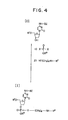
- FIG. 4 is a flow chart showing an example of the method for synthesizing the compound [I] used for synthesis of Compound [IV] of the present invention;
- FIG. 5 is a reproduction of the chromatogram obtained when the compound [IX] obtained in the experiment B-(a) is purified by separation by HPLC;
- FIG. 6 is a reproduction of the chromatogram obtained when the compound [X] in the experiment B-(a) is purified by separation by HPLC;
- FIG. 7 is a reproduction of the chromatogram obtained when the compound [X] in the experiment B-(b) is purified by separation by HPLC;
- FIG. 8 is a reproduction of the chromatogram obtained when the compound [X] in the experiment B-(c) is purified by separation by HPLC;
- FIG. 9 is a reproduction of the chromatogram obtained when the compound [VIII] in the experiment B-(d) is purified by separation by HPLC; and
- FIG. 10 is a reproduction of the chromatogram obtained when the compound [VIII] in the experiment B-(e) is purified by separation by HPLC.
- The nucleotide according to the present invention is represented by the above formula [IV]. Hereinafter, this nucleotide is called Compound [IV].
- Symbols of the formula [IV] have the following meanings.
- -(CH2)m-: an alkylene group, in which m is a natural number up to 20, which is practically 2 to 20, particularly preferably 2 to 8.
- -CO-(CH2)n-CO-: a spacer, in which n is a natural number up to 20, which is practically 2 to 20, particularly preferably 3 to 8.
- R 0 : a substituent for protection of phosphoryl group, as exemplified by ortho- or para-chlorophenyl group, phenylthio group, and 5-chloro-8-oxyquinolyl group; generally, ortho-chlorophenyl group is used.
- R l : hydrogen or a protective group for a 5'-end hydroxyl group; when this is a protective group, it can be, for example, trityl, mono- or di-methoxytrityl group, trimethylacetyl group, and trioxyacetyl group; as the protective group, dimethoxytrityl group is generally used.
- R 2 : hydrogen or a protective group for an amino. group; when this is a protective group, it can be, for example, trifluoroacetyl group and ortho-nitro- sulphenyl group; as the protective group, trifluoroacetyl group is generally used.
- R 3: a carrier which has an amino group as the functional group on it and is bound at the amino group with the nucleotide moiety; generally, amino-lower-alkylated (particularly aminomethylated) polystyrene, amino-lower-alkylated (particularly aminopropylated) silica gel and amino-lower-alkylated (particularly aminoethylated) polyacrylmorpholide are used.
- Here, "polystyrene" and "polyacrylmorpholide" include not only respective homopolymers of styrene and acrylmorpholide but also respective copolymers thereof. Accordingly, for example, polyacrylmorpholide is ordinarily a copolymer of acrylamide and acrylmorpholide, as derived from the ordinary preparation method thereof by N-morpholide modification of polyacrylamide. On the other hand, N-lower-alkylated product of polyacrylmorpholide is a polymer in which at least a part of acrylmorpholide units are converted to N-aminoethylacrylamide, as derived from the ordinary preparation thereof by amide exchange of such a polyacrylmorpholide with ethanolamine. R3 is the same as the solid carrier to be used in the solid phase synthetic method which is one of the methods for synthesizing oligonucleotides from its monomer. Details of such solid phase synthetic methods are described in, for example, Nucleic Acids Res. 8, 5473 (1980); ibid. 8, 5491 (1980); and ibid. 8, 5507 (1980).
- Compound [IV], namely, the nucleotide according to the present invention, can be synthesized by any desired method suited for the object.
- One preferable method is as shown in the flow chart in FIG. 1, RO - R3 have the meanings as described above, and BZ designating a benzoyl group.
- The preferable method for synthesis of Compound [IV] is described below with reference to FIG. 1.
- First, a cytidine derivative [I] completely protected is synthesized according to the method applied for ordinary nucleotide synthesis or according to the method I have previously proposed [Japanese Patent Application No.22475/1984]. Next, in Compound [I], the protective group of the amino group at the base moiety is selectively eliminated to obtain Compound [II]. Selective elimination of the protective group at the base moiety may be done according to, for example, the method of Tetrahedron Letter, 22, 991-994 (1981). More specifically, Compound [I] can be treated with ethylenediamine in a reaction solvent to obtain Com- pound [II]. As the reaction solvent, dichloromethane, trichloromethane, N,N-dimethylformamide, etc. may be considered, but ethylenediamine-phenol [1:4(v/v)] is preferred in that decomposition of ortho-chlorophenyl group as recommended for R is the smallest.
- After preparation of Compound [III] by introduction of a spacer into the amino group at the base moiety of Compound [II] liberated by the above operation, this can be immobilized onto a carrier to obtain Compound [IV]. More specifically, introduction of a spacer (which may be a dicarboxylic acid having 2 to 20 carbon atoms, particularly preferably adipic acid, glutaric acid) is carried out in pyridine with the use of a condensing agent [e.g., dicyclohexylcarbodiimide (hereinafter abbreviated as DCC)] to obtain Compound [III]. Then, by binding Compound [III] to a carrier through the spacer introduced on extension from the amino group at the cytosine moiety of Compound [III], Compound [IV] is obtained. For example, by binding Compound [III] with a carrier having amino group as the functional group (e.g., aminomethylated polystyrene) in pyridine with the use of a condensing agent (e.g., DCC), Compound [IV] can be obtained. The general methods for nucleotide synthesis have already been known, and as for details of the kinds of protective groups, introduction, elimination and condensation thereof, or other pertinent matters, reference is made to textbooks or reviews concerning chemical synthesis of nucleic acids, for example, Tetrahedron 34, 31 (1978); Tetrahedron Letters 1979, 3635 (1979); Nucleic Acids Research 8, 5473 (1980); ibid. 8 5491 (1980); ibid. 8, 5507 (1980); and Nucleic Acids Research Symposium Series 7, 281 (1980). As for details of synthetic operations of Compound [IV], reference is made to the experimental examples set forth hereinafter.
- The compound of the present invention (formula [IV]), as described above, is useful as the starting material for synthesis of a 3'-end aminated oligonucleotide according to the solid phase method.
- Synthesis of a 3'-end aminated oligonucleotide by use of the Compound [IV] of the present invention can be performed according to any desired method suited for the object, by the use of the Compound [IV] as the resin to be used for the solid phase synthetic method, by condensing successively dimers, trimers or oligomers as nucleic acid reagents with the resin.
- A preferable method is demonstrated in the flow chart in FIG. 2. The symbols in the flow chart have the following meanings:
- CE: cyanoethyl group;
- DMTr: dimethoxytrityl group;
- p: any natural number, which is usually 1 to 100, preferably 1 to 40;
- q: any natural number, which is usually 1 to 10, preferably 1 to 4;
- B': protected base, generally selected from N6_benzoyl- adenine, N-isobutyrylguanine, N6-benzoylcytosine and thymine (that is, no protection required);
- B: base, generally selected from adenine, guanine, cytosine and thymine; and
- R , R , R , R , Y, m and n: the same meanings as stated hereinbefore.
- A method for synthesis of a 3'-end aminated oligonucleotide is described below.
- Compound [IV] from which DMTr has been removed and Compound [O'] synthesized by the conventional oligonucleotide synthetic method from which CE has been removed are bound in the presence of a condensing agent [e.g., mesitylenesulfonylnitrotriazolide (hereinafter abbreviated MSNT)] to obtain Compound [V]. By appropriately repeating this operation, a desired chain length can be obtained, and then elimination of the Compound [V] from the carrier [elimination operation can be performed by alkali treatment, generally by the use of conc. ammonia; in experimental examples, also, conc. ammonia treatment was performed, and the protective groups of the base group moiety and the phosphate group and trifluoroacetyl groups were also removed together with elimination from the carrier] produces Compound [IX], followed by removal of the protective group of 5'-hydroxyl group [removal of the protective group may be accomplished by acid treatment, for example, 0.1 N hydrochloric acid treatment or 80% acetic acid treatment, generally the latter] to obtain Compound [X].
- Similarly as described above, Compound [VIII] having aminoalkyl groups introduced at 5'- and 3'-ends can be obtained. A preferable example of synthesis of Compound [VIII] is shown in the flow chart in FIG. 3. The symbols in this Figure have the same meanings as set forth hereinbefore.
- More specifically, synthesis of Compound [VIII] is performed by first binding Compound [O'] prepared according to the conventional oligonucleotide synthetic method which has been subjected to decyanoethylation with Compound [IV] of the present invention from which R 1 (DMTr) has been removed in the presence of a condensing agent to obtain Compound [V] with a desired chain length. Next, by carrying out binding of Compound [VI] synthesized according to the method disclosed in Japanese Patent Laid-Open Publication No.93098/1984, which has been subjected to decyanoethylation with Compound [IV] from which R1 (DMTr) has been removed, Compound [VII] is obtained. Finally, deprotection of Compound [VII] and elimination from the carrier are carried out to produce Compound [VIII]. Concerning the solid phase methods for synthesis of oligonucleotide, there are various textbooks and literatures. For example, reference may be made to the following literatures, published patent specifications and experimental examples:
- Tetrahedron Letters 1979, 3635 (1979);
- Nucleic Acids Research 8, 5473 (1980);
- Nucleic Acids Research 8, 5491 (1980);
- Nucleic Acids Research 8, 5507 (1980);
- Nucleic Acids Research Symposium Series 7, 281 (1980); and
- Japanese Patent Laid-Open Publications Nos. 27900/1984, 93098/1984, 93099/1984 and 93100/1984.
- The 3'-end aminated oligonucleotide thus synthesized can also be bound to a label through the primary amino group (Ref.: Japanese Patent Laid-Open Publication No.148798/ 1984 and Japanese Patent Application No.75878/1983).
- Synthesis of Compound [IV] of the present invention was carried out following the procedure as described below.
- Synthesis of Compound [I] (Y=O) was carried out by following the flow chart shown in FIG. 4 (the symbol X in the Figure representing a halogen, triazole or hydroxybenzotriazole, and other symbols having the meanings as stated hereinbefore). That is, the Compound [0] (890 mg, 1.4 mmol) made anhydrous by pyridine azeotropy and a dioxane solution of ortho-chlorophenyl phosphodibenzotriazolide (the compound wherein X is hydroxybenzotriazole) (7 ml/mM, 12.6 ml) were added, and the reaction was carried out for 2 hours. After completion of the reaction was confirmed by thin layer chromatography (hereinafter abbreviated TLC), trifluoroacetyl-6-aminohexanol [Y=O, R2=CF3C0] (530 mg, 2.5 mM) made anhydrous by pyridine azeotropy and toluene azeotropy and 1-methyl-imidazole (200 µl, 2.5 mM) were added, and the reaction was carried out at room temperature overnight.
- After completion of the reaction, the solvent was evaporated, and the residue was dissolved in 30 ml of chloroform (hereinafter written as CHC13), washed with water, 0.5 M sodium dihydrogen phosphate (hereinafter written as NaH2P04) and 5% sodium hydrogen carbonate (hereinafter written as NaHC03), and then dried over anhydrous sodium sulfate (hereinafter written as Na2S04). The CHC13 layer was concentrated and purified through a silica gel short column to obtain the desired Compound [I] (Y=O) [Yield: 910 mg (1.14 mM), 81%].
- Elution of the desired product from the silica gel column was performed with an eluant having a gradient of CHCl3 containing 0 - 4% of methanol [hereinafter this expression being shown as "MeOH/CHCl3 (0 → 4%)"].
- This compound was confirmed by nuclear magnetic resonance spectrum (hereinafter abbreviated NMR). NMR (CDCl3) : δ = 8.12 (dd 1H), 6.30 (m 1H), 5.30 (t 1H), 4.20 (m 2H), 3.78 (s 6H), 3.33 (m 2H), 1.40 (m 4H).
- Similarly as described above, synthesis of Compound [I] (Y=NH) was carried out. That is, after Compound [O] (1.32 g, 2 mmol) was made anhydrous, a dioxane solution of ortho-chlorophenyl phosphodibenzotriazolide (6 ml/mM, 16.8 ml) was added thereto, and the reaction was carried out for 2 hours. To the resultant mixture were added monotrifluoroacetyl-1,6-diaminohexane [Y=NH, R2=CF3CO] hydrochloride (900 mg, 3.6 mM) and 1-methyl-imidazole (440 mg, 5.6 mM), and the reaction was conducted overnight. Following, subsequently, the same procedure as described above, the desired Compound [I] (Y=NH) was obtained in a yield of 710 mg (44%). This compound was also confirmed by NMR. NMR (CDCl3) : δ = 8.13 (dd lE), 6.34 (t 1H), 5.28 (m 1H), 3.77 (s 6H), 3.32 (m 2H), 3.00 (m 2H), 1.34 (m 4H).
- Compound [I] (Y=O) (550 mg, 0.7 mM) was dissolved in 15 ml of ethylenediamine-phenol (1:4 (v/v)), and the reaction was carried out at 40°C for 30 minutes. After confirmation of completion of the reaction by TLC, the solution was concentrated. The residue was dissolved in CHC13, then washed with 0.5 M NaH2PO4, 5% NaHC03, 5% sodium chloride (hereinafter written as NaCl) and water, and dried over anhydrous Na2S04. After evaporation of CHC13, the product was purified through a silica gel short column [MeOH/CHCl3(0→3%)]. Then, the purified product was added dropwise into pentane to obtain a powder of Compound [II], (yield: 360 mg, 54%). The compound of the present invention was confirmed by NMR. NMR (CDC13): δ = 7.77 (t 1H), 6.34 (q 1H), 5.54 (dd 2H), 5.26 (m 1H), 4.19 (m 2H), 3.77 (s 6H), 3.31 (t 2H), 1.37 (m 4H).
- In a solution of Compound [II] (Y=O) (100 mg, 0.11 mmol) dissolved in anhydrous pyridine (2 ml), adipic acid (50 mg, 0.34 mmol) and dicyclohexylcarbodiimide (hereinafter written as DCC) (140 mg, 0.68 mmol) were added, and the reaction was carried out at room temperature. After confirmation of completion of the reaction by TLC, the reaction mixture was filtered and the filtrate was concentrated. Then, the concentrate was dissolved in CHC13, and washed with water, 5% NaHCO3 and 5% NaCl. Then, the CHC13 layer was concentrated, dissolved in a small amount of benzene and added dropwise into pentane to obtain a crude product of Compound [III] (Y=O) as powder, (yield: 90 mg, 80%). The crude product was used as it was in the next reaction.
- Compound [III] (Y=O) (90 mg, 0.086 mmol) was added to a pyridine solution (4 ml) containing an aminomethylated polystyrene resin (0.12 mmol/g) (commercial product) suspended therein, after which DCC (60 mg, 0.3 mmol) was added, and the reaction was carried out at room temperature overnight. After completion of the reaction, the resin was washed with pyridine, and the reaction was carried out with addition of 5 ml of acetic anhydride-pyridine (1:9 (v/v)) for one hour thereby to protect the unreacted amino group with an acetyl group. After washing with methanol, the product was dried to obtain Compound [IV] (420 mg). Here, the cytidine content was calculated by quantitative determination of trityl groups by sampling a small amount of Compound [IV] to be 0.046 mmol/g.
- In addition, Compound [IV] (Y=O) was synthesized according to the above method by using the purified Compound [III] (Y=O) [10 mg, 9 pmol], an aminomethyl- polystyrene resin (0.13 mmol/g, 40 mg), and DCC (20 mg, 10 pmol). In this case, the cytidine content was. found to be 0.096 mmol/g from quantitative determination of the trityl groups similarly as described above.
- On the other hand, Compound [IV] (Y=NH) also could be obtained according to the above method.
- By the use of the compound of the present invention (formula [IV]), synthesis of an oligonucleotide was carried out.
- Synthesis of the above Compound [X] was carried out by following the flow chart shown in FIG. 2. That is, the resin [IV] (Y=O) (20 mg, 0.096 mmol/g, 1.9 pmol) (here, the resin is merely a carrier, but the compound of the present invention carried on the resin is nothing but the resin itself in appearance, and hence this compound carried on the resin is called merely the resin) was (i) washed (x 5) with 1 ml of dichloromethane (hereinafter written as CH2C12) and thereafter (ii) the reaction with the use of 1 ml of CH2Cl2 containing 3% trichloroacetic acid (hereinafter written as 3% TCA/CH2C12) for 20 seconds were repeated 6 times as a total.
- The thus detritylated Compound [IV] was subjected to (iii) washing with 1 ml of CH2C12 (x 5) and 1 ml of pyridine (x 5), further washed with 1 ml of CH2Cl2 (x 5), and then vacuum dried. Subsequently, (iv) the reaction was carried out for 40 minutes with addition of 300 µl of an anhydrous pyridine solution of 25 mg of a condensing agent mesitylenesulfonylnitrotriazolide (hereinafter written as MSNT) and 25 mg of decyanoethylated thymidine dimer (the Compound [O'] where p=2, B'=T).
- After completion of the reaction, the resin was (v) washed with 1 ml of pyridine (x 5), and (vi) the reaction was carried out for 5 minutes with addition of 1 ml of acetic anhydride-pyridine-dimethylaminopyridine (hereinafter written as DMAP) [100 µl - 900 µl - 10 mg] to acetylate the unreacted 5'-hydroxyl group, followed by (vii) washing with 1 ml of pyridine (x 5), thus completing one cycle of condensation operation. Subsequently, by using the decyanoethylated thymidine dimer, the above condensation operation of (i) - (vii) was repeated five times to obtain Compound [V] (Y=O, B=T, p=12). The yield was 57% as an overall by quantitative determination of trityl groups (91% on average).
- Then, Compound [V] was dissolved in 300 µl of a pyridine-water (9:1 (v/v)) solution of 0.5 M tetramethylguanidine-pyridine-2-carboaldoxime, treated at room temperature overnight, and then, with addition of conc. ammonia water (3 ml) to the solution, further treated at 50°C overnight under tight sealing. After the treatment, the resin was filtered off, and the filtrate was concentrated. The residue was dissolved in 1 ml of 50 mM tetraethylammonium bicarbonate (hereinafter written as TEAB) pH 7.5 and washed (x 3) with 1 ml of ether. The aqueous layer was concentrated, then dissolved in TEAB, and its half amount was applied onto Sephadex G - 50 (diameter 1.5 cm x length 120 cm, eluant 50 mM TEAB) for crude purification to obtain a crude product 6.0 - 9.0 OD of Compound [IX] (Y=O, B=T, p=12). This was then purified by separation by high performance liquid chromatography (hereinafter abbreviated HPLC) by using a reversed phase column, elution pattern of which is shown in FIG. 5.
- The Compound [IX] separated by HPLC was treated with 80% acetic acid for 10 minutes and again subjected to purification by separation by HPLC to obtain Compound [X] (Y=O, B=T, p=12) (the elution pattern is shown in FIG. 6). In FIG. 5 and FIG. 6, each elution pattern exhibits a single peak, which indicates that each of Compounds [IX] and [X] could be obtained in pure form.
- Confirmation of Compound [X] was also performed by carrying out polyacrylamide gel electrophoresis after labelling the compound with 32p.
- The above HPLC was conducted under the following conditions.
- Column: uBondapak C 18
- Temperature: 50°C
- Flow rate: 2 ml/min.
- Eluant A: 50 mM triethylammonium acetate (herein after abbreviated TEAA) pH 7.2 B: 50 mM TEAA (pH 7.2) - acetonitrile (CH3CN) (1:1 (v/v)).
- In the case of Compound [IX], a linear concentration gradient of 20 to 60% of the eluant B was employed, and the elution time was 16 minutes. Such a condition is hereinafter written as (20→60% B buffer/16 minutes). On the other hand, in the case of Compound [X], it was (0 → 40% B buffer/16 minutes).
- By the use of the resin [V] (40 mg, 0.046 mmol/g, 1.8 pmol) and a solution of adenosine dimer (25 mg) dissolved in anhydrous pyridine (400 µl) as the nucleic acid reagent, synthesis of Compound [X] was carried out following the operations (i) through (vii) of the above experiment (a) (average yield 90%). FIG. 7 is the elution pattern when Compound [X] in this experiment (b) was purified by separation by HPLC (0 → 40% B buffer/16 min.).
- By the use of the resin [IV] (100 mg, 0.046 mmol/g, 4.6 pmol) and solutions of various dimers (GC, TA, TG, GA, CC, CA and TT being condensed in this order) dissolved in anhydrous pyridine (800 ml) as nucleic acid reagents, synthesis of Compound [X] was carried out following otherwise the operations (i) through (vii) in the above experiment (a). FIG. 8 is the elution pattern when Compound [X] in this experiment was purified by separation by HPLC (0 → 40% B buffer/16 min.).
- The contents of the compounds synthesized in the above experiments (a), (b) and (c) are shown in Table 1.

- In the above Table and the above sentences, T is thymine, A is adenine, G is guanine, C is cytosine, which are symbols accepted in the field of the art to which the present invention belongs.
- By following the flow chart in FIG. 3, Compound [VIII] (Y=O, B=indicated in Table 2, m=6, p+q=14) was synthesized.
- According to the same method as in the above experiments (a), (b), and (c), synthesis of Compound [V] (R1=DMTr, R2=CF3CO-, Y=O, B=CACCGATGTAGC, p=12, m=6, n=4) was carried out.
- Compound [O'] (R1=H, B'=T, R0-ortho-chlorophenyl, p=2) [450 mg, 0.5 mmol] was rendered anhydrous by pyridine azeotropy. A dioxane solution (0.7 mmol) of ortho-chlorophenyl phosphodibenzotriazolide was added thereto, and the reaction was carried out for 2 hours. After confirmation of the progress of the reaction by TLC, trifluoroacetyl-6-aminohexanol (190 mg, 0.9 mmol) and 1-methyl-imidazole (75 mg, 0.9 mmol) were added to the reaction mixture, and the reaction was further carried out for 3 hours. After completion of the reaction, the solution was concentrated, and the concentrate was dissolved in CHC13, washed with water, 5% NaHCO3, 0.5 M NaH2P04 and 5% NaCl, and dried over anhydrous Na2SO4. Then, the CHC13 layer was concentrated and purified through a silica gel short column to obtain Compound [VI] (R0=ortho-chlorophenyl, R2=CF3CO, B'=T, q=2). The product was added dropwise into n-pentane to be formed into a powder [Yield: 460 mg (72%)].
- Next, Compound [V] from which DMTr had been removed and Compound [VI] from which CE had been removed were condensed together in the presence of MSNT to obtain Compound [VII] (R =ortho-chlorophenyl, R2=CF3CO, R 3- aminomethylated polystyrene, n=4, m=6, p+q=14, Y=O). Then, after all of the protective groups were eliminated according to the cone. ammonia treatment and the 80% acetic acid treatment similarly as in the above experiment (a), this compound was purified by HPLC to obtain Compound [VIII] (Y=O, p+q=14, m=6).
- The elution pattern of Compound [VIII] in HPLC was as shown in FIG. 9. In this pattern, peaks of impurities can be seen, but by collecting only the fraction of the main peak separated by HPLC, the desired compound was obtained in pure form.
- To Compound [O'] (R =ortho-chlorophenyl, R 1=H, B'=T, p=l) (1 mmol, 480 mg) rendered anhydrous by pyridine azeotropy was added a dioxane solution of orth- chlorophenyl phosphodibenzotriazolide (1.4 mmol), and the reaction was carried out for one hour. Then, to the reaction mixture were added mono-trifluoroacetyl-1,6-diaminohexane hydrochloride (1.8 mmol, 450 mg) rendered anhydrous and 1-methyl-imidazole (2.8 mmol, 220 mg), and the reaction was carried out for 2 hours. Subsequently, following the same procedure as in (ii) in the experiment (d), Compound [VI] was obtained. Next, by the use of Compound [VI] and Compound [V] obtained in (i) in the experiment (d), Compound [VIII] (see Table 2) was obtained according to the same procedure as in (iii) in the experiment (d). FIG. 10 is the elution pattern when Compound [VIII] was purified by HPLC. In this pattern, peaks of impurities can be seen, but by collecting only the fraction of the main peak separated by HPLC, the desired compound was obtained in pure form.
- The contents of the compounds synthesized in the experiments (d) and (e) are shown in Table 2.

Claims (14)

wherein: X is hydrogen or -CO-(CH2)n-CO-R3; each of m and n is a natural number up to 20; R0 is a protective group of a phosphoric acid group; R1 is hydrogen or a protective group for a 5'-hydroxyl group; R 2 is hydrogen or a protective group for an amino group; R 3 is a carrier having an amino group as the functional group and bound at this functional group in this compound; and Y is an oxygen atom (-O-) or an imino group (-NH-).
Applications Claiming Priority (2)
| Application Number | Priority Date | Filing Date | Title |
|---|---|---|---|
| JP59232941A JPS61112093A (en) | 1984-11-05 | 1984-11-05 | Nucleotide derivative |
| JP232941/84 | 1984-11-05 |
Publications (3)
| Publication Number | Publication Date |
|---|---|
| EP0180945A2 true EP0180945A2 (en) | 1986-05-14 |
| EP0180945A3 EP0180945A3 (en) | 1987-02-04 |
| EP0180945B1 EP0180945B1 (en) | 1989-05-24 |
Family
ID=16947246
Family Applications (1)
| Application Number | Title | Priority Date | Filing Date |
|---|---|---|---|
| EP85113988A Expired EP0180945B1 (en) | 1984-11-05 | 1985-11-04 | Nucleotide derivative |
Country Status (5)
| Country | Link |
|---|---|
| US (1) | US4816569A (en) |
| EP (1) | EP0180945B1 (en) |
| JP (1) | JPS61112093A (en) |
| CA (1) | CA1260930A (en) |
| DE (1) | DE3570440D1 (en) |
Cited By (4)
| Publication number | Priority date | Publication date | Assignee | Title |
|---|---|---|---|---|
| EP0192197B1 (en) * | 1985-02-22 | 1989-12-06 | Molecular Diagnostics, Inc. | Fast and specific immobilization of nucleic acids to solid supports |
| EP0322677A3 (en) * | 1987-12-25 | 1991-05-08 | F. Hoffmann-La Roche Ag | Carrier for dna-hybridization |
| CN104114569A (en) * | 2012-02-17 | 2014-10-22 | 味之素株式会社 | base protection oligonucleotide |
| US9371353B2 (en) | 2012-02-17 | 2016-06-21 | Ajinomoto Co., Inc. | Oligonucleotide with protected base |
Families Citing this family (11)
| Publication number | Priority date | Publication date | Assignee | Title |
|---|---|---|---|---|
| WO1988003149A1 (en) * | 1986-10-30 | 1988-05-05 | Daicel Chemical Industries, Ltd. | Process for synthesizing oligonucleotides and compounds for forming high-molecular protective group |
| US4994558A (en) * | 1986-12-24 | 1991-02-19 | Eli Lilly And Company | Immunoglobulin conjugates |
| CA1327358C (en) * | 1987-11-17 | 1994-03-01 | Morio Fujiu | Fluoro cytidine derivatives |
| DE3916871A1 (en) * | 1989-05-24 | 1990-11-29 | Boehringer Mannheim Gmbh | MODIFIED PHOSPHORAMIDITE PROCESS FOR THE PREPARATION OF MODIFIED NUCLEIC ACIDS |
| US6358931B1 (en) | 1990-01-11 | 2002-03-19 | Isis Pharmaceuticals, Inc. | Compositions and methods for modulating RNA |
| US5359051A (en) * | 1990-01-11 | 1994-10-25 | Isis Pharmaceuticals | Compounds useful in the synthesis of nucleic acids capable of cleaning RNA |
| JPH07200714A (en) * | 1993-12-28 | 1995-08-04 | Nec Corp | Optical symbol reader |
| AU2998800A (en) | 1999-03-24 | 2000-10-09 | Government Of The United States Of America, As Represented By The Secretary Of The Department Of Health And Human Services, The | N-acylphosphoramidites and their use in oligonucleotide synthesis |
| WO2003048179A2 (en) * | 2001-12-03 | 2003-06-12 | The Government Of The United States Of America, Represented By The Secretary Of The Department Of Health And Human Services | Thermolabile hydroxyl protecting groups and methods of use |
| US9809824B2 (en) * | 2004-12-13 | 2017-11-07 | The United States Of America, Represented By The Secretary, Department Of Health And Human Services | CpG oligonucleotide prodrugs, compositions thereof and associated therapeutic methods |
| EP2028272B1 (en) | 2006-06-06 | 2014-01-08 | Panasonic Corporation | Method of modifying nucleotide chain |
Family Cites Families (5)
| Publication number | Priority date | Publication date | Assignee | Title |
|---|---|---|---|---|
| FR2287910A1 (en) * | 1974-10-15 | 1976-05-14 | Asahi Chemical Ind | NUCLEOTID DERIVATIVES AND PROCESS FOR THE PREPARATION OF THE SAME |
| GB2037289B (en) * | 1978-10-31 | 1983-05-05 | Katsunuma N | Nucleoside derivatives and an antileukemial agent containing the same as an active ingredient |
| US4415732A (en) * | 1981-03-27 | 1983-11-15 | University Patents, Inc. | Phosphoramidite compounds and processes |
| US4417046A (en) * | 1981-08-24 | 1983-11-22 | Eli Lilly And Company | Process for isolating oligonucleotide product from a coupling reaction mixture |
| JPS5927900A (en) * | 1982-08-09 | 1984-02-14 | Wakunaga Seiyaku Kk | Oligonucleotide derivative and its preparation |
-
1984
- 1984-11-05 JP JP59232941A patent/JPS61112093A/en active Granted
-
1985
- 1985-10-30 US US06/792,824 patent/US4816569A/en not_active Expired - Fee Related
- 1985-11-04 CA CA000494505A patent/CA1260930A/en not_active Expired
- 1985-11-04 DE DE8585113988T patent/DE3570440D1/en not_active Expired
- 1985-11-04 EP EP85113988A patent/EP0180945B1/en not_active Expired
Cited By (7)
| Publication number | Priority date | Publication date | Assignee | Title |
|---|---|---|---|---|
| EP0192197B1 (en) * | 1985-02-22 | 1989-12-06 | Molecular Diagnostics, Inc. | Fast and specific immobilization of nucleic acids to solid supports |
| EP0322677A3 (en) * | 1987-12-25 | 1991-05-08 | F. Hoffmann-La Roche Ag | Carrier for dna-hybridization |
| CN104114569A (en) * | 2012-02-17 | 2014-10-22 | 味之素株式会社 | base protection oligonucleotide |
| EP2816053A4 (en) * | 2012-02-17 | 2015-07-01 | Ajinomoto Kk | OLIGONUCLEOTIDE PROTECTED BY A BASE |
| US9371353B2 (en) | 2012-02-17 | 2016-06-21 | Ajinomoto Co., Inc. | Oligonucleotide with protected base |
| CN104114569B (en) * | 2012-02-17 | 2017-04-26 | 味之素株式会社 | base protection oligonucleotide |
| EP3296306A1 (en) * | 2012-02-17 | 2018-03-21 | Ajinomoto Co., Inc. | Base-protected oligonucleotide |
Also Published As
| Publication number | Publication date |
|---|---|
| JPS61112093A (en) | 1986-05-30 |
| EP0180945A3 (en) | 1987-02-04 |
| JPH0468320B2 (en) | 1992-11-02 |
| US4816569A (en) | 1989-03-28 |
| DE3570440D1 (en) | 1989-06-29 |
| EP0180945B1 (en) | 1989-05-24 |
| CA1260930A (en) | 1989-09-26 |
Similar Documents
| Publication | Publication Date | Title |
|---|---|---|
| Zuckermann et al. | Efficient methods for attachment of thiol specific probes to the 3′-ends of synthetic oligodeoxyribonucleotides | |
| US4605735A (en) | Oligonucleotide derivatives | |
| US4876335A (en) | Poly-labelled oligonucleotide derivative | |
| US4820812A (en) | Oligonucleotide derivatives and production thereof | |
| EP0260032A2 (en) | Compounds for the cleavage at a specific position of RNA, oligomers employed for the formation of said compounds, and starting materials for the synthesis of said oligomers | |
| EP0180945B1 (en) | Nucleotide derivative | |
| US5563253A (en) | Linear aminoalkylphosphoramidate oligonucleotide derivatives | |
| US5512668A (en) | Solid phase oligonucleotide synthesis using phospholane intermediates | |
| EP0090789A1 (en) | Chemical DNA synthesis | |
| AU643542B2 (en) | RNA hydrolysis/cleavage | |
| WO1990012020A1 (en) | Coumarin derivatives for use as nucleotide crosslinking reagents | |
| EP2221311A1 (en) | Novel nucleic acid base pair | |
| US5574141A (en) | Functionalized carrier materials for the simultaneous synthesis and direct labeling of oligonucleotides as primers for template-dependent enzymatic nucleic acid syntheses | |
| FR2607507A1 (en) | NOVEL A-D-OLIGONUCLEOTIDE DERIVATIVES, THEIR PREPARATION AND THEIR USE | |
| JPH06189753A (en) | Oligoribonucleotide having terminus 3'-3' and/or 5'-5' chain and ribosime affinous body | |
| JPH03505209A (en) | Nucleoside derivatives that can be used in the synthesis of targeted oligonucleotides, oligonucleotides obtained from these derivatives, and their synthesis | |
| WO1997029116A1 (en) | Sulphur containing dinucleotide phosphoramidites | |
| US5864031A (en) | Process for preparing 5-dithio-modified oligonucleotides | |
| US5756704A (en) | Nucleosides and nucleoside derivatives containing enzymatically cleavable protecting groups | |
| JPH0374239B2 (en) | ||
| Sekine et al. | Synthesis of oligoribonucleotides by use of 4, 4', 4"-tris (acyloxy) trityl groups for protection of the 6-amino group of adenosine. | |
| CA2078256A1 (en) | Synthesis of sulfide-linked di-or oligonucleotide analogs and incorporation into antisense dna or rna | |
| RU2278869C2 (en) | New substrates for terminal deoxynucleotidyl transferase | |
| JPS61171497A (en) | Lure nucleotide | |
| Nemer | New methods for the chemical synthesis of ribonucleotides and their analogues: a thesis |
Legal Events
| Date | Code | Title | Description |
|---|---|---|---|
| PUAI | Public reference made under article 153(3) epc to a published international application that has entered the european phase |
Free format text: ORIGINAL CODE: 0009012 |
|
| AK | Designated contracting states |
Kind code of ref document: A2 Designated state(s): DE FR GB |
|
| PUAL | Search report despatched |
Free format text: ORIGINAL CODE: 0009013 |
|
| AK | Designated contracting states |
Kind code of ref document: A3 Designated state(s): DE FR GB |
|
| 17P | Request for examination filed |
Effective date: 19870305 |
|
| 17Q | First examination report despatched |
Effective date: 19880325 |
|
| GRAA | (expected) grant |
Free format text: ORIGINAL CODE: 0009210 |
|
| AK | Designated contracting states |
Kind code of ref document: B1 Designated state(s): DE FR GB |
|
| REF | Corresponds to: |
Ref document number: 3570440 Country of ref document: DE Date of ref document: 19890629 |
|
| ET | Fr: translation filed | ||
| PLBE | No opposition filed within time limit |
Free format text: ORIGINAL CODE: 0009261 |
|
| STAA | Information on the status of an ep patent application or granted ep patent |
Free format text: STATUS: NO OPPOSITION FILED WITHIN TIME LIMIT |
|
| 26N | No opposition filed | ||
| PGFP | Annual fee paid to national office [announced via postgrant information from national office to epo] |
Ref country code: GB Payment date: 19931027 Year of fee payment: 9 |
|
| PGFP | Annual fee paid to national office [announced via postgrant information from national office to epo] |
Ref country code: FR Payment date: 19931110 Year of fee payment: 9 Ref country code: DE Payment date: 19931110 Year of fee payment: 9 |
|
| PG25 | Lapsed in a contracting state [announced via postgrant information from national office to epo] |
Ref country code: GB Effective date: 19941104 |
|
| GBPC | Gb: european patent ceased through non-payment of renewal fee |
Effective date: 19941104 |
|
| PG25 | Lapsed in a contracting state [announced via postgrant information from national office to epo] |
Ref country code: FR Effective date: 19950731 |
|
| PG25 | Lapsed in a contracting state [announced via postgrant information from national office to epo] |
Ref country code: DE Effective date: 19950801 |
|
| REG | Reference to a national code |
Ref country code: FR Ref legal event code: ST |