EP0259219A2 - Controlled release tablet - Google Patents
Controlled release tablet Download PDFInfo
- Publication number
- EP0259219A2 EP0259219A2 EP87401922A EP87401922A EP0259219A2 EP 0259219 A2 EP0259219 A2 EP 0259219A2 EP 87401922 A EP87401922 A EP 87401922A EP 87401922 A EP87401922 A EP 87401922A EP 0259219 A2 EP0259219 A2 EP 0259219A2
- Authority
- EP
- European Patent Office
- Prior art keywords
- tablet
- hole
- coating
- agent
- faces
- Prior art date
- Legal status (The legal status is an assumption and is not a legal conclusion. Google has not performed a legal analysis and makes no representation as to the accuracy of the status listed.)
- Withdrawn
Links
Images


Classifications
-
- A—HUMAN NECESSITIES
- A61—MEDICAL OR VETERINARY SCIENCE; HYGIENE
- A61K—PREPARATIONS FOR MEDICAL, DENTAL OR TOILETRY PURPOSES
- A61K9/00—Medicinal preparations characterised by special physical form
- A61K9/20—Pills, tablets, discs, rods
- A61K9/2072—Pills, tablets, discs, rods characterised by shape, structure or size; Tablets with holes, special break lines or identification marks; Partially coated tablets; Disintegrating flat shaped forms
Definitions
- the present invention pertains to a tablet which includes an active agent which must be released at a controlled rate.
- the present invention pertains to a pharmaceutical tablet wherein the diffusion of a drug from a suspension must be controlled.
- compositions of matter formed into compact bodies from which the matter can be dissociated or released for various useful purposes are known.
- the release of material has many applications which may be readily apparent to persons skilled in the art of material release.
- the core of the tablet which is formed of a solid mixture of a releasable agent, with a geometry that allows a zero-order or constant release.
- the present invention therefore, relates to a tablet which comprises, in its broadest aspect, a core defining a body of a solid mixture formed of a hydrophilic releasable agent, the body displaying a central hole and having upper and lower faces and outer and inner faces, with the inner face being adjacent to the opening; the inner face is smaller than the outer face so that the thickness of the body gradually increases from the inner face to the outer face.
- the core is covered with a coating of hydrophobic material, the coating extending over the upper and lower faces as well as over the outer face so that release of the agent is effected only through the hole, the varying thickness of the body thus being a factor in the rate of release of the agent through the hole.
- the present invention relates also to a controlled release pharmaceutical tablet which contains a therapeutic active agent which is released through the said hole.
- the invention also relates to method of making such a tablet.
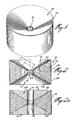
- a tablet 10 having a disc-like configuration with inwardly tapering top and bottom walls 12 and 14 and a central cylindrical hole 16.
- the tablet 10 includes a central core 18 formed of a solid mixture that includes a hydrophilic active agent.
- This core is defined by an upper annular face 20 and a lower annular face 22 and by an inner cylindrical face 24 and outer cylindrical face 26.
- the upper and lower faces 20 and 22 are inwardly tapering towards the center hole 16 so that the height H of the inner cylindrical face 24 is smaller than the outer cylindrical surface 26.
- the upper annular face 20, the lower annular face 22 and the outer cylindrical face 26 are coated with a continuous layer 28 of a hydrophobic material so that the hydrophilic material 18, when dissolved, can only be released from the center hole 16 of the tablet.
- Figure 2a illustrates a variant of the tablet. shown in Figure 2 in that the coating 2 ⁇ is made thicker on faces 20 and 22 so that the top annular faces 12 ⁇ and 14 ⁇ of the tablet are substantially parallel to one another and to the plane of the tablet.
- the distance of the dissolution front 24 to the center of the hole is given by R; ⁇ is the angle between the face 20 and a horizontal plane passing through the mid-height of the disc; r is the region bounded by A ⁇ r ⁇ R. All these parameters are critical in the obtention of a constant release.
- Figure 3 shows the effect of A, at constnt ⁇ equal to 30°.
- the relase rate is initially high and rapidly drop he dissolution front recedes.
- R > 2A nearly constant values are obtained, with smaller holes giving a better zero-order approximation.
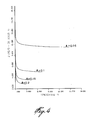
- J mass flux
- Figure 4 shows J profiles as a function of time for different values of A. Curves of constant A, for discs having various angles, are superimposable, which indicates that J is not influenced by ⁇ . However, dM r /dt will increase with ⁇ because higher values are associated with higher surface areas.
- the properties of the different components used to prepare a tablet are important in order to ensure constant release.
- the coating has to be hydrophobic and inert to gastro-intestinal juices. Any polymer accepted for human consumption that meet these requirements, such as polyethylene, caprolactone and EVAC among others, can be used.
- the matrin as well as the coating used has to be compatible and/or bio-degradable as are, for example, EVAC and caprolactone.
- the angle of the two inwardly tapered surfaces is a critical criteria as it will be shown in further examples.
- the polymer matrix and the volume of drug that is incorporated within, which means that when the drug concentration is low, an inert soluble filler has to be added in order to arrive at a certain minimum volume, below which constant release is different to achieve.
- the volume of drug used can go up to 100%, although, in that case, dissolution is much faster but can still be controlled by varying the hole diameter.
- Sodium salicylate and polyethylene powder were used as models for the therapeutic agent and polymer matrix, respectively.
- Sodium chloride, potassium phosphate monobasic and sodium phosphate dibasic were of reagent grade and used as is for buffer preparation.
- Sodium azide was used at a 0.02% concentration in the buffer, to inhibit microbial growth.
- a 60% w/w sodium salicylate-polyethylene mixture was blended in a Turbula (type T2C, Bachofen A.G. -Switzerland) mixer for 20 min. and sieved (50 mesh, U.S.P.) twice to obtain an homogeneous mixture.
- An aliquot of this blend (o.5-0.7 g) was then transferred into a tempered steel die, 1.27 cm in diameter, pre-heated at 150°c for 30 min., and heated for a further 15 min. in order to melt the polyethylene.
- the die containing the mixture was then transferred to a Carver laboratory pre and compressed at 175 MPa for 2 min.
- Co., CA set at 500 rpm. Matrices were centered under the drill bit, held firmly, and perforated in less than 5 sec in order to prevent excessive heat build up. Matrices were then stored in total darkness. Each matrix initially contained 287 mg of sodium salicylate.
- Example 2 The matrices of Example 2 were prepared by following the procedure of Example 1, the only difference being the use of a conic punch having an angle of 30°. Each matrix initially contained 400 mg of sodium salicylate.
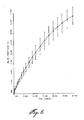
- Figures 5 and 6 show plots of experimental and model predicted cumulative amounts of sodium salicylate released as a function of time, for the 30° and 20° discs, respectively. There is a good agreement between experimental and model predicted data.
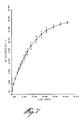
- Figure 7 shows experimental data for flat discs. Unperforated matrices released less than 0.6 mg in 25 d, demonstrating that the solute release only occurs through the central cylindrical surface. The tapered discs show an evident deviation from a stricly zero-order release. However, after the initial high release rate, which represents less than a 0.1 fraction of mass released (F), linearity is almost achieved.
- F mass released
Landscapes
- Health & Medical Sciences (AREA)
- Chemical & Material Sciences (AREA)
- Medicinal Chemistry (AREA)
- Pharmacology & Pharmacy (AREA)
- Epidemiology (AREA)
- Life Sciences & Earth Sciences (AREA)
- Animal Behavior & Ethology (AREA)
- General Health & Medical Sciences (AREA)
- Public Health (AREA)
- Veterinary Medicine (AREA)
- Medicinal Preparation (AREA)
Abstract
Description
- The present invention pertains to a tablet which includes an active agent which must be released at a controlled rate.
- More particularly, the present invention pertains to a pharmaceutical tablet wherein the diffusion of a drug from a suspension must be controlled.
- It is well known that compositions of matter formed into compact bodies from which the matter can be dissociated or released for various useful purposes are known. The release of material has many applications which may be readily apparent to persons skilled in the art of material release.
- One such application is found in the medicinal use of drugs administered orally or otherwise into the organic system. Diffusion-controlled matrix devices have received a great deal of attention for drug delivery systems in the past years.
- One approach has been to use insoluble porous disc matrices, in which the loading of the drug is greater than its solubility limit in the dissolution medium. However, it has been found that the amunt of solute which diffuses out of these flat discs in linear with the square root of time. In other words, with this system, the amount of drug available at a biological site of absorption decreases as a function of time if the absorption rate is greater than the drug release rate from the matrix.
- One way to overcome this difficulty has been to vary the matrix geometry in order to ideally attain a zero-order drug release. With this thought in mind, it was suggested that a sector of a right circular cylinder could be the needed geometry. Dean S.T. Hshich and some of his colleagues in the Journal of Pharmaceutical Sciences, vol. 72, no. 1, Jan. 1983, proposed a hemispheric structure. However, in order to adapt these systems for pharmaceutical manufacturing, considerable modifications in their fabrication procedure would have to be carried out.
- Recently, it was suggested by Wei-Youh K. et al., in the Journal of Pharmaceutical Sciences, vol. 74, no. 9, Sept. 1985, that a multiple-hole system might provide a near zero-order-release but this suggestion has not been proved efficient by any experimental data.
- It is an object of the present invention to provide a new geometric form for a tablet where the rate of release of the agent is controlled in order to avoid the above-described disadvantages of present devices.
- This is achieved by providing the core of the tablet, which is formed of a solid mixture of a releasable agent, with a geometry that allows a zero-order or constant release.
- The present invention, therefore, relates to a tablet which comprises, in its broadest aspect, a core defining a body of a solid mixture formed of a hydrophilic releasable agent, the body displaying a central hole and having upper and lower faces and outer and inner faces, with the inner face being adjacent to the opening; the inner face is smaller than the outer face so that the thickness of the body gradually increases from the inner face to the outer face. The core is covered with a coating of hydrophobic material, the coating extending over the upper and lower faces as well as over the outer face so that release of the agent is effected only through the hole, the varying thickness of the body thus being a factor in the rate of release of the agent through the hole.
- The present invention relates also to a controlled release pharmaceutical tablet which contains a therapeutic active agent which is released through the said hole.
- The invention also relates to method of making such a tablet.
- Other objects and further scope of applicability of the present invention will become appare nt from the detailed description given hereinafter. It should be understood, however, that this detailed description, while indicating preferred embodiments of the invention, is given by way of illustration only, since various changes and modifications within the spirit and scope of the invention will become apparent to those skilled in the art.
-
- Fig. 1 shows a perspective view of a tablet made in accordance with the present invention;
- Fig. 2 is a diametrical cross-section of the tablet shown in Fig. 1;
- Fig. 2a is a cross-sectional view of another embodiment of a tablet made in accordance with the present invention;
- Fig. 3 is a graph showing the release rate as a function of the dissolution front;
- Fig. 4 is a graph showing profiles of the mass flux as a function of time;
- Fig. 5 is a graph showing sodium salicylate cumulative amounts released as a function of time for discs having 30° angle;
- Fig. 6 is a graph showing sodium salicylate cumulative amounts released as a function of time for discs having 20° angle; and
- Fig. 7 is a graph showing sodium salicylate cumulative amounts released from a flat disc with a central releasing hole.
- Referring to Figs. 1 and 2, there is shown a
tablet 10 having a disc-like configuration with inwardly tapering top andbottom walls cylindrical hole 16. - Referring more particularly to Fig. 2, the
tablet 10 includes acentral core 18 formed of a solid mixture that includes a hydrophilic active agent. This core is defined by an upperannular face 20 and a lowerannular face 22 and by an innercylindrical face 24 and outercylindrical face 26. The upper andlower faces center hole 16 so that the height H of the innercylindrical face 24 is smaller than the outercylindrical surface 26. - The upper
annular face 20, the lowerannular face 22 and the outercylindrical face 26 are coated with acontinuous layer 28 of a hydrophobic material so that thehydrophilic material 18, when dissolved, can only be released from thecenter hole 16 of the tablet. - Figure 2a illustrates a variant of the tablet. shown in Figure 2 in that the coating 2ʹ is made thicker on
faces - Other geometric shapes may be given to the tablet as long as the core has a configuration corresponding to the characteristics described hereinbelow. Also, it will be evident to the persons skilled in the practice of material release to foresee the many applications of a tablet of which alows gradual release of compositions of matter, e.g. in the distribution of chemicals for agricultural purposes or other purposes where chemical substances are needed in a continuous but grandual application.
- However, the present disclosure will hereinbelow be continued in relation to the field of drug release in which it is desired to control the release of a therapeutic active agent for administration orally or otherwise into an organic system.
- Referring to Figure 2, the distance of the
dissolution front 24 to the center of the hole is given by R; φ is the angle between theface 20 and a horizontal plane passing through the mid-height of the disc; r is the region bounded by A < r < R. All these parameters are critical in the obtention of a constant release. - For inwardly tapered disc of the present invention, there is two geometric parameters that can be easily controlled, A and φ.
- Figure 3 shows the effect of A, at constnt φ equal to 30°. In all cases, the relase rate is initially high and rapidly drop he dissolution front recedes. At R > 2A, nearly constant values are obtained, with smaller holes giving a better zero-order approximation. It can be seen that when A increases from 0.1 to 0.2, giving a fourfold surface area increment, the release rate does not increases by the same factor. This indicates that the mass flux (J) decreases as A is increased. This point is further illustrated in Figure 4, and is the result of a faster displacement of the dissolution front as A is increased.
- Figure 4 shows J profiles as a function of time for different values of A. Curves of constant A, for discs having various angles, are superimposable, which indicates that J is not influenced by φ. However, dM r/dt will increase with φ because higher values are associated with higher surface areas.
- The following equations:

A, R, φ and H have been previously defined;
C s is the solute solubility in the dissolution fluid at a given temperature;
D' is the solute diffusion coefficient in the dissolution fluid, divided by the tortuosity (T) of the matrix pores;
φ is the final volumetric porosity;
M r is the mass of solute released;
t is the time;
ρ is the solid solute density;
can be used for the design of a particular system in order to meet a desired kinetic. Each of the parameters can be easily determined, including D', which can be computed from sorption-desorption experiments carried out with standard flat discs. These sorption-desorption experiments can be done following the technique described by Desai et al in J. Pharm. Sci., 1966, 55, 1224-1229. - The properties of the different components used to prepare a tablet are important in order to ensure constant release.
- In the case of a pharmaceutical tablet, the coating has to be hydrophobic and inert to gastro-intestinal juices. Any polymer accepted for human consumption that meet these requirements, such as polyethylene, caprolactone and EVAC among others, can be used. In the case of an implant, however, the matrin as well as the coating used has to be compatible and/or bio-degradable as are, for example, EVAC and caprolactone.
- There are two other critical features for the obtention of a constant release.
- First, the angle of the two inwardly tapered surfaces is a critical criteria as it will be shown in further examples.
- There is also an important relationship between the polymer matrix and the volume of drug that is incorporated within, which means that when the drug concentration is low, an inert soluble filler has to be added in order to arrive at a certain minimum volume, below which constant release is different to achieve. On the other hand, the volume of drug used can go up to 100%, although, in that case, dissolution is much faster but can still be controlled by varying the hole diameter.
- The following examples illustrate the present invention without, however, limiting the same thereto. Sodium salicylate and polyethylene powder were used as models for the therapeutic agent and polymer matrix, respectively. Sodium chloride, potassium phosphate monobasic and sodium phosphate dibasic were of reagent grade and used as is for buffer preparation. Sodium azide was used at a 0.02% concentration in the buffer, to inhibit microbial growth.
- A 60% w/w sodium salicylate-polyethylene mixture was blended in a Turbula (type T2C, Bachofen A.G. -Switzerland) mixer for 20 min. and sieved (50 mesh, U.S.P.) twice to obtain an homogeneous mixture. An aliquot of this blend (o.5-0.7 g) was then transferred into a tempered steel die, 1.27 cm in diameter, pre-heated at 150°c for 30 min., and heated for a further 15 min. in order to melt the polyethylene. The die containing the mixture was then transferred to a Carver laboratory pre and compressed at 175 MPa for 2 min. with the use of a stainless steel flat and circular conic punches having an angle of 20° with an axis perpendicular to the cone. After compression, a 30 min. cooling period at room temperature, was allowed to permit polyethylene to solidify. Matrices were then removed from the die, weighed and their peripheric thickness measured with a micrometer. For the coating procedure, a nickel-chromium thread, 0.4 mm diameter, was introduced 2 mm in depth in the peripheric surface of each matrix. Matrices were then dip-coated with approximately 6-8 coats of paraffin wax (80°C), in order to cover all edges. Central holes were made by a 0.150 cm radius stainless steel drill bit mounted on a precision drill press (model 7000, Servo Prod. Co., CA) set at 500 rpm. Matrices were centered under the drill bit, held firmly, and perforated in less than 5 sec in order to prevent excessive heat build up. Matrices were then stored in total darkness. Each matrix initially contained 287 mg of sodium salicylate.
- The matrices of Example 2 were prepared by following the procedure of Example 1, the only difference being the use of a conic punch having an angle of 30°. Each matrix initially contained 400 mg of sodium salicylate.
- Figures 5 and 6 show plots of experimental and model predicted cumulative amounts of sodium salicylate released as a function of time, for the 30° and 20° discs, respectively. There is a good agreement between experimental and model predicted data. Figure 7 shows experimental data for flat discs. Unperforated matrices released less than 0.6 mg in 25 d, demonstrating that the solute release only occurs through the central cylindrical surface. The tapered discs show an evident deviation from a stricly zero-order release. However, after the initial high release rate, which represents less than a 0.1 fraction of mass released (F), linearity is almost achieved.
- Although the invention has been described above in relation to two specific examples, it is believed that it may be refined and modified in various ways. It is therefore wished that the present invention showed not be limited in interpretation except by the terms of the following claims.
Claims (20)
- A core (18) defining a body of a solid mixture formed of a hydrophilic releasable agent, said body displaying a central hole (16) and having upper and lower faces (20,22) and outer and inner faces (24,26), said inner face (24) adjacent to said hole (16) and being smaller than said outer face (26) so that the thickness of said body gradually increases from said inner face to said outer face;
- a coating of hydrophobic material covering said upper and lower faces (20,22) and said outer face (25) whereby release of said agent is effected only through said hole; the varying thickness of said body being a factor in the rate of release of said agent through said hole.
- a core (18) defining a body of a solid mixture formed of a hydrophilic releasable agent, said body displaying a central hole (16) and having upper and lower faces (20,22) and outer and inner faces (24,26), said inner face (24) being adjacent to said hole (16) and being smaller than said outer face (26) so that the thickness of said body gradually increases from said inner face to said outer face;
- a coating of hydrophobic material covering said upper and lower faces (20,22) and said outer face (26) whereby release of said agent is effected only through said hole; the varying thickness of said body being a factor in the rate of release of said agent through said hole.
Applications Claiming Priority (2)
| Application Number | Priority Date | Filing Date | Title |
|---|---|---|---|
| US06/901,398 US4816262A (en) | 1986-08-28 | 1986-08-28 | Controlled release tablet |
| US901398 | 1986-08-28 |
Publications (2)
| Publication Number | Publication Date |
|---|---|
| EP0259219A2 true EP0259219A2 (en) | 1988-03-09 |
| EP0259219A3 EP0259219A3 (en) | 1988-05-25 |
Family
ID=25414091
Family Applications (1)
| Application Number | Title | Priority Date | Filing Date |
|---|---|---|---|
| EP87401922A Withdrawn EP0259219A3 (en) | 1986-08-28 | 1987-08-24 | Controlled release tablet |
Country Status (4)
| Country | Link |
|---|---|
| US (1) | US4816262A (en) |
| EP (1) | EP0259219A3 (en) |
| JP (1) | JP2504477B2 (en) |
| CA (1) | CA1314216C (en) |
Cited By (15)
| Publication number | Priority date | Publication date | Assignee | Title |
|---|---|---|---|---|
| EP0334306A1 (en) * | 1988-03-24 | 1989-09-27 | LTS LOHMANN Therapie-Systeme GmbH | Use of a device having a reservoir containing an active substance for the controlled release of the active substance |
| WO1990001925A1 (en) * | 1988-08-26 | 1990-03-08 | Forum Chemicals Limited | Controlled release device with an impermeable coating having an orifice for release of drug |
| WO1991014426A1 (en) * | 1990-03-23 | 1991-10-03 | Alza Corporation | Dosage form for delivering drug to the intestine |
| EP0542364A1 (en) * | 1991-11-13 | 1993-05-19 | Glaxo Canada Inc. | Controlled release device |
| WO1994007470A1 (en) * | 1992-09-30 | 1994-04-14 | Pfizer Inc. | Article containing a core and a coating having a non constant thickness |
| WO1996007401A1 (en) * | 1994-09-06 | 1996-03-14 | Lts Lohmann Therapie-Systeme Gmbh | Laminated tablet with pointed core |
| RU2116064C1 (en) * | 1996-12-30 | 1998-07-27 | Закрытое акционерное общество "Пульмомед" | Method of preparing medicinal formulation at regulated drug release |
| US5853760A (en) * | 1993-12-04 | 1998-12-29 | Lts Lohmann Therapie-Systeme Gmbh & Co. Kg | Device for the controlled release of active substances |
| FR2779917A1 (en) * | 1998-06-22 | 1999-12-24 | Philippe Douaire | INGERABLE ELEMENTS |
| US6110500A (en) * | 1998-03-25 | 2000-08-29 | Temple University | Coated tablet with long term parabolic and zero-order release kinetics |
| DE102007026037A1 (en) | 2007-06-04 | 2008-12-11 | Lts Lohmann Therapie-Systeme Ag | Gastroretentive system with alginate body |
| RU2341249C1 (en) * | 2007-08-22 | 2008-12-20 | Юлия Алексеевна Щепочкина | Medicinal tablet |
| EP2043598A4 (en) * | 2006-06-30 | 2012-08-01 | Univ Arkansas | PERFORATED TABLET WITH EXTENDED RELEASE |
| US10071060B2 (en) | 2005-07-08 | 2018-09-11 | Bioventures, Llc | Asymmetrically coated table |
| US12653655B2 (en) * | 2021-09-10 | 2026-06-16 | Colgate-Palmolive Company | Oral irrigator tip |
Families Citing this family (40)
| Publication number | Priority date | Publication date | Assignee | Title |
|---|---|---|---|---|
| US5391378A (en) * | 1993-02-22 | 1995-02-21 | Elizabeth-Hata International, Inc. | Two-part medicinal tablet and method of manufacture |
| US5398850A (en) * | 1993-08-06 | 1995-03-21 | River Medical, Inc. | Gas delivery apparatus for infusion |
| US5398851A (en) * | 1993-08-06 | 1995-03-21 | River Medical, Inc. | Liquid delivery device |
| US5571261A (en) * | 1993-08-06 | 1996-11-05 | River Medical, Inc | Liquid delivery device |
| US5945125A (en) * | 1995-02-28 | 1999-08-31 | Temple University | Controlled release tablet |
| US5700245A (en) * | 1995-07-13 | 1997-12-23 | Winfield Medical | Apparatus for the generation of gas pressure for controlled fluid delivery |
| US6569152B2 (en) | 2000-03-21 | 2003-05-27 | Farrington Pharmaceuticals, Llc | Sustained release delivery systems for solutes |
| GB0030340D0 (en) * | 2000-12-13 | 2001-01-24 | Sorex Ltd | Briquettes |
| SE0101154D0 (en) * | 2001-03-29 | 2001-03-29 | St Jude Medical | An electrically conductive lead and a method of producing such a lead |
| US6960357B2 (en) | 2001-05-25 | 2005-11-01 | Mistral Pharma Inc. | Chemical delivery device |
| US6705488B2 (en) * | 2001-09-07 | 2004-03-16 | Halkey-Roberts Corporation | Bobbin for automatic inflator |
| MXPA04002973A (en) * | 2001-09-28 | 2005-06-20 | Johnson & Johnson | Modified release dosage forms. |
| US20030228368A1 (en) * | 2001-09-28 | 2003-12-11 | David Wynn | Edible solid composition and dosage form |
| US20040146559A1 (en) * | 2002-09-28 | 2004-07-29 | Sowden Harry S. | Dosage forms having an inner core and outer shell with different shapes |
| US8101209B2 (en) * | 2001-10-09 | 2012-01-24 | Flamel Technologies | Microparticulate oral galenical form for the delayed and controlled release of pharmaceutical active principles |
| US6602911B2 (en) * | 2001-11-05 | 2003-08-05 | Cypress Bioscience, Inc. | Methods of treating fibromyalgia |
| GB0203296D0 (en) * | 2002-02-12 | 2002-03-27 | Glaxo Group Ltd | Novel composition |
| PT1485078E (en) * | 2002-03-15 | 2013-01-14 | Cypress Bioscience Inc | Milnacipran for the treatment of irritable bowel syndrome |
| US8637512B2 (en) * | 2002-07-29 | 2014-01-28 | Glaxo Group Limited | Formulations and method of treatment |
| DK1524981T3 (en) * | 2002-07-29 | 2009-06-22 | Glaxo Group Ltd | Sustained-release compositions containing lamotrigine |
| US7807197B2 (en) * | 2002-09-28 | 2010-10-05 | Mcneil-Ppc, Inc. | Composite dosage forms having an inlaid portion |
| EP1542662A1 (en) * | 2002-09-28 | 2005-06-22 | McNEIL-PPC, INC. | Immediate release dosage form comprising shell having openings therein |
| US20060003004A1 (en) * | 2002-10-25 | 2006-01-05 | Collegium Pharmaceutical, Inc. | Pulsatile release compositions of milnacipran |
| US20040132826A1 (en) * | 2002-10-25 | 2004-07-08 | Collegium Pharmaceutical, Inc. | Modified release compositions of milnacipran |
| US20040109889A1 (en) * | 2002-12-04 | 2004-06-10 | Bunick Frank J. | Surface treatment composition for soft substrates |
| AU2004207578B2 (en) * | 2003-01-28 | 2007-06-28 | Collegium Pharmaceutical, Inc. | Multiparticulate compositions of milnacipran for oral administration |
| EP1686967A4 (en) * | 2003-11-25 | 2012-08-08 | Smithkline Beecham Cork Ltd | Carvedilol free base, salts, anhydrous forms or solvates thereof, corresponding pharmaceutical compositions, controlled release formulations, and treatment or delivery methods |
| JP5072364B2 (en) * | 2003-11-25 | 2012-11-14 | スミスクライン ビーチャム (コーク) リミテッド | Carvedilol free base, carvedilol salt, anhydrous form or solvate thereof, corresponding pharmaceutical composition, controlled release formulation and treatment or delivery method |
| US8067029B2 (en) | 2004-01-13 | 2011-11-29 | Mcneil-Ppc, Inc. | Rapidly disintegrating gelatinous coated tablets |
| US7879354B2 (en) | 2004-01-13 | 2011-02-01 | Mcneil-Ppc, Inc. | Rapidly disintegrating gelatinous coated tablets |
| US20050220875A1 (en) * | 2004-03-31 | 2005-10-06 | Agency For Science, Technology And Research | Sustained-release tablet formulation |
| US20050244465A1 (en) * | 2004-04-30 | 2005-11-03 | Allergan, Inc. | Drug delivery systems and methods for treatment of an eye |
| CA2588245A1 (en) * | 2004-09-13 | 2006-03-23 | L. Perrigo Company | Quick dissolve medicament and method of manufacturing |
| US8673352B2 (en) * | 2005-04-15 | 2014-03-18 | Mcneil-Ppc, Inc. | Modified release dosage form |
| US7994220B2 (en) * | 2005-09-28 | 2011-08-09 | Cypress Bioscience, Inc. | Milnacipran for the long-term treatment of fibromyalgia syndrome |
| CA2792046C (en) | 2010-03-04 | 2014-12-02 | Wockhardt Limited | Modified release dosage form |
| CN101948035B (en) * | 2010-09-13 | 2013-03-13 | 周允平 | Device and method for controlling beverage injection and container structure |
| USD907235S1 (en) * | 2017-09-18 | 2021-01-05 | University Of Hertfordshire Higher Education Corporation | Enclosure for dissolution system |
| AU2020347662B2 (en) * | 2019-09-13 | 2026-07-09 | Meiji Co., Ltd. | Solid food and solid milk |
| AU2022358534A1 (en) * | 2021-09-30 | 2024-03-14 | Foundry Therapeutics, Inc. | Implantable depots with tunable release profiles |
Family Cites Families (10)
| Publication number | Priority date | Publication date | Assignee | Title |
|---|---|---|---|---|
| US216107A (en) * | 1879-06-03 | Improvement in pill-machines | ||
| US2312381A (en) * | 1940-10-24 | 1943-03-02 | Frank J Bickenheuser | Medicinal tablet |
| US3113076A (en) * | 1956-07-03 | 1963-12-03 | Henry R Jacobs | Medicinal tablets |
| GB972128A (en) * | 1960-01-21 | 1964-10-07 | Wellcome Found | Pellets for supplying biologically active substances to ruminants and the manufacture of such pellets |
| US3279995A (en) * | 1963-05-31 | 1966-10-18 | Allen F Reid | Shaped pellets |
| CH569482A5 (en) * | 1970-12-23 | 1975-11-28 | Boehringer Sohn Ingelheim | |
| US4218433A (en) * | 1977-03-03 | 1980-08-19 | Nippon Kayaku Kabushiki Kaisha | Constant-rate eluting tablet and method of producing same |
| US4564364A (en) * | 1983-05-26 | 1986-01-14 | Alza Corporation | Active agent dispenser |
| IN162525B (en) * | 1984-02-08 | 1988-06-04 | Pfizer | |
| US4663147A (en) * | 1985-09-03 | 1987-05-05 | International Minerals & Chemical Corp. | Disc-like sustained release formulation |
-
1986
- 1986-08-28 US US06/901,398 patent/US4816262A/en not_active Expired - Lifetime
-
1987
- 1987-08-10 CA CA000544128A patent/CA1314216C/en not_active Expired - Fee Related
- 1987-08-24 EP EP87401922A patent/EP0259219A3/en not_active Withdrawn
- 1987-08-26 JP JP62212658A patent/JP2504477B2/en not_active Expired - Lifetime
Cited By (24)
| Publication number | Priority date | Publication date | Assignee | Title |
|---|---|---|---|---|
| EP0334306A1 (en) * | 1988-03-24 | 1989-09-27 | LTS LOHMANN Therapie-Systeme GmbH | Use of a device having a reservoir containing an active substance for the controlled release of the active substance |
| WO1989009080A1 (en) * | 1988-03-24 | 1989-10-05 | Lts Lohmann Therapie-Systeme Gmbh & Co. Kg | Reservoir for controlled release of active substances, device containing it, process for producing it, and use of the device |
| WO1990001925A1 (en) * | 1988-08-26 | 1990-03-08 | Forum Chemicals Limited | Controlled release device with an impermeable coating having an orifice for release of drug |
| GB2222948A (en) * | 1988-08-26 | 1990-03-28 | Forum Chemicals Ltd | Controlled release coated devices. |
| EP0365123A1 (en) * | 1988-08-26 | 1990-04-25 | Co-Ordinated Drug Development | Controlled release device with an impermeable coating having an orifice for release of drug |
| GB2222948B (en) * | 1988-08-26 | 1993-02-03 | Forum Chemicals Ltd | Controlled release device with an impermeable coating having an orifice for release of drug |
| WO1991014426A1 (en) * | 1990-03-23 | 1991-10-03 | Alza Corporation | Dosage form for delivering drug to the intestine |
| EP0542364A1 (en) * | 1991-11-13 | 1993-05-19 | Glaxo Canada Inc. | Controlled release device |
| US5342627A (en) * | 1991-11-13 | 1994-08-30 | Glaxo Canada Inc. | Controlled release device |
| WO1994007470A1 (en) * | 1992-09-30 | 1994-04-14 | Pfizer Inc. | Article containing a core and a coating having a non constant thickness |
| US5853760A (en) * | 1993-12-04 | 1998-12-29 | Lts Lohmann Therapie-Systeme Gmbh & Co. Kg | Device for the controlled release of active substances |
| WO1996007401A1 (en) * | 1994-09-06 | 1996-03-14 | Lts Lohmann Therapie-Systeme Gmbh | Laminated tablet with pointed core |
| US6264985B1 (en) | 1994-09-06 | 2001-07-24 | Lts Lohmann Therapie-Systeme Gmbh | Laminated tablet with pointed core |
| RU2116064C1 (en) * | 1996-12-30 | 1998-07-27 | Закрытое акционерное общество "Пульмомед" | Method of preparing medicinal formulation at regulated drug release |
| US6110500A (en) * | 1998-03-25 | 2000-08-29 | Temple University | Coated tablet with long term parabolic and zero-order release kinetics |
| US6767567B1 (en) | 1998-06-22 | 2004-07-27 | Philippe Douaire | Ingestible elements |
| WO1999066905A1 (en) * | 1998-06-22 | 1999-12-29 | Philippe Douaire | Ingestible elements |
| FR2779917A1 (en) * | 1998-06-22 | 1999-12-24 | Philippe Douaire | INGERABLE ELEMENTS |
| US10071060B2 (en) | 2005-07-08 | 2018-09-11 | Bioventures, Llc | Asymmetrically coated table |
| EP2043598A4 (en) * | 2006-06-30 | 2012-08-01 | Univ Arkansas | PERFORATED TABLET WITH EXTENDED RELEASE |
| DE102007026037A1 (en) | 2007-06-04 | 2008-12-11 | Lts Lohmann Therapie-Systeme Ag | Gastroretentive system with alginate body |
| EP2497465A2 (en) | 2007-06-04 | 2012-09-12 | LTS LOHMANN Therapie-Systeme AG | Gastroretentive system with alginate body |
| RU2341249C1 (en) * | 2007-08-22 | 2008-12-20 | Юлия Алексеевна Щепочкина | Medicinal tablet |
| US12653655B2 (en) * | 2021-09-10 | 2026-06-16 | Colgate-Palmolive Company | Oral irrigator tip |
Also Published As
| Publication number | Publication date |
|---|---|
| CA1314216C (en) | 1993-03-09 |
| EP0259219A3 (en) | 1988-05-25 |
| JP2504477B2 (en) | 1996-06-05 |
| JPS6372623A (en) | 1988-04-02 |
| US4816262A (en) | 1989-03-28 |
Similar Documents
| Publication | Publication Date | Title |
|---|---|---|
| US4816262A (en) | Controlled release tablet | |
| EP0365123B1 (en) | Controlled release device with an impermeable coating having an orifice for release of drug | |
| DE69102140T2 (en) | ACTIVE SUBSTANCE DELIVERY DEVICE CONTAINING A HYDROPHOBIC AGENT. | |
| JP5170723B2 (en) | Tablets for controlled release of active agents | |
| EP0169821B1 (en) | Delivery device for zero-order release of an active principle into a dissolution fluid and process for its preparation | |
| US4898733A (en) | Layered, compression molded device for the sustained release of a beneficial agent | |
| EP0542364B1 (en) | Controlled release device | |
| DE19910188C2 (en) | Implant, process for its manufacture and its use | |
| US6960357B2 (en) | Chemical delivery device | |
| KR100892333B1 (en) | Drug Delivery System for Phase 0, Phase 0-2 Phase, Increased or Decrease Drug Delivery | |
| NL192720C (en) | Osmotic device for delivering an agent advantageous for an environment of use. | |
| Brown et al. | Controlled release of insulin from polymer matrices: in vitro kinetics | |
| DE69320056T2 (en) | DELIVERY DEVICE WITH ENCLOSED AUXILIARIES | |
| EP0162492B1 (en) | Dosage units for controlled release of active material | |
| JPS6234576A (en) | Feed instrument controlled for administering useful drug to acceptor | |
| EP0214834A2 (en) | Disc-like sustained release formulation | |
| Kim | Release kinetics of coated, donut-shaped tablets for water soluble drugs | |
| US5008112A (en) | Device for the extended delivery of diffusible agents | |
| FI104151B (en) | Device for delivery of an active substance controlled | |
| Bechard et al. | Solute release from a porous polymeric matrix: inwardly tapered disk with a central releasing hole | |
| JP4955888B2 (en) | Device configured with a dispenser and kit having the device | |
| Abrahem | Evaluation of the release kinetics of a press-coated biconvex core with an impermeable coat |
Legal Events
| Date | Code | Title | Description |
|---|---|---|---|
| PUAI | Public reference made under article 153(3) epc to a published international application that has entered the european phase |
Free format text: ORIGINAL CODE: 0009012 |
|
| AK | Designated contracting states |
Kind code of ref document: A2 Designated state(s): AT BE CH DE ES FR GB GR IT LI LU NL SE |
|
| PUAL | Search report despatched |
Free format text: ORIGINAL CODE: 0009013 |
|
| AK | Designated contracting states |
Kind code of ref document: A3 Designated state(s): AT BE CH DE ES FR GB GR IT LI LU NL SE |
|
| 17P | Request for examination filed |
Effective date: 19881007 |
|
| 17Q | First examination report despatched |
Effective date: 19910129 |
|
| STAA | Information on the status of an ep patent application or granted ep patent |
Free format text: STATUS: THE APPLICATION IS DEEMED TO BE WITHDRAWN |
|
| 18D | Application deemed to be withdrawn |
Effective date: 19911001 |