EP0326081B1 - Enzyme electrode - Google Patents
Enzyme electrode Download PDFInfo
- Publication number
- EP0326081B1 EP0326081B1 EP89101196A EP89101196A EP0326081B1 EP 0326081 B1 EP0326081 B1 EP 0326081B1 EP 89101196 A EP89101196 A EP 89101196A EP 89101196 A EP89101196 A EP 89101196A EP 0326081 B1 EP0326081 B1 EP 0326081B1
- Authority
- EP
- European Patent Office
- Prior art keywords
- meth
- acrylates
- monomers
- enzyme
- membrane
- Prior art date
- Legal status (The legal status is an assumption and is not a legal conclusion. Google has not performed a legal analysis and makes no representation as to the accuracy of the status listed.)
- Expired - Lifetime
Links
Images

Classifications
-
- C—CHEMISTRY; METALLURGY
- C12—BIOCHEMISTRY; BEER; SPIRITS; WINE; VINEGAR; MICROBIOLOGY; ENZYMOLOGY; MUTATION OR GENETIC ENGINEERING
- C12Q—MEASURING OR TESTING PROCESSES INVOLVING ENZYMES, NUCLEIC ACIDS OR MICROORGANISMS; COMPOSITIONS OR TEST PAPERS THEREFOR; PROCESSES OF PREPARING SUCH COMPOSITIONS; CONDITION-RESPONSIVE CONTROL IN MICROBIOLOGICAL OR ENZYMOLOGICAL PROCESSES
- C12Q1/00—Measuring or testing processes involving enzymes, nucleic acids or microorganisms; Compositions therefor; Processes of preparing such compositions
- C12Q1/001—Enzyme electrodes
- C12Q1/002—Electrode membranes
-
- Y—GENERAL TAGGING OF NEW TECHNOLOGICAL DEVELOPMENTS; GENERAL TAGGING OF CROSS-SECTIONAL TECHNOLOGIES SPANNING OVER SEVERAL SECTIONS OF THE IPC; TECHNICAL SUBJECTS COVERED BY FORMER USPC CROSS-REFERENCE ART COLLECTIONS [XRACs] AND DIGESTS
- Y10—TECHNICAL SUBJECTS COVERED BY FORMER USPC
- Y10S—TECHNICAL SUBJECTS COVERED BY FORMER USPC CROSS-REFERENCE ART COLLECTIONS [XRACs] AND DIGESTS
- Y10S435/00—Chemistry: molecular biology and microbiology
- Y10S435/817—Enzyme or microbe electrode
Definitions
- This invention relates to immobilized enzyme electrodes (hereinafter abbreviated as “enzyme electrodes”), and in particular to enzyme electrodes which permit accurate measurements without any influence of electrochemically interfering substances, and methods for their production.
- Enzyme reactions are widely used in the quantitative analysis of objective substances contained in biosubstances, foodstuffs, etc. because of advantages such as high reaction rate and substrate specificity.
- glucose determination using glucose oxidase is described here:
- the hydrogen peroxide produced according to equation (i) at an enzyme electrode with immobilized GOD causes an electrode reaction at a voltage of about +0.6 V to a saturated calomel electrode as shown by equation (ii): H2O2 ⁇ O2 + 2H+ + 2e ⁇ (ii).
- the current produced here which is proportional to the glucose concentration, makes the determination of the glucose concentration possible.
- the enzyme reaction represented by equation (i) has a high substrate specificity to glucose, the objective substance.
- the electrode reaction represented by (ii) is not specific to hydrogen peroxide, and various reducing substances that is, electrochemically interfering substances may be oxidized on the electrode.
- the current produced by the oxidation of the interfering substances is added to the measured current, causing an error.
- foodstuffs and biological liquids used for measurement contain electrochemically interfering substances, such as ascorbic acid, uric acid, reduced glutathione, and tyrosine.
- a method for overcoming this problem in which the current is measured under the condition that only hydrogen peroxide may permeate, but not interfering substances having a larger molecular weight than the hydrogen peroxide, by provision of a selectively permeable membrane consisting of acetylcellulose between the immobilized enzyme membrane and the electrically conductive substrate such as platinum in the enzyme electrode for measuring hydrogen peroxide which is produced by the oxidase reaction represented by equation (i).
- Enzyme Microb. Technol., 3 (1981) 326-330 discloses an enzyme electrode comprising an immobilized glucose oxidase membrame provided on a hydrogen peroxide permselective membrane.
- This prior art membrane is an asymmetrically structured acetyl cellulose membrane prepared by casting an acetyl cellulose solution in a mixed solvent on a glass plate and subsequent evaporation of the solvent. This procedure leads to an asymmetric cross-sectional structure of the resulting membrane because the material at the interface to the carrier glass plate becomes more dense and less permeable than that on the free surface of the membrane. According to its preparation, this prior art membrane is a bulk membrane having no structural porosity.
- the enzyme electrode of the present invention comprises
- the enzyme electrode according to the present invention is characterized in that the immobilized enzyme membrane has been provided on the permselective membrane by
- the method of this invention for manufacturing the enzyme electrodes comprises the following steps:
- Another method for manufacturing the enzyme electrodes according to this invention comprises the following steps:
- the selectively permeable membrane may face the electrically conductive base directly or through an electrolyte solution.
- the emulsion of resin curable by irradiation of ionizing or ultraviolet radiation for the formation of the selectively permeable membrane according to the invention contains at least one type of prepolymer or monomer having ethylenically unsaturated double bond.
- Examples of useful electron beam-curable or ultraviolet ray curable prepolymers include:
- Examples of useful electron beam-curable or ultraviolet ray curable monomers include:
- Water-dispersible prepolymers or monomers are generally stirred with water in the presence of a surfactant (surface active agent) to form an oil-in-water type emulsion.
- a surfactant surface active agent
- surfactants which may be used include anionic surfactants such as fatty acid salts, higher alcohol sulfuric acid ester salts, alkylbenzenesulfonic acid salts, alkylnaphthalenesulfonic acid salts, naphthalenesulfonic acid/formalin condensation products, dialkylsulfosuccinic acid salts, alkyl phosphate salts, and polyoxyethylene sulfate salts; nonionic surfactants such as polyoxyethylene alkyl ethers, polyoxyethylene alkylphenol ethers, sorbitan fatty acid esters, polyoxyethylene sorbitan fatty acid esters, and polyoxyethylene acyl esters; cationic surfactants such as alkylamine salts, quaternary ammonium salts, and polyoxyethylenealkylamines; and water-soluble polymers such as polyvinyl alcohol. These surfactants may be used singly or in combination with each other. Of these compounds, nonionic surfactants having
- the amount of the surfactant used is usually from 0.01 to 20% by weight, preferably from 0.05 to 10% by weight, based on the weight of the monomer or prepolymer.
- the water-soluble polymer material includes: cellulose derivatives such as methyl cellulose, hydroxyethyl cellulose, ethylhydroxyethyl cellulose, carboxymethyl cellulose, and viscose; starch or its derivatives such as soluble starch, oxidized starch, and dextrin; those containing polysaccharides such as gum arabic, tragacanth and alginic acid; proteins such as gluten, gelatin, casein, albumin, soybean-protein, and enzymes; sodium polyacrylates; ethylene oxide polymers such as polystyrene glycol and polyethylene oxide; polyvinyl ethers such as polyvinylmethyl ether, polyvinylethyl ether, and polyvinylisobutyl ether; completely saponified or partially saponified polyvinyl alcohol; acetoacetylated polyvinyl alcohol with acetoacetyl groups introduced by reaction of polyvinyl alcohol and diketene; esterified products and ester derivatives
- various modified polyvinyl alcohols, gelatin , and gum arabic are favorable from the viewpoint of the selective permeability, and particularly preferable are acetoacotylated polyvinyl alcohol and gelatin.
- the mixed composition of the emulsion of resin curable by ionizing radiation or ultraviolet rays (hereinafter abbreviated as specific emulsion of resin) and the water-soluble polymer material may further contain a styrene-butadiene copolymer emulsion, a vinyl acetate-vinyl chloride-ethylene copolymer emulsion, a methacrylate-butadiene copolymer emulsion, etc.
- the mixing ratio of the above specific emulsion of resin and water-soluble polymer material is adjusted depending on the molecular weight of the interfering substance and the durability required for the electrode. Too small a quantity of water-soluble polymer material can fail to give sufficient selective permeability, and too large a quantity of water-soluble polymer material can fail to give sufficient physical strength. Therefore, 0.1 to 100 parts by weight, and preferably 1 to 50 parts by weight, of the water-soluble polymer material is mixed with 100 parts by weight of the specific emulsion of resin.
- the selectively permeable membrane according to the invention is prepared by the following method: The solution containing the water-soluble polymer material is mixed with the specific emulsion of resin, and the mixed composition is molded so that a membrane thickness of 0.1 - 500 »m after drying is obtained, or it is directly applied on the electrically conductive base, and crosslinked by the irradiation of ionizing radiation or ultraviolet rays.
- an aqueous gelatin solution of a concentration of about 10 % is prepared by heating in an autoclave or the like.
- the gelatin solution is mixed with the specific emulsion of resin by stirring at about 40 °C.
- the mixed composition is applied on a base film such as a polyester or polypropylene film so that after drying a thickness of 0.1 - 500 »m of the mixed composition membrane is obtained.
- the solvent is dissipated at about 40°C, and the membrane obtained is irradiated with an electron beam and pealed off from the base film to give a selectively permeable membrane.
- the above mixed-composition solution is applied on a porous sheet such as a cellulose, polyethylene, or polypropylene sheet so that a membrane thickness of 0.1 - 500 »m is obtained after drying, and the solvent is dissipated at about 40°C; the membrane is crosslinked with an electron beam to give a selectively permeable membrane united with the porous sheet.
- a porous sheet such as a cellulose, polyethylene, or polypropylene sheet so that a membrane thickness of 0.1 - 500 »m is obtained after drying, and the solvent is dissipated at about 40°C; the membrane is crosslinked with an electron beam to give a selectively permeable membrane united with the porous sheet.
- the thus obtained selectively permeable membrane has its selective permeability increased by enough washing.
- the ionizing radiation used in the invention includes electron beam, alpha rays, beta rays, gamma rays, proton rays, X-rays, and neutron radiation.
- an electron beam which can be produced with relatively simple equipment, is preferably used.
- the electron beam energy dose to be irradiated is 0.1 - 10 Mrad, preferably 0.5 - 5 Mrad. Less than 0.1 Mrad cannot satisfactorily harden the resin component, and an excess electron irradiation over 10 Mrad can cause decomposition or a structure change of the water-soluble polymer material.
- the available electron beam irradiation methods include scanning systems, curtain beam systems, and broad beam systems.
- the adequate acceleration voltage for the irradiation is about 100 - 300 kV.
- the thus obtained selectively permeable membrane is not only excellent in selective permeability but also has the advantage that it can be easily prepared.
- the mechanism of the selective permeability of the membrane is not always clear, but it is considered that the network of the specific emulsion involving the water-soluble polymer material, and the functional group of the water-soluble polymer material are playing an important role.
- a hydrogen peroxide forming oxidase such as glucose oxidase, galactose oxidase, and alcohol oxidase is favorably used.
- the enzyme is immobilized on the selectively permeable membrane by various known methods.
- the carrier used includes cellulose derivatives such as acetyl cellulose derivatives, nitrocellulose (such as collodion), various ion-exchange cellulose derivatives (such as DEAE-cellulose, TEAE-cellulose, ECTEOLA-cellulose, and CM-cellulose); polysaccharides such as starch, dextran derivatives (such as Sephadex®), agarose, mannan, chitosan, carrageenan, alginic acid, xanthan gum, and agar; proteins such as collagen, gelatin, fibrin, keratin, albumin, and gluten; polymer gels such as polyacrylamide, polyvinylpyrrolidone, and polyvinyl alcohol; synthetic organic polymer substances such as polyvinyl chloride, polymethyl methacrylate, polyacrylonitrile, poly
- the diazo method, the peptide method, the alkylation method, or a method using a crosslinking reagent are used. It is also possible to immobilize the enzyme by adsorption.
- the enzyme can be immobilized with a reagent having two or more functional groups such as glutaraldehyde, isocyanate derivatives (such as hexamethylene diisocyanate and toluene diisocyanate), isothiocyanate derivatives (such as hexamethylene diisothiocyanate), N,N'-ethylenebismaleinimide, N,N'-(1,2-phenylene)-bismaleinimide, N,N'-(1,4-phenylene)bismaleinimide, and N,N-polymethylenebisiodoacetoamide.
- a reagent having two or more functional groups such as glutaraldehyde, isocyanate derivatives (such as hexamethylene diisocyanate and toluene diisocyanate), isothiocyanate derivatives (such as hexamethylene diisothiocyanate), N,N'-ethylenebismaleinimide, N,N'-(1,2-phenylene)
- the enzyme When the enzyme is immobilized by the inclusion method, it is taken into the network of a gel such as a polymer gel, or a gel of a cellulose derivative, a polysaccharide, or a protein.
- a gel such as a polymer gel, or a gel of a cellulose derivative, a polysaccharide, or a protein.
- the specific emulsion of resin and the enzyme are mixed with each other and the mixture is thinly applied on the selectively permeable membrane, and is irradiated with ionizing radiation or ultraviolet rays to form an immobilized enzyme membrane.
- a semipermeable membrane of such an organic polymer substance or a cellulose derivative to form micro-capsules, and to apply them on the selectively permeable membrane.
- the following method can be used.
- the enzyme is mixed into the specific emulsion of resin to be hardened by the irradiation of ionizing radiation or ultraviolet rays, and the mixed composition is applied on the formed selectively permeable membrane.
- the applied mixed composition is hardened by irradiation of ionizing radiation or ultraviolet rays to obtain an integrated immobilized enzyme membrane and selectively permeable membrane.
- This method can produce selectively permeable membranes and immobilized enzyme membranes of wide area at a time in good reproducibility, thus effectively reducing the manufacturing cost of the enzyme electrode.
- the mixing ratio of the enzyme and the specific resin emulsion is different depending upon the activity per unit weight of the enzyme and the detecting sensitivity of the objective enzyme electrode, but usually the enzyme is mixed in a proportion of 0.01 - 20 % by weight, based on the solid content of the mixed composition comprising the resin emulsion and the enzyme. Too small a quantity of enzyme decreases the final sensitivity of the enzyme electrode, and too large a quantity decreases the membrane strength and causes problems of peeling the immobilized enzyme membrane.
- the immobilized enzyme layer may become extremely dense, leading to decreased diffusibility of the substrate of the enzyme reaction. This can decrease the enzyme reaction rate and deteriorate the measuring sensitivity.
- an addition of a water-soluble polymer material to the mixture of the emulsion of resin and the enzyme can increase the diffusion rate of the substrate and consequently increase the sensitivity of the enzyme electrode.
- the various water-soluble polymer materials exemplified above can be used.
- modified polyvinyl alcohol, gelatin , gum arabic, and albumin are preferable because they can increase the diffusibility of substrate without adverse influence to the activity of the enzyme.
- the water-soluble polymer material can give the above-described effect and satisfactory membrane strength when the enzyme and the water-soluble polymer material are added in a proportion of 0.1 - 50 wt% on dry basis of the mixed composition.
- an electron beam used as ionizing radiation can immobilize the enzyme without decreasing the enzyme activity in comparison with other methods.
- the thus manufactured selectively permeable membrane with immobilized enzyme is mounted on an electrically conductive base to give an enzyme electrode (working electrode).
- an enzyme electrode working electrode
- platinum, gold, carbon, etc. are used, and as the reference electrode, a saturated calomel electrode (SCE), an Ag/AgCl electrode, etc. are used.
- SCE saturated calomel electrode
- Ag/AgCl electrode etc.
- the selectively permeable membrane with immobilized enzyme may be mounted in an end of a glass tube. or a plastic tube with a working electrode made of platinum, gold, or carbon, a reference electrode, and a counter electrode put in it and filled with the electrolyte solution. Or it is also possible to mount the selectively permeable membrane with the immobilized enzyme on the surface of the electrically conductive base and provide the reference electrode or counter electrode on outside.
- electrically-conductive base platinum, gold, carbon and so on, or an insulator on which an electrically conductive layer is formed by evaporation is used.
- An enzyme electrode can be made as follows: A mixed composition solution containing the specific emulsion of resin and water-soluble polymer material can be directly applied on the surface of the electrically-conductive base and hardened by ionizing radiation or ultraviolet rays and the enzyme can be immobilized thereon.
- the enzyme electrode thus manufactured can be incorporated into an adequate cell and used for flow type measurements and for batch type measurements use as well.
- the selectively permeable membrane according to the invention is obtainable with good reproducibility and excellent selective permeability; corresponding enzyme electrodes permit accurate measurements free of the influence of interfering substances.
- a mixed composition of 100 parts of an electron beam curable emulsion of resin (trade name: Laromer PE 55W, made by BASF Co.) of 50 % in concentration comprising polyester acrylate and 150 parts of aqueous 10 % acetoacetylated polyvinyl alcohol as water-soluble polymer material was applied on a polyethylene terephthalate film so that the coating weight after drying become 20 g/m2, and dried at 45 °C to give a membrane.
- the membrane was treated with an electron curtain-type irradiator (CB: 150 type, made by ESI Co.) operated at an acceleration voltage of 165 kV, with an exposure dose of 2 Mrad to cure the resin component.
- CB electron curtain-type irradiator
- the formed selectively permeable membrane was peeled off from the polyethylene terephthalate film and washed with water for 15 h.
- Filter paper No. 5A was put on a clean glass plate, and a selectively permeable membrane was spread thereon.
- An enzyme solution comprising a 100 mM sodium phosphate buffer solution (pH 7.0 containing 10 mg/ml of glucose oxidase (derived from Aspergillus niger, made by Sigma Co., Trade name: Type II) and 10 mg/ml of bovine serum albumin (made by Sigma Co., Fraction V) with an addition of glutaraldehyde to a concentration of 1.0 % was applied on the selectively permeable membrane in a quantity of 100 »l/cm2 and was left to stand for 1 h at room temperature.
- the selectively permeable membrane 2 was mounted on the end of a platinum wire 1 of 3 mm in diameter with an O-ring 4 with the immobilized enzyme membrane 3 outside to give a working electrode 5.
- the working electrode 5 was mounted on the measuring cell of a batch type measuring apparatus shown in Fig. 2 and immersed in 100 mM sodium phosphate buffer solution 8 of pH 7.0. Using a platinum plate of 1 cm2 as the counter electrode 6 and SCE as the reference electrode 7, measurements were made with a potential applied to the working electrode 5 and a potential of +0.6 V to the reference electrode 7. To stir the sample, a magnetic stirrer 10 and a magnet 9 were used. The output current from the working electrode 5 was recorded with a recorder 12.
- Glucose was added into the measuring cell in various concentrations, and the output current of the working electrode 5 was examined against each concentration of glucose (0.5 - 2.5 mM).
- the buffer solution was replaced by a new buffer solution, and an aqueous solution containing 1 M of glucose and 0.1 M of ascorbic acid was added, and the output current at each glucose concentration (0.5 - 2.5 mM) was examined.
- An enzyme electrode was prepared, and measurements were made in the same manner as in Example 1, except that acetoacetylated polyvinyl alcohol was not used in preparing the enzyme electrode.
- Table 1 Output current (»A) Glucose concentration 0.5mM 1.5 mM 2.5mM Presence of ascorbic acid none present none present none present Example 1 0.07 0.07 0.21 0.21 0.34 0.34 Example 2 0.11 0.11 0.35 0.36 0.53 0.56 Example 3 0.08 0.08 0.25 0.27 0.42 0.45 Comparative Example 1 0.00 0.00 0.00 0.00 0.00 Comparative Example 2 0.21 0.25 0.61 0.73 1.10 1.32
- Example 1-3 the output current hardly changed depending upon the presence of ascorbic acid, and was not influenced by ascorbic acid, an interfering substance. It was found that the output current is proportional to the concentration of glucose and can be used in measuring the glucose concentration. Particularly, in Example 1, where acetoacetylated polyvinyl alcohol was used, an influence of ascorbic acid was not observed at all.
- Comparative Example 1 wherein no water-soluble polymer material was used, the crosslinkage of the membrane become too dense to allow even hydrogen peroxide permeation and, therefore, a glucose-related output current could not be obtained.
- Comparative Example 2 where no selectively permeable membrane was used, showed a large influence of ascorbic acid and was found not suitable for an accurate determination of glucose concentration.
- a mixed composition of 100 parts of an electron beam curable emulsion of resin (trade name: Laromer PE55W, made by BASF Co.) of 50 % in concentration comprising polyesteracrylate and 100 parts of a 5 % solution of acidic gelatin (trade name: NHG-16, made by Nitta Gelatin Co.) was applied on a polyethylene terephthalate film so that the coating weight become 15 g/m2 on dry basis, and dried at 45 °C to give membrane.
- the membrane was treated with an electron curtain-type irradiator (CB: 150 type, made by ESI Co.) operated at an acceleration voltage of 165 kV, with an exposure dose of 2 Mrad to curve the resin component.
- CB electron curtain-type irradiator
- the sensitivity was examined in the same manner as in Example 1, except that the response to ethanol and ascorbic acid was examined by use of aqueous 1M ethanol solution and aqueous 1M ascorbic acid solution.
Landscapes
- Chemical & Material Sciences (AREA)
- Organic Chemistry (AREA)
- Life Sciences & Earth Sciences (AREA)
- Zoology (AREA)
- Wood Science & Technology (AREA)
- Proteomics, Peptides & Aminoacids (AREA)
- Health & Medical Sciences (AREA)
- Engineering & Computer Science (AREA)
- Microbiology (AREA)
- Biochemistry (AREA)
- Physics & Mathematics (AREA)
- Molecular Biology (AREA)
- Biotechnology (AREA)
- Biophysics (AREA)
- Analytical Chemistry (AREA)
- Immunology (AREA)
- Bioinformatics & Cheminformatics (AREA)
- General Engineering & Computer Science (AREA)
- General Health & Medical Sciences (AREA)
- Genetics & Genomics (AREA)
- Immobilizing And Processing Of Enzymes And Microorganisms (AREA)
- Compositions Of Macromolecular Compounds (AREA)
Description
- This invention relates to immobilized enzyme electrodes (hereinafter abbreviated as "enzyme electrodes"), and in particular to enzyme electrodes which permit accurate measurements without any influence of electrochemically interfering substances, and methods for their production.
- Enzyme reactions are widely used in the quantitative analysis of objective substances contained in biosubstances, foodstuffs, etc. because of advantages such as high reaction rate and substrate specificity.
- In particular, methods of measuring the concentration of substances by means of enzyme electrodes have opened the possibility of repeated use of minute quantities of enzymes, and thus these methods find increasing applications in many fields such as medical service, foodstuff and chemical analysis. The amperometric method which measures the current accompanying the electrode reaction of product formation by enzyme reaction while applying a constant voltage to the enzyme electrode is widely studied because of the generally simple electrode construction and possible high-sensitivity measurements. Especially, an electrode using an oxidase forming a hydrogen peroxide (called H₂O₂ forming oxidase) reaction system is relatively excellent in response speed and sensitivity. This method, however, has the drawback that the concentration of the objective substance cannot be accurately measured, if an oxidizable material is present in the sample to be analyzed.
- As an example, glucose determination using glucose oxidase (GOD) is described here:

The hydrogen peroxide produced according to equation (i) at an enzyme electrode with immobilized GOD causes an electrode reaction at a voltage of about +0.6 V to a saturated calomel electrode as shown by equation (ii):
H₂O₂ → O₂ + 2H⁺ + 2e⁻ (ii).
The current produced here, which is proportional to the glucose concentration, makes the determination of the glucose concentration possible. - The enzyme reaction represented by equation (i) has a high substrate specificity to glucose, the objective substance. However, the electrode reaction represented by (ii) is not specific to hydrogen peroxide, and various reducing substances that is, electrochemically interfering substances may be oxidized on the electrode. Thus, the current produced by the oxidation of the interfering substances is added to the measured current, causing an error. It is known that foodstuffs and biological liquids used for measurement contain electrochemically interfering substances, such as ascorbic acid, uric acid, reduced glutathione, and tyrosine. Thus, the development of a method avoiding the above measuring errors has been strongly demanded.
- A method has been known for overcoming this problem, in which the current is measured under the condition that only hydrogen peroxide may permeate, but not interfering substances having a larger molecular weight than the hydrogen peroxide, by provision of a selectively permeable membrane consisting of acetylcellulose between the immobilized enzyme membrane and the electrically conductive substrate such as platinum in the enzyme electrode for measuring hydrogen peroxide which is produced by the oxidase reaction represented by equation (i).
- However, conventional selectively permeable membranes such as acetylcellulose membranes require a complex adjustment of the degree of acetylation, the dissolving method, the membrane forming method, and the mixing quantity of a trifunctional amine used, so that it is difficult to prepare a selectively permeable membrane of the same quality with good reproducibility.
- Enzyme Microb. Technol., 3 (1981) 326-330 discloses an enzyme electrode comprising an immobilized glucose oxidase membrame provided on a hydrogen peroxide permselective membrane. This prior art membrane is an asymmetrically structured acetyl cellulose membrane prepared by casting an acetyl cellulose solution in a mixed solvent on a glass plate and subsequent evaporation of the solvent. This procedure leads to an asymmetric cross-sectional structure of the resulting membrane because the material at the interface to the carrier glass plate becomes more dense and less permeable than that on the free surface of the membrane. According to its preparation, this prior art membrane is a bulk membrane having no structural porosity.
- It is the object of the invention to provide an immobilized enzyme electrode which permits accurate measurements without any influence of interfering substances by providing a selectively permeable membrane having excellent selective permeability, with good reproducibility, and methods for the preparation of such permselective membranes.
- The above object is achieved according to the independent claims. The dependent claims relate to preferred embodiments.
- The enzyme electrode of the present invention comprises
- an electrically conductive base,
- a permselective membrane selectively permeable to hydrogen peroxide, made of a synthetic polymer and being provided on the electrically conductive base, and
- an immobilized enzyme membrane provided on the permselective membrane and comprising an immobilized hydrogen peroxide forming oxidase;
- preparing a mixed composition of
- an oil-in-water type emulsion of at least one type of ethylenically unsaturated prepolymer or monomer curable by ionizing or ultraviolet radiation, and
- an aqueous solution of a water-soluble polymer material,
- forming a film of the mixed composition,
- evaporating the solvent from the film,
- irradiating the obtained film with ionizing or ultraviolet radiation for curing,
and - washing the obtained cured film with water or a buffer solution.
- According to a preferred embodiment, the enzyme electrode according to the present invention is characterized in that the immobilized enzyme membrane has been provided on the permselective membrane by
- mixing a solution of the enzyme to be immobilized with an oil-in-water type emulsion of at least one type of ethylenically unsaturated prepolymer or monomer curable by ionizing or ultraviolet radiation
in admixture with an aqueous solution of a water-soluble polymer material, - forming a film of this mixture on the permselective membrane,
- evaporating the solvent from the film,
- irradiating the obtained film with ionizing or ultraviolet radiation for curing, and
- washing the obtained cured film with a buffer solution.
- The method of this invention for manufacturing the enzyme electrodes comprises the following steps:
- (A) Providing a permselective membrane selectively permeable to hydrogen peroxide,
- (B) providing an immobilized enzyme membrane comprising a hydrogen peroxide forming oxidase on the permselective membrane,
and - (C) mounting the obtained permselective membrane with the immobilized enzyme membrane on an electrically conductive base the enzyme membrane being at the outer side;
- (A1) Preparing a mixed composition of
- an oil-in-water type emulsion of at least one type of ethylenically unsaturated prepolymer or monomer curable by ionizing or ultraviolet radiation,
and - an aqueous solution of a water-soluble polymer material,
- an oil-in-water type emulsion of at least one type of ethylenically unsaturated prepolymer or monomer curable by ionizing or ultraviolet radiation,
- (A2) forming a film of the mixed composition,
- (A3) evaporating the solvent from the film,
- (A4) irradiating the obtained film with ionizing or ultraviolet radiation for curing,
and - (A5) washing the obtained cured film with water or a buffer solution.
- Another method for manufacturing the enzyme electrodes according to this invention comprises the following steps:
- (A') Providing a permselective membrane selectively permeable to hydrogen peroxide, and
- (B') providing an immobilized enzyme membrane comprising a hydrogen peroxide forming oxidase on the permselective membrane ;
- (A'1) Preparing a mixed composition of
- an oil-in-water type emulsion of at least one type of ethylenically unsaturated prepolymer or monomer curable by ionizing or ultraviolet radiation,
and - an aqueous solution of a water-soluble polymer material,
- an oil-in-water type emulsion of at least one type of ethylenically unsaturated prepolymer or monomer curable by ionizing or ultraviolet radiation,
- (A'2) forming a film of the mixed composition on an electrically conductive base,
- (A'3) evaporating the solvent from the film,
- (A'4) irradiating the obtained film with ionizing or ultraviolet radiation for curing,
and - (A'5) washing the obtained cured film with water or a buffer solution.
- According to the invention, the selectively permeable membrane may face the electrically conductive base directly or through an electrolyte solution.
- As the electrically conductive base according to the invention, platinum, gold, and carbon are used.
- The emulsion of resin curable by irradiation of ionizing or ultraviolet radiation for the formation of the selectively permeable membrane according to the invention contains at least one type of prepolymer or monomer having ethylenically unsaturated double bond.
- Examples of useful electron beam-curable or ultraviolet ray curable prepolymers include:
- (a) Poly(meth)acrylates of aliphatic, alicyclic, or araliphatic polyhydric (having from 2 to 6 alcoholic hydroxy groups) alcohols or polyalkylene glycols, such as esterified compounds made of polyhydric alcohols (e.g., ethylene glycol and propylene glycol) or polyalkylene glycols (e.g., polyethylene glycol) and (meth)acrylic acid;
- (b) Poly(meth)acrylates of polyhydric alcohols resulting from addition of alkylene oxides to aliphatic, alicyclic or araliphatic polyhydric (having from 2 to 6 alcoholic hydroxy groups) alcohols, such as esterified compounds made of polyhydric alcohols resulting from addition of alkylene oxides (e.g., ethylene oxide) to polyhydric alcohols (e.g., pentaerythritol) and (meth)acrylic acid;
- (c) Poly(meth)acryloyloxyalkyl phosphates resulting from reaction of hydroxy group-containing (meth)acrylates and phosphorus pentoxide, e.g., poly(meth)acryloyloxyethyl phosphate;
- (d) Polyester poly(meth)acrylates resulting from esterification of (meth)acrylic acid, polyhydric alcohols, and polycarboxylic acids, e.g., di(meth)acrylate of polyester diol between maleic acid and ethylene glycol, di(meth)acrylate or polyester diol between phthalic acid and diethylene glycol, and poly(meth)acrylate of polyester diol between adipic acid and triethylene glycol;
- (e) Epoxy poly(meth)acrylates which are a reaction product of (meth)acrylic acid and epoxy resin resulting from reaction of polyhydric phenols and epichlorohydrin, e.g., a reaction product of bisphenol A-diglycidyl ether-based epoxy resin and (meth)acrylic acid;
- (f) Polyurethane poly(meth)acrylates such as reaction products of hydroxy group-containing (meth)acrylates (e.g., 2-hydroxyethyl (meth)acrylate) and diisocyanates;
- (g) Polyamide poly(meth)acrylates such as reaction products of polyamide-based polycarboxylic acids (e.g., that resulting from reaction of ethylenediamine and phthalic acid) and hydroxy group-containing (meth)acrylates (e.g., 2-hydroxyethyl (meth)acrylate);
- (h) Polysiloxane poly(meth)acrylates such as reaction products of polysiloxane bond unit-containing polyhydric alcohols and (meth)acrylic acid or hydroxy group-containing (meth)acrylates;
- (i) Low molecular weight vinyl or diene polymers containing side chain and/or terminal (meth)acryloyloxy groups, such as reaction products of copolymers of (meth)acrylic acid and other vinyl monomers and glycidyl (meth)acrylate; and
- (j) Modified products of the oligoester (meth)acrylates of (a) to (i) above, such as modified products obtained by modifying a part of the hydroxy or carboxy groups remained in the oligoester with an acid chloride, an acid anhydride, or an isocyanate.
- Examples of useful electron beam-curable or ultraviolet ray curable monomers include:
-
- (1) Carboxy group-containing monomers exemplified by ethylenically unsaturated mono- or poly-carboxylic acids (e.g., maleic acid, fumaric acid, and itaconic acid), and carboxylic acid salt group-containing monomers such as alkali metal salts, ammonium salts, and amine salts of the foregoing monomers;
- (2) Amide group-containing monomers exemplified by ethylenically unsaturated (meth)acrylamides or alkyl-substituted (meth)acrylamides (e.g., N,N-dimethyl(meth)acrylamide), and vinyl lactams (e.g., N-vinylpyrrolidone);
- (3) Sulfonic acid group-containing monomers exemplified by aliphatic or aromatic vinylsulfonic acids, and sulfonic acid salt group-containing monomers such as the alkali metal, ammonium and amine salts of the foregoing vinylsulfonic acids, e.g., 2-acrylamido-2-methyl-propanesulfonic acid;
- (4) Hydroxy group-containing monomers exemplified by ethylenically unsaturated esters, such as tripropylene glycol mono(meth)acrylate;
- (5) Amino group-containing monomers such as dimethylaminoethyl (meth)acrylate and 2-vinylpyridine;
- (6) Quaternary ammonium salts group-containing monomers such as N,N,N-trimethyl-N-(meth)acryloyloxyethylammonium chloride;
- (7) Alkyl esters of ethylenically unsaturated carboxylic acids, such as methyl (meth)acrylate and ethyl (meth)acrylate;
- (8) Nitrile group-containing monomers such as (meth)acrylonitrile:
- (9) Styrene;
- (10) Ethylenically unsaturated alcohol esters such as vinyl acetate and (meth)allyl acetate; and
- (11) Mono(meth)acrylates of alkylene oxide adducts of compounds containing active hydrogen (e.g., monohydric alcohols, phenols, carboxylic acids, amines, and amides).
-
- (1) Ester group-containing difunctional monomers exemplified by diesters of polyols and ethylenically unsaturated carboxylic acids, such as trimethylolpropane di(meth)acrylate, and diesters of polybasic acids and unsaturated alcohols, such as diallyl phthalate;
- (2) Difunctional diesters of (meth)acrylic acid and alkylene oxide adducts of compounds containing active hydrogen (e.g., polyhydric alcohols, phenols, carboxylic acids, amines, and amides) such as pentanediol propylene oxide adduct;
- (3) Bisacrylamides such as N,N-methylenebisacrylamide; and
- (4) Difunctional compounds such as divinylbenzene, divinylethylene glycol, divinylsulfone, divinyl ether, and divinyl ketone.
-
- (1) Ester group-containing polyfunctional monomers exemplified by polyesters of polyols and ethylenically unsaturated carboxylic acids, such as trimethylolpropane (meth)acrylate and dipentaerythritol hexa(meth)acrylate, and polyesters of polycarboxylic acids and unsaturated alcohols, such as triallyl trimellitate;
- (2) Polyfunctional monomers exemplified by polyesters of alkylene oxide adducts of compounds containing active hydrogen (e.g., polyhydric alcohols, polyhydric phenols, polycarboxylic acids, polyamines, and polyamides) and (meth)acrylic acid; and
- (3) Polyfunctional unsaturated momomers such as trivinylbenzene.
- Water-dispersible prepolymers or monomers are generally stirred with water in the presence of a surfactant (surface active agent) to form an oil-in-water type emulsion.
- Examples of surfactants which may be used include anionic surfactants such as fatty acid salts, higher alcohol sulfuric acid ester salts, alkylbenzenesulfonic acid salts, alkylnaphthalenesulfonic acid salts, naphthalenesulfonic acid/formalin condensation products, dialkylsulfosuccinic acid salts, alkyl phosphate salts, and polyoxyethylene sulfate salts; nonionic surfactants such as polyoxyethylene alkyl ethers, polyoxyethylene alkylphenol ethers, sorbitan fatty acid esters, polyoxyethylene sorbitan fatty acid esters, and polyoxyethylene acyl esters; cationic surfactants such as alkylamine salts, quaternary ammonium salts, and polyoxyethylenealkylamines; and water-soluble polymers such as polyvinyl alcohol. These surfactants may be used singly or in combination with each other. Of these compounds, nonionic surfactants having an HLB of at least 10 are preferable to obtain emulsions having greatly increased stability.
- The amount of the surfactant used is usually from 0.01 to 20% by weight, preferably from 0.05 to 10% by weight, based on the weight of the monomer or prepolymer.
- The water-soluble polymer material includes:
cellulose derivatives such as methyl cellulose, hydroxyethyl cellulose, ethylhydroxyethyl cellulose, carboxymethyl cellulose, and viscose;
starch or its derivatives such as soluble starch, oxidized starch, and dextrin;
those containing polysaccharides such as gum arabic, tragacanth and alginic acid;
proteins such as gluten, gelatin, casein, albumin, soybean-protein, and enzymes;
sodium polyacrylates;
ethylene oxide polymers such as polystyrene glycol and polyethylene oxide;
polyvinyl ethers such as polyvinylmethyl ether, polyvinylethyl ether, and polyvinylisobutyl ether;
completely saponified or partially saponified polyvinyl alcohol;
acetoacetylated polyvinyl alcohol with acetoacetyl groups introduced by reaction of polyvinyl alcohol and diketene;
esterified products and ester derivatives of the products of polyvinyl alcohol with multivalent carboxylic acids such as fumaric acid, phthalic anhydride, trimellitic anhydride, and itaconic anhydride;
carboxy-modified polyvinyl alcohol obtained as saponification product of copolymers of vinyl acetate with an ethylenically unsaturated carboxylic acid such as maleic acid, fumaric acid, itaconic acid, crotonic acid, acrylic acid, and methacrylic acid;
sulfonic acid-modified polyvinyl alcohol obtained as a saponification product of copolymers of vinyl acetate with an olefin sulfonic acid such as ethylenesulfonic acid and allylsulfonic acid, or with their salts;
olefin-modified polyvinyl alcohol;
nitrile-modified polyvinyl alcohol;
amide-modified polyvinyl alcohol; and
pyrrolidone-modified polyvinyl alcohol. - According to a preferred embodiment of the invention, among these water-soluble polymer materials, various modified polyvinyl alcohols, gelatin , and gum arabic are favorable from the viewpoint of the selective permeability, and particularly preferable are acetoacotylated polyvinyl alcohol and gelatin. The mixed composition of the emulsion of resin curable by ionizing radiation or ultraviolet rays (hereinafter abbreviated as specific emulsion of resin) and the water-soluble polymer material may further contain a styrene-butadiene copolymer emulsion, a vinyl acetate-vinyl chloride-ethylene copolymer emulsion, a methacrylate-butadiene copolymer emulsion, etc.
- The mixing ratio of the above specific emulsion of resin and water-soluble polymer material is adjusted depending on the molecular weight of the interfering substance and the durability required for the electrode. Too small a quantity of water-soluble polymer material can fail to give sufficient selective permeability, and too large a quantity of water-soluble polymer material can fail to give sufficient physical strength. Therefore, 0.1 to 100 parts by weight, and preferably 1 to 50 parts by weight, of the water-soluble polymer material is mixed with 100 parts by weight of the specific emulsion of resin.
- The selectively permeable membrane according to the invention is prepared by the following method: The solution containing the water-soluble polymer material is mixed with the specific emulsion of resin, and the mixed composition is molded so that a membrane thickness of 0.1 - 500 »m after drying is obtained, or it is directly applied on the electrically conductive base, and crosslinked by the irradiation of ionizing radiation or ultraviolet rays.
- When gelatin is used as the water-soluble polymer material, for example, an aqueous gelatin solution of a concentration of about 10 % is prepared by heating in an autoclave or the like. The gelatin solution is mixed with the specific emulsion of resin by stirring at about 40 °C. Then, the mixed composition is applied on a base film such as a polyester or polypropylene film so that after drying a thickness of 0.1 - 500 »m of the mixed composition membrane is obtained. The solvent is dissipated at about 40°C, and the membrane obtained is irradiated with an electron beam and pealed off from the base film to give a selectively permeable membrane.
- It is also possible that the above mixed-composition solution is applied on a porous sheet such as a cellulose, polyethylene, or polypropylene sheet so that a membrane thickness of 0.1 - 500 »m is obtained after drying, and the solvent is dissipated at about 40°C; the membrane is crosslinked with an electron beam to give a selectively permeable membrane united with the porous sheet. This method has the advantage that the physical strength of the selectively permeable membrane can be reinforced, and even a thin selectively permeable membrane cannot be damaged during handling.
- The thus obtained selectively permeable membrane has its selective permeability increased by enough washing.
- The ionizing radiation used in the invention includes electron beam, alpha rays, beta rays, gamma rays, proton rays, X-rays, and neutron radiation. However, an electron beam which can be produced with relatively simple equipment, is preferably used.
- The electron beam energy dose to be irradiated is 0.1 - 10 Mrad, preferably 0.5 - 5 Mrad. Less than 0.1 Mrad cannot satisfactorily harden the resin component, and an excess electron irradiation over 10 Mrad can cause decomposition or a structure change of the water-soluble polymer material. The available electron beam irradiation methods include scanning systems, curtain beam systems, and broad beam systems. The adequate acceleration voltage for the irradiation is about 100 - 300 kV.
- Similar crosslinking can be attained by ultraviolet ray irradiation, but it is necessary in this case to add a sensitizer to the mixed composition, which can deactivate the enzyme.
- The thus obtained selectively permeable membrane is not only excellent in selective permeability but also has the advantage that it can be easily prepared. The mechanism of the selective permeability of the membrane is not always clear, but it is considered that the network of the specific emulsion involving the water-soluble polymer material, and the functional group of the water-soluble polymer material are playing an important role.
- Then the enzyme is immobilized on the selectively permeable membrane thus formed. A hydrogen peroxide forming oxidase such as glucose oxidase, galactose oxidase, and alcohol oxidase is favorably used.
- The enzyme is immobilized on the selectively permeable membrane by various known methods.
- When an enzyme is immobilized by carrier bonding such as ionic bonding and covalent bonding, the solution containing the enzyme and the carrier, etc. shown below is applied on the selectively permeable membrane. The carrier used includes cellulose derivatives such as acetyl cellulose derivatives, nitrocellulose (such as collodion), various ion-exchange cellulose derivatives (such as DEAE-cellulose, TEAE-cellulose, ECTEOLA-cellulose, and CM-cellulose); polysaccharides such as starch, dextran derivatives (such as Sephadex®), agarose, mannan, chitosan, carrageenan, alginic acid, xanthan gum, and agar; proteins such as collagen, gelatin, fibrin, keratin, albumin, and gluten; polymer gels such as polyacrylamide, polyvinylpyrrolidone, and polyvinyl alcohol; synthetic organic polymer substances such as polyvinyl chloride, polymethyl methacrylate, polyacrylonitrile, polystyrene, polyaminostyrene, polyethylene, polypropylene, polyurethane, polycarbonate, polyamide (such as nylon and polyamino acids), fluoroplastics, silicone resins, photo-setting resins, adsorption resins, and ion exchange resins. They are used intact or with a functional group reactive with the enzyme introduced, or with the functional group activated. To introduce functional groups, for forming covalent bonds with the functional groups, the diazo method, the peptide method, the alkylation method, or a method using a crosslinking reagent (such as glutaraldehyde and hexamethylene diisocyanate) are used. It is also possible to immobilize the enzyme by adsorption.
- When using the crosslinking method, the enzyme can be immobilized with a reagent having two or more functional groups such as glutaraldehyde, isocyanate derivatives (such as hexamethylene diisocyanate and toluene diisocyanate), isothiocyanate derivatives (such as hexamethylene diisothiocyanate), N,N'-ethylenebismaleinimide, N,N'-(1,2-phenylene)-bismaleinimide, N,N'-(1,4-phenylene)bismaleinimide, and N,N-polymethylenebisiodoacetoamide.
- When the enzyme is immobilized by the inclusion method, it is taken into the network of a gel such as a polymer gel, or a gel of a cellulose derivative, a polysaccharide, or a protein. For example, the specific emulsion of resin and the enzyme are mixed with each other and the mixture is thinly applied on the selectively permeable membrane, and is irradiated with ionizing radiation or ultraviolet rays to form an immobilized enzyme membrane. It is also possible to cover the enzyme with a semipermeable membrane of such an organic polymer substance or a cellulose derivative to form micro-capsules, and to apply them on the selectively permeable membrane.
- It is also possible to combine two or more types of these methods for immobilizing the enzyme.
- For preparing an immobilized enzyme membrane, the following method can be used. The enzyme is mixed into the specific emulsion of resin to be hardened by the irradiation of ionizing radiation or ultraviolet rays, and the mixed composition is applied on the formed selectively permeable membrane. The applied mixed composition is hardened by irradiation of ionizing radiation or ultraviolet rays to obtain an integrated immobilized enzyme membrane and selectively permeable membrane. This method can produce selectively permeable membranes and immobilized enzyme membranes of wide area at a time in good reproducibility, thus effectively reducing the manufacturing cost of the enzyme electrode.
- The mixing ratio of the enzyme and the specific resin emulsion is different depending upon the activity per unit weight of the enzyme and the detecting sensitivity of the objective enzyme electrode, but usually the enzyme is mixed in a proportion of 0.01 - 20 % by weight, based on the solid content of the mixed composition comprising the resin emulsion and the enzyme. Too small a quantity of enzyme decreases the final sensitivity of the enzyme electrode, and too large a quantity decreases the membrane strength and causes problems of peeling the immobilized enzyme membrane.
- Depending upon the type and mixing quantity of the enzyme used, the immobilized enzyme layer may become extremely dense, leading to decreased diffusibility of the substrate of the enzyme reaction. This can decrease the enzyme reaction rate and deteriorate the measuring sensitivity. In such a case, an addition of a water-soluble polymer material to the mixture of the emulsion of resin and the enzyme can increase the diffusion rate of the substrate and consequently increase the sensitivity of the enzyme electrode. For that purpose, the various water-soluble polymer materials exemplified above can be used. In particular, modified polyvinyl alcohol, gelatin , gum arabic, and albumin are preferable because they can increase the diffusibility of substrate without adverse influence to the activity of the enzyme. The water-soluble polymer material can give the above-described effect and satisfactory membrane strength when the enzyme and the water-soluble polymer material are added in a proportion of 0.1 - 50 wt% on dry basis of the mixed composition.
- When manufacturing the immobilized enzyme membrane, an electron beam used as ionizing radiation can immobilize the enzyme without decreasing the enzyme activity in comparison with other methods.
- The thus manufactured selectively permeable membrane with immobilized enzyme is mounted on an electrically conductive base to give an enzyme electrode (working electrode). As the counter electrode, platinum, gold, carbon, etc. are used, and as the reference electrode, a saturated calomel electrode (SCE), an Ag/AgCl electrode, etc. are used. For measuring, the 3-electrode method and the 2-electrode method can be used.
- The selectively permeable membrane with immobilized enzyme may be mounted in an end of a glass tube. or a plastic tube with a working electrode made of platinum, gold, or carbon, a reference electrode, and a counter electrode put in it and filled with the electrolyte solution. Or it is also possible to mount the selectively permeable membrane with the immobilized enzyme on the surface of the electrically conductive base and provide the reference electrode or counter electrode on outside. As electrically-conductive base, platinum, gold, carbon and so on, or an insulator on which an electrically conductive layer is formed by evaporation is used. An enzyme electrode can be made as follows: A mixed composition solution containing the specific emulsion of resin and water-soluble polymer material can be directly applied on the surface of the electrically-conductive base and hardened by ionizing radiation or ultraviolet rays and the enzyme can be immobilized thereon.
- The enzyme electrode thus manufactured can be incorporated into an adequate cell and used for flow type measurements and for batch type measurements use as well.
- Thus, the selectively permeable membrane according to the invention is obtainable with good reproducibility and excellent selective permeability; corresponding enzyme electrodes permit accurate measurements free of the influence of interfering substances.
- In the following, the invention will be described with reference to the drawings. description.
- Figure 1 is a sectional view of the
enzyme electrode 5 used in Example 1 of the invention; - Figure 2 is a view showing a measuring apparatus using the
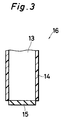
enzyme electrode 5, - Figure 3 is a sectional view of the
enzyme electrode 16 used in Comparative Example 2. - The following description relates to best embodiments of the present invention. It serves only for illustration of the general principle of the invention and is not limiting it. In the description, "%" and "parts" represent " % by weight" and "parts by weight", respectively.
- A mixed composition of 100 parts of an electron beam curable emulsion of resin (trade name: Laromer PE 55W, made by BASF Co.) of 50 % in concentration comprising polyester acrylate and 150 parts of aqueous 10 % acetoacetylated polyvinyl alcohol as water-soluble polymer material was applied on a polyethylene terephthalate film so that the coating weight after drying become 20 g/m², and dried at 45 °C to give a membrane.
- The membrane was treated with an electron curtain-type irradiator (CB: 150 type, made by ESI Co.) operated at an acceleration voltage of 165 kV, with an exposure dose of 2 Mrad to cure the resin component. The formed selectively permeable membrane was peeled off from the polyethylene terephthalate film and washed with water for 15 h.
- Filter paper No. 5A was put on a clean glass plate, and a selectively permeable membrane was spread thereon. An enzyme solution comprising a 100 mM sodium phosphate buffer solution (pH 7.0 containing 10 mg/ml of glucose oxidase (derived from Aspergillus niger, made by Sigma Co., Trade name: Type II) and 10 mg/ml of bovine serum albumin (made by Sigma Co., Fraction V) with an addition of glutaraldehyde to a concentration of 1.0 % was applied on the selectively permeable membrane in a quantity of 100 »l/cm² and was left to stand for 1 h at room temperature.
- As shown in Fig. 1, the selectively
permeable membrane 2 was mounted on the end of aplatinum wire 1 of 3 mm in diameter with an O-ring 4 with the immobilizedenzyme membrane 3 outside to give a workingelectrode 5. - The working
electrode 5 was mounted on the measuring cell of a batch type measuring apparatus shown in Fig. 2 and immersed in 100 mM sodiumphosphate buffer solution 8 of pH 7.0. Using a platinum plate of 1 cm² as thecounter electrode 6 and SCE as thereference electrode 7, measurements were made with a potential applied to the workingelectrode 5 and a potential of +0.6 V to thereference electrode 7. To stir the sample, amagnetic stirrer 10 and amagnet 9 were used. The output current from the workingelectrode 5 was recorded with arecorder 12. - Glucose was added into the measuring cell in various concentrations, and the output current of the working
electrode 5 was examined against each concentration of glucose (0.5 - 2.5 mM). - Then, the buffer solution was replaced by a new buffer solution, and an aqueous solution containing 1 M of glucose and 0.1 M of ascorbic acid was added, and the output current at each glucose concentration (0.5 - 2.5 mM) was examined.
- Measurements were made in the same manner as in Example 1, except that the enzyme electrode was prepared with use of acidic gelatin (trade name: NHG-16, made by Nitta Gelatine Co.) instead of the acetoacetylated polyvinyl alcohol.
- Measurements were made in the same manner as in Example 1, except that the enzyme electrode was prepared with use of gum arabic instead of the acetoacetylated polyvinyl alcohol.
- An enzyme electrode was prepared, and measurements were made in the same manner as in Example 1, except that acetoacetylated polyvinyl alcohol was not used in preparing the enzyme electrode.
- As shown in Fig. 3, on a
platinum wire 13 of 3 mm in diameter was applied 100 »l/cm² of an enzyme solution comprising 100 mM sodium phosphate buffer solution (pH 7.0) and containing 10 mg/ml of glucose oxidase (derived from Aspergillus niger, made by Sigma Co., Trade name: Type II) and 10 mg/ml of bovine serum albumin (made by Sigma Co., Fraction V) with an addition of glutar aldehyde to a concentration of 1.0 %. After incubating at room temperature for 1 h, an immobilizedenzyme membrane 15 was formed. The side surface of theplatinum wire 3 was covered with a heat-shrinkable PTFE cover 14. Thus, a workingelectrode 16 having no selectively permeable membrane was prepared, and measurements were made in the same manner as in Example 1. - The results of these measurements of the Examples and Comparative Examples are shown in Table 1.
Table 1 Output current (»A) Glucose concentration 0.5mM 1.5 mM 2.5mM Presence of ascorbic acid none present none present none present Example 1 0.07 0.07 0.21 0.21 0.34 0.34 Example 2 0.11 0.11 0.35 0.36 0.53 0.56 Example 3 0.08 0.08 0.25 0.27 0.42 0.45 Comparative Example 1 0.00 0.00 0.00 0.00 0.00 0.00 Comparative Example 2 0.21 0.25 0.61 0.73 1.10 1.32 - In Examples 1-3, the output current hardly changed depending upon the presence of ascorbic acid, and was not influenced by ascorbic acid, an interfering substance. It was found that the output current is proportional to the concentration of glucose and can be used in measuring the glucose concentration. Particularly, in Example 1, where acetoacetylated polyvinyl alcohol was used, an influence of ascorbic acid was not observed at all.
- In Comparative Example 1, wherein no water-soluble polymer material was used, the crosslinkage of the membrane become too dense to allow even hydrogen peroxide permeation and, therefore, a glucose-related output current could not be obtained. Comparative Example 2, where no selectively permeable membrane was used, showed a large influence of ascorbic acid and was found not suitable for an accurate determination of glucose concentration.
- A mixed composition of 100 parts of an electron beam curable emulsion of resin (trade name: Laromer PE55W, made by BASF Co.) of 50 % in concentration comprising polyesteracrylate and 100 parts of a 5 % solution of acidic gelatin (trade name: NHG-16, made by Nitta Gelatin Co.) was applied on a polyethylene terephthalate film so that the coating weight become 15 g/m² on dry basis, and dried at 45 °C to give membrane.
- The membrane was treated with an electron curtain-type irradiator (CB: 150 type, made by ESI Co.) operated at an acceleration voltage of 165 kV, with an exposure dose of 2 Mrad to curve the resin component.
- On the prepared selectively permeable membrane a mixture of 1 ml of alcohol oxidase (derived from Pichia pastolis, made by Sigma Co.), 100 mg of bovine serum albumin, and 1 g of emulsion of resin (Laromer PE55W) was applied, and after drying at room temperature, irradiated with an electron beam under the same conditions as when the selectively permeable membrane was prepared. After curing, it was peeled off from the polyethylene terephthalate film and was washed with 100 mM sodium phosphate buffer solution (pH 7.5) for about 20 h.
- The sensitivity was examined in the same manner as in Example 1, except that the response to ethanol and ascorbic acid was examined by use of aqueous 1M ethanol solution and aqueous 1M ascorbic acid solution.
- The results are shown in Table 2. From Table 2, it is understood that with ascorbic acid, a sensitivity of only 5 % or less is achieved in comparison with ethanol of the same concentration. This means that the above method can give membranes having excellent selective permeability, and that the alcohol oxidase is immobilized with high activity.
Table 2 Output response values (nA) Ethanol/ascorbic acid concentration (mM) 0.1 0.5 1.0 2.0 Ethanol response value (nA) 23 116 232 459 Ascorbic acid response value (nA) 2 2 4 7
a permselective membrane obtained by
the permselective membrane is prepared in step A as follows:
the permselective membrane is prepared in step A' as follows:
Claims (21)
- Enzyme electrode (5),
comprising- an electrically conductive base (1),- a permselective membrane (2) selectively permeable to hydrogen peroxide, made of a synthetic polymer and being provided on the electrically conductive base (1), and- an immobilized enzyme membrane (3) provided on the permselective membrane (2) and comprising an immobilized hydrogen peroxide forming oxidase,characterized by
a permselective membrane (2) obtained by- preparing a mixed composition of- an oil-in-water type emulsion of at least one type of ethylenically unsaturated prepolymer or monomer curable by ionizing or ultraviolet radiation,
and- an aqueous solution of a water-soluble polymer material,- forming a film of the mixed composition,- evaporating the solvent from the film,- irradiating the obtained film with ionizing or ultraviolet radiation for curing,
and- washing the obtained cured film with water or a buffer solution. - The enzyme electrode according to claim 1, characterized in that the immobilized hydrogen peroxide forming oxidase is glucose oxidase, galactose oxidase or alcohol oxidase.
- The enzyme electrode according to claim 1 or 2, characterized in that the permselective membrane (2) is in direct contact with the electrically conductive base (1).
- The enzyme electrode according to claim 1 or 2, characterized in that the permselective membrane (2) is in contact with the electrically conductive base (1) through an electrolyte solution.
- The enzyme electrode according to one of claims 1 to 3, characterized in that the immobilized enzyme membrane (3) has been provided on the permselective membrane (2) by- mixing a solution of the enzyme to be immobilized with an oil-in-water type emulsion of at least one type of ethylenically unsaturated prepolymer or monomer curable by ionizing or ultraviolet radiation
in admixture with an aqueous solution of a water-soluble polymer material,- forming a film of this mixture on the permselective membrane (2),- evaporating the solvent from the film,- irradiating the obtained film with ionizing or ultraviolet radiation for curing,
and- washing the obtained cured film with water or a buffer solution. - The enzyme electrode according to one of claims 1 to 5, characterized in that the thickness of the permselective membrane (2) is 0.1 to 500 »m.
- The enzyme electrode according to one of claims 1 to 6, characterized in that the electrically conductive base (1) is made of platinum, gold or carbon.
- The enzyme electrode according to one of claims 1 to 7, characterized in that the permselective membrane (2) further comprises a styrene-butadiene copolymer, a vinyl acetate-vinyl chloride-ethylene copolymer or a methacrylate-butadiene copolymer.
- The enzyme electrode according to one of claims 1 to 8, characterized in that the permselective membrane (2) has been prepared from ethylenically unsaturated prepolymers selected from(a) poly(meth)acrylates of aliphatic, alicyclic or araliphatic polyhydric alcohols having 2 to 6 alcoholic hydroxy groups or polyalkylene glycols,(b) poly(meth)acrylates of polyhydric alcohols resulting from addition of alkylene oxides to aliphatic, alicyclic or araliphatic polyhydric alcohols having 2 to 6 alcoholic hydroxy groups,(c) poly(meth)acryloyloxyalkyl phosphates resulting from reaction of hydroxy group-containing (meth)acrylates and phosphorus pentoxide,(d) polyester poly(meth)acrylates resulting from esterification of (meth)acrylic acid, polyhydric alcohols, and polycarboxylic acids,(e) epoxy poly(meth)acrylates which are reaction products of (meth)acrylic acid and epoxy resins resulting from reaction of polyhydric phenols and epichlorohydrin,(f) polyurethane poly(meth)acrylates,(g) polyamide poly(meth)acrylates,(h) polysiloxane poly(meth)acrylates,(i) low molecular weight vinyl or diene polymers containing side chain and/or terminal (meth)acryloyloxy groups, and(j) modified products of the oligoester (meth)acrylates of (a) to (i) above, obtained by modifying a part of the hydroxy or carboxy groups remained in the oligoester with an acid chloride, an acid anhydride, or an isocyanate.
- The enzyme electrode according to one of claims 1 to 8, characterized in that the permselective membrane (2) has been prepared from ethylenically unsaturated monomers selected fromI. monofunctional unsaturated monomers:(1) carboxy group-containing monomers,(2) amide group-containing monomers,(3) sulfonic acid group-containing monomers,(4) hydroxy group-containing monomers,(5) amino group-containing monomers,(6) quaternary ammonium salts group-containing monomers,(7) alkyl esters of ethylenically unsaturated carboxylic acids,(8) nitrile group-containing monomers,(9) styrene,(10) ethylenically unsaturated alcohol esters, and(11) mono(meth)acrylates of alkylene oxide adducts of compounds containing active hydrogen;II. difunctional unsaturated monomers:(1) ester group-containing difunctional monomers,(2) difunctional diesters of (meth)acrylic acid and alkylene oxide adducts of compounds containing active hydrogen,(3) bisacrylamides, and(4) difunctional compounds such as divinylbenzene, divinylethylene glycol, divinylsulfone, divinyl ether, and divinyl ketone;III. polyfunctional unsaturated monomers:(1) ester group-containing polyfunctional monomers,(2) polyfunctional monomers such as polyesters of alkylene oxide adducts of compounds containing active hydrogen, and(3) polyfunctional unsaturated monomers such as trivinylbenzene.
- The enzyme electrode according to one of claims 1 to 10, characterized in that the permselective membrane (2) has been prepared with use of an oil-in-water type emulsion comprising a surface active agent, preferably a non-ionic surface active agent.
- Method for manufacturing the enzyme electrode (5) according to claims 1 to 11,
comprising the following steps:(A) Providing a permselective membrane (2) selectively permeable to hydrogen peroxide,(B) providing an immobilized enzyme membrane (3) comprising a hydrogen peroxide forming oxidase on the permselective membrane (2),
and(C) mounting the obtained permselective membrane (2) with the immobilized enzyme membrane (3) on an electrically conductive base (1), the enzyme membrane (3) being at the outer side,characterized in that
the permselective membrane (2) is prepared in step A as follows:(A1) Preparing a mixed composition of- an oil-in-water type emulsion of at least one type of ethylenically unsaturated prepolymer or monomer curable by ionizing or ultraviolet radiation,
and- an aqueous solution of a water-soluble polymer material,(A2) forming a film of the mixed composition,(A3) evaporating the solvent from the film,(A4) irradiating the obtained film with ionizing or ultraviolet radiation for curing,
and(A5) washing the obtained cured film with water or a buffer solution. - Method for manufacturing the enzyme electrode (5) according to claims 1 to 11,
comprising the following steps:(A') Providing a permselective membrane (2) selectively permeable to hydrogen peroxide,
and(B') providing an immobilized enzyme membrane (3) comprising a hydrogen peroxide forming oxidase on the permselective membrane (2),characterized in that
the permselective membrane (2) is prepared in step A' as follows:(A'1) Preparing a mixed composition of- an oil-in-water type emulsion of at least one type of ethylenically unsaturated prepolymer or monomer curable by ionizing or ultraviolet radiation,
and- an aqueous solution of a water-soluble polymer material,(A'2) forming a film of the mixed composition on an electrically conductive base (1),(A'3) evaporating the solvent from the film,(A'4) irradiating the obtained film with ionizing or ultraviolet radiation for curing,
and(A'5) washing the obtained cured film with water or a buffer solution. - The method according to claims 12 or 13,
characterized in that in steps B or B' glucose oxidase, galactose oxidase or alcohol oxidase are used as hydrogen peroxide forming oxidase. - The method according to one of claims 12 to 14,
characterized in that the immobilized enzyme membrane (3) is provided on the permselective membrane (2) in steps B or B' by- mixing a solution of the enzyme to be immobilized with an oil-in-water type emulsion of at least one type of ethylenically unsaturated prepolymer or monomer curable by ionizing or ultraviolet radiation
in admixture with an aqueous solution of a water-soluble polymer material,- forming a film of this mixture on the permselective membrane (2),- evaporating the solvent from the film,- irradiating the obtained film with ionizing or ultraviolet radiation for curing,
and- washing the obtained cured film with water or a buffer solution. - The method according to one of claims 12 to 15,
characterized in that in steps A1 or A'1 and/or B or B', the water-soluble polymer material used is selected from
cellulose derivatives, such as methyl cellulose, hydroxyethyl cellulose, ethylhydroxyethyl cellulose, carboxymethyl cellulose, and viscose;
starch or its derivatives, such as soluble starch, oxidized starch, and dextrin;
polysaccharides, such as gum arabic, tragacanth and alginic acid;
proteins, such as gluten, gelatin, casein, albumin, soybean-protein, and enzymes;
sodium polyacrylates;
ethylene oxide polymers, such as polystyrene glycol and polyethylene oxide;
polyvinyl ethers, such as polyvinylmethyl ether, polyvinylethyl ether, and polyvinylisobutyl ether;
completely saponified or partially saponified polyvinyl alcohol;
acetoacetylated polyvinyl alcohol;
esterified products and ester derivatives of the products of polyvinyl alcohol with multivalent carboxylic acids, such as fumaric acid, phthalic anhydride, trimellitic anhydride, and itaconic anhydride;
carboxy-modified polyvinyl alcohol obtained as saponification product of copolymers of vinyl acetate with an ethylenically unsaturated carboxylic acid, such as maleic acid, fumaric acid, itaconic acid, crotonic acid, acrylic acid, and methacrylic acid;
sulfonic acid-modified polyvinyl alcohol obtained as saponification products of copolymers of vinyl acetate with an olefin sulfonic acid;
olefin-modified polyvinyl alcohol;
nitrile-modified polyvinyl alcohol,
amide-modified polyvinyl alcohol, and
pyrrolidone modified polyvinyl alcohol, preferably modified polyvinyl alcohols, gelatin, and gum arabic. - The method according to one of claims 12 to 16, characterized in that in steps A1 or A'1 and/or B or B' a mixed composition is used which further comprises a styrene-butadiene copolymer, a vinyl acetate-vinyl chloride-ethylene copolymer or a methacrylate-butadiene copolymer.
- The method according to one of claims 12 to 17, characterized in that in steps A1 or A'1 and/or B or B' ethylenically unsaturated prepolymers are used selected from(a) poly(meth)acrylates of aliphatic, alicyclic or araliphatic polyhydric alcohols having 2 to 6 alcoholic hydroxy groups or polyalkylene glycols,(b) poly(meth)acrylates of polyhydric alcohols resulting from addition of alkylene oxides to aliphatic, alicyclic or araliphatic polyhydric alcohols having 2 to 6 alcoholic hydroxy groups,(c) poly(meth)acryloyloxyalkyl phosphates resulting from reaction of hydroxy group-containing (meth)acrylates and phosphorus pentoxide,(d) polyester poly(meth)acrylates resulting from esterification of (meth)acrylic acid, polyhydric alcohols, and polycarboxylic acids,(e) epoxy poly(meth)acrylates which are reaction products of (meth)acrylic acid and epoxy resins resulting from reaction of polyhydric phenols and epichlorohydrin,(f) polyurethane poly(meth)acrylates,(g) polyamide poly(meth)acrylates,(h) polysiloxane poly(meth)acrylates,(i) low molecular weight vinyl or diene polymers containing side chain and/or terminal (meth)acryloyloxy groups, and(j) modified products of the oligoester (meth)acrylates of (a) to (i) above, obtained by modifying a part of the hydroxy or carboxy groups remained in the oligoester with an acid chloride, an acid anhydride, or an isocyanate.
- The method according to one of claims 12 to 18, characterized in that in steps A1 or A'1 and/or B or B' ethylenically unsaturated monomers are used selected fromI. monofunctional unsaturated monomers:(1) carboxy group-containing monomers,(2) amide group-containing monomers,(3) sulfonic acid group-containing monomers,(4) hydroxy group-containing monomers,(5) amino group-containing monomers,(6) quaternary ammonium salts group-containing monomers,(7) alkyl esters of ethylenically unsaturated carboxylic acids,(8) nitrile group-containing monomers,(9) styrene,(10) ethylenically unsaturated alcohol esters, and(11) mono(meth)acrylates of alkylene oxide adducts of compounds containing active hydrogen;II. difunctional unsaturated monomers:(1) ester group-containing difunctional monomers,(2) difunctional diesters of (meth)acrylic acid and alkylene oxide adducts of compounds containing active hydrogen,(3) bisacrylamides, and(4) difunctional compounds such as divinylbenzene, divinylethylene glycol, divinylsulfone, divinyl ether, and divinyl ketone;III. polyfunctional unsaturated monomers:(1) ester group-containing polyfunctional monomers,(2) polyfunctional monomers such as polyesters of alkylene oxide adducts of compounds containing active hydrogen,
and(3) polyfunctional unsaturated monomers such as trivinylbenzene. - The method according to one of claims 12 to 19, characterized in that in steps A1 or A'1 and/or B or B', the water-soluble polymer material is used in an amount of 0.1 to 100 parts by weight, and preferably 1 to 50 parts by weight, per 100 parts by weight of the emulsion.
- The method according to one of claims 12 to 20, characterized in that in steps A1 or A'1 an oil-in-water type emulsion is used comprising a surface active agent, preferably a non-ionic surface active agent.
Applications Claiming Priority (2)
| Application Number | Priority Date | Filing Date | Title |
|---|---|---|---|
| JP63015130A JP2685145B2 (en) | 1988-01-25 | 1988-01-25 | Enzyme electrode |
| JP15130/88 | 1988-01-25 |
Publications (3)
| Publication Number | Publication Date |
|---|---|
| EP0326081A2 EP0326081A2 (en) | 1989-08-02 |
| EP0326081A3 EP0326081A3 (en) | 1990-05-30 |
| EP0326081B1 true EP0326081B1 (en) | 1995-05-10 |
Family
ID=11880239
Family Applications (1)
| Application Number | Title | Priority Date | Filing Date |
|---|---|---|---|
| EP89101196A Expired - Lifetime EP0326081B1 (en) | 1988-01-25 | 1989-01-24 | Enzyme electrode |
Country Status (4)
| Country | Link |
|---|---|
| US (1) | US5034330A (en) |
| EP (1) | EP0326081B1 (en) |
| JP (1) | JP2685145B2 (en) |
| DE (1) | DE68922501T2 (en) |
Families Citing this family (23)
| Publication number | Priority date | Publication date | Assignee | Title |
|---|---|---|---|---|
| US5242793A (en) * | 1989-03-08 | 1993-09-07 | Kanzaki Paper Manufacturing Co., Ltd. | Selective permeable membrane and electrode using the same |
| JP2862940B2 (en) * | 1989-08-25 | 1999-03-03 | 王子製紙株式会社 | Immobilized enzyme and measuring device using the same |
| JP2928588B2 (en) * | 1990-05-22 | 1999-08-03 | 王子製紙株式会社 | Alcohol measurement method and measurement device |
| AT398003B (en) * | 1991-05-10 | 1994-08-25 | Avl Verbrennungskraft Messtech | DEVICE FOR DETERMINING THE FLOW OF MATERIAL |
| US5648208A (en) * | 1991-08-01 | 1997-07-15 | Coletica | Use of a collagen as solid binding substrate for a ligand capable of reacting specifically with an element to be detected in a biological medium, reactant and implementation |
| JPH05133928A (en) * | 1991-11-13 | 1993-05-28 | Tekunoroogu:Kk | Enzyme-fixed biosensor and its manufacture |
| US5604264A (en) * | 1995-04-03 | 1997-02-18 | Reilly Industries, Inc. | Polyvinylpyridinium anion-exchangers for recovery of technetium and plutonium anions |
| US5804048A (en) * | 1996-08-15 | 1998-09-08 | Via Medical Corporation | Electrode assembly for assaying glucose |
| US5958704A (en) * | 1997-03-12 | 1999-09-28 | Ddx, Inc. | Sensing system for specific substance and molecule detection |
| US6360888B1 (en) | 1999-02-25 | 2002-03-26 | Minimed Inc. | Glucose sensor package system |
| AU6459900A (en) * | 1999-08-14 | 2001-03-13 | Iit Limited | Analytical apparatus and method |
| GB0000721D0 (en) * | 2000-01-14 | 2000-03-08 | Univ Wales Aberystwyth The | Protective coatings for metallic electrodes |
| WO2001090733A1 (en) * | 2000-05-23 | 2001-11-29 | Radiometer Medical A/S | A sensor membrane, a method for the preparation thereof, a sensor and a layered membrane structure for such sensor |
| JP2006049225A (en) * | 2004-08-06 | 2006-02-16 | Canon Inc | Solid polymer electrolyte membrane and solid polymer fuel cell |
| JP4435709B2 (en) * | 2005-03-22 | 2010-03-24 | 富士フイルム株式会社 | Biosensor |
| WO2007050052A2 (en) * | 2005-10-25 | 2007-05-03 | Norman Leigh Anderson | Process for treatment of protein samples |
| US20070092924A1 (en) * | 2005-10-25 | 2007-04-26 | Anderson Norman L | Process for treatment of protein samples |
| WO2010027771A1 (en) | 2008-08-27 | 2010-03-11 | Edwards Lifesciences Corporation | Analyte sensor |
| US8727135B2 (en) * | 2010-09-01 | 2014-05-20 | International Business Machines Corporation | Composite filtration membranes and methods of preparation thereof |
| US9855359B2 (en) * | 2013-12-23 | 2018-01-02 | Verily Life Sciences Llc | Analyte sensors with ethylene oxide immunity |
| EP3149133B1 (en) * | 2014-05-30 | 2019-02-27 | Drei Lilien Pvg GmbH&Co. KG | Method for purifying refined lipid phases |
| KR102750887B1 (en) * | 2019-10-10 | 2025-01-06 | 동우 화인켐 주식회사 | Bio Sensor |
| CN111458453B (en) * | 2020-05-12 | 2022-07-12 | 万华化学(四川)有限公司 | Method for testing hydroxyl value in lactide-containing polylactic acid and application thereof |
Family Cites Families (7)
| Publication number | Priority date | Publication date | Assignee | Title |
|---|---|---|---|---|
| US3860490A (en) * | 1972-02-11 | 1975-01-14 | Nat Patent Dev Corp | Process of subjecting a microorganism susceptible material to a microorganism |
| JPS5921500B2 (en) * | 1978-01-28 | 1984-05-21 | 東洋紡績株式会社 | Enzyme membrane for oxygen electrode |
| JPS5925458B2 (en) * | 1978-04-04 | 1984-06-18 | 東洋紡績株式会社 | Immobilized enzyme membrane for enzyme electrode |
| US4356074A (en) * | 1980-08-25 | 1982-10-26 | The Yellow Springs Instrument Company, Inc. | Substrate specific galactose oxidase enzyme electrodes |
| JPS5769667A (en) * | 1980-10-16 | 1982-04-28 | Matsushita Electric Ind Co Ltd | Electrode |
| JPH0617889B2 (en) * | 1984-11-27 | 1994-03-09 | 株式会社日立製作所 | Biochemical sensor |
| US4894339A (en) * | 1985-12-18 | 1990-01-16 | Seitaikinouriyou Kagakuhin Sinseizogijutsu Kenkyu Kumiai | Immobilized enzyme membrane for a semiconductor sensor |
-
1988
- 1988-01-25 JP JP63015130A patent/JP2685145B2/en not_active Expired - Fee Related
-
1989
- 1989-01-24 US US07/301,032 patent/US5034330A/en not_active Expired - Fee Related
- 1989-01-24 DE DE68922501T patent/DE68922501T2/en not_active Expired - Fee Related
- 1989-01-24 EP EP89101196A patent/EP0326081B1/en not_active Expired - Lifetime
Non-Patent Citations (1)
| Title |
|---|
| PROCEEDINGS OF THE 2nd INTERNATL. MEETING ON CHEMICAL SENSORS, Bordeaux (FR), 07-11 July 1986; Y. HANAZATO et al., pp. 576-579# * |
Also Published As
| Publication number | Publication date |
|---|---|
| EP0326081A3 (en) | 1990-05-30 |
| DE68922501D1 (en) | 1995-06-14 |
| DE68922501T2 (en) | 1995-09-14 |
| US5034330A (en) | 1991-07-23 |
| JPH01189556A (en) | 1989-07-28 |
| EP0326081A2 (en) | 1989-08-02 |
| JP2685145B2 (en) | 1997-12-03 |
Similar Documents
| Publication | Publication Date | Title |
|---|---|---|
| EP0326081B1 (en) | Enzyme electrode | |
| EP0457892B1 (en) | Enzyme electrical sensor electrode and method of making it | |
| EP1235068B1 (en) | Biosensor | |
| EP0562370B1 (en) | Biosensor | |
| US4240889A (en) | Enzyme electrode provided with immobilized enzyme membrane | |
| EP0397784B1 (en) | A method for immobilizing a polypeptide in a polymer and a membrane produced thereby | |
| EP0562372B1 (en) | Biosensor | |
| US5422246A (en) | Electrode having a polymer coating with a redox enzyme bound thereto, the polymer coating being formed on the walls of pores extending through a porous membrane | |
| US4886740A (en) | Enzyme-electrode sensor with organosilane treated membrane | |
| Mizutani et al. | Amperometric determination of pyruvate, phosphate and urea using enzyme electrodes based on pyruvate oxidase-containing poly (vinyl alcohol)/polyion complex-bilayer membrane | |
| JPH09127041A (en) | Enzyme electrode | |
| EP0707064A2 (en) | Process for immobilizing biological components in a polymeric matrix as well as biosensors obtained therefrom | |
| EP0562371B1 (en) | Immobilisation of biochemical substances | |
| EP0304494A1 (en) | Immobilization of biofunctional material, element prepared therefrom and measurement using the same | |
| JP3151331B2 (en) | How to immobilize biochemicals | |
| JP3122459B2 (en) | Method for immobilizing organic macromolecules or biopolymers on polymeric membranes | |
| Haiying et al. | Amperometric glucose sensor using tetrathiafulvalene in Nafion gel as electron shuttle | |
| EP0386763B1 (en) | Selective permeable membrane, method of producing and electrode using the same | |
| EP0416419B1 (en) | Immobilized alcohol oxidase, method for its preparation and measuring apparatus | |
| JPS59164953A (en) | Immobilized enzyme film and manufacture thereof | |
| JP3447374B2 (en) | Enzyme sensor and method for producing the same | |
| JPS6264941A (en) | Enzyme immobilized membrane for biosensor | |
| JPS58224689A (en) | Immobilized enzyme | |
| JPH0420648B2 (en) | ||
| JP2001165892A (en) | Sensor element and manufacturing method therefor |
Legal Events
| Date | Code | Title | Description |
|---|---|---|---|
| PUAI | Public reference made under article 153(3) epc to a published international application that has entered the european phase |
Free format text: ORIGINAL CODE: 0009012 |
|
| AK | Designated contracting states |
Kind code of ref document: A2 Designated state(s): DE GB |
|
| PUAL | Search report despatched |
Free format text: ORIGINAL CODE: 0009013 |
|
| 17P | Request for examination filed |
Effective date: 19900314 |
|
| AK | Designated contracting states |
Kind code of ref document: A3 Designated state(s): DE GB |
|
| 17Q | First examination report despatched |
Effective date: 19920429 |
|
| RAP1 | Party data changed (applicant data changed or rights of an application transferred) |
Owner name: NEW OJI PAPER CO., LTD. |
|
| GRAA | (expected) grant |
Free format text: ORIGINAL CODE: 0009210 |
|
| AK | Designated contracting states |
Kind code of ref document: B1 Designated state(s): DE GB |
|
| REF | Corresponds to: |
Ref document number: 68922501 Country of ref document: DE Date of ref document: 19950614 |
|
| PLBE | No opposition filed within time limit |
Free format text: ORIGINAL CODE: 0009261 |
|
| STAA | Information on the status of an ep patent application or granted ep patent |
Free format text: STATUS: NO OPPOSITION FILED WITHIN TIME LIMIT |
|
| 26N | No opposition filed | ||
| PGFP | Annual fee paid to national office [announced via postgrant information from national office to epo] |
Ref country code: GB Payment date: 19980115 Year of fee payment: 10 |
|
| PGFP | Annual fee paid to national office [announced via postgrant information from national office to epo] |
Ref country code: DE Payment date: 19980202 Year of fee payment: 10 |
|
| PG25 | Lapsed in a contracting state [announced via postgrant information from national office to epo] |
Ref country code: GB Free format text: LAPSE BECAUSE OF NON-PAYMENT OF DUE FEES Effective date: 19990124 |
|
| GBPC | Gb: european patent ceased through non-payment of renewal fee |
Effective date: 19990124 |
|
| PG25 | Lapsed in a contracting state [announced via postgrant information from national office to epo] |
Ref country code: DE Free format text: LAPSE BECAUSE OF NON-PAYMENT OF DUE FEES Effective date: 19991103 |