EP0342068A1 - Support solide pour diagnostic immunologique, son procédé de traitement et application au diagnostic immunologique - Google Patents
Support solide pour diagnostic immunologique, son procédé de traitement et application au diagnostic immunologique Download PDFInfo
- Publication number
- EP0342068A1 EP0342068A1 EP89400949A EP89400949A EP0342068A1 EP 0342068 A1 EP0342068 A1 EP 0342068A1 EP 89400949 A EP89400949 A EP 89400949A EP 89400949 A EP89400949 A EP 89400949A EP 0342068 A1 EP0342068 A1 EP 0342068A1
- Authority
- EP
- European Patent Office
- Prior art keywords
- group
- halogen
- hydrogen atom
- chemical compound
- carbon atoms
- Prior art date
- Legal status (The legal status is an assumption and is not a legal conclusion. Google has not performed a legal analysis and makes no representation as to the accuracy of the status listed.)
- Withdrawn
Links
- 239000007787 solid Substances 0.000 title claims abstract description 38
- 238000011282 treatment Methods 0.000 title claims abstract description 24
- 238000000034 method Methods 0.000 title claims abstract description 20
- 229910052736 halogen Inorganic materials 0.000 claims abstract description 25
- 150000002367 halogens Chemical class 0.000 claims abstract description 25
- 125000004435 hydrogen atom Chemical group [H]* 0.000 claims abstract description 25
- 125000002887 hydroxy group Chemical group [H]O* 0.000 claims abstract description 25
- 150000001875 compounds Chemical class 0.000 claims abstract description 24
- 125000000217 alkyl group Chemical group 0.000 claims abstract description 20
- 125000004432 carbon atom Chemical group C* 0.000 claims abstract description 20
- 150000001412 amines Chemical class 0.000 claims abstract description 15
- 230000015572 biosynthetic process Effects 0.000 claims abstract description 3
- 125000004122 cyclic group Chemical group 0.000 claims abstract description 3
- 239000004793 Polystyrene Substances 0.000 claims description 12
- 229920002223 polystyrene Polymers 0.000 claims description 12
- 239000000126 substance Substances 0.000 claims description 8
- 229920006249 styrenic copolymer Polymers 0.000 claims description 7
- 239000004800 polyvinyl chloride Substances 0.000 claims description 6
- 229920000915 polyvinyl chloride Polymers 0.000 claims description 6
- 229920003229 poly(methyl methacrylate) Polymers 0.000 claims description 4
- 239000004926 polymethyl methacrylate Substances 0.000 claims description 4
- LHJGJYXLEPZJPM-UHFFFAOYSA-N 2,4,5-trichlorophenol Chemical compound OC1=CC(Cl)=C(Cl)C=C1Cl LHJGJYXLEPZJPM-UHFFFAOYSA-N 0.000 claims description 3
- LINPIYWFGCPVIE-UHFFFAOYSA-N 2,4,6-trichlorophenol Chemical compound OC1=C(Cl)C=C(Cl)C=C1Cl LINPIYWFGCPVIE-UHFFFAOYSA-N 0.000 claims description 3
- VADKRMSMGWJZCF-UHFFFAOYSA-N 2-bromophenol Chemical compound OC1=CC=CC=C1Br VADKRMSMGWJZCF-UHFFFAOYSA-N 0.000 claims description 3
- KQDJTBPASNJQFQ-UHFFFAOYSA-N 2-iodophenol Chemical compound OC1=CC=CC=C1I KQDJTBPASNJQFQ-UHFFFAOYSA-N 0.000 claims description 3
- MNOJRWOWILAHAV-UHFFFAOYSA-N 3-bromophenol Chemical compound OC1=CC=CC(Br)=C1 MNOJRWOWILAHAV-UHFFFAOYSA-N 0.000 claims description 3
- GZFGOTFRPZRKDS-UHFFFAOYSA-N 4-bromophenol Chemical compound OC1=CC=C(Br)C=C1 GZFGOTFRPZRKDS-UHFFFAOYSA-N 0.000 claims description 3
- 238000003018 immunoassay Methods 0.000 claims description 3
- 239000004033 plastic Substances 0.000 claims description 3
- 229920003023 plastic Polymers 0.000 claims description 3
- 229920001577 copolymer Polymers 0.000 claims 1
- 125000001931 aliphatic group Chemical group 0.000 abstract 1
- 238000002835 absorbance Methods 0.000 description 20
- UFBJCMHMOXMLKC-UHFFFAOYSA-N 2,4-dinitrophenol Chemical compound OC1=CC=C([N+]([O-])=O)C=C1[N+]([O-])=O UFBJCMHMOXMLKC-UHFFFAOYSA-N 0.000 description 10
- 239000000427 antigen Substances 0.000 description 9
- 102000036639 antigens Human genes 0.000 description 9
- 108091007433 antigens Proteins 0.000 description 9
- 239000011248 coating agent Substances 0.000 description 7
- 238000000576 coating method Methods 0.000 description 7
- 238000001514 detection method Methods 0.000 description 4
- 230000001900 immune effect Effects 0.000 description 4
- XLYOFNOQVPJJNP-UHFFFAOYSA-N water Substances O XLYOFNOQVPJJNP-UHFFFAOYSA-N 0.000 description 4
- 239000013078 crystal Substances 0.000 description 3
- 238000003745 diagnosis Methods 0.000 description 3
- 239000007788 liquid Substances 0.000 description 3
- 238000005259 measurement Methods 0.000 description 3
- 244000005700 microbiome Species 0.000 description 3
- OXNIZHLAWKMVMX-UHFFFAOYSA-N picric acid Chemical compound OC1=C([N+]([O-])=O)C=C([N+]([O-])=O)C=C1[N+]([O-])=O OXNIZHLAWKMVMX-UHFFFAOYSA-N 0.000 description 3
- BSWWXRFVMJHFBN-UHFFFAOYSA-N 2,4,6-tribromophenol Chemical compound OC1=C(Br)C=C(Br)C=C1Br BSWWXRFVMJHFBN-UHFFFAOYSA-N 0.000 description 2
- CDAWCLOXVUBKRW-UHFFFAOYSA-N 2-aminophenol Chemical compound NC1=CC=CC=C1O CDAWCLOXVUBKRW-UHFFFAOYSA-N 0.000 description 2
- PLIKAWJENQZMHA-UHFFFAOYSA-N 4-aminophenol Chemical compound NC1=CC=C(O)C=C1 PLIKAWJENQZMHA-UHFFFAOYSA-N 0.000 description 2
- QIGBRXMKCJKVMJ-UHFFFAOYSA-N Hydroquinone Chemical compound OC1=CC=C(O)C=C1 QIGBRXMKCJKVMJ-UHFFFAOYSA-N 0.000 description 2
- PPBRXRYQALVLMV-UHFFFAOYSA-N Styrene Chemical compound C=CC1=CC=CC=C1 PPBRXRYQALVLMV-UHFFFAOYSA-N 0.000 description 2
- GGNQRNBDZQJCCN-UHFFFAOYSA-N benzene-1,2,4-triol Chemical compound OC1=CC=C(O)C(O)=C1 GGNQRNBDZQJCCN-UHFFFAOYSA-N 0.000 description 2
- YCIMNLLNPGFGHC-UHFFFAOYSA-N catechol Chemical compound OC1=CC=CC=C1O YCIMNLLNPGFGHC-UHFFFAOYSA-N 0.000 description 2
- 238000002405 diagnostic procedure Methods 0.000 description 2
- 239000006185 dispersion Substances 0.000 description 2
- 230000002255 enzymatic effect Effects 0.000 description 2
- 239000003446 ligand Substances 0.000 description 2
- IZUPBVBPLAPZRR-UHFFFAOYSA-N pentachlorophenol Chemical compound OC1=C(Cl)C(Cl)=C(Cl)C(Cl)=C1Cl IZUPBVBPLAPZRR-UHFFFAOYSA-N 0.000 description 2
- 238000000053 physical method Methods 0.000 description 2
- WQGWDDDVZFFDIG-UHFFFAOYSA-N pyrogallol Chemical compound OC1=CC=CC(O)=C1O WQGWDDDVZFFDIG-UHFFFAOYSA-N 0.000 description 2
- GHMLBKRAJCXXBS-UHFFFAOYSA-N resorcinol Chemical compound OC1=CC=CC(O)=C1 GHMLBKRAJCXXBS-UHFFFAOYSA-N 0.000 description 2
- 230000035945 sensitivity Effects 0.000 description 2
- 238000001179 sorption measurement Methods 0.000 description 2
- 0 *C(**1)=C(*)C(*)=C1O Chemical compound *C(**1)=C(*)C(*)=C1O 0.000 description 1
- CNVUHODFBBVIHK-UHFFFAOYSA-N 2,3,4-trichloro-6-methylphenol Chemical compound CC1=CC(Cl)=C(Cl)C(Cl)=C1O CNVUHODFBBVIHK-UHFFFAOYSA-N 0.000 description 1
- ZGSIPVANPPLRGY-UHFFFAOYSA-N 2,3,6-trichloro-4-methylphenol Chemical compound CC1=CC(Cl)=C(O)C(Cl)=C1Cl ZGSIPVANPPLRGY-UHFFFAOYSA-N 0.000 description 1
- QTAATZDGGZYBDC-UHFFFAOYSA-N 2,4,6-trichloro-3-methylphenol Chemical compound CC1=C(Cl)C=C(Cl)C(O)=C1Cl QTAATZDGGZYBDC-UHFFFAOYSA-N 0.000 description 1
- LQCKFXAPVKCRRU-UHFFFAOYSA-N 2,4-dinitrobenzene-1,3-diol Chemical compound OC1=CC=C([N+]([O-])=O)C(O)=C1[N+]([O-])=O LQCKFXAPVKCRRU-UHFFFAOYSA-N 0.000 description 1
- UWEZBKLLMKVIPI-UHFFFAOYSA-N 2,5-dinitrophenol Chemical compound OC1=CC([N+]([O-])=O)=CC=C1[N+]([O-])=O UWEZBKLLMKVIPI-UHFFFAOYSA-N 0.000 description 1
- JCRIDWXIBSEOEG-UHFFFAOYSA-N 2,6-dinitrophenol Chemical compound OC1=C([N+]([O-])=O)C=CC=C1[N+]([O-])=O JCRIDWXIBSEOEG-UHFFFAOYSA-N 0.000 description 1
- WASQBNCGNUTVNI-UHFFFAOYSA-N 2-amino-4,6-dichlorophenol Chemical compound NC1=CC(Cl)=CC(Cl)=C1O WASQBNCGNUTVNI-UHFFFAOYSA-N 0.000 description 1
- ISPYQTSUDJAMAB-UHFFFAOYSA-N 2-chlorophenol Chemical compound OC1=CC=CC=C1Cl ISPYQTSUDJAMAB-UHFFFAOYSA-N 0.000 description 1
- QTWJRLJHJPIABL-UHFFFAOYSA-N 2-methylphenol;3-methylphenol;4-methylphenol Chemical compound CC1=CC=C(O)C=C1.CC1=CC=CC(O)=C1.CC1=CC=CC=C1O QTWJRLJHJPIABL-UHFFFAOYSA-N 0.000 description 1
- IQUPABOKLQSFBK-UHFFFAOYSA-N 2-nitrophenol Chemical compound OC1=CC=CC=C1[N+]([O-])=O IQUPABOKLQSFBK-UHFFFAOYSA-N 0.000 description 1
- CWLKGDAVCFYWJK-UHFFFAOYSA-N 3-aminophenol Chemical compound NC1=CC=CC(O)=C1 CWLKGDAVCFYWJK-UHFFFAOYSA-N 0.000 description 1
- 229940018563 3-aminophenol Drugs 0.000 description 1
- RTZZCYNQPHTPPL-UHFFFAOYSA-N 3-nitrophenol Chemical compound OC1=CC=CC([N+]([O-])=O)=C1 RTZZCYNQPHTPPL-UHFFFAOYSA-N 0.000 description 1
- ZXVONLUNISGICL-UHFFFAOYSA-N 4,6-dinitro-o-cresol Chemical compound CC1=CC([N+]([O-])=O)=CC([N+]([O-])=O)=C1O ZXVONLUNISGICL-UHFFFAOYSA-N 0.000 description 1
- BTJIUGUIPKRLHP-UHFFFAOYSA-N 4-nitrophenol Chemical compound OC1=CC=C([N+]([O-])=O)C=C1 BTJIUGUIPKRLHP-UHFFFAOYSA-N 0.000 description 1
- JSTCPNFNKICNNO-UHFFFAOYSA-N 4-nitrosophenol Chemical compound OC1=CC=C(N=O)C=C1 JSTCPNFNKICNNO-UHFFFAOYSA-N 0.000 description 1
- 101710095342 Apolipoprotein B Proteins 0.000 description 1
- 102100040202 Apolipoprotein B-100 Human genes 0.000 description 1
- 102000003992 Peroxidases Human genes 0.000 description 1
- ISWSIDIOOBJBQZ-UHFFFAOYSA-N Phenol Chemical compound OC1=CC=CC=C1 ISWSIDIOOBJBQZ-UHFFFAOYSA-N 0.000 description 1
- 230000001948 anti-meningococcal effect Effects 0.000 description 1
- 238000003556 assay Methods 0.000 description 1
- 230000000052 comparative effect Effects 0.000 description 1
- XWLBYVXDCGYXGY-UHFFFAOYSA-N dowlap Chemical compound OC1=C(Cl)C=C(Cl)C(Cl)=C1[N+]([O-])=O XWLBYVXDCGYXGY-UHFFFAOYSA-N 0.000 description 1
- 230000000694 effects Effects 0.000 description 1
- 238000007654 immersion Methods 0.000 description 1
- 230000008105 immune reaction Effects 0.000 description 1
- 238000004519 manufacturing process Methods 0.000 description 1
- 239000000463 material Substances 0.000 description 1
- 238000005497 microtitration Methods 0.000 description 1
- 108040007629 peroxidase activity proteins Proteins 0.000 description 1
- QXYMVUZOGFVPGH-UHFFFAOYSA-N picramic acid Chemical compound NC1=CC([N+]([O-])=O)=CC([N+]([O-])=O)=C1O QXYMVUZOGFVPGH-UHFFFAOYSA-N 0.000 description 1
- 229940079877 pyrogallol Drugs 0.000 description 1
- QKHROXOPRBWBDD-UHFFFAOYSA-N tribromometacresol Chemical compound CC1=C(Br)C=C(Br)C(O)=C1Br QKHROXOPRBWBDD-UHFFFAOYSA-N 0.000 description 1
Classifications
-
- G—PHYSICS
- G01—MEASURING; TESTING
- G01N—INVESTIGATING OR ANALYSING MATERIALS BY DETERMINING THEIR CHEMICAL OR PHYSICAL PROPERTIES
- G01N33/00—Investigating or analysing materials by specific methods not covered by groups G01N1/00 - G01N31/00
- G01N33/48—Biological material, e.g. blood, urine; Haemocytometers
- G01N33/50—Chemical analysis of biological material, e.g. blood, urine; Testing involving biospecific ligand binding methods; Immunological testing
- G01N33/53—Immunoassay; Biospecific binding assay; Materials therefor
- G01N33/543—Immunoassay; Biospecific binding assay; Materials therefor with an insoluble carrier for immobilising immunochemicals
- G01N33/544—Immunoassay; Biospecific binding assay; Materials therefor with an insoluble carrier for immobilising immunochemicals the carrier being organic
- G01N33/545—Synthetic resin
-
- G—PHYSICS
- G01—MEASURING; TESTING
- G01N—INVESTIGATING OR ANALYSING MATERIALS BY DETERMINING THEIR CHEMICAL OR PHYSICAL PROPERTIES
- G01N33/00—Investigating or analysing materials by specific methods not covered by groups G01N1/00 - G01N31/00
- G01N33/48—Biological material, e.g. blood, urine; Haemocytometers
- G01N33/50—Chemical analysis of biological material, e.g. blood, urine; Testing involving biospecific ligand binding methods; Immunological testing
- G01N33/53—Immunoassay; Biospecific binding assay; Materials therefor
- G01N33/543—Immunoassay; Biospecific binding assay; Materials therefor with an insoluble carrier for immobilising immunochemicals
- G01N33/54393—Improving reaction conditions or stability, e.g. by coating or irradiation of surface, by reduction of non-specific binding, by promotion of specific binding
Definitions
- the present invention relates to a solid support for immunological diagnosis, to its method of treatment and to the application to immunological diagnosis.
- antibodies or antigens can be fixed on a solid support, in particular made of polystyrene, for the detection of antigens, antibodies or microorganisms, possibly present in a liquid medium, effecting the binding of the antigen, the antibody or the microorganism to be detected with the antibody or the antigen fixed on the solid support; the reaction is generally read by counting a radioactivity, measuring an enzymatic activity or physical measurement.
- the supports proposed in the prior art have a certain number of drawbacks and in particular they provide a great dispersion of the results when the reaction is revealed, which does not allow good reproducibility or good repeatability of diagnostic tests. .
- the present invention has therefore given itself the aim of providing a new solid support, use of immunological diagnosis, which better meets the needs of the practice than the means used until now, in particular with regard to the cost, reproducibility and repeatability of tests carried out in series.
- the subject of the present invention is a solid support for biological use, characterized in that said solid support has a surface polarity modified by the fixing on said surface of a chemical compound causing the formation of free radicals and / or aliphatic carbon chains.
- said chemical compound being of formula I, in which : R1 may be a hydrogen atom, a hydroxyl group, an NO2 group a halogen, a lower alkyl group comprising 1 to 4 carbon atoms, an amine; R2 may be a hydrogen atom, a hydroxyl group, a NO2 group, a halogen, a lower alkyl group comprising 1 to 4 carbon atoms, an amine; R3 can be a hydrogen atom, a hydroxyl group, an NO2 group, a halogen, a lower alkyl group comprising 1 to 4 carbon atoms, an amine, an NO group; R4 may be a hydrogen atom, a NO2 group, a halogen
- the chemical compounds in accordance with the present invention can in particular be phenol, 2,4-dinitrophenol, 2,5-dinitrophenol, 2,6-dinitrophenol, 2,4,6-trinitrophenol, hydroquinone, pyrocatechol, pyrogallol, resorcinol, 2-bromophenol, 3-bromophenol, 4-bromophenol, 2,4-dinitrorésorcinol, dinitrocresol, 2-amino 4,6 dichlorophenol, iodophenol, 2-aminophenol , 3-aminophenol, 4-aminophenol, 1,2,4-benzenetriol, chlorophenol, methylphenol, 2-nitrophenol, 3-nitrophenol, 4-nitrophenol, 4-nitrosophenol, pentachlorophenol, 2-amino 4,6-dinitrophenol, 3,4,5,6-tetrabomo-o-cresol, 2,4,6-tribromo-3-methylphenol, 2,4,6-tribromophenol, 2,4 , 6-tri-chloro-3-methyl
- the solid support when the solid support is made of plastic, it is chosen from the group which comprises polystyrenes, styrenic copolymers, polyvinyl chloride, polymethyl methacrylate.
- the support is advantageously a styrenic copolymer.
- the support is advantageously chosen from the group which comprises styrenic copolymers and polyvinyl chloride.
- the chemical support is advantageously chosen from the group which comprises styrenic copolymers, polyvinyl chloride and polymethyl methacrylate.
- the invention finds advantageous application for any solid support chosen from the group which includes insulated and isolable multi-cell plates, tubes, test tubes, rods and balls.
- the present invention also relates to a process for treating a solid support for biological use, in particular in the context of immunoassays, characterized in that said support is brought into contact with a chemical compound of formula I: in which : R1 may be a hydrogen atom, a hydroxyl group, a NO2 group, a halogen, a lower alkyl group comprising 1 to 4 carbon atoms, an amine; R2 may be a hydrogen atom, a hydroxyl group, a NO2 group, a halogen, a lower alkyl group comprising 1 to 4 carbon atoms, an amine; R3 may be a hydrogen atom, a hydroxyl group, an NO2 group, a halogen, a lower alkyl group comprising 1 to 4 carbon atoms, an amine, an NO group; R4 may be a hydrogen atom, a NO2 group, a halogen, a hydroxyl group; R5 can be a hydrogen atom, a NO2 group,
- the solid support is brought into contact with said chemical compound for an appropriate time and at an appropriate temperature, then washed and dried.
- the contact time is 2 to 10 minutes.
- the treatment temperature is between room temperature and 85 ° C.
- the solid support is subjected both to a treatment with said chemical compound and to an irradiation treatment, in particular by gamma rays.
- the irradiation treatment is carried out before being brought into contact with the chemical compound.
- the irradiation treatment is carried out after being brought into contact with the chemical compound.
- Such treatment of the solid support has the advantage, during the application of said supports to the immunoassay, of allowing the support to be coated with an antigen or an antibody to be fixed, in a reproducible and controlled manner, so that said supports find an advantageous application in the methods of detection of an antibody, an antigen or a microorganism possibly present in a liquid medium, according to which methods, an antibody or an antigen fixed on a solid support treated according to the method of the invention is incubated with said liquid medium, the revelation of the antigen-antibody reaction being carried out, in a known manner by counting a radioactivity, measuring an enzymatic activity or physical measurement.
- the contacting of the chemical compound and the support can take place on the preferential surfaces of the latter, either by filling, or by immersion of the support.
- the contacting is preferably from two to ten minutes and at a temperature between room temperature and 85 ° C.
- the solid support is then washed, in order to eliminate a possible deposit, then dried either at room temperature or in an oven.
- Example 1 Solid support in polystyrene treated with 2,4 dinitrophenol.
- the polystyrene used is in particular crystal polystyrene for medical and biochemical applications.
- the concentration of 2,4 dinitrophenol is 3 g / l in water; the contact time between the solid support and the 2,4 dinitrophenol is 5 minutes at 80 ° C; the solid polystyrene support is brought into contact with 2,4 dinitrophenol by immersing said support in a 2,4 dinitrophenol bath; the solid support is then washed three times in succession with water and dried at room temperature.
- Example 2 Solid support in polystyrene treated with 2,4,6 trinitrophenol.
- the support is identical to that of Example 1.
- the concentration of 2,4,6 trinitrophenol is 12 g / l in water; the contact time is 15 minutes at ambient temperature; the solid support is then washed with water and dried at room temperature.
- Example 3 Comparison between a solid support in accordance with the invention, coated with antiapolipoprotein B antibodies and a commercial support, in the detection of apolipoprotein B.
- Support X Commercial microtitration plates are hereinafter called Support X.
- the revelation of the reaction is carried out using a conjugate with peroxidase and a chromogen advantageously constituted by orthophényldiamine; the absorbance being read using a spectrophotometer at 492 nm.
- plastic material used for the production of support A if it is polystyrene QE 716/20020 NJW, is a different batch (lot 7F145).
- Support X taken in comparison, was taken from the same batch as that of the first test.
- Example 4 Comparison of a detection of meningococcus A using a support in accordance with Example 2 coated with antimeningococcal antibodies and using a commercial support:
- a support according to Example 2 is coated with concentrations of 0.15 to 10 ⁇ g / ml of antimeningococcus A; these supports are hereinafter called supports A, - commercial supports are called support X.
- a so-called crystal polystyrene support A for medical and biochemical use (STYRON 648267 from DOW CHEMICAL, registered trademark) and treated with 2,4-dinitrophenol under the same conditions as in Example 1.
- Antiapolipoprotein B antibodies are fixed two, four and six months after treatment for supports A.
- the control X supports after storage under the same conditions as the A supports, are coated and revealed in parallel.
- TABLE IV concentration in ⁇ g / ml initial temp T0 T0 + 2 months T0 + 4 months T0 + 6 months support A support X AT X AT X AT X 1.25 absorbance 0.515 0.576 0.439 0.661 0.597 0.768 0.610 0.486 coefficient of variation in% 6.2 8.6 5.1 7.6 5.2 6.8 7.4 8.2 2.50 absorbance 0.834 0.813 0.745 0.960 0.917 1.110 0.981 0.782 coefficient of variation in% 4.0 8.5 3.4 7.6 4.5 6.4 4.5 5.8 5.0 absorbance 1.080 0.972 0.993 1.125 1.234 1,340 1,253 1.030 coefficient of variation in% 2.0 4.3 3.2 3.7 4.3 6.0 4.6 5.5 10.0 absorbance 1.211 1.083 1.058 1,232 1.342 1,492 1.359 1,162 coefficient of variation in% 2.8 3.8 3.0 3.5 3.1
- Table IV shows that the repeatability of the tests using supports A (low coefficient of variation) is stable over time.
- STYRON 648267 crystal polystyrene supports from DOW CHEMICAL undergo different treatments: the supports A are treated with 2.4 dinitrophenol under the same conditions as those of Example 1, - the supports B are irradiated with gamma rays at 2.5 Mrad, supports C undergo, firstly, a treatment with 2,4 dinitrophenol, under the same conditions as those of Example 1, then secondly, are irradiated in the same way as supports B, the supports D are firstly irradiated in the same manner as the supports B, then secondly are treated with 2,4 dinitrophenol under the same conditions as those of Example 1.
- the various supports A, B, C and D are coated with antiapolipoprotein B antibodies as specified in Example 3.
Landscapes
- Health & Medical Sciences (AREA)
- Immunology (AREA)
- Life Sciences & Earth Sciences (AREA)
- Engineering & Computer Science (AREA)
- Chemical & Material Sciences (AREA)
- Molecular Biology (AREA)
- Biomedical Technology (AREA)
- Hematology (AREA)
- Urology & Nephrology (AREA)
- Food Science & Technology (AREA)
- Biochemistry (AREA)
- Cell Biology (AREA)
- Biotechnology (AREA)
- Medicinal Chemistry (AREA)
- Physics & Mathematics (AREA)
- Analytical Chemistry (AREA)
- Microbiology (AREA)
- General Health & Medical Sciences (AREA)
- General Physics & Mathematics (AREA)
- Pathology (AREA)
- Chemical Kinetics & Catalysis (AREA)
- Investigating Or Analysing Materials By The Use Of Chemical Reactions (AREA)
- Treatments Of Macromolecular Shaped Articles (AREA)
- Addition Polymer Or Copolymer, Post-Treatments, Or Chemical Modifications (AREA)
Abstract
Support solide pour diagnostic immunologique, son procédé de traitement et son application au diagnostic immunologique.
Le support solide à usage biologique présente une polarité de surface modifiée par la fixation sur ladite surface d'un composé chimique entraînant la formation de radicaux libres et/ou de chaînes carbonées aliphatiques dérivées de structures cycliques métastables, ledit composé chimique étant de formule I,
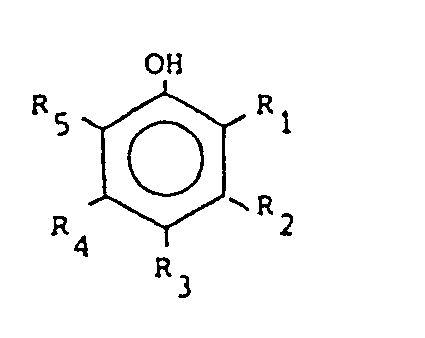
dans laquelle :
R₁ peut être un atome d'hydrogène, un groupe hydroxyle, un groupe NO₂, un halogène, un groupe alkyl inférieur comprenant 1 à 4 atomes de carbone, une amine ;
R₂ peut être un atome d'hydrogène, un groupe hydroxyle, un groupe NO₂, un halogène, un groupe alkyl inférieur comprenant 1 à 4 atomes de carbone, une amine ;
R₃ peut être un atome d'hydrogène, un groupe hydroxyle, un groupe NO₂, un halogène, un groupe alkyl inférieur comprenant 1 à 4 atomes de carbone, une amine, un groupe NO ;
R₄ peut être un atome d'hydrogène, un groupe NO₂, un halogène, un groupe hydroxyle ;
R₅ peut être un atome d'hydrogène, un groupe NO₂, un halogène, un groupe alkyl inférieur comprenant 1 à 4 atomes de carbone, un groupe hydroxyle.
R₁ peut être un atome d'hydrogène, un groupe hydroxyle, un groupe NO₂, un halogène, un groupe alkyl inférieur comprenant 1 à 4 atomes de carbone, une amine ;
R₂ peut être un atome d'hydrogène, un groupe hydroxyle, un groupe NO₂, un halogène, un groupe alkyl inférieur comprenant 1 à 4 atomes de carbone, une amine ;
R₃ peut être un atome d'hydrogène, un groupe hydroxyle, un groupe NO₂, un halogène, un groupe alkyl inférieur comprenant 1 à 4 atomes de carbone, une amine, un groupe NO ;
R₄ peut être un atome d'hydrogène, un groupe NO₂, un halogène, un groupe hydroxyle ;
R₅ peut être un atome d'hydrogène, un groupe NO₂, un halogène, un groupe alkyl inférieur comprenant 1 à 4 atomes de carbone, un groupe hydroxyle.
Description
- La présente invention est relative à un support solide pour diagnostic immunologique, à son procédé de traitement et à l'application au diagnostic immunologique.
- Conformément à l'Art antérieur, des anticorps ou des antigènes peuvent être fixés sur un support solide, notamment en polystyrène, pour la mise en évidence d'antigènes, d'anticorps ou de micro-organismes, éventuellement présents dans un milieu liquide, en réalisant la liaison de l'antigène, de l'anticorps ou du micro-organisme à détecter avec l'anticorps ou l'antigène fixé sur le support solide ; la lecture de la réaction se fait généralement par comptage d'une radioactivité, mesure d'une activité enzymatique ou mesure physique.
- Toutefois, les supports proposés dans l'Art antérieur présentent un certain nombre d'inconvénients et notamment ils fournissent une grande dispersion des résultats lors de la révélation de la réaction, ce qui ne permet pas une bonne reproductibilité, ni une bonne répétabilité des tests diagnostics.
- Afin d'améliorer la fixation de l'antigène ou de l'anticorps sur lesdits supports solides, on a proposé un traitement par irradiation du support, de manière à obtenir de meilleurs résultats d'enduction et notamment d'adsorption de l'anticorps ou de l'antigène à la surface du support solide. En particulier, la Demande de Brevet européen n° 61 167 au nom de BEHRINGWERKE, décrit un procédé de traitement de support par irradiation au moyen de rayons gamma ; ce procédé améliore l'adsorption d'un ligand ou anti-ligand, à sa surface, dans le cadre d'une réaction immunologique.
- Néanmoins, les techniques industrielles d'irradiation ne permettent pas d'effectuer un traitement homogène du support solide à des coûts peu onéreux.
- La présente invention s'est, en conséquence, donné pour but de pourvoir à un nouveau support solide, à usage de diagnostic immunologique, qui répond mieux aux nécessités de la pratique que les moyens utilisés jusqu'à présent, notamment en ce qui concerne le coût, la reproductibilité et la répétabilité des tests effectués en série.
- C'est également un but de l'invention de fournir un procédé de traitement desdits supports solides.
- C'est, en outre, un but de l'invention d'appliquer lesdits supports traités à des tests diagnostics immunologiques.
- La présente invention a pour objet un support solide à usage biologique, caractérisé en ce que ledit support solide présente une polarité de surface modifiée par la fixation sur ladite surface d'un composé chimique entraînant la formation de radicaux libres et/ou de chaînes carbonées aliphatiques dérivées de structures cycliques métastables, ledit composé chimique étant de formule I,

R₁ peut être un atome d'hydrogène, un groupe hydroxyle, un groupe NO₂ un halogène, un groupe alkyl inférieur comprenant 1 à 4 atomes de carbone, une amine ;
R₂ peut être un atome d'hydrogène, un groupe hydroxyle, un groupe NO₂, un halogène, un groupe alkyl inférieur comprenant 1 à 4 atomes de carbone, une amine ;
R₃ peut être un atome d'hydrogène, un groupe hydroxyle, un groupe NO₂, un halogène, un groupe alkyl inférieur comprenant 1 à 4 atomes de carbone, une amine, un groupe NO ;
R₄ peut être un atome d'hydrogène, un groupe NO₂, un halogène, un groupe hydroxyle ;
R₅ peut être un atome d'hydrogène, un groupe NO₂, un halogène, un groupe alkyl inférieur comprenant 1 à 4 atomes de carbone, un groupe hydroxyle. - Les composés chimiques conformes à la présente invention, peuvent notamment être le phénol, le 2,4-dinitrophénol, le 2,5-dinitrophénol, le 2,6-dinitrophénol, le 2,4,6-trinitrophénol, l'hydroquinone, le pyrocatechol, le pyrogallol, le resorcinol, le 2-bromophénol, le 3-bromophénol, le 4-bromophénol, le 2,4-dinitrorésorcinol, le dinitrocrésol, le 2-amino 4,6 dichlorophénol, l'iodophénol, le 2-aminophénol, le 3-aminophénol, le 4-aminophénol, le 1,2,4-benzenetriol, le chlorophénol, le méthylphénol, le 2-nitrophénol, le 3-nitrophénol, le 4-nitrophénol, le 4-nitrosophénol, le pentachlorophénol, le 2-amino 4,6-dinitrophénol, le 3,4,5,6-tétrabomo-o-crésol, le 2,4,6-tribromo-3-méthylphénol, le 2,4,6-tribromophénol, le 2,4,6-tri-chloro-3-méthylphénol, le 2,3,6-trichloro-4-méthylphénol, le 2,3,4-trichloro-6-méthylphénol, le 3,4,6-trichloro-2-nitrophénol, le 2,4,5-trichlorophénol, le 2,4,6-trichlorophénol.
- Conformément à l'invention, lorsque le support solide est en plastique, il est choisi dans le groupe qui comprend les polystyrènes, les copolymères styréniques, le chlorure de polyvinyle, le polyméthacrylate de méthyle.
- Selon un mode de réalisation de la présente invention, lorsque le composé chimique est du 2,4,5-trichlorophénol ou du 2,4,6-trichlorophénol, le support est avantageusement un copolymère styrénique.
- Selon un autre mode de réalisation de la présente invention, lorsque le composé chimique est du 2-bromophénol, du 3-bromophénol ou du 4-bromophénol, le support est avantageusement choisi dans le groupe qui comprend les copolymères styréniques et le chlorure de polyvinyle.
- Selon encore un autre mode de réalisation de la présente invention, lorsque le composé chimique est du iodophénol, le support chimique est avantageusement choisi dans le groupe qui comprend les copolymères styréniques, le chlorure de polyvinyle et le polyméthacrylate de méthyle.
- L'invention trouve application avantageuse pour tout support solide choisi dans le groupe qui comprend les plaques à cuves multiples isolées et isolables les unes des autres, les tubes, les tubes à essai, les tiges et les billes.
- La présente invention a également pour objet un procédé de traitement d'un support solide à usage biologique, en particulier dans le cadre de dosages immunologiques, caractérisé en ce que ledit support est mis en contact avec un composé chimique de formule I :
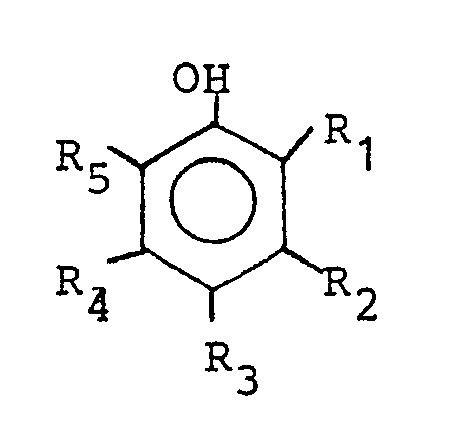
R₁ peut être un atome d'hydrogène, un groupe hydroxyle, un groupe NO₂, un halogène, un groupe alkyle inférieur comprenant 1 à 4 atomes de carbone, une amine ;
R₂ peut être un atome d'hydrogène, un groupe hydroxyle, un groupe NO₂, un halogène, un groupe alkyle inférieur comprenant 1 à 4 atomes de carbone, une amine ;
R₃ peut être un atome d'hydrogène, un groupe hydroxyle, un groupe NO₂, un halogène, un groupe alkyle inférieur comprenant 1 à 4 atomes de carbone, une amine, un groupe NO ;
R₄ peut être un atome d'hydrogène, un groupe NO₂, un halogène, un groupe hydroxyle ;
R₅ peut être un atome d'hydrogène, un groupe NO₂, un halogène, un groupe alkyle inférieur comprenant 1 à 4 atomes de carbone, un groupe hydroxyle. - Selon un mode de mise en oeuvre avantageux de l'invention, le support solide est mis en contact avec ledit composé chimique pendant un temps approprié et à une température appropriée, puis lavé et séché.
- Selon une disposition préférée de ce mode de mise en oeuvre, le temps de contact est de 2 à 10 minutes.
- Selon une autre disposition préférée de ce mode de mise en oeuvre, la température de traitement est comprise entre la température ambiante et 85°C.
- Selon un autre mode de mise en oeuvre du procédé conforme à la présente invention, le support solide est soumis à la fois à un traitement par ledit composé chimique et à un traitement d'irradiation, notamment par les rayons gamma.
- Selon une disposition avantageuse de ce mode de mise en oeuvre, le traitement d'irradiation est réalisé préalablement à la mise en contact avec le composé chimique.
- Selon une autre disposition avantageuse de ce mode de mise en oeuvre, le traitement d'irradiation est réalisé postérieurement à la mise en contact avec le composé chimique.
- Un tel traitement du support solide a l'avantage, lors de l'application desdits supports au dosage immunologique, de permettre l'enduction du support par un antigène ou un anticorps à fixer, de manière reproductible et contrôlée, de sorte que lesdits supports trouvent une application avantageuse dans les procédés de détection d'un anticorps, d'un antigène ou d'un micro-organisme éventuellement présents dans un milieu liquide, suivant lesquels procédés, un anticorps ou un antigène fixé sur un support solide traité conformément au procédé de l'invention, est incubé avec ledit milieu liquide, la révélation de la réaction antigène-anticorps étant réalisée, de manière connue par comptage d'une radio-activité, mesure d'une activité enzymatique ou mesure physique.
- L'invention sera mieux comprise à l'aide du complément de description qui va suivre, qui se réfère à des exemples du procédé conforme à l'invention ainsi qu'à des études comparatives avec les supports du commerce.
- Il doit être bien entendu, toutefois, que ces exemples sont donnés uniquement à titre d'illustration de l'objet de l'invention, dont ils ne constituent en aucune manière une limitation.
- La mise en contact du composé chimique et du support peut avoir lieu sur les surfaces préférentielles de celui-ci, soit par remplissage, soit par immersion du support.
- La mise en contact est de préférence de deux à dix minutes et à une température comprise entre la température ambiante et 85°C.
- Le support solide est ensuite lavé, afin d'éliminer un possible dépôt puis séché soit à température ambiante, soit à l'étuve.
- Le polystyrène utilisé est notamment du polystyrène cristal pour applications médicales et biochimiques.
- La concentration du 2,4 dinitrophénol est de 3 g/l dans l'eau ;
le temps de contact entre le support solide et le 2,4 dinitrophénol est de 5 minutes à 80°C ;
on met en contact le support solide en polystyrène avec le 2,4 dinitrophénol en immergeant ledit support dans un bain de 2,4 dinitrophénol ;
le support solide est ensuite lavé trois fois de suite à l'eau et séché à température ambiante. - Le support est identique à celui de l'Exemple 1.
- La concentration du 2,4,6 trinitrophénol est de 12 g/l dans l'eau ;
le temps de contact est de 15 minutes à température ambiant ;
le support solide est ensuite lavé à l'eau et séché à température ambiante. - Un support selon l'Exemple 1, en polystyrène QE 716/20020 NJW lot 8C071 de BP Chimie, est enduit avec des concentrations de 1,25 - 2,5 - 5 et 10 µg/ml d'anticorps antiapolipoprotéines B. Ces supports sont dénommés, ci-après, Support A.
- Les plaques de microtitration du commerce sont dénommées ci-après Support X.
- La révélation de la réaction est réalisée à l'aide d'un conjugué avec la peroxydase et d'un chromogène avantageusement constitué par l'orthophényldiamine ; la lecture de l'absorbance étant réalisée au spectrophotomètre à 492 nm.
- Les résultats obtenus dans ces conditions sont résumés dans les tableaux I et II ; ces résultats, pour une concentration donnée, sont la moyenne de 96 mesures.
- La répétabilité est mesurée par le coefficient de variation ; elle est d'autant meilleure que le coefficient est faible. Le bruit de fond étant négligeable, on ne considère ci-après que les absorbances.
-
TABLEAU I SUPPORT A SUPPORT X concentration d'enduction en µg/ml absorbance coefficient de variation en % absorbance coefficient de variation en % 1,25 0,321 8,4 0,235 9,5 2,50 0,742 6,0 0,587 13,9 5,0 1,002 6,6 0,857 12,3 10,00 1,185 5,1 1,046 10,3 - Il diffère du premier en ce que le matériau plastique utilisé pour la réalisation du support A, s'il est du polystyrène QE 716/20020 NJW, est un lot différent (lot 7F145).
- Le support X, pris en comparaison a été prélevé sur le même lot que celui du premier essai.
TABLEAU II SUPPORT A SUPPORT X concentration d'enduction en µg/ml absorbance coefficient de variation en % absorbance coefficient de variation en % 1,25 0,332 7,0 0,227 9,9 2,50 0,775 6,2 0,581 9,4 5,0 1,007 3,9 0,875 6,7 10,00 1,147 4,3 1,106 8,7 - La comparaison des tableaux I et II permet de voir la bonne reproductibilité des tests réalisés avec les Supports A ; en effet, les tests réalisés avec les supports A présentent moins de variations, moins de dispersions, une meilleure fiabilité et permettent une meilleure interprétation des résultats que les supports X.
- - un support selon l'Exemple 2 est enduit avec des concentrations de 0,15 à 10 µg/ml d'antimeningocoques A ; ces supports sont ci-après dénommés supports A,
- les supports du commerce sont dénommés support X.TABLEAU III concentration d'enduction en µg/ml SUPPORT A SUPPORT X absorbance coefficient de variation en % absorbance coefficient de variation en % 0,15 0,235 9,1 0,042 8,9 0,30 0,302 8,2 0,123 9,0 0,60 0,318 7,5 0,204 9,0 1,25 0,264 7,0 0,282 8,4 2,5 0,212 3,4 0,333 8,5 5 0,161 4,3 0,274 6,5 10 0,132 3,9 0,202 3,9 - Les résultats du Tableau III montrent que pour les concentrations d'enduction les plus faibles, on obtient, avec les supports A, une absorbance élevée, alors que pour les supports X, l'absorbance est plus faible à de telles concentrations. Il en résulte une sensibilité accrue des dosages utilisant comme supports, les supports A. De plus, en ce cas, l'utilisation de concentrations faibles en produit d'enduction présente un intérêt économique certain. On constate également qu'avec les supports A, les coefficients de variation sont plus faibles que ceux obtenus avec les supports X. Il en résulte une meilleure répétabilité des mesures faites avec les supports A.
- Un support dit A en polystyrène cristal à usage médical et biochimique (STYRON 648267 de DOW CHEMICAL, marque déposée) et traité au 2,4-dinitrophénol dans les mêmes conditions que dans l'Exemple 1.
- Des anticorps antiapolipoprotéines B sont fixés à deux, quatre et six mois après le traitement des supports A.
- Les supports X témoins, après stockage dans les mêmes conditions que les supports A sont enduits et révélés parallèlement.
TABLEAU IV concentration en µg/ml temp initial T₀ T₀ + 2 mois T₀ + 4 mois T₀ + 6 mois support A support X A X A X A X 1,25 absorbance 0,515 0,576 0,439 0,661 0,597 0,768 0,610 0,486 coefficient de variation en % 6,2 8,6 5,1 7,6 5,2 6,8 7,4 8,2 2,50 absorbance 0,834 0,813 0,745 0,960 0,917 1,110 0,981 0,782 coefficient de variation en % 4,0 8,5 3,4 7,6 4,5 6,4 4,5 5,8 5,0 absorbance 1,080 0,972 0,993 1,125 1,234 1,340 1,253 1,030 coefficient de variation en % 2,0 4,3 3,2 3,7 4,3 6,0 4,6 5,5 10,0 absorbance 1,211 1,083 1,058 1,232 1,342 1,492 1,359 1,162 coefficient de variation en % 2,8 3,8 3,0 3,5 3,1 5,2 3,4 4,8 - Le Tableau IV montre que la répétabilité des tests utilisant les supports A (coefficient de variation faible) est stable au cours du temps.
- Des supports en polystyrène cristal STYRON 648267 de DOW CHEMICAL (marque déposée) subissent différents traitements :
- les supports A sont traités au 2,4 dinitrophénol dans les mêmes conditions que celles de l'Exemple 1,
- les supports B sont irradiés par des rayons gamma à 2,5 Mrad,
- les supports C subissent, dans un premier temps, un traitement au 2,4 dinitrophénol, dans les mêmes conditions que celles de l'Exemple 1, puis dans un deuxième temps, sont irradiés de la même manière que les supports B,
- les supports D sont dans un premier temps, irradiés de la même manière que les supports B, puis dans un deuxième temps sont traités au 2,4 dinitrophénol dans les mêmes conditions que celles de l'Exemple 1. - Les différents supports A, B, C et D sont enduits d'anticorps antiapolipoprotéines B comme précisé dans l'Exemple 3.
TABLEAU V A B C D concentration en µg/ml absorbance coeff de variation en % absorbance coeff de variation en % absorbance coeff de variation en % absorbance coeff de variation en % 1,25 0,512 8,2 0,321 8,5 0,784 8,0 0,695 7,9 2,50 0,980 6,2 0,684 7,4 1,183 6,3 1,120 6,0 5,0 1,164 6,3 0,950 7,1 1,285 6,0 1,280 6,2 10 1,243 5,4 1,138 6,8 1,302 5,2 1,352 6,0 - La répétabilité est mesurée par le coefficient de variation ; elle est d'autant meilleure que le coefficient est faible. Seuls les supports B ne subissent aucun traitement chimique conforme à l'invention ; ceux-ci pré sentent, notamment aux concentrations d'enduction faibles, des absorbances faibles. Les supports A, C et D (ayant subis un traitement chimique conforme à l'invention) présentent une absorbance élevée, donc une sensibilité de mesure supérieure à celle des supports B. Comme le montrent les résultats obtenus avec les supports C et D, il importe peu que l'irradiation soit réalisée avant ou après le traitement chimique.
- Ainsi que cela ressort de ce qui précède, l'invention ne se limite nullement à ceux de ses modes de réalisation, de mise en oeuvre et d'application qui viennent d'être décrits de façon plus explicite ; elle en embrasse au contraire toutes les variantes que peuvent venir à l'esprit du technicien en la matière, sans s'écarter du cadre, ni de la portée de la présente invention.
Claims (12)
1°) Support solide à usage biologique, caractérisé en ce que ledit support solide présente une polarité de surface modifiée par la fixation sur ladite surface d'un composé chimique entraînant la formation de radicaux libres et/ou de chaînes carbonées aliphatiques dérivées de structures cycliques métastables, ledit composé chimique étant de formule I,

dans laquelle :
R₁ peut être un atome d'hydrogène, un groupe hydroxyle, un groupe NO₂, un halogène, un groupe alkyle inférieur comprenant 1 à 4 atomes de carbone, une amine ;
R₂ peut être un atome d'hydrogène, un groupe hydroxyle, un groupe NO₂, un halogène, un groupe alkyle inférieur comprenant 1 à 4 atomes de carbone, une amine ;
R₃ peut être un atome d'hydrogène, un groupe hydroxyle, un groupe NO₂, un halogène, un groupe alkyle inférieur comprenant 1 à 4 atomes de carbone, une amine, un groupe NO ;
R₄ peut être un atome d'hydrogène, un groupe NO₂, un halogène, un groupe hydroxyle ;
R₅ peut être un atome d'hydrogène, un groupe NO₂, un halogène, un groupe alkyle inférieur comprenant 1 à 4 atomes de carbone, un groupe hydroxyle.
R₁ peut être un atome d'hydrogène, un groupe hydroxyle, un groupe NO₂, un halogène, un groupe alkyle inférieur comprenant 1 à 4 atomes de carbone, une amine ;
R₂ peut être un atome d'hydrogène, un groupe hydroxyle, un groupe NO₂, un halogène, un groupe alkyle inférieur comprenant 1 à 4 atomes de carbone, une amine ;
R₃ peut être un atome d'hydrogène, un groupe hydroxyle, un groupe NO₂, un halogène, un groupe alkyle inférieur comprenant 1 à 4 atomes de carbone, une amine, un groupe NO ;
R₄ peut être un atome d'hydrogène, un groupe NO₂, un halogène, un groupe hydroxyle ;
R₅ peut être un atome d'hydrogène, un groupe NO₂, un halogène, un groupe alkyle inférieur comprenant 1 à 4 atomes de carbone, un groupe hydroxyle.
2°) Support solide, selon la revendication 1, caractérisé en ce que, lorsqu'il est en plastique, il est choisi dans le groupe qui comprend les polystyrènes, les copolymères styréniques, le chlorure de polyvinyle, le polyméthacrylate de méthyle.
3°) Support solide selon la revendication 1 ou la revendication 2, caractérisé en ce que lorsque le composé chimique est du 2,4,5-trichlorophénol ou du 2,4,6- trichlorophénol, le support est avantageusement un copolymère styrénique.
4°) Support solide selon la revendication 1 ou la revendication 2, caractérisé en ce que lorsque le composé chimique est du 2-bromophénol, du 3-bromophénol ou du 4-bromophénol, le support est avantageusement choisi dans le groupe qui comprend les copolymères styréniques et le chlorure de polyvinyle.
5°) Support solide selon la revendication 1 ou la revendication 2, caractérisé en ce que lorsque le composé chimique est du iodophénol, le support chimique est avantageusement choisi dans le groupe qui comprend les copolymères styréniques, le chlorure de polyvinyle et le polyméthacrylate de méthyle.
6°) Procédé de traitement d'un support solide à usage biologique, en particulier dans le cadre de dosages immunologiques, caractérisé en ce que ledit support est mis en contact avec un composé chimique de formule I :

dans laquelle :
R₁ peut être un atome d'hydrogène, un groupe hydroxyle, un groupe NO₂, un halogène, un groupe alkyle inférieur comprenant 1 à 4 atomes de carbone, une amine ;
R₂ peut être un atome d'hydrogène, un groupe hydroxyle, un groupe NO₂, un halogène, un groupe alkyle inférieur comprenant 1 à 4 atomes de carbone, une amine ;
R₃ peut être un atome d'hydrogène, un groupe hydroxyle, un groupe NO₂, un halogène, un groupe alkyle inférieur comprenant 1 à 4 atomes de carbone, une amine, un groupe NO ;
R₄ peut être un atome d'hydrogène, un groupe NO₂, un halogène, un groupe hydroxyle ;
R₅ peut être un atome d'hydrogène, un groupe NO₂, un halogène, un groupe alkyle inférieur comprenant 1 à 4 atomes de carbone, un groupe hydroxyle.
R₁ peut être un atome d'hydrogène, un groupe hydroxyle, un groupe NO₂, un halogène, un groupe alkyle inférieur comprenant 1 à 4 atomes de carbone, une amine ;
R₂ peut être un atome d'hydrogène, un groupe hydroxyle, un groupe NO₂, un halogène, un groupe alkyle inférieur comprenant 1 à 4 atomes de carbone, une amine ;
R₃ peut être un atome d'hydrogène, un groupe hydroxyle, un groupe NO₂, un halogène, un groupe alkyle inférieur comprenant 1 à 4 atomes de carbone, une amine, un groupe NO ;
R₄ peut être un atome d'hydrogène, un groupe NO₂, un halogène, un groupe hydroxyle ;
R₅ peut être un atome d'hydrogène, un groupe NO₂, un halogène, un groupe alkyle inférieur comprenant 1 à 4 atomes de carbone, un groupe hydroxyle.
7°) Procédé selon la revendication 6, caractérise en ce que le support solide est mis en contact avec ledit composé chimique pendant un temps approprié et à une température appropriée, puis lavé et séché.
8°) Procédé selon la revendication 6 ou la revendication 7, caractérisé en ce que le temps de contact est de 2 à 10 minutes.
9°) Procédé selon la revendication 7, caractérisé en ce que la température de traitement est comprise entre la température ambiante et 85°C.
10°) Procédé selon l'une quelconque des revendications 6 à 9, caractérisé en ce que le support solide est soumis à la fois à un traitement par ledit composé chimique et à un traitement d'irradiation, notamment par les rayons gamma.
11°) Procédé selon la revendication 10, caractérisé en ce que le traitement d'irradiation est réalisé préalablement à la mise en contact avec le composé chimique.
12°) Procédé selon la revendication 10, caractérisé en ce que le traitement d'irradiation est réalisé postérieurement à la mise en contact avec le composé chimique.
Applications Claiming Priority (2)
| Application Number | Priority Date | Filing Date | Title |
|---|---|---|---|
| FR8804685 | 1988-04-08 | ||
| FR8804685A FR2629916B1 (fr) | 1988-04-08 | 1988-04-08 | Support solide pour diagnostic immunologique, son procede de traitement et application au diagnostic immunologique |
Publications (1)
| Publication Number | Publication Date |
|---|---|
| EP0342068A1 true EP0342068A1 (fr) | 1989-11-15 |
Family
ID=9365130
Family Applications (1)
| Application Number | Title | Priority Date | Filing Date |
|---|---|---|---|
| EP89400949A Withdrawn EP0342068A1 (fr) | 1988-04-08 | 1989-04-06 | Support solide pour diagnostic immunologique, son procédé de traitement et application au diagnostic immunologique |
Country Status (3)
| Country | Link |
|---|---|
| EP (1) | EP0342068A1 (fr) |
| DK (1) | DK169489A (fr) |
| FR (1) | FR2629916B1 (fr) |
Cited By (4)
| Publication number | Priority date | Publication date | Assignee | Title |
|---|---|---|---|---|
| WO2002057344A1 (fr) * | 2001-01-18 | 2002-07-25 | Polymerat Pty Ltd | Polymeres a architecture cocontinue |
| US7881871B2 (en) | 2003-12-12 | 2011-02-01 | Bio-Layer Pty Limited | Method for designing surfaces |
| US8168445B2 (en) | 2004-07-02 | 2012-05-01 | Bio-Layer Pty Limited | Use of metal complexes |
| US8273403B2 (en) | 2002-05-10 | 2012-09-25 | Bio-Layer Pty Ltd. | Generation of surface coating diversity |
Citations (3)
| Publication number | Priority date | Publication date | Assignee | Title |
|---|---|---|---|---|
| US4195127A (en) * | 1975-06-10 | 1980-03-25 | W. R. Grace & Co. | Process for immobilizing proteins |
| EP0061167A1 (fr) * | 1981-03-24 | 1982-09-29 | BEHRINGWERKE Aktiengesellschaft | Moyen de diagnostic immunologique et son procédé de préparation |
| EP0206302A2 (fr) * | 1985-06-25 | 1986-12-30 | Ciba-Geigy Ag | Essai et purification des composants amyloidiques, applications et équipement |
-
1988
- 1988-04-08 FR FR8804685A patent/FR2629916B1/fr not_active Expired - Fee Related
-
1989
- 1989-04-06 EP EP89400949A patent/EP0342068A1/fr not_active Withdrawn
- 1989-04-07 DK DK169489A patent/DK169489A/da not_active IP Right Cessation
Patent Citations (3)
| Publication number | Priority date | Publication date | Assignee | Title |
|---|---|---|---|---|
| US4195127A (en) * | 1975-06-10 | 1980-03-25 | W. R. Grace & Co. | Process for immobilizing proteins |
| EP0061167A1 (fr) * | 1981-03-24 | 1982-09-29 | BEHRINGWERKE Aktiengesellschaft | Moyen de diagnostic immunologique et son procédé de préparation |
| EP0206302A2 (fr) * | 1985-06-25 | 1986-12-30 | Ciba-Geigy Ag | Essai et purification des composants amyloidiques, applications et équipement |
Non-Patent Citations (2)
| Title |
|---|
| CHEMICAL ABSTRACTS, vol. 81, no. 1, 08 juillet 1974, Columbus, OH (US); R. KALIR et al., p. 352, no. 4254f# * |
| CHEMICAL ABSTRACTS, vol. 81, no. 1, 8 juillet 1974, page 352, résumé no. 4254f, Columbus, Ohio, US; R. KALIR et al.: "4-Hydroxy-3-nitrobenzylated polystyrene. Improved polymeric nitrophenol derivative for peptide synthesis", & EUR. J. BIOCHEM. 1974, 42(1), 151-6 * |
Cited By (4)
| Publication number | Priority date | Publication date | Assignee | Title |
|---|---|---|---|---|
| WO2002057344A1 (fr) * | 2001-01-18 | 2002-07-25 | Polymerat Pty Ltd | Polymeres a architecture cocontinue |
| US8273403B2 (en) | 2002-05-10 | 2012-09-25 | Bio-Layer Pty Ltd. | Generation of surface coating diversity |
| US7881871B2 (en) | 2003-12-12 | 2011-02-01 | Bio-Layer Pty Limited | Method for designing surfaces |
| US8168445B2 (en) | 2004-07-02 | 2012-05-01 | Bio-Layer Pty Limited | Use of metal complexes |
Also Published As
| Publication number | Publication date |
|---|---|
| DK169489A (da) | 1989-10-09 |
| FR2629916B1 (fr) | 1992-09-04 |
| FR2629916A1 (fr) | 1989-10-13 |
| DK169489D0 (da) | 1989-04-07 |
Similar Documents
| Publication | Publication Date | Title |
|---|---|---|
| CN1168988C (zh) | 用于血液中葡萄糖测定的试剂测试条 | |
| US5034189A (en) | Fluorescent probe for rapid measurement of analyte concentration | |
| US3526480A (en) | Automated chemical analyzer | |
| CH627555A5 (fr) | Procede colorimetrique pour la detection et la dosage de la bilirubine. | |
| EP0106769B1 (fr) | Support particulaire greffé en surface, son procédé de préparation et adsorbants pour chromatographie d'affinité incorporant ce support, ainsi que leur utilisation, notamment en biologie | |
| ES513257A0 (es) | Procedimiento de bioanalisis para determinar una sustancia bioactiva en una muestra. | |
| JP2005532796A (ja) | 再生不能の酵素−補酵素複合体を有する方法および試薬システム | |
| WO1986003840A1 (fr) | Essai immunologique en phase solide utilisant des immunoreactifs immobilises sur des surfaces en resines synthetiques inertes | |
| JPH04237500A (ja) | ケトン体の検定のための組成物及び方法 | |
| Guilbault et al. | Enzyme electrodes for the determination of 1-phenylalanine | |
| EP0342068A1 (fr) | Support solide pour diagnostic immunologique, son procédé de traitement et application au diagnostic immunologique | |
| CN113999889B (zh) | 一种采用普鲁士蓝纳米酶的干式葡萄糖试纸条及其制备方法 | |
| Wilson et al. | Use of fluorescamine for the spectrofluorimetric investigation of primary amines on silanized glass and indium tin oxide-coated glass | |
| EP0063064B1 (fr) | Réactif pour le dosage radio-ou enzymo immunologique des IgE | |
| JPH0720055A (ja) | シスジオールの測定方法、固体支持体および測定キット | |
| US5093082A (en) | Purified guaiacum resin and method for making the same | |
| Seiter et al. | Automated fluorometric micromethod for blood glucose | |
| Maeuchihara et al. | Kinetic flow-injection determination of hydrogen peroxide by use of iron (III)-catalyzed coloration and its application to the determination of biological substances | |
| JPS63232846A (ja) | 新規な固定相担体 | |
| FR2303290A1 (fr) | Detecteur a reactif, son procede de preparation et son application a l'analyse chimique et biochimique | |
| JP3048672B2 (ja) | 試薬結合ポリマー、該ポリマー膜および該ポリマーを含む担持体 | |
| JP2573381B2 (ja) | 生物学的診断分析システム | |
| CN120009523B (zh) | 一种钾离子检测试纸及其制备方法 | |
| FR2692357A1 (fr) | Antigène marqué par un système redox, procédé de dosage immunologique avec détection électrochimique et kit de dosage. | |
| Pommerening et al. | Problems of matrix activation in using the cyanogen bromide method |
Legal Events
| Date | Code | Title | Description |
|---|---|---|---|
| PUAI | Public reference made under article 153(3) epc to a published international application that has entered the european phase |
Free format text: ORIGINAL CODE: 0009012 |
|
| AK | Designated contracting states |
Kind code of ref document: A1 Designated state(s): AT BE CH DE ES FR GB GR IT LI LU NL SE |
|
| 17P | Request for examination filed |
Effective date: 19900502 |
|
| 17Q | First examination report despatched |
Effective date: 19920318 |
|
| STAA | Information on the status of an ep patent application or granted ep patent |
Free format text: STATUS: THE APPLICATION IS DEEMED TO BE WITHDRAWN |
|
| 18D | Application deemed to be withdrawn |
Effective date: 19930824 |