EP0435638A1 - Easily openable sealed container and process for producing the same - Google Patents
Easily openable sealed container and process for producing the same Download PDFInfo
- Publication number
- EP0435638A1 EP0435638A1 EP90314200A EP90314200A EP0435638A1 EP 0435638 A1 EP0435638 A1 EP 0435638A1 EP 90314200 A EP90314200 A EP 90314200A EP 90314200 A EP90314200 A EP 90314200A EP 0435638 A1 EP0435638 A1 EP 0435638A1
- Authority
- EP
- European Patent Office
- Prior art keywords
- lid
- sealing layer
- main body
- flange
- layer
- Prior art date
- Legal status (The legal status is an assumption and is not a legal conclusion. Google has not performed a legal analysis and makes no representation as to the accuracy of the status listed.)
- Granted
Links
Images






Classifications
-
- B—PERFORMING OPERATIONS; TRANSPORTING
- B65—CONVEYING; PACKING; STORING; HANDLING THIN OR FILAMENTARY MATERIAL
- B65D—CONTAINERS FOR STORAGE OR TRANSPORT OF ARTICLES OR MATERIALS, e.g. BAGS, BARRELS, BOTTLES, BOXES, CANS, CARTONS, CRATES, DRUMS, JARS, TANKS, HOPPERS, FORWARDING CONTAINERS; ACCESSORIES, CLOSURES, OR FITTINGS THEREFOR; PACKAGING ELEMENTS; PACKAGES
- B65D77/00—Packages formed by enclosing articles or materials in preformed containers, e.g. boxes, cartons, sacks or bags
- B65D77/10—Container closures formed after filling
- B65D77/20—Container closures formed after filling by applying separate lids or covers, i.e. flexible membrane or foil-like covers
- B65D77/2024—Container closures formed after filling by applying separate lids or covers, i.e. flexible membrane or foil-like covers the cover being welded or adhered to the container
- B65D77/2028—Means for opening the cover other than, or in addition to, a pull tab
- B65D77/2032—Means for opening the cover other than, or in addition to, a pull tab by peeling or tearing the cover from the container
-
- B—PERFORMING OPERATIONS; TRANSPORTING
- B65—CONVEYING; PACKING; STORING; HANDLING THIN OR FILAMENTARY MATERIAL
- B65D—CONTAINERS FOR STORAGE OR TRANSPORT OF ARTICLES OR MATERIALS, e.g. BAGS, BARRELS, BOTTLES, BOXES, CANS, CARTONS, CRATES, DRUMS, JARS, TANKS, HOPPERS, FORWARDING CONTAINERS; ACCESSORIES, CLOSURES, OR FITTINGS THEREFOR; PACKAGING ELEMENTS; PACKAGES
- B65D41/00—Caps, e.g. crown caps or crown seals, i.e. members having parts arranged for engagement with the external periphery of a neck or wall defining a pouring opening or discharge aperture; Protective cap-like covers for closure members, e.g. decorative covers of metal foil or paper
- B65D41/02—Caps or cap-like covers without lines of weakness, tearing strips, tags, or like opening or removal devices
- B65D41/04—Threaded or like caps or cap-like covers secured by rotation
- B65D41/06—Threaded or like caps or cap-like covers secured by rotation with bayonet cams, i.e. removed by first pushing axially to disengage the cams and then rotating
-
- B—PERFORMING OPERATIONS; TRANSPORTING
- B29—WORKING OF PLASTICS; WORKING OF SUBSTANCES IN A PLASTIC STATE IN GENERAL
- B29C—SHAPING OR JOINING OF PLASTICS; SHAPING OF MATERIAL IN A PLASTIC STATE, NOT OTHERWISE PROVIDED FOR; AFTER-TREATMENT OF THE SHAPED PRODUCTS, e.g. REPAIRING
- B29C65/00—Joining or sealing of preformed parts, e.g. welding of plastics materials; Apparatus therefor
- B29C65/02—Joining or sealing of preformed parts, e.g. welding of plastics materials; Apparatus therefor by heating, with or without pressure
- B29C65/08—Joining or sealing of preformed parts, e.g. welding of plastics materials; Apparatus therefor by heating, with or without pressure using ultrasonic vibrations
-
- B—PERFORMING OPERATIONS; TRANSPORTING
- B29—WORKING OF PLASTICS; WORKING OF SUBSTANCES IN A PLASTIC STATE IN GENERAL
- B29C—SHAPING OR JOINING OF PLASTICS; SHAPING OF MATERIAL IN A PLASTIC STATE, NOT OTHERWISE PROVIDED FOR; AFTER-TREATMENT OF THE SHAPED PRODUCTS, e.g. REPAIRING
- B29C65/00—Joining or sealing of preformed parts, e.g. welding of plastics materials; Apparatus therefor
- B29C65/76—Making non-permanent or releasable joints
-
- B—PERFORMING OPERATIONS; TRANSPORTING
- B29—WORKING OF PLASTICS; WORKING OF SUBSTANCES IN A PLASTIC STATE IN GENERAL
- B29C—SHAPING OR JOINING OF PLASTICS; SHAPING OF MATERIAL IN A PLASTIC STATE, NOT OTHERWISE PROVIDED FOR; AFTER-TREATMENT OF THE SHAPED PRODUCTS, e.g. REPAIRING
- B29C66/00—General aspects of processes or apparatus for joining preformed parts
- B29C66/01—General aspects dealing with the joint area or with the area to be joined
- B29C66/05—Particular design of joint configurations
- B29C66/10—Particular design of joint configurations particular design of the joint cross-sections
- B29C66/11—Joint cross-sections comprising a single joint-segment, i.e. one of the parts to be joined comprising a single joint-segment in the joint cross-section
- B29C66/112—Single lapped joints
-
- B—PERFORMING OPERATIONS; TRANSPORTING
- B29—WORKING OF PLASTICS; WORKING OF SUBSTANCES IN A PLASTIC STATE IN GENERAL
- B29C—SHAPING OR JOINING OF PLASTICS; SHAPING OF MATERIAL IN A PLASTIC STATE, NOT OTHERWISE PROVIDED FOR; AFTER-TREATMENT OF THE SHAPED PRODUCTS, e.g. REPAIRING
- B29C66/00—General aspects of processes or apparatus for joining preformed parts
- B29C66/01—General aspects dealing with the joint area or with the area to be joined
- B29C66/05—Particular design of joint configurations
- B29C66/10—Particular design of joint configurations particular design of the joint cross-sections
- B29C66/13—Single flanged joints; Fin-type joints; Single hem joints; Edge joints; Interpenetrating fingered joints; Other specific particular designs of joint cross-sections not provided for in groups B29C66/11 - B29C66/12
- B29C66/131—Single flanged joints, i.e. one of the parts to be joined being rigid and flanged in the joint area
-
- B—PERFORMING OPERATIONS; TRANSPORTING
- B29—WORKING OF PLASTICS; WORKING OF SUBSTANCES IN A PLASTIC STATE IN GENERAL
- B29C—SHAPING OR JOINING OF PLASTICS; SHAPING OF MATERIAL IN A PLASTIC STATE, NOT OTHERWISE PROVIDED FOR; AFTER-TREATMENT OF THE SHAPED PRODUCTS, e.g. REPAIRING
- B29C66/00—General aspects of processes or apparatus for joining preformed parts
- B29C66/01—General aspects dealing with the joint area or with the area to be joined
- B29C66/05—Particular design of joint configurations
- B29C66/10—Particular design of joint configurations particular design of the joint cross-sections
- B29C66/13—Single flanged joints; Fin-type joints; Single hem joints; Edge joints; Interpenetrating fingered joints; Other specific particular designs of joint cross-sections not provided for in groups B29C66/11 - B29C66/12
- B29C66/131—Single flanged joints, i.e. one of the parts to be joined being rigid and flanged in the joint area
- B29C66/1312—Single flange to flange joints, the parts to be joined being rigid
-
- B—PERFORMING OPERATIONS; TRANSPORTING
- B29—WORKING OF PLASTICS; WORKING OF SUBSTANCES IN A PLASTIC STATE IN GENERAL
- B29C—SHAPING OR JOINING OF PLASTICS; SHAPING OF MATERIAL IN A PLASTIC STATE, NOT OTHERWISE PROVIDED FOR; AFTER-TREATMENT OF THE SHAPED PRODUCTS, e.g. REPAIRING
- B29C66/00—General aspects of processes or apparatus for joining preformed parts
- B29C66/01—General aspects dealing with the joint area or with the area to be joined
- B29C66/05—Particular design of joint configurations
- B29C66/20—Particular design of joint configurations particular design of the joint lines, e.g. of the weld lines
- B29C66/24—Particular design of joint configurations particular design of the joint lines, e.g. of the weld lines said joint lines being closed or non-straight
- B29C66/242—Particular design of joint configurations particular design of the joint lines, e.g. of the weld lines said joint lines being closed or non-straight said joint lines being closed, i.e. forming closed contours
- B29C66/2422—Particular design of joint configurations particular design of the joint lines, e.g. of the weld lines said joint lines being closed or non-straight said joint lines being closed, i.e. forming closed contours being circular, oval or elliptical
- B29C66/24221—Particular design of joint configurations particular design of the joint lines, e.g. of the weld lines said joint lines being closed or non-straight said joint lines being closed, i.e. forming closed contours being circular, oval or elliptical being circular
-
- B—PERFORMING OPERATIONS; TRANSPORTING
- B29—WORKING OF PLASTICS; WORKING OF SUBSTANCES IN A PLASTIC STATE IN GENERAL
- B29C—SHAPING OR JOINING OF PLASTICS; SHAPING OF MATERIAL IN A PLASTIC STATE, NOT OTHERWISE PROVIDED FOR; AFTER-TREATMENT OF THE SHAPED PRODUCTS, e.g. REPAIRING
- B29C66/00—General aspects of processes or apparatus for joining preformed parts
- B29C66/50—General aspects of joining tubular articles; General aspects of joining long products, i.e. bars or profiled elements; General aspects of joining single elements to tubular articles, hollow articles or bars; General aspects of joining several hollow-preforms to form hollow or tubular articles
- B29C66/51—Joining tubular articles, profiled elements or bars; Joining single elements to tubular articles, hollow articles or bars; Joining several hollow-preforms to form hollow or tubular articles
- B29C66/53—Joining single elements to tubular articles, hollow articles or bars
- B29C66/534—Joining single elements to open ends of tubular or hollow articles or to the ends of bars
- B29C66/5346—Joining single elements to open ends of tubular or hollow articles or to the ends of bars said single elements being substantially flat
- B29C66/53461—Joining single elements to open ends of tubular or hollow articles or to the ends of bars said single elements being substantially flat joining substantially flat covers and/or substantially flat bottoms to open ends of container bodies
-
- B—PERFORMING OPERATIONS; TRANSPORTING
- B29—WORKING OF PLASTICS; WORKING OF SUBSTANCES IN A PLASTIC STATE IN GENERAL
- B29C—SHAPING OR JOINING OF PLASTICS; SHAPING OF MATERIAL IN A PLASTIC STATE, NOT OTHERWISE PROVIDED FOR; AFTER-TREATMENT OF THE SHAPED PRODUCTS, e.g. REPAIRING
- B29C66/00—General aspects of processes or apparatus for joining preformed parts
- B29C66/50—General aspects of joining tubular articles; General aspects of joining long products, i.e. bars or profiled elements; General aspects of joining single elements to tubular articles, hollow articles or bars; General aspects of joining several hollow-preforms to form hollow or tubular articles
- B29C66/51—Joining tubular articles, profiled elements or bars; Joining single elements to tubular articles, hollow articles or bars; Joining several hollow-preforms to form hollow or tubular articles
- B29C66/54—Joining several hollow-preforms, e.g. half-shells, to form hollow articles, e.g. for making balls, containers; Joining several hollow-preforms, e.g. half-cylinders, to form tubular articles
- B29C66/542—Joining several hollow-preforms, e.g. half-shells, to form hollow articles, e.g. for making balls, containers; Joining several hollow-preforms, e.g. half-cylinders, to form tubular articles joining hollow covers or hollow bottoms to open ends of container bodies
-
- B—PERFORMING OPERATIONS; TRANSPORTING
- B29—WORKING OF PLASTICS; WORKING OF SUBSTANCES IN A PLASTIC STATE IN GENERAL
- B29C—SHAPING OR JOINING OF PLASTICS; SHAPING OF MATERIAL IN A PLASTIC STATE, NOT OTHERWISE PROVIDED FOR; AFTER-TREATMENT OF THE SHAPED PRODUCTS, e.g. REPAIRING
- B29C66/00—General aspects of processes or apparatus for joining preformed parts
- B29C66/50—General aspects of joining tubular articles; General aspects of joining long products, i.e. bars or profiled elements; General aspects of joining single elements to tubular articles, hollow articles or bars; General aspects of joining several hollow-preforms to form hollow or tubular articles
- B29C66/51—Joining tubular articles, profiled elements or bars; Joining single elements to tubular articles, hollow articles or bars; Joining several hollow-preforms to form hollow or tubular articles
- B29C66/54—Joining several hollow-preforms, e.g. half-shells, to form hollow articles, e.g. for making balls, containers; Joining several hollow-preforms, e.g. half-cylinders, to form tubular articles
- B29C66/545—Joining several hollow-preforms, e.g. half-shells, to form hollow articles, e.g. for making balls, containers; Joining several hollow-preforms, e.g. half-cylinders, to form tubular articles one hollow-preform being placed inside the other
-
- B—PERFORMING OPERATIONS; TRANSPORTING
- B29—WORKING OF PLASTICS; WORKING OF SUBSTANCES IN A PLASTIC STATE IN GENERAL
- B29C—SHAPING OR JOINING OF PLASTICS; SHAPING OF MATERIAL IN A PLASTIC STATE, NOT OTHERWISE PROVIDED FOR; AFTER-TREATMENT OF THE SHAPED PRODUCTS, e.g. REPAIRING
- B29C66/00—General aspects of processes or apparatus for joining preformed parts
- B29C66/70—General aspects of processes or apparatus for joining preformed parts characterised by the composition, physical properties or the structure of the material of the parts to be joined; Joining with non-plastics material
- B29C66/72—General aspects of processes or apparatus for joining preformed parts characterised by the composition, physical properties or the structure of the material of the parts to be joined; Joining with non-plastics material characterised by the structure of the material of the parts to be joined
- B29C66/723—General aspects of processes or apparatus for joining preformed parts characterised by the composition, physical properties or the structure of the material of the parts to be joined; Joining with non-plastics material characterised by the structure of the material of the parts to be joined being multi-layered
-
- B—PERFORMING OPERATIONS; TRANSPORTING
- B29—WORKING OF PLASTICS; WORKING OF SUBSTANCES IN A PLASTIC STATE IN GENERAL
- B29C—SHAPING OR JOINING OF PLASTICS; SHAPING OF MATERIAL IN A PLASTIC STATE, NOT OTHERWISE PROVIDED FOR; AFTER-TREATMENT OF THE SHAPED PRODUCTS, e.g. REPAIRING
- B29C66/00—General aspects of processes or apparatus for joining preformed parts
- B29C66/80—General aspects of machine operations or constructions and parts thereof
- B29C66/81—General aspects of the pressing elements, i.e. the elements applying pressure on the parts to be joined in the area to be joined, e.g. the welding jaws or clamps
- B29C66/814—General aspects of the pressing elements, i.e. the elements applying pressure on the parts to be joined in the area to be joined, e.g. the welding jaws or clamps characterised by the design of the pressing elements, e.g. of the welding jaws or clamps
- B29C66/8141—General aspects of the pressing elements, i.e. the elements applying pressure on the parts to be joined in the area to be joined, e.g. the welding jaws or clamps characterised by the design of the pressing elements, e.g. of the welding jaws or clamps characterised by the surface geometry of the part of the pressing elements, e.g. welding jaws or clamps, coming into contact with the parts to be joined
- B29C66/81411—General aspects of the pressing elements, i.e. the elements applying pressure on the parts to be joined in the area to be joined, e.g. the welding jaws or clamps characterised by the design of the pressing elements, e.g. of the welding jaws or clamps characterised by the surface geometry of the part of the pressing elements, e.g. welding jaws or clamps, coming into contact with the parts to be joined characterised by its cross-section, e.g. transversal or longitudinal, being non-flat
-
- B—PERFORMING OPERATIONS; TRANSPORTING
- B29—WORKING OF PLASTICS; WORKING OF SUBSTANCES IN A PLASTIC STATE IN GENERAL
- B29C—SHAPING OR JOINING OF PLASTICS; SHAPING OF MATERIAL IN A PLASTIC STATE, NOT OTHERWISE PROVIDED FOR; AFTER-TREATMENT OF THE SHAPED PRODUCTS, e.g. REPAIRING
- B29C66/00—General aspects of processes or apparatus for joining preformed parts
- B29C66/80—General aspects of machine operations or constructions and parts thereof
- B29C66/81—General aspects of the pressing elements, i.e. the elements applying pressure on the parts to be joined in the area to be joined, e.g. the welding jaws or clamps
- B29C66/814—General aspects of the pressing elements, i.e. the elements applying pressure on the parts to be joined in the area to be joined, e.g. the welding jaws or clamps characterised by the design of the pressing elements, e.g. of the welding jaws or clamps
- B29C66/8141—General aspects of the pressing elements, i.e. the elements applying pressure on the parts to be joined in the area to be joined, e.g. the welding jaws or clamps characterised by the design of the pressing elements, e.g. of the welding jaws or clamps characterised by the surface geometry of the part of the pressing elements, e.g. welding jaws or clamps, coming into contact with the parts to be joined
- B29C66/81411—General aspects of the pressing elements, i.e. the elements applying pressure on the parts to be joined in the area to be joined, e.g. the welding jaws or clamps characterised by the design of the pressing elements, e.g. of the welding jaws or clamps characterised by the surface geometry of the part of the pressing elements, e.g. welding jaws or clamps, coming into contact with the parts to be joined characterised by its cross-section, e.g. transversal or longitudinal, being non-flat
- B29C66/81413—General aspects of the pressing elements, i.e. the elements applying pressure on the parts to be joined in the area to be joined, e.g. the welding jaws or clamps characterised by the design of the pressing elements, e.g. of the welding jaws or clamps characterised by the surface geometry of the part of the pressing elements, e.g. welding jaws or clamps, coming into contact with the parts to be joined characterised by its cross-section, e.g. transversal or longitudinal, being non-flat being non-symmetrical
-
- B—PERFORMING OPERATIONS; TRANSPORTING
- B29—WORKING OF PLASTICS; WORKING OF SUBSTANCES IN A PLASTIC STATE IN GENERAL
- B29C—SHAPING OR JOINING OF PLASTICS; SHAPING OF MATERIAL IN A PLASTIC STATE, NOT OTHERWISE PROVIDED FOR; AFTER-TREATMENT OF THE SHAPED PRODUCTS, e.g. REPAIRING
- B29C66/00—General aspects of processes or apparatus for joining preformed parts
- B29C66/80—General aspects of machine operations or constructions and parts thereof
- B29C66/81—General aspects of the pressing elements, i.e. the elements applying pressure on the parts to be joined in the area to be joined, e.g. the welding jaws or clamps
- B29C66/814—General aspects of the pressing elements, i.e. the elements applying pressure on the parts to be joined in the area to be joined, e.g. the welding jaws or clamps characterised by the design of the pressing elements, e.g. of the welding jaws or clamps
- B29C66/8141—General aspects of the pressing elements, i.e. the elements applying pressure on the parts to be joined in the area to be joined, e.g. the welding jaws or clamps characterised by the design of the pressing elements, e.g. of the welding jaws or clamps characterised by the surface geometry of the part of the pressing elements, e.g. welding jaws or clamps, coming into contact with the parts to be joined
- B29C66/81411—General aspects of the pressing elements, i.e. the elements applying pressure on the parts to be joined in the area to be joined, e.g. the welding jaws or clamps characterised by the design of the pressing elements, e.g. of the welding jaws or clamps characterised by the surface geometry of the part of the pressing elements, e.g. welding jaws or clamps, coming into contact with the parts to be joined characterised by its cross-section, e.g. transversal or longitudinal, being non-flat
- B29C66/81415—General aspects of the pressing elements, i.e. the elements applying pressure on the parts to be joined in the area to be joined, e.g. the welding jaws or clamps characterised by the design of the pressing elements, e.g. of the welding jaws or clamps characterised by the surface geometry of the part of the pressing elements, e.g. welding jaws or clamps, coming into contact with the parts to be joined characterised by its cross-section, e.g. transversal or longitudinal, being non-flat being bevelled
- B29C66/81419—General aspects of the pressing elements, i.e. the elements applying pressure on the parts to be joined in the area to be joined, e.g. the welding jaws or clamps characterised by the design of the pressing elements, e.g. of the welding jaws or clamps characterised by the surface geometry of the part of the pressing elements, e.g. welding jaws or clamps, coming into contact with the parts to be joined characterised by its cross-section, e.g. transversal or longitudinal, being non-flat being bevelled and flat
-
- B—PERFORMING OPERATIONS; TRANSPORTING
- B29—WORKING OF PLASTICS; WORKING OF SUBSTANCES IN A PLASTIC STATE IN GENERAL
- B29C—SHAPING OR JOINING OF PLASTICS; SHAPING OF MATERIAL IN A PLASTIC STATE, NOT OTHERWISE PROVIDED FOR; AFTER-TREATMENT OF THE SHAPED PRODUCTS, e.g. REPAIRING
- B29C66/00—General aspects of processes or apparatus for joining preformed parts
- B29C66/80—General aspects of machine operations or constructions and parts thereof
- B29C66/81—General aspects of the pressing elements, i.e. the elements applying pressure on the parts to be joined in the area to be joined, e.g. the welding jaws or clamps
- B29C66/814—General aspects of the pressing elements, i.e. the elements applying pressure on the parts to be joined in the area to be joined, e.g. the welding jaws or clamps characterised by the design of the pressing elements, e.g. of the welding jaws or clamps
- B29C66/8141—General aspects of the pressing elements, i.e. the elements applying pressure on the parts to be joined in the area to be joined, e.g. the welding jaws or clamps characterised by the design of the pressing elements, e.g. of the welding jaws or clamps characterised by the surface geometry of the part of the pressing elements, e.g. welding jaws or clamps, coming into contact with the parts to be joined
- B29C66/81411—General aspects of the pressing elements, i.e. the elements applying pressure on the parts to be joined in the area to be joined, e.g. the welding jaws or clamps characterised by the design of the pressing elements, e.g. of the welding jaws or clamps characterised by the surface geometry of the part of the pressing elements, e.g. welding jaws or clamps, coming into contact with the parts to be joined characterised by its cross-section, e.g. transversal or longitudinal, being non-flat
- B29C66/81425—General aspects of the pressing elements, i.e. the elements applying pressure on the parts to be joined in the area to be joined, e.g. the welding jaws or clamps characterised by the design of the pressing elements, e.g. of the welding jaws or clamps characterised by the surface geometry of the part of the pressing elements, e.g. welding jaws or clamps, coming into contact with the parts to be joined characterised by its cross-section, e.g. transversal or longitudinal, being non-flat being stepped, e.g. comprising a shoulder
-
- B—PERFORMING OPERATIONS; TRANSPORTING
- B29—WORKING OF PLASTICS; WORKING OF SUBSTANCES IN A PLASTIC STATE IN GENERAL
- B29C—SHAPING OR JOINING OF PLASTICS; SHAPING OF MATERIAL IN A PLASTIC STATE, NOT OTHERWISE PROVIDED FOR; AFTER-TREATMENT OF THE SHAPED PRODUCTS, e.g. REPAIRING
- B29C66/00—General aspects of processes or apparatus for joining preformed parts
- B29C66/80—General aspects of machine operations or constructions and parts thereof
- B29C66/81—General aspects of the pressing elements, i.e. the elements applying pressure on the parts to be joined in the area to be joined, e.g. the welding jaws or clamps
- B29C66/814—General aspects of the pressing elements, i.e. the elements applying pressure on the parts to be joined in the area to be joined, e.g. the welding jaws or clamps characterised by the design of the pressing elements, e.g. of the welding jaws or clamps
- B29C66/8141—General aspects of the pressing elements, i.e. the elements applying pressure on the parts to be joined in the area to be joined, e.g. the welding jaws or clamps characterised by the design of the pressing elements, e.g. of the welding jaws or clamps characterised by the surface geometry of the part of the pressing elements, e.g. welding jaws or clamps, coming into contact with the parts to be joined
- B29C66/81427—General aspects of the pressing elements, i.e. the elements applying pressure on the parts to be joined in the area to be joined, e.g. the welding jaws or clamps characterised by the design of the pressing elements, e.g. of the welding jaws or clamps characterised by the surface geometry of the part of the pressing elements, e.g. welding jaws or clamps, coming into contact with the parts to be joined comprising a single ridge, e.g. for making a weakening line; comprising a single tooth
-
- B—PERFORMING OPERATIONS; TRANSPORTING
- B29—WORKING OF PLASTICS; WORKING OF SUBSTANCES IN A PLASTIC STATE IN GENERAL
- B29C—SHAPING OR JOINING OF PLASTICS; SHAPING OF MATERIAL IN A PLASTIC STATE, NOT OTHERWISE PROVIDED FOR; AFTER-TREATMENT OF THE SHAPED PRODUCTS, e.g. REPAIRING
- B29C66/00—General aspects of processes or apparatus for joining preformed parts
- B29C66/80—General aspects of machine operations or constructions and parts thereof
- B29C66/81—General aspects of the pressing elements, i.e. the elements applying pressure on the parts to be joined in the area to be joined, e.g. the welding jaws or clamps
- B29C66/814—General aspects of the pressing elements, i.e. the elements applying pressure on the parts to be joined in the area to be joined, e.g. the welding jaws or clamps characterised by the design of the pressing elements, e.g. of the welding jaws or clamps
- B29C66/8141—General aspects of the pressing elements, i.e. the elements applying pressure on the parts to be joined in the area to be joined, e.g. the welding jaws or clamps characterised by the design of the pressing elements, e.g. of the welding jaws or clamps characterised by the surface geometry of the part of the pressing elements, e.g. welding jaws or clamps, coming into contact with the parts to be joined
- B29C66/81433—General aspects of the pressing elements, i.e. the elements applying pressure on the parts to be joined in the area to be joined, e.g. the welding jaws or clamps characterised by the design of the pressing elements, e.g. of the welding jaws or clamps characterised by the surface geometry of the part of the pressing elements, e.g. welding jaws or clamps, coming into contact with the parts to be joined being toothed, i.e. comprising several teeth or pins, or being patterned
-
- B—PERFORMING OPERATIONS; TRANSPORTING
- B29—WORKING OF PLASTICS; WORKING OF SUBSTANCES IN A PLASTIC STATE IN GENERAL
- B29C—SHAPING OR JOINING OF PLASTICS; SHAPING OF MATERIAL IN A PLASTIC STATE, NOT OTHERWISE PROVIDED FOR; AFTER-TREATMENT OF THE SHAPED PRODUCTS, e.g. REPAIRING
- B29C66/00—General aspects of processes or apparatus for joining preformed parts
- B29C66/80—General aspects of machine operations or constructions and parts thereof
- B29C66/83—General aspects of machine operations or constructions and parts thereof characterised by the movement of the joining or pressing tools
- B29C66/832—Reciprocating joining or pressing tools
- B29C66/8322—Joining or pressing tools reciprocating along one axis
- B29C66/83221—Joining or pressing tools reciprocating along one axis cooperating reciprocating tools, each tool reciprocating along one axis
-
- B—PERFORMING OPERATIONS; TRANSPORTING
- B65—CONVEYING; PACKING; STORING; HANDLING THIN OR FILAMENTARY MATERIAL
- B65B—MACHINES, APPARATUS OR DEVICES FOR, OR METHODS OF, PACKAGING ARTICLES OR MATERIALS; UNPACKING
- B65B51/00—Devices for, or methods of, sealing or securing package folds or closures; Devices for gathering or twisting wrappers, or necks of bags
- B65B51/10—Applying or generating heat or pressure or combinations thereof
- B65B51/22—Applying or generating heat or pressure or combinations thereof by friction or ultrasonic or high-frequency electrical means
-
- B—PERFORMING OPERATIONS; TRANSPORTING
- B65—CONVEYING; PACKING; STORING; HANDLING THIN OR FILAMENTARY MATERIAL
- B65B—MACHINES, APPARATUS OR DEVICES FOR, OR METHODS OF, PACKAGING ARTICLES OR MATERIALS; UNPACKING
- B65B51/00—Devices for, or methods of, sealing or securing package folds or closures; Devices for gathering or twisting wrappers, or necks of bags
- B65B51/10—Applying or generating heat or pressure or combinations thereof
- B65B51/22—Applying or generating heat or pressure or combinations thereof by friction or ultrasonic or high-frequency electrical means
- B65B51/225—Applying or generating heat or pressure or combinations thereof by friction or ultrasonic or high-frequency electrical means by ultrasonic welding
-
- B—PERFORMING OPERATIONS; TRANSPORTING
- B65—CONVEYING; PACKING; STORING; HANDLING THIN OR FILAMENTARY MATERIAL
- B65D—CONTAINERS FOR STORAGE OR TRANSPORT OF ARTICLES OR MATERIALS, e.g. BAGS, BARRELS, BOTTLES, BOXES, CANS, CARTONS, CRATES, DRUMS, JARS, TANKS, HOPPERS, FORWARDING CONTAINERS; ACCESSORIES, CLOSURES, OR FITTINGS THEREFOR; PACKAGING ELEMENTS; PACKAGES
- B65D51/00—Closures not otherwise provided for
-
- B—PERFORMING OPERATIONS; TRANSPORTING
- B29—WORKING OF PLASTICS; WORKING OF SUBSTANCES IN A PLASTIC STATE IN GENERAL
- B29C—SHAPING OR JOINING OF PLASTICS; SHAPING OF MATERIAL IN A PLASTIC STATE, NOT OTHERWISE PROVIDED FOR; AFTER-TREATMENT OF THE SHAPED PRODUCTS, e.g. REPAIRING
- B29C2949/00—Indexing scheme relating to blow-moulding
- B29C2949/07—Preforms or parisons characterised by their configuration
- B29C2949/076—Preforms or parisons characterised by their configuration characterised by the shape
- B29C2949/0768—Preforms or parisons characterised by their configuration characterised by the shape characterised by the shape of specific parts of preform
- B29C2949/077—Preforms or parisons characterised by their configuration characterised by the shape characterised by the shape of specific parts of preform characterised by the neck
-
- B—PERFORMING OPERATIONS; TRANSPORTING
- B29—WORKING OF PLASTICS; WORKING OF SUBSTANCES IN A PLASTIC STATE IN GENERAL
- B29C—SHAPING OR JOINING OF PLASTICS; SHAPING OF MATERIAL IN A PLASTIC STATE, NOT OTHERWISE PROVIDED FOR; AFTER-TREATMENT OF THE SHAPED PRODUCTS, e.g. REPAIRING
- B29C66/00—General aspects of processes or apparatus for joining preformed parts
- B29C66/70—General aspects of processes or apparatus for joining preformed parts characterised by the composition, physical properties or the structure of the material of the parts to be joined; Joining with non-plastics material
- B29C66/71—General aspects of processes or apparatus for joining preformed parts characterised by the composition, physical properties or the structure of the material of the parts to be joined; Joining with non-plastics material characterised by the composition of the plastics material of the parts to be joined
-
- B—PERFORMING OPERATIONS; TRANSPORTING
- B29—WORKING OF PLASTICS; WORKING OF SUBSTANCES IN A PLASTIC STATE IN GENERAL
- B29C—SHAPING OR JOINING OF PLASTICS; SHAPING OF MATERIAL IN A PLASTIC STATE, NOT OTHERWISE PROVIDED FOR; AFTER-TREATMENT OF THE SHAPED PRODUCTS, e.g. REPAIRING
- B29C66/00—General aspects of processes or apparatus for joining preformed parts
- B29C66/70—General aspects of processes or apparatus for joining preformed parts characterised by the composition, physical properties or the structure of the material of the parts to be joined; Joining with non-plastics material
- B29C66/71—General aspects of processes or apparatus for joining preformed parts characterised by the composition, physical properties or the structure of the material of the parts to be joined; Joining with non-plastics material characterised by the composition of the plastics material of the parts to be joined
- B29C66/712—General aspects of processes or apparatus for joining preformed parts characterised by the composition, physical properties or the structure of the material of the parts to be joined; Joining with non-plastics material characterised by the composition of the plastics material of the parts to be joined the composition of one of the parts to be joined being different from the composition of the other part
-
- B—PERFORMING OPERATIONS; TRANSPORTING
- B29—WORKING OF PLASTICS; WORKING OF SUBSTANCES IN A PLASTIC STATE IN GENERAL
- B29C—SHAPING OR JOINING OF PLASTICS; SHAPING OF MATERIAL IN A PLASTIC STATE, NOT OTHERWISE PROVIDED FOR; AFTER-TREATMENT OF THE SHAPED PRODUCTS, e.g. REPAIRING
- B29C66/00—General aspects of processes or apparatus for joining preformed parts
- B29C66/70—General aspects of processes or apparatus for joining preformed parts characterised by the composition, physical properties or the structure of the material of the parts to be joined; Joining with non-plastics material
- B29C66/72—General aspects of processes or apparatus for joining preformed parts characterised by the composition, physical properties or the structure of the material of the parts to be joined; Joining with non-plastics material characterised by the structure of the material of the parts to be joined
- B29C66/723—General aspects of processes or apparatus for joining preformed parts characterised by the composition, physical properties or the structure of the material of the parts to be joined; Joining with non-plastics material characterised by the structure of the material of the parts to be joined being multi-layered
- B29C66/7232—General aspects of processes or apparatus for joining preformed parts characterised by the composition, physical properties or the structure of the material of the parts to be joined; Joining with non-plastics material characterised by the structure of the material of the parts to be joined being multi-layered comprising a non-plastics layer
- B29C66/72321—General aspects of processes or apparatus for joining preformed parts characterised by the composition, physical properties or the structure of the material of the parts to be joined; Joining with non-plastics material characterised by the structure of the material of the parts to be joined being multi-layered comprising a non-plastics layer consisting of metals or their alloys
-
- B—PERFORMING OPERATIONS; TRANSPORTING
- B29—WORKING OF PLASTICS; WORKING OF SUBSTANCES IN A PLASTIC STATE IN GENERAL
- B29C—SHAPING OR JOINING OF PLASTICS; SHAPING OF MATERIAL IN A PLASTIC STATE, NOT OTHERWISE PROVIDED FOR; AFTER-TREATMENT OF THE SHAPED PRODUCTS, e.g. REPAIRING
- B29C66/00—General aspects of processes or apparatus for joining preformed parts
- B29C66/70—General aspects of processes or apparatus for joining preformed parts characterised by the composition, physical properties or the structure of the material of the parts to be joined; Joining with non-plastics material
- B29C66/72—General aspects of processes or apparatus for joining preformed parts characterised by the composition, physical properties or the structure of the material of the parts to be joined; Joining with non-plastics material characterised by the structure of the material of the parts to be joined
- B29C66/723—General aspects of processes or apparatus for joining preformed parts characterised by the composition, physical properties or the structure of the material of the parts to be joined; Joining with non-plastics material characterised by the structure of the material of the parts to be joined being multi-layered
- B29C66/7232—General aspects of processes or apparatus for joining preformed parts characterised by the composition, physical properties or the structure of the material of the parts to be joined; Joining with non-plastics material characterised by the structure of the material of the parts to be joined being multi-layered comprising a non-plastics layer
- B29C66/72324—General aspects of processes or apparatus for joining preformed parts characterised by the composition, physical properties or the structure of the material of the parts to be joined; Joining with non-plastics material characterised by the structure of the material of the parts to be joined being multi-layered comprising a non-plastics layer consisting of inorganic materials not provided for in B29C66/72321 - B29C66/72322
- B29C66/72325—Ceramics
-
- B—PERFORMING OPERATIONS; TRANSPORTING
- B29—WORKING OF PLASTICS; WORKING OF SUBSTANCES IN A PLASTIC STATE IN GENERAL
- B29C—SHAPING OR JOINING OF PLASTICS; SHAPING OF MATERIAL IN A PLASTIC STATE, NOT OTHERWISE PROVIDED FOR; AFTER-TREATMENT OF THE SHAPED PRODUCTS, e.g. REPAIRING
- B29C66/00—General aspects of processes or apparatus for joining preformed parts
- B29C66/70—General aspects of processes or apparatus for joining preformed parts characterised by the composition, physical properties or the structure of the material of the parts to be joined; Joining with non-plastics material
- B29C66/72—General aspects of processes or apparatus for joining preformed parts characterised by the composition, physical properties or the structure of the material of the parts to be joined; Joining with non-plastics material characterised by the structure of the material of the parts to be joined
- B29C66/723—General aspects of processes or apparatus for joining preformed parts characterised by the composition, physical properties or the structure of the material of the parts to be joined; Joining with non-plastics material characterised by the structure of the material of the parts to be joined being multi-layered
- B29C66/7232—General aspects of processes or apparatus for joining preformed parts characterised by the composition, physical properties or the structure of the material of the parts to be joined; Joining with non-plastics material characterised by the structure of the material of the parts to be joined being multi-layered comprising a non-plastics layer
- B29C66/72327—General aspects of processes or apparatus for joining preformed parts characterised by the composition, physical properties or the structure of the material of the parts to be joined; Joining with non-plastics material characterised by the structure of the material of the parts to be joined being multi-layered comprising a non-plastics layer consisting of natural products or their composites, not provided for in B29C66/72321 - B29C66/72324
- B29C66/72328—Paper
-
- B—PERFORMING OPERATIONS; TRANSPORTING
- B29—WORKING OF PLASTICS; WORKING OF SUBSTANCES IN A PLASTIC STATE IN GENERAL
- B29C—SHAPING OR JOINING OF PLASTICS; SHAPING OF MATERIAL IN A PLASTIC STATE, NOT OTHERWISE PROVIDED FOR; AFTER-TREATMENT OF THE SHAPED PRODUCTS, e.g. REPAIRING
- B29C66/00—General aspects of processes or apparatus for joining preformed parts
- B29C66/70—General aspects of processes or apparatus for joining preformed parts characterised by the composition, physical properties or the structure of the material of the parts to be joined; Joining with non-plastics material
- B29C66/72—General aspects of processes or apparatus for joining preformed parts characterised by the composition, physical properties or the structure of the material of the parts to be joined; Joining with non-plastics material characterised by the structure of the material of the parts to be joined
- B29C66/723—General aspects of processes or apparatus for joining preformed parts characterised by the composition, physical properties or the structure of the material of the parts to be joined; Joining with non-plastics material characterised by the structure of the material of the parts to be joined being multi-layered
- B29C66/7234—General aspects of processes or apparatus for joining preformed parts characterised by the composition, physical properties or the structure of the material of the parts to be joined; Joining with non-plastics material characterised by the structure of the material of the parts to be joined being multi-layered comprising a barrier layer
-
- B—PERFORMING OPERATIONS; TRANSPORTING
- B29—WORKING OF PLASTICS; WORKING OF SUBSTANCES IN A PLASTIC STATE IN GENERAL
- B29C—SHAPING OR JOINING OF PLASTICS; SHAPING OF MATERIAL IN A PLASTIC STATE, NOT OTHERWISE PROVIDED FOR; AFTER-TREATMENT OF THE SHAPED PRODUCTS, e.g. REPAIRING
- B29C66/00—General aspects of processes or apparatus for joining preformed parts
- B29C66/70—General aspects of processes or apparatus for joining preformed parts characterised by the composition, physical properties or the structure of the material of the parts to be joined; Joining with non-plastics material
- B29C66/73—General aspects of processes or apparatus for joining preformed parts characterised by the composition, physical properties or the structure of the material of the parts to be joined; Joining with non-plastics material characterised by the intensive physical properties of the material of the parts to be joined, by the optical properties of the material of the parts to be joined, by the extensive physical properties of the parts to be joined, by the state of the material of the parts to be joined or by the material of the parts to be joined being a thermoplastic or a thermoset
- B29C66/739—General aspects of processes or apparatus for joining preformed parts characterised by the composition, physical properties or the structure of the material of the parts to be joined; Joining with non-plastics material characterised by the intensive physical properties of the material of the parts to be joined, by the optical properties of the material of the parts to be joined, by the extensive physical properties of the parts to be joined, by the state of the material of the parts to be joined or by the material of the parts to be joined being a thermoplastic or a thermoset characterised by the material of the parts to be joined being a thermoplastic or a thermoset
- B29C66/7392—General aspects of processes or apparatus for joining preformed parts characterised by the composition, physical properties or the structure of the material of the parts to be joined; Joining with non-plastics material characterised by the intensive physical properties of the material of the parts to be joined, by the optical properties of the material of the parts to be joined, by the extensive physical properties of the parts to be joined, by the state of the material of the parts to be joined or by the material of the parts to be joined being a thermoplastic or a thermoset characterised by the material of the parts to be joined being a thermoplastic or a thermoset characterised by the material of at least one of the parts being a thermoplastic
- B29C66/73921—General aspects of processes or apparatus for joining preformed parts characterised by the composition, physical properties or the structure of the material of the parts to be joined; Joining with non-plastics material characterised by the intensive physical properties of the material of the parts to be joined, by the optical properties of the material of the parts to be joined, by the extensive physical properties of the parts to be joined, by the state of the material of the parts to be joined or by the material of the parts to be joined being a thermoplastic or a thermoset characterised by the material of the parts to be joined being a thermoplastic or a thermoset characterised by the material of at least one of the parts being a thermoplastic characterised by the materials of both parts being thermoplastics
-
- B—PERFORMING OPERATIONS; TRANSPORTING
- B29—WORKING OF PLASTICS; WORKING OF SUBSTANCES IN A PLASTIC STATE IN GENERAL
- B29C—SHAPING OR JOINING OF PLASTICS; SHAPING OF MATERIAL IN A PLASTIC STATE, NOT OTHERWISE PROVIDED FOR; AFTER-TREATMENT OF THE SHAPED PRODUCTS, e.g. REPAIRING
- B29C66/00—General aspects of processes or apparatus for joining preformed parts
- B29C66/80—General aspects of machine operations or constructions and parts thereof
- B29C66/83—General aspects of machine operations or constructions and parts thereof characterised by the movement of the joining or pressing tools
- B29C66/832—Reciprocating joining or pressing tools
- B29C66/8322—Joining or pressing tools reciprocating along one axis
-
- B—PERFORMING OPERATIONS; TRANSPORTING
- B65—CONVEYING; PACKING; STORING; HANDLING THIN OR FILAMENTARY MATERIAL
- B65D—CONTAINERS FOR STORAGE OR TRANSPORT OF ARTICLES OR MATERIALS, e.g. BAGS, BARRELS, BOTTLES, BOXES, CANS, CARTONS, CRATES, DRUMS, JARS, TANKS, HOPPERS, FORWARDING CONTAINERS; ACCESSORIES, CLOSURES, OR FITTINGS THEREFOR; PACKAGING ELEMENTS; PACKAGES
- B65D2577/00—Packages formed by enclosing articles or materials in preformed containers, e.g. boxes, cartons, sacks, bags
- B65D2577/10—Container closures formed after filling
- B65D2577/20—Container closures formed after filling by applying separate lids or covers
- B65D2577/2025—Multi-layered container, e.g. laminated, coated
-
- Y—GENERAL TAGGING OF NEW TECHNOLOGICAL DEVELOPMENTS; GENERAL TAGGING OF CROSS-SECTIONAL TECHNOLOGIES SPANNING OVER SEVERAL SECTIONS OF THE IPC; TECHNICAL SUBJECTS COVERED BY FORMER USPC CROSS-REFERENCE ART COLLECTIONS [XRACs] AND DIGESTS
- Y10—TECHNICAL SUBJECTS COVERED BY FORMER USPC
- Y10T—TECHNICAL SUBJECTS COVERED BY FORMER US CLASSIFICATION
- Y10T156/00—Adhesive bonding and miscellaneous chemical manufacture
- Y10T156/10—Methods of surface bonding and/or assembly therefor
- Y10T156/1002—Methods of surface bonding and/or assembly therefor with permanent bending or reshaping or surface deformation of self sustaining lamina
- Y10T156/1039—Surface deformation only of sandwich or lamina [e.g., embossed panels]
-
- Y—GENERAL TAGGING OF NEW TECHNOLOGICAL DEVELOPMENTS; GENERAL TAGGING OF CROSS-SECTIONAL TECHNOLOGIES SPANNING OVER SEVERAL SECTIONS OF THE IPC; TECHNICAL SUBJECTS COVERED BY FORMER USPC CROSS-REFERENCE ART COLLECTIONS [XRACs] AND DIGESTS
- Y10—TECHNICAL SUBJECTS COVERED BY FORMER USPC
- Y10T—TECHNICAL SUBJECTS COVERED BY FORMER US CLASSIFICATION
- Y10T156/00—Adhesive bonding and miscellaneous chemical manufacture
- Y10T156/10—Methods of surface bonding and/or assembly therefor
- Y10T156/1002—Methods of surface bonding and/or assembly therefor with permanent bending or reshaping or surface deformation of self sustaining lamina
- Y10T156/1039—Surface deformation only of sandwich or lamina [e.g., embossed panels]
- Y10T156/1041—Subsequent to lamination
Definitions
- the present invention relates to a sealed container suitable for food packaging, comprising a plastic main body having a flange portion and a lid, wherein the lid can be peeled easily, as well as to a process for producing the sealed container.
- the most commonly used conventional sealed containers of easy opening structure include those of interfacial peeling type wherein the sealing strength between the flange portion of the main body and the lid is controlled at an appropriate level (ordinarily 500-1,500 g/15 mm width) by appropriately selecting the composition of the resin constituting the sealing layer of the lid, to give rise to peeling at the sealing interface and enable the opening of the container, as disclosed in, for example, Japanese Utility Model Application Kokai Nos. 56-125870, 57-1154, 59-118766, 61-48162 and 63-31926.
- the sealing strength between the flange portion of the main body and the lid was liable to be affected by various factors such as sealing conditions, environmental temperature and adhesion of contents to the sealed portion, and was difficult to control in a desired range, which caused frequent fluctuation of the sealing strength.
- the sealing strength was too small, there was sometimes caused leakage of contents due to poor sealing.
- the sealing strength was too large, peelability of the sealed container was poor, impairing the easy openability. Since the leakage of contents is detrimental for sealed containers, the sealing strength was generally set at a higher level by employing, for example, a higher sealing temperature or pressure, even though the peelability was sacrificed somewhat.
- improved sealed containers wherein the main body has grooves at the flange portion (e.g., Japanese Patent Application Kokai Nos. 62-251363, 63-78 and 63-25037) and improved sealed containers wherein the main body has a groove for initiating peeling and a groove for stopping peeling, at the flange portion (e.g., Japanese Patent Application Kokai Nos. 63-96060 and 63-96061).
- These sealed containers had a risk of impairing the pressure resistance.
- sealing had to be controlled carefully so that a heat-seal head was not applied to the groove portion(s). Even slight application of the heat-seal head to the groove portion(s) made it difficult to cut the sealing layer, making difficult in some cases the sharp separation of the lid from the main body; thus, there remained a problem in openability.
- the sealed containers of interlaminar peeling type wherein the sealing layer and the layer adjacent thereto, of the lid are allowed to cause delamination were derived from the technique (Japanese Patent Publication No. 50-37597) of allowing the flange of the main body to cause interlaminar peeling and are disclosed in, for example, Japanese Utility Model Application Kokai Nos. 56-138075, 57-164072 and 63-70963.
- a sealed container using a thick lid having a depression at the inner portion is convenient for preserving contents, because it has shape retainability and resealing after opening is substantially possible.
- the lid had a thickness of 0.25 mm or more, it was difficult to seal the lid by a conventional means using heat and pressure; even if the sealing was possible, the opening of such a lid was not easy.
- the object of the present invention resides in providing an easily openable sealed container which overcomes these problems and satisfies pressure-resistant sealing and easy opening (these have been contradictory requirements in the prior art) and yet requires no precise positioning (registering) at the time of sealing, as well as a process for producing such a sealed container.
- a sealed container for packaging which requires no special control at the time of sealing and has stable pressure resistance and smooth and easy openability as a result of sealing of a lid or a main body with the flange portion of the main body or the portion of the lid corresponding to the flange portion of the main body, said flange portion or lid portion having a number of microdents on e.g. the whole surface area, (2) the innermost circumferential surface area of ring shape having a width of 1-3 mm, or (3) the innermost circumferential surface area and the outermost circumferential surface area both of ring shape having a width of 1-3 mm, as well as a process for producing the sealed container.
- the present invention provides an easily openable sealed container comprising a lid and a main body having a flange, wherein a sealing layer of the main body or a sealing layer of the lid has a number of microdents in the flange portion, the thickness of said sealing layer is 10-100 ⁇ , said sealing layer and an adjacent layer contacting therewith have a lamination strength of 300-2,000 g/25 mm width, and said sealing layer and the lid or the main body are sealed in the flange portion at a strength larger than said lamination strength, as well as a process for producing said sealed container.
- an easily openable sealed container wherein the main body comprises a multilayer sheet comprising a sealing layer and an adjacent layer contacting therewith, the lamination strength between the sealing layer and the adjacent layer contacting therewith is 300-2,000 g/25 mm width, said sealing layer has a thickness of 10-100 ⁇ , said sealing layer has a number of microdents in the flange portion on the whole surface or on the ring-shaped part(s) of the surface, said sealing layer is sealed with the lid in the flange portion at a strength larger than said lamination strength.
- an easily openable sealed container wherein the lid consists of a multi-layer sheet of at least two layers comprising a sealing layer and an adjacent layer contacting therewith, the lamination strength between the sealing layer and the adjacent layer contacting therewith is 300-2,000 g/25 mm width, the sealing layer has a thickness of 10-100 ⁇ , the portion(s) of the lid corresponding to the whole or part(s) of the flange portion of the main body has (have) a number of microdents, and the whole surface of the flange portion of the main body and the corresponding portion of the lid are heat-sealed, after the main body has been filled with contents, at a strength larger than said lamination strength.
- a process for producing an easily openable sealed container which comprises (1) applying a bearer to a container main body having a flange, at at least the innermost circumferential portion of the backside of the flange portion, wherein the main body comprises a multi-layer sheet comprising a sealing layer and an adjacent layer contacting therewith, the lamination strength between the sealing layer and the adjacent layer is 300-2,000 g/25 mm width and the sealing layer has a thickness of 10-100 ⁇ , (2) applying an ultrasonic treatment to the flange portion from the surface layer side, i.e., sealing layer side by using an ultrasonic phone having a head provided with microprojections in dots having pitch intervals of 0.3-0.8 mm, to form microdents on the surface of the flange portion of the main body, and (3) heat-sealing the whole surface of the flange portion with a lid so that the sealing strength between the sealing layer of the flange portion of the main body and the lid becomes larger than the la
- a process for producing an easily openable sealed container which comprises (1) applying a bearer to a container main body having a flange, at at least the innermost circumferential portion of the backside of the flange portion, wherein the main body comprises a multi-layer sheet comprising a sealing layer and an adjacent layer contacting therewith, the lamination strength between the sealing layer and the adjacent layer is 300-2,000 g/25 mm width and the sealing layer has a thickness of 10-100 ⁇ , (2) placing on the flange portion a lid of 0.25 mm or more in thickness, having a depression at the inner portion, and (3) applying an ultrasonic treatment to the flange portion from the flange surface side, i.e., sealing layer side by using an ultrasonic phone having a head provided with microprojections in a number of dots having pitch intervals of 0.3-0.8 mm, to form microdents and simultaneously seal the lid with the flange.
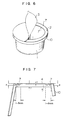
- Fig. 1 is a sectional view showing an easily openable sealed container of the present invention.
- 1 is a container main body having a flange portion 2, and 3 is a lid sealed with the flange portion 2.
- the main body 1 consists of a multi-layer sheet comprising a sealing layer 4 and an adjacent layer 5 contacting therewith.
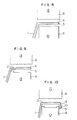
- As the main body there may also be used a main body having a flap 10 at the outermost circumferential portion of the flange, as shown in Fig. 6 and Fig. 7.
- As the lid there may also be used a lid 11 having a depression at the inner portion as shown in Fig. 16.
- the multi-layer sheet may be a two-layer sheet consisting of a sealing layer 4 of, for example, polyethylene resin and an adjacent layer 5 of, for example, polypropylene resin, or may be a multi-layer sheet consisting of said sealing sheet 4, said adjacent sheet 5, an adhesive layer placed on the adjacent layer, a barrier layer formed on the adhesive layer, made of a saponification product of an ethylene-vinyl acetate copolymer, a vinylidene chloride resin or the like, an adhesive layer placed on the barrier layer, and an outermost layer formed on the adhesive layer, made of a polypropylene resin, a polyester resin or the like.
- the multi-layer sheet may comprise an outermost or intermediate layer made of a metal, a paper, a ceramic or the like.
- the film constituting the lid 3 is desired to have a sealing layer 6 made of a material enabling strong adhesion to the sealing layer 4 of the main body.
- the sealing layer 6 of the lid is made of the same resin material as that used in the sealing layer 4 of the main body.
- the film of the lid 3 may be a single layer or a multi-layer sheet comprising a metal foil or a plastic layer both of good barrier property.
- a number of microdents 7 are formed on the whole surface of the sealing layer of the main body 1 at the flange portion 2.
- Formation of the microdents 7 can be effected by, for example, application of ultrasonic wave, hot or cold pressing, or utilization of high frequency.
- an ultrasonic treatment with an ultrasonic phone having a head provided with a number of microprojections.
- a main body 1 is placed on a bearer 9 for supporting the flange portion 2 of the main body, and then a pressure is applied to the flange portion 2 by an ultrasonic phone 8 to effect an ultrasonic treatment and form a number of mcirodents 7 as shown in Fig. 2 and Fig. 3.
- the number of the microdents 7 formed is preferably 50-1,000 per cm2. When the number is less than 50 per cm2, improvement in openability is low. When the number is more than 1,000 per cm2, the operation of forming microdents is difficult.
- Sealing is effected by contacting the sealing layer 6 of a lid 3 with the flange portion 2 of a main body 1, said flange portion having a number of microdents 7 on the sealing layer, and then sealing the lid with the flange portion.
- the sealing strength between the sealing layer 4 of the flange portion and the sealing layer 6 of the lid be larger than the lamination strength between the sealing layer 4 and the adjacent layer 5 of the main body.
- Sealing can be effected by a typical means such as heat sealing, ultrasonic sealing, high frequency sealing or the like.
- a number of microdents 7 are formed on the innermost circumferential surface area of the sealing layer of the flange portion 2 of the main body 1, in a ring shape of 1-3 mm in width.
- Fig. 5 is an enlarged view of a flange portion having microdents thereon
- Figs. 11A and 11B are respectively an enlarged sectional view and an enlarged plan view of an ultrasonic phone head.
- Fig. 12 shows sectional views of various bearers.
- microdents 7 are formed on the innermost circumferential surface area of the flange portion.
- Fig. 4 a perspective view of a container
- a number of microdots 7 are formed on the innermost circumferential surface area and the outermost circumferential surface area of the sealing layer of the flange portion 2 of a main body 1 having a ⁇ shape, in two ring shapes each of 1-3 mm in width.
- Fig. 7 is an enlarged view of a flange portion having microdents.
- microdents 7 are formed on the innermost circumferential surface area and the outermost circumferential surface area of the flange portion of the main body.
- the head of the ultrasonic phone 8 can have a front shape as shown in Fig. 11, and each of the projections (having a smooth flat surface) of the bearer 9 can
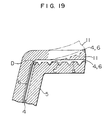
- a lid 11 having a depression at the inner portion As shown in Fig. 16, the lid 11 is contacted with the flange portion 2 of a main body 1 having a smooth sealing layer 4, as shown in Fig. 17, and an ultrasonic phone 8 having a number of microprojections is applied from the lid 11 side to effect ultrasonic sealing.
- the flange portion of the container formed by this sealing has a section as shown in Fig. 18.
- portions B which correspond to the microprojections of the head of the ultrasonic phone 8 and which, as compared with other portions C, are weakened due to concentrated stress.
- microdents having a depth d relative to the total thickness T of the flange portion, of d ⁇ 1/5 T.
- the pitch intervals w of the microdents are required to be 0.3-0.8 mm.
- the intervals are less than 0.3 mm, the number of the microdents is too large, making it difficult to obtain an effective depth d; this makes it impossible to obtain stable peeling and further gives poor appearance after peeling.
- the intervals are more than 0.8 mm, the number of the microdents is too small, no smooth peeling is secured, and the appearance after peeling is poor (generation of stringing).
- the microdents formed by ultrasonic treatment preferably form a ring shape having a width w′ of 1-3 mm.
- the width is less than 1 mm, the bearer intrudes into the backside of the flange at the time of ultrasonic treatment, which may give poor appearance to the flange and may further cause the breakage of the flange during the distribution of the container.
- easy openability varies depending upon the relation with pitch intervals w.
- the width w′ is more than 3 mm, the contents which have been fed in an excessive amount at the time of filling, may come into the microdents to be formed after the filling and, as a result, may cause insufficient adhesion and poor appearance.
- the depth d of the microdents formed by ultrasonic treatment has correlations with the thickness of the sealing layer and the pitch intervals.
- d is less than 1 t, easy openability is impaired and the appearance after peeling is poor.
- d is more than 10 t, peelability is impaired greatly and the container appearance after sealing is poor.
- d preferably satisfies d ⁇ 1/5 T relative to the total thickness T of the flange, because a depth d of larger than 1/5 T reduces the strength of the flange or brings about a state where microdents reach near the backside of the flange.
- microdents are required to have such a size that the resin constituting the sealing layer of the lid can completely fill the microdents at the time of heat sealing.
- sealing is effected, for example, by contacting the flange portion 2 of a main body having microdents on the innermost circumferential surface area of 1-3 mm in width, of the sealing layer of the flange portion, with the sealing layer 6 of a lid 3 and then effecting heat sealing.
- the sealing strength between the sealing layer of the flange and the sealing layer of the lid be larger than the lamination strength between the sealing layer 4 and the adjacent layer 5 of the main body.
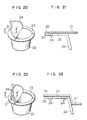
- microdents 24 are formed on the portion of the lid 21 corresponding to the flange portion 23 of the main body 22. These microdents 24 can be formed by using an ultrasonic phone having a head provided with a number of microprojections.
- the microdents 24 may be formed on the whole surface of the sealing layer 25 of the lid 21. However, it is preferable that the microdents 24 be formed on the portion of the lid 21 corresponding to the flange portion 23 of the main body 22, as shown in Fig. 20 and Fig. 21. It is also desirable that the microdents 24 be formed on the portion(s) having a width of 1-3 mm, of the lid 21 corresponding to the innermost circumferential portion or the innermost and outermost circumferential portions of the flange 23 of the main body 22, as shown in Fig. 22 and Fig. 23.
- the lid is a transparent or opaque film-like multi-layer lid having a flat smooth surface, or a transparent or opaque multi-layer lid formed in a shape, and the microdents are formed on the sealing layer of the lid at the portion corresponding to the whole flange portion of the main body, or at the portion corresponding to the innermost circumferential portion of the flange of the main body, or at the portions corresponding to the innermost and outermost circumferential portions of the flange of the main body.
- the feature of the above container lies in its lid, and the lid has microdents at the portion corresponding to the flange portion of the main body.
- the main body is filled with contents and then heat-sealed with the lid, whereby an easily openable sealed container is obtained.
- the lid may be a two-layer sheet consisting of, for example, a sealing layer 25 made of a polyethylene resin and an adjacent layer 26 made of a polypropylene resin.
- the adjacent layer may be a multilayer consisting of a barrier layer made of a saponification product of an ethylene-vinyl acetate copolymer, a vinylidene chloride resin or the like, a layer made of a polyamide resin, a polyester resin or the like, and a layer of a metal, a paper or the like.
- the sealing layer has a thickness of 10-100 ⁇ , preferably 10-70 ⁇ .
- the lid may have a flat film shape as shown in Fig. 20, or may be a molded article such as a lid 21′ having a depression at the inner portion, as shown in Fig. 22 and Fig. 23.
- a molded article the flange portion of the main body and the heat-sealing portion of the lid corresponding to the flange are fixed, whereby registering for formation of microdents on the lid becomes easy and position for heat sealing is fixed.
- a production apparatus used in the present invention can be installed at the step conducted prior to or after the apparatus for filling contents.
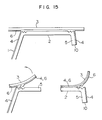
- the sealing layer 6 of the lid 3 and the sealing layer 4 of the flange portion 2 are strongly bonded to form an integrated sealing layer, as shown in Fig. 13, Fig. 14 and Fig. 15.
- the resin of the integrated sealing layer fills the microdents 7 formed in dots on the innermost circumferential portion of the flange. Accordingly, in the integrated sealing layer, the levels of the thickness and sealing strength vary continuously within a certain range of the layer.
- the sealing layer of a lid and the flange portion of a main body are bonded strongly to form an integrated structure, wherein the microdents formed on the sealing layer of the lid are filled with the surface resin of the flange of the main body.
- the sealed container of the present invention obtained by heat-sealing a lid with the sealing layer of the flange portion of a main body, which sealing layer has mcirodents formed in dots by, for example, an ultrasonic treatment, or by heat-sealing the flange portion of a main body with the sealing layer of a lid, which sealing layer has microdents, has stable sealing and enables smooth easy peeling.
- the process of the present invention for producing a sealed container employs very easy heat sealing as compared with the conventional processes, requires no precise registering, and can efficiently produce a sealed container having stable peelability and pressure resistance.
- a two-layer sheet of 850 ⁇ in total thickness consisting of (a) a sealing layer made of a high density polyethylene (HDPE) having a density of 0.955 and a melt index (MI) of 5 g/10 min and (b) an adjacent layer, which serves also as an outer layer, made of a polypropylene (PP) having a melt index of 0.5 g/min.
- the sheet was subjected to vacuum molding to obtain a container main body having an inside diameter of 65 mm, an outside diameter of the flange portion of 75 mm and a height of 25 mm.
- the thickness of the sealing layer was 20 ⁇ and the lamination strength between the sealing layer and the adjacent layer was 1,500 g/25 mm width.
- the sealing layer of the flange portion of the main body was subjected to an ultrasonic treatment by using an ultrasonic phone provided with a head having a number of microprojections (pitch intervals of microprojections: 0.6 mm, number of microprojections: 256/cm2), to form a number of microdents on the whole surface of the flange.
- the ultrasonic treatment was effected under the conditions of an output of 2 kw (energy used: 225 j), a pressure of 338 kpa and a period of time of 0.3 sec, to form microdents having a depth of 120 ⁇ in dots.
- the sealing layer of the lid was contacted with the sealing layer of the flange portion of the main body, and heat sealing was effected two times under the conditions of a surface pressure of 2 kg/cm2, a temperature of 190°C and a period of time of 1 sec to obtain an easily openable sealed container of the present invention.
- the sealed containers were also measured for puncture pressure when a tacky rubber sheet (thickness: 1.5 mm) was adhered to the center of the lid of each container, a needle was inserted into the container therethrough, and air was fed under pressure into the container at a rate of 2 cc/sec.
- a circular cut of 25 ⁇ in depth was formed on the flange of the main body obtained in Example 1, at a position of 1 mm apart from the innermost portion of the flange toward the outermost portion.
- the resulting main body was heat-sealed with the same lid as used in Example 1, under the same conditions to prepare a sealed container. 50 sealed containers obtained thus were measured for openability and puncture pressure in the same manner as in Example 1, and the results are shown in Table 1.
- a multi-layer sheet of 750 ⁇ in total thickness consisting of (a) a sealing layer made of a high density polyethylene having a thickness of 40 ⁇ and (b) an adjacent layer made of a polypropylene, was subjected to vacuum molding to obtain a container main body having an inside diameter of 65 mm, an outside diameter of the flange portion of 75 mm and a height of 25 mm.
- the lamination strength between the sealing layer and the adjacent layer was 1,500 g/25 mm width.
- microdents were formed in a width of 1.5 mm on the innermost circumferential portion of the sealing layer of the flange by using an ultrasonic phone provided with a head having a number of microprojections at pitch intervals of 0.6 mm.
- the ultrasonic treatment was effected under the conditions of an output of 2 kw (energy used: 225 j), a pressure of 338 kpa and a period of time of 0.3 sec to form microdents having a depth of 120 ⁇ , in dots.
- the sealing layer of the lid was contacted with the sealing layer of the flange portion of the main body, and heat sealing was effected two times under the conditions of a surface pressure of 2 kg/cm2, a temperature of 190°C and a period of time of 1 sec to obtain an easily openable sealed container of the present invention.
- a circular cut of 50 ⁇ in depth was formed on the flange of the main body obtained in Example 2, at a position of 1 mm apart from the innermost portion of the flange toward the outermost portion.
- the resulting main body was heat-sealed with the same lid as used in Example 2, under the same conditions to prepare a sealed container.
- a multi-layer sheet of 750 ⁇ in total thickness consisting of (a) a sealing layer made of a high density polyethylene having a thickness of 40 ⁇ and (b) an adjacent layer made of a polypropylene, was subjected to vacuum molding to obtain a container main body having an inside diameter of 65 mm, an outside diameter of the flange portion of 75 mm and a height of 25 mm.
- the lamination strength between the sealing layer and the adjacent layer was 1,500 g/25 mm width.
- microdents were formed in two ring shapes each at a width of 1.5 mm on the innermost and outermost circumferential portions of the sealing layer of the flange having a ⁇ shape in the section by using an ultrasonic phone provided with a head having a number of mciroprojections at pitch intervals of 0.6 mm.
- the ultrasonic treatment was effected under the conditions of an output of 2 kw (energy used: 225 j), a pressure of 338 kpa and a period of time of 0.3 sec to form microdents having a depth of 120 ⁇ , in dots.
- the sealing layer of the lid was contacted with the sealing layer of the flange portion of the main body, and heat sealing was effected two times under the conditions of a surface pressure of 2 kg/cm2, a temperature of 190°C and a period of time of 1.0 sec to obtain an easily openable sealed container of the present invention.
- Two circular cuts each of 50 ⁇ in depth were formed on the flange of the main body obtained in Example 3, at positions of 1 mm outside from the innermost circumferential portion of the flange and of 1 mm inside from the outermost circumferential portion of the flange.
- the resulting main body was heat-sealed with the same lid as used in Example 3, under the same conditions to prepare a sealed container.
- a two-layer sheet of 850 ⁇ in total thickness consisting of (a) a sealing layer made of a high density polyethylene (HDPE) having a density of 0.955 and a melt index (MI) of 5 g/10 min and (b) an adjacent layer, which serves also as an outer layer, made of a polypropylene (PP) having a melt index of 0.5 g/min.
- the sheet was subjected to vacuum molding to obtain a container main body having an inside diameter of 65 mm, an outside diameter of the flange portion of 75 mm and a height of 25 mm.
- the thickness of the sealing layer was 20 ⁇ and the lamination strength between the sealing layer and the adjacent layer was 1,500 g/25 mm width.
- An oriented polyamide film was dry-lamianted to a high density polyethylene film (thickness: 50 ⁇ ) as a sealing layer (the same polyethylene as used for the sealing layer of the main body) to obtain a sheet of 0.5 mm in thickness.
- the sheet was molded to a shape of a lid having a depression at the inner portion.
- the sealing layer of the lid having a depression at the inner portion was contacted with the sealing layer of the flange of the main body. They were subjected to ultrasonic sealing using an ultrasonic phone provided with a head having a number of microprojections (pitch intervals: 0.6 mm, number of mciroprojections: 256/cm2), under the conditions of an output of 2 kw (energy used: 225j), a pressure of 450 kpa and a period of time of 0.3 sec, to obtain an easily openable sealed container wherein the lid is a type having a depression at the inner portion and the flange has a number of microprojections on the whole surface.
- the lid having a depression at the inner portion was undone.
- peeling had no feeling of resistance
- opening was stable and smooth to the last moment
- the opened surfaces had no fluffing and no deformation.
- the sealed containers were also measured for puncture pressure in the same manner as in Example 1.
- the average puncture pressure was 0.4 kg/cm2, the dispersion range was 0.2 kg/cm2, and accordingly the pressure resistance was stable and good.
- Example 4 The sealing method employed in Example 4 was changed to heat sealing. Sealing between the sealing layer of the flange of the main body and the sealing layer of the lid having a depression at the inner portion was impossible.
- a two-layer sheet of 850 ⁇ in total thickness consisting of (a) a sealing layer made of a HDPE having a density of 0.955 and a MI of 5 g/10 min and (b) an adjacent layer, which serves also as an outer layer, made of a PP having a MI of 0.5 g/min.
- the sheet was subjected to vacuum molding to obtain a container main body having an inside diameter of 65 mm, an outside diameter of the flange portion of 75 mm and a height of 25 mm.
- the thickness of the sealing layer was 20 ⁇ and the lamination strength between the sealing layer and the adjacent layer was 1,500 g/25 mm.
- the sealing layer of the flange of the main body was subjected to an ultrasonic treatment using an ultrasonic phone provided with a head having a number of microprojections (pitch intervals: 0.5 mm, number of microprojections: 400/cm2), under the conditions of an output of 2 kw (energy used: 214 j), a pressure of 200 kpa and a period of time of 0.3 sec, to form a number of microdents of 60 ⁇ in depth, in dots on the whole portion of the flange.
- An oriented PP film was dry-lamianted to a HDPE film (thickness: 50 ⁇ ) as a sealing layer (the same polyethylene as used for the sealing layer of the main body) to obtain a sheet of 0.20 mm in thickness.
- the sheet was molded to a shape of a lid having a depression at the inner portion, having an inside diameter of 64 mm, an outside diameter of the flange portion of 75 mm and a depth of 5 mm.
- the lid having a depression at the inner portion was contacted with the sealing layer of the flange portion having a number of microdents, of the main body. They were subjected to heat sealing two times under the conditions of a surface pressure of 2 kg/cm2, a temperature of 200°C and a period of time of 1.5 sec to obtain an easily openable sealed container of the present invention.
- the lid having a depression at the inner portion was undone.
- peeling had no feeling of resistance
- opening was stable and smooth to the last moment
- the opened surfaces had no fluffing and no deformation.
- the sealed containers were also measured for puncture pressure in the same manner as in Example 1.
- the average puncture pressure was 0.9 kg/cm2, the dispersion range was 0.2 kg/cm2, and accordingly the pressure resistance was stable and good.
- a circular cut of 50 ⁇ in depth was formed on the flange of the main body obtained in Example 5, at a position of 1 mm apart from the innermost portion of the flange toward the outermost portion.
- the resulting main body was heat-sealed with the same lid having a depression at the inner portion, as used in Example 5, under the same conditions as in Exampel 5, to prepare a sealed container.
- Heat sealing was also effected at the portion of the flange outer than the cut so as not to cover the cut.
- the sealing conditions were severe, there occurred cutting of edge by sealing plate and, when the sealing conditions were mild, pseudo-sealing occurred. Thus, no sealed container having sufficient sealing was obtained.
- a two-layer sheet of 250 ⁇ in total thickness consisting of (a) a sealing layer made of a PP having a MI of 0.5 g/min and (b) an adjacent layer, which serves also as an outer layer, made of a HDPE having a density of 0.955 and a MI of 5 g/10 min.
- the sheet was subjected to vacuum molding to obtain a lid having a depression at the inner portion, having an inside diameter of 64 mm, an outside diameter of the flange portion of 75 mm and a depth of 5 mm.
- the sealing layer had a thickness of 20 ⁇ and the lamination strength between the sealing layer and the adjacent layer was 1,500 g/25 mm width.
- a main body having an inside diameter of 65 mm, an outside diameter of the flange portion of 75 mm and a height of 25 mm was obtained by injection-molding a PP.
- the flange portion of the main body was contacted with the sealing layer of the lid having microdents. They were heat-sealed twice under the conditions of a surface pressure of 2 kg/cm2, a temperature of 200°C and a period of time of 1.5 sec to obtain a sealed container of the present invention.
Landscapes
- Engineering & Computer Science (AREA)
- Mechanical Engineering (AREA)
- Packages (AREA)
Abstract
Description
- The present invention relates to a sealed container suitable for food packaging, comprising a plastic main body having a flange portion and a lid, wherein the lid can be peeled easily, as well as to a process for producing the sealed container.
- As a container for packaging various foods, there are in wide use sealed plastic containers of the so-called easy opening structure wherein the lid can be peeled easily.
- The most commonly used conventional sealed containers of easy opening structure include those of interfacial peeling type wherein the sealing strength between the flange portion of the main body and the lid is controlled at an appropriate level (ordinarily 500-1,500 g/15 mm width) by appropriately selecting the composition of the resin constituting the sealing layer of the lid, to give rise to peeling at the sealing interface and enable the opening of the container, as disclosed in, for example, Japanese Utility Model Application Kokai Nos. 56-125870, 57-1154, 59-118766, 61-48162 and 63-31926.
- In these sealed containers of interfacial peeling type, however, the sealing strength between the flange portion of the main body and the lid was liable to be affected by various factors such as sealing conditions, environmental temperature and adhesion of contents to the sealed portion, and was difficult to control in a desired range, which caused frequent fluctuation of the sealing strength. When the sealing strength was too small, there was sometimes caused leakage of contents due to poor sealing. When the sealing strength was too large, peelability of the sealed container was poor, impairing the easy openability. Since the leakage of contents is detrimental for sealed containers, the sealing strength was generally set at a higher level by employing, for example, a higher sealing temperature or pressure, even though the peelability was sacrificed somewhat.
- In order to overcome the above problem, there are known sealed containers of interlaminar peeling type wherein the opening of the container is effected by allowing the sealing layer and the layer adjacent thereto, of the flange portion of the main body to cause delamination, or by allowing the sealing layer and the layer adjacent thereto, of the lid to cause delamination as disclosed in e.g., Japanese Patent Publication No. 50-37597.
- However, when such a container was prepared using an ordinary sealing method, it was impossible to smoothly break the sealing layer and accordingly it was difficult to take out the contents.
- In order to facilitate the breakage of the sealing layer, there are proposed, for example, improved sealed containers wherein the main body has grooves at the flange portion (e.g., Japanese Patent Application Kokai Nos. 62-251363, 63-78 and 63-25037) and improved sealed containers wherein the main body has a groove for initiating peeling and a groove for stopping peeling, at the flange portion (e.g., Japanese Patent Application Kokai Nos. 63-96060 and 63-96061). These sealed containers, however, had a risk of impairing the pressure resistance. Moreover, sealing had to be controlled carefully so that a heat-seal head was not applied to the groove portion(s). Even slight application of the heat-seal head to the groove portion(s) made it difficult to cut the sealing layer, making difficult in some cases the sharp separation of the lid from the main body; thus, there remained a problem in openability.
- The sealed containers of interlaminar peeling type wherein the sealing layer and the layer adjacent thereto, of the lid are allowed to cause delamination, were derived from the technique (Japanese Patent Publication No. 50-37597) of allowing the flange of the main body to cause interlaminar peeling and are disclosed in, for example, Japanese Utility Model Application Kokai Nos. 56-138075, 57-164072 and 63-70963.
- In these approaches, however, a heat-seal head had to be applied between the slits of the sealing layer by precise positioning, to exhibit the effect; first the lid had to be precisely set onto the flange portion of the main body and, moreover, the heat-seal head had to be applied as mentioned above; thus, heat sealing was very difficult to control.
- Further, there is proposed a sealed container wherein a sealing material having the same shape as the flange of the main body is prepared by punching, the material is melt-bonded onto the flange, and then a lid is sealed thereon (Japanese Utility Model Application Kokai No. 63-28668). In this approach, however, there had to be employed an additional step of precisely setting the sealing layer on the flange and further melt-bonding it thereon; the positioning (registering) was very troublesome; thus, the productivity was low.
- Besides, there is proposed a sealed container wherein the sealing layer of the lid has groove(s). In this approach, the positioning (registering) of the main body and the lid had to be controlled precisely, and moreover there were the same problems as in the containers having groove(s) at the flange.
- A sealed container using a thick lid having a depression at the inner portion is convenient for preserving contents, because it has shape retainability and resealing after opening is substantially possible. However, when the lid had a thickness of 0.25 mm or more, it was difficult to seal the lid by a conventional means using heat and pressure; even if the sealing was possible, the opening of such a lid was not easy.
- The object of the present invention resides in providing an easily openable sealed container which overcomes these problems and satisfies pressure-resistant sealing and easy opening (these have been contradictory requirements in the prior art) and yet requires no precise positioning (registering) at the time of sealing, as well as a process for producing such a sealed container.
- According to the present invention, there are provided a sealed container for packaging which requires no special control at the time of sealing and has stable pressure resistance and smooth and easy openability as a result of sealing of a lid or a main body with the flange portion of the main body or the portion of the lid corresponding to the flange portion of the main body, said flange portion or lid portion having a number of microdents on e.g. the whole surface area, (2) the innermost circumferential surface area of ring shape having a width of 1-3 mm, or (3) the innermost circumferential surface area and the outermost circumferential surface area both of ring shape having a width of 1-3 mm, as well as a process for producing the sealed container.
- In other words, the present invention provides an easily openable sealed container comprising a lid and a main body having a flange, wherein a sealing layer of the main body or a sealing layer of the lid has a number of microdents in the flange portion, the thickness of said sealing layer is 10-100 µ, said sealing layer and an adjacent layer contacting therewith have a lamination strength of 300-2,000 g/25 mm width, and said sealing layer and the lid or the main body are sealed in the flange portion at a strength larger than said lamination strength, as well as a process for producing said sealed container.
- According to one embodiment of the present invention, there is provided an easily openable sealed container, wherein the main body comprises a multilayer sheet comprising a sealing layer and an adjacent layer contacting therewith, the lamination strength between the sealing layer and the adjacent layer contacting therewith is 300-2,000 g/25 mm width, said sealing layer has a thickness of 10-100 µ, said sealing layer has a number of microdents in the flange portion on the whole surface or on the ring-shaped part(s) of the surface, said sealing layer is sealed with the lid in the flange portion at a strength larger than said lamination strength.
- The preferred embodiments of the above container are as follows:
- (1) Said container wherein the microdents are formed in a number of dots which have a depth d relative to the thickness t of the sealing layer of the main body, of d = 1 t to 10 t and which are arranged at pitch intervals of 0.3 mm to 0.8 mm, on the surface of the flange portion of the main body, in a ring shape of 1-3 mm width ranging from the innermost circumference of said surface to its outer circumference apart by said width.
- (2) Said container wherein the microdents are formed in a number of dots which have a depth d relative to the thickness t of the sealing layer of the main body, of d = 1 t to 10 t and which are arranged at pitch intervals of 0.3 mm to 0.8 mm, on the surface of the flange portion of the main body, in two ring shapes, one ring having a 1-3 mm width and ranging from the innermost circumference of said surface to its outer circumference apart by said width and the other ring having a 1-3 mm width and ranging from the outermost circumference of said surface to its inner circumference apart by said width.
- (3) Said container wherein the lid is a film-like lid or a lid having a depression at the inner portion.
- (4) Said container wherein the section of the flange portion has a ┐ shape.
- According to another embodiment of the present invention, there is provided an easily openable sealed container wherein the lid consists of a multi-layer sheet of at least two layers comprising a sealing layer and an adjacent layer contacting therewith, the lamination strength between the sealing layer and the adjacent layer contacting therewith is 300-2,000 g/25 mm width, the sealing layer has a thickness of 10-100 µ, the portion(s) of the lid corresponding to the whole or part(s) of the flange portion of the main body has (have) a number of microdents, and the whole surface of the flange portion of the main body and the corresponding portion of the lid are heat-sealed, after the main body has been filled with contents, at a strength larger than said lamination strength.
- The preferred embodiments of the above containers are as follows:
- (1) Said container wherein the lid is a film-like muti-layer sheet which has a transparent or opaque smooth surface.
- (2) Said container wherein comprises a transparent or opaque multi-layer and the section of the lid has ashape.
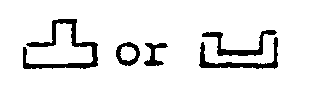
- (3) Said container wherein the microdents are formed on the surface portion of the sealing layer of the lid corresponding to the whole flange portion of the main body.
- (4) Said container wherein the microdents are formed on the surface portion of the sealing layer of the lid corresponding to the innermost portion of the flange of the main body, in a ring shape.
- (5) Said container wherein the microdents are formed on the surface portions of the sealing layer of the lid corresponding to the innermost and outermost portions of the flange of the main body, in two ring shapes.
- According to still another embodiment of the present invention, there is provided a process for producing an easily openable sealed container, which comprises (1) applying a bearer to a container main body having a flange, at at least the innermost circumferential portion of the backside of the flange portion, wherein the main body comprises a multi-layer sheet comprising a sealing layer and an adjacent layer contacting therewith, the lamination strength between the sealing layer and the adjacent layer is 300-2,000 g/25 mm width and the sealing layer has a thickness of 10-100 µ, (2) applying an ultrasonic treatment to the flange portion from the surface layer side, i.e., sealing layer side by using an ultrasonic phone having a head provided with microprojections in dots having pitch intervals of 0.3-0.8 mm, to form microdents on the surface of the flange portion of the main body, and (3) heat-sealing the whole surface of the flange portion with a lid so that the sealing strength between the sealing layer of the flange portion of the main body and the lid becomes larger than the lamination strength between the sealing layer and the adjacent layer of the main body.
- The preferred embodiments of the above process are as follows:
- (1) Said process wherein the bearer has a flat smooth surface having a ring shape of 1-3 mm in width and the ultrasonic treatment is applied to the flange surface under such conditions as to form thereon microdents having a depth d relative to the thickness t of the sealing layer, of d = 1 t to 10 t, and relative to the total thickness T of the flange portion, of d < 1/5 T.
- (2) Said process comprising (1) applying a bearer having two flat smooth surfaces each of ring shape of 1-3 mm in width, to a main body having a flange of ┐ shape, at the innermost circumferential portion and also the circumferential portion closest to the flap portion, of the backside of the flange, and (2) applying an ultrasonic treatment to the flange surface under such conditions as to form microdents in a number of dots which have a depth d relative to the thickness t of the sealing layer, of d = 1 t to 10 t, and relative to the total thickness T of the flange portion, of d < 1/5 T, in two ring shapes, at the innnermost circumferential portion and the circumferential portion closest to the flap portion, of the flange surface.
- (3) Said process wherein the lid is a film-like lid or a lid having a depression at the inner portion.
- According to still another embodiment of the present invention, there is provided a process for producing an easily openable sealed container, which comprises (1) applying a bearer to a container main body having a flange, at at least the innermost circumferential portion of the backside of the flange portion, wherein the main body comprises a multi-layer sheet comprising a sealing layer and an adjacent layer contacting therewith, the lamination strength between the sealing layer and the adjacent layer is 300-2,000 g/25 mm width and the sealing layer has a thickness of 10-100 µ, (2) placing on the flange portion a lid of 0.25 mm or more in thickness, having a depression at the inner portion, and (3) applying an ultrasonic treatment to the flange portion from the flange surface side, i.e., sealing layer side by using an ultrasonic phone having a head provided with microprojections in a number of dots having pitch intervals of 0.3-0.8 mm, to form microdents and simultaneously seal the lid with the flange.
- The invention will now be described, by way of example only, with reference to the accompanying drawings, in which:
- Fig. 1 is a sectional view of an easily openable sealed container of the present invention.
- Figs. 2, 4 and 6 are each a plan view or perspective view of a container in a state where the lid is half opened.
- Figs. 3, 5 and 7 are each an enlarged sectional view of the flange portion of a container main body, on which flange portion microdents have been formed by, for example, an ultrasonic treatment.
- Figs. 8, 9 and 10 are each a schematic view showing a step of forming microdents on the flange portion.
- Fig. 11A is an enlarged sectional view of an ultrasonic phone head and Fig. 11B is an enlarged plan view of the head.
- Fig. 12 shows examples of a bearer for an ultrasonic phone.
- Figs. 13, 14 and 15 are each enlarged sectional view(s) showing sealed and opened states of a lid at the flange portion.
- Fig. 16 is a sectional view of a sealed container of the present invention using a lid having a depression at the inner portion.
- Fig. 17 is a sectional view showing a method for sealing a lid having a depression at the inner portion.
- Fig. 18 is a sectional view showing a state where a lid having a depression at the inner portion has been sealed by ultrasonic sealing.
- Fig. 19 is a sectional view showing the sealed and opened states of a lid having a depression at the inner portion.
- Fig. 20 is a perspective view showing the half-opened state of a container obtained by forming a number of microdents on the portion of a film-like lid corresponding to the flange of a main body and then heat-sealing the resulting lid with the main body.
- Fig. 21 is a sectional view taken at the line A-A′ of Fig. 20.
- Fig. 22 is a perspective view showing the half-opened state of a container obtained by forming microdents on the flange portion of a lid having a depression at the inner portion at the innermost circumferential area and the outermost circumferential area in two ring shapes and then sealing the resulting lid with a main body.
- Fig. 23 is a sectional view taken at the line B-B′ of Fig. 22.
- Fig. 24 is an enlarged sectional view of the portion of a lid wherein microdents have been formed on the sealing layer.
- Fig. 25 is a view showing the opened state of a container having a film-like lid having microdents on the portion corresponding to the flange of a main body.
- Fig. 26 is a view showing the opened state of a container having a lid having a depression at the inner portion, in which container a number of microdents have been formed on the flange of the lid at the innermost and outermost portions in two ring shapes.
- The numerals used in the figures refer to the followings. 1: container main body, 2: flange portion of main body, 3: lid, 4: sealing layer of main body, 5: adjacent layer contacting with sealing layer, of main body, 6: sealing layer of lid, 7: microdents, 8: ultrasonic phone, 9: bearer, 10: flap, 11: lid having a depression at the inner portion, 21 & 21′: lid, 22: container main body, 23: flange portion of main body, 24: microdents, 25: sealing layer of lid, 26: adjacent layer contacting with sealing layer, of lid.
- The present invention is hereinafter described in detail with reference to the accompanying drawings. Fig. 1 is a sectional view showing an easily openable sealed container of the present invention. In Fig. 1, 1 is a container main body having a
flange portion flange portion 2. Themain body 1 consists of a multi-layer sheet comprising asealing layer 4 and anadjacent layer 5 contacting therewith. As the main body, there may also be used a main body having aflap 10 at the outermost circumferential portion of the flange, as shown in Fig. 6 and Fig. 7. As the lid, there may also be used a lid 11 having a depression at the inner portion as shown in Fig. 16. - The multi-layer sheet may be a two-layer sheet consisting of a
sealing layer 4 of, for example, polyethylene resin and anadjacent layer 5 of, for example, polypropylene resin, or may be a multi-layer sheet consisting of said sealingsheet 4, saidadjacent sheet 5, an adhesive layer placed on the adjacent layer, a barrier layer formed on the adhesive layer, made of a saponification product of an ethylene-vinyl acetate copolymer, a vinylidene chloride resin or the like, an adhesive layer placed on the barrier layer, and an outermost layer formed on the adhesive layer, made of a polypropylene resin, a polyester resin or the like. Optionally, the multi-layer sheet may comprise an outermost or intermediate layer made of a metal, a paper, a ceramic or the like. - In the multi-layer sheet constituting the
main body 1, it is required that the lamination strength between thesealing layer 4 and theadjacent layer 5 be 300-2,000 g/25 mm width (peeling angle = 180°, peeling rate = 200 mm/min) and that thesealing layer 4 have a thickness of 10-100 µ, preferably 10-70 µ. - This is because no sufficient sealing is assured when the lamination strength is less than 300 g/ 25 mm width and the thickness of the sealing layer is less than 10 µ, and because peeling resistance at the time of opening is large and moreover smooth peeling is difficult when the lamination strength is more than 2,000 g/25 mm width and the thickness of the sealing layer is more than 100 µ.
- The film constituting the
lid 3 is desired to have asealing layer 6 made of a material enabling strong adhesion to thesealing layer 4 of the main body. In the most preferred embodiment, thesealing layer 6 of the lid is made of the same resin material as that used in thesealing layer 4 of the main body. - The film of the
lid 3 may be a single layer or a multi-layer sheet comprising a metal foil or a plastic layer both of good barrier property. - In the container shown in Fig. 2 and Fig. 3, a number of
microdents 7 are formed on the whole surface of the sealing layer of themain body 1 at theflange portion 2. - Formation of the
microdents 7 can be effected by, for example, application of ultrasonic wave, hot or cold pressing, or utilization of high frequency. In order to form microdents uniformly and precisely on the whole surface of the flange portion, it is preferable to apply an ultrasonic treatment with an ultrasonic phone having a head provided with a number of microprojections. As shown in Fig. 8, amain body 1 is placed on a bearer 9 for supporting theflange portion 2 of the main body, and then a pressure is applied to theflange portion 2 by anultrasonic phone 8 to effect an ultrasonic treatment and form a number ofmcirodents 7 as shown in Fig. 2 and Fig. 3. In this case, the number of themicrodents 7 formed is preferably 50-1,000 per cm². When the number is less than 50 per cm², improvement in openability is low. When the number is more than 1,000 per cm², the operation of forming microdents is difficult. - Sealing is effected by contacting the
sealing layer 6 of alid 3 with theflange portion 2 of amain body 1, said flange portion having a number ofmicrodents 7 on the sealing layer, and then sealing the lid with the flange portion. In this case, it is necessary that the sealing strength between thesealing layer 4 of the flange portion and thesealing layer 6 of the lid be larger than the lamination strength between thesealing layer 4 and theadjacent layer 5 of the main body. Sealing can be effected by a typical means such as heat sealing, ultrasonic sealing, high frequency sealing or the like. - In the container shown in Fig. 4 and Fig. 5, a number of
microdents 7 are formed on the innermost circumferential surface area of the sealing layer of theflange portion 2 of themain body 1, in a ring shape of 1-3 mm in width. Fig. 5 is an enlarged view of a flange portion having microdents thereon, and Figs. 11A and 11B are respectively an enlarged sectional view and an enlarged plan view of an ultrasonic phone head. Fig. 12 shows sectional views of various bearers. As shown in Fig. 4 (a perspective view of a container),microdents 7 are formed on the innermost circumferential surface area of the flange portion. As shown in Fig. 9, a bearer 9 having a flat smooth surface of 1-3 mm in width as shown in Fig. 12 is applied to the back side of theflange portion 2 of amain body 1; to the sealing layer of the flange portion is applied anultrasonic phone 8 as shown in Fig. 11, having a head provided with microprojections of quadrangular or triangular pyramid shape in dots having pitch intervals w of 0.3-0.8 mm; thereby, a number of microdents are formed in dots on the surface of theflange 2, which microdents have a depth d relative to the thickness t of the sealing layer, of d = 1 t to 10 t. Incidentally, the depth d of the microdents satisfies d < 1/5 T relative to the total thickness T of the flange. - In the container shown in Fig. 6 and Fig. 7, a number of
microdots 7 are formed on the innermost circumferential surface area and the outermost circumferential surface area of the sealing layer of theflange portion 2 of amain body 1 having a ┐ shape, in two ring shapes each of 1-3 mm in width. Fig. 7 is an enlarged view of a flange portion having microdents. - As shown in Fig. 6 (a perspective view of a container),
microdents 7 are formed on the innermost circumferential surface area and the outermost circumferential surface area of the flange portion of the main body. As shown in Fig. 10, a bearer 9 having, at the innermost and outermost portions, two ring shape projections each having a smooth flat surface of 1-3 mm in width is applied to the backside of theflange portion 2 of amain body 1; to the sealing layer of the flange portion is applied anultrasonic phone 8 having a head provided with microprojections in dots having pitch intervals of 0.3-0.8 mm; thereby, a number of microdents are formed in dots on the surface of theflange 2, which microdents have a depth d relative to the thickness t of the sealing layer, of d = 1 t to 10 t. Incidentally, the head of theultrasonic phone 8 can have a front shape as shown in Fig. 11, and each of the projections (having a smooth flat surface) of the bearer 9 can have a sectional shape as shown in Fig. 12. - When there is used a lid 11 having a depression at the inner portion, as shown in Fig. 16, the lid 11 is contacted with the
flange portion 2 of amain body 1 having asmooth sealing layer 4, as shown in Fig. 17, and anultrasonic phone 8 having a number of microprojections is applied from the lid 11 side to effect ultrasonic sealing. The flange portion of the container formed by this sealing has a section as shown in Fig. 18. In this section, there are seen, in the laminated layer, portions B which correspond to the microprojections of the head of theultrasonic phone 8 and which, as compared with other portions C, are weakened due to concentrated stress. These portions of concentrated stress exist in a large number in the laminated layer, which allows the laminated layer to have a uniform distribution of strong and weak portions and serves to reduce the peeling resistance in opening the container. - In the easily openable sealed container of the present invention produced according to the above manner, there are formed microdents having a depth d relative to the total thickness T of the flange portion, of d < 1/5 T. The pitch intervals w of the microdents are required to be 0.3-0.8 mm. When the intervals are less than 0.3 mm, the number of the microdents is too large, making it difficult to obtain an effective depth d; this makes it impossible to obtain stable peeling and further gives poor appearance after peeling. When the intervals are more than 0.8 mm, the number of the microdents is too small, no smooth peeling is secured, and the appearance after peeling is poor (generation of stringing).
- When the microdents are formed not on the whole surface of the flange but on the part of its surface, the microdents formed by ultrasonic treatment preferably form a ring shape having a width w′ of 1-3 mm. When the width is less than 1 mm, the bearer intrudes into the backside of the flange at the time of ultrasonic treatment, which may give poor appearance to the flange and may further cause the breakage of the flange during the distribution of the container. Moreover, easy openability varies depending upon the relation with pitch intervals w. When the width w′ is more than 3 mm, the contents which have been fed in an excessive amount at the time of filling, may come into the microdents to be formed after the filling and, as a result, may cause insufficient adhesion and poor appearance.
- Further, the depth d of the microdents formed by ultrasonic treatment has correlations with the thickness of the sealing layer and the pitch intervals. In the above case, the depth d is required to satisfy d = 1 t to 10 t relative to the thickness t of the sealing layer. When d is less than 1 t, easy openability is impaired and the appearance after peeling is poor. When d is more than 10 t, peelability is impaired greatly and the container appearance after sealing is poor. Furthermore, d preferably satisfies d < 1/5 T relative to the total thickness T of the flange, because a depth d of larger than 1/5 T reduces the strength of the flange or brings about a state where microdents reach near the backside of the flange.
- The microdents are required to have such a size that the resin constituting the sealing layer of the lid can completely fill the microdents at the time of heat sealing.
- Desirably, the microdents are formed at pitch intervals w of 0.4-0.6 mm (diagonal pitch intervals = 0.6-0.9 mm) at a depth d of 2 t to 5 t at a width (of the part where the microdents are formed) of 1-2 mm, because it gives smooth peeling.
- In the present invention, sealing is effected, for example, by contacting the
flange portion 2 of a main body having microdents on the innermost circumferential surface area of 1-3 mm in width, of the sealing layer of the flange portion, with thesealing layer 6 of alid 3 and then effecting heat sealing. In this case, it is necessary that the sealing strength between the sealing layer of the flange and the sealing layer of the lid be larger than the lamination strength between thesealing layer 4 and theadjacent layer 5 of the main body. - In the container shown in Fig. 20 and Fig. 21, it is necessary that a number of
microdents 24 be formed on the portion of thelid 21 corresponding to theflange portion 23 of themain body 22. Thesemicrodents 24 can be formed by using an ultrasonic phone having a head provided with a number of microprojections. - These
microdents 24 are formed, as shown in Fig. 24, in a number of dots on the sealing layer of the lid at the outer circumference at pitch intervals w of 0.3-0.8 mm at a depth d of d = 1 t to 10 t relative to the thickness t of the sealing layer of the lid and of d < 1/5 T relative to the total thickness T of the lid. - In the present invention, the
microdents 24 may be formed on the whole surface of thesealing layer 25 of thelid 21. However, it is preferable that themicrodents 24 be formed on the portion of thelid 21 corresponding to theflange portion 23 of themain body 22, as shown in Fig. 20 and Fig. 21. It is also desirable that themicrodents 24 be formed on the portion(s) having a width of 1-3 mm, of thelid 21 corresponding to the innermost circumferential portion or the innermost and outermost circumferential portions of theflange 23 of themain body 22, as shown in Fig. 22 and Fig. 23. - In registering of the
lid 21 having microdents and theflange portion 23 of themain body 22 at the time of heat sealing, flat sealing can be employed when themicrodents 24 are formed on the whole surface of the sealing layer of the lid. When themicrodents 24 are formed only on the portion of thelid 21 corresponding to theflange portion 23 of themain container 22, the microdents are formed in an area slightly larger than the area of the flange, whereby slight registering error can be absorbed. When registering is made so that the lid can correspond to the innermost portion or the innermost and outermost portions of the flange, the microdents are formed on the lid at the portions corresponding to said portions of the flange, in widths slightly larger than those of said flange portions, whereby the registering do not require high precision.
Also, heat sealing of the main body and the lid can be effected very easily and, even when heat sealing is conducted with the heat seal head contacted with the microdents, neither peelability nor sealability are affected. - In a preferred embodiment of the present container, the lid is a transparent or opaque film-like multi-layer lid having a flat smooth surface, or a transparent or opaque multi-layer lid formed in a

shape, and the microdents are formed on the sealing layer of the lid at the portion corresponding to the whole flange portion of the main body, or at the portion corresponding to the innermost circumferential portion of the flange of the main body, or at the portions corresponding to the innermost and outermost circumferential portions of the flange of the main body. - The feature of the above container lies in its lid, and the lid has microdents at the portion corresponding to the flange portion of the main body. The main body is filled with contents and then heat-sealed with the lid, whereby an easily openable sealed container is obtained.
- The lid may be a two-layer sheet consisting of, for example, a
sealing layer 25 made of a polyethylene resin and anadjacent layer 26 made of a polypropylene resin. Alternatively, the adjacent layer may be a multilayer consisting of a barrier layer made of a saponification product of an ethylene-vinyl acetate copolymer, a vinylidene chloride resin or the like, a layer made of a polyamide resin, a polyester resin or the like, and a layer of a metal, a paper or the like. - In such a
lid 21, it is necessary that the lamination strength between the sealinglayer 25 and theadjacent layer 26 be 300-2,000 g/25 mm width (peeling angle = 180°, peeling rate = 200 mm/min) and the sealing layer has a thickness of 10-100 µ, preferably 10-70 µ. This is because when the lamination strength is less than 300 g/25 mm width and the thickness of the sealing layer is less than 10 µ, no sufficient sealability is ensured and, when the lamination strength is more than 2,000 g/25 mm width and the thickness of the sealing layer is more than 100 µ, the peeling resistance in opening the sealed container is large, impairing smooth and easy peeling. - The lid may have a flat film shape as shown in Fig. 20, or may be a molded article such as a
lid 21′ having a depression at the inner portion, as shown in Fig. 22 and Fig. 23. In such a molded article, the flange portion of the main body and the heat-sealing portion of the lid corresponding to the flange are fixed, whereby registering for formation of microdents on the lid becomes easy and position for heat sealing is fixed. - When the process of the present invention for producing an easily openable sealed container is applied to a forming-filling-sealing machine or to a filling-sealing machine using a preformed main body, a production apparatus used in the present invention can be installed at the step conducted prior to or after the apparatus for filling contents.
- In the above sealed structure according to the present invention, the
sealing layer 6 of thelid 3 and thesealing layer 4 of theflange portion 2 are strongly bonded to form an integrated sealing layer, as shown in Fig. 13, Fig. 14 and Fig. 15. The resin of the integrated sealing layer fills themicrodents 7 formed in dots on the innermost circumferential portion of the flange. Accordingly, in the integrated sealing layer, the levels of the thickness and sealing strength vary continuously within a certain range of the layer. This unique sealed structure provides stable resistance to internal and external pressures at the time of sealing and enables smooth interlaminar peeling at the time of opening. - In opening of the sealed container as shown in Fig. 13 in which the microdents are formed on the whole surface of the flange, interlaminar peeling starts at the interface between the
adjacent layer 5 of the flange and theintegrated sealing layer lid 3 is pulled upward, as shown by the dotted line. In this case, the continuous variation in the levels of the thickness and sealing strength of the integrated sealing layer alleviates peeling resistance effectively, whereby smooth opening is realized. The ultimate and complete opening is achieved by breaking the innermost thin portion A of the sealing layer of the flange. - In opening of the sealed container as shown in Fig. 14 in which the microdents are formed on the innermost circumferential portion of the flange, interlaminar peeling takes place first and complete opening is achieved by easily breaking the sealing layer at the portion where the microdents are formed.
- In opening of the sealed container as shown in Fig. 15 in which the microdents are formed in two ring shapes at the innermost and outermost circumferential portions of the flange, the breakage of the
sealing layer 4 takes place first by a small force at the outermost circumferential microdent portion of the flange, then interlaminar peeling occurs, and smooth and complete opening is achieved by easily breaking the innermost circumferential microdent portion of thesealing layer 4 of the flange. - Strong sealing is possible even in the case of a lid having a depression at the inner portion and having a thickness of 0.25 mm or more, by employing an ultrasonic treatment. Sealing by an ultrasonic phone having a number of microprojections gives a sealed structure (integrated sealing layer) in which portions of concentrated stress exist in a number of continuous dots; the resulting unique variation of the sealing layer in sealing strength alleviates the peeling resistance effectively to enable reliable and smooth interlaminar peeling and opening. In opening of, for example, the sealed structure of Fig. 19, by pulling upward the end of the lid 11 having a depression at the inner portion, peeling starts at the interface between the
adjacent layer 5 of the flange and theintegrated sealing layer - In another sealed structure of the present invention, the sealing layer of a lid and the flange portion of a main body are bonded strongly to form an integrated structure, wherein the microdents formed on the sealing layer of the lid are filled with the surface resin of the flange of the main body. Owing to this sealed structure, stable resistance to internal and external pressures are secured at the time of sealing and, at the time of opening, smooth interlaminar peeling is caused, then peeling proceeeds to the innermost portion of the flange of the main body, and thereafter the sealing layer is easily broken at the innermost microdent portion as shown in Fig. 25 and Fig. 26 to complete opening.
- The sealed container of the present invention obtained by heat-sealing a lid with the sealing layer of the flange portion of a main body, which sealing layer has mcirodents formed in dots by, for example, an ultrasonic treatment, or by heat-sealing the flange portion of a main body with the sealing layer of a lid, which sealing layer has microdents, has stable sealing and enables smooth easy peeling. The process of the present invention for producing a sealed container employs very easy heat sealing as compared with the conventional processes, requires no precise registering, and can efficiently produce a sealed container having stable peelability and pressure resistance.
- The following Examples illustrate the invention.
- There was prepared, by co-extrusion, a two-layer sheet of 850 µ in total thickness consisting of (a) a sealing layer made of a high density polyethylene (HDPE) having a density of 0.955 and a melt index (MI) of 5 g/10 min and (b) an adjacent layer, which serves also as an outer layer, made of a polypropylene (PP) having a melt index of 0.5 g/min. The sheet was subjected to vacuum molding to obtain a container main body having an inside diameter of 65 mm, an outside diameter of the flange portion of 75 mm and a height of 25 mm. In the container main body, the thickness of the sealing layer was 20 µ and the lamination strength between the sealing layer and the adjacent layer was 1,500 g/25 mm width.
- Then, the sealing layer of the flange portion of the main body was subjected to an ultrasonic treatment by using an ultrasonic phone provided with a head having a number of microprojections (pitch intervals of microprojections: 0.6 mm, number of microprojections: 256/cm²), to form a number of microdents on the whole surface of the flange.
- The ultrasonic treatment was effected under the conditions of an output of 2 kw (energy used: 225 j), a pressure of 338 kpa and a period of time of 0.3 sec, to form microdents having a depth of 120 µ in dots.
- There was used a lid obtained by dry-laminating an oriented polyamide film (thickness: 30 µ) to a high density polyethylene film as a sealing layer (the same material as used for the sealing layer of the main body) (thickness: 50 µ).
- The sealing layer of the lid was contacted with the sealing layer of the flange portion of the main body, and heat sealing was effected two times under the conditions of a surface pressure of 2 kg/cm², a temperature of 190°C and a period of time of 1 sec to obtain an easily openable sealed container of the present invention.
- For each of 50 sealed containers obtained as mentioned above, the lid was undone. In all the containers, peeling had no feeling of resistance, opening was stable and smooth, and the opened surfaces had no fluffing and no deformation.
- The sealed containers were also measured for puncture pressure when a tacky rubber sheet (thickness: 1.5 mm) was adhered to the center of the lid of each container, a needle was inserted into the container therethrough, and air was fed under pressure into the container at a rate of 2 cc/sec.
- The results of the openability and the puncture pressure are shown in Table 1.
- A circular cut of 25 µ in depth was formed on the flange of the main body obtained in Example 1, at a position of 1 mm apart from the innermost portion of the flange toward the outermost portion. The resulting main body was heat-sealed with the same lid as used in Example 1, under the same conditions to prepare a sealed container. 50 sealed containers obtained thus were measured for openability and puncture pressure in the same manner as in Example 1, and the results are shown in Table 1.

- A multi-layer sheet of 750 µ in total thickness consisting of (a) a sealing layer made of a high density polyethylene having a thickness of 40 µ and (b) an adjacent layer made of a polypropylene, was subjected to vacuum molding to obtain a container main body having an inside diameter of 65 mm, an outside diameter of the flange portion of 75 mm and a height of 25 mm. In this main body, the lamination strength between the sealing layer and the adjacent layer was 1,500 g/25 mm width.
- Then, microdents were formed in a width of 1.5 mm on the innermost circumferential portion of the sealing layer of the flange by using an ultrasonic phone provided with a head having a number of microprojections at pitch intervals of 0.6 mm.
- The ultrasonic treatment was effected under the conditions of an output of 2 kw (energy used: 225 j), a pressure of 338 kpa and a period of time of 0.3 sec to form microdents having a depth of 120 µ, in dots.
- There was used a lid obtained by dry-laminating an oriented polyamide film (thickness: 30 µ) to a high density polyethylene film as a sealing layer (the same material as used for the sealing layer of the main body) (thickness: 50 µ).
- The sealing layer of the lid was contacted with the sealing layer of the flange portion of the main body, and heat sealing was effected two times under the conditions of a surface pressure of 2 kg/cm², a temperature of 190°C and a period of time of 1 sec to obtain an easily openable sealed container of the present invention.
- For each of 50 sealed containers obtained thus, the lid was undone. In all the containers, opening was stable and smooth, and the opened surfaces showed very good condition.
- A circular cut of 50 µ in depth was formed on the flange of the main body obtained in Example 2, at a position of 1 mm apart from the innermost portion of the flange toward the outermost portion.
- The resulting main body was heat-sealed with the same lid as used in Example 2, under the same conditions to prepare a sealed container.
- For each of 50 sealed containers obtained thus, the lid was undone. About 20% of the containers gave uncomfortable feeling in peeling (opening), because of position shift in formation of the cut, position shift in heat sealing, etc. Most of these defective containers gave stringing on the opened surfaces and had poor appearance.
- A multi-layer sheet of 750 µ in total thickness consisting of (a) a sealing layer made of a high density polyethylene having a thickness of 40 µ and (b) an adjacent layer made of a polypropylene, was subjected to vacuum molding to obtain a container main body having an inside diameter of 65 mm, an outside diameter of the flange portion of 75 mm and a height of 25 mm. In this main body, the lamination strength between the sealing layer and the adjacent layer was 1,500 g/25 mm width.
- Then, microdents were formed in two ring shapes each at a width of 1.5 mm on the innermost and outermost circumferential portions of the sealing layer of the flange having a ┐ shape in the section by using an ultrasonic phone provided with a head having a number of mciroprojections at pitch intervals of 0.6 mm.
- The ultrasonic treatment was effected under the conditions of an output of 2 kw (energy used: 225 j), a pressure of 338 kpa and a period of time of 0.3 sec to form microdents having a depth of 120 µ, in dots.
- There was used a lid obtained by dry-laminating an oriented polyamide film (thickness: 30 µ) to a high density polyethylene film as a sealing layer (the same material as used for the sealing layer of the main body) (thickness: 50 µ).
- The sealing layer of the lid was contacted with the sealing layer of the flange portion of the main body, and heat sealing was effected two times under the conditions of a surface pressure of 2 kg/cm², a temperature of 190°C and a period of time of 1.0 sec to obtain an easily openable sealed container of the present invention.
- For each of 50 sealed containers obtained thus, the lid was undone. In all the containers, opening was stable and smooth, and the opened surfaces showed very good condition.
- Two circular cuts each of 50 µ in depth were formed on the flange of the main body obtained in Example 3, at positions of 1 mm outside from the innermost circumferential portion of the flange and of 1 mm inside from the outermost circumferential portion of the flange.
- The resulting main body was heat-sealed with the same lid as used in Example 3, under the same conditions to prepare a sealed container.
- For each of 50 sealed containers obtained thus, the lid was undone. About 30% of the containers gave uncomfortable feeling in peeling (opening), because of position shift in formation of the cuts, position shift in heat sealing, etc. Most of these defective containers gave stringing on the opened surfaces and had poor appearance.
- There was prepared, by co-extrusion, a two-layer sheet of 850 µ in total thickness consisting of (a) a sealing layer made of a high density polyethylene (HDPE) having a density of 0.955 and a melt index (MI) of 5 g/10 min and (b) an adjacent layer, which serves also as an outer layer, made of a polypropylene (PP) having a melt index of 0.5 g/min. The sheet was subjected to vacuum molding to obtain a container main body having an inside diameter of 65 mm, an outside diameter of the flange portion of 75 mm and a height of 25 mm. In the main container, the thickness of the sealing layer was 20 µ and the lamination strength between the sealing layer and the adjacent layer was 1,500 g/25 mm width.
- An oriented polyamide film was dry-lamianted to a high density polyethylene film (thickness: 50 µ) as a sealing layer (the same polyethylene as used for the sealing layer of the main body) to obtain a sheet of 0.5 mm in thickness. The sheet was molded to a shape of a lid having a depression at the inner portion.
- The sealing layer of the lid having a depression at the inner portion was contacted with the sealing layer of the flange of the main body. They were subjected to ultrasonic sealing using an ultrasonic phone provided with a head having a number of microprojections (pitch intervals: 0.6 mm, number of mciroprojections: 256/cm²), under the conditions of an output of 2 kw (energy used: 225j), a pressure of 450 kpa and a period of time of 0.3 sec, to obtain an easily openable sealed container wherein the lid is a type having a depression at the inner portion and the flange has a number of microprojections on the whole surface.
- For each of 50 sealed containers obtained thus, the lid having a depression at the inner portion was undone. In all the containers, peeling had no feeling of resistance, opening was stable and smooth to the last moment, and the opened surfaces had no fluffing and no deformation.
- The sealed containers were also measured for puncture pressure in the same manner as in Example 1. The average puncture pressure was 0.4 kg/cm², the dispersion range was 0.2 kg/cm², and accordingly the pressure resistance was stable and good.
- The sealing method employed in Example 4 was changed to heat sealing. Sealing between the sealing layer of the flange of the main body and the sealing layer of the lid having a depression at the inner portion was impossible.
- There was prepared, by co-extrusion, a two-layer sheet of 850 µ in total thickness consisting of (a) a sealing layer made of a HDPE having a density of 0.955 and a MI of 5 g/10 min and (b) an adjacent layer, which serves also as an outer layer, made of a PP having a MI of 0.5 g/min. The sheet was subjected to vacuum molding to obtain a container main body having an inside diameter of 65 mm, an outside diameter of the flange portion of 75 mm and a height of 25 mm. In the container main body, the thickness of the sealing layer was 20 µ and the lamination strength between the sealing layer and the adjacent layer was 1,500 g/25 mm.
- Then, the sealing layer of the flange of the main body was subjected to an ultrasonic treatment using an ultrasonic phone provided with a head having a number of microprojections (pitch intervals: 0.5 mm, number of microprojections: 400/cm²), under the conditions of an output of 2 kw (energy used: 214 j), a pressure of 200 kpa and a period of time of 0.3 sec, to form a number of microdents of 60 µ in depth, in dots on the whole portion of the flange.
- An oriented PP film was dry-lamianted to a HDPE film (thickness: 50 µ) as a sealing layer (the same polyethylene as used for the sealing layer of the main body) to obtain a sheet of 0.20 mm in thickness. The sheet was molded to a shape of a lid having a depression at the inner portion, having an inside diameter of 64 mm, an outside diameter of the flange portion of 75 mm and a depth of 5 mm.
- The lid having a depression at the inner portion was contacted with the sealing layer of the flange portion having a number of microdents, of the main body. They were subjected to heat sealing two times under the conditions of a surface pressure of 2 kg/cm², a temperature of 200°C and a period of time of 1.5 sec to obtain an easily openable sealed container of the present invention.
- For each of 50 sealed containers obtained thus, the lid having a depression at the inner portion was undone. In all the containers, peeling had no feeling of resistance, opening was stable and smooth to the last moment, and the opened surfaces had no fluffing and no deformation.
- The sealed containers were also measured for puncture pressure in the same manner as in Example 1. The average puncture pressure was 0.9 kg/cm², the dispersion range was 0.2 kg/cm², and accordingly the pressure resistance was stable and good.
- A circular cut of 50 µ in depth was formed on the flange of the main body obtained in Example 5, at a position of 1 mm apart from the innermost portion of the flange toward the outermost portion. The resulting main body was heat-sealed with the same lid having a depression at the inner portion, as used in Example 5, under the same conditions as in
Exampel 5, to prepare a sealed container. - For each of 50 sealed containers obtained thus, the lid was undone. About 25% of the containers gave uncomfortable feeling in peeling (opening), because of position shift in formation of the cut, position shift in heat sealing, etc. Most of these defective containers gave stringing on the opened surfaces and had poor appearance.
- Heat sealing was also effected at the portion of the flange outer than the cut so as not to cover the cut. When the sealing conditions were severe, there occurred cutting of edge by sealing plate and, when the sealing conditions were mild, pseudo-sealing occurred. Thus, no sealed container having sufficient sealing was obtained.
- There was prepared, by co-extrusion, a two-layer sheet of 250 µ in total thickness, consisting of (a) a sealing layer made of a PP having a MI of 0.5 g/min and (b) an adjacent layer, which serves also as an outer layer, made of a HDPE having a density of 0.955 and a MI of 5 g/10 min. The sheet was subjected to vacuum molding to obtain a lid having a depression at the inner portion, having an inside diameter of 64 mm, an outside diameter of the flange portion of 75 mm and a depth of 5 mm. In the lid, the sealing layer had a thickness of 20 µ and the lamination strength between the sealing layer and the adjacent layer was 1,500 g/25 mm width.
- To the sealing layer side of the lid was applied an ultrasonic treatment using an ultrasonic phone provided with a head having a number of microprojections (pitch intervals: 0.5 mm, number of microprojections: 400/cm²), under conditions of an output of 2 kw (energy used: 214 j), a pressure of 200 kpa and a period of time of 0.3 sec, to form a number of microdents having a depth of 45 µ, in dots on the whole surface of the flange portion.
- A main body having an inside diameter of 65 mm, an outside diameter of the flange portion of 75 mm and a height of 25 mm was obtained by injection-molding a PP. The flange portion of the main body was contacted with the sealing layer of the lid having microdents. They were heat-sealed twice under the conditions of a surface pressure of 2 kg/cm², a temperature of 200°C and a period of time of 1.5 sec to obtain a sealed container of the present invention.
- For each of 50 sealed containers obtained thus, the lid was undone. In all the containers, peeling had no feeling of resistance, opening was stable, and the opened surfaces had no fluffing and no deformation.
Claims (17)
- An easily openable sealed container comprising of a lid and a main body having a flange, wherein a sealing layer of the main body or a sealing layer of the lid has a number of microdents in the flange portion, the thickness of said sealing layer is 10-100 µ, said sealing layer and an adjacent layer contacting therewith have a lamination strength of 300-2,000 g/25 mm width, and said sealing layer and the lid or the main body are sealed in the flange portion at a strength larger than said lamination strength.
- A easily openable sealed container according to Claim 1, wherein the main body comprises a multilayer sheet comprising a sealing layer and an adjacent layer contacting therewith, the lamination strength between the sealing layer and the adjacent layer contacting therewith is 300-2,000 g/25 mm width, said sealing layer has a thickness of 10-100 µ, said sealing layer has a number of microdents in the flange portion on the whole surface or on the ring-shaped part(s) of the surface, said sealing layer is sealed with the lid in the flange portion at a strength larger than said lamination strength.
- An easily openable sealed container according to Claim 2, wherein the microdents are formed in a number of dots which have a depth d relative to the thickness t of the sealing layer of the main body, of d = 1 t to 10 t and which are arranged at pitch intervals of 0.3 mm to 0.8 mm, on the surface of the flange portion of the main body, in a ring shape of 1-3 mm width ranging from the innermost circumference of said surface to its outer circumference apart by said width.
- An easily openable sealed container according to Claim 2, wherein the microdents are formed in a number of dots which have a depth d relative to the thickness t of the sealing layer of the main body, of d = 1 t to 10 t and which are arranged at pitch intervals of 0.3 mm to 0.8 mm, on the surface of the flange portion of the main body, in two ring shapes, one ring having a 1-3 mm width and ranging from the innermost circumference of said surface to its outer circumfernece apart by said width and the other ring having a 1-3 mm width and ranging from the outermost circumference of said surface to its inner circumference apart by said width.
- An easily openable sealed container according to any of Claims 2, 3 and 4, wherein the lid is a film-like lid or a lid having a depression at the inner portion.
- An easily openable sealed container according to any of Claims 2, 3, 4 and 5, wherein the section of the flange portion has a ┐ shape.
- An easily openable sealed container according to Claim 1, wherein the lid consists of a multi-layer sheet of at least two layers comprising a sealing layer and an adjacent layer contacting therewith, the lamination strength between the sealing layer and the adjacent layer contacting therewith is 300-2,000 g/25 mm width, the sealing layer has a thickness of 10-100 µ, the portion(s) of the lid corresponding to the whole or part(s) of the flange portion of the main body has (have) a number of microdents, and the whole surface of the flange portion of the main body and the corresponding portion of the lid are heat-sealed, after the main body has been filled with contents, at a strength larger than said lamination strength.
- An easily openable sealed container according to Claim 7, wherein the lid is a film-like multi-layer sheet which has a transparent or opaque smooth surface.
- An easily openable sealed container according to Claim 7, wherein the lid comprises a transparent or opaque multi-layer sheet and the section of the lid has ashape.

- An easily openable sealed container acccording to any of Claims 7, 8 and, wherein the microdents are formed on the surface portion of the sealing layer of the lid corresponding to the whole flange portion of the main body.
- An easily openable sealed container according to any of Claims 7, 8 and 9, wherein the microdents are formed on the surface portion of the sealing layer of the lid corresponding to the innermost portion of the flange of the main body, in a ring shape.
- An easily openable sealed container according to any of Claims 7, 8 and 9, wherein the microdents are formed on the surface portions of the sealing layer of the lid corresponding to the innermost and outermost portions of the flange of the main body, in two ring shapes.
- A process for producing an easily openable sealed container, which comprises (1) applying a bearer to a container main body having a flange, at at least the innermost circumferential portion of the backside of the flange portion, wherein the main body comprises a multi-layer sheet comprising a sealing layer and an adjacent layer contacting therewith, the lamination strength between the sealing layer and the adjacent layer is 300-2,000 g/25 mm width and the sealing layer has a thickness of 10-100 µ, (2) applying an ultrasonic treatment to the flange portion from the surface layer side, i.e., sealing layer side by using an ultrasonic phone having a head provided with microprojections in dots having pitch intervals of 0.3-0.8 mm, to form microdents on the surface of the flange portion of the main body, and (3) heat-sealing the whole surface of the flange portion with a lid so that the sealing strength between the sealing layer of the flange portion of the main body and the lid becomes larger than the lamination strength between the sealing layer and the adjacent layer of the main body.
- A process according to Claim 13, wherein the bearer has a flat smooth surface having a ring shape of 1-3 mm in width and the ultrasonic treatment is applied to the flange surface under such conditions as to form thereon microdents having a depth d relative to the thickness t of the sealing layer, of d = 1 t to 10 t, and relative to the total thickness T of the flange portion, of d < 1/5 T.
- A process according to Claim 13, comprising (1) applying a bearer having two flat smooth surfaces each of ring shape of 1-3 mm in width, to a main body having a flange of ┐ shape, at the innermost circumferential portion and also the circumferential portion closest to the flap portion, of the backside of the flange, and (2) applying an ultrasonic treatment to the flange surface under such conditions as to form microdents in a number of dots which have a depth d relative to the thickness t of the sealing layer, of d = 1 t to 10 t, and relative to the total thickness T of the flange portion, of d < 1/5 T, in two ring shapes, at the innermost circumferential portion and the circumferential portion closest to the flap portion, of the flange surface.
- A process according to any of Claims 13, 14 and 15, wherein the lid is a film-like lid or a lid having a depression at the inner portion.
- A process for producing an easily openable sealed container, which comprises (1) applying a bearer to a container main body having a flange, at at least the innermost circumferential portion of the backside of the flange portion, wherein the main body comprises a multi-layer sheet comprising a sealing layer and an adjacent layer contacting therewith, the lamination strength between the sealing layer and the adjacent layer is 300-2,000 g/25 mm width and the sealing layer has a thickness of 10-100 µ, (2) placing on the flange portion a lid of 0.25 mm or more in thickness, having a depression at the inner portion, and (3) applying an ultrasonic treatment to the flange portion from the flange surface side, i.e., sealing layer side by using an ultrasonic phone having a head provided with microprojections in a number of dots having pitch intervals of 0.3-0.8 mm, to form microdents and simultaneously seal the lid with the flange.
Applications Claiming Priority (10)
| Application Number | Priority Date | Filing Date | Title |
|---|---|---|---|
| JP33757189A JP2751936B2 (en) | 1989-12-25 | 1989-12-25 | Easy-open sealed container |
| JP337571/89 | 1989-12-25 | ||
| JP10220/90 | 1990-01-19 | ||
| JP2010220A JPH03226405A (en) | 1990-01-19 | 1990-01-19 | Manufacture of sealed container with inner lid |
| JP80968/90 | 1990-03-30 | ||
| JP8096990A JP2872738B2 (en) | 1990-03-30 | 1990-03-30 | Easy-open container and manufacturing method thereof |
| JP80969/90 | 1990-03-30 | ||
| JP8096890A JP2872737B2 (en) | 1990-03-30 | 1990-03-30 | Easy-open container and manufacturing method thereof |
| JP2118771A JP2598553B2 (en) | 1990-05-10 | 1990-05-10 | Easy-open sealed package |
| JP118771/90 | 1990-05-10 |
Publications (2)
| Publication Number | Publication Date |
|---|---|
| EP0435638A1 true EP0435638A1 (en) | 1991-07-03 |
| EP0435638B1 EP0435638B1 (en) | 1995-08-30 |
Family
ID=27519158
Family Applications (1)
| Application Number | Title | Priority Date | Filing Date |
|---|---|---|---|
| EP90314200A Expired - Lifetime EP0435638B1 (en) | 1989-12-25 | 1990-12-21 | Easily openable sealed container and process for producing the same |
Country Status (5)
| Country | Link |
|---|---|
| US (2) | US5176314A (en) |
| EP (1) | EP0435638B1 (en) |
| KR (1) | KR930003909B1 (en) |
| CA (1) | CA2032889C (en) |
| DE (1) | DE69022015T2 (en) |
Cited By (12)
| Publication number | Priority date | Publication date | Assignee | Title |
|---|---|---|---|---|
| EP0657366A1 (en) * | 1993-12-09 | 1995-06-14 | Pechiney Emballage Alimentaire | Sealing closure for a plastic container having a peelable and reclosable lid |
| DE19514072A1 (en) * | 1995-04-13 | 1996-10-17 | Albiplast Ag | Containers and process for their manufacture |
| DE19610449A1 (en) * | 1996-03-16 | 1997-09-18 | 4P Rube Goettingen Gmbh | packaging |
| EP1428647A1 (en) * | 2002-12-10 | 2004-06-16 | Eurotec Beheer B.V. | The ultrasonic welding of a coupling member onto an integrated top layer of polymeric foam of a stoma body side wafer for a two-piece stoma system |
| WO2006123869A1 (en) * | 2005-05-18 | 2006-11-23 | Dong Sung Cho | Food and drink packing vessel |
| US7374626B2 (en) | 2004-06-15 | 2008-05-20 | Eurotec Beheer B.V. | Method for bonding a body side wafer of a stoma system and a further component of said stoma system with each other |
| EP2184158A1 (en) * | 2008-11-05 | 2010-05-12 | Uhlmann Pac-Systeme GmbH & Co. KG | Device for roll sealing films |
| RU2507142C2 (en) * | 2008-08-12 | 2014-02-20 | Стора Энсо Ойй | Package for ready-made food products |
| WO2019038334A1 (en) * | 2017-08-23 | 2019-02-28 | Herrmann Ultraschalltechnik Gmbh & Co. Kg | WELDING METHOD FOR A MULTILAYER COMPOSITION WITH BARRIER LAYER |
| EP3747786A1 (en) * | 2019-06-04 | 2020-12-09 | silver plastics GmbH & Co. KG | Packaging tray with profiled flange |
| WO2021003324A1 (en) * | 2019-07-03 | 2021-01-07 | Lgab Llc | Pulp container with fused junction and method of making same |
| WO2022238357A1 (en) * | 2021-05-11 | 2022-11-17 | Société des Produits Nestlé S.A. | Food packaging produced by ultrasonic and/or induction sealing of rigid cellulose bodies and method of production thereof |
Families Citing this family (81)
| Publication number | Priority date | Publication date | Assignee | Title |
|---|---|---|---|---|
| US5861072A (en) * | 1992-05-22 | 1999-01-19 | Unimation, Inc. | Ultrasonic energy directing attachment of plastic parts to one another |
| US5769256A (en) * | 1992-05-22 | 1998-06-23 | Unimation, Inc. | Method and apparatus for securing one plastic member to another plastic member |
| US5879115A (en) * | 1992-05-22 | 1999-03-09 | Unimation, Inc. | Method and insert for connecting components to plastic members |
| US5697744A (en) * | 1992-05-22 | 1997-12-16 | Unimation, Inc. | Method and insert for connecting components to plastic members |
| US5339988A (en) | 1992-10-19 | 1994-08-23 | Ballard Medical Products | Disposable tray sump foamer, assembly and methods |
| US5397408A (en) * | 1994-05-23 | 1995-03-14 | Motorola, Inc. | Ultrasonic welding of metallized plastic |
| US5613617A (en) * | 1994-09-27 | 1997-03-25 | Da Vitoria Lobo; Luis J. | Sealed container that is easily opened and mass-produced |
| US5704501A (en) * | 1995-02-06 | 1998-01-06 | Ev Family Limited Partnership | Container closure assembly including barrier layer with a crystallized, brittle weakened portion |
| US5622579A (en) * | 1995-03-31 | 1997-04-22 | Graham Packaging Corporation | Method for attachment of a service device to a container |
| US5931324A (en) * | 1995-03-31 | 1999-08-03 | Graham Packaging Company, L.P. | Plastic container and non-integral handle |
| FR2741605B1 (en) * | 1995-11-29 | 1998-01-16 | Soplaril Sa | SHUTTER STRUCTURE FOR A CONTAINER, CONTAINER PROVIDED WITH SUCH STRUCTURE, AND METHOD FOR SHUTTERING THE CONTAINER |
| US5918754A (en) * | 1996-08-07 | 1999-07-06 | Graham Packaging Corporation | Blow-molded plastic container with permanently attached separate handle |
| US5979748A (en) * | 1997-02-06 | 1999-11-09 | Sonoco Development, Inc. | Tubular container with a heat seal having an inner and outer bead and method of manufacturing said container |
| US6264098B1 (en) | 1997-02-06 | 2001-07-24 | Sonoco Development, Inc. | Tubular container with a heat seal having non-symmetrical inner and outer beads |
| US6096562A (en) * | 1997-10-27 | 2000-08-01 | Nalge Nunc International Corporation | Multi-slide assembly including slide, frame and strip cap, and methods thereof |
| ES2213889T5 (en) * | 1998-09-01 | 2009-03-01 | ALCAN TECHNOLOGY & MANAGEMENT AG | COVER AND PROCEDURE FOR MANUFACTURING. |
| EP1006056B1 (en) * | 1998-12-01 | 2003-12-10 | Wipak Gryspeert Société Anonyme | Container for foodstuff and medicaments which is easy to open and reclosable |
| US6062468A (en) * | 1998-12-07 | 2000-05-16 | Tausanovitch; Peter | Serving container for food and condiment |
| US6325239B2 (en) | 1999-04-22 | 2001-12-04 | The Procter & Gamble Company | Stackable, self-supporting container with sliding mechanical closure |
| US6116501A (en) * | 1999-04-22 | 2000-09-12 | The Procter & Gamble Company | Stackable, self-supporting container with lid-alignment feature |
| US6092687A (en) * | 1999-04-22 | 2000-07-25 | The Procter & Gamble Company | Collapsible, stackable, self-supporting container with supplemental support feature |
| US6234386B1 (en) | 1999-10-11 | 2001-05-22 | Sonoco Development, Inc. | Container with heat seal surface having a substantially planar portion |
| WO2001053161A1 (en) * | 2000-01-24 | 2001-07-26 | Peter Tausanovitch | Serving container for food and condiment |
| US6439387B1 (en) * | 2000-07-20 | 2002-08-27 | Air Fresh Inc. | Liquid detergent container and dispensing |
| US6460720B1 (en) | 2000-08-03 | 2002-10-08 | Creative Foods, Llc | Container with improved lid seal and lid sealing method |
| FR2814152B1 (en) * | 2000-09-21 | 2003-03-28 | Danisco Flexible France | SHUTTER COVER FOR A CONTAINER ACCESS OPENING AND PACKAGE COMPRISING SAME |
| US6701993B2 (en) * | 2000-11-27 | 2004-03-09 | Harpak, Inc. | Tray sealing system incorporating beaded seal plate |
| USD471444S1 (en) | 2001-04-17 | 2003-03-11 | Nong Shim Co., Ltd. | Bowl for instant noodles |
| WO2003095332A1 (en) * | 2002-03-26 | 2003-11-20 | Glaxo Group Limited | A method for forming a laminate assembly and products formed thereby |
| US6513344B1 (en) | 2002-04-05 | 2003-02-04 | Raymond Lyle Pollock | Container and tray combination for maintenance of an elevated or depressed temperature in a food product |
| JP4146267B2 (en) * | 2003-04-08 | 2008-09-10 | 出光ユニテック株式会社 | Container, packaging body and container manufacturing method |
| JP2004306506A (en) * | 2003-04-09 | 2004-11-04 | Canon Inc | Multiple parts joining method, container and lid member joining method, and ultrasonic welding apparatus |
| US6857561B2 (en) * | 2003-05-12 | 2005-02-22 | Sonoco Development, Inc. | Composite container with membrane and bead closure system |
| US20050077297A1 (en) * | 2003-10-09 | 2005-04-14 | Sonoco Development, Inc. | Container with easily removable membrane lid |
| US20050077298A1 (en) * | 2003-10-14 | 2005-04-14 | Sonoco Development, Inc. | Easy-opening container and closure with radiation-weakened bond and method therefor |
| DE10358094A1 (en) * | 2003-12-10 | 2005-07-21 | Alcan Deutschland Holdings Gmbh & Co. Kg | Combi box with hermetic and peelable closure |
| ES2312739T3 (en) * | 2003-12-16 | 2009-03-01 | Amcor Flexibles Europe | PACK WITH PERFORABLE COVER. |
| AT500536B8 (en) * | 2004-02-02 | 2007-02-15 | Teich Ag | DOUBLE-SIDED, COVER-LOCKED LOCKING ELEMENT |
| AT500343B1 (en) * | 2004-04-15 | 2007-03-15 | Teich Ag | LID WITH REMOVAL OPENING FOR CLOSING CONTAINERS |
| USD532689S1 (en) | 2004-05-13 | 2006-11-28 | Mars, Incorporated | Container |
| US20060141241A1 (en) * | 2004-12-23 | 2006-06-29 | Carespodi Dennis L | Peelable breakaway multi-layered structures and methods and compositions for making such structures |
| FR2886628A1 (en) * | 2005-06-06 | 2006-12-08 | Internat Plastic Ind Sa | Meal tray for use by passenger of e.g. aircraft, has lid, fixed on container by lock mechanism, comprising upper wall connected to side wall in separable manner, and upper wall comprising slipsheet tab projected above side wall |
| KR20080109902A (en) * | 2006-04-04 | 2008-12-17 | 도요 세이칸 가부시키가이샤 | Microwave packaging container, and manufacturing method thereof |
| US8740052B2 (en) * | 2006-04-07 | 2014-06-03 | Sonoco Development, Inc. | Membrane closure for container |
| US20100107568A1 (en) * | 2007-04-11 | 2010-05-06 | Toyo Seikan Kaisha Ltd. | Method and apparatus for heat-sealing container |
| MY159095A (en) * | 2007-10-31 | 2016-12-15 | Novartis Ag | Packaging seal plate having a shaped face |
| EP2138422A1 (en) * | 2008-06-27 | 2009-12-30 | Teich Aktiengesellschaft | Board for sealing a container |
| BRPI1008943A2 (en) * | 2009-03-13 | 2016-03-15 | Nestec Sa | composite container covers |
| TWI570024B (en) * | 2009-05-13 | 2017-02-11 | 四國化工機股份有限公司 | Method for manufacturing food - filled sealed containers |
| NZ577307A (en) * | 2009-05-29 | 2010-09-30 | Frederick Michael Coory | Improvements in encapsulation |
| CN102009772B (en) * | 2009-09-08 | 2014-09-10 | 出光统一科技株式会社 | Package container as well as manufacturing method and manufacturing device thereof |
| NO331361B2 (en) * | 2009-11-13 | 2015-05-04 | Bewi Produkter As | Box for transport and / or storage of foodstuffs, as well as process for making them |
| US20110127188A1 (en) * | 2009-12-01 | 2011-06-02 | Cryovac, Inc. | Method of Using Coextruded Film for Sterile Barrier System to Deliver Seal and Peel Characteristics |
| AU331319S (en) * | 2010-03-24 | 2010-06-11 | Sealable container | |
| US20110315680A1 (en) * | 2010-06-24 | 2011-12-29 | Tillamook Country Smoker, Inc. | Display case |
| PL2637532T3 (en) * | 2010-11-09 | 2016-07-29 | La Vit Tech Llc | Capsule based system for preparing and dispensing a beverage |
| US20150079240A1 (en) | 2010-11-09 | 2015-03-19 | Gian Matteo Lo Foro | Capsule based system for preparing and dispensing a beverage |
| DE102011005537B4 (en) * | 2011-03-15 | 2023-04-20 | Herrmann Ultraschalltechnik Gmbh & Co. Kg | Tool for making a seal seam |
| USD675929S1 (en) * | 2011-04-06 | 2013-02-12 | Cj Cheiljedang Corp. | Container for food packaging |
| US9032698B2 (en) * | 2011-07-07 | 2015-05-19 | Berry Plastics Corporation | Package with lid sealing system |
| WO2013012579A2 (en) * | 2011-07-18 | 2013-01-24 | Stehli Jr Charles | Lidding, Pull-tab and Self-opening System |
| USD673054S1 (en) * | 2011-08-16 | 2012-12-25 | Cj Cheiljedang Corp. | Container for food packing |
| US10034570B2 (en) | 2011-11-09 | 2018-07-31 | LaVit Technology LLC | Capsule based system for preparing and dispensing a beverage |
| US10080459B2 (en) | 2011-11-09 | 2018-09-25 | La Vit Technology Llc | Capsule-based system for preparing and dispensing a beverage |
| US20180055059A1 (en) * | 2012-02-22 | 2018-03-01 | Flatev Ag | Flatbread machine with an automatic flatbread preparation method based on dough capsules and a packaging system |
| US9096347B2 (en) | 2012-03-20 | 2015-08-04 | Berry Plastics Corporation | Stand-up Package |
| US9145251B2 (en) | 2012-10-26 | 2015-09-29 | Berry Plastics Corporation | Package |
| WO2014095837A1 (en) | 2012-12-21 | 2014-06-26 | Novartis Ag | Contact lens package |
| US20150001230A1 (en) | 2013-06-28 | 2015-01-01 | Go Unlimited Llc | Container for fabric treatment composition |
| US9320382B2 (en) | 2013-07-15 | 2016-04-26 | La Vit Technology Llc | Capsule based system for preparing and dispensing a beverage |
| US9096346B2 (en) * | 2013-08-07 | 2015-08-04 | Sonoco Development, Inc. | Flexible package structure with a press-and-pull opening feature |
| US9630762B2 (en) | 2014-01-22 | 2017-04-25 | Berry Plastics Corporation | Package with peelable closure |
| WO2016014825A1 (en) | 2014-07-23 | 2016-01-28 | Berry Plastics Corporation | Package with peelable closure |
| US10532872B2 (en) | 2014-12-08 | 2020-01-14 | Berry Plastics Corporation | Package |
| US11801959B2 (en) | 2015-08-26 | 2023-10-31 | Commonwealth Scientific And Industrial Research Organisation | Container for use in food processing |
| GB2570366B (en) | 2018-01-26 | 2020-03-18 | Ne Innovations Ltd | Pod and dispensing method |
| US10919659B2 (en) * | 2018-11-07 | 2021-02-16 | Bellisio Foods, Inc. | Systems and methods for packaging food products in containers and containers packaged by such systems and methods |
| EP3946758B1 (en) * | 2019-04-04 | 2024-04-24 | Amcor Flexibles North America, Inc. | Recyclable film for thermoforming |
| JP7797107B2 (en) * | 2021-01-25 | 2026-01-13 | 大和製罐株式会社 | packaging container |
| CN117897346A (en) * | 2021-08-30 | 2024-04-16 | 雀巢产品有限公司 | Capsules for preparing beverages and method for manufacturing capsules |
| USD1024774S1 (en) * | 2022-04-29 | 2024-04-30 | Cj Cheiljedang Corporation | Label for food packaging |
Citations (4)
| Publication number | Priority date | Publication date | Assignee | Title |
|---|---|---|---|---|
| DE1279320B (en) * | 1963-11-12 | 1968-10-03 | Herfurth Gmbh | Ultrasonic welding device for welding thermoplastics |
| EP0037101A1 (en) * | 1980-03-29 | 1981-10-07 | Scheuch Folien- u.Papierverarbeitung GmbH & Co. KG | Laminated sheet and apparatus for closing containers |
| EP0242480A2 (en) * | 1986-04-18 | 1987-10-28 | Pola Chemical Industries Inc | Ultrasonic fuse-bonding sealing apparatus with improved contact surfaces |
| EP0305976A2 (en) * | 1987-08-31 | 1989-03-08 | Sumitomo Bakelite Company Limited | Easily openable sealed container |
Family Cites Families (20)
| Publication number | Priority date | Publication date | Assignee | Title |
|---|---|---|---|---|
| US3547338A (en) * | 1968-05-16 | 1970-12-15 | Tedeco Verpackung Gmbh | Food package |
| US3656682A (en) * | 1970-10-01 | 1972-04-18 | Riegel Paper Corp | Drumhead for end sealed cartons and method of making the same |
| US3783089A (en) * | 1971-07-28 | 1974-01-01 | Phillips Petroleum Co | Heat sealed,readily peelable or tearable structure suitable for closures,labels,packaging,etc. |
| DE2533631A1 (en) * | 1975-07-28 | 1977-02-10 | Bellaplast Gmbh | CONTAINER WITH SNAP LID |
| US4372098A (en) * | 1975-12-11 | 1983-02-08 | Mason Keller Corporation | Method of making an applicator package |
| US4167092A (en) * | 1976-03-03 | 1979-09-11 | Multivac Sepp Haggenmuller Kg | Sealing device for packaging machine |
| US4000816A (en) * | 1976-03-04 | 1977-01-04 | Scott Paper Company | Moisture impervious packaging systems |
| DE2908397A1 (en) * | 1979-03-03 | 1980-09-04 | Akerlund & Rausing Ab | METHOD FOR CLOSING A CARTON CONTAINER AND DEVICE FOR CARRYING OUT THE METHOD |
| US4381848A (en) * | 1981-07-01 | 1983-05-03 | Reynolds Metals Company | Membrane closure structure |
| FR2551031B1 (en) * | 1983-08-24 | 1986-07-04 | Alsacienne Aluminium | CONTAINER WITH PELING OPENING AND PROCESS FOR PRODUCING CLOSING ELEMENTS OF SUCH CONTAINERS |
| SE451012B (en) * | 1985-09-20 | 1987-08-24 | Tetra Pak Ab | RELEASABLE OPENING DEVICE BY A PACKAGING CONTAINER AND WAY TO MANUFACTURE IT |
| JPS62208375A (en) * | 1986-03-06 | 1987-09-12 | 東洋アルミニウム株式会社 | Cover material for sealed vessel |
| US5178293A (en) * | 1986-04-08 | 1993-01-12 | Idemitsu Petrochemical Co., Ltd. | Easily-openable packaging container |
| US4693390A (en) * | 1986-10-15 | 1987-09-15 | Continental Can Company, Inc. | Lid for a plastic container |
| SE456009B (en) * | 1986-12-18 | 1988-08-29 | Plm Ab | CONTAINERS AND WAY TO CONNECT THEM |
| GB8729725D0 (en) * | 1987-12-21 | 1988-02-03 | Metal Box Plc | Container with peelable seal & method & apparatus for making same |
| US4961573A (en) * | 1988-07-25 | 1990-10-09 | Wehrell Michael A | Boxing exercise harness |
| DE3901503A1 (en) * | 1989-01-19 | 1990-08-02 | Schmalbach Lubeca | EASY TO OPEN PACKING |
| JPH02233380A (en) * | 1989-02-28 | 1990-09-14 | Sun A Chem Ind Co Ltd | Manufacture of easy-opening sealed container |
| US5157901A (en) * | 1991-03-01 | 1992-10-27 | House Food Industrial Co., Ltd. | Method for sealing retort container |
-
1990
- 1990-12-19 US US07/629,907 patent/US5176314A/en not_active Expired - Lifetime
- 1990-12-20 CA CA002032889A patent/CA2032889C/en not_active Expired - Fee Related
- 1990-12-21 EP EP90314200A patent/EP0435638B1/en not_active Expired - Lifetime
- 1990-12-21 DE DE69022015T patent/DE69022015T2/en not_active Expired - Fee Related
- 1990-12-24 KR KR1019900021646A patent/KR930003909B1/en not_active Expired - Fee Related
-
1992
- 1992-01-13 US US07/823,371 patent/US5316603A/en not_active Expired - Lifetime
Patent Citations (4)
| Publication number | Priority date | Publication date | Assignee | Title |
|---|---|---|---|---|
| DE1279320B (en) * | 1963-11-12 | 1968-10-03 | Herfurth Gmbh | Ultrasonic welding device for welding thermoplastics |
| EP0037101A1 (en) * | 1980-03-29 | 1981-10-07 | Scheuch Folien- u.Papierverarbeitung GmbH & Co. KG | Laminated sheet and apparatus for closing containers |
| EP0242480A2 (en) * | 1986-04-18 | 1987-10-28 | Pola Chemical Industries Inc | Ultrasonic fuse-bonding sealing apparatus with improved contact surfaces |
| EP0305976A2 (en) * | 1987-08-31 | 1989-03-08 | Sumitomo Bakelite Company Limited | Easily openable sealed container |
Cited By (25)
| Publication number | Priority date | Publication date | Assignee | Title |
|---|---|---|---|---|
| EP0657366A1 (en) * | 1993-12-09 | 1995-06-14 | Pechiney Emballage Alimentaire | Sealing closure for a plastic container having a peelable and reclosable lid |
| FR2713603A1 (en) * | 1993-12-09 | 1995-06-16 | Pechiney Emballage Alimentaire | Waterproof closure of a non-metallic container with a non-metallic, peelable and reusable lid. |
| DE19514072A1 (en) * | 1995-04-13 | 1996-10-17 | Albiplast Ag | Containers and process for their manufacture |
| DE19514072C2 (en) * | 1995-04-13 | 1998-04-09 | Albiplast Ag | Containers and process for their manufacture |
| DE19610449A1 (en) * | 1996-03-16 | 1997-09-18 | 4P Rube Goettingen Gmbh | packaging |
| EP0795491A3 (en) * | 1996-03-16 | 1998-10-14 | 4P Rube Göttingen GmbH | Heat sealed lid of packages |
| EP1428647A1 (en) * | 2002-12-10 | 2004-06-16 | Eurotec Beheer B.V. | The ultrasonic welding of a coupling member onto an integrated top layer of polymeric foam of a stoma body side wafer for a two-piece stoma system |
| US7374626B2 (en) | 2004-06-15 | 2008-05-20 | Eurotec Beheer B.V. | Method for bonding a body side wafer of a stoma system and a further component of said stoma system with each other |
| WO2006123869A1 (en) * | 2005-05-18 | 2006-11-23 | Dong Sung Cho | Food and drink packing vessel |
| RU2507142C2 (en) * | 2008-08-12 | 2014-02-20 | Стора Энсо Ойй | Package for ready-made food products |
| EP2184158A1 (en) * | 2008-11-05 | 2010-05-12 | Uhlmann Pac-Systeme GmbH & Co. KG | Device for roll sealing films |
| US8322116B2 (en) | 2008-11-05 | 2012-12-04 | Uhlmann Pac-Systeme Gmbh & Co. Kg | Device for the roll-sealing of sheets |
| WO2019038334A1 (en) * | 2017-08-23 | 2019-02-28 | Herrmann Ultraschalltechnik Gmbh & Co. Kg | WELDING METHOD FOR A MULTILAYER COMPOSITION WITH BARRIER LAYER |
| CN110997288A (en) * | 2017-08-23 | 2020-04-10 | 海尔曼超声波技术两合有限公司 | Method for welding multilayer composites with barrier layer |
| JP2020531329A (en) * | 2017-08-23 | 2020-11-05 | ヘルマン ウルトラシャルテヒニク ゲゼルシャフト ミット ベシュレンクテル ハフツング ウント コンパニー コマンディトゲゼルシャフト | Welding method for multilayer composites with a barrier layer |
| US11820082B2 (en) | 2017-08-23 | 2023-11-21 | Herrmann Ultraschalltechnik Gmbh & Co. Kg | Welding method for a multilayer composite having a barrier layer |
| EP3747786A1 (en) * | 2019-06-04 | 2020-12-09 | silver plastics GmbH & Co. KG | Packaging tray with profiled flange |
| US12319465B2 (en) | 2019-06-04 | 2025-06-03 | Silver Plastics Gmbh | Packaging tray with a profiled sealing edge |
| WO2021003324A1 (en) * | 2019-07-03 | 2021-01-07 | Lgab Llc | Pulp container with fused junction and method of making same |
| CN114051480A (en) * | 2019-07-03 | 2022-02-15 | Lgab有限责任公司 | A pulp container with a welded joint and a method of making the same |
| US11840369B2 (en) | 2019-07-03 | 2023-12-12 | Lgab Llc | Pulp container with fused junction and method of making same |
| CN114051480B (en) * | 2019-07-03 | 2024-06-18 | Lgab有限责任公司 | Pulp container with welded joint and manufacturing method thereof |
| US12214927B2 (en) | 2019-07-03 | 2025-02-04 | Lgab Llc | Pulp container with fused junction and method of making same |
| AU2020299620B2 (en) * | 2019-07-03 | 2026-06-25 | Lgab Llc | Pulp container with fused junction and method of making same |
| WO2022238357A1 (en) * | 2021-05-11 | 2022-11-17 | Société des Produits Nestlé S.A. | Food packaging produced by ultrasonic and/or induction sealing of rigid cellulose bodies and method of production thereof |
Also Published As
| Publication number | Publication date |
|---|---|
| CA2032889A1 (en) | 1991-06-26 |
| EP0435638B1 (en) | 1995-08-30 |
| CA2032889C (en) | 1994-09-06 |
| DE69022015D1 (en) | 1995-10-05 |
| DE69022015T2 (en) | 1996-04-25 |
| US5176314A (en) | 1993-01-05 |
| KR930003909B1 (en) | 1993-05-15 |
| US5316603A (en) | 1994-05-31 |
| KR910011595A (en) | 1991-08-07 |
Similar Documents
| Publication | Publication Date | Title |
|---|---|---|
| US5316603A (en) | Easily openable sealed container and process for producing the same | |
| JP2739994B2 (en) | Manufacturing method of sealed container | |
| JP2872738B2 (en) | Easy-open container and manufacturing method thereof | |
| JPH11171249A (en) | Easy-open sealed container and method of manufacturing container body used therein | |
| JP3208007B2 (en) | Easy-open sealed container | |
| JP3365748B2 (en) | Manufacturing method of sealed container | |
| JP2930643B2 (en) | Manufacturing method of package | |
| AU628723B2 (en) | Easily openable sealed container and process for producing the same | |
| JP2739986B2 (en) | Manufacturing method of sealed container | |
| JP2994864B2 (en) | Easy-open sealed container | |
| JPH11171247A (en) | Easy-open sealed container and method of manufacturing container body used therein | |
| JP2997127B2 (en) | Sealed container | |
| JP2872737B2 (en) | Easy-open container and manufacturing method thereof | |
| JP2740014B2 (en) | Manufacturing method of sealed container | |
| JPH0267125A (en) | Preparation of hermetically sealed container | |
| JP3003393B2 (en) | Sealed container | |
| JP2751936B2 (en) | Easy-open sealed container | |
| JP3126092B2 (en) | Sealed container and its manufacturing method | |
| JP2742085B2 (en) | Easy-open sealed container | |
| JP2984464B2 (en) | Easy-open sealed container | |
| JP2758663B2 (en) | Manufacturing method of sealed container | |
| JP2578229B2 (en) | Manufacturing method of easily openable sealed container | |
| JP3040257B2 (en) | Sealed container | |
| JPH0632371A (en) | Sealed container | |
| JPS63218058A (en) | Falling cover for vessel and easy open sealed vessel using said cover |
Legal Events
| Date | Code | Title | Description |
|---|---|---|---|
| PUAI | Public reference made under article 153(3) epc to a published international application that has entered the european phase |
Free format text: ORIGINAL CODE: 0009012 |
|
| AK | Designated contracting states |
Kind code of ref document: A1 Designated state(s): DE FR GB IT NL SE |
|
| 17P | Request for examination filed |
Effective date: 19910828 |
|
| 17Q | First examination report despatched |
Effective date: 19931119 |
|
| GRAA | (expected) grant |
Free format text: ORIGINAL CODE: 0009210 |
|
| AK | Designated contracting states |
Kind code of ref document: B1 Designated state(s): DE FR GB IT NL SE |
|
| REF | Corresponds to: |
Ref document number: 69022015 Country of ref document: DE Date of ref document: 19951005 |
|
| ITF | It: translation for a ep patent filed | ||
| ET | Fr: translation filed | ||
| PLBE | No opposition filed within time limit |
Free format text: ORIGINAL CODE: 0009261 |
|
| STAA | Information on the status of an ep patent application or granted ep patent |
Free format text: STATUS: NO OPPOSITION FILED WITHIN TIME LIMIT |
|
| 26N | No opposition filed | ||
| PGFP | Annual fee paid to national office [announced via postgrant information from national office to epo] |
Ref country code: SE Payment date: 20001102 Year of fee payment: 11 |
|
| PGFP | Annual fee paid to national office [announced via postgrant information from national office to epo] |
Ref country code: FR Payment date: 20001218 Year of fee payment: 11 |
|
| PGFP | Annual fee paid to national office [announced via postgrant information from national office to epo] |
Ref country code: DE Payment date: 20001219 Year of fee payment: 11 |
|
| PGFP | Annual fee paid to national office [announced via postgrant information from national office to epo] |
Ref country code: GB Payment date: 20001220 Year of fee payment: 11 |
|
| PGFP | Annual fee paid to national office [announced via postgrant information from national office to epo] |
Ref country code: NL Payment date: 20001231 Year of fee payment: 11 |
|
| PG25 | Lapsed in a contracting state [announced via postgrant information from national office to epo] |
Ref country code: GB Free format text: LAPSE BECAUSE OF NON-PAYMENT OF DUE FEES Effective date: 20011221 |
|
| PG25 | Lapsed in a contracting state [announced via postgrant information from national office to epo] |
Ref country code: SE Free format text: LAPSE BECAUSE OF NON-PAYMENT OF DUE FEES Effective date: 20011222 |
|
| REG | Reference to a national code |
Ref country code: GB Ref legal event code: IF02 |
|
| PG25 | Lapsed in a contracting state [announced via postgrant information from national office to epo] |
Ref country code: NL Free format text: LAPSE BECAUSE OF NON-PAYMENT OF DUE FEES Effective date: 20020701 |
|
| PG25 | Lapsed in a contracting state [announced via postgrant information from national office to epo] |
Ref country code: DE Free format text: LAPSE BECAUSE OF NON-PAYMENT OF DUE FEES Effective date: 20020702 |
|
| EUG | Se: european patent has lapsed |
Ref document number: 90314200.8 |
|
| GBPC | Gb: european patent ceased through non-payment of renewal fee |
Effective date: 20011221 |
|
| PG25 | Lapsed in a contracting state [announced via postgrant information from national office to epo] |
Ref country code: FR Free format text: LAPSE BECAUSE OF NON-PAYMENT OF DUE FEES Effective date: 20020830 |
|
| NLV4 | Nl: lapsed or anulled due to non-payment of the annual fee |
Effective date: 20020701 |
|
| REG | Reference to a national code |
Ref country code: FR Ref legal event code: ST |
|
| PG25 | Lapsed in a contracting state [announced via postgrant information from national office to epo] |
Ref country code: IT Free format text: LAPSE BECAUSE OF NON-PAYMENT OF DUE FEES;WARNING: LAPSES OF ITALIAN PATENTS WITH EFFECTIVE DATE BEFORE 2007 MAY HAVE OCCURRED AT ANY TIME BEFORE 2007. THE CORRECT EFFECTIVE DATE MAY BE DIFFERENT FROM THE ONE RECORDED. Effective date: 20051221 |