EP0473084B1 - Polyethylene glycol derivatives, their modified peptides, methods for producing them and use of the modified peptides - Google Patents
Polyethylene glycol derivatives, their modified peptides, methods for producing them and use of the modified peptides Download PDFInfo
- Publication number
- EP0473084B1 EP0473084B1 EP91114221A EP91114221A EP0473084B1 EP 0473084 B1 EP0473084 B1 EP 0473084B1 EP 91114221 A EP91114221 A EP 91114221A EP 91114221 A EP91114221 A EP 91114221A EP 0473084 B1 EP0473084 B1 EP 0473084B1
- Authority
- EP
- European Patent Office
- Prior art keywords
- modified
- bis
- peptide
- polyethylene glycol
- acid
- Prior art date
- Legal status (The legal status is an assumption and is not a legal conclusion. Google has not performed a legal analysis and makes no representation as to the accuracy of the status listed.)
- Expired - Lifetime
Links
- 0 CC**Oc1cc(OCCC(C)=O)cc(C(O)=O)c1 Chemical compound CC**Oc1cc(OCCC(C)=O)cc(C(O)=O)c1 0.000 description 1
Classifications
-
- C—CHEMISTRY; METALLURGY
- C08—ORGANIC MACROMOLECULAR COMPOUNDS; THEIR PREPARATION OR CHEMICAL WORKING-UP; COMPOSITIONS BASED THEREON
- C08G—MACROMOLECULAR COMPOUNDS OBTAINED OTHERWISE THAN BY REACTIONS ONLY INVOLVING UNSATURATED CARBON-TO-CARBON BONDS
- C08G65/00—Macromolecular compounds obtained by reactions forming an ether link in the main chain of the macromolecule
- C08G65/02—Macromolecular compounds obtained by reactions forming an ether link in the main chain of the macromolecule from cyclic ethers by opening of the heterocyclic ring
- C08G65/32—Polymers modified by chemical after-treatment
- C08G65/329—Polymers modified by chemical after-treatment with organic compounds
- C08G65/331—Polymers modified by chemical after-treatment with organic compounds containing oxygen
- C08G65/332—Polymers modified by chemical after-treatment with organic compounds containing oxygen containing carboxyl groups, or halides, or esters thereof
- C08G65/3324—Polymers modified by chemical after-treatment with organic compounds containing oxygen containing carboxyl groups, or halides, or esters thereof cyclic
- C08G65/3326—Polymers modified by chemical after-treatment with organic compounds containing oxygen containing carboxyl groups, or halides, or esters thereof cyclic aromatic
-
- A—HUMAN NECESSITIES
- A61—MEDICAL OR VETERINARY SCIENCE; HYGIENE
- A61K—PREPARATIONS FOR MEDICAL, DENTAL OR TOILETRY PURPOSES
- A61K47/00—Medicinal preparations characterised by the non-active ingredients used, e.g. carriers or inert additives; Targeting or modifying agents chemically bound to the active ingredient
- A61K47/50—Medicinal preparations characterised by the non-active ingredients used, e.g. carriers or inert additives; Targeting or modifying agents chemically bound to the active ingredient the non-active ingredient being chemically bound to the active ingredient, e.g. polymer-drug conjugates
- A61K47/51—Medicinal preparations characterised by the non-active ingredients used, e.g. carriers or inert additives; Targeting or modifying agents chemically bound to the active ingredient the non-active ingredient being chemically bound to the active ingredient, e.g. polymer-drug conjugates the non-active ingredient being a modifying agent
- A61K47/56—Medicinal preparations characterised by the non-active ingredients used, e.g. carriers or inert additives; Targeting or modifying agents chemically bound to the active ingredient the non-active ingredient being chemically bound to the active ingredient, e.g. polymer-drug conjugates the non-active ingredient being a modifying agent the modifying agent being an organic macromolecular compound, e.g. an oligomeric, polymeric or dendrimeric molecule
- A61K47/59—Medicinal preparations characterised by the non-active ingredients used, e.g. carriers or inert additives; Targeting or modifying agents chemically bound to the active ingredient the non-active ingredient being chemically bound to the active ingredient, e.g. polymer-drug conjugates the non-active ingredient being a modifying agent the modifying agent being an organic macromolecular compound, e.g. an oligomeric, polymeric or dendrimeric molecule obtained otherwise than by reactions only involving carbon-to-carbon unsaturated bonds, e.g. polyureas or polyurethanes
- A61K47/60—Medicinal preparations characterised by the non-active ingredients used, e.g. carriers or inert additives; Targeting or modifying agents chemically bound to the active ingredient the non-active ingredient being chemically bound to the active ingredient, e.g. polymer-drug conjugates the non-active ingredient being a modifying agent the modifying agent being an organic macromolecular compound, e.g. an oligomeric, polymeric or dendrimeric molecule obtained otherwise than by reactions only involving carbon-to-carbon unsaturated bonds, e.g. polyureas or polyurethanes the organic macromolecular compound being a polyoxyalkylene oligomer, polymer or dendrimer, e.g. PEG, PPG, PEO or polyglycerol
-
- C—CHEMISTRY; METALLURGY
- C08—ORGANIC MACROMOLECULAR COMPOUNDS; THEIR PREPARATION OR CHEMICAL WORKING-UP; COMPOSITIONS BASED THEREON
- C08G—MACROMOLECULAR COMPOUNDS OBTAINED OTHERWISE THAN BY REACTIONS ONLY INVOLVING UNSATURATED CARBON-TO-CARBON BONDS
- C08G65/00—Macromolecular compounds obtained by reactions forming an ether link in the main chain of the macromolecule
- C08G65/02—Macromolecular compounds obtained by reactions forming an ether link in the main chain of the macromolecule from cyclic ethers by opening of the heterocyclic ring
- C08G65/32—Polymers modified by chemical after-treatment
- C08G65/329—Polymers modified by chemical after-treatment with organic compounds
- C08G65/331—Polymers modified by chemical after-treatment with organic compounds containing oxygen
- C08G65/3311—Polymers modified by chemical after-treatment with organic compounds containing oxygen containing a hydroxy group
- C08G65/3314—Polymers modified by chemical after-treatment with organic compounds containing oxygen containing a hydroxy group cyclic
- C08G65/3315—Polymers modified by chemical after-treatment with organic compounds containing oxygen containing a hydroxy group cyclic aromatic
- C08G65/3317—Polymers modified by chemical after-treatment with organic compounds containing oxygen containing a hydroxy group cyclic aromatic phenolic
Definitions
- This invention relates to polyethylene glycol derivatives which are novel and of use as a peptide-modifying reagent, peptides having amino groups which are modified by said polyethylene glycol derivatives, methods for production thereof and use of the modified peptides.
- polyethylene glycol derivatives have been widely used as peptide-modifying macromolecular reagents because they have excellent characteristics that they do not have immunogenicity themselves and that they do not affect the three-dimensional structures of peptides in aqueous solutions.
- An object of the present invention is to provide derivatives having two polyethylene glycol chains, which do not possess triazine ring and are capable of modifying amino groups in peptides.
- Another object of this invention is to provide modified peptides which can be obtained by using said polyethylene glycol derivatives.
- the present inventors conducted intensive researches and studies for the purpose of attaining the above-mentioned objects to find that the below-mentioned polyethylene glycol derivatives (I) could modify amino groups in peptides. Further researches and studies resulted in completion of the present invention.
- the first invention of the present application relates to polyethylene glycol derivatives (I) of the formula wherein R1 and R2 are the same or different and each represents a straight or branched alkyl group having 1 to 4 carbon atoms, m and n are the same or different and each represents a positive integer and p is 0 or a positive integer.
- the second invention of the present application relates to modified peptides which can be obtained by reacting a carboxyl group-activated compound of the polyethylene glycol derivatives (I) with peptides having amino groups.
- the third invention of the present application relates to methods for producing the polyethylene glycol derivatives (I) comprising reacting a compound of the formula (III) or (III') wherein X1 and X2 are the same or different and each represents an alkylsulfonyloxy (e.g. a lower alkylsulfonyloxy having 1 - 4 carbon atoms such as methylsulfonyloxy or ethylsulfonyloxy), an aromatic sulfonyloxy (e.g.
- the fourth invention of the present application relates to methods for producing the modified peptides comprising reaction of a carboxyl group-activated compound of the polyethylene glycol derivatives (I) and a peptide having at least one free amino group.
- the fifth invention of the present application relates to pharmaceutical compositions containing a modified peptide and a pharmaceutically acceptable carrier.
- the straight-chain or branched-chain alkyl groups having 1 to 4 carbon atoms represented by R1 and R2 may be methyl, ethyl, n-propyl, isopropyl and n-butyl.
- m and n there is no particular limitation imposed thereon, but a positive integer of 10-400, particularly 20-150 is preferable.
- the polyethylene glycol derivatives (I) of the present invention can be easily produced by the following methods: That is, by reacting a monoalkoxypolyethylene glycol of the formula wherein R1, R2, m and n are of the same meanings as defined above, with an appropriate activating reagent, preferably in the presence of a base, there is obtained activated compound of the formula wherein X1, X2, R1, R2, m and n are as defined above.
- alkylsulfonyl chlorides As the activating reagents to be used in the reaction, mention may be made of, for example, 1 alkylsulfonyl chlorides (As the alkyl moiety, preferred are the same lower alkyls as the above-mentioned alkyls. There may be mentioned, for example, methylsulfonyl chloride, ethylsulfonyl chloride and the like.) [Ronald K. Crossland et al, J. Org. Chem., 35 , 3195 (1970)], 2 aromatic sulfonyl chlorides (e.g. toluenesulfonyl chloride) [Vladimir C. Sekera et al, J. Amer. Chem.
- pyridine tertiary organic bases such as trialkylamine (e.g. triethylamine) and inorganic bases such as sodium hydroxide, potassium hydroxide, sodium carbonate and sodium hydride.
- reaction solvent there can be used any per se inert solvents such as N,N-dimethylformamide, benzene, toluene, lower dialkyl ether, carbon tetrachloride, chloroform, methylene chloride, dioxane and tetrahydrofuran.
- Some of the above-mentioned bases such as pyridine can be used as solvents themselves.
- the reaction temperature is usually in the range of from 0°C to 150°C.
- the polyethylene glycol derivatives (I) can be also produced by reacting a dihydroxybenzene derivative of the formula (IV) with the activated compounds III or III' with the same solvent, base and reacting temperature as mentioned above to obtain mono-polyethylene glycol derivatives, followed by reaction with III or III'.
- the thus-produced polyethylene glycol derivatives (I) can be separated and purified to obtain ones having an optional purity by a per se known means.
- peptides mean compounds wherein two or more amino acids are bonded to each other by peptide linkage, and at least one of the constituent amino acids has at least one free amino group.
- any peptides derived from various animals including humans, microorganisms or plants and those produced by genetic engineering and by synthesis may be employed.
- cytokines such as various interferons (e.g. interferon- ⁇ , interferon- ⁇ , interferon- ⁇ ), interleukin-2 and interleukin-3 , hormones such as insulin, growth hormone-releasing factor (GRF), calcitonin, calcitonin gene related peptide (CGRP), atrial natriuretic peptide (ANP), vasopressin, corticotropin-releasing factor (CRF), vasoactive intestinal peptide (VIP), secret in, ⁇ -melanocyte-stimulating hormone ( ⁇ -MSH), adrenocorticotropic hormone (ACTH), cholecystokinin (CCK), glucagon, parathyroid hormone (PTH), somatostatin, endothelin, substance P, dynorphin, oxytoc
- GRF growth hormone
- growth factors such as growth hormone (GH), insulin-like growth factor (IGF-I, IGF-II), ⁇ -nerve growth factor ( ⁇ -NGF), basic fibroblast growth factor (bFGF), transforming growth factor, erythropoietin, granulocyte colony-stimulating factor (G-CSF), granulocyte macrophage colony-stimulating factor (GM-CSF), platelet-derived growth factor (PDGF) and epidermal growth factor (EGF), enzymes such as tissue plasminogen activator (t-PA), elastase, superoxide dismutase (SOD), bilirubin oxydase, catalase, uricase and asparaginase, other proteins such as ubiquitin, islet activating protein (IAP), serum thymic factor (STF), peptide-T and trypsin inhibitor, and derivatives thereof.
- GH growth hormone
- IGF-I insulin-like growth factor
- IGF-II insulin-like growth
- the production of the modified peptides of the present invention can be carried out by reacting a carboxyl group-activated compound of the polyethylene glycol derivatives (I) with peptides having amino groups.
- Activation of the polyethylene glycol derivatives (I) can be conducted by a known activating method for carboxyl group such as the activating method for carboxyl group as described in Seikagaku Jikken Koza , Vol. 1, Tanpakushitsu no Kagaku IV , Tokyo Kagaku Dojin and Izumiya et al, Pepuchido Gosei no Kiso to Jikken , Maruzen.
- the desired degree of modification of the modified peptides varies depending on the purpose of modification and properties of each peptide.
- the molar ratio of the carboxyl group-activated compound of the polyethylene glycol derivatives (I) to the amino group of the peptide should be varied according to the desired degree of modification.
- the reaction temperature is such that said peptides are not inactivated, and preferably between 0°C and 25°C.
- reaction pH is set for any pH above 4.5 and which does not inactivate the peptides
- polyethylene glycol derivatives (I) of the invention can be reacted at any pH above 4.5, it is generally between 6 and 9.
- the solvent to be used in the reaction there can be used any solvent which does not prevent the reaction.
- solvents include, for example, buffer solutions such as phosphate buffer solution, borate buffer solution, an aqueous solution of sodium carbonate, an aqueous solution of sodium hydrogen carbonate, N-ethylmorpholine-acetic acid buffer solution, sodium maleate buffer solution and sodium acetate buffer solution.
- organic solvent which does not inactivate the peptides and are inert to the reaction, exemplified by lower alcohols such as methanol, ethanol and propanol, acetonitrile, dioxane, tetrahydrofuran and the like.
- the sufficient reaction time is from 1 to 72 hours.
- the reaction mixture is purified by a conventional protein-purification method such as salting-out, gel filtration, ion exchange chromatography, adsorption chromatography, affinity chromatography, ultrafiltration or preparative reversed phase HPLC, to obtain the objective modified peptides.
- a conventional protein-purification method such as salting-out, gel filtration, ion exchange chromatography, adsorption chromatography, affinity chromatography, ultrafiltration or preparative reversed phase HPLC, to obtain the objective modified peptides.
- modified peptides of the present invention can be formulated into suitable pharmaceutical preparations such as capsules and injections in admixture with carriers, diluents, etc. known per se, which can be orally or parenterally administered to mammals (e.g. cows, horses, pigs, sheep, humans).
- suitable pharmaceutical preparations such as capsules and injections in admixture with carriers, diluents, etc. known per se, which can be orally or parenterally administered to mammals (e.g. cows, horses, pigs, sheep, humans).
- the daily dose is usually 1 - 100 mg, which is administered in one dose or several times divided doses.
- polyethylene glycol derivatives (I) of the present invention are capable of modifying amino groups in peptides.
- polyethylene glycol derivatives (I) of the present invention have a characteristic feature in that the modification reaction can be conducted in a wider range of pH.
- each abbreviation means the following, respectively.
- Asx. aspartic acid or asparagine Glx. glutamic acid or glutamine Ser. serine, Gly. glycine His. histidine, Arg. arginine Thr. threonine, Ala. alanine Pro. proline, Tyr. tyrosine Val. valine, Met. methionine Ile. isoleusine, Leu. leusine Phe. phenylalanine, Lys. lysine
- Polyethylene glycol monomethyl ether (average molecular weight 4500, 100g) was dissolved in a mixed solvent of 400 ml of toluene and 200 ml of methylene chloride.
- Triethylamine (20 ml) was added thereto, followed by addition of p-toluenesulfonyl chloride (36 g). The mixture was stirred at room temperature for 5 hours. Thereafter, triethylamine (20 ml) and p-toluenesulfonyl chloride (30 g) was further added, and the mixture was stirred for 10 hours. The insoluble matters were filtered off, and the filtrate was evaporated to dryness under reduced pressure. The residue obtained was purified by silica gel column chromatography to give 100.5 g of the title monomethoxypolyethylene glycol tosylate (Yield 97.2%).
- Monomethoxypolyethylene glycol tosylate (4.00 g) as obtained in (1) and 3,5-dihydroxybenzoic acid (34 mg) were dissolved in N,N-dimethylformamide (30 ml). Potassium carbonate (1.665 g) was added thereto, and the mixture was stirred in an oil bath at 110°C for 2 hours. The insoluble matters were filtered off, and the filtrate was evaporated to dryness under reduced pressure. The residue was dissolved in water (50 ml), added with 1N sodium hydroxide (50 ml) and stirred at 50°C for 1 hour. The mixture was neutralized with 1N hydrochloric acid and pH was adjusted to 4.0 with 50% acetic acid.
- 3,5-bis-Methoxypolyethylene glycol benzoic acid (1.182 g) as obtained in (2) was dissolved in N,N-dimethylformamide (10 ml), and thereto were added N-hydroxysuccinimide (180 mg) and 0.5 M dicyclohexylcarbodiimide in methylene chloride (3.11 ml), followed by stirring at room temperature for 27 hours.
- the resultant precipitate was filtered off, and diethyl ether (200 ml) was dropwise added to the filtrate, followed by filtration of the newly resulted precipitate.
- the objective fraction was subjected to desalting and concentration by ultrafiltration with the use of YM-30 membrane manufactured by Amicon Corp., USA, and thereby 1.8 ml of the solution containing the objective compound was obtained (contained protein 1.283 mg/ml).
- the reaction mixture was purified by gel filtration on Sephacryl S-200 column (Pharmacia Corp., ⁇ 2.6 ⁇ 81 cm), and the objective 2 fractions 1, 2 were subjected to desalting and concentration by ultrafiltration with the use of YM-10 membrane manufactured by Amicon Corp. to give 1 ml each of an aqueous solution containing the objective compound (contained protein in1 : 59.1 ⁇ g/ml, contained protein in 2 : 29.4 ⁇ g/ml).
- Polyethylene glycol monomethyl ether (average molecular weight 5,000, 100 g) was dissolved in a mixed solvent of 250 ml of methylene chloride and 500 ml of toluene. Triethylamine (15 ml) and p-toluenesulfonyl chloride (20 g) were added thereto, and the mixture was stirred at room temperature for 7 hours. Thereafter, triethylamine (15 ml) and p-toluenesulfonyl chloride (20 g) were further added, and the mixture was stirred for 17 hours. The insoluble matters were filtered off, and the filtrate was evaporated to dryness under reduced pressure. The residue obtained was purified by silica gel column chromatography to give 98 g of the title monomethoxypolyethylene glycol tosylate.
- 3,4-Dihydroxydihydrocinnamic acid (5 g) was dissolved in N,N-dimethylformamide (20 ml), and 4-N,N-dimethylaminopyridine (305 mg) and methyl alcohol (15 ml) were added thereto, followed by cooling to 5°C. Thereto was added 1-ethyl-3-(3-dimethylaminopropyl)carbodiimide (5.72 g), and the mixture was stirred at 5°C for 30 minutes and at room temperature for 4 hours.
- Ethyl acetate was added to the reaction mixture, and it was washed with a 5% aqueous solution of citric acid, a saturated aqueous solution of sodium bicarbonate and a saturated aqueous solution of sodium chloride and dried over MgSO4.
- the desiccating agent was filtered off, and the filtrate was evaporated to dryness under reduced pressure to give 5 g of a crude product which was then purified by silica gel column chromatography to give 2.237 g of the title compound.
- Monomethoxypolyethylene glycol tosylate (41.3 g) as obtained in (1) and 3,4-dihydroxydihydrocinnamic acid methyl ester (400 mg) as obtained in (2) were dissolved in 100 ml of N,N-dimethylformamide.
- Potassium carbonate (5.244 g) was added thereto, and the mixture was stirred in an oil bath at 110 °C for 7 hours. The insoluble matters were filtered off, and the filtrate was evaporated to dryness under reduced pressure.
- 1N Sodium hydroxide (300 ml) was added to the residue and the mixture was stirred under heating at 50 °C for 1 hour.
- the objective fraction was subjected to desalting and concentration by ultrafiltration with the use of YM-30 membrane manufactured by Amicon Corp., thereby 1.8 ml of the solution containing the objective compound was obtained (contained protein : 900 ⁇ g/ml).
- the objective fraction was subjected to desalting and concentration by ultrafiltration with the use of YM-30 membrane manufactured by Amicon Corp., thereby 1.8 ml of the solution containing the objective compound was obtained (contained protein : 1.59 mg/ml).
- the objective fraction was subjected to desalting and concentration by ultrafiltration with the use of YM-10 membrane manufactured by Amicon Corp., thereby 1.8 ml of the solution containing the objective compound was obtained (contained protein : 200 ⁇ g/ml).
- the objective fraction was subjected to desalting and concentration by ultrafiltration with the use of YM-10 membrane manufactured by Amicon Corp., thereby 1.8 ml of the solution containing the objective compound was obtained (contained protein : 154 ⁇ g/ml).
- the objective fraction was subjected to desalting and concentration by ultrafiltration with the use of YM-10 membrane manufactured by Amicon Corp., thereby 1 ml of the solution containing the objective compound was obtained (contained protein : 90 ⁇ g/ml).
- the objective fraction was subjected to desalting and concentration by ultrafiltration with the use of YM-10 membrane manufactured by Amicon Corp., thereby 1.8 ml of the solution containing the objective compound was obtained (contained protein : 86 ⁇ g/ml).
Landscapes
- Chemical & Material Sciences (AREA)
- Health & Medical Sciences (AREA)
- Medicinal Chemistry (AREA)
- General Chemical & Material Sciences (AREA)
- Chemical Kinetics & Catalysis (AREA)
- Polymers & Plastics (AREA)
- Organic Chemistry (AREA)
- Epidemiology (AREA)
- Public Health (AREA)
- Pharmacology & Pharmacy (AREA)
- Engineering & Computer Science (AREA)
- Life Sciences & Earth Sciences (AREA)
- Animal Behavior & Ethology (AREA)
- General Health & Medical Sciences (AREA)
- Bioinformatics & Cheminformatics (AREA)
- Veterinary Medicine (AREA)
- Peptides Or Proteins (AREA)
- Medicines That Contain Protein Lipid Enzymes And Other Medicines (AREA)
- Enzymes And Modification Thereof (AREA)
- Organic Low-Molecular-Weight Compounds And Preparation Thereof (AREA)
- Polyethers (AREA)
- Medicinal Preparation (AREA)
Abstract
Description
- This invention relates to polyethylene glycol derivatives which are novel and of use as a peptide-modifying reagent, peptides having amino groups which are modified by said polyethylene glycol derivatives, methods for production thereof and use of the modified peptides.
- In recent years, with the development of the researches of proteins, a great number of peptides having various actions have been found. Owing to the progress of genetic recombination techniques and organic synthetic methods of peptides, it has become possible to obtain these physiologically active peptides and their structurally analogous compounds in a large amount. Many of these peptides having special activity are extremely useful as pharmaceuticals.
- However, it is known that the clearance of peptides which have been administered in the circulatory system is generally very fast, and therefore improvement in durability of such peptides has been desired. Besides, since there is a risk of causing serious symptom due to the production of antibodies in the case where the peptides are obtained from different species of animals or designed by peptide protein engineering, and they are different from those from humans in structure, improvement of the antigenicity of said peptides has been desired.
- In order to use these peptides as pharmaceuticals, it is necessary to solve said problems in the aspect of their antigenicity and durability. The method of modifying the peptides chemically with macromolecular compounds is known to be extremely effective as the means by which to solve the above-mentioned problems.
- Thus, polyethylene glycol derivatives have been widely used as peptide-modifying macromolecular reagents because they have excellent characteristics that they do not have immunogenicity themselves and that they do not affect the three-dimensional structures of peptides in aqueous solutions.
- In modifying the amino groups at the N-terminal or in the side-chain of the lysine residues of the peptides using derivatives having one polyethylene glycol chain, there have been known a method wherein polyethylene glycol is introduced after conversion into an activated compound such as an acyl azide compound (Theodorus, Van Es. et al, Japanese Patent Publication (Kokoku) No. 23587/1981), the method with polyethylene glycol triazine derivatives [Frank F. Davis et al, J. Boil. Chem., 252, 3578-3581 (1977), the method wherein an active ester of N-hydroxysuccinimide is used for introduction [Leonard M. et al, Tetrahedron, 40, 1581-1584 (1984), Abuchowski, A. et al, Cancer Biochem. Biophys., 7, 175 (1984)], the method wherein an activated compound introduced by carbonyldiimidazole is used [Charles, O. Beauchamp et al, Anal. Biochem., 131, 25-33 (1983)], the method with polyethylene glycol aldehyde derivatives [Fujino et al, Japanese Patent Unexamined Publication (Kokai) No. 178926/1986] and so on. In the meantime, as the method wherein derivatives having two polyethylene glycol chains are used, there have been known the method with polyethylene glycol triazine derivatives (Inada et al, Japanese Patent Publication (Kokoku) No. 42558/1986 and so on) and the method with polyethylene glycol triazine carboxylic acid derivatives (Yamazaki et al, Japanese Patent Unexamined Publication (Kokai) No. 316400/1989).
- Despite the fact that derivatives having two polyethylene glycol chains are more effective in terms of reduction of antigenicity than those having one polyethylene glycol chain, [Inada et al, Japanese Patent Publication (Kokoku) No. 42558/1986, Inada et al, Chemistry Letters, 733 (1980), Inada et al., Seikagaku, 52, 1255-1267 (1980)], only triazine derivatives of Inada et al and Yamazaki et al as mentioned above are derivatives having two polyethylene glycol chains and capable of modifying amino groups, which have been known so far.
- An object of the present invention is to provide derivatives having two polyethylene glycol chains, which do not possess triazine ring and are capable of modifying amino groups in peptides.
- Another object of this invention is to provide modified peptides which can be obtained by using said polyethylene glycol derivatives.
- The present inventors conducted intensive researches and studies for the purpose of attaining the above-mentioned objects to find that the below-mentioned polyethylene glycol derivatives (I) could modify amino groups in peptides. Further researches and studies resulted in completion of the present invention.
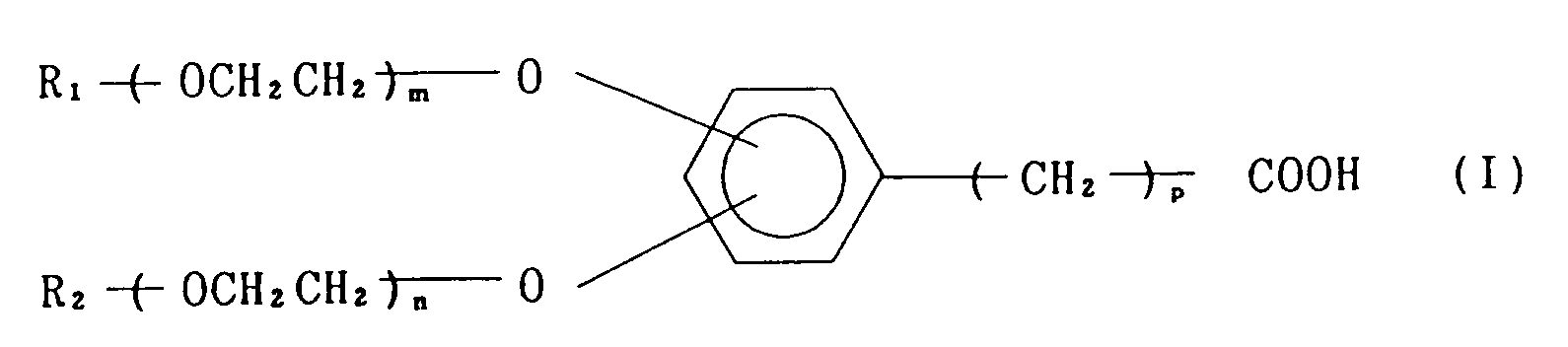
- The first invention of the present application relates to polyethylene glycol derivatives (I) of the formula

wherein R₁ and R₂ are the same or different and each represents a straight or branched alkyl group having 1 to 4 carbon atoms, m and n are the same or different and each represents a positive integer and p is 0 or a positive integer. - The second invention of the present application relates to modified peptides which can be obtained by reacting a carboxyl group-activated compound of the polyethylene glycol derivatives (I) with peptides having amino groups.
- The third invention of the present application relates to methods for producing the polyethylene glycol derivatives (I) comprising reacting a compound of the formula (III) or (III')

wherein X₁ and X₂ are the same or different and each represents an alkylsulfonyloxy (e.g. a lower alkylsulfonyloxy having 1 - 4 carbon atoms such as methylsulfonyloxy or ethylsulfonyloxy), an aromatic sulfonyloxy (e.g. toluenesulfonyloxy) or a halogen (chlorine, bromine, iodine, etc.), and R₁, R₂, m and n are as defined above, with a compound of the formula (IV)
wherein p is as defined above. - The fourth invention of the present application relates to methods for producing the modified peptides comprising reaction of a carboxyl group-activated compound of the polyethylene glycol derivatives (I) and a peptide having at least one free amino group.
- The fifth invention of the present application relates to pharmaceutical compositions containing a modified peptide and a pharmaceutically acceptable carrier.
- In formula (I), the straight-chain or branched-chain alkyl groups having 1 to 4 carbon atoms represented by R₁ and R₂ may be methyl, ethyl, n-propyl, isopropyl and n-butyl. As regards m and n, there is no particular limitation imposed thereon, but a positive integer of 10-400, particularly 20-150 is preferable. No limitation is imposed on p, either, but 0 or a positive integer of 1-10 is preferable.
- The polyethylene glycol derivatives (I) of the present invention can be easily produced by the following methods:
That is, by reacting a monoalkoxypolyethylene glycol of the formula
wherein R₁, R₂, m and n are of the same meanings as defined above, with an appropriate activating reagent, preferably in the presence of a base, there is obtained activated compound of the formula
wherein X₁, X₂, R₁, R₂, m and n are as defined above. - As the activating reagents to be used in the reaction, mention may be made of, for example, ① alkylsulfonyl chlorides (As the alkyl moiety, preferred are the same lower alkyls as the above-mentioned alkyls. There may be mentioned, for example, methylsulfonyl chloride, ethylsulfonyl chloride and the like.) [Ronald K. Crossland et al, J. Org. Chem., 35, 3195 (1970)], ② aromatic sulfonyl chlorides (e.g. toluenesulfonyl chloride) [Vladimir C. Sekera et al, J. Amer. Chem. Soc., 55, 345 (1933)], ③ phosphorus pentabromide [James Cason et al, J. Org. Chem., 26, 3645 (1961)] and the like, and further, ④ the compounds of the formula C(X)₄ [wherein X represents a halogen (e.g. chlorine, bromine)] which are used in the presence of a compound of the formula (R')₃P [wherein R' represents an alkyl group (e.g. octyl), an aryl group (e.g. phenyl) or a dialkylamino group (e.g. dimethylamino)] [J. Hooz et al, Can. J. Chem., 46, 86 (1968)], and the like.
- As the bases to be used in the reaction, mention may be made of pyridine, tertiary organic bases such as trialkylamine (e.g. triethylamine) and inorganic bases such as sodium hydroxide, potassium hydroxide, sodium carbonate and sodium hydride. As the reaction solvent, there can be used any per se inert solvents such as N,N-dimethylformamide, benzene, toluene, lower dialkyl ether, carbon tetrachloride, chloroform, methylene chloride, dioxane and tetrahydrofuran. Some of the above-mentioned bases such as pyridine can be used as solvents themselves. The reaction temperature is usually in the range of from 0°C to 150°C.
- Thereafter, by reacting the activated compound (III and/ or III') with a dihydroxybenzene derivative of the formula (IV)

wherein p is as defined above, in an appropriate solvent such as N,N-dimethylformamide or tetrahydrofuran in the presence of an appropriate base exemplified by an inorganic base such as potassium carbonate or sodium carbonate or an organic base such as triethylamine, tri-n-butylamine or diazabicyclo-2,2,2-undecene, a polyethylene derivative (I) of the formula
wherein R₁, R₂, m, n and p are of the same meanings as mentioned above can be obtained. The reaction temperature is normally between -20°C and 200°C. The polyethylene glycol derivatives (I) can be also produced by reacting a dihydroxybenzene derivative of the formula (IV) with the activated compounds III or III' with the same solvent, base and reacting temperature as mentioned above to obtain mono-polyethylene glycol derivatives, followed by reaction with III or III'. - The thus-produced polyethylene glycol derivatives (I) can be separated and purified to obtain ones having an optional purity by a per se known means.
- Throughout the present specification, peptides mean compounds wherein two or more amino acids are bonded to each other by peptide linkage, and at least one of the constituent amino acids has at least one free amino group.
- As such peptides, any peptides derived from various animals including humans, microorganisms or plants and those produced by genetic engineering and by synthesis may be employed. Examples include cytokines such as various interferons (e.g. interferon-α, interferon-β, interferon-γ), interleukin-2 and interleukin-3 , hormones such as insulin, growth hormone-releasing factor (GRF), calcitonin, calcitonin gene related peptide (CGRP), atrial natriuretic peptide (ANP), vasopressin, corticotropin-releasing factor (CRF), vasoactive intestinal peptide (VIP), secret in, α-melanocyte-stimulating hormone (α-MSH), adrenocorticotropic hormone (ACTH), cholecystokinin (CCK), glucagon, parathyroid hormone (PTH), somatostatin, endothelin, substance P, dynorphin, oxytocin and growth hormone-releasing peptide [GHRP, e.g. Endocrinology, 114, 1537 (1984)], growth factors such as growth hormone (GH), insulin-like growth factor (IGF-I, IGF-II), β-nerve growth factor (β-NGF), basic fibroblast growth factor (bFGF), transforming growth factor, erythropoietin, granulocyte colony-stimulating factor (G-CSF), granulocyte macrophage colony-stimulating factor (GM-CSF), platelet-derived growth factor (PDGF) and epidermal growth factor (EGF), enzymes such as tissue plasminogen activator (t-PA), elastase, superoxide dismutase (SOD), bilirubin oxydase, catalase, uricase and asparaginase, other proteins such as ubiquitin, islet activating protein (IAP), serum thymic factor (STF), peptide-T and trypsin inhibitor, and derivatives thereof.
- The production of the modified peptides of the present invention can be carried out by reacting a carboxyl group-activated compound of the polyethylene glycol derivatives (I) with peptides having amino groups. Activation of the polyethylene glycol derivatives (I) can be conducted by a known activating method for carboxyl group such as the activating method for carboxyl group as described in Seikagaku Jikken Koza, Vol. 1, Tanpakushitsu no Kagaku IV, Tokyo Kagaku Dojin and Izumiya et al, Pepuchido Gosei no Kiso to Jikken, Maruzen.
- The desired degree of modification of the modified peptides varies depending on the purpose of modification and properties of each peptide. Thus, it is necessary to optionally select or adjust the degree of modification per peptide by adjusting the molar ratio of the carboxyl group-activated compound of the polyethylene glycol derivatives (I) to said peptides, reaction temperature, pH etc. Accordingly, the molar ratio of the carboxyl group-activated compound of the polyethylene glycol derivatives (I) to the amino group of the peptide should be varied according to the desired degree of modification.
- The reaction temperature is such that said peptides are not inactivated, and preferably between 0°C and 25°C.
- While a reaction pH is set for any pH above 4.5 and which does not inactivate the peptides, since the polyethylene glycol derivatives (I) of the invention can be reacted at any pH above 4.5, it is generally between 6 and 9.
- As the solvent to be used in the reaction, there can be used any solvent which does not prevent the reaction. Such solvents include, for example, buffer solutions such as phosphate buffer solution, borate buffer solution, an aqueous solution of sodium carbonate, an aqueous solution of sodium hydrogen carbonate, N-ethylmorpholine-acetic acid buffer solution, sodium maleate buffer solution and sodium acetate buffer solution. There can be added an organic solvent which does not inactivate the peptides and are inert to the reaction, exemplified by lower alcohols such as methanol, ethanol and propanol, acetonitrile, dioxane, tetrahydrofuran and the like. The sufficient reaction time is from 1 to 72 hours.
- After the completion of the reaction, the reaction mixture is purified by a conventional protein-purification method such as salting-out, gel filtration, ion exchange chromatography, adsorption chromatography, affinity chromatography, ultrafiltration or preparative reversed phase HPLC, to obtain the objective modified peptides.
- The modified peptides of the present invention can be formulated into suitable pharmaceutical preparations such as capsules and injections in admixture with carriers, diluents, etc. known per se, which can be orally or parenterally administered to mammals (e.g. cows, horses, pigs, sheep, humans).
- For example, in the case where the chemically modified SOD as obtained in accordance with Example 2 is administered for the treatment of acute myocardial infarction, the daily dose is usually 1 - 100 mg, which is administered in one dose or several times divided doses.
- The polyethylene glycol derivatives (I) of the present invention are capable of modifying amino groups in peptides.
- In addition, the polyethylene glycol derivatives (I) of the present invention have a characteristic feature in that the modification reaction can be conducted in a wider range of pH.
- The peptides modified by the polyethylene glycol derivatives (I), as compared with the corresponding non-modified peptides, are decreased in antigenicity, are considerably delayed in biological clearance (i.e. the durability is extended) and exhibit their physiological activities effectively over the long period. Besides, the modified peptides retain the physiological activities which the non-modified peptides possess. Thus, the modified peptides are very effective as the pharmaceuticals as well as the drugs for animals.
- The present invention is in further detail explained by the following examples, which are not limitative to the present invention.
- In the following description, each abbreviation means the following, respectively.
Asx. aspartic acid or asparagine Glx. glutamic acid or glutamine Ser. serine, Gly. glycine His. histidine, Arg. arginine Thr. threonine, Ala. alanine Pro. proline, Tyr. tyrosine Val. valine, Met. methionine Ile. isoleusine, Leu. leusine Phe. phenylalanine, Lys. lysine -

Polyethylene glycol monomethyl ether (average molecular weight 4500, 100g) was dissolved in a mixed solvent of 400 ml of toluene and 200 ml of methylene chloride. - Triethylamine (20 ml) was added thereto, followed by addition of p-toluenesulfonyl chloride (36 g). The mixture was stirred at room temperature for 5 hours. Thereafter, triethylamine (20 ml) and p-toluenesulfonyl chloride (30 g) was further added, and the mixture was stirred for 10 hours. The insoluble matters were filtered off, and the filtrate was evaporated to dryness under reduced pressure. The residue obtained was purified by silica gel column chromatography to give 100.5 g of the title monomethoxypolyethylene glycol tosylate (Yield 97.2%).
-
- Column :
- YMC-ODS, 5 µ, φ 4.6 × 250 mm
- Eluent :
- Gradient
- A Solution :
- Water (containing 0.1% trifluoroacetic acid)
- B Solution :
- Acetonitrile (containing 0.1% trifuluoroacetic acid)
- Initial concentration of B Solution :
- 30%
- Concentration gradient :
- 1%/min.
- Flow rate :
- 1 ml/min., Detection wavelength : 214 nm
- Retention time :
- 21.8 minutes
-

Monomethoxypolyethylene glycol tosylate (4.00 g) as obtained in (1) and 3,5-dihydroxybenzoic acid (34 mg) were dissolved in N,N-dimethylformamide (30 ml). Potassium carbonate (1.665 g) was added thereto, and the mixture was stirred in an oil bath at 110°C for 2 hours. The insoluble matters were filtered off, and the filtrate was evaporated to dryness under reduced pressure. The residue was dissolved in water (50 ml), added with 1N sodium hydroxide (50 ml) and stirred at 50°C for 1 hour. The mixture was neutralized with 1N hydrochloric acid and pH was adjusted to 4.0 with 50% acetic acid. Thereafter, the mixture was subjected to ultrafiltration (Millipore Corp. Pellicon cassette system, membrane PT-10,000) to purify and desalt, after which concentration was conducted by ultrafiltration (Amicon Corp. membrane YM-10) to give the desired aqueous solution. The solvent was distilled off under reduced pressure to give 1.19 g of the title 3,5-bis-methoxypolyethylene glycol benzoic acid. -
- Column :
- YMC-ODS, 5 µ, φ4.6 × 250 mm
- Eluent :
- Gradient
- A Solution :
- Water (containing 0.1% trifluoroacetic acid)
- B Solution :
- Acetonitrile (containing 0.1% trifuluoroacetic acid)
- Initial concentration of B Solution :
- 30%
- Concentration gradient :
- 1%/min.
- Flow rate :
- 1 ml/min., Detection wavelength : 214 nm
- Retention time :
- 18.22 minutes
-
- Column :
- TSK gel G3000 PW, φ7.5 × 600 mm (Manufactured by Toso Corp.)
- Eluent :
- 0.2 M NaCl
- Flow rate :
- 0.6 ml/min., Detection wavelength : 220 nm
- Retention time :
- 22.09 minutes
-
- Column :
- TSK gel G3000 SW, φ7.5 × 600 mm (Manufactured by Toso Corp.)
- Eluent :
- 0.2 M NaCl (containing 5% EtOH)
- Flow rate :
- 0.6 ml/min., Detection wavelength : 220 nm
- Retention time :
- 26.81 minutes
-

3,5-bis-Methoxypolyethylene glycol benzoic acid (1.182 g) as obtained in (2) was dissolved in N,N-dimethylformamide (10 ml), and thereto were added N-hydroxysuccinimide (180 mg) and 0.5 M dicyclohexylcarbodiimide in methylene chloride (3.11 ml), followed by stirring at room temperature for 27 hours. The resultant precipitate was filtered off, and diethyl ether (200 ml) was dropwise added to the filtrate, followed by filtration of the newly resulted precipitate. The precipitate was washed with diethyl ether, and dried at room temperature for 12 hours to give 1.163 g of the title 3,5-bis-methoxypolyethylene glycol benzoic acid N-hydroxysuccinimide ester (Yield 97%). -
- Column :
- YMC-ODS, 5 µ, φ4.6 × 250 mm
- Eluent :
- Gradient
- A Solution :
- Water (containing 0.1% trifluoroacetic acid)
- B Solution :
- Acetonitrile (containing 0.1% trifuluoroacetic acid)
- Initial concentration of B Solution :
- 30%
- Concentration gradient :
- 1%/min.
- Flow rate :
- 1 ml/min., Detection wavelength : 214 nm
- Retention time :
- 18.76 minutes
-
- Column :
- TSK gel G3000 PW, φ7.5 × 600 mm (Manufactured by Toso Corp.)
- Eluent :
- 0.2 M NaCl
- Flow rate :
- 0.6 ml/min., Detection wavelength : 220 nm
- Retention time :
- 22.97 minutes
-
- Column :
- TSK gel G3000 SW, φ7.5 × 600 mm (Manufactured by Toso Corp.)
- Eluent :
- 0.2 M NaCl (containing 5% EtOH)
- Flow rate :
- 0.6 ml/min., Detection wavelength : 220 nm
- Retention time :
- 26.81 minutes
- To 5.0 mg of Cu, Zn-SOD derived from human in 2.5 ml of a 0.1 M borate buffer (pH 8.21) was added 189 mg of 3,5-bis-methoxypolyethylene glycol benzoic acid N-hydroxysuccinimide ester as obtained in Example 1 (6 equivalent amount relative to the amino group) and the mixture was stirred at room temperature for 3 hours. After adjusting the pH to 5.5 with 20% AcOH, it was purified by gel filtration on Sephacryl S-200 column (Pharmacia Corp., φ 2.6 × 81 cm). Thereafter, the objective fraction was subjected to desalting and concentration by ultrafiltration with the use of YM-30 membrane manufactured by Amicon Corp., USA, and thereby 1.8 ml of the solution containing the objective compound was obtained (contained protein 1.283 mg/ml).
- The results of the amino acid analysis by 24 hours' treatment for acid decomposition of the objective compound with 6N hydrochloric acid-phenol at 110°C :
Asx. 31.8 (36); Glx. 23.7 (26); Ser. 17.2 (20); Gly. 43.9 (50); His. 14.4 (16); Arg. 7.16 (8); Thr. 14.7 (16); Ala. *20.0 (20); Pro. 9.63 (10); Val. 21.6 (28); Ile. 11.0 (18); Leu. 16.5 (18); Phe. 6.70 (8); Lys. 15.7 (22) (* means standard amino acid and the figures in parentheses are theoretical values) -
- Column :
- YMC-ODS, 5 µ, φ 4.6 × 250 mm
- Eluent :
- Gradient
- A Solution :
- Water (containing 0.1% trifluoroacetic acid)
- B Solution :
- Acetonitrile (containing 0.1% trifuluoroacetic acid)
- Initial concentration of B Solution :
- 30% Concentration gradient : 1%/min.
- Flow rate :
- 1 ml/min., Detection wavelength : 214 nm
- Retention time :
- 18.9 minutes
-
- Column :
- TSK gel G3000 PW, φ7.5 × 600 mm (Manufactured by Toso Corp.)
- Eluent :
- 0.2 M NaCl
- Flow rate :
- 0.6 ml/min., Detection wavelength : 220 nm
- Retention time :
- 20.05 minutes
-
- Column :
- TSK gel G3000 SW, φ7.5 × 600 mm (Manufactured by Toso Corp.)
- Eluent :
- 0.2 M NaCl (containing 5% EtOH)
- Flow rate :
- 0.6 ml/min., Detection wavelength : 220 nm
- Retention time :
- 17.37 minutes
- To 1.09 mg of IGF-I in 500 µl of a 0.1 M borate buffer (pH 8.21) was added 10.9 mg of 3,5-bis-methoxypolyethylene glycol benzoic acid N-hydroxysuccinimide ester as obtained in Example 1 (2 equivalent amount relative to the amino group), and the mixture was stirred at room temperature for 5.5 hours. After adjusting the pH to 4.74 with 10% acetic acid, the mixture was purified by gel filtration on Sephacryl S-200 column (Pharmacia Corp., φ2.6 × 81 cm), and the objective fraction was subjected to desalting and concentration by ultrafiltration with the use of YM-10 membrane manufactured by Amicon Corp. to give 1.8 ml of an aqueous solution containing the objective compound (contained protein : 359 µg/ml).
- The results of the amino acid analysis by 24 hours' treatment for acid decomposition of the objective compound with 6N hydrochloric acid-phenol at 110°C:
Asx. 4.89 (5); Glx. 5.44 (6); Ser. 4.68 (5); Gly. 7.05 (7); Arg. 6.00 (6); Thr. 2.85 (3); Ala. 6.14 (6); Pro. 4.87 (5); Tyr. 2.91 (3); Val. 2.41 (3); Met. 0.70 (1); Ile. 0.72 (1); Leu. *6.00 (6); Phe. 3.92 (4); Lys. 2.70 (3) (* means standard amino acid and the figures in parentheses are theoretical values) -
- Column :
- YMC-ODS, 5 µ, φ 4.6 × 250 mm
- Eluent :
- Gradient
- A Solution :
- Water (containing 0.1% trifluoroacetic acid)
- B Solution :
- Acetonitrile (containing 0.1% trifuluoroacetic acid)
- Initial concentration of B Solution :
- 25%
- Concentration gradient :
- 1%/min.
- Flow rate :
- 1 ml/min., Detection wavelength : 214 nm
- Retention time :
- 23.5 minutes
-
- Column :
- TSK gel G3000 PW, φ7.5 × 600 mm (Manufactured by Toso Corp.)
- Eluent :
- 0.2 M NaCl
- Flow rate
- : 0.6 ml/min., Detection wavelength : 220 nm
- Retention time :
- 20.68 minutes
- To 1.0 mg of IGF-II in 1 ml of a 0.1 M borate buffer (pH 8.21) was added 8 mg of 3,5-bis-methoxypolyethylene glycol benzoic acid N-hydroxysuccinimide ester as obtained in Example 1, and the mixture was stirred at room temperature for 1.5 hours. The modifying reagent (10 mg) was further added (6.75 equivalent amount in total relative to the amino group), followed by 13 hours' stirring. After adjusting the pH to 5.5 with 10% AcOH, the reaction mixture was purified by gel filtration on Sephacryl S-200 column (Pharmacia Corp., φ2.6 × 81 cm), and the objective 2 fractions ①, ② were subjected to desalting and concentration by ultrafiltration with the use of YM-10 membrane manufactured by Amicon Corp. to give 1 ml each of an aqueous solution containing the objective compound (contained protein in① : 59.1 µg/ml, contained protein in ② : 29.4 µg/ml).
- The results of the amino acid analysis by 24 hours' treatment for acid decomposition of the objective compound with 6N hydrochloric acid-phenol at 110°C:
①: Asx. 2.92 (3); Glx. 6.21 (7); Ser. 6.17 (7); Gly. 4.60 (5); Arg. 6.49 (8); Thr. 3.71 (4); Ala. *5.00 (5); Pro. 2.79 (3); Tyr. 2.27 (3); Val. 2.90 (4); Met. 0.18 (1); Ile. 0.72 (1); Leu. 5.52 (6); Phe. 2.72 (4); Lys. 1.03 (1) (* means standard amino acid and the figures in parentheses are theoretical values) -
②: Asx. 2.84 (3); Glx. 6.37 (7); Ser. 6.30 (7); Gly. 4.38 (5); Arg. 7.00 (8); Thr. 3.51 (4); Ala. 5.04 (5); Pro. 2.73 (3); Tyr. 2.15 (3); Val. 3.01 (4); Met. 0.18 (1); Ile. 2.02 (1); Leu. *6.00 (6); Phe. 2.80 (4); Lys. 0.83 (1) (* means standard amino acid and the figures in parentheses are theoretical values) -
- Column :
- TSK gel G3000 PW, φ 7.5 × 600 mm (Manufactured by Toso Corp.)
- Eluent :
- 0.2 M NaCl
- Flow rate :
- 0.6 ml/min., Detection wavelength : 220 nm
- Retention time ① :
- 20.68 minutes
- Retention time ② :
- 21.24 minutes
-
- Column :
- TSK gel G3000 SW, φ 7.5 × 600 mm (Manufactured by Toso Corp. )
- Eluent :
- 0.2 M NaCl (containing 5% EtOH)
- Flow rate :
- 0.6 ml/min., Detection wavelength 220 nm
- Retention time ① :
- 21.74 minutes
- Retention time ② :
- 23.41 minutes
- To 1.00 mg of CGRP in 500 µl of a 0.1 M borate buffer (pH 8.21) was added 22 mg of 3,5-bis-methoxypolyethylene glycol benzoic acid N-hydroxysuccinimide ester as obtained in Example 1 (3 equivalent amount relative to the amino group), and the mixture was stirred at room temperature for 4 hours. After adjusting the pH to 6.0 with 10% AcOH, the reaction mixture was purified by gel filtration on Sephacryl S-200 column (Pharmacia Corp.,φ2.6 × 81 cm), and the objective 2 fractions ①, ② were subjected to desalting and concentration by ultrafiltration with the use of YM-10 membrane manufactured by Amicon Corp. to give 1 ml each of an aqueous solution containing the objective compound (contained protein in ① : 74.2 µg/ml, contained protein in ② : 112 µg/ml).
- The results of the amino acid analysis by 24 hours' treatment for acid decomposition of the objective compound with 6N hydrochloric acid-phenol at 110°C:
①: Asx. 3.70 (4); Ser. 3.18 (3); Gly. 4.58 (4); His. 0.98 (1); Arg. 1.94 (2); Thr. 3.80 (4); Ala. *4.00 (4); Pro. 1.06 (1); Val. 3.89 (5); Leu. 3.04 (3); Phe. 1.93 (2); Lys. 1.92 (2) (* means standard amino acid and the figures in parentheses are theoretical values) -
②: Asx. 4.28 (4); Ser. 3.33 (3); Gly. 4.51 (4); His. 1.02 (1); Arg. 2.06 (2); Thr. 3.99 (4); Ala. 3.92 (4); Pro. 1.11 (1); Val. 4.52 (5); Leu. *3.00 (3); Phe. 2.08 (2); Lys. 2.21 (2) (* means standard amino acid and the figures in parentheses are theoretical values) -
- Column :
- TSK gel G3000 SW, φ 7.5 × 600 mm (Manufactured by Toso Corp.)
- Eluent :
- 0.2 M NaCl (containing 5% EtOH)
- Flow rate :
- 0.6 ml/min., Detection wavelength : 220 nm
- Retention time ① :
- 20.78 minutes
- Retention time ② :
- 22.32 minutes
- To 1.00 mg of swine elastase in 500 µl of a 0.1 M borate buffer (pH 8.21) was added 7.1 mg of 3,5-bis-methoxypolyethylene glycol benzoic acid N-hydroxysuccinimide ester obtained in Example 1 (5 equivalent amount relative to the amino group), and the mixture was stirred at room temperature for 24 hours. After adjusting the pH to 6.0 with 10% AcOH, the reaction mixture was purified by gel filtration on Sephacryl S-200 column (Pharmacia Corp., φ 2.6 × 81 cm), and the objective fraction was subjected to desalting and concentration by ultrafiltration with the use of YM-10 membrane manufactured by Amicon Corp. to give 1 ml of an aqueous solution containing the objective compound (contained protein : 64 µg/ml).
- The results of the amino acid analysis by 24 hours' treatment for acid decomposition of the objective compound with 6N hydrochloric acid-phenol at 110°C:
Asx. 22.2 (24); Glx. 19.1 (19); Ser. 20.8 (22); Gly. 25.5 (25); His. 5.75 (6); Arg. 11.3 (12); Thr. 18.2 (19); Ala. *17.0 (17); Pro. 7.37 (7); Tyr. 10.1 (11); Val. 21.5 (27); Met. 0.77 (2); Ile. 9.88 (10); Leu. 17.1 (18); Phe. 2.99 (3); Lys. 3.59 (3) (* means standard amino acid and the figures in parentheses are theoretical values) -
- Column :
- TSK gel G3000 SW, φ 7.5 × 600 mm (Manufactured by Toso Corp.)
- Eluent :
- 0.2 M NaCl (containing 5% EtOH)
- Flow rate :
- 0.6 ml/min., Detection wavelength : 220 nm
- Retention time :
- 22.62 minutes
-
-

Polyethylene glycol monomethyl ether (average molecular weight 5,000, 100 g) was dissolved in a mixed solvent of 250 ml of methylene chloride and 500 ml of toluene. Triethylamine (15 ml) and p-toluenesulfonyl chloride (20 g) were added thereto, and the mixture was stirred at room temperature for 7 hours. Thereafter, triethylamine (15 ml) and p-toluenesulfonyl chloride (20 g) were further added, and the mixture was stirred for 17 hours. The insoluble matters were filtered off, and the filtrate was evaporated to dryness under reduced pressure. The residue obtained was purified by silica gel column chromatography to give 98 g of the title monomethoxypolyethylene glycol tosylate. -
- Column :
- YMC-ODS, 5 µ, φ4.6 × 250 mm
- Eluent :
- Gradient
- A Solution :
- Water (containing 0.1% trifluoroacetic acid)
- B Solution :
- Acetonitrile (containing 0.1% trifluoroacetic acid)
- Initial concentration of B Solution :
- 30%
- Concentration gradient :
- 1%/min.
- Flow rate :
- 1 ml/min., Detection wavelength : 220nm
- Retention time :
- 20.33 minutes
-
- Column :
- TSK gel G3000 PW, φ7.5 × 600 mm (Manufactured by Toso Corp.)
- Eluent :
- 0.2 M NaCl
- Flow rate :
- 0.6 ml/min., Detection wavelength : 220 nm
- Retention time :
- 25.61 minutes
-

3,4-Dihydroxydihydrocinnamic acid (5 g) was dissolved in N,N-dimethylformamide (20 ml), and 4-N,N-dimethylaminopyridine (305 mg) and methyl alcohol (15 ml) were added thereto, followed by cooling to 5°C. Thereto was added 1-ethyl-3-(3-dimethylaminopropyl)carbodiimide (5.72 g), and the mixture was stirred at 5°C for 30 minutes and at room temperature for 4 hours. Ethyl acetate was added to the reaction mixture, and it was washed with a 5% aqueous solution of citric acid, a saturated aqueous solution of sodium bicarbonate and a saturated aqueous solution of sodium chloride and dried over MgSO₄. The desiccating agent was filtered off, and the filtrate was evaporated to dryness under reduced pressure to give 5 g of a crude product which was then purified by silica gel column chromatography to give 2.237 g of the title compound. - Kiesel gel 60F₂₅₄, CHCl₃ :MeOH=10:1 Rf=0.5
-

Monomethoxypolyethylene glycol tosylate (41.3 g) as obtained in (1) and 3,4-dihydroxydihydrocinnamic acid methyl ester (400 mg) as obtained in (2) were dissolved in 100 ml of N,N-dimethylformamide. Potassium carbonate (5.244 g) was added thereto, and the mixture was stirred in an oil bath at 110 °C for 7 hours. The insoluble matters were filtered off, and the filtrate was evaporated to dryness under reduced pressure. 1N Sodium hydroxide (300 ml) was added to the residue and the mixture was stirred under heating at 50 °C for 1 hour. After cooling, the mixture was neutralized with 1N HCl, purified by ultrafiltration (Pellicon cassette system by Millipore Corp., membrane : PT-10,000) and evaporated to dryness under reduced pressure. Thereafter, it was purified by silica gel column chromatography to give 3.8 g of the title 3,4-bis-methoxypolyethylene glycol dihydrocinnamic acid. -
- Column :
- YMC-ODS, 5 µ, φ4.6 × 250 mm
- Eluent :
- Gradient
- A Solution :
- Water (containing 0.1% trifluoroacetic acid)
- B Solution :
- Acetonitrile (containing 0.1% trifluoroacetic acid)
- Initial concentration of B Solution :
- 30%
- Concentration gradient :
- 1%/min.
- Flow rate :
- 1 ml/min., Detection wavelength : 220 nm
- Retention time :
- 19.08 minutes
-
- Column :
- TSK gel G3000 PW, φ7.5 × 600 mm (Manufactured by Toso Corp.)
- Eluent :
- 0.2 M NaCl
- Flow rate :
- 0.6 ml/min.
- Detection :
- UV 220 nm, differential refraction
- Retention time :
- 22.1 minutes
-
- Column :
- TSK gel G4000 PWXL×2, (φ7.8 × 300 mm)×2 (Manufactured by Toso Corp.)
- Eluent :
- 0.2 M NaCl
- Flow rate :
- 0.6 ml/min.
- Detection :
- UV 220 nm, differential refraction
- Retention time :
- 28.04 minutes
-

To 3,4-bis-methoxypolyethylene glycol dihydrocinnamic acid (1.5 g) as obtained in (3) in N,N-dimethylformamide (15 ml) were added N-hydroxysuccinimide (172.7 mg) and 0.5 M dicyclohexylcarbodiimide in a methylene chloride solution (3 ml), and the mixture was stirred at room temperature for 24 hours. The precipitate was filtered off, diethyl ether (300 ml) was dropwise added to the filtrate, and newly resulted precipitate was filtered off. The precipitate was washed with diethyl ether, dried at room temperature for 12 hours to give 1.4 g of the title 3,4-bis-methoxypolyethylene glycol dihydrocinnamic acid N-hydroxysuccinimide ester. -
- Column :
- YMC-ODS, 5 µ, φ4.6 × 250 mm
- Eluent :
- Gradient
- A Solution :
- Water (containing 0.1% trifluoroacetic acid)
- B Solution :
- Acetonitrile (containing 0.1% trifluoroacetic acid)
- Initial concentration of B Solution :
- 30%
- Concentration gradient :
- 1%/min.
- Flow rate :
- 1 ml/min., Detection wavelength : 214 nm
- Retention time :
- 21.30 minutes
-
- Column :
- TSK gel G3000 SW, φ7.5 × 600 mm (Manufactured by Toso Corp.)
- Eluent :
- 0.2 M NaCl (containing 5% EtOH)
- Flow rate :
- 0.6 ml/min., Detection wavelength : 220 nm
- Retention time :
- 25.71 minutes
- To 5.0 mg of Cu,Zn-SOD derived from human in 2.5 ml of a 0.1 M borate buffer (pH 8.21) was added 3,4-bis-methoxypolyethylene glycol dihydrocinnamic acid N-hydroxysuccinimide ester (35 mg, 1 equivalent amount relative to the amino group) as obtained in Example 7, and the mixture was stirred at room temperature for 1 hour. Then, the reaction mixture was purified by gel filtration on Sephacryl S-200 (Pharmacia Corp., φ2.6 × 81 cm). Thereafter, the objective fraction was subjected to desalting and concentration by ultrafiltration with the use of YM-30 membrane manufactured by Amicon Corp., thereby 1.8 ml of the solution containing the objective compound was obtained (contained protein : 900 µg/ml).
- The results of the amino acid analysis by 24 hours' treatment for acid decomposition of the objective compound with 6N hydrochloric acid-phenol at 110°C :
Asx. 32.4 (36); Glx. 24.9 (26); Ser. 17.8 (20); Gly. 49.6 (50); His. 15.9 (16); Arg. 7.29 (8); Thr. 14.9 (16); Ala. 20.1 (20); Pro. 9.91 (10); Val. 24.9 (28); Ile. 14.0 (18); Leu. *18.0 (18); Phe. 7.58 (8); Lys. 20.9 (22) (* means standard amino acid and the figures in parentheses are theoretical values) -
- Column :
- TSK gel G3000 SW, φ7.5 × 600 mm (Manufactured by Toso Corp.)
- Eluent :
- 0.2 M NaCl (containing 5% EtOH)
- Flow rate :
- 0.6 ml/min., Detection wavelength : 220 nm
- Retention time :
- 20.03 minutes
- To 5.0 mg of Cu,Zn-SOD derived from human in 2.5 ml of a 0.1 M borate buffer (pH 8.21) was added 3,4-bis-methoxypolyethylene glycol dihydrocinnamic acid N-hydroxysuccinimide ester (175 mg, 5 equivalent amount relative to the amino group) as obtained in Example 7, and the mixture was stirred at room temperature for 1 hour. Then, the reaction mixture was purified by gel filtration on Sephacryl S-200 (Pharmacia Corp., φ 2.6 × 81 cm). Thereafter, the objective fraction was subjected to desalting and concentration by ultrafiltration with the use of YM-30 membrane manufactured by Amicon Corp., thereby 1.8 ml of the solution containing the objective compound was obtained (contained protein : 1.59 mg/ml).
- The results of the amino acid analysis by 24 hours' treatment for acid decomposition of the objective compound with 6N hydrochloric acid-phenol at 110°C:
Asx. 32.6 (36); Glx. 24.8 (26); Ser. 17.8 (20); Gly. 50.5 (50); His. 16.3 (16); Arg. 7.35 (8); Thr. 15.3 (16); Ala. 20.8 (20); Pro. 10.1 (10); Val. 25.3 (28); Ile. 14.2 (18); Leu. *18.0 (18); Phe. 7.95 (8); Lys. 20.5 (22) (* means standard amino acid and the figures in parentheses are theoretical values) -
- Column :
- TSK gel G3000 SW, φ7.5 × 600 mm (Manufactured by Toso Corp.)
- Eluent :
- 0.2 M NaCl (containing 5% EtOH)
- Flow rate :
- 0.6 ml/min., Detection wavelength : 220 nm
- Retention time :
- 18.45 minutes
- To 3.0 mg of IGF-I in 1.5 ml of a 0.1 M borate buffer (pH 8.21) was added 3,4-bis-methoxypolyethylene glycol dihydrocinnamic acid N-hydroxysuccinimide ester (49 mg, 3 equivalent amount relative to the amino group) as obtained in Example 7, and the mixture was stirred at room temperature for 1 hour. The modifying reagent (49 mg) was further added thereto, and the mixture was stirred for 1 hour, followed by purification by gel filtration on Sephacryl S-200 (Pharmacia Corp., φ2.6 × 81 cm). Thereafter, the objective fraction was subjected to desalting and concentration by ultrafiltration with the use of YM-10 membrane manufactured by Amicon Corp., thereby 1.8 ml of the solution containing the objective compound was obtained (contained protein : 200 µg/ml).
- The results of the amino acid analysis by 24 hours' treatment for acid decomposition of the objective compound with 6N hydrochloric acid-phenol at 110°C:
Asx. 4.56 (5); Glx. 5.30 (6); Ser. 4.44 (5); Gly. 7.25 (7); Arg. 6.54 (6); Thr. 2.80 (3); Ala. *6.00 (6); Pro. 4.78 (5); Tyr. 2.93 (3); Val. 2.46 (3); Met. 1.44 (1); Ile. 0.72 (1); Leu. 5.93 (6); Phe. 4.00 (4); Lys. 2.89 (3) (* means standard amino acid and the figures in parentheses are theoretical values) -
- Column :
- TSK gel G3000 SW, φ75 × 600 mm (Manufactured by Toso Corp.)
- Eluent :
- 0.2 M NaCl (containing 5% EtOH)
- Flow rate :
- 0.6 ml/min., Detection wavelength : 220 nm
- Retention time :
- 22.08 minutes
- To 3.0 mg of CGRP in 1.5 ml of a 0.1 M borate buffer (pH 8.21) was added 3,4-bis-methoxypolyethylene glycol dihydrocinnamic acid N-hydroxysuccinimide ester (119 mg, 5 equivalent amount relative to the amino group) as obtained in Example 7, and the mixture was stirred at room temperature for 2 hours. Then, the reaction mixture was purified by gel filtration on Sephacryl S-200 (Pharmacia Corp., φ2.6 × 81 cm). Thereafter, the objective fraction was subjected to desalting and concentration by ultrafiltration with the use of YM-10 membrane manufactured by Amicon Corp., thereby 1.8 ml of the solution containing the objective compound was obtained (contained protein : 154 µg/ml).
- The results of the amino acid analysis by 24 hours' treatment for acid decomposition of the objective compound with 6N hydrochloric acid-phenol at 110°C:
Asx. 3.74 (4); Ser. 2.68 (3); Gly. 4.29 (4); His. 0.83 (1); Arg. 2.03 (2); Thr. 3.48 (4); Ala. 3.86 (4); Pro. 1.01 (1); Val. 4.12 (5); Leu. *3.00 (3); Phe. 2.08 (2); Lys. 1.70 (2); (* means standard amino acid and the figures in parentheses are theoretical values) -
- Column :
- TSK gel G3000 SW, φ7.5 × 600 mm (Manufactured by Toso Corp.)
- Eluent :
- 0.2 M NaCl (containing 5% EtOH)
- Flow rate :
- 0.6 ml/min., Detection wavelength : 220 nm
- Retention time :
- 16.42 minutes
- To 3.0 mg of swine elastase in 2.5 ml of a 0.1 M borate buffer (pH 8.21) was added 3,4-bis-methoxypolyethylene glycol dihydrocinnamic acid N-hydroxysuccinimide ester (111 mg, 20 equivalent amount relative to the amino group) as obtained in Example 7, and the mixture was stirred for 5 hours. Then, the reaction mixture was purified by gel filtration on Sephacryl S-200 (Pharmacia Corp., φ2.6 × 81 cm). Thereafter, the objective fraction was subjected to desalting and concentration by ultrafiltration with the use of YM-10 membrane manufactured by Amicon Corp., thereby 1 ml of the solution containing the objective compound was obtained (contained protein : 90 µg/ml).
- The results of the amino acid analysis by 24 hours' treatment for acid decomposition of the objective compound with 6N hydrochloric acid-phenol at 110°C:
Asx. 20.4 (24); Glx. 15.5 (19); Ser. 17.4 (22); Gly. 29.2 (25); His. 4.23 (6); Arg. 11.6 (12); Thr. 14.4 (19); Ala. 17.4 (17); Pro. 7.31 (7); Tyr. 6.67 (11); Val. 16.3 (27); Met. 2.37 (2); Ile. 8.39 (10); Leu. *18.0 (18); Phe. 6.81 (3); Lys. 6.88 (3); (* means standard amino acid and the figures in parentheses are theoretical values) -
- Column :
- TSK gel G3000 SW, φ7.5 × 600 mm (Manufactured by Toso Corp.)
- Eluent :
- 0.2 M NaCl (containing 5% EtOH)
- Flow rate :
- 0.6 ml/min., Detection wavelength : 220 nm
- Retention time :
- 16.54 minutes
- To 3.0 mg of GRF(1-44)NH₂ in 1.5 ml of a 0.1 M borate buffer (pH 8.21) was added 3,4-bis-methoxypolyethylene glycol dihydrocinnamic acid N-hydroxysuccinimide ester (120 mg, 5 equivalent amount relative to the amino group) as obtained in Example 7, and the mixture was stirred at room temperature for 1 hour. Then, the reaction mixture was purified by gel filtration on Sephacryl S-200 (Pharmacia Corp., φ2.6 × 81 cm). Thereafter, the objective fraction was subjected to desalting and concentration by ultrafiltration with the use of YM-10 membrane manufactured by Amicon Corp., thereby 1.8 ml of the solution containing the objective compound was obtained (contained protein : 86 µg/ml).
- The results of the amino acid analysis by 24 hours' treatment for acid decomposition of the objective compound with 6N hydrochloric acid-phenol at 110°C:
Asx. 3.48 (4); Glx. 6.21 (7); Ser. 3.42 (4); Gly. 3.13 (3); Arg. 6.07 (6); Thr. 0.94 (1); Ala. 4.75 (5); Tyr. 1.73 (2); Val. 0.93 (1); Met. 0.42 (1); Ile. 2.01 (2); Leu. *5.00 (5); Phe. 0.98 (1); Lys. 1.65 (2) (* means standard amino acid and the figures in parentheses are theoretical values) -
- Column :
- TSK gel G3000 SW, φ7.5 × 600 mm (Manufactured by Toso Corp.)
- Eluent :
- 0.2 M NaCl (containing 5% EtOH)
- Flow rate :
- 0.6 ml/min., Detection wavelength : 220 nm
- Retention time :
- 22.08 minutes
Claims (12)
- A polyethylene glycol derivative of the formula
- A polyethylene glycol derivative as claimed in Claim 1 wherein m and n are respectively a positive integer of 10 to 400.
- A polyethylene glycol derivative as claimed in Claim 1 wherein p is 0 or a positive integer of 1 to 10.
- A polyethylene glycol derivative as claimed in Claim 1 which is selected from the group consisting of 3,5-bis-methoxypolyethylene glycol benzoic acid and 3,4-bis-methoxypolyethylene glycol dihydrocinnamic acid.
- A modified peptide wherein amino groups in the peptide are modified by a polyethylene glycol derivative as claimed in Claim 1.
- A modified peptide as claimed in Claim 5 wherein the peptide has 2 or more amino acids bound by peptide bonds and at least one of the constituent amino acids has a free amino group.
- A modified peptide as claimed in Claim 5 wherein the peptide is selected from the group consisting of superoxide dismutase, insulin-like growth factor-I, insulin-like growth factor-II, calcitonin gene related peptide, elastase and growth hormone-releasing factor.
- A modified peptide as claimed in Claim 5 which is selected from the group consisting of superoxide dismutase modified by 3,5-bis-methoxypolyethylene glycol benzoic acid, insulin-like growth factor-I modified by 3,5-bis-methoxypolyethylene glycol benzoic acid, insulin-like growth factor-II modified by 3,5-bis-methoxypolyethylene glycol benzoic acid, calcitonin gene related peptide modified by 3,5-bis-methoxypolyethylene glycol benzoic acid, elastase modified by 3,5-bis-methoxypolyethylene glycol benzoic acid, superoxide dismutase modified by 3,4-bis-methoxypolyethylene glycol dihydrocinnamic acid, insulin-like growth factor-I modified by 3,4-bis-methoxypolyethylene glycol dihydrocinnamic acid, calcitonin gene related peptide modified by 3,4-bis-methoxypolyethylene glycol dihydrocinnamic acid, elastase modified by 3,4-bis-methoxypolyethylene glycol dihydrocinnamic acid and growth hormone-releasing factor modified by 3,4-bis-methoxypolyethylene glycol dihydrocinnamic acid.
- A method for producing a modified peptide comprising reacting a carboxyl group-activated compound of the polyethylene glycol derivative as claimed in Claim 1 with a peptide having at least one free amino group.
- A method for producing a polyethylene glycol derivative as claimed in Claim 1 comprising reacting a compound of the formula (III) or (III')


- A pharmaceutical composition comprising a modified peptide as claimed in any one of claims 5, 6, 7 and 8 and a pharmaceutically acceptable carrier.
- A method for producing a pharmaceutical composition which comprises admixing a modified peptide as claimed in any one of claims 5, 6, 7 and 8 with a pharmaceutically acceptable carrier.
Applications Claiming Priority (2)
| Application Number | Priority Date | Filing Date | Title |
|---|---|---|---|
| JP2227541A JP3051145B2 (en) | 1990-08-28 | 1990-08-28 | Novel polyethylene glycol derivative modified peptide |
| JP227541/90 | 1990-08-28 |
Publications (3)
| Publication Number | Publication Date |
|---|---|
| EP0473084A2 EP0473084A2 (en) | 1992-03-04 |
| EP0473084A3 EP0473084A3 (en) | 1992-04-29 |
| EP0473084B1 true EP0473084B1 (en) | 1995-11-15 |
Family
ID=16862521
Family Applications (1)
| Application Number | Title | Priority Date | Filing Date |
|---|---|---|---|
| EP91114221A Expired - Lifetime EP0473084B1 (en) | 1990-08-28 | 1991-08-24 | Polyethylene glycol derivatives, their modified peptides, methods for producing them and use of the modified peptides |
Country Status (9)
| Country | Link |
|---|---|
| US (1) | US5183660A (en) |
| EP (1) | EP0473084B1 (en) |
| JP (1) | JP3051145B2 (en) |
| AT (1) | ATE130327T1 (en) |
| CA (1) | CA2050063A1 (en) |
| DE (1) | DE69114614T2 (en) |
| DK (1) | DK0473084T3 (en) |
| ES (1) | ES2079534T3 (en) |
| GR (1) | GR3018612T3 (en) |
Cited By (13)
| Publication number | Priority date | Publication date | Assignee | Title |
|---|---|---|---|---|
| US7803769B2 (en) | 2006-10-25 | 2010-09-28 | Amgen Inc. | OSK1 peptide analogs and pharmaceutical compositions |
| US8008453B2 (en) | 2005-08-12 | 2011-08-30 | Amgen Inc. | Modified Fc molecules |
| US8138317B2 (en) | 2007-07-17 | 2012-03-20 | Hoffmann-La Roche Inc. | Purification of pegylated polypeptides |
| US8252275B2 (en) | 2005-06-16 | 2012-08-28 | Nektar Therapeutics | Conjugates having a degradable linkage and polymeric reagents useful in preparing such conjugates |
| WO2012125973A2 (en) | 2011-03-16 | 2012-09-20 | Amgen Inc. | Potent and selective inhibitors of nav1.3 and nav1.7 |
| US8420779B2 (en) | 2007-05-22 | 2013-04-16 | Amgen Inc. | Compositions and methods for producing bioactive fusion proteins |
| WO2014099984A1 (en) | 2012-12-20 | 2014-06-26 | Amgen Inc. | Apj receptor agonists and uses thereof |
| US8795533B2 (en) | 2007-07-17 | 2014-08-05 | Hoffmann-La Roche Inc. | Chromatographic methods |
| WO2014165277A2 (en) | 2013-03-12 | 2014-10-09 | Amgen Inc. | POTENT AND SELECTIVE INHIBITORS OF Nav1.7 |
| WO2015191781A2 (en) | 2014-06-10 | 2015-12-17 | Amgen Inc. | Apelin polypeptides |
| US11518781B2 (en) | 2017-12-29 | 2022-12-06 | Hoffmann-La Roche Inc. | Process for providing PEGylated protein composition |
| US11993630B2 (en) | 2016-07-15 | 2024-05-28 | Hoffmann-La Roche Inc | Method for purifying PEGylated erythropoietin |
| US12208142B2 (en) | 2017-12-29 | 2025-01-28 | Hoffmann-La Roche Inc. | Process for providing PEGylated protein composition |
Families Citing this family (101)
| Publication number | Priority date | Publication date | Assignee | Title |
|---|---|---|---|---|
| US5951972A (en) * | 1990-05-04 | 1999-09-14 | American Cyanamid Company | Stabilization of somatotropins and other proteins by modification of cysteine residues |
| US5126324A (en) * | 1990-06-07 | 1992-06-30 | Genentech, Inc. | Method of enhancing growth in patients using combination therapy |
| WO1993012145A1 (en) * | 1991-12-19 | 1993-06-24 | Baylor College Of Medicine | Pva or peg conjugates of peptides for epitope-specific immunosuppression |
| US6217869B1 (en) | 1992-06-09 | 2001-04-17 | Neorx Corporation | Pretargeting methods and compounds |
| ES2095086T3 (en) * | 1992-10-29 | 1997-02-01 | Genentech Inc | METHOD FOR THE TREATMENT AND PREVENTION OF OBESITY. |
| US5298410A (en) * | 1993-02-25 | 1994-03-29 | Sterling Winthrop Inc. | Lyophilized formulation of polyethylene oxide modified proteins with increased shelf-life |
| US5643575A (en) * | 1993-10-27 | 1997-07-01 | Enzon, Inc. | Non-antigenic branched polymer conjugates |
| US5605976A (en) * | 1995-05-15 | 1997-02-25 | Enzon, Inc. | Method of preparing polyalkylene oxide carboxylic acids |
| US5919455A (en) | 1993-10-27 | 1999-07-06 | Enzon, Inc. | Non-antigenic branched polymer conjugates |
| US6015897A (en) * | 1993-12-07 | 2000-01-18 | Neorx Corporation | Biotinamido-n-methylglycyl-seryl-o-succinamido-benzyl dota |
| US5550212A (en) * | 1993-12-17 | 1996-08-27 | The Administrators Of The Tulane Educational Fund | Analogues of hGH-RH(1-29)NH2 having antagonistic activity |
| US5441544A (en) * | 1993-12-23 | 1995-08-15 | Chevron Chemical Company | Fuel compositions containing substituted poly(oxyalkylene) aromatic ethers |
| US5730990A (en) * | 1994-06-24 | 1998-03-24 | Enzon, Inc. | Non-antigenic amine derived polymers and polymer conjugates |
| US6172045B1 (en) | 1994-12-07 | 2001-01-09 | Neorx Corporation | Cluster clearing agents |
| US6908903B1 (en) | 1994-12-07 | 2005-06-21 | Aletheon Pharmaceuticals, Inc. | Cluster clearing agents |
| JP3708151B2 (en) * | 1994-12-15 | 2005-10-19 | 協和醗酵工業株式会社 | Quantification of PEGylated human granulocyte colony-stimulating factor |
| US5932462A (en) * | 1995-01-10 | 1999-08-03 | Shearwater Polymers, Inc. | Multiarmed, monofunctional, polymer for coupling to molecules and surfaces |
| ATE257844T1 (en) * | 1995-03-10 | 2004-01-15 | Nakamura Toshikazu | HUMAN GROWTH FACTOR (HGF) ALTERED BY POLYETHYLENE GLYCOL |
| DE19514087A1 (en) * | 1995-04-13 | 1996-10-17 | Deutsches Krebsforsch | Conjugate of an active ingredient, a polyether and possibly a native protein that is not considered foreign to the body |
| US5756593A (en) * | 1995-05-15 | 1998-05-26 | Enzon, Inc. | Method of preparing polyalkyene oxide carboxylic acids |
| EP0922446A1 (en) * | 1997-12-03 | 1999-06-16 | Applied Research Systems Ars Holding N.V. | Solution-phase site-specific preparation of GRF-PEG conjugates |
| US6066673A (en) * | 1998-03-12 | 2000-05-23 | The Procter & Gamble Company | Enzyme inhibitors |
| US6153655A (en) | 1998-04-17 | 2000-11-28 | Enzon, Inc. | Terminally-branched polymeric linkers and polymeric conjugates containing the same |
| US6251382B1 (en) | 1998-04-17 | 2001-06-26 | Enzon, Inc. | Biodegradable high molecular weight polymeric linkers and their conjugates |
| CA2395254C (en) * | 1999-12-24 | 2010-05-11 | Kyowa Hakko Kogyo Co., Ltd. | Branched polyalkylene glycols |
| MXPA03007392A (en) * | 2001-02-20 | 2003-12-04 | Enzon Inc | Terminally-branched polymeric linkers and polymeric conjugates containing the same. |
| CA2447236A1 (en) | 2001-05-21 | 2002-11-28 | Nektar Therapeutics | Pulmonary administration of chemically modified insulin |
| DE60223047T2 (en) | 2001-08-22 | 2008-07-24 | Bioartificial Gel Technologies Inc., Montreal | PROCESS FOR PREPARING ACTIVATED POLYETHYLENE GLYCOLS |
| US20030171285A1 (en) * | 2001-11-20 | 2003-09-11 | Finn Rory F. | Chemically-modified human growth hormone conjugates |
| US8129330B2 (en) * | 2002-09-30 | 2012-03-06 | Mountain View Pharmaceuticals, Inc. | Polymer conjugates with decreased antigenicity, methods of preparation and uses thereof |
| PA8588901A1 (en) * | 2002-11-20 | 2005-02-04 | Pharmacia Corp | CONJUGATES OF N-TERMINAL HUMAN GROWTH HORMONE HORMONE AND PROCESS FOR PREPARATION |
| CN102319437B (en) * | 2002-12-26 | 2017-10-13 | 山景医药公司 | Polymer conjugates of interferon-beta with enhanced biological utility |
| AU2003303636B2 (en) * | 2002-12-26 | 2010-08-05 | Mountain View Pharmaceuticals, Inc. | Polymer conjugates of cytokines, chemokines, growth factors, polypeptide hormones and antagonists thereof with preserved receptor-binding activity |
| WO2006127896A2 (en) | 2005-05-25 | 2006-11-30 | Neose Technologies, Inc. | Glycopegylated factor ix |
| JP4369194B2 (en) * | 2003-09-30 | 2009-11-18 | Hoya株式会社 | Plastic lens and manufacturing method thereof |
| WO2005056764A2 (en) | 2003-12-05 | 2005-06-23 | Compound Therapeutics, Inc. | Inhibitors of type 2 vascular endothelial growth factor receptors |
| AU2005319099B2 (en) * | 2004-02-02 | 2010-09-16 | Ambrx, Inc. | Modified human growth hormone |
| CN103755800B (en) * | 2004-02-02 | 2016-02-24 | Ambrx公司 | Modified human interferon polypeptides and its purposes |
| US7351787B2 (en) * | 2004-03-05 | 2008-04-01 | Bioartificial Gel Technologies, Inc. | Process for the preparation of activated polyethylene glycols |
| WO2005107815A2 (en) * | 2004-05-03 | 2005-11-17 | Nektar Therapeutics Al, Corporation | Polymer derivatives comprising an imide branching point |
| CA2581423A1 (en) | 2004-09-23 | 2006-03-30 | Vasgene Therapeutics, Inc. | Polipeptide compounds for inhibiting angiogenesis and tumor growth |
| EP3061461A1 (en) | 2004-10-29 | 2016-08-31 | ratiopharm GmbH | Remodeling and glycopegylation of fibroblast growth factor (fgf) |
| AU2005323106B2 (en) | 2004-12-22 | 2010-07-29 | Ambrx, Inc. | Methods for expression and purification of recombinant human growth hormone |
| EP1674113A1 (en) | 2004-12-22 | 2006-06-28 | F. Hoffmann-La Roche Ag | Conjugates of insulin-like growth factor-1 (IGF-1) and poly(ethylene glycol) |
| KR101224781B1 (en) * | 2004-12-22 | 2013-01-21 | 암브룩스, 인코포레이티드 | Formulations of human growth hormone comprising a non-naturally encoded amino acid |
| US9029331B2 (en) | 2005-01-10 | 2015-05-12 | Novo Nordisk A/S | Glycopegylated granulocyte colony stimulating factor |
| DE602005015817D1 (en) * | 2005-01-25 | 2009-09-17 | Varian B V | Chromatographic columns |
| EP1871795A4 (en) | 2005-04-08 | 2010-03-31 | Biogenerix Ag | Compositions and methods for the preparation of protease resistant human growth hormone glycosylation mutants |
| US7833979B2 (en) | 2005-04-22 | 2010-11-16 | Amgen Inc. | Toxin peptide therapeutic agents |
| US8168592B2 (en) * | 2005-10-21 | 2012-05-01 | Amgen Inc. | CGRP peptide antagonists and conjugates |
| US7989554B2 (en) * | 2006-01-10 | 2011-08-02 | Enzon Pharmaceuticals, Inc. | Reacting polyalkylene oxide with base, tertiary alkyl haloacetate, then acid to prepare polyalkylene oxide carboxylic acid |
| CL2007002502A1 (en) | 2006-08-31 | 2008-05-30 | Hoffmann La Roche | VARIANTS OF THE SIMILAR GROWTH FACTOR TO HUMAN INSULIN-1 (IGF-1) PEGILATED IN LISIN; METHOD OF PRODUCTION; FUSION PROTEIN THAT UNDERSTANDS IT; AND ITS USE TO TREAT ALZHEIMER'S DISEASE. |
| CN101484469B (en) | 2006-08-31 | 2012-12-12 | 弗·哈夫曼-拉罗切有限公司 | Method for producing insulin-like growth factor-I |
| BRPI0717505B8 (en) | 2006-10-04 | 2021-05-25 | Novo Nordisk As | peptide conjugate and pharmaceutical formulation |
| JP5537946B2 (en) | 2006-11-22 | 2014-07-02 | ブリストル−マイヤーズ スクイブ カンパニー | Targeted therapeutic agents based on modified proteins for tyrosine kinase receptors including IGF-IR |
| WO2008095182A2 (en) * | 2007-02-01 | 2008-08-07 | National Research Council Of Canada | Formulations of lipophilic bioactive molecules |
| US20100144599A1 (en) | 2007-02-02 | 2010-06-10 | Bristol-Myers Squibb Company | Vegf pathway blockade |
| PE20091931A1 (en) | 2008-05-22 | 2009-12-31 | Bristol Myers Squibb Co | MULTIVALENT FIBRONECTIN-BASED FRAME DOMAIN PROTEINS |
| TWI496582B (en) | 2008-11-24 | 2015-08-21 | 必治妥美雅史谷比公司 | Bispecific egfr/igfir binding molecules |
| US8067201B2 (en) | 2009-04-17 | 2011-11-29 | Bristol-Myers Squibb Company | Methods for protein refolding |
| LT2440239T (en) | 2009-06-09 | 2017-12-11 | Prolong Pharmaceuticals, LLC | Hemoglobin compositions |
| US9587006B2 (en) | 2010-02-11 | 2017-03-07 | Hoffmann-La Roche Inc. | IGF-I poly (ethylene glycol) conjugates |
| US9562089B2 (en) | 2010-05-26 | 2017-02-07 | Bristol-Myers Squibb Company | Fibronectin based scaffold proteins having improved stability |
| RU2566267C2 (en) | 2010-09-14 | 2015-10-20 | Ф. Хоффманн-Ля Рош Аг | Method of purifying pegylated erythropoietin |
| US20140187488A1 (en) | 2011-05-17 | 2014-07-03 | Bristol-Myers Squibb Company | Methods for maintaining pegylation of polypeptides |
| JP2015504038A (en) | 2011-10-31 | 2015-02-05 | ブリストル−マイヤーズ スクイブ カンパニーBristol−Myers Squibb Company | Fibronectin binding domain with reduced immunogenicity |
| WO2013138338A2 (en) | 2012-03-12 | 2013-09-19 | Massachusetts Institute Of Technology | Methods for treating tissue damage associated with ischemia with apoliporotein d |
| WO2013149219A2 (en) | 2012-03-30 | 2013-10-03 | Sorrento Therapeutics Inc. | Fully human antibodies that bind to vegfr2 |
| US9844582B2 (en) | 2012-05-22 | 2017-12-19 | Massachusetts Institute Of Technology | Synergistic tumor treatment with extended-PK IL-2 and therapeutic agents |
| AU2013267161A1 (en) | 2012-05-31 | 2014-11-20 | Sorrento Therapeutics, Inc. | Antigen binding proteins that bind PD-L1 |
| JP6429771B2 (en) | 2012-06-21 | 2018-11-28 | ソレント・セラピューティクス・インコーポレイテッドSorrento Therapeutics, Inc. | Antigen binding protein that binds to c-Met |
| WO2013192596A2 (en) | 2012-06-22 | 2013-12-27 | Sorrento Therapeutics Inc. | Antigen binding proteins that bind ccr2 |
| HUE043482T2 (en) | 2012-09-13 | 2019-08-28 | Bristol Myers Squibb Co | Fibronectin based scaffold domain proteins that bind to myostatin |
| WO2014120891A2 (en) | 2013-02-01 | 2014-08-07 | Bristol-Myers Squibb Company | Fibronectin based scaffold proteins |
| WO2016025647A1 (en) | 2014-08-12 | 2016-02-18 | Massachusetts Institute Of Technology | Synergistic tumor treatment with il-2, a therapeutic antibody, and a cancer vaccine |
| WO2016025642A1 (en) | 2014-08-12 | 2016-02-18 | Massachusetts Institute Of Technology | Synergistic tumor treatment with il-2 and integrin-binding-fc-fusion protein |
| EP3183000A4 (en) | 2014-08-22 | 2018-04-25 | Sorrento Therapeutics, Inc. | Antigen binding proteins that bind cxcr3 |
| US11229713B2 (en) | 2014-11-25 | 2022-01-25 | Bristol-Myers Squibb Company | Methods and compositions for 18F-radiolabeling of biologics |
| WO2016086021A1 (en) | 2014-11-25 | 2016-06-02 | Bristol-Myers Squibb Company | Novel pd-l1 binding polypeptides for imaging |
| CN108271359B (en) | 2015-02-13 | 2021-11-09 | 索伦托药业有限公司 | Antibody therapeutics that bind CTLA4 |
| CN113527495A (en) | 2015-04-08 | 2021-10-22 | 索伦托药业有限公司 | Antibody therapeutics that bind to CD38 |
| CR20170482A (en) | 2015-04-24 | 2018-03-07 | Viiv Healthcare Uk No 5 Ltd | POLIPEPTIDES DIRECTED TO HIV FUSION |
| EP3353198B1 (en) | 2015-09-23 | 2020-06-17 | Bristol-Myers Squibb Company | Glypican-3binding fibronectin based scafflold molecules |
| KR102927822B1 (en) | 2016-01-29 | 2026-02-13 | 주식회사유한양행 | antigen binding protein that binds to PD-L1 |
| US10994033B2 (en) | 2016-06-01 | 2021-05-04 | Bristol-Myers Squibb Company | Imaging methods using 18F-radiolabeled biologics |
| US11485781B2 (en) | 2017-08-17 | 2022-11-01 | Massachusetts Institute Of Technology | Multiple specificity binders of CXC chemokines |
| HRP20220388T1 (en) | 2017-12-29 | 2022-05-27 | F. Hoffmann - La Roche Ag | Process for providing pegylated protein composition |
| AU2019346335B2 (en) | 2018-09-28 | 2024-07-25 | Massachusetts Institute Of Technology | Collagen-localized immunomodulatory molecules and methods thereof |
| WO2020154032A1 (en) | 2019-01-23 | 2020-07-30 | Massachusetts Institute Of Technology | Combination immunotherapy dosing regimen for immune checkpoint blockade |
| MX2022006787A (en) | 2019-12-05 | 2022-07-19 | Sorrento Therapeutics Inc | Compositions and methods comprising an anti-cd47 antibody in combination with a tumor targeting antibody. |
| IL293978A (en) | 2019-12-20 | 2022-08-01 | Regeneron Pharma | Novel il2 agonists and methods of use thereof |
| CN115485300A (en) | 2020-02-26 | 2022-12-16 | 索伦托药业有限公司 | Activatable antigen binding proteins with universal masking moieties |
| EP4110407A1 (en) | 2020-02-28 | 2023-01-04 | Bristol-Myers Squibb Company | Radiolabeled fibronectin based scaffolds and antibodies and theranostic uses thereof |
| WO2021195089A1 (en) | 2020-03-23 | 2021-09-30 | Sorrento Therapeutics, Inc. | Fc-coronavirus antigen fusion proteins, and nucleic acids, vectors, compositions and methods of use thereof |
| US11673930B2 (en) | 2020-05-12 | 2023-06-13 | Regeneran Pharmaceuticals, Inc. | IL10 agonists and methods of use thereof |
| US11241410B2 (en) * | 2020-05-18 | 2022-02-08 | Amanuel Tesfazion | Method and compound for the treatment of covid-19 |
| WO2021263166A1 (en) | 2020-06-26 | 2021-12-30 | Sorrento Therapeutics, Inc. | Anti-pd1 antibodies and uses thereof |
| KR20240046251A (en) | 2021-08-16 | 2024-04-08 | 리제너론 파아마슈티컬스, 인크. | Novel IL27 receptor agonists and methods of use thereof |
| JP2024544534A (en) | 2021-11-11 | 2024-12-03 | リジェネロン・ファーマシューティカルズ・インコーポレイテッド | CD20-PD1 binding molecules and methods of use thereof |
| EP4709756A1 (en) | 2023-05-10 | 2026-03-18 | Regeneron Pharmaceuticals, Inc. | Cd20-pd1 binding molecules and methods of use thereof |
| WO2025006676A2 (en) | 2023-06-27 | 2025-01-02 | Firecyte Therapeutics, Inc. | Insulin-like growth factor binding protein like 1 (igfbpl1) compositions and methods of use thereof |
Family Cites Families (14)
| Publication number | Priority date | Publication date | Assignee | Title |
|---|---|---|---|---|
| IE32439B1 (en) * | 1967-09-27 | 1973-08-08 | Madan Ag | Substituted phenylacetic acids and process of preparation thereof |
| US4179337A (en) * | 1973-07-20 | 1979-12-18 | Davis Frank F | Non-immunogenic polypeptides |
| DE2962737D1 (en) * | 1978-11-14 | 1982-06-24 | Sagami Chem Res | Process for the preparation of aromatically substituted acetic acids |
| DE3125059A1 (en) * | 1981-06-26 | 1983-01-05 | Bayer Ag, 5090 Leverkusen | DIOXYBENZOLETHER DERIVATIVES, THESE MEDICINAL PRODUCTS, METHOD FOR THE PRODUCTION THEREOF AND THEIR USE |
| EP0154316B1 (en) * | 1984-03-06 | 1989-09-13 | Takeda Chemical Industries, Ltd. | Chemically modified lymphokine and production thereof |
| JPS6142558A (en) * | 1984-08-06 | 1986-03-01 | Matsushita Electric Works Ltd | Amino resin molding material |
| ES8800982A1 (en) * | 1985-07-05 | 1987-12-01 | Takeda Chemical Industries Ltd | Modified enzymes, production and use thereof. |
| US4791192A (en) * | 1986-06-26 | 1988-12-13 | Takeda Chemical Industries, Ltd. | Chemically modified protein with polyethyleneglycol |
| JPS63146791A (en) * | 1986-12-08 | 1988-06-18 | Hitachi Ltd | Immobilization of enzyme and immobilized enzyme |
| US4847325A (en) * | 1988-01-20 | 1989-07-11 | Cetus Corporation | Conjugation of polymer to colony stimulating factor-1 |
| IT1216473B (en) * | 1988-02-29 | 1990-03-08 | Montefibre Spa | POLYOXYKYL DERIVATIVES_ETHER_TERMINATES OF ORGANIC ACIDS, THEIR ALCHYL ESTERS AND THEIR ALKALINE AND ALKALINE EARTH SALTS. |
| CA1340810C (en) * | 1988-03-31 | 1999-11-02 | Motoo Yamasaki | Polypeptide derivatives of human granulocyte colony stimulating factor |
| JP2958019B2 (en) * | 1988-05-06 | 1999-10-06 | 住友製薬株式会社 | Polyethylene glycol derivative, modified peptide and method for producing the same |
| JP2997004B2 (en) * | 1989-05-26 | 2000-01-11 | 住友製薬株式会社 | Polyethylene glycol derivative, modified peptide and method for producing the same |
-
1990
- 1990-08-28 JP JP2227541A patent/JP3051145B2/en not_active Expired - Lifetime
-
1991
- 1991-08-15 US US07/745,496 patent/US5183660A/en not_active Expired - Fee Related
- 1991-08-24 DK DK91114221.4T patent/DK0473084T3/en active
- 1991-08-24 ES ES91114221T patent/ES2079534T3/en not_active Expired - Lifetime
- 1991-08-24 AT AT91114221T patent/ATE130327T1/en not_active IP Right Cessation
- 1991-08-24 EP EP91114221A patent/EP0473084B1/en not_active Expired - Lifetime
- 1991-08-24 DE DE69114614T patent/DE69114614T2/en not_active Expired - Fee Related
- 1991-08-27 CA CA002050063A patent/CA2050063A1/en not_active Abandoned
-
1996
- 1996-01-09 GR GR960400028T patent/GR3018612T3/en unknown
Non-Patent Citations (1)
| Title |
|---|
| Japanese Journal of Cancer Research (Gann), Vol. 77, pages 1264-1270, December 1986 * |
Cited By (30)
| Publication number | Priority date | Publication date | Assignee | Title |
|---|---|---|---|---|
| US10130720B2 (en) | 2005-06-16 | 2018-11-20 | Nektar Therapeutics | Composition comprising a polymeric reagent |
| US8252275B2 (en) | 2005-06-16 | 2012-08-28 | Nektar Therapeutics | Conjugates having a degradable linkage and polymeric reagents useful in preparing such conjugates |
| EP2425860A1 (en) | 2005-08-12 | 2012-03-07 | Amgen Inc. | Modified Fc molecules |
| US10188740B2 (en) | 2005-08-12 | 2019-01-29 | Amgen Inc. | Modified Fc molecules |
| US9114175B2 (en) | 2005-08-12 | 2015-08-25 | Amgen Inc. | Modified Fc molecules |
| US8008453B2 (en) | 2005-08-12 | 2011-08-30 | Amgen Inc. | Modified Fc molecules |
| US11266744B2 (en) | 2005-08-12 | 2022-03-08 | Amgen Inc. | Modified Fc molecules |
| US7834164B2 (en) | 2006-10-25 | 2010-11-16 | Amgen Inc. | DNA encoding OSK1 toxin peptide analogs and vectors and cells for combinant expression |
| US8043829B2 (en) | 2006-10-25 | 2011-10-25 | Amgen Inc. | DNA encoding chimeric toxin peptide fusion proteins and vectors and mammalian cells for recombinant expression |
| US7910102B2 (en) | 2006-10-25 | 2011-03-22 | Amgen Inc. | Methods of using conjugated toxin peptide therapeutic agents |
| US7825093B2 (en) | 2006-10-25 | 2010-11-02 | Amgen Inc. | Methods of using OSK1 peptide analogs |
| US7820623B2 (en) | 2006-10-25 | 2010-10-26 | Amgen Inc. | Conjugated toxin peptide therapeutic agents |
| US7803769B2 (en) | 2006-10-25 | 2010-09-28 | Amgen Inc. | OSK1 peptide analogs and pharmaceutical compositions |
| US8420779B2 (en) | 2007-05-22 | 2013-04-16 | Amgen Inc. | Compositions and methods for producing bioactive fusion proteins |
| EP2738257A1 (en) | 2007-05-22 | 2014-06-04 | Amgen Inc. | Compositions and methods for producing bioactive fusion proteins |
| US8795533B2 (en) | 2007-07-17 | 2014-08-05 | Hoffmann-La Roche Inc. | Chromatographic methods |
| US8889837B2 (en) | 2007-07-17 | 2014-11-18 | Hoffman-La Roche Inc. | Purification of pegylated polypeptides |
| US8138317B2 (en) | 2007-07-17 | 2012-03-20 | Hoffmann-La Roche Inc. | Purification of pegylated polypeptides |
| WO2012125973A2 (en) | 2011-03-16 | 2012-09-20 | Amgen Inc. | Potent and selective inhibitors of nav1.3 and nav1.7 |
| WO2014099984A1 (en) | 2012-12-20 | 2014-06-26 | Amgen Inc. | Apj receptor agonists and uses thereof |
| EP3907237A1 (en) | 2012-12-20 | 2021-11-10 | Amgen Inc. | Apj receptor agonists and uses thereof |
| WO2014165277A2 (en) | 2013-03-12 | 2014-10-09 | Amgen Inc. | POTENT AND SELECTIVE INHIBITORS OF Nav1.7 |
| US10941182B2 (en) | 2014-06-10 | 2021-03-09 | Amgen Inc. | Apelin polypeptides |
| EP3674314A2 (en) | 2014-06-10 | 2020-07-01 | Amgen, Inc | Apelin polypeptides |
| WO2015191781A2 (en) | 2014-06-10 | 2015-12-17 | Amgen Inc. | Apelin polypeptides |
| EP4257152A2 (en) | 2014-06-10 | 2023-10-11 | Amgen Inc. | Apelin polypeptides |
| US11807693B2 (en) | 2014-06-10 | 2023-11-07 | Amgen Inc. | Apelin polypeptides |
| US11993630B2 (en) | 2016-07-15 | 2024-05-28 | Hoffmann-La Roche Inc | Method for purifying PEGylated erythropoietin |
| US11518781B2 (en) | 2017-12-29 | 2022-12-06 | Hoffmann-La Roche Inc. | Process for providing PEGylated protein composition |
| US12208142B2 (en) | 2017-12-29 | 2025-01-28 | Hoffmann-La Roche Inc. | Process for providing PEGylated protein composition |
Also Published As
| Publication number | Publication date |
|---|---|
| ES2079534T3 (en) | 1996-01-16 |
| DK0473084T3 (en) | 1996-03-04 |
| GR3018612T3 (en) | 1996-04-30 |
| EP0473084A2 (en) | 1992-03-04 |
| CA2050063A1 (en) | 1992-03-01 |
| EP0473084A3 (en) | 1992-04-29 |
| JP3051145B2 (en) | 2000-06-12 |
| ATE130327T1 (en) | 1995-12-15 |
| JPH04108827A (en) | 1992-04-09 |
| US5183660A (en) | 1993-02-02 |
| DE69114614T2 (en) | 1996-03-28 |
| DE69114614D1 (en) | 1995-12-21 |
Similar Documents
| Publication | Publication Date | Title |
|---|---|---|
| US5183660A (en) | Polyethylene glycol derivatives, their modified peptides, methods for producing them and use of the modified peptides | |
| US5093531A (en) | Polyethylene glycol substituted phenyl glyoxals | |
| US5214131A (en) | Polyethylene glycol derivatives, modified peptides and production thereof | |
| KR102454638B1 (en) | Method for preparing antibody drug conjugate intermediate | |
| US5342940A (en) | Polyethylene glycol derivatives, process for preparing the same | |
| EP0921131B1 (en) | Chemically modified polypeptides | |
| EP0816381B1 (en) | Polyethylene glycol modified hepatocyte growth factor (hgf) | |
| EP0761683A1 (en) | Protein or polypeptide, process for producing the same, and intermediate compound tehrefor | |
| RU2275377C2 (en) | Method for space packing chemically synthesized polypeptides | |
| US20110020422A1 (en) | Hydroxyapatite-Targeting Poly(ethylene glycol) and Related Polymers | |
| EP1181055A2 (en) | Enzyme-activated anti-tumor prodrug compounds | |
| JP4082522B2 (en) | Peptide and method for producing the same | |
| US20030105275A1 (en) | Sterically hindered poly(ethylene glycol) alkanoic acids and derivatives thereof | |
| CA2017541A1 (en) | Polyethylene glycol derivatives, modified peptides and production thereof | |
| JP3902226B2 (en) | Peptide and method for producing the same | |
| JPS60136596A (en) | Peptide and diuretic comprising it as active ingredient | |
| WO2010023670A2 (en) | Methods for covalently attaching a polymer to a methionine residue in proteins and peptides | |
| JPH04501121A (en) | New biologically active drugs/polymer derivatives and their production methods | |
| JPH03148298A (en) | Modified peptide and production thereof | |
| JP2000191700A (en) | Sustained gastrointestinal motility peptide | |
| US20230331954A1 (en) | Modified compound and manufacture method thereof | |
| JP2931622B2 (en) | Production method for obtaining polyethylene glycol derivative | |
| CN121270461A (en) | Application of protection strategy based on pyridine methyl photocatalytic carbon heterobond cleavage in solid-phase polypeptide synthesis | |
| KR100480423B1 (en) | Conjugates of erythropoietin and polyethylene glycol derivatives | |
| Qie et al. | Studies of bioactivity, conformation and pharmacokinetic profiles of site-specific PEGylated thymosin alpha 1 derivatives |
Legal Events
| Date | Code | Title | Description |
|---|---|---|---|
| PUAI | Public reference made under article 153(3) epc to a published international application that has entered the european phase |
Free format text: ORIGINAL CODE: 0009012 |
|
| AK | Designated contracting states |
Kind code of ref document: A2 Designated state(s): AT BE CH DE DK ES FR GB GR IT LI LU NL SE |
|
| PUAL | Search report despatched |
Free format text: ORIGINAL CODE: 0009013 |
|
| AK | Designated contracting states |
Kind code of ref document: A3 Designated state(s): AT BE CH DE DK ES FR GB GR IT LI LU NL SE |
|
| 17P | Request for examination filed |
Effective date: 19920721 |
|
| 17Q | First examination report despatched |
Effective date: 19940318 |
|
| GRAA | (expected) grant |
Free format text: ORIGINAL CODE: 0009210 |
|
| AK | Designated contracting states |
Kind code of ref document: B1 Designated state(s): AT BE CH DE DK ES FR GB GR IT LI LU NL SE |
|
| REF | Corresponds to: |
Ref document number: 130327 Country of ref document: AT Date of ref document: 19951215 Kind code of ref document: T |
|
| REF | Corresponds to: |
Ref document number: 69114614 Country of ref document: DE Date of ref document: 19951221 |
|
| REG | Reference to a national code |
Ref country code: ES Ref legal event code: FG2A Ref document number: 2079534 Country of ref document: ES Kind code of ref document: T3 |
|
| ET | Fr: translation filed | ||
| ITF | It: translation for a ep patent filed | ||
| REG | Reference to a national code |
Ref country code: CH Ref legal event code: NV Representative=s name: A. BRAUN, BRAUN, HERITIER, ESCHMANN AG PATENTANWAE |
|
| REG | Reference to a national code |
Ref country code: DK Ref legal event code: T3 |
|
| REG | Reference to a national code |
Ref country code: GR Ref legal event code: FG4A Free format text: 3018612 |
|
| PGFP | Annual fee paid to national office [announced via postgrant information from national office to epo] |
Ref country code: SE Payment date: 19960719 Year of fee payment: 6 |
|
| PGFP | Annual fee paid to national office [announced via postgrant information from national office to epo] |
Ref country code: DK Payment date: 19960723 Year of fee payment: 6 |
|
| PGFP | Annual fee paid to national office [announced via postgrant information from national office to epo] |
Ref country code: FR Payment date: 19960729 Year of fee payment: 6 |
|
| PGFP | Annual fee paid to national office [announced via postgrant information from national office to epo] |
Ref country code: AT Payment date: 19960730 Year of fee payment: 6 |
|
| PGFP | Annual fee paid to national office [announced via postgrant information from national office to epo] |
Ref country code: GR Payment date: 19960731 Year of fee payment: 6 |
|
| PGFP | Annual fee paid to national office [announced via postgrant information from national office to epo] |
Ref country code: LU Payment date: 19960801 Year of fee payment: 6 |
|
| PGFP | Annual fee paid to national office [announced via postgrant information from national office to epo] |
Ref country code: BE Payment date: 19960805 Year of fee payment: 6 |
|
| PGFP | Annual fee paid to national office [announced via postgrant information from national office to epo] |
Ref country code: ES Payment date: 19960806 Year of fee payment: 6 |
|
| PGFP | Annual fee paid to national office [announced via postgrant information from national office to epo] |
Ref country code: GB Payment date: 19960815 Year of fee payment: 6 |
|
| PGFP | Annual fee paid to national office [announced via postgrant information from national office to epo] |
Ref country code: CH Payment date: 19960816 Year of fee payment: 6 |
|
| PGFP | Annual fee paid to national office [announced via postgrant information from national office to epo] |
Ref country code: NL Payment date: 19960831 Year of fee payment: 6 |
|
| PGFP | Annual fee paid to national office [announced via postgrant information from national office to epo] |
Ref country code: DE Payment date: 19960919 Year of fee payment: 6 |
|
| PLBE | No opposition filed within time limit |
Free format text: ORIGINAL CODE: 0009261 |
|
| STAA | Information on the status of an ep patent application or granted ep patent |
Free format text: STATUS: NO OPPOSITION FILED WITHIN TIME LIMIT |
|
| 26N | No opposition filed | ||
| PG25 | Lapsed in a contracting state [announced via postgrant information from national office to epo] |
Ref country code: LU Free format text: LAPSE BECAUSE OF NON-PAYMENT OF DUE FEES Effective date: 19970824 Ref country code: GB Free format text: LAPSE BECAUSE OF NON-PAYMENT OF DUE FEES Effective date: 19970824 Ref country code: DK Free format text: LAPSE BECAUSE OF NON-PAYMENT OF DUE FEES Effective date: 19970824 Ref country code: AT Free format text: LAPSE BECAUSE OF NON-PAYMENT OF DUE FEES Effective date: 19970824 |
|
| REG | Reference to a national code |
Ref country code: DK Ref legal event code: EBP |
|
| PG25 | Lapsed in a contracting state [announced via postgrant information from national office to epo] |
Ref country code: SE Free format text: LAPSE BECAUSE OF NON-PAYMENT OF DUE FEES Effective date: 19970825 Ref country code: ES Free format text: LAPSE BECAUSE OF THE APPLICANT RENOUNCES Effective date: 19970825 |
|
| PG25 | Lapsed in a contracting state [announced via postgrant information from national office to epo] |
Ref country code: LI Free format text: LAPSE BECAUSE OF NON-PAYMENT OF DUE FEES Effective date: 19970831 Ref country code: GR Free format text: LAPSE BECAUSE OF NON-PAYMENT OF DUE FEES Effective date: 19970831 Ref country code: CH Free format text: LAPSE BECAUSE OF NON-PAYMENT OF DUE FEES Effective date: 19970831 Ref country code: BE Free format text: LAPSE BECAUSE OF NON-PAYMENT OF DUE FEES Effective date: 19970831 |
|
| BERE | Be: lapsed |
Owner name: SUMITOMO PHARMACEUTICALS CY LTD Effective date: 19970831 |
|
| PG25 | Lapsed in a contracting state [announced via postgrant information from national office to epo] |
Ref country code: NL Free format text: LAPSE BECAUSE OF NON-PAYMENT OF DUE FEES Effective date: 19980301 |
|
| GBPC | Gb: european patent ceased through non-payment of renewal fee |
Effective date: 19970824 |
|
| REG | Reference to a national code |
Ref country code: CH Ref legal event code: PL |
|
| PG25 | Lapsed in a contracting state [announced via postgrant information from national office to epo] |
Ref country code: FR Free format text: LAPSE BECAUSE OF NON-PAYMENT OF DUE FEES Effective date: 19980430 |
|
| PG25 | Lapsed in a contracting state [announced via postgrant information from national office to epo] |
Ref country code: DE Free format text: LAPSE BECAUSE OF NON-PAYMENT OF DUE FEES Effective date: 19980501 |
|
| EUG | Se: european patent has lapsed |
Ref document number: 91114221.4 |
|
| NLV4 | Nl: lapsed or anulled due to non-payment of the annual fee |
Effective date: 19980301 |
|
| REG | Reference to a national code |
Ref country code: FR Ref legal event code: ST |
|
| REG | Reference to a national code |
Ref country code: ES Ref legal event code: FD2A Effective date: 20001102 |
|
| PG25 | Lapsed in a contracting state [announced via postgrant information from national office to epo] |
Ref country code: IT Free format text: LAPSE BECAUSE OF NON-PAYMENT OF DUE FEES;WARNING: LAPSES OF ITALIAN PATENTS WITH EFFECTIVE DATE BEFORE 2007 MAY HAVE OCCURRED AT ANY TIME BEFORE 2007. THE CORRECT EFFECTIVE DATE MAY BE DIFFERENT FROM THE ONE RECORDED. Effective date: 20050824 |