EP0502987B1 - Acylierte bradykininantagonisten und deren verwendung - Google Patents
Acylierte bradykininantagonisten und deren verwendung Download PDFInfo
- Publication number
- EP0502987B1 EP0502987B1 EP91901182A EP91901182A EP0502987B1 EP 0502987 B1 EP0502987 B1 EP 0502987B1 EP 91901182 A EP91901182 A EP 91901182A EP 91901182 A EP91901182 A EP 91901182A EP 0502987 B1 EP0502987 B1 EP 0502987B1
- Authority
- EP
- European Patent Office
- Prior art keywords
- bradykinin
- acylated
- analog
- compounds
- analogs
- Prior art date
- Legal status (The legal status is an assumption and is not a legal conclusion. Google has not performed a legal analysis and makes no representation as to the accuracy of the status listed.)
- Expired - Lifetime
Links
- QXZGBUJJYSLZLT-FDISYFBBSA-N bradykinin Chemical class NC(=N)NCCC[C@H](N)C(=O)N1CCC[C@H]1C(=O)N1[C@H](C(=O)NCC(=O)N[C@@H](CC=2C=CC=CC=2)C(=O)N[C@@H](CO)C(=O)N2[C@@H](CCC2)C(=O)N[C@@H](CC=2C=CC=CC=2)C(=O)N[C@@H](CCCNC(N)=N)C(O)=O)CCC1 QXZGBUJJYSLZLT-FDISYFBBSA-N 0.000 title claims abstract description 137
- 239000003152 bradykinin antagonist Substances 0.000 title claims abstract description 15
- 101800004538 Bradykinin Proteins 0.000 claims abstract description 66
- QXZGBUJJYSLZLT-UHFFFAOYSA-N H-Arg-Pro-Pro-Gly-Phe-Ser-Pro-Phe-Arg-OH Natural products NC(N)=NCCCC(N)C(=O)N1CCCC1C(=O)N1C(C(=O)NCC(=O)NC(CC=2C=CC=CC=2)C(=O)NC(CO)C(=O)N2C(CCC2)C(=O)NC(CC=2C=CC=CC=2)C(=O)NC(CCCN=C(N)N)C(O)=O)CCC1 QXZGBUJJYSLZLT-UHFFFAOYSA-N 0.000 claims abstract description 64
- 230000003042 antagnostic effect Effects 0.000 claims abstract description 19
- 230000001404 mediated effect Effects 0.000 claims abstract description 11
- 102100035792 Kininogen-1 Human genes 0.000 claims abstract 5
- 230000004044 response Effects 0.000 claims description 21
- 239000003071 vasodilator agent Substances 0.000 claims description 20
- 230000002541 vasodepressive effect Effects 0.000 claims description 19
- 230000000694 effects Effects 0.000 claims description 17
- 238000000034 method Methods 0.000 claims description 15
- 208000002193 Pain Diseases 0.000 claims description 11
- 230000036407 pain Effects 0.000 claims description 11
- 229920006395 saturated elastomer Polymers 0.000 claims description 10
- 150000001923 cyclic compounds Chemical class 0.000 claims description 8
- 150000002391 heterocyclic compounds Chemical class 0.000 claims description 8
- -1 cyclic aromatic compounds Chemical class 0.000 claims description 7
- 125000003277 amino group Chemical group 0.000 claims description 6
- 206010003119 arrhythmia Diseases 0.000 claims description 6
- UYRCOTSOPWOSJK-JXTBTVDRSA-N bradykinin antagonist Chemical compound C1C2=CC=CC=C2CC1[C@@H](NC(=O)C(CO)NC(=O)C(NC(=O)CNC(=O)[C@H]1N(C[C@H](O)C1)C(=O)C1N(CCC1)C(=O)C(CCCNC(N)=N)NC(=O)[C@@H](CCCNC(N)=N)NC(=N)CCCCCCC(=N)N[C@H](CCCNC(N)=N)C(=O)NC(CCCNC(N)=N)C(=O)N1C(CCC1)C(=O)N1[C@@H](C[C@@H](O)C1)C(=O)NCC(=O)NC(C1CC2=CC=CC=C2C1)C(=O)NC(CO)C(=O)N[C@H](C1CC2=CC=CC=C2C1)C(=O)N1C2CCCCC2CC1C(=O)NC(CCCNC(N)=N)C(O)=O)C1CC2=CC=CC=C2C1)C(=O)N1C2CCCCC2CC1C(=O)NC(CCCNC(=N)N)C(O)=O UYRCOTSOPWOSJK-JXTBTVDRSA-N 0.000 claims description 6
- 206010040070 Septic Shock Diseases 0.000 claims description 5
- 208000006673 asthma Diseases 0.000 claims description 5
- 208000031225 myocardial ischemia Diseases 0.000 claims description 5
- 125000001424 substituent group Chemical group 0.000 claims description 5
- 206010002383 Angina Pectoris Diseases 0.000 claims description 4
- 206010039085 Rhinitis allergic Diseases 0.000 claims description 4
- 201000010105 allergic rhinitis Diseases 0.000 claims description 4
- 125000006615 aromatic heterocyclic group Chemical group 0.000 claims description 4
- 208000037265 diseases, disorders, signs and symptoms Diseases 0.000 claims description 4
- 208000035475 disorder Diseases 0.000 claims description 4
- 238000004519 manufacturing process Methods 0.000 claims description 4
- 230000002889 sympathetic effect Effects 0.000 claims description 4
- AOTQGWFNFTVXNQ-UHFFFAOYSA-N 2-(1-adamantyl)acetic acid Chemical compound C1C(C2)CC3CC2CC1(CC(=O)O)C3 AOTQGWFNFTVXNQ-UHFFFAOYSA-N 0.000 claims description 3
- 206010009192 Circulatory collapse Diseases 0.000 claims description 3
- 208000032131 Diabetic Neuropathies Diseases 0.000 claims description 3
- 206010016059 Facial pain Diseases 0.000 claims description 3
- 208000022559 Inflammatory bowel disease Diseases 0.000 claims description 3
- 208000019695 Migraine disease Diseases 0.000 claims description 3
- 206010040560 shock Diseases 0.000 claims description 3
- 206010044652 trigeminal neuralgia Diseases 0.000 claims description 3
- 206010044248 Toxic shock syndrome Diseases 0.000 claims description 2
- 231100000650 Toxic shock syndrome Toxicity 0.000 claims description 2
- 150000001735 carboxylic acids Chemical class 0.000 claims description 2
- 208000030603 inherited susceptibility to asthma Diseases 0.000 claims description 2
- 238000002560 therapeutic procedure Methods 0.000 claims description 2
- 239000003814 drug Substances 0.000 claims 3
- 208000028659 discharge Diseases 0.000 claims 1
- 230000003389 potentiating effect Effects 0.000 abstract description 9
- 238000003745 diagnosis Methods 0.000 abstract 1
- 102400000967 Bradykinin Human genes 0.000 description 58
- 108090000765 processed proteins & peptides Proteins 0.000 description 20
- 239000005557 antagonist Substances 0.000 description 18
- QTBSBXVTEAMEQO-UHFFFAOYSA-N Acetic acid Chemical compound CC(O)=O QTBSBXVTEAMEQO-UHFFFAOYSA-N 0.000 description 12
- 150000001875 compounds Chemical class 0.000 description 11
- 238000012360 testing method Methods 0.000 description 11
- 241000700159 Rattus Species 0.000 description 9
- RTZKZFJDLAIYFH-UHFFFAOYSA-N Diethyl ether Chemical compound CCOCC RTZKZFJDLAIYFH-UHFFFAOYSA-N 0.000 description 7
- 238000001802 infusion Methods 0.000 description 7
- 239000000556 agonist Substances 0.000 description 6
- 229940024606 amino acid Drugs 0.000 description 6
- 125000003178 carboxy group Chemical group [H]OC(*)=O 0.000 description 6
- 150000003943 catecholamines Chemical class 0.000 description 6
- 102000004196 processed proteins & peptides Human genes 0.000 description 6
- 102000005962 receptors Human genes 0.000 description 6
- 108020003175 receptors Proteins 0.000 description 6
- 206010020772 Hypertension Diseases 0.000 description 5
- 150000001413 amino acids Chemical class 0.000 description 5
- 238000010647 peptide synthesis reaction Methods 0.000 description 5
- 108010061435 Enalapril Proteins 0.000 description 4
- 230000009471 action Effects 0.000 description 4
- 238000007792 addition Methods 0.000 description 4
- 238000006243 chemical reaction Methods 0.000 description 4
- 230000003247 decreasing effect Effects 0.000 description 4
- 231100000673 dose–response relationship Toxicity 0.000 description 4
- 239000003112 inhibitor Substances 0.000 description 4
- 238000006467 substitution reaction Methods 0.000 description 4
- 230000002227 vasoactive effect Effects 0.000 description 4
- 102000010183 Bradykinin receptor Human genes 0.000 description 3
- 108050001736 Bradykinin receptor Proteins 0.000 description 3
- 206010006482 Bronchospasm Diseases 0.000 description 3
- WQZGKKKJIJFFOK-GASJEMHNSA-N Glucose Natural products OC[C@H]1OC(O)[C@H](O)[C@@H](O)[C@@H]1O WQZGKKKJIJFFOK-GASJEMHNSA-N 0.000 description 3
- 238000013459 approach Methods 0.000 description 3
- 230000004872 arterial blood pressure Effects 0.000 description 3
- 230000015572 biosynthetic process Effects 0.000 description 3
- 230000007885 bronchoconstriction Effects 0.000 description 3
- 238000005859 coupling reaction Methods 0.000 description 3
- GBXSMTUPTTWBMN-XIRDDKMYSA-N enalapril Chemical compound C([C@@H](C(=O)OCC)N[C@@H](C)C(=O)N1[C@@H](CCC1)C(O)=O)CC1=CC=CC=C1 GBXSMTUPTTWBMN-XIRDDKMYSA-N 0.000 description 3
- 229960000873 enalapril Drugs 0.000 description 3
- 150000002148 esters Chemical class 0.000 description 3
- 238000002474 experimental method Methods 0.000 description 3
- 230000002757 inflammatory effect Effects 0.000 description 3
- 230000005764 inhibitory process Effects 0.000 description 3
- 230000007246 mechanism Effects 0.000 description 3
- 230000004048 modification Effects 0.000 description 3
- 238000012986 modification Methods 0.000 description 3
- 208000010125 myocardial infarction Diseases 0.000 description 3
- 230000002829 reductive effect Effects 0.000 description 3
- 239000007790 solid phase Substances 0.000 description 3
- 238000003786 synthesis reaction Methods 0.000 description 3
- 230000001225 therapeutic effect Effects 0.000 description 3
- 208000019553 vascular disease Diseases 0.000 description 3
- 206010007559 Cardiac failure congestive Diseases 0.000 description 2
- 125000001711 D-phenylalanine group Chemical group [H]N([H])[C@@]([H])(C(=O)[*])C([H])([H])C1=C([H])C([H])=C([H])C([H])=C1[H] 0.000 description 2
- KRHYYFGTRYWZRS-UHFFFAOYSA-N Fluorane Chemical compound F KRHYYFGTRYWZRS-UHFFFAOYSA-N 0.000 description 2
- 206010019280 Heart failures Diseases 0.000 description 2
- PMMYEEVYMWASQN-DMTCNVIQSA-N Hydroxyproline Chemical compound O[C@H]1CN[C@H](C(O)=O)C1 PMMYEEVYMWASQN-DMTCNVIQSA-N 0.000 description 2
- 208000001089 Multiple system atrophy Diseases 0.000 description 2
- 206010030113 Oedema Diseases 0.000 description 2
- 206010031127 Orthostatic hypotension Diseases 0.000 description 2
- 239000004698 Polyethylene Substances 0.000 description 2
- ONIBWKKTOPOVIA-UHFFFAOYSA-N Proline Natural products OC(=O)C1CCCN1 ONIBWKKTOPOVIA-UHFFFAOYSA-N 0.000 description 2
- XVIYCJDWYLJQBG-UHFFFAOYSA-N acetic acid;adamantane Chemical compound CC(O)=O.C1C(C2)CC3CC1CC2C3 XVIYCJDWYLJQBG-UHFFFAOYSA-N 0.000 description 2
- 230000010933 acylation Effects 0.000 description 2
- 238000005917 acylation reaction Methods 0.000 description 2
- ORILYTVJVMAKLC-UHFFFAOYSA-N adamantane Chemical compound C1C(C2)CC3CC1CC2C3 ORILYTVJVMAKLC-UHFFFAOYSA-N 0.000 description 2
- RDOXTESZEPMUJZ-UHFFFAOYSA-N anisole Chemical compound COC1=CC=CC=C1 RDOXTESZEPMUJZ-UHFFFAOYSA-N 0.000 description 2
- 125000003118 aryl group Chemical group 0.000 description 2
- 230000009286 beneficial effect Effects 0.000 description 2
- 238000004166 bioassay Methods 0.000 description 2
- 239000008280 blood Substances 0.000 description 2
- 210000004369 blood Anatomy 0.000 description 2
- 230000036772 blood pressure Effects 0.000 description 2
- 150000001732 carboxylic acid derivatives Chemical class 0.000 description 2
- 230000000747 cardiac effect Effects 0.000 description 2
- 210000001715 carotid artery Anatomy 0.000 description 2
- 230000001684 chronic effect Effects 0.000 description 2
- 230000008878 coupling Effects 0.000 description 2
- 238000010168 coupling process Methods 0.000 description 2
- 238000012217 deletion Methods 0.000 description 2
- 230000037430 deletion Effects 0.000 description 2
- 230000001627 detrimental effect Effects 0.000 description 2
- 239000008121 dextrose Substances 0.000 description 2
- XBDQKXXYIPTUBI-UHFFFAOYSA-N dimethylselenoniopropionate Natural products CCC(O)=O XBDQKXXYIPTUBI-UHFFFAOYSA-N 0.000 description 2
- 230000005284 excitation Effects 0.000 description 2
- 210000003090 iliac artery Anatomy 0.000 description 2
- 238000000338 in vitro Methods 0.000 description 2
- 238000001727 in vivo Methods 0.000 description 2
- 201000009863 inflammatory diarrhea Diseases 0.000 description 2
- NOESYZHRGYRDHS-UHFFFAOYSA-N insulin Chemical compound N1C(=O)C(NC(=O)C(CCC(N)=O)NC(=O)C(CCC(O)=O)NC(=O)C(C(C)C)NC(=O)C(NC(=O)CN)C(C)CC)CSSCC(C(NC(CO)C(=O)NC(CC(C)C)C(=O)NC(CC=2C=CC(O)=CC=2)C(=O)NC(CCC(N)=O)C(=O)NC(CC(C)C)C(=O)NC(CCC(O)=O)C(=O)NC(CC(N)=O)C(=O)NC(CC=2C=CC(O)=CC=2)C(=O)NC(CSSCC(NC(=O)C(C(C)C)NC(=O)C(CC(C)C)NC(=O)C(CC=2C=CC(O)=CC=2)NC(=O)C(CC(C)C)NC(=O)C(C)NC(=O)C(CCC(O)=O)NC(=O)C(C(C)C)NC(=O)C(CC(C)C)NC(=O)C(CC=2NC=NC=2)NC(=O)C(CO)NC(=O)CNC2=O)C(=O)NCC(=O)NC(CCC(O)=O)C(=O)NC(CCCNC(N)=N)C(=O)NCC(=O)NC(CC=3C=CC=CC=3)C(=O)NC(CC=3C=CC=CC=3)C(=O)NC(CC=3C=CC(O)=CC=3)C(=O)NC(C(C)O)C(=O)N3C(CCC3)C(=O)NC(CCCCN)C(=O)NC(C)C(O)=O)C(=O)NC(CC(N)=O)C(O)=O)=O)NC(=O)C(C(C)CC)NC(=O)C(CO)NC(=O)C(C(C)O)NC(=O)C1CSSCC2NC(=O)C(CC(C)C)NC(=O)C(NC(=O)C(CCC(N)=O)NC(=O)C(CC(N)=O)NC(=O)C(NC(=O)C(N)CC=1C=CC=CC=1)C(C)C)CC1=CN=CN1 NOESYZHRGYRDHS-UHFFFAOYSA-N 0.000 description 2
- 230000003993 interaction Effects 0.000 description 2
- 206010027599 migraine Diseases 0.000 description 2
- 239000000203 mixture Substances 0.000 description 2
- 210000005036 nerve Anatomy 0.000 description 2
- 208000004296 neuralgia Diseases 0.000 description 2
- 230000000144 pharmacologic effect Effects 0.000 description 2
- 238000011160 research Methods 0.000 description 2
- 210000001044 sensory neuron Anatomy 0.000 description 2
- 230000000638 stimulation Effects 0.000 description 2
- 239000000126 substance Substances 0.000 description 2
- 230000009885 systemic effect Effects 0.000 description 2
- 230000002792 vascular Effects 0.000 description 2
- 230000008728 vascular permeability Effects 0.000 description 2
- SFLSHLFXELFNJZ-QMMMGPOBSA-N (-)-norepinephrine Chemical compound NC[C@H](O)C1=CC=C(O)C(O)=C1 SFLSHLFXELFNJZ-QMMMGPOBSA-N 0.000 description 1
- UCTWMZQNUQWSLP-VIFPVBQESA-N (R)-adrenaline Chemical compound CNC[C@H](O)C1=CC=C(O)C(O)=C1 UCTWMZQNUQWSLP-VIFPVBQESA-N 0.000 description 1
- 229930182837 (R)-adrenaline Natural products 0.000 description 1
- HBAHZZVIEFRTEY-UHFFFAOYSA-N 2-heptylcyclohex-2-en-1-one Chemical compound CCCCCCCC1=CCCCC1=O HBAHZZVIEFRTEY-UHFFFAOYSA-N 0.000 description 1
- 239000005541 ACE inhibitor Substances 0.000 description 1
- 102100032381 Alpha-hemoglobin-stabilizing protein Human genes 0.000 description 1
- 206010002091 Anaesthesia Diseases 0.000 description 1
- 101710129690 Angiotensin-converting enzyme inhibitor Proteins 0.000 description 1
- 206010003840 Autonomic nervous system imbalance Diseases 0.000 description 1
- 101710086378 Bradykinin-potentiating and C-type natriuretic peptides Proteins 0.000 description 1
- 206010006802 Burns second degree Diseases 0.000 description 1
- 101100283604 Caenorhabditis elegans pigk-1 gene Proteins 0.000 description 1
- VEXZGXHMUGYJMC-UHFFFAOYSA-M Chloride anion Chemical compound [Cl-] VEXZGXHMUGYJMC-UHFFFAOYSA-M 0.000 description 1
- COLNVLDHVKWLRT-MRVPVSSYSA-N D-phenylalanine Chemical compound OC(=O)[C@H](N)CC1=CC=CC=C1 COLNVLDHVKWLRT-MRVPVSSYSA-N 0.000 description 1
- 229930182832 D-phenylalanine Natural products 0.000 description 1
- 206010012735 Diarrhoea Diseases 0.000 description 1
- 206010014824 Endotoxic shock Diseases 0.000 description 1
- 102000004190 Enzymes Human genes 0.000 description 1
- 108090000790 Enzymes Proteins 0.000 description 1
- 101000797984 Homo sapiens Alpha-hemoglobin-stabilizing protein Proteins 0.000 description 1
- 206010061218 Inflammation Diseases 0.000 description 1
- 102000004877 Insulin Human genes 0.000 description 1
- 108090001061 Insulin Proteins 0.000 description 1
- 108010093008 Kinins Proteins 0.000 description 1
- 102000002397 Kinins Human genes 0.000 description 1
- 241000124008 Mammalia Species 0.000 description 1
- 229920001367 Merrifield resin Polymers 0.000 description 1
- WFBHRSAKANVBKH-UHFFFAOYSA-N N-hydroxyguanidine Chemical compound NC(=N)NO WFBHRSAKANVBKH-UHFFFAOYSA-N 0.000 description 1
- 125000001429 N-terminal alpha-amino-acid group Chemical group 0.000 description 1
- MWUXSHHQAYIFBG-UHFFFAOYSA-N Nitric oxide Chemical compound O=[N] MWUXSHHQAYIFBG-UHFFFAOYSA-N 0.000 description 1
- 241000700157 Rattus norvegicus Species 0.000 description 1
- 108020004511 Recombinant DNA Proteins 0.000 description 1
- 206010058156 Reperfusion arrhythmia Diseases 0.000 description 1
- 229910006069 SO3H Inorganic materials 0.000 description 1
- 229920005654 Sephadex Polymers 0.000 description 1
- 239000012507 Sephadex™ Substances 0.000 description 1
- 206010040047 Sepsis Diseases 0.000 description 1
- VIGBULRGBBKXHS-MIEKKPBHSA-N acetic acid (2S)-2-[[(2S)-2-[[(2S)-1-[(2S)-2-[[(2S)-2-[[2-[[(2S)-1-[(2S)-1-[(2S)-2-amino-5-(diaminomethylideneamino)pentanoyl]pyrrolidine-2-carbonyl]pyrrolidine-2-carbonyl]amino]acetyl]amino]-3-phenylpropanoyl]amino]-3-hydroxypropanoyl]pyrrolidine-2-carbonyl]amino]-3-phenylpropanoyl]amino]-5-(diaminomethylideneamino)pentanoic acid Chemical compound CC(O)=O.N[C@@H](CCCN=C(N)N)C(=O)N1CCC[C@H]1C(=O)N1CCC[C@H]1C(=O)NCC(=O)N[C@@H](Cc1ccccc1)C(=O)N[C@@H](CO)C(=O)N1CCC[C@H]1C(=O)N[C@@H](Cc1ccccc1)C(=O)N[C@@H](CCCN=C(N)N)C(O)=O VIGBULRGBBKXHS-MIEKKPBHSA-N 0.000 description 1
- MHLMRBVCMNDOCW-UHFFFAOYSA-N acetic acid;butan-1-ol;hydrate Chemical compound O.CC(O)=O.CCCCO MHLMRBVCMNDOCW-UHFFFAOYSA-N 0.000 description 1
- 230000002378 acidificating effect Effects 0.000 description 1
- 125000002252 acyl group Chemical group 0.000 description 1
- 210000004100 adrenal gland Anatomy 0.000 description 1
- 230000001270 agonistic effect Effects 0.000 description 1
- 208000037883 airway inflammation Diseases 0.000 description 1
- 201000009961 allergic asthma Diseases 0.000 description 1
- 230000001668 ameliorated effect Effects 0.000 description 1
- 125000000539 amino acid group Chemical group 0.000 description 1
- 230000037005 anaesthesia Effects 0.000 description 1
- 238000004458 analytical method Methods 0.000 description 1
- 229940044094 angiotensin-converting-enzyme inhibitor Drugs 0.000 description 1
- 229940121363 anti-inflammatory agent Drugs 0.000 description 1
- 239000002260 anti-inflammatory agent Substances 0.000 description 1
- 239000003434 antitussive agent Substances 0.000 description 1
- 229940124584 antitussives Drugs 0.000 description 1
- 230000006793 arrhythmia Effects 0.000 description 1
- 230000003126 arrythmogenic effect Effects 0.000 description 1
- 206010003246 arthritis Diseases 0.000 description 1
- 230000003143 atherosclerotic effect Effects 0.000 description 1
- WTOFYLAWDLQMBZ-LURJTMIESA-N beta(2-thienyl)alanine Chemical compound OC(=O)[C@@H](N)CC1=CC=CS1 WTOFYLAWDLQMBZ-LURJTMIESA-N 0.000 description 1
- 230000000903 blocking effect Effects 0.000 description 1
- 238000009395 breeding Methods 0.000 description 1
- 230000001488 breeding effect Effects 0.000 description 1
- 229910052794 bromium Inorganic materials 0.000 description 1
- 230000009084 cardiovascular function Effects 0.000 description 1
- 210000004027 cell Anatomy 0.000 description 1
- 230000001413 cellular effect Effects 0.000 description 1
- 238000007385 chemical modification Methods 0.000 description 1
- 150000003841 chloride salts Chemical class 0.000 description 1
- 229910052801 chlorine Inorganic materials 0.000 description 1
- 210000004351 coronary vessel Anatomy 0.000 description 1
- 230000006378 damage Effects 0.000 description 1
- 230000001419 dependent effect Effects 0.000 description 1
- 238000010511 deprotection reaction Methods 0.000 description 1
- 206010012601 diabetes mellitus Diseases 0.000 description 1
- 235000005911 diet Nutrition 0.000 description 1
- 230000037213 diet Effects 0.000 description 1
- 238000009826 distribution Methods 0.000 description 1
- PMMYEEVYMWASQN-UHFFFAOYSA-N dl-hydroxyproline Natural products OC1C[NH2+]C(C([O-])=O)C1 PMMYEEVYMWASQN-UHFFFAOYSA-N 0.000 description 1
- 230000002526 effect on cardiovascular system Effects 0.000 description 1
- 238000000835 electrochemical detection Methods 0.000 description 1
- 230000007515 enzymatic degradation Effects 0.000 description 1
- 229960005139 epinephrine Drugs 0.000 description 1
- WEVKQMBWAPJFSP-UHFFFAOYSA-N ethyl acetate;2-pyridin-2-ylacetic acid;hydrate Chemical compound O.CCOC(C)=O.OC(=O)CC1=CC=CC=N1 WEVKQMBWAPJFSP-UHFFFAOYSA-N 0.000 description 1
- 239000000284 extract Substances 0.000 description 1
- 229910052731 fluorine Inorganic materials 0.000 description 1
- 125000000524 functional group Chemical group 0.000 description 1
- 238000002523 gelfiltration Methods 0.000 description 1
- 230000004153 glucose metabolism Effects 0.000 description 1
- 230000004190 glucose uptake Effects 0.000 description 1
- 125000005843 halogen group Chemical group 0.000 description 1
- 230000004217 heart function Effects 0.000 description 1
- 230000000004 hemodynamic effect Effects 0.000 description 1
- 238000004128 high performance liquid chromatography Methods 0.000 description 1
- 229910000040 hydrogen fluoride Inorganic materials 0.000 description 1
- 229960002591 hydroxyproline Drugs 0.000 description 1
- 230000004054 inflammatory process Effects 0.000 description 1
- 230000028709 inflammatory response Effects 0.000 description 1
- 230000002401 inhibitory effect Effects 0.000 description 1
- 230000000977 initiatory effect Effects 0.000 description 1
- 238000002347 injection Methods 0.000 description 1
- 239000007924 injection Substances 0.000 description 1
- 229940125396 insulin Drugs 0.000 description 1
- 208000028774 intestinal disease Diseases 0.000 description 1
- 229910052740 iodine Inorganic materials 0.000 description 1
- 208000028867 ischemia Diseases 0.000 description 1
- 210000003734 kidney Anatomy 0.000 description 1
- 230000005923 long-lasting effect Effects 0.000 description 1
- 239000000463 material Substances 0.000 description 1
- UZKWTJUDCOPSNM-UHFFFAOYSA-N methoxybenzene Substances CCCCOC=C UZKWTJUDCOPSNM-UHFFFAOYSA-N 0.000 description 1
- XELZGAJCZANUQH-UHFFFAOYSA-N methyl 1-acetylthieno[3,2-c]pyrazole-5-carboxylate Chemical compound CC(=O)N1N=CC2=C1C=C(C(=O)OC)S2 XELZGAJCZANUQH-UHFFFAOYSA-N 0.000 description 1
- 230000002107 myocardial effect Effects 0.000 description 1
- 230000003040 nociceptive effect Effects 0.000 description 1
- 229960002748 norepinephrine Drugs 0.000 description 1
- SFLSHLFXELFNJZ-UHFFFAOYSA-N norepinephrine Natural products NCC(O)C1=CC=C(O)C(O)=C1 SFLSHLFXELFNJZ-UHFFFAOYSA-N 0.000 description 1
- 229940094443 oxytocics prostaglandins Drugs 0.000 description 1
- 239000012071 phase Substances 0.000 description 1
- 230000001766 physiological effect Effects 0.000 description 1
- 239000004033 plastic Substances 0.000 description 1
- 229920003023 plastic Polymers 0.000 description 1
- 229920000573 polyethylene Polymers 0.000 description 1
- 230000002315 pressor effect Effects 0.000 description 1
- 235000019260 propionic acid Nutrition 0.000 description 1
- 150000003180 prostaglandins Chemical class 0.000 description 1
- IUVKMZGDUIUOCP-BTNSXGMBSA-N quinbolone Chemical compound O([C@H]1CC[C@H]2[C@H]3[C@@H]([C@]4(C=CC(=O)C=C4CC3)C)CC[C@@]21C)C1=CCCC1 IUVKMZGDUIUOCP-BTNSXGMBSA-N 0.000 description 1
- 239000002464 receptor antagonist Substances 0.000 description 1
- 229940044551 receptor antagonist Drugs 0.000 description 1
- 238000011084 recovery Methods 0.000 description 1
- 230000009467 reduction Effects 0.000 description 1
- 238000000611 regression analysis Methods 0.000 description 1
- 230000001105 regulatory effect Effects 0.000 description 1
- 230000002441 reversible effect Effects 0.000 description 1
- 206010039083 rhinitis Diseases 0.000 description 1
- 230000035945 sensitivity Effects 0.000 description 1
- 230000001953 sensory effect Effects 0.000 description 1
- 208000013223 septicemia Diseases 0.000 description 1
- 238000010532 solid phase synthesis reaction Methods 0.000 description 1
- 239000000243 solution Substances 0.000 description 1
- 239000002904 solvent Substances 0.000 description 1
- 125000000020 sulfo group Chemical group O=S(=O)([*])O[H] 0.000 description 1
- 208000024891 symptom Diseases 0.000 description 1
- 239000008399 tap water Substances 0.000 description 1
- 235000020679 tap water Nutrition 0.000 description 1
- 238000004809 thin layer chromatography Methods 0.000 description 1
- 150000007970 thio esters Chemical group 0.000 description 1
- FGMPLJWBKKVCDB-UHFFFAOYSA-N trans-L-hydroxy-proline Natural products ON1CCCC1C(O)=O FGMPLJWBKKVCDB-UHFFFAOYSA-N 0.000 description 1
- 230000009466 transformation Effects 0.000 description 1
- 230000004865 vascular response Effects 0.000 description 1
- 230000000304 vasodilatating effect Effects 0.000 description 1
- 238000005303 weighing Methods 0.000 description 1
Images
Classifications
-
- C—CHEMISTRY; METALLURGY
- C07—ORGANIC CHEMISTRY
- C07K—PEPTIDES
- C07K7/00—Peptides having 5 to 20 amino acids in a fully defined sequence; Derivatives thereof
- C07K7/04—Linear peptides containing only normal peptide links
- C07K7/18—Kallidins; Bradykinins; Related peptides
-
- A—HUMAN NECESSITIES
- A61—MEDICAL OR VETERINARY SCIENCE; HYGIENE
- A61K—PREPARATIONS FOR MEDICAL, DENTAL OR TOILETRY PURPOSES
- A61K38/00—Medicinal preparations containing peptides
Definitions
- bradykinin has a number of actions, some beneficial, some detrimental.
- beneficial effects include the indirect vasodepressor action (mediated via stimulation of locally released and acting vasodilatory substances, such as EDRF and prostaglandins E2 and I2) and enhanced sensitivity to insulin-dependent glucose uptake and metabolism.
- Detrimental effects include nociceptive action on sensory nerve terminals (e.g.
- pain such as in burn blisters, neuralgia or tissue ischemia
- broncho-constriction and airway inflammation allergic asthma, rhinitis
- stimulation of sympathetic nerve terminals pressing and arrhythmogenic effect in myocardial ischemia, especially when coronary arteries are atherosclerotic
- circulatory collapse in endotoxic shock or orthostatic hypotension e.g., septicemia or diabetes with autonomic dysfunction.
- bradykinin All of the clinically relevant effects of bradykinin appear to be mediated via the classical B2 receptors and, wherever tested, were found to be reversible by B2 receptor antagonists.
- B2 antagonists are very important pharmacologic tools in the research of mechanisms of hypertension, myocardial ischemia, post-myocardial infarction (MI) arrhythmia and congestive heart failure.
- bradykinin may also have a therapeutic potential in treating pain from burns, anginal pain and myocardial reperfusion arrhythmias, bronchial asthma and allergic rhinitis, toxic shock and circulatory collapse, orthostatic hypotension and possibly other B2 mediated effects of bradykinin that are still ill-defined, such as pain, bowel hypermobility and diarrhea of chronic inflammatory intestinal disease, painful arthritis, neuralgia, etc.
- bradykinin The mechanism of bradykinin's actions and its interactions with other vasoactive systems has been investigated by various means. In one approach, the effect of bradykinin was studied by blocking its action via antibodies. Carretero et al., Hypertension , 3 :18-22 (1981). Another approach made possible recently is the use of bradykinin analogs with B2 binding properties. Using this approach, it was found that some bradykinin analogs are effective inhibitors of bradykinin. These analogs generally have modifications or additions to one or more of the nine bradykinin amino acids.
- bradykinin receptors Two major classes of bradykinin receptors, B1 and B2, have been defined. In general, compounds which are B2 antagonists are non-selective, and will act on both B1 and B2 receptors.
- the B1 receptors are sensitive to the bradykinin metabolite des-Arg9-BK, and B1-mediated effects are blocked by the specific antagonist des-Arg9-Leu8-BK. Effects mediated by B2 receptors cannot be blocked by this type of antagonist.
- the key modification that confers B2- antagonistic properties to an analog is replacement of the proline (Pro) residue at position 7 of bradykinin with a D-phenylalanine (D-Phe) residue.
- Antagonists of bradykinin have been used to study various cardiovascular effects that bradykinin exerts, either directly or via interaction with other vasoactive substances, by assessing the effects of chronic B2 receptor inhibition of bradykinin on systemic or regional hemodynamics, cardiac function and other vasoactive systems.
- WO 86/07263 describes non-acylated bradykinin analogs having antagonist activity.
- One of the commonly used and most potent antagonists of bradykinin has the sequence: D-Arg-Arg-Pro-Hyp-Gly-Thi-Ser-D-Phe-Thi-Arg (D-Arg0,Hyp3,Thi 5,8 ,D-Phe7-BK).
- This analog combines the chemical modifications that confer bradykinin antagonistic capacity at the B2 receptors and a number of other desirable properties, such as high selectivity for vascular tissues and a relative resistance to enzymatic degradation which prolongs its plasma half-life to several minutes.
- the plasma half-life of bradykinin itself is only a few seconds.
- this analog his relatively low potency, which necessitates the use of high concentrations.
- Acylated derivatives of bradykinin are described in WO 89/01781. These analogs do not show an improved activity.
- more effective and efficient bradykinin inhibitors would be useful for studying the physiological effects of bradykinin and for diagnostic and therapeutic applications in bradykinin-mediated vascular disorders.
- the present invention relates to a new class of bradykinin (BK) antagonists, which are acylated bradykinin analogs selected from wherein X is an organic substituent selected from the group consisting of: saturated cyclic compounds, unsaturated cyclic compounds, cyclic aromatic compounds, saturated heterocyclic compounds, unsaturated heterocyclic compounds and aromatic heterocyclic compounds.
- BK bradykinin
- the invention also relates to therapeutic methods of using the acylated bradykinin analogs.
- the new bradykinin antagonists of the invention exhibit much higher potency than presently-available bradykinin antagonists.
- acylation of the bradykinin analog D-Arg-Arg-Pro-Hyp-Gly-Thi-Ser-D-Phe-Thi-Arg with adamantane acetic acid resulted in production of an acylated bradykinin analog having the following structure:
- This acylated bradykinin analog has greatly enhanced antagonist potency and efficiency. That is, the resulting acylated bradykinin inhibitor has been shown to be ten times more potent than the base analog, D-Arg-Arg-Pro-Hyp-Gly-Thi-Ser-D-Phe-Thi-Arg.
- a method of producing acylated bradykinin analogs having enhanced bradykinin antagonistic activity is also the subject of the present invention.
- a bradykinin analog having some bradykinin antagonistic activity is acylated at the N-terminal amino group of the peptide by reaction with a carboxylic acid, or derivative thereof.
- Acylated bradykinin analogs produced by the method have enhanced bradykinin-antagonist activity.
- acylated bradykinin analogs and modified acylated bradykinin analogs are useful therapeutic compounds which can be administered in any treatment context in which presently-available bradykinin analogs or other bradykinin inhibitors are tested. They are also useful in understanding the structure of bradykinin antagonists, as well as in designing even more potent and long-lasting antagonists.
- Vasodepressor response in an individual may be reduced or inhibited using the present acylated bradykinin analogs of the present invention.
- An amount of the above-described acylated bradykinin analog sufficient to reduce or inhibit the vasodepressor response can be administered to an individual in need of treatment.
- a Vascular disorders may be reduced, ameliorated or eliminated in an individual using the analogs of the present invention.
- Vascular disorders which can be treated include post-myocardial infarction arrythmia, angina, sympathetic discharge, cardiac arrythmia, diabetic neuropathy and ischemic heart disease.
- the present acylated bradykinin analogs can be useful to treat many other B2-mediated disorders related to bradykinin.
- the present bradykinin antagonists can be used to treat bronchoconstriction, asthma, allergic rhinitis, endotoxin shock, inflammatory bowel disease and diarrhea.
- the analogs can be used as an anti-inflammatory agent in treating colds or flu, or as a cough suppressant.
- the analogs can also be used to treat pain which is related to excitation of central sensory neurons (e.g., burns, oro-facial pain, trigeminal neuralgia, migraine).
- Other forms of pain such as pain related to the inflammatory response, increased vascular permeability and inflammatory edema, can also be relieved using the present method.
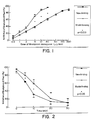
- Figure 1 is a graph illustrating the level of bradykinin-inhibiting activity of an acylated bradykinin analog (new analog) compared to its non-acylated counterpart (model analog).
- Figure 2 is a graph illustrating the recovery time after inhibition of bradykinin by an acylated bradykinin analog (new analog) and its non-acylated counterpart (model analog).
- acylated bradykinin analogs A new class of bradykinin antagonists, generally referred to as acylated bradykinin analogs, has been synthesized by reaction of a bradykinin analog with a carboxylic compound, or derivative thereof, to accomplish acylation at the peptide N-terminus.
- carboxylic acids include, for example, chloride (COCl) and esters (COOR). These analogs are considerably more potent (i.e., have greater anatagonistic activity) than presently-available bradykinin analogs.
- acylated bradykinin analogs in which the bradykinin nonapeptide has been modified by substitution, addition or deletion of one or more amino acids in the peptide chain can be produced in order to provide a modified acylated bradykinin analog which, in addition to enhanced potency, has greater stability or resistance to destruction by cellular enzymes and is taken up more readily by cells.
- Enhanced potency or activity means that the acylated bradykinin analog has a greater antagonistic effect at the same dosage level, or the same antagonistic effect at a lower dosage level, compared to its non-acylated counterpart.
- bradykinin analog having the sequence: D-Arg-Arg-Pro-Hyp-Gly-Thi-Ser-D-Phe-Thi-Arg
- Stewart analog is considered to be the most powerful bradykinin antagonist, both in vitro and in vivo .
- the key modification to convert bradykinin (which has the sequence: Arg-Pro-Pro-Gly-Phe-Ser-Pro-Phe-Arg) into a specific antagonist was the replacement of the Pro residue at position 7 with a D-Phe residue. Vavrek and Stewart, Peptides , 6 :161-164 (1985).
- Carboxylic compounds are characterized in that they have at least one carboxyl group (-COOH).
- Carboxylic derivatives such as chloride salts (COCl) or esters (COOR) can also be used.
- Carboxyl groups or derivatives thereof react with the N-terminal amino group of the bradykinin peptide to form an acylated bradykinin analog having enhanced antagonistic potency and efficiency.
- the organic substituent can have other functional groups, including, interalia , basic (NHR, N-R1R2, NH2, NH3) or acidic groups (e.g., SO3H, HPO4, COOH), halogen atoms (Cl, F.
- Synthetic bradykinin analogs can be used as base peptides to produce the present acylated analogs.
- the following sequences can be used: Arg-Pro-Hyp-Gly-Thi-Ser-D-Phe-Thi-Arg, D-Arg-Arg-Hyp-Hyp-Gly-Thi-Ser-D-Phe-Thi-Arg, Lys-Lys-Arg-Pro-Gly-Thi-Ser-D-Phe-Thi-Arg, Arg-Pro-Pro-Gly-Thi-Ser-D-Phe-Thi-Arg, and D-Arg-Arg-Pro-Hyp-Gly-Thi-Ser-D-Phe-Thi-Arg.
- the acyl group results from the reaction of a carboxylic acid, or derivative thereof, with the N-terminal amino group of the peptide.
- X can be a cyclic substituent (saturated, unsaturated or aromatic) or heterocyclic substituent (saturated, unsaturated or aromatic).
- Carboxylic compounds which are useful include any carboxyl-containing chemical compound or derivative thereof which forms a stable acylated compound with the peptide of choice.
- Carboxylic compounds which are particularly useful include acetic acid, propionic acid and adamantaneacetic acid.
- the peptides which serve as the base bradykinin analog can be made by known peptide synthesis techniques (e.g., solid phase peptide synthesis, solution synthesis, recombinant DNA techniques, or a combination of methods) or can be purchased, if commercially available. Synthesis of the base bradykinin analog by solid phase peptide synthesis is described in Example 1.
- the acylated bradykinin analogs of the present invention are made by acylating the N-terminal amino group of the peptide with a carboxylic compound, or derivative thereof, or by acylating the amino group of a selected amino acid and attaching it to the N-terminus of the peptide during peptide synthesis.
- acylated bradykinin analogs of the present invention are potent bradykinin antagonists in a mammal.
- the method by which the antagonistic potency of the analogs was assessed and compared with that of the Stewart analog is described in Example 2. Results showed, for example, that the analog formed by acylating the Stewart bradykinin analog with adamantane acetic acid has greater antagonist potency (up to 10 times more potent) than the original (i.e. , non-acylated) peptide.
- a method of producing an acylated bradykinin antagonist having enhanced potency is also the subject of the present invention.
- a bradykinin analog having bradykinin antagonistic activity is acylated at the N-terminal amino acid by reaction with a carboxylic compound or derivative thereof.
- the acylated bradykinin analog produced by the method has enhanced bradykinin antagonistic activity compared to the base analog.
- Modified acylated bradykinin analogs are also the subject of the present invention.
- Modified acylated bradykinin analogs differ from the acylated bradykinin analog of the present invention in that the amino acid sequence of the bradykinin nonapeptide has been modified by the addition, substitution or deletion of one or more amino acids.
- These modified acylated bradykinin analogs have bradykinin-antagonistic properties, particularly for the B2-receptors of bradykinin.
- the acylated bradykinin analogs of the present invention are useful in studying the vasoactive properties of bradykinin and in investigating the activity of bradykinin in regulating cardiovascular function.
- the present acylated analogs can be used therapeutically to control vascular responses.
- the acylated analogs can be used as a pharmacological tool in the research of the mechanisms of post-myocardial infarction arrythmia, congestive heart failure, hypertension, angina, sympathetic discharge, cardiac arrythmia, diabetic neuropathy and ischemic heart disease.
- bradykinin in an individual which results in reduction or inhibition of the effects, can be antagonized using the compounds of the present invention.
- vasodepressor response can be reduced or inhibited in an individual using the present acylated bradykinin analogs.
- An amount of at least one acylated bradykinin analog sufficient to inhibit the vasodepressor response can be administered to an individual in whom treatment is desired.
- One or more acylated bradykinin analogs can be administered.
- the amount of the analog which is administered will vary depending upon the conditions being treated, the type and severity of the symptoms, the size of the individual being treated and the results sought. For example, a dosage of from about 3 mg to about 15 mg per day can be administered to obtain the desired results.
- the acylated bradykinin analog is useful in the treatment of many other bradykinin-mediated disorders. For example, they can be used to treat bronchoconstriction, asthma, allergic rhinitis, endotoxin shock, inflammatory bowel disease and diarrhea.
- the present compositions can be used to treat pain, such as pain from burns, oro-facial pain, trigeminal neuralgia, and migraine which is related to excitation of central sensory neurons.
- Other forms of pain such as pain related to inflammation, increased vascular permeability and inflammatory edema can also be relieved by administering the present acylated bradykinin antagonists to an afflicted individual.
- acylated peptide analog of bradykinin having the structure: (the test analog) and a non-acylated reference peptide having the structure: D-Arg-Arg-Pro-Hyp-Gly-Thi-Ser-D-Phe-Thi-Arg, (the model analog) were synthesized by the solid-phase peptide synthesis method by stepwise coupling of BOC-amino acids to the growing peptide chain on a Merrifield resin. Drapeau and Regoli, Methods In Enzymology , 163 :263-272 (1988).
- Adamantaneacetic acid (Sigma Chemical Co., St. Louis, MO) was used in the final coupling step for the test analog. The completion of each coupling reaction was monitored by the Kaiser test.
- An adamantane acetic acid-modified bradykinin analog was synthesized by the solid-phase method described in Example 1.
- the analog designed by Stewart et al. was also synthesized and used as a control.
- the control (or model) and test analogs had the following structure: Model: D-Arg-Arg-Pro-Hyp-Gly-Thi-Ser-D-Phe-Thi-Arg Test: The antagonistic potency of the analogs was assessed by their ability to inhibit the vasodepressor response of exogenous bradykinin in awake rats.
- Intact male Wistar rats (Charles River Breeding Laboratories, Wilmington, MA, U.S.A.) weighing 225-250 g were used and maintained on a regular Purina Rat Chow diet and tap water in a room at constant temperature (23 ⁇ 1°C) with 12 hour dark/12 hour light cycles.
- PE 50 polyethylene tubing
- a "Y" type connection was connected to the carotid artery catheter with two ends: one for injecting bradykinin and the other for infusing the bradykinin analogs. All of the catheters were externalized subcutaneously at the back of the neck.
- AP Arterial pressure
- MAP mean arterial pressure
- HR heart rate
- bradykinin acetate salt (Sigma Chemical Co.) of, 125 ng and 250 ng, dissolved in 5% dextrose to a concentration of 2.5 ⁇ g/ml, were injected randomly every 4 to 5 minutes into one branch of the carotid catheter. Each dose was repeated two to three times until the vasodepressor responses to exogenous bradykinin were stable. Two average values of the vasodepressor responses to these two doses of bradykinin were taken as the control response.
- test and model analogs were infused beginning from a low dose (0.5 ⁇ g/min) with a volume no more than 0.2 ml/min (dissolved in 5% dextrose solution), via another branch of the carotid catheter.
- 250 ng of bradykinin was injected into the carotid artery, repeating two to three times until the vasodepressor responses were stable. The average value was taken as the response to 250 ng of bradykinin at the given dose of infusion of the analog.
- the dose of the analog infusion was increased and the same procedure was repeated until the vasodepressor response to 250 ng of exogenous bradykinin decreased to less than 10% of the control response at the 5th minute, the 10th minute, and then every 10 minutes.
- the infusion was then discontinued and 250 ng of bradykinin was injected until the vasodepressor response to exogenous bradykinin returned to over 90% of the control level.
- the potency of the analog was expressed by the effective dose, ED22 (in low dose) and ED90 (in high dose), which represents the doses of each analog infused ( ⁇ g/min) which inhibited 22% and 90%, respectively, of the vasodepressor response to its agonist (230 ng of bradykinin).
- blood samples (1 ml) were collected from the iliac artery after 5 minute infusion of the analog for measuring plasma catecholamines. Blood samples were centrifuged at 2,500 rpm for 20 minutes at 4°C; the plasma was separated and stored at -80°C until assayed by high-performance liquid chromatography with electrochemical detection.
- each analog was tested by regression analysis of the data obtained in each rat, using a logarithmic transformation of the linear portion of each dose-response curve to calculate the ED22 and ED90 values.
- the comparison between the two analogs at the same dose was determined using the Students Nonpaired T Test. Differences were considered to be statistically significant if p ⁇ 0.05.
- the dose-response curve of the model and test bradykinin analogs is showed in Figure 1.
- the potency of the new analog was higher than that of the model one.
- the difference was statistically significant when the doses of the analogs were over 5 ⁇ g/min (p ⁇ 0.001).
- the ED22 of the new analog was only half that of the model peptide, while the ED90 was more than ten times lower than that of the model one, as shown in Table 1.
- ED22 and ED90 represent the doses of the analog infused ( ⁇ g/min) which inhibit 22% and 90%, respectively, of the vasodepressor response to its agonist (250 ng of BK) in the absence of the antagonist.
- the model analog was previously designed by Vavrek and Stewart. Vavrek and Stewart, Peptides , 6 :161-164 (1985). This analog was synthesized and assayed to obtain the reference data for comparison with the test analog.
- the antagonistic effect of both analogs decreased to less than 10% at the 30th minute after the end of the analog infusion, the effect of the new analog was still significantly higher than of the model one at the 5th and 10 minute after discontinuation shown in Figure 2. No agonistic vasodepressor effect was found when the dose of the new analog was increased to 50 ⁇ g/min which as 200-400 times larger than the BK administered.
- the pA2 is the most commonly used parameter to quantitatively express the potency of an antagonist. Schild, Brit. J. Pharmacol. , 2 :189-206 (1947).
- the ED value should be the dose of the antagonist that reduces the vasodepressor response to two units of agonist (250 ng of BK) to equal the response to one unit of agonist (125 ng of bradykinin) in the absence of antagonist.
- 125 ng of bradykinin decreased MAP by 24.98 ⁇ 1.29 mmHg, which is 22.21 ⁇ 3.71% lower than that induced by 250 ng of bradykinin (31.97 ⁇ 1.26 mmHg).
- the ED22 was used as the effective dose to express the potency of the bradykinin antagonist during low dose.
- the pA2 value represents the negative logarithm of the molar concentration of the effective dose, i.e., the negative logarithm of the ED value divided by the estimated volume of distribution (67ml/kg). Manning et al., J. Med. Chem. , 25 :45-50 (1982). The control analog gave the anti-vasodepressor potency of the model analog a pA2 value of 7.17 ⁇ 0.11 compared to 7.42 ⁇ 0.07 for the test analog.
- the dose-response curve ( Figure 1) illustrates the difference of the antagonistic potency between two analogs in low doses: (below 5 ⁇ g/min) the dose response was not as large as that in high doses (over 5 ⁇ g/min).
- the ED22 value of the new analog is about half that of the model one.
- ED90 was used as a parameter to quantitatively express the dose of the antagonist which inhibits 90% of the vasodepressor response to its agonist (250 ng of bradykinin).
- bradykinin antagonists could also act as an agonist to bradykinin receptors in other tissues (e.g., to stimulate the bradykinin receptor in the adrenal glands to release catecholamine). Some of the bradykinin antagonists were found to have this effect. Mulinari et al., Hypertension , 11 :754-757 (1988); Mulinari et al., Hypertension , 13 :960-963 (1989). The new bradykinin analogs did not increase plasma catecholamines at a dose of 10 and 50 ⁇ g/min, which are the doses that could inhibit more than 90% of the vasodepressor response to the 250 ng of exogenous bradykinin.
Landscapes
- Chemical & Material Sciences (AREA)
- Organic Chemistry (AREA)
- Genetics & Genomics (AREA)
- Biochemistry (AREA)
- Biophysics (AREA)
- General Health & Medical Sciences (AREA)
- Health & Medical Sciences (AREA)
- Medicinal Chemistry (AREA)
- Molecular Biology (AREA)
- Proteomics, Peptides & Aminoacids (AREA)
- Life Sciences & Earth Sciences (AREA)
- Peptides Or Proteins (AREA)
- Medicines That Contain Protein Lipid Enzymes And Other Medicines (AREA)
Claims (11)
- Ein acyliertes Bradykinin-Analog ausgewählt vonworin X ein organischer Substituent ist, ausgewählt aus der Gruppe bestehend aus: gesättigten cyclischen Verbindungen, ungesättigten cyclischen Verbindungen, cyclischen aromatischen Verbindungen, gesättigten heterocyclischen Verbindungen, ungesättigten heterocyclischen Verbindungen und aromatischen heterocyclischen Verbindungen.

- Ein acyliertes Bradykinin-Analog gemäß Patentanspruch 1 mit der Formel:

- Ein acyliertes Bradykinin-Analog gemäß Patentanspruch 1 oder Patentanspruch 2, das ein Bradykinin-Antagonist ist.
- Verwendung des acylierten Bradikinin-Analogs gemäß einem der vorhergehenden Patentansprüche zur Herstellung eines Medikaments, um den Auswirkungen von Bradykinin in einem Individuum entgegenzuwirken.
- Verwendung eines acylierten Bradykinin-Analogs zur Herstellung eines Medikaments zur Reduzierung oder Inhibierung der Vasodepressor-Wirkung in einem Individuum, wobei das acylierte Bradykinin-Analog die folgende Formel hat:worin X ein organischer Substituent ist, ausgewählt aus der Gruppe bestehend aus: gesättigten cyclischen Verbindungen, ungesättigten cyclischen Verbindungen, cyclischen aromatischen Verbindungen, gesättigten heterocyclischen Verbindungen, ungesättigten heterocyclischen Verbindungen und aromatischen heterocyclischen Verbindungen.

- Verwendung gemäß Patentanspruch 5, wobei die eingesetzte Menge des acylierten Bradykinin-Analogs etwa 3 bis 15 mg per Dosis ausmacht.
- Verwendung des acylierten Bradykinin-Analogs zur Herstellung eines Medikaments zur Reduzierung, Verbesserung oder Eliminierung einer Bradykinin - verursachten Funktionsstörung in einem Individuum, wobei das acylierte Bradykinin-Analog die folgende allgemeine Formel hat:worin X ein organischer Substituent ist ausgewählt aus der Gruppe bestehend aus: gesättigten cyclischen Verbindungen, ungesättigten cyclischen Verbindungen, cyclischen aromatischen Verbindungen, gesättigten heterocyclischen Verbindungen, ungesättigten heterocyclischen Verbindungen und aromatischen heterocyclischen Verbindungen.

- Verwendung gemäß Patentanspruch 7, wobei die verwendete Menge des acylierten Bradykinin-Analogs etwa 3 bis 15 mg per Dosis ausmacht.
- Verwendung gemäß Patentanspruch 8, wobei die Bradykinin-verursachte Funktionsstörung ausgewählt ist aus der Gruppe bestehend aus: Angina, Sympathicus-bedingte Freisetzung (sympathetic discharge), Herzarrhythmie, diabetische Neuropathie, Ischemische Herzkrankheit, durch Verbrennungen verursachte Schmerzen, Bronchialasthma, allergische Rhinitis, toxischer Schock, Kreislaufkollaps, orofaciale Schmerzen, Trigeminus-Neuralgie, Migräne und entzündliche Darmkrankheiten.
- Ein Verfahren zur Herstellung des acylierten Bradykinin-Analogs entsprechend einem der Patentansprüche 1 bis 3 bestehend aus oder enthaltend den Schritt der Acylierung der N-terminalen Amino-Gruppe des Bradykinin-Peptid-Analogs mit Carbonsäure, beispielsweise Adamantanessigsäure.
- Ein acyliertes Bradikinin-Analog gemäß einem der Patentansprüche 1 bis 3 zur Verwendung in der Therapie.
Applications Claiming Priority (3)
| Application Number | Priority Date | Filing Date | Title |
|---|---|---|---|
| US44771389A | 1989-12-08 | 1989-12-08 | |
| US447713 | 1989-12-08 | ||
| PCT/US1990/007268 WO1991009055A1 (en) | 1989-12-08 | 1990-12-10 | Acylated bradykinin antagonists and uses therefor |
Publications (2)
| Publication Number | Publication Date |
|---|---|
| EP0502987A1 EP0502987A1 (de) | 1992-09-16 |
| EP0502987B1 true EP0502987B1 (de) | 1994-08-31 |
Family
ID=23777438
Family Applications (1)
| Application Number | Title | Priority Date | Filing Date |
|---|---|---|---|
| EP91901182A Expired - Lifetime EP0502987B1 (de) | 1989-12-08 | 1990-12-10 | Acylierte bradykininantagonisten und deren verwendung |
Country Status (3)
| Country | Link |
|---|---|
| EP (1) | EP0502987B1 (de) |
| DE (1) | DE69012142D1 (de) |
| WO (1) | WO1991009055A1 (de) |
Families Citing this family (4)
| Publication number | Priority date | Publication date | Assignee | Title |
|---|---|---|---|---|
| TW199863B (de) * | 1991-12-21 | 1993-02-11 | Hoechst Ag | |
| TW258739B (de) * | 1992-04-04 | 1995-10-01 | Hoechst Ag | |
| FR2739553B1 (fr) * | 1995-10-06 | 1998-01-02 | Oreal | Utilisation d'antagonistes de la bradykinine pour stimuler ou induire la pousse des cheveux et/ou stopper leur chute |
| DE19612067A1 (de) * | 1996-03-27 | 1997-10-02 | Hoechst Ag | Verwendung von Bradykinin-Antagonisten zur Herstellung von Arzneimitteln zur Behandlung von chronisch fibrogenetischen Lebererkrankungen und akuten Lebererkrankungen |
Family Cites Families (5)
| Publication number | Priority date | Publication date | Assignee | Title |
|---|---|---|---|---|
| US4693993A (en) * | 1985-06-13 | 1987-09-15 | Stewart John M | Bradykinin antagonist peptides |
| US4923963A (en) * | 1987-09-02 | 1990-05-08 | Nova Technology Limited Partnership | Bradykinin antagonist peptides |
| US5162497A (en) * | 1987-09-24 | 1992-11-10 | The Administrators Of The Tulane Educational Fund | Bradykinin analogs with non-peptide bond |
| EP0334244A3 (de) * | 1988-03-25 | 1991-05-29 | The Procter & Gamble Company | Peptide-Antagonisten von Bradykinin |
| IE63490B1 (en) * | 1988-11-24 | 1995-05-03 | Hoechst Ag | Peptides having bradykinin antagonist action |
-
1990
- 1990-12-10 WO PCT/US1990/007268 patent/WO1991009055A1/en not_active Ceased
- 1990-12-10 EP EP91901182A patent/EP0502987B1/de not_active Expired - Lifetime
- 1990-12-10 DE DE69012142T patent/DE69012142D1/de not_active Expired - Lifetime
Non-Patent Citations (1)
| Title |
|---|
| Chemical Abstracts, vol. 95, no. 5, August 1981, (Columbus, Ohio, US), Sugavara, S., p. 114, abstract 35993q * |
Also Published As
| Publication number | Publication date |
|---|---|
| WO1991009055A1 (en) | 1991-06-27 |
| DE69012142D1 (de) | 1994-10-06 |
| EP0502987A1 (de) | 1992-09-16 |
Similar Documents
| Publication | Publication Date | Title |
|---|---|---|
| Furuya et al. | C-type natriuretic peptide inhibits intimal thickening after vascular injury | |
| US5635593A (en) | Bradykinin antagonists | |
| US5328899A (en) | NPY peptide analogs | |
| BJÖRKROTH et al. | Pharmacological characterization of four related substance P antagonist | |
| AU638350B2 (en) | Bradykinin antagonists | |
| JPH08504823A (ja) | エンドセリン拮抗薬 | |
| US5416191A (en) | Bradykinin antagonists | |
| HUP0103851A2 (hu) | VIIa Faktor inhibitorai, eljárás előállításukra, alkalmazásuk és azokat tartalmazó gyógyászati készítmények | |
| BRPI0715407A2 (pt) | peptÍdeos e seus derivados funcionalmente equivalentes, composiÇÕes farmacÊuticas e usos dos mesmos | |
| Couture et al. | Plasma protein extravasation induced by mammalian tachykinins in rat skin: influence of anaesthetic agents and an acetylcholine antagonist | |
| US20090305959A1 (en) | Use of Peptidic Vasopressin Receptor Agonists | |
| US20040122013A1 (en) | Analogs of nocicettin | |
| EP0502987B1 (de) | Acylierte bradykininantagonisten und deren verwendung | |
| US4331661A (en) | Bombesin analogs | |
| DE4310632A1 (de) | Lineare Adhäsionsinhibitoren | |
| JPS61137898A (ja) | V↓1‐バソプレシン拮抗剤 | |
| DE69304155T2 (de) | Neue Peptid-Derivate mit Bradikyninantagonischer Wirkung, Verfahren zur deren Herstellung und pharmazeutische Zubereitungen die sie enthalten | |
| US4191753A (en) | Anti-hypertensive peptide analogs | |
| US20120129774A1 (en) | Kinin b1 receptor peptide agonists and uses thereof | |
| JPH09502427A (ja) | オキシトシン拮抗薬活性を示すペプチド | |
| IE921781A1 (en) | Peptides useful in regulating the immune and nervous systems | |
| US3917580A (en) | Des-asp{hu 1{b -thr{hu 8 {b angiotensin II as a specific inhibitor for the release of aldosterone | |
| WO1994006453A1 (en) | Bradykinin antagonists containing aliphatic amino acids in the 5-position | |
| Burke et al. | Overview Pulmonary-Allergy, Dermatological, Gastrointestinal & Arthritis: Bradykinin receptor antagonists | |
| Labudda et al. | New bradykinin analogues acylated on the N-terminus: effect on rat uterus and blood pressure. |
Legal Events
| Date | Code | Title | Description |
|---|---|---|---|
| PUAI | Public reference made under article 153(3) epc to a published international application that has entered the european phase |
Free format text: ORIGINAL CODE: 0009012 |
|
| 17P | Request for examination filed |
Effective date: 19920706 |
|
| AK | Designated contracting states |
Kind code of ref document: A1 Designated state(s): DE GB |
|
| 17Q | First examination report despatched |
Effective date: 19930129 |
|
| GRAA | (expected) grant |
Free format text: ORIGINAL CODE: 0009210 |
|
| RAP1 | Party data changed (applicant data changed or rights of an application transferred) |
Owner name: TRUSTEES OF BOSTON UNIVERSITY |
|
| AK | Designated contracting states |
Kind code of ref document: B1 Designated state(s): DE GB |
|
| REF | Corresponds to: |
Ref document number: 69012142 Country of ref document: DE Date of ref document: 19941006 |
|
| PG25 | Lapsed in a contracting state [announced via postgrant information from national office to epo] |
Ref country code: DE Effective date: 19941201 |
|
| PLBE | No opposition filed within time limit |
Free format text: ORIGINAL CODE: 0009261 |
|
| STAA | Information on the status of an ep patent application or granted ep patent |
Free format text: STATUS: NO OPPOSITION FILED WITHIN TIME LIMIT |
|
| 26N | No opposition filed | ||
| PGFP | Annual fee paid to national office [announced via postgrant information from national office to epo] |
Ref country code: GB Payment date: 19961204 Year of fee payment: 7 |
|
| PG25 | Lapsed in a contracting state [announced via postgrant information from national office to epo] |
Ref country code: GB Free format text: LAPSE BECAUSE OF NON-PAYMENT OF DUE FEES Effective date: 19971210 |
|
| GBPC | Gb: european patent ceased through non-payment of renewal fee |
Effective date: 19971210 |