EP0519152A1 - Erzeugung von Chlordioxid in eines nichtwässeriges Medium - Google Patents
Erzeugung von Chlordioxid in eines nichtwässeriges Medium Download PDFInfo
- Publication number
- EP0519152A1 EP0519152A1 EP91870177A EP91870177A EP0519152A1 EP 0519152 A1 EP0519152 A1 EP 0519152A1 EP 91870177 A EP91870177 A EP 91870177A EP 91870177 A EP91870177 A EP 91870177A EP 0519152 A1 EP0519152 A1 EP 0519152A1
- Authority
- EP
- European Patent Office
- Prior art keywords
- aqueous
- chlorine dioxide
- chlorine
- chlorite
- solution
- Prior art date
- Legal status (The legal status is an assumption and is not a legal conclusion. Google has not performed a legal analysis and makes no representation as to the accuracy of the status listed.)
- Granted
Links
- OSVXSBDYLRYLIG-UHFFFAOYSA-N dioxidochlorine(.) Chemical compound O=Cl=O OSVXSBDYLRYLIG-UHFFFAOYSA-N 0.000 title claims abstract description 330
- 239000004155 Chlorine dioxide Substances 0.000 title claims abstract description 166
- 235000019398 chlorine dioxide Nutrition 0.000 title claims abstract description 166
- 239000012736 aqueous medium Substances 0.000 title claims description 5
- 239000007788 liquid Substances 0.000 claims abstract description 58
- 238000000034 method Methods 0.000 claims abstract description 57
- XLYOFNOQVPJJNP-UHFFFAOYSA-N water Substances O XLYOFNOQVPJJNP-UHFFFAOYSA-N 0.000 claims abstract description 57
- QBWCMBCROVPCKQ-UHFFFAOYSA-N chlorous acid Chemical compound OCl=O QBWCMBCROVPCKQ-UHFFFAOYSA-N 0.000 claims abstract description 56
- 229910001919 chlorite Inorganic materials 0.000 claims abstract description 52
- 229910052619 chlorite group Inorganic materials 0.000 claims abstract description 52
- 239000008346 aqueous phase Substances 0.000 claims abstract description 48
- 239000000460 chlorine Substances 0.000 claims abstract description 46
- 239000000243 solution Substances 0.000 claims abstract description 44
- 239000007864 aqueous solution Substances 0.000 claims abstract description 43
- 229910052801 chlorine Inorganic materials 0.000 claims abstract description 43
- 239000002253 acid Substances 0.000 claims abstract description 19
- 238000002156 mixing Methods 0.000 claims abstract description 5
- ZAMOUSCENKQFHK-UHFFFAOYSA-N Chlorine atom Chemical compound [Cl] ZAMOUSCENKQFHK-UHFFFAOYSA-N 0.000 claims abstract 8
- VEXZGXHMUGYJMC-UHFFFAOYSA-N Hydrochloric acid Chemical group Cl VEXZGXHMUGYJMC-UHFFFAOYSA-N 0.000 claims description 31
- 238000006243 chemical reaction Methods 0.000 claims description 19
- FAPWRFPIFSIZLT-UHFFFAOYSA-M Sodium chloride Chemical compound [Na+].[Cl-] FAPWRFPIFSIZLT-UHFFFAOYSA-M 0.000 claims description 14
- UKLNMMHNWFDKNT-UHFFFAOYSA-M sodium chlorite Chemical compound [Na+].[O-]Cl=O UKLNMMHNWFDKNT-UHFFFAOYSA-M 0.000 claims description 12
- 229960002218 sodium chlorite Drugs 0.000 claims description 12
- 239000006227 byproduct Substances 0.000 claims description 11
- 238000000605 extraction Methods 0.000 claims description 8
- 239000007791 liquid phase Substances 0.000 claims description 8
- 150000003839 salts Chemical class 0.000 claims description 7
- 239000011780 sodium chloride Substances 0.000 claims description 7
- 229910001902 chlorine oxide Inorganic materials 0.000 claims description 3
- 238000007865 diluting Methods 0.000 claims 1
- 239000002609 medium Substances 0.000 claims 1
- 239000012071 phase Substances 0.000 abstract description 11
- 239000000376 reactant Substances 0.000 abstract description 7
- 230000001954 sterilising effect Effects 0.000 abstract description 5
- 230000015572 biosynthetic process Effects 0.000 abstract description 4
- 230000000249 desinfective effect Effects 0.000 abstract description 4
- 230000003647 oxidation Effects 0.000 abstract description 3
- 238000007254 oxidation reaction Methods 0.000 abstract description 3
- 238000000926 separation method Methods 0.000 abstract description 3
- 238000003786 synthesis reaction Methods 0.000 abstract description 3
- 239000012457 nonaqueous media Substances 0.000 abstract description 2
- VLKZOEOYAKHREP-UHFFFAOYSA-N n-Hexane Chemical compound CCCCCC VLKZOEOYAKHREP-UHFFFAOYSA-N 0.000 description 51
- KZBUYRJDOAKODT-UHFFFAOYSA-N Chlorine Chemical compound ClCl KZBUYRJDOAKODT-UHFFFAOYSA-N 0.000 description 50
- 230000008569 process Effects 0.000 description 13
- 239000012074 organic phase Substances 0.000 description 9
- 238000002360 preparation method Methods 0.000 description 9
- 238000004448 titration Methods 0.000 description 9
- 239000010410 layer Substances 0.000 description 8
- XTEGARKTQYYJKE-UHFFFAOYSA-M Chlorate Chemical compound [O-]Cl(=O)=O XTEGARKTQYYJKE-UHFFFAOYSA-M 0.000 description 7
- 125000003118 aryl group Chemical group 0.000 description 7
- WQYVRQLZKVEZGA-UHFFFAOYSA-N hypochlorite Chemical compound Cl[O-] WQYVRQLZKVEZGA-UHFFFAOYSA-N 0.000 description 7
- 239000003960 organic solvent Substances 0.000 description 7
- UHOVQNZJYSORNB-UHFFFAOYSA-N Benzene Chemical compound C1=CC=CC=C1 UHOVQNZJYSORNB-UHFFFAOYSA-N 0.000 description 6
- YXFVVABEGXRONW-UHFFFAOYSA-N Toluene Chemical compound CC1=CC=CC=C1 YXFVVABEGXRONW-UHFFFAOYSA-N 0.000 description 6
- 239000002904 solvent Substances 0.000 description 6
- 238000010586 diagram Methods 0.000 description 5
- 239000012153 distilled water Substances 0.000 description 5
- 239000000203 mixture Substances 0.000 description 5
- 239000000126 substance Substances 0.000 description 5
- QAOWNCQODCNURD-UHFFFAOYSA-N Sulfuric acid Chemical compound OS(O)(=O)=O QAOWNCQODCNURD-UHFFFAOYSA-N 0.000 description 4
- 125000001931 aliphatic group Chemical group 0.000 description 4
- QBWCMBCROVPCKQ-UHFFFAOYSA-M chlorite Chemical compound [O-]Cl=O QBWCMBCROVPCKQ-UHFFFAOYSA-M 0.000 description 4
- 239000007800 oxidant agent Substances 0.000 description 4
- 239000002243 precursor Substances 0.000 description 4
- BZSXEZOLBIJVQK-UHFFFAOYSA-N 2-methylsulfonylbenzoic acid Chemical compound CS(=O)(=O)C1=CC=CC=C1C(O)=O BZSXEZOLBIJVQK-UHFFFAOYSA-N 0.000 description 3
- ZCYVEMRRCGMTRW-UHFFFAOYSA-N 7553-56-2 Chemical compound [I] ZCYVEMRRCGMTRW-UHFFFAOYSA-N 0.000 description 3
- OKKJLVBELUTLKV-UHFFFAOYSA-N Methanol Chemical compound OC OKKJLVBELUTLKV-UHFFFAOYSA-N 0.000 description 3
- 238000013019 agitation Methods 0.000 description 3
- 238000004458 analytical method Methods 0.000 description 3
- 230000003115 biocidal effect Effects 0.000 description 3
- 239000003139 biocide Substances 0.000 description 3
- 239000007789 gas Substances 0.000 description 3
- 239000011521 glass Substances 0.000 description 3
- 229910052740 iodine Inorganic materials 0.000 description 3
- 239000011630 iodine Substances 0.000 description 3
- 238000004519 manufacturing process Methods 0.000 description 3
- 230000001590 oxidative effect Effects 0.000 description 3
- NLKNQRATVPKPDG-UHFFFAOYSA-M potassium iodide Chemical compound [K+].[I-] NLKNQRATVPKPDG-UHFFFAOYSA-M 0.000 description 3
- CURLTUGMZLYLDI-UHFFFAOYSA-N Carbon dioxide Chemical compound O=C=O CURLTUGMZLYLDI-UHFFFAOYSA-N 0.000 description 2
- XDTMQSROBMDMFD-UHFFFAOYSA-N Cyclohexane Chemical compound C1CCCCC1 XDTMQSROBMDMFD-UHFFFAOYSA-N 0.000 description 2
- CTQNGGLPUBDAKN-UHFFFAOYSA-N O-Xylene Chemical compound CC1=CC=CC=C1C CTQNGGLPUBDAKN-UHFFFAOYSA-N 0.000 description 2
- 229920002472 Starch Polymers 0.000 description 2
- 239000003125 aqueous solvent Substances 0.000 description 2
- QVGXLLKOCUKJST-UHFFFAOYSA-N atomic oxygen Chemical compound [O] QVGXLLKOCUKJST-UHFFFAOYSA-N 0.000 description 2
- 230000008901 benefit Effects 0.000 description 2
- 229940005993 chlorite ion Drugs 0.000 description 2
- 239000000356 contaminant Substances 0.000 description 2
- 239000012535 impurity Substances 0.000 description 2
- 239000011872 intimate mixture Substances 0.000 description 2
- 239000011368 organic material Substances 0.000 description 2
- 239000001301 oxygen Substances 0.000 description 2
- 229910052760 oxygen Inorganic materials 0.000 description 2
- 230000020477 pH reduction Effects 0.000 description 2
- 235000019698 starch Nutrition 0.000 description 2
- 239000008107 starch Substances 0.000 description 2
- 238000003860 storage Methods 0.000 description 2
- VZGDMQKNWNREIO-UHFFFAOYSA-N tetrachloromethane Chemical compound ClC(Cl)(Cl)Cl VZGDMQKNWNREIO-UHFFFAOYSA-N 0.000 description 2
- 239000008096 xylene Substances 0.000 description 2
- 239000005708 Sodium hypochlorite Substances 0.000 description 1
- 150000007513 acids Chemical class 0.000 description 1
- 230000003213 activating effect Effects 0.000 description 1
- 150000001299 aldehydes Chemical class 0.000 description 1
- 230000000844 anti-bacterial effect Effects 0.000 description 1
- 239000001569 carbon dioxide Substances 0.000 description 1
- 229910002092 carbon dioxide Inorganic materials 0.000 description 1
- 239000003054 catalyst Substances 0.000 description 1
- XTEGARKTQYYJKE-UHFFFAOYSA-N chloric acid Chemical compound OCl(=O)=O XTEGARKTQYYJKE-UHFFFAOYSA-N 0.000 description 1
- JFBJUMZWZDHTIF-UHFFFAOYSA-N chlorine chlorite Inorganic materials ClOCl=O JFBJUMZWZDHTIF-UHFFFAOYSA-N 0.000 description 1
- 238000010960 commercial process Methods 0.000 description 1
- 239000013078 crystal Substances 0.000 description 1
- UOENOIWESXCRPZ-UHFFFAOYSA-N cyclohexane octane Chemical compound C1CCCCC1.CCCCCCCC UOENOIWESXCRPZ-UHFFFAOYSA-N 0.000 description 1
- 238000000354 decomposition reaction Methods 0.000 description 1
- 230000007423 decrease Effects 0.000 description 1
- 239000000645 desinfectant Substances 0.000 description 1
- 231100001261 hazardous Toxicity 0.000 description 1
- -1 hexane cyclohexane octane benzene toluene Chemical compound 0.000 description 1
- XMBWDFGMSWQBCA-UHFFFAOYSA-N hydrogen iodide Chemical compound I XMBWDFGMSWQBCA-UHFFFAOYSA-N 0.000 description 1
- GPRLSGONYQIRFK-UHFFFAOYSA-N hydron Chemical compound [H+] GPRLSGONYQIRFK-UHFFFAOYSA-N 0.000 description 1
- QWPPOHNGKGFGJK-UHFFFAOYSA-N hypochlorous acid Chemical compound ClO QWPPOHNGKGFGJK-UHFFFAOYSA-N 0.000 description 1
- 230000006698 induction Effects 0.000 description 1
- XMBWDFGMSWQBCA-UHFFFAOYSA-M iodide Chemical compound [I-] XMBWDFGMSWQBCA-UHFFFAOYSA-M 0.000 description 1
- 229940006461 iodide ion Drugs 0.000 description 1
- PNDPGZBMCMUPRI-UHFFFAOYSA-N iodine Chemical compound II PNDPGZBMCMUPRI-UHFFFAOYSA-N 0.000 description 1
- 239000000463 material Substances 0.000 description 1
- 229910052751 metal Inorganic materials 0.000 description 1
- 239000002184 metal Substances 0.000 description 1
- 238000012986 modification Methods 0.000 description 1
- 230000004048 modification Effects 0.000 description 1
- TVMXDCGIABBOFY-UHFFFAOYSA-N octane Chemical compound CCCCCCCC TVMXDCGIABBOFY-UHFFFAOYSA-N 0.000 description 1
- 150000007524 organic acids Chemical class 0.000 description 1
- 150000007530 organic bases Chemical class 0.000 description 1
- 239000012044 organic layer Substances 0.000 description 1
- 238000005192 partition Methods 0.000 description 1
- 239000003208 petroleum Substances 0.000 description 1
- 239000002574 poison Substances 0.000 description 1
- 231100000614 poison Toxicity 0.000 description 1
- 239000003495 polar organic solvent Substances 0.000 description 1
- 239000000047 product Substances 0.000 description 1
- 230000003134 recirculating effect Effects 0.000 description 1
- 230000009467 reduction Effects 0.000 description 1
- SUKJFIGYRHOWBL-UHFFFAOYSA-N sodium hypochlorite Chemical compound [Na+].Cl[O-] SUKJFIGYRHOWBL-UHFFFAOYSA-N 0.000 description 1
- AKHNMLFCWUSKQB-UHFFFAOYSA-L sodium thiosulfate Chemical compound [Na+].[Na+].[O-]S([O-])(=O)=S AKHNMLFCWUSKQB-UHFFFAOYSA-L 0.000 description 1
- 235000019345 sodium thiosulphate Nutrition 0.000 description 1
- 239000007787 solid Substances 0.000 description 1
- 238000000638 solvent extraction Methods 0.000 description 1
- 230000002269 spontaneous effect Effects 0.000 description 1
- 238000010561 standard procedure Methods 0.000 description 1
- 238000004659 sterilization and disinfection Methods 0.000 description 1
- 239000003206 sterilizing agent Substances 0.000 description 1
Images

Classifications
-
- C—CHEMISTRY; METALLURGY
- C01—INORGANIC CHEMISTRY
- C01B—NON-METALLIC ELEMENTS; COMPOUNDS THEREOF; METALLOIDS OR COMPOUNDS THEREOF NOT COVERED BY SUBCLASS C01C
- C01B11/00—Oxides or oxyacids of halogens; Salts thereof
- C01B11/02—Oxides of chlorine
-
- C—CHEMISTRY; METALLURGY
- C01—INORGANIC CHEMISTRY
- C01B—NON-METALLIC ELEMENTS; COMPOUNDS THEREOF; METALLOIDS OR COMPOUNDS THEREOF NOT COVERED BY SUBCLASS C01C
- C01B11/00—Oxides or oxyacids of halogens; Salts thereof
- C01B11/02—Oxides of chlorine
- C01B11/022—Chlorine dioxide (ClO2)
- C01B11/023—Preparation from chlorites or chlorates
- C01B11/024—Preparation from chlorites or chlorates from chlorites
-
- C—CHEMISTRY; METALLURGY
- C01—INORGANIC CHEMISTRY
- C01B—NON-METALLIC ELEMENTS; COMPOUNDS THEREOF; METALLOIDS OR COMPOUNDS THEREOF NOT COVERED BY SUBCLASS C01C
- C01B11/00—Oxides or oxyacids of halogens; Salts thereof
- C01B11/02—Oxides of chlorine
- C01B11/022—Chlorine dioxide (ClO2)
-
- Y—GENERAL TAGGING OF NEW TECHNOLOGICAL DEVELOPMENTS; GENERAL TAGGING OF CROSS-SECTIONAL TECHNOLOGIES SPANNING OVER SEVERAL SECTIONS OF THE IPC; TECHNICAL SUBJECTS COVERED BY FORMER USPC CROSS-REFERENCE ART COLLECTIONS [XRACs] AND DIGESTS
- Y10—TECHNICAL SUBJECTS COVERED BY FORMER USPC
- Y10T—TECHNICAL SUBJECTS COVERED BY FORMER US CLASSIFICATION
- Y10T436/00—Chemistry: analytical and immunological testing
- Y10T436/10—Composition for standardization, calibration, simulation, stabilization, preparation or preservation; processes of use in preparation for chemical testing
Definitions
- This invention relates to chlorine dioxide, a process for the generation of chlorine dioxide and more particularly for chlorine dioxide in a non-aqueous medium.
- Chlorine dioxide is a highly active chemical which has been widely used in a variety of processes and especially in disinfecting, sterilizing and bactericidal applications. Due to the unstable nature of gaseous chlorine dioxide when compressed, it is commonly prepared on site rather than having it placed in a container and shipping the container for usage at a site when and where needed. Liquid chlorine dioxide is considered to be very hazardous and is generally avoided.
- U.S. Letters Patent 2,678,922 prepares an aqueous solution of chlorine dioxide and flushes the chlorine dioxide from the solution with air.
- the chlorine dioxide-air stream is passed through liquid chlorine to provide a liquid chlorine/chlorine dioxide solution.
- the only other non-aqueous solutions of chlorine dioxide of which I am aware are U.S. Letters Patent Nos. 3,036,270 and 3,084,995 in which chlorine dioxide gas is dissolved in liquid carbon dioxide.
- the latter reference states that it has been proposed to prepare chlorine dioxide in carbon tetrachloride but this has not proven to be successful due to the slight solubility of chlorine dioxide and because of spontaneous decomposition.
- a method of preparing chlorine dioxide in a non-aqueous medium comprising the steps of preparing an aqueous solution of chlorine dioxide adding a non-aqueous liquid to the aqueous solution of chlorine dioxide thereby forming an aqueous phase and a non-aqueous phase.
- the non-aqueous liquid is substantially immiscible with water and is non-reactive with chlorine dioxide.
- the liquid phases are agitated wherein the chlorine dioxide is extracted into and dissolved in the non-aqueous phases.
- the chlorine dioxide is of very high purity substantially free of chlorine and water soluble ionic salts.
- an aqueous solution of approximately 25% by weight of chlorite is diluted to a desired concentration with a desired amount of water.
- the non-aqueous liquid is added to the aqueous chlorite solution forming an aqueous phase.
- a desired amount of hydrochloric acid is added to the aqueous phase, reacting with the chlorite forming chlorine dioxide.
- the liquid phases are agitated wherein the chlorine dioxide is extracted into and dissolved in the non-aqueous liquid phase.
- the non-aqueous liquid may be an aliphatic organic liquid, an aromatic organic liquid or a mixed aliphatic and aromatic organic liquid.
- the aqueous solution is approximately 0.5% to 12.5% by weight of chlorite.
- Chlorine is dissolved in a non-aqueous liquid which does not react with either chlorine or chlorine dioxide and which is substantially immiscible with water.
- the aqueous and the non-aqueous liquids are mixed and agitated wherein the chlorine solution is separated from the non-aqueous solution, the non-aqueous solution having dissolved therein a high purity of chlorine dioxide.
- Fig. 1 is a block diagram showing the method of generating chlorine dioxide by the present invention.
- Fig. 2 is a block diagram showing a preferred method of generating chlorine dioxide of the present invention.
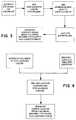
- Fig. 3 is a block diagram showing an alternate method of generating chlorine dioxide by the present invention.
- Fig. 4 is a block diagram showing another preferred method of generating chlorine dioxide by the present invention.
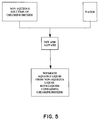
- Fig. 5 is a block diagram showing a method of preparing an aqueous solution of chlorine dioxide by the present invention.
- the present invention represents a departure from all other existing processes in that the chlorine dioxide is generated in an aqueous system, but immediately extracted into a water immiscible non-aqueous liquid such as a non-aqueous solvent. It is also a departure from all other existing methods in that it rapidly and easily leads to the formation of solutions of chlorine dioxide in non-aqueous liquids at concentrations far higher than obtainable in water. It also represents a departure from all other systems in that the chlorine dioxide produced is very pure, and free of chlorine, chlorite, chlorate, and hydrogen ion, none of which are soluble in non-polar organic solvents. Furthermore, the solutions generated are acid free (the concept of pH has no meaning in non-aqueous systems).
- the non-aqueous liquid must be substantially immiscible with water in that the liquid and the water are readily separated.
- the non-aqueous liquid may have a density greater than or less than water, to permit rapid separation. It is immaterial to the process whether, after separation, the aqueous phase is the upper layer or the lower layer of the two liquids.
- the process comprises the providing of an aqueous solution of chlorine dioxide and providing a quantity of the non-aqueous liquid.
- the two liquids are mixed and agitated vigorously to effectively extract and dissolve the chlorine dioxide in the non-aqueous liquid.
- the aqueous liquid phase is then separated from the non-aqueous liquid phase to obtain the chlorine dioxide in the non-aqueous liquid.
- the two phases referred to above are a water phase containing the ionic inorganic reactants which combine to form chlorine dioxide, and a water immiscible organic phase which acts to extract the uncharged molecular chlorine dioxide as formed.
- the organic phase performs two functions simultaneously; it acts to receive and dissolve the chlorine dioxide as generated in the aqueous phase, and it acts to separate chlorine dioxide from the inorganic precursors and by-products to lead to a contaminant free solution of chlorine dioxide with a purity unavailable from aqueous-only systems.
- the process involves the addition of a water immiscible liquid with which the generated chlorine dioxide does not react, such as hexane, cyclohexane octane, benzene, xylene, or toluene, (gasoline, diesel, and heavy aromatic naphtha also are usable, but the chlorine dioxide reacts with each over a period of hours) to an aqueous solution of chlorite (preferably sodium chlorite) varying in concentration from less than 0.5% to 25%.
- chlorite preferably sodium chlorite
- the organic solvent forms a separate phase from the water. Sodium chlorite is insoluble in the organic solvent, and remains in the water phase.
- the water phase is then acidified with hydrochloric acid, sulfuric acid, or any acid known to persons skilled in the art.
- Yellow chlorine dioxide is immediately formed, and by vigorous mixing, is extracted preferentially into the organic phase.
- the more concentrated the aqueous phase the greater the partitioning into the organic phase.
- Unreacted sodium chlorite, acid, and by-product sodium chloride are insoluble in the non-polar organic phase and remain in the water phase, leading to contaminant free chlorine dioxide.
- chlorite with acid is known to produce chlorine as well as chlorine dioxide, chlorine being an undesirable product of a competing reaction.
- Chlorine reacts with many substances to produce chlorinated by-products, many of which are environmentally undesirable. Some of these chlorinated substances act as catalyst poisons.
- chlorine is a less effective biocide than chlorine dioxide, the latter being two to four times more effective. This is especially important in commercial use of chlorine dioxide when diluted biocide is used. Unless high purity chlorine dioxide is available, which is free of comparatively high concentration of chlorine, the effectiveness of the sterilization and/or disinfecting procedure may be reduced. In addition, chlorine is much more corrosive than chlorine dioxide, especially in the presence of water.
- the organic solvent is added to the aqueous chlorite solution and forms a discrete layer above or below the water, depending on its density.
- a volume of concentrated hydrochloric acid is added in one portion to the aqueous layer resulting in the formation of chlorine dioxide along with some by-product chlorine.
- Both the chlorine dioxide and chlorine are soluble in the organic solvent and by means of vigorous agitation of the two liquid phases, an intimate mixture is created which allows the two molecular gases to be extracted and dissolved in the organic layer.
- the chlorine dioxide is extracted in finished form.
- the chlorine is extracted as the chlorine molecule C12, in which form it is free to react with unconverted chlorite remaining in the aqueous phase.
- the method of producing chlorine dioxide by reacting chlorine with an aqueous solution of a metal chlorite is disclosed in U.S. Letters Patent No. 4,590,057.
- the volume of non-aqueous solvent ranged from 83% of the volume of the aqueous phase to 400% the volume of the aqueous phase.
- the former system gave hexane solutions of extremely pure chlorine dioxide of 7824 mg/liter, whereas the latter gave a very pure solution with a concentration of 10,792 mg/liter. Addition of salt (sodium chloride) in excess of saturation to the latter allowed increased extraction to a solution having a chlorine dioxide concentration of 11,288 mg/liter, also with extremely high purity.
- Non-Aqueous Liquid mg C102/liter %
- Theoretical* Hexane 10,972 59.0 Cyclohexane 11,264 60.5 Octane 1,822 9.7 Benzene 17,335 93.2 Toluene 5,059 27.2 Xylene 8,836 47.5 Gasoline 12,816 68.9 Diesel 4,182 22.4 Heavy Aromatic 17,200 92.5 Naphtha *
- the non-aqueous solution of chlorine dioxide is stable for a period of at least one month.
- the method of analysis was that of Aieta et al (Journal Amer. Water Works Assn., Vol. 96, pp. 64-70, Jan. 1984).
- the sample containing chlorine dioxide is added to a mixture of solid potassium iodide crystals and pH 7 buffer.
- the chlorine dioxide oxidizes iodide to iodine, and the formed iodine is titrated with 0.1 Normal sodium thiosulfate (NST). Either a starch/iodine or amperometric endpoint is used to determine equivalence.
- the chlorine dioxide is reduced to chlorite ion, which is not an oxidant at pH 7.
- any oxidant detected at pH 7 will be only chlorine dioxide or unreacted contaminating chlorine.
- the contents of the titration container are acidified to pH 1.5-2, by adding dilute hydrochloric acid. This activates the chlorite formed in the first step of the titration and causes it to oxidize the contained iodide ion, restoring the blue starch/iodine color (or activating the meter on the amperometric titrator). Each chlorite ion requires four electrons to neutralize it. Because of the relative oxidation capacities of chlorine dioxide and chlorite, the second titration should require four times the titrant required for the first if the chlorite present comes solely from chlorine dioxide.
- the water immiscible solvent is added to the aqueous chlorite solution of the desired concentration.
- Acid is added to the aqueous chlorite solution of the desired concentration.
- Acid is added to the aqueous phase and the liquid phase are vigorously agitated. The aqueous and non-aqueous phases are separated.
- chlorite solutions used was from 1 ml in 49 ml water (0.5%) to 10 ml chlorite plus 10 ml water (12.5%). Concentrations up to 25% may be used if adequate safety precautions are taken.
- the chlorine dioxide is light sensitive and spontaneously reacts exothermically to produce chlorine and oxygen.
- the induction period varies as a function of the solvent and the amount of oxygen present in the atmosphere above the organic base. With hexane, the time was approximately 1-5 minutes and with cyclohexane, the time was 15-30 minutes. It is highly recommended that the procedure herein be conducted in a light-free environment or that, if glass containers are used, that the glass be colored to significantly reduce the exposure of chlorine dioxide to light.
- the concentration range used for the hydrochloric acid added was from 15% to full strength (37%).
- the non-aqueous liquid may be an aliphatic, an aromatic, or a mixture of aliphatic and aromatic liquids.
- the criteria for the non-aqueous liquid is that it be substantially immiscible with water, substantially non-reactive with chlorine dioxide and substantially non-reactive with chlorine.
- the non-aqueous liquid is not limited to the liquids described herein but these liquids are listed as having been found to be satisfactory.
- the method of preparation of chlorine dioxide in the aqueous phase is not limited to the reaction of chlorite with acid (Fig. 3).
- chlorine dissolved in water hypoochlorous acid
- chlorite U.S. Patent No. 4,250,144
- Molecular chlorine reacts directly with sodium chlorite solutions.
- Chlorates have also been widely used for preparation of chlorine dioxide.
- An electrolytic cell process wherein sodium chlorate is reacted with hydrochloric acid and heat is disclosed in U.S. Patent No. 2,920,801.
- Chlorine dioxide is produced by the reaction of sodium chlorate, sulfuric acid and methanol in U.S. Patent No. 4,801,520.
- Any method of producing an aqueous solution of chlorine dioxide known to persons skilled in the art may be used in the process of the present invention. However, procedures which are less efficient in the production of chlorine dioxide and which also produce chlorine as a by-product, are less desirable where high purity chlorine dioxide is desired. This is because the chlorine is also soluble, to varying extents, in the non-aqueous liquid.
- a solution of chlorine is prepared in the non-aqueous, substantially water immiscible liquid with which chlorine is substantially non-reactive.
- An aqueous solution of chlorite is provided and the aqueous liquid is mixed and agitated with the non-aqueous liquid.
- Chlorine dioxide is formed by the reaction of chlorine with chlorite. Cl2 + 2NaCl02 ⁇ 2NaCl + 2Cl02 The chlorine dioxide is dissolved and extracted with the non-aqueous liquid in high concentration.
- a 10 ml volume of 12.5% sodium hypochlorite was added to 40 ml of distilled water to make a total of 50 ml solution in a separatory funnel, and 50 ml of hexane added to the funnel.
- a 5 cc portion of 15% hydrochloric acid was added to the two phase system in the funnel, and the mixture agitated vigorously. Yellow molecular chlorine was formed by the reaction of hypochlorite with acid. (The mixing of hypochlorite with acid is a standard method for chlorine preparation of chlorine gas).
- the aqueous layer containing unreacted chlorite and sodium chloride by-product is discarded.
- the hexane layer contains chlorine-free chlorine dioxide.
- the first titration required 1.15 ml of 0.1N NST.
- the chlorine dioxide concentration of the hexane solution was 7757 mg/liter.
- Example II also provides highly purified chlorine dioxide free of chlorites, chlorates, hypochlorites, acid and water soluble ionic salts since these reactants and by-products are soluble in water and insoluble in the non-aqueous phase. Further, excess chlorite in the aqueous phase and continued extraction permits further reaction with the chlorite of any residual chlorine in the non-aqueous phase to increase the efficiency and the yield of the process. The higher the concentration of chlorite in the aqueous phase, the more rapid is the reaction with molecular chlorine. In addition, as previously described, addition of sodium chloride to the aqueous phase also increases the yield of chlorine dioxide.
- the non-aqueous solution of highly purified chlorine dioxide may further be used to prepare very pure aqueous solutions of chlorine dioxide (Fig. 5).
- the non-aqueous solution of chlorine dioxide is mixed and vigorously agitated with water.
- an equal volume of distilled water is used.
- concentrations of chlorine dioxide in water may be obtained.
- Extraction of the non-aqueous liquid containing chlorine dioxide with distilled water is preferred since the presence of salts and dissolved substances in the water decreases the solubility of chlorine dioxide in the aqueous phase.
- chlorine dioxide has been found to be more soluble in pure water than in the non-aqueous liquid; that is the partition favors pure water over pure solvent.
- the relative volume of the aqueous phase compared to the non-aqueous phase is not critical for extraction into the water but is a factor with respect to the amount of chlorine dioxide which the aqueous phase is capable of dissolving.
- the advantage of this method of preparing aqueous solutions of chlorine dioxide over methods previously disclosed in the prior art is that the chlorine dioxide is pure and the aqueous solution has no chlorine, chlorites, chlorates, hydrochlorates or other reaction precursors or by-products present. Also, the chlorine dioxide can be obtained at a relatively high concentration. Of course, the solution can be further diluted with water if a lower concentration is desired. Further, if properly stored, the aqueous solution is stable for at least seven (7) days with substantially no reduction in the concentration of the chlorine dioxide.
- the methods also represent means for manufacturing high concentration solutions of chlorine dioxide in organic solvents which may have commercial value in and of themselves.
- a method for preparation of aqueous chlorine dioxide of high purity and excellent storage stability is disclosed.
Landscapes
- Chemical & Material Sciences (AREA)
- Organic Chemistry (AREA)
- Inorganic Chemistry (AREA)
- Life Sciences & Earth Sciences (AREA)
- General Life Sciences & Earth Sciences (AREA)
- Geology (AREA)
- Agricultural Chemicals And Associated Chemicals (AREA)
- Fire-Extinguishing Compositions (AREA)
- Organic Low-Molecular-Weight Compounds And Preparation Thereof (AREA)
Applications Claiming Priority (2)
| Application Number | Priority Date | Filing Date | Title |
|---|---|---|---|
| US71663891A | 1991-06-17 | 1991-06-17 | |
| US716638 | 1991-06-17 |
Publications (2)
| Publication Number | Publication Date |
|---|---|
| EP0519152A1 true EP0519152A1 (de) | 1992-12-23 |
| EP0519152B1 EP0519152B1 (de) | 1995-01-25 |
Family
ID=24878829
Family Applications (1)
| Application Number | Title | Priority Date | Filing Date |
|---|---|---|---|
| EP91870177A Expired - Lifetime EP0519152B1 (de) | 1991-06-17 | 1991-11-08 | Erzeugung von Chlordioxid in eines nichtwässeriges Medium |
Country Status (8)
| Country | Link |
|---|---|
| US (2) | US5405549A (de) |
| EP (1) | EP0519152B1 (de) |
| JP (1) | JPH069202A (de) |
| KR (1) | KR960011431B1 (de) |
| AT (1) | ATE117659T1 (de) |
| AU (1) | AU640053B2 (de) |
| DE (1) | DE69107065T2 (de) |
| ES (1) | ES2069269T3 (de) |
Cited By (3)
| Publication number | Priority date | Publication date | Assignee | Title |
|---|---|---|---|---|
| WO2017106696A3 (en) * | 2015-12-18 | 2017-10-12 | Sabre Intellectual Property Holding Llc | Chlorine dioxide containing mixtures and chlorine dioxide bulk treatments for enhancing oil and gas recovery |
| US10308533B2 (en) | 2013-03-15 | 2019-06-04 | Sabre Intellectual Property Holdings Llc | Method and system for the treatment of water and fluids with chlorine dioxide |
| US10442711B2 (en) | 2013-03-15 | 2019-10-15 | Sabre Intellectual Property Holdings Llc | Method and system for the treatment of produced water and fluids with chlorine dioxide for reuse |
Families Citing this family (24)
| Publication number | Priority date | Publication date | Assignee | Title |
|---|---|---|---|---|
| US5707546A (en) * | 1991-06-17 | 1998-01-13 | Rio Linda Chemical Co., Inc. | Generation and storage of chlorine dioxide in a non-aqueous medium |
| AU640053B2 (en) * | 1991-06-17 | 1993-08-12 | Rio Linda Chemical Co., Inc. | Generation of chlorine dioxide in a non-aqueous medium |
| US5705092A (en) * | 1995-06-05 | 1998-01-06 | Southwest Research Institute | Multilayered biocidal film compositions |
| US5980826A (en) * | 1993-02-12 | 1999-11-09 | Bernard Technologies Inc. | Methods of deodorizing and retarding contamination or mold growth using chlorine dioxide |
| US5707739A (en) * | 1995-06-05 | 1998-01-13 | Southwest Research Institute | Powdered biocidal compositions |
| US5639295A (en) * | 1995-06-05 | 1997-06-17 | Southwest Research Institute | Method of making a composition containing a stable chlorite source |
| US6046243A (en) * | 1993-02-12 | 2000-04-04 | Bernard Technologies, Inc. | Compositions for sustained release of a gas |
| US5914120A (en) * | 1995-06-05 | 1999-06-22 | Southwest Research Institute | Amine-containing biocidal compositions containing a stabilized chlorite source |
| DE69636006T2 (de) * | 1995-06-12 | 2006-11-23 | MicroActive Corp., Reno | Transparente biozide zusammensetzungen mit verzögerter freigabe |
| DE19529504C2 (de) * | 1995-08-10 | 1998-03-26 | Manfred Prof Dr Rer Na Rimpler | Verfahren zur Herstellung wäßriger Chlordioxid-Lösungen |
| US5965264A (en) * | 1996-09-18 | 1999-10-12 | Bernard Technologies, Inc. | Powders providing controlled sustained release of a gas |
| US5888528A (en) * | 1997-05-19 | 1999-03-30 | Bernard Technologies, Inc. | Sustained release biocidal powders |
| US6605304B1 (en) | 1998-02-09 | 2003-08-12 | Bernard Technologies, Inc. | Silicate-containing powders providing controlled, sustained gas release |
| US6277408B1 (en) | 1998-02-09 | 2001-08-21 | Southwest Research Institute | Silicate-containing powders providing controlled, sustained gas release |
| US6231830B1 (en) * | 1999-03-04 | 2001-05-15 | George Madray | Method of making molecular chlorine dioxide |
| US7174744B2 (en) * | 2002-08-20 | 2007-02-13 | American Air Liquide, Inc. | Method of improving the biocidal efficacy of dry ice |
| CA2526938A1 (en) * | 2003-05-12 | 2004-11-25 | Johnsondiversey, Inc. | A system for producing and dispensing chlorine dioxide |
| US20050276723A1 (en) * | 2004-06-15 | 2005-12-15 | Meenakshi Sundaram | Aseptic sterilant using ozone in liquid carbon dioxide |
| CN101495246A (zh) * | 2006-07-31 | 2009-07-29 | 日本曹达株式会社 | 使用膜物性改善处理方法制成的有机薄膜的制造方法 |
| US8513176B2 (en) | 2006-08-02 | 2013-08-20 | Ch2O Incorporated | Disinfecting and mineral deposit eliminating composition and methods |
| WO2009077213A1 (de) * | 2007-12-19 | 2009-06-25 | Infracor Gmbh | Verfahren zur behandlung von wasser mit chlordioxid |
| EP2262372B1 (de) * | 2008-03-20 | 2014-07-16 | Diversey, Inc. | Wasserfreie erzeugung von chlordioxid aus natrium chlorit und octansäure |
| US8221566B1 (en) * | 2009-07-02 | 2012-07-17 | The United States Of America As Represented By The Secretary Of The Navy | Process for employing HNFX as a biocidal explosive |
| JP2023128479A (ja) * | 2022-03-03 | 2023-09-14 | 日本液炭株式会社 | 容器入り散布剤及びその製造方法 |
Citations (1)
| Publication number | Priority date | Publication date | Assignee | Title |
|---|---|---|---|---|
| WO1989003179A1 (en) * | 1987-10-13 | 1989-04-20 | New Generation Products, Inc. | Chlorine dioxide germicidal composition |
Family Cites Families (9)
| Publication number | Priority date | Publication date | Assignee | Title |
|---|---|---|---|---|
| US2436134A (en) * | 1945-03-12 | 1948-02-17 | Mathieson Alkali Works Inc | Production of chlorine dioxide |
| US3084995A (en) * | 1960-12-16 | 1963-04-09 | Fmc Corp | Process for storage of chlorine dioxide |
| JPS50111857A (de) * | 1974-02-13 | 1975-09-02 | ||
| US4105546A (en) * | 1974-06-29 | 1978-08-08 | Idemitsu Kosan Company, Ltd. | Method of treating waste water with activated sludge |
| JPS60101195A (ja) * | 1983-11-08 | 1985-06-05 | Mitsuru Tsuchikura | 金属加工に用いる切削油並びに研削油に配合する安定化二酸化塩素剤 |
| US4786492A (en) * | 1986-03-31 | 1988-11-22 | Ratcliff Perry A | Method and composition for prevention and treatment of oral disease |
| US4793931A (en) * | 1987-09-10 | 1988-12-27 | Solarchem Research, A Division Of Brolor Investments Limited | Process for treatment of organic contaminants in solid or liquid phase wastes |
| US5204081A (en) * | 1991-05-03 | 1993-04-20 | Rio Linda Chemical Co., Ltd. | Process for the generation of chlorine dioxide |
| AU640053B2 (en) * | 1991-06-17 | 1993-08-12 | Rio Linda Chemical Co., Inc. | Generation of chlorine dioxide in a non-aqueous medium |
-
1991
- 1991-10-16 AU AU85854/91A patent/AU640053B2/en not_active Ceased
- 1991-10-30 KR KR1019910019195A patent/KR960011431B1/ko not_active Expired - Fee Related
- 1991-11-08 AT AT91870177T patent/ATE117659T1/de not_active IP Right Cessation
- 1991-11-08 DE DE69107065T patent/DE69107065T2/de not_active Expired - Fee Related
- 1991-11-08 EP EP91870177A patent/EP0519152B1/de not_active Expired - Lifetime
- 1991-11-08 ES ES91870177T patent/ES2069269T3/es not_active Expired - Lifetime
- 1991-11-15 JP JP3353554A patent/JPH069202A/ja active Pending
-
1993
- 1993-05-19 US US08/064,756 patent/US5405549A/en not_active Expired - Lifetime
-
1996
- 1996-01-17 US US08/590,061 patent/US5693252A/en not_active Expired - Lifetime
Patent Citations (1)
| Publication number | Priority date | Publication date | Assignee | Title |
|---|---|---|---|---|
| WO1989003179A1 (en) * | 1987-10-13 | 1989-04-20 | New Generation Products, Inc. | Chlorine dioxide germicidal composition |
Non-Patent Citations (1)
| Title |
|---|
| PATENT ABSTRACTS OF JAPAN vol. 9, no. 283 (C-313)9 November 1985 & JP-A-60 129 122 ( MOTOYASU UEHARA ) 10 July 1985 * |
Cited By (3)
| Publication number | Priority date | Publication date | Assignee | Title |
|---|---|---|---|---|
| US10308533B2 (en) | 2013-03-15 | 2019-06-04 | Sabre Intellectual Property Holdings Llc | Method and system for the treatment of water and fluids with chlorine dioxide |
| US10442711B2 (en) | 2013-03-15 | 2019-10-15 | Sabre Intellectual Property Holdings Llc | Method and system for the treatment of produced water and fluids with chlorine dioxide for reuse |
| WO2017106696A3 (en) * | 2015-12-18 | 2017-10-12 | Sabre Intellectual Property Holding Llc | Chlorine dioxide containing mixtures and chlorine dioxide bulk treatments for enhancing oil and gas recovery |
Also Published As
| Publication number | Publication date |
|---|---|
| ES2069269T3 (es) | 1995-05-01 |
| KR930000376A (ko) | 1993-01-15 |
| AU8585491A (en) | 1992-12-24 |
| DE69107065D1 (de) | 1995-03-09 |
| US5693252A (en) | 1997-12-02 |
| DE69107065T2 (de) | 1995-08-10 |
| ATE117659T1 (de) | 1995-02-15 |
| KR960011431B1 (ko) | 1996-08-22 |
| JPH069202A (ja) | 1994-01-18 |
| EP0519152B1 (de) | 1995-01-25 |
| AU640053B2 (en) | 1993-08-12 |
| US5405549A (en) | 1995-04-11 |
Similar Documents
| Publication | Publication Date | Title |
|---|---|---|
| EP0519152B1 (de) | Erzeugung von Chlordioxid in eines nichtwässeriges Medium | |
| US6428696B2 (en) | Process for preparing a chlorine-dioxide-containing disinfectant solution for water treatment | |
| EP1259459B1 (de) | Massive körper zur herstellung von hochumgesetzten chlordioxidelösungen | |
| US6325970B1 (en) | Preparation and use of biocidal solutions | |
| Chapin | The effect of hydrogen-ion concentration on the decomposition of hypohalites | |
| EP0513167B1 (de) | Verfahren zur erzeugung von hochreinen konzentrierten kaliumhypochloridlösungen | |
| MXPA01012158A (es) | Composicion quimica y metodo. | |
| Gould et al. | Perhaloalkyl hypochlorites and pentafluorosulfur hypochlorite. I. Preparation and properties | |
| US5707546A (en) | Generation and storage of chlorine dioxide in a non-aqueous medium | |
| WO1990013514A1 (en) | Gaseous generator system for preparing chlorine dioxide | |
| US7045659B2 (en) | Process for the synthesis of monochloramine | |
| CA2144468C (en) | Method of producing chlorine dioxide | |
| EP1494967A1 (de) | Verfahren und kit zur herstellung von chlordioxid im gemisch mit sauerstoff | |
| RU2093458C1 (ru) | Способ получения водного раствора гипохлорита щелочного металла | |
| FI69292C (fi) | Foerfarande foer framstaellning av klordioxid | |
| US20240239657A1 (en) | Method of preparation and properties of pure hypochlorous acid, hocl | |
| CN100404410C (zh) | 仲高碘酸二钠的制备方法 | |
| CS216940B2 (en) | Method of continuous production of the chlorine oxide | |
| JP2606997B2 (ja) | クロラニルの製造方法 | |
| AU2003204430B2 (en) | Preparation and use of biocidal solutions | |
| Kimura et al. | Hypochlorite oxidation of ammonia. Effective removal of ammonia from waste water by UV-irradiation. | |
| Celon | The simultaneous microdetermination of chlorine, bromine, and iodine in organic compounds by the oxygen flask method | |
| Taylor | VI.—The action of halogens on silver salts | |
| JPH1160213A (ja) | 過酸化水素の製造方法 | |
| HK1051175B (en) | Massive bodies for producing highly converted solutions of chlorine dioxide |
Legal Events
| Date | Code | Title | Description |
|---|---|---|---|
| PUAI | Public reference made under article 153(3) epc to a published international application that has entered the european phase |
Free format text: ORIGINAL CODE: 0009012 |
|
| AK | Designated contracting states |
Kind code of ref document: A1 Designated state(s): AT BE CH DE DK ES FR GB GR IT LI LU NL SE |
|
| 17P | Request for examination filed |
Effective date: 19930621 |
|
| 17Q | First examination report despatched |
Effective date: 19930820 |
|
| GRAA | (expected) grant |
Free format text: ORIGINAL CODE: 0009210 |
|
| AK | Designated contracting states |
Kind code of ref document: B1 Designated state(s): AT BE CH DE DK ES FR GB GR IT LI LU NL SE |
|
| PG25 | Lapsed in a contracting state [announced via postgrant information from national office to epo] |
Ref country code: LI Effective date: 19950125 Ref country code: GR Free format text: LAPSE BECAUSE OF FAILURE TO SUBMIT A TRANSLATION OF THE DESCRIPTION OR TO PAY THE FEE WITHIN THE PRESCRIBED TIME-LIMIT Effective date: 19950125 Ref country code: DK Effective date: 19950125 Ref country code: CH Effective date: 19950125 Ref country code: BE Effective date: 19950125 Ref country code: AT Effective date: 19950125 |
|
| REF | Corresponds to: |
Ref document number: 117659 Country of ref document: AT Date of ref document: 19950215 Kind code of ref document: T |
|
| REF | Corresponds to: |
Ref document number: 69107065 Country of ref document: DE Date of ref document: 19950309 |
|
| RAP2 | Party data changed (patent owner data changed or rights of a patent transferred) |
Owner name: RIO LINDA CHEMICAL CO., INC. |
|
| K2C1 | Correction of patent specification (title page) published |
Effective date: 19950125 |
|
| ITF | It: translation for a ep patent filed | ||
| PG25 | Lapsed in a contracting state [announced via postgrant information from national office to epo] |
Ref country code: SE Effective date: 19950425 |
|
| REG | Reference to a national code |
Ref country code: CH Ref legal event code: PL |
|
| REG | Reference to a national code |
Ref country code: ES Ref legal event code: FG2A Ref document number: 2069269 Country of ref document: ES Kind code of ref document: T3 |
|
| ET | Fr: translation filed | ||
| PLBE | No opposition filed within time limit |
Free format text: ORIGINAL CODE: 0009261 |
|
| STAA | Information on the status of an ep patent application or granted ep patent |
Free format text: STATUS: NO OPPOSITION FILED WITHIN TIME LIMIT |
|
| PG25 | Lapsed in a contracting state [announced via postgrant information from national office to epo] |
Ref country code: LU Free format text: LAPSE BECAUSE OF NON-PAYMENT OF DUE FEES Effective date: 19951130 |
|
| 26N | No opposition filed | ||
| PGFP | Annual fee paid to national office [announced via postgrant information from national office to epo] |
Ref country code: NL Payment date: 19981026 Year of fee payment: 8 |
|
| PGFP | Annual fee paid to national office [announced via postgrant information from national office to epo] |
Ref country code: GB Payment date: 19981027 Year of fee payment: 8 |
|
| PGFP | Annual fee paid to national office [announced via postgrant information from national office to epo] |
Ref country code: ES Payment date: 19981102 Year of fee payment: 8 |
|
| PGFP | Annual fee paid to national office [announced via postgrant information from national office to epo] |
Ref country code: FR Payment date: 19981118 Year of fee payment: 8 |
|
| PGFP | Annual fee paid to national office [announced via postgrant information from national office to epo] |
Ref country code: DE Payment date: 19990126 Year of fee payment: 8 |
|
| PG25 | Lapsed in a contracting state [announced via postgrant information from national office to epo] |
Ref country code: GB Free format text: LAPSE BECAUSE OF NON-PAYMENT OF DUE FEES Effective date: 19991108 |
|
| PG25 | Lapsed in a contracting state [announced via postgrant information from national office to epo] |
Ref country code: ES Free format text: LAPSE BECAUSE OF NON-PAYMENT OF DUE FEES Effective date: 19991109 |
|
| PG25 | Lapsed in a contracting state [announced via postgrant information from national office to epo] |
Ref country code: NL Free format text: LAPSE BECAUSE OF NON-PAYMENT OF DUE FEES Effective date: 20000601 |
|
| GBPC | Gb: european patent ceased through non-payment of renewal fee |
Effective date: 19991108 |
|
| PG25 | Lapsed in a contracting state [announced via postgrant information from national office to epo] |
Ref country code: FR Free format text: LAPSE BECAUSE OF NON-PAYMENT OF DUE FEES Effective date: 20000731 |
|
| NLV4 | Nl: lapsed or anulled due to non-payment of the annual fee |
Effective date: 20000601 |
|
| PG25 | Lapsed in a contracting state [announced via postgrant information from national office to epo] |
Ref country code: DE Free format text: LAPSE BECAUSE OF NON-PAYMENT OF DUE FEES Effective date: 20000901 |
|
| REG | Reference to a national code |
Ref country code: FR Ref legal event code: ST |
|
| REG | Reference to a national code |
Ref country code: ES Ref legal event code: FD2A Effective date: 20001214 |
|
| PG25 | Lapsed in a contracting state [announced via postgrant information from national office to epo] |
Ref country code: IT Free format text: LAPSE BECAUSE OF NON-PAYMENT OF DUE FEES;WARNING: LAPSES OF ITALIAN PATENTS WITH EFFECTIVE DATE BEFORE 2007 MAY HAVE OCCURRED AT ANY TIME BEFORE 2007. THE CORRECT EFFECTIVE DATE MAY BE DIFFERENT FROM THE ONE RECORDED. Effective date: 20051108 |