EP0519338A1 - Méthodes améliorées d'amplification d'acides nucléiques - Google Patents
Méthodes améliorées d'amplification d'acides nucléiques Download PDFInfo
- Publication number
- EP0519338A1 EP0519338A1 EP92109886A EP92109886A EP0519338A1 EP 0519338 A1 EP0519338 A1 EP 0519338A1 EP 92109886 A EP92109886 A EP 92109886A EP 92109886 A EP92109886 A EP 92109886A EP 0519338 A1 EP0519338 A1 EP 0519338A1
- Authority
- EP
- European Patent Office
- Prior art keywords
- primer pair
- temperature
- amplification
- primer
- annealing
- Prior art date
- Legal status (The legal status is an assumption and is not a legal conclusion. Google has not performed a legal analysis and makes no representation as to the accuracy of the status listed.)
- Granted
Links
Images



Classifications
-
- C—CHEMISTRY; METALLURGY
- C12—BIOCHEMISTRY; BEER; SPIRITS; WINE; VINEGAR; MICROBIOLOGY; ENZYMOLOGY; MUTATION OR GENETIC ENGINEERING
- C12Q—MEASURING OR TESTING PROCESSES INVOLVING ENZYMES, NUCLEIC ACIDS OR MICROORGANISMS; COMPOSITIONS OR TEST PAPERS THEREFOR; PROCESSES OF PREPARING SUCH COMPOSITIONS; CONDITION-RESPONSIVE CONTROL IN MICROBIOLOGICAL OR ENZYMOLOGICAL PROCESSES
- C12Q1/00—Measuring or testing processes involving enzymes, nucleic acids or microorganisms; Compositions therefor; Processes of preparing such compositions
- C12Q1/68—Measuring or testing processes involving enzymes, nucleic acids or microorganisms; Compositions therefor; Processes of preparing such compositions involving nucleic acids
- C12Q1/6844—Nucleic acid amplification reactions
- C12Q1/6848—Nucleic acid amplification reactions characterised by the means for preventing contamination or increasing the specificity or sensitivity of an amplification reaction
-
- C—CHEMISTRY; METALLURGY
- C12—BIOCHEMISTRY; BEER; SPIRITS; WINE; VINEGAR; MICROBIOLOGY; ENZYMOLOGY; MUTATION OR GENETIC ENGINEERING
- C12Q—MEASURING OR TESTING PROCESSES INVOLVING ENZYMES, NUCLEIC ACIDS OR MICROORGANISMS; COMPOSITIONS OR TEST PAPERS THEREFOR; PROCESSES OF PREPARING SUCH COMPOSITIONS; CONDITION-RESPONSIVE CONTROL IN MICROBIOLOGICAL OR ENZYMOLOGICAL PROCESSES
- C12Q1/00—Measuring or testing processes involving enzymes, nucleic acids or microorganisms; Compositions therefor; Processes of preparing such compositions
- C12Q1/68—Measuring or testing processes involving enzymes, nucleic acids or microorganisms; Compositions therefor; Processes of preparing such compositions involving nucleic acids
- C12Q1/6844—Nucleic acid amplification reactions
- C12Q1/686—Polymerase chain reaction [PCR]
-
- C—CHEMISTRY; METALLURGY
- C12—BIOCHEMISTRY; BEER; SPIRITS; WINE; VINEGAR; MICROBIOLOGY; ENZYMOLOGY; MUTATION OR GENETIC ENGINEERING
- C12Q—MEASURING OR TESTING PROCESSES INVOLVING ENZYMES, NUCLEIC ACIDS OR MICROORGANISMS; COMPOSITIONS OR TEST PAPERS THEREFOR; PROCESSES OF PREPARING SUCH COMPOSITIONS; CONDITION-RESPONSIVE CONTROL IN MICROBIOLOGICAL OR ENZYMOLOGICAL PROCESSES
- C12Q1/00—Measuring or testing processes involving enzymes, nucleic acids or microorganisms; Compositions therefor; Processes of preparing such compositions
- C12Q1/70—Measuring or testing processes involving enzymes, nucleic acids or microorganisms; Compositions therefor; Processes of preparing such compositions involving virus or bacteriophage
- C12Q1/701—Specific hybridization probes
- C12Q1/706—Specific hybridization probes for hepatitis
Definitions
- the present invention provides improved methods and compositions for nucleic acid amplification.
- the novel methods provided offer enhanced target specificity, and sensitivity over prior methods and are particularly useful for amplification and detection of target sequences by the polymerase chain reaction (PCR).
- PCR polymerase chain reaction
- the thermocycling profile as well as the sequence, length, and concentration of amplification primers are modified to provide improved target specificity.
- the methods of the invention have numerous applications in the fields of molecular biology, medical diagnostics and forensics.
- the present invention provides a method for nested amplification of a sequence within a target nucleic acid in a sample, the method comprises: (a) mixing the sample in an amplification reaction mixture containing an outer primer pair and an inner primer pair, wherein the outer primer pair is capable of amplifying a segment of the target nucleic acid to provide an amplified target sequence, and the inner primer pair is capable of amplifying a subsequence within the target sequence; (b) treating the amplification reaction mixture of step (a) in an amplification reaction at a temperature for annealing and extending the outer primer pair on the target nucleic acid and at a temperature for denaturing the extension products of the outer primer pair to provide an amplified target sequence, wherein the temperature for annealing and extending the outer primer pair is higher than the temperature for annealing and extending the inner primer pair to the target nucleic acid; and (c)treating the mixture of step (b) in an amplification reaction at a temperature for anne
- the temperature for denaturing the extension products of the inner primer pair is suitable for denaturing the extension products of the outer primer pair and the method further comprises:(d) amplifying the subsequence, at a temperature for annealing and extending the inner primer pair on the amplified target sequence, and at a temperature for denaturing only the extension products of the inner primer pair to provide an amplified subsequence, wherein the temperature for denaturing only the extension products of the inner primer pair is lower than the temperature for denaturing the extension products of the outer primer pair.
- the invention provides a method of improved specificity in a PCR that comprises: (a) mixing a sample containing a target nucleic acid sequence in an amplification reaction mixture containing a primer pair for specifically amplifying the target; (b)amplifying the target sequence at a temperature for annealing and extending the primer pair that is between 1°C and 10°C higher than the Tm for the primer pair, and (c) amplifying the amplification reaction mixture of step (b) at a temperature for efficiently annealing and extending the primer pair to provide an amplified target sequence.
- the disclosed nucleic acid amplification methods and compositions offer the advantages of enhanced specificity and sensitivity over prior methods for amplifying nucleic acids.
- the methods relate to the use of modified thermocycling procedures for achieving improved amplification results.
- the methods also relate to the use of nested primers for increased specificity.
- the invention eliminates the disadvantages of prior nested priming procedures and reduces amplification artifacts such as primer-dimer.
- the improved amplification methods also enhance detection by increasing the amount of target-specific amplified product.
- Methods for nucleic acid detection are generally accomplished using oligonucleotide probes.
- oligonucleotide probes For example, the U.S. Patent Specification No. 4,358,535 discloses a method for detecting pathogens by spotting a sample (e.g., blood, cells, saliva, etc.) on a filter, lysing the cells, and fixing the DNA through chemical denaturation and heating. Then labelled DNA probes are added and allowed to hybridize with the fixed sample DNA. Hybridization indicates the presence of the pathogen's DNA.
- a sample e.g., blood, cells, saliva, etc.
- PCR polymerase chain reaction
- Sensitivity is critical when the amplification target is a rare sequence.
- the detection sensitivity is limited by the amount of amplified product available to be detected.
- Rare sequences for example, AIDS virus nucleic acids in an AIDS positive but otherwise healthy individual, or a rare gene transcript indicative of oncogenesis, are very difficult to detect and can be overlooked in conventional analytical practices. Forensic samples often comprise minute amounts of nucleic acid or partially degraded DNA.
- a difficulty in detecting a rare sequence is that there can be a high ratio of non-target to target sequence.
- the ability of a PCR to discriminate between target and nontarget DNA and amplify only target sequences is a key aspect of improved sensitivity. Discrimination between non-target and target is are reflection of the specificity of the primers and reaction conditions. The more specific a reaction is the greater the relative amount of the specific target sequence that is produced and the easier that product is to detect. An increase in specificity can, therefore, increase sensitivity as well.
- the two step reaction has several drawbacks resulting from the presence of the first primer pair in the second PCR, and the need for additional reagents, including enzyme, following the dilution of the first PCR mixture.
- the drawbacks of the nested priming method are compounded by the potential for cross contamination between samples during the dilution steps. Due to the enormous amplification possible with the PCR process, small levels of DNA carryover from samples with high DNA levels, positive control templates or targets from previous amplifications can result in PCR product, even in the absence of purposefully added template DNA. Particular methods and precautions for practicing PCR with a minimum of cross contamination are described in Nature 339 , 237-238 (1989) and PCR Protocols: A Guide to Methods and Applications, Academic Press, Inc., San Diego, California (1990).
- Proc. Natl. Acad. Sci. USA 86 , 2757-2760 (1989) describes a method for allele-specific amplification for diagnosing of sickle cell anemia. According to the method, three primers are included in the amplification reaction: two allele-specific primers, one specific for the sickle cell allele and one specific for the normal allele, and a third primer for amplifying either allele. Under stringent conditions, the allele-specific primer will only be extended on the complementary target. Accordingly, only one primer pair will function in PCR for any particular target.
- Proc. Natl. Acad. Sci. USA 86 , 6215-6219 (1989) also describes allele-specific amplification. In a non-nested procedure, primer sequences were modified to distinguish several particular alleles by selective amplification.
- the present invention provides improved methods for nested primer amplification.
- the methods offer improved specificity and sensitivity over prior methods.
- the thermocycling conditions of the amplification reaction are modified to provide improved results.
- the sequence, length, and/or concentration of amplification primers are modified as well.
- only two primers are required when the temperature cycling conditions are modified during amplification.
- the methods provide that more than two amplification primers are included in the amplification reaction mixture.
- the methods of the invention have fewer steps than prior nested amplification methods and consequently offer speed and simplicity over prior nested priming methods.
- the methods are particularly suitable in PCR-based amplification techniques wherein a first and a second primer are present in the reaction for amplifying a target nucleic acid.
- a third primer capable of hybridizing to the amplification product generated by the first and second primers is included in the amplification reaction.
- the modified nested priming methods utilize the distinct properties of each primer in the amplification reaction mixture to control which primers are extended during each thermocycle.
- the methods are suitable for amplification of any particular target sequences. In a clinical setting, the methods offer speed, simplicity and decreased opportunity for cross-contamination between samples by minimizing the number of manipulative steps of prior nested amplification methods.
- the present methods are suitable for use in any nucleic acid amplification process that is characterized by primer extension and thermocycling.
- the embodiments of the invention provided herein are PCR-based methods, although the invention is not limited to PCR amplification. PCR is widely practiced in the arts that relate to the present invention and a brief summary of the generic PCR process is provided for convenience.
- Amplification of DNA by PCR is disclosed in the U.S. Patent Specifications Nos. 4,683,195 and 4,683,202.
- Methods for amplifying and detecting nucleic acids by PCR using a thermostable enzyme are disclosed in the U.S. Patent Specification No. 4,965,188.
- PCR amplification of DNA involves repeated cycles of heat-denaturing the DNA, annealing two oligonucleotide primers to sequences that flank the DNA segment to be amplified and extending the annealed primers with DNA polymerase.
- the primers hybridize to opposite strands of the target sequence and are oriented so that DNA synthesis by the polymerase proceeds across the region between the primers, effectively doubling the amount of the DNA segment.
- each successive cycle essentially doubles the amount of DNA synthesized in the previous cycle. This results in the exponential accumulation of the specific target fragment, at a rate of approximately 2 n per cycle, where "n" is the number of cycles.
- amplification reaction system refers to any in vitro means for multiplying the copies of a target sequence of nucleic acid. Such methods include but are not limited to polymerase (PCR), DNA ligase, (LCR), Q ⁇ RNA replicase and RNA transcription-based (TAS and 3SR) amplification systems.
- PCR polymerase
- LCR DNA ligase
- TAS and 3SR RNA transcription-based amplification systems.
- amplifying which typically refers to an "exponential" increase in target nucleic acid is being used here in to describe both linear and exponential increases in the numbers of a select target sequence of nucleic acid.
- amplification reaction mixture refers to an aqueous solution comprising the various reagents used to amplify a target nucleic acid. These include enzymes, aqueous buffers, salts, amplification primers, target nucleic acid and nucleoside triphosphates. Depending upon the context, the mixture can be either a complete or incomplete amplification reaction mixture.
- This invention is not limited to any particular amplification system. As other systems are developed,those systems may benefit by practice of this invention. A recent survey of amplification systems was published in Bio/Technology 8 , 290-293 (1990).
- the ligase chain reaction is an alternative thermocycling amplification procedure. A combined PCR/LCR procedure is suitable for use in conjunction with the present invention.
- a brief summary of the ligase chain reaction is provided below for the convenience of those not familiar with ligase based amplification systems and to provide an understanding of the breadth of the present invention.
- LCR is described in PCT Patent Publication No. WO 89/09835.
- the process involves the use of ligase to join oligonucleotide segments that anneal to the target nucleic acid.
- LCR results in amplification of an original target molecule and can provide millions of copies of product DNA. Consequently, the LCR results in a net increase in double-stranded DNA.
- the present detection methods are applicable to LCR as well as PCR.
- LCR requires an oligonucleotide probe for detecting the product DNA.
- Taq DNA polymerase is preferred although this is not an essential aspect of the invention.
- Taq polymerase a thermostable polymerase
- Taq polymerase is active at high temperatures. Methods for the preparation of Taq are disclosed in the U.S. Patent Specification No. 4,889,818.
- Taq polymerase is commercially available as a recombinant product or purified from Thermus aquaticus.
- other thermostable DNA polymerases isolated from Thermus species or non Thermus species e.g., Thermus thermophilous or Thermotoga maritima
- non-thermostable DNA polymerase such as T4 DNA polymerase, T7 DNA polymerase, E. coli DNA polymerase I, or the Klenow fragment of E.
- nucleoside-5'-triphosphates utilized in the extension process typically dATP, dCTP, dGTP and dTTP, are present in total concentration typically ranging from 400 ⁇ M to 4.0 mM during the extension reaction, although preferably the concentration is between 500 ⁇ M and 1.5 ⁇ M.
- Taq polymerase can be prepared as both a 94 kDa and a 62 kDa enzyme.
- the 62 kDa enzyme is a processed form of the 94 kDa enzyme resulting from proteolytic cleavage of the N-terminal region. Either form of the enzyme will function as an agent of polymerization in PCR.
- individual amino acid residues may be modified by oxidation, reduction or other derivatization, or the protein may be cleaved to obtain fragments that retain activity.
- thermostable DNA polymerase that lacks 5' to 3' exonuclease activity is suitable.
- an inner primer complementary to the same template strand, momentarily annealing to its target,is possibly degraded by the 5' to 3' exonuclease of activity of the wild-type DNA polymerase. The net effect of such degradation would be a decrease in the concentration of the inner primer.
- the inner primer is present in excess; therefore, the use of an enzyme lacking 5' to 3' exonuclease activity is not essential for practicing the present invention.
- using a theromostable DNA polymerase with no or reduced 5' to 3' exonuclease activity provides a preferred form of practicing the disclosed methods of amplification.
- Such polymerase are known and commercially available.
- oligonucleotide as used herein is defined as a molecule comprised of two or more deoxyribonucleotides or ribonucleotides, preferably more than three, and usually more than ten. The exact size will depend on many factors, which in turn depends on the ultimate function or use of the oligonucleotide.
- the oligonucleotide may be derived synthetically or by cloning.
- primer refers to an oligonucleotide, whether occurring naturally as in a purified restriction digest or produced synthetically, which is capable of acting as a point of initiation of synthesis when placed under conditions in which synthesis of a primer extension product which is complementary to a nucleic acid strand is initiated, i.e., in the presence of different nucleoside triphosphates and a DNA polymerase in an appropriate buffer ("buffer” includes pH, ionic strength, cofactors, etc.) and at a suitable temperature.
- buffer includes pH, ionic strength, cofactors, etc.
- thermocycling profile refers to the selected temperature parameters selected for "n" cycles of PCR.
- the thermocycling profile includes at least two temperatures, a high denaturation temperature, adequate for sample-template and subsequent product denaturation and a low temperature appropriate for primer annealing and polymerase extension. Accordingly, in the present invention, particular thermocycling parameters are selected to control primer annealing and product denaturation and thus regulate template accessibility and primer extension.
- primers used in the present invention are generally oligonucleotides, usually deoxyribonucleotides several nucleotides in length, that can be extended in a template-specific manner by the polymerase chain reaction.
- the primer is sufficiently long to prime the synthesis of extension products in the presence of the agent for polymerization and typically contains 10-30 nucleotides, although the exact number is not critical to the successful application of the method.
- short primers which generally require cooler temperatures to form sufficiently stable hybrid complexes with the template are provided to facilitate, via manipulation of the annealing temperature during thermocycling, the beginning of the nested primer phase of the amplification which ultimately enhances sensitivity and specificity of the amplification reaction.
- short primers are characterized as less thermally stable when annealed to target DNA than flanking outer primers. Accordingly, short primers are generally 8-18.
- long primers containing a non-complementary tail, adding 20-100 nucleotides to the 10-30 nucleotide homologous primer region are provided. The non-complementary regions are useful for providing extension products of increased thermostability which require higher temperatures for subsequent denaturation to serve as amplification templates.
- Synthetic oligonucleotides can be prepared using the triester method described in J. Am. Chem. Soc. 103 , 3185-3191 (1981). Alternatively automated synthesis may be preferred, for example, on a DNA Synthesizer using cyanoethyl phosphoramidite chemistry.
- a primer is selected to be "substantially" complementary to a strand of the template having a specific sequence.
- the primer For primer extension to occur, the primer must be sufficiently complementary to anneal to the nucleic acid template under the reaction conditions. Not every nucleotide of the primer must anneal to the template for primer extension to occur.
- the primer sequence need not reflect the exact sequence of the template.
- a non-complementary nucleotide fragment or tail is attached to the 5' end of the primer with the remainder of the primer sequence being complementary to the template.
- non-complementary bases can be interspersed into the primer, provided that the primer sequence has sufficient complementarity with the template for hybridization to occur and allow synthesis of complementary DNA strand.
- primers to conserved regions may amplify a class of gene sequences, while primers complementary to variable regions confer greater product specificity.
- the present invention is particularly suitable for allele-specific amplification.
- the outer primers function as generic primers, and the inner primer, or primers, are allele-specific.
- the outer primers generate a PCR product which then serves as a template to generate a second smaller PCR product.
- the allele-specific amplification product is generated in the same reaction vessel without opening the tube. This advantage is also particularly significant in clinical screening where thousands of samples are simultaneously screened for the presence of a rare agent, such AIDS virus nucleic acids or in forensic analyses where a sample is archival or provides evidence of a crime and the amount of sample is extremely limited.
- Amplification systems such as PCR require a target nucleic acid in a buffer compatible with the enzymes used to amplify the target.
- the target nucleic acid can be isolated from any source of biological materials including tissues, body fluids, feces, sputum, saliva, plant cells, bacterial cultures, and the like.
- nucleic acid sequence To amplify a target nucleic acid sequence in a sample, the sequence must be accessible to the components of the amplification system. In general, this accessibility is ensured by isolating the nucleic acids from a crude biological sample.
- a variety of techniques for extracting nucleic acids from biological samples are known in the art. For example, see those described in Molecular Cloning: A Laboratory Manual (New York, Cold Spring Harbor Laboratory, 1982), Nucleic Acid Hybridization: A Practical Approach (Eds. Hames and Higgins, IRL Press, 1985) or in PCR Protocols, Chapters 18-20 (Innis et al., Ed., Academic Press, 1990).
- the nucleic acid in the sample will be a sequence of DNA, most usually genomic DNA.
- the present invention can also be practiced with other nucleic acids, such as messenger RNA, ribosomal RNA, viral RNA or cloned DNA.
- Suitable nucleic acid samples include single or double-stranded DNA or RNA for use in the present invention.
- the nucleic acid can be amplified merely by making appropriate and well recognized modifications to the method being used.
- PCR process is most usually carried out as an automated process with a thermostable enzyme.
- the reaction mixture is cycled through a denaturing temperature range, a primer annealing temperature range, and an extension temperature range.
- the annealing and extension temperature ranges overlap, and consequently, PCR is often practiced as a two step cycling reaction comprising a denaturing step and an annealing/extension step.
- a machine specifically adapted for use with a thermostable enzyme is disclosed more completely in EP Patent Publication No. 236,069 and is commercially available.
- a sample which contains, or is suspected of containing, a particular oligonucleotide sequence of interest, the "target nucleic acid".
- the target may be RNA or DNA or an RNA/DNA hybrid.
- the target may be single-stranded or double-stranded.
- Target preparation will be carried out in a manner appropriate for the particular amplification process to be implemented. For example, in a PCR method where the target nucleic acid is single-stranded, such as mRNA, the target may be first reverse transcribed into cDNA, prior to amplification.
- Detection of the amplified products can be accomplished by a number of known means. Such means include, but are not limited to, hybridization with isotopic or non-isotopically labeled probes in, for example, a dot blot or electrophoretic format.
- a detection format system may include a capture step, such as a solid support substrate and an avidin-biotin label system.
- EP Patent Publication No. 237,362 describes a PCR-based detection method termed "reverse" dot-blot in which the probe, instead of the amplified DNA, is fixed to the membrane. According to the method,the target, rather than the probe, is labeled for hybridization.
- the probe is labeled in a detectable manner.
- the target DNA i.e., the amplified DNA in the PCR-reaction buffer
- determination of whether hybridization has occurred involves determining whether the label is present on the solid support. This procedure can be varied, however, and is possible when the target is labeled and the probe is bound to the solid support.
- Suitable labels may provide signals detectable by fluorescence, radioactivity, colorimetry, X-ray diffraction or absorption, magnetism, enzymatic activity, and the like.
- Suitable labels include fluoruphores, chromophores, radioactive isotopes (particularly 32P and 125I), electrondense reagents, enzymes and ligands having specific binding partners. Enzymes are typically detected by their activity. For example, horse-radish-peroxidase (HRP) can be detected by its ability to convert diaminobenzidine to a blue pigment.
- HRP-based detection uses tetramethyl-benzidine (TMB).
- the fluorescence of the amplification mixture increases as the target is amplified and the amount of double-stranded DNA present in the reaction mixture increases.
- a detectable DNA binding agent for example, ethidium bromide
- the present invention is particularly suitable for use in conjunction with such a homogeneous assay method. The combined method is described in Example II and provides tremendous advantages over prior methods for amplifying and detecting nucleic acids.
- the homogeneous assay method offers means for detecting the presence of target without opening the reaction vessel once the reaction is initiated.
- the present invention provides a method for nested amplification, also without opening the reaction vessel.
- the combined method has the enhanced sensitivity and specificity of nested priming and the ease of detection of the homogeneous assay system. Without opening the reaction vessel, a sequence as rare as one copy in 70,000 cells can be detected without the additional processing or manipulative steps usually required for target detection. The possibility of cross contamination is greatly minimized by the invention.
- the use of a spectrafluometer allows quantitation of the amount of product generated. Consequently, when used in a homogeneous assay, the present invention permits quantitative analysis for monitoring the progress of, for example, an infection or response to treatment regimen.
- the DNA polymerase is added to the PCR reaction mixture after both the primer and template are added.
- the enzyme and primer are added last or the PCR buffer or template plus buffer are added last. It is generally desirable that at least one component that is essential for polymerization not be present until such time as the primer and template are both present, and the enzyme can bind to and extend the desired primer/template substrate. This method, termed "hot start,” improves specificity and minimizes the formation of "primer-dimer.”
- Primer-dimer refers to a double-stranded PCR product consisting of two PCR primers and their complementary sequences. The synthesis of primer-dimer results from the extension of one primer using the other primer as template. Primer-dimer can occur in the absence of target and appears to be a function of primer concentration. The initial formation of "primer-dimer” can occur at low temperatures (i.e., room temperature); “hot start” eliminates this phase of the thermal profile. Once formed, this PCR artifact is amplified very efficiently and is detected in reactions with rare, or no specific template. In rare template reactions, the primer-dimer can compete with the target fragment for primers and enzyme and prevent efficient target amplification.
- nested primers serves to decrease primer-dimer and enhance PCR specificity.
- U.S. Patent Specification No. 4,683,195 describes that the nested primer procedure requires two primer pairs. According to the method a first "outer” primer pair is used to amplify a target sequence and a second "inner” primer pair is used to amplify a subsegment of the PCR product formed from the first amplification reaction. According to the method described therein, the reaction mixture is diluted 10-fold to reduce the concentration of the first primer pair after PCR, then the second primer pair is introduced into the reaction mixture.
- This method requires a number of additional steps, including, stopping the PCR, opening the reaction tube, diluting the reaction to eliminate or decrease the concentration of outer primers, adding a second primer pair, consequently adjusting buffer conditions, providing additional enzyme, and a second thermocycling reaction. These steps are eliminated by the present invention.
- the present invention provides nested amplification methods and compositions wherein the outer and inner primers are all present in the initial reaction mixture, and the thermocycler is programmed to allow the outer primers, but not the inner primers, to amplify initially, and then to allow the inner primers, but not the outer primers, to amplify the targeted subsequence within the initial PCR product.
- the examples of the invention serve to illustrate that primers prepared according to the invention are made to "drop in” or "drop out” of the amplification reaction in accord with the desired result.
- one member of the initial flanking i.e., outer, primer pair also functions as an inner or secondary primer. Consequently, only three primers are utilized.
- four individual primers are used, comprising both inner and outer primer pairs. When four primers are employed, either one or both of the inner primers are made to"drop-in.”
- a third primer internal to one member of the outer primers is included in a PCR reaction for amplifying a particular target segment.
- the third primer has an optimum, annealing temperature for PCR, that is lower than the optimum annealing temperature of the flanking outer primer. This property can be imparted to the third primer by virtue of a shorter length and/or lower G-C content. Adjusting the annealing temperature during the amplification reaction determines which primer pair is extended by the polymerase during any particular annealing/extension cycle.
- the primer flanking the third primer is present at a low concentration.
- the temperature during the extension phase of each PCR cycle is maintained sufficiently high, e.g., approximately 65°C to prevent the short, inner primer(s) from annealing specifically and initiating amplification.
- the outer primers anneal sufficiently such that PCR proceeds normally at the high extension temperature.
- the annealing temperature is decreased, for example, to approximately 42°C.
- the third primer "drops in” and proceeds to amplify the target for the remaining cycles.
- This procedure is schematically described in Figure 1 and referred to herein as "drop-in” PCR.
- the outer primer pair comprises primers "A" and "C”
- the inner primer pair comprises primers "B” and "C”
- primer "B” is the third primer.
- DNA and Cell Biology 10, 233-238 (1991) provides a formula for estimating the optimum annealing temperature for PCR for any particular primer/template duplex.
- the nearest neighbour thermodynamic data disclosed in Proc. Natl. Acad. Sci. 83 , 3746-3750 (1986), as well as methods described in Nuc. Acids Res. 6 , 3543-3557 (1979) exemplify empirical formula for estimating Tm.
- Tm is generally slightly higher than the optimum annealing temperature for PCR, calculating Tm provides a guidance for one of ordinary skill in the art to empirically determine suitable temperatures for practicing the present invention.
- the amount of target present in a sample varies up to 1,000-fold.
- Drop-in PCR is particularly suitable for such an analysis because of the effect of limited outer primer concentration on the amplifications. In a particular sample, if the amount of target is high, the PCR reaches plateau quickly but not completely. If the amount of target in a sample is low, amplification continues. Consequently, using a limiting outer primer concentration, different reactions are brought to about the same state of limited amplification before the thermocycling conditions are altered to allow the nested primer to "drop-in.” As a result, the effect of sample to sample variance on nested amplification results is diminished.
- a high denaturation temperature and a high annealing temperature allow the outer primers, but not the inner primers, to be extended.
- a flanking primer is synthesized with a G-C rich tail. Because the non-complementary primer tail sequence is incorporated into the PCR product after two cycles of amplification, the G-C tail serves to raise the temperature necessary for denaturing the PCR product because of the increased thermostability of G-C pairs versus A-T pairs. The resulting difference in the denaturing temperature of the nested and flanking PCR products is then exploited to effectively shut down amplification from the tailed outer primer.
- the denaturation temperature is lowered, i.e., from 96° to 86°C.
- the annealing temperature is dropped, allowing the inner primers to anneal.
- Drop-in/Drop-out PCR is schematically described in Figure 2.
- the drop-in/drop-out PCR method provides means for including high concentrations of all primers which is preferred for optimizing PCR efficiency while controlling which particular primer pair is extended at any cycle during the reaction. This aspect of the method for nested primer amplification is demonstrated in Examples I and II.
- the Drop-in PCR method requires that a first outer primer is present at a low concentration. Generally, amplification primers are present at a concentration of 1-100 pmole per 100 ⁇ l reaction. For drop-in PCR a suitable concentration for the limited out primer is within the range of 1% to 50% of the concentration of second and third primers (i.e., the inner primer pair). As amplification proceeds, the amount of first primer becomes limiting, with respect to the other primers. Consequently, when the annealing temperature is decreased to the Tm of the third primer, annealing and extension of the inner primer is favored and the smaller primer PCR product begins to accumulate.
- the change in the thermocycling profile during PCR enhances amplification specificity.
- non-specific primer events lead to a build up of non-target, i.e., background, products.
- a thermocycle using a non-target template, is complete, that template will continue to be amplified in successive cycles.
- outer primers anneal to the amplified non-target template, the inner primer does not.
- Each change in the thermocycling profile results in a change in the population of non-target template molecules. Therefore, with each change in the cycling parameters, the non-target amplification possible during the previous thermocycle is diminished, and consequently, target specificity is enhanced.
- the number of cycles necessary at each thermocycling profile, or phase is empirically determined and varies depending on the complexity of the sample, the particular target, and the relative amounts of target and background nucleic acid.
- the number of cycles required at the high annealing temperature, where in the outer primers are extended is one, or any number of cycles greater than one. It may be desirable to include, for example, 1-30 cycles at high annealing temperature, and the specific number of cycles is determined according to the particularities of the assay; i.e., sample, target, primers, and the specific result required.
- the outer primers may be suitable for amplifying a region of interest known to be present such as a particular gene segment. Amplification of, for example, a genetic marker by an outer primer pair provides an internal positive control for indicating that amplification has occurred.
- thermocycling profile is altered, and the inner target or specific primers are utilized.
- the additional increase in PCR product determined by a further increase in fluorescence indicates the presence of a particular target sequence.
- detection of the outer primer pair amplification product is not an essential aspect of the invention.
- Amplification by the first (outer) primer pair serves to increase the number of target molecules providing additional templates for amplification by the second (inner) primer pair.
- the second cycling phase in the Drop-in/Drop-out method serves to initiate amplification using the internal primers and provide target for the third cycling phase (low T denaturation, low Tanneal).
- the third cycling phase the lowered denaturation temperature effectively eliminates outer primer amplification, while inner primer amplification continues. Amplification at high T denaturation and low T anneal converts outer PCR product to inner PCR template. In practice 1-10 cycles are sufficient for the second phase of the reaction, although more cycles may be desirable for a particular target.
- the annealing temperature for any specific primer in PCR is a function of the %GC content of the oligonucleotide. It will be obvious to one of skill in the art to determine the annealing temperature suitable for any particular target and primer using the guidance provided by the present examples of the invention.
- the difference in the annealing temperature of the low T anneal and high T anneal cycles is at least 1°C and preferably is 3° - 30°C.
- the primer extension temperature is readily determined by one of ordinary skill in the art using the cited references and the present examples as a guide.
- the variation from high T denaturation to low T denaturation is as much as 20°C or as little as 1°C depending on the target and sample complexity, G-C content, and primer sequence.
- the shift to a low denaturation temperature prevents denaturation of non-target amplified DNA. Because this nucleic acid is non-target, the length and %GC content cannot be determined for estimating the optimum temperature for preventing denaturation. Consequently, the denaturation temperature is empirically determined using the present specification and examples as a guide.
- PCR Technology, Stockton Press (1989) describes the effects of nucleotide sequences on the Tm of DNA subsegments or domains within a larger nucleic acid sequence.
- a tailed primer comprising approximately 40 nucleotides of 100% GC is sufficient to alter the temperature required for complete denaturation of an amplified sequence 500 base pairs in length.
- the G-C tail, added to the 5' end of the flanking primer is between 10 and 100 nucleotides in length.
- a flanking primer is not required for enhanced product specificity. Following the protocol for Drop-in amplification using only the inner primer pair provides an unexpectedly superior result when compared to the results of amplification using standard PCR conditions. Example II clearly demonstrates this aspect of the invention.
- amplification specificity is improved by subjecting the sample to at least one thermocycle using an annealing temperature higher than the Tm.
- the cycling profile is subsequently adjusted and the annealing temperature is lowered to the appropriate Tm.
- the temperature for primer annealing and extension is 1° - 10°C higher than the estimated Tm for the particular primer pair.
- This method is particularly useful for increasing sensitivity as well as specificity. For example, detection of AIDS virus nucleic acids present as 1 copy per 70,000 cells is enhanced by the method and is illustrated in Example I. Similarly, allele-specific amplification for detecting the presence of a one-base pair change is also improved by the addition of the high temperature annealing cycle(s).
- kits for enhanced amplification specificity would include inner and outer primer pairs for a specific target or allele. Kits may also include any of the following reagents for amplification such as a DNA polymerase, buffers, dNTPs, and a positive control template.
- the drop-in/drop-out amplification method was used for amplifying a rare single copy sequence in a background of DNA from 70,000 human cells.
- a modified nested primer procedure as briefly described in the"Detailed Description” section as a primer "drop-in/drop-out” procedure, was designed to enhance PCR specificity.
- This assay was done as follows: into PCR reaction vessels 1 through 8 were aliquoted 50 microliters of solution, each containing 50 mM KCl; 10 mM TrisHCl, pH 8.3; 2.5 mM MgCl2; 600 ⁇ M total dNTPs; 1.25 unit of Taq DNA polymerase (PECI); 1.27 ⁇ M ethidium bromide; 0.5 ⁇ g of human cell-line DNA; the primer pair RH171 (SEQ ID NO: 1) and RH176 (SEQ ID NO: 2), each primer at 0.2 ⁇ M; and the nested primer RH182 (SEQ ID NO: 3) also at 0.2 ⁇ M.
- PECI Taq DNA polymerase
- Primer RH176 (SEQ ID NO: 2) carries a GC-rich, non-homologous (to target sequence), 5' "tail” that raises the denaturation temperature necessary to amplify PCR product made using this primer.
- Reactions 1-4 and 68 also contained a target, positive control DNA (purchased from PECI) containing HIV sequences to which RH171 (SEQ ID NO: 1), RH182 (SEQ ID NO: 3), and the 3' portion of RH176 (SEQ ID NO: 2) were homologous. This DNA was diluted such that each reaction containing it had, on average, four copies of the HIV sequence. Because this average number of copies is small, the actual number of copies in a given reaction can vary considerably. Since no HIV DNA target was added to reactions 1 and 5, these reactions served as negative controls.
- This profile was repeated for 2 cycles, during which all three primers efficiently annealed and were extended in amplification such that products were made using either RH171 (SEQ ID NO: 1) and RH176 (SEQ ID NO: 2), or RH171 (SEQ ID NO: 1) and RH182 (SEQ ID NO: 3). Because the use of a third, nested primer, increases product specificity, products made using RH171 (SEQ ID NO: 1) and RH182 (SEQ ID NO: 3) were more likely to be HIV specific. These cycles were followed by denaturation at 86°C, hold for 1 minute, anneal at 52°C, hold for 1 minute.
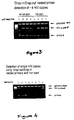
- reaction 2-4 and 5-8 were shown to contain a product of the expected size (approximately 200 bp) as the predominant band on the gel. Reactions 1 and 5, the negative controls, contained no such product. However, reactions 2-4, which were not given a "hot-start,” could be seen to contain DNA fragments of other than the expected size. These other DNA fragments were also visible in reaction 1, indicating that they are not derived from HIV sequences. These other DNA fragments were not visible in reactions 5-8, indicating that use of the "hot-start" had enhanced the specificity of these reactions.
- thermocycling parameters had the expected effect on amplification specificity.
Landscapes
- Chemical & Material Sciences (AREA)
- Life Sciences & Earth Sciences (AREA)
- Organic Chemistry (AREA)
- Health & Medical Sciences (AREA)
- Zoology (AREA)
- Wood Science & Technology (AREA)
- Proteomics, Peptides & Aminoacids (AREA)
- Engineering & Computer Science (AREA)
- Immunology (AREA)
- Chemical Kinetics & Catalysis (AREA)
- Molecular Biology (AREA)
- Bioinformatics & Cheminformatics (AREA)
- Biotechnology (AREA)
- Biophysics (AREA)
- Analytical Chemistry (AREA)
- Physics & Mathematics (AREA)
- Biochemistry (AREA)
- Microbiology (AREA)
- General Engineering & Computer Science (AREA)
- General Health & Medical Sciences (AREA)
- Genetics & Genomics (AREA)
- Communicable Diseases (AREA)
- Virology (AREA)
- Measuring Or Testing Involving Enzymes Or Micro-Organisms (AREA)
Applications Claiming Priority (2)
| Application Number | Priority Date | Filing Date | Title |
|---|---|---|---|
| US71857691A | 1991-06-20 | 1991-06-20 | |
| US718576 | 1991-06-20 |
Publications (2)
| Publication Number | Publication Date |
|---|---|
| EP0519338A1 true EP0519338A1 (fr) | 1992-12-23 |
| EP0519338B1 EP0519338B1 (fr) | 1996-08-28 |
Family
ID=24886600
Family Applications (1)
| Application Number | Title | Priority Date | Filing Date |
|---|---|---|---|
| EP92109886A Expired - Lifetime EP0519338B1 (fr) | 1991-06-20 | 1992-06-12 | Méthodes améliorées d'amplification d'acides nucléiques |
Country Status (9)
| Country | Link |
|---|---|
| US (1) | US5314809A (fr) |
| EP (1) | EP0519338B1 (fr) |
| JP (1) | JPH0681600B2 (fr) |
| CA (1) | CA2071594C (fr) |
| DE (1) | DE69213112T2 (fr) |
| DK (1) | DK0519338T3 (fr) |
| ES (1) | ES2091976T3 (fr) |
| GR (1) | GR3021832T3 (fr) |
| IE (1) | IE922008A1 (fr) |
Cited By (28)
| Publication number | Priority date | Publication date | Assignee | Title |
|---|---|---|---|---|
| WO1995003430A1 (fr) * | 1993-07-23 | 1995-02-02 | Gen-Probe Incorporated | Procede d'amelioration de l'amplification de l'acide nucleique |
| EP0617132A3 (en) * | 1993-03-26 | 1995-11-29 | Gen Probe Inc | Probes and method to detect human immunodeficiency virus type 1. |
| EP0694617A3 (fr) * | 1994-06-22 | 1996-04-17 | Johnson & Johnson Clin Diag | Procédé d'amplification utilisant une étape intermédiaire de rénaturation |
| WO1997000330A2 (fr) | 1995-06-13 | 1997-01-03 | Gottfried Himmler | Procede d'amplification sans transcription d'acides nucleiques |
| WO1996036736A3 (fr) * | 1995-05-19 | 1997-04-17 | Abbott Lab | Procede de detection d'acides nucleiques a large plage dynamique, utilisant une serie complexe d'amorces |
| US5712385A (en) * | 1989-07-11 | 1998-01-27 | Gen-Probe Incorporated | Detection of human immunodeficiency virus type 1 |
| US5811235A (en) * | 1991-08-27 | 1998-09-22 | Zeneca Limited | Method of characterisation |
| US5853989A (en) * | 1991-08-27 | 1998-12-29 | Zeneca Limited | Method of characterisation of genomic DNA |
| WO1999034014A3 (fr) * | 1997-12-23 | 1999-11-25 | Roche Diagnostics Gmbh | Technique de determination d'un acide nucleique |
| US6589734B1 (en) | 1989-07-11 | 2003-07-08 | Gen-Probe Incorporated | Detection of HIV |
| US7214485B2 (en) | 2000-08-25 | 2007-05-08 | Lovelace Respiratory Research Institute | Nested methylation-specific polymerase chain reaction cancer detection method |
| WO2007149903A3 (fr) * | 2006-06-20 | 2008-08-07 | Cepheid | Réactions d'amplification à niveaux multiples par la régulation des temps de réplication des séquences |
| WO2009098079A1 (fr) | 2008-02-06 | 2009-08-13 | Ludwig-Maximilians-Universität München | Caractérisation thermo-optique de molécules d'acide nucléique |
| EP2163239A1 (fr) | 2008-05-27 | 2010-03-17 | Qiagen GmbH | Produits comprenant des bioparticules, leur procédé de fabrication |
| EP2171099A1 (fr) * | 2007-06-20 | 2010-04-07 | Taag-Genetics SA | Procédé d'amplification multiplexée imbriquée pour l'identification de multiples entités biologiques |
| US7803579B2 (en) | 2002-10-29 | 2010-09-28 | Riken | Process for amplifying nucleic acid |
| EP2264184A1 (fr) | 2009-06-22 | 2010-12-22 | Qiagen GmbH | Procédé d'amplification d'ADN en utilisant du tétraéthylèneglycole, coffret de pièces correspondant et son utilisation |
| US8206902B2 (en) | 2003-12-25 | 2012-06-26 | Riken | Method of amplifying nucleic acid and method of detecting mutated nucleic acid using the same |
| EP2438184A4 (fr) * | 2009-06-02 | 2012-10-24 | Monoquant Pty Ltd | Procédé d'amplification d'acides nucléiques |
| EP2553124A4 (fr) * | 2010-03-30 | 2013-10-02 | Monoquant Pty Ltd | Procédé de régulation de la fonctionnalité d'oligonucléotides |
| EP3265590A4 (fr) * | 2015-03-06 | 2018-01-10 | Pillar Biosciences Inc. | Amplification sélective d'amplicons chevauchants |
| US10221448B2 (en) | 2015-03-06 | 2019-03-05 | Pillar Biosciences Inc. | Selective amplification of overlapping amplicons |
| CN109642252A (zh) * | 2016-06-17 | 2019-04-16 | 加州理工学院 | 核酸反应及相关方法和组合物 |
| US10770170B2 (en) | 2012-02-03 | 2020-09-08 | California Institute Of Technology | Signal encoding and decoding in multiplexed biochemical assays |
| WO2023224949A1 (fr) * | 2022-05-16 | 2023-11-23 | Perkinelmer U.S. Llc | Compositions et procédés relatifs à l'amplification isotherme à médiation par les boucles (lamp) |
| US11959856B2 (en) | 2012-08-03 | 2024-04-16 | California Institute Of Technology | Multiplexing and quantification in PCR with reduced hardware and requirements |
| US12203129B2 (en) | 2018-07-03 | 2025-01-21 | ChromaCode, Inc. | Formulations and signal encoding and decoding methods for massively multiplexed biochemical assays |
| US12454720B2 (en) | 2018-04-17 | 2025-10-28 | ChromaCode, Inc. | Methods and systems for multiplex analysis |
Families Citing this family (140)
| Publication number | Priority date | Publication date | Assignee | Title |
|---|---|---|---|---|
| US5830642A (en) * | 1992-04-03 | 1998-11-03 | Amersham Life Science, Inc. | Electrophoresis of nucleic acid fragments |
| US5565339A (en) * | 1992-10-08 | 1996-10-15 | Hoffmann-La Roche Inc. | Compositions and methods for inhibiting dimerization of primers during storage of polymerase chain reaction reagents |
| US5556773A (en) * | 1993-08-06 | 1996-09-17 | Yourno; Joseph | Method and apparatus for nested polymerase chain reaction (PCR) with single closed reaction tubes |
| US5869255A (en) | 1994-02-01 | 1999-02-09 | The Regents Of The University Of California | Probes labeled with energy transfer couples dyes exemplified with DNA fragment analysis |
| US6028190A (en) | 1994-02-01 | 2000-02-22 | The Regents Of The University Of California | Probes labeled with energy transfer coupled dyes |
| US6180778B1 (en) * | 1994-02-11 | 2001-01-30 | Qiagen Gmbh | Process for the separation of double-stranded/single-stranded nucleic acid structures |
| US6406855B1 (en) | 1994-02-17 | 2002-06-18 | Maxygen, Inc. | Methods and compositions for polypeptide engineering |
| US5605793A (en) | 1994-02-17 | 1997-02-25 | Affymax Technologies N.V. | Methods for in vitro recombination |
| US6395547B1 (en) | 1994-02-17 | 2002-05-28 | Maxygen, Inc. | Methods for generating polynucleotides having desired characteristics by iterative selection and recombination |
| US6165793A (en) | 1996-03-25 | 2000-12-26 | Maxygen, Inc. | Methods for generating polynucleotides having desired characteristics by iterative selection and recombination |
| US6117679A (en) | 1994-02-17 | 2000-09-12 | Maxygen, Inc. | Methods for generating polynucleotides having desired characteristics by iterative selection and recombination |
| US6335160B1 (en) | 1995-02-17 | 2002-01-01 | Maxygen, Inc. | Methods and compositions for polypeptide engineering |
| US6995017B1 (en) | 1994-02-17 | 2006-02-07 | Maxygen, Inc. | Methods for generating polynucleotides having desired characteristics by iterative selection and recombination |
| JP3102800B2 (ja) * | 1994-08-19 | 2000-10-23 | パーキン−エルマー コーポレイション | 増幅及び連結反応の共役法 |
| US5871902A (en) * | 1994-12-09 | 1999-02-16 | The Gene Pool, Inc. | Sequence-specific detection of nucleic acid hybrids using a DNA-binding molecule or assembly capable of discriminating perfect hybrids from non-perfect hybrids |
| US20030104361A1 (en) * | 1997-09-29 | 2003-06-05 | Susan Weininger | Method of detection of nucleic acids with a specific sequence composition |
| EP0826066B1 (fr) * | 1995-05-05 | 2000-09-13 | The Perkin-Elmer Corporation | Procedes et reactifs pour combiner une amplification par reaction en chaine de la polymerase et une technique de sondage par hybridation |
| US5882857A (en) * | 1995-06-07 | 1999-03-16 | Behringwerke Ag | Internal positive controls for nucleic acid amplification |
| US6852487B1 (en) * | 1996-02-09 | 2005-02-08 | Cornell Research Foundation, Inc. | Detection of nucleic acid sequence differences using the ligase detection reaction with addressable arrays |
| US20020150921A1 (en) * | 1996-02-09 | 2002-10-17 | Francis Barany | Detection of nucleic acid sequence differences using the ligase detection reaction with addressable arrays |
| US6506602B1 (en) | 1996-03-25 | 2003-01-14 | Maxygen, Inc. | Methods for generating polynucleotides having desired characteristics by iterative selection and recombination |
| EP1736554B1 (fr) * | 1996-05-29 | 2013-10-09 | Cornell Research Foundation, Inc. | Detection de differences dans des sequences d'acides nucleiques utilisant une combinaison de la detection par ligase et de reactions d'amplification en chaine par polymerase |
| US20070009930A1 (en) * | 1996-12-18 | 2007-01-11 | Maxygen, Inc. | Methods and compositions for polypeptide engineering |
| US6333179B1 (en) * | 1997-06-20 | 2001-12-25 | Affymetrix, Inc. | Methods and compositions for multiplex amplification of nucleic acids |
| US6207425B1 (en) * | 1997-09-11 | 2001-03-27 | City Of Hope | Bidirectional PCR amplification of specific alleles |
| US6103468A (en) * | 1997-10-07 | 2000-08-15 | Labatt Brewing Company Limited | Rapid two-stage polymerase chain reaction method for detection of lactic acid bacteria in beer |
| DK1036198T3 (da) | 1997-12-08 | 2013-01-02 | California Inst Of Techn | Fremgangsmåde til fremstilling af polynukleotid- og polypeptidsekvenser |
| JP3784162B2 (ja) * | 1998-01-14 | 2006-06-07 | 株式会社日立製作所 | Dna断片分析法 |
| US6365408B1 (en) | 1998-06-19 | 2002-04-02 | Maxygen, Inc. | Methods of evolving a polynucleotides by mutagenesis and recombination |
| US6506594B1 (en) * | 1999-03-19 | 2003-01-14 | Cornell Res Foundation Inc | Detection of nucleic acid sequence differences using the ligase detection reaction with addressable arrays |
| US7014994B1 (en) | 1999-03-19 | 2006-03-21 | Cornell Research Foundation,Inc. | Coupled polymerase chain reaction-restriction-endonuclease digestion-ligase detection reaction process |
| IL145677A0 (en) * | 1999-04-12 | 2002-06-30 | Genentech Inc | Pcr-based cloning method |
| US6232104B1 (en) * | 1999-08-17 | 2001-05-15 | Dade Behring Inc. | Detection of differences in nucleic acids by inhibition of spontaneous DNA branch migration |
| US7585632B2 (en) * | 1999-10-29 | 2009-09-08 | Hologic, Inc. | Compositions and methods for the detection of a nucleic acid using a cleavage reaction |
| EP1990428B1 (fr) * | 2000-02-07 | 2010-12-22 | Illumina, Inc. | Procédés de détection d'acide nucléique utilisant un amorçage universel |
| US7582420B2 (en) * | 2001-07-12 | 2009-09-01 | Illumina, Inc. | Multiplex nucleic acid reactions |
| US7955794B2 (en) | 2000-09-21 | 2011-06-07 | Illumina, Inc. | Multiplex nucleic acid reactions |
| US8076063B2 (en) * | 2000-02-07 | 2011-12-13 | Illumina, Inc. | Multiplexed methylation detection methods |
| EP1303639A2 (fr) | 2000-04-14 | 2003-04-23 | Cornell Research Foundation, Inc. | Procede de conception d'un reseau adressable dans la detection de differences de sequences d'acides nucleiques, au moyen d'une reaction de detection de ligase |
| US6887664B2 (en) * | 2000-06-06 | 2005-05-03 | Applera Corporation | Asynchronous primed PCR |
| EP1176212A1 (fr) * | 2000-07-24 | 2002-01-30 | Centre National de Genotype | Détermination des haplotypes par spectrométrie de masse |
| EP1186669B1 (fr) * | 2000-09-05 | 2006-01-25 | Zeltz, Patrick, Dr. | Méthode de détection spécifique des séquences d'ADN utilisant l'amplification parallèle |
| CA2426540A1 (fr) * | 2000-10-20 | 2002-07-25 | Biocardia, Inc. | Evaluation du niveau d'expression leucocytaire |
| ES2183695B1 (es) * | 2000-10-31 | 2004-02-16 | Ivia | Metodo y mezcla de reaccion para la amplificacion enzimatica simultanea, coordinada y cooperativa de secuencias diana de acidos nucleicos. |
| CN100523216C (zh) * | 2001-03-02 | 2009-08-05 | 匹兹堡大学 | Pcr方法 |
| AU2007221860B2 (en) * | 2001-03-02 | 2012-03-15 | University Of Pittsburgh Of The Commonwealth System Of Higher Education | PCR method |
| ES2189631B1 (es) * | 2001-03-12 | 2005-01-01 | BIOTOOLS BIOTECHNOLOGICAL & MEDICAL LABORATORIES, S.A. | Metodo para la amplificacion de adn mediante semi-nested pcr en un solo paso y su empleo en la identificacion de especies de plasmodium. |
| US7026121B1 (en) * | 2001-06-08 | 2006-04-11 | Expression Diagnostics, Inc. | Methods and compositions for diagnosing and monitoring transplant rejection |
| US7235358B2 (en) | 2001-06-08 | 2007-06-26 | Expression Diagnostics, Inc. | Methods and compositions for diagnosing and monitoring transplant rejection |
| US6905827B2 (en) * | 2001-06-08 | 2005-06-14 | Expression Diagnostics, Inc. | Methods and compositions for diagnosing or monitoring auto immune and chronic inflammatory diseases |
| DE60324253D1 (de) * | 2002-02-08 | 2008-12-04 | Olympus Corp | Spezifische multiplex-analyse von nukleinsäuren |
| WO2003072054A2 (fr) * | 2002-02-25 | 2003-09-04 | Cabot Corporation | Conception de ligand specifique destinee a la filtration et a la purification biomoleculaires pour la bioseparation |
| US7179639B2 (en) * | 2002-03-05 | 2007-02-20 | Raveendran Pottathil | Thermal strip thermocycler |
| AU2003240795A1 (en) * | 2002-05-24 | 2003-12-12 | Invitrogen Corporation | Nested pcr employing degradable primers |
| US20040259105A1 (en) * | 2002-10-03 | 2004-12-23 | Jian-Bing Fan | Multiplex nucleic acid analysis using archived or fixed samples |
| US20040224325A1 (en) * | 2002-12-20 | 2004-11-11 | Caliper Life Sciences, Inc. | Single molecule amplification and detection of DNA |
| US7820030B2 (en) * | 2003-04-16 | 2010-10-26 | Handylab, Inc. | System and method for electrochemical detection of biological compounds |
| US7892745B2 (en) * | 2003-04-24 | 2011-02-22 | Xdx, Inc. | Methods and compositions for diagnosing and monitoring transplant rejection |
| CN1898395B (zh) * | 2003-10-13 | 2014-02-12 | 戴尔斯瑞克斯实验室 | 基于引物的核酸的多重扩增的方法和试剂盒 |
| US7824857B2 (en) * | 2003-12-02 | 2010-11-02 | Musc Foundation For Research Development | Methods and compositions for diagnosing epithelial cell cancer |
| JP4395363B2 (ja) * | 2003-12-16 | 2010-01-06 | 日立ソフトウエアエンジニアリング株式会社 | 核酸検出方法 |
| US20060141487A1 (en) * | 2004-01-26 | 2006-06-29 | Applera Corporation | Methods, compositions, and kits for amplifying and sequencing polynucleotides |
| WO2005084254A2 (fr) * | 2004-02-27 | 2005-09-15 | Musc Foundation For Research Development | Detection d'arn amelioree au moyen d'un ensemble d'amorces specifiques de genes tronques dans la transcription inverse |
| US7695941B2 (en) * | 2005-06-16 | 2010-04-13 | The United States Of America As Represented By The Secretary Of The Navy | Multiplexed polymerase chain reaction for genetic sequence analysis |
| WO2006017150A2 (fr) * | 2004-07-09 | 2006-02-16 | University Of Pittsburgh - Of The Commonwealth System Of Higher Educatiion | Identification de marqueurs dans le cancer du poumon et dans le cancer du sein |
| WO2006029184A2 (fr) * | 2004-09-08 | 2006-03-16 | Expression Diagnostics, Inc. | Genes permettant de diagnostiquer et de surveiller les troubles associes a l'inflammation |
| KR20070085275A (ko) * | 2004-09-20 | 2007-08-27 | 유니버시티 오브 피츠버그 오브 더 커먼웰쓰 시스템 오브 하이어 에듀케이션 | 멀티플 모드에 의한 멀티플렉스 반응 억제 방법 |
| US20060188910A1 (en) * | 2005-02-18 | 2006-08-24 | Applera Corporation | Compositions, methods, and kits for analyzing DNA methylation |
| EP2409980B1 (fr) | 2005-04-14 | 2015-06-03 | Applied Biosystems, LLC | Oligonucléotides modifiés en 3' contenant des dérivés de la nucléobase pseudoisocytosine et leurs applications en tant qu'amorces ou sondes |
| EP1885889A4 (fr) * | 2005-05-11 | 2010-01-20 | Expression Diagnostics Inc | Procedes de surveillance de l'etat fonctionnel de transplants a l'aide de panels de genes |
| US20070048758A1 (en) * | 2005-06-09 | 2007-03-01 | Epoch Biosciences, Inc. | Improved primer-based amplification methods |
| US11111544B2 (en) | 2005-07-29 | 2021-09-07 | Natera, Inc. | System and method for cleaning noisy genetic data and determining chromosome copy number |
| US11111543B2 (en) | 2005-07-29 | 2021-09-07 | Natera, Inc. | System and method for cleaning noisy genetic data and determining chromosome copy number |
| US9424392B2 (en) | 2005-11-26 | 2016-08-23 | Natera, Inc. | System and method for cleaning noisy genetic data from target individuals using genetic data from genetically related individuals |
| JP5025489B2 (ja) * | 2005-12-28 | 2012-09-12 | 学校法人麻布獣医学園 | 標的配列の特異的高感度増幅法 |
| EP2007909A4 (fr) * | 2006-04-07 | 2011-01-26 | Xdx Inc | Expression d'acide nucleique en reponse aux steroides et prevision de l'activite d'une maladie |
| US8232091B2 (en) * | 2006-05-17 | 2012-07-31 | California Institute Of Technology | Thermal cycling system |
| WO2008021431A2 (fr) * | 2006-08-14 | 2008-02-21 | Xdx, Inc. | Méthodes et compositions permettant de diagnostiquer et de surveiller l'état de rejet de greffe et de troubles immunitaires |
| US20080311628A1 (en) * | 2006-10-03 | 2008-12-18 | Ghc Technologies, Inc. | Methods and compositions for rapid amplification and capture of nucleic acid sequences |
| US8962293B2 (en) | 2006-10-18 | 2015-02-24 | Roche Molecular Systems, Inc. | DNA polymerases and related methods |
| US8148067B2 (en) * | 2006-11-09 | 2012-04-03 | Xdx, Inc. | Methods for diagnosing and monitoring the status of systemic lupus erythematosus |
| US9938641B2 (en) * | 2006-12-18 | 2018-04-10 | Fluidigm Corporation | Selection of aptamers based on geometry |
| EP2140033B1 (fr) | 2007-03-28 | 2012-10-10 | Signal Diagnostics | Systeme et procede pour l'analyse de resolution elevee d'acides nucleiques pour detecter des variations de sequence |
| AU2008301233A1 (en) * | 2007-09-20 | 2009-03-26 | Molecular Plant Breeding Nominees Ltd | Method of amplifying nucleic acid |
| JP2009178159A (ja) * | 2007-11-05 | 2009-08-13 | Hitachi Plant Technologies Ltd | 核酸配列の検出方法及び核酸配列検出基板 |
| WO2010001924A1 (fr) | 2008-07-02 | 2010-01-07 | ニプロ株式会社 | Procédé et spécimen pour détecter la sensibilité à l’isoniazid chez le bacille tuberculeux |
| WO2010001923A1 (fr) | 2008-07-02 | 2010-01-07 | ニプロ株式会社 | Procédé et spécimen pour détecter la sensibilité à l’isoniazid chez le bacille tuberculeux |
| US9399215B2 (en) | 2012-04-13 | 2016-07-26 | Bio-Rad Laboratories, Inc. | Sample holder with a well having a wicking promoter |
| US9598725B2 (en) | 2010-03-02 | 2017-03-21 | Bio-Rad Laboratories, Inc. | Emulsion chemistry for encapsulated droplets |
| US9764322B2 (en) | 2008-09-23 | 2017-09-19 | Bio-Rad Laboratories, Inc. | System for generating droplets with pressure monitoring |
| US11130128B2 (en) | 2008-09-23 | 2021-09-28 | Bio-Rad Laboratories, Inc. | Detection method for a target nucleic acid |
| US8951939B2 (en) | 2011-07-12 | 2015-02-10 | Bio-Rad Laboratories, Inc. | Digital assays with multiplexed detection of two or more targets in the same optical channel |
| US12090480B2 (en) | 2008-09-23 | 2024-09-17 | Bio-Rad Laboratories, Inc. | Partition-based method of analysis |
| CA2738578C (fr) | 2008-09-23 | 2021-05-04 | Quantalife, Inc. | Systeme de dosage base sur des gouttelettes |
| US8709762B2 (en) | 2010-03-02 | 2014-04-29 | Bio-Rad Laboratories, Inc. | System for hot-start amplification via a multiple emulsion |
| WO2011120006A1 (fr) | 2010-03-25 | 2011-09-29 | Auantalife, Inc. A Delaware Corporation | Système de détection pour analyses à base de gouttelettes |
| US9492797B2 (en) | 2008-09-23 | 2016-11-15 | Bio-Rad Laboratories, Inc. | System for detection of spaced droplets |
| US10512910B2 (en) | 2008-09-23 | 2019-12-24 | Bio-Rad Laboratories, Inc. | Droplet-based analysis method |
| US12162008B2 (en) | 2008-09-23 | 2024-12-10 | Bio-Rad Laboratories, Inc. | Partition-based method of analysis |
| WO2011120024A1 (fr) | 2010-03-25 | 2011-09-29 | Quantalife, Inc. | Génération de gouttelettes pour dosages sur gouttelettes |
| US9417190B2 (en) | 2008-09-23 | 2016-08-16 | Bio-Rad Laboratories, Inc. | Calibrations and controls for droplet-based assays |
| US9132394B2 (en) | 2008-09-23 | 2015-09-15 | Bio-Rad Laboratories, Inc. | System for detection of spaced droplets |
| US9156010B2 (en) | 2008-09-23 | 2015-10-13 | Bio-Rad Laboratories, Inc. | Droplet-based assay system |
| US8633015B2 (en) * | 2008-09-23 | 2014-01-21 | Bio-Rad Laboratories, Inc. | Flow-based thermocycling system with thermoelectric cooler |
| US10669574B2 (en) | 2008-11-18 | 2020-06-02 | XCR Diagnostics, Inc. | DNA amplification technology |
| AU2010205133B2 (en) | 2009-01-15 | 2015-01-22 | Hokkaido Mitsui Chemicals Inc. | Enzyme preparation containing thermostable dna polymerase, method for producing same, and method for detecting subject organism to be detected |
| WO2010104798A1 (fr) * | 2009-03-08 | 2010-09-16 | Ibis Biosciences, Inc. | Procédés de détection d'un bioagent |
| WO2010115160A2 (fr) * | 2009-04-03 | 2010-10-07 | Helixis, Inc. | Dispositifs et procédés pour chauffer des échantillons biologiques |
| EP2473618B1 (fr) | 2009-09-02 | 2015-03-04 | Bio-Rad Laboratories, Inc. | Système de mélange de fluides par coalescence d'émulsions multiples |
| EP2301666B1 (fr) * | 2009-09-09 | 2021-06-30 | Cole-Parmer Ltd. | Système optique pour réactions multiples |
| CA2777446A1 (fr) * | 2009-10-13 | 2011-04-21 | Syntezza Molecular Detection Israel Ltd. | Procedes et compositions pour amplifier des sequences cibles a partir d'echantillons d'acides nucleiques |
| US8771951B2 (en) * | 2009-11-16 | 2014-07-08 | Genomics Usa, Inc. | Methods for PCR and HLA typing using raw blood |
| US9416419B2 (en) | 2009-11-16 | 2016-08-16 | Michael E. Hogan | Methods for PCR and HLA typing using unpurified samples |
| JP6155419B2 (ja) | 2010-03-25 | 2017-07-05 | バイオ−ラッド・ラボラトリーズ・インコーポレーテッド | 検出用の液滴輸送システム |
| US12221653B2 (en) | 2010-05-18 | 2025-02-11 | Natera, Inc. | Methods for simultaneous amplification of target loci |
| US11939634B2 (en) | 2010-05-18 | 2024-03-26 | Natera, Inc. | Methods for simultaneous amplification of target loci |
| US11408031B2 (en) | 2010-05-18 | 2022-08-09 | Natera, Inc. | Methods for non-invasive prenatal paternity testing |
| US12152275B2 (en) * | 2010-05-18 | 2024-11-26 | Natera, Inc. | Methods for non-invasive prenatal ploidy calling |
| US11322224B2 (en) | 2010-05-18 | 2022-05-03 | Natera, Inc. | Methods for non-invasive prenatal ploidy calling |
| US10316362B2 (en) | 2010-05-18 | 2019-06-11 | Natera, Inc. | Methods for simultaneous amplification of target loci |
| US20190010543A1 (en) | 2010-05-18 | 2019-01-10 | Natera, Inc. | Methods for simultaneous amplification of target loci |
| CN103429331B (zh) | 2010-11-01 | 2016-09-28 | 伯乐生命医学产品有限公司 | 用于形成乳液的系统 |
| AU2011358564B9 (en) | 2011-02-09 | 2017-07-13 | Natera, Inc | Methods for non-invasive prenatal ploidy calling |
| US12097495B2 (en) | 2011-02-18 | 2024-09-24 | Bio-Rad Laboratories, Inc. | Methods and compositions for detecting genetic material |
| AU2012231098B2 (en) | 2011-03-18 | 2016-09-29 | Bio-Rad Laboratories, Inc. | Multiplexed digital assays with combinatorial use of signals |
| US9347059B2 (en) | 2011-04-25 | 2016-05-24 | Bio-Rad Laboratories, Inc. | Methods and compositions for nucleic acid analysis |
| EP2737089B1 (fr) | 2011-07-29 | 2017-09-06 | Bio-rad Laboratories, Inc. | Caractérisation de banque par essai numérique |
| US20140100126A1 (en) | 2012-08-17 | 2014-04-10 | Natera, Inc. | Method for Non-Invasive Prenatal Testing Using Parental Mosaicism Data |
| RU2016117929A (ru) | 2013-10-09 | 2017-11-15 | Флюоресентрик, Инк. | Мультиплексные зонды |
| US20180173845A1 (en) | 2014-06-05 | 2018-06-21 | Natera, Inc. | Systems and Methods for Detection of Aneuploidy |
| WO2016183106A1 (fr) | 2015-05-11 | 2016-11-17 | Natera, Inc. | Procédés et compositions pour la détermination de la ploïdie |
| WO2017181202A2 (fr) | 2016-04-15 | 2017-10-19 | Natera, Inc. | Procédés de détection du cancer du poumon |
| GB201618485D0 (en) | 2016-11-02 | 2016-12-14 | Ucl Business Plc | Method of detecting tumour recurrence |
| WO2019022132A1 (fr) * | 2017-07-26 | 2019-01-31 | 積水メディカル株式会社 | Procédé de détection d'un gène mutant |
| JP2021506342A (ja) | 2017-12-14 | 2021-02-22 | ティーエーアイ ダイアグノスティックス インコーポレイテッドTai Diagnostics,Inc. | 移植のための移植片適合性の評価 |
| US12398389B2 (en) | 2018-02-15 | 2025-08-26 | Natera, Inc. | Methods for isolating nucleic acids with size selection |
| CA3090426A1 (fr) | 2018-04-14 | 2019-10-17 | Natera, Inc. | Procedes de detection et de surveillance du cancer au moyen d'une detection personnalisee d'adn tumoral circulant |
| US12234509B2 (en) | 2018-07-03 | 2025-02-25 | Natera, Inc. | Methods for detection of donor-derived cell-free DNA |
| CN114901833A (zh) * | 2020-01-10 | 2022-08-12 | 美国西门子医学诊断股份有限公司 | 用于进行快速聚合酶链式反应的组合物、试剂盒和方法 |
| CN116959580B (zh) * | 2023-08-30 | 2025-09-19 | 予果生物科技(北京)有限公司 | 一种基于靶向高通量测序序列的比对方法及其应用 |
Citations (8)
| Publication number | Priority date | Publication date | Assignee | Title |
|---|---|---|---|---|
| US4358535A (en) | 1980-12-08 | 1982-11-09 | Board Of Regents Of The University Of Washington | Specific DNA probes in diagnostic microbiology |
| US4683195A (en) | 1986-01-30 | 1987-07-28 | Cetus Corporation | Process for amplifying, detecting, and/or-cloning nucleic acid sequences |
| US4683202A (en) | 1985-03-28 | 1987-07-28 | Cetus Corporation | Process for amplifying nucleic acid sequences |
| EP0236069A2 (fr) | 1986-02-25 | 1987-09-09 | The Perkin-Elmer Corporation | Appareil et méthode pour réaliser l'amplification automatique de séquences d'acides nucléiques et essais utilisant des étapes de chauffage et refroidissement |
| EP0237362A1 (fr) | 1986-03-13 | 1987-09-16 | F. Hoffmann-La Roche Ag | Procédé et nécessaire pour la détection des variations de nucléotides spécifiques et de polymorphismes génétiques dans les acides nucléiques |
| WO1989009835A1 (fr) | 1988-04-08 | 1989-10-19 | The Salk Institute For Biological Studies | Procede d'amplification a base de ligase |
| US4889818A (en) | 1986-08-22 | 1989-12-26 | Cetus Corporation | Purified thermostable enzyme |
| US4965188A (en) | 1986-08-22 | 1990-10-23 | Cetus Corporation | Process for amplifying, detecting, and/or cloning nucleic acid sequences using a thermostable enzyme |
Family Cites Families (1)
| Publication number | Priority date | Publication date | Assignee | Title |
|---|---|---|---|---|
| US4582789A (en) * | 1984-03-21 | 1986-04-15 | Cetus Corporation | Process for labeling nucleic acids using psoralen derivatives |
-
1992
- 1992-06-12 ES ES92109886T patent/ES2091976T3/es not_active Expired - Lifetime
- 1992-06-12 EP EP92109886A patent/EP0519338B1/fr not_active Expired - Lifetime
- 1992-06-12 DK DK92109886.9T patent/DK0519338T3/da active
- 1992-06-12 DE DE69213112T patent/DE69213112T2/de not_active Expired - Lifetime
- 1992-06-18 CA CA002071594A patent/CA2071594C/fr not_active Expired - Lifetime
- 1992-06-19 JP JP4184740A patent/JPH0681600B2/ja not_active Expired - Lifetime
- 1992-07-01 IE IE200892A patent/IE922008A1/en not_active IP Right Cessation
-
1993
- 1993-03-10 US US08/033,072 patent/US5314809A/en not_active Expired - Lifetime
-
1996
- 1996-11-28 GR GR960403224T patent/GR3021832T3/el unknown
Patent Citations (11)
| Publication number | Priority date | Publication date | Assignee | Title |
|---|---|---|---|---|
| US4358535A (en) | 1980-12-08 | 1982-11-09 | Board Of Regents Of The University Of Washington | Specific DNA probes in diagnostic microbiology |
| US4358535B1 (fr) | 1980-12-08 | 1986-05-13 | ||
| US4683202A (en) | 1985-03-28 | 1987-07-28 | Cetus Corporation | Process for amplifying nucleic acid sequences |
| US4683202B1 (fr) | 1985-03-28 | 1990-11-27 | Cetus Corp | |
| US4683195A (en) | 1986-01-30 | 1987-07-28 | Cetus Corporation | Process for amplifying, detecting, and/or-cloning nucleic acid sequences |
| US4683195B1 (fr) | 1986-01-30 | 1990-11-27 | Cetus Corp | |
| EP0236069A2 (fr) | 1986-02-25 | 1987-09-09 | The Perkin-Elmer Corporation | Appareil et méthode pour réaliser l'amplification automatique de séquences d'acides nucléiques et essais utilisant des étapes de chauffage et refroidissement |
| EP0237362A1 (fr) | 1986-03-13 | 1987-09-16 | F. Hoffmann-La Roche Ag | Procédé et nécessaire pour la détection des variations de nucléotides spécifiques et de polymorphismes génétiques dans les acides nucléiques |
| US4889818A (en) | 1986-08-22 | 1989-12-26 | Cetus Corporation | Purified thermostable enzyme |
| US4965188A (en) | 1986-08-22 | 1990-10-23 | Cetus Corporation | Process for amplifying, detecting, and/or cloning nucleic acid sequences using a thermostable enzyme |
| WO1989009835A1 (fr) | 1988-04-08 | 1989-10-19 | The Salk Institute For Biological Studies | Procede d'amplification a base de ligase |
Non-Patent Citations (16)
| Title |
|---|
| "Molecular Cloning: A Laboratory Manual", 1982, COLD SPRING HARBOR LABORATORY |
| "Nucleic Acid Hybridization: A Practical Approach", 1985, IRL PRESS |
| "PCR Protocols", 1990, ACADEMIC PRESS |
| "PCR Protocols: A Guide to Methods and Applications", 1990, ACADEMIC PRESS, INC. |
| BIO/TECHNOLOGY, vol. 8, 1990, pages 290 - 293 |
| CELL BIOLOGY, vol. 10, 1991, pages 233 - 238 |
| CHEMICAL ABSTRACTS, vol. 114, no. 11, March 18, 1991 Columbus, Ohio, USA N. GONZALES-CADAVID et al. "Automated direct sequencing of polymerase chain reaction- -amplified fragments of the human Ha-ras gene.", page 190, abstract-no. 96 224x * |
| J. AM. CHEM. SOC., vol. 103, 1981, pages 3185 - 3191 |
| NATURE, vol. 324, 1986, pages 163 - 166 |
| NATURE, vol. 339, 1989, pages 237 - 238 |
| NUC. ACIDS RES., vol. 6, 1979, pages 3543 - 3557 |
| PROC. NATL. ACAD. SCI. USA, vol. 86, 1989, pages 2423 - 2437 |
| PROC. NATL. ACAD. SCI. USA, vol. 86, 1989, pages 2757 - 2760 |
| PROC. NATL. ACAD. SCI. USA, vol. 86, 1989, pages 6215 - 6219 |
| PROC. NATL. ACAD. SCI. USA, vol. 87, 1990, pages 4580 - 4584 |
| PROC. NATL. ACAD. SCI., vol. 83, 1986, pages 3746 - 3750 |
Cited By (44)
| Publication number | Priority date | Publication date | Assignee | Title |
|---|---|---|---|---|
| US5712385A (en) * | 1989-07-11 | 1998-01-27 | Gen-Probe Incorporated | Detection of human immunodeficiency virus type 1 |
| US7083922B2 (en) | 1989-07-11 | 2006-08-01 | Gen-Probe Incorporated | Detection of HIV |
| US6589734B1 (en) | 1989-07-11 | 2003-07-08 | Gen-Probe Incorporated | Detection of HIV |
| US5856088A (en) * | 1989-07-11 | 1999-01-05 | Gen-Probe Incorporated | Detection of human immunodeficiency virus type 1 |
| US5853989A (en) * | 1991-08-27 | 1998-12-29 | Zeneca Limited | Method of characterisation of genomic DNA |
| US5811235A (en) * | 1991-08-27 | 1998-09-22 | Zeneca Limited | Method of characterisation |
| US6252059B1 (en) | 1993-03-26 | 2001-06-26 | Gen-Probe Incorporated | Detection of human immunodeficiency virus type 1 |
| EP0617132A3 (en) * | 1993-03-26 | 1995-11-29 | Gen Probe Inc | Probes and method to detect human immunodeficiency virus type 1. |
| US6649749B2 (en) | 1993-03-26 | 2003-11-18 | Gen-Probe Incorporated | Detection of human immunodeficiency virus type 1 |
| EP0656425A1 (fr) * | 1993-07-23 | 1995-06-07 | Gen-Probe Incorporated | Procédé pour améliorer l'amplification des acides nucléiques |
| US5786183A (en) * | 1993-07-23 | 1998-07-28 | Gen-Probe Incorporated | Methods of enhancing nucleic acid amplification |
| WO1995003430A1 (fr) * | 1993-07-23 | 1995-02-02 | Gen-Probe Incorporated | Procede d'amelioration de l'amplification de l'acide nucleique |
| EP0694617A3 (fr) * | 1994-06-22 | 1996-04-17 | Johnson & Johnson Clin Diag | Procédé d'amplification utilisant une étape intermédiaire de rénaturation |
| WO1996036736A3 (fr) * | 1995-05-19 | 1997-04-17 | Abbott Lab | Procede de detection d'acides nucleiques a large plage dynamique, utilisant une serie complexe d'amorces |
| WO1997000330A2 (fr) | 1995-06-13 | 1997-01-03 | Gottfried Himmler | Procede d'amplification sans transcription d'acides nucleiques |
| WO1999034014A3 (fr) * | 1997-12-23 | 1999-11-25 | Roche Diagnostics Gmbh | Technique de determination d'un acide nucleique |
| US7214485B2 (en) | 2000-08-25 | 2007-05-08 | Lovelace Respiratory Research Institute | Nested methylation-specific polymerase chain reaction cancer detection method |
| US7803579B2 (en) | 2002-10-29 | 2010-09-28 | Riken | Process for amplifying nucleic acid |
| US8206902B2 (en) | 2003-12-25 | 2012-06-26 | Riken | Method of amplifying nucleic acid and method of detecting mutated nucleic acid using the same |
| WO2007149903A3 (fr) * | 2006-06-20 | 2008-08-07 | Cepheid | Réactions d'amplification à niveaux multiples par la régulation des temps de réplication des séquences |
| US8119352B2 (en) | 2006-06-20 | 2012-02-21 | Cepheld | Multi-stage amplification reactions by control of sequence replication times |
| EP2171099A1 (fr) * | 2007-06-20 | 2010-04-07 | Taag-Genetics SA | Procédé d'amplification multiplexée imbriquée pour l'identification de multiples entités biologiques |
| WO2009098079A1 (fr) | 2008-02-06 | 2009-08-13 | Ludwig-Maximilians-Universität München | Caractérisation thermo-optique de molécules d'acide nucléique |
| EP2163239A1 (fr) | 2008-05-27 | 2010-03-17 | Qiagen GmbH | Produits comprenant des bioparticules, leur procédé de fabrication |
| EP2438184A4 (fr) * | 2009-06-02 | 2012-10-24 | Monoquant Pty Ltd | Procédé d'amplification d'acides nucléiques |
| EP2264184A1 (fr) | 2009-06-22 | 2010-12-22 | Qiagen GmbH | Procédé d'amplification d'ADN en utilisant du tétraéthylèneglycole, coffret de pièces correspondant et son utilisation |
| EP2553124A4 (fr) * | 2010-03-30 | 2013-10-02 | Monoquant Pty Ltd | Procédé de régulation de la fonctionnalité d'oligonucléotides |
| US10770170B2 (en) | 2012-02-03 | 2020-09-08 | California Institute Of Technology | Signal encoding and decoding in multiplexed biochemical assays |
| US12168797B2 (en) | 2012-02-03 | 2024-12-17 | California Institute Of Technology | Signal encoding and decoding in multiplexed biochemical assays |
| US11866768B2 (en) | 2012-02-03 | 2024-01-09 | California Institute Of Technology | Signal encoding and decoding in multiplexed biochemical assays |
| US11827921B2 (en) | 2012-02-03 | 2023-11-28 | California Institute Of Technology | Signal encoding and decoding in multiplexed biochemical assays |
| US11959856B2 (en) | 2012-08-03 | 2024-04-16 | California Institute Of Technology | Multiplexing and quantification in PCR with reduced hardware and requirements |
| US11104945B2 (en) | 2015-03-06 | 2021-08-31 | Pillar Biosciences Inc. | Selective amplification of overlapping amplicons |
| AU2016229372B2 (en) * | 2015-03-06 | 2020-01-30 | Pillar Biosciences Inc. | Selective amplification of overlapping amplicons |
| US20220002784A1 (en) * | 2015-03-06 | 2022-01-06 | Pillar Biosciences Inc. | Selective amplification of overlapping amplicons |
| US10221448B2 (en) | 2015-03-06 | 2019-03-05 | Pillar Biosciences Inc. | Selective amplification of overlapping amplicons |
| US11913069B2 (en) * | 2015-03-06 | 2024-02-27 | Pillar Biosciences Inc. | Selective amplification of overlapping amplicons |
| US10011869B2 (en) | 2015-03-06 | 2018-07-03 | Pillar Biosciences Inc. | Selective amplification of overlapping amplicons |
| EP3265590A4 (fr) * | 2015-03-06 | 2018-01-10 | Pillar Biosciences Inc. | Amplification sélective d'amplicons chevauchants |
| EP3472354A4 (fr) * | 2016-06-17 | 2020-01-01 | California Institute of Technology | Réactions d'acides nucléiques et procédés et compositions associés |
| CN109642252A (zh) * | 2016-06-17 | 2019-04-16 | 加州理工学院 | 核酸反应及相关方法和组合物 |
| US12454720B2 (en) | 2018-04-17 | 2025-10-28 | ChromaCode, Inc. | Methods and systems for multiplex analysis |
| US12203129B2 (en) | 2018-07-03 | 2025-01-21 | ChromaCode, Inc. | Formulations and signal encoding and decoding methods for massively multiplexed biochemical assays |
| WO2023224949A1 (fr) * | 2022-05-16 | 2023-11-23 | Perkinelmer U.S. Llc | Compositions et procédés relatifs à l'amplification isotherme à médiation par les boucles (lamp) |
Also Published As
| Publication number | Publication date |
|---|---|
| IE922008A1 (en) | 1992-12-30 |
| EP0519338B1 (fr) | 1996-08-28 |
| US5314809A (en) | 1994-05-24 |
| CA2071594A1 (fr) | 1992-12-21 |
| JPH05292968A (ja) | 1993-11-09 |
| CA2071594C (fr) | 2003-06-17 |
| ES2091976T3 (es) | 1996-11-16 |
| DE69213112T2 (de) | 1997-04-03 |
| GR3021832T3 (en) | 1997-02-28 |
| DE69213112D1 (de) | 1996-10-02 |
| JPH0681600B2 (ja) | 1994-10-19 |
| DK0519338T3 (da) | 1996-10-28 |
Similar Documents
| Publication | Publication Date | Title |
|---|---|---|
| EP0519338B1 (fr) | Méthodes améliorées d'amplification d'acides nucléiques | |
| EP0726324B1 (fr) | Usage d'une exonucléase et/ou d'une glycosylase comme complément d'un anticorps antipolymérase pour augmenter la spécificité dans la réaction en chaíne de polymérase | |
| CA2067909C (fr) | Methodes homogenes d'amplification et de detection de l'acide nucleique | |
| US7914986B2 (en) | Detection of amplicon contamination during PCR exhibiting two different annealing temperatures | |
| US5449603A (en) | Method for hybridizing nucleic acids using single-stranded nucleic acid binding protein | |
| US5569582A (en) | Rapid amplification and detection of nucleic acids | |
| US8399197B2 (en) | Methods for amplifying polymeric nucleic acids | |
| JPH0838198A (ja) | Pcrによる長鎖核酸配列の増幅 | |
| EP0744470A1 (fr) | Procédé de stérilisation avant l'amplification par médiation d'exonucléases en présence d'amorces phosphorothiorées | |
| EP0632134B1 (fr) | Réactif et procédé pour la transcription inverse à haute température suivi par la réaction en chaíne de la polymérase | |
| AU741141B2 (en) | Specific and sensitive method for detecting nucleic acids | |
| JP3909010B2 (ja) | 高度ダイナミックレンジを有する定量的多重pcr | |
| EP0585660B1 (fr) | Procédé de décontamination utilisant d'exonuclease | |
| WO1991006679A1 (fr) | Procede ameliore d'hybridation des acides nucleiques utilisant une proteine monocatenaire liante de l'acide nucleique | |
| JP4675558B2 (ja) | 核酸の強化された共増幅 | |
| WO2005047462A2 (fr) | Systeme universel de commande d'amplification d'acides nucleiques | |
| WO2005012499A2 (fr) | Methodes d'amplification d'acides nucleiques | |
| US20070122827A1 (en) | Target nucleic acid signal detection | |
| EP3735476A1 (fr) | Procédé de détermination de la présence ou de l'absence de m. tuberculosis, m. bovis et m. bovis bcg dans un échantillon | |
| JP2000093175A (ja) | 核酸合成法 | |
| Kirakosyan et al. | 3 Polymerase Chain Reaction Methodologies |
Legal Events
| Date | Code | Title | Description |
|---|---|---|---|
| PUAI | Public reference made under article 153(3) epc to a published international application that has entered the european phase |
Free format text: ORIGINAL CODE: 0009012 |
|
| 17P | Request for examination filed |
Effective date: 19920612 |
|
| AK | Designated contracting states |
Kind code of ref document: A1 Designated state(s): BE CH DE DK ES FR GB GR IT LI LU NL PT |
|
| 17Q | First examination report despatched |
Effective date: 19950612 |
|
| GRAH | Despatch of communication of intention to grant a patent |
Free format text: ORIGINAL CODE: EPIDOS IGRA |
|
| GRAH | Despatch of communication of intention to grant a patent |
Free format text: ORIGINAL CODE: EPIDOS IGRA |
|
| GRAA | (expected) grant |
Free format text: ORIGINAL CODE: 0009210 |
|
| AK | Designated contracting states |
Kind code of ref document: B1 Designated state(s): BE CH DE DK ES FR GB GR IT LI LU NL PT |
|
| REF | Corresponds to: |
Ref document number: 69213112 Country of ref document: DE Date of ref document: 19961002 |
|
| REG | Reference to a national code |
Ref country code: DK Ref legal event code: T3 |
|
| ITF | It: translation for a ep patent filed | ||
| REG | Reference to a national code |
Ref country code: ES Ref legal event code: FG2A Ref document number: 2091976 Country of ref document: ES Kind code of ref document: T3 |
|
| ET | Fr: translation filed | ||
| SC4A | Pt: translation is available |
Free format text: 960927 AVAILABILITY OF NATIONAL TRANSLATION |
|
| REG | Reference to a national code |
Ref country code: GR Ref legal event code: FG4A Free format text: 3021832 |
|
| PLBE | No opposition filed within time limit |
Free format text: ORIGINAL CODE: 0009261 |
|
| STAA | Information on the status of an ep patent application or granted ep patent |
Free format text: STATUS: NO OPPOSITION FILED WITHIN TIME LIMIT |
|
| 26N | No opposition filed | ||
| REG | Reference to a national code |
Ref country code: GB Ref legal event code: IF02 |
|
| PGFP | Annual fee paid to national office [announced via postgrant information from national office to epo] |
Ref country code: ES Payment date: 20110613 Year of fee payment: 20 Ref country code: GR Payment date: 20110530 Year of fee payment: 20 Ref country code: LU Payment date: 20110622 Year of fee payment: 20 Ref country code: FR Payment date: 20110603 Year of fee payment: 20 Ref country code: PT Payment date: 20110526 Year of fee payment: 20 Ref country code: CH Payment date: 20110427 Year of fee payment: 20 |
|
| PGFP | Annual fee paid to national office [announced via postgrant information from national office to epo] |
Ref country code: DK Payment date: 20110524 Year of fee payment: 20 Ref country code: NL Payment date: 20110615 Year of fee payment: 20 Ref country code: GB Payment date: 20110523 Year of fee payment: 20 |
|
| PGFP | Annual fee paid to national office [announced via postgrant information from national office to epo] |
Ref country code: IT Payment date: 20110616 Year of fee payment: 20 |
|
| PGFP | Annual fee paid to national office [announced via postgrant information from national office to epo] |
Ref country code: DE Payment date: 20110630 Year of fee payment: 20 |
|
| PGFP | Annual fee paid to national office [announced via postgrant information from national office to epo] |
Ref country code: BE Payment date: 20110705 Year of fee payment: 20 |
|
| REG | Reference to a national code |
Ref country code: DE Ref legal event code: R071 Ref document number: 69213112 Country of ref document: DE |
|
| REG | Reference to a national code |
Ref country code: DE Ref legal event code: R071 Ref document number: 69213112 Country of ref document: DE |
|
| REG | Reference to a national code |
Ref country code: NL Ref legal event code: V4 Effective date: 20120612 |
|
| REG | Reference to a national code |
Ref country code: PT Ref legal event code: MM4A Free format text: MAXIMUM VALIDITY LIMIT REACHED Effective date: 20120612 |
|
| REG | Reference to a national code |
Ref country code: CH Ref legal event code: PL |
|
| BE20 | Be: patent expired |
Owner name: F. *HOFFMANN-LA ROCHE A.G. Effective date: 20120612 |
|
| REG | Reference to a national code |
Ref country code: DK Ref legal event code: EUP |
|
| REG | Reference to a national code |
Ref country code: GB Ref legal event code: PE20 Expiry date: 20120611 |
|
| PG25 | Lapsed in a contracting state [announced via postgrant information from national office to epo] |
Ref country code: DE Free format text: LAPSE BECAUSE OF EXPIRATION OF PROTECTION Effective date: 20120613 |
|
| PG25 | Lapsed in a contracting state [announced via postgrant information from national office to epo] |
Ref country code: GB Free format text: LAPSE BECAUSE OF EXPIRATION OF PROTECTION Effective date: 20120611 Ref country code: PT Free format text: LAPSE BECAUSE OF EXPIRATION OF PROTECTION Effective date: 20120621 |
|
| REG | Reference to a national code |
Ref country code: GR Ref legal event code: MA Ref document number: 960403224 Country of ref document: GR Effective date: 20120613 |
|
| REG | Reference to a national code |
Ref country code: ES Ref legal event code: FD2A Effective date: 20130724 |
|
| PG25 | Lapsed in a contracting state [announced via postgrant information from national office to epo] |
Ref country code: ES Free format text: LAPSE BECAUSE OF EXPIRATION OF PROTECTION Effective date: 20120613 |