EP0538431B1 - Organosiloxanes for use as sunscreen agents - Google Patents
Organosiloxanes for use as sunscreen agents Download PDFInfo
- Publication number
- EP0538431B1 EP0538431B1 EP92909392A EP92909392A EP0538431B1 EP 0538431 B1 EP0538431 B1 EP 0538431B1 EP 92909392 A EP92909392 A EP 92909392A EP 92909392 A EP92909392 A EP 92909392A EP 0538431 B1 EP0538431 B1 EP 0538431B1
- Authority
- EP
- European Patent Office
- Prior art keywords
- group
- general formula
- value
- hydrogen atom
- alkyl group
- Prior art date
- Legal status (The legal status is an assumption and is not a legal conclusion. Google has not performed a legal analysis and makes no representation as to the accuracy of the status listed.)
- Revoked
Links
- 0 CCCC(C1CC(*[Si+][*-])CCC1)C(C)(*)C*C=C*(*)=O Chemical compound CCCC(C1CC(*[Si+][*-])CCC1)C(C)(*)C*C=C*(*)=O 0.000 description 2
Classifications
-
- C—CHEMISTRY; METALLURGY
- C08—ORGANIC MACROMOLECULAR COMPOUNDS; THEIR PREPARATION OR CHEMICAL WORKING-UP; COMPOSITIONS BASED THEREON
- C08G—MACROMOLECULAR COMPOUNDS OBTAINED OTHERWISE THAN BY REACTIONS ONLY INVOLVING UNSATURATED CARBON-TO-CARBON BONDS
- C08G77/00—Macromolecular compounds obtained by reactions forming a linkage containing silicon with or without sulfur, nitrogen, oxygen or carbon in the main chain of the macromolecule
- C08G77/04—Polysiloxanes
- C08G77/38—Polysiloxanes modified by chemical after-treatment
-
- A—HUMAN NECESSITIES
- A61—MEDICAL OR VETERINARY SCIENCE; HYGIENE
- A61K—PREPARATIONS FOR MEDICAL, DENTAL OR TOILETRY PURPOSES
- A61K8/00—Cosmetics or similar toiletry preparations
- A61K8/18—Cosmetics or similar toiletry preparations characterised by the composition
- A61K8/30—Cosmetics or similar toiletry preparations characterised by the composition containing organic compounds
- A61K8/58—Cosmetics or similar toiletry preparations characterised by the composition containing organic compounds containing atoms other than carbon, hydrogen, halogen, oxygen, nitrogen, sulfur or phosphorus
- A61K8/585—Organosilicon compounds
-
- A—HUMAN NECESSITIES
- A61—MEDICAL OR VETERINARY SCIENCE; HYGIENE
- A61K—PREPARATIONS FOR MEDICAL, DENTAL OR TOILETRY PURPOSES
- A61K8/00—Cosmetics or similar toiletry preparations
- A61K8/18—Cosmetics or similar toiletry preparations characterised by the composition
- A61K8/72—Cosmetics or similar toiletry preparations characterised by the composition containing organic macromolecular compounds
- A61K8/84—Cosmetics or similar toiletry preparations characterised by the composition containing organic macromolecular compounds obtained by reactions otherwise than those involving only carbon-carbon unsaturated bonds
- A61K8/89—Polysiloxanes
- A61K8/895—Polysiloxanes containing silicon bound to unsaturated aliphatic groups, e.g. vinyl dimethicone
-
- A—HUMAN NECESSITIES
- A61—MEDICAL OR VETERINARY SCIENCE; HYGIENE
- A61Q—SPECIFIC USE OF COSMETICS OR SIMILAR TOILETRY PREPARATIONS
- A61Q17/00—Barrier preparations; Preparations brought into direct contact with the skin for affording protection against external influences, e.g. sunlight, X-rays or other harmful rays, corrosive materials, bacteria or insect stings
- A61Q17/04—Topical preparations for affording protection against sunlight or other radiation; Topical sun tanning preparations
-
- C—CHEMISTRY; METALLURGY
- C07—ORGANIC CHEMISTRY
- C07F—ACYCLIC, CARBOCYCLIC OR HETEROCYCLIC COMPOUNDS CONTAINING ELEMENTS OTHER THAN CARBON, HYDROGEN, HALOGEN, OXYGEN, NITROGEN, SULFUR, SELENIUM OR TELLURIUM
- C07F7/00—Compounds containing elements of Groups 4 or 14 of the Periodic Table
- C07F7/02—Silicon compounds
- C07F7/08—Compounds having one or more C—Si linkages
- C07F7/0834—Compounds having one or more O-Si linkage
- C07F7/0838—Compounds with one or more Si-O-Si sequences
-
- C—CHEMISTRY; METALLURGY
- C08—ORGANIC MACROMOLECULAR COMPOUNDS; THEIR PREPARATION OR CHEMICAL WORKING-UP; COMPOSITIONS BASED THEREON
- C08G—MACROMOLECULAR COMPOUNDS OBTAINED OTHERWISE THAN BY REACTIONS ONLY INVOLVING UNSATURATED CARBON-TO-CARBON BONDS
- C08G77/00—Macromolecular compounds obtained by reactions forming a linkage containing silicon with or without sulfur, nitrogen, oxygen or carbon in the main chain of the macromolecule
- C08G77/04—Polysiloxanes
- C08G77/20—Polysiloxanes containing silicon bound to unsaturated aliphatic groups
-
- A—HUMAN NECESSITIES
- A61—MEDICAL OR VETERINARY SCIENCE; HYGIENE
- A61K—PREPARATIONS FOR MEDICAL, DENTAL OR TOILETRY PURPOSES
- A61K2800/00—Properties of cosmetic compositions or active ingredients thereof or formulation aids used therein and process related aspects
- A61K2800/40—Chemical, physico-chemical or functional or structural properties of particular ingredients
- A61K2800/57—Compounds covalently linked to a(n inert) carrier molecule, e.g. conjugates, pro-fragrances
Definitions
- This invention is concerned with novel organosilicon compounds which are effective in absorbing ultra violet radiation and is also concerned with a process of preparing such compounds.
- a number of organic compounds are known to be chromophores having U.V- absorbing properties and are employed on a commercial scale as ingredients in sunscreen preparations or as plastic additives. Although such materials function adequately they are easily removed from the substrate to which they have been applied. For example, cosmetic sunscreen preparations can be removed during bathing thus requiring repeated applications if protection is to be maintained. It is also desirable that the active ingredient remain on the surface of the skin rather than penetrate into or through the skin.
- EP publication 392 882 discloses the use of diorganopolysiloxanes with a benzalmalonate functionality in cosmetic applications.
- the diorgano-polysiloxanes which are useful in said application have the average general formula B - Si(R) 2 - O[Si(R) 2 -O] r - [Si(R) (A)-O]s - Si(R) 2 - B, or wherein R is C 1-10 alkyl, phenyl or trifluoropropyl, B is R or A, r is from 0 to 200, s is from 0 to 50, u is from 1 to 20, t is from 0 to 20, t+u is at least 3, there being at least one group A per molecule and A denotes a structure of the general formula wherein R 1 is H, OH, trimethylsiloxy, C 1-6 alkoxy or a divalent group -(O) n -(CH 2 )p-CH(R")-CH
- an organosiloxane compound having at least one unit of the general formula any other units present in the said siloxanes being those represented by the general formula wherein R represents a C 1-8 alkyl or an aryl group, R 1 is a hydrogen atom or a C 1-5 alkyl group, R 2 is a hydrogen atom, a C 1-5 alkyl group or a group OR 1 , R 3 is a C 1-5 alkyl group, R" represents a hydrogen atom, a monovalent C 1-8 hydrocarbon or halogenated hydrocarbon group, a has a value of 0, 1 or 2, b has a value of 0, 1, 2 or 3 and n has a value of from 1 to 6, provided that the group and the two R 2 groups are linked to the aromatic ring at the para and both meta positions in relation to the group
- R may be for example methyl, ethyl, butyl or phenyl.
- R" is hydrogen or a monovalent hydrocarbon or halogenated hydrocarbon group having less than 8 carbon atoms, for example alkyl, alkenyl, aryl, alkaryl, aralkyl and halogen substituted alkyl, alkenyl, aryl, alkaryl and aralkyl groups. Examples include methyl, ethyl, vinyl, phenyl and 3,3,3- trifluoropropyl.
- R 3 denotes alkyl groups having up to 5 carbon atoms for example methyl, ethyl, propyl, isopropyl, butyl, secondary butyl, isobutyl, pentyl and neopentyl.
- R 7 is either a group R 3 or a hydrogen atom and R 2 is a group R 1 or a group OR 1 . It is preferred that at least 80% of all R and R" groups are methyl groups, most preferably substantially all R and R" groups are methyl groups. It is also preferred that R 1 is either hydrogen, methyl or ethyl, most preferably hydrogen.
- each R 2 group is H or one R 2 group is a hydrogen, while the other one is an alkoxy group, preferably methoxy or ethoxy.
- R 3 is preferably methyl or ethyl.
- a is preferably 1 while b is preferably 2, making the organosilicon compound a substantially linear or cyclic diorgano-siloxane polymer.
- the diorganosiloxane is a substantially linear polymer at least two endblocking units must be present, thus requiring the presence of 2 units in which a has a value of 2, two units in which the value of b is 3 or one unit wherein a is 2 and one unit in which b is 3.
- n is preferably 1, 2 or 3.
- the para-position is thus occupied.
- Examples of preferred substituents Y thus include
- the organosilicon compounds of the present invention have at least one unit falling within the general formula (i), preferably at least 2.
- Suitable organosilicon compounds are polymeric materials which may be homopolymers consisting only of such units (i), or they may be copolymers containing both units (i) and units having the general formula (ii).
- the organosilicon compounds may vary from freely flowing liquids to highly viscous gum-like materials or resinous solids.
- liquid substantially linear organosiloxane homopolymers and copolymers for example those having a viscosity of from 100 to 20000m 2 /s, more prefer- ably 500 to 5000mm 2 /s as these are more easily mixed with other ingredients to make cosmetic compositions and as they will spread more easily onto the skin.
- Organosilicon compounds of the invention which are especially preferred are those wherein the number of units (i) is limited to a maximum of 20% of the total number of siloxane units in the molecule. For maximum efficiency in its U.V. absorbing property it is preferred that the number of units (i) be limited to 10% or less of the total
- the units of formula (i) may be distributed randomly in an organosiloxane polymer, they may be end-blocking units of the polymer or they may be located at the end of the poly-mer and pending in chain of the polymer at the same time. Units of the general formula (i) are preferably situated at the end of the organosiloxane polymer forming one or more endblocking units of the polymer.
- both endblocking units have a structure represented by the general formula (i), while all other units are according to the general formula (ii).
- the most preferred organosilicon compounds have two units of the formula (i) and a larger number of units according to the general formula (ii), e.g. 8 to 90, especially 8 to 40.
- organosilicon compounds according to the invention are effective in absorbing ultra violet radiation in the ery- themic region (290-320nm) which makes them particul-arly suitable for use in cosmetic sunscreen preparations where absorption in the UV-B region is particularly desirable. Most preferred forthis application are those that have a maximum absorbance at 300 - 320nm.
- organosilicon compounds of the present invention can, quite generally, be prepared by the reaction of an organosilicon compound in which each unit (i) is replaced with a unit having the general formula with a chromophore of the general formula
- chromophores are in themselves novel compounds and the invention therefore includes in one of its aspects a compound of the formula wherein R 1 is a hydrogen atom or a C 1-5 alkyl group, R 2 is a hydrogen atom, a C 1-5 alkyl group or a group ORI, R 3 is a C 1-5 alkyl group and n has a value of from 1 to 6, provided that the group containing the unsaturated carbon-carbon triple bond and the two R 2 groups are linked to the two meta-positions and to the para-position of the aromatic ring in relation to the ester containing group.
- Compounds of the general formula (iii) may be prepared e.g. by reacting a hydroxy or dihydroxy benzaldehyde with halogenopropyne, followed by a further reaction with a diester of malonic acid.
- the first reaction is preferably carried out in the presence of a suitable solvent, e.g. acetone, preferably at reflux temperatures.
- a catalyst is also preferred.
- the second reaction is also preferably carried out in the presence of a solvent, e.g. toluene at reflux temperatures.
- the final product of formula (iii) is a light brown crystal.
- the invention also includes a process for the preparation of organosilicon compounds of the kind specified herein, which comprises reacting together
- the reaction is preferably carried out employing stoichiometric proportions of (A) and (B) or a slight stoichiometric excess of (A).
- a stoichiometric deficiency of (A) can be employed if residual silicon-bonded hydrogen is desired in the product.
- polymeric organosilicon compounds of the invention can also be obtained by first preparing the corresponding hydrolysable silane, employing in place of the organosilicon compound (B) the corresponding SiH containing silane (C) which has the general formula wherein R is as defined above, Z is a hydrolysable group, preferably alkoxy having 1 to 8 carbon atoms and x has a value of 0. 1 or 2.
- silane (D) resulting from this reaction may be submitted thereafter to cohydrolysis with a further hydrolysable silane or equilibration with (E) cyclic or (F) linear polyorganosiloxanes consisting essentially of units of the formula (ii).
- Silanes (D) which can be used in this method are novel in themselves and are included in the scope of the present invention.
- Silanes (D) have the general formula wherein R, R 1 , R 2 , R 3 , Z, x and n are as defined above.
- the process comprises
- cyclic siloxanes will conveniently have the general formula [R 2 Si0] n , wherein n has a value of from 3 to 9, and linear polydiorganosiloxanes are usually used as end-blocking units, and will be short chain triorganosiloxane end-blocked polydior- gano-siloxanes (in the shortest form hexaorganodisiloxane [R 3 Si-O-SiR 3] ).
- the reaction is carried out in such a way that in the reaction product at least one siloxane unit and no more than 20% of the total number of siloxane units has a structure according to formula (i).
- This may be achieved by reacting polymeric organosilicon compounds (B) which have a maximum of 20 mole % silicon-bonded hydrogen atoms, with stoichiometric amounts of compound (A). Excess amounts of (A) may also be used in this case. If residual SiH groups are desired in the organosilicon compound product less than stoichiometric amounts of compound (A) may be employed.
- the particularly preferred polymeric organosilicon compounds of the invention may also be obtained by reacting polymeric organosilicon compounds (B) having more than 20 mole % silicon- bonded hydrogen atoms, with less than stoichiometric amounts of compound (A). Most preferably, however, organosilicon compounds (B) are employed which are polydiorganosiloxanes endblocked with diorganohydrosiloxane units provided the siloxane has a minimum chain length of 10 silicon atoms.
- the reaction between (A) and (B) may be carried out employing known procedures for the addition of silicon-bonded hydrogen atoms to groups containing aliphatic unsaturation.
- reactions are generally catalysed by a platinum group metal or a compound or complex of such a metal.
- catalysts which may be employed in the reaction between (A) and (B) are platinum on carbon, chloroplatinic acid, platinum acetyl acetonate, complexes of platinum compounds with unsaturated compounds e.g. olefins and vinyl siloxanes, complexes of rhodium and palladium compounds and complexes of platinum compounds supported on inorganic substrates.
- the addition reaction may be performed at reduced, atmospheric or increased pressure.
- reaction mixture It is generally preferred to employ a solvent e.g. toluene or xylene in the reaction mixture although the presence of a solvent is not essential. It is also preferred to carry the reaction out at elevated reaction temperatures e.g. from about 50° C up to the reflux temperature of the reaction mixture.
- solvent e.g. toluene or xylene
- elevated reaction temperatures e.g. from about 50° C up to the reflux temperature of the reaction mixture.
- the organosilicon compounds of this invention have similar UV absorbance characteristics to those disclosed in the prior art. They are useful as agents for preventing sunburn and are thus useful in skin care and hair care applications. They may be applied per se to the skin or hair but are more preferably formulated into cosmetic compositions with, for example, inert carriers e.g. solvents such as water, ethanol, isopropanol, glycerine and mineral oil and cream base materials such as stearic acid, propylene glycol, beeswax and cetyl alcohol. Other conventional ingredients e.g. perfumes and known U.V. absorbing substances may also be included in the formulated compositions.
- the organosilicon compounds of the present invention are also useful in the coating of substrates e.g. wood, plastics or metal, to which they may be applied either per se or as additives to coating compositions or they may be incor- porated as additives in plastics materials.
- the resulting compound (449.2g) was added in small amounts to a stirred solution of diethyl malonate (448.5g), piperidine (23.84g), toluene (1,400ml) and acetic acid (59g) at about 50° C.
- the acetic acid had been added in three equal portions after 1, 1.5 and 2 hours respectively.
- the reaction mixture was heated to reflux. After four hours the mixture was allowed to cool to room temperature and washed with saturated aqueous solution of NaHC0 3 and NaCI, dried with Na 2 SO 4 , filtered and concentrated, giving 853.4g of a dark brown oily product. Diethyl ether (458ml) and n-hexane (358ml) were added and the solution kept in a refrigerator overnight.
- Comparative Example 1 and Example 1 were both tested for their absorption at 300nm (E 1 %,cm). To this effect the samples were dissolved in tetrahydrofuran. Example 1 showed an absorption of 211 while Comparative Example 1 only gave a value of 83. This shows that the organosilicon compounds according to the invention are better than the prior art.
- Invitro penetration tests were carried out on rat skin.
- the samples were dissolved in tetrahydrofuran at a concen-tra- tion of 10%, and this was applied to the skin at a dosage of 30 ⁇ l per 5 cm 2 and penetration was checked after 16 hours.
- the penetration level was inspected by measuring the amount of material on the skin surface, in the horny layer, in the upper part of the skin, in the lower part of the skin and in the chamber (vitro). This was tested by wiping the surface to remove all non-penetrated material and placing it in a glass vial, followed by stripping the cleaned skin several times with adhesive tape to remove the horny layer and placing the tapes in a second glass vial.
- the stripped skin was then divided in an upper and lower part.
- the upper part was homogenised in 10ml of tetrahydrofuran and placed in a third vial, while the lower part was treated separately in the same way and placed in a fourth vial.
- the chamber liquid was then placed in a fifth vial, the chamber rinsed with tetrahydrofuran which was also added to the vial.
Landscapes
- Health & Medical Sciences (AREA)
- Chemical & Material Sciences (AREA)
- Life Sciences & Earth Sciences (AREA)
- Organic Chemistry (AREA)
- General Health & Medical Sciences (AREA)
- Animal Behavior & Ethology (AREA)
- Veterinary Medicine (AREA)
- Public Health (AREA)
- Epidemiology (AREA)
- Polymers & Plastics (AREA)
- Chemical Kinetics & Catalysis (AREA)
- Birds (AREA)
- Medicinal Chemistry (AREA)
- Dermatology (AREA)
- General Chemical & Material Sciences (AREA)
- Silicon Polymers (AREA)
- Cosmetics (AREA)
- Lubricants (AREA)
- Paints Or Removers (AREA)
- Compositions Of Macromolecular Compounds (AREA)
Abstract
Description
- This invention is concerned with novel organosilicon compounds which are effective in absorbing ultra violet radiation and is also concerned with a process of preparing such compounds.
- A number of organic compounds, generally organic acids and derivatives thereof, are known to be chromophores having U.V- absorbing properties and are employed on a commercial scale as ingredients in sunscreen preparations or as plastic additives. Although such materials function adequately they are easily removed from the substrate to which they have been applied. For example, cosmetic sunscreen preparations can be removed during bathing thus requiring repeated applications if protection is to be maintained. It is also desirable that the active ingredient remain on the surface of the skin rather than penetrate into or through the skin.
- Compounds which overcome this problem to a certain extent are disclosed for example in European Patent Specification 305 059, which provides organosilicon compounds having at least one unit of the general formula


- It was found, however, that although the materials described above were, in comparison with the prior art, less susceptible to hydrolysis at the ester linkage, for example by enzymatic hydrolysis on the skin when these materials were used as cosmetic sunscreen agents, they were not sufficiently photostable when exposed to UV irradiation.
- EP publication 392 882 discloses the use of diorganopolysiloxanes with a benzalmalonate functionality in cosmetic applications. The diorgano-polysiloxanes which are useful in said application have the average general formula B - Si(R)2 - O[Si(R)2-O]r - [Si(R) (A)-O]s - Si(R)2 - B, or


- We have found that although the materials described in both above identified references perform well in many applications, and although there is a reduction in the amount of chromophore which penetrates through the skin when applied thereto in comparison with the amount of chromophore which penetrates when it has been applied as a pure compound (i.e. not linked to an organosilicon compound), there is still a need to further reduce the amount of penetration through the skin.
- We have now found that if certain novel chromophores are used in the preparation of organosilicon compounds, improved cosmetic preparations, effective in absorbing ultra violet radiation can be obtained.
- According to a first aspect of the invention there is provided an organosiloxane compound having at least one unit of the general formula


- In the general formula of the organosilicon compounds of the invention R may be for example methyl, ethyl, butyl or phenyl. R" is hydrogen or a monovalent hydrocarbon or halogenated hydrocarbon group having less than 8 carbon atoms, for example alkyl, alkenyl, aryl, alkaryl, aralkyl and halogen substituted alkyl, alkenyl, aryl, alkaryl and aralkyl groups. Examples include methyl, ethyl, vinyl, phenyl and 3,3,3- trifluoropropyl. R3 denotes alkyl groups having up to 5 carbon atoms for example methyl, ethyl, propyl, isopropyl, butyl, secondary butyl, isobutyl, pentyl and neopentyl. R7 is either a group R3 or a hydrogen atom and R2 is a group R1 or a group OR1. It is preferred that at least 80% of all R and R" groups are methyl groups, most preferably substantially all R and R" groups are methyl groups. It is also preferred that R1 is either hydrogen, methyl or ethyl, most preferably hydrogen. Preferably each R2 group is H or one R2 group is a hydrogen, while the other one is an alkoxy group, preferably methoxy or ethoxy. R3 is preferably methyl or ethyl. a is preferably 1 while b is preferably 2, making the organosilicon compound a substantially linear or cyclic diorgano-siloxane polymer. However, if the diorganosiloxane is a substantially linear polymer at least two endblocking units must be present, thus requiring the presence of 2 units in which a has a value of 2, two units in which the value of b is 3 or one unit wherein a is 2 and one unit in which b is 3. n is preferably 1, 2 or 3. Suitable preferred polymers have therefore either the general formula


- In the substituent Y of the organosilicon compounds according to the invention, the group


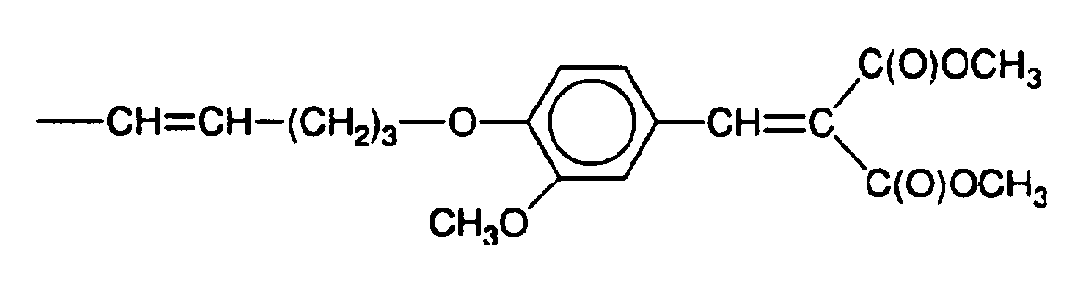

- The organosilicon compounds of the present invention have at least one unit falling within the general formula (i), preferably at least 2. Suitable organosilicon compounds are polymeric materials which may be homopolymers consisting only of such units (i), or they may be copolymers containing both units (i) and units having the general formula (ii). The organosilicon compounds may vary from freely flowing liquids to highly viscous gum-like materials or resinous solids. Preferred, at least for cosmetic applications, are the liquid substantially linear organosiloxane homopolymers and copolymers, for example those having a viscosity of from 100 to 20000m2/s, more prefer- ably 500 to 5000mm2/s as these are more easily mixed with other ingredients to make cosmetic compositions and as they will spread more easily onto the skin.
- Organosilicon compounds of the invention which are especially preferred are those wherein the number of units (i) is limited to a maximum of 20% of the total number of siloxane units in the molecule. For maximum efficiency in its U.V. absorbing property it is preferred that the number of units (i) be limited to 10% or less of the total The units of formula (i) may be distributed randomly in an organosiloxane polymer, they may be end-blocking units of the polymer or they may be located at the end of the poly-mer and pending in chain of the polymer at the same time. Units of the general formula (i) are preferably situated at the end of the organosiloxane polymer forming one or more endblocking units of the polymer. In the most preferred organosilicon compounds which are substantially linear polyorganosiloxane polymers, both endblocking units have a structure represented by the general formula (i), while all other units are according to the general formula (ii). The most preferred organosilicon compounds have two units of the formula (i) and a larger number of units according to the general formula (ii), e.g. 8 to 90, especially 8 to 40.
- The organosilicon compounds according to the invention are effective in absorbing ultra violet radiation in the ery- themic region (290-320nm) which makes them particul-arly suitable for use in cosmetic sunscreen preparations where absorption in the UV-B region is particularly desirable. Most preferred forthis application are those that have a maximum absorbance at 300 - 320nm.
- The organosilicon compounds of the present invention can, quite generally, be prepared by the reaction of an organosilicon compound in which each unit (i) is replaced with a unit having the general formula


- These chromophores are in themselves novel compounds and the invention therefore includes in one of its aspects a compound of the formula

- Compounds of the general formula (iii) may be prepared e.g. by reacting a hydroxy or dihydroxy benzaldehyde with halogenopropyne, followed by a further reaction with a diester of malonic acid. The first reaction is preferably carried out in the presence of a suitable solvent, e.g. acetone, preferably at reflux temperatures. The presence of a catalyst is also preferred. The second reaction is also preferably carried out in the presence of a solvent, e.g. toluene at reflux temperatures. The final product of formula (iii) is a light brown crystal.
- The invention also includes a process for the preparation of organosilicon compounds of the kind specified herein, which comprises reacting together
- (A) a compound of the general formula

- -CH=C-[C(O)OR3]2 and
- (B) an organosilicon compound having at least one unit of the general formula


- The reaction is preferably carried out employing stoichiometric proportions of (A) and (B) or a slight stoichiometric excess of (A). However, a stoichiometric deficiency of (A) can be employed if residual silicon-bonded hydrogen is desired in the product.
- Alternatively polymeric organosilicon compounds of the invention can also be obtained by first preparing the corresponding hydrolysable silane, employing in place of the organosilicon compound (B) the corresponding SiH containing silane (C) which has the general formula

- The silane (D) resulting from this reaction may be submitted thereafter to cohydrolysis with a further hydrolysable silane or equilibration with (E) cyclic or (F) linear polyorganosiloxanes consisting essentially of units of the formula (ii). Silanes (D) which can be used in this method are novel in themselves and are included in the scope of the present invention. Silanes (D) have the general formula

- Thus, in more detail, the process comprises
- I ) the preparation of a hydrolysable silane by reacting a silane of the general formula


- II ) submitting the hydrolysable silane to cohydrolysis or equilibration with cyclic or linear polydiorganosiloxanes consisting essentially of units of the formula

- wherein R" represents a hydrogen atom a monovalent C1-8 hydrocarbon or halogenated hydrocarbon, and b has a value of 0, 1, 2 or 3.
- Z is preferably an alkoxy group having from 1 to 8 carbon atoms.
- As concerns the cohydrolysis, such reaction will conveniently be in conjunction with other hydrolysable silanes (e.g. diorgano-dihalosilanes, or diorgano-alkoxysilanols, etc.) or with siloxanes having hydrolysable endgroups (e.g. a,w dihydroxy polydimethylsiloxanes).
- As concerns the equilibrium aspect on the linear or cyclic polydiorganosiloxanes, cyclic siloxanes will conveniently have the general formula [R2Si0]n, wherein n has a value of from 3 to 9, and linear polydiorganosiloxanes are usually used as end-blocking units, and will be short chain triorganosiloxane end-blocked polydior- gano-siloxanes (in the shortest form hexaorganodisiloxane [R3Si-O-SiR3]).
- This alternative process involves thus technique which is known per se.
- l n order to obtain the particularly preferred polymeric organosilicon compounds of the invention the reaction is carried out in such a way that in the reaction product at least one siloxane unit and no more than 20% of the total number of siloxane units has a structure according to formula (i). This may be achieved by reacting polymeric organosilicon compounds (B) which have a maximum of 20 mole % silicon-bonded hydrogen atoms, with stoichiometric amounts of compound (A). Excess amounts of (A) may also be used in this case. If residual SiH groups are desired in the organosilicon compound product less than stoichiometric amounts of compound (A) may be employed. The particularly preferred polymeric organosilicon compounds of the invention may also be obtained by reacting polymeric organosilicon compounds (B) having more than 20 mole % silicon- bonded hydrogen atoms, with less than stoichiometric amounts of compound (A). Most preferably, however, organosilicon compounds (B) are employed which are polydiorganosiloxanes endblocked with diorganohydrosiloxane units provided the siloxane has a minimum chain length of 10 silicon atoms.
- The reaction between (A) and (B) may be carried out employing known procedures for the addition of silicon-bonded hydrogen atoms to groups containing aliphatic unsaturation. Thus, such reactions are generally catalysed by a platinum group metal or a compound or complex of such a metal. Examples of catalysts which may be employed in the reaction between (A) and (B) are platinum on carbon, chloroplatinic acid, platinum acetyl acetonate, complexes of platinum compounds with unsaturated compounds e.g. olefins and vinyl siloxanes, complexes of rhodium and palladium compounds and complexes of platinum compounds supported on inorganic substrates. The addition reaction may be performed at reduced, atmospheric or increased pressure. It is generally preferred to employ a solvent e.g. toluene or xylene in the reaction mixture although the presence of a solvent is not essential. It is also preferred to carry the reaction out at elevated reaction temperatures e.g. from about 50° C up to the reflux temperature of the reaction mixture.
- The organosilicon compounds of this invention have similar UV absorbance characteristics to those disclosed in the prior art. They are useful as agents for preventing sunburn and are thus useful in skin care and hair care applications. They may be applied per se to the skin or hair but are more preferably formulated into cosmetic compositions with, for example, inert carriers e.g. solvents such as water, ethanol, isopropanol, glycerine and mineral oil and cream base materials such as stearic acid, propylene glycol, beeswax and cetyl alcohol. Other conventional ingredients e.g. perfumes and known U.V. absorbing substances may also be included in the formulated compositions. The organosilicon compounds of the present invention are also useful in the coating of substrates e.g. wood, plastics or metal, to which they may be applied either per se or as additives to coating compositions or they may be incor- porated as additives in plastics materials.
- The following examples, in which parts and percentages are expressed by weight illustrate the invention.
- Preparation of propanedioic {[4-(2-propynyloxy)phenyl]methylene}-diethyl ester (the most preferred compound).
- To a stirred suspension of 4-hydroxybenzaldehyde (425.8g) and K2CO3 (807.6g) in acetone (2,960ml) at reflux temper-ature of about 60° C under a nitrogen atmosphere, was added dropwise 3-bromo-propyne (502.4g) over a period of 2 hours. The reaction was heated at reflux for 3 more hours After cooling to room temperature the reaction mixture was filtered and the excess of K2CO3 removed and washed several times with acetone. The filtrate was washed with saturated aqueous solution of NaHC03 and NaCI. The aqueous phase was extracted with diethyl ether. The combined organic extracts were dried over Na2S04, filtered and concentrated to a volume of 1 litre. The solution was kept in the refrigerator overnight. The crystals were filtered out and washed with cold diethyl ether. The filtrate was kept in the refrigerator and some more crystals were formed and removed. This procedure was repeated 3 times resulting in 1,385.26g of 4-(2-propynyloxy) benzaldehyde in 83% yield. The material was analysed by gas chromatography, and shown to be 99.9% pure. Infrared and mass spectroscopic analysis confirmed the structure.
- The resulting compound (449.2g) was added in small amounts to a stirred solution of diethyl malonate (448.5g), piperidine (23.84g), toluene (1,400ml) and acetic acid (59g) at about 50° C. The acetic acid had been added in three equal portions after 1, 1.5 and 2 hours respectively. The reaction mixture was heated to reflux. After four hours the mixture was allowed to cool to room temperature and washed with saturated aqueous solution of NaHC03 and NaCI, dried with Na2SO4, filtered and concentrated, giving 853.4g of a dark brown oily product. Diethyl ether (458ml) and n-hexane (358ml) were added and the solution kept in a refrigerator overnight. The solution was filtered, giving 564.8g of light brown crystals (67% yield) having a melt-ing point of 45.5 to 48° C. Recrystallisation in ethanol and n-hexane yielded 543g of the title compound as light brown crystals. Analysis revealed a melting point of 48.5 to 49.5° C and a purity by capillary gas chromatography of 99.9%.
- The procedure of the above method was repeated except that dimethyl malonate was used instead of diethyl malonate.
- 5g of {[4- (2-propynyloxy)phenyl]methylene) -diethyl ester were dissolved in 20g of toluene and heated under nitrogen to about 80° C. 13.2g of a hydrosiloxane having a degree of polymerisation of 20 and 10mpc SiH groups (3.62% SiH) were then added dropwise after a platinum complex was also added, giving 10-4 mole of Pt per mole of SiH of the hydro-siloxane. The mixture was heated to reflux and maintained until all SiH had disappeared of the infrared spectroscopic analysis. It was then allowed to cool to room temperature. The toluene was then evaporated to leave after washing 16.5g of a slightly brown polymer having the average structure
- R-[(CH3)2Si0]20-R, wherein R has the formula
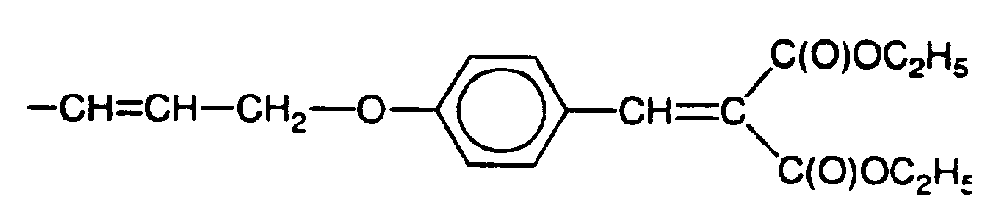
- Only 1.6% by weight of the total reaction product of unreacted {[4-(2-propynyloxy)phenyl]methylene}-diethyl ester was present in the endproduct.
- 10g of {[4-(2-propynyloxy)phenyl]methylene}-diethyl ester were dissolved in 10g of toluene and heated under nitrogen to about 80° C. 13.2g of a hydrosiloxane having a degree of polyme- risation of 100 and 20mpc SiH groups (8.43% SiH) were then added dropwise after a platinum complex was also added, giving 10-4 mole of Pt per mole of SiH of the hydro-siloxane. The mixture was heated to reflux and maintained until all SiH had disappeared of the infrared spectroscopic analysis. It was then allowed to cool to room temperature. The toluene was then evaporated to leave after washing 21.2g of a hazy, very viscous polymer having the average structure


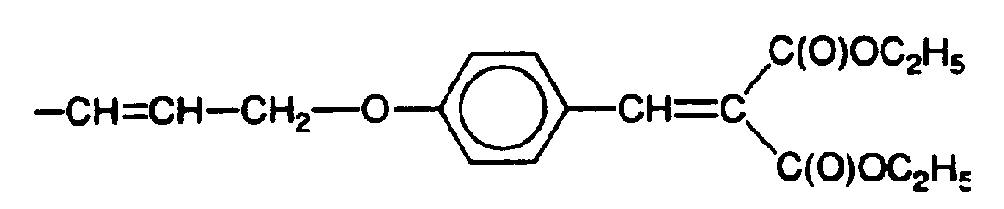
- Similar procedures as described for Examples 3 and 4 were used to make polymers with the average formulae
- (5) R-[(CH3)2SiO]2-R wherein R has the formula
- (6) (CH3)3SiO-[(CH3)2SiO]6-[(CH3)RSiO]2-Si(CR3)3
- A similar procedure as described for Examples 3 and 4 was used to make a polymer with the average formula
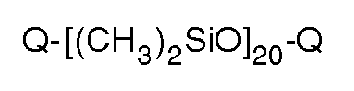

- A similar procedure as described for Examples 3 and 4 was used to make a polymer with the average formula


- Commercially available Parsol MCX was used which has the formula

- Comparative Example 1 and Example 1 were both tested for their absorption at 300nm (E 1 %,cm). To this effect the samples were dissolved in tetrahydrofuran. Example 1 showed an absorption of 211 while Comparative Example 1 only gave a value of 83. This shows that the organosilicon compounds according to the invention are better than the prior art.
- Each sample was tested and found satisfactory in view of the stability to UV radiation and its resistance to washing off with water.
- Invitro penetration tests were carried out on rat skin. The samples were dissolved in tetrahydrofuran at a concen-tra- tion of 10%, and this was applied to the skin at a dosage of 30 µl per 5 cm2 and penetration was checked after 16 hours. After the test the penetration level was inspected by measuring the amount of material on the skin surface, in the horny layer, in the upper part of the skin, in the lower part of the skin and in the chamber (vitro). This was tested by wiping the surface to remove all non-penetrated material and placing it in a glass vial, followed by stripping the cleaned skin several times with adhesive tape to remove the horny layer and placing the tapes in a second glass vial. The stripped skin was then divided in an upper and lower part. The upper part was homogenised in 10ml of tetrahydrofuran and placed in a third vial, while the lower part was treated separately in the same way and placed in a fourth vial. The chamber liquid was then placed in a fifth vial, the chamber rinsed with tetrahydrofuran which was also added to the vial.
- The content of each of the vials was then extracted with tetrahydrofuran and analysed by high performance liquid chromatography. The most preferred materials are those where the amount of penetration in the lower skin is minimal. The results, based on an average from 2 experiments each, are shown in Table I.

- It is clear that materials according to the invention have less penetration through the skin than prior art materials.
wherein R has the formula

Claims (19)



Applications Claiming Priority (3)
| Application Number | Priority Date | Filing Date | Title |
|---|---|---|---|
| GB919110123A GB9110123D0 (en) | 1991-05-10 | 1991-05-10 | Organosilicon compounds their preparation and use |
| GB9110123 | 1991-05-10 | ||
| PCT/EP1992/001001 WO1992020690A1 (en) | 1991-05-10 | 1992-05-07 | Organosiloxanes for use as sunscreen agents |
Publications (2)
| Publication Number | Publication Date |
|---|---|
| EP0538431A1 EP0538431A1 (en) | 1993-04-28 |
| EP0538431B1 true EP0538431B1 (en) | 1996-02-28 |
Family
ID=10694762
Family Applications (1)
| Application Number | Title | Priority Date | Filing Date |
|---|---|---|---|
| EP92909392A Revoked EP0538431B1 (en) | 1991-05-10 | 1992-05-07 | Organosiloxanes for use as sunscreen agents |
Country Status (14)
| Country | Link |
|---|---|
| US (2) | US5403944A (en) |
| EP (1) | EP0538431B1 (en) |
| JP (1) | JP2854977B2 (en) |
| AT (1) | ATE134635T1 (en) |
| AU (2) | AU652633B2 (en) |
| BR (1) | BR9205272A (en) |
| DE (1) | DE69208582T2 (en) |
| DK (1) | DK0538431T3 (en) |
| ES (1) | ES2084356T3 (en) |
| GB (1) | GB9110123D0 (en) |
| IL (3) | IL124701A (en) |
| SG (1) | SG49054A1 (en) |
| WO (1) | WO1992020690A1 (en) |
| ZA (1) | ZA923318B (en) |
Cited By (44)
| Publication number | Priority date | Publication date | Assignee | Title |
|---|---|---|---|---|
| US5985251A (en) * | 1997-12-01 | 1999-11-16 | Roche Vitamins Inc. | Light screening compositions |
| US6123929A (en) * | 1998-07-16 | 2000-09-26 | Roche Vitamins Inc. | Light screening composition containing a polysiloxane-type UV-B screening agent and a benzimidazol-type screening agent |
| WO2005053631A1 (en) | 2003-12-04 | 2005-06-16 | Dsm Ip Assets B.V. | Microcapsules with uv filter activity and process for producing them |
| WO2005092283A1 (en) | 2004-03-26 | 2005-10-06 | Dsm Ip Assets B.V. | Composition comprising an hdac inhibitor in combination with a retinoid |
| WO2006000350A2 (en) | 2004-06-28 | 2006-01-05 | Dsm Ip Assets B.V. | Cosmetic compositions containing protein hydrolysates |
| WO2007039059A1 (en) | 2005-09-20 | 2007-04-12 | Dsm Ip Assets B.V. | Novel carboxylic acid derivatives |
| WO2007065574A2 (en) | 2005-12-09 | 2007-06-14 | Dsm Ip Assets B.V. | Cosmetic or dermatological compositions comprising modified titanium dioxide particles |
| WO2007121916A2 (en) | 2006-04-21 | 2007-11-01 | Dsm Ip Assets B.V. | Use of opioid receptor antagonists |
| WO2007144189A2 (en) | 2006-06-16 | 2007-12-21 | Dsm Ip Assets B.V. | Compositions based on hyperbranched condensation polymers and novel hyperbranched condensation polymers |
| WO2008006589A2 (en) | 2006-07-14 | 2008-01-17 | Dsm Ip Assets B.V. | Compositions comprising rosehip and other active agents for the treatment of inflammatory disorders |
| EP2070525A1 (en) | 2007-12-11 | 2009-06-17 | DSM IP Assets B.V. | Compositions comprising Magnolol and/or Honokiol and chondroitin and use thereof for the treatment, co-treatment or prevention of inflammatory disorders |
| EP2070524A1 (en) | 2007-12-11 | 2009-06-17 | DSM IP Assets B.V. | Compositions comprising Magnolol and/or Honokiol and glucosamine and use thereof for the treatment, co-treatment or prevention of inflammatory disorders |
| WO2010094760A1 (en) | 2009-02-23 | 2010-08-26 | Dsm Ip Assets B.V. | Cajanus extracts and glucosamine for inflammatory disorders |
| WO2011070068A2 (en) | 2009-12-09 | 2011-06-16 | Dsm Ip Assets B.V. | Novel compounds |
| WO2011070071A2 (en) | 2009-12-09 | 2011-06-16 | Dsm Ip Assets B.V. | Novel compound |
| WO2011070075A2 (en) | 2009-12-09 | 2011-06-16 | Dsm Ip Assets B.V. | Novel compounds |
| WO2011070053A2 (en) | 2009-12-09 | 2011-06-16 | Dsm Ip Assets B.V. | Novel compounds |
| WO2011070050A1 (en) | 2009-12-09 | 2011-06-16 | Dsm Ip Assets B.V. | Uv absorbing dentritic polyether prepared by polymerization of oxetanes |
| WO2011070073A2 (en) | 2009-12-09 | 2011-06-16 | Dsm Ip Assets B.V. | Novel compound |
| WO2011070077A2 (en) | 2009-12-09 | 2011-06-16 | Dsm Ip Assets B.V. | Novel compound |
| WO2011086124A1 (en) | 2010-01-15 | 2011-07-21 | Dsm Ip Assets B.V. | 2 - phenyl - 1, 2, 3 - benzotriazoles for uv radiation absorbance |
| WO2011121093A1 (en) | 2010-03-31 | 2011-10-06 | Dsm Ip Assets B.V. | Use of organic compounds in hair care |
| WO2011128339A1 (en) | 2010-04-12 | 2011-10-20 | Dsm Ip Assets B.V. | Hair treatment composition containing gambogic acid, ester or amide |
| WO2012010624A2 (en) | 2010-07-23 | 2012-01-26 | Dsm Ip Assets B.V. | Topical use of steviol or derivatives in hair care |
| WO2012116990A2 (en) | 2011-03-01 | 2012-09-07 | Dsm Ip Assets B.V. | Novel use |
| EP2522329A1 (en) | 2011-05-09 | 2012-11-14 | DSM IP Assets B.V. | Use of resveratrol and arbutin |
| EP2522330A1 (en) | 2011-05-09 | 2012-11-14 | DSM IP Assets B.V. | Use of resveratrol and an edelweiss extract |
| EP2522328A1 (en) | 2011-05-09 | 2012-11-14 | DSM IP Assets B.V. | Use of resveratrol and ascorbyl-2-glucoside |
| EP2522332A1 (en) | 2011-05-09 | 2012-11-14 | DSM IP Assets B.V. | Use of resveratrol and magnesium-ascorbyl-phosphate |
| EP2522335A1 (en) | 2011-05-09 | 2012-11-14 | DSM IP Assets B.V. | Use of resveratrol and sodium-ascorbyl-phophate |
| EP2522331A1 (en) | 2011-05-09 | 2012-11-14 | DSM IP Assets B.V. | Use of resveratrol and niacinamide |
| WO2013041515A1 (en) | 2011-09-20 | 2013-03-28 | Dsm Ip Assets B.V. | Novel polyester based uv filters |
| WO2013104526A1 (en) | 2012-01-09 | 2013-07-18 | Dsm Ip Assets B.V. | Use of danielone and derivatives thereof in skin care |
| EP2623094A1 (en) | 2012-02-02 | 2013-08-07 | DSM IP Assets B.V. | Use of an edelweiss extract |
| WO2015049366A1 (en) | 2013-10-04 | 2015-04-09 | Dsm Ip Assets B.V. | Skin tanning extract |
| EP2873414A1 (en) | 2013-11-19 | 2015-05-20 | DSM IP Assets B.V. | Use of an edelweiss extract in hair care for the prevention of hair graying |
| EP2873440A1 (en) | 2013-11-19 | 2015-05-20 | DSM IP Assets B.V. | Use of an edelweiss extract in hair care for stimulating hair growth |
| WO2016059169A1 (en) | 2014-10-17 | 2016-04-21 | Dsm Ip Assets B.V. | Use of a cosmetic composition comprising 10-hydroxystearic acid |
| WO2016090081A1 (en) | 2014-12-04 | 2016-06-09 | Lubrizol Advanced Materials, Inc. | Viscosity modification of organic phase containing compositions |
| US10087200B2 (en) | 2014-05-19 | 2018-10-02 | Interquim, S.A. | Silylated imine and carbamate polymeric benzoate compounds, uses, and compositions thereof |
| WO2019091992A1 (en) | 2017-11-13 | 2019-05-16 | Dsm Ip Assets B.V. | Cosmetic or dermatological compositions |
| WO2019121466A1 (en) | 2017-12-19 | 2019-06-27 | Dsm Ip Assets B.V. | Topical composition |
| WO2019121476A1 (en) | 2017-12-19 | 2019-06-27 | Dsm Ip Assets B.V. | Topical composition |
| WO2020245383A1 (en) | 2019-06-07 | 2020-12-10 | Dsm Ip Assets B.V. | Topical composition |
Families Citing this family (57)
| Publication number | Priority date | Publication date | Assignee | Title |
|---|---|---|---|---|
| FR2680684B1 (en) * | 1991-08-29 | 1993-11-12 | Oreal | COSMETIC FILTERING COMPOSITION COMPRISING A METAL OXIDE NANOPIGMENT AND A FILTERED POLYMER. |
| IL115558A (en) * | 1994-10-14 | 2000-01-31 | Givaudan Roure Int | Photostable cosmetic light-screening compositions comprising organosiloxane derivatives |
| ZA958576B (en) * | 1994-10-14 | 1996-04-15 | Givaudan Roure Int | Photostable cosmetic light screening compositions |
| US6033649A (en) * | 1995-12-18 | 2000-03-07 | Roche Vitamins Inc. | Light screening agents |
| FR2754446B1 (en) * | 1996-10-15 | 2004-10-15 | Oreal | USE OF A SILICONE FILTER FOR THE PROTECTION OF THE COLOR OF KERATINIC FIBERS NATURALLY OR ARTIFICIALLY COLORED |
| CA2241645A1 (en) * | 1997-07-14 | 1999-01-14 | F. Hoffmann-La Roche Ag | Light-screening agents |
| US6069170A (en) * | 1997-08-05 | 2000-05-30 | Roche Vitamins Inc. | Light screening compounds and compositions |
| DE19735900A1 (en) * | 1997-08-19 | 1999-02-25 | Beiersdorf Ag | Photoprotective combinations |
| DE19735901A1 (en) * | 1997-08-19 | 1999-02-25 | Beiersdorf Ag | Cosmetic or dermatological light stabilizers, which contain solid-state UV filter substances and polymeric UV filter substances based on silicone |
| DE19735899A1 (en) * | 1997-08-19 | 1999-02-25 | Beiersdorf Ag | Active ingredient combinations of one or more surface-active substances and oligomeric or polymeric UV filter substances with periodically repeating Si-0 groups |
| US6018044A (en) * | 1998-01-02 | 2000-01-25 | Roche Vitamins Inc. | Light screening compositions |
| US6766082B2 (en) * | 2000-10-18 | 2004-07-20 | Nippon Telegraph And Telephone Corporation | Waveguide-type optical device and manufacturing method therefor |
| DE10055940A1 (en) * | 2000-11-10 | 2002-05-29 | Bayer Ag | New indanylid compounds |
| DE10063130A1 (en) * | 2000-12-18 | 2002-06-20 | Beiersdorf Ag | Use of polyurethanes to improve the water resistance of cosmetic or catalog formulations |
| DE10111046A1 (en) * | 2001-03-06 | 2002-09-12 | Beiersdorf Ag | Cosmetic or dermatological preparations for treating or preventing pigmentation disorders, e.g. freckles or liver spots, containing active agent combination of alpha-lipoic acid and UV-A or UV-B absorber |
| DE10113053A1 (en) * | 2001-03-15 | 2002-09-19 | Beiersdorf Ag | Self-foaming or foamed cosmetic or dermatological composition comprises a specified emulsifier system, a lipid phase, a gas, a gelling agent and a hydrocolloid |
| DE10113046A1 (en) * | 2001-03-15 | 2002-09-26 | Beiersdorf Ag | Self-foaming product for dermatological and cosmetic products comprises an emulsifier system, a lipid phase, gas, organic hydrocolloid and a solid body |
| DE10113051A1 (en) * | 2001-03-15 | 2002-09-19 | Beiersdorf Ag | Self-foaming or foamed cosmetic or dermatological composition comprises a specified emulsifier system, a lipid phase, a gas, a gelling agent and a particulate hydrophobic and/or oil-absorbing solid |
| DE10113054A1 (en) * | 2001-03-15 | 2002-09-26 | Beiersdorf Ag | Self-foaming product used for skin care contains an emulsifier system, a lipid phase, gas, inorganic thickener, organic hydrocolloid and solid body |
| DE10113047A1 (en) * | 2001-03-15 | 2002-09-26 | Beiersdorf Ag | Self-foaming or foam-producing cosmetic composition, useful for skin or hair care, comprises gas, lipid, thickener and three-component emulsifier system |
| DE10124475A1 (en) * | 2001-05-19 | 2002-11-21 | Beiersdorf Ag | Cosmetic or dermatological composition containing ketohexose, useful for treating e.g. inflammation, pigment disorders, and skin aging, promotes barrier function |
| DE10224387A1 (en) | 2002-06-01 | 2003-12-11 | Beiersdorf Ag | Cosmetic or dermatological preparations with a prepared extract from Radix Glycyrrhizae inflatae |
| DE10238298A1 (en) * | 2002-08-21 | 2004-03-04 | Beiersdorf Ag | Use of antisense oligonucleotides for the treatment of degenerative skin symptoms |
| EP1539206A1 (en) * | 2002-09-07 | 2005-06-15 | Beiersdorf AG | Cosmetic or dermatological preparations having a content of anti-freezing proteins and/or anti-freezing glycoproteins |
| DE10254214A1 (en) * | 2002-11-20 | 2004-06-09 | Beiersdorf Ag | Oligoribonucleotides for the treatment of degenerative skin symptoms by RNA interference |
| DE10301834A1 (en) | 2003-01-20 | 2004-07-29 | Beiersdorf Ag | Cosmetic or dermatological preparations with an improved pearlescent look |
| US20060204457A1 (en) * | 2003-02-26 | 2006-09-14 | Yuzo Toda | Cosmetic uv-screen compositions and aminobutadiene-based uv-absorbing complexes therefor |
| DE10330609A1 (en) | 2003-07-07 | 2005-01-27 | Beiersdorf Ag | Hairstyle fixing multiple design allowing cosmetic preparation |
| US6893790B2 (en) * | 2003-08-26 | 2005-05-17 | Eastman Kodak Company | Photopatterning of conductive electrode layers containing electrically-conductive polymer particles |
| DE10349665A1 (en) * | 2003-10-24 | 2005-06-09 | Beiersdorf Ag | Insect repellent textile |
| ES2334797T3 (en) * | 2003-11-05 | 2010-03-16 | Dsm Ip Assets B.V. | LIGHT PROTECTIVE COMPOSITION WITH A REDUCED TOTAL AMOUNT OF UV FILTER CONTAINING A POLISILOXANE BASED UV FILTER. |
| DE20320413U1 (en) * | 2003-11-17 | 2004-08-26 | Beiersdorf Ag | Cosmetic with sensitive ingredients |
| US7988953B2 (en) * | 2004-03-25 | 2011-08-02 | Dsm Ip Assets B.V. | UV absorbing chromophores covalently bonded to hyperbranched polymers |
| DE102004029239A1 (en) | 2004-05-03 | 2005-12-01 | Symrise Gmbh & Co. Kg | Benylidene-β-dicarbonyl compounds as new UV absorbers |
| DE102004025881A1 (en) | 2004-05-19 | 2006-01-05 | Beiersdorf Ag | Oligoribonucleotides for influencing hair growth |
| US20080261844A1 (en) * | 2004-09-03 | 2008-10-23 | Beiersdorf Ag | Multicolor Cosmetics |
| DE102004060314A1 (en) * | 2004-12-08 | 2006-08-31 | Beiersdorf Ag | Active ingredient combinations of one or more isoflavonoids and carnitine and / or one or more acyl-carnitines |
| WO2006061124A1 (en) | 2004-12-10 | 2006-06-15 | Dsm Ip Assets B.V. | Encapsulated cosmetic materials |
| DE102005021913A1 (en) | 2005-05-09 | 2006-11-23 | Beiersdorf Ag | Sun protection kit and method for pigmentation approximation |
| US7662177B2 (en) | 2006-04-12 | 2010-02-16 | Bacoustics, Llc | Apparatus and methods for pain relief using ultrasound waves in combination with cryogenic energy |
| EP1952845A1 (en) | 2007-01-26 | 2008-08-06 | DSMIP Assets B.V. | Use of an astaxathin derivative for cosmetic purposes |
| DE102007028025A1 (en) | 2007-06-14 | 2008-12-18 | Beiersdorf Ag | Cosmetic or dermatological preparations containing molecular oxygen, surface-active glucose derivatives and, advantageously, one or more UV light-absorbing substances |
| DE102007032663A1 (en) | 2007-07-13 | 2009-01-15 | Beiersdorf Ag | Cosmetic or dermatological preparations for skin care, protection and cleaning, containing apiogalacturonan compounds or extracts thereof from seaweed, together with UV light absorbers |
| US8859230B2 (en) | 2007-11-21 | 2014-10-14 | Roskilde Universitet | Polypeptides comprising an ice-binding activity |
| US7989572B2 (en) * | 2008-01-17 | 2011-08-02 | Eastman Chemical Company | Polyvinyl ultraviolet light absorbers for personal care |
| DE102009009004A1 (en) | 2008-02-18 | 2009-09-17 | Seaquist Perfect Dispensing Gmbh | Dispensing device, preferably pump preferably with a sprayable and/or non-sprayable cosmetic liquid, where the cosmetic liquid comprises single phase solution, mixture of non-miscible liquid phases, and oil-in-water-/water-in-oil-emulsion |
| US8003132B2 (en) * | 2008-06-30 | 2011-08-23 | Johnson & Johnson Consumer Companies, Inc. | Compositions comprising an ultraviolet radiation-absorbing polymer |
| BRPI0923201A2 (en) * | 2008-12-01 | 2016-01-26 | Dsm Ip Assests Bv | A method for improving the color index of functionalized organipolysiloxanes with at least one UV light absorption group, and organopolysiloxanes. |
| ATE544805T1 (en) * | 2008-12-01 | 2012-02-15 | Dsm Ip Assets Bv | NEW PROCESS |
| ATE523547T1 (en) | 2008-12-01 | 2011-09-15 | Dsm Ip Assets Bv | NEW PROCEDURE |
| EP2311844A1 (en) | 2009-10-15 | 2011-04-20 | Interquim, S.A. | Silyl polymeric benzoic acid ester compounds, uses, and compositions thereof |
| US8475774B2 (en) * | 2010-02-08 | 2013-07-02 | Johnson & Johnson Consumer Companies, Inc. | Sunscreen compositions comprising an ultraviolet radiation-absorbing polymer |
| DE102013204097A1 (en) | 2013-03-11 | 2014-10-30 | Beiersdorf Ag | Active ingredient combinations of alkylamidothiazoles and one or more cosmetically or dermatologically acceptable UV filter substances |
| WO2014202089A2 (en) | 2013-06-18 | 2014-12-24 | Roskilde Universitet | Variants of anti-freeze polypeptides |
| EP3421096A1 (en) | 2017-06-30 | 2019-01-02 | Athenion AG | Method for solubilizing poorly water-soluble cosmetic agents |
| DE102019207780A1 (en) | 2019-05-28 | 2020-12-03 | Beiersdorf Ag | Cosmetic O / W emulsion with scleroglucan and lipophilic UV filter substances |
| DE102019212329A1 (en) | 2019-08-19 | 2021-02-25 | Beiersdorf Ag | Cosmetic O / W emulsion with succinoglucan and lipophilic UV filter substances |
Family Cites Families (11)
| Publication number | Priority date | Publication date | Assignee | Title |
|---|---|---|---|---|
| US3718681A (en) * | 1970-04-23 | 1973-02-27 | Stauffer Wacker Silicone Corp | Acyloxybenzoyloxysilanes |
| US3962299A (en) * | 1974-04-25 | 1976-06-08 | Celanese Corporation | Organopolysiloxane polyesters |
| CH632765A5 (en) * | 1977-09-09 | 1982-10-29 | Ciba Geigy Ag | METHOD FOR PRODUCING SILICON-MODIFIED PHTHALIC ACID DERIVATIVES. |
| US5138089A (en) * | 1986-06-27 | 1992-08-11 | The Procter & Gamble Company | Chromophores, sunscreen compositions and methods for preventing sunburn |
| GB8718140D0 (en) * | 1987-07-31 | 1987-09-09 | Dow Corning Ltd | Organosilicon compounds |
| JP2543729B2 (en) * | 1987-11-18 | 1996-10-16 | 東レ・ダウコーニング・シリコーン株式会社 | Phthalates modified organopolysiloxane and method for producing the same |
| LU87271A1 (en) * | 1988-07-08 | 1990-02-07 | Oreal | NOVEL LIPOSOLUBLE UNSATURATED DERIVATIVES OF BENZALMALONATES AND THEIR USE AS ABSORBERS OF ULTRA-VIOLET RADIATION IN COSMETICS |
| AU616538B2 (en) * | 1988-07-08 | 1991-10-31 | Shiseido Company Ltd. | Silicone type cinnamic acid derivative, preparation method thereof, uv-ray absorber, and external skin treatment agent |
| US5138012A (en) * | 1988-07-29 | 1992-08-11 | General Electric Company | Silicone release coating compositions |
| FR2636338B1 (en) * | 1988-09-09 | 1990-11-23 | Rhone Poulenc Chimie | DIORGANOPOLYSILOXANE WITH BENZALMALONATE FUNCTION |
| FR2642967B1 (en) * | 1989-02-15 | 1991-06-07 | Oreal | COSMETIC USE OF BENZALMALONATE FUNCTIONAL DIORGANOPOLYSILOXANES AND NOVEL COSMETIC COMPOSITIONS CONTAINING THESE COMPOUNDS FOR PROTECTION OF THE SKIN AND HAIR |
-
1991
- 1991-05-10 GB GB919110123A patent/GB9110123D0/en active Pending
-
1992
- 1992-05-07 JP JP4508889A patent/JP2854977B2/en not_active Expired - Lifetime
- 1992-05-07 DE DE69208582T patent/DE69208582T2/en not_active Revoked
- 1992-05-07 ES ES92909392T patent/ES2084356T3/en not_active Expired - Lifetime
- 1992-05-07 US US07/960,384 patent/US5403944A/en not_active Expired - Lifetime
- 1992-05-07 WO PCT/EP1992/001001 patent/WO1992020690A1/en not_active Ceased
- 1992-05-07 AU AU16771/92A patent/AU652633B2/en not_active Expired
- 1992-05-07 BR BR9205272A patent/BR9205272A/en not_active IP Right Cessation
- 1992-05-07 SG SG1996005567A patent/SG49054A1/en unknown
- 1992-05-07 DK DK92909392.0T patent/DK0538431T3/en active
- 1992-05-07 AT AT92909392T patent/ATE134635T1/en not_active IP Right Cessation
- 1992-05-07 ZA ZA923318A patent/ZA923318B/en unknown
- 1992-05-07 EP EP92909392A patent/EP0538431B1/en not_active Revoked
- 1992-05-08 IL IL12470192A patent/IL124701A/en not_active IP Right Cessation
- 1992-05-08 IL IL10181192A patent/IL101811A/en not_active IP Right Cessation
-
1994
- 1994-09-21 US US08/310,020 patent/US5495039A/en not_active Expired - Lifetime
- 1994-12-01 AU AU79176/94A patent/AU687908B2/en not_active Expired
-
1998
- 1998-05-29 IL IL12470198A patent/IL124701A0/en unknown
Cited By (45)
| Publication number | Priority date | Publication date | Assignee | Title |
|---|---|---|---|---|
| US5985251A (en) * | 1997-12-01 | 1999-11-16 | Roche Vitamins Inc. | Light screening compositions |
| US6123929A (en) * | 1998-07-16 | 2000-09-26 | Roche Vitamins Inc. | Light screening composition containing a polysiloxane-type UV-B screening agent and a benzimidazol-type screening agent |
| WO2005053631A1 (en) | 2003-12-04 | 2005-06-16 | Dsm Ip Assets B.V. | Microcapsules with uv filter activity and process for producing them |
| WO2005092283A1 (en) | 2004-03-26 | 2005-10-06 | Dsm Ip Assets B.V. | Composition comprising an hdac inhibitor in combination with a retinoid |
| WO2006000350A2 (en) | 2004-06-28 | 2006-01-05 | Dsm Ip Assets B.V. | Cosmetic compositions containing protein hydrolysates |
| WO2007039059A1 (en) | 2005-09-20 | 2007-04-12 | Dsm Ip Assets B.V. | Novel carboxylic acid derivatives |
| WO2007065574A2 (en) | 2005-12-09 | 2007-06-14 | Dsm Ip Assets B.V. | Cosmetic or dermatological compositions comprising modified titanium dioxide particles |
| WO2007121916A2 (en) | 2006-04-21 | 2007-11-01 | Dsm Ip Assets B.V. | Use of opioid receptor antagonists |
| WO2007144189A2 (en) | 2006-06-16 | 2007-12-21 | Dsm Ip Assets B.V. | Compositions based on hyperbranched condensation polymers and novel hyperbranched condensation polymers |
| WO2008006589A2 (en) | 2006-07-14 | 2008-01-17 | Dsm Ip Assets B.V. | Compositions comprising rosehip and other active agents for the treatment of inflammatory disorders |
| EP2070525A1 (en) | 2007-12-11 | 2009-06-17 | DSM IP Assets B.V. | Compositions comprising Magnolol and/or Honokiol and chondroitin and use thereof for the treatment, co-treatment or prevention of inflammatory disorders |
| EP2070524A1 (en) | 2007-12-11 | 2009-06-17 | DSM IP Assets B.V. | Compositions comprising Magnolol and/or Honokiol and glucosamine and use thereof for the treatment, co-treatment or prevention of inflammatory disorders |
| WO2010094760A1 (en) | 2009-02-23 | 2010-08-26 | Dsm Ip Assets B.V. | Cajanus extracts and glucosamine for inflammatory disorders |
| WO2011070068A2 (en) | 2009-12-09 | 2011-06-16 | Dsm Ip Assets B.V. | Novel compounds |
| WO2011070071A2 (en) | 2009-12-09 | 2011-06-16 | Dsm Ip Assets B.V. | Novel compound |
| WO2011070075A2 (en) | 2009-12-09 | 2011-06-16 | Dsm Ip Assets B.V. | Novel compounds |
| WO2011070053A2 (en) | 2009-12-09 | 2011-06-16 | Dsm Ip Assets B.V. | Novel compounds |
| WO2011070050A1 (en) | 2009-12-09 | 2011-06-16 | Dsm Ip Assets B.V. | Uv absorbing dentritic polyether prepared by polymerization of oxetanes |
| WO2011070073A2 (en) | 2009-12-09 | 2011-06-16 | Dsm Ip Assets B.V. | Novel compound |
| WO2011070077A2 (en) | 2009-12-09 | 2011-06-16 | Dsm Ip Assets B.V. | Novel compound |
| WO2011086124A1 (en) | 2010-01-15 | 2011-07-21 | Dsm Ip Assets B.V. | 2 - phenyl - 1, 2, 3 - benzotriazoles for uv radiation absorbance |
| WO2011121093A1 (en) | 2010-03-31 | 2011-10-06 | Dsm Ip Assets B.V. | Use of organic compounds in hair care |
| WO2011128339A1 (en) | 2010-04-12 | 2011-10-20 | Dsm Ip Assets B.V. | Hair treatment composition containing gambogic acid, ester or amide |
| WO2012010624A2 (en) | 2010-07-23 | 2012-01-26 | Dsm Ip Assets B.V. | Topical use of steviol or derivatives in hair care |
| WO2012116990A2 (en) | 2011-03-01 | 2012-09-07 | Dsm Ip Assets B.V. | Novel use |
| EP2522329A1 (en) | 2011-05-09 | 2012-11-14 | DSM IP Assets B.V. | Use of resveratrol and arbutin |
| EP2522330A1 (en) | 2011-05-09 | 2012-11-14 | DSM IP Assets B.V. | Use of resveratrol and an edelweiss extract |
| EP2522328A1 (en) | 2011-05-09 | 2012-11-14 | DSM IP Assets B.V. | Use of resveratrol and ascorbyl-2-glucoside |
| EP2522332A1 (en) | 2011-05-09 | 2012-11-14 | DSM IP Assets B.V. | Use of resveratrol and magnesium-ascorbyl-phosphate |
| EP2522335A1 (en) | 2011-05-09 | 2012-11-14 | DSM IP Assets B.V. | Use of resveratrol and sodium-ascorbyl-phophate |
| EP2522331A1 (en) | 2011-05-09 | 2012-11-14 | DSM IP Assets B.V. | Use of resveratrol and niacinamide |
| WO2013041515A1 (en) | 2011-09-20 | 2013-03-28 | Dsm Ip Assets B.V. | Novel polyester based uv filters |
| WO2013104526A1 (en) | 2012-01-09 | 2013-07-18 | Dsm Ip Assets B.V. | Use of danielone and derivatives thereof in skin care |
| EP2623094A1 (en) | 2012-02-02 | 2013-08-07 | DSM IP Assets B.V. | Use of an edelweiss extract |
| WO2015049366A1 (en) | 2013-10-04 | 2015-04-09 | Dsm Ip Assets B.V. | Skin tanning extract |
| EP2873414A1 (en) | 2013-11-19 | 2015-05-20 | DSM IP Assets B.V. | Use of an edelweiss extract in hair care for the prevention of hair graying |
| EP2873440A1 (en) | 2013-11-19 | 2015-05-20 | DSM IP Assets B.V. | Use of an edelweiss extract in hair care for stimulating hair growth |
| US10087200B2 (en) | 2014-05-19 | 2018-10-02 | Interquim, S.A. | Silylated imine and carbamate polymeric benzoate compounds, uses, and compositions thereof |
| WO2016059169A1 (en) | 2014-10-17 | 2016-04-21 | Dsm Ip Assets B.V. | Use of a cosmetic composition comprising 10-hydroxystearic acid |
| WO2016090081A1 (en) | 2014-12-04 | 2016-06-09 | Lubrizol Advanced Materials, Inc. | Viscosity modification of organic phase containing compositions |
| WO2019091992A1 (en) | 2017-11-13 | 2019-05-16 | Dsm Ip Assets B.V. | Cosmetic or dermatological compositions |
| WO2019121466A1 (en) | 2017-12-19 | 2019-06-27 | Dsm Ip Assets B.V. | Topical composition |
| WO2019121476A1 (en) | 2017-12-19 | 2019-06-27 | Dsm Ip Assets B.V. | Topical composition |
| WO2020245383A1 (en) | 2019-06-07 | 2020-12-10 | Dsm Ip Assets B.V. | Topical composition |
| EP4467201A2 (en) | 2019-06-07 | 2024-11-27 | DSM IP Assets B.V. | Topical composition |
Also Published As
| Publication number | Publication date |
|---|---|
| ATE134635T1 (en) | 1996-03-15 |
| DE69208582T2 (en) | 1996-10-02 |
| ES2084356T3 (en) | 1996-05-01 |
| US5495039A (en) | 1996-02-27 |
| IL124701A0 (en) | 1998-12-06 |
| SG49054A1 (en) | 1998-05-18 |
| IL101811A (en) | 1999-06-20 |
| IL124701A (en) | 1999-08-17 |
| GB9110123D0 (en) | 1991-07-03 |
| JPH06500125A (en) | 1994-01-06 |
| DK0538431T3 (en) | 1996-04-09 |
| BR9205272A (en) | 1993-07-27 |
| ZA923318B (en) | 1993-07-02 |
| AU652633B2 (en) | 1994-09-01 |
| IL101811A0 (en) | 1992-12-30 |
| AU687908B2 (en) | 1998-03-05 |
| AU7917694A (en) | 1995-02-16 |
| WO1992020690A1 (en) | 1992-11-26 |
| DE69208582D1 (en) | 1996-04-04 |
| JP2854977B2 (en) | 1999-02-10 |
| EP0538431A1 (en) | 1993-04-28 |
| US5403944A (en) | 1995-04-04 |
| AU1677192A (en) | 1992-12-30 |
Similar Documents
| Publication | Publication Date | Title |
|---|---|---|
| EP0538431B1 (en) | Organosiloxanes for use as sunscreen agents | |
| AU679391B2 (en) | Novel sunscreens, photoprotective cosmetic compositions containing them and uses thereof | |
| US4554369A (en) | Organosilicon compounds and preparation and use thereof | |
| US5147965A (en) | Method for the preparation of a higher alkoxy-substituted organopolysiloxane | |
| CA1332240C (en) | Silicone type cinnamic acid derivative, preparation method thereof, uv-ray absorber, and external skin treatment agent | |
| US4545980A (en) | Organosiloxanes and preparation thereof | |
| JP4647766B2 (en) | High molecular weight alkylmethyl-alkylarylsiloxane terpolymer having low SiH content and method for producing the same | |
| EP0138590A2 (en) | Organosilicon compounds and preparation and use thereof | |
| US4992261A (en) | Organosilicon compounds their preparation and use | |
| US5539137A (en) | Aryl substituted silicone fluids having high refractive indices and method for making | |
| US5310842A (en) | Higher alkoxy-substituted organopolysiloxane | |
| US5315022A (en) | Silicone type cinnamic acid derivative, preparation method thereof, UV-ray absorber, and external skin treatment agent | |
| US4661616A (en) | Benzoic and benzacrylic acid esters | |
| US4912241A (en) | Organosilicon compounds | |
| JPH0512325B2 (en) | ||
| CA1255690A (en) | Organosiloxanes cosmetic and sunscreen agents | |
| JPH1045768A (en) | Novel organosilicon compounds and cosmetics containing the same | |
| JP2025528512A (en) | Elastomer having a C—O—Si bond between the polyester main chain and the crosslinking agent | |
| GB2145714A (en) | U V Absorbing unsaturated organic esters |
Legal Events
| Date | Code | Title | Description |
|---|---|---|---|
| PUAI | Public reference made under article 153(3) epc to a published international application that has entered the european phase |
Free format text: ORIGINAL CODE: 0009012 |
|
| 17P | Request for examination filed |
Effective date: 19921228 |
|
| AK | Designated contracting states |
Kind code of ref document: A1 Designated state(s): AT BE CH DE DK ES FR GB IT LI NL |
|
| 17Q | First examination report despatched |
Effective date: 19950331 |
|
| GRAH | Despatch of communication of intention to grant a patent |
Free format text: ORIGINAL CODE: EPIDOS IGRA |
|
| GRAA | (expected) grant |
Free format text: ORIGINAL CODE: 0009210 |
|
| AK | Designated contracting states |
Kind code of ref document: B1 Designated state(s): AT BE CH DE DK ES FR GB IT LI NL |
|
| REF | Corresponds to: |
Ref document number: 134635 Country of ref document: AT Date of ref document: 19960315 Kind code of ref document: T |
|
| REF | Corresponds to: |
Ref document number: 69208582 Country of ref document: DE Date of ref document: 19960404 |
|
| REG | Reference to a national code |
Ref country code: DK Ref legal event code: T3 |
|
| REG | Reference to a national code |
Ref country code: ES Ref legal event code: FG2A Ref document number: 2084356 Country of ref document: ES Kind code of ref document: T3 |
|
| ET | Fr: translation filed | ||
| ITF | It: translation for a ep patent filed | ||
| PLBQ | Unpublished change to opponent data |
Free format text: ORIGINAL CODE: EPIDOS OPPO |
|
| PLBI | Opposition filed |
Free format text: ORIGINAL CODE: 0009260 |
|
| 26 | Opposition filed |
Opponent name: L'OREAL Effective date: 19961128 |
|
| PLBF | Reply of patent proprietor to notice(s) of opposition |
Free format text: ORIGINAL CODE: EPIDOS OBSO |
|
| NLR1 | Nl: opposition has been filed with the epo |
Opponent name: L'OREAL |
|
| PLBF | Reply of patent proprietor to notice(s) of opposition |
Free format text: ORIGINAL CODE: EPIDOS OBSO |
|
| PLBF | Reply of patent proprietor to notice(s) of opposition |
Free format text: ORIGINAL CODE: EPIDOS OBSO |
|
| PLBQ | Unpublished change to opponent data |
Free format text: ORIGINAL CODE: EPIDOS OPPO |
|
| PLAB | Opposition data, opponent's data or that of the opponent's representative modified |
Free format text: ORIGINAL CODE: 0009299OPPO |
|
| R26 | Opposition filed (corrected) |
Opponent name: L'OREAL Effective date: 19961128 |
|
| NLR1 | Nl: opposition has been filed with the epo |
Opponent name: L'OREAL |
|
| PLBQ | Unpublished change to opponent data |
Free format text: ORIGINAL CODE: EPIDOS OPPO |
|
| PLAB | Opposition data, opponent's data or that of the opponent's representative modified |
Free format text: ORIGINAL CODE: 0009299OPPO |
|
| R26 | Opposition filed (corrected) |
Opponent name: L'OREAL Effective date: 19961128 |
|
| REG | Reference to a national code |
Ref country code: CH Ref legal event code: PUE Owner name: GIVAUDAN-ROURE (INTERNATIONAL) S.A. TRANSFER- F. H |
|
| NLR1 | Nl: opposition has been filed with the epo |
Opponent name: L'OREAL |
|
| RDAH | Patent revoked |
Free format text: ORIGINAL CODE: EPIDOS REVO |
|
| REG | Reference to a national code |
Ref country code: GB Ref legal event code: 732E |
|
| REG | Reference to a national code |
Ref country code: FR Ref legal event code: TP |
|
| APAC | Appeal dossier modified |
Free format text: ORIGINAL CODE: EPIDOS NOAPO |
|
| APAE | Appeal reference modified |
Free format text: ORIGINAL CODE: EPIDOS REFNO |
|
| APAC | Appeal dossier modified |
Free format text: ORIGINAL CODE: EPIDOS NOAPO |
|
| NLS | Nl: assignments of ep-patents |
Owner name: F. HOFFMANN-LA ROCHE AG |
|
| REG | Reference to a national code |
Ref country code: GB Ref legal event code: IF02 |
|
| PGFP | Annual fee paid to national office [announced via postgrant information from national office to epo] |
Ref country code: GB Payment date: 20020501 Year of fee payment: 11 |
|
| PGFP | Annual fee paid to national office [announced via postgrant information from national office to epo] |
Ref country code: FR Payment date: 20020508 Year of fee payment: 11 |
|
| PGFP | Annual fee paid to national office [announced via postgrant information from national office to epo] |
Ref country code: AT Payment date: 20020513 Year of fee payment: 11 |
|
| PGFP | Annual fee paid to national office [announced via postgrant information from national office to epo] |
Ref country code: DK Payment date: 20020514 Year of fee payment: 11 |
|
| PGFP | Annual fee paid to national office [announced via postgrant information from national office to epo] |
Ref country code: DE Payment date: 20020516 Year of fee payment: 11 |
|
| PGFP | Annual fee paid to national office [announced via postgrant information from national office to epo] |
Ref country code: CH Payment date: 20020517 Year of fee payment: 11 |
|
| PGFP | Annual fee paid to national office [announced via postgrant information from national office to epo] |
Ref country code: NL Payment date: 20020529 Year of fee payment: 11 |
|
| APAC | Appeal dossier modified |
Free format text: ORIGINAL CODE: EPIDOS NOAPO |
|
| PGFP | Annual fee paid to national office [announced via postgrant information from national office to epo] |
Ref country code: ES Payment date: 20030529 Year of fee payment: 12 |
|
| RDAG | Patent revoked |
Free format text: ORIGINAL CODE: 0009271 |
|
| PGFP | Annual fee paid to national office [announced via postgrant information from national office to epo] |
Ref country code: BE Payment date: 20030725 Year of fee payment: 12 |
|
| REG | Reference to a national code |
Ref country code: CH Ref legal event code: PL |
|
| 27W | Patent revoked |
Effective date: 20030326 |
|
| GBPR | Gb: patent revoked under art. 102 of the ep convention designating the uk as contracting state |
Free format text: 20030326 |
|
| NLR2 | Nl: decision of opposition |
Effective date: 20030326 |
|
| APAH | Appeal reference modified |
Free format text: ORIGINAL CODE: EPIDOSCREFNO |