EP0539595A1 - Dispositif et procede de traitement de donnees - Google Patents
Dispositif et procede de traitement de donnees Download PDFInfo
- Publication number
- EP0539595A1 EP0539595A1 EP92908498A EP92908498A EP0539595A1 EP 0539595 A1 EP0539595 A1 EP 0539595A1 EP 92908498 A EP92908498 A EP 92908498A EP 92908498 A EP92908498 A EP 92908498A EP 0539595 A1 EP0539595 A1 EP 0539595A1
- Authority
- EP
- European Patent Office
- Prior art keywords
- data
- unit
- arithmetic
- bit
- processor
- Prior art date
- Legal status (The legal status is an assumption and is not a legal conclusion. Google has not performed a legal analysis and makes no representation as to the accuracy of the status listed.)
- Withdrawn
Links
Images





Classifications
-
- G—PHYSICS
- G06—COMPUTING OR CALCULATING; COUNTING
- G06F—ELECTRIC DIGITAL DATA PROCESSING
- G06F15/00—Digital computers in general; Data processing equipment in general
- G06F15/16—Combinations of two or more digital computers each having at least an arithmetic unit, a program unit and a register, e.g. for a simultaneous processing of several programs
- G06F15/163—Interprocessor communication
- G06F15/173—Interprocessor communication using an interconnection network, e.g. matrix, shuffle, pyramid, star, snowflake
- G06F15/17337—Direct connection machines, e.g. completely connected computers, point to point communication networks
- G06F15/17343—Direct connection machines, e.g. completely connected computers, point to point communication networks wherein the interconnection is dynamically configurable, e.g. having loosely coupled nearest neighbor architecture
-
- G—PHYSICS
- G06—COMPUTING OR CALCULATING; COUNTING
- G06F—ELECTRIC DIGITAL DATA PROCESSING
- G06F15/00—Digital computers in general; Data processing equipment in general
- G06F15/16—Combinations of two or more digital computers each having at least an arithmetic unit, a program unit and a register, e.g. for a simultaneous processing of several programs
- G06F15/163—Interprocessor communication
- G06F15/173—Interprocessor communication using an interconnection network, e.g. matrix, shuffle, pyramid, star, snowflake
- G06F15/17356—Indirect interconnection networks
- G06F15/17368—Indirect interconnection networks non hierarchical topologies
-
- G—PHYSICS
- G06—COMPUTING OR CALCULATING; COUNTING
- G06F—ELECTRIC DIGITAL DATA PROCESSING
- G06F15/00—Digital computers in general; Data processing equipment in general
- G06F15/76—Architectures of general purpose stored program computers
- G06F15/80—Architectures of general purpose stored program computers comprising an array of processing units with common control, e.g. single instruction multiple data processors
- G06F15/8007—Architectures of general purpose stored program computers comprising an array of processing units with common control, e.g. single instruction multiple data processors single instruction multiple data [SIMD] multiprocessors
- G06F15/8023—Two dimensional arrays, e.g. mesh, torus
Definitions
- the present invention relates to a data processing system and, more specifically, to a data processor for and a data processing method of performing parallel data processing at high speed.
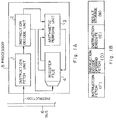
- a data processor 5 is constructed from an instruction fetch unit 1 for receiving an instruction externally input over a bus 6, an instruction decode unit 2 for decoding the received instruction, an operation execute unit 3 for reading operands out of a register file 4 and then performing arithmetic based on the received instruction, and the register file 4 for storing the result of the execution.
- the processes of receiving the instruction from the bus 6, decoding it, performing arithmetic, and storing the result of the arithmetic in the register file 4 in Fig. 1A can be indicated by a four-stage pipeline operation as shown in Fig. 1B. That is, in the first prior art, the pipeline processing consists of four stages: an instruction fetch stage; an instruction decode and operand fetch stage; an instruction execute stage; and a result store stage. In the case of this system, therefore, parallel processing can be performed by providing the processor with a plurality of arithmetic perform units and a register file having multiple ports.
- the number of storage locations in the register file 4 is larger than the number of the arithmetic units 3, it takes long to control which of the storage locations is to be accessed by an arithmetic unit 3.
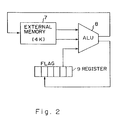
- Fig. 2 illustrates a second prior art of data processors, which uses a logic-in memory system in which the arithmetic facility and the storage facility are integrated on the same chip and performs serial-by-bit arithmetic.
- the chip is composed of, say, 64K (216) basic gate cells each comprising a 4K (212)-bit external memory 7, a serial arithmetic and logic unit (ALU) 8, and an internal flag register 9. All the buses are 1 bit in width.
- Fig. 2 two pieces of data A and B stored in separate locations in the external memory 7 are read out as input data from the external memory 7 to the ALU 8, arithmetic is performed by the ALU 8, and the result is stored in the external memory 7 again.
- the flag register 9 generates a condition code for arithmetic to be performed by the ALU 8 and is used, for example, to store an overflow bit and a carry output, and re-enter a carry-in to the high-order bit into the ALU 8 when the result of arithmetic by the ALU 8 causes overflow.
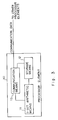
- Fig. 1 is a block diagram illustrating fundamentals of a processor element as a data processor of the invention.
- a processor is equipped with a 1-bit arithmetic means 11 for performing arithmetic on 1-bit data to be operated on, e.g., a 1-bit arithmetic unit, storage means 12 for storing the data to be operated on and the result of the arithmetic by the 1-bit arithmetic means 11, e.g., a 1-bit memory unit, and communication means 13 for permitting communication between each of the 1-bit arithmetic means 11 and the storage means 12 and another processor element.
- the storage means 12 is incorporated into the processor element to construct a logic-in memory.
- the output of the 1-bit arithmetic means 11 is connected to the storage means 12, consisting of, for example, 1-bit memory, directly with no intervening bus, it becomes unnecessary to spend selecting a location to be written in within the storage means 12. Therefore, when the processor element performs pipeline operation, the result store (write) stage can be shortened considerably, improving arithmetic speed of the processor element.
- Fig. 4 is a diagram for use in explanation of a concept of data processing in a parallel data processing system in which processor elements, each configured as shown in Fig. 3, are arranged in a matrix.
- processor elements each configured as shown in Fig. 3, are arranged in a matrix.
- the processor elements arranged in the left-to-right direction are connected by, for example, a common data bus not shown, while the processor elements arranged in the top-to-bottom direction are connected by, for example, a data transfer line for transferring a carry, etc.
- each of the processor element is connected to an I/O bus for inputting/outputting data from the outside of the system.
- the processors in the top-to-bottom direction store, for example, 1-word data and perform arithmetic on that data.
- each of the elements in a column stores a corresponding bit of 32-bit data, with the least significant bit stored in the lowest element in the column, and performs arithmetic on the stored bit.
- Fig. 4 from each of the processor elements PE1 in the leftmost column to a corresponding one of the 32 processor elements PE 2 in the second column from the left is transferred 1-bit internal data D1 stored in each processor using the common data bus not shown or inter-processor-element data transfer, or data D2 which is externally input over the I/O bus.
- Each of the elements PE2 performs arithmetic on the transferred data D1 or D2 and 1-bit data D stored in it.
- the result is stored in the storage means 12 in each of the elements PE2.
- the result of the arithmetic may be output to outside over the I/O bus as required.
- Fig. 4 when complicated processing requiring a pipeline process to be performed a large number of times is performed, the pipeline process can be speeded up by repeating, a required number of times, combined processes of fetching an externally input instruction, decoding it, transferring necessary data to each processor according to the result of the instruction decoding, performing arithmetic, and storing the result. Further, since processor elements each comprising 1-bit arithmetic means and storage means are arranged in the form of an array, the degree of parallelism can be much improved by performing parallel arithmetic for each word.
- the data processor according to the present invention is suitable for an integrated circuit version.
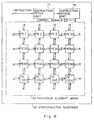
- Fig. 5 is a block diagram of a first embodiment of a parallel data processing system according to the present invention.
- processor elements 10 are arranged in the top-to-bottom and left-to-right directions to form a matrix.
- the top-to-bottom and left-to-right directions correspond to one word.
- 32 processor elements 10 are arranged in a column.
- the processor elements 10 in each column permit parallel arithmetic.
- a common data bus 17 is provided for processor elements (PE) in each row.
- PEs 10 In the top-to-bottom direction the PEs 10 are connected to each other by a data transfer line 18 for transferring a carry, etc., as will be described later.
- an instruction fetch unit 15 for acquiring an instruction input over an I/O bus 19 or a bus for instructions only, and an instruction decode unit 16 for decoding the instruction fetched.
- Each processor element performs communication with another processor element and arithmetic in accordance with control signals from the instruction decode unit 16.
- each processor element is also connected to the I/O bus 19.
- the instruction fetch unit 15, the instruction decode unit 16 and an array 20 of the processor elements can be formed on a semiconductor substrate 50 to form a semiconductor device. Since the arrangement of the processor elements 10, the common data buses 17 and the data transfer lines 18 has regularity, the semiconductor device is suitable for assembly onto one chip.
- a controller which will be described later in detail, for controlling each processor element 10 with control signals corresponding to an instruction decoded by the instruction decode unit 16 is provided for each of the PEs in the top-to-bottom direction, for example, corresponding to one word.
- the processor element array 20 shown in Fig. 5 permits arithmetic with at least a degree of parallelism corresponding to the number of the common data buses 17.
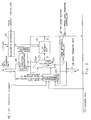
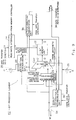
- Fig. 6 is a block diagram of an embodiment of the processor element (PE) in Fig. 5.
- the processor element 10 is constructed from a 1-bit arithmetic unit 21 for performing arithmetic on 1-bit data to be operated on, a 1-bit memory unit 22 for storing the result of the arithmetic, a common data bus 17, a comprehensive input communication unit 23 for selecting data input from the PE in the direction of north (N) or south (S) over data transfer line 26 or an output of the 1-bit memory unit 22 for application to the 1-bit arithmetic unit 21, a read/write interface 24 serving as an interface between the I/O bus for receiving or transmitting data from or to outside and the memory unit 22, an output communication unit 25 for selecting a carry output or data for bit shifting, etc., to be output onto the data transfer line 26 in the N direction, and a tri-state buffer 27 for outputting output data of the memory unit 22 onto the common bus 17.
- a 1-bit arithmetic unit 21 for performing arithmetic on 1-bit data
- the 1-bit memory unit 22 may be a plural-bit memory for storing, say, three bits.
- the 1-bit arithmetic unit 21 may be an ALU having functions of, for example, a 3-input-2-output 1-bit full adder, a logical operation unit, and a shift operation unit.
- Each of the comprehensive input communication unit 23, the output communication unit 25 and the read/write interface 24 consist of a multiplexer for selecting among inputs according to a control signal from a controller 30.
- bit shift data from the N direction can also be transferred in the S direction via the input communication unit 23, the 1-bit arithmetic unit 21, and the 1-bit memory 22.
- Fig. 7 is a block diagram of an embodiment of a PE controller for performing such control.
- the PEs in the vertical direction in Fig. 5 store 1-word data.
- one PE controller 30 is provided for each group of processors arranged in the top-to-bottom (N - S) direction.
- Each PE controller 30 is connected to the instruction decode unit 16 and constructed from, in order to control data transfers on the common bus 17 and between the PEs, a data transfer controller 31 for outputting control signals to the input communication unit 23, the output communication unit 25, and the tri-state buffer 27, an arithmetic controller 32 for outputting control signals to the input communication unit 23 and the arithmetic unit 21 so as to control arithmetic in the 1-bit arithmetic unit 21, and a memory (I/O) controller 33 for outputting a control signal to the read/write interface 24 so as to control data transfer between the I/O bus and the 1-bit memory unit 22.
- a data transfer controller 31 for outputting control signals to the input communication unit 23, the output communication unit 25, and the tri-state buffer 27, an arithmetic controller 32 for outputting control signals to the input communication unit 23 and the arithmetic unit 21 so as to control arithmetic in the 1-bit arithmetic unit 21, and a memory (I/O) controller 33 for outputting a control signal to
- the operation of the processor element of Fig. 6 will be described more specifically with reference to the controllers 31, 32, 33 of Fig. 7.
- To the comprehensive input communication unit 23 are input data from the common bus 17 via a pipeline register (not shown) consisting of a 1-bit flip-flop FF, data for performing mainly a bit shift operation from the north-side processor element, and data for performing mainly a bit shift operation from the south-side processor element.
- a pipeline register (not shown) consisting of a 1-bit flip-flop FF
- data for performing mainly a bit shift operation from the north-side processor element and data for performing mainly a bit shift operation from the south-side processor element.
- an output of the 1-bit memory unit 22, which will be described later, is also input.
- the output of the comprehensive input communication unit 23 is input to an input terminal of the 1-bit arithmetic unit 21.
- a 2-bit signal from the arithmetic controller 32 selects among arithmetic sources in the 1-bit arithmetic unit 21.
- the output D of the 1-bit arithmetic unit 21 is input to the 1-bit memory 22.
- the output of the 1-bit memory 22 is input to the second input of the 1-bit arithmetic unit 21.
- the 1-bit arithmetic unit 21 perform arithmetic using the first and second inputs.
- the result of the arithmetic is stored in the 1-bit memory 22.
- the output of the 1-bit memory unit 22 is further sent out to the north-side PE via the output communication unit A mainly as a bit shift operation.
- the output of the 1-bit memory 22 is also sent out onto the common bus 17 via the tri-state buffer 27 and the pipeline register (not shown) and transmitted to a PE in the east or west along a row through the common bus 17.
- a carry-in signal from a south PE is input to the 1-bit arithmetic unit 21.
- a carry-out signal of the 1-bit arithmetic unit 21 is sent to a north PE via the output communication unit 25.
- the output of the data transfer controller 31 is applied to the tri-state buffer 27 to control outputting of data onto the common bus 17.
- the output of the arithmetic controller 32 controls the type of arithmetic to be performed by the 1-bit arithmetic unit 21.
- the output of the memory controller 33 is applied to the read/write interface 24 to control whether the output of the 1-bit memory unit 22 is to be output onto the I/O bus or the output of the I/O bus is to be input to the 1-bit memory unit 22.
- Fig. 8 is a block diagram of an embodiment of parallel data processing system according to a second embodiment of the present invention.
- the second embodiment of Fig. 8 is distinct from the first embodiment only in that there is no provision of common data buses 17 in the left-to-right direction for PEs arranged in a matrix, and correspondingly the PEs are connected by data transfer lines in the left-to-right direction as well.
- the PE controller of Fig. 5 is omitted.
- the I/O bus 19 is wired as in Fig 5, it is omitted from this block diagram.
- Fig. 9 is a block diagram of an embodiment of a processor element (PE) in Fig. 8.
- PE processor element
- the embodiment of Fig. 9 is distinct from Fig. 6 in that the tri-state buffer 27 is not provided because of the absence of the common data buses 17, data transfer paths 34 are provided for PEs in the westerly (W) and easterly (E) direction, output communication units 35 and 36 are provided for selecting between outputting of data input from another PE as it is and outputting of the result of processing by the processor itself, and data from the W or E direction can also be input to the input communication unit 23.
- the controller 30 for this embodiment is the same as that in Fig. 7, and hence explanation of control signals from the controller 30 is omitted. It is natural for control signals from the data transfer controller 31 to be input to two additional output communication units 35 and 36.
- controlling the outputs of the output communication units 35 and 36 eliminates the need of use of two or more buses for each of the processor elements, for example, PE1, PE2 and PE3.
- One data transfer path 34 suffices, permitting the number of wiring lines to be decreased.
- controlling the outputs of the output communication units 35 and 36 permits parallel operation in word units (in units of processor elements in each column), increasing the degree of parallelism.
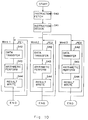
- Fig. 10 is a flowchart of an embodiment of the data parallel processing of the present invention.
- an instruction is fetched in step S40.
- the instruction is decoded in step S41.
- various control signals are sent from each controller to groups of word-unit processor elements PE1 in the top-to-bottom direction in Fig. 5 or Fig. 8.
- Transfer of necessary data in step S42, performing arithmetic using the data transferred in step S42, and storage of the result of the arithmetic in step S44 are performed for each of groups of the word-unit processor elements PE1 in the top-to-bottom direction, and then processing terminates.
- the processing is repeated a number of times necessary to the instruction as required.
- Fig. 10 shows the case where parallel operation is performed in word units.
- the processor element groups (only one in each group is indicated) arranged in the direction of column can not only transfer a carry signal within one word but also perform parallel operation between processor elements in the direction of the column in the case of, for example, bit-by-bit comparison, permitting the degree of parallel of the processor elements to be much improved.
- the time required to transfer data is almost negligible.
- the common bus is not used on a time-sharing basis in transferring the results of arithmetic from the arithmetic units to the register file, and data transfers are not delayed.
- the PEs themselves are capable of not only high-speed operation but also parallel operation when arranged in an array, thus much increasing the speed of processing.
- Fig. 11 is a diagram for use in supplemental explanation of the flowchart of Fig. 10.
- each controller 30 sends various control signals to processor elements in the top-to-bottom direction, that is, to a processor element array 20, in accordance with the result of decoding of an instruction by the instruction decode unit 16.
- Each 1-bit arithmetic unit 21 comprising the processor element array 20 performs arithmetic using input data DIN to be operated on which is externally input over the I/O bus 19. The result is output to outside via the 1-bit memory unit 22 as arithmetic result data DOUT.
- Figs. 12A, 12B and 12C are diagrams for use in explanation of stages of pipeline processing according to the present invention which is performed in the processor elements PE1, PE2 and PE3 arranged in the direction of a row.
- data transfer (T) is pipeline-processed subsequent to the two stages of instruction fetching (F) and decoding (D).
- Control signals from the instruction decode unit are applied to the processor elements PE1, PE2 and PE3 in parallel, so that the execution of arithmetic (E) and the writing of the result (W) are processed in parallel in the processor elements. Since the data transfer (T) time after the execution (E) can almost be neglected, the writing (W) of the result can be performed very fast.
- the processor elements arranged in a two-dimensional matrix with n rows and m columns can substantially be split into groups of processor elements for respective independent arithmetic operations.
- Fig. 13 is a diagram for use in explanation of an embodiment of such split usage of a parallel data processing system, which illustrates provision of more than one common data bus 55 for processor elements arranged from left to right. That is, this embodiment can be considered as including more than one common data bus in the embodiment of the first parallel data processing system (Fig. 5) in which one common data bus 17 is provided for processor elements in the left-to-right direction.
- Fig. 13 there are shown, for simplicity, three processor elements PE1, PE2 and PE3 in the left-to-right direction and only one processor in the top-to-bottom direction. However, 32 elements exist both in the left-to-right direction and in the top-to-bottom direction.
- the PEs in the top-to-bottom direction constitute one word.
- Each element (PE) is shown, for simplicity, as comprising an arithmetic unit 51 corresponding to the 1-bit arithmetic means of Fig. 3, a storage unit 52 corresponding to the storage means, and registers 53 and 54 which temporarily store operand data transferred from other PEs over the common data buses 55 and whose stored contents are read out by high-speed clocks at arithmetic time.
- the communication units in Fig. 6 are omitted.
- a plurality of common data buses are shown above (N) and below (S) the PEs, as the common data buses 55, this is not restrictive.
- data "A” is transferred from the storage section 52 in PE1 on the left (W) to the register 53 in PE2 over the upper common data bus 55.
- data "B” is transferred from the storage section 52 in the PE3 on the right (E) to the register 54 in the PE2 over the lower common data bus 55.
- arithmetic "A + B” is performed by the arithmetic unit 51 in the PE2 and then the result is stored in the storage unit 52 in the PE2.
- PE4 to PE6 (assumed to be to the right of the PE3), not shown, can execute addition of two pieces of data "C" and "D" in exactly the same manner.
- buses that are not used by the PE1 to PE3 are used by the PE4 to PE6, which substantially splits the parallel data processing system for use and ensures very efficient system usage.
- processor elements as shown in Fig. 9, are arranged in an array as shown in Fig. 8, the processor elements can be split in word units and operated in parallel in the same manner as described above by controlling the output communication units for the E and W directions.
- processor element shown in Fig. 6 which uses common data buses and the processor element shown in Fig. 9 which uses an inter-processor element transfer path in the direction of row may be combined into one processor element, and the resulting processor elements may be arranged in an array.
- the result writing (W) stage can be speeded up in each PE, and the degree of parallelism can be improved by arranging PEs in an array to much increase the speed of data arithmetic operation.
- the device of the present invention is suitable for a one-chip integrated circuit version because common data buses and inter-PE transfer paths are able to be wired regularly in the left-to-right and the top-to-bottom direction and PEs can be formed in the same pattern.
- the processing speed also improves.
- the data processors of the present invention can be used in various types of parallel data processing systems such as an image processing system, etc.
Landscapes
- Engineering & Computer Science (AREA)
- Computer Hardware Design (AREA)
- Theoretical Computer Science (AREA)
- Physics & Mathematics (AREA)
- General Engineering & Computer Science (AREA)
- General Physics & Mathematics (AREA)
- Mathematical Physics (AREA)
- Software Systems (AREA)
- Computing Systems (AREA)
- Multi Processors (AREA)
- Advance Control (AREA)
Abstract
Dans un système de traitement de données en simultanéité dans lequel les éléments processeurs (PE) sont disposés en grille bidimensionnelle, chaque PE comprend une unité de calcul à un bit pour des données d'opérandes à un bit, une unité de stockage de données d'opérandes et/ou de leur résultat, et une unité de communication avec d'autres PE. Un bus commun assurant la liaison entre les PE dans un sens transversal (rangée) est placé pour chaque PE dans un sens longitudinal (colonne), ou des itinéraires de transfert de données reliant des PE dans le sens transversal (rangée) sont placés de telle sorte qu'ils assurent la communication entr e des PE de colonnes différentes. Le PE dans le sens longitudinal (colonne) sert par exemple au stockage de données à un mot et au calcul d'opérations sur des données à un mot, et des opérations en simultanéité sont effectuées pour chaque PE de chaque colonne. On décrit ici un tel dispositif de traitement de données en simultanéité ainsi qu'un procédé de traitement de données en simultanéité.
Applications Claiming Priority (2)
| Application Number | Priority Date | Filing Date | Title |
|---|---|---|---|
| JP76574/91 | 1991-04-09 | ||
| JP7657491 | 1991-04-09 |
Publications (2)
| Publication Number | Publication Date |
|---|---|
| EP0539595A1 true EP0539595A1 (fr) | 1993-05-05 |
| EP0539595A4 EP0539595A4 (en) | 1994-07-20 |
Family
ID=13609021
Family Applications (1)
| Application Number | Title | Priority Date | Filing Date |
|---|---|---|---|
| EP19920908498 Withdrawn EP0539595A4 (en) | 1991-04-09 | 1992-04-09 | Data processor and data processing method |
Country Status (3)
| Country | Link |
|---|---|
| EP (1) | EP0539595A4 (fr) |
| KR (1) | KR0125623B1 (fr) |
| WO (1) | WO1992018935A1 (fr) |
Cited By (22)
| Publication number | Priority date | Publication date | Assignee | Title |
|---|---|---|---|---|
| DE4416881A1 (de) * | 1993-05-13 | 1994-11-17 | Martin Vorbach | Datenverarbeitungseinrichtung |
| WO1996008778A1 (fr) * | 1994-09-13 | 1996-03-21 | Lockheed Martin Corporation | Processeur parallele de donnees |
| US5943242A (en) * | 1995-11-17 | 1999-08-24 | Pact Gmbh | Dynamically reconfigurable data processing system |
| US6021490A (en) * | 1996-12-20 | 2000-02-01 | Pact Gmbh | Run-time reconfiguration method for programmable units |
| US6038650A (en) * | 1997-02-04 | 2000-03-14 | Pactgmbh | Method for the automatic address generation of modules within clusters comprised of a plurality of these modules |
| WO1999053411A3 (fr) * | 1998-04-09 | 2000-04-20 | Lockheed Corp | Ordinateur a architecture en reseau maille |
| US6073185A (en) * | 1993-08-27 | 2000-06-06 | Teranex, Inc. | Parallel data processor |
| US6081903A (en) * | 1997-02-08 | 2000-06-27 | Pact Gmbh | Method of the self-synchronization of configurable elements of a programmable unit |
| US6088795A (en) * | 1996-12-27 | 2000-07-11 | Pact Gmbh | Process for automatic dynamic reloading of data flow processors (DFPs) and units with two or three-dimensional programmable cell architectures (FPGAs, DPGAs and the like) |
| US6119181A (en) * | 1996-12-20 | 2000-09-12 | Pact Gmbh | I/O and memory bus system for DFPs and units with two- or multi-dimensional programmable cell architectures |
| US6185667B1 (en) | 1998-04-09 | 2001-02-06 | Teranex, Inc. | Input/output support for processing in a mesh connected computer |
| US6212628B1 (en) | 1998-04-09 | 2001-04-03 | Teranex, Inc. | Mesh connected computer |
| US6405299B1 (en) | 1997-02-11 | 2002-06-11 | Pact Gmbh | Internal bus system for DFPS and units with two- or multi-dimensional programmable cell architectures, for managing large volumes of data with a high interconnection complexity |
| US6425068B1 (en) | 1996-12-09 | 2002-07-23 | Pact Gmbh | Unit for processing numeric and logic operations for use in central processing units (cpus), multiprocessor systems, data-flow processors (dsps), systolic processors and field programmable gate arrays (epgas) |
| US6721830B2 (en) | 1996-12-20 | 2004-04-13 | Pact Xpp Technologies Ag | I/O and memory bus system for DFPs and units with two- or multi-dimensional programmable cell architectures |
| DE19819569B4 (de) * | 1998-04-30 | 2005-09-22 | Siemens Ag | Elektronischer Schaltkreis für die Umwandlung von Daten |
| US7036036B2 (en) | 1997-02-08 | 2006-04-25 | Pact Xpp Technologies Ag | Method of self-synchronization of configurable elements of a programmable module |
| US7996827B2 (en) * | 2001-08-16 | 2011-08-09 | Martin Vorbach | Method for the translation of programs for reconfigurable architectures |
| US9037807B2 (en) | 2001-03-05 | 2015-05-19 | Pact Xpp Technologies Ag | Processor arrangement on a chip including data processing, memory, and interface elements |
| US9047440B2 (en) | 2000-10-06 | 2015-06-02 | Pact Xpp Technologies Ag | Logical cell array and bus system |
| US9075605B2 (en) | 2001-03-05 | 2015-07-07 | Pact Xpp Technologies Ag | Methods and devices for treating and processing data |
| US20220100699A1 (en) * | 2020-09-30 | 2022-03-31 | Beijing Tsingmicro Intelligent Technology Co., Ltd. | Computing array and processor having the same |
Families Citing this family (24)
| Publication number | Priority date | Publication date | Assignee | Title |
|---|---|---|---|---|
| US7266725B2 (en) | 2001-09-03 | 2007-09-04 | Pact Xpp Technologies Ag | Method for debugging reconfigurable architectures |
| EP1329816B1 (fr) | 1996-12-27 | 2011-06-22 | Richter, Thomas | Procédé pour le transfert dynamique automatique de processeurs à flux de données (dfp) ainsi que de modules à deux ou plusieurs structures cellulaires programmables bidimensionnelles ou multidimensionnelles (fpga, dpga ou analogues) |
| US8686549B2 (en) | 2001-09-03 | 2014-04-01 | Martin Vorbach | Reconfigurable elements |
| DE19861088A1 (de) | 1997-12-22 | 2000-02-10 | Pact Inf Tech Gmbh | Verfahren zur Reparatur von integrierten Schaltkreisen |
| US8230411B1 (en) | 1999-06-10 | 2012-07-24 | Martin Vorbach | Method for interleaving a program over a plurality of cells |
| JP2004506261A (ja) | 2000-06-13 | 2004-02-26 | ペーアーツェーテー イクスペーペー テクノロジーズ アクチエンゲゼルシャフト | パイプラインctプロトコルおよびct通信 |
| AU2002220600A1 (en) | 2000-10-06 | 2002-04-15 | Pact Informationstechnologie Gmbh | Cell system with segmented intermediate cell structure |
| US7210129B2 (en) | 2001-08-16 | 2007-04-24 | Pact Xpp Technologies Ag | Method for translating programs for reconfigurable architectures |
| US7581076B2 (en) | 2001-03-05 | 2009-08-25 | Pact Xpp Technologies Ag | Methods and devices for treating and/or processing data |
| US7844796B2 (en) | 2001-03-05 | 2010-11-30 | Martin Vorbach | Data processing device and method |
| JP2004533691A (ja) | 2001-06-20 | 2004-11-04 | ペーアーツェーテー イクスペーペー テクノロジーズ アクチエンゲゼルシャフト | データを処理するための方法 |
| US7434191B2 (en) | 2001-09-03 | 2008-10-07 | Pact Xpp Technologies Ag | Router |
| US8686475B2 (en) | 2001-09-19 | 2014-04-01 | Pact Xpp Technologies Ag | Reconfigurable elements |
| US7577822B2 (en) | 2001-12-14 | 2009-08-18 | Pact Xpp Technologies Ag | Parallel task operation in processor and reconfigurable coprocessor configured based on information in link list including termination information for synchronization |
| WO2003060747A2 (fr) | 2002-01-19 | 2003-07-24 | Pact Xpp Technologies Ag | Processeur reconfigurable |
| EP2043000B1 (fr) | 2002-02-18 | 2011-12-21 | Richter, Thomas | Systèmes de bus et procédé de reconfiguration |
| US8914590B2 (en) | 2002-08-07 | 2014-12-16 | Pact Xpp Technologies Ag | Data processing method and device |
| AU2003286131A1 (en) | 2002-08-07 | 2004-03-19 | Pact Xpp Technologies Ag | Method and device for processing data |
| US7657861B2 (en) | 2002-08-07 | 2010-02-02 | Pact Xpp Technologies Ag | Method and device for processing data |
| WO2004038599A1 (fr) | 2002-09-06 | 2004-05-06 | Pact Xpp Technologies Ag | Structure de sequenceur reconfigurable |
| JP4700611B2 (ja) | 2003-08-28 | 2011-06-15 | ペーアーツェーテー イクスペーペー テクノロジーズ アクチエンゲゼルシャフト | データ処理装置およびデータ処理方法 |
| WO2007082730A1 (fr) | 2006-01-18 | 2007-07-26 | Pact Xpp Technologies Ag | Procédé de définition de matériels |
| JP6308122B2 (ja) * | 2014-12-16 | 2018-04-11 | 株式会社島津製作所 | データ収集装置 |
| US10635622B2 (en) * | 2018-04-03 | 2020-04-28 | Xilinx, Inc. | System-on-chip interface architecture |
Family Cites Families (5)
| Publication number | Priority date | Publication date | Assignee | Title |
|---|---|---|---|---|
| JPS6042516B2 (ja) * | 1980-03-04 | 1985-09-24 | 日本電信電話株式会社 | デ−タ処理装置 |
| US4580215A (en) * | 1983-03-08 | 1986-04-01 | Itt Corporation | Associative array with five arithmetic paths |
| US4942517A (en) * | 1987-10-08 | 1990-07-17 | Eastman Kodak Company | Enhanced input/output architecture for toroidally-connected distributed-memory parallel computers |
| EP0390907B1 (fr) * | 1988-10-07 | 1996-07-03 | Martin Marietta Corporation | Processeur de donnees en parallele |
| GB8829624D0 (en) * | 1988-12-20 | 1989-02-15 | Amt Holdings | Processor array |
-
1992
- 1992-04-09 WO PCT/JP1992/000447 patent/WO1992018935A1/fr not_active Ceased
- 1992-04-09 EP EP19920908498 patent/EP0539595A4/en not_active Withdrawn
- 1992-04-09 KR KR1019920703157A patent/KR0125623B1/ko not_active Expired - Fee Related
Cited By (33)
| Publication number | Priority date | Publication date | Assignee | Title |
|---|---|---|---|---|
| DE4416881C2 (de) * | 1993-05-13 | 1998-03-19 | Pact Inf Tech Gmbh | Verfahren zum Betrieb einer Datenverarbeitungseinrichtung |
| DE4416881A1 (de) * | 1993-05-13 | 1994-11-17 | Martin Vorbach | Datenverarbeitungseinrichtung |
| US6073185A (en) * | 1993-08-27 | 2000-06-06 | Teranex, Inc. | Parallel data processor |
| WO1996008778A1 (fr) * | 1994-09-13 | 1996-03-21 | Lockheed Martin Corporation | Processeur parallele de donnees |
| EP0973099A3 (fr) * | 1994-09-13 | 2003-04-16 | Lockheed Martin Corporation | Processeur parallèle de données |
| US5943242A (en) * | 1995-11-17 | 1999-08-24 | Pact Gmbh | Dynamically reconfigurable data processing system |
| US6425068B1 (en) | 1996-12-09 | 2002-07-23 | Pact Gmbh | Unit for processing numeric and logic operations for use in central processing units (cpus), multiprocessor systems, data-flow processors (dsps), systolic processors and field programmable gate arrays (epgas) |
| US7174443B1 (en) | 1996-12-20 | 2007-02-06 | Pact Xpp Technologies Ag | Run-time reconfiguration method for programmable units |
| US6119181A (en) * | 1996-12-20 | 2000-09-12 | Pact Gmbh | I/O and memory bus system for DFPs and units with two- or multi-dimensional programmable cell architectures |
| US6721830B2 (en) | 1996-12-20 | 2004-04-13 | Pact Xpp Technologies Ag | I/O and memory bus system for DFPs and units with two- or multi-dimensional programmable cell architectures |
| US6021490A (en) * | 1996-12-20 | 2000-02-01 | Pact Gmbh | Run-time reconfiguration method for programmable units |
| US6088795A (en) * | 1996-12-27 | 2000-07-11 | Pact Gmbh | Process for automatic dynamic reloading of data flow processors (DFPs) and units with two or three-dimensional programmable cell architectures (FPGAs, DPGAs and the like) |
| US6038650A (en) * | 1997-02-04 | 2000-03-14 | Pactgmbh | Method for the automatic address generation of modules within clusters comprised of a plurality of these modules |
| US6081903A (en) * | 1997-02-08 | 2000-06-27 | Pact Gmbh | Method of the self-synchronization of configurable elements of a programmable unit |
| US7036036B2 (en) | 1997-02-08 | 2006-04-25 | Pact Xpp Technologies Ag | Method of self-synchronization of configurable elements of a programmable module |
| USRE45223E1 (en) | 1997-02-08 | 2014-10-28 | Pact Xpp Technologies Ag | Method of self-synchronization of configurable elements of a programmable module |
| USRE45109E1 (en) | 1997-02-08 | 2014-09-02 | Pact Xpp Technologies Ag | Method of self-synchronization of configurable elements of a programmable module |
| USRE44383E1 (en) | 1997-02-08 | 2013-07-16 | Martin Vorbach | Method of self-synchronization of configurable elements of a programmable module |
| USRE44365E1 (en) | 1997-02-08 | 2013-07-09 | Martin Vorbach | Method of self-synchronization of configurable elements of a programmable module |
| US6968452B2 (en) | 1997-02-08 | 2005-11-22 | Pact Xpp Technologies Ag | Method of self-synchronization of configurable elements of a programmable unit |
| US6405299B1 (en) | 1997-02-11 | 2002-06-11 | Pact Gmbh | Internal bus system for DFPS and units with two- or multi-dimensional programmable cell architectures, for managing large volumes of data with a high interconnection complexity |
| US6173388B1 (en) | 1998-04-09 | 2001-01-09 | Teranex Inc. | Directly accessing local memories of array processors for improved real-time corner turning processing |
| WO1999053411A3 (fr) * | 1998-04-09 | 2000-04-20 | Lockheed Corp | Ordinateur a architecture en reseau maille |
| US6275920B1 (en) | 1998-04-09 | 2001-08-14 | Teranex, Inc. | Mesh connected computed |
| US6185667B1 (en) | 1998-04-09 | 2001-02-06 | Teranex, Inc. | Input/output support for processing in a mesh connected computer |
| US6212628B1 (en) | 1998-04-09 | 2001-04-03 | Teranex, Inc. | Mesh connected computer |
| DE19819569B4 (de) * | 1998-04-30 | 2005-09-22 | Siemens Ag | Elektronischer Schaltkreis für die Umwandlung von Daten |
| US9047440B2 (en) | 2000-10-06 | 2015-06-02 | Pact Xpp Technologies Ag | Logical cell array and bus system |
| US9037807B2 (en) | 2001-03-05 | 2015-05-19 | Pact Xpp Technologies Ag | Processor arrangement on a chip including data processing, memory, and interface elements |
| US9075605B2 (en) | 2001-03-05 | 2015-07-07 | Pact Xpp Technologies Ag | Methods and devices for treating and processing data |
| US7996827B2 (en) * | 2001-08-16 | 2011-08-09 | Martin Vorbach | Method for the translation of programs for reconfigurable architectures |
| US20220100699A1 (en) * | 2020-09-30 | 2022-03-31 | Beijing Tsingmicro Intelligent Technology Co., Ltd. | Computing array and processor having the same |
| US12013809B2 (en) * | 2020-09-30 | 2024-06-18 | Beijing Tsingmicro Intelligent Technology Co., Ltd. | Computing array and processor having the same |
Also Published As
| Publication number | Publication date |
|---|---|
| WO1992018935A1 (fr) | 1992-10-29 |
| EP0539595A4 (en) | 1994-07-20 |
| KR930701794A (ko) | 1993-06-12 |
| KR0125623B1 (ko) | 1998-07-01 |
Similar Documents
| Publication | Publication Date | Title |
|---|---|---|
| EP0539595A1 (fr) | Dispositif et procede de traitement de donnees | |
| EP0314277B1 (fr) | Calculateur en réseau fonctionnant en SIMD | |
| EP3729279B1 (fr) | Organisation de mémoire unifiée pour processeurs de réseau neuronal | |
| KR100415417B1 (ko) | 이미지-처리프로세서 | |
| US5606520A (en) | Address generator with controllable modulo power of two addressing capability | |
| US5197140A (en) | Sliced addressing multi-processor and method of operation | |
| US7340562B2 (en) | Cache for instruction set architecture | |
| CA1292076C (fr) | Processeur vectoriel massivement parallele | |
| US5301340A (en) | IC chips including ALUs and identical register files whereby a number of ALUs directly and concurrently write results to every register file per cycle | |
| US7574466B2 (en) | Method for finding global extrema of a set of shorts distributed across an array of parallel processing elements | |
| US5247613A (en) | Massively parallel processor including transpose arrangement for serially transmitting bits of data words stored in parallel | |
| CN114168526A (zh) | 可重构并行处理 | |
| US20050024983A1 (en) | Providing a register file memory with local addressing in a SIMD parallel processor | |
| KR20100092805A (ko) | 재구성 가능한 구조의 프로세서 | |
| US7500089B2 (en) | SIMD processor with exchange sort instruction operating or plural data elements simultaneously | |
| CN102402415A (zh) | 一种动态可重构阵列内数据缓存的装置及方法 | |
| JP5352780B2 (ja) | プロセッサ | |
| JP3971535B2 (ja) | Simd型プロセッサ | |
| US5307300A (en) | High speed processing unit | |
| CN101371248B (zh) | 可配置的单指令多数据单元 | |
| US20020124038A1 (en) | Processor for processing variable length data | |
| US8024549B2 (en) | Two-dimensional processor array of processing elements | |
| US9317474B2 (en) | Semiconductor device | |
| US20040128475A1 (en) | Widely accessible processor register file and method for use | |
| JPS62156742A (ja) | デ−タ書込み制御方式 |
Legal Events
| Date | Code | Title | Description |
|---|---|---|---|
| PUAI | Public reference made under article 153(3) epc to a published international application that has entered the european phase |
Free format text: ORIGINAL CODE: 0009012 |
|
| 17P | Request for examination filed |
Effective date: 19930105 |
|
| AK | Designated contracting states |
Kind code of ref document: A1 Designated state(s): DE FR GB |
|
| A4 | Supplementary search report drawn up and despatched | ||
| AK | Designated contracting states |
Kind code of ref document: A4 Designated state(s): DE FR GB |
|
| 17Q | First examination report despatched |
Effective date: 19970627 |
|
| 18W | Application withdrawn |
Withdrawal date: 19980223 |