EP0545126A2 - Hydrophile quellfähige Pfropfpolymerisate - Google Patents
Hydrophile quellfähige Pfropfpolymerisate Download PDFInfo
- Publication number
- EP0545126A2 EP0545126A2 EP92119513A EP92119513A EP0545126A2 EP 0545126 A2 EP0545126 A2 EP 0545126A2 EP 92119513 A EP92119513 A EP 92119513A EP 92119513 A EP92119513 A EP 92119513A EP 0545126 A2 EP0545126 A2 EP 0545126A2
- Authority
- EP
- European Patent Office
- Prior art keywords
- weight
- general formula
- graft polymers
- coch
- coor
- Prior art date
- Legal status (The legal status is an assumption and is not a legal conclusion. Google has not performed a legal analysis and makes no representation as to the accuracy of the status listed.)
- Granted
Links
- 0 CNP(*)(NC)=Cl Chemical compound CNP(*)(NC)=Cl 0.000 description 2
Classifications
-
- C—CHEMISTRY; METALLURGY
- C08—ORGANIC MACROMOLECULAR COMPOUNDS; THEIR PREPARATION OR CHEMICAL WORKING-UP; COMPOSITIONS BASED THEREON
- C08F—MACROMOLECULAR COMPOUNDS OBTAINED BY REACTIONS ONLY INVOLVING CARBON-TO-CARBON UNSATURATED BONDS
- C08F251/00—Macromolecular compounds obtained by polymerising monomers on to polysaccharides or derivatives thereof
-
- A—HUMAN NECESSITIES
- A61—MEDICAL OR VETERINARY SCIENCE; HYGIENE
- A61L—METHODS OR APPARATUS FOR STERILISING MATERIALS OR OBJECTS IN GENERAL; DISINFECTION, STERILISATION OR DEODORISATION OF AIR; CHEMICAL ASPECTS OF BANDAGES, DRESSINGS, ABSORBENT PADS OR SURGICAL ARTICLES; MATERIALS FOR BANDAGES, DRESSINGS, ABSORBENT PADS OR SURGICAL ARTICLES
- A61L15/00—Chemical aspects of, or use of materials for, bandages, dressings or absorbent pads
- A61L15/16—Bandages, dressings or absorbent pads for physiological fluids such as urine or blood, e.g. sanitary towels, tampons
- A61L15/42—Use of materials characterised by their function or physical properties
- A61L15/60—Liquid-swellable gel-forming materials, e.g. super-absorbents
Definitions
- the present invention relates to hydrophilic swellable graft polymers, their preparation and use as absorbents for water and aqueous solutions, for example in hygiene articles, for soil improvement or as filtration aids.
- Swellable polymers that absorb aqueous solutions are used in the manufacture of tampons, diapers, sanitary napkins and other hygiene articles and as water-retaining agents in agricultural horticulture.
- absorption resins of this type include crosslinked carboxymethyl cellulose, partially crosslinked polyalkylene oxide, hydrolysates of starch-acrylonitrile graft copolymers, partially crosslinked polyacrylic acid salts or else graft polymers as described in EP-A 400 218.
- the known polymers also tend to stick to hot steel surfaces, for example roller dryer surfaces, which makes drying considerably more difficult. In particular, such polymers cannot be dried at a sufficiently high speed.
- the object of the present invention is to provide modified polymers which absorb aqueous solutions, which have a high absorption rate, form non-adhesive hydrogel particles of high gel strength in the swollen state and which do not tend to stick to hot steel surfaces.
- Preferred products according to the invention consist of 0.5 to 20% by weight of residues of the general formulas I and II, 79 to 99% by weight of residues of the general formula III and 0.1 to 1.8% by weight of crosslinking structures which from monomers with at least two olefinically unsaturated double bonds.
- Particularly preferred products according to the invention consist of 1 to 15.5% by weight of residues of the general formulas I and II, 83 to 98.5% by weight of residues of the general formula III and 0.3 to 1.5% by weight of crosslinking agents Structures derived from monomers with at least two olefinically unsaturated double bonds.
- the weight ratio of the radicals of the general formulas I and II is preferably 1:99 to 99: 1.
- the weight ratio of the radicals of the general formulas I and II is particularly preferably 50:50 if the proportion of the sum of the radicals of the general formulas I and II of the total polymer is less than 10% by weight and 10:90 to 25:75 if the proportion of the sum of the radicals of the formulas I and II in the total polymer is 10 to 50% by weight.
- the radicals of the general formula 1 can all have exactly the same structure, but they can also differ with respect to the radical R 1 and / or the number n differentiate from each other.
- hydrogen and methyl can alternate statistically with respect to R 1 , but larger polymer sections can also follow one another, in which R 1 in each case means only hydrogen or only methyl.
- Aryl standing for X preferably has 3 to 8 carbon atoms and particularly preferably means phenyl, tert-butylphenyl and nonylphenyl.
- Aralkyl for X preferably has 3 to 8 carbon atoms in the aryl and 1 to 22 carbon atoms in the alkyl radical.
- the residues of the general formula 11 are derived from starch or degradation products of starch.
- R 2 is preferably hydrogen or methyl.
- R 3 preferably represents the carboxyl group, the sulfonyl group or the phosphonyl group. The carboxyl group is particularly preferred.
- R 4 is preferably hydrogen.
- crosslinking structures mentioned can be derived from all suitable monomers with at least two olefinically unsaturated double bonds.
- Suitable monomers are, for example, compounds which contain at least two alkenyl groups, for example vinyl or allyl, or at least two alkenoyl groups, for example acrylate or methacrylate.
- crosslinking structures are preferably derived from monomers which contain 2, 3 or 4 ethylenically unsaturated double bonds.
- crosslinking structures are particularly preferably derived from trimethylolpropane triacrylate, tetraallyloxyethane or methylene bisacrylamide.
- crosslinking structures can be obtained by adding multifunctional epoxides, e.g. Ethylene glycol diglycidyl ether or cycloaliphatic diepoxide.
- multifunctional epoxides e.g. Ethylene glycol diglycidyl ether or cycloaliphatic diepoxide.
- Very particularly preferred graft polymers according to the invention are those which contain several of the above-mentioned preferred or particularly preferred features.
- the graft polymers according to the invention can be prepared by known polymerization processes. Polymerization in aqueous solution by the so-called gel polymerization method is preferred. 15-50% aqueous solutions of the comonomers are polymerized with known suitable catalyst systems without mechanical mixing using the Trommsdorff-Norrish effect (Bios Final Rep. 363.22; Makromol. Chem. 1, 169 (1947)).
- the polymerization reaction can be carried out in the temperature range between 0 ° C. and 130 ° C., preferably between 10 ° C. and 100 ° C., both under normal pressure and under elevated pressure.
- the polymerization can also be carried out in a protective gas atmosphere, preferably under nitrogen.
- high-energy electromagnetic radiation or the usual chemical polymerization initiators can be used, for example organic peroxides, such as benzoyl peroxide, tert. Butyl hydroperoxide, methyl ethyl ketone peroxide, cumene hydroperoxide, azo compounds such as azo diisobutyronitrile and inorganic peroxy compounds such as (NH 4 ) 2 S 2 0 8 or K 2 S 2 0 8 or H 2 0 2 optionally in Combination with reducing agents such as sodium bisulfite, and iron (II) sulfate or redox systems which contain, as a reducing component, an aliphatic and aromatic sulfinic acid, such as benzenesulfinic acid and toluenesulfinic acid or derivatives of these acids, such as, for example, Mannich adducts of sulfinic acid, aldehydes and amino compounds, as described in German patent 13 01 566 are described.
- organic peroxides
- the quality properties of the polymers can be improved further by reheating the polymer gels for several hours in the temperature range from 50 to 130 ° C., preferably 70 to 100 ° C.
- copolymers according to the invention prepared in this way in the form of aqueous jellies can be obtained in solid form after mechanical comminution using suitable apparatus by known drying processes and can be used.
- polyalkylene oxide compounds of the general formula Ia can be obtained by known reaction reactions of compounds with reactive groups, such as anhydrides, acid chlorides, halocarboxylic acids or their esters or halosulfonic acids and polyalkylene oxides.
- Preferred polyalkylene oxides are polypropylene and polyethylene oxides, copolymers or block copolymers of ethylene oxide and propylene oxide, oxethylates, oxopropylates or oxethyloxypropylates of aliphatic C 1 to C 22 alkyl alcohols, phenol, tert-butylphenol or nonylphenol.
- Preferred reagents for the end closure of the polymer chain are chloroacetoacetic acid and its esters, chloroformic acid and its esters, vinylphosphonic acid mono- and dichloride, succinic anhydride, acetic anhydride, monochloroacetic acid.
- Preferred compounds of the general formula III are starches. All native and / or modified starches of different origins can be used. Starches from roots and tubers of various plants, such as potatoes, maranta or cassava, can be used as well as those from cereal seeds, such as corn, wheat, rice and barley, those from fruits such as chestnuts, peas and beans or those from Mark, such as that of the sago palm.
- Particularly preferred compounds of the general formula Ila are corn and potato starch.
- the monomers of the formula IIa are known compounds, such as, for example, acrylic acid, methacrylic acid, vinylsulfonic acid, maleic acid, fumaric acid, crotonic acid, 2-acrylamido-2-methyl-propanesulfonic acid, 2-acrylamido-2-methyl-propanephosphonic acid and vinylphosphonic acid and their half esters.
- polystyrene resin used as crosslinkers are common products. Examples are bisacrylamidoacetic acid, trimethylolpropane triacrylate, tetraallyloxyethane and methylenebisacrylamide.
- Particularly preferred polymers according to the invention are those which, following the preparation described above, are mechanically comminuted and modified by applying carboxyl-reactive compounds to the surface of the polymer particles.
- Suitable carboxyl group-reactive compounds are, for example, polyhydric alcohols, polyalcohols, polyepoxides, (poly) glycidyl ethers, diglycidyl phosphates, polyamines, polyoxazolines, polyaziridines, alkoxysilanamines, alkoxysilane epoxides, polyamidoamines, polyquaternary substances and polyvalent metal cations.
- Preferred carboxyl group-reactive compounds are glycidyl ethers of polyhydric alcohols, such as, for example, monoethylene glycol diglycidyl ether, polyethylene glycol diglycidyl ether, in particular non-ethylene glycol diglycidyl ether, monopropylene glycol diglycidyl ether and polypropylene glycol diglycidyl ether; Glycidylphosphonic acid ester of the general formula IV wherein R is alkyl, alkenyl or aryl, which may be optionally substituted; polymeric compounds, such as polyamines or polyamidoamines, which are prepared in a known manner by condensation of aliphatic dicarboxylic acids with di- or polyamines, such as diethylenetriamine, and can also be quaternized;
- Alkoxysilyl compounds such as e.g. Aminoalkylalkoxysilanes, especially 3-aminopropyltriethoxysilane, trimethoxysilylpropyldiethylenetriamine, N-aminoethylaminopropyltrimethoxysilane and aminoethylaminomethylphenethyltrimethoxysilane, and also glycidylalkoxysilanes, especially 3-glycidyloxypropyltrimethoxysilane as well as highly reactive silica sols.
- Aminoalkylalkoxysilanes especially 3-aminopropyltriethoxysilane, trimethoxysilylpropyldiethylenetriamine, N-aminoethylaminopropyltrimethoxysilane and aminoethylaminomethylphenethyltrimethoxysilane, and also glycidylalkoxysilanes,
- R preferably denotes (C1-C1g) alkyl; (C3-Cg) cycloalkyl; a group of the general formula V wherein R 5 and R 6 are independently hydrogen or (C1-C4) alkyl; or a group of the general formula VI where R 7 is hydrogen, halogen or (C1-C4) alkyl.
- the carboxyl group-reactive compounds mentioned can also be used in mixtures with one another or in stages in succession.
- the carboxyl group-containing compounds are preferably applied to the polymer particles by mixing the components in a mixing unit.
- Suitable mixing units are, for example, Patterson-Kelly mixers, DRAIS turbulence mixers, Lödige mixers, screw mixers, plate mixers and fluidized bed mixers.
- the process is preferably carried out in the temperature range between 0 and 200 ° C., preferably between 10 and 80 ° C. It is preferred to preheat the polymer particles to a temperature of 40 to 100 ° C. before carrying out the process.
- the components are mixed at a temperature between 20 and 60 ° C. in a customary, heatable mixing unit and then heated to a temperature between 80 and 200 ° C., preferably 80 to 150 ° C., to accelerate the reaction in the area near the surface .
- this temperature treatment step is carried out in a downstream dryer over a period of 10 minutes to 6 hours, it being possible to remove both cleavage products which may arise during the reaction and any previously added solvent components.
- the carboxyl group-reactive compounds can be used both in substance and in the form of solutions.
- Preferred solvents are water, and also alcohols, esters, ketones, ethers and hydrocarbons and mixtures of these components with boiling points up to 200 ° C., preferably up to 150 ° C.
- the carboxyl group-reactive compounds are preferably used in amounts of 0.01 to 10% by weight, particularly preferably 0.05 to 3% by weight, based on the polymer particles to be modified.
- the graft polymers according to the invention are outstandingly suitable as absorbents for water and aqueous solutions, so that they can advantageously be used as water-retaining agents in agricultural horticulture, as filtration aids and particularly as absorbent components in hygiene articles such as diapers, tampons or sanitary napkins.
- the graft polymers according to the invention are not suitable for sticking to hot steel surfaces, such as e.g. Roller dryer surfaces, tend and thus a high drying speed is guaranteed.
- 4430 g of demineralized water are placed in a polyethylene bucket with a capacity of 10 l, which is well insulated by foamed plastic material, 1493 g of sodium bicarbonate are dispersed therein and 1910 g of acrylic acid are slowly metered in so that the reaction solution is not over-foamed, the temperature of the reaction solution rising to approx . 12 - 10 ° C cools down.
- the initiators a redox system consisting of 2.2 g of 2,2'-azobisamidinopropane dihydrochloride, dissolved in 20 g of water, 4.4 g of potassium peroxydisulfate, dissolved in 170 g of water, and the at a temperature of 10 - 12 ° C. 6 g of sodium pyrosulfite, dissolved in 120 g of water, added in succession and stirred well.
- the reaction solution is then left to stand without stirring, a solid gel being formed by the onset of polymerization, in the course of which the temperature rises to approximately 85.degree. This is then mechanically crushed, dried at temperatures above 80 ° C and ground.
- the product described above was worked into a baby diaper in a conventional manner and was distinguished here by a particularly good fluid retention.
- a redox system consisting of 2.2 g of 2,2'-azobisamidinopropane dihydrochloride, dissolved in 20 g of water, 6 g of potassium peroxydisulfate, dissolved in 170 g of water, and 15 g of ascorbic acid, dissolved in 120 g of water, added and left standing without stirring.
- the gel resulting from polymerization is then mechanically crushed, dried at temperatures above 80 ° C and ground.
Landscapes
- Health & Medical Sciences (AREA)
- Chemical & Material Sciences (AREA)
- Public Health (AREA)
- Veterinary Medicine (AREA)
- Engineering & Computer Science (AREA)
- Materials Engineering (AREA)
- Epidemiology (AREA)
- Life Sciences & Earth Sciences (AREA)
- Animal Behavior & Ethology (AREA)
- General Health & Medical Sciences (AREA)
- Dispersion Chemistry (AREA)
- Hematology (AREA)
- Chemical Kinetics & Catalysis (AREA)
- Medicinal Chemistry (AREA)
- Polymers & Plastics (AREA)
- Organic Chemistry (AREA)
- Graft Or Block Polymers (AREA)
- Polysaccharides And Polysaccharide Derivatives (AREA)
- Saccharide Compounds (AREA)
- Addition Polymer Or Copolymer, Post-Treatments, Or Chemical Modifications (AREA)
- Other Resins Obtained By Reactions Not Involving Carbon-To-Carbon Unsaturated Bonds (AREA)
Abstract

und Resten der allgemeinen Formel II

und zu 0,1 bis 2 Gew.% aus Resten eines Vernetzers, die aus Monomeren mit mindestens zwei olefinisch ungesättigten Doppelbindungen hervorgegangen sind, bestehen, wobei die Reste R1 bis R4, X und Y sowie n und m wie im Anspruch 1 angegeben, definiert sind, deren Herstellung und Verwendung als Absorptionsmittel für Wasser und wäßrige Lösungen.
Description
- Die vorliegende Erfindung betrifft hydrophile quellfähige Pfropfpolymerisate, deren Herstellung und Verwendung als Absorptionsmittel für Wasser und wäßrige Lösungen, zum Beispiel in Hygieneartikeln, zur Bodenverbesserung oder als Filtrationshilfsmittel.
- Quellbare Polymere, die wäßrige Lösungen absorbieren, werden für die Herstellung von Tampons, Windeln, Damenbinden und anderen Hygieneartikeln sowie als wasserzurückhaltende Mittel im landwirtschaftlichen Gartenbau verwendet.
- Zu bekannten Absorptionsharzen dieses Typs gehören vernetzte Carboxymethylcellulose, teilweise vernetztes Polyalkylenoxid, Hydrolysate von Stärke-Acrylnitril-Pfropfcopolymeren, teilweise vernetzte Polyacrylsäuresalze oder auch Pfropfpolymerisate wie sie in der EP-A 400 218 beschrieben sind.
- Diese bekannten Polymerisate zeigen durchweg Nachteile, insbesondere bei der Absorption wäßriger Elektrolytlösung sowie Blut und Urin.
- Bei hohem Absorptionsvermögen werden nach dem derzeitigen Stand der Technik zu geringe Gelfestigkeiten der gequollenen Polymerpartikel erreicht. Es bilden sich klebrige Massen, welche die Saugfähigkeit der damit hergestellten Produkte verschlechtern.
- Es ist bekannt, daß durch Erhöhung der Vernetzungsdichte die Gelfestigkeit sowie die Geschwindigkeit der Flüssigkeitsaufnahme erhöht werden kann, dadurch jedoch gleichzeitig die Absorptionskapazität herabgesetzt wird. Diese Vorgehensweise ist insofern unerwünscht als die Absorptionskapazität die wichtigste Eigenschaft des Polymeren ist.
- Die bekannten Polymerisate neigen außerdem auf heißen Stahloberflächen, beispielsweise auf Walzentrocknerflächen, zum Ankleben, was die Trocknung erheblich erschwert. Insbesondere können solche Polymerisate nicht mit einer ausreichend hohen Geschwindigkeit getrocknet werden.
- Aufgabe der vorliegenden Erfindung ist es, modifizierte Polymere, die wäßrige Lösungen absorbieren, bereitzustellen, welche eine hohe Absorptionsrate aufweisen, dabei im gequollenen Zustand nicht klebende Hydrogelpartikel hoher Gelfestigkeit bilden und die an heißen Stahloberflächen nicht zum Ankleben neigen.
- Die vorliegende Erfindung betrifft hydrophile, quellbare Pfropfpolymerisate, die in statistischer Verteilung zu 0,5 bis 50 Gew.% aus Resten der allgemeinen Formel

und Resten der allgemeinen Formel 11
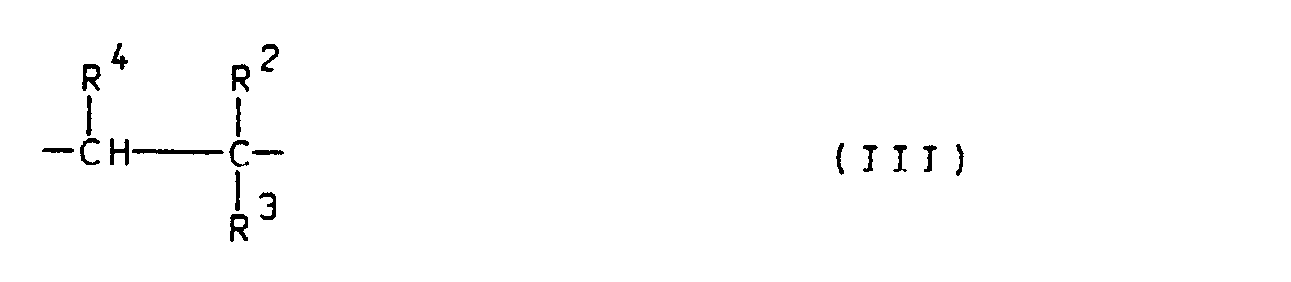
zu 49 bis 99 Gew.% aus eine saure Gruppe enthaltenden Resten der allgemeinen Formel 111
und zu 0,1 bis 2 Gew.% aus Resten eines Vernetzers, die aus Monomeren mit mindestens zwei olefinisch ungesättigten Doppelbindungen hervorgegangen sind, bestehen, wobei
X (C1-C22)-Alkyl, Aryl, Aralkyl oder Y,
Y COCH3 , CH2COOR2 , COCH2CH2COOH,

COOR2, CH2COCH2COOR2,
S03 H oder
- n und m unabhängig voneinander 2 bis 300,
- R1 Wasserstoff oder Methyl,
- R2 unabhängig voneinander Wasserstoff, Methyl oder Ethyl,
- R3 die Carboxylgruppe, die Sulfonylgruppe, die Phosphonylgruppe, die gegebenenfalls mit Alkanol mit 1 bis 4 Kohlenstoffatomen verestert sein kann, oder eine Gruppe der Formel

- Bevorzugte erfindungsgemäße Produkte bestehen zu 0,5 bis 20 Gew.% aus Resten der allgemeinen Formeln I und II, 79 bis 99 Gew.% aus Resten der allgemeinen Formel III und 0,1 bis 1,8 Gew.% aus vernetzenden Strukturen, die aus Monomeren mit mindestens zwei olefinisch ungesättigten Doppelbindungen hervorgegangen sind.
- Besonders bevorzugte erfindungsgemäße Produkte bestehen zu 1 bis 15,5 Gew.% aus Resten der allgemeinen Formeln I und II, 83 bis 98,5 Gew.% aus Resten der allgemeinen Formel III und 0,3 bis 1,5 Gew.% aus vernetzenden Strukturen, die aus Monomeren mit mindestens zwei olefinisch ungesättigten Doppelbindungen hervorgegangen sind.
- Das Gewichtsverhältnis der Reste der allgemeinen Formeln I und II beträgt bevorzugt 1 : 99 bis 99 : 1. Das Gewichtsverhältnis der Reste der allgemeinen Formeln I und II beträgt besonders bevorzugt 50 : 50, wenn der Anteil der Summe der Reste der allgemeinen Formeln I und II am Gesamtpolymerisat weniger als 10 Gew.% beträgt und 10 : 90 bis 25 : 75, wenn der Anteil der Summe der Reste der allgemeinen Formeln I und II am Gesamtpolymerisat 10 bis 50 Gew.% beträgt.
- In den erfindungsgemäßen Pfropfcopolymerisaten können die Reste der allgemeinen Formel 1 alle exakt die gleiche Struktur haben, sie können sich jedoch auch hinsichtlich des Restes R1 und/oder der Zahl n voneinander unterscheiden. So können sich bezüglich R1 Wasserstoff und Methyl in statistischer Weise abwechseln, es können aber auch größere Polymerabschnitte aufeinander folgen, in denen R1 jeweils nur Wasserstoff oder nur Methyl bedeutet.
- Für X stehendes Aryl hat bevorzugt 3 bis 8 Kohlenstoffatome und bedeutet besonders bevorzugt Phenyl, tert.-Butyl-phenyl und Nonylphenyl. Für X stehendes Aralkyl hat bevorzugt 3 bis 8 Kohlenstoffatome im Aryl- und 1 bis 22 Kohlenstoffatome im Alkylrest.
- Die Alkylgruppe des für Y stehenden Restes

hat bevorzugt 1 bis 22 Kohlenstoffatome. - Y bedeutet bevorzugt
- Die Reste der allgemeinen Formel 11 leiten sich von Stärke bzw. Abbauprodukten von Stärke ab.
- In den Resten der allgemeinen Formel 111 bedeutet R2 bevorzugt Wasserstoff oder Methyl. R3 steht bevorzugt für die Carboxylgruppe, die Sulfonylgruppe oder die Phosphonylgruppe. Besonders bevorzugt ist die Carboxylgruppe. R4 bedeutet bevorzugt Wasserstoff.
- Die genannten vernetzenden Strukturen können sich von allen geeigneten Monomeren mit mindestens zwei olefinisch ungesättigten Doppelbindungen ableiten.
- Geeignete Monomere sind beispielsweise Verbindungen, die mindestens zwei Alkenylgruppen, zum Beispiel Vinyl oder Allyl, oder mindestens zwei Alkenoylgruppen, zum Beispiel Acrylat oder Methacrylat, enthalten.
- Bevorzugt leiten sich die vernetzenden Strukturen von Monomeren ab, die 2, 3 oder 4 ethylenisch ungesättigte Doppelbindungen enthalten.
- Besonders bevorzugt leiten sich die vernetzenden Strukturen von Trimethylolpropantriacrylat, Tetraallyloxyethan oder Methylenbisacrylamid ab.
- Weitere vernetzende Strukturen können erhalten werden durch Zusatz von mehrfunktionellen Epoxiden, wie z.B. Ethylenglykoldiglycidylether oder cycloaliphatischem Diepoxid.
- Ganz besonders bevorzugte erfindungsgemäße Pfropfpolymerisate sind solche, in denen mehrere der oben genannten bevorzugten oder besonders bevorzugten Merkmale enthalten sind.
- Die erfindungsgemäßen Pfropfpolymerisate können durch bekannte Polymerisationsverfahren hergestellt werden. Bevorzugt ist die Polymerisation in wäßriger Lösung nach dem Verfahren der sogenannten Gelpolymerisation. Dabei werden 15 - 50 %ige wäßrige Lösungen der Comonomeren mit bekannten geeigneten Katalysatorsystemen ohne mechanische Durchmischung unter Ausnutzung des Trommsdorff-Norrish-Effektes (Bios Final Rep. 363.22; Makromol. Chem. 1, 169 (1947)) polymerisiert.
- Die Polymerisationsreaktion kann im Temperaturbereich zwischen 0°C und 130°C, vorzugsweise zwischen 10°C und 100°C, sowohl bei Normaldruck als auch unter erhöhtem Druck durchgeführt werden. Wie üblich kann die Polymerisation auch in einer Schutzgasatmosphäre, vorzugsweise unter Stickstoff, ausgeführt werden.
- Zur Auslösung der Polymerisation können energiereiche elektromagnetische strahlen oder die üblichen chemischen Polymerisationsinitiatoren herangezogen werden, z.B. organische Peroxide, wie Benzoylperoxid, tert. Butylhydroperoxid, Methyl-ethyl-keton-peroxid, Cumol-hydroperoxid, Azoverbindungen wie Azo-diiso-butyro-nitril sowie anorganische Peroxiverbindungen wie (NH4)2S208 oder K2S208 oder H202 gegebenenfalls in Kombination mit Reduktionsmitteln wie Natriumhydrogensulfit, und Eisen-II-Sulfat oder Redoxsysteme, welche als reduzierende Komponente eine aliphatische und aromatische Sulfinsäure, wie Benzolsulfinsäure und Toluolsulfinsäure oder Derivate dieser Säuren, enthalten, wie z.B. Mannichaddukte aus Sulfinsäure, Aldehyden und Aminoverbindungen, wie sie in der deutschen Patentschrift 13 01 566 beschrieben sind. Pro 100 g Gesamtmonomeren werden in der Regel 0,03 bis 2 g des Polymerisationsinitiators eingesetzt.
- Durch mehrstündiges Nachheizen der Polymerisatgele im Temperaturbereich von 50 - 130°C, vorzugsweise 70 - 100°C, können die Qualitätseigenschaften der Polymerisate noch verbessert werden.
- Die auf diesem Wege hergestellten, in Form wäßriger Gallerten vorliegenden erfindungsgemäßen Copolymerisate können nach mechanischer Zerkleinerung mit geeigneten Apparaten durch bekannte Trocknungsverfahren in fester Form erhalten werden und zum Einsatz gelangen.
- Zweckmäßigerweise werden somit erfindungsgemäße Pfropfpolymerisate erhalten, wenn 0,5 bis 50 Gew.%, vorzugsweise 0,5 bis 20, insbesondere 1 bis 15,5 Gew.%, einer Mischung aus einer Polyalkylenoxidverbindung der allgemeinen Formel la

oder gegebenenfalls ein Alkali-, Ammonium- oder Aminsalz davon und einer Verbindung der allgemeinen Formel Ila
49 bis 99 Gew.%, vorzugsweise 79 bis 99, insbesondere 83 bis 98,5 Gew.%, einer ungesättigten Säure der allgemeinen Formel Illa
oder ein Alkali-, Ammonium- oder Aminsalz davon und 0,1 bis 2 Gew.%, vorzugsweise 0,1 bis 1,8, insbesondere 0,3 bis 1,5 Gew.%, eines Monomeren mit mindestens zwei olefinisch ungesättigten Doppelbindungen, wobei - X1 (C1-C22)-Alkyl, Aryl, Aralkyl oder Y,
- Y1 COCH3, CH2COOR2, COCH2CH2COOH, CO-CH=CH-COOAlkyl, CO-CH=CH-COOH, COOR2, CH2COCH2COOR2, CO-CH=CH2, SO3H oder
- Die Polyalkylenoxidverbindungen der allgemeinen Formel la können durch bekannte Umsetzungsreaktionen von Verbindungen mit reaktiven Gruppen, wie Anhydride, Säurechloride, Halogencarbonsäuren oder deren Estern oder Halogensulfonsäuren und Polyalkylenoxiden erhalten werden.
- Bevorzugte Polyalkylenoxide sind Polypropylen- und Polyethylenoxide, Co- oder Blockcopolymere aus Ethylenoxid und Propylenoxid, Oxethylate, Oxpropylate oder Oxethyloxpropylate von aliphatischen C1 bis C22 Alkylalkoholen, Phenol, tert.Butylphenol oder Nonylphenol.
- Bevorzugte Reagenzien zum Endverschluß der Polymerkette sind Chloracetessigsäure und deren Ester, Chlorameisensäure und deren Ester, Vinylphosphonsäuremono- und Dichlorid, Bernsteinsäureanhydrid, Essigsäureanhydrid, Monochloressigsäure.
- Bevorzugte Verbindungen der allgemeinen Formellla sind Stärken. Es können dabei alle nativen und/oder modifizierten Stärken verschiedener Herkunft verwendet werden. Stärken aus Wurzeln und Knollen verschiedener Pflanzen, wie zum Beispiel Kartoffeln, Maranta oder Maniok, können ebenso eingesetzt werden wie solche aus Getreidesamen, wie zum Beispiel Mais, Weizen, Reis und Gerste, solchen aus Früchten, wie zum Beispiel Kastanien, Erbsen und Bohnen oder solchen aus Mark, wie zum Beispiel dem der Sagopalme.
- Besonders bevorzugte Verbindungen der allgemeinen Formel Ila sind Mais- und Kartoffelstärke.
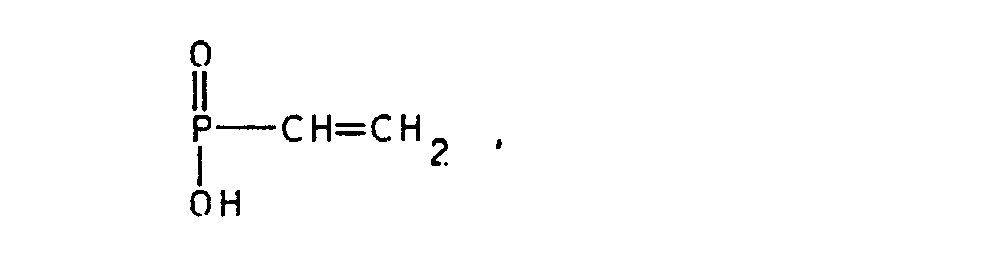
- Die Monomeren der Formel Illa sind bekannte Verbindungen, wie zum Beispiel Acrylsäure, Methacrylsäure, Vinylsulfonsaure, Maleinsäure, Fumarsäure, Crotonsäure, 2-Acrylamido-2-methyl-propansulfonsäure, 2-Acrylamido-2-methyl-propanphosphonsäure und Vinylphosphonsäure sowie deren Halbester.
- Die als Vernetzer eingesetzten polyolefinischen Monomere sind gängige Produkte. Beispiele sind Bisacrylamidoessigsäure, Trimethylolpropantriacrylat, Tetraallyloxyethan und Methylenbisacrylamid.
- Besonders bevorzugte erfindungsgemäße Polymerisate sind solche, die im Anschluß an die oben beschriebene Herstellung mechanisch zerkleinert und durch Aufbringen von carboxylgruppenreaktiven Verbindungen auf die Oberfläche der Polymerpartikel modifiziert werden.
- Geeignete carboxylgruppenreaktive Verbindungen sind beispielsweise mehrwertige Alkohole, Polyalkohole, Polyepoxide, (Poly)-glycidylether, Phosphonsäurediglycidylester, Polyamine, Polyoxazoline, Polyaziridine, Alkoxysilanamine, Alkoxysilanepoxide, Polyamidoamine, polyquarternäre Substanzen und mehrwertige Metallkationen.
- Bevorzugte carboxylgruppenreaktive Verbindungen sind Glycidylether mehrwertiger Alkohole, wie z.B. Monoethylenglykoldiglycidylether, Polyethylenglykoldiglycidylether, insbesondere Nonaethylenglykoldiglycidylether, Monopropylenglykoldiglycidylether und Polypropylenglykoldiglycidylether; Glycidylphosphonsäureester der allgemeinen Formel IV

worin R Alkyl, Alkenyl oder Aryl, die gegebenenfalls substituiert sein können, bedeutet; polymere Verbindungen, wie z.B. Polyamine oder Polyamidoamine, welche in bekannter Weise durch Kondensation aliphatischer Dicarbonsäuren mit Di- oder Polyaminen, wie z.B. Diethylentriamin, hergestellt werden und auch quarternisiert sein können; - Alkoxysilylverbindungen wie z.B. Aminoalkylalkoxysilane, insbesondere 3-Aminopropyltriethoxysilan, Trimethoxysilylpropyldiethylentriamin, N-Aminoethylaminopropyltrimethoxysilan und Aminoethylaminomethylphenethyltrimethoxysilan sowie Glycidylalkoxysilane, insbesondere 3-Glycidyloxypropyltrimethoxysilan; sowie hochreaktive Kieselsäuresole.
- In der allgemeinen Formel IV bedeutet R bevorzugt (C1-C1g)-Alkyl; (C3-Cg)-Cycloalkyl; eine Gruppe der allgemeinen Formel V

wobei R5 und R6 unabhängig voneinander für Wasserstoff oder (C1-C4)-Alkyl stehen; oder eine Gruppe der allgemeinen Formel VI
wobei R7 für Wasserstoff, Halogen oder (C1-C4)-Alkyl steht. - Die genannten carboxylgruppenreaktiven Verbindungen können auch in Mischungen untereinander oder stufenweise nacheinander angewendet werden.
- Das Aufbringen der carboxylgruppenhaltigen Verbindungen auf die Polymerpartikel geschieht bevorzugt durch Mischen der Komponenten in einem Mischaggregat.
- Geeignete Mischaggregate sind beispielsweise Patterson-Kelly-Mischer, DRAIS-Turbolenzmischer, Lödige-Mischer, Schneckenmischer, Tellermischer und Wirbelschichtmischer.
- Das Verfahren wird bevorzugt im Temperaturbereich zwischen 0 und 200°C, bevorzugt zwischen 10 und 80°C, ausgeführt. Es ist dabei bevorzugt, die Polymerpartikel vor Ausführung des Verfahrens auf eine Temperatur von 40 bis 100°C vorzuwärmen. In einer bevorzugten Ausführungsform werden die Komponenten bei einer Temperatur zwischen 20 und 60°C in einem üblichen, heizbaren Mischaggregat gemischt und dann zur Beschleunigung der Reaktion im oberflächennahen Bereich auf eine Temperatur zwischen 80 und 200°C, bevorzugt 80 bis 150°C, erhitzt. In einer weiteren bevorzugten Ausführungsform erfolgt dieser Temperaturbehandlungsschritt in einem nachgeschalteten Trockner über einen Zeitraum von 10 Minuten bis 6 Stunden, wobei sowohl Spaltprodukte, welche bei der Reaktion entstehen können, sowie eventuell vorher zugesetzte Lösungsmittelanteile entfernt werden können.
- Die carboxylgruppenreaktiven Verbindungen können sowohl in Substanz als auch in Form von Lösungen eingesetzt werden.
- Bevorzugte Lösungsmittel sind Wasser, sowie Alkohole, Ester, Ketone, Ether und Kohlenwasserstoffe sowie Mischungen dieser Komponenten mit Kochpunkten bis zu 200°C, bevorzugt bis 150°C.
- Die carboxylgruppenreaktiven Verbindungen werden dabei bevorzugt in Mengen von 0,01 bis 10 Gew.%, besonders bevorzugt 0,05 bis 3 Gew.%, bezogen auf die zu modifizierenden Polymerpartikel, eingesetzt.
- Die erfindungsgemäßen Pfropfpolymerisate eignen sich hervorragend als Absorptionsmittel für Wasser und wäßrige Lösungen, so daß sie vorteilhaft als wasserzurückhaltendes Mittel im landwirtschaftlichen Gartenbau, als Filtrationshilfsmittel und besonders als saugfähige Komponente in Hygieneartikeln wie Windeln, Tampons oder Damenbinden eingesetzt werden können.
- Von besonderem Vorteil ist, daß die erfindungsgemäßen Pfropfpolymerisate nicht zum Ankleben an heißen Stahloberflächen, wie z.B. Walzentrocknerflächen, neigen und somit eine hohe Trocknungsgeschwindigkeit gewährleistet ist.
- In den nachstehenden Beispielen werden die folgenden Verbindungen der allgemeinen Formel la verwendet:
- A: In 312 g eines Blockcopolymeren aus 1,03 mol Propylenoxid und 0,91 mol Ethylenoxid mit der OH-Zahl 36, werden unter Rühren bei Raumtemperatur 20,0 g Bernsteinsäureanhydrid eingetragen und diese Mischung unter Rühren auf 80°C erhitzt. Das Bernsteinsäureanhydrid löst sich dabei unter schwach exothermer Reaktion auf; es entsteht eine klare farblose Lösung.
- B: In einem Vierhalskolben mit Azeotropaufsatz und Stickstoffeinleitung werden 1010 g (0,495 mol) Polypropylenglykol 2020 in 500 ml Toluol gelöst und entwässert, d.h. es wird 3 h azeotrop destilliert, wobei 43 g Wasser abgeschieden werden. Bei 105 - 110°C werden im Laufe von 30 min 112,5 g (1,1 mol) Essigsäureanhydrid zugetropft, 2 h bei 105 - 110 DC nachgerührt. Unter Wasserstrahlvakuum werden Toluol, Essigsäure und überschüssiges Essigsäureanhydrid abdestilliert. Als Rückstand verbleiben 1020 g eines farblosen Öls.
- C: 4621 g (1.0 mol) eines Polyglykolethers auf Basis Nonylphenol mit 100 Ethylenoxideinheiten werden geschmolzen. Bei 90 - 100°C werden 102 g (1,0 mol) Acetanhydrid zugetropft, 30 min gerührt und dann unter Wasserstrahlvakuum die entstandene Essigsäure abdestilliert. Es entsteht eine farblose Lösung, die bei Raumtemperatur zu einem festen Wachs erstarrt.
- D: In einem Reaktionskolben werden 345 g eines Blockpolymeren aus 1,6 mol Propylenoxid und 0,2 mol Ethylenoxid mit der OH-Zahl 65 in 350 ml Essigsäureethylester gelöst, 40,5 g Triethylamin zugesetzt und langsam 37,8 g Monochloressigsäure zugegeben. Es wird 1 h nachgerührt, das Triethylaminhydrochlorid abgesaugt und das Lösungsmittel unter Wasserstrahlvakuum abdestilliert. Als Rückstand verbleiben 368 g eines farblosen Öls.
- E: Umsetzung analog A mit einem Copolymeren aus 0,35 mol Propylenoxid und 1,82 mol Ethylenoxid mit der OH-Zahl 17.
- F: Umsetzung analog A mit einem Copolymeren aus 1,6 mol Propylenoxid und 0,2 mol Ethylenoxid mit der OH-Zahl 65.
- G: Umsetzung analog D mit Nonylphenoloxethylat mit 30 Ethyleneinheiten und Chloracetessigsäureethylester.
- H: Umsetzung analog D mit Nonylphenoloxethylat mit 30 Ethyleneinheiten und Chlorameisensäure.
- I: Umsetzung analog D mit einem Copolymeren aus 1,03 mol Propylenoxid und 0,91 mol Ethylenoxid mit der OH-Zahl 36 und Vinylphosphonsäuremonochlorid.
- K: Umsetzung analog D mit Polypropylenglykol 2020 und Monochloressigsäure.
- L: Umsetzung analog C mit tert. Butylphenoloxethylat mit 80 Ethylenoxideinheiten und Acetanhydrid.
- M: Umsetzung analog D mit Phenoloxethylat mit 15 Propylenoxideinheiten und Vinylphosphonsäuredichlorid.
- N: Umsetzung analog B mit Polyethylenglykol 300 (1,0 Mol) und Maleinsäureanhydrid (1,98 Mol).
- In einen durch geschäumtes Kunststoffmaterial gut isolierten Polyethyleneimer mit einem Fassungsvermögen von 10 I werden 4430 g entsalztes Wasser vorgelegt, 1493 g Natriumbicarbonat darin dispergiert und langsam 1910 g Acrylsäure so zudosiert, daß ein Überschäumen der Reaktionslösung vermieden wird, wobei sich diese auf eine Temperatur von ca. 12 - 10°C abkühlt. Es werden nun 40 g des Produktes gemäß A (siehe oben), 490 g einer aufgekochten und ebenfalls auf 10°C abgekühlten Stärkelösung aus 45 g handelsüblicher Maisstärke und 445 g E-Wasser, 20 g Trimethylolpropantriacrylat, gelöst in 20 g eines Polyglykolethers auf Basis eines synthetischen C12-C15-Oxoalkohols mit 13 Ethylenoxid-Einheiten und 10 g eines Natrium-Diisooctylsulfosuccinates (REWOPOL V 2133 der Firma REWO, Steinau) zugegeben. Bei einer Temperatur von 10 - 12°C werden die Initiatoren, ein Redoxsystem, bestehend aus 2,2 g 2,2'-Azobisamidinopropan-Dihydrochlorid, gelöst in 20 g Wasser, 4,4 g Kaliumperoxidisulfat, gelöst in 170 g Wasser, und 6 g Natriumpyrosulfit, gelöst in 120 g Wasser, nacheinander zugegeben und gut verrührt. Die Reaktionslösung wird daraufhin ohne Rühren stehen gelassen, wobei durch einsetzende Polymerisation, in dessen Verlauf die Temperatur bis auf ca. 85°C ansteigt, ein festes Gel entsteht. Dieses wird anschließend mechanisch zerkleinert, bei Temperaturen über 80°C getrocknet und gemahlen.
- Das vorstehend beschriebene Produkt wurde in herkömmlicher Weise in eine Babywindel eingearbeitet und zeichnete sich hier durch eine besonders gute Flüssigkeitsretention aus.
- In einem 10 Liter-Kunststoffeimer werden 4419 g Eis und 1894 g Acrylsäure vorgelegt und langsam 1573 g NaOH 50%ig zudosiert, anschließend 100 g des Produktes gemäß A) (siehe oben), 275 g einer aufgekochten und auf 20°C abgekühlten Stärkelösung aus 25 g handelsüblicher Kartoffelstärke und 250 g enthärtetes Wasser und 6 g Methylenbisacrylamid dispergiert in 100 g Wasser zugegeben. Die Reaktionslösung wird auf 20°C eingestellt und anschliessend mit den Initiatoren, ein Redoxsystem bestehend aus 2,2 g 2,2'-Azobisamidinopropan-dihydrochlorid, gelöst in 20 g Wasser, 6 g Kaliumperoxidisulfat, gelöst in 170 g Wasser, und 0,15 g Ascorbinsäure, gelöst in 120 g Wasser, versetzt und ohne Rühren stehen gelassen. Das durch Polymerisation entstehende Gel wird anschließend mechanisch zerkleinert, bei Temperaturen über 80°C getrocknet und gemahlen.
- Unter adiabatischen Bedingungen werden in einem 5 1 zylindrischen Weithalsreaktionskolben 2900 g E-Wasser vorgelegt, 1250 g einer handelsüblichen kaltwasserlöslichen Stärke, 15 g des Produktes gemäß N), 1250 g Acrylsäure sowie 0,625 g Tetraallyloxyethan darin gelöst und auf 20°C eingestellt. Es wird Stickstoff in die Monomerlösung eingeleitet (ca. 2 I/Min.), um den Sauerstoffgehalt zu erniedrigen. Bei einem Gehalt von ca. 0,8 ppm 02 werden 34 g einer 4 %igen wässrigen Lösung von 2,2'-Azobis(Amidinopropan)-dihydrochlorid zugegeben, nach weiterem N2-Einleiten und einem 02-Gehalt von ca. 0,08 ppm werden 17 g einer 0,75 %igen H202-Lösung zugegeben und schließlich bei einem 02-Gehalt von ca. 0,01 ppm werden 4,5 g einer 0,15 %igen Ascorbinsäurelösung zugegeben. Durch einsetzende Polymerisation, in deren Verlauf die Temperatur bis auf ca. 90°C ansteigt, entsteht ein festes Gel, das anschließend mechanisch zerkleinert wird. 1000 g des zerkleinerten Gels werden mit 346 g Natronlauge 27 %ig versetzt (Neutralisationsgrad der Acrylsäure = 70 Mol-%), dreimal durchgeknetet, und anschließend bei Temperaturen über 100°C in dünner Schicht getrocknet, gemahlen und gegebenenfalls gesiebt.
- Weitere Beispiele zur Herstellung erfindungsgemäßer Pfropfpolymerisate gemäß der hier beschriebenen Beispiele 1 und 2 sind in folgender Tabelle zusammengefaßt. Die Mengenangaben bedeuten Gewichts- % bezogen auf Gesamtmonomeranteil. Als Verbindung der allgemeinen Formel Ila wurde in jedem Fall Maisstärke verwendet.
- Folgende Abkürzungen werden benutzt:
- AS: Acrylsäure
- MAS: Methacrylsäure
- CTS: Crotonsäure
- VPS: Vinylphosphonsäure
- VPE: Vinylphosphonsäurehalbester
- AMP: 2-Acrylamido-2-methyl-propansulfonsäure
- AMPP: 2-Acrylamido-2-methyl-propanphosphonsäure
- TMPTA: Trimethylolpropantriacetat
- TAE: Tetraallyloxyethan
- MBA: Methylenbisacrylamid

worin R7 für die Sulfonylgruppe oder die Phosphonylgruppe steht,
R4 Wasserstoff, Methyl, Ethyl oder die Carboxylgruppe bedeuten.
COCH3, CH2COOR2, COCH2CH2COOH, COOR2, CH2COCH2COOR2 und

und die Reste R1 bis R4 und die Zahlen n und m die obengenannten Bedeutungen haben, unter den Bedingungen der Gelpolymerisation umgesetzt werden.
Claims (10)

und Resten der allgemeinen Formel II

zu 49 bis 99 Gew.% aus einer sauren Gruppe enthaltenden Resten der allgemeinen Formel III

und zu 0,1 bis 2 Gew.% aus Resten eines Vernetzers, die aus Monomeren mit mindestens zwei olefinisch ungesättigten Doppelbindungen hervorgegangen sind, bestehen, wobei


worin R7 für die Sulfonylgruppe oder die Phosphonylgruppe steht,

worin R Alkyl, Alkenyl oder Aryl, die gegebenenfalls substituiert sein können, bedeutet; polymere Verbindungen, wie z.B. Polyamine oder Polyamidoamine, welche in bekannter Weise durch Kondensation aliphatischer Dicarbonsäuren mit Di- oder Polyaminen, wie z.B. Diethylentriamin, hergestellt werden und auch quarternisiert sein können; Alkoxysilylverbindungen wie z.B. Aminoalkylalkoxysilane, insbesondere 3-Aminopropyltriethoxysilan, Trimethoxysilylpropyldiethylentriamin, N-Aminoethylaminopropyltrimethoxysilan und Aminoethylaminomethylphenethyltrimethoxysilan sowie Glycidylalkoxysilane, insbesondere 3-Glycidyloxypropyltrimethoxysilan; oder hochreaktive Kieselsäuresole eingesetzt werden.

oder gegebenenfalls ein Alkali-, Ammonium- oder Aminsalz davon und einer Verbindung der allgemeinen Formel Ila

49 bis 99 Gew.%, vorzugsweise 79 bis 99, insbesondere 83 bis 98,5 Gew.%, einer ungesättigten Säure der allgemeinen Formel Illa

oder ein Alkali-, Ammonium- oder Aminsalz davon und 0,1 bis 2 Gew.%, vorzugsweise 0,1 bis 1,8, insbesondere 0,3 bis 1,5 Gew.%, eines Monomeren mit mindestens zwei olefinisch ungesättigten Doppelbindungen, wobei
X1 (C1-C22)-Alkyl, Aryl, Aralkyl oder Y,
Y1 COCH3, CH2COOR2, COCH2CH2COOH, CO-CH=CH-COOAlkyl, CO-CH=CH-COOH, COOR2, CH2COCH2COOR2, CO-CH=CH2, SO3H oder

und R1 bis R4 sowie n und m wie im Anspruch 1 definiert sind, unter den Bedingungen der Gelpolymerisation umgesetzt werden und im Anschluß daran gegebenenfalls das Produkt mechanisch zerkleinert und mit carboxylgruppenreaktiven Verbindungen in einem Mischaggregat gemischt wird.
Applications Claiming Priority (2)
| Application Number | Priority Date | Filing Date | Title |
|---|---|---|---|
| DE4139613 | 1991-11-30 | ||
| DE4139613A DE4139613A1 (de) | 1991-11-30 | 1991-11-30 | Hydrophile quellfaehige pfropfpolymerisate |
Publications (3)
| Publication Number | Publication Date |
|---|---|
| EP0545126A2 true EP0545126A2 (de) | 1993-06-09 |
| EP0545126A3 EP0545126A3 (en) | 1993-08-04 |
| EP0545126B1 EP0545126B1 (de) | 1996-01-31 |
Family
ID=6446034
Family Applications (1)
| Application Number | Title | Priority Date | Filing Date |
|---|---|---|---|
| EP92119513A Expired - Lifetime EP0545126B1 (de) | 1991-11-30 | 1992-11-14 | Hydrophile quellfähige Pfropfpolymerisate |
Country Status (9)
| Country | Link |
|---|---|
| US (1) | US5489647A (de) |
| EP (1) | EP0545126B1 (de) |
| JP (1) | JPH05239156A (de) |
| AT (1) | ATE133693T1 (de) |
| CA (1) | CA2084040A1 (de) |
| DE (2) | DE4139613A1 (de) |
| DK (1) | DK0545126T3 (de) |
| ES (1) | ES2083059T3 (de) |
| FI (1) | FI108455B (de) |
Cited By (3)
| Publication number | Priority date | Publication date | Assignee | Title |
|---|---|---|---|---|
| EP0675142A1 (de) * | 1994-04-02 | 1995-10-04 | Hoechst Aktiengesellschaft | Wasserquellbare hydrophile Polymere |
| WO2014183987A1 (de) * | 2013-05-15 | 2014-11-20 | Evonik Industries Ag | Superabsorbierende polymere mit schnellen absorptionseigenschaften sowie verfahren zu dessen herstellung |
| KR101786286B1 (ko) | 2013-05-15 | 2017-11-15 | 에보니크 데구사 게엠베하 | 빠른 흡수 특성을 갖는 초흡수성 중합체 및 이의 생산공정 |
Families Citing this family (21)
| Publication number | Priority date | Publication date | Assignee | Title |
|---|---|---|---|---|
| ZA92308B (en) | 1991-09-11 | 1992-10-28 | Kimberly Clark Co | Thin absorbent article having rapid uptake of liquid |
| US6255386B1 (en) | 1996-12-31 | 2001-07-03 | Kimberly-Clark Worldwide, Inc. | Blends of polyolefin and poly(ethylene oxide) and process for making the blends |
| US5912076A (en) | 1996-12-31 | 1999-06-15 | Kimberly-Clark Worldwide, Inc. | Blends of polyethylene and peo having inverse phase morphology and method of making the blends |
| US6063866A (en) * | 1996-12-31 | 2000-05-16 | Kimberly-Clark Worldwide, Inc. | Blends of polyolefin and poly(ethylene oxide) and process for making the blends |
| US5976694A (en) | 1997-10-03 | 1999-11-02 | Kimberly-Clark Worldwide, Inc. | Water-sensitive compositions for improved processability |
| US6372850B2 (en) | 1997-12-31 | 2002-04-16 | Kimberly-Clark Worldwide, Inc. | Melt processable poly (ethylene oxide) fibers |
| US6172177B1 (en) | 1997-12-31 | 2001-01-09 | Kimberly-Clark Worldwide, Inc. | Grafted poly(ethylene oxide) compositions |
| US6117947A (en) * | 1997-12-31 | 2000-09-12 | Kimberly-Clark Worldwide, Inc. | Method of modifying poly(ethylene oxide) |
| US6350518B1 (en) | 1998-06-01 | 2002-02-26 | Kimberly-Clark Worldwide, Inc. | Methods of making blend compositions of an unmodified poly vinyl alcohol and a thermoplastic elastomer |
| DE19983872T1 (de) * | 1998-12-29 | 2002-02-14 | Kimberly Clark Co | Wärmeaktivierte Klebstoffe |
| US6576576B1 (en) | 1999-12-29 | 2003-06-10 | Kimberly-Clark Worldwide, Inc. | Multicomponent fibers |
| US6610793B1 (en) | 2000-05-26 | 2003-08-26 | Kimberly-Clark Worldwide, Inc. | Modified poly(ethylene oxide), method of making same and articles using same |
| US6790519B1 (en) | 2000-05-26 | 2004-09-14 | Kimberly-Clark Worldwide, Inc. | Moisture-induced poly(ethylene oxide) gel, method of making same and articles using same |
| US6607819B2 (en) | 2000-12-28 | 2003-08-19 | Kimberly-Clark Worldwide, Inc. | Polymer/dispersed modifier compositions |
| US6403706B1 (en) | 2000-12-28 | 2002-06-11 | Kimberly-Clark Worldwide, Inc. | Methods of making polymer/dispersed modifier compositions |
| BR0207754A (pt) * | 2001-03-02 | 2004-04-27 | Unilever Nv | composição para tratamento de um tecido |
| US6515075B1 (en) | 2001-07-12 | 2003-02-04 | Kimberly-Clark Worldwide, Inc. | Films, fibers and articles of chemically modified polyethylene oxide compositions with improved environmental stability and method of making same |
| US7378566B2 (en) | 2002-12-13 | 2008-05-27 | Kimberly-Clark Worldwide, Inc. | Absorbent core including folded substrate |
| JP5669354B2 (ja) | 2007-02-05 | 2015-02-12 | 株式会社日本触媒 | 粒子状吸水剤およびその製造方法 |
| EP2219781B1 (de) * | 2007-12-12 | 2012-12-26 | Nippon Shokubai Co., Ltd. | Wasserabsorptionsmittel und verfahren zu seiner herstellung |
| CN119488054B (zh) * | 2024-11-15 | 2025-12-05 | 温州市沙棘科技创新发展有限公司 | 一种种植用复合型富硒营养土及其制备方法 |
Family Cites Families (12)
| Publication number | Priority date | Publication date | Assignee | Title |
|---|---|---|---|---|
| JPS51125468A (en) * | 1975-03-27 | 1976-11-01 | Sanyo Chem Ind Ltd | Method of preparing resins of high water absorbency |
| USRE32957E (en) * | 1978-10-24 | 1989-06-20 | Johnson & Johnson | Absorbent article |
| US4755562A (en) * | 1986-06-10 | 1988-07-05 | American Colloid Company | Surface treated absorbent polymers |
| US4734478A (en) * | 1984-07-02 | 1988-03-29 | Nippon Shokubai Kagaku Kogyo Co., Ltd. | Water absorbing agent |
| US4820773A (en) * | 1986-04-21 | 1989-04-11 | American Colloid Company | Water absorbent resins prepared by polymerization in the presence of styrene-maleic anhydride copolymers |
| GB8705698D0 (en) * | 1987-03-11 | 1987-04-15 | Shell Int Research | Water-swellable crosslinked polymers |
| DE3738602A1 (de) * | 1987-11-13 | 1989-05-24 | Cassella Ag | Hydrophile quellbare pfropfpolymerisate, deren herstellung und verwendung |
| TW201758B (de) * | 1988-06-28 | 1993-03-11 | Catalyst co ltd | |
| FR2644467B1 (fr) * | 1989-03-16 | 1991-07-12 | Hoechst Ag | Polymere hydrophile a base d'acide acrylique et d'acrylate de metal alcalin, son procede de preparation et son application comme agent absorbant, en particulier comme agent absorbant pour articles d'hygiene |
| DE3911433A1 (de) * | 1989-04-07 | 1990-10-11 | Cassella Ag | Hydrophile quellfaehige pfropfpolymerisate, deren herstellung und verwendung |
| DE4014628A1 (de) * | 1990-05-08 | 1991-11-14 | Starchem Gmbh | Verfahren zur herstellung von feinteiligen, wasserquellbaren polysaccharid-pfropfpolymeren |
| US5154713A (en) * | 1991-10-22 | 1992-10-13 | Nalco Chemical Company | Enhancing absorption rates of superabsorbents by incorporating a blowing agent |
-
1991
- 1991-11-30 DE DE4139613A patent/DE4139613A1/de not_active Withdrawn
-
1992
- 1992-11-14 EP EP92119513A patent/EP0545126B1/de not_active Expired - Lifetime
- 1992-11-14 ES ES92119513T patent/ES2083059T3/es not_active Expired - Lifetime
- 1992-11-14 AT AT92119513T patent/ATE133693T1/de active
- 1992-11-14 DK DK92119513.7T patent/DK0545126T3/da active
- 1992-11-14 DE DE59205239T patent/DE59205239D1/de not_active Expired - Lifetime
- 1992-11-16 US US07/977,002 patent/US5489647A/en not_active Expired - Fee Related
- 1992-11-27 CA CA002084040A patent/CA2084040A1/en not_active Abandoned
- 1992-11-27 FI FI925421A patent/FI108455B/fi active
- 1992-11-30 JP JP4320800A patent/JPH05239156A/ja active Pending
Cited By (7)
| Publication number | Priority date | Publication date | Assignee | Title |
|---|---|---|---|---|
| EP0675142A1 (de) * | 1994-04-02 | 1995-10-04 | Hoechst Aktiengesellschaft | Wasserquellbare hydrophile Polymere |
| US5594083A (en) * | 1994-04-02 | 1997-01-14 | Cassella Aktiengesellschaft | Water-swellable hydrophilic polymers |
| US5684104A (en) * | 1994-04-02 | 1997-11-04 | Cassella | Water-swellable hydrophilic polymers |
| WO2014183987A1 (de) * | 2013-05-15 | 2014-11-20 | Evonik Industries Ag | Superabsorbierende polymere mit schnellen absorptionseigenschaften sowie verfahren zu dessen herstellung |
| KR101786285B1 (ko) | 2013-05-15 | 2017-10-17 | 에보니크 데구사 게엠베하 | 빠른 흡수 특성을 갖는 초흡수성 중합체 및 이의 생산공정 |
| KR101786286B1 (ko) | 2013-05-15 | 2017-11-15 | 에보니크 데구사 게엠베하 | 빠른 흡수 특성을 갖는 초흡수성 중합체 및 이의 생산공정 |
| US11001692B2 (en) | 2013-05-15 | 2021-05-11 | Evonik Operations Gmbh | Superabsorbent polymers with rapid absorption properties and process for producing same |
Also Published As
| Publication number | Publication date |
|---|---|
| DE4139613A1 (de) | 1993-06-03 |
| FI925421A7 (fi) | 1993-05-31 |
| JPH05239156A (ja) | 1993-09-17 |
| ES2083059T3 (es) | 1996-04-01 |
| ATE133693T1 (de) | 1996-02-15 |
| CA2084040A1 (en) | 1993-05-31 |
| FI108455B (fi) | 2002-01-31 |
| FI925421A0 (fi) | 1992-11-27 |
| DE59205239D1 (de) | 1996-03-14 |
| US5489647A (en) | 1996-02-06 |
| EP0545126A3 (en) | 1993-08-04 |
| EP0545126B1 (de) | 1996-01-31 |
| DK0545126T3 (da) | 1996-06-03 |
Similar Documents
| Publication | Publication Date | Title |
|---|---|---|
| EP0545126B1 (de) | Hydrophile quellfähige Pfropfpolymerisate | |
| EP0400283B1 (de) | Hydrophile quellfähige Pfropfpolymerisate, deren Herstellung und Verwendung | |
| EP0316792B1 (de) | Hydrophile quellbare Pfropfpolymerisate, deren Herstellung und Verwendung | |
| EP0391108B1 (de) | Hydrophile, quellfähige Pfropfcopolymerisate, deren Herstellung und Verwendung | |
| EP1165638B1 (de) | Vernetzte, hydrophile, hochquellfähige hydrogele, verfahren zu ihrer herstellung und ihre verwendung | |
| EP1056787B1 (de) | Nachvernetzung von hydrogelen mit 2-oxazolidinonen | |
| EP1141039B1 (de) | Verfahren zur nachvernetzung von hydrogelen mit 2-oxotetrahydro-1,3-oxazinen | |
| EP1133525B1 (de) | Verfahren zur nachvernetzung von hydrogelen mit n-acyl-2-oxazoli-dinonen | |
| EP1058695B1 (de) | Verfahren zur vernetzung von hydrogelen mit bis- und poly-2-oxazolidinonen | |
| EP1651683B1 (de) | Verfahren zur nachvernetzung von hydrogelen mit bicyclischen amidacetalen | |
| EP1123330B1 (de) | Verfahren zur herstellung von wasserquellbaren hydrophilen polymeren, die polymere sowie deren verwendung | |
| DE3031304C2 (de) | ||
| EP1123329B1 (de) | Hydrophile, hochquellfähige hydrogele sowie verfahren zu ihrer herstellung und verwendung | |
| EP1824908B1 (de) | Unlösliche metallsulfate in wasserabsorbierenden polymerpartikeln | |
| EP0703265A1 (de) | Hydrophile, hochquellfähige Hydrogele | |
| EP0675142A1 (de) | Wasserquellbare hydrophile Polymere | |
| DE3887187T2 (de) | Verfahren zur Herstellung eines Polymers mit hoher Wasseraufnahme. | |
| DE19813443A1 (de) | Wasser- und wäßrige Flüssigkeiten absorbierende Polymerisatteilchen, Verfahren zu ihrer Herstellung und ihre Verwendung | |
| EP1056800B1 (de) | Nachvernetzung von hydrogelen mittels borsäureestern | |
| EP1056788A1 (de) | Vernetzung von hydrogelen mit phosphorsäureestern |
Legal Events
| Date | Code | Title | Description |
|---|---|---|---|
| PUAI | Public reference made under article 153(3) epc to a published international application that has entered the european phase |
Free format text: ORIGINAL CODE: 0009012 |
|
| AK | Designated contracting states |
Kind code of ref document: A2 Designated state(s): AT BE CH DE DK ES FR GB GR IT LI NL SE |
|
| PUAL | Search report despatched |
Free format text: ORIGINAL CODE: 0009013 |
|
| AK | Designated contracting states |
Kind code of ref document: A3 Designated state(s): AT BE CH DE DK ES FR GB GR IT LI NL SE |
|
| 17P | Request for examination filed |
Effective date: 19930903 |
|
| 17Q | First examination report despatched |
Effective date: 19950413 |
|
| RAP1 | Party data changed (applicant data changed or rights of an application transferred) |
Owner name: HOECHST AKTIENGESELLSCHAFT |
|
| GRAA | (expected) grant |
Free format text: ORIGINAL CODE: 0009210 |
|
| AK | Designated contracting states |
Kind code of ref document: B1 Designated state(s): AT BE CH DE DK ES FR GB GR IT LI NL SE |
|
| PG25 | Lapsed in a contracting state [announced via postgrant information from national office to epo] |
Ref country code: IT Free format text: LAPSE BECAUSE OF FAILURE TO SUBMIT A TRANSLATION OF THE DESCRIPTION OR TO PAY THE FEE WITHIN THE PRESCRIBED TIME-LIMIT;WARNING: LAPSES OF ITALIAN PATENTS WITH EFFECTIVE DATE BEFORE 2007 MAY HAVE OCCURRED AT ANY TIME BEFORE 2007. THE CORRECT EFFECTIVE DATE MAY BE DIFFERENT FROM THE ONE RECORDED. Effective date: 19960131 Ref country code: GR Free format text: LAPSE BECAUSE OF FAILURE TO SUBMIT A TRANSLATION OF THE DESCRIPTION OR TO PAY THE FEE WITHIN THE PRESCRIBED TIME-LIMIT Effective date: 19960131 |
|
| REF | Corresponds to: |
Ref document number: 133693 Country of ref document: AT Date of ref document: 19960215 Kind code of ref document: T |
|
| REF | Corresponds to: |
Ref document number: 59205239 Country of ref document: DE Date of ref document: 19960314 |
|
| REG | Reference to a national code |
Ref country code: ES Ref legal event code: FG2A Ref document number: 2083059 Country of ref document: ES Kind code of ref document: T3 |
|
| GBT | Gb: translation of ep patent filed (gb section 77(6)(a)/1977) |
Effective date: 19960412 |
|
| ET | Fr: translation filed | ||
| REG | Reference to a national code |
Ref country code: DK Ref legal event code: T3 |
|
| PLBE | No opposition filed within time limit |
Free format text: ORIGINAL CODE: 0009261 |
|
| STAA | Information on the status of an ep patent application or granted ep patent |
Free format text: STATUS: NO OPPOSITION FILED WITHIN TIME LIMIT |
|
| 26N | No opposition filed | ||
| PGFP | Annual fee paid to national office [announced via postgrant information from national office to epo] |
Ref country code: AT Payment date: 20001023 Year of fee payment: 9 |
|
| PGFP | Annual fee paid to national office [announced via postgrant information from national office to epo] |
Ref country code: CH Payment date: 20001024 Year of fee payment: 9 |
|
| PGFP | Annual fee paid to national office [announced via postgrant information from national office to epo] |
Ref country code: DK Payment date: 20001031 Year of fee payment: 9 |
|
| PGFP | Annual fee paid to national office [announced via postgrant information from national office to epo] |
Ref country code: ES Payment date: 20001113 Year of fee payment: 9 |
|
| PGFP | Annual fee paid to national office [announced via postgrant information from national office to epo] |
Ref country code: FR Payment date: 20011017 Year of fee payment: 10 |
|
| PGFP | Annual fee paid to national office [announced via postgrant information from national office to epo] |
Ref country code: SE Payment date: 20011018 Year of fee payment: 10 |
|
| PGFP | Annual fee paid to national office [announced via postgrant information from national office to epo] |
Ref country code: NL Payment date: 20011029 Year of fee payment: 10 |
|
| PGFP | Annual fee paid to national office [announced via postgrant information from national office to epo] |
Ref country code: GB Payment date: 20011102 Year of fee payment: 10 |
|
| PG25 | Lapsed in a contracting state [announced via postgrant information from national office to epo] |
Ref country code: DK Free format text: LAPSE BECAUSE OF NON-PAYMENT OF DUE FEES Effective date: 20011114 Ref country code: AT Free format text: LAPSE BECAUSE OF NON-PAYMENT OF DUE FEES Effective date: 20011114 |
|
| PG25 | Lapsed in a contracting state [announced via postgrant information from national office to epo] |
Ref country code: ES Free format text: LAPSE BECAUSE OF NON-PAYMENT OF DUE FEES Effective date: 20011115 |
|
| PGFP | Annual fee paid to national office [announced via postgrant information from national office to epo] |
Ref country code: DE Payment date: 20011121 Year of fee payment: 10 |
|
| PG25 | Lapsed in a contracting state [announced via postgrant information from national office to epo] |
Ref country code: CH Free format text: LAPSE BECAUSE OF NON-PAYMENT OF DUE FEES Effective date: 20011130 Ref country code: LI Free format text: LAPSE BECAUSE OF NON-PAYMENT OF DUE FEES Effective date: 20011130 |
|
| PGFP | Annual fee paid to national office [announced via postgrant information from national office to epo] |
Ref country code: BE Payment date: 20011220 Year of fee payment: 10 |
|
| REG | Reference to a national code |
Ref country code: GB Ref legal event code: IF02 |
|
| REG | Reference to a national code |
Ref country code: CH Ref legal event code: PL |
|
| REG | Reference to a national code |
Ref country code: DK Ref legal event code: EBP |
|
| PG25 | Lapsed in a contracting state [announced via postgrant information from national office to epo] |
Ref country code: GB Free format text: LAPSE BECAUSE OF NON-PAYMENT OF DUE FEES Effective date: 20021114 |
|
| PG25 | Lapsed in a contracting state [announced via postgrant information from national office to epo] |
Ref country code: SE Free format text: LAPSE BECAUSE OF NON-PAYMENT OF DUE FEES Effective date: 20021115 |
|
| PG25 | Lapsed in a contracting state [announced via postgrant information from national office to epo] |
Ref country code: BE Free format text: LAPSE BECAUSE OF NON-PAYMENT OF DUE FEES Effective date: 20021130 |
|
| PG25 | Lapsed in a contracting state [announced via postgrant information from national office to epo] |
Ref country code: DE Free format text: LAPSE BECAUSE OF THE APPLICANT RENOUNCES Effective date: 20021213 |
|
| BERE | Be: lapsed |
Owner name: *HOECHST A.G. Effective date: 20021130 |
|
| PG25 | Lapsed in a contracting state [announced via postgrant information from national office to epo] |
Ref country code: NL Free format text: LAPSE BECAUSE OF NON-PAYMENT OF DUE FEES Effective date: 20030601 |
|
| EUG | Se: european patent has lapsed | ||
| GBPC | Gb: european patent ceased through non-payment of renewal fee | ||
| PG25 | Lapsed in a contracting state [announced via postgrant information from national office to epo] |
Ref country code: FR Free format text: LAPSE BECAUSE OF NON-PAYMENT OF DUE FEES Effective date: 20030731 |
|
| NLV4 | Nl: lapsed or anulled due to non-payment of the annual fee |
Effective date: 20030601 |
|
| REG | Reference to a national code |
Ref country code: FR Ref legal event code: ST |
|
| REG | Reference to a national code |
Ref country code: ES Ref legal event code: FD2A Effective date: 20021213 |