EP0548096B1 - Amphiphilic fluorine derivatives with telomeric structures; preparation and biomedical applications - Google Patents
Amphiphilic fluorine derivatives with telomeric structures; preparation and biomedical applications Download PDFInfo
- Publication number
- EP0548096B1 EP0548096B1 EP91914689A EP91914689A EP0548096B1 EP 0548096 B1 EP0548096 B1 EP 0548096B1 EP 91914689 A EP91914689 A EP 91914689A EP 91914689 A EP91914689 A EP 91914689A EP 0548096 B1 EP0548096 B1 EP 0548096B1
- Authority
- EP
- European Patent Office
- Prior art keywords
- fluorinated
- radical
- formula
- emulsion
- fluorinated compound
- Prior art date
- Legal status (The legal status is an assumption and is not a legal conclusion. Google has not performed a legal analysis and makes no representation as to the accuracy of the status listed.)
- Expired - Lifetime
Links
- 0 CCCOC(C(*1)O)OC(CC)(CC#N)C1O Chemical compound CCCOC(C(*1)O)OC(CC)(CC#N)C1O 0.000 description 5
- HZFAMTROLBFLLS-UHFFFAOYSA-N CCC(C=O)OC(C(C1O)C#N)[O](C)C(CO)C1OC(C)C Chemical compound CCC(C=O)OC(C(C1O)C#N)[O](C)C(CO)C1OC(C)C HZFAMTROLBFLLS-UHFFFAOYSA-N 0.000 description 1
Images

Classifications
-
- A—HUMAN NECESSITIES
- A61—MEDICAL OR VETERINARY SCIENCE; HYGIENE
- A61K—PREPARATIONS FOR MEDICAL, DENTAL OR TOILETRY PURPOSES
- A61K9/00—Medicinal preparations characterised by special physical form
- A61K9/0012—Galenical forms characterised by the site of application
- A61K9/0019—Injectable compositions; Intramuscular, intravenous, arterial, subcutaneous administration; Compositions to be administered through the skin in an invasive manner
- A61K9/0026—Blood substitute; Oxygen transporting formulations; Plasma extender
-
- A—HUMAN NECESSITIES
- A61—MEDICAL OR VETERINARY SCIENCE; HYGIENE
- A61K—PREPARATIONS FOR MEDICAL, DENTAL OR TOILETRY PURPOSES
- A61K47/00—Medicinal preparations characterised by the non-active ingredients used, e.g. carriers or inert additives; Targeting or modifying agents chemically bound to the active ingredient
- A61K47/50—Medicinal preparations characterised by the non-active ingredients used, e.g. carriers or inert additives; Targeting or modifying agents chemically bound to the active ingredient the non-active ingredient being chemically bound to the active ingredient, e.g. polymer-drug conjugates
- A61K47/51—Medicinal preparations characterised by the non-active ingredients used, e.g. carriers or inert additives; Targeting or modifying agents chemically bound to the active ingredient the non-active ingredient being chemically bound to the active ingredient, e.g. polymer-drug conjugates the non-active ingredient being a modifying agent
- A61K47/54—Medicinal preparations characterised by the non-active ingredients used, e.g. carriers or inert additives; Targeting or modifying agents chemically bound to the active ingredient the non-active ingredient being chemically bound to the active ingredient, e.g. polymer-drug conjugates the non-active ingredient being a modifying agent the modifying agent being an organic compound
-
- A—HUMAN NECESSITIES
- A61—MEDICAL OR VETERINARY SCIENCE; HYGIENE
- A61K—PREPARATIONS FOR MEDICAL, DENTAL OR TOILETRY PURPOSES
- A61K47/00—Medicinal preparations characterised by the non-active ingredients used, e.g. carriers or inert additives; Targeting or modifying agents chemically bound to the active ingredient
- A61K47/50—Medicinal preparations characterised by the non-active ingredients used, e.g. carriers or inert additives; Targeting or modifying agents chemically bound to the active ingredient the non-active ingredient being chemically bound to the active ingredient, e.g. polymer-drug conjugates
- A61K47/51—Medicinal preparations characterised by the non-active ingredients used, e.g. carriers or inert additives; Targeting or modifying agents chemically bound to the active ingredient the non-active ingredient being chemically bound to the active ingredient, e.g. polymer-drug conjugates the non-active ingredient being a modifying agent
- A61K47/54—Medicinal preparations characterised by the non-active ingredients used, e.g. carriers or inert additives; Targeting or modifying agents chemically bound to the active ingredient the non-active ingredient being chemically bound to the active ingredient, e.g. polymer-drug conjugates the non-active ingredient being a modifying agent the modifying agent being an organic compound
- A61K47/543—Lipids, e.g. triglycerides; Polyamines, e.g. spermine or spermidine
-
- A—HUMAN NECESSITIES
- A61—MEDICAL OR VETERINARY SCIENCE; HYGIENE
- A61K—PREPARATIONS FOR MEDICAL, DENTAL OR TOILETRY PURPOSES
- A61K47/00—Medicinal preparations characterised by the non-active ingredients used, e.g. carriers or inert additives; Targeting or modifying agents chemically bound to the active ingredient
- A61K47/50—Medicinal preparations characterised by the non-active ingredients used, e.g. carriers or inert additives; Targeting or modifying agents chemically bound to the active ingredient the non-active ingredient being chemically bound to the active ingredient, e.g. polymer-drug conjugates
- A61K47/69—Medicinal preparations characterised by the non-active ingredients used, e.g. carriers or inert additives; Targeting or modifying agents chemically bound to the active ingredient the non-active ingredient being chemically bound to the active ingredient, e.g. polymer-drug conjugates the conjugate being characterised by physical or galenical forms, e.g. emulsion, particle, inclusion complex, stent or kit
- A61K47/6905—Medicinal preparations characterised by the non-active ingredients used, e.g. carriers or inert additives; Targeting or modifying agents chemically bound to the active ingredient the non-active ingredient being chemically bound to the active ingredient, e.g. polymer-drug conjugates the conjugate being characterised by physical or galenical forms, e.g. emulsion, particle, inclusion complex, stent or kit the form being a colloid or an emulsion
-
- A—HUMAN NECESSITIES
- A61—MEDICAL OR VETERINARY SCIENCE; HYGIENE
- A61K—PREPARATIONS FOR MEDICAL, DENTAL OR TOILETRY PURPOSES
- A61K8/00—Cosmetics or similar toiletry preparations
- A61K8/02—Cosmetics or similar toiletry preparations characterised by special physical form
- A61K8/04—Dispersions; Emulsions
- A61K8/06—Emulsions
-
- A—HUMAN NECESSITIES
- A61—MEDICAL OR VETERINARY SCIENCE; HYGIENE
- A61K—PREPARATIONS FOR MEDICAL, DENTAL OR TOILETRY PURPOSES
- A61K8/00—Cosmetics or similar toiletry preparations
- A61K8/02—Cosmetics or similar toiletry preparations characterised by special physical form
- A61K8/14—Liposomes; Vesicles
-
- A—HUMAN NECESSITIES
- A61—MEDICAL OR VETERINARY SCIENCE; HYGIENE
- A61K—PREPARATIONS FOR MEDICAL, DENTAL OR TOILETRY PURPOSES
- A61K8/00—Cosmetics or similar toiletry preparations
- A61K8/18—Cosmetics or similar toiletry preparations characterised by the composition
- A61K8/19—Cosmetics or similar toiletry preparations characterised by the composition containing inorganic ingredients
- A61K8/22—Peroxides; Oxygen; Ozone
-
- A—HUMAN NECESSITIES
- A61—MEDICAL OR VETERINARY SCIENCE; HYGIENE
- A61K—PREPARATIONS FOR MEDICAL, DENTAL OR TOILETRY PURPOSES
- A61K8/00—Cosmetics or similar toiletry preparations
- A61K8/18—Cosmetics or similar toiletry preparations characterised by the composition
- A61K8/30—Cosmetics or similar toiletry preparations characterised by the composition containing organic compounds
- A61K8/69—Cosmetics or similar toiletry preparations characterised by the composition containing organic compounds containing fluorine
- A61K8/70—Cosmetics or similar toiletry preparations characterised by the composition containing organic compounds containing fluorine containing perfluoro groups, e.g. perfluoroethers
-
- A—HUMAN NECESSITIES
- A61—MEDICAL OR VETERINARY SCIENCE; HYGIENE
- A61K—PREPARATIONS FOR MEDICAL, DENTAL OR TOILETRY PURPOSES
- A61K8/00—Cosmetics or similar toiletry preparations
- A61K8/18—Cosmetics or similar toiletry preparations characterised by the composition
- A61K8/72—Cosmetics or similar toiletry preparations characterised by the composition containing organic macromolecular compounds
- A61K8/81—Cosmetics or similar toiletry preparations characterised by the composition containing organic macromolecular compounds obtained by reactions involving only carbon-to-carbon unsaturated bonds
- A61K8/8141—Compositions of homopolymers or copolymers of compounds having one or more unsaturated aliphatic radicals, each having only one carbon-to-carbon double bond, and at least one being terminated by only one carboxyl radical, or of salts, anhydrides, esters, amides, imides or nitriles thereof; Compositions of derivatives of such polymers
- A61K8/8158—Homopolymers or copolymers of amides or imides, e.g. (meth) acrylamide; Compositions of derivatives of such polymers
-
- A—HUMAN NECESSITIES
- A61—MEDICAL OR VETERINARY SCIENCE; HYGIENE
- A61Q—SPECIFIC USE OF COSMETICS OR SIMILAR TOILETRY PREPARATIONS
- A61Q19/00—Preparations for care of the skin
-
- C—CHEMISTRY; METALLURGY
- C08—ORGANIC MACROMOLECULAR COMPOUNDS; THEIR PREPARATION OR CHEMICAL WORKING-UP; COMPOSITIONS BASED THEREON
- C08F—MACROMOLECULAR COMPOUNDS OBTAINED BY REACTIONS ONLY INVOLVING CARBON-TO-CARBON UNSATURATED BONDS
- C08F2/00—Processes of polymerisation
- C08F2/38—Polymerisation using regulators, e.g. chain terminating agents, e.g. telomerisation
-
- C—CHEMISTRY; METALLURGY
- C08—ORGANIC MACROMOLECULAR COMPOUNDS; THEIR PREPARATION OR CHEMICAL WORKING-UP; COMPOSITIONS BASED THEREON
- C08F—MACROMOLECULAR COMPOUNDS OBTAINED BY REACTIONS ONLY INVOLVING CARBON-TO-CARBON UNSATURATED BONDS
- C08F20/00—Homopolymers and copolymers of compounds having one or more unsaturated aliphatic radicals, each having only one carbon-to-carbon double bond, and only one being terminated by only one carboxyl radical or a salt, anhydride, ester, amide, imide or nitrile thereof
- C08F20/02—Monocarboxylic acids having less than ten carbon atoms, Derivatives thereof
- C08F20/52—Amides or imides
- C08F20/54—Amides, e.g. N,N-dimethylacrylamide or N-isopropylacrylamide
-
- C—CHEMISTRY; METALLURGY
- C08—ORGANIC MACROMOLECULAR COMPOUNDS; THEIR PREPARATION OR CHEMICAL WORKING-UP; COMPOSITIONS BASED THEREON
- C08F—MACROMOLECULAR COMPOUNDS OBTAINED BY REACTIONS ONLY INVOLVING CARBON-TO-CARBON UNSATURATED BONDS
- C08F20/00—Homopolymers and copolymers of compounds having one or more unsaturated aliphatic radicals, each having only one carbon-to-carbon double bond, and only one being terminated by only one carboxyl radical or a salt, anhydride, ester, amide, imide or nitrile thereof
- C08F20/02—Monocarboxylic acids having less than ten carbon atoms, Derivatives thereof
- C08F20/52—Amides or imides
- C08F20/54—Amides, e.g. N,N-dimethylacrylamide or N-isopropylacrylamide
- C08F20/58—Amides, e.g. N,N-dimethylacrylamide or N-isopropylacrylamide containing oxygen in addition to the carbonamido oxygen, e.g. N-methylolacrylamide, N-acryloylmorpholine
-
- C—CHEMISTRY; METALLURGY
- C09—DYES; PAINTS; POLISHES; NATURAL RESINS; ADHESIVES; COMPOSITIONS NOT OTHERWISE PROVIDED FOR; APPLICATIONS OF MATERIALS NOT OTHERWISE PROVIDED FOR
- C09K—MATERIALS FOR MISCELLANEOUS APPLICATIONS, NOT PROVIDED FOR ELSEWHERE
- C09K23/00—Use of substances as emulsifying, wetting, dispersing, or foam-producing agents
- C09K23/28—Aminocarboxylic acids
-
- C—CHEMISTRY; METALLURGY
- C09—DYES; PAINTS; POLISHES; NATURAL RESINS; ADHESIVES; COMPOSITIONS NOT OTHERWISE PROVIDED FOR; APPLICATIONS OF MATERIALS NOT OTHERWISE PROVIDED FOR
- C09K—MATERIALS FOR MISCELLANEOUS APPLICATIONS, NOT PROVIDED FOR ELSEWHERE
- C09K23/00—Use of substances as emulsifying, wetting, dispersing, or foam-producing agents
- C09K23/38—Alcohols, e.g. oxidation products of paraffins
Definitions
- the present invention relates to new amphiphilic fluorine derivatives having telomeric structures, methods for their preparation, and biomedical applications.
- biocompatible fluorinated amphiphilic derivatives useful in formulations for pharmaceutical, cosmetic, veterinary or phytosanitary use, or in biology and medicine, and other uses, for example, as prodrugs, or in preparations capable of acting as gas carriers for biomedical use, as contrast agents, or media for the transport and targeting of drugs.
- Substances capable of carrying oxygen in a dissolved form are known: they are the fluorocarbons, which are the best-known solvents of gases and also among the most inert compounds that can be prepared.
- This type of product is described by J.G. Riess and M. Le Blanc, in “Blood Substitutes: Preparation, Physiology and Medical Applications,” Chap. 5 (K.C. Lowe, Ed., Ellis Horwood, Cichester, 1988), and by J.G. Riess in "Orientations Actuelles en Matière de Transporteurs d'Oxy seemingly in vivo, les Emulsions de Fluorocarbures," J. Chim. Phys. 84(9), 1119-1127 (1987).
- fluorocarbon preparations can simultaneously fulfill yet other functions, e.g. as contrast agents in diagnosis or as drug carriers.
- an emulsion usually comprises a fluorocarbon-based oxygen-carrier, one or more surfactants, water, and other ingredients, such as inorganic salts, to adjust the pH and the osmotic and oncotic pressures.
- the emulsion must comprise cryoprotectors if the emulsion is to be frozen.
- Other additives much as nutritive agents. vitamins, steroids, prostaglandins, antibiotics, and thrombolytic agents may be required to meet specific therapeutic requirements.
- the fluorocarbons are dispersed in the form of droplets of about 0.2 ⁇ m, by means of one or more surfactants.
- Different emulsions have been developed such as Fluosol-DA® or Fluosol, developed by the Green Cross Corporation in Japan, and the more concentrated fluorocarbon emulsions developed by Alliance Pharmaceutical, Inc. and described by C. Long, D. Long, J.G. Riess, R. Follana, A. Burgan and R. Mattrey in: "Blood Substitutes," edited by T.M.S. Chang and R.P. Geyer (Marcel Dekker, Inc., New York, 1989), pp. 441-442.
- the surfactants used are polydisperse, and badly defined.
- Pluronic F-68 the main surfactant in Fluosol-DA, causes a transitory anaphylactic reaction in certain patients.
- the stability of Fluosol-type Pluronic F-68-based emulsions is limited; they must be frozen for storage and as manufactured, are not ready for use. Three preparations, the mother emulsion and two annex solutions, must be mixed before the emulsion is suitable for administration.
- the properties and/or biocompatibility of the surfactants known and used so far are still insufficient to allow mastery of these emulsions, notably of their intravascular persistence and stability, and adaptation of their characteristics to a specific therapy. Still more generally, there is a scarcity of substances that are at the same time strongly amphiphilic and surfactive, biocompatible, and industrially feasible, while available at a reasonable cost.
- fluorinated compounds in association with fluorinated surfactants, can find many applications, but their biocompatibility and toxicity is not assured. Moreover, they must always be used in conjunction with fluorinated surfactants.
- Oligomers with perfluoroalkylated terminal groups are also described in EP - A-0 019 584, which can be used as surfactants and as additives in many products, in particular in extinctor foams. These too, then, are not destined for nor adapted to pharmaceutical use.
- the present invention concerns new fluorinated compounds for biomedical use which are biologically compatible and non-toxic, with a very high compatibility with red blood cells and which can be used alone, without the conjunction of other surfactants, or with other surfactants that are not necessarily fluorinated.
- the invention also provides a fluorinated compound having the formula wherein x, y, and z are molar concentrations; and F is fluorescein.
- fluorinated compounds are distinct in bearing both a highly fluorinated, "fluorophilic” end (R F ), which has a strong affinity for highly fluorinated or perfluorinated phases, and one or more juxtaposed groups (R2) which are strongly hydrophilic, since they possess several hydroxyl radicals, as for example, R2 representing C(CH2OH)3 or a radical deriving from an ose or an oside.
- R F highly fluorinated, "fluorophilic" end
- R2 juxtaposed groups
- fluorinated compounds of the invention are different from those described in documents US-A- 4 089 804 and EP-A- 0 019 584.
- the chemical structure of the compounds of these documents was not specifically developed for biomedical use, as is the case of the invention.
- the compounds of US-A-4 089 804 can be used in such diverse fields as the plastic, rubber, oil, textile, leather, paint, pigment, metal, etc., agriculture and photography industries.
- the compounds of EP-A- 0 019 584 were developed particularly for extinctor foams and for applications requiring dampening and spreading of improved liquids over substrates difficult to moisten or oiled by oil or silicones.
- the fluorinated radical R F used is highly fluorinated or perfluorinated, linear or ramified, and may bear in its chain one or more oxygen atoms; certain fluorine atoms of the perfluorinated radical may be replaced by one or more substituents chosen from among the atoms of hydrogen, chlorine or bromine.
- the number of fluorine atoms of the R F radical be higher than 7, and the substitution is preferably performed at the level of the R F -X bond.
- R F radicals that may be used in the invention: F(CF2) t - with 4 ⁇ t ⁇ 18; (CF3)2CF(CF2) v - with 1 ⁇ v ⁇ 8; CF3-[CF2CF(CF3)] w - with 1 ⁇ w ⁇ 4; C2F5-[CF2CF(CF3)] w - with 1 ⁇ w ⁇ 4; (CF3)2-[CF-CF2CF(CF3)] w - with 1 ⁇ w ⁇ 4; in which 1 ⁇ x ⁇ 6 and R1 F and R2 F , which are identical or different, are chosen from among CF3-, C2F5, n-C3F7-, and CF3CF2CF(CF3)- or in which R1 F and R2 F together form a bivalent radical chosen from among - CF2(CF2)2CF2- and-CF2(CF2)3CF2-; CF3(CF2)2O-(CF2CF2O) x a-CF2-
- X is a linear or ramified alkylene radical of 1 to 12 carbon atoms which may bear various groups in its chain.
- X can represent: -(CH2) y with 1 ⁇ y ⁇ 12 -(CH2) y 1-CON(R')-(CH2) y 2 with 1 ⁇ y1 ⁇ 11 and 1 ⁇ y2 ⁇ 11 -(CH2) y 1-SO2N(R')-(CH2) y 2 with 1 ⁇ y1 ⁇ 11 and 1 ⁇ y2 ⁇ 11 -(CH2) y 1-S-(CH2) y 2 with 1 ⁇ y1 ⁇ 11 and 1 ⁇ y2 ⁇ 11 -(CH2) y 1-N(R')-(CH2) y 2 with 1 ⁇ y1 ⁇ 11 and 1 ⁇ y2 ⁇ 11 -[CH2-CH2-O] y 3 - CH2 - CH2- with 1 ⁇ y3 ⁇ 6 with 1 ⁇ y3 ⁇ 6 -CHR4 with R4 an alkyl radical of 1 to 12 carbon atoms which may bear various groups in its chain.
- X can
- R2 radicals used in the invention which, in particular, confer better surfactive properties on the fluorinated compounds, are those bearing several hydroxyl groups.
- Such are the trihydroxymethyl (Tris) radical or those derived from oses, osides or their derivatives, for example their amine derivatives.
- radicals are those derived from glucose, galactose, mannose, ribose, fructose, maltose, lactose, saccharose, glucosamine, etc.
- radicals examples include: glucosyl, galactosyl and glucaminyl radicals, and radicals of formula -Z-R4 in which Z is as defined above and R4 is the lactobionyl, maltosyl or cellobiosyl radical.
- the R2 radicals of the various moieties may be different.
- the compound of the invention may also comprise moieties having the formula: which make it possible to confer other properties on the fluorinated compound, for example the ability to link a drug by a chemical bond to the terminal acid group COOH of the R3 radical, whereby the drug can be released afterwards in a living organism by cleavage of the peptide bond.
- the R3 group is derived from an aminoacid or a peptide.
- R3 derives from an amino acid
- its formula is -NH-C(R5)(R6)-COOH in which R5 and R6 correspond to the lateral chain of the amino acid or to a hydrogen atom.
- the amino acids used are preferably natural ones such as alanine, valine, leucine, isoleucine, serine, threonine, cysteine, methionine, aspartic acid, glutamic acid, asparagine, glutamine, lysine, glycine, arginine, citrulline, ornithine, phenylalanine, tyrosine, tryptophane, histidine, proline and hydroxyproline.
- R3 can be a radical derived from glycine or lysine.
- R3 can also be derived from a peptide bearing several identical or different aminoacids.
- peptides one can cite that of formula:
- the number m of moieties bearing the R3 radical derived from an amino acid or a peptide can be from 1 to 200, but it is chosen as a function of n to fulfill the following condition: 0.2 ⁇ n/n+m ⁇ 1.
- m preferably equals 0.
- the number n of moieties bearing the R2 radical that carries hydroxyl groups can be from 1 to 50. It is preferably from 1 to 20.
- the fluorinated compound can be formulated: wherein t is an even number from 4 to 10, R1 is H or CH3, and n is a number from 1 to 30.
- Double Chain Surfactants :
- amphiphilic fluorinated surfactants having the structure of the example below, wherein X is a branched alkylenic radical bearing an R F group on one or both branches:
- the fluorinated compounds of the invention can be prepared by a combination of classical procedures.
- This procedure corresponds to a radicalar telomerization, and consists in the polymerization of monomers of formula (III) in the presence of a strong chain-transfer agent constituted of R F -X-SH which limits the propagation of the growing macroradical. To the three classical polymerization steps is added the transfer reaction.
- telomer in the presence of an efficient transfer agent such as R F -X-SH, the transfer reaction becomes largely preponderant.
- the size of the telomer so obtained depends on:
- the telogenic agents of the invention experience shows that their transfer constant (Ct) with respect to the acrylamide-type monomer is close to 0.9. In these conditions, the ratio R0 of the initial molar concentrations allows the prediction of the DPn of the telomers synthesized thus.
- the concentrations are calculated in all cases so that C0, the initial ratio of the molar concentration of initiator over the molar concentration of monomer is between 10 ⁇ 2 and 5 x 10 ⁇ 2.
- the telomerization reaction can be realized in an organic solvent such as methanol or dimethylformamide (DMF) under nitrogen atmosphere.
- an organic solvent such as methanol or dimethylformamide (DMF) under nitrogen atmosphere.
- dimethylformamide the temperature can be maintained at 80°C.
- the solvent can be evaporated and the product obtained recuperated by classical methods, for example by precipitation.
- the starting monomer is MTAC
- the telogen is added slowly during the telomerization reaction, or the reactants can be added very slowly throughout the progress of the reaction.
- fluorinated compounds of formula (II) corresponds to the following scheme:
- the fluorinated thiols used as telogens in the procedure of the invention are commercial products, or can be prepared by classical methods, for example by successively treating their halogen (bromine or iodine) homologues with urea and sodium metabisulfite.
- the monomers of formula (III) used as starting material in the procedure of the invention can be prepared by classical procedures, for example by reaction of an acrylic or methacrylic acid halogenure such as acryloyl or methacryloyl chloride with an amine of formula R2-NH2.
- R2 is the ZR4 radical with Z representing-(CH2) r -N(R'), for example - (CH2)2NH-
- Z representing-(CH2) r -N(R')
- R' for example - (CH2)2NH-
- the respective concentrations in monomers of formula (III) and formula (V) are chosen as a function of the number of n and m moieties to be included in the fluorinated compound.
- the starting monomers corresponding to the formula (V) are commercial products or can be prepared by classical procedures, by the reaction of acryloyl chloride or methacryloyl with the corresponding aminoacid or peptide.
- the fluorinated compounds of the invention are advantageous for many applications, as they are strongly amphiphilic.
- they are strong surfactants, usually soluble in water, and biocompatible; for example, with no detectable hemolytic action on human red cells, even at concentrations higher than 200 g/L and with a tolerance for some derivatives higher than 4000 mg/kg body weight after intravenous injection in mice.
- drugs or an element or fragment that can serve as marker can be fixed to them by a chemical bond.
- the present invention aims also at preparations for biomedical use having at least one fluorinated compound of formula (I) of the invention.
- These preparations can be in the form of solutions (including micellar solutions), dispersions such as liposomal formulations, gels, emulsions, and microemulsions, in water or any other appropriate solvent.
- the fluorinated compound of the invention can play the part of surfactant, co-surfactant or dispersing agent, or can serve as a vehicle to solubilize or disperse an active principle in the preparation.
- the compounds of the invention can be used in pharmacy for the preparation of medicaments in which they play the part of solubilizing, dispersing, or emulsifying agents, for the preparation of solutions or emulsions, administrable orally or parenterally, for example, by injection.
- They can be used as surfactants in preparations for pharmaceutical, veterinary or phytosanitary use, and for biological and medical use, containing, in particular fluorocarbon-type oxygen carriers, whose applications include use a blood substitutes, or more generally, for in vivo administration of oxygen.
- preparations intended to facilitate diagnosis in particular by radiography, sonography or nuclear magnetic resonance imaging, or by attaching an appropriate marker or tracer (fluorescein, radioactive markers, for example).
- the preparations can be used as contrast agents or markers.
- fluorinated compounds of the invention are stronger surfactants than Pluronic F-68, which is presently used in the first commercialized fluorocarbon emulsion for intravascular use, Fluosol-DA (Green Cross Corp., Osaka, Japan).
- the fluorocarbons or highly fluorinated compounds that serve for the transport of gases such as oxygen can be, for example, linear or cyclic compounds, preferably with molecular weights between 400 and 700, and can be chosen, for example, from the following compounds:
- An embodiment preferably contains such compounds in a concentration of from about 0.01 to 30% w/v, and a fluorinated or hydrocarbonated oil phase in a concentration of from about 10 to 125% w/v.
- the fluorinated compounds of the invention can be used by associating them with one or several other amphiphilic compounds such as fluorinated or non-fluorinated surfactants, Lecithin is an example of a non-fluorinated surfactant, as is polyoxyethylene polyoxypropylene copolymer.
- the preparations, solutions, gels, emulsions, dispersions or microemulsions of the invention are specifically intended to serve as gas carriers, in particular of oxygen, in living medium, for application in human and veterinary medicine and in biology, specifically as blood substitutes, contrast agents for diagnosis, media for treatment of cerebral or cardiac ischemia, for perioperative hemodilution, for the preservation of organs, tissues, embryos, semen, as media to be used in cardiovascular therapy and surgery, for example as cardioplegic or reperfusion solutions or in coronary angioplasty, or as an adjuvant in cancer radiotherapy or chemotherapy, or as drug carriers.
- the invention provides a formulation containing at least one amphiphilic fluorinated compound formed by binding chemically a compound according to the first aspect with a biologically active substance, particularly a medicament, or an element or fragment that can serve as a marker.
- a formulation may be in the form of a solution, gel, dispersion, including liposomal form, emulsion, or microemulsion.
- the amphiphilic fluorinated compound is incorporated into lipid vesicles or liposomes comprising natural or synthetic lipids.
- a formulation containing a compound according to the first aspect of the invention (as such, or bound to a biologically active substance) may be suitable for use as a medicament, or for the transport of medicaments or as a marker.
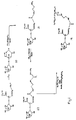
- Figures 1 and 2 are a schematic flow chart illustrating the synthesis of the telomers of Examples 19 and 21, respectively.
- Trisacryl (1.75 g, 10 ⁇ 2M), perfluoro 1H,1H,2H,2H octanethiol (3.8 g) and AIBN (100 mg) are dissolved in 30 mL of methanol and brought to ebullition under nitrogen atmosphere for 12 h. The solution is then concentrated under reduced pressure. The residue is chromatographed over silica column (eluent AcOEt then AcOEt/MeOH 8/2). 2.33 g (yield 42%) of monoadduct and 1.92 g of a mixture of telomers with higher DPn (di- and triadduct) are isolated.
- ⁇ ppm, DMSO d6 7,3(s,1H,NH); 4,75(t, 3H, OH); 3,59(d, 6H, CH2); 2,78(m, 4H, (CH2)2 ⁇ to the sulfur); 2,45(m, 4H, (CH2)2.
- ⁇ 13C RMN( ⁇ ppm, DMSO d6) 171,82 (CO); 120-100 (C RF); 62,45 (C(CH2OH)3); 60,7(3 CH 2OH); 36,11 (CO CH 2); 31,12 (t, C H2 ⁇ to C6F13); 27,11 ( C H2S); 21,76 (t, CH2 ⁇ to C6F13).
- the preparation procedure for the monomer is analogous to that of the trisacryl monomer (Example 1-A).
- the white precipitate obtained is filtered, dissolved in 100 mL of anhydrous ether, stirred at room temperature and again filtered. After washing with anhydrous ether, the telomers are dried under reduced pressure, then dried. Telomer 15 (3.91 g; yield 55%) is thus recovered.
- telomers of acryloylglucosamine are prepared according to the above protocol.
- telomer 19 ( Figure 1), i.e., the products corresponding to formula (I) in which R2 is the group -(CH2)2-NH-C(O)-(CHOH)2-CH(CHOH-CH2OH)-glucosyl.
- Lactobionolactone 20 is obtained quantitatively from lactobionic acid by dissolution then repeated concentration under reduced pressure of lactobionic acid in 2-methoxy ethanol. Slow addition of lactobionolactone in a large excess (5/1) of ethylenediamine in solution in methanol gives lactobionamide 21 in quantitative yield after 2 h of ebullition. The crystallized product obtained is then condensed with acryloyl chloride in a aqueous NaOH solution giving product 22 . After purification by chromatography over silica column (eluent AcOEt/MeOH/H2O), telomerization is realized in the usual conditions in a mixture of methanol and methoxy ethanol under nitrogen atmosphere.
- the hemolytic activity of products 3 , 9 , and 15 is determined by adding 2 mL of a solution of 3 at 200 g/L in physiological water to an equal volume of a suspension of human erythrocytes at 1% in an isotonic phosphate buffer.
- ⁇ s The surface tension, ⁇ s , of an aqueous solution of telomer 9 was determined at different concentrations, as was the interfacial tension, ⁇ i , between this solution and two fluorocarbons: F-decalin and F-octyl bromide (Table VI).
- Table VI Surface activity of Perfluoroalkylated Telomer 9 compared with that of Pluronic F-68 Product Concentration (g/l) ⁇ s a ⁇ i /FDC a ⁇ i /PFOB a 9 1 35,5 14,1 11,8 0,1 32,2 12,9 10,9 0,01 39,3 22,8 20,1
- Perfluorodecalin (FDC) emulsions are prepared either by sonication or by mechanical microfluidization under high pressure. Various formulations have been prepared. The emulsions obtained were compared with FDC/Pluronic F-68 emulsions.
- Sonication is effected by a BRANSON B 30 sonicator in pulsed mode with a 3 mm diameter probe. The probe is placed at the interface. The aging of the emulsion is followed by measuring the average size of the particles by the photosedimentation method at J0, J3, J7, etc. at 4 , 25 and 50 ⁇ 1°C.
- the sonication time needed is only half of that required for an emulsion prepared with Pluronic F-68.
- the emulsion prepared with product 9 presents, after 3 months, a relative percentage of growth of the average size of the particles 8 times smaller at 4°C and 5 times smaller at 25°C compared to the reference sample (FDC/Pluronic F-68, 50/3% p.v).
- this emulsion remains stable after 70 days at 50°C, while under the same conditions the emulsion prepared with Pluronic F-68 is broken after 55 days (see Table VIII).
- Emulsions prepared by microfluidization were prepared by microfluidization
- the emulsification is prepared in two steps:
Landscapes
- Health & Medical Sciences (AREA)
- Life Sciences & Earth Sciences (AREA)
- Chemical & Material Sciences (AREA)
- Animal Behavior & Ethology (AREA)
- Veterinary Medicine (AREA)
- Public Health (AREA)
- General Health & Medical Sciences (AREA)
- Epidemiology (AREA)
- Medicinal Chemistry (AREA)
- Birds (AREA)
- Organic Chemistry (AREA)
- Pharmacology & Pharmacy (AREA)
- Engineering & Computer Science (AREA)
- Bioinformatics & Cheminformatics (AREA)
- Chemical Kinetics & Catalysis (AREA)
- Polymers & Plastics (AREA)
- Molecular Biology (AREA)
- Dispersion Chemistry (AREA)
- Dermatology (AREA)
- Hematology (AREA)
- Inorganic Chemistry (AREA)
- Emergency Medicine (AREA)
- Materials Engineering (AREA)
- Biophysics (AREA)
- Organic Low-Molecular-Weight Compounds And Preparation Thereof (AREA)
- Medicinal Preparation (AREA)
- Steroid Compounds (AREA)
- Medicines Containing Antibodies Or Antigens For Use As Internal Diagnostic Agents (AREA)
- Emulsifying, Dispersing, Foam-Producing Or Wetting Agents (AREA)
- Colloid Chemistry (AREA)
- Addition Polymer Or Copolymer, Post-Treatments, Or Chemical Modifications (AREA)
- Peptides Or Proteins (AREA)
- Polysaccharides And Polysaccharide Derivatives (AREA)
Abstract
Description
- The present invention relates to new amphiphilic fluorine derivatives having telomeric structures, methods for their preparation, and biomedical applications.
- It relates particularly to the synthesis of biocompatible fluorinated amphiphilic derivatives useful in formulations for pharmaceutical, cosmetic, veterinary or phytosanitary use, or in biology and medicine, and other uses, for example, as prodrugs, or in preparations capable of acting as gas carriers for biomedical use, as contrast agents, or media for the transport and targeting of drugs.
- It is well known that cells of human tissues and organs die when they are deprived of the oxygen supplied by blood, as in hemorrhages, severe anemia, or cerebral or myocardial ischemia. Until now, the only efficient way of replacing the necessary oxygen was by blood transfusion; however, transfusion is inappropriate in some pathological or clinical cases; moreover, it almost always presents certain immunological and infectious risks. Research was therefore undertaken aiming at the preparation of satisfactory in vivo oxygen carriers which could not only replace the erythrocyte function to transport and deliver oxygen, but also be used in situations where the administration of red blood cells is ineffective or contra-indicated.
- Substances capable of carrying oxygen in a dissolved form are known: they are the fluorocarbons, which are the best-known solvents of gases and also among the most inert compounds that can be prepared. This type of product is described by J.G. Riess and M. Le Blanc, in "Blood Substitutes: Preparation, Physiology and Medical Applications," Chap. 5 (K.C. Lowe, Ed., Ellis Horwood, Cichester, 1988), and by J.G. Riess in "Orientations Actuelles en Matière de Transporteurs d'Oxygène in vivo, les Emulsions de Fluorocarbures," J. Chim. Phys. 84(9), 1119-1127 (1987). Some fluorocarbon preparations can simultaneously fulfill yet other functions, e.g. as contrast agents in diagnosis or as drug carriers. However, the intravascular use of fluorocarbons requires that they be prepared in a dispersed form, for example, an emulsion, because fluorocarbons are not water-soluble. Such an emulsion usually comprises a fluorocarbon-based oxygen-carrier, one or more surfactants, water, and other ingredients, such as inorganic salts, to adjust the pH and the osmotic and oncotic pressures. Also the emulsion must comprise cryoprotectors if the emulsion is to be frozen. Other additives, much as nutritive agents. vitamins, steroids, prostaglandins, antibiotics, and thrombolytic agents may be required to meet specific therapeutic requirements.
- In such emulsions, the fluorocarbons are dispersed in the form of droplets of about 0.2µm, by means of one or more surfactants. Different emulsions have been developed such as Fluosol-DA® or Fluosol, developed by the Green Cross Corporation in Japan, and the more concentrated fluorocarbon emulsions developed by Alliance Pharmaceutical, Inc. and described by C. Long, D. Long, J.G. Riess, R. Follana, A. Burgan and R. Mattrey in: "Blood Substitutes," edited by T.M.S. Chang and R.P. Geyer (Marcel Dekker, Inc., New York, 1989), pp. 441-442. Certain disadvantages and/or limitations in emulsions of this type are described by J.G. Riess, C. Arlen, J. Greiner, M. Le Blanc, A. Manfredi, S. Pace, C. Varescon and L. Zarif, in: "Blood Substitutes," edited by T.M.S. Chang and R.P. Geyer (Marcel Dekker Inc., New York, 1989), pp. 421-430; and by J.G. Riess in Curr. Surg. 45, 365 (1988).
- It is a fact that the surfactants used are polydisperse, and badly defined. Moreover, one of them, Pluronic F-68 the main surfactant in Fluosol-DA, causes a transitory anaphylactic reaction in certain patients. Further, the stability of Fluosol-type Pluronic F-68-based emulsions is limited; they must be frozen for storage and as manufactured, are not ready for use. Three preparations, the mother emulsion and two annex solutions, must be mixed before the emulsion is suitable for administration.
- More generally, the properties and/or biocompatibility of the surfactants known and used so far are still insufficient to allow mastery of these emulsions, notably of their intravascular persistence and stability, and adaptation of their characteristics to a specific therapy. Still more generally, there is a scarcity of substances that are at the same time strongly amphiphilic and surfactive, biocompatible, and industrially feasible, while available at a reasonable cost.
- Research has therefore been directed towards developing new surfactants or cosurfactants that are biocompatible and better adapted to the emulsification of fluorocarbons than those in use at present. The fluorinated derivatives of the invention improve such properties as described in US 4,985,550 (7/28/1987) and US 542,227 (6/22/1990).
- Other fluorinated compounds capable of improving the surfactive properties of fluorinated surfactants are described in US-A-4 089 804. These compounds are formulated as (RF)nTmZ in which RF is a perfluoroalkyl chain, n = 1 or 2, T is an alkylene, haloalkylene, arylene, alkylenethioalkylene, alkyleneoxyalkylene or alkyleneiminoaklylene chain, m = 0, 1 or 2, and Z is a neutral or polar group ouch as CO-NH-CH₂OH.
- These fluorinated compounds, in association with fluorinated surfactants, can find many applications, but their biocompatibility and toxicity is not assured. Moreover, they must always be used in conjunction with fluorinated surfactants.
- Oligomers with perfluoroalkylated terminal groups are also described in EP - A-0 019 584, which can be used as surfactants and as additives in many products, in particular in extinctor foams. These too, then, are not destined for nor adapted to pharmaceutical use.
- The present invention concerns new fluorinated compounds for biomedical use which are biologically compatible and non-toxic, with a very high compatibility with red blood cells and which can be used alone, without the conjunction of other surfactants, or with other surfactants that are not necessarily fluorinated.
- These fluorinated compounds are formulated:

in which - RF
- is a fluorinated radical of 2-18, preferably 4 to 8, carbon atoms;
- X
- is an alkylene or fluoroalkylene, linear or branched radical of 1 to 24 carbon atoms which may bear in its chain one or several groups of formulas-CON(R')-, -SO₂N(R')-, -S-, -O- or -N(R')- in which R' is H or a C1 to C24 alkyl or fluoroalkyl radical; and when X is branched, a part of X can be RF;
- R¹
- is H or CH₃;
- R²
- is chosen from among the radicals of formula -(CH₂)p-C(CH₂OH)₃, wherein p equals 0 or is a whole number from 1 to 3, and the radicals of formula -Z-R⁴,
- R³
- represents a radical obtained from an amino acid or a peptide by removing a hydrogen atom from the NH₂ group of the amino acid or the peptide;
- n
- is a number from 1 to 50 providing R² represents -(CH₂)p-C(CH₂OH)₃ when n = 1; and
- m
- equals 0 or is a number from 1 to 200, provided 0.2 ≦ n/n+m ≦1.
- The invention also provides a fluorinated compound having the formula

wherein x, y, and z are molar concentrations; and F is fluorescein. - These fluorinated compounds are distinct in bearing both a highly fluorinated, "fluorophilic" end (RF), which has a strong affinity for highly fluorinated or perfluorinated phases, and one or more juxtaposed groups (R²) which are strongly hydrophilic, since they possess several hydroxyl radicals, as for example, R² representing C(CH₂OH)₃ or a radical deriving from an ose or an oside.
- With these hydroxylated groups, compounds can be obtained presenting both excellent biocompatibility and good surfactive properties, and which are easy to synthesize on an industrial scale.
- Thus the fluorinated compounds of the invention are different from those described in documents US-A- 4 089 804 and EP-A- 0 019 584.
- Indeed, one of the aspects which distinguish the compounds described in these documents from those of the present invention is that the former do not bear juxtaposed highly hydrophilic groups such as -C(CH₂OH)₃.
- Moreover, the chemical structure of the compounds of these documents was not specifically developed for biomedical use, as is the case of the invention. Indeed, the compounds of US-A-4 089 804 can be used in such diverse fields as the plastic, rubber, oil, textile, leather, paint, pigment, metal, etc., agriculture and photography industries. The compounds of EP-A- 0 019 584 were developed particularly for extinctor foams and for applications requiring dampening and spreading of improved liquids over substrates difficult to moisten or oiled by oil or silicones.
- Thus, neither of these documents suggests choosing the hydrophilic, biocompatible end R² of the invention nor describing any biomedical applications.
- According to the invention, the fluorinated radical RF used is highly fluorinated or perfluorinated, linear or ramified, and may bear in its chain one or more oxygen atoms; certain fluorine atoms of the perfluorinated radical may be replaced by one or more substituents chosen from among the atoms of hydrogen, chlorine or bromine. In this last case, it is preferable that the number of fluorine atoms of the RF radical be higher than 7, and the substitution is preferably performed at the level of the RF-X bond.
- The following radicals are cited as examples of fluorinated RF radicals that may be used in the invention:
F(CF₂)t- with 4≦t≦18;
(CF₃)₂CF(CF₂)v - with 1≦v≦8;
CF₃-[CF₂CF(CF₃)]w - with 1≦w≦4;
C₂F₅-[CF₂CF(CF₃)]w - with 1≦w≦4;
(CF₃)₂-[CF-CF₂CF(CF₃)]w - with 1≦w≦4;
in which 1 ≦x ≦6 and R¹F and R²F, which are identical or different, are chosen from among CF₃-, C₂F₅, n-C₃F₇-, and CF₃CF₂CF(CF₃)- or in which R¹F and R²F together form a bivalent radical chosen from among - CF₂(CF₂)₂CF₂- and-CF₂(CF₂)₃CF₂-; CF₃(CF₂)₂O-(CF₂CF₂O)xa-CF₂- with 0 ≦xa ≦6; and
CF₃(CF₂)₂O-[CF(CF₃)(CF₂O)xa-CF(CF₃)- with 0 ≦xa ≦6. - It is preferable to use a linear fluorinated radical of formula F-(CF₂)t in which t is an even number from 4 to 18.
- In the fluorinated compounds of formula (I) of the invention, X is a linear or ramified alkylene radical of 1 to 12 carbon atoms which may bear various groups in its chain.
For example, X can represent:
-(CH₂)y with 1≦y≦12
-(CH₂)y1-CON(R')-(CH₂)y2 with 1≦y¹≦11 and 1≦y²≦11
-(CH₂)y1-SO₂N(R')-(CH₂)y2 with 1≦y¹≦11 and 1≦y²≦11
-(CH₂)y1-S-(CH₂)y2 with 1≦y1≦¹1 and 1≦y²≦11
-(CH₂)y1-N(R')-(CH₂)y2 with 1≦y¹≦11 and 1≦y²≦11
-[CH₂-CH₂-O]y3 - CH₂ - CH₂- with 1≦y³≦6

with 1≦y³≦6
-CHR⁴ with R⁴ an alkyl radical of 1 to 12 carbon atoms which can comprise one or several double or triple bonds, conjugated or not. - The R² radicals used in the invention which, in particular, confer better surfactive properties on the fluorinated compounds, are those bearing several hydroxyl groups. Such are the trihydroxymethyl (Tris) radical or those derived from oses, osides or their derivatives, for example their amine derivatives.
- Examples of such radicals are those derived from glucose, galactose, mannose, ribose, fructose, maltose, lactose, saccharose, glucosamine, etc.
- A radical of R² derived from oses, osides or their derivatives can be attached to the NH group, either directly or by a bivalent radical of formula -NH-,-(CH₂)r-N(R¹)- or -(CH₂)r-O- in which r = 2, 3, or 4 and R¹ is H or CH₃.
- Examples of radicals that can be used in the invention are: glucosyl, galactosyl and glucaminyl radicals, and radicals of formula -Z-R⁴ in which Z is as defined above and R⁴ is the lactobionyl, maltosyl or cellobiosyl radical.
- According to the invention, when n≧1, the R² radicals of the various moieties may be different.
- The compound of the invention may also comprise moieties having the formula:

which make it possible to confer other properties on the fluorinated compound, for example the ability to link a drug by a chemical bond to the terminal acid group COOH of the R³ radical, whereby the drug can be released afterwards in a living organism by cleavage of the peptide bond. - With this aim, the R³ group is derived from an aminoacid or a peptide.
- When R³ derives from an amino acid, its formula is -NH-C(R⁵)(R⁶)-COOH in which R⁵ and R⁶ correspond to the lateral chain of the amino acid or to a hydrogen atom.
- The amino acids used are preferably natural ones such as alanine, valine, leucine, isoleucine, serine, threonine, cysteine, methionine, aspartic acid, glutamic acid, asparagine, glutamine, lysine, glycine, arginine, citrulline, ornithine, phenylalanine, tyrosine, tryptophane, histidine, proline and hydroxyproline. For example, R³ can be a radical derived from glycine or lysine.
- According to the invention, R³ can also be derived from a peptide bearing several identical or different aminoacids.
As an example of peptides, one can cite that of formula:
In the fluorinated compounds of the invention, the number m of moieties bearing the R³ radical derived from an amino acid or a peptide can be from 1 to 200, but it is chosen as a function of n to fulfill the following condition:
- When the fluorinated compounds are not intended to be used as a support or vehicle of drugs, m preferably equals 0.
- According to the invention, the number n of moieties bearing the R² radical that carries hydroxyl groups can be from 1 to 50. It is preferably from 1 to 20.
- According to a preferred method of preparation of the invention, the fluorinated compound can be formulated:

wherein t is an even number from 4 to 10, R¹ is H or CH₃, and n is a number from 1 to 30. - The invention also includes amphiphilic fluorinated surfactants, having the structure of the example below, wherein X is a branched alkylenic radical bearing an RF group on one or both branches:

- The fluorinated compounds of the invention can be prepared by a combination of classical procedures.
- In the case of fluorinated compounds corresponding to the above formula (I), in which m equals 0, these compounds can be prepared by telomerizing monomers of formula:
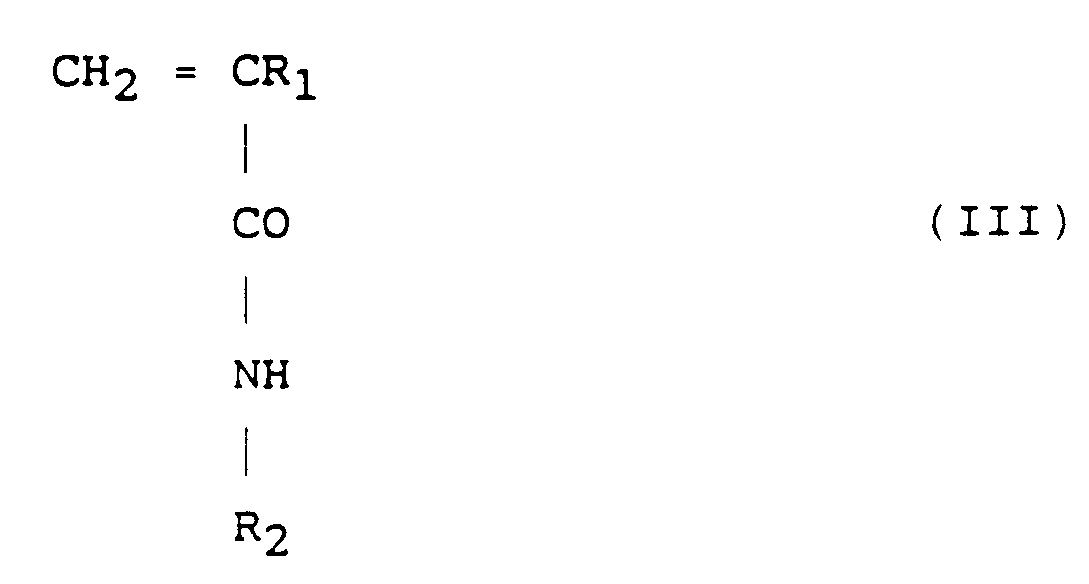
in which R¹ and R² are as defined above, in the presence of a telogen of formula:
RF-X-SH (IV)
wherein RF and X are as defined above. - This procedure corresponds to a radicalar telomerization, and consists in the polymerization of monomers of formula (III) in the presence of a strong chain-transfer agent constituted of RF-X-SH which limits the propagation of the growing macroradical. To the three classical polymerization steps is added the transfer reaction.
- In the presence of an efficient transfer agent such as RF-X-SH, the transfer reaction becomes largely preponderant. The size of the telomer so obtained depends on:
- 1) the constant of transfer (Ct) of the telogen RF-X-SH to the monomer, which is equal to ktr/kp, i.e., to the ratio of the rate of transfer, ktr, and of the rate of propagation, kp, of the monomer. Indeed, the instantaneous degree of polymerization (DPn) can be deduced from the equation of Mayo, which gives:

- 2) The initial concentrations in telogen and monomer, thus the relation R₀ which equals [M]₀/[RF-X-SH]₀ where [M]₀ and [RF-X-SH] represent respectively the initial molar concentrations in monomer and in telogen, and
- 3) to a lesser degree on the concentration in initiator I₂.
- In the case of perfluorinated thiols, the telogenic agents of the invention, experience shows that their transfer constant (Ct) with respect to the acrylamide-type monomer is close to 0.9. In these conditions, the ratio R₀ of the initial molar concentrations allows the prediction of the DPn of the telomers synthesized thus.
- When the base monomer is tris-hydroxymethylacryl amidomethane (TAC) or tris-hydroxymethylmethacrylamidomethane (MTAC), and when the polymerization initiator is α,α'-azo-bis-isobutyronitrile (AIBN), previously recrystallized twice in ethanol, the concentrations are calculated in all cases so that C₀, the initial ratio of the molar concentration of initiator over the molar concentration of monomer is between 10⁻² and 5 x 10⁻².
- The telomerization reaction can be realized in an organic solvent such as methanol or dimethylformamide (DMF) under nitrogen atmosphere. When dimethylformamide is used, the temperature can be maintained at 80°C.
- After the reaction, the solvent can be evaporated and the product obtained recuperated by classical methods, for example by precipitation.
- When the starting monomer is MTAC, as its reactivity is weaker than that of TAC, the formation of weak DPn telomers is favored, to the detriment of heavier compounds. To avoid this problem, the telogen is added slowly during the telomerization reaction, or the reactants can be added very slowly throughout the progress of the reaction.
- To obtain fluorinated compounds of formula (I) in which n=1, an R₀ ratio of 1 is used, and they are then purified by chromatography over a silica column.
- In the case of fluorinated compounds of formula (II), the above procedure corresponds to the following scheme:

The fluorinated thiols used as telogens in the procedure of the invention are commercial products, or can be prepared by classical methods, for example by successively treating their halogen (bromine or iodine) homologues with urea and sodium metabisulfite. - The monomers of formula (III) used as starting material in the procedure of the invention can be prepared by classical procedures, for example by reaction of an acrylic or methacrylic acid halogenure such as acryloyl or methacryloyl chloride with an amine of formula R²-NH₂.
- When R² is the ZR⁴ radical with Z representing-(CH₂)r-N(R'), for example - (CH₂)₂NH-, one can start with an ose or an oside bearing a COOH or lactone group which is made to react with a diamine of formula H₂N-(CH₂)r-NH₂ in the presence or absence of dicyclohexyl carbodiimide.
- When Z represents NH, hydrazine is used instead of diamine.
- When the fluorinated compounds of the invention correspond to the above formula (I) in which m is a whole number from 1 to 200, these compounds can be prepared by an analogous procedure, i.e., by telomerization of the monomers corresponding to the formulas:

in which R¹, R² and R³ are as defined above, in the presence of a telogen of formula RF-X-SH in which RF and X are as defined above. - In this case, the respective concentrations in monomers of formula (III) and formula (V) are chosen as a function of the number of n and m moieties to be included in the fluorinated compound.
- The starting monomers corresponding to the formula (V) are commercial products or can be prepared by classical procedures, by the reaction of acryloyl chloride or methacryloyl with the corresponding aminoacid or peptide.
- The fluorinated compounds of the invention are advantageous for many applications, as they are strongly amphiphilic. In particular, they are strong surfactants, usually soluble in water, and biocompatible; for example, with no detectable hemolytic action on human red cells, even at concentrations higher than 200 g/L and with a tolerance for some derivatives higher than 4000 mg/kg body weight after intravenous injection in mice. Moreover, drugs or an element or fragment that can serve as marker, can be fixed to them by a chemical bond.
- The present invention aims also at preparations for biomedical use having at least one fluorinated compound of formula (I) of the invention. These preparations can be in the form of solutions (including micellar solutions), dispersions such as liposomal formulations, gels, emulsions, and microemulsions, in water or any other appropriate solvent. In these preparations, the fluorinated compound of the invention can play the part of surfactant, co-surfactant or dispersing agent, or can serve as a vehicle to solubilize or disperse an active principle in the preparation.
- Thus the compounds of the invention can be used in pharmacy for the preparation of medicaments in which they play the part of solubilizing, dispersing, or emulsifying agents, for the preparation of solutions or emulsions, administrable orally or parenterally, for example, by injection.
- They can be used as surfactants in preparations for pharmaceutical, veterinary or phytosanitary use, and for biological and medical use, containing, in particular fluorocarbon-type oxygen carriers, whose applications include use a blood substitutes, or more generally, for in vivo administration of oxygen.
- They can also be used in preparations intended to facilitate diagnosis, in particular by radiography, sonography or nuclear magnetic resonance imaging, or by attaching an appropriate marker or tracer (fluorescein, radioactive markers, for example). In this case, the preparations can be used as contrast agents or markers.
- Indeed, the fluorinated compounds of the invention are stronger surfactants than Pluronic F-68, which is presently used in the first commercialized fluorocarbon emulsion for intravascular use, Fluosol-DA (Green Cross Corp., Osaka, Japan).
- In these preparations the fluorocarbons or highly fluorinated compounds that serve for the transport of gases such as oxygen can be, for example, linear or cyclic compounds, preferably with molecular weights between 400 and 700, and can be chosen, for example, from the following compounds:
The bis(F-alkyl)-1,2-ethenes and more particularly the bis(F-butyl)-1,2-ethenes, the F-isopropyl-1-F-hexyl-2-ethenes and the bis(F-hexyl)-1,2-ethenes, perfluorodecalin, perfluoromethyldecalin, perfluorodimethyldecalin, perfluoromethyl- and dimethyladamantanes, perfluorodi- and trimethylbicyclo(3,3,1)nonanes and their homologues, the ethers of formula: (CF₃)₂CFO(CF₂CF₂)₂OCF(CF₃)₂, (CF₃)₂CFO(CF₂CF₂)₃OCF(CF₃)₂, (CF₃)₂CFO(CF₂CF₂)₂F, (CF₃)₂CFO(CF₂CF₂)₃F, F[CF(CF₃)CF₂O]₂CHFCF₃, F[CF(CF₃)CF₂O]₃CHFCF₃, (C₆F₁3)₂O, (C₄F₉)₂O, the amines N(C₃F₇)₃, perfluoromethylquinolidines and perfluoromethylisoquinolidines; halogenated derivatives C₆F₁₃Br, C₈F₁₇Br (PFOB), C₆F₁₃CBr₂CH₂Br, 1-bromo 4-perfluoroisopropyl cyclohexane, C₈F₁₆Br₂. - These highly fluorinated compounds can be used alone or in mixtures. An embodiment preferably contains such compounds in a concentration of from about 0.01 to 30% w/v, and a fluorinated or hydrocarbonated oil phase in a concentration of from about 10 to 125% w/v.
- In these preparations, solution, emulsions, gels, dispersions, or microemulsions, containing one or several of the highly fluorinated compounds mentioned above, the fluorinated compounds of the invention can be used by associating them with one or several other amphiphilic compounds such as fluorinated or non-fluorinated surfactants, Lecithin is an example of a non-fluorinated surfactant, as is polyoxyethylene polyoxypropylene copolymer.
- The preparations, solutions, gels, emulsions, dispersions or microemulsions of the invention are specifically intended to serve as gas carriers, in particular of oxygen, in living medium, for application in human and veterinary medicine and in biology, specifically as blood substitutes, contrast agents for diagnosis, media for treatment of cerebral or cardiac ischemia, for perioperative hemodilution, for the preservation of organs, tissues, embryos, semen, as media to be used in cardiovascular therapy and surgery, for example as cardioplegic or reperfusion solutions or in coronary angioplasty, or as an adjuvant in cancer radiotherapy or chemotherapy, or as drug carriers.
- Thus in another aspect the invention provides a formulation containing at least one amphiphilic fluorinated compound formed by binding chemically a compound according to the first aspect with a biologically active substance, particularly a medicament, or an element or fragment that can serve as a marker. Such a formulation may be in the form of a solution, gel, dispersion, including liposomal form, emulsion, or microemulsion. Preferably the amphiphilic fluorinated compound is incorporated into lipid vesicles or liposomes comprising natural or synthetic lipids. A formulation containing a compound according to the first aspect of the invention (as such, or bound to a biologically active substance) may be suitable for use as a medicament, or for the transport of medicaments or as a marker.
- Other characteristics and advantages of the invention are more clearly demonstrated by the following examples.
- Figures 1 and 2 are a schematic flow chart illustrating the synthesis of the telomers of Examples 19 and 21, respectively.
- The telomers cited in the following examples correspond in general to the following definition and to Figures 1 and 2:

telomer 1 t = 6 n = 6,6 2 6 4,4 3 6 5,4 4 6 5,8 5 6 10 6 6 11,7 7 8 3,5 8 8 3,75 9 8 5,75 10 8 5,8 11 8 8,2 12 8 12,2 13 10 6,8 
monoadduct 14 t = 6 n = 1 
telomer 15 t = 8 n = 5 16 8 5,2 17 6 4,5 
telomer 18 t = 8 n = 5 - 30 g of trihydroxymethylacrylamidomethane (0.25M) are dissolved in 100 mL of a 0.1M NaOH solution in the presence of 200 mg of NaNO₂ (inhibitor of polymerization).
- The vigorously stirred solution is cooled under nitrogen at 0°C. Then acryloyl chloride (34 mL; 0.375M) is added dropwise over a period of three hours. During this addition the pH of the solution is maintained at 11-12 by addition of NaOH solution (3M).
- After 3 h stirring at 0°C, the reaction is continued for 12 h at room temperature, the pH being controlled regularly and maintained at 11-12. The solution is then acidified to pH 3 to 4 with HCl 4N, extracted with ether, and concentrated to a volume of 50 mL. The liquor is poured into 300 mL of ethanol, in which the greater part of the salts precipitate. The filtrates are then concentrated and the residue is flash-chromatographed over a short silica column (eluent AcOEt/MeOH 8/2).
- The trisacryl crystallises in methanol. 29 g of trihydroxymethylacrylamidomethane are recovered (yield 67%)M.P. 140°C (Lit.: 131-133°C). The ¹³C and ¹H NMR spectra conform to the expected structure.
- Into 100 mL of methanol, 8.75 g (0.05M) of the trisacryl monomer are introduced, and the solution is brought to 40-50°C. When the trisacryl is entirely dissolved, 3.8 g of perfluoro 1H,1H,2H,2H octanethiol (0.01M, i.e., R₀=5) and 87 mg of AIBN are introduced. The solution is then brought to reflux under nitrogen atmosphere. The progress of the reaction is followed by CCM (rf trisacryl=0.75, eluent AcOEt/MeOH). After 12 h reaction, additional AIBN (73 mg) is added. After 24 h of ebullition, the trisacryl has entirely disappeared. The solvent is evaporated under reduced pressure, until a volume of 30 mL is obtained. The liquor is poured dropwise into 200 mL of anhydrous ether under vigorous stirring.
- The white precipitate obtained is filtered, 200 mL of ether are added and the mixture is stirred at room temperature and again filtered. After washing with anhydrous ether, the telomers are dried under reduced pressure. 10 g of product 1 (yield 80%) are recovered.
- After drying or lyophilization, ¹H NMR in DMSO d6 analysis of the telomer gives the DPn of the macromolecule, by comparison of the area of the signal due to the methylene in 1 of the octanoyl chain at δ=2.75 with those due to the amide protons NH at δ=7.4.

Elemental analysis: %C 42.18; %H 5.81; %N 6.34; %F 16.77.
The elemental analysis of the fluorine also gives the DPn:
-
- In Table 1: MTrs, MC10F21C2H4SH, MC8F17C2H4SH or MC6F13C2H4SH, MAIBN, MTelo represent respectively the weights in grams of the trisacryl, perfluoro 1H,1H,2H,2H, dodeca, deca or octanethiol, α,α' azobis isobutyronitrile reactants and of telomers obtained. VCH₃OH represents the volume of methanol employed in the reaction.
-
Table I Preparation Conditions for Products 1-13: Product MTrs MC₆F₁₃ MC₈F₁₇ MC₁₀F₂₁ Ro MAIBN VCH₃OH MTelo Rdt DPn 1 8,75 3,8 5 0,16 100 10 80 6,6 2 3,5 2,17 3,5 0,16 50 3,55 61 4,4 3 3,5 1,9 4 0,16 50 3,94 73 5,4 4 11 4,77 5 0,2 100 12,5 79,5 5,8 5 3,5 1,27 6 0,16 50 3,86 81 10 6 1,75 0,63 6 0,06 30 1,98 83 11,7 7 8,75 8 3 0,23 100 11,05 66 3,5 8 2,18 3 2 0,115 50 3,07 59 3,75 9 4,37 2,99 4,0 0,115 50 5,2 71 5,75 10 11 6,03 5 0,16 100 13,2 77,5 5,8 11 4,37 3 5,5 0,05 50 5,74 78 8,2 12 2,18 1 6 0,115 50 2,66 82 12,2 13 14 7,73 6 0,2 100 18,7 86 6,8 - Trisacryl (1.75 g, 10⁻²M), perfluoro 1H,1H,2H,2H octanethiol (3.8 g) and AIBN (100 mg) are dissolved in 30 mL of methanol and brought to ebullition under nitrogen atmosphere for 12 h. The solution is then concentrated under reduced pressure. The residue is chromatographed over silica column (eluent AcOEt then AcOEt/MeOH 8/2). 2.33 g (yield 42%) of monoadduct and 1.92 g of a mixture of telomers with higher DPn (di- and triadduct) are isolated. The monoadduct (M.P. = 100°C- Hex/AcOEt) is soluble in organic solvents such as AcOEt, CH₃CN, CH₃OH, CHCl₃, insoluble in water.
- -¹H RMN (δ ppm, DMSO d6): 7,3(s,1H,NH); 4,75(t, 3H, OH); 3,59(d, 6H, CH₂); 2,78(m, 4H, (CH₂)₂ α to the sulfur); 2,45(m, 4H, (CH₂)₂.
⁻13C RMN(δ ppm, DMSO d6): 171,82 (CO); 120-100 (C RF); 62,45 (C(CH₂OH)₃); 60,7(3CH₂OH); 36,11 (COCH₂); 31,12 (t, CH₂ α to C₆F₁₃); 27,11 (CH₂S); 21,76 (t, CH₂ β to C₆F₁₃). - The preparation procedure for the monomer is analogous to that of the trisacryl monomer (Example 1-A). The product crystallizes in methanol (M.P.=98°C; Lit. 93-94°C). The yield is 45%.
-
- Into 50 mL of methanol, MTAC (4.72g; 0.025M) is introduced, and the solution is brought to ebullition. Perfluoro 1H,1H,2H,2H decanethiol (400 mg) in methanol (10 mL), then AIBN (50 mg) are added. After 1 hr reaction, perfluoro 1H,1H,2H,2H decanethiol (2g) and AIBN (100 mg) in methanol (20 mL) are added in small fractions. The solution is then maintained at ebullition until the monomer has totally disappeared (24 h). The solvent is then evaporated to a liquor. This is poured dropwise into 200 mL of anhydrous ether. The white precipitate obtained is filtered, dissolved in 100 mL of anhydrous ether, stirred at room temperature and again filtered. After washing with anhydrous ether, the telomers are dried under reduced pressure, then dried. Telomer 15 (3.91 g; yield 55%) is thus recovered.
- ¹H NMR analysis in DMSO d⁶ in the same conditions as above given a DPn of 5.
- Evaporation of the precipitation solvents gives a mixture of telomers of low DPn rich in monoadduct (Table II).
- The method described for preparing compound 15, with variation of the Ro ratio gives products 16 and 17 (Table II).
Table II Preparation conditions for products 15-17 Product MTAC MC₈F₁₇C₂H₄ MC₆F₁₃C₂H₄ Ro MAIBN VCH₃OH MTelo Rdlt DPn 15 4,72 2,4 5 0,15 80 3,91 55 5 16 9,45 4,8 5 0,2 110 8,2 57 52 17 9,45 3,8 4,5 0,2 120 6,9 52 45 - The preparation uses the techniques proposed by J. KLEIN and D. HERZOG (Makromol. Chem. 188, 1217 (1987)).
- The telomers of acryloylglucosamine are prepared according to the above protocol.
- Acryloylglucosamine (2.3 g; 0.01M) is introduced into 75 mL of anhydrous methanol. The vigorously stirred solution is brought to 40-50°C under nitrogen atmosphere. At total dissolution, perfluoro 1H,1H,2H,2H (1.05 g), decane thiol (Ro = 4.6) and AIBN (120 mg) are added, and the solution is brought to ebullition. The progress of the reaction is followed by CCM. After 8 h, AIBN (50 mg) is again added. After 24 h of ebullition the reaction is complete. The solution is concentrated to half under reduced pressure, then poured dropwise into 250 mL of ether. After 1/2 h stirring, the precipitate is filtered, dissolved in 200 mL of ether, stirred again for 1/2 h, then filtered and dried under reduced pressure. After drying, the product 18 (2.7 g; yield 80%) is recovered. The DPn is shown by ¹H NMR in DMSO d⁶ by comparison of the areas of the signals due to CH₂S of the perfluorinated chain at δ=2.7 with those of the NH (δ=7.5) or anomeric OH (δ=6.5) of the n glucosamide moieties.

The water-solubility of the telomer obtained is higher than 200 g/L.
- This example illustrates the preparation of telomer 19 (Figure 1), i.e., the products corresponding to formula (I) in which R₂ is the group -(CH₂)₂-NH-C(O)-(CHOH)₂-CH(CHOH-CH₂OH)-glucosyl.
-
Lactobionolactone 20 is obtained quantitatively from lactobionic acid by dissolution then repeated concentration under reduced pressure of lactobionic acid in 2-methoxy ethanol. Slow addition of lactobionolactone in a large excess (5/1) of ethylenediamine in solution in methanol giveslactobionamide 21 in quantitative yield after 2 h of ebullition. The crystallized product obtained is then condensed with acryloyl chloride in a aqueous NaOHsolution giving product 22. After purification by chromatography over silica column (eluent AcOEt/MeOH/H₂O), telomerization is realized in the usual conditions in a mixture of methanol and methoxy ethanol under nitrogen atmosphere. - When hydrazine is used in the place of ethylenediamine the reaction takes place in the same conditions.
-

x = 0.33, y = 0.35, z = 6.3, Flu= fluorescein - Into a 250 mL reactor are introduced under inert atmosphere 4 g (13.5 mM) of BocLys(AcOH)OMe, 100 mL of CH₂Cl₂ and 5 mL of diethylisopropylamine. To this solution, under vigorous stirring and cooling to 0°C, acryloyl chloride (1.3 mL, 20.3 mM), diluted in 10 mL of CH₂Cl₂, is added dropwise. After 4 h reaction at 0°, the solution is diluted with 50 mL of CH₂Cl₂, washed with 100 mL of HCl 1M, H₂O, and dried over sodium sulfate. The solvents are evaporated and the oily residue chromatographed over silica column (eluent AcOEt/hexane 1/1). Pure Boc Lys(Acr)OMe (3.5g, Yield 88%) is recovered in the form of an oil:rf (AcOEt/Hexane) = 0.45, (αD)=+7.5°(c, 1, CHCl₃).
1H NMR (CDCl₃) : 6.29 (1H, d, J = 15.3 Hz, vinyl), 6.11 (1H, dd, J₁ = 15.3 Hz, J₂ = 10 Hz, vinyl), 5.96 (1H, m, NH), 5.62 (1H, d, J = 10 Hz, vinyl), 5.15( (d, 1H, J=7.7 Hz, NH, 4.27 (1H, m, CH₂), 3.74 (2H, s, OMe), 3.22 (2H, td, CH₂), 1.85 (2H, m, CH₂β), 1.6 (4H, m CH₂ γ,δ), 1.44 (9H, s, tBu).
13C NMR (CDCl₃) : 172.23, 167.71, 130.96, 126.23, 80.00, 60.39, 53.42, 53.2, 52.29, 39.14, 32.47, 26.93, 22.62, 21.03, 14.21. - In 100 mL of degassed anhydrous methanol are dissolved 1.3 g (4.1 mM) of BocLys(Acr)OMe, 4.35 g (24.8 mM) of tris(hydroxymethyl)-acrylamidomethane trisacryl and 2.31 g (4.8 mM) of perfluorodecanethiol 1H,1H,2H,2H. The solution is brought to ebullition under argon and stirring, and α,α'-azobisisobutyronitrile (AIBN, 100 g) is added. The solution is maintained at ebullition until the monomers are totally consumed (16 h), then concentrated until a liquor is obtained; this is poured dropwise into 200 mL of anhydrous ether maintained under stirring. The white precipitate thus obtained is filtered, 200 mL of ether are added, and the mixture is stirred for 30 mn and again filtered. After drying and lyophilization, an amorphous white powder (6.1 g, yield 77%) is obtained. The degree of polymerization and the composition of the telomer are determined as above by ¹H NMR in DMSO d6. The DPn is about 7, i.e., 6.3 THAM moiety for 0.78 lysine ones.
- ¹³C NMR (DMSO d⁶) : 125-105 (CF₂), 78.54 (C of tBu), 62.55 (C of THAM), 60.9 (CH₂OH, THAM), 28.42 (tBu). ¹⁹F NMR (DMSO d⁶) : -79.89 (t), -113,-121.18,-122,-122.29,-125.33.
- 6 g of the above telomer are dissolved in 20 mL of a solution of CF₃CO₂H and CH₂Cl₂ (50/50 v/v). After 2 h stirring under inert atmosphere at room temperature, the solution is concentrated under reduced pressure. The oily residue is then ground in anhydrous ether and the precipitate obtained is filtered and rinsed abundantly with ether. After drying and lyophilizaton, the hydrolysis of the t-butyloxycarbonyl group is confirmed, by ¹H NMR (DMSO d⁶), by the disappearance of the signal at δ=43 ppm.
- Into 20 mL of pyridine are introduced 3 g (1.6 mM) of the preceding telomer and 0.5 g (1.3 mM) of fluorescein isothiocyanate. After 12 h stirring at room temperature, the solvent is evaporated under reduced pressure and the residue is chromatographied over a Sephadex® column LH60 (eluent MeOH). The product, which is fluorescent, no longer contains any free fluorescein visible by CCM. After lyophilization, ¹H NMR shows that condensation has taken place yielding 50%. The composition of the telomer is thus x=0.33 (fluorescein), y=0.35 (NH₃+,CH₃CO₂-), z=6.3.
UV (H₂O): λ max = 458,486 nm. -

The synthesis of this variety of molecules can be effectuated by reacting the fluorinated thiol with either the trisacryl moiety or with the acetylated trisacryl moiety. An example is illustrated in Figure 2. - This synthesis was conducted as described previously in Example 1A.
- A solution of 2(F-octyl)ethyl iodide (45.9 g, 0.080 M) in dry ether (150 mL) was added dropwise over 2 hours to dry magnesium (2.5 g, 0.1 M) in 10 ml of dry ether under reflux. The reaction was initiated by addition of a catalytic amount of iodine. The mixture was then refluxed for 0.5 h.
- After cooling, dodecyl aldehyde (14.3 mL, 11.9 g, 0.065 M) in dry ether (150 mL) was added dropwise and the mixture was refluxed overnight.
- After cooling, the mixture was hydrolyzed with 10% aqueous ammonium chloride solution. The organic layer was then filtered over Celite 545, washed with a dilute hydrochloric acid solution (1 x 300 mL), water (4 x 300 ml), and dried over Na₂SO₄.
- The crude product was purified by column chromatography on silica gel. Hexane was used to remove the by-product of Wurtz' duplication (1.0 g, 2%) followed by (Hex/AcOEt 4:1) to isolate the desired product which was recrystallized in hexane (25.8 g, 63%).
Tlc (Hex/AcOEt 9:1):rf = 0.4.
M.P. = 86°C.
¹H-NMR (CDCl₃, 45°C): 0.90 (t, ³JC,H = 6.2 Hz, 3H, CH₃), 1.30 [s, 16H, (CH₂)₈], 1.50 [m, 4H, (CH₂)₂], 1.75 [m, 2H, (CH₂)₉-CH₂-CH-OH], 2.25 (m, 2H, CH₂-CH₂-C₈F₁₇), 3.70 (m, 1H, CH-OH).
¹³C-NMR (CDCl₃, 45°C): 12.9 (CH₃), 21.9 (C₁₀), 25.1 (C₉), 26.8 (t, ²JC,F = 22.1 Hz, CH₂-6₈F₁₇), 27.0 (CH₂-CH₂-C₈F₁₇), 28.7 (C₈), 29.0 [m, (CH₂)₅], 29.1 (Cγ to SH), 68.9 (CH-OH), 37.2 (Cα to SH). - 6.5 g of tosylchloride (34 mM) were added slowly over a 3-day period to a solution of 6 g of 1-[(2-F-octyl)ethyl]dodecanol (0°C, 9.5 mM) in 120 mL of dry pyridine.
- After acidification with 300 mL of H₂SO₄ 5N, an extraction was effected in ether. The solution was then washed with iced water, dried on Na₂SO₄, filtered, concentrated, and separated on a silica column with heptane. Then (heptane/AcOEt:10/1) gave the corresponding tosylate (2.5 g, 33%).
M.P. = 27°C
¹³C NMR : 14.1(CH₃), 21.5(CH₃ arom), 22.8 (C10), 24.8 (C9), 25.1 (t, CH₂ β to RF), 26.8 (t, CH₂ α to RF), 29.5 [m, (CH₂)6], 32.0 (C2), 34.5 (Cl), 82.2 (CH-OTs), 127.8-29.9 (2CH2 arom). - 0.8 g (14.3 mM) of sodium hydrosulfite hydrate (HSNa) were mixed and 4.8 g (6.1 mmol) of 1-[(2-F-octyl)ethyl]dodecyl tosylate were dissolved in 120 ml of dry DMF. The mixture was stirred at room temperature for 2-3 days, and the progress of the reaction was monitored by TLC (AcOEt/hexane 9:1). The solvent was removed under reduced pressure at 60°C.
- The residue was then dissolved in 150 mL of ether. After filtration for the elimination of sodium tosylate, the organic phase was washed with water (5 x 150 ml) and dried over Na₂SO₄.
- The crude product was purified by column chromatography on silica gel with hexane.
(liquid, 3.2 g, 80%).
¹³C NMR (CDCl₃: 14.1 (CH₃), 22.8 (C10), 24.8 (t, 2JCF=22Hz, α to RF), 27.1 (t, 3JCF=2.6HZ, β to RF), 29.5 [m, (CH₂)₇], 32.0 (Cγ to SH), 34.2 (Cβ to SH), 51.6 (CH-SH). - 1 g of TACC₈F₁₇C₂H₄ (DPn=5, M=1355) is dissolved in 100 mL of distilled water. Fractions of 10 mL of this solution are distributed into a series of flasks containing 20 mL, which are then hermetically closed. At instant t=0 the solutions are placed in an autoclave maintained at 125°C and at times t = 15 mn, 30 mn, 1 h, 2 h, and 4 h, one of the samples is removed, cooled to room temperature then frozen at -30°C for lyophilization. After lyophilization the residue is dissolved in 0.5 mL of DMSO and analyzed by ¹H NMR (DMSO d6).
- Whatever the time t, no evolution in the aspect of the solutions is observed. The ¹H NMR spectra are identical in all ways to those realized before sterilization. The same result was observed with the telomer 23. Thus sterilization causes no degradation in this type of telomer.
- The toxicity of products 3 and 4 was determined on lymphoblastoid cell cultures of the Namalva type, which grow in an RMPI medium containing 10% of serum of veal Foetus at 37°C under 7% of CO₂ following the method described by M. Le Blanc., J.G. Riess, D. Poggi and R. Follana in Pharm. Res. 195 (1988). The results are presented in Table III.
Table III Toxicity in cell cultures Product Concentration Results % of growth and viability with regards to reference g/l mM/l 3 10 7.5 16/73 5 3,8 46/96 1 0,75 71/104 9 10 6,7 29/67 5 3,3 77/97 1 0,67 80/100
It is concluded that even at a concentration of 10 g/L, solutions of 3 and 9 have little effect on these cell cultures despite their strong surface tension. -
- The hemolytic activity of products 3, 9, and 15 is determined by adding 2 mL of a solution of 3 at 200 g/L in physiological water to an equal volume of a suspension of human erythrocytes at 1% in an isotonic phosphate buffer.
- After 1 h of incubation at 37C the solutions are centrifuged in order to precipitate the unhemolyzed cells. The degree of hemolysis is determined by spectrophotometric measurement (540 nm) in comparing the quantity of hemoglobin liberated in the supernatent in the presence of 3 with the quantity liberated by two reference samples, 0% (NaCl 9%) and 100% (H₂O). The percentage of hemolysis is calculated according to: % of hemolysis = 100(DOtest - DONaCl). The results are presented in Table IV.

Table IV Hemolytic Activity of Perfuoroalkylated Telomers Produce Initial Concentration Hemolysis g/l mM/l Visual % 3 200 150,9 0 0 9 200 133,3 0 0 15 200 140,4 0 0 NaCl 0 0 H₂O ++++ 100
The absence of hemolysis at these strong concentrations in products 3, 9 or 15 is particularly remarkable. - The in vivo toxicity of compound 3 was studied by practising on 10 mice a rapid intravenous injection (caudal vein) of 0.5 mL (25 mL/kg in weight of animal) of a solution of this product in physiological water (see Table V).
Table V Results of in vivo toxicity tests on mice Product Concentration Survival/10 g/l mg/kg 3 75 1875 10 100 3950 9 9 75 1875 10 100 2400 4 - The surface tension, γs, of an aqueous solution of telomer 9 was determined at different concentrations, as was the interfacial tension, γi, between this solution and two fluorocarbons: F-decalin and F-octyl bromide (Table VI).
Table VI Surface activity of Perfluoroalkylated Telomer 9 compared with that of Pluronic F-68 Product Concentration (g/l) γsa γi/FDCa γi/PFOBa 9 1 35,5 14,1 11,8 0,1 32,2 12,9 10,9 0,01 39,3 22,8 20,1 - The critical micellar concentrations are measured according to the process described by Menger and Portnoy, J. Am. Chem. Soc. 89. 4698 (1967) (Table VII).
Table VI Critical Micellar Concentrations of Telomers 1-17 Product TAC MTAC DPn M CMC mM/l 1 C6F13C2H4 6,6 1535 0,33 ± 0,05 2 C6F13C2H4 4,4 1150 0,35 ± 0.05 3 C6F13C2H4 5,4 1325 0,33 ± 0.05 6 C6F13C2H4 11,7 2430 0,35 ± 0,05 7 C8F17C2H4 3,5 1090 0,033 ± 0,005 9 C8F17C2H4 5,75 1485 0,033 ± 0,005 11 C8F17C2H4 8,2 1925 0,03 ± 0,005 812 C8F17C2H4 12,2 2610 0,035 ± 0,005 13 C10F21C2H4 6,8 1770 0,005 ± 0,0005 15 C8F17C2H4 5 1425 0,027 ± 0,510⁻⁵ 17 C6F13C2H4 4,5 1230 0,23 ± 0,05.10⁻⁵ The CMC of the TAC C8F17C2H4 is 3 10⁻⁵ M/L; it is 10 times higher for the TAC C6F13C2H4. - Perfluorodecalin (FDC) emulsions are prepared either by sonication or by mechanical microfluidization under high pressure. Various formulations have been prepared. The emulsions obtained were compared with FDC/Pluronic F-68 emulsions.
- It always required less energy to make an emulsion with the TAC-type surfactants than with Pluronic F-68. There is also a stronger stabilizing power during the aging of the emulsions at 4°, 25°, 40° and 50°C.
- Sonication is effected by a BRANSON B 30 sonicator in pulsed mode with a 3 mm diameter probe. The probe is placed at the interface. The aging of the emulsion is followed by measuring the average size of the particles by the photosedimentation method at J0, J3, J7, etc. at 4, 25 and 50 ± 1°C.
- The sonication time needed is only half of that required for an emulsion prepared with Pluronic F-68. The emulsion prepared with product 9 presents, after 3 months, a relative percentage of growth of the average size of the particles 8 times smaller at 4°C and 5 times smaller at 25°C compared to the reference sample (FDC/Pluronic F-68, 50/3% p.v). Moreover, this emulsion remains stable after 70 days at 50°C, while under the same conditions the emulsion prepared with Pluronic F-68 is broken after 55 days (see Table VIII).
Table VIII Stability of Emulsions made by Sonication Composition of the Emulsion % FDC p/v/surfactant (%p/v) Preparation Conditions After Preparation Average Diameter of Particles after 3 months (µm) % of relative growth power time(mn) J₀ 4°C 25°C 50°C 4°C 25°C 50/9(3%) 7 5 0,30 0,49 0,68 1,51a 63 127 50/Pluronic F-68(3%) 7 10 0,23 1,34 1,59 broken at J₅₅ 483 591 a: measured at J₇₀. - The emulsification is prepared in two steps:
- 1) A preemulsification by Ultra Turrax with slow addition of the fluorocarbon (1 min, 8000 t/min) to the solution of surfactant; and stirring for 6 min at 24000 t/min.
- 2) Emulsification by Microfluidizer. Measurement of the particle sizes by the photosedimentation method is performed at each 5th pass until the smallest size and the best distribution are obtained. An emulsion of the same formulation, prepared with Pluronic F-68 as surfactant, required a greater number of passes to obtain a comparable distribution (Table IX). After addition of Ampicillin (5 mg/L) and sodium aside (200 mg/L), the emulsions are stored at - 4, 25 and 50°C in sterile flasks. The emulsions prepared with surfactant 3 are more stable than those containing Pluronic F-68, no matter what the temperature of storage (Table IX).
- 70 mL of an emulsion of FDC/surfactant (100/4.5% weight per volume) is obtained by adding 33.9 mL of a solution of product 3 to 36.1 mL of FDC. After 7 min preemulsification, the best distribution is obtained with the microfluidizer after 20 passes. An emulsion of the same formulation is prepared with Pluronic F-68.
Table IX Results of emulsions prepared with the Microfluidizer Composition of the Emulsion Number of passes after preparation average diameter (µm) after 2 months relative % of growth %FDC p/v/surfactant (%p/v) J° 4°C 25°C 50°C 4°C 25°C 50°C 100/Pluronic F-68(4,5%). 30 0,16 1,41 1,65 2,36 780 930 1680 100/3 (4,5%) 20 0,16 0,44 0,87 1,90 175 444 1088
in which Z is a single bond or a bivalent radical of formulas -NH-, -(CH₂)r-N-(R¹)-, -(CH₂)r-O- or-(CH₂)r-S-, in which r equals 2, 3 or 4 and R¹ is H or CH₃, and R⁴ is monovalent radical from an ose, an oside or their amine derivatives;
Claims (20)
- Fluorinated compound corresponding to the formula:
 RF is a C₂-C₁₈ fluorinated radical;
X is a C₁-C₂₄ alkylene or fluoroalkylene group,
linear or branched, having at least one substituent independently selected from
-CON(R')-, -SO₂N(R')-, -S-, -O- or -N(R')-
wherein R' is H or a C₁ to C₂₄ alkyl or fluoroalkyl radical; and when X is branched, a part of X can be RF;R¹ is H or CH₃;R² is selected from the radicals:
-(CH₂)p-C(CH₂OH)₃, wherein p = 0 to 3;
-Z-R₄, wherein Z is a single bond or bivalent radical selected from -NH-, -(CH₂)r-N'-(R¹)-, -(CH₂)r-O-, or (CH₂)r-S-, wherein r = 2 to 4, and R¹ is as defined above; and R⁴ is a monovalent radical derived from an ose, an oside or their amine derivatives;R³ represents a radical obtained from an aminoacid or a peptide by removal of a hydrogen atom from the NH₂ group thereof;n = 1 to 50, provided that R² is
-(CH₂)p-C(CH₂OH)₃ when n = 1; andm = 0 or 1 to 200, provided
- A fluorinated compound according to claim 1 wherein n is 1 to 20.
- A fluorinated compound according to claim 1, 2 or 3 characterized by RF being the radical F-(CF₂)t- in which t is a whole number from 4 to 18.
- A fluorinated compound according to claim 1, 2 or 3 wherein X represents -CH₂-CH2- or

- A fluorinated compound according to any preceding claim wherein R₁ represents H or CH₃.
- A fluorinated compound according to any preceding claim wherein R² represents a radical selected from:- -C(CH₂OH)₃; glucosyl; galactosyl; glucaminyl; and -Z-R⁴, in which Z has the significance given in Claim 1 and R⁴ is the lactobionyl, maltosyl or cellobiosyl radical.
- A fluorinated compound according to claim 1 of the formula II or III:


- A fluorinated compound having the formula

- A method for synthesizing a telomeric compound according to any preceding claim comprising reacting a monomer having the formula


- A formulation containing at least one amphiphilic fluorinated compound according to any of Claims 1 to 8, or a compound formed by binding chemically a compound according to any one of Claims 1 to 8 with a biologically active substance, particularly a medicament, or an element or fragment that can serve as a marker.
- A formulation according to Claim 10 which is in the form of a solution, gel or dispersion.
- A formulation according to claim 10 which is in a liposomal form, or is an emulsion, or microemulsion.
- A formulation according to claim 10 wherein said compound is incorporated into lipid vesicles or liposomes comprising natural or synthetic lipids.
- A formulation according to claim 10 suitable for use in the transport of gases, as a contrast agent, as a medicament, for the transport of medicaments, or as a marker.
- An emulsion of at least one highly fluorinated compound containing at least one amphiphilic fluorinated compound according to any one of Claims 1 to 8.
- An emulsion according to Claim 15 wherein the highly fluorinated compound is a bis(F-alkyl)-1,2-ethene; an F-isopropyl-1-F-hexyl-2-ethene; a bis(F-hexyl)-1,2-ethene; perfluorodecalin; perfluoromethydecalin; perfluorodimethydecalin; perfluoromethyladamantene or perfluorodimethyladamantene; a perfluorodi- or tri-methylbicyclo(3,3,1)nonane or a homologue thereof; an ether of the formula (CF₃)₂CFO(CF₂CF₂)₂OCF(CF₃)₂; (CF₃)₂CFO(CF₂CF₂)₃OCF(CF₃)₂; (CF₃)₂CFO(CF₂CF₂)₂F; (CF₃)₂CFO(CF₂CF₂)₃F; F(CF(CF₃)CF₂O)₂CHFCF₃; F(CF(CF₃)CF₂O)₃CHFCF₃, (C₆F₁₃)₂O, (C₄F₉)₂O, an amine selected from the group consisting of N(C₃F₇)₃, a perfluoromethylquinolidine or a perfluoromethylisoquinolidine, a halogenated derivative selected from C₆F₁₃Br, C₆F₁₃CBr₂CH₂Br, 1-bromo, 4-perfluoroisopropyl cyclohexane, or C₈F₁₆Br₂.
- An emulsion acording to claim 16 wherein said highly fluorinated compound is chosen from among perfluorodecalin (F-decalin), bis(F-butyl)-1,2-ethene (F-44E) and heptadecafluorobromooctane, C₈F₁₇Br (PFOB).
- The emulsion of Claim 16 which contains compounds according to Claims 1 to 8 in a concentration of from 0.01 to 30% w/v, and a fluorinated or hydrocarbonated oil phase in a concentration of from 10 to 125% w/v.
- An emulsion according to Claim 16, containing at least one other amphiphilic compound.
- An emulsion according to claim 16 containing at least one other amphiphilic compound which is a lecithin or a polyoxyethylene polyoxypropylene copolymer.
Applications Claiming Priority (3)
| Application Number | Priority Date | Filing Date | Title |
|---|---|---|---|
| FR9010206A FR2665705B1 (en) | 1990-08-09 | 1990-08-09 | NOVEL AMPHIPHILIC FLUORINATED DERIVATIVES WITH A TELOMERIC STRUCTURE, PROCESS FOR THEIR PREPARATION AND THEIR USE IN PREPARATIONS FOR BIOMEDICAL USE. |
| FR9010206 | 1990-08-09 | ||
| PCT/EP1991/001521 WO1992002560A1 (en) | 1990-08-09 | 1991-08-08 | Amphiphilic fluorine derivatives with telomeric structures; preparation and biomedical applications |
Publications (2)
| Publication Number | Publication Date |
|---|---|
| EP0548096A1 EP0548096A1 (en) | 1993-06-30 |
| EP0548096B1 true EP0548096B1 (en) | 1995-11-08 |
Family
ID=9399581
Family Applications (1)
| Application Number | Title | Priority Date | Filing Date |
|---|---|---|---|
| EP91914689A Expired - Lifetime EP0548096B1 (en) | 1990-08-09 | 1991-08-08 | Amphiphilic fluorine derivatives with telomeric structures; preparation and biomedical applications |
Country Status (12)
| Country | Link |
|---|---|
| US (4) | US5527962A (en) |
| EP (1) | EP0548096B1 (en) |
| JP (1) | JP3267292B2 (en) |
| AT (1) | ATE130012T1 (en) |
| AU (1) | AU647176B2 (en) |
| CA (1) | CA2088923A1 (en) |
| DE (1) | DE69114508T2 (en) |
| DK (1) | DK0548096T3 (en) |
| ES (1) | ES2082222T3 (en) |
| FR (1) | FR2665705B1 (en) |
| GR (1) | GR3018777T3 (en) |
| WO (1) | WO1992002560A1 (en) |
Families Citing this family (30)
| Publication number | Priority date | Publication date | Assignee | Title |
|---|---|---|---|---|
| FR2665705B1 (en) | 1990-08-09 | 1993-07-30 | Atta | NOVEL AMPHIPHILIC FLUORINATED DERIVATIVES WITH A TELOMERIC STRUCTURE, PROCESS FOR THEIR PREPARATION AND THEIR USE IN PREPARATIONS FOR BIOMEDICAL USE. |
| US6344489B1 (en) | 1991-02-14 | 2002-02-05 | Wayne State University | Stabilized gas-enriched and gas-supersaturated liquids |
| MX9205298A (en) * | 1991-09-17 | 1993-05-01 | Steven Carl Quay | GASEOUS ULTRASOUND CONTRASTING MEDIA AND METHOD FOR SELECTING GASES TO BE USED AS ULTRASOUND CONTRASTING MEDIA |
| KR100191303B1 (en) * | 1991-09-17 | 1999-06-15 | 씨. 큐웨이 스티븐 | Gas phase ultrasonic contrast agent and method of selecting a gas for use as ultrasonic contrast medium |
| IL108416A (en) | 1993-01-25 | 1998-10-30 | Sonus Pharma Inc | Colloids with phase difference as contrast ultrasound agents |
| US5558855A (en) * | 1993-01-25 | 1996-09-24 | Sonus Pharmaceuticals | Phase shift colloids as ultrasound contrast agents |
| CA2154590C (en) * | 1993-01-25 | 2001-06-12 | Steven C. Quay | Phase shift colloids as ultrasound contrast agents |
| US5502094A (en) * | 1994-05-20 | 1996-03-26 | Minnesota Mining And Manufacturing Company | Physiologically acceptable emulsions containing perfluorocarbon ether hydrides and methods for use |
| US5658962A (en) | 1994-05-20 | 1997-08-19 | Minnesota Mining And Manufacturing Company | Omega-hydrofluoroalkyl ethers, precursor carboxylic acids and derivatives thereof, and their preparation and application |
| FR2720943B1 (en) * | 1994-06-09 | 1996-08-23 | Applic Transferts Technolo | Stable inverse emulsions with a high concentration of fluorinated compound (s) and their use for the pulmonary administration of medicaments and for the manufacture of multiple emulsions. |
| US5667809A (en) * | 1995-06-07 | 1997-09-16 | Alliance Pharmaceutical Corp. | Continuous fluorochemical microdispersions for the delivery of lipophilic pharmaceutical agents |
| US5874481A (en) * | 1995-06-07 | 1999-02-23 | Alliance Pharmaceutical Corp. | Fluorochemical solutions for the delivery of lipophilic pharmaceutical agents |
| JPH0924269A (en) * | 1995-07-10 | 1997-01-28 | M Technic Kk | Method for producing microcapsules using phospholipids |
| US5834519A (en) | 1996-10-11 | 1998-11-10 | Wayne State University | Stabilized gas-supersaturated emulsions and suspensions |
| US5980936A (en) * | 1997-08-07 | 1999-11-09 | Alliance Pharmaceutical Corp. | Multiple emulsions comprising a hydrophobic continuous phase |
| EP0900786A1 (en) * | 1997-09-03 | 1999-03-10 | Monsanto Europe S.A./N.V. | New surface active compounds, method for their preparation, and their use |
| ATE271032T1 (en) * | 1998-11-25 | 2004-07-15 | Gene Therapy Systems Inc | AMPHIPHILIC POLYAMINE COMPOUNDS |
| US6258275B1 (en) * | 1999-10-01 | 2001-07-10 | Ecole Polytechnique Federale De Lausanne | Affinity macroligands |
| US7008535B1 (en) | 2000-08-04 | 2006-03-07 | Wayne State University | Apparatus for oxygenating wastewater |
| US6975896B2 (en) | 2002-05-23 | 2005-12-13 | Koninklijke Philips Electronics N.V. | Fiducial markers for MRI |
| US7435774B2 (en) * | 2002-09-11 | 2008-10-14 | Peach State Labs, Inc. | Fluoromonomers, fluoropolymers, methods of preparing them, and their application to various surfaces and substrates |
| FR2870236B1 (en) * | 2004-05-14 | 2008-08-01 | Ts Pharma Sarl | NOVEL TELOMERIC SURFACTANTS AND THEIR APPLICATIONS |
| JP2007526912A (en) | 2004-01-30 | 2007-09-20 | グレート・レークス・ケミカル・コーポレーション | Manufacturing method and system, composition, surfactant, monomer unit, metal complex, phosphate ester, glycol, aqueous film-forming foam, and foam stabilizer |
| CA2606270A1 (en) * | 2005-04-19 | 2006-10-26 | Massachusetts Institute Of Technology | Amphiphilic polymers and methods of use thereof |
| KR20080106176A (en) * | 2006-01-10 | 2008-12-04 | 이노베이폼 테크놀로지스 엘엘씨 | Pesticide delivery system |
| US8318656B2 (en) | 2007-07-03 | 2012-11-27 | E. I. Du Pont De Nemours And Company | Production processes and systems, compositions, surfactants, monomer units, metal complexes, phosphate esters, glycols, aqueous film forming foams, and foam stabilizers |
| EP2844377B1 (en) | 2012-05-01 | 2016-12-14 | TherOx, Inc. | System for bubble-free gas-enrichment of flowing liquid within a conduit |
| EP3458501A1 (en) * | 2016-05-19 | 2019-03-27 | Centre National De La Recherche Scientifique | Use of surfactants to extract a platinum group metal or gold from organic compositions |
| EP3246353B1 (en) * | 2016-05-19 | 2021-03-17 | Centre National De La Recherche Scientifique | Use of surfactants to extract a platinum group metal or gold from organic compositions |
| KR102342324B1 (en) | 2020-12-11 | 2021-12-23 | 애경케미칼주식회사 | Fluoronated surfantant composition |
Family Cites Families (9)
| Publication number | Priority date | Publication date | Assignee | Title |
|---|---|---|---|---|
| US4089804A (en) * | 1976-12-30 | 1978-05-16 | Ciba-Geigy Corporation | Method of improving fluorinated surfactants |
| DE3069623D1 (en) * | 1979-05-03 | 1984-12-20 | Ciba Geigy Ag | Oligomers with perfluor alkyl end groups that contain mercapto groups, process for their preparation and their use as suface-active substances and as additives in fire-extinguishing compositions |
| US4460480A (en) * | 1980-03-13 | 1984-07-17 | Ciba-Geigy Corporation | Protein hydrolyzate compositions for fire fighting containing perfluoroalkyl sulfide terminated oligomers |
| US4460804A (en) * | 1982-08-02 | 1984-07-17 | Svejkovsky Roger L | Flexible electrically conductive adhesive tape |
| FR2602774B1 (en) * | 1986-07-29 | 1990-10-19 | Atta | NOVEL POLYHYDROXYLATED AND PERFLUOROALKYLATED AMPHIPHILIC MOLECULES HAVING SURFACTANT PROPERTIES |
| JPH0354610A (en) * | 1989-07-21 | 1991-03-08 | Fanuc Ltd | Involute interpolation error correcting system |
| US5562608A (en) | 1989-08-28 | 1996-10-08 | Biopulmonics, Inc. | Apparatus for pulmonary delivery of drugs with simultaneous liquid lavage and ventilation |
| US5464634A (en) * | 1990-06-22 | 1995-11-07 | The Regents Of The University Of California | Red blood cell surrogate |
| FR2665705B1 (en) * | 1990-08-09 | 1993-07-30 | Atta | NOVEL AMPHIPHILIC FLUORINATED DERIVATIVES WITH A TELOMERIC STRUCTURE, PROCESS FOR THEIR PREPARATION AND THEIR USE IN PREPARATIONS FOR BIOMEDICAL USE. |
-
1990
- 1990-08-09 FR FR9010206A patent/FR2665705B1/en not_active Expired - Fee Related
-
1991
- 1991-08-08 AU AU83947/91A patent/AU647176B2/en not_active Ceased
- 1991-08-08 ES ES91914689T patent/ES2082222T3/en not_active Expired - Lifetime
- 1991-08-08 JP JP51419791A patent/JP3267292B2/en not_active Expired - Fee Related
- 1991-08-08 DE DE69114508T patent/DE69114508T2/en not_active Expired - Fee Related
- 1991-08-08 WO PCT/EP1991/001521 patent/WO1992002560A1/en not_active Ceased
- 1991-08-08 EP EP91914689A patent/EP0548096B1/en not_active Expired - Lifetime
- 1991-08-08 DK DK91914689.4T patent/DK0548096T3/en active
- 1991-08-08 CA CA002088923A patent/CA2088923A1/en not_active Abandoned
- 1991-08-08 AT AT91914689T patent/ATE130012T1/en not_active IP Right Cessation
-
1994
- 1994-05-05 US US08/238,970 patent/US5527962A/en not_active Expired - Lifetime
-
1995
- 1995-06-05 US US08/465,412 patent/US5703126A/en not_active Expired - Fee Related
- 1995-06-07 US US08/483,289 patent/US5847206A/en not_active Expired - Fee Related
-
1996
- 1996-01-24 GR GR960400176T patent/GR3018777T3/en unknown
-
1999
- 1999-06-28 US US09/344,850 patent/US6359006B2/en not_active Expired - Fee Related
Also Published As
| Publication number | Publication date |
|---|---|
| DK0548096T3 (en) | 1996-02-26 |
| AU8394791A (en) | 1992-03-02 |
| AU647176B2 (en) | 1994-03-17 |
| ATE130012T1 (en) | 1995-11-15 |
| US20020019442A1 (en) | 2002-02-14 |
| DE69114508D1 (en) | 1995-12-14 |
| JP3267292B2 (en) | 2002-03-18 |
| ES2082222T3 (en) | 1996-03-16 |
| GR3018777T3 (en) | 1996-04-30 |
| CA2088923A1 (en) | 1992-02-10 |
| WO1992002560A1 (en) | 1992-02-20 |
| US5847206A (en) | 1998-12-08 |
| DE69114508T2 (en) | 1996-06-13 |
| US5703126A (en) | 1997-12-30 |
| FR2665705A1 (en) | 1992-02-14 |
| US6359006B2 (en) | 2002-03-19 |
| US5527962A (en) | 1996-06-18 |
| JPH06504985A (en) | 1994-06-09 |
| EP0548096A1 (en) | 1993-06-30 |
| FR2665705B1 (en) | 1993-07-30 |
Similar Documents
| Publication | Publication Date | Title |
|---|---|---|
| EP0548096B1 (en) | Amphiphilic fluorine derivatives with telomeric structures; preparation and biomedical applications | |
| CA2059288C (en) | Fluorine and phosphorous-containing amphiphilic molecules with surfactant properties | |
| US5846516A (en) | Perfluoroalkylated amphiphilic phosphorus compounds: preparation and biomedical applications | |
| US5637564A (en) | Amphiphilic compounds derived from amino acids or peptides, their methods of synthesis and their application as drug delivery systems | |
| KR100457157B1 (en) | Semi-fluorinated alkanes and their uses | |
| JPS6320436B2 (en) | ||
| Zarif et al. | Synthesis of perfluoroalkylated xylitol ethers and esters: new surfactants for biomedical uses | |
| Pavia et al. | New perfluoroalkyl telomeric non‐ionic surfactants: synthesis, physicochemical and biological properties | |
| CN113166032A (en) | Novel ammonium salts of fluorinated organic acids, process for their synthesis and their use | |
| FR2620445A1 (en) | NOVEL FLUORINATED DERIVATIVES OF AMINO ACIDS, PARTICULARLY USEFUL AS SURFACTANTS OR COTENSIOACTIVE AGENTS AND PREPARATIONS FOR BIOMEDICAL USE COMPRISING THESE DERIVATIVES | |
| CA1333719C (en) | .alpha.-aminodicarboxylic acid derivatives, their preparation and their use | |
| US6160161A (en) | Per(poly)fluorinated polyoxyethylated carbamates | |
| Krafft et al. | Synthesis and preliminary data on the biocompatibility and emulsifying properties of perfluoroalkylated phosphoramidates as injectable surfactants | |
| Pavia et al. | New fluorinated biocompatible non-ionic telomeric amphiphiles bearing trishydroxymethyl groups | |
| US5621144A (en) | Fluorinated compounds as oxygen transport agents | |
| Myrtil et al. | Double‐tailed perfluoroalkyl telomeric surfactants derived from tris (hydroxymethyl) acrylamidomethane for medical applications | |
| RU2395493C2 (en) | Novel surfactants and use thereof | |
| WO1992021688A1 (en) | New perfluoroalkylated amphiphilic phosphorus compounds: preparation and biomedical applications | |
| FR2870236A1 (en) | New surface-active, 1-substituted 2,3-bis-(acyloxy or carbamoyloxy)-propane derivatives, useful for producing nanoparticulate carriers for active agents, e.g. drugs, cosmetic agents or vaccines | |
| FR2861392A1 (en) | New 3-acylamino-1,2-propanediol biscarbamate derivatives useful for preparing liposomes for use as carriers for therapeutic, cosmetic or diagnostic agents |
Legal Events
| Date | Code | Title | Description |
|---|---|---|---|
| PUAI | Public reference made under article 153(3) epc to a published international application that has entered the european phase |
Free format text: ORIGINAL CODE: 0009012 |
|
| 17P | Request for examination filed |
Effective date: 19930303 |
|
| AK | Designated contracting states |
Kind code of ref document: A1 Designated state(s): AT BE CH DE DK ES FR GB GR IT LI LU NL SE |
|
| 17Q | First examination report despatched |
Effective date: 19940928 |
|
| GRAA | (expected) grant |
Free format text: ORIGINAL CODE: 0009210 |
|
| AK | Designated contracting states |
Kind code of ref document: B1 Designated state(s): AT BE CH DE DK ES FR GB GR IT LI LU NL SE |
|
| REF | Corresponds to: |
Ref document number: 130012 Country of ref document: AT Date of ref document: 19951115 Kind code of ref document: T |
|
| RAP2 | Party data changed (patent owner data changed or rights of a patent transferred) |
Owner name: ALLIANCE PHARMACEUTICAL CORP. |
|
| REF | Corresponds to: |
Ref document number: 69114508 Country of ref document: DE Date of ref document: 19951214 |
|
| ITF | It: translation for a ep patent filed | ||
| NLT2 | Nl: modifications (of names), taken from the european patent patent bulletin |
Owner name: ALLIANCE PHARMACEUTICAL CORP. |
|
| REG | Reference to a national code |
Ref country code: CH Ref legal event code: PUE Owner name: S.A. A.T.T.A. APPLICATIONS ET TRANSFERTS DE TECHNO |
|
| REG | Reference to a national code |
Ref country code: DK Ref legal event code: T3 |
|
| ET | Fr: translation filed | ||
| REG | Reference to a national code |
Ref country code: ES Ref legal event code: FG2A Ref document number: 2082222 Country of ref document: ES Kind code of ref document: T3 |
|
| REG | Reference to a national code |
Ref country code: GR Ref legal event code: FG4A Free format text: 3018777 |
|
| NLXE | Nl: other communications concerning ep-patents (part 3 heading xe) |
Free format text: PAT.BUL.03/96 PAGE 370:CORR.: ALLIANCE PHARMACEUTICAL CORP |
|
| PLBE | No opposition filed within time limit |
Free format text: ORIGINAL CODE: 0009261 |
|
| STAA | Information on the status of an ep patent application or granted ep patent |
Free format text: STATUS: NO OPPOSITION FILED WITHIN TIME LIMIT |
|
| 26N | No opposition filed | ||
| REG | Reference to a national code |
Ref country code: GB Ref legal event code: IF02 |
|
| PGFP | Annual fee paid to national office [announced via postgrant information from national office to epo] |
Ref country code: GR Payment date: 20060822 Year of fee payment: 16 |
|
| PGFP | Annual fee paid to national office [announced via postgrant information from national office to epo] |
Ref country code: NL Payment date: 20060823 Year of fee payment: 16 |
|
| PGFP | Annual fee paid to national office [announced via postgrant information from national office to epo] |
Ref country code: FR Payment date: 20060825 Year of fee payment: 16 |
|
| PGFP | Annual fee paid to national office [announced via postgrant information from national office to epo] |
Ref country code: IT Payment date: 20060831 Year of fee payment: 16 |
|
| PGFP | Annual fee paid to national office [announced via postgrant information from national office to epo] |
Ref country code: ES Payment date: 20071119 Year of fee payment: 17 Ref country code: SE Payment date: 20060829 Year of fee payment: 16 Ref country code: DK Payment date: 20071115 Year of fee payment: 17 Ref country code: LU Payment date: 20071129 Year of fee payment: 17 |
|
| PGFP | Annual fee paid to national office [announced via postgrant information from national office to epo] |
Ref country code: AT Payment date: 20071113 Year of fee payment: 17 Ref country code: CH Payment date: 20071114 Year of fee payment: 17 |
|
| EUG | Se: european patent has lapsed | ||
| PG25 | Lapsed in a contracting state [announced via postgrant information from national office to epo] |
Ref country code: SE Free format text: LAPSE BECAUSE OF NON-PAYMENT OF DUE FEES Effective date: 20070809 Ref country code: NL Free format text: LAPSE BECAUSE OF NON-PAYMENT OF DUE FEES Effective date: 20080301 |
|
| PGFP | Annual fee paid to national office [announced via postgrant information from national office to epo] |
Ref country code: GB Payment date: 20071114 Year of fee payment: 17 |
|
| NLV4 | Nl: lapsed or anulled due to non-payment of the annual fee |
Effective date: 20080301 |
|
| PGFP | Annual fee paid to national office [announced via postgrant information from national office to epo] |
Ref country code: DE Payment date: 20071115 Year of fee payment: 17 |
|
| REG | Reference to a national code |
Ref country code: FR Ref legal event code: ST Effective date: 20080430 |
|
| PGFP | Annual fee paid to national office [announced via postgrant information from national office to epo] |
Ref country code: BE Payment date: 20070831 Year of fee payment: 17 |
|
| PG25 | Lapsed in a contracting state [announced via postgrant information from national office to epo] |
Ref country code: FR Free format text: LAPSE BECAUSE OF NON-PAYMENT OF DUE FEES Effective date: 20070831 |
|
| PG25 | Lapsed in a contracting state [announced via postgrant information from national office to epo] |
Ref country code: GR Free format text: LAPSE BECAUSE OF NON-PAYMENT OF DUE FEES Effective date: 20080304 |
|
| REG | Reference to a national code |
Ref country code: DK Ref legal event code: EBP |
|
| REG | Reference to a national code |
Ref country code: CH Ref legal event code: PL |
|
| GBPC | Gb: european patent ceased through non-payment of renewal fee |
Effective date: 20080808 |
|
| PG25 | Lapsed in a contracting state [announced via postgrant information from national office to epo] |
Ref country code: AT Free format text: LAPSE BECAUSE OF NON-PAYMENT OF DUE FEES Effective date: 20080808 |
|
| PG25 | Lapsed in a contracting state [announced via postgrant information from national office to epo] |
Ref country code: CH Free format text: LAPSE BECAUSE OF NON-PAYMENT OF DUE FEES Effective date: 20080831 Ref country code: LI Free format text: LAPSE BECAUSE OF NON-PAYMENT OF DUE FEES Effective date: 20080831 |
|
| PG25 | Lapsed in a contracting state [announced via postgrant information from national office to epo] |
Ref country code: BE Free format text: LAPSE BECAUSE OF NON-PAYMENT OF DUE FEES Effective date: 20080831 Ref country code: DK Free format text: LAPSE BECAUSE OF NON-PAYMENT OF DUE FEES Effective date: 20080831 |
|
| PG25 | Lapsed in a contracting state [announced via postgrant information from national office to epo] |
Ref country code: DE Free format text: LAPSE BECAUSE OF NON-PAYMENT OF DUE FEES Effective date: 20090303 |
|
| PG25 | Lapsed in a contracting state [announced via postgrant information from national office to epo] |
Ref country code: IT Free format text: LAPSE BECAUSE OF NON-PAYMENT OF DUE FEES Effective date: 20070808 |
|
| REG | Reference to a national code |
Ref country code: ES Ref legal event code: FD2A Effective date: 20080809 |
|
| PG25 | Lapsed in a contracting state [announced via postgrant information from national office to epo] |
Ref country code: GB Free format text: LAPSE BECAUSE OF NON-PAYMENT OF DUE FEES Effective date: 20080808 |
|
| PG25 | Lapsed in a contracting state [announced via postgrant information from national office to epo] |
Ref country code: ES Free format text: LAPSE BECAUSE OF NON-PAYMENT OF DUE FEES Effective date: 20080809 |
|
| PG25 | Lapsed in a contracting state [announced via postgrant information from national office to epo] |
Ref country code: LU Free format text: LAPSE BECAUSE OF NON-PAYMENT OF DUE FEES Effective date: 20080808 |