EP0551449A1 - Procede de production d'un vaccin sous-unitaire contre le parvovirus porcin - Google Patents
Procede de production d'un vaccin sous-unitaire contre le parvovirus porcin Download PDFInfo
- Publication number
- EP0551449A1 EP0551449A1 EP92907669A EP92907669A EP0551449A1 EP 0551449 A1 EP0551449 A1 EP 0551449A1 EP 92907669 A EP92907669 A EP 92907669A EP 92907669 A EP92907669 A EP 92907669A EP 0551449 A1 EP0551449 A1 EP 0551449A1
- Authority
- EP
- European Patent Office
- Prior art keywords
- ppv
- recombinant
- protein
- capsids
- vaccine
- Prior art date
- Legal status (The legal status is an assumption and is not a legal conclusion. Google has not performed a legal analysis and makes no representation as to the accuracy of the status listed.)
- Granted
Links
Images




Classifications
-
- C—CHEMISTRY; METALLURGY
- C07—ORGANIC CHEMISTRY
- C07K—PEPTIDES
- C07K14/00—Peptides having more than 20 amino acids; Gastrins; Somatostatins; Melanotropins; Derivatives thereof
- C07K14/005—Peptides having more than 20 amino acids; Gastrins; Somatostatins; Melanotropins; Derivatives thereof from viruses
-
- A—HUMAN NECESSITIES
- A61—MEDICAL OR VETERINARY SCIENCE; HYGIENE
- A61K—PREPARATIONS FOR MEDICAL, DENTAL OR TOILETRY PURPOSES
- A61K39/00—Medicinal preparations containing antigens or antibodies
-
- C—CHEMISTRY; METALLURGY
- C12—BIOCHEMISTRY; BEER; SPIRITS; WINE; VINEGAR; MICROBIOLOGY; ENZYMOLOGY; MUTATION OR GENETIC ENGINEERING
- C12N—MICROORGANISMS OR ENZYMES; COMPOSITIONS THEREOF; PROPAGATING, PRESERVING, OR MAINTAINING MICROORGANISMS; MUTATION OR GENETIC ENGINEERING; CULTURE MEDIA
- C12N2750/00—MICROORGANISMS OR ENZYMES; COMPOSITIONS THEREOF; PROPAGATING, PRESERVING, OR MAINTAINING MICROORGANISMS; MUTATION OR GENETIC ENGINEERING; CULTURE MEDIA ssDNA viruses
- C12N2750/00011—Details
- C12N2750/14011—Parvoviridae
- C12N2750/14311—Parvovirus, e.g. minute virus of mice
- C12N2750/14322—New viral proteins or individual genes, new structural or functional aspects of known viral proteins or genes
-
- Y—GENERAL TAGGING OF NEW TECHNOLOGICAL DEVELOPMENTS; GENERAL TAGGING OF CROSS-SECTIONAL TECHNOLOGIES SPANNING OVER SEVERAL SECTIONS OF THE IPC; TECHNICAL SUBJECTS COVERED BY FORMER USPC CROSS-REFERENCE ART COLLECTIONS [XRACs] AND DIGESTS
- Y10—TECHNICAL SUBJECTS COVERED BY FORMER USPC
- Y10S—TECHNICAL SUBJECTS COVERED BY FORMER USPC CROSS-REFERENCE ART COLLECTIONS [XRACs] AND DIGESTS
- Y10S424/00—Drug, bio-affecting and body treating compositions
- Y10S424/818—Viral vaccine for canidae or mustelidae, e.g. dogs, foxes, minks
-
- Y—GENERAL TAGGING OF NEW TECHNOLOGICAL DEVELOPMENTS; GENERAL TAGGING OF CROSS-SECTIONAL TECHNOLOGIES SPANNING OVER SEVERAL SECTIONS OF THE IPC; TECHNICAL SUBJECTS COVERED BY FORMER USPC CROSS-REFERENCE ART COLLECTIONS [XRACs] AND DIGESTS
- Y10—TECHNICAL SUBJECTS COVERED BY FORMER USPC
- Y10S—TECHNICAL SUBJECTS COVERED BY FORMER USPC CROSS-REFERENCE ART COLLECTIONS [XRACs] AND DIGESTS
- Y10S530/00—Chemistry: natural resins or derivatives; peptides or proteins; lignins or reaction products thereof
- Y10S530/82—Proteins from microorganisms
- Y10S530/826—Viruses
Definitions
- the present invention relates in general to viral proteins and to assays and vaccines using the same and, in particular, to a protein related to the major antigen (VP2) of the Porcine Parvovirus (PPV) capsid.
- VP2 major antigen
- PSV Porcine Parvovirus
- Such protein was produced in an expression vector of baculoviruses multiplied in a cell culture of a permissive host.
- the protein obtained with the instant invention is singularly characterized in forming empty chimeric capsids that are useful in vaccine formulation.
- PPV Porcine Parvovirus
- the PPV is related to the Kilham rat virus (KRV) group of autonomous parvoviruses formed by KRV, minute virus of mice (MVM), Lu III, H-1, Feline Panleukopenia virus (FPV), canine parvovirus (CPV) and the mink enteritis virus (MEV). These viruses share several common features with other autonomous parvoviruses:
- VP2 protein synthesis in a baculovirus vector is remarkable over the virus production in cell culture and subsequent purification, in the economic cost of the process and immunogenic antigen output.
- this invention avoids the sacrifice of animals to stablish primary cell cultures for virus replication, to keep viral reservoires and the usual hazard in virus handling, etc.
- the present invencion puts forth a new process for producing a recombinant subunit vaccine to protect pigs from PPV.
- the new vaccine produced thus can contain:
- the VP2 protein hereof is singularly characterized in forming empty chimeric capsids, optionally incorporating other viral protein epitopes by genetic manipulation of the recombinant baculoviruses or chemical manipulation of the chimeric capsids.
- the object of the invention is therefore a new process for obtaining a new improved subunit vaccine capable of protecting pigs from PPV infections.
- the said vaccine can either contain the VP2 protein hereof or empty chimeric capsids formed by the said VP2 protein hereof, in as much as the said empty capsids have an enhanced hemagglutinant activity and are highly immunogenic, excelling other recombinant proteins of these viruses produced hereto in any other vector.
- the new vaccines the invention provides and being one of its objects can contain either the said empty capsids with an immunologically acceptable diluent, with or without an adjuvant, or the VP2 protein hereof together with a diluent and an adjuvant.
- the said chimeric capsids can be chemically or genetically manipulated to introduce other unrelated viral protein or peptide epitopes therein, the use of the said capsids both for PPV vaccinal purposes and modified to incorporate other epitopes, thereby to provide a polyvalent vaccine, are further additional objects of this invention.
- the VP2 protein obtained with the invention and the chimeric capsids it can form can be useful in diagnosis to detect the presence of PPV specific antibodies or to induce polyclonal or monoclonal antibodies capable of PPV detection.
- the use of the VP2 protein hereof and of the chimeric capsids it can form for the above purposes is a further object of the present invention.
- An additional object of this invention is a recombinant baculovirus and the process for obtaining the same, capable of producing a PPV VP2 recombinant protein identical to the viral protein, as shown in antigenic reactivity assays and other biological functionality assays.
- the recombinant baculovirus was called AcMNPV.pPPVEx8 and filed on 2.3.91 with the European Collection of Animal Cell Cultures, (ECACC), at Porton Down, Salisbury, Wiltshire SP4 OJG (Great Britain), accession number V91030213.
- a further object of the invention is the new baculovirus transfer vector (pPPVEx8) containing the nucleic acid sequence coding for the VP2 hereof. With a process known as homologous recombination with AcMNPV wild-type genome this new vector leads to the said AcMNPV.pPPVEx8 recombinant baculovirus.
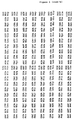
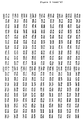
- This invention also provides the nucleic acid sequence coding for the VP2 protein of the invention ( Figure 1).
- the empty PPV chimeric capsids formed by autoassembly of the PPV recombinant VP2 proteins are yet another object of this invention.
- Figure 1 shows the nucleotide sequence coding for the VP2 hereof and the amino acid sequence thereof.
- the nucleotide sequence is shown in the direction 5' ⁇ 3' from left to right.
- the amino acids have been designated using the generally accepted three-letter code.
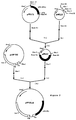
- Figure 2 shows the construction of the pPPVEx8 transfer vector, pointing out the appropriate manipulations for inserting the PPV VP2 gene in the pJVP10Z plasmid.
- Figure 3 shows the presence of empty chimeric capsids formed by aggregation of the VP2 protein hereof, as observed under an electron microscope.
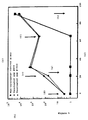
- Figure 4 shows the antibodies titre average values of sera from pigs immunized two times with N 3 ⁇ g of empty PPV chimeric capsids adjuvanted with Alhydrogel + QuilA.
- the antibody titre was measured by:
- Figure 5 shows the antibodies titre values against PPV obtained by ELISA in pregnant sows vaccinated with PPV chimeric capsids ( ⁇ , ) and non-vaccinated ( ⁇ ), all of them were challenged with a PPV virulent strain.
- the invention provides a new process for obtaining a recombinant subunit vaccine serving to protect pigs against infections due to Porcine Parvovirus.
- the vaccine can contain the PPV VP2 recombinant protein produced in an expression vector of baculovirus multiplied in a cell culture of a lepidoptera or other permissive host, or chimeric capsids formed by aggregating the said recombinant VP2.
- the invention also provides a recombinant baculovirus capable of expressing the PPV VP2 when inoculated in a permissive host, and the process for obtaining the said recombinant baculovirus.
- the obtention of the recombinant baculovirus basically comprises the following steps:
- the gene coding for the PPV VP2 protein is obtained from plasmid pPPV15, previously constructed in our laboratory, containing the sequences encoding for VP2, and inserted in the unique cloning site Nhe I of the AcMNPV-derived pJVP10Z plasmid, thereby to obtain a baculovirus transfer vector.
- the pPPVEx8 vector proved to have the PPV DNA adequately oriented to be expressed by the AcMNPV virus polyhedrin promoter.
- the pPPVEx8 vector was used to co-transfect permissive host cells, with the AcMNPV virus wild-type DNA. Reference could, inter alia, be made to cells of lepidoptera or their larvae.
- Spodoptera frugiperda (S. frugiperda) cells generally from the Sf9 strain, were transfected using pPPVEx8, though it can naturally be assumed that similar results would be achieved transfecting other permissive cells for recombinant baculovirus replication.
- the recombinant baculoviruses were selected after removing and titrating the supernatant produced in a confluent monolayer of S.frugiperda cells.
- the blue plates with no trace of the viral polyhedrin under a light microscope were collected and back-titrated on S. frugiperda cells to obtain the recombinant baculoviruses.
- the AcMNPV.pPPVEx8 recombinant baculovirus is capable of expressing the PPV VP2 recombinant protein (VP2 hereof) and was filed with the ECACC, accession number V91030213.
- a Dot Blot assay was used to verify that the VP2 gene had been adequately integrated into the said recombinant baculovirus genome.
- the proteins expressed by the S.frugiperda cells infected with the recombinant baculovirus were analysed by electrophoresis in 8% to 15% SDS-polyacrylamide gradient gels and were stained with Coomassie blue to observe the presence of a protein with a virtual molecular weight of 64 KDa, equivalent to that of the viral VP2 in the recombinant virus plate.
- Immunodetection assays showed that the anti-PPV polyclonal antisera reacted with the VP2 expressed by the recombinant baculovirus. It can in light of these results be said that the VP2 hereof expressed by the recombinant baculovirus in S.frugiperda cells is antigenically undistinguishable from the viral VP2.
- the VP2 protein obtained with the above-described process can be used for diagnosis purposes to detect the presence of specific PPV antibodies or to induce polyclonal or monoclonal antibodies capable of PPV detection. They can further be used to immunise animals to PPV.
- ELISA assays have shown that immunised animal sera recognised the viral antigens while hemagglutination inhibition assays (HI) showed that sera from animals immunised with the purified VP2 protein obtained with this invention offered HI titres of 1/320 when 4HA units of purified PPV were used as antigen.
- HI hemagglutination inhibition assays
- the VP2 protein expressed by the recombinant baculovirus vector hereof can be used to be formulated in vaccines in order to protect pigs from infections caused by PPV.
- These vaccines can be both passive and active.
- a passive vaccine could be obtained immunising animals with the recombinant and purified VP2 hereof and then isolating polyclonal antibodies from the said VP2 which could when purified be used in therapeutic or prophylactic applications.
- An active vaccine can be prepared resuspending the VP2 hereof in an immunologically acceptable diluent with an adjuvant.
- the VP2 protein obtained with the process of this invention is peculiar in that it can be aggregated, working pursuant to our conditions, and form pseudo-viral empty chimeric capsids of regular and uniform structure and with a size of about 22 nm, as shown by electron microscopy.
- the empty capsids formed by VP2 assembly have an enhanced hemagglutination activity and are highly immunogenic, more so than other PPV recombinant proteins produced heretofore in other vectors.
- the said capsids can hence be formulated to be used in vaccines capable of protecting animals from infections caused by PPV.
- an active vaccine can be prepared resuspending the said capsids in an immunologically acceptable diluent, with or without an adjuvant.
- An important feature of these empty chimeric capsids, that could be obvious to someone skilled in the art, is that they can be chemically or genetically manipulated to introduce the protein epitopes of other viruses, infection of which is to be protected, thereby to work as a polyvalent vaccine.
- PBS Phosphate buffered saline
- the adjuvant used could be alumina gel suspensions or other adjuvants regularly used in formulating vaccines.
- the complete PPV genome was cloned in our laboratory for the first time in the bacterial plasmid pUC18, obtaining the genomic clone pPPV10.
- the construction of this genomic clone has been described in "Construction of an infectious genomic clone of Porcine Parvovirus: Effect of the 5'-end on DNA replication", Casal et al. 1990. Virology 177 , 764-767.
- As starting material we employed as original virus the PPV strain NADL-2, available at the American Type Culture Collection, Rockville, Maryland (USA), accession number ATCC-VR742.
- the pPPV10 genomic clone was used to obtain the pPPV15 plasmid ( Figure 2), which contains all the coding sequences for PPV VP2 in a DNA fragment of approximately 1.9 Kbp.
- the foreign DNA was inserted so as to allow its extraction in a single step, thanks to a BamH I restriction site.
- the inserted 1.9 Kbp DNA was isolated by electrophoresis in low melting agarose gels and inserted in a previously dephosphorilated and BamH I digested pMTL-25 vector.
- the plasmid so obtained was called pPPV17. It had the VP2 coding sequences from the PPV virus flanked by two Xba I restriction sites.
- the plasmidic vector with AcMNPV-derived Nhe I site (pJVP10Z plasmid), (Vialard, J. Et al. J. Virol. 64 , 37-50, 1990), was a gift of Dr. Cris Richardson (NRC. Quebec. Canadá) and was used to clone the Xba I fragment obtained from the pPPV17 plasmid as described in Figure 2. As the said figure shows, the Xba I pPPV17 fragment containing the PPV VP2 coding sequence was inserted into the pJVP10Z Nhe I site.
- the plasmids thus obtained, containing the PPV VP2 gene, were purified according to the alkaline lysis method (Birmboim & Doly. Nucleic Acids Res. 7 , 1513-1523. 1979) and characterized by restriction endonuclease mapping.
- the pPPVEx8 recombinant plasmid proved to have the PPV VP2 gene placed in the correct orientation to allow its expression by the AcMNPV virus polyhedrin promoter.
- S.frugiperda cells were transfected with infectious DNA mixtures of AcMNPV purified DNA and pPPVEx8 plasmidic DNA, according to the process described by Burand et al. Virology 101. 286-290. 1980.
- AcMNPV DNA (1 ⁇ g) purified according to Smith and Summers (Virology 123, 293-406. 1983), was mixed with two different quantities of plasmidic DNA (1 and 5 ⁇ g) and taken to 750 ⁇ l with a Hepes buffered saline solution (25 mM Hepes, pH 7.1, 140 mM NaCl and 125 mM CaCl2).
- the DNA solution was inoculated on to monolayer cultures of 2x10⁶ S.frugiperda cells and incubated for 4h at room temperature. The supernatant was removed and 5 ml of medium containing 10% foetal calf serum were added.
- the recombinant baculovirus was called AcMNPV.pPPVEx8 and filed at the European Collection of Animal Cell Cultures (ECACC), accession number V91030213.
- a Dot Blot assay was made to determine whether the VP2 gene had been integrated in the recombinant baculovirus genome, as follows.
- the S.frugiperda cells were infected with the said virus at a multiplicity of infection of 5 PFU/cell and incubated at 27°C for 48 hours. The infected cells were collected, sonicated and centrifuged at 1000 rpm for 10 min to eliminate cell debris. The supernatant was used as starting material for the assays.
- a volume of 100 ⁇ l was denatured with 10 ⁇ l of 1M NaOH, boiled for 5 min and placed immediately on ice. The mixture was neutralized with 10 ⁇ l of 1M PO4H2Na. A 20xSSC solution was added immediately to obtain a final 6xSSC concentration (SSC, solution saline citrate).
- the solution was transferred to a nitrocellulose filter that had previously been moistened with 6xSSC. It was washed with more 6xSSC and dried at 37°C for 30 min. The DNA was fixed to the nitrocellulose filter under an u.v. light for 2-3 min. The membranes were then hybridized with a specific probe of the VP2 DNA region labeled with Phosphorous-32 at 37°C overnight. It was afterwards washed with decreasing SSC solutions and autoradiographed.
- S.frugiperda cells were infected with the recombinant baculovirus at a multiplicity of 5 PFU/cell and incubated at 27°C for 48 h.
- the cells were collected by centrifugation at 1000 rpm for 10 min, washed twice with phosphate buffered saline (PBS) solution pH 7.4 and resuspended at 1x10⁶ cells/ml in lysis buffer (5% sodium dodecyl sulphate (SDS), 1% ⁇ -mercaptoethanol and 17.4% glycerol).
- the samples were charged in 8 to 15% SDS-polyacrylamide gradient gels for electrophoresis and stained with Coomassie blue or transferred to nitrocellulose membranes for immunodetection.
- the Coomassie blue showed the major presence of a protein with a molecular weight of 67 KDa, equivalent to that of the viral VP2, in the recombinant virus lane.
- the strips were then incubated for an hour at room temperature with the first anti-PPV rabbit aniserum, washed with TBS-0.05% Tween-20 for 30 min at room temperature and incubated for 1 h at room temperature with goat anti-rabbit serum labeled with biotin (1:500).
- the strips were washed again and allowed to react with streptavidin labeled with peroxidase (1:2000) for 30 min at room temperature.
- the filters were developed with a TBS solution containing 0.5 mg/ml of 4-chloro-1-naphthol (Sigma), 17% (v/v) of methanol and 0.015% of hydrogen peroxide in TBS until visible bands appeared. The reaction was stopped rinsing the strips with distilled water.
- S.frugiperda cells were infected with AcMNPV.pPPVEx8 recombinant virus at a multiplicity of infection of 5-10 PFU/cell and incubated at 27°C for 48-72 h.
- the cells were collected by centrifugation at 1000 rpm for 10 min, washed twice in a phosphate buffered saline solution pH 7.4 and resuspended at 2 x 10⁷ cells/ml in a 25 mM bicarbonate buffer pH 9.5.
- the resuspended cells were broken down by sonication and centrifuged at 10.000 rpm for 10 min to eliminate cell debris.
- Supernatant containing the recombinant VP2 protein can be purified using its autoaggregating capacity to form empty capsids. They are to this end either purified by 20% ammonium sulphate precipitation or the empty capsids are centrifuged on CsCl gradients at 45.000 rpm for 14 h. Capsids offer a buoyant density ( ⁇ ) of 1.30 g/cm3 when banded in CsCl gradient. Preparation purity was determined by electrophoresis in SDS-polyacrylamide gels as the method described above and VP2 protein purity turned out to be in excess of 99%.
- Hemagglutination activity of the VP2 protein was assayed in accordance with an already known method (Joo, H.S. et al. Aust. Vet. J. 52 : 422-424. 1976). This functional activity is exclusively associated to the particulate character of the product, thereby clearly distinguishing the same from previous ones.
- a purified VP2 preparation was stained by negative contrast with 2% uranyl acetate and observed under an electron microscope at a magnifying power of 40.000 x 2.5, the presence of a large number of pseudo-viral chimeric particles of regular and uniform structure and with a size of roughly 22 nm was observed. (Figure 3).
- Two New Zealand rabbits weighing 2 Kg were immunized three times intramuscularly with 100 ⁇ g of a purified VP2 preparation. The first time in a complete Freund adjuvant, the second and third times with an incomplete adjuvant. A week after the last immunization, the rabbits were bled and the sera obtained tested with an ELISA assay and an hemagglutination inhibition assay, as described hereinbelow.
- the presence of PPV specific antibodies in the serum of immunized animals was determined by means of an indirect ELISA assay.
- the antigen used was both purified PPV virus and purified VP2 protein. Briefly, polystyrene plates were coated with 0.5 ⁇ g of virus or 0.25 ⁇ g/well of VP2 in 100 ⁇ l of carbonate buffer (0.05 M, pH 9.6) at 4°C overnight. The plates were washed with PBS (0.15 M NaCl in 0.1 M sodium phosphate pH 7.4) containing 0.05% Tween-20 and incubated with the anti-PPV rabbit antiserum for 2 h at 37°C, washed again and incubated with goat anti-rabbit IgG biotin-labeled.
- the ELISA titre achieved was 1/1600 against the VP2 protein and 1/3200 against the PPV complete virus.
- the HI assay was made according to the standard methods previously described (Joo, H.S. et al Aust. Vet. J. 52 : 422-424. 1976). The titre obtained was 1/320 when 4 HA units of purified PPV were used as antigen. Based on the good correlation observed between the HI and the protection titres of the animals against virus infection, we assume that the animals able to develop this titre have a high protection level.
- Two pigs were immunized with purified preparations of PPV VP2 chimeric capsids made of recombinant autoassembled VP2 proteins.
- One of the pigs was completely seronegative while the other one had a low level of antibodies, due to the fact that his mother had been previously vaccinated. Both pigs were kept in an isolation unit during the assay.
- the vaccine was formulated by mixing the capsids ( N 3 ⁇ g) with a standard adjuvant system: 50% Alhydrogel (Superfos. Denmark) + 500 ⁇ g QuilA (Superfos). All components were kept in standard concentrations except for the inactivated virus that was changed by PPV capsids.
- the pigs received two subcutaneous vaccinations: the first time the dose was 2 ml, and three weeks afterwards they were injected with a second dose of 1 ml.
- the serum was tested weekly, before vaccination and up to ten days after the last dose.
- the presence of anti-PPV antibodies in the pig serum was determined according to three different methods: (1) ELISA anti-PPV virion assay (2) Haemagglutination inhibition assay (Joo et al. 1976. Aust. Vet. J. 52 : 422-424) and (3) PPV neutralization assay (Holm-Jensen M. 1991. Acta Vet. Scand. 22 : 85-98).
- Foetal kidney, liver and lung tissues were collected and analyzed for the presence of PPV antigen by the ELISA test, routinely used in the State Veterinary Institute for Virus Research, Lindholm (SVIV) for PPV diagnosis. Also, blood samples of the sows were taken before vaccination, in the revaccination, 10 days after, in the time of the viral inoculation and in the sacrifice and checked for the presence of anti-PPV antibodies by the ELISA test previously mentioned.
- the three sows remained healthy throughout the experiment.
- the antibody titers obtained during the experiment are shown in Figure 5.
- the non-vaccinated sow remained seronegative until the viral challenge. After infection a dramatic increase in the anti-PPV antibody titers was observed in the necropsy.
- the two vaccinated sows show antibody titers that increase after vaccination and revaccination. These titers suffer a posterior slight increase due to the administration of virulent virus.
- foetuses from the sow #1451 displayed typical lesions of intrauterine PPV infection (Bachmann et al. 1975, Infect Immunity, 12, 455-460; Joo et al. 1976; Arch. Virol. 51, 123-391; Nielsen et al. 1991. Vet. Microbiol. 28, 1-11).
- Four foetuses were alive. One of them did not show GPL, however, the other three displayed GPL of varying severity, typically discoloration, morbidity, with large volumes of ascitic fluids, edema, pulmonary stasis and erythema, thymic atrophy and enlargement of the liver.
- PPV antigen was detected in all the foetuses of the non-vaccinated sow, using the ELISA test previously described. In pleural fluids of three foetuses was detected antibody response (foetal) anti-PPV to the virus used for the challenge, as measured by IFAT and counter-current immunoelectroforesis. The presence in these samples of IgG and IgM was confirmed by "rocket" immunoelectrophoresis. The pig foetuses are able to induce an anti-PPV antibodies at 60 days of gestation (J. Nielsen et al. 1991, Vet. Microbiol. 28, 1-11).
- recombinant VP2 capsids may constitute the base for a new range of commercial vaccines useful on the control of PPV infection in pigs.
- these capsids can be useful as a reagent in the diagnosis of PPV infection in pigs, for instance, in kits for antibodies detection.
- VP2 capsids purified as described in the present invention.
- Polyclonal antibodies, directed against this VP2 can be isolated from serum, milk or other animal bodily fluids. These antibodies can then be purified and used for therapeutics or prophylactic applications.
- An active vaccine can be prepared resuspending the recombinant VP2 capsids described herein in an immunologically acceptable diluent such as PBS and an adjuvant such as Alhydrogel or QuilA.
- an adjuvant such as Alhydrogel or QuilA.
- An active vaccine can also be prepared resuspending the empty capsids in an immunologically acceptable diluent with or without an adjuvant.
- an active vaccine can also be prepared resuspending the empty capsids in an immunologically acceptable diluent with or without an adjuvant.
- the AcMNPV.pPPVEx8 baculovirus is capable of producing a recombinant VP2 absolutely identical to the viral VP2 protein, as shown with the DNA sequence, molecular weight estimate and antigenic characterization.
- the VP2 obtained herein with our process is also remarkably capable of forming empty capsids, thereby providing the same with hemagglutination and immunogenic activity that are clearly greater than in other previously described recombinant proteins, as shown with the animal immunization tests herein described.
- This enhanced immunogenic capacity can be used by those skilled in the art to present other viral protein epitopes, that can be introduced therein by either chemical or genetic manipulation of the recombinant baculoviruses.
- the recombinant baculovirus has been filed with the European Collection of Animal Cell Cultures (ECACC) on March 4 th , 1991.
- ECACC European Collection of Animal Cell Cultures
Landscapes
- Chemical & Material Sciences (AREA)
- Organic Chemistry (AREA)
- Health & Medical Sciences (AREA)
- Life Sciences & Earth Sciences (AREA)
- Molecular Biology (AREA)
- Biochemistry (AREA)
- Biophysics (AREA)
- Virology (AREA)
- General Health & Medical Sciences (AREA)
- Medicinal Chemistry (AREA)
- Genetics & Genomics (AREA)
- Proteomics, Peptides & Aminoacids (AREA)
- Gastroenterology & Hepatology (AREA)
- Medicines Containing Antibodies Or Antigens For Use As Internal Diagnostic Agents (AREA)
- Micro-Organisms Or Cultivation Processes Thereof (AREA)
- Peptides Or Proteins (AREA)
- Preparation Of Compounds By Using Micro-Organisms (AREA)
Abstract
Applications Claiming Priority (3)
| Application Number | Priority Date | Filing Date | Title |
|---|---|---|---|
| ES9100845 | 1991-03-26 | ||
| ES9100845A ES2026827A6 (es) | 1991-03-26 | 1991-03-26 | Procedimiento para la produccion de una vacuna subunidad contra el parvovirus porcino. |
| PCT/ES1992/000032 WO1992017589A1 (fr) | 1991-03-26 | 1992-03-26 | Procede de production d'un vaccin sous-unitaire contre le parvovirus porcin |
Publications (2)
| Publication Number | Publication Date |
|---|---|
| EP0551449A1 true EP0551449A1 (fr) | 1993-07-21 |
| EP0551449B1 EP0551449B1 (fr) | 1997-10-22 |
Family
ID=8271931
Family Applications (1)
| Application Number | Title | Priority Date | Filing Date |
|---|---|---|---|
| EP92907669A Expired - Lifetime EP0551449B1 (fr) | 1991-03-26 | 1992-03-26 | Procede de production d'un vaccin sous-unitaire contre le parvovirus porcin |
Country Status (8)
| Country | Link |
|---|---|
| US (1) | US5498413A (fr) |
| EP (1) | EP0551449B1 (fr) |
| AT (1) | ATE159547T1 (fr) |
| AU (1) | AU1537792A (fr) |
| DE (1) | DE69222840T2 (fr) |
| DK (1) | DK0551449T3 (fr) |
| ES (1) | ES2026827A6 (fr) |
| WO (1) | WO1992017589A1 (fr) |
Cited By (6)
| Publication number | Priority date | Publication date | Assignee | Title |
|---|---|---|---|---|
| EP0704528A3 (fr) * | 1994-07-08 | 1998-03-04 | Cyanamid Iberica, Sa | Virus de l'hémorragie des lapins (RHDV), capsides recombinants, protéines, et trousse de diagnostic et vaccins les contenant |
| WO2001094392A3 (fr) * | 2000-06-05 | 2002-04-25 | Ca Minister Agriculture & Food | Sous-unites de proteines recombinantes produites dans des plantes a partir d'un parvovirus porcin |
| WO2001068888A3 (fr) * | 2000-03-14 | 2002-05-30 | Neurologix Inc | Production de vecteurs de capsides chimeres |
| WO2018083154A1 (fr) | 2016-11-03 | 2018-05-11 | Boehringer Ingelheim Vetmedica Gmbh | Vaccin contre le parvovirus porcin |
| US10660952B2 (en) | 2016-11-03 | 2020-05-26 | Boehringer Ingelheim Vetmedica Gmbh | Vaccine against porcine parvovirus and porcine reproductive and respiratory syndrome virus and methods of production thereof |
| WO2020206452A1 (fr) | 2019-04-04 | 2020-10-08 | Boehringer Ingelheim Animal Health USA Inc. | Vaccins contre le circovirus porcin de type 3 (pcv3), sa production et ses utilisations |
Families Citing this family (18)
| Publication number | Priority date | Publication date | Assignee | Title |
|---|---|---|---|---|
| NZ243611A (en) * | 1991-07-17 | 1993-12-23 | Commw Scient Ind Res Org | Vaccine and its preparation for treating rhabdovirus and paramyxovirus |
| US5785974A (en) * | 1993-01-23 | 1998-07-28 | Immunologia Y Genetica Aplicada, S.A. | Synthetic peptides and vaccines against parvovirus |
| JP4117027B2 (ja) * | 1996-04-19 | 2008-07-09 | コルパン メチン | パルボウイルス感染のための核酸予防接種 |
| CA2223029A1 (fr) * | 1997-02-12 | 1998-08-12 | Akzo Nobel Nv | Vaccins a adn contre des parvovirus canins |
| FR2781159B1 (fr) | 1998-07-06 | 2000-10-06 | Merial Sas | Vaccin circovirus et parvovirus porcin |
| US7192594B2 (en) * | 1997-10-03 | 2007-03-20 | Merial Limited | Postweaning multisystemic wasting syndrome and porcine circovirus from pigs |
| FR2772047B1 (fr) | 1997-12-05 | 2004-04-09 | Ct Nat D Etudes Veterinaires E | Sequence genomique et polypeptides de circovirus associe a la maladie de l'amaigrissement du porcelet (map), applications au diagnostic et a la prevention et/ou au traitement de l'infection |
| JP3795751B2 (ja) * | 1997-12-11 | 2006-07-12 | ユニバーシティ オブ サスカッチェワン | ブタからの離乳後多全身系消耗症候群ウイルス |
| BR9804283B1 (pt) * | 1998-03-18 | 2010-11-30 | processo para a produção de flavivìrus em baixa densidade de células em cultura e processo para a produção de flavivìrus recombinante em baixa densidade de células em cultura. | |
| ES2139537B1 (es) * | 1998-03-24 | 2000-10-01 | Inmunologia & Genetica Aplic | Sistema de presentacion de antigenos basado en el virus de la sharka. |
| US6238860B1 (en) | 1998-11-05 | 2001-05-29 | Dyax Corp. | Binding moieties for human parvovirus B19 |
| SE516522C2 (sv) | 1999-05-28 | 2002-01-22 | Anoto Ab | Positionsbestämning |
| ES2170622B1 (es) * | 1999-12-03 | 2004-05-16 | Consejo Superior De Investigaciones Cientificas | Clones y vectores infectivos derivados de coronavirus y sus aplicaciones. |
| EP1968630B1 (fr) * | 2005-12-29 | 2018-01-24 | Boehringer Ingelheim Vetmedica, Inc. | Compositions immunogènes pcv2 multivalentes |
| CN101851609B (zh) * | 2010-02-02 | 2012-10-03 | 哈药集团生物疫苗有限公司 | 猪细小病毒l株及在制备猪细小病毒病灭活疫苗中的用途 |
| EP3049106A1 (fr) | 2013-09-25 | 2016-08-03 | Zoetis Services LLC | Composition vaccinale divergente anti-pcv2b et ses procédés d'utilisation |
| KR102117811B1 (ko) * | 2018-12-05 | 2020-06-02 | 대한민국(농림축산식품부 농림축산검역본부장) | 재조합 돼지파보바이러스 항원 단백질 및 이의 용도 |
| CN110845580A (zh) * | 2019-11-05 | 2020-02-28 | 中国农业科学院兰州兽医研究所 | 一种猪细小病毒样颗粒的组装及其免疫原性鉴定方法 |
Family Cites Families (4)
| Publication number | Priority date | Publication date | Assignee | Title |
|---|---|---|---|---|
| EP0117767A1 (fr) * | 1983-01-07 | 1984-09-05 | Mgi Pharma, Inc. | Préparation des unités secondaires des vaccins de parvovirus |
| AU7966987A (en) * | 1986-09-08 | 1988-04-07 | Applied Biotechnology, Inc. | Empty viral capsid vaccines |
| US4971793A (en) * | 1988-05-09 | 1990-11-20 | Boyce Thompson Institute For Plant Research, Inc. | Subunit canine parvovirus vaccine |
| DD286820A5 (de) * | 1989-08-10 | 1991-02-07 | Univ Berlin Humboldt | Verfahren zur herstellung des rekombinanten proteins hbcag delta-hivp24, das eine fusion aus den coreproteinen von hepatitis b-virus und humahem immundefizienzvirus 1 darstellt |
-
1991
- 1991-03-26 ES ES9100845A patent/ES2026827A6/es not_active Expired - Lifetime
-
1992
- 1992-03-26 AU AU15377/92A patent/AU1537792A/en not_active Abandoned
- 1992-03-26 DE DE69222840T patent/DE69222840T2/de not_active Expired - Lifetime
- 1992-03-26 EP EP92907669A patent/EP0551449B1/fr not_active Expired - Lifetime
- 1992-03-26 DK DK92907669T patent/DK0551449T3/da active
- 1992-03-26 AT AT92907669T patent/ATE159547T1/de not_active IP Right Cessation
- 1992-03-26 US US07/969,213 patent/US5498413A/en not_active Expired - Fee Related
- 1992-03-26 WO PCT/ES1992/000032 patent/WO1992017589A1/fr not_active Ceased
Non-Patent Citations (1)
| Title |
|---|
| See references of WO9217589A1 * |
Cited By (16)
| Publication number | Priority date | Publication date | Assignee | Title |
|---|---|---|---|---|
| EP0704528A3 (fr) * | 1994-07-08 | 1998-03-04 | Cyanamid Iberica, Sa | Virus de l'hémorragie des lapins (RHDV), capsides recombinants, protéines, et trousse de diagnostic et vaccins les contenant |
| WO2001068888A3 (fr) * | 2000-03-14 | 2002-05-30 | Neurologix Inc | Production de vecteurs de capsides chimeres |
| WO2001094392A3 (fr) * | 2000-06-05 | 2002-04-25 | Ca Minister Agriculture & Food | Sous-unites de proteines recombinantes produites dans des plantes a partir d'un parvovirus porcin |
| US11730806B2 (en) | 2016-11-03 | 2023-08-22 | Boehringer Ingelheim Vetmedica Gmbh | Methods of manufacturing an immunogenic composition comprising a recombinant protein |
| CN109803678A (zh) * | 2016-11-03 | 2019-05-24 | 勃林格殷格翰动物保健有限公司 | 抗猪细小病毒的疫苗 |
| KR20190089899A (ko) * | 2016-11-03 | 2019-07-31 | 베링거잉겔하임베트메디카게엠베하 | 돼지 파보바이러스에 대한 백신 |
| US10485866B2 (en) | 2016-11-03 | 2019-11-26 | Boehringer Ingelheim Vetmedica Gmbh | Vaccine against porcine parvovirus |
| US10660952B2 (en) | 2016-11-03 | 2020-05-26 | Boehringer Ingelheim Vetmedica Gmbh | Vaccine against porcine parvovirus and porcine reproductive and respiratory syndrome virus and methods of production thereof |
| US10799578B2 (en) | 2016-11-03 | 2020-10-13 | Boehringer Ingelheim Vetmedica Gmbh | Vaccine against porcine parvovirus |
| JP2021097679A (ja) * | 2016-11-03 | 2021-07-01 | ベーリンガー インゲルハイム フェトメディカ ゲーエムベーハーBoehringer Ingelheim Vetmedica GmbH | ブタパルボウイルスに対するワクチン |
| CN109803678B (zh) * | 2016-11-03 | 2023-08-22 | 勃林格殷格翰动物保健有限公司 | 抗猪细小病毒的疫苗 |
| WO2018083154A1 (fr) | 2016-11-03 | 2018-05-11 | Boehringer Ingelheim Vetmedica Gmbh | Vaccin contre le parvovirus porcin |
| AU2017353378B2 (en) * | 2016-11-03 | 2024-03-14 | Boehringer Ingelheim Vetmedica Gmbh | Vaccine against porcine parvovirus |
| EP4570264A2 (fr) | 2016-11-03 | 2025-06-18 | Boehringer Ingelheim Vetmedica GmbH | Vaccin contre le parvovirus porcin |
| EP4570264A3 (fr) * | 2016-11-03 | 2026-01-21 | Boehringer Ingelheim Vetmedica GmbH | Vaccin contre le parvovirus porcin |
| WO2020206452A1 (fr) | 2019-04-04 | 2020-10-08 | Boehringer Ingelheim Animal Health USA Inc. | Vaccins contre le circovirus porcin de type 3 (pcv3), sa production et ses utilisations |
Also Published As
| Publication number | Publication date |
|---|---|
| ATE159547T1 (de) | 1997-11-15 |
| DE69222840T2 (de) | 1998-05-14 |
| ES2026827A6 (es) | 1992-05-01 |
| EP0551449B1 (fr) | 1997-10-22 |
| US5498413A (en) | 1996-03-12 |
| DK0551449T3 (da) | 1998-07-20 |
| DE69222840D1 (de) | 1997-11-27 |
| AU1537792A (en) | 1992-11-02 |
| WO1992017589A1 (fr) | 1992-10-15 |
Similar Documents
| Publication | Publication Date | Title |
|---|---|---|
| EP0554414B1 (fr) | Procede de production d'un vaccin sous-unitaire contre le parvovirus canin et autres virus apparentes | |
| EP0551449B1 (fr) | Procede de production d'un vaccin sous-unitaire contre le parvovirus porcin | |
| Martínez et al. | Production of porcine parvovirus empty capsids with high immunogenic activity | |
| Herrmann et al. | Protection against rotavirus infections by DNA vaccination | |
| Roy et al. | Long-lasting protection of sheep against bluetongue challenge after vaccination with virus-like particles: evidence for homologous and partial heterologous protection | |
| Bertolotti-Ciarlet et al. | Immunogenicity and protective efficacy of rotavirus 2/6-virus-like particles produced by a dual baculovirus expression vector and administered intramuscularly, intranasally, or orally to mice | |
| EP0273366B1 (fr) | La synthèse et le pouvoir immunogène de gènes du rotavirus utilisant un système d'expression de baculovirus | |
| JP4149008B2 (ja) | 同じ細胞中でのブタ再生性呼吸系症候群ウイルスポリペプチド類の発現 | |
| Plana-Duran et al. | Oral immunization of rabbits with VP60 particles confers protection against rabbit hemorrhagic disease | |
| KR100204438B1 (ko) | 치킨 아네미아 바이러스 백신 및 진단방법 | |
| Di Martino et al. | Assembly of feline calicivirus-like particle and its immunogenicity | |
| Casal | Use of parvovirus‐like particles for vaccination and induction of multiple immune responses | |
| Shivappa et al. | Using a baculovirus insect/larvae | |
| Loudon et al. | Expression of the outer capsid protein VP5 of two bluetongue viruses, and synthesis of chimeric double-shelled virus-like particles using combinations of recombinant baculoviruses | |
| EP0788372A1 (fr) | Vaccin a base de parvovirus canin attenue | |
| Yao et al. | Comparison of immune responses to different foot-and-mouth disease genetically engineered vaccines in guinea pigs | |
| EP0117063A1 (fr) | Méthodes et matières pour développement de vaccin de parvovirus | |
| Iosef et al. | Systemic and intestinal antibody responses to NSP4 enterotoxin of Wa human rotavirus in a gnotobiotic pig model of human rotavirus disease | |
| AU2008347235A1 (en) | PCV2 ORF2 virus like particle with foreign amino acid insertion | |
| EP0704528B1 (fr) | Virus de l'hémorragie des lapins (RHDV), capsides recombinants, protéines, et trousse de diagnostic et vaccins les contenant | |
| Casal | Parvovirus diagnostics and vaccine production in insect cells | |
| US6379885B1 (en) | Human parvovirus B19 proteins and virus-like particles, their production and their use in diagnostic assays and vaccines | |
| Hu et al. | Raccoon poxvirus feline panleukopenia virus VP2 recombinant protects cats against FPV challenge | |
| Urakawa et al. | Synthesis of recombinant baculoviruses expressing the outer capsid protein VP2 of five BTV serotypes and the induction of neutralizing antibodies to homologous and heterologous BTV serotypes | |
| EP0704529A2 (fr) | Vaccin contre le virus de l'hémorragie des lapins |
Legal Events
| Date | Code | Title | Description |
|---|---|---|---|
| PUAI | Public reference made under article 153(3) epc to a published international application that has entered the european phase |
Free format text: ORIGINAL CODE: 0009012 |
|
| 17P | Request for examination filed |
Effective date: 19930412 |
|
| AK | Designated contracting states |
Kind code of ref document: A1 Designated state(s): AT BE CH DE DK FR GB IT LI NL SE |
|
| RAP1 | Party data changed (applicant data changed or rights of an application transferred) |
Owner name: ERCROS S.A. |
|
| RAP1 | Party data changed (applicant data changed or rights of an application transferred) |
Owner name: ERCROS S.A. |
|
| RAP1 | Party data changed (applicant data changed or rights of an application transferred) |
Owner name: INMUNOLOGIA Y GENETICA APLICADA, S.A. |
|
| 17Q | First examination report despatched |
Effective date: 19950907 |
|
| GRAG | Despatch of communication of intention to grant |
Free format text: ORIGINAL CODE: EPIDOS AGRA |
|
| GRAH | Despatch of communication of intention to grant a patent |
Free format text: ORIGINAL CODE: EPIDOS IGRA |
|
| GRAH | Despatch of communication of intention to grant a patent |
Free format text: ORIGINAL CODE: EPIDOS IGRA |
|
| GRAA | (expected) grant |
Free format text: ORIGINAL CODE: 0009210 |
|
| AK | Designated contracting states |
Kind code of ref document: B1 Designated state(s): AT BE CH DE DK FR GB IT LI NL SE |
|
| REF | Corresponds to: |
Ref document number: 159547 Country of ref document: AT Date of ref document: 19971115 Kind code of ref document: T |
|
| REG | Reference to a national code |
Ref country code: CH Ref legal event code: EP |
|
| REF | Corresponds to: |
Ref document number: 69222840 Country of ref document: DE Date of ref document: 19971127 |
|
| ITF | It: translation for a ep patent filed | ||
| ET | Fr: translation filed | ||
| REG | Reference to a national code |
Ref country code: CH Ref legal event code: NV Representative=s name: ISLER & PEDRAZZINI AG |
|
| REG | Reference to a national code |
Ref country code: DK Ref legal event code: T3 |
|
| PLBE | No opposition filed within time limit |
Free format text: ORIGINAL CODE: 0009261 |
|
| 26N | No opposition filed | ||
| REG | Reference to a national code |
Ref country code: GB Ref legal event code: IF02 |
|
| REG | Reference to a national code |
Ref country code: FR Ref legal event code: ST |
|
| REG | Reference to a national code |
Ref country code: FR Ref legal event code: RN |
|
| REG | Reference to a national code |
Ref country code: FR Ref legal event code: FC |
|
| REG | Reference to a national code |
Ref country code: CH Ref legal event code: PCAR Free format text: ISLER & PEDRAZZINI AG;POSTFACH 1772;8027 ZUERICH (CH) |
|
| PGFP | Annual fee paid to national office [announced via postgrant information from national office to epo] |
Ref country code: AT Payment date: 20100318 Year of fee payment: 19 |
|
| PG25 | Lapsed in a contracting state [announced via postgrant information from national office to epo] |
Ref country code: IT Free format text: LAPSE BECAUSE OF NON-PAYMENT OF DUE FEES Effective date: 20100326 |
|
| PGFP | Annual fee paid to national office [announced via postgrant information from national office to epo] |
Ref country code: DK Payment date: 20110322 Year of fee payment: 20 |
|
| PGFP | Annual fee paid to national office [announced via postgrant information from national office to epo] |
Ref country code: SE Payment date: 20110311 Year of fee payment: 20 Ref country code: FR Payment date: 20110404 Year of fee payment: 20 Ref country code: NL Payment date: 20110330 Year of fee payment: 20 |
|
| PGFP | Annual fee paid to national office [announced via postgrant information from national office to epo] |
Ref country code: BE Payment date: 20110121 Year of fee payment: 20 |
|
| PGFP | Annual fee paid to national office [announced via postgrant information from national office to epo] |
Ref country code: GB Payment date: 20110329 Year of fee payment: 20 Ref country code: IT Payment date: 20110304 Year of fee payment: 20 Ref country code: CH Payment date: 20110401 Year of fee payment: 20 |
|
| PGRI | Patent reinstated in contracting state [announced from national office to epo] |
Ref country code: IT Effective date: 20110616 |
|
| PGFP | Annual fee paid to national office [announced via postgrant information from national office to epo] |
Ref country code: DE Payment date: 20110527 Year of fee payment: 20 |
|
| PG25 | Lapsed in a contracting state [announced via postgrant information from national office to epo] |
Ref country code: AT Free format text: LAPSE BECAUSE OF NON-PAYMENT OF DUE FEES Effective date: 20110326 |
|
| REG | Reference to a national code |
Ref country code: DE Ref legal event code: R071 Ref document number: 69222840 Country of ref document: DE |
|
| REG | Reference to a national code |
Ref country code: DE Ref legal event code: R071 Ref document number: 69222840 Country of ref document: DE |
|
| BE20 | Be: patent expired |
Owner name: S.A. *INMUNOLOGIA Y GENETICA APLICADA Effective date: 20120326 |
|
| REG | Reference to a national code |
Ref country code: NL Ref legal event code: V4 Effective date: 20120326 |
|
| REG | Reference to a national code |
Ref country code: CH Ref legal event code: PL |
|
| REG | Reference to a national code |
Ref country code: DK Ref legal event code: EUP |
|
| REG | Reference to a national code |
Ref country code: GB Ref legal event code: PE20 Expiry date: 20120325 |
|
| PG25 | Lapsed in a contracting state [announced via postgrant information from national office to epo] |
Ref country code: DE Free format text: LAPSE BECAUSE OF EXPIRATION OF PROTECTION Effective date: 20120327 |
|
| PG25 | Lapsed in a contracting state [announced via postgrant information from national office to epo] |
Ref country code: GB Free format text: LAPSE BECAUSE OF EXPIRATION OF PROTECTION Effective date: 20120325 |
|
| REG | Reference to a national code |
Ref country code: SE Ref legal event code: EUG |