EP0580429A1 - Verwendung von Kompetitiven NMDA-Rezeptorantagonisten zur Behandlung der Harninkontinenz - Google Patents
Verwendung von Kompetitiven NMDA-Rezeptorantagonisten zur Behandlung der Harninkontinenz Download PDFInfo
- Publication number
- EP0580429A1 EP0580429A1 EP93305762A EP93305762A EP0580429A1 EP 0580429 A1 EP0580429 A1 EP 0580429A1 EP 93305762 A EP93305762 A EP 93305762A EP 93305762 A EP93305762 A EP 93305762A EP 0580429 A1 EP0580429 A1 EP 0580429A1
- Authority
- EP
- European Patent Office
- Prior art keywords
- alkyl
- urinary incontinence
- bladder
- phenyl
- compound
- Prior art date
- Legal status (The legal status is an assumption and is not a legal conclusion. Google has not performed a legal analysis and makes no representation as to the accuracy of the status listed.)
- Granted
Links
Images





Classifications
-
- A—HUMAN NECESSITIES
- A61—MEDICAL OR VETERINARY SCIENCE; HYGIENE
- A61K—PREPARATIONS FOR MEDICAL, DENTAL OR TOILETRY PURPOSES
- A61K31/00—Medicinal preparations containing organic active ingredients
- A61K31/66—Phosphorus compounds
- A61K31/675—Phosphorus compounds having nitrogen as a ring hetero atom, e.g. pyridoxal phosphate
-
- A—HUMAN NECESSITIES
- A61—MEDICAL OR VETERINARY SCIENCE; HYGIENE
- A61K—PREPARATIONS FOR MEDICAL, DENTAL OR TOILETRY PURPOSES
- A61K31/00—Medicinal preparations containing organic active ingredients
- A61K31/33—Heterocyclic compounds
- A61K31/395—Heterocyclic compounds having nitrogen as a ring hetero atom, e.g. guanethidine or rifamycins
- A61K31/435—Heterocyclic compounds having nitrogen as a ring hetero atom, e.g. guanethidine or rifamycins having six-membered rings with one nitrogen as the only ring hetero atom
- A61K31/44—Non condensed pyridines; Hydrogenated derivatives thereof
- A61K31/445—Non condensed piperidines, e.g. piperocaine
-
- A—HUMAN NECESSITIES
- A61—MEDICAL OR VETERINARY SCIENCE; HYGIENE
- A61K—PREPARATIONS FOR MEDICAL, DENTAL OR TOILETRY PURPOSES
- A61K31/00—Medicinal preparations containing organic active ingredients
- A61K31/33—Heterocyclic compounds
- A61K31/395—Heterocyclic compounds having nitrogen as a ring hetero atom, e.g. guanethidine or rifamycins
- A61K31/435—Heterocyclic compounds having nitrogen as a ring hetero atom, e.g. guanethidine or rifamycins having six-membered rings with one nitrogen as the only ring hetero atom
- A61K31/47—Quinolines; Isoquinolines
-
- A—HUMAN NECESSITIES
- A61—MEDICAL OR VETERINARY SCIENCE; HYGIENE
- A61P—SPECIFIC THERAPEUTIC ACTIVITY OF CHEMICAL COMPOUNDS OR MEDICINAL PREPARATIONS
- A61P13/00—Drugs for disorders of the urinary system
- A61P13/02—Drugs for disorders of the urinary system of urine or of the urinary tract, e.g. urine acidifiers
-
- A—HUMAN NECESSITIES
- A61—MEDICAL OR VETERINARY SCIENCE; HYGIENE
- A61P—SPECIFIC THERAPEUTIC ACTIVITY OF CHEMICAL COMPOUNDS OR MEDICINAL PREPARATIONS
- A61P15/00—Drugs for genital or sexual disorders; Contraceptives
-
- A—HUMAN NECESSITIES
- A61—MEDICAL OR VETERINARY SCIENCE; HYGIENE
- A61P—SPECIFIC THERAPEUTIC ACTIVITY OF CHEMICAL COMPOUNDS OR MEDICINAL PREPARATIONS
- A61P25/00—Drugs for disorders of the nervous system
- A61P25/02—Drugs for disorders of the nervous system for peripheral neuropathies
Definitions
- a variety of common clinical bladder disorders are characterized by spastic or hyperactive bladder smooth muscle, and the ability to store only small quantities of urine. These dysfunctions range from severe hyperactivity, seen following recovery from major spinal cord damage or spinal transection, to mild bladder detrusor hyperactivity, seen in large numbers of patients and due to a variety of causative factors.
- the causative factors for this latter group of patients include Parkinsonism, multiple sclerosis, cerebrovascular damage, cerebral arteriosclerosis, central nervous system lesions, and a recurrent bladder infection.
- the major symptoms of these patients are: frequency, nocturia, urgency, and urge incontinence.
- the treatment of these patients is generally directed to facilitating urine storage by inhibiting bladder contractility or increasing outlet resistance by enhancing sphincter activity.
- Pharmacologic management is usually the first type of treatment attempted.
- a variety of pharmacologic agents have been used to treat these patients, including muscarinic anticholinergics, tricyclic antidepressants, calcium antagonists, ⁇ -andrenergic agonists, and prostaglandin inhibitors.
- Anticholinergic agents such as propantheline, oxybutynin, or dicyclomine, alone or in combination with a tricyclic antidepressant, such as imipramine, have proven useful in some patients with bladder hyperactivity.
- a tricyclic antidepressant such as imipramine
- the consequences of therapeutic failure are costly, and often require serious surgical procedures, such as bladder over-distension, peripheral bladder denervation, or selective sacral rhizotomy.
- the need for novel pharmacologic approaches for management of these patients is generally agreed upon by urologists.
- the present invention provides medicaments, comprising a competitive NMDA antagonist, useful for treating motor urge urinary incontinence.
- Incontinence is divided into two types, urge and stress.
- the urge incontinence type has been further divided into two subtypes in the classical literature, motor urge incontinence and sensory urge incontinence.
- Motor urge incontinence implies that there is excessive excitatory efferent input to the sacral spinal micturition center from supraspinal centers. Motor urge incontinence accompanies Parkinsonism, multiple sclerosis, cerebrovascular damage, cerebral arteriosclerosis, and central nervous system lesions.
- Sensory urge incontinence implies excessive sensory input to the sacral spinal micturition center from the bladder primary afferent fibers. Sensory urge incontinence typically accompanies spinal cord injury and bladder infection.
- the excitatory amino acids are an important group of neurotransmitters that mediate excitatory neurotransmission in the central nervous system.
- Glutamic acid and aspartic acid are two endogenous ligands that activate excitatory amino acid (EAA) receptors.
- EAA excitatory amino acid
- ionotropic EAA receptors There are at least three distinct ionotropic EAA receptors characterized by the selective agonist that activate each type: the NMDA (N-methyl-D-aspartic acid), the AMPA (2-amino-3-(5-methyl-3-hydroxyisoxazol-4-yl)propanoic acid), and the kainic acid receptors.
- the ionotropic EAA receptors are linked to ion channels that are permeable to sodium, and, in the case of NMDA receptors, calcium.
- Metabotropic receptors linked to phosphoinositide-hydrolysis by a membrane associated G-protein, are activated by quisqualic acid, ibotenic acid, and (1 S ,3 R )-1-aminocyclopentane-1,3-dicarboxylic acid.
- the NMDA receptor is a macromolecular complex consisting of a number of distinct binding sites that gate an ion channel permeable to sodium and calcium ions. Hansen and Krogsgaard-Larsen, Med. Res. Rev., 10 , 55-94 (1990). There are binding sites for glutamic acid, glycine, and polyamines, and a site inside the ion channel where compounds such as phencyclidine (PCP) and MK-801 exert their antagonist effects.
- PCP phencyclidine
- NMDA antagonists are compounds which block the NMDA receptor by interacting with the glutamate binding site.
- the ability of a particular compound to competitively bind to the NMDA glutamate receptor is determined using a radioligand binding assay. See Murphy et al., British J. Pharmacol ., 95 , 932-938 (1988).
- the antagonists are distinguished from the agonists using a rat cortical wedge assay. See Harrison and Simmonds, British J. Pharmacol ., 84 , 381-391 (1984).
- Examples of competitive NMDA antagonists include D-2-amino-5-phosphonopentanoic acid (D-AP5), D-2-amino-7-phosphonoheptanoic acid (D-AP7), CGS19775, CPPene, and CGP37849. Schoepp et al., J. Neur. Transm., 85 , 131-143 (1991).
- Antagonists of neurotransmission at NMDA receptors may prove to be useful therapeutic agents for the treatment of neurological disorders.
- United States Patent No. 4,902,695 is directed to series of competitive NMDA antagonists useful for the treatment of neurological disorders, including epilepsy, stroke, anxiety, cerebral ischemia, muscular spasms, and neurodegenerative disorders such as Alzheimer's disease and Huntington's disease.
- United States Patent No. 4,968,878 is directed to a second series of competitive NMDA receptor antagonists useful for the treatment of similar neurological disorders and neurodegenerative disorders.
- Bladder activity is controlled by parasympathetic preganglionic neurons in the sacral spinal cord. DeGroat et al., J. Auton. Nerv. Sys., 3 , 135-160 (1981). In humans, it has been shown that the highest density of NMDA receptors in the spinal cord are located at the sacral level, including those areas that putatively contain bladder parasympathetic preganglionic neurons. Shaw et al., Brain Res., 539 , 164-168 (1991). Because NMDA receptors are excitatory in nature, pharmacological blockade of these receptors would suppress bladder activity.
- MK-801 a non-competitive NMDA antagonist
- Maggie et al. Eur. J. Pharmacol., 181, 105-109 (1990); Yoshiyama et al., Neurosci. Lett., 126 , 141-144 (1991).
- MK-801 produces endocrine effects that are dissociated from its NMDA antagonism.
- a separate study has shown that the administration of MK-801 to conscious, freely-moving rats produces an increase in the frequency of micturition. Vera and Nadelhaft, Neurosci. Lett., 134, 135-138 (1991).
- the present invention provides a novel method of treating motor urge urinary incontinence in mammals, which comprises administering to a mammal in need of treatment thereof an effective amount of a competitive NMDA antagonist.
- a competitive NMDA antagonist One group of competitive NMDA antagonists that can be used in the present invention are the compounds of Formula I.
- X is CO2H, CO2R3, CON(R4)2, CONHSO2R4, CONHCO2R3, SO3R3, PO3(R4)2, or one of Y and Z is CO2H, CO2R3, CON(R4)2, CONHSO2R4, CONHCO2R3, or and the other of Y and Z is hydrogen; each R3 is independently C1-C16 alkyl; phenyl-substituted C1-C4 alkyl; benzyl; benzyl substituted on the phenyl ring with halogen, C1-C4 alkyl, or C1-C4 alkoxy; C1-C5 alkanoyloxymethyl; or C1-C5 alkanoyloxymethyl substituted on the oxymethyl with C1-C4 alkyl or C4-C7 cycloalkyl; each R4 is independently hydrogen, C1-C16 alkyl, phenyl-substituted C1-C4 alkyl, or phen
- petitive NMDA antagonist represents a compound which blocks the NMDA receptor by interacting with the glutamate binding site of the NMDA receptor.
- C1-C16 alkyl represents a straight or branched alkyl chain having from one to sixteen carbon atoms.
- Typical C1-C16 alkyl groups include methyl, ethyl, n -propyl, isopropyl, n -butyl, isobutyl, sec -butyl, t -butyl, n -pentyl, isopentyl, n -hexyl, 2-methylpentyl, n -octyl, decyl, undecyl, hexadecyl, and the like.
- C1-C16 alkyl includes within it the terms “C1-C6 alkyl", “ C1-C4 alkyl", and "C1-C3 alkyl”.
- phenyl-substituted C1-C4 alkyl represents a C1-C4 alkyl group bearing a phenyl group, such as benzyl, 1-phenylethyl, 2-phenylethyl, 3-phenylpropyl, 4-phenylbutyl, 2-methyl-2-phenylpropyl and the like.
- phenyl-substituted C1-C4 alkoxy represents a C1-C4 alkoxy group bearing a phenyl group, such as 1-phenylmethoxy, 1-phenylethoxy, 2-phenylethoxy, 3-phenylpropoxy, 4-phenylbutoxy, 2-methyl-2-phenylpropoxy and the like.
- oral ester forming group represents a substituent which, when attached to the carboxylic acid group, forms an ester function suitable for administration to mammals needing treatment thereof.
- oral ester forming groups include C1-C4 alkyl; benzyl; benzyl substituted on the phenyl ring with halogen, C1-C4 alkyl, or C1-C4 alkoxy; C1-C5 acyloxymethyl; or C1-C5 acyloxymethyl substituted on the oxymethyl with C1-C4 alkyl or C4-C7 cycloalkyl.
- examples of such groups include: methyl, ethyl, n-propyl, i-propyl, n- butyl, sec butyl, t -butyl, and the like; benzyl; 2-chlorobenzyl, 3-chlorobenzyl, 4-chlorobenzyl, 2,3-dichlorobenzyl, 3,4-dichlorobenzyl, 2-methylbenzyl, 3-methylbenzyl, 4-methylbenzyl, 2,3-dimethylbenzyl, 3,4-dimethylbenzyl, 2-ethylbenzyl, 3-ethylbenzyl, 4-ethylbenzyl, 2-methoxybenzyl, 3-methoxybenzyl, 4-methoxybenzyl, 2-ethoxybenzyl, 3-ethoxybenzyl, 4-ethoxybenzyl, and the like; acetoxymethyl, and the like; ⁇ -acetoxyethyl, acetoxy(cyclohexyl,
- the Formula I and Formula II compounds are believed to be competitive NMDA antagonists.
- the Formula I compounds are described in United States Patent No. 4,902,695 (February 20, 1990), which is incorporated herein by reference.
- the Formula II compounds are described in United States Patent No. 4,968,678 (November 6, 1990), which is incorporated herein by reference.
- Formula I and Formula II compounds are believed to be useful for the treatment of motor urge incontinence, there are certain compounds which are preferred for such use.
- X is CO2H, PO3(R4)2, or tetrazole
- Y is hydrogen, CO2R3, or CO2H
- Z is hydrogen or CO2H
- R3 is C1-C16 alkyl, benzyl, or C1-C5 alkanoyloxymethyl
- R4 is hydrogen or methyl; or a pharmaceutically acceptable salt thereof.
- X is CO2H, PO3H2, or tetrazole
- Y is CO2R3 or CO2H
- Z is hydrogen
- R3 is C1-C16 alkyl, benzyl, or C1-C5 alkanoyloxymethyl; or a pharmaceutically acceptable salt thereof.
- the most preferred Formula I compounds are those compounds where X is PO3H2 or tetrazole, Y is CO2H, and Z is hydrogen, or a pharmaceutically acceptable salt thereof.
- R5 is CO2R7; R6 is hydrogen or methyl; R7 is hydrogen, C1-C4 alkyl, or phenyl; m is 0 or 1; and n is 1, 2, or 3; or a pharmaceutically acceptable salt thereof. More preferably, R5 is CO2H; R6 is hydrogen; m is 0; and n is 1, 2, or 3; or a pharmaceutically acceptable salt thereof.
- the most preferred Formula II compounds are those where R5 is CO2H, R6 is hydrogen, m is 0, and n is 1, or a pharmaceutically acceptable salt thereof.
- Other preferred aspects of the present invention will be noted hereinafter.
- the Formula I and Formula II compounds possess more than one asymmetric center. Therefore, the compounds can exist as diastereomers, each of which can exist as the racemic mixture of enantiomers.
- the Formula I compounds possess four asymmetric carbon atoms represented by the carbon atom bearing Y or Z, the carbon atom bearing the CH2X group, and the two bridgehead carbon atoms.
- the preferred configuration of the diastereomer is 3 SR ,4a RS ,6 SR ,8a RS and the preferred configuration of enantiomer is 3 S ,4a R ,6 S ,8a R .
- the Formula II compounds possess two asymmetric carbon atoms represented by the carbon atom of the piperidine ring which bears the tetrazole ring and the carbon atom of the ring bearing R1.
- the preferred configuration of the diastereomer is 2 SR ,4 RS for the 2,4 m cis-substituted compounds and 2 SR, 4 SR for the 2,4 trans-substituted compounds.
- the more preferred configuration of the diastereomer is 2 SR ,4 RS.
- the preferred configuration of the enantiomer is 2 R, 4 S.
- the preferred relative stereochemistry of the Formula I and Formula II compounds is illustrated in the Table.
- the term "effective amount" as used herein, represents an amount of a Formula I or Formula II compound, or a pharmaceutically acceptable salt thereof, which is capable of facilitating urine storage by inhibiting bladder contractility.
- the particular dose of the compound administered will of course be determined by the particular circumstances surrounding the case, including the compound administered, the route of administration, the particular condition being treated, and similar considerations.
- the compounds can be administered by a variety of routes including the oral, rectal, transdermal, subcutaneous, intravenous, intramuscular, intranasal, or intrathecal routes.
- a typical daily dose will contain from about 0.05 (units) mg/kg to about 80 mg/kg of the active compound.
- Preferred daily doses will be about 0.1 to about 50 mg/kg, ideally about 0.1 to about 25 mg/kg.
- Bladder activity was recorded under constant isovolumetric conditions.
- bladder activity consisted of rhythmic contractions occurring at a frequency of 0.25 to 1.6 per minute with a duration of 12 to 6 seconds in a peak amplitude of 22-160 cm H2O.
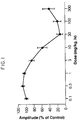
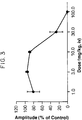
- the amplitude of bladder contractions decreased in a dose-dependent fashion following the administration of the competitive NMDA receptor antagonist.
- the administration of the competitive NMDA antagonist also produced a dose-dependent inhibition of sphincter activity.
- intravenous (i.v.) administration of compounds 1 , 2 , and 3 produced a dose-dependent inhibition of the amplitude of the bladder contractions ( Figures 1, 2, and 3).
- Administration of compounds 2 and 3 also produced a dose-dependent decrease in the duration of the bladder contractions ( Figures 4 and 5); however, administration of compound 1 had little effect on the duration of the contractions ( Figure 6).
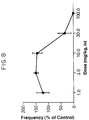
- Administration of compounds 2 and 3 also produced a dose-dependent decrease in the frequency (increase in the capacity) of the bladder contractions ( Figures 7 and 8).
- Intravenous administration of compound 1 produced a dose-dependent inhibition of external urethral sphincter (EUS) activity ( Figure 9).
- EUS external urethral sphincter
- This competitive NMDA antagonist also inhibited both bladder and sphincter activity following direct intrathecal (i.t.) administration to the spinal cord ( Figures 10, 11, 12, and 13).
- this competitive NMDA antagonist, compound 1 was ineffective in suppressing bladder activity in animals with acetic acid-infused bladders.
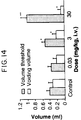
- the effect of the competitive antagonists on the capacity of the bladder was determined by the following experiment.
- the bladder of the test animal was emptied, and then slowly infused with saline (0.04 ml/min).
- the volume that is required to cause release of a portion of the bladder's contents is the threshold volume (capacity); the volume of fluid that is released is the voiding volume.
- Intravenous administration of compound 1 produced a dose-dependent increase in the threshold volume and a dose-dependent decrease in the voiding volume ( Figure 14).
- acetic acid-induced bladder activity is mediated by a purely spinal reflex pathway that is independent of supraspinal structures. Therefore, the competitive NMDA antagonists are useful for the treatment of motor urge incontinence, where cortical or subcortical inhibitory centers have been damaged or compromised by neurological disorders, for example, stroke, Parkinson's Disease, multiple sclerosis, or cerebral arterial sclerosis. Berger et al., J. Urol., 138, 836-838 (1987); Bradley, Neurolog. 28, 52-58 (1978).
Landscapes
- Health & Medical Sciences (AREA)
- Pharmacology & Pharmacy (AREA)
- Animal Behavior & Ethology (AREA)
- Life Sciences & Earth Sciences (AREA)
- General Health & Medical Sciences (AREA)
- Chemical & Material Sciences (AREA)
- Veterinary Medicine (AREA)
- Public Health (AREA)
- Medicinal Chemistry (AREA)
- Epidemiology (AREA)
- General Chemical & Material Sciences (AREA)
- Organic Chemistry (AREA)
- Engineering & Computer Science (AREA)
- Bioinformatics & Cheminformatics (AREA)
- Nuclear Medicine, Radiotherapy & Molecular Imaging (AREA)
- Chemical Kinetics & Catalysis (AREA)
- Reproductive Health (AREA)
- Endocrinology (AREA)
- Neurosurgery (AREA)
- Neurology (AREA)
- Urology & Nephrology (AREA)
- Biomedical Technology (AREA)
- Medicines That Contain Protein Lipid Enzymes And Other Medicines (AREA)
- Acyclic And Carbocyclic Compounds In Medicinal Compositions (AREA)
- Pharmaceuticals Containing Other Organic And Inorganic Compounds (AREA)
- Other In-Based Heterocyclic Compounds (AREA)
- Plural Heterocyclic Compounds (AREA)
Applications Claiming Priority (2)
| Application Number | Priority Date | Filing Date | Title |
|---|---|---|---|
| US919480 | 1992-07-24 | ||
| US07/919,480 US5192751A (en) | 1992-07-24 | 1992-07-24 | Use of competitive NMDA receptor antagonists in the treatment of urinary incontinence |
Publications (2)
| Publication Number | Publication Date |
|---|---|
| EP0580429A1 true EP0580429A1 (de) | 1994-01-26 |
| EP0580429B1 EP0580429B1 (de) | 1997-01-22 |
Family
ID=25442169
Family Applications (1)
| Application Number | Title | Priority Date | Filing Date |
|---|---|---|---|
| EP93305762A Expired - Lifetime EP0580429B1 (de) | 1992-07-24 | 1993-07-22 | Verwendung von Kompetitiven NMDA-Rezeptorantagonisten zur Behandlung der Harninkontinenz |
Country Status (9)
| Country | Link |
|---|---|
| US (1) | US5192751A (de) |
| EP (1) | EP0580429B1 (de) |
| JP (1) | JPH06183975A (de) |
| AT (1) | ATE147977T1 (de) |
| CA (1) | CA2100950A1 (de) |
| DE (1) | DE69307617T2 (de) |
| DK (1) | DK0580429T3 (de) |
| ES (1) | ES2096867T3 (de) |
| GR (1) | GR3023032T3 (de) |
Families Citing this family (25)
| Publication number | Priority date | Publication date | Assignee | Title |
|---|---|---|---|---|
| US5594007A (en) * | 1991-04-18 | 1997-01-14 | Pfizer Inc. | Method for treating spinal cord trauma with phenolic 2-piperidino-1-alkanols |
| US5436255A (en) * | 1992-07-23 | 1995-07-25 | Pfizer Inc. | Method of treating diseases susceptable to treatment by blocking NMDA-receptors |
| US5192751A (en) * | 1992-07-24 | 1993-03-09 | Eli Lilly And Company | Use of competitive NMDA receptor antagonists in the treatment of urinary incontinence |
| US5284957A (en) * | 1992-09-03 | 1994-02-08 | Eli Lilly And Company | Excitatory amino acid receptor antagonists |
| US5498610A (en) * | 1992-11-06 | 1996-03-12 | Pfizer Inc. | Neuroprotective indolone and related derivatives |
| TW344661B (en) * | 1993-11-24 | 1998-11-11 | Lilly Co Eli | Pharmaceutical composition for treatment of incontinence |
| CN1048247C (zh) * | 1994-01-31 | 2000-01-12 | 美国辉瑞有限公司 | 神经保护的苯并二氢吡喃化合物 |
| KR100224961B1 (ko) * | 1994-08-18 | 1999-10-15 | 디. 제이. 우드 | 신경보호성 3-(피페리디닐-1)-크로만-4,7-디올 및 1-(4-하이드로페닐)-2-(피페리디닐-1)-알칸올 유도체 |
| DE69631525T2 (de) * | 1995-03-03 | 2004-12-16 | Endo Pharmaceuticals Inc. | Verwendung von dextromethorphan oder dextrorphan zur behandlung der harninkontinenz |
| ZA9610741B (en) | 1995-12-22 | 1997-06-24 | Warner Lambert Co | 4-Substituted piperidine analogs and their use as subtype selective nmda receptor antagonists |
| ZA9610738B (en) * | 1995-12-22 | 1997-06-24 | Warner Lambert Co | Subtype selective nmda receptor ligands and the use thereof |
| ZA9610745B (en) * | 1995-12-22 | 1997-06-24 | Warner Lambert Co | 4-Subsituted piperidine analogs and their use as subtype selective nmda receptor antagonists |
| ZA9610736B (en) | 1995-12-22 | 1997-06-27 | Warner Lambert Co | 2-Substituted piperidine analogs and their use as subtypeselective nmda receptor antagonists |
| TW427978B (en) * | 1996-02-03 | 2001-04-01 | Hoffmann La Roche | Tetrahydroisoquinoline derivatives |
| US5880138A (en) * | 1996-10-01 | 1999-03-09 | Eli Lilly And Company | NMDA receptor selective antagonists |
| US7470431B2 (en) | 1997-07-15 | 2008-12-30 | The Regents Of The University Of Colorado | Use of neurotoxin therapy for treatment of urological-neurological disorders associated with prostate cancer |
| EP1011695B2 (de) | 1997-07-15 | 2009-11-04 | The Regents of the University of Colorado | Verwendung einer neurotoxintherapie zur behandlung von prostata erkrankungen |
| US7449192B2 (en) | 1997-07-15 | 2008-11-11 | The Regents Of The University Of Colorado | Use of neurotoxin therapy for treatment of urologic and related disorders related to neurogenic bladder dysfunction |
| US7455845B2 (en) | 1997-07-15 | 2008-11-25 | The Regents Of The University Of Colorado | Use of neurotoxin therapy for treatment of urologic and related disorders related to lowering elevated bladder pressure |
| US9066943B2 (en) | 1997-07-15 | 2015-06-30 | The Regents Of The University Of Colorado | Use of botulinum toxin therapy for treatment of urological neurological conditions |
| PE20000728A1 (es) | 1998-06-26 | 2000-08-21 | Cocensys Inc | Heterociclos 4-bencil piperidina alquilsulfoxido y su uso como antagonistas receptores subtipo-selectivo nmda |
| US6465458B1 (en) * | 1999-07-01 | 2002-10-15 | Pharmacia & Upjohn Company | Method of treating or preventing chronic pain with a highly selective norepinephrine reuptake inhibitor |
| EP1436258A4 (de) * | 2001-03-08 | 2005-03-23 | Univ Emory | Ph-wert-abhängige nmda-rezeptorantagonisten |
| KR20100045983A (ko) | 2007-06-29 | 2010-05-04 | 에모리 유니버시티 | 신경보호를 위한 nmda 수용체 길항물질 |
| WO2025124571A1 (zh) * | 2023-12-14 | 2025-06-19 | 斯莱普泰(上海)生物医药科技有限公司 | Nmda受体拮抗剂及其用途 |
Citations (3)
| Publication number | Priority date | Publication date | Assignee | Title |
|---|---|---|---|---|
| US4902695A (en) * | 1989-02-13 | 1990-02-20 | Eli Lilly And Company | Excitatory amino acid receptor antagonists |
| US4968678A (en) * | 1988-02-19 | 1990-11-06 | Eli Lilly And Company | Tetrazole excitatory amino acid receptor antagonists |
| US5192751A (en) * | 1992-07-24 | 1993-03-09 | Eli Lilly And Company | Use of competitive NMDA receptor antagonists in the treatment of urinary incontinence |
-
1992
- 1992-07-24 US US07/919,480 patent/US5192751A/en not_active Expired - Fee Related
-
1993
- 1993-07-20 CA CA002100950A patent/CA2100950A1/en not_active Abandoned
- 1993-07-22 ES ES93305762T patent/ES2096867T3/es not_active Expired - Lifetime
- 1993-07-22 EP EP93305762A patent/EP0580429B1/de not_active Expired - Lifetime
- 1993-07-22 DE DE69307617T patent/DE69307617T2/de not_active Expired - Fee Related
- 1993-07-22 DK DK93305762.2T patent/DK0580429T3/da active
- 1993-07-22 AT AT93305762T patent/ATE147977T1/de active
- 1993-07-23 JP JP5182731A patent/JPH06183975A/ja active Pending
-
1997
- 1997-04-03 GR GR970400699T patent/GR3023032T3/el unknown
Patent Citations (3)
| Publication number | Priority date | Publication date | Assignee | Title |
|---|---|---|---|---|
| US4968678A (en) * | 1988-02-19 | 1990-11-06 | Eli Lilly And Company | Tetrazole excitatory amino acid receptor antagonists |
| US4902695A (en) * | 1989-02-13 | 1990-02-20 | Eli Lilly And Company | Excitatory amino acid receptor antagonists |
| US5192751A (en) * | 1992-07-24 | 1993-03-09 | Eli Lilly And Company | Use of competitive NMDA receptor antagonists in the treatment of urinary incontinence |
Non-Patent Citations (3)
| Title |
|---|
| DIALOG INFORMATION SERVICES, FILE 5, ACC. NO. 8879564 * |
| DIALOG INFORMATION SERVICES, FILE 5, ACC.NO. 9783189 * |
| JPN. J. PHYSIOL. vol. 42, no. SUPP, 4 April 1992, page S241 MATSUMOTO G. ET AL., 'NMDA-glutamate receptors inhibit micturition reflex at sacral sponal cord of the cat as demonstrated by evoked discharges in the pelvic nerve' * |
Also Published As
| Publication number | Publication date |
|---|---|
| DE69307617D1 (de) | 1997-03-06 |
| JPH06183975A (ja) | 1994-07-05 |
| DK0580429T3 (da) | 1997-07-14 |
| EP0580429B1 (de) | 1997-01-22 |
| CA2100950A1 (en) | 1994-01-25 |
| GR3023032T3 (en) | 1997-07-30 |
| ATE147977T1 (de) | 1997-02-15 |
| US5192751A (en) | 1993-03-09 |
| DE69307617T2 (de) | 1997-05-28 |
| ES2096867T3 (es) | 1997-03-16 |
Similar Documents
| Publication | Publication Date | Title |
|---|---|---|
| EP0580429B1 (de) | Verwendung von Kompetitiven NMDA-Rezeptorantagonisten zur Behandlung der Harninkontinenz | |
| US5086072A (en) | Treatment of mood disorders with functional antagonists of the glycine/nmda receptor complex | |
| DK2035029T3 (en) | PEPTID RELATIONS FOR TREATMENT OF REFRACTOR STATUS EPILEPTICUS. | |
| US20030133951A1 (en) | Pharmaceutical composition for treatment of acute, chronic pain and/or neuropathic pain and migraines | |
| RU2232017C2 (ru) | Антагонисты метаботропных глутаматных рецепторов (mglur5) для лечения боли и состояния тревоги | |
| AU2009201746A1 (en) | [(2-(amino-3,4-dioxo-1-cyclobuten-1-yl)amino]alkyl]-acid derivatives for the treatment of pain | |
| JP2002505306A (ja) | 選択的nmdanr2b拮抗薬とcox−2阻害薬の併用 | |
| US20010056084A1 (en) | MGluR5 antagonists for the treatment of pain and anxiety | |
| JP6116674B2 (ja) | (1r,4r)−6’−フルオロ−N,N−ジメチル−4−フェニル−4’,9’−ジヒドロ−3’H−スピロ[シクロヘキサン−1,1’−ピラノ−[3,4,b]インドール]−4−アミンおよびプロピオン酸誘導体を含む医薬組成物 | |
| ZA200300641B (en) | Use of derivatives of valproic acid and 2-valproenic acid amides for the treatment of mania in bipolar disorder. | |
| JP2002544162A (ja) | アリールアミジン、かかる化合物を含有する組成物および使用方法 | |
| AU706301B2 (en) | New pharmacological use of AII-receptor antagonists | |
| Doi et al. | Effects of TAK-637, a tachykinin receptor antagonist, on lower urinary tract function in the guinea pig | |
| RU2212237C2 (ru) | Средство для лечения нейрогенного воспаления | |
| JP6116677B2 (ja) | (1r,4r)−6’−フルオロ−N,N−ジメチル−4−フェニル−4’,9’−ジヒドロ−3’H−スピロ[シクロヘキサン−1,1’−ピラノ[3,4,b]インドール]−4−アミンおよびオキシカムを含む医薬組成物 | |
| PT1359905E (pt) | Uso de antagonistas de mglur5 para o tratamento de estados pruriginosos | |
| Stafford et al. | Dopamine‐sensitive receptors that evoke rumination and modify reticulo‐ruminal activity in sheep | |
| Plaza et al. | 5‐Hydroxytryptamine induces forestomach hypomotility in sheep through 5‐HT4 receptors | |
| HUP0201650A2 (hu) | Amino-tetralin-származékok alkalmazása szív- és érrendszeri betegségek gyógykezelésére használható gyógyszerek előállítására | |
| Beauchamp et al. | Mechanism of the pressor response to intraperitoneal injection of bradykinin in guinea pigs | |
| Nieto et al. | Intestinal motility and transit | |
| Antonaccio | Central GABA receptor stimulants as potential novel antihypertensive agents | |
| WO1988009675A1 (en) | Inhibition of arachidonic acid metabolism | |
| Ferracuti et al. | Analgesic-antiinflammatory drugs inhibit orbicularis oculi reflexes in humans via a central mode of action | |
| WELLS et al. | TOPIC: PERIOPERATIVE ANALGESIA |
Legal Events
| Date | Code | Title | Description |
|---|---|---|---|
| PUAI | Public reference made under article 153(3) epc to a published international application that has entered the european phase |
Free format text: ORIGINAL CODE: 0009012 |
|
| 17P | Request for examination filed |
Effective date: 19930731 |
|
| AK | Designated contracting states |
Kind code of ref document: A1 Designated state(s): AT BE CH DE DK ES FR GB GR IE IT LI LU NL PT SE |
|
| 17Q | First examination report despatched |
Effective date: 19941026 |
|
| GRAG | Despatch of communication of intention to grant |
Free format text: ORIGINAL CODE: EPIDOS AGRA |
|
| GRAH | Despatch of communication of intention to grant a patent |
Free format text: ORIGINAL CODE: EPIDOS IGRA |
|
| GRAH | Despatch of communication of intention to grant a patent |
Free format text: ORIGINAL CODE: EPIDOS IGRA |
|
| GRAA | (expected) grant |
Free format text: ORIGINAL CODE: 0009210 |
|
| AK | Designated contracting states |
Kind code of ref document: B1 Designated state(s): AT BE CH DE DK ES FR GB GR IE IT LI LU NL PT SE |
|
| REF | Corresponds to: |
Ref document number: 147977 Country of ref document: AT Date of ref document: 19970215 Kind code of ref document: T |
|
| REG | Reference to a national code |
Ref country code: CH Ref legal event code: NV Representative=s name: E. BLUM & CO. PATENTANWAELTE Ref country code: CH Ref legal event code: EP |
|
| ET | Fr: translation filed | ||
| REF | Corresponds to: |
Ref document number: 69307617 Country of ref document: DE Date of ref document: 19970306 |
|
| REG | Reference to a national code |
Ref country code: IE Ref legal event code: FG4D Free format text: 71712 |
|
| REG | Reference to a national code |
Ref country code: ES Ref legal event code: FG2A Ref document number: 2096867 Country of ref document: ES Kind code of ref document: T3 |
|
| ITF | It: translation for a ep patent filed | ||
| REG | Reference to a national code |
Ref country code: PT Ref legal event code: SC4A Free format text: AVAILABILITY OF NATIONAL TRANSLATION Effective date: 19970226 |
|
| REG | Reference to a national code |
Ref country code: GR Ref legal event code: FG4A Free format text: 3023032 |
|
| REG | Reference to a national code |
Ref country code: DK Ref legal event code: T3 |
|
| PLBE | No opposition filed within time limit |
Free format text: ORIGINAL CODE: 0009261 |
|
| STAA | Information on the status of an ep patent application or granted ep patent |
Free format text: STATUS: NO OPPOSITION FILED WITHIN TIME LIMIT |
|
| 26N | No opposition filed | ||
| PGFP | Annual fee paid to national office [announced via postgrant information from national office to epo] |
Ref country code: PT Payment date: 19990609 Year of fee payment: 7 Ref country code: GR Payment date: 19990609 Year of fee payment: 7 |
|
| PGFP | Annual fee paid to national office [announced via postgrant information from national office to epo] |
Ref country code: DK Payment date: 19990702 Year of fee payment: 7 |
|
| PGFP | Annual fee paid to national office [announced via postgrant information from national office to epo] |
Ref country code: IE Payment date: 19990708 Year of fee payment: 7 |
|
| PGFP | Annual fee paid to national office [announced via postgrant information from national office to epo] |
Ref country code: AT Payment date: 19990712 Year of fee payment: 7 |
|
| PGFP | Annual fee paid to national office [announced via postgrant information from national office to epo] |
Ref country code: LU Payment date: 19990719 Year of fee payment: 7 |
|
| PGFP | Annual fee paid to national office [announced via postgrant information from national office to epo] |
Ref country code: SE Payment date: 19990728 Year of fee payment: 7 Ref country code: BE Payment date: 19990728 Year of fee payment: 7 |
|
| PGFP | Annual fee paid to national office [announced via postgrant information from national office to epo] |
Ref country code: NL Payment date: 19990730 Year of fee payment: 7 |
|
| PGFP | Annual fee paid to national office [announced via postgrant information from national office to epo] |
Ref country code: CH Payment date: 19990813 Year of fee payment: 7 |
|
| PG25 | Lapsed in a contracting state [announced via postgrant information from national office to epo] |
Ref country code: LU Free format text: LAPSE BECAUSE OF NON-PAYMENT OF DUE FEES Effective date: 20000722 Ref country code: IE Free format text: LAPSE BECAUSE OF NON-PAYMENT OF DUE FEES Effective date: 20000722 Ref country code: DK Free format text: LAPSE BECAUSE OF NON-PAYMENT OF DUE FEES Effective date: 20000722 Ref country code: AT Free format text: LAPSE BECAUSE OF NON-PAYMENT OF DUE FEES Effective date: 20000722 |
|
| PG25 | Lapsed in a contracting state [announced via postgrant information from national office to epo] |
Ref country code: SE Free format text: LAPSE BECAUSE OF NON-PAYMENT OF DUE FEES Effective date: 20000723 |
|
| PG25 | Lapsed in a contracting state [announced via postgrant information from national office to epo] |
Ref country code: LI Free format text: LAPSE BECAUSE OF NON-PAYMENT OF DUE FEES Effective date: 20000731 Ref country code: GR Free format text: LAPSE BECAUSE OF NON-PAYMENT OF DUE FEES Effective date: 20000731 Ref country code: CH Free format text: LAPSE BECAUSE OF NON-PAYMENT OF DUE FEES Effective date: 20000731 Ref country code: BE Free format text: LAPSE BECAUSE OF NON-PAYMENT OF DUE FEES Effective date: 20000731 |
|
| BERE | Be: lapsed |
Owner name: ELI LILLY AND CY Effective date: 20000731 |
|
| PG25 | Lapsed in a contracting state [announced via postgrant information from national office to epo] |
Ref country code: PT Free format text: LAPSE BECAUSE OF NON-PAYMENT OF DUE FEES Effective date: 20010131 |
|
| PG25 | Lapsed in a contracting state [announced via postgrant information from national office to epo] |
Ref country code: NL Free format text: LAPSE BECAUSE OF NON-PAYMENT OF DUE FEES Effective date: 20010201 |
|
| REG | Reference to a national code |
Ref country code: DK Ref legal event code: EBP |
|
| REG | Reference to a national code |
Ref country code: CH Ref legal event code: PL |
|
| EUG | Se: european patent has lapsed |
Ref document number: 93305762.2 |
|
| NLV4 | Nl: lapsed or anulled due to non-payment of the annual fee |
Effective date: 20010201 |
|
| REG | Reference to a national code |
Ref country code: IE Ref legal event code: MM4A |
|
| REG | Reference to a national code |
Ref country code: PT Ref legal event code: MM4A Free format text: LAPSE DUE TO NON-PAYMENT OF FEES Effective date: 20010131 |
|
| PGFP | Annual fee paid to national office [announced via postgrant information from national office to epo] |
Ref country code: GB Payment date: 20010614 Year of fee payment: 9 |
|
| PGFP | Annual fee paid to national office [announced via postgrant information from national office to epo] |
Ref country code: FR Payment date: 20010702 Year of fee payment: 9 |
|
| PGFP | Annual fee paid to national office [announced via postgrant information from national office to epo] |
Ref country code: ES Payment date: 20010716 Year of fee payment: 9 |
|
| PGFP | Annual fee paid to national office [announced via postgrant information from national office to epo] |
Ref country code: DE Payment date: 20010731 Year of fee payment: 9 |
|
| REG | Reference to a national code |
Ref country code: GB Ref legal event code: IF02 |
|
| PG25 | Lapsed in a contracting state [announced via postgrant information from national office to epo] |
Ref country code: GB Free format text: LAPSE BECAUSE OF NON-PAYMENT OF DUE FEES Effective date: 20020722 |
|
| PG25 | Lapsed in a contracting state [announced via postgrant information from national office to epo] |
Ref country code: ES Free format text: LAPSE BECAUSE OF NON-PAYMENT OF DUE FEES Effective date: 20020723 |
|
| PG25 | Lapsed in a contracting state [announced via postgrant information from national office to epo] |
Ref country code: DE Free format text: LAPSE BECAUSE OF NON-PAYMENT OF DUE FEES Effective date: 20030201 |
|
| GBPC | Gb: european patent ceased through non-payment of renewal fee |
Effective date: 20020722 |
|
| PG25 | Lapsed in a contracting state [announced via postgrant information from national office to epo] |
Ref country code: FR Free format text: LAPSE BECAUSE OF NON-PAYMENT OF DUE FEES Effective date: 20030331 |
|
| REG | Reference to a national code |
Ref country code: FR Ref legal event code: ST |
|
| REG | Reference to a national code |
Ref country code: ES Ref legal event code: FD2A Effective date: 20030811 |
|
| PG25 | Lapsed in a contracting state [announced via postgrant information from national office to epo] |
Ref country code: IT Free format text: LAPSE BECAUSE OF NON-PAYMENT OF DUE FEES;WARNING: LAPSES OF ITALIAN PATENTS WITH EFFECTIVE DATE BEFORE 2007 MAY HAVE OCCURRED AT ANY TIME BEFORE 2007. THE CORRECT EFFECTIVE DATE MAY BE DIFFERENT FROM THE ONE RECORDED. Effective date: 20050722 |