EP0618732B1 - An image and code data compression apparatus - Google Patents
An image and code data compression apparatus Download PDFInfo
- Publication number
- EP0618732B1 EP0618732B1 EP19940301703 EP94301703A EP0618732B1 EP 0618732 B1 EP0618732 B1 EP 0618732B1 EP 19940301703 EP19940301703 EP 19940301703 EP 94301703 A EP94301703 A EP 94301703A EP 0618732 B1 EP0618732 B1 EP 0618732B1
- Authority
- EP
- European Patent Office
- Prior art keywords
- image data
- compression apparatus
- transformation coefficients
- quantized
- code data
- Prior art date
- Legal status (The legal status is an assumption and is not a legal conclusion. Google has not performed a legal analysis and makes no representation as to the accuracy of the status listed.)
- Expired - Lifetime
Links
Images







Classifications
-
- H—ELECTRICITY
- H04—ELECTRIC COMMUNICATION TECHNIQUE
- H04N—PICTORIAL COMMUNICATION, e.g. TELEVISION
- H04N19/00—Methods or arrangements for coding, decoding, compressing or decompressing digital video signals
- H04N19/10—Methods or arrangements for coding, decoding, compressing or decompressing digital video signals using adaptive coding
- H04N19/169—Methods or arrangements for coding, decoding, compressing or decompressing digital video signals using adaptive coding characterised by the coding unit, i.e. the structural portion or semantic portion of the video signal being the object or the subject of the adaptive coding
- H04N19/18—Methods or arrangements for coding, decoding, compressing or decompressing digital video signals using adaptive coding characterised by the coding unit, i.e. the structural portion or semantic portion of the video signal being the object or the subject of the adaptive coding the unit being a set of transform coefficients
-
- H—ELECTRICITY
- H04—ELECTRIC COMMUNICATION TECHNIQUE
- H04N—PICTORIAL COMMUNICATION, e.g. TELEVISION
- H04N19/00—Methods or arrangements for coding, decoding, compressing or decompressing digital video signals
- H04N19/10—Methods or arrangements for coding, decoding, compressing or decompressing digital video signals using adaptive coding
- H04N19/102—Methods or arrangements for coding, decoding, compressing or decompressing digital video signals using adaptive coding characterised by the element, parameter or selection affected or controlled by the adaptive coding
- H04N19/132—Sampling, masking or truncation of coding units, e.g. adaptive resampling, frame skipping, frame interpolation or high-frequency transform coefficient masking
-
- H—ELECTRICITY
- H04—ELECTRIC COMMUNICATION TECHNIQUE
- H04N—PICTORIAL COMMUNICATION, e.g. TELEVISION
- H04N19/00—Methods or arrangements for coding, decoding, compressing or decompressing digital video signals
- H04N19/10—Methods or arrangements for coding, decoding, compressing or decompressing digital video signals using adaptive coding
- H04N19/134—Methods or arrangements for coding, decoding, compressing or decompressing digital video signals using adaptive coding characterised by the element, parameter or criterion affecting or controlling the adaptive coding
- H04N19/136—Incoming video signal characteristics or properties
- H04N19/14—Coding unit complexity, e.g. amount of activity or edge presence estimation
-
- H—ELECTRICITY
- H04—ELECTRIC COMMUNICATION TECHNIQUE
- H04N—PICTORIAL COMMUNICATION, e.g. TELEVISION
- H04N19/00—Methods or arrangements for coding, decoding, compressing or decompressing digital video signals
- H04N19/10—Methods or arrangements for coding, decoding, compressing or decompressing digital video signals using adaptive coding
- H04N19/134—Methods or arrangements for coding, decoding, compressing or decompressing digital video signals using adaptive coding characterised by the element, parameter or criterion affecting or controlling the adaptive coding
- H04N19/146—Data rate or code amount at the encoder output
- H04N19/149—Data rate or code amount at the encoder output by estimating the code amount by means of a model, e.g. mathematical model or statistical model
-
- H—ELECTRICITY
- H04—ELECTRIC COMMUNICATION TECHNIQUE
- H04N—PICTORIAL COMMUNICATION, e.g. TELEVISION
- H04N19/00—Methods or arrangements for coding, decoding, compressing or decompressing digital video signals
- H04N19/10—Methods or arrangements for coding, decoding, compressing or decompressing digital video signals using adaptive coding
- H04N19/169—Methods or arrangements for coding, decoding, compressing or decompressing digital video signals using adaptive coding characterised by the coding unit, i.e. the structural portion or semantic portion of the video signal being the object or the subject of the adaptive coding
- H04N19/17—Methods or arrangements for coding, decoding, compressing or decompressing digital video signals using adaptive coding characterised by the coding unit, i.e. the structural portion or semantic portion of the video signal being the object or the subject of the adaptive coding the unit being an image region, e.g. an object
- H04N19/176—Methods or arrangements for coding, decoding, compressing or decompressing digital video signals using adaptive coding characterised by the coding unit, i.e. the structural portion or semantic portion of the video signal being the object or the subject of the adaptive coding the unit being an image region, e.g. an object the region being a block, e.g. a macroblock
-
- H—ELECTRICITY
- H04—ELECTRIC COMMUNICATION TECHNIQUE
- H04N—PICTORIAL COMMUNICATION, e.g. TELEVISION
- H04N19/00—Methods or arrangements for coding, decoding, compressing or decompressing digital video signals
- H04N19/60—Methods or arrangements for coding, decoding, compressing or decompressing digital video signals using transform coding
-
- H—ELECTRICITY
- H04—ELECTRIC COMMUNICATION TECHNIQUE
- H04N—PICTORIAL COMMUNICATION, e.g. TELEVISION
- H04N19/00—Methods or arrangements for coding, decoding, compressing or decompressing digital video signals
- H04N19/10—Methods or arrangements for coding, decoding, compressing or decompressing digital video signals using adaptive coding
- H04N19/102—Methods or arrangements for coding, decoding, compressing or decompressing digital video signals using adaptive coding characterised by the element, parameter or selection affected or controlled by the adaptive coding
- H04N19/13—Adaptive entropy coding, e.g. adaptive variable length coding [AVLC] or context adaptive binary arithmetic coding [CABAC]
-
- H—ELECTRICITY
- H04—ELECTRIC COMMUNICATION TECHNIQUE
- H04N—PICTORIAL COMMUNICATION, e.g. TELEVISION
- H04N19/00—Methods or arrangements for coding, decoding, compressing or decompressing digital video signals
- H04N19/10—Methods or arrangements for coding, decoding, compressing or decompressing digital video signals using adaptive coding
- H04N19/134—Methods or arrangements for coding, decoding, compressing or decompressing digital video signals using adaptive coding characterised by the element, parameter or criterion affecting or controlling the adaptive coding
- H04N19/146—Data rate or code amount at the encoder output
-
- H—ELECTRICITY
- H04—ELECTRIC COMMUNICATION TECHNIQUE
- H04N—PICTORIAL COMMUNICATION, e.g. TELEVISION
- H04N19/00—Methods or arrangements for coding, decoding, compressing or decompressing digital video signals
- H04N19/90—Methods or arrangements for coding, decoding, compressing or decompressing digital video signals using coding techniques not provided for in groups H04N19/10-H04N19/85, e.g. fractals
- H04N19/91—Entropy coding, e.g. variable length coding [VLC] or arithmetic coding
Definitions
- the present invention relates to an image and code data compression apparatus formed of an image data compression apparatus and a code data compression apparatus. More particularly, the image data compression apparatus is provided for compressing the image data in accordance with an orthogonal transformation and obtaining code data after compression of the image data, and the code data compression apparatus is provided for further compressing the code data in accordance with the orthogonal transformation and obtaining re-compressed code data after compression of the code data.
- the image and code data compression apparatus can realize a high data compression rate in accordance with an algorithm for a compression method which is defined by JPEG (Joint Photographic Experts Group).
- an algorithm for compression was standardized by JPEG which was jointly organized by the International Standardization Organization (i.e., ISO) and the Comite Consultatif International Circuitique et Telephonique (i.e., CCITT).
- ISO International Standardization Organization
- CCITT Comite Consultatif International Circuitique et Telephonique
- image data are divided into a plurality of image data blocks, and each image data block is processed in accordance with a known DCT (Discrete Cosine Transformation) to calculate a DCT coefficient (below, transformation coefficient). Further, the calculated transformation coefficients are quantized to obtain quantized transformation coefficients. Still further, the quantized transformation coefficients are processed in order from a low frequency to a high frequency in accordance with a variable length coding process to realize compression of the image data.
- DCT Discrete Cosine Transformation
- variable length coding process is performed for data which sums up the number of the quantized transformation coefficients having nonzero value and the number of the quantized transformation coefficients continuing just before the nonzero value.
- the object of the invention is to provide an image and code data compression apparatus enabling high data and code compression rates.
- an image data compression apparatus for compressing the image data, comprises:
- the deleting unit deletes a part of the image data block dependent upon the transformation coefficients calculated by the transformation means.
- the deleting unit deletes a part of the image data block dependent upon the transformation coefficients by stopping the orthogonal transformation processes executed by the transformation means.
- the deleting unit does not select the transformation coefficients by uniformly deleting the transformation coefficients having a high frequency component, and selects the transformation coefficients having the high frequency component in accordance with a predetermined reference.
- the deleting unit deletes a part of the image data block by selecting the transformation coefficients indicating a large absolute value within the transformation coefficients calculated by the transformation unit.
- the deleting unit always selects the transformation coefficients having a direct current component and a predetermined low frequency component.
- the deleting unit deletes a part of the image data block dependent upon the quantized transformation coefficients calculated by the quantized transformation unit.
- the deleting unit deletes a part of the image data block by selecting the quantized transformation coefficients by stopping the quantizing processes which are executed by the quantizing unit.
- the deleting unit does not select the quantized transformation coefficients by uniformly deleting the quantized transformation coefficients having a high frequency component, and selects the quantized transformation coefficients having the high frequency component in accordance with a predetermined reference.
- the deleting unit may delete a part of the image data block by selecting the transformation coefficients indicating a large absolute value within the quantized transformation coefficients which are calculated by the quantizing unit.
- the deleting unit always selects the quantized transformation coefficients having a direct current component and a predetermined low frequency component.
- the deleting unit may delete a part of the image data block dependent upon code data generated by the coding unit.
- the deleting unit deletes the image data block by stopping the coding processes which are executed by the coding unit.
- the deleting unit does not select the code data by uniformly deleting the code data having a high frequency component, and selects the code data having the high frequency component in accordance with a predetermined reference.
- the detecting unit counts the number of the transformation coefficients in which absolute values of the transformation coefficient exceed a threshold value which is set corresponding to the transformation coefficients, and detects the complicated image data when a counted value exceeds a predetermined reference value.
- the detecting unit calculates a sum of n-th power (n: rational number) of the absolute value of the transformation coefficient, and detects the complicated image data when a calculated value exceeds a predetermined reference value.
- the detecting unit counts the quantized transformation coefficients in which absolute values of the quantized transformation coefficient exceed a threshold value which is set corresponding to the quantized transformation coefficients, and detects the complicated image data when a counted value exceeds a predetermined reference value.
- the detecting unit calculates a sum of n-th power (n: rational number) of the absolute value of the quantized transformation coefficient, and detects the complicated image data when calculated value exceeds a predetermined reference value.
- the detecting unit detects the complicated image data when a sum of the code length of the code data is larger than a predetermined reference value.
- the detecting unit uses the absolute values weighted by the frequency when summing the absolute values.
- the deleting unit remains valid code data which is contained in the predetermined code amount in which the direct current component is defined as a start point.
- the deleting unit may not uniformly delete the high frequency components of the code data, but retains the valid code data having the high frequency component in accordance with a predetermined reference.
- the selecting unit selects the quantized transformation coefficient having a large absolute value within the quantized transformation coefficients restored by the restoring unit.
- the selecting unit always selects the quantized transformation coefficient having a direct current component and the predetermined low frequency component.
- the selecting unit selects the transformation coefficients having large absolute values within the transformation coefficients which are restored by the restoring unit.
- the selecting unit always selects the transformation coefficients having direct current components and the predetermined low frequency components.
- the detecting unit detects the complicated image when a sum of the code lengths of the code data is larger than the predetermined reference value.
- the detecting unit may detect the complicated image when the number of the quantized transformation coefficients indicating a nonzero value which is defined by the code data is larger than the predetermined reference value.
- Figure 1 is an explanatory view of a deriving process of quantized DCT coefficients.
- reference letter A denotes a table of a pixel block having 8 ⁇ 8 pixels each of which represents a gradation value of the pixel. In this case, the large gradation value represents white color, and the small one represents black color.
- Reference letter B denotes a table of the DCT coefficient which is calculated from the pixel block 1 using a known Discrete Cosine Transformation.
- Reference number C denotes a quantized table formed of a plurality of quantized threshold values.
- Reference number D denotes a table of the quantized DCT coefficient. Briefly, each value of the quantized DCT coefficient table D is obtained by dividing the DCT coefficient by the quantized threshold value.
- the DCT Discrete Cosine Transformation
- the each DCT coefficient S uv is divided by the quantized threshold value Q uv which is stored in the quantized table C.
- an integer value adjacent to the result of S uv ⁇ Q uv is defined as the quantized DCT coefficient as shown by the table D. For example, numerals "16", “4", “-2”, etc., are called “nonzero values", and "0" is called a zero value.
- the quantized threshold values in the quantized table D are commonly utilized for all image data blocks. This is because, if the change of the quantized threshold values are permitted for every image data block, it is necessary to inform all changes of the quantized threshold values to the decoding side.
- all image data have partially different characters in one image data block.
- the image data include a light/shade portion (i.e., the change of the image is noticeable, for example, an image of sky, mountain and vally) and a flat portion (i.e., the changes of the image are small, for example, only sky and cloud)
- the grade of deterioration i.e., quality of the compressed image
- the decoding device which is defined by JPEG. This is because the decoding device, which operates in accordance with the algorithm defined by JPEG, does not provide a structure which can decode the image data by switching the quantized threshold values for every block image data.
- an improved image data compression apparatus which can realize high data compression rate when compressing the image data using the orthogonal transformation in accordance with the algorithm defined by JPEG, and can output the code data which can decode by using the decoding algorithm defined by JPEG.
- an improved code data compression apparatus which can realize a high compression rate when compressing code data by using the orthogonal transformation in accordance with the algorithm defined by JPEG, and can decode by using the decoding algorithm also defined by JPEG.
- the code data are obtained by compressing the image data.
- Figure 2 is a basic block diagram of the image data compression apparatus according to the present invention
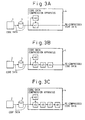
- Figures 3A to 3C are basic block diagrams of the code data compression apparatus according to the present invention.
- the image and code data compression apparatus according to the present invention is formed by combining the image data compression apparatus of Fig. 2 with the code data compression apparatus of Figs. 3A to 3C.
- reference number 1 denotes the image data compression apparatus according to the present invention.
- the image data compression apparatus 1 comprises a dividing means 10, a transformation means 11, a transformation coefficient managing area (below, TCMA) 12, a quantizing means 13, a quantizing transformation coefficient managing means (below, QTCMM) 14, a coding means 15, a detecting means 16, and a deleting means 17.
- the dividing means 10 receives the image data and divides the image data into a plurality of image data blocks.
- the transformation means 11 performs the orthogonal transformation to each image data block to calculate the transformation coefficients for every frequency component.
- the TCMA 12 is provided for managing the transformation coefficients which are calculated by the transformation means 11.
- the quantizing means 13 performs the quantizing operation to the transformation coefficients to calculate the quantized transformation coefficients using the quantized threshold values Quv which are set commonly to all image data.
- the QTCMM 14 manages the quantized transformation coefficients which are calculated by the quantized means 13.
- the coding means 15 generates the code data by performing the variable length coding process to the quantized transformation coefficients which are calculated by the quantized means 13.
- the detection means 16 detects the complexity of the image data block. As explained above, "complexity" means the grade of the image data including the light/shade portion and the flat portion.
- the deleting means 17 performs deletion of image data having high complexity.
- reference number 2 denotes an image data compression apparatus of Fig. 2.
- Reference number 3 denotes an image code file for temporarily storing the code data which are output from the image data compression apparatus.
- Reference number 4 denotes a code data compression apparatus according to the present invention to compress the code data stored in the image code file 3.
- the code data compression apparatus 4 is provided for further compressing the code data which are compressed by the image data compression apparatus 2.
- the code data compression apparatus can provide three types of data in accordance with the grade of re-compressed code data as explained in detail below.
- this type of the code data compression apparatus 4 includes a detecting means 40 and a deleting means 41.
- the detecting means 40 receives the code data and detects the complexity thereof.
- the deleting means 41 deletes the code data having high complexity, and outputs the re-compressed code data therefrom after deletion of the complicated code data.
- this type of the code data compression apparatus 4 includes the detecting means 40, a restoring means 42, a selecting means 43, and a re-coding means 44.
- the restoring means 42 restores the quantized transformation coefficients to the image data blocks (code data) having high complexity which are detected by the detecting means 40.
- the selecting means 43 selects the quantized transformation coefficients which are restored by the restoring means 42.
- the re-coding means 44 performs the variable length coding process for the quantized transformation coefficients which are selected by the selecting means 43.
- this type of the code data compression apparatus 4 includes the detecting means 40, a restoring means 45, a selecting means 46, a re-quantizing means 47, and a re-coding means 48.
- the restoring means 45 restores the transformation coefficients of the block image data having high complexity using the quantized threshold values which are set commonly to all image data.
- the selecting means 46 selects the transformation coefficients which are restored by the restoring means 45.
- the re-quantizing means 47 quantizes the transformation coefficients, which are selected by the selecting means 46, using the quantized threshold values which are set commonly to all image data.
- the re-coding means 48 performs the variable length coding process for the quantized transformation coefficients which are calculated by the re-quantizing means 47.
- the detecting means 16 refers to the transformation coefficients generated by the transformation means 11 and the transformation coefficients expanded by the TCMA 12, and counts the number of the transformation coefficients in which absolute values thereof exceed threshold values which are set for every transformation coefficient. Further, when the counted values exceed a predetermined reference value, the detecting means 16 recognizes that the image is complicated.
- the detecting means 16 calculates a sum of n-th power of the absolute values of the transformation coefficients (in this case, n denotes a rational number). When the absolute values exceed the reference value, the detecting means 16 recognizes that the image is complicated. In this case, the detecting means 16 may use the transformation coefficients which are weighted in accordance with the frequency when adding the absolute values.
- the deleting means 17 performs deletion of the image data by selecting the transformation coefficients which are calculated by the transformation means 11, or by selecting the quantized transformation coefficients which are calculated by the transformation means 11, or by selecting the code data which are calculated by the coding means 15.
- the deleting means 17 performs deletion of the image data in such a way that the deletion means 17 stops the orthogonal transformation processes which are executed by the transformation means 11 and selects the transformation coefficients, selects the large absolute values from the transformation coefficients which are calculated by the transformation means 11, and sets the transformation coefficients which are not selected, to zero.
- the deleting means 17 performs deletion of the image data in such a way that the deletion means 17 stops the quantization processes which are executed by the quantizing means 13 and selects the quantized transformation coefficients, selects the large absolute values from the quantized transformation coefficients which are calculated by the quantizing means 13, and sets the quantized transformation coefficients which are not selected, to zero.
- the detecting means 16 refers to the quantized transformation coefficients which are generated by the quantizing means 13 and the quantized transformation coefficients which are expanded by the QTCMM 14, and counts the number of the transformation coefficients in which the absolute values of the quantized transformation coefficients exceed the threshold values which are set for every the quantized transformation coefficients. When the counted value exceeds the reference value, the detecting means 16 recognizes that the image is complicated.
- the detecting means 16 calculates the sum of n-th power of the absolute values of the quantized transformation coefficients. When the calculated value exceeds the reference value, the detecting means 16 recognizes that the image is complicated. When processing the above summing operation, the detecting means 16 employs the transformation coefficients which are weighted in accordance with the frequency when summing the absolute values.
- the deleting means performs deletion of the image data by selecting the quantized transformation coefficients which are calculated by the quantizing means 13, or by selecting the code data which are generated by the coding means 15.
- the deleting means 17 performs deletion of the code data in such a way that the deleting means 17 selects the quantized transformation coefficients by stopping the quantizing processes which are executed in the quantizing means 13, selects the large absolute values from the quantized transformation coefficients which are calculated by the quantizing means 13, and sets the quantized transformation coefficients, which are not selected, to the zero value. Further, the deleting means 17 performs deletion of the code data by stopping the coding processes which are executed in the coding means 15.
- the detecting means 16 recognizes that the image is complicated.
- the detecting means 16 employs transformation coefficients which are weighted in accordance with the frequency.
- the deleting means 17 performs deletion of the code data by selecting the code data which are generated by the coding means 15.
- the deleting means 17 performs deletion of the code data in such a way that the deleting means 17 stops the coding processes which are executed in the coding means 15, and selects the code data.
- all high frequency components are not deleted uniformly and, for example, a half of the high frequency components may be selected in accordance with the predetermined reference value.
- the detecting means 40 recognizes that the code data is complicated. Further, when the number of the quantized transformation coefficients which indicate the nonzero value are larger than the threshold values, the detecting means 40 recognizes that the code data is complicated.
- the deleting means 41 performs deletion of the code data in such a way that the deleting means 41 remains the code data which are contained within a predetermined code amount, which is defined by the direct current component as a start point, as valid code data, and deletes other code data except for the above valid code data.
- the restoring means 42 restores the quantized transformation coefficients of the complicated block image data by using the quantized threshold values which are set commonly to all images.
- the selecting means 43 remains the large absolute values within the restored quantized transformation coefficients, and selects other quantized transformation coefficients except for the above by setting to the zero value.
- the re-coding means 44 performs the variable length coding process to the selected quantized transformation coefficients. At that time, the selecting means 43 always selects the quantized transformation coefficients having direct current components and the low frequency components regardless of the large absolute values.
- the restoring means 45 restores the transformation coefficients of the complicated image data block by using the quantized threshold values which are set commonly to all images.
- the selecting means 46 remains the large absolute values within the restored transformation coefficients, and selects other transformation coefficients, except for the above, by setting to zero.
- the re-quantizing means 47 quantizes the selected transformation coefficients by using the quantized threshold values which are set commonly to all image data.
- the re-coding means 48 performs the variable length coding process as to the selected quantized transformation coefficients.
- the selecting means 46 always selects the quantized transformation coefficients having direct current components and the frequency components regardless of large absolute values.
- Figure 4 is a flowchart of the operation of the image data compression apparatus according to an embodiment of the present invention
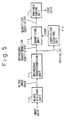
- Figure 5 is a functional view for explaining the flowchart shown in Fig. 4.
- the block dividing unit 110 receives the image data, and divides the image data into a plurality of block image data (step ST1).
- the orthogonal transformation unit 111 selects the first (head) image block from the block image data (step ST2), and performs the orthogonal transformation as to the block image data which is selected in step ST2 (step ST3).
- the coefficient count unit 113 receives an instruction which initializes the orthogonal transformation coefficients from the orthogonal transformation unit 111, and sets a variable number (COUNT) to zero (step ST4). Further, the coefficient count unit 113 selects the orthogonal transformation coefficient at the lowest frequency (step ST5), and outputs the selected orthogonal transformation coefficient to the quantizing unit 112.
- the quantizing unit 112 receives the orthogonal transformation coefficient selected by the coefficient count unit 113, and determines whether or not an absolute value of the selected orthogonal transformation coefficient is larger than a half of the quantized threshold value (step ST6). When the absolute value is smaller than half of the quantized threshold value (YES, in step ST6), the quantizing unit 112 quantizes the orthogonal coefficient in accordance with the quantized threshold value (step ST7). Further, the variable length coding unit 114 performs the variable length coding process for the quantized orthogonal transformation coefficient (step ST8).
- the quantizing unit 112 determines whether or not there is a next orthogonal transformation coefficient (step ST9). When there is a next orthogonal transformation coefficient (YES, in step ST9), the quantizing unit 112 selects the next orthogonal transformation coefficient (step ST10) and the process returns to the step ST6.
- the coefficient count unit 113 counts up the variable number COUNT by one (step ST11). The coefficient count unit 113 determines whether or not the variable number COUNT is larger than a predetermined threshold value TH (step ST12). When the variable count is smaller than the threshold value TH (NO, in step ST12), the process goes to the step ST7, and the quantizing unit 112 quantizes the orthogonal transformation coefficient in accordance with the quantized threshold value.
- the coefficient count unit 113 determines that the image data is complicated. Further, the coefficient unit 113 does not perform the quantization of the orthogonal transformation coefficient, and outputs a block completion identifier (EOB) to the quantizing unit 112 (step ST13). Still further, the coefficient count unit 113 determines whether or not there is a next image data block (step ST14). When there is next image data block (YES, in step ST14), the coefficient count unit 113 selects next image block (step ST15), and the process returns to the step ST3.
- EOB block completion identifier
- the coefficient count unit 113 outputs the block completion identifier (EOB) to the quantizing unit 112 (step ST13). Further, when there is no next image data block (NO, in step ST14), the coefficient count unit 113 outputs a data completion identifier (EOF) to the quantizing unit 112.
- the image data compression apparatus quantizes the orthogonal transformation coefficients in order from the low frequency component.
- the quantizing means 112 determines that the block image data is complicated, and stops the quantizing operation of the orthogonal transformation coefficient for the high frequency components after the above process.
- the quantized threshold values are used commonly for all image data so that it is possible to realize high data compression and to prevent deterioration of the quality of the restored image.
- the quantizing operation for the orthogonal transformation coefficient at the high frequency components is stopped uniformly in the above embodiment, as another embodiment, it may be possible to remain the orthogonal transformation coefficient having a large absolute value as the valid coefficient after the above stop operation, and to set another orthogonal transformation coefficient except for the above to "zero".
- the complexity of the block image data is determined based on the accumulation value of the orthogonal transformation coefficient in which the absolute value exceeds half of the quantized threshold value in the above embodiment, it may be possible to employ either a sum of squared values (below, a square-sum) of the orthogonal transformation coefficient or the sum of the absolute of the orthogonal transformation coefficient. Still further, it may be possible to use the sum of the high frequency components after they are weighted.
- Figure 6 is a flowchart of the operation of the image data compression apparatus according to another embodiment of the present invention
- Figure 7 is a functional view for explaining the flowchart shown in Fig. 6.
- the block dividing unit 110 receives the image data, and divides the image data into a plurality of image blocks (step ST21).
- the orthogonal transformation unit 111 selects the head image block from the image blocks (step ST22), and performs the orthogonal transformation as to the selected block image data to calculate the orthogonal transformation coefficient OTC (step ST23).
- the quantizing unit 112 quantizes the orthogonal transformation coefficient (step ST24) to calculate the quantized orthogonal transformation coefficient QOTC (step ST24).
- the nonzero-coefficient count unit 113a counts the number of the variable number (COUNT) of the nonzero-quantized orthogonal transformation coefficients which are contained in the selected image data block (step ST25).
- the decision unit 115 determines whether or not the count of the nonzero-quantized orthogonal transformation coefficient is larger than the predetermined threshold value TH (step ST26).
- variable length coding unit 114 When the count is smaller than the threshold value TH (NO, in step ST26), the variable length coding unit 114 performs the variable length coding process to the quantized orthogonal transformation coefficient (step ST27).
- the decision unit 115 determines that the block image data is complicated, and the coefficient selecting unit 116 selects the number of the threshold value TH of the quantized orthogonal transformation coefficient in order from a larger absolute value (step ST28).
- the coefficient selecting unit 116 sets the quantized orthogonal transformation coefficient, which is not selected, to zero, and the variable length coding unit 114 uses the quantized orthogonal transformation coefficient which is selected (step ST27).
- variable length coding unit 114 When the variable length coding unit 114 outputs the block completion identifier (EOB) to the decision unit 115 (step ST29), the decision unit 115 determines whether or not there is a next image block (step ST30). When there is a next image block (YES, in step ST30), the nonzero-coefficient count unit 113a selects the next block (step ST31), and the process returns to the step ST23. When there is no next block (NO, in step ST30), the variable length coding unit 114 outputs the data completion identifier (EOF) to the decision unit 115.
- EEF data completion identifier
- the decision unit 115 determines that the image data block is complicated, and the coefficient selecting unit 116 selects the quantized orthogonal transformation coefficient in order from larger absolute value. Further, the variable length coding unit 114 performs the variable length coding process for the image data block which exceeds the threshold value TH.
- the quantized threshold values are used commonly for all image data so that it is possible to realize high data compression and to prevent deterioration of the quality of the compressed image data.
- the coefficient selecting unit 116 selects the orthogonal transformation coefficient in order from a larger absolute value. Further, it may be possible to always select the direct current components and the low frequency components in order to maintain a higher quality of the compressed image.
- the number of the nonzero quantized orthogonal coefficients is used for determining whether of not the block image data is complicated, it is possible to employ the square-sum of the quantized orthogonal transformation coefficient or the absolute of the quantized orthogonal transformation coefficient. Further, it is possible to sum the high frequency components after they are weighted.
- the compression of the image data is performed by selecting the orthogonal transformation coefficient and the quantized transformation coefficient. Further, when the accumulated values of the code length of the code data are larger than the predetermined threshold value, the decision means determines that the block image data is complicated. When the accumulated values are larger than the threshold value, the code data are deleted by stopping the generation of the code data so that it is possible to compress the code data. Still further, it is possible that half of the code data of the high frequency component are generated and remaining half of the code data are not generated after the above stop.
- the code data are deleted by selecting the predetermined number of the orthogonal transformation and the quantized transformation coefficient. Further, it is possible to employ a method in which a plurality of threshold values for the complexity are determined, and the numbers selected from the orthogonal transformation coefficient and the quantized orthogonal transformation coefficient are changed for every threshold value.
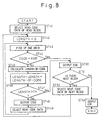
- FIG 8 is a flowchart of the operation of the code data compression apparatus according to the present invention
- Figure 9 is a functional view for explaining the flowchart of Fig. 8.
- the head data selecting unit 121 receives the code data from the image data compression apparatus 1 and selects the first (head) code data in the first block (step ST41). Further, the head data selecting unit 121 sets the variable number (LENGTH) to "zero".
- the unit code pick up unit 122 (below, pick up unit) picks up one code data (step ST43) from the image data block.
- the decision unit 126 determines whether or not the one code data indicates the block completion identifier (EOB) (step ST44). When the one code data is not the block completion identifier EOB, the code length calculating unit 123 calculates the code length (LENGTH-OF-CODE) of the one code data (step ST45).
- the code length calculating unit 123 adds the calculated code length to the variable number LENGTH, and updates the variable number (LENGTH) (step ST46).
- the decision unit 126 determines whether or not the variable number LENGTH exceeds the predetermined threshold value TH (step ST47). When the variable number LENGTH does not exceed the predetermined threshold value TH, the output unit 125 outputs the one code data which is picked up without any change (step ST48). Finally, the selecting unit 121 selects next code data (step ST49) and the process returns to the step ST43.
- step ST47 the decision unit determines that the image data block is complicated, and the output unit 125 outputs the block completion identifier EOB without further output of the code data (step ST50).
- step ST51 the decision unit 126 determines whether or not there is a next image block.
- the selecting unit 121 selects the head code data of the next block (step ST52) and the process returns to the step ST42.
- step ST52 the output unit 125 outputs the block completion identifier EOB (step ST50).
- the output unit 125 outputs the data completion identifier EOF (step ST53).
- the decision unit 126 determines that block image data is complicated when the accumulation value of the code length exceeds the predetermined threshold value TH, and the output unit 125 stops the output of the re-compressed code data after above process. Accordingly, in the code data compression apparatus 4, it is possible to prevent deterioration of the quality of the image code which is coded in accordance with the JPEG algorithm and to realize dense data compression with the high efficiency.
- Figure 10 is a flowchart of the operation of the code data compression apparatus according to the present invention
- Figure 11 is a functional view for explaining the flowchart of Fig. 10.
- the block selecting unit 121 receives the code data (step ST61).
- the nonzero quantized orthogonal transformation coefficient counter unit 127 (below, counter unit) counts the number (COUNT) of the quantized orthogonal transformation coefficients (step ST62).
- the decision unit 126 determines whether or not the number (COUNT) of the nonzero quantized orthogonal transformation coefficient exceeds the predetermined threshold value TH (step ST63).
- the decision unit 126 When the number (COUNT) is smaller than the threshold value (YES, in step ST63), the decision unit 126 outputs the code data through the multiplexer 131 (step ST64). Further, the decision unit 126 determines whether or not there is a next image data block (step ST65). When there is a next image data block, the block selecting unit 121 selects the next block (step ST66) and the process returns to the step ST62. When there is no next image data block, the variable length coding unit 129 outputs the data completion identifier EOF. Further, when the number of the nonzero quantized orthogonal transformation coefficient exceeds the predetermined threshold value TH (YES, in step 63), the decision unit 126 determines that the code data is complicated. The variable length decoding unit 128 performs an inverted transformation of the variable length coding process to decode the quantized orthogonal transformation coefficient (step ST68).
- the selecting unit 121 selects the quantized orthogonal transformation coefficient in accordance with the number which exceeds the threshold value TH in order from the small absolute value, and sets the selected coefficient to zero (step ST69).
- the variable length coding unit 129 performs the variable length coding process again (step ST70). Further, the variable length coding unit 129 outputs the block completion identifier EOB (step ST71), and the process goes to the step ST65.
- the decision unit 126 determines that the block image data is complicated when the number of the nonzero quantized orthogonal transformation coefficient exceeds the threshold value TH.
- the decoding unit 128 decodes the quantized orthogonal transformation coefficient, and selects the predetermined number of the coefficients in order from the large absolute value.
Landscapes
- Engineering & Computer Science (AREA)
- Multimedia (AREA)
- Signal Processing (AREA)
- Physics & Mathematics (AREA)
- Algebra (AREA)
- General Physics & Mathematics (AREA)
- Mathematical Analysis (AREA)
- Mathematical Optimization (AREA)
- Pure & Applied Mathematics (AREA)
- Compression Or Coding Systems Of Tv Signals (AREA)
- Image Processing (AREA)
- Compression Of Band Width Or Redundancy In Fax (AREA)
Applications Claiming Priority (2)
| Application Number | Priority Date | Filing Date | Title |
|---|---|---|---|
| JP7654193A JPH06292019A (ja) | 1993-04-02 | 1993-04-02 | 画像データ圧縮装置と画像符号圧縮装置 |
| JP76541/93 | 1993-04-02 |
Publications (3)
| Publication Number | Publication Date |
|---|---|
| EP0618732A2 EP0618732A2 (en) | 1994-10-05 |
| EP0618732A3 EP0618732A3 (en) | 1994-12-07 |
| EP0618732B1 true EP0618732B1 (en) | 1999-01-20 |
Family
ID=13608133
Family Applications (1)
| Application Number | Title | Priority Date | Filing Date |
|---|---|---|---|
| EP19940301703 Expired - Lifetime EP0618732B1 (en) | 1993-04-02 | 1994-03-10 | An image and code data compression apparatus |
Country Status (4)
| Country | Link |
|---|---|
| US (1) | US5991452A (ja) |
| EP (1) | EP0618732B1 (ja) |
| JP (1) | JPH06292019A (ja) |
| DE (1) | DE69416023T2 (ja) |
Families Citing this family (12)
| Publication number | Priority date | Publication date | Assignee | Title |
|---|---|---|---|---|
| US5715009A (en) | 1994-03-29 | 1998-02-03 | Sony Corporation | Picture signal transmitting method and apparatus |
| CA2265089C (en) * | 1998-03-10 | 2007-07-10 | Sony Corporation | Transcoding system using encoding history information |
| US7142235B2 (en) * | 1998-07-30 | 2006-11-28 | Hewlett-Packard Development Company, L.P. | Opportunistic improvement of digital camera image quality |
| US7236526B1 (en) | 1999-02-09 | 2007-06-26 | Sony Corporation | Coding system and its method, coding device and its method, decoding device and its method, recording device and its method, and reproducing device and its method |
| JP3694888B2 (ja) * | 1999-12-03 | 2005-09-14 | ソニー株式会社 | 復号装置および方法、符号化装置および方法、情報処理装置および方法、並びに記録媒体 |
| JP3496613B2 (ja) * | 2000-02-10 | 2004-02-16 | 日本電気株式会社 | デジタルコンテンツのコピー制御方法及び装置 |
| JP2002034047A (ja) * | 2000-07-18 | 2002-01-31 | Pioneer Electronic Corp | 画像符号化装置及び画像符号化方法、情報符号化装置及び情報符号化方法、情報記録装置並びに情報記録媒体 |
| JP4107544B2 (ja) * | 2000-10-23 | 2008-06-25 | 三菱電機株式会社 | 画像信号の再符号化装置 |
| US6865664B2 (en) | 2000-12-13 | 2005-03-08 | Conexant Systems, Inc. | Methods, systems, and computer program products for compressing a computer program based on a compression criterion and executing the compressed program |
| US7058127B2 (en) * | 2000-12-27 | 2006-06-06 | International Business Machines Corporation | Method and system for video transcoding |
| JP4120934B2 (ja) * | 2003-06-16 | 2008-07-16 | ソニー株式会社 | 画像処理装置および画像処理方法、記録媒体、並びに、プログラム |
| WO2022252222A1 (zh) * | 2021-06-04 | 2022-12-08 | 深圳市大疆创新科技有限公司 | 编码方法和编码装置 |
Family Cites Families (9)
| Publication number | Priority date | Publication date | Assignee | Title |
|---|---|---|---|---|
| US4805030A (en) * | 1986-01-27 | 1989-02-14 | Fuji Photo Film Co., Ltd. | Method of image signal encoding by orthogonal transformation |
| CA1318969C (en) * | 1987-06-25 | 1993-06-08 | Shoji Mizuno | Encoding of a picture signal in consideration of contrast in each picture and decoding corresponding to the encoding |
| JPH02105791A (ja) * | 1988-10-14 | 1990-04-18 | Nippon Telegr & Teleph Corp <Ntt> | 直交変換係数量子化方式による画像符号化装置 |
| US5051840A (en) * | 1988-12-14 | 1991-09-24 | Fuji Photo Film Co., Ltd. | Device for coding a picture signal by compression |
| US5046121A (en) * | 1989-01-31 | 1991-09-03 | Konica Corporation | Image data compression apparatus |
| US5121216A (en) * | 1989-07-19 | 1992-06-09 | Bell Communications Research | Adaptive transform coding of still images |
| US5086488A (en) * | 1989-08-19 | 1992-02-04 | Mitsubishi Denki Kabushiki Kaisha | Transform coding apparatus |
| JP2881886B2 (ja) * | 1989-12-30 | 1999-04-12 | ソニー株式会社 | 映像信号符号化方法及びその装置 |
| DE69213511T2 (de) * | 1991-03-07 | 1997-04-17 | Mitsubishi Electric Corp | Kodiervorrichtung zum Kodieren eines digitalen Bildsignals |
-
1993
- 1993-04-02 JP JP7654193A patent/JPH06292019A/ja not_active Withdrawn
-
1994
- 1994-03-10 DE DE69416023T patent/DE69416023T2/de not_active Expired - Lifetime
- 1994-03-10 EP EP19940301703 patent/EP0618732B1/en not_active Expired - Lifetime
-
1997
- 1997-07-07 US US08/889,047 patent/US5991452A/en not_active Expired - Fee Related
Also Published As
| Publication number | Publication date |
|---|---|
| DE69416023D1 (de) | 1999-03-04 |
| EP0618732A2 (en) | 1994-10-05 |
| JPH06292019A (ja) | 1994-10-18 |
| US5991452A (en) | 1999-11-23 |
| EP0618732A3 (en) | 1994-12-07 |
| DE69416023T2 (de) | 1999-06-02 |
Similar Documents
| Publication | Publication Date | Title |
|---|---|---|
| EP0618732B1 (en) | An image and code data compression apparatus | |
| EP0966163B1 (en) | Image encoding apparatus | |
| EP0984634B1 (en) | Moving picture coding apparatus | |
| US5272527A (en) | Picture image monitoring system | |
| US5539468A (en) | Coding device and decoding device adaptive to local characteristics of an image signal | |
| EP0720385B1 (en) | Video encoder with motion area extraction | |
| US7227998B2 (en) | Image processing apparatus, control method of the same, computer program, and computer-readable storage medium | |
| US7675969B2 (en) | Adaptive rate control for digital video compression | |
| EP0940994B1 (en) | Image processing apparatus and method and storage medium storing steps realizing such method | |
| EP0469835B1 (en) | Image processing apparatus and method | |
| US11172228B2 (en) | Method for producing video coding and programme-product | |
| CA2037444C (en) | Video signal hybrid-coding systems | |
| EP0493128A2 (en) | Image processing apparatus | |
| US5892548A (en) | Adaptive quantizer with modification of high frequency coefficients | |
| US7388995B2 (en) | Quantization matrix adjusting method for avoiding underflow of data | |
| US5801841A (en) | Image signal coding apparatus with switching between variable-length coding and fixed-length coding | |
| US6516318B2 (en) | Management system and terminal apparatus to manage and control distribution and use of software and the like | |
| EP1976300A2 (en) | Decoder for a transcoding system | |
| EP0861003B1 (en) | Code-amount control device and video coding device including the code-amount control device | |
| CA2280819A1 (en) | Digital signal compression encoding with improved quantisation | |
| EP0685970A2 (en) | Variable-length decoder for bit-stuffed data | |
| US5657399A (en) | Encoding/decoding apparatus using quantizing steps information | |
| US6546145B1 (en) | Image compression using selection of quantization method | |
| US20060140487A1 (en) | Image compressing apparatus and image decoding apparatus and image converting apparatus and image processing method | |
| US6577768B1 (en) | Coding method, code converting method, code converting apparatus, and image forming apparatus |
Legal Events
| Date | Code | Title | Description |
|---|---|---|---|
| PUAI | Public reference made under article 153(3) epc to a published international application that has entered the european phase |
Free format text: ORIGINAL CODE: 0009012 |
|
| AK | Designated contracting states |
Kind code of ref document: A2 Designated state(s): DE FR GB |
|
| PUAL | Search report despatched |
Free format text: ORIGINAL CODE: 0009013 |
|
| AK | Designated contracting states |
Kind code of ref document: A3 Designated state(s): DE FR GB |
|
| 17P | Request for examination filed |
Effective date: 19950426 |
|
| 17Q | First examination report despatched |
Effective date: 19970620 |
|
| GRAG | Despatch of communication of intention to grant |
Free format text: ORIGINAL CODE: EPIDOS AGRA |
|
| GRAG | Despatch of communication of intention to grant |
Free format text: ORIGINAL CODE: EPIDOS AGRA |
|
| GRAH | Despatch of communication of intention to grant a patent |
Free format text: ORIGINAL CODE: EPIDOS IGRA |
|
| GRAH | Despatch of communication of intention to grant a patent |
Free format text: ORIGINAL CODE: EPIDOS IGRA |
|
| GRAA | (expected) grant |
Free format text: ORIGINAL CODE: 0009210 |
|
| AK | Designated contracting states |
Kind code of ref document: B1 Designated state(s): DE FR GB |
|
| REF | Corresponds to: |
Ref document number: 69416023 Country of ref document: DE Date of ref document: 19990304 |
|
| PG25 | Lapsed in a contracting state [announced via postgrant information from national office to epo] |
Ref country code: DE Free format text: LAPSE BECAUSE OF FAILURE TO SUBMIT A TRANSLATION OF THE DESCRIPTION OR TO PAY THE FEE WITHIN THE PRESCRIBED TIME-LIMIT Effective date: 19990421 |
|
| ET | Fr: translation filed | ||
| PLBE | No opposition filed within time limit |
Free format text: ORIGINAL CODE: 0009261 |
|
| STAA | Information on the status of an ep patent application or granted ep patent |
Free format text: STATUS: NO OPPOSITION FILED WITHIN TIME LIMIT |
|
| 26N | No opposition filed | ||
| REG | Reference to a national code |
Ref country code: GB Ref legal event code: IF02 |
|
| PGFP | Annual fee paid to national office [announced via postgrant information from national office to epo] |
Ref country code: FR Payment date: 20100324 Year of fee payment: 17 |
|
| PGFP | Annual fee paid to national office [announced via postgrant information from national office to epo] |
Ref country code: GB Payment date: 20100310 Year of fee payment: 17 |
|
| PGFP | Annual fee paid to national office [announced via postgrant information from national office to epo] |
Ref country code: DE Payment date: 20100318 Year of fee payment: 17 |
|
| GBPC | Gb: european patent ceased through non-payment of renewal fee |
Effective date: 20110310 |
|
| REG | Reference to a national code |
Ref country code: FR Ref legal event code: ST Effective date: 20111130 |
|
| PG25 | Lapsed in a contracting state [announced via postgrant information from national office to epo] |
Ref country code: DE Free format text: LAPSE BECAUSE OF NON-PAYMENT OF DUE FEES Effective date: 20111001 Ref country code: FR Free format text: LAPSE BECAUSE OF NON-PAYMENT OF DUE FEES Effective date: 20110331 |
|
| REG | Reference to a national code |
Ref country code: DE Ref legal event code: R119 Ref document number: 69416023 Country of ref document: DE Effective date: 20111001 |
|
| PG25 | Lapsed in a contracting state [announced via postgrant information from national office to epo] |
Ref country code: GB Free format text: LAPSE BECAUSE OF NON-PAYMENT OF DUE FEES Effective date: 20110310 |