EP0620267A1 - Lubricating oil composition - Google Patents
Lubricating oil composition Download PDFInfo
- Publication number
- EP0620267A1 EP0620267A1 EP94105343A EP94105343A EP0620267A1 EP 0620267 A1 EP0620267 A1 EP 0620267A1 EP 94105343 A EP94105343 A EP 94105343A EP 94105343 A EP94105343 A EP 94105343A EP 0620267 A1 EP0620267 A1 EP 0620267A1
- Authority
- EP
- European Patent Office
- Prior art keywords
- compound
- lubricating oil
- oil composition
- composition according
- succinic acid
- Prior art date
- Legal status (The legal status is an assumption and is not a legal conclusion. Google has not performed a legal analysis and makes no representation as to the accuracy of the status listed.)
- Granted
Links
- 0 C*C(C=C1)=CCC=C1NC1=CC=C(*=C)C=CC1 Chemical compound C*C(C=C1)=CCC=C1NC1=CC=C(*=C)C=CC1 0.000 description 1
- BFIMMTCNYPIMRN-UHFFFAOYSA-N Cc1cc(C)c(C)c(C)c1 Chemical compound Cc1cc(C)c(C)c(C)c1 BFIMMTCNYPIMRN-UHFFFAOYSA-N 0.000 description 1
Classifications
-
- G—PHYSICS
- G02—OPTICS
- G02B—OPTICAL ELEMENTS, SYSTEMS OR APPARATUS
- G02B6/00—Light guides; Structural details of arrangements comprising light guides and other optical elements, e.g. couplings
- G02B6/46—Processes or apparatus adapted for installing or repairing optical fibres or optical cables
- G02B6/50—Underground or underwater installation; Installation through tubing, conduits or ducts
- G02B6/52—Underground or underwater installation; Installation through tubing, conduits or ducts using fluid, e.g. air
-
- C—CHEMISTRY; METALLURGY
- C10—PETROLEUM, GAS OR COKE INDUSTRIES; TECHNICAL GASES CONTAINING CARBON MONOXIDE; FUELS; LUBRICANTS; PEAT
- C10M—LUBRICATING COMPOSITIONS; USE OF CHEMICAL SUBSTANCES EITHER ALONE OR AS LUBRICATING INGREDIENTS IN A LUBRICATING COMPOSITION
- C10M105/00—Lubricating compositions characterised by the base-material being a non-macromolecular organic compound
- C10M105/02—Well-defined hydrocarbons
- C10M105/04—Well-defined hydrocarbons aliphatic
-
- C—CHEMISTRY; METALLURGY
- C10—PETROLEUM, GAS OR COKE INDUSTRIES; TECHNICAL GASES CONTAINING CARBON MONOXIDE; FUELS; LUBRICANTS; PEAT
- C10M—LUBRICATING COMPOSITIONS; USE OF CHEMICAL SUBSTANCES EITHER ALONE OR AS LUBRICATING INGREDIENTS IN A LUBRICATING COMPOSITION
- C10M129/00—Lubricating compositions characterised by the additive being an organic non-macromolecular compound containing oxygen
- C10M129/02—Lubricating compositions characterised by the additive being an organic non-macromolecular compound containing oxygen having a carbon chain of less than 30 atoms
- C10M129/68—Esters
- C10M129/76—Esters containing free hydroxy or carboxyl groups
-
- C—CHEMISTRY; METALLURGY
- C10—PETROLEUM, GAS OR COKE INDUSTRIES; TECHNICAL GASES CONTAINING CARBON MONOXIDE; FUELS; LUBRICANTS; PEAT
- C10M—LUBRICATING COMPOSITIONS; USE OF CHEMICAL SUBSTANCES EITHER ALONE OR AS LUBRICATING INGREDIENTS IN A LUBRICATING COMPOSITION
- C10M133/00—Lubricating compositions characterised by the additive being an organic non-macromolecular compound containing nitrogen
- C10M133/02—Lubricating compositions characterised by the additive being an organic non-macromolecular compound containing nitrogen having a carbon chain of less than 30 atoms
- C10M133/04—Amines, e.g. polyalkylene polyamines; Quaternary amines
- C10M133/12—Amines, e.g. polyalkylene polyamines; Quaternary amines having amino groups bound to a carbon atom of a six-membered aromatic ring
-
- C—CHEMISTRY; METALLURGY
- C10—PETROLEUM, GAS OR COKE INDUSTRIES; TECHNICAL GASES CONTAINING CARBON MONOXIDE; FUELS; LUBRICANTS; PEAT
- C10M—LUBRICATING COMPOSITIONS; USE OF CHEMICAL SUBSTANCES EITHER ALONE OR AS LUBRICATING INGREDIENTS IN A LUBRICATING COMPOSITION
- C10M133/00—Lubricating compositions characterised by the additive being an organic non-macromolecular compound containing nitrogen
- C10M133/52—Lubricating compositions characterised by the additive being an organic non-macromolecular compound containing nitrogen having a carbon chain of 30 or more atoms
- C10M133/56—Amides; Imides
-
- C—CHEMISTRY; METALLURGY
- C10—PETROLEUM, GAS OR COKE INDUSTRIES; TECHNICAL GASES CONTAINING CARBON MONOXIDE; FUELS; LUBRICANTS; PEAT
- C10M—LUBRICATING COMPOSITIONS; USE OF CHEMICAL SUBSTANCES EITHER ALONE OR AS LUBRICATING INGREDIENTS IN A LUBRICATING COMPOSITION
- C10M137/00—Lubricating compositions characterised by the additive being an organic non-macromolecular compound containing phosphorus
- C10M137/02—Lubricating compositions characterised by the additive being an organic non-macromolecular compound containing phosphorus having no phosphorus-to-carbon bond
- C10M137/04—Phosphate esters
-
- C—CHEMISTRY; METALLURGY
- C10—PETROLEUM, GAS OR COKE INDUSTRIES; TECHNICAL GASES CONTAINING CARBON MONOXIDE; FUELS; LUBRICANTS; PEAT
- C10M—LUBRICATING COMPOSITIONS; USE OF CHEMICAL SUBSTANCES EITHER ALONE OR AS LUBRICATING INGREDIENTS IN A LUBRICATING COMPOSITION
- C10M141/00—Lubricating compositions characterised by the additive being a mixture of two or more compounds covered by more than one of the main groups C10M125/00 - C10M139/00, each of these compounds being essential
- C10M141/06—Lubricating compositions characterised by the additive being a mixture of two or more compounds covered by more than one of the main groups C10M125/00 - C10M139/00, each of these compounds being essential at least one of them being an organic nitrogen-containing compound
-
- C—CHEMISTRY; METALLURGY
- C10—PETROLEUM, GAS OR COKE INDUSTRIES; TECHNICAL GASES CONTAINING CARBON MONOXIDE; FUELS; LUBRICANTS; PEAT
- C10M—LUBRICATING COMPOSITIONS; USE OF CHEMICAL SUBSTANCES EITHER ALONE OR AS LUBRICATING INGREDIENTS IN A LUBRICATING COMPOSITION
- C10M145/00—Lubricating compositions characterised by the additive being a macromolecular compound containing oxygen
- C10M145/02—Macromolecular compounds obtained by reactions only involving carbon-to-carbon unsaturated bonds
- C10M145/10—Macromolecular compounds obtained by reactions only involving carbon-to-carbon unsaturated bonds containing monomers having an unsaturated radical bound to a carboxyl radical, e.g. acrylate
- C10M145/12—Macromolecular compounds obtained by reactions only involving carbon-to-carbon unsaturated bonds containing monomers having an unsaturated radical bound to a carboxyl radical, e.g. acrylate monocarboxylic
- C10M145/14—Acrylate; Methacrylate
-
- C—CHEMISTRY; METALLURGY
- C10—PETROLEUM, GAS OR COKE INDUSTRIES; TECHNICAL GASES CONTAINING CARBON MONOXIDE; FUELS; LUBRICANTS; PEAT
- C10M—LUBRICATING COMPOSITIONS; USE OF CHEMICAL SUBSTANCES EITHER ALONE OR AS LUBRICATING INGREDIENTS IN A LUBRICATING COMPOSITION
- C10M155/00—Lubricating compositions characterised by the additive being a macromolecular compound containing atoms of elements not provided for in groups C10M143/00 - C10M153/00
- C10M155/02—Monomer containing silicon
-
- C—CHEMISTRY; METALLURGY
- C10—PETROLEUM, GAS OR COKE INDUSTRIES; TECHNICAL GASES CONTAINING CARBON MONOXIDE; FUELS; LUBRICANTS; PEAT
- C10M—LUBRICATING COMPOSITIONS; USE OF CHEMICAL SUBSTANCES EITHER ALONE OR AS LUBRICATING INGREDIENTS IN A LUBRICATING COMPOSITION
- C10M169/00—Lubricating compositions characterised by containing as components a mixture of at least two types of ingredient selected from base-materials, thickeners or additives, covered by the preceding groups, each of these compounds being essential
- C10M169/04—Mixtures of base-materials and additives
- C10M169/044—Mixtures of base-materials and additives the additives being a mixture of non-macromolecular and macromolecular compounds
-
- C—CHEMISTRY; METALLURGY
- C10—PETROLEUM, GAS OR COKE INDUSTRIES; TECHNICAL GASES CONTAINING CARBON MONOXIDE; FUELS; LUBRICANTS; PEAT
- C10M—LUBRICATING COMPOSITIONS; USE OF CHEMICAL SUBSTANCES EITHER ALONE OR AS LUBRICATING INGREDIENTS IN A LUBRICATING COMPOSITION
- C10M2203/00—Organic non-macromolecular hydrocarbon compounds and hydrocarbon fractions as ingredients in lubricant compositions
- C10M2203/02—Well-defined aliphatic compounds
-
- C—CHEMISTRY; METALLURGY
- C10—PETROLEUM, GAS OR COKE INDUSTRIES; TECHNICAL GASES CONTAINING CARBON MONOXIDE; FUELS; LUBRICANTS; PEAT
- C10M—LUBRICATING COMPOSITIONS; USE OF CHEMICAL SUBSTANCES EITHER ALONE OR AS LUBRICATING INGREDIENTS IN A LUBRICATING COMPOSITION
- C10M2203/00—Organic non-macromolecular hydrocarbon compounds and hydrocarbon fractions as ingredients in lubricant compositions
- C10M2203/02—Well-defined aliphatic compounds
- C10M2203/022—Well-defined aliphatic compounds saturated
-
- C—CHEMISTRY; METALLURGY
- C10—PETROLEUM, GAS OR COKE INDUSTRIES; TECHNICAL GASES CONTAINING CARBON MONOXIDE; FUELS; LUBRICANTS; PEAT
- C10M—LUBRICATING COMPOSITIONS; USE OF CHEMICAL SUBSTANCES EITHER ALONE OR AS LUBRICATING INGREDIENTS IN A LUBRICATING COMPOSITION
- C10M2203/00—Organic non-macromolecular hydrocarbon compounds and hydrocarbon fractions as ingredients in lubricant compositions
- C10M2203/02—Well-defined aliphatic compounds
- C10M2203/024—Well-defined aliphatic compounds unsaturated
-
- C—CHEMISTRY; METALLURGY
- C10—PETROLEUM, GAS OR COKE INDUSTRIES; TECHNICAL GASES CONTAINING CARBON MONOXIDE; FUELS; LUBRICANTS; PEAT
- C10M—LUBRICATING COMPOSITIONS; USE OF CHEMICAL SUBSTANCES EITHER ALONE OR AS LUBRICATING INGREDIENTS IN A LUBRICATING COMPOSITION
- C10M2203/00—Organic non-macromolecular hydrocarbon compounds and hydrocarbon fractions as ingredients in lubricant compositions
- C10M2203/04—Well-defined cycloaliphatic compounds
-
- C—CHEMISTRY; METALLURGY
- C10—PETROLEUM, GAS OR COKE INDUSTRIES; TECHNICAL GASES CONTAINING CARBON MONOXIDE; FUELS; LUBRICANTS; PEAT
- C10M—LUBRICATING COMPOSITIONS; USE OF CHEMICAL SUBSTANCES EITHER ALONE OR AS LUBRICATING INGREDIENTS IN A LUBRICATING COMPOSITION
- C10M2203/00—Organic non-macromolecular hydrocarbon compounds and hydrocarbon fractions as ingredients in lubricant compositions
- C10M2203/04—Well-defined cycloaliphatic compounds
- C10M2203/045—Well-defined cycloaliphatic compounds used as base material
-
- C—CHEMISTRY; METALLURGY
- C10—PETROLEUM, GAS OR COKE INDUSTRIES; TECHNICAL GASES CONTAINING CARBON MONOXIDE; FUELS; LUBRICANTS; PEAT
- C10M—LUBRICATING COMPOSITIONS; USE OF CHEMICAL SUBSTANCES EITHER ALONE OR AS LUBRICATING INGREDIENTS IN A LUBRICATING COMPOSITION
- C10M2205/00—Organic macromolecular hydrocarbon compounds or fractions, whether or not modified by oxidation as ingredients in lubricant compositions
- C10M2205/02—Organic macromolecular hydrocarbon compounds or fractions, whether or not modified by oxidation as ingredients in lubricant compositions containing acyclic monomers
- C10M2205/026—Butene
-
- C—CHEMISTRY; METALLURGY
- C10—PETROLEUM, GAS OR COKE INDUSTRIES; TECHNICAL GASES CONTAINING CARBON MONOXIDE; FUELS; LUBRICANTS; PEAT
- C10M—LUBRICATING COMPOSITIONS; USE OF CHEMICAL SUBSTANCES EITHER ALONE OR AS LUBRICATING INGREDIENTS IN A LUBRICATING COMPOSITION
- C10M2207/00—Organic non-macromolecular hydrocarbon compounds containing hydrogen, carbon and oxygen as ingredients in lubricant compositions
- C10M2207/28—Esters
- C10M2207/284—Esters of aromatic monocarboxylic acids
-
- C—CHEMISTRY; METALLURGY
- C10—PETROLEUM, GAS OR COKE INDUSTRIES; TECHNICAL GASES CONTAINING CARBON MONOXIDE; FUELS; LUBRICANTS; PEAT
- C10M—LUBRICATING COMPOSITIONS; USE OF CHEMICAL SUBSTANCES EITHER ALONE OR AS LUBRICATING INGREDIENTS IN A LUBRICATING COMPOSITION
- C10M2207/00—Organic non-macromolecular hydrocarbon compounds containing hydrogen, carbon and oxygen as ingredients in lubricant compositions
- C10M2207/28—Esters
- C10M2207/285—Esters of aromatic polycarboxylic acids
-
- C—CHEMISTRY; METALLURGY
- C10—PETROLEUM, GAS OR COKE INDUSTRIES; TECHNICAL GASES CONTAINING CARBON MONOXIDE; FUELS; LUBRICANTS; PEAT
- C10M—LUBRICATING COMPOSITIONS; USE OF CHEMICAL SUBSTANCES EITHER ALONE OR AS LUBRICATING INGREDIENTS IN A LUBRICATING COMPOSITION
- C10M2207/00—Organic non-macromolecular hydrocarbon compounds containing hydrogen, carbon and oxygen as ingredients in lubricant compositions
- C10M2207/28—Esters
- C10M2207/287—Partial esters
-
- C—CHEMISTRY; METALLURGY
- C10—PETROLEUM, GAS OR COKE INDUSTRIES; TECHNICAL GASES CONTAINING CARBON MONOXIDE; FUELS; LUBRICANTS; PEAT
- C10M—LUBRICATING COMPOSITIONS; USE OF CHEMICAL SUBSTANCES EITHER ALONE OR AS LUBRICATING INGREDIENTS IN A LUBRICATING COMPOSITION
- C10M2207/00—Organic non-macromolecular hydrocarbon compounds containing hydrogen, carbon and oxygen as ingredients in lubricant compositions
- C10M2207/28—Esters
- C10M2207/287—Partial esters
- C10M2207/288—Partial esters containing free carboxyl groups
-
- C—CHEMISTRY; METALLURGY
- C10—PETROLEUM, GAS OR COKE INDUSTRIES; TECHNICAL GASES CONTAINING CARBON MONOXIDE; FUELS; LUBRICANTS; PEAT
- C10M—LUBRICATING COMPOSITIONS; USE OF CHEMICAL SUBSTANCES EITHER ALONE OR AS LUBRICATING INGREDIENTS IN A LUBRICATING COMPOSITION
- C10M2207/00—Organic non-macromolecular hydrocarbon compounds containing hydrogen, carbon and oxygen as ingredients in lubricant compositions
- C10M2207/28—Esters
- C10M2207/287—Partial esters
- C10M2207/289—Partial esters containing free hydroxy groups
-
- C—CHEMISTRY; METALLURGY
- C10—PETROLEUM, GAS OR COKE INDUSTRIES; TECHNICAL GASES CONTAINING CARBON MONOXIDE; FUELS; LUBRICANTS; PEAT
- C10M—LUBRICATING COMPOSITIONS; USE OF CHEMICAL SUBSTANCES EITHER ALONE OR AS LUBRICATING INGREDIENTS IN A LUBRICATING COMPOSITION
- C10M2209/00—Organic macromolecular compounds containing oxygen as ingredients in lubricant compositions
- C10M2209/02—Macromolecular compounds obtained by reactions only involving carbon-to-carbon unsaturated bonds
- C10M2209/08—Macromolecular compounds obtained by reactions only involving carbon-to-carbon unsaturated bonds containing monomers having an unsaturated radical bound to a carboxyl radical, e.g. acrylate type
- C10M2209/084—Acrylate; Methacrylate
-
- C—CHEMISTRY; METALLURGY
- C10—PETROLEUM, GAS OR COKE INDUSTRIES; TECHNICAL GASES CONTAINING CARBON MONOXIDE; FUELS; LUBRICANTS; PEAT
- C10M—LUBRICATING COMPOSITIONS; USE OF CHEMICAL SUBSTANCES EITHER ALONE OR AS LUBRICATING INGREDIENTS IN A LUBRICATING COMPOSITION
- C10M2215/00—Organic non-macromolecular compounds containing nitrogen as ingredients in lubricant Compositions
- C10M2215/02—Amines, e.g. polyalkylene polyamines; Quaternary amines
- C10M2215/06—Amines, e.g. polyalkylene polyamines; Quaternary amines having amino groups bound to carbon atoms of six-membered aromatic rings
-
- C—CHEMISTRY; METALLURGY
- C10—PETROLEUM, GAS OR COKE INDUSTRIES; TECHNICAL GASES CONTAINING CARBON MONOXIDE; FUELS; LUBRICANTS; PEAT
- C10M—LUBRICATING COMPOSITIONS; USE OF CHEMICAL SUBSTANCES EITHER ALONE OR AS LUBRICATING INGREDIENTS IN A LUBRICATING COMPOSITION
- C10M2215/00—Organic non-macromolecular compounds containing nitrogen as ingredients in lubricant Compositions
- C10M2215/02—Amines, e.g. polyalkylene polyamines; Quaternary amines
- C10M2215/06—Amines, e.g. polyalkylene polyamines; Quaternary amines having amino groups bound to carbon atoms of six-membered aromatic rings
- C10M2215/064—Di- and triaryl amines
-
- C—CHEMISTRY; METALLURGY
- C10—PETROLEUM, GAS OR COKE INDUSTRIES; TECHNICAL GASES CONTAINING CARBON MONOXIDE; FUELS; LUBRICANTS; PEAT
- C10M—LUBRICATING COMPOSITIONS; USE OF CHEMICAL SUBSTANCES EITHER ALONE OR AS LUBRICATING INGREDIENTS IN A LUBRICATING COMPOSITION
- C10M2215/00—Organic non-macromolecular compounds containing nitrogen as ingredients in lubricant Compositions
- C10M2215/02—Amines, e.g. polyalkylene polyamines; Quaternary amines
- C10M2215/06—Amines, e.g. polyalkylene polyamines; Quaternary amines having amino groups bound to carbon atoms of six-membered aromatic rings
- C10M2215/064—Di- and triaryl amines
- C10M2215/065—Phenyl-Naphthyl amines
-
- C—CHEMISTRY; METALLURGY
- C10—PETROLEUM, GAS OR COKE INDUSTRIES; TECHNICAL GASES CONTAINING CARBON MONOXIDE; FUELS; LUBRICANTS; PEAT
- C10M—LUBRICATING COMPOSITIONS; USE OF CHEMICAL SUBSTANCES EITHER ALONE OR AS LUBRICATING INGREDIENTS IN A LUBRICATING COMPOSITION
- C10M2215/00—Organic non-macromolecular compounds containing nitrogen as ingredients in lubricant Compositions
- C10M2215/02—Amines, e.g. polyalkylene polyamines; Quaternary amines
- C10M2215/06—Amines, e.g. polyalkylene polyamines; Quaternary amines having amino groups bound to carbon atoms of six-membered aromatic rings
- C10M2215/066—Arylene diamines
-
- C—CHEMISTRY; METALLURGY
- C10—PETROLEUM, GAS OR COKE INDUSTRIES; TECHNICAL GASES CONTAINING CARBON MONOXIDE; FUELS; LUBRICANTS; PEAT
- C10M—LUBRICATING COMPOSITIONS; USE OF CHEMICAL SUBSTANCES EITHER ALONE OR AS LUBRICATING INGREDIENTS IN A LUBRICATING COMPOSITION
- C10M2215/00—Organic non-macromolecular compounds containing nitrogen as ingredients in lubricant Compositions
- C10M2215/02—Amines, e.g. polyalkylene polyamines; Quaternary amines
- C10M2215/06—Amines, e.g. polyalkylene polyamines; Quaternary amines having amino groups bound to carbon atoms of six-membered aromatic rings
- C10M2215/067—Polyaryl amine alkanes
-
- C—CHEMISTRY; METALLURGY
- C10—PETROLEUM, GAS OR COKE INDUSTRIES; TECHNICAL GASES CONTAINING CARBON MONOXIDE; FUELS; LUBRICANTS; PEAT
- C10M—LUBRICATING COMPOSITIONS; USE OF CHEMICAL SUBSTANCES EITHER ALONE OR AS LUBRICATING INGREDIENTS IN A LUBRICATING COMPOSITION
- C10M2215/00—Organic non-macromolecular compounds containing nitrogen as ingredients in lubricant Compositions
- C10M2215/02—Amines, e.g. polyalkylene polyamines; Quaternary amines
- C10M2215/06—Amines, e.g. polyalkylene polyamines; Quaternary amines having amino groups bound to carbon atoms of six-membered aromatic rings
- C10M2215/068—Amines, e.g. polyalkylene polyamines; Quaternary amines having amino groups bound to carbon atoms of six-membered aromatic rings having amino groups bound to polycyclic aromatic ring systems, i.e. systems with three or more condensed rings
-
- C—CHEMISTRY; METALLURGY
- C10—PETROLEUM, GAS OR COKE INDUSTRIES; TECHNICAL GASES CONTAINING CARBON MONOXIDE; FUELS; LUBRICANTS; PEAT
- C10M—LUBRICATING COMPOSITIONS; USE OF CHEMICAL SUBSTANCES EITHER ALONE OR AS LUBRICATING INGREDIENTS IN A LUBRICATING COMPOSITION
- C10M2215/00—Organic non-macromolecular compounds containing nitrogen as ingredients in lubricant Compositions
- C10M2215/24—Organic non-macromolecular compounds containing nitrogen as ingredients in lubricant Compositions having hydrocarbon substituents containing thirty or more carbon atoms, e.g. nitrogen derivatives of substituted succinic acid
- C10M2215/28—Amides; Imides
-
- C—CHEMISTRY; METALLURGY
- C10—PETROLEUM, GAS OR COKE INDUSTRIES; TECHNICAL GASES CONTAINING CARBON MONOXIDE; FUELS; LUBRICANTS; PEAT
- C10M—LUBRICATING COMPOSITIONS; USE OF CHEMICAL SUBSTANCES EITHER ALONE OR AS LUBRICATING INGREDIENTS IN A LUBRICATING COMPOSITION
- C10M2223/00—Organic non-macromolecular compounds containing phosphorus as ingredients in lubricant compositions
- C10M2223/02—Organic non-macromolecular compounds containing phosphorus as ingredients in lubricant compositions having no phosphorus-to-carbon bonds
- C10M2223/04—Phosphate esters
-
- C—CHEMISTRY; METALLURGY
- C10—PETROLEUM, GAS OR COKE INDUSTRIES; TECHNICAL GASES CONTAINING CARBON MONOXIDE; FUELS; LUBRICANTS; PEAT
- C10M—LUBRICATING COMPOSITIONS; USE OF CHEMICAL SUBSTANCES EITHER ALONE OR AS LUBRICATING INGREDIENTS IN A LUBRICATING COMPOSITION
- C10M2223/00—Organic non-macromolecular compounds containing phosphorus as ingredients in lubricant compositions
- C10M2223/02—Organic non-macromolecular compounds containing phosphorus as ingredients in lubricant compositions having no phosphorus-to-carbon bonds
- C10M2223/04—Phosphate esters
- C10M2223/041—Triaryl phosphates
-
- C—CHEMISTRY; METALLURGY
- C10—PETROLEUM, GAS OR COKE INDUSTRIES; TECHNICAL GASES CONTAINING CARBON MONOXIDE; FUELS; LUBRICANTS; PEAT
- C10M—LUBRICATING COMPOSITIONS; USE OF CHEMICAL SUBSTANCES EITHER ALONE OR AS LUBRICATING INGREDIENTS IN A LUBRICATING COMPOSITION
- C10M2227/00—Organic non-macromolecular compounds containing atoms of elements not provided for in groups C10M2203/00, C10M2207/00, C10M2211/00, C10M2215/00, C10M2219/00 or C10M2223/00 as ingredients in lubricant compositions
- C10M2227/06—Organic compounds derived from inorganic acids or metal salts
- C10M2227/061—Esters derived from boron
-
- C—CHEMISTRY; METALLURGY
- C10—PETROLEUM, GAS OR COKE INDUSTRIES; TECHNICAL GASES CONTAINING CARBON MONOXIDE; FUELS; LUBRICANTS; PEAT
- C10M—LUBRICATING COMPOSITIONS; USE OF CHEMICAL SUBSTANCES EITHER ALONE OR AS LUBRICATING INGREDIENTS IN A LUBRICATING COMPOSITION
- C10M2229/00—Organic macromolecular compounds containing atoms of elements not provided for in groups C10M2205/00, C10M2209/00, C10M2213/00, C10M2217/00, C10M2221/00 or C10M2225/00 as ingredients in lubricant compositions
- C10M2229/02—Unspecified siloxanes; Silicones
-
- C—CHEMISTRY; METALLURGY
- C10—PETROLEUM, GAS OR COKE INDUSTRIES; TECHNICAL GASES CONTAINING CARBON MONOXIDE; FUELS; LUBRICANTS; PEAT
- C10M—LUBRICATING COMPOSITIONS; USE OF CHEMICAL SUBSTANCES EITHER ALONE OR AS LUBRICATING INGREDIENTS IN A LUBRICATING COMPOSITION
- C10M2229/00—Organic macromolecular compounds containing atoms of elements not provided for in groups C10M2205/00, C10M2209/00, C10M2213/00, C10M2217/00, C10M2221/00 or C10M2225/00 as ingredients in lubricant compositions
- C10M2229/04—Siloxanes with specific structure
-
- C—CHEMISTRY; METALLURGY
- C10—PETROLEUM, GAS OR COKE INDUSTRIES; TECHNICAL GASES CONTAINING CARBON MONOXIDE; FUELS; LUBRICANTS; PEAT
- C10M—LUBRICATING COMPOSITIONS; USE OF CHEMICAL SUBSTANCES EITHER ALONE OR AS LUBRICATING INGREDIENTS IN A LUBRICATING COMPOSITION
- C10M2229/00—Organic macromolecular compounds containing atoms of elements not provided for in groups C10M2205/00, C10M2209/00, C10M2213/00, C10M2217/00, C10M2221/00 or C10M2225/00 as ingredients in lubricant compositions
- C10M2229/04—Siloxanes with specific structure
- C10M2229/041—Siloxanes with specific structure containing aliphatic substituents
-
- C—CHEMISTRY; METALLURGY
- C10—PETROLEUM, GAS OR COKE INDUSTRIES; TECHNICAL GASES CONTAINING CARBON MONOXIDE; FUELS; LUBRICANTS; PEAT
- C10M—LUBRICATING COMPOSITIONS; USE OF CHEMICAL SUBSTANCES EITHER ALONE OR AS LUBRICATING INGREDIENTS IN A LUBRICATING COMPOSITION
- C10M2229/00—Organic macromolecular compounds containing atoms of elements not provided for in groups C10M2205/00, C10M2209/00, C10M2213/00, C10M2217/00, C10M2221/00 or C10M2225/00 as ingredients in lubricant compositions
- C10M2229/04—Siloxanes with specific structure
- C10M2229/042—Siloxanes with specific structure containing aromatic substituents
-
- C—CHEMISTRY; METALLURGY
- C10—PETROLEUM, GAS OR COKE INDUSTRIES; TECHNICAL GASES CONTAINING CARBON MONOXIDE; FUELS; LUBRICANTS; PEAT
- C10M—LUBRICATING COMPOSITIONS; USE OF CHEMICAL SUBSTANCES EITHER ALONE OR AS LUBRICATING INGREDIENTS IN A LUBRICATING COMPOSITION
- C10M2229/00—Organic macromolecular compounds containing atoms of elements not provided for in groups C10M2205/00, C10M2209/00, C10M2213/00, C10M2217/00, C10M2221/00 or C10M2225/00 as ingredients in lubricant compositions
- C10M2229/04—Siloxanes with specific structure
- C10M2229/043—Siloxanes with specific structure containing carbon-to-carbon double bonds
-
- C—CHEMISTRY; METALLURGY
- C10—PETROLEUM, GAS OR COKE INDUSTRIES; TECHNICAL GASES CONTAINING CARBON MONOXIDE; FUELS; LUBRICANTS; PEAT
- C10M—LUBRICATING COMPOSITIONS; USE OF CHEMICAL SUBSTANCES EITHER ALONE OR AS LUBRICATING INGREDIENTS IN A LUBRICATING COMPOSITION
- C10M2229/00—Organic macromolecular compounds containing atoms of elements not provided for in groups C10M2205/00, C10M2209/00, C10M2213/00, C10M2217/00, C10M2221/00 or C10M2225/00 as ingredients in lubricant compositions
- C10M2229/04—Siloxanes with specific structure
- C10M2229/044—Siloxanes with specific structure containing silicon-to-hydrogen bonds
-
- C—CHEMISTRY; METALLURGY
- C10—PETROLEUM, GAS OR COKE INDUSTRIES; TECHNICAL GASES CONTAINING CARBON MONOXIDE; FUELS; LUBRICANTS; PEAT
- C10M—LUBRICATING COMPOSITIONS; USE OF CHEMICAL SUBSTANCES EITHER ALONE OR AS LUBRICATING INGREDIENTS IN A LUBRICATING COMPOSITION
- C10M2229/00—Organic macromolecular compounds containing atoms of elements not provided for in groups C10M2205/00, C10M2209/00, C10M2213/00, C10M2217/00, C10M2221/00 or C10M2225/00 as ingredients in lubricant compositions
- C10M2229/04—Siloxanes with specific structure
- C10M2229/045—Siloxanes with specific structure containing silicon-to-hydroxyl bonds
-
- C—CHEMISTRY; METALLURGY
- C10—PETROLEUM, GAS OR COKE INDUSTRIES; TECHNICAL GASES CONTAINING CARBON MONOXIDE; FUELS; LUBRICANTS; PEAT
- C10M—LUBRICATING COMPOSITIONS; USE OF CHEMICAL SUBSTANCES EITHER ALONE OR AS LUBRICATING INGREDIENTS IN A LUBRICATING COMPOSITION
- C10M2229/00—Organic macromolecular compounds containing atoms of elements not provided for in groups C10M2205/00, C10M2209/00, C10M2213/00, C10M2217/00, C10M2221/00 or C10M2225/00 as ingredients in lubricant compositions
- C10M2229/04—Siloxanes with specific structure
- C10M2229/046—Siloxanes with specific structure containing silicon-oxygen-carbon bonds
-
- C—CHEMISTRY; METALLURGY
- C10—PETROLEUM, GAS OR COKE INDUSTRIES; TECHNICAL GASES CONTAINING CARBON MONOXIDE; FUELS; LUBRICANTS; PEAT
- C10M—LUBRICATING COMPOSITIONS; USE OF CHEMICAL SUBSTANCES EITHER ALONE OR AS LUBRICATING INGREDIENTS IN A LUBRICATING COMPOSITION
- C10M2229/00—Organic macromolecular compounds containing atoms of elements not provided for in groups C10M2205/00, C10M2209/00, C10M2213/00, C10M2217/00, C10M2221/00 or C10M2225/00 as ingredients in lubricant compositions
- C10M2229/04—Siloxanes with specific structure
- C10M2229/047—Siloxanes with specific structure containing alkylene oxide groups
-
- C—CHEMISTRY; METALLURGY
- C10—PETROLEUM, GAS OR COKE INDUSTRIES; TECHNICAL GASES CONTAINING CARBON MONOXIDE; FUELS; LUBRICANTS; PEAT
- C10M—LUBRICATING COMPOSITIONS; USE OF CHEMICAL SUBSTANCES EITHER ALONE OR AS LUBRICATING INGREDIENTS IN A LUBRICATING COMPOSITION
- C10M2229/00—Organic macromolecular compounds containing atoms of elements not provided for in groups C10M2205/00, C10M2209/00, C10M2213/00, C10M2217/00, C10M2221/00 or C10M2225/00 as ingredients in lubricant compositions
- C10M2229/04—Siloxanes with specific structure
- C10M2229/048—Siloxanes with specific structure containing carboxyl groups
-
- C—CHEMISTRY; METALLURGY
- C10—PETROLEUM, GAS OR COKE INDUSTRIES; TECHNICAL GASES CONTAINING CARBON MONOXIDE; FUELS; LUBRICANTS; PEAT
- C10M—LUBRICATING COMPOSITIONS; USE OF CHEMICAL SUBSTANCES EITHER ALONE OR AS LUBRICATING INGREDIENTS IN A LUBRICATING COMPOSITION
- C10M2229/00—Organic macromolecular compounds containing atoms of elements not provided for in groups C10M2205/00, C10M2209/00, C10M2213/00, C10M2217/00, C10M2221/00 or C10M2225/00 as ingredients in lubricant compositions
- C10M2229/04—Siloxanes with specific structure
- C10M2229/05—Siloxanes with specific structure containing atoms other than silicon, hydrogen, oxygen or carbon
-
- C—CHEMISTRY; METALLURGY
- C10—PETROLEUM, GAS OR COKE INDUSTRIES; TECHNICAL GASES CONTAINING CARBON MONOXIDE; FUELS; LUBRICANTS; PEAT
- C10M—LUBRICATING COMPOSITIONS; USE OF CHEMICAL SUBSTANCES EITHER ALONE OR AS LUBRICATING INGREDIENTS IN A LUBRICATING COMPOSITION
- C10M2229/00—Organic macromolecular compounds containing atoms of elements not provided for in groups C10M2205/00, C10M2209/00, C10M2213/00, C10M2217/00, C10M2221/00 or C10M2225/00 as ingredients in lubricant compositions
- C10M2229/04—Siloxanes with specific structure
- C10M2229/05—Siloxanes with specific structure containing atoms other than silicon, hydrogen, oxygen or carbon
- C10M2229/051—Siloxanes with specific structure containing atoms other than silicon, hydrogen, oxygen or carbon containing halogen
-
- C—CHEMISTRY; METALLURGY
- C10—PETROLEUM, GAS OR COKE INDUSTRIES; TECHNICAL GASES CONTAINING CARBON MONOXIDE; FUELS; LUBRICANTS; PEAT
- C10M—LUBRICATING COMPOSITIONS; USE OF CHEMICAL SUBSTANCES EITHER ALONE OR AS LUBRICATING INGREDIENTS IN A LUBRICATING COMPOSITION
- C10M2229/00—Organic macromolecular compounds containing atoms of elements not provided for in groups C10M2205/00, C10M2209/00, C10M2213/00, C10M2217/00, C10M2221/00 or C10M2225/00 as ingredients in lubricant compositions
- C10M2229/04—Siloxanes with specific structure
- C10M2229/05—Siloxanes with specific structure containing atoms other than silicon, hydrogen, oxygen or carbon
- C10M2229/052—Siloxanes with specific structure containing atoms other than silicon, hydrogen, oxygen or carbon containing nitrogen
-
- C—CHEMISTRY; METALLURGY
- C10—PETROLEUM, GAS OR COKE INDUSTRIES; TECHNICAL GASES CONTAINING CARBON MONOXIDE; FUELS; LUBRICANTS; PEAT
- C10M—LUBRICATING COMPOSITIONS; USE OF CHEMICAL SUBSTANCES EITHER ALONE OR AS LUBRICATING INGREDIENTS IN A LUBRICATING COMPOSITION
- C10M2229/00—Organic macromolecular compounds containing atoms of elements not provided for in groups C10M2205/00, C10M2209/00, C10M2213/00, C10M2217/00, C10M2221/00 or C10M2225/00 as ingredients in lubricant compositions
- C10M2229/04—Siloxanes with specific structure
- C10M2229/05—Siloxanes with specific structure containing atoms other than silicon, hydrogen, oxygen or carbon
- C10M2229/053—Siloxanes with specific structure containing atoms other than silicon, hydrogen, oxygen or carbon containing sulfur
-
- C—CHEMISTRY; METALLURGY
- C10—PETROLEUM, GAS OR COKE INDUSTRIES; TECHNICAL GASES CONTAINING CARBON MONOXIDE; FUELS; LUBRICANTS; PEAT
- C10M—LUBRICATING COMPOSITIONS; USE OF CHEMICAL SUBSTANCES EITHER ALONE OR AS LUBRICATING INGREDIENTS IN A LUBRICATING COMPOSITION
- C10M2229/00—Organic macromolecular compounds containing atoms of elements not provided for in groups C10M2205/00, C10M2209/00, C10M2213/00, C10M2217/00, C10M2221/00 or C10M2225/00 as ingredients in lubricant compositions
- C10M2229/04—Siloxanes with specific structure
- C10M2229/05—Siloxanes with specific structure containing atoms other than silicon, hydrogen, oxygen or carbon
- C10M2229/054—Siloxanes with specific structure containing atoms other than silicon, hydrogen, oxygen or carbon containing phosphorus
-
- C—CHEMISTRY; METALLURGY
- C10—PETROLEUM, GAS OR COKE INDUSTRIES; TECHNICAL GASES CONTAINING CARBON MONOXIDE; FUELS; LUBRICANTS; PEAT
- C10N—INDEXING SCHEME ASSOCIATED WITH SUBCLASS C10M RELATING TO LUBRICATING COMPOSITIONS
- C10N2040/00—Specified use or application for which the lubricating composition is intended
-
- C—CHEMISTRY; METALLURGY
- C10—PETROLEUM, GAS OR COKE INDUSTRIES; TECHNICAL GASES CONTAINING CARBON MONOXIDE; FUELS; LUBRICANTS; PEAT
- C10N—INDEXING SCHEME ASSOCIATED WITH SUBCLASS C10M RELATING TO LUBRICATING COMPOSITIONS
- C10N2040/00—Specified use or application for which the lubricating composition is intended
- C10N2040/08—Hydraulic fluids, e.g. brake-fluids
-
- C—CHEMISTRY; METALLURGY
- C10—PETROLEUM, GAS OR COKE INDUSTRIES; TECHNICAL GASES CONTAINING CARBON MONOXIDE; FUELS; LUBRICANTS; PEAT
- C10N—INDEXING SCHEME ASSOCIATED WITH SUBCLASS C10M RELATING TO LUBRICATING COMPOSITIONS
- C10N2040/00—Specified use or application for which the lubricating composition is intended
- C10N2040/30—Refrigerators lubricants or compressors lubricants
-
- C—CHEMISTRY; METALLURGY
- C10—PETROLEUM, GAS OR COKE INDUSTRIES; TECHNICAL GASES CONTAINING CARBON MONOXIDE; FUELS; LUBRICANTS; PEAT
- C10N—INDEXING SCHEME ASSOCIATED WITH SUBCLASS C10M RELATING TO LUBRICATING COMPOSITIONS
- C10N2040/00—Specified use or application for which the lubricating composition is intended
- C10N2040/32—Wires, ropes or cables lubricants
-
- C—CHEMISTRY; METALLURGY
- C10—PETROLEUM, GAS OR COKE INDUSTRIES; TECHNICAL GASES CONTAINING CARBON MONOXIDE; FUELS; LUBRICANTS; PEAT
- C10N—INDEXING SCHEME ASSOCIATED WITH SUBCLASS C10M RELATING TO LUBRICATING COMPOSITIONS
- C10N2040/00—Specified use or application for which the lubricating composition is intended
- C10N2040/34—Lubricating-sealants
-
- C—CHEMISTRY; METALLURGY
- C10—PETROLEUM, GAS OR COKE INDUSTRIES; TECHNICAL GASES CONTAINING CARBON MONOXIDE; FUELS; LUBRICANTS; PEAT
- C10N—INDEXING SCHEME ASSOCIATED WITH SUBCLASS C10M RELATING TO LUBRICATING COMPOSITIONS
- C10N2040/00—Specified use or application for which the lubricating composition is intended
- C10N2040/36—Release agents or mold release agents
-
- C—CHEMISTRY; METALLURGY
- C10—PETROLEUM, GAS OR COKE INDUSTRIES; TECHNICAL GASES CONTAINING CARBON MONOXIDE; FUELS; LUBRICANTS; PEAT
- C10N—INDEXING SCHEME ASSOCIATED WITH SUBCLASS C10M RELATING TO LUBRICATING COMPOSITIONS
- C10N2040/00—Specified use or application for which the lubricating composition is intended
- C10N2040/38—Conveyors or chain belts
-
- C—CHEMISTRY; METALLURGY
- C10—PETROLEUM, GAS OR COKE INDUSTRIES; TECHNICAL GASES CONTAINING CARBON MONOXIDE; FUELS; LUBRICANTS; PEAT
- C10N—INDEXING SCHEME ASSOCIATED WITH SUBCLASS C10M RELATING TO LUBRICATING COMPOSITIONS
- C10N2040/00—Specified use or application for which the lubricating composition is intended
- C10N2040/40—Generators or electric motors in oil or gas winning field
-
- C—CHEMISTRY; METALLURGY
- C10—PETROLEUM, GAS OR COKE INDUSTRIES; TECHNICAL GASES CONTAINING CARBON MONOXIDE; FUELS; LUBRICANTS; PEAT
- C10N—INDEXING SCHEME ASSOCIATED WITH SUBCLASS C10M RELATING TO LUBRICATING COMPOSITIONS
- C10N2040/00—Specified use or application for which the lubricating composition is intended
- C10N2040/42—Flashing oils or marking oils
-
- C—CHEMISTRY; METALLURGY
- C10—PETROLEUM, GAS OR COKE INDUSTRIES; TECHNICAL GASES CONTAINING CARBON MONOXIDE; FUELS; LUBRICANTS; PEAT
- C10N—INDEXING SCHEME ASSOCIATED WITH SUBCLASS C10M RELATING TO LUBRICATING COMPOSITIONS
- C10N2040/00—Specified use or application for which the lubricating composition is intended
- C10N2040/44—Super vacuum or supercritical use
-
- C—CHEMISTRY; METALLURGY
- C10—PETROLEUM, GAS OR COKE INDUSTRIES; TECHNICAL GASES CONTAINING CARBON MONOXIDE; FUELS; LUBRICANTS; PEAT
- C10N—INDEXING SCHEME ASSOCIATED WITH SUBCLASS C10M RELATING TO LUBRICATING COMPOSITIONS
- C10N2040/00—Specified use or application for which the lubricating composition is intended
- C10N2040/50—Medical uses
Definitions
- the present invention relates to a lubricating oil composition, and more specifically, it relates to a lubricating oil composition which comprises as the main components, a base oil, a specific hindered phenol compound, a specific alkylated diphenylamine compound and a borated succinic acid imide compound, is excellent in heat resistance and oxidation stability, and stably functions for a long period of time particularly as a traction drive oil, a compressor oil or the like which is exposed to a high temperature in a mist-like state.
- CVT continuously variable transmissions
- the present inventors have intensively researched with the intention of developing a lubricating oil composition which can solve the above-mentioned conventional problems, can possess improved heat resistance in a gaseous phase portion and oxidation stability at a high temperature, and can stably function for a long period of time as a traction drive oil, a screw type or a rotary type compressor oil or the like.
- the desired object of the present invention can be achieved by blending a base oil with a specific hindered phenol compound, a specific alkylated diphenylamine compound and a borated succinic acid imide compound.
- the present invention has now been completed on the basis of this knowledge.
- the present invention is directed to a lubricating oil composition
- a lubricating oil composition comprising as the main compounds, (A) a base oil comprising a mineral oil, a synthetic oil or both the oils, (B) a hindered phenol compound represented by the general formula (I) or (II) wherein m is an integer of 1 to 5, (C) an alkylated diphenylamine compound represented by the general formula (III) wherein R1, R2, R3 and R4 are each hydrogen or an alkyl group having 1 to 20 carbon atoms, provided that at least one of R1 to R4 is such an alkyl group, and (D) a borated succinic acid imide compound.
- any of various mineral oils and synthetic oils can be used. Furthermore, a combination of the mineral oil and the synthetic oil can also be used.
- the mineral oils various kinds of oils can be used, but naphthenic mineral oils are particularly preferable.
- similarly preferable are paraffinic mineral oils and intermediate mineral oils which have been refined by a nuclear hydrogenation-deep dewaxing treatment and is relatively rich in naphthenes.
- the synthetic oils various kinds of oils can be used, and examples of the synthetic oil include alicyclic hydrocarbons, fused alicyclic hydrocarbons, bridgehead alicyclic hydrocarbons, polybutene, polyolefins (poly- ⁇ -olefins and the like), esters such as polyol esters and dibasic acid esters, alkylbenzenes and phosphoric acid esters. Above all, naphthene ring-containing oils, polybutene and the like are preferable.
- These preferable mineral oils and synthetic oils have advantages (1) that additives are easily soluble, (2) that carbon sludge generated in a system is soft and easily peelable, and (3) that a traction coefficient is high.
- a hindered phenol compound which constitutes the component (B) of the lubrication oil according to the present invention is represented by the above-mentioned general formula (I) or (II).
- both the compounds represented by the general formulae (I) and (II), respectively can also be used together.
- alkylated diphenylamine compound which constitutes the component (C) of the lubricating oil composition of the present invention is represented by the above-mentioned general formula (III).
- each of R1, R2, R3 and R4 is hydrogen or an alkyl group having 1 to 20, preferably 3 to 12 carbon atoms, but at least one of R1 to R4 is such an alkyl group (i.e., excluding the case that all of R1 to R4 are simultaneously hydrogen).
- Examples of the component (C) include (1) a compound in which R1 and R2 are each an alkyl group having 3 to 9 carbon atoms (inclusive of a mixture of plural alkyl groups) and R3 and R4 are each hydrogen, (2) a compound in which R1 to R3 are each an alkyl group having 4 to 8 carbon atoms (inclusive of a mixture of plural alkyl groups) and R4 is hydrogen, and (3) a compound in which only R1 is an alkyl group having 6 to 12 carbon atoms (inclusive of a mixture of plural alkyl groups) and R2 to R4 are each hydrogen.
- the amount of the component (B) is in the range of 0.2 to 2.0% by weight, preferably 0.5 to 1.5% by weight and that of the component (C) is in the range of 0.2 to 2.0% by weight, preferably 0.5 to 1.5% by weight based on the total weight of the composition. If the amount of the component (B) or the component (C) is too small, the desired object cannot be achieved, and conversely, even if it is too large, an additional effect corresponding to the increased amount cannot be observed.
- a blend ratio between the component (B) and the component (C) is preferable to set a weight ratio of the component (C) to the component (B) to 0.6-1.6, preferably 0.8-1.5.
- the component (B) and the component (C) are preferably added in the above-mentioned blend ratio, but the total ratio of both the components is selected in the range of 1.0-3.5% by weight, preferably 1.4 to 2.5% by weight.
- a borated succinic acid imide compound which constitutes the component (D) of the lubricating oil composition of the present invention various compounds can be used.
- the component (D) include (1) a reaction product obtained by reacting a succinic acid imide compound with a boron compound and (2) a reaction product obtained by reacting an amine compound with a boron compound, and then reacting with a succinic acid derivative.
- the above-mentioned reaction product (1) can be obtained by reacting the succinic acid imide compound with the boron compound, but as this succinic acid imide compound, various compounds can be used.
- An example of the succinic acid imide compound can be prepared by reacting a polyalkylenepolyamine (an amine compound) with an alkenylsuccinic acid or its derivative (a succinic acid derivative).
- Other examples thereof include ethylenediamine, diethylenetriamine, triethylenetetramine and pentaethylenehexamine.
- examples of the polyalkylenepolyamine include polypropylenepolyamine and polybutylenepolyamine in addition to the above-mentioned polyethylenepolyamine.
- polyalkylenepolyamines can be used singly or in combination in an optional ratio.
- alkenylsuccinic acid or its derivative e.g., an anhydride
- various compounds can be used.
- an alkenylsuccinic anhydride is practical in which an alkenyl moiety is a polymer of a monoolefin having 2 to 5 carbon atoms.
- a polyisobutenylsuccinic anhydride is particularly practical in which the alkenyl moiety is a polyisobutene (e.g., a polymer of a monoolefin having 4 carbon atoms) having a number-average molecular weight of 500 to 5,000, preferably 800 to 2,500.
- alkenyl moieties for the alkenylsuccinic acid and its derivative include a polymer of ethylene or propylene, and copolymers of ethylene and propylene as well as copolymers of isobutene and ethylene, propylene or a mixture thereof.
- the alkenylsuccinic acid or its derivative, for example, the polyisobutenylsuccinic anhydride can be obtained by first adding 1 to 1.5 mols of maleic anhydride to 1 mol of polyisobutene, adding a catalyst, forming a maleate at 150-280°C, deaerating under reduced pressure to remove unreacted maleic acid, adding diatomaceous earth, and then filtering the solution.
- the boron compound which can be reacted with the succinic acid imide compound various compounds can be used.
- the boron compound may be suitably selected for use from boric acid, borates and boric acid esters.
- the amine compound, the boron compound and the succinic acid derivative for use in the preparation of the reaction product (2) can also be preferably selected from the above-mentioned compounds.
- the amount of the component (D) is preferably in the range of 0.2 to 10.0% by weight, more preferably 0.2 to 5.0% by weight.
- the lubricating oil composition of the present invention comprises the essential components (A) to (D), but various kinds of additives which have heretofore been used in the lubricating oil can be blended in suitable amounts, if necessary.
- additives include an extreme pressure agent, a rust preventive, a detergent-dispersant, a viscosity index improver, a defoaming agent, a metal deactivator, an oilness agent, an antioxidant and an anti-wear agent.
- Examples of the extreme pressure agent include phosphoric acid ester compound such as tricresyl phosphate, a sulfur-containing compound such as olefin sulfide, zinc dithiophosphate (ZnDTP), molybdenum dithiophosphate (MoDTC) and molybdenum dithiocarbamate (MoDTC).
- Examples of the rust preventive include alkenylsuccinic acid esters and alkaline (earth) metal salts of sulfonic acid, and examples of the detergent-dispersant include sulfonates, phenates, salicylates, amides and imides.
- examples of the viscosity index improver include polymethacrylate (PMA) and olefin copolymers (OCP) such as ethylene-propylene copolymer and styrenediene hydrogenated copolymers, and examples of the defoaming agent include silicone-based and alcohol-based compounds.
- examples of the metal deactivator include benzotriazole and alkylbenzotriazoles.
- the lubricating oil composition of the present invention which comprises the above-mentioned components
- heat deterioration and oxidation deterioration in a gaseous phase portion of the oil can be inhibited, and the adhesion of a varnishy material to some portions of a device such as CVT and the formation of a sludge in the oil can be effectively inhibited.
- the composition can be suitably used in a device to be lubricated thereby in a mist-like state under high-temperature circumstances at 120°C or higher.
- the composition can be effectively utilized as a traction drive oil (a traction drive fluid), a compressor oil for screw type and rotary type compressors, and the like.
- the oil was heated up to 170°C and then taken out every 12 hours to visually observe a gaseous phase portion and an oily phase portion, and the oxidation stability in the gaseous phase portion and the oxidation stability in the oily phase portion were evaluated on the basis of times taken for the adhesion of a varnishy material and the precipitation of an oil-insoluble material, respectively were observed.
- Oxidation stability in the oily phase portion A time taken for the precipitation of the sludge (the oil-insoluble material) in the oil was observed.
- Rust preventive (k) Alkenyl succinic acid half ester.
- Defoaming agent (l) Dimethylsiloxane.
Landscapes
- Chemical & Material Sciences (AREA)
- Oil, Petroleum & Natural Gas (AREA)
- Chemical Kinetics & Catalysis (AREA)
- General Chemical & Material Sciences (AREA)
- Organic Chemistry (AREA)
- Physics & Mathematics (AREA)
- General Physics & Mathematics (AREA)
- Optics & Photonics (AREA)
- Engineering & Computer Science (AREA)
- Lubricants (AREA)
Abstract
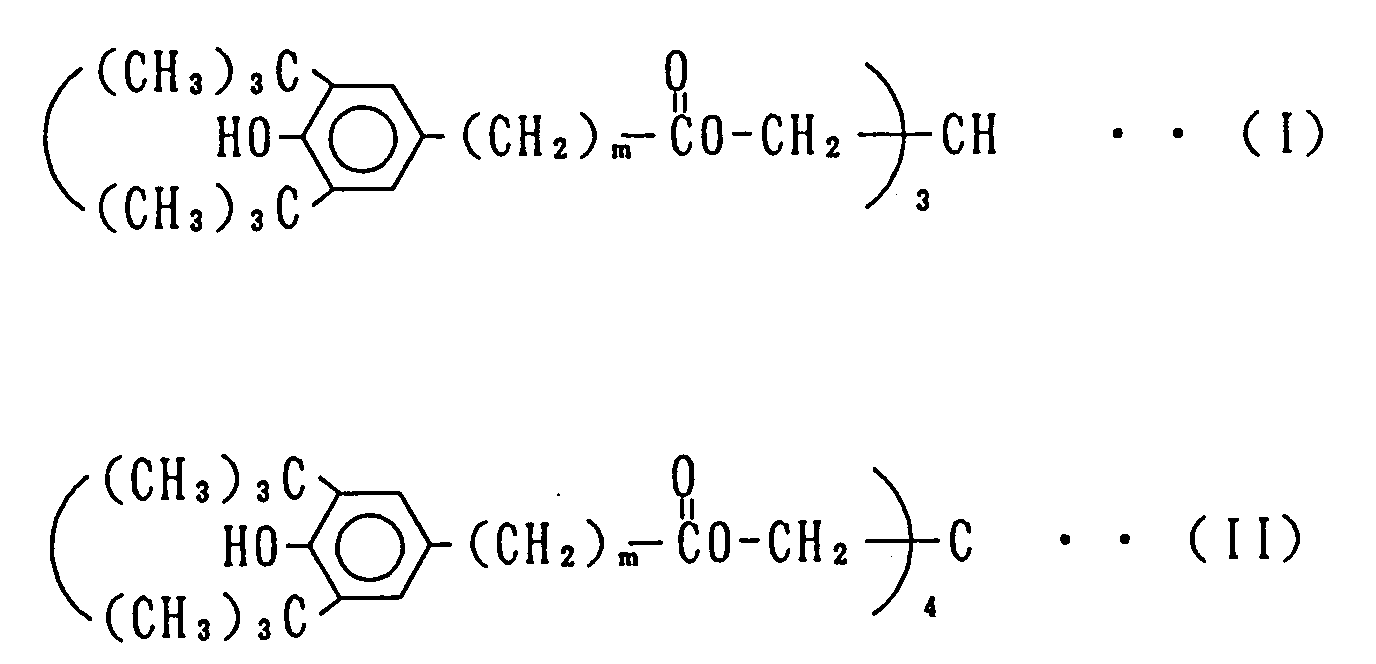
wherein m is an integer of 1 to 5;
(C) an alkylated diphenylamine compound; and (D) a borated succinic acid imide compound. This lubricating oil composition is excellent in heat resistance and oxidation stability in a gaseous phase of the oil, and it stably functions for a long time as a traction drive oil or the like.
Description
- The present invention relates to a lubricating oil composition, and more specifically, it relates to a lubricating oil composition which comprises as the main components, a base oil, a specific hindered phenol compound, a specific alkylated diphenylamine compound and a borated succinic acid imide compound, is excellent in heat resistance and oxidation stability, and stably functions for a long period of time particularly as a traction drive oil, a compressor oil or the like which is exposed to a high temperature in a mist-like state.
- In recent years, continuously variable transmissions (CVT) of traction drives for cars have shifted toward the increase in transmission power, the miniaturization of size and the freedom from maintenance. With this shift, a lubricating oil is required to have heat resistance and oxidation stability at a high temperature, and the level of these requirements is rising year by year.
- Heretofore, research and development have been made mainly to secure the heat resistance and the oxidation stability at a high temperature in the so-called oily phase portion, and therefore the already developed lubricating oils can scarcely inhibit heat deterioration and oxidation deterioration in a gaseous phase portion.
- Under such circumstances, the present inventors have intensively researched with the intention of developing a lubricating oil composition which can solve the above-mentioned conventional problems, can possess improved heat resistance in a gaseous phase portion and oxidation stability at a high temperature, and can stably function for a long period of time as a traction drive oil, a screw type or a rotary type compressor oil or the like. As a result, it has been found that the desired object of the present invention can be achieved by blending a base oil with a specific hindered phenol compound, a specific alkylated diphenylamine compound and a borated succinic acid imide compound. The present invention has now been completed on the basis of this knowledge.
- That is to say, the present invention is directed to a lubricating oil composition comprising as the main compounds, (A) a base oil comprising a mineral oil, a synthetic oil or both the oils, (B) a hindered phenol compound represented by the general formula (I) or (II)

wherein m is an integer of 1 to 5,
(C) an alkylated diphenylamine compound represented by the general formula (III)
wherein R¹, R², R³ and R⁴ are each hydrogen or an alkyl group having 1 to 20 carbon atoms, provided that at least one of R¹ to R⁴ is such an alkyl group,
and (D) a borated succinic acid imide compound. - As a base oil constituting the component (A) of a lubricating oil composition of the present invention, any of various mineral oils and synthetic oils can be used. Furthermore, a combination of the mineral oil and the synthetic oil can also be used. Herein, as the mineral oils, various kinds of oils can be used, but naphthenic mineral oils are particularly preferable. In addition, similarly preferable are paraffinic mineral oils and intermediate mineral oils which have been refined by a nuclear hydrogenation-deep dewaxing treatment and is relatively rich in naphthenes. On the other hand, as the synthetic oils, various kinds of oils can be used, and examples of the synthetic oil include alicyclic hydrocarbons, fused alicyclic hydrocarbons, bridgehead alicyclic hydrocarbons, polybutene, polyolefins (poly-α-olefins and the like), esters such as polyol esters and dibasic acid esters, alkylbenzenes and phosphoric acid esters. Above all, naphthene ring-containing oils, polybutene and the like are preferable.
- These preferable mineral oils and synthetic oils have advantages (1) that additives are easily soluble, (2) that carbon sludge generated in a system is soft and easily peelable, and (3) that a traction coefficient is high.
- On the other hand, a hindered phenol compound which constitutes the component (B) of the lubrication oil according to the present invention is represented by the above-mentioned general formula (I) or (II). Alternatively, both the compounds represented by the general formulae (I) and (II), respectively can also be used together.
- An alkylated diphenylamine compound which constitutes the component (C) of the lubricating oil composition of the present invention is represented by the above-mentioned general formula (III). In the general formula (III), each of R¹, R², R³ and R⁴ is hydrogen or an alkyl group having 1 to 20, preferably 3 to 12 carbon atoms, but at least one of R¹ to R⁴ is such an alkyl group (i.e., excluding the case that all of R¹ to R⁴ are simultaneously hydrogen). Examples of the component (C) include (1) a compound in which R¹ and R² are each an alkyl group having 3 to 9 carbon atoms (inclusive of a mixture of plural alkyl groups) and R³ and R⁴ are each hydrogen, (2) a compound in which R¹ to R³ are each an alkyl group having 4 to 8 carbon atoms (inclusive of a mixture of plural alkyl groups) and R⁴ is hydrogen, and (3) a compound in which only R¹ is an alkyl group having 6 to 12 carbon atoms (inclusive of a mixture of plural alkyl groups) and R² to R⁴ are each hydrogen.
- In the lubricating oil composition of the present invention, no particular restriction is put on amounts of the component (B) and the component (C). Thus, these amounts can be suitably selected in compliance with given situations, but in general, the amount of the component (B) is in the range of 0.2 to 2.0% by weight, preferably 0.5 to 1.5% by weight and that of the component (C) is in the range of 0.2 to 2.0% by weight, preferably 0.5 to 1.5% by weight based on the total weight of the composition. If the amount of the component (B) or the component (C) is too small, the desired object cannot be achieved, and conversely, even if it is too large, an additional effect corresponding to the increased amount cannot be observed.
- Furthermore, no particular restriction is put on a blend ratio between the component (B) and the component (C), but it is preferable to set a weight ratio of the component (C) to the component (B) to 0.6-1.6, preferably 0.8-1.5. The component (B) and the component (C) are preferably added in the above-mentioned blend ratio, but the total ratio of both the components is selected in the range of 1.0-3.5% by weight, preferably 1.4 to 2.5% by weight.
- Moreover, as a borated succinic acid imide compound which constitutes the component (D) of the lubricating oil composition of the present invention, various compounds can be used. Examples of the component (D) include (1) a reaction product obtained by reacting a succinic acid imide compound with a boron compound and (2) a reaction product obtained by reacting an amine compound with a boron compound, and then reacting with a succinic acid derivative.
- The above-mentioned reaction product (1) can be obtained by reacting the succinic acid imide compound with the boron compound, but as this succinic acid imide compound, various compounds can be used. An example of the succinic acid imide compound can be prepared by reacting a polyalkylenepolyamine (an amine compound) with an alkenylsuccinic acid or its derivative (a succinic acid derivative).
- Examples of the polyalkylenepolyamine which can be used in the preparation of this succinic acid imide compound include compounds where the alkylene groups are each ethylene, propylene, butylene or the like. Above all, its typical example is a polyethylenepolyamine in which the alkylene group is ethylene.
- The polyethylenepolyamine is represented by the general formula (A)
NH₂[(CH₂)₂NH]aH (A)
wherein a is an integer of 1 to 6,
and it has n amino groups (however,
- A typical example of the polyethylenepolyamine represented by the general formula (A) is tetraethylenepentamine corresponding to a=4. Other examples thereof include ethylenediamine, diethylenetriamine, triethylenetetramine and pentaethylenehexamine. Furthermore, examples of the polyalkylenepolyamine include polypropylenepolyamine and polybutylenepolyamine in addition to the above-mentioned polyethylenepolyamine.
- These polyalkylenepolyamines can be used singly or in combination in an optional ratio.
- Moreover, as the alkenylsuccinic acid or its derivative (e.g., an anhydride), various compounds can be used. For example, an alkenylsuccinic anhydride is practical in which an alkenyl moiety is a polymer of a monoolefin having 2 to 5 carbon atoms. Above all, a polyisobutenylsuccinic anhydride is particularly practical in which the alkenyl moiety is a polyisobutene (e.g., a polymer of a monoolefin having 4 carbon atoms) having a number-average molecular weight of 500 to 5,000, preferably 800 to 2,500. Examples of the other alkenyl moieties for the alkenylsuccinic acid and its derivative include a polymer of ethylene or propylene, and copolymers of ethylene and propylene as well as copolymers of isobutene and ethylene, propylene or a mixture thereof.
- The alkenylsuccinic acid or its derivative, for example, the polyisobutenylsuccinic anhydride can be obtained by first adding 1 to 1.5 mols of maleic anhydride to 1 mol of polyisobutene, adding a catalyst, forming a maleate at 150-280°C, deaerating under reduced pressure to remove unreacted maleic acid, adding diatomaceous earth, and then filtering the solution.
- On the other hand, as the boron compound which can be reacted with the succinic acid imide compound, various compounds can be used. In general, the boron compound may be suitably selected for use from boric acid, borates and boric acid esters.
- Furthermore, the amine compound, the boron compound and the succinic acid derivative for use in the preparation of the reaction product (2) can also be preferably selected from the above-mentioned compounds.
- In the lubricating oil composition of the present invention, no particular restriction is put on the amount of the component (D). However, the amount of the component (D) is preferably in the range of 0.2 to 10.0% by weight, more preferably 0.2 to 5.0% by weight.
- As described above, the lubricating oil composition of the present invention comprises the essential components (A) to (D), but various kinds of additives which have heretofore been used in the lubricating oil can be blended in suitable amounts, if necessary. Examples of such additives include an extreme pressure agent, a rust preventive, a detergent-dispersant, a viscosity index improver, a defoaming agent, a metal deactivator, an oilness agent, an antioxidant and an anti-wear agent. Examples of the extreme pressure agent include phosphoric acid ester compound such as tricresyl phosphate, a sulfur-containing compound such as olefin sulfide, zinc dithiophosphate (ZnDTP), molybdenum dithiophosphate (MoDTC) and molybdenum dithiocarbamate (MoDTC). Examples of the rust preventive include alkenylsuccinic acid esters and alkaline (earth) metal salts of sulfonic acid, and examples of the detergent-dispersant include sulfonates, phenates, salicylates, amides and imides. Examples of the viscosity index improver include polymethacrylate (PMA) and olefin copolymers (OCP) such as ethylene-propylene copolymer and styrenediene hydrogenated copolymers, and examples of the defoaming agent include silicone-based and alcohol-based compounds. In addition, examples of the metal deactivator include benzotriazole and alkylbenzotriazoles.
- According to the present invention, the following functional effects can be obtained.
- When the lubricating oil composition of the present invention which comprises the above-mentioned components is used, heat deterioration and oxidation deterioration in a gaseous phase portion of the oil can be inhibited, and the adhesion of a varnishy material to some portions of a device such as CVT and the formation of a sludge in the oil can be effectively inhibited. Therefore, the composition can be suitably used in a device to be lubricated thereby in a mist-like state under high-temperature circumstances at 120°C or higher. In particular, the composition can be effectively utilized as a traction drive oil (a traction drive fluid), a compressor oil for screw type and rotary type compressors, and the like.
- Next, the present invention will be described in more detail with reference to examples and comparative examples.
- For lubricating oil compositions shown in Table 1, oxidation stability in a gaseous phase portion and oxidation stability in an oily phase portion were measured by the following procedure. The results are shown in Table 1.
- A test was made in accordance with Testing Method for Thermal Stability of Lubricating Oils in JIS K 2540.
- Specifically, 20 g of an oil was placed in a prescribed glass container, and a copper wire (1.6 mm diameter × 10 cm length) prescribed in Testing Method for Oxidation Stability of Turbine Oil in Paragraph 3.2 of Testing Methods for Oxidation Stability of Lubricating Oils in JIS K 2514 was immersed in the oil. Afterward, the container was then covered with an aluminum foil (which was a commercially available aluminum foil washed with n-hexane).
- Next, the oil was heated up to 170°C and then taken out every 12 hours to visually observe a gaseous phase portion and an oily phase portion, and the oxidation stability in the gaseous phase portion and the oxidation stability in the oily phase portion were evaluated on the basis of times taken for the adhesion of a varnishy material and the precipitation of an oil-insoluble material, respectively were observed.
- Oxidation stability in the gaseous phase portion:
- (i) A taken for the adhesion of the varnishy material on the gaseous phase portion of the glass container was observed [the stability in the gaseous phase portion (i)].
- (ii) A time taken for the adhesion of the varnishy material on the aluminum foil was observed [the stability in the gaseous phase portion (ii)].
- Oxidation stability in the oily phase portion:
A time taken for the precipitation of the sludge (the oil-insoluble material) in the oil was observed. - When any one of the above-mentioned three items regarding the adhesion of the varnishy material and the precipitation of the sludge was observed, this required time was regarded as an evaluation time. The evaluation was based on that the longer this time was, the better the characteristics were.
- In this connection, the visual observation was discontinued after an elapse of time of 144 hours.


- Synthetic oil (a): A compound represented by the formula:

Compound (b): A compound (Mw = 1178) represented by the formula:
Compound (c): A compound (Mw = 420) represented by the formula:
Compound (d): A compound (Mw = 639) represented by the formula:
Compound (e): A compound represented by the formula:
Alkylated diphenylamine (f): An alkylated diphenylamine mixture containing, as the main component, a compound (an alkyl group was a combination of at least two groups of a butyl group to an octyl group) represented by the formula:
Alkylated phenyl-α-naphthylamine (g): A compound represented by the formula:
Borated succinic acid imide compound (h): A borated succinic acid imide replaced with a polyisobutenyl group having a molecular weight of about 2,000. - Viscosity index improver (i): Polymethacrylate (Mw: about 36000).
- Extreme pressure agent (j): Tricresyl phosphate.
- Rust preventive (k): Alkenyl succinic acid half ester.
- Defoaming agent (ℓ): Dimethylsiloxane.
Claims (11)
- A lubricating oil composition which comprises as the main compounds, (A) a base oil comprising at least one of a mineral oil and a synthetic oil, (B) a hindered phenol compound represented by the general formula (I) or (II)

(C) an alkylated diphenylamine compound represented by the general formula (III)
and (D) a borated succinic acid imide compound. - The lubricating oil composition according to Claim 1 wherein the amount of the hindered phenol compound (B) is in the range of 0.2 to 2.0% by weight, that of the alkylated diphenylamine compound (C) is in the range of 0.2 to 2.0% by weight, and that of the borated succinic acid imide compound (D) is in the range of 0.2 to 10.0% by weight.
- The lubricating oil composition according to Claim 1 wherein a compounding ratio by weight of the alkylated diphenylamine compound (C) to the hindered phenol compound (B) is in the range of 0.6 to 1.6, and the total amount of the hindered phenol compound (B) and the alkylated diphenylamine compound (C) is in the range of 1.0 to 3.5% by weight.
- The lubricating oil composition according to Claim 1 wherein the base oil (A) is at least one member selected from the group consisting of a naphthetic mineral oil, a naphthene ring-containing oil and polybutene.
- The lubricating oil composition according to Claim 1 wherein the alkylated diphenylamine compound (C) is a compound represented by the general formula (III) in which R¹ and R² are each an alkyl group having 3 to 9 carbon atoms and R³ and R⁴ are each hydrogen.
- The lubricating oil composition according to Claim 1 wherein the alkylated diphenylamine compound (C) is a compound represented by the general formula (III) in which R¹ to R³ are each an alkyl group having 4 to 8 carbon atoms and R⁴ is hydrogen.
- The lubricating oil composition according to Claim 1 wherein the alkylated diphenylamine compound (C) is a compound represented by the general formula (III) in which only R¹ is an alkyl group having 6 to 12 carbon atoms and R² to R⁴ are each hydrogen.
- The lubricating oil composition according to Claim 1 wherein the alkylated diphenylamine compound (C) is a compound represented by the general formula (III) in which R¹ and R³ are each an alkyl group having 4 to 8 carbon atoms, and R² and R⁴ are each hydrogen.
- The lubricating oil composition according to Claim 1 wherein the borated succinic acid imide compound (D) is a reaction product obtained by reacting a succinic acid imide compound with a boron compound.
- The lubricating oil composition according to Claim 1 wherein the borated succinic acid imide compound (D) is a reaction product obtained by reacting an amine compound with a boron compound, and then reacting with a succinic acid derivative.
- A traction drive fluid comprising the lubricating oil composition as set forth in Claim 1.
Applications Claiming Priority (2)
| Application Number | Priority Date | Filing Date | Title |
|---|---|---|---|
| JP5083238A JP2859077B2 (en) | 1993-04-09 | 1993-04-09 | Lubricating oil composition |
| JP83238/93 | 1993-04-09 |
Publications (2)
| Publication Number | Publication Date |
|---|---|
| EP0620267A1 true EP0620267A1 (en) | 1994-10-19 |
| EP0620267B1 EP0620267B1 (en) | 1997-11-12 |
Family
ID=13796750
Family Applications (1)
| Application Number | Title | Priority Date | Filing Date |
|---|---|---|---|
| EP94105343A Expired - Lifetime EP0620267B1 (en) | 1993-04-09 | 1994-04-07 | Lubricating oil composition |
Country Status (5)
| Country | Link |
|---|---|
| US (1) | US5460741A (en) |
| EP (1) | EP0620267B1 (en) |
| JP (1) | JP2859077B2 (en) |
| CA (1) | CA2120888C (en) |
| DE (1) | DE69406705T2 (en) |
Cited By (6)
| Publication number | Priority date | Publication date | Assignee | Title |
|---|---|---|---|---|
| EP0716141A3 (en) * | 1994-12-07 | 1996-07-24 | Nippon Oil Co Ltd | |
| WO1997004051A1 (en) * | 1995-07-17 | 1997-02-06 | Exxon Chemical Patents Inc. | Power transmitting fluids with improved resistance to foaming |
| EP0758016A1 (en) * | 1995-08-09 | 1997-02-12 | Exxon Research and Engineering Company, (a Delaware corp.) | Lubricant composition containing antioxidant additive combination |
| WO2001074978A3 (en) * | 2000-04-03 | 2002-02-21 | Lubrizol Corp | Lubricant compositions containing ester-substituted hindered phenol antioxidants |
| WO2001085878A3 (en) * | 2000-05-10 | 2002-04-11 | Great Lakes Chemical Europ | Stabilising compositions for lubricating oils |
| WO2020038737A1 (en) | 2018-08-23 | 2020-02-27 | Klueber Lubrication Muenchen Se & Co. Kg | Lubricant composition |
Families Citing this family (9)
| Publication number | Priority date | Publication date | Assignee | Title |
|---|---|---|---|---|
| JP3401348B2 (en) * | 1994-12-07 | 2003-04-28 | 新日本石油株式会社 | Lubricating oil composition |
| US6372696B1 (en) | 1999-11-09 | 2002-04-16 | The Lubrizol Corporation | Traction fluid formulation |
| JP5000034B2 (en) * | 2000-07-24 | 2012-08-15 | Jx日鉱日石エネルギー株式会社 | Lubricating oil composition for rotary gas compressor |
| US20030036485A1 (en) * | 2001-07-18 | 2003-02-20 | Sanborn Robert H. | Motor oil fortifier |
| JP2005061457A (en) * | 2003-08-20 | 2005-03-10 | Nissan Motor Co Ltd | Roller bearing |
| JP2005290180A (en) * | 2004-03-31 | 2005-10-20 | Nippon Oil Corp | Lubricating oil composition |
| US7651559B2 (en) | 2005-11-04 | 2010-01-26 | Franklin Industrial Minerals | Mineral composition |
| US7833339B2 (en) | 2006-04-18 | 2010-11-16 | Franklin Industrial Minerals | Mineral filler composition |
| JPWO2015045816A1 (en) | 2013-09-25 | 2017-03-09 | 出光興産株式会社 | Lubricating oil composition for traction drive transmission |
Citations (7)
| Publication number | Priority date | Publication date | Assignee | Title |
|---|---|---|---|---|
| DE2153893A1 (en) * | 1970-10-30 | 1972-05-04 | Shell Internationale Research Maatschappij N.V., Den Haag (Niederlande) | Ashless lubricating oil for natural gas engines |
| DE2948020A1 (en) * | 1979-11-29 | 1981-06-04 | Mobil Oil Corp., 10017 New York, N.Y. | FIRE-RESISTANT HYDRAULIC LIQUID |
| EP0113157A1 (en) * | 1982-12-30 | 1984-07-11 | EDWIN COOPER & COMPANY LIMITED | Quench oils, concentrates for making quench oils and methods of treating metals |
| EP0208541A2 (en) * | 1985-07-08 | 1987-01-14 | Nippon Oil Co. Ltd. | Lubricant compositions |
| EP0346283A2 (en) * | 1988-06-09 | 1989-12-13 | Ciba-Geigy Ag | Lubricant composition |
| EP0454395A1 (en) * | 1990-04-23 | 1991-10-30 | Ethyl Petroleum Additives, Inc. | Automatic transmission fluids and additives therefor |
| US5167844A (en) * | 1989-11-08 | 1992-12-01 | Ciba-Geigy Corporation | Lubricant formulations |
Family Cites Families (1)
| Publication number | Priority date | Publication date | Assignee | Title |
|---|---|---|---|---|
| GB2056482A (en) * | 1979-08-13 | 1981-03-18 | Exxon Research Engineering Co | Lubricating oil compositions |
-
1993
- 1993-04-09 JP JP5083238A patent/JP2859077B2/en not_active Expired - Lifetime
-
1994
- 1994-04-07 EP EP94105343A patent/EP0620267B1/en not_active Expired - Lifetime
- 1994-04-07 DE DE69406705T patent/DE69406705T2/en not_active Expired - Lifetime
- 1994-04-08 US US08/225,314 patent/US5460741A/en not_active Expired - Lifetime
- 1994-04-08 CA CA002120888A patent/CA2120888C/en not_active Expired - Fee Related
Patent Citations (7)
| Publication number | Priority date | Publication date | Assignee | Title |
|---|---|---|---|---|
| DE2153893A1 (en) * | 1970-10-30 | 1972-05-04 | Shell Internationale Research Maatschappij N.V., Den Haag (Niederlande) | Ashless lubricating oil for natural gas engines |
| DE2948020A1 (en) * | 1979-11-29 | 1981-06-04 | Mobil Oil Corp., 10017 New York, N.Y. | FIRE-RESISTANT HYDRAULIC LIQUID |
| EP0113157A1 (en) * | 1982-12-30 | 1984-07-11 | EDWIN COOPER & COMPANY LIMITED | Quench oils, concentrates for making quench oils and methods of treating metals |
| EP0208541A2 (en) * | 1985-07-08 | 1987-01-14 | Nippon Oil Co. Ltd. | Lubricant compositions |
| EP0346283A2 (en) * | 1988-06-09 | 1989-12-13 | Ciba-Geigy Ag | Lubricant composition |
| US5167844A (en) * | 1989-11-08 | 1992-12-01 | Ciba-Geigy Corporation | Lubricant formulations |
| EP0454395A1 (en) * | 1990-04-23 | 1991-10-30 | Ethyl Petroleum Additives, Inc. | Automatic transmission fluids and additives therefor |
Cited By (8)
| Publication number | Priority date | Publication date | Assignee | Title |
|---|---|---|---|---|
| EP0716141A3 (en) * | 1994-12-07 | 1996-07-24 | Nippon Oil Co Ltd | |
| US5658866A (en) * | 1994-12-07 | 1997-08-19 | Nippon Oil Co., Ltd. | Lubricating oil compositions |
| WO1997004051A1 (en) * | 1995-07-17 | 1997-02-06 | Exxon Chemical Patents Inc. | Power transmitting fluids with improved resistance to foaming |
| EP0758016A1 (en) * | 1995-08-09 | 1997-02-12 | Exxon Research and Engineering Company, (a Delaware corp.) | Lubricant composition containing antioxidant additive combination |
| WO2001074978A3 (en) * | 2000-04-03 | 2002-02-21 | Lubrizol Corp | Lubricant compositions containing ester-substituted hindered phenol antioxidants |
| WO2001085878A3 (en) * | 2000-05-10 | 2002-04-11 | Great Lakes Chemical Europ | Stabilising compositions for lubricating oils |
| WO2020038737A1 (en) | 2018-08-23 | 2020-02-27 | Klueber Lubrication Muenchen Se & Co. Kg | Lubricant composition |
| US11248188B2 (en) | 2018-08-23 | 2022-02-15 | Klueber Lubrication Muenchen Se & Co. Kg | Lubricant composition |
Also Published As
| Publication number | Publication date |
|---|---|
| JP2859077B2 (en) | 1999-02-17 |
| CA2120888A1 (en) | 1994-10-10 |
| DE69406705T2 (en) | 1998-03-12 |
| JPH06293892A (en) | 1994-10-21 |
| US5460741A (en) | 1995-10-24 |
| EP0620267B1 (en) | 1997-11-12 |
| DE69406705D1 (en) | 1997-12-18 |
| CA2120888C (en) | 2003-08-19 |
Similar Documents
| Publication | Publication Date | Title |
|---|---|---|
| US3852205A (en) | Transmission fluid compositions and method | |
| US3879306A (en) | Automatic transmission fluid | |
| JP5300007B2 (en) | Amine products containing hydroxy acids as friction modifiers suitable for automatic transmission fluids | |
| US5460741A (en) | Lubricating oil composition | |
| US4010106A (en) | Corrosion-retarding functional fluid | |
| US6617286B2 (en) | Lubricating oil composition for continuously variable transmission | |
| EP0667389B1 (en) | Metal free hydraulic fluid with amine salt | |
| US3640872A (en) | Automatic transmission fluid | |
| JP2002515918A (en) | Anti-wear agents for lubricant compositions | |
| EP0976813A1 (en) | Borate containing additive for manual transmission lubricant being stable to hydrolysis and providing high synchromesh durability | |
| JPH0692593B2 (en) | Lubricating oil composition for power transmission | |
| JP3785378B2 (en) | Lubricating oil composition for automatic transmission | |
| WO1996001302A1 (en) | Engine oil composition | |
| EP1058720B1 (en) | Lubricating composition | |
| JP3510630B2 (en) | Lubricating oil composition for high-speed gear | |
| EP0628623A1 (en) | Lubricant composition for limited slip differential of car | |
| US3793199A (en) | Friction reducing agent for lubricants | |
| EP0407977B1 (en) | Lubricating oil composition | |
| JP5438773B2 (en) | Friction modifier and / or antiwear agent derived from hydrocarbon amine and cyclic carbonate | |
| EP2137284B1 (en) | Highly branched sulfonates for drive-line applications | |
| JP4733974B2 (en) | Lubricating oil composition | |
| CA2129657C (en) | Automotive lubricant | |
| WO1995015368A1 (en) | Lubrication oil composition | |
| JPH09316475A (en) | Lubricating oil composition | |
| JPH05331478A (en) | Hydraulic oil composition |
Legal Events
| Date | Code | Title | Description |
|---|---|---|---|
| PUAI | Public reference made under article 153(3) epc to a published international application that has entered the european phase |
Free format text: ORIGINAL CODE: 0009012 |
|
| AK | Designated contracting states |
Kind code of ref document: A1 Designated state(s): DE FR GB IT SE |
|
| 17P | Request for examination filed |
Effective date: 19950321 |
|
| 17Q | First examination report despatched |
Effective date: 19950721 |
|
| GRAG | Despatch of communication of intention to grant |
Free format text: ORIGINAL CODE: EPIDOS AGRA |
|
| GRAH | Despatch of communication of intention to grant a patent |
Free format text: ORIGINAL CODE: EPIDOS IGRA |
|
| GRAH | Despatch of communication of intention to grant a patent |
Free format text: ORIGINAL CODE: EPIDOS IGRA |
|
| GRAA | (expected) grant |
Free format text: ORIGINAL CODE: 0009210 |
|
| AK | Designated contracting states |
Kind code of ref document: B1 Designated state(s): DE FR GB IT SE |
|
| REF | Corresponds to: |
Ref document number: 69406705 Country of ref document: DE Date of ref document: 19971218 |
|
| ITF | It: translation for a ep patent filed | ||
| ET | Fr: translation filed | ||
| PLBE | No opposition filed within time limit |
Free format text: ORIGINAL CODE: 0009261 |
|
| STAA | Information on the status of an ep patent application or granted ep patent |
Free format text: STATUS: NO OPPOSITION FILED WITHIN TIME LIMIT |
|
| 26N | No opposition filed | ||
| REG | Reference to a national code |
Ref country code: GB Ref legal event code: IF02 |
|
| PGFP | Annual fee paid to national office [announced via postgrant information from national office to epo] |
Ref country code: SE Payment date: 20050413 Year of fee payment: 12 |
|
| PG25 | Lapsed in a contracting state [announced via postgrant information from national office to epo] |
Ref country code: SE Free format text: LAPSE BECAUSE OF NON-PAYMENT OF DUE FEES Effective date: 20060408 |
|
| PGFP | Annual fee paid to national office [announced via postgrant information from national office to epo] |
Ref country code: IT Payment date: 20060430 Year of fee payment: 13 |
|
| EUG | Se: european patent has lapsed | ||
| PG25 | Lapsed in a contracting state [announced via postgrant information from national office to epo] |
Ref country code: IT Free format text: LAPSE BECAUSE OF NON-PAYMENT OF DUE FEES Effective date: 20070407 |
|
| PGFP | Annual fee paid to national office [announced via postgrant information from national office to epo] |
Ref country code: GB Payment date: 20130415 Year of fee payment: 20 Ref country code: DE Payment date: 20130415 Year of fee payment: 20 |
|
| PGFP | Annual fee paid to national office [announced via postgrant information from national office to epo] |
Ref country code: FR Payment date: 20130430 Year of fee payment: 20 |
|
| REG | Reference to a national code |
Ref country code: DE Ref legal event code: R071 Ref document number: 69406705 Country of ref document: DE |
|
| REG | Reference to a national code |
Ref country code: DE Ref legal event code: R071 Ref document number: 69406705 Country of ref document: DE |
|
| REG | Reference to a national code |
Ref country code: GB Ref legal event code: PE20 Expiry date: 20140406 |
|
| PG25 | Lapsed in a contracting state [announced via postgrant information from national office to epo] |
Ref country code: GB Free format text: LAPSE BECAUSE OF EXPIRATION OF PROTECTION Effective date: 20140406 |
|
| PG25 | Lapsed in a contracting state [announced via postgrant information from national office to epo] |
Ref country code: DE Free format text: LAPSE BECAUSE OF EXPIRATION OF PROTECTION Effective date: 20140408 |