EP0659450A1 - Procédé de la décomposition d'un composé organochloré de l'assainissement du milieu par les microorganismes - Google Patents
Procédé de la décomposition d'un composé organochloré de l'assainissement du milieu par les microorganismes Download PDFInfo
- Publication number
- EP0659450A1 EP0659450A1 EP94309246A EP94309246A EP0659450A1 EP 0659450 A1 EP0659450 A1 EP 0659450A1 EP 94309246 A EP94309246 A EP 94309246A EP 94309246 A EP94309246 A EP 94309246A EP 0659450 A1 EP0659450 A1 EP 0659450A1
- Authority
- EP
- European Patent Office
- Prior art keywords
- microorganism
- compound
- chloroorganic
- tce
- plant
- Prior art date
- Legal status (The legal status is an assumption and is not a legal conclusion. Google has not performed a legal analysis and makes no representation as to the accuracy of the status listed.)
- Granted
Links
- 150000001875 compounds Chemical class 0.000 title claims abstract description 120
- 244000005700 microbiome Species 0.000 title claims abstract description 102
- 238000000034 method Methods 0.000 title claims abstract description 59
- 230000008569 process Effects 0.000 title claims abstract description 51
- NGSWKAQJJWESNS-UHFFFAOYSA-N 4-coumaric acid Chemical compound OC(=O)C=CC1=CC=C(O)C=C1 NGSWKAQJJWESNS-UHFFFAOYSA-N 0.000 claims abstract description 98
- NGSWKAQJJWESNS-ZZXKWVIFSA-M 4-Hydroxycinnamate Natural products OC1=CC=C(\C=C\C([O-])=O)C=C1 NGSWKAQJJWESNS-ZZXKWVIFSA-M 0.000 claims abstract description 48
- DFYRUELUNQRZTB-UHFFFAOYSA-N Acetovanillone Natural products COC1=CC(C(C)=O)=CC=C1O DFYRUELUNQRZTB-UHFFFAOYSA-N 0.000 claims abstract description 48
- 150000001491 aromatic compounds Chemical class 0.000 claims abstract description 16
- 108090000417 Oxygenases Proteins 0.000 claims abstract description 14
- 102000004020 Oxygenases Human genes 0.000 claims abstract description 14
- XSTXAVWGXDQKEL-UHFFFAOYSA-N Trichloroethylene Chemical group ClC=C(Cl)Cl XSTXAVWGXDQKEL-UHFFFAOYSA-N 0.000 claims description 103
- UBOXGVDOUJQMTN-UHFFFAOYSA-N trichloroethylene Natural products ClCC(Cl)Cl UBOXGVDOUJQMTN-UHFFFAOYSA-N 0.000 claims description 102
- 238000000354 decomposition reaction Methods 0.000 claims description 64
- XLYOFNOQVPJJNP-UHFFFAOYSA-N water Substances O XLYOFNOQVPJJNP-UHFFFAOYSA-N 0.000 claims description 60
- 229910001868 water Inorganic materials 0.000 claims description 49
- 241000196324 Embryophyta Species 0.000 claims description 45
- 239000000463 material Substances 0.000 claims description 30
- 238000000605 extraction Methods 0.000 claims description 18
- 239000007787 solid Substances 0.000 claims description 14
- 239000002195 soluble material Substances 0.000 claims description 13
- WSLDOOZREJYCGB-UHFFFAOYSA-N 1,2-Dichloroethane Chemical group ClCCCl WSLDOOZREJYCGB-UHFFFAOYSA-N 0.000 claims description 12
- 241000589776 Pseudomonas putida Species 0.000 claims description 7
- 239000003344 environmental pollutant Substances 0.000 claims description 7
- 231100000719 pollutant Toxicity 0.000 claims description 7
- 239000003513 alkali Substances 0.000 claims description 6
- 241000589516 Pseudomonas Species 0.000 claims description 5
- 238000012258 culturing Methods 0.000 claims description 5
- 238000007654 immersion Methods 0.000 claims description 5
- 241000589513 Burkholderia cepacia Species 0.000 claims description 4
- 230000008093 supporting effect Effects 0.000 claims description 4
- 244000025254 Cannabis sativa Species 0.000 claims description 2
- 125000000816 ethylene group Chemical group [H]C([H])([*:1])C([H])([H])[*:2] 0.000 claims 2
- 238000010438 heat treatment Methods 0.000 claims 1
- 239000000419 plant extract Substances 0.000 claims 1
- 239000007788 liquid Substances 0.000 description 64
- 241000894006 Bacteria Species 0.000 description 47
- ISWSIDIOOBJBQZ-UHFFFAOYSA-N Phenol Chemical compound OC1=CC=CC=C1 ISWSIDIOOBJBQZ-UHFFFAOYSA-N 0.000 description 46
- 241000609240 Ambelania acida Species 0.000 description 37
- 239000010905 bagasse Substances 0.000 description 37
- 230000001939 inductive effect Effects 0.000 description 35
- 239000000523 sample Substances 0.000 description 35
- 239000002609 medium Substances 0.000 description 28
- 239000002689 soil Substances 0.000 description 26
- 230000008859 change Effects 0.000 description 22
- VYPSYNLAJGMNEJ-UHFFFAOYSA-N Silicium dioxide Chemical compound O=[Si]=O VYPSYNLAJGMNEJ-UHFFFAOYSA-N 0.000 description 16
- 241000209094 Oryza Species 0.000 description 14
- 235000007164 Oryza sativa Nutrition 0.000 description 14
- PXEDJBXQKAGXNJ-QTNFYWBSSA-L disodium L-glutamate Chemical compound [Na+].[Na+].[O-]C(=O)[C@@H](N)CCC([O-])=O PXEDJBXQKAGXNJ-QTNFYWBSSA-L 0.000 description 14
- 235000013923 monosodium glutamate Nutrition 0.000 description 14
- 235000009566 rice Nutrition 0.000 description 14
- 229940073490 sodium glutamate Drugs 0.000 description 14
- 239000010902 straw Substances 0.000 description 14
- 230000000694 effects Effects 0.000 description 13
- YXFVVABEGXRONW-UHFFFAOYSA-N Toluene Chemical compound CC1=CC=CC=C1 YXFVVABEGXRONW-UHFFFAOYSA-N 0.000 description 12
- 229920005610 lignin Polymers 0.000 description 12
- 239000004576 sand Substances 0.000 description 12
- 239000000284 extract Substances 0.000 description 11
- HEMHJVSKTPXQMS-UHFFFAOYSA-M Sodium hydroxide Chemical compound [OH-].[Na+] HEMHJVSKTPXQMS-UHFFFAOYSA-M 0.000 description 10
- 238000011161 development Methods 0.000 description 10
- -1 TCE etc Chemical class 0.000 description 9
- 238000006243 chemical reaction Methods 0.000 description 9
- 239000001913 cellulose Substances 0.000 description 8
- 229920002678 cellulose Polymers 0.000 description 8
- 235000010980 cellulose Nutrition 0.000 description 8
- 239000012153 distilled water Substances 0.000 description 8
- 239000007789 gas Substances 0.000 description 8
- 210000002966 serum Anatomy 0.000 description 8
- VLKZOEOYAKHREP-UHFFFAOYSA-N n-Hexane Chemical compound CCCCCC VLKZOEOYAKHREP-UHFFFAOYSA-N 0.000 description 7
- 150000004045 organic chlorine compounds Chemical class 0.000 description 7
- VNWKTOKETHGBQD-UHFFFAOYSA-N methane Chemical compound C VNWKTOKETHGBQD-UHFFFAOYSA-N 0.000 description 6
- 229940024606 amino acid Drugs 0.000 description 5
- 239000007864 aqueous solution Substances 0.000 description 5
- KFUSEUYYWQURPO-UPHRSURJSA-N cis-1,2-dichloroethene Chemical group Cl\C=C/Cl KFUSEUYYWQURPO-UPHRSURJSA-N 0.000 description 5
- 229920000642 polymer Polymers 0.000 description 5
- OKTJSMMVPCPJKN-UHFFFAOYSA-N Carbon Chemical compound [C] OKTJSMMVPCPJKN-UHFFFAOYSA-N 0.000 description 4
- 102000004190 Enzymes Human genes 0.000 description 4
- 108090000790 Enzymes Proteins 0.000 description 4
- VEXZGXHMUGYJMC-UHFFFAOYSA-N Hydrochloric acid Chemical compound Cl VEXZGXHMUGYJMC-UHFFFAOYSA-N 0.000 description 4
- FAPWRFPIFSIZLT-UHFFFAOYSA-M Sodium chloride Chemical compound [Na+].[Cl-] FAPWRFPIFSIZLT-UHFFFAOYSA-M 0.000 description 4
- QAOWNCQODCNURD-UHFFFAOYSA-N Sulfuric acid Chemical compound OS(O)(=O)=O QAOWNCQODCNURD-UHFFFAOYSA-N 0.000 description 4
- 230000037361 pathway Effects 0.000 description 4
- 239000001117 sulphuric acid Substances 0.000 description 4
- 235000011149 sulphuric acid Nutrition 0.000 description 4
- CYTYCFOTNPOANT-UHFFFAOYSA-N Perchloroethylene Chemical group ClC(Cl)=C(Cl)Cl CYTYCFOTNPOANT-UHFFFAOYSA-N 0.000 description 3
- 239000002253 acid Substances 0.000 description 3
- 239000004411 aluminium Substances 0.000 description 3
- XAGFODPZIPBFFR-UHFFFAOYSA-N aluminium Chemical compound [Al] XAGFODPZIPBFFR-UHFFFAOYSA-N 0.000 description 3
- 229910052782 aluminium Inorganic materials 0.000 description 3
- 229920005549 butyl rubber Polymers 0.000 description 3
- 239000006227 byproduct Substances 0.000 description 3
- 239000008367 deionised water Substances 0.000 description 3
- 229910021641 deionized water Inorganic materials 0.000 description 3
- 239000003673 groundwater Substances 0.000 description 3
- 239000000243 solution Substances 0.000 description 3
- 241000894007 species Species 0.000 description 3
- 238000012360 testing method Methods 0.000 description 3
- 239000002351 wastewater Substances 0.000 description 3
- MCGBIXXDQFWVDW-UHFFFAOYSA-N 4,5-dihydro-1h-pyrazole Chemical compound C1CC=NN1 MCGBIXXDQFWVDW-UHFFFAOYSA-N 0.000 description 2
- RGHHSNMVTDWUBI-UHFFFAOYSA-N 4-hydroxybenzaldehyde Chemical compound OC1=CC=C(C=O)C=C1 RGHHSNMVTDWUBI-UHFFFAOYSA-N 0.000 description 2
- FJKROLUGYXJWQN-UHFFFAOYSA-N 4-hydroxybenzoic acid Chemical compound OC(=O)C1=CC=C(O)C=C1 FJKROLUGYXJWQN-UHFFFAOYSA-N 0.000 description 2
- NLXLAEXVIDQMFP-UHFFFAOYSA-N Ammonia chloride Chemical compound [NH4+].[Cl-] NLXLAEXVIDQMFP-UHFFFAOYSA-N 0.000 description 2
- IJGRMHOSHXDMSA-UHFFFAOYSA-N Atomic nitrogen Chemical compound N#N IJGRMHOSHXDMSA-UHFFFAOYSA-N 0.000 description 2
- 229920001661 Chitosan Polymers 0.000 description 2
- DGAQECJNVWCQMB-PUAWFVPOSA-M Ilexoside XXIX Chemical compound C[C@@H]1CC[C@@]2(CC[C@@]3(C(=CC[C@H]4[C@]3(CC[C@@H]5[C@@]4(CC[C@@H](C5(C)C)OS(=O)(=O)[O-])C)C)[C@@H]2[C@]1(C)O)C)C(=O)O[C@H]6[C@@H]([C@H]([C@@H]([C@H](O6)CO)O)O)O.[Na+] DGAQECJNVWCQMB-PUAWFVPOSA-M 0.000 description 2
- QIVBCDIJIAJPQS-VIFPVBQESA-N L-tryptophane Chemical compound C1=CC=C2C(C[C@H](N)C(O)=O)=CNC2=C1 QIVBCDIJIAJPQS-VIFPVBQESA-N 0.000 description 2
- 240000000111 Saccharum officinarum Species 0.000 description 2
- 235000007201 Saccharum officinarum Nutrition 0.000 description 2
- 239000004809 Teflon Substances 0.000 description 2
- 229920006362 Teflon® Polymers 0.000 description 2
- QIVBCDIJIAJPQS-UHFFFAOYSA-N Tryptophan Natural products C1=CC=C2C(CC(N)C(O)=O)=CNC2=C1 QIVBCDIJIAJPQS-UHFFFAOYSA-N 0.000 description 2
- 235000019270 ammonium chloride Nutrition 0.000 description 2
- 239000012496 blank sample Substances 0.000 description 2
- 229910052799 carbon Inorganic materials 0.000 description 2
- QAIPRVGONGVQAS-UHFFFAOYSA-N cis-caffeic acid Natural products OC(=O)C=CC1=CC=C(O)C(O)=C1 QAIPRVGONGVQAS-UHFFFAOYSA-N 0.000 description 2
- 238000012136 culture method Methods 0.000 description 2
- 230000029087 digestion Effects 0.000 description 2
- BNIILDVGGAEEIG-UHFFFAOYSA-L disodium hydrogen phosphate Chemical compound [Na+].[Na+].OP([O-])([O-])=O BNIILDVGGAEEIG-UHFFFAOYSA-L 0.000 description 2
- 229910000397 disodium phosphate Inorganic materials 0.000 description 2
- 235000019800 disodium phosphate Nutrition 0.000 description 2
- 230000007613 environmental effect Effects 0.000 description 2
- 239000000945 filler Substances 0.000 description 2
- 239000001963 growth medium Substances 0.000 description 2
- 238000003988 headspace gas chromatography Methods 0.000 description 2
- 229910010272 inorganic material Inorganic materials 0.000 description 2
- 238000004519 manufacturing process Methods 0.000 description 2
- 239000013028 medium composition Substances 0.000 description 2
- 230000000813 microbial effect Effects 0.000 description 2
- 239000000203 mixture Substances 0.000 description 2
- 235000015097 nutrients Nutrition 0.000 description 2
- 230000001105 regulatory effect Effects 0.000 description 2
- 238000007142 ring opening reaction Methods 0.000 description 2
- 239000000377 silicon dioxide Substances 0.000 description 2
- 239000011734 sodium Substances 0.000 description 2
- 229910052708 sodium Inorganic materials 0.000 description 2
- 235000015424 sodium Nutrition 0.000 description 2
- 239000011780 sodium chloride Substances 0.000 description 2
- 239000002699 waste material Substances 0.000 description 2
- BQCIDUSAKPWEOX-UHFFFAOYSA-N 1,1-Difluoroethene Chemical group FC(F)=C BQCIDUSAKPWEOX-UHFFFAOYSA-N 0.000 description 1
- IXPNQXFRVYWDDI-UHFFFAOYSA-N 1-methyl-2,4-dioxo-1,3-diazinane-5-carboximidamide Chemical compound CN1CC(C(N)=N)C(=O)NC1=O IXPNQXFRVYWDDI-UHFFFAOYSA-N 0.000 description 1
- QTWJRLJHJPIABL-UHFFFAOYSA-N 2-methylphenol;3-methylphenol;4-methylphenol Chemical compound CC1=CC=C(O)C=C1.CC1=CC=CC(O)=C1.CC1=CC=CC=C1O QTWJRLJHJPIABL-UHFFFAOYSA-N 0.000 description 1
- 229940090248 4-hydroxybenzoic acid Drugs 0.000 description 1
- FUGYGGDSWSUORM-UHFFFAOYSA-N 4-hydroxystyrene Chemical compound OC1=CC=C(C=C)C=C1 FUGYGGDSWSUORM-UHFFFAOYSA-N 0.000 description 1
- 244000215068 Acacia senegal Species 0.000 description 1
- 241000589291 Acinetobacter Species 0.000 description 1
- 229920001817 Agar Polymers 0.000 description 1
- 229920002749 Bacterial cellulose Polymers 0.000 description 1
- 229920002101 Chitin Polymers 0.000 description 1
- VGGSQFUCUMXWEO-UHFFFAOYSA-N Ethene Chemical class C=C VGGSQFUCUMXWEO-UHFFFAOYSA-N 0.000 description 1
- 244000004281 Eucalyptus maculata Species 0.000 description 1
- 244000182067 Fraxinus ornus Species 0.000 description 1
- 235000002917 Fraxinus ornus Nutrition 0.000 description 1
- 108010010803 Gelatin Proteins 0.000 description 1
- 229920000084 Gum arabic Polymers 0.000 description 1
- 244000043261 Hevea brasiliensis Species 0.000 description 1
- 239000007836 KH2PO4 Substances 0.000 description 1
- 241001465754 Metazoa Species 0.000 description 1
- 241000945786 Methylocystis sp. Species 0.000 description 1
- 241000589354 Methylosinus Species 0.000 description 1
- 108010074633 Mixed Function Oxygenases Proteins 0.000 description 1
- 102000008109 Mixed Function Oxygenases Human genes 0.000 description 1
- 241000203988 Nasutitermes Species 0.000 description 1
- 239000000020 Nitrocellulose Substances 0.000 description 1
- 244000088461 Panicum crus-galli Species 0.000 description 1
- 235000011999 Panicum crusgalli Nutrition 0.000 description 1
- 241000209504 Poaceae Species 0.000 description 1
- 239000004372 Polyvinyl alcohol Substances 0.000 description 1
- 241000589517 Pseudomonas aeruginosa Species 0.000 description 1
- 241000589540 Pseudomonas fluorescens Species 0.000 description 1
- 241000589755 Pseudomonas mendocina Species 0.000 description 1
- 241001041887 Pseudomonas putida F1 Species 0.000 description 1
- 108010082455 Sebelipase alfa Proteins 0.000 description 1
- 229920002125 Sokalan® Polymers 0.000 description 1
- 229920002472 Starch Polymers 0.000 description 1
- 108010075474 Toluene dioxygenase Proteins 0.000 description 1
- FJWGYAHXMCUOOM-QHOUIDNNSA-N [(2s,3r,4s,5r,6r)-2-[(2r,3r,4s,5r,6s)-4,5-dinitrooxy-2-(nitrooxymethyl)-6-[(2r,3r,4s,5r,6s)-4,5,6-trinitrooxy-2-(nitrooxymethyl)oxan-3-yl]oxyoxan-3-yl]oxy-3,5-dinitrooxy-6-(nitrooxymethyl)oxan-4-yl] nitrate Chemical compound O([C@@H]1O[C@@H]([C@H]([C@H](O[N+]([O-])=O)[C@H]1O[N+]([O-])=O)O[C@H]1[C@@H]([C@@H](O[N+]([O-])=O)[C@H](O[N+]([O-])=O)[C@@H](CO[N+]([O-])=O)O1)O[N+]([O-])=O)CO[N+](=O)[O-])[C@@H]1[C@@H](CO[N+]([O-])=O)O[C@@H](O[N+]([O-])=O)[C@H](O[N+]([O-])=O)[C@H]1O[N+]([O-])=O FJWGYAHXMCUOOM-QHOUIDNNSA-N 0.000 description 1
- 238000010521 absorption reaction Methods 0.000 description 1
- 235000010489 acacia gum Nutrition 0.000 description 1
- 239000000205 acacia gum Substances 0.000 description 1
- 239000000654 additive Substances 0.000 description 1
- 239000008272 agar Substances 0.000 description 1
- 239000003627 allelochemical Substances 0.000 description 1
- 238000004458 analytical method Methods 0.000 description 1
- 239000003957 anion exchange resin Substances 0.000 description 1
- 230000001716 anti-fugal effect Effects 0.000 description 1
- 125000003118 aryl group Chemical group 0.000 description 1
- 239000005016 bacterial cellulose Substances 0.000 description 1
- 230000001580 bacterial effect Effects 0.000 description 1
- 235000013527 bean curd Nutrition 0.000 description 1
- 229920002988 biodegradable polymer Polymers 0.000 description 1
- 239000004621 biodegradable polymer Substances 0.000 description 1
- 238000009937 brining Methods 0.000 description 1
- 239000000378 calcium silicate Substances 0.000 description 1
- 229910052918 calcium silicate Inorganic materials 0.000 description 1
- OYACROKNLOSFPA-UHFFFAOYSA-N calcium;dioxido(oxo)silane Chemical compound [Ca+2].[O-][Si]([O-])=O OYACROKNLOSFPA-UHFFFAOYSA-N 0.000 description 1
- 229940041514 candida albicans extract Drugs 0.000 description 1
- 235000010418 carrageenan Nutrition 0.000 description 1
- 229920001525 carrageenan Polymers 0.000 description 1
- 239000000969 carrier Substances 0.000 description 1
- 229920002301 cellulose acetate Polymers 0.000 description 1
- 239000000919 ceramic Substances 0.000 description 1
- 150000008280 chlorinated hydrocarbons Chemical class 0.000 description 1
- 230000000052 comparative effect Effects 0.000 description 1
- 229920001577 copolymer Polymers 0.000 description 1
- 229930003836 cresol Natural products 0.000 description 1
- 238000005262 decarbonization Methods 0.000 description 1
- 230000003247 decreasing effect Effects 0.000 description 1
- 230000001627 detrimental effect Effects 0.000 description 1
- 239000003651 drinking water Substances 0.000 description 1
- 235000020188 drinking water Nutrition 0.000 description 1
- 230000008030 elimination Effects 0.000 description 1
- 238000003379 elimination reaction Methods 0.000 description 1
- 238000010828 elution Methods 0.000 description 1
- 238000003912 environmental pollution Methods 0.000 description 1
- 238000002474 experimental method Methods 0.000 description 1
- 239000012530 fluid Substances 0.000 description 1
- 229920002313 fluoropolymer Polymers 0.000 description 1
- 239000004811 fluoropolymer Substances 0.000 description 1
- 239000000446 fuel Substances 0.000 description 1
- 238000004817 gas chromatography Methods 0.000 description 1
- 229920000159 gelatin Polymers 0.000 description 1
- 239000008273 gelatin Substances 0.000 description 1
- 235000019322 gelatine Nutrition 0.000 description 1
- 235000011852 gelatine desserts Nutrition 0.000 description 1
- 150000004676 glycans Chemical class 0.000 description 1
- 239000003864 humus Substances 0.000 description 1
- 230000033444 hydroxylation Effects 0.000 description 1
- 238000005805 hydroxylation reaction Methods 0.000 description 1
- 238000011065 in-situ storage Methods 0.000 description 1
- 150000002484 inorganic compounds Chemical class 0.000 description 1
- 239000011147 inorganic material Substances 0.000 description 1
- 230000001678 irradiating effect Effects 0.000 description 1
- 229940041615 kanuma Drugs 0.000 description 1
- 238000009630 liquid culture Methods 0.000 description 1
- 235000012054 meals Nutrition 0.000 description 1
- 108010009977 methane monooxygenase Proteins 0.000 description 1
- 239000003094 microcapsule Substances 0.000 description 1
- 239000011785 micronutrient Substances 0.000 description 1
- 235000013369 micronutrients Nutrition 0.000 description 1
- 238000002156 mixing Methods 0.000 description 1
- 229910000402 monopotassium phosphate Inorganic materials 0.000 description 1
- 235000019796 monopotassium phosphate Nutrition 0.000 description 1
- 238000000465 moulding Methods 0.000 description 1
- 229920005615 natural polymer Polymers 0.000 description 1
- 229930014626 natural product Natural products 0.000 description 1
- 229920001220 nitrocellulos Polymers 0.000 description 1
- 229940079938 nitrocellulose Drugs 0.000 description 1
- 229910052757 nitrogen Inorganic materials 0.000 description 1
- 239000011368 organic material Substances 0.000 description 1
- 238000012261 overproduction Methods 0.000 description 1
- 230000003647 oxidation Effects 0.000 description 1
- 238000007254 oxidation reaction Methods 0.000 description 1
- 239000002245 particle Substances 0.000 description 1
- 239000001814 pectin Substances 0.000 description 1
- 235000010987 pectin Nutrition 0.000 description 1
- 229920001277 pectin Polymers 0.000 description 1
- 150000002989 phenols Chemical class 0.000 description 1
- 239000004033 plastic Substances 0.000 description 1
- 229920003023 plastic Polymers 0.000 description 1
- 229920000747 poly(lactic acid) Polymers 0.000 description 1
- 229920003229 poly(methyl methacrylate) Polymers 0.000 description 1
- 229920002401 polyacrylamide Polymers 0.000 description 1
- 239000004584 polyacrylic acid Substances 0.000 description 1
- 229920000768 polyamine Polymers 0.000 description 1
- 229920001610 polycaprolactone Polymers 0.000 description 1
- 239000004632 polycaprolactone Substances 0.000 description 1
- 239000004417 polycarbonate Substances 0.000 description 1
- 229920000515 polycarbonate Polymers 0.000 description 1
- 229920000728 polyester Polymers 0.000 description 1
- 239000004626 polylactic acid Substances 0.000 description 1
- 239000004926 polymethyl methacrylate Substances 0.000 description 1
- 229920000098 polyolefin Polymers 0.000 description 1
- 229920001282 polysaccharide Polymers 0.000 description 1
- 239000005017 polysaccharide Substances 0.000 description 1
- 229920002635 polyurethane Polymers 0.000 description 1
- 239000004814 polyurethane Substances 0.000 description 1
- 229920002451 polyvinyl alcohol Polymers 0.000 description 1
- 235000019422 polyvinyl alcohol Nutrition 0.000 description 1
- 239000005373 porous glass Substances 0.000 description 1
- 239000011148 porous material Substances 0.000 description 1
- GNSKLFRGEWLPPA-UHFFFAOYSA-M potassium dihydrogen phosphate Chemical compound [K+].OP(O)([O-])=O GNSKLFRGEWLPPA-UHFFFAOYSA-M 0.000 description 1
- 239000000047 product Substances 0.000 description 1
- 230000001737 promoting effect Effects 0.000 description 1
- 238000000746 purification Methods 0.000 description 1
- 230000005855 radiation Effects 0.000 description 1
- 238000007670 refining Methods 0.000 description 1
- 238000011160 research Methods 0.000 description 1
- 229930000044 secondary metabolite Natural products 0.000 description 1
- 238000000926 separation method Methods 0.000 description 1
- 239000010802 sludge Substances 0.000 description 1
- 150000003384 small molecules Chemical class 0.000 description 1
- 235000010413 sodium alginate Nutrition 0.000 description 1
- 239000000661 sodium alginate Substances 0.000 description 1
- 229940005550 sodium alginate Drugs 0.000 description 1
- 235000011121 sodium hydroxide Nutrition 0.000 description 1
- 239000011343 solid material Substances 0.000 description 1
- 239000002904 solvent Substances 0.000 description 1
- 238000000935 solvent evaporation Methods 0.000 description 1
- 239000008107 starch Substances 0.000 description 1
- 235000019698 starch Nutrition 0.000 description 1
- 230000004936 stimulating effect Effects 0.000 description 1
- 238000003756 stirring Methods 0.000 description 1
- 239000000126 substance Substances 0.000 description 1
- 125000001424 substituent group Chemical group 0.000 description 1
- 239000000758 substrate Substances 0.000 description 1
- 230000004083 survival effect Effects 0.000 description 1
- 229950011008 tetrachloroethylene Drugs 0.000 description 1
- KFUSEUYYWQURPO-OWOJBTEDSA-N trans-1,2-dichloroethene Chemical group Cl\C=C\Cl KFUSEUYYWQURPO-OWOJBTEDSA-N 0.000 description 1
- JOYRKODLDBILNP-UHFFFAOYSA-N urethane group Chemical group NC(=O)OCC JOYRKODLDBILNP-UHFFFAOYSA-N 0.000 description 1
- 235000013343 vitamin Nutrition 0.000 description 1
- 229930003231 vitamin Natural products 0.000 description 1
- 239000011782 vitamin Substances 0.000 description 1
- 229940088594 vitamin Drugs 0.000 description 1
- 238000003809 water extraction Methods 0.000 description 1
- 229920003170 water-soluble synthetic polymer Polymers 0.000 description 1
- 239000002916 wood waste Substances 0.000 description 1
- 239000012138 yeast extract Substances 0.000 description 1
Images




Classifications
-
- C—CHEMISTRY; METALLURGY
- C02—TREATMENT OF WATER, WASTE WATER, SEWAGE, OR SLUDGE
- C02F—TREATMENT OF WATER, WASTE WATER, SEWAGE, OR SLUDGE
- C02F3/00—Biological treatment of water, waste water, or sewage
- C02F3/34—Biological treatment of water, waste water, or sewage characterised by the microorganisms used
-
- A—HUMAN NECESSITIES
- A62—LIFE-SAVING; FIRE-FIGHTING
- A62D—CHEMICAL MEANS FOR EXTINGUISHING FIRES OR FOR COMBATING OR PROTECTING AGAINST HARMFUL CHEMICAL AGENTS; CHEMICAL MATERIALS FOR USE IN BREATHING APPARATUS
- A62D3/00—Processes for making harmful chemical substances harmless or less harmful, by effecting a chemical change in the substances
- A62D3/02—Processes for making harmful chemical substances harmless or less harmful, by effecting a chemical change in the substances by biological methods, i.e. processes using enzymes or microorganisms
-
- B—PERFORMING OPERATIONS; TRANSPORTING
- B09—DISPOSAL OF SOLID WASTE; RECLAMATION OF CONTAMINATED SOIL
- B09C—RECLAMATION OF CONTAMINATED SOIL
- B09C1/00—Reclamation of contaminated soil
- B09C1/10—Reclamation of contaminated soil microbiologically, biologically or by using enzymes
-
- A—HUMAN NECESSITIES
- A62—LIFE-SAVING; FIRE-FIGHTING
- A62D—CHEMICAL MEANS FOR EXTINGUISHING FIRES OR FOR COMBATING OR PROTECTING AGAINST HARMFUL CHEMICAL AGENTS; CHEMICAL MATERIALS FOR USE IN BREATHING APPARATUS
- A62D2101/00—Harmful chemical substances made harmless, or less harmful, by effecting chemical change
- A62D2101/20—Organic substances
- A62D2101/22—Organic substances containing halogen
-
- Y—GENERAL TAGGING OF NEW TECHNOLOGICAL DEVELOPMENTS; GENERAL TAGGING OF CROSS-SECTIONAL TECHNOLOGIES SPANNING OVER SEVERAL SECTIONS OF THE IPC; TECHNICAL SUBJECTS COVERED BY FORMER USPC CROSS-REFERENCE ART COLLECTIONS [XRACs] AND DIGESTS
- Y10—TECHNICAL SUBJECTS COVERED BY FORMER USPC
- Y10S—TECHNICAL SUBJECTS COVERED BY FORMER USPC CROSS-REFERENCE ART COLLECTIONS [XRACs] AND DIGESTS
- Y10S435/00—Chemistry: molecular biology and microbiology
- Y10S435/8215—Microorganisms
- Y10S435/822—Microorganisms using bacteria or actinomycetales
- Y10S435/874—Pseudomonas
-
- Y—GENERAL TAGGING OF NEW TECHNOLOGICAL DEVELOPMENTS; GENERAL TAGGING OF CROSS-SECTIONAL TECHNOLOGIES SPANNING OVER SEVERAL SECTIONS OF THE IPC; TECHNICAL SUBJECTS COVERED BY FORMER USPC CROSS-REFERENCE ART COLLECTIONS [XRACs] AND DIGESTS
- Y10—TECHNICAL SUBJECTS COVERED BY FORMER USPC
- Y10S—TECHNICAL SUBJECTS COVERED BY FORMER USPC CROSS-REFERENCE ART COLLECTIONS [XRACs] AND DIGESTS
- Y10S435/00—Chemistry: molecular biology and microbiology
- Y10S435/8215—Microorganisms
- Y10S435/822—Microorganisms using bacteria or actinomycetales
- Y10S435/874—Pseudomonas
- Y10S435/877—Pseudomonas putida
Definitions
- the present invention relates to a process for decomposing a chloroorganic compound using a microorganism which can decompose said compound.
- it can provide a process for decomposing the chloroorganic compound safely and easily by inducing the microorganism to decompose said organochlorine compound by exposure of said microorganism to a harmless naturally occurring compound.
- the present process can be used to upgrade an open environment polluted with a chloroorganic compound. It is therefore applicable to the disposal of an effluent or treatment of soil to reduce the content of chloroorganic pollutants.
- chloroorganic compounds which are harmful to living organisms and are difficult to decompose has become a major problem.
- soil around paper and pulp manufacturing plants or around industry that uses precision machines has become prone to pollution with chloroorganic compounds, such as tetrachloroethylene (PCE), trichloroethylene (TCE) and dichloroethylene (DCE).
- PCE tetrachloroethylene
- TCE trichloroethylene
- DCE dichloroethylene
- Pollution with such compounds has been found sometimes to have become spread over a wide area, and these compounds are detected in many environemntal surveys.
- Chloroorganic compounds persist in soil and become dissolved in groundwater as rain falls on the polluted sites, which further increases the effect of the pollution. Because organochlorine compounds are quite stable in the environment, pollution of groundwater which is used as a source of drinking water has become a social problem.
- methanotropic bacteria include Methylocystis sp. strain M which can express methane monooxygenase. [Agric. Biol. Chem., 53, 2903 (1989); Biosci. Biotechn. Biochem., 56, 486 (1992); ibid, 56, 736 (1992)]; and Methylosinus trichosprium 0B3b [Am. Chem. Soc. Natl. Meet. De v. Environ. Microbiol., 29, 365 (1989); Appl. Environ. Microbiol., 55, 3155 (1989); Appl. Biochem. Biotechnol., 28, 877 (1991)].
- aromatic compound-using bacteria include Acinetobactor sp. strain G4 which can express toluene monooxygenase. [Appl. Environ. Microbiol., 52, 383 (1986); ibid. 53, 949 (1987); ibid. 54, 951 (1989); ibid. 56, 279 (1990;) ibid. 57, 193 (1991)] and also Pseudomonas mendocina strain KR-1 [Bio/Technol., 7, 282 (1989)] and further includes Pseudomonas putida strain F1 which can express toluene dioxygenase [Appl. Environ. Microbiol., 54, 17 03 (1988) ibid. 54, 2578 (1988)].
- TCE tetrachloro-1-butane
- Disposal of TCE by decomposition using a microorganism has some merits. No special chemical is necessary and the labour required to carry out the process is not great.
- species which exhibit a high TCE decomposition activity require the presence of e.g. methane, toluene or phenol as the inducible compound.
- these compounds are harmful and dangerous, and therefore they are unsuitable for use in the elimination of TCE in an open system, such as in polluted soil etc, which is a major obstacle to the use of microorganisms for such decomposition purposes.
- an aromatic compound such as phenol or toluene is effective as the inducible compound for oxygenase which is a necessary enzyme for decomposing TCE.
- the aromatic compound itself is a compound which pollutes the environment so it is not an acceptable practice to treat soil with this material.
- Methane is an alternative inducible compound for oxygenase in some species of bacteria.
- methane is an inflammable gas so its use is complicated and difficult to control and cannot provide the basis of a practical soil treatment.
- a foreign bacterium such as a TCE-decomposing bacterium
- the microorganism has to compete with the native microorganisms and its survival is threatened. It has to compete for a habitat and nutrients with Eumycetes and other bacteria, and it is subject to predation by protista.
- a specific microorganism which decomposes the intended organochlorine compounds is introduced into the natural environment, it has to be protected from competition with the native microorganisms.
- an object of the present invention is to provide a process which can decompose chloroorganic compounds safely and easily using an inducible compound which promotes the decomposition ability of the microorganism, and which compound is harmless and easy to obtain and is sufficiently stable in the environment where the decompositiion reaction is to be carried out.
- Such environments may include waste fluid, polluted soil and other open systems.
- a process for decomposing a chloroorganic compound with a microorganism comprising the steps of: providing a microorganism which can decompose a chloroorganic compound by inducement with an aromatic compound; bringing the microorganism into contact with a water-soluble material extracted from a plant having lignocellulose or with p-coumaric acid which activates the ability of the microorganism to decompose the chloroorganic compound; and decomposing the chloroorganic compound using the activated microorganism.
- a process for purifying a material or locus polluted with a chloroorganic compound which process comprises decomposing the chloroorganic compound in the material or locus by means of the above mentioned decomposition process.
- Figure 1 is a graph which shows the relation between culture days and concentration of TCE when a strain KKO1 is cultured in a medium containing liquid extracted from bagasse etc. which had been added as described in Example 3.
- the curve (a) shows the change of TCE concentration of a blank sample, not containing inducible compounds and any bacteria.
- the curve (b) shows the change of TCE concentration of a sample in which only bacteria were added.
- the curve (c) shows the change of TCE concentration in a sample in which bacteria and sodium glutamate were added.
- the curve (d) shows the change of TCE concentration of a sample in which bacteria and phenol were added.
- the curve (e) shows the change of TCE concentration in a sample in which bacterium and liquid extracted from bagasse were added.
- Figure 2 is a view which shows the relation between culture days and concentration of TCE when a strain KKO1 is cultured in a medium where alkaline liquid extracted from bagasse etc. had been added as described in Example 4.
- the curve (a) shows the change of TCE concentration of a blank sample without any inducible compounds.
- the curve (b) shows the change of TCE concentration of a sample in which only liquid containing strain KKO1 previously cultured with phenol was added.
- the curve (c) shows the change of TCE concentration of a sample where both a strain KKO1 previously cultured with phenol and alkaline extracted bagasse were added to the liquid.
- Figure 3 is a graph which shows the decomposition of TCE with p-coumaric acid and strain KK01 as described in Example 8.
- the curve (a) shows the change of TCE concentration of a sample containing strain KK01 and sodium glutamate.
- the curve (b) shows the change of TCE concentration of a sample containing KK01 strain, sodium glutamate and p-coumaric acid.
- Figure 4 is a graph which shows the decomposition of TCE with p-coumaric acid and strain BH as described in Example 4.
- the curve (a) shows the change in TCE concentration of a sample containing strain BH and sodium glutamate.
- the curve (b) shows the change of TCE concentration of a sample containing strain BH, sodium glutamate and p-coumaric acid.
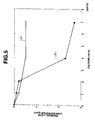
- Figure 5 is a graph which shows decomposition of c-DCE with p-coumaric acid and strain KK01 as described in Example 10.
- the curve (a) shows the change of c-DCE concentration of a sample containing strain KK01 and sodium glutamate.
- the curve (b) shows the change of c-DCE concentration of a sample containing strain KK01, sodium glutamate and p-coumaric acid.
- Figure 6 is a graph which shows decomposition of TCE with strain KK01 and p-coumaric acid in fine sand as described in Example 11.
- the curve (a) shows the change of TCE concentration of a sample containing only strain KK01.
- the curve (b) shows the change of TCE concentration of a sample containing strain KK01 and p-coumaric acid.
- Figure 7 is a graph which shows decomposition of TCE with a native bacterium and p-coumaric acid in fine sand as described in Example 12.
- the curve (a) shows the change of TCE concentration of a sample containing a native bacterium.
- the curve (b) shows the change of TCE concentration of a sample containing a native bacterium and p-coumaric acid.
- the water soluble material used in the present process may be derived from a plant containing lignocellulose, of which there is a wide range including woody and herbaceous plants.
- Preferred sources of plant material are those which are readily available as by-products of argiculture and for which there is no existing use or which are in over-production.
- Representative of plants that can provide lignocellulose include agricultural by-products such as bagasse, canetop, rice straw, corncob meal, bran, tobiko, bean-curd refuse, wood waste etc.
- Bagasse is a by product of the refining of sugar cane after the sugar liquid has been squeezed out, and canetop is an upper part of sugar cane.
- lignocellulose herbaceous plants such as grasses.
- the ability of these plants to activate a microorganism in organochlorine decompsoition is higher than that of other plants containing lignocellulose. Rice straw, bagasse and canetop etc. have been found to be particularly effective.
- a chloroorganic compound oxygenase
- Such an inducible compound is soluble, and can be obtained from the plants by extracting with water. It is believed that the naturally occurring materials of living plants are transformed in the extraction process so the structure of the extracted derivable material is slightly different from its structure in the plant.
- the material extracted from brown forest soil which is humus containing dead plant material including extractable lignocellulose does not give rise on extraction with water to a material which can promote the microbial decomposition of organochlorine compounds by the method of the invention.
- the present process happens naturally in the environment as a result of contact of the inducible compound with any native microorganism which can decompose a chloroorganic compound in the soil.
- the inducible compound extracted from plants as discussed above is believed to be an unusual material which exhibits particular desirable properties in the present process.
- An inducible compound cannot be detected in a liquid extracted from a plant which is low in lignin.
- the extraction process for the inducible compound may use any processes which can convert lignocellulose in a plant to a low molecular weight compound which is soluble in water.
- Representative methods include immersion of the plant material in water at high temperatures, high pressure water extraction, extraction with water and simultaneous exposure to microwaves, and extraction with aqueous alkali.
- the inducible compound may be extracted from the plant material by immersion in 5-50 times, particularly 10-30 times of the plant's weight of distilled water.
- the temperature may be 100-250°C, particularly 150-210°C, and the pressure may be 0.05-5 MPa, particularly 0.1-3 MPa, and the time may be 10-60 minutes, particularly 15-30 minutes.
- the compound may be extracted with 5-50 times, preferably 10-30 times, of the plant's weight of distilled water and irradiating with 0.5-2 kw per 100 ml, preferably 0.8-1.7 kw per 100 ml, (frequency 900-2500 MHz).
- the compound may be extracted using 5-50 times, particularly 10-30 times of the plant's weight of 0.1 - 1M NaoH or KOH solution (pH 11-12) for a period of 10-60 minutes, preferably 30-60 minutes and with stirring.
- a combination of the above extraction processes in which alkali extraction and at least one other extraction method are carried out is preferably used because it has been found to be particularly efficient.
- the environment contains only slight amounts of the microorganism to be controlled, it may be sufficient to break up plant material containing lignocellulose by means of a vibratory ball mill into pieces of diameter some tens of ⁇ m, and introducing the finely divided plant material and a bacterium for decomposing the chloroorganic compound to the locus containing the organochlorine compound to be decomposed.
- the inducible compound is eluted from the finely divided plant material by rainwater etc., and the inducible compound comes into contact with the bacterium to bring about decomposition of the pollutant.
- the structure of the inducible compound is not changed so much as in the extraction processes described above, and finely divided plant material is preferably used only where the concentration of the chloroorganic compound is quite low.
- the water-soluble lignocellulose can be detected by confirming the presence of lignin by means of a fluoroglucin hydrochloric acid reaction, a Maule reaction or Cros-Bevan reaction etc. and by confirming the presence of cellulose by means of colour reaction with phenol and sulphuric acid.
- the solids content may preferably be 5-20%, particularly 10-15% by weight.
- the inducible compound in the extracted liquid obtained by the above methods is not an aromatic amino acid.
- an inducible compound which is an aromatic compound but not an aromatic amino acid potentiates a microorganism which up to now has only been known to decompose a chloroorganic compound by inducement using an aromatic compound.
- p-coumaric acid exists in herbaceous plants such as grass etc. and forms part of the basic skeleton of lignin in the plant.
- leaves of plants of the eucalyptus family e.g. the manna rubber tree or leaves of a grassy plant, such as Echinochloa crusgalli , it is a quite normal secondary metabolite.
- p-Coumaric acid has been found to be an effective compound and is less expensive than an aromatic amino acid. Because protista in the environment find it hard to attack p-coumaric acid, it is a relatively stable material in the present environment. Furthermore, p-coumaric acid acts as an allelochemical and avoids the development of protista, and it can be converted in situ to p-hydroxystyrene which has strong antifugal activity by a specific microorganism having a decarbonization enzyme. [Gendai Kagaku (Modern Chemistry) 1993, August, pages 24-35 and 36-41)].
- oxygenase participates in the step in which p-coumaric acid is converted to 3,4-hydroxycinnamic acid.
- oxygenase promotes a reaction in which chloroorganic compounds, such as TCE, DCE are decomposed to harmless compounds.
- chloroorganic compounds such as TCE, DCE are decomposed to harmless compounds.
- p-coumaric acid activates the ability of the microorganism to decompose chloroorganic compounds.
- oxygenase such as phenol, toluene or cresol. It is therefore apparent that the present mode of stimulating the microorganism to express oxygenase is different from the known methods for making microorganisms express oxygenase such as exposure to a phenolic compound.
- microorganisms may be used in which decomposition of chloroorganic compounds can be induced by inducible compounds of aromatic-type, i.e. microorganisms which can express oxygenase.
- microorganisms can be used even where they have not been identified and/or separated and even where they are living together with other microorganisms.
- Representative microorganisms belong to the Pseudomonas , Xantobacter or Acinetobacter genus etc. particularly, Pseudomonas ptuida , Pseudomonas fluorescens and Pseudomonas aeruginosa .
- strain KK01 Pseudomonas cepacia strain KK01 (herein referred to as strain KK01) which has been separated from a bowl of Nasuti termes (FERM BP-4235) and Pseudomonas putida strain BH (which has been separated from phenol acclimated activated sludge see GESUIDOKYOKAISI (Waste water society journal), vol. 24, No. 273, pp 27-33 (1987); Wat. Res., vol. 27, No. 1, pp 9-13 (1993)) which may preferably be used.
- the desired bacterium can be obtained by investigating its ability to decompose a chloroorganic compound with the selected medium.
- the above extracted liquid or p-coumaric acid may be added in an amount of about 0.5-100 mg, preferably 3-60 mg as solid material to 107 cells of the above microorganism. Where less is added the effect of the inducible compound is not sufficient and where an excess is added, the effect may be reduced which is detrimental.
- the water soluble lignocellulose is comparatively difficult for microorganism to decompose except where the microorganism can also decompose a chloroorganic compound.
- the water soluble lignocellulose can therefore efficiently and reliably activate the microorganism's ability to decompose the desired chloroorganic compound.
- the amount of the microorganism to be added can be regulated according to its decomposition ability. However, the amount is preferably about 105-109 cells, particularly 107-108 cells, to 1 ppm of a chloroorganic compound to be decomposed. Where the amount is less, the chloroorganic compound is insufficiently decomposed, and although there is no actual upper limit the above range is practical.
- the above microorganism develops the ability to decompose a chloroorganic compound when expressed to an aromatic compound. Its ability can be increased without the need to supply the aromatic compound during the decomposition process by culturing the microorganism in a culture medium to which the aromatic compound has previously been added.
- the microorganism may be cultured by shaking for 12-15 hours at 30°C in a medium containing 100 ppm of phenol and 0.2% of sodium glutamate per 107 cells of bacterium. In the culture liquid resulting from the pre-culture step, the residual aromatic compound is only 0.001 ppm or less.
- the microorganism can be brought into contact with the water soluble material by dispersing the microorganism into the environment to be remedied, and adding the water soluble material which diffuses into contact with it.
- the microorganism is preferably brought into contact with the water soluble material before decomposition of the chloroorganic compound, and/or whilst decomposition of the chloroorganic compound is taking place, particularly, at least during decomposition of chloroorganic compound.
- the chloroorganic compounds which can be decomposed by the present process include chlorinated hydrocarbon, particularly, chlorinated ethylenes, such as TCE, DCE and PCE. In particular it is applicable to TCE and DCE so that the present invention is useful for upgrading of polluted environments.
- chlorinated hydrocarbon particularly, chlorinated ethylenes, such as TCE, DCE and PCE.
- TCE chlorinated ethylenes
- DCE decomposed by the present process
- concentration of the chloroorganic compound in the environment to be upgraded by the present process for example, a polluted environment which contains 0.5-5 ppm of TCE may be remedied.
- a harmful compound or dangerous compound is not used as the inducible compound, so that most closed or open systems, such as disposal of waste water or disposal of soil, or polluted environments can be upgraded.
- the decomposition with a microorganism to upgrade the environment can be done reliably by supporting the microorganism and the water soluble element on a carrier. Further, the decomposition can be done efficiently by using various processes which also have the effect of promoting growth of the relevant microorganism.
- a carrier suitable for the above purpose may be a material having a large surface area on which an aerobic microorganism can be absorbed.
- the TCE-decomposing bacteria such as Pseudomonas cepacia and Pseudomonas putida may be supported in an active state when absorbed on the surface of a carrier having a large surface energy and which can easily be imparted with a postive electrical charge, and which has a porous structure or a three-dimensionally crosslinked structure. Supporting the microorganism avoids predation by protozoa in the soil.
- carriers may include inorganic materials, such as porous ceramics, porous glass, calcium silicate, silica and aggregated structured soil particles like kanuma soil, active carbon; organic materials, such as urethane forms, anion-exchange resins, cellulose, lignin, chitin and chitosan.
- a carrier having a three-dimensionally crosslinked structure may contain a known material which can form the three-dimensionally crosslinked structure, such as polycarbonate, polymethylmethacrylate, fluoro-vinylidene type polymer, fluoropolymer, such as Teflon, nitro-cellulose, cellulose acetate, polyolefin type polymer, polyvinylachohol type polymer and polyurethane type polymer.
- the three-dimensional network structure is obtained, for example, by uniaxial or biaxial stretching, solvent evaporation from a solvent separation film, blending and molding with a filler like silica and subsequent extraction of the filler to form fine pores.
- the microorganism and/or the water soluble element may be dispersed in a solution or gel-like compound which is encapsulated in a microcapsule, and a carrier having a porous structure and containing a solution or gel-like compound inside may be used.
- Representative examples of the gel-like compound may include water soluble synthetic polymers and the derivatives, such as polyacrylamide, polyvinylalcohol, polyvinylpyrroidone and polyacrylic acid etc.
- a compound in which a water soluble natural polymer, and its derivatives, such as cellulose, gum arabic, carrageenin, gelatin, pectin and sodium alginate, is swelled with water, and a nutriment, a compound required by the bacterium may be added.
- the carrier may preferably be made of biodegradable polymer, such as bacterial cellulose, a film or formed compound of a complex of cellulose and chitosan, microorganism polyester, polylactic acid, polylactone, polyglyoxylic acid, polymalic acid, starch added plastic, polycaprolactone, (hydroxybutyric acid) - (hydroxyvaleric acid) copolymer, polyamine acid, polysaccharide polymer.
- the carrier can be decomposed by the microorganisms which it carries or by a native microorganism in the soil so the problem can be resolved.
- the material and form of the carrier may preferably be selected so that the carrier is decomposed with the soil disposal, or after the soil disposal.
- the carrier is made of a substrate which is a nutrient for a microorganism carried by the carrier
- the existence and activity of the microorganism can be promoted.
- Representative examples thereof may include a compound which can be source of carbon or nitrogen for the microorganism, inorganic compounds and micro-nutrients, such as vitamins.
- the amount of the microorganism carried depends on a material of the carrier, the effective area of the carrier and character of the microorganism, and is generally in the range of from 104 to 109 cells to 1g of the carrier.
- an inducible compound is selected from compounds which are inexpensive, which can be obtained easily and which come from natural compounds. Therefore, in the disposal of waste water and disposal of soil etc., particularly in the open disposal system, previous restrictions can be sharply reduced.
- M9 medium has a composition described below.
- M9 medium composition (per litre): Na2HPO4 : 6.2 g KH2PO4 : 3.0 g NaCl : 0.5 g NH4Cl : 1.0 g H2O : rest (pH 7.0)
- the concentration of TCE or DCE was measured by headspace - gas chromatography. That is, 15 ml of M9 medium which was made to be a desired concentration of TCE or DCE and 100 ⁇ l of liquid containing bacteria (6 x 10⁷ cells) was introduced into a 50 ml volume serum bottle, and the serum bottle was sealed by a butyl rubber stopper and an aluminium crimp cap. The bacteria were cultured by the shaking culture method (120 rpm) at 30°C. Thereafter 0.1 ml of the gas phase was sampled for analysis by a gas chromatograph.
- the liquid containing bacteria was prepared according to a process which a colony on an agar medium was cultured by the shaking culture method in a M9 medium containing 0.2% of sodium glutamate and 0.05% of yeast extract at 120 rpm 30°C for 24 hours.
- the existence of water soluble lignocellulose in a extracted liquid was confirmed by testing for the presence of lignin and cellulose in the extracted liquid.
- the existence of lignin was confirmed by a reaction of fluoroglucine and hydrochloric acid, and the existence of cellulose was confirmed by colour development of phenol and sulphuric acid reaction.
- the amount of water soluble lignocellulose can be known relatively by comparing the colour development.
- an amount of solids in the extracted liquid was provided by comparing dry weight before the extraction and dry weight after the extraction.
- Strain KK01 was added to M9 medium (15 ml) which in the range of 200-5000 ⁇ l of bagasse extracted liquid obtained according to the process of (5) in the Example 1 was added in the same manner as in Example 1.
- the strain KK01 was cultured, and its effect on the decomposition of TCE was evaluated.
- the remaining TCE concentration after 3 days culturing was shown in Table 1. Further, TCE was added to M9 previously to be about 11 ppm of the first concentration. TCE was added to M9 previously to be about 7 ppm of the first concentration.
- Example 1 has an effect on the decomposition of TCE with TCE in the range of 1/75-1/7.5 of volume ratio (bagasse extracted liquid/medium), or in terms of the ratio of solids amount in the extracted liquid (g) to the number of bacteria present in the range of 30 ⁇ g/107 cells - 300 ⁇ g/107 cells.
- Table 2 The influence of bagasse extract's amount on the decomposition with Strain KK01 ( ⁇ l) remained TCE concentration (ppm) 0 11.5 200 5.3 500 8.7 1000 8 2000 9.2 5000 12
- Strain KK01 was cultured on the M9 medium including 100 ppm of phenol at 30°C for 14 hours. Thereafter 100 ⁇ l of this bacterium liquid (4.0 x 10⁷ cells) was added to 15 ml of another sample of M9 medium to which distilled water had been added and to further samples to which or 200 ⁇ l of alkali extracted liquid from bagasse obtained as in Example 1 had been added (the initial concentration of TCE in the M9 medium was 25 ppm). The influence of the extracted liquid from bagasse on the decomposition of TCE with strain KK01 which was pre-cultured with phenol was determined. The results are shown in Figure 2.
- M9 medium which had composition described below.
- M9 medium composition (per litre): Na2HPO4 6.2 g KN2PO4 3.0 g NaCl 0.5 g NH4Cl 1.0 g H2O rest (pH 7.0)
- the concentration of the chloroorganic compound, such as TCE, in the liquid culture system was measured by headspace gas chromatography. That is, 5 ml of the M9 medium containing a desired concentration of TCE was introduced into 20 ml volume of serum bottle, and 100 ml of liquid containing bacteria were added into the bottle, after when the bottle was sealed by a butyl rubber stopper and aluminium crimp cap and was shaken at 30°C for a desired time to culture the bacterium. Then 0.1 ml of gas phase was sampled and was measured by a gas chromatograph having an FID detector (trade name: SHIMADZU Gaschromatograph GC-14B).
- FID detector trade name: SHIMADZU Gaschromatograph GC-14B
- the concentration of the chloroorganic compound in the fine sand culture system was measured by n-hexane extracted gas chromatography. That is, 5 g of fine air-dried sand which the diameter was 2 mm or less was added into a 15 ml volume of serum bottle and having a screw cap backed with fluororesin (trade name: Teflon; mfd. by Du Pont). Deionized water (1 ml) containing TCE in the desired concentration and 0.1 ml of liquid containing a bacterium were added to the bottle, and the bottle was sealed and was left at 30°C for the appropriate time to culture the bacterium.
- n-hexane was added to the bottle and the liquid in the bottle was stirred for 3 minutes using a vibroshaker.
- the hexane layer was measured by a gas chromatograph having ECD detector (trade name: SHIMADZU Gas chromatograph GC-14B). Further, the fine sand was sampled from sand which had been polluted for about 10-20 years at a depth of 6-10m under the Kanto area of Japan.
- Two serum bottles were provided containing M9 culture medium and containing TCE (4 ppm) described above.
- Sodium glutamate and p-coumaric acid were added to one of the bottles to give 0.2% of sodium glutamate concentration and to give 100 ppm of p-coumaric acid concentration. Only sodium glutamate (0.2%) was added to the other bottle.
- Strain KK01 was cultured in the 2 kinds of medium and the change of TCE concentration was observed. The result was shown in Figure 3 from which it is apparent that in the system to which p-coumaric acid was added, decomposition of TCE was notable after 3 days culture compared to the system which p-coumaric acid was not added, and TCE was decomposed to 3 ppm after 7 days culture.
- the microorganism When the microorganism is cultured in a medium added an aromatic compound previously before bringing the microorganism into contact with p-coumaric acid or the water soluble element, in case of decomposing a chloroorganic compound with the microorganism, the microorganisms activity for the decomposition is increased without using an aromatic compound, and the activity is heighten more with the water soluble element. Thereby, the safe and easy decomposition and purification with a microorganism can be done more efficiently.
- microorganisms which belong to Pseudomonas genus may preferably be selected from Pseudomonas cepacia or Pseudomonas putida .
Landscapes
- Life Sciences & Earth Sciences (AREA)
- Engineering & Computer Science (AREA)
- Microbiology (AREA)
- Health & Medical Sciences (AREA)
- Chemical & Material Sciences (AREA)
- Environmental & Geological Engineering (AREA)
- Biomedical Technology (AREA)
- Molecular Biology (AREA)
- General Health & Medical Sciences (AREA)
- Business, Economics & Management (AREA)
- Biochemistry (AREA)
- General Chemical & Material Sciences (AREA)
- Toxicology (AREA)
- Emergency Management (AREA)
- Biodiversity & Conservation Biology (AREA)
- Hydrology & Water Resources (AREA)
- Chemical Kinetics & Catalysis (AREA)
- Water Supply & Treatment (AREA)
- Organic Chemistry (AREA)
- Biotechnology (AREA)
- Mycology (AREA)
- Soil Sciences (AREA)
- Micro-Organisms Or Cultivation Processes Thereof (AREA)
- Processing Of Solid Wastes (AREA)
Applications Claiming Priority (6)
| Application Number | Priority Date | Filing Date | Title |
|---|---|---|---|
| JP32496293 | 1993-12-22 | ||
| JP32496293A JP3084184B2 (ja) | 1993-12-22 | 1993-12-22 | 微生物による有機塩素化合物分解方法および環境修復方法 |
| JP324962/93 | 1993-12-22 | ||
| JP32693993 | 1993-12-24 | ||
| JP32693993A JP3402705B2 (ja) | 1993-12-24 | 1993-12-24 | 有機塩素化合物の分解方法 |
| JP326939/93 | 1993-12-24 |
Publications (2)
| Publication Number | Publication Date |
|---|---|
| EP0659450A1 true EP0659450A1 (fr) | 1995-06-28 |
| EP0659450B1 EP0659450B1 (fr) | 1999-10-20 |
Family
ID=26571679
Family Applications (1)
| Application Number | Title | Priority Date | Filing Date |
|---|---|---|---|
| EP94309246A Expired - Lifetime EP0659450B1 (fr) | 1993-12-22 | 1994-12-12 | Procédé de la décomposition d'un composé organochloré de l'assainissement du milieu par les microorganismes |
Country Status (3)
| Country | Link |
|---|---|
| US (1) | US5693527A (fr) |
| EP (1) | EP0659450B1 (fr) |
| DE (1) | DE69421254T2 (fr) |
Families Citing this family (14)
| Publication number | Priority date | Publication date | Assignee | Title |
|---|---|---|---|---|
| PL354994A1 (en) | 1999-10-26 | 2004-03-22 | Dennis A. Guritza | Bio-supportive matrices, methods of making and using the same |
| DE10045787C1 (de) * | 2000-09-07 | 2002-06-20 | Ufz Leipzighalle Gmbh | Verfahren zur in situ-Biodegradation von Chlorkohlenwasserstoffen in Böden und Wässern |
| US6555228B2 (en) | 2000-10-16 | 2003-04-29 | Dennis A. Guritza | Bio-supportive medium, and methods of making and using the same |
| JP4429105B2 (ja) * | 2003-08-19 | 2010-03-10 | キヤノン株式会社 | 有機物固定化構造体及びその製造方法、ペプチド及びdna |
| JP2005204609A (ja) | 2004-01-26 | 2005-08-04 | Canon Inc | 有機物固定化用キット、有機物固定化構造体及びその製造方法 |
| KR100923828B1 (ko) * | 2004-03-31 | 2009-10-27 | 캐논 가부시끼가이샤 | 금-결합성 단백질 |
| JP5142458B2 (ja) * | 2005-06-30 | 2013-02-13 | キヤノン株式会社 | 標的物質捕捉分子、標的物質捕捉用の素子、これらを用いた標的物質検出用の装置及びキット、並びに、標的物質の検出方法 |
| WO2007026972A2 (fr) * | 2005-09-01 | 2007-03-08 | Canon Kabushiki Kaisha | Molecule de proteine de liaison |
| US7932100B2 (en) * | 2006-03-31 | 2011-04-26 | Canon Kabushiki Kaisha | Method for detecting target substance and target-substance detection kit |
| JP2007278748A (ja) * | 2006-04-04 | 2007-10-25 | Canon Inc | 標的物質検出素子、検出材料、及び検出キット |
| US7811829B2 (en) | 2006-06-08 | 2010-10-12 | Canon Kabushiki Kaisha | Measuring probe and production process thereof |
| JP5247106B2 (ja) * | 2006-10-13 | 2013-07-24 | キヤノン株式会社 | タンパク質、タンパク質の固定方法、構造体、バイオセンサー、核酸、ベクター及び標的物質検出用キット |
| US10583472B2 (en) | 2016-05-19 | 2020-03-10 | Remediation Products, Inc. | Bioremediation composition with a time release material for removing hydrocarbons from contaminated environments |
| CN114524505B (zh) * | 2022-01-28 | 2023-05-09 | 哈尔滨工业大学 | 一种基于缓释碳源耦合生物电化学系统精准完全脱氯氯代烃的方法 |
Citations (5)
| Publication number | Priority date | Publication date | Assignee | Title |
|---|---|---|---|---|
| US4713343A (en) * | 1985-08-29 | 1987-12-15 | The United States Of America As Represented By The Administrator Of The U.S. Environmental Protection Agency | Biodegradation of halogenated aliphatic hydrocarbons |
| EP0289350A2 (fr) * | 1987-04-30 | 1988-11-02 | Ecova Corporation | Biodégradation des hydrocarbures aliphatiques halogénés |
| US4853334A (en) * | 1988-04-27 | 1989-08-01 | Microlife Technics, Inc. | Method for the degradation of volatile chlorinated aliphatic hydrocarbons using pseudomonas fluorescens |
| US4925802A (en) * | 1988-12-21 | 1990-05-15 | Ecova Corporation | Method for stimulating biodegradation of halogenated aliphatic hydrocarbons |
| DE4104624C1 (en) * | 1991-02-15 | 1993-01-21 | Reko Gmbh Entsorgung Und Recycling, 7123 Sachsenheim, De | Degradation of harmful organic material - using lignin-degrading organisms, without the need for specially prepd. substrate |
Family Cites Families (9)
| Publication number | Priority date | Publication date | Assignee | Title |
|---|---|---|---|---|
| SE385027B (sv) * | 1974-09-27 | 1976-05-31 | Mo Och Domsjoe Ab | Forfarande for att frilegga cellulosafibrer |
| US4017642A (en) * | 1975-07-28 | 1977-04-12 | George O. Orth | Process of making food for ruminant animals from wood and/or woody products |
| US4323367A (en) * | 1980-06-23 | 1982-04-06 | Institute Of Gas Technology | Gas production by accelerated in situ bioleaching of landfills |
| NL8303031A (nl) * | 1983-08-31 | 1985-03-18 | Tongeren Ingbureau Bv Van | Werkwijze en inrichting voor het biologisch filtreren van gassen. |
| FR2552125B1 (fr) * | 1983-09-16 | 1986-03-21 | Interox | Procede pour le taitement des matieres cellulosiques par des agents oxydants |
| JPH0299942A (ja) * | 1988-10-06 | 1990-04-11 | Fuji Photo Film Co Ltd | ハロゲン化銀カラー写真感光材料 |
| US5476788A (en) * | 1993-06-10 | 1995-12-19 | The United States Of America As Represented By The Secretary Of Agriculture | Solid phase bioremediation methods using lignin-degrading fungi |
| US5476992A (en) * | 1993-07-02 | 1995-12-19 | Monsanto Company | In-situ remediation of contaminated heterogeneous soils |
| US5464771A (en) * | 1994-04-29 | 1995-11-07 | The United States Of America As Represented By The Secretary Of Agriculture | Biologically pure culture of Actinomyces viscosus strain used for the bioremediation of chlorinated hydrocarbons |
-
1994
- 1994-12-12 EP EP94309246A patent/EP0659450B1/fr not_active Expired - Lifetime
- 1994-12-12 DE DE69421254T patent/DE69421254T2/de not_active Expired - Fee Related
- 1994-12-21 US US08/361,096 patent/US5693527A/en not_active Expired - Fee Related
Patent Citations (5)
| Publication number | Priority date | Publication date | Assignee | Title |
|---|---|---|---|---|
| US4713343A (en) * | 1985-08-29 | 1987-12-15 | The United States Of America As Represented By The Administrator Of The U.S. Environmental Protection Agency | Biodegradation of halogenated aliphatic hydrocarbons |
| EP0289350A2 (fr) * | 1987-04-30 | 1988-11-02 | Ecova Corporation | Biodégradation des hydrocarbures aliphatiques halogénés |
| US4853334A (en) * | 1988-04-27 | 1989-08-01 | Microlife Technics, Inc. | Method for the degradation of volatile chlorinated aliphatic hydrocarbons using pseudomonas fluorescens |
| US4925802A (en) * | 1988-12-21 | 1990-05-15 | Ecova Corporation | Method for stimulating biodegradation of halogenated aliphatic hydrocarbons |
| DE4104624C1 (en) * | 1991-02-15 | 1993-01-21 | Reko Gmbh Entsorgung Und Recycling, 7123 Sachsenheim, De | Degradation of harmful organic material - using lignin-degrading organisms, without the need for specially prepd. substrate |
Also Published As
| Publication number | Publication date |
|---|---|
| DE69421254D1 (de) | 1999-11-25 |
| EP0659450B1 (fr) | 1999-10-20 |
| DE69421254T2 (de) | 2000-04-20 |
| US5693527A (en) | 1997-12-02 |
Similar Documents
| Publication | Publication Date | Title |
|---|---|---|
| US5693527A (en) | Process for decomposing a chloroorganic compound with microorganism and process for remedying environment with microorganism | |
| US4891320A (en) | Methods for the degradation of environmentally persistent organic compounds using shite rot fungi | |
| Kureel et al. | Biodegradation and kinetic study of benzene in bioreactor packed with PUF and alginate beads and immobilized with Bacillus sp. M3 | |
| Bamforth et al. | Bioremediation of polycyclic aromatic hydrocarbons: current knowledge and future directions | |
| Cabana et al. | Elimination of endocrine disrupting chemicals nonylphenol and bisphenol A and personal care product ingredient triclosan using enzyme preparation from the white rot fungus Coriolopsis polyzona | |
| Nair et al. | Biodegradation of phenol | |
| Sudharshan et al. | DDT remediation in contaminated soils: a review of recent studies | |
| Saez et al. | Low molecular weight phenolics attenuation during simulated treatment of wastewaters from olive oil mills in evaporation ponds | |
| Zouari et al. | Degradation of 4-chlorophenol by the white rot fungus Phanerochaete chrysosporium in free and immobilized cultures | |
| EP0192237B1 (fr) | Procédé pour dégrader des composés organiques persistant dans le milieu | |
| Atagana | Biodegradation of phenol, o-cresol, m-cresol and p-cresol by indigenous soil fungi in soil contaminated with creosote | |
| Dercová et al. | Bioremediation of soil contaminated with pentachlorophenol (PCP) using humic acids bound on zeolite | |
| US6096530A (en) | Pseudomonas cepacia strain isolated from termite intestines that degrades trichlorethylene and furan compounds | |
| AU759338B2 (en) | Bacterial consortium EBC1000 and a method using the bacterial consortium EBC1000for remedying biologically recalcitrant toxic chemicals contained in industrial wastewater, waste materials and soils | |
| US5516688A (en) | Method of biodegrading hydrophobic organic compounds, particularly PCBS, and remediation thereof using a bioemulsifier | |
| Winquist | The potential of ligninolytic fungi in bioremediation of contaminated soils | |
| EP1226882A1 (fr) | Procede de decomposition de substances refractaires dangereuses et agent de decomposition | |
| JP3084184B2 (ja) | 微生物による有機塩素化合物分解方法および環境修復方法 | |
| US6653119B1 (en) | White rot fungi and method for decomposing dioxins using them | |
| Driessel et al. | Adsorption of colour from a bleach plant effluent using biomass and cell wall fractions from Rhizomucor pusillus | |
| Khokhlov | Chemical-physical features of the biochar-based oil-destructive sorbent | |
| JPH11514532A (ja) | 新規微生物とそれを利用した環境浄化方法 | |
| JP3411800B2 (ja) | 有機塩素化合物の微生物処理方法及びその装置 | |
| US5994120A (en) | Method of bioremediating an organic hazardous substance | |
| Alleman | Degradation of pentachlorophenol by selected species of white rot fungi |
Legal Events
| Date | Code | Title | Description |
|---|---|---|---|
| PUAI | Public reference made under article 153(3) epc to a published international application that has entered the european phase |
Free format text: ORIGINAL CODE: 0009012 |
|
| AK | Designated contracting states |
Kind code of ref document: A1 Designated state(s): DE GB NL |
|
| 17P | Request for examination filed |
Effective date: 19951109 |
|
| 17Q | First examination report despatched |
Effective date: 19960425 |
|
| GRAG | Despatch of communication of intention to grant |
Free format text: ORIGINAL CODE: EPIDOS AGRA |
|
| GRAG | Despatch of communication of intention to grant |
Free format text: ORIGINAL CODE: EPIDOS AGRA |
|
| GRAG | Despatch of communication of intention to grant |
Free format text: ORIGINAL CODE: EPIDOS AGRA |
|
| GRAH | Despatch of communication of intention to grant a patent |
Free format text: ORIGINAL CODE: EPIDOS IGRA |
|
| GRAH | Despatch of communication of intention to grant a patent |
Free format text: ORIGINAL CODE: EPIDOS IGRA |
|
| GRAA | (expected) grant |
Free format text: ORIGINAL CODE: 0009210 |
|
| AK | Designated contracting states |
Kind code of ref document: B1 Designated state(s): DE GB NL |
|
| REF | Corresponds to: |
Ref document number: 69421254 Country of ref document: DE Date of ref document: 19991125 |
|
| PLBE | No opposition filed within time limit |
Free format text: ORIGINAL CODE: 0009261 |
|
| STAA | Information on the status of an ep patent application or granted ep patent |
Free format text: STATUS: NO OPPOSITION FILED WITHIN TIME LIMIT |
|
| 26N | No opposition filed | ||
| REG | Reference to a national code |
Ref country code: GB Ref legal event code: IF02 |
|
| PGFP | Annual fee paid to national office [announced via postgrant information from national office to epo] |
Ref country code: GB Payment date: 20041129 Year of fee payment: 11 |
|
| PGFP | Annual fee paid to national office [announced via postgrant information from national office to epo] |
Ref country code: NL Payment date: 20041214 Year of fee payment: 11 |
|
| PGFP | Annual fee paid to national office [announced via postgrant information from national office to epo] |
Ref country code: DE Payment date: 20050217 Year of fee payment: 11 |
|
| PG25 | Lapsed in a contracting state [announced via postgrant information from national office to epo] |
Ref country code: GB Free format text: LAPSE BECAUSE OF NON-PAYMENT OF DUE FEES Effective date: 20051212 |
|
| PG25 | Lapsed in a contracting state [announced via postgrant information from national office to epo] |
Ref country code: NL Free format text: LAPSE BECAUSE OF NON-PAYMENT OF DUE FEES Effective date: 20060701 Ref country code: DE Free format text: LAPSE BECAUSE OF NON-PAYMENT OF DUE FEES Effective date: 20060701 |
|
| GBPC | Gb: european patent ceased through non-payment of renewal fee |
Effective date: 20051212 |
|
| NLV4 | Nl: lapsed or anulled due to non-payment of the annual fee |
Effective date: 20060701 |