EP0672179B1 - Nucleinsäure analyse - Google Patents
Nucleinsäure analyse Download PDFInfo
- Publication number
- EP0672179B1 EP0672179B1 EP93906753A EP93906753A EP0672179B1 EP 0672179 B1 EP0672179 B1 EP 0672179B1 EP 93906753 A EP93906753 A EP 93906753A EP 93906753 A EP93906753 A EP 93906753A EP 0672179 B1 EP0672179 B1 EP 0672179B1
- Authority
- EP
- European Patent Office
- Prior art keywords
- nucleotide
- sequence
- construct
- dna
- synthetic
- Prior art date
- Legal status (The legal status is an assumption and is not a legal conclusion. Google has not performed a legal analysis and makes no representation as to the accuracy of the status listed.)
- Expired - Lifetime
Links
- 150000007523 nucleic acids Chemical class 0.000 title claims abstract description 54
- 108020004707 nucleic acids Proteins 0.000 title claims abstract description 30
- 102000039446 nucleic acids Human genes 0.000 title claims abstract description 30
- 238000004458 analytical method Methods 0.000 title description 13
- 239000002773 nucleotide Substances 0.000 claims abstract description 181
- 125000003729 nucleotide group Chemical group 0.000 claims abstract description 181
- 238000000034 method Methods 0.000 claims abstract description 63
- 238000012217 deletion Methods 0.000 claims abstract description 39
- 230000037430 deletion Effects 0.000 claims abstract description 39
- 238000006467 substitution reaction Methods 0.000 claims abstract description 34
- 238000003780 insertion Methods 0.000 claims abstract description 20
- 230000037431 insertion Effects 0.000 claims abstract description 20
- 230000015572 biosynthetic process Effects 0.000 claims abstract description 14
- 102000054765 polymorphisms of proteins Human genes 0.000 claims abstract description 12
- 238000003752 polymerase chain reaction Methods 0.000 claims description 93
- 230000035772 mutation Effects 0.000 claims description 55
- 108090000623 proteins and genes Proteins 0.000 claims description 44
- 201000011252 Phenylketonuria Diseases 0.000 claims description 19
- 238000011835 investigation Methods 0.000 claims description 13
- 238000012360 testing method Methods 0.000 claims description 12
- 108010069013 Phenylalanine Hydroxylase Proteins 0.000 claims description 11
- 102100038223 Phenylalanine-4-hydroxylase Human genes 0.000 claims description 10
- 208000026350 Inborn Genetic disease Diseases 0.000 claims description 9
- 208000016361 genetic disease Diseases 0.000 claims description 9
- 238000000137 annealing Methods 0.000 claims description 8
- 239000012634 fragment Substances 0.000 claims description 8
- 102000004169 proteins and genes Human genes 0.000 claims description 8
- 238000012408 PCR amplification Methods 0.000 claims description 7
- 230000000295 complement effect Effects 0.000 claims description 6
- 230000001419 dependent effect Effects 0.000 claims description 6
- 239000003155 DNA primer Substances 0.000 claims description 5
- 238000003205 genotyping method Methods 0.000 claims description 5
- 239000000427 antigen Substances 0.000 claims description 4
- 102000036639 antigens Human genes 0.000 claims description 4
- 108091007433 antigens Proteins 0.000 claims description 4
- 101150062179 II gene Proteins 0.000 claims 1
- 230000009395 genetic defect Effects 0.000 claims 1
- 108020004414 DNA Proteins 0.000 description 110
- 239000013615 primer Substances 0.000 description 34
- 239000000523 sample Substances 0.000 description 26
- 108700028369 Alleles Proteins 0.000 description 20
- 239000000499 gel Substances 0.000 description 19
- 210000004369 blood Anatomy 0.000 description 17
- 239000008280 blood Substances 0.000 description 17
- 101150036331 pah gene Proteins 0.000 description 16
- 239000000047 product Substances 0.000 description 14
- 108091027305 Heteroduplex Proteins 0.000 description 11
- 238000005755 formation reaction Methods 0.000 description 11
- 108091028043 Nucleic acid sequence Proteins 0.000 description 10
- 230000003321 amplification Effects 0.000 description 9
- 238000006243 chemical reaction Methods 0.000 description 9
- 238000003199 nucleic acid amplification method Methods 0.000 description 9
- 238000000926 separation method Methods 0.000 description 9
- 210000004027 cell Anatomy 0.000 description 8
- 230000000694 effects Effects 0.000 description 8
- 108020004705 Codon Proteins 0.000 description 7
- 102100031618 HLA class II histocompatibility antigen, DP beta 1 chain Human genes 0.000 description 7
- 108010045483 HLA-DPB1 antigen Proteins 0.000 description 7
- 239000000203 mixture Substances 0.000 description 7
- 229920002401 polyacrylamide Polymers 0.000 description 7
- 239000011541 reaction mixture Substances 0.000 description 7
- 108010014303 DNA-directed DNA polymerase Proteins 0.000 description 6
- 102000016928 DNA-directed DNA polymerase Human genes 0.000 description 6
- 108020004999 messenger RNA Proteins 0.000 description 6
- 238000012216 screening Methods 0.000 description 6
- 108091032973 (ribonucleotides)n+m Proteins 0.000 description 5
- 108091034117 Oligonucleotide Proteins 0.000 description 5
- 239000012154 double-distilled water Substances 0.000 description 5
- ZMMJGEGLRURXTF-UHFFFAOYSA-N ethidium bromide Chemical compound [Br-].C12=CC(N)=CC=C2C2=CC=C(N)C=C2[N+](CC)=C1C1=CC=CC=C1 ZMMJGEGLRURXTF-UHFFFAOYSA-N 0.000 description 5
- 229960005542 ethidium bromide Drugs 0.000 description 5
- 230000037230 mobility Effects 0.000 description 5
- 239000011535 reaction buffer Substances 0.000 description 5
- 238000012421 spiking Methods 0.000 description 5
- 108091035707 Consensus sequence Proteins 0.000 description 4
- LFQSCWFLJHTTHZ-UHFFFAOYSA-N Ethanol Chemical compound CCO LFQSCWFLJHTTHZ-UHFFFAOYSA-N 0.000 description 4
- 108700024394 Exon Proteins 0.000 description 4
- 238000003745 diagnosis Methods 0.000 description 4
- 238000001962 electrophoresis Methods 0.000 description 4
- 102000054766 genetic haplotypes Human genes 0.000 description 4
- 238000005382 thermal cycling Methods 0.000 description 4
- 230000000007 visual effect Effects 0.000 description 4
- FWMNVWWHGCHHJJ-SKKKGAJSSA-N 4-amino-1-[(2r)-6-amino-2-[[(2r)-2-[[(2r)-2-[[(2r)-2-amino-3-phenylpropanoyl]amino]-3-phenylpropanoyl]amino]-4-methylpentanoyl]amino]hexanoyl]piperidine-4-carboxylic acid Chemical compound C([C@H](C(=O)N[C@H](CC(C)C)C(=O)N[C@H](CCCCN)C(=O)N1CCC(N)(CC1)C(O)=O)NC(=O)[C@H](N)CC=1C=CC=CC=1)C1=CC=CC=C1 FWMNVWWHGCHHJJ-SKKKGAJSSA-N 0.000 description 3
- 108010010378 HLA-DP Antigens Proteins 0.000 description 3
- 102000015789 HLA-DP Antigens Human genes 0.000 description 3
- 108010058597 HLA-DR Antigens Proteins 0.000 description 3
- 102000006354 HLA-DR Antigens Human genes 0.000 description 3
- 101001100327 Homo sapiens RNA-binding protein 45 Proteins 0.000 description 3
- 102100038823 RNA-binding protein 45 Human genes 0.000 description 3
- 108010006785 Taq Polymerase Proteins 0.000 description 3
- JLCPHMBAVCMARE-UHFFFAOYSA-N [3-[[3-[[3-[[3-[[3-[[3-[[3-[[3-[[3-[[3-[[3-[[5-(2-amino-6-oxo-1H-purin-9-yl)-3-[[3-[[3-[[3-[[3-[[3-[[5-(2-amino-6-oxo-1H-purin-9-yl)-3-[[5-(2-amino-6-oxo-1H-purin-9-yl)-3-hydroxyoxolan-2-yl]methoxy-hydroxyphosphoryl]oxyoxolan-2-yl]methoxy-hydroxyphosphoryl]oxy-5-(5-methyl-2,4-dioxopyrimidin-1-yl)oxolan-2-yl]methoxy-hydroxyphosphoryl]oxy-5-(6-aminopurin-9-yl)oxolan-2-yl]methoxy-hydroxyphosphoryl]oxy-5-(6-aminopurin-9-yl)oxolan-2-yl]methoxy-hydroxyphosphoryl]oxy-5-(6-aminopurin-9-yl)oxolan-2-yl]methoxy-hydroxyphosphoryl]oxy-5-(6-aminopurin-9-yl)oxolan-2-yl]methoxy-hydroxyphosphoryl]oxyoxolan-2-yl]methoxy-hydroxyphosphoryl]oxy-5-(5-methyl-2,4-dioxopyrimidin-1-yl)oxolan-2-yl]methoxy-hydroxyphosphoryl]oxy-5-(4-amino-2-oxopyrimidin-1-yl)oxolan-2-yl]methoxy-hydroxyphosphoryl]oxy-5-(5-methyl-2,4-dioxopyrimidin-1-yl)oxolan-2-yl]methoxy-hydroxyphosphoryl]oxy-5-(5-methyl-2,4-dioxopyrimidin-1-yl)oxolan-2-yl]methoxy-hydroxyphosphoryl]oxy-5-(6-aminopurin-9-yl)oxolan-2-yl]methoxy-hydroxyphosphoryl]oxy-5-(6-aminopurin-9-yl)oxolan-2-yl]methoxy-hydroxyphosphoryl]oxy-5-(4-amino-2-oxopyrimidin-1-yl)oxolan-2-yl]methoxy-hydroxyphosphoryl]oxy-5-(4-amino-2-oxopyrimidin-1-yl)oxolan-2-yl]methoxy-hydroxyphosphoryl]oxy-5-(4-amino-2-oxopyrimidin-1-yl)oxolan-2-yl]methoxy-hydroxyphosphoryl]oxy-5-(6-aminopurin-9-yl)oxolan-2-yl]methoxy-hydroxyphosphoryl]oxy-5-(4-amino-2-oxopyrimidin-1-yl)oxolan-2-yl]methyl [5-(6-aminopurin-9-yl)-2-(hydroxymethyl)oxolan-3-yl] hydrogen phosphate Polymers Cc1cn(C2CC(OP(O)(=O)OCC3OC(CC3OP(O)(=O)OCC3OC(CC3O)n3cnc4c3nc(N)[nH]c4=O)n3cnc4c3nc(N)[nH]c4=O)C(COP(O)(=O)OC3CC(OC3COP(O)(=O)OC3CC(OC3COP(O)(=O)OC3CC(OC3COP(O)(=O)OC3CC(OC3COP(O)(=O)OC3CC(OC3COP(O)(=O)OC3CC(OC3COP(O)(=O)OC3CC(OC3COP(O)(=O)OC3CC(OC3COP(O)(=O)OC3CC(OC3COP(O)(=O)OC3CC(OC3COP(O)(=O)OC3CC(OC3COP(O)(=O)OC3CC(OC3COP(O)(=O)OC3CC(OC3COP(O)(=O)OC3CC(OC3COP(O)(=O)OC3CC(OC3COP(O)(=O)OC3CC(OC3COP(O)(=O)OC3CC(OC3CO)n3cnc4c(N)ncnc34)n3ccc(N)nc3=O)n3cnc4c(N)ncnc34)n3ccc(N)nc3=O)n3ccc(N)nc3=O)n3ccc(N)nc3=O)n3cnc4c(N)ncnc34)n3cnc4c(N)ncnc34)n3cc(C)c(=O)[nH]c3=O)n3cc(C)c(=O)[nH]c3=O)n3ccc(N)nc3=O)n3cc(C)c(=O)[nH]c3=O)n3cnc4c3nc(N)[nH]c4=O)n3cnc4c(N)ncnc34)n3cnc4c(N)ncnc34)n3cnc4c(N)ncnc34)n3cnc4c(N)ncnc34)O2)c(=O)[nH]c1=O JLCPHMBAVCMARE-UHFFFAOYSA-N 0.000 description 3
- 210000000349 chromosome Anatomy 0.000 description 3
- 239000002299 complementary DNA Substances 0.000 description 3
- SUYVUBYJARFZHO-RRKCRQDMSA-N dATP Chemical compound C1=NC=2C(N)=NC=NC=2N1[C@H]1C[C@H](O)[C@@H](COP(O)(=O)OP(O)(=O)OP(O)(O)=O)O1 SUYVUBYJARFZHO-RRKCRQDMSA-N 0.000 description 3
- SUYVUBYJARFZHO-UHFFFAOYSA-N dATP Natural products C1=NC=2C(N)=NC=NC=2N1C1CC(O)C(COP(O)(=O)OP(O)(=O)OP(O)(O)=O)O1 SUYVUBYJARFZHO-UHFFFAOYSA-N 0.000 description 3
- RGWHQCVHVJXOKC-SHYZEUOFSA-J dCTP(4-) Chemical compound O=C1N=C(N)C=CN1[C@@H]1O[C@H](COP([O-])(=O)OP([O-])(=O)OP([O-])([O-])=O)[C@@H](O)C1 RGWHQCVHVJXOKC-SHYZEUOFSA-J 0.000 description 3
- HAAZLUGHYHWQIW-KVQBGUIXSA-N dGTP Chemical compound C1=NC=2C(=O)NC(N)=NC=2N1[C@H]1C[C@H](O)[C@@H](COP(O)(=O)OP(O)(=O)OP(O)(O)=O)O1 HAAZLUGHYHWQIW-KVQBGUIXSA-N 0.000 description 3
- NHVNXKFIZYSCEB-XLPZGREQSA-N dTTP Chemical compound O=C1NC(=O)C(C)=CN1[C@@H]1O[C@H](COP(O)(=O)OP(O)(=O)OP(O)(O)=O)[C@@H](O)C1 NHVNXKFIZYSCEB-XLPZGREQSA-N 0.000 description 3
- 201000010099 disease Diseases 0.000 description 3
- 208000037265 diseases, disorders, signs and symptoms Diseases 0.000 description 3
- 238000002474 experimental method Methods 0.000 description 3
- 238000010438 heat treatment Methods 0.000 description 3
- 239000003550 marker Substances 0.000 description 3
- 238000012986 modification Methods 0.000 description 3
- 230000004048 modification Effects 0.000 description 3
- YBJHBAHKTGYVGT-ZKWXMUAHSA-N (+)-Biotin Chemical compound N1C(=O)N[C@@H]2[C@H](CCCCC(=O)O)SC[C@@H]21 YBJHBAHKTGYVGT-ZKWXMUAHSA-N 0.000 description 2
- 241000272478 Aquila Species 0.000 description 2
- 108091033380 Coding strand Proteins 0.000 description 2
- 238000001712 DNA sequencing Methods 0.000 description 2
- 102000004190 Enzymes Human genes 0.000 description 2
- 108090000790 Enzymes Proteins 0.000 description 2
- 206010064571 Gene mutation Diseases 0.000 description 2
- 101100190273 Homo sapiens PAH gene Proteins 0.000 description 2
- 108091092195 Intron Proteins 0.000 description 2
- 101100117569 Oryza sativa subsp. japonica DRB6 gene Proteins 0.000 description 2
- 102000057361 Pseudogenes Human genes 0.000 description 2
- 108091008109 Pseudogenes Proteins 0.000 description 2
- 230000000692 anti-sense effect Effects 0.000 description 2
- 239000006177 biological buffer Substances 0.000 description 2
- 239000000872 buffer Substances 0.000 description 2
- 239000003153 chemical reaction reagent Substances 0.000 description 2
- 239000004927 clay Substances 0.000 description 2
- 238000004925 denaturation Methods 0.000 description 2
- 230000036425 denaturation Effects 0.000 description 2
- 238000001514 detection method Methods 0.000 description 2
- 238000010790 dilution Methods 0.000 description 2
- 239000012895 dilution Substances 0.000 description 2
- 238000005516 engineering process Methods 0.000 description 2
- 238000001502 gel electrophoresis Methods 0.000 description 2
- 238000000338 in vitro Methods 0.000 description 2
- 239000012160 loading buffer Substances 0.000 description 2
- 238000007799 mixed lymphocyte reaction assay Methods 0.000 description 2
- 238000010839 reverse transcription Methods 0.000 description 2
- 239000012146 running buffer Substances 0.000 description 2
- 238000005185 salting out Methods 0.000 description 2
- 239000000243 solution Substances 0.000 description 2
- 238000010186 staining Methods 0.000 description 2
- 239000000758 substrate Substances 0.000 description 2
- 239000006228 supernatant Substances 0.000 description 2
- 238000003786 synthesis reaction Methods 0.000 description 2
- 210000001519 tissue Anatomy 0.000 description 2
- 238000013518 transcription Methods 0.000 description 2
- 230000035897 transcription Effects 0.000 description 2
- XLYOFNOQVPJJNP-UHFFFAOYSA-N water Chemical compound O XLYOFNOQVPJJNP-UHFFFAOYSA-N 0.000 description 2
- 239000002023 wood Substances 0.000 description 2
- 229920000936 Agarose Polymers 0.000 description 1
- 102000002260 Alkaline Phosphatase Human genes 0.000 description 1
- 108020004774 Alkaline Phosphatase Proteins 0.000 description 1
- 208000029751 Amino acid metabolism disease Diseases 0.000 description 1
- 208000002109 Argyria Diseases 0.000 description 1
- 241000894006 Bacteria Species 0.000 description 1
- 101100284398 Bos taurus BoLA-DQB gene Proteins 0.000 description 1
- 108091003079 Bovine Serum Albumin Proteins 0.000 description 1
- 229920000742 Cotton Polymers 0.000 description 1
- 102000053602 DNA Human genes 0.000 description 1
- 230000004544 DNA amplification Effects 0.000 description 1
- 102000052510 DNA-Binding Proteins Human genes 0.000 description 1
- 101710116602 DNA-Binding protein G5P Proteins 0.000 description 1
- 101150094523 DPB gene Proteins 0.000 description 1
- 101150090033 DRB2 gene Proteins 0.000 description 1
- 101150034979 DRB3 gene Proteins 0.000 description 1
- 101150082328 DRB5 gene Proteins 0.000 description 1
- SHIBSTMRCDJXLN-UHFFFAOYSA-N Digoxigenin Natural products C1CC(C2C(C3(C)CCC(O)CC3CC2)CC2O)(O)C2(C)C1C1=CC(=O)OC1 SHIBSTMRCDJXLN-UHFFFAOYSA-N 0.000 description 1
- 241000196324 Embryophyta Species 0.000 description 1
- 241000588724 Escherichia coli Species 0.000 description 1
- 241001524679 Escherichia virus M13 Species 0.000 description 1
- 102100028972 HLA class I histocompatibility antigen, A alpha chain Human genes 0.000 description 1
- 108010075704 HLA-A Antigens Proteins 0.000 description 1
- 108091005904 Hemoglobin subunit beta Proteins 0.000 description 1
- 101000899111 Homo sapiens Hemoglobin subunit beta Proteins 0.000 description 1
- 108010001336 Horseradish Peroxidase Proteins 0.000 description 1
- 101000829171 Hypocrea virens (strain Gv29-8 / FGSC 10586) Effector TSP1 Proteins 0.000 description 1
- 206010059176 Juvenile idiopathic arthritis Diseases 0.000 description 1
- COLNVLDHVKWLRT-QMMMGPOBSA-N L-phenylalanine Chemical compound OC(=O)[C@@H](N)CC1=CC=CC=C1 COLNVLDHVKWLRT-QMMMGPOBSA-N 0.000 description 1
- 241001465754 Metazoa Species 0.000 description 1
- 101100278514 Oryza sativa subsp. japonica DRB2 gene Proteins 0.000 description 1
- 101100117565 Oryza sativa subsp. japonica DRB4 gene Proteins 0.000 description 1
- 101100117568 Oryza sativa subsp. japonica DRB5 gene Proteins 0.000 description 1
- 101100117570 Oryza sativa subsp. japonica DRB7 gene Proteins 0.000 description 1
- 239000005662 Paraffin oil Substances 0.000 description 1
- 239000004793 Polystyrene Substances 0.000 description 1
- 101710162453 Replication factor A Proteins 0.000 description 1
- 101710176758 Replication protein A 70 kDa DNA-binding subunit Proteins 0.000 description 1
- 101710176276 SSB protein Proteins 0.000 description 1
- 108091081021 Sense strand Proteins 0.000 description 1
- 238000012300 Sequence Analysis Methods 0.000 description 1
- 108020004682 Single-Stranded DNA Proteins 0.000 description 1
- 101710126859 Single-stranded DNA-binding protein Proteins 0.000 description 1
- 206010043391 Thalassaemia beta Diseases 0.000 description 1
- 241000700605 Viruses Species 0.000 description 1
- 241000269370 Xenopus <genus> Species 0.000 description 1
- 239000002253 acid Substances 0.000 description 1
- 150000007513 acids Chemical class 0.000 description 1
- 230000000735 allogeneic effect Effects 0.000 description 1
- 238000011316 allogeneic transplantation Methods 0.000 description 1
- 230000004075 alteration Effects 0.000 description 1
- 210000004381 amniotic fluid Anatomy 0.000 description 1
- 239000007864 aqueous solution Substances 0.000 description 1
- 229960002685 biotin Drugs 0.000 description 1
- 235000020958 biotin Nutrition 0.000 description 1
- 239000011616 biotin Substances 0.000 description 1
- 210000001185 bone marrow Anatomy 0.000 description 1
- 229940098773 bovine serum albumin Drugs 0.000 description 1
- UDSAIICHUKSCKT-UHFFFAOYSA-N bromophenol blue Chemical compound C1=C(Br)C(O)=C(Br)C=C1C1(C=2C=C(Br)C(O)=C(Br)C=2)C2=CC=CC=C2S(=O)(=O)O1 UDSAIICHUKSCKT-UHFFFAOYSA-N 0.000 description 1
- 238000003776 cleavage reaction Methods 0.000 description 1
- 108091036078 conserved sequence Proteins 0.000 description 1
- 239000000470 constituent Substances 0.000 description 1
- 238000010276 construction Methods 0.000 description 1
- 238000001816 cooling Methods 0.000 description 1
- 238000003935 denaturing gradient gel electrophoresis Methods 0.000 description 1
- 230000006866 deterioration Effects 0.000 description 1
- QONQRTHLHBTMGP-UHFFFAOYSA-N digitoxigenin Natural products CC12CCC(C3(CCC(O)CC3CC3)C)C3C11OC1CC2C1=CC(=O)OC1 QONQRTHLHBTMGP-UHFFFAOYSA-N 0.000 description 1
- SHIBSTMRCDJXLN-KCZCNTNESA-N digoxigenin Chemical compound C1([C@@H]2[C@@]3([C@@](CC2)(O)[C@H]2[C@@H]([C@@]4(C)CC[C@H](O)C[C@H]4CC2)C[C@H]3O)C)=CC(=O)OC1 SHIBSTMRCDJXLN-KCZCNTNESA-N 0.000 description 1
- 230000002255 enzymatic effect Effects 0.000 description 1
- 238000010195 expression analysis Methods 0.000 description 1
- GNBHRKFJIUUOQI-UHFFFAOYSA-N fluorescein Chemical compound O1C(=O)C2=CC=CC=C2C21C1=CC=C(O)C=C1OC1=CC(O)=CC=C21 GNBHRKFJIUUOQI-UHFFFAOYSA-N 0.000 description 1
- 239000007850 fluorescent dye Substances 0.000 description 1
- 230000002068 genetic effect Effects 0.000 description 1
- 239000011544 gradient gel Substances 0.000 description 1
- 210000003780 hair follicle Anatomy 0.000 description 1
- 210000002216 heart Anatomy 0.000 description 1
- 230000002779 inactivation Effects 0.000 description 1
- 238000002218 isotachophoresis Methods 0.000 description 1
- 210000003734 kidney Anatomy 0.000 description 1
- 210000004185 liver Anatomy 0.000 description 1
- 230000007774 longterm Effects 0.000 description 1
- 210000004072 lung Anatomy 0.000 description 1
- 238000002844 melting Methods 0.000 description 1
- 230000008018 melting Effects 0.000 description 1
- 230000003278 mimic effect Effects 0.000 description 1
- 239000002480 mineral oil Substances 0.000 description 1
- 235000010446 mineral oil Nutrition 0.000 description 1
- 238000002156 mixing Methods 0.000 description 1
- 238000010369 molecular cloning Methods 0.000 description 1
- 238000000302 molecular modelling Methods 0.000 description 1
- 238000012544 monitoring process Methods 0.000 description 1
- 230000000926 neurological effect Effects 0.000 description 1
- 210000004940 nucleus Anatomy 0.000 description 1
- 210000000287 oocyte Anatomy 0.000 description 1
- LCCNCVORNKJIRZ-UHFFFAOYSA-N parathion Chemical compound CCOP(=S)(OCC)OC1=CC=C([N+]([O-])=O)C=C1 LCCNCVORNKJIRZ-UHFFFAOYSA-N 0.000 description 1
- 210000004976 peripheral blood cell Anatomy 0.000 description 1
- COLNVLDHVKWLRT-UHFFFAOYSA-N phenylalanine Natural products OC(=O)C(N)CC1=CC=CC=C1 COLNVLDHVKWLRT-UHFFFAOYSA-N 0.000 description 1
- 230000003169 placental effect Effects 0.000 description 1
- 238000002264 polyacrylamide gel electrophoresis Methods 0.000 description 1
- 229920002223 polystyrene Polymers 0.000 description 1
- 230000037452 priming Effects 0.000 description 1
- 238000004393 prognosis Methods 0.000 description 1
- 230000002285 radioactive effect Effects 0.000 description 1
- 238000011160 research Methods 0.000 description 1
- 238000007894 restriction fragment length polymorphism technique Methods 0.000 description 1
- 230000000979 retarding effect Effects 0.000 description 1
- 238000003757 reverse transcription PCR Methods 0.000 description 1
- 206010039073 rheumatoid arthritis Diseases 0.000 description 1
- 230000007017 scission Effects 0.000 description 1
- 238000013207 serial dilution Methods 0.000 description 1
- 238000004088 simulation Methods 0.000 description 1
- 238000010583 slow cooling Methods 0.000 description 1
- VVLFAAMTGMGYBS-UHFFFAOYSA-M sodium;4-[[4-(ethylamino)-3-methylphenyl]-(4-ethylimino-3-methylcyclohexa-2,5-dien-1-ylidene)methyl]-3-sulfobenzenesulfonate Chemical compound [Na+].C1=C(C)C(NCC)=CC=C1C(C=1C(=CC(=CC=1)S([O-])(=O)=O)S(O)(=O)=O)=C1C=C(C)C(=NCC)C=C1 VVLFAAMTGMGYBS-UHFFFAOYSA-M 0.000 description 1
- 239000000126 substance Substances 0.000 description 1
- 238000000123 temperature gradient gel electrophoresis Methods 0.000 description 1
- 238000013519 translation Methods 0.000 description 1
- 108700026220 vif Genes Proteins 0.000 description 1
Images




Classifications
-
- C—CHEMISTRY; METALLURGY
- C12—BIOCHEMISTRY; BEER; SPIRITS; WINE; VINEGAR; MICROBIOLOGY; ENZYMOLOGY; MUTATION OR GENETIC ENGINEERING
- C12Q—MEASURING OR TESTING PROCESSES INVOLVING ENZYMES, NUCLEIC ACIDS OR MICROORGANISMS; COMPOSITIONS OR TEST PAPERS THEREFOR; PROCESSES OF PREPARING SUCH COMPOSITIONS; CONDITION-RESPONSIVE CONTROL IN MICROBIOLOGICAL OR ENZYMOLOGICAL PROCESSES
- C12Q1/00—Measuring or testing processes involving enzymes, nucleic acids or microorganisms; Compositions therefor; Processes of preparing such compositions
- C12Q1/68—Measuring or testing processes involving enzymes, nucleic acids or microorganisms; Compositions therefor; Processes of preparing such compositions involving nucleic acids
- C12Q1/6844—Nucleic acid amplification reactions
- C12Q1/6858—Allele-specific amplification
-
- C—CHEMISTRY; METALLURGY
- C12—BIOCHEMISTRY; BEER; SPIRITS; WINE; VINEGAR; MICROBIOLOGY; ENZYMOLOGY; MUTATION OR GENETIC ENGINEERING
- C12Q—MEASURING OR TESTING PROCESSES INVOLVING ENZYMES, NUCLEIC ACIDS OR MICROORGANISMS; COMPOSITIONS OR TEST PAPERS THEREFOR; PROCESSES OF PREPARING SUCH COMPOSITIONS; CONDITION-RESPONSIVE CONTROL IN MICROBIOLOGICAL OR ENZYMOLOGICAL PROCESSES
- C12Q1/00—Measuring or testing processes involving enzymes, nucleic acids or microorganisms; Compositions therefor; Processes of preparing such compositions
- C12Q1/68—Measuring or testing processes involving enzymes, nucleic acids or microorganisms; Compositions therefor; Processes of preparing such compositions involving nucleic acids
- C12Q1/6813—Hybridisation assays
- C12Q1/6827—Hybridisation assays for detection of mutation or polymorphism
-
- C—CHEMISTRY; METALLURGY
- C12—BIOCHEMISTRY; BEER; SPIRITS; WINE; VINEGAR; MICROBIOLOGY; ENZYMOLOGY; MUTATION OR GENETIC ENGINEERING
- C12Q—MEASURING OR TESTING PROCESSES INVOLVING ENZYMES, NUCLEIC ACIDS OR MICROORGANISMS; COMPOSITIONS OR TEST PAPERS THEREFOR; PROCESSES OF PREPARING SUCH COMPOSITIONS; CONDITION-RESPONSIVE CONTROL IN MICROBIOLOGICAL OR ENZYMOLOGICAL PROCESSES
- C12Q1/00—Measuring or testing processes involving enzymes, nucleic acids or microorganisms; Compositions therefor; Processes of preparing such compositions
- C12Q1/68—Measuring or testing processes involving enzymes, nucleic acids or microorganisms; Compositions therefor; Processes of preparing such compositions involving nucleic acids
- C12Q1/6876—Nucleic acid products used in the analysis of nucleic acids, e.g. primers or probes
- C12Q1/6881—Nucleic acid products used in the analysis of nucleic acids, e.g. primers or probes for tissue or cell typing, e.g. human leukocyte antigen [HLA] probes
-
- C—CHEMISTRY; METALLURGY
- C12—BIOCHEMISTRY; BEER; SPIRITS; WINE; VINEGAR; MICROBIOLOGY; ENZYMOLOGY; MUTATION OR GENETIC ENGINEERING
- C12Q—MEASURING OR TESTING PROCESSES INVOLVING ENZYMES, NUCLEIC ACIDS OR MICROORGANISMS; COMPOSITIONS OR TEST PAPERS THEREFOR; PROCESSES OF PREPARING SUCH COMPOSITIONS; CONDITION-RESPONSIVE CONTROL IN MICROBIOLOGICAL OR ENZYMOLOGICAL PROCESSES
- C12Q2600/00—Oligonucleotides characterized by their use
- C12Q2600/156—Polymorphic or mutational markers
Definitions
- This invention relates to a method for examining single or multiple nucleotide polymorphisms (or mutations) in a nucleotide sequence in particular, but not exclusively, a nucleotide sequence contained within a sample of mammalian genomic DNA sequence.
- the technique exploits the formation of mismatched DNA hybrids (heteroduplexes) which are formed at the end of each PCR cycle between coamplified products of the second exons of expressed DRB genes (DRB1, DRB3, DRB4, and DRB5) and DRB pseudogenes (DRB2, DRB6, DRB7) (Also see Clay TM, Bidwell JL, Howard MR and Bradley BA 1991 and Wood NAP, Clay TM and Bidwell JL 1991).
- DRB1 second exons of expressed DRB genes
- DRB pseudogenes DRB pseudogenes
- a proportion of coding strands of each DRB locus may hybridise to noncoding strands of a different DRB locus and vice-versa.
- Resulting molecules contain double stranded regions where the nucleotide sequence is complementary, but regions of nucleotide sequence mismatch form single stranded loops along the length of the molecule.
- the number, size and position of the single stranded loops vary for each DR haplotype and each combination of haplotypes, in both DR-Dw homozygous and in heterozygous individuals. Because the molecular conformations of heteroduplexes vary, they may be separated from each other, and from the corresponding homoduplexes, by, for example, gel retardation analysis in nondenaturing polyacrylamide gels. In practice, haplotype-specific gel banding patterns (termed PCR fingerprints) are observed.
- PCR fingerprints observed in DR-Dw heterozygous individuals may be exactly reproduced by mixing DNAs from two corresponding DR-Dw homozygous typing cells (HTCs) prior to PCR (Bidwell and Hui 1990).
- HTCs DR-Dw homozygous typing cells
- additional bands may be observed which are not present in either of the patterns from the HTCs. These additional bands arise from heteroduplex formation in trans, that is, between PCR products from the two different haplotypes. This phenomenon is exploited in the DNA crossmatch test (Wood et al 1991, Clay et al 1991).
- genomic DNAs from two different individuals are coamplified in the PCR.
- the resulting PCR fingerprint is compared with those obtained by separate PCRs for each individual.
- the number of conformationally distinct heteroduplexes generated from a DR-Dw homozygous or heterozygous individual with a total of n different alleles at coamplifiable loci is n 2 - n (Bidwell and Hui, 1990).
- n 2 - n the number of conformationally distinct heteroduplexes generated from a DR-Dw homozygous or heterozygous individual with a total of n different alleles at coamplifiable loci.
- PCR spiking is the inclusion or “spiking" of PCRs with DNA from a DR-Dw disparate HTC, for example a DR8 HTC. Spiking PCRs in this manner with third party DNA generates new heteroduplexes which enhance discrimination between otherwise similar PCR fingerprints (Clay et al 1991 and Bidwell JL 1992). DNA from a homozygous DR8 cell line has been successfully used as a "spiking" reagent since it generates a defined but limited number of new heteroduplexes.
- PCR fingerprinting works well for HLA-DR/Dw matching, extension of the principle to matching HLA-DP and DQ (other loci in the human HLA region coding for alloantigenic functional proteins) is not directly achievable because there are insufficient amplifiable loci. Moreover, the PCR fingerprinting technique is unsuitable as a generalised method for examining single or low numbers of dispersed nucleotide polymorphisms, such as those which result in genetic diseases.
- a method for examining polymorphisms in a nucleotide sequence of a first sample of nucleic acid comprising the steps of:
- the synthetic construct contains one or more deliberate nucleotide substitution(s) and/or deletion(s) and/or insertion(s) which is/are (i) opposite to a known variable nucleotide or sequence of nucleotides within the sequence under examination and/or (ii) contiguous with a nucleotide which is opposite to a known variable nucleotide or sequence of nucleotides within the sequence under examination.
- the term “opposite”, we mean that, in the resultant duplex between the nucleic acid fragment strand and the synthetic construct strand, the deliberate nucleotide substitution(s) and/or deletion(s) and/or insertion(s) is/are in the position(s) in the synthetic construct strand corresponding to the variable nucleotide(s) under examination.
- the "contiguous" portion of the synthetic construct strand may be a single nucleotide in contact with the nucleotide opposite the variable nucleotide(s) or may be a nucleotide sequence, normally no more than 20 bases in length, in which one of the end nucleotides is in contact with the nucleotide opposite the variable nucleotide(s).
- nucleotide substitution(s) and/or deletion(s) and/or insertion(s) contained in the sequence of the construct are made either (i) relative to the wild type of the nucleotide sequence under examination so that, in the duplexes formed between the nucleic acid fragments and the construct, there is created a deliberate or controlled mismatch when the nucleotide sequence contains a mutation from the wild type or (ii) relative to a mutant of the nucleotide sequence under examination so that, in the duplexes formed between the nucleic acid fragments and the construct, there is created a deliberate or controlled mismatch when the nucleotide sequence is either wild type or another (different) mutant.
- the nucleotide sequence of the synthetic construct at least contains deliberate nucleotide substitution(s) and/or deletion(s) and/or insertion(s) contiguous with the nucleotide which is opposite the known variable nucleotide or sequence of nucleotides. It may also contain deliberate nucleotide substitution(s) and/or deletion(s) and/or insertion(s) opposite the known variable nucleotide or sequence of nucleotides.
- the synthetic construct includes nucleotide substitution(s) and deletion(s) both opposite and contiguous with the mutation.
- nucleotide substitution(s) and deletion(s) both opposite and contiguous with the mutation.
- the sequence of the construct is such that duplexes of different molecular conformation are formed between the construct and the nucleic acid fragments dependent upon the presence or absence of polymorphisms at two or more known variable nucleotides and/or sequences of nucleotides within the sequence of the sample under examination; it is therefore preferred that the synthetic construct includes deliberate nucleotide substitution(s) and/or deletion(s) and/or insertion(s) corresponding to at least two known polymorphisms in the nucleotide sequence, and preferably corresponding to all of the known polymorphisms in the nucleotide sequence.
- the extent of deliberate nucleotide substitution(s) and/or deletion(s) and/or insertion(s) should not be so great that duplex formation between the nucleic acid fragments and the construct is not possible.
- the construct may also include a deliberate deletion or a series of deletions, at a position away from polymorphic sites in the nucleotide sequence under investigation (this is in addition to any deletion adjacent to a mutation site) ; this has the effect of permitting better electrophoretic separation of heteroduplexes from homoduplexes.
- the results of the separation conducted in step (d) of the method of this invention may be compared with the results of one or more similar separations conducted on duplexes formed using steps (b) to (d) above with the same synthetic nucleotide construct and a population of nucleic acid fragments bearing a nucleotide sequence corresponding to the said nucleotide sequence under examination, but taken from one or more different samples of DNA or RNA. This enables polymorphisms in any of the nucleic acid samples to be detected and compared.
- the nucleic acid under examination will be DNA, normally mammalian (such as human) genomic DNA.
- the nucleic acid may be DNA or RNA from any source, genomic or otherwise, for example, a virus, bacterium, plant or animal source.
- the synthetic nucleotide construct will normally be a synthetic DNA, because this will form the most stable duplexes with DNA fragments containing the nucleotide sequence under investigation.
- DNA can be extracted from all nucleated cells. Typically, the DNA is obtained from peripheral blood cells for convenience. Foetal DNA can be obtained from placental cells or amniotic fluid. Other sources of DNA include hair follicles, mummified bodies, etc.
- the DNA may be isolated by any appropriate method, for example by the rapid salting out method described by Miller et al (Miller, S., Dykes, D. and Polesky, H. (1988) "A simple salting out procedure for extracting DNA from human nucleated cells”; Nucl. Acids Res. 16:1215).
- the DNA may be isolated as cDNA from mRNA by reverse transcription.
- the nucleotide sequence contains the polymorphism under examination; thus, the sequence will include at least that part of the relevant gene containing the polymorphism. This will normally be a part of the gene ultimately coding for a region of the functional protein (i.e. exon), but may alternatively or additionally be an intervening part of the gene which is not responsible for coding the functional protein (e.g. an intron) but which nevertheless affects transcription and translation or is known to be in genetic linkage with specific polymorphisms in coding sequences of the gene.
- This will normally be a part of the gene ultimately coding for a region of the functional protein (i.e. exon), but may alternatively or additionally be an intervening part of the gene which is not responsible for coding the functional protein (e.g. an intron) but which nevertheless affects transcription and translation or is known to be in genetic linkage with specific polymorphisms in coding sequences of the gene.
- step (c) Since two or more loci coding for different forms of the same protein - or representing pseudogenes - may be present (as for the DRB genes of the HLA-DR loci) so there may be other forms of the nucleotide sequence under investigation and these other forms of the nucleotide sequence may be formed into a population of nucleic acid fragments which can participate in the duplex formation reaction of step (c) - for example see Bidwell, JL and Hui, KM (1990).
- the population of nucleic acid fragments bearing the nucleotide sequence under examination is formed from the first sample of nucleic acid by a method which preserves the relevant sequence information. It is presently preferred that the method used is one which directly amplifies the nucleotide sequence in the sample of DNA or RNA (which may for example be isolated directly from the organism under investigation or may be cDNA derived from mRNA by reverse transcription) to result in a population of nucleic acid fragments bearing the nucleotide sequence. Depending upon the method of amplification employed, the resulting nucleic acid fragments may be RNA or DNA. However, they are preferably DNA, formed from a DNA sample using an enzymatic amplification technique such as the polymerase chain reaction (PCR).
- PCR polymerase chain reaction
- the preferred method for forming from a DNA source a population of DNA fragments bearing the nucleotide sequence is the polymerase chain reaction (PCR).
- PCR polymerase chain reaction
- two oligonucleotide primers are added to the DNA source for annealing to complementary sequences at either end of the nucleotide sequence, a heat-stable DNA polymerase, such as Taq polymerase, dATP, dCTP, dGTP and dTTP and appropriate biological buffers and cofactors.
- the DNA is denatured, the oligonucleotide primers anneal to their complementary sequences with the 3' ends pointing towards each other and the DNA polymerase results in extension of the annealed primers and amplification of the segment of DNA defined by the 5' ends of the primers.
- the population of the synthetic DNA construct may be formed using the PCR, preferably employing the same primers as used for amplification of the nucleotide sequence under consideration although different primers could be used so long as the resulting amplified construct is capable of forming the necessary duplexes with the nucleic acid fragments.
- the cycle of DNA denaturation, primer annealing and synthesis of the DNA segment defined by the 5' ends of the primers is repeated as many times as is necessary to amplify the nucleotide sequence under consideration (or the construct) until sufficient is available for step (c) of the present method.
- Amplification may proceed for from 20 to 40 cycles, for example from 25 to 35 cycles.
- Amplification of the nucleotide sequence under investigation and the construct may be conducted simultaneously in a mixed PCR or in separate PCRs.
- oligonucleotide primers may be employed.
- the primers should be suitable for amplification of specific locus under investigation.
- the primers may be labelled for facilitating the comparison between the results of the separation in step (iii) of the present method and the separation conducted on the duplexes formed in the second reaction on the second sample of DNA.
- the primers can be labelled with a directly detectable tag, for example a radionuclide such as 32 P or 35 S, a fluorescent compound such as fluorescein, an enzyme such as a horseradish peroxidase or alkaline phosphatase, with biotin or digoxigenin.
- the two primers may have the same or different labels.
- the construct Before formation of a population of the construct (for example by using the PCR), the construct must first be synthesised. Typically, the construct is synthesised from multiple synthetic oligonucleotides, for example. Once synthesised, it may be cloned in a suitable host, for instance an M13 phage.
- the amplified nucleic acid fragments and the amplified construct obtained from mixed PCR or separate PCRs are heated (mixed PCR) or mixed and heated (separate PCRs) to permit separation of the amplified product into single stranded nucleic acid which is then allowed to re-anneal under suitable annealing conditions to form the duplexes.
- Duplexes will be formed between the coding and non-coding strands present in the reaction vessel and, in particular, a proportion of the duplexes so formed will be mismatched hybrids between sense and anti-sense strands of partially homologous sequences ("heteroduplexes”), formed either in cis or trans or in both cis and trans.
- the heteroduplexes formed are separated according to their molecular conformation which affects their apparent, but not actual, molecular weight. This may be achieved by, for example, electrophoresis.
- the separation is typically effected on a gel which does not fully denature the nucleic acid, such as a nondenaturing polyacrylamide gel.
- Electrophoresis is conducted under conditions which effect a desired degree of resolution of the duplexes. A degree of resolution that separates duplexes that differ in "apparent size" - resulting from their different molecular conformations - by as little as about 10 bp is usually sufficient.
- heteroduplexes are "shifted" away from the homoduplexes in the separation by introducing one or more deliberate deletions in the construct as described above; this has the effect of retarding the mobilities of all heteroduplexes within the gel. Size markers may also be run on the gel to permit estimation of the apparent size of duplexes.
- the distribution, i.e. the resolution pattern, of the heteroduplexes will be allele-specific.
- This resolution pattern or PCR fingerprint can next be visualised. Where a PCR primer has been labelled, this label may be revealed. A substrate carrying the separated labelled duplexes is contacted with a reagent which detects the presence of the label. Where the PCR primers were not labelled, the substrate bearing the PCR fingerprint may be contacted with, for example, ethidium bromide and the nucleic acid fragments visualised under ultraviolet light; alternatively, the heteroduplexes may be visualised with silver staining.
- the relative molecular conformation of the duplexes is thus determined, in this embodiment, as a pattern of bands representing the duplexes which migrate different distances from the origin on the gel, dependent on their relative molecular conformation. This is compared with the relative molecular conformation of duplexes resulting from a similar exercise (using the same construct) conducted on a nucleotide sequence of a second sample of nucleic acid. In this way, correspondence between the nucleic acid samples may be obtained. It may be ascertained whether the relative molecular conformation of the duplexes obtained, and therefore whether the nucleotide sequences of the two samples are the same or not.
- the relative molecular conformation in respect of the second sample of the nucleic acid may be obtained using the same conditions as are employed to obtain the relative molecular conformation in respect of the first nucleic acid sample. Typically the same primers are used. PCR amplification need not necessarily be for the same number of cycles or under identical reaction conditions, though. Similarly, separation of the resulting duplexes need not be carried out in an identical fashion provided it is possible to assess the relative correspondence of the molecular conformation of the duplexes resulting from amplification of each sample.
- the second sample of nucleic acid may be analysed according to the present method simultaneously with or at a different time to analysis of the first nucleic cid sample. Indeed, a multiplicity of samples may be analysed. Typically the or each sample is a selected sample. Samples from selected individuals can be analysed. The relative molecular conformation determined for each sample may be held in a computer.
- a computer database may therefore be generated containing the relative molecular conformation distribution patterns for different samples.
- the PCR fingerprint using the method of the invention may be compared with another PCR fingerprint to determine whether the individuals, whose DNA has been tested to obtain the two fingerprints, match in respect of the particular nucleotide sequence under investigation.
- the present method can therefore be applied to DNA samples from two or more individuals.
- a PCR fingerprint may be compared with a standard or reference fingerprint previously obtained. Correspondence between fingerprints can therefore be determined.
- the present method can be used for example to determine whether a donor of a transplant or transfusion and a recipient or proposed recipient of the transplant or transfusion have matching allotypes. PCR fingerprints from the donor and the recipient or proposed recipient can be compared.
- the transplant may be a tissue transplant such as a heart, lung, liver or kidney transplant or a bone marrow transplant.
- the transfusion may be a blood transfusion. Matching of living related or unrelated donors for allogeneic transplantation may therefore be achieved.
- the method can be used in matching individuals in respect of one or more of the functional proteins expressed by the HLA (human leucocyte antigen) class I and II genes, for example the Class II DPB, DQB, DQA and DRB genes which all exhibit polymorphism.
- HLA human leucocyte antigen
- the DPB gene is under investigation, it has been found effective to analyse the second exon of the gene which is the known polymorphic sequence of the gene.
- a DNA construct for use in the method of the invention for analysis of the DPB1 second exon should preferably have a nucleotide sequence substantially corresponding to the invariable regions of the gene and nucleotide substitutions at the known variable nucleotides, for instance at one or more of positions 56, 58, 59, 60, 65, 66, 138, 141, 198, 199, 201, 205, 227, 239, 260, 262, 285, 288, 290, 293 starting from the 3'- end of primer UG19 (a known primer used to prime DNA polymerisation of the second exon of DPB1).
- the construct contains at least one deletion when compared with the gene sequence under consideration, for instance a 5 base pair deletion at position 235 starting from the 3'- end of primer UG19 (SEQ ID NO: 6). This is in order more effectively to separate the heteroduplexes from the homoduplexes.
- constructs may be used following PCR reactions in order to produce heteroduplexes specific for individual DPB1 alleles, and thus to allow rapid matching.
- a construct see Figure 1 specific for the DPB1 locus which discriminates between the 21 specificities DPB1*0101 to DPB1*2001 (Fig 2).
- DPB1 second exon sequences are amplified from genomic DNA in the normal manner.
- the synthetic "DPB construct" or universal heteroduplex generator (UHG) is selectively amplified from an M13mp18 phage clone.
- aliquots from the two separate reactions are mixed together and subjected to 2-3 further cycles of PCR, in order to allow heteroduplex formation.
- PCR fingerprints are examined in the normal way following polyacrylamide gel electrophoresis.
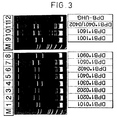
- Fig 3 shows the results obtained for a selection of DPB1 HTCs.
- DPB1 heterozygotes some naturally occurring heteroduplexes formed in trans might be expected, but in practice not all combinations of alleles produce heteroduplexes without use of the method of the present invention employing a DPB construct (Fig 4a).
- conducting the method with an amplified DPB construct yields highly discriminatory PCR fingerprints of heteroduplexes (Fig 4b), analogous to the DR-Dw system.
- Newly described alleles for example, DPB1*2101-3601
- the present method can also be used in determining whether an individual is susceptible to or has a disease associated with a particular nucleotide sequence which codes for a functional protein. Such diseases are reviewed in Immunol. Rev. 70 , 1-218, 1983.
- a suitable synthetic construct (usually a DNA construct) which is capable of forming duplexes with a nucleotide sequence of (a) a translated or non-translated exon region, or (b) an intron region which affects expression or mRNA slicing, the nucleotide sequence containing a mutation responsible for a genetic disease, the construct containing one or more deliberate nucleotide substitution(s) and/or deletion(s) and/or insertion(s) which is/are (i) opposite to a known variable nucleotide or sequence of nucleotides within the sequence under examination and/or (ii) contiguous with a nucleotide which is opposite to a known variable nucleotide or sequence of nucleotides within the sequence under examination.
- DNA is then isolated from the individual under diagnosis, for example from whole blood obtained according to standard protocols or from dried blood spots or from any other suitable source of DNA.
- Populations of the chosen synthetic construct and the nucleotide sequence are formed, for example using the polymerase chain reaction and these populations are then combined under suitable conditions to permit duplex formation within the combined populations.
- the duplexes formed are then separated, for example using gel electrophoresis, and the duplexes visualised, for example by staining.
- the resulting profile is then compared with a standard profile representing the results obtained using the same synthetic construct either with a DNA sample known to contain the mutation under examination or a DNA sample known not to contain the mutation under examination. This enables the user of the method readily to identify whether the individual under diagnosis carries the mutation responsible for the genetic disease.
- DNA heteroduplexes can be generated by hybridising PCR products with synthetic DNA molecules. These are PCR-amplifiable DNA sequences that mimic a DNA sequence but differ from it as a result of controlled nucleotide substitution(s), deletion(s) or insertion(s) at sites continuous to known mutation sites within the DNA.
- the construct and DNA sequences are amplified with the same PCR primers, and hybridised together post-PCR by heating and slow cooling, resulting in DNA heteroduplexes having different conformational forms, and thus different electrophoretic mobilities, unique for individual alleles of a gene (Bidwell et al, 1992).
- Phenylketonuria is probably the most common disorder of amino acid metabolism and results from mutations at the phenylalanine hydroxylase (PAH) gene.
- PAH phenylalanine hydroxylase
- the gene consists of 13 exons and encodes a MRNA of 2.8 kilobases (Kwok et al, 1985; DiLella et al, 1986). To date, more than 50 mutations have been described at the PAH gene but there are wide variations in the frequency distribution of individual mutations between different populations (Scriver et al, 1992).
- the DNA construct should preferably have a nucleotide sequence substantially corresponding to an invariable region or regions of the nucleotide sequence of exon 12 of the gene, with at least one nucleotide substitution, deletion or insertion at or adjacent the known variable nucleotides.
- the DNA construct may have such a deletion, substitution or insertion at or adjacent to one or more of the following four positions, defined by reference to the specific codons of the PAH exon 12 wild type gene:
- test kit which kit comprises:
- the synthetic nucleotide construct contains one or more deliberate nucleotide substitution(s) and/or deletion(s) and/or insertion(s) which is/are (i) opposite to a known variable nucleotide or sequence of nucleotides within the sequence under examination and/or (ii) contiguous with a nucleotide which is opposite to a known variable nucleotide or sequence of nucleotides within the sequence under examination;
- the primers may be labelled as above.
- the control PCR amplification product may also be labelled.
- the kit may further comprise one or more of the following:
- a DNA construct specific for the DPB1 locus was synthesised from multiple synthetic oligonucleotide "longmers", each of about 100 nucleotides in length, using techniques known in the art. In this example, four longmers were employed having the sequences identified SEQ ID NO: 2, SEQ ID NO: 3, SEQ ID NO: 4 and SEQ ID NO: 5. The DNA sequence of the construct was chosen to overlap the start of the second exon of the DPB1 gene, the nucleotide sequence of which is known from Marsh, SGE and Bodmer, JG.
- the construct was 338 base pairs in length.
- the construct sequence included 29 mismatches and 5 unmatched bases between the construct and a "consensus" sequence for the second exon and 3' flanking intron of the DPB1 gene, the consensus sequence being determined by using a computer alignment program, MicroGenie (Version 7.01), Beckman Instruments.
- the construct was cloned in an M13mp18 phage.
- the DPB1 "consensus" sequence is the top line in Figure 1. This "consensus” sequence was determined using a computer alignment program and variable bases are identified by the letter N. This means that these particular bases in the DPB1 second exon vary between individuals and give rise to the various allelic forms of the gene. For simplicity, the 5'-3' coding strand of the consensus sequence only is shown.
- the bottom line of Figure 1 (also SEQ ID NO: 1) is a DNA construct designed to contain deliberate nucleotide substitutions and deletions contiguous with the known variable nucleotides within the nucleotide sequence (here the second exon of the DPB1 gene) under examination. Again, the 5'-3' coding stand is shown for simplicity.
- the construct is designed to have an identical sequence with the great majority of the non-variable nucleotides of the DPB1 consensus sequence, in order that duplexes will form between the DPB1 DNA fragments from the sample of genomic DNA under consideration and the construct.
- deliberate nucleotide substitutions (sometimes hereinbelow referred to as "identifiers” as they "identify” any mutation at this position) are created. Each of these deliberate substitutions is marked by an asterisk. The substitutions are chosen such that, in different allelic forms of the gene, a different extent of mismatch will exist.
- variable nucleotides adjacent the known variable nucleotides, it may be desirable to create a deliberate mismatching with a conserved nucleotide; these are underlined in the construct sequence and effectively amplify the adjacent mismatches. As a result, hereinbelow, these are occasionally referred to as "amplifiers".
- the DNA construct shown has a number of different mismatches at different variable nucleotides of the consensus sequence and, by careful choice of the mismatches, different numbers and extent of single stranded loops will be formed in the duplex between the nucleotide sequence under investigation and the construct, for different alleles.
- a deliberate deletion for example the 5 base pair deletion in the construct shown by the " ⁇ " in Figure 1 ensures that all duplexes formed between the genomic DNA derived from the sample and the construct will migrate at a significantly different rate to the duplexes formed within the population of genomic DNA. This "shifts" the bands derived from duplexes including the construct away from bands derived from duplexes not including the construct in the PCR fingerprint produced in accordance with the present invention.
- the DBP nucleotide sequences under investigation were amplified in the polymerase chain reaction from genomic DNA.
- the PCR primers employed were those described by Begovich et al (Begovich AB, Bugawan TL, Nepom BS, Klitz W, Nepom GT and Erlich HA (1989), "A specific HLA-DP ⁇ allele is associated with pauciarticular juvenile rheumatoid arthritis but not adult rheumatoid arthritis", Proc Natl Acad Sci USA 86:9489-9493) and which are identified as UG19 (SEQ ID NO: 6) and UG21 (SEQ ID NO: 7), available from suppliers of custom oligonucleotides.
- the reaction mixture contained: Genomic DNA @ 0.1 ⁇ g/ ⁇ l 5.0 ⁇ l UG19 primer (5 ⁇ M stock) 10.0 ⁇ l UG21 primer (5 ⁇ M stock) 10.0 ⁇ l 10X PCR buffer (supplied) 10.0 ⁇ l dNTP mix (10mM each DNTP) 2.0 ⁇ l ddH 2 O 62.5 ⁇ l
- the resulting mixtures were combined, vortexed and then centrifuged briefly.
- the genomic DNA was denatured by heating the tube at 94°C for 5 min and then snap cooled on ice for 3 min and overlaid with 75 ⁇ l of paraffin oil.
- PCR was initiated using a "hot-start" procedure, whereby tubes containing the reaction mixture without Taq polymerase were equilibrated at 72°C in a heat block.
- Taq polymerase 2.5 units, 0.5 ⁇ l
- the genomic DNA samples were then subjected to 35 PCR cycles, as follows. primer extension 72°C, 30 sec denaturation 94°C, 30 sec primer annealing 65°C, 60 sec
- the 72°C primer extension time at the end of the final cycle was increased to 10 min.
- the DNA construct was amplified from the M13mp18 clone using the same primers as for the genomic DNA under study, the reaction mixture being as follows: DPB-UHG M13mp18 DNA: 1/100 dilution from supplied stock 1.0 ⁇ l UG19 primer (5 ⁇ M stock) 10.0 ⁇ l UG21 primer (5 ⁇ M stock) 10.0 ⁇ l 10X PCR buffer (supplied) 10.0 ⁇ l dNTP mix (10mM each dNTP) 2.0 ⁇ l ddH 2 O 66.5 ⁇ l The same PCR and thermal cycling conditions were used as above for the genomic DNA, but with only 25 cycles.
- the homoduplex band should be allowed to migrate to within 0.5cm of the end of the gel. Stain gels for 20 min in 1X TBE containing 0.5 ⁇ g/ml ethidium bromide and examine using a UV transilluminator.
- Black triangles represent deliberate deletions in the DPB-construct designed to increase gel retardation of the heteroduplexes and thereby to produce a clear spread of visible bands (see Figs. 3 and 4b).
- the single DPB-construct employed theoretically generates an unique heteroduplex with each DPB1 allele.
- HTCs HLA-DPB1 homozygous typing cells
- Lane 11 shows an HLA-DP heterozygote: the pattern observed is in part a combination of the relevant HTC patterns (lanes 5 and 6).
- M molecular weight marker (pUCBM21 Hpa II plus Dra I and Hind III digests: fragment sizes 1114, 900, 692, 501, 489, 404, 320, 242, 190, 147, 124, 110, 67, 37, 34, 34, 26 and 19 base pairs).
- PCR fingerprints of HLA-DPB1 heterozygotes were obtained.
- PCRs not conducted in the presence of the DPB-construct show (see Figure 4a) some rudimentary heteroduplexes formed in trans between alleles in some, but not all, combinations of alleles (lanes 3, 4, 6, and 7).
- the effect of conducting the PCRs as shown in ( Figure 4a) in the presence of the construct is shown in Figure 4b.
- Unique PCR fingerprints are now revealed for all heterozygotes, with excellent resolution of heteroduplexes.
- Lanes 7 and 8 show a leukaemic patient and potential donor, respectively, matched for HLA-A, B and DR-Dw but mismatched for DP as revealed by the PCR fingerprints.
- the patient (lane 7) is DPB1*0301,0401 (compare with lane 3) and the potential donor (lane 8) is DPB1*0201,0401 (compare with lane 1).
- the mixed lymphocyte reaction (MLR) was positive in this case.
- M molecular weight marker (see above).
- This example illustrates the application of the present invention to the classification of phenylketonuria genotypes.
- a DNA construct (SEQ ID NO: 8) was synthesised to identify five mutations (R408W, R413P, Y414C, T418P and IVS12nt1) within exon 12 of the phenylalanine hydroxylase (PAH) gene. Identifiers for four of the five mutations were incorporated within the construct and consisted of nucleotide substitutions or substitutions plus deletions. A specific identifier for the T418P mutation was not necessary.
- Figure 5 shows the nucleotide sequence of a portion of the normal human PAH gene, including exon 12 and part of the 5' and 3' flanking introns. Sequences of the PKU point mutations and the DNA construct are shown aligned to the normal sequence: dashes indicate identity.
- reaction mixtures were set up containing 2.5 ⁇ l of a 5 ⁇ M aqueous solution of each longmer, 5 ⁇ l dNTP mix (dATP, dCTP, dGTP and dTTP each at a concentration of 10mM), 1 ⁇ l of 10mg/ml bovine serum albumin, 10 ⁇ l Vent TM DNA polymerase reaction buffer (New England Biolabs), 58 ⁇ l deionized double distilled water, 2 units Vent TM DNA polymerase (New England Biolabs), added at 72°C to hot-start the reaction (D'Aquila et al, 1991), and 0.5 ⁇ l E.
- 5 ⁇ l dNTP mix dATP, dCTP, dGTP and dTTP each at a concentration of 10mM
- 10mg/ml bovine serum albumin 10 ⁇ l
- Vent TM DNA polymerase reaction buffer New England Biolabs
- 58 ⁇ l deionized double distilled water 2 units Vent TM DNA polymerase (New England Bio
- Thermal cycling conditions were as for genomic DNA amplification (see below).
- the products of six replicate reactions were pooled and electrophoresed on two 8% w/v nondenaturing polyacrylamide gels (Protogel, National Diagnostics) as previously described (Bidwell and Hui, 1990).
- Gel slices containing the double stranded construct band were excised and the DNA extracted by isotachophoresis (Ofverstedt et al, 1984), precipitated with ethanol, washed in 70% ethanol, and redissolved in 50 ⁇ l sterile double distilled water.
- Ten microlitres of a 1:10,000 serial dilution was amplified for use in the heteroduplex analyses.
- Genomic DNA was isolated from whole blood according to standard protocols, or alternatively from dried blood spots used in neonatal screening tests, as follows: a 2mm 2 area of blood spot was excised from the paper, added to a 0.5ml microcentrifuge tube containing 25 ⁇ l of a 1:10 dilution of AmpliTaq TM reaction buffer (Perkin Elmer Cetus). Samples were heated at 96°C for 15 min, cooled, diluted with a further 25 ⁇ l of 1X AmpliTaq TM reaction buffer, mixed and centrifuged at 13000g for 15 min. Supernatants were used directly in the PCR.
- the enzyme was added at 72°C to hot-start the reaction (D'Aquila et al, 1991).
- 30 ⁇ l of supernatant was used in the reaction mixtures, and the volumes of AmpliTaq TM reaction buffer and water were reduced to 7 ⁇ l and 40.6p1 respectively.
- the reaction mixtures were subjected to 35 rounds of thermal cycling at 94°C for 1 min, 48°C for 1 min and 72°C for 1 min.
- Figure 6a, 6b, 7 and 8 show the stained gels for a series of experiments on the of PAH gene exon 12 mutations.
- Lanes 1 and 12 show molecular weight markers (M, marker VIII, Boehringer Mannheim).
- the leading double bands in all other lanes are the homoduplexes of the synthetic DNA construct (leading band, 176bp) and PAH gene exon 12 (trailing band, 185bp) PCR products.
- Bands of apparent molecular weight 400-500bp are different conformational forms of DNA heteroduplexes (Figs 6b and 8).
- Lanes 2, 11, 13 and 16 show the heteroduplexes observed in normal individuals (controls).
- Lanes 6, 8 and 14 show individuals with different PAH gene exon 12 mutations on each chromosome. In all cases, characteristic heteroduplexes (also see Figure 6b) are observed for each mutation, and in addition the homozygosity or heterozygosity status is readily determined.
- Figure 6(b) is a schematic representation of DNA heteroduplex banding patterns obtained for each PAH gene exon 12 mutation. For each mutation, banding patterns are shown for homozygous (hom) and heterozygous (het) states.
- the mobilities of the bands are: a, 446bp; b, 433bp; c, 416bp; d, 395bp; e, 374bp; f, 359bp; g, 354bp.
- Bands c plus g are observed in normal PAH genes and in genes with non-exon 12 mutations.
- Figures 6a and 6b and 8 show that the synthetic construct was able to generate unique and discriminatory DNA heteroduplexes for all five known exon 12 mutations within DNA from PKU individuals, both in the homozygous and heterozygous states. Moreover, the visual quality of these results compared favourably with those obtained with DNA isolated from fresh blood samples, and permitted unambiguous assignment of exon 12 genotypes.
- the reliability and reproducibility of the test was examined by screening two sets of genomic DNA samples collected from PKU individuals in whom exon 12 mutations were established by other methods, either prospectively or retrospectively.
- Figures 7a and 7b show the results of a blind trial of concordance between the DNA analysis method of the present invention and the results of other DNA typing analyses.
- Figure 7a represents the results using the first set of genomic DNA whilst
- Figure 7b represents the results using the second set of genomic DNA constituting untreated, PKU individuals with reduced intelligence from a Scottish population.
- lane M are molecular weight markers (for details see Figure 6 legend) and lane C is a normal control.
- the lanes were as follows: lane 1, R408W heterozygous individual; lanes 2, 8, 9 and 11, IVS12nt1 heterozygous individuals; plane 3, individual with Y414C and IVS12nt1 mutations on opposite alleles; lane 4, Y414C heterozygous individual; lane 5, IVS12nt1 homozygote; lane 7, individual with R408W and IVS12nt1 mutations on opposite alleles.
- Lanes 6, 10 and 12 are PKU individuals with mutations outside exon 12.
- the lanes are as follows: lanes 1-7 and 9, IVS12nt1 heterozygous individuals; lane 8, PKU individual with mutation outside exon 12.
- This Example shows the technique of the present invention to be a highly sensitive, rapid and non-radioactive screening and classification system for PKU in which five mutations in exon 12 of the PAH gene can be identified using a single DNA construct and one PCR-based test.
- the tests are technically simple to perform and suitable for the routine screening of large numbers of individuals. Results were obtained within 24 hours of receipt of blood samples, and were of equal visual quality when performed on whole blood ( Figures 6 and 7) or dried blood spots ( Figure 8).
- This Example illustrates the wide potential of synthetic DNA construct-based DNA heteroduplex technology.
- the technique appears ideally suited to the genotyping of multi-allelic genes where mutations are clustered within a reasonable distance and are flanked by conserved sequences suitable for PCR priming. Genotyping mutations within separate exons in genomic DNA may be facilitated using exon-specific constructs, or potentially by a single construct for genotyping cDNA derived from mRNA by reverse transcription PCR (Myers and Gelfand, 1991)
Landscapes
- Chemical & Material Sciences (AREA)
- Life Sciences & Earth Sciences (AREA)
- Organic Chemistry (AREA)
- Proteomics, Peptides & Aminoacids (AREA)
- Health & Medical Sciences (AREA)
- Engineering & Computer Science (AREA)
- Zoology (AREA)
- Wood Science & Technology (AREA)
- Immunology (AREA)
- Analytical Chemistry (AREA)
- General Engineering & Computer Science (AREA)
- Microbiology (AREA)
- Molecular Biology (AREA)
- Biophysics (AREA)
- Physics & Mathematics (AREA)
- Biochemistry (AREA)
- Bioinformatics & Cheminformatics (AREA)
- Biotechnology (AREA)
- General Health & Medical Sciences (AREA)
- Genetics & Genomics (AREA)
- Chemical Kinetics & Catalysis (AREA)
- Cell Biology (AREA)
- Measuring Or Testing Involving Enzymes Or Micro-Organisms (AREA)
Claims (16)
- Verfahren zur Untersuchung von Polymorphismen in einer Nucleotidsequenz einer ersten Nucleinsäureprobe, umfassend die Schritte:(a) Bilden einer Population aus Nucleinsäurefragmenten, die die Nucleotidsequenz enthalten,(b) Vereinen der Population aus Nucleinsäurefragmenten mit einer Population eines synthetischen Nucleotidkonstrukts, das mit den Nucleinsäurefragmenten Duplexe bilden kann, wobei die Sequenz des Konstrukts so ist, dass Duplexe mit verschiedenen Molekülkonformationen gebildet werden können zwischen dem Konstrukt und den Nucleinsäurefragmenten, abhängig vom Vorliegen eines Polymorphismus an einem bekannten variablen Nucleotid oder einer bekannten variablen Nucleotidsequenz in der Sequenz der untersuchten Probe,(c) Zulassen der Duplexbildung innerhalb der vereinten Populationen, und(d) Trennen der in Schritt (c) gebildeten Duplexe, wobei das synthetische Konstrukt ein oder mehrere gezielte Nucleotid-Substitutionen, -Deletionen und/oder -Insertionen enthält, die (i) gegenüber einem bekannten variablen Nucleotid oder einer bekannten variablen Nucleotidsequenz sind in der untersuchten Sequenz und/oder (ii) nebst einem Nucleotid sind, das einem bekannten variablen Nucleotid oder einer bekannten variablen Nucleotidsequenz gegenüber ist in der untersuchten Sequenz.
- Verfahren nach Anspruch 1, wobei die Nucleotidsequenz des synthetischen Konstrukts mindestens ein oder mehrere gezielte Nucleotid-Substitutionen, -Deletionen und/oder -Insertionen enthält nebst dem Nucleotid, das gegenüber dem bekannten variablen Nucleotid oder der bekannten variablen Nucleotidsequenz ist in der untersuchten Sequenz.
- Verfahren nach Anspruch 1 oder 2, wobei die Nucleotidsequenz des synthetischen Konstrukts ein oder mehrere gezielte Nucleotid-Substitutionen, -Deletionen und/oder -Insertionen enthält, gegenüber dem bekannten variablen Nucleotid oder der bekannten variablen Nucleotidsequenz.
- Verfahren nach Anspruch 3, wobei das synthetische Konstrukt ein oder mehrere Nucleotid-Substitutionen und -Deletionen enthält, sowohl gegenüber als auch nebst der Mutation.
- Verfahren nach einem der Ansprüche 1 bis 4, wobei die Nucleotidsequenz des synthetischen Konstrukts zwischen 1 und 10 angrenzende Substitutionen/Deletionen enthält nebst der Position des Polymorphismus in der untersuchten Nucleotidsequenz.
- Verfahren nach einem der Ansprüche 1 bis 5, wobei das synthetische Konstrukt ein oder mehrere gezielte Nucleotid-Substitutionen, -Deletionen und/oder -Insertionen enthält, die mindestens zwei bekannten Polymorphismen in der Nucleotidsequenz entsprechen.
- Verfahren nach einem der vorstehenden Ansprüche, wobei das Konstrukt eine gezielte Deletion enthält oder eine Reihe von Deletionen an einer Stelle, entfernt von den polymorphen Bereichen in der untersuchten Nucleotidsequenz.
- Verfahren nach einem der vorstehenden Ansprüche, wobei die untersuchte Nucleinsäure DNS ist.
- Verfahren nach einem der vorstehenden Ansprüche, wobei das synthetische Nucleotidkonstrukt eine synthetische DNS ist.
- Verfahren nach einem der vorstehenden Ansprüche, wobei die Population aus DNS-Fragmenten, die die Nucleotidsequenz enthalten, durch eine Polymerasekettenreaktion aus einer DNS-Quelle gebildet wird.
- Verfahren nach einem der vorstehenden Ansprüche, bei dem das synthetische Konstrukt ein DNS-Konstrukt ist, wobei die Population aus synthetischem DNS-Konstrukt durch eine Polymerasekettenreaktion gebildet wird.
- Verfahren nach einem der vorstehenden Ansprüche zum Zuordnen von Individuen bezüglich ein oder mehrerer funktionaler Proteine, die von HLA (Human-Leucocyten-Antigen)-Genen der Klasse I und II exprimiert werden, wobei die untersuchte Nucleotidsequenz eine Sequenz oder ein Sequenzteil eines HLA-Gens der Klasse I oder II ist, das den oder die bekannten polymorphen Bereiche enthält.
- Verfahren nach einem der Ansprüche 1 bis 11, zur Feststellung, ob eine Person eine Veranlagung für eine genetische Krankheit hat, wobei die untersuchte Nucleotidsequenz eine Sequenz oder ein Sequenzteil eines Gens ist, das ein oder mehrere bekannte polymorphe Bereiche enthält, die mit einem Gendefekt verbunden sind.
- Verfahren nach Anspruch 13, wobei die genetische Krankheit der Phenylketonurie-Genotyp ist und das Gen, das ein oder mehrere bekannte polymorphe Bereiche enthält, das Phenylalanin-Hydroxylase(PAH)-Gen ist.
- Ein Testkit, umfassend(a) zwei Oligonucleotid-Primer, geeignet zur Verwendung in der PCR und zum Tempern an komplementäre Sequenzen an den jeweiligen Enden einer untersuchten Nucleotidsequenz,(b) ein synthetisches Nucleotidkonstrukt, das Duplexe mit der untersuchten Nucleotidsequenz bilden kann, wobei die Sequenz des Konstrukts so ist, dass Duplexe verschiedener Molekülkonformationen gebildet werden können zwischen dem Konstrukt und der untersuchten Nucleotidsequenz, abhängig vom Vorliegen eines Polymorphismus an einem bekannten variablen Nucleotid oder einer bekannten variablen Nucleotidsequenz in der untersuchten Sequenz, und(c) ein Kontroll-DNS- und/oder Kontroll-PCR-Amplifikationsprodukt, wobei das synthetische Konstrukt ein oder mehrere gezielte Nucleotid-Substitutionen, -Deletionen und/oder -Insertionen enthält, die (i) einem bekannten variablen Nucleotid oder einer bekannten variablen Nucleotidsequenz gegenüber sind in der untersuchten Sequenz und/oder (ii) nebst einem Nucleotid sind, das einem bekannten variablen Nucleotid oder einer bekannten variablen Nucleotidsequenz gegenüber ist in der untersuchten Sequenz.
- Ein Test-Kit nach Anspruch 15, wobei das synthetische Nucleotidkonstrukt eine synthetische DNS ist.
Applications Claiming Priority (3)
| Application Number | Priority Date | Filing Date | Title |
|---|---|---|---|
| GB929206567A GB9206567D0 (en) | 1992-03-25 | 1992-03-25 | Dna analysis |
| GB9206567 | 1992-03-25 | ||
| PCT/GB1993/000616 WO1993019201A1 (en) | 1992-03-25 | 1993-03-25 | Nucleic acid analysis |
Publications (2)
| Publication Number | Publication Date |
|---|---|
| EP0672179A1 EP0672179A1 (de) | 1995-09-20 |
| EP0672179B1 true EP0672179B1 (de) | 1998-07-08 |
Family
ID=10712866
Family Applications (1)
| Application Number | Title | Priority Date | Filing Date |
|---|---|---|---|
| EP93906753A Expired - Lifetime EP0672179B1 (de) | 1992-03-25 | 1993-03-25 | Nucleinsäure analyse |
Country Status (5)
| Country | Link |
|---|---|
| EP (1) | EP0672179B1 (de) |
| AU (1) | AU3764793A (de) |
| DE (1) | DE69319615D1 (de) |
| GB (2) | GB9206567D0 (de) |
| WO (1) | WO1993019201A1 (de) |
Families Citing this family (8)
| Publication number | Priority date | Publication date | Assignee | Title |
|---|---|---|---|---|
| US5633129A (en) * | 1989-07-13 | 1997-05-27 | Massachusetts Institute Of Technology | Electrophoretic detection and separation of mutant DNA using replaceable polymer matrices |
| US6994958B2 (en) | 1995-11-29 | 2006-02-07 | Anthony Nolan Bone Marrow Trust | Methods for separating and/or identifying DNA molecules |
| GB9809063D0 (en) * | 1998-04-29 | 1998-06-24 | Univ Wales Medicine | Heteroduplex analysis |
| ATE403756T1 (de) | 2004-10-08 | 2008-08-15 | Ihg Pharmaco Ltd | Verbesserte induzierte heteroduplex-generatoren |
| CN100510105C (zh) * | 2006-02-08 | 2009-07-08 | 博奥生物有限公司 | 一种序列特异性寡核苷酸探针及其应用 |
| GB2435326A (en) * | 2006-02-15 | 2007-08-22 | Cell Analysis Ltd | Heteroduplex analysis of non-human analytes |
| WO2011133474A2 (en) * | 2010-04-18 | 2011-10-27 | Beth Israel Deaconess Medical Center | Methods of predicting predisposition to or risk of kidney disease |
| US10925891B2 (en) | 2014-04-07 | 2021-02-23 | Ihg Pharmaco Ltd. | Carrier status of annexin A5 M2 haplotype and obstetric risks |
Family Cites Families (3)
| Publication number | Priority date | Publication date | Assignee | Title |
|---|---|---|---|---|
| US4965190A (en) * | 1986-07-31 | 1990-10-23 | Howard Hughes Medical Institute | Methods for the identification of mutations in the human phenylalanine hydroxylase gene using DNA probes |
| WO1990013668A1 (en) * | 1989-05-05 | 1990-11-15 | Lifecodes Corporation | Method for genetic analysis of a nucleic acid sample |
| GB9002625D0 (en) * | 1990-02-06 | 1990-04-04 | Univ Singapore | Human leukocyte antigen typing |
-
1992
- 1992-03-25 GB GB929206567A patent/GB9206567D0/en active Pending
-
1993
- 1993-03-25 AU AU37647/93A patent/AU3764793A/en not_active Abandoned
- 1993-03-25 GB GB9419292A patent/GB2280266B/en not_active Expired - Fee Related
- 1993-03-25 WO PCT/GB1993/000616 patent/WO1993019201A1/en not_active Ceased
- 1993-03-25 DE DE69319615T patent/DE69319615D1/de not_active Expired - Lifetime
- 1993-03-25 EP EP93906753A patent/EP0672179B1/de not_active Expired - Lifetime
Also Published As
| Publication number | Publication date |
|---|---|
| GB9419292D0 (en) | 1994-11-16 |
| GB2280266A (en) | 1995-01-25 |
| GB2280266B (en) | 1996-01-24 |
| WO1993019201A1 (en) | 1993-09-30 |
| EP0672179A1 (de) | 1995-09-20 |
| DE69319615D1 (en) | 1998-08-13 |
| GB9206567D0 (en) | 1992-05-06 |
| AU3764793A (en) | 1993-10-21 |
Similar Documents
| Publication | Publication Date | Title |
|---|---|---|
| US5759771A (en) | Method of determining a genotype by comparing the nucleotide sequence of members of a gene family and kit therefor | |
| AU672519B2 (en) | Intron sequence analysis method for detection of adjacent and remote locus alleles as haplotypes | |
| CA2239896C (en) | Method for evaluation of polymorphic genetic sequences, and the use thereof in identification of hla types | |
| Ikegami et al. | Identification of new cattle BoLA-DRB3 alleles by sequence-based typing | |
| EP0577708A4 (en) | Dna sequence-based hla typing method | |
| US8343720B2 (en) | Methods and probes for identifying a nucleotide sequence | |
| US6500614B1 (en) | Method for identifying an unknown allele | |
| EP0672179B1 (de) | Nucleinsäure analyse | |
| Zimmerman et al. | Exploiting structural differences among heteroduplex molecules to simplify genotyping the DQA1 and DQB1 alleles in human lymphocyte typing | |
| Wood et al. | Rapid classification of phenylketonuria genotypes by analysis of heteroduplexes generated by PCR‐amplifiable synthetic DNA | |
| US20050266410A1 (en) | Methods of Human Leukocyte Antigen typing by neighboring single nucleotide polymorphism haplotypes | |
| CN115323048A (zh) | 一种检测人类胚胎α-地中海贫血基因突变的引物组合以及方法 | |
| US6994958B2 (en) | Methods for separating and/or identifying DNA molecules | |
| Paul et al. | Resolution of cis‐trans ambiguities between HLA‐DRB1 alleles using single‐strand conformation polymorphisms and sequencing | |
| Sitte et al. | Detection of a common BoLA‐DRB3 deletion by sequence‐specific oligonucleotide typing | |
| Mitsunaga et al. | Multiplex ARMS‐PCR‐RFLP method for high‐resolution typing of HLA‐DRB1 | |
| Wood et al. | DNA typing in hereditary disease | |
| WO2026042842A1 (ja) | Hla-drb遺伝子用プライマーのセット | |
| CN121700082A (zh) | 一种与公鸭精子活力相关的pid1基因连锁纯合突变snp分子标记及其应用 | |
| CN120945074A (zh) | 一种鸡bf2基因快速分型检测方法及其应用 | |
| El-Borai et al. | A practical approach to HLA-DR genomic typing by heteroduplex analysis and a selective cleavage at position 86 | |
| El-Borai | Composite HLA-DRB genomic typing procedure: a simple and cost effective substitute for serological typing | |
| Bein et al. | HLA DNA pre-organ retrieval donor typing | |
| Versluis et al. | Typing for HLA-DPB by DNA sequencing | |
| Bouwens et al. | DR4 high resolution typing by direct genomic sequencing |
Legal Events
| Date | Code | Title | Description |
|---|---|---|---|
| PUAI | Public reference made under article 153(3) epc to a published international application that has entered the european phase |
Free format text: ORIGINAL CODE: 0009012 |
|
| 17P | Request for examination filed |
Effective date: 19941018 |
|
| AK | Designated contracting states |
Kind code of ref document: A1 Designated state(s): BE CH DE DK ES FR IT LI NL SE |
|
| 17Q | First examination report despatched |
Effective date: 19970304 |
|
| GRAG | Despatch of communication of intention to grant |
Free format text: ORIGINAL CODE: EPIDOS AGRA |
|
| GRAG | Despatch of communication of intention to grant |
Free format text: ORIGINAL CODE: EPIDOS AGRA |
|
| GRAH | Despatch of communication of intention to grant a patent |
Free format text: ORIGINAL CODE: EPIDOS IGRA |
|
| RBV | Designated contracting states (corrected) |
Designated state(s): BE CH DE DK ES FR IT LI NL SE |
|
| GRAH | Despatch of communication of intention to grant a patent |
Free format text: ORIGINAL CODE: EPIDOS IGRA |
|
| GRAA | (expected) grant |
Free format text: ORIGINAL CODE: 0009210 |
|
| AK | Designated contracting states |
Kind code of ref document: B1 Designated state(s): BE CH DE DK ES FR IT LI NL SE |
|
| PG25 | Lapsed in a contracting state [announced via postgrant information from national office to epo] |
Ref country code: NL Free format text: LAPSE BECAUSE OF FAILURE TO SUBMIT A TRANSLATION OF THE DESCRIPTION OR TO PAY THE FEE WITHIN THE PRESCRIBED TIME-LIMIT Effective date: 19980708 Ref country code: LI Free format text: LAPSE BECAUSE OF FAILURE TO SUBMIT A TRANSLATION OF THE DESCRIPTION OR TO PAY THE FEE WITHIN THE PRESCRIBED TIME-LIMIT Effective date: 19980708 Ref country code: IT Free format text: LAPSE BECAUSE OF FAILURE TO SUBMIT A TRANSLATION OF THE DESCRIPTION OR TO PAY THE FEE WITHIN THE PRE;WARNING: LAPSES OF ITALIAN PATENTS WITH EFFECTIVE DATE BEFORE 2007 MAY HAVE OCCURRED AT ANY TIME BEFORE 2007. THE CORRECT EFFECTIVE DATE MAY BE DIFFERENT FROM THE ONE RECORDED.SCRIBED TIME-LIMIT Effective date: 19980708 Ref country code: FR Free format text: LAPSE BECAUSE OF FAILURE TO SUBMIT A TRANSLATION OF THE DESCRIPTION OR TO PAY THE FEE WITHIN THE PRESCRIBED TIME-LIMIT Effective date: 19980708 Ref country code: ES Free format text: THE PATENT HAS BEEN ANNULLED BY A DECISION OF A NATIONAL AUTHORITY Effective date: 19980708 Ref country code: CH Free format text: LAPSE BECAUSE OF FAILURE TO SUBMIT A TRANSLATION OF THE DESCRIPTION OR TO PAY THE FEE WITHIN THE PRESCRIBED TIME-LIMIT Effective date: 19980708 Ref country code: BE Free format text: LAPSE BECAUSE OF FAILURE TO SUBMIT A TRANSLATION OF THE DESCRIPTION OR TO PAY THE FEE WITHIN THE PRESCRIBED TIME-LIMIT Effective date: 19980708 |
|
| REG | Reference to a national code |
Ref country code: CH Ref legal event code: EP |
|
| REF | Corresponds to: |
Ref document number: 69319615 Country of ref document: DE Date of ref document: 19980813 |
|
| PG25 | Lapsed in a contracting state [announced via postgrant information from national office to epo] |
Ref country code: SE Free format text: LAPSE BECAUSE OF FAILURE TO SUBMIT A TRANSLATION OF THE DESCRIPTION OR TO PAY THE FEE WITHIN THE PRESCRIBED TIME-LIMIT Effective date: 19981008 Ref country code: DK Free format text: LAPSE BECAUSE OF FAILURE TO SUBMIT A TRANSLATION OF THE DESCRIPTION OR TO PAY THE FEE WITHIN THE PRESCRIBED TIME-LIMIT Effective date: 19981008 |
|
| PG25 | Lapsed in a contracting state [announced via postgrant information from national office to epo] |
Ref country code: DE Free format text: LAPSE BECAUSE OF FAILURE TO SUBMIT A TRANSLATION OF THE DESCRIPTION OR TO PAY THE FEE WITHIN THE PRESCRIBED TIME-LIMIT Effective date: 19981009 |
|
| NLV1 | Nl: lapsed or annulled due to failure to fulfill the requirements of art. 29p and 29m of the patents act | ||
| EN | Fr: translation not filed | ||
| REG | Reference to a national code |
Ref country code: CH Ref legal event code: PL |
|
| PLBE | No opposition filed within time limit |
Free format text: ORIGINAL CODE: 0009261 |
|
| STAA | Information on the status of an ep patent application or granted ep patent |
Free format text: STATUS: NO OPPOSITION FILED WITHIN TIME LIMIT |
|
| 26N | No opposition filed |