EP0750936A1 - Permselektive Membranen und Verfahren zu ihrer Herstellung - Google Patents
Permselektive Membranen und Verfahren zu ihrer Herstellung Download PDFInfo
- Publication number
- EP0750936A1 EP0750936A1 EP96304795A EP96304795A EP0750936A1 EP 0750936 A1 EP0750936 A1 EP 0750936A1 EP 96304795 A EP96304795 A EP 96304795A EP 96304795 A EP96304795 A EP 96304795A EP 0750936 A1 EP0750936 A1 EP 0750936A1
- Authority
- EP
- European Patent Office
- Prior art keywords
- membrane
- molecular weight
- hydrophilic polymer
- polyvinyl pyrrolidone
- membrane material
- Prior art date
- Legal status (The legal status is an assumption and is not a legal conclusion. Google has not performed a legal analysis and makes no representation as to the accuracy of the status listed.)
- Granted
Links
Images
Classifications
-
- A—HUMAN NECESSITIES
- A61—MEDICAL OR VETERINARY SCIENCE; HYGIENE
- A61M—DEVICES FOR INTRODUCING MEDIA INTO, OR ONTO, THE BODY; DEVICES FOR TRANSDUCING BODY MEDIA OR FOR TAKING MEDIA FROM THE BODY; DEVICES FOR PRODUCING OR ENDING SLEEP OR STUPOR
- A61M1/00—Suction or pumping devices for medical purposes; Devices for carrying-off, for treatment of, or for carrying-over, body-liquids; Drainage systems
- A61M1/14—Dialysis systems; Artificial kidneys; Blood oxygenators ; Reciprocating systems for treatment of body fluids, e.g. single needle systems for hemofiltration or pheresis
- A61M1/16—Dialysis systems; Artificial kidneys; Blood oxygenators ; Reciprocating systems for treatment of body fluids, e.g. single needle systems for hemofiltration or pheresis with membranes
-
- B—PERFORMING OPERATIONS; TRANSPORTING
- B01—PHYSICAL OR CHEMICAL PROCESSES OR APPARATUS IN GENERAL
- B01D—SEPARATION
- B01D71/00—Semi-permeable membranes for separation processes or apparatus characterised by the material; Manufacturing processes specially adapted therefor
- B01D71/06—Organic material
- B01D71/66—Polymers having sulfur in the main chain, with or without nitrogen, oxygen or carbon only
- B01D71/68—Polysulfones; Polyethersulfones
-
- B—PERFORMING OPERATIONS; TRANSPORTING
- B01—PHYSICAL OR CHEMICAL PROCESSES OR APPARATUS IN GENERAL
- B01D—SEPARATION
- B01D67/00—Processes specially adapted for manufacturing semi-permeable membranes for separation processes or apparatus
- B01D67/0002—Organic membrane manufacture
- B01D67/0009—Organic membrane manufacture by phase separation, sol-gel transition, evaporation or solvent quenching
- B01D67/0011—Casting solutions therefor
- B01D67/00111—Polymer pretreatment in the casting solutions
-
- B—PERFORMING OPERATIONS; TRANSPORTING
- B01—PHYSICAL OR CHEMICAL PROCESSES OR APPARATUS IN GENERAL
- B01D—SEPARATION
- B01D69/00—Semi-permeable membranes for separation processes or apparatus characterised by their form, structure or properties; Manufacturing processes specially adapted therefor
- B01D69/08—Hollow fibre membranes
-
- B—PERFORMING OPERATIONS; TRANSPORTING
- B01—PHYSICAL OR CHEMICAL PROCESSES OR APPARATUS IN GENERAL
- B01D—SEPARATION
- B01D71/00—Semi-permeable membranes for separation processes or apparatus characterised by the material; Manufacturing processes specially adapted therefor
- B01D71/06—Organic material
- B01D71/44—Polymers obtained by reactions only involving carbon-to-carbon unsaturated bonds, not provided for in a single one of groups B01D71/26-B01D71/42
- B01D71/441—Polyvinylpyrrolidone
-
- B—PERFORMING OPERATIONS; TRANSPORTING
- B01—PHYSICAL OR CHEMICAL PROCESSES OR APPARATUS IN GENERAL
- B01D—SEPARATION
- B01D2323/00—Details relating to membrane preparation
- B01D2323/12—Specific ratios of components used
-
- B—PERFORMING OPERATIONS; TRANSPORTING
- B01—PHYSICAL OR CHEMICAL PROCESSES OR APPARATUS IN GENERAL
- B01D—SEPARATION
- B01D2323/00—Details relating to membrane preparation
- B01D2323/219—Specific solvent system
-
- B—PERFORMING OPERATIONS; TRANSPORTING
- B01—PHYSICAL OR CHEMICAL PROCESSES OR APPARATUS IN GENERAL
- B01D—SEPARATION
- B01D2325/00—Details relating to properties of membranes
- B01D2325/20—Specific permeability or cut-off range
-
- B—PERFORMING OPERATIONS; TRANSPORTING
- B01—PHYSICAL OR CHEMICAL PROCESSES OR APPARATUS IN GENERAL
- B01D—SEPARATION
- B01D2325/00—Details relating to properties of membranes
- B01D2325/34—Molecular weight or degree of polymerisation
-
- B—PERFORMING OPERATIONS; TRANSPORTING
- B01—PHYSICAL OR CHEMICAL PROCESSES OR APPARATUS IN GENERAL
- B01D—SEPARATION
- B01D2325/00—Details relating to properties of membranes
- B01D2325/36—Hydrophilic membranes
-
- B—PERFORMING OPERATIONS; TRANSPORTING
- B01—PHYSICAL OR CHEMICAL PROCESSES OR APPARATUS IN GENERAL
- B01D—SEPARATION
- B01D2325/00—Details relating to properties of membranes
- B01D2325/38—Hydrophobic membranes
Definitions
- the present invention relates to permselective membranes and to methods for their production. Specifically, it relates to permselective membranes which, when used for blood treatment, maintain a high hemofiltration rate and a low albumin permeability for a long period of time through control of the molecular weight distribution of the hydrophilic polymer in the membrane, and which are high in permselectivity to uremic toxins including medium-to-high molecular weight proteins, and also relates to methods for their production.
- Natural materials such as cellulose and synthetic polymer membrane materials such as polysulfone, polymethylmethacrylate (PMMA) and polyacrylonitrile have been widely used in semipermeable membranes for blood treatment, and various studies have been made in an attempt to develop dialysis techniques which function similarly to the human kidney in performing blood treatment for patients with chronic renal failure.
- polysulfone As it is sufficiently high in permeability to meet the latest improved dialysis techniques.
- polysulfone has been widely used as heat-resistant, thermoplastic engineering plastics material in the fields of automobiles, electric appliances, and medical devices.
- a semipermeable membrane made of polysulfone alone is too high in intermolecular cohesive strength and low in affinity with blood because of its hydrophobic nature, and therefore cannot be applied to blood treatment.
- a method was proposed wherein pores were produced by adding and subsequently leaching such pore-forming additives as hydrophilic polymers and inorganic salts while simultaneously forming a hydrophilic surface over the polymer material to provide a semipermeable membrane or a reverse osmosis membrane. Since then, a variety of published patent applications have appeared.
- Such methods for producing semipermeable membranes for blood treatment include those listed below:
- JP-A-61-232860 and JP-A-58-114702 where a polyhydric alcohol such as polyethylene glycol is added in forming a membrane, however, insufficient rinsing would leave residual alcohol in the membrane, which may cause trouble in the eyes of patients during dialysis.
- JP-B-06-075667 a membrane formation method which uses polyvinyl pyrrolidone is disclosed, but the resultant membrane, though high in water permeation performance, is too high in albumin permeability for use in blood treatment (dialysis).
- a similar problem can occur in the case of JP-A-62-121608 where a metal salt is used.
- JP-A-6-233921 proposes a hollow yarn membrane production method in which a high molecular weight hydrophilic polymer is added to increase the viscosity so that a good solvent for the solution can be used as total core liquid. This method, however, cannot control the albumin permeability of the membrane. Furthermore, no description is given concerning the diffusing performance of the resultant hollow yarn membrane, and no information is provided on the molecular weight distribution of the hydrophilic polymer in the membrane.
- JP-B-02-018695 By the method disclosed in JP-B-02-018695, a membrane that is high in stain resistance and easy to clean can be produced by adding high molecular weight polyvinyl pyrrolidone up to a high content relative to polysulfone to allow large amounts of polyvinyl pyrrolidone to remain in the membrane, though such a high diffusing performance as sought in the present invention cannot be achieved.
- JP-B-05-054373 discloses a membrane which is produced by starting with a low-viscosity solution consisting of polysulfone and relatively low molecular weight polyvinyl pyrrolidone and ending with washing for nearly complete removal of the polyvinyl pyrrolidone.
- a permselective membrane in accordance with the invention, which allows a dialysis technique to be carried out during which the membrane minimizes the permeability to albumin, a useful protein, while at the same time maintaining a high water permeability, and efficiently removing medium-to-high molecular weight uremia-causing proteins.
- a method for production of such a membrane was also found.
- the present invention provides a membrane comprising a hydrophobic polymer and a hydrophilic polymer wherein the hydrophilic polymer consists, by weight of the total weight of the hydrophilic polymer, of 10-50 wt% of a low molecular weight component having molecular weight less than 100,000 and 90-50 wt% of a high molecular weight component having molecular weight 100,000 or more.
- the hydrophobic polymer a polysulfone and as the hydrophilic polymer, a polyvinyl pyrrolidone, is preferable.
- the invention provides such a membrane which additionally contains crosslinking groups.
- Yet another aspect of the present invention provides a permselective membrane having an overall mass transfer coefficient (K 0 ), for a Stokes' radius of at least 30 ⁇ , of 0.0025 cm/min or more, as determined by a diffusion test using dextran, and a permeability to albumin of 4% or less, preferably 3% or less, more preferably 2% or less.
- K 0 overall mass transfer coefficient
- Still other aspects of the invention provide the use of a membrane according to any of the above aspects in an in vitro permselective filtration process, for example, removal of endotoxins from a dialysate, and a permselective material comprising such a membrane for use in dialysis.
- the present invention also provides, according to a still further aspect, a method for producing a polymeric membrane comprising forming a solution comprising a hydrophobic polymer, a hydrophilic polymer and a solvent, and preferably additionally an additive, wherein the hydrophilic polymer consists of two or more components having different molecular weights, a low molecular weight said component having a molecular weight less than 100,000 and a high molecular weight said component having a molecular weight of at least 100,000 and the solvent being capable of dissolving each of the hydrophobic and hydrophilic polymers and being compatible with any additive which may be present, forming the solution into a membrane and removing the solvent and (when present) the additive from the membrane to obtain the polymeric membrane.
- the solution contains 1.8-20 wt%, relative to the total weight of the solution of the high molecular weight component of the hydrophilic polymer.
- the amount of the low molecular weight component of the polyvinyl pyrrolidone in the solution is 20-70 % by weight of the total weight of polyvinyl pyrrolidone.
- hydrophobic polymer almost any engineering plastics material such as polysulfone, polyamide, polyimide, polyphenyl ether, or polyphenyl sulfide may be used, but a polysulfone resin, especially an aromatic sulfone polymer having residues containing a phenylene group and a sulfone group, is preferable, a more especially preferred polysulfone containing residues which may be represented by the following formula.
- the formula given below shows the skeleton of a typical such polysulfone, but the benzene ring portions may be modified.
- the hydrophilic polymer components having high molecular weight (2-1) and low molecular weight (2-2) to be used here are preferably polymers which, before any crosslinking (as later described), are soluble in water at 25°C and include polyethylene glycol, polyvinyl alcohol, carboxymethyl cellulose and polyvinyl pyrrolidone, each of which may be used alone or in combination with each other. There are no specific limitations as to their use, but polyvinyl pyrrolidone is preferable as it is relatively high in industrial availability.
- the weight-average molecular weight of the high molecular weight component is preferably five times or more than that of the low molecular weight component.
- an amphiprotic solvent which dissolves effectively and simultaneously the hydrophobic polymer, hydrophilic polymer and (when present) the additive is preferably used.
- solvents include dimethylacetamide, dimethylformamide, dimethyl sulfoxide, acetone, acetaldehyde, and 2-methyl pyrrolidone, of which dimethylacetamide is preferable in terms of safety, toxicity and generally avoiding hazardous properties.
- the additive (4) is preferably a substance which is a poor solvent for the hydrophobic polymer, but which has a compatibility with the hydrophilic polymer.
- Such additives include alcohol, glycerin, water, and esters, of which water is preferable in terms of process suitability. These particular additives are especially preferred when the hydrophobic polymer is a polysulfone.
- the improvement in stability of the solution achieved by adding a high molecular weight hydrophilic polymer may be due to the following.
- the substances used as the additive most of which serve as a poor solvent for hydrophobic polymers, form a clathrate through an intermolecular force with a coexistent hydrophilic polymer and are not in direct contact with the hydrophobic polymer. Due to the high temperature reached during dissolution, however, part of it may break off to cause the re-crystallization of dimers and other oligomers resulting from the hydrophobic polymer, leading to cloudiness in the solution. As the hydrophilic polymer increases in molecular weight, clathration will occur more actively, thus stabilizing the solution more effectively.
- the polymer content in the solution will be described below.
- the optimum content range by weight of the total weight of the solution, is 10-30%, preferably 15-25 %, especially for polysulfone, a hydrophobic polymer, and 2-20 %, preferably 3-15 %, especially for polyvinyl pyrrolidone, a hydrophilic polymer.
- hydrophilic polymer components are essential, with the content of hydrophilic polymer chains with molecular weights of 100,000 or more preferably being in the range of 1.8-20 wt% based on the total weight of the solution.
- An excessively high content will lead to an excessive increase in the viscosity of the solution, which will result not only in a difficulty in membrane formation but also in a deterioration in its water permeability and diffusion performance.
- the content is too low, it will be impossible to construct a desired network which is permeable to medium-to-high molecular weight uremia-causing proteins.
- a solution with such a composition, along with the core liquid, may be, for example, discharged as a sheath liquid through an annular nozzle provided by an axial end of a double pipe consisting of a pair of, preferably coaxial, tubes, to form a hollow fibre membrane.
- the membrane is formed by discharging the core and sheath liquids into a coagulation bath, either directly (wet spinning process) or after travelling through an air gap (dry/wet spinning process), typically (and especially for a mixture of a polyvinyl sulfone and polyvinyl pyrrolidone) at a temperature of 30-50°C.
- a plurality of such hollow fibres is arranged so as to provide a hollow yarn membrane.
- the membrane is rinsed with water at a temperature of 50-85°C.
- This washing step enables water soluble hydrophilic component present in the membrane to be washed out sufficiently to avoid heavy elution of the hydrophilic polymer which might otherwise occur during its use in an artificial kidney.
- it may be subjected to an insolubilization treatment in which at least a part of the hydrophilic polymer content of the membrane which was previously water soluble becomes insolubilized to be retained within the membrane.
- Crosslinking is preferably performed by means of gamma-ray, electron beam, heat, or chemical treatment to minimize the elution. Most preferably crosslinking is effected by ⁇ -ray irradiation, a preferred power being 10-50 KGy, more preferably 20-40 KGy.
- the crosslinking may work, for example, to connect chains of the hydrophobic polymer, i.e. the matrix, with those of the hydrophilic polymer to decrease the elution of the hydrophilic polymer, making it possible to produce modules that meet the artificial organs standards. It appears likely that such treatment could cause some change in the performance or structure. However, the structure of the network which is highly permeable to medium-to-high molecular weight proteins will be more firmly maintained or strengthened as a result of the crosslinking treatment, and its performance will be kept nearly unchanged with only a slight deterioration.
- a permselective membrane produced as described above can effectively diffuse uremic toxins and capture albumin, a useful protein, thus providing a high-performance membrane for blood treatment.
- a permselective membrane produced as described above can effectively diffuse uremic toxins and capture albumin, a useful protein, thus providing a high-performance membrane for blood treatment.
- the addition of a small amount of low molecular weight polymer chains to the high molecular weight hydrophilic polymer in the membrane acts to enhance the diffusing performance specifically for medium-to-high molecular weight proteins while controlling the permeability to albumin, a useful protein.
- a change in the membrane formation conditions is likely to make the process unstable, leading to a deterioration of the quality of the membrane, and furthermore, an increased water permeability will make the membrane unsuitable for dialysis blood treatment since sudden leakage of albumin is likely to occur at a certain point.
- the optimum molecular weight ranges used in the present invention were identified. Specifically, it is important that for the hydrophilic polymer in the membrane, especially prior to any insolubilization, chains with molecular weights less than 100,000 represent 10-50 % while chains of molecular weight 100,000 or more represent 90-50 %, by weight of the total hydrophilic polymer.
- the content of the hydrophilic polymer in the membrane should be 3-15 wt%, based on the total weight of the hydrophobic and hydrophilic polymers. If it is extremely low, the membrane decreases in wettability to cause coagulation when coming in contact with blood.
- a particularly preferred range of membranes embodying the invention obtained after an insolubilization treatment, contained 2-15 wt% of material insoluble in at least one polar solvent, for example, dimethyl formamide (DMF), and had the following features: according to solid 13 C-NMR spectral analysis, the membrane was made of a compound consisting of hydrophobic and hydrophilic polymers, and according to elemental analysis, the components of the insoluble material originating from the hydrophobic polymer and the hydrophilic polymer accounted for 15-40 wt% and 85-60 wt%, respectively.
- polar solvent for example, dimethyl formamide (DMF)
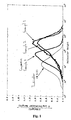
- Fig.1 illustrates the molecular weight distribution of polyvinyl pyrrolidone, a hydrophilic polymer, in a membrane prior to gamma-ray irradiation.
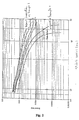
- Fig. 2 shows relations between the overall mass transfer coefficient (K 0 ) and the Stokes' radius in a membrane after gamma-ray irradiation.
- a hydraulic pressure of 100 mmHg is applied to the inside of the hollow yarns in a membrane module (1.6 m 2 in area) which is produced by sealing both ends of the hollow yarns, and the amount of the filtrate coming out of the module per unit time is measured.
- a hollow fiber membrane dialyzer has a blood side thereof perfused with 500ml of warmed bovine serum at 37°C at 200ml/min for 50 minutes but without any flow of the dialysate, then the dialysate is removed and filtration, controlled by the flow rate of the perfusate, occurs at a rate of 20ml/min for 10 minutes (the foregoing process being regarded as 1-hour circulation of bovine serum).
- the dialyzer is washed by priming with 21 of physiological salt solution before it is used for testing.
- the diffusing performance of the membrane should be measured in a state where no ultrafiltration takes place.
- the solution was supplied continuously for 20 minutes to ensure an equilibrium, followed by sampling at the inlet on the blood side, the outlet on the blood side, and the dialysate side.
- the solution samples were filtered through a filter with a pore diameter of 0.5 micrometers.
- Analysis was carried out for the filtrate using a gel permeation chromatography column (TSKgel G3000PW supplied by Toso Co., Ltd.) under the following conditions: column temperature 40°C, pure water of liquid chromatography grade used as mobile phase, 1 ml/min, and sample loading 50 ⁇ l.
- TSKgel G3000PW supplied by Toso Co., Ltd.
- C L (ml/min) CBi - CBo CBi ⁇ Q B
- CBi the concentration at the module inlet
- CBo the concentration at the module outlet
- Q B the rate of liquid (perfusate) feed to the module (ml/min).
- A the area (m 2 )
- Q ⁇ the rate of dialysate feed to the module
- Bovine blood (heparin-treated) with a hematocrit value of 30 % and a total protein content of 6.5 g/dl, kept at a temperature of 37°C in a blood tank, was used.
- the solution was supplied to the inside of hollow yarn fibres by a pump at a rate of 200 ml/min, but no dialysate was supplied to the outside.
- the pressure at the module outlet was adjusted to achieve a filtration rate of 20 ml/min per m 2 of the module area (which is equivalent to 32 ml/min for 1.6 m 2 ), and the filtrate and the blood from the outlet were fed back to the blood tank.
- albumin permeability (%) 2 x C F CBi + CBo x 100 where C F , CBi, and CBo are the albumin concentration in the filtrate, at the module inlet, and at the module outlet, respectively.
- a 100 mg portion of a hollow yarn after being subjected to required coagulation/rinsing processes was dissolved in 5 mg of methylene chloride before gamma-ray irradiation, and subjected to water extraction in the presence of a salt to obtain a solution. It was then subjected to centrifugal separation (20,000 rpm x 10 min) and the water layer was filtered through a filter with a pore diameter of 0.5 micrometers to obtain a sample liquid.
- a sample irradiated with gamma-ray was exsiccated at normal temperature with a vacuum pump.
- a 10 mg portion of the sample was analyzed with a CHN coder, and the polyvinyl pyrrolidone content was calculated from the nitrogen content.
- Measurements were also made for the insolubilized material obtained in paragraph (6), and the contents of the components originating from polyvinyl pyrrolidone and polysulfone were calculated.
- a 10 g portion of a hollow yarn irradiated with gamma-rays was prepared and dissolved in 100 ml of dimethylformamide at room temperature.
- the solution was subjected to centrifugal separation at 1,500 rpm for 10 minutes to separate insoluble material, and the supernatant liquid was discarded. This process was repeated three times.
- the solid material obtained was subjected to evaporation and exsiccation, and its weight was used to calculate the content of the insoluble material.
- This solution was introduced into a spinning block at 50°C and fed, as a sheath liquid, along with a core liquid, which was a solution consisting of 65 parts of dimethylacetamide and 35 parts of water, to an annular extrusion orifice provided by an axial end of a pair of coaxial pipes, which annular extrusion orifice had an outside diameter of 0.3 mm and an inside diameter of 0.2 mm.
- the core and sheath liquids were discharged from the orifice into a dry zone having a length of 250mm and containing moist air at a temperature of 30°C and a dew point of 28°C, and thence into a coagulation bath containing a water/dimethylacetamide mixture (80/20 by weight) at 40°C for 20 seconds to form a hollow fiber membrane which was then rinsed with water at 80°C for 20 seconds.
- This hollow yarn membrane was taken up at a speed of 40 m/min and packaged into a case so that its area became 1.6 cm 2 , followed by potting to produce a module.
- the molecular weight distribution of the residual polyvinyl pyrrolidone in the hollow yarn was determined prior to gamma-ray irradiation by gel permeation chromatography. Results showed that the chains with molecular weights less than 100,000 and those with molecular weights 100,000 or more accounted for 27 % and 73 %, respectively.
- the overall mass transfer coefficient (K 0 ) of the module prior to gamma-ray irradiation measured 0.0025 cm/min for a Stokes' radius of 45 ⁇ , and its water permeation performance and albumin permeability were 980 ml/hr/m 2 /mmHg and 1.4 %, respectively.
- the overall mass transfer coefficient (K 0 ), water permeation performance, and albumin permeability were measured again after gamma-ray irradiation at 20-40 KGy by the same procedure. Results showed that K 0 was 0.0025 cm/min for a Stokes' radius of 40 ⁇ , the water permeation performance 1,000 ml/hr/m 2 /mmHg, and the albumin permeability 1.5 %. Elemental analysis revealed that polyvinyl pyrrolidone in the hollow yarn membrane accounted for 8 %. The insoluble material in the hollow yarn after gamma-ray irradiation accounted for 11 %. Analysis of the composition of the insolubilized material showed that the components originating from polysulfone and polyvinyl pyrrolidone accounted for 26 % and 74 %, respectively.
- Results showed that the chains with molecular weights less than 100,000 and those with molecular weights of 100,000 or more accounted for 35 % and 65 %, respectively.
- the overall mass transfer coefficient (K 0 ), water permeation performance, and albumin permeability were measured after gamma-ray irradiation.
- Results showed that K 0 was 0.0025 cm/min for a Stokes' radius of 33 ⁇ , the water permeation performance 800 ml/hr/m 2 /mmHg, and the albumin permeability 2.0 %.
- Elemental analysis revealed that polyvinyl pyrrolidone in the hollow yarn membrane accounted for 9 %.
- the insoluble material in the hollow yarn after gamma-ray irradiation accounted for 12 %.
- Analysis of the composition of the insolubilized material showed that the components originating from polysulfone and polyvinyl pyrrolidone accounted for 20 % and 80 %, respectively.
- Results showed that the chains with molecular weights less than 100,000 and those with molecular weights of 100,000 or more accounted for 40 % and 60 %, respectively.
- the overall mass transfer coefficient (K 0 ), water permeation performance, and albumin permeability were measured after gamma-ray irradiation.
- Results showed that K 0 was 0.0025 cm/min for a Stokes' radius of 35 ⁇ , the water permeation performance 500 ml/hr/m 2 /mmHg, and the albumin permeability 1.8 %.
- Elemental analysis revealed that polyvinyl pyrrolidone in the hollow yarn membrane accounted for 5 %.
- the insoluble material in the hollow yarn after gamma-ray irradiation accounted for 10 %.
- Analysis of the composition of the insolubilized material showed that the components originating from polysulfone and polyvinyl pyrrolidone accounted for 15 % and 85 %, respectively.
- Results showed that the chains with molecular weights less than 100,000 and those with molecular weights of 100,000 or more accounted for 60 % and 40 %, respectively.
- the overall mass transfer coefficient (K 0 ), water permeation performance, and albumin permeability were measured after gamma-ray irradiation.
- Results showed that K 0 was 0.0025 cm/min for a Stokes' radius of 25 ⁇ , the water permeation performance 600 ml/hr/m 2 /mmHg, and the albumin permeability 0.5 %.
- Elemental analysis revealed that polyvinyl pyrrolidone in the hollow yarn membrane accounted for 4 %.
- the insoluble material in the hollow yarn after gamma-ray irradiation accounted for 0.15 %.
- Analysis of the composition of the insolubilized material showed that the components originating from polysulfone and polyvinyl pyrrolidone accounted for 10 % and 90 %, respectively.
- Results showed that the chains with molecular weights less than 100,000 and those with molecular weights of 100,000 or more accounted for 8 % and 92 %, respectively.
- the overall mass transfer coefficient (K 0 ), water permeation performance, and albumin permeability were measured after gamma-ray irradiation.
- Results showed that K 0 was 0.0025 cm/min for a Stokes' radius of 28 ⁇ , the water permeation performance 120 ml/hr/m 2 /mmHg, and the albumin permeability 4.5 %.
- Elemental analysis revealed that polyvinyl pyrrolidone in the hollow yarn membrane accounted for 16 %.
- the insoluble material in the hollow yarn after gamma-ray irradiation accounted for 20 %.
- Analysis of the composition of the insolubilized material showed that the components originating from polysulfone and polyvinyl pyrrolidone accounted for 4 % and 96 %, respectively.
- Results showed that the chains with molecular weights less than 100,000 and those with molecular weights of 100,000 or more accounted for 80 % and 20 %, respectively.
- the overall mass transfer coefficient (K 0 ), water permeation performance, and albumin permeability were measured after gamma-ray irradiation.
- Results showed that K 0 was 0.0025 cm/min for a Stokes' radius of 28 ⁇ , the water permeation performance 710 ml/hr/m 2 /mmHg, and the albumin permeability 0.02 %.
- Elemental analysis revealed that polyvinyl pyrrolidone in the hollow yarn membrane accounted for 4 %.
- the insoluble material in the hollow yarn after gamma-ray irradiation accounted for 0.5 %.
- Analysis of the composition of the insolubilized material showed that the components originating from polysulfone and polyvinyl pyrrolidone accounted for 42 % and 58 %, respectively.
- the molecular weight of the hydrophilic polymer in a permselective membrane when applied medically, can achieve a low albumin permeability while maintaining a high uremic toxin diffusing performance over a wide range of molecular weights, i.e. from low to high.
- a good performance is expected in improving the disease conditions of patients with renal failure.
- the membrane With its high water permeability, furthermore, the membrane can be applied to filtration for endotoxin removal for cleaning dialysate.
Landscapes
- Chemical & Material Sciences (AREA)
- Chemical Kinetics & Catalysis (AREA)
- Health & Medical Sciences (AREA)
- Engineering & Computer Science (AREA)
- Dispersion Chemistry (AREA)
- Manufacturing & Machinery (AREA)
- Heart & Thoracic Surgery (AREA)
- Urology & Nephrology (AREA)
- Anesthesiology (AREA)
- Vascular Medicine (AREA)
- Emergency Medicine (AREA)
- Biomedical Technology (AREA)
- Hematology (AREA)
- Life Sciences & Earth Sciences (AREA)
- Animal Behavior & Ethology (AREA)
- General Health & Medical Sciences (AREA)
- Public Health (AREA)
- Veterinary Medicine (AREA)
- Separation Using Semi-Permeable Membranes (AREA)
- External Artificial Organs (AREA)
Priority Applications (1)
| Application Number | Priority Date | Filing Date | Title |
|---|---|---|---|
| DE69623196.4T DE69623196T3 (de) | 1995-06-30 | 1996-06-28 | Permselektive Membranen und Verfahren zu ihrer Herstellung |
Applications Claiming Priority (3)
| Application Number | Priority Date | Filing Date | Title |
|---|---|---|---|
| JP166461/95 | 1995-06-30 | ||
| JP16646195 | 1995-06-30 | ||
| JP16646195 | 1995-06-30 |
Publications (3)
| Publication Number | Publication Date |
|---|---|
| EP0750936A1 true EP0750936A1 (de) | 1997-01-02 |
| EP0750936B1 EP0750936B1 (de) | 2002-08-28 |
| EP0750936B2 EP0750936B2 (de) | 2019-09-11 |
Family
ID=15831837
Family Applications (1)
| Application Number | Title | Priority Date | Filing Date |
|---|---|---|---|
| EP96304795.6A Expired - Lifetime EP0750936B2 (de) | 1995-06-30 | 1996-06-28 | Permselektive Membranen und Verfahren zu ihrer Herstellung |
Country Status (7)
| Country | Link |
|---|---|
| EP (1) | EP0750936B2 (de) |
| KR (1) | KR100424995B1 (de) |
| CN (1) | CN1140327C (de) |
| CA (1) | CA2180224C (de) |
| DE (1) | DE69623196T3 (de) |
| ES (1) | ES2181852T5 (de) |
| TW (1) | TW335356B (de) |
Cited By (7)
| Publication number | Priority date | Publication date | Assignee | Title |
|---|---|---|---|---|
| EP0997182A4 (de) * | 1997-05-19 | 2000-08-23 | Asahi Medical Co | Hohlfaserblutreinigungsmembran aus polysulfon und verfahren zu deren herstellung |
| EP2113298A1 (de) | 2008-04-30 | 2009-11-04 | Gambro Lundia AB | Hohlfasermembran mit verbesserter Durchlässigkeit und Selektivität |
| EP2156881A1 (de) | 2008-08-22 | 2010-02-24 | Gambro Lundia AB | Verteilungs- bzw. Filtrierungsvorrichtung |
| EP2253369A1 (de) | 2009-05-20 | 2010-11-24 | Gambro Lundia AB | Membranen mit verbesserter Leistung |
| EP2253368A1 (de) | 2009-05-20 | 2010-11-24 | Gambro Lundia AB | Membranen mit verbesserter Leistung |
| WO2012106583A3 (en) * | 2011-02-04 | 2013-03-21 | Fresenius Medical Care Holdings, Inc. | Performance enhancing additives for fiber formation and polysulfone fibers |
| US12226742B2 (en) | 2018-11-30 | 2025-02-18 | Fujifilm Corporation | Method for manufacturing porous membrane and porous membrane |
Families Citing this family (8)
| Publication number | Priority date | Publication date | Assignee | Title |
|---|---|---|---|---|
| TWI406703B (zh) * | 2003-11-17 | 2013-09-01 | Asahi Kasei Medical Co Ltd | Purify blood with hollow fiber membrane and use its blood purifier |
| EP1710011A1 (de) * | 2005-04-07 | 2006-10-11 | Gambro Lundia AB | Filtrationsmembrane |
| DE102007009208B4 (de) | 2007-02-26 | 2010-01-28 | Fresenius Medical Care Deutschland Gmbh | Hohlfaser, Hohlfaserbündel, Filter sowie Verfahren zur Herstellung einer Hohlfaser oder eines Hohlfaserbündels |
| US8104624B2 (en) * | 2008-06-10 | 2012-01-31 | Aquatech International Corporation | Preparation of high performance ultra filtration hollow fiber membrane |
| US9844625B2 (en) * | 2011-04-13 | 2017-12-19 | 3M Innovative Properties Company | Macroporous filtration membrane |
| CN107546398B (zh) * | 2016-06-29 | 2020-11-24 | 中国科学院大连化学物理研究所 | 一种具有微相分离结构的离子传导膜及其制备和应用 |
| TWI903214B (zh) * | 2018-05-02 | 2025-11-01 | 美商里珍納龍藥品有限公司 | 用於評估生化過濾器的適合性的方法 |
| CN113521399B (zh) * | 2020-04-16 | 2022-10-25 | 三诺生物传感股份有限公司 | 一种生物相容性膜、其制备方法及植入式生物传感器 |
Citations (7)
| Publication number | Priority date | Publication date | Assignee | Title |
|---|---|---|---|---|
| EP0082433A2 (de) * | 1981-12-17 | 1983-06-29 | Hoechst Aktiengesellschaft | Makroporöse asymmetrische hydrophile Membran aus synthetischem Polymerisat |
| EP0168783A1 (de) * | 1984-07-17 | 1986-01-22 | Fresenius AG | Asymmetrische mikroporöse Hohlfaser für die Hämodialyse sowie Verfahren zu ihrer Herstellung |
| JPH0218695A (ja) * | 1988-07-07 | 1990-01-22 | Nohmi Bosai Ltd | 火災警報装置 |
| EP0509663A1 (de) * | 1991-03-28 | 1992-10-21 | Toray Industries, Inc. | Dialyse Modul mit selektiv-durchlässiger Polysulfon-Hohlfasermembran und Verfahren zur Herstellung |
| JPH04338224A (ja) * | 1991-05-16 | 1992-11-25 | Asahi Chem Ind Co Ltd | ポリスルホン系樹脂選択透過性膜の製造方法 |
| EP0550798A1 (de) * | 1991-10-04 | 1993-07-14 | Kawasumi Laboratories, Inc. | Hohlfasermembran auf Basis von Polysulfon |
| JPH06296686A (ja) * | 1993-04-19 | 1994-10-25 | Asahi Chem Ind Co Ltd | 医療用ポリスルホン中空糸膜 |
Family Cites Families (2)
| Publication number | Priority date | Publication date | Assignee | Title |
|---|---|---|---|---|
| JPS6397205A (ja) † | 1986-10-15 | 1988-04-27 | Toray Ind Inc | ポリスルホン系樹脂半透膜の処理方法 |
| RU2086296C1 (ru) † | 1991-04-12 | 1997-08-10 | Миннтек Корпорейшн | Способ получения асимметричного микропористого полого волокна и асимметричное микропористое полое волокно |
-
1996
- 1996-06-28 DE DE69623196.4T patent/DE69623196T3/de not_active Expired - Lifetime
- 1996-06-28 ES ES96304795T patent/ES2181852T5/es not_active Expired - Lifetime
- 1996-06-28 EP EP96304795.6A patent/EP0750936B2/de not_active Expired - Lifetime
- 1996-06-28 CA CA002180224A patent/CA2180224C/en not_active Expired - Lifetime
- 1996-06-29 KR KR1019960026057A patent/KR100424995B1/ko not_active Expired - Lifetime
- 1996-06-29 CN CNB96111729XA patent/CN1140327C/zh not_active Expired - Lifetime
- 1996-07-01 TW TW085107954A patent/TW335356B/zh active
Patent Citations (7)
| Publication number | Priority date | Publication date | Assignee | Title |
|---|---|---|---|---|
| EP0082433A2 (de) * | 1981-12-17 | 1983-06-29 | Hoechst Aktiengesellschaft | Makroporöse asymmetrische hydrophile Membran aus synthetischem Polymerisat |
| EP0168783A1 (de) * | 1984-07-17 | 1986-01-22 | Fresenius AG | Asymmetrische mikroporöse Hohlfaser für die Hämodialyse sowie Verfahren zu ihrer Herstellung |
| JPH0218695A (ja) * | 1988-07-07 | 1990-01-22 | Nohmi Bosai Ltd | 火災警報装置 |
| EP0509663A1 (de) * | 1991-03-28 | 1992-10-21 | Toray Industries, Inc. | Dialyse Modul mit selektiv-durchlässiger Polysulfon-Hohlfasermembran und Verfahren zur Herstellung |
| JPH04338224A (ja) * | 1991-05-16 | 1992-11-25 | Asahi Chem Ind Co Ltd | ポリスルホン系樹脂選択透過性膜の製造方法 |
| EP0550798A1 (de) * | 1991-10-04 | 1993-07-14 | Kawasumi Laboratories, Inc. | Hohlfasermembran auf Basis von Polysulfon |
| JPH06296686A (ja) * | 1993-04-19 | 1994-10-25 | Asahi Chem Ind Co Ltd | 医療用ポリスルホン中空糸膜 |
Non-Patent Citations (3)
| Title |
|---|
| DATABASE WPI Week 9302, Derwent World Patents Index; AN 93-012089, XP002015598 * |
| DATABASE WPI Week 9502, Derwent World Patents Index; AN 95-010906, XP002015597 * |
| PATENT ABSTRACTS OF JAPAN vol. 17, no. 185 (C - 1047) 12 April 1993 (1993-04-12) * |
Cited By (15)
| Publication number | Priority date | Publication date | Assignee | Title |
|---|---|---|---|---|
| EP2255866A1 (de) * | 1997-05-19 | 2010-12-01 | Asahi Kasei Kuraray Medical Co., Ltd. | Polysulfon Hohlfasermembran zur Blutreinigung und Verfahren zu ihrer Herstellung |
| US6432309B1 (en) | 1997-05-19 | 2002-08-13 | Asahi Medical Co, Ltd | Polysulfone-base hollow-fiber hemocathartic membrane and processes for the production thereof |
| EP0997182A4 (de) * | 1997-05-19 | 2000-08-23 | Asahi Medical Co | Hohlfaserblutreinigungsmembran aus polysulfon und verfahren zu deren herstellung |
| EP2113298A1 (de) | 2008-04-30 | 2009-11-04 | Gambro Lundia AB | Hohlfasermembran mit verbesserter Durchlässigkeit und Selektivität |
| EP2156881A1 (de) | 2008-08-22 | 2010-02-24 | Gambro Lundia AB | Verteilungs- bzw. Filtrierungsvorrichtung |
| US8387804B2 (en) | 2008-08-22 | 2013-03-05 | Gambro Lundia Ab | Diffusion and/or filtration device |
| EP2253368A1 (de) | 2009-05-20 | 2010-11-24 | Gambro Lundia AB | Membranen mit verbesserter Leistung |
| EP2253369A1 (de) | 2009-05-20 | 2010-11-24 | Gambro Lundia AB | Membranen mit verbesserter Leistung |
| WO2012106583A3 (en) * | 2011-02-04 | 2013-03-21 | Fresenius Medical Care Holdings, Inc. | Performance enhancing additives for fiber formation and polysulfone fibers |
| AU2012212102B2 (en) * | 2011-02-04 | 2016-01-07 | Fresenius Medical Care Holdings, Inc. | Performance enhancing additives for fiber formation and polysulfone fibers |
| US9617421B2 (en) | 2011-02-04 | 2017-04-11 | Fresenius Medical Care Holdings, Inc. | Performance enhancing additives for fiber formation and polysulfone fibers |
| EP3517202A1 (de) * | 2011-02-04 | 2019-07-31 | Fresenius Medical Care Holdings, Inc. | Leistungssteigernde additive zur faserbildung und polysulfonfasern |
| USRE48703E1 (en) | 2011-02-04 | 2021-08-24 | Fresenius Medical Care Holdings, Inc. | Performance enhancing additives for fiber formation and polysulfone fibers |
| USRE50084E1 (en) | 2011-02-04 | 2024-08-20 | Fresenius Medical Care Holdings, Inc. | Performance enhancing additives for fiber formation and polysulfone fibers |
| US12226742B2 (en) | 2018-11-30 | 2025-02-18 | Fujifilm Corporation | Method for manufacturing porous membrane and porous membrane |
Also Published As
| Publication number | Publication date |
|---|---|
| KR970000316A (ko) | 1997-01-21 |
| KR100424995B1 (ko) | 2004-07-05 |
| CA2180224C (en) | 2006-08-15 |
| DE69623196T2 (de) | 2003-03-27 |
| DE69623196D1 (de) | 2002-10-02 |
| EP0750936B2 (de) | 2019-09-11 |
| EP0750936B1 (de) | 2002-08-28 |
| ES2181852T5 (es) | 2020-04-29 |
| CN1150918A (zh) | 1997-06-04 |
| DE69623196T3 (de) | 2019-11-21 |
| CN1140327C (zh) | 2004-03-03 |
| CA2180224A1 (en) | 1996-12-31 |
| TW335356B (en) | 1998-07-01 |
| ES2181852T3 (es) | 2003-03-01 |
Similar Documents
| Publication | Publication Date | Title |
|---|---|---|
| KR100432464B1 (ko) | 폴리술폰 중공사 반투막 | |
| KR100869203B1 (ko) | 비대칭 다공질막 및 그의 제조 방법 | |
| US6960297B2 (en) | Dialyzers for blood treatment and processes for production thereof | |
| EP1306121B1 (de) | Modifizierte hohlfasermembran | |
| US6355730B1 (en) | Permselective membranes and methods for their production | |
| EP0750936B2 (de) | Permselektive Membranen und Verfahren zu ihrer Herstellung | |
| US9776143B2 (en) | Low cut-off ultrafiltration membranes | |
| EP0569229A1 (de) | Hochwirkungsvolle Entfernung von Lipoprotein-Cholesterin mit geringer Dichte aus Vollblut | |
| CN100457242C (zh) | 改良的除去中分子的透析膜 | |
| JP4061798B2 (ja) | 血液処理用半透膜およびそれを用いた血液処理用透析器 | |
| WO2010133612A1 (en) | Membranes having improved performance | |
| JP3617194B2 (ja) | 選択透過性分離膜及びその製造方法 | |
| JP3966481B2 (ja) | 半透膜 | |
| JPH06296686A (ja) | 医療用ポリスルホン中空糸膜 | |
| JP4211169B2 (ja) | 血液処理用透析器 | |
| EP0570232A2 (de) | Mikroporöse Polysulfon-Träger für die Abtrennung von lipoproteinischem Cholesterol niedriger Dichte | |
| JP4003982B2 (ja) | ポリスルホン系選択透過性分離膜 | |
| JP3489372B2 (ja) | 選択透過性分離膜 | |
| JPH0143562B2 (de) | ||
| HK1008879A (en) | Polysulfone hollow fiber semipermeable membrane |
Legal Events
| Date | Code | Title | Description |
|---|---|---|---|
| PUAI | Public reference made under article 153(3) epc to a published international application that has entered the european phase |
Free format text: ORIGINAL CODE: 0009012 |
|
| AK | Designated contracting states |
Kind code of ref document: A1 Designated state(s): DE ES FR GB IT |
|
| 17P | Request for examination filed |
Effective date: 19970523 |
|
| 17Q | First examination report despatched |
Effective date: 20000804 |
|
| GRAG | Despatch of communication of intention to grant |
Free format text: ORIGINAL CODE: EPIDOS AGRA |
|
| GRAG | Despatch of communication of intention to grant |
Free format text: ORIGINAL CODE: EPIDOS AGRA |
|
| GRAH | Despatch of communication of intention to grant a patent |
Free format text: ORIGINAL CODE: EPIDOS IGRA |
|
| GRAH | Despatch of communication of intention to grant a patent |
Free format text: ORIGINAL CODE: EPIDOS IGRA |
|
| RBV | Designated contracting states (corrected) |
Designated state(s): DE ES FR GB IT |
|
| GRAA | (expected) grant |
Free format text: ORIGINAL CODE: 0009210 |
|
| AK | Designated contracting states |
Kind code of ref document: B1 Designated state(s): DE ES FR GB IT |
|
| REG | Reference to a national code |
Ref country code: GB Ref legal event code: FG4D |
|
| REF | Corresponds to: |
Ref document number: 69623196 Country of ref document: DE Date of ref document: 20021002 |
|
| REG | Reference to a national code |
Ref country code: ES Ref legal event code: FG2A Ref document number: 2181852 Country of ref document: ES Kind code of ref document: T3 |
|
| ET | Fr: translation filed | ||
| PLBI | Opposition filed |
Free format text: ORIGINAL CODE: 0009260 |
|
| PLBQ | Unpublished change to opponent data |
Free format text: ORIGINAL CODE: EPIDOS OPPO |
|
| PLAX | Notice of opposition and request to file observation + time limit sent |
Free format text: ORIGINAL CODE: EPIDOSNOBS2 |
|
| 26 | Opposition filed |
Opponent name: FRESENIUS MEDICAL CARE AG Effective date: 20030527 |
|
| PLAX | Notice of opposition and request to file observation + time limit sent |
Free format text: ORIGINAL CODE: EPIDOSNOBS2 |
|
| PLBB | Reply of patent proprietor to notice(s) of opposition received |
Free format text: ORIGINAL CODE: EPIDOSNOBS3 |
|
| PLAY | Examination report in opposition despatched + time limit |
Free format text: ORIGINAL CODE: EPIDOSNORE2 |
|
| PLBC | Reply to examination report in opposition received |
Free format text: ORIGINAL CODE: EPIDOSNORE3 |
|
| APBP | Date of receipt of notice of appeal recorded |
Free format text: ORIGINAL CODE: EPIDOSNNOA2O |
|
| APAH | Appeal reference modified |
Free format text: ORIGINAL CODE: EPIDOSCREFNO |
|
| APBP | Date of receipt of notice of appeal recorded |
Free format text: ORIGINAL CODE: EPIDOSNNOA2O |
|
| APAH | Appeal reference modified |
Free format text: ORIGINAL CODE: EPIDOSCREFNO |
|
| APBQ | Date of receipt of statement of grounds of appeal recorded |
Free format text: ORIGINAL CODE: EPIDOSNNOA3O |
|
| APBQ | Date of receipt of statement of grounds of appeal recorded |
Free format text: ORIGINAL CODE: EPIDOSNNOA3O |
|
| APBU | Appeal procedure closed |
Free format text: ORIGINAL CODE: EPIDOSNNOA9O |
|
| PLAL | Information related to reply to examination report in opposition modified |
Free format text: ORIGINAL CODE: EPIDOSCORE3 |
|
| PLAY | Examination report in opposition despatched + time limit |
Free format text: ORIGINAL CODE: EPIDOSNORE2 |
|
| PLAH | Information related to despatch of examination report in opposition + time limit modified |
Free format text: ORIGINAL CODE: EPIDOSCORE2 |
|
| PLAT | Information related to reply to examination report in opposition deleted |
Free format text: ORIGINAL CODE: EPIDOSDORE3 |
|
| PLBC | Reply to examination report in opposition received |
Free format text: ORIGINAL CODE: EPIDOSNORE3 |
|
| PLAF | Information modified related to communication of a notice of opposition and request to file observations + time limit |
Free format text: ORIGINAL CODE: EPIDOSCOBS2 |
|
| PLAH | Information related to despatch of examination report in opposition + time limit modified |
Free format text: ORIGINAL CODE: EPIDOSCORE2 |
|
| PLAB | Opposition data, opponent's data or that of the opponent's representative modified |
Free format text: ORIGINAL CODE: 0009299OPPO |
|
| PLAH | Information related to despatch of examination report in opposition + time limit modified |
Free format text: ORIGINAL CODE: EPIDOSCORE2 |
|
| R26 | Opposition filed (corrected) |
Opponent name: FRESENIUS MEDICAL CARE AG Effective date: 20030527 |
|
| PLBC | Reply to examination report in opposition received |
Free format text: ORIGINAL CODE: EPIDOSNORE3 |
|
| RDAF | Communication despatched that patent is revoked |
Free format text: ORIGINAL CODE: EPIDOSNREV1 |
|
| APBM | Appeal reference recorded |
Free format text: ORIGINAL CODE: EPIDOSNREFNO |
|
| APBP | Date of receipt of notice of appeal recorded |
Free format text: ORIGINAL CODE: EPIDOSNNOA2O |
|
| APAH | Appeal reference modified |
Free format text: ORIGINAL CODE: EPIDOSCREFNO |
|
| APBQ | Date of receipt of statement of grounds of appeal recorded |
Free format text: ORIGINAL CODE: EPIDOSNNOA3O |
|
| REG | Reference to a national code |
Ref country code: FR Ref legal event code: PLFP Year of fee payment: 20 |
|
| PGFP | Annual fee paid to national office [announced via postgrant information from national office to epo] |
Ref country code: ES Payment date: 20150512 Year of fee payment: 20 Ref country code: DE Payment date: 20150624 Year of fee payment: 20 Ref country code: GB Payment date: 20150624 Year of fee payment: 20 |
|
| PGFP | Annual fee paid to national office [announced via postgrant information from national office to epo] |
Ref country code: FR Payment date: 20150608 Year of fee payment: 20 |
|
| PGFP | Annual fee paid to national office [announced via postgrant information from national office to epo] |
Ref country code: IT Payment date: 20150625 Year of fee payment: 20 |
|
| REG | Reference to a national code |
Ref country code: DE Ref legal event code: R071 Ref document number: 69623196 Country of ref document: DE |
|
| REG | Reference to a national code |
Ref country code: GB Ref legal event code: PE20 Expiry date: 20160627 |
|
| PG25 | Lapsed in a contracting state [announced via postgrant information from national office to epo] |
Ref country code: GB Free format text: LAPSE BECAUSE OF EXPIRATION OF PROTECTION Effective date: 20160627 |
|
| REG | Reference to a national code |
Ref country code: ES Ref legal event code: FD2A Effective date: 20161005 |
|
| APBU | Appeal procedure closed |
Free format text: ORIGINAL CODE: EPIDOSNNOA9O |
|
| PG25 | Lapsed in a contracting state [announced via postgrant information from national office to epo] |
Ref country code: ES Free format text: LAPSE BECAUSE OF EXPIRATION OF PROTECTION Effective date: 20160629 |
|
| PLAY | Examination report in opposition despatched + time limit |
Free format text: ORIGINAL CODE: EPIDOSNORE2 |
|
| PLBC | Reply to examination report in opposition received |
Free format text: ORIGINAL CODE: EPIDOSNORE3 |
|
| PUAH | Patent maintained in amended form |
Free format text: ORIGINAL CODE: 0009272 |
|
| STAA | Information on the status of an ep patent application or granted ep patent |
Free format text: STATUS: PATENT MAINTAINED AS AMENDED |
|
| 27A | Patent maintained in amended form |
Effective date: 20190911 |
|
| AK | Designated contracting states |
Kind code of ref document: B2 Designated state(s): DE ES FR GB IT |
|
| REG | Reference to a national code |
Ref country code: DE Ref legal event code: R102 Ref document number: 69623196 Country of ref document: DE |
|
| REG | Reference to a national code |
Ref country code: ES Ref legal event code: DC2A Ref document number: 2181852 Country of ref document: ES Kind code of ref document: T5 Effective date: 20200429 |