EP0784275A1 - Verfahren zur Erzeugung und Darstellung einer Wissensbasis - Google Patents
Verfahren zur Erzeugung und Darstellung einer Wissensbasis Download PDFInfo
- Publication number
- EP0784275A1 EP0784275A1 EP96308994A EP96308994A EP0784275A1 EP 0784275 A1 EP0784275 A1 EP 0784275A1 EP 96308994 A EP96308994 A EP 96308994A EP 96308994 A EP96308994 A EP 96308994A EP 0784275 A1 EP0784275 A1 EP 0784275A1
- Authority
- EP
- European Patent Office
- Prior art keywords
- knowledge base
- query
- corrective action
- elements
- markup language
- Prior art date
- Legal status (The legal status is an assumption and is not a legal conclusion. Google has not performed a legal analysis and makes no representation as to the accuracy of the status listed.)
- Granted
Links
Images




Classifications
-
- G—PHYSICS
- G06—COMPUTING OR CALCULATING; COUNTING
- G06F—ELECTRIC DIGITAL DATA PROCESSING
- G06F11/00—Error detection; Error correction; Monitoring
- G06F11/22—Detection or location of defective computer hardware by testing during standby operation or during idle time, e.g. start-up testing
- G06F11/2257—Detection or location of defective computer hardware by testing during standby operation or during idle time, e.g. start-up testing using expert systems
Definitions
- the present invention relates to a method for producing a knowledge base, particularly a knowledge base related to information needed by technical representives servicing complicated machinery such as printers and copiers; and a viewer for viewing the knowledge base.
- SGML One common system for organizing text within a computer memory is "standardized generalized markup language," or SGML.
- SGML specific quantities of text, ranging in length from a short sentence or single word to several pages, are organized as “elements” which can be named and identified.
- the different elements, each element being a quantity of prose can be organized in a hierarchical or “nested” form.
- a "book” can contain a number of "chapters,” a “chapter” can include a number of "sections,” a “section” can include a number of "paragraphs,” and so forth, with the hierarchy of organization going down to the smallest and most specific elements.
- bitmaps for drawings within a markup language such as SGML, and consider the picture itself an element.
- a markup language such as SGML is directed mainly toward providing, ancillary to the substance of the text being printed, additional instructions which relate to the desired layout and appearance of the text, such as whether certain character strings are to be printed in bold, centered, at the top of a new page or screen, etc.
- the elements of the text are marked with "semantic" markers, typically “section heading,” “subsection heading,” etc. Through a style sheet, these markers are translated into visual features e.g. italics, bold, etc.
- these queries are in the form of declaratives that the tech rep must answer true or false: if a certain subset of queries elicit "true" responses, then the tech rep will be informed that a particular corrective action should be taken.
- Other queries may require an answer whether, for example, a certain scalar parameter (temperature, or age of a part) is within one of three or more numerical ranges.
- Documentation which is, in substance, a large number of decision trees is particularly conducive to organization in a hierarchical markup language such as SGML. It is an object of the present invention to provide a system by which documentation in the form of an SGML document can be exploited, by use of facilities already present in SGML, to form a basis for an expert diagnostic system.
- An advantage of creating an expert system which can exploit pre-existing SGML documentation is, of course, that the original documentation, which may pre-exist the present invention by many years or decades, does not have to be rewritten for purposes of developing an expert system or even a hypertext document.
- Another benefit of a system which exploits SGML documentation is that printed documentation need not be authored separately from a computerized system which is viewed, for example, by a tech rep's laptop.
- Yet another advantage is that, in many instances, it may be desirable to make the basic documentation, such as would be found on printed pages, publicly available either in printed form, or else through a public system such as the World Wide Web.
- the proprietor of the documentation namely the manufacturer of the product being serviced, may wish to retain control over certain information which is intertwined with the documentation.
- Such intertwined information may include statistical data as to which part of a large machine malfunctions most often, cost data for replacement parts, or an inventory of what parts tech reps carry in their vans.
- a manufacturer of a complex machine may retain some advantages of making documentation freely available, while retaining a significant quantity of "value added" features which can be exploited only by the manufacturer itself.
- a viewer for viewing a knowledge base.
- the knowledge base includes a plurality of markup language elements.
- Each of a subset of markup language elements in the knowledge base has a markup language tag which identifies the element in the subset as query element, each query element including a query about an observable condition of a physical system.
- Each of a subset of markup language elements in the knowledge base has a markup language tag which identifies the element in the subset as a corrective action element, each corrective action element being related to a possible way of addressing the condition of a physical system.
- the markup language elements in the knowledge base are arranged hierarchically in a plurality of decision trees with each query element functioning as a node in a decision tree, with each query element and each corrective action element including an identifying code in the tag thereof.
- the viewer comprises a list of suspects, each suspect being a name relating to a condition of a physical system.
- Means are provided for cross-referencing each suspect to at least one query element or corrective action element in the knowledge base, the cross-referencing means identifying elements by the identifying code in the tag thereof.
- Means are further provided for retrieving from the knowledge base and displaying a cross-referenced markup language element, in response to a user entering a suspect to the viewer.
- a method of authoring a knowledge base in a markup language comprising a plurality of markup language elements, each element being identifiable by at least one markup language tag.
- a query tag is associated with each of a plurality of elements in the knowledge base to define query elements, each query element comprising a quantity of prose which instructs a user to make an observation about a physical system.
- a corrective action tag is associated with each of a plurality of elements in the knowledge base to define corrective action elements, each corrective action element comprising a quantity of prose which instructs a user to perform an action on a physical system.
- Cross-reference tags are provided to query elements and corrective action elements, to establish relationships among preselected query elements and corrective action elements, whereby each of the plurality of query elements is associated with at least two elements including either a corrective action element or another query element.
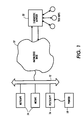
- Figure 1 illustrates a general overview of the principle of accessing a knowledge base according to the present invention.
- the knowledge base indicated generally as 10 is a quantity of data which may be resident within a single large computer memory, or be in the form of a system of shared memories among different computers available on a network.
- Knowledge base 10 is a fixed quantity of data which is for the most part accessible to any authorized party.
- the knowledge base 10 is preferably in the form of hierarchical or nested data, such as would be found in an SGML rendering of the decision trees forming the documentation of, for example, a large digital printer.
- such a machine is referred to as a "physical system,” which may be a man-made machine, such as a printer, computer, or automobile, but which could also be a naturally-occurring system, such as the human body, if a medical expert system were so designed.
- the knowledge base 10 is accessible to two types of users: passive users, which would typically include the general public accessing the knowledge base 10 through a public network, and what will here be called "active users," the function of whom will be described in detail below.
- Figure 1 shows that knowledge base 10 may be accessible through a network 12, which may be, for example, the World Wide Web, or another aspect of the Internet.
- a network 12 may be, for example, the World Wide Web, or another aspect of the Internet.
- Such a publicly-available network may include users using commercial "browsers" or viewers typical of which are those made by Netscape or Mosaic, as shown by the viewers indicated by 14.
- printer viewers such as the PostScript viewer 16, which in turn would download to a printer 18.
- printer viewer The purpose of a printer viewer is to allow a passive user to download all or part of the knowledge base 10 in printed-document form for printing on a printer such as 18, so that the passive user could conceivably print out his own version of the basic documentation for a particular machine as needed.
- Diagnostic advisor 20 is, in brief, a specialized type of viewer which has been itself “authored” by a person having direct physical knowledge of the machine being diagnosed by the tech rep. That is, according to the present invention, the diagnostic advisor is more than a mere text-search apparatus but rather incorporates an understanding of the physical reality of the system being diagnosed when choosing what portions of the knowledge base 10 to view under certain conditions.
- diagnostic advisor 20 To illustrate the function of diagnostic advisor 20, and its interaction with a hierarchical data base such as knowledge base 10, reference will be made to the following practical example, from which general principles will be derived.
- the tech rep will have a number of initial sources of information for making a diagnosis, such sources being specific to the copier he is servicing, and also information which the tech rep brings to the situation based on his training and previous experience.
- many types of mid- and high-volume printers and copiers have an error-code panel on the top of the machine, which will display a specific error code generally directing a tech rep or user to the source of a malfunction.
- a code "E2" could refer to a paper jam
- C4 could refer to being out of paper
- A3 could refer to an electrical malfunction, etc.
- This error code displayed by the machine can be the tech rep's first indication as to the source of the malfunction.
- More sophisticated diagnostic systems available in some high-end equipment, will output more specific error codes, which can be downloaded directly into the tech rep's own laptop computer.
- the indication could also be a directly-observed print quality indication, noted and entered by the tech rep, such as "dark background," etc.
- This first indication can be used to direct the tech rep to a particular section of the documentation which is generally relevant to the indicated malfunction. However, in a practical embodiment, this generally relevant portion of the documentation could be a chapter of as many as several hundred printed pages in a service manual.
- Figure 6 shows a sample page of a printed-text service manual such as used to diagnose a high-volume copier.
- the illustration is given merely to show the flavor of the steps the tech rep is intended to carry out in order to perform a suitable diagnosis given a certain small number of hard facts, such as the error code displayed by the machine.
- the underlying structure of the procedure illustrated in Figure 6 is that of a decision tree: every query (bolded sentence) requiring a yes-or-no answer is in effect a node in a decision tree.
- a particular single decision tree is called a "repair analysis procedure," or RAP; there will be hundreds of such RAPs for a typical commercially-available copier or printer.
- the instructions such as shown on the example page in Figure 6 can be classified in four main ways:
- Figure 2 shows, on the left-hand side thereof, a knowledge base 10, such as would be used, for example, in the documentation for a copier.
- the knowledge base 10 is organized into a multi-layer decision tree which, in substance, is the same as the hundreds of pages of documentation such as shown in Figure 6 for a typical high-volume copier.
- an error code such as E4 (which is one of many which may be displayed by the machine) thus leads to one or more of perhaps many hundreds of decision trees, each decision tree having any number of layers.
- the relevant documentation includes setups S, tests T, and at least one query Q.
- Each query Q represents a branch point, or node, in a decision tree, with yes and no (or true and false) alternatives creating branching in the tree. (It is also possible, although not shown in this example, to have a query Q branch off into three or more possible responses, such as yes/no/unknown, or three or more temperature ranges.)
- each response to a query Q leads to either another setup and test, indicated as S/T, or, as the "leaves" at the ends of the branches of the decision tree, a particular corrective action, hereshown as CA at the ends of the decision tree.
- each query Q which creates a branch in the decision tree is referred to as a "node” of the decision tree, while each of the ends of the decision tree is referred to as a "terminal point" of the decision tree.
- the terminal points can be corrective action elements themselves (as shown in this example), or can be diagnosis elements (e.g., "roller R is broken") which refer to corrective action elements (e.g., "replace roller R") elsewhere in the knowledge base.
- the diagnostic advisor 20 enables a human tech rep to select, based on direct observation of the malfunctioning copier, one or more "suspects" which he believes could be the root cause of the problem. Based on this input, the diagnostic advisor 20 accesses only the relevant portions of the knowledge base 10, and then, from this relatively small amount of data taken from knowledge base 10, synthesizes a proposed repair routine. The diagnostic advisor 20 thus exploits input from the human tech rep to obtain the final desired result (diagnosing and repairing the malfunction) in a manner which makes optimal use of the human observer and the procedures embodied in the knowledge base 10.
- the tech rep opens the machine and notices that a quantity of paper has accumulated around some roller, here arbitrarily called roller R, which is somewhere in the machine.
- the tech rep therefore has additional information that can provide specific guidance regarding the source of the malfunction, in a way that following the decision trees in knowledge base 10 could only arrive at after many iterations through a large number of decision trees.
- the tech rep typically accessing diagnostic advisor 20 through, for example, a laptop computer on the site, can enter the phrase "roller R", or even "error code E4, roller R", into the diagnostic advisor 20.
- FIG. 2 The right-hand side of Figure 2 shows the function of diagnostic advisor 20, as manifested in a sample user interface.
- diagnostic advisor 20 there may be provided on the laptop screen a small space 22 for the tech rep to enter the error code, in this case E4, and then a scrollable menu 24, the content of which may be determined by the error code (i.e., different error codes entered at 22 may invoke different contents to the scrollable menu 24).
- the menu 24 lists possible specific areas of defects, in this case specific areas in which a paper jam could take place.
- the user interface is scrolled to the section involving roller R. Under the general heading of "roller R" are specific defects which may befall roller R.
- the tech rep can simply scroll to and select the general "roller R" entry in the menu 24.
- the tech rep can determine the specific problem with roller R, he can scroll to and select a sub-heading under roller R in the menu, such as the "roller R cracked" entry in menu 24, as shown.
- diagnostic advisor 20 accesses all of the nodes and/or terminal points in the decision trees of knowledge base 10 that are relevant to the specific observation entered by the tech rep. As mentioned above, this is a more sophisticated operation than a mere text search through the various entries in knowledge base 10; rather, this is a special selection of relevant nodes and terminal points in knowledge base 10, based on the author of the diagnostic advisor's own expertise about the copier. This expertise about the physical system in question should transcend a mere text base search. For example, if the noted problem is "image on page not permanent" there may be many reasons for this condition which would only be apparent to a person having actual physical knowledge of the system.
- Impermanent images may be caused by (among other things) insufficient heat on a fuser, which in turn may be caused by (among other things) a malfunctioning transformer, which in turn may be caused by (among other things) insufficient ventilation, etc. It is therefore evident that a mere text search would be unsatisfactory in dealing with many diagnoses.
- the tech rep examines roller R and determines that it is cracked, he may select the "roller R cracked" item from the menu, which will in turn directly invoke (as a function of diagnostic advisor 20) the suitable corrective action to take if roller R is indeed cracked. As it happens, if roller R is cracked, the only solution is to replace roller R. There is thus provided, on the tech rep's user interface to diagnostic advisor 20, a window for corrective actions, which in this case is only one, "replace roller R". This cross-referencing is shown by the connecting lines 30 in Figure 2.
- the relevant nodes and/or terminal points in knowledge base 10 have been determined beforehand by the author of the diagnostic advisor 20, who has appended cross-reference "tags" to the nodes and terminal points in knowledge base 10 which he has deemed relevant, in a manner which will be explained in detail below, based on the author's own expertise about the physical system.
- the nodes or terminal points in knowledge base 10 which have been identified as relevant will inevitably include any corrective action which terminates in "replace roller R," since that is indeed the recommended corrective action.
- the author of the diagnostic advisor 20 may append cross-reference tags, hereshown as asterisks, to enough nodes in the decision tree to enable the tech rep to determine that roller R is indeed cracked and not, for example, merely discolored.
- diagnostic advisor 20 will, in brief, present to the tech rep a menu of relevant specific observations the tech rep may have made given a particular error code. Then, in response to a selected observation by the tech rep, the diagnostic advisor 20 retrieves from knowledge base 10 only the relatively small number of portions of decision trees which are relevant to that particular observation.
- the user interface further displays, in addition to the corrective actions shown in response to a specific observation entered by the tech rep, a list of confirmations, which are SGML elements which are higher, i.e. more "toward the trunk," within the decision trees of knowledge base 10 than the queries and corrective actions which are originally cross-referenced by the entry of a suspect.
- a list of confirmations which are SGML elements which are higher, i.e. more "toward the trunk," within the decision trees of knowledge base 10 than the queries and corrective actions which are originally cross-referenced by the entry of a suspect.
- the diagnostic advisor 20 displays in the "confirmations" window 28 a list of setups, tests, and queries retrieved directly from the knowledge base 10, that are sufficient to show that the tech rep's initial observation is confirmed; typical confirmation queries in this example could include "Are there hairline fractures on roller R?" or "Is roller R discolored?".
- a confirmation is thus a further reference, from the originally-cross-referenced node or terminal point, that provides enough information to cause the query (node) or corrective action (terminal point) to make sense, and thereby allows the tech rep to confirm or exonerate the entered suspect.
- this principle is described as retrieving elements which are higher in the decision tree hierarchy than the markup language element relating to the cross-referenced corrective action.
- a "blind" set of iterations through the decision trees of knowledge base 10 goes from most general observations (the error code E4, for example) to more and more specific possible diagnoses, and then ends with very specific corrective actions to specific parts: that is, one moves on the tree from the trunk to the branches to the leaves.
- a person using diagnostic advisor 20 has the option of starting the inquiry with a suspect diagnosis and corrective action, and then retrieving from the knowledge base 10 only those portions of the relevant tree which terminate with that suspect diagnosis, so that the suspect diagnosis may be confirmed or exonerated.
- the diagnostic advisor 20 is capable of moving from the specific to the general, or from the leaves to the branches, of the decision trees.
- the tech rep could select the general "roller R" item, and in turn the diagnostic advisor would invoke all of the nodes and/or terminal points which are in any way relevant to roller R or are known to be physically associated with roller R (such as motors, transformers, fuses, etc.) in the physical machine.
- the tech rep himself can observe about roller R the faster diagnostic advisor 20 can present the tech rep with a suitably small number of specific tests he can perform to confirm his diagnosis.
- the tech rep can enter a general suspect, or a number of suspects, and exploit more of the decision trees (i.e., starting from more general observations, "closer to the trunk") to help isolate the problem.
- the terminal points of the various decison trees in knowledge base 10 could be themselves markup language elements specifying a corrective action for the tech rep to carry out, e.g. "replace roller R"; or alternately the terminal points can simply be final conclusive diagnoses, e.g, "bearing B is broken", which in turn can be linked to a necessary corrective action (including, optionally, bitmaps of images) stored elsewhere in a memory (which may or may not form part of knowledge base 10).
- a necessary corrective action including, optionally, bitmaps of images
- corrective actions are displayed by the diagnostic advisor 20 in a specific order.
- This editorial decision on what makes one corrective action cheaper or otherwise better than another is made by multiplying the cost of the corrective action, times the probability that the particular corrective action is the most relevant, such as in the bearing example just given.
- the "cost" could be expressed in terms of not only the cost of a new part, but the value of a quantity of labor required to implement the corrective action. Other factors which could be quantified under "cost” may include danger (e.g., whether the tech rep will have to deal with high voltages or charged capacitors) or convenience (e.g., whether the replacement part is easily carried in a van).
- the most likely source of the same malfunction is a defect in certain mechanical parts of the machine; if the same machine is more than five years old, the most likely source of the malfunction could be the power supply system.
- This age-dependence of the most likely source of a malfunction could be manifest in the order in which RAP elements are displayed to the tech rep.
- the cross-referenced nodes could be displayed in the order of: control system, mechanical parts, power supply; for the same machine which the diagnostic advisor 20 knows is ten years old, these possible sources of the malfunction could be displayed in the reverse order.
- the system of the present invention is capable of permitting a tech rep to enter very basic observed conditions of the physical system (in this case, a copier or printer) and then, in response to the entered basic problem, display a selected set of RAPs from the knowledge base 10 which are relevant to the general problem.
- the mechanism by which a general problem is cross-referenced to the relevant elements in the knowledge base 10 is the same as that described above for cross-referencing "suspects" toward the leaves of the decision trees.
- the diagnostic advisor 20 does not necessarily start with corrective actions toward the ends of the decision trees, but rather is more likely to reference more general areas of inquiry (i.e., higher nodes) in the knowledge base.
- Figure 3 shows an example display, as would be presented on a tech rep's laptop by diagnostic advisor 20, of a proposed repair procedure synthsized by diagnostic advisor 20 in response to a general description of a malfunction, such as here described in the reprographic context as "poor background" (i.e., a film of toner is adhering to areas which should be white in the printed documents).
- poor background i.e., a film of toner is adhering to areas which should be white in the printed documents.
- This may have any number of root causes, involving disparate subsystems, in a printing apparatus. As shown in the Figure, these root causes may relate, for example, to the fuser, to the toner, or to the photoreceptor; within each of these general topics there may be further.
- a hierarchy of document elements each document element being labeled as relating to a different subsystem, and containing those elements retrieved from the knowledge base 10 defining RAPs (i.e. decision trees) which the author of the diagnostic advisor 20 has identified as being possibly relevant to the problem of "poor background.”
- RAPs i.e. decision trees
- the particular order in which the illustrated files are displayed on the tech rep's laptop can be made representative of an editorial decision relating to the "cost" of the corrective actions therein; using of course the word "cost" in the very broad senses described above.
- the author of the diagnostic advisor 20 in this example has selected the fuser as the most likely source of the particular background problem, followed by the toner and the photoreceptor. It is also to be expected that, within each document element retrieved by diagnostic advisor 20, the elements forming the RAPs are similarly chosen in order of probability of success. (However, it is also possible to intermix RAPs from different subsystems, so that one need not exhaust the fuser RAPs before going on to the toner RAPs, as here illustrated.) Taken together, the files of RAPs shown in Figure 3, should the tech rep decide to pursue them in the order in which they are displayed, represents an entire proposed diagnostic procedure which will in turn address each of the displayed subsystems. The order of the subsystems and the RAPs therein is representative of an order of RAPs which is expected to fix the entered problem most efficiently, taking into account the cost and probability of success of each RAP.
- a synthesized diagnostic/repair procedure such as shown in Figure 3 involves deciding, given a general description of a malfunction, which RAPs are most likely to be useful, and programming the diagnostic advisor to make these "costing" decisions when determining what order to display the relevant RAPs for the most likely shortest path to success.
- the rules by which one set of RAPs are displayed before another can be static, e.g. given the problem "poor background," the editor of diagnostic advisor 20 may decide that the fuser should always be checked first. Alternately, this type of editorial decision could be made dynamically; e.g.
- the diagnostic advisor 20 may also take into account the physical environment of a machine being serviced, and thereby emphasize RAPs directed to subsystems which are vulnerable to particular environmental situations. For example, the fact a copier is located in a dusty environment such as a warehouse, or a humid environment such as a loading dock, may cause a large number of malfunctions in the charging subsystem. The time of year may also be a relevant consideration. Also, in some parts of the world, the voltage and current of commercial electricity may not be consistent over time. All of these environmental factors will tend to make certain subsystems more likely sources of "suspects" than others under different conditions.
- Repair history Certain individually-identifiable machines in a population may have distinct repair histories which can affect the selection of RAPs. The fact that a particular machine has had, for example, its entire development system replaced in the last year may cause RAPs relevant to the development system to be placed on either a very low or very high priority (depending on the implementation) in the proposed repair procedure.
- the diagnostic advisor 20 when selecting the order of RAPs under specific conditions, may take into account the various cost considerations such as time of repair, availability of parts. age of machine, customer profile, operating environment, and repair history under any of various types of algorithms, such as a point-count system.
- the "points" associated with a cost (in any sense) of particular corrective action in the knowledge base can be retained in the diagnostic advisor 20 itself, or stored within an SGML tag within knowledge base 10.
- a tech rep using diagnostic advisor 20 can navigate the various decisions trees of knowledge base 10 in two directions: first, a tech rep could enter a suspect in the form of a very specific part which appears to be malfunctioning (such as "roller R") and then cause the diagnostic advisor to cross-reference elements in knowledge base 10, moving from the corrective actions to more general confirmations (that is, move from the leaves of a decision tree to the branches). Alternately, the tech rep could enter very general observations (such as "poor background”) and have the diagnostic advisor 20 cross-reference very general (close to the "trunk”) elements in the knowledge base 10, thus allowing the tech rep to navigate from the general to the specific within knowledge base 10.
- the relevant elements within the knowledge base are accessed and retrieved by diagnostic advisor 20 at a distinct "compilation time" when the tech rep enters a particular suspect or general principle.
- diagnostic advisor 20 When a suspect toward the leaves of the tree is entered, it is typical that only enough higher level elements need be retrieved from knowledge base 10 in order to form confirmations of the malfunctioning suspect.
- a general observation such as "poor background” is entered, however, it is likely that all of the elements "downward" from a very general observation in a number of decision trees (such as covering different subsystems) will have to be retrieved from knowledge base 10 and compiled in diagnostic advisor 20. It is thus evident that the entering of general observations will require the diagnostic advisor to retrieve, in typical situations, significantly more elements from knowledge base 10 than would be the case if the tech rep entered a suspect in the form of a specific part.
- SGML a useful practical embodiment for rendering a knowledge base such as 10
- SGML a known system for organizing data hierarchically. It is well known in the art to use SGML to preserve the integrity of the logical appearance of text when it is displayed or printed. For example, if a certain quantity of data is either displayed on a screen or printed, whatever the configuration of the words of the text on the screen or page, it is desirable that certain rules be followed, such as titles are of a different appearance than the rest of the text; new paragraphs always begin on a new line; and new chapters always begin at the top of new page.
- SGML provides a system whereby extra information, relating to the appearance of the text, is in effect overlaid on the basic information forming the data.
- Figure 7 gives an example of the text of a document, with its additional instructions, shown in shaded form, by which the text is rendered as an SGML element.
- the sample of text shown in Figure 6 is overlaid with a "document type definition" or DTD, in the form of tags appearing before and after each set of words forming, for example, a paragraph.
- DTD document type definition
- each paragraph begins with the tag "PARA” and ends with “/PARA” (i.e, end of paragraph).
- the title is indicated as TITLE, and emphasized portions are indicated as EMPH.
- tags which influence the appearance of a document when it is dispayed or printed are here referred to as "formatting" tags.
- an SGML document When an SGML document is displayed or printed by a particular apparatus, it is an attribute of the SGML standard that the particular physical apparatus will simply ignore any tags it does not understand.
- the display or printing apparatus will take the ASCII character as characters to be displayed, and take codes it recognizes as DTD tags as instructions for formatting the characters.
- the cross-referencing system by which the diagnostic advisor 20 accesses specific elements of the knowledge base 10 can be carried out by means of specialized SGML tags.
- typical SGML tags are directed only to instructions as to the appearance of the text on a page or a screen
- additional SGML tags are applied to suitable SGML elements within the knowledge base 10 so that the identified elements can be retrieved when a particular suspect is entered into the diagnostic advisor 20, as shown in Figure 2 above.
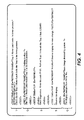
- Figure 4 shows a simple example of the "raw" SGML documentation of a small portion of knowledge base 10.
- tags show in the angled brackets
- tags which identify each SGML element (such as a simple sequence of words) by its logical relationship with one of the hierarchical decision trees within knowledge base 10.
- TEST the word
- TEST the word
- TEST the word
- TEST the phrase “Check that the tray 1 home latch locks the tray in the home position”
- the tag /TEST which indicates that that particular SGML element is over.
- the quoted passage between the tags is the phrase that will be displayed on the tech rep's laptop.
- ID R07001/5.
- the purpose of this ID number is to provide a unique identification, or "hook,” to this particular test within the knowledge base 10.
- the diagnostic advisor 20 will have, at the relevant portion thereof, this particular ID number, so that this particular test will be retrieved from knowledge base 10.
- Figure 5 gives a general overview of the interaction, in an SGML element-retrieval sense, of the interaction between diagnostic advisor 20 and the knowledge base 10.
- the "point of entry" for the user using the diagnostic advisor 20 is the suspect menu 24.
- a tech rep scrolls to the desired entry in the suspect menu where he believes a malfunction is occurring.
- Each suspect listed in the suspect menu when it is selected, releases a list of the cross-referenced tags that the author of the diagnostic advisor 20 has deemed to be relevant to that particular selected suspect.
- the tags are then submitted to a tag search program 102, of a software design known in the art, which goes into the SGML document that is knowledge base 10, searches the entire knowledge base 10 for those cross-referenced tags.
- the search program 102 is not looking at the actual text that is the substance of the knowledge base 10, but rather is searching through the SGML tags, which would not be apparent in the printed-out version of knowledge base 10. However, once the desired tags are located in the knowledge base 10, what is retrieved and displayed is the text itself.
- each SGML element identified by diagnostic advisor 20 may itself be cross-referenced to other SGML elements: every identified query should refer back to a test, and very often every identified test should refer back to a setup, etc.
- the displayed SGML elements will be shown in a coherent form, that is, as a setup, followed by a test, followed by a query, followed in turn by a corrective action.
- To display a query by itself may cause the retrieved SGML elements to be incoherent when displayed.
- entered suspects are referenced to confirmation expressions and corrective actions in knowledge base 10; confirmation expressions in turn reference queries, which in turn reference tests, which reference setups.
- Elements directly referenced by the diagnostic advisor 20, and secondarily-referenced SGML elements, are referenced by the originally-referenced tags, as shown in the Figure 4 example, where referencing a test causes the test to further reference a setup above it.
- the tech rep receives a query on his lap top and answers the query with a yes or no answer, that answer to the query will cause a cross-reference to either another query, or to a corrective action.
- the tech rep in response to a query, the tech rep will in turn cross-reference further SGML elements in order to move toward the "leaves" of the decision tree.
- An important aspect of the present invention when dealing with large amounts of documentation in knowledge base 10, is that a test performed on a particular small part of a machine such as a copier may be applicable to two disparate trees within the entire documentation.
- a test performed on a particular small part of a machine such as a copier may be applicable to two disparate trees within the entire documentation.
- both the fuser and a paper feed motor are part of a common electrical subsystem, which in turn includes a fuse F1.
- a problem like smudging of an image on a sheet would be associated with improper operation of the fuser, whereas a defect such as crimping of the sheet would be associated with improper operation of the feed motor.
- the diagnostic advisor 20 can thus include a provision whereby a record of the answer to every query in the session is kept, and, in the course of a session, if a particular query comes up again, it can be automatically answered by reference to the record. More generally, it may be desirable for the convenience of the tech rep to have the diagnostic advisor 20 maintain a running record of all queries which have been answered in the course of a particular session.
- a session memory 110 which keeps a record of what SGML elements have been already referenced in a session.
- the session memory 110 can further be provided as a device which can display "exonerations" which have come up in the course of the tech rep navigating the knowledge base 10.
- an author of the diagnostic advisor may know that certain sets of answers to certain queries will have the effect not of isolating the source of a malfunction, but rather enable the tech rep to rule out a particular suspected type of malfunction.
- These exonerations could be in the form displayable phrases, such as "main electrical supply OK," displayed directly by the diagnostic advisor in response to a recognizable set of answers to a particular set of queries retrieved from the knowledge base 10.
- This costing module represents software which is used to prioritize the retreived RAPs according to costing information and algorithms which may be supplied by either the knowledge base 10 or from a memory associated only with the diagnostic advisor 20. Once again, this "costing" can include both the cost of performing a particular RAP, and also take into account the probability of success of a given RAP.
- a helpful addition to the basic system of the present invention is to exploit any hypertext links within the knowledge base 10. For example, for every corrective action in knowledge base 10, it may be desirable to display bitmaps of, for example, exploded views of the part of the machine being serviced to appear whenever the corrective action is displayed, even for passive users not using the diagnostic advisor 20. These bitmaps may be displayed via hypertext links through techniques known in the art. Since such diagrams are typically authored with printed documentation, the bitmaps are often easily obtained.
- the diagnostic advisor 20 being in the hands of a special class of active users, can be used as a medium of communication among users in this class. That is, a tech rep using this diagnostic advisor, and in effect sharing its resources, can be provided with means to create "tip sheets" relating to specific portions of the knowledge base which are often traversed by a large number of tech reps.
- a technique where once a particular tech rep is "located" at a particular portion of the knowledge base 10, he may want to place a note to other users of the diagnostic advisor 20 for future reference. This note left by the particular tech rep can be activated every time the most closely related SGML element in the knowledge base 10 is activated in the course of a repair procedure.
- diagnostic advisor 20 can contribute to the diagnostic advisor 20 in more passive ways, such as by providing a system whereby the diagnostic advisor maintains a statistical analysis of how often certain nodes in the knowledge base 10 are addressed by a large population of tech reps.
- Such historical information may be of interest not only to the tech reps themselves, in determining which problems are most common with a particular machine, but could also alert the manufacturer of the machine to particular reliability problems.
Landscapes
- Engineering & Computer Science (AREA)
- General Engineering & Computer Science (AREA)
- Theoretical Computer Science (AREA)
- Computer Hardware Design (AREA)
- Quality & Reliability (AREA)
- Physics & Mathematics (AREA)
- General Physics & Mathematics (AREA)
- Management, Administration, Business Operations System, And Electronic Commerce (AREA)
Applications Claiming Priority (2)
| Application Number | Priority Date | Filing Date | Title |
|---|---|---|---|
| US08/574,482 US5737739A (en) | 1995-12-19 | 1995-12-19 | System that accesses a knowledge base by markup language tags |
| US574482 | 1995-12-19 |
Publications (2)
| Publication Number | Publication Date |
|---|---|
| EP0784275A1 true EP0784275A1 (de) | 1997-07-16 |
| EP0784275B1 EP0784275B1 (de) | 2003-03-26 |
Family
ID=24296331
Family Applications (1)
| Application Number | Title | Priority Date | Filing Date |
|---|---|---|---|
| EP96308994A Expired - Lifetime EP0784275B1 (de) | 1995-12-19 | 1996-12-11 | Diagnostisches Expertensystem |
Country Status (3)
| Country | Link |
|---|---|
| US (1) | US5737739A (de) |
| EP (1) | EP0784275B1 (de) |
| DE (1) | DE69626948T2 (de) |
Cited By (5)
| Publication number | Priority date | Publication date | Assignee | Title |
|---|---|---|---|---|
| WO2000058888A3 (en) * | 1999-03-26 | 2001-01-25 | Gen Electric | Process planning for distributed manufacturing and repair |
| WO2001035248A3 (en) * | 1999-11-05 | 2002-12-12 | Gen Electric | Internet-based process optimization system and method |
| US6615207B1 (en) * | 1998-12-10 | 2003-09-02 | International Business Machines Corporation | Method of formulating and presenting search queries to a tabular database through a user-interactive computer display interface |
| EP1571570A4 (de) * | 2002-12-02 | 2011-06-22 | Hitachi Construction Machinery | Konstruktionseinrichtungsinformationsverarbeitungssystem und konstruktionseinrichtungsinformationsverarbeitungsverfahren |
| EP4365805B1 (de) * | 2022-11-02 | 2025-05-28 | Siemens Medical Solutions USA, Inc. | System und verfahren zur informationsextraktion, suche und zusammenfassung für dienstaktionsempfehlungen |
Families Citing this family (80)
| Publication number | Priority date | Publication date | Assignee | Title |
|---|---|---|---|---|
| DE4111131C2 (de) * | 1991-04-06 | 2001-08-23 | Inst Rundfunktechnik Gmbh | Verfahren zum Übertragen digitalisierter Tonsignale |
| US6961712B1 (en) | 1996-10-25 | 2005-11-01 | Ipf, Inc. | Consumer product information request (CPIR) enabling servlets and web-based consumer product information catalogs employing the same |
| US6625581B1 (en) | 1994-04-22 | 2003-09-23 | Ipf, Inc. | Method of and system for enabling the access of consumer product related information and the purchase of consumer products at points of consumer presence on the world wide web (www) at which consumer product information request (cpir) enabling servlet tags are embedded within html-encoded documents |
| US5918214A (en) * | 1996-10-25 | 1999-06-29 | Ipf, Inc. | System and method for finding product and service related information on the internet |
| US6700958B2 (en) * | 1995-04-10 | 2004-03-02 | Starguide Digital Networks, Inc. | Method and apparatus for transmitting coded audio signals through a transmission channel with limited bandwidth |
| CN1195437A (zh) * | 1995-08-16 | 1998-10-07 | 斯塔盖德数字网络有限公司 | 用于音频信号和视频信号传输的带宽动态配置 |
| WO1997009801A1 (en) * | 1995-09-01 | 1997-03-13 | Starguide Digital Networks, Inc. | Audio file distribution and production system |
| US6199080B1 (en) * | 1996-08-30 | 2001-03-06 | Sun Microsystems, Inc. | Method and apparatus for displaying information on a computer controlled display device |
| US6061697A (en) * | 1996-09-11 | 2000-05-09 | Fujitsu Limited | SGML type document managing apparatus and managing method |
| AU5424298A (en) * | 1996-10-09 | 1998-05-05 | Timothy Chase | Aggregate information production and display system |
| US7516094B2 (en) * | 1996-10-25 | 2009-04-07 | Ipf, Inc. | Internet-based system for managing and delivering consumer product information to consumers at web-based retailer store sites on the world wide web (WWW), using consumer product information (CPI) requesting and graphical user interface (GUI) display subsystems, driven by server-side components embodying universal product numbers (UPNs) and driven by UPN/URL links managed by product manufacturer team members and/or their agents |
| US7904333B1 (en) | 1996-10-25 | 2011-03-08 | Ipf, Inc. | Web-based electronic commerce (EC) enabled shopping network configured to allow members of a consumer product management team and authorized parties to communicate directly with consumers shopping at EC-enabled websites along the world wide web (WWW), using multi-mode virtual kiosks (MMVKS) driven by server-side components and managed by product team members |
| CN1244933A (zh) * | 1996-10-25 | 2000-02-16 | Ipf股份有限公司 | 互联网上消费品信息管理服务系统及其方法 |
| US7711598B2 (en) * | 1996-10-25 | 2010-05-04 | Ipf, Inc. | Web-based consumer product marketing communication network for managing and delivering consumer product marketing communications to consumers along e-commerce (EC) enabled web sites on the world wide web (WWW), using multi-mode virtual kiosks (MMVKS) driven by server=side components embodying consumer product identifiers and driven by consumer product information (CPI) links managed by product manufacturer team members and/or their agents |
| US20050010475A1 (en) * | 1996-10-25 | 2005-01-13 | Ipf, Inc. | Internet-based brand management and marketing communication instrumentation network for deploying, installing and remotely programming brand-building server-side driven multi-mode virtual Kiosks on the World Wide Web (WWW), and methods of brand marketing communication between brand marketers and consumers using the same |
| US20040210479A1 (en) * | 1996-10-25 | 2004-10-21 | Ipf, Inc. | Internet-based brand marketing communication instrumentation network for deploying, installing and remotely programming brand-building server-side driven multi-mode virtual kiosks on the World Wide Web (WWW), and methods of brand marketing communication between brand marketers and consumers using the same |
| US7848948B2 (en) * | 1996-10-25 | 2010-12-07 | Ipf, Inc. | Internet-based product brand marketing communication network configured to allow members of a product brand management team to communicate directly with consumers browsing HTML-encoded pages at an electronic commerce (EC) enabled web-site along the fabric of the world wide web (WWW), using programable multi-mode virtual kiosks (MMVKS) driven by server-side components and managed by product brand management team members |
| US6003078A (en) * | 1996-11-15 | 1999-12-14 | Canon Information Systems, Inc. | Automatic service requests over the world wide web |
| JPH10149064A (ja) * | 1996-11-19 | 1998-06-02 | Canon Inc | 画像処理装置 |
| EP0979172B1 (de) * | 1997-04-30 | 2002-03-06 | Océ Printing Systems GmbH | Verfahren zum betreiben eines hochleistungdruckers oder eines kopierers mit hilfestellung bei fehlerzuständen |
| US5987466A (en) * | 1997-11-25 | 1999-11-16 | International Business Machines Corporation | Presenting web pages with discrete, browser-controlled complexity levels |
| US7194757B1 (en) * | 1998-03-06 | 2007-03-20 | Starguide Digital Network, Inc. | Method and apparatus for push and pull distribution of multimedia |
| US6282534B1 (en) * | 1998-03-13 | 2001-08-28 | Intel Corporation | Reverse content indexing |
| US6160797A (en) | 1998-04-03 | 2000-12-12 | Starguide Digital Networks, Inc. | Satellite receiver/router, system, and method of use |
| US8284774B2 (en) | 1998-04-03 | 2012-10-09 | Megawave Audio Llc | Ethernet digital storage (EDS) card and satellite transmission system |
| EP1076871A1 (de) | 1998-05-15 | 2001-02-21 | Unicast Communications Corporation | Verfahren zur implementation browser-initiierter und über das netzwerk verbreiteter werbung und zum zwischenzeitlichen anzeigen einer werbeanzeige |
| US6820235B1 (en) * | 1998-06-05 | 2004-11-16 | Phase Forward Inc. | Clinical trial data management system and method |
| US6424979B1 (en) | 1998-12-30 | 2002-07-23 | American Management Systems, Inc. | System for presenting and managing enterprise architectures |
| US7844492B2 (en) * | 1999-11-17 | 2010-11-30 | Ipf, Inc. | Internet-based E-commerce network for enabling commission-based E-commerce transactions along the fabric of the world wide web (WWW) using server-side driven multi-mode virtual kiosks (MMVKS) and transaction and commission tracking servers |
| US20020194081A1 (en) * | 1999-04-21 | 2002-12-19 | Perkowski Thomas J. | Internet-based consumer service brand marketing communication system which enables service-providers, retailers, and their respective agents and consumers to carry out service-related functions along the demand side of the retail chain in an integrated manner |
| US20080021778A1 (en) * | 1999-04-21 | 2008-01-24 | Ipf, Inc. | Web-based brand marketing communication network for enabling e-commerce transactions using Multi-Mode Virtual Kiosks (MMVKS) |
| US9268748B2 (en) | 1999-05-21 | 2016-02-23 | E-Numerate Solutions, Inc. | System, method, and computer program product for outputting markup language documents |
| US7650355B1 (en) * | 1999-05-21 | 2010-01-19 | E-Numerate Solutions, Inc. | Reusable macro markup language |
| US7249328B1 (en) * | 1999-05-21 | 2007-07-24 | E-Numerate Solutions, Inc. | Tree view for reusable data markup language |
| US9262384B2 (en) | 1999-05-21 | 2016-02-16 | E-Numerate Solutions, Inc. | Markup language system, method, and computer program product |
| US9262383B2 (en) | 1999-05-21 | 2016-02-16 | E-Numerate Solutions, Inc. | System, method, and computer program product for processing a markup document |
| US6405211B1 (en) | 1999-07-08 | 2002-06-11 | Cohesia Corporation | Object-oriented representation of technical content and management, filtering, and synthesis of technical content using object-oriented representations |
| US20110238506A1 (en) * | 2000-01-14 | 2011-09-29 | Perkowski Thomas J | Internet-based brand marketing communication network for enabling commission-based e-commerce transactions along the fabric of the world wide web (www) using server-side driven multi-mode virtual kiosks (mmvks) |
| US6535873B1 (en) | 2000-04-24 | 2003-03-18 | The Board Of Trustees Of The Leland Stanford Junior University | System and method for indexing electronic text |
| US6928432B2 (en) * | 2000-04-24 | 2005-08-09 | The Board Of Trustees Of The Leland Stanford Junior University | System and method for indexing electronic text |
| US6778983B1 (en) | 2000-04-28 | 2004-08-17 | International Business Machines Corporation | Apparatus and method for accessing HTML files using an SQL query |
| US8086697B2 (en) | 2005-06-28 | 2011-12-27 | Claria Innovations, Llc | Techniques for displaying impressions in documents delivered over a computer network |
| US7475404B2 (en) | 2000-05-18 | 2009-01-06 | Maquis Techtrix Llc | System and method for implementing click-through for browser executed software including ad proxy and proxy cookie caching |
| US6658642B1 (en) | 2000-06-21 | 2003-12-02 | International Business Machines Corporation | System, method and program product for software development |
| US7171442B1 (en) | 2000-09-18 | 2007-01-30 | Canon Kabushiki Kaisha | Printer maintenance scheme for a network centric printing system |
| US6938079B1 (en) | 2000-09-19 | 2005-08-30 | 3Com Corporation | System and method for automatically configuring a client device |
| US6934740B1 (en) | 2000-09-19 | 2005-08-23 | 3Com Corporation | Method and apparatus for sharing common data objects among multiple applications in a client device |
| US9742614B2 (en) | 2000-09-28 | 2017-08-22 | Wellogix Technology Licensing, Llc | Data-type definition driven dynamic business component instantiation and execution framework |
| WO2002069073A2 (en) * | 2000-11-13 | 2002-09-06 | Starguide Digital Networks, Inc. | Ethernet digital storage (eds) card and satellite transmission system including faxing capability |
| US9600842B2 (en) * | 2001-01-24 | 2017-03-21 | E-Numerate Solutions, Inc. | RDX enhancement of system and method for implementing reusable data markup language (RDL) |
| US6947936B1 (en) * | 2001-04-30 | 2005-09-20 | Hewlett-Packard Development Company, L.P. | Method for a topic hierarchy classification system |
| DE10126639A1 (de) * | 2001-05-31 | 2002-12-19 | Siemens Ag | System zur Fehlerdiagnose einer fehlerhaften Einrichtung |
| US7191185B2 (en) * | 2001-10-30 | 2007-03-13 | Goldman Sachs & Co. | Systems and methods for facilitating access to documents via an entitlement rule |
| US6970870B2 (en) * | 2001-10-30 | 2005-11-29 | Goldman, Sachs & Co. | Systems and methods for facilitating access to documents via associated tags |
| US8028001B2 (en) * | 2001-10-30 | 2011-09-27 | Goldman Sachs & Co. | Systems and methods for facilitating access to documents via a set of content selection tags |
| US7373597B2 (en) * | 2001-10-31 | 2008-05-13 | University Of Medicine & Dentistry Of New Jersey | Conversion of text data into a hypertext markup language |
| US6954678B1 (en) * | 2002-09-30 | 2005-10-11 | Advanced Micro Devices, Inc. | Artificial intelligence system for track defect problem solving |
| US7603341B2 (en) | 2002-11-05 | 2009-10-13 | Claria Corporation | Updating the content of a presentation vehicle in a computer network |
| US7401063B2 (en) * | 2002-12-16 | 2008-07-15 | General Electric Company | Process for semi-automatic maintenance of a knowledge base using tagged examples |
| DE10307980A1 (de) * | 2003-02-24 | 2004-09-16 | Bayerische Motoren Werke Ag | Verfahren und Vorrichtung zur Visualisierung eines Reparaturablaufs an einem Fahrzeug |
| WO2004074949A1 (de) * | 2003-02-24 | 2004-09-02 | Bayerische Motoren Werke Aktiengesellschaft | Verfahren und vorrichtung zur visualisierung eines reparaturablaufs an einem fahrzeug |
| US7206789B2 (en) | 2003-11-13 | 2007-04-17 | St. Jude Children's Research Hospital, Inc. | System and method for defining and collecting data in an information management system having a shared database |
| US20050219614A1 (en) * | 2004-04-02 | 2005-10-06 | Garg Man M | Scalable hierarchical-states based job management engine with resource balancing and services monitoring |
| WO2006007460A2 (en) * | 2004-06-21 | 2006-01-19 | Spirent Communications Of Rockville, Inc. | Service-centric computer network services diagnostic conclusions |
| US8255413B2 (en) | 2004-08-19 | 2012-08-28 | Carhamm Ltd., Llc | Method and apparatus for responding to request for information-personalization |
| US8078602B2 (en) | 2004-12-17 | 2011-12-13 | Claria Innovations, Llc | Search engine for a computer network |
| US20060074597A1 (en) * | 2004-09-29 | 2006-04-06 | Avaya Technology Corp. | Intelligent knowledge base for an alarm troubleshooting system |
| US7693863B2 (en) | 2004-12-20 | 2010-04-06 | Claria Corporation | Method and device for publishing cross-network user behavioral data |
| US8073866B2 (en) | 2005-03-17 | 2011-12-06 | Claria Innovations, Llc | Method for providing content to an internet user based on the user's demonstrated content preferences |
| US20070050388A1 (en) * | 2005-08-25 | 2007-03-01 | Xerox Corporation | Device and method for text stream mining |
| JPWO2009011273A1 (ja) * | 2007-07-19 | 2010-09-16 | 日本電気株式会社 | サービス価値算出方法、システム及びプログラム |
| US20090094091A1 (en) * | 2007-10-05 | 2009-04-09 | Xerox Corporation | Service call data selection and delivery method and system |
| US20090142742A1 (en) * | 2007-11-29 | 2009-06-04 | Adele Goldberg | Analysis for Assessing Test Taker Responses to Puzzle-Like Questions |
| US8271416B2 (en) * | 2008-08-12 | 2012-09-18 | Stratus Technologies Bermuda Ltd. | Method for dynamically determining a predetermined previous condition of a rule-based system |
| WO2015013713A2 (en) * | 2013-07-26 | 2015-01-29 | Electronic Power Design, Inc. | A method and apparatus for a upgrading a pedestal crane |
| US9538007B1 (en) | 2015-11-03 | 2017-01-03 | Xerox Corporation | Customer relationship management system based on electronic conversations |
| US10985969B2 (en) | 2019-02-19 | 2021-04-20 | Juniper Networks, Inc. | Systems and methods for a virtual network assistant |
| US11570038B2 (en) * | 2020-03-31 | 2023-01-31 | Juniper Networks, Inc. | Network system fault resolution via a machine learning model |
| US11743151B2 (en) | 2021-04-20 | 2023-08-29 | Juniper Networks, Inc. | Virtual network assistant having proactive analytics and correlation engine using unsupervised ML model |
| US11770290B2 (en) | 2021-08-13 | 2023-09-26 | Juniper Networks, Inc. | Network management actions based on access point classification |
Citations (2)
| Publication number | Priority date | Publication date | Assignee | Title |
|---|---|---|---|---|
| EP0333620A2 (de) * | 1988-03-17 | 1989-09-20 | International Business Machines Corporation | On-line-Problemverwaltung für Datenverarbeitungssysteme |
| EP0474058A2 (de) * | 1990-09-04 | 1992-03-11 | International Business Machines Corporation | Problemanalyse eines Knotenrechners mit Hilfe einer zentralen Stelle |
Family Cites Families (29)
| Publication number | Priority date | Publication date | Assignee | Title |
|---|---|---|---|---|
| US4648044A (en) * | 1984-06-06 | 1987-03-03 | Teknowledge, Inc. | Basic expert system tool |
| US4658370A (en) * | 1984-06-07 | 1987-04-14 | Teknowledge, Inc. | Knowledge engineering tool |
| US4591983A (en) * | 1984-07-09 | 1986-05-27 | Teknowledge, Inc. | Hierarchical knowledge system |
| US4713775A (en) * | 1985-08-21 | 1987-12-15 | Teknowledge, Incorporated | Intelligent assistant for using and operating computer system capabilities to solve problems |
| US4783752A (en) * | 1986-03-06 | 1988-11-08 | Teknowledge, Inc. | Knowledge based processor for application programs using conventional data processing capabilities |
| US4943932A (en) * | 1986-11-25 | 1990-07-24 | Cimflex Teknowledge Corporation | Architecture for composing computational modules uniformly across diverse developmental frameworks |
| US4839822A (en) * | 1987-08-13 | 1989-06-13 | 501 Synthes (U.S.A.) | Computer system and method for suggesting treatments for physical trauma |
| US5274801A (en) * | 1988-04-29 | 1993-12-28 | International Business Machines Corp. | Artifical intelligence delivery system |
| US5228116A (en) * | 1988-07-15 | 1993-07-13 | Aicorp., Inc. | Knowledge base management system |
| US4924408A (en) * | 1988-08-19 | 1990-05-08 | International Business Machines Corporation | Technique for compilation of knowledge bases |
| US4985857A (en) * | 1988-08-19 | 1991-01-15 | General Motors Corporation | Method and apparatus for diagnosing machines |
| US5185698A (en) * | 1989-02-24 | 1993-02-09 | International Business Machines Corporation | Technique for contracting element marks in a structured document |
| EP0413651A3 (en) * | 1989-08-18 | 1993-03-03 | International Business Machines Corporation | Method for dynamic self-modification of data stream constructs |
| US5355444A (en) * | 1990-01-23 | 1994-10-11 | International Business Machines Corporation | Expert system wtih a plurality of independent knowledge bases |
| JP2596652B2 (ja) * | 1990-04-30 | 1997-04-02 | インターナショナル・ビジネス・マシーンズ・コーポレイション | 知識ベース受注処理方法及びシステム |
| US5057866A (en) * | 1990-05-04 | 1991-10-15 | Xerox Corporation | Remotely accessible copier calculator |
| US5428529A (en) * | 1990-06-29 | 1995-06-27 | International Business Machines Corporation | Structured document tags invoking specialized functions |
| JP2534392B2 (ja) * | 1990-09-21 | 1996-09-11 | 三田工業株式会社 | 画像形成装置のための自己診断および自己修復システム |
| US5133051A (en) * | 1990-12-13 | 1992-07-21 | Handley George E | Automatic high speed publishing system |
| US5138377A (en) * | 1991-05-23 | 1992-08-11 | Xerox Corporation | Internal expert system to aid in servicing |
| US5273434A (en) * | 1991-08-22 | 1993-12-28 | Xerox Corporation | System for training technicians for servicing electronic printers and printing systems |
| JP2659896B2 (ja) * | 1992-04-29 | 1997-09-30 | インターナショナル・ビジネス・マシーンズ・コーポレイション | 構造化文書複製管理方法及び構造化文書複製管理装置 |
| JPH0720938A (ja) * | 1992-09-28 | 1995-01-24 | Praxair Technol Inc | 知識をベースにした診断助言装置および方法 |
| US5539869A (en) * | 1992-09-28 | 1996-07-23 | Ford Motor Company | Method and system for processing and presenting on-line, multimedia information in a tree structure |
| US5636008A (en) * | 1992-11-17 | 1997-06-03 | Xerox Corporation | Remote/shared system user interface |
| US5325156A (en) * | 1992-11-20 | 1994-06-28 | Xerox Corporation | Service call initiation and feedback interface for a reprographic machine |
| US5546502A (en) * | 1993-03-19 | 1996-08-13 | Ricoh Company, Ltd. | Automatic invocation of computational resources without user intervention |
| JPH0772767A (ja) * | 1993-06-15 | 1995-03-17 | Xerox Corp | 対話型ユーザ支援システム |
| US5365310A (en) * | 1993-07-30 | 1994-11-15 | Xerox Corporation | Remote diagnosis of copy quality defects |
-
1995
- 1995-12-19 US US08/574,482 patent/US5737739A/en not_active Expired - Lifetime
-
1996
- 1996-12-11 EP EP96308994A patent/EP0784275B1/de not_active Expired - Lifetime
- 1996-12-11 DE DE69626948T patent/DE69626948T2/de not_active Expired - Lifetime
Patent Citations (2)
| Publication number | Priority date | Publication date | Assignee | Title |
|---|---|---|---|---|
| EP0333620A2 (de) * | 1988-03-17 | 1989-09-20 | International Business Machines Corporation | On-line-Problemverwaltung für Datenverarbeitungssysteme |
| EP0474058A2 (de) * | 1990-09-04 | 1992-03-11 | International Business Machines Corporation | Problemanalyse eines Knotenrechners mit Hilfe einer zentralen Stelle |
Cited By (7)
| Publication number | Priority date | Publication date | Assignee | Title |
|---|---|---|---|---|
| US6615207B1 (en) * | 1998-12-10 | 2003-09-02 | International Business Machines Corporation | Method of formulating and presenting search queries to a tabular database through a user-interactive computer display interface |
| WO2000058888A3 (en) * | 1999-03-26 | 2001-01-25 | Gen Electric | Process planning for distributed manufacturing and repair |
| US6973361B1 (en) | 1999-03-26 | 2005-12-06 | General Electric Company | Process planning for distributed manufacturing and repair |
| WO2001035248A3 (en) * | 1999-11-05 | 2002-12-12 | Gen Electric | Internet-based process optimization system and method |
| EP1571570A4 (de) * | 2002-12-02 | 2011-06-22 | Hitachi Construction Machinery | Konstruktionseinrichtungsinformationsverarbeitungssystem und konstruktionseinrichtungsinformationsverarbeitungsverfahren |
| EP4365805B1 (de) * | 2022-11-02 | 2025-05-28 | Siemens Medical Solutions USA, Inc. | System und verfahren zur informationsextraktion, suche und zusammenfassung für dienstaktionsempfehlungen |
| US12579154B2 (en) | 2022-11-02 | 2026-03-17 | Siemens Medical Solutions Usa, Inc. | System and method of information extraction, search and summarization for service action recommendation |
Also Published As
| Publication number | Publication date |
|---|---|
| DE69626948D1 (de) | 2003-04-30 |
| EP0784275B1 (de) | 2003-03-26 |
| US5737739A (en) | 1998-04-07 |
| DE69626948T2 (de) | 2003-10-02 |
Similar Documents
| Publication | Publication Date | Title |
|---|---|---|
| US5737739A (en) | System that accesses a knowledge base by markup language tags | |
| KR950012221B1 (ko) | 고장수리 시스템 및 그 수리방법 | |
| JP4077364B2 (ja) | 情報処理装置および情報処理方法 | |
| US5644686A (en) | Expert system and method employing hierarchical knowledge base, and interactive multimedia/hypermedia applications | |
| US5444823A (en) | Intelligent search engine for associated on-line documentation having questionless case-based knowledge base | |
| US8423226B2 (en) | Dynamic decision sequencing method and apparatus for optimizing a diagnostic test plan | |
| US7246328B2 (en) | Method, computer program product, and system for performing automated linking between sheets of a drawing set | |
| Robbins et al. | Software architecture critics in the Argo design environment | |
| WO2002073531A1 (en) | One-step data mining with natural language specification and results | |
| WO1998043221A1 (en) | Methods and systems for presentation and evaluation of constructed responses assessed by human evaluators | |
| US7016056B2 (en) | Authoring tool for bayesian network diagnostic systems | |
| Harry et al. | Evaluations of electronic databases, part I: criteria for testing CDROM products | |
| US6745195B1 (en) | System, method and computer program product for generating software cards that summarize and index information | |
| US6261229B1 (en) | Method and system for gathering and analyzing psychophysics data | |
| JP2001067417A (ja) | 利用者に医療診断システムのサービス・ワークフローを自動的にガイドする方法及び装置 | |
| US20020199132A1 (en) | Systems and methods for a knowledge-based power assembly system component diagnostic tool | |
| US20060167844A1 (en) | Diagnostics portal | |
| Misra | Analysing CASE system characteristics: evaluative framework | |
| Faradina et al. | Usability Evaluation of a School Library OPAC Using Heuristic Evaluation and User Testing | |
| Weiss | QVAL and GENTREE: Two approaches to problem structuring in decision aids | |
| JPS6235916A (ja) | 画像処理装置の異常原因推論方法 | |
| Liang | Linking diagnostics with service information | |
| Benzinger et al. | Lost in Navigation: An Evaluation of Usability on the Learning Management System Canvas Regarding Information Finding Tasks | |
| Erickson | The role of taxonomy and search in content usability | |
| KR20250171549A (ko) | 제품 패키지에 대한 전성분 표기의 판매 국가에의 부합여부를 온라인으로 검사하는 방법 및 장치 |
Legal Events
| Date | Code | Title | Description |
|---|---|---|---|
| PUAI | Public reference made under article 153(3) epc to a published international application that has entered the european phase |
Free format text: ORIGINAL CODE: 0009012 |
|
| AK | Designated contracting states |
Kind code of ref document: A1 Designated state(s): DE FR GB |
|
| 17P | Request for examination filed |
Effective date: 19980116 |
|
| 17Q | First examination report despatched |
Effective date: 20020325 |
|
| GRAH | Despatch of communication of intention to grant a patent |
Free format text: ORIGINAL CODE: EPIDOS IGRA |
|
| RTI1 | Title (correction) |
Free format text: DIAGNOSTIC EXPERT SYSTEM |
|
| GRAH | Despatch of communication of intention to grant a patent |
Free format text: ORIGINAL CODE: EPIDOS IGRA |
|
| GRAA | (expected) grant |
Free format text: ORIGINAL CODE: 0009210 |
|
| AK | Designated contracting states |
Designated state(s): DE FR GB |
|
| REG | Reference to a national code |
Ref country code: GB Ref legal event code: FG4D |
|
| REF | Corresponds to: |
Ref document number: 69626948 Country of ref document: DE Date of ref document: 20030430 Kind code of ref document: P |
|
| ET | Fr: translation filed | ||
| PLBE | No opposition filed within time limit |
Free format text: ORIGINAL CODE: 0009261 |
|
| STAA | Information on the status of an ep patent application or granted ep patent |
Free format text: STATUS: NO OPPOSITION FILED WITHIN TIME LIMIT |
|
| 26N | No opposition filed |
Effective date: 20031230 |
|
| REG | Reference to a national code |
Ref country code: FR Ref legal event code: PLFP Year of fee payment: 20 |
|
| PGFP | Annual fee paid to national office [announced via postgrant information from national office to epo] |
Ref country code: GB Payment date: 20151125 Year of fee payment: 20 Ref country code: DE Payment date: 20151119 Year of fee payment: 20 |
|
| PGFP | Annual fee paid to national office [announced via postgrant information from national office to epo] |
Ref country code: FR Payment date: 20151123 Year of fee payment: 20 |
|
| REG | Reference to a national code |
Ref country code: DE Ref legal event code: R071 Ref document number: 69626948 Country of ref document: DE |
|
| REG | Reference to a national code |
Ref country code: GB Ref legal event code: PE20 Expiry date: 20161210 |
|
| PG25 | Lapsed in a contracting state [announced via postgrant information from national office to epo] |
Ref country code: GB Free format text: LAPSE BECAUSE OF EXPIRATION OF PROTECTION Effective date: 20161210 |