EP0818491B1 - Witterungsstabile Polyamide und Verfahren zu deren Herstellung - Google Patents
Witterungsstabile Polyamide und Verfahren zu deren Herstellung Download PDFInfo
- Publication number
- EP0818491B1 EP0818491B1 EP97111677A EP97111677A EP0818491B1 EP 0818491 B1 EP0818491 B1 EP 0818491B1 EP 97111677 A EP97111677 A EP 97111677A EP 97111677 A EP97111677 A EP 97111677A EP 0818491 B1 EP0818491 B1 EP 0818491B1
- Authority
- EP
- European Patent Office
- Prior art keywords
- group
- iii
- components
- amino
- carboxyl group
- Prior art date
- Legal status (The legal status is an assumption and is not a legal conclusion. Google has not performed a legal analysis and makes no representation as to the accuracy of the status listed.)
- Expired - Lifetime
Links
- 229920002647 polyamide Polymers 0.000 title claims description 52
- 239000004952 Polyamide Substances 0.000 title claims description 50
- 238000000034 method Methods 0.000 title claims description 28
- 238000002360 preparation method Methods 0.000 title description 3
- 125000003178 carboxy group Chemical group [H]OC(*)=O 0.000 claims description 31
- 150000004985 diamines Chemical class 0.000 claims description 26
- 229920000642 polymer Polymers 0.000 claims description 24
- 239000000178 monomer Substances 0.000 claims description 20
- 125000001931 aliphatic group Chemical group 0.000 claims description 19
- 125000002496 methyl group Chemical group [H]C([H])([H])* 0.000 claims description 19
- 229920002292 Nylon 6 Polymers 0.000 claims description 18
- 238000006068 polycondensation reaction Methods 0.000 claims description 17
- 125000002924 primary amino group Chemical group [H]N([H])* 0.000 claims description 17
- 239000002253 acid Substances 0.000 claims description 16
- 125000004432 carbon atom Chemical group C* 0.000 claims description 16
- 238000004519 manufacturing process Methods 0.000 claims description 16
- 150000003951 lactams Chemical class 0.000 claims description 12
- 150000001991 dicarboxylic acids Chemical class 0.000 claims description 11
- 150000007513 acids Chemical class 0.000 claims description 10
- 125000003277 amino group Chemical group 0.000 claims description 10
- 125000002887 hydroxy group Chemical group [H]O* 0.000 claims description 10
- 125000000524 functional group Chemical group 0.000 claims description 9
- 125000004435 hydrogen atom Chemical group [H]* 0.000 claims description 9
- 125000001302 tertiary amino group Chemical group 0.000 claims description 9
- FTVFPPFZRRKJIH-UHFFFAOYSA-N 2,2,6,6-tetramethylpiperidin-4-amine Chemical compound CC1(C)CC(N)CC(C)(C)N1 FTVFPPFZRRKJIH-UHFFFAOYSA-N 0.000 claims description 5
- 125000000217 alkyl group Chemical group 0.000 claims description 5
- 229920006012 semi-aromatic polyamide Polymers 0.000 claims description 4
- 150000001875 compounds Chemical class 0.000 claims description 3
- 239000000843 powder Substances 0.000 claims description 3
- 150000001298 alcohols Chemical class 0.000 claims 4
- 125000000999 tert-butyl group Chemical group [H]C([H])([H])C(*)(C([H])([H])[H])C([H])([H])[H] 0.000 claims 3
- 101000623895 Bos taurus Mucin-15 Proteins 0.000 claims 2
- 150000003627 tricarboxylic acid derivatives Chemical class 0.000 claims 2
- 239000000853 adhesive Substances 0.000 claims 1
- 230000001070 adhesive effect Effects 0.000 claims 1
- 125000001160 methoxycarbonyl group Chemical group [H]C([H])([H])OC(*)=O 0.000 claims 1
- 229920006134 semi-aromatic non-crystalline polyamide resin Polymers 0.000 claims 1
- 229920006114 semi-crystalline semi-aromatic polyamide Polymers 0.000 claims 1
- 239000003381 stabilizer Substances 0.000 description 18
- 238000006116 polymerization reaction Methods 0.000 description 17
- -1 PA-66 Polymers 0.000 description 14
- QTBSBXVTEAMEQO-UHFFFAOYSA-N Acetic acid Chemical compound CC(O)=O QTBSBXVTEAMEQO-UHFFFAOYSA-N 0.000 description 12
- OFOBLEOULBTSOW-UHFFFAOYSA-N Malonic acid Chemical compound OC(=O)CC(O)=O OFOBLEOULBTSOW-UHFFFAOYSA-N 0.000 description 12
- WNLRTRBMVRJNCN-UHFFFAOYSA-N adipic acid Chemical compound OC(=O)CCCCC(O)=O WNLRTRBMVRJNCN-UHFFFAOYSA-N 0.000 description 12
- 239000000835 fiber Substances 0.000 description 10
- KKEYFWRCBNTPAC-UHFFFAOYSA-N Terephthalic acid Chemical compound OC(=O)C1=CC=C(C(O)=O)C=C1 KKEYFWRCBNTPAC-UHFFFAOYSA-N 0.000 description 8
- 230000008569 process Effects 0.000 description 8
- FDLQZKYLHJJBHD-UHFFFAOYSA-N [3-(aminomethyl)phenyl]methanamine Chemical compound NCC1=CC=CC(CN)=C1 FDLQZKYLHJJBHD-UHFFFAOYSA-N 0.000 description 7
- JBKVHLHDHHXQEQ-UHFFFAOYSA-N epsilon-caprolactam Chemical compound O=C1CCCCCN1 JBKVHLHDHHXQEQ-UHFFFAOYSA-N 0.000 description 7
- 238000012360 testing method Methods 0.000 description 7
- JHWNWJKBPDFINM-UHFFFAOYSA-N Laurolactam Chemical compound O=C1CCCCCCCCCCCN1 JHWNWJKBPDFINM-UHFFFAOYSA-N 0.000 description 6
- 229920000299 Nylon 12 Polymers 0.000 description 6
- 239000001361 adipic acid Substances 0.000 description 6
- 235000011037 adipic acid Nutrition 0.000 description 6
- QQVIHTHCMHWDBS-UHFFFAOYSA-N isophthalic acid Chemical compound OC(=O)C1=CC=CC(C(O)=O)=C1 QQVIHTHCMHWDBS-UHFFFAOYSA-N 0.000 description 6
- RLSSMJSEOOYNOY-UHFFFAOYSA-N m-cresol Chemical compound CC1=CC=CC(O)=C1 RLSSMJSEOOYNOY-UHFFFAOYSA-N 0.000 description 6
- 239000000155 melt Substances 0.000 description 6
- 239000000243 solution Substances 0.000 description 6
- XLYOFNOQVPJJNP-UHFFFAOYSA-N water Substances O XLYOFNOQVPJJNP-UHFFFAOYSA-N 0.000 description 6
- WPYMKLBDIGXBTP-UHFFFAOYSA-N benzoic acid Chemical compound OC(=O)C1=CC=CC=C1 WPYMKLBDIGXBTP-UHFFFAOYSA-N 0.000 description 5
- 239000003795 chemical substances by application Substances 0.000 description 5
- MGFYIUFZLHCRTH-UHFFFAOYSA-N nitrilotriacetic acid Chemical compound OC(=O)CN(CC(O)=O)CC(O)=O MGFYIUFZLHCRTH-UHFFFAOYSA-N 0.000 description 5
- PBLZLIFKVPJDCO-UHFFFAOYSA-N 12-aminododecanoic acid Chemical compound NCCCCCCCCCCCC(O)=O PBLZLIFKVPJDCO-UHFFFAOYSA-N 0.000 description 4
- DNTPIUICEHZCNE-UHFFFAOYSA-N 3-[bis(2-carboxyethyl)amino]-2,2-dimethylbutanoic acid Chemical compound OC(=O)C(C)(C)C(C)N(CCC(O)=O)CCC(O)=O DNTPIUICEHZCNE-UHFFFAOYSA-N 0.000 description 4
- IWTIBPIVCKUAHK-UHFFFAOYSA-N 3-[bis(2-carboxyethyl)amino]propanoic acid Chemical compound OC(=O)CCN(CCC(O)=O)CCC(O)=O IWTIBPIVCKUAHK-UHFFFAOYSA-N 0.000 description 4
- 238000006243 chemical reaction Methods 0.000 description 4
- 238000009826 distribution Methods 0.000 description 4
- 239000000203 mixture Substances 0.000 description 4
- 150000003839 salts Chemical class 0.000 description 4
- CXMXRPHRNRROMY-UHFFFAOYSA-N sebacic acid Chemical compound OC(=O)CCCCCCCCC(O)=O CXMXRPHRNRROMY-UHFFFAOYSA-N 0.000 description 4
- PXGZQGDTEZPERC-UHFFFAOYSA-N 1,4-cyclohexanedicarboxylic acid Chemical compound OC(=O)C1CCC(C(O)=O)CC1 PXGZQGDTEZPERC-UHFFFAOYSA-N 0.000 description 3
- IGSBHTZEJMPDSZ-UHFFFAOYSA-N 4-[(4-amino-3-methylcyclohexyl)methyl]-2-methylcyclohexan-1-amine Chemical class C1CC(N)C(C)CC1CC1CC(C)C(N)CC1 IGSBHTZEJMPDSZ-UHFFFAOYSA-N 0.000 description 3
- WVDDGKGOMKODPV-UHFFFAOYSA-N Benzyl alcohol Chemical compound OCC1=CC=CC=C1 WVDDGKGOMKODPV-UHFFFAOYSA-N 0.000 description 3
- KWYUFKZDYYNOTN-UHFFFAOYSA-M Potassium hydroxide Chemical compound [OH-].[K+] KWYUFKZDYYNOTN-UHFFFAOYSA-M 0.000 description 3
- 235000011054 acetic acid Nutrition 0.000 description 3
- 150000001732 carboxylic acid derivatives Chemical class 0.000 description 3
- 150000001735 carboxylic acids Chemical class 0.000 description 3
- 230000000052 comparative effect Effects 0.000 description 3
- 230000000694 effects Effects 0.000 description 3
- 229920006017 homo-polyamide Polymers 0.000 description 3
- 230000003301 hydrolyzing effect Effects 0.000 description 3
- 238000002347 injection Methods 0.000 description 3
- 239000007924 injection Substances 0.000 description 3
- 238000001746 injection moulding Methods 0.000 description 3
- 150000002763 monocarboxylic acids Chemical class 0.000 description 3
- QOHMWDJIBGVPIF-UHFFFAOYSA-N n',n'-diethylpropane-1,3-diamine Chemical compound CCN(CC)CCCN QOHMWDJIBGVPIF-UHFFFAOYSA-N 0.000 description 3
- 150000002989 phenols Chemical class 0.000 description 3
- 238000009987 spinning Methods 0.000 description 3
- 230000006641 stabilisation Effects 0.000 description 3
- 238000011105 stabilization Methods 0.000 description 3
- 230000000087 stabilizing effect Effects 0.000 description 3
- 239000000126 substance Substances 0.000 description 3
- 150000003628 tricarboxylic acids Chemical class 0.000 description 3
- YEXOWHQZWLCHHD-UHFFFAOYSA-N 3,5-ditert-butyl-4-hydroxybenzoic acid Chemical compound CC(C)(C)C1=CC(C(O)=O)=CC(C(C)(C)C)=C1O YEXOWHQZWLCHHD-UHFFFAOYSA-N 0.000 description 2
- WPMYUUITDBHVQZ-UHFFFAOYSA-N 3-(3,5-ditert-butyl-4-hydroxyphenyl)propanoic acid Chemical compound CC(C)(C)C1=CC(CCC(O)=O)=CC(C(C)(C)C)=C1O WPMYUUITDBHVQZ-UHFFFAOYSA-N 0.000 description 2
- PGGROMGHWHXWJL-UHFFFAOYSA-N 4-(azepane-1-carbonyl)benzamide Chemical compound C1=CC(C(=O)N)=CC=C1C(=O)N1CCCCCC1 PGGROMGHWHXWJL-UHFFFAOYSA-N 0.000 description 2
- BDBZTOMUANOKRT-UHFFFAOYSA-N 4-[2-(4-aminocyclohexyl)propan-2-yl]cyclohexan-1-amine Chemical class C1CC(N)CCC1C(C)(C)C1CCC(N)CC1 BDBZTOMUANOKRT-UHFFFAOYSA-N 0.000 description 2
- IJGRMHOSHXDMSA-UHFFFAOYSA-N Atomic nitrogen Chemical compound N#N IJGRMHOSHXDMSA-UHFFFAOYSA-N 0.000 description 2
- 239000005711 Benzoic acid Substances 0.000 description 2
- 241000208199 Buxus sempervirens Species 0.000 description 2
- 0 Cc(cc1*=C)cc(*)c1O Chemical compound Cc(cc1*=C)cc(*)c1O 0.000 description 2
- 239000004831 Hot glue Substances 0.000 description 2
- KFZMGEQAYNKOFK-UHFFFAOYSA-N Isopropanol Chemical compound CC(C)O KFZMGEQAYNKOFK-UHFFFAOYSA-N 0.000 description 2
- NBIIXXVUZAFLBC-UHFFFAOYSA-N Phosphoric acid Chemical compound OP(O)(O)=O NBIIXXVUZAFLBC-UHFFFAOYSA-N 0.000 description 2
- GWEVSGVZZGPLCZ-UHFFFAOYSA-N Titan oxide Chemical compound O=[Ti]=O GWEVSGVZZGPLCZ-UHFFFAOYSA-N 0.000 description 2
- OXIKYYJDTWKERT-UHFFFAOYSA-N [4-(aminomethyl)cyclohexyl]methanamine Chemical compound NCC1CCC(CN)CC1 OXIKYYJDTWKERT-UHFFFAOYSA-N 0.000 description 2
- 229920003231 aliphatic polyamide Polymers 0.000 description 2
- 150000001412 amines Chemical class 0.000 description 2
- 125000003118 aryl group Chemical group 0.000 description 2
- QVGXLLKOCUKJST-UHFFFAOYSA-N atomic oxygen Chemical compound [O] QVGXLLKOCUKJST-UHFFFAOYSA-N 0.000 description 2
- QMKYBPDZANOJGF-UHFFFAOYSA-N benzene-1,3,5-tricarboxylic acid Chemical compound OC(=O)C1=CC(C(O)=O)=CC(C(O)=O)=C1 QMKYBPDZANOJGF-UHFFFAOYSA-N 0.000 description 2
- 235000010233 benzoic acid Nutrition 0.000 description 2
- 125000001797 benzyl group Chemical group [H]C1=C([H])C([H])=C(C([H])=C1[H])C([H])([H])* 0.000 description 2
- VKIRRGRTJUUZHS-UHFFFAOYSA-N cyclohexane-1,4-diamine Chemical compound NC1CCC(N)CC1 VKIRRGRTJUUZHS-UHFFFAOYSA-N 0.000 description 2
- 230000003247 decreasing effect Effects 0.000 description 2
- 125000004663 dialkyl amino group Chemical group 0.000 description 2
- XBDQKXXYIPTUBI-UHFFFAOYSA-N dimethylselenoniopropionate Natural products CCC(O)=O XBDQKXXYIPTUBI-UHFFFAOYSA-N 0.000 description 2
- TVIDDXQYHWJXFK-UHFFFAOYSA-N dodecanedioic acid Chemical compound OC(=O)CCCCCCCCCCC(O)=O TVIDDXQYHWJXFK-UHFFFAOYSA-N 0.000 description 2
- 239000011888 foil Substances 0.000 description 2
- NAQMVNRVTILPCV-UHFFFAOYSA-N hexane-1,6-diamine Chemical compound NCCCCCCN NAQMVNRVTILPCV-UHFFFAOYSA-N 0.000 description 2
- 230000006872 improvement Effects 0.000 description 2
- 230000003993 interaction Effects 0.000 description 2
- 238000002156 mixing Methods 0.000 description 2
- 125000004433 nitrogen atom Chemical group N* 0.000 description 2
- BDJRBEYXGGNYIS-UHFFFAOYSA-N nonanedioic acid Chemical compound OC(=O)CCCCCCCC(O)=O BDJRBEYXGGNYIS-UHFFFAOYSA-N 0.000 description 2
- 239000001301 oxygen Substances 0.000 description 2
- 229910052760 oxygen Inorganic materials 0.000 description 2
- VLTRZXGMWDSKGL-UHFFFAOYSA-N perchloric acid Chemical compound OCl(=O)(=O)=O VLTRZXGMWDSKGL-UHFFFAOYSA-N 0.000 description 2
- 150000007965 phenolic acids Chemical class 0.000 description 2
- 125000003386 piperidinyl group Chemical group 0.000 description 2
- WGYKZJWCGVVSQN-UHFFFAOYSA-N propylamine Chemical group CCCN WGYKZJWCGVVSQN-UHFFFAOYSA-N 0.000 description 2
- KIDHWZJUCRJVML-UHFFFAOYSA-N putrescine Chemical compound NCCCCN KIDHWZJUCRJVML-UHFFFAOYSA-N 0.000 description 2
- 230000005855 radiation Effects 0.000 description 2
- 239000002994 raw material Substances 0.000 description 2
- 239000002904 solvent Substances 0.000 description 2
- 230000002195 synergetic effect Effects 0.000 description 2
- DNMWKVLCHRNMFF-UHFFFAOYSA-N 1,5,5-trimethylcyclohexane-1,3-diamine Chemical compound CC1(C)CC(N)CC(C)(N)C1 DNMWKVLCHRNMFF-UHFFFAOYSA-N 0.000 description 1
- QFGCFKJIPBRJGM-UHFFFAOYSA-N 12-[(2-methylpropan-2-yl)oxy]-12-oxododecanoic acid Chemical compound CC(C)(C)OC(=O)CCCCCCCCCCC(O)=O QFGCFKJIPBRJGM-UHFFFAOYSA-N 0.000 description 1
- GBURUDXSBYGPBL-UHFFFAOYSA-N 2,2,3-trimethylhexanedioic acid Chemical class OC(=O)C(C)(C)C(C)CCC(O)=O GBURUDXSBYGPBL-UHFFFAOYSA-N 0.000 description 1
- RNFJDJUURJAICM-UHFFFAOYSA-N 2,2,4,4,6,6-hexaphenoxy-1,3,5-triaza-2$l^{5},4$l^{5},6$l^{5}-triphosphacyclohexa-1,3,5-triene Chemical compound N=1P(OC=2C=CC=CC=2)(OC=2C=CC=CC=2)=NP(OC=2C=CC=CC=2)(OC=2C=CC=CC=2)=NP=1(OC=1C=CC=CC=1)OC1=CC=CC=C1 RNFJDJUURJAICM-UHFFFAOYSA-N 0.000 description 1
- RKMGAJGJIURJSJ-UHFFFAOYSA-N 2,2,6,6-Tetramethylpiperidine Substances CC1(C)CCCC(C)(C)N1 RKMGAJGJIURJSJ-UHFFFAOYSA-N 0.000 description 1
- DPQHRXRAZHNGRU-UHFFFAOYSA-N 2,4,4-trimethylhexane-1,6-diamine Chemical compound NCC(C)CC(C)(C)CCN DPQHRXRAZHNGRU-UHFFFAOYSA-N 0.000 description 1
- LUWJFAGOLNUTBA-UHFFFAOYSA-N 4-(3-aminopropyl)-2,6-ditert-butylphenol Chemical compound CC(C)(C)C1=CC(CCCN)=CC(C(C)(C)C)=C1O LUWJFAGOLNUTBA-UHFFFAOYSA-N 0.000 description 1
- SLXKOJJOQWFEFD-UHFFFAOYSA-N 6-aminohexanoic acid Chemical compound NCCCCCC(O)=O SLXKOJJOQWFEFD-UHFFFAOYSA-N 0.000 description 1
- UFFRSDWQMJYQNE-UHFFFAOYSA-N 6-azaniumylhexylazanium;hexanedioate Chemical compound [NH3+]CCCCCC[NH3+].[O-]C(=O)CCCCC([O-])=O UFFRSDWQMJYQNE-UHFFFAOYSA-N 0.000 description 1
- 229920000049 Carbon (fiber) Polymers 0.000 description 1
- KCXVZYZYPLLWCC-UHFFFAOYSA-N EDTA Chemical compound OC(=O)CN(CC(O)=O)CCN(CC(O)=O)CC(O)=O KCXVZYZYPLLWCC-UHFFFAOYSA-N 0.000 description 1
- 229920000271 Kevlar® Polymers 0.000 description 1
- 229920002302 Nylon 6,6 Polymers 0.000 description 1
- 239000004721 Polyphenylene oxide Substances 0.000 description 1
- 239000005700 Putrescine Substances 0.000 description 1
- YGSDEFSMJLZEOE-UHFFFAOYSA-N Salicylic acid Natural products OC(=O)C1=CC=CC=C1O YGSDEFSMJLZEOE-UHFFFAOYSA-N 0.000 description 1
- ISKQADXMHQSTHK-UHFFFAOYSA-N [4-(aminomethyl)phenyl]methanamine Chemical compound NCC1=CC=C(CN)C=C1 ISKQADXMHQSTHK-UHFFFAOYSA-N 0.000 description 1
- 238000010521 absorption reaction Methods 0.000 description 1
- 238000001632 acidimetric titration Methods 0.000 description 1
- YBCVMFKXIKNREZ-UHFFFAOYSA-N acoh acetic acid Chemical compound CC(O)=O.CC(O)=O YBCVMFKXIKNREZ-UHFFFAOYSA-N 0.000 description 1
- 239000000654 additive Substances 0.000 description 1
- 230000000996 additive effect Effects 0.000 description 1
- 230000032683 aging Effects 0.000 description 1
- 230000001476 alcoholic effect Effects 0.000 description 1
- 229910000147 aluminium phosphate Inorganic materials 0.000 description 1
- 238000010640 amide synthesis reaction Methods 0.000 description 1
- 150000001413 amino acids Chemical class 0.000 description 1
- 238000004873 anchoring Methods 0.000 description 1
- 239000004760 aramid Substances 0.000 description 1
- 229920003235 aromatic polyamide Polymers 0.000 description 1
- 230000008901 benefit Effects 0.000 description 1
- 235000019445 benzyl alcohol Nutrition 0.000 description 1
- 230000033228 biological regulation Effects 0.000 description 1
- 230000015572 biosynthetic process Effects 0.000 description 1
- 238000000071 blow moulding Methods 0.000 description 1
- 239000004917 carbon fiber Substances 0.000 description 1
- HJMZMZRCABDKKV-UHFFFAOYSA-N carbonocyanidic acid Chemical compound OC(=O)C#N HJMZMZRCABDKKV-UHFFFAOYSA-N 0.000 description 1
- 230000015556 catabolic process Effects 0.000 description 1
- 239000002131 composite material Substances 0.000 description 1
- 238000009833 condensation Methods 0.000 description 1
- 230000005494 condensation Effects 0.000 description 1
- YQLZOAVZWJBZSY-UHFFFAOYSA-N decane-1,10-diamine Chemical compound NCCCCCCCCCCN YQLZOAVZWJBZSY-UHFFFAOYSA-N 0.000 description 1
- 230000007547 defect Effects 0.000 description 1
- 238000007872 degassing Methods 0.000 description 1
- 238000006731 degradation reaction Methods 0.000 description 1
- 230000000593 degrading effect Effects 0.000 description 1
- 230000003111 delayed effect Effects 0.000 description 1
- OSIVBHBGRFWHOS-UHFFFAOYSA-N dicarboxycarbamic acid Chemical class OC(=O)N(C(O)=O)C(O)=O OSIVBHBGRFWHOS-UHFFFAOYSA-N 0.000 description 1
- 235000014113 dietary fatty acids Nutrition 0.000 description 1
- QFTYSVGGYOXFRQ-UHFFFAOYSA-N dodecane-1,12-diamine Chemical compound NCCCCCCCCCCCCN QFTYSVGGYOXFRQ-UHFFFAOYSA-N 0.000 description 1
- 238000001035 drying Methods 0.000 description 1
- 239000000975 dye Substances 0.000 description 1
- 238000005516 engineering process Methods 0.000 description 1
- 238000001704 evaporation Methods 0.000 description 1
- 230000008020 evaporation Effects 0.000 description 1
- 238000000605 extraction Methods 0.000 description 1
- 238000001125 extrusion Methods 0.000 description 1
- 239000000194 fatty acid Substances 0.000 description 1
- 229930195729 fatty acid Natural products 0.000 description 1
- 150000004665 fatty acids Chemical class 0.000 description 1
- 238000007380 fibre production Methods 0.000 description 1
- 239000003063 flame retardant Substances 0.000 description 1
- 239000013505 freshwater Substances 0.000 description 1
- 229920001002 functional polymer Polymers 0.000 description 1
- 239000003365 glass fiber Substances 0.000 description 1
- 239000012760 heat stabilizer Substances 0.000 description 1
- SWFMWXHHVGHUFO-UHFFFAOYSA-N hexane-1,6-diamine Chemical compound NCCCCCCN.NCCCCCCN SWFMWXHHVGHUFO-UHFFFAOYSA-N 0.000 description 1
- 239000008240 homogeneous mixture Substances 0.000 description 1
- 229910052500 inorganic mineral Inorganic materials 0.000 description 1
- QZUPTXGVPYNUIT-UHFFFAOYSA-N isophthalamide Chemical group NC(=O)C1=CC=CC(C(N)=O)=C1 QZUPTXGVPYNUIT-UHFFFAOYSA-N 0.000 description 1
- 229960004592 isopropanol Drugs 0.000 description 1
- 239000007788 liquid Substances 0.000 description 1
- 239000000314 lubricant Substances 0.000 description 1
- 230000014759 maintenance of location Effects 0.000 description 1
- 239000006224 matting agent Substances 0.000 description 1
- 238000002844 melting Methods 0.000 description 1
- 230000008018 melting Effects 0.000 description 1
- 230000005012 migration Effects 0.000 description 1
- 238000013508 migration Methods 0.000 description 1
- 239000011707 mineral Substances 0.000 description 1
- 239000003607 modifier Substances 0.000 description 1
- 239000006082 mold release agent Substances 0.000 description 1
- VAWFFNJAPKXVPH-UHFFFAOYSA-N naphthalene-1,6-dicarboxylic acid Chemical compound OC(=O)C1=CC=CC2=CC(C(=O)O)=CC=C21 VAWFFNJAPKXVPH-UHFFFAOYSA-N 0.000 description 1
- 230000006855 networking Effects 0.000 description 1
- 229910052757 nitrogen Inorganic materials 0.000 description 1
- 238000010525 oxidative degradation reaction Methods 0.000 description 1
- 230000001590 oxidative effect Effects 0.000 description 1
- ISWSIDIOOBJBQZ-UHFFFAOYSA-N phenol group Chemical group C1(=CC=CC=C1)O ISWSIDIOOBJBQZ-UHFFFAOYSA-N 0.000 description 1
- 150000003018 phosphorus compounds Chemical class 0.000 description 1
- 239000006069 physical mixture Substances 0.000 description 1
- 125000000587 piperidin-1-yl group Chemical group [H]C1([H])N(*)C([H])([H])C([H])([H])C([H])([H])C1([H])[H] 0.000 description 1
- 150000003053 piperidines Chemical class 0.000 description 1
- 239000004033 plastic Substances 0.000 description 1
- 229920003023 plastic Polymers 0.000 description 1
- 229920002863 poly(1,4-phenylene oxide) polymer Polymers 0.000 description 1
- 229920000768 polyamine Polymers 0.000 description 1
- 229920000570 polyether Polymers 0.000 description 1
- 229920002959 polymer blend Polymers 0.000 description 1
- 238000003672 processing method Methods 0.000 description 1
- 235000019260 propionic acid Nutrition 0.000 description 1
- IUVKMZGDUIUOCP-BTNSXGMBSA-N quinbolone Chemical compound O([C@H]1CC[C@H]2[C@H]3[C@@H]([C@]4(C=CC(=O)C=C4CC3)C)CC[C@@]21C)C1=CCCC1 IUVKMZGDUIUOCP-BTNSXGMBSA-N 0.000 description 1
- 239000012744 reinforcing agent Substances 0.000 description 1
- 239000012763 reinforcing filler Substances 0.000 description 1
- 230000035882 stress Effects 0.000 description 1
- ISIJQEHRDSCQIU-UHFFFAOYSA-N tert-butyl 2,7-diazaspiro[4.5]decane-7-carboxylate Chemical compound C1N(C(=O)OC(C)(C)C)CCCC11CNCC1 ISIJQEHRDSCQIU-UHFFFAOYSA-N 0.000 description 1
- 239000004408 titanium dioxide Substances 0.000 description 1
- 238000004448 titration Methods 0.000 description 1
Classifications
-
- C—CHEMISTRY; METALLURGY
- C08—ORGANIC MACROMOLECULAR COMPOUNDS; THEIR PREPARATION OR CHEMICAL WORKING-UP; COMPOSITIONS BASED THEREON
- C08K—Use of inorganic or non-macromolecular organic substances as compounding ingredients
- C08K5/00—Use of organic ingredients
- C08K5/16—Nitrogen-containing compounds
- C08K5/17—Amines; Quaternary ammonium compounds
-
- C—CHEMISTRY; METALLURGY
- C08—ORGANIC MACROMOLECULAR COMPOUNDS; THEIR PREPARATION OR CHEMICAL WORKING-UP; COMPOSITIONS BASED THEREON
- C08G—MACROMOLECULAR COMPOUNDS OBTAINED OTHERWISE THAN BY REACTIONS ONLY INVOLVING UNSATURATED CARBON-TO-CARBON BONDS
- C08G69/00—Macromolecular compounds obtained by reactions forming a carboxylic amide link in the main chain of the macromolecule
- C08G69/02—Polyamides derived from amino-carboxylic acids or from polyamines and polycarboxylic acids
- C08G69/04—Preparatory processes
-
- C—CHEMISTRY; METALLURGY
- C08—ORGANIC MACROMOLECULAR COMPOUNDS; THEIR PREPARATION OR CHEMICAL WORKING-UP; COMPOSITIONS BASED THEREON
- C08G—MACROMOLECULAR COMPOUNDS OBTAINED OTHERWISE THAN BY REACTIONS ONLY INVOLVING UNSATURATED CARBON-TO-CARBON BONDS
- C08G69/00—Macromolecular compounds obtained by reactions forming a carboxylic amide link in the main chain of the macromolecule
- C08G69/02—Polyamides derived from amino-carboxylic acids or from polyamines and polycarboxylic acids
- C08G69/08—Polyamides derived from amino-carboxylic acids or from polyamines and polycarboxylic acids derived from amino-carboxylic acids
- C08G69/14—Lactams
- C08G69/16—Preparatory processes
- C08G69/18—Anionic polymerisation
-
- C—CHEMISTRY; METALLURGY
- C08—ORGANIC MACROMOLECULAR COMPOUNDS; THEIR PREPARATION OR CHEMICAL WORKING-UP; COMPOSITIONS BASED THEREON
- C08G—MACROMOLECULAR COMPOUNDS OBTAINED OTHERWISE THAN BY REACTIONS ONLY INVOLVING UNSATURATED CARBON-TO-CARBON BONDS
- C08G69/00—Macromolecular compounds obtained by reactions forming a carboxylic amide link in the main chain of the macromolecule
- C08G69/02—Polyamides derived from amino-carboxylic acids or from polyamines and polycarboxylic acids
- C08G69/26—Polyamides derived from amino-carboxylic acids or from polyamines and polycarboxylic acids derived from polyamines and polycarboxylic acids
- C08G69/28—Preparatory processes
-
- C—CHEMISTRY; METALLURGY
- C08—ORGANIC MACROMOLECULAR COMPOUNDS; THEIR PREPARATION OR CHEMICAL WORKING-UP; COMPOSITIONS BASED THEREON
- C08K—Use of inorganic or non-macromolecular organic substances as compounding ingredients
- C08K5/00—Use of organic ingredients
- C08K5/04—Oxygen-containing compounds
- C08K5/13—Phenols; Phenolates
- C08K5/134—Phenols containing ester groups
- C08K5/1345—Carboxylic esters of phenolcarboxylic acids
-
- C—CHEMISTRY; METALLURGY
- C08—ORGANIC MACROMOLECULAR COMPOUNDS; THEIR PREPARATION OR CHEMICAL WORKING-UP; COMPOSITIONS BASED THEREON
- C08K—Use of inorganic or non-macromolecular organic substances as compounding ingredients
- C08K5/00—Use of organic ingredients
- C08K5/16—Nitrogen-containing compounds
- C08K5/34—Heterocyclic compounds having nitrogen in the ring
- C08K5/3412—Heterocyclic compounds having nitrogen in the ring having one nitrogen atom in the ring
- C08K5/3432—Six-membered rings
- C08K5/3435—Piperidines
Definitions
- the invention particularly relates to a process for the production of polyamides by polymerization or polycondensation of polyamide-forming monomers (I) in the presence of components II, III, IV and V specified below, also from I, II, III, IV and V accessible weather-stable polyamides in which the components II, III, IV, V bound to the polymer chains via amide bonds are, and the use of these polyamides for the production of injection molded or extruded parts, for the production of threads, fibers or Films, or for the production of hot melt adhesive powders or fibers.
- the semi-crystalline ones are also affected or amorphous partially aromatic polyamides derived from aromatic dicarboxylic acids, aliphatic and / or cycloaliphatic diamines or the corresponding Salts and optionally any other polyamide-forming Monomers are derived.
- amines mono- or dicarboxylic acids
- carboxylic acids such as acetic acid, benzoic acid or adipic acid
- aliphatic or cycloaliphatic diamines are also used, for example when it comes to improving the adhesion of a polyamide to carboxyl- or carboxylic anhydride-functional polymers.
- the amine control can be used successfully on polymer mixtures, for example blends made of PA-6 or PA-12 with anhydride-functional poly (2,6-dimethylphenylene oxide), or on polymer composites, for example multilayer pipes or foils.
- the type and amount of the chain regulator can be used to achieve further effects which go beyond simply controlling the reaction rate during the polymerization or polycondensation and the molecular weight or degree of polymerization of the polyamide in question.
- the molecular weight distribution M w / M n of the PA-12 depends on the functionality and amount of the chain regulator and the conversion of the polymerization (see "Applied Macromolecular Chemistry 34" (1973), Pp. 135-152 and 153-163).
- chain regulators In addition to the "typical" chain regulators mentioned above (benzoic acid, acetic acid, adipic acid), there are other substances which act as chain regulators and which, owing to their special molecular structure, are suitable for improving the heat and, if appropriate, light stability of polyamides.
- These substances include, on the one hand, carboxyl- or ester- or amine-functionalized sterically hindered phenols in which the phenolic OH group is sterically shielded by one or two bulky alkyl groups, for example 3,5-di-t-butyl-4-hydroxy -benzoic acid, the 3- (3,5-di-t-butyl-4-hydroxyphenyl) propionic acid or the 3- (3,5-di-t-butyl-4-hydroxyphenyl) -1-aminopropane.
- this includes the 4-amino-2,2,6,6-tetraalkylpiperidines, which may be further substituted on the N atom of the piperidine ring, for example the 4-amino-2,2,6,6-tetramethylpiperidine, abbreviated to triacetone diamine , or 4-amino-1-alkyl-2,2,6,6-tetramethylpiperidines with C 1 -C 18 alkyl radicals or a benzyl group in position 1.
- the simultaneous use of sterically hindered phenols of the above Structure for chain control and heat stabilization of polyamides is in the FR-PS 1 558 350, DE-OS 2 237 849 and JP 4 159 327.
- the FR-PS 1 558 350 combines the sterically hindered phenols with pentavalent ones Phosphorus compounds.
- the FR-PS aims at this primarily on the heat stabilization of polyamide fibers and the improvement the color fastness of anionically colored fibers under thermo-oxidative stress.
- the FR-PS introduces the resistance to the degrading Effect of light, the effectiveness of individual stabilizer combinations against the light-induced oxidative Degradation of polyamides or the exclusively used PA-66, however Not. Dyed PA-66 fibers are used to test their heat and color stability briefly exposed to high temperatures. This is measured Decreasing Amino Endgroup Concentration and Decrease the color intensity.
- DE 1 919 021 B2 describes the use of special phenol carboxylic acids and of phosphoric acid and / or phosphorous acid in the hydrolytic Polymerization of laurolactam.
- DE 1 919 021 aims to improve the resistance of polylaurin lactam to heat, light and Oxygen.
- the phenolic carboxylic acids used as stabilizers become apparent condensed on the polyamide chain ends.
- DE-OS 2 237 849 provides for the improvement of the thermal and oxidative Stability of polyamide compositions the use of the amine salts 3,5-dialkyl-4-hydroxyphenylcarboxylic acids.
- the amine salts in question can in the polyamide before, during and after the polycondensation step be introduced, it being assumed that these amine salts in Add before or during the polycondensation (or polymerization, if Lactams used as monomers) act as chain regulators.
- As a measure of the effectiveness of the amine salts used is the retention of the specific Viscosity of the stabilized polyamides and their color fastness during an oven aging test.
- JP 4 159 327 describes from laurolactam in the presence of e.g. 3,5-di-t-butyl-4-hydroxybenzoic acid hydrolytically polymerized polyamide-12, which differs from unmodified PA-12 due to its improved oil resistance and "Sour-gasoline" resistance.
- the sterically hindered phenol carboxylic acid as a chain regulator acts and connected in the form of corresponding end groups with the polymer chains is.
- EP 008431 A2 relates to synergistic mixtures of low molecular weight and High molecular weight polyalkylpiperidines. These blends have a synergistic Effect and can be added to various plastics and in particular to be mixed in the melt.
- the 4-amino-2,2,6,6-tetraalkylpiperidines, which are on the N atom of the piperidine ring may be further substituted are the subject of DE-OS 44 13 177 and DE-OS 44 29 089. They take over in the "inherently heat-stabilized” specified there Polyamides "also the double function of heat stabilizers and Chain regulators. The stabilization process is said to be based on these DE-OSs any aliphatic and partially aromatic polyamides or copolyamides can be used However, it is only exemplified on stabilized polyamide 6 types for spinning purposes.
- EP 345 648 B1 (Ems-Inventa AG) relates to branched thermoplastically processable Polyamides obtainable by hydrolytic polymerization of ⁇ -aminocarboxylic acids and / or lactams.
- the proportion of polymer molecules is which have more than one branch, at least 50% by weight, which is achieved that the melt of the basic monomers acting branching Components of the types polycarboxylic acid and polyamine in a strictly defined Molar ratio can be added.
- These polyamides can be batched over a long period of time with good reproducibility and quality manufacture and have high flow resistance.
- EP 0 345 648 B1 also described that 4-amino-2,2-6,6 tetraalkylpiperidines of the melt of the basic monomers can be mixed, so that these compounds on the Polymer chain ends are installed.
- EP 0 is particularly preferred 345 648 B1 4-amino-2,2-6,6 tetraalkylpiperidine.
- the polymer-bound Stabilizers of the prior art therefore reach their limits there their usability where the requirements on the molecular properties of the polyamide in question, i.e. its molecular weight but also its End group balance and its weather stability with one or the other of the stabilizers mentioned can no longer be met.
- the limits of Usability are e.g. achieved when at a medium to high viscosity specified polyamide the amount of stabilizer withdrawn so far must ensure that the required weather stability is no longer achieved.
- a polymer-bound Stabilizer system are created, which with the same amount of stabilizer at least the same or a higher effectiveness than the stabilizers of the prior art and thus allows the above Limits on weather stability and molecular properties of polyamides in the positive sense.
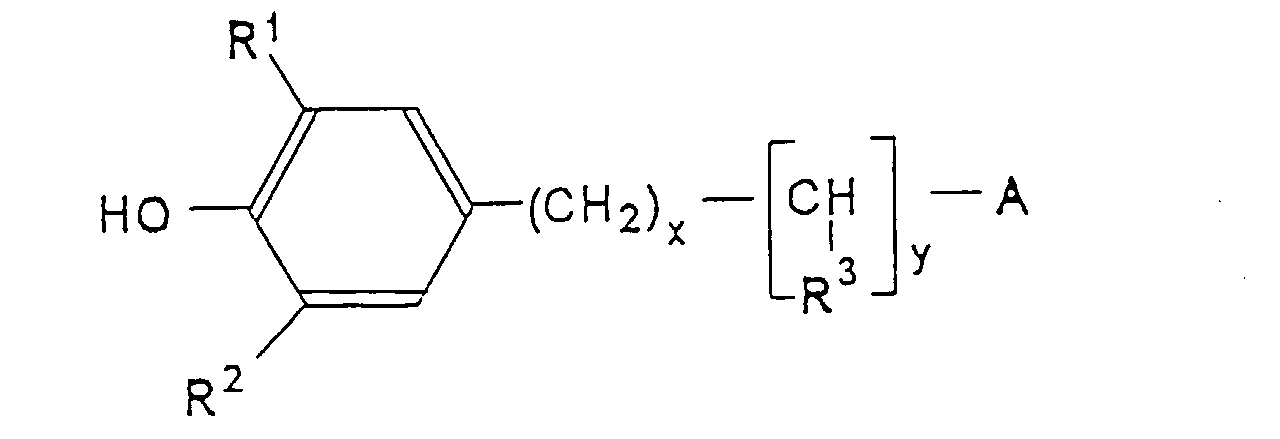
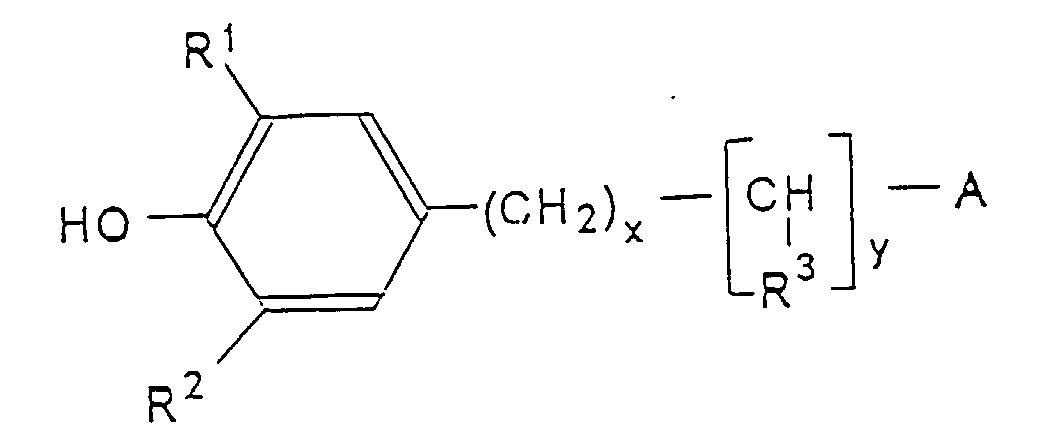
- R 1 and R 2 mean the same or different alkyl radicals with 1 to 6 carbon atoms
- R 3 is either a hydrogen atom or a methyl group.
- an aliphatic or cycloaliphatic diamine (III) which carries a primary and a tertiary amino group can be added.
- melt Basic monomers from pure amino acid (and / or lactam) a polyfunctional, For example, trifunctional carboxylic acid added, so grows in defined three directions a polymer molecule that always has the COOH group carries. Since COOH groups under usual condensation conditions not react with each other, no networking can occur.
- copolyamides made of, for example, 6-lactam and ⁇ -aminoundecane or ⁇ Aminododecanoic acid using the chain structure control according to the invention and with the addition of a trifunctional carboxylic acid, e.g. Nitrilotriacetic acid, Nitrilotriproprionic acid or trimethylnitrilotripropionic acid, so can by the mixing ratio of the basic monomers Melting point through the targeted selection of the controller system, the type and concentration of the end groups. This can by the possible high Concentration of functional end groups and their type of adhesion to different Substances are specifically adapted to practical requirements.
- a trifunctional carboxylic acid e.g. Nitrilotriacetic acid, Nitrilotriproprionic acid or trimethylnitrilotripropionic acid
- tri- or tetrafunctional carboxylic acids are nitrilotriacetic acid, ethylenediaminetetraacetic acid, Trimesic acid.
- the invention relates to the use of the weather-stable polyamides for the production of injection molded or extruded parts of threads, fibers or foils, or for the production of Hot melt adhesive powders or fibers.
- diamine component III In addition to the components that act as stabilizers and chain regulators II and IV another chain regulator can be used with diamine component III become. However, this component can have no effect on the Weather stability can be attributed, which is evident from one of the examples.
- the diamine component III therefore only has the function of a chain regulator and serves in particular the total proportion of amine end groups of the polyamide in question to the values as they are for the respective Application are required.
- the use of diamine component III is useful in the case of polyamide 6 fibers, for example, usually with such Dyes are dyed, which have a high affinity for basic Have centers on the polymer molecules.
- the diamine component is preferred III from the group consisting of 3- (dialkylamino) -1-propylamine, 2- (dialkylamino) -1-ethylamine, Piperidino and pyrrolidinoalkylamines selected and used in an amount of preferably 0-0.4% by weight.
- chain regulators are used that meet the respective requirements in relation to the molecular weight and the end group concentrations of the polyamide correspond.
- additional chain regulators include aromatic di- and monocarboxylic acids - preferably terephthalic acid, isophthalic acid and benzoic acid -, aliphatic or cycloaliphatic di- and monocarboxylic acids - preferably adipic acid, Sebacic acid, acetic and propionic acid as well as cyclohexane-1,4-dicarboxylic acid as well as monoamines and diamines with two primary amino groups.
- the branching tricarboxylic acids used as chain regulator it is preferably one of the Nitrilotricarboxylic acids defined above.
- the process according to the invention for the production of weather-stable polyamides is based on any of polyamide-forming monomers (I), that is, of lactams, ⁇ -aminocarboxylic acids, dicarboxylic acids and diamines, dicarboxylic acid / diamine salts accessible aliphatic or partially aromatic polyamides or copolyamides applicable.
- polyamide-forming monomers (I) that is, of lactams, ⁇ -aminocarboxylic acids, dicarboxylic acids and diamines, dicarboxylic acid / diamine salts accessible aliphatic or partially aromatic polyamides or copolyamides applicable.
- the lactams preferably contain 6-12 carbon atoms, with caprolactam and laurolactam are particularly preferred.
- caprolactam and laurolactam are particularly preferred.
- ⁇ -aminocarboxylic acids that Containing 6-12 carbon atoms are E-aminocaproic acid and ⁇ -aminolauric acid particularly preferred.
- Straight-chain or branched aliphatic or cycloaliphatic dicarboxylic acids with 6-36 carbon atoms as well are used like substituted or unsubstituted aromatic dicarboxylic acids with 8-18 carbon atoms.
- dicarboxylic acids are adipic acid, azelaic acid, sebacic acid, dodecanedioic acid, the Trimethyl adipic acids, cis- and / or trans-cyclohexane-1,4-dicarboxylic acid and dimerized fatty acids (e.g. the Pripol types from UNICHEMA) or terephthalic acid, Isophthalic acid and naphthalene-1,6-dicarboxylic acid in particular prefers.
- Pripol types from UNICHEMA terephthalic acid
- Isophthalic acid and naphthalene-1,6-dicarboxylic acid in particular prefers.
- diamines Of the three subgroups of diamines are hexamethylenediamine (1,6-diaminohexane), 1,10-diaminodecane, 1,12-diaminododecane, 1,4-diaminobutane, 2,2,4-and / or 2,4,4-trimethyl-1,6-diaminohexane or cis and / or trans-1,4-diaminocyclohexane, cis- and / or trans-1,4-bis (aminomethyl) cyclohexane, 3-amino-3,5,5-trimethylcyclohexylamine, the isomeric bis (4-amino-3-methylcyclohexyl) methanes and the isomeric 2,2-bis (4-aminocyclohexyl) propanes or 1,3 and 1,4-bis (aminomethyl) benzene is particularly preferred.
- 1,10-diaminodecane
- the dicarboxylic acid / diamine salts used include those by reaction approximately stoichiometric amounts of the dicarboxylic acids and diamines mentioned available salts. This is particularly preferred from hexamethylene diamine and Adipic acid accessible hexamethylene diammonium adipate. Any other possible Salts usually become aqueous immediately before polycondensation Solution of the relevant dicarboxylic acid (s) and the relevant one (s) Diamine (s) produced and used in this form in the polycondensation.
- the fourth subgroup also includes the diamines used Diamino-poly (oxyalkylene) with terminal primary amino groups.
- Especially preferred polyether diamines are ⁇ , ⁇ -diamino-poly (oxy-1,2-propylene), ⁇ , ⁇ -diamino-poly (oxy-1,3-propylene), ⁇ , ⁇ -bis (3-aminopropyl) poly ( oxy-1,3-propylene) and ⁇ , ⁇ -bis (3-aminopropyl) poly (oxy-1,4-butylene).
- the copolyamides and block copolyamides accordingly include the following Products: CoPA-6/12, -6/66, -66/12, -6/66/12, -6/69, -6/610, -66/610, as well further ternary and quaternary copolyamides from these monomers, CoPA-6T / 6l with less than 40 mol% hexamethylene terephthalamide (6T) units, the from laurolactam or ⁇ -aminolauric acid, isophthalic acid and / or terephthalic acid and the isomeric bis (4-amino-3-methylcyclohexyl) methanes or 2,2-bis (4-aminocyclohexyl) propane built copolyamides, the copolyamide from dodecanedioic acid and the isomeric bis (4-amino-3-methylcyclohexyl) methanes and the block copolyetheramides, which consist of caprolactam or laurolactam,
- Weather-stable polyamides can generally be supplied in batches or in Continuously operating reactors through polymerization or polycondensation getting produced.
- the method according to the invention differs in the prior art only in that with components II, IV and optionally III two or three other raw materials in relatively small quantities at a suitable location in the the respective manufacturing process.
- the addition of these components is in most cases completely unproblematic and can work together, one after the other, before or during the polymerization or polycondensation.
- the weather-stable polyamides according to the invention can, depending on their Use can be further modified in various ways. So with the Polyamides, which by injection molding, multi-component injection molding, Injection Molding, Extrusion, Coextrusion, Blow Molding, Deep Drawing and comparable processing methods reworked to the corresponding molded parts the addition of reinforcing agents and fillers such as glass fibers, Carbon fibers, minerals and other modifiers, for example flame retardant additives, lubricants or mold release agents, common practice. Is the Processing of the polyamides into fibers or filaments is provided, which in the first place Line applies to polyamide 6 and 66, so the usual matting agents based on titanium dioxide preferably before or during the polymerization or Polycondensation can be added.
- the Polyamides which by injection molding, multi-component injection molding, Injection Molding, Extrusion, Coextrusion, Blow Molding, Deep Drawing and comparable processing methods reworked to the corresponding molded parts the addition of reinforcing
- the examples and comparative examples contain only low to medium viscosity Polyamide-6, which is primarily for fiber production and Manufacture of injection molded parts.
- the weather-stable polyamide 6 stabilized by the process according to the invention and the polyamide 6 types of the prior art used for comparison were polymerized in batches in a 1301 stirred autoclave.
- 45 kg of liquid caprolactam were mixed at 90 ° C together with 7 l of water and the amounts of the other components listed in Table 1 in a stirrable container which had been rendered inert with nitrogen, and the homogeneous mixture was then transferred to the autoclave mentioned and there under inert conditions (N 2 ) polymerized.
- the individual batches were given as Pressed polymer strands, granulated after passing through a water belt, with Water extracted and dried.
- the torque display of the autoclave agitator was used.
- the solution viscosity of extracted and dried polyamide-6 was in 0.5 wt .-% solution in m-cresol determined at 20 ° C.
- the end group concentrations were determined by means of acidimetry Titration.
- the amino end groups were dissolved in 2: 1 m-cresol / iso-propanol (parts by weight). titrated as a solvent with 0.1 normal ethanolic perchloric acid.
- the carboxyl end groups were titrated in benzyl alcohol as a solvent 0.1 normal benzyl alcoholic potassium hydroxide.
- each product removed a sufficient number of tension rods and these from a mechanical one Subjected to testing.
- the impact strength was tested in accordance with DIN 53448 B1.2 (Jan. 1984) using a Z-type REL fast tearing machine at 23 ° C and a speed of 4m / sec. That some of the products after 50 hours of weathering have a higher impact strength than in the initial state and maintain this higher level in part over longer periods, is due to the fact that the test specimens in the Weather-0-meter periodically be irrigated and by the absorption of water per se achieve higher toughness or impact strength.
- Table 1 characterizes the types of polyamide 6 according to the invention and those used for comparison.
- the product of Comparative Example 1 which is chain-controlled with acetic acid
- all polymers contain polyfunctional carboxylic acids as chain regulators.
- the amount of di- or tricarboxylic acid used was calculated in such a way that the equilibrium water content at 260 ° C for the unextracted products at a total end group concentration of 108.6 meq / kg 0.153 wt .-% and for the extracted products at a total end group concentration of 120 meq / kg 0.187 wt .-%.
- the proportions extractable with water were estimated at 9.5% by weight based on the unextracted product.
- the equilibrium constant for the PA-6 amide formation equilibrium at 260 ° C. was determined from the method described by Ramesh et al. in Polymer, 1993, Vol. 34, No. 8, p. 1716 ff. Impact resistance of the products artificially weathered in the WOM Weathering duration [h] SZZ [kJ / m 2 ] See 1 See 2 See 3 1 2nd 3rd 0 850 640 850 780 820 750 50 350 750 900 850 870 770 120 20th 430 540 800 770 740 250 10th 320 30th 470 480 750 300 - 10th 30th 340 360 730
- Example 1 shows that the interaction of components II and IV goes beyond a purely additive effect.
- the results of the weathering tests with the products of Examples 1 and 2 are practically identical. This is evidence that the additional use of component III in Example 2 has no significant influence on the weather stability. Based on the data, no stabilizing effect can be attributed to the TPS either.
Landscapes
- Chemical & Material Sciences (AREA)
- Health & Medical Sciences (AREA)
- Chemical Kinetics & Catalysis (AREA)
- Medicinal Chemistry (AREA)
- Polymers & Plastics (AREA)
- Organic Chemistry (AREA)
- Polyamides (AREA)
Description

- 0,02 bis 0,7 Gew.-% 4-Amino-2,2,6,6-tetraalkylpiperidin (II),
- 0 bis 0,5 Gew.-% eines aliphatischen oder cyloaliphatischen Diamins (III), welches eine primäre und eine tertiäre Aminogruppe trägt,
- 0,02 bis 0,7 Gew.-% eines in 4-Stellung zur OH-Gruppe funktionalisierten
2.6-Dialkylphenols (IV) der Formel:
worin R1 und R2 gleiche oder verschiedene Alkylreste mit 1 bis 6 C-Atomen sind, R3 entweder ein Wasserstoffatom oder eine Methylgruppe ist, die funktionelle Gruppe A entweder eine freie Carboxylgruppe oder eine mit C1-C4-Alkoholen veresterte Carboxylgruppe oder eine primäre Aminogruppe darstellt, für x und y im Fall der Aminogruppe die Wertekombinationen (x = 2 / y = 1); (x = 2 / y = 0); (x = 1 / y = 0) und (x = 0 / y = 1) möglich sind und im Fall der freien oder veresterten Carboxylgruppe x und y zusätzlich jeweils 0 sein können,

- 0,02 bis 0,7 Gew.-% 4-Amino-2,2,6,6-tetraalkylpiperidin(ll),
- 0 bis 0,5 Gew.-% eines aliphatischen oder cycloaliphatischen
Diamins (III), welches eine primäre und eine tertiäre Aminogruppe
trägt,
und gegebenenfalls - 0,02 bis 0,7 Gew.-% eines in 4-Stellung zur OH-Gruppe funktionalisierten
2,6-Dialkylphenols (IV) der Formel:
worin R1 und R2 gleiche oder verschiedene Alkylreste mit 1 bis 6 C-Atomen sind, R3 entweder ein Wasserstoffatom oder eine Methylgruppe ist, die funktionelle Gruppe A entweder eine freie Carboxylgruppe oder eine mit C1 - C4-Alkoholen veresterte Carbo-xylgruppe oder eine primäre Aminogruppe darstellt, für x und y im Fall der Aminogruppe die Wertekombinationen (x = 2 / y=1); (x = 2 / y = 0); (x = 1 / y = 0) und (x = 0 / y = 1) möglich sind und im Fall der freien oder veresterten Carboxylgruppe x und y zusätzlich jeweils 0 sein können,

- 0,1 bis 1,2 Gew.-% einer Tri-, Tetra- oder Polycarbonsäure (V)
durchgeführt wird, wobei sich die Mengen der Komponenten I bis V zu 100 Gew.-% ergänzen, die Summe der Komponenten II, III, IV und V 0,2 - 2,5 Gew.-% beträgt und die Komponenten II, III, IV und V über Amidbindungen an die Polymerketten gebunden sind.
- 0,02-0,7 Gew.-% 4-Amino-2,2,6,6-tetraalkylpiperidin (II), wobei n-Amino-2,2,6,6-tetramethylpiperidin bevorzugt ist,
- 0-0,5 Gew.-% eines aliphatischen oder cyloaliphatischen Diamins (III), welches eine primäre und eine tertiäre Aminogruppe trägt
- 0,02-0,7 Gew.-% eines in 4-Stellung zur OH-Gruppe funktionalisierten
2,6-Dialkylphenols (IV) der Formel
worin R1 und R2 gleiche oder verschiedene Alkylreste mit 1 bis 6 C-Atomen sind, R3 entweder ein Wasserstoffatom oder eine Methylgruppe ist, die funktionelle Gruppe A entweder eine freie Carboxylgruppe oder eine mit C1-C4-Alkoholen veresterte Carboxylgruppe oder eine primäre Aminogruppe darstellt, für x und y im Fall der Aminogruppe die Wertekombinationen (x = 2 / y = 1); (x = 2 / y =0); (x = 1 / y = 0) und (x = 0 / y = 1) möglich sind und im Fall der freien oder veresterten Carboxylgruppe x und y zusätzlich jeweils 0 sein können,

Weiterhin betrifft die Erfindung witterungsstabile Polyamide aus Lactamen und ω-Aminocarbonsäuren, welche dadurch charakterisiert sind, daß sie im wesentlichen aus den jeweiligen Polyamid bildenden Monomeren (I)
- 0,02-0,7 Gew.-% 4-Amino-2,2,6,6-tetraalkylpiperidin (II),
- 0-0,5 Gew.-% eines aliphatischen oder cyloaliphatischen Diamins (III), welches eine primäre und eine tertiäre Aminogruppe trägt und gegebenenfalls
- 0,02-0,7 Gew.-% eines in 4-Stellung zur OH-Gruppe funktionalisierten
2,6-Dialkylphenols (IV) der Formel
worin R1 und R2 gleiche oder verschiedene Alkylreste mit 1 bis 6 C-Atomen sind, R3 entweder ein Wasserstoffatom oder eine Methylgruppe ist, die funktionelle Gruppe A entweder eine freie Carboxylgruppe oder eine mit C1-C4-Alkoholen veresterte Carboxylgruppe oder eine primäre Aminogruppe darstellt, für x und y im Fall der Aminogruppe die Wertekombinationen (x = 2 / y = 1); (x = 2 / y = 0); (x=1 / y = 0) und (x = 0 / y=1) möglich sind und im Fall der freien oder veresterten Carboxylgruppe x und y zusätzlich jeweils 0 sein können,
- 0,1 bis 1,2 Gew.-% einer Tri-, Tetra- oder Polycarbonsäure (V)
aufgebaut sind,
wobei sich die Mengen der Komponenten I bis V zu 100 Gew.-% ergänzen, die Summe der Komponenten II, III, IV und V 0,2 bis 2,5 Gew.-% beträgt und die Komponenten II, III, IV und V über Amidbindungen an die Polymerketten gebunden sind.
Besonders bevorzugte Tricarbonsäuren sind Nitriloessigsäure und die Nitrilotripropionsäuren der folgenden Formel:

- 6l (l steht für Isophthalamideinheiten) und
- MXDA.6 (MXDA steht für meta-Xylylendiamin bzw. 1,3-Bis-(aminomethyl)benzol).
| Stufe 1 (Druckphase) | |
| Massetemperatur | 270°C |
| Druck | 19 bar |
| Dauer | 3 Stunden |
| Stufe 2 (Entspannung) | |
| Massetemperatur | von 270 auf 260 °C |
| Druck | von 19 auf 1 bar |
| Dauer | 1,5 Stunden |
| Stufe 3 (Entgasung) | |
| Massetemperatur | 260 °C |
| Druck | 1 bar |
| Dauer | ca. 5 Stunden |
- Bestrahlungsintensität bei 340 nm Wellenlänge : 0,35W/m2
- Zyklus: 102/18 Minuten
- Temperatur (Schwarztafel): 63 ± 2°C
| LC-6 | Caprolactam |
| TPS | Terephthalsäure |
| AcOH | Essigsäure |
| NTE | Nitrilotriessigsäure |
| TAD | Triacetondiamin = 4-Amino-2.2.6.6-tetramethylpiperidin |
| DEAPA | 3-Diethylamino-1-propylamin |
| DBHPP | 3-(3,5-Di-tert-butyl-4-hydroxyphenyl)-propionsäure |
| SZZ | Schlagzugzähigkeit bei 23°C, gemessen nach DIN 53443 B1.2 |
| [C] | Carboxylendgruppenkonzentration in meq/kg |
| [A] | Aminoendgruppenkonzentration in meq/kg |
| WOM | Weather-0-meter |
| RV | Relative Lösungsviskosität in 0,5%-iger Lösung in m-Kresol bei 20°C |
| ber. | berechnet |
| NTE | Fluka AG; Buchs (Schweiz) |
| TAD | Hüls AG; Marl (Deutschland) |
| DEAPA | Fluka AG; Buchs (Schweiz) |
| DBHPP | Ciba Geigy AG; Basel (Schweiz) |

| Schlagzugzähigkeit der im WOM künstlich bewitterten Produkte | ||||||
| Bewitterungsdauer [h] | SZZ [kJ/m2] | |||||
| Vgl. 1 | Vgl. 2 | Vgl. 3 | 1 | 2 | 3 | |
| 0 | 850 | 640 | 850 | 780 | 820 | 750 |
| 50 | 350 | 750 | 900 | 850 | 870 | 770 |
| 120 | 20 | 430 | 540 | 800 | 770 | 740 |
| 250 | 10 | 320 | 30 | 470 | 480 | 750 |
| 300 | - | 10 | 30 | 340 | 360 | 730 |

| Fortsetzung Schlagzugzähigkeit der im WOM künstlich bewitterten Produkte | ||||
| Bewitterungsdauer [h] | SZZ [kJ/m2] | |||
| Beispiele | 4 | 5 | 6 | 7 |
| 0 | 790 | 760 | 800 | 780 |
| 50 | 850 | 800 | 760 | 820 |
| 120 | 440 | 410 | 730 | 710 |
| 250 | 20 | 350 | 420 | 450 |
| 300 | 20 | 20 | 320 | 350 |
Claims (15)
- Verfahren zur Herstellung von witterungsstabilen, aus Lactamen, ω-Aminocarbonsäuren, Dicarbonsäuren und Diaminen, Dicarbonsäure/Diaminsalzen zugänglichen, aliphatischen und teilkristallinen oder amorphen teilaromatischen Polyamiden, dadurch gekennzeichnet, dass die Polymerisation bzw. Polykondensation der polyamidbildenden Monomere (I) in Gegenwart vondurchgeführt wird, wobei sich die Mengen der Komponenten I bis IV zu 100 Gew.-% ergänzen, die Summe der Komponenten II, III und IV 0,05 - 1,3 Gew.-% beträgt und die Komponenten II, III und IV über Amidbindungen an die Polymerketten gebunden sind.0,02 - 0,7 Gew.-% 4-Amino-2,2,6,6-tetraalkylpiperidin (II),0 - 0,5 Gew.-% eines aliphatischen oder cyloaliphatischen Diamins (III), welches eine primäre und eine tertiäre Aminogruppe trägt,
und0,02 - 0,7 Gew.-% eines in 4-Stellung zur OH-Gruppe funktionalisierten 2,6-Dialkylphenols (IV) der Formelworin R1 und R2 gleiche oder verschiedene Alkylreste mit 1 bis 6 C-Atomen sind, R3 entweder ein Wasserstoffatom oder eine Methylgruppe ist, die funktionelle Gruppe A entweder eine freie Carboxylgruppe oder eine mit C1 - C4-Alkoholen veresterte Carboxylgruppe oder eine primäre Aminogruppe darstellt, für x und y im Fall der Aminogruppe die Wertekombinationen (x = 2 / y = 1); (x = 2 / y =0); (x = 1 / y = 0) und (x = 0 / y = 1) möglich sind und im Fall der freien oder veresterten Carboxylgruppe x und y zusätzlich jeweils 0 sein können,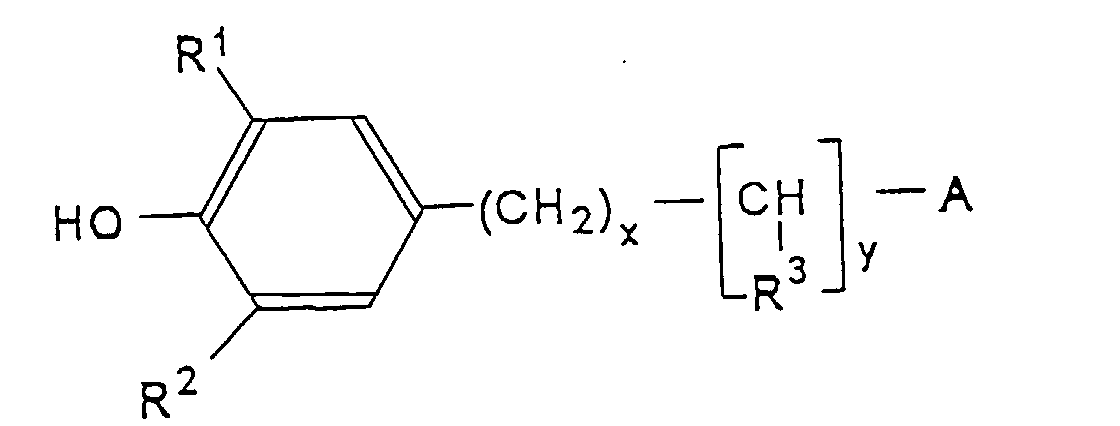
- Verfahren zur Herstellung von witterungsstabilen aus Lactam, ω-Aminocarbonsäuren zugänglichen Polyamiden, dadurch gekennzeichnet, daß die Polykondensation der polyamidbildenden Monomere (I) in Gegenwart vonund0,02 is 0,7 Gew.-% 4-Amino-2,2,6,6-tetraalkylpiperidin(ll),0 bis 0,5 Gew.-% eines aliphatischen oder cycloaliphatischen Diamins (III), welches eine primäre und eine tertiäre Aminogruppe trägt,
und gegebenenfalls0,02 bis 0,7 Gew.-% eines in 4-Stellung zur OH-Gruppe funktionalisierten 2,6-Dialkylphenols (IV) der Formel:worin R1 und R2 gleiche oder verschiedene Alkylreste mit 1 bis 6 C-Atomen sind, R3 entweder ein Wasserstoffatom oder eine Methylgruppe ist, die funktionelle Gruppe A entweder eine freie Carboxylgruppe oder eine mit C1 - C4-Alkoholen veresterte Carboxylgruppe oder eine primäre Aminogruppe darstellt, für x und y im Fall der Aminogruppe die Wertekombinationen (x = 2 / y = 1); (x=2 / y = 0); (x = 1 / y = 0) und (x = 0 / y = 1) möglich sind und im Fall der freien oder veresterten Carboxylgruppe x und y zusätzlich jeweils 0 sein können, durchgeführt wird, wobei sich die Mengen der Komponenten I bis V zu 100 Gew.-% ergänzen, die Summe der Komponenten II, III, IV und V 0,2 - 2,5 Gew.-% beträgt und die Komponenten II, III, IV und V über Amidbindungen an die Polymerketten gebunden sind.0,1 bis 1,2 Gew.-% ener Tri-, Tetra- oder Polycarbonsäure (V)
 - Verfahren nach Anspruch 2, dadurch gekennzeichnet, daß als Komponente V mindestens eine Tricarbonsäure der folgenden Formel:worin R = H oder CH3 und n 0 oder 1 bedeuten, wobei im Falle von R = CH3 n gleich 1 ist,

eingesetzt wird. - Verfahren gemäss Anspruch 1 oder 2, dadurch gekennzeichnet, dass die Menge der Komponente II 0,03 - 0,6 Gew.-% beträgt.
- Verfahren gemäss Ansprüchen 1 oder 2, dadurch gekennzeichnet, dass die Menge der Komponente III 0 - 0,4 Gew.-% beträgt.
- Verfahren gemäss einem oder mehreren der Ansprüche 1 bis 5, dadurch gekennzeichnet, dass die Menge der Komponente IV 0,03-0,6 Gew.-% beträgt.
- Verfahren gemäss einem oder mehreren der Ansprüche 1 bis 6, dadurch gekennzeichnet, dass die Gesamtmenge der Komponenten II, III und IV 0,06 - 1,0 Gew.-% beträgt.
- Verfahren gemäss einem oder mehreren der Ansprüche 1, 2, 6 und 7, dadurch gekennzeichnet, dass R1 = R2 = -C(CH3)3(t-Butyl) oder R1 = t-Butyl und R2 = Methyl ist.
- Verfahren gemäss einem oder mehreren der Ansprüche 1, 2, 4 und 7, dadurch gekennzeichnet, dass als Komponente II 4-Amino-2,2,6,6-tetramethylpiperidin verwendet wird.
- Verfahren gemäss einem oder mehreren der Ansprüche 1, 2, 6 und 8, dadurch gekennzeichnet, dass als Komponente IV eine Verbindung,
ausgewählt aus der Gruppe der Verbindungen mit A=-COOH oder A = -COOCH3 oder A = -NH2, R3 = H sowie x = 2 und y = 1, verwendet wird. - Verfahren gemäß einem oder mehreren der Ansprüche 1 bis 10, dadurch gekennzeichnet, daß die Polykondensation zu Polyamid 6,
-11, -12, -66, -69, -610, -6.12, 61, MXDA6 bzw. zu Copolyamid-6/12, -6/66, -66/12, -6/66/12, -6/69, -6/610, -66/610, 6T/6l durchgeführt wird. - Witterungsstabile, aus Lactamen, ω-Aminocarbonsäuren, Dicarbonsäuren und Diaminen, Dicarbonsäure/Diaminsalzen zugängliche aliphatische und teilkristalline oder teilaromatische amorphe Polyamide, dadurch gekennzeichnet, dass sie im wesentlichen aus polyamidbildenden Monomeren (I),und0,02-0,7 Gew.-% 4-Amino-2,2,6,6-tetraalkylpiperidin (II),0-0,5 Gew.-% eines aliphatischen oder cyloaliphatischen Diamins (III), welches eine primäre und eine tertiäre Aminogruppe trägtaufgebaut sind, wobei sich die Mengen der Komponenten I bis IV zu 100 Gew.-% ergänzen, die Summe der Komponenten II, III und IV 0,05 - 1,3 Gew.-% beträgt und die Komponenten II, III und IV über Amidbindungen an die Polymerketten gebunden sind.0,02-0,7 Gew.-% eines in 4-Stellung zur OH-Gruppe funktionalisierten 2,6-Dialkylphenols (IV) der Formelworin R1 und R2 gleiche oder verschiedene Alkylreste mit 1 bis 6 C-Atomen sind, R3 entweder ein Wasserstoffatom oder eine Methylgruppe ist, die funktionelle Gruppe A entweder eine freie Carboxylgruppe oder eine mit C1-C4-Alkoholen veresterte Carboxylgruppe oder eine primäre Aminogruppe darstellt, für x und y im Fall der Aminogruppe die Wertekombinationen (x = 2 / y = 1); (x = 2 / y = 0); (x = 1 / y = 0) und (x = 0 / y = 1) möglich sind und im Fall der freien oder veresterten Carboxylgruppe x und y zusätzlich jeweils 0 sein können,

- Witterungsstabile, aus Lactamen, ω-Aminocarbonsäuren zugängliche Polyamide, dadurch gekennzeichnet, daß sie im wesentlichen aus Polyamid bildenden Monomeren (I),und0,02-0,7 Gew.-% 4-Amino-2,2,6,6-tetraalkylpiperidin (II),0-0,5 Gew.-% eines aliphatischen oder cyloaliphatischen Diamins (III), welches eine primäre und eine tertiäre Aminogruppe trägt, gegebenenfalls0,02-0,7 Gew.-% eines in 4-Stellung zur OH-Gruppe funktionalisierten 2,6-Dialkylphenols (IV) der Formelworin R1 und R2 gleiche oder verschiedene Alkylreste mit 1 bis 6 C-Atomen sind, R3 entweder ein Wasserstoffatom oder eine Methylgruppe ist, die funktionelle Gruppe A entweder eine freie Carboxylgruppe oder eine mit C1-C4-Alkoholen veresterte Carboxylgruppe oder eine primäre Aminogruppe darstellt, für x und y im Fall der Aminogruppe die Wertekombinationen (x = 2 / y = 1); (x=2 / y = 0); (x=1 / y = 0) und (x = 0 / y=1) möglich sind und im Fall der freien oder veresterten Carboxylgruppe x und y zusätzlich jeweils 0 sein können,
 0,1 bis 1,2 Gew.-% einer Tri-, Tetra- oder Polycarbonsäure (V) aufgebaut sind,wobei sich die Mengen der Komponenten I bis V zu 100 Gew.-% ergänzen, die Summe der Komponenten II, III, IV und V 0,2 bis 2,5 Gew.-% beträgt und die Komponenten II, III, IV und V über Amidbindungen an die Polymerketten gebunden sind.
 - Polyamide nach Anspruch 13, dadurch gekennzeichnet, daß als Komponente V mindestens eine Tricarbonsäure der folgenden Formelworin R = H oder CH3 und n 0 oder 1 bedeuten, wobei im Falle von R = CH3 n gleich 1 ist,

eingesetzt wird. - Verwendung der Polyamide nach einem der Ansprüche 12, 13 oder 14 zur Herstellung von spritzgegossenen oder extrudierten Teilen, zur Herstellung von Fäden, Fasern oder Folien, beziehungsweise zur Herstellung von
Schmelzklebepulvern oder -fasern.
Applications Claiming Priority (4)
| Application Number | Priority Date | Filing Date | Title |
|---|---|---|---|
| DE19627629 | 1996-07-09 | ||
| DE19627629 | 1996-07-09 | ||
| DE19722135 | 1997-05-27 | ||
| DE19722135A DE19722135A1 (de) | 1996-07-09 | 1997-05-27 | Witterungsstabile Polyamide und Verfahren zu deren Herstellung |
Publications (3)
| Publication Number | Publication Date |
|---|---|
| EP0818491A2 EP0818491A2 (de) | 1998-01-14 |
| EP0818491A3 EP0818491A3 (de) | 1998-09-16 |
| EP0818491B1 true EP0818491B1 (de) | 2000-11-15 |
Family
ID=26027344
Family Applications (1)
| Application Number | Title | Priority Date | Filing Date |
|---|---|---|---|
| EP97111677A Expired - Lifetime EP0818491B1 (de) | 1996-07-09 | 1997-07-09 | Witterungsstabile Polyamide und Verfahren zu deren Herstellung |
Country Status (6)
| Country | Link |
|---|---|
| US (1) | US5917004A (de) |
| EP (1) | EP0818491B1 (de) |
| CN (1) | CN1091778C (de) |
| BR (1) | BR9703940A (de) |
| RU (1) | RU2156264C2 (de) |
| TW (1) | TW372989B (de) |
Cited By (2)
| Publication number | Priority date | Publication date | Assignee | Title |
|---|---|---|---|---|
| EP2128198A1 (de) | 2008-05-30 | 2009-12-02 | Lurgi Zimmer GmbH | Verfahren zur Herstellung von Polyamiden unter Verwendung von Carbonsäuren und Amiden |
| US8022170B2 (en) | 2002-12-17 | 2011-09-20 | Ems-Chemie Ag | Copolyamides |
Families Citing this family (24)
| Publication number | Priority date | Publication date | Assignee | Title |
|---|---|---|---|---|
| DE19642885C2 (de) * | 1996-10-17 | 2001-08-02 | Inventa Ag | Verwendung von Polyamid-Formmassen zur Herstellung von optischen oder elektrooptischen Formteilen |
| DE19812135A1 (de) * | 1998-03-20 | 1999-09-23 | Basf Ag | Inhärent licht- und hitzestabilisierte Polyamide mit verbesserter Naßechtheit |
| DE19854421B4 (de) * | 1998-11-25 | 2006-11-02 | Ems-Inventa Ag | Verfahren zur Herstellung von Polyamid-6 für Spinnzwecke |
| ITMI992438A1 (it) * | 1999-11-23 | 2001-05-23 | Great Lakes Chemical Europ | Miscele stabilizzanti per polimeri organici |
| FR2818985B1 (fr) * | 2000-12-29 | 2004-02-20 | Nylstar Sa | Procede de fabrication de compositions stabilisees a base de polyamide |
| DE10259048B4 (de) | 2002-12-17 | 2007-05-24 | Ems-Chemie Ag | Copolyamide |
| RU2305115C1 (ru) * | 2006-03-30 | 2007-08-27 | Байкальский институт природопользования Сибирского отделения Российской академии наук (БИП СО РАН) | Способ получения n-фенилзамещенных ароматических полиамидов |
| US8268956B2 (en) * | 2006-12-08 | 2012-09-18 | Ems-Chemie Ag | Transparent mold made of a polyamide molding material |
| EP2060607B2 (de) * | 2007-11-16 | 2019-11-27 | Ems-Patent Ag | Gefüllte Polyamidformmassen |
| DE102008057240A1 (de) * | 2008-11-10 | 2010-05-12 | Brose Fahrzeugteile Gmbh & Co. Kommanditgesellschaft, Hallstadt | Zusammensetzung zur Herstellung einer Verstellvorrichtung eines Kraftfahrzeugs |
| EP2202260B1 (de) | 2008-12-23 | 2012-12-12 | Ems-Patent Ag | Inhärent stabilisiertes Polyamid-Elastomer sowie Verfahren zu dessen Herstellung |
| EP2365033B1 (de) | 2010-03-12 | 2013-07-10 | Ems-Patent Ag | Schlagzähmodifizierte Polyamidformmasse sowie hieraus gebildeter Behälter |
| EP2412757B1 (de) | 2010-07-30 | 2013-11-13 | Ems-Patent Ag | Polyamidformmasse zur Herstellung von Formkörpern mit einer Weichgriffoberfläche sowie entsprechende Formkörper |
| EP2535365B1 (de) | 2011-06-17 | 2013-09-25 | Ems-Patent Ag | Teilaromatische Formmassen und deren Verwendungen |
| EP2666803B1 (de) | 2012-05-23 | 2018-09-05 | Ems-Patent Ag | Kratzfeste, transparente und zähe Copolyamidformmassen, hieraus hergestellte Formkörper und deren Verwendung |
| EP2716716B1 (de) | 2012-10-02 | 2018-04-18 | Ems-Patent Ag | Polyamid-Formmassen und deren Verwendung bei der Herstellung von Formkörpern |
| ES2527403T3 (es) | 2012-12-18 | 2015-01-23 | Ems-Patent Ag | Masa para moldeo de poliamida y cuerpos moldeados producidos a partir de ella |
| PL2759534T3 (pl) | 2013-01-25 | 2015-08-31 | Uhde Inventa Fischer Gmbh | Dodatki będące 4-N-(di-podstawionymi) pochodnymi aminopiperydyny do mas do formowania z poliamidów i ich zastosowanie |
| EP2778190B1 (de) | 2013-03-15 | 2015-07-15 | Ems-Patent Ag | Polyamidformmasse sowie hieraus hergestellter Formkörper |
| CN105037713A (zh) * | 2015-08-25 | 2015-11-11 | 苏州飞翔新材料研究院有限公司 | 一种具有抗老化性的聚酰胺及其制备方法 |
| US10767012B2 (en) | 2017-04-10 | 2020-09-08 | Firestone Fibers & Textiles Company, Llc | Functionalized polyamides and methods of preparing the same |
| JP7308818B2 (ja) | 2017-09-28 | 2023-07-14 | デュポン ポリマーズ インコーポレイテッド | 重合方法 |
| CN109575275B (zh) * | 2018-12-14 | 2021-01-29 | 常州大学 | 一类同时含双叔丁基苯和二甲基结构高可溶性聚芳酰胺及其制备方法和应用 |
| CN109749080B (zh) * | 2018-12-26 | 2020-06-09 | 浙江新和成特种材料有限公司 | 半芳香族聚酰胺树脂及其制备方法 |
Family Cites Families (11)
| Publication number | Priority date | Publication date | Assignee | Title |
|---|---|---|---|---|
| GB1202698A (en) * | 1966-10-28 | 1970-08-19 | Ici Ltd | Polyamides |
| DE1919021C3 (de) * | 1969-04-15 | 1980-08-28 | Chemische Werke Huels Ag, 4370 Marl | Verfahren zur Herstellung von Polylaurinlactam mit verbesserter Beständigkeit gegen die Einwirkung von Wärme, Sauerstoff und Licht |
| GB1356220A (en) * | 1971-08-02 | 1974-06-12 | Ciba Geigy Ag | Amine salts of 3,5-dialkyl-4-hydroxyphenylcarboxylic acids and polyamide compositions stabilized therewith |
| CH590893A5 (de) * | 1974-03-27 | 1977-08-31 | Ciba Geigy Ag | |
| EP0345648B2 (de) * | 1988-06-07 | 2000-04-05 | Ems-Inventa Ag | Thermoplastisch verarbeitbare Polyamide |
| US5380774A (en) * | 1989-11-28 | 1995-01-10 | Hoechst Celanese Corporation | Nylon molding compositions exhibiting improved protection against UV-light degradation |
| JPH04159327A (ja) * | 1990-10-23 | 1992-06-02 | Daicel Huels Ltd | 耐油性ポリアミド樹脂 |
| US5116919A (en) * | 1990-12-05 | 1992-05-26 | E. I. Du Pont De Nemours And Company | Process for increasing the relative viscosity of polyamides with reduced thermal degradation |
| DE4413177A1 (de) * | 1994-04-15 | 1995-10-19 | Basf Ag | Inhärent hitzestabilisierte Polyamide |
| DE4429089A1 (de) * | 1994-08-17 | 1996-02-22 | Basf Ag | Inhärent licht- und hitzestabilisierte Polyamide |
| US5531007A (en) * | 1995-05-23 | 1996-07-02 | Labounty Manufacturing, Inc. | Shear processor for steel structures |
-
1997
- 1997-06-26 RU RU97111183/04A patent/RU2156264C2/ru not_active IP Right Cessation
- 1997-07-08 TW TW86109582A patent/TW372989B/zh not_active IP Right Cessation
- 1997-07-09 BR BR9703940A patent/BR9703940A/pt active Search and Examination
- 1997-07-09 EP EP97111677A patent/EP0818491B1/de not_active Expired - Lifetime
- 1997-07-09 CN CN97117816A patent/CN1091778C/zh not_active Expired - Fee Related
- 1997-07-09 US US08/890,483 patent/US5917004A/en not_active Expired - Lifetime
Cited By (3)
| Publication number | Priority date | Publication date | Assignee | Title |
|---|---|---|---|---|
| US8022170B2 (en) | 2002-12-17 | 2011-09-20 | Ems-Chemie Ag | Copolyamides |
| EP2128198A1 (de) | 2008-05-30 | 2009-12-02 | Lurgi Zimmer GmbH | Verfahren zur Herstellung von Polyamiden unter Verwendung von Carbonsäuren und Amiden |
| DE102008026075A1 (de) | 2008-05-30 | 2009-12-03 | Lurgi Zimmer Gmbh | Verfahren zur Herstellung von Polyamiden unter Verwendung von Carbonsäuren und Amiden |
Also Published As
| Publication number | Publication date |
|---|---|
| CN1173509A (zh) | 1998-02-18 |
| TW372989B (en) | 1999-11-01 |
| RU2156264C2 (ru) | 2000-09-20 |
| CN1091778C (zh) | 2002-10-02 |
| BR9703940A (pt) | 1998-11-03 |
| EP0818491A3 (de) | 1998-09-16 |
| US5917004A (en) | 1999-06-29 |
| EP0818491A2 (de) | 1998-01-14 |
Similar Documents
| Publication | Publication Date | Title |
|---|---|---|
| EP0818491B1 (de) | Witterungsstabile Polyamide und Verfahren zu deren Herstellung | |
| EP0759953B2 (de) | Inhärent licht- und hitzestabilisierte polyamide | |
| DE2642244C2 (de) | Verfahren zur Herstellung von glasklar durchsichtigen Copolyamiden und deren Verwendung zur Herstellung von Formkörpern | |
| DE69901486T2 (de) | Inhärent licht- und hitzestabilisiertes polyamid und methode seiner herstellung | |
| DE19537614C3 (de) | Polycaprolactam mit neuartiger Kettenregelung | |
| EP0345648A2 (de) | Thermoplastisch verarbeitbare Polyamide | |
| EP0027852A1 (de) | Transparente Copolyamide und deren Verwendung zur Herstellung transparenter schlagzäher Formkörper | |
| DE10259048A1 (de) | Copolyamide | |
| EP1065232A2 (de) | Polyamid-Pfropfcopolymere | |
| DE102015112592A1 (de) | Flammfestes Polyamid als Reaktionsprodukt eines Lactams, ein Verfahren zu dessen Herstellung sowie dessen Verwendung | |
| DE69632529T2 (de) | Lichtstabilisierte polyamidzusammensetzungen | |
| EP2128198B1 (de) | Verfahren zur Herstellung von Polyamiden unter Verwendung von Carbonsäuren und Amiden | |
| DE19854421B4 (de) | Verfahren zur Herstellung von Polyamid-6 für Spinnzwecke | |
| DE19722135A1 (de) | Witterungsstabile Polyamide und Verfahren zu deren Herstellung | |
| DE2308572C3 (de) | Schmelzspinnbare Polyestermassen und deren Verwendung zur Herstellung von Fasern | |
| EP3320025B1 (de) | Vernetzung von polyamiden in der schmelze | |
| DE2406491A1 (de) | Verfahren zur herstellung von aus mehreren bestandteilen bestehenden polyamidhaltigen elementarfasern | |
| DE2311982C3 (de) | Verfahren zur Herstellung von homogenen modifizierten Polycaprolactamen und deren Verwendung für Fäden und Fasern | |
| EP1010713B1 (de) | Verfahren zur Herstellung von Polyamid 6 für Spinnzwecke | |
| DE19745099A1 (de) | Verfahren zur Herstellung von Polycaprolactam unter Verwendung eines Additivs | |
| EP1297053B1 (de) | Polyamide | |
| DE102009005967A1 (de) | Licht- und wärmestabilisierte Polyamide und Verfahren zu ihrer Herstellung | |
| EP1297052B1 (de) | Polyamide | |
| DE2642980A1 (de) | Tiefanfaerbende polycaprolactamfasern und -faeden | |
| DE10005639A1 (de) | Polyamid-Pfropfcopolymere |
Legal Events
| Date | Code | Title | Description |
|---|---|---|---|
| PUAI | Public reference made under article 153(3) epc to a published international application that has entered the european phase |
Free format text: ORIGINAL CODE: 0009012 |
|
| AK | Designated contracting states |
Kind code of ref document: A2 Designated state(s): BE DE FR GB IT NL |
|
| PUAL | Search report despatched |
Free format text: ORIGINAL CODE: 0009013 |
|
| AK | Designated contracting states |
Kind code of ref document: A3 Designated state(s): AT BE CH DE DK ES FI FR GB GR IE IT LI LU MC NL PT SE |
|
| 17P | Request for examination filed |
Effective date: 19981211 |
|
| GRAG | Despatch of communication of intention to grant |
Free format text: ORIGINAL CODE: EPIDOS AGRA |
|
| AKX | Designation fees paid |
Free format text: BE DE FR GB IT NL |
|
| RBV | Designated contracting states (corrected) |
Designated state(s): BE DE FR GB IT NL |
|
| 17Q | First examination report despatched |
Effective date: 19990519 |
|
| APAB | Appeal dossier modified |
Free format text: ORIGINAL CODE: EPIDOS NOAPE |
|
| APAB | Appeal dossier modified |
Free format text: ORIGINAL CODE: EPIDOS NOAPE |
|
| APBJ | Interlocutory revision of appeal recorded |
Free format text: ORIGINAL CODE: EPIDOS IRAPE |
|
| GRAG | Despatch of communication of intention to grant |
Free format text: ORIGINAL CODE: EPIDOS AGRA |
|
| GRAH | Despatch of communication of intention to grant a patent |
Free format text: ORIGINAL CODE: EPIDOS IGRA |
|
| GRAH | Despatch of communication of intention to grant a patent |
Free format text: ORIGINAL CODE: EPIDOS IGRA |
|
| RAP1 | Party data changed (applicant data changed or rights of an application transferred) |
Owner name: INVENTA-FISCHER AG |
|
| GRAA | (expected) grant |
Free format text: ORIGINAL CODE: 0009210 |
|
| AK | Designated contracting states |
Kind code of ref document: B1 Designated state(s): BE DE FR GB IT NL |
|
| ITF | It: translation for a ep patent filed | ||
| GBT | Gb: translation of ep patent filed (gb section 77(6)(a)/1977) |
Effective date: 20001115 |
|
| REF | Corresponds to: |
Ref document number: 59702633 Country of ref document: DE Date of ref document: 20001221 |
|
| ET | Fr: translation filed | ||
| PGFP | Annual fee paid to national office [announced via postgrant information from national office to epo] |
Ref country code: GB Payment date: 20010614 Year of fee payment: 5 |
|
| PGFP | Annual fee paid to national office [announced via postgrant information from national office to epo] |
Ref country code: FR Payment date: 20010709 Year of fee payment: 5 |
|
| PLBE | No opposition filed within time limit |
Free format text: ORIGINAL CODE: 0009261 |
|
| STAA | Information on the status of an ep patent application or granted ep patent |
Free format text: STATUS: NO OPPOSITION FILED WITHIN TIME LIMIT |
|
| 26N | No opposition filed | ||
| REG | Reference to a national code |
Ref country code: GB Ref legal event code: IF02 |
|
| PG25 | Lapsed in a contracting state [announced via postgrant information from national office to epo] |
Ref country code: GB Free format text: LAPSE BECAUSE OF NON-PAYMENT OF DUE FEES Effective date: 20020709 |
|
| GBPC | Gb: european patent ceased through non-payment of renewal fee |
Effective date: 20020709 |
|
| PG25 | Lapsed in a contracting state [announced via postgrant information from national office to epo] |
Ref country code: FR Free format text: LAPSE BECAUSE OF NON-PAYMENT OF DUE FEES Effective date: 20030331 |
|
| REG | Reference to a national code |
Ref country code: FR Ref legal event code: ST |
|
| PGFP | Annual fee paid to national office [announced via postgrant information from national office to epo] |
Ref country code: NL Payment date: 20140721 Year of fee payment: 18 Ref country code: DE Payment date: 20140721 Year of fee payment: 18 |
|
| PGFP | Annual fee paid to national office [announced via postgrant information from national office to epo] |
Ref country code: IT Payment date: 20140729 Year of fee payment: 18 |
|
| PGFP | Annual fee paid to national office [announced via postgrant information from national office to epo] |
Ref country code: BE Payment date: 20140722 Year of fee payment: 18 |
|
| REG | Reference to a national code |
Ref country code: DE Ref legal event code: R119 Ref document number: 59702633 Country of ref document: DE |
|
| REG | Reference to a national code |
Ref country code: NL Ref legal event code: MM Effective date: 20150801 |
|
| PG25 | Lapsed in a contracting state [announced via postgrant information from national office to epo] |
Ref country code: IT Free format text: LAPSE BECAUSE OF NON-PAYMENT OF DUE FEES Effective date: 20150709 Ref country code: DE Free format text: LAPSE BECAUSE OF NON-PAYMENT OF DUE FEES Effective date: 20160202 |
|
| PG25 | Lapsed in a contracting state [announced via postgrant information from national office to epo] |
Ref country code: NL Free format text: LAPSE BECAUSE OF NON-PAYMENT OF DUE FEES Effective date: 20150801 |
|
| PG25 | Lapsed in a contracting state [announced via postgrant information from national office to epo] |
Ref country code: BE Free format text: LAPSE BECAUSE OF NON-PAYMENT OF DUE FEES Effective date: 20150731 |