EP0832069B1 - DERIVES DE BIPHENYL-2-ACIDE CARBOXYLIQUE-TETRAHYDRO-ISOQUINOLEINE-6-YL AMIDES, PREPARATION DE CES AMIDES ET UTILISATION EN TANT QU'INHIBITEURS DE LA PROTEINE DE TRANSFERT DE TRIGLYCERIDE MICROSOMAL ET/OU DE LA SECRETION D'APOLIPOPROTEINES B (Apo B) - Google Patents
DERIVES DE BIPHENYL-2-ACIDE CARBOXYLIQUE-TETRAHYDRO-ISOQUINOLEINE-6-YL AMIDES, PREPARATION DE CES AMIDES ET UTILISATION EN TANT QU'INHIBITEURS DE LA PROTEINE DE TRANSFERT DE TRIGLYCERIDE MICROSOMAL ET/OU DE LA SECRETION D'APOLIPOPROTEINES B (Apo B) Download PDFInfo
- Publication number
- EP0832069B1 EP0832069B1 EP95918722A EP95918722A EP0832069B1 EP 0832069 B1 EP0832069 B1 EP 0832069B1 EP 95918722 A EP95918722 A EP 95918722A EP 95918722 A EP95918722 A EP 95918722A EP 0832069 B1 EP0832069 B1 EP 0832069B1
- Authority
- EP
- European Patent Office
- Prior art keywords
- biphenyl
- trifluoromethyl
- carboxylic acid
- amide
- tetrahydroisoquinolin
- Prior art date
- Legal status (The legal status is an assumption and is not a legal conclusion. Google has not performed a legal analysis and makes no representation as to the accuracy of the status listed.)
- Expired - Lifetime
Links
Classifications
-
- C—CHEMISTRY; METALLURGY
- C07—ORGANIC CHEMISTRY
- C07D—HETEROCYCLIC COMPOUNDS
- C07D401/00—Heterocyclic compounds containing two or more hetero rings, having nitrogen atoms as the only ring hetero atoms, at least one ring being a six-membered ring with only one nitrogen atom
- C07D401/02—Heterocyclic compounds containing two or more hetero rings, having nitrogen atoms as the only ring hetero atoms, at least one ring being a six-membered ring with only one nitrogen atom containing two hetero rings
- C07D401/06—Heterocyclic compounds containing two or more hetero rings, having nitrogen atoms as the only ring hetero atoms, at least one ring being a six-membered ring with only one nitrogen atom containing two hetero rings linked by a carbon chain containing only aliphatic carbon atoms
-
- A—HUMAN NECESSITIES
- A61—MEDICAL OR VETERINARY SCIENCE; HYGIENE
- A61P—SPECIFIC THERAPEUTIC ACTIVITY OF CHEMICAL COMPOUNDS OR MEDICINAL PREPARATIONS
- A61P3/00—Drugs for disorders of the metabolism
-
- A—HUMAN NECESSITIES
- A61—MEDICAL OR VETERINARY SCIENCE; HYGIENE
- A61P—SPECIFIC THERAPEUTIC ACTIVITY OF CHEMICAL COMPOUNDS OR MEDICINAL PREPARATIONS
- A61P43/00—Drugs for specific purposes, not provided for in groups A61P1/00-A61P41/00
-
- A—HUMAN NECESSITIES
- A61—MEDICAL OR VETERINARY SCIENCE; HYGIENE
- A61P—SPECIFIC THERAPEUTIC ACTIVITY OF CHEMICAL COMPOUNDS OR MEDICINAL PREPARATIONS
- A61P5/00—Drugs for disorders of the endocrine system
-
- A—HUMAN NECESSITIES
- A61—MEDICAL OR VETERINARY SCIENCE; HYGIENE
- A61P—SPECIFIC THERAPEUTIC ACTIVITY OF CHEMICAL COMPOUNDS OR MEDICINAL PREPARATIONS
- A61P9/00—Drugs for disorders of the cardiovascular system
-
- A—HUMAN NECESSITIES
- A61—MEDICAL OR VETERINARY SCIENCE; HYGIENE
- A61P—SPECIFIC THERAPEUTIC ACTIVITY OF CHEMICAL COMPOUNDS OR MEDICINAL PREPARATIONS
- A61P9/00—Drugs for disorders of the cardiovascular system
- A61P9/10—Drugs for disorders of the cardiovascular system for treating ischaemic or atherosclerotic diseases, e.g. antianginal drugs, coronary vasodilators, drugs for myocardial infarction, retinopathy, cerebrovascula insufficiency, renal arteriosclerosis
-
- C—CHEMISTRY; METALLURGY
- C07—ORGANIC CHEMISTRY
- C07D—HETEROCYCLIC COMPOUNDS
- C07D217/00—Heterocyclic compounds containing isoquinoline or hydrogenated isoquinoline ring systems
- C07D217/02—Heterocyclic compounds containing isoquinoline or hydrogenated isoquinoline ring systems with only hydrogen atoms or radicals containing only carbon and hydrogen atoms, directly attached to carbon atoms of the nitrogen-containing ring; Alkylene-bis-isoquinolines
- C07D217/04—Heterocyclic compounds containing isoquinoline or hydrogenated isoquinoline ring systems with only hydrogen atoms or radicals containing only carbon and hydrogen atoms, directly attached to carbon atoms of the nitrogen-containing ring; Alkylene-bis-isoquinolines with hydrocarbon or substituted hydrocarbon radicals attached to the ring nitrogen atom
-
- C—CHEMISTRY; METALLURGY
- C07—ORGANIC CHEMISTRY
- C07D—HETEROCYCLIC COMPOUNDS
- C07D217/00—Heterocyclic compounds containing isoquinoline or hydrogenated isoquinoline ring systems
- C07D217/02—Heterocyclic compounds containing isoquinoline or hydrogenated isoquinoline ring systems with only hydrogen atoms or radicals containing only carbon and hydrogen atoms, directly attached to carbon atoms of the nitrogen-containing ring; Alkylene-bis-isoquinolines
- C07D217/06—Heterocyclic compounds containing isoquinoline or hydrogenated isoquinoline ring systems with only hydrogen atoms or radicals containing only carbon and hydrogen atoms, directly attached to carbon atoms of the nitrogen-containing ring; Alkylene-bis-isoquinolines with the ring nitrogen atom acylated by carboxylic or carbonic acids, or with sulfur or nitrogen analogues thereof, e.g. carbamates
-
- C—CHEMISTRY; METALLURGY
- C07—ORGANIC CHEMISTRY
- C07D—HETEROCYCLIC COMPOUNDS
- C07D401/00—Heterocyclic compounds containing two or more hetero rings, having nitrogen atoms as the only ring hetero atoms, at least one ring being a six-membered ring with only one nitrogen atom
- C07D401/02—Heterocyclic compounds containing two or more hetero rings, having nitrogen atoms as the only ring hetero atoms, at least one ring being a six-membered ring with only one nitrogen atom containing two hetero rings
- C07D401/10—Heterocyclic compounds containing two or more hetero rings, having nitrogen atoms as the only ring hetero atoms, at least one ring being a six-membered ring with only one nitrogen atom containing two hetero rings linked by a carbon chain containing aromatic rings
-
- C—CHEMISTRY; METALLURGY
- C07—ORGANIC CHEMISTRY
- C07D—HETEROCYCLIC COMPOUNDS
- C07D405/00—Heterocyclic compounds containing both one or more hetero rings having oxygen atoms as the only ring hetero atoms, and one or more rings having nitrogen as the only ring hetero atom
- C07D405/02—Heterocyclic compounds containing both one or more hetero rings having oxygen atoms as the only ring hetero atoms, and one or more rings having nitrogen as the only ring hetero atom containing two hetero rings
- C07D405/06—Heterocyclic compounds containing both one or more hetero rings having oxygen atoms as the only ring hetero atoms, and one or more rings having nitrogen as the only ring hetero atom containing two hetero rings linked by a carbon chain containing only aliphatic carbon atoms
-
- C—CHEMISTRY; METALLURGY
- C07—ORGANIC CHEMISTRY
- C07D—HETEROCYCLIC COMPOUNDS
- C07D409/00—Heterocyclic compounds containing two or more hetero rings, at least one ring having sulfur atoms as the only ring hetero atoms
- C07D409/02—Heterocyclic compounds containing two or more hetero rings, at least one ring having sulfur atoms as the only ring hetero atoms containing two hetero rings
- C07D409/06—Heterocyclic compounds containing two or more hetero rings, at least one ring having sulfur atoms as the only ring hetero atoms containing two hetero rings linked by a carbon chain containing only aliphatic carbon atoms
-
- C—CHEMISTRY; METALLURGY
- C07—ORGANIC CHEMISTRY
- C07D—HETEROCYCLIC COMPOUNDS
- C07D413/00—Heterocyclic compounds containing two or more hetero rings, at least one ring having nitrogen and oxygen atoms as the only ring hetero atoms
- C07D413/02—Heterocyclic compounds containing two or more hetero rings, at least one ring having nitrogen and oxygen atoms as the only ring hetero atoms containing two hetero rings
- C07D413/06—Heterocyclic compounds containing two or more hetero rings, at least one ring having nitrogen and oxygen atoms as the only ring hetero atoms containing two hetero rings linked by a carbon chain containing only aliphatic carbon atoms
-
- C—CHEMISTRY; METALLURGY
- C07—ORGANIC CHEMISTRY
- C07D—HETEROCYCLIC COMPOUNDS
- C07D417/00—Heterocyclic compounds containing two or more hetero rings, at least one ring having nitrogen and sulfur atoms as the only ring hetero atoms, not provided for by group C07D415/00
- C07D417/02—Heterocyclic compounds containing two or more hetero rings, at least one ring having nitrogen and sulfur atoms as the only ring hetero atoms, not provided for by group C07D415/00 containing two hetero rings
- C07D417/06—Heterocyclic compounds containing two or more hetero rings, at least one ring having nitrogen and sulfur atoms as the only ring hetero atoms, not provided for by group C07D415/00 containing two hetero rings linked by a carbon chain containing only aliphatic carbon atoms
Definitions
- This invention relates to compounds which are inhibitors of microsomal triglyceride transfer protein and/or apolipoprotein B (Apo B) secretion, and which are accordingly useful for the prevention and treatment of atherosclerosis and its clinical sequelae, for lowering serum lipids, and related diseases.
- the invention further relates to compositions comprising the compounds.
- Microsomal triglyceride transfer protein catalyzes the transport of triglyceride, cholesteryl ester, and phospholipids. It has been implicated as a probable agent in the assembly of Apo B-containing lipoproteins, blomolecules which contribute to the formation of atherosclerotic lesions. See European Patent application publication no. 0 643 057 A1, European Patent application publication no. 0 584 446 A2, and Wetterau et al., Science, 258 , 999-1001, (1992). Compounds which Inhibit MTP and/or otherwise inhibit Apo B secretion are accordingly useful in the treatment of atherosclerosis.
- Such compounds are also useful in the treatment of other diseases or conditions in which, by inhibiting MTP and/or Apo B secretion, serum cholesterol and triglyceride levels can be reduced.
- diseases or conditions include hypercholesterolemia, hypertriglyceridemia, pancreatitis, and obesity; and hypercholesterolemia, hypertriglyceridemia, and hyperlipidemia associated with pancreatitis, obesity, and diabetes.
- EP0635492 discloses bicyclic compounds having a nucleus formed from two fused six membered rings, for example, isoquinoline, isoquinolone, tetrahydronaphthalene, dihydronaph halene, or tetralone, which are substituted with both basic and acidic functionality. These compounds are stated to be useful in the inhibition of platelet aggregation.
- the present invention provides compounds of formula (I) : wherein X is CH 2 , CO, CS, or SO 2 ; Y is selected from:
- heterocyclyl means any single ring or fused ring system containing at least one ring heteroatom independently selected from O, N, and S.
- a polycyclic fused ring system containing one or more carbocyclic fused saturated, partially unsaturated, or aromatic rings (usually benz rings) is within the definition of heterocyclyl so long as the system also contains at least one fused ring which contains at least one of the aforementioned heteroatoms.
- such heterocyclyls may be attached to the remainder of the molecule from either a carbocyclic (e.g., benz) ring or from a heterocyclic ring.
- Z containing "one or more rings” is intended to mean any (single or fused) cyclic moiety or moieties contained in Z.
- the rings may be carbocyclic or heterocyclic, saturated or partially unsaturated, and aromatic or non-aromatic.
- halo in this specification is inclusive of fluoro, chloro, bromo, and iodo unless noted otherwise.
- aryl substitutent e.g. (C 6 -C 10 )aryl
- Aromatic moieties which contain 1 or more heteroatoms are included as a subset of the term "heterocyclyl", as discussed above.
- acyl refers to an aliphatic or cyclic hydrocarbon moiety attached to a carbonyl group through which the substituent bonds.
- alkyl and alkoxy include both straight and branched chain radicals, but it is to be understood that references to individual radicals such as “propyl” or “propoxy” embrace only the straight chain (“normal") radical, branched chain isomers such as “isopropyl” or “isopropoxy” being referred to specifically.
- the central benz-heterocyclic ring system of formula I i.e., the fused bicyclic ring system attached through its single ring nitrogen to -XYZ, is referred to herein as a "1,2,3,4-tetrahydroisoquinoline" for convenience, and this is the convention used most frequently when naming compounds according to the invention as 2-substituted 1,2,3,4-tetrahydroisoquinolin-6-yl amides. It is noted that less frequently, when named as a substituent in a compound, this central ring system is also denoted as a 6-substituted "3,4,-dihydro-1H-isoquinolin-2-yl" moiety.
- a subgroup of compounds of formula I as defined above includes those wherein:
- a more particular subgroup includes those compounds within the above subgroup wherein X is methylene, Y is a direct link, and Z is selected from (C 6 -C 10 )aryl, (C 3 -C 8 )cycloalkyl, and (C 4 -C 8 )cycloalkenyl each of which may bear 0 to 3 of the independent substituents noted for Z in the above subgroup, unsubstituted vinyl, and pharmaceutically acceptable salts thereof.
- Specific values for each include the illustrative values for each given hereinafter.
- Another more particular subgroup includes those compounds within the above subgroup wherein X is methylene or CO, Y is a direct link, and Z is heterocyclyl selected from thiophenyl, pyrrolidinyl, pyrrolyl, furanyl, thiazolyl, isoxazolyl, imidazolyl, 1,2,4-triazolyl, pyridyl, pyrimidinyl, and the fused bicyclic (ortho) benz derivatives thereof, including benzimidazolyl, benzthiazolyl, indolyl, isoindolyl, benzofuranyl, benzothiophenyl, benzthiazolyl, quinolinyl, isoquinolinyl, and quinazolinyl, each of which may bear 0 to 3 of the independent substituents noted for Z in the above subgroup, and pharmaceutically acceptable salts thereof.
- a preferred group of compounds includes those compounds wherein X is CH 2 or CO; Y is a direct link; Z is H, unsubstituted vinyl, phenyl, imidazolyl, thiazolyl, thiophenyl, 1,2,4-triazolyl, pyridinyl, and pyrimidinyl each of which may bear 0 to 3 of the independent substituents previously noted for the above subgroup; and pharmaceutically acceptable salts thereof.
- Specific values of Z (as heterocycyl) for this preferred group include the corresponding specific values noted above.
- a subgroup includes those compounds wherein X is CO.
- a second subgroup includes those compounds wherein X is CH 2 .
- the invention further provides a pharmaceutical composition suitable for the treatment of conditions including atherosclerosis, pancreatitis, obesity, hypercholesterolemia, hypertriglyceridemia, hyperlipidemia, and diabetes, comprising a compound of formula I as hereinbefore defined, and a pharmaceutically acceptable carrier.
- the compounds of this invention inhibit or decrease apo B secretion, likely by the inhibition of MTP, although it may be possible that other mechanisms are involved as well.
- the compounds are useful in any of the diseases or conditions in which apo B, serum cholesterol, and/or triglyceride levels are elevated.
- the invention further provides use of a compound of formula I for the manufacture of a medicament for treating a condition selected from atherosclerosis, pancreatitis, obesity, hypercholesteremia, hypertriglyceridemia, hyperlipidemia, and diabetes, comprising administering to a mammal, especially a human, in need of such treatment an amount of a compound of formula I as defined above sufficient to decrease the secretion of apolipoprotein B.
- a subgroup of the preceding conditions includes atherosclerosis, obesity, pancreatitis, and diabetes.
- a more particular subgroup includes atherosclerosis.
- treating includes preventative as well as disease remitative treatment.
- An "aliphatic hydrocarbylene radical” for purposes of this invention means a divalent open-chain organic radical containing carbon and hydrogen only.
- the radical serves as a linking group, denoted above as Y.
- the radical may be straight chain or branched and/or saturated or unsaturated, containing up to three unsaturated bonds, either double, triple or a mixture of double and triple.
- the two valences may be on different carbon atoms or on the same carbon atom, and thus the term “alkylidene” is subsumed under this definition.
- the radical will typically be classified as a (C 1 -C 20 )alkylene radical, a (C 2 -C 20 )alkenylene radical, or a (C 2 -C 20 )alkynylene radical.
- the radical will typically contain 1-10 carbon atoms, although longer chains are certainly feasible and within the scope of this invention, as demonstrated in the Examples.
- Alkylene radicals include those saturated hydrocarbon groups having 1-20, preferably 1-10 carbon atoms, derived by removing two hydrogen atoms from a corresponding saturated acyclic hydrocarbon. Illustrative values having 1-10 carbon atoms include straight chain radicals having the formula (CH 2 ) n wherein n is 1 to 10, such as methylene, dimethylene, trimethylene, tetramethylene, pentamethylene, hexamethylene, heptamethylene, octamethylene, nonamethylene and so forth. Also included are alkylidene radicals such as ethylidene, propylidene, butylidene, and sec-butylidene. Also included are branched isomers such as 1,1-dimethyldimethylene, 1,1-dimethyltetramethylene, 2,2-dimethyltrimethylene and 3,3-dimethytpentamethylene.
- Alkenylene radicals include those straight or branched chain radicals having 2-20 carbon atoms, preferably 2-10 carbon atoms, derived by removal of two hydrogen atoms from a corresponding acyclic hydrocarbon group containing at least one double bond.
- Illustrative values for alkenylene radicals having one double bond include ethenylene (vinylene), propenylene, 1-butenylene, 2-butenylene, and isobutenylene.
- Alkenylene radicals containing two double bonds include 3-methyl-2,6-heptadienylene, 2-methyl-2,4-heptadienylene, 2,8-nonadienylene, 3-methyl-2,6-octadienylene, and 2,6-decadienylene.
- An illustrative value for an alkylene radical containing three double bonds is 9,11,13-heptadecatrienylene.
- Alkynylene radicals include those straight or branched chain radicals having 2-20 carbon atoms, preferably 2-10 carbon atoms, derived by removal of two hydrogen atoms from a corresponding acyclic hydrocarbon group containing at least one triple bond.
- Illustrative values include ethynylene, propynylene, 1-butynylene, 1-pentynylene, 1-hexynylene, 2-butynylene, 2-pentynylene, 3,3-dimethyl-1-butynylene, and so forth.
- Illustrative values for (C 1 -C 10 )alkoxy include methoxy, ethoxy, propoxy, isopropoxy, butoxy, isobutoxy, pentoxy, hexoxy and heptoxy.
- Illustrative values for (C 1 -C 10 )alkylthio include the corresponding sulfur-containing compounds of (C 1 -C 10 )alkoxy listed above, including methylthio, ethylthio, propylthio, isopropylthio, butylthio, isobutylthio, pentylthio, hexylthio and heptylthio.
- Illustrative values for (C 1 -C 10 )acyl include values for (C 1 -C 10 )alkanoyl such as formyl, acetyl, propionyl, butyryl, and isobutyryl. Also included are other common cycle-containing radicals such as benzoyl.
- Illustrative values for (C 1 -C 10 )acyloxy include values for (C 1 -C 10 )alkanoyloxy such as formyloxy, acetyloxy, propionyloxy, butyryloxy, and isobutyryloxy. Also included are other common cycle-containing radicals such as benzoyloxy.
- Illustrative values for (C 1 -C 10 )alkoxycarbonyl include methoxycarbonyl, ethoxycarbonyl, propoxycarbonyl, isopropoxycarbonyl, butoxycarbonyl, and isobutoxycarbonyl.
- Illustrative values for (C 1 -C 10 )alkylamino include methylamino, ethylamino, propylamino, isopropylamino, butylamino, and isobutylamino.
- di-(C 1 -C 10 )alkylamino examples include dimethylamino, diethylamino, dipropylamino, dibutylamino, and diisobutylamino.
- Illustrative values for (C 6 -C 10 )aryl(C 1 -C 10 )alkylamino are benzylamino, (1-phenylethyl)amino, and (2-phenylethyl)amino.
- Illustrative values for (C 6 -C 10 )aryl include phenyl and naphthyl.
- Illustrative values of (C 3 -C 8 )cycloalkyl include cyclopropyl, cyclobutyl, cyclopentyl, cyclohexyl, and cycloheptyl.
- Illustrative values for fused benz derivatives of (C 3 -C 8 )cycloalkyl include 1,2,3,4-tetrahydronaphthalenyl, indanyl, and fluorenyl.
- polycycloalkyl examples include adamantyl and 2-bicyclo[2.2.1]heptyl.
- Illustrative values for (C 4 -C 8 )cycloalkenyl include cyclobutenyl, cyclopentyenyl, cyclohexenyl, and cycloheptenyl.
- Illustrative values for polycycloalkenyl include bicyclo[3.1.1]hept-2-enyl.
- Illustrative values for (C 6 -C 10 )aryloxy include phenoxy and naphthyloxy.
- Illustrative values for (C 6 -C 10 )arylthio include phenythio and naphthylthio.
- Illustrative values for (C 6 -C 10 )aryl(C 1 -C 10 )alkoxy include benzyloxy and phenylethoxy.
- Illustrative values for (C 6 -C 10 )aryl(C 1 -C 10 )alkylthio include benzylthio and phenylethylthio.
- Illustrative values for (C 3 -C 8 )cycloalkyloxy include cyclopropyloxy, cyclobutyloxy, cyclopentyloxy, cyclohexyloxy, and cycloheptyloxy.
- Illustrative values for (C 4 -C 8 )cycloalkenyloxy include cyclobutenyloxy, cyclopentenyloxy, cyclohexenyloxy, and cycloheptenyloxy.
- heterocyclyl substituents which are five-member monocyclic radicals include furanyl, thiophenyl, pyrrolyl, pyrrolidinyl, oxazolyl, thiazolyl, imidazolyl, pyrazolyl, isoxazolyl, isothiazolyl, 1,2,3-triazolyl, 1,2,4-triazolyl, and 1,3,4-thiadiazolyl.
- heterocyclyl substituents which are six-membered monocyclic radicals include 2H- and 4H-pyranyl, pyridyl, piperidinyl, piperazinyl, pyridazinyl, pyrimidinyl, pyrazinyl, morpholinyl, thiomorpholinyl, and 1,3,5-triazinyl.
- heterocyclyl substituents which are fused benz derivatives of five-membered heterocyclic radicals include indolyl, isoindolyl, indolinyl, benzofuranyl, benzothiophenyl, benzimidazolyl, benzthiazolyl, and carbazolyl.
- heterocyclyl substituents which are fused benz derivatives of six-membered heterocyclic radicals include quinolinyl, isoquinolinyl, quinazolinyl, phthalazinyl, phenothiazinyl, acridinyl, and phenoxazinyl.
- Illustrative values of (C 1 -C 10 )alkyl include methyl, ethyl, propyl, isopropyl, isobutyl, butyl, tert-butyl, pentyl and hexyl.
- Illustrative values for (C 1 -C 3 )perfluoroalkyl include trifluoromethyl, pentafluoroethyl, and heptafluoropropyl.
- Illustrative values for (C 1 -C 3 )perfluoroalkoxy include trifluoromethoxy and pentafluoroethoxy.
- Compounds according to the invention can frequently be categorized into groups based on the linking group formed by the ring nitrogen of the 1,2,3,4-tetrahydroisoquinoline ring (shown in formula I) taken together with the group in -XYZ which links the XYZ moiety to the said ring nitrogen.
- Such categories include
- Y is preferably a direct link or hydrocarbylene.
- bonding is preferably through the carbonyl or thiocarbonyl group to an aliphatic (i.e., open chain) carbon atom in Z.
- the said aliphatic carbon atom can be part of a chain which contains one or more heteroatoms. Bonding can also preferably be through the carbonyl or thiocarbonyl group to a cyclic carbon atom.
- cyclic carbon atom is meant a saturated or unsaturated carbon atom contained in a (saturated, partially unsaturated, or aromatic) carbocyclic or heterocyclic ring.
- Y is hydrocarbylene, bonding is through the carbonyl or thiocarbonyl group to an aliphatic carbon atom in Y.
- bonding is preferably through the (easternmost as shown) amino group to a cyclic carbon atom in Z.
- bonding is preferably through the easternmost amino group to an aliphatic carbon atom in the remaining portion of Z.
- X SO 2 and Y is preferably hydrocarbylene, or a direct link.
- Y is hydrocarbylene
- bonding is through the sulfonyl group to an aliphatic carbon atom in Y.
- bonding is preferably through the sulfonyl group to a cyclic carbon atom in Z.
- bonding can also be to NH which is part of Z, in which case bonding is through X directly to an amino nitrogen in Z.
- bonding to Z is through an aliphatic carbon atom in Y preferably to H or to a cyclic carbon atom or a heteroatom in Z.
- Preferred compounds include the following which, where possible, have been categorized according to the types of linking groups shown in partial structure above.
- Particularly preferred compounds include the following:
- the compound of formula II is 4'-trifluoromethylbiphenyl-2-carboxylic acid (1,2,3,4-tetrahydroisoquinolin-6-yl)amide and is referred to herein simply as "compound II" for the sake of convenience.
- the western portion of the molecule it contributes to compounds according to the invention is the 6-[(4'-trifluoromethyl)biphen-2-ylcarbonylamino]-3,4-dihydro-1 H-isoquinolin-2-yl moiety.
- the compound of formula II can be made as outlined in Scheme I and as specifically exemplified in Example 1.
- 2-(4-bromophenyl)ethylamine hydrobromide is reacted with ethyl formate in the presence of a base to make N-[2-(4-bromophenyl)ethyl]formamide.
- the formamide is then treated with phosphorus pentoxide in polyphosphoric acid to cyclize, followed by treatment with hydrogen halide (e.g., HCI) gas to form the hydrohalide salt of 7-bromo-3,4-dihydroisoquinoline hydrohalide.
- hydrogen halide e.g., HCI
- the hydrohalide salt is then reduced to afford 7-bromo-1,2,3,4-tetrahydroisoquinoline.
- the reduced material is then nitrated by treatment with potassium nitrate in concentrated sulfuric acid and the appropriate fraction separated to yield 7-bromo-6-nitro-1,2,3,4-tetrahydroisoquinoline.
- the nitrated material is then reacted with di-tert-butyl dicarbonate in the presence of a base to block the ring tetrahydroisoquinoline nitrogen, thereby affording 7-bromo-6-nitro-3,4-dihydro-1H-isoquinoline-2-carboxylic acid tert-butyl ester.
- the ester is then hydrogenated in the presence of palladium-on-calcium carbonate to form the corresponding 6-amino-3,4-dihydro-1H-isoquinoline-2-carboxylic acid ester.
- the amine is then reacted with 4'-trifluoromethylbiphenyl-2-carboxylic acid to form 6-[4'-trifluoromethylbiphenyl-2-carbonyl)amino]-3,4-dihydro-1H-isoquinoline-2-carboxylic acid tert-butyl ester.
- This product can then be deblocked conventionally to make compound II, 4'-trifluoromethylbiphenyl-2-carboxylic acid (1,2,3,4-tetrahydroisoquinolin-6-yl)amide.
- the compound of formula II can, alternatively, be made by a second route as illustrated in Scheme 2.
- nitrobenzoic acid (1) can be treated with dimethyl malonate in the presence of base to form compound (2).
- Compound (2) can then be treated with aqueous alcoholic base to effect hydrolysis and decarboxylation to yield compound (3).
- Compound (3) can, if desired, be treated with acetic anhydride in toluene or other hydrocarbon solvent to make anhydride (3a). Reduction of compound (3) or (3a) affords the corresponding diol (4) which can then be treated with mesyl chloride to form the dimesylate which is subsequently cyclized with ammonia, thereby affording compound (5).
- Compound (5) is then conventionally N-blocked to yield compound (6), which in turn is reduced to make corresponding amine (7).
- Amine (7) can then be treated with the acid chloride of 4'-trifluoromethylbiphenyl-2-carboxylic acid (made by treating the corresponding free acid with thionyl chloride) to make the corresponding amide analog (8) of compound II.
- Compound (8) can be deblocked conventionally, as illustrated and discussed in Scheme I, to afford compound II.
- the compound of formula III can be made as illustrated in Scheme 3 starting with the diol (4) first shown in Scheme 2.
- diol (4) is reduced with hydrogen in the presence of platinum-on-carbon catalyst to make corresponding amino diol (9).
- Amino diol (9) can then be reacted with the acid chloride of 4'-trifluoromethylbiphenyl-2-carboxylic acid to afford compound III.
- Compound III can, as shown, then be cyclized with ammonia in the presence of a catalyst to make compound II.
- compound III can also be reacted directly with a corresponding amine of formula Z-CH 2 -NH 2 in the presence of base and catalyst to make a compound of formula I, designated Ia in Scheme 3, wherein X is CH 2 and Y is a direct link.
- the compounds herein form cationic salts such as acid addition salts and the expression "pharmaceutically-acceptable salts" is intended to define but not be limited to such salts as the hydrochloride, hydrobromide, sulfate, hydrogen sulfate, phosphate, hydrogen phosphate, dihydrogenphosphate, acetate, succinate, citrate, methanesulfonate (mesylate) and p-toluenesulfonate (tosylate) salts. For many compounds polyaddition salts are feasible.
- the acid addition salts of the compounds of the present invention are readily prepared by reacting the base forms with the appropriate acid.
- the salt is of a monobasic acid (e.g., the hydrochloride, the hydrobromide, the p-toluenesulfonate, the acetate)
- the hydrogen form of a dibasic acid e.g., the hydrogen sulfate, the succinate
- the dihydrogen form of a tribasic acid e.g., the dihydrogen phosphate, the citrate
- at least one molar equivalent and usually a molar excess of the acid is employed.
- salts as the sulfate, the hemisuccinate, the hydrogen phosphate or the phosphate
- the appropriate and exact chemical equivalents of acid will generally be used.
- the free base and the acid are usually combined in a co-solvent from which the desired salt precipitates, or can be otherwise isolated by concentration and/or addition of a non-solvent.
- the compounds of the present invention are orally administrable and are accordingly used in combination with a pharmaceutically acceptable carrier or diluent suitable to oral dosage forms.
- suitable pharmaceutically-acceptable carriers include inert solid fillers or diluents and sterile aqueous or organic solutions.
- the active compound will be present in such pharmaceutical compositions in amounts sufficient to provide the desired dosage amount in the range described below.
- the compounds can be combined with a suitable solid or liquid carrier or diluent to form capsules, tablets, powders, syrups, solutions, suspensions and the like.
- the pharmaceutical compositions may, if desired, contain additional components such as flavorants, sweeteners and excipients.
- the tablets, pills and capsules may also contain a binder such as gum tragacanth, acacia, corn starch or gelatin; excipients such as dicalcium phosphate; a disintegrating agent such as corn starch, potato starch, alginic acid; a lubricant such as magnesium stearate; and a sweetening agent such as sucrose, lactose or saccharin.
- a dosage unit form is a capsule, it may contain, in addition to materials of the above type, a liquid carrier such as a fatty oil.
- tablets may be coated with shellac, sugar or both.
- a syrup or elixir may contain, in addition to the active ingredient, sucrose as a sweetening agent, methyl and propylparabens as preservatives, a dye and a flavoring such as cherry or orange flavor.
- active compounds may also be administered parenterally.
- parenteral administration the compounds can be combined with sterile aqueous or organic media to form injectable solutions or suspensions.
- Solutions or suspensions of these active compounds can be prepared in water suitably mixed with a surfactant such as hydroxypropylcellulose.
- Dispersions can also be prepared in sesame or peanut oil, ethanol, water, polyol (e.g., glycerol, propylene glycol and liquid polyethylene glycol), suitable mixtures thereof, vegetable oils, N-methyl glucamine, polyvinylpyrrolidone and mixtures thereof in oils as well as aqueous solutions of water-soluble pharmaceutically acceptable salts of the compounds.
- these preparations Under ordinary conditions of storage and use, these preparations contain a preservative to prevent the growth of microorganisms.
- the injectable solutions prepared in this manner can then be administered intravenously, intraperitoneally, subcutaneously, or intramuscularly.
- the pharmaceutical forms suitable for injectable use include sterile aqueous solutions or dispersions and sterile powders for the extemporaneous preparation of sterile injectable solutions or dispersions.
- the form must be sterile and must be fluid to the extent that easy syringability exists. It must be stable under the conditions of manufacture and storage and must be preserved against the contaminating action of microorganisms such as bacteria and fungi.
- a compound of formula I which is administered will generally be varied according to principles well known in the art taking into account the severity of the condition being treated and the route of administration.
- a compound of formula I will be administered to a warm blooded animal (such as a human) so that an effective dose, usually a daily dose administered in unitary or divided portions, is received, for example a dose in the range of about 0.1 to about 15 mg/kg body weight, preferably about 1 to about 5 mg/kg body weight.
- the total daily dose received will generally be between 1 and 1000 mg, preferably between 5 and 350 mg.
- the compounds of this invention may be used in conjunction with other pharmaceutical agents, including other lipid lowering agents.
- Such agents include cholesterol biosynthesis inhibitors, especially HMG CoA reductase inhibitors and squalene synthetase inhibitors; bile acid sequestrants; fibrates; cholesterol absorption inhibitors; and niacin.
- test compound is considered to be active if it is active in any of the following screens.
- the activity of a compound according to the invention can be assessed by measuring inhibition of apo B secretion in HepG2 cells.
- HepG2 cells are grown in Dulbecco's Modified Eagles Medium plus 10% fetal bovine serum (growth medium; Gibco) in 96-well culture plates in a humidified atmosphere containing 5% carbon dioxide until they are approximately 70% confluent. Test compounds are dissolved at 10-20 mM in dimethyl sulfoxide which is then diluted to 1 ⁇ M in growth medium. Serial 1:1 dilutions of this stock are made in growth medium and 100 ⁇ l of each are added to separate wells of a 96-well culture plates containing HepG2 cells. Twenty four hours later, growth medium is collected and assayed by specific EUSA for apoB and, as a control, apoAl concentrations.
- growth medium is collected and assayed by specific EUSA for apoB and, as a control, apoAl concentrations.
- Inhibitors are identified as compounds that decrease apoB secretion into the medium without affecting the secretion of apoAl.
- the EUSA for apoB is performed as follows. Monoclonal antibody against human apoB (Chemicon) is diluted to 5 ⁇ g/ml in phosphate buffered saline/azide (PBS + 0.02% Na azide) and 100 ⁇ l are added to each well of a 96-well plate (NUNC Maxisorb). After an overnight incubation at room temperature, the antibody solution is removed and wells are washed 3 times with PBS/azide.
- PBS + 0.02% Na azide phosphate buffered saline/azide
- Non-specific sites on the plastic are blocked by incubating wells for 1-3 hours in a solution of 1% (w/v) bovine serum albumin (BSA) made in PBS/azide.
- BSA bovine serum albumin
- 100 ⁇ l of various dilutions of growth medium from the HepG2 cells or apoB standards (made in 0.004% Tween 20/1% BSA in PBS/azide) are added to each well and incubated for 18 hours.
- Wells are aspirated and washed 3 times (0.1% Tween 20 in PBS) prior to adding 100 ⁇ l of a 1/1000 dilution of the secondary antibody, goat antihuman apoB (Chemicon).
- pNPP p-nitrophenylphosphate
- 25 mM sodium (bi)carbonate/2 mM MgCl 2 , pH 9.5 are added to each well and incubated for 20-30 minutes and then the reaction is terminated by the addition of 50 ⁇ l of 0.2N NaOH.
- Absorbance of each well is read at 405 nm and the background at 650 nm is subtracted.
- ApoB concentration is calculated from a standard curve constructed from purified LDL standards that are run in parallel in the same assay. ApoAI is measured in an analogous manner except that antibodies for apoAl (Chemicon) are used in place of the antibodies for apoB and antigen incubation is at 37° instead of room temperature.
- Activity can also be confirmed if a test compound inhibits MTP activity directly.
- Inhibition of MTP activity by a compound can be quantitated by observing the inhibition of transfer of radiolabeled triglyceride from donor vesicles to acceptor vesicles in the presence of soluble human MTP.
- the procedure for preparing MTP is based on the method of Wetterau and Zilversmit (Biochem. Biophys. Acta (1986) 875:610). Briefly, human liver chunks, frozen at -80°C, are thawed on ice, minced, and rinsed several times with ice cold 0.25 M sucrose. All subsequent steps are performed on ice. A 50% homogenate in 0.25 M sucrose is prepared using a Potter-Elvehjem Teflon pestle.
- the homogenate is diluted 1:1 with 0.25 M sucrose and centrifuged at 10,000 x g for 20 min at 4°C.
- the pellet is resuspended in sucrose and recentrifuged at 10,000 x g for 20 min.
- the supernatants are combined and the microsomes pelleted by centrifugation at 105,000 x g for 75 min.
- the supernatant is discarded and the microsomal pellet is suspended in a minimal volume of 0.25 M sucrose, diluted to 3 ml per gm starting liver weight with 0.15 M Tris-HCI pH 8.0. This suspension is divided into 12 fractions, and centrifuged at 105,000 x g for 75 min.
- microsomal pellets are stored frozen at -80°C until needed.
- a thawed pellet is suspended in 12 ml of cold 50 mM Tris-HCI, 50 mM KCI, 5 mM MgCI, pH 7.4 and 1.2 ml of a 0.54% deoxycholate (pH 7.4) solution is added slowly with mixing to disrupt the microsomal membrane. After a 30 min incubation on ice with gentle mixing, the suspension is centrifuged at 105,000 x g for 75 min.
- the supernatant, containing the soluble MTP protein, is dialyzed for 2-3 days with 4 changes of assay buffer (150 mM Tris-HCI, 40 mM NaCI, 1 mM EDTA, 0.02% NaN3, pH 7.4).
- assay buffer 150 mM Tris-HCI, 40 mM NaCI, 1 mM EDTA, 0.02% NaN3, pH 7.4
- the human liver MTP is stored at 4°C and diluted 1:5 with assay buffer just before use. MTP preparations show no notable loss of transfer activity with storage up to 30 days.
- Liposomes are prepared under nitrogen by room temperature, bath sonication of a dispersion of 400 ⁇ M egg phosphatidylcholine (PC), 75 ⁇ M bovine heart cardiolipin, and 0.82 ⁇ M [14C]-triolein (110 Ci/mol) in assay buffer.
- the lipids in chloroform are added in the proper amounts and dried under a nitrogen stream before hydrating with assay buffer.
- Acceptor liposomes are prepared under nitrogen by room temperature bath sonication of a dispersion of 1.2 mM PC, 2.3 ⁇ M triolein and 30 pM [3H]-PC (50 Ci/mol) in assay buffer.
- the donor and acceptor liposomes are centrifuged at 160,000 x g for 2 hrs at 7°C.
- the top 80% of the supernatant, containing small unilamellar liposomes, are carefully removed and stored at 4°C until used for transfer assays.
- MTP activity is measured using a transfer assay which is initiated by mixing donor and acceptor vesicles together with the soluble MTP and test compound.
- a transfer assay which is initiated by mixing donor and acceptor vesicles together with the soluble MTP and test compound.
- 500 ⁇ l assay buffer 100 ⁇ l donor liposomes, 200 ⁇ l acceptor liposomes and 100 ⁇ l of diluted MTP protein.
- triglyceride transfer is terminated by adding 500 ⁇ l of a 50% (w/v) DEAE cellulose suspension in assay buffer. Following 4 min of agitation, the donor liposomes, bound to the DEAE cellulose, are selectively sedimented by low speed centrifugation.
- Test compounds as MTP inhibitors can also be measured in vivo according to the following test.
- mice Male mice (20-30g.; various strains) are dosed by oral gavage (0.25 ml/25 g. body weight) with test compound suspended in an aqueous 0.5% methyl cellulose solution. Compound solutions are dosed either multiple times over several days or, alternatively, once 90 minutes before mice are euthanized and blood is collected for preparation of serum. The serum is assayed for triglyceride concentration by a commercial enzymatic assay (Triglyceride G: Wako Fine Chemicals). MTP inhibitors are identified by their ability to lower serum triglycerides as compared to control mice dosed with vehicle.
- the present invention is illustrated by the following Examples.
- 1-(3-dimethylaminopropyl)-3-ethylcarbodiimide hydrochloride (20 gm, 0.104 mol) was partitioned between 400 ml methylene chloride, 200 ml water, and 100 ml concentrated ammonium hydroxide. The aqueous layer was extracted with 2 x 100 ml methylene chloride. The combined organic layers were washed with 100 ml 10% ammonium hydroxide solution, 100 ml water, dried over magnesium sulfate, filtered and concentrated under vacuum to a clear colorless oil. The oil was dissolved in 350 ml DMF, Merrifield resin (100 gm.
- This example illustrates how to make a compound where the group in XYZ linking XYZ to the tetrahydroisoquinoline ring is thiocarbamoyl.
- Example 194 The product made as in Example 194 above can be reacted with 4'-trifluoromethyl-biphenyl-2-carboxylic acid as disclosed in Example 1 to afford the N-blocked compound II, then deblocked to yield compound II.
- the catalyst was filtered off, triethylamine (1.4mL, 10mmol) added, followed by dropwise addition of a THF (10mL) solution of the 4'-trifluoromethyl-biphenyl-2-carbonyl chloride (1.44g, 5mmol) over 1hr.
- THF 10mL
- the contents were stirred for 24 hrs, the solvent removed under vacuum, and ethyl acetate (40mL) added.
- the organic phase was washed with water (2X40mL), dried with magnesium sulfate, solvent removed under vacuum, and chased with toluene (3X40mL).
- Methanesulfonyl chloride (0.085mL) was added to a 0°C solution of 4'-trifluoromethyl-biphenyl-2-carboxylic acid-[3-(2-hydroxy-ethyl)-4-hydroxylmethyphenyl]-amide (214mg, 0.51 mmol) and triethylamine (0.18mL) in THF (8.5mL).
- TLC showed complete reaction after 30 min.
- the contents were cooled to -78°C and ammonia was added and the contents stirred for 18 hrs at 25°C.
- the solvents were removed under vacuum, methylene chloride (10mL) and aqueous 1 N aqueous HCI added and the contents stirred for 1 hr.
- the phases were separated and the aqueous phase made alkaline with aqueous sodium hydroxide to a pH of 12.
- the organic phase was extracted with methylene chloride (4X10mL), solvent removed under vacuum to give a white solid 108mg which was chromatographed on silica eluting with 5% methanol/methylene chloride with 0.5% ammonium hydroxide. The product was obtained as a white solid (40mg, 20%).
- Methanesulfonyl chloride (0.041 mL) was added to a 0°C solution of 4'-trifluoromethyl-biphenyl-2-carboxylic acid-[3-(2-hydroxy-ethyl)-4-hydroxylmethyphenyl]-amide (100mg, 0.24mmol) and triethylamine (0.084mL) in THF (2mL). TLC showed complete reaction after 30 min. Benzylamine (0.132mL) was added and the contents stirred for 18 hrs at 25°C and 60 hrs at 50°C.
- Methanesulfonyl chloride (0.041 mL, 0.53mmol) was added dropwise to a THF (2mL) solution of triethylamine (0.084mL, 0.60mmol) and 4'-trifluoromethyl-biphenyl-2-carboxylic acid-[3-(2-hydroxy-ethyl)-4-hydroxylmethy-phenyl]-amide (0.19, 0.24mmol) at -20°C.
Landscapes
- Chemical & Material Sciences (AREA)
- Organic Chemistry (AREA)
- Health & Medical Sciences (AREA)
- Engineering & Computer Science (AREA)
- Bioinformatics & Cheminformatics (AREA)
- General Health & Medical Sciences (AREA)
- Medicinal Chemistry (AREA)
- Nuclear Medicine, Radiotherapy & Molecular Imaging (AREA)
- Pharmacology & Pharmacy (AREA)
- Life Sciences & Earth Sciences (AREA)
- Animal Behavior & Ethology (AREA)
- Chemical Kinetics & Catalysis (AREA)
- Public Health (AREA)
- Veterinary Medicine (AREA)
- General Chemical & Material Sciences (AREA)
- Heart & Thoracic Surgery (AREA)
- Diabetes (AREA)
- Cardiology (AREA)
- Vascular Medicine (AREA)
- Urology & Nephrology (AREA)
- Endocrinology (AREA)
- Hematology (AREA)
- Obesity (AREA)
- Pharmaceuticals Containing Other Organic And Inorganic Compounds (AREA)
- Acyclic And Carbocyclic Compounds In Medicinal Compositions (AREA)
- Organic Low-Molecular-Weight Compounds And Preparation Thereof (AREA)
Abstract
Claims (25)
- Composé de formule (I)dans laquelle
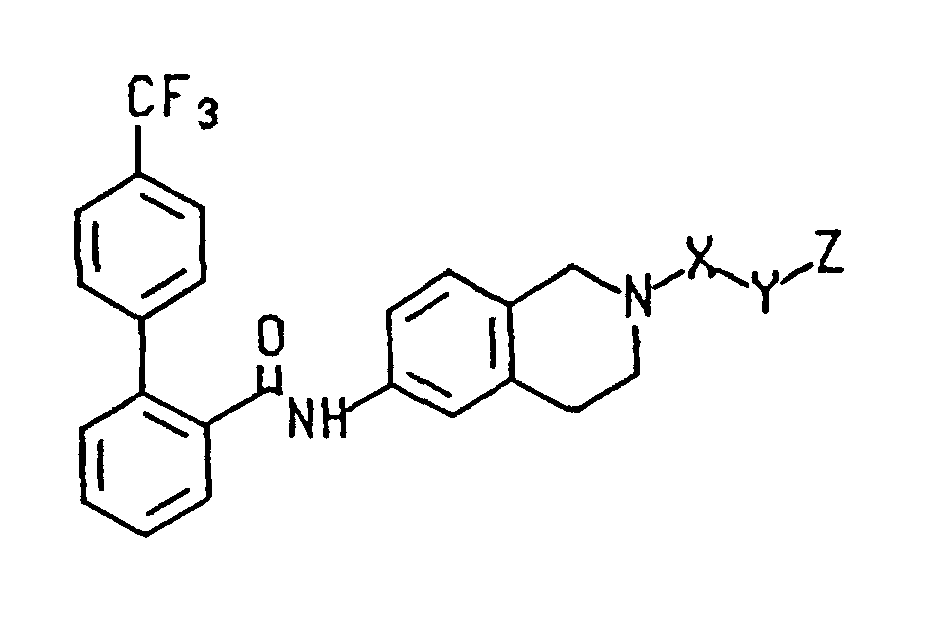
X représente un groupe CH2, CO, CS ou SO2 ;
Y est choisi entre :sous réserve que, si X représente un groupe CH2, Y représente une liaison directe ;une liaison directe,des radicaux hydrocarbylène aliphatiques ayant jusqu'à 20 atomes de carbone, radicaux qui peuvent être mono-substitués avec un substituant hydroxy, alkoxy en C1 à C10, acyle en C1 à C10, acyloxy en C1 à C10 ou aryle en C6 à C10,un groupe NH et un atome de O,
Z est choisi parmi les groupes suivants :sous réserve que, si X représente un groupe CH2, Z représente H ou soit choisi dans les groupes (4) et (6),(1) H, halogéno, cyano;(2) hydroxy, alkoxy en C1 à C10, alkylthio en C1 à C10, acyle en C1 à C10, thiophénylcarbonyle, (alkoxy en C1 à C10)-carbonyle,(3) alkylamino en C1 à C10, di-(alkyle en C1 à C10)-amino, (aryle en C6 à C10)-(alkyle en C1 à C10)-amino, sous réserve que Y ne représente pas un atome de O ou un groupe NH,(4) vinyle non substitué, aryle en C6 à C10, cycloalkyle en C3 à C8, et ses dérivés benzocondensés, polycycloalkyle en C7 à C10, cycloalcényle en C4 à C8, polycycloalcényle en C7 à C10,(5) aryloxy en C6 à C10, arylthio en C6 à C10, (aryle en C6 à C10)-(alkoxy en C1 à C10), (aryle en C6 à C10)-(alkyle en C1 à C10)-thio, cycloalkyloxy en C3 à C8, cycloalcényloxy en C4 à C8,(6) hétérocyclyle choisi dans le groupe consistant en des radicaux monocycliques et radicaux polycycliques condensés, lesdits radicaux contenant un nombre total de 5 à 14 atomes de noyaux, lesdits radicaux contenant un nombre total de 1 à 4 hétéro-atomes de noyaux choisis indépendamment entre des atomes d'oxygène, d'azote et de soufre, et les différents noyaux desdits radicaux pouvant être indépendamment saturés, partiellement insaturés ou aromatiques,
et dans laquelle, lorsque Z contient un ou plusieurs noyaux, lesdits noyaux peuvent porter chacun indépendamment 0 à 4 substituants choisis indépendamment entre des substituants halogéno, hydroxy, cyano, nitro, oxo, thioxo, aminosulfonyle, phényle, phénoxy, phénylthio, halogénophénylthio, benzyle, benzyloxy, alkyle en C1 à C10, alkoxy en C1 à C10, (alkoxy en C1 à C10)-carbonyle, alkylthio en C1 à C10, alkylamino en C1 à C10, (alkyle en C1 à C10)-aminocarbonyle, di-(alkyle en C1 à C10)-amino, di-(alkyle en C1 à C10)-aminocarbonyle, di-(alkyle en C1 à C10)-amino-alkoxy en C1 à C10), perfluoralkyle en C1 à C3, perfluoralkoxy en C1 à C3, acyle en C1 à C10, acyloxy en C1 à C10, (acyle en C1 à C10)-oxy-(alkyle en C1 à C10) et pyrrolidinyle ;
et ses sels pharmaceutiquement acceptables. - Composé répondant à la définition suivant la revendication 1, et ses sels pharmaceutiquement acceptables, dans lesquels :et dans lesquels, lorsque Z contient un ou plusieurs noyaux, lesdits noyaux peuvent porter chacun indépendamment 0 à 3 substituants choisis indépendamment entre des substituants halogéno, hydroxy, nitro, alkyle en C1 à C6, alkoxy en C1 à C6, di-(alkyle en C1 à C6)-aminocarbonyle, perfluoralkoxy en C1 à C3, acyle en C1 à C10 et acyloxy en C1 à C10.X représente un groupe CH2, CO ou SO2,Y est choisi entre :sous réserve que, si X représente un groupe CH2, Y représente une liaison directe,une liaison directe, un groupe NH,un groupe alkylène en C1 à C10 et un groupe alcénylène en C2 à C10, chacun de ces groupes pouvant être substitué avec un substituant phényle,Z est choisi parmi les groupes suivants :(1) H,(2) alkoxy en C1 à C10, alkylthio en C1 à C10,(3) alkylamino en C1 à C10, di-(alkyle en C1 à C10)-amino, (aryle en C6 à C10)-(alkyle en C1 à C10)-amino, sous réserve que Y ne représente pas un groupe NH,(4) vinyle non substitué, aryle en C6 à C10, cycloalkyle en C3 à C8, cycloalcényle en C4 à C8,(5) aryloxy en C6 à C10,(6) hétérocyclyle choisi dans le groupe consistant en des radicaux hétérocycliques penta- et hexagonaux, qui peuvent être saturés, partiellement insaturés ou aromatiques, et leurs dérivés benzocondensés, lesdits radicaux pouvant contenir un nombre total de 1 à 3 hétéro-atomes de noyau choisis indépendamment entre des atomes d'oxygène, d'azote et de soufre,
- Composé répondant à la définition suivant la revendication 2, et ses sels pharmaceutiquement acceptables, dans lesquels :X représente un groupe méthylène, Y représente une liaison directe et Z est choisi entre des groupes aryle en C6 à C10, cycloalkyle en C3 à C8 et cycloalcényle en C4 à C8, dont chacun peut porter 0 à 3 desdits substituants indépendants.
- Composé répondant à la définition suivant la revendication 2, et ses sels pharmaceutiquement acceptables, dans lesquels X représente un groupe méthylène ou CO, Y représente une liaison directe et Z représente un groupe hétérocyclyle choisi entre des groupes thiophényle, pyrrolidinyle, pyrrolyle, furannyle, thiazolyle, isoxazolyle, imidazolyle, 1,2,4-triazolyle, pyridyle, pyrimidinyle, et leurs (ortho)benzodérivés bicycliques condensés, dont chacun peut porter 0 à 3 desdits substituants indépendants.
- Composé répondant à la définition suivant la revendication 2, et ses sels pharmaceutiquement acceptables, dans lesquels
X représente un groupe CH2 ou CO,
Y représente une liaison directe,
Z représente un groupe
H, vinyle non substitué, phényle, imidazolyle, thiazolyle, thiophényle, 1,2,4-triazolyle, pyridinyle et pyrimidinyle. - Composé répondant à la définition suivant la revendication 5, dans lequel X représente un groupe CO.
- Composé répondant à la définition suivant la revendication 5, dans lequel X représente un groupe CH2.
- Composé répondant à la définition suivant la revendication 1, dans lequel le groupe de liaison formé par l'atome d'azote de noyau du noyau 1,2,3,4-tétrahydroisoquinoléine représenté dans la formule (I), pris conjointement avec le groupe dans -XYZ qui relie ledit groupement -XYZ audit atome d'azote de noyau, est choisi entre les suivants :

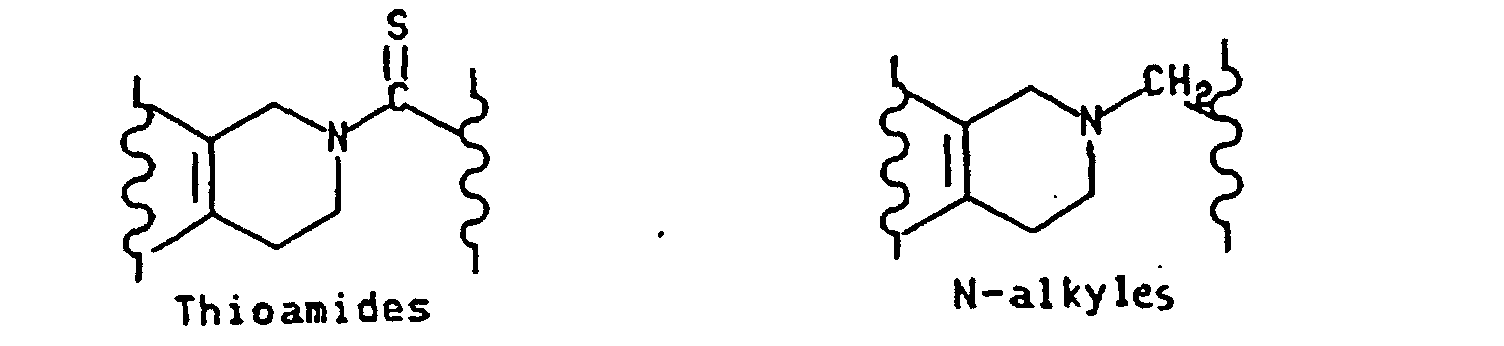
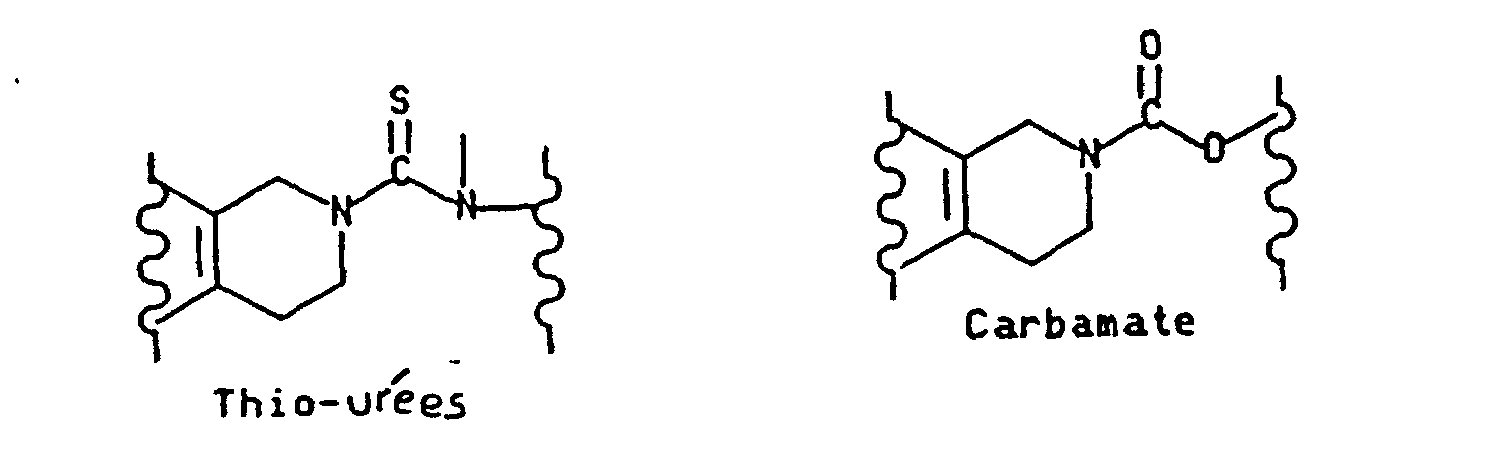

- Composé répondant à la définition suivant la revendication 8, dans lequel ledit groupe de liaison est un amide.
- Composé répondant à la définition suivant la revendication 9, choisi dans le groupe consistant en :(2-phényl-acétyl-1,2,3,4-tétrahydro-isoquinoléine-6-yl)-amide d'acide 4'-trifluorométhyl-biphényl-2-carboxylique(2-phénoxy-acétyl-1,2,3,4-tétrahydro-isoquinoléine-6-yl)-amide d'acide 4'-trifluorométhyl-biphényl-2-carboxylique(2-pentanoyl-1,2,3,4-tétrahydroiso-quinoléine-6-yl)-amide d'acide 4'-trifluorométhyl-biphényl-2-carboxylique(2-cyclobutane-carbonyl-1,2,3,4-tétrahydro-isoquinoléine-6-yl)-amide d'acide 4'-trifluorométhyl-biphényl-2-carboxylique[2-(thiophène-2-yl-acétyl)-1,2,3,4-tétrahydro-isoquinoléine-6-yl]-amide d'acide 4'-trifluorométhyl-biphényl-2-carboxylique(2-butyryl-1,2,3,4-tétrahydro-isoquinoléine-6-yl)-amide d'acide 4'-trifluorométhyl-biphényl-2-carboxylique(2-éthoxy-acétyl-1,2,3,4-tétrahydro-isoquinoléine-6-yl)-amide d'acide 4'-trifluorométhyl-biphényl-2-carboxylique2-[(4-fluorophényl)-acétyl]-1,2,3,4-tétrahydro-isoquinoléine-6-yl)-amide d'acide 4'-trifluorométhyl-biphényl-2-carboxylique[2-(3-méthylbutyryl)-1,2,3,4-tétrahydro-isoquinoléine-6-yl]-amide d'acide 4'-trifluorométhyl-biphényl-2-carboxylique(2-but-3-énoyl-1,2,3,4-tétrahydro-isoquinoléine-6-yl)-amide d'acide 4'-trifluorométhyl-biphényl-2-carboxylique(2-méthoxyacétyl-1,2,3,4-tétrahydro-isoquinoléine-6-yl)-amide d'acide 4'-trifluorométhyl-biphényl-2-carboxylique(2-éthylthio-acétyl-1,2,3,4-tétrahydro-isoquinoléine-6-yl)-amide d'acide 4'-trifluorométhyl-biphényl-2-carboxylique[2-(6-diéthyl-carbamoyl-cyclohex-3-ènecarbonyl)-1,2,3,4-tétrahydro-isoquinoléine-6-yl]-amide d'acide 4'-trifluorométhyl-biphényl-2-carboxylique[2-(cyclopent-1-ényl-acétyl)-1,2,3,4-tétrahydro-isoquinoléine-6-yl]-amide d'acide 4'-trifluorométhyl-biphényl-2-carboxylique(2-hex-3-énoyl-1,2,3,4-tétrahydro-isoquinoléine-6-yl)-amide d'acide 4'-trifluorométhyl-biphényl-2-carboxylique[2-(tétrahydrofuranne-3-carbonyl)-1,2,3,4-tétrahydroisoquinoléine-6-yl]-amide d'acide 4'-trifluorométhylbiphényl-2-carboxylique[2-(thiophène-3-yl-acétyl)-1,2,3,4-tétrahydro-isoquinoléine-6-yl]-amide d'acide 4'-trifluorométhyl-biphényl-2-carboxylique, et[2-(pyridine-2-carbonyl)-1,2,3,4-tétrahydro-isoquinoléine-6-yl]-amide d'acide 4'-trifluorométhyl-biphényl-2-carboxylique.
- Composé répondant à la définition suivant la revendication 8, dans lequel ledit groupe de liaison est une urée.
- Composé répondant à la définition suivant la revendication 11, choisi dans le groupe consistant en :phénylamide d'acide 6-[(4'-trifluorométhyl-biphényl-2-carbonyl)-amino]-3,4-dihydro-1H-isoquinoléine-2-carboxylique,hexylamide d'acide 6-[(4'-trifluorométhyl-biphényl-2-carbonyl)-amino]-3,4-dihydro-1H-isoquinoléine-2-carboxylique,benzylamide d'acide 6-[(4'-trifluorométhyl-biphényl-2-carbonyl)-amino]-3,4-dihydro-1H-isoquinoléine-2-carboxylique,[(R)-1-phényléthyl]-amide d'acide 6-[(4'-trifluorométhyl-biphényl-2-carbonyl)-amino]-3,4-dihydro-1H-isoquinoléine-2-carboxylique, etpyridine-2-ylamide d'acide 6-[(4'-trifluorométhylbiphényl-2-carbonyl)-amino]-3,4-dihydro-1H-isoquinoléine-2-carboxylique.
- Composé répondant à la définition suivant la revendication 8, dans lequel ledit groupe de liaison est un sulfonamide.
- Composé répondant à la définition suivant la revendication 13, choisi dans le groupe consistant en :[2-(propane-2-sulfonyl)-1,2,3,4-tétrahydro-isoquinoléine-6-yl]-amide d'acide 4'-trifluorométhyl-biphényl-2-carboxylique,(2-diméthylsulfamoyl-1,2,3,4-tétrahydro-isoquinoléine-6-yl)-amide d'acide 4'-trifluorométhyl-biphényl-2-carboxylique, et[2-(2-trifluorométhoxy-benzènesulfonyl)-1,2,3,4-tétrahydro-isoquinoléine-6-yl]-amide d'acide 4'-trifluorométhyl-biphényl-2-carboxylique.
- Composé répondant à la définition suivant la revendication 8, dans lequel ledit groupe de liaison est une thiourée.
- Composé répondant à la définition suivant la revendication 15, qui est le (2-cyclopropyl-thiocarbamoyl-1,2,3,4-tétrahydro-isoquinoléine-6-yl)-amide d'acide 4'-trifluorométhyl-biphényl-2-carboxylique.
- Composé répondant à la définition suivant la revendication 8, dans lequel ledit groupe de liaison est un groupe N-alkyle.
- Composé répondant à la définition suivant la revendication 17, choisi dans le groupe consistant en :[2-(2,6,6-triméthyl-cyclohex-2-énylméthyl)-1,2,3,4-tétrahydro-isoquinoléine-6-yl]-amide d'acide 4'-trifluorométhyl-biphényl-2-carboxylique,[2-(2,4-dichlorobenzyl)-1,2,3,4-tétrahydro-isoquinoléine-6-yl]-amide d'acide 4'-trifluorométhyl-biphényl-2-carboxylique,[2-(1,5a,6,9,9a,9b-hexahydro-4H-dibenzofuranne-4a-yl-méthyl)-1,2,3,4-tétrahydro-isoquinoléine-6-yl]-amide d'acide 4'-trifluorométhyl-biphényl-2-carboxylique,(2-thiophène-2-ylméthyl-1,2,3,4-tétrahydro-isoquinoléine-6-yl)-amide d'acide 4'-trifluorométhyl-biphényl-2-carboxylique,[2-(1H-pyrrole-2-ylméthyl)-1,2,3,4-tétrahydro-isoquinoléine-6-yl]-amide d'acide 4'-trifluorométhyl-biphényl-2-carboxylique,(2-furanne-2-ylméthyl-1,2,3,4-tétrahydroisoquinoléine-6-yl)-amide d'acide 4'-trifluorométhyl-biphényl-2-carboxylique,5-{6-[(4'-trifluorométhyl-biphényl-2-carbonyl)-amino]-3,4-dihydro-1H-isoquinoléine-2-ylméthyl}-furanne-2-ylméthyl ester d'acide acétique,(2-thiophène-3-ylméthyl-1,2,3,4-tétrahydro-isoquinoléine-6-yl)-amide d'acide 4'-trifluorométhyl-biphényl-2-carboxylique,[2-(2,5-diméthoxy-tétrahydrofuranne-3-ylméthyl)-1,2,3,4-tétrahydro-isoquinoléine-6-yl]-amide d'acide 4'-trifluorométhyl-biphényl-2-carboxylique,(2-benzyl-1,2,3,4-tétrahydro-isoquinoléine-6-yl)-amide d'acide 4'-trifluorométhyl-biphényl-2-carboxylique,(2-pyridine-2-ylméthyl-1,2,3,4-tétrahydro-isoquinoléine-6-yl)-amide d'acide 4'-trifluorométhyl-biphényl-2-carboxylique,(2-quinoléine-2-ylméthyl-1,2,3,4-tétrahydro-isoquinoléine-6-yl)-amide d'acide 4'-trifluorométhyl-biphényl-2-carboxylique,[2-(3-chlorobenzyl)-1,2,3,4-tétrahydro-isoquinoléine-6-yl]-amide d'acide 4'-trifluorométhyl-biphényl-2-carboxylique,(2-pyrimidine-2-ylméthyl-1,2,3,4-tétrahydro-isoquinoléine-6-yl)-amide d'acide 4'-trifluorométhyl-biphényl-2-carboxylique,[2-(3-nitrobenzyl)-1,2,3,4-tétrahydro-isoquinoléine-6-yl]-amide d'acide 4'-trifluorométhyl-biphényl-2-carboxylique,[2-(1H-imidazole-2-ylméthyl)-1,2,3,4-tétrahydro-isoquinoléine-6-yl]-amide d'acide 4'-trifluorométhyl-biphényl-2-carboxylique,[2-(1-méthyl-pyrrole-2-ylméthyl)-1,2,3,4-tétrahydroisoquinoléine-6-yl]-amide d'acide 4'-trifluorométhylbiphényl-2-carboxylique,[2-(1H-benzoimidazole-2-ylméthyl)-1,2,3,4-tétrahydroisoquinoléine-6-yl)-amide d'acide 4'-trifluorométhylbiphényl-2-carboxylique,(2-thiazole-2-ylméthyl-1,2,3,4-tétrahydro-isoquinoléine-6-yl)-amide d'acide 4'-trifluorométhyl-biphényl-2-carboxylique,[2-(1-méthylimidazole-2-ylméthyl)-1,2,3,4-tétrahydroisoquinoléine-6-yl]-amide d'acide 4'-trifluorométhylbiphényl-2-carboxylique,[2-(1H-[1,2,4]triazole-3-ylméthyl)-1,2,3,4-tétrahydro-isoquinoléine-6-yl]-amide d'acide 4'-trifluorométhyl-biphényl-2-carboxylique, et[(2-allyl)-1,2,3,4-tétrahydroisoquinoléine-6-yl]-amide d'acide 4'-trifluorométhyl-biphényl-2-carboxylique.
- Composé répondant à la définition suivant la revendication 8, dans lequel ledit groupe de liaison est un carbamate.
- Composé répondant à la définition suivant la revendication 19, qui est l'ester tertio-butylique d'acide 6-[(4'-trifluorométhyl-biphényl-2-carbonyl)-amino]-3,4-dihydro-1H-isoquinoléine-2-carboxylique.
- Composé répondant à la définition suivant la revendication 8, dans lequel ledit groupe de liaison est un thioamide.
- Composé répondant à la définition suivant la revendication 8, choisi dans le groupe consistant en :[2-(thiophène-2-yl-acétyl)-1,2,3,4-tétrahydro-isoquinoléine-6-yl]-amide d'acide 4'-trifluorométhyl-biphényl-2-carboxylique,([R]-1-phényléthyl)-amide d'acide 6-[(4'-trifluorométhyl-biphényl-2-carbonyl)-amino]-3,4-dihydro-1H-isoquinoléine-2-carboxylique,(2-pyridine-2-ylméthyl-1,2,3,4-tétrahydro-isoquinoléine-6-yl)-amide d'acide 4'-trifluorométhyl-biphényl-2-carboxylique,[2-(1H-imidazole-2-ylméthyl)-1,2,3,4-tétrahydro-isoquinoléine-6-yl)-amide d'acide 4'-trifluorométhyl-biphényl-2-carboxylique,(2-thiazole-2-ylméthyl-1,2,3,4-tétrahydro-isoquinoléine-6-yl)-amide d'acide 4'-trifluorométhyl-biphényl-2-carboxylique, et[2-(1H-[1,2,4]triazole-3-ylméthyl)-1,2,3,4-tétrahydro-isoquinoléine-6-yl]-amide d'acide 4'-trifluorométhyl-biphényl-2-carboxylique.
- Composition pharmaceutique comprenant un composé de formule (I) répondant à la définition suivant la revendication 1, et un support pharmaceutiquement acceptable.
- Composition répondant à la définition suivant la revendication 23, comprenant en outre un agent supplémentaire abaissant les taux de lipides.
- Utilisation d'un composé de formule (I) répondant à la définition suivant la revendication 1 pour la production d'un médicament destiné au traitement dune affection choisie entre l'athérosclérose, la pancréatite, 1'obésité, 1 'hypercholestérolémie, l'hypertriglycéridémie, l'hyperlipidémie et le diabète.
Priority Applications (3)
| Application Number | Priority Date | Filing Date | Title |
|---|---|---|---|
| EP01119323A EP1181954A3 (fr) | 1995-06-07 | 1995-06-07 | Derives de biphenyl-2-acide carboxylique-tetrahydro-isoquinoleine-6-yl amides, preparation de ces amides et utilisation en tant qu'inhibiteurs de la proteine de transfert de triglyceride microsomal et/ou de la secretion d'apolipoproteines b (apo b) |
| PT95918722T PT832069E (pt) | 1995-06-07 | 1995-06-07 | Derivados de tetrahidro-isoquinolin-6-il amida do acido bifenilo-2-carboxilico sua preparacao e sua utilizacao como inibidores de proteina de transferencia de triglicerido microsomal e/ou da secrecao de apolipoproteina b (apo b) |
| ES95918722T ES2191706T3 (es) | 1995-06-07 | 1995-06-07 | Derivados de tetrahidro-isoquinolinil-6-il amida del acido bifenil-2-carboxilico, su preparacion y su uso como inhibidores de la proteina de transferencia de trigliceridos microsomal y/o secrecion de apolipoproteina b (apo b). |
Applications Claiming Priority (3)
| Application Number | Priority Date | Filing Date | Title |
|---|---|---|---|
| CA002223574A CA2223574C (fr) | 1995-06-07 | 1995-06-07 | Derives de biphenyl-2-acide carboxylique-tetrahydro-isoquinoleine-6-yl amides, preparation de ces amides et utilisation en tant qu'inhibiteurs de la proteine de transfert de triglyceride microsomal et/ou de la secretion d'apolipoproteines b (apo b) |
| PCT/IB1995/000448 WO1996040640A1 (fr) | 1995-06-07 | 1995-06-07 | DERIVES DE BIPHENYL-2-ACIDE CARBOXYLIQUE-TETRAHYDRO-ISOQUINOLEINE-6-YL AMIDES, PREPARATION DE CES AMIDES ET UTILISATION EN TANT QU'INHIBITEURS DE LA PROTEINE DE TRANSFERT DE TRIGLYCERIDE MICROSOMAL ET/OU DE LA SECRETION D'APOLIPOPROTEINES B (Apo B) |
| HU9601566A HUP9601566A3 (en) | 1995-06-07 | 1996-06-06 | Therapeutic tetrahydro-isoquinolin derivatives, their intermediates and pharmaceutical compositions containing the active component |
Related Child Applications (1)
| Application Number | Title | Priority Date | Filing Date |
|---|---|---|---|
| EP01119323A Division EP1181954A3 (fr) | 1995-06-07 | 1995-06-07 | Derives de biphenyl-2-acide carboxylique-tetrahydro-isoquinoleine-6-yl amides, preparation de ces amides et utilisation en tant qu'inhibiteurs de la proteine de transfert de triglyceride microsomal et/ou de la secretion d'apolipoproteines b (apo b) |
Publications (2)
| Publication Number | Publication Date |
|---|---|
| EP0832069A1 EP0832069A1 (fr) | 1998-04-01 |
| EP0832069B1 true EP0832069B1 (fr) | 2003-03-05 |
Family
ID=89994037
Family Applications (1)
| Application Number | Title | Priority Date | Filing Date |
|---|---|---|---|
| EP95918722A Expired - Lifetime EP0832069B1 (fr) | 1995-06-07 | 1995-06-07 | DERIVES DE BIPHENYL-2-ACIDE CARBOXYLIQUE-TETRAHYDRO-ISOQUINOLEINE-6-YL AMIDES, PREPARATION DE CES AMIDES ET UTILISATION EN TANT QU'INHIBITEURS DE LA PROTEINE DE TRANSFERT DE TRIGLYCERIDE MICROSOMAL ET/OU DE LA SECRETION D'APOLIPOPROTEINES B (Apo B) |
Country Status (14)
| Country | Link |
|---|---|
| EP (1) | EP0832069B1 (fr) |
| AP (1) | AP9600804A0 (fr) |
| BR (1) | BR9602628A (fr) |
| CZ (1) | CZ289249B6 (fr) |
| FI (1) | FI974440A7 (fr) |
| HR (1) | HRP960270A2 (fr) |
| HU (1) | HUP9601566A3 (fr) |
| IL (1) | IL118484A (fr) |
| LV (1) | LV11615B (fr) |
| NZ (1) | NZ286733A (fr) |
| PL (1) | PL314636A1 (fr) |
| SG (1) | SG44952A1 (fr) |
| SI (1) | SI9600183A (fr) |
| WO (1) | WO1996040640A1 (fr) |
Families Citing this family (64)
| Publication number | Priority date | Publication date | Assignee | Title |
|---|---|---|---|---|
| US5739135A (en) * | 1993-09-03 | 1998-04-14 | Bristol-Myers Squibb Company | Inhibitors of microsomal triglyceride transfer protein and method |
| ES2218660T3 (es) * | 1996-01-16 | 2004-11-16 | Bristol-Myers Squibb Company | Inhibidores aromaticos conformacionalmente restringidos de la proteina de transferencia de trigliceridos microsomales y procedimiento. |
| ATE223400T1 (de) * | 1996-04-30 | 2002-09-15 | Pfizer | Verfahren und zwischenprodukte zur herstellung von 4-trifluoromethylbiphenyl-2-carbonsaüre,(2- (2h-(1,2,4) triazol-3-ylmethyl)-1,2,3,4- tetrahydro-isoquinolin-6-yl)-amide |
| US5827875A (en) * | 1996-05-10 | 1998-10-27 | Bristol-Myers Squibb Company | Inhibitors of microsomal triglyceride transfer protein and method |
| US5885983A (en) * | 1996-05-10 | 1999-03-23 | Bristol-Myers Squibb Company | Inhibitors of microsomal triglyceride transfer protein and method |
| TW438796B (en) * | 1996-05-15 | 2001-06-07 | Hoffmann La Roche | 2,4-diaminopyrimidine derivatives, the manufacture process thereof, and the antibiotically-active pharmaceutical composition containing the same |
| US5883109A (en) * | 1996-07-24 | 1999-03-16 | Bristol-Myers Squibb Company | Method for lowering serum lipid levels employing an MTP inhibitor in combination with another cholesterol lowering drug |
| NZ335162A (en) * | 1996-11-27 | 2000-01-28 | Pfizer | Apo b-secretion/mtp inhibitory amides |
| US5760246A (en) | 1996-12-17 | 1998-06-02 | Biller; Scott A. | Conformationally restricted aromatic inhibitors of microsomal triglyceride transfer protein and method |
| US6147214A (en) * | 1997-04-18 | 2000-11-14 | Pfizer Inc | Process and intermediates for the preparation of 4'-trifluoromethyl-biphenyl-2-carboxylic acid (1,2,3,4-tetrahydro-isoquinolin-6-yl)-amide |
| GB9708119D0 (en) * | 1997-04-22 | 1997-06-11 | Glaxo Group Ltd | Chemical compounds |
| US5968950A (en) * | 1997-06-23 | 1999-10-19 | Pfizer Inc | Apo B-secretion/MTP inhibitor hydrochloride salt |
| WO1999063929A2 (fr) | 1998-06-08 | 1999-12-16 | Advanced Medicine, Inc. | Inhibiteurs multiliaison de proteine triglyceride transferase microsomique |
| CO5090829A1 (es) * | 1998-07-21 | 2001-10-30 | Novartis Ag | Compuestos organicos de la formula i, utiles como inhibido res de la proteina de transferencia de triglicerido microso mal y de la secrecion de la apolipoproteina b. |
| US6197798B1 (en) | 1998-07-21 | 2001-03-06 | Novartis Ag | Amino-benzocycloalkane derivatives |
| GB9826412D0 (en) | 1998-12-03 | 1999-01-27 | Glaxo Group Ltd | Chemical compounds |
| AU6824700A (en) * | 1999-07-20 | 2001-02-05 | Novartis Ag | Organic compounds |
| CO5271688A1 (es) * | 1999-11-10 | 2003-04-30 | Pfizer Prod Inc | Uso de inhibidor de secrecion de apoliproteinas b y/o de proteina de transferencia de trigliceridos microsmales |
| IL139450A0 (en) * | 1999-11-10 | 2001-11-25 | Pfizer Prod Inc | Methods of administering apo b-secretion/mtp inhibitors |
| CA2324801A1 (fr) * | 1999-11-10 | 2001-05-10 | Andrew Gordon Swick | Utilisation d'inhibiteurs de secretion d'apo b et/ou de mtp et d'agents contre l'obesite |
| CA2324800A1 (fr) * | 1999-11-10 | 2001-05-10 | Mary Anne Hickman | Utilisation d'inhibiteurs de secretion d'apo b et/ou de mtp |
| AU2001262185A1 (en) * | 2000-04-10 | 2001-10-23 | Novartis Ag | Substituted (hetero)aryl carboxamide derivatives as microsomal triglyceride transfer protein (mtp) and apolipoprotein b (apo b) secretion |
| GB0013383D0 (en) * | 2000-06-01 | 2000-07-26 | Glaxo Group Ltd | Therapeutic benzamide derivatives |
| GB0013346D0 (en) * | 2000-06-01 | 2000-07-26 | Glaxo Group Ltd | Therapeutic benzamide derivatives |
| DE10033337A1 (de) * | 2000-07-08 | 2002-01-17 | Boehringer Ingelheim Pharma | Biphenylcarbonsäureamide, ihre Herstellung und ihre Verwendung als Arzneimittel |
| WO2002014276A1 (fr) * | 2000-08-10 | 2002-02-21 | Tanabe Seiyaku Co., Ltd. | Composes a base de benzoylaminoisoindoline, leurs procedes de preparation et produits intermediaires utilises dans leur synthese |
| WO2002014277A1 (fr) * | 2000-08-10 | 2002-02-21 | Tanabe Seiyaku Co., Ltd. | Composes de biphenylcarboxamidoisoindoline, procedes de preparation de ceux-ci et produits intermediaires destines a la synthese de ceux-ci |
| JO2654B1 (en) * | 2000-09-04 | 2012-06-17 | شركة جانسين فارماسوتيكا ان. في | Multiple aryl caroxa amides are useful as lipid - lowering agents |
| PL362546A1 (en) * | 2000-10-05 | 2004-11-02 | Fujisawa Pharmaceutical Co, Ltd. | Benzamide compounds as apo b secretion inhibitors |
| JO2409B1 (en) | 2000-11-21 | 2007-06-17 | شركة جانسين فارماسوتيكا ان. في | Second-phenyl carboxy amides are useful as lipid-lowering agents |
| JO2390B1 (en) | 2001-04-06 | 2007-06-17 | شركة جانسين فارماسوتيكا ان. في | Diphenylcarboxamides act as lipid-lowering agents |
| WO2002090347A1 (fr) * | 2001-04-30 | 2002-11-14 | Fujisawa Pharmaceutical Co., Ltd. | Composes biarylcarboxamide comme inhibiteurs d'apolipoproteine b |
| SK287806B6 (sk) * | 2001-06-28 | 2011-10-04 | Pfizer Products Inc. | Triamid-substituované indoly, benzofurány a benzotiofény ako inhibítory mikrozómového proteínu prenášajúceho triglyceridu (MTP) a/alebo sekrécie apolipoproteínu B (Apo B) |
| JP2005510564A (ja) * | 2001-11-28 | 2005-04-21 | 藤沢薬品工業株式会社 | アポリポタンパク質b阻害剤としての複素環式アミド化合物 |
| GB0129013D0 (en) * | 2001-12-04 | 2002-01-23 | Glaxo Group Ltd | Compounds |
| GB0129015D0 (en) * | 2001-12-04 | 2002-01-23 | Glaxo Group Ltd | Compounds |
| ES2316777T3 (es) * | 2002-02-15 | 2009-04-16 | Glaxo Group Limited | Moduladores de receptores vainilloides. |
| BR0306292A (pt) | 2002-02-28 | 2004-08-24 | Japan Tobacco Inc | Composto de éster e uso medicinal do mesmo |
| WO2004039795A2 (fr) * | 2002-10-29 | 2004-05-13 | Fujisawa Pharmaceutical Co., Ltd. | Composes amide |
| CN1826121B (zh) * | 2003-07-23 | 2013-05-29 | 幸讬制药公司 | 苯基与吡啶基衍生物用于制备调控钙离子释放活化钙离子通道的药物的用途 |
| JP4832897B2 (ja) | 2003-08-29 | 2011-12-07 | 日本たばこ産業株式会社 | エステル誘導体及びその医薬用途 |
| GB2413129A (en) * | 2003-10-07 | 2005-10-19 | Renovis Inc | Aromatic amide compounds as ion channel ligands and uses thereof |
| JP2007525482A (ja) * | 2003-10-07 | 2007-09-06 | レノビス, インコーポレイテッド | イオンチャネルリガンドとしてのアミド化合物およびその使用 |
| GEP20084360B (en) | 2004-02-04 | 2008-04-29 | Pfizer Prod Inc | Substituted quinoline compounds |
| US7932268B2 (en) | 2004-03-05 | 2011-04-26 | The Trustees Of The University Of Pennsylvania | Methods for treating disorders or diseases associated with hyperlipidemia and hypercholesterolemia while minimizing side effects |
| US8101774B2 (en) | 2004-10-18 | 2012-01-24 | Japan Tobacco Inc. | Ester derivatives and medicinal use thereof |
| WO2006056845A1 (fr) | 2004-11-23 | 2006-06-01 | Warner-Lambert Company Llc | Derives d'acide 7-(2h-pyrazol-3-yl)-3, 5-dihyroxy-heptanoique comme inhibiteurs de hmg co-a reductase pour le traitement de l'hyperlipidemie |
| JP2006249022A (ja) | 2005-03-11 | 2006-09-21 | Sumitomo Chemical Co Ltd | 4−(2−メチルフェニル)ベンゾトリフルオライドの製造方法 |
| EA024768B1 (ru) | 2005-04-19 | 2016-10-31 | Сюрфэйс Лоджикс, Инк. | Ингибиторы белка микросомального транспорта триглицеридов и секреции апо-в |
| US7741317B2 (en) | 2005-10-21 | 2010-06-22 | Bristol-Myers Squibb Company | LXR modulators |
| US7888376B2 (en) | 2005-11-23 | 2011-02-15 | Bristol-Myers Squibb Company | Heterocyclic CETP inhibitors |
| DE102005062987A1 (de) * | 2005-12-28 | 2007-07-05 | Grünenthal GmbH | Substituierte Propiolsäureamide und ihre Verwendung zur Herstellung von Arzneimitteln |
| US7919506B2 (en) | 2006-03-10 | 2011-04-05 | Pfizer Inc. | Dibenzyl amine compounds and derivatives |
| US8383660B2 (en) | 2006-03-10 | 2013-02-26 | Pfizer Inc. | Dibenzyl amine compounds and derivatives |
| SI2046787T1 (sl) | 2006-08-01 | 2011-07-29 | Glaxo Group Ltd | Pirazolo(3,4-b)piridinske spojine in njihova uporaba kot PDE4 inhibitorji |
| DE602007006833D1 (de) | 2006-10-24 | 2010-07-08 | Janssen Pharmaceutica Nv | Mtp-inhibierende tetrahydronaphthalin-1-carbonsäurederivate |
| JO2653B1 (en) * | 2006-10-24 | 2012-06-17 | شركة جانسين فارماسوتيكا ان. في | Tetrahydroflavin 1-carboxylic acid substituted with pyridine or pyrazine inhibit MTB |
| CN101663262B (zh) | 2006-12-01 | 2014-03-26 | 百时美施贵宝公司 | 用于治疗动脉粥样硬化和心血管疾病的作为cetp抑制剂的n-(3-苄基)-2,2-(二苯基)-丙-1胺衍生物 |
| MX2015014666A (es) | 2013-04-17 | 2016-03-01 | Pfizer | Derivados de n-piperidin-3-ilbenzamida para tratar enfermedades cardiovasculares. |
| WO2016055901A1 (fr) | 2014-10-08 | 2016-04-14 | Pfizer Inc. | Composés d'amide substitué |
| SG11202107614PA (en) | 2019-01-18 | 2021-08-30 | Astrazeneca Ab | Pcsk9 inhibitors and methods of use thereof |
| WO2021252863A1 (fr) | 2020-06-12 | 2021-12-16 | Vertex Pharmaceuticals Incorporated | Formes solides d'un inhibiteur d'apol1 et utilisation de celles-ci |
| US20230285376A1 (en) | 2020-07-29 | 2023-09-14 | Amryt Pharmaceuticals Inc. | Lomitapide for use in methods of treating hyperlipidemia and hypercholesterolemia in pediatric patients |
| CN117342958B (zh) * | 2023-09-12 | 2025-12-16 | 武汉理工大学 | 一种埋底界面材料及其制备得到的柔性钙钛矿太阳能电池 |
Family Cites Families (4)
| Publication number | Priority date | Publication date | Assignee | Title |
|---|---|---|---|---|
| US4022900A (en) * | 1970-09-09 | 1977-05-10 | Marion Laboratories, Inc. | Compositions containing 1,2,3,4-tetrahydroisoquinolines used as hypotensive agents |
| JPS5967246A (ja) * | 1982-09-10 | 1984-04-16 | ザ・ウエルカム・フアウンデ−シヨン・リミテツド | 置換ビフエニル化合物 |
| US5595872A (en) * | 1992-03-06 | 1997-01-21 | Bristol-Myers Squibb Company | Nucleic acids encoding microsomal trigyceride transfer protein |
| IL110172A (en) * | 1993-07-22 | 2001-10-31 | Lilly Co Eli | Bicyclic compounds and pharmaceutical compositions containing them |
-
1995
- 1995-06-07 WO PCT/IB1995/000448 patent/WO1996040640A1/fr not_active Ceased
- 1995-06-07 EP EP95918722A patent/EP0832069B1/fr not_active Expired - Lifetime
-
1996
- 1996-05-09 AP APAP/P/1996/000804A patent/AP9600804A0/en unknown
- 1996-05-30 IL IL11848496A patent/IL118484A/en not_active IP Right Cessation
- 1996-06-04 BR BR9602628A patent/BR9602628A/pt not_active Application Discontinuation
- 1996-06-05 SG SG1996009974A patent/SG44952A1/en unknown
- 1996-06-05 PL PL96314636A patent/PL314636A1/xx unknown
- 1996-06-05 NZ NZ286733A patent/NZ286733A/en unknown
- 1996-06-06 LV LVP-96-176A patent/LV11615B/en unknown
- 1996-06-06 CZ CZ19961644A patent/CZ289249B6/cs not_active IP Right Cessation
- 1996-06-06 HU HU9601566A patent/HUP9601566A3/hu unknown
- 1996-06-06 SI SI9600183A patent/SI9600183A/sl not_active IP Right Cessation
- 1996-06-06 HR HRPCT/IB95/00448A patent/HRP960270A2/hr not_active Application Discontinuation
-
1997
- 1997-12-05 FI FI974440A patent/FI974440A7/fi not_active Application Discontinuation
Also Published As
| Publication number | Publication date |
|---|---|
| SG44952A1 (en) | 1997-12-19 |
| IL118484A (en) | 2001-11-25 |
| LV11615A (lv) | 1996-12-20 |
| AP9600804A0 (en) | 1997-11-09 |
| EP0832069A1 (fr) | 1998-04-01 |
| SI9600183A (en) | 1997-04-30 |
| CZ289249B6 (cs) | 2001-12-12 |
| NZ286733A (en) | 1998-02-26 |
| FI974440A7 (fi) | 1998-01-27 |
| FI974440A0 (fi) | 1997-12-05 |
| IL118484A0 (en) | 1996-09-12 |
| HUP9601566A3 (en) | 1998-01-28 |
| HRP960270A2 (en) | 1997-12-31 |
| WO1996040640A1 (fr) | 1996-12-19 |
| LV11615B (en) | 1997-04-20 |
| CZ164496A3 (en) | 1997-01-15 |
| BR9602628A (pt) | 1998-09-08 |
| HUP9601566A2 (en) | 1997-09-29 |
| PL314636A1 (en) | 1996-12-09 |
Similar Documents
| Publication | Publication Date | Title |
|---|---|---|
| EP0832069B1 (fr) | DERIVES DE BIPHENYL-2-ACIDE CARBOXYLIQUE-TETRAHYDRO-ISOQUINOLEINE-6-YL AMIDES, PREPARATION DE CES AMIDES ET UTILISATION EN TANT QU'INHIBITEURS DE LA PROTEINE DE TRANSFERT DE TRIGLYCERIDE MICROSOMAL ET/OU DE LA SECRETION D'APOLIPOPROTEINES B (Apo B) | |
| US5919795A (en) | Biphenyl-2-carboxylic acid-tetrahydro-isoquinolin-6-yl amide derivatives, their preparation and their use as inhibitors of microsomal triglyceride transfer protein and/or apolipoprotein B (Apo B) secretion | |
| US6121283A (en) | Apo B-secretion/MTP inhibitory amides | |
| TWI433672B (zh) | 吲唑化合物 | |
| SK109399A3 (en) | 3-piperidyl-4-oxoquinazoline derivatives and medicincal compositions containing the same | |
| JP2015526436A (ja) | Bir2及び/又はbir3阻害剤としての含窒素複素環式化合物 | |
| EP1181954A2 (fr) | Derives de biphenyl-2-acide carboxylique-tetrahydro-isoquinoleine-6-yl amides, preparation de ces amides et utilisation en tant qu'inhibiteurs de la proteine de transfert de triglyceride microsomal et/ou de la secretion d'apolipoproteines b (apo b) | |
| CA2223574C (fr) | Derives de biphenyl-2-acide carboxylique-tetrahydro-isoquinoleine-6-yl amides, preparation de ces amides et utilisation en tant qu'inhibiteurs de la proteine de transfert de triglyceride microsomal et/ou de la secretion d'apolipoproteines b (apo b) | |
| AP760A (en) | Biphenyl-2-carboxylic acid-tetrahydro-isoquiolin-6-yl amide derivatives. | |
| SK72696A3 (en) | Amides and pharmauceutical compositions on their base | |
| AU1639101A (en) | Therapeutic amides and compositions containing the same | |
| AU3585399A (en) | Intermediates for the preparation of therapeutic amides | |
| JPH11514964A (ja) | ビフェニル−2−カルボン酸−テトラヒドロ−イソキノリン−6−イルアミド誘導体の製造と、ミクロソームのトリ剤グリセリド転移タンパク質および(または)アポリポ蛋白質b(アポb)分泌の阻害としての該誘導体の使用 | |
| SK166199A3 (en) | 5-naphthalen-1-yl-1,3-dioxane derivatives, preparation and therapeutic application | |
| HUP9903479A2 (hu) | Apo B kiválasztás- és MTP-gátló amidok | |
| CZ185899A3 (cs) | Amidy, farmaceutické kompozice, způsoby výroby a způsoby léčení |
Legal Events
| Date | Code | Title | Description |
|---|---|---|---|
| PUAI | Public reference made under article 153(3) epc to a published international application that has entered the european phase |
Free format text: ORIGINAL CODE: 0009012 |
|
| 17P | Request for examination filed |
Effective date: 19971120 |
|
| AK | Designated contracting states |
Kind code of ref document: A1 Designated state(s): AT BE CH DE DK ES FR GB GR IE IT LI LU NL PT SE |
|
| 17Q | First examination report despatched |
Effective date: 20000921 |
|
| GRAH | Despatch of communication of intention to grant a patent |
Free format text: ORIGINAL CODE: EPIDOS IGRA |
|
| GRAH | Despatch of communication of intention to grant a patent |
Free format text: ORIGINAL CODE: EPIDOS IGRA |
|
| GRAA | (expected) grant |
Free format text: ORIGINAL CODE: 0009210 |
|
| AK | Designated contracting states |
Designated state(s): AT BE CH DE DK ES FR GB GR IE IT LI LU NL PT SE |
|
| REG | Reference to a national code |
Ref country code: GB Ref legal event code: FG4D |
|
| REG | Reference to a national code |
Ref country code: CH Ref legal event code: EP |
|
| REG | Reference to a national code |
Ref country code: IE Ref legal event code: FG4D |
|
| REF | Corresponds to: |
Ref document number: 69529849 Country of ref document: DE Date of ref document: 20030410 Kind code of ref document: P |
|
| REG | Reference to a national code |
Ref country code: CH Ref legal event code: NV Representative=s name: E. BLUM & CO. PATENTANWAELTE |
|
| REG | Reference to a national code |
Ref country code: DK Ref legal event code: T3 |
|
| REG | Reference to a national code |
Ref country code: GR Ref legal event code: EP Ref document number: 20030401854 Country of ref document: GR |
|
| REG | Reference to a national code |
Ref country code: SE Ref legal event code: TRGR |
|
| REG | Reference to a national code |
Ref country code: PT Ref legal event code: SC4A Free format text: AVAILABILITY OF NATIONAL TRANSLATION Effective date: 20030429 |
|
| ET | Fr: translation filed | ||
| REG | Reference to a national code |
Ref country code: ES Ref legal event code: FG2A Ref document number: 2191706 Country of ref document: ES Kind code of ref document: T3 |
|
| PLBE | No opposition filed within time limit |
Free format text: ORIGINAL CODE: 0009261 |
|
| STAA | Information on the status of an ep patent application or granted ep patent |
Free format text: STATUS: NO OPPOSITION FILED WITHIN TIME LIMIT |
|
| 26N | No opposition filed |
Effective date: 20031208 |
|
| PGFP | Annual fee paid to national office [announced via postgrant information from national office to epo] |
Ref country code: LU Payment date: 20040325 Year of fee payment: 10 |
|
| PGFP | Annual fee paid to national office [announced via postgrant information from national office to epo] |
Ref country code: PT Payment date: 20040329 Year of fee payment: 10 |
|
| PGFP | Annual fee paid to national office [announced via postgrant information from national office to epo] |
Ref country code: GR Payment date: 20040427 Year of fee payment: 10 |
|
| PGFP | Annual fee paid to national office [announced via postgrant information from national office to epo] |
Ref country code: AT Payment date: 20040506 Year of fee payment: 10 |
|
| PGFP | Annual fee paid to national office [announced via postgrant information from national office to epo] |
Ref country code: NL Payment date: 20040510 Year of fee payment: 10 Ref country code: DK Payment date: 20040510 Year of fee payment: 10 |
|
| PGFP | Annual fee paid to national office [announced via postgrant information from national office to epo] |
Ref country code: SE Payment date: 20040603 Year of fee payment: 10 |
|
| PGFP | Annual fee paid to national office [announced via postgrant information from national office to epo] |
Ref country code: CH Payment date: 20040608 Year of fee payment: 10 |
|
| PGFP | Annual fee paid to national office [announced via postgrant information from national office to epo] |
Ref country code: BE Payment date: 20040625 Year of fee payment: 10 |
|
| PG25 | Lapsed in a contracting state [announced via postgrant information from national office to epo] |
Ref country code: LU Free format text: LAPSE BECAUSE OF NON-PAYMENT OF DUE FEES Effective date: 20050607 Ref country code: AT Free format text: LAPSE BECAUSE OF NON-PAYMENT OF DUE FEES Effective date: 20050607 |
|
| PG25 | Lapsed in a contracting state [announced via postgrant information from national office to epo] |
Ref country code: SE Free format text: LAPSE BECAUSE OF NON-PAYMENT OF DUE FEES Effective date: 20050608 |
|
| PG25 | Lapsed in a contracting state [announced via postgrant information from national office to epo] |
Ref country code: LI Free format text: LAPSE BECAUSE OF NON-PAYMENT OF DUE FEES Effective date: 20050630 Ref country code: DK Free format text: LAPSE BECAUSE OF NON-PAYMENT OF DUE FEES Effective date: 20050630 Ref country code: CH Free format text: LAPSE BECAUSE OF NON-PAYMENT OF DUE FEES Effective date: 20050630 Ref country code: BE Free format text: LAPSE BECAUSE OF NON-PAYMENT OF DUE FEES Effective date: 20050630 |
|
| PG25 | Lapsed in a contracting state [announced via postgrant information from national office to epo] |
Ref country code: PT Free format text: LAPSE BECAUSE OF NON-PAYMENT OF DUE FEES Effective date: 20051207 |
|
| PG25 | Lapsed in a contracting state [announced via postgrant information from national office to epo] |
Ref country code: NL Free format text: LAPSE BECAUSE OF NON-PAYMENT OF DUE FEES Effective date: 20060101 |
|
| PG25 | Lapsed in a contracting state [announced via postgrant information from national office to epo] |
Ref country code: GR Free format text: LAPSE BECAUSE OF NON-PAYMENT OF DUE FEES Effective date: 20060103 |
|
| REG | Reference to a national code |
Ref country code: CH Ref legal event code: PL |
|
| EUG | Se: european patent has lapsed | ||
| NLV4 | Nl: lapsed or anulled due to non-payment of the annual fee |
Effective date: 20060101 |
|
| REG | Reference to a national code |
Ref country code: DK Ref legal event code: EBP |
|
| PGFP | Annual fee paid to national office [announced via postgrant information from national office to epo] |
Ref country code: IE Payment date: 20060420 Year of fee payment: 12 |
|
| PGFP | Annual fee paid to national office [announced via postgrant information from national office to epo] |
Ref country code: GB Payment date: 20060505 Year of fee payment: 12 |
|
| PGFP | Annual fee paid to national office [announced via postgrant information from national office to epo] |
Ref country code: FR Payment date: 20060605 Year of fee payment: 12 |
|
| PGFP | Annual fee paid to national office [announced via postgrant information from national office to epo] |
Ref country code: ES Payment date: 20060613 Year of fee payment: 12 |
|
| PGFP | Annual fee paid to national office [announced via postgrant information from national office to epo] |
Ref country code: IT Payment date: 20060630 Year of fee payment: 12 Ref country code: DE Payment date: 20060630 Year of fee payment: 12 |
|
| BERE | Be: lapsed |
Owner name: *PFIZER INC. Effective date: 20050630 |
|
| GBPC | Gb: european patent ceased through non-payment of renewal fee |
Effective date: 20070607 |
|
| REG | Reference to a national code |
Ref country code: IE Ref legal event code: MM4A |
|
| REG | Reference to a national code |
Ref country code: FR Ref legal event code: ST Effective date: 20080229 |
|
| PG25 | Lapsed in a contracting state [announced via postgrant information from national office to epo] |
Ref country code: DE Free format text: LAPSE BECAUSE OF NON-PAYMENT OF DUE FEES Effective date: 20080101 |
|
| PG25 | Lapsed in a contracting state [announced via postgrant information from national office to epo] |
Ref country code: IE Free format text: LAPSE BECAUSE OF NON-PAYMENT OF DUE FEES Effective date: 20070607 Ref country code: GB Free format text: LAPSE BECAUSE OF NON-PAYMENT OF DUE FEES Effective date: 20070607 |
|
| REG | Reference to a national code |
Ref country code: ES Ref legal event code: FD2A Effective date: 20070608 |
|
| PG25 | Lapsed in a contracting state [announced via postgrant information from national office to epo] |
Ref country code: FR Free format text: LAPSE BECAUSE OF NON-PAYMENT OF DUE FEES Effective date: 20070702 |
|
| PG25 | Lapsed in a contracting state [announced via postgrant information from national office to epo] |
Ref country code: ES Free format text: LAPSE BECAUSE OF NON-PAYMENT OF DUE FEES Effective date: 20070608 |
|
| PG25 | Lapsed in a contracting state [announced via postgrant information from national office to epo] |
Ref country code: IT Free format text: LAPSE BECAUSE OF NON-PAYMENT OF DUE FEES Effective date: 20070607 |