EP0835659B1 - Verwendung von nicht-peptidischen Bradykinin-Antagonisten zur Herstellung von Arzneimitteln zur Behandlung und Prävention der Alzheimerischen Krankheit - Google Patents
Verwendung von nicht-peptidischen Bradykinin-Antagonisten zur Herstellung von Arzneimitteln zur Behandlung und Prävention der Alzheimerischen Krankheit Download PDFInfo
- Publication number
- EP0835659B1 EP0835659B1 EP97117677A EP97117677A EP0835659B1 EP 0835659 B1 EP0835659 B1 EP 0835659B1 EP 97117677 A EP97117677 A EP 97117677A EP 97117677 A EP97117677 A EP 97117677A EP 0835659 B1 EP0835659 B1 EP 0835659B1
- Authority
- EP
- European Patent Office
- Prior art keywords
- alkyl
- hydrogen
- formula
- halogen
- radical
- Prior art date
- Legal status (The legal status is an assumption and is not a legal conclusion. Google has not performed a legal analysis and makes no representation as to the accuracy of the status listed.)
- Expired - Lifetime
Links
- 0 C*C(C(CC1)C[C@]1C1(CCCC1)C12NC(*)*)(C1O)SC2*#C Chemical compound C*C(C(CC1)C[C@]1C1(CCCC1)C12NC(*)*)(C1O)SC2*#C 0.000 description 7
Classifications
-
- A—HUMAN NECESSITIES
- A61—MEDICAL OR VETERINARY SCIENCE; HYGIENE
- A61K—PREPARATIONS FOR MEDICAL, DENTAL OR TOILETRY PURPOSES
- A61K31/00—Medicinal preparations containing organic active ingredients
- A61K31/33—Heterocyclic compounds
- A61K31/395—Heterocyclic compounds having nitrogen as a ring hetero atom, e.g. guanethidine or rifamycins
- A61K31/435—Heterocyclic compounds having nitrogen as a ring hetero atom, e.g. guanethidine or rifamycins having six-membered rings with one nitrogen as the only ring hetero atom
- A61K31/47—Quinolines; Isoquinolines
- A61K31/4709—Non-condensed quinolines and containing further heterocyclic rings
-
- A—HUMAN NECESSITIES
- A61—MEDICAL OR VETERINARY SCIENCE; HYGIENE
- A61K—PREPARATIONS FOR MEDICAL, DENTAL OR TOILETRY PURPOSES
- A61K31/00—Medicinal preparations containing organic active ingredients
- A61K31/33—Heterocyclic compounds
- A61K31/395—Heterocyclic compounds having nitrogen as a ring hetero atom, e.g. guanethidine or rifamycins
- A61K31/41—Heterocyclic compounds having nitrogen as a ring hetero atom, e.g. guanethidine or rifamycins having five-membered rings with two or more ring hetero atoms, at least one of which being nitrogen, e.g. tetrazole
- A61K31/425—Thiazoles
- A61K31/428—Thiazoles condensed with carbocyclic rings
-
- A—HUMAN NECESSITIES
- A61—MEDICAL OR VETERINARY SCIENCE; HYGIENE
- A61K—PREPARATIONS FOR MEDICAL, DENTAL OR TOILETRY PURPOSES
- A61K31/00—Medicinal preparations containing organic active ingredients
- A61K31/33—Heterocyclic compounds
- A61K31/395—Heterocyclic compounds having nitrogen as a ring hetero atom, e.g. guanethidine or rifamycins
- A61K31/435—Heterocyclic compounds having nitrogen as a ring hetero atom, e.g. guanethidine or rifamycins having six-membered rings with one nitrogen as the only ring hetero atom
- A61K31/47—Quinolines; Isoquinolines
-
- A—HUMAN NECESSITIES
- A61—MEDICAL OR VETERINARY SCIENCE; HYGIENE
- A61P—SPECIFIC THERAPEUTIC ACTIVITY OF CHEMICAL COMPOUNDS OR MEDICINAL PREPARATIONS
- A61P25/00—Drugs for disorders of the nervous system
- A61P25/28—Drugs for disorders of the nervous system for treating neurodegenerative disorders of the central nervous system, e.g. nootropic agents, cognition enhancers, drugs for treating Alzheimer's disease or other forms of dementia
Definitions
- Bradykinin and related peptides are potent, inflammation and pain Generating, vasoactive, endogenous substances. From EP-A 622 361 US 5,212,182, US 5,216,165, US 5,438,064, WO 96 04251 WO 9613485 and the not yet published German patent applications P 19610784.9 and P 19620508.5 are substituted, fused heterobicycles and their use as Bradykinin receptor antagonists and their use as control agents conditions mediated, triggered or supported by bradykinin, known.
- non-peptide bradykinin antagonists this type of structure also suitable agents for treatment and prevention of Alzheimer's disease. This affects both Intention to prevent the disease from progressing as well treat symptoms.
- Bradykinin antagonists with preventive administration also suitable to prevent the emergence of the Prevent Alzheimer's disease if it is through appropriate diagnostic Measures should succeed in the future, a later onset of the disease predict.
- Suitable compounds are non-peptide bradykinin antagonists which Effects of the Alzheimer's protein amyloid ( ⁇ / A4) on isolated endothelial cells inhibit.
- Alkyl and alkenyl can be straight-chain or branched. The same applies for residues derived therefrom, such as alkoxy.
- Alkenyl stands for mono- or polyunsaturated residues such as 1,4-butadienyl, 8,11-heptadienyl, 8,11,14-heptatrienyl and butenyl. The same applies to cycloalkenyl.
- Cycloalkyl stands for mono- or bicyclic radicals such as cyclopropyl, cyclopentyl, cyclohexyl, bicyclononyl. The same applies to cycloalkenyl.
- (C 6 -C 12 ) aryl is, for example, phenyl, naphthyl or biphenylyl, preferably phenyl. The same applies to residues derived therefrom, such as aralkyl.
- Halogen represents fluorine, chlorine, bromine or iodine, preferably chlorine or fluorine.
- (C 1 -C 9 ) heteroaryl is understood to mean residues which are derived from phenyl or naphthyl, in which one or more CH groups have been replaced by N and / or in which at least two adjacent CH groups (to form a five-membered group) aromatic ring) are replaced by S, NH or O.
- one or both atoms of the condensation site of bicyclic radicals can also be N atoms.
- Heteroaryl is especially furanyl, thienyl, pyrrolyl, imidazolyl, Pyrazolyl, triazolyl, tetrazolyl, oxazolyl, isoxazolyl, thiazolyl, isothiazolyl, Pyridyl, pyrazinyl, pyrimidinyl, pyridazinyl, indolyl, indazolyl, quinolyl, Isoquinolyl, phthalazinyl, quinoxalinyl, quinazolinyl, cinnolinyl, benzopyranonyl, Coumarinyl, pyranonyl, furandionyl.
- Physiologically tolerated salts of compounds of the formula (I) are taken to mean both their organic and inorganic salts, as described in Remington 's Pharmaceutical Sciences (AR Gennard Editor, Mack Publishing Co., Easton PA, 17th edition, page 1418 (1985 )) are described. Because of the physiological and chemical stability and the solubility, sodium, potassium, calcium and ammonium salts, among others, are preferred for acidic groups; for basic groups, salts of hydrochloric acid, sulfuric acid, phosphoric acid or of carboxylic acids or sulfonic acids such as acetic acid, citric acid, benzoic acid, maleic acid, fumaric acid, tartaric acid and p-toluenesulfonic acid are preferred.
- the selective non-peptide bradykinin antagonist FR 173657 is known (see Griesbacher et al .; "FR173657, A New, Potent and Selective Nonpeptide Bradykinin Antagonists: In Vivo Studies "; Naunyn-Schmiedeberg's Archives of Pharmacology, Springer, Berlin, DE; Vol. 354; No. 4 Suppl. 1; Page R06).
- Suitable non-peptide bradykinin antagonists and their synthesis are for example, described in patent applications EP-A 622 361, US 5,212,182, US 5,216,165, US 5,438,064, WO 9604251, WO 9613485 and in the as yet unpublished German patent applications P 19610784.9 and P 19620508.5.
- the conversion to the bromoethyl compound takes place by reacting the corresponding methyl derivative with N-bromosuccinimide, dibromo hydantoin or Bromine in inert solvents, preferably bromobenzene or cyclohexane Temperatures from 60 ° C to the boiling point.
- protective groups can also be used, which protect both protons of the amino group, e.g. 2 benzyl groups.
- the exchange of chlorine for alkoxy or the corresponding S-alkylene is carried out by reaction with the corresponding alcoholates or thiolates, preferably their alkali or alkaline earth metal salts are preferred in inert solvents DMF, NMP or the corresponding alcohol at temperatures between 0 ° C and 60 ° C, preferably between 0 ° C and room temperature.
- Chlorine is replaced by cyano by the action of cyanides, preferably the copper cyanides, in inert high-boiling solvents, such as e.g. DMF or NMP at their boiling points.
- cyanides preferably the copper cyanides
- inert high-boiling solvents such as e.g. DMF or NMP at their boiling points.
- connections are particularly suitable N- [1- [4- (1,1-dimethylethyl) phenyl] methyl-4-piperidinyl] -8-methoxy4 - [[4 - [[[1- (phenylmethyl) -4-piperidinyl] amino] carbonyl] phenyl amino] -3-chinolincarboxylamid; N- [1 - [(3-chlorophenyl] methyl-4-piperidinyl] -8-methoxy-4 - [[4 - [[[1- (phenylmethyl) -4-piperidinyl] amino] carbonyl] phenyl-amino] - 3-chinolincarboxylamid; 8-methoxy-N- [1- (phenyl] methyl-4-piperidinyl [4 - [[4 - [[[1- (phenylmethyl) -4-piperidinyl] amino] carbonyl] phenyl-amino] -3
- the application can be enteral, parenteral - such as subcutaneously, i.m. or i.v. -, nasal, rectally or by inhalation.
- the dosage of the active ingredient depends on Body weight, age and the type of application.
- the pharmaceutical preparations of the present invention are in themselves known solution, mixing, granulating, tablet or coating processes manufactured.
- the active compounds or their physiologically acceptable salts if desired with the pharmaceutical usual auxiliaries, for example for isotonicization or pH adjustment as well Solubilizers, emulsifiers, or other auxiliaries, in solution, suspension or brought emulsion.
- auxiliaries for example for isotonicization or pH adjustment as well Solubilizers, emulsifiers, or other auxiliaries, in solution, suspension or brought emulsion.
- injectables are also necessary for the drugs described Retard preparations for subcutaneous or intramuscular use make sense.
- Drugs can e.g. oily crystal suspensions, microcapsules, microparticles, Nanoparticles or implants are used, the latter consisting of tissue compatible polymers, especially biodegradable polymers e.g. on be based on polylactic acid-polyglycolic acid copolymers can.
- Other conceivable polymers are polyamides, polyesters, polyacetates or Polysaccharides.
- the active compounds with those for it usual additives such as carriers, stabilizers or inert Diluents mixed and suitable by conventional methods
- Dosage forms brought such as tablets, coated tablets, capsules, aqueous alcoholic or oily suspensions or aqueous alcoholic or oily Solutions.
- inert carriers e.g. Gum arabic, magnesia, Magnesium carbonate, potassium phosphate, milk sugar, glucose, Magnesium stearyl fumarate or starch, especially corn starch become.
- the preparation of solid dosage forms can be used both as dry and Wet granules are made.
- Retard preparations can be based on fat, wax or Polymer embeddings can be constructed. Multilayer or are also possible here Coated tablets or pellets.
- the connections with the are usual additives such as stabilizers or inert diluents mixed and brought into suitable dosage forms by conventional methods, such as powder aqueous alcoholic or oily suspensions or aqueous alcoholic or oily solutions.
- Aqueous intranasal preparations can Chelating agents such as ethylenediamine-N, N, N ', N'-tetraacetic acid and buffers such as Acetic acid, phosphoric acid, citric acid, tartaric acid and their salts added become.
- Multi-dose containers contain preservatives such as Benzalkonium chloride, chlorobutanol, chlorhexidine, sorbic acid, benzoic acid, PHB ester or organo mercury compounds.
- nasal solutions can be applied using a dosing atomizer or as Nasal drops with a viscosity-increasing proportion or nasal gels or nasal creams.
- nebulizers or pressurized gas packs can be found below Use of inert carrier gases can be used.
- non-peptide bradykinin antagonists in mammals such as humans, monkeys, Dogs, cats, rats etc. can be used.
- the effective dose of the compounds of formula (I) is at least 0.01 mg / kg / day, preferably at least 0.1 mg / kg / day, at most 30 mg / kg / day, preferably 0.3 to 10 mg / kg / day of body weight depending on Severity of symptoms, based on an adult of 75 kg Body weight.
- BAECs b ovine a ortic e ndothelial c ells
- RMCECs r at m icrovascular c oronary e ndothelial c ells
- HAVECs human umbilical cord endothelial cell cultures
- bradykinin antagonists of the formula (I) Determination of the influence of bradykinin antagonists of the formula (I) on the production of cGMP stimulated by administration of 0.1 and 1 ⁇ mol / l of the Alzheimer protein ⁇ / A4 in endothelial cell cultures of various species and organs.
- cGMP cyclic guanosine monophosphate
- endothelial cells have been shown to be a suitable one Test system for the detection of an effect and release of bradykinin (G. Wiemer et al. Hypertension 1991; 18: 558-563).
- bradykinin On Endothelial cells cause bradykinin to increase the production of cGMP which is determined by means of a radioimmunoassay.
- Increase in education of cGMP by Bradykinin is an indicator of NO release (Nitric oxide) from endothelial cells.
- Endothelial cell type BAECs RMCECs HUVECs Conc.
- Endothelial cell cultures serve as an indicator of an effect of ⁇ / A4 that is mediated by bradykinin.
- the endothelial cells are not only the indicator system for an effect via bradykinin receptors, but also the effector organ in Alzheimer's disease.
- Endothelial cells are components of the blood vessels and form them. The blood vessels themselves are severely affected by deposits of the Alzheimer's protein amyloid ( ⁇ / A4) in Alzheimer's disease in addition to neuronal tissue. Endothelial cells are responsible for an increase in the permeability of the blood-brain barrier triggered by bradykinin.
- bradykinin a highly inflammatory mediator in the periphery, could play a role in Alzheimer's disease. This is due to the fact that there were no ideas about the release of bradykinin in the brain of patients with Alzheimer's disease.
- the inactive high molecular precursors from which bradykinin is released cannot reach the brain (neuronal tissue) easily due to the low permeability of the blood-brain barrier.
- Our investigations show that the Alzheimer protein ⁇ / A4 can release bradykinin from the endothelium of vascular walls.
- the essential pathological changes in Alzheimer's disease are attributed to the Alzheimer protein ⁇ / A4 (Joachim CL Selkoe DJ "The seminal role of beta-amyloid in the pathogenesis of Alzheimer disease" Alzheimer-Dis-ASSOC-Disord. 1992, Spring; 6 (1 ): 7-34).
- bradykinin becomes a pathophysiological factor of the first order, via which the Alzheimer's protein can mediate its destructive effect. This is especially true with regard to inflammation, the importance of which is increasingly recognized for the destructive changes, because bradykinin is one of the strongest inflammatory substances in the body.
- bradykinin has two other properties through which it can contribute to the destructive changes in Alzheimer's disease. Bradykinin stimulates CNS neurons. With strong stimulation, this leads to calcium overload of the affected cells with subsequent cell death. With moderate stimulation, bradykinin only becomes the wrong transmitter, which inadequately stimulates neurons.
- bradykinin As a vasoactive mediator, bradykinin is known to increase the permeability of the blood-brain barrier. This means that the precursors of bradykinin can only reach the brain from the blood vessels in order to develop their destructive effect there.
- non-peptide bradykinin antagonists of formula (I) are suitable for the therapeutic and preventive treatment of Alzheimer's disease.
Landscapes
- Health & Medical Sciences (AREA)
- Public Health (AREA)
- Pharmacology & Pharmacy (AREA)
- Animal Behavior & Ethology (AREA)
- Life Sciences & Earth Sciences (AREA)
- General Health & Medical Sciences (AREA)
- Medicinal Chemistry (AREA)
- Chemical & Material Sciences (AREA)
- Veterinary Medicine (AREA)
- Epidemiology (AREA)
- Biomedical Technology (AREA)
- Neurosurgery (AREA)
- Neurology (AREA)
- Bioinformatics & Cheminformatics (AREA)
- Engineering & Computer Science (AREA)
- Psychiatry (AREA)
- Organic Chemistry (AREA)
- Nuclear Medicine, Radiotherapy & Molecular Imaging (AREA)
- General Chemical & Material Sciences (AREA)
- Chemical Kinetics & Catalysis (AREA)
- Hospice & Palliative Care (AREA)
- Pharmaceuticals Containing Other Organic And Inorganic Compounds (AREA)
- Plural Heterocyclic Compounds (AREA)
- Medicines That Contain Protein Lipid Enzymes And Other Medicines (AREA)
- Quinoline Compounds (AREA)
- Thiazole And Isothizaole Compounds (AREA)
- Hydrogenated Pyridines (AREA)
- Acyclic And Carbocyclic Compounds In Medicinal Compositions (AREA)
- Peptides Or Proteins (AREA)
- Medicinal Preparation (AREA)
Description

- D
-
- 1. ein Rest der Formel (II) oder
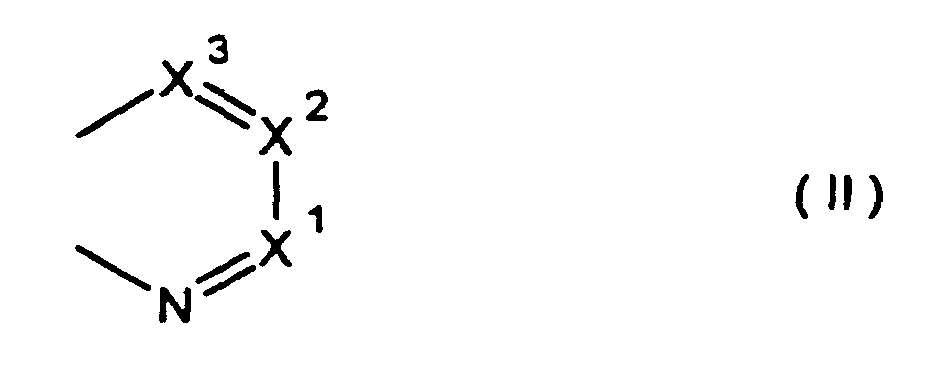
- 2. ein Rest der Formeln (III) bis (VI):


- 1. ein Rest der Formel (II) oder
- E
-
- 1. ein Rest der Formel (VII) oder
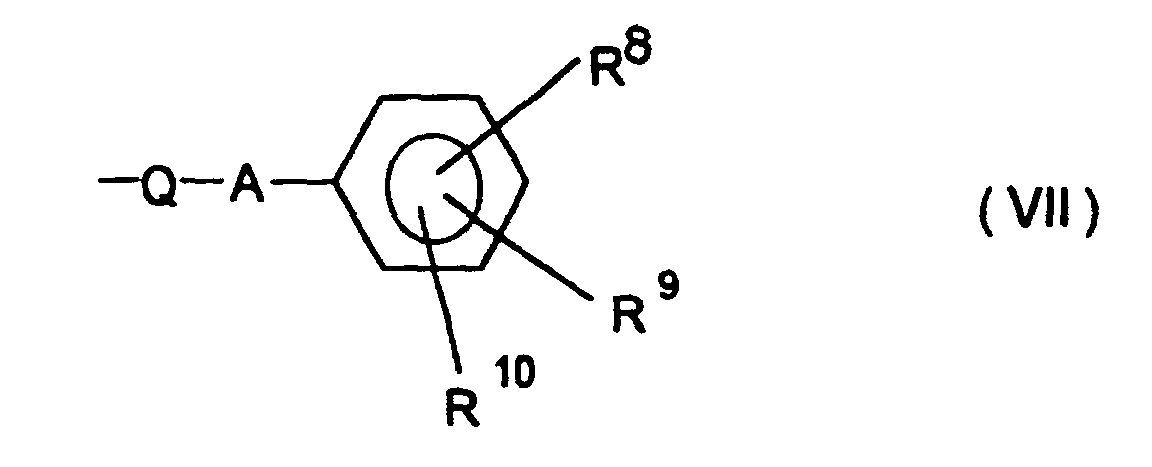
- 2. Wasserstoff, Halogen, (C1-C4)-Alkyl, (C1-C4)-Alkylthio oder (C1-C4)-Alkoxy, wobei in den letzten 3 Resten 1 oder mehrere Wasserstoffatome durch Fluor ersetzt sein können;
- 1. ein Rest der Formel (VII) oder
- X1
- Stickstoff oder C-R4 ;
- X2
- Stickstoff oder C-R5 ;
- X3
- Stickstoff oder C-R6 ;
- X4
- unabhängig voneinander Sauerstoff, Schwefel, Stickstoff oder N-R7 ;
- R1,R2
- sind gleich oder verschieden und stehen für Wasserstoff, Halogen, (C1-C4)-Alkyl oder (C1-C4)-Alkoxy;
- R3
- unabhängig voneinander Wasserstoff, Halogen, (C1-C6)-Alkyl, (C6-C12)-Aryl, (C1-C3)-Alkyl-(C6-C12)-Aryl, (C3-C5)-Alkenyl, (C1-C4)-Alkoxy oder CO2R11;
- R4
- Wasserstoff, Halogen, (C1-C4)-Alkyl, Hydroxy, (C1-C4)-Alkylthio, Amino, (C1-C4)-Alkylamino, (C1-C4)-Dialkylamino, (C1-C4)-Alkoxy, wobei der Alkylrest jedes vorgenannten Substituenten gegebenenfalls substituiert ist mit Hydroxy, (C1-C4)-Alkoxy, Amino und (C1-C4)-Alkylamino, oder (C6-C12)-Aryl, gegebenenfalls substituiert mit (C1-C4)-Alkyl oder CO2R11;
- R5
-
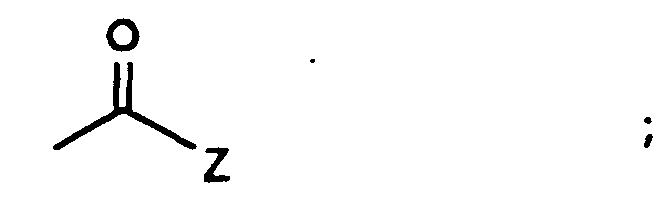
- 1. Wasserstoff, (C1-C4)-Alkyl oder
- 2.
- R6
-
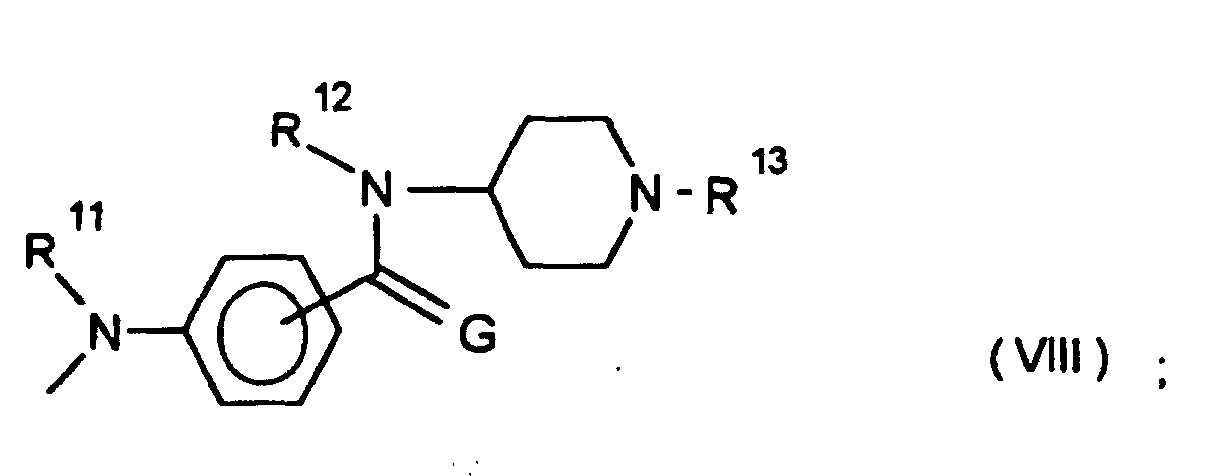
- 1. Wasserstoff, Halogen, (C1-C4)-Alkyl, Hydroxy, (C1-C4)-Alkylthio, Amino, (C1-C4)-Alkylamino, (C1-C4)-Dialkylamino, (C1-C4)-Alkoxy, wobei der Alkylrest jedes vorgenannten Substituenten gegebenenfalls substituiert ist mit Hydroxy, (C1-C4)-Alkoxy, Amino und (C1-C4)-Alkylamino, oder (C6-C12)-Aryl, gegebenenfalls substituiert mit (C1-C4)-Alkyl oder CO2R11; oder
- 2. ein Rest der Formel (VIII):
- R7
- ist gleich oder verschieden (C1-C4)-Alkyl, (C6-C12)-Aryl oder (C1-C3)-Alkyl-(C6-C12)-Aryl;
- R8,R9
- sind gleich oder verschieden und stehen für Wasserstoff, Halogen, (C1-C3)-Alkyl und (C1-C3)-Alkoxy;
- A
- (C1-C3)-Alkandiyl;
- Q
- O oder NR11;
- R10
- ein Rest der Formel (IX)

- R11,R14
- unabhängig voneinander Wasserstoff oder (C1-C4)-Alkyl;
- W
- O oder S;
- G
- O oder zwei Wasserstoffatome
- R12
- steht bei G=O für Wasserstoff und bei G = zwei Wasserstoffatome für Wasserstoff oder R16CO;
- R13
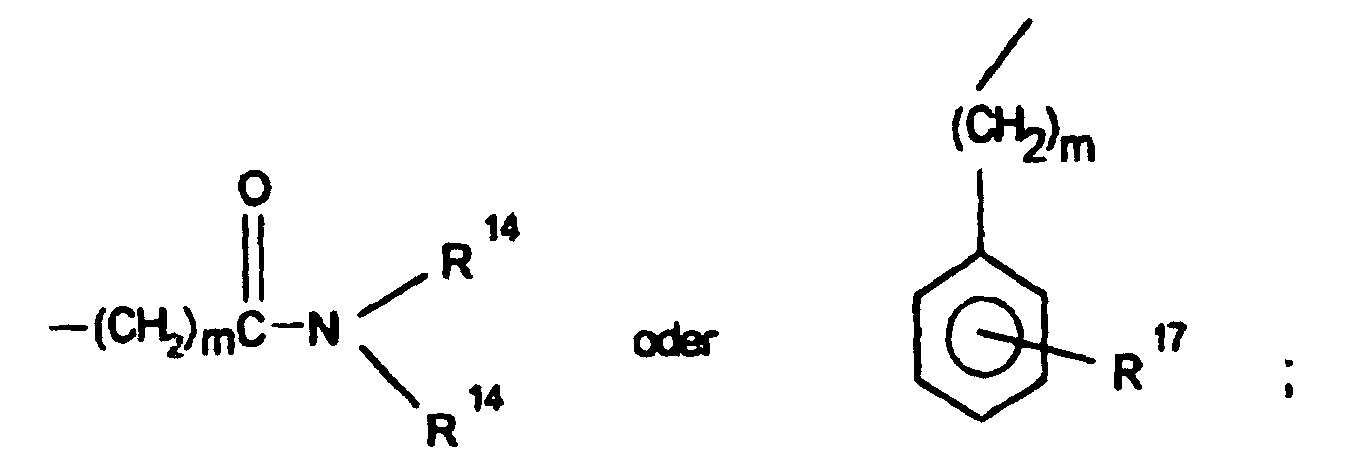
- ist (C1-C4)-Alkyl, (C3-C7)-Cycloalkyl, -(CH2)m-(C3-C7)-Cycloalkyl, -(CH2)m-CON(R11)2,
oder
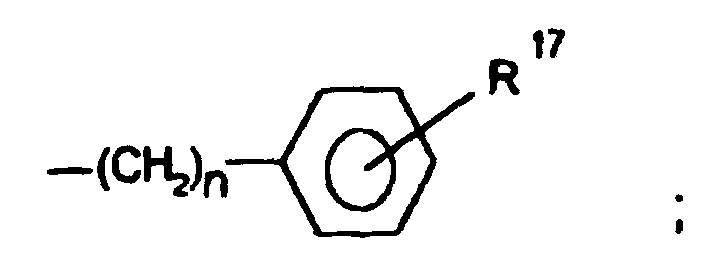
- m, n
- sind gleich oder verschieden eine Zahl 0-6
- AA
- steht für eine Aminosäure wie Methionin, Alanin, Phenylalanin, 2-Chlorphenylalanin, 3-Chlorphenylalanin, 4-Chlorphenylalanin, 2-Fluorphenylalanin, 3-Fluorphenylalanin, 4-Fluorphenylalanin, Tyrosin, o-Methyltyrosin, β-(2-Thienyl)-alanin, Glycin, Cyclohexylalanin, Leucin, Isoleucin, Valin, Norleucin, Phenylglycin, Serin, Cystein, Aminopropionsäure oder Aminobuttersäure;
- Y
-
- 1. (C2-C5)-Alkendiyl,
- 2. (C1-C8)-Alkandiyl,
- 3. (C3-C10)-Cycloalkandiyl oder
- 4. -(CH)p-To-(CH2)q-,
- T
- O, NR21 oder S;
- o
- ist eine Zahl 0 oder 1;
- p,q
- sind gleich oder verschieden und bedeuten eine Zahl von 0 bis 6;
- R15
-
- 1. Wasserstoff,
- 2. (C1-C5)-Alkyl,
- 3. (C6-C10)-Aryl oder
- 4. (C1-C9)-Heteroaryl,
- R16
- ist unabhängig voneinander Wasserstoff, (C1-C4)-Alkyl, (C6-C12)-Aryl, (C1-C4)-Alkyl-(C6-C12)-Aryl oder Perfluoro-(C1-C4)-Alkyl;
- R17
- ist Wasserstoff, Halogen, (C1-C4)-Alkyl, (C1-C4)-Alkoxy, Perfluoro-(C1-C4)-Alkyl, NO2, OH, NH2, CON(R16)2 oder NR16CON(R16)2;
- R18,R19,R20
- gleich oder verschieden sind und Wasserstoff, (C1-C5)-Alkyl, (C3-C5)-Alkenyl, (C6-C12)-Aryl-(C1-C3)-Alkyl, (C3-C10)-Cycloalkyl, (C3-C10)-Cycloalkyl-(C1-C3)-Alkyl, C(O)-O-(C1-C5)-Alkyl oder C(O)-NH-(C1-C5)-Alkyl bedeuten;
- R21
- unabhängig voneinander Wasserstoff, C(O)-O-(C1-C5)-Alkyl oder C(O)-O-(C1-C3)-Alkyl-(C6-C10)-Aryl;
- Z
- -N(R14)(R22);
- R22
- steht für

- R23
- (C1-C4)-Alkyl,

Cycloalkyl steht für mono- oder bicyclische Reste wie Cyclopropyl, Cyclopentyl, Cyclohexyl, Bicyclononyl. Entsprechendes gilt für Cycloalkenyl.

- X1'-X3'
- sind gleich oder verschieden N oder CR5;
- R1' und R2'
- sind gleich oder verschieden
- 1. H
- 2. Halogen;
- R3' und R4'
- gleich oder verschieden
- 1. H
- 2. Halogen
- 3. (C1-C5)-Alkyl
- 4. (C2-C5)-Alkenyl:
- R5'
-
- 1. H
- 2. Halogen
- 3. (C1-C6)-Alkyl
- 4. O-R6'
- 5. S-R6'
- 6. NHR6'
- 7. (C6-C12)-Aryl
- 8. (C6-C12)-Aryl-(C1-C3)-Alkyl
- 9. -C(O)-OR6'
- 10. -C(O)-H;
- R6' und R8'
- gleich oder verschieden
- 1. H
- 2. (C1-C5)-Alkyl
- 3. (C3-C5)-Alkenyl
- 4. (C6-C12)-Aryl-(C1-C3)-Alkyl;
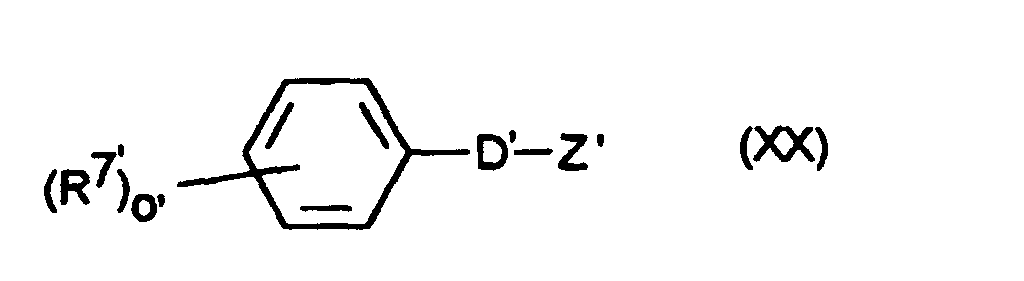
- R7'
-
- 1. (C1-C5)-Alkyl, wobei Wasserstoff teilweise oder vollständig durch Fluor oder Chlor ersetzt ist
- 2. (C1-C5)-Alkoxy, wobei Wasserstoff teilweise oder vollständig durch Fluor oder Chlor ersetzt ist;
- B'
- eine Aminocarbonsäure, z. B. Methionin, Alanin, Phenylalanin, 2-Chlorphenylalanin, 3-Chlorphenylalanin, 4-Chlorphenylalanin, 2-Fluorphenylalanin, 3-Fluorphenylalanin, 4-Fluorphenylalanin, Tyrosin, O-Methyltyrosin, β-(2-Thienyl)alanin, Glycin, Cyclohexylalanin, Leucin, Isoleucin, Valin, Norleucin oder Phenylglycin, Serin oder Cystein, Aminopropionsäure, Aminobuttersäure;
- D'
-
- 1. (C2-C5)-Alkendiyl
- 2. (C1-C5)-Alkandiyl
- 3. -(CH2)n'-Y'p' -(CH2)m'-;
- E'
-
- 1. O
- 2. S;
- Y'
-
- 1. O
- 2. S
- 3. NR8';
- n' und m'
- gleich oder verschieden eine Zahl 0 - 3;
- o'
- eine Zahl 1 - 3;
- p'
- eine Zahl 0 oder 1 bedeuten


Prot' für eine Aminoschutzgruppe steht, wie in T.W. Greene "Protective Groups in organic Synthesis", Verlag John Wiley, 2. Auflage 1991 beschrieben, z.B. Phthaloyl, Benzyl oder Paramethoxybenzyl;



steht für C-O-R2" und die jeweils anderen X"1, X"2, X"3 und X"4 sind dann gleich oder verschieden


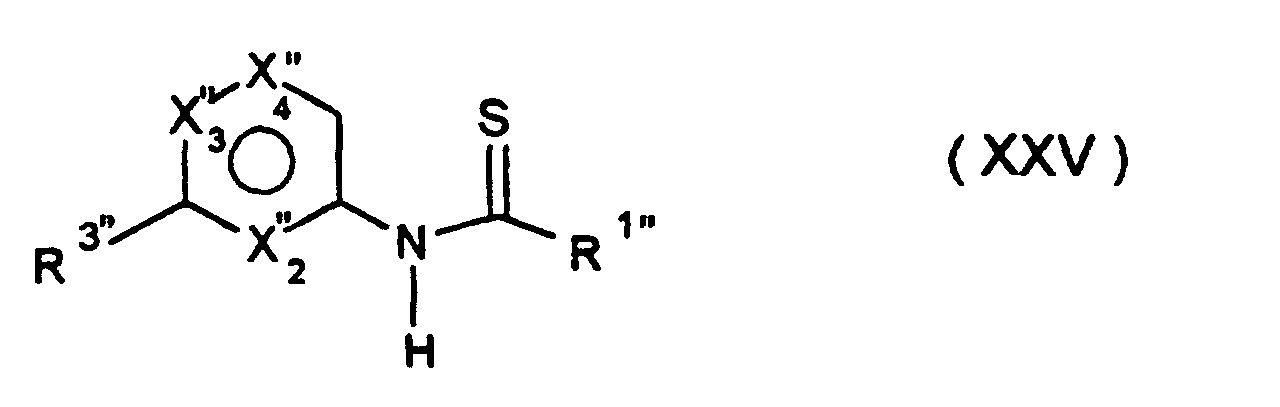

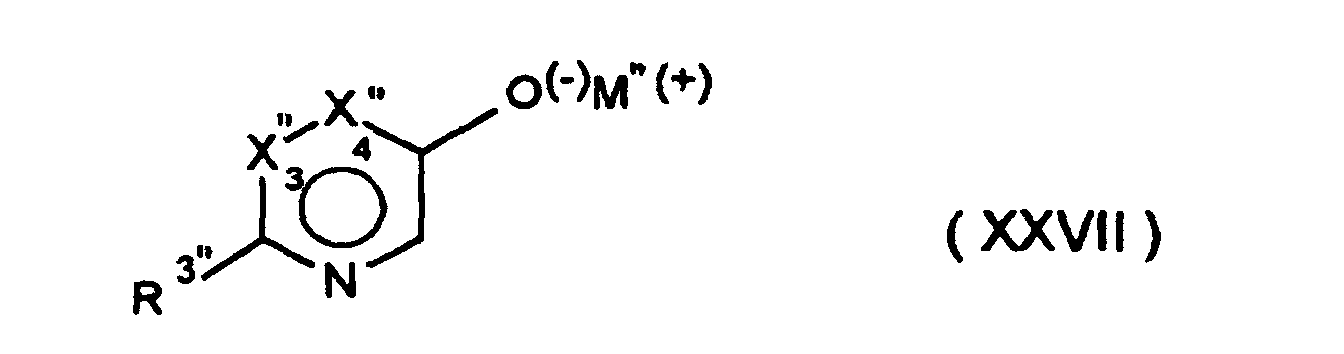
durch sukzessive Behandlung mit CO2 und anschließend NH3 unter erhöhtem Druck und Temperaturen, bevorzugt 100 atm und 200°C, in eine Verbindung der Formel (XXVIII) umwandelt,

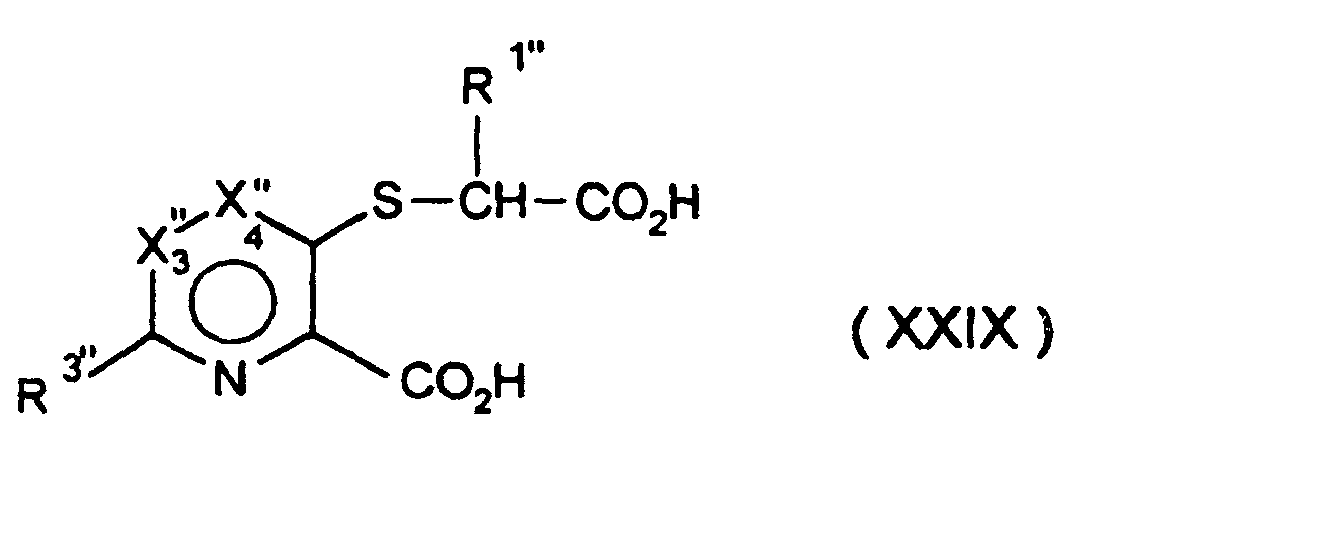
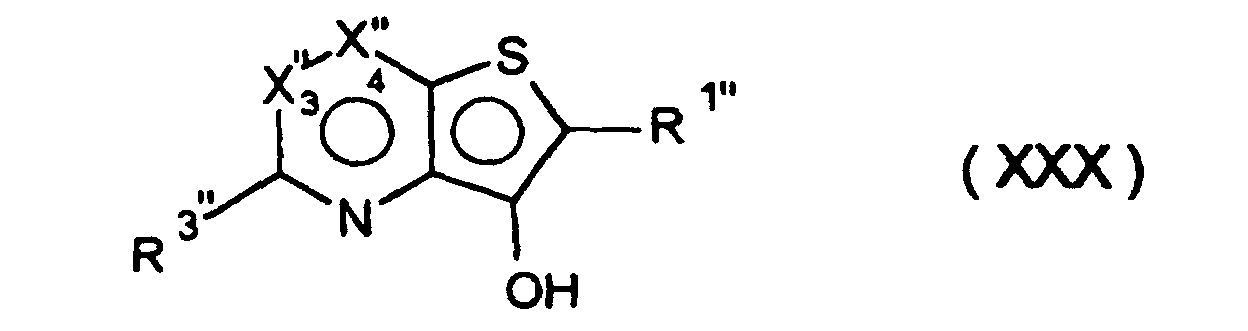

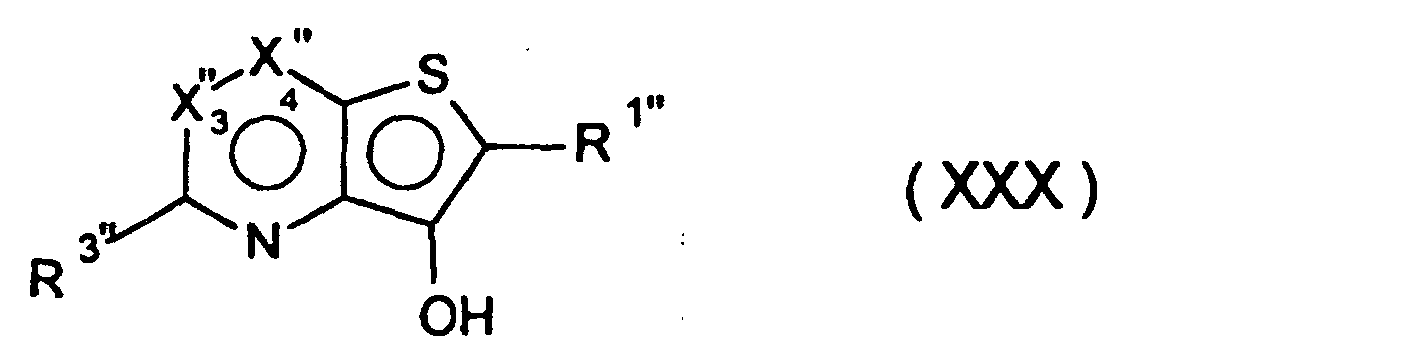

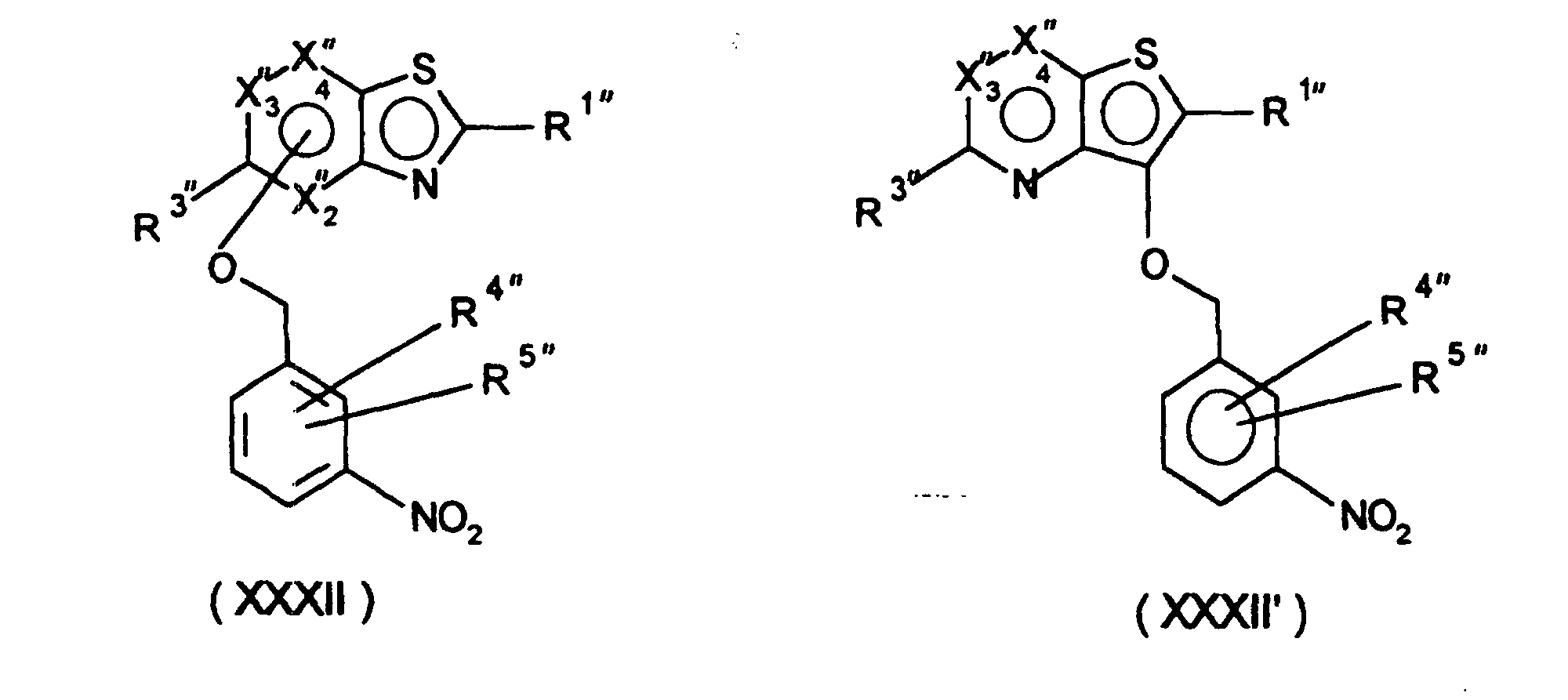


Prot" für eine Aminoschutzgruppe steht, wie in T.W. Greene "Protective Groups in Organic Synthesis", Verlag John Wiley, 2. Auflage 1991 beschrieben, wobei beide Protonen der Aminoschutzgruppe geschützt sind, z.B. Benzyl, Paramethoxybenzyl oder Phthaloyl;


- D
-
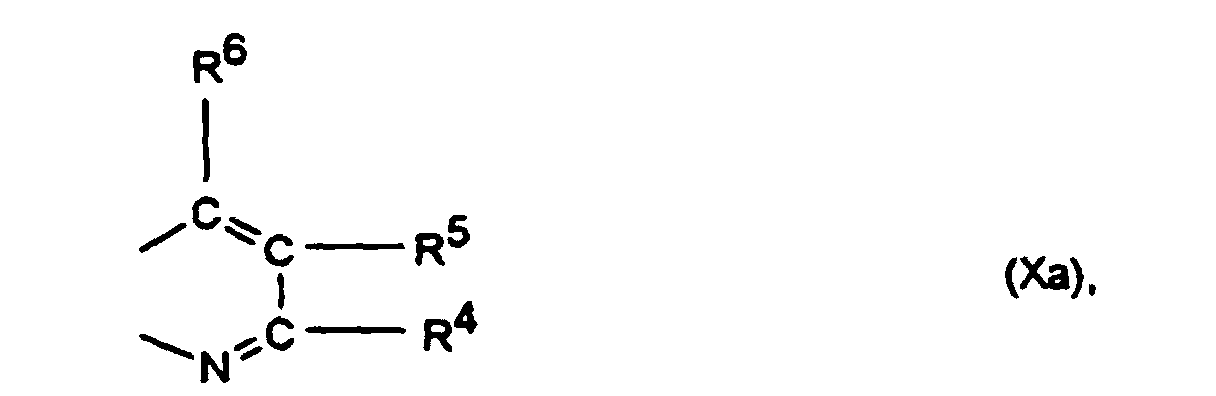
- 1. einen Rest der Formel (Xa)

- 2. einen Rest der Formel (Xb)

- 1. einen Rest der Formel (Xa)
- E
-
- 1. einen Rest der Formel (XI)

- 2. Wasserstoff, (C1-C4)-Alkyl und (C1-C4)-Alkoxy;
- 1. einen Rest der Formel (XI)
- R1,R2
- sind gleich oder verschieden und stehen für Wasserstoff, Halogen und (C1-C4)-Alkyl;
- R4
- ist Wasserstoff, (C1-C4)-Alkyl, Phenyl oder Methoxy;
- R5
-
- 1. Wasserstoff, (C1-C4)-Alkyl oder
- 2.

- R6
-
- 1. Wasserstoff, (C1-C4)-Alkyl oder
- 2. ein Rest der Formel (VIII):
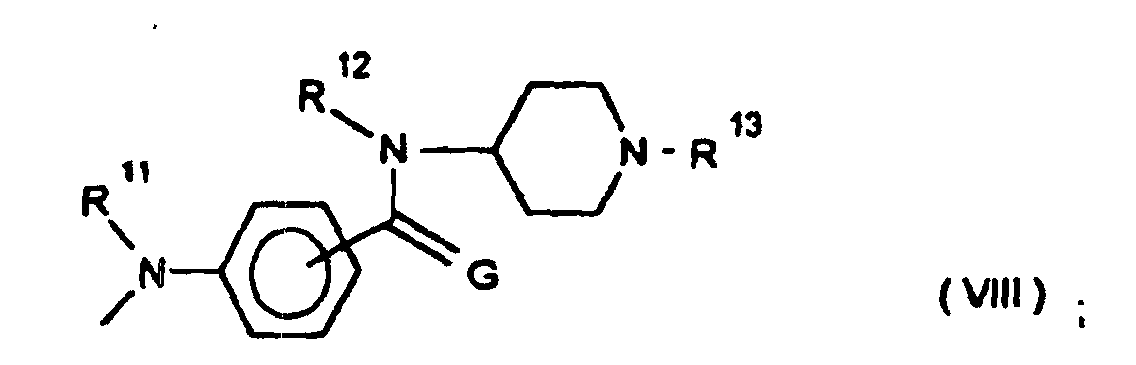
- R8,R9
- sind gleich oder verschieden und stehen für Wasserstoff, Halogen, (C1-C3)-Alkyl und (C1-C3)-Alkoxy;
- A
- ist -CH2- oder -CH2-CH2- ;
- R10
- steht für einen Rest der Formel (IX):
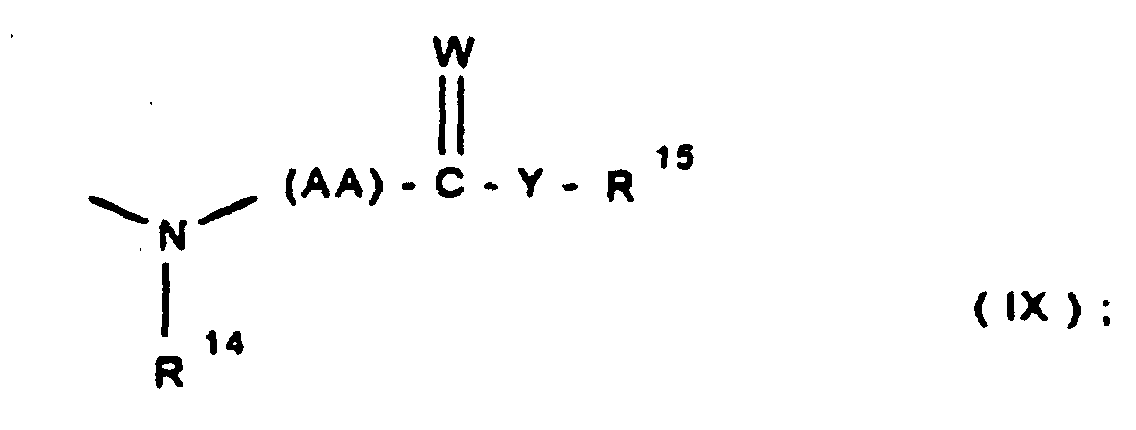
- R11,R14
- sind gleich oder verschieden Wasserstoff, Methyl oder Ethyl;
- W
- steht für O oder S;
- G
- steht für O oder zwei Wasserstoffatome
- R12
- steht bei G gleich O für Wasserstoff oder bei G gleich zwei Wasserstoffatome für Wasserstoff oder R16CO;
- R13
- ist (C1-C4)-Alkyl, Cyclopentyl, Cyclohexyl, -(CH2)mCON(R11)2,
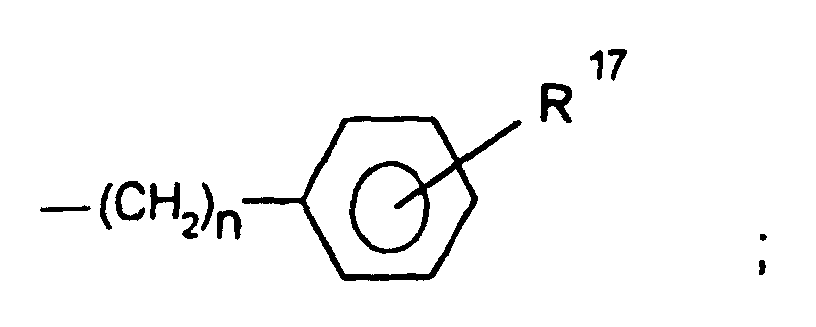
- m,n
- sind gleich oder verschieden eine Zahl 0-2;
- AA
- steht für die Aminocarbonsäure Glycin oder Alanin;
- Y
-
- 1. (C2-C5)-Alkendiyl,
- 2. (C2-C4)-Alkandiyl,
- 3. (C3-C6)-Cycloalkandiyl oder
- 4. -(CH2)p-To-(CH2)q- ;
- T
- steht für 0 oder S;
- o
- ist eine Zahl 0 oder 1;
- p,q
- sind gleich oder verschieden und bedeuten eine Zahl von 0-2;
- R15
-
- 1. Wasserstoff,
- 2. (C1-C5)-Alkyl,
- 3. Phenyl oder
- 4. (C5-C9)-Heteroaryl,
- R16
- ist Wasserstoff, (C1-C4)-Alkyl oder Phenyl;
- R17
- ist Wasserstoff, Halogen, (C1-C4)-Alkyl, NO2 oder NH2;
- R20
- ist Wasserstoff, (C1-C4)-Alkyl oder Benzyl;
- R21
- ist Wasserstoff oder C(O)-O-(C1-C5)-Alkyl;
- Z
- ist -N(R14)(R22)
- R22
-

- R23
- (C1-C4)-Alkyl,

- D
-
- 1. ein Rest der Formel (Xa) oder

- 2. ein Rest der Formel (Xb)

- 1. ein Rest der Formel (Xa) oder
- E
- 1. ein Rest der Formel (XI)

- R1R2
- sind gleich oder verschieden und stehen für Wasserstoff, Halogen und (C1-C4)-Alkyl;
- R4
- Wasserstoff oder (C1-C4)-Alkyl;
- R5
- Wasserstoff;
- R6
- Wasserstoff;
- R8R9
- sind gleich oder verschieden und stehen für Wasserstoff, Chlor, Methyl und Methoxy
- A
- -CH2- oder -CH2-CH2- ;
- R10
- ein Rest der Formel (IX):

- R14
- Wasserstoff, Methyl oder Ethyl;
- W
- ist O;
- AA
- steht für die Aminocarbonsäure Glycin;
- Y
-
- 1. (C2-C5)-Alkendiyl,
- 2. (C2-C4)-Alkandiyl,
- 3. (C3-C6)-Cycloalkandiyl oder
- 4. -(CH2)p-To-(CH2)q- ;
- T
- steht für 0 oder S;
- o
- ist eine Zahl 0 oder 1;
- p,q
- sind gleich oder verschieden und bedeuten eine Zahl von 0-2;
- R15
-
- 1. Wasserstoff
- 2. (C1-C3)-Alkyl,
- 3. Phenyl oder
- 4. (C5-C9)-Heteroaryl,
- R20
- ist Wasserstoff, (C1-C4)-Alkyl oder Benzyl;
- R21
- ist Wasserstoff oder C(O)-O-(C1-C5)-Alkyl;
N-[1-[4-(1,1-Dimethylethyl)phenyl]methyl-4-piperidinyl]-8-methoxy4-[[4-[[[1-(phenylmethyl)-4-piperidinyl]amino]carbonyl]phenyl-amino]-3-chinolincarboxylamid;
N-[1-[(3-chlorphenyl]methyl-4-piperidinyl]-8-methoxy-4-[[4-[[[1-(phenylmethyl)-4-piperidinyl]amino]carbonyl]phenyl-amino]-3-chinolincarboxylamid;
8-Methoxy-N-[1-(phenyl]methyl-4-piperidinyl-[4-[[4-[[[1-(phenylmethyl)-4-piperidinyl]amino]carbonyl]phenyl-amino]-3-chinolincarboxylamid;
N-[2-(Dimethylamino)ethyl]-8-methoxy-4-[[4-[[[1-(phenylmethyl)-4-piperidinyl]amino]carbonyl]phenyl-amino]-3-chinolincarboxylamid-trifluoracetat;
N-[2-(Dimethylamino)ethyl]-N-ethyl-8-methoxy-4-[[4-[[[1-(phenylmethyl)-4-piperidinyl]amino]carbonyl]phenyl-amino]-3-chinolincarboxylamid;
4-[[4-[[[(3-Cyclopentyl-1-oxopropyl)-[1-[6-(diethylamino)-6-oxo-hexyl-4-piperidinylamino]-methylphenyl]-amino]-8-methoxy-N-[1-(phenylmethyl)-4-piperidinyl]-3-chinolincarboxylamid;
4-[[4-[[(1-Butyl-4-piperidinylamino]methyl]-phenylamino]-8-methoxy-N-[1-(phenylmethyl)-4-piperidinyl]-3-chinolincarboxylamid;
N-(1-Butyl-4-piperidinyl)-8-methoxy-[[4-[[[1-(phenylmethyl)-4-piperidinyl]amino]-carbonyl]-phenyl]-amino]-3-chinolincarboxylamid;
N-[1-[6-(Diethylamino)-6-oxohexyl-4-piperidinyl-8-methoxy-4-[[4-[[[1-(phenylmethyl)-4-piperidinyl]-amino]-carbonyl]-phenyl]-amino]-3-chinolincarboxylamid;
4-[[4-[[(1-Butyl-4-piperidinyl)-(1-oxobutyl)-amino]-methyl]-phenyl]-amino-[8-methoxy-N-[1-(phenylmethyl)-4-piperidinyl]-3-chinolincarboxylamid;
N-[1-[4-[(Diethylamino)-carbonyl]-phenyl-4-piperidinyl-8-methoxy-4-[[4-[[[1-(phenylmethyl)-4-piperidinyl]-amino]-carbonyl]-phenyl]-amino-3-chinolincarboxylamid;
N-[1-(2-Phenylethyl)-4-piperidinyl]-8-methoxy-4-[[4-[[[1-(phenylmethyl)-4-piperidinyl]-amino]-carbonyl]-phenyl]-amino]-3-chinolincarboxylamid;
4-[[4-[[(1-Butyl-4-piperidinyl)-amino]-carbonyl]-phenyl]-amino]-8-methoxy-N-[1-(phenylmethyl)-4-piperidinyl]-3-chinolincarboxylamid;
8-Methoxy-N-(1-methyl-4-piperidinyl)-4-[[4-[[[1-(phenylmethyl)-4-piperidinyl]-amino]-carbonyl]-phenyl]-amino]-3-chinolincarboxylamid;
N-[1-[(3-Methoxyphenyl)-methyl]-4-piperidinyl-8-methoxy-4-[[4-[[[1-(phenylmethyl)-4-piperidinyl]-amino]-carbonyl]-phenyl]-amino-3-chinolincarboxylamid;
8-Methoxy-4-[[4-[[[1-(phenylmethyl)-4-piperidinyl]-amino]-carbonyl]-phenyl]-amino]-1-[[3-(trifluoromethyl)-phenyl]-methyl]-4-piperidinyl]-3-chinolincarboxylamid; oder
7-Chloro-N-[1-(phenylmethyl)-4-piperidinyl]-4-[[4-[[[1-(phenylmethyl)-4-piperidinyl]-amino]-carbonyl]-phenyl]-amino]-3-chinolincarboxylamid;
sowie deren physiologisch verträglichen Salze.

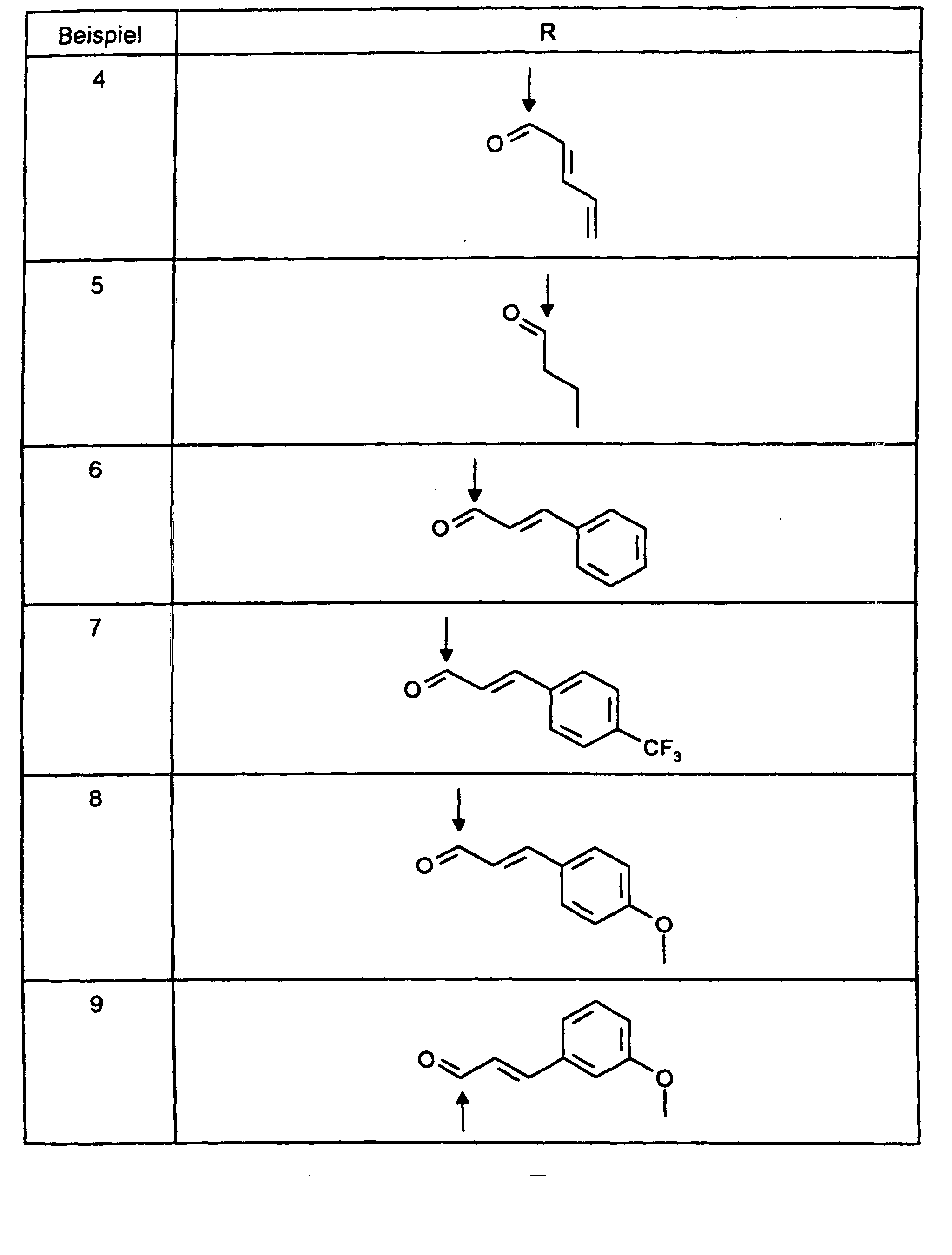


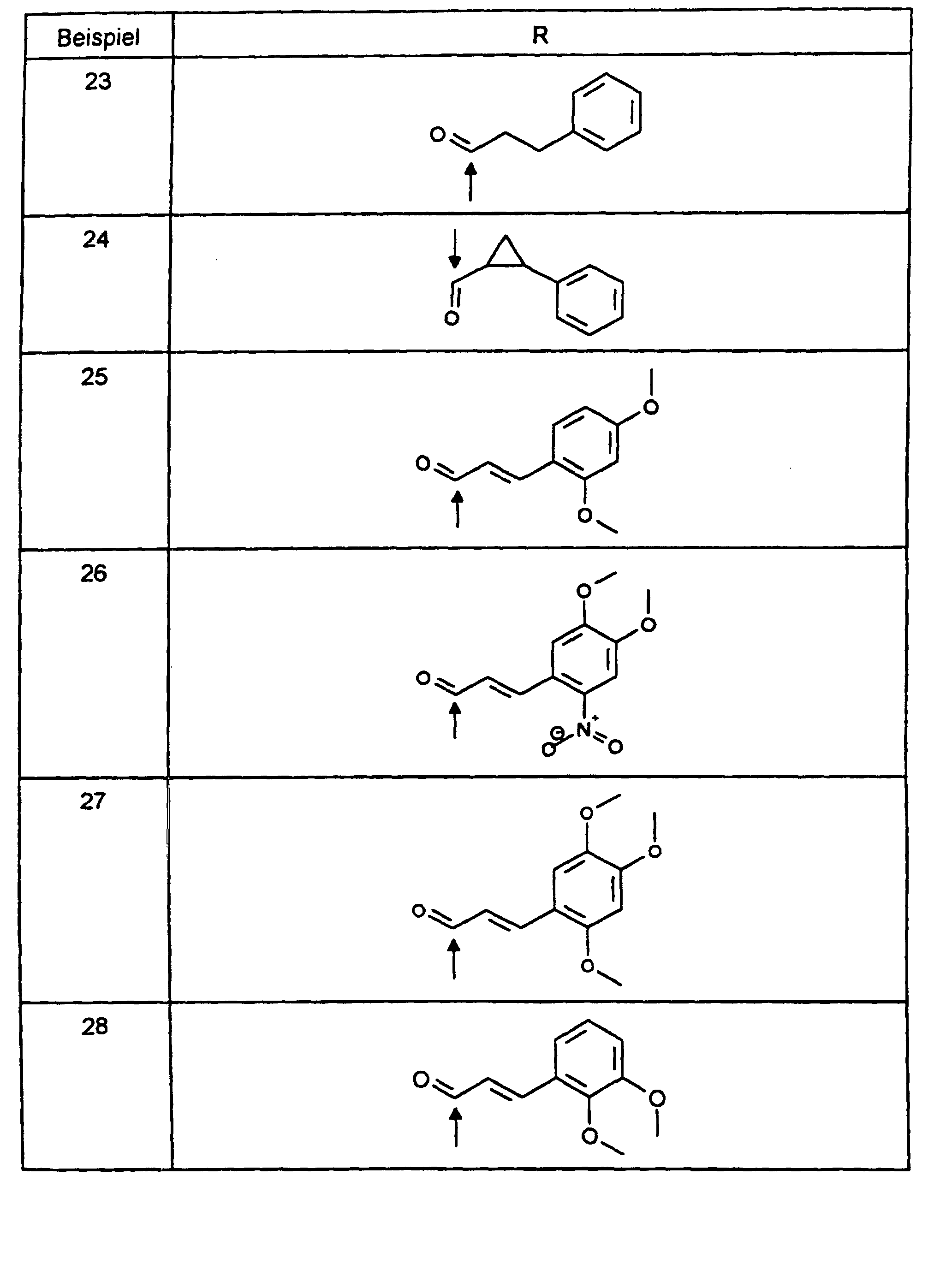


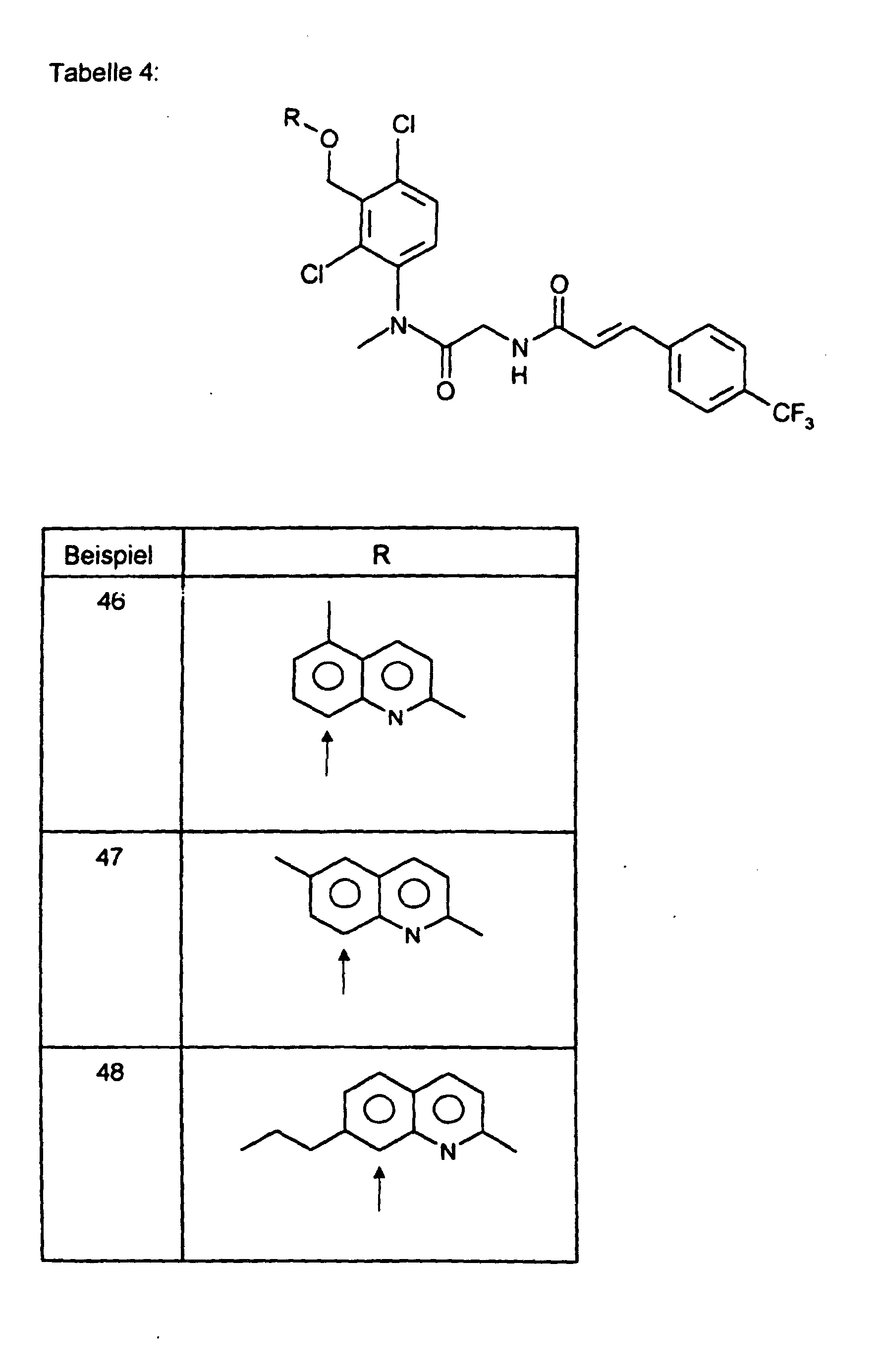

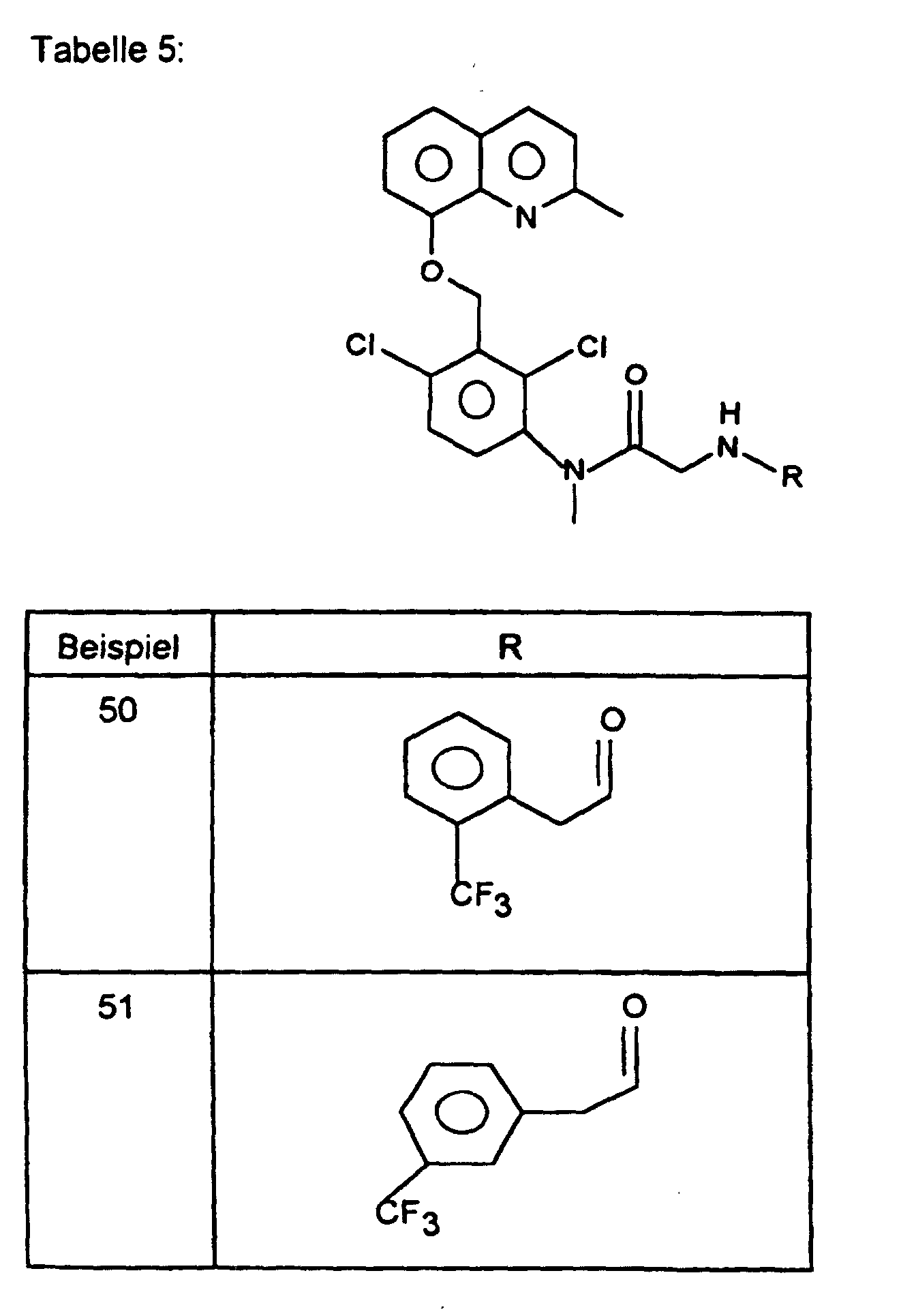
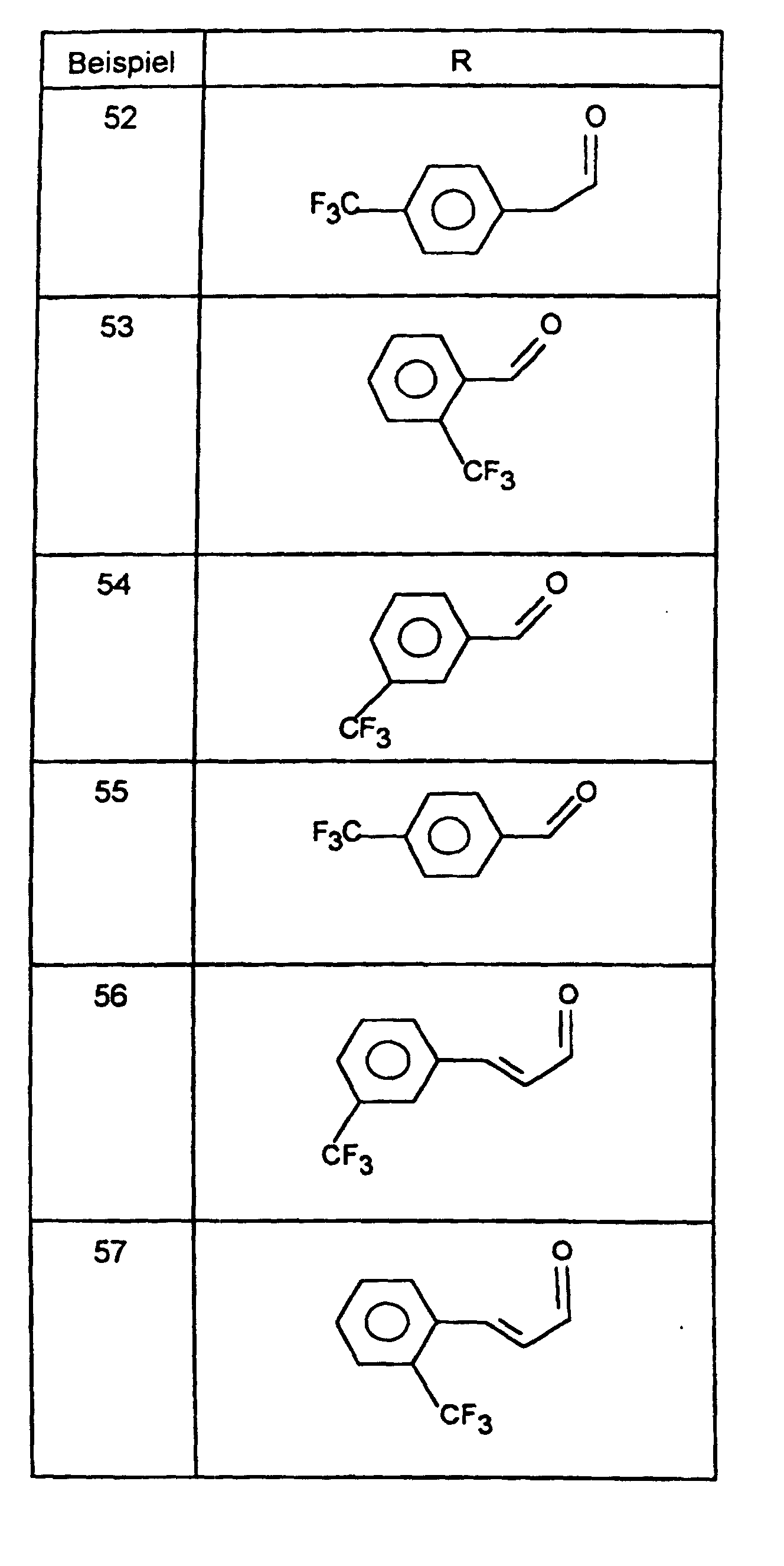


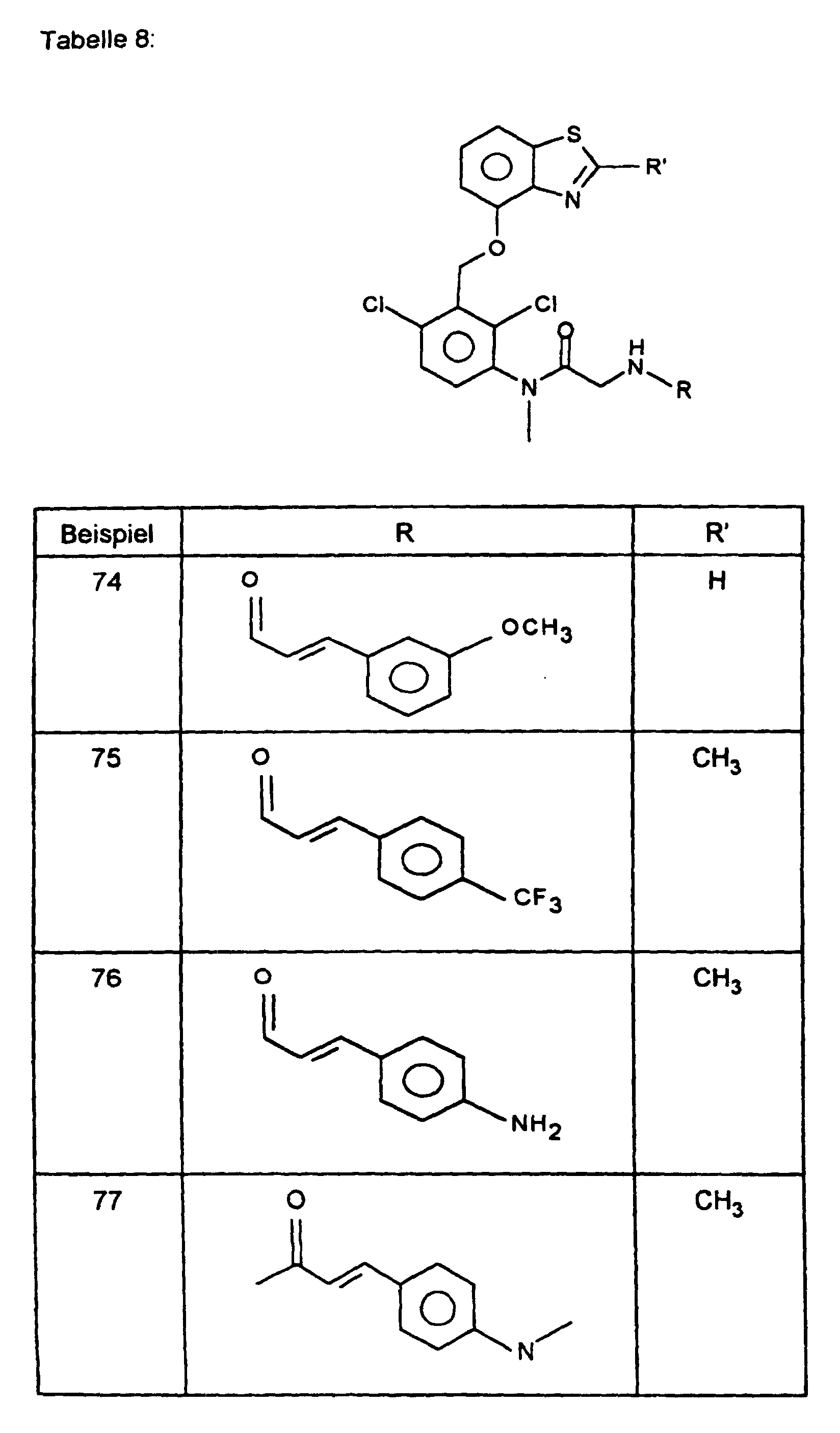


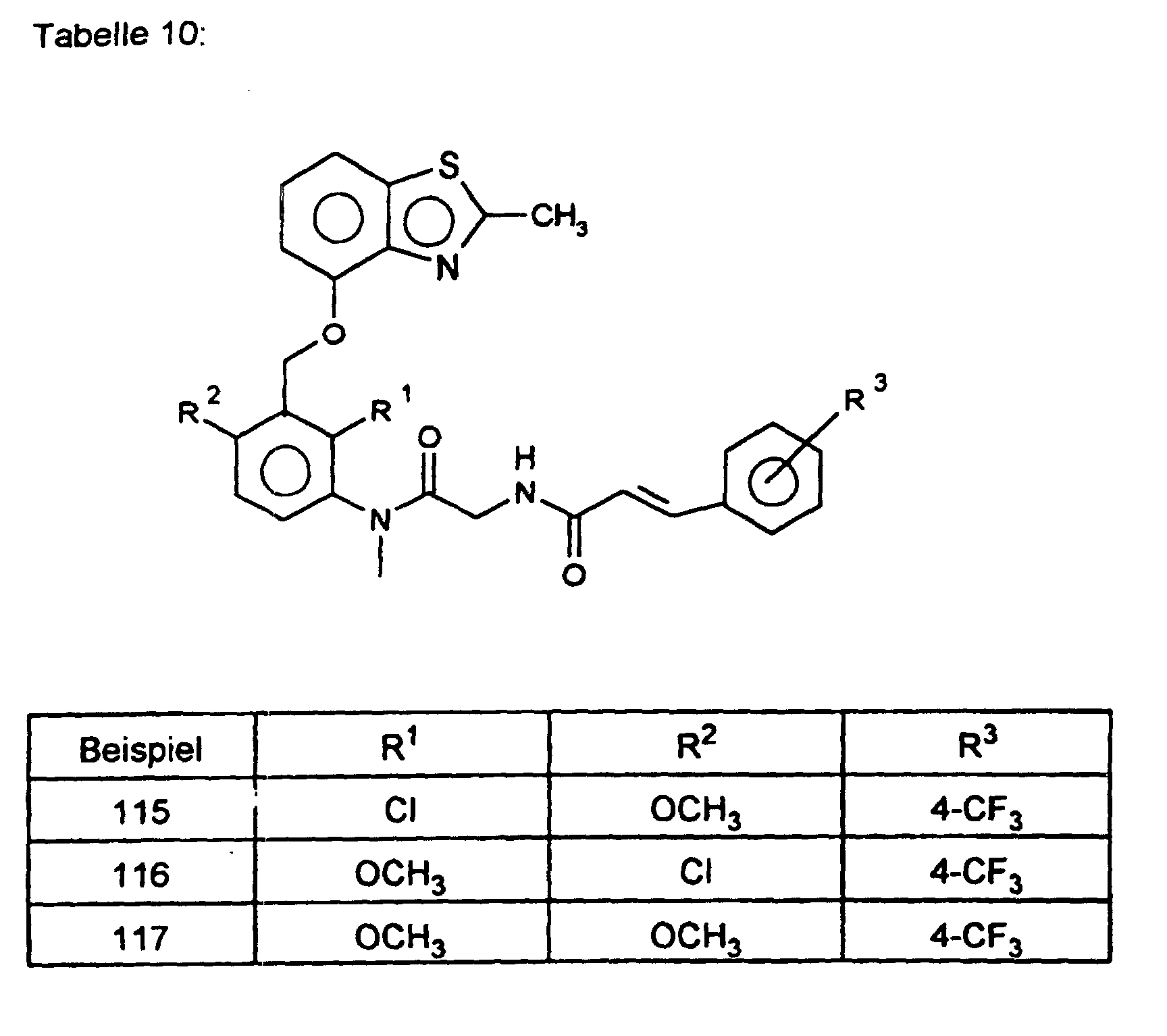
cGMP: zyklisches Guanosinmonophosphat
| Endothel Zell-Typ: | BAECs | RMCECs | HUVECs |
| Konz. cGMP (pmol/mg Protein) | |||
| Basale cGMP-Produktion | 2.2 ± 0.35 | 0.2 ± 0.07 | 4.75 ± 0.4 |
| BK 10 -8 mol/l | 8.8 ± 0.34 | 1.13 ± 0.2 | 11.46 ± 2 |
| BK 10 -8 mol/l + Beispiel 7 | 1.9 ± 0.19 | 0.30 ± 0.03 | 4.02 ± 0.45 |
| βA (1-40) 10 -7 mol/l | 5.9 ± 0.23 | 0.59 ± 0.07 | 14.07 ± 1.6 |
| βA (1-40) 10 -7 mol/l + Bsp. 7 | 1.0 ± 0.1 | 0.24 ± 0.01 | 4.26 ± 0.45 |
| βA (1-40) 10 -6 mol/l | 4.6 ± 0.13 | 0.74 ± 0.09 | 15.3 ± 1.9 |
| βA (1-40) 10 -6 mol/l + Bsp. 7 | 3.0 ± 0.14 | 0.39 ± 0.03 | 5.9 ± 0.55 |
| βA (1-40) 10 -6 mol/l + Bsp. 3 | 1.9 ± 0.14 | 0.30 ± 0.04 | 4.2 ± 0.43 |
Endothelzellkulturen dienen hierbei als Indikator einer Wirkung von β/A4 die über Bradykinin vermittelt ist. Die Endothelzellen sind dabei jedoch nicht nur das Indikatorsystem für eine Wirkung über Bradykinin-Rezeptoren, sondern auch das Effektororgan bei der Alzheimerschen Krankheit. Endothelzellen sind Bestandteile der Blutgefäße und bilden diese aus. Die Blutgefäße selbst sind von Ablagerungen des Alzheimer-Proteins Amyloid (β/A4) bei der Alzheimerschen Krankheit neben neuronalem Gewebe stark betroffen. Endothelzellen sind verantwortlich für eine durch Bradykinin ausgelöste Steigerung der Durchlässigkeit der Bluthirnschranke.
Unsere Untersuchungen zeigen, daß das Alzheimer Protein β/A4 aus dem Endothel von Gefäßwänden Bradykinin freisetzen kann. Dem Alzheimer Protein β/A4 werden die wesentlichen pathologischen Veränderungen der Alzheimer Krankheit zugeschrieben (Joachim C.L. Selkoe D.J."The seminal role of beta-amyloid in the pathogenesis of Alzheimer disease" Alzheimer-Dis-ASSOC-Disord. 1992, Spring; 6(1): 7-34). Ist einmal die Freisetzung des entzündlich wirksamen Bradykinins durch einen Mechanismus gezeigt, der spezifisch für die Alzheimersche Krankheit ist, wird Bradykinin zum pathophysiologischen Faktor ersten Ranges, über welchen das Alzheimer Protein seine destruktive Wirkung vermitteln kann. Dies gilt vor allem im Hinblick auf die Entzündung, deren Bedeutung für die destruktiven Veränderungen zunehmend erkannt wird, denn Bradykinin ist eine der stärksten entzündlich wirksamen körpereigenen Substanzen. Neben der entzündlichen Wirkung besitzt Bradykinin noch zwei weitere Eigenschaften, durch welche es zu den destruktiven Veränderungen bei Alzheimersche Krankheit beitragen kann. Bradykinin stimuliert ZNS-Neurone. Bei starker Stimulation führt dies zur Kalziumüberladung der betroffenen Zellen mit nachfolgendem Zelltod. Bei mäßiger Stimulierung wird Bradykinin nur zum falschen Transmitter, welcher Neurone inadäquat stimuliert. Eine solche inadäquate Stimulierung von Neuronen, die eigentlich gar nicht erregt werden sollen, kann den Prozeß der Informationsverarbeitung im Gehirn empfindlich stören und zu den typischen Hirnleistungsstörungen beitragen, wobei der letztere Mechanismus, ausgelöst durch mäßige Stimulierung, reversibel erscheint.
Als vasoaktiver Mediator erhöht Bradykinin bekanntermaßen die Durchlässigkeit der Bluthirnschranke. Dies führt dazu, daß die Vorstufen von Bradykinin erst von den Blutgefäßen ins Gehirn gelangen können, um dort ihre zerstörerische Wirkung zu entfalten.
Claims (3)
- Verwendung eines nicht-peptidischen Bradykinin-Antagonisten der Formel (I)in welcher die Symbole folgende Bedeutung haben:

- D
-
- 1. ein Rest der Formel (II) oder

- 2. ein Rest der Formeln (III) bis (VI):


- 1. ein Rest der Formel (II) oder
- E
-
- 1.ein Rest der Formel (VII) oder

- 2. Wasserstoff, Halogen, (C1-C4)-Alkyl, (C1-C4)-Alkylthio oder (C1-C4)-Alkoxy, wobei in den letzten 3 Resten 1 oder mehrere Wasserstoffatome durch Fluor ersetzt sein können;
- 1.ein Rest der Formel (VII) oder
- X1
- Stickstoff oder C-R4 ;
- X2
- Stickstoff oder C-R5 ;
- X3
- Stickstoff oder C-R6 ;
- X4
- unabhängig voneinander Sauerstoff, Schwefel, Stickstoff oder N-R7 ;
- R1,R2
- sind gleich oder verschieden und stehen für Wasserstoff, Halogen, (C1-C4)-Alkyl und (C1-C4)-Alkoxy;
- R3
- unabhängig voneinander Wasserstoff, Halogen, (C1-C6)-Alkyl, (C6-C12)-Aryl, (C1-C3)-Alkyl-(C6-C12)-Aryl, (C3-C5)-Alkenyl, (C1-C4)-Alkoxy oder CO2R11;
- R4
- Wasserstoff, Halogen, (C1-C4)-Alkyl, Hydroxy, (C1-C4)-Alkylthio, Amino, (C1-C4)-Alkylamino, (C1-C4)-Dialkylamino, (C1-C4)-Alkoxy, wobei der Alkylrest jedes vorgenannten Substituenten gegebenenfalls substituiert ist mit Hydroxy, (C1-C4)-Alkoxy, Amino und (C1-C4)-Alkylamino, oder (C6- C12)-Aryl, gegebenenfalls substituiert mit (C1-C4)-Alkyl oder CO2R11;
- R5
-
- 1. Wasserstoff, (C1-C4)-Alkyl oder
- 2.

- R6
-
- 1. Wasserstoff, Halogen, (C1-C4)-Alkyl, Hydroxy, (C1-C4)-Alkylthio, Amino, (C1-C4)-Alkylamino, (C1-C4)-Dialkylamino, (C1-C4)-Alkoxy, wobei der Alkylrest jedes vorgenannten Substituenten gegebenenfalls substituiert ist mit Hydroxy, (C1-C4)-Alkoxy, Amino und (C1-C4)-Alkylamino, oder (C6-C12)-Aryl, gegebenenfalls substituiert mit (C1-C4)-Alkyl oder CO2R11; oder
- 2. ein Rest der Formel (VIII):

- R7
- ist gleich oder verschieden (C1-C4)-Alkyl, (C6-C12)-Aryl oder (C1-C3)-Alkyl-(C6-C12)-Aryl;
- R8,R9
- sind gleich oder verschieden und stehen für Wasserstoff, Halogen, (C1-C3)-Alkyl und (C1-C3)-Alkoxy;
- A
- (C1-C3)-Alkandiyl;
- Q
- O oder NR11;
- R10
- ein Rest der Formel (IX)
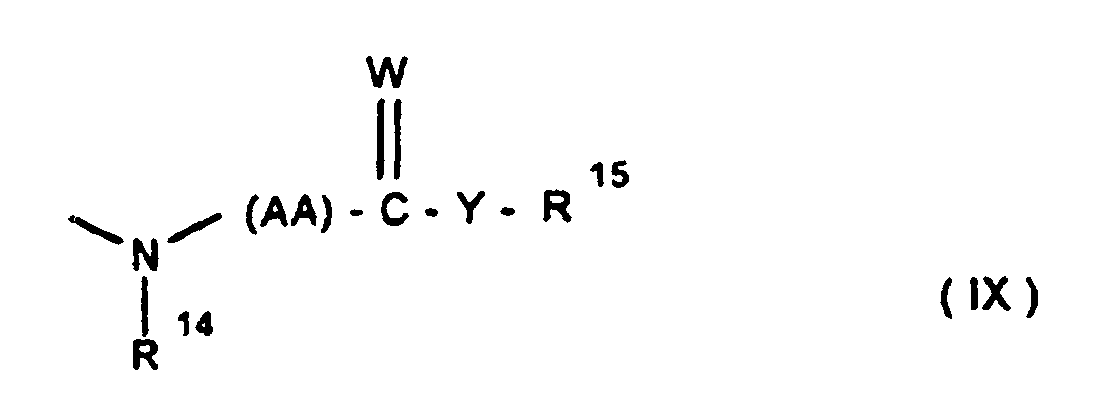
- R11,R14
- unabhängig voneinander Wasserstoff oder (C1-C4)-Alkyl;
- W
- O oder S;
- G
- O oder zwei Wasserstoffatome;
- R12
- steht bei G=O für Wasserstoff und bei G=zwei Wasserstoffatome für Wasserstoff oder R16CO;
- R13
- ist (C1-C4)-Alkyl, (C3-C7)-Cycloalkyl, -(CH2)m-(C3-C7)-Cycloalkyl, -(CH2)m-CON(R11)2,
oder

- m, n
- sind gleich oder verschieden eine Zahl 0-6
- AA
- steht für eine Aminosäure wie Methionin, Alanin, Phenylalanin, 2-Chlorphenylalanin, 3-Chlorphenylalanin, 4-Chlarphenylalanin, 2-Fluorphenylalanin, 3-Fluorphenylalanin, 4-Fluorphenylalanin, Tyrosin, o-Methyltyrosin, β-(2-Thienyl)-alanin, Glycin, Cyclohexylalanin, Leucin, Isoleucin, Valin, Norleucin, Phenylglycin, Serin, Cystein, Aminopropionsäure oder Aminobuttersäure;
- Y
-
- 1. (C2-C5)-Alkendiyl,
- 2. (C1-C8)-Alkandiyl,
- 3. (C3-C10)-Cycloalkandiyl oder
- 4. -(CH)p-To-(CH2)q-,
- T
- O, NR21 oder S;
- o
- ist eine Zahl 0 oder 1;
- p,q
- sind gleich oder verschieden und bedeuten eine Zahl von 0 bis 6;
- R15
-
- 1. Wasserstoff,
- 2. (C1-C5)-Alkyl,
- 3. (C6-C10)-Aryl oder
- 4. (C1-C9)-Heteroaryl,
- R16
- ist Wasserstoff, (C1-C4)-Alkyl, (C6-C12)-Aryl, (C1-C4)-Alkyl-(C6-C12)-Aryl oder Perfluoro-(C1-C4)-Alkyl;
- R17
- ist Wasserstoff, Halogen, (C1-C4)-Alkyl, (C1-C4)-Alkoxy, Perfluoro-(C1-C4)-Alkyl, NO2, OH, NH2, CON(R16)2 oder NR16CON(R16)2;
- R18,R19,R20
- gleich oder verschieden sind und Wasserstoff, (C1-C5)-Alkyl, (C3-C5)-Alkenyl, (C6-C12)-Aryl-(C1-C3)-Alkyl, (C3-C10)-Cycloalkyl, (C3-C10)-Cycloalkyl-(C1-C3)-Alkyl, C(O)-O-(C1-C5)-Alkyl oder C(O)-NH-(C1-C5)-Alkyl bedeuten;
- R21
- unabhängig voneinanderWasserstoff, C(O)-O-(C1-C5)-Alkyl oder C(O)-O-(C1-C3)-Alkyl-(C6-C10)-Aryl;
- Z
- -N(R14)(R22);
- R22
- steht für
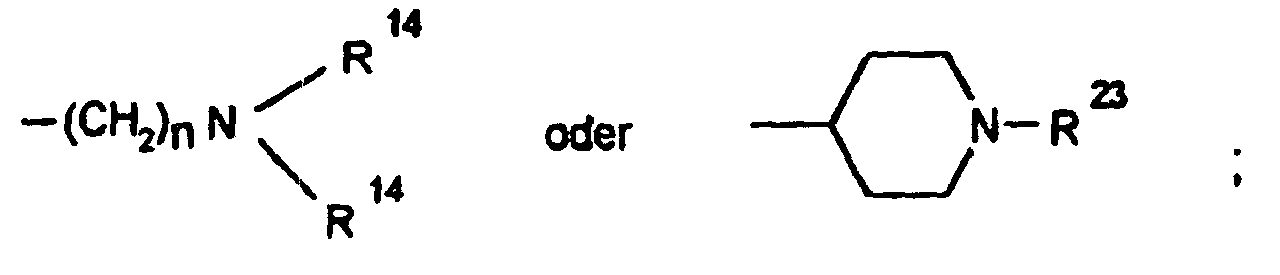
- R23
- (C1-C4)-Alkyl,
- Verwendung nach Anspruch 1 eines nicht-peptidischen Bradykinin-Antagonisten der Formel (I), in welcher die Symbole folgende Bedeutung haben:
- D
-
- 1. einen Rest der Formel (Xa)

- 2. einen Rest der Formel (Xb)

- 1. einen Rest der Formel (Xa)
- E
-
- 1. einen Rest der Formel (XI)

- 2. Wasserstoff, (C1-C4)-Alkyl und (C1-C4)-Alkoxy;
- 1. einen Rest der Formel (XI)
- R1,R2
- sind gleich oder verschieden und stehen für Wasserstoff, Halogen und (C1-C4)-Alkyl;
- R4
- ist Wasserstoff, (C1-C4)-Alkyl, Phenyl oder Methoxy;
- R5
-
- 1. Wasserstoff, (C1-C4)-Alkyl oder
- 2.

- R6
-
- 1. Wasserstoff, (C1-C4)-Alkyl oder
- 2. ein Rest der Formel (VIII):

- R8,R9
- sind gleich oder verschieden und stehen für Wasserstoff, Halogen, (C1-C3)-Alkyl und (C1-C3)-Alkoxy;
- A
- ist -CH2- oder -CH2-CH2-;
- R10
- steht für einen Rest der Formel (IX):

- R11,R14
- sind gleich oder verschieden Wasserstoff, Methyl oder Ethyl;
- W
- steht für O oder S;
- G
- steht für O oder zwei Wasserstoffatome;
- R12
- steht bei G gleich O für Wasserstoff oder bei G gleich zwei Wasserstoffatome für Wasserstoff oder R16CO;
- R13
- ist (C1-C4)-Alkyl, Cyclopentyl, Cyclohexyl, -(CH2)mCON(R11)2,

- m,n
- sind gleich oder verschieden eine Zahl 0-2;
- AA
- steht für die Aminocarbonsäure Glycin oder Alanin;
- Y
-
- 1. (C2-C5)-Alkendiyl,
- 2. (C2-C4)-Alkandiyl,
- 3. (C3-C6)-Cycloalkandiyl oder
- 4. -(CH2)p-To-(CH2)q- ;
- T
- steht für 0 oder S;
- o
- ist eine Zahl 0 oder 1;
- p,q
- sind gleich oder verschieden und bedeuten eine Zahl von 0-2;
- R15
-
- 1. Wasserstoff,
- 2. (C1-C5)-Alkyl,
- 3. Phenyl oder
- 4. (C5-C9)-Heteroaryl,
- R16
- ist Wasserstoff, (C1-C4)-Alkyl oder Phenyl;
- R17
- ist Wasserstoff, Halogen, (C1-C4)-Alkyl, NO2 oder NH2;
- R20
- ist Wasserstoff, (C1-C4)-Alkyl oder Benzyl;
- R21
- ist Wasserstoff oder C(O)-O-(C1-C5)-Alkyl;
- Z
- ist -N(R14)(R22)
- R22
-

- R23
- (C1-C4)-Alkyl,

- Verwendung nach Anspruch 2 eines nicht-peptidischen Bradykinin-Antagonisten der Formel (I) in welcher die Symbole folgende Bedeutung haben:
- D
-
- 1. ein Rest der Formel (Xa) oder
- 2. ein Rest der Formel (Xb)

- 1. ein Rest der Formel (Xa) oder
- E
- 1. ein Rest der Formel (XI)

- R1,R2
- sind gleich oder verschieden und stehen für Wasserstoff, Halogen und (C1-C4)-Alkyl;
- R4
- Wasserstoff oder (C1-C4)-Alkyl;
- R5
- Wasserstoff;
- R6
- Wasserstoff;
- R8,R9
- sind gleich oder verschieden und stehen für Wasserstoff, Chlor, Methyl und Methoxy;
- A
- -CH2- oder -CH2-CH2- ;
- R10
- ein Rest der Formel (IX):

- R14
- Wasserstoff, Methyl oder Ethyl;
- W
- ist O;
- AA
- steht für die Aminocarbonsäure Glycin;
- Y
-
- 1. (C2-C5)-Alkendiyl,
- 2. (C2-C4)-Alkandiyl,
- 3. (C3-C6)-Cycloalkandiyl oder
- 4. -(CH2)p-To-(CH2)q- ;
- T
- steht für 0 oder S;
- o
- ist eine Zahl 0 oder 1;
- p,q
- sind gleich oder verschieden und bedeuten eine Zahl von 0-2;
- R15
-
- 1. Wasserstoff
- 2. (C1-C3)-Alkyl,
- 3. Phenyl oder
- 4. (C5-C9)-Heteroaryl,
- R20
- ist Wasserstoff, (C1-C4)-Alkyl oder Benzyl;
- R21
- ist Wasserstoff oder C(O)-O-(C1-C5)-Alkyl;
Priority Applications (2)
| Application Number | Priority Date | Filing Date | Title |
|---|---|---|---|
| DK97117677T DK0835659T3 (da) | 1996-10-14 | 1997-10-13 | Anvendelse af ikke-peptidiske antagonister for bradykinin til fremstilling af lægemidler til behandling og forebyggelse af Alzheimer's sygdom |
| SI9730694T SI0835659T1 (en) | 1996-10-14 | 1997-10-13 | Use of non-peptidic bradykinin antagonists in the preparation of medicaments for the treatment and prevention of Alzheimer's disease |
Applications Claiming Priority (4)
| Application Number | Priority Date | Filing Date | Title |
|---|---|---|---|
| DE1996142290 DE19642290A1 (de) | 1996-10-14 | 1996-10-14 | Verwendung von nicht-peptidischen Bradykinin-Antagonisten zur Herstellung von Arzneimitteln zur Behandlung von Prävention der Alzheimer'schen Krankheit |
| DE19642290 | 1996-10-14 | ||
| DE19729140 | 1997-07-08 | ||
| DE1997129140 DE19729140A1 (de) | 1997-07-08 | 1997-07-08 | Verwendung von nicht-peptidischen Bradykinin-Antagonisten zur Herstellung von Arzneimitteln zur Behandlung und Prävention der Alzheimer'schen Krankheit |
Publications (2)
| Publication Number | Publication Date |
|---|---|
| EP0835659A1 EP0835659A1 (de) | 1998-04-15 |
| EP0835659B1 true EP0835659B1 (de) | 2004-12-15 |
Family
ID=26030327
Family Applications (1)
| Application Number | Title | Priority Date | Filing Date |
|---|---|---|---|
| EP97117677A Expired - Lifetime EP0835659B1 (de) | 1996-10-14 | 1997-10-13 | Verwendung von nicht-peptidischen Bradykinin-Antagonisten zur Herstellung von Arzneimitteln zur Behandlung und Prävention der Alzheimerischen Krankheit |
Country Status (9)
| Country | Link |
|---|---|
| US (1) | US5952346A (de) |
| EP (1) | EP0835659B1 (de) |
| JP (1) | JP4189045B2 (de) |
| AT (1) | ATE284692T1 (de) |
| DE (1) | DE59712118D1 (de) |
| DK (1) | DK0835659T3 (de) |
| ES (1) | ES2230581T3 (de) |
| PT (1) | PT835659E (de) |
| SI (1) | SI0835659T1 (de) |
Families Citing this family (17)
| Publication number | Priority date | Publication date | Assignee | Title |
|---|---|---|---|---|
| DE19642289A1 (de) * | 1996-10-14 | 1998-04-16 | Hoechst Ag | Verwendung von Bradykinin-Antagonisten zur Herstellung von Arzneimitteln zur Behandlung und Prävention der Alzheimer'schen Krankheit |
| US6153652A (en) | 1996-11-22 | 2000-11-28 | Elan Pharmaceuticals, Inc. | N-(aryl/heteroaryl/alkylacetyl) amino acid amides, pharmaceutical compositions comprising same, and methods for inhibiting β-amyloid peptide release and/or its synthesis by use of such compounds |
| DE19712960A1 (de) * | 1997-03-27 | 1998-10-01 | Hoechst Ag | Benzyloxy-substituierte, anellierte N-Heterocyclen, Verfahren zu ihrer Herstellung und ihre Verwendung als Bradykininrezeptorantagonisten |
| JPH10301492A (ja) | 1997-04-23 | 1998-11-13 | Sony Corp | 暗号化装置および方法、復号装置および方法、並びに情報処理装置および方法 |
| US20030083277A1 (en) * | 2000-02-24 | 2003-05-01 | Hersh Louis B. | Use of insulin degrading enzyme (IDE) for the treatment of alzheimer's disease in patients |
| US20030165481A1 (en) * | 2000-02-24 | 2003-09-04 | Hersh Louis B. | Amyloid peptide inactivating enzyme to treat Alzheimer's disease |
| EP1914236A1 (de) | 2002-04-10 | 2008-04-23 | Ortho-McNeil Pharmaceutical, Inc. | Neue Heteroaryl-Alkylamid-Derivate als Bradykininrezeptormodulatoren |
| AU2002950217A0 (en) * | 2002-07-16 | 2002-09-12 | Prana Biotechnology Limited | 8- Hydroxy Quinoline Derivatives |
| US8309562B2 (en) * | 2003-07-03 | 2012-11-13 | Myrexis, Inc. | Compounds and therapeutical use thereof |
| NZ544472A (en) | 2003-07-03 | 2009-04-30 | Myriad Genetics Inc | Compounds and therapeutical use thereof |
| WO2006026426A2 (en) | 2004-08-27 | 2006-03-09 | University Of Kentucky Research Foundation | Amyloid peptide inactivating enzyme to treat alzheimer’s disease peripherally |
| CA2592900A1 (en) | 2005-01-03 | 2006-07-13 | Myriad Genetics Inc. | Nitrogen containing bicyclic compounds and therapeutical use thereof |
| US8258145B2 (en) * | 2005-01-03 | 2012-09-04 | Myrexis, Inc. | Method of treating brain cancer |
| MX2008010671A (es) * | 2006-02-21 | 2008-10-01 | Amgen Inc | Derivados de cinolina como inhibidores de fosfodiesterasa 10. |
| US20070299067A1 (en) * | 2006-03-08 | 2007-12-27 | Ruiping Liu | Quinoline and isoquinoline derivatives as phosphodiesterase 10 inhibitors |
| DE102006015140A1 (de) * | 2006-03-31 | 2007-10-11 | Philipps-Universität Marburg | Heterozyklische Verbindungen mit Wirkung gegen neurodegenerative Erkrankungen |
| EP2383267A1 (de) * | 2006-09-29 | 2011-11-02 | Grünenthal GmbH | Substituierte Sulfonamid-Derivate |
Family Cites Families (8)
| Publication number | Priority date | Publication date | Assignee | Title |
|---|---|---|---|---|
| US5385915A (en) * | 1990-05-16 | 1995-01-31 | The Rockefeller University | Treatment of amyloidosis associated with Alzheimer disease using modulators of protein phosphorylation |
| US5212182A (en) * | 1990-10-03 | 1993-05-18 | American Home Products Corpooration | Substituted quinolinyl- and naphthalenylbenzamides or benzylamines and related compounds useful as analgesics |
| US5216165A (en) * | 1990-10-03 | 1993-06-01 | American Home Products Corporation | N-substituted aminoquinolines as analgesic agents |
| US5438064A (en) * | 1991-12-23 | 1995-08-01 | American Home Products Corporation | Derivatives of 4-anilinoquinoline-3-carboxamide as analgesic agents |
| AU680870B2 (en) * | 1993-04-28 | 1997-08-14 | Astellas Pharma Inc. | New heterocyclic compounds |
| WO1996004251A1 (en) * | 1994-08-03 | 1996-02-15 | Fujisawa Pharmaceutical Co., Ltd. | Heterocyclic compound |
| EP0807105B1 (de) * | 1994-10-27 | 2004-06-16 | Fujisawa Pharmaceutical Co., Ltd. | Pyridopyrimidinone, chinoline und anellierte n-heterozyklen als bradykinin-antagonisten |
| JP2000506170A (ja) * | 1996-03-05 | 2000-05-23 | メデイノックス,インコーポレイテッド | 酸化窒素スキャベンジャーを用いる複合治療方法とそのために有用な組成物 |
-
1997
- 1997-10-13 EP EP97117677A patent/EP0835659B1/de not_active Expired - Lifetime
- 1997-10-13 PT PT97117677T patent/PT835659E/pt unknown
- 1997-10-13 AT AT97117677T patent/ATE284692T1/de active
- 1997-10-13 DE DE59712118T patent/DE59712118D1/de not_active Expired - Lifetime
- 1997-10-13 ES ES97117677T patent/ES2230581T3/es not_active Expired - Lifetime
- 1997-10-13 DK DK97117677T patent/DK0835659T3/da active
- 1997-10-13 JP JP29319297A patent/JP4189045B2/ja not_active Expired - Fee Related
- 1997-10-13 SI SI9730694T patent/SI0835659T1/xx unknown
- 1997-10-14 US US08/949,495 patent/US5952346A/en not_active Expired - Lifetime
Also Published As
| Publication number | Publication date |
|---|---|
| DE59712118D1 (de) | 2005-01-20 |
| SI0835659T1 (en) | 2005-06-30 |
| EP0835659A1 (de) | 1998-04-15 |
| DK0835659T3 (da) | 2005-04-18 |
| ATE284692T1 (de) | 2005-01-15 |
| US5952346A (en) | 1999-09-14 |
| ES2230581T3 (es) | 2005-05-01 |
| JP4189045B2 (ja) | 2008-12-03 |
| JPH10130144A (ja) | 1998-05-19 |
| PT835659E (pt) | 2005-03-31 |
Similar Documents
| Publication | Publication Date | Title |
|---|---|---|
| EP0835659B1 (de) | Verwendung von nicht-peptidischen Bradykinin-Antagonisten zur Herstellung von Arzneimitteln zur Behandlung und Prävention der Alzheimerischen Krankheit | |
| DE60037347T2 (de) | Kombinationen enthaltend cGMP-PDE5-hemmer. | |
| EP0927192B1 (de) | Abgewandelte aminosäuren, diese verbindungen enthaltende arzneimittel und verfahren zu ihrer herstellung | |
| DE60129934T2 (de) | Verwendung von pdgf-rezeptor tyrosin kinase inhibitoren zur behandlung von diabetischer nephropathie | |
| DE60212836T2 (de) | Pyridylpyrimidin-derivate als wirksame verbindungen gegen prionen-krankheiten | |
| DE60002042T2 (de) | Neue kristallinische form des kaliumsalzes des (s)-omeprazols | |
| EP1870100A1 (de) | Oral zu applizierende Darreichungsform enthaltend 3-[(2-{[4-(Hexyloxycarbonylamino-imino-methyl)-phenylamino]methyl}-1-methyl-1H-benzimidazol-5-carbonyl)-pyridin-2-yl-amino]-propionsäure-ethylester Mesylat | |
| DE69427591T2 (de) | 7-(2-imidazolinylamino)quinolin-verbindungen als alpha-2 adrenorezeptor-agonisten | |
| EP0808628B1 (de) | Verwendung nicht-peptidischer Bradykinin-Antagonisten zur Behandlung und Prävention von chronisch-fibrogenetischen Lebererkrankungen, akuten Lebererkrankungen und den damit verbundenen Komplikationen | |
| DE69634200T2 (de) | Verfahren zur behandlung durch pneumocytis carini verursachten lungenentzündung und dafür geeignete verbindung | |
| EP1529041B1 (de) | Neue prodrugs von 1-methyl-2-(4-amidinophenylaminomethyl)-benzimidazol-5-yl-carbonsäure-(n -2-pyridil-n-2-hydroxycarbonylethyl)-amid, ihre herstellung und ihre verwendung als arzneimittel | |
| DE60222286T2 (de) | Verfahren zur erhöhung des testosteronspiegels | |
| EP2163552A1 (de) | Indolderivate und deren Verwendung als Antitumormittel | |
| LU85254A1 (de) | Verfahren zur herstellung von 3-(amino-oder subst.-amino)-4-(subst.-amino)-1,2,5-thiadiazol verbindungen | |
| DE69919349T2 (de) | Piperidinyl- und n-amidinopiperidinyl-derivate | |
| DE69424183T2 (de) | 6-(2-imidazolinylamino)chinolin-verbindungen als alpha-2-adrenoceptor-antagonisten | |
| EP0557879B1 (de) | 4-Amino-2-ureido-pyrimidin-5-carbonsäureamide, Verfahren zu deren Herstellung, diese Verbindungen enthaltende Arzneimittel und deren Verwendung | |
| EP0161599A2 (de) | Neue Benzazepinderivate, diese Verbindungen enthaltende Arzneimittel und Verfahren zu ihrer Herstellung | |
| DE69419954T2 (de) | Arzneimittel zur Behandlung von Hauterkrankungen | |
| DE69632677T2 (de) | Verwendung eines Rifamycin-Derivates zur Herstellung eines Medikamentes zur Behandlung von Krankheiten verursacht durch Helicobacter pylori-Infektionen | |
| DE19729140A1 (de) | Verwendung von nicht-peptidischen Bradykinin-Antagonisten zur Herstellung von Arzneimitteln zur Behandlung und Prävention der Alzheimer'schen Krankheit | |
| DE60319021T2 (de) | Verfahren zur Behandlung von Sepsis | |
| CH628037A5 (de) | Verfahren zur herstellung neuer 2-imino-3-aminothiazolidine. | |
| DE3879378T2 (de) | Amid-verbindungen. | |
| EP0836853B1 (de) | Verwendung von Bradykinin-Antagonisten zur Herstellung von Arzneimitteln zur Behandlung und Prävention der Alzheimer'schen Krankheit |
Legal Events
| Date | Code | Title | Description |
|---|---|---|---|
| PUAI | Public reference made under article 153(3) epc to a published international application that has entered the european phase |
Free format text: ORIGINAL CODE: 0009012 |
|
| AK | Designated contracting states |
Kind code of ref document: A1 Designated state(s): AT BE CH DE DK ES FI FR GB GR IE IT LI LU NL PT SE |
|
| AX | Request for extension of the european patent |
Free format text: SI |
|
| 17P | Request for examination filed |
Effective date: 19981015 |
|
| AKX | Designation fees paid |
Free format text: AT BE CH DE DK ES FI FR GB GR IE IT LI LU NL PT SE |
|
| AXX | Extension fees paid |
Free format text: SI PAYMENT 981015 |
|
| RBV | Designated contracting states (corrected) |
Designated state(s): AT BE CH DE DK ES FI FR GB GR IE IT LI LU NL PT SE |
|
| RAP1 | Party data changed (applicant data changed or rights of an application transferred) |
Owner name: AVENTIS PHARMA DEUTSCHLAND GMBH |
|
| 17Q | First examination report despatched |
Effective date: 20030410 |
|
| GRAP | Despatch of communication of intention to grant a patent |
Free format text: ORIGINAL CODE: EPIDOSNIGR1 |
|
| RIC1 | Information provided on ipc code assigned before grant |
Ipc: 7A 61P 25/28 B Ipc: 7A 61K 31/425 B Ipc: 7A 61K 31/47 A |
|
| RIC1 | Information provided on ipc code assigned before grant |
Ipc: 7A 61P 25/28 B Ipc: 7A 61K 31/425 B Ipc: 7A 61K 31/47 A |
|
| GRAS | Grant fee paid |
Free format text: ORIGINAL CODE: EPIDOSNIGR3 |
|
| GRAA | (expected) grant |
Free format text: ORIGINAL CODE: 0009210 |
|
| AK | Designated contracting states |
Kind code of ref document: B1 Designated state(s): AT BE CH DE DK ES FI FR GB GR IE IT LI LU NL PT SE |
|
| AX | Request for extension of the european patent |
Extension state: SI |
|
| REG | Reference to a national code |
Ref country code: GB Ref legal event code: FG4D Free format text: NOT ENGLISH Ref country code: CH Ref legal event code: EP |
|
| REG | Reference to a national code |
Ref country code: IE Ref legal event code: FG4D Free format text: GERMAN |
|
| REF | Corresponds to: |
Ref document number: 59712118 Country of ref document: DE Date of ref document: 20050120 Kind code of ref document: P |
|
| REG | Reference to a national code |
Ref country code: SE Ref legal event code: TRGR |
|
| REG | Reference to a national code |
Ref country code: GR Ref legal event code: EP Ref document number: 20050400469 Country of ref document: GR |
|
| REG | Reference to a national code |
Ref country code: PT Ref legal event code: SC4A Free format text: AVAILABILITY OF NATIONAL TRANSLATION Effective date: 20050127 |
|
| REG | Reference to a national code |
Ref country code: DK Ref legal event code: T3 |
|
| GBT | Gb: translation of ep patent filed (gb section 77(6)(a)/1977) |
Effective date: 20050324 |
|
| REG | Reference to a national code |
Ref country code: ES Ref legal event code: FG2A Ref document number: 2230581 Country of ref document: ES Kind code of ref document: T3 |
|
| PLBE | No opposition filed within time limit |
Free format text: ORIGINAL CODE: 0009261 |
|
| STAA | Information on the status of an ep patent application or granted ep patent |
Free format text: STATUS: NO OPPOSITION FILED WITHIN TIME LIMIT |
|
| 26N | No opposition filed |
Effective date: 20050916 |
|
| ET | Fr: translation filed | ||
| REG | Reference to a national code |
Ref country code: SI Ref legal event code: SP73 Owner name: SANOFI-AVENTIS DEUTSCHLAND GMBH; DE Effective date: 20060106 Ref country code: CH Ref legal event code: PFA Owner name: SANOFI-AVENTIS DEUTSCHLAND GMBH Free format text: AVENTIS PHARMA DEUTSCHLAND GMBH#BRUENINGSTRASSE 50#65929 FRANKFURT AM MAIN (DE) -TRANSFER TO- SANOFI-AVENTIS DEUTSCHLAND GMBH#BRUENINGSTRASSE 50#65929 FRANKFURT AM MAIN (DE) |
|
| NLT1 | Nl: modifications of names registered in virtue of documents presented to the patent office pursuant to art. 16 a, paragraph 1 |
Owner name: SANOFI-AVENTIS DEUTSCHLAND GMBH |
|
| REG | Reference to a national code |
Ref country code: FR Ref legal event code: CD |
|
| REG | Reference to a national code |
Ref country code: FR Ref legal event code: PLFP Year of fee payment: 19 |
|
| PGFP | Annual fee paid to national office [announced via postgrant information from national office to epo] |
Ref country code: ES Payment date: 20150915 Year of fee payment: 19 |
|
| PGFP | Annual fee paid to national office [announced via postgrant information from national office to epo] |
Ref country code: FR Payment date: 20150908 Year of fee payment: 19 Ref country code: GR Payment date: 20150915 Year of fee payment: 19 Ref country code: LU Payment date: 20151013 Year of fee payment: 19 |
|
| PGFP | Annual fee paid to national office [announced via postgrant information from national office to epo] |
Ref country code: DK Payment date: 20151012 Year of fee payment: 19 |
|
| PGFP | Annual fee paid to national office [announced via postgrant information from national office to epo] |
Ref country code: CH Payment date: 20151012 Year of fee payment: 19 Ref country code: IT Payment date: 20151026 Year of fee payment: 19 Ref country code: DE Payment date: 20151006 Year of fee payment: 19 Ref country code: FI Payment date: 20151012 Year of fee payment: 19 Ref country code: GB Payment date: 20151007 Year of fee payment: 19 Ref country code: IE Payment date: 20151012 Year of fee payment: 19 |
|
| PGFP | Annual fee paid to national office [announced via postgrant information from national office to epo] |
Ref country code: SE Payment date: 20151013 Year of fee payment: 19 Ref country code: BE Payment date: 20151012 Year of fee payment: 19 Ref country code: AT Payment date: 20150928 Year of fee payment: 19 Ref country code: PT Payment date: 20151007 Year of fee payment: 19 Ref country code: NL Payment date: 20151012 Year of fee payment: 19 |
|
| PG25 | Lapsed in a contracting state [announced via postgrant information from national office to epo] |
Ref country code: BE Free format text: LAPSE BECAUSE OF NON-PAYMENT OF DUE FEES Effective date: 20161031 |
|
| REG | Reference to a national code |
Ref country code: DE Ref legal event code: R119 Ref document number: 59712118 Country of ref document: DE |
|
| REG | Reference to a national code |
Ref country code: DK Ref legal event code: EBP Effective date: 20161031 |
|
| REG | Reference to a national code |
Ref country code: CH Ref legal event code: PL |
|
| REG | Reference to a national code |
Ref country code: NL Ref legal event code: MM Effective date: 20161101 |
|
| REG | Reference to a national code |
Ref country code: AT Ref legal event code: MM01 Ref document number: 284692 Country of ref document: AT Kind code of ref document: T Effective date: 20161013 |
|
| GBPC | Gb: european patent ceased through non-payment of renewal fee |
Effective date: 20161013 |
|
| REG | Reference to a national code |
Ref country code: IE Ref legal event code: MM4A |
|
| REG | Reference to a national code |
Ref country code: FR Ref legal event code: ST Effective date: 20170630 |
|
| PG25 | Lapsed in a contracting state [announced via postgrant information from national office to epo] |
Ref country code: GR Free format text: LAPSE BECAUSE OF NON-PAYMENT OF DUE FEES Effective date: 20170504 Ref country code: GB Free format text: LAPSE BECAUSE OF NON-PAYMENT OF DUE FEES Effective date: 20161013 Ref country code: CH Free format text: LAPSE BECAUSE OF NON-PAYMENT OF DUE FEES Effective date: 20161031 Ref country code: FI Free format text: LAPSE BECAUSE OF NON-PAYMENT OF DUE FEES Effective date: 20161013 Ref country code: LI Free format text: LAPSE BECAUSE OF NON-PAYMENT OF DUE FEES Effective date: 20161031 Ref country code: FR Free format text: LAPSE BECAUSE OF NON-PAYMENT OF DUE FEES Effective date: 20161102 Ref country code: DE Free format text: LAPSE BECAUSE OF NON-PAYMENT OF DUE FEES Effective date: 20170503 |
|
| PG25 | Lapsed in a contracting state [announced via postgrant information from national office to epo] |
Ref country code: NL Free format text: LAPSE BECAUSE OF NON-PAYMENT OF DUE FEES Effective date: 20161101 Ref country code: SE Free format text: LAPSE BECAUSE OF NON-PAYMENT OF DUE FEES Effective date: 20161014 Ref country code: PT Free format text: LAPSE BECAUSE OF NON-PAYMENT OF DUE FEES Effective date: 20170413 Ref country code: AT Free format text: LAPSE BECAUSE OF NON-PAYMENT OF DUE FEES Effective date: 20161013 Ref country code: LU Free format text: LAPSE BECAUSE OF NON-PAYMENT OF DUE FEES Effective date: 20161013 |
|
| REG | Reference to a national code |
Ref country code: SI Ref legal event code: KO00 Effective date: 20170727 |
|
| PG25 | Lapsed in a contracting state [announced via postgrant information from national office to epo] |
Ref country code: IT Free format text: LAPSE BECAUSE OF NON-PAYMENT OF DUE FEES Effective date: 20161013 |
|
| PG25 | Lapsed in a contracting state [announced via postgrant information from national office to epo] |
Ref country code: DK Free format text: LAPSE BECAUSE OF NON-PAYMENT OF DUE FEES Effective date: 20161031 Ref country code: IE Free format text: LAPSE BECAUSE OF NON-PAYMENT OF DUE FEES Effective date: 20161013 |
|
| REG | Reference to a national code |
Ref country code: BE Ref legal event code: MM Effective date: 20161031 |
|
| PG25 | Lapsed in a contracting state [announced via postgrant information from national office to epo] |
Ref country code: PT Free format text: LAPSE BECAUSE OF EXPIRATION OF PROTECTION Effective date: 20171020 |
|
| REG | Reference to a national code |
Ref country code: ES Ref legal event code: FD2A Effective date: 20180507 |
|
| PG25 | Lapsed in a contracting state [announced via postgrant information from national office to epo] |
Ref country code: ES Free format text: LAPSE BECAUSE OF FAILURE TO SUBMIT A TRANSLATION OF THE DESCRIPTION OR TO PAY THE FEE WITHIN THE PRESCRIBED TIME-LIMIT Effective date: 20041215 |
|
| PG25 | Lapsed in a contracting state [announced via postgrant information from national office to epo] |
Ref country code: ES Free format text: LAPSE BECAUSE OF FAILURE TO SUBMIT A TRANSLATION OF THE DESCRIPTION OR TO PAY THE FEE WITHIN THE PRESCRIBED TIME-LIMIT Effective date: 20161014 Ref country code: PT Free format text: LAPSE BECAUSE OF EXPIRATION OF PROTECTION Effective date: 20151013 |