EP0862594B1 - Release film - Google Patents
Release film Download PDFInfo
- Publication number
- EP0862594B1 EP0862594B1 EP96935176A EP96935176A EP0862594B1 EP 0862594 B1 EP0862594 B1 EP 0862594B1 EP 96935176 A EP96935176 A EP 96935176A EP 96935176 A EP96935176 A EP 96935176A EP 0862594 B1 EP0862594 B1 EP 0862594B1
- Authority
- EP
- European Patent Office
- Prior art keywords
- release
- film
- substrate
- layer
- release composition
- Prior art date
- Legal status (The legal status is an assumption and is not a legal conclusion. Google has not performed a legal analysis and makes no representation as to the accuracy of the status listed.)
- Expired - Lifetime
Links
Images
Classifications
-
- C—CHEMISTRY; METALLURGY
- C09—DYES; PAINTS; POLISHES; NATURAL RESINS; ADHESIVES; COMPOSITIONS NOT OTHERWISE PROVIDED FOR; APPLICATIONS OF MATERIALS NOT OTHERWISE PROVIDED FOR
- C09J—ADHESIVES; NON-MECHANICAL ASPECTS OF ADHESIVE PROCESSES IN GENERAL; ADHESIVE PROCESSES NOT PROVIDED FOR ELSEWHERE; USE OF MATERIALS AS ADHESIVES
- C09J7/00—Adhesives in the form of films or foils
- C09J7/40—Adhesives in the form of films or foils characterised by release liners
- C09J7/401—Adhesives in the form of films or foils characterised by release liners characterised by the release coating composition
-
- B—PERFORMING OPERATIONS; TRANSPORTING
- B41—PRINTING; LINING MACHINES; TYPEWRITERS; STAMPS
- B41M—PRINTING, DUPLICATING, MARKING, OR COPYING PROCESSES; COLOUR PRINTING
- B41M5/00—Duplicating or marking methods; Sheet materials for use therein
- B41M5/26—Thermography ; Marking by high energetic means, e.g. laser otherwise than by burning, and characterised by the material used
- B41M5/40—Thermography ; Marking by high energetic means, e.g. laser otherwise than by burning, and characterised by the material used characterised by the base backcoat, intermediate, or covering layers, e.g. for thermal transfer dye-donor or dye-receiver sheets; Heat, radiation filtering or absorbing means or layers; combined with other image registration layers or compositions; Special originals for reproduction by thermography
- B41M5/42—Intermediate, backcoat, or covering layers
- B41M5/44—Intermediate, backcoat, or covering layers characterised by the macromolecular compounds
- B41M5/443—Silicon-containing polymers, e.g. silicones, siloxanes
-
- C—CHEMISTRY; METALLURGY
- C08—ORGANIC MACROMOLECULAR COMPOUNDS; THEIR PREPARATION OR CHEMICAL WORKING-UP; COMPOSITIONS BASED THEREON
- C08J—WORKING-UP; GENERAL PROCESSES OF COMPOUNDING; AFTER-TREATMENT NOT COVERED BY SUBCLASSES C08B, C08C, C08F, C08G or C08H
- C08J7/00—Chemical treatment or coating of shaped articles made of macromolecular substances
- C08J7/04—Coating
- C08J7/0427—Coating with only one layer of a composition containing a polymer binder
-
- C—CHEMISTRY; METALLURGY
- C09—DYES; PAINTS; POLISHES; NATURAL RESINS; ADHESIVES; COMPOSITIONS NOT OTHERWISE PROVIDED FOR; APPLICATIONS OF MATERIALS NOT OTHERWISE PROVIDED FOR
- C09D—COATING COMPOSITIONS, e.g. PAINTS, VARNISHES OR LACQUERS; FILLING PASTES; CHEMICAL PAINT OR INK REMOVERS; INKS; CORRECTING FLUIDS; WOODSTAINS; PASTES OR SOLIDS FOR COLOURING OR PRINTING; USE OF MATERIALS THEREFOR
- C09D175/00—Coating compositions based on polyureas or polyurethanes; Coating compositions based on derivatives of such polymers
- C09D175/04—Polyurethanes
- C09D175/14—Polyurethanes having carbon-to-carbon unsaturated bonds
-
- C—CHEMISTRY; METALLURGY
- C09—DYES; PAINTS; POLISHES; NATURAL RESINS; ADHESIVES; COMPOSITIONS NOT OTHERWISE PROVIDED FOR; APPLICATIONS OF MATERIALS NOT OTHERWISE PROVIDED FOR
- C09D—COATING COMPOSITIONS, e.g. PAINTS, VARNISHES OR LACQUERS; FILLING PASTES; CHEMICAL PAINT OR INK REMOVERS; INKS; CORRECTING FLUIDS; WOODSTAINS; PASTES OR SOLIDS FOR COLOURING OR PRINTING; USE OF MATERIALS THEREFOR
- C09D175/00—Coating compositions based on polyureas or polyurethanes; Coating compositions based on derivatives of such polymers
- C09D175/04—Polyurethanes
- C09D175/14—Polyurethanes having carbon-to-carbon unsaturated bonds
- C09D175/16—Polyurethanes having carbon-to-carbon unsaturated bonds having terminal carbon-to-carbon unsaturated bonds
-
- C—CHEMISTRY; METALLURGY
- C09—DYES; PAINTS; POLISHES; NATURAL RESINS; ADHESIVES; COMPOSITIONS NOT OTHERWISE PROVIDED FOR; APPLICATIONS OF MATERIALS NOT OTHERWISE PROVIDED FOR
- C09D—COATING COMPOSITIONS, e.g. PAINTS, VARNISHES OR LACQUERS; FILLING PASTES; CHEMICAL PAINT OR INK REMOVERS; INKS; CORRECTING FLUIDS; WOODSTAINS; PASTES OR SOLIDS FOR COLOURING OR PRINTING; USE OF MATERIALS THEREFOR
- C09D183/00—Coating compositions based on macromolecular compounds obtained by reactions forming in the main chain of the macromolecule a linkage containing silicon, with or without sulfur, nitrogen, oxygen, or carbon only; Coating compositions based on derivatives of such polymers
- C09D183/04—Polysiloxanes
-
- C—CHEMISTRY; METALLURGY
- C08—ORGANIC MACROMOLECULAR COMPOUNDS; THEIR PREPARATION OR CHEMICAL WORKING-UP; COMPOSITIONS BASED THEREON
- C08J—WORKING-UP; GENERAL PROCESSES OF COMPOUNDING; AFTER-TREATMENT NOT COVERED BY SUBCLASSES C08B, C08C, C08F, C08G or C08H
- C08J2475/00—Characterised by the use of polyureas or polyurethanes; Derivatives of such polymers
- C08J2475/04—Polyurethanes
-
- C—CHEMISTRY; METALLURGY
- C08—ORGANIC MACROMOLECULAR COMPOUNDS; THEIR PREPARATION OR CHEMICAL WORKING-UP; COMPOSITIONS BASED THEREON
- C08J—WORKING-UP; GENERAL PROCESSES OF COMPOUNDING; AFTER-TREATMENT NOT COVERED BY SUBCLASSES C08B, C08C, C08F, C08G or C08H
- C08J2483/00—Characterised by the use of macromolecular compounds obtained by reactions forming in the main chain of the macromolecule a linkage containing silicon with or without sulfur, nitrogen, oxygen, or carbon only; Derivatives of such polymers
- C08J2483/04—Polysiloxanes
-
- C—CHEMISTRY; METALLURGY
- C09—DYES; PAINTS; POLISHES; NATURAL RESINS; ADHESIVES; COMPOSITIONS NOT OTHERWISE PROVIDED FOR; APPLICATIONS OF MATERIALS NOT OTHERWISE PROVIDED FOR
- C09J—ADHESIVES; NON-MECHANICAL ASPECTS OF ADHESIVE PROCESSES IN GENERAL; ADHESIVE PROCESSES NOT PROVIDED FOR ELSEWHERE; USE OF MATERIALS AS ADHESIVES
- C09J2475/00—Presence of polyurethane
- C09J2475/005—Presence of polyurethane in the release coating
-
- C—CHEMISTRY; METALLURGY
- C09—DYES; PAINTS; POLISHES; NATURAL RESINS; ADHESIVES; COMPOSITIONS NOT OTHERWISE PROVIDED FOR; APPLICATIONS OF MATERIALS NOT OTHERWISE PROVIDED FOR
- C09J—ADHESIVES; NON-MECHANICAL ASPECTS OF ADHESIVE PROCESSES IN GENERAL; ADHESIVE PROCESSES NOT PROVIDED FOR ELSEWHERE; USE OF MATERIALS AS ADHESIVES
- C09J2483/00—Presence of polysiloxane
- C09J2483/005—Presence of polysiloxane in the release coating
Definitions
- This invention relates to a release film and to a method for the production thereof.
- Abherents or release agents are generally solid or liquid film-forming materials employed to reduce or prevent adhesion between two surfaces. They are employed in a variety of industrial processes, including metal casting, food preparation and packaging, polymer processing and paper coating, in the production of moulded resin articles, stamping foils and pressure-sensitive adhesive tapes, and in applications such as thermal transfer printing.
- Typical abherents include natural and synthetic waxes, metal salts of fatty acids, particularly stearic acid, and polymers, such as polyvinylalcohols, polyamides, polyolefins and silicone resins.
- a release agent is conveniently employed in association with a polymeric support film.
- a release agent When associated with a support film a release agent must satisfy apparently conflicting criteria, by bonding firmly to the support while providing easy and complete release from an opposing surface.
- Silicone resins based on a silicon-oxygen polymer backbone with pendant aliphatic or aromatic carbon side chains, have assumed importance as release agents in recent years, and generally confer good release characteristics.
- EP-323063-A discloses an oriented polymeric film having a release layer of a silicone resin and a volatile inhibitor.
- EP-342826-A and EP-416765-A describe a release film formed from a self-supporting polymeric film substrate and a polyurethane resin containing polydialkylsiloxane.
- the adhesion of the release layer to the film substrate can be inadequate.
- the release properties achieved are not always sufficient for all applications. Consequently there exists a commercial requirement for improved release films.
- silicone resins when applied to a film substrate during production thereof, is frequently liable to evolve volatile siliceous debris, which not only constitutes a health hazard, possibly necessitating the wearing of dust masks and protective clothing by plant operatives, but also, and importantly, severely contaminates the film production line and renders it unsuitable for the subsequent production of alternative film grades.
- the present invention provides a release film comprising a polymeric film substrate having on at least one surface thereof, a release layer formed from a release composition comprising a mixture of a curable silicone resin and a curable polyurethane resin comprising at least one ethylenically unsaturated group.
- the invention further provides a method of producing a release film which comprises forming a polymeric film substrate, applying a release composition to at least one surface of the substrate, the release composition comprising a mixture of a curable silicone resin and a curable polyurethane resin, and curing the release composition to form a release layer.
- the invention also provides a thermal transfer printing receiver sheet comprising a polymeric film substrate having on at least one surface thereof, a dye-receptive receiver layer, and a release layer on the surface of the receiver layer remote from the substrate, the release layer being formed from a release composition comprising a mixture of a curable silicone resin and a curable polyurethane resin.
- the polymeric film substrate is a film capable of independent existence in the absence of a supporting base.
- the substrate to which a release composition is applied to yield a release film according to the invention may be formed from any suitable film-forming, polymeric material.
- Thermoplastics materials are preferred, and include a homopolymer or copolymer of a 1-olefin, such as ethylene, propylene and but-1-ene, a polyamide, a polycarbonate, more preferably a polyester, and particularly a synthetic linear polyester which may be obtained by condensing one or more dicarboxylic acids or their lower alkyl (up to 6 carbon atoms) diesters, eg terephthalic acid, isophthalic acid, phthalic acid, 2,5-, 2,6- or 2,7-naphthalenedicarboxylic acid, succinic acid, sebacic acid, adipic acid, azelaic acid, 4,4'-diphenyldicarboxylic acid, hexahydro-terephthalic acid or 1,2-bis-p-carboxyphenoxyethane (
- a polyethylene terephthalate and/or polyethylene naphthalate film is preferred.
- a polyethylene terephthalate film is particularly preferred, especially such a film which has been biaxially oriented by sequential stretching in two mutually perpendicular directions, typically at a temperature in the range from 70 to 125°C, and preferably heat set, typically at a temperature in the range from 150 to 250°C, for example as described in GB-A-838708.
- the substrate may also comprise a polyarylether or thio analogue thereof, particularly a polyaryletherketone, polyarylethersulphone, polyaryletheretherketone, polyaryletherethersulphone, or a copolymer or thioanalogue thereof.
- a polyarylether or thio analogue thereof particularly a polyaryletherketone, polyarylethersulphone, polyaryletheretherketone, polyaryletherethersulphone, or a copolymer or thioanalogue thereof.
- these polymers are disclosed in EP-A-1879, EP-A-184458 and US-A-4008203. Blends of these polymers may also be employed.
- a poly p-phenylene sulphide film is also suitable.
- thermoset resin substrate materials include addition-polymerisation resins, such as acrylics, vinyls, bis-maleimides and unsaturated polyesters, formaldehyde condensate resins such as condensates with urea, melamine or phenols, cyanate resins, isocyanate resins, epoxy resins, functionalised polyesters, polyamides or polyimides.
- addition-polymerisation resins such as acrylics, vinyls, bis-maleimides and unsaturated polyesters, formaldehyde condensate resins such as condensates with urea, melamine or phenols, cyanate resins, isocyanate resins, epoxy resins, functionalised polyesters, polyamides or polyimides.
- a film substrate for a release film according to the invention may be unoriented or preferably oriented, for example uniaxially oriented, or more preferably biaxially oriented by drawing in two mutually perpendicular directions in the plane of the film to achieve a satisfactory combination of mechanical and physical properties. Formation of the film may be effected by any process known in the art for producing a polymeric film, for example a tubular or a flat film process.
- simultaneous biaxial orientation may be effected by extruding a thermoplastics polymeric tube which is subsequently quenched, reheated and then expanded by intemal gas pressure to induce transverse orientation, and withdrawn at a rate which will induce longitudinal orientation.
- a film-forming polymer is extruded through a slot die and rapidly quenched upon a chilled casting surface (drum) to ensure that the polymer is quenched to the amorphous state.
- Orientation is then effected by stretching the quenched extrudate in at least one direction at a temperature above the glass transition temperature of the polymer.
- Sequential orientation may be effected by stretching a flat, quenched extrudate firstly in one direction, usually the longitudinal direction, ie the forward direction through the film stretching machine, and then in the transverse direction. Forward stretching of the extrudate is conventionally effected over a set of rotating rolls or between two pairs of nip rolls, transverse stretching then being effected in a stenter apparatus. Stretching is effected to an extent determined by the nature of the film-forming polymer, for example a polyester is usually stretched so that the dimension of the oriented polyester film is from 2.5 to 4.5 its original dimension in the, or each, direction of stretching.
- a stretched film may be, and preferably is, dimensionally stabilised by heat-setting under dimensional restraint at a temperature above the glass transition temperature of the film-forming polymer but below the melting temperature thereof, to induce crystallisation of the polymer.
- the release film is transparent, exhibiting high optical clarity and low haze, preferably having a wide angle haze, being measured according to the standard ASTM D 1003-61, of ⁇ 8%, more preferably ⁇ 6%, particularly ⁇ 5%, and especially ⁇ 3%, preferably for a 75 ⁇ m thick film.
- the aforementioned optical characteristics can be suitably achieved by having little or no particulate additive present in the substrate.
- the substrate may contain relatively small quantities of filler material, for example in the range from 5 to 3000 ppm, preferably 50 to 2000 ppm, and more preferably 100 to 1000 ppm. Suitable fillers include inorganic materials such as silica, china clay, calcium carbonate, and organic materials such as silicone resin particles. Spherical monodisperse fillers may be employed.
- the substrate may contain filler due to the normal practice of using reclaimed film in the film manufacturing process.
- the release film is opaque, which is defined as a film exhibiting a Transmission Optical Density (Sakura Densitometer; type PDA 65; transmission mode) of from 0.75 to 1.75, and particularly of from 1.2 to 1.5, preferably for a 150 pm thick film.
- the release film is conveniently rendered opaque by incorporating into the synthetic polymer of the substrate layer, an effective amount of an opacifying agent.
- the opaque substrate layer is voided, ie comprises a cellular structure containing at least a proportion of discrete, closed cells. It is therefore preferred to incorporate into the substrate polymer an effective amount of an agent which is capable of generating an opaque, voided substrate layer structure.
- Suitable voiding agents which also confer opacity, include an incompatible resin filler, a particulate inorganic filler or a mixture of two or more such fillers.
- an “incompatible resin” is meant a resin which either does not melt, or which is substantially immiscible with the substrate polymer, at the highest temperature encountered during extrusion and fabrication of the layer.
- resins include polyamides and olefin polymers, particularly a homo- or co-polymer of a mono-alpha-olefin containing up to 6 carbon atoms in its molecule, for incorporation into polyester films, or polyesters of the kind hereinbefore described for incorporation into polyolefin films.
- Particulate inorganic fillers suitable for generating an opaque, voided substrate layer include conventional inorganic pigments and fillers, and particularly metal or metalloid oxides, such as alumina, silica and titania, and alkaline metal salts, such as the carbonates and sulphates of calcium and barium. Barium sulphate is a particularly preferred filler which also functions as a voiding agent.
- Non-voiding particulate inorganic fillers may also be added to the film-forming polymeric substrate layer.
- Suitable voiding and/or non-voiding fillers may be homogeneous and consist essentially of a single filler material or compound, such as titanium dioxide or barium sulphate alone. Alternatively, at least a proportion of the filler may be heterogeneous, the primary filler material being associated with an additional modifying component.
- the primary filler particle may be treated with a surface modifier, such as a pigment, soap, surfactant coupling agent or other modifier to promote or alter the degree to which the filler is compatible with the substrate polymer.
- the filler should be finely-divided, and the average particle size thereof is preferably in the range from 0.1 to 10 pm, more preferably 0.15 to 3 ⁇ m, and particularly 0.2 to 0.75 ⁇ m.
- incorporación of the opacifying/voiding agent into the substrate layer polymer may be effected by conventional techniques, for example by mixing with the monomeric reactants from which the polymer is derived, by dry blending with the polymer in granular or chip form prior to formation of a film therefrom, or by using masterbatching technology.
- the amount of filler, particularly of barium sulphate, incorporated into the substrate layer polymer is preferably in the range from 5 to 50 weight %, relative to the weight of the polymer. Particularly satisfactory levels of opacity and gloss are achieved when the concentration of filler is in the range from 8 to 30, more preferably 15 to 20 weight %, relative to the weight of the substrate layer polymer.
- the curable silicone resin and curable polyurethane resin components of the release composition are cured in the presence of one another, preferably resulting in intermolecular cross-links being formed between the silicone resin and the polyurethane resin.
- the curable silicone resin preferably comprises polysiloxane, more preferably polydialkylsiloxane, and may be, for example a silanol and/or hydrogen terminated and/or in-chain polydialkylsiloxane, preferably terminated polydimethylsiloxane, or an organomodified siloxane comprising a terminal functional group such as a reactive vinyl, hexenyl, hydrogen, hydroxyl, epoxy, mercaptan, acryloyl, and/or acryloylamide group.
- a terminal functional group such as a reactive vinyl, hexenyl, hydrogen, hydroxyl, epoxy, mercaptan, acryloyl, and/or acryloylamide group.
- Cross-linking of the silicone resin may be initiated by the use of a catalyst, heat, UV radiation and/or electron beam radiation.
- silicone cross-linking reactions which are preferably based on ultra-violet and/or electron beam radiation, include the reaction of a mercaptan siloxane and vinyl siloxane, acryloyl siloxane, acryloylamide siloxane, epoxy siloxane, and siloxane (or silicone polymer) and acrylic and/or methacrylic monomer, preferably containing an epoxy group.
- a mercaptan siloxane and vinyl siloxane acryloyl siloxane, acryloylamide siloxane, epoxy siloxane, and siloxane (or silicone polymer) and acrylic and/or methacrylic monomer, preferably containing an epoxy group.
- One or more of the aforementioned reactive groups may be present on the same silicone chain, prior to cross-linking, ie the cross-linking reaction involves both intra- and inter-chain silicone reactions.
- different reactive groups are present on different silicone chains, ie the cross-linking reaction primarily involves
- the release composition comprises a relatively high molecular weight silicone, preferably polydimethylsiloxane, polymer containing vinyl groups, preferably of 50 to 800, more preferably 80 to 400, and particularly 100 to 200 monomer units; and a relatively low molecular weight Si-H containing silicone polymer, preferably of 5 to 40, more preferably 5 to 30, and particularly 5 to 20 monomer units.
- the ratio of high to low molecular weight silicone polymers present in the release composition is preferably such that the ratio of vinyl groups to Si-H groups is in the range from 0.2 to 5 : 1, more preferably 0.4 to 2.5 : 1, and particularly 0.6 to 1.5 : 1.
- the amount of curable silicone resin present in the release composition is preferably in the range from 20 to 95, more preferably 50 to 90, and particularly 80 to 90 weight %, relative to the total solids of the composition.
- the curable polyurethane resin preferably comprises at least one functional group capable of cross-linking with itself and/or with a second functional group present in the polyurethane resin and/or with the silicone resin.
- Suitable functional groups include carboxyl groups, anhydride groups, epoxy groups, amine groups, hydroxyl groups, sulphur containing groups, and ethylenically unsaturated groups.
- the functional group present in the polyurethane resin is at least an ethylenically unsaturated group, and particularly a vinyl group.
- the polyurethane resin is preferably the reaction product of, inter alia, an organic isocyanate, a polyol, and optionally an additional monomer.
- the preferred at least one functional group may be provided by any one or more of the starting components of the polyurethane resin.
- polyurethane is intended to cover materials which may be regarded as urethane oligomers, which only form “true” polyurethanes when cured.
- the molecular weight of the curable polyurethane resin is preferably in the range from 4,000 to 100,000, more preferably 5,000 to 50,000, and particularly 6,000 to 20,000.
- the organic isocyanate component of the polyurethane resin may be an aliphatic, cycloaliphatic, araliphatic or aromatic isocyanate.
- suitable polyisocyanates include ethylene diisocyanate, 1,6-hexamethylene diisocyanate, isophorone diisocyanate, cyclohexane-1,4-diisocyanate, 4-4'-dicyclohexylmethane diisocyanate, p-xylylene diisocyanate, 1,4-phenylene diisocyanate, 2,4-toluene diisocyanate, 2,6-toluene diisocyanate, 4,4'-diphenylmethane diisocyanate, 2,4'-diphenylmethane diisocyanate, polymethylene polyphenyl polyisocyanates and 1,5-naphthylene diisocyanate.
- polyisocyanates may be used and also polyisocyanates which have been modified by the introduction of urethane, allophanate, urea, biuret, carbodiimide, uretonimine or isocyanurate residues.
- the polyol component of the polyurethane resin may be a member of any of the chemical classes of polyols used or proposed to be used in polyurethane formulations.
- the polyol which is preferably polymeric, may be a polyester, polyesteramide, polyether, polythioether, polyacetal, polyolefin, or polycarbonate.
- the molecular weight of the polyol is preferably in the range from 700 to 3000.
- the polyol contains one or more functional groups, preferably an ethylenically unsaturated group.
- Suitable polyols include an unsaturated polyester polyol, or a polybutadiene polyol.
- the additional monomer preferably contains a functional group, more preferably an ethylenically unsaturated group, and particularly a vinyl group.
- the monomer is preferably an acrylate monomer, such as a hydroxyalkyl acrylate and/or methacrylate, eg 2-hydroxyethyl and/or 2-hydroxypropyl acrylate and/or methacrylate; or particularly an epoxy-containing acrylate such as glycidyl acrylate, glycidyl methacrylate and/or allyl glycidyl ether.
- the monomer preferably comprises the preferred ethylenically unsaturated group in the polymerised state.
- the curable polyurethane resin also may contain, as a minor proportion thereof, polysiloxane segments, more preferably polydialkylsiloxane, more preferably comprising Si-OH, Si-vinyl and/or Si-H groups, which are capable of cross-linking with the curable silicone resin component of the release composition.
- the polysiloxane segments may be in-chain and/or pendant.
- the amount of polysiloxane present in the polyurethane resin is preferably in the range from 0 to 45, more preferably 1 to 40, particularly 3 to 30, and especially 5 to 20 weight %.
- a catalyst for urethane formation such as dibutyltin dilaurate and/or stannous octoate may be used to assist formation of the polyurethane resin, and a non-reactive solvent may be added before or after formation of the medium to control viscosity.
- Suitable non-reactive solvents which may be used include acetone, methylethylketone, dimethylformamide, ethylene carbonate, propylene carbonate, diglyme, N-methylpyrrolidone, ethyl acetate, ethylene and propylene glycol diacetates, alkyl ethers of ethylene and propylene glycol monoacetates, toluene, xylene and sterically hindered alcohols such as t-butanol and diacetone alcohol.
- the preferred solvents are water-miscible solvents such as N-methylpyrrolidone, dimethyl sulphoxide and dialkyl ethers of glycol acetates or mixtures of N-methylpyrrolidone and methyl ethyl ketone.
- a polyfunctional active hydrogen-containing chain extender may be employed, is preferably water-soluble, and water itself may be effective.
- suitable extenders include a polyol, an amino alcohol, ammonia, a carboxylic acid, a primary or secondary aliphatic, alicyclic, aromatic, araliphatic or heterocyclic amine especially a diamine, hydrazine or a substituted hydrazine.
- chain extenders useful herein include dimethylolpropionic acid, ethylene diamine, diethylene triamine, triethylene tetramine, propylene diamine, butylene diamine, hexamethylene diamine, cyclohexylene diamine, piperazine, 2-methyl piperazine, phenylene diamine, tolylene diamine, xylylene diamine, tris (2-aminoethyl) amine, 3,3'-dinitrobenzidine, 4,4'-methylenebis(2-chloroaniline), 3,3'-dichloro-4,4'-bi-phenyl diamine, 2,6-diaminopyridine, 4,4'-diaminodiphenylmethane, methane diamine, m-xylene diamine, isophorone diamine, and adducts of diethylene triamine with acrylate or its hydrolysed products.
- hydrazine a compound formed by reacting lactones with hydrazines such as gamma-hydroxylbutyric hydrazide, bis-semi-carbazide, bis-hydrazide carbonic esters of glycols such as any of the glycols mentioned above.
- substituted hydrazines such as, for example, dimethyl hydrazine, 1,6-hexamethylene-bis-hydrazine, carbodihydrazine
- hydrazides of dicarboxylic acids and sulfonic acids such as adipic acid mono- or dihydrazide, oxalic acid dihydrazide, isophthalic acid dihydrazide, tartaric acid dihydrazide, 1,3-phenylene disulfonic acid dihydrazide, omega-amino-caproic acid dihydrazide
- hydrazides made by reacting lactones with hydrazines such as gamma-hydroxylbuty
- chain extender is other than water, for example a carboxylic acid, diamine or hydrazine
- it may be added to the aqueous dispersion of polyurethane resin or, alternatively, it may already be present in the aqueous medium when the resin is dispersed therein.
- the amount of curable polyurethane resin present in the release composition is preferably in the range from 5 to 80, more preferably 10 to 50, and particularly 10 to 20 weight %, relative to the total solids of the composition.
- the ratio of curable silicone resin to curable polyurethane resin present in the release composition, and consequently in the release layer, is preferably in the range from 0.25 to 20 : 1, more preferably 2 to 10 : 1, and particularly 4 to 7 : 1 by weight.
- the release composition additionally comprises a, preferably low molecular weight, more preferably non-silicone containing, cross-linking agent.
- the cross-linking agent is suitably an organic material, preferably a monomeric and/or oligomeric species, and particularly monomeric, prior to formation of the release layer.
- the molecular weight of the cross-linking agent is preferably less than 2000, more preferably less than 1500, especially less than 1000, and particularly in the range from 250 to 500.
- Suitable cross-linking agents may comprise alkyd resins, amine derivatives such as hexamethoxymethyl melamine, and/or condensation products of an amine, eg melamine, diazine, urea, cyclic ethylene urea, cyclic propylene urea, thiourea, cyclic ethylene thiourea, aziridines, alkyl melamines, aryl melamines, benzo guanamines, guanamines, alkyl guanamines and aryl guanamines, with an aldehyde, eg formaldehyde.
- a preferred cross-linking agent is the condensation product of melamine with formaldehyde.
- the condensation product may optionally be alkoxylated.
- a catalyst is also preferably employed to facilitate cross-linking action of the cross-linking agent.
- Preferred catalysts for cross-linking melamine formaldehyde include ammonium chloride, ammonium nitrate, ammonium thiocyanate, ammonium dihydrogen phosphate, diammonium hydrogen phosphate, para toluene sulphonic acid, sulphuric acid, maleic acid stabilised by reaction with a base, ammonium para toluene sulphonate and morpholinium para toluene sulphonate.
- the cross-linking agent preferably exhibits at least trifunctionality (ie three functional groups) to promote inter-molecular cross-linking with the functional groups present in the curable silicone resin and/or curable polyurethane resin, and to improve adhesion of the release layer to the surface of the underlying layer.
- the amount of cross-linking agent present in the release composition is preferably in the range from 0.1 to 25, more preferably 0.15 to 10, particularly 0.2 to 5, and especially 0.25 to 2 weight %, relative to the total solids of the composition.
- the release composition may additionally comprise a surfactant to promote spreading thereof when applied to a film substrate.
- the release composition preferably in the form of an aqueous dispersion, may be applied to the substrate film surface by conventional coating techniques.
- the applied medium generally having a solids content in the range from 1 to 20, preferably 2 to 10, and particularly 5 to 7 weight %, is subsequently dried to remove the dispersant and also to effect cross-linking of the layer. Drying may be effected by conventional techniques, for example by passing the coated film through a hot air oven. Drying may be effected during normal post-formation film-treatments, such as heat-setting.
- the release composition may be applied to an already oriented film substrate.
- application of the coating medium is preferably effected before or during any stretching operation.
- Such a sequence of stretching and coating is especially preferred for the production of linear polyester release films, such as polyethylene terephthalate films, which are preferably firstly stretched in the longitudinal direction over a series of rotating rollers, coated with the release composition and then stretched transversely in a stenter oven, preferably followed by heat-setting.
- the reverse surface, remote from the release layer, of a release film according to the invention may be untreated or may have thereon a functional layer, such as a priming medium, a sealable medium or, an antistatic layer.
- a functional layer such as a priming medium, a sealable medium or, an antistatic layer.
- the release films of the invention may conveniently contain any of the agents conventionally employed in the manufacture of polymeric films.
- agents such as dyes, pigments, lubricants, anti-oxidants, antistatic agents, surface active agents, gloss-improvers, prodegradants, fire-retardants, and ultra-violet light stabilisers may be incorporated in the substrate and/or release layer, as appropriate.
- the release films may vary in thickness depending on the intended application, but release films preferably have a total thickness in the range from 5 to 350, more preferably 10 to 200, and particularly 50 to 150 ⁇ m.
- the dry thickness of the release layer is desirably within a range of from 0.01 to 10, preferably 0.02 to 1.0 ⁇ m.
- the release layers provided by the invention have excellent adherence to the underlying layer, low coefficients of friction, good wear resistance, and offer effective release from adhesives.
- Release films according to the invention are of general applicability and may be employed, inter alia, in the production of moulded articles from curable resins, as release tapes, for example for asphalt roofing materials, and particularly as a thermal transfer printing (TTP) donor, or preferably receiver, sheet.
- TTP thermal transfer printing
- a TTP receiver sheet comprises a polymeric substrate, a dye-receptive receiver layer and a release layer as described herein.
- the polymeric substrate is preferably an oriented polyester, more preferably polyethylene terephthalate.
- the TTP substrate may be transparent or preferably opaque, particularly voided, as described herein.
- Suitable dye-receptive receiver layers are well known in the art, and include polyester resins, particularly a copolyester resin derived from one or more dibasic aromatic carboxylic acids, such as terephthalic acid, isophthalic acid and hexahydroterephthalic acid, and one or more glycols, such as ethylene glycol, diethylene glycol, triethylene glycol and neopentyl glycol.
- Typical copolyesters which provide satisfactory dye-receptivity are those of ethylene terephthalate and ethylene isophthalate, especially in the molar ratios of from 50 to 90 mole % ethylene terephthalate and correspondingly from 50 to 10 mole % ethylene isophthalate.
- Preferred copolyesters comprise from 65 to 85 mole % ethylene terephthalate and from 35 to 15 mole % ethylene isophthalate especially a copolyester of about 82 mole % ethylene terephthalate and about 18 mole % ethylene isophthalate.
- Formation of a receiver layer on the substrate layer may be effected by conventional techniques, for example by casting the receiver layer polymer onto a preformed substrate layer.
- formation of a composite sheet is effected by coextrusion, either by simultaneous coextrusion of the respective film-forming layers through independent orifices of a multi-orifice die, and thereafter uniting the still molten layers, or, preferably, by single-channel coextrusion in which molten streams of the respective polymers are first united within a channel leading to a die manifold, and thereafter extruded together from the die orifice under conditions of streamline flow without intermixing thereby to produce a composite sheet.
- the release composition is preferably coated on the surface of the receiver layer remote from the substrate in order to form a TTP receiver sheet exhibiting excellent release properties.
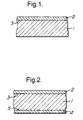
- Figure 1 is a schematic sectional elevation, not to scale, of a polymeric film having a single release layer bonded to a substrate layer.
- Figure 2 is a similar schematic elevation of a polymeric film having both surfaces of the substrate coated with a release layer.
- the film comprises a polymeric substrate layer (1) having a release layer (2) bonded to one surface (3) of the substrate.
- the film of Figure 2 additionally comprises a second release layer (4) bonded to the second surface (5) of the substrate.
- a molten web of polyethylene terephthalate was extruded in a conventional manner from a slot die on to the polished surface of a cooled rotating drum upon which the web was quenched to below the glass transition temperature of the polymer to provide an amorphous film.
- the quenched film was then reheated and drawn about 3.5 times its original length in the longitudinal direction at a temperature of about 80°C.
- the monoaxially oriented polyethylene terephthalate substrate film was coated on one side with a release layer coating composition comprising the following ingredients: Syloff 7198 (40 % w/w aqueous dispersion of high molecular weight silicone polymer containing Si-vinyl groups, and low molecular weight silicone polymer containing Si-H groups, supplied by Dow Coming) 200 ml Syloff 7199 (40 % w/w aqueous dispersion of high molecular weight silicone polymer containing Si-vinyl groups, and platinum complex catalyst, supplied by Dow Coming) 100 ml Neorad R-440 (40% w/w aqueous dispersion of polyurethane acrylate, supplied by Zeneca Resins) 50 ml Cymel 350 (10% w/w aqueous solution of melamine formaldehyde) 5 ml Ammonium p toluene sulphonate (10% w/w aqueous solution) 0.5 ml Synperonic NP10
- the coated biaxially stretched film was heat set at a temperature of about 220°C by conventional means. Final film thickness was 75 ⁇ m.
- the dry coat weight of the release layer was approximately 0.8 mgdm -2 , and the thickness of the release layer was approximately 0.08 pm.
- the atmosphere from various parts of the stenter oven was pumped for one hour through tubes of "Tenax-TA” (AKZO) absorbent resin, which was analysed by thermal desorption mass spectrometry. No significant amounts of volatile silicone materials were detected.
- Permacel J-LAR adhesive tape was pressed, by using a thumb, on to the surface of the release layer using uniform pressure. The degree of release was measured by peeling apart each sample using an 'Instron' A0533 Tensometer at a peel speed of 200 mm min -1 . The peeled off adhesive tape was then pressed on to a new sheet of uncoated polyethylene terephthalate film and the degree of release measured again. Low release values in the second release (or transfer) test is an indication of unwanted loss of the release layer from the release film to the adhesive tape during the first release test.
- Example 1 The procedure of Example 1 was repeated except that the polyethylene terephthalate film was not coated with a release composition. The results are given in Table 1.
- Example 1 The procedure of Example 1 was repeated except that the release composition contained no Neorad R-440. The overall solids content of the release composition was maintained. The results are given in Table 1.
- Example Peel Strength (g/25 mm (Nm-1)) Release Test Transfer Test 1 5 (2) 605 (237) 2 (comparative) 610 (240) 600 (235) 3 (comparative) 5 (2) 10 (4) 4 (comparative) 550 (215) 500 (195)
- the results illustrate that the release layer according to the present invention provides excellent release properties without any significant transfer of the release layer.
Landscapes
- Chemical & Material Sciences (AREA)
- Organic Chemistry (AREA)
- Engineering & Computer Science (AREA)
- Wood Science & Technology (AREA)
- Materials Engineering (AREA)
- Life Sciences & Earth Sciences (AREA)
- Chemical Kinetics & Catalysis (AREA)
- Physics & Mathematics (AREA)
- Optics & Photonics (AREA)
- Medicinal Chemistry (AREA)
- Polymers & Plastics (AREA)
- Health & Medical Sciences (AREA)
- Laminated Bodies (AREA)
- Thermal Transfer Or Thermal Recording In General (AREA)
- Coating Of Shaped Articles Made Of Macromolecular Substances (AREA)
- Application Of Or Painting With Fluid Materials (AREA)
Abstract
Description
- This invention relates to a release film and to a method for the production thereof.
- Abherents or release agents are generally solid or liquid film-forming materials employed to reduce or prevent adhesion between two surfaces. They are employed in a variety of industrial processes, including metal casting, food preparation and packaging, polymer processing and paper coating, in the production of moulded resin articles, stamping foils and pressure-sensitive adhesive tapes, and in applications such as thermal transfer printing. Typical abherents include natural and synthetic waxes, metal salts of fatty acids, particularly stearic acid, and polymers, such as polyvinylalcohols, polyamides, polyolefins and silicone resins.
- A release agent is conveniently employed in association with a polymeric support film. When associated with a support film a release agent must satisfy apparently conflicting criteria, by bonding firmly to the support while providing easy and complete release from an opposing surface. Silicone resins, based on a silicon-oxygen polymer backbone with pendant aliphatic or aromatic carbon side chains, have assumed importance as release agents in recent years, and generally confer good release characteristics. For example EP-323063-A discloses an oriented polymeric film having a release layer of a silicone resin and a volatile inhibitor. EP-342826-A and EP-416765-A describe a release film formed from a self-supporting polymeric film substrate and a polyurethane resin containing polydialkylsiloxane. However, with such prior art release films, the adhesion of the release layer to the film substrate can be inadequate. Furthermore, the release properties achieved are not always sufficient for all applications. Consequently there exists a commercial requirement for improved release films.
- The use of silicone resins, when applied to a film substrate during production thereof, is frequently liable to evolve volatile siliceous debris, which not only constitutes a health hazard, possibly necessitating the wearing of dust masks and protective clothing by plant operatives, but also, and importantly, severely contaminates the film production line and renders it unsuitable for the subsequent production of alternative film grades.
- It may be necessary to sequentially apply a number of coating layers in order to obtain the required release characteristics. At least one of the aforementioned coating layers is traditionally applied to the film substrate after the production of the film has been completed, ie "off-line", which results in an increase in the number of process steps required to produce the coated film. There is a need to be able to achieve the required release characteristics by a single coating application, preferably during the film making process, ie "in-line", in order to simplify and improve the efficiency of the production process.
- We have now devised an improved release film which reduces or substantially overcomes at least one of the aforementioned problems.
- Accordingly, the present invention provides a release film comprising a polymeric film substrate having on at least one surface thereof, a release layer formed from a release composition comprising a mixture of a curable silicone resin and a curable polyurethane resin comprising at least one ethylenically unsaturated group.
- The invention further provides a method of producing a release film which comprises forming a polymeric film substrate, applying a release composition to at least one surface of the substrate, the release composition comprising a mixture of a curable silicone resin and a curable polyurethane resin, and curing the release composition to form a release layer.
- The invention also provides a thermal transfer printing receiver sheet comprising a polymeric film substrate having on at least one surface thereof, a dye-receptive receiver layer, and a release layer on the surface of the receiver layer remote from the substrate, the release layer being formed from a release composition comprising a mixture of a curable silicone resin and a curable polyurethane resin.
- The polymeric film substrate is a film capable of independent existence in the absence of a supporting base.
- The substrate to which a release composition is applied to yield a release film according to the invention may be formed from any suitable film-forming, polymeric material. Thermoplastics materials are preferred, and include a homopolymer or copolymer of a 1-olefin, such as ethylene, propylene and but-1-ene, a polyamide, a polycarbonate, more preferably a polyester, and particularly a synthetic linear polyester which may be obtained by condensing one or more dicarboxylic acids or their lower alkyl (up to 6 carbon atoms) diesters, eg terephthalic acid, isophthalic acid, phthalic acid, 2,5-, 2,6- or 2,7-naphthalenedicarboxylic acid, succinic acid, sebacic acid, adipic acid, azelaic acid, 4,4'-diphenyldicarboxylic acid, hexahydro-terephthalic acid or 1,2-bis-p-carboxyphenoxyethane (optionally with a monocarboxylic acid, such as pivalic acid) with one or more glycols, particularly aliphatic glycols, eg ethylene glycol, 1,3-propanediol, 1,4-butanediol, neopentyl glycol and 1,4-cyclohexanedimethanol. A polyethylene terephthalate and/or polyethylene naphthalate film is preferred. A polyethylene terephthalate film is particularly preferred, especially such a film which has been biaxially oriented by sequential stretching in two mutually perpendicular directions, typically at a temperature in the range from 70 to 125°C, and preferably heat set, typically at a temperature in the range from 150 to 250°C, for example as described in GB-A-838708.
- The substrate may also comprise a polyarylether or thio analogue thereof, particularly a polyaryletherketone, polyarylethersulphone, polyaryletheretherketone, polyaryletherethersulphone, or a copolymer or thioanalogue thereof. Examples of these polymers are disclosed in EP-A-1879, EP-A-184458 and US-A-4008203. Blends of these polymers may also be employed. A poly p-phenylene sulphide film is also suitable.
- Suitable thermoset resin substrate materials include addition-polymerisation resins, such as acrylics, vinyls, bis-maleimides and unsaturated polyesters, formaldehyde condensate resins such as condensates with urea, melamine or phenols, cyanate resins, isocyanate resins, epoxy resins, functionalised polyesters, polyamides or polyimides.
- A film substrate for a release film according to the invention may be unoriented or preferably oriented, for example uniaxially oriented, or more preferably biaxially oriented by drawing in two mutually perpendicular directions in the plane of the film to achieve a satisfactory combination of mechanical and physical properties. Formation of the film may be effected by any process known in the art for producing a polymeric film, for example a tubular or a flat film process.
- In a tubular process simultaneous biaxial orientation may be effected by extruding a thermoplastics polymeric tube which is subsequently quenched, reheated and then expanded by intemal gas pressure to induce transverse orientation, and withdrawn at a rate which will induce longitudinal orientation.
- In the preferred flat film process a film-forming polymer is extruded through a slot die and rapidly quenched upon a chilled casting surface (drum) to ensure that the polymer is quenched to the amorphous state. Orientation is then effected by stretching the quenched extrudate in at least one direction at a temperature above the glass transition temperature of the polymer. Sequential orientation may be effected by stretching a flat, quenched extrudate firstly in one direction, usually the longitudinal direction, ie the forward direction through the film stretching machine, and then in the transverse direction. Forward stretching of the extrudate is conventionally effected over a set of rotating rolls or between two pairs of nip rolls, transverse stretching then being effected in a stenter apparatus. Stretching is effected to an extent determined by the nature of the film-forming polymer, for example a polyester is usually stretched so that the dimension of the oriented polyester film is from 2.5 to 4.5 its original dimension in the, or each, direction of stretching.
- A stretched film may be, and preferably is, dimensionally stabilised by heat-setting under dimensional restraint at a temperature above the glass transition temperature of the film-forming polymer but below the melting temperature thereof, to induce crystallisation of the polymer.
- In one embodiment of the invention the release film is transparent, exhibiting high optical clarity and low haze, preferably having a wide angle haze, being measured according to the standard ASTM D 1003-61, of <8%, more preferably <6%, particularly <5%, and especially <3%, preferably for a 75 µm thick film. The aforementioned optical characteristics can be suitably achieved by having little or no particulate additive present in the substrate. The substrate may contain relatively small quantities of filler material, for example in the range from 5 to 3000 ppm, preferably 50 to 2000 ppm, and more preferably 100 to 1000 ppm. Suitable fillers include inorganic materials such as silica, china clay, calcium carbonate, and organic materials such as silicone resin particles. Spherical monodisperse fillers may be employed. The substrate may contain filler due to the normal practice of using reclaimed film in the film manufacturing process.
- However, in an alternative embodiment of the invention the release film is opaque, which is defined as a film exhibiting a Transmission Optical Density (Sakura Densitometer; type PDA 65; transmission mode) of from 0.75 to 1.75, and particularly of from 1.2 to 1.5, preferably for a 150 pm thick film. The release film is conveniently rendered opaque by incorporating into the synthetic polymer of the substrate layer, an effective amount of an opacifying agent. However, in a preferred embodiment of the invention the opaque substrate layer is voided, ie comprises a cellular structure containing at least a proportion of discrete, closed cells. It is therefore preferred to incorporate into the substrate polymer an effective amount of an agent which is capable of generating an opaque, voided substrate layer structure. Suitable voiding agents, which also confer opacity, include an incompatible resin filler, a particulate inorganic filler or a mixture of two or more such fillers.
- By an "incompatible resin" is meant a resin which either does not melt, or which is substantially immiscible with the substrate polymer, at the highest temperature encountered during extrusion and fabrication of the layer. Such resins include polyamides and olefin polymers, particularly a homo- or co-polymer of a mono-alpha-olefin containing up to 6 carbon atoms in its molecule, for incorporation into polyester films, or polyesters of the kind hereinbefore described for incorporation into polyolefin films.
- Particulate inorganic fillers suitable for generating an opaque, voided substrate layer include conventional inorganic pigments and fillers, and particularly metal or metalloid oxides, such as alumina, silica and titania, and alkaline metal salts, such as the carbonates and sulphates of calcium and barium. Barium sulphate is a particularly preferred filler which also functions as a voiding agent.
- Non-voiding particulate inorganic fillers may also be added to the film-forming polymeric substrate layer.
- Suitable voiding and/or non-voiding fillers may be homogeneous and consist essentially of a single filler material or compound, such as titanium dioxide or barium sulphate alone. Alternatively, at least a proportion of the filler may be heterogeneous, the primary filler material being associated with an additional modifying component. For example, the primary filler particle may be treated with a surface modifier, such as a pigment, soap, surfactant coupling agent or other modifier to promote or alter the degree to which the filler is compatible with the substrate polymer.
- Production of a substrate layer having satisfactory degrees of opacity and preferably voiding requires that the filler should be finely-divided, and the average particle size thereof is preferably in the range from 0.1 to 10 pm, more preferably 0.15 to 3 µm, and particularly 0.2 to 0.75 µm.
- Incorporation of the opacifying/voiding agent into the substrate layer polymer may be effected by conventional techniques, for example by mixing with the monomeric reactants from which the polymer is derived, by dry blending with the polymer in granular or chip form prior to formation of a film therefrom, or by using masterbatching technology.
- The amount of filler, particularly of barium sulphate, incorporated into the substrate layer polymer is preferably in the range from 5 to 50 weight %, relative to the weight of the polymer. Particularly satisfactory levels of opacity and gloss are achieved when the concentration of filler is in the range from 8 to 30, more preferably 15 to 20 weight %, relative to the weight of the substrate layer polymer.
- The curable silicone resin and curable polyurethane resin components of the release composition are cured in the presence of one another, preferably resulting in intermolecular cross-links being formed between the silicone resin and the polyurethane resin.
- The curable silicone resin preferably comprises polysiloxane, more preferably polydialkylsiloxane, and may be, for example a silanol and/or hydrogen terminated and/or in-chain polydialkylsiloxane, preferably terminated polydimethylsiloxane, or an organomodified siloxane comprising a terminal functional group such as a reactive vinyl, hexenyl, hydrogen, hydroxyl, epoxy, mercaptan, acryloyl, and/or acryloylamide group.
- Cross-linking of the silicone resin may be initiated by the use of a catalyst, heat, UV radiation and/or electron beam radiation. Cross-linking of the silicone resin may occur by the condensation cure reaction between Si-OH and Si-H groups, preferably in the presence of an organotin or organozinc catalyst, or in the preferred route, by the addition cure reaction between Si-vinyl (ie -CH=CH2) and Si-H groups, preferably by the application of heat, and more preferably in the presence of a platinum complex catalyst. Other silicone cross-linking reactions which are preferably based on ultra-violet and/or electron beam radiation, include the reaction of a mercaptan siloxane and vinyl siloxane, acryloyl siloxane, acryloylamide siloxane, epoxy siloxane, and siloxane (or silicone polymer) and acrylic and/or methacrylic monomer, preferably containing an epoxy group. One or more of the aforementioned reactive groups may be present on the same silicone chain, prior to cross-linking, ie the cross-linking reaction involves both intra- and inter-chain silicone reactions. In a preferred embodiment of the invention different reactive groups are present on different silicone chains, ie the cross-linking reaction primarily involves inter-chain silicone reactions. In a particularly preferred embodiment of the invention, the release composition comprises a relatively high molecular weight silicone, preferably polydimethylsiloxane, polymer containing vinyl groups, preferably of 50 to 800, more preferably 80 to 400, and particularly 100 to 200 monomer units; and a relatively low molecular weight Si-H containing silicone polymer, preferably of 5 to 40, more preferably 5 to 30, and particularly 5 to 20 monomer units. The ratio of high to low molecular weight silicone polymers present in the release composition is preferably such that the ratio of vinyl groups to Si-H groups is in the range from 0.2 to 5 : 1, more preferably 0.4 to 2.5 : 1, and particularly 0.6 to 1.5 : 1.
- The amount of curable silicone resin present in the release composition is preferably in the range from 20 to 95, more preferably 50 to 90, and particularly 80 to 90 weight %, relative to the total solids of the composition.
- The curable polyurethane resin preferably comprises at least one functional group capable of cross-linking with itself and/or with a second functional group present in the polyurethane resin and/or with the silicone resin. Suitable functional groups include carboxyl groups, anhydride groups, epoxy groups, amine groups, hydroxyl groups, sulphur containing groups, and ethylenically unsaturated groups. The functional group present in the polyurethane resin is at least an ethylenically unsaturated group, and particularly a vinyl group.
- The polyurethane resin is preferably the reaction product of, inter alia, an organic isocyanate, a polyol, and optionally an additional monomer. The preferred at least one functional group may be provided by any one or more of the starting components of the polyurethane resin.
- The use of the word "polyurethane" is intended to cover materials which may be regarded as urethane oligomers, which only form "true" polyurethanes when cured. The molecular weight of the curable polyurethane resin is preferably in the range from 4,000 to 100,000, more preferably 5,000 to 50,000, and particularly 6,000 to 20,000.
- The organic isocyanate component of the polyurethane resin may be an aliphatic, cycloaliphatic, araliphatic or aromatic isocyanate. Examples of suitable polyisocyanates include ethylene diisocyanate, 1,6-hexamethylene diisocyanate, isophorone diisocyanate, cyclohexane-1,4-diisocyanate, 4-4'-dicyclohexylmethane diisocyanate, p-xylylene diisocyanate, 1,4-phenylene diisocyanate, 2,4-toluene diisocyanate, 2,6-toluene diisocyanate, 4,4'-diphenylmethane diisocyanate, 2,4'-diphenylmethane diisocyanate, polymethylene polyphenyl polyisocyanates and 1,5-naphthylene diisocyanate. Mixtures of polyisocyanates may be used and also polyisocyanates which have been modified by the introduction of urethane, allophanate, urea, biuret, carbodiimide, uretonimine or isocyanurate residues.
- The polyol component of the polyurethane resin may be a member of any of the chemical classes of polyols used or proposed to be used in polyurethane formulations. For example, the polyol, which is preferably polymeric, may be a polyester, polyesteramide, polyether, polythioether, polyacetal, polyolefin, or polycarbonate. A polyester, particularly an aromatic polyester, is preferred. The molecular weight of the polyol is preferably in the range from 700 to 3000.
- In one embodiment of the invention the polyol contains one or more functional groups, preferably an ethylenically unsaturated group. Suitable polyols include an unsaturated polyester polyol, or a polybutadiene polyol.
- The additional monomer preferably contains a functional group, more preferably an ethylenically unsaturated group, and particularly a vinyl group. The monomer is preferably an acrylate monomer, such as a hydroxyalkyl acrylate and/or methacrylate, eg 2-hydroxyethyl and/or 2-hydroxypropyl acrylate and/or methacrylate; or particularly an epoxy-containing acrylate such as glycidyl acrylate, glycidyl methacrylate and/or allyl glycidyl ether. The monomer preferably comprises the preferred ethylenically unsaturated group in the polymerised state.
- The curable polyurethane resin also may contain, as a minor proportion thereof, polysiloxane segments, more preferably polydialkylsiloxane, more preferably comprising Si-OH, Si-vinyl and/or Si-H groups, which are capable of cross-linking with the curable silicone resin component of the release composition. The polysiloxane segments may be in-chain and/or pendant. The amount of polysiloxane present in the polyurethane resin is preferably in the range from 0 to 45, more preferably 1 to 40, particularly 3 to 30, and especially 5 to 20 weight %.
- If desired, a catalyst for urethane formation, such as dibutyltin dilaurate and/or stannous octoate may be used to assist formation of the polyurethane resin, and a non-reactive solvent may be added before or after formation of the medium to control viscosity. Suitable non-reactive solvents which may be used include acetone, methylethylketone, dimethylformamide, ethylene carbonate, propylene carbonate, diglyme, N-methylpyrrolidone, ethyl acetate, ethylene and propylene glycol diacetates, alkyl ethers of ethylene and propylene glycol monoacetates, toluene, xylene and sterically hindered alcohols such as t-butanol and diacetone alcohol. The preferred solvents are water-miscible solvents such as N-methylpyrrolidone, dimethyl sulphoxide and dialkyl ethers of glycol acetates or mixtures of N-methylpyrrolidone and methyl ethyl ketone.
- A polyfunctional active hydrogen-containing chain extender may be employed, is preferably water-soluble, and water itself may be effective. Other suitable extenders include a polyol, an amino alcohol, ammonia, a carboxylic acid, a primary or secondary aliphatic, alicyclic, aromatic, araliphatic or heterocyclic amine especially a diamine, hydrazine or a substituted hydrazine.
- Examples of suitable chain extenders useful herein include dimethylolpropionic acid, ethylene diamine, diethylene triamine, triethylene tetramine, propylene diamine, butylene diamine, hexamethylene diamine, cyclohexylene diamine, piperazine, 2-methyl piperazine, phenylene diamine, tolylene diamine, xylylene diamine, tris (2-aminoethyl) amine, 3,3'-dinitrobenzidine, 4,4'-methylenebis(2-chloroaniline), 3,3'-dichloro-4,4'-bi-phenyl diamine, 2,6-diaminopyridine, 4,4'-diaminodiphenylmethane, methane diamine, m-xylene diamine, isophorone diamine, and adducts of diethylene triamine with acrylate or its hydrolysed products. Also materials such as hydrazine, azines such as acetone azine, substituted hydrazines such as, for example, dimethyl hydrazine, 1,6-hexamethylene-bis-hydrazine, carbodihydrazine, hydrazides of dicarboxylic acids and sulfonic acids such as adipic acid mono- or dihydrazide, oxalic acid dihydrazide, isophthalic acid dihydrazide, tartaric acid dihydrazide, 1,3-phenylene disulfonic acid dihydrazide, omega-amino-caproic acid dihydrazide, hydrazides made by reacting lactones with hydrazines such as gamma-hydroxylbutyric hydrazide, bis-semi-carbazide, bis-hydrazide carbonic esters of glycols such as any of the glycols mentioned above.
- Where the chain extender is other than water, for example a carboxylic acid, diamine or hydrazine, it may be added to the aqueous dispersion of polyurethane resin or, alternatively, it may already be present in the aqueous medium when the resin is dispersed therein.
- The amount of curable polyurethane resin present in the release composition is preferably in the range from 5 to 80, more preferably 10 to 50, and particularly 10 to 20 weight %, relative to the total solids of the composition.
- The ratio of curable silicone resin to curable polyurethane resin present in the release composition, and consequently in the release layer, is preferably in the range from 0.25 to 20 : 1, more preferably 2 to 10 : 1, and particularly 4 to 7 : 1 by weight.
- In a preferred embodiment of the invention, the release composition additionally comprises a, preferably low molecular weight, more preferably non-silicone containing, cross-linking agent. The cross-linking agent is suitably an organic material, preferably a monomeric and/or oligomeric species, and particularly monomeric, prior to formation of the release layer. The molecular weight of the cross-linking agent is preferably less than 2000, more preferably less than 1500, especially less than 1000, and particularly in the range from 250 to 500. Suitable cross-linking agents may comprise alkyd resins, amine derivatives such as hexamethoxymethyl melamine, and/or condensation products of an amine, eg melamine, diazine, urea, cyclic ethylene urea, cyclic propylene urea, thiourea, cyclic ethylene thiourea, aziridines, alkyl melamines, aryl melamines, benzo guanamines, guanamines, alkyl guanamines and aryl guanamines, with an aldehyde, eg formaldehyde. A preferred cross-linking agent is the condensation product of melamine with formaldehyde. The condensation product may optionally be alkoxylated. A catalyst is also preferably employed to facilitate cross-linking action of the cross-linking agent. Preferred catalysts for cross-linking melamine formaldehyde include ammonium chloride, ammonium nitrate, ammonium thiocyanate, ammonium dihydrogen phosphate, diammonium hydrogen phosphate, para toluene sulphonic acid, sulphuric acid, maleic acid stabilised by reaction with a base, ammonium para toluene sulphonate and morpholinium para toluene sulphonate.
- The cross-linking agent preferably exhibits at least trifunctionality (ie three functional groups) to promote inter-molecular cross-linking with the functional groups present in the curable silicone resin and/or curable polyurethane resin, and to improve adhesion of the release layer to the surface of the underlying layer.
- The amount of cross-linking agent present in the release composition is preferably in the range from 0.1 to 25, more preferably 0.15 to 10, particularly 0.2 to 5, and especially 0.25 to 2 weight %, relative to the total solids of the composition.
- If desired, the release composition may additionally comprise a surfactant to promote spreading thereof when applied to a film substrate.
- The release composition, preferably in the form of an aqueous dispersion, may be applied to the substrate film surface by conventional coating techniques. The applied medium, generally having a solids content in the range from 1 to 20, preferably 2 to 10, and particularly 5 to 7 weight %, is subsequently dried to remove the dispersant and also to effect cross-linking of the layer. Drying may be effected by conventional techniques, for example by passing the coated film through a hot air oven. Drying may be effected during normal post-formation film-treatments, such as heat-setting.
- The release composition may be applied to an already oriented film substrate. However, application of the coating medium is preferably effected before or during any stretching operation. In particular, it is preferred according to this invention that the release composition should be applied to the film between the two stages (longitudinal and transverse) of a biaxial stretching operation. Such a sequence of stretching and coating is especially preferred for the production of linear polyester release films, such as polyethylene terephthalate films, which are preferably firstly stretched in the longitudinal direction over a series of rotating rollers, coated with the release composition and then stretched transversely in a stenter oven, preferably followed by heat-setting.
- The reverse surface, remote from the release layer, of a release film according to the invention may be untreated or may have thereon a functional layer, such as a priming medium, a sealable medium or, an antistatic layer.
- The release films of the invention may conveniently contain any of the agents conventionally employed in the manufacture of polymeric films. Thus, agents such as dyes, pigments, lubricants, anti-oxidants, antistatic agents, surface active agents, gloss-improvers, prodegradants, fire-retardants, and ultra-violet light stabilisers may be incorporated in the substrate and/or release layer, as appropriate.
- The release films may vary in thickness depending on the intended application, but release films preferably have a total thickness in the range from 5 to 350, more preferably 10 to 200, and particularly 50 to 150 µm. The dry thickness of the release layer is desirably within a range of from 0.01 to 10, preferably 0.02 to 1.0 µm.
- The release layers provided by the invention have excellent adherence to the underlying layer, low coefficients of friction, good wear resistance, and offer effective release from adhesives.
- Release films according to the invention are of general applicability and may be employed, inter alia, in the production of moulded articles from curable resins, as release tapes, for example for asphalt roofing materials, and particularly as a thermal transfer printing (TTP) donor, or preferably receiver, sheet.
- A TTP receiver sheet comprises a polymeric substrate, a dye-receptive receiver layer and a release layer as described herein. The polymeric substrate is preferably an oriented polyester, more preferably polyethylene terephthalate. The TTP substrate may be transparent or preferably opaque, particularly voided, as described herein.
- Suitable dye-receptive receiver layers are well known in the art, and include polyester resins, particularly a copolyester resin derived from one or more dibasic aromatic carboxylic acids, such as terephthalic acid, isophthalic acid and hexahydroterephthalic acid, and one or more glycols, such as ethylene glycol, diethylene glycol, triethylene glycol and neopentyl glycol. Typical copolyesters which provide satisfactory dye-receptivity are those of ethylene terephthalate and ethylene isophthalate, especially in the molar ratios of from 50 to 90 mole % ethylene terephthalate and correspondingly from 50 to 10 mole % ethylene isophthalate. Preferred copolyesters comprise from 65 to 85 mole % ethylene terephthalate and from 35 to 15 mole % ethylene isophthalate especially a copolyester of about 82 mole % ethylene terephthalate and about 18 mole % ethylene isophthalate.
- Formation of a receiver layer on the substrate layer may be effected by conventional techniques, for example by casting the receiver layer polymer onto a preformed substrate layer. Conveniently however, formation of a composite sheet (substrate and receiver layer) is effected by coextrusion, either by simultaneous coextrusion of the respective film-forming layers through independent orifices of a multi-orifice die, and thereafter uniting the still molten layers, or, preferably, by single-channel coextrusion in which molten streams of the respective polymers are first united within a channel leading to a die manifold, and thereafter extruded together from the die orifice under conditions of streamline flow without intermixing thereby to produce a composite sheet.
- The release composition is preferably coated on the surface of the receiver layer remote from the substrate in order to form a TTP receiver sheet exhibiting excellent release properties.
- The invention is illustrated by reference to the accompanying drawings in which :
- Figure 1 is a schematic sectional elevation, not to scale, of a polymeric film having a single release layer bonded to a substrate layer.
- Figure 2 is a similar schematic elevation of a polymeric film having both surfaces of the substrate coated with a release layer.
- Referring to Figure 1 of the drawings, the film comprises a polymeric substrate layer (1) having a release layer (2) bonded to one surface (3) of the substrate. The film of Figure 2 additionally comprises a second release layer (4) bonded to the second surface (5) of the substrate.
- The invention is further illustrated by reference to the following examples.
- A molten web of polyethylene terephthalate was extruded in a conventional manner from a slot die on to the polished surface of a cooled rotating drum upon which the web was quenched to below the glass transition temperature of the polymer to provide an amorphous film. The quenched film was then reheated and drawn about 3.5 times its original length in the longitudinal direction at a temperature of about 80°C. The monoaxially oriented polyethylene terephthalate substrate film was coated on one side with a release layer coating composition comprising the following ingredients:
Syloff 7198
(40 % w/w aqueous dispersion of high molecular weight silicone polymer containing Si-vinyl groups, and low molecular weight silicone polymer containing Si-H groups, supplied by Dow Coming)200 ml Syloff 7199
(40 % w/w aqueous dispersion of high molecular weight silicone polymer containing Si-vinyl groups, and platinum complex catalyst, supplied by Dow Coming)100 ml Neorad R-440
(40% w/w aqueous dispersion of polyurethane acrylate, supplied by Zeneca Resins)50 ml Cymel 350
(10% w/w aqueous solution of melamine formaldehyde)5 ml Ammonium p toluene sulphonate
(10% w/w aqueous solution)0.5 ml Synperonic NP10
(10% w/w aqueous solution of nonyl phenol ethoxylate, supplied by ICI)55 ml Demineralised water 2090 ml - "Permacel J-LAR" adhesive tape was pressed, by using a thumb, on to the surface of the release layer using uniform pressure. The degree of release was measured by peeling apart each sample using an 'Instron' A0533 Tensometer at a peel speed of 200 mm min-1. The peeled off adhesive tape was then pressed on to a new sheet of uncoated polyethylene terephthalate film and the degree of release measured again. Low release values in the second release (or transfer) test is an indication of unwanted loss of the release layer from the release film to the adhesive tape during the first release test.
- The results are given in Table 1.
- This is a comparative Example not according to the invention.
- The procedure of Example 1 was repeated except that the polyethylene terephthalate film was not coated with a release composition. The results are given in Table 1.
- This is a comparative Example not according to the invention.
- The procedure of Example 1 was repeated except that the release composition contained no Neorad R-440. The overall solids content of the release composition was maintained. The results are given in Table 1.
- This is a comparative Example not according to the invention.
- The procedure of Example 1 was repeated except that the release composition contained no Syloff 7198 or 7199. The overall solids content of the release composition was maintained. The results are given in Table 1.
Example Peel Strength (g/25 mm (Nm-1)) Release Test Transfer Test 1 5 (2) 605 (237) 2 (comparative) 610 (240) 600 (235) 3 (comparative) 5 (2) 10 (4) 4 (comparative) 550 (215) 500 (195)
Claims (9)
- A release film comprising a polymeric film substrate having on at least one surface thereof, a release layer formed from a release composition comprising a mixture of a curable silicone resin and a curable polyurethane resin comprising at least one ethylenically unsaturated group.
- A release film according to claim 1 wherein the at least one ethylenically unsaturated group is present in an acrylic or methacrylic monomer.
- A release film according to claim 1 or 2 wherein the curable silicone resin comprises Si-vinyl and Si-H groups.
- A release film according to any one of the preceding claims wherein the release composition additionally comprises a cross-linking agent.
- A release film according to any one of the preceding claims wherein the release layer comprises a cured silicone resin and a cured polyurethane resin.
- A method of producing a release film which comprises forming a polymeric film substrate, applying a release composition to at least one surface of the substrate, the release composition comprising a mixture of a curable silicone resin and a curable polyurethane resin comprising at least one ethylenicaliy unsaturated group, and curing the release composition to form a release layer.
- A method according to claim 6 wherein the release composition is aqueous based.
- A method according to claim 6 or 7 wherein the release composition is applied to the substrate before or during any stretching operation employed to effect molecular orientation of the film substrate.
- A thermal transfer printing receiver sheet comprising a polymeric film substrate having on at least one surface thereof, a dye-receptive receiver layer, and a release layer on the surface of the receiver layer remote from the substrate, the release layer being formed from a release composition comprising a mixture of a curable silicone resin and a curable polyurethane resin comprising at least one ethylenically unsaturated group.
Applications Claiming Priority (5)
| Application Number | Priority Date | Filing Date | Title |
|---|---|---|---|
| GB9523765 | 1995-11-21 | ||
| GBGB9523765.7A GB9523765D0 (en) | 1995-11-21 | 1995-11-21 | Release film |
| US08/560,762 US5932352A (en) | 1995-11-21 | 1995-11-21 | Release film |
| US560762 | 1995-11-21 | ||
| PCT/GB1996/002710 WO1997019128A1 (en) | 1995-11-21 | 1996-11-06 | Release film |
Publications (2)
| Publication Number | Publication Date |
|---|---|
| EP0862594A1 EP0862594A1 (en) | 1998-09-09 |
| EP0862594B1 true EP0862594B1 (en) | 1999-09-08 |
Family
ID=26308148
Family Applications (1)
| Application Number | Title | Priority Date | Filing Date |
|---|---|---|---|
| EP96935176A Expired - Lifetime EP0862594B1 (en) | 1995-11-21 | 1996-11-06 | Release film |
Country Status (8)
| Country | Link |
|---|---|
| EP (1) | EP0862594B1 (en) |
| JP (1) | JP3585501B2 (en) |
| KR (1) | KR100418843B1 (en) |
| CN (1) | CN1070205C (en) |
| AU (1) | AU7324796A (en) |
| CA (1) | CA2246150A1 (en) |
| DE (1) | DE69604199T2 (en) |
| WO (1) | WO1997019128A1 (en) |
Cited By (1)
| Publication number | Priority date | Publication date | Assignee | Title |
|---|---|---|---|---|
| EP2157134A1 (en) | 2008-08-19 | 2010-02-24 | Bayer MaterialScience AG | Films with improved characteristics |
Families Citing this family (15)
| Publication number | Priority date | Publication date | Assignee | Title |
|---|---|---|---|---|
| US6077611A (en) * | 1997-09-30 | 2000-06-20 | General Electric Company | Printable paper release compositions |
| WO2001025360A1 (en) * | 1999-10-07 | 2001-04-12 | Karat Digital Press L.P. | Novel release coating |
| JP4747420B2 (en) | 2001-02-09 | 2011-08-17 | 王子製紙株式会社 | Release sheet and adhesive tape capable of thermal transfer recording |
| KR101265103B1 (en) * | 2009-06-30 | 2013-05-16 | 코오롱인더스트리 주식회사 | Stamping Foil |
| JP5393326B2 (en) * | 2009-07-31 | 2014-01-22 | リンテック株式会社 | Release sheet |
| KR101156253B1 (en) * | 2009-12-10 | 2012-06-27 | 율촌화학 주식회사 | Releasing film and method for preparing the same |
| KR101132541B1 (en) * | 2009-12-10 | 2012-04-02 | 율촌화학 주식회사 | Releasing film and method for preparing the same |
| TWI461501B (en) * | 2010-12-20 | 2014-11-21 | 漢高智慧財產控股公司 | Photocurable cutting adhesive tape |
| CN102658735B (en) * | 2012-05-31 | 2014-12-10 | 河南卓立膜材料股份有限公司 | Flat-pressing resin-based bar code printing thermal transfer ribbon and preparation method thereof |
| JP6163925B2 (en) * | 2013-07-12 | 2017-07-19 | 凸版印刷株式会社 | Matte-like transfer film and molded product using the same |
| CN104057733B (en) * | 2014-06-28 | 2016-01-20 | 汕头市炽盛新材料有限公司 | Be applicable to the hot transfer printing printing carbon ribbon of full resin of multiple stock |
| CN109689819A (en) * | 2016-09-08 | 2019-04-26 | 3M创新有限公司 | Adhesive article and preparation method thereof |
| CN109719836B (en) * | 2018-11-14 | 2020-12-04 | 重庆新久融科技有限公司 | Release agent for aluminum alloy template and preparation method thereof |
| TWI691533B (en) * | 2019-04-19 | 2020-04-21 | 財團法人中華民國紡織業拓展會 | Method of preparing thermoplastic polyurethane membranes with high adhesion and high elasticity |
| CN115322426B (en) * | 2022-08-30 | 2023-12-08 | 扬州万润光电科技股份有限公司 | Wear-resistant and chemical reagent-resistant PET release film and preparation method thereof |
Family Cites Families (9)
| Publication number | Priority date | Publication date | Assignee | Title |
|---|---|---|---|---|
| DE2832281C2 (en) * | 1978-07-22 | 1981-12-24 | Beiersdorf Ag, 2000 Hamburg | Process for the production of self-adhesive tapes or release films with silicone-containing adhesive-repellent coatings |
| JPS60192628A (en) * | 1984-03-14 | 1985-10-01 | ダイアホイルヘキスト株式会社 | Biaxial oriented polyester film |
| JPH01126389A (en) * | 1987-11-11 | 1989-05-18 | Dainichiseika Color & Chem Mfg Co Ltd | Peelability treatment agent |
| GB8815423D0 (en) * | 1988-06-29 | 1988-08-03 | Ici Plc | Receiver sheet |
| EP0404895A4 (en) * | 1988-12-14 | 1991-05-15 | Bramite Limited | Silicone modified polyurethanes |
| GB8919918D0 (en) * | 1989-09-04 | 1989-10-18 | Ici Plc | Polymeric film |
| JPH03100027A (en) * | 1989-09-12 | 1991-04-25 | Toray Ind Inc | Biaxially oriented polyester film |
| JPH0532035A (en) * | 1991-07-29 | 1993-02-09 | Oike Ind Co Ltd | Soft touch transfer foil |
| JPH06172723A (en) * | 1992-12-10 | 1994-06-21 | Asahi Chem Ind Co Ltd | Nitrocellulose-based adherent |
-
1996
- 1996-11-06 EP EP96935176A patent/EP0862594B1/en not_active Expired - Lifetime
- 1996-11-06 KR KR10-1998-0703798A patent/KR100418843B1/en not_active Expired - Lifetime
- 1996-11-06 DE DE69604199T patent/DE69604199T2/en not_active Expired - Lifetime
- 1996-11-06 AU AU73247/96A patent/AU7324796A/en not_active Abandoned
- 1996-11-06 JP JP51946797A patent/JP3585501B2/en not_active Expired - Lifetime
- 1996-11-06 CN CN96199728A patent/CN1070205C/en not_active Expired - Lifetime
- 1996-11-06 WO PCT/GB1996/002710 patent/WO1997019128A1/en not_active Ceased
- 1996-11-06 CA CA002246150A patent/CA2246150A1/en not_active Abandoned
Cited By (2)
| Publication number | Priority date | Publication date | Assignee | Title |
|---|---|---|---|---|
| EP2157134A1 (en) | 2008-08-19 | 2010-02-24 | Bayer MaterialScience AG | Films with improved characteristics |
| EP2157133A1 (en) | 2008-08-19 | 2010-02-24 | Bayer MaterialScience AG | Films with improved characteristics |
Also Published As
| Publication number | Publication date |
|---|---|
| KR100418843B1 (en) | 2005-01-15 |
| JP3585501B2 (en) | 2004-11-04 |
| CA2246150A1 (en) | 1997-05-29 |
| CN1070205C (en) | 2001-08-29 |
| DE69604199D1 (en) | 1999-10-14 |
| JP2000500706A (en) | 2000-01-25 |
| WO1997019128A1 (en) | 1997-05-29 |
| CN1207748A (en) | 1999-02-10 |
| DE69604199T2 (en) | 2000-04-20 |
| AU7324796A (en) | 1997-06-11 |
| EP0862594A1 (en) | 1998-09-09 |
| KR19990071525A (en) | 1999-09-27 |
Similar Documents
| Publication | Publication Date | Title |
|---|---|---|
| US5932352A (en) | Release film | |
| US5667889A (en) | Polymeric film | |
| US5102734A (en) | Multilayer film | |
| US5756214A (en) | Release film comprising polycarbonate-silicone-urethane resin | |
| EP0862594B1 (en) | Release film | |
| US5910370A (en) | Polymeric film | |
| EP0342826B1 (en) | Release film | |
| EP0349141B1 (en) | Receiver sheet | |
| JP3774982B2 (en) | Release film | |
| AU631042B2 (en) | Polymeric film | |
| EP1288250B1 (en) | Coated film | |
| KR920003248B1 (en) | Label based on polyester film | |
| JP7844820B2 (en) | Easy-to-adhere polyester film | |
| JPH0911423A (en) | Laminated film | |
| JPH1160766A (en) | Fine foam-containing polyester film and release paper for seal print |
Legal Events
| Date | Code | Title | Description |
|---|---|---|---|
| PUAI | Public reference made under article 153(3) epc to a published international application that has entered the european phase |
Free format text: ORIGINAL CODE: 0009012 |
|
| 17P | Request for examination filed |
Effective date: 19980518 |
|
| AK | Designated contracting states |
Kind code of ref document: A1 Designated state(s): DE FR GB IT |
|
| GRAG | Despatch of communication of intention to grant |
Free format text: ORIGINAL CODE: EPIDOS AGRA |
|
| 17Q | First examination report despatched |
Effective date: 19980918 |
|
| GRAG | Despatch of communication of intention to grant |
Free format text: ORIGINAL CODE: EPIDOS AGRA |
|
| GRAH | Despatch of communication of intention to grant a patent |
Free format text: ORIGINAL CODE: EPIDOS IGRA |
|
| GRAH | Despatch of communication of intention to grant a patent |
Free format text: ORIGINAL CODE: EPIDOS IGRA |
|
| RAP1 | Party data changed (applicant data changed or rights of an application transferred) |
Owner name: E.I. DU PONT DE NEMOURS AND COMPANY |
|
| GRAA | (expected) grant |
Free format text: ORIGINAL CODE: 0009210 |
|
| RAP1 | Party data changed (applicant data changed or rights of an application transferred) |
Owner name: E.I. DU PONT DE NEMOURS & COMPANY INCORPORATED |
|
| AK | Designated contracting states |
Kind code of ref document: B1 Designated state(s): DE FR GB IT |
|
| REF | Corresponds to: |
Ref document number: 69604199 Country of ref document: DE Date of ref document: 19991014 |
|
| ITF | It: translation for a ep patent filed | ||
| ET | Fr: translation filed | ||
| PLBE | No opposition filed within time limit |
Free format text: ORIGINAL CODE: 0009261 |
|
| STAA | Information on the status of an ep patent application or granted ep patent |
Free format text: STATUS: NO OPPOSITION FILED WITHIN TIME LIMIT |
|
| REG | Reference to a national code |
Ref country code: FR Ref legal event code: TP |
|
| 26N | No opposition filed | ||
| REG | Reference to a national code |
Ref country code: GB Ref legal event code: IF02 |
|
| REG | Reference to a national code |
Ref country code: GB Ref legal event code: 732E |
|
| REG | Reference to a national code |
Ref country code: FR Ref legal event code: PLFP Year of fee payment: 20 |
|
| PGFP | Annual fee paid to national office [announced via postgrant information from national office to epo] |
Ref country code: DE Payment date: 20151103 Year of fee payment: 20 Ref country code: IT Payment date: 20151124 Year of fee payment: 20 Ref country code: GB Payment date: 20151104 Year of fee payment: 20 |
|
| PGFP | Annual fee paid to national office [announced via postgrant information from national office to epo] |
Ref country code: FR Payment date: 20151008 Year of fee payment: 20 |
|
| REG | Reference to a national code |
Ref country code: DE Ref legal event code: R071 Ref document number: 69604199 Country of ref document: DE |
|
| REG | Reference to a national code |
Ref country code: GB Ref legal event code: PE20 Expiry date: 20161105 |
|
| PG25 | Lapsed in a contracting state [announced via postgrant information from national office to epo] |
Ref country code: GB Free format text: LAPSE BECAUSE OF EXPIRATION OF PROTECTION Effective date: 20161105 |