EP0943462B1 - Methode zur Herstellung eines Druckerzeugnisses - Google Patents
Methode zur Herstellung eines Druckerzeugnisses Download PDFInfo
- Publication number
- EP0943462B1 EP0943462B1 EP99301997A EP99301997A EP0943462B1 EP 0943462 B1 EP0943462 B1 EP 0943462B1 EP 99301997 A EP99301997 A EP 99301997A EP 99301997 A EP99301997 A EP 99301997A EP 0943462 B1 EP0943462 B1 EP 0943462B1
- Authority
- EP
- European Patent Office
- Prior art keywords
- layer
- transfer
- adhesive layer
- receiving material
- transferring
- Prior art date
- Legal status (The legal status is an assumption and is not a legal conclusion. Google has not performed a legal analysis and makes no representation as to the accuracy of the status listed.)
- Expired - Lifetime
Links
- 238000000034 method Methods 0.000 title claims description 109
- 239000010410 layer Substances 0.000 claims description 746
- 239000000463 material Substances 0.000 claims description 370
- 239000012790 adhesive layer Substances 0.000 claims description 301
- 230000001070 adhesive effect Effects 0.000 claims description 88
- 239000000758 substrate Substances 0.000 claims description 70
- 238000000859 sublimation Methods 0.000 claims description 59
- 230000008022 sublimation Effects 0.000 claims description 59
- 229920005989 resin Polymers 0.000 claims description 56
- 239000011347 resin Substances 0.000 claims description 56
- 238000004040 coloring Methods 0.000 claims description 36
- 239000003086 colorant Substances 0.000 claims description 20
- 229920000554 ionomer Polymers 0.000 claims description 9
- 230000009477 glass transition Effects 0.000 claims description 3
- 239000000975 dye Substances 0.000 description 70
- 239000000976 ink Substances 0.000 description 47
- 238000000576 coating method Methods 0.000 description 42
- 239000011248 coating agent Substances 0.000 description 41
- 239000000123 paper Substances 0.000 description 30
- 239000000203 mixture Substances 0.000 description 25
- 238000010438 heat treatment Methods 0.000 description 24
- 230000000052 comparative effect Effects 0.000 description 23
- 238000000926 separation method Methods 0.000 description 20
- -1 polyethylene naphthalate Polymers 0.000 description 18
- 230000008569 process Effects 0.000 description 17
- 239000000853 adhesive Substances 0.000 description 15
- 230000007547 defect Effects 0.000 description 15
- 239000001993 wax Substances 0.000 description 13
- ZWEHNKRNPOVVGH-UHFFFAOYSA-N 2-Butanone Chemical compound CCC(C)=O ZWEHNKRNPOVVGH-UHFFFAOYSA-N 0.000 description 12
- YXFVVABEGXRONW-UHFFFAOYSA-N Toluene Chemical compound CC1=CC=CC=C1 YXFVVABEGXRONW-UHFFFAOYSA-N 0.000 description 12
- 229920002433 Vinyl chloride-vinyl acetate copolymer Polymers 0.000 description 12
- 239000011230 binding agent Substances 0.000 description 12
- 239000003795 chemical substances by application Substances 0.000 description 11
- 238000000151 deposition Methods 0.000 description 11
- 230000008021 deposition Effects 0.000 description 11
- 230000005855 radiation Effects 0.000 description 9
- 239000004925 Acrylic resin Substances 0.000 description 8
- 229920000178 Acrylic resin Polymers 0.000 description 8
- 239000004094 surface-active agent Substances 0.000 description 8
- 125000000391 vinyl group Chemical group [H]C([*])=C([H])[H] 0.000 description 8
- 238000001514 detection method Methods 0.000 description 7
- 229920002037 poly(vinyl butyral) polymer Polymers 0.000 description 7
- 229920006122 polyamide resin Polymers 0.000 description 7
- 229920001225 polyester resin Polymers 0.000 description 7
- 239000004645 polyester resin Substances 0.000 description 7
- 229920002689 polyvinyl acetate Polymers 0.000 description 7
- 239000011118 polyvinyl acetate Substances 0.000 description 7
- 229920000036 polyvinylpyrrolidone Polymers 0.000 description 7
- 239000001267 polyvinylpyrrolidone Substances 0.000 description 7
- 235000013855 polyvinylpyrrolidone Nutrition 0.000 description 7
- KFZMGEQAYNKOFK-UHFFFAOYSA-N Isopropanol Chemical compound CC(C)O KFZMGEQAYNKOFK-UHFFFAOYSA-N 0.000 description 6
- VYPSYNLAJGMNEJ-UHFFFAOYSA-N Silicium dioxide Chemical compound O=[Si]=O VYPSYNLAJGMNEJ-UHFFFAOYSA-N 0.000 description 6
- 238000011156 evaluation Methods 0.000 description 6
- 229920000728 polyester Polymers 0.000 description 6
- 238000007650 screen-printing Methods 0.000 description 6
- 239000002904 solvent Substances 0.000 description 6
- 239000000126 substance Substances 0.000 description 6
- 229920002554 vinyl polymer Polymers 0.000 description 6
- 239000002699 waste material Substances 0.000 description 6
- LFQSCWFLJHTTHZ-UHFFFAOYSA-N Ethanol Chemical compound CCO LFQSCWFLJHTTHZ-UHFFFAOYSA-N 0.000 description 5
- 238000010521 absorption reaction Methods 0.000 description 5
- 230000000903 blocking effect Effects 0.000 description 5
- 229920002678 cellulose Polymers 0.000 description 5
- 239000001913 cellulose Substances 0.000 description 5
- 235000010980 cellulose Nutrition 0.000 description 5
- 238000007796 conventional method Methods 0.000 description 5
- 229920001577 copolymer Polymers 0.000 description 5
- 230000000694 effects Effects 0.000 description 5
- 229920001971 elastomer Polymers 0.000 description 5
- 239000000314 lubricant Substances 0.000 description 5
- 229920003229 poly(methyl methacrylate) Polymers 0.000 description 5
- 239000004926 polymethyl methacrylate Substances 0.000 description 5
- 239000004800 polyvinyl chloride Substances 0.000 description 5
- 229920000915 polyvinyl chloride Polymers 0.000 description 5
- 239000005060 rubber Substances 0.000 description 5
- 229920003002 synthetic resin Polymers 0.000 description 5
- 239000000057 synthetic resin Substances 0.000 description 5
- XLYOFNOQVPJJNP-UHFFFAOYSA-N water Substances O XLYOFNOQVPJJNP-UHFFFAOYSA-N 0.000 description 5
- 239000001856 Ethyl cellulose Substances 0.000 description 4
- ZZSNKZQZMQGXPY-UHFFFAOYSA-N Ethyl cellulose Chemical compound CCOCC1OC(OC)C(OCC)C(OCC)C1OC1C(O)C(O)C(OC)C(CO)O1 ZZSNKZQZMQGXPY-UHFFFAOYSA-N 0.000 description 4
- 239000004698 Polyethylene Substances 0.000 description 4
- 239000004372 Polyvinyl alcohol Substances 0.000 description 4
- BZHJMEDXRYGGRV-UHFFFAOYSA-N Vinyl chloride Chemical compound ClC=C BZHJMEDXRYGGRV-UHFFFAOYSA-N 0.000 description 4
- 229920002301 cellulose acetate Polymers 0.000 description 4
- 229920006026 co-polymeric resin Polymers 0.000 description 4
- 230000006866 deterioration Effects 0.000 description 4
- 229920001249 ethyl cellulose Polymers 0.000 description 4
- 235000019325 ethyl cellulose Nutrition 0.000 description 4
- 238000005243 fluidization Methods 0.000 description 4
- 238000007756 gravure coating Methods 0.000 description 4
- 239000003960 organic solvent Substances 0.000 description 4
- 239000002985 plastic film Substances 0.000 description 4
- 239000004014 plasticizer Substances 0.000 description 4
- 229920001483 poly(ethyl methacrylate) polymer Polymers 0.000 description 4
- 229920000120 polyethyl acrylate Polymers 0.000 description 4
- 229920000573 polyethylene Polymers 0.000 description 4
- 229920001296 polysiloxane Polymers 0.000 description 4
- 229920005749 polyurethane resin Polymers 0.000 description 4
- 229920002451 polyvinyl alcohol Polymers 0.000 description 4
- 238000007639 printing Methods 0.000 description 4
- 239000004952 Polyamide Substances 0.000 description 3
- 230000015572 biosynthetic process Effects 0.000 description 3
- 239000012461 cellulose resin Substances 0.000 description 3
- 238000010924 continuous production Methods 0.000 description 3
- 235000014113 dietary fatty acids Nutrition 0.000 description 3
- 239000003822 epoxy resin Substances 0.000 description 3
- 229920006242 ethylene acrylic acid copolymer Polymers 0.000 description 3
- 239000000194 fatty acid Substances 0.000 description 3
- 229930195729 fatty acid Natural products 0.000 description 3
- 230000004927 fusion Effects 0.000 description 3
- LNEPOXFFQSENCJ-UHFFFAOYSA-N haloperidol Chemical compound C1CC(O)(C=2C=CC(Cl)=CC=2)CCN1CCCC(=O)C1=CC=C(F)C=C1 LNEPOXFFQSENCJ-UHFFFAOYSA-N 0.000 description 3
- 239000000025 natural resin Substances 0.000 description 3
- 239000012188 paraffin wax Substances 0.000 description 3
- 235000019271 petrolatum Nutrition 0.000 description 3
- 229920006255 plastic film Polymers 0.000 description 3
- 229920002647 polyamide Polymers 0.000 description 3
- 229920000647 polyepoxide Polymers 0.000 description 3
- 238000002360 preparation method Methods 0.000 description 3
- 239000000377 silicon dioxide Substances 0.000 description 3
- 239000007787 solid Substances 0.000 description 3
- 229920002803 thermoplastic polyurethane Polymers 0.000 description 3
- RSWGJHLUYNHPMX-UHFFFAOYSA-N Abietic-Saeure Natural products C12CCC(C(C)C)=CC2=CCC2C1(C)CCCC2(C)C(O)=O RSWGJHLUYNHPMX-UHFFFAOYSA-N 0.000 description 2
- 229920002799 BoPET Polymers 0.000 description 2
- 229920002153 Hydroxypropyl cellulose Polymers 0.000 description 2
- 239000000020 Nitrocellulose Substances 0.000 description 2
- 229910019142 PO4 Inorganic materials 0.000 description 2
- 239000004743 Polypropylene Substances 0.000 description 2
- 239000004793 Polystyrene Substances 0.000 description 2
- 229920001328 Polyvinylidene chloride Polymers 0.000 description 2
- KHPCPRHQVVSZAH-HUOMCSJISA-N Rosin Natural products O(C/C=C/c1ccccc1)[C@H]1[C@H](O)[C@@H](O)[C@@H](O)[C@@H](CO)O1 KHPCPRHQVVSZAH-HUOMCSJISA-N 0.000 description 2
- GWEVSGVZZGPLCZ-UHFFFAOYSA-N Titan oxide Chemical compound O=[Ti]=O GWEVSGVZZGPLCZ-UHFFFAOYSA-N 0.000 description 2
- XTXRWKRVRITETP-UHFFFAOYSA-N Vinyl acetate Chemical compound CC(=O)OC=C XTXRWKRVRITETP-UHFFFAOYSA-N 0.000 description 2
- 235000010724 Wisteria floribunda Nutrition 0.000 description 2
- FJWGYAHXMCUOOM-QHOUIDNNSA-N [(2s,3r,4s,5r,6r)-2-[(2r,3r,4s,5r,6s)-4,5-dinitrooxy-2-(nitrooxymethyl)-6-[(2r,3r,4s,5r,6s)-4,5,6-trinitrooxy-2-(nitrooxymethyl)oxan-3-yl]oxyoxan-3-yl]oxy-3,5-dinitrooxy-6-(nitrooxymethyl)oxan-4-yl] nitrate Chemical compound O([C@@H]1O[C@@H]([C@H]([C@H](O[N+]([O-])=O)[C@H]1O[N+]([O-])=O)O[C@H]1[C@@H]([C@@H](O[N+]([O-])=O)[C@H](O[N+]([O-])=O)[C@@H](CO[N+]([O-])=O)O1)O[N+]([O-])=O)CO[N+](=O)[O-])[C@@H]1[C@@H](CO[N+]([O-])=O)O[C@@H](O[N+]([O-])=O)[C@H](O[N+]([O-])=O)[C@H]1O[N+]([O-])=O FJWGYAHXMCUOOM-QHOUIDNNSA-N 0.000 description 2
- 230000002745 absorbent Effects 0.000 description 2
- 239000002250 absorbent Substances 0.000 description 2
- DHKHKXVYLBGOIT-UHFFFAOYSA-N acetaldehyde Diethyl Acetal Natural products CCOC(C)OCC DHKHKXVYLBGOIT-UHFFFAOYSA-N 0.000 description 2
- 150000001241 acetals Chemical class 0.000 description 2
- NIXOWILDQLNWCW-UHFFFAOYSA-N acrylic acid group Chemical group C(C=C)(=O)O NIXOWILDQLNWCW-UHFFFAOYSA-N 0.000 description 2
- 230000009471 action Effects 0.000 description 2
- 230000008901 benefit Effects 0.000 description 2
- 239000006229 carbon black Substances 0.000 description 2
- 229920006217 cellulose acetate butyrate Polymers 0.000 description 2
- QDOXWKRWXJOMAK-UHFFFAOYSA-N dichromium trioxide Chemical compound O=[Cr]O[Cr]=O QDOXWKRWXJOMAK-UHFFFAOYSA-N 0.000 description 2
- 239000004744 fabric Substances 0.000 description 2
- 150000004665 fatty acids Chemical class 0.000 description 2
- 239000000835 fiber Substances 0.000 description 2
- 125000001153 fluoro group Chemical group F* 0.000 description 2
- 239000001863 hydroxypropyl cellulose Substances 0.000 description 2
- 235000010977 hydroxypropyl cellulose Nutrition 0.000 description 2
- 229920000609 methyl cellulose Polymers 0.000 description 2
- 239000001923 methylcellulose Substances 0.000 description 2
- 235000010981 methylcellulose Nutrition 0.000 description 2
- AJDUTMFFZHIJEM-UHFFFAOYSA-N n-(9,10-dioxoanthracen-1-yl)-4-[4-[[4-[4-[(9,10-dioxoanthracen-1-yl)carbamoyl]phenyl]phenyl]diazenyl]phenyl]benzamide Chemical compound O=C1C2=CC=CC=C2C(=O)C2=C1C=CC=C2NC(=O)C(C=C1)=CC=C1C(C=C1)=CC=C1N=NC(C=C1)=CC=C1C(C=C1)=CC=C1C(=O)NC1=CC=CC2=C1C(=O)C1=CC=CC=C1C2=O AJDUTMFFZHIJEM-UHFFFAOYSA-N 0.000 description 2
- 229920001220 nitrocellulos Polymers 0.000 description 2
- 229940079938 nitrocellulose Drugs 0.000 description 2
- 230000003287 optical effect Effects 0.000 description 2
- MTZWHHIREPJPTG-UHFFFAOYSA-N phorone Chemical compound CC(C)=CC(=O)C=C(C)C MTZWHHIREPJPTG-UHFFFAOYSA-N 0.000 description 2
- 229930193351 phorone Natural products 0.000 description 2
- NBIIXXVUZAFLBC-UHFFFAOYSA-K phosphate Chemical compound [O-]P([O-])([O-])=O NBIIXXVUZAFLBC-UHFFFAOYSA-K 0.000 description 2
- 239000010452 phosphate Substances 0.000 description 2
- 239000000049 pigment Substances 0.000 description 2
- 239000004417 polycarbonate Substances 0.000 description 2
- 229920000515 polycarbonate Polymers 0.000 description 2
- 229920000139 polyethylene terephthalate Polymers 0.000 description 2
- 239000005020 polyethylene terephthalate Substances 0.000 description 2
- 229920005862 polyol Polymers 0.000 description 2
- 229920001155 polypropylene Polymers 0.000 description 2
- 229920002223 polystyrene Polymers 0.000 description 2
- 239000005033 polyvinylidene chloride Substances 0.000 description 2
- IZMJMCDDWKSTTK-UHFFFAOYSA-N quinoline yellow Chemical compound C1=CC=CC2=NC(C3C(C4=CC=CC=C4C3=O)=O)=CC=C21 IZMJMCDDWKSTTK-UHFFFAOYSA-N 0.000 description 2
- 230000009257 reactivity Effects 0.000 description 2
- 229910021487 silica fume Inorganic materials 0.000 description 2
- 229920002545 silicone oil Polymers 0.000 description 2
- 239000000454 talc Substances 0.000 description 2
- 229910052623 talc Inorganic materials 0.000 description 2
- 229920005992 thermoplastic resin Polymers 0.000 description 2
- KHPCPRHQVVSZAH-UHFFFAOYSA-N trans-cinnamyl beta-D-glucopyranoside Natural products OC1C(O)C(O)C(CO)OC1OCC=CC1=CC=CC=C1 KHPCPRHQVVSZAH-UHFFFAOYSA-N 0.000 description 2
- 150000003673 urethanes Chemical class 0.000 description 2
- 229940117958 vinyl acetate Drugs 0.000 description 2
- ORGHESHFQPYLAO-UHFFFAOYSA-N vinyl radical Chemical class C=[CH] ORGHESHFQPYLAO-UHFFFAOYSA-N 0.000 description 2
- 239000001043 yellow dye Substances 0.000 description 2
- NZTGGRGGJFCKGG-UHFFFAOYSA-N 1,4-diamino-2,3-diphenoxyanthracene-9,10-dione Chemical compound C=1C=CC=CC=1OC1=C(N)C=2C(=O)C3=CC=CC=C3C(=O)C=2C(N)=C1OC1=CC=CC=C1 NZTGGRGGJFCKGG-UHFFFAOYSA-N 0.000 description 1
- GBAJQXFGDKEDBM-UHFFFAOYSA-N 1-(methylamino)-4-(3-methylanilino)anthracene-9,10-dione Chemical compound C1=2C(=O)C3=CC=CC=C3C(=O)C=2C(NC)=CC=C1NC1=CC=CC(C)=C1 GBAJQXFGDKEDBM-UHFFFAOYSA-N 0.000 description 1
- MHXFWEJMQVIWDH-UHFFFAOYSA-N 1-amino-4-hydroxy-2-phenoxyanthracene-9,10-dione Chemical compound C1=C(O)C=2C(=O)C3=CC=CC=C3C(=O)C=2C(N)=C1OC1=CC=CC=C1 MHXFWEJMQVIWDH-UHFFFAOYSA-N 0.000 description 1
- KPAPHODVWOVUJL-UHFFFAOYSA-N 1-benzofuran;1h-indene Chemical compound C1=CC=C2CC=CC2=C1.C1=CC=C2OC=CC2=C1 KPAPHODVWOVUJL-UHFFFAOYSA-N 0.000 description 1
- XDRLAGOBLZATBG-UHFFFAOYSA-N 1-phenylpenta-1,4-dien-3-one Chemical compound C=CC(=O)C=CC1=CC=CC=C1 XDRLAGOBLZATBG-UHFFFAOYSA-N 0.000 description 1
- NQAJBKZEQYYFGK-UHFFFAOYSA-N 2-[[4-[2-(4-cyclohexylphenoxy)ethyl-ethylamino]-2-methylphenyl]methylidene]propanedinitrile Chemical compound C=1C=C(C=C(C#N)C#N)C(C)=CC=1N(CC)CCOC(C=C1)=CC=C1C1CCCCC1 NQAJBKZEQYYFGK-UHFFFAOYSA-N 0.000 description 1
- 102000013142 Amylases Human genes 0.000 description 1
- 108010065511 Amylases Proteins 0.000 description 1
- SGHZXLIDFTYFHQ-UHFFFAOYSA-L Brilliant Blue Chemical compound [Na+].[Na+].C=1C=C(C(=C2C=CC(C=C2)=[N+](CC)CC=2C=C(C=CC=2)S([O-])(=O)=O)C=2C(=CC=CC=2)S([O-])(=O)=O)C=CC=1N(CC)CC1=CC=CC(S([O-])(=O)=O)=C1 SGHZXLIDFTYFHQ-UHFFFAOYSA-L 0.000 description 1
- 229920008347 Cellulose acetate propionate Polymers 0.000 description 1
- VEXZGXHMUGYJMC-UHFFFAOYSA-M Chloride anion Chemical compound [Cl-] VEXZGXHMUGYJMC-UHFFFAOYSA-M 0.000 description 1
- VGGSQFUCUMXWEO-UHFFFAOYSA-N Ethene Chemical compound C=C VGGSQFUCUMXWEO-UHFFFAOYSA-N 0.000 description 1
- 239000005977 Ethylene Substances 0.000 description 1
- YCKRFDGAMUMZLT-UHFFFAOYSA-N Fluorine atom Chemical compound [F] YCKRFDGAMUMZLT-UHFFFAOYSA-N 0.000 description 1
- 241000238631 Hexapoda Species 0.000 description 1
- 229920000663 Hydroxyethyl cellulose Polymers 0.000 description 1
- 239000004354 Hydroxyethyl cellulose Substances 0.000 description 1
- 208000015724 Hypomyelination with brain stem and spinal cord involvement and leg spasticity Diseases 0.000 description 1
- 239000004166 Lanolin Substances 0.000 description 1
- 239000004640 Melamine resin Substances 0.000 description 1
- 229920000877 Melamine resin Polymers 0.000 description 1
- 229920000459 Nitrile rubber Polymers 0.000 description 1
- 239000004264 Petrolatum Substances 0.000 description 1
- 239000004642 Polyimide Substances 0.000 description 1
- 229920002367 Polyisobutene Polymers 0.000 description 1
- 239000004721 Polyphenylene oxide Substances 0.000 description 1
- 239000004734 Polyphenylene sulfide Substances 0.000 description 1
- PPBRXRYQALVLMV-UHFFFAOYSA-N Styrene Natural products C=CC1=CC=CC=C1 PPBRXRYQALVLMV-UHFFFAOYSA-N 0.000 description 1
- UCKMPCXJQFINFW-UHFFFAOYSA-N Sulphide Chemical compound [S-2] UCKMPCXJQFINFW-UHFFFAOYSA-N 0.000 description 1
- 206010057040 Temperature intolerance Diseases 0.000 description 1
- 238000005299 abrasion Methods 0.000 description 1
- 239000006096 absorbing agent Substances 0.000 description 1
- QUFSNPAIQDHOSV-UHFFFAOYSA-N acetic acid chloroethene ethenyl acetate Chemical compound ClC=C.CC(O)=O.CC(=O)OC=C QUFSNPAIQDHOSV-UHFFFAOYSA-N 0.000 description 1
- 229920001893 acrylonitrile styrene Polymers 0.000 description 1
- 239000000654 additive Substances 0.000 description 1
- 230000000996 additive effect Effects 0.000 description 1
- 150000001336 alkenes Chemical class 0.000 description 1
- XYLMUPLGERFSHI-UHFFFAOYSA-N alpha-Methylstyrene Chemical compound CC(=C)C1=CC=CC=C1 XYLMUPLGERFSHI-UHFFFAOYSA-N 0.000 description 1
- 150000001408 amides Chemical class 0.000 description 1
- 125000000129 anionic group Chemical group 0.000 description 1
- 239000003963 antioxidant agent Substances 0.000 description 1
- 230000003078 antioxidant effect Effects 0.000 description 1
- 235000013871 bee wax Nutrition 0.000 description 1
- 229940092738 beeswax Drugs 0.000 description 1
- 239000012166 beeswax Substances 0.000 description 1
- 239000004566 building material Substances 0.000 description 1
- NTXGQCSETZTARF-UHFFFAOYSA-N buta-1,3-diene;prop-2-enenitrile Chemical compound C=CC=C.C=CC#N NTXGQCSETZTARF-UHFFFAOYSA-N 0.000 description 1
- 229920005549 butyl rubber Polymers 0.000 description 1
- 239000004204 candelilla wax Substances 0.000 description 1
- 235000013868 candelilla wax Nutrition 0.000 description 1
- 229940073532 candelilla wax Drugs 0.000 description 1
- 150000001732 carboxylic acid derivatives Chemical class 0.000 description 1
- 239000004203 carnauba wax Substances 0.000 description 1
- 235000013869 carnauba wax Nutrition 0.000 description 1
- 125000002091 cationic group Chemical group 0.000 description 1
- 239000000919 ceramic Substances 0.000 description 1
- 230000008859 change Effects 0.000 description 1
- 229910052681 coesite Inorganic materials 0.000 description 1
- 238000012505 colouration Methods 0.000 description 1
- 239000002131 composite material Substances 0.000 description 1
- 238000010276 construction Methods 0.000 description 1
- 238000011109 contamination Methods 0.000 description 1
- 239000002537 cosmetic Substances 0.000 description 1
- 229910052906 cristobalite Inorganic materials 0.000 description 1
- 238000004132 cross linking Methods 0.000 description 1
- 239000003431 cross linking reagent Substances 0.000 description 1
- 238000005034 decoration Methods 0.000 description 1
- 229940111205 diastase Drugs 0.000 description 1
- 239000006185 dispersion Substances 0.000 description 1
- 238000004043 dyeing Methods 0.000 description 1
- 239000005038 ethylene vinyl acetate Substances 0.000 description 1
- 239000000945 filler Substances 0.000 description 1
- 239000010419 fine particle Substances 0.000 description 1
- 239000011737 fluorine Substances 0.000 description 1
- 229910052731 fluorine Inorganic materials 0.000 description 1
- 150000002222 fluorine compounds Chemical class 0.000 description 1
- 239000011521 glass Substances 0.000 description 1
- 239000011086 glassine Substances 0.000 description 1
- 235000010985 glycerol esters of wood rosin Nutrition 0.000 description 1
- PCHJSUWPFVWCPO-UHFFFAOYSA-N gold Chemical compound [Au] PCHJSUWPFVWCPO-UHFFFAOYSA-N 0.000 description 1
- 239000010931 gold Substances 0.000 description 1
- 229910052737 gold Inorganic materials 0.000 description 1
- 238000007646 gravure printing Methods 0.000 description 1
- 150000004820 halides Chemical class 0.000 description 1
- 230000008543 heat sensitivity Effects 0.000 description 1
- IUJAMGNYPWYUPM-UHFFFAOYSA-N hentriacontane Chemical compound CCCCCCCCCCCCCCCCCCCCCCCCCCCCCCC IUJAMGNYPWYUPM-UHFFFAOYSA-N 0.000 description 1
- 238000007757 hot melt coating Methods 0.000 description 1
- 229940071826 hydroxyethyl cellulose Drugs 0.000 description 1
- 235000019447 hydroxyethyl cellulose Nutrition 0.000 description 1
- 150000002484 inorganic compounds Chemical class 0.000 description 1
- 229910010272 inorganic material Inorganic materials 0.000 description 1
- 238000007733 ion plating Methods 0.000 description 1
- 230000005865 ionizing radiation Effects 0.000 description 1
- 239000004922 lacquer Substances 0.000 description 1
- 235000019388 lanolin Nutrition 0.000 description 1
- 239000007788 liquid Substances 0.000 description 1
- 239000002184 metal Substances 0.000 description 1
- 229910052751 metal Inorganic materials 0.000 description 1
- 229910044991 metal oxide Inorganic materials 0.000 description 1
- 239000004200 microcrystalline wax Substances 0.000 description 1
- 235000019808 microcrystalline wax Nutrition 0.000 description 1
- 239000000178 monomer Substances 0.000 description 1
- VKWNTWQXVLKCSG-UHFFFAOYSA-N n-ethyl-1-[(4-phenyldiazenylphenyl)diazenyl]naphthalen-2-amine Chemical compound CCNC1=CC=C2C=CC=CC2=C1N=NC(C=C1)=CC=C1N=NC1=CC=CC=C1 VKWNTWQXVLKCSG-UHFFFAOYSA-N 0.000 description 1
- JRZJOMJEPLMPRA-UHFFFAOYSA-N olefin Natural products CCCCCCCC=C JRZJOMJEPLMPRA-UHFFFAOYSA-N 0.000 description 1
- 239000012766 organic filler Substances 0.000 description 1
- 239000003973 paint Substances 0.000 description 1
- 235000019809 paraffin wax Nutrition 0.000 description 1
- 230000035515 penetration Effects 0.000 description 1
- 229940066842 petrolatum Drugs 0.000 description 1
- 229920003023 plastic Polymers 0.000 description 1
- 239000004033 plastic Substances 0.000 description 1
- 229920001485 poly(butyl acrylate) polymer Polymers 0.000 description 1
- 229920001643 poly(ether ketone) Polymers 0.000 description 1
- 229920003207 poly(ethylene-2,6-naphthalate) Polymers 0.000 description 1
- 229920001200 poly(ethylene-vinyl acetate) Polymers 0.000 description 1
- 229920002401 polyacrylamide Polymers 0.000 description 1
- 229920000058 polyacrylate Polymers 0.000 description 1
- 229920001748 polybutylene Polymers 0.000 description 1
- 229920001707 polybutylene terephthalate Polymers 0.000 description 1
- 229920000570 polyether Polymers 0.000 description 1
- 239000011112 polyethylene naphthalate Substances 0.000 description 1
- 229920001721 polyimide Polymers 0.000 description 1
- 229920001228 polyisocyanate Polymers 0.000 description 1
- 239000005056 polyisocyanate Substances 0.000 description 1
- 229920000306 polymethylpentene Polymers 0.000 description 1
- 239000011116 polymethylpentene Substances 0.000 description 1
- 229920000098 polyolefin Polymers 0.000 description 1
- 229920005672 polyolefin resin Polymers 0.000 description 1
- 229920000069 polyphenylene sulfide Polymers 0.000 description 1
- 229920005990 polystyrene resin Polymers 0.000 description 1
- 229920002635 polyurethane Polymers 0.000 description 1
- 239000004814 polyurethane Substances 0.000 description 1
- 239000000843 powder Substances 0.000 description 1
- 238000004321 preservation Methods 0.000 description 1
- SCUZVMOVTVSBLE-UHFFFAOYSA-N prop-2-enenitrile;styrene Chemical compound C=CC#N.C=CC1=CC=CC=C1 SCUZVMOVTVSBLE-UHFFFAOYSA-N 0.000 description 1
- HJWLCRVIBGQPNF-UHFFFAOYSA-N prop-2-enylbenzene Chemical compound C=CCC1=CC=CC=C1 HJWLCRVIBGQPNF-UHFFFAOYSA-N 0.000 description 1
- QQONPFPTGQHPMA-UHFFFAOYSA-N propylene Natural products CC=C QQONPFPTGQHPMA-UHFFFAOYSA-N 0.000 description 1
- 125000004805 propylene group Chemical group [H]C([H])([H])C([H])([*:1])C([H])([H])[*:2] 0.000 description 1
- 238000005510 radiation hardening Methods 0.000 description 1
- 230000009467 reduction Effects 0.000 description 1
- 239000011342 resin composition Substances 0.000 description 1
- 230000035945 sensitivity Effects 0.000 description 1
- 239000012176 shellac wax Substances 0.000 description 1
- 229920002050 silicone resin Polymers 0.000 description 1
- 239000000344 soap Substances 0.000 description 1
- 229910052950 sphalerite Inorganic materials 0.000 description 1
- 238000004544 sputter deposition Methods 0.000 description 1
- 229910052682 stishovite Inorganic materials 0.000 description 1
- 229920003048 styrene butadiene rubber Polymers 0.000 description 1
- 125000001174 sulfone group Chemical group 0.000 description 1
- 239000002344 surface layer Substances 0.000 description 1
- 229920003051 synthetic elastomer Polymers 0.000 description 1
- 239000005061 synthetic rubber Substances 0.000 description 1
- 239000003760 tallow Substances 0.000 description 1
- KKEYFWRCBNTPAC-UHFFFAOYSA-L terephthalate(2-) Chemical compound [O-]C(=O)C1=CC=C(C([O-])=O)C=C1 KKEYFWRCBNTPAC-UHFFFAOYSA-L 0.000 description 1
- 229920001169 thermoplastic Polymers 0.000 description 1
- 229920001187 thermosetting polymer Polymers 0.000 description 1
- 239000004416 thermosoftening plastic Substances 0.000 description 1
- 229910052905 tridymite Inorganic materials 0.000 description 1
- 229920006337 unsaturated polyester resin Polymers 0.000 description 1
- 230000000007 visual effect Effects 0.000 description 1
- 239000002023 wood Substances 0.000 description 1
- 229910052984 zinc sulfide Inorganic materials 0.000 description 1
Images



Classifications
-
- B—PERFORMING OPERATIONS; TRANSPORTING
- B41—PRINTING; LINING MACHINES; TYPEWRITERS; STAMPS
- B41M—PRINTING, DUPLICATING, MARKING, OR COPYING PROCESSES; COLOUR PRINTING
- B41M5/00—Duplicating or marking methods; Sheet materials for use therein
- B41M5/26—Thermography ; Marking by high energetic means, e.g. laser otherwise than by burning, and characterised by the material used
- B41M5/382—Contact thermal transfer or sublimation processes
- B41M5/38257—Contact thermal transfer or sublimation processes characterised by the use of an intermediate receptor
-
- B—PERFORMING OPERATIONS; TRANSPORTING
- B41—PRINTING; LINING MACHINES; TYPEWRITERS; STAMPS
- B41M—PRINTING, DUPLICATING, MARKING, OR COPYING PROCESSES; COLOUR PRINTING
- B41M3/00—Printing processes to produce particular kinds of printed work, e.g. patterns
- B41M3/12—Transfer pictures or the like, e.g. decalcomanias
-
- Y—GENERAL TAGGING OF NEW TECHNOLOGICAL DEVELOPMENTS; GENERAL TAGGING OF CROSS-SECTIONAL TECHNOLOGIES SPANNING OVER SEVERAL SECTIONS OF THE IPC; TECHNICAL SUBJECTS COVERED BY FORMER USPC CROSS-REFERENCE ART COLLECTIONS [XRACs] AND DIGESTS
- Y10—TECHNICAL SUBJECTS COVERED BY FORMER USPC
- Y10S—TECHNICAL SUBJECTS COVERED BY FORMER USPC CROSS-REFERENCE ART COLLECTIONS [XRACs] AND DIGESTS
- Y10S428/00—Stock material or miscellaneous articles
- Y10S428/913—Material designed to be responsive to temperature, light, moisture
-
- Y—GENERAL TAGGING OF NEW TECHNOLOGICAL DEVELOPMENTS; GENERAL TAGGING OF CROSS-SECTIONAL TECHNOLOGIES SPANNING OVER SEVERAL SECTIONS OF THE IPC; TECHNICAL SUBJECTS COVERED BY FORMER USPC CROSS-REFERENCE ART COLLECTIONS [XRACs] AND DIGESTS
- Y10—TECHNICAL SUBJECTS COVERED BY FORMER USPC
- Y10S—TECHNICAL SUBJECTS COVERED BY FORMER USPC CROSS-REFERENCE ART COLLECTIONS [XRACs] AND DIGESTS
- Y10S428/00—Stock material or miscellaneous articles
- Y10S428/914—Transfer or decalcomania
-
- Y—GENERAL TAGGING OF NEW TECHNOLOGICAL DEVELOPMENTS; GENERAL TAGGING OF CROSS-SECTIONAL TECHNOLOGIES SPANNING OVER SEVERAL SECTIONS OF THE IPC; TECHNICAL SUBJECTS COVERED BY FORMER USPC CROSS-REFERENCE ART COLLECTIONS [XRACs] AND DIGESTS
- Y10—TECHNICAL SUBJECTS COVERED BY FORMER USPC
- Y10T—TECHNICAL SUBJECTS COVERED BY FORMER US CLASSIFICATION
- Y10T428/00—Stock material or miscellaneous articles
- Y10T428/24—Structurally defined web or sheet [e.g., overall dimension, etc.]
- Y10T428/24802—Discontinuous or differential coating, impregnation or bond [e.g., artwork, printing, retouched photograph, etc.]
-
- Y—GENERAL TAGGING OF NEW TECHNOLOGICAL DEVELOPMENTS; GENERAL TAGGING OF CROSS-SECTIONAL TECHNOLOGIES SPANNING OVER SEVERAL SECTIONS OF THE IPC; TECHNICAL SUBJECTS COVERED BY FORMER USPC CROSS-REFERENCE ART COLLECTIONS [XRACs] AND DIGESTS
- Y10—TECHNICAL SUBJECTS COVERED BY FORMER USPC
- Y10T—TECHNICAL SUBJECTS COVERED BY FORMER US CLASSIFICATION
- Y10T428/00—Stock material or miscellaneous articles
- Y10T428/28—Web or sheet containing structurally defined element or component and having an adhesive outermost layer
Definitions
- the present invention relates to a method for preparing a printed product which is prepared by transferring a transfer layer of an intermediate transfer recording medium on which an image is formed, via a transferring adhesive layer, on to a surface of a transfer-receiving material with an excellent adhesive property, to an adhesive layr transfer sheet and to a printed product.
- a method for preparing a printed product using an intermediate transfer recording medium is known.
- the intermediate transfer recording medium is first used to form a printed product by recording an image on a receptor layer, then the receptor layer is transferred on to a transfer-receiving material.
- a transfer-receiving material Depending on the composition of materials, high quality images can be formed on the receptor layer, since images are recorded by thermal transfer recording methods using a thermal transfer sheet.
- the receptor layer may have an excellent adhesive property to the transfer-receiving material, or can be transferred to a transfer-receiving material via an adhesive layer with a satisfactory adhesive property
- this method is preferably used for a transfer-receiving material on which high quality images can not be formed directly because colouring materials do not migrate well to the transfer-receiving material, and which easily fuses and adheres to a colouring material layer during thermal transferring.
- FIG.12 shows a schematic sectional view of one example of a typical intermediate transfer recording medium.
- An intermediate transfer recording medium 101 is composed of a base film 102 and a transfer layer 112 which comprises at least a receptor layer 105.
- images 106 are formed by thermal transferring with a thermal-transferring sheet having a colouring material layer.
- the transfer layer 112 having the receptor layer 105 on which images 106 is formed is separated from a base film 102, and transferred on to the transfer-receiving material, then images 106 as an objective are formed on the transfer-receiving material.
- the images can be formed so that required matters such as a signature are entered or printed on a transfer-receiving material in advance, then a transfer layer bearing images such as letters and pictures can be transferred from the intermediate transfer recording medium. Therefore, the intermediate transfer recording medium can be advantageously used to form an identification document such as a passport, and a printed product such as a credit card, an ID card, and so on.
- a thermal transfer sheet composed of a colouring material layer formed on a base film, and a transfer-receiving material on which a receptor layer is formed as occasion demands, are pressure-welded between a heating device such as a thermal head and a platen roll, and heating portions of the heating device are selectively heated in accordance with the image information to be transferred, so that the colouring material contained in the colouring material layer on to the thermal transfer sheet is transferred on the transfer-receiving material thereby to record the images thereon.
- thermal transfer methods are generally classified into fusion thermal transfer method and sublimation transfer method.
- the fusion thermal transfer method is a method in which a thermal transfer sheet carrying a heat fusible ink layer is heated by a heating means of the type mentioned above and softened heat fusible ink is transferred on to a transfer-receiving material such as natural fiber paper or plastic sheet to form an image on the transfer-receiving material.
- the heat fusible ink layer used in this method is prepared by dispersing a colouring material such as pigment into a binder such as heat fusible wax or resin, and the heat fusible ink layer is carried by a base film such as plastic film.
- An image formed by this fusion thermal transfer method has improved high density and sharpness, and hence, this method is particularly applicable to the recording of binary images such as letters or lines. Coloured or multiple-coloured images can be formed by using a thermal transfer sheet provided with heat fusible ink layers of yellow, magenta, cyan, black and the like and recording them on the transfer-receiving material.
- the sublimation thermal transfer method is a method in which a thermal transfer sheet carrying a sublimation dye layer is heated by the heating means of the type mentioned above so as to sublimate the sublimation dye contained in the dye layer, and the dye is then transferred on to a receptor layer formed on the transfer-receiving material, thus forming an image.
- the sublimation dye layer used in this method is prepared by dissolving or dispersing the sublimation dye as colouring material into a binder such as resin, and the sublimation dye layer is carried by a base film such as plastic film.
- the sublimation thermal transfer method since the amount of dye transferred can be controlled in dot units in accordance with the amount of energy supplied by the heating device such as the thermal head, graded reproduction due to density modulation is made possible. Furthermore, since dye material is used as a colouring material, the image thus formed is transparent, and hence, this method is superior in the reproduction of intermediate colours when a plurality of dye layers of a plurality of colours are transferred so as to overlap. For this reason, a full-coloured image of high quality can be formed by transferring sublimation dye of three or four colours of yellow, magenta and cyan, in addition to black, on to the transfer-receiving material in an overlapped manner by using a thermal transfer sheet provided with sublimating dye layers of these three or four colours.
- the transfer-receiving material on which an image is to be formed be dyeable by the dye. Because of this where the surface of the transfer-receiving material is less dyeable, it is difficult to form an image on the transfer-receiving material unless a receptor layer is provided thereon.
- Japanese Patent Laid-open Publication No. SHO 62-264994 discloses a technique for providing a receptor layer on a non-dyeable transfer-receiving material by first preparing a receptor layer transfer sheet formed by providing the receptor layer separably on a base film and then transferring this receptor layer on to the transfer-receiving material. According to this technique, dye is transferred from a dye layer of a thermal transfer sheet to the receptor layer already transferred on to the transfer-receiving material to thereby form an image.
- adhesive strength between the receptor layer and the transfer-receiving material is increased by transferring an adhesive layer on to the receptor layer of an intermediate transfer recording medium and/or transfer-receiving material from an adhesive layer transferring sheet, as disclosed in Japanese patent Laid-open Publication No. HEI 7-52522.
- the reason why such a case occurs is particularly the recent requirement of high resolution and high quality and variety of transfer-receiving materials. That is, in order to form an image having a high resolution, the materials of the receptor layer on the outermost surface of the intermediate transfer recording medium are limited, because the receptor layer formed on the outermost surface of the intermediate transfer recording medium must have an excellent dyeability and be formed of a material which has a excellent thermal separating property from the dye transfer sheet. Accordingly, an adhesive layer suitable for the receptor layer to be used must be selected.
- an adhesive layer suitable for a receptor layer does not always coincide with an adhesive layer suitable for a transfer-receiving material.
- EP 767077 discloses a transfer sheet for an adhesive layer comprising an adhesive layer 3 and an interposing layer 4.
- the adhesive layer 3 adheres to an image-forming object and the interposing layer 4 adheres to an image-receiving layer.
- JP 08203128 discloses an adhesive layer transfer sheet 51 which includes a white adhesive layer laminated to a substrate sheet 52.
- the white adhesive layer improves the appearance of an image formed on an optical disk.
- the white adhesive layer comprises an adhesive material containing a filler.
- the adhesion properties of the white adhesive layer may be unsatisfactory.
- a first adhesive layer 53 may be coated on the white adhesive layer to enhance adhesion to the image-receiving object, or two adhesive layers 53, 53' may be coated on the white adhesive layer to enhance adhesion to both the image-receiving object and the image receptive layer.
- a first object of the present invention is to provide a method for preparing a printed product in which a transfer layer of an intermediate transfer recording medium can be transferred with sufficient adhesive property on to a surface of a transfer-receiving material by the adhesive layer having a suitable adhesive property for adhering to both a transfer layer and a transfer-receiving material, wherein a part of a transfer layer can be pattern-transferred on to a transfer receiving material, and thus transferred images do not have turbulence.
- a second object of the present invention is to provide an adhesive layer transfer sheet which can transfer an adhesive layer having an adhesive property suitable for both a receptor layer and a transfer-receiving material, where there is no single material having an adhesive property suitable for both a receptor layer as an outermost layer of an intermediate transfer recording medium and a transfer-receiving material, in order to transfer the receptor layer of the intermediate transfer recording medium on to the transfer-receiving material.
- a further object of the present invention is to provide a printed product formed by transferring a receptor layer of an intermediate transfer recording medium on to the surface of a transfer-receiving material with a sufficient adhesive property, by means of the adhesive layer of the adhesive layer transfer sheet.
- a method for forming a printed by transferring a transfer layer bearing an image on to a transfer-receiving material via a transferring adhesive layer comprises the steps of; preparing an intermediate transfer recording medium comprising at least:
- a transfer layer bearing an image on a transfer-receiving material via a transferring adhesive layer wherein the method comprises steps of:
- the transfer layer can be formed firmly on the transfer-receiving material independently of the material of the transfer layer and the transfer-receiving material. Accordingly, defects in transferring and separating in the transfer step do not occur, and a printed product having a satisfactory quality can be obtained.
- the transferring adhesive layer is transferred on to either one of the transfer layer of the intermediate transfer recording medium and the transfer-receiving material, then as a second transfer step, it is transferred on to the other, an effective method for forming a printed product can be selected in accordance with the form of transfer-receiving material, and so on.
- the first transfer step is the step in which a transfer-pattern of the transferring adhesive layer is thermally transferred on the transfer layer bearing images in advance
- the second step is the step in which the transfer layer having the same transfer-pattern as the transfer-pattern formed on the transferring adhesive layer transferred on to the transfer layer, is roller-transferred on to the transfer-receiving material via the transferring adhesive layer.
- the transfer layer can then be transferred on to the transfer-receiving material with the required transfer-pattern by means of the economically effective roller-transfer.
- the adhesive layer transfer sheet preferably comprises at least one colouring material layer selected from the group consisting of sublimation dye layers having various colours and heat fusible ink layers having various colours, and the transferring adhesive later, and these layers are laterally arranged along the surface of the substrate sheet.
- the image is formed by migrating the colouring material from the colouring material layer formed on the adhesive layer transfer sheet, before the transferring adhesive layer of the adhesive layer transfer sheet is transferred on to the transfer layer of the intermediate transfer recording medium.
- the various colouring material layers for forming the image and the transferring adhesive layer are laterally arranged along a surface of the substrate sheet, on the transfer layer of the intermediate transfer recording medium, colour images and letters are transferred and formed, and the transferring adhesive layer can be transferred and formed as a continuous process.
- the process for forming the images is simplified, which is preferable from the point of view of cost.
- the first transfer step is the step in which the transfer-pattern of the heated transferring adhesive layer is thermal-transferred on to the transfer-receiving material
- the second transfer step is the step in which the transfer layer having the same transfer-pattern as the transfer-pattern of the transferring adhesive layer transferred on to the transfer-receiving material is roller-transferred on to the transfer-receiving material from the intermediate transfer recording medium via the transferring adhesive layer.
- the transfer layer of the intermediate transfer recording medium can be transferred on to the transferring adhesive layer transferred on to the transfer-receiving material with the required transfer-pattern, and adhered firmly, through use of the roller-transfer which is effective from the economical point of view.
- the transfer layer with the image since the transfer layer with the image has an excellent adhesive property to the uppermost layer in the transferring adhesive layer, and the transfer-receiving material has an excellent adhesive property to the basement layer of the transferring adhesive layer, the transfer layer is firmly arranged on the transfer-receiving material, regardless of the materials and the like of the transfer-receiving material. Accordingly, a printed product can be obtained on which defects of transferring and separation of the image do not occur.
- a passport paper with an identification column is used as the transfer-receiving material
- the transfer layer bearing the image has an excellent adhesive property, for example, a passport can be obtained on which chipping of the images such as a picture of one's face and identification matters and separating of the transfer layer do not occur.
- an adhesive layer transfer sheet comprising at least a substrate sheet and a transferring adhesive layer formed separably on the substrate sheet so that the transferring adhesive layer can be transferred on to a receptor layer of an intermediate transfer recording medium, characterised in that:
- the uppermost layer in the transferring adhesive layer has an adhesive property suitable for the receptor layer
- an intermediate transfer recording medium with an adhesive layer which firmly adheres on to the receptor layer of the intermediate transfer recording medium and does not deteriorate over time is obtained.
- a basement layer having a suitable adhesive property to a surface of the transfer-receiving material is positioned on the surface of the obtained intermediate transfer recording medium, the receptor layer of the intermediate transfer recording medium can be transferred on to the transfer-receiving material with an excellent adhesive property through the basement layer which firmly adheres to the transfer-receiving material, and does not have the problem about with adhesion such as deterioration over time.
- the adhesive layer transfer sheet of the present invention solves the problem, and can transfer to either layer with excellent adhesion.
- the basement layer is formed of materials which have an excellent adhesive property to natural paper, concretely, the material contains ionomer, polyvinyl pyrrolidone or polyamide.
- the transfer-receiving material is natural paper
- the receptor layer of the intermediate transfer recording medium can be transferred on to the natural paper with satisfactory adhesion.
- the uppermost layer is preferably formed of a resin having a glass-transition temperature of not less than 60°C. Using this material, can prevent blocking, that is, the uppermost layer sticking to the back surface of the substrate sheet, when the adhesive layer transfer sheet is kept under conditions such that the adhesive layer transfer sheet is rolled up, or piled up.
- the adhesive layer transfer sheet according to the present invention preferably comprises at least one colouring material layer selected from the group consisting of sublimation dye layers having various colours and heat fusible ink layers having various colours, and the transferring adhesive later, and these layers are laterally arranged along the surface of the substrate sheet, each colouring material layer being formed of the plane shape and size 80 as not to be wasted and to fit an individual image forming area allotted on the surface of the transfer-receiving material, on which the image is transferred and formed by using the intermediate transfer recording medium, and the transferring adhesive layer is formed of plane shape and size 80 as not to be wasted and to fit a receptor layer transfer area of the surface of the transfer-receiving material.
- each colouring material layer has a smaller area than an area of the transferring adhesive layer.
- the various colouring material layers to form the image and the adhesive layer are laterally arranged along a surface of the substrate sheet, colour images and letters can be transferred and formed on the receptor layer of the intermediate transfer recording medium, then the adhesive layer can be transferred and formed in a continuous process.
- the process for forming the image is simplified, and it is preferable from an economical point of view.
- the present invention relates to a printed product comprising at least a transfer-receiving material, a transferring adhesive layer arranged on the transfer-receiving material, and a receptor layer bearing an image arranged on the transferring adhesive layer, characterised in that the transferring adhesive layer comprises at least an uppermost layer having an adhesive property suitable for adhering to the receptor layer and adhering to the receptor layer, a basement layer formed of a different material from the material of the uppermost layer, having an adhesive property suitable for adhering to the transfer-receiving material, and adhering to the transfer-receiving material and an intermediate layer formed of material adhering firmly to both of the uppermost layer and the basement layer, and arranged between the uppermost layer and the basement layer.
- the transfer-receiving material may be natural paper having a smoothness of 10-1500 seconds measured as Bec's smoothness.
- the receptor layer bearing images since the receptor layer bearing images has excellent adhesiveness with the uppermost layer of the transferring adhesive layer, and the transfer-receiving layer has excellent adhesiveness with the basement layer of the transferring adhesive layer, the receptor layer is arranged on the transfer-receiving material with firm adhesiveness regardless of the material of the transfer-receiving material. Accordingly, a printed product can be obtained on which defects of transferring and separating of an image do not occur. Further, when a passport paper with an identification column is used as the transfer-receiving material, since the receptor layer bearing the image has with an excellent adhesive property, for example, a passport can be obtained on which chipping of the images such as a picture of one's face and identification matters and separating of the transfer layer do not occur.
- an intermediate transfer recording medium will be illustrated using a method for forming a printed product according to the present invention.
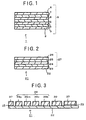
- FIG. 1 shows a sectional view of one example of an intermediate transfer recording medium.
- An intermediate transfer recording medium 1 using this invention is used for transferring a transfer layer 9 after forming an image on a transfer-receiving material.
- the intermediate transfer recording medium 1 comprises at least a base film 2 and a transfer layer 9 arranged separably on the base film 2, and the transfer layer 9 comparises at least a receptor layer 8 on which an image is formed, and is used for transferring the transfer layer 9 bearing the image on to the transfer-receiving material.
- each layer of a release layer 3, a protecting layer 4, a hologram layer 5, a transparent vapour deposition layer 6, an anchor layer 7, and a receptor layer 8 are laminated from a side of the base film 2 in this order.
- a conventional layer such as an ultraviolet radiation absorption layer may be arranged as the occasion demands. The action and the effect these layers is well known, and the composition of the layers is not limited. The detail of each layer will be described later.
- the adhesive layer transfer sheet used in a method for forming a printed product will be described in detail below.
- Fig.2 is a schematic sectional view showing one example of an adhesive layer transfer sheet.
- An adhesive layer transfer sheet 21 is used in the present invention, to adhere a transfer layer 9 of an intermediate transfer recording medium 1 after forming a image, and a transfer-receiving material, firmly.
- the adhesive layer transfer sheet 21 comprises at least a substrate sheet 22 and a transferring adhesive layer 27 (hereinafter, referred as to "adhesive layer 27") arranged separably on the substrate sheet 22.
- the adhesive layer 27 of the adhesive layer transfer sheet 21 is, first, transferred either on to the transfer layer 9 of the intermediate transfer recording medium 1, or on yo the transfer-receiving layer, then transferred on to the other of these with the transfer layer or the transfer-receiving layer on to which the adhesive layer is transferred.
- the adhesive layer 27 comprises at least an uppermost layer 26 having a suitable adhesive property to transfer layer 9 of the intermediate transfer recording medium 1, and a basement layer 24 having a suitable adhesive property to the surface of the transfer-receiving material and formed of different material from the material of the uppermost layer 26.
- a basement layer 24 having a suitable adhesive property to the surface of the transfer-receiving material and formed of different material from the material of the uppermost layer 26.
- an intermediate layer 25 is arranged, which is formed of material adhering firmly to both of the basement layer 24 and the uppermost layer 26.
- a release layer 23 may be arranged on the substrate sheet 22.
- a back surface layer(not shown) may be arranged on the opposite surface of the substrate sheet 22 to the surface on which the adhesive layer 27 is arranged.
- the basement layer 24 and the uppermost layer 26 of the adhesive layer 27 are arranged such that the uppermost layer 26 directly adheres to transfer layer 9, and the basement layer 24 directly adheres to transfer-receiving material. That is, when the adhesive layer 27 is first transferred on to the transfer layer 9, shown in fig.2, the uppermost layer 26 is arranged at the farthest position from the substrate sheet 22 of the adhesive layer transfer sheet, and the basement layer 24 is arranged at the closest position to the substrate sheet 22. On other hand, when the adhesive layer 27 is transferred on to the transfer-receiving material first (not shown), the basement layer 24 is arranged at the furthest position from the substrate sheet 22 of the adhesive layer transfer sheet, and the uppermost layer 26 is arranged at the closest position to the substrate sheet 22.
- Fig.3 is a schematic sectional view showing another example of an adhesive layer transfer sheet which is used for the method of forming a printed product according to the present invention.
- An adhesive layer transfer sheet 31 is composed such that at least one colouring material layer selected from the group consisting of a sublimation dye layer 39 having various colours and a heat fusible ink layer 30 having various colours, and an adhesive layer 37 are laterally arranged along the surface of a substrate sheet 22.
- the adhesive layer 37 has the same construction as the adhesive layer 27, shown in Fig.2. Since this adhesive layer transfer sheet 31 can form an image and the adhesive layer 37 on the transfer layer 9 in the same transfer step without using a thermal transfer sheet which is generally used to form the image, this method has superior productivity, and can further reduce transfer defects.
- the sublimation dye layer 39 may comprise various colour layers such as a yellow layer 39Y, a magenta layer 39M, a cyan layer 39C, and a black layer 39b laterally arranged along a surface.
- a heat fusible ink layer 30 may also comprise various colour layers laterally arranged along a surface.
- the sublimation dye layer 39 and the heat fusible ink layer 30 may be selected and arranged in accordance with the images to be transferred on to the transfer layer 9 of the intermediate transfer recording medium 1, as the occasion demands. Thus it is not limited to the structure shown in Fig.3.
- images which are transferred and formed from the sublimation dye layer 39 have a excellent gradation property, and the images which are transferred and formed from the heat fusible ink layer 30 can be readable by means of OCR. Since each of them has such characteristics, they can be selected and arranged as the occasion demands.
- Fig.4 is a schematic plan view of another example of an adhesive layer transfer sheet according to the present invention.
- a sublimation dye layer 39 and a heat fusible ink layer 30, which are laterally arranged along the surface of the substrate sheet 22, are of plan shape and size to be fitted to each image forming area allotted on the surface of the transfer-receiving material, on which the images are transferred and formed by using the intermediate transfer recording medium, so as not to be wasted.
- Colouring materials such as sublimation dye and heat fusible ink are transferred by means of a heating device such as thermal head to the required area of the receptor layer of the intermediate transfer recording medium, corresponding to each image forming area allotted on the surface of the transfer-receiving material, then the images are formed.
- a heating device such as thermal head
- the plan shape and size of the sublimation dye layers 39y,39m,and39c, and the heat fusible ink layer 30 preferably fit to the transferring and forming image area. According to this way, unnecessary area is reduce, so avoiding waste and achieving economy.
- the shapes of the colouring layers are formed as a comparatively simple shape such as a ring shape and a quadrilateral shape such that these shapes cover the complicated shapes , to make the method easy and reduce waste.
- the adhesive layer 37 likewise, is of plan shape and size fitting the receptor layer transfer area on the surface of the transfer-receiving material, to avoid waste. Further, the plan shape and size is not always the same plan shape and size as these of the receptor layer. Accordingly, there are some cases where the area of the adhesive layer 37 is smaller than the area of the images formed on the receptor layer. In this case, only the required area in the formed image is transferred on to the transfer-receiving material via the adhesive layer 37.
- the area of each colouring layer of the sublimation dye layers 39y, 39m, and 39c, and the heat fusible ink layer 30 may be smaller than the area of the adhesive layer 27. According to this method, all of the receptor layer bearing the image formed by each colouring material layer of the adhesive layer transfer sheet 31 can be transferred on to the transfer-receiving material thoroughly. Since redundant parts of the sublimation dye layers 39y, 39m, and 39c, and the heat fusible ink layer 30 can thus be reduced, this avoids waste and is effective in cost reduction.
- Fig.6 is a schematic sectional view showing one example of an intermediate transfer recording medium (hereinafter referred as "intermediate laminate sheet 28") after an adhesive layer 27 is transferred.
- the adhesive layer 27 of an adhesive layer transfer sheet 21 is transferred on to a receptor layer 8 of an intermediate transfer recording medium 1, on which an image 29 is formed in advance.
- an intermediate transfer recording medium 1 on which an image 29 is not formed in advance through use of the adhesive layer transfer sheet 21 shown in Fig.2, first, sublimation dye layers of various colour layers of a yellow layer 39Y, a magenta layer 39M, a cyan layer 39C, and black 39b are transferred in order, then the heat fusible ink layer 30 is transferred.
- the image 29 is formed on the receptor layer 8, and after that the adhesive layer 27 is continuously transferred on to the receptor layer 8.
- the uppermost layer 26 in the adhesive layer 27 is directly adhered to the receptor layer 8.
- the basement layer 24 easily separating from the release layer 23 of the adhesive layer transfer sheet 21 is positioned at the outermost surface of the intermediate laminate sheet 28 after the adhesive layer 27 is transferred.
- the image 29 in this case is formed in mirror image relation with the image to be recognized by visual observation, an OCR reading device, and the like, after the image has been finally transferred on to the transfer-receiving material.
- Fig.7 is a schematic sectional view showing one example of the printed product 41 according to the present invention, obtained by thermal-transferring the intermediate laminate sheet 28.
- the intermediate laminate sheet 28 on to which the adhesive layer 27 is transferred from the adhesive layer transfer sheet 21 is transferred such that, when the receptor layer 8 bearing the image 29 is transferred on to the transfer-receiving material 42, the substrate sheet 22 is separated from the protecting layer 4 , then the basement layer 24 directly adheres to the transfer-receiving material 42.
- adhesion between the receptor layer 8 bearing the image 29 and the transfer-receiving material 42 is firm because of the adhesive layer 27. Accordingly, transferring defects do not occur, and subsequent separation does not occur.
- the composition of the intermediate transfer recording medium 1 is not limited to that shown in Fig.4, and known compositions can be used.
- the adhesive layer transfer sheet 21, 31 since the uppermost layer 26 in the adhesive layer 27 has suitable adhesive property to the receptor layer 8 of the intermediate transfer recording medium 1, the adhesive layer 27 firmly adheres to the receptor layer 8 of the intermediate transfer recording medium 1, the problem of deterioration over time does not occur. As a result, an intermediate transfer recording medium with an adhered layer (the intermediate laminate sheet 28) can be obtained.
- the basement layer 24 having suitable adhesive property to the surface of the transfer-receiving material, in the adhesive layer 27, is positioned, on the surface of the thus obtained intermediate transfer recording medium, and so the receptor layer 8 of the intermediate transfer recording medium can be transferred with firm adhesion on to the transfer-receiving material 42 through the basement layer 24 having a firm adhesive property to the transfer-receiving material 42 and deterioration over time does not occur.
- the adhesive transfer sheet according to the present invention can firmly connect the receptor layer 8 on to the transfer-receiving material 42, although enough adhesion can not be obtained with both the receptor layer 8 of the intermediate transfer recording medium and the transfer-receiving material 42 through an adhesive layer composed of a single material.
- the sublimation dye layer 39 and/or the heat fusible ink layer 30 are arranged such that the adhesive layer 27 and the image 29 are laterally arranged along the surface of the substrate sheet 22. Accordingly, just before the adhesive layer 27 is transferred on to the receptor layer 8 of the intermediate transfer recording medium 1, colour images and letters are transferred and formed on the receptor layer 8, then the adhesive layer 27 can be transferred and formed in a continuous step. As a result, the process for forming the image is simplified, and the cost can be reduced.
- the receptor layer 8 bearing the image 29 has excellent adhesive property to the uppermost layer 26 in the adhesion layer 27, and the transfer-receiving material 42 has excellent adhesive property to the basement layer 24 in the adhesive layer 27.
- the receptor layer 8 can be arranged firmly on the transfer-receiving material 42. Accordingly, a printed product 41 can be obtained on which defects in transferring and separation of the image do not occur.
- the receptor layer 8 bearing the image 29 is arranged with firm adhesion. Accordingly, on such a passport, for example, the image 29 such as a picture of one's face and identification matter are not chipped, and the receptor layer 8 is not separated.
- a method for forming a printed product according to the present invention is illustrated with reference to Fig.8 (schematic view).
- the method for forming the printed material comprises at least two transfer steps, a first transfer step and a second transfer step.
- the adhesive layer 27, 37 of the adhesive layer transfer sheet 21, 31 is transferred on to either one of the transfer layer 9 on which the image has been formed in advance, and the transfer receiving material 42.
- the transfer layer 9 on to which the adhesive layer 27, 37 is transferred on to the transfer-receiving material 42 on which the adhesive layer 27, 37 is not transferred, or the transfer layer 9 on to which the adhesive layer 27, 37 is not transferred is transferred on the transfer-receiving material 42 on which the adhesive layer 27, 37 is transferred.
- the adhesive layer 27, 37 of the adhesive layer transfer sheet 21, 31 is transferred on to the transfer layer 9 of the intermediate transfer recording medium 1. Accordingly, an adhesive layer transfer sheet 21, 31 in which the uppermost layer 26 is arranged at the furthest position from the substrate sheet 22, and the basement layer 24 is arranged at the closest position to the substrate sheet 22, is prepared.
- the transfer is conducted by a thermal transfer method using a heating device such as a thermal head 43.
- the roller transfer method can also be used. In this method, a roller 44 which applies heat and pressure is used.
- a thermal head 43 only the heated portion is transferred, and so an adhesive layer 27, 37 having a pattern can be pattern-transferred on to the transfer layer 9.
- this method is preferably used.
- the transfer is conducted by the roller transfer method, since the adhesive layer 27, 37 is all transferred on to the transfer layer 9, the transfer is conducted efficiency, and productivity is increased.
- an uppermost layer 26 having adhesive property suitable for the transfer layer 9, is arranged on the outermost surface of the adhesive layer 27, 37. Accordingly, the adhesive layer 27, 37 firmly adheres to the transfer layer 9. Hence, defects of separation and transferring do not occur in the transfer step.
- the transfer layer 9 on to which the adhesive layer 27, 37 is transferred is transferred on to the transfer-receiving material 42, so that the printed product 41 is formed.
- transferring is conducted by means of the roller transfer method.
- a thermal transfer method using a heating device such as a thermal head 43 also can be used.
- the basement layer 24 having adhesive property suitable for the transfer-receiving material 42 is arranged on the outermost surface facing the transfer-receiving material 42. Accordingly, the transfer layer 9 firmly adheres to the transfer-receiving material 42 via adhesive layer 27, 37. Thus, defects of separation and transferring do not occur in the transferring process, and an excellent quality printed product 41 can be formed.
- the adhesive layer 27 of the adhesive layer transfer sheet 21 is transferred on to the transfer-receiving material 42. Accordingly, an adhesive layer transfer sheet 21 is prepared in which the basement layer 24 is arranged at the farthest position from the substrate sheet 22, and the uppermost layer 26 is arranged at the closest position to the substrate sheet 22.
- the transferring is conducted by the thermal transfer method using a heating device such as a thermal head, generally.
- the roller transfer method in which a roller 44 applies heat and pressure, can also be used.
- the transfer layer 9 is transferred from the intermediate transfer recording medium 1 on to the transfer-receiving material 42 on to which the adhesive layer 27 has been transferred, and then the printed product 41 is formed.
- the image has been formed in advance by means of the generally used thermal transfer sheet.
- the transferring of the transfer layer 9 is generally conducted by a roller transfer method.
- the thermal transfer method in which a heating device such as a thermal head 43 is used, can also be used.
- the transfer layer 9 having the same pattern as the transfer-pattern of the adhesive layer 27 can be transferred on the transfer-receiving material 42 by means of the roller transfer method having superior productivity.
- the uppermost layer 26 having adhesive property suitable for the transfer layer 9 is arranged on the outermost surface facing the transfer layer 9 of the intermediate transfer recording medium 1. Accordingly, the transfer layer 9 is firmly adhered to the transfer-receiving material 42 through the adhesive layer 27. Thus, defects of separation and transferring do not occur in the transfer process, and an excellent quality printed product 41 can be obtained.
- the adhesive layer 27, 37 of the adhesive layer transfer sheet 21, 31 is transferred either on to the transfer layer 9 of the intermediate transfer recording medium 1, or on to the transfer-receiving material 42 and that transferred on to the other of these, in accordance with the shape of the transfer-receiving material and so on, an efficient method for forming the printed product can be selected.
- the transfer layer 9 bearing the image has excellent adhesive property to the uppermost layer 26 in the adhesive layer 27, 37, and the transfer-receiving material 42 has excellent adhesive property to the basement layer 24 in the adhesive layer 27, 37.
- the transfer layer 9 can be firmly arranged on the transfer-receiving material 42.
- a printed product 41 in which defects of transfer and image separation do not occur can be obtained.
- the transfer layer 9 bearing the image is arranged with excellent adhesive property, for example, a passport can be obtained in which chipping of the image such as the picture of one's face and the identification matter and separation of the transfer layer do not occur.
- a substrate sheet 22 conventionally used for a thermal transfer film can be utilized.
- the base film 2 for the present invention there will be listed the following materials: thin papers such as glassine paper, condenser paper or paraffin paper; polyesters having a high heat-resistance property such as polyethlene terephthalate, polyethylene naphthalate, polybutylene terephthalate, polyphenylene sulfide, polyether ketone, or polyether sulphone; plastic distraction or non- distraction film made of polypropylene, polycarbonate, cellulose acetate, polyethylene derivatives, polyvinyl chloride, polyvinylidene chloride, polystyrene, polyamide, polyimide, polymethylpentene, ionomers.
- a laminated film in which two or more sorts of these materials are laminated can be used.
- the thickness of the substrate sheet 22 may be changed in accordance with the material to be used so as to provide suitable strength and heat resistence property, and usually, use of s substrate sheet 22 having a thickness of about 1 to 100 ⁇ m will be preferred.
- the basement layer 24 is made of material having excellent adhesive property to the transfer-receiving material 42, and is arranged as a part of an adhesive layer 27, 37 on the adhesive layer transfer sheet 21, 31.
- the basement layer 24 is easily separated from a release layer 23 of the adhesive layer transfer sheet 21, 31 and transferred on to an intermediate transfer recording medium 1 when the adhesive layer 27 is transferred on to the intermediate transfer recording medium 1 from the adhesive layer transfer sheet 21, 31.
- the basement layer 24 transferred on to the intermediate transfer recording medium 1 is positioned on the outermost surface of the intermediate laminate sheet 28, shown in Fig.6.
- the basement layer 24 bears the role of adhering the receptor layer 8 bearing the image 29 firmly to the transfer-receiving material 42 by adhering directly to the transfer-receiving material 42.
- the material of the basement layer 24 is selected in accordance with the material to be used as the transfer-receiving material 42 and its properties.
- thermoplastic synthetic resins including cellulose derivatives such as ethyl cellulose, or cellulose acetate propionate; styrene copolymers such as polystyrene, or poly ⁇ -methylstyrene; acrylic resins such as polymethyl methacrylate, polyethyl methacrylate, or polyethyl acrylate; vinyl group resins such as polyvinyl chloride, polyvinyl acetate, vinylchloride-vinylacetate copolymer, or polyvinyl butyral; polyester resins; polyamide resins; epoxy resins; polyurethane resins; ionomers; ethylene-acrylic acid copolymers; ethylene-acrylic esters copolymers
- the transfer-receiving material 42 is a passport paper with an identification column
- the material is natural paper having smoothness within the range of 10-1500 seconds (Bec's smoothness), preferably ionomer, polyvinyl pyrrolidone, and polyamide are listed as the material used as the basement layer 24.
- the material used as the basement layer 24 may be vinylchloride-vinylacetate copolymer.
- moisture-resisting pigments may be added.
- the basement layer 24 can be formed as follows.
- the coating solution for the basement layer is prepared by one or more sort of materials being selected from the above described materials in accordance with the material of the transfer-receiving material 42 and so on, and adding an addition agent as the occasion demands, then these materials are dispersed or dissolved in the appropriate solvent such as water and organic solvents.
- the thus obtained coating solution may be coated on the release layer 23 or the intermediate layer 25 by means of a method such as gravure, screen printing, or reverse coating using a gravure plate, and dried.
- the thickness of the basement layer is decided in accordance with the adhesive property to the transfer-receiving material 42 and receptor layer 8 via the adhesive layer 27, and the operational property, it is preferred for the basement layer to have a thickness of about 0.5 to 20 ⁇ m.
- the uppermost layer 26 is formed of a material having excellent adhesive property to the receptor layer 8, and is positioned on the outermost surface of the adhesive layer 27 on the adhesive layer transfer sheet 21, 31, as a part thereof.
- the uppermost layer 26 has the role of firmly adhering to the receptor layer 8 already bearing the image 29, when the adhesive layer 27 is transferred on to the intermediate transfer recording medium 1 from the adhesive layer transfer sheet 21, 31.
- the uppermost layer 26 transferred on to the intermediate transfer recording medium 1 is positioned about at the middle of the intermediate laminate sheet 28 shown in Fig.6, and then when transferred on to the transfer-receiving material 42, the uppermost layer 26 is transferred on to the transfer-receiving material 42 with the receptor layer 8, and the like.
- the material forming the uppermost layer 26 is selected in accordance with the material and properties of the receptor layer 8.
- the general composition material similar materials to those listed as the materials used for the basement layer 24, can be used.
- synthetic resins including: acrylic resins such as polymethyl methacrylate, polyethyl methacrylate, polyethyl acrylate, or acrylic polyol; vinyl group resins such as polyvinyl chloride, polyvinyl acetate, vinylchloride-vinylacetate copolymer, polyvinyl butyral; polyester resins; polyamide resins: epoxy resins; polyurethane resins; ethylene-acrylic acid copolymers; ethylene-acrylic esters copolymers.
- the glass-transition temperature of the resin forming the uppermost layer 26 is not less than 60 ⁇ . Accordingly, when the adhesive layer transfer sheet 21, 31 is kept rolled up, or piled up, especially under bad conditions such as high temperature, blocking (that is the uppermost layer sticking to the back surface of the substrate sheet) can be prevented.
- the receptor layer 8 is formed of vinylchloride-vinylacetate copolymer resin, vinylchloride-vinylacetate copolymer as same, polyester resin, or acrylic resin can be preferably listed as the material forming the uppermost layer 26. By adopting these materials, the uppermost layer 26 can provide the preferable firm adhesive property.
- the uppermost layer 26 can be formed as follows.
- the coating solution for forming the uppermost layer 26 is prepared by selecting one or more sorts of materials from the above described materials in accordance with the material forming of the receptor layer 8 , and adding the addition agents and the like as the occasion demands, then these materials are dispersed or dissolved in the appropriate solvent such as water and organic solvents.
- the thus obtained coating solution may be coated on the intermediate layer 25 by means of a method such as gravure, screen printing, reverse coating using a gravure plate, and dried.
- the thickness of the uppermost layer is decided in accordance with the adhesive property to the transfer-receiving material 42 and the receptor layer 8 via the adhesive layer 27, and the operational property, it is preferred for the uppermost layer to have a thickness of about 1.0 to 20 ⁇ m under dry conditions.
- the intermediate layer 25 is arranged to integrate the basement layer 24 and uppermost layer 26. That is, the above mentioned materials forming of the basement layer 24 and the uppermost layer 26 are changed in accordance with the materials forming of the transfer-receiving layer 42 and the receptor layer 8 respectively. Thus, when the basement layer 24 and uppermost layer 26 are piled up, depending on the materials, it is difficult for them to adhere directly or there is not enough adhesive property.
- the intermediate layer 25 is formed of a material which has a suitable adhesive property to adhere firmly to both the basement layer 24 and the uppermost layer 26.
- the material forming of the basement layer 24 is ionomer
- the material forming of the uppermost layer 26 is selected from synthetic resins including: acrylic resins such as polymethyl methacrylate, polyethyl methacrylate, or polyethyl acrylate; vinyl group resins such as polyvinyl chloride, polyvinyl acetate, or vinylchloride-vinylacetate copolymer; polyester resins; epoxy resins; polyurethane resins; ethylene- acrylic acid copolymer; and ethylene-acrylic ester copolymer
- the material forming the intermediate layer 25 is preferably selected from materials such as polyvinyl pyrrolidone, polyamide resin, acrylic polyol, or polyvinyl butyral.
- the intermediate layer 25 can be formed as follows.
- the coating solution for forming the intermediate layer 25 is prepared by selecting one or more sorts of materials from the above described materials in accordance with the material forming of the basement layer 24 and the uppermost layer 26, and adding addition agents and so on as the occasion demands, then these materials are dispersed or dissolved in the appropriate solvent such as water and organic solvents.
- the thus obtained coating solution may be coated on the basement layer 24 by means of a method such as gravure, screen printing, and reverse coating using a gravure plate, and dried.
- the thickness of the intermediate layer 25 is usually within the range of 0.5 to 20 ⁇ m under dry conditions.
- the thus formed intermediate layer 25 has the effect of absorption of the unevenness which exists on the surface of the transfer-receiving material 42, as well as the effect of providing adhesive property between the basement layer 24 and the uppermost layer 26. Accordingly, the intermediate layer 25 is effective for providing the adhesive property to the transfer-receiving layer 42 and to the transfer layer 9, which are adhered to the basement layer 24 and the uppermost layer 26 respectively, and also for improving the quality of the finally obtained printed product 41.
- the basement layer 24 and the uppermost layer 26 are formed of material which can adhere at low temperature, since heat-softening and fluidization do not occur on the receptor layer 8 by heating during the thermal-transfer, turbulence of the image borne on the receptor layer 8 does not occur.
- polyester reigns, ionomer, and vinylchloride-vinylacetate copolymer can be listed.
- the range of the thickness is preferably within 2-60 ⁇ m.
- the thickness of the adhesive layer is less than 2 ⁇ m, there is the problem that the adhesion to the transfer-receiving layer 42 is not uniform enough, and when the thickness is more than 60 ⁇ m, there is the problem of unintentional peeling of the layer and defects of edge sharpness, and also waste.
- a release layer 23 using the present invention is arranged on the substrate sheet 22 as the occasion demands.
- the basement layer 24 can be separated easily from the interface of the release layer 23, the adhesive layer 27 is transferred easily on to the intermediate transfer recording medium 1.
- the release layer 23 includes releasing material and binder resin.
- the binder resin is preferably formed of thermoplastic resin including acrylic group resin such as polymethyl methacrylate, polyethyl methacrylate, polybutyl acrylate; vinyl group resins such as polyvinyl acetate, vinyl chloride-vinyl acetate copolymer, polyvinyl alcohol, polyvinyl butyral; cellulose group resin derivative such as ethyl cellulose, nitro cellulose, cellulose acetate; or thermosetting resins such as unsaturated polyester resin, polyester resins, polyurethane resin and aminoalkyd resin.
- the releasing material is, for example, various wax; silicone wax; silicone group resin; melamine resin; fluorine resin; fine powder of talc and silica; lubricant such as surface active agent and metallic soap.
- the release layer 23 can be formed as follows.
- the coating solution for forming the release layer is prepared by dispersing or dissolving the above described resin in the appropriate solvent.
- the thus obtained coating solution may be coated on the substrate sheet 22 by means of a method such as gravure, screen printing, or reverse coating using a gravure plate, and dried.
- the thickness of the release layer 23 is usually within the range of 0.1 to 5 ⁇ m under dry conditions.
- the sublimation dye layer 39 is arranged with the adhesive layer 27 and the like laterally arranged along the surface of the substrate sheet 22 of the adhesive layer transfer sheet 31, in order to transfer the image 29 on to the receptor layer 8 of the intermediate transfer recording medium 1 as above described.
- the image 29 is formed by the dye in the sublimation dye layer 39 being thermally transferred on to the receptor layer 8 of the intermediate transfer recording medium 1 by means of a heating device such as a thermal head. Accordingly, since forming the image 29 and transferring the adhesive layer 27 can be conducted as a series of processes, this has the advantage that a complicated process can be avoided.
- the sublimation dye layer 39 is formed of a coating solution including a sublimation dye, a binder resin, and other optional components.
- any conventionally known sublimation dye can be used in the present invention as the sublimation dye, which is not especially limited.
- magenta sublimation dye the following dyes may be exemplified: MS Red G, Macrolex Red Violet R, Ceres Red 7B, Samaron Red HBSL, Resolin Red F3BS.
- the following dyes may be exemplified as the yellow sublimation dye: PHORONE BRILLIANT YELLOW-6GL, PTY-52, and MACROLEX YELLOW 6G.
- the following dyes may be exemplified: KAYASET BLUE 714, Waxoline BULE AP-FW, PHORONE BRILLIANT BLUE S-R, and MS BULE 100.
- binder resin any conventionally known binder resin can be used in the present invention, which is not especially limited.
- the following resins may be preferable as the binder resin for the sublimation dye layer: a cellulose resin such as ethyl cellulose, hydroxy ethyl cellulose, ethyl hydroxy cellulose, hydroxypropyl cellulose, methyl cellulose, cellulose acetate, and cellulose acetate butyrate; vinyl group resin such as polyvinyl alcohol, polyvinyl acetate, polyvinyl butyral, polyvinyl acetal, polyvinyl pyrrolidone, or polyacrylic amide; and polyester.
- a cellulose resin such as ethyl cellulose, hydroxy ethyl cellulose, ethyl hydroxy cellulose, hydroxypropyl cellulose, methyl cellulose, cellulose acetate, and cellulose acetate butyrate
- vinyl group resin such as polyvinyl alcohol, polyvinyl acetate, poly
- the sublimation dye layer 39 may include any optional component such as organic filler. Any conventionally known material can be used as this optional component in the present invention, which is not especially limited.
- the coating thickness of the sublimation dye layer 39 is preferably within the range of 0.2 to 3 ⁇ m, more preferably whithin the range of 0.3 to 2 ⁇ m.
- the sublimation dye layer 39 can be formed as follows.
- the coating solution for forming the sublimation dye layer is prepared by dispersing or dissolving the above described sublimation dye, the binder resin, and the other optional components in the appropriate solvent.
- the thus obtained coating solution may be coated on the substrate sheet 22 by means of a method such as gravure, screen printing, and reverse coating using a gravure plate, and dried.
- the heat fusible ink layer 30 is arranged with the adhesive layer 27 and the like laterally arranged along the surface of the substrate sheet 22 of the adhesive layer transfer sheet 21, similar to the above described sublimation dye layer 39.
- the image 29 is formed by the heat fusible ink layer 30 being thermally transferred on to the receptor layer 8 of the intermediate transfer recording medium 1 by means of a heating device such as a thermal head. Accordingly, since forming the image 29 and transferring the adhesive layer 27 on to the intermediate transfer recording medium 1 can be conducted as a series of processes, this has the advantage that a complicated process can be avoided.
- This heat fusible ink layer 30 may be formed of heat fusible ink similar to conventional ink.
- the heat fusible ink is composed of a colouring material and a vehicle, and various additive agents may be added as the occasion demands.
- carbon black has a satisfactory property as a recording material compared with all of the above organic or inorganic paints or dyes, for example, enough density of colouration, and not being subject to discolouration and browning through exposure to light, heat and change of temperature, it can be used to print a letter or a mark with high density and clearness. Further, when using heat fusible ink, it is readable by OCR reading, and so it is preferably used to form an image which requires OCR reading.
- any one of the binder resin within the following item 1 to 5 is preferable from the point of adhesive property to the receptor layer 8 of the intermediate transfer recording medium 1 and scratch-resistance property.
- Wax and the like may be used instead of the above described binder resin, and binder resin may have added the wax and the like.
- wax microcrystalline wax, carnauba wax, and paraffin wax can be listed.
- material which may be used as wax is listed as follows: Fischer-Tropsch's wax, various low molecular polyethylene, Japan tallow, bees wax, cetaceum, insect wax, wool wax, shellac wax, candelilla wax, petrolatum, partially modified wax, fatty acid ester, and fatty acid amide.
- the heat fusible ink layer 30 is formed through use of a coating method such as hot melt coating, hot lacquer coating, gravure coating, gravure reverse coating, or roll coating, and through applying the above described heat fusible ink on to the substrate sheet 22.
- the thickness of the formed heat fusible ink layer is decided by the relation of required density and heat sensitivity, and preferably is within the range of 0.2 to 10 ⁇ m.
- a backing layer (not shown) may be formed by a conventional method on the opposite surface of the substrate sheet 22 to the surface on which the adhesive layer 27 is arranged, for the purpose of preventing the adhesive layer 21, 31 from being thermally fused to a heating device such as a thermal head and improving the sliding thereof when the adhesive layer 27 and the like is transferred on to the intermediate transfer recording medium 1 from the adhesive layer transfer sheet 21, 31.
- the backing layer is formed of natural or synthetic resins including; for example, cellulose group resin such as ethyl cellulose, hydroxycellulose, hydroxypropyl cellulose, methyl cellulose, cellulose acetate, cellulose acetate butyrate or nitrocellulose; vinyl group resin such as polyvinyl alcohol, polyvinyl acetate, polyvinyl butyral, polyvinyl acetal or polyvinyl pyrrolidone; acrylic group resin such as polymethylmethacrylate, polyethylacrylate, polyacrylamide and acrylonitrile-styrene copolymer; polyamide resin; vinyltoluene resin; coumarone-indene resin; polyester group resin; polyurethane group resin; silicone-modified urethane resin; fluorine-modified urethane resin; and mixtures thereof.
- cellulose group resin such as ethyl cellulose, hydroxycellulose, hydroxypropyl cellulose, methyl cellulose, cellulose acetate, cellulose
- the backing layer is preferably formed of crosslinking resin by selecting a resin having a reactive group from the above-mentioned resins, and using a crosslinking agent such as polyisocyanate in combination therewith. Furthermore, in order to provide heat-resistive sliding ability for the backing layer and to improve sliding ability against the thermal head and so on, solid or liquid releasing agent or lubricant may be added to the backing layer.
- releasing agent or lubricant there may be used, for example, various waxes such as polyethylene wax or paraffin wax; higher fatty acid alcohol; organopolysiloxane; anionic group surface active agent; cationic group surface active agent; amphoteric surface active agent; nonionic group surface active agent; fluorine group surface active agent; organic carboxylic acid and its derivatives; fluorine group resin; silicone group resin; and fine particles of inorganic compound such as talc or silica.
- the lubricant is added at an amount of 5 to 50 weight %, preferably 10 to 30 weight %, with respect to all solid components of the backing layer.
- the detection mark(not shown) is preferably arranged on the adhesive layer transfer sheet 21, 31. It is generally used as a positioning mark, for example, in order to transfer the adhesive layer 27 to the designated position on the receptor layer 8 of the intermediate transfer recording medium 1 and to transfer the various colours of the dye and ink, and adhesive layer 27 and the like on to the receptor layer 8, without dislocation of position and colour.
- such a detection mark may be arranged on the appropriate portion of the intermediate transfer recording medium 1, described later, and it acts as a positioning mark when transferring on to the transfer-receiving material 42.
- the shape of the detection mark can be any shape as long as capable of being detected by a optical detector.
- the shape thereof is not specifically limited and, for example, round shape, rectangular shape, linear shape, or the like, or a conventional detection mark such as a penetration hole may be adopted.
- the printed detection mark can be formed by means of a conventional printing method and the like, at one part or plural parts on either surface of the substrate sheet 22 of the adhesive layer transfer sheet 21, 31.
- a conventional material can be used as the ink to be used, and it is not especially limited.
- Fig.9 and fag.10 shown a schematic sectional view of one example of the intermediate transfer recording medium used to form the printed product according to the present invention.
- the intermediate transfer recording medium 1 at least a receptor layer 8 is arranged on the base film 2.
- the base film 2 can be used similar materials to the materials forming the substrate sheet 22 of the above described adhesive layer transfer sheet 21, 31.
- the backing layer (not shown) may be arranged on the opposite surface of the base film 2 to the surface where the receptor layer 8 is arranged, in order to improve the sliding property relative to the thermal head and the like when transferring on to the transfer-receiving material.
- a separation layer 3 On the base film 2, shown in Fig.9, a separation layer 3, a protecting layer 4, a hologram layer 5, a transparent vapour deposition layer 6, an anchor layer 7, and a receptor layer 8 can be arranged in this order. Further, as showin in Fig.10, on the base film 2, a protecting layer 4, an anchor layer 7, an ultraviolet radiation absorption layer 45, a heat seal layer 46, and a receptor layer 8 may be arranged in this order.
- These layers are well known in action and effect, and their formation is not limited to the formation shown in Fig.9 and Fig.10. It is possible to add other conventional layers.
- the adhesive layer 27, or an image 29 and the adhesive layer 27 is transferred from the adhesive layer transfer sheet 21, 31 according to this invention. Then, on the surface of the adhesive layer 27 of the intermediate transfer recording medium (intermediate laminate layer 28), on to which the image 29 and the adhesive layer 27 is transferred, the basement layer 24 having suitable adhesive property to the surface of the transfer-receiving material 42 is arranged.
- the receptor layer 8 on which the image is formed is transferred on to the transfer-receiving material 42 from the intermediate laminate layer 28 with other necessary layers by means of thermal transfer. As a result, the printed product 41 according to the present invention is formed.
- the receptor layer 8 is firmly adhered to the transfer-receiving material 42, and is to separate therefrom, because the receptor layer 8 has excellent adhesion property to the uppermost layer transferred simultaneously. Further, since the receptor layer 8 is formed of resin material which easily receives the above described sublimation dye and heat fusible ink, a high quality image having excellent gradation property, can be obtained easily. Thus, it is satisfactory to form a picture of one's face for identification, which requires high quality printing, for example, a picture of one's face for a passport and so on.
- polyolefin resin such as polypropylene
- halide resin such as polyvinyl chloride, polyvinylidene chloride
- vinyl resin such as polyvinyl acetate vinyl chloride-vinyl acetate copolymer, ethylene- vinyl acetate copolymer, or polyacrylate
- polyester resin such as polyethylene terephtharate or polybutylene terephtharate
- polystyrene resin polyamide resin
- copolymer of olefin such as ethylene or propylene and another vinyl monomer
- cellulose resin such as ionomer, or cellulose diastase
- polycarbonate or a mixture of the substances mentioned above.
- vinyl chloride resin, acryl-styrene resin or polyester resin is preferable.
- the receptor layer 8 Since the receptor layer 8 is transferred on to the transfer-receiving material 42 via the adhesive layer 27, 37 including the basement layer 24 and the uppermost layer 26, thermal-adhesive property of the receptor layer 8 itself is not always required. Accordingly, the receptor layer 8 can be formed of a resin which is hardly softened by heating, for example, polyester or hardening thereof. By to using such a resin, since thermal-softening and fluidization on the receptor layer 8 (which is in danger of occurring during thermal adhesion by means of thermal head 43 or the like) do not occur, turbulence of the image formed on the receptor layer 8 is not generated.
- the receptor layer 8 uses the ordinary material, turbulence of the image by thermal-softening and fluidization of the receptor layer 8 during the thermal-transfer, can be prevented if the basement layer 24 and uppermost layer 26 are formed of material which can adhere at low temperature.
- the receptor layer 8 can be formed as follows.
- the coating solution for forming the receptor layer is prepared by one or more sorts of materials being selected from thermoplastic resins having satisfactory dyeing property, and adding the addition agents as the occasion demands, then these materials are dispersed or dissolved in the appropriate solvent such as water and organic solvents.
- the thus obtained coating solution may be coated on the base film 2, or when the protecting layer 4 or the like is formed on the substance film 2, thereon, by means of a method such as gravure, screen printing, and reverse coating using a gravure plate, and dried.
- the thickness of the receptor layer 8 is within the range of about 0.11 to 10 ⁇ m under dry conditions.
- plasticizer having from low molecular weight to high molecular weight such as the plasticizer for vinyl chloride resin, such as ester phthalate, phosphate, or polyester plasticizer, may be added as the plasticizer in order to improve the printing sensitivity of the receptor layer 8.
- the addition agent is preferably added in an amount of 0.5 to 30 weight % with respect to the amount of the resin.
- a release agent is added to the above described resin in order to prevent heat fusing to the thermal transfer sheet or the adhesive layer transfer sheet 21 according to the present invention.
- Material such as silicone oil, phosphate surface active agent or fluorine compound is used, among which silicone oil is most preferably used.
- the release agent it is further preferable for the release agent to have an addition amount of 0.2 to 30 weight parts with respect to 100 weight parts of the binder resin forming the receptor layer.
- a separation layer 3, a protecting layer 4, a hologram layer 5, a transparent vapour deposition layer 6, and an anchor layer 7 shown in Fig.9, or a protecting layer 4, an anchor layer 7, an ultraviolet radiation absorption layer 45, and a heat seal layer 46 shown in Fig.10 are generally arranged at appropriate position between the base film and the receptor layer 8 in the intermediate transfer recording medium 1, in accordance with the property of each layer.
- These layers are transferred on to the transfer-receiving material 42 through separating from the base film 2 with the receptor layer 8, and compose the printed product 41
- the protecting layer 4 is arranged on the intermediate transfer recording medium 1 in advance, and the purpose of arranging the protecting layer 4 is to protect the receptor layer 8 transferred on to the transfer-receiving material 42, and to keep the quality of the image 29.
- the protecting layer 4 material used for conventional protecting layer may be used. It is preferable to select a resin composition having an appropriate separating property from the base film 2, and, after transfer on to the transfer-receiving material 42 with the receptor layer 8, having the required property as the surface protecting layer of the receptor layer 8, for example, fingerprint-resistance.
- ionizing radiation hardening type resin may be used as the material for the protecting layer 4.
- a protecting layer 4 such as a lubricant in order to improve a paratripsis-resistance property of the image forming material, a surfactant in order to prevent contamination, an ultraviolet radiation absorbing agent in order to improve weather resistance, and an antioxidant and so on, may be used.
- the protecting layer 4 can be formed by a similar method to the method for the receptor layer 8, and the thickness of the protecting layer 4 is preferably within the range of 0.1 to 10 ⁇ m.
- a separation layer 3 is arranged in order to easily transfer each layer to be transferred on to the transfer-receiving material 42.
- the separation layer 3 can separate easily from the base film 2 at the interface thereof, and can easily transfer the other layers, that is, the protecting layer 4, the hologram layer 5, the transparent vapour deposition layer 6, the anchor layer 7, and receptor layer 8.
- the material used in order to form the separation layer 3 conventional material may be used, and is not limited.
- a printed product having a hologram pattern can be obtained.
- Such a printed product on which a hologram pattern is arranged may be used as a credit card and a passport besides use for decoration, because it is difficult to forge by a reproduction.
- the material for forming the hologram layer 5 conventional material can be used, and is not limited. A conventional method may be adopted for forming the hologram layer 5.
- a transparent vapour deposition layer 6 is generally arranged on the side of the receptor layer 8 contacting the hologram layer 5.
- This transparent vapour deposition layer 6 has a different refractive index from the other layers, so that, in the formed printed product 41, this layer has the of raising the pattern of the hologram.
- the material for forming the transparent vapour deposition layer 6 can be a conventional material, for example, metallic sulfide or metallic oxide such as ZnS, TiO 2 , SiO 2 , or Cr 2 O 3 , and it is not especially limited. Further, as the method for forming a conventional method can be adopted such as vapour deposition, sputtering, or ion plating.
- the material to form the anchor layer 7 can be conventional material, and it is not limited. Further, a conventional method can also be adopted.
- An ultraviolet radiation absorbing layer 45 is arranged at an appropriate position between the receptor layer 8 and the base film 2, in order to prevent deterioration of the image 29 of the printed product 41 from ultraviolet rays in natural light.
- the material to form the ultraviolet radiation absorbing layer 45 can be conventional material, and it is not limited. Further, a conventional method can also be adopted.
- each layer such as the receptor layer 8 bearing the image 29 and the above described other required layers is transferred from the intermediate laminate sheet and, as a result, the printed product 41 is constructed.
- the transfer-receiving material 42 used in this invention is not especially limited, and for example, materials such as natural fiber paper, coated paper, tracing paper, plastic film which is not deformed through heating during the transfer, glass, metal, ceramics, wood, cloth and so on may be used.
- gold notes such as a stock, a bill, a bond, bankbooks, a train ticket, horses and vehicles ticket, a revenue stamp, a postage stamp, an appreciation ticket, an admission ticket, a ticket
- cards such as a cash card, a credit card, a prepaid card, a member's card, a greeting card, a postal card, a visiting card, a driver's license, an IC card, a light card
- cases such as a carton, a container; bags; records; personal ornaments such as an envelope, a tag, an OHP sheet, a slide film, a book mark, a calendar, a poster, a pamphlet, a menu, a passport, POP things, a coaster, a display, a nameplate, a keyboard, cosmetics, a watch, a lighter; stationery such as writing materials, a report paper; building materials; a panel; an emblem; a key; cloth; clothing;
- the adhesive layer transfer sheet 21, 31 and the intermediate laminate sheet 28 shown in Fig.6 are preferably used.
- passport paper natural paper is generally used, and in some cases, qualities such as smoothness are varied in accordance with the country. Even when the paper has the Bec's smoothness of 10 to 1500 seconds, the basement layer 24 can adhere firmly, and even when the smoothness is worse than this, since the basement layer 24 and the intermediate layer 25 perform a role as buffer layers, a printed product 41 can be obtained in which the quality of the image is excellent, and lacking and separating of the image do not occur.
- the printed product 41 according to the present invention can be formed through use of the above described adhesive layer transfer sheet 21, 31 and the intermediate transfer recording medium 1.
- the method to form the printed product will be described as follows.
- the printed product 41 according to the present invention can be obtained by the image 29 being formed on the transfer-receiving material 42 by transferring the receptor layer 8 bearing the image 29 on to the transfer-receiving material 42 from the intermediate transfer recording medium 1 by means of the adhesive layer transfer sheet 21, 31.
- the adhesive layer transfer sheet 21 ,31 is transferred on to the receptor layer 8 of the intermediate transfer recording medium 1 which is used for transferring the receptor layer 8 bearing the image 29 on to the transfer-receiving material 42, such that the uppermost layer 26 of the adhesive layer 27 is adhered to the receptor layer 8.
- the intermediate transfer recording medium 1 (intermediate laminate sheet 28) on the outermost surface of which the basement layer 24 is arranged through transferring the adhesive layer 27, is transferred on to the transfer-receiving material 42. Then the printed product 41 is formed by the image 29 being formed on the transfer-receiving material 42.
- the adhesive layer transfer sheet 21, 31, the intermediate transfer recording medium 1 and the transfer-receiving material 42 used in this case, are formed the by above described materials and methods.
- the receptor layer 8 on which the image 29 is formed and the transfer-receiving material 42 are firmly adhered by means of the uppermost layer 26 and the basement layer 24 having suitable adhesive property to the respective layers. Accordingly, in the forming process of the printed product 41, defects of adhesion between the receptor layer 8 and the transfer-receiving material 42 do not occur. In the printed product, separation of the receptor layer 8 and lack of the image 29 do not occur. According to this method, a printed product 41 which must not have a lack of images, such as a passport, an ID card, a credit card, or an identification card can preferably be formed.
- a colour picture of one's face 52 and the required matters such as identification matter is printed as shown in Fig.11.
- the sort of images and letters are various depending on the position.
- a picture of one's face 52 is formed of a sharp colour image by various colours of sublimation dye.
- the picture positioned at the upper left corner of the passport 51 is formed as a circle, an ellipse or a quadrilateral.
- Letters such as nationality, address, name, date of birth, and the distinction of sex ( hereinafter, referred as nationality and so on 53) formed through use of heat fusible ink at the centre portion, and OCR readable mark and letters 54 are formed through use of heat fusible ink at the lower portion.
- a fingerprint pattern and a signature 55 are formed by use of sublimation black dye at the right portion.
- an adhesive layer transfer sheet 50 suitable for forming thereof.
- various colours of the sublimation dye layers 39y, 39m, 39c are arranged such that the plane shape and size of the sublimation dye layer 39y, 39m, 39c corresponds to the area on which a colour picture 52 is to be formed
- the sublimation black dye layer 39b is arranged such that the plane shape and size of the sublimation black dye layer 39b corresponds to the area on which a fingerprint pattern and a signature 55 are to be formed
- the heat fusible ink layer 30 is arranged such that the plane shape and size of the heat fusible ink layer 30 corresponds to the area on which a nationality and so on 53 and OCR readable mark and letters 54 are to be formed. According to this method, unnecessary colouring material is saved and waste isavoided, so as to be economical.
- the adhesive layer 27 is composed of an uppermost layer 26 having adhesive property suitable for the receptor layer 8 of the intermediate transfer recording medium 1, and a basement layer 24 having adhesive property suitable for a passport paper as the transfer-receiving material 42.
- the plane shape and size of the adhesive layer 27 corresponds to the image forming area (H x L) of a passport 51, preferably.
- various colours of the sublimation dye layer 39 and the heat fusible ink layer 30 are transferred and formed on the receptor layer 8 of the intermediate transfer recording medium 1 from the above described adhesive layer transfer sheet 50 for a passport, such that the formed image on the receptor layer 8 is formed as a reflected image of the image 29 to be formed finally.
- the adhesive layer 27 is transferred such that the adhesive layer 27 completely covers the image.
- the adhesive layer 27 and the receptor layer 8 adhere firmly by the uppermost layer 26 having adhesive property suitable for the receptor layer 8. Accordingly, on the subsequent process, transfer defects do not occur during transfer on to the passport 51.
- the intermediate transfer recording medium 1 on which the required images are transferred and formed is transferred on to the passport 51, and the image is formed at the image forming area (H x L).
- a basement layer 24 having adhesive property suitable for the passport 51 is arranged on the outermost surface of the adhesive layer 27 transferred on to the intermediate transfer recording medium 1.
- the receptor layer 8 bearing the image 29 is firmly adhered to the passport 51 through use of the basement layer 24, via the adhesive layer 27.
- a separation layer 3, a protecting layer 4, a hologram layer 5, a transparent vapour deposition layer 6, an anchor layer 7, an ultraviolet radation absorption layer 45, a heat seal layer 46 and the like may be properly arranged.
- a separation layer 3, a protecting layer 4, a hologram layer 5, a transparent vapour deposition layer 6, an anchor layer 7, and a receptor layer 8 are formed on the base film 2 in this order.
- the adhesive layer transfer sheet 21, 31 having an adhesive layer 27 formed of different materials which have suitable adhesive property respectively in order to transfer a high resolution and high quality image can be avoided through use of the adhesive layer transfer sheet 21, 31 having an adhesive layer 27 formed of different materials which have suitable adhesive property respectively in order to transfer a high resolution and high quality image.
- PET film (LUMIRROR, manufactured by Toray Co., Ltd.) having a thickness of 6 ⁇ m was used as a substrate.
- a primer layer of an urethane resin having a thickness of 0.5 ⁇ m was formed on one surface of the substrate, and a heat resistant slip layer having a thickness of 1 ⁇ m was formed on another surface, i.e., the back surface of the substrate.
- Inks of three colours each of which contained a sublimation dye were prepared. The inks thus prepared had the following compositions respectively.
- a magenta ink was prepared in the same manner as in the preparation of the yellow ink except that C.I. Disperse Red 60 was used as a dye instead of the yellow dye of the above formula.
- a cyan ink was prepared in the same manner as in the preparation of the yellow ink except that C.I. Solvent Blue 63 was used as a dye instead of the yellow dye of the above formula.
- each dye layer had a length of 15 cm, and plural sets of yellow, magenta and cyan were repeated.
- the applied amount of each dye layer was about 3 g/m 2 in solid component.
- PET film having a thickness of 6 ⁇ m (LUMIRROR, manufactured by Toray Co., Ltd.) was used as a substrate sheet 22, and on one side of the film, a silicone resin layer was formed by a gravure coating method as a heat-resistance slip layer having a thickness of 1 ⁇ m.
- a release layer 23 was formed by the similar method.
- a coating solution for a basement layer having the following composition was applied on to the release layer 23 by means of a gravure coating method, and then dried, thereby forming a basement layer 24 having an applied amount of 2.0 g/m 2 in a dried state.
- polyvinyl pyrrolidone manufactured by ISP company
- Microsilica manufactured by FUJI SILYSIA CHEMICAL LTD.
- isopropyl alcohol 75 weight parts
- a coating solution for a uppermost layer(No.1) having the following composition was applied on the above mentioned basement layer 24 by means of a gravure coating method, and then dried, thereby forming a uppermost layer 26 having an applied amount of 3.0 g/m 2 in a dried state.
- a coating solution for a uppermost layer(No.1) having the following composition was applied on the above mentioned basement layer 24 by means of a gravure coating method, and then dried, thereby forming a uppermost layer 26 having an applied amount of 3.0 g/m 2 in a dried state.
- an adhesive layer transfer sheet was obtained.
- An adhesive layer transfer sheet of example 2 was formed in the same manner as in example 1 except that a coating solution for a basement layer(No.2) having the following composition was used instead of the coating solution for a basement layer(No.1).
- polyamide resin 15 weight parts (PLATABOND, manufactured by Japan Rirusan company) ethanol 85 weight parts
- An adhesive layer transfer sheet of example 3 was formed in the same manner as in example 1 except that a coating solution for a basement layer(No.3) having the following composition was used instead of the coating solution for a basement layer(No.1), and a coating solution for a uppermost layer(No.2) having the following composition was used instead of the coating solution for a uppermost layer(No.1).
- Ionomer resin dispersion 30 weight parts (CHEMIPAL ; manufactured by Mitsui Petro Chemical Industries Co., Ltd.) Polyvinyl alcohol 5 weight parts (manufactured by Kuraray Co., Ltd.) Water 30 weight parts Ethanol 35 weight parts
- polyvinyl pyrrolidone 20 weight parts (manufactured by ISP company)
- Microsilica 5 weight parts (manufactured by FUJI SILYSIA CHEMICAL LTD.) isopropyl alcohol 75 weight parts
- An adhesive layer transfer sheet of example 4 was formed in the same manner as in example 3 except that the uppermost layer 26 in example 3 is used as an intermediate layer 25, and a coating solution for a uppermost layer(No.3) having the following composition was applied on the intermediate layer 25, and then dried, thereby forming a uppermost layer 26 having an applied amount of 3.0 g/m 2 in a dried state.
- An adhesive layer transfer sheet of example 5 was formed in the same manner as in example 1 except that an uppermost layer 26 and a basement layer 24 were formed on a release layer 23 in this order instead of the basement layer 24 and the uppermost layer being formed on the release layer in this order in the example 1.
- An adhesive layer transfer sheet of comparative example 1 was formed in the same manner as in example 1 except that a basement layer 24 was not arranged.
- An adhesive layer transfer sheet of comparative example 2 was formed in the same manner as in example 1 except that an uppermost layer 26 was not arranged.
- An adhesive layer transfer sheet of comparative example 3 was formed in the same manner as in example 4 except that an intermediate layer 25 was not arranged.
- An adhesive layer transfer sheet of comparative example 4 was formed in the same manner as in example 1 except that a coating solution for an uppermost layer(No.4) having the following composition was used instead of the coating solution for a uppermost layer(No.1).
- An adhesive layer transfer sheet of comparative example 5 was formed in the same manner as in comparative example 2.
- an image was formed through migrating the sublimation dye to a transfer layer 9 (a receptor layer 8) of an intermediate transfer recording medium 1 prepared in advance, through use of the above described sublimation thermal transfer sheet.
- the adhesive layer transfer sheet 21 obtained from the above described example 1 to 4, and comparative examples 1 to 4 was prepared, as a first transfer step, the adhesive layer 27 of the thus-obtained adhesive layer transfer sheet 21 was pattern-transferred on the transfer layer 9 of the intermediate transfer recording medium 1 on which the image was formed through use of the thermal head 43. At this time, the transfer property was evaluated through observing the adhesive condition of the adhesive layer 27 on the transfer layer 9. Results of the evaluation are shown in Table 1.
- the adhesive layer 27 in this case is a substance in which, at least, the basement layer 24 and the uppermost layer 26 were arranged in the examples, and at least either one of the basement layer 24 or the uppermost layer 26 was arranged in the comparative examples.
- the transfer layer 9 on which the adhesive layer 27 had been transferred was thermally transferred on to the transfer-receiving material 42 by means of a roller 44, then, the printed product 41 was formed.
- transfer property was evaluated through observing the adhesive condition of the transfer layer 9 on the transfer-receiving material 42. Results of the evaluation are shown in Table 1. In this case, natural paper was used as the transfer-receiving material 42.
- an adhesive layer transfer sheet 21 obtained from example 5 and comparative example 5 was prepared.
- the adhesive layer 27 of the thus-obtained adhesive transfer sheet 21 was pattern-transferred on to the transfer-receiving material 42 by means of the thermal head 43.
- transfer property was evaluated through observing the adhesive condition of the transfer layer 27 on the transfer-receiving material 42. Results of the evaluation were shown in Table 1.
- the transfer layer 9 of the intermediate transfer recording medium 1 on which the image was formed through use of the above described sublimation thermal transfer sheet in advance was thermally transferred on to the transfer-receiving material 42 on which the adhesive layer 27 had been transferred by the first transfer step, by means of a roller 44, then, the printed product 44 was formed.
- the transfer property was evaluated through observing the adhesive condition of the transfer layer 9 on the transfer-receiving material 42. Results of the evaluation are shown in Table 1. In this case, natural paper was used as the transfer-receiving material 42.
- the keeping quality of an adhesive layer transfer sheet 21 rolled up into a roll was also evaluated.
- the condition of preservation was a temperature of 60°C for 48 hours.
- the generation of blocking was evaluated. Results of the evaluation are shown in Table 1.
- the adhesive layer 27 composed of the basement layer 24 and the uppermost layer 26 had excellent adhesive property to both of the transfer layer 9 of the intermediate transfer recording medium 1 and the transfer-receiving material 42, and the obtained printed product 41 showed satisfactory pattern-transferring property. Further, blocking did not occur.
- the printed product 41 obtained by comparative examples 1-3, and 5 was inferior in pattern-transferring property.
Landscapes
- Physics & Mathematics (AREA)
- Optics & Photonics (AREA)
- Thermal Transfer Or Thermal Recording In General (AREA)
- Electronic Switches (AREA)
- Decoration By Transfer Pictures (AREA)
Claims (14)
- Verfahren zum Herstellen eines Druckerzeugnisses durch Übertragen einer ein Bild tragenden Übertragungsschicht auf ein die Übertragung empfangendes Material über eine übertragende Haftschicht, wobei das Verfahren folgende Schritte aufweist:Aufbereiten eines intermediären Übertragungsaufnahmemediums, das mindestens aufweist:einen Basisfilm; unddie Übertragungsschicht, die mindestens eine Empfangsschicht aufweist, die das Bild trägt oder tragen soll, wobei die Übertragungsschicht trennbar auf dem Basisfilm ausgebildet ist, so dass sie auf das die Übertragung empfangende Material übertragen werden kann;Aufbereiten eines Haftschicht - Übertragungsflachmaterials, das mindestens aufweist:ein Substratflachmaterial; unddie übertragende Haftschicht, die trennbar auf dem Substratflachmaterial ausgebildet ist, wobei die übertragende Haftschicht mindestens eine oberste Schicht aufweist, die zum Anhaften an der Empfangsschicht des intermediärenÜbertragungsaufnahmemediums geeignet ist und an einem am weitesten von dem Substratflachmaterial entfernten Abschnitt angeordnet ist, eine Grundschicht, die eine zum Anhaften an einer Oberfläche des die Übertragung empfangenden Materials geeignet ist, aus einem sich von dem Material der obersten Schicht unterscheidenden Matenal gebildet ist und an einem dem Substratflachmaterial nächstgelegenen Abschnitt angeordnet ist, und eine Zwischenschicht, die aus Material gebildet ist, das fest sowohl an der obersten Schicht als auch der Grundschicht anhaftet, und diezwischen der obersten Schicht und der Grundschicht angeordnet ist; undAusführen eines ersten Übertragungsschritts, bei welchem die übertragende Haftschicht auf die das Bild tragende Übertragungsschicht übertragen wird; und Ausführen eines zweiten Übertragungsschritts, bei welchem die die übertragende Haftschicht tragende Übertragungsschicht auf das die Übertragung empfangende Material übertragen wird.
- Verfahren zum Herstellen eines Druckerzeugnisses durch Übertragen einer ein Bild tragenden Übertragungsschicht auf ein die Übertragung empfangendes Material über eine übertragende Haftschicht, wobei das Verfahren folgende Schritte aufweist:Aufbereiten eines intermediären Übertragungsaufnahmemediums, das mindestens aufweist:einen Basisfilm; unddie Übertragungsschicht, die mindestens eine Empfangsschicht aufweist, die das Bild trägt oder tragen soll, wobei die Übertragungsschicht trennbar auf dem Basisfilm ausgebildet ist, so dass sie auf das die Übertragung empfangende Material übertragen werden kann;Aufbereiten eines Haftschicht - Übertragungsflachmaterials, das mindestens aufweist:ein Substratflachmaterial; unddie übertragende Haftschicht, die trennbar auf dem Substratflachmaterial ausgebildet ist, wobei die übertragende Haftschicht mindestens eine oberste Schicht aufweist, die zum Anhaften an der Empfangsschicht des intermediären Transferaufnahmemediums geeignet ist und an einem dem Substratflachmaterial nächstgelegenen Abschnitt angeordnet ist, eine Grundschicht, die zum Anhaften an einer Oberfläche des die Übertragung empfangenden Materials geeignet ist, aus einem sich von dem Material der obersten Schicht unterscheidenden Material gebildet ist und an einem am weitesten von dem Substratflachmaterial entfernten Abschnitt angeordnet ist, undeine Zwischenschicht, die aus Material gebildet ist, das fest sowohl an der obersten Schicht als auch der Grundschicht anhaftet, und die zwischen der obersten Schicht und der Grundschicht angeordnet ist; undAusführen eines ersten Übertragungsschritts, bei welchem die übertragende Haftschicht auf das die Übertragung empfangende Material übertragen wird; und Ausführen eines zweiten Übertragungsschntts, bei welchem die Übertragungsschicht auf das die Übertragung empfangende Material , das die übertragende Haftschicht trägt, übertragen wird.
- Verfahren zum Herstellen eines Druckerzeugnisses nach Anspruch 1, dadurch gekennzeichnet, dass bei dem ersten Übertragungsschritt em Übertragungsmuster der übertragenden Haftschicht thermisch auf die das Bild tragende Übertragungsschicht übertragen wird, und dass bei dem zweiten Übertragungsschritt ein Abschnitt der Übertragungsschicht mit demselben Übertragungsmuster mittels einer Walze über die übertragende Haftschicht auf das die Übertragung empfangende Material übertragen wird.
- Verfahren zum Herstellen eines Druckerzeugnisses nach Anspruch 3, dadurch gekennzeichnet, dass das Haftschicht - Übertragungsflachmaterial mindestens eine Färbematerialschicht aufweist, ausgewählt aus der Gruppe, die aus Sublimationsfarbstoffschichten mit verschiedenen Farben und wärmeschmelzbaren Tintenschichten mit verschiedenen Farben besteht, wobei die übertragende Haftschicht und die Färbematerialschichten lateral entlang der Oberfläche des Substratflachrnaterials angeordnet sind; und dadurch, dass bei dem ersten Übertragungsschritt das Bild ausgebildet wird durch Migrieren von Färbematerial von der Färbematerialschicht des Haftschicht - Übertragungsflachmaterials, bevor die übertragende Haftschicht des Haftschicht - Übertragungsflachmaterials auf die Übertragungsschicht des intermediären Übertragungsaufnahmemediums übertragen wird.
- Verfahren zum Herstellen eines Druckerzeugnisses nach Anspruch 2, dadurch gekennzeichnet, dass bei dem ersten Übertragungsschritt ein Übertragungsmuster der erwärmten übertragenden Haftschicht thermisch auf das die Übertragung empfangende Material übertragen wird, und dass bei dem zweiten Übertragungsschritt ein Abschnitt der Übertragungsschicht mit demselben Übertragungsmuster mittels einer Walze von dem intermediären Übertragungsaufnahmemedium über die übertragende Haftschicht auf das die Übertragung emfangende Material übertragen wird.
- Haftschicht - Übertragungsflachmaterial, das mindestens ein Substratflachmatenal und eine übertragende Haftschicht aufweist, die trennbar auf dem Substratflachmaterial ausgebildet ist, so dass die übertragende Haftschicht auf eine Empfangsschicht eines intermediären Übertragungsaufnahmemediums übertragen werden kann, dadurch gekennzeichnet, dass die übertragende Haftschicht mindestens aufweist: eine oberste Schicht, die zum Anhaften an der Empfangsschicht des intermediären Übertragungsaufnahmemediums geeignet ist und an einem am weitesten von dem Substratflachmaterial entfernten Abschnitt angeordnet ist, eine Grundschicht, die zum Anhaften an einer Oberfläche des die Übertragung empfangenden Materials geeignet ist, aus einem sich von dem Material der obersten Schicht unterscheidenden Material gebildet ist und an einem dem Substratflachmaterial nächstgelegenen Abschnitt angeordnet ist, und eine Zwischenschicht, die aus Material gebildet ist, das fest sowohl an der obersten Schicht als auch an der Grundschicht anhaftet, urd die zwischen der obersten Schicht und der Grundschicht angeordnet ist.
- Haftschicht - Ubertragungsflachmaterial nach Anspruch 6, dadurch gekennzeichnet, dass die Grundschicht aus Material gebildet ist, das exzellent an natürlichem Papier haftet.
- Haftschicht - Übertragungsflachmaterial nach Anspruch 6 oder Anspruch 7, dadurch gekennzeichnet, dass die Grundschicht Ionomer enthält.
- Haftschicht - Übertragungsflachmaterial nach Anspruch 6, dadurch gekennzeichnet, dass die Grundschicht aus einem Harz gebildet ist, das eine Glasübergangstemperatur von nicht weniger als 60 °C besitzt.
- Haftschicht - Übertragungstlachmaterial nach einem der Ansprüche 6 bis 9,
dadurch gekennzeichnet, dass
das Haftschicht - Übertragungsflachmaterial weiterhin mindestens eine Färbematerialschicht aufweist, ausgewählt aus der Gruppe, die aus Sublimationsfarbstoffschichten mit verschiedenen Farben und wärmeschmelzbaren Tintenschichten mit verschiedenen Farben besteht, und die übertragende Haftschicht und die Färbematerialschichten lateral entlang der Oberfläche des Substratflachmaterials angeordnet sind; und dass
jede Färbematerialschicht so gebildet ist, dass sie zu einem Bereich zum Herstellen von einzelnen Bildern auf einer Oberfläche des die Übertragung empfangenden Materials passt, auf welches das Bild übertragen wird, indem das intermediäre Übertragungsaufnahmemedium verwendet wird, und dass
die übertragende Haftschicht so gebildet ist, dass sie zu einem Empfangsschichtübertragungsbereich der Oberfläche des die Übertragung empfangenden Materials passt. - Haftschicht - Übertragungsflachmaterial nach Anspruch 10, dadurch gekennzeichnet, dass jede Färbematerialschicht eine kleinere Fläche hat als die Fläche der übertragenden Haftschicht.
- Druckerzeugnis, das mindestens aufweist: ein die Übertragung empfangendes Material, eine übertragende Haftschicht, die auf dem die Übertragung empfangenden Material angeordnet ist, und eine ein Bild tragende Empfangsschicht, die auf der übertragenden Haftschicht angeordnet ist, dadurch gekennzeichnet, dass die übertragende Haftschicht mindestens aufweist: eine oberste Schicht, die zum Anhaften an der Empfangsschicht geeignet ist und die an der Empfangsschicht anhaftet, eine Grundschicht, die aus einem sich von dem Material der obersten Schicht unterscheidenden Material gebildet ist und zum Anhaften an dem die Übertragung empfangenden Material geeignet ist und die an dem die Übertragung empfangenden Material anhaftet, und eine Zwischenschicht, die aus Material gebildet ist, das fest sowohl an der obersten Schicht als auch an der Grundschicht anhaftet, und die zwischen der obersten Schicht und der Grundschicht angeordnet ist.
- Druckerzeugnis nach Anspruch 12, dadurch gekennzeichnet, dass das die Übertragung empfangende Material ein natürliches Papier mit einer Glätte von 10 - 1500 Sekunden ist (Papierglätte nach Bekk).
- Druckerzeugnis nach Anspruch 12 oder Anspruch 13, dadurch gekennzeichnet, dass das die Übertragung empfangende Material ein Papier für Pässe mit einer Identifikationsspalte ist.
Applications Claiming Priority (4)
| Application Number | Priority Date | Filing Date | Title |
|---|---|---|---|
| JP06667698A JP3963555B2 (ja) | 1998-03-17 | 1998-03-17 | 接着層転写シートおよび印画物 |
| JP6667698 | 1998-03-17 | ||
| JP07271198A JP3474766B2 (ja) | 1998-03-20 | 1998-03-20 | 印画物の形成方法 |
| JP7271198 | 1998-03-20 |
Publications (3)
| Publication Number | Publication Date |
|---|---|
| EP0943462A2 EP0943462A2 (de) | 1999-09-22 |
| EP0943462A3 EP0943462A3 (de) | 2000-12-06 |
| EP0943462B1 true EP0943462B1 (de) | 2005-07-13 |
Family
ID=26407864
Family Applications (1)
| Application Number | Title | Priority Date | Filing Date |
|---|---|---|---|
| EP99301997A Expired - Lifetime EP0943462B1 (de) | 1998-03-17 | 1999-03-16 | Methode zur Herstellung eines Druckerzeugnisses |
Country Status (3)
| Country | Link |
|---|---|
| US (2) | US6290798B1 (de) |
| EP (1) | EP0943462B1 (de) |
| DE (1) | DE69926092T2 (de) |
Families Citing this family (29)
| Publication number | Priority date | Publication date | Assignee | Title |
|---|---|---|---|---|
| US6290798B1 (en) * | 1998-03-17 | 2001-09-18 | Dai Nippon Printing Co., Ltd. | Method for forming printed product |
| US6916751B1 (en) | 1999-07-12 | 2005-07-12 | Neenah Paper, Inc. | Heat transfer material having meltable layers separated by a release coating layer |
| EP1263609A2 (de) * | 2000-02-25 | 2002-12-11 | Foto-Wear, Inc. | Übertragbare grusskarte |
| DE60128306T2 (de) * | 2000-09-14 | 2008-01-10 | Dai Nippon Printing Co., Ltd. | Zwischentransferaufzeichnungsmedium und Verfahren zur Bildabbildung |
| AU3397302A (en) | 2000-10-31 | 2002-05-15 | Kimberly Clark Co | Heat transfer paper with peelable film and crosslinked coatings |
| WO2002055311A2 (en) | 2000-10-31 | 2002-07-18 | Kimberly-Clark Worldwide, Inc. | Heat transfer paper with peelable film and discontinuous coatings |
| JP4478346B2 (ja) * | 2001-03-06 | 2010-06-09 | 大日本印刷株式会社 | 画像形成方法及び中間転写記録媒体 |
| JP4216616B2 (ja) * | 2002-03-08 | 2009-01-28 | 大日本印刷株式会社 | 熱転写シート、画像形成方法、画像形成物の形成方法及び画像形成物 |
| ITMO20020126A1 (it) * | 2002-05-16 | 2003-11-17 | Viv Int Spa | Metodo e apparato per produrre mezzi decoratori atti a decorare oggetti e relativi mezzi decoratori |
| US20040133473A1 (en) * | 2003-01-08 | 2004-07-08 | Anderson Iain W. | Method and apparatus for serving drinks |
| US7704576B2 (en) * | 2003-12-24 | 2010-04-27 | Dai Nippon Printing Co., Ltd. | Thermal transfer sheet, process for producing the same, and image formed object produced by transfer of said thermal transfer sheet |
| US7349002B2 (en) * | 2003-12-26 | 2008-03-25 | Nisca Corporation | Thermal transfer film and thermal transfer printing apparatus |
| US7361247B2 (en) | 2003-12-31 | 2008-04-22 | Neenah Paper Inc. | Matched heat transfer materials and method of use thereof |
| CN100575112C (zh) * | 2004-06-25 | 2009-12-30 | 山特维克创新公司 | 具有高分辨率图像的软织物书及其制造方法 |
| US8372232B2 (en) | 2004-07-20 | 2013-02-12 | Neenah Paper, Inc. | Heat transfer materials and method of use thereof |
| US7470343B2 (en) | 2004-12-30 | 2008-12-30 | Neenah Paper, Inc. | Heat transfer masking sheet materials and methods of use thereof |
| US7334586B2 (en) * | 2005-01-13 | 2008-02-26 | Paula Pilmanis | Imprinting device for a cosmetic product and method of using same |
| US20060150844A1 (en) * | 2005-01-13 | 2006-07-13 | Paula Pilmanis | Imprinting device for a cosmetic product and method of using same |
| US8206543B2 (en) * | 2005-05-23 | 2012-06-26 | Ward Kraft | Method of manufacturing pattern coated web configurations for use in producing shaped prime labels |
| ITMI20051433A1 (it) * | 2005-07-25 | 2007-01-26 | Macpi Pressing Div | Apparecchiatura per applicare una sostanza adesiva ad una striscia di tessuto |
| US7744714B2 (en) * | 2006-11-20 | 2010-06-29 | E.I. Du Pont De Nemours And Company | Paste patterns formation method and transfer film used therein |
| US8507055B2 (en) * | 2006-12-08 | 2013-08-13 | Iya Technology Laboratories, Llc | Laser or dye sublimation printable image transfer paper |
| US8501288B2 (en) * | 2006-12-08 | 2013-08-06 | Iya Technology Laboratories, Llc | Image transfer paper |
| US20090126865A1 (en) * | 2007-11-20 | 2009-05-21 | Ccl Label, Inc. | Method of manufacturing a label having a reflective portion |
| US11130364B2 (en) * | 2017-10-20 | 2021-09-28 | Owen McGovern | Digital printed heat transfer graphics for soft goods |
| US11472196B2 (en) | 2018-03-16 | 2022-10-18 | Dai Nippon Printing Co., Ltd. | Thermal transfer sheet, combination of intermediate transfer medium and thermal transfer sheet, method for producing printed material, and decorative material |
| US12600080B2 (en) | 2020-06-17 | 2026-04-14 | Avery Dennison Retail Information Services Llc | Digital printed 3-D patterned emblem with graphics for soft goods |
| CN113910800B (zh) * | 2021-10-29 | 2022-05-24 | 浙江兆泽实业有限公司 | 一种无离型可转移无光花型膜 |
| US12296614B2 (en) | 2022-09-01 | 2025-05-13 | Entrust Corporation | Personalized identification document processing systems and methods |
Family Cites Families (9)
| Publication number | Priority date | Publication date | Assignee | Title |
|---|---|---|---|---|
| JP2825229B2 (ja) * | 1988-02-05 | 1998-11-18 | 大日本印刷株式会社 | 熱転写シート |
| US5734396A (en) * | 1994-09-01 | 1998-03-31 | Sawgrass Systems, Inc. | Permanent heat activated transfer printing process and composition |
| JPH0478599A (ja) * | 1990-07-20 | 1992-03-12 | Yukiaki Yoshida | ビデオプリント画のtシャツへの熱転写法 |
| JP3475298B2 (ja) * | 1993-08-19 | 2003-12-08 | 大日本印刷株式会社 | 中間転写記録媒体を用いた画像形成方法 |
| WO1995006567A1 (en) * | 1993-09-03 | 1995-03-09 | Brady Usa, Inc. | Method of fixing image to rigid substrate |
| US5798161A (en) * | 1995-01-20 | 1998-08-25 | Dai Nippon Printing Co., Ltd. | Optical disk, method of forming image on optical disk, image forming apparatus and adhesive layer transfer sheet |
| EP0767077B1 (de) * | 1995-04-06 | 2005-07-27 | Dai Nippon Printing Co., Ltd. | Transferfolie mit einer kleberschicht und deren verwendung |
| US6017636A (en) * | 1996-04-26 | 2000-01-25 | Shinzen Co., Ltd. | Transfer system and transfer method thereof |
| US6290798B1 (en) * | 1998-03-17 | 2001-09-18 | Dai Nippon Printing Co., Ltd. | Method for forming printed product |
-
1999
- 1999-03-16 US US09/268,783 patent/US6290798B1/en not_active Expired - Lifetime
- 1999-03-16 DE DE69926092T patent/DE69926092T2/de not_active Expired - Lifetime
- 1999-03-16 EP EP99301997A patent/EP0943462B1/de not_active Expired - Lifetime
-
2001
- 2001-07-19 US US09/909,300 patent/US6890623B2/en not_active Expired - Lifetime
Also Published As
| Publication number | Publication date |
|---|---|
| EP0943462A2 (de) | 1999-09-22 |
| US6290798B1 (en) | 2001-09-18 |
| DE69926092D1 (de) | 2005-08-18 |
| US6890623B2 (en) | 2005-05-10 |
| DE69926092T2 (de) | 2006-05-18 |
| EP0943462A3 (de) | 2000-12-06 |
| US20020000286A1 (en) | 2002-01-03 |
Similar Documents
| Publication | Publication Date | Title |
|---|---|---|
| EP0943462B1 (de) | Methode zur Herstellung eines Druckerzeugnisses | |
| US5006502A (en) | Heat transfer sheet | |
| JP3963555B2 (ja) | 接着層転写シートおよび印画物 | |
| EP1552953B1 (de) | Thermisches Übertragungsblatt für ein Zwischenübertragungsaufzeichnungsmaterial | |
| JPH0752522A (ja) | 中間転写記録媒体を用いた画像形成方法 | |
| EP0879712B1 (de) | Bildschutzschicht auf einem Träger, der eine bestimmte Abziehschicht hat, für die thermische Übertragung | |
| JP2000168243A (ja) | 蛍光潜像転写方法及びセキュリティパタ―ン形成体 | |
| JP3404602B2 (ja) | 中間転写記録媒体及び画像形成物 | |
| US6942907B2 (en) | Protective layer thermal transfer sheet and printed article with protective layer | |
| US7166559B2 (en) | Image forming method, thermal transfer sheet and intermediate transfer recording medium | |
| JP2000141922A (ja) | 接着層転写シートおよび印刷物 | |
| JP2999515B2 (ja) | 熱転写カバーフイルム | |
| JPH11268434A (ja) | 印画物の形成方法 | |
| JP4221745B2 (ja) | 保護層転写シート及び印画物 | |
| JP2003145816A (ja) | 中間転写記録媒体を用いた画像形成装置 | |
| EP0945282B1 (de) | Folie für die thermische Übertragung einer Schutzschicht | |
| JP2002144777A (ja) | 画像付きカード | |
| JP3009101B2 (ja) | カード | |
| JP2000211255A (ja) | 蛍光潜像形成方法及び印画物 | |
| JP2004001434A (ja) | 印画物の形成方法 | |
| JP3325817B2 (ja) | カード | |
| JP2001219655A (ja) | 熱転写記録媒体及び画像形成方法 |
Legal Events
| Date | Code | Title | Description |
|---|---|---|---|
| PUAI | Public reference made under article 153(3) epc to a published international application that has entered the european phase |
Free format text: ORIGINAL CODE: 0009012 |
|
| AK | Designated contracting states |
Kind code of ref document: A2 Designated state(s): DE FR GB |
|
| AX | Request for extension of the european patent |
Free format text: AL;LT;LV;MK;RO;SI |
|
| PUAL | Search report despatched |
Free format text: ORIGINAL CODE: 0009013 |
|
| AK | Designated contracting states |
Kind code of ref document: A3 Designated state(s): AT BE CH CY DE DK ES FI FR GB GR IE IT LI LU MC NL PT SE |
|
| AX | Request for extension of the european patent |
Free format text: AL;LT;LV;MK;RO;SI |
|
| RIC1 | Information provided on ipc code assigned before grant |
Free format text: 7B 44C 1/17 A, 7B 41M 3/12 B, 7B 41M 5/38 B |
|
| 17P | Request for examination filed |
Effective date: 20010509 |
|
| AKX | Designation fees paid |
Free format text: DE FR GB |
|
| 17Q | First examination report despatched |
Effective date: 20030724 |
|
| GRAP | Despatch of communication of intention to grant a patent |
Free format text: ORIGINAL CODE: EPIDOSNIGR1 |
|
| GRAS | Grant fee paid |
Free format text: ORIGINAL CODE: EPIDOSNIGR3 |
|
| GRAA | (expected) grant |
Free format text: ORIGINAL CODE: 0009210 |
|
| AK | Designated contracting states |
Kind code of ref document: B1 Designated state(s): DE FR GB |
|
| REG | Reference to a national code |
Ref country code: GB Ref legal event code: FG4D |
|
| REF | Corresponds to: |
Ref document number: 69926092 Country of ref document: DE Date of ref document: 20050818 Kind code of ref document: P |
|
| ET | Fr: translation filed | ||
| PLBE | No opposition filed within time limit |
Free format text: ORIGINAL CODE: 0009261 |
|
| STAA | Information on the status of an ep patent application or granted ep patent |
Free format text: STATUS: NO OPPOSITION FILED WITHIN TIME LIMIT |
|
| 26N | No opposition filed |
Effective date: 20060418 |
|
| REG | Reference to a national code |
Ref country code: FR Ref legal event code: PLFP Year of fee payment: 18 |
|
| REG | Reference to a national code |
Ref country code: FR Ref legal event code: PLFP Year of fee payment: 19 |
|
| REG | Reference to a national code |
Ref country code: FR Ref legal event code: PLFP Year of fee payment: 20 |
|
| PGFP | Annual fee paid to national office [announced via postgrant information from national office to epo] |
Ref country code: DE Payment date: 20180322 Year of fee payment: 20 Ref country code: GB Payment date: 20180321 Year of fee payment: 20 |
|
| PGFP | Annual fee paid to national office [announced via postgrant information from national office to epo] |
Ref country code: FR Payment date: 20180323 Year of fee payment: 20 |
|
| REG | Reference to a national code |
Ref country code: DE Ref legal event code: R071 Ref document number: 69926092 Country of ref document: DE |
|
| REG | Reference to a national code |
Ref country code: GB Ref legal event code: PE20 Expiry date: 20190315 |
|
| PG25 | Lapsed in a contracting state [announced via postgrant information from national office to epo] |
Ref country code: GB Free format text: LAPSE BECAUSE OF EXPIRATION OF PROTECTION Effective date: 20190315 |