EP0993308B1 - Mit fluoralkylgruppen beschichtete stents, verfahren zu ihrer herstellung und ihre verwendung zur restenoseprophylaxe - Google Patents
Mit fluoralkylgruppen beschichtete stents, verfahren zu ihrer herstellung und ihre verwendung zur restenoseprophylaxe Download PDFInfo
- Publication number
- EP0993308B1 EP0993308B1 EP98936352A EP98936352A EP0993308B1 EP 0993308 B1 EP0993308 B1 EP 0993308B1 EP 98936352 A EP98936352 A EP 98936352A EP 98936352 A EP98936352 A EP 98936352A EP 0993308 B1 EP0993308 B1 EP 0993308B1
- Authority
- EP
- European Patent Office
- Prior art keywords
- stent
- carrier polymer
- stands
- heteroatoms
- polymer
- Prior art date
- Legal status (The legal status is an assumption and is not a legal conclusion. Google has not performed a legal analysis and makes no representation as to the accuracy of the status listed.)
- Expired - Lifetime
Links
- 238000004519 manufacturing process Methods 0.000 title claims abstract 3
- 238000011321 prophylaxis Methods 0.000 title abstract description 4
- 208000037803 restenosis Diseases 0.000 title abstract description 4
- 125000003709 fluoroalkyl group Chemical group 0.000 title description 9
- 229920000642 polymer Polymers 0.000 claims abstract description 51
- 238000000034 method Methods 0.000 claims abstract description 17
- 125000005010 perfluoroalkyl group Chemical group 0.000 claims abstract description 3
- 239000000126 substance Substances 0.000 claims abstract 7
- -1 polyamino-p-xylylene Polymers 0.000 claims description 23
- 125000000472 sulfonyl group Chemical group *S(*)(=O)=O 0.000 claims description 12
- 238000000576 coating method Methods 0.000 claims description 11
- 125000005842 heteroatom Chemical group 0.000 claims description 11
- 239000011248 coating agent Substances 0.000 claims description 9
- 125000000217 alkyl group Chemical group 0.000 claims description 7
- 150000001413 amino acids Chemical class 0.000 claims description 7
- 239000002773 nucleotide Substances 0.000 claims description 7
- 125000003729 nucleotide group Chemical group 0.000 claims description 7
- 108090000765 processed proteins & peptides Proteins 0.000 claims description 7
- OFOBLEOULBTSOW-UHFFFAOYSA-N Malonic acid Chemical compound OC(=O)CC(O)=O OFOBLEOULBTSOW-UHFFFAOYSA-N 0.000 claims description 6
- 125000002915 carbonyl group Chemical group [*:2]C([*:1])=O 0.000 claims description 6
- SBOJXQVPLKSXOG-UHFFFAOYSA-N o-amino-hydroxylamine Chemical compound NON SBOJXQVPLKSXOG-UHFFFAOYSA-N 0.000 claims description 6
- 125000002813 thiocarbonyl group Chemical group *C(*)=S 0.000 claims description 6
- 150000003568 thioethers Chemical class 0.000 claims description 6
- 229920002635 polyurethane Polymers 0.000 claims description 5
- 229910052731 fluorine Inorganic materials 0.000 claims description 4
- 125000004435 hydrogen atom Chemical group [H]* 0.000 claims description 4
- 238000006116 polymerization reaction Methods 0.000 claims description 4
- 239000004814 polyurethane Substances 0.000 claims description 4
- PXGOKWXKJXAPGV-UHFFFAOYSA-N Fluorine Chemical compound FF PXGOKWXKJXAPGV-UHFFFAOYSA-N 0.000 claims description 3
- 239000011737 fluorine Substances 0.000 claims description 3
- 239000007789 gas Substances 0.000 claims description 3
- 229920001223 polyethylene glycol Polymers 0.000 claims description 3
- WHNWPMSKXPGLAX-UHFFFAOYSA-N N-Vinyl-2-pyrrolidone Chemical compound C=CN1CCCC1=O WHNWPMSKXPGLAX-UHFFFAOYSA-N 0.000 claims description 2
- 229920003171 Poly (ethylene oxide) Polymers 0.000 claims description 2
- 239000004952 Polyamide Substances 0.000 claims description 2
- 239000004698 Polyethylene Substances 0.000 claims description 2
- 150000004676 glycans Chemical class 0.000 claims description 2
- UACSZOWTRIJIFU-UHFFFAOYSA-N hydroxymethyl 2-methylprop-2-enoate Chemical compound CC(=C)C(=O)OCO UACSZOWTRIJIFU-UHFFFAOYSA-N 0.000 claims description 2
- HLXZNVUGXRDIFK-UHFFFAOYSA-N nickel titanium Chemical compound [Ti].[Ti].[Ti].[Ti].[Ti].[Ti].[Ti].[Ti].[Ti].[Ti].[Ti].[Ni].[Ni].[Ni].[Ni].[Ni].[Ni].[Ni].[Ni].[Ni].[Ni].[Ni].[Ni].[Ni].[Ni] HLXZNVUGXRDIFK-UHFFFAOYSA-N 0.000 claims description 2
- 229910001000 nickel titanium Inorganic materials 0.000 claims description 2
- 229920003229 poly(methyl methacrylate) Polymers 0.000 claims description 2
- 229920002401 polyacrylamide Polymers 0.000 claims description 2
- 229920002647 polyamide Polymers 0.000 claims description 2
- 229920000728 polyester Polymers 0.000 claims description 2
- 229920000573 polyethylene Polymers 0.000 claims description 2
- 229920001451 polypropylene glycol Polymers 0.000 claims description 2
- 229920001282 polysaccharide Polymers 0.000 claims description 2
- 239000005017 polysaccharide Substances 0.000 claims description 2
- 229920001296 polysiloxane Polymers 0.000 claims description 2
- 229920000036 polyvinylpyrrolidone Polymers 0.000 claims description 2
- 235000013855 polyvinylpyrrolidone Nutrition 0.000 claims description 2
- 108090000623 proteins and genes Proteins 0.000 claims description 2
- 102000004169 proteins and genes Human genes 0.000 claims description 2
- 239000002202 Polyethylene glycol Substances 0.000 claims 1
- 229920002492 poly(sulfone) Polymers 0.000 claims 1
- 229920000139 polyethylene terephthalate Polymers 0.000 claims 1
- 239000005020 polyethylene terephthalate Substances 0.000 claims 1
- 239000004926 polymethyl methacrylate Substances 0.000 claims 1
- 239000001267 polyvinylpyrrolidone Substances 0.000 claims 1
- 238000006243 chemical reaction Methods 0.000 description 10
- 150000001875 compounds Chemical class 0.000 description 8
- XKRFYHLGVUSROY-UHFFFAOYSA-N Argon Chemical compound [Ar] XKRFYHLGVUSROY-UHFFFAOYSA-N 0.000 description 6
- HEDRZPFGACZZDS-UHFFFAOYSA-N Chloroform Chemical compound ClC(Cl)Cl HEDRZPFGACZZDS-UHFFFAOYSA-N 0.000 description 6
- YMWUJEATGCHHMB-UHFFFAOYSA-N Dichloromethane Chemical compound ClCCl YMWUJEATGCHHMB-UHFFFAOYSA-N 0.000 description 6
- NGNBDVOYPDDBFK-UHFFFAOYSA-N 2-[2,4-di(pentan-2-yl)phenoxy]acetyl chloride Chemical compound CCCC(C)C1=CC=C(OCC(Cl)=O)C(C(C)CCC)=C1 NGNBDVOYPDDBFK-UHFFFAOYSA-N 0.000 description 5
- 125000003178 carboxy group Chemical group [H]OC(*)=O 0.000 description 5
- 238000001035 drying Methods 0.000 description 5
- CTSLXHKWHWQRSH-UHFFFAOYSA-N oxalyl chloride Chemical compound ClC(=O)C(Cl)=O CTSLXHKWHWQRSH-UHFFFAOYSA-N 0.000 description 5
- 239000000523 sample Substances 0.000 description 5
- 239000000243 solution Substances 0.000 description 5
- FYSNRJHAOHDILO-UHFFFAOYSA-N thionyl chloride Chemical compound ClS(Cl)=O FYSNRJHAOHDILO-UHFFFAOYSA-N 0.000 description 5
- KFZMGEQAYNKOFK-UHFFFAOYSA-N Isopropanol Chemical compound CC(C)O KFZMGEQAYNKOFK-UHFFFAOYSA-N 0.000 description 4
- 238000001994 activation Methods 0.000 description 4
- 239000002585 base Substances 0.000 description 4
- 239000012159 carrier gas Substances 0.000 description 4
- GKQLYSROISKDLL-UHFFFAOYSA-N EEDQ Chemical compound C1=CC=C2N(C(=O)OCC)C(OCC)C=CC2=C1 GKQLYSROISKDLL-UHFFFAOYSA-N 0.000 description 3
- LFQSCWFLJHTTHZ-UHFFFAOYSA-N Ethanol Chemical compound CCO LFQSCWFLJHTTHZ-UHFFFAOYSA-N 0.000 description 3
- WMFOQBRAJBCJND-UHFFFAOYSA-M Lithium hydroxide Chemical compound [Li+].[OH-] WMFOQBRAJBCJND-UHFFFAOYSA-M 0.000 description 3
- OKKJLVBELUTLKV-UHFFFAOYSA-N Methanol Chemical compound OC OKKJLVBELUTLKV-UHFFFAOYSA-N 0.000 description 3
- ZMXDDKWLCZADIW-UHFFFAOYSA-N N,N-Dimethylformamide Chemical compound CN(C)C=O ZMXDDKWLCZADIW-UHFFFAOYSA-N 0.000 description 3
- SJRJJKPEHAURKC-UHFFFAOYSA-N N-Methylmorpholine Chemical compound CN1CCOCC1 SJRJJKPEHAURKC-UHFFFAOYSA-N 0.000 description 3
- KWYUFKZDYYNOTN-UHFFFAOYSA-M Potassium hydroxide Chemical compound [OH-].[K+] KWYUFKZDYYNOTN-UHFFFAOYSA-M 0.000 description 3
- VYPSYNLAJGMNEJ-UHFFFAOYSA-N Silicium dioxide Chemical compound O=[Si]=O VYPSYNLAJGMNEJ-UHFFFAOYSA-N 0.000 description 3
- HEMHJVSKTPXQMS-UHFFFAOYSA-M Sodium hydroxide Chemical compound [OH-].[Na+] HEMHJVSKTPXQMS-UHFFFAOYSA-M 0.000 description 3
- ZMANZCXQSJIPKH-UHFFFAOYSA-N Triethylamine Chemical compound CCN(CC)CC ZMANZCXQSJIPKH-UHFFFAOYSA-N 0.000 description 3
- 239000002253 acid Substances 0.000 description 3
- 230000004913 activation Effects 0.000 description 3
- 150000001298 alcohols Chemical class 0.000 description 3
- 230000029936 alkylation Effects 0.000 description 3
- 238000005804 alkylation reaction Methods 0.000 description 3
- 125000003277 amino group Chemical group 0.000 description 3
- 229910052786 argon Inorganic materials 0.000 description 3
- 229910052794 bromium Inorganic materials 0.000 description 3
- 239000000460 chlorine Substances 0.000 description 3
- 229910052801 chlorine Inorganic materials 0.000 description 3
- 238000001212 derivatisation Methods 0.000 description 3
- 229910052740 iodine Inorganic materials 0.000 description 3
- 239000002904 solvent Substances 0.000 description 3
- 230000002792 vascular Effects 0.000 description 3
- QOSSAOTZNIDXMA-UHFFFAOYSA-N Dicylcohexylcarbodiimide Chemical compound C1CCCCC1N=C=NC1CCCCC1 QOSSAOTZNIDXMA-UHFFFAOYSA-N 0.000 description 2
- ZHNUHDYFZUAESO-UHFFFAOYSA-N Formamide Chemical compound NC=O ZHNUHDYFZUAESO-UHFFFAOYSA-N 0.000 description 2
- 101000801643 Homo sapiens Retinal-specific phospholipid-transporting ATPase ABCA4 Proteins 0.000 description 2
- JGFZNNIVVJXRND-UHFFFAOYSA-N N,N-Diisopropylethylamine (DIPEA) Chemical compound CCN(C(C)C)C(C)C JGFZNNIVVJXRND-UHFFFAOYSA-N 0.000 description 2
- LRHPLDYGYMQRHN-UHFFFAOYSA-N N-Butanol Chemical compound CCCCO LRHPLDYGYMQRHN-UHFFFAOYSA-N 0.000 description 2
- JUJWROOIHBZHMG-UHFFFAOYSA-N Pyridine Chemical compound C1=CC=NC=C1 JUJWROOIHBZHMG-UHFFFAOYSA-N 0.000 description 2
- 102100033617 Retinal-specific phospholipid-transporting ATPase ABCA4 Human genes 0.000 description 2
- CDBYLPFSWZWCQE-UHFFFAOYSA-L Sodium Carbonate Chemical compound [Na+].[Na+].[O-]C([O-])=O CDBYLPFSWZWCQE-UHFFFAOYSA-L 0.000 description 2
- UIIMBOGNXHQVGW-UHFFFAOYSA-M Sodium bicarbonate Chemical compound [Na+].OC([O-])=O UIIMBOGNXHQVGW-UHFFFAOYSA-M 0.000 description 2
- WYURNTSHIVDZCO-UHFFFAOYSA-N Tetrahydrofuran Chemical compound C1CCOC1 WYURNTSHIVDZCO-UHFFFAOYSA-N 0.000 description 2
- 125000000218 acetic acid group Chemical group C(C)(=O)* 0.000 description 2
- 150000001350 alkyl halides Chemical class 0.000 description 2
- 125000001797 benzyl group Chemical group [H]C1=C([H])C([H])=C(C([H])=C1[H])C([H])([H])* 0.000 description 2
- 230000015572 biosynthetic process Effects 0.000 description 2
- CDQSJQSWAWPGKG-UHFFFAOYSA-N butane-1,1-diol Chemical compound CCCC(O)O CDQSJQSWAWPGKG-UHFFFAOYSA-N 0.000 description 2
- 125000001033 ether group Chemical group 0.000 description 2
- 125000001495 ethyl group Chemical group [H]C([H])([H])C([H])([H])* 0.000 description 2
- 239000007943 implant Substances 0.000 description 2
- 125000001449 isopropyl group Chemical group [H]C([H])([H])C([H])(*)C([H])([H])[H] 0.000 description 2
- 125000002496 methyl group Chemical group [H]C([H])([H])* 0.000 description 2
- 239000000203 mixture Substances 0.000 description 2
- 150000002830 nitrogen compounds Chemical class 0.000 description 2
- 150000002927 oxygen compounds Chemical class 0.000 description 2
- 238000002360 preparation method Methods 0.000 description 2
- 125000006239 protecting group Chemical group 0.000 description 2
- 238000000197 pyrolysis Methods 0.000 description 2
- 238000000859 sublimation Methods 0.000 description 2
- 230000008022 sublimation Effects 0.000 description 2
- 238000003786 synthesis reaction Methods 0.000 description 2
- 125000000999 tert-butyl group Chemical group [H]C([H])([H])C(*)(C([H])([H])[H])C([H])([H])[H] 0.000 description 2
- 125000000101 thioether group Chemical group 0.000 description 2
- 125000003396 thiol group Chemical class [H]S* 0.000 description 2
- XLYOFNOQVPJJNP-UHFFFAOYSA-N water Substances O XLYOFNOQVPJJNP-UHFFFAOYSA-N 0.000 description 2
- RYHBNJHYFVUHQT-UHFFFAOYSA-N 1,4-Dioxane Chemical compound C1COCCO1 RYHBNJHYFVUHQT-UHFFFAOYSA-N 0.000 description 1
- RAXXELZNTBOGNW-UHFFFAOYSA-N 1H-imidazole Chemical compound C1=CNC=N1 RAXXELZNTBOGNW-UHFFFAOYSA-N 0.000 description 1
- YOETUEMZNOLGDB-UHFFFAOYSA-N 2-methylpropyl carbonochloridate Chemical compound CC(C)COC(Cl)=O YOETUEMZNOLGDB-UHFFFAOYSA-N 0.000 description 1
- CZMRCDWAGMRECN-UHFFFAOYSA-N 2-{[3,4-dihydroxy-2,5-bis(hydroxymethyl)oxolan-2-yl]oxy}-6-(hydroxymethyl)oxane-3,4,5-triol Chemical compound OCC1OC(CO)(OC2OC(CO)C(O)C(O)C2O)C(O)C1O CZMRCDWAGMRECN-UHFFFAOYSA-N 0.000 description 1
- 201000001320 Atherosclerosis Diseases 0.000 description 1
- 229920000858 Cyclodextrin Polymers 0.000 description 1
- FXHOOIRPVKKKFG-UHFFFAOYSA-N N,N-Dimethylacetamide Chemical compound CN(C)C(C)=O FXHOOIRPVKKKFG-UHFFFAOYSA-N 0.000 description 1
- NQTADLQHYWFPDB-UHFFFAOYSA-N N-Hydroxysuccinimide Chemical compound ON1C(=O)CCC1=O NQTADLQHYWFPDB-UHFFFAOYSA-N 0.000 description 1
- 238000007126 N-alkylation reaction Methods 0.000 description 1
- 206010028980 Neoplasm Diseases 0.000 description 1
- 150000007513 acids Chemical class 0.000 description 1
- 239000003513 alkali Substances 0.000 description 1
- 150000008051 alkyl sulfates Chemical class 0.000 description 1
- 229940045714 alkyl sulfonate alkylating agent Drugs 0.000 description 1
- 150000008052 alkyl sulfonates Chemical class 0.000 description 1
- 150000001412 amines Chemical class 0.000 description 1
- 238000002399 angioplasty Methods 0.000 description 1
- 150000008064 anhydrides Chemical class 0.000 description 1
- 230000002965 anti-thrombogenic effect Effects 0.000 description 1
- 239000003125 aqueous solvent Substances 0.000 description 1
- 150000001718 carbodiimides Chemical class 0.000 description 1
- BVKZGUZCCUSVTD-UHFFFAOYSA-N carbonic acid Chemical class OC(O)=O BVKZGUZCCUSVTD-UHFFFAOYSA-N 0.000 description 1
- 150000004649 carbonic acid derivatives Chemical class 0.000 description 1
- PFKFTWBEEFSNDU-UHFFFAOYSA-N carbonyldiimidazole Chemical compound C1=CN=CN1C(=O)N1C=CN=C1 PFKFTWBEEFSNDU-UHFFFAOYSA-N 0.000 description 1
- 150000001735 carboxylic acids Chemical class 0.000 description 1
- 238000009903 catalytic hydrogenation reaction Methods 0.000 description 1
- 239000003153 chemical reaction reagent Substances 0.000 description 1
- 239000003795 chemical substances by application Substances 0.000 description 1
- 238000005229 chemical vapour deposition Methods 0.000 description 1
- 125000001309 chloro group Chemical group Cl* 0.000 description 1
- 238000001816 cooling Methods 0.000 description 1
- 229940097362 cyclodextrins Drugs 0.000 description 1
- 238000000151 deposition Methods 0.000 description 1
- 230000008021 deposition Effects 0.000 description 1
- 238000000502 dialysis Methods 0.000 description 1
- 238000005516 engineering process Methods 0.000 description 1
- 150000002170 ethers Chemical class 0.000 description 1
- 239000011521 glass Substances 0.000 description 1
- 210000003709 heart valve Anatomy 0.000 description 1
- 238000010438 heat treatment Methods 0.000 description 1
- 150000004679 hydroxides Chemical class 0.000 description 1
- 125000002887 hydroxy group Chemical group [H]O* 0.000 description 1
- 238000002513 implantation Methods 0.000 description 1
- 150000007529 inorganic bases Chemical class 0.000 description 1
- 238000002697 interventional radiology Methods 0.000 description 1
- 125000000654 isopropylidene group Chemical group C(C)(C)=* 0.000 description 1
- 150000002734 metacrylic acid derivatives Chemical class 0.000 description 1
- 229910052751 metal Inorganic materials 0.000 description 1
- 239000002184 metal Substances 0.000 description 1
- 239000000178 monomer Substances 0.000 description 1
- PSHKMPUSSFXUIA-UHFFFAOYSA-N n,n-dimethylpyridin-2-amine Chemical compound CN(C)C1=CC=CC=N1 PSHKMPUSSFXUIA-UHFFFAOYSA-N 0.000 description 1
- 229910052757 nitrogen Inorganic materials 0.000 description 1
- 125000004433 nitrogen atom Chemical group N* 0.000 description 1
- 229910017464 nitrogen compound Inorganic materials 0.000 description 1
- 150000007530 organic bases Chemical class 0.000 description 1
- 239000003960 organic solvent Substances 0.000 description 1
- 125000005498 phthalate group Chemical class 0.000 description 1
- 229920000915 polyvinyl chloride Chemical class 0.000 description 1
- 229910052573 porcelain Inorganic materials 0.000 description 1
- 239000011736 potassium bicarbonate Substances 0.000 description 1
- 229910000028 potassium bicarbonate Inorganic materials 0.000 description 1
- 235000015497 potassium bicarbonate Nutrition 0.000 description 1
- TYJJADVDDVDEDZ-UHFFFAOYSA-M potassium hydrogencarbonate Chemical compound [K+].OC([O-])=O TYJJADVDDVDEDZ-UHFFFAOYSA-M 0.000 description 1
- 235000011118 potassium hydroxide Nutrition 0.000 description 1
- UMJSCPRVCHMLSP-UHFFFAOYSA-N pyridine Natural products COC1=CC=CN=C1 UMJSCPRVCHMLSP-UHFFFAOYSA-N 0.000 description 1
- 230000002285 radioactive effect Effects 0.000 description 1
- 230000000717 retained effect Effects 0.000 description 1
- 229910000030 sodium bicarbonate Inorganic materials 0.000 description 1
- 235000017557 sodium bicarbonate Nutrition 0.000 description 1
- 229910000029 sodium carbonate Inorganic materials 0.000 description 1
- 235000017550 sodium carbonate Nutrition 0.000 description 1
- 235000011121 sodium hydroxide Nutrition 0.000 description 1
- 229910001220 stainless steel Inorganic materials 0.000 description 1
- 239000010935 stainless steel Substances 0.000 description 1
- 229940124530 sulfonamide Drugs 0.000 description 1
- 150000003456 sulfonamides Chemical class 0.000 description 1
- YLQBMQCUIZJEEH-UHFFFAOYSA-N tetrahydrofuran Natural products C=1C=COC=1 YLQBMQCUIZJEEH-UHFFFAOYSA-N 0.000 description 1
- 238000007631 vascular surgery Methods 0.000 description 1
Images
Classifications
-
- A—HUMAN NECESSITIES
- A61—MEDICAL OR VETERINARY SCIENCE; HYGIENE
- A61L—METHODS OR APPARATUS FOR STERILISING MATERIALS OR OBJECTS IN GENERAL; DISINFECTION, STERILISATION OR DEODORISATION OF AIR; CHEMICAL ASPECTS OF BANDAGES, DRESSINGS, ABSORBENT PADS OR SURGICAL ARTICLES; MATERIALS FOR BANDAGES, DRESSINGS, ABSORBENT PADS OR SURGICAL ARTICLES
- A61L33/00—Antithrombogenic treatment of surgical articles, e.g. sutures, catheters, prostheses, or of articles for the manipulation or conditioning of blood; Materials for such treatment
- A61L33/0076—Chemical modification of the substrate
-
- A—HUMAN NECESSITIES
- A61—MEDICAL OR VETERINARY SCIENCE; HYGIENE
- A61L—METHODS OR APPARATUS FOR STERILISING MATERIALS OR OBJECTS IN GENERAL; DISINFECTION, STERILISATION OR DEODORISATION OF AIR; CHEMICAL ASPECTS OF BANDAGES, DRESSINGS, ABSORBENT PADS OR SURGICAL ARTICLES; MATERIALS FOR BANDAGES, DRESSINGS, ABSORBENT PADS OR SURGICAL ARTICLES
- A61L31/00—Materials for other surgical articles, e.g. stents, stent-grafts, shunts, surgical drapes, guide wires, materials for adhesion prevention, occluding devices, surgical gloves, tissue fixation devices
- A61L31/08—Materials for coatings
- A61L31/10—Macromolecular materials
Definitions
- the invention is in the field of vascular implants and describes with Fluoroalkyl group coated stents, processes for their preparation and their Use for restenosis prophylaxis.
- Stents are state of the art (Pschyrembel, clinical dictionary 257th edition, publisher W. de Gruyter). Stents are endoprostheses that keep the duct-like structures open in human or animal bodies (e.g. vascular, esophageal, tracheal, Biliary stent). They are used as a palliative measure for constrictions caused by occlusion (e.g. atherosclerosis) or external pressure (e.g. for tumors). radioactive For example, stents are made according to vascular surgery or interventional radiology Interventions (e.g. balloon angioplasty) used for prophylaxis of restenosis.
- occlusion e.g. atherosclerosis
- external pressure e.g. for tumors.
- radioactive stents are made according to vascular surgery or interventional radiology Interventions (e.g. balloon angioplasty) used for prophylaxis of restenosis.
- the object of the present invention is therefore to provide stents which are better tolerated than conventional stents. This task is accomplished by the Stents described below solved as characterized in the claims are.
- the object described above is achieved in that the surface the stent is coated with a carrier polymer from the fluoroalkyl groups stick out like a brush.
- the device according to the invention thus consists of the stent body, which with is coated on a carrier polymer to which perfluoroalkyl chains are bonded protrude like a brush from the stent surface.
- the commercially available vascular implants can be used as the base body, e.g. a Wiktor stent, a Strecker stent, a Nitinol stent or a Palmaz-Schatz stent.
- the stent body can be metallic or made of a polymer.
- Modified polyurethanes are suitable as carrier polymers carry derivatizable groups e.g. Amino, hydroxyl, carboxyl, carbony, thiol, Thiocarboxyl or other functions that can be implemented.
- the derivatizable groups can also via polyethylene glycols, polysaccharides, Contain cyclodextrins, polyaminopolycarboxylic acids or proteins in the carrier polymer his.
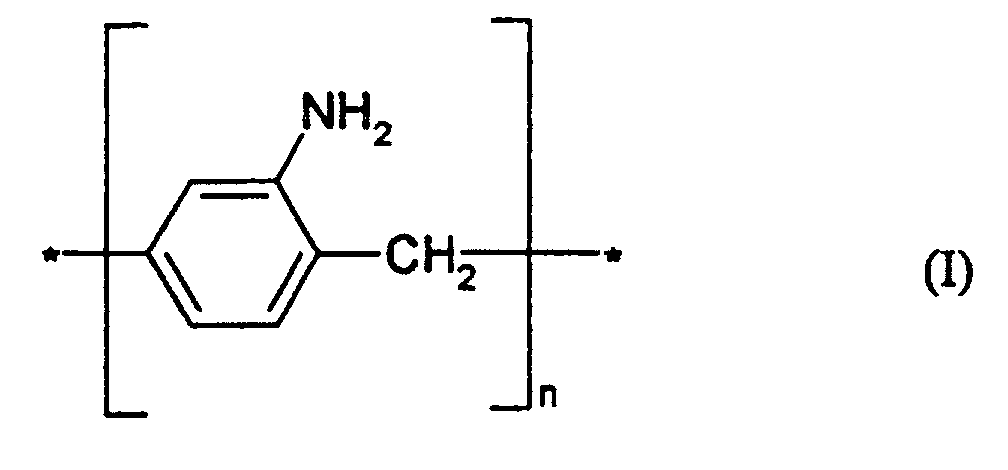
- polymers based on polyamino-p-xylylene can also advantageously be used as carrier polymers.
- polymers can also be used as carrier polymers: Polyorganosilanes, polyvinylpyrrolidones, polymethyl methacrylates, polyhydroxymethyl methacrylates, mixed polymers of N-vinyl pyrrolidone and hydroxymethyl methacrylate, polyamides, polyacrylamides, polyethylenes, polyethylene oxides, polyethylene glycols, polyesters, polypropylene oxides, polysiloxanes, PVC derivatives, polyvinyllactates, polysiloxysulfonate, polysulfonylsulfates, polysulfonylsulfates, polysulfonate phthalates with the proviso that they contain one or more of the derivatizable groups mentioned above.
- Fluoroalkyl chain-containing molecules of the general formula II are bonded to the carrier polymer: (XY- (CF 2 ) n -Z) m
- N is preferably greater than 5, particularly preferably n is greater than 10.
- radicals L contain hydroxyl groups, they can optionally be substituted by acetyl or Isopropylidene groups are protected.
- the protection group technology is the specialist familiar.
- residues advantageously serve as nucleofug: I, Br, Cl, F, ⁇ OTs, ⁇ OMs,
- the reaction is carried out in a mixture of water and organic solvents such as: Isopropanol, ethanol, methanol, butanol, dioxane, tetrahydrofuran, dimethylformamide, Dimethylacetamide, formamide or dichloromethane performed. Ternaries are preferred Mixtures of water, isopropanol and dichloromethane.
- the reaction is preferably carried out in a temperature interval between -10 ° C - 100 ° C between 0 ° C - 30 ° C.
- Inorganic and organic bases such as triethylamine, pyridine, N-methylmorpholine, Diisopropylethylamine, dimethylaminopyridine, alkali and Alkaline earth hydroxides, their carbonates or hydrogen carbonates such as lithium hydroxide, Sodium hydroxide, potassium hydroxide, sodium carbonate, sodium hydrogen carbonate, Potassium bicarbonate.
- the compounds of the general formula VI are commodities (Fluorochem, ABCR).
- the groups XH (X means a carboxyl group) of the polymer-coated stents (polymer-COOH) are derivatized analogously with compounds of the general formula VII H 2 NLR F by activation of the COOH groups of the polymer as described above.
- L and R F have the meaning described above.
- the stents according to the invention achieve the task described in the introduction.
- the invention Stents are well tolerated physiologically.
- the surface coating of the stents according to the invention, as described above was also generally applicable to the coating of surfaces in order to to make them inert. This applies particularly to medical applications, e.g. For Catheters, probes, dialysis machines, artificial heart valves, prostheses, etc.
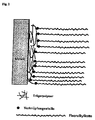
- Fig. 2 is an illustration in which the brush-like structure of the fluoroalkyl chain supports Layer is shown schematically.
- Polyurethane is used as the carrier polymer, which is obtainable by reaction of 3,3'-diacetylamino-diphenylmethane-4,4'-diisocyanate and butanediol. After the polymerization, the acetyl protective groups are removed. The stents are coated by immersing them in a 5% chloroform solution of the polymer. Then they are allowed to dry in a clean room drying chamber at room temperature. The average layer thickness is 20 ⁇ m. The derivatization with fluoroalkyl groups takes place by reacting free amino groups with the acid chloride of the formula VIII Cl-CO- (CF 2 ) 14 -CF 3 as described in the literature and familiar to the person skilled in the art. After drying, the stent is ready for use.
- the stent is coated with a polymer which bears free carboxyl groups on the surface as described in Example 1. This is followed by the reaction with thionyl chloride to form an acid chloride, as is known to the person skilled in the art. The chlorine atoms of the acid chloride are then reacted with an amine of the formula IX. H 2 N- (CF 2 ) 16 -CF 3
- the stent After drying, the stent is ready for use.
- the coating of a metal stent by CVD polymerization (CVD: Chemical Vapor Deposition) of 4-amino- [2.2] -paracyclophane takes place in a suitably designed Investment.
- the plant is connected to an argon bomb, since argon is the carrier gas acts.
- the argon supply is with a 380 mm long quartz glass tube with a Connected outer diameter of 30 mm.
- the quartz glass tube is at its other end connected to a stainless steel recipient.
- the quartz glass tube is floating in one Three-zone furnace, which has a heated length of 320 mm and one Has an inner diameter of 32 mm. All three heating zones can be heated up to 800 ° C.
- the stent to be coated is placed over the removable sight glass on the sample holder fixed.
- the reactor is closed again and the plant is closed Operation of the main switch put into operation.
- the two Cooling circuits are activated and the recipient wall is heated to 100 ° C.
- one Porcelain boats with a weighed amount of monomer in the sublimation zone put and closed again.
- the reactor is then set to a base pressure of Pumped down 0.03 mbar. Now a carrier gas flow of 20 sccm is set and then a working pressure of 0.2 mbar is specified.
- the coating process is verified using the coating thickness monitor. If the If the desired layer thickness of 280 nm has been reached, the coating process can be ended become. To do this, the furnace controller, the rotating motor of the sample holder and the Carrier gas flow switched off, the throttle valve opened and again at base pressure pumped out. Then the pump is switched off, the system via Vent valve vented and the sample taken.
- the derivatization with fluoroalkyl groups is carried out as in Example 1 by reacting the free amino groups on the carrier polymer with the acid chloride of the formula VIII Cl-CO- (CF 2 ) 14 -CF 3 as described in the literature and familiar to the person skilled in the art. After drying, the stent is ready for use.
Landscapes
- Health & Medical Sciences (AREA)
- General Health & Medical Sciences (AREA)
- Surgery (AREA)
- Epidemiology (AREA)
- Life Sciences & Earth Sciences (AREA)
- Animal Behavior & Ethology (AREA)
- Public Health (AREA)
- Veterinary Medicine (AREA)
- Hematology (AREA)
- Heart & Thoracic Surgery (AREA)
- Vascular Medicine (AREA)
- Materials For Medical Uses (AREA)
- Pharmaceuticals Containing Other Organic And Inorganic Compounds (AREA)
- Prostheses (AREA)
Description
Polyorganosilane, Polyvinylpyrrolidone, Polymethylmethacrylate, Polyhydroxymethylmethacrylate, Mischpolymere aus N-Vinylpyrrolidon und Hydroxymethylmethacrylat, Polyamide, Polyacrylamide, Polyethylene, Polyethylenoxide, Polyethylenglycole, Polyester, Polypropylenoxide, Polysiloxane, PVC-Derivate, Polyvinyllactame, Polyethylenterephthalate, Polysilicone, Polysaccharide, Proteine, Polysulfone oder Polysulfonate, mit der Maßgabe, daß sie eine oder mehrere der oben genannten derivatisierbaren Gruppen enthalten.
- X
- eine direkte Bindung zum Trägerpolymer, eine Amino-, Ether-, Thioether-, Carbonyl-, Thiocarbonyl-, Sulfonyl-, Sulfuryl- oder Phosphorylgruppe oder eine längere Brücke, z.B. eine Alkylkette, die durch Heteratome unterbrochen sein kann und/oder durch Heteroatome substituiert sein kann, eine Aminosäure, Dicarbonsäure, ein Peptid, Nucleotid oder einen Zucker,
- Y
- eine direkte Bindung, eine Amino-, Ether-, Thioether-, Carbonyl-, Thiocarbonyl-, Sulfonyl-, Sulfuryl- oder Phosphorylgruppe oder eine längere Brücke, z.B. eine Alkylkette, die durch Heteratome unterbrochen sein kann und/oder durch Heteroatome substituiert sein kann, eine Aminosäure, Dicarbonsäure, ein Peptid, Nucleotid oder einen Zucker,
- Z
- ein Fluor- oder ein Wasserstoffatom,
- n
- eine natürliche Zahl größer oder gleich 1,
- m
- eine natürliche Zahl zwischen 1 und der Anzahl der derivatisierbaren Gruppen im Trägerpolymer.
- RF
- eine Fluoralkylkette darstellt,
- L
- eine direkte Bindung, eine Alkylgruppe, die durch Heteroatome unterbrochen und/oder substituiert sein kann, eine Aminosäure, ein Peptid, Nucleotid oder ein Zucker sein kann,
- Nu
- in der Bedeutung eines Nucleofugs steht.
I, Br, Cl, F, ―OTs, ―OMs,
RF, L die oben genannte Bedeutung haben, nach den dem Fachmann allgemein bekannten Verfahren der Säureaktivierung wie:
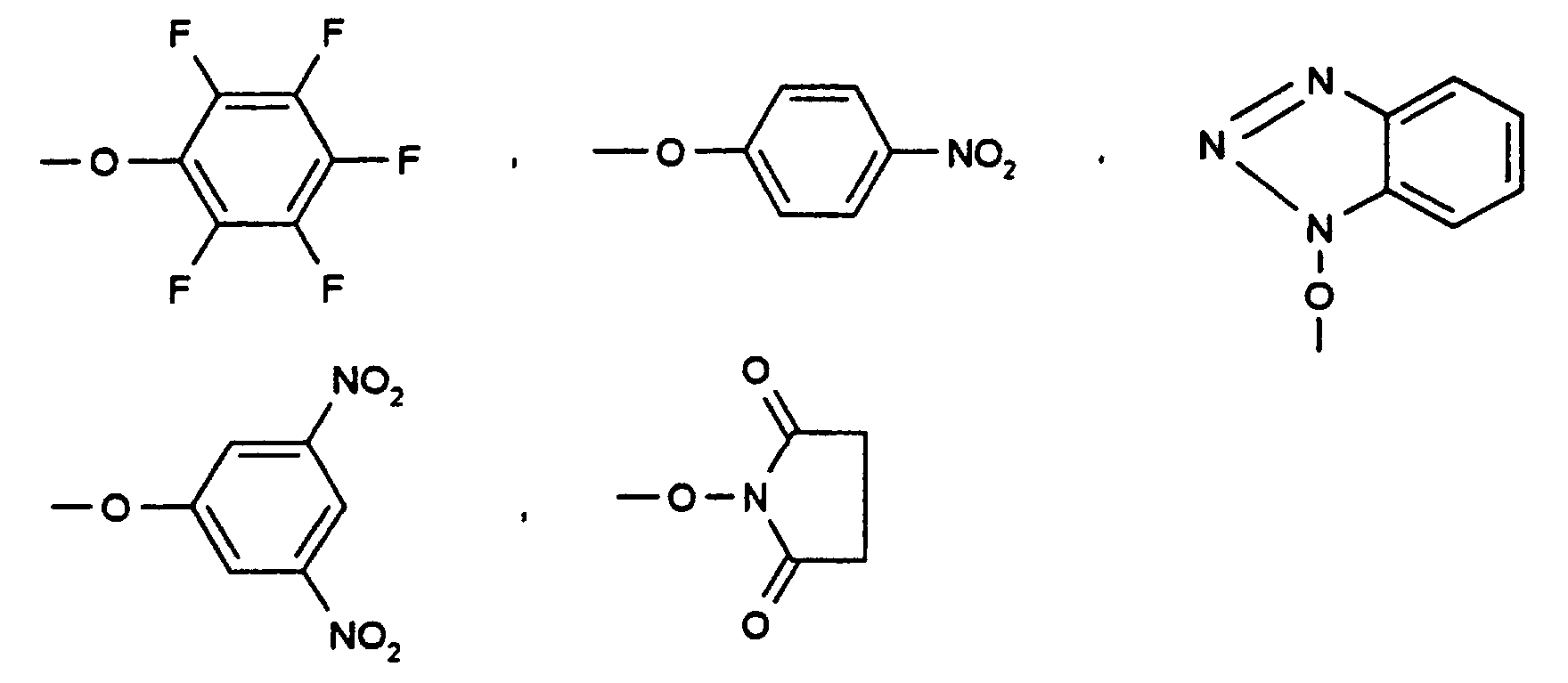
durch Umsetzung der Säure mit Dicyclohexylcarbodiimid, N-Hydroxysuccinimid/Dicyclohexylcarbodiimid, Carbonyldiimidazol, 2-Ethoxy-1-ethoxycarbonyl-1,2-dihydrochinolin, Oxalsäuredichlorid oder Chlorameisensäurisobutylester in der in der Literatur beschriebenen Weise erfolgen:
- Aktivierung von Carbonsäuren. Übersicht in Houben-Weyl, Methoden der Organischen Chemie, Band XV/2, Georg Thieme Verlag Stuttgart, 19.
- Aktivierung mit Carbodiimiden. R. Schwyzer u. H. Kappeler, Helv. 46:1550 (1963).
- E. Wünsch et al., B. 100:173 (1967).
- Aktivierung mit Carbodiimiden/Hydroxysuccinimid: J. Am. Chem. Soc. 86:1839 (1964) sowie J. Org. Chem. 53:3583 (1988). Synthesis 453 (1972).
- Anhydridmethode, 2-Ethoxy-1-ethoxycarbonyl-1,2-dihydrochinolin: B. Belleau et al., J. Am. Chem. Soc., 90:1651 (1986), H. Kunz et al., Int. J. Pept. Prot. Res., 26:493 (1985) und J. R. Voughn, Am. Soc. 73:3547 (1951).
- Imidazolid-Methode: B.F. Gisin, R.B. Menifield, D.C. Tosteon, Am. Soc. 91:2691 (1969).
- Säurechlorid-Methoden, Thionylchlorid: Helv., 42:1653 (1959).
- Oxalylchlorid: J. Org. Chem., 29:843 (1964).
- Q
- in der Bedeutung von
― O ― oder ― S ― oderoder mit einer Bindung vom Stickstoffatom zum Wasserstoffatom, oder
 durch Umsetzen mit Verbindungen der allgemeinen Formel VI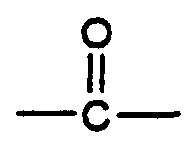
- Hal
- in der Bedeutung, Cl, Br, I und
- R1
- in der Bedeutung von H, Methyl, Ethyl, t-Butyl, Benzyl, Isopropyl, dargestellt
beispielsweise nach C.F. Ward, Soc. 121, 1161 (1922),
nach den dem Fachmann bekannten Methoden wie Alkylierung von Alkoholen mit Alkylhalogeniden [Houben-Weyl, Methoden der Organischen Chemie, Sauerstoffverbindungen I, Teil 3, Methoden zur Herstellung und Umwandlung von Ethern, Georg Thieme Verlag, Stuttgart 1965, Alkylierung von Alkoholen mit Alkylhalogeniden S. 24, Alkylierung von Alkoholen mit Alkylsulfaten S. 33] oder N-Alkylierung eines Sulfonamids mit Alkylsulfonaten [Houben-Weyl, Methoden der organischen Chemie, XI/2 Stickstoffverbindungen, Georg Thieme Verlag Stuttgart, 1957, S. 680; J.E. Rickman and T. Atkins, Am. Chem. Soc., 96:2268, 1974, 96:2268; F. Chavez and A.D. Sherry, J. Org. Chem. 1989, 54:2990] erhalten.
Für den Fall daß Q die Gruppebedeutet, wird die Umsetzung mit einem Wittig-Reagenz der Struktur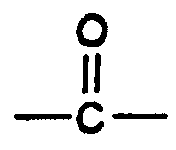 wobei, r die Zahlen 0 - 16 bedeutet, vorgenommen. Die dabei entstandene - CH=CH-Doppelbindung kann als Bestandteil der Struktur erhalten bleiben oder durch katalytische Hydrierung (Pd 5 %/C) in eine -CH2-CH2-Gruppierung überführt werden.
Claims (9)
- Stent, dadurch gekennzeichnet, daß er aus einem Stentgrundkörper besteht, der mit einem Trägerpolymer beschichtet ist, an das Perfluoralkylketten gebunden sind, die bürstenförmig von der Stentoberfläche abstehen.
- Stent gemäß Anspruch 1, dadurch gekennzeichnet, daß der Stentgrundkörper ein metallischer Stentgrundkörper oder ein aus einem Polymer hergestellter Stent ist.
- Stent gemäß Anspruch 2, dadurch gekennzeichnet, daß der metallische Stentgrundkörper ein Wiktor-Stent, ein Palmaz-Schatz-Stent, ein Strecker-Stent oder ein Nitinol-Stent ist.
- Stent gemäß Anspruch 1, dadurch gekennzeichnet, daß das Trägerpolymer eines der folgenden Polymere ist: ein Polyurethanderivat, ein Polyamino-p-xylylenderivat, ein Polyorganosilan, ein Polyvinylpyrrolidon, ein Polymethylmethacrylat, ein Polyhydroxymethylmethacrylat, ein Mischpolymer aus N-Vinylpyrrolidon und Hydroxymethylmethacrylat, ein Polyamid, ein Polyacrylamid, ein Polyethylen, ein Polyethylenoxid, ein Polyethylenglycol, ein Polyester, ein Polypropylenoxid, ein Polysiloxan, ein PVC-Derivat, ein Polyvinyllactam, ein Polyethylenterephthalat, ein Polysilicon, ein Polysaccharid, ein Protein, ein Polysulfon oder ein Polysulfonat.
- Stent gemäß Anspruch 1, dadurch gekennzeichnet, daß an das Trägerpolymer fluoralkylkettenhaltige Moleküle der allgemeinen Formel II gebunden sind:
- X
- für eine direkte Bindung zum Trägerpolymer, eine Amino-, Ether-, Thioether-, Carbonyl-, Thiocarbonyl-, Sulfonyl-, Sulfuryl- oder Phosphorylgruppe oder eine längere Brücke zum Trägerpolymer steht, wie z.B. eine Alkylkette, die durch Heteroatome unterbrochen sein kann und/oder durch Hetreoatome substituiert sein kann, eine Aminosäure, eine Dicarbonsäure, ein Peptid, Nucleotid oder ein Zucker,
- Y
- für eine direkte Bindung, eine Amino-, Ether-, Thioether-, Carbonyl-, Thiocarbonyl-, Sulfonyl-, Sulfuryl- oder Phosphorylgruppe oder eine längere Brücke steht, wie z.B. eine Alkylkette, die durch Heteroatome unterbrochen sein kann und/oder durch Heteroatome substituiert sein kann, eine Aminosäure, eine Dicarbonsäure, ein Peptid, Nucleotid oder ein Zucker,
- Z
- für ein Fluor- oder ein Wasserstoffatom steht,
- n
- für eine natürliche Zahl größer oder gleich 1 steht,
- m
- für eine natürliche Zahl zwischen 1 und der Anzahl der derivatisierbaren Gruppen im Trägerpolymer steht.
- Verfahren zur Herstellung eines Stents gemäß einem der vorangegangenen Ansprüche, dadurch gekennzeichnet, daß ein Stentgrundkörper mit einem Trägerpolymer beschichtet wird und anschließend die Oberfläche mit perfluoralkylkettenhaltigen Molekülen derivatisiert wird.
- Verfahren gemäß Anspruch 6, dadurch gekennzeichnet, daß das Trägerpolymer durch Gasphasenbeschichtung oder Plasmapolymerisation auf den Stentgrundkörper aufgebracht wird.
- Oberflächenbeschichtung, dadurch gekennzeichnet, daß an ein Trägerpolymer Perfluoralkylketten gebunden sind, die bürstenförmig von der Oberfläche abstehen.
- Oberflächenbeschichtung gemäß Anspruch 8, dadurch gekennzeichnet, daß an das Trägerpolymer fluoralkylkettenhaltige Moleküle der allgemeinen Formel II gebunden sind:
- X
- für eine direkte Bindung zum Trägerpolymer, eine Amino-, Ether-, Thioether-, Carbonyl-, Thiocarbonyl-, Sulfonyl-, Sulfuryl- oder Phosphorylgruppe oder eine längere Brücke zum Trägerpolymer steht, wie z.B. eine Alkylkette, die durch Heteroatome unterbrochen sein kann und/oder durch Hetreoatome substituiert sein kann, eine Aminosäure, eine Dicarbonsäure, ein Peptid, Nucleotid oder ein Zucker,
- Y
- für eine direkte Bindung, eine Amino-, Ether-, Thioether-, Carbonyl-, Thiocarbonyl-, Sulfonyl-, Sulfuryl- oder Phosphorylgruppe oder eine längere Brücke steht, wie z.B. eine Alkylkette, die durch Heteroatome unterbrochen sein kann und/oder durch Heteroatome substituiert sein kann, eine Aminosäure, eine Dicarbonsäure, ein Peptid, Nucleotid oder ein Zucker,
- Z
- für ein Fluor- oder ein Wasserstoffatom steht,
- n
- für eine natürliche Zahl größer oder gleich 1 steht,
- m
- für eine natürliche Zahl zwischen 1 und der Anzahl der derivatisierbaren Gruppen im Trägerpolymer steht.
Applications Claiming Priority (3)
| Application Number | Priority Date | Filing Date | Title |
|---|---|---|---|
| DE19727838 | 1997-06-24 | ||
| DE19727838 | 1997-06-24 | ||
| PCT/EP1998/003627 WO1998058680A2 (de) | 1997-06-24 | 1998-06-18 | Mit fluoralkylgruppen beschichtete stents |
Publications (2)
| Publication Number | Publication Date |
|---|---|
| EP0993308A2 EP0993308A2 (de) | 2000-04-19 |
| EP0993308B1 true EP0993308B1 (de) | 2004-07-21 |
Family
ID=7834147
Family Applications (1)
| Application Number | Title | Priority Date | Filing Date |
|---|---|---|---|
| EP98936352A Expired - Lifetime EP0993308B1 (de) | 1997-06-24 | 1998-06-18 | Mit fluoralkylgruppen beschichtete stents, verfahren zu ihrer herstellung und ihre verwendung zur restenoseprophylaxe |
Country Status (9)
| Country | Link |
|---|---|
| US (1) | US20030171804A1 (de) |
| EP (1) | EP0993308B1 (de) |
| JP (1) | JP2002504842A (de) |
| AT (1) | ATE271397T1 (de) |
| AU (1) | AU736188B2 (de) |
| CA (1) | CA2294872A1 (de) |
| DE (1) | DE59811695D1 (de) |
| NZ (1) | NZ501978A (de) |
| WO (1) | WO1998058680A2 (de) |
Cited By (2)
| Publication number | Priority date | Publication date | Assignee | Title |
|---|---|---|---|---|
| EP2072068A2 (de) | 2007-12-20 | 2009-06-24 | Biotronik VI Patent AG | Implantat mit einem Grundkörper aus einer biokorrodierbaren Legierung |
| US8801778B2 (en) | 2007-12-20 | 2014-08-12 | Biotronik Vi Patent Ag | Implant with a base body of a biocorrodible alloy |
Families Citing this family (16)
| Publication number | Priority date | Publication date | Assignee | Title |
|---|---|---|---|---|
| JP4554110B2 (ja) * | 2001-05-16 | 2010-09-29 | Kisco株式会社 | Dnaチップ用結合剤、dnaチップ、およびdnaチップの製造方法 |
| US7247313B2 (en) | 2001-06-27 | 2007-07-24 | Advanced Cardiovascular Systems, Inc. | Polyacrylates coatings for implantable medical devices |
| US7217426B1 (en) | 2002-06-21 | 2007-05-15 | Advanced Cardiovascular Systems, Inc. | Coatings containing polycationic peptides for cardiovascular therapy |
| US7005137B1 (en) | 2002-06-21 | 2006-02-28 | Advanceed Cardiovascular Systems, Inc. | Coating for implantable medical devices |
| US7396539B1 (en) | 2002-06-21 | 2008-07-08 | Advanced Cardiovascular Systems, Inc. | Stent coatings with engineered drug release rate |
| US7491233B1 (en) | 2002-07-19 | 2009-02-17 | Advanced Cardiovascular Systems Inc. | Purified polymers for coatings of implantable medical devices |
| US7311926B2 (en) * | 2002-12-20 | 2007-12-25 | Battelle Memorial Institute | Biocomposite materials and methods for making the same |
| US7563454B1 (en) | 2003-05-01 | 2009-07-21 | Advanced Cardiovascular Systems, Inc. | Coatings for implantable medical devices |
| AU2004277302B2 (en) * | 2003-09-29 | 2010-08-26 | Hemoteq Ag | Biocompatible, biostable coating of medical surfaces |
| DE102004020856A1 (de) * | 2003-09-29 | 2005-04-14 | Hemoteq Gmbh | Biokompatible, biostabile Beschichtung von medizinischen Oberflächen |
| US20050129731A1 (en) * | 2003-11-03 | 2005-06-16 | Roland Horres | Biocompatible, biostable coating of medical surfaces |
| US7244443B2 (en) | 2004-08-31 | 2007-07-17 | Advanced Cardiovascular Systems, Inc. | Polymers of fluorinated monomers and hydrophilic monomers |
| US20090118819A1 (en) * | 2005-06-30 | 2009-05-07 | Mc3, Inc. | Nitric Oxide Coatings for Medical Devices |
| US9028859B2 (en) | 2006-07-07 | 2015-05-12 | Advanced Cardiovascular Systems, Inc. | Phase-separated block copolymer coatings for implantable medical devices |
| GB2448153B (en) * | 2007-04-04 | 2011-12-28 | Camstent Ltd Mbe | Coated medical devices |
| JP5599712B2 (ja) | 2007-10-05 | 2014-10-01 | インターフェース バイオロジクス,インコーポレーテッド | オリゴフッ素化架橋ポリマーおよびそれの使用 |
Family Cites Families (7)
| Publication number | Priority date | Publication date | Assignee | Title |
|---|---|---|---|---|
| US3839743A (en) * | 1972-04-21 | 1974-10-08 | A Schwarcz | Method for maintaining the normal integrity of blood |
| US4499124A (en) * | 1978-12-15 | 1985-02-12 | Hospal-Sodip, S.A. | Process of coating consisting of a mixture of vinyl chloride polymer and polyurethane with tertiary amine and/or ammonium groups |
| US4886062A (en) * | 1987-10-19 | 1989-12-12 | Medtronic, Inc. | Intravascular radially expandable stent and method of implant |
| DE3918736C2 (de) * | 1989-06-08 | 1998-05-14 | Christian Dr Vallbracht | Kunststoffüberzogene Metallgitterstents |
| EP0519087B1 (de) * | 1991-05-21 | 1997-04-23 | Hewlett-Packard GmbH | Verfahren zur Vorbehandlung der Oberfläche eines medizinischen Artikels |
| US5607475A (en) * | 1995-08-22 | 1997-03-04 | Medtronic, Inc. | Biocompatible medical article and method |
| DE29711398U1 (de) * | 1997-06-24 | 1998-10-22 | Schering Ag, 13353 Berlin | Mit Fluoralkylgruppen beschichtete Stents |
-
1998
- 1998-06-18 JP JP50372999A patent/JP2002504842A/ja active Pending
- 1998-06-18 CA CA002294872A patent/CA2294872A1/en not_active Abandoned
- 1998-06-18 NZ NZ501978A patent/NZ501978A/en unknown
- 1998-06-18 WO PCT/EP1998/003627 patent/WO1998058680A2/de not_active Ceased
- 1998-06-18 AT AT98936352T patent/ATE271397T1/de not_active IP Right Cessation
- 1998-06-18 DE DE59811695T patent/DE59811695D1/de not_active Expired - Fee Related
- 1998-06-18 US US09/446,396 patent/US20030171804A1/en not_active Abandoned
- 1998-06-18 EP EP98936352A patent/EP0993308B1/de not_active Expired - Lifetime
- 1998-06-18 AU AU85384/98A patent/AU736188B2/en not_active Ceased
Cited By (3)
| Publication number | Priority date | Publication date | Assignee | Title |
|---|---|---|---|---|
| EP2072068A2 (de) | 2007-12-20 | 2009-06-24 | Biotronik VI Patent AG | Implantat mit einem Grundkörper aus einer biokorrodierbaren Legierung |
| DE102007061647A1 (de) | 2007-12-20 | 2009-07-02 | Biotronik Vi Patent Ag | Implantat mit einem Grundkörper aus einer biokorrodierbaren Legierung |
| US8801778B2 (en) | 2007-12-20 | 2014-08-12 | Biotronik Vi Patent Ag | Implant with a base body of a biocorrodible alloy |
Also Published As
| Publication number | Publication date |
|---|---|
| NZ501978A (en) | 2001-09-28 |
| AU736188B2 (en) | 2001-07-26 |
| WO1998058680A3 (de) | 1999-05-27 |
| WO1998058680A2 (de) | 1998-12-30 |
| US20030171804A1 (en) | 2003-09-11 |
| DE59811695D1 (de) | 2004-08-26 |
| JP2002504842A (ja) | 2002-02-12 |
| AU8538498A (en) | 1999-01-04 |
| ATE271397T1 (de) | 2004-08-15 |
| CA2294872A1 (en) | 1998-12-30 |
| EP0993308A2 (de) | 2000-04-19 |
Similar Documents
| Publication | Publication Date | Title |
|---|---|---|
| EP0993308A2 (de) | Mit fluoralkylgruppen beschichtete stents, verfahren zu ihrer herstellung und ihre verwendung zur restenoseprophylaxe | |
| US5688855A (en) | Thin film hydrophilic coatings | |
| DE69633012T2 (de) | Stickstoffoxyd-freisetzende verbindungen sowie methoden und intravaskuläre vorrichtungen zu ihrem gebrauch zum vorbeugen von restenosen | |
| DE60018010T2 (de) | Verfahren zur Modifikation einer Materialoberfläche | |
| DE69820023T2 (de) | Endovaskuläre Gefässprothesen mit polymerer Beschichtung | |
| DE60112950T2 (de) | Zahnimplantate mit antibakteriellen Eigenschaften | |
| DE69737817T2 (de) | Beschichteter endovaskulärer stent | |
| DE69826882T2 (de) | Bioresorbierbare zusammensetzungen für implantierfähige prothesen | |
| EP1886702B1 (de) | Implantat aus einem biokorrodierbaren metallischen Werkstoff mit einer Beschichtung aus einer Organosiliziumverbindung | |
| DE60202866T2 (de) | Beschichtungen vom typ "bottle-brush" mit verwirbelten polymeren | |
| DE60117251T2 (de) | Verfahren zur beschichtung von medizinischen geräten unter verwendung von superkritischem kohlendioxid | |
| EP0249603B1 (de) | Antithrombogenes, nichtcalcifizierendes material und ein verfahren zur herstellung von gegenständen für medizinische zwecke | |
| DE60118933T2 (de) | Matrix zur aufnahme von arzneimitteln | |
| EP1432380B1 (de) | Vorrichtung auf basis von nitinol mit polyphosphazenüberzug | |
| DE10106546A1 (de) | Verfahren zum Herstellen eines medizinischen Implantats | |
| Reed et al. | A solution grade biostable polyurethane elastomer: ChronoFlex® AR | |
| DE60130673T2 (de) | Beschichtungen für medizinische vorrichtungen | |
| DE69112068D1 (de) | Verfahren zur Herstellung eines Artikels für medizinische Anwendungen aus Copolymeren aus Lactid und E-Caprolacton. | |
| EP1952831A1 (de) | Mit Biomolekülen beschichtete Stents sowie Verfahren zu deren Herstellung | |
| CH671402A5 (de) | ||
| DE19849464A1 (de) | Wirkstofffreisetzende Stents, Verfahren zu ihrer Herstellung und ihre Verwendung zur Restenoseprophylaxe | |
| DE2421655A1 (de) | Thermoplastische werkstoffe ohne thrombose erzeugende wirkung | |
| US4243776A (en) | Preparation of non-thrombogenic polymeric material article with platelet anti-aggregative agent | |
| Benzina et al. | Studies on a new radiopaque polymeric biomaterial | |
| DE60102076T2 (de) | Reaktive polymere |
Legal Events
| Date | Code | Title | Description |
|---|---|---|---|
| PUAI | Public reference made under article 153(3) epc to a published international application that has entered the european phase |
Free format text: ORIGINAL CODE: 0009012 |
|
| 17P | Request for examination filed |
Effective date: 19991211 |
|
| AK | Designated contracting states |
Kind code of ref document: A2 Designated state(s): AT BE CH CY DE DK ES FI FR GB GR IE IT LI LU MC NL PT SE |
|
| RIN1 | Information on inventor provided before grant (corrected) |
Inventor name: LAHANN, JOERG Inventor name: KLEE, DORIS Inventor name: HOECKER, HARTWIG Inventor name: KRAUSE, WERNER |
|
| 17Q | First examination report despatched |
Effective date: 20030520 |
|
| RIC1 | Information provided on ipc code assigned before grant |
Ipc: 7A 61L 31/00 A |
|
| GRAP | Despatch of communication of intention to grant a patent |
Free format text: ORIGINAL CODE: EPIDOSNIGR1 |
|
| GRAS | Grant fee paid |
Free format text: ORIGINAL CODE: EPIDOSNIGR3 |
|
| GRAA | (expected) grant |
Free format text: ORIGINAL CODE: 0009210 |
|
| AK | Designated contracting states |
Kind code of ref document: B1 Designated state(s): AT BE CH CY DE DK ES FI FR GB GR IE IT LI LU MC NL PT SE |
|
| PG25 | Lapsed in a contracting state [announced via postgrant information from national office to epo] |
Ref country code: NL Free format text: LAPSE BECAUSE OF FAILURE TO SUBMIT A TRANSLATION OF THE DESCRIPTION OR TO PAY THE FEE WITHIN THE PRESCRIBED TIME-LIMIT Effective date: 20040721 Ref country code: IT Free format text: LAPSE BECAUSE OF FAILURE TO SUBMIT A TRANSLATION OF THE DESCRIPTION OR TO PAY THE FEE WITHIN THE PRE;WARNING: LAPSES OF ITALIAN PATENTS WITH EFFECTIVE DATE BEFORE 2007 MAY HAVE OCCURRED AT ANY TIME BEFORE 2007. THE CORRECT EFFECTIVE DATE MAY BE DIFFERENT FROM THE ONE RECORDED.SCRIBED TIME-LIMIT Effective date: 20040721 Ref country code: IE Free format text: LAPSE BECAUSE OF FAILURE TO SUBMIT A TRANSLATION OF THE DESCRIPTION OR TO PAY THE FEE WITHIN THE PRESCRIBED TIME-LIMIT Effective date: 20040721 Ref country code: FI Free format text: LAPSE BECAUSE OF FAILURE TO SUBMIT A TRANSLATION OF THE DESCRIPTION OR TO PAY THE FEE WITHIN THE PRESCRIBED TIME-LIMIT Effective date: 20040721 |
|
| REG | Reference to a national code |
Ref country code: GB Ref legal event code: FG4D Free format text: NOT ENGLISH |
|
| REG | Reference to a national code |
Ref country code: CH Ref legal event code: EP |
|
| REG | Reference to a national code |
Ref country code: IE Ref legal event code: FG4D Free format text: GERMAN |
|
| REF | Corresponds to: |
Ref document number: 59811695 Country of ref document: DE Date of ref document: 20040826 Kind code of ref document: P |
|
| PG25 | Lapsed in a contracting state [announced via postgrant information from national office to epo] |
Ref country code: SE Free format text: LAPSE BECAUSE OF FAILURE TO SUBMIT A TRANSLATION OF THE DESCRIPTION OR TO PAY THE FEE WITHIN THE PRESCRIBED TIME-LIMIT Effective date: 20041021 Ref country code: GR Free format text: LAPSE BECAUSE OF FAILURE TO SUBMIT A TRANSLATION OF THE DESCRIPTION OR TO PAY THE FEE WITHIN THE PRESCRIBED TIME-LIMIT Effective date: 20041021 Ref country code: DK Free format text: LAPSE BECAUSE OF FAILURE TO SUBMIT A TRANSLATION OF THE DESCRIPTION OR TO PAY THE FEE WITHIN THE PRESCRIBED TIME-LIMIT Effective date: 20041021 |
|
| PG25 | Lapsed in a contracting state [announced via postgrant information from national office to epo] |
Ref country code: ES Free format text: LAPSE BECAUSE OF FAILURE TO SUBMIT A TRANSLATION OF THE DESCRIPTION OR TO PAY THE FEE WITHIN THE PRESCRIBED TIME-LIMIT Effective date: 20041101 |
|
| GBT | Gb: translation of ep patent filed (gb section 77(6)(a)/1977) |
Effective date: 20041019 |
|
| NLV1 | Nl: lapsed or annulled due to failure to fulfill the requirements of art. 29p and 29m of the patents act | ||
| REG | Reference to a national code |
Ref country code: IE Ref legal event code: FD4D |
|
| ET | Fr: translation filed | ||
| PLBE | No opposition filed within time limit |
Free format text: ORIGINAL CODE: 0009261 |
|
| STAA | Information on the status of an ep patent application or granted ep patent |
Free format text: STATUS: NO OPPOSITION FILED WITHIN TIME LIMIT |
|
| PG25 | Lapsed in a contracting state [announced via postgrant information from national office to epo] |
Ref country code: LU Free format text: LAPSE BECAUSE OF NON-PAYMENT OF DUE FEES Effective date: 20050618 Ref country code: GB Free format text: LAPSE BECAUSE OF NON-PAYMENT OF DUE FEES Effective date: 20050618 Ref country code: CY Free format text: LAPSE BECAUSE OF FAILURE TO SUBMIT A TRANSLATION OF THE DESCRIPTION OR TO PAY THE FEE WITHIN THE PRESCRIBED TIME-LIMIT Effective date: 20050618 Ref country code: AT Free format text: LAPSE BECAUSE OF NON-PAYMENT OF DUE FEES Effective date: 20050618 |
|
| PG25 | Lapsed in a contracting state [announced via postgrant information from national office to epo] |
Ref country code: MC Free format text: LAPSE BECAUSE OF NON-PAYMENT OF DUE FEES Effective date: 20050630 Ref country code: LI Free format text: LAPSE BECAUSE OF NON-PAYMENT OF DUE FEES Effective date: 20050630 Ref country code: CH Free format text: LAPSE BECAUSE OF NON-PAYMENT OF DUE FEES Effective date: 20050630 Ref country code: BE Free format text: LAPSE BECAUSE OF NON-PAYMENT OF DUE FEES Effective date: 20050630 |
|
| 26N | No opposition filed |
Effective date: 20050422 |
|
| PG25 | Lapsed in a contracting state [announced via postgrant information from national office to epo] |
Ref country code: DE Free format text: LAPSE BECAUSE OF NON-PAYMENT OF DUE FEES Effective date: 20060103 |
|
| REG | Reference to a national code |
Ref country code: CH Ref legal event code: PL |
|
| PG25 | Lapsed in a contracting state [announced via postgrant information from national office to epo] |
Ref country code: FR Free format text: LAPSE BECAUSE OF NON-PAYMENT OF DUE FEES Effective date: 20060228 |
|
| GBPC | Gb: european patent ceased through non-payment of renewal fee |
Effective date: 20050618 |
|
| REG | Reference to a national code |
Ref country code: FR Ref legal event code: ST Effective date: 20060228 |
|
| BERE | Be: lapsed |
Owner name: *SCHERING A.G. Effective date: 20050630 |
|
| PG25 | Lapsed in a contracting state [announced via postgrant information from national office to epo] |
Ref country code: PT Free format text: LAPSE BECAUSE OF NON-PAYMENT OF DUE FEES Effective date: 20041221 |