EP1013759B1 - Methode und apparat zur vorhersage von funktionellen proteindomänen, methode zur verbesserung der proteinfunktion, sowie funktionell verbessertes protein - Google Patents
Methode und apparat zur vorhersage von funktionellen proteindomänen, methode zur verbesserung der proteinfunktion, sowie funktionell verbessertes protein Download PDFInfo
- Publication number
- EP1013759B1 EP1013759B1 EP98901095A EP98901095A EP1013759B1 EP 1013759 B1 EP1013759 B1 EP 1013759B1 EP 98901095 A EP98901095 A EP 98901095A EP 98901095 A EP98901095 A EP 98901095A EP 1013759 B1 EP1013759 B1 EP 1013759B1
- Authority
- EP
- European Patent Office
- Prior art keywords
- amino
- protein
- oligopeptide
- amino acid
- length
- Prior art date
- Legal status (The legal status is an assumption and is not a legal conclusion. Google has not performed a legal analysis and makes no representation as to the accuracy of the status listed.)
- Expired - Lifetime
Links
Images


Classifications
-
- C—CHEMISTRY; METALLURGY
- C12—BIOCHEMISTRY; BEER; SPIRITS; WINE; VINEGAR; MICROBIOLOGY; ENZYMOLOGY; MUTATION OR GENETIC ENGINEERING
- C12N—MICROORGANISMS OR ENZYMES; COMPOSITIONS THEREOF; PROPAGATING, PRESERVING, OR MAINTAINING MICROORGANISMS; MUTATION OR GENETIC ENGINEERING; CULTURE MEDIA
- C12N9/00—Enzymes; Proenzymes; Compositions thereof; Processes for preparing, activating, inhibiting, separating or purifying enzymes
- C12N9/10—Transferases (2.)
- C12N9/12—Transferases (2.) transferring phosphorus containing groups, e.g. kinases (2.7)
- C12N9/1241—Nucleotidyltransferases (2.7.7)
- C12N9/1252—DNA-directed DNA polymerase (2.7.7.7), i.e. DNA replicase
-
- C—CHEMISTRY; METALLURGY
- C12—BIOCHEMISTRY; BEER; SPIRITS; WINE; VINEGAR; MICROBIOLOGY; ENZYMOLOGY; MUTATION OR GENETIC ENGINEERING
- C12N—MICROORGANISMS OR ENZYMES; COMPOSITIONS THEREOF; PROPAGATING, PRESERVING, OR MAINTAINING MICROORGANISMS; MUTATION OR GENETIC ENGINEERING; CULTURE MEDIA
- C12N15/00—Mutation or genetic engineering; DNA or RNA concerning genetic engineering, vectors, e.g. plasmids, or their isolation, preparation or purification; Use of hosts therefor
- C12N15/09—Recombinant DNA-technology
- C12N15/10—Processes for the isolation, preparation or purification of DNA or RNA
-
- C—CHEMISTRY; METALLURGY
- C12—BIOCHEMISTRY; BEER; SPIRITS; WINE; VINEGAR; MICROBIOLOGY; ENZYMOLOGY; MUTATION OR GENETIC ENGINEERING
- C12N—MICROORGANISMS OR ENZYMES; COMPOSITIONS THEREOF; PROPAGATING, PRESERVING, OR MAINTAINING MICROORGANISMS; MUTATION OR GENETIC ENGINEERING; CULTURE MEDIA
- C12N15/00—Mutation or genetic engineering; DNA or RNA concerning genetic engineering, vectors, e.g. plasmids, or their isolation, preparation or purification; Use of hosts therefor
- C12N15/09—Recombinant DNA-technology
- C12N15/10—Processes for the isolation, preparation or purification of DNA or RNA
- C12N15/102—Mutagenizing nucleic acids
-
- Y—GENERAL TAGGING OF NEW TECHNOLOGICAL DEVELOPMENTS; GENERAL TAGGING OF CROSS-SECTIONAL TECHNOLOGIES SPANNING OVER SEVERAL SECTIONS OF THE IPC; TECHNICAL SUBJECTS COVERED BY FORMER USPC CROSS-REFERENCE ART COLLECTIONS [XRACs] AND DIGESTS
- Y02—TECHNOLOGIES OR APPLICATIONS FOR MITIGATION OR ADAPTATION AGAINST CLIMATE CHANGE
- Y02A—TECHNOLOGIES FOR ADAPTATION TO CLIMATE CHANGE
- Y02A90/00—Technologies having an indirect contribution to adaptation to climate change
- Y02A90/10—Information and communication technologies [ICT] supporting adaptation to climate change, e.g. for weather forecasting or climate simulation
Definitions
- the present invention relates to a method for predicting a functional site of a protein, a system for predicting the function thereof, and a method for modifying the function of a protein and a function-modified protein. More specifically, the present invention relates to prediction of a functional site of a protein with no information on function obtained by genome analysis or cDNA analysis, and prediction of a novel function or a novel functional site of a protein with a known function. The present invention further ralates to prediction of a site on a protein to be modified for improving the function of the protein, and a protein with a modified function based on the prediction.
- a protein encoded by a gene elucidated by genome analysis or cDNA analysis is novel or has a known function has been determined conventionally by searching the homology through protein databases such as Swiss-Prot. So as to predict a functional site, additionally, functionally identical proteins derived from various organisms are extracted from a protein database and are then subjected to alignment, to identify a region conserved in common to them and predict the conserved region as a functional site.
- the present invention has been carried out. It is an object of the present invention to provide a novel method for predicting a functional site of a protein with no information on function obtained by genome analysis or cDNA analysis.
- a first invention of the present application is a method for predicting a functional site of a protein derived from the entire putative proteins of an organism " a " of which genome data or cDNA data is known, which method comprises the steps of:
- a second invention is a method for predicting a functional site of a protein derived from the entire putative proteins of an organism " a " of which genome data or cDNA data is known, which method comprises the steps of:
- a third invention is a system for automatically conducting the method according to claim 1, at least comprising the following units (a) to (g);
- a fourth invention is a system for automatically conducting the method according to claim 3, at least comprising the following units (a) to (i);
- a fifth invention is a method for modifying the known function of protein " A " derived from the entire proteins of organism " a " of which genome data or cDNA data has been known, which method comprises the steps of:
- a sixth invention is a method for modifying the function of protein " B " derived from an organism " b " of which genome data or cDNA data has been unknown, which method comprises the steps of:
- a seventh invention is a method for modifying the known function of protein " A " derived from the entire proteins of organism " a " of which genome data or cDNA data has been known, which method comprises the steps of:
- thermophilic DNA polymerase prepared by artificially modifying the amino acid sequence of Pfu DNA polymerase so that the elongation of synthesized DNA chain might not be terminated intermediately during the catalysis for the synthesis of a DNA chain complimentary to a single-stranded DNA, and more specifically, the thermophilic DNA polymerase is one comprising the amino acid sequence of SQ ID No.1.
- the present application provides a DNA sequence encoding the amino acid sequence of SQ ID No.1 and a recombinant vector carrying the DNA sequence.
- a recombinant vector includes recombinant plasmid pDP320 carried on Escherichia coli HMS174 (DE3) /pDP320 (FERM P-16052).
- thermophilic DNA polymerase comprising culturing a cell transformed with an expression vector carrying the DNA sequence and isolating and purifying the objective enzyme generated in a culture medium.
- thermophilic DNA polymerase prepared by artificially modifying the amino acid sequence of Pfu DNA polymerase so that the synthesized DNA chain might be more elongated during the catalysis for the synthesis of a DNA chain complimentary to a single-stranded DNA
- thermophilic DNA polymerase is one comprising the amino acid sequence of SQ ID No.6 or a DNA polymerase comprising the amino acid sequence of SQ ID No.7.
- the present application provides a DNA sequence encoding the amino acid sequence of SQ ID No.6 or 7, and a recombinant vectors carrying such DNA sequences, respectively.
- vectors there are provided recombinant plasmid pDP5b17 carried on Escherichia coli HMS174 (DE3)/pDP5b17 (FERM BP-6189) (vector carrying the DNA sequence encoding the amino acid sequence of SQ ID No.1), and recombinant plasmid pDP5C4 carried on Escherichia coli HMS174 (DE3)/pDP5C4 (FERM BP-6190) (vector carrying the DNA sequence encoding the amino acid sequence of SQ ID No.1).
- a method for producing a DNA polymerase comprising culturing a cell transformed with an expression vector carrying the DNA sequence and isolating and purifying the objective enzyme produced in a culture medium.
- a protein is composed of a sequence of twenty amino acids, but the sequence is not random.
- the frequency of occurrence of a specific oligopeptide as a partial amino acid sequence in the entire proteins encoded by genome derived from an appropriate organism species is not constant, but some oligopeptides occur at high frequencies in various proteins while other oligopeptides rarely occur therein. It is recognized that among them, oligopeptides highly frequently occurring in common to various proteins do not have any potency to determine the uniqueness (specificity) of individual proteins, namely any potency to determine the functions, while oligopeptides occurring at low frequencies adversely determine the uniqueness and functions of individual proteins.
- oligopeptide of length (n+1) as shown in the step (3) according to the method of the first invention is mostly the shortest oligopeptide occurring at a low frequency, and the calculated functional value Zj of amino-acid residue Aj at an appropriate position j in the oligopeptide is the coefficient of the occurrence (namely, the representative value of the function) of the amino-acid residue Aj at the position.
- the contribution degree of the amino-acid residue Aj to the frequency of the occurrence of Aj -oligopeptide can be evaluated on the basis of the ratio Yji of the frequency of the occurrence of the Aj-oligopeptide to that of the Xi-oligopeptide as shown in the step (3), and thus, the calculated functional value Z (j,n) of the amino-acid residue Aj at an appropriate position of a protein serves as the coefficient of the occurrence of the amino-acid residue Aj at the position (namely, the representative value of the function).
- the value Z(j, n) varies, depending on the species of amino-acid residue Aj.
- the distribution of the Z (j, n) value of each of twenty amino acids is determined in the entire proteins of organism " a ", to determine D(j, n) value by normalizing the Z(j, n) value on the basis of the mean and standard deviation of Z(j,n) value of each amino acid, as determined on the basis of the distribution, which serves as the representative value of the function, after correction of the bias due to each amino-acid residue species.
- the Z (j, n) and D(j, n) values generally vary, depending on the length (n), accordingly, the functional value Wj of the Z(j, n) and D(j, n) as determined on a variety of length (n) is defined as the representative value of the function.
- the systems for predicting a protein functional site in accordance with the third and fourth inventions are individually systems for automatically carrying out the methods in accordance with the first and second inventions;
- the methods for modifying protein in accordance with the fifth and sixth inventions are methods for preparing mutant proteins by substituting the amino-acid residue at the functional site predicted by the method of the first invention with another amino-acid residue.
- the method for modifying a protein in accordance with the seventh invention is a method for preparing a mutant protein by substituting the amino-acid residue at the functional site predicted by the method in accordance with the second invention with another amino-acid residue.
- a novel thermophilic DNA polymerase (the eighth and ninth inventions) is provided as a modified protein.
- DNA polymerase is the generic name of enzymes catalyzing the synthesis of a DNA chain complimentary to a single-stranded DNA.
- DNA polymerase is an essential enzyme for DNA sequencing and in vitro DNA amplification, and "thermophilic DNA polymerase” is inevitable for PCR (polymerase chain reaction) in terms of the automation of a series of the reaction cycles.
- thermophilic DNA polymerase includes known ones, for example Taq, Pfu, KOD , which are separately used, depending on the characteristic performance.
- Pfu DNA polymerase in particular has been known as an enzyme with an extremely low frequency of erroneous reading during the synthesis of DNA strands (at a high fidelity).
- the Pfu DNA polymerase is inappropriate for the amplification of polymeric DNAs such as genome DNA, because the synthetic DNA yielded by the Pfu DNA polymerase is low and the activity thereof to elongate a synthetic chain is insufficient.
- the present application provides a novel Pfu DNA polymerase prepared according to the method of the fifth invention.
- the method for predicting a functional site of a protein in accordance with the first invention is a method for predicting the functional site of a protein of organism " a " with a known genome data or cDNA analysis data, in the entire putative proteins of the organism " a ", essentially comprising the following steps (1) to (6).
- the oligopeptide length (n) is determined.
- the length (n) is determined, then, as the smallest integer satisfying the following criteria:
- Fig.1 depicts distribution charts of the frequencies of the occurrences of oligopeptides of a length of 3, oligopeptides of a length of 4 and oligopeptides of a length of 5, in the entire proteins encoded by the genome of a microorganism Methanococcus jannaschii (Bult et al.,Science 273, 1058-1073, 1996).
- Methanococcus jannaschii Bacillus jannaschii
- the frequency of occurrence of a partial sequence of the amino acid sequence of the protein which sequence corresponds to the following Aj-oligopeptide of length (n+1), containing the j-th amino-acid residue Aj;
- Aj is the i-th residue of the oligopeptide
- Xi-oligopeptide: ajlaj2....Xji....ajnaj(n+1) should be determined in the entire proteins
- Such Aj-oligopeptide and Xi-oligopeptide can be illustrated for example in Fig.2.
- the upper row (1) in Fig.2 expresses in single letter code the partial sequence from the N-terminus to the 20-th amino-acid residue of the putative amino acid sequence speculated from the gene MJ0885, which is believed to encode the ⁇ -type DNA polymerase of Methanococcus jannaschii (Bult et al., Science 273, 1058-1073, 1996);
- the middle row (2) expresses examples of Aj-oligopeptide of a length of 4, containing the 5-th amino-acid residue Met(M) in the amino acid sequence;
- the rows (3) to (6) further below express examples of Xi-oligopeptide containing the 5-th amino-acid residue M.
- the Zj value is defined as a representative value of the function of the j-th amino-acid residue of the amino acid sequence of length (L).
- the degree of the involvement of each amino-acid residue in the function of the protein is predicted by using the dimension of the Zj value as an indicator. More specifically, because the manner of occurring of each amino-acid residue in the context is expressed as the functional value Zj of Yj, a larger Zj value indicates a lower frequency of occurrence of the amino-acid residue if Zj is a monotonously decreasing functional value, which suggests that the amino-acid residue has higher responsibility over the performance of the function. If Zj is a monotonously increasing function, additionally, it is suggested that an amino-acid residue with a smaller Zj value has greater responsibility over the function.
- the second invention is a method for predicting a functional site of an appropriate protein in the entire putative proteins of the organism " a " with a known genome data or cDNA analysis data, essentially comprising the following steps (1) to (9).
- Fig.3 shows a distribution chart of the frequencies of the occurrences of oligopeptides of a length of 3, oligopeptides of a length of 4 and oligopeptides of a length of 5, which are determined in the entire proteins encoded by the genome of a microorganism Methanococcus jannaschii (Bult et al., Science 273, 1058-1073, 1996) on the basis of the genome data of the microorganism.
- Fig.4 depicts an example of the flow chart for carrying out the step (1).
- the frequency of the occurrence of a partial sequence of the amino acid sequence of the protein, which sequence corresponds to the following Aj-oligopeptide of an appropriate length n (1 ⁇ n ⁇ M, provided that "M" is the smallest length of oligopeptides satisfying the following criterion; all the oligopeptides of length M are at frequency 1 of the occurrence), containing the j-th amino-acid residue Aj (n ⁇ j ⁇ L-n+1) ; Aj-oligopeptide: ajlaj2....Aji....ajn (wherein, 1 ⁇ i ⁇ n; Aj Aji and Aji is the i-th residue of the oligopeptide), and the frequency of the occurrence of the following Xi-oligopeptide of the length n corresponding to the legnth of the Aj-oligopeptide; Xi
- the ratio Yji of the frequency of the occurrence of the Aj-oligopeptide to that of the Xi-oligopeptide is calculated.
- Fig.5 depicts an example of the flow chart for carrying out the aforementioned steps (2') to (3).
- the logarithmic value Z(j, n) of Y(j, n) is determined as follows.
- Z j , n - log Y j , n
- Fig.6 depicts an example of the flow chart for carrying out the aforementioned steps (4) to (5).
- Fig. 7 depicts a distribution of the frequency of Z (j, n) for three species of amino acids, namely isoleucine (Ile), alanine (Ala) and methionine (Met), in the entire proteins encoded by the genome of Methanococcus jannaschii (Bult et al., Science 273, 1058-1073, 1996).
- Fir. 8 depicts an example of the flow chart for carrying out the step (7).
- Fig.9 depicts an example of the flow chart for carrying out the step (8).
- the functional value Wj of the Z (j, n) value and the D (j, n) value is determined as follows.
- Wj h Z j , 1 , Z j , 2 , ... , Z j , M , D j , 1 , D j , 2 , ... , D j , M
- the degree of the responsibility of each amino-acid residue over the function of the protein is estimated by using the dimension of the Wj value as an indicator.
- Fig.10 depicts an example of the flow chart for carrying out the step (9).
- the Wj value of each amino-acid residue for example in a distribution chart wherein the Wj value is plotted on the vertical axis while the amino acid sequence is shown on the horizontal axis, furthermore, the functional site can be confirmed at a glance, which is preferable as an embodiment for carrying out the present invention.
- the distribution is expressed on the three-dimensional structure, whereby a spatial arrangement of an amino-acid residue as a candidate of a novel functional site can be confirmed, which is preferable as an embodiment for carrying out the invention.
- the third invention is a system for automatically carrying out the method for predicting a functional site in accordance with the method of the first invention, at least comprising the following units (a) to (g) for conducting the steps (1) to (6) of the method of the first invention, as shown for example in the composition example in Fig.11.
- Unit memorizing the amino acid sequence data of a protein or an existing protein data base for use in the step (1) the first invention.
- the system for predicting a functional site is provided with the following display unit (h) in a preferable embodiment.
- the system of the present invention may be equipped with keyboard (i) and control unit (j) and the like as illustrated in Fig.11, in addition to these units (a) to (h).
- the system for predicting a protein functional site is a system for automatically conducting the method of the second invention, at least comprising the following units (a) to (i) for carrying out the steps (1) to (9) according to the method of the second invention, as shown in the composition example in Fig.12.
- Unit memorizing the amino acid sequence data and an existing protein data base for use in the step (1).
- system for predicting a functional site in accordance with the fourth invention may be equipped with an appropriate combination of the following units (j) to (1).
- Unit displaying the Wj value of each amino-acid residue as recovered with the unit (i) in a distribution chart.
- Unit memorizing an existing database of protein three-dimensional structures or unit preparing a three-dimensional structure model based on an amino acid sequence according to a known method and memorizing the three-dimensional structure.
- Unit displaying the Wj value of each amino-acid residue in a distribution chart on the three-dimensional structure stored in the database or three-dimensional structure model recorded on the unit (k).
- the system of the present invention may satisfactorily be equipped with keyboard (m) and control unit (n) and the like as illustrated in Fig.12, in addition to these units (a) to (1).
- the fifth invention is a method for modifying the function of protein " A ", which function has been known, derived from the entire putative proteins of organism " a " with a known genome data or cDNA analysis data, essentially comprising the following steps (1) to (10).
- the sixth invention is a method for modifying the function of protein " B " derived from organism "b” with an unknown genome data or cDNA analysis data, essentially comprising the following steps (1) to (10).
- modified gene of the protein " B” Preparing a modified gene of the protein " B " according to a known method, which gene encodes the amino acid sequence mutated at the position to another amino acid residue as selected in the step (9), and expressing the modified gene in an appropriate host-vector system to prepare modified protein "B".
- the methods for modifying the protein function in the fifth and sixth invention comprising the method for predicting a functional site of the first invention, are characterized in that an unknown functional site of protein is newly found and is subjected to mutation.
- the method for modifying a protein function according to the seventh invention also utilizes the method for predicting the function in accordance with the second invention, whereby the method can be carried out in the same manner as in the case of the fifth invention.
- thermophilic DNA polymerase of the eighth and ninth invention is more specifically an enzyme prepared by modifying, in accodance with the sixth invention, a thermophilic Pfu DNA polymerase derived from Pyrococcus furiosus in a genetic engineering manner by the known method for preparing mutant gene (Strategies, Vol.9, p.3-4, 1996) (the thermophilic DNA polymerase of the present invention is sometimes referred to as "modified Pfu DNA polymerase").
- the enzyme can be prepared as follows.
- the gene of Pfu DNA polymerase is prepared by PCR comprising synthetically preparing an oligopeptide complementary to both the ends by using the genome DNA of the archaebacterium as template and using the oligopeptide as primer.
- the DNA fragment of the gene is cloned into a vector, and the gene is subsequently subjected to mutation by the method described in the reference mentioned above.
- the mutation of the gene was executed by nucleotide substitution, so that a part of the amino acid sequence of Pfu DNA polymerase might be substituted with the amino-acid residues from KOD DNA polymerase.
- Pfu DNA polymerase has about 80 % homology with KOD DNA polymerase, and therefore, similar synthetic termination occurs during PCR (Fig.13), but the elongation rate with KOD DNA polymerase is about 6-fold the rate with Pfu DNA polymerase.
- the synthetic termination of the chain elongation might be improved or the elongation rate turns rapid, which possibly enables the recovery of an enzyme capable of elongating a DNA chain under way of synthesis more longer.
- the mutant gene that was mutated in such a manner and recovering and purifying the expression product the modified Pfu DNA polymerase of the present invention was recovered.
- thermophilic DNA polymerase (modified Pfu DNA polymerase I) of the eighth invention is more specifically an enzyme of the amino acid sequence of SQ ID No.1.
- the amino acid sequence is a novel sequence prepared by identifying potentially function-modifiable amino-acid residues of the amino acid sequence of the conventionally known Pfu DNA polymerase, according to the inventive method for predicting a functional site, and substituting the amino-acid residues as shown in Table 1.
- thermophilic DNA polymerases (modified Pfu DNA polymerases II and III) of the ninth invention are more specifically enzymes of amino acid sequences of SQ ID Nos.6 and 7, which are novel sequences prepared by identifying potentially function-modifiable amino-acid residues of the amino acid sequence of the Pfu DNA polymerase, according to the inventive method for predicting a functional site, and substituting the amino-acid residues as shown in Table 1.
- novel enzymes then for DNA synthesis by PCR, for example, synthetic polymeric products can be recovered at large scales, as shown in the following examples.
- the DNA sequences encoding these modified Pfu DNA polymerases include for example the mutant genes of the Pfu DNA polymerase gene, as recovered during the process of enzyme preparation.
- the DNA sequences encoding the amino acid sequences of SQ ID Nos.1, 6 and 7 for example have been cloned in recombinant plasmids p320, pDP5b17 and pDP5C4, respectively, and these recombinant plasmids have been integrated in Escherichia coli HMS174 (DE3) and deposited at the National Institute of Bioscience and Human-Technology, the Agency of Industrial Science and Technology, Japan (Deposit Nos. FERM P-16052, FERM BP-6189 and FERM BP-6190, respectively).
- DNA sequences of the present invention may appropriately be designed as DNA sequences with conjugated nucleotide codons corresponding to the individual amino-acid residues of SQ ID No.1, 6 or 7.
- thermophilic DNA polymerases of the present invention may be expressed in microorganisms such as Escherichia coli , which may thereafter be recovered.
- microorganisms such as Escherichia coli
- a promoter, a ribosome-binding site, a cDNA cloning site, and a terminator and the like By inserting and integrating the DNA sequence into an expression vector with an origin of replication in a microorganism, a promoter, a ribosome-binding site, a cDNA cloning site, and a terminator and the like to prepare an expression vector, transforming a host cell with the expression vector and thereafter culturing the resulting transformant, an enzyme encoded by the DNA sequence can be produced from the microorganism at a large scale.
- the results are plotted in a distribution chart in Fig.14.
- motifs known as the functional sites of the ⁇ -type DNA polymerase furthermore, motif A and motif C were extracted, and the Zj values of the individual amino-acid residues were plotted in Fig.15.
- Fig.17 depicts alignment charts of the amino acid sequences of the motif Cs from Pfu , KOD and MJ , with no difference between the region 531 to 544 from Pfu and MJ .
- Fig.18 depicts the results of the prediction of functional sites in the amino acid sequences of the motif Cs of Pfu, KOD and MJ according to the method of the invention, on the basis of the genome data of Methanococcus jannaschii.
- motifs known as the functional sites of the ⁇ -type DNA polymerases furthermore, regions containing exoI, exoII, motif A, motif B and motif C were extracted, and subsequently, the Wj values of the individual amino-acid residues are plotted in Fig. 20. As shown in Fig.20, the regions with the characteristic reduction of Wj are consistent with the functional sites.
- Modified Pfu DNA polymerase I was prepared, by applying the mutation of putative amino-acid residues for improving the function of the DNA polymerase MJ in Example 2 to the Pfu DNA polymerase.
- PCR primer was prepared, for amplifying the objective gene by PCR by using the genome DNA of P. furiosus as template, which was then cloned in an expression vector for Escherichia coli . The detail is described below.
- P. furiosus DSM3638 was cultured according to the method described in the reference described above. First, the culture medium described in the reference was prepared, followed by sterilization at a high temperature under pressure, and subsequently, nitrogen gas was purged into the resulting culture medium. The bacterium was inoculated into the culture medium, for stationary culturing at 95°C for 15 hours. From 200 ml of the culture broth were recovered the bacteria of about 0.5 mg by centrifugation.
- the collected bacteria were suspended in buffer A (10 mM Tris/HCl (pH 8.0), 1 mM EDTA, 100 mM NaCl), followed by addition of 1 ml of 10 % SDS and subsequent agitation, and to the resulting suspension was added 0.5 mg of proteinase K for reaction at 55 °C for 60 minutes.
- the reaction solution was extracted sequentially in phenol, phenol/chloroform, and chloroform, and to the extract was added ethanol to make the DNA insoluble, which was then recovered.
- the resulting DNA was dissolved in 1 ml of TE buffer (10 mM Tris/HCl(pH 8.0), 1 mM EDTA), followed by addition of 0.5 mg RNase A for reaction at 37°C for 60 minutes and re-extraction sequentially in phenol, phenol/chloroform, and chloroform, and subsequent ethanol precipitation, to recover the DNA, which was then dissolved in the TE buffer, to recover the DNA at about 0.3 mg.
- TE buffer 10 mM Tris/HCl(pH 8.0), 1 mM EDTA
- PCR amplification of the objective DNA polymerase gene two primer DNAs of SQ ID Nos.2 and 3 were synthesized on the basis of the known sequence data. More specifically, it was designed that the initiation codon ATG of the objective gene and a restriction nuclease NcoI sequence (5'-CCATGG-3') might be introduced in the forward primer sequence, while the reverse primer might be conjugated at an appropriate position downstream the termination codon.
- PCR was conducted in a reaction system of 50 ⁇ l, by using 2 ⁇ g of P. furiosus DNA and 10 pmol each of the primers under conditions for LA Taq (manufactured by TaKaRa Brewery) and attached buffers.
- the cycle conditions were as follows; 93°C/3 minutes prior to the addition of the enzyme, and 30 cycles of each cycle composed of 94°C for 0.5 minute, 55°C for 0.5 minute and 72°C for 1.0 minute.
- the amplified DNA fragment was purified, followed by treatment with NcoI, and the resulting DNA fragment was similarly cleaved with NcoI and subsequently blunt ended, and the resulting fragment was then integrated downstream the T7 promoter of an NcoI-treated expression vector pET-15b.
- the expression vector was defined as pDPWT100, to confirm the nucleotide sequence of the inserted gene.
- a modified Pfu DNA polymerase gene was prepared on the expression vector pDPWT100 by using oligopeptides containing desired mutations (SQ ID Nos.4 and 5) and the mutation induction kit manufactured by Promega Corporation, whereby an expression vector pDP320 was constructed.
- SQ ID No.1 amino acid sequence of the modified Pfu DNA polymerase
- the gene of the modified Pfu DNA polymerase I was expressed in Escherichia coli as follows, which was then purified.
- the expression vector pDP320 with the modified Pfu DNA polymerase gene was inserted in Escherichia coli HMS174 (DE3) and cultured in an LB culture medium supplemented with IPTG to a final concentration of 0.1 mM for 14 hours, to induce the expression of the enzyme in the bacteria of the Escherichia coli . After recovering the bacteria by centrifugation, a modified Pfu DNA polymerase was extracted under ultrasonic treatment in a buffer containing 150 mM Tris/HCl (pH 7.5), 2 mM EDTA, 0.24 mM APMSF and 0.2 % Tween 20.
- the crude extract solution was thermally treated at 80 °C for 15 minutes, to inactivate the DNA polymerase derived from Escherichia coli and partially purify the DNA polymerase of the present invention.
- the partially purified fraction was dialyzed against a buffer composed of 50 mM Tris/HCl (pH 7.5), 1 mM EDTA, 0.2 % Tween 20, 7 mM 2-mercaptoethanol and 10 % glycerol. At the stage was detected a DNA polymerizing activity specific to the modified Pfu DNA polymerase I.
- One ⁇ g of the partially purified enzyme fraction described above was placed in 20 ⁇ l of a reaction solution containing 20 m Tris/HCl (pH 8.0), 2 mM MgCl 2 , 50 ⁇ g/ml BSA, 0.1 % Triton X-100, 1 mM each of cold dNTPs (0.1 mM for dCTP), 0.63 ⁇ g of pBLUESCRIPT plasmid prepared by annealing together 10 ⁇ Ci of [ ⁇ - 32 P]dCTP and a primer of M13 (-21), for reaction at 75°C for one minute and 3 minutes.
- the elongated DNA chain was separated by electrophoresis on a polyacrylamide gel containing 8M urea, and the resulting pattern was analyzed with an image analyzer.
- the conventional wild-typ e Pfu DNA polymerase was used for the same DNA synthesis.
- the Pfu DNA polymerases II and III of this invention were prepared.
- the gene of modified Pfu DNA polymerase II was prepared on the expression vector pDPWT100 by using oligopeptides containing desired mutations (SQ ID Nos.8 and 9) and the mutation induction kit manufactured by Promega Corporation, whereby an expression vector pDP5b17 was constructed.
- SQ ID No.6 the amino acid sequence of the modified Pfu DNA polymerase II
- the gene of modified Pfu DNA polymerase III was prepared, to construct an expression vector pDP5C4.
- amino acid sequence (SQ ID No.7) of the modified Pfu DNA polymerase III was confirmed.
- the genes of the modified Pfu DNA polymerases II and III, thus prepared, were expressed in Escherichia coli as follows, which were then purified.
- the expression vectors pDP5b17 and pDP5C4 were independently inserted in Escherichia coli HMS174 (DE3) and cultured in an LB culture medium supplemented with IPTG to a final concentration of 0.1 mM for 14 hours, to induce the expression of the enzymes in the Escherichia coli . After recovering the bacteria by centrifugation, modified Pfu DNA polymerases II and III were extracted, with ultrasonic treatment, in a buffer containing 150 mM Tris/HCl (pH 7.5), 2 mM EDTA, 0.24 mM APMSF and 0.2 % Tween 20.
- the crude extract solution was thermally treated at 80°C for 15 minutes, to inactivate the DNA polymerases derived from Escherichia coli and partially purify the modified DNA polymerases II and III.
- the partially purified fractions were dialyzed against a buffer composed of 50 mM Tris/HCl (pH 7.5), 1 mM EDTA, 0.2% Tween 20, 7 mM 2-mercaptoethanol and 10 % glycerol. At the stage were detected DNA polymerizing activities specific to the modified Pfu DNA polymerases II and III.
- the elongated DNA chain was separated by electrophoresis on a polyacrylamide gel containing 8M urea, and the resulting pattern was analyzed with an image analyzer.
- the conventional wild-type Pfu DNA polymerase was used for the same DNA synthesis.
- the functional site of a protein with no information of function which obtained bu genome analysis or cDNA analysis can be predicted.
- a novel functional site of a protein with a known function can also be predicted.
- thermophilic DNA polymerases provided by the present invention can highly efficiently synthesize and amplify the full length of a DNA fragment by PCR, whereby in vitro synthesis and amplification of a DNA fragment and the nucleotide sequencing thereof can be attained at a high precision in a simple manner.
Landscapes
- Health & Medical Sciences (AREA)
- Life Sciences & Earth Sciences (AREA)
- Chemical & Material Sciences (AREA)
- Genetics & Genomics (AREA)
- Engineering & Computer Science (AREA)
- Organic Chemistry (AREA)
- Bioinformatics & Cheminformatics (AREA)
- Zoology (AREA)
- Wood Science & Technology (AREA)
- Biomedical Technology (AREA)
- General Engineering & Computer Science (AREA)
- Biotechnology (AREA)
- Molecular Biology (AREA)
- General Health & Medical Sciences (AREA)
- Microbiology (AREA)
- Biochemistry (AREA)
- Plant Pathology (AREA)
- Biophysics (AREA)
- Physics & Mathematics (AREA)
- Crystallography & Structural Chemistry (AREA)
- Medicinal Chemistry (AREA)
- Peptides Or Proteins (AREA)
- Investigating Or Analysing Biological Materials (AREA)
- Information Retrieval, Db Structures And Fs Structures Therefor (AREA)
- Management, Administration, Business Operations System, And Electronic Commerce (AREA)
Claims (11)
- System zur automatischen Durchführung eines Verfahrens zur Voraussage einer funktionellen Stelle eines Proteins, abgeleitet von den gesamten mutmaßlichen Proteinen eines Organismus "a", von dem Genom-Daten oder cDNA-Daten bekannt sind, welches Verfahren die Schritte umfasst:(1) Berechnen der Häufigkeit des Auftretens einer jeden Aminosäure und der Häufigkeit des Auftretens individueller Oligopeptide, gebildet durch Permutationen von 20 Aminosäuren, in den Aminosäuresequenzen der gesamten Proteine des Organismus "a" und Feststellen der kleinsten Länge (n) von Oligopeptiden, welche die folgenden Kriterien erfüllen:
unter den Oligopeptiden der Länge (n) ist die Anzahl der Oligopeptide, welche einmal in den gesamten Proteinen vorkommen, kleiner als die Anzahl der Oligopeptide, welche zweimal in den gesamten Proteinen vorkommen; unter den Oligopeptiden der Länge (n+1) ist die Anzahl der Oligopeptide, welche einmal in den gesamten Proteinen vorkommen, größer als die Anzahl der Oligopeptide, welche zweimal in den gesamten Proteinen vorkommen;(2) Berechnen der Häufigkeit des Auftretens des folgenden Aj-Oligopeptids der Länge (n+1), welches ein Teil der Aminosäuresequenz der Länge (L) des Proteins als Gegenstand zur Voraussage einer funktionellen Stelle ist und einen Aminosäurerest Aj (n+1 ≤j≤ L-1) an der j-ten Position vom N-Terminus der Aminosäuresequenz des Proteins enthält, in den gesamten Proteinen des Organismus "a";
Aj-Oligopeptid: aj1 aj2....Aji....ajnaj(n+1 )
(worin 1≤ i≤ n+1; Aj = Aji; und Aj der i-te Rest des Oligopeptids ist);
und Berechnen in den gesamten Proteinen des Organismus "a" die Häufigkeit des Auftretens des folgenden Xi-Oligopeptids der Länge (n+1);
Xi-Oligopeptid: aj1aj2....Xi....ajnaj(n+1)
(worin der i-te Rest Xi irgendeine Aminosäure ist);(3) Berechnen des Verhältnisses Yji der Häufigkeit des Auftretens des Aj-Oligopeptids zu derjenigen des Xi-Oligopeptids;(4) Berechnen des Mittelwerts Yj des Yji; (5) Berechnen des Funktionswerts Zj von Yj;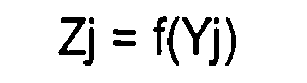
und Definieren des Zj-Werts als repräsentativen Wert der Funktion des j-ten Aminosäurerests Aj der Aminosäuresequenz der Länge (L) und(6) Wiederholen der Schritte (2) bis (5) nacheinander und Bestimmen des Zj-Werts eines jeden Aj aller Aminosäurereste an den Positionen zwischen n+1 ≤ j ≤ L-n in der Aminosäuresequenz der Länge (L), wodurch der Grad der Beteiligung eines jeden Aminosäurerests an der Funktion des Proteins vorausgesagt wird durch Verwendung der Dimension des Zj-Werts als Indikator, wobei das System mindestens die folgenden Einheiten (a) bis (g) umfasst;(a) eine äußere Speichereinheit, welche die Aminosäuresequenzdaten der gesamten mutmaßlichen Proteine des Organismus "a", von dem Genom-Daten oder cDNA-Daten bekannt sind, speichert, sowie eine existierende Proteindatenbank;(b) eine Berechnungs/Speichereinheit, aufgebaut aus einer CPU (Zentralen Prozessierungseinheit), welche die Häufigkeit des Auftretens einer jeden Aminosäure und die Häufigkeit des Auftretens individueller Oligopeptide, gebildet von Permutationen von 20 Aminosäuren, in den Aminosäuresequenzen der gesamten Proteine des Organismus "a" berechnet, und einer Speichereinheit mit der Speicherung der Berechnungsergebnisse;(c) eine Berechnungs/Speichereinheit, aufgebaut aus einer CPU, welche die kleinste Länge (n) von Oligopeptiden berechnet, welche unter den individuellen Oligopeptiden, von denen die Häufigkeiten des Auftretens in der Einheit (b) gespeichert sind, die folgenden Kriterien erfüllen:
unter den Oligopeptiden der Länge (n) ist die Anzahl der Oligopeptide, welche einmal in den gesamten Proteinen auftreten, kleiner als die Anzahl der Oligopeptide, welche zweimal in den gesamten Proteinen auftreten; unter den Oligopeptiden der Länge (n+1) ist die Anzahl der Oligopeptide, welche einmal in den gesamten Proteinen auftreten, größer ist als die Anzahl der Oligopeptide, welche zweimal in den gesamten Proteinen auftreten;
und einer Speichereinheit mit der Speicherung der (n);(d) eine Berechnungs/Speichereinheit, aufgebaut aus einer CPU, welche in den gesamten Proteinen des Organismus "a" die Häufigkeit des Auftretens des folgenden Aj-Oligopeptids der Länge (n+1) berechnet, das ein Teil der Aminosäuresequenz der Länge (L) des Proteins als Gegenstand zur Voraussage einer funktionellen Stelle ist und einen Aminosäurerest Aj (n+1 ≤ j ≤ L-n) an der j-ten Position vom N-Terminus der Aminosäuresequenz des Proteins enthält;
Aj-Oligopeptid: aj1aj2....Aji....ajnaj(n+1)
(worin 1≤ i≤ n+1; Aj = Aji; und Aj der i-te Rest des Oligopeptids ist);
und in den gesamten Proteinen des Organismus "a" die Häufigkeit des Auftretens des folgenden Xi-Oligopeptids der Länge (n+1) berechnet;
Xi-Oligopeptid: aj 1 aj2....Xji....ajnaj(n+1)
(worin der i-te Rest Xji irgendeine Aminosäure ist);
und einer Speichereinheit mit der Speicherung der Berechnungsergebnisse;(e) eine Berechnungs/Speichereinheit, aufgebaut aus einer CPU, welche das Verhältnis Yji der Häufigkeit des Auftretens des Aj-Oligopeptids zu derjenigen des Xi-Oligopeptids berechnet, und einer Speichereinheit mit der Speicherung von Yji;(f) eine Berechnungs/Speichereinheit, aufgebaut aus einer CPU, welche den Mittelwert Yj des Yji berechnet;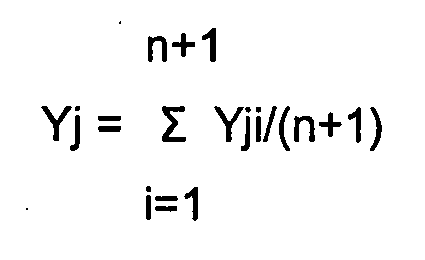
und einer Speichereinheit mit der Speicherung von Yj; und(g) eine Berechnungs/Speichereinheit, aufgebaut aus einer CPU, welche den Funktionswert Zj von Yj berechnet,
und einer Speichereinheit mit der Speicherung von Zj. - System nach Anspruch 1, wobei in dem mit dem System durchgeführten Verfahren der Zj-Wert (n+1 ≤ j ≤ L-n) eines jeden Aminosäurerests in der Aminosäuresequenz der Länge (L) in einer Verteilungskarte dargestellt wird.
- System nach Anspruch 1, welches ferner eine Anzeigeeinheit umfasst, welche den Zj-Wert (n+1≤j≤ L-n) eines jeden Aminosäurerests in der Aminosäuresequenz der Länge (L) in einer Verteilungskarte darstellt.
- System zur automatischen Durchführung eines Verfahrens zur Voraussage einer funktionellen Stelle eines Proteins, abgeleitet von den gesamten mutmaßlichen Proteinen eines Organismus "a", von dem Genom-Daten oder cDNA-Daten bekannt sind, welches Verfahren die Schritte umfasst:(1) Berechnen der Häufigkeit des Auftretens einer jeden Aminosäure und der Häufigkeit des Auftretens individueller Oligopeptide, gebildet durch Permutationen von 20 Aminosäuren, in den Aminosäuresequenzen der gesamten Proteine des Organismus "a";(2) bezüglich eines Proteins des Organismus "a",(2') Berechnen in den gesamten Proteinen des Organismus "a" die Häufigkeit des Auftretens des folgenden Aj-Oligopeptids einer gegebenen Länge (n) (1≤n≤ M, mit der Maßgabe, dass M die kleinste Länge von Oligopeptiden ist, welche das Kriterium erfüllen, dass alle Oligopeptide der Länge M mit einer Häufigkeit 1 des Auftretens vorliegen), welches Aj-Oligopeptid ein Teil der Aminosäuresequenz der Länge (L) des Proteins ist und einen Aminosäurerest Aj (n ≤ j ≤ L-n+1) an der j-ten Position vom N-Terminus der Aminosäuresequenz des Proteins enthält;
Aj-Oligopeptid: aj1aj2....aji....ajn
(worin 1≤ i ≤ n+1, Aj = aji und Aj der i-te Rest des Oligopeptids ist);
und Berechnen in den gesamten Proteinen des Organismus "a" die Häufigkeit des Auftretens des folgenden Xi-Oligopeptids der Länge (n) entsprechend der Länge des Aj-Oligopeptids;
Xi-Oligopeptid: aj1aj2....Xi....ajn
(worin der i-te Rest Xi irgendeine Aminosäure ist),(3) Berechnen des Verhältnisses Yji der Häufigkeit des Auftretens des Aj-Oligopeptids zu derjenigen des Xi-Oligopeptids;(4) Berechnen des Mittelwerts Y(j,n) des Yji; (5) Berechnen des Funktionswerts Z(j,n) von Y(j,n);(6) Wiederholen der Schritte (2') bis (5) nacheinander und Bestimmen des Z(j,n)-Werts eines jeden Aminosäurerests Aj an der j-ten Position (n ≤ j ≤ L-n+1) in der Aminosäuresequenz der Länge (L);(7) Wiederholen der Schritte (2) bis (6) nacheinander für die gesamten Proteine des Organismus "a", wodurch die Verteilung des Z(j,n)-Werts eines jeden Aminosäurerests in den gesamten Proteinen bestimmt wird und die Z(j,n)-Werte in 20 gemäß den 20 Aminosäuren klassifiziert werden, und dann Berechnen des Mittelwerts Av(As) der Z(j,n)-Werte für jede Aminosäure As und der Standardabweichung Sd (As) von deren Verteilung, um auf der Basis der Verteilung eine Funktion g für den j-ten Aminosäurerest Aj eines Proteins für die Normalisierung der Differenz in der Verteilung aufgrund der Spezies der Aminosäurereste zu berechnen;
 (8) Berechnen eines Werts D(j,n) der Funktion g eines jeden Aj aller Aminosäurereste an der j-ten Position (n ≤j≤L-n+1) eines Proteins in den gesamten Proteinen, wie in Schritt (7) gewonnen;
 (9) Definieren des repräsentativen Werts der Funktion des j-ten Aminosäurerests in der Aminosäuresequenz der Länge (L) als Funktionswert Wj von Z(j,n) und D(j,n);
 (a) eine äußere Speichereinheit, welche die Aminosäuresequenzdaten der gesamten mutmaßlichen Proteine des Organismus "a", von dem Genom-Daten oder cDNA-Daten bekannt sind, speichert, sowie eine existierende Proteindatenbank;(b) eine Berechnungs/Speichereinheit, aufgebaut aus einer CPU, welche die Häufigkeit des Auftretens einer jeden Aminosäure und die Häufigkeit des Auftretens individueller Oligopeptide, gebildet durch Permutationen von 20 Aminosäuren, in den Aminosäuresequenzen der gesamten Proteine des Organismus "a" berechnet, und einer Speichereinheit mit der Speicherung der Berechnungsergebnisse;(c) eine Berechnungs/Speichereinheit, aufgebaut aus einer CPU, welche in den gesamten Proteinen des Organismus "a" die Häufigkeit des Auftretens des folgenden Aj-Oligopeptids einer gegebenen Länge (n) (1 ≤ n ≤ M, mit der Maßgabe, dass M die kleinste Länge von Oligopeptiden ist, welche das Kriterium erfüllen, dass alle Oligopeptide der Länge M eine Häufigkeit des Auftretens 1 aufweisen) berechnet, welches Aj-Oligopeptid ein Teil der Aminosäuresequenz der Länge (L) eines gegebenen Proteins des Organismus "a" ist und einen Aminosäurerest Aj (n ≤ j ≤ L-n+1) an der j-ten Position vom N-Terminus der Aminosäuresequenz des Proteins enthält;
Aj-Oligopeptid: aj1aj2....aji....ajn
(worin 1≤ i ≤ n+1, Aj = aji und Aj der i-te Rest des Oligopeptids ist),
und in den gesamten Proteinen des Organismus "a" die Häufigkeit des Auftretens des folgenden Xi-Oligopeptids der Länge (n) entsprechend der Länge des Aj-Oligopeptids berechnet;
Xi-Oligopeptid: aj1aj2....Xji....ajn
(worin der i-te Rest Xji irgendeine Aminosäure ist),
und einer Speichereinheit, welche die Berechnungsergebnisse speichert;(d) eine Berechnungs/Speichereinheit, aufgebaut aus einer CPU, welche das Verhältnis Yji der Häufigkeit des Auftretens des Aj-Oligopeptids zu derjenigen des Xi-Oligopeptids berechnet, und einer Speichereinheit mit der Speicherung des Yji;,(e) eine Berechnungs/Speichereinheit, aufgebaut aus einer CPU, welche den Mittelwert Y(j,n) des Yji berechnet; (f) eine Berechnungs/Speichereinheit, aufgebaut aus einer CPU, welche den Funktionswert Z(j,n) von Y(j,n) berechnet;
 (g) eine Berechnungs/Speichereinheit, aufgebaut aus einer CPU, welche den Z(j,n)-Wert eines jeden Aminosäurerests in den Aminosäuresequenzen der gesamten Proteine des Organismus "a" berechnet, die Verteilung des Z(j,n)-Werts eines jeden Aminosäurerests in den gesamten Proteinen berechnet und die Z(j,n)-Werte entsprechend den 20 Aminosäureresten in 20 klassifiziert, und dann den Mittelwert Av(As) der Z(j,n)-Werte für jede Aminosäure As und die Standardabweichung Sd(As) von deren Verteilung berechnet, um auf Basis der Verteilung eine Funktion g zur Normalisierung der Differenz in der Verteilung aufgrund der Spezies von Aminosäureresten zu bestimmen;
 (h) eine Berechnungs/Speichereinheit, aufgebaut aus einer CPU, welche den Wert (D(j,n) der Funktion g, die in der Einheit (g) gespeichert ist, bezüglich eines jeden der Aminosäurereste Aj an der j-ten Position (n≤j≤ L-n+1) in der Aminosäuresequenz der Länge (L) berechnet;
 (i) eine Berechnungs/Speichereinheit, aufgebaut aus einer Berechnungseinheit, welche einen angemessenen Funktionswert Wj der Z(j,n) und D(j,n) eines jeden Aminosäurerests in der Aminosäuresequenz berechnet;
- System nach Anspruch 4, wobei in dem mit dem System durchgeführten Verfahren der Wj-Wert eines jeden Aminosäurerests in einer zweidimensionalen Verteilungskarte dargestellt wird.
- System nach Anspruch 4, wobei in dem mit dem System durchgeführtem Verfahren der Wj-Wert eines jeden Aminosäurerests in einem dreidimensionalen Strukturmodell des Proteins dargestellt wird.
- System nach Anspruch 4, welches ferner eine Anzeigeeinheit umfasst, welche den Wj-Wert eines jeden Aminosäurerests in einer zweidimensionalen Verteilungskarte darstellt.
- System nach Anspruch 4, welches ferner eine Berechnungs/Speichereinheit umfasst, welche eine existierende Datenbank der dreidimensionalen Struktur von Proteinen speichert oder ein dreidimensionales Strukturmodell auf der Basis einer Aminosäuresequenz nach einem bekannten Verfahren erstellt und das dreidimensionale Strukturmodell speichert, und eine Anzeigeeinheit umfasst, welche den Wj-Wert eines jeden Aminosäurerests in der Aminosäuresequenz in einer Verteilungskarte bezüglich der dreidimensionalen Struktur, die in der Datenbank gespeichert ist, oder des dreidimensionalen Strukturmodells, das in der Berechnungs/Speichereinheit gespeichert ist, darstellt.
- Verfahren zur Modifizierung der bekannten Funktion eines Proteins "A", abgeleitet von den gesamten Proteinen eines Organismus "a", von dem Genom-Daten oder cDNA-Daten bekannt waren, welches Verfahren die Schritte umfasst:(1) Extrahieren eines Proteins, das eng mit dem Protein "A" verwandt ist, aus einer existierenden Protein-Datenbank und Unterwerfen der Proteine einer Zuordnung;(2) Berechnen der Häufigkeit des Auftretens einer jeden Aminosäure und der Häufigkeit des Auftretens individueller Oligopeptide, gebildet durch Permutationen von 20 Aminosäuren, in den Aminosäuresequenzen der gesamten Proteine des Organismus "a", und Bestimmen der kleinsten Länge (n) von Oligopeptiden, welche die folgenden Kriterien erfüllen:
unter den Oligopeptiden der Länge (n) ist die Anzahl der Oligopeptide, welche einmal in den gesamten Proteinen vorkommen, kleiner als die Anzahl der Oligopeptide, welche zweimal in den gesamten Proteinen vorkommen; unter den Oligopeptiden der Länge (n+1) ist die Anzahl der Oligopeptide, welche einmal in den gesamten Proteinen vorkommen, größer als die Anzahl der Oligopeptide, die zweimal in den gesamten Proteinen vorkommen;(3) Berechnen in den gesamten Proteinen des Organismus "a" die Häufigkeit des Auftretens des folgenden Aj-Oligopeptids der Länge (n+1), welches ein Teil der Aminosäuresequenz der Länge (L) des Proteins "A" ist und einen Aminosäurerest Aj (n+1 ≤j≤ L-n) an der j-ten Position vom N-Terminus der Aminosäuresequenz des Proteins enthält;
Aj-Oligopeptid: aj1aj2....Aji....ajnaj(n+1)
(worin 1 ≤ i ≤ n+1, Aj = Aji, und Aj der i-te Rest des Oligopeptids ist),
und Berechnen in den gesamten Proteinen des Organismus "a" die Häufigkeit des Auftretens des folgenden Xi-Oligopeptids der Länge (n+1);
Xi-Oligopeptid: aj1aj2....Xji....ajnaj(n+1)
(worin der Rest Xji irgendeine Aminosäure ist);(4) Berechnen des Verhältnisses Yji der Häufigkeit des Auftretens des Aj-Oligopeptids zu derjenigen des Xi-Oligopeptids;(5) Berechnen des Mittelwerts Yj des Yji; (6) Berechnen des Funktionswerts Zj von Yj;
und Definieren des Zj-Werts als repräsentativen Wert der Funktion des j-ten Aminosäurerests der Aminosäuresequenz der Länge (L) des Proteins "A";(7) Wiederholen der Schritte (3) bis (6) nacheinander und Bestimmen des Zj-Werts eines jeden Aminosäurerests an der Position zwischen n+1 ≤ j ≤ L-n in der Aminosäuresequenz der Länge (L);(8) Auswählen mindestens eines Aminosäurerests, der einer Mutation unterworfen werden soll, auf Basis der in Schritt (1) erhaltenen Zuordnungsdaten aus der Aminosäuresequenz der Länge (L) des Proteins "A", Wiederholen der Schritte (3) bis (6) nacheinander für Varianten-Aminosäurereste in verschiedenen mutierten Aminosäuresequenzen, worin der ausgewählte Aminosäurerest zu einem anderen Aminosäurerest mutiert wurde, um den Zj-Wert der Varianten-Aminosäurereste zu bestimmen;(9) Auswählen einer mutierten Aminosäuresequenz, wobei der Zj-Wert des Varianten-Aminosäurerests wie in Schritt (8) bestimmt größer oder kleiner ist als der Zj-Wert des Wildtyp-Aminosäurerests wie in Schritt (7) bestimmt, und(10) Herstellen eines modifizierten Gens, welches für die modifizierte Aminosäuresequenz von dem Protein "A"-Gen codiert, und Herstellen des modifizierten Proteins als Expressionsprodukt des Gens. - Verfahren zur Modifizierung der Funktion eines Proteins "B", abgeleitet von einem Organismus "b", von dem Genom-Daten oder cDNA-Daten unbekannt waren, welches Verfahren die Schritte umfasst:(1) Extrahieren eines Proteins "A", welches mit dem Protein "B" am engsten verwandt ist, aus den gesamten Proteinen des Organismus "a", von dem genomische Daten oder cDNA-Daten bekannt sind, und Unterwerfen des Proteins einer Zuordnung oder Extrahieren eines Proteins, das mit dem Protein "B" eng verwandt ist, aus einer existierenden Proteindatenbank, um das Protein einer Zuordnung zu unterwerfen;(2) Berechnen in den Aminosäuresequenzen der gesamten Proteine des Organismus "a" die Häufigkeit des Auftretens einer jeden Aminosäure und die Häufigkeit des Auftretens individueller Oligopeptide, gebildet durch Permutationen von 20 Aminosäuren, und Bestimmen der kleinsten Länge (n) von Oligopeptiden, welche die folgenden Kriterien erfüllen:
unter den Oligopeptiden der Länge (n) ist die Anzahl der Oligopeptide, welche einmal in den gesamten Proteinen auftreten, kleiner als die Anzahl der Oligopeptide, welche zweimal in den gesamten Proteinen auftreten; unter den Oligopeptiden der Länge (n+1) ist die Anzahl der Oligopeptide, welche einmal in den gesamten Proteinen auftreten, größer als die Anzahl der Oligopeptide, welche zweimal in den gesamten Proteinen auftreten;(3) Berechnen in den gesamten Proteinen des Organismus "a" die Häufigkeit des Auftretens des folgenden Aj-Oligopeptids der Länge (n+1), welches ein Teil der Aminosäuresequenz der Länge (L) des Proteins "A" ist und einen Aminosäurerest Aj (n+1 ≤ j ≤ L-n) an der j-ten Position vom N-Terminus der Aminosäuresequenz des Proteins enthält;
Ai-Oligopeptid: aj1aj2....Aji....ajnaj(n+1)
(worin 1 ≤ i ≤ n+1, Aj = Aji, und Aj der i-te Rest des Oligopeptids ist),
und Berechnen in den gesamten Proteinen des Organismus "a" die Häufigkeit des Auftretens des folgenden Xi-Oligopeptids der Länge (n+1);
Xi-Oligopeptid: aj1aj2....Xji....ajnaj(n+1)
(worin der i-te Rest Xji irgendeine Aminosäure ist);(4) Berechnen des Verhältnisses Yji der Häufigkeit des Auftretens des Aj-Oligopeptids zu derjenigen des Xi-Oligopeptids;(5) Berechnen des Mittelwerts Yj des Yji; (6) Berechnen des Funktionswerts Zj von Yj;
und Definieren des Zj-Werts als repräsentativen Wert der Funktion des j-ten Aminosäurerests Aj der Aminosäuresequenz der Länge (L) des Proteins "A";(7) Wiederholen der Schritte (3) bis (6) nacheinander und Bestimmen des Zj-Werts eines jeden der Aminosäurereste an der Position zwischen n+1 ≦j≦L-n in der Aminosäuresequenz der Länge (L);(8) Auswählen mindestens eines Aminosäurerests, der einer Mutation unterworfen werden soll, auf Grundlage der in Schritt (1) erhaltenen Zuordnungsdaten aus der Aminosäuresequenz der Länge (L) des Proteins "A", Wiederholen der Schritte (3) bis (6) nacheinander für Varianten-Aminosäurereste in verschiedenen mutierten Aminosäuresequenzen, worin der ausgewählte Aminosäurerest zu anderen Aminosäureresten mutiert wurde, um den Zj-Wert der Varianten-Aminosäurereste festzustellen;(9) Auswählen der Mutationsposition und des mutierten Aminosäurerestes, wobei der Zj-Wert des Varianten-Aminosäurerests wie in Schritt (8) bestimmt größer oder kleiner ist als der Zj-Wert des Wildtyp-Aminosäurerests wie in Schritt (7) bestimmt; und(10) Herstellen eines modifizierten Gens, welches für die modifizierte Aminosäuresequenz mit dem mutierten Aminosäurerest an der Position von dem Protein "B"-Gen codiert, und Herstellen des modifizierten Proteins als Expressionsprodukt des Gens. - Verfahren zur Modifizierung der bekannten Funktion eines Proteins "A", abgeleitet von den gesamten Proteinen des Organismus "a", von dem Genom-Daten oder cDNA-Daten bekannt waren, welches Verfahren die Schritte umfasst:(1) Extrahieren von Proteinen, die eng mit dem Protein "A" verwandt sind, aus einer existierenden Proteindatenbank und Unterwerfen der Proteine einer Zuordnung;(2) Berechnen der Häufigkeit des Auftretens einer jeden Aminosäure und der Häufigkeit des Auftretens individueller Oligopeptide, gebildet durch Permutationen von 20 Aminosäuren, in den Aminosäuresequenzen der gesamten Proteine des Organismus "a";(3) bezüglich eines Proteins des Organismus "a",(3') Berechnen in den gesamten Proteinen des Organismus "a" die Häufigkeit des Auftretens des folgenden Aj-Oligopeptids einer gegebenen Länge (n) (1≤ n ≤ M, mit der Maßgabe, dass M die kleinste Länge von Oligopeptiden ist, welche das Kriterium erfüllen, dass alle Oligopeptide der Länge M eine Häufigkeit 1 des Auftretens haben), welches Aj-Oligopeptid ein Teil der Aminosäuresequenz des Proteins ist und einen Aminosäurerest Aj (n ≤j≤ L-n+1) an der j-ten Position vom N-Terminus des Proteins enthält;
Aj-Oligopeptid: aj1aj2....aji....ajn
(worin 1≤ i≤ n, Aj = aji und Aj der i-te Rest des Oligopeptids ist);
und Berechnen in den gesamten Proteinen des Organismus "a" die Häufigkeit des Auftretens des folgenden Xi-Oligopeptids der Länge (n) entsprechend der Länge des Aj-Oligopeptids;
Xi-Oligopeptid: aj1aj2....Xji....ajn
(worin der i-te Rest Xji irgendeine Aminosäure ist);(4) Berechnen des Verhältnisses Yji der Häufigkeit des Auftretens des Aj-Oligopeptids zu derjenigen des Xi-Oligopeptids;(5) Berechnen des Mittelwerts Y(j,n) des Yji; (6) Berechnen des Funktionswerts Z(j,n) von Y(j,n)
 (7) Wiederholen der Schritte (3') bis (6) nacheinander und Bestimmen des Z(j,n)-Werts eines jeden Aminosäurerests Aj an der Position j (n≤j≤ L-n+1) in der Aminosäuresequenz der Länge (L);(8) Wiederholen der Schritte (3) bis (7) nacheinander für die gesamten Proteine des Organismus "a", wodurch die Verteilung des Z(j,n)-Werts eines jeden Aminosäurerests in den gesamten Proteinen bestimmt und die Z(j,n)-Werte in 20, entsprechend den 20 Aminosäuren, klassifiziert werden, und dann Berechnen des Mittelwerts Av(As) der Z(j,n)-Werte für jede Aminosäure As und der Standardabweichung Sd(As) von deren Verteilung, um auf Basis der Verteilung die Funktion g für den j-ten Aminosäurerest Aj eines Proteins zu bestimmen, um die Differenz in der Verteilung aufgrund der Spezies von Aminosäureresten zu normalisieren;
 (9) Berechnen des Werts D(j.n) der Funktion g eines jeden Aj aller Aminosäurereste an der j-ten Position (n ≤j≤ L-n+1) eines Proteins in den gesamten Proteinen wie in Schritt (8) gewonnen;
 (10) Definieren des repräsentativen Werts der Funktion des j-ten Aminosäurerests in der Aminosäuresequenz der Länge (L) als Funktionswert Wj von Z(j,n) und D(j,n)
 (11) Wiederholen der Schritte (3) bis (10) nacheinander, um die individuellen Wj-Werte aller Aminosäurereste an der Position (n+1 ≤j≤ L-n) in der Aminosäuresequenz der Länge (L) zu bestimmen;(12) Auswählen mindestens eines Aminosäurerests, der einer Mutation unterworfen werden soll, auf Grundlage der in Schritt (1) erhaltenen Zuordnungsdaten aus der Aminosäuresequenz der Länge (L) des Proteins "A" und Wiederholen der Schritte (3) bis(10) nacheinander für Varianten-Aminosäurereste in verschiedenen mutierten Aminosäuresequenzen, worin der ausgewählte Aminosäurerest zu einem anderen Aminosäurerest mutiert wurde, um den Wj-Wert des Varianten-Aminosäurerests zu bestimmen;(13) Auswählen einer mutierten Aminosäuresequenz, wobei der Wj-Wert des Varianten-Aminosäurerests wie in Schritt (12) bestimmt größer oder kleiner ist als der Wj-Wert des Wildtyp-Aminosäurerests wie in Schritt (10) bestimmt; und(14) Herstellen eines modifizierten Gens, welches für die modifizierte Aminosäuresequenz des Protein "A"-Gens codiert, und Herstellen des modifizierten Proteins als Expressionsprodukt des Gens.
Priority Applications (1)
| Application Number | Priority Date | Filing Date | Title |
|---|---|---|---|
| EP05005854A EP1564288B1 (de) | 1997-01-31 | 1998-02-02 | Thermophile DNA Polymerase mit modifizierter Funktion |
Applications Claiming Priority (9)
| Application Number | Priority Date | Filing Date | Title |
|---|---|---|---|
| JP1924897 | 1997-01-31 | ||
| JP1924997A JP3801714B2 (ja) | 1997-01-31 | 1997-01-31 | 蛋白質の機能部位予測方法と機能部位予測装置 並びに蛋白質の機能改良方法 |
| JP1924997 | 1997-01-31 | ||
| JP01924897A JP3679536B2 (ja) | 1997-01-31 | 1997-01-31 | 耐熱性dna合成酵素 |
| JP33210097A JP3880173B2 (ja) | 1997-12-02 | 1997-12-02 | Dna合成酵素 |
| JP33210097 | 1997-12-02 | ||
| JP01869998A JP3792039B2 (ja) | 1998-01-30 | 1998-01-30 | 蛋白質機能部位の予測方法と予測装置 |
| JP1869998 | 1998-01-30 | ||
| PCT/JP1998/000430 WO1998033900A1 (en) | 1997-01-31 | 1998-02-02 | Method and apparatus for predicting protein function site, method for improving protein function, and function-improved protein |
Related Child Applications (1)
| Application Number | Title | Priority Date | Filing Date |
|---|---|---|---|
| EP05005854A Division EP1564288B1 (de) | 1997-01-31 | 1998-02-02 | Thermophile DNA Polymerase mit modifizierter Funktion |
Publications (3)
| Publication Number | Publication Date |
|---|---|
| EP1013759A1 EP1013759A1 (de) | 2000-06-28 |
| EP1013759A4 EP1013759A4 (de) | 2001-05-30 |
| EP1013759B1 true EP1013759B1 (de) | 2007-01-24 |
Family
ID=27457022
Family Applications (2)
| Application Number | Title | Priority Date | Filing Date |
|---|---|---|---|
| EP05005854A Expired - Lifetime EP1564288B1 (de) | 1997-01-31 | 1998-02-02 | Thermophile DNA Polymerase mit modifizierter Funktion |
| EP98901095A Expired - Lifetime EP1013759B1 (de) | 1997-01-31 | 1998-02-02 | Methode und apparat zur vorhersage von funktionellen proteindomänen, methode zur verbesserung der proteinfunktion, sowie funktionell verbessertes protein |
Family Applications Before (1)
| Application Number | Title | Priority Date | Filing Date |
|---|---|---|---|
| EP05005854A Expired - Lifetime EP1564288B1 (de) | 1997-01-31 | 1998-02-02 | Thermophile DNA Polymerase mit modifizierter Funktion |
Country Status (3)
| Country | Link |
|---|---|
| EP (2) | EP1564288B1 (de) |
| DE (2) | DE69841602D1 (de) |
| WO (1) | WO1998033900A1 (de) |
Families Citing this family (2)
| Publication number | Priority date | Publication date | Assignee | Title |
|---|---|---|---|---|
| EP1339006A1 (de) * | 2002-02-14 | 2003-08-27 | AgeLab Pharma GmbH | Methode und Apparat zur Erkennung funktioneller Proteinsequenzen |
| CA2742593C (en) | 2008-11-03 | 2020-05-05 | Kapa Biosystems, Inc. | Chimeric dna polymerases |
Family Cites Families (2)
| Publication number | Priority date | Publication date | Assignee | Title |
|---|---|---|---|---|
| JPH06266810A (ja) * | 1993-03-11 | 1994-09-22 | Fujitsu Ltd | 二面角指定方法 |
| JPH08110909A (ja) * | 1994-10-13 | 1996-04-30 | Hitachi Ltd | 配列検索方法および装置 |
-
1998
- 1998-02-02 WO PCT/JP1998/000430 patent/WO1998033900A1/ja not_active Ceased
- 1998-02-02 EP EP05005854A patent/EP1564288B1/de not_active Expired - Lifetime
- 1998-02-02 EP EP98901095A patent/EP1013759B1/de not_active Expired - Lifetime
- 1998-02-02 DE DE69841602T patent/DE69841602D1/de not_active Expired - Lifetime
- 1998-02-02 DE DE69836971T patent/DE69836971T2/de not_active Expired - Lifetime
Also Published As
| Publication number | Publication date |
|---|---|
| DE69836971T2 (de) | 2007-10-25 |
| DE69841602D1 (de) | 2010-05-20 |
| EP1013759A4 (de) | 2001-05-30 |
| EP1013759A1 (de) | 2000-06-28 |
| EP1564288B1 (de) | 2010-04-07 |
| EP1564288A1 (de) | 2005-08-17 |
| WO1998033900A1 (en) | 1998-08-06 |
| DE69836971D1 (de) | 2007-03-15 |
Similar Documents
| Publication | Publication Date | Title |
|---|---|---|
| EP2316934B1 (de) | Rna-polymerasemutant mit verbesserten funktionen | |
| US7820423B2 (en) | Method and a system for predicting protein functional site, a method for improving protein function, and a function-modified protein | |
| EP0482714B1 (de) | Erhöhte Produktion von thermus aquaticus DNA Polymerase in E. coli | |
| JP3761197B2 (ja) | 新規dnaポリメラーゼ | |
| EP2074212B1 (de) | Dna-polymerasen aus thermus eggertssonii | |
| EP0877084B1 (de) | Für temperaturstabiles Diaphorase Kodierendes Gen | |
| EP1013759B1 (de) | Methode und apparat zur vorhersage von funktionellen proteindomänen, methode zur verbesserung der proteinfunktion, sowie funktionell verbessertes protein | |
| CN112899255B (zh) | Dna聚合酶及其应用、重组载体及其制备方法和应用、重组工程菌及其应用 | |
| JP4105693B2 (ja) | 耐熱性リボヌクレアーゼh | |
| US20110020896A1 (en) | Mutant dna polymerases and their genes | |
| CN114480345A (zh) | MazF突变体、重组载体、重组工程菌及其应用 | |
| KR100777230B1 (ko) | 써모코커스 유래 돌연변이 dna 중합효소들 및 그의유전자들 | |
| JP3688367B2 (ja) | 変異型dnaポリメラーゼ | |
| JPWO1997049819A1 (ja) | 新規なアミノ末端保護基遊離酵素 | |
| CN114761548B (zh) | 海洋dna聚合酶i | |
| JP4714848B2 (ja) | Dnaポリメラーゼ変異体 | |
| EP4435098A1 (de) | Chimäre dna-polymerase und verwendung davon | |
| JP3880173B2 (ja) | Dna合成酵素 | |
| JP4452834B2 (ja) | 新規dna分解酵素 | |
| WO2024262588A1 (ja) | 核酸増幅における増幅バイアスの低減方法 | |
| JP3679536B2 (ja) | 耐熱性dna合成酵素 | |
| CN113913414A (zh) | 高稳定性和高催化效率的双碱基酶Kex2突变体 | |
| JPH11151087A (ja) | Dnaポリメラーゼ遺伝子 | |
| JP2010088446A (ja) | 新規dna分解酵素 |
Legal Events
| Date | Code | Title | Description |
|---|---|---|---|
| PUAI | Public reference made under article 153(3) epc to a published international application that has entered the european phase |
Free format text: ORIGINAL CODE: 0009012 |
|
| 17P | Request for examination filed |
Effective date: 19990830 |
|
| AK | Designated contracting states |
Kind code of ref document: A1 Designated state(s): CH DE FR GB LI NL |
|
| A4 | Supplementary search report drawn up and despatched |
Effective date: 20010420 |
|
| AK | Designated contracting states |
Kind code of ref document: A4 Designated state(s): CH DE FR GB LI NL |
|
| 17Q | First examination report despatched |
Effective date: 20040528 |
|
| RAP1 | Party data changed (applicant data changed or rights of an application transferred) |
Owner name: JAPAN SCIENCE AND TECHNOLOGY AGENCY |
|
| GRAP | Despatch of communication of intention to grant a patent |
Free format text: ORIGINAL CODE: EPIDOSNIGR1 |
|
| RIC1 | Information provided on ipc code assigned before grant |
Ipc: G06F 19/00 20060101ALI20060405BHEP Ipc: G06F 17/00 20060101ALI20060405BHEP Ipc: C12N 9/12 20060101ALI20060405BHEP Ipc: C12N 15/09 20060101AFI20060405BHEP |
|
| GRAS | Grant fee paid |
Free format text: ORIGINAL CODE: EPIDOSNIGR3 |
|
| GRAA | (expected) grant |
Free format text: ORIGINAL CODE: 0009210 |
|
| AK | Designated contracting states |
Kind code of ref document: B1 Designated state(s): CH DE FR GB LI NL |
|
| REG | Reference to a national code |
Ref country code: GB Ref legal event code: FG4D |
|
| REG | Reference to a national code |
Ref country code: CH Ref legal event code: EP |
|
| REF | Corresponds to: |
Ref document number: 69836971 Country of ref document: DE Date of ref document: 20070315 Kind code of ref document: P |
|
| REG | Reference to a national code |
Ref country code: CH Ref legal event code: NV Representative=s name: A. BRAUN, BRAUN, HERITIER, ESCHMANN AG PATENTANWAE |
|
| ET | Fr: translation filed | ||
| PLBE | No opposition filed within time limit |
Free format text: ORIGINAL CODE: 0009261 |
|
| STAA | Information on the status of an ep patent application or granted ep patent |
Free format text: STATUS: NO OPPOSITION FILED WITHIN TIME LIMIT |
|
| 26N | No opposition filed |
Effective date: 20071025 |
|
| REG | Reference to a national code |
Ref country code: CH Ref legal event code: PFA Owner name: JAPAN SCIENCE AND TECHNOLOGY AGENCY Free format text: JAPAN SCIENCE AND TECHNOLOGY AGENCY#1-8, HONCHO 4-CHOME#KAWAGUCHI-SHI, SAITAMA 332-0012 (JP) -TRANSFER TO- JAPAN SCIENCE AND TECHNOLOGY AGENCY#1-8, HONCHO 4-CHOME#KAWAGUCHI-SHI, SAITAMA 332-0012 (JP) |
|
| REG | Reference to a national code |
Ref country code: CH Ref legal event code: PCAR Free format text: NEW ADDRESS: HOLBEINSTRASSE 36-38, 4051 BASEL (CH) |
|
| REG | Reference to a national code |
Ref country code: FR Ref legal event code: PLFP Year of fee payment: 19 |
|
| REG | Reference to a national code |
Ref country code: FR Ref legal event code: PLFP Year of fee payment: 20 |
|
| PGFP | Annual fee paid to national office [announced via postgrant information from national office to epo] |
Ref country code: NL Payment date: 20170105 Year of fee payment: 20 |
|
| PGFP | Annual fee paid to national office [announced via postgrant information from national office to epo] |
Ref country code: DE Payment date: 20170104 Year of fee payment: 20 Ref country code: CH Payment date: 20170105 Year of fee payment: 20 Ref country code: FR Payment date: 20170106 Year of fee payment: 20 |
|
| PGFP | Annual fee paid to national office [announced via postgrant information from national office to epo] |
Ref country code: GB Payment date: 20170105 Year of fee payment: 20 |
|
| REG | Reference to a national code |
Ref country code: DE Ref legal event code: R071 Ref document number: 69836971 Country of ref document: DE |
|
| REG | Reference to a national code |
Ref country code: NL Ref legal event code: MK Effective date: 20180201 |
|
| REG | Reference to a national code |
Ref country code: CH Ref legal event code: PL |
|
| REG | Reference to a national code |
Ref country code: GB Ref legal event code: PE20 Expiry date: 20180201 |
|
| PG25 | Lapsed in a contracting state [announced via postgrant information from national office to epo] |
Ref country code: GB Free format text: LAPSE BECAUSE OF EXPIRATION OF PROTECTION Effective date: 20180201 |