EP1020435A1 - Aliphatic triisocyanate compound, process for producing the same, and polyurethane resin made from the compound - Google Patents
Aliphatic triisocyanate compound, process for producing the same, and polyurethane resin made from the compound Download PDFInfo
- Publication number
- EP1020435A1 EP1020435A1 EP98900367A EP98900367A EP1020435A1 EP 1020435 A1 EP1020435 A1 EP 1020435A1 EP 98900367 A EP98900367 A EP 98900367A EP 98900367 A EP98900367 A EP 98900367A EP 1020435 A1 EP1020435 A1 EP 1020435A1
- Authority
- EP
- European Patent Office
- Prior art keywords
- isocyanate
- hexamethylene diisocyanate
- diisocyanate
- aminomethyl
- compound
- Prior art date
- Legal status (The legal status is an assumption and is not a legal conclusion. Google has not performed a legal analysis and makes no representation as to the accuracy of the status listed.)
- Withdrawn
Links
Images

Classifications
-
- C—CHEMISTRY; METALLURGY
- C08—ORGANIC MACROMOLECULAR COMPOUNDS; THEIR PREPARATION OR CHEMICAL WORKING-UP; COMPOSITIONS BASED THEREON
- C08G—MACROMOLECULAR COMPOUNDS OBTAINED OTHERWISE THAN BY REACTIONS ONLY INVOLVING UNSATURATED CARBON-TO-CARBON BONDS
- C08G18/00—Polymeric products of isocyanates or isothiocyanates
- C08G18/06—Polymeric products of isocyanates or isothiocyanates with compounds having active hydrogen
- C08G18/70—Polymeric products of isocyanates or isothiocyanates with compounds having active hydrogen characterised by the isocyanates or isothiocyanates used
- C08G18/72—Polyisocyanates or polyisothiocyanates
- C08G18/73—Polyisocyanates or polyisothiocyanates acyclic
-
- C—CHEMISTRY; METALLURGY
- C07—ORGANIC CHEMISTRY
- C07C—ACYCLIC OR CARBOCYCLIC COMPOUNDS
- C07C265/00—Derivatives of isocyanic acid
- C07C265/02—Derivatives of isocyanic acid having isocyanate groups bound to acyclic carbon atoms
- C07C265/04—Derivatives of isocyanic acid having isocyanate groups bound to acyclic carbon atoms of a saturated carbon skeleton
-
- C—CHEMISTRY; METALLURGY
- C09—DYES; PAINTS; POLISHES; NATURAL RESINS; ADHESIVES; COMPOSITIONS NOT OTHERWISE PROVIDED FOR; APPLICATIONS OF MATERIALS NOT OTHERWISE PROVIDED FOR
- C09D—COATING COMPOSITIONS, e.g. PAINTS, VARNISHES OR LACQUERS; FILLING PASTES; CHEMICAL PAINT OR INK REMOVERS; INKS; CORRECTING FLUIDS; WOODSTAINS; PASTES OR SOLIDS FOR COLOURING OR PRINTING; USE OF MATERIALS THEREFOR
- C09D175/00—Coating compositions based on polyureas or polyurethanes; Coating compositions based on derivatives of such polymers
- C09D175/04—Polyurethanes
-
- Y—GENERAL TAGGING OF NEW TECHNOLOGICAL DEVELOPMENTS; GENERAL TAGGING OF CROSS-SECTIONAL TECHNOLOGIES SPANNING OVER SEVERAL SECTIONS OF THE IPC; TECHNICAL SUBJECTS COVERED BY FORMER USPC CROSS-REFERENCE ART COLLECTIONS [XRACs] AND DIGESTS
- Y10—TECHNICAL SUBJECTS COVERED BY FORMER USPC
- Y10T—TECHNICAL SUBJECTS COVERED BY FORMER US CLASSIFICATION
- Y10T428/00—Stock material or miscellaneous articles
- Y10T428/31504—Composite [nonstructural laminate]
- Y10T428/31551—Of polyamidoester [polyurethane, polyisocyanate, polycarbamate, etc.]
Definitions
- the present invention relates to a novel aliphatic triisocyanate compound and a process for producing the compound. Further, the present invention also relates to a polyurethane resin produced by using the isocyanate compound, and a paint, an adhesive, etc. containing the polyurethane resin.
- Polyurethane resins which are produced by reacting an isocyanate compound with a polyol compound at a reaction ratio (molar ratio) of "(isocyanate group/active hydrogen group (hydroxy group, etc.))" of more than 1, and which have isocyanate groups bonded to molecular ends thereof (in the present specification, occasionally referred to as "polyurethane polyisocyanate”), have been used as a curing agent for resins containing an active hydrogen, and has been widely applied to, for example, paints for metals, plastics, woods, magnetic recording media, etc., adhesives or the like. A dryability and a curability of a coating film and properties of the coating film are important factors of good paints or adhesives. The number of functional groups and the reactivity of isocyanate groups in the polyurethane polyisocyanate contribute to these properties to a large extent.
- Polyurethane resins having hydroxy groups bonded to molecular ends thereof which are produced by reacting an isocyanate compound with an excessive amount of a polyol compound, etc., at such a ratio of "(isocyanate group/active hydrogen group)" of less than 1 so as to (in the present specification, occasionally referred to as "polyurethane polyol"), are excellent in wear resistance, flexibility, strength, adhesion property and the like. Therefore, such polyurethane resins have been widely applied to various fields such as paints, ink, adhesives, synthetic leathers and the like.
- This isocyanate compound has a boiling point of 150°C/2 mmHg, and can be easily vacuum-distilled in an industrial scale.
- the isocyanate compound has a vapor pressure of 0.00075 mmHg at a temperature of 25°C.
- the vapor pressure is as low as about one-twentieth of 0.0150 mmHg which is a vapor pressure of hexamethylene diisocyanate as an extensively used aliphatic isocyanate. Therefore, such isocyanate compound is almost unvaporized at an ordinary temperature.
- a process for producing 3-isocyanate methyl-1,6-hexamethylene diisocyanate which process comprises reacting 3-aminomethyl-1,6-hexamethylene diamine with phosgene in the presence of a tertiary amine.
- This process may comprise reacting 3-aminomethyl-1,6-hexamethylene diamine with phosgene in an inert solvent at a temperature of not more than 40°C in the presence of a tertiary amine so as to produce a slurry containing tertiary amine hydrochloride as a precipitate; heating the slurry to obtain a slurry containing 3-aminomethyl-1,6-hexamethylene diisocyanate; filtering the obtained slurry to separate the slurry into a filter cake composed mainly of the tertiary amine hydrochloride and a filtrate composed mainly of the inert solvent and 3-aminomethyl-1,6-hexamethylene diisocyanate; and then distilling the filtrate in the presence of a hydrochloric acid scavenger.
- a polyurethane resin produced by reacting 3-isocyanate methyl-1,6-hexamethylene diisocyanate with a polyol compound.
- the polyurethane resin is preferably in the form of polyurethane polyisocyanate or polyurethane polyol.
- paints or adhesives containing these polyurethane resins are also provided.
- the 3-isocyanate methyl-1,6-hexamethylene diisocyanate represented by the above formula (I) can be produced by reacting a corresponding triamine, i.e., 3-aminomethyl-1,6-hexamethylene diamine with phosgene by an ordinary method.
- the 3-aminomethyl-1,6-hexamethylene diamine as a raw material has a boiling point of 122°C/8 mmHg, and can be produced by adding hydrogen cyanide to methylene glutaronitrile obtained by the dimerization of acrylonitrile, and then subjecting the obtained product to hydrogen reduction.
- One method (1) comprises adding an acid such as hydrochloric acid, sulfuric acid, phosphoric acid, acetic acid or the like to amine so as to obtain an amine acid salt, preferably amine hydrochloride; and then reacting the obtained amine acid salt with phosgene in an inert solvent at a temperature of 60 to 230°C, thereby producing the aimed isocyanate compound.
- an acid such as hydrochloric acid, sulfuric acid, phosphoric acid, acetic acid or the like
- Another method (2) comprises reacting amine with phosgene at a temperature as low as usually not more than 40°C, preferably not more than 10°C to produce carbamoyl chloride; and then subjecting the obtained reaction product to dehydrochlorination at a temperature of 60 to 230°C, preferably 100 to 180°C, thereby producing the aimed isocyanate compound. Both the methods are known to those skilled in the art.
- the 3-isocyanate methyl-1,6-hexamethylene diisocyanate according to the present invention can be produced by any of the methods described above.
- the former method (1) there can be obtained such an advantage that upon reacting amine with phosgene, the produced isocyanate compound is prevented from reacting with unreacted amine, so that it is possible to avoid the production of a urea compound.
- the amine hydrochloride is obtained in the form of coarse particles or aggregates, there is required a bothersome procedure that the hydrochloride should be pulverized before reacting with phosgene. Accordingly, in order to produce the isocyanate compound according to the present invention, in general, the latter method (2) is preferably used.
- a tertiary amine such as pyridine, trimethyl amine, triethyl amine, tributyl amine, quinoline, picoline, N-methyl morpholine, N-ethyl morpholine, pyrazine or the like, are added to the reaction system, so that it is possible to avoid the production and deposition of the aggregates in the subsequent heating step.
- the tertiary amine may be preliminarily added to the inert solvent, or may be added to the reaction system together with 3-aminomethyl-1,6-hexamethylene diamine as a raw material.
- the tertiary amine is reacted with hydrogen chloride produced by the reaction of 3-aminomethyl-1,6-hexamethylene diamine with phosgene, thereby converting into amine hydrochloride. Therefore, the tertiary amine acts as a hydrochloric acid scavenger in the reaction system.
- the amount of the tertiary amine used is usually not less than 3 moles, preferably about 4 to about 5 moles based on one mole of 3-aminomethyl-1,6-hexamethylene diamine.
- phosgene when amine and phosgene are reacted at a low temperature, it is preferred that phosgene always exists in the reaction system in the range of not less than an equivalent amount relative to amino groups contained in the raw material.
- a method of preliminarily dissolving phosgene in the inert solvent charging the obtained solution into the reaction system, and then feeding 3-aminomethyl-1,6-hexamethylene diamine as the raw material into the reaction system; or a method of feeding both the components at a molar ratio of phosgene to amine of not less than 3, at the same time.
- the reaction of 3-aminomethyl-1,6-hexamethylene diamine with phosgene may be suitably conducted at a temperature of not more than 40°C, preferably not more than 10°C by an ordinary method. Then, the reaction product is heated to a temperature of 40 to 230°C, preferably 100 to 180°C in the presence of phosgene by an ordinary method so as to be subjected to dehydrochlorination reaction, thereby converting the reaction product into 3-isocyanate methyl-1,6-hexamethylene diisocyanate. After completion of the reaction, residual phosgene is removed and the reaction mixture is filtered to remove the tertiary amine hydrochloride suspended therein.
- the reaction mixture is subjected to distillation, thereby obtaining 3-isocyanate methyl-1,6-hexamethylene diisocyanate.
- the reaction mixture is first distilled under from an ordinary pressure to a reduced pressure to remove the inert solvent therefrom, and then the obtained distillation residues are subjected to vacuum distillation so as to distill off the aimed 3-isocyanate methyl-1,6-hexamethylene diisocyanate.
- a trace amount of the tertiary amine hydrochloride is still dissolved in a filtrate obtained after filtering off the tertiary amine hydrochloride.
- the filtrate is subjected to distillation, the remaining tertiary amine hydrochloride is dissociated into tertiary amine and acid salts, and the tertiary amine and acid salts are distilled off, got mixed in the aimed product and combined again into tertiary amine hydrochloride, so that the quality of the obtained product tends to be deteriorated.
- 3-isocyanate methyl-1,6-hexamethylene diisocyanate has a boiling point of 150°C/2 mmHg, and is a liquid showing an extremely high fluidity at an ordinary temperature.
- polyol compounds used for producing the polyurethane polyisocyanate having terminal isocyanate groups among these polyurethane resins there may be exemplified polyhydric alcohols having 3 or more functional groups, such as glycerol, trimethylol propane, trimethylol ethane, 1,2,6-hexane triol, 1,2,4-butane triol, erythritol, sorbitol, pentaerythritol, dipentaerythritol or the like; aliphatic glycols such as monomeric glycols, e.g., ethylene glycol, diethylene glycol, propylene glycol, dipropylene glycol, tripropylene glycol, 1,2-butane diol, 1,3-butane diol, 1,4-butane diol, 2,3-butane diol, 2-methyl-1,3-propane diol, 2,3-diethyl-1,3-propane diol
- polystyrene resin such as glycols as adducts thereof with bisphenol A ethylene oxide or propylene oxide, polyether polyols, polyester polyols, polyether ester polyols, polycarbonate polyols, polyacrylic polyols or the like.
- polyether polyols there may be exemplified glycols such as ethylene glycol, propylene glycol, diethylene glycol or the like; polyols having three or more functional groups, such as glycerol, trimethylol ethane, trimethylol propane, pentaerythritol or the like; hydroxy-containing polyether polyols produced by addition-polymerizing alkylene oxide such as ethylene oxide or propylene oxide with polyamines such as ethylene diamine or triene diamine; polytetramethylene ether glycols obtained by the ring-opening polymerization of tetrahydrofuran; or the like.
- glycols such as ethylene glycol, propylene glycol, diethylene glycol or the like
- polyols having three or more functional groups such as glycerol, trimethylol ethane, trimethylol propane, pentaerythritol or the like
- hydroxy-containing polyether polyols
- polyester polyols there may be exemplified dicarboxylic acids such as succinic acid, adipic acid, sebacic acid, azelaic acid, phthalic acid or the like; tri- or tetracarboxylic acids such as trimellitic acid, pyromellitic acid or the like; diols such as ethylene glycol, propylene glycol, 1,4-butane diol, 1,5-pentane diol, 3-methyl-1,5-pentane diol, 2,2-diethyl propane diol, 2-ethyl-2-butyl propane diol, 1,6-hexane diol, neopentyl glycol, diethylene glycol, 1,4-cyclohexane diol, 1,4-cyclohexane dimethanol or the like; triols such as trimethylol propane, glycerol or the like; polyols obtained by the polycondensation reaction with bisphenol A, bisphenol A
- polyether ester polyols there may be exemplified polyether ester polyols obtained by reacting an ether group-containing diol or a mixture of the diol and other glycols with the above-mentioned carboxylic acids or anhydrides of these acids, or by reacting polyester glycol with alkylene oxide, for example, poly(polytetramethylene ether) adipate.
- polycarbonate polyols there may be used those polyols obtained by the dealcoholation condensation reaction between polyhydric alcohol and dialkyl carbonate such as dimethyl carbonate or diethyl carbonate; the dephenolation condensation reaction between polyhydric alcohol and diphenyl carbonate; the de-ethyleneglycolation condensation reaction between polyhydric alcohol and ethylene carbonate; or the like.
- polyhydric alcohols there may be exemplified aliphatic diols such as 1,6-hexane diol, diethylene glycol, propylene glycol, 1,4-butane diol, 1,5-pentane diol, 3-methyl-1,5-pentane diol, 2,2-diehtyl propane diol, 2-ethyl-2-butyl propane diol, neopentyl glycol, etc.; alicyclic diols such as 1,4-cyclohexane diol, 1,4-cyclohexane dimethanol, etc.; or the like.
- aliphatic diols such as 1,6-hexane diol, diethylene glycol, propylene glycol, 1,4-butane diol, 1,5-pentane diol, 3-methyl-1,5-pentane diol, 2,2-diehtyl propane diol, 2-ethyl-2-butyl propane dio
- diamines there may be used diamines, aminoalcohols or the like.
- diamines there may be exemplified hexamethylene diamine, xylene diamine, isophorone diamine, N,N-dimethyl ethylene diamine or the like.
- aminoalcohols there may be exemplified monoethanol amine, diethanol amine or the like.
- These polyol compounds suitably have a molecular weight of about 500 to about 5,000.
- the polyol compounds having a molecular weight of more than 5,000 are used, there is a tendency that the cross-linking density is decreased, and the strength of coating film is deteriorated.
- isocyanate compounds can be used together with those of the present invention unless the performance of the obtained polyurethane resin is deteriorated.
- aromatic diisocyanates such as carbodiimide-modified compounds or urethoimine-modified compounds of 2,4-tolylene diisocyanate, 2,6-tolylene diisocyanate, xylene-1,4-disocyanate, xylene-1,3-disocyanate, 4,4'-diphenyl methane diisocyanate, 2,4'-diphenyl methane diisocyanate, 4,4'-diphenyl ether diisocyanate, 3,3'-dimethyldiphenyl methane-4,4'-diisocyanate, m-phenylene diisocyanate, p-phenylene diisocyanate, naphthylene-1,
- isocyanurate-modified compounds may also be used isocyanurate-modified compounds, burette-modified compounds, urethoimine-modified compounds or carbodiimide-modified compounds of these isocyanates, or the like.
- isocyanate compounds may be used singly or in the form of a mixture of any two or more thereof.
- polyisocyanate compounds having three or more functional groups.
- the reaction temperature used therefor may be selected from the range of usually 10 to 90°C.
- no reaction catalyst is usually required.
- the use of such catalysts is effective.
- the catalysts may include organic tin-based catalysts such as dibutyl tin dilaurate, dibutyl tin dioctoate, etc.; organic lead-based catalysts such as lead octoate, etc.; or the like.
- tertiary amine-based compounds such as triethyl amine, dimethyloctyl amine, diazabicyclo-undecene or the like can be effectively used as the catalyst.
- the progress of the above urethanation reaction is followable by measuring the NCO content in the course of the reaction. As a result, the urethanation reaction can be stopped at the time at which the NCO content reaches the aimed value.
- the urethanation reaction may be carried out in a solvent.
- solvents used in the urethanation reaction there may be exemplified aromatic solvents such as toluene, xylene, etc.; ketone-based solvents such as methyl ethyl ketone, methyl isobutyl ketone, cyclohexanone, etc.; ester-based solvents such as ethyl acetate, butyl acetate, isobutyl acetate, etc.; glycol ether ester-based solvents such as ethyleneglycol ethyl ether acetate, propyleneglycol methyl ether acetate, 3-methyl-3-methoxy butyl acetate, ethyl-3-ethoxy propionate, etc.; ether-based solvents such as tetrahydrofuran, dioxane, etc.; or the like.
- aromatic solvents such as toluene, xylene, etc
- the polyurethane resins according to the present invention which satisfy the condition as represented by "(isocyanate group/active hydrogen group) > 1" with respect to the functional groups bonded to molecular ends thereof (namely, polyurethane polyisocyanate), have a weight-average molecular weight of 350 to 100,000, preferably 650 to 20,000.
- the weight-average molecular weight is more than 100,000, the distance between cross-linked molecules may be disadvantageously increased, so that the strength of coating film tends to be lowered, and the viscosity tends to become too high, thereby sometimes causing the deterioration in workability.
- the reaction may be controlled such that the functional groups bonded to the molecular ends of the polyurethane polyol satisfy such a condition as represented by "(isocyanate group/active hydrogen group) ⁇ 1".
- dialkyl amines such as di-n-butyl amine, monoalkyl amines such as butyl amine, monoalcohols such as ethanol, isopropyl alcohol or butanol, monoaminoalcohols such as monoethanol amine or diethanol amine, or the like.
- the polyurethane polyols according to the present invention have a weight-average molecular weight of 5,000 to 300,000, preferably 15,000 to 200,000.
- weight-average molecular weight is less than 5,000, the strength of coating film produced therefrom may be lowered.
- the weight-average molecular weight is more than 300,000, the viscosity becomes too high, thereby sometimes causing the deterioration in handling property or workability.
- the polyurethane polyols according to the present invention may be optionally blended with one or more kinds of conventional polyurethane polyisocyanates.
- polyurethane polyisocyanates used for this purpose there may be exemplified trimethylol propane adducts of diisocyanate such as tolylene diisocyanate, diphenylmethane diisocyanate, hexamethylene diisocyanate, isophorone diisocyanate, etc., trimers of the above-mentioned diisocyanates, burette-modified compounds obtained by reacting the above-mentioned diisocyanates with water, or the like.
- the paints, coating compositions and adhesives according to the present invention which contain the above-mentioned polyurethane resin, may further contain a polyol compound.
- a polyol compound As the polyol compounds used for this purpose, there may be suitably used, for example, those having two or more hydroxy groups in a molecule thereof and having a weight-average molecular weight of 50 to 300,000.
- polyol compounds may include the above-mentioned monomeric glycols, polyols having three or more functional groups, saturated or unsaturated polyester polyols, saturated or unsaturated oil-modified or fatty acid-modified alkyd polyols, amino-alkyd polyols, polycarbonate polyols, acrylic polyols, polyether polyols, polyester ether polyols, epoxy polyols, polyurethane polyols, cellulose acetate butyrate polyols, fluorine-containing polyols, or the like.
- saturated or unsaturated polyester polyols saturated or unsaturated oil-modified or fatty acid-modified alkyd polyols and acrylic polyols are preferred from the standpoints of film properties (such as gloss, thin film thickness, hardness, flexibility, durability, etc.), workability (dryability, curability, etc.), costs or the like.
- film properties such as gloss, thin film thickness, hardness, flexibility, durability, etc.
- workability dryability, curability, etc.
- costs or the like when the weight-average molecular weight of the polyol compound is more than 300,000, the cross-linking density tends to be lowered and the strength of coating film tends to be deteriorated.
- the blending ratio (molar ratio) of the polyurethane polyisocyanate to the polyol compound blended in paints, coating compositions and adhesives according to the present invention may be adjusted such that the ratio of (isocyanate group/active hydrogen group) in the obtained polyurethane resin is preferably 0.1 to 20, more preferably 0.5 to 15.
- the ratio of (isocyanate group/active hydrogen group) in the obtained polyurethane resin is less than 0.1, the cross-linking of the cured product may be insufficient and the film strength may be unsatisfactory, thereby sometimes causing the deterioration in properties such as chemical resistance, solvent resistance or the like.
- the ratio of (isocyanate group/active hydrogen group) in the obtained polyurethane resin is more than 20, the cured product becomes brittle, thereby sometimes causing the deterioration in wear resistance.
- the paints, coating compositions and adhesives according to the present invention may optionally contain various ordinarily used additives such as a curing acceleration catalyst, a curing retarder, an ultraviolet light absorber, an anti-oxidizing agent, a plasticizer, a leveling agent, etc., and various pigments according to requirements.
- the paints according to the present invention in which an isocyanate-based curing agent for paints is blended may be applied by an ordinary coating method.
- the paints can be applied by an airless sprayer, an air sprayer, electrostatic spray coating, immersion coating, a roll coater, brush, an impact mixing-type sprayer, a paper injection cure (VIC)-type coating machine or the like.
- polyurethane polyisocyanate which is excellent in reactivity, film properties or the like.
- polyurethane-based paints and polyurethane-based adhesives containing the polyurethane resin according to the present invention can show more excellent film properties and adhesion properties than those of conventional paints and adhesives.
- the paints and adhesives according to the present invention can be widely applied to various fields such as paints for metals, plastics, concrete, woods, etc., magnetic recording media such as audio tapes, video tapes, floppy discs, etc., ink, synthetic leathers, adhesives, fibers or the like.
- the obtained reaction system was in the form of a slurry containing pyridine hydrochloride and having a relatively high fluidity. While feeding phosgene into the slurry at a feed rate of 30 g/hr, the slurry was heated to 130°C for about 2 hours. At that temperature, phosgene was further fed into the slurry at a feed rate of 30 g/hr for 5 hours. It was confirmed that the reaction system was finally a slurry containing small particles composed of pyridine hydrochloride.
- a nitrogen gas was blown into the obtained reaction solution to remove residual phosgene therefrom, and then the reaction solution was filtered to remove the pyridine hydrochloride.
- the obtained filtrate was subjected to distillation under a pressure of 100 mmHg to distill off ortho-dichlorobenzene.
- the degree of vacuum in the reaction system was further increased, thereby obtaining 40 g of a distillate having a boiling point of 150°C/ 2 mmHg.
- the obtained distillate was determined to be 3-isocyanate methyl-1,6-hexamethylene diisocyanate.
- the viscosity of each isocyanate compound was measured according to JIS K-1603 using an E-type viscometer (VISCONIC EHD-R Model, manufactured by Tokimec Co., Ltd.). The measuring temperature was 25°C; the amount of a sample tested was 1.5 ml; and the measurement was conducted using a standard rotor (1°34').
- the NCO content of each isocyanate compound was measured according to JIS K-1603.
- Kind of isocyanate Viscosity (mPa.s/25°C) NCO content (wt %) Example 1 3-isocyanate-1,5-hexamethylene diisocyanate 10 55.4 Comparative Example 1 1,6-hexamethylene diisocyanate 3 49.4 Comparative Example 2 isophorone diisocyanate 13 37.8 Comparative Example 3 DURANAT THA-100 2340 21.3 Comparative Example 4 VESTANAT T1890 Solid 16.9
- the isocyanate compound and the polyol compound were mixed together such that the ratio of the number of isocyanate groups to that of hydroxy groups was 1.1:1.
- the obtained mixture was applied onto a 2 mm-thick glass plate and allowed to stand at 23°C for 5 minutes, thereby forming a coating film having a dry thickness of 3 ⁇ m. Thereafter, the obtained coating film was interposed between the glass plate and another glass plate, and the absorbence of isocyanate groups at 2270 cm -1 was measured by an Infrared absorption spectroscope (FT-IR H-230, manufactured by Nippon Bunko Co., Ltd.). Subsequently, the absorbences after heating at 80°C for one hour and 4 hours, were measured respectively. The reactivities (%) were calculated from the rates of reduction in absorbence of isocyanate groups after one hour and 4 hours, respectively, assuming that the absorbence at 23°C after 5 minutes was 100.
- the isocyanate compound and the polyol compound were mixed together such that the ratio of the number of isocyanate groups to that of hydroxy groups was 1.1:1.
- the obtained mixture was applied onto a release paper, heated at 80°C for 24 hours and then cured, thereby obtaining a coating film having a thickness of 100 ⁇ m.
- the isocyanate compound and the polyol compound were mixed together such that the ratio of the number of isocyanate groups to that of hydroxy groups was 1.1:1.
- the obtained mixture was applied onto a glass plate, heated at 80°C for 24 hours and then cured, thereby obtaining a coating film having a thickness of 100 ⁇ m.
- a solvent shown in Table 2 was topped onto the surface of the obtained coating film. 30 seconds after completion of the topping, the solvent was swept, and the surface condition of the coating film was visually observed and evaluated according to the following criteria:
- 3-isocyanate methyl-1,6-hexamethylene diisocyanate according to the present invention exhibits a low viscosity and, therefore, an excellent workability.
- the isocyanate compound according to the present invention have a high NCO content, so that even though the amount of the isocyanate compound added is smaller than those of the conventional isocyanate compounds, there can be obtained a coating film having similar properties.
- 3-isocyanate methyl-1,6-hexamethylene diisocyanate according to the present invention has an excellent reactivity and a high curing speed, so that the cured product can show a high cross-linking density. Accordingly, the isocyanate compound according to the present invention, can be suitably applied to paints for foams, metals, plastics, woods, magnetic recording media, etc., and adhesives.
Landscapes
- Chemical & Material Sciences (AREA)
- Organic Chemistry (AREA)
- Health & Medical Sciences (AREA)
- Chemical Kinetics & Catalysis (AREA)
- Medicinal Chemistry (AREA)
- Polymers & Plastics (AREA)
- Life Sciences & Earth Sciences (AREA)
- Engineering & Computer Science (AREA)
- Materials Engineering (AREA)
- Wood Science & Technology (AREA)
- Polyurethanes Or Polyureas (AREA)
Abstract
3-isocyanate methyl-1,6-hexamethylene diisocyanate which
is useful for the production of polyurethane resins such as
polyurethane polyisocyanate; a process for producing 3-isocyanate
methyl-1,6-hexamethylene diisocyanate which process
comprises reacting 3-aminomethyl-1,6-hexamethylene diamine
with phosgene in the presence of a tertiary amine; and a paint
or an adhesive containing the polyurethane resin produced
using the above isocyanate compound.
Description
The present invention relates to a novel aliphatic
triisocyanate compound and a process for producing the
compound. Further, the present invention also relates to a
polyurethane resin produced by using the isocyanate compound,
and a paint, an adhesive, etc. containing the polyurethane
resin.
Polyurethane resins which are produced by reacting an
isocyanate compound with a polyol compound at a reaction ratio
(molar ratio) of "(isocyanate group/active hydrogen group
(hydroxy group, etc.))" of more than 1, and which have
isocyanate groups bonded to molecular ends thereof (in the
present specification, occasionally referred to as
"polyurethane polyisocyanate"), have been used as a curing
agent for resins containing an active hydrogen, and has been
widely applied to, for example, paints for metals, plastics,
woods, magnetic recording media, etc., adhesives or the like.
A dryability and a curability of a coating film and properties
of the coating film are important factors of good paints or
adhesives. The number of functional groups and the reactivity
of isocyanate groups in the polyurethane polyisocyanate
contribute to these properties to a large extent.
Hitherto, in the production of yellowing-free
polyurethane polyisocyanates, there have been used organic
diisocyanate compounds such as hexamethylene diisocyanate,
isophorone diisocyanate or the like. In addition, as
polyurethane polyisocyanates which are increased in number of
functional groups, there have been used reaction products
obtained from these organic diisocyanate compounds and short-chain
polyol compounds, polyisocyanurate derivatives, of the
organic diisocyanate compounds, or the like. However, since
these polyurethane polyisocyanates have a high viscosity and,
therefore, are difficult to handle, it is usually required to
dilute these compounds with a solvent upon the use thereof.
Polyurethane resins having hydroxy groups bonded to
molecular ends thereof, which are produced by reacting an
isocyanate compound with an excessive amount of a polyol
compound, etc., at such a ratio of "(isocyanate group/active
hydrogen group)" of less than 1 so as to (in the present
specification, occasionally referred to as "polyurethane
polyol"), are excellent in wear resistance, flexibility,
strength, adhesion property and the like. Therefore, such
polyurethane resins have been widely applied to various fields
such as paints, ink, adhesives, synthetic leathers and the
like. In particular, in the fields of automobiles, domestic
electrical appliances, building materials or the like, there
has been an rapidly increasing demand for polyurethane polyols
as paints for metals, plastics, woods, etc., so that various
polyurethane polyols satisfying respective performance
requirements have been proposed.
Conventionally, in order to increase the number of
hydroxy functional groups of the polyurethane polyol, there
have been used many polyol compounds having three or more
functional groups. However, glycerols show a low reactivity
with isocyanate groups since the glycerols contain a secondary
hydroxy group, so that there has been caused such a problem
that the reaction therebetween cannot readily proceed. In
addition, trimethylol propane, etc., are solids, so that it is
inconvenient to handle these compounds upon the production
thereof. Further, in the case where conventional polyurethane
polyisocyanates such as reaction products produced from
diisocyanate compounds and short-chain polyol compounds in
order to increase the number of functional groups, are used,
there has been caused such a problem that it becomes difficult
to control the cross-linking density and the molecular weight
because of the increased number of functional groups.
On the other hand, due to the fact that the isocyanate
compounds used for the production of the polyurethane resins
are harmful to human bodies, it is desired that a vapor
pressure of the isocyanate compounds be low. Hitherto, from
the above-mentioned viewpoint, as the low-vapor pressure
aliphatic isocyanate compounds, there have been proposed 4-isocyanate
methyl-1,8-octamethylene diisocyanate (refer to
Japanese Patent Application Laid-Open (KOKAI) Nos. 56-61341(1981)
and 60-233044(1985)), 4-isocyanate propyl-1,7-heptamethylene
diisocyanate (refer to Japanese Patent
Application Laid-Open (KOKAI) No. 2-145556(1990)), 1,6,11-undecamethylene
triisocyanate (refer to Japanese Patent
Application Laid-Open (KOKAI) Nos. 55-327(1980)), or the like.
However, since the known production process of the
isocyanate compounds requires a distillation-purifying step in
the course thereof, there arises a problem that when the vapor
pressure of the isocyanate compounds is too low, it becomes
difficult to produce these isocyanate compounds. Accordingly,
it has been demanded to provide isocyanate compounds having a
low vapor pressure to such an extent as being harmless to
human bodies, and capable of being purified by distillation in
an industrial scale.
It is an object of the present invention to provide an
isocyanate compound having a low vapor pressure to such an
extent as being harmless to human bodies, and capable of being
purified by distillation in an industrial scale, and provide a
process for producing such an isocyanate compound. It is
another object of the present invention to provide a
polyurethane resin produced using the above-specified
isocyanate compound. More specifically, the object of the
present invention is to provide a polyurethane resin suitably
used for foams, paints, adhesives, coating compositions, films,
elastomers or the like.
In an aspect of the present invention, there is provided
as an isocyanate compound 3-isocyanate methyl-1,6-hexamethylene
diisocyanate represented by the following
formula (I):

This isocyanate compound has a boiling point of 150°C/2
mmHg, and can be easily vacuum-distilled in an industrial
scale. In addition, the isocyanate compound has a vapor
pressure of 0.00075 mmHg at a temperature of 25°C. The vapor
pressure is as low as about one-twentieth of 0.0150 mmHg which
is a vapor pressure of hexamethylene diisocyanate as an
extensively used aliphatic isocyanate. Therefore, such
isocyanate compound is almost unvaporized at an ordinary
temperature.
In an another aspect of the present invention, there is
provided a process for producing 3-isocyanate methyl-1,6-hexamethylene
diisocyanate, which process comprises reacting
3-aminomethyl-1,6-hexamethylene diamine with phosgene in the
presence of a tertiary amine.
This process may comprise reacting 3-aminomethyl-1,6-hexamethylene
diamine with phosgene in an inert solvent at a
temperature of not more than 40°C in the presence of a
tertiary amine so as to produce a slurry containing tertiary
amine hydrochloride as a precipitate; heating the slurry to
obtain a slurry containing 3-aminomethyl-1,6-hexamethylene
diisocyanate; filtering the obtained slurry to separate the
slurry into a filter cake composed mainly of the tertiary
amine hydrochloride and a filtrate composed mainly of the
inert solvent and 3-aminomethyl-1,6-hexamethylene
diisocyanate; and then distilling the filtrate in the presence
of a hydrochloric acid scavenger.
In an other aspect of the present invention, there is
provided a polyurethane resin produced by reacting 3-isocyanate
methyl-1,6-hexamethylene diisocyanate with a polyol
compound. The polyurethane resin is preferably in the form of
polyurethane polyisocyanate or polyurethane polyol. Further,
in accordance with the present invention, there is also
provided paints or adhesives containing these polyurethane
resins.
The 3-isocyanate methyl-1,6-hexamethylene diisocyanate
represented by the above formula (I) can be produced by
reacting a corresponding triamine, i.e., 3-aminomethyl-1,6-hexamethylene
diamine with phosgene by an ordinary method.
The 3-aminomethyl-1,6-hexamethylene diamine as a raw material
has a boiling point of 122°C/8 mmHg, and can be produced by
adding hydrogen cyanide to methylene glutaronitrile obtained
by the dimerization of acrylonitrile, and then subjecting the
obtained product to hydrogen reduction.
As the method of producing the isocyanate group by
reacting amine with phosgene, there can be used the following
two methods. One method (1) comprises adding an acid such as
hydrochloric acid, sulfuric acid, phosphoric acid, acetic acid
or the like to amine so as to obtain an amine acid salt,
preferably amine hydrochloride; and then reacting the obtained
amine acid salt with phosgene in an inert solvent at a
temperature of 60 to 230°C, thereby producing the aimed
isocyanate compound. Another method (2) comprises reacting
amine with phosgene at a temperature as low as usually not
more than 40°C, preferably not more than 10°C to produce
carbamoyl chloride; and then subjecting the obtained reaction
product to dehydrochlorination at a temperature of 60 to 230°C,
preferably 100 to 180°C, thereby producing the aimed
isocyanate compound. Both the methods are known to those
skilled in the art.
The 3-isocyanate methyl-1,6-hexamethylene diisocyanate
according to the present invention can be produced by any of
the methods described above. In the former method (1), there
can be obtained such an advantage that upon reacting amine
with phosgene, the produced isocyanate compound is prevented
from reacting with unreacted amine, so that it is possible to
avoid the production of a urea compound. However, in this
method, since the amine hydrochloride is obtained in the form
of coarse particles or aggregates, there is required a
bothersome procedure that the hydrochloride should be
pulverized before reacting with phosgene. Accordingly, in
order to produce the isocyanate compound according to the
present invention, in general, the latter method (2) is
preferably used.
However, in the latter method (2), as well known in the
art, there arises such a problem that when the carbamoyl
chloride produced is heated and converted into the isocyanate
compound, the carbamoyl chloride tends to be aggregated into
masses thereof, and the masses tend to be deposited onto a
reactor. The present inventors have found that this problem
can be avoided by reacting the amine with phosgene in the
presence of a tertiary amine.
More specifically, when 3-aminomethyl-1,6-hexamethylene
diamine is reacted with phosgene at a low temperature in a an
inert solvent such as benzene, toluene, xylene,
monochlorobenzene, o-dichlorobenzene, decalin or the like, a
tertiary amine such as pyridine, trimethyl amine, triethyl
amine, tributyl amine, quinoline, picoline, N-methyl
morpholine, N-ethyl morpholine, pyrazine or the like, are
added to the reaction system, so that it is possible to avoid
the production and deposition of the aggregates in the
subsequent heating step.
The tertiary amine may be preliminarily added to the
inert solvent, or may be added to the reaction system together
with 3-aminomethyl-1,6-hexamethylene diamine as a raw material.
The tertiary amine is reacted with hydrogen chloride produced
by the reaction of 3-aminomethyl-1,6-hexamethylene diamine
with phosgene, thereby converting into amine hydrochloride.
Therefore, the tertiary amine acts as a hydrochloric acid
scavenger in the reaction system. The amount of the tertiary
amine used is usually not less than 3 moles, preferably about
4 to about 5 moles based on one mole of 3-aminomethyl-1,6-hexamethylene
diamine.
Meanwhile, when amine and phosgene are reacted at a low
temperature, it is preferred that phosgene always exists in
the reaction system in the range of not less than an
equivalent amount relative to amino groups contained in the
raw material. For this purpose, there may be adopted a method
of preliminarily dissolving phosgene in the inert solvent,
charging the obtained solution into the reaction system, and
then feeding 3-aminomethyl-1,6-hexamethylene diamine as the
raw material into the reaction system; or a method of feeding
both the components at a molar ratio of phosgene to amine of
not less than 3, at the same time.
The reaction of 3-aminomethyl-1,6-hexamethylene diamine
with phosgene may be suitably conducted at a temperature of
not more than 40°C, preferably not more than 10°C by an
ordinary method. Then, the reaction product is heated to a
temperature of 40 to 230°C, preferably 100 to 180°C in the
presence of phosgene by an ordinary method so as to be
subjected to dehydrochlorination reaction, thereby converting
the reaction product into 3-isocyanate methyl-1,6-hexamethylene
diisocyanate. After completion of the reaction,
residual phosgene is removed and the reaction mixture is
filtered to remove the tertiary amine hydrochloride suspended
therein. Thereafter, the reaction mixture is subjected to
distillation, thereby obtaining 3-isocyanate methyl-1,6-hexamethylene
diisocyanate. In the distillation step, usually,
the reaction mixture is first distilled under from an ordinary
pressure to a reduced pressure to remove the inert solvent
therefrom, and then the obtained distillation residues are
subjected to vacuum distillation so as to distill off the
aimed 3-isocyanate methyl-1,6-hexamethylene diisocyanate.
Incidentally, a trace amount of the tertiary amine
hydrochloride is still dissolved in a filtrate obtained after
filtering off the tertiary amine hydrochloride. In this case,
when the filtrate is subjected to distillation, the remaining
tertiary amine hydrochloride is dissociated into tertiary
amine and acid salts, and the tertiary amine and acid salts
are distilled off, got mixed in the aimed product and combined
again into tertiary amine hydrochloride, so that the quality
of the obtained product tends to be deteriorated. Accordingly,
it is preferred that upon distillation of the filtrate,
calcium oxide, potassium carbonate, sodium carbonate or the
like be added to the filtrate so as to capture hydrochloric
acid produced by the dissociation.
The thus obtained 3-isocyanate methyl-1,6-hexamethylene
diisocyanate has a boiling point of 150°C/2 mmHg, and is a
liquid showing an extremely high fluidity at an ordinary
temperature.
Next, the production of the polyurethane resin using the
isocyanate compound according to the present invention, is
explained.
As polyol compounds used for producing the polyurethane
polyisocyanate having terminal isocyanate groups among these
polyurethane resins, there may be exemplified polyhydric
alcohols having 3 or more functional groups, such as glycerol,
trimethylol propane, trimethylol ethane, 1,2,6-hexane triol,
1,2,4-butane triol, erythritol, sorbitol, pentaerythritol,
dipentaerythritol or the like; aliphatic glycols such as
monomeric glycols, e.g., ethylene glycol, diethylene glycol,
propylene glycol, dipropylene glycol, tripropylene glycol,
1,2-butane diol, 1,3-butane diol, 1,4-butane diol, 2,3-butane
diol, 2-methyl-1,3-propane diol, 2,3-diethyl-1,3-propane diol,
2-methyl-2-propyl-1,3-propane diol, 2-butyl-2-ethyl-1,3-propane
diol, 2,5-pentane diol, 3-methyl-1,5-pentane diol, 2-methyl-2,4-pentane
diol, 1,6-hexane diol, 2-ethyl-1,3-hexane
diol, neopentyl glycol, 1,3,5-trimethyl-1,3-pentane diol,
2,3,4-trimethyl-1,3-pentane diol, 1,8-octane diol, 1,9-nonane
diol, 2-methyl-1,8-octane diol or the like; alicyclic glycols
such as 1,4-cyclohexane diol, 1,4-cyclohexane dimethanol or
the like; or aromatic glycols such as xylene glycol,
bishydroxyethoxy benzene or the like. Further, there may also
be used high-molecular weight polyols such as glycols as
adducts thereof with bisphenol A ethylene oxide or propylene
oxide, polyether polyols, polyester polyols, polyether ester
polyols, polycarbonate polyols, polyacrylic polyols or the
like.
As the polyether polyols, there may be exemplified
glycols such as ethylene glycol, propylene glycol, diethylene
glycol or the like; polyols having three or more functional
groups, such as glycerol, trimethylol ethane, trimethylol
propane, pentaerythritol or the like; hydroxy-containing
polyether polyols produced by addition-polymerizing alkylene
oxide such as ethylene oxide or propylene oxide with
polyamines such as ethylene diamine or triene diamine;
polytetramethylene ether glycols obtained by the ring-opening
polymerization of tetrahydrofuran; or the like.
As the polyester polyols, there may be exemplified
dicarboxylic acids such as succinic acid, adipic acid, sebacic
acid, azelaic acid, phthalic acid or the like; tri- or tetracarboxylic
acids such as trimellitic acid, pyromellitic acid
or the like; diols such as ethylene glycol, propylene glycol,
1,4-butane diol, 1,5-pentane diol, 3-methyl-1,5-pentane diol,
2,2-diethyl propane diol, 2-ethyl-2-butyl propane diol, 1,6-hexane
diol, neopentyl glycol, diethylene glycol, 1,4-cyclohexane
diol, 1,4-cyclohexane dimethanol or the like;
triols such as trimethylol propane, glycerol or the like;
polyols obtained by the polycondensation reaction with
bisphenol A, bisphenol F, etc.; or the like.
As the polyether ester polyols, there may be exemplified
polyether ester polyols obtained by reacting an ether group-containing
diol or a mixture of the diol and other glycols
with the above-mentioned carboxylic acids or anhydrides of
these acids, or by reacting polyester glycol with alkylene
oxide, for example, poly(polytetramethylene ether) adipate.
As the polycarbonate polyols, there may be used those
polyols obtained by the dealcoholation condensation reaction
between polyhydric alcohol and dialkyl carbonate such as
dimethyl carbonate or diethyl carbonate; the dephenolation
condensation reaction between polyhydric alcohol and diphenyl
carbonate; the de-ethyleneglycolation condensation reaction
between polyhydric alcohol and ethylene carbonate; or the like.
In this case, as the polyhydric alcohols, there may be
exemplified aliphatic diols such as 1,6-hexane diol,
diethylene glycol, propylene glycol, 1,4-butane diol, 1,5-pentane
diol, 3-methyl-1,5-pentane diol, 2,2-diehtyl propane
diol, 2-ethyl-2-butyl propane diol, neopentyl glycol, etc.;
alicyclic diols such as 1,4-cyclohexane diol, 1,4-cyclohexane
dimethanol, etc.; or the like.
Further, there may be used diamines, aminoalcohols or the
like. As the diamines, there may be exemplified hexamethylene
diamine, xylene diamine, isophorone diamine, N,N-dimethyl
ethylene diamine or the like. As the aminoalcohols, there may
be exemplified monoethanol amine, diethanol amine or the like.
These polyol compounds suitably have a molecular weight
of about 500 to about 5,000. When the polyol compounds having
a molecular weight of more than 5,000 are used, there is a
tendency that the cross-linking density is decreased, and the
strength of coating film is deteriorated.
In the production of the polyurethane resin according to
the present invention, other isocyanate compounds can be used
together with those of the present invention unless the
performance of the obtained polyurethane resin is deteriorated.
As such other isocyanate compounds, there may be exemplified
aromatic diisocyanates such as carbodiimide-modified compounds
or urethoimine-modified compounds of 2,4-tolylene diisocyanate,
2,6-tolylene diisocyanate, xylene-1,4-disocyanate, xylene-1,3-disocyanate,
4,4'-diphenyl methane diisocyanate, 2,4'-diphenyl
methane diisocyanate, 4,4'-diphenyl ether diisocyanate, 3,3'-dimethyldiphenyl
methane-4,4'-diisocyanate, m-phenylene
diisocyanate, p-phenylene diisocyanate, naphthylene-1,4-diisocyanate,
naphthylene-1,5-diisocyanate, 3,3'-dimethoxydiphenyl-4,4'-diisocyanate,
tetramethyl xylylene
diisocyanate, polyphenylene polymethylene polyisocyanate,
4,4'-diphenyl methane diisocyanate, etc.; aliphatic
diisocyanates such as tetramethylene diisocyanate,
hexamethylene diisocyanate, 2-methyl pentane-1,5-diisocyanate,
lysine diisocyanate, etc.; alicyclic diisocyanates such as
isophorone diisocyanate, hydrogenated tolylene diisocyanate,
hydrogenated xylene diisocyanate, hydrogenated diphenyl
methane diisocyanate, etc.; or the like. Further, there may
also be used isocyanurate-modified compounds, burette-modified
compounds, urethoimine-modified compounds or carbodiimide-modified
compounds of these isocyanates, or the like. These
isocyanate compounds may be used singly or in the form of a
mixture of any two or more thereof. Furthermore, if required,
there can be used polyisocyanate compounds having three or
more functional groups.
In the production of polyurethane polyisocyanate
according to the present invention (urethanation reaction),
the reaction temperature used therefor may be selected from
the range of usually 10 to 90°C. In the above reaction, no
reaction catalyst is usually required. However, in some cases,
the use of such catalysts is effective. Examples of the
catalysts may include organic tin-based catalysts such as
dibutyl tin dilaurate, dibutyl tin dioctoate, etc.; organic
lead-based catalysts such as lead octoate, etc.; or the like.
Further, tertiary amine-based compounds such as triethyl amine,
dimethyloctyl amine, diazabicyclo-undecene or the like can be
effectively used as the catalyst. The progress of the above
urethanation reaction is followable by measuring the NCO
content in the course of the reaction. As a result, the
urethanation reaction can be stopped at the time at which the
NCO content reaches the aimed value.
The urethanation reaction may be carried out in a solvent.
As the solvents used in the urethanation reaction, there may
be exemplified aromatic solvents such as toluene, xylene,
etc.; ketone-based solvents such as methyl ethyl ketone,
methyl isobutyl ketone, cyclohexanone, etc.; ester-based
solvents such as ethyl acetate, butyl acetate, isobutyl
acetate, etc.; glycol ether ester-based solvents such as
ethyleneglycol ethyl ether acetate, propyleneglycol methyl
ether acetate, 3-methyl-3-methoxy butyl acetate, ethyl-3-ethoxy
propionate, etc.; ether-based solvents such as
tetrahydrofuran, dioxane, etc.; or the like. These solvents
may be used in the form of a mixture of any two or more
thereof. By appropriately selecting the kind, amount and
resin concentration of the solvent used, it is possible to
control the viscosity of the reaction system according to the
conditions upon use.
The polyurethane resins according to the present
invention which satisfy the condition as represented by
"(isocyanate group/active hydrogen group) > 1" with respect to
the functional groups bonded to molecular ends thereof (namely,
polyurethane polyisocyanate), have a weight-average molecular
weight of 350 to 100,000, preferably 650 to 20,000. When the
weight-average molecular weight is more than 100,000, the
distance between cross-linked molecules may be
disadvantageously increased, so that the strength of coating
film tends to be lowered, and the viscosity tends to become
too high, thereby sometimes causing the deterioration in
workability.
In the case where the polyurethane polyol which is one of
the polyurethane resins according to the present invention, is
produced by reacting the isocyanate compound of the present
invention with the polyol compound, the reaction may be
controlled such that the functional groups bonded to the
molecular ends of the polyurethane polyol satisfy such a
condition as represented by "(isocyanate group/active hydrogen
group) < 1". In this case, according to the requirements,
there may be optionally used as a terminal stopper, dialkyl
amines such as di-n-butyl amine, monoalkyl amines such as
butyl amine, monoalcohols such as ethanol, isopropyl alcohol
or butanol, monoaminoalcohols such as monoethanol amine or
diethanol amine, or the like.
The polyurethane polyols according to the present
invention, have a weight-average molecular weight of 5,000 to
300,000, preferably 15,000 to 200,000. When the weight-average
molecular weight is less than 5,000, the strength of
coating film produced therefrom may be lowered. On the other
hand, when the weight-average molecular weight is more than
300,000, the viscosity becomes too high, thereby sometimes
causing the deterioration in handling property or workability.
The polyurethane polyols according to the present
invention may be optionally blended with one or more kinds of
conventional polyurethane polyisocyanates. As the
polyurethane polyisocyanates used for this purpose, there may
be exemplified trimethylol propane adducts of diisocyanate
such as tolylene diisocyanate, diphenylmethane diisocyanate,
hexamethylene diisocyanate, isophorone diisocyanate, etc.,
trimers of the above-mentioned diisocyanates, burette-modified
compounds obtained by reacting the above-mentioned
diisocyanates with water, or the like.
The paints, coating compositions and adhesives according
to the present invention which contain the above-mentioned
polyurethane resin, may further contain a polyol compound. As
the polyol compounds used for this purpose, there may be
suitably used, for example, those having two or more hydroxy
groups in a molecule thereof and having a weight-average
molecular weight of 50 to 300,000. Specific examples of the
polyol compounds may include the above-mentioned monomeric
glycols, polyols having three or more functional groups,
saturated or unsaturated polyester polyols, saturated or
unsaturated oil-modified or fatty acid-modified alkyd polyols,
amino-alkyd polyols, polycarbonate polyols, acrylic polyols,
polyether polyols, polyester ether polyols, epoxy polyols,
polyurethane polyols, cellulose acetate butyrate polyols,
fluorine-containing polyols, or the like. Among these polyol
compounds, saturated or unsaturated polyester polyols,
saturated or unsaturated oil-modified or fatty acid-modified
alkyd polyols and acrylic polyols are preferred from the
standpoints of film properties (such as gloss, thin film
thickness, hardness, flexibility, durability, etc.),
workability (dryability, curability, etc.), costs or the like.
Incidentally, when the weight-average molecular weight of the
polyol compound is more than 300,000, the cross-linking
density tends to be lowered and the strength of coating film
tends to be deteriorated.
The blending ratio (molar ratio) of the polyurethane
polyisocyanate to the polyol compound blended in paints,
coating compositions and adhesives according to the present
invention, may be adjusted such that the ratio of (isocyanate
group/active hydrogen group) in the obtained polyurethane
resin is preferably 0.1 to 20, more preferably 0.5 to 15.
When the ratio of (isocyanate group/active hydrogen group) in
the obtained polyurethane resin is less than 0.1, the cross-linking
of the cured product may be insufficient and the film
strength may be unsatisfactory, thereby sometimes causing the
deterioration in properties such as chemical resistance,
solvent resistance or the like. On the other hand, when the
ratio of (isocyanate group/active hydrogen group) in the
obtained polyurethane resin is more than 20, the cured product
becomes brittle, thereby sometimes causing the deterioration
in wear resistance.
The paints, coating compositions and adhesives according
to the present invention may optionally contain various
ordinarily used additives such as a curing acceleration
catalyst, a curing retarder, an ultraviolet light absorber, an
anti-oxidizing agent, a plasticizer, a leveling agent, etc.,
and various pigments according to requirements. The paints
according to the present invention in which an isocyanate-based
curing agent for paints is blended, may be applied by an
ordinary coating method. For example, the paints can be
applied by an airless sprayer, an air sprayer, electrostatic
spray coating, immersion coating, a roll coater, brush, an
impact mixing-type sprayer, a paper injection cure (VIC)-type
coating machine or the like.
In accordance with the present invention, there is
provided polyurethane polyisocyanate which is excellent in
reactivity, film properties or the like. In addition,
polyurethane-based paints and polyurethane-based adhesives
containing the polyurethane resin according to the present
invention can show more excellent film properties and adhesion
properties than those of conventional paints and adhesives.
For this reason, the paints and adhesives according to the
present invention can be widely applied to various fields such
as paints for metals, plastics, concrete, woods, etc.,
magnetic recording media such as audio tapes, video tapes,
floppy discs, etc., ink, synthetic leathers, adhesives, fibers
or the like.
The present invention will be described in more detail
below by examples. However, these examples are not intended
to limit the scope of the present invention. The "part" and
"%" in Examples and Comparative Examples represent "part by
weight" and "% by weight", respectively, unless otherwise
specified.
530 g of ortho-dichlorobenzene and 98 g of pyridine were
charged into a glass reactor equipped with a stirrer, a
thermometer, a condenser and a gas-blowing tube, and cooled to
10°C. Successively, 125 g of a phosgene gas was fed into the
reaction system and dissolved therein. While maintaining the
obtained solution at a temperature of not more than 10°C, a
solution obtained by dissolving 40 g of 3-aminomethyl-1,6-hexamethylene
diamine in 100 g of ortho-dichlorobenzene, was
dropped thereinto for 2 hours under stirring. After
completion of the dropping, the stirring of the obtained
reaction mixture was further continued for 2 hours. The
obtained reaction system was in the form of a slurry
containing pyridine hydrochloride and having a relatively high
fluidity. While feeding phosgene into the slurry at a feed
rate of 30 g/hr, the slurry was heated to 130°C for about 2
hours. At that temperature, phosgene was further fed into the
slurry at a feed rate of 30 g/hr for 5 hours. It was
confirmed that the reaction system was finally a slurry
containing small particles composed of pyridine hydrochloride.
A nitrogen gas was blown into the obtained reaction
solution to remove residual phosgene therefrom, and then the
reaction solution was filtered to remove the pyridine
hydrochloride. The obtained filtrate was subjected to
distillation under a pressure of 100 mmHg to distill off
ortho-dichlorobenzene. The degree of vacuum in the reaction
system was further increased, thereby obtaining 40 g of a
distillate having a boiling point of 150°C/ 2 mmHg. As a
result of the analysis, the obtained distillate was determined
to be 3-isocyanate methyl-1,6-hexamethylene diisocyanate.
The viscosity and the NCO content of 1,6-hexamethylene
diisocyanate (tradename: DURANAT 50 M (HDI) produced by Asahi
Kasei Co., Ltd.) were measured. The results are shown in
Table 1.
The viscosity and the NCO content of isophorone
diisocyanate (tradename: VESTANAT IPDI produced by Hulse Co.,
Ltd.) were measured. The results are shown in Table 1.
The viscosity and the NCO content of DURANAT THA-100
(produced by Asahi Kasei Co., Ltd.; polyisocyanurate
derivative of 1,6-hexamethylene diisocyanate (trimer); resin
solid content: 100 %) were measured. The results are shown in
Table 1.
The viscosity and the NCO content of VESTANAT T1890/100
(produced by Hulse Co., Ltd.; polyisocyanurate derivative of
isophorone diisocyanate (trimer); resin solid content: 100 %)
were measured. The results are shown in Table 1.
The viscosity of each isocyanate compound was measured
according to JIS K-1603 using an E-type viscometer (VISCONIC
EHD-R Model, manufactured by Tokimec Co., Ltd.). The
measuring temperature was 25°C; the amount of a sample tested
was 1.5 ml; and the measurement was conducted using a standard
rotor (1°34').
The NCO content of each isocyanate compound was measured
according to JIS K-1603.
| Kind of isocyanate | Viscosity (mPa.s/25°C) | NCO content (wt %) | |
| Example 1 | 3-isocyanate-1,5-hexamethylene diisocyanate | 10 | 55.4 |
| Comparative Example 1 | 1,6- | 3 | 49.4 |
| Comparative Example 2 | isophorone diisocyanate | 13 | 37.8 |
| Comparative Example 3 | DURANAT THA-100 | 2340 | 21.3 |
| Comparative Example 4 | VESTANAT T1890 | Solid | 16.9 |
Using 3-isocyanate methyl-1,6-hexamethylene diisocyanate
obtained in Example 1 and polyol (tradename: KURARE POLYOL P-1010,
hydroxyl value: 116.5 KOH mg/g, produced by Kurare Co.,
Ltd.), the following evaluation tests were conducted. The
results are shown in Table 2.
Using 1,6-hexamethylene diisocyanate and the polyol, the
following evaluation tests were conducted. The results are
shown in Table 2.
Using isophorone diisocyanate and the polyol, the
following evaluation tests were conducted. The results are
shown in Table 2.
Using DURANAT THA-100 and the polyol, the following
evaluation tests were conducted. The results are shown in
Table 2.
Using VESTANAT T1890/100 and the polyol, the following
evaluation tests were conducted. The results are shown in
Table 2.
The isocyanate compound and the polyol compound were
mixed together such that the ratio of the number of isocyanate
groups to that of hydroxy groups was 1.1:1. The obtained
mixture was applied onto a 2 mm-thick glass plate and allowed
to stand at 23°C for 5 minutes, thereby forming a coating film
having a dry thickness of 3 µm. Thereafter, the obtained
coating film was interposed between the glass plate and
another glass plate, and the absorbence of isocyanate groups
at 2270 cm-1 was measured by an Infrared absorption
spectroscope (FT-IR H-230, manufactured by Nippon Bunko Co.,
Ltd.). Subsequently, the absorbences after heating at 80°C
for one hour and 4 hours, were measured respectively. The
reactivities (%) were calculated from the rates of reduction
in absorbence of isocyanate groups after one hour and 4 hours,
respectively, assuming that the absorbence at 23°C after 5
minutes was 100.
The isocyanate compound and the polyol compound were
mixed together such that the ratio of the number of isocyanate
groups to that of hydroxy groups was 1.1:1. The obtained
mixture was applied onto a release paper, heated at 80°C for
24 hours and then cured, thereby obtaining a coating film
having a thickness of 100 µm.
Properties of the obtained coating film were measured at
a temperature of 23°C and a relative humidity of 65 %
according to JIS K 6301 using TENSILON UTM-III-100
(manufactured by Toyo Bawldwin Co., Ltd.).
The isocyanate compound and the polyol compound were
mixed together such that the ratio of the number of isocyanate
groups to that of hydroxy groups was 1.1:1. The obtained
mixture was applied onto a glass plate, heated at 80°C for 24
hours and then cured, thereby obtaining a coating film having
a thickness of 100 µm.
A solvent shown in Table 2 was topped onto the surface
of the obtained coating film. 30 seconds after completion of
the topping, the solvent was swept, and the surface condition
of the coating film was visually observed and evaluated
according to the following criteria:
- o○:
- No change was recognized.
- ○:
- Contour of the solvent remained.
- ▵:
- A part of the coating film was dissolved.
- X:
- A greater part of the coating film was dissolved.
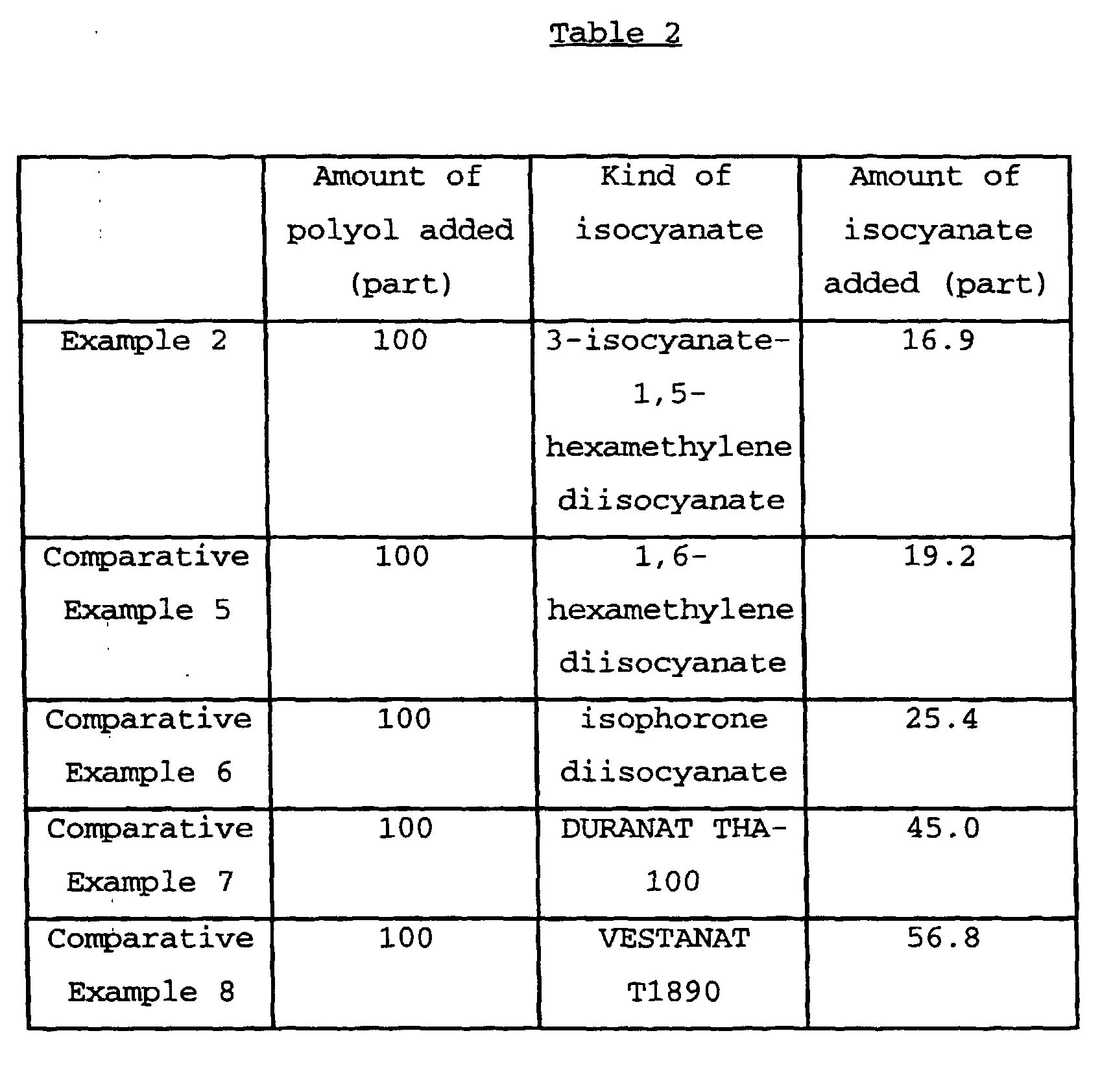

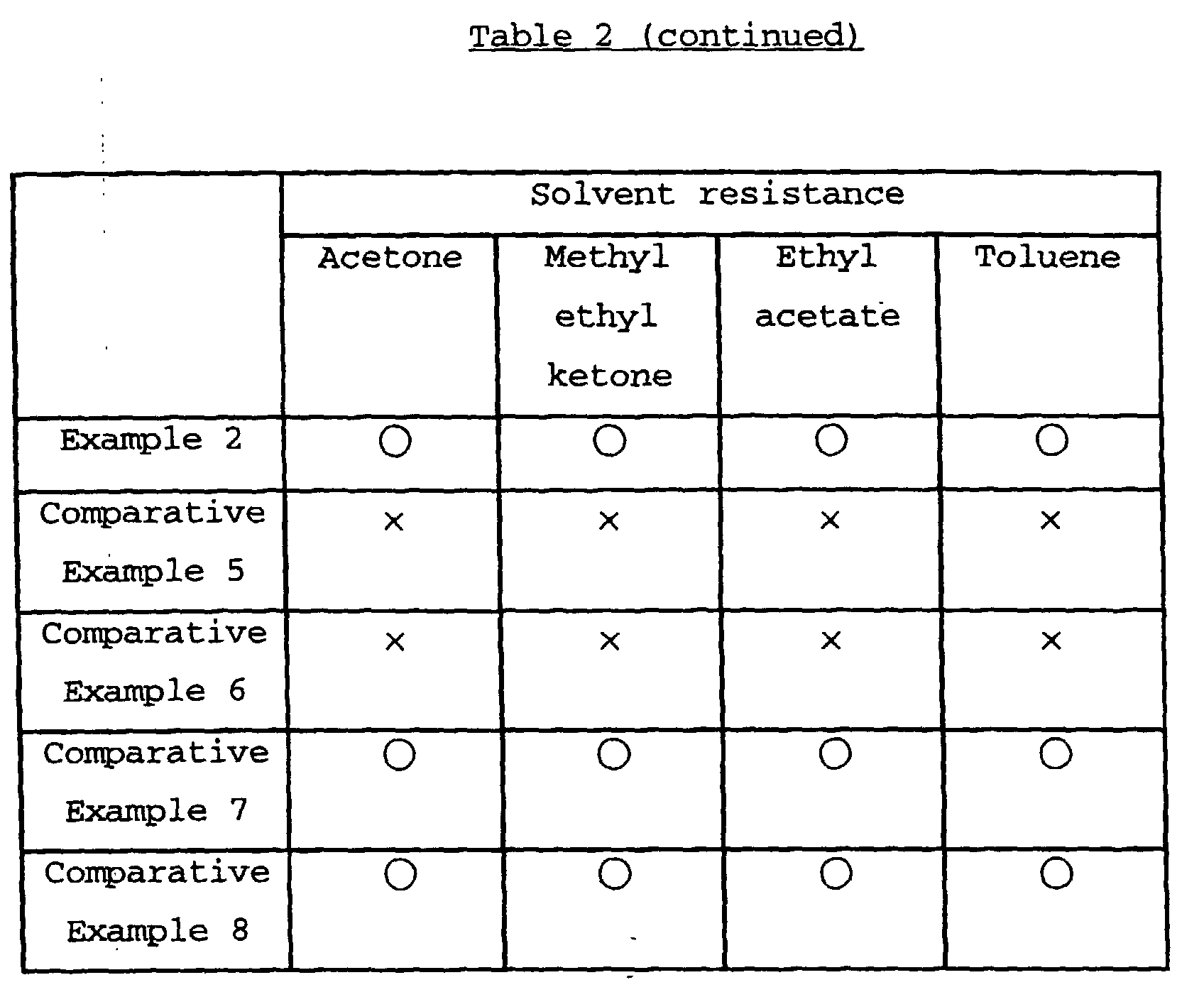
From the above Examples and Comparative Examples, the
following facts were recognized.
As is apparent from the above Examples, 3-isocyanate
methyl-1,6-hexamethylene diisocyanate according to the present
invention exhibits a low viscosity and, therefore, an
excellent workability. In addition, the isocyanate compound
according to the present invention have a high NCO content, so
that even though the amount of the isocyanate compound added
is smaller than those of the conventional isocyanate compounds,
there can be obtained a coating film having similar properties.
Further, 3-isocyanate methyl-1,6-hexamethylene diisocyanate
according to the present invention has an excellent reactivity
and a high curing speed, so that the cured product can show a
high cross-linking density. Accordingly, the isocyanate
compound according to the present invention, can be suitably
applied to paints for foams, metals, plastics, woods, magnetic
recording media, etc., and adhesives.
Claims (6)
- 3-isocyanate methyl-1,6-hexamethylene diisocyanate.
- A process for producing 3-isocyanate methyl-1,6-hexamethylene diisocyanate, comprising:reacting 3-aminomethyl-1,6-hexamethylene diamine with phosgene in the presence of a tertiary amine.
- A process for producing 3-aminomethyl-1,6-hexamethylene diisocyanate, comprising:reacting 3-aminomethyl-1,6-hexamethylene diamine with phosgene in an inert solvent at a temperature of not more than 40°C in the presence of a tertiary amine to form a slurry containing tertiary amine hydrochloride as a precipitate;successively heating said slurry to obtain a slurry containing 3-aminomethyl-1,6-hexamethylene diisocyanate;filtering said slurry containing 3-aminomethyl-1,6-hexamethylene diisocyanate, thereby separating the slurry into a filter cake mainly containing tertiary amine hydrochloride and a filtrate mainly containing the inert solvent and 3-aminomethyl-1,6-hexamethylene diisocyanate; andsubjecting said filtrate to distillation in the presence of a hydrochloric acid scavenger, thereby obtaining 3-aminomethyl-1,6-hexamethylene diisocyanate.
- A polyurethane resin which is produced by reacting 3-isocyanate methyl-1,6-hexamethylene diisocyanate with a polyol compound.
- A paint which contains said polyurethane resin set forth in claim 4.
- An adhesive which contains said polyurethane resin set forth in claim 4.
Applications Claiming Priority (3)
| Application Number | Priority Date | Filing Date | Title |
|---|---|---|---|
| JP580097 | 1997-01-16 | ||
| JP580097 | 1997-01-16 | ||
| PCT/JP1998/000115 WO1998031662A1 (en) | 1997-01-16 | 1998-01-14 | Aliphatic triisocyanate compound, process for producing the same, and polyurethane resin made from the compound |
Publications (2)
| Publication Number | Publication Date |
|---|---|
| EP1020435A1 true EP1020435A1 (en) | 2000-07-19 |
| EP1020435A4 EP1020435A4 (en) | 2000-12-13 |
Family
ID=11621164
Family Applications (1)
| Application Number | Title | Priority Date | Filing Date |
|---|---|---|---|
| EP98900367A Withdrawn EP1020435A4 (en) | 1997-01-16 | 1998-01-14 | ALIPHATIC TRIISOCYANATE COMPOUNDS, PROCESS FOR OBTAINING SAME, AND POLYURETHANE RESINS THEREOF |
Country Status (3)
| Country | Link |
|---|---|
| US (1) | US20020123644A1 (en) |
| EP (1) | EP1020435A4 (en) |
| WO (1) | WO1998031662A1 (en) |
Cited By (2)
| Publication number | Priority date | Publication date | Assignee | Title |
|---|---|---|---|---|
| EP2093215A1 (en) | 2008-02-19 | 2009-08-26 | Bayer MaterialScience AG | Method for making isocyanates |
| US20220002234A1 (en) * | 2018-11-15 | 2022-01-06 | National University Corporation Kobe University | Production method for isocyanate compound |
Families Citing this family (7)
| Publication number | Priority date | Publication date | Assignee | Title |
|---|---|---|---|---|
| DE10260084A1 (en) | 2002-12-19 | 2004-07-01 | Basf Ag | Separation of a mixture of hydrogen chloride and phosgene |
| US8399012B2 (en) * | 2006-04-17 | 2013-03-19 | Kimberly-Clark Worldwide, Inc. | Degradable therapeutic delivery device |
| US7504533B2 (en) * | 2006-04-24 | 2009-03-17 | Bayer Materialscience Llc | Process for the production of isocyanates |
| US20090130174A1 (en) * | 2007-08-20 | 2009-05-21 | Vanderbilt University | Poly (ester urethane) urea foams with enhanced mechanical and biological properties |
| US20100068171A1 (en) * | 2008-05-27 | 2010-03-18 | Vanderbilt University | Injectable bone/polymer composite bone void fillers |
| BR112018001297B1 (en) | 2015-08-17 | 2022-05-31 | Transitions Optical, Inc | Curable photochromic composition, phase-separated coating formed from curable photochromic composition and photochromic article |
| JP7011437B2 (en) * | 2017-10-06 | 2022-01-26 | 旭化成株式会社 | Paint composition |
Family Cites Families (6)
| Publication number | Priority date | Publication date | Assignee | Title |
|---|---|---|---|---|
| BR8003393A (en) * | 1979-06-04 | 1980-12-30 | Du Pont | PROCESS TO PREPARE AN ARYLSULPHONYL ISOCIANATE |
| JPS57200419A (en) * | 1981-06-02 | 1982-12-08 | Asahi Chem Ind Co Ltd | Composition for forming novel polyurethane resin |
| JPH0723420B2 (en) * | 1984-06-21 | 1995-03-15 | 旭化成工業株式会社 | Polyester-based polyisocyanate composition |
| JPH0859592A (en) * | 1994-08-25 | 1996-03-05 | Aibaitsu Kk | Leucine-alkyl ester isocyanate, its production and polymer thereof |
| CH688861A5 (en) * | 1994-12-08 | 1998-04-30 | Lonza Ag | 4,4 '- (Phenylendiisopropyl) -bis (2,6-dialkylphenylisocyanate). |
| DE19523385A1 (en) * | 1995-06-23 | 1997-01-09 | Bayer Ag | Process for the preparation of triisocyanates |
-
1998
- 1998-01-14 EP EP98900367A patent/EP1020435A4/en not_active Withdrawn
- 1998-01-14 WO PCT/JP1998/000115 patent/WO1998031662A1/en not_active Ceased
- 1998-01-14 US US09/341,599 patent/US20020123644A1/en not_active Abandoned
Cited By (4)
| Publication number | Priority date | Publication date | Assignee | Title |
|---|---|---|---|---|
| EP2093215A1 (en) | 2008-02-19 | 2009-08-26 | Bayer MaterialScience AG | Method for making isocyanates |
| DE102008009761A1 (en) | 2008-02-19 | 2009-08-27 | Bayer Materialscience Ag | Process for the preparation of isocyanates |
| US20220002234A1 (en) * | 2018-11-15 | 2022-01-06 | National University Corporation Kobe University | Production method for isocyanate compound |
| US12060312B2 (en) * | 2018-11-15 | 2024-08-13 | National University Corporation Kobe University | Production method for isocyanate compound |
Also Published As
| Publication number | Publication date |
|---|---|
| WO1998031662A1 (en) | 1998-07-23 |
| US20020123644A1 (en) | 2002-09-05 |
| EP1020435A4 (en) | 2000-12-13 |
Similar Documents
| Publication | Publication Date | Title |
|---|---|---|
| EP2222804B1 (en) | Thermal curable polyester powder coating composition | |
| JP3674938B2 (en) | Coating composition and method for producing the same | |
| AU669749B2 (en) | Primer composition for improving the bonding of urethane adhesives to acid resistant paints | |
| EP1020435A1 (en) | Aliphatic triisocyanate compound, process for producing the same, and polyurethane resin made from the compound | |
| KR100431229B1 (en) | Hydroxyl Functional Urethanes Having a Tertiary Carbamate Bond | |
| KR100463976B1 (en) | Compounds with Isocyanate Groups and Masked Groups Reactive In Relation to Isocyanates | |
| US5726272A (en) | Polyurea coating compositions having faster dry times | |
| MXPA97000880A (en) | Polyureaque-based coating compositions have drying times more rapi | |
| JP2004027227A (en) | Blocked polyisocyanate | |
| US6414079B1 (en) | Water dilutable binders for soft feel coating materials | |
| EP0767188A1 (en) | Polyester/Urethane base coating composition and curing agent therefor | |
| US6111017A (en) | Curing agent for powder coatings, powder coating composition comprising said curing agent, and powder coating film | |
| CA1227897A (en) | Flexible two component urethane coating compositions | |
| AU2004220719A1 (en) | Polyisocyanates with biuret structure, blocked with secondary amines | |
| US6566481B2 (en) | Polyisocyanates with allophanate groups derived from alicyclic alkanediols | |
| CA1197941A (en) | Powder coating composition | |
| CN115003771A (en) | Polyurethane resin having good adhesion to substrate, and adhesive, ink adhesive, or coating agent composition using same | |
| JPH04226965A (en) | Polyisocyanato-isocyanurate and its production and use | |
| US20030119979A1 (en) | Polyurethane dispersions | |
| CA2527547A1 (en) | Binder mixtures containing bicyclo orthoester (boe) and/or polyorthoester groups | |
| JP3656240B2 (en) | Low viscosity polyisocyanate curing agent containing uretonimine group for paint | |
| JP4253441B2 (en) | Diisocyanates with allophanate groups derived from alicyclic alcohols | |
| AU567026B2 (en) | Flexible urethane coating composition | |
| KR100728461B1 (en) | Substrate Coating Method Using Aromatic Polyurethane Polyol | |
| JP3550976B2 (en) | Polyol and urethane resin using the same |
Legal Events
| Date | Code | Title | Description |
|---|---|---|---|
| PUAI | Public reference made under article 153(3) epc to a published international application that has entered the european phase |
Free format text: ORIGINAL CODE: 0009012 |
|
| 17P | Request for examination filed |
Effective date: 19990715 |
|
| AK | Designated contracting states |
Kind code of ref document: A1 Designated state(s): DE FR GB NL |
|
| A4 | Supplementary search report drawn up and despatched |
Effective date: 20001031 |
|
| AK | Designated contracting states |
Kind code of ref document: A4 Designated state(s): DE FR GB NL |
|
| 17Q | First examination report despatched |
Effective date: 20020416 |
|
| STAA | Information on the status of an ep patent application or granted ep patent |
Free format text: STATUS: THE APPLICATION IS DEEMED TO BE WITHDRAWN |
|
| 18D | Application deemed to be withdrawn |
Effective date: 20020827 |