EP1025107B1 - Photochromic compounds - Google Patents
Photochromic compounds Download PDFInfo
- Publication number
- EP1025107B1 EP1025107B1 EP98947700A EP98947700A EP1025107B1 EP 1025107 B1 EP1025107 B1 EP 1025107B1 EP 98947700 A EP98947700 A EP 98947700A EP 98947700 A EP98947700 A EP 98947700A EP 1025107 B1 EP1025107 B1 EP 1025107B1
- Authority
- EP
- European Patent Office
- Prior art keywords
- branched
- linear
- group
- alkyl
- substituted
- Prior art date
- Legal status (The legal status is an assumption and is not a legal conclusion. Google has not performed a legal analysis and makes no representation as to the accuracy of the status listed.)
- Expired - Lifetime
Links
- 150000001875 compounds Chemical class 0.000 title claims abstract description 16
- -1 nitro, nitroso, amino, acetamido Chemical group 0.000 claims abstract description 17
- 125000003118 aryl group Chemical group 0.000 claims abstract description 13
- 125000003837 (C1-C20) alkyl group Chemical group 0.000 claims abstract description 11
- 125000005346 substituted cycloalkyl group Chemical group 0.000 claims abstract description 10
- 229910052757 nitrogen Inorganic materials 0.000 claims abstract description 9
- 125000004104 aryloxy group Chemical group 0.000 claims abstract description 6
- 229910052739 hydrogen Inorganic materials 0.000 claims abstract description 6
- 239000001257 hydrogen Substances 0.000 claims abstract description 6
- 125000004435 hydrogen atom Chemical class [H]* 0.000 claims abstract description 6
- 125000000027 (C1-C10) alkoxy group Chemical group 0.000 claims abstract description 5
- 125000003358 C2-C20 alkenyl group Chemical group 0.000 claims abstract description 5
- 125000001072 heteroaryl group Chemical group 0.000 claims abstract description 5
- 125000003003 spiro group Chemical group 0.000 claims abstract description 5
- IJGRMHOSHXDMSA-UHFFFAOYSA-N Atomic nitrogen Chemical compound N#N IJGRMHOSHXDMSA-UHFFFAOYSA-N 0.000 claims abstract description 4
- 229910052736 halogen Inorganic materials 0.000 claims abstract description 4
- 150000002367 halogens Chemical class 0.000 claims abstract description 4
- 229910052760 oxygen Inorganic materials 0.000 claims abstract description 4
- 125000004453 alkoxycarbonyl group Chemical group 0.000 claims abstract description 3
- 125000005001 aminoaryl group Chemical group 0.000 claims abstract description 3
- 150000001602 bicycloalkyls Chemical group 0.000 claims abstract description 3
- 150000002825 nitriles Chemical class 0.000 claims abstract description 3
- 229910052717 sulfur Inorganic materials 0.000 claims abstract description 3
- BCHZICNRHXRCHY-UHFFFAOYSA-N 2h-oxazine Chemical compound N1OC=CC=C1 BCHZICNRHXRCHY-UHFFFAOYSA-N 0.000 claims description 21
- 239000000203 mixture Substances 0.000 claims description 15
- 125000001424 substituent group Chemical group 0.000 claims description 11
- 230000003287 optical effect Effects 0.000 claims description 7
- 125000004429 atom Chemical group 0.000 claims description 6
- 125000000217 alkyl group Chemical group 0.000 claims description 5
- 238000000034 method Methods 0.000 claims description 5
- LBUJPTNKIBCYBY-UHFFFAOYSA-N 1,2,3,4-tetrahydroquinoline Chemical group C1=CC=C2CCCNC2=C1 LBUJPTNKIBCYBY-UHFFFAOYSA-N 0.000 claims description 4
- 125000004433 nitrogen atom Chemical group N* 0.000 claims description 4
- 239000000376 reactant Substances 0.000 claims description 3
- SIKJAQJRHWYJAI-UHFFFAOYSA-N Indole Chemical group C1=CC=C2NC=CC2=C1 SIKJAQJRHWYJAI-UHFFFAOYSA-N 0.000 claims description 2
- QJGQUHMNIGDVPM-UHFFFAOYSA-N nitrogen group Chemical group [N] QJGQUHMNIGDVPM-UHFFFAOYSA-N 0.000 claims description 2
- 125000002496 methyl group Chemical group [H]C([H])([H])* 0.000 claims 2
- KHSACZVQYSVGDJ-UHFFFAOYSA-N 2h-indole Chemical compound C1=CC=CC2=NCC=C21 KHSACZVQYSVGDJ-UHFFFAOYSA-N 0.000 claims 1
- 125000004442 acylamino group Chemical group 0.000 claims 1
- 125000000956 methoxy group Chemical group [H]C([H])([H])O* 0.000 claims 1
- 125000004122 cyclic group Chemical group 0.000 abstract description 2
- OKTJSMMVPCPJKN-UHFFFAOYSA-N Carbon Chemical compound [C] OKTJSMMVPCPJKN-UHFFFAOYSA-N 0.000 abstract 1
- NINIDFKCEFEMDL-UHFFFAOYSA-N Sulfur Chemical compound [S] NINIDFKCEFEMDL-UHFFFAOYSA-N 0.000 abstract 1
- 239000005864 Sulphur Substances 0.000 abstract 1
- 125000003545 alkoxy group Chemical group 0.000 abstract 1
- 125000004414 alkyl thio group Chemical group 0.000 abstract 1
- QVGXLLKOCUKJST-UHFFFAOYSA-N atomic oxygen Chemical compound [O] QVGXLLKOCUKJST-UHFFFAOYSA-N 0.000 abstract 1
- 229910052799 carbon Inorganic materials 0.000 abstract 1
- 125000005842 heteroatom Chemical group 0.000 abstract 1
- 239000001301 oxygen Substances 0.000 abstract 1
- 229910052698 phosphorus Inorganic materials 0.000 abstract 1
- OKKJLVBELUTLKV-UHFFFAOYSA-N Methanol Chemical compound OC OKKJLVBELUTLKV-UHFFFAOYSA-N 0.000 description 18
- LFQSCWFLJHTTHZ-UHFFFAOYSA-N Ethanol Chemical compound CCO LFQSCWFLJHTTHZ-UHFFFAOYSA-N 0.000 description 16
- 239000000463 material Substances 0.000 description 16
- 238000003828 vacuum filtration Methods 0.000 description 9
- XLYOFNOQVPJJNP-UHFFFAOYSA-N water Substances O XLYOFNOQVPJJNP-UHFFFAOYSA-N 0.000 description 9
- 229940105324 1,2-naphthoquinone Drugs 0.000 description 7
- WTDHULULXKLSOZ-UHFFFAOYSA-N Hydroxylamine hydrochloride Chemical compound Cl.ON WTDHULULXKLSOZ-UHFFFAOYSA-N 0.000 description 6
- 238000004809 thin layer chromatography Methods 0.000 description 6
- 0 CC(C)(C)CN(C1(C2(C)C)Oc(c(cccc3)c3c(-c3ccc(*)cc3)c3)c3N=C1)c1c2cccc1 Chemical compound CC(C)(C)CN(C1(C2(C)C)Oc(c(cccc3)c3c(-c3ccc(*)cc3)c3)c3N=C1)c1c2cccc1 0.000 description 5
- ZSARVKBQBRKFMZ-UHFFFAOYSA-N ON=C1C=C(c2ccc(cc2)N2CCCC2)c2ccccc2C1=O Chemical compound ON=C1C=C(c2ccc(cc2)N2CCCC2)c2ccccc2C1=O ZSARVKBQBRKFMZ-UHFFFAOYSA-N 0.000 description 5
- 230000015572 biosynthetic process Effects 0.000 description 5
- 239000000047 product Substances 0.000 description 4
- OJTVODUGWCZNTO-UHFFFAOYSA-N 4-(4-pyrrolidin-1-ylphenyl)naphthalene-1,2-dione Chemical compound C12=CC=CC=C2C(=O)C(=O)C=C1C(C=C1)=CC=C1N1CCCC1 OJTVODUGWCZNTO-UHFFFAOYSA-N 0.000 description 3
- 230000000052 comparative effect Effects 0.000 description 3
- 239000002244 precipitate Substances 0.000 description 3
- 239000011541 reaction mixture Substances 0.000 description 3
- 239000007787 solid Substances 0.000 description 3
- 238000003756 stirring Methods 0.000 description 3
- 239000000725 suspension Substances 0.000 description 3
- 238000003786 synthesis reaction Methods 0.000 description 3
- WKTCLCIIWOTNLP-UHFFFAOYSA-N 1-(2,2-dimethylpropyl)-3,3-dimethyl-2-methylideneindole Chemical compound C1=CC=C2N(CC(C)(C)C)C(=C)C(C)(C)C2=C1 WKTCLCIIWOTNLP-UHFFFAOYSA-N 0.000 description 2
- DZTIFMWYYHCREC-UHFFFAOYSA-N 2,4-dichloropyrimidine-5-carbonyl chloride Chemical compound ClC(=O)C1=CN=C(Cl)N=C1Cl DZTIFMWYYHCREC-UHFFFAOYSA-N 0.000 description 2
- XEUQVXSJSRRJNO-UHFFFAOYSA-N 3,3-dimethyl-2-methylidene-1-(2-methylpropyl)indole Chemical compound C1=CC=C2N(CC(C)C)C(=C)C(C)(C)C2=C1 XEUQVXSJSRRJNO-UHFFFAOYSA-N 0.000 description 2
- RTZKZFJDLAIYFH-UHFFFAOYSA-N Diethyl ether Chemical compound CCOCC RTZKZFJDLAIYFH-UHFFFAOYSA-N 0.000 description 2
- JLTDJTHDQAWBAV-UHFFFAOYSA-N N,N-dimethylaniline Chemical compound CN(C)C1=CC=CC=C1 JLTDJTHDQAWBAV-UHFFFAOYSA-N 0.000 description 2
- 238000004061 bleaching Methods 0.000 description 2
- 238000004040 coloring Methods 0.000 description 2
- GGSUCNLOZRCGPQ-UHFFFAOYSA-N diethylaniline Chemical compound CCN(CC)C1=CC=CC=C1 GGSUCNLOZRCGPQ-UHFFFAOYSA-N 0.000 description 2
- 238000010348 incorporation Methods 0.000 description 2
- AIYZIHXOTIUIMR-UHFFFAOYSA-N 1',3',3'-trimethyl-5'-nitro-6-(4-pyrrolidin-1-ylphenyl)spiro[benzo[h][1,4]benzoxazine-2,2'-indole] Chemical compound CN1C2=CC=C([N+]([O-])=O)C=C2C(C)(C)C1(C=N1)OC(C2=CC=CC=C22)=C1C=C2C(C=C1)=CC=C1N1CCCC1 AIYZIHXOTIUIMR-UHFFFAOYSA-N 0.000 description 1
- KETQAJRQOHHATG-UHFFFAOYSA-N 1,2-naphthoquinone Chemical compound C1=CC=C2C(=O)C(=O)C=CC2=C1 KETQAJRQOHHATG-UHFFFAOYSA-N 0.000 description 1
- WHFGEAVJRDAMNU-UHFFFAOYSA-N 1,3,3-trimethyl-2-methylidene-5-nitroindole Chemical compound [O-][N+](=O)C1=CC=C2N(C)C(=C)C(C)(C)C2=C1 WHFGEAVJRDAMNU-UHFFFAOYSA-N 0.000 description 1
- WCCZCMXUUXNPNI-UHFFFAOYSA-N 1,3,3-trimethyl-2-methylideneindole-5-carbonitrile Chemical compound N#CC1=CC=C2N(C)C(=C)C(C)(C)C2=C1 WCCZCMXUUXNPNI-UHFFFAOYSA-N 0.000 description 1
- VDQQJMHXZCMNMU-UHFFFAOYSA-N 1-phenylpyrrolidine Chemical compound C1CCCN1C1=CC=CC=C1 VDQQJMHXZCMNMU-UHFFFAOYSA-N 0.000 description 1
- FDVITFMRUUGIBF-UHFFFAOYSA-N 2-methylidene-1,3-dihydroindole Chemical class C1=CC=C2NC(=C)CC2=C1 FDVITFMRUUGIBF-UHFFFAOYSA-N 0.000 description 1
- DUMLMJFZHYTVST-UHFFFAOYSA-N 3',3'-dimethyl-1'-(2-methylpropyl)-6-(4-pyrrolidin-1-ylphenyl)spiro[benzo[h][1,4]benzoxazine-2,2'-indole] Chemical compound CC(C)CN1C2=CC=CC=C2C(C)(C)C1(C=N1)OC(C2=CC=CC=C22)=C1C=C2C(C=C1)=CC=C1N1CCCC1 DUMLMJFZHYTVST-UHFFFAOYSA-N 0.000 description 1
- XRUGXCSEQIVHIN-UHFFFAOYSA-N 3,3,4,7-tetramethyl-2-methylidene-1-(2-methylpropyl)indole Chemical compound CC1=CC=C(C)C2=C1N(CC(C)C)C(=C)C2(C)C XRUGXCSEQIVHIN-UHFFFAOYSA-N 0.000 description 1
- ZXQLAUPBYJOBNN-UHFFFAOYSA-N 3,3-dimethyl-2-methylidene-1-(2-methylpropyl)-5-(trifluoromethyl)indole Chemical compound FC(F)(F)C1=CC=C2N(CC(C)C)C(=C)C(C)(C)C2=C1 ZXQLAUPBYJOBNN-UHFFFAOYSA-N 0.000 description 1
- QEQVCPKISCKMOQ-UHFFFAOYSA-N 3h-benzo[f][1,2]benzoxazine Chemical compound C1=CC=CC2=C(C=CNO3)C3=CC=C21 QEQVCPKISCKMOQ-UHFFFAOYSA-N 0.000 description 1
- OFJJVQWFCSASTH-UHFFFAOYSA-N 5,7-dimethoxy-3,3-dimethyl-2-methylidene-1-(2-methylpropyl)indole Chemical compound COC1=CC(OC)=CC2=C1N(CC(C)C)C(=C)C2(C)C OFJJVQWFCSASTH-UHFFFAOYSA-N 0.000 description 1
- BGXWEEHVMWADRH-UHFFFAOYSA-N 5-methoxy-1,3,3-trimethyl-2-methylideneindole Chemical compound COC1=CC=C2N(C)C(=C)C(C)(C)C2=C1 BGXWEEHVMWADRH-UHFFFAOYSA-N 0.000 description 1
- 229920008347 Cellulose acetate propionate Polymers 0.000 description 1
- 229920002284 Cellulose triacetate Polymers 0.000 description 1
- 241000819038 Chichester Species 0.000 description 1
- 238000006783 Fischer indole synthesis reaction Methods 0.000 description 1
- 229930192627 Naphthoquinone Natural products 0.000 description 1
- 239000004793 Polystyrene Substances 0.000 description 1
- NNLVGZFZQQXQNW-ADJNRHBOSA-N [(2r,3r,4s,5r,6s)-4,5-diacetyloxy-3-[(2s,3r,4s,5r,6r)-3,4,5-triacetyloxy-6-(acetyloxymethyl)oxan-2-yl]oxy-6-[(2r,3r,4s,5r,6s)-4,5,6-triacetyloxy-2-(acetyloxymethyl)oxan-3-yl]oxyoxan-2-yl]methyl acetate Chemical compound O([C@@H]1O[C@@H]([C@H]([C@H](OC(C)=O)[C@H]1OC(C)=O)O[C@H]1[C@@H]([C@@H](OC(C)=O)[C@H](OC(C)=O)[C@@H](COC(C)=O)O1)OC(C)=O)COC(=O)C)[C@@H]1[C@@H](COC(C)=O)O[C@@H](OC(C)=O)[C@H](OC(C)=O)[C@H]1OC(C)=O NNLVGZFZQQXQNW-ADJNRHBOSA-N 0.000 description 1
- 150000004945 aromatic hydrocarbons Chemical class 0.000 description 1
- JKJWYKGYGWOAHT-UHFFFAOYSA-N bis(prop-2-enyl) carbonate Chemical compound C=CCOC(=O)OCC=C JKJWYKGYGWOAHT-UHFFFAOYSA-N 0.000 description 1
- 229920002301 cellulose acetate Polymers 0.000 description 1
- 229920006217 cellulose acetate butyrate Polymers 0.000 description 1
- 229920001577 copolymer Polymers 0.000 description 1
- 238000013500 data storage Methods 0.000 description 1
- 239000007857 degradation product Substances 0.000 description 1
- 239000000975 dye Substances 0.000 description 1
- 230000002349 favourable effect Effects 0.000 description 1
- 238000009472 formulation Methods 0.000 description 1
- 238000010438 heat treatment Methods 0.000 description 1
- 230000000215 hyperchromic effect Effects 0.000 description 1
- 239000000976 ink Substances 0.000 description 1
- 230000004048 modification Effects 0.000 description 1
- 238000012986 modification Methods 0.000 description 1
- 239000000178 monomer Substances 0.000 description 1
- OUOWMQSMDSLZBA-UHFFFAOYSA-N n-(1,3,3-trimethyl-2-methylideneindol-5-yl)acetamide Chemical compound CC(=O)NC1=CC=C2N(C)C(=C)C(C)(C)C2=C1 OUOWMQSMDSLZBA-UHFFFAOYSA-N 0.000 description 1
- 150000002791 naphthoquinones Chemical class 0.000 description 1
- 150000004893 oxazines Chemical class 0.000 description 1
- 238000006146 oximation reaction Methods 0.000 description 1
- 239000003973 paint Substances 0.000 description 1
- 229920003023 plastic Polymers 0.000 description 1
- 239000004033 plastic Substances 0.000 description 1
- 229920003229 poly(methyl methacrylate) Polymers 0.000 description 1
- 229920000058 polyacrylate Polymers 0.000 description 1
- 229920000515 polycarbonate Polymers 0.000 description 1
- 239000004417 polycarbonate Substances 0.000 description 1
- 229920000139 polyethylene terephthalate Polymers 0.000 description 1
- 239000005020 polyethylene terephthalate Substances 0.000 description 1
- 229920000642 polymer Polymers 0.000 description 1
- 239000002861 polymer material Substances 0.000 description 1
- 229920005862 polyol Polymers 0.000 description 1
- 150000003077 polyols Chemical class 0.000 description 1
- 229920002223 polystyrene Polymers 0.000 description 1
- 229920002635 polyurethane Polymers 0.000 description 1
- 239000004814 polyurethane Substances 0.000 description 1
- 229920002689 polyvinyl acetate Polymers 0.000 description 1
- 239000011118 polyvinyl acetate Substances 0.000 description 1
- 229920002451 polyvinyl alcohol Polymers 0.000 description 1
- 159000000000 sodium salts Chemical class 0.000 description 1
- 239000002904 solvent Substances 0.000 description 1
- IFQJJPUTWDDHPP-UHFFFAOYSA-N spiro[1,3-dihydroindole-2,2'-benzo[h][1,4]benzoxazine] Chemical compound C1=CC=C2C(OC3(C=N4)NC5=CC=CC=C5C3)=C4C=CC2=C1 IFQJJPUTWDDHPP-UHFFFAOYSA-N 0.000 description 1
- 239000005315 stained glass Substances 0.000 description 1
- 238000002424 x-ray crystallography Methods 0.000 description 1
Classifications
-
- C—CHEMISTRY; METALLURGY
- C07—ORGANIC CHEMISTRY
- C07D—HETEROCYCLIC COMPOUNDS
- C07D295/00—Heterocyclic compounds containing polymethylene-imine rings with at least five ring members, 3-azabicyclo [3.2.2] nonane, piperazine, morpholine or thiomorpholine rings, having only hydrogen atoms directly attached to the ring carbon atoms
- C07D295/04—Heterocyclic compounds containing polymethylene-imine rings with at least five ring members, 3-azabicyclo [3.2.2] nonane, piperazine, morpholine or thiomorpholine rings, having only hydrogen atoms directly attached to the ring carbon atoms with substituted hydrocarbon radicals attached to ring nitrogen atoms
- C07D295/12—Heterocyclic compounds containing polymethylene-imine rings with at least five ring members, 3-azabicyclo [3.2.2] nonane, piperazine, morpholine or thiomorpholine rings, having only hydrogen atoms directly attached to the ring carbon atoms with substituted hydrocarbon radicals attached to ring nitrogen atoms substituted by singly or doubly bound nitrogen atoms
- C07D295/135—Heterocyclic compounds containing polymethylene-imine rings with at least five ring members, 3-azabicyclo [3.2.2] nonane, piperazine, morpholine or thiomorpholine rings, having only hydrogen atoms directly attached to the ring carbon atoms with substituted hydrocarbon radicals attached to ring nitrogen atoms substituted by singly or doubly bound nitrogen atoms with the ring nitrogen atoms and the substituent nitrogen atoms separated by carbocyclic rings or by carbon chains interrupted by carbocyclic rings
-
- C—CHEMISTRY; METALLURGY
- C07—ORGANIC CHEMISTRY
- C07C—ACYCLIC OR CARBOCYCLIC COMPOUNDS
- C07C251/00—Compounds containing nitrogen atoms doubly-bound to a carbon skeleton
- C07C251/32—Oximes
- C07C251/34—Oximes with oxygen atoms of oxyimino groups bound to hydrogen atoms or to carbon atoms of unsubstituted hydrocarbon radicals
- C07C251/44—Oximes with oxygen atoms of oxyimino groups bound to hydrogen atoms or to carbon atoms of unsubstituted hydrocarbon radicals with the carbon atom of at least one of the oxyimino groups being part of a ring other than a six-membered aromatic ring
-
- G—PHYSICS
- G03—PHOTOGRAPHY; CINEMATOGRAPHY; ANALOGOUS TECHNIQUES USING WAVES OTHER THAN OPTICAL WAVES; ELECTROGRAPHY; HOLOGRAPHY
- G03C—PHOTOSENSITIVE MATERIALS FOR PHOTOGRAPHIC PURPOSES; PHOTOGRAPHIC PROCESSES, e.g. CINE, X-RAY, COLOUR, STEREO-PHOTOGRAPHIC PROCESSES; AUXILIARY PROCESSES IN PHOTOGRAPHY
- G03C1/00—Photosensitive materials
- G03C1/685—Compositions containing spiro-condensed pyran compounds or derivatives thereof, as photosensitive substances
Definitions
- the present invention relates to novel hyperchromic, rapid responding, photochromic spiroindolinonaphthoxazines which are of green or green-blue colouring, and to articles and compositions containing them.
- Photochromism is a well established phenomenon and has been detailed in "Photochromism: Molecules and Systems," Studies in Organic Chemistry, vol. 40, eds. H. Dürr and H. Bouas-Laurent, Elsevier, 1990. Much effort has been directed to exploring the photochromic properties of naphth[2,1- b ][1,4]oxazines and many derivatives of this ring system are known, see for example WO-A-96/04590 and WO-A-96/11926. However, there are few examples of photochromic compounds based on the naphth[1,2-b][1,4]oxazine system to date, see for example Jpn.
- Patent EP 0449669. disclose compounds which possess the basic structural unit illustrated below and which show blue-purple photochromism upon irradiation: 1,3-dihydrospiro[2 H -indole-2,2'-[2 H ]naphth[1,2- b ][1,4]oxazine]
- the invention provides a photochromic compound having the general formula (I): wherein:
- the invention also provides a process for making a photochromic compound of the invention, which process includes the following step: wherein R 1 , R 3 , R 4 and R 5 are as defined in claim 1, or represent groups which can be replaced by, or modified to form, groups as defined respectively in claim 1, and wherein in the above step the reactants and/or product may also include substituents R 2 and R 6 as defined in claim 1, or such substituents are introduced subsequently. This is an expeditious and practicable synthesis of these materials.
- naphthoquinone 2-oximes involves oximation of the readily available 4-aminoaryl-1,2-naphthoquinones, themselves accessible from 1,2-naphthoquinone or its 4-sulfonic acid salt.
- the methylene indoline derivative is readily available to those skilled in the art and the synthesis of these materials has been reviewed (see B. Robinson, "The Fischer Indole Synthesis,” Wiley, Chichester, 1982).
- Formation of the naphthoxazine is accomplished by heating the reactants in a solvent such as, for example, an alcohol, aromatic hydrocarbon or an ether.
- the photochromic properties exhibited by the novel spironaphthoxazines of the present invention namely those of a desirable rate of bleaching of the coloured form at ambient temperatures, a high induced optical density of the coloured form and control of the shade of green or blue - green colour, coupled with their excellent fatigue resistance, render these compounds particularly useful as photochromic materials for incorporation into polymeric host materials such as optical elements, for example, so as to impart photochromic properties to the host materials.
- Examples of applications of the polymeric host materials containing photochromic materials of the present invention include lenses for sunglasses and ophthalmic lenses, optical filters and windows for vehicles such as cars (including sunroofs), aircraft and ships and architectural and agricultural uses e.g.
- windows for, photochromic 'stained glass' windows and greenhouses, and toys, watches and their straps and novelty items. Additional uses may include incorporation into paints, inks and other like formulations. Other uses include device applications, such as electronic switches, non-linear optical devices and optical data storage.
- the photochromic spironaphthoxazines of the present invention may be incorporated into the 'plastic' host material by well established protocols, for example as described in European Patent No. 0254020 or U.S. Patent No. 5,066,818.
- the high induced optical density of the photochromic compounds of the present invention enables the amount of the photochromic material required to impart a useful degree of photochromism to a polymeric host material or to a solution, to be greatly reduced, thereby enabling a considerable saving of synthetic effort and cost. Furthermore, the use of reduced quantities of the photochromic materials of th e present invention has the bonus that there is a consequent reduction in any undesirable colour that the photochromic materials may impart in the bleached state, either by way of inherent colour of the material itself or by the formation of coloured fatigue/degradation products through use of the photochromic material.
- Typical host materials are optically clear polymer materials, such as polymers of polyol (allyl carbonate) - monomers, polyacrylates such as polymethylmethacrylates, cellulose acetate, cellulose triacetate, cellulose acetate propionate, cellulose acetate butyrate, poly(vinyl acetate), poly(vinyl alcohol), polyurethanes, polycarbonate, polyethylene terephthalate, polystyrene, poly(triethyleneglycol dimethacrylate), poly(diethyleneglycol-bis(allyl carbonate)) and various copolymer mixes.
- polymers of polyol (allyl carbonate) - monomers such as polyacrylates such as polymethylmethacrylates, cellulose acetate, cellulose triacetate, cellulose acetate propionate, cellulose acetate butyrate, poly(vinyl acetate), poly(vinyl alcohol), polyurethanes, polycarbonate, polyethylene terephthalate, polystyrene
Landscapes
- Chemical & Material Sciences (AREA)
- Organic Chemistry (AREA)
- Engineering & Computer Science (AREA)
- Materials Engineering (AREA)
- Physics & Mathematics (AREA)
- General Physics & Mathematics (AREA)
- Nitrogen And Oxygen Or Sulfur-Condensed Heterocyclic Ring Systems (AREA)
- Nitrogen Condensed Heterocyclic Rings (AREA)
Abstract
Description
- The present invention relates to novel hyperchromic, rapid responding, photochromic spiroindolinonaphthoxazines which are of green or green-blue colouring, and to articles and compositions containing them.
- Photochromism is a well established phenomenon and has been detailed in "Photochromism: Molecules and Systems," Studies in Organic Chemistry, vol. 40, eds. H. Dürr and H. Bouas-Laurent, Elsevier, 1990. Much effort has been directed to exploring the photochromic properties of naphth[2,1-b][1,4]oxazines and many derivatives of this ring system are known, see for example WO-A-96/04590 and WO-A-96/11926. However, there are few examples of photochromic compounds based on the naphth[1,2-b][1,4]oxazine system to date, see for example Jpn. Kokai Tokkyo Koho JP 6233184, JP 04117387, and Eur. Patent EP 0449669. These patents disclose compounds which possess the basic structural unit illustrated below and which show blue-purple photochromism upon irradiation:1,3-dihydrospiro[2H-indole-2,2'-[2H]naphth[1,2-b][1,4]oxazine]

- We have now devised a novel modification of the naphth[1,2-b][1,4]oxazine system which permits access to green or blue - green colouring photochromic dyes with excellent colourability, rapid photochromic response, high fatigue resistance and a favourable background colour. Moreover, by judicious choice of substituents greatly differing rates of bleaching can be achieved.
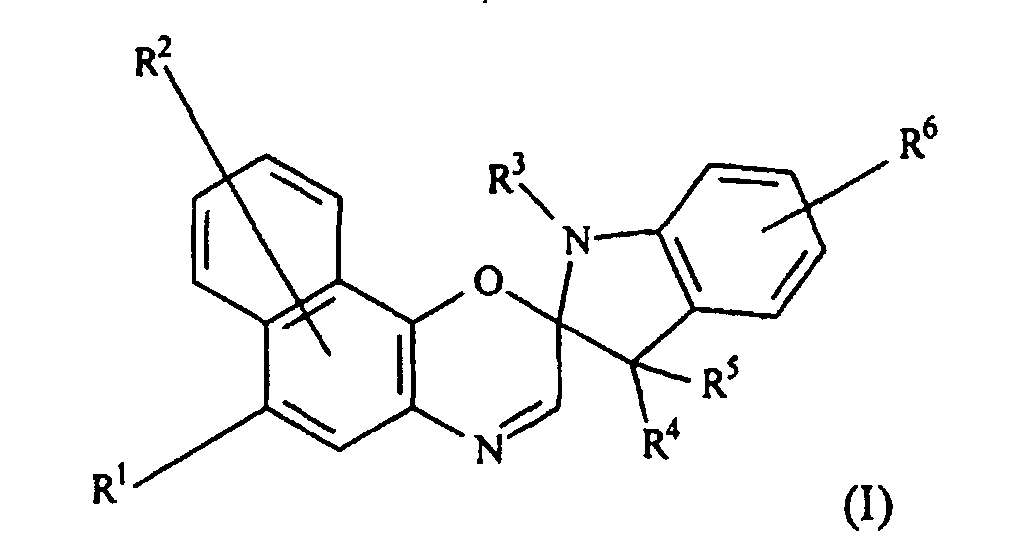
- In one aspect, the invention provides a photochromic compound having the general formula (I):wherein:
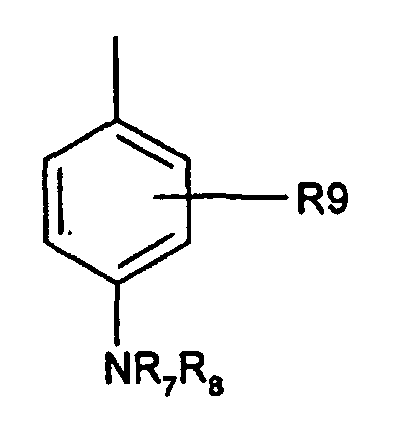
- (a) -R1 is the following aminoaryl moiety :
in which R7 and R8, which may be the same or different, are each selected from a linear or branched C1-C20 alkyl group, an aryl group, a heteroaryl group, a linear or branched C1-C20 alkylaryl group, a linear or branched C1-C20 alkyl-cycloalkyl group, or substituted -cycloalkyl group, a linear or branched C1-C20 haloalkyl group, a linear or branched C1-C20 alkoxyalkyl group, a linear or branched C1-C20 alkylthioalkyl group, a linear or branched C1-C20 aminoalkyl group, a C3-C20 cycloalkyl or substituted cycloalkyl group, a linear or branched C1-C20 hydroxyalkyl group; or
- (b) -R1 is selected from cyclic aminoaryl moieties in which R7 and R8 are
conjoined according to the following structures:
wherein the size of the nitrogen-containing ring is from 3 to 40 atoms (inclusive of the nitrogen atom) and may incorporate one or more of the same or different groups of atoms (X) which may be arranged in any sequence and where X may be selected from CH2, CHR7, CR7R8, C(alkyl, aryl), O, S, N-alkyl; wherein R7 and R8 may each be selected from those substituents specified above: or

- (c) -R1 may represent an N-indolinoaryl or N-tetrahydroquinolino-aryl substituent
of the structure:
wherein R11, R12, and R13 are each a C1-C5 linear or branched alkyl group or aryl group, or any 2 groups selected from R11, R12, and R13 may be conjoined to form a ring of 5 to 8 atoms (including those of the indoline or tetrahydroquinoline ring); or

- (d) -R1 may be represented by the structure (II) below, in which the nitrogen atom
is incorporated at the bridgehead in a tricyclic nitrogen heterocycle, and p and q are
both integers between 2 and 6 and may be the same or different;
and wherein -R3 is a linear or branched C1-C20 alkyl group, linear or branched C2-C20 alkenyl or polyalkenyl group in any E or Z geometrical isomeric form, an aryl group, a heteroaryl group, a linear or branched C1-C20 alkyl aryl group, linear or branched C1-C20 alkyl-cycloalkyl or -bicycloalkyl or -tricycloalkyl or substituted -cycloalkyl or-bicycloalkyl or -tricycloalkyl group, of which the following are non-limiting illustrative examples:


 a linear or branched C1-C20 haloalkyl group, a linear or branched C1-C20 alkoxyalkyl group, a linear or branched C1-C20 aminoalkyl group, a C3-C20 cycloalkyl or substituted cycloalkyl group, of which the following are non-limiting illustrative examples:
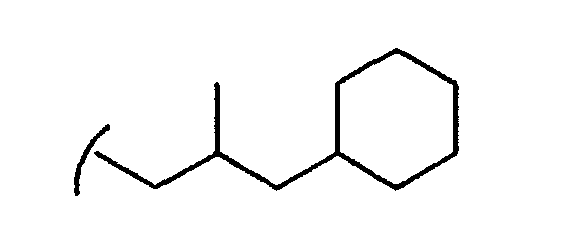 a C4-C20 bicyclo or substituted bicycloalkyl group, of which the following are non-limiting illustrative examples:
 a C6-C20 tricycloalkyl or substituted tricycloalkyl group, such as for example:
 or a linear or branched C1-C20 hydroxyalkyl group, and wherein -R4 and R5, which may be the same or different, are each selected from the substituents specified for -R3 above, or -R4 and -R5 may be conjoined to form a spiro-linked C3-C20 cyclic system; and wherein R6 of which there may be none, one, or more than one, and which may be the same or different are each selected from hydrogen, linear or branched C1-C20 alkyl, C1-C10 alkoxy, linear or branched C1-C20 aminoalkyl, hydroxy, amino, acetamido, C2-C10 N-alkylamido, linear or branched C2-C20 alkenyl or polyalkenyl, aryl, linear or branched C1-C20 alkyl aryl, linear or branched C1-C20 alkoxyalkyl, C3-C20 cycloalkyl, linear or branched C1-C20 hydroxyalkyl, or aryloxy, and wherein -R2, R9 and R10 of which there may be none, one, or more than one, and which may be the same or different are each selected from hydrogen, halogen, nitro, amino, acetamido, C2-C10 N-alkylamido, alkoxycarbonyl, nitrile, carboxy, hydroxy, aryloxy, C1-C10 alkoxy, or -R2, -R6, R9, and R10 may each be selected from those substituents specified for -R3.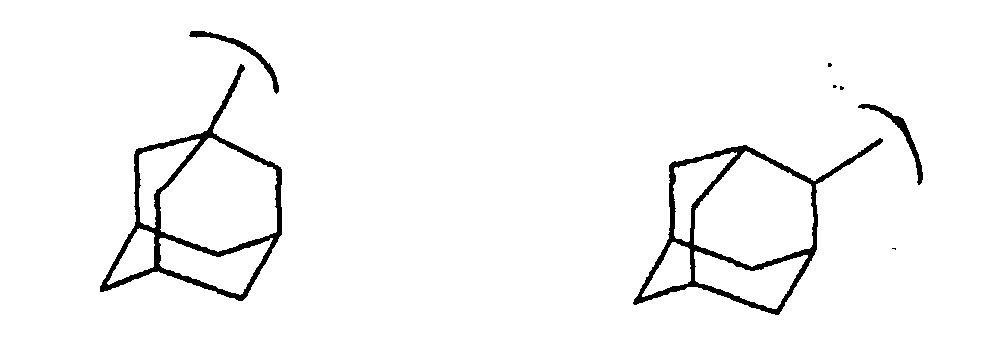
-
- The invention also provides a process for making a photochromic compound of the invention, which process includes the following step:wherein R1, R3, R4 and R5 are as defined in claim 1, or represent groups which can be replaced by, or modified to form, groups as defined respectively in claim 1, and wherein in the above step the reactants and/or product may also include substituents R2 and R6 as defined in claim 1, or such substituents are introduced subsequently. This is an expeditious and practicable synthesis of these materials.
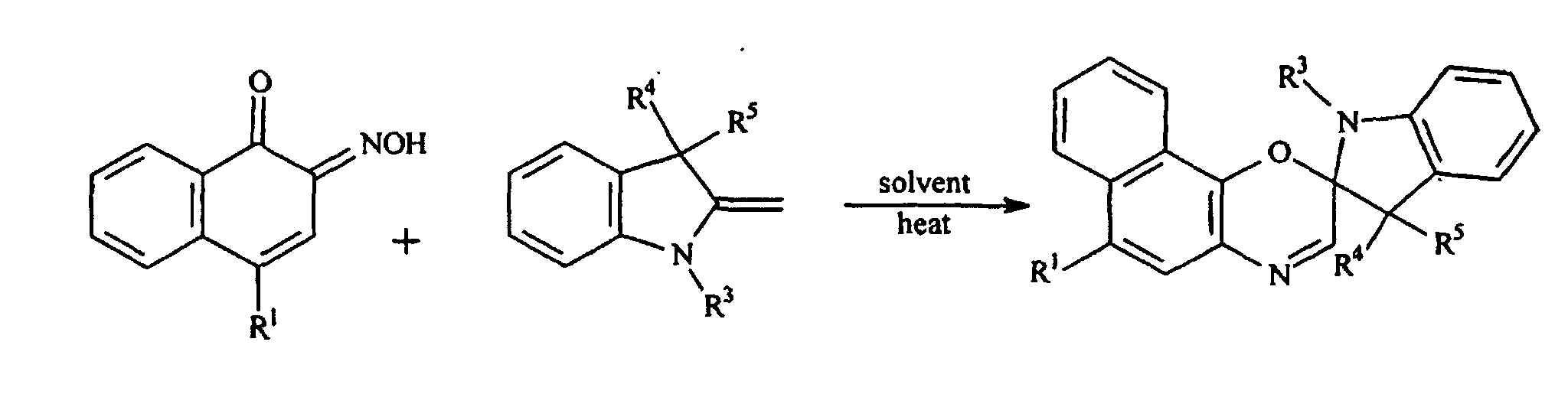
- The synthesis of naphthoquinone 2-oximes involves oximation of the readily available 4-aminoaryl-1,2-naphthoquinones, themselves accessible from 1,2-naphthoquinone or its 4-sulfonic acid salt. The methylene indoline derivative is readily available to those skilled in the art and the synthesis of these materials has been reviewed (see B. Robinson, "The Fischer Indole Synthesis," Wiley, Chichester, 1982). Formation of the naphthoxazine is accomplished by heating the reactants in a solvent such as, for example, an alcohol, aromatic hydrocarbon or an ether.
- The photochromic properties exhibited by the novel spironaphthoxazines of the present invention, namely those of a desirable rate of bleaching of the coloured form at ambient temperatures, a high induced optical density of the coloured form and control of the shade of green or blue - green colour, coupled with their excellent fatigue resistance, render these compounds particularly useful as photochromic materials for incorporation into polymeric host materials such as optical elements, for example, so as to impart photochromic properties to the host materials. Examples of applications of the polymeric host materials containing photochromic materials of the present invention include lenses for sunglasses and ophthalmic lenses, optical filters and windows for vehicles such as cars (including sunroofs), aircraft and ships and architectural and agricultural uses e.g. windows for, photochromic 'stained glass' windows and greenhouses, and toys, watches and their straps and novelty items. Additional uses may include incorporation into paints, inks and other like formulations. Other uses include device applications, such as electronic switches, non-linear optical devices and optical data storage.
- The photochromic spironaphthoxazines of the present invention may be incorporated into the 'plastic' host material by well established protocols, for example as described in European Patent No. 0254020 or U.S. Patent No. 5,066,818.
- The high induced optical density of the photochromic compounds of the present invention enables the amount of the photochromic material required to impart a useful degree of photochromism to a polymeric host material or to a solution, to be greatly reduced, thereby enabling a considerable saving of synthetic effort and cost. Furthermore, the use of reduced quantities of the photochromic materials of th e present invention has the bonus that there is a consequent reduction in any undesirable colour that the photochromic materials may impart in the bleached state, either by way of inherent colour of the material itself or by the formation of coloured fatigue/degradation products through use of the photochromic material.
- Typical host materials are optically clear polymer materials, such as polymers of polyol (allyl carbonate) - monomers, polyacrylates such as polymethylmethacrylates, cellulose acetate, cellulose triacetate, cellulose acetate propionate, cellulose acetate butyrate, poly(vinyl acetate), poly(vinyl alcohol), polyurethanes, polycarbonate, polyethylene terephthalate, polystyrene, poly(triethyleneglycol dimethacrylate), poly(diethyleneglycol-bis(allyl carbonate)) and various copolymer mixes.
- Among the preferred compounds of the invention are a 1,3-dihydro-1-isobutyl-3,3-dimethyl-6'-(4-N,N -diethylaminophenyl)-spiro[2H-indole-2,2'[2H[naphth[1,2-b][1,4]oxazine], 1,3-dihydro-3,3-dimethyl-1-neopentyl-6'-(4-N,N-diethylaminophenyl)-spiro[2H-indole-2,2'[2H]naphth[1,2-b][1,4]oxazine], 5-acetamido-1,3-dihydro-1,3,3-trimethyl-6'-(4-N,N-diethylaminophenyl)-spiro[2H-indole-2,2'[2H]naphth[1,2-b][1,4]oxazine], 1,3-dihydro-1-isobutyl-3,3,4,7-tetramethyl-6'-(4-N,N-diethylaminophenyl)-spiro[2H-indole-2,2'[2H]naphth[1,2-b][1,4]oxazine], 1,3-dihydro-1,3,3-trimethyl-6'-(4-N,N-diethylaminophenyl)-spiro[2H-indole-2,2'[2H]naphth[1,2-b][1,4]oxazine], 4-(4-N,N-diethylaminophenyl)-1,2-naphthoquinone-2-oxime, 4-(4-N,N-dimethylaminophenyl-1,2,-naphthoquinone-2-oxime, 4-(4-pyrrolidinophenyl)-1,2-naphthoquinone-2-oxime.
- In order that the invention may be more fully understood, the following examples are given by way of illustration only.
-
- (a) 4-(4-N,N-Diethylaminophenyl)-1,2-naphthoquinone
A solution of N,N-diethylaniline (0.05 mol) in methanol (20 cm3) was added dropwise over 10 mins to a stirred suspension of 1,2-naphthoquinone-4-sulfonic acid sodium salt (0.05 mol) in methanol (20% aqueous) (350 cm3) at room temperature. On completion of the addition, the mixture was allowed to stir for 24 hrs whereupon the dark blue solid that had precipitated was collected by vacuum filtration, washed well with water and allowed to air dry. Yield = 42%, m.p. = 165 -195 °C.

- (b) 4-(4-N,N-Diethylaminophenyl)-1,2-naphthoquinone-2-oxime
A solution of hydroxylamine hydrochloride (0.08 mol) in anhydrous ethanol (50 cm3) was added dropwise to a stirred solution of 4-(4-N,N-diethylaminophenyl)-1,2-naphthoquinone (0.02 mol) in warm anhydrous ethanol (250 cm3). The mixture was refluxed until thin layer chromatography indicated that no 4-(4-N,N-diethylaminophenyl)-1,2-naphthoquinone remained. The mixture was cooled in ice, diluted with water and the brown precipitate was collected by vacuum filtration and washed with water and air dried. Yield = 75%, m.p. = 176-178 °C. The homogeneity of this material was verified by tlc and nmr and its structure was confirmed by X-ray crystallography.

- (c) 1,3-Dihydro-1-isobutyl-3,3-dimethyl-6'-(4-N,N-diethylaminophenyl)-spiro[2H-indole-2,2'[2H]naphth[1,2-b][1,4]oxazine]
A solution of 4-(4-N,N-diethylaminophenyl)-1,2-naphthoquinone-2-oxime (0.005 mol) and 1-isobutyl-3,3-dimethyl-2-methyleneindoline (0.005 mol) in anhydrous ethanol (70 cm3) was refluxed until examination of the reaction mixture by thin layer chromatography indicated that none of the 4-(4-N,N-diethylaminophenyl)-1,2-naphthoquinone-2-oxime remained. The mixture was cooled, reduced in volume and the precipitated product collected by vacuum filtration washed with a little cold ethanol and dried. Yield = 66 %, m.p. = 166.5 - 168.5 °C, λmax = 614 run in PhMe upon irradiation.

-
-
- (a) 4-(4-N,N-Dimethylaminophenyl)-1,2-naphthoquinone
A solution of N,N-dimethylaniline (0.05 mol) in methanol (20 cm3) was added dropwise over 10 mins to a stirred suspension of 1,2-naphthoquinone-4-sulfonic acid sodium salt (0.05 mol) in methanol (20% aqueous) (350 cm3) at room temperature. On completion of the addition, the mixture was allowed to stir for 24 hrs whereupon the dark blue solid that had precipitated was collected by vacuum filtration, washed well with water and allowed to air dry. Yield = 43 %, m.p. = 182 - 186 °C.

- (b) 4-(4-N,N-Dimethylaminophenyl)-1,2-naphthoquinone-2-oxime
A solution of hydroxylamine hydrochloride (0.08 mol) in anhydrous ethanol (50 cm3) was added dropwise to a stirred solution of 4-(4-N,N-dimethylaminophenyl)-1,2-naphthoquinone (0.02 mol) in warm anhydrous ethanol (250 cm3). The mixture was refluxed until thin layer chromatography indicated that no 4-(4-N,N-dimethylaminophenyl)-1,2-naphthoquinone remained. The mixture was cooled in ice, diluted with water and the red brown precipitate was collected by vacuum filtration and washed with water and air dried. Yield = 60%, m.p. = 201-207 °C.

- (c) 1,3-Dihydro-3,3-dimethyl-1-neopentyl-6'-(4-N,N-dimethylaminophenyl)-spiro[2H-indole-2,2'[2H]naphth[1,2-b][1,4]oxazine]
A solution of 4-(4-N,N-dimethylaminophenyl)-1,2-naphthoquinone-2-oxime (0.005 mol) and 3,3-dimethyl-1-neopentyl-2-methyleneindoline (0.005 mol) in anhydrous ethanol (70 cm3) was refluxed until examination of the reaction mixture by thin layer chromatography indicated that none of the 4-(4-N,N-dimethylaminophenyl)-1,2-naphthoquinone-2-oxime remained. The mixture was cooled, reduced in volume and the precipitated product collected by vacuum filtration washed with a little cold ethanol and dried. Yield = 69 %, m.p. = 189.5 - 192.0 °C, λmax = 625 nm in PhMe upon irradiation.

-
-
- (a) 4-(4-Pyrrolidinophenyl)-1,2-naphthoquinone
A solution of N-phenylpyrrolidine (0.05 mol) in methanol (20 cm3) was added dropwise over 10 mins to a stirred suspension of 1,2-naphthoquinone-4-sulfonic add sodium salt (0.05 mol) in methanol (20% aqueous) (350 cm3) at room temperature. On completion of the addition, the mixture was allowed to stir for 24 hrs whereupon the dark blue solid that had precipitated was collected by vacuum filtration, washed well with water and allowed to air dry. Yield = 50 %, m.p. = 244 - 265 °C (decomp.).

- (b) 4-(4-Pyrrolidinophenyl)-1,2-naphthoquinone-2-oxime
A solution of hydroxylamine hydrochloride (0.08 mol) in anhydrous ethanol (50 cm3) was added dropwise to a stirred solution of 4-(4-pyrrolidinophenyl)-1,2-naphthoquinone (0.02 mol) in warm anhydrous ethanol (250 cm3). The mixture was refluxed until thin layer chromatography indicated that no 4-(4-pyrrolidinophenyl)-1,2-naphthoquinone remained. The mixture was cooled in ice, diluted with water and the brown precipitate was collected by vacuum filtration and washed with water and air dried. Yield = 84 %, m.p. = 278 - 300 °C (decomp.).

- (c) 1,3-Dihydro-1-isobutyl-3,3-dimethyl-6'-(4-pyrrolidinophenyl)spiro[2H-indole-2,2'[2H]naphth[1,2-b]
[1,4]oxazine]
A solution of 4-(4-pyrrolidinophenyl)-1,2-naphthoquinone-2-oxime (0.005 mol) and 1-isobutyl-3,3-dimethyl-2-methyleneindoline (0.005 mol) in anhydrous ethanol (70 cm3) was refluxed until examination of the reaction mixture by thin layer chromatography indicated that none of the 4-(4-pyrrolidinophenyl)-1,2-naphthoquinone-2-oxime remained. The mixture was cooled, reduced in volume and the precipitated product collected by vacuum filtration washed with a little cold ethanol and dried. Yield = 19 %, m.p. = 242 - 245 °C, λmax = 614 nm in PhMe upon irradiation.

-
- Making use of the previously described general procedures above, the following compounds were obtained:
-

- From 4-(4-N,N-dimethyl-aminophenyl)-1,2-naphthoquinone-2-oxime and 1-isobutyl-3,3,4,7-tetramethyl-2-methyleneindoline. Yield = 51 %, m.p. = 146.5 - 149.5 °C, λmax = 622 nm in PhMe upon irradiation.
-

- From 4-(4-N,N-diethylaminophenyl)-1,2-naphthoquinone-2-oxime and 5-methoxy-1,3,3-trimethyl-2-methyleneindoline. Yield = 67 %, m.p. = 202 - 203 °C, λmax = 644 nm in PhMe upon irradiation.
-
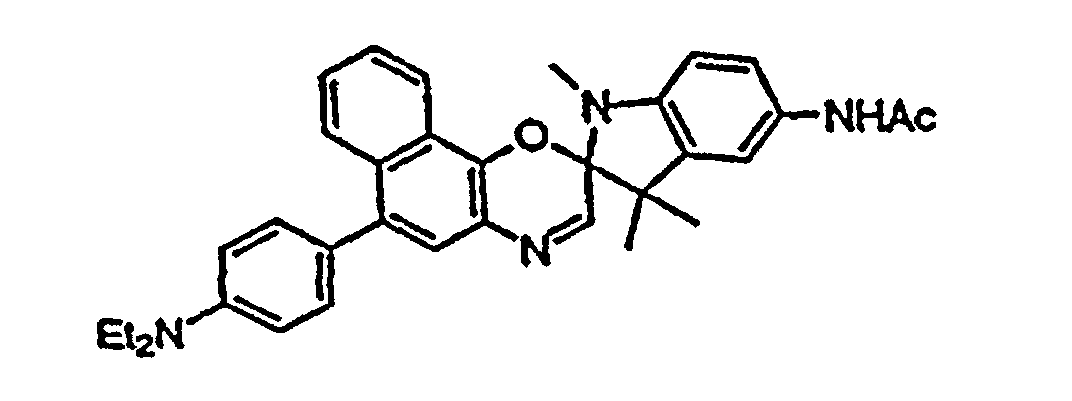
- From 4-(4-N,N-diethylaminophenyl)-1,2-naphthoquinone-2-oxime and 5-acetamido-1,3,3-trimethyl-2-methyleneindoline. Yield = 70 %, m.p. = 254.5 - 256.0 °C, λmax = 622 nm in PhMe upon irradiation.
-
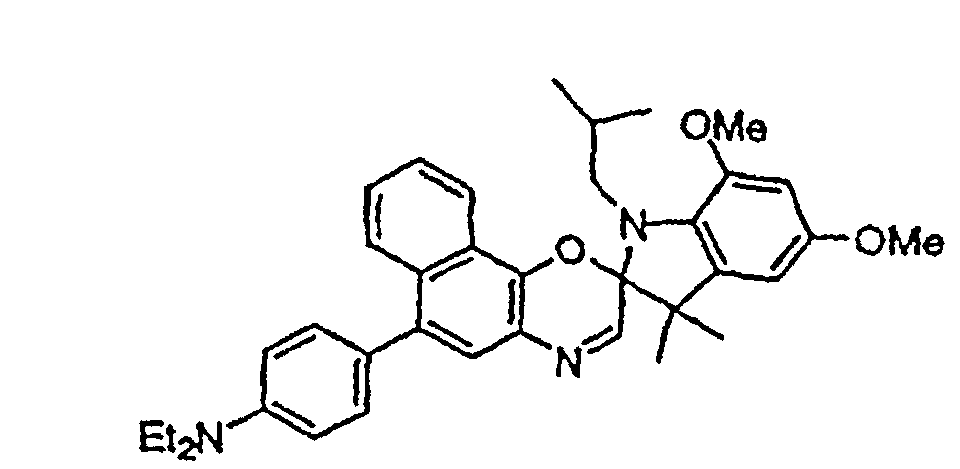
- From 4-(4-N,N-diethylaminophenyl)-1,2-naphthoquinone-2-oxime and 5,7-dimethoxy-3,3-dimethyl-1-isobutyl-2-methyleneindoline. Yield = 48 %, m.p. = 155 - 156 °C, λmax = 638 nm in PhMe upon irradiation.
-

- From 4-(4-N,N-diethylaminophenyl)-1,2-naphthoquinone-2-oxime and 3,3-dimethyl-1-neopentyl-2-methyleneindoline. Yield = 57 %, m.p. = 188 - 191 °C, λmax = 624 nm in PhMe upon irradiation.
-

- From 4-(4-pyrrolidinophenyl)-1,2-naphthoquinone-2-oxime and 1,3,3-trimethyl-2-methylene-5-nitroindoline. Yield = 8 %, m.p. = 259.5 - 2615 °C, λmax = 592 and 470 (sh.) nm in PhMe upon irradiation.
-

- From 4-(4-N,N-diethylaminophenyl)-1,2-naphthoquinone-2-oxime and 5-cyano-1,3,3-trimethyl-2-methyleneindoline. Yield = 10 %, m.p. = 245.5 - 247.0 °C, λmax = 604 and 466 (sh.) nm in PhMe upon irradiation.
-

- From 4-(4-N,N-diethylaminophenyl)-1,2-naphthoquinone-2-oxime and 3,3-dimethyl-1-isobutyl-2-methylene-5-trifluoromethylindoline. Yield =16 %, m.p. = 161.0 -162.5 °C, λmax = 604 nm in PhMe upon irradiation.
Claims (14)
- A photochromic compound having the general formula (I):wherein:
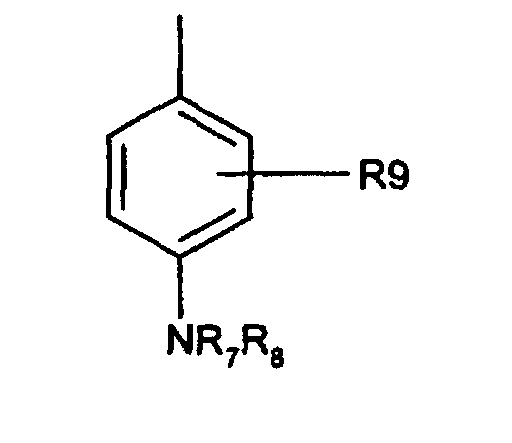
 (a) -R1 is the following aminoaryl moiety :in which R7 and R8, which may be the same or different, are each selected from a linear or branched C1-C20 alkyl group, an aryl group, a heteroaryl group, a linear or branched C1-C20 alkylaryl group, a linear or branched C1-C20 alkyl-cycloalkyl group, or substituted -cycloalkyl group, a linear or branched C1-C20 haloalkyl group, a linear or branched C1-C20 alkoxyalkyl group, a linear or branched C1-C20 alkylthioalkyl group, a linear or branched C1-C20 aminoalkyl group, a C3-C20 cycloalkyl or substituted cycloalkyl group, a linear or branched C1-C20 hydroxyalkyl group; or
 (b) -R1 is selected from cyclic aminoaryl moieties in which R7 and R8 are conjoined according to the following structures:wherein the size of the nitrogen-containing ring is from 3 to 40 atoms (inclusive of the nitrogen atom) and may incorporate one or more of the same or different groups of atoms (X) which may be arranged in any sequence and where X may be selected from CH2, CHR7, CR7R8, C(alkyl, aryl), O, S, N-alkyl; wherein R7 and R8 may each be selected from those substituents specified above: or
 (c) -R1 may represent an N-indolinoaryl or N-tetrahydroquinolino-aryl substituent of the structure :wherein R11, R12, and R13 are each a C1-C5 linear or branched alkyl group or aryl group, or any 2 groups selected from R11, R12, and R13 may be conjoined to form a ring of 5 to 8 atoms (including those of the indoline or tetrahydroquinoline ring); or
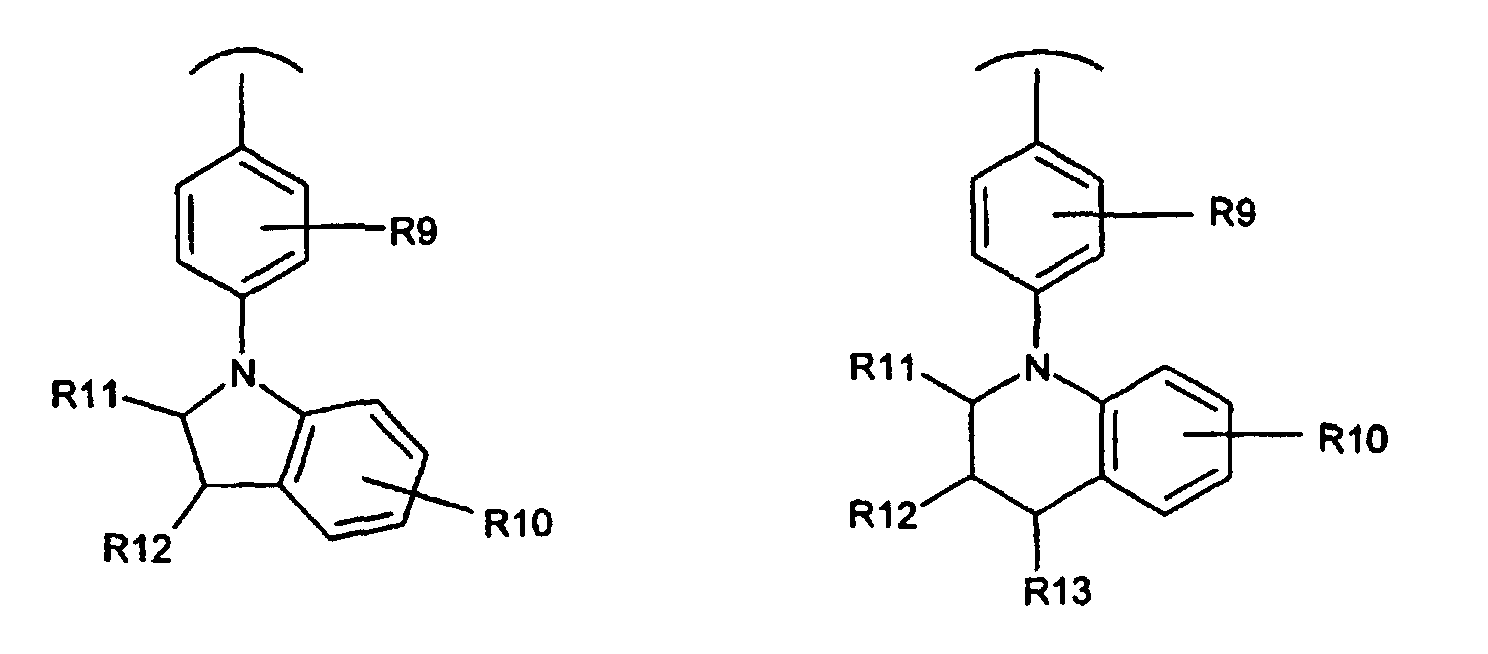 (d) -R1 may be represented by the structure (II) below, in which the nitrogen atom is incorporated at the bridgehead in a tricyclic nitrogen heterocycle, and p and q are both integers between 2 and 6 and may be the same or different;and wherein -R3 is a linear or branched C1-C20 alkyl group, linear or branched C2-C20 alkenyl or polyalkenyl group in any E or Z geometrical isomeric form, an aryl group, a heteroaryl group, a linear or branched C1-C20 alkyl aryl group, linear or branched C1-C20 alkyl-cycloalkyl or ―bicycloalkyl or ―tricycloalkyl or substituted ―cycloalkyl or ―bicycloalkyl or ―tricycloalkyl group, of which the following are non-limiting illustrative examples:

 a linear or branched C1-C20 haloalkyl group, a linear or branched C1-C20 alkoxyalkyl group, a linear or branched C1-C20 aminoalkyl group, a C3-C20 cycloalkyl or substituted cycloalkyl group, of which the following are non-limiting illustrative examples:
 a C4-C20 bicyclo or substituted bicycloalkyl group, of which the following are non-limiting illustrative examples:
 a C6-C20 tricycloalkyl or substituted tricycloalkyl group, such as for example:
 or a linear or branched C1-C20 hydroxyalkyl group, and wherein ―R4 and R5, which may be the same or different, are each selected from the substituents specified for ―R3 above, or ―R4 and ―R5 may be conjoined to form a spiro-linked C3-C20 cyclic system; and wherein R6 of which there may be none, one, or more than one, and which may be the same or different are each selected from hydrogen, linear or branched C1-C20 alkyl, C1-C10 alkoxy, linear or branched C1-C20 aminoalkyl, hydroxy, amino, acetamido, C2-C10 N-alkylamido, linear or branched C2-C20 alkenyl or polyalkenyl, aryl, linear or branched C1-C20 alkyl aryl, linear or branched C1-C20 alkoxyalkyl, C3-C20 cycloalkyl, linear or branched C1-C20 hydroxyalkyl, or aryloxy, and wherein -R2, R9 and R10 of which there may be none, one, or more than one, and which may be the same or different are each selected from hydrogen, halogen, nitro, amino, acetamido, C2-C10 N-alkylamido, alkoxycarbonyl, nitrile, carboxy, hydroxy, aryloxy, C1-C10 alkoxy, or ―R2, -R6, R9, and R10 may each be selected from those substituents specified for ―R3.
- A photochromic compound according to claim 1, wherein R1 is 4-diethylaminophenyl,4-dimethylaminophenyl, or 4-pyrrolidinophenyl, R3 is C1-C5 linear or branched alkyl, R4 and R5 are methyl, and R6 is hydrogen, methyl, methoxy, acylamino or halogen
- 1,3-Dihydro-1-isobutyl-3,3-dimethyl-6'-(4-N,N-diethyaminophenyl)-spiro-[2H-indole-2,2'[2H]naphth[1,2-b][1,4]oxazine].
- 1,3-Dihydro-3,3-dimethyl-1-neopentyl-6'-(4-N,N-diethylaminophenyl)-spiro[2H-indole-2,2'[2H]naphth[1,2-b][1,4]oxazine].
- 5-Acetamido-1,3-dihydro-1,3,3-trimethyl-6'-(4-N,N-diethylaminophenyl)-spiro[2H-indole-2,2'[2H]naphth[1,2-b][1,4]oxazine].
- 1,3-Dihydro- 1-isobutyl-3,3,4,7-tetramethyl-6'-(4-N,N-diethylaminophenyl)-spiro[2H-indole-2,2'[2H]naphth[1,2-b][1,4]oxazine].
- 1,3-Dihydro-1,3,3-trimethyl-6'-(4-N,N-diethylaminophenyl)-spiro[2H-indole,2,2'[2H]naphth[1,2-b][1,4]oxazine].
- 4-(4-N,N,-Diethylaminophenyl)-1,2-naphthoquinone-2-oxime.
- 4-(4-N,N-Dimethylaminophenyl)-1,2,-naphthoquinone-2-oxime.
- 4(4-Pyrrolidinophenyl)-1,2-naphthoquinone-2-oxime.
- A process for making a photochromic compound as defined in claim 1, which process includes the following step:wherein R1, R3, R4 and R5 are as defined in claim 1, or represent groups which can be replaced by, or modified to form, groups as defined respectively in claim 1, and wherein in the above step the reactants and/or product may also include substituents R2 and R6 as defined in claim 1, or such substituents are introduced subsequently.

- A photochromic composition which comprises a photochromic compound according to any of claims 1 to 7, and a carrier.
- An article which includes a photochromic compound according to any of claims 1 to 7.
- An optical element which includes a photochromic compound according to any of claims 1 to 7.
Applications Claiming Priority (3)
| Application Number | Priority Date | Filing Date | Title |
|---|---|---|---|
| GB9722127 | 1997-10-20 | ||
| GBGB9722127.9A GB9722127D0 (en) | 1997-10-20 | 1997-10-20 | Photochromic compounds |
| PCT/GB1998/003124 WO1999020630A1 (en) | 1997-10-20 | 1998-10-19 | Photochromic compounds |
Publications (2)
| Publication Number | Publication Date |
|---|---|
| EP1025107A1 EP1025107A1 (en) | 2000-08-09 |
| EP1025107B1 true EP1025107B1 (en) | 2002-08-07 |
Family
ID=10820797
Family Applications (1)
| Application Number | Title | Priority Date | Filing Date |
|---|---|---|---|
| EP98947700A Expired - Lifetime EP1025107B1 (en) | 1997-10-20 | 1998-10-19 | Photochromic compounds |
Country Status (7)
| Country | Link |
|---|---|
| US (1) | US6303673B1 (en) |
| EP (1) | EP1025107B1 (en) |
| DE (1) | DE69807105T2 (en) |
| DK (1) | DK1025107T3 (en) |
| ES (1) | ES2182360T3 (en) |
| GB (2) | GB9722127D0 (en) |
| WO (1) | WO1999020630A1 (en) |
Cited By (1)
| Publication number | Priority date | Publication date | Assignee | Title |
|---|---|---|---|---|
| DE102012100252A1 (en) | 2011-01-26 | 2012-07-26 | Thüringisches Institut für Textil- und Kunststoff-Forschung e.V. | Polymer composition and process for the preparation of products with variable biodegradability |
Families Citing this family (18)
| Publication number | Priority date | Publication date | Assignee | Title |
|---|---|---|---|---|
| DE60111368T2 (en) | 2000-04-06 | 2006-05-04 | Yeda Research And Development Co., Ltd. | Photochromic spiro (indoline) naphtoxazine |
| WO2004072053A1 (en) * | 2003-02-14 | 2004-08-26 | Idemitsu Kosan Co., Ltd. | Hetero-polycyclic compounds, and coloring matters, pigments, dyes, color-changing material compositions, and color-changing films, made by using the compounds |
| JP4514466B2 (en) * | 2003-02-14 | 2010-07-28 | 株式会社テクノネットワーク四国 | Heteropolycyclic compounds |
| CN1747943A (en) * | 2003-02-14 | 2006-03-15 | 出光兴产株式会社 | Heteropolycyclic compounds, and pigments, pigments, dyes, color-changing material compositions and color-changing films prepared therefrom |
| US8518546B2 (en) | 2003-07-01 | 2013-08-27 | Transitions Optical, Inc. | Photochromic compounds and compositions |
| US7342112B2 (en) | 2003-07-01 | 2008-03-11 | Ppg Industries Ohio, Inc. | Photochromic compounds |
| US7256921B2 (en) | 2003-07-01 | 2007-08-14 | Transitions Optical, Inc. | Polarizing, photochromic devices and methods of making the same |
| US8211338B2 (en) | 2003-07-01 | 2012-07-03 | Transitions Optical, Inc | Photochromic compounds |
| US8545984B2 (en) | 2003-07-01 | 2013-10-01 | Transitions Optical, Inc. | Photochromic compounds and compositions |
| US7632540B2 (en) | 2003-07-01 | 2009-12-15 | Transitions Optical, Inc. | Alignment facilities for optical dyes |
| US9096014B2 (en) | 2003-07-01 | 2015-08-04 | Transitions Optical, Inc. | Oriented polymeric sheets exhibiting dichroism and articles containing the same |
| US8698117B2 (en) | 2003-07-01 | 2014-04-15 | Transitions Optical, Inc. | Indeno-fused ring compounds |
| GB0815109D0 (en) | 2008-08-18 | 2008-09-24 | James Robinson Ltd | Polydialkylsiloxane-bridged bi-photochromic molecules |
| US9358091B2 (en) | 2011-04-18 | 2016-06-07 | Inguran, Llc | Two-dimensional bar codes in assisted reproductive technologies |
| CN103890162B (en) | 2011-04-18 | 2016-08-17 | 英格朗公司 | Straws and method for marking straws |
| CA2888458C (en) | 2012-10-18 | 2020-03-10 | Inguran, Llc | Two-dimensional bar codes in assisted reproductive technologies |
| US9522921B2 (en) | 2015-04-13 | 2016-12-20 | Sabic Global Technologies, B.V. | Photochromic spirooxazine compounds |
| US10866455B2 (en) | 2017-10-19 | 2020-12-15 | Ppg Industries Ohio, Inc. | Display devices including photochromic-dichroic compounds and dichroic compounds |
Family Cites Families (7)
| Publication number | Priority date | Publication date | Assignee | Title |
|---|---|---|---|---|
| JPS6233184A (en) * | 1985-08-05 | 1987-02-13 | Toray Ind Inc | Novel spirooxazine compound |
| US5374723A (en) | 1988-02-08 | 1994-12-20 | Toray Industries, Inc. | Spiro-oxazine compound |
| US5246989A (en) * | 1990-03-29 | 1993-09-21 | Tokuyama Soda Kabishiki Kaisha | Photochromic compound, composition and use thereof |
| JP2960131B2 (en) * | 1990-09-04 | 1999-10-06 | シチズン時計株式会社 | Photochromic compounds |
| GB9225346D0 (en) | 1992-12-03 | 1993-01-27 | Pilkington Plc | Photochromic compounds |
| FR2723218A1 (en) | 1994-07-29 | 1996-02-02 | Essilor Internal Cie Gle Optique | PHOTOCHROMIC COMPOUNDS WITH A SPIRO STRUCTURE (INDOLINE- (2,3 ') - BENZOXAZINE) WITH A CYANO GROUP IN 6', AND THEIR USE IN THE FIELD OF OPHTHALMIC OPTICS |
| ES2182851T3 (en) * | 1994-10-13 | 2003-03-16 | Ppg Ind Ohio Inc | PHOTOCROMIC NAFTOXAZINE COMPOUNDS. |
-
1997
- 1997-10-20 GB GBGB9722127.9A patent/GB9722127D0/en not_active Ceased
-
1998
- 1998-10-19 GB GB0009378A patent/GB2345910B/en not_active Expired - Lifetime
- 1998-10-19 EP EP98947700A patent/EP1025107B1/en not_active Expired - Lifetime
- 1998-10-19 WO PCT/GB1998/003124 patent/WO1999020630A1/en not_active Ceased
- 1998-10-19 DE DE69807105T patent/DE69807105T2/en not_active Expired - Lifetime
- 1998-10-19 ES ES98947700T patent/ES2182360T3/en not_active Expired - Lifetime
- 1998-10-19 DK DK98947700T patent/DK1025107T3/en active
- 1998-10-19 US US09/529,704 patent/US6303673B1/en not_active Expired - Fee Related
Cited By (2)
| Publication number | Priority date | Publication date | Assignee | Title |
|---|---|---|---|---|
| DE102012100252A1 (en) | 2011-01-26 | 2012-07-26 | Thüringisches Institut für Textil- und Kunststoff-Forschung e.V. | Polymer composition and process for the preparation of products with variable biodegradability |
| EP2481771A1 (en) | 2011-01-26 | 2012-08-01 | THÜRINGISCHES INSTITUT FÜR TEXTIL- UND KUNSTSTOFF-FORSCHUNG e.V. | Polymer composition and method for producing products with variable biodegradability |
Also Published As
| Publication number | Publication date |
|---|---|
| GB2345910B (en) | 2002-04-10 |
| DK1025107T3 (en) | 2002-11-04 |
| GB2345910A (en) | 2000-07-26 |
| DE69807105D1 (en) | 2002-09-12 |
| DE69807105T2 (en) | 2003-05-08 |
| US6303673B1 (en) | 2001-10-16 |
| GB0009378D0 (en) | 2000-05-31 |
| ES2182360T3 (en) | 2003-03-01 |
| GB9722127D0 (en) | 1997-12-17 |
| EP1025107A1 (en) | 2000-08-09 |
| WO1999020630A1 (en) | 1999-04-29 |
Similar Documents
| Publication | Publication Date | Title |
|---|---|---|
| EP1025107B1 (en) | Photochromic compounds | |
| EP0973761B1 (en) | RED COLOURING HYPERCHROMIC 3H-NAPHTHO 2,1-b ]PYRANS | |
| EP0691965B1 (en) | Photochromic naphthopyran compounds | |
| JP2545606B2 (en) | Photochromic compound and photochromic composition | |
| US6747145B2 (en) | Photochromic bis-naphthopyran compounds and methods for their manufacture | |
| JP3358750B2 (en) | Photochemical reaction material | |
| JPH04321690A (en) | New photochromic compound of indolinospirobenzoxadine type and method of manufacturing same | |
| AU2002332520A1 (en) | Photochromic bis-naphthopyran compounds and methods for their manufacture | |
| US5833885A (en) | Photochromic compounds | |
| AU2001266612B2 (en) | Indolinospiropyran compounds and methods for their manufacture | |
| JPH10503760A (en) | Method for producing cyclized spiro [indoline [2,3 '] benzoxazine] type photochromic compound | |
| AU2001266612A1 (en) | Indolinospiropyran compounds and methods for their manufacture | |
| US6891038B2 (en) | Photochromic spiro(indoline)naphthoxazines | |
| RU2315042C2 (en) | Photochrome oxazine compounds and method for their producing | |
| KR0145266B1 (en) | New photochromic compounds | |
| JPH03200792A (en) | Photochromic compound and photochromic composition | |
| HK1051685B (en) | Indolinospiropyran compounds and methods for their manufacture |
Legal Events
| Date | Code | Title | Description |
|---|---|---|---|
| PUAI | Public reference made under article 153(3) epc to a published international application that has entered the european phase |
Free format text: ORIGINAL CODE: 0009012 |
|
| 17P | Request for examination filed |
Effective date: 20000508 |
|
| AK | Designated contracting states |
Kind code of ref document: A1 Designated state(s): BE CH DE DK ES FR GB IT LI NL Kind code of ref document: A1 Designated state(s): BE CH DE DK ES FR IT LI NL |
|
| 17Q | First examination report despatched |
Effective date: 20010529 |
|
| GRAG | Despatch of communication of intention to grant |
Free format text: ORIGINAL CODE: EPIDOS AGRA |
|
| GRAG | Despatch of communication of intention to grant |
Free format text: ORIGINAL CODE: EPIDOS AGRA |
|
| GRAH | Despatch of communication of intention to grant a patent |
Free format text: ORIGINAL CODE: EPIDOS IGRA |
|
| GRAH | Despatch of communication of intention to grant a patent |
Free format text: ORIGINAL CODE: EPIDOS IGRA |
|
| GRAA | (expected) grant |
Free format text: ORIGINAL CODE: 0009210 |
|
| RBV | Designated contracting states (corrected) |
Designated state(s): BE CH DE DK ES FR IT LI NL |
|
| AK | Designated contracting states |
Kind code of ref document: B1 Designated state(s): BE CH DE DK ES FR IT LI NL |
|
| REG | Reference to a national code |
Ref country code: CH Ref legal event code: EP |
|
| REG | Reference to a national code |
Ref country code: CH Ref legal event code: NV Representative=s name: ISLER & PEDRAZZINI AG |
|
| REF | Corresponds to: |
Ref document number: 69807105 Country of ref document: DE Date of ref document: 20020912 |
|
| ET | Fr: translation filed | ||
| REG | Reference to a national code |
Ref country code: ES Ref legal event code: FG2A Ref document number: 2182360 Country of ref document: ES Kind code of ref document: T3 |
|
| PLBE | No opposition filed within time limit |
Free format text: ORIGINAL CODE: 0009261 |
|
| STAA | Information on the status of an ep patent application or granted ep patent |
Free format text: STATUS: NO OPPOSITION FILED WITHIN TIME LIMIT |
|
| 26N | No opposition filed |
Effective date: 20030508 |
|
| REG | Reference to a national code |
Ref country code: CH Ref legal event code: PCAR Free format text: ISLER & PEDRAZZINI AG;POSTFACH 1772;8027 ZUERICH (CH) |
|
| PGFP | Annual fee paid to national office [announced via postgrant information from national office to epo] |
Ref country code: DK Payment date: 20081013 Year of fee payment: 11 |
|
| REG | Reference to a national code |
Ref country code: DK Ref legal event code: EBP |
|
| PG25 | Lapsed in a contracting state [announced via postgrant information from national office to epo] |
Ref country code: DK Free format text: LAPSE BECAUSE OF NON-PAYMENT OF DUE FEES Effective date: 20091031 |
|
| PGFP | Annual fee paid to national office [announced via postgrant information from national office to epo] |
Ref country code: NL Payment date: 20111021 Year of fee payment: 14 Ref country code: ES Payment date: 20111115 Year of fee payment: 14 Ref country code: BE Payment date: 20111012 Year of fee payment: 14 Ref country code: CH Payment date: 20111012 Year of fee payment: 14 |
|
| PGFP | Annual fee paid to national office [announced via postgrant information from national office to epo] |
Ref country code: FR Payment date: 20121018 Year of fee payment: 15 Ref country code: DE Payment date: 20121017 Year of fee payment: 15 |
|
| PGFP | Annual fee paid to national office [announced via postgrant information from national office to epo] |
Ref country code: IT Payment date: 20121009 Year of fee payment: 15 |
|
| BERE | Be: lapsed |
Owner name: JAMES *ROBINSON LTD Effective date: 20121031 |
|
| REG | Reference to a national code |
Ref country code: NL Ref legal event code: V1 Effective date: 20130501 |
|
| REG | Reference to a national code |
Ref country code: CH Ref legal event code: PL |
|
| PG25 | Lapsed in a contracting state [announced via postgrant information from national office to epo] |
Ref country code: CH Free format text: LAPSE BECAUSE OF NON-PAYMENT OF DUE FEES Effective date: 20121031 Ref country code: LI Free format text: LAPSE BECAUSE OF NON-PAYMENT OF DUE FEES Effective date: 20121031 Ref country code: BE Free format text: LAPSE BECAUSE OF NON-PAYMENT OF DUE FEES Effective date: 20121031 |
|
| PG25 | Lapsed in a contracting state [announced via postgrant information from national office to epo] |
Ref country code: NL Free format text: LAPSE BECAUSE OF NON-PAYMENT OF DUE FEES Effective date: 20130501 |
|
| REG | Reference to a national code |
Ref country code: ES Ref legal event code: FD2A Effective date: 20140116 |
|
| PG25 | Lapsed in a contracting state [announced via postgrant information from national office to epo] |
Ref country code: ES Free format text: LAPSE BECAUSE OF NON-PAYMENT OF DUE FEES Effective date: 20121020 |
|
| REG | Reference to a national code |
Ref country code: FR Ref legal event code: ST Effective date: 20140630 |
|
| REG | Reference to a national code |
Ref country code: DE Ref legal event code: R119 Ref document number: 69807105 Country of ref document: DE Effective date: 20140501 |
|
| PG25 | Lapsed in a contracting state [announced via postgrant information from national office to epo] |
Ref country code: IT Free format text: LAPSE BECAUSE OF NON-PAYMENT OF DUE FEES Effective date: 20131019 Ref country code: FR Free format text: LAPSE BECAUSE OF NON-PAYMENT OF DUE FEES Effective date: 20131031 Ref country code: DE Free format text: LAPSE BECAUSE OF NON-PAYMENT OF DUE FEES Effective date: 20140501 |