EP1059824A1 - Verfahren zur Zugriffsautorisierung in einem zellularen Funk-Kommunikationsnetzwerk von einem Mobiltelefon, Funk-Kommunikationsystem und vereinfachtes Telefon dafür - Google Patents
Verfahren zur Zugriffsautorisierung in einem zellularen Funk-Kommunikationsnetzwerk von einem Mobiltelefon, Funk-Kommunikationsystem und vereinfachtes Telefon dafür Download PDFInfo
- Publication number
- EP1059824A1 EP1059824A1 EP00401544A EP00401544A EP1059824A1 EP 1059824 A1 EP1059824 A1 EP 1059824A1 EP 00401544 A EP00401544 A EP 00401544A EP 00401544 A EP00401544 A EP 00401544A EP 1059824 A1 EP1059824 A1 EP 1059824A1
- Authority
- EP
- European Patent Office
- Prior art keywords
- network
- code
- representative
- service
- data
- Prior art date
- Legal status (The legal status is an assumption and is not a legal conclusion. Google has not performed a legal analysis and makes no representation as to the accuracy of the status listed.)
- Granted
Links
- 238000000034 method Methods 0.000 title claims abstract description 32
- 230000001413 cellular effect Effects 0.000 title claims abstract description 13
- 238000013475 authorization Methods 0.000 claims description 35
- 238000004891 communication Methods 0.000 claims description 18
- 230000005540 biological transmission Effects 0.000 claims description 17
- 238000012550 audit Methods 0.000 claims description 10
- 230000004913 activation Effects 0.000 claims description 6
- 230000011664 signaling Effects 0.000 claims 3
- 238000006677 Appel reaction Methods 0.000 description 8
- 230000008901 benefit Effects 0.000 description 4
- 238000004519 manufacturing process Methods 0.000 description 4
- 230000008569 process Effects 0.000 description 4
- 230000008859 change Effects 0.000 description 2
- 240000008042 Zea mays Species 0.000 description 1
- 230000000977 initiatory effect Effects 0.000 description 1
- 238000009434 installation Methods 0.000 description 1
- 230000007246 mechanism Effects 0.000 description 1
- 230000008054 signal transmission Effects 0.000 description 1
- 238000012795 verification Methods 0.000 description 1
Images


Classifications
-
- H—ELECTRICITY
- H04—ELECTRIC COMMUNICATION TECHNIQUE
- H04W—WIRELESS COMMUNICATION NETWORKS
- H04W12/00—Security arrangements; Authentication; Protecting privacy or anonymity
- H04W12/06—Authentication
-
- H—ELECTRICITY
- H04—ELECTRIC COMMUNICATION TECHNIQUE
- H04W—WIRELESS COMMUNICATION NETWORKS
- H04W8/00—Network data management
- H04W8/22—Processing or transfer of terminal data, e.g. status or physical capabilities
- H04W8/24—Transfer of terminal data
-
- H—ELECTRICITY
- H04—ELECTRIC COMMUNICATION TECHNIQUE
- H04W—WIRELESS COMMUNICATION NETWORKS
- H04W12/00—Security arrangements; Authentication; Protecting privacy or anonymity
- H04W12/08—Access security
-
- H—ELECTRICITY
- H04—ELECTRIC COMMUNICATION TECHNIQUE
- H04W—WIRELESS COMMUNICATION NETWORKS
- H04W12/00—Security arrangements; Authentication; Protecting privacy or anonymity
- H04W12/60—Context-dependent security
- H04W12/69—Identity-dependent
- H04W12/71—Hardware identity
-
- H—ELECTRICITY
- H04—ELECTRIC COMMUNICATION TECHNIQUE
- H04W—WIRELESS COMMUNICATION NETWORKS
- H04W8/00—Network data management
- H04W8/26—Network addressing or numbering for mobility support
Definitions
- the subject of the present invention is a method of authorizing access to a cellular radio network from a simplified mobile phone, in particular by the fact that it does not include a reader for receiving a module subscriber identification, as well as a radio communication system and a simplified telephone for the implementation of this process.
- SIM card International Mobile Subscriber Identification Module
- he comes in the form of a standard ISO format smart card or a microchip chip, inserted in a reader of the mobile phone.
- the data stored in this SIM card allow the phone to identify itself at the level of the subscription network.
- the network recognizes, after a so-called phase registration or network attachment, the data stored in this card, the user is, on the one hand, authorized to use the network, and in particular to make outgoing calls and, on the other hand, receive routed calls through the network.
- An advantage provided by the existence of the SIM card, or more generally, of the subscriber identification module, is to allow the holder of this module access the subscription network from any suitable mobile terminal to receive such a module.
- the present invention aims to solve the above problems by proposing a method of authorizing access to a cellular network of radiocommunications from a simplified telephone, in particular by the fact that it does not include any subscriber identification module.
- a third subject of the invention relates to a simplified mobile phone comprising means for transmitting a radio signal for recording and passage of a communication in a cellular radiocommunication network, and means for dialing at least one predefined telephone number, characterized in that the telephone having a serial number assigned to it clean, said means of transmission transmit, during said registration, a radio signal comprising at least one piece of data representative of said serial number and a first code representative of a service number, in that it comprises in in addition to the storage means of an authorization code sent by the network following said entry, and in that said means of transmission transmit, when calling said predefined telephone number, a radio signal comprising at least the first code, the authorization code, and a second code representative of the number phone preset.
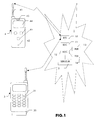
- a radiocommunication system conforming to the invention comprises a cellular network 1, for example of the GSM type, a server 2 connected or included in the network 1, a conventional mobile telephone 3 able to operate in the cellular network by subscription to a subscription, and a mobile phone simplified 4.
- simplified mobile phone is meant a mobile phone capable of operate in cellular network 1 without subscriber identification module, for as opposed to the conventional mobile phone 3 which includes a card reader (not shown) for inserting an identification module 30 specific to the subscriber. In the remainder of the presentation, the subscriber is assimilated with his identification module 30 its own. All the radio parameters necessary for the operation of the mobile 4 are stored in a memory specific to the mobile.
- the mobile telephone 4 is also simplified by the fact that it is not likely to make calls only for a limited number of telephone, for example three telephone numbers in the case of FIG. 1.
- the keyboard telephone 4 can therefore be reduced to a number of keys 40 corresponding to the less than the number of possible call numbers.
- Figure 2 shows schematically the different stages that it is possible to implement for the previous initialization phase. These steps are grouped into two phases: a first phase called connection to the service, and a second phase of updating the private directory.
- the subscriber 30 To connect to the service from the conventional mobile telephone 3, the subscriber 30 must first dial (step 50) a number representative of the service number linked to the server 2. Then, for security reasons, it is preferably imposed to enter a password (step 51). If the password is correct, the subscriber 30 is invited to dial (step 52) the IMEI data representative of the serial number specific to the simplified mobile telephone 4. This data is transmitted by radio to the network, and stored (step 53 ) in the server database 2. The subscriber 30 is then invited to dial (step 54) the characteristic data of each telephone number J which it will be possible to reach from the simplified mobile telephone 4. In the example in Figure 1, the subscriber 30 can associate with each of the three call keys 40 of the simplified telephone 4, a given telephone number.
- This data is also stored (step 55) in the database of the server 2. Steps 52 to 55 are repeated (step 56) as long as subscriber 30 wishes to enter a new possible call number.
- a verification step 57 At the end of the process for updating the private directory relating to the simplified mobile telephone 4, there is preferably also provided a verification step 57 during which the subscriber can check the accuracy of all the data transmitted. Then, if the subscriber wishes to initialize another simplified mobile phone, steps 52 to 57 are repeated (step 58) to allow the creation or updating of the private directory linked to this other simplified phone.
- subscriber 30 it is possible for subscriber 30 to perform this phase initialization from other telecommunications devices than his phone portable 4, for example from a corded telephone, or via the internet.
- the simplified telephone 4 is ready to access to network 1.
- the simplified telephone 4 goes first, like any conventional mobile phone, register on network 1. Registration for network will however differ from the registration of a conventional mobile phone such as specified in the GSM recommendations because the phone 4 does not does not have a subscriber identification module.
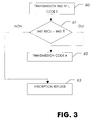
- the registration phase in accordance with the present invention is described with reference to FIG. 3:
- the simplified telephone 4 will transmit to the network (step 60), by radio, the IMEI data representative of the number of its own series, as well as the S code representative of the service for the connection to server 2.
- network 1 will be able to search in the database of server 2 if the IMEI data received corresponds to data stored in a private or public directory if this service was generalized for all operators (step 61). If he can't find no correspondence, network registration is refused (step 63). If he finds a correspondence, registration is authorized, and network 1 transmits to simplified mobile phone 4 an authorization code A which will be stored in the network and in storage means (not shown) of the simplified telephone 4 (step 62).
- the authorization code A corresponds exactly to the IMEI data.
- this authorization code can be a provisional code be generated by the network and chosen randomly in a list of codes not corresponding to any subscriber in network 1, i.e. corresponding to a subscriber identifier 30.
- the routing inside network 1, following a request for registration of mobile 4, is as follows: base station 10 of network 1 located in the cell in which the mobile 4 is located transmits to the station controller 11 the registration request including the transmitted data by mobile 4 (IMEI), which in turn transmits this request to the Controller traffic 12 (MSC, English initials set for Mobile Switch Center).
- IMEI transmitted data by mobile 4
- MSC Controller traffic 12
- server 2 whereas in the normal case it transmits the request to a recording server (Register 13, Anglo-Saxon initial HLRs set for Home Location Register 14, Anglo-Saxon initial VLRs set for Visitor Location Register). It will search the server 2 database for finds a directory linked to the IMEI data received. If applicable, the path reverse is done to transmit authorization code A to mobile 4.
- this registration process allows the network, during a phase using the network, memorizing location information for the phone simplified mobile 4, either because registration for the service enabled server 12 to memorize in which cell of the network is the simplified mobile 4, either because that registers 13 or 14 have stored this information, as specified in a GSM network for example.
- this information is updated either in the server 12 either in registers 13 or 14.
- This update taking place is in a state of communication, or in standby state (Location Updating Procedure described in the GSM recommendations for example).
- This update mechanism uses the same information flows as those described in the procedure to register for the service or intervening after a telephone shutdown simplified.
- the network will then be able to carry out a series of comparisons with a view to carry out the routing: II first of all searches (step 71), from the code authorization Received, if the server 2 database keeps a directory private corresponding to mobile 4. If the search is unsuccessful, the establishment of communication is impossible. When the corresponding directory is found, the network will search (step 72), from the Q code received, to find the database has a telephone number in the private directory corresponding to the key 40 which has been activated. Again, in the event of an unsuccessful search, communication is refused; If, on the other hand, a number of phone is found, communication can be established (step 73).
- the method comprises in addition to a phase of transmission of billing information to an account of the subscriber 30.
- this phase can consist, following each communication from the simplified mobile phone 4, to be extracted (step 74) the identifier of the subscriber who initialized the service, so as to establish a list of all communications made, then to establish the actual invoice (step 75), for example monthly, on the account of subscriber 30.
- the telephone simplified mobile 4 cannot receive incoming calls directly, but can receive an indication that a person, part of the telephone numbers in a limited number that he has the right to call, seeks to reach him.
- person looking to contact the holder of the simplified mobile phone 4 connects to the service offered by server 2, and delivers the IMEI data representative of the simplified mobile telephone 4.
- the network 1 can then perform a search for the network cell, if any, on which the mobile phone 4 joined during the last phase of network registration. If such a cell has been found, network 1 then sends a message to simplified mobile phone 4 service or SMS-PP (English initials set for Short Message Service Point-to-Point) containing information about the caller.
- SMS-PP Short Message Service Point-to-Point
- the simplified mobile phone 4 can then either, if it has a screen, display a message telling the holder of mobile phone 4 that he must call back the person trying to reach him, either flash the key 40 associated with the caller's telephone number. This last variant is very practical for a child who only has to press the flashing button to call back the person who was trying to reach him.
- the simplified mobile telephone 4 can directly receive an incoming call directed to it by network 1.
- the main problem in this case comes from the fact that a network of cellular radiocommunications, for example of the GSM type, cannot direct a call on a mobile phone than when sending, on a specific channel called the call channel (PCH channel, Anglo-Saxon initials set for Paging CHannel), a message particular including the IMSI identifier (Anglo-Saxon initials set for International Mobile Subscriber Identity).
- PCH channel Anglo-Saxon initials set for Paging CHannel
- IMSI identifier Anglo-Saxon initials set for International Mobile Subscriber Identity
- a first solution could consist, at the time of manufacturing or marketing a simplified mobile phone, a code Dummy IMSI, chosen from a list of codes not corresponding to any IMSI code subscriber. We immediately see the limits of such a solution in terms of number of dummy codes that should be generated. We must therefore find a solution to be able to direct a call to mobile phone 4 without having to change the structure of the paging message sent, and without having to generate a too many dummy IMSI codes.
- the network wants to route a call to the mobile phone simplified 4, he just has to send, on the PCH call channel of the cell where is located the simplified telephone 4, an identifier composed of a number m equal here to four successive messages each carrying an IMSI code according to the sequence assigned to the simplified mobile telephone 4.
- the simplified telephone 4 can then recognize its own sequence, and answer the call.
- the network can route calls to C n / m separate simplified phones, each presenting its unique sequence made from the same list of dummy codes.
- a second solution proposed in the context of the invention consists in affect, when manufacturing or marketing the phone simplified 4, a dummy IMSI type code which can be common to different simplified telephones, and to use an identifier in the call message composed of the combination of the dummy IMSI type code, and the IMEI code.
- this second solution is safer and allows to make a call faster.
- a third solution is to directly use the IMEI number of the terminal 4 in the call message. This solution has the merit of not creating any additional data in the use of the service.
Landscapes
- Engineering & Computer Science (AREA)
- Computer Networks & Wireless Communication (AREA)
- Signal Processing (AREA)
- Databases & Information Systems (AREA)
- Computer Security & Cryptography (AREA)
- Mobile Radio Communication Systems (AREA)
- Telephonic Communication Services (AREA)
- Telephone Function (AREA)
- Telephone Set Structure (AREA)
Applications Claiming Priority (2)
| Application Number | Priority Date | Filing Date | Title |
|---|---|---|---|
| FR9907325 | 1999-06-10 | ||
| FR9907325A FR2794917B1 (fr) | 1999-06-10 | 1999-06-10 | Procede d'autorisation d'acces a un reseau cellulaire de radiocommunications a partir d'un telephone simplifie, systeme de radiocommunications et telephone simplifie associes |
Publications (2)
| Publication Number | Publication Date |
|---|---|
| EP1059824A1 true EP1059824A1 (de) | 2000-12-13 |
| EP1059824B1 EP1059824B1 (de) | 2009-03-11 |
Family
ID=9546611
Family Applications (1)
| Application Number | Title | Priority Date | Filing Date |
|---|---|---|---|
| EP00401544A Expired - Lifetime EP1059824B1 (de) | 1999-06-10 | 2000-05-31 | Verfahren zur Zugriffsautorisierung in einem zellularen Funk-Kommunikationsnetzwerk von einem Mobiltelefon, Funk-Kommunikationsystem und vereinfachtes Telefon dafür |
Country Status (10)
| Country | Link |
|---|---|
| US (1) | US6741872B1 (de) |
| EP (1) | EP1059824B1 (de) |
| JP (1) | JP4495833B2 (de) |
| CN (1) | CN1130942C (de) |
| AT (1) | ATE425642T1 (de) |
| AU (1) | AU3796100A (de) |
| DE (1) | DE60041736D1 (de) |
| ES (1) | ES2322019T3 (de) |
| FR (1) | FR2794917B1 (de) |
| HU (1) | HUP0002211A3 (de) |
Families Citing this family (19)
| Publication number | Priority date | Publication date | Assignee | Title |
|---|---|---|---|---|
| US7089003B2 (en) * | 2000-08-01 | 2006-08-08 | Bellsouth Intellectual Property Corporation | Methods and systems for selective broadcast enhancement |
| AU2002214584A1 (en) * | 2000-10-13 | 2002-04-22 | Augustin J. Farrugia | Deployment of smart card based applications via mobile terminals |
| KR20010092011A (ko) * | 2001-09-06 | 2001-10-24 | 유종선 | 이동통신단말기를 이용한 사용자 인증 시스템 및 그 방법 |
| GB0201504D0 (en) * | 2002-01-23 | 2002-03-13 | Nokia Corp | Method of payment |
| US6993292B2 (en) | 2002-02-26 | 2006-01-31 | 3M Innovative Properties Company | Self-monitoring radio network |
| US7046782B2 (en) * | 2003-04-18 | 2006-05-16 | Larry Miller | Telephone call control system and methods |
| FR2858902B1 (fr) * | 2003-08-13 | 2006-01-06 | Modelabs Ltd | Telephone portable |
| JP4597654B2 (ja) * | 2004-12-16 | 2010-12-15 | ソフトバンクモバイル株式会社 | データ更新方法及び管理サーバ |
| CN100395990C (zh) * | 2004-12-23 | 2008-06-18 | 华为技术有限公司 | 对设备进行授权许可的方法 |
| US8365258B2 (en) * | 2006-11-16 | 2013-01-29 | Phonefactor, Inc. | Multi factor authentication |
| US9762576B2 (en) * | 2006-11-16 | 2017-09-12 | Phonefactor, Inc. | Enhanced multi factor authentication |
| US8149085B2 (en) * | 2008-05-02 | 2012-04-03 | Research In Motion Limited | Coordinated security systems and methods for an electronic device |
| EP2114063A1 (de) * | 2008-05-02 | 2009-11-04 | Nokia Siemens Networks Oy | Verbessertes Pre-Provisioning |
| WO2010073265A2 (en) * | 2008-12-24 | 2010-07-01 | St-Ericsson India Pvt.Ltd. | Locking of communication device |
| US20110098030A1 (en) * | 2009-10-27 | 2011-04-28 | Nokia Corporation | Method and apparatus for activating services |
| US8190141B2 (en) * | 2010-04-07 | 2012-05-29 | General Motors Llc | Method for reactivating a then-currently deactivated mobile unit |
| CN101909279B (zh) * | 2010-07-07 | 2016-05-18 | 深圳中兴力维技术有限公司 | 应用于手机视频监控的鉴权方法 |
| US8537797B2 (en) | 2010-08-13 | 2013-09-17 | T-Mobile Usa, Inc. | Enhanced registration messages in internet protocol multimedia subsystems |
| WO2017021057A1 (en) * | 2015-08-05 | 2017-02-09 | Nokia Solutions And Networks Oy | Virtual international mobile subscriber identity based insight delivery to mobile devices |
Citations (3)
| Publication number | Priority date | Publication date | Assignee | Title |
|---|---|---|---|---|
| EP0367361A2 (de) * | 1988-10-31 | 1990-05-09 | Gte Telecommunication Services Incorporated | Teilnehmer-Aktivierungssystem |
| WO1998012891A1 (en) * | 1996-09-17 | 1998-03-26 | Nokia Telecommunications Oy | Preventing misuse of a copied subscriber identity in a mobile communication system |
| US5818915A (en) * | 1996-11-01 | 1998-10-06 | Ericsson, Inc. | Recyclable cellular telephone and method and apparatus for supporting the use of a recyclable cellular telephone within a cellular telephone network |
Family Cites Families (8)
| Publication number | Priority date | Publication date | Assignee | Title |
|---|---|---|---|---|
| FR2662878B1 (fr) * | 1990-05-30 | 1994-03-25 | Alcatel Cit | Procede d'acces a un service de telephonie sans fil. |
| US5983108A (en) * | 1992-01-27 | 1999-11-09 | Highwaymaster Communications, Inc. | Method and apparatus for a nation-wide cellular telephone network |
| US5553315A (en) * | 1994-11-08 | 1996-09-03 | Motorola, Inc. | Method of maintaining access authorization using a bulletin board communication resource |
| US5887249A (en) * | 1996-01-31 | 1999-03-23 | Telefonaktiebolaget L M Ericsson | Method and apparatus for remotely establishing a cellular service account for a cellular radiotelephone |
| US5797101A (en) * | 1996-01-31 | 1998-08-18 | Motorola, Inc. | Radiotelephone subscriber unit having a generic phone number |
| US6081705A (en) * | 1997-02-06 | 2000-06-27 | Telefonaktiebolaget L/M Ericsson (Publ) | Cellular telephone network support of international mobile station identity (IMSI) |
| GB2326309B (en) * | 1997-06-09 | 2002-04-10 | Nokia Mobile Phones Ltd | A telephone |
| US6044257A (en) * | 1998-03-19 | 2000-03-28 | American Secure Care, Llc | Panic button phone |
-
1999
- 1999-06-10 FR FR9907325A patent/FR2794917B1/fr not_active Expired - Fee Related
-
2000
- 2000-05-31 EP EP00401544A patent/EP1059824B1/de not_active Expired - Lifetime
- 2000-05-31 ES ES00401544T patent/ES2322019T3/es not_active Expired - Lifetime
- 2000-05-31 DE DE60041736T patent/DE60041736D1/de not_active Expired - Lifetime
- 2000-05-31 AT AT00401544T patent/ATE425642T1/de not_active IP Right Cessation
- 2000-06-06 JP JP2000168496A patent/JP4495833B2/ja not_active Expired - Fee Related
- 2000-06-06 AU AU37961/00A patent/AU3796100A/en not_active Abandoned
- 2000-06-07 US US09/588,352 patent/US6741872B1/en not_active Expired - Lifetime
- 2000-06-08 HU HU0002211A patent/HUP0002211A3/hu unknown
- 2000-06-09 CN CN00118147A patent/CN1130942C/zh not_active Expired - Fee Related
Patent Citations (3)
| Publication number | Priority date | Publication date | Assignee | Title |
|---|---|---|---|---|
| EP0367361A2 (de) * | 1988-10-31 | 1990-05-09 | Gte Telecommunication Services Incorporated | Teilnehmer-Aktivierungssystem |
| WO1998012891A1 (en) * | 1996-09-17 | 1998-03-26 | Nokia Telecommunications Oy | Preventing misuse of a copied subscriber identity in a mobile communication system |
| US5818915A (en) * | 1996-11-01 | 1998-10-06 | Ericsson, Inc. | Recyclable cellular telephone and method and apparatus for supporting the use of a recyclable cellular telephone within a cellular telephone network |
Also Published As
| Publication number | Publication date |
|---|---|
| CN1277528A (zh) | 2000-12-20 |
| FR2794917B1 (fr) | 2001-08-31 |
| HUP0002211A2 (hu) | 2001-01-29 |
| HU0002211D0 (en) | 2000-08-28 |
| DE60041736D1 (de) | 2009-04-23 |
| JP4495833B2 (ja) | 2010-07-07 |
| ATE425642T1 (de) | 2009-03-15 |
| ES2322019T3 (es) | 2009-06-16 |
| EP1059824B1 (de) | 2009-03-11 |
| CN1130942C (zh) | 2003-12-10 |
| HUP0002211A3 (en) | 2002-07-29 |
| FR2794917A1 (fr) | 2000-12-15 |
| JP2001045572A (ja) | 2001-02-16 |
| US6741872B1 (en) | 2004-05-25 |
| AU3796100A (en) | 2000-12-14 |
Similar Documents
| Publication | Publication Date | Title |
|---|---|---|
| EP1059824B1 (de) | Verfahren zur Zugriffsautorisierung in einem zellularen Funk-Kommunikationsnetzwerk von einem Mobiltelefon, Funk-Kommunikationsystem und vereinfachtes Telefon dafür | |
| EP1547426B1 (de) | Identifikation eines endgeräts mit einem server | |
| EP1601225B1 (de) | Vorrichtung und Verfahren zur gesicherte Vervielfältigung von SIM-Karte-Informationen | |
| EP1463351B1 (de) | Verfahren zum Entsperren eines portablen drahtlosen Kommunikationsendgerätes | |
| WO2002021872A1 (fr) | Procede et dispositif de connexion d'un terminal a plusieurs reseaux de telecommunications | |
| FR2708404A1 (fr) | Procédé de numérotation programmée pour téléphones cellulaires. | |
| EP0884917A1 (de) | Verfahren yum Ermöglichen einer verschlüsselten direkten Kommunikation zwischen zwei Endgeräten eines Mobilfunknetzes und entsprechende Schaltungsanordnungen für die Station und das Endgerät | |
| FR2800228A1 (fr) | Systeme et procede de commande d'un equipement tiers par une carte sim, via un module de radiocommunication, module de radiocommunication et equipement tiers correspondants | |
| US20070133572A1 (en) | System and method for sharing common location-related information between communication devices | |
| FR2821222A1 (fr) | Procede d'etablissement de communication anonyme | |
| EP1449092B1 (de) | Verfahren zum gesicherten zugriff zu einer digitalen einrichtung | |
| EP0996300A1 (de) | Verfahren zum mobilstationseitigem Zugriff auf von einem Server gelieferten Dienste, Teilnehmeridentitätsmodul und Endgerät dafür | |
| EP0581689B1 (de) | Kommunikationsverfahren und -system zwischen einer anrufenden Anordnung und einer angerufenen Anordnung über eine Vermittlungsanlage | |
| EP2605491B1 (de) | Verfahren zur Initialisierung eines Gesprächs | |
| FR2977105A1 (fr) | Serveur d'application apte a controler une conference telephonique | |
| EP1277362A1 (de) | Verfahren und einrichtung zum austausch von informationen zwischen telefonen und leistungsanbietern | |
| EP1538571A1 (de) | Identifizierungsverfahren basierend auf einem Mobilgerät | |
| EP1457027B1 (de) | Verfahren und system zur bereitstellung eines verzeichnisdientes | |
| WO2003065752A1 (fr) | Systeme, procede et terminal d'acces a un reseau public de transmission d'informations ainsi qu'une borne de transfert d'informations d'acces a ce reseau. | |
| FR2779603A1 (fr) | Procede pour l'envoi d'un groupe d'informations a un terminal radiotelephonique en communication et terminaux correspondants | |
| WO2006021624A1 (fr) | Téléphone portable recyclable | |
| EP1282325A1 (de) | Verfahren zum Subskription zwischen einem Endgerät und einer Basisstation eines Telekommunikationssystems | |
| FR2999858A1 (fr) | Procede et systeme d'enregistrement d'un telephone mobile cellulaire equipe d'une carte proactive de type uicc aupres de divers operateurs mobiles, et carte proactive correspondante | |
| WO2011117556A1 (fr) | Telephone operationnel avec une batterie dechargee | |
| FR2785133A1 (fr) | Procede d'acces a un serveur de service a partir d'une station mobile, module d'identification d'abonne et terminal correspondants |
Legal Events
| Date | Code | Title | Description |
|---|---|---|---|
| PUAI | Public reference made under article 153(3) epc to a published international application that has entered the european phase |
Free format text: ORIGINAL CODE: 0009012 |
|
| AK | Designated contracting states |
Kind code of ref document: A1 Designated state(s): AT BE CH CY DE DK ES FI FR GB GR IE IT LI LU MC NL PT SE |
|
| AX | Request for extension of the european patent |
Free format text: AL;LT;LV;MK;RO;SI |
|
| 17P | Request for examination filed |
Effective date: 20010613 |
|
| AKX | Designation fees paid |
Free format text: AT BE CH CY DE DK ES FI FR GB GR IE IT LI LU MC NL PT SE |
|
| 17Q | First examination report despatched |
Effective date: 20061201 |
|
| RAP1 | Party data changed (applicant data changed or rights of an application transferred) |
Owner name: ALCATEL LUCENT |
|
| GRAP | Despatch of communication of intention to grant a patent |
Free format text: ORIGINAL CODE: EPIDOSNIGR1 |
|
| GRAS | Grant fee paid |
Free format text: ORIGINAL CODE: EPIDOSNIGR3 |
|
| GRAA | (expected) grant |
Free format text: ORIGINAL CODE: 0009210 |
|
| AK | Designated contracting states |
Kind code of ref document: B1 Designated state(s): AT BE CH CY DE DK ES FI FR GB GR IE IT LI LU MC NL PT SE |
|
| REG | Reference to a national code |
Ref country code: GB Ref legal event code: FG4D Free format text: NOT ENGLISH |
|
| REG | Reference to a national code |
Ref country code: CH Ref legal event code: EP |
|
| REG | Reference to a national code |
Ref country code: IE Ref legal event code: FG4D Free format text: LANGUAGE OF EP DOCUMENT: FRENCH |
|
| REF | Corresponds to: |
Ref document number: 60041736 Country of ref document: DE Date of ref document: 20090423 Kind code of ref document: P |
|
| REG | Reference to a national code |
Ref country code: ES Ref legal event code: FG2A Ref document number: 2322019 Country of ref document: ES Kind code of ref document: T3 |
|
| PG25 | Lapsed in a contracting state [announced via postgrant information from national office to epo] |
Ref country code: NL Free format text: LAPSE BECAUSE OF FAILURE TO SUBMIT A TRANSLATION OF THE DESCRIPTION OR TO PAY THE FEE WITHIN THE PRESCRIBED TIME-LIMIT Effective date: 20090311 Ref country code: FI Free format text: LAPSE BECAUSE OF FAILURE TO SUBMIT A TRANSLATION OF THE DESCRIPTION OR TO PAY THE FEE WITHIN THE PRESCRIBED TIME-LIMIT Effective date: 20090311 |
|
| NLV1 | Nl: lapsed or annulled due to failure to fulfill the requirements of art. 29p and 29m of the patents act | ||
| PG25 | Lapsed in a contracting state [announced via postgrant information from national office to epo] |
Ref country code: AT Free format text: LAPSE BECAUSE OF FAILURE TO SUBMIT A TRANSLATION OF THE DESCRIPTION OR TO PAY THE FEE WITHIN THE PRESCRIBED TIME-LIMIT Effective date: 20090311 Ref country code: SE Free format text: LAPSE BECAUSE OF FAILURE TO SUBMIT A TRANSLATION OF THE DESCRIPTION OR TO PAY THE FEE WITHIN THE PRESCRIBED TIME-LIMIT Effective date: 20090611 |
|
| REG | Reference to a national code |
Ref country code: IE Ref legal event code: FD4D |
|
| PG25 | Lapsed in a contracting state [announced via postgrant information from national office to epo] |
Ref country code: IE Free format text: LAPSE BECAUSE OF FAILURE TO SUBMIT A TRANSLATION OF THE DESCRIPTION OR TO PAY THE FEE WITHIN THE PRESCRIBED TIME-LIMIT Effective date: 20090311 Ref country code: PT Free format text: LAPSE BECAUSE OF FAILURE TO SUBMIT A TRANSLATION OF THE DESCRIPTION OR TO PAY THE FEE WITHIN THE PRESCRIBED TIME-LIMIT Effective date: 20090824 |
|
| BERE | Be: lapsed |
Owner name: ALCATEL LUCENT Effective date: 20090531 |
|
| PG25 | Lapsed in a contracting state [announced via postgrant information from national office to epo] |
Ref country code: MC Free format text: LAPSE BECAUSE OF NON-PAYMENT OF DUE FEES Effective date: 20090531 |
|
| REG | Reference to a national code |
Ref country code: CH Ref legal event code: PL |
|
| PLBE | No opposition filed within time limit |
Free format text: ORIGINAL CODE: 0009261 |
|
| STAA | Information on the status of an ep patent application or granted ep patent |
Free format text: STATUS: NO OPPOSITION FILED WITHIN TIME LIMIT |
|
| PG25 | Lapsed in a contracting state [announced via postgrant information from national office to epo] |
Ref country code: LI Free format text: LAPSE BECAUSE OF NON-PAYMENT OF DUE FEES Effective date: 20090531 Ref country code: DK Free format text: LAPSE BECAUSE OF FAILURE TO SUBMIT A TRANSLATION OF THE DESCRIPTION OR TO PAY THE FEE WITHIN THE PRESCRIBED TIME-LIMIT Effective date: 20090311 Ref country code: CH Free format text: LAPSE BECAUSE OF NON-PAYMENT OF DUE FEES Effective date: 20090531 |
|
| 26N | No opposition filed |
Effective date: 20091214 |
|
| PG25 | Lapsed in a contracting state [announced via postgrant information from national office to epo] |
Ref country code: BE Free format text: LAPSE BECAUSE OF NON-PAYMENT OF DUE FEES Effective date: 20090531 |
|
| PG25 | Lapsed in a contracting state [announced via postgrant information from national office to epo] |
Ref country code: GR Free format text: LAPSE BECAUSE OF FAILURE TO SUBMIT A TRANSLATION OF THE DESCRIPTION OR TO PAY THE FEE WITHIN THE PRESCRIBED TIME-LIMIT Effective date: 20090612 |
|
| PG25 | Lapsed in a contracting state [announced via postgrant information from national office to epo] |
Ref country code: LU Free format text: LAPSE BECAUSE OF NON-PAYMENT OF DUE FEES Effective date: 20090531 |
|
| PG25 | Lapsed in a contracting state [announced via postgrant information from national office to epo] |
Ref country code: CY Free format text: LAPSE BECAUSE OF FAILURE TO SUBMIT A TRANSLATION OF THE DESCRIPTION OR TO PAY THE FEE WITHIN THE PRESCRIBED TIME-LIMIT Effective date: 20090311 |
|
| REG | Reference to a national code |
Ref country code: GB Ref legal event code: 732E Free format text: REGISTERED BETWEEN 20130926 AND 20131002 |
|
| REG | Reference to a national code |
Ref country code: FR Ref legal event code: GC Effective date: 20131018 |
|
| REG | Reference to a national code |
Ref country code: FR Ref legal event code: RG Effective date: 20141016 |
|
| REG | Reference to a national code |
Ref country code: FR Ref legal event code: PLFP Year of fee payment: 16 |
|
| REG | Reference to a national code |
Ref country code: FR Ref legal event code: CA Effective date: 20150521 |
|
| REG | Reference to a national code |
Ref country code: FR Ref legal event code: CA Effective date: 20150521 |
|
| REG | Reference to a national code |
Ref country code: FR Ref legal event code: PLFP Year of fee payment: 17 |
|
| REG | Reference to a national code |
Ref country code: FR Ref legal event code: PLFP Year of fee payment: 18 |
|
| PGFP | Annual fee paid to national office [announced via postgrant information from national office to epo] |
Ref country code: GB Payment date: 20170519 Year of fee payment: 18 Ref country code: FR Payment date: 20170523 Year of fee payment: 18 Ref country code: DE Payment date: 20170523 Year of fee payment: 18 |
|
| PGFP | Annual fee paid to national office [announced via postgrant information from national office to epo] |
Ref country code: ES Payment date: 20170627 Year of fee payment: 18 Ref country code: IT Payment date: 20170526 Year of fee payment: 18 |
|
| REG | Reference to a national code |
Ref country code: DE Ref legal event code: R119 Ref document number: 60041736 Country of ref document: DE |
|
| GBPC | Gb: european patent ceased through non-payment of renewal fee |
Effective date: 20180531 |
|
| PG25 | Lapsed in a contracting state [announced via postgrant information from national office to epo] |
Ref country code: DE Free format text: LAPSE BECAUSE OF NON-PAYMENT OF DUE FEES Effective date: 20181201 Ref country code: IT Free format text: LAPSE BECAUSE OF NON-PAYMENT OF DUE FEES Effective date: 20180531 Ref country code: GB Free format text: LAPSE BECAUSE OF NON-PAYMENT OF DUE FEES Effective date: 20180531 Ref country code: FR Free format text: LAPSE BECAUSE OF NON-PAYMENT OF DUE FEES Effective date: 20180531 |
|
| REG | Reference to a national code |
Ref country code: ES Ref legal event code: FD2A Effective date: 20190913 |
|
| PG25 | Lapsed in a contracting state [announced via postgrant information from national office to epo] |
Ref country code: ES Free format text: LAPSE BECAUSE OF NON-PAYMENT OF DUE FEES Effective date: 20180601 |