EP1060461B1 - Appareil de detection de sorties de lit - Google Patents
Appareil de detection de sorties de lit Download PDFInfo
- Publication number
- EP1060461B1 EP1060461B1 EP99936137A EP99936137A EP1060461B1 EP 1060461 B1 EP1060461 B1 EP 1060461B1 EP 99936137 A EP99936137 A EP 99936137A EP 99936137 A EP99936137 A EP 99936137A EP 1060461 B1 EP1060461 B1 EP 1060461B1
- Authority
- EP
- European Patent Office
- Prior art keywords
- sensors
- patient
- changes
- support surface
- sensor
- Prior art date
- Legal status (The legal status is an assumption and is not a legal conclusion. Google has not performed a legal analysis and makes no representation as to the accuracy of the status listed.)
- Expired - Lifetime
Links
Images



Classifications
-
- A—HUMAN NECESSITIES
- A61—MEDICAL OR VETERINARY SCIENCE; HYGIENE
- A61B—DIAGNOSIS; SURGERY; IDENTIFICATION
- A61B5/00—Measuring for diagnostic purposes; Identification of persons
- A61B5/103—Measuring devices for testing the shape, pattern, colour, size or movement of the body or parts thereof, for diagnostic purposes
- A61B5/11—Measuring movement of the entire body or parts thereof, e.g. head or hand tremor or mobility of a limb
-
- A—HUMAN NECESSITIES
- A61—MEDICAL OR VETERINARY SCIENCE; HYGIENE
- A61B—DIAGNOSIS; SURGERY; IDENTIFICATION
- A61B5/00—Measuring for diagnostic purposes; Identification of persons
- A61B5/68—Arrangements of detecting, measuring or recording means, e.g. sensors, in relation to patient
- A61B5/6887—Arrangements of detecting, measuring or recording means, e.g. sensors, in relation to patient mounted on external non-worn devices, e.g. non-medical devices
-
- G—PHYSICS
- G08—SIGNALLING
- G08B—SIGNALLING SYSTEMS, e.g. PERSONAL CALLING SYSTEMS; ORDER TELEGRAPHS; ALARM SYSTEMS
- G08B21/00—Alarms responsive to a single specified undesired or abnormal condition and not otherwise provided for
- G08B21/18—Status alarms
- G08B21/22—Status alarms responsive to presence or absence of persons
-
- A—HUMAN NECESSITIES
- A61—MEDICAL OR VETERINARY SCIENCE; HYGIENE
- A61B—DIAGNOSIS; SURGERY; IDENTIFICATION
- A61B2562/00—Details of sensors; Constructional details of sensor housings or probes; Accessories for sensors
- A61B2562/02—Details of sensors specially adapted for in-vivo measurements
- A61B2562/0247—Pressure sensors
-
- A—HUMAN NECESSITIES
- A61—MEDICAL OR VETERINARY SCIENCE; HYGIENE
- A61B—DIAGNOSIS; SURGERY; IDENTIFICATION
- A61B2562/00—Details of sensors; Constructional details of sensor housings or probes; Accessories for sensors
- A61B2562/04—Arrangements of multiple sensors of the same type
- A61B2562/046—Arrangements of multiple sensors of the same type in a matrix array
-
- A—HUMAN NECESSITIES
- A61—MEDICAL OR VETERINARY SCIENCE; HYGIENE
- A61B—DIAGNOSIS; SURGERY; IDENTIFICATION
- A61B5/00—Measuring for diagnostic purposes; Identification of persons
- A61B5/68—Arrangements of detecting, measuring or recording means, e.g. sensors, in relation to patient
- A61B5/6887—Arrangements of detecting, measuring or recording means, e.g. sensors, in relation to patient mounted on external non-worn devices, e.g. non-medical devices
- A61B5/6892—Mats
Definitions
- the present invention relates to patient-support devices and particularly to a patient detection system for detecting the presence of a patient on a patient-carrying surface of the patient-support device. More particularly, the present invention relates to a device for detecting the dielectric constant within a detection space adjacent to the patient-carrying surface, the dielectric constant corresponding to the presence or absence of the patient in the detection space, the device providing a signal in response to the dielectric constant within the detection space, the signal indicating the presence or absence of the patient in the detection space thereby indicating the presence or absence of the patient on the patient-carrying surface.
- a patient-support device such as a hospital bed, a stretcher, or other device for carrying the patient.
- a patient-support device such as a hospital bed, a stretcher, or other device for carrying the patient.
- a patient exit detection mechanism for a hospital bed that relies on signals from load cells coupling the mattress to a frame of the bed. This device uses the weight measured by each load cell to determine whether the center of gravity of the patient is over a predetermined region of the patient-carrying surface of the hospital bed.
- U.S. Patents Nos. 4,934,468 and 4,953,244 each of which is assigned to the assignee of the present invention, disclose a hospital bed having a support frame and a weigh frame mounted on the support frame by load cells.
- Indicating means indicate changes in pressure in the fluid supplied by the fluid supplying means, such as when the weight of a patient collapses the passage through the resilient means.
- Capacitive sensors that provide an output signal in response to the change in weight acting against the sensor are also well known.
- U.S. Patents Nos. 5,410,297 to Joseph et al.; 5,235,319 to Hill et al.; and 3,991,746 to Hannah each disclose patient monitoring systems employing capacitive sensors that provide a signal in response to the weight acting against the sensor.
- Recent improvements in bed mattress designs have significantly reduced peak interface pressure between the patient and the mattress by maximizing the area over which the weight of the patient is distributed rather than concentrating the interface pressure at points along the patient, for example, the patient's head, shoulder blades and heels.
- recent patient population data indicates that patients in general weigh less than in the past.
- Patient detection systems that rely on the weight of the patient to allow the sensor to detect the patient are rendered less effective as mattresses become more efficient at distributing the weight of the patient across the surface of the mattress and as the weight of the patient decreases.
- interposing a sensor between the top surface of the mattress and the patient significantly reduces the effectiveness of the mattress at distributing the weight of the patient.
- interposing a sensor between the patient and the mattress reduces the effectiveness of the low air loss feature.
- a sensor that can sense the position of a patient relative to a patient-carrying surface of a patient-support device that can be positioned to lie away from the patient allowing the sensor to be placed away from the patient-carrying surface.
- the sensor should not require the attachment of a portion of the system to the patient.
- the senor should detect the presence of a patient within a window of detection that can be shaped through the use of multiple sensing elements or through the use of a shape sensing element in order to achieve a desired level of detail of detection so that, if desired, a care giver can determine both the position of the patient on the patient-carrying surface as well as the general outline of the patient's body on the patient-carrying surface in order to better monitor the patient.
- an apparatus for detecting the presence or absence of a patient adjacent to a patient-carrying surface of a patient-support device.
- the apparatus includes a first sensing element spaced apart from the patient-carrying surface.
- the first sensing element defines a first detection space adjacent to the patient-carrying surface and provides a first input signal in response to the dielectric constant within the first detection space.
- the apparatus also includes a second sensing element spaced apart from the patient-carrying surface.
- the second sensing element defines a second detection space adjacent to the patient-carrying surface and provides a second input signal in response to the dielectric constant within the second detection space.
- a control unit provides an output signal indicating the presence or absence of the patient within the first detection space in response to the first input signal and within the second detection space in response to the second input signal.
- the patient detection system can include one or more sensing elements.
- the sensing elements can be spaced apart to define a plurality of separate, spaced-apart detection spaces and the care giver can monitor the position of the patient by monitoring the signals from each sensing element. It can be seen that by increasing the number of sensing elements in the patient detection system, the care giver can monitor the position of the patient with an increasing level of detail.
- the patient detection system includes a plurality of sensors located adjacent the support surface. Each sensor having an output signal variable in response to the change detected by the sensor.
- a processor is provided having inputs of the output signals from the sensors. The processor monitors the output signals and provide an indication of change of position of the body relative to the support surface and to individually recalibrate each of the plurality of sensors. The automatic recalibration occurs upon sensing a substantial change due to an item being moved onto the surface. This change may be a body moving onto the surface.
- the processor may also sense changes in the support surface and recalibrate each of the sensors upon a detection of change in the support surface. This would accommodate for changes of pressure in a fluid support surface.
- the processor recalibrates all of the sensors for small changes existing for a pre-determined duration and for all large changes.
- the processor recalibrates all of the processors for a combination of changes in less than all of the sensors from the previous calibration for each sensor.
- the system also includes a position sensor having an output couple the processor.
- the processor automatically recalibrates the system response to a change in the position of the articulated elements.
- the processor include an output coupled to a communication port for providing a nurse call system or other remote locations with an indication of change of the position of the body relative to the support surface.
- a method according to the present invention of calibrating a plurality of sensors located adjacent the support surface comprises determining an initial calibration value for each sensor. Next, a determination of a change of signal of each sensor from its initial calibration is determined. Each of the plurality of sensors is individually recalibrated when a predetermined set of changes of the individual sensor signals has been determined.
- the predetermined set of changes may include, if a group of sensors, less than all of the sensors, each have a change above a first value. Also, the set may include if a group of sensors, less than all of the sensors, in total have changes above a second value.
- the patient detection system can provide information relative to the position of a patient on a sleeping surface of a bed
- the patient detection system in accordance with the present invention can also be used with other patient-support devices such as stretcher, operating tables, chairs, and the like.
- a chair including side-by-side first and second sensing elements beneath the seat cushion and side-by-side third and fourth sensing elements behind the back cushion can be used to provide the care giver with detailed information about the patient's posture and positioning on the chair.
- a patient detection system 10 in accordance with the present invention can be used to monitor the position of a patient relative to a patient-carrying surface 12 of a bed 14 as shown in Figs. 1-5, and relative to a patient-carrying surface 16 of a chair 18 as shown in Figs. 6 and 7.
- Patient detection system 10 can likewise be used to monitor the position of a patient relative to the patient-carrying surfaces of other patient-support devices including stretchers, operating tables, ambulatory chairs and beds, incubators, radiant warmers, and other patient-support devices relative to which a care giver may wish to monitor the presence or absence and the position of a patient.
- Patient detection system 10 includes first and second sensing elements 20, 22, as shown, for example, in Fig. 2, that provide first and second input signals, respectively, to a control unit 24 in response to the dielectric constant of the matter within detection spaces 26, 28, respectively.
- Each sensing element 20, 22 includes an electrical conductor (not shown) and a probe (not shown) that is maintained at ground and potential. Capacitance is measured between the conductor and the probe and first and second input signals correspond, respectively, to the measured capacitance in first and second detection spaces 26, 28, respectively.
- the preferred sensing elements as described in this document are activated and read by a control unit remote to the sensing elements.
- the control unit is illustratively a model number HR-60145 manufactured by Gordon Products, Incorporated located in Brookfield, Connecticut.
- Each sensing element 20, 22 includes a conductor plate 30, as shown diagrammatically for sensing element 20 in Fig. 3, maintained at an electrical potential other than ground potential, and a ground plate 32 insulated from conductor plate 30 and maintained at ground potential. Capacitance is measured by sensing element 20 in detection space 26 so that as the dielectric constant within detection space 26 changes, such as when a person enters or leaves detection space 26, sensing element 20 detects the new capacitance and provides an input signal to control unit 24 in response to the measured capacitance.
- Control unit 24 can be configured to provide an output signal indicating the presence or absence of the patient within detection space 26 in response to the input signal from sensing element 20 to alert the care giver.
- the output signal from control unit 24 can be an electrical signal transmitting information, an audible alarm, a visual alarm, a combination thereof, or any other type of output signal that allows the care giver to monitor the position of the patient on patient-carrying surface 12, 16.
- Patient detection system 10 when used on bed 14 can include first sensing element 20 defining first detection space 26 and second sensing element 22 defining second detection space 28 as shown in Figs. 1 and 2. While sensing elements 20, 22 can be positioned in any manner desired, it is preferable to position sensing elements 20, 22 beneath a mattress 34 so that sensing elements 20, 22 do not interfere with the operation of mattress 34.
- Sensing elements 20, 22 can be placed beneath mattress 34 so that each sensing element 20, 22 extends transversely relative to bed 14 as shown in Figs. 1 and 2.
- sensing elements can be longitudinally spaced apart so that first detection space 26 extends transversely beneath the upper torso of the patient and second detection space 28 is independent of first detection space 26 and extends transversely beneath the thighs or knees of the patient.
- the care giver would be able to monitor ingress and egress of the patient to and from the patient-carrying surface as well as being able to determine when the patient is lying down and sitting up.
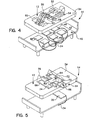
- Patient detection system 10 when used on bed 14 can also include a first sensing element 40 defining a first detection space 52, shown diagrammatically over patient-carrying surface 12 of mattress 34 in Fig. 4, a second sensing element 42 defining a second detection space 54, a third sensing element 44 defining a third detection space 56, a fourth sensing element 46 defining a fourth detection space 58, a fifth sensing element defining a fifth detection space 60, and a sixth sensing element 50 defining a sixth detection space 62.
- Sensing elements 40, 42, 44, 46, 48, 50 are generally identical to sensing elements 20, 22 in principle, however the sizes may vary in order to shape the detection space to conform with the desired shapes of detection spaces 52, 54, 56, 58, 60, 62.
- Sensing elements 40, 42, 44, 46, 48, 50 can be transversely spaced apart in a side-by-side arrangement as shown, for example, for sensing elements 40, 42 in Fig. 4 to provide transversely spaced-apart and independent detection spaces 52, 54.
- Sensing elements 40, 42, 44, 46, 48, 50 can also be longitudinally spaced apart as shown, for example, for sensing elements 42, 46 to provide longitudinally spaced-apart and independent detection spaces 54, 58.
- Each sensing element 40, 42, 44, 46, 48, 50 provides an input signal to control unit 24 in response to the dielectric constant in each respective detection space 52, 54, 56, 58, 60, 62 and control unit 24 provides an output signal indicating the presence or absence of the patient in each detection space 52, 54, 56, 58, 60, 62 in response to the input signals.
- patient detection system 10 can be configured to provide a variety of degrees of detail about the position of the patient relative to patient-carrying surface 12 by varying the number of sensing elements included in patient detection system 10. For example, if patient detection system 10 includes just one sensing element, the care giver will be able to monitor the output signal from control unit 24 and be able to determine whether or not the patient is present on patient-carrying surface 12. However, if patient detection system 10 includes several sensing elements such as sensing elements 40, 42, 44, 46, 48, 50 as shown in Fig. 4, the care giver is provided with greater detail about the position of the patient on patient-carrying surface 12 so that the care giver can monitor the outline of the patient's body and determine the position that the patient is in. If desired, the care giver could monitor, for instance, the amount of time that a patient spends lying on one side or the other.
- Patient detection system 10 can alternatively include a booster element 64 as shown in Fig. 5.
- Booster element 64 includes a sensing plate 66 positioned to lie on top of patient-carrying surface 12 and an electrically conductive member 68 electrically coupled to sensing plate 66.
- Conductive member 68 extends around mattress 34 to a position adjacent conductor plate 30 of sensing element 20.
- Conductive member 68 is preferably positioned within about 1/4 inch (.635 cm) from sensor plate 30 to capacitively couple booster element 64 to conductor plate 30. If desired, conductive member can be positioned under a low dielectric material mattress cover.
- booster element 64 enhances the ability of patient detection system 10 to monitor the patient on patient-carrying surface 12. This enhancement is achieved by enlarging the vertical extent to which the detection space extends above patient-carrying surface 12 and by increasing the sensitivity of the measurement by removing the mass of mattress 34 from the portion of the detection space extending above plate 66.
- plate 66 has a generally rectangular shape
- plate 66 can have almost any shape to provide a detection space having a desired shape.
- plate 66 can be H-shaped as shown in Fig. 5 having a first portion 70 defining a first portion 72 of the detection space, a second portion 74 defining a second portion 76 of the detection space, second portion 74 being spaced apart from first portion 72.
- plate 66 can have a third portion 78 having a first end 80 connected to first portion 70 of plate 66 and a second end 82 longitudinally spaced apart from first end 80 and connected to second portion 74 of plate 66, third portion 78 of plate 66 defining a third portion 84 of the detection space.
- plate 66 can be generally rectangular, H-shaped, or any other desired shape in order to provide a detection space having a corresponding desired shape without exceeding the scope of the invention as presently perceived.
- Electrically conductive member 68 simply capacitively couples plate 66 to conductor plate 30 of sensing element 20.
- member 68 can be made from generally any material and in generally any form suitable for use on the patient-support device.
- member 68 can be a cable connecting plate 66 to plate 30.
- member 68 can be an electrically conducting portion of mattress 34.
- member 68 is a metallized mylar band that encircles mattress 34 without interfering with the movement of mattress 34.
- member 68 it is within the scope of the invention as presently perceived for member 68 to include any electrically conductive member suitable for use on a patient-support device.
- Plate 66 can also be made from a variety of materials that are electrical conductors and it is within the scope of the invention as presently perceived to provide plate 66 made from metallized mylar or any other electrically conductive material suitable for use on or near a patient-carrying surface of a patient-support device. While plate 66 and member 68 can be carried on the outside of mattress 34, it is also within the scope of the invention as presently perceived for plate 66 and member 68 to be built-in to mattress 34 and positioned to lie within the mattress cover (not shown).
- Figs. 1-5 show patient detection system 10 used on bed 14, it is within the scope of the invention as presently perceived to use system 10 on other patient-support devices including stretchers, operating tables, incubators, infant warmers, ambulatory chairs, other hospital chairs, and any other patient-support device upon which a patient might be carried and for which a care giver may wish to monitor the patient.
- patient detection system 10 can be used to monitor the position of a patient on patient-carrying surface 16 of chair 18 as shown, for example, in Figs. 6 and 7.
- Chair 18 includes a seat cushion 86 positioned to lie beneath the patient and a back cushion 88 positioned to lie behind the back of the patient.
- a first sensing element 90 is positioned to lie beneath seat cushion 86 and is configured to define a first detection space 91 over seat cushion 86 adjacent to patient-carrying surface 16 as shown in Fig. 6.
- a second sensing element 92 is positioned to lie behind back cushion 88 and is configured to define a second deduction space 93 in front of back cushion 88 adjacent to patient-carrying surface 16.
- First and second sensing elements 90, 92 are substantially similar to sensing element 20 and each provides an input signal to a control unit (not shown) in response to the presence or absence of the patient in detection space 91, 93, respectively.
- the control unit provides an output signal for use by the care giver indicating the presence or absence of the patient in detection spaces 91, 93 in response to the input signals.
- the output signal can indicate to the care giver both the presence or absence of the patient on patient-carrying surface 16 and whether the patient is sitting upright or is leaning, falling forward, or falling sideways.
- Patient detection system 10 shown in Fig. 7 includes first sensing element 90 defining first detection space 91, second sensing element 92 defining second detection space 93, a third sensing element 94 positioned to lie beneath seat cushion 86 and transversely spaced apart from first sensing element 90, third sensing element 94 defining a third detection space 95 over seat cushion 86 adjacent to patient-carrying surface 16 and transversely spaced apart from first detection space 91, and a fourth sensing element 96 positioned to lie behind back cushion 88 and transversely spaced apart from second sensing element 92, fourth sensing element 96 defining a fourth detection space 97 in front of back cushion 88, adjacent to patient-carrying surface 16, and transversely spaced apart from second detection space 93.
- Sensing elements 90, 92, 94, 96 are substantially similar to sensing element 20 and each sensing element 90, 92, 94, 96 provides an input signal to a control unit (not shown) in response to the presence or absence of the patient in detection space 91, 93, 95, 97, respectively.
- the control unit provides an output signal for use by the care giver indicating the presence or absence of the patient in detection spaces 91, 93, 95, 97 in response to the input signals.
- the output signal can indicate to the care giver both the presence or absence of the patient on patient-carrying surface 16, whether the patient is sitting on both or only one buttock, and whether the patient is sitting in a manner bending their back in an unwanted curvature.
- patient detection system 10 can be used to monitor the presence or absence of a patient on patient-carrying surface 12, 16 of a patient-support device.
- patient detection system 10 can be configured to provide various levels of detail so that, if desired, the output signal from control unit 24 can indicate not only the presence or absence of the patient, but also the position of the patient.
- the sensing elements of patient detection system 10 can be positioned to lie beneath mattress 34 or cushions 86, 88 so that the sensing elements do not interfere with the operation of mattress 34 or cushions 886, 88 or interfere with the patient's comfort.
- the sensing elements can be shaped or the number and positions of the sensing elements can be varied in order to shape the detection space as desired.
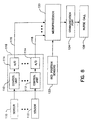
- FIG. 8 Another embodiment of the present invention is illustrated in Fig. 8.
- an array of capacitance sensing elements 110 is provided as discussed above with reference to Figs. 1 - 7. Any desired number of sensing elements 110 can be used to provide a sensing array below the mattress 34.
- each sensing element 110 is coupled to a control unit 112 which provides an analog output signal in which the output voltage varies continuously with change in capacitance from the sensors 110.
- control units 112 are a Model PCA25 available from Gordon Products, Incorporated.
- An output from each control unit 112 is coupled to an analog-to-digital (A/D) convertor 114.
- the separate control units 112 and A/D convertors 114 may be included on a single control board 116.
- Each sensor output from its associated A/D convertor 114 on line 118 is coupled to a microprocessor 120.
- Microprocessor 120 also receives an input from bed position sensors 122 which indicates the position of an articulating bed supporting the mattress.
- An output from microprocessor 120 is coupled to a communication port 124.
- communication port 124 is a COMposerTM on-line kit available from Hill-Rom, Inc.
- Communication port 124 is coupled to a nurse call system 126. Nurse call system 126 includes active communications for communicating with the hospital network or a remote network.
- microprocessor 120 detects variations in capacitances by each sensor 110. Therefore, the microprocessor 120 can calculate a total of all the output values from sensors 110. Microprocessor 120 can also detect each sensor output value. By providing both individual and summed sensor readings, the microprocessor 120 can calibrate itself in response to changes in mattresses, cushions, overlays and other objects added to the patient support surface. Microprocessor 120 can store a new base or reference capacitance reading for comparison at any time. This automatic calibration can be activated with or without the patient located in the bed or chair. Again, the microprocessor 120 detects capacitance readings from all the sensors 110 and then sets a base capacitance value for comparison with the patient located in the bed or chair.
- microprocessor operation will be described with respect to a five sensor system having four corner sensors and one center sensor. This would be the equivalent of Fig. 4 wherein the sensors 44 and 46 are combined as a single sensor in the center of the bed instead of a pair along the sides.
- the total increase of a capacitance on all five of the sensors is 225 units for a 200-pound (440 kg) patient laying centered on the bed.
- the values in the example would vary depending upon the mass of the patient.
- the microprocessor may include a set routine to measure the total mass of the patient on the bed and adjust the threshold limits depending upon the mass. This would be useful, for example, if a patient is closer to 100 pounds (220 kg) or under 50 pounds (110 kg), for children and infants.
- the following definitions are used in the examples.
- the microprocessor 120 can be programmed to recalibrate the system automatically if a head section of the bed is raised or lowered, or if a seat back position in a chair is changed.
- the microprocessor 120 can be recalibrated based upon any movement of the bed or chair, if desired.
- the control system of Fig. 8 can sense changes in the mattress 34 and automatically recalibrate the system to adjust for the mattress changes.
- the Fig. 8 embodiment provides the ability to determine if an active surface, such as a low air loss mattress, has ceased to function properly. For instance, if an air mattress fails, the patient will move much closer to the sensors 110 below the mattress. Microprocessor 120 detects this large increase in capacitance and provides an indication of mattress problems to the nurse or to the manufacturer at a remote location.
- the system of Fig. 8 also permits closer monitoring of patient movement on the mattress. Since the output of sensors 110 varies constantly with capacitance changes, microprocessor 120 can detect subtle movements of a patient within the detection regions of sensors 110. Therefore, the microprocessor 120 can detect shifting of the patient's body even if the patient has not moved out of a sensor detector region.
- the value of the individual sensors may provide a warning that the patient's body has shifted on the bed to such a position as to warn that an exit may be about to occur.
- the first two example by measuring the left or right thigh is for a patient who is positioning themselves to sit on the edge of the lower part of the bed before exiting.
- the last example 5 is when a patient is attempting to exit the foot of the bed.
- the same condition can be used for the head of the bed but is not necessarily practical since there is usually a headboard.
- the system would provide two different modes of enunciation for a bed exit and for a prediction of a bed exit such that nurses and other can determine the urgency of the signal.
- Microprocessor 120 can be programmed to recalibrate the system upon any substantial capacitance changes. In this way, if the system is activated when the patient is not located on the support surface, microprocessor 120 automatically recalibrates the system when the patient lies on the support surface. In another words, the microprocessor 120 detects the large capacitance change when the patient enters the bed or chair and then automatically recalibrates the system based upon the new capacitance values received from sensors 110.
- a bed exit may be detected and the system recalibrated using the following four examples. It should also be noted that if the change is in a positive manner, the system will be recalibrated indicating that a person has entered the bed.
Landscapes
- Health & Medical Sciences (AREA)
- Life Sciences & Earth Sciences (AREA)
- Physics & Mathematics (AREA)
- Heart & Thoracic Surgery (AREA)
- Molecular Biology (AREA)
- Veterinary Medicine (AREA)
- Biophysics (AREA)
- Pathology (AREA)
- Engineering & Computer Science (AREA)
- Biomedical Technology (AREA)
- Public Health (AREA)
- Medical Informatics (AREA)
- General Health & Medical Sciences (AREA)
- Surgery (AREA)
- Animal Behavior & Ethology (AREA)
- Oral & Maxillofacial Surgery (AREA)
- Physiology (AREA)
- Dentistry (AREA)
- Business, Economics & Management (AREA)
- Emergency Management (AREA)
- General Physics & Mathematics (AREA)
- Invalid Beds And Related Equipment (AREA)
- Measuring And Recording Apparatus For Diagnosis (AREA)
Claims (22)
- Dispositif pour détecter et contrôler un corps au voisinage d'une surface de support, le dispositif comprenant:une pluralité de capteurs disposés au voisinage de la surface de support, chaque capteur possédant un signal de sortie qui est variable en réponse à une variation détectée par le capteur qui lui correspond; etun processeur comportant des entrées servant à recevoir les signaux de sortie provenant des capteurs, le processeur contrôlant individuellement les signaux de sortie provenant de chaque capteur pour délivrer un indicateur de changement de position du corps par rapport à la surface de support et rééquilibrer individuellement chacun de la pluralité de capteurs.
- Dispositif selon la revendication 1, dans lequel le processeur réétalonne automatiquement les capteurs lors de la détection d'une variation importante due à un élément déplacé sur la surface de support.
- Dispositif selon la revendication 1, dans lequel la surface du support est situé sur un lit intégré comportant un capteur de position du lit, le capteur de position du lit possédant une sortie couplée au processeur, le processeur réétalonnant automatiquement le système en réponse à des variations de la position du lit.
- Dispositif selon la revendication 1, dans lequel le processeur détecte le moment où un corps se déplace sur la surface de support et le processeur réétalonne automatiquement le système lors de la détection du corps se déplaçant sur la surface de support.
- Dispositif selon la revendication 1, dans lequel le processeur inclut des moyens pour contrôler le déplacement du corps dans une région de détection du capteur
- Dispositif selon la revendication 1, dans lequel le processeur inclut une sortie couplée à un port de communication pour former un système d'appel d'infirmière avec une indication de modification de la position du corps par rapport à la surface de support.
- Dispositif selon la revendication 1, dans lequel le processeur détecte des variations de la surface de support et le processeur réétalonne chacun de la pluralité de capteurs lors de la détection de variations de la surface de support.
- Dispositif selon la revendication 7, dans lequel le processeur inclut une sortie couplée à un port de communication, le processeur transmettant un signal de sortie au moyen du port de communication à un emplacement distant lors de la détection de variations de la surface de support.
- Dispositif selon la revendication 7, dans lequel la surface de support est supportée par un fluide.
- Dispositif selon la revendication 1, dans lequel le processeur réétalonne tous les capteurs dans le cas de petites charges capacitives qui existent pendant une durée prédéterminée, et dans le cas de toutes les variations importantes.
- Dispositif selon la revendication 1, dans lequel le processeur réétalonne tous les capteurs dans le cas d'un ensemble prédéterminé de variations individuelles par rapport à l'étalonnage précédent pour ce capteur.
- Dispositif selon la revendication 11, dans lequel l'ensemble prédéterminé de variations inclut des variations dans le cas où un groupe de capteurs inférieur à la totalité des capteurs, présentent des variations supérieures à une première valeur.
- Dispositif selon la revendication 12, dans lequel l'ensemble prédéterminé de variations inclut des variations dans le cas où un groupe de capteurs inférieur à la totalité des capteurs, possèdent globalement des variations supérieures à une seconde valeur.
- Dispositif selon la revendication 11, dans lequel l'ensemble prédéterminé de variations inclut des variations dans le cas où un groupe de capteurs inférieur à la totalité des capteurs, possèdent globalement des variations supérieures à une seconde valeur.
- Dispositif selon la revendication 1, dans lequel la pluralité de capteurs inclut quatre capteurs de point et un capteur central.
- Procédé pour étalonner une pluralité de capteurs situés au voisinage d'une surface de support dans un dispositif pour détecter et contrôler un corps adjacent à la surface de support, ce capteur délivrant un signal variable; le procédé consistant à:déterminer une valeur initiale d'étalonnage individuellement pour chaque capteur;déterminer une variation du signal de chaque capteur individuellement à partir de sa valeur initiale d'étalonnage; etréétalonner individuellement chacun de la pluralité de capteurs lorsqu'un ensemble prédéterminé de variations des signaux de capteurs individuels ont été déterminées.
- Procédé selon la revendication 16, dans lequel l'ensemble prédéterminé de variations inclut des variations dans le cas où un groupe de capteurs inférieur à la totalité des capteurs, présentent des variations supérieures à une première valeur.
- Procédé selon la revendication 17, selon lequel l'ensemble prédéterminé de variations inclut des variations dans le cas où un groupe de capteurs inférieur à la totalité des capteurs, possèdent globalement des variations supérieures à une seconde valeur.
- Procédé selon la revendication 16, dans lequel l'ensemble prédéterminé de variations inclut des variations dans le cas où un groupe de capteurs inférieur à la totalité des capteurs, possèdent globalement des variations supérieures à une seconde valeur.
- Procédé selon la revendication 16, selon lequel l'ensemble prédéterminé de variations inclut des variations dans le cas où un groupe de capteurs, inférieur à la totalité des capteurs, présentent globalement ou individuellement des variations supérieures à des valeurs prédéterminées; et incluant la détermination d'une catégorie de masse du corps sur la surface de support et l'ajustement des valeurs prédéterminées.
- Procédé pour prédire qu'un patient est sur le point de sortir d'une surface de support moyennant l'utilisation d'une pluralité de capteurs situés au voisinage de la surface de support et un dispositif pour détecter et contrôler un corps adjacent à la surface de support, chaque capteur délivrant un signal variable; le procédé consistant à:déterminer une valeur initiale d'étalonnage individuellement pour chaque capteur;déterminer une variation du signal de ce capteur individuellement à partir de sa valeur initiale d'étalonnage; etprédire une sortie lorsqu'un ensemble prédéterminé de variations des signaux de capteurs individuels ont été déterminés comme indiquant un décalage important du patient sur la surface de support en direction de l'un des bords de la surface de support depuis le dernier étalonnage.
- Procédé selon la revendication 20, comprenant le réétalonnage individuel de chacun de la pluralité de capteurs lorsqu'un ensemble prédéterminé de variations des signaux de capteurs individuels ont été déterminées.
Applications Claiming Priority (3)
| Application Number | Priority Date | Filing Date | Title |
|---|---|---|---|
| US31749 | 1998-02-27 | ||
| US09/031,749 US6067019A (en) | 1996-11-25 | 1998-02-27 | Bed exit detection apparatus |
| PCT/US1999/003071 WO1999044179A1 (fr) | 1998-02-27 | 1999-02-12 | Appareil de detection de sorties de lit |
Publications (2)
| Publication Number | Publication Date |
|---|---|
| EP1060461A1 EP1060461A1 (fr) | 2000-12-20 |
| EP1060461B1 true EP1060461B1 (fr) | 2003-07-30 |
Family
ID=21861191
Family Applications (1)
| Application Number | Title | Priority Date | Filing Date |
|---|---|---|---|
| EP99936137A Expired - Lifetime EP1060461B1 (fr) | 1998-02-27 | 1999-02-12 | Appareil de detection de sorties de lit |
Country Status (6)
| Country | Link |
|---|---|
| US (1) | US6067019A (fr) |
| EP (1) | EP1060461B1 (fr) |
| AU (1) | AU3291699A (fr) |
| CA (1) | CA2320898A1 (fr) |
| DE (1) | DE69909981D1 (fr) |
| WO (1) | WO1999044179A1 (fr) |
Families Citing this family (167)
| Publication number | Priority date | Publication date | Assignee | Title |
|---|---|---|---|---|
| US6212714B1 (en) * | 1995-01-03 | 2001-04-10 | Hill-Rom, Inc. | Hospital bed and mattress having a retracting foot section |
| US6584628B1 (en) | 1995-08-04 | 2003-07-01 | Hill-Rom Services, Inc. | Hospital bed having a rotational therapy device |
| US6778090B2 (en) * | 1996-09-04 | 2004-08-17 | Paul Newham | Modular system for monitoring the presence of a person using a variety of sensing devices |
| FR2788179B1 (fr) * | 1998-12-31 | 2003-06-20 | Cit Alcatel | Satellite a couverture omnidirectionnelle |
| US7834768B2 (en) * | 1999-03-05 | 2010-11-16 | Hill-Rom Services, Inc. | Obstruction detection apparatus for a bed |
| US6208250B1 (en) | 1999-03-05 | 2001-03-27 | Hill-Rom, Inc. | Patient position detection apparatus for a bed |
| US6791460B2 (en) * | 1999-03-05 | 2004-09-14 | Hill-Rom Services, Inc. | Patient position detection apparatus for a bed |
| EP2327385B1 (fr) | 1999-12-29 | 2016-03-16 | Hill-Rom Services, Inc. | Support pour patient avec barrière |
| BR0110594A (pt) | 2000-05-05 | 2004-12-14 | Hill Rom Services Inc | Sistema de monitoramento hospitalar para monitorar corpo de equipe do hospital, e, método de controlar dispositivos em uma localização de paciente |
| BR0110596A (pt) | 2000-05-05 | 2005-08-02 | Hill Rom Services Inc | Sistema de monitoramento de paciente, sistema de computador, sistema para monitorar informação de paciente, aparelho de assistência ao paciente, aparelho de andador, aparelho de assistência ao paciente, e, mostrador para um computador |
| NL1015970C2 (nl) * | 2000-08-21 | 2002-02-25 | Kamp H W Van Der | Werkwijze, inrichting en druksensorkussen voor het detecteren van een foutieve zithouding. |
| US7666151B2 (en) * | 2002-11-20 | 2010-02-23 | Hoana Medical, Inc. | Devices and methods for passive patient monitoring |
| US7656299B2 (en) * | 2007-01-17 | 2010-02-02 | Hoana Medical, Inc. | Bed exit and patient detection system |
| WO2002047942A2 (fr) * | 2000-11-16 | 2002-06-20 | Donnelly Corporation | Systeme de detection d'occupation d'un compartiment de vehicule |
| AU2002303198A1 (en) * | 2001-03-30 | 2002-10-15 | Augmentech, Inc. | Patient incontinence/position monitoring apparatus and method of use thereof |
| CA2461167A1 (fr) | 2001-10-02 | 2003-04-10 | Hill-Rom Services, Inc. | Barriere et alimentation fluidique integrees pour lit d'hopital |
| GB2381110A (en) * | 2001-10-12 | 2003-04-23 | Nightingale Care Beds Ltd | Hospital bed sensors |
| US20040204000A1 (en) * | 2002-05-30 | 2004-10-14 | Aaron Dietrich | Mobile communication device including an array sensor |
| CA2393880A1 (fr) * | 2002-07-17 | 2004-01-17 | Tactex Controls Inc. | Systeme de surveillance pour l'occupant d'un lit |
| US20030010345A1 (en) * | 2002-08-02 | 2003-01-16 | Arthur Koblasz | Patient monitoring devices and methods |
| AU2003259732A1 (en) * | 2002-08-08 | 2004-02-25 | Hill-Rom Services, Inc. | Mattress |
| AU2003274957B2 (en) | 2002-09-06 | 2009-07-16 | Hill-Rom Services, Inc. | Hospital bed |
| US7026940B2 (en) * | 2003-01-02 | 2006-04-11 | Alimed, Inc. | Chair back monitoring device |
| US8512221B2 (en) * | 2003-02-28 | 2013-08-20 | Consolidated Research Of Richmond, Inc. | Automated treatment system for sleep |
| US20040178910A1 (en) * | 2003-03-12 | 2004-09-16 | Tekare Investments Inc. | Patient monitoring system |
| US8125695B2 (en) * | 2003-03-24 | 2012-02-28 | Hewlett-Packard Development Company, L.P. | Imaging system and method |
| US20050012477A1 (en) * | 2003-07-18 | 2005-01-20 | Piana Joseph M. | JBOX and safety zone PIR system |
| US7183930B2 (en) | 2003-07-18 | 2007-02-27 | Intelligent Mechatronic Systems Inc. | Occupant heartbeat detection and monitoring system |
| WO2005022692A2 (fr) | 2003-08-21 | 2005-03-10 | Hill-Rom Services, Inc. | Prise et receptacle possedant un couplage avec fil et sans fil |
| WO2005059486A1 (fr) * | 2003-12-12 | 2005-06-30 | Hill-Rom Services, Inc. | Capteur de force de siege |
| US20050200489A1 (en) * | 2004-02-24 | 2005-09-15 | Sloop David J. | Cushion immersion sensor |
| ATE478645T1 (de) | 2004-04-30 | 2010-09-15 | Hill Rom Services Inc | Patientenunterstützung |
| US7319386B2 (en) | 2004-08-02 | 2008-01-15 | Hill-Rom Services, Inc. | Configurable system for alerting caregivers |
| US7852208B2 (en) | 2004-08-02 | 2010-12-14 | Hill-Rom Services, Inc. | Wireless bed connectivity |
| US7253366B2 (en) * | 2004-08-09 | 2007-08-07 | Hill-Rom Services, Inc. | Exit alarm for a hospital bed triggered by individual load cell weight readings exceeding a predetermined threshold |
| EP1635308A3 (fr) * | 2004-09-08 | 2007-06-06 | Hill-Rom Services, Inc. | Lit ayant un système de contrôle de la position d'un patient |
| US8258932B2 (en) | 2004-11-22 | 2012-09-04 | Donnelly Corporation | Occupant detection system for vehicle |
| CA2505102A1 (fr) * | 2005-03-07 | 2006-09-07 | Hill-Rom Services, Inc. | Pied de lit d'hopital |
| US8698509B2 (en) | 2005-04-27 | 2014-04-15 | Roho, Inc. | Proximity sensor |
| US20070004971A1 (en) * | 2005-05-27 | 2007-01-04 | Hill-Rom Services, Inc. | Caregiver communication system for a home environment |
| US8419660B1 (en) | 2005-06-03 | 2013-04-16 | Primus Medical, Inc. | Patient monitoring system |
| US8121856B2 (en) * | 2005-06-28 | 2012-02-21 | Hill-Rom Services, Inc. | Remote access to healthcare device diagnostic information |
| AU2006268288B2 (en) | 2005-07-08 | 2011-12-08 | Hill-Rom Services, Inc. | Control unit for patient support |
| US7786874B2 (en) * | 2005-12-09 | 2010-08-31 | Samarion, Inc. | Methods for refining patient, staff and visitor profiles used in monitoring quality and performance at a healthcare facility |
| US7911348B2 (en) * | 2005-12-09 | 2011-03-22 | Bee Cave, LLC. | Methods for refining patient, staff and visitor profiles used in monitoring quality and performance at a healthcare facility |
| US20070288263A1 (en) * | 2005-12-09 | 2007-12-13 | Valence Broadband, Inc. | Methods and systems for monitoring quality and performance at a healthcare facility |
| US20080021731A1 (en) * | 2005-12-09 | 2008-01-24 | Valence Broadband, Inc. | Methods and systems for monitoring patient support exiting and initiating response |
| US20070132597A1 (en) * | 2005-12-09 | 2007-06-14 | Valence Broadband, Inc. | Methods and systems for monitoring patient support exiting and initiating response |
| US7761310B2 (en) * | 2005-12-09 | 2010-07-20 | Samarion, Inc. | Methods and systems for monitoring quality and performance at a healthcare facility |
| US8111243B2 (en) | 2006-03-30 | 2012-02-07 | Cypress Semiconductor Corporation | Apparatus and method for recognizing a tap gesture on a touch sensing device |
| US8144125B2 (en) | 2006-03-30 | 2012-03-27 | Cypress Semiconductor Corporation | Apparatus and method for reducing average scan rate to detect a conductive object on a sensing device |
| US8040142B1 (en) | 2006-03-31 | 2011-10-18 | Cypress Semiconductor Corporation | Touch detection techniques for capacitive touch sense systems |
| US8059015B2 (en) | 2006-05-25 | 2011-11-15 | Cypress Semiconductor Corporation | Capacitance sensing matrix for keyboard architecture |
| US8279057B2 (en) * | 2006-06-19 | 2012-10-02 | Showa Denko K.K. | Method of detecting presence of subject on bed |
| US8040321B2 (en) | 2006-07-10 | 2011-10-18 | Cypress Semiconductor Corporation | Touch-sensor with shared capacitive sensors |
| US20080033752A1 (en) * | 2006-08-04 | 2008-02-07 | Valence Broadband, Inc. | Methods and systems for monitoring staff/patient contacts and ratios |
| US8547114B2 (en) | 2006-11-14 | 2013-10-01 | Cypress Semiconductor Corporation | Capacitance to code converter with sigma-delta modulator |
| US7849545B2 (en) * | 2006-11-14 | 2010-12-14 | Hill-Rom Industries Sa | Control system for hospital bed mattress |
| AU2007327114B2 (en) * | 2006-11-29 | 2011-06-02 | Arjo Ip Holding Ab | Patient monitoring system |
| US8058937B2 (en) | 2007-01-30 | 2011-11-15 | Cypress Semiconductor Corporation | Setting a discharge rate and a charge rate of a relaxation oscillator circuit |
| US8144126B2 (en) | 2007-05-07 | 2012-03-27 | Cypress Semiconductor Corporation | Reducing sleep current in a capacitance sensing system |
| US9500686B1 (en) | 2007-06-29 | 2016-11-22 | Cypress Semiconductor Corporation | Capacitance measurement system and methods |
| US8258986B2 (en) | 2007-07-03 | 2012-09-04 | Cypress Semiconductor Corporation | Capacitive-matrix keyboard with multiple touch detection |
| US8169238B1 (en) | 2007-07-03 | 2012-05-01 | Cypress Semiconductor Corporation | Capacitance to frequency converter |
| US8570053B1 (en) | 2007-07-03 | 2013-10-29 | Cypress Semiconductor Corporation | Capacitive field sensor with sigma-delta modulator |
| US7924163B1 (en) * | 2007-08-09 | 2011-04-12 | Smart Caregiver Corporation | Cordless patient pad |
| US7868740B2 (en) | 2007-08-29 | 2011-01-11 | Hill-Rom Services, Inc. | Association of support surfaces and beds |
| US8461968B2 (en) * | 2007-08-29 | 2013-06-11 | Hill-Rom Services, Inc. | Mattress for a hospital bed for use in a healthcare facility and management of same |
| FR2920535B1 (fr) * | 2007-08-30 | 2009-11-27 | Hill Rom Ind Sa | Capteur de detection et de mesure de pressions incorporant au moins une cellule resistive de detection de forces |
| US8082160B2 (en) | 2007-10-26 | 2011-12-20 | Hill-Rom Services, Inc. | System and method for collection and communication of data from multiple patient care devices |
| US7987069B2 (en) * | 2007-11-12 | 2011-07-26 | Bee Cave, Llc | Monitoring patient support exiting and initiating response |
| US8525798B2 (en) | 2008-01-28 | 2013-09-03 | Cypress Semiconductor Corporation | Touch sensing |
| US20090192364A1 (en) * | 2008-01-29 | 2009-07-30 | Voto Andrew M | Infant monitoring system |
| CZ18426U1 (cs) * | 2008-02-15 | 2008-04-07 | Linet, Spol. S R.O. | Polohovací mechanizmus lužka |
| US12251243B2 (en) | 2008-02-22 | 2025-03-18 | Hill-Rom Services, Inc. | Distributed healthcare communication system |
| US8384526B2 (en) | 2008-02-22 | 2013-02-26 | Hill-Rom Services, Inc. | Indicator apparatus for healthcare communication system |
| US8358142B2 (en) | 2008-02-27 | 2013-01-22 | Cypress Semiconductor Corporation | Methods and circuits for measuring mutual and self capacitance |
| US8319505B1 (en) | 2008-10-24 | 2012-11-27 | Cypress Semiconductor Corporation | Methods and circuits for measuring mutual and self capacitance |
| US8102270B2 (en) | 2008-04-25 | 2012-01-24 | Kap Medical | Patient position apparatus and method |
| US9351892B2 (en) | 2008-04-25 | 2016-05-31 | Kap Medical | Percussion therapy system, apparatus and method |
| US9179863B2 (en) * | 2008-09-10 | 2015-11-10 | Koninklijke Philips N.V. | Bed exit warning system |
| US8593284B2 (en) | 2008-09-19 | 2013-11-26 | Hill-Rom Services, Inc. | System and method for reporting status of a bed |
| US8321174B1 (en) | 2008-09-26 | 2012-11-27 | Cypress Semiconductor Corporation | System and method to measure capacitance of capacitive sensor array |
| EP2346404A4 (fr) * | 2008-10-24 | 2013-12-18 | Hill Rom Services Inc | Appareils d'assistance et de surveillance d'une personne |
| US8081083B2 (en) * | 2009-03-06 | 2011-12-20 | Telehealth Sensors Llc | Mattress or chair sensor envelope with an antenna |
| FR2946427B1 (fr) * | 2009-06-05 | 2011-09-30 | Hill Rom Ind Sa | Capteur de pression comprenant une cellule capacitive et dispositif de support en comportant. |
| US8723827B2 (en) | 2009-07-28 | 2014-05-13 | Cypress Semiconductor Corporation | Predictive touch surface scanning |
| US8525679B2 (en) * | 2009-09-18 | 2013-09-03 | Hill-Rom Services, Inc. | Sensor control for apparatuses for supporting and monitoring a person |
| US20110301432A1 (en) | 2010-06-07 | 2011-12-08 | Riley Carl W | Apparatus for supporting and monitoring a person |
| US8779924B2 (en) | 2010-02-19 | 2014-07-15 | Hill-Rom Services, Inc. | Nurse call system with additional status board |
| CN102892354A (zh) | 2010-03-12 | 2013-01-23 | 茵汉斯瑟菲斯动力公司 | 用于从压力感测系统中的压力传感器快速收集数据的系统和方法 |
| US8844073B2 (en) | 2010-06-07 | 2014-09-30 | Hill-Rom Services, Inc. | Apparatus for supporting and monitoring a person |
| US8620625B2 (en) | 2010-07-30 | 2013-12-31 | Hill-Rom Services, Inc. | Above bed sensor |
| US8717181B2 (en) | 2010-07-29 | 2014-05-06 | Hill-Rom Services, Inc. | Bed exit alert silence with automatic re-enable |
| US8432287B2 (en) | 2010-07-30 | 2013-04-30 | Hill-Rom Services, Inc. | Apparatus for controlling room lighting in response to bed exit |
| US8723677B1 (en) | 2010-10-20 | 2014-05-13 | Masimo Corporation | Patient safety system with automatically adjusting bed |
| US8907287B2 (en) | 2010-12-01 | 2014-12-09 | Hill-Rom Services, Inc. | Patient monitoring system |
| US8266742B2 (en) | 2010-12-06 | 2012-09-18 | Hill-Rom Services, Inc. | Biometric bed configuration |
| US9013313B2 (en) * | 2011-01-18 | 2015-04-21 | Alan Paine | Bed pre-exit patient monitor |
| US20120259245A1 (en) | 2011-04-08 | 2012-10-11 | Receveur Timothy J | Person support apparatus with activity and mobility sensing |
| US9295600B2 (en) | 2011-04-08 | 2016-03-29 | Hill-Rom Services, Inc. | Person support apparatus with activity and mobility sensing |
| BR112014000766A2 (pt) | 2011-07-13 | 2017-02-14 | Enhanced Surface Dynamics Inc | método para fabricação de a esteira de sensibilidade de pressão; e método para testar uma esteira de sensibilidade de pressão |
| WO2013071246A1 (fr) | 2011-11-11 | 2013-05-16 | Hill-Rom Services, Inc. | Appareil de support de personne |
| US9337831B2 (en) | 2012-01-09 | 2016-05-10 | L&P Property Management Company | Capacitive wire sensing for furniture |
| US10197259B2 (en) | 2012-01-09 | 2019-02-05 | L&P Property Management Company | Standalone capacitance sensor for furniture |
| US9089223B2 (en) | 2012-01-09 | 2015-07-28 | L&P Property Management Company | Occupancy detection for furniture |
| US10197609B2 (en) | 2012-01-09 | 2019-02-05 | L&P Property Management Company | Capacitive sensing for automated furniture |
| US9528812B2 (en) * | 2012-01-09 | 2016-12-27 | L&P Property Management Company | Capacitive wire sensing for furniture |
| US10048662B2 (en) | 2012-01-09 | 2018-08-14 | L&P Property Management Company | Characterization and calibration for automated furniture |
| US10334960B2 (en) | 2012-01-09 | 2019-07-02 | L&P Property Management Company | Drop-in occupancy detection component for furniture |
| US9488746B2 (en) | 2012-01-09 | 2016-11-08 | L&P Property Management Company | Capacitive sensing for automated recliner furniture |
| US10555615B2 (en) | 2012-01-09 | 2020-02-11 | L&P Property Management Company | Calibration of detection features for automated furniture |
| US9295390B2 (en) | 2012-03-02 | 2016-03-29 | Hill-Rom Services, Inc. | Facial recognition based monitoring systems and methods |
| US9700247B2 (en) | 2012-03-21 | 2017-07-11 | Hill-Rom Services, Inc. | Patient support apparatus with redundant identity verification |
| US9411934B2 (en) | 2012-05-08 | 2016-08-09 | Hill-Rom Services, Inc. | In-room alarm configuration of nurse call system |
| EP2667313B1 (fr) | 2012-05-22 | 2021-08-04 | Hill-Rom Services, Inc. | Système de détection, évaluation et réponse aux conditions indésirables |
| JP6261879B2 (ja) | 2012-05-22 | 2018-01-17 | ヒル−ロム サービシズ,インコーポレイテッド | 使用者離床予測システム、方法および装置 |
| US9358168B2 (en) | 2012-09-04 | 2016-06-07 | Hill-Rom Services, Inc. | Patient position detection for patient support surface |
| US9468307B2 (en) | 2012-09-05 | 2016-10-18 | Stryker Corporation | Inflatable mattress and control methods |
| US9314159B2 (en) | 2012-09-24 | 2016-04-19 | Physio-Control, Inc. | Patient monitoring device with remote alert |
| US9383250B2 (en) * | 2012-11-05 | 2016-07-05 | Hill-Rom Services, Inc. | Automatic weight offset calculation for bed scale systems |
| WO2014072798A2 (fr) * | 2012-11-08 | 2014-05-15 | Rondish Co., Ltd | Bloc de surveillance de lit |
| US10292605B2 (en) | 2012-11-15 | 2019-05-21 | Hill-Rom Services, Inc. | Bed load cell based physiological sensing systems and methods |
| EP2948783B1 (fr) * | 2013-01-24 | 2021-04-14 | L&P Property Management Company | Détection par fil capacitif pour mobilier |
| US9333136B2 (en) | 2013-02-28 | 2016-05-10 | Hill-Rom Services, Inc. | Sensors in a mattress cover |
| US9655798B2 (en) | 2013-03-14 | 2017-05-23 | Hill-Rom Services, Inc. | Multi-alert lights for hospital bed |
| EP2968045A4 (fr) * | 2013-03-15 | 2016-11-16 | Stryker Corp | Appareil de support de patient ayant des capteurs d'informations de patient |
| EP2981211A4 (fr) * | 2013-04-01 | 2016-11-16 | L & P Property Management Co | Détection d'occupation de meuble |
| US9830424B2 (en) | 2013-09-18 | 2017-11-28 | Hill-Rom Services, Inc. | Bed/room/patient association systems and methods |
| CN104627030A (zh) | 2013-11-13 | 2015-05-20 | 光宝科技股份有限公司 | 载具安全系统及应用于其上的安全侦测与处理方法 |
| EP2873400B1 (fr) | 2013-11-18 | 2018-01-31 | Völker GmbH | Appareil de support de personne |
| US9005101B1 (en) | 2014-01-04 | 2015-04-14 | Julian Van Erlach | Smart surface biological sensor and therapy administration |
| AU2014380163B2 (en) | 2014-01-29 | 2018-10-04 | Roho, Inc. | Cushion immersion sensor |
| US9724258B2 (en) * | 2014-03-31 | 2017-08-08 | General Electric Company | User control system and method for infant care apparatus |
| US9311804B2 (en) | 2014-04-11 | 2016-04-12 | Hill-Rom Services, Inc. | Patient-need prediction system |
| EP2995242B1 (fr) | 2014-09-11 | 2023-11-15 | Hill-Rom S.A.S. | Appareil de support de patient |
| US10786408B2 (en) | 2014-10-17 | 2020-09-29 | Stryker Corporation | Person support apparatuses with exit detection systems |
| US9405120B2 (en) | 2014-11-19 | 2016-08-02 | Magna Electronics Solutions Gmbh | Head-up display and vehicle using the same |
| US20160235610A1 (en) | 2015-02-18 | 2016-08-18 | Allen Medical Systems, Inc. | Using patient monitoring data to control a person support apparatus |
| WO2016146889A1 (fr) * | 2015-03-13 | 2016-09-22 | Emfit Oy | Matelas permettant à une personne de se reposer ou de dormir |
| US10045715B2 (en) | 2015-04-27 | 2018-08-14 | Hill-Rom Services, Inc. | Self-compensating bed scale system for removable components |
| US10054479B2 (en) | 2015-05-05 | 2018-08-21 | Hill-Rom Services, Inc. | Bed with automatic weight offset detection and modification |
| US12507948B2 (en) | 2015-06-30 | 2025-12-30 | University Of South Florida | System and method for attentional multimodal pain estimation |
| EP3189823B1 (fr) | 2016-01-07 | 2020-12-16 | Hill-Rom Services, Inc. | Surveillance de la durée de vie utile d'une surface de support |
| MX2018009512A (es) * | 2016-02-08 | 2018-09-05 | L & P Property Management Co | Deteccion capacitiva para muebles automatizados. |
| EP3205268B1 (fr) * | 2016-02-11 | 2023-10-25 | Hill-Rom Services, Inc. | Lit d'hôpital |
| EP3231356B1 (fr) | 2016-04-11 | 2024-09-25 | Hill-Rom Services, Inc. | Capteur capacitif destiné à la surveillance respiratoire |
| WO2018080971A1 (fr) * | 2016-10-24 | 2018-05-03 | Hill-Rom Services, Inc. | Système de prédiction de sortie à partir d'un support d'occupant |
| US11083418B2 (en) | 2016-11-04 | 2021-08-10 | Wellsense, Inc. | Patient visualization system |
| US10492734B2 (en) | 2016-11-04 | 2019-12-03 | Wellsense, Inc. | Patient visualization system |
| US11172892B2 (en) | 2017-01-04 | 2021-11-16 | Hill-Rom Services, Inc. | Patient support apparatus having vital signs monitoring and alerting |
| US12465295B2 (en) | 2017-01-04 | 2025-11-11 | Hill-Rom Services, Inc. | Patient support apparatus having vital signs monitoring and alerting |
| FR3062207B1 (fr) * | 2017-01-23 | 2019-03-22 | Fogale Nanotech | Couche compressible avec capteurs capacitifs |
| US11074802B2 (en) | 2017-02-02 | 2021-07-27 | Hill-Rom Services, Inc. | Method and apparatus for automatic event prediction |
| US11123014B2 (en) | 2017-03-21 | 2021-09-21 | Stryker Corporation | Systems and methods for ambient energy powered physiological parameter monitoring |
| US10497247B2 (en) | 2017-11-20 | 2019-12-03 | Umano Medical Inc. | Hospital bed exit detection, height limiting and tare weight recalibrating systems and methods |
| US11202604B2 (en) | 2018-04-19 | 2021-12-21 | University Of South Florida | Comprehensive and context-sensitive neonatal pain assessment system and methods using multiple modalities |
| WO2019204700A1 (fr) | 2018-04-19 | 2019-10-24 | University Of South Florida | Identification de douleur néonatale à partir d'expressions faciales néonatales |
| US11051086B1 (en) | 2018-07-11 | 2021-06-29 | University Of South Florida | Systems and methods for at-home monitoring of an individual |
| US10916119B2 (en) | 2018-12-27 | 2021-02-09 | Hill-Rom Services, Inc. | System and method for caregiver availability determination |
| US11911325B2 (en) | 2019-02-26 | 2024-02-27 | Hill-Rom Services, Inc. | Bed interface for manual location |
| AU2020204399B2 (en) | 2019-08-20 | 2025-11-27 | Stryker Corporation | Person support apparatus with adjustable exit detection zones |
| US12527524B2 (en) | 2020-03-30 | 2026-01-20 | Hill-Rom Services, Inc. | Bed-based ballistocardiogram apparatus and method |
| US12279999B2 (en) | 2021-01-22 | 2025-04-22 | Hill-Rom Services, Inc. | Wireless configuration and authorization of a wall unit that pairs with a medical device |
| US12186241B2 (en) | 2021-01-22 | 2025-01-07 | Hill-Rom Services, Inc. | Time-based wireless pairing between a medical device and a wall unit |
| PT118051A (pt) * | 2022-06-15 | 2023-12-15 | Sensomatt Lda | Um dispositivo sensor inteligente com quatro células de sensor cilíndricas e uma unidade eletrónica |
| US20250047520A1 (en) * | 2023-07-31 | 2025-02-06 | Hill-Rom Services, Inc. | Can bus interconnection circuit |
Family Cites Families (41)
| Publication number | Priority date | Publication date | Assignee | Title |
|---|---|---|---|---|
| US3533095A (en) * | 1969-01-02 | 1970-10-06 | James Collins | Inflatable pad with alarm |
| US3752144A (en) * | 1971-07-23 | 1973-08-14 | K Weigle | Muscular evaluation method and testing apparatus |
| US3890958A (en) * | 1974-04-08 | 1975-06-24 | Moog Automotive Inc | Physiological diagnostic apparatus |
| US4175263A (en) * | 1977-04-25 | 1979-11-20 | Triad & Associates, Inc. | Technique for monitoring whether an individual is moving from a particular area |
| US4320766A (en) * | 1979-03-13 | 1982-03-23 | Instrumentarium Oy | Apparatus in medicine for the monitoring and or recording of the body movements of a person on a bed, for instance of a patient |
| US4474185A (en) * | 1982-05-12 | 1984-10-02 | Diamond Donald A | Body movement detector |
| US4539560A (en) * | 1982-12-10 | 1985-09-03 | Hill-Rom Company, Inc. | Bed departure detection system |
| US4633237A (en) * | 1984-07-11 | 1986-12-30 | Kenneth A. Tucknott | Patient bed alarm system |
| US4796013A (en) * | 1985-10-18 | 1989-01-03 | Aisin Seiki Kabushiki Kaisha | Capacitive occupancy detector apparatus |
| AU2481088A (en) * | 1987-09-16 | 1989-04-17 | Simpson, Roland Bruce | Proximity sensor |
| US4953244A (en) * | 1987-12-28 | 1990-09-04 | Hill-Rom Company, Inc. | Hospital bed for weighing patients |
| US4934468A (en) * | 1987-12-28 | 1990-06-19 | Hill-Rom Company, Inc. | Hospital bed for weighing patients |
| US4951032A (en) * | 1989-06-15 | 1990-08-21 | Langsam Andrew S | Crib rail safety annunciator |
| US5448996A (en) * | 1990-02-02 | 1995-09-12 | Lifesigns, Inc. | Patient monitor sheets |
| JPH03233391A (ja) * | 1990-02-08 | 1991-10-17 | Aisin Seiki Co Ltd | 人員検出装置 |
| FI915228A7 (fi) * | 1990-03-09 | 1991-11-06 | Matsushita Electric Industrial Co Ltd | Unenhavaitsemislaite |
| US5170364A (en) * | 1990-12-06 | 1992-12-08 | Biomechanics Corporation Of America | Feedback system for load bearing surface |
| US5184122A (en) | 1991-01-31 | 1993-02-02 | Johnson Service Company | Facility management system with improved return to automatic control |
| US5140309A (en) * | 1991-03-12 | 1992-08-18 | Gaymar Industries, Inc. | Bed signalling apparatus |
| US5144284A (en) * | 1991-05-22 | 1992-09-01 | Hammett Rawlings H | Patient-monitoring bed covering device |
| US5253656A (en) * | 1991-05-23 | 1993-10-19 | Rincoe Richard G | Apparatus and method for monitoring contact pressure between body parts and contact surfaces |
| US5184112A (en) * | 1991-09-11 | 1993-02-02 | Gaymar Industries, Inc. | Bed patient position monitor |
| US5276432A (en) * | 1992-01-15 | 1994-01-04 | Stryker Corporation | Patient exit detection mechanism for hospital bed |
| US5459452A (en) * | 1992-03-30 | 1995-10-17 | Deponte; Dominic A. | Wet bed and patient wander alarm system with snap-on and magnet transmitter assembly |
| JPH05297149A (ja) * | 1992-04-23 | 1993-11-12 | Aisin Seiki Co Ltd | 誘電体検出装置 |
| US5235319A (en) * | 1992-05-11 | 1993-08-10 | Joseph C. Hill | Patient monitoring system |
| US5353012A (en) * | 1992-05-14 | 1994-10-04 | Bartronix, Inc. | Bed position and activity sensing apparatus |
| US5410297A (en) * | 1993-01-11 | 1995-04-25 | R. F. Technologies, Inc. | Capacitive patient presence monitor |
| US5393935A (en) * | 1993-07-09 | 1995-02-28 | Ch Administration, Inc. | Portable scale |
| US5699038A (en) * | 1993-07-12 | 1997-12-16 | Hill-Rom, Inc. | Bed status information system for hospital beds |
| US5543777A (en) * | 1993-07-12 | 1996-08-06 | Detection Systems, Inc. | Smoke detector with individual sensitivity calibration and monitoring |
| US5791344A (en) * | 1993-11-19 | 1998-08-11 | Alfred E. Mann Foundation For Scientific Research | Patient monitoring system |
| US5633627A (en) * | 1994-09-23 | 1997-05-27 | Bed-Check Corporation | Hard-wired monitoring system for hospital bed or short term care patients |
| US5602734A (en) * | 1994-09-23 | 1997-02-11 | Advanced Safety Concepts, Inc. | Automobile air bag systems |
| US5802479A (en) * | 1994-09-23 | 1998-09-01 | Advanced Safety Concepts, Inc. | Motor vehicle occupant sensing systems |
| US5519380A (en) | 1994-11-04 | 1996-05-21 | Guardian Electronics, Inc. | Personal monitoring system and method |
| US5471198A (en) * | 1994-11-22 | 1995-11-28 | Newham; Paul | Device for monitoring the presence of a person using a reflective energy beam |
| US5697366A (en) * | 1995-01-27 | 1997-12-16 | Optical Sensors Incorporated | In situ calibration system for sensors located in a physiologic line |
| JPH08335847A (ja) * | 1995-06-08 | 1996-12-17 | Murata Mfg Co Ltd | 厚みすべり振動型2重モードフィルタ |
| US5800480A (en) * | 1996-08-30 | 1998-09-01 | Augustine Medical, Inc. | Support apparatus with a plurality of thermal zones providing localized cooling |
| US5808552A (en) * | 1996-11-25 | 1998-09-15 | Hill-Rom, Inc. | Patient detection system for a patient-support device |
-
1998
- 1998-02-27 US US09/031,749 patent/US6067019A/en not_active Expired - Lifetime
-
1999
- 1999-02-12 EP EP99936137A patent/EP1060461B1/fr not_active Expired - Lifetime
- 1999-02-12 AU AU32916/99A patent/AU3291699A/en not_active Abandoned
- 1999-02-12 WO PCT/US1999/003071 patent/WO1999044179A1/fr not_active Ceased
- 1999-02-12 CA CA002320898A patent/CA2320898A1/fr not_active Abandoned
- 1999-02-12 DE DE69909981T patent/DE69909981D1/de not_active Expired - Lifetime
Also Published As
| Publication number | Publication date |
|---|---|
| EP1060461A1 (fr) | 2000-12-20 |
| WO1999044179A1 (fr) | 1999-09-02 |
| AU3291699A (en) | 1999-09-15 |
| DE69909981D1 (de) | 2003-09-04 |
| CA2320898A1 (fr) | 1999-09-02 |
| US6067019A (en) | 2000-05-23 |
Similar Documents
| Publication | Publication Date | Title |
|---|---|---|
| EP1060461B1 (fr) | Appareil de detection de sorties de lit | |
| EP0844597B1 (fr) | Système de détection de patient pour un dispositif de support de patient | |
| US10276021B2 (en) | Patient support apparatus having articulated mattress support deck with load sensors | |
| US6791460B2 (en) | Patient position detection apparatus for a bed | |
| US7557718B2 (en) | Lack of patient movement monitor and method | |
| EP0853918B1 (fr) | Surveillance des mouvements d'un patient | |
| US8830070B2 (en) | Hospital bed having alert light | |
| US7656299B2 (en) | Bed exit and patient detection system | |
| US6320510B2 (en) | Bed control apparatus | |
| US11457848B2 (en) | System and method for determining incontinence device replacement interval | |
| EP3231407B1 (fr) | Dispositif de support comportant des éléments de détection | |
| JP2008206867A (ja) | 寝返り促進装置 | |
| WO2004073577A1 (fr) | Coussin | |
| WO2026022313A1 (fr) | Dispositif de détection de la position d'une personne sur un lit |
Legal Events
| Date | Code | Title | Description |
|---|---|---|---|
| PUAI | Public reference made under article 153(3) epc to a published international application that has entered the european phase |
Free format text: ORIGINAL CODE: 0009012 |
|
| 17P | Request for examination filed |
Effective date: 20000822 |
|
| AK | Designated contracting states |
Kind code of ref document: A1 Designated state(s): CH DE FR GB IT LI NL |
|
| GRAH | Despatch of communication of intention to grant a patent |
Free format text: ORIGINAL CODE: EPIDOS IGRA |
|
| GRAH | Despatch of communication of intention to grant a patent |
Free format text: ORIGINAL CODE: EPIDOS IGRA |
|
| GRAA | (expected) grant |
Free format text: ORIGINAL CODE: 0009210 |
|
| AK | Designated contracting states |
Designated state(s): CH DE FR GB IT LI NL |
|
| PG25 | Lapsed in a contracting state [announced via postgrant information from national office to epo] |
Ref country code: NL Free format text: LAPSE BECAUSE OF FAILURE TO SUBMIT A TRANSLATION OF THE DESCRIPTION OR TO PAY THE FEE WITHIN THE PRESCRIBED TIME-LIMIT Effective date: 20030730 Ref country code: LI Free format text: LAPSE BECAUSE OF FAILURE TO SUBMIT A TRANSLATION OF THE DESCRIPTION OR TO PAY THE FEE WITHIN THE PRESCRIBED TIME-LIMIT Effective date: 20030730 Ref country code: IT Free format text: LAPSE BECAUSE OF FAILURE TO SUBMIT A TRANSLATION OF THE DESCRIPTION OR TO PAY THE FEE WITHIN THE PRESCRIBED TIME-LIMIT;WARNING: LAPSES OF ITALIAN PATENTS WITH EFFECTIVE DATE BEFORE 2007 MAY HAVE OCCURRED AT ANY TIME BEFORE 2007. THE CORRECT EFFECTIVE DATE MAY BE DIFFERENT FROM THE ONE RECORDED. Effective date: 20030730 Ref country code: FR Free format text: LAPSE BECAUSE OF FAILURE TO SUBMIT A TRANSLATION OF THE DESCRIPTION OR TO PAY THE FEE WITHIN THE PRESCRIBED TIME-LIMIT Effective date: 20030730 Ref country code: CH Free format text: LAPSE BECAUSE OF FAILURE TO SUBMIT A TRANSLATION OF THE DESCRIPTION OR TO PAY THE FEE WITHIN THE PRESCRIBED TIME-LIMIT Effective date: 20030730 |
|
| REG | Reference to a national code |
Ref country code: GB Ref legal event code: FG4D |
|
| REG | Reference to a national code |
Ref country code: CH Ref legal event code: EP |
|
| REF | Corresponds to: |
Ref document number: 69909981 Country of ref document: DE Date of ref document: 20030904 Kind code of ref document: P |
|
| PG25 | Lapsed in a contracting state [announced via postgrant information from national office to epo] |
Ref country code: DE Free format text: LAPSE BECAUSE OF FAILURE TO SUBMIT A TRANSLATION OF THE DESCRIPTION OR TO PAY THE FEE WITHIN THE PRESCRIBED TIME-LIMIT Effective date: 20031031 |
|
| NLV1 | Nl: lapsed or annulled due to failure to fulfill the requirements of art. 29p and 29m of the patents act | ||
| PG25 | Lapsed in a contracting state [announced via postgrant information from national office to epo] |
Ref country code: GB Free format text: LAPSE BECAUSE OF NON-PAYMENT OF DUE FEES Effective date: 20040212 |
|
| REG | Reference to a national code |
Ref country code: CH Ref legal event code: PL |
|
| PLBE | No opposition filed within time limit |
Free format text: ORIGINAL CODE: 0009261 |
|
| STAA | Information on the status of an ep patent application or granted ep patent |
Free format text: STATUS: NO OPPOSITION FILED WITHIN TIME LIMIT |
|
| 26N | No opposition filed |
Effective date: 20040504 |
|
| EN | Fr: translation not filed | ||
| GBPC | Gb: european patent ceased through non-payment of renewal fee |
Effective date: 20040212 |