EP1067192A1 - Bactéries corynéformes produisant L-lysine et procédés pour la production de L-lysine - Google Patents
Bactéries corynéformes produisant L-lysine et procédés pour la production de L-lysine Download PDFInfo
- Publication number
- EP1067192A1 EP1067192A1 EP00114501A EP00114501A EP1067192A1 EP 1067192 A1 EP1067192 A1 EP 1067192A1 EP 00114501 A EP00114501 A EP 00114501A EP 00114501 A EP00114501 A EP 00114501A EP 1067192 A1 EP1067192 A1 EP 1067192A1
- Authority
- EP
- European Patent Office
- Prior art keywords
- gene
- dapa
- lysine
- amplified
- dapb
- Prior art date
- Legal status (The legal status is an assumption and is not a legal conclusion. Google has not performed a legal analysis and makes no representation as to the accuracy of the status listed.)
- Granted
Links
Images

Classifications
-
- C—CHEMISTRY; METALLURGY
- C12—BIOCHEMISTRY; BEER; SPIRITS; WINE; VINEGAR; MICROBIOLOGY; ENZYMOLOGY; MUTATION OR GENETIC ENGINEERING
- C12N—MICROORGANISMS OR ENZYMES; COMPOSITIONS THEREOF; PROPAGATING, PRESERVING, OR MAINTAINING MICROORGANISMS; MUTATION OR GENETIC ENGINEERING; CULTURE MEDIA
- C12N1/00—Microorganisms; Compositions thereof; Processes of propagating, maintaining or preserving microorganisms or compositions thereof; Processes of preparing or isolating a composition containing a microorganism; Culture media therefor
- C12N1/20—Bacteria; Culture media therefor
-
- C—CHEMISTRY; METALLURGY
- C07—ORGANIC CHEMISTRY
- C07K—PEPTIDES
- C07K14/00—Peptides having more than 20 amino acids; Gastrins; Somatostatins; Melanotropins; Derivatives thereof
- C07K14/195—Peptides having more than 20 amino acids; Gastrins; Somatostatins; Melanotropins; Derivatives thereof from bacteria
- C07K14/34—Peptides having more than 20 amino acids; Gastrins; Somatostatins; Melanotropins; Derivatives thereof from bacteria from Corynebacterium (G)
-
- C—CHEMISTRY; METALLURGY
- C12—BIOCHEMISTRY; BEER; SPIRITS; WINE; VINEGAR; MICROBIOLOGY; ENZYMOLOGY; MUTATION OR GENETIC ENGINEERING
- C12N—MICROORGANISMS OR ENZYMES; COMPOSITIONS THEREOF; PROPAGATING, PRESERVING, OR MAINTAINING MICROORGANISMS; MUTATION OR GENETIC ENGINEERING; CULTURE MEDIA
- C12N15/00—Mutation or genetic engineering; DNA or RNA concerning genetic engineering, vectors, e.g. plasmids, or their isolation, preparation or purification; Use of hosts therefor
- C12N15/09—Recombinant DNA-technology
- C12N15/11—DNA or RNA fragments; Modified forms thereof; Non-coding nucleic acids having a biological activity
- C12N15/52—Genes encoding for enzymes or proenzymes
-
- C—CHEMISTRY; METALLURGY
- C12—BIOCHEMISTRY; BEER; SPIRITS; WINE; VINEGAR; MICROBIOLOGY; ENZYMOLOGY; MUTATION OR GENETIC ENGINEERING
- C12P—FERMENTATION OR ENZYME-USING PROCESSES TO SYNTHESISE A DESIRED CHEMICAL COMPOUND OR COMPOSITION OR TO SEPARATE OPTICAL ISOMERS FROM A RACEMIC MIXTURE
- C12P13/00—Preparation of nitrogen-containing organic compounds
- C12P13/04—Alpha- or beta- amino acids
- C12P13/08—Lysine; Diaminopimelic acid; Threonine; Valine
Definitions
- the invention relates to L-lysine producing strains coryneform bacteria with enhanced lysE gene (lysine export carrier gene) in which additional genes are selected from the group dapA gene (dihydrodipicolinate synthase gene), lysC gene (aspartate kinase gene), dapB gene (Dihydrodipicolinate reductase gene) or pyc gene, but especially the dapA gene and the lysC gene (aspartate kinase gene) are enhanced, especially overexpressed and a process for producing L-lysine.
- dapA gene dihydrodipicolinate synthase gene
- lysC gene aspartate kinase gene
- dapB gene Dihydrodipicolinate reductase gene
- pyc gene pyc gene
- L-lysine is a commercially significant L-amino acid that especially as a feed additive in animal nutrition Application.
- the demand has increased in recent years constantly on.
- L-lysine becomes fermentative with strains producing L-lysine coryneform bacteria, in particular with Corynebacterium glutamicum produced. Because of the great importance of this Product is constantly improving Manufacturing process worked. Process improvements can fermentation measures such as Emotion and Supply of oxygen, or the composition of the Culture media such as the sugar concentration during the Fermentation, or processing to product form through e.g. ion exchange chromatography or intrinsic Performance characteristics of the microorganism itself concern.
- EP-A-0 088 166 reports on the increase in performance after amplification of a resistance to aminoethylcysteine-mediating DNA fragment.
- EP-B-0 387 527 describes the increase in performance after amplification one for one resistant lysC allele encoding Aspart kinase is reported.
- EP-B-0 197 335 reports on the increase in performance after amplification of the dapA gene coding for the dihydrodipicolinate synthase.
- EP-A-0 219 027 reports on the increase in performance after amplification of the asd gene coding for aspartate semialdehyde dehydrogenase is reported.Pisabarro et al. (Journal of Bacteriology, 175 (9), 2743-2749, (1993)) describe the dapB gene which codes for the dihydrodipicolinate reductase.
- EP-A-0 841 395 describes in particular the increase in performance with simultaneous amplification of one for one feed back "resistant coding lysC allele and the dapB gene reported; further improvements were achieved by additional amplification of the genes dapB, lysA and ddh.
- EP-A-0 854 189 describes the increase in performance while simultaneously amplifying one for one feed back "resistant coding lysC allele, the dapA gene, the dapB gene, the lysA gene and the aspC gene.
- EP-A-0 857 784 describes in particular the increase in performance while simultaneously amplifying one for one feed back resistant coding lysC allele and the lysA gene reported; a further improvement could be achieved by additional amplification of the ppc gene.
- the object of the invention is with new Measures improved L-lysine-producing strains to provide coryneform bacteria.
- L-lysine is a commercially significant L-amino acid that especially as a feed additive in animal nutrition Application.
- L-lysine or lysine is mentioned in the text below, not only the base but also the base corresponding salts such as Lysine hydrochloride or Lysine sulfate meant.
- the invention relates to L-lysine-producing strains coryneform bacteria with enhanced lysE gene (lysine export carrier gene), which are characterized in that they also contain genes selected from the group dapA gene (dihydrodipicolinate synthase gene), lysC gene (Aspartate kinase gene), dapB gene (dihydrodipicolinate reductase gene) and pyc gene (pyruvate carboxylase gene) but especially the dapA and lysC genes, which are individually or amplified together, preferably overexpressed.
- dapA gene dihydrodipicolinate synthase gene
- lysC gene Aspartate kinase gene
- dapB gene dihydrodipicolinate reductase gene
- pyc gene pyruvate carboxylase gene
- the new DNA sequence was found, the upstream (5 'region) of the dapB gene, which is the -35 region of the dapB promoter and beneficial for Expression of the dapB gene is. It is as SEQ-ID-No. 1 shown.
- the invention also relates to mutations MC20 or MA16 of the dapA promoter shown in SEQ-ID-No. 5 and SEQ-ID-No. 6, filed under DSM 12868 or DSM 12867.
- Another object of the invention are L-lysine producing strains of coryneform bacteria with enhanced lysE gene, which are characterized in that in addition simultaneously amplifies the dapA and dapB genes, especially overexpressed.
- the invention also relates to L-lysine producing strains of coryneform bacteria with enhanced lysE gene characterized in that in addition At the same time, the dapA and lysC genes are particularly enhanced be overexpressed.
- Enhancement in this context describes the increase in the intracellular activity of one or more enzymes in a microorganism which are encoded by the corresponding DNA by increasing the copy number of the gene (s), using a strong promoter or using a gene which is responsible for a the corresponding enzyme with a high activity is encoded and, if necessary, these measures are combined.
- a process for the production of L-lysine is also claimed by fermentation of these coryneform bacteria.
- the additional enhanced expression of the dapB gene, or the pyc gene, or in particular an additional enhanced expression of one for one feed back "resistant aspartate kinase encoding lysC allele, or in particular an additionally enhanced expression of the dapA gene improves the production of L-lysine.
- the inventors further found that given the Overexpression of the lysE gene the simultaneous, in addition enhanced expression of the dapA and dapB genes further Benefits for the production of L-lysine.
- an enhancement increase e.g. B. the copy number of the corresponding genes or mutated the promoter and regulatory region or the Ribosome binding site located upstream of the Structural gene located.
- Expression cassettes upstream of the structural gene to be built in Through inducible promoters it is expression is also possible in the course of increase fermentative L-lysine formation. Through measures to extend the life of the m-RNA is also expression improved.
- by Preventing the breakdown of the enzyme protein also Enzyme activity increased.
- the genes or gene constructs are either in plasmids (pendulum vectors) different number of copies before or are in the chromosome integrated and amplified. Alternatively, a Overexpression of the relevant genes by changing the Media composition and cultural leadership can be achieved.
- glutamicum ATCC13032 using the cosmid vector SuperCos I (Wahl et al., 1987, Proceedings of the National Academy of Sciences USA, 84: 2160-2164) in E.coli K-12 NM554 (Raleigh et al., 1988, Nucleic Acids Research 16: 1563-1575) was created. Börmann et al. (Molecular Microbiology 6 (3), 317-326)) in turn describe one C. glutamicum ATCC13032 library using the Cosmids pHC79 (Hohn and Collins, Gene 11, 291-298 (1980)). For the production of a C. glutamicum gene bank in E.
- coli plasmids such as pBR322 (Bolivar, Life Sciences, 25, 807-818 (1979)) or pUC19 (Norrander et al., 1983, Gene, 26: 101-106) can be used.
- pendulum vectors such as pJC1 (Cremer et al., Molecular and General Genetics 220, 478-480 (1990)) or pEC5 (Eikmanns et al., 1991, Gene 102, 93-98), which in E. replicate coli and C. glutamicum.
- Such strains are particularly suitable for hosts restriction and / or recombination defect. On An example of this is the E.
- the genebank is then broken down into an indicator stock Transformation (Hanahan, Journal of Molecular Biology 166, 557-580, 1983) or electroporation (Tauch et.al., 1994, FEMS Microbiological Letters, 123: 343-347).
- the Indicator base is characterized by the fact that it has a Mutation in the gene of interest that has a detectable phenotype e.g. causes auxotrophy.
- the indicator strains or mutants are from published Sources or master collections such as the genetic stock Yale University Center (New Haven, Connecticut, USA) available or if necessary manufactured by yourself.
- An example of such an indicator strain is meso-diaminopimelic acid needy E. coli strain RDA8 (Richaud et al. C. R. Acad. Sci. Paris Ser. III 293: 507-512 (1981)) called, which carries a mutation (dapA :: Mu) in the dapA gene.
- the Indicator master After transforming the indicator base with a recombinant plasmid which contains the gene of interest carries, and expression of the gene in question, the Indicator master regarding the corresponding property prototrophic. Imparts resistance to the cloned DNA fragment e.g. against an antimetabolite such as S- (2-aminoethyl) cysteine can identify the recombinant Indicator strain carrying plasmid by selection appropriately supplemented nutrient media
- the nucleotide sequence of the gene region of interest can be the chromosomal DNA using known methods such as e.g. at Eikmanns et al. (Microbiology 140, 1817-1828, (1994)) described, isolated and the gene in question by the Polymerase chain reaction (PCR) using appropriate Primer synthesized and into a suitable plasmid vector such as. pCRIITOPO from Invitrogen (Groningen, Netherlands) can be cloned.
- PCR Polymerase chain reaction
- nucleotide sequences are, for example, those of the European Molecular Biologies Laboratories (EMBL, Heidelberg, Germany) or that of National Center for Biotechnology Information (NCBI, Behesda, MD, USA).
- EMBL European Molecular Biologies Laboratories
- NCBI National Center for Biotechnology Information
- Kalinowski et al. (Molecular Microbiology 5, 1197-1204 (1991) report on the lysC gene of C. glutamicum ATCC13032.
- the nucleotide sequences of the lysC gene and various lysC alleles are available, inter alia, under the accession number X57226, E06826.
- genes obtained in this way can then be found under others in plasmid vectors such as e.g. pJC1 (Cremer et al., Molecular and General Genetics 220, 478-480 (1990)) or pEC5 (Eikmanns et al., 1991, Gene 102, 93-98) individually or installed in suitable combinations and in desired Strains of coryneform bacteria e.g. the strain MH20-22B (Schrumpf et al., Applied Microbiology and Biotechnology 37: 566-571 (1992)) by transformation such as at Thierbach et al. (Applied Microbiology and Biotechnology 29, 356-362 (1988) or electroporation such as e.g.
- the microorganisms produced according to the invention can continuously or discontinuously in a batch process (Set cultivation) or in fed batch (feed process) or repeated fed batch process (repetitive feed process) be cultivated for the purpose of L-lysine production.
- Set cultivation or in fed batch (feed process) or repeated fed batch process (repetitive feed process) be cultivated for the purpose of L-lysine production.
- feed process feed process
- repetitive feed process repetitive feed process
- a Summary of known cultivation methods are in the Textbook by Chmiel (Bioprocess Engineering 1. Introduction to Bioprocess engineering (Gustav Fischer Verlag, Stuttgart, 1991)) or in the textbook by Storhas (bioreactors and peripheral facilities (Vieweg Verlag, Braunschweig / Wiesbaden, 1994)).
- the culture medium to be used must be in a suitable manner The requirements of the respective microorganisms meet. Descriptions of cultural media of various Microorganisms are described in the manual "Manual of Methods for General Bacteriology "of the American Society for Bacteriology (Washington D.C., USA, 1981) included.
- Carbon source can be sugar and carbohydrates such as Glucose, sucrose, lactose, fructose, maltose, molasses, Starch and cellulose, oils and fats such as B. soybean oil, Sunflower oil, peanut oil and coconut fat, fatty acids such as B. palmitic acid, stearic acid and linoleic acid, alcohols such as e.g. B.
- glycerol and ethanol and organic acids such as.
- B. Acetic acid can be used. These substances can be used individually or used as a mixture.
- a nitrogen source can use organic nitrogen containing compounds like Peptones, yeast extract, meat extract, malt extract, Corn steep liquor, soybean meal and urea or inorganic compounds such as ammonium sulfate, Ammonium chloride, ammonium phosphate, ammonium carbonate and Ammonium nitrate can be used.
- the nitrogen sources can be used individually or as a mixture.
- Potassium dihydrogen phosphate or phosphorus source Dipotassium hydrogen phosphate or the corresponding sodium containing salts can be used.
- the culture medium must also contain salts of metals such as Magnesium sulfate or iron sulfate, which is essential for growth are necessary. After all, essential growth substances like amino acids and vitamins in addition to the above mentioned substances are used.
- the above Feedstocks can be used for culture in the form of a one-off Approach added or appropriately during the Cultivation to be fed.
- Basic compounds are used to control the pH of the culture such as sodium hydroxide, potassium hydroxide, ammonia or acid Compounds such as phosphoric acid or sulfuric acid in appropriately used.
- To control the Foaming can include anti-foaming agents such as Fatty acid polyglycol esters are used.
- anti-foaming agents such as Fatty acid polyglycol esters are used.
- suitable medium Fabrics such as Antibiotics added.
- oxygen or oxygen containing gas mixtures such as Air into the culture registered.
- the temperature of the culture is usually at 20 ° C to 45 ° C and preferably at 25 ° C to 40 ° C.
- the Culture continues until there is a maximum of L-lysine has formed. This goal is usually reached within 10 hours to 160 hours.
- the concentration of L-lysine formed can be determined using Amino acid analyzers by ion exchange chromatography and post-column reaction with ninhydrin detection as in Spackmann et al. (Analytical Chemistry 30, 1190 (1958)) described, determined.
- the primers shown were from MWG Biotech (Ebersberg, Germany) synthesized and after the Standard PCR method by Innis et al. (PCR protocols. A guide to methods and applications, 1990, Academic Press) carried out the PCR reaction.
- the primers enable that Amplification of an approximately 1.1 kb DNA fragment, which carries the lysE gene. They also contain the primers the sequence for the interface of the Restriction endonuclease BamHI described in the above nucleotide sequence shown is marked by brackets.
- the vector pUC18 was completely cut with the restriction endonuclease SmaI and treated with alkaline phosphatase (alkaline phosphatase, Boehringer Mannheim, Mannheim, Germany).
- the ligation mixture was transformed into the E. coli strain DH5 ⁇ (Hanahan, In: DNA cloning. A practical approach. Vol.I. IRL-Press, Oxford, Washington DC, USA).
- the selection of plasmid-carrying cells was carried out by plating the transformation mixture onto LB agar (Sambrook et al., Molecular cloning: a laboratory manual. 2nd and Ed.
- Plasmid DNA was isolated from a transformant, checked by treatment with the restriction enzyme BamHI and subsequent agarose gel electrophoresis. The plasmid was named pUC18lysE.
- Chromosomal DNA was obtained from the Corynebacterium glutamicum strain ATCC 13032 isolated.
- the Sequence of the dapB gene as such from Corynebacterium Glutamicum is known (Accession number X67737).
- the published DNA sequence comprises only 56 bp before Start of translation. Therefore, the 5 'area was added sequenced the translation start.
- the sequencing was carried out according to the Sanger et al. Proc. Natl. Acad. Sci. USA, (74) 5463 - 5467 (1977) described chain termination method.
- the Sequencing reaction was carried out using the AutoRead Sequencing Kit (Pharmacia, Freiburg) performed.
- the electrophoretic analysis and detection of the Sequencing products were performed using the A.L.F. DNA sequencer the company Pharmacia (Freiburg, Germany).
- the sequencing reaction was carried out as described above.
- the new sequence upstream of the dapB gene is SEQ ID NO 1 shown.
- the sequence including the The nucleotide sequence of the dapB gene is SEQ ID NO 2 shown.
- the 5 'primer contains a Hind III Interface through in the sequence shown above Brackets is selected.
- the PCR was carried out according to Example 1. In this way an approximately 1.1 kb DNA fragment amplified, which carries the dapB gene and on an interface for the one end Contains restriction endonuclease HindIII.
- the PCR obtained Fragment was purified from the 0.8% agarose gel (QIAquick Gel Extraction Kit from Qiagen, Hilden, Germany)) and with the TOPO TA Cloning Kit (Invitrogen, Leek, Netherlands, Cat. No K4550-01) in the Cloning vector pCR2.1TOPO (Invitrogen, Leek, Netherlands) cloned.
- the ligation approach was carried out in the E. coli strain TOP10F 'from Invitrogen, transformed, the transformation approach to kanamycin (50 mg / l) containing LB agar plated with IPTG (0.16mM) and X-Gal (64 mg / l) and Kanamycin resistant and white colored colonies isolated.
- Plasmid DNA was made from a transformant Help from the QIAprep Spin Miniprep Kit from Qiagen isolated and by restriction cleavage with the enzyme HindIII and subsequent agarose gel electrophoresis checked. The DNA sequence of the amplified DNA The fragment was checked by sequencing. The sequence of the PCR product corresponds to that in SEQ ID NO 1 shown sequence match.
- the plasmid obtained was called pCR2.1TOPOdapB.
- the lysE-carrying fragment from the plasmid pUC18lysE was described as follows in the Vector pEC7 inserted.
- the vector pEC7 is based on the E. coli - C. glutamicum shuttle vector pEC5 (Eikmanns et al., 1991, 102: 93-98).
- the plasmid pEC5 became that BamHI interface that is not positioned in the polylinker is removed in the following way: The plasmid pEC5 was removed partially cleaved with the restriction enzyme BamHI.
- the approx 7.2 kb DNA fragment was isolated from the agarose gel and the protruding ends with the Klenow polymerase (Boehringer Mannheim) replenished.
- the DNA thus obtained Fragment was ligated (T4 ligase, Boehringer Mannheim).
- the ligation approach was in the E. coli strain DH5 ⁇ transformed and kanamycin resistant colonies on LB agar isolated with kanamycin (50 mg / l).
- Plasmid DNA was made isolated from a transformant (QIAprep Spin Miniprep Kit der Company Qiagen) and by splitting restrictions with the Restriction enzymes BamHI and PstI checked. That so The plasmid obtained was called pEC6.
- the plasmid pEC6 was with the restriction enzyme XhoI completely split.
- a DNA fragment that contains the trp terminator was ligated with the vector DNA fragment (T4 ligase, Boehringer Mannheim).
- the ligation approach was transformed into the E. coli strain DH5 ⁇ and chloramphenicol resistant colonies on LB agar with chloramphenicol (50 mg / l) isolated.
- Plasmid DNA was derived from a transformant isolated (QIAprep Spin Miniprep Kit from Qiagen) and by restriction cleavage with the restriction enzymes BamHI and XhoI checked. The plasmid thus obtained was called pEC7.
- the plasmid pUC18lysE described in Example 1 was included completely digested the restriction enzyme BamHI and the 1,1 kb large BamHI fragment with the lysE gene as in Example 1 isolated.
- the vector pEC7 with the Restriction enzyme BamHI completely cut and with treated with alkaline phosphatase.
- the BamHI vector fragment and the BamHI lysE fragment were ligated (Rapid DNA Ligation Kit, Boehringer Mannheim), and in the E. coli Strain DH5 ⁇ transformed. Plasmid-carrying transformants were on chloramphenicol-containing LB agar (10 mg / l) selected.
- Plasmid DNA was isolated (QIAprep Spin Miniprep Kit, Qiagen) and by restriction cleavage with the enzyme BamHI checked.
- the plasmid thus obtained was called pEC7lysE ( Figure 1).
- pEC7lysE Figure 1
- DH5 ⁇ / pEC7lysE Plasmid DNA was isolated (QIAprep Spin Miniprep Kit, Qiagen) and by restriction cleavage with the enzyme BamHI checked.
- the plasmid thus obtained was called pEC7lysE ( Figure 1).
- DH5 ⁇ / pEC7lysE By transforming the Plasmids pEC7lysE obtained in the E. coli strain DH5 ⁇ Strain was called DH5 ⁇ / pEC7lysE.
- the plasmid pCR2.1TOPOdapB (from Example 2) became a 1.1 kb DNA fragment that carries the dapB gene isolated.
- the plasmid pCR2.1TOPOdapB was used for this Restriction enzyme HindIII completely digested and the approx 1.1 kb DNA fragment isolated with the dapB gene.
- the dapB-carrying DNA fragment thus obtained was mixed with the Vector pEC7 (example 3) ligated (T4 DNA ligase, Boehringer Mannheim), which also contains the restriction enzyme HindIII completely digested and with alkaline phosphatase (Alkaline phosphatase, Boehringer Mannheim) treated had been.
- the ligation approach was in the E. coli strain DH5 ⁇ transformed and kanamycin resistant colonies on LB Agar with kanamycin (50 mg / l) isolated. Plasmid DNA was used isolated from a transformant (QIAprep Spin Miniprep Kit from Qiagen) and by splitting restrictions with the Restriction enzyme HindIII checked. The so obtained Plasmid was named pEC7dapB ( Figure 2).
- the received one Escherichia coli strain was called DH5 ⁇ / pEC7dapB.
- the dapB gene was identified as HindIII fragment isolated.
- the plasmid completely digested with the restriction enzyme HindIII and the DNA fragment carrying dapB from a 0.8% Agarose gel isolated (QIAquick Gel Extraction Kit, Qiagen).
- the vector pEC7 (Example 3) with the Restriction enzyme HindIII completely digested and with treated with alkaline phosphatase. With the so obtained linear vector fragment became the 1.1 kb dapB containing Fragment ligated (T4 ligase, Boehringer Mannheim) and the Ligation approach transformed into the E.
- Plasmid-bearing transformants were grown on chloramphenicol LB agar (10 mg / l) selected. Plasmid DNA was isolated (QIAprep Spin Miniprep Kit, Qiagen, Hilden, Germany) and by splitting restrictions with the Restriction enzyme Hind III checked.
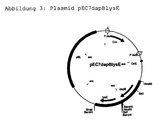
- the plasmid thus obtained was called pEC7lysEdapB.
- This plasmid is in Escherichia coli and in Corynebacterium is autonomously replicable and gives its Host resistance to the antibiotic chloramphenicol.
- the plasmid pEC7lysEdapB contains, as in Figure 3 also represented the dapB gene, which for the Encodes dihyrodipicolinate reductase, and the lysE gene, which codes for the lysine exporter.
- the through Transformation of E. coli strain DH5 ⁇ with pEC7lysEdapB obtained strain was called DH5 ⁇ / pEC7lysEdapB.
- the plasmid pJC1 is in Escherichia coli and in Corynebacterium glutamicum replicable plasmid (Cremer et al., 1990, Molecular and General Genetics 220: 478 - 480).
- the plasmid pJC33 (Cremer et al., 1991. Applied and Environmental Microbiology 57 (6) 1746 - 1752) which contains the lysC (Fbr) gene from the C. glutamicum strain MH20-22B.
- the plasmid pJC50 is also based on the vector pJC1. and carries the lysC FBR gene from C. glutamicum MH20-22B and the dapA gene from C. glutamicum ATCC 13032 (DE-A-39 43 117).
- the C. glutamicum strain MH20-22B is an AEC resistant lysine producer under the deposit number DSM5715 is deposited.
- the transformants obtained with the help of electroporation were placed on selection agar (LBHIS agar (18.5 g / l Brain-Heart Infusion boullion, 0.5M sorbitol, 5 g / l bacto-tryptone, 2.5 g / l Bacto-Yeast-Extract, 5 g / l NaCl, 18 g / l Bacto-Agar)) isolated with 15 mg / l kanamycin.
- Plasmid DNA was obtained according to the usual methods isolated (Peters-Wendisch et al., 1998, Microbiology, 144, 915 - 927), with suitable Restriction endonucleases cut and checked.
- the Strains obtained were MH20-22B / pJC1, MH20-22B / pJC33 and MH20-22B / pJC50 called.
- Example 6 Furthermore, the strains produced in Example 6 used to provide them with a second plasmid.
- the transformed bacteria are due to the Antibiotic resistance of the contained plasmids selected. Those obtained with the help of electroporation Transformants were grown on selection agar (LBHIS agar with 15 mg / l kanamycin and 7.5 mg / l chloramphenicol isolated. Plasmid DNA was isolated using the appropriate Restriction endonucleases cut and checked.
- Example 7 The various C. glutamicum obtained in Example 7 Strains were made in a suitable for the production of lysine Culture medium cultivated and the lysine content in the Culture supernatant determined.
- the cultivation is carried out in a volume of 10 ml in a 100 ml Erlenmeyer flasks with baffles. Kanamycin (25th mg / l) and chloramphenicol (10 mg / l) added. The Cultivation took place at 33 ° C and 80% humidity.
- the OD was measured at a measuring wavelength of 660nm with the Biomek 1000 (Beckmann Instruments GmbH, Kunststoff) determined.
- the amount of lysine formed was included an amino acid analyzer from Eppendorf-BioTronik (Hamburg, Germany) by ion exchange chromatography and post-column derivatization with ninhydrin detection certainly.
- the glucose level was checked with the sugar analyzer from Skalar Analytik GmbH (Erkelenz, Germany) certainly.
- Table 1 shows the result of the experiment. tribe gene OD (660) Lysine HCl g / l DSM5715 / pJC1 / pEC7lysE lysE 9.1 11.1 DSM5715 / pJC33 / pEC7lysE lysE, lysC 8.7 12.2 DSM5715 / pJC50 / pEC7lysE lysE, lysC, dapA 9.1 12.7 DSM5715 / pJC23 / pEC7lysE lysE, dapA 10.2 13.3 DSM5715 / pJC23 / pEC7dapBlysE lysE, dapA, dapB 10.9 15.4
- the plasmid pSIR21 (Rossol, dissertation, university Bielefeld 1992) with the enzymes BglII and EcoRV completely cleaved and the 1.4kb DNA fragment, which the aecD gene (Accessionnumber M89931) (Rossol and Pühler, Journal of Bacteriology, 174 (9), 2968-2977 (1992)) contains from C. glutamicum ATCC 13032, isolated.
- the isolated DNA fragment was isolated with the plasmid pUC18 the BamHI and SmaI enzymes had been completely digested, using the T4 DNA ligase as in Sambrook et al. (Molecular Cloning: a Laboratory Manual (1989) Cold Spring Harbor Laboratory Press).
- the Ligation approach was in the E. coli strain DH5 ⁇ transformed. The transformants were selected on brain-heart plates with ampicillin 100mg / l. From one Colony, plasmid DNA was isolated. The plasmid obtained was named pUC18 :: aecD.
- a dapA gene fragment is made from the plasmid pJC20 (Cremer, J. Dissertation 1989, University of Düsseldorf) as SphI-BamHI Fragment isolated.
- the vector pSP72 (Promega Corporation, USA) was completed with the enzymes SphI and BamHI cleaved and treated with alkaline phosphatase. In this vector became the fragment carrying dapA with the help the T4 DNA ligase ligated.
- the DNA was in the E. coli Strain XL1 Blue (Bullock, Fernandez and Short, BioTechniques (5) 376-379 (1987)). The selection of the Transformants were performed on LB medium with ampicillin 100mg / l. Plasmid DNA was isolated from a transformant and called pSP72 :: dapA.
- the PCR reaction was carried out as by the manufacturer (Stratagene) of the Quickchange site directed mutagenesis kit and using the plasmid pSP72 :: dapA (from Example 10) as a template.
- the mutagenesis approaches were transformed into E. coli strain XL1-Blue.
- the selection of the transformants was carried out on LB medium with carbenicillin 100 mg / l.
- From one Transformant plasmid DNA was isolated by BstEII The loss of the BstEII interface was digested controlled. Plasmids that no longer have a BstEII interface had the desired mutation.
- the plasmids obtained were in the dapA defective E. coli Mutant RDA8 transformed.
- the transformation approaches were plated on LB with carbenicillin 100mg / l to to test the complementation of the dapA mutation. From each one of the transformants was isolated and the DNA Plasmids obtained were pSP72 :: dapA (MC20) and called pSP72 :: dapA (MA16).
- the sequencing was carried out the plasmids using the reverse and universal sequencing primer according to that in Sanger et al., Proceedings of National Academy of Sciences of the USA, (74) 5463 - 5467 (1977) described chain termination method.
- the Sequencing reaction was carried out using the AutoRead Sequencing Kit (Pharmacia, Freiburg) performed.
- the electrophoretic analysis and detection of the Sequencing products were performed using the A.L.F. DNA sequencer (Pharmacia, Freiburg).
- the plasmids pSP72 :: dapA (MC20) and pSP72 :: dapA (MA16) (from Example 11) were with the restriction enzymes PvuII and SmaI completely cut.
- the 1450 bp PvuII-SmaI Fragments containing the dapA gene with the mutated promoter MC20 and MA16 were used with the T4 DNA ligase in the StuI cut vector pUC18 :: aecD (from example 9) ligated.
- the ligation approach was in the E. coli strain DH5 ⁇ transformed.
- the selection of the transformants was carried out on LB medium with ampicillin 100 mg / l.
- One each Transformants were isolated from plasmid DNA. In this way the plasmids pUC18aecD :: dapA (MC20) and pUC18aecD :: dapA (MA16).
- the plasmids pUC18aecD :: dapA (MC20) and pUC18aecD :: dapA (MA16) were treated with the restriction enzyme Partial EcoRI and complete with the SalI enzyme split to create the 3.0 kb aecD :: dapA (MA16) resp To obtain aecD :: dapA (MC20) carrying fragment.
- the Fragment was inserted into the T4 DNA ligase cut and treated with alkaline phosphatase Vector pK19mobsacB (Schaefer et al., Gene (145) 69-73 (1994)). The ligation approach was carried out in the E.
- coli Strain DH5 (Hanahan (1985), In: DNA cloning. A practical approach. Vol.I. IRL Press, Oxford, Washington DC, USA) transformed. The transformants were selected on LB medium with kanamycin 50mg / l. One each Transformants were isolated from plasmid DNA. In this way the plasmids pK19mobsacBaecD :: dapA (MC20) and pK19mobsacBaecD :: dapA (MA16).
- the plasmid DNA was in the E. coli strain S17-1 (Simon, Priefer and Pühler, Bio / Technology, (1) 784-791 (1983)) transformed. The transformants were selected on LB medium with kanamycin 50mg / l. One each Transformant, plasmid DNA was isolated and checked. The Strains obtained were S17-1 / pK19mobsacBaecD :: dapA (MC20) and S17-1 / pK19mobsacBaecD :: dapA (MA16).
- the plasmids pK19mobsacBaecD :: dapA (MC20) and pK19mobsacB aecD :: dapA (MA16) were created using the conjugation method (Schaefer et al., Journal of Bacteriology, (172) 1663-1666 (1990)) by S17-1 / pk19mobsacBaecD :: dapA (MC20) and S17-1 / pK19mobsacBaecD :: dapA (MA16) (from example 12) in the C. glutamicum strain DSM5715 transferred.
- the conjugation approaches were transconjugants on brain-heart medium plated with nalidixic acid and kanamycin.
- the transconjugants obtained were placed in 10 ml overnight Brain-heart medium incubated. Then Aliguots on sucrose-containing plates (brain-heart agar with 10% Sucrose) plated to prevent loss of To select sucrose sensitivity.
- Sucrose-resistant Clones were isolated and resubmitted to chloramphenicol and Kanamycin-containing agar plates (brain-heart medium with Kanamycin 15mg / l and brain-heart medium with chloramphenicol 10 mg / l) checked.
- the gene lysE is in the vector as described in Example 3 pEC7 before.
- This plasmid pEC7lysE and the plasmid pEC7 was carried out by means of electroporation (Haynes 1989, FEMS Microbiology Letters 61: 329-334) into the strains DSM5715aecD :: dapA (MC20), DSM5715aecD :: dapA (MA16) and DSM5715 (from Example 13) introduced, so as C.
- strains DSM5715aecD :: dapA (MC20) / pEC7lysE, DSM5715aecD :: dapA (MA16) / pEC7lysE, DSM5715aecD :: dapA (MC20) / pEC7, DSM5715aecD :: dapA (MA16) / pEC7 and DSM5715 / pEC7 were as described in Example 8 after pre-cultivation in Medium CgIII (Kase & Nakayama, Agricultural and Biological Chemistry 36 (9) 1611-1621 (1972)) in the production medium MM cultured. After 48 hours of incubation, the optical Density at 660nm and the concentration of L-lysine formed certainly.
- Table 2 shows the result of the test. tribe OD Lysine HCl g / l DM5715aecD :: dapA (MC20) / pEC7lysE 13.3 13.8 DM5715aecD :: dapA (MA16) / pEC7lysE 12.4 14.3 DM5715 / pEC7 13.3 11.5 DM5715aecD :: dapA (MA16) / pEC7 13.3 12.9 DM5715aecD :: dapA (MC20) / pEC7 14.0 12.8
Landscapes
- Health & Medical Sciences (AREA)
- Chemical & Material Sciences (AREA)
- Life Sciences & Earth Sciences (AREA)
- Genetics & Genomics (AREA)
- Organic Chemistry (AREA)
- Engineering & Computer Science (AREA)
- Wood Science & Technology (AREA)
- Zoology (AREA)
- Biotechnology (AREA)
- Bioinformatics & Cheminformatics (AREA)
- General Health & Medical Sciences (AREA)
- General Engineering & Computer Science (AREA)
- Biochemistry (AREA)
- Biomedical Technology (AREA)
- Molecular Biology (AREA)
- Microbiology (AREA)
- Biophysics (AREA)
- Medicinal Chemistry (AREA)
- Chemical Kinetics & Catalysis (AREA)
- Physics & Mathematics (AREA)
- Plant Pathology (AREA)
- Gastroenterology & Hepatology (AREA)
- General Chemical & Material Sciences (AREA)
- Proteomics, Peptides & Aminoacids (AREA)
- Tropical Medicine & Parasitology (AREA)
- Virology (AREA)
- Preparation Of Compounds By Using Micro-Organisms (AREA)
- Micro-Organisms Or Cultivation Processes Thereof (AREA)
- Organic Low-Molecular-Weight Compounds And Preparation Thereof (AREA)
- Nitrogen And Oxygen Or Sulfur-Condensed Heterocyclic Ring Systems (AREA)
Applications Claiming Priority (2)
| Application Number | Priority Date | Filing Date | Title |
|---|---|---|---|
| DE19931317 | 1998-08-11 | ||
| DE19931317A DE19931317A1 (de) | 1999-07-07 | 1999-07-07 | L-Lysin produzierende coryneforme Bakterien und Verfahren zur Herstellung von L-Lysin |
Publications (2)
| Publication Number | Publication Date |
|---|---|
| EP1067192A1 true EP1067192A1 (fr) | 2001-01-10 |
| EP1067192B1 EP1067192B1 (fr) | 2009-02-11 |
Family
ID=7913926
Family Applications (1)
| Application Number | Title | Priority Date | Filing Date |
|---|---|---|---|
| EP00114501A Expired - Lifetime EP1067192B1 (fr) | 1999-07-07 | 2000-07-06 | Bactéries corynéformes produisant L-lysine et procédés pour la production de L-lysine |
Country Status (17)
| Country | Link |
|---|---|
| US (1) | US6200785B1 (fr) |
| EP (1) | EP1067192B1 (fr) |
| JP (1) | JP2001061485A (fr) |
| KR (1) | KR100758831B1 (fr) |
| CN (2) | CN1206342C (fr) |
| AT (1) | ATE422548T1 (fr) |
| AU (1) | AU4509900A (fr) |
| BR (1) | BRPI0002655B1 (fr) |
| CA (1) | CA2310870A1 (fr) |
| DE (2) | DE19931317A1 (fr) |
| DK (1) | DK1067192T3 (fr) |
| HU (1) | HUP0002585A2 (fr) |
| ID (1) | ID27720A (fr) |
| MX (1) | MXPA00006643A (fr) |
| RU (1) | RU2264461C2 (fr) |
| SK (1) | SK10142000A3 (fr) |
| ZA (1) | ZA200003402B (fr) |
Cited By (7)
| Publication number | Priority date | Publication date | Assignee | Title |
|---|---|---|---|---|
| WO2002018598A1 (fr) * | 2000-09-02 | 2002-03-07 | Degussa Ag | Séquences nucléotidiques codant pour le gène sigh |
| WO2003040373A3 (fr) * | 2001-08-06 | 2003-12-18 | Degussa | Bacteries coryneformes generatrices de composes chimiques |
| WO2004069996A3 (fr) * | 2003-02-05 | 2004-12-09 | Degussa | Bacteries et procede de production de composes chimiques au moyen desdites bacteries i |
| WO2007042363A1 (fr) * | 2005-10-08 | 2007-04-19 | Evonik Degussa Gmbh | Additifs d'aliments pour animaux contenant de la l-lysine |
| EP2262894A4 (fr) * | 2008-03-03 | 2012-07-04 | Global Bio Chem Technology Group Company Ltd | Micro-organisme recombiné et procédé de production de la l-lysine |
| US8802400B2 (en) | 2005-10-08 | 2014-08-12 | Evonik Degussa Gmbh | L-lysine-containing feed additives |
| WO2017085241A1 (fr) * | 2015-11-19 | 2017-05-26 | Danmarks Tekniske Universitet | Famille de polypeptides microbiens transporteurs de lysine |
Families Citing this family (27)
| Publication number | Priority date | Publication date | Assignee | Title |
|---|---|---|---|---|
| US20020086371A1 (en) * | 1999-07-07 | 2002-07-04 | Degussa-Huls Aktiengesellschaft | L-lysine-producing corynebacteria and process for the preparation of L-lysine |
| US6861246B2 (en) * | 1999-07-07 | 2005-03-01 | Degussa Ag | L-lysine-producing corynebacteria and process for the preparation of lysine |
| US6927046B1 (en) * | 1999-12-30 | 2005-08-09 | Archer-Daniels-Midland Company | Increased lysine production by gene amplification using coryneform bacteria |
| JP4207426B2 (ja) * | 2000-01-21 | 2009-01-14 | 味の素株式会社 | L−リジンの製造法 |
| ATE409752T1 (de) * | 2001-08-06 | 2008-10-15 | Evonik Degussa Gmbh | Coryneforme bakterien, die chemische substanzen bilden ii |
| DE10210527A1 (de) * | 2002-03-09 | 2003-09-18 | Degussa | Allele des aceA-Gens aus coryneformen Bakterien |
| DE10359594A1 (de) * | 2003-12-18 | 2005-07-28 | Basf Ag | PEF-TU-Expressionseinheiten |
| DE102004035065A1 (de) * | 2004-07-20 | 2006-02-16 | Basf Ag | P-ET-TS-Expressionseinheiten |
| KR100653742B1 (ko) | 2004-12-30 | 2006-12-05 | 씨제이 주식회사 | 신규한 l-라이신-유도성 프로모터 |
| DE102005047596A1 (de) * | 2005-10-05 | 2007-04-12 | Degussa Ag | Verfahren zur fermentativen Herstellung von L-Aminosäuren unter Verwendung coryneformer Bakterien |
| JP2009095237A (ja) * | 2006-02-02 | 2009-05-07 | Ajinomoto Co Inc | L−アミノ酸の製造法 |
| BRPI0716980A2 (pt) * | 2006-09-15 | 2013-10-22 | Cj Cheiljedang Corp | Corynebacteria com produtividade de l-lisina aumentada e método de produção da l-lisina usando a mesma |
| DE102006048882A1 (de) * | 2006-10-17 | 2008-04-24 | Evonik Degussa Gmbh | Allele des rel-Gens aus coryneformen Bakterien |
| KR100798118B1 (ko) * | 2006-12-21 | 2008-01-28 | 씨제이제일제당 (주) | 메틸말로네이트 세미알데하이드 디하이드로게나제 코딩유전자의 기능 결실에 의한 엘-라이신 생산능이 향상된코리네박테리아 및 이를 이용한 엘-라이신 생산 방법 |
| KR100830826B1 (ko) * | 2007-01-24 | 2008-05-19 | 씨제이제일제당 (주) | 코리네박테리아를 이용하여 글리세롤을 포함한탄소원으로부터 발효산물을 생산하는 방법 |
| DE102007005072A1 (de) * | 2007-02-01 | 2008-08-07 | Evonik Degussa Gmbh | Verfahren zur fermentativen Herstellung von Cadaverin |
| KR100898246B1 (ko) * | 2007-08-17 | 2009-05-18 | 씨제이제일제당 (주) | 신규한 코리네박테리움 글루타미쿰 프로모터 |
| US8932861B2 (en) | 2008-04-10 | 2015-01-13 | Cj Cheiljedang Corporation | Transformation vector comprising transposon, microorganisms transformed with the vector, and method for producing L-lysine using the microorganism |
| KR101126041B1 (ko) * | 2008-04-10 | 2012-03-19 | 씨제이제일제당 (주) | 트랜스포존을 이용한 형질전환용 벡터, 상기 벡터로형질전환된 미생물 및 이를 이용한 l-라이신 생산방법 |
| US8637295B1 (en) * | 2009-02-20 | 2014-01-28 | Evonik Degussa Gmbh | Process for the production of L-lysine |
| MY171302A (en) * | 2011-12-21 | 2019-10-08 | Cj Cheiljedang Corp | Method for producing l-lysine using microorganisms having ability to produce l-lysine |
| EP2971023B1 (fr) * | 2013-03-15 | 2024-12-11 | Kiverdi, Inc. | Procédés d'utilisation d'organismes naturels et synthétiques pour produire de petites molécules pour une application industrielle |
| RU2549690C1 (ru) * | 2013-10-08 | 2015-04-27 | Федеральное государственное унитарное предприятие "Государственный научно-исследовательский институт генетики и селекции промышленных микроорганизмов" (ФГУП "ГосНИИгенетика") | L-ЛИЗИН-ПРОДУЦИРУЮЩАЯ БАКТЕРИЯ Corynebacterium glutamicum ИЛИ Brevibacterium flavum, УСТОЙЧИВАЯ К ФУЗИДИНОВОЙ КИСЛОТЕ, И СПОСОБ МИКРОБИОЛОГИЧЕСКОГО СИНТЕЗА L-ЛИЗИНА С ЕЕ ИСПОЛЬЗОВАНИЕМ |
| CN103695454A (zh) * | 2013-12-18 | 2014-04-02 | 山东寿光巨能金玉米开发有限公司 | 表达l-赖氨酸转运蛋白的重组质粒、工程菌及应用 |
| RU2612159C1 (ru) * | 2015-12-28 | 2017-03-02 | Федеральное государственное бюджетное учреждение "Государственный научно-исследовательский институт генетики и селекции промышленных микроорганизмов" (ФГБУ "ГосНИИгенетика") | L-Лизин-продуцирующая коринеформная бактерия с мутантным геном fusA и способ получения L-лизина с использованием этой бактерии |
| KR101863456B1 (ko) * | 2016-11-15 | 2018-06-01 | 씨제이제일제당 (주) | L-라이신을 생산하는 코리네박테리움 속 미생물 및 이를 이용한 l-라이신의 생산방법 |
| CN111850010B (zh) * | 2020-06-08 | 2021-04-09 | 黑龙江伊品生物科技有限公司 | 一种dapB基因改造的重组菌株及其构建方法与应用 |
Citations (4)
| Publication number | Priority date | Publication date | Assignee | Title |
|---|---|---|---|---|
| EP0435132A1 (fr) * | 1989-12-27 | 1991-07-03 | Forschungszentrum Jülich Gmbh | Procédé de la production fermentative d'aminoacides, en particulier de L-lysine, micro-organismes propres à cela et ADN recombinant |
| DE19548222A1 (de) * | 1995-12-22 | 1997-06-26 | Forschungszentrum Juelich Gmbh | Verfahren zur mikrobiellen Herstellung von Aminosäuren durch gesteigerte Aktivität von Exportcarriern |
| EP0854189A2 (fr) * | 1996-12-05 | 1998-07-22 | Ajinomoto Co., Inc. | Procédé de préparation de L-Lysine |
| DE19831609A1 (de) * | 1997-10-04 | 1999-04-15 | Forschungszentrum Juelich Gmbh | Verfahren zur Herstellung von Aminosäuren der Aspartat- und/oder Glutamatfamilie und im Verfahren einsetzbare Mittel |
Family Cites Families (4)
| Publication number | Priority date | Publication date | Assignee | Title |
|---|---|---|---|---|
| DE3823451C2 (de) * | 1988-07-11 | 1997-02-20 | Forschungszentrum Juelich Gmbh | Rekombinante DNA, damit transformierte Mikrooganismen und Verwendung dieser Mikroorganismen zur Herstellung von L-Lysin mit Hilfe dieser Mikroorganismen |
| JP3008549B2 (ja) * | 1991-03-06 | 2000-02-14 | 味の素株式会社 | 発酵法によるl−リジンの製造法 |
| SK285013B6 (sk) * | 1995-06-07 | 2006-04-06 | Ajinomoto Co., Inc. | Rekombinantná DNA, autonómne replikovateľná v bunkách koryneformných baktérií, koryneformná baktéria a spôsob výroby L-lyzínu |
| WO1999018228A2 (fr) * | 1997-10-04 | 1999-04-15 | Forschungszentrum Jülich GmbH | Procede de preparation microbienne d'aminoacides de la famille de l'aspartate et/ou du glutamate et agents utilisables dans le cadre de l'application dudit procede |
-
1999
- 1999-07-07 DE DE19931317A patent/DE19931317A1/de not_active Ceased
- 1999-07-14 US US09/353,133 patent/US6200785B1/en not_active Expired - Lifetime
-
2000
- 2000-07-03 SK SK1014-2000A patent/SK10142000A3/sk unknown
- 2000-07-04 JP JP2000202551A patent/JP2001061485A/ja not_active Withdrawn
- 2000-07-05 MX MXPA00006643 patent/MXPA00006643A/es active IP Right Grant
- 2000-07-06 DK DK00114501T patent/DK1067192T3/da active
- 2000-07-06 ZA ZA200003402A patent/ZA200003402B/xx unknown
- 2000-07-06 KR KR1020000038614A patent/KR100758831B1/ko not_active Expired - Fee Related
- 2000-07-06 HU HU0002585A patent/HUP0002585A2/hu unknown
- 2000-07-06 DE DE50015548T patent/DE50015548D1/de not_active Expired - Lifetime
- 2000-07-06 ID IDP20000562D patent/ID27720A/id unknown
- 2000-07-06 EP EP00114501A patent/EP1067192B1/fr not_active Expired - Lifetime
- 2000-07-06 AT AT00114501T patent/ATE422548T1/de not_active IP Right Cessation
- 2000-07-06 CA CA002310870A patent/CA2310870A1/fr not_active Abandoned
- 2000-07-07 CN CNB001098403A patent/CN1206342C/zh not_active Expired - Fee Related
- 2000-07-07 AU AU45099/00A patent/AU4509900A/en not_active Abandoned
- 2000-07-07 BR BRPI0002655A patent/BRPI0002655B1/pt active IP Right Grant
- 2000-07-07 CN CNB2005100688648A patent/CN100451108C/zh not_active Expired - Fee Related
- 2000-07-07 RU RU2000117837/13A patent/RU2264461C2/ru not_active IP Right Cessation
Patent Citations (4)
| Publication number | Priority date | Publication date | Assignee | Title |
|---|---|---|---|---|
| EP0435132A1 (fr) * | 1989-12-27 | 1991-07-03 | Forschungszentrum Jülich Gmbh | Procédé de la production fermentative d'aminoacides, en particulier de L-lysine, micro-organismes propres à cela et ADN recombinant |
| DE19548222A1 (de) * | 1995-12-22 | 1997-06-26 | Forschungszentrum Juelich Gmbh | Verfahren zur mikrobiellen Herstellung von Aminosäuren durch gesteigerte Aktivität von Exportcarriern |
| EP0854189A2 (fr) * | 1996-12-05 | 1998-07-22 | Ajinomoto Co., Inc. | Procédé de préparation de L-Lysine |
| DE19831609A1 (de) * | 1997-10-04 | 1999-04-15 | Forschungszentrum Juelich Gmbh | Verfahren zur Herstellung von Aminosäuren der Aspartat- und/oder Glutamatfamilie und im Verfahren einsetzbare Mittel |
Non-Patent Citations (7)
| Title |
|---|
| CREMER ET AL., MOLECULAR AND GENERAL GENETICS, vol. 220, 1990, pages 478 - 480 |
| DATABASE EMBL 1 April 1993 (1993-04-01), "C. glutamicum dapB gene for dihydrodipicolinate reductase", XP002151598 * |
| DUNICAN; SHIVNAN, BIO/TECHNOLOGY, vol. 7, 1989, pages 1067 - 1070 |
| EIKMANNS ET AL., GENE, vol. 102, 1991, pages 93 - 98 |
| PETERS-WENDISCH ET AL., MICROBIOLOGY, vol. 144, 1998, pages 915 - 927 |
| SCHRUMPF ET AL., APPLIED MICROBIOLOGY AND BIOTECHNOLOGY, vol. 37, 1992, pages 566 - 571 |
| THIERBACH ET AL., APPLIED MICROBIOLOGY AND BIOTECHNOLOGY, vol. 29, 1988, pages 356 - 362 |
Cited By (9)
| Publication number | Priority date | Publication date | Assignee | Title |
|---|---|---|---|---|
| WO2002018598A1 (fr) * | 2000-09-02 | 2002-03-07 | Degussa Ag | Séquences nucléotidiques codant pour le gène sigh |
| WO2003040373A3 (fr) * | 2001-08-06 | 2003-12-18 | Degussa | Bacteries coryneformes generatrices de composes chimiques |
| US7160711B2 (en) | 2001-08-06 | 2007-01-09 | Degussa Ag | Coryneform bacteria which produce chemical compounds I |
| WO2004069996A3 (fr) * | 2003-02-05 | 2004-12-09 | Degussa | Bacteries et procede de production de composes chimiques au moyen desdites bacteries i |
| WO2007042363A1 (fr) * | 2005-10-08 | 2007-04-19 | Evonik Degussa Gmbh | Additifs d'aliments pour animaux contenant de la l-lysine |
| US8802400B2 (en) | 2005-10-08 | 2014-08-12 | Evonik Degussa Gmbh | L-lysine-containing feed additives |
| US9023347B2 (en) | 2005-10-08 | 2015-05-05 | Evonik Degussa Gmbh | L-lysine containing feed additives |
| EP2262894A4 (fr) * | 2008-03-03 | 2012-07-04 | Global Bio Chem Technology Group Company Ltd | Micro-organisme recombiné et procédé de production de la l-lysine |
| WO2017085241A1 (fr) * | 2015-11-19 | 2017-05-26 | Danmarks Tekniske Universitet | Famille de polypeptides microbiens transporteurs de lysine |
Also Published As
| Publication number | Publication date |
|---|---|
| ATE422548T1 (de) | 2009-02-15 |
| JP2001061485A (ja) | 2001-03-13 |
| DE19931317A1 (de) | 2001-01-11 |
| BR0002655A (pt) | 2001-06-05 |
| RU2264461C2 (ru) | 2005-11-20 |
| SK10142000A3 (sk) | 2001-04-09 |
| US6200785B1 (en) | 2001-03-13 |
| CN1706935A (zh) | 2005-12-14 |
| HU0002585D0 (en) | 2000-09-28 |
| ID27720A (id) | 2001-04-26 |
| ZA200003402B (en) | 2001-02-02 |
| EP1067192B1 (fr) | 2009-02-11 |
| KR100758831B1 (ko) | 2007-09-19 |
| DE50015548D1 (de) | 2009-03-26 |
| MXPA00006643A (es) | 2002-04-30 |
| CN100451108C (zh) | 2009-01-14 |
| CN1280184A (zh) | 2001-01-17 |
| AU4509900A (en) | 2001-01-11 |
| BRPI0002655B1 (pt) | 2016-04-19 |
| DK1067192T3 (da) | 2009-06-08 |
| CN1206342C (zh) | 2005-06-15 |
| HUP0002585A2 (en) | 2002-09-28 |
| KR20010049729A (ko) | 2001-06-15 |
| CA2310870A1 (fr) | 2001-01-07 |
Similar Documents
| Publication | Publication Date | Title |
|---|---|---|
| EP1067192B1 (fr) | Bactéries corynéformes produisant L-lysine et procédés pour la production de L-lysine | |
| EP1094111B1 (fr) | Mutant de délétion de phosphoenolpyruvate-carboxykinase de bactérie coryneforme et son usage | |
| EP1067193B1 (fr) | Bactéries corynéformes produisant L-lysine et procédés pour la production de L-lysine | |
| US7981640B2 (en) | L-lysine-producing corynebacteria and process for the preparation of L-lysine | |
| DE19907567B4 (de) | Verfahren zur mikrobiellen Herstellung von L-Valin | |
| DE19951975A1 (de) | Neue für das poxB-Gen codierende Nuleotidsequenzen | |
| EP1111062B1 (fr) | Séquences nucléotidiques codant pour le gène zwa1 | |
| EP1106693A1 (fr) | Acide nucléique codant la proteine zwa2 | |
| US20020055153A1 (en) | L-lysine-producing corynebacteria and process for the preparation of lysine | |
| EP1090998A1 (fr) | Séquences nucléotides codantes pour le gene eno | |
| EP1136559A2 (fr) | Séquences nucléotidiques codant pour le gène dapC et procédé pour la préparation de L-lysine | |
| EP1038969A2 (fr) | Procédé de préparation d'acides L-aminés en utilisant les bactéries corynéformes | |
| EP1055730B1 (fr) | Procédé de production de L-aminoacides par fermentation de bactéries coryneformes | |
| DE10344739A1 (de) | Verfahren zur fermentativen Herstellung von L-Aminosäuren unter Verwendung coryneformer Bakterien | |
| DE19953809A1 (de) | Verfahren zur fermentativen Herstellung von L-Lysin unter Verwendung coryneformer Bakterien | |
| EP1106694A1 (fr) | Séquences nucléotidiques codantes pour le gène glk | |
| EP1103613A1 (fr) | Séquences nucléotidiques codantes pour le gène pfk | |
| EP1090993A1 (fr) | Séquences nucléotides codantes pour le gene lrp | |
| DE10037612A1 (de) | Neue für das rpi-Gen kodierende Nukleotidsequenzen | |
| DE10110344A1 (de) | Verfahren zur fermentativen Herstellung von L-Aminosäuren unter Verwendung coryneformer Bakterien | |
| DE10021831A1 (de) | Neue für das fadD15-Gen kodierende Nukleotidsequenzen | |
| EP1143003A2 (fr) | Séquences de nucléotides codant pour le gène rplk et procédé pour la préparation de L-aminoacides | |
| DE10017057A1 (de) | Neue für das rpIK Gen kodierende Nukleotidsequenzen | |
| DE10021829A1 (de) | Neue für das pgsA2-Gen kodierende Nukleotidsequenzen |
Legal Events
| Date | Code | Title | Description |
|---|---|---|---|
| PUAI | Public reference made under article 153(3) epc to a published international application that has entered the european phase |
Free format text: ORIGINAL CODE: 0009012 |
|
| 17P | Request for examination filed |
Effective date: 20000706 |
|
| AK | Designated contracting states |
Kind code of ref document: A1 Designated state(s): AT BE CH CY DE DK ES FI FR GB GR IE IT LI LU MC NL PT SE |
|
| AX | Request for extension of the european patent |
Free format text: AL;LT;LV;MK;RO;SI |
|
| RAP1 | Party data changed (applicant data changed or rights of an application transferred) |
Owner name: DEGUSSA AG Owner name: FORSCHUNGSZENTRUM JUELICH GMBH |
|
| AKX | Designation fees paid |
Free format text: AT BE CH CY DE DK ES FI FR GB GR IE IT LI LU MC NL PT SE |
|
| RAP1 | Party data changed (applicant data changed or rights of an application transferred) |
Owner name: FORSCHUNGSZENTRUM JUELICH GMBH Owner name: DEGUSSA AG |
|
| 17Q | First examination report despatched |
Effective date: 20060608 |
|
| RAP1 | Party data changed (applicant data changed or rights of an application transferred) |
Owner name: FORSCHUNGSZENTRUM JUELICH GMBH Owner name: DEGUSSA GMBH |
|
| RAP1 | Party data changed (applicant data changed or rights of an application transferred) |
Owner name: EVONIK DEGUSSA GMBH Owner name: FORSCHUNGSZENTRUM JUELICH GMBH |
|
| RAP1 | Party data changed (applicant data changed or rights of an application transferred) |
Owner name: FORSCHUNGSZENTRUM JUELICH GMBH Owner name: EVONIK DEGUSSA GMBH |
|
| GRAP | Despatch of communication of intention to grant a patent |
Free format text: ORIGINAL CODE: EPIDOSNIGR1 |
|
| GRAS | Grant fee paid |
Free format text: ORIGINAL CODE: EPIDOSNIGR3 |
|
| GRAA | (expected) grant |
Free format text: ORIGINAL CODE: 0009210 |
|
| AK | Designated contracting states |
Kind code of ref document: B1 Designated state(s): AT BE CH CY DE DK ES FI FR GB GR IE IT LI LU MC NL PT SE |
|
| REG | Reference to a national code |
Ref country code: GB Ref legal event code: FG4D Free format text: NOT ENGLISH |
|
| REG | Reference to a national code |
Ref country code: CH Ref legal event code: EP |
|
| REG | Reference to a national code |
Ref country code: IE Ref legal event code: FG4D Free format text: LANGUAGE OF EP DOCUMENT: GERMAN |
|
| REF | Corresponds to: |
Ref document number: 50015548 Country of ref document: DE Date of ref document: 20090326 Kind code of ref document: P |
|
| REG | Reference to a national code |
Ref country code: DK Ref legal event code: T3 |
|
| PG25 | Lapsed in a contracting state [announced via postgrant information from national office to epo] |
Ref country code: FI Free format text: LAPSE BECAUSE OF FAILURE TO SUBMIT A TRANSLATION OF THE DESCRIPTION OR TO PAY THE FEE WITHIN THE PRESCRIBED TIME-LIMIT Effective date: 20090211 Ref country code: ES Free format text: LAPSE BECAUSE OF FAILURE TO SUBMIT A TRANSLATION OF THE DESCRIPTION OR TO PAY THE FEE WITHIN THE PRESCRIBED TIME-LIMIT Effective date: 20090522 |
|
| PG25 | Lapsed in a contracting state [announced via postgrant information from national office to epo] |
Ref country code: SE Free format text: LAPSE BECAUSE OF FAILURE TO SUBMIT A TRANSLATION OF THE DESCRIPTION OR TO PAY THE FEE WITHIN THE PRESCRIBED TIME-LIMIT Effective date: 20090511 |
|
| REG | Reference to a national code |
Ref country code: IE Ref legal event code: FD4D |
|
| PG25 | Lapsed in a contracting state [announced via postgrant information from national office to epo] |
Ref country code: PT Free format text: LAPSE BECAUSE OF FAILURE TO SUBMIT A TRANSLATION OF THE DESCRIPTION OR TO PAY THE FEE WITHIN THE PRESCRIBED TIME-LIMIT Effective date: 20090713 Ref country code: IE Free format text: LAPSE BECAUSE OF FAILURE TO SUBMIT A TRANSLATION OF THE DESCRIPTION OR TO PAY THE FEE WITHIN THE PRESCRIBED TIME-LIMIT Effective date: 20090211 |
|
| PLBE | No opposition filed within time limit |
Free format text: ORIGINAL CODE: 0009261 |
|
| STAA | Information on the status of an ep patent application or granted ep patent |
Free format text: STATUS: NO OPPOSITION FILED WITHIN TIME LIMIT |
|
| 26N | No opposition filed |
Effective date: 20091112 |
|
| BERE | Be: lapsed |
Owner name: FORSCHUNGSZENTRUM JULICH G.M.B.H. Effective date: 20090731 Owner name: EVONIK DEGUSSA G.M.B.H. Effective date: 20090731 |
|
| PG25 | Lapsed in a contracting state [announced via postgrant information from national office to epo] |
Ref country code: MC Free format text: LAPSE BECAUSE OF NON-PAYMENT OF DUE FEES Effective date: 20090731 |
|
| REG | Reference to a national code |
Ref country code: CH Ref legal event code: PL |
|
| GBPC | Gb: european patent ceased through non-payment of renewal fee |
Effective date: 20090706 |
|
| PG25 | Lapsed in a contracting state [announced via postgrant information from national office to epo] |
Ref country code: LI Free format text: LAPSE BECAUSE OF NON-PAYMENT OF DUE FEES Effective date: 20090731 Ref country code: CH Free format text: LAPSE BECAUSE OF NON-PAYMENT OF DUE FEES Effective date: 20090731 |
|
| PG25 | Lapsed in a contracting state [announced via postgrant information from national office to epo] |
Ref country code: GB Free format text: LAPSE BECAUSE OF NON-PAYMENT OF DUE FEES Effective date: 20090706 |
|
| PG25 | Lapsed in a contracting state [announced via postgrant information from national office to epo] |
Ref country code: BE Free format text: LAPSE BECAUSE OF NON-PAYMENT OF DUE FEES Effective date: 20090731 |
|
| PG25 | Lapsed in a contracting state [announced via postgrant information from national office to epo] |
Ref country code: GR Free format text: LAPSE BECAUSE OF FAILURE TO SUBMIT A TRANSLATION OF THE DESCRIPTION OR TO PAY THE FEE WITHIN THE PRESCRIBED TIME-LIMIT Effective date: 20090512 |
|
| PG25 | Lapsed in a contracting state [announced via postgrant information from national office to epo] |
Ref country code: AT Free format text: LAPSE BECAUSE OF NON-PAYMENT OF DUE FEES Effective date: 20090706 |
|
| PG25 | Lapsed in a contracting state [announced via postgrant information from national office to epo] |
Ref country code: IT Free format text: LAPSE BECAUSE OF FAILURE TO SUBMIT A TRANSLATION OF THE DESCRIPTION OR TO PAY THE FEE WITHIN THE PRESCRIBED TIME-LIMIT Effective date: 20090211 |
|
| PG25 | Lapsed in a contracting state [announced via postgrant information from national office to epo] |
Ref country code: LU Free format text: LAPSE BECAUSE OF NON-PAYMENT OF DUE FEES Effective date: 20090706 |
|
| PG25 | Lapsed in a contracting state [announced via postgrant information from national office to epo] |
Ref country code: CY Free format text: LAPSE BECAUSE OF FAILURE TO SUBMIT A TRANSLATION OF THE DESCRIPTION OR TO PAY THE FEE WITHIN THE PRESCRIBED TIME-LIMIT Effective date: 20090211 |
|
| REG | Reference to a national code |
Ref country code: FR Ref legal event code: PLFP Year of fee payment: 16 |
|
| REG | Reference to a national code |
Ref country code: FR Ref legal event code: PLFP Year of fee payment: 17 |
|
| REG | Reference to a national code |
Ref country code: FR Ref legal event code: PLFP Year of fee payment: 18 |
|
| PGFP | Annual fee paid to national office [announced via postgrant information from national office to epo] |
Ref country code: NL Payment date: 20170719 Year of fee payment: 18 |
|
| PGFP | Annual fee paid to national office [announced via postgrant information from national office to epo] |
Ref country code: DE Payment date: 20170724 Year of fee payment: 18 Ref country code: FR Payment date: 20170724 Year of fee payment: 18 |
|
| PGFP | Annual fee paid to national office [announced via postgrant information from national office to epo] |
Ref country code: DK Payment date: 20170719 Year of fee payment: 18 |
|
| REG | Reference to a national code |
Ref country code: DE Ref legal event code: R119 Ref document number: 50015548 Country of ref document: DE |
|
| REG | Reference to a national code |
Ref country code: DK Ref legal event code: EBP Effective date: 20180731 |
|
| REG | Reference to a national code |
Ref country code: NL Ref legal event code: MM Effective date: 20180801 |
|
| PG25 | Lapsed in a contracting state [announced via postgrant information from national office to epo] |
Ref country code: DE Free format text: LAPSE BECAUSE OF NON-PAYMENT OF DUE FEES Effective date: 20190201 Ref country code: FR Free format text: LAPSE BECAUSE OF NON-PAYMENT OF DUE FEES Effective date: 20180731 |
|
| PG25 | Lapsed in a contracting state [announced via postgrant information from national office to epo] |
Ref country code: NL Free format text: LAPSE BECAUSE OF NON-PAYMENT OF DUE FEES Effective date: 20180801 |
|
| PG25 | Lapsed in a contracting state [announced via postgrant information from national office to epo] |
Ref country code: DK Free format text: LAPSE BECAUSE OF NON-PAYMENT OF DUE FEES Effective date: 20180731 |