FIELD OF THE INVENTION
The present invention relates to a treatment of the
water containing manganese, in particular, to a method
and an apparatus for treating the water containing high
concentration of soluble manganese including an irrigation
water, an industrial waste water, a sludge treatment waste
water for water supply or the like.
BACKGROUND OF THE INVENTION
As for a manganese removal method by a fluidized bed,
a technology disclosed by JP-A-10-137772 (Japanese Patent
Laid-open Publication) is well known and a configuration
thereof is shown in Fig. 5.
In the manganese removal method having a configuration
shown in Fig. 5, the soluble manganese in the water to be
treated is deposited and removed as manganese carbonate by
applying a water 11 containing carbonic acid ions or
including carbonic acid ions added thereto as an upward
flow to a fluidized bed reaction tower 1 with no support
bed containing manganese sand therein as a fluidized bed
material 2, and by injecting an alkaline material into a
vicinity of an inlet port 4 for the water to be treated of
the fluidized bed reaction tower or into the fluidized bed
so as to adjust a pH value of the water to be treated in
the fluidized bed into 8 to 10.
The manganese removal method by the known fluidized
bed will be now described in detail.
In a neutral or approximately neutral water, manganese
exists in a form of Mn(HCO3) or MnSO4 when it is divalent,
and also in other form of MnO2 · mH2O when it is tetravalent.
In this case, what is deposited and removed is the divalent
manganese which takes a form of ion.
The divalent manganese reacts with carbonic acid ion
to produce manganese carbonate as shown in a reaction
formula (1).
Mn2+ + HCO3 - + OH- → MnCO3↓ + H2O
Manganese carbonate in the water to be treated
gradually lowers a solubility thereof as a pH rises and
moves into a metastable state, and then is crystallized. At
that time, when the manganese carbonate in its metastable
state comes in contact with the bed material for deposition,
manganese carbonate is deposited on a surface of the bed
material. Under this condition, the pH control is important
because the deposition does not occur when the pH is low,
and more manganese hydroxide rather than manganese
carbonate is deposited when the pH is too high.
The conventional method, however, has the problems that,
when the water to be treated includes high concentration of
manganese, a metastable state period of the manganese
becomes shorter and more amount of manganese hydroxide is
likely to be deposited, and that, especially in the large
treating apparatus, it is difficult to effectively inject
arbitrary quantity of alkaline materials into plural
portions of the fluidized bed. Further, since manganese
existing in the water as a suspended solid has no relation
with the above reaction, the suspended manganese in the
water cannot be removed by the conventional manganese
removal method. Furthermore, the above method has problems
that, when a pH value of the water to be treated varies over
wide range, a control thereof is difficult, and that, when
the water to be treated includes high concentration of
manganese, the metastable state of the manganese becomes
shorter and more amount of manganese hydroxide is likely to
be deposited.
PROBLEMS THE INVENTION IS TO SOLVE
The present invention is achieved in the light of the
problems in the prior art described above, and a first
object thereof is to provide a method and an apparatus
for treating manganese containing water, in which the
deposition of manganese hydroxide can be suppressed even if
the concentration of manganese is high, and the alkaline
material can be injected effectively. Further, a second
object of the present invention is to provide a method and
an apparatus for treating manganese containing water, in
which both of the soluble manganese and the suspended
manganese in the water can be removed.
Furthermore, a third object of the present invention
is to provide a method and an apparatus for treating
manganese containing water, in which the pH variation in
the water to be treated can be easily coped with and the
generation of manganese hydroxide can be suppressed even if
the manganese concentration rises.
MEANS FOR SOLVING THE PROBLEMS
In order to accomplish the first object, the present
invention provides a treating method of a manganese
containing water for crystalizing and removing a soluble
manganese in the water by applying the water to be treated
containing carbonic acid ions as an upward flow to a
fluidized bed reaction tower with no support bed containing
manganese sand therein as a fluidized bed material, and by
adjusting a pH value of the water to be treated in the
fluidized bed, said method characterized in that a plurality
of said fluidized bed reaction towers is provided and each
of them is connected in series so that the water to be
treated flows through them to make a multistage treatment.
Further, the present invention provides a treating
apparatus of a manganese containing water for crystalizing
and removing a soluble manganese, comprising a fluidized
bed reaction tower with no support bed containing manganese
sand therein as a fluidized bed material, an inlet port
provided on a bottom portion of said reaction tower for
introducing a water to be treated containing carbonic acid
ions, an outlet port provided on an upper portion of said
reaction tower for discharging the treated water, and an
injection port for injecting alkaline material for adjusting
a pH value of the water to be treated in the fluidized bed,
said apparatus characterized in that a plurality of said
fluidized bed reaction towers is provided, and each of them
is connected in series and is equipped with the injection
port of alkaline material on the bottom portion of the
reaction tower near to the inlet port of the water to be
treated.
In the method and apparatus described above, it is
preferable that the pH value of the water to be treated in
the fluidized bed is controlled such that the pH value
increases as a stage of the reaction tower proceeds from a
former stage to a latter stage among the plurality of
reaction towers while keeping a range thereof within 8 to
10, and it is also preferable that a pH control device is
provided for controlling the pH value as described above.
In order to accomplish the second object, the present
invention provides a treating method of a manganese
containing water for crystalizing and removing a soluble
manganese in the water by applying the water to be treated
containing carbonic acid ions as an upward flow to a
fluidized bed reaction tower with no support bed containing
manganese sand therein as a fluidized bed material, and by
adjusting a pH value of the water to be treated in the
fluidized bed, said method characterized in that a suspended
manganese in the water to be treated is removed along with
the soluble manganese therein by forming, on a manganese
sand fluidized bed in said fluidized bed reaction tower, a
layer of suspended solid in the water to be treated which
has passed through said manganese sand fluidized bed and by
removing said layer of suspended solid.
Further, the present invention provides a treating
apparatus of a manganese containing water for crystalizing
and removing soluble manganese, comprising a fluidized bed
reaction tower with no support bed containing manganese
sand therein as a fluidized bed material, an inlet port
provided on a bottom portion of said reaction tower for
introducing a water to be treated containing carbonic acid
ions, an outlet port provided on an upper portion of said
reaction tower for discharging the treated water, and an
injection port for injecting alkaline material for
adjusting a pH value of the water to be treated in the
fluidized bed, said apparatus characterized in that a
suspended solid in the water to be treated is formed into a
layer on a manganese sand fluidized bed in said fluidized
bed reaction tower, and an ejector pipe is further provided
in said layer of suspended solid for ejecting said
suspended solid.
In the method and apparatus described above, it is
preferable that the pH value of the water to be treated is
controlled to be within a range of 8 to 10 by injecting the
alkaline material to the bottom portion of the reaction
tower near to the inlet port of the water to be treated.
As for the fluidized bed reaction tower, a horizontal
cross section thereof in a portion where the suspended
solid layer is formed on the manganese sand fluidized bed
shall be larger than, preferably 1.4 times or more as large
as that in another portion for the manganese sand fluidized
bed.
In order to accomplish the third object, the present
invention provides a treating method of a manganese
containing water for crystalizing and removing a soluble
manganese in the water by applying the water to be treated
containing carbonic acid ions as an upward flow from a
bottom portion of a reaction vessel to said fluidized bed
reaction vessel with no support bed containing manganese
sand therein as a fluidized bed material, and by injecting
alkaline material into the bottom portion of the reaction
vessel near to an inlet port of the water to be treated
and/or into the fluidized bed to adjust a pH value of the
water to be treated in the fluidized bed to be within a
range of 8 to 10, said method characterized in that a
desired volume of the treated water is introduced into the
water to be treated for circulatory use.
Further, the present invention provides a treating
apparatus of a manganese containing water for crystalizing
and removing a soluble manganese, comprising a fluidized bed
reaction vessel with no support bed containing manganese
sand therein as a fluidized bed material, an inlet port
provided on a bottom portion of said reaction vessel for
introducing a water to be treated containing carbonic acid
ions, an outlet port provided on an upper portion of said
reaction vessel for discharging the treated water, and an
injection port provided on the bottom portion of the
reaction vessel near to the inlet port of the water to be
treated and/or in the fluidized bed to adjust a pH value of
the water to be treated in the fluidized bed to be within a
range of 8 to 10, said apparatus characterized by further
comprising a circulation path connecting said outlet port
of the treated water and the inlet port of the water to be
treated for circulating a desired quantity of said treated
water.
As for the circulation of the treated water in the
treating described above, it is preferable that a
sedimentation tank is provided on a middle of the
circulation path to use a part of supernatant liquid
therein.
BRIEF DESCRIPTION OF THE DRAWINGS
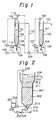
Fig. 1 shows a schematic configuration of a treating
apparatus according to a first embodiment of the present
invention;
Fig. 2 shows a schematic configuration of a treating
apparatus according to a second embodiment of the present
invention;
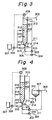
Fig. 3 shows a schematic configuration of a treating
apparatus according to a third embodiment of the present
invention;
Fig. 4 shows a schematic configuration of a treating
apparatus according to a fourth embodiment of the present
invention; and
Fig. 5 shows a schematic configuration of a
conventional fluidized bed type manganese removal apparatus.
DETAILED DESCRIPTION OF THE PREFERRED EMBODIMENTS
According to the present invention, since there is
provided a plurality of fluidized bed reaction towers and
the pH value of the water to be treated in the fluidized
bed is controlled such that the pH value increases as a
stage of the reaction tower proceeds among the plurality of
reaction towers, a deposition of manganese hydroxide can
be suppressed because a crystalizing reaction progresses
gradually in respective towers even if the manganese
concentration in the water to be treated rises, and also,
because of its multistage system, an arbitrary quantity of
alkaline materials can be injected into respective towers
even in a large treating apparatus.
Then the present invention will be described in detail
with reference to Fig. 1., which shows a schematic
configuration of a treating apparatus according to a first
embodiment of the present invention.
An apparatus shown in Fig. 1 includes two fluidized
bed reaction towers connected in series, each of which has
no support bed and contains a bed material for deposition
102. This apparatus comprises at least two fluidized bed
reaction towers 101 and 101' each having an alkaline
material injection port 108 provided on a bottom portion of
the fluidized bed near to an inlet port 104 for the water
to be treated, two pH measuring devices 109, 109 each being
provided for each reaction tower for measuring pH value of
the water to be treated in the fluidized bed reaction tower,
and two alkaline material injection pumps 107, 107 each
being provided for each reaction tower whose discharge
quantity is controlled by an output signal of the pH
measuring device 109. Each reaction tower further comprises
a pump 103 of the water to be treated for supplying the
water to be treated, an inlet pipe 111 or 112 for the water
to be treated, a check valve 105 for preventing a back flow
of the bed material for deposition during shutdown period,
a bed material drain pipe 106, an alkaline material
injection pipe 114, a treated water pipe 113 for discharging
the treated water, and a water level gauge 110 for measuring
a water level of the treated water in the fluidized bed.
Then the present invention will be described for each
constituent feature.
As for the manganese sand or the bed material 102 for
crystalizing manganese carbonate, a granular material with
a grain size of 0.1 to 5.0 mm may be used other than the
manganese sand itself. Various materials such as sand,
anthracite, activated carbon, carbide, plastics or the like
may be used as the granular material. As for the granular
material, such factors as material, grain size, shape,
surface condition, packing density may be selected
depending on the shape of the treating apparatus and the
property of the water to be treated.
In order to stabilize the manganese crystalizing
reaction earlier, the manganese sand, the above bed material
with manganese attached thereon, or a raw material of metal
manganese such as electrolytic manganese dioxide may be used
as the bed material for crystalizing manganese carbonate.
Manganese can be attached onto the surface of the granular
material by, for example, spraying an aqueous solution of
potassium permanganate or that of supersaturated manganese
carbonate on the granular material or by dipping the
granular material thereinto. Alternatively, such method
may be employed that, after the fluidized bed reaction
tower 101, 101' being packed with the granular material,
the aqueous solution containing manganese is made flow
through it.
The fluidized bed reaction tower 101, 101' has
preferably 0.5 to 2.0 m of packed bed height of the bed
material 102 for deposition and is packed therewith to have
the proper height depending on properties of the water to
be treated, flow velocity of the water, and a target water
quality of treatment.
The fluidized bed reaction tower 101, 101' of the
present invention usually needs no cleaning operation.
When an organic SS or something to contaminate the bed
material 102 is included in the water to be treated being
supplied through the inlet pipe 111, however, the cleaning
operation may be applied.
Further, since the support bed is not provided on
purpose, an abnormal fluidity of the bed material 102 due
to a clogging of the support bed or the like can be avoided,
and the bed material can be fluidized effectively and
consequently the manganese crystalizing reaction can be
performed effectively by optimizing an introducing direction
of the water to be treated being supplied through the inlet
pipe 111 and a structure of the bottom portion of the
fluidized bed reaction tower 101, 101'.
In addition, when the reaction speed of deposition of
manganese carbonate drops, the thickened bed material 102
in the lower portion of the fluidized bed reaction tower is
selectively drained through the bed material drain pipe 106
and then new bed material is added to the fluidized bed
reaction tower from above thereof.
Sodium hydroxide, sodium carbonate or the like may be
employed as the alkaline material for adjusting the pH
value used in the present invention. The alkaline material
injection port 108 is provided on the bottom portion of the
fluidized bed reaction tower near to the inlet port 104 for
the water to be treated.
The water to be treated in the present invention shall
contain carbonic acid ions more than 1.1 mg, preferably
more than 2.2 mg, for every manganese ions 1 mg, or
carbonic acid ions shall be added thereto. Carbon acid
ions may be added by adding sodium hydrogen-carbonate,
sodium carbonate, carbon dioxide or the like. However,
since normal irrigation/waste water includes a certain
amount of carbonic acid ions enough to generate manganese
carbonate, an existing amount thereof is not specified
herein.
In the present invention, it is preferable that the pH
value of the water to be treated in the fluidized beds is
adjusted to be within the range of 8.0 to 10.0 and that the
pH value increases as the stage of the reaction towers
proceeds. For example, when two fluidized bed reaction
towers are used, the pH value of the water to be treated in
the first reaction tower is adjusted to be within the range
of 8.0 to 9.5, and that in the second tower is adjusted to
be within the range of 8.5 to 10.0. When the pH value is
lower than 8.0, the crystalizing reaction does not occur,
and when the pH value is more than 10.0, the crystalizing
reaction occurs but it generates SS such as manganese
hydroxide and an effect of the present invention cannot be
utilized efficiently.
The flow velocity of the water to be treated into the
reaction tower is preferably within the range of 200 to
2000 m/day in LV (Linear Velocity), but it is not limited to
this range so far as the bed material is fluidized properly
and the target water quality of treatment is accomplished.
According to the present invention, the soluble
manganese is deposited and removed by the manganese sand
fluidized bed in the fluidized bed reaction tower, and at
the same time, the suspended manganese in the water to be
treated is captured and removed by forming on the fluidized
bed a sludge layer of the suspended solid (sludge)
contained in the water to be treated.
The suspended solid in the water to be treated forms
the sludge layer as below:
When the water to be treated is supplied to the
fluidized bed reaction tower, the fluidized bed material
therein is fluidized and the grains thereof repeat
collisions one another. Accordingly, the surface of the
grain of bed material is always kept clean to allow the
crystalizing reaction continuously even if the suspended
solid exists in the water to be treated.
Since the suspended solid in the water to be treated
has, as described above, smaller grain size and grain
density comparing with those of the fluidized bed material,
it flows out of the fluidized bed reaction tower with the
water to be treated and cannot stay therein.
Since the grains of the suspended solid in the water
to be treated repeat collisions one another as those of the
fluidized bed material, some of them are combined with each
other to increase their grain sizes. The grains of the
suspended solid having increased sizes of diameter can
remain in the fluidized bed reaction tower and form
suspended solid layer to increase the grain size more.
Increasing a section area of the reaction tower allows
the suspended solid of smaller grain sizes to remain
therein.
When passing through this layer, the suspended
manganese is imbibed by the suspended solid composed of
combined or size-increased grains together with other
suspended solid in the water to be treated and remains in
the reaction tower to be separated from the treated water.
Then the present invention will be described in detail
with reference to Fig. 2., which shows a schematic
configuration of a treating apparatus according to a second
embodiment of the present invention.
The apparatus shown in Fig. 2 has no support bed but
holds a fluidized bed 202 for crystalizing and a sludge
layer 212 therein, and comprises at least a fluidized bed
reaction tower 201 having an alkaline material injection
port 215 provided on a bottom portion of the fluidized bed
reaction tower 201 near to an inlet port 214 for the water
to be treated, a pH measuring devices 208 disposed in the
water to be treated in the fluidized bed reaction tower 201,
and an alkaline material injection pump 206 connected to an
alkaline material tank 207, whose discharge quantity is
controlled by an output signal of the pH measuring device
208. This apparatus further comprises a pump 203 of the
water to be treated for supplying the water to be treated,
an inlet pipe 204 for the water to be treated, a dispersion
plate 213 for uniformly dispersing the water to be treated
throughout the fluidized bed 202, a check valve 205 for
preventing a back flow of the bed material for deposition
during shutdown period, a bed material drain pipe 210, a
sludge ejector pipe 211, and a treated water pipe 209 for
discharging the treated water.
As for the manganese sand or the bed material for
crystalizing manganese carbonate used in the present
invention, a granular material with a grain size of 0.1 to
5.0 mm may be used other than the manganese sand itself.
Various materials such as sand, anthracite, activated
carbon, carbide, plastics or the like may be used as the
granular material. As for the granular material, such
factors as material, grain size, shape, surface condition,
packing density may be selected depending on the shape of
the treating apparatus and the property of the water to be
treated.
In order to stabilize the manganese crystalizing
reaction earlier, the manganese sand, the above bed material
with manganese attached thereon, or a raw material of metal
manganese such as electrolytic manganese dioxide may be used
as the bed material for crystalizing manganese carbonate.
Manganese can be attached onto the surface of the granular
material by, for example, spraying an aqueous solution of
potassium permanganate or that of supersaturated manganese
carbonate on the granular material or by dipping the
granular material thereinto. Alternatively, such method may
be employed that, after the fluidized bed reaction tower 201
being packed with the granular material, the aqueous
solution containing manganese is made flow through it.
The fluidized bed reaction tower 201 has preferably
0.5 to 2.0 m of packed bed height of the bed material for
deposition and is packed therewith to have the proper
height depending on properties of the water to be treated,
flow velocity of the water, and a target water quality of
treatment.
The fluidized bed reaction tower 201 of the present
invention usually needs no cleaning operation. When an
organic SS or something to contaminate the bed material is
included in the water to be treated being supplied through
the inlet pipe 204, however, the cleaning operation may be
applied.
Further, since the support bed is not provided on
purpose, an abnormal fluidity of the bed material 202 due
to a clogging of the support bed or the like can be avoided,
and the bed material can be fluidized effectively and
consequently the manganese crystalizing reaction can be
performed effectively by optimizing an introducing direction
of the water to be treated and a structure of the bottom
portion of the fluidized bed reaction tower.
In addition, when the reaction speed of deposition of
manganese carbonate drops, the thickened bed material in
the lower portion of the fluidized bed reaction tower is
selectively drained through the bed material drain pipe 210
and then new bed material is added to the fluidized bed
reaction tower from above thereof.
In the present invention, when the sludge layer 212 in
the fluidized bed reaction tower gets thicker, the sludge
is ejected through the sludge ejector pipe.
Sodium hydroxide, sodium carbonate or the like may be
employed as the alkaline material for adjusting the pH
value used in the present invention. The alkaline material
injection port 215 is provided on the bottom portion of the
fluidized bed reaction tower near to the inlet port 214 for
the water to be treated.
The water to be treated being supplied through the
inlet pipe 204 according to the present invention shall
contain carbonic acid ions more than 1.1 mg, preferably
more than 2.2 mg, for every manganese ions 1 mg, and when
it is less than these value, carbonic acid ions shall be
added thereto. Carbon acid ions may be added by adding
sodium hydrogen-carbonate, sodium carbonate, carbon dioxide
or the like. However, since normal irrigation/waste water
includes a certain amount of carbonic acid ions enough to
generate manganese carbonate, an existing amount thereof is
not specified herein.
It is preferable that the pH value of the water to be
treated in the fluidized beds reaction tower is adjusted to
be within the range of 8.0 to 10.0. When the pH value is
lower than 8.0, the crystalizing reaction does not occur,
and when the pH value is more than 10.0, the crystalizing
reaction occurs but it generates SS such as manganese
hydroxide and an effect of the present invention cannot be
utilized efficiently.
The flow velocity of the water to be treated into the
reaction tower is preferably within the range of 200 to
2000 m/day in LV, but it is not limited to this range so
far as the bed material is fluidized properly and the
target water quality of treatment is accomplished.
As for the size of the fluidized bed reaction tower of
the present invention, a diameter in an upper portion
thereof accommodating the sludge layer 212 shall be
preferably 1.4 times or more as large as that of a lower
portion accommodating the fluidized bed 202 for deposition.
According to another embodiment of the present
invention, since the discharge quantity of the alkaline
material injection pump is controlled based on the output
of the pH measuring device disposed in the water to be
treated in the fluidized bed and an arbitrary quantity of
treated water is circulated, it is possible to cope with
the variation in the pH value of the water to be treated,
and the crystalizing speed of manganese can be controlled
also in response to a rise of the manganese concentration
in the water to be treated, by a dilution effect of the
circulated water to suppress the deposition of manganese
hydroxide.
Then the present invention will be described in detail
with reference to Figs. 3 and 4, each of which shows
respectively a schematic configuration of a treating
apparatus according to a third or a fourth embodiment of
the present invention.
The apparatus shown in Fig. 3 has no support bed but
holds a fluidized bed material 302 or the manganese sand,
and comprises at least a fluidized bed reaction vessel 301
having a plurality of alkaline material injection ports 316
disposed in a vicinity of an inlet port 314 and along the
vertical line above it, a pH measuring devices 308 disposed
in the water to be treated in the fluidized bed reaction
vessel, and an alkaline material injection pump 306 whose
discharge quantity is controlled by an output signal of the
pH measuring device 308. This apparatus further comprises
properly a raw water pump 303 for supplying the water to be
treated (raw water), a raw water inlet pipe 304, a check
valve 305 for preventing a back flow of the bed material
for deposition during shutdown period, an alkaline material
tank 307 for supplying the alkaline material, a treated
water pipe 309 for discharging the treated water, a
circulation pump 310 for circulating a part of the treated
water, a treated water circulation pipe 311, and a bed
material drain pipe 313. In addition, the apparatus may
further comprise a control mechanism for controlling a
total volume of the discharge quantities of the raw water
pump 303 and the circulation pump 310 so as to be constant.
The apparatus shown in Fig. 4 comprises, adding to the
components of the apparatus shown in Fig. 3, a
sedimentation tank 312 disposed in the middle of the
circulation pipe of the treated water. The outflow water
from the fluidized bed reaction vessel flows into the
sedimentation tank through a lower pipe and a supernatant
liquid flows out through an upper pipe (treated water pipe
309) as the treated water. The suspended solid contained
in the outflow water from the fluidized bed reaction vessel
is deposited and separated in the sedimentation tank, and
an arbitrary quantity of the supernatant is circulated into
the fluidized bed reactor vessel.
Then the present invention will be described for each
constituent feature.
As for the manganese sand or the bed material for
crystalizing manganese carbonate used in the present
invention, a granular material with a grain size of 0.1 to
5.0 mm may be used other than the manganese sand itself.
Various materials such as sand, anthracite, activated
carbon, carbide, plastics or the like may be used as the
granular material. As for the granular material, such
factors as material, grain size, shape, surface condition,
packing density may be selected depending on the shape of
the treating apparatus and the property of the water to be
treated.
In order to stabilize the manganese crystalizing
reaction earlier, the manganese sand, the above bed
material with manganese attached thereon, or a raw material
of metal manganese such as electrolytic manganese dioxide
may be used as the bed material for crystalizing manganese
carbonate. Manganese can be attached onto the surface of
the granular material by, for example, spraying an aqueous
solution of potassium permanganate or that of
supersaturated manganese carbonate on the granular material
or by dipping the granular material thereinto.
Alternatively, such method may be employed that, after the
fluidized bed reaction vessel 301 being packed with the
granular material, the aqueous solution containing
manganese is made flow through it.
The fluidized bed reaction vessel 301 has preferably 1
to 3 m of packed bed height of the bed material for
deposition and is packed therewith to have the proper
height depending on properties of the water to be treated,
flow velocity of the water, and a target water quality of
treatment.
The fluidized bed reaction vessels shown in Figs. 3
and 4 used in the present invention usually need no
cleaning operation. When an organic SS or something to
contaminate the bed material is included in the water to be
treated, however, the cleaning operation may be applied.
Further, since the support bed is not provided on
purpose, an abnormal fluidity of the bed material due to a
clogging of the support bed or the like can be avoided, and
the bed material can be fluidized effectively and
consequently the manganese crystalizing reaction can be
performed effectively by optimizing an introducing
direction of the water to be treated and a structure of the
bottom portion of the fluidized bed reaction vessel.
In addition, when the reaction speed of deposition of
manganese carbonate drops, the thickened bed material in
the lower portion of the fluidized bed reaction vessel is
selectively drained through the bed material drain pipe and
then new bed material is added to the fluidized bed
reaction vessel from above thereof.
Sodium hydroxide, sodium carbonate or the like may be
employed as the alkaline material for adjusting the pH
value used in the present invention.
A plurality of alkaline material injection ports is
provided on the bottom portion of the fluidized bed
reaction vessel near to the inlet port for the water to be
treated and in other portions of the fluidized bed. As for
the vertical positions of the alkaline material injection
ports, it is preferable that one of them is disposed on the
bottom portion of the fluidized bed near to the raw water
inlet pipe and one or more of them is(are) disposed on
other portion(s) placing 0.5 m distance therebetween. When
the alkaline material injection port is disposed on the
fluidized bed reaction vessel near to the inlet port of the
water to be treated, it is preferable that the position
thereof is selected so that the water to be treated comes
in contact with the bed material of manganese carbonate
within two minutes. As for the horizontal position of the
injection ports, it is preferable that the distances
between a reaction vessel wall and each injection port and
between respective injection ports are less than 100 mm.
When only one alkaline material injection port is arranged
on the fluidized bed reaction vessel, it is preferable that
either of the bottom portion of the reaction vessel or the
portion near to the inlet port of the water to be treated
on the bottom portion of the reaction vessel is selected.
The water to be treated according to the present
invention shall contain carbonic acid ions more than 1.1 mg,
preferably more than 2.2 mg, for every manganese ions 1 mg,
and when it is less than this value, carbonic acid ions
shall be added thereto. Carbon acid ions may be added by
adding sodium hydrogen-carbonate, sodium carbonate, carbon
dioxide or the like. However, since normal
irrigation/waste water includes a certain amount of
carbonic acid ions enough to generate manganese carbonate,
an existing amount thereof is not specified herein.
The flow velocity of the water to be treated into the
reaction vessel is preferably within the range of 200 to
2000 m/day in LV, but it is not limited to this range so
far as the bed material is fluidized properly and the
target water quality of treatment is accomplished.
In the treating method of the present invention, it is
preferable that the pH value of the water to be treated in
the fluidized beds reaction vessel is adjusted to be within
the range of 8.0 to 10.0. When the pH value is lower than
8.0, the crystalizing reaction does not occur, and when the
pH value is more than 10.0, the crystalizing reaction
occurs but it generates SS such as manganese hydroxide and
an effect of the present invention cannot be utilized
efficiently.
As for the injection quantity of the alkaline material,
50 to 80 percents of the whole quantity thereof shall be
injected into a range between the injection port in the
bottom of the reaction vessel and that in a half packed bed
height of the bed material, and remaining 20 to 50 percents
shall be injected into the injection ports in a range
higher than the half packed bed height. The whole
injection quantity of the alkaline material may be adjusted
by an automatic control such as PID control based on a
measured pH value of the water to be treated in the
fluidized bed reaction vessel.
Since a crystalizing reaction speed in the lower part
of the reaction vessel decreases as time goes by, the
reaction speed may be recovered or maintained by stopping
the injection of the alkaline material into the bottom of
the reaction vessel, and by injecting 50 to 80 percents of
the whole quantity into a range between the injection port
next to that in the bottom of the reaction vessel and that
in a half packed bed height of the bed material.
Then the treated water circulation, which is one of
the features of the present invention, will be described.
In the present invention, when the flow rate of the raw
water is low, a deficient quantity is compensated by the
treated water circulation to keep the flow velocity in the
fluidized bed. A control mechanism may be employed in
order to keep the total flow rate of the raw water pump and
the circulation pump constant.
When a pH of the raw water varies over wide range,
the pH value in the fluidized bed can be stabilized by
circulating an arbitrary quantity of treated water so as to
make it serve as a buffer material.
When the concentration of Mn in the raw water rises,
the manganese concentration may be lowered to suppress the
generation of manganese hydroxide by circulating an
arbitrary quantity of treated water to dilute the raw water.
The circulation quantity of the treated water depends
on the variation range of pH value and the manganese
concentration in the raw water, and is preferably 0.5 to 5
times as much as the flow rate of the raw water.
According to the present invention, when the raw water
contains much suspended solid and there is much circulation
quantity, the sedimentation tank may be provided to prevent
the suspended solid in the water from staying in the
fluidized bed for long time. The flow velocity in the
sedimentation tank is preferably slower than that in the
fluidized bed.
Then the present invention will be described in more
detail based on the embodiments as below.
EMBODIMENT NO. 1
The water to be treated shown in Table No. 1 is
treated by the use of the two tower type treating apparatus
shown in Fig. 1.
The manganese sand with an average grain size of
0.4 mm is employed as the bed material for crystalizing
manganese carbonate. The fluidized bed reaction tower of
100 mm diameter is packed with 16 liters of this bed
material, and the water is applied through it at the flow
velocity of LV 600 m/d in the fluidized bed reaction tower.
The apparatus of Fig. 1 used in the present treatment
employs two fluidized bed reaction towers described above
so as to be connected in series, and the pH value of the
water to be treated in the first reaction tower is adjusted
to be 9.0 and that in the second tower to be 9.5.
While, as a control, one fluidized bed reaction tower
of the conventional apparatus shown in Fig. 5 is employed
and the pH value of the water to be treated is adjusted to
be 9.5, and the treating operation is conducted in the same
manner as of the present invention. The results are shown
in Table 1.
| Water flow period (hrs.) | 50 | 60 | 90 | 120 | 150 |
| Water to be treated |
| pH (-) | 7.7 | 7.6 | 8.0 | 7.5 | 7.9 |
| T-Mn (mg/l) | 35.4 | 33.0 | 47.8 | 45.2 | 35.4 |
| S-Mn (mg/l) | 31.7 | 32.1 | 47.4 | 38.7 | 34.9 |
| Present invention, Fig.1 |
| (Water in the 1st tower) |
| pH (-) | 8.8 | 9.0 | 9.1 | 9.0 | 8.9 |
| T-Mn (mg/l) | 12.4 | 10.5 | 11.2 | 19.7 | 10.4 |
| S-Mn (mg/l) | 8.6 | 9.4 | 10.7 | 9.8 | 9.7 |
| Increase of T-Mn (mg/l) | 0.1 | 0.2 | 0.1 | 0.4 | 0.2 |
| (Water in the 2nd tower) |
| pH (-) | 9.5 | 9.6 | 9.5 | 9.6 | 9.4 |
| T-Mn (mg/l) | 4.2 | 1.3 | 0.9 | 7.3 | 1.1 |
| S-Mn (mg/l) | 0.3 | 0.1 | 0.3 | 0.2 | 0.2 |
| Increase of T-Mn (mg/l) | 0.2 | 0.3 | 0.2 | 0.6 | 0.4 |
| Conventional one, Fig.5 |
| (Water) |
| pH (-) | 9.5 | 9.8 | 9.4 | 9.6 | 9.1 |
| T-Mn (mg/l) | 7.5 | 10.3 | 8.4 | 9.9 | 6.9 |
| S-Mn (mg/l) | 0.5 | 0.1 | 0.4 | 0.2 | 0.3 |
| Increase of T-Mn (mg/l) | 3.3 | 9.3 | 7.6 | 3.2 | 6.1 |
In the present invention, the pH value of the water to
be treated is stable such as, the first tower: 8.8-9.1, the
second tower: 9.4-9.6, and the increase of T-Mn from the
raw water is slight such as, the first tower: 0.1-0.4 mg/l,
the second tower: 0.2-0.6 mg/l.
While in the control or the conventional apparatus,
the pH value of the water to be treated varies over wide
range such as 9.1-9.8, and the increase of T-Mn from the
raw water is large such as 3.2-9.3 mg/l.
EMBODIMENT NO. 2
The water to be treated of Table 2 is treated by the
use of the treating apparatus shown in Fig. 2.
16 liters of manganese sand with an average grain size
of 0.4 mm is used as the bed material for crystalizing
manganese carbonate.
As the fluidized bed reaction tower is used a column
having a portion with 100 mm of diameter for accommodating
the fluidized bed of the bed material for deposition and
another portion with 140 mm of diameter for accommodating
the sludge layer, and the pH value of the water to be
treated is adjusted to be 9.5.
While, as a control, the conventional apparatus shown
in Fig. 5 is used and the same water to be treated is
treated. As the reaction tower, a column with 100 mm of
diameter is employed and the pH value of the water to be
treated is adjusted to be 9.5. The results are shown in
Table 2.
| Water flow period (hrs.) | 50 | 60 | 90 | 120 | 150 |
| Water to be treated |
| pH (-) | 7.7 | 7.6 | 8.0 | 7.5 | 7.9 |
| T-Mn (mg/l) | 35.4 | 33.0 | 47.8 | 45.2 | 35.4 |
| Suspended solid Mn (mg/l) | 13.7 | 10.9 | 10.4 | 16.5 | 10.5 |
| Soluble Mn (mg/l) | 21.7 | 22.1 | 37.4 | 28.7 | 24.9 |
| Present invention |
| pH (-) | 9.5 | 9.7 | 9.5 | 9.6 | 9.4 |
| T-Mn (mg/l) | 6.2 | 3.8 | 0.9 | 1.2 | 0.7 |
| Suspended solid Mn (mg/l) | 5.9 | 3.7 | 0.6 | 1.0 | 0.5 |
| Soluble Mn (mg/l) | 0.3 | 0.1 | 0.3 | 0.2 | 0.2 |
| Conventional one |
| pH (-) | 9.5 | 9.8 | 9.4 | 9.6 | 9.1 |
| T-Mn (mg/l) | 16.3 | 13.2 | 14.2 | 19.2 | 12.5 |
| Suspended solid Mn (mg/l) | 15.8 | 13.1 | 13.8 | 19.0 | 12.2 |
| Soluble Mn (mg/l) | 0.5 | 0.1 | 0.4 | 0.2 | 0.3 |
In the present invention, the pH value of the water to
be treated is 9.4 to 9.7, and the suspended manganese
therein decreases gradually as time goes, and it reaches
0.5 mg/l after 150 hours.
While in the conventional one, the pH value of the
water to be treated is 9.1 to 9.8, and the suspended
manganese therein increases up to 12.2-19.0 mg/l, which is
more than that in the water to be treated.
EMBODIMENT NO. 3
The raw water shown in Table 3 is treated by the
apparatus of the present invention shown in Fig. 3 and the
conventional apparatus shown in Fig. 5 as a control.
The manganese sand with an average grain size of 0.4
mm is employed as the bed material for crystalizing
manganese carbonate.
The fluidized bed reaction tower of 100 mm diameter is
packed with 16 liters of this bed material, and the water
is applied through it at the flow velocity of LV 600 m/d in
the fluidized bed. As to the apparatus of the present
invention, both of the raw water and the circulation water
are made flow through it by a quantity ratio of 1:1, while
in the conventional apparatus, only the raw water is made
flow through it. The alkaline material is injected to each
apparatus from the lower portion of the fluidized bed
thereof so that the pH value of the water in the fluidized
bed may be adjusted to be 9.5. The results are shown in
Table 3.
| Water flow period (hrs.) | 50 | 60 | 90 | 120 | 150 |
| Raw water |
| pH (-) | 7.7 | 7.6 | 8.0 | 7.5 | 7.9 |
| T-Mn (mg/l) | 35.4 | 33.0 | 47.8 | 45.2 | 35.4 |
| S-Mn (mg/l) | 31.7 | 32.1 | 47.4 | 38.7 | 34.9 |
| Difference between T-Mn and S-Mn (mg/l) | 3.7 | 0.9 | 0.4 | 6.5 | 0.5 |
| Present invention |
| pH (-) | 9.5 | 9.6 | 9.5 | 9.6 | 9.4 |
| T-Mn (mg/l) | 4.2 | 1.3 | 0.9 | 7.3 | 1.1 |
| S-Mn (mg/l) | 0.3 | 0.1 | 0.3 | 0.2 | 0.2 |
| Difference between T-Mn and S-Mn (mg/l) | 3.9 | 1.2 | 0.6 | 7.1 | 0.9 |
| Increase of T-Mn (mg/l) | 0.2 | 0.3 | 0.2 | 0.6 | 0.4 |
| Conventional one |
| pH (-) | 9.5 | 9.8 | 9.4 | 9.6 | 9.1 |
| T-Mn (mg/l) | 7.5 | 10.3 | 8.4 | 9.9 | 6.9 |
| S-Mn (mg/l) | 0.5 | 0.1 | 0.4 | 0.2 | 0.3 |
| Difference between T-Mn and S-Mn (mg/l) | 7.0 | 10.2 | 8.0 | 9.7 | 6.6 |
| Increase of T-Mn (mg/l) | 3.3 | 9.3 | 7.6 | 3.2 | 6.1 |
The treatment result by the apparatus of the present
invention shows that the pH value of the water to be
treated is 9.4-9.6, and the increase of T-Mn is 0.2-0.6
mg/l, while that by the conventional apparatus shows that
the pH value of the water to be treated is 9.1-9.8, and the
increase of T-Mn is 3.2-9.3 mg/l. This shows that the
apparatus of the present invention makes the pH value
stable and accomplishes the manganese removal with small
increase of T-Mn.
EFFECT OF THE INVENTION
According to the present invention, the deposition of
manganese hydroxide can be suppressed since a plurality of
fluidized bed reaction towers is provided and the pH value
of the water to be treated in the fluidized bed is
controlled such that the pH value increases as a stage of
the reaction tower proceeds from a former stage to a latter
stage so that the crystalizing reaction proceed gradually
in respective towers even if the manganese concentration in
the water to be treated rises, and an arbitrary quantity of
alkaline material is allowed to be injected into respective
towers effectively even if the apparatus is made larger
since the present invention employs multistage system. In
addition, the present invention makes it possible to remove
the soluble manganese without generating much T-Mn.
According to the present invention, the soluble
manganese can be deposited and removed by the manganese
sand fluidized bed, and at the same time, the suspended
manganese can be also removed by making the suspended solid
contained in the water to be treated form the sludge layer
on said fluidized bed to impart the capacities for
capturing the suspended solid in the water to said sludge
layer. The present Invention allows manganese to be
treated whether it being suspended solid or soluble one.
The present invention makes it possible to remove
manganese while suppressing the generation of manganese
hydroxide even if the pH value in the water to be treated
varies or the manganese concentration therein rises.