Technical Field
The present invention relates to novel drugs for
prevention and treatment of myocarditis, dilated
cardiomyopathy and heart failure.
Background Art
Myocarditis is sometimes the result of infection by
a virus or bacterium or a stimulus response to drugs or
the like, and sometimes an autoimmunity, and it includes
a group of diseases provoked by cardiomyopathy due to
inflammation of cardiac muscle. A kind of myocarditis is
chronic due to repeated aggravation and amelioration of
the inflammation or continuous inflammation, eventually
progressing to dilated cardiomyopathy.
The typical pathology of dilated cardiomyopathy
includes dilation of the ventricle and contraction
deficiency, and heart failure symptoms appear in 75-95%
of patients, often with complications of arrhythmic death
(sudden death) or thrombosis and embolism during the
course of the disease. It is an intractable disease with
a mortality rate of approximately fifty percent within 5
years of onset, and it accounts for half of the heart
transplant patients in Europe and the U.S. It is
therefore important to promptly achieve amelioration of
acute myocarditis from the acute stage to prevent it from
becoming chronic or intractable (Junkanki NOW, Vol.6,
"Cardiomyopathy and Myocarditis", Nankodo Publishing).
No successful therapy has yet been established for
this disease, and no effective therapeutic agent has been
provided. It is ardently desired, therefore, to develop
a drug that can suppress the necrosis of cardiac muscle
cells and infiltration of inflammatory cells in
myocarditis, in order to inhibit increase in heart weight
and lead to improved survival rates.
Although the cause of myocarditis has not been
thoroughly elucidated, reports of viral genes in cardiac
muscle biopsy tissue from acute stage myocarditis and
dilated cardiomyopathy patients suggest a viral infection
link in almost all cases (Junkanki NOW, Vol.6,
"Cardiomyopathy and Myocarditis", Nankodo Publishing).
Nitric oxide (NO) is biosynthesized from L-arginine
as the substrate by NO synthase (NOS). Currently three
isozymes of NOS have been found (Moncada, S. and Higgs,
A. (1993) N. Eng. J. Med. 329: 2002-2012). Expression of
inducible NOS (iNOS) is induced in various types of
tissues and cells by endotoxins and cytokines
(Forstermann U, et al. (1995) Biochem. Pharmacol. 50,
1321-1332).
Marked increase in NO production has been reported
in myocarditis, dilated cardiomyopathy and heart failure
patients (De Belder AJ, et al. (1993) Lancet 341, 84-85;
Habib FM, et al. (1996) Lancet 347, 1151-1155; Haywood
GA, et al. (1994) Circulation 93, 1087-1094). Also,
arginine derivatives and aminoguanidine, which are-known
as iNOS enzyme inhibitors, have been reported to exhibit
a pharmacological effect in diseased animal models
(Moncada S and Higgs EA (1995) FASEB J. 9, 1319-1330).
Thus, excess NO produced as a result of induced iNOS
expression is implicated as a cause of myocarditis,
dilated cardiomyopathy and heart failure.
In addition, tumor necrosis factor (TNF)-α, a
cytokine produced from several kinds of cells including
macrophages, is believed to be an important mediator of
inflammation (Vassalli, P. (1992) Annu. Rev. Immunol. 10:
411-452). There is growing evidence that the excessive
production of TNF-α damages normal cells and causes
various pathosis (Muto, Y., et. al. (1988) Lancet 2: 72-74,
Sharief, M. K. and Hentges, R. (1991) N. Engl. J.
Med. 325: 467-472). Increase of TNF-α levels in the
blood, like NO, has also been found in myocarditis,
dilated cardiomyopathy and heart failure patients
(Matsumori A, et al. (1994) Br. Heart J. 72, 561-566,
Levine B, et al. (1990) N. Engl. J. Med. 323, 236-241).
Antibodies for TNF-α have been demonstrated to be
effective in animal models of myocarditis (Yamada T, et
al. (1994) Circulation 89, 846-851).
Such findings have shown that excess production of
TNF-α leads to and exacerbates myocarditis, dilated
cardiomyopathy and heart failure, and it is therefore
necessary to inhibit production of TNF-α as well as NO.
Interleukin (IL)-1β also increases markedly in the
blood of acute myocarditis patients, and a good
correlation has been found between IL-1β expression in
chronic stage cardiac muscle and the heart/body weight
ratio and extent of cardiac tissue fibrosis, in animal
models of myocarditis (Shioi T, et al. (1996) Circulation
94, 2930-2937), while it has also been reported that
administration of IL-1β to animals provokes
cardiomyopathy or myocarditis (Lane JR, et al. (1992) J.
Exp. Med. 175, 1123-1129; Japanese Unexamined Patent
Publication No. 10-273445), thus also implicating IL-1β
as one of these pathogenesis.
No therapeutic agents for cardiomyopathy or
myocarditis have been reported that improve survival
rates, but antibody that inhibits binding of the selectin
an adhesion molecule, is being studied (Japanese
Unexamined Patent Publication No. 10-273445).
Thus, iNOS, inflammatory cytokines such as TNF-α,
IL-1β, etc. and adhesion molecules have all been
implicated in myocarditis, dilated cardiomyopathy and
heart failure (Habib FM, et al. (1996) Lancet 347, 1151-1155).
However, numerous other causatory inflammatory
mediators have been found (Matsumori A (1997) Jpn. Circ.
J. 61, 275-291), and the fact that these pathological
factors cannot be specified to a single mediator has
complicated efforts to develop effective treatment
agents. Given this current situation, there are doubts
against the effectiveness of treatment or prevention
using, for example, antibodies that recognize one antigen
or substances that inhibit binding of adhesion molecules
such as selectins. Therefore, there is a desire for low
molecular compounds that, instead of suppressing only
expression of specific inflammatory mediators, can
broadly inhibit production and expression of proteins
implicated as causes of inflammation.
NF-κB is a protein that regulates gene expression
and is one of the so-called transcription factors. When
normal cells are stimulated with an inflammatory cytokine
such as IL-1β and TNF-α, a lipopolysaccharide, or
ultraviolet rays, NF-κB translocates from the cytoplasm
into the nucleus where they bind to specific nucleotide
sequences on the genomic DNA and thereby become involved
in the expression of various genes (Blackwell, T. S. and
Christman, J. W. (1997) Am. J. Respir. Cell Mol. Biol.
17: 3-9).
Although the genes coding for iNOS, inflammatory
cytokines such TNF-α and IL-1β and adhesion molecules
such as P selectin are completely distinct genes, in the
expression regulatory regions of these genomic genes,
there are consensus regions to which NF-κB binds, and
activation of NF-κB has been shown to be important for
expression of all of these proteins (Ghosh S, et al.
(1998) Annu. Rev. Immunol. 16, 225-260).
Many genes that are involved in immunological
inflammatory reactions under expression control by NF-κB
are recognized, including inflammatory cytokines such as
IL-6 and IL-8, as well as cell adhesion molecules such as
ICAM-1, VCAM-1 and ELAM-1 or the like (Collins, T., et
al. (1995) Faseb. J. 9: 899-909). Furthermore, it is
known that inflammatory cytokines, when bound to
receptors, transduce NF-κB-activating signals via various
routes, and this fact is believed to be cause that
further aggravates inflammation. Thus, the activation of
NF-KB in inflammation is understood as an pathogenesis
and aggravating factor of diseases (Baeuerle, P. A. and
Baichwal., V. R. (1997) Adv. Immunol. 65: 111-137).
NF-κB inhibitors are characterized by inhibiting
expression of iNOS, TNF-α and IL-1β at the genetic level
in cells and tissues, thereby suppressing production of
two or more among the inflammation mediators such as NO,
TNF-α and IL-1β at once with a single agent, and they are
expected to exhibit therapeutic effects against various
diseases (Lee JC (1994) Ann. Report Med. Chem. 29, 235-244).
For example, the compound BAY11-7083, which has an
inhibitory effect on NF-κB, is reported to exhibit an
effect in rat adjuvant arthritis (Pierce JW, et al.
(1997) J. Biol. Chem. 272, 21096-21103). However, very
few studies have examined the effect of administering NF-κB
inhibitors to animal models of specific diseases.
Several compounds are currently known as NF-KB
inhibitors, such as substituted pyrimidine derivatives
(WO9709315, WO9709325, J. Med. Chem., 41, 413 (1998)),
xanthine derivatives (Japanese Unexamined Patent
Publication No. 9-227561) and isoquinoline derivatives
(Japanese Unexamined Patent Publication No. 10-87491).
As compounds with excellent NF-κB inhibiting effects
there may be mentioned phenylmethylbenzoquinone
derivatives (WO9948491) and indan derivatives
(WO0005234).
However, nothing is known about the therapeutic or
preventive effects of these derivatives on myocarditis,
dilated cardiomyopathy and heart failure. Moreover, no
reports may be found regarding the therapeutic or
preventive effects of using NF-κB inhibitors for
myocarditis, dilated cardiomyopathy and heart failure.
Also completely unknown are the effects of these
inhibitors in terms of suppressing expression of the
proteins implicated as possible pathogenesis, even for
any one of the target proteins.
Thus, while excess production of numerous
inflammatory substances are known for myocarditis,
dilated cardiomyopathy and heart failure, and all are
believed to be causative substances, no fundamental
therapy exists as a countering treatment.
Problems to be Solved by the Invention
The present invention provides drugs that are useful
for the prevention and treatment of myocarditis, dilated
cardiomyopathy and heart failure caused by excessive
production of inflammatory mediators. The invention also
provides drugs which are useful for prevention and
treatment of these conditions and have effects of
improving survival rates for the conditions, suppressing
necrosis of cardiac muscle cells and diminishing or
eliminating infiltration of inflammatory cells into the
heart.
Disclosure of the Invention
As a result of diligent research toward solving the
aforementioned problems, the present inventors have
discovered, surprisingly, that compounds with an
inhibitory effect on NF-κB suppress cardiac necrosis and
infiltration of inflammatory cells into normal cardiac of
heart tissue. More surprisingly, it was found that
survival rates are also improved, and the present
invention has thus been completed.
The present invention therefore provides preventive
or therapeutic agents for myocarditis, dilated
cardiomyopathy and heart failure comprising NF-κB
inhibitor as an active ingredient.
Brief Description of the Drawings
Fig. 1 is a graph showing the NF-κB inhibiting
effect of the compound obtained in Production Example 4.
Fig. 2 is a graph showing that the NF-κB inhibiting
compound obtained in Production Example 4 improves
survival rates in murine models of viral myocarditis.
Fig. 3 is a graph showing that the NF-κB inhibiting
compound obtained in Production Example 7 improves
survival rates in murine models of viral myocarditis.
Fig. 4 is a graph showing that the NF-κB inhibiting
compound obtained in Production Example 44 improves
survival rates in murine models of viral myocarditis.
Fig. 5 is a graph showing that the NF-κB inhibiting
compound obtained in Production Example 7 significantly
suppresses infiltration of inflammatory cells and cardiac
necrosis.
Fig. 6 is a graph showing that the NF-κB inhibiting
compound obtained in Production Example 7 inhibits
expression of mRNA for inflammatory proteins in the
hearts of murine models of viral myocarditis.
Preferred Mode of the Invention
The NF-κB inhibitors to be used for the invention
are substances capable of inhibiting activation of NF-κB,
and they may be selected using a method that can be
commonly carried out by a person skilled in the art
(Breton JJ, et al. (1997) J. Pharmacol. Exp. Ther. 282,
459-466), such as a gel shift assay employing the NF-κB
binding consensus sequence or a reporter assay employing
a gene including the NF-κB binding consensus sequence.
An example of a selection method is described hereunder
in Example 1. The method described in Japanese
Unexamined Patent Publication No. 11-266872 may also be
used.
The compounds that can be obtained in this manner
include hitherto generally known antioxidants reported to
have NF-κB inhibiting effects (Annual reports in
medicinal chemistry, 29, 235-244, 1994), proteasome
inhibitors (Annual reports in medicinal chemistry, 29,
235-244, 1994), kinase inhibitors (Annual reports in
medicinal chemistry, 29, 235-244, 1994), anti-receptor
antibodies (J. Boil. Chem. Chaturvedi, M.M. et al. 269,
14575-14583, 1994), compounds known as NF-κB inhibitors,
such as hymenialdisine (Breton JJ, et al. (1997) J.
Pharmacol Exp. Ther. 282, 459-466), substituted
pyrimidine derivatives (WO9709315, WO9709325, J. Med.
Chem., 41, 413 (1998)), xanthine derivatives (Japanese
Unexamined Patent Publication No. 9-227561) and
isoquinoline derivatives (Japanese Unexamined Patent
Publication No. 10-87491),as well as
phenylmethylbenzoquinone derivatives (WO9948491) and
indan derivatives (WO0005234).
As specific example of phenylmethyl benzoquinone
derivatives there may be mentioned benzoquinone
derivative represented by the following general formula
(1):
wherein
The hydroquinone form according to the invention
refers to the compound that is formed by converting an
oxo at position 1 and/or position 4 of the benzoquinone
ring of the benzoquinone derivative according to the
present invention to a hydroxy group chemically with a
catalyst etc. or biochemically with an enzyme etc., or by
converting with reduction in vivo, and that has an
activity equivalent to that of the benzoquinone
derivative.
As the pharmaceutically acceptable salt, there may
be mentioned, for example, a salt with an inorganic acid
such as hydrochloric acid, nitric acid, sulfuric acid,
phosphoric acid, and hydrobromic acid, an organic acid
such as maleic acid, fumaric acid, tartaric acid, lactic
acid, citric acid, acetic acid, methanesulfonic acid, p-toluenesulfonic
acid, adipic acid, palmitic acid, and
tannic acid, an inorganic metal including an alkali metal
such as lithium, sodium, and potassium, and an alkaline
earth metal such as calcium, and magnesium, and a basic
amino acid such as lysine, or a salt with an organic
amine such as ammonium.
In the formula, R1, R2, and R3 are each independently
a hydrogen atom, an alkyl group having 1 to 5 carbons, or
an alkoxy group having 1 to 5 carbons. Preferred
examples of the alkyl group include straight or branched
saturated aliphatic hydrocarbon groups having 1 to 5
carbons such as methyl, ethyl, propyl, isopropyl, butyl,
isobutyl, sec-butyl, tert-butyl, pentyl, isopentyl,
neopentyl, and tert-pentyl, saturated alicyclic
hydrocarbon groups such as cyclopropyl, cyclobutyl,
cyclopentyl, and cyclohexyl, saturated alicyclic
hydrocarbon-aliphatic hydrocarbon groups such as
cyclopropylmethyl, cyclopropylethyl, and
cyclobutylmethyl, and the alkoxy groups include the oxy
groups of the above. Preferred examples of R1 and R2
include a hydrogen atom, a methyl group, and a methoxy
group, and those of R3 include a hydrogen atom or a
methyl group.
R4 represents a hydrogen atom, a hydroxymethyl
group, an alkyl group, or a carboxyl group which is
optionally esterified or amidated, wherein preferred
examples of the alkyl group include those mentioned above
for R1, R2 and R3, and preferred examples of the carboxyl
group which is optionally esterified or amidated include:
a group -COOR5 wherein R5 is a hydrogen atom, an
optionally substituted alkyl group having 1 to 8 carbons,
an optionally substituted phenyl group, or an optionally
substituted aralkyl group having 7 to 11 carbons; a group
-CONR6R7 wherein R6 and R7 are each independently a
hydrogen atom, an optionally substituted alkyl group
having 1 to 8 carbons, an optionally substituted bicyclic
unsaturated or partially saturated hydrocarbon ring group
having 9 to 11 carbons, an optionally substituted
heterocyclic group, an optionally substituted phenyl
group, an optionally substituted aralkyl group having 7
to 11 carbons, or a heteroaryl-C1-C3-alkyl group, or R6
and R7, together with the nitrogen atom to which they are
attached, represent a heterocyclic group which may
further contain a nitrogen, oxygen, and/or sulfur atom,
and; a group -CONR6R7 wherein R6 and R7, together with the
nitrogen atom to which they are attached, represent a 5-to
10-membered optionally substituted, nitrogen-containing
heterocyclic group which may contain, in
addition to the carbon and nitrogen atom, 1 to 3
heteroatoms selected from the group consisting of a
nitrogen, oxygen, and sulfur atom, the carbon atom on
said cyclic group being optionally a ketone form or the
sulfur atom on said cyclic group being optionally an
oxide form.
As specific examples of the alkyl group R5 having 1
to 8 carbons, there may be mentioned a straight or
branched saturated aliphatic hydrocarbon group having 1
to 8 carbons such as methyl, ethyl, propyl, isopropyl,
butyl, isobutyl, sec-butyl, tert-butyl, 3-methylbutyl,
pentyl, 1-ethylbutyl, isopentyl, neopentyl, tert-pentyl,
1,3-dimethylbutyl, 1-methylhexyl, 3,3-dimethylbutyl, 2-ethylbutyl,
2-methylpentyl, 3-methylpentyl, hexyl,
heptyl, and 1-methylheptyl; a saturated alicyclic
hydrocarbon group such as cyclopropyl, cyclobutyl,
cyclopentyl, cyclohexyl, cycloheptyl, and cyclooctyl; and
a saturated alicyclic hydrocarbon-aliphatic hydrocarbon
group such as cyclopropylmethyl, cyclopropylethyl,
cyclobutylmethyl, cyclopentylmethyl, cyclohexylmethyl,
and cyclopentylmethyl, and the like. As specific
examples of an aralkyl group having 7 to 11 carbons,
there may be mentioned benzyl, phenethyl, 1-phenylethyl,
3-phenylpropyl, 4-phenylbutyl, 5-phenylpentyl, 1-naphthylmethyl,
2-naphthylmethyl and the like.
The alkyl, phenyl and aralkyl groups described above
may be substituted, on the chain or the ring thereof,
with one or two substituents or substituents comprising
combinations of these substituents, said substituent
being selected from, for example, a hydroxyl group; an
aldehyde group; a carboxyl group; a carbamoyl group; an
amino group; a nitrile group; a cyano group; a halogen
atom such as a chlorine and fluorine atom; an alkyl group
having preferably 1 to 6 carbons such as a methyl, ethyl,
propyl and isopropyl group, or their halogenated or
hydroxy-substituted group and alkoxy-alkyl group; an aryl
group having preferably 6 to 10 carbons such as a phenyl
and naphthyl group, or their halogenated group; an
aralkyl group having preferably 7 to 11 carbons such as a
benzyl, phenethyl and 3-phenylpropyl group; an alkyloxy
group having preferably 1 to 6 carbons such as a methoxy,
ethoxy, propyloxy and butyloxy group; a cyclic acetal
group such as a methylenedioxy and ethylenedioxy group;
an aralkyloxy having preferably 7 to 11 carbons such as a
benzyloxy, phenethyloxy and 3-phenylpropyloxy group, and
phenoxy group; an alkylcarbonyl group having preferably 2
to 6 carbons such as a methylcarbonyl, ethylcarbonyl and
propylcarbonyl group; an arylcarbonyl group having
preferably 7 to 11 carbons such as a benzoyl group; an
alkyloxycarbonyl group having preferably 2 to 6 carbons
such as a methoxycarbonyl, ethoxycarbonyl,
propyloxycarbonyl and tert-butyloxycarbonyl group; an
aralkyloxycarbonyl group having preferably 8 to 12
carbons such as a benzyloxycarbonyl, phenethyloxycarbonyl
and 3-phenylpropyloxycarbonyl group, and phenoxycarbonyl
group; an amino group substituted with one substituent or
a combination of two substituents that are the same or
different, said substituent being selected from an alkyl
group having preferably 1 to 4 carbons such as a methyl,
ethyl, propyl and isopropyl group, an aralkyl group
having preferably 7 to 11 carbons such as a benzyl,
phenethyl and 3-phenylpropyl group, phenyl group, an
alkylcarbonyl group having preferably 2 to 6 carbons such
as a methylcarbonyl, ethylcarbonyl and propylcarbonyl
group, and an arylcarbonyl group having preferably 7 to
11 carbons such as a benzoyl group and the like; a 5- to
10-membered monocyclic or bicyclic unsaturated, partially
or fully saturated heterocyclic ring containing 1 to 3
heteroatoms selected from the group consisting of a
nitrogen, oxygen and sulfur atom, for example, pyrrole,
furan, thiophene, pyran, indole, benzofuran,
benzothiophene, benzopyran, pyrazole, isoxazole,
isothiazole, indazole, benzoisoxazole, benzoisothiazole,
imidazole, oxazole, thiazole, benzimidazole, benzoxazole,
benzothiazole, pyridine, quinoline, isoquinoline,
pyridazine, pyrimidine, pyrazine, cinnoline, phthalazine,
quinazoline, quinoxaline, and a partially or fully
saturated ring group thereof; a carbamoyl group having an
amino group substituted with one substituent or a
combination of two substituents that are the same or
different, said substituent being selected from an alkyl
group having preferably 1 to 4 carbons such as a methyl,
ethyl, propyl and isopropyl group, an aralkyl group
having preferably 7 to 11 carbons such as a benzyl,
phenethyl and 3-phenylpropyl group, phenyl group, an
alkylcarbonyl group having preferably 2 to 6 carbons such
as a methylcarbonyl, ethylcarbonyl and propylcarbonyl
group, and an arylcarbonyl group having preferably 7 to
11 carbons such as a benzoyl group, and the like, or a
cyclic amino group such as a 5- to 8-membered
heterocyclic ring optionally containing 1 to 3
heteroatoms selected from the group consisting of a
nitrogen, oxygen and sulfur atom, for example,
pyrrolidine, piperidine, morpholine, thiomorpholine, and
piperazine; and the like.
As the optionally substituted alkyl groups having 1
to 8 carbons, the optionally substituted phenyl group and
the optionally substituted aralkyl group having 7 to 11
carbons of R6 and R7, those described for R5 may be
mentioned. As specific examples of the hydrocarbon ring
of a bicyclic unsaturated or partially saturated
hydrocarbon ring group having 9 to 11 carbons, there may
be mentioned indene, indan, naphthalene, 1,2-dihydronaphthalene,
1,2,3,4-tetrahydronaphthalene and the
like. As specific examples of the heterocyclic ring of a
heterocyclic group, there may be mentioned a 5- to 10-membered
monocyclic or bicyclic unsaturated, or partially
or fully saturated heterocyclic ring containing 1 to 3
heteroatoms selected from the group consisting of a
nitrogen, oxygen and sulfur atom, for example, pyrrole,
furan, thiophene, pyran, indole, benzofuran,
benzothiophene, benzopyran, pyrazole, isoxazole,
isothiazole, indazole, benzoisoxazole, benzoisothiazole,
imidazole, oxazole, thiazole, benzimidazole, benzoxazole,
benzothiazole, pyridine, quinoline, isoquinoline,
pyridazine, pyrimidine, pyrazine, cinnoline, phthalazine,
quinazoline, quinoxaline, 1,2,3,4-tetrahydroquinoline,
1,2,3,4-tetrahydroisoquinoline, decahydroquinoline, and
the like, as well as the partially or fully saturated
ring thereof. Examples of a heteroaryl-C1-C3-alkyl group
include, for example, a 2-pyridylmethyl, 3-pyridylmethyl,
4-pyridylmethyl, 2-pyrimidylmethyl, 2-imidazolylmethyl,
2-pyridylethyl, 3-pyridylethyl, 4-pyridylethyl, 1-(2-pyridyl)ethyl,
1-(3-pyridyl)ethyl, and 1-(4-pyridyl)ethyl
group, and they may also be substituted on the chain or
ring thereof with the same substituent to those described
above for R5.
As preferred examples of the heterocyclic group
formed by R6 and R7 together with the nitrogen atom to
which they are attached, which may further contain a
nitrogen, oxygen and/or sulfur atom, or the 5- to 10-membered
nitrogen-containing heterocyclic group formed by
R6 and R7 together with the nitrogen atom to which they
are attached, which may contain, in addition to a carbon
and nitrogen atom, 1 to 3 heteroatoms selected from the
group consisting of a nitrogen, oxygen and sulfur atom,
there may be mentioned, for example, morpholino,
thiomorpholino, pyrrolidino, piperidino, homopiperidino,
piperazino, homopiperazino, and the like.
The carbon atom on the chain or the ring may be a
ketone form, or the sulfur atom may be an oxide form, or
the carbon atom or the nitrogen atom on the chain or the
ring may be substituted with substituents as described
for R5.
Z is represented by
and n represents an integer from 0 to 6. In a preferred
example, Z is
and n is an integer 0, or Z is
and n is a
integer 1, 2 or 3.
Most preferably, R
1 and R
2 are a methyl group or
methoxy group; R
3 is a methyl group; R
4 is a carboxyl
group which is optionally esterified or amidated; for
example, the group-CONR
6R
7, and the 5- to 10-membered
nitrogen-containing heterocyclic group formed by R
6 and
R
7 together with the nitrogen atom to which they are
attached, which may contain, in addition to a carbon and
nitrogen atom, 1 to 3 heteroatoms selected from the group
consisting of a nitrogen, oxygen and sulfur atom,
specifically morpholino, thiomorpholino, pyrrolidino,
piperidino, homopiperidino, piperazino, homopiperazino,
or the R
6 and R
7 are each independently a hydrogen atom,
an optionally substituted alkyl group having 1 to 8
carbons, specifically isopropylamino; Z is
and n is an
integer 0, 1, 2 or 3.
Preferred specific compounds include the following
compounds:
The benzoquinone derivative of the general formula
(1) that is used as an active ingredient of the present
invention may be prepared according to the method
described in Japanese Unexamined Patent Publication
(Kokai) No. 62(1987)-286949 or Chem. Pharm. Bull., 44(1):
139-144 (1996) or a method based thereupon.
Also, in the general formula (1) a benzoquinone
derivative wherein R
1 and R
2 are a hydrogen atom, a
methyl group or a methoxy group; R
3 is a hydrogen atom or
a methyl group; R
4 is a carboxyl group which is
optionally esterified or amidated; Z is
and, n is represented by an integer from 0 or 2,
may also be prepared according to the following synthetic
procedure.
An aldehyde represented by the general formula (II):
wherein R
1, R
2, and R
3 are as defined above, and R
8
represents an alkyl group having 1 to 5 carbons is
allowed to react with a Grignard reagent of a halide
represented by the general formula (III):
wherein X represents a bromine or a chlorine atom and R
9
represents a group:
to obtain a compound represented by the general formula
(IV):
wherein R
1, R
2, R
3, R
8 and R
9 are as defined above.
Compound (IV) is allowed to react with acetic
anhydride in the presence of, for example, a base such as
pyridine and 4-dimethylaminopyridine to prepare an
acetylated compound, which is then subjected to a
deacetal reaction in an acetone solution in the presence
of an acid such as p-toluenesulfonic acid or
camphorsulfonic acid to prepare an aldehyde represented
by the general formula (V):
wherein R
1, R
2, R
3 and R
8 are as defined above. The
aldehyde is allowed to react with a Wittig reagent of
triethyl phosphonoacetate, which is further reduced with
a reducing agent such as triethylsilane in the presence
of an acidic catalyst such as trimethylsilyl
trifluoromethanesulfonate (hereinafter referred to as
TMSOTf) to yield a compound represented by the general
formula (VI):
wherein R
1, R
2, R
3 and R
8 are as defined above.
Compound (VI) is hydrolyzed or is further esterified
or amidated in a conventional method to prepare a
compound represented by the general formula (VII):
wherein R
1, R
2, R
3 and R
8 are as defined above, and R
10
represents a carboxyl group which is optionally
esterified or amidated.
The compound (VII) is then oxidized with ceric
ammonium nitrate (hereinafter referred to as CAN) to
yield the compound to be used as an active ingredient of
the present invention represented by the general formula
(Ia):
wherein R
1, R
2, R
3 and R
10 are as defined above. Using the
compound of formula (Ia) wherein R
10 is a carboxyl group,
an ester or an amide derivative may be obtained by a
conventionally used esterification or amidation reaction,
respectively.
The compound represented by the general formula (VI)
obtained in the above method is subjected to a catalytic
hydrogenation and then is hydrolyzed or is further
esterified or amidated in a conventional method to
prepare a compound represented by the general formula
(VIII):
wherein R
1, R
2, R
3, R
8 and R
10 are as defined above.
Subsequently, compound (VIII) can be oxidized with
CAN to yield the compound to be used as an active
ingredient of the present invention represented by the
general formula (Ib):
wherein R
1, R
2, R
3 and R
10 are as defined above.
The compound of formula (Ib) wherein R10 is a
carboxyl group may be converted to an ester or an amide
derivative through a conventional procedure of
esterification or amidation, respectively.
A benzoquinone derivative of the general formula (I)
wherein R
1 and R
2 are a hydrogen atom, a methyl group or
a methoxy group; R
3 is a hydrogen atom or a methyl group;
R
4 is a carboxyl group which is optionally esterified or
amidated; Z is
and n is an integer 0 may also be prepared by the
following synthetic procedure.
An aldehyde obtained in the above method represented
by the general formula (V):
wherein R
1, R
2, R
3 and R
8 are as defined above, is
oxidized using an oxidizing agent such as potassium
permanganate, silver oxide, activated manganese dioxide
and pyridinium dichromate, preferably silver oxide in an
aqueous solution of sodium hydroxide to prepare a
carboxylic acid represented by the general formula (IX):
wherein R
1, R
2, R
3 and R
8 are as defined above.
The carboxylic acid is reduced using a reducing
agent such as triethylsilane in the presence of an acidic
catalyst such as TMSOTf to yield a compound represented
by the general formula (X):
wherein R
1, R
2, R
3 and R
8 are as defined above.
Compound (X) may be further esterified or amidated
to prepare a compound represented by the general formula
(XI):
wherein R
1, R
2, R
3 and R
8 are as defined above, and R
10 is
a carboxyl group which is optionally esterified or
amidated.
Subsequently, compound (XI) can be oxidized with CAN
to yield the compound to be used as an active ingredient
of the present invention represented by the general
formula (Ic):
wherein R
1, R
2, R
3 and R
10 are as defined above. The
compound of formula (Ic) wherein R
10 is a carboxyl group
may be converted to an ester or an amide derivative
through a conventional procedure of esterification or
amidation, respectively.
An aldehyde represented by the general formula (II):
wherein R
1, R
2, R
3 and R
8 are as defined above, and an
iodobenzoic acid ester represented by the general formula
(XII):
wherein R
11 represents an alkyl group such as a methyl
group and an ethyl group, may be reacted in the presence
of zinc chloride and an alkyllithium reagent such as
methyllithium, n-butyllithium, or t-butyllithium to
prepare an ester represented by the general formula
(XIII):
wherein R
1, R
2, R
3, R
8 and R
11 are as defined above.
The ester is reduced in a method similar to the one
described above and then hydrolyzed or is further
esterified or amidated in a conventionally used method to
prepare a compound represented by the general formula
(XI):
wherein R
1, R
2, R
3 and R
8 are as defined above, and R
10 is
a carboxyl group which is optionally esterified or
amidated.
Subsequently, compound (XI) can be oxidized with CAN
to yield the compound to be used as an active ingredient
of the present invention represented by the general
formula (Ic):
wherein R
1, R
2, R
3 and R
10 are as defined above. The
compound of formula (Ic) wherein R
10 is a carboxyl group
may be converted to an ester or an amide derivative
through a conventional procedure of esterification or
amidation, respectively.
A benzoquinone derivative of the general formula (I)
wherein R
1 and R
2 are a hydrogen atom, a methyl or a
methoxy group; R
3 is a hydrogen atom or a methyl group;
R
4 is a carboxyl group which is optionally esterified or
amidated; Z is
and n is an
integer 1 or 3, may also be prepared by the
following synthetic procedure.
A carboxylic acid obtained in the above method
represented by the general formula (XIV):
wherein R
1, R
2, R
3 and R
8 are as defined above and m is an
integer 0 or 2, is reacted with oxalyl chloride or
thionyl chloride to prepare an acid chloride, which is
then reacted with an excess of diazomethane to convert to
the corresponding diazomethyl ketone. The diazomethyl
ketone can be then subjected to Wolff rearrangement
reaction in the presence of silver oxide or a silver salt
catalyst such as silver acetate to yield a carboxylic
acid derivative represented by the general formula (XV):
wherein R
1, R
2, R
3 and R
8 are as defined above and m is an
integer 0 or 2, R
10 is a carboxyl group which is
optionally esterified or amidated, said derivative having
a carbon chain increased by one carbon. Through this
rearrangement reaction, carboxylic acids, esters, and
amides can be synthesized using water, alcohols, and
amines as reaction solvent, respectively.
Subsequently, compound (XV) can be oxidized with CAN
to yield the compound to be used as an active ingredient
of the present invention represented by the general
formula (Id):
wherein R
1, R
2, R
3, R
10 and m are as defined above. The
compound of formula (Id) wherein R
10 is a carboxyl group
may be converted to an ester or an amide derivative
through a conventional procedure of esterification or
amidation, respectively.
In stead of the compound represented by the above
general formula (XIV), a carboxylic acid represented by
the general formula (XVI):
wherein R
1, R
2, R
3 and m are as defined above may be used
as a starting material and treated as in
Method 5 to
produce a carboxylic acid derivative represented by the
general formula (Id) having an increased number of
carbon.
Using the above method 5 or 6, it is possible to
prepare benzoquinone derivatives having a further
extended methylene chain wherein m is represented by an
integer 4, 5 or 6.
As specific example of indan derivatives there may
be mentioned indan derivatives represented by the
following the general formula (XVII):
wherein
As pharmaceutically acceptable salts, there may be
mentioned, for example, a salt with an inorganic acid
such as hydrochloric acid, nitric acid, sulfuric acid,
phosphoric acid and hydrobromic acid, an organic acid
such as maleic acid, fumaric acid, tartaric acid, lactic
acid, citric acid, acetic acid, methanesulfonic acid, p-toluene
sulfonic acid, adipic acid, palmitic acid and
tannic acid, an inorganic metal including an alkaline
metal such as lithium, sodium and potassium, and an
alkaline earth metal such as calcium and magnesium, and a
basic amino acid such as lysine, or a salt with an
organic amine such as ammonium.
In the formula, R1 represents a hydrogen atom or an
alkyl group having 1 to 4 carbons. Preferred examples of
the alkyl group include straight or branched saturated
aliphatic hydrocarbon groups having 1 to 4 carbons such
as methyl, ethyl, propyl, isopropyl, butyl, isobutyl,
sec-butyl, tert-butyl, and saturated alicyclic
hydrocarbon groups such as cyclopropyl and cyclobutyl,
and a cyclopropyl methyl group. Preferred examples are
those in which R1 is a hydrogen atom, a methyl group, or
an ethyl group.
As R
2, there can be mentioned a hydrogen atom,
Specifically, as R3, R4, R5, R6 and R7 that are alkyl
groups having 1 to 7 carbons, there can be mentioned
straight or branched saturated aliphatic hydrocarbon
groups having 1 to 7 carbons such as methyl, ethyl,
propyl, isopropyl, butyl, isobutyl, sec-butyl, tert-butyl,
pentyl, isopentyl, neopentyl, tert-pentyl, hexyl,
3,3-dimethylbutyl, 2-ethylbutyl, 2-methylpentyl, 3-methylpentyl,
4-methylpentyl and heptyl; saturated
alicyclic hydrocarbon groups such as cyclopropyl,
cyclobutyl, cyclopentyl, cyclohexyl and cycloheptyl; and
saturated alicyclic hydrocarbon-aliphatic hydrocarbon
groups such as cyclopropylmethyl, cyclopropylethyl,
cyclobutylmethyl, cyclopentylmethyl and cyclohexylmethyl,
and the like.
As a bicyclic unsaturated or partially saturated
hydrocarbon ring group having 9 to 11 carbons, there can
be mentioned indene, indan, naphthalene, 1,2-dihydronaphthalene,
1,2,3,4-tetrahydronaphthalene, and
the like.
As an aralkyl group having 7 to 11 carbons, there
can be mentioned benzyl, phenethyl, 1-phenylethyl, 3-phenylpropyl,
4-phenylbutyl, 5-phenylpentyl, 1-naphtylmethyl,
2-naphtylmethyl, and the like.
A phenyl group, a bicyclic unsaturated or partially
saturated hydrocarbon ring group having 9 to 11 carbons,
and an aralkyl group having 7 to 11 carbons may be
substituted on the ring with one to two substituents
selected from:
As a heterocyclic group represented by A, there can
be mentioned a 5 to 10-membered monocyclic or bicyclic
unsaturated, partially saturated or a fully saturated
heterocyclic group having 1 to 3 heteroatoms selected
from a nitrogen atom, an oxygen atom and a sulfur atom,
for example, a group of pyrrole, furan, thiophene, pyran,
indole, benzofuran, benzothiophene, benzopyran, pyrazole,
isoxazole, isothiazole, indazole, benzisoxazole,
benzisothiazole, imidazole, oxazole, thiazole,
benzimidazole, benzoxazole, benzothiazole, pyridine,
quinoline, isoquinoline, pyridazine, pyrimidine,
pirazine, cinnoline, phthalazine, quinazoline,
quinoxaline, and a partially or fully saturated ring
thereof.
As preferred examples of a heterocyclic group formed
from R6 and R7, together with the nitrogen atom to which
they are attached, and which may further contain a
nitrogen atom, an oxygen atom or a sulfur atom, there can
be mentioned a 5- to 8-membered heterocyclic group, for
example, a group of pyrrolidine, piperidine, morpholine,
thiomorpholine, homopiperidine, piperazine and
homopiperazine.
As R8 that is an alkyl group having 1 to 4 carbons
and a substituent of an optionally substituted phenyl
group, there can be mentioned one described above for R3,
R4, R5, R6 and R7.
As
there can be mentioned
wherein R
9 and R
10, which may be the same or different,
each represent a hydrogen atom, a halogen atom, a nitro
group, a cyano group, a hydroxy group, an optionally
substituted amino group, an optionally esterified or
amidated carboxyl group, an alkyl group having 1 to 4
carbons, an alkyloxy group having 1 to 4 carbons, an
optionally substituted phenyl group, an optionally
substituted aralkyl group having 7 to 11 carbons, or an
optionally substituted heterocyclic group, or R
9 and R
10
together form
and X represents an oxygen atom or a sulfur atom.
As R9 and R10 that are a halogen atom, there can be
mentioned a fluorine atom, a chlorine atom, a bromine
atom, and the like.
As an optionally substituted amino group, in
addition to a non-substituted amino group, there can be
mentioned an amino group substituted with one substituent
or a combination of two same or different substituents
selected from an alkyl group preferably having 1 to 4
carbons such as a methyl group, an ethyl group and a
propyl group, an aralkyl group preferably having 7 to 11
carbons such as a benzyl group, and a phenyl group, or a
cyclic amino group such as a 5- to 8-membered
heterocyclic group that may contain 1 to 3 heteroatoms
selected from a nitrogen atom, an oxygen atom and a
sulfur atom, for example, a group of pyrrolidine,
piperidine, morpholine, thiomorpholine and piperazine,
and the like.
As an optionally esterified or amidated carboxyl
group, in addition to the carboxyl group, there can be
mentioned an alkyloxy carbonyl group preferably having 2
to 5 carbons such as a methoxycarbonyl group, a
ethoxycarbonyl group and a propyloxycarbonyl group, an
aralkyloxycarbonyl group preferably having 8 to 12
carbons such as a benzyloxycarbonyl group, and a
phenoxycarbonyl group; a carbamoyl group having, an amino
group, an amino group substituted with a substituent or a
combination of two same or different substituents
selected from an alkyl group preferably having 1 to 4
carbons such as a methyl group, an ethyl group and a
propyl group, and an aralkyl group preferably having 7 to
11 carbons such as a benzyl group and a phenyl group, or
an cyclic amino group such as a 5- to 8-membered
heterocyclic group that may contain 1 to 3 heteroatoms
selected from a nitrogen atom, an oxygen atom and a
sulfur atom, for example, a group of pyrrolidine,
piperidine, morpholine, thiomorpholine and piperazine.
As an alkyl group having 1 to 4 carbons, there can
be mentioned one described above for R1.
As an alkyloxy group having 1 to 4 carbons, there
can be mentioned a methoxy group, an ethoxy group, a
propyloxy group, an isopropyloxy group, a butyloxy group,
and the like.
As an optionally substituted phenyl group and an
optionally substituted aralkyl group having 7 to 11
carbons, there can be mentioned one described above for
R3, R4, R5, R6 and R7.
As an optionally substituted heterocyclic group,
there can be mentioned one described above for A, which
may further contain, on the ring, a substituent such as a
halogen atom, an alkyl group having 1 to 4 carbons, and
an alkyloxy group having 1 to 4 carbons described above
for R9 and R10, for example furan, thiophene and 3-methylpyridine,
and the like.
As preferred indan derivative compounds there may be
mentioned indan derivatives in which R2 represents a
hydrogen atom or a pharmaceutically acceptable salt
thereof.
There may be also mentioned the indan derivatives in
which R2 represents a -OR3 group [in the group, R3
represents a hydrogen atom, an alkyl group having 1 to 7
carbons, an optionally substituted phenyl group, an
optionally substituted bicyclic unsaturated or partially
saturated hydrocarbon ring group having 9 to 17 carbons,
an optionally substituted aralkyl group having 7 to 11
carbons, or a -(CH2)n A group (n is 0, or an integer of
1, 2 or 3, and A is a heterocyclic group)], or a
pharmaceutically acceptable salt thereof.
There may further be mentioned the indan derivatives
in which R2 represents a -OCOR4 group [in the group, R4
represents a hydrogen atom, an alkyl group having 1 to 7
carbons, an optionally substituted phenyl group, an
optionally substituted bicyclic unsaturated or partially
saturated hydrocarbon ring group having 9 to 11 carbons,
an optionally substituted aralkyl group having 7 to 11
carbons, or a -(CH2)n A group (n is 0, or an integer of
1, 2 or 3, and A is a heterocyclic group)], or a
pharmaceutically acceptable salt thereof.
There may still further be mentioned the indan
derivatives in which R2 represents a -COOR5 group [in the
group, R5 represents a hydrogen atom, an alkyl group
having 1 to 7 carbons, an optionally substituted phenyl
group, an optionally substituted bicyclic unsaturated or
partially saturated hydrocarbon ring group having 9 to 11
carbons, an optionally substituted aralkyl group having 7
to 11 carbons, or a -(CH2)n A group (n is 0, or an
integer of 1, 2 or 3, and A is a heterocyclic group)], or
a pharmaceutically acceptable salt thereof.
There may still further be mentioned the indan
derivatives in which R2 represents a -CONR6R7 group [in
the group, R6 and R7, which may be the same or different,
each represent a hydrogen atom, an alkyl group having 1
to 7 carbons, an optionally substituted phenyl group, an
optionally substituted bicyclic unsaturated or partially
saturated hydrocarbon ring group having 9 to 11 carbons,
an optionally substituted aralkyl group having 7 to 11
carbons, or a -(CH2)n A group (n is 0, or an integer of
1, 2 or 3, and A is a heterocyclic group), or R6 and R7,
together with the nitrogen atom to which they are
attached, represent a heterocyclic group that may further
contain a nitrogen atom, an oxygen atom or a sulfur
atom], or a pharmaceutically acceptable salt thereof.
There may still further be mentioned the indan
derivatives in which R2 represents a -CH=CHR8 group (in
the group, R8 represents an alkyl group having 1 to 4
carbons, or an optionally substituted phenyl group), or a
pharmaceutically acceptable salt thereof.
As specific compounds that are particularly
preferred there may be mentioned the following:
An indan derivative represented by the general
formula (I) that is used as an active ingredient of the
present invention may be prepared by methods described
in, for example, Japanese Unexamined Patent Publication
(Kokai) No. 5-310743, Japanese Unexamined Patent
Publication (Kokai) No. 5-310748, J. Am Chem. Soc., 76,
6073 (1954), J. Am. Chem. Soc., 78,784 (1956), J. Am.
Chem. Soc., 88,3829 (1966), J. Org. Chem., 26,4961
(1961), J. Org. Chem., 29,2116 (1964), Chem. Pharm.
Bull., 16,750 (1968), J. Chem. Soc.(C), 1856 (1967),
Angew. Chem., internat. Edit., 6,83 (1967), Arch. Pharm.
Ber. Dtsch. Pharm. Ges., 301,611 (1968), J. Med. Chem.,
31,454 (1988), J. Heterocyclic Chem., 30,509 (1993), and
the like, and methods based on these.
Method 1
An indan derivative represented by the general
formula (I) may be prepared by a method shown, for
example, in
Scheme 1.
First, aminonitrile (1) is condensed with an
orthoester such as trimethyl orthoformate or triethyl
orthoformate to yield an iminoether (2) (R11 represents
an alkyl group having 1 to 4 carbons, preferably methyl
or ethyl) (step 1). In some instances, this reaction is
conducted in the presence of acetic anhydride. Reaction
of the iminoether (2) (R11 represents an alkyl group
having 1 to 4 carbons, preferably methyl or ethyl) with
an aminoindan derivative represented by formula (3) (R2
has the same meaning as the general formula (XVII)) or a
salt thereof under a basic condition gives, via an imine
product (4), an indan derivative represented by formula
(5) (R2 has the same meaning as the general formula
(XVII)) by Dimroth rearrangement. The reaction
temperature is preferably 80°C to 140°C.
It is also possible to prepare an indan derivative
represented by formula (5) (R2 has the same meaning as
the general formula (XVII)), without isolating the
iminoether (2), by carrying out the following step 2 and
step 3 in the absence of solvents.
By alkylating the amino group of the indan
derivative represented by formula (5) (R2 has the same
meaning as the general formula (XVII)) thus obtained, an
indan derivative represented by formula (6) (R1'
represents an alkyl group having 1 to 4 carbons and R2
has the same meaning as the general formula (XVII)) can
be prepared (step 4). As a method of alkylation, there
can be applied a nucleophilic displacement reaction of a
halogenated alkyl, an alkylsulfonate ester and an
alkysulfate, or a reductive alkylation in which the
corresponding aldehyde or ketone is reacted in the
presence of a reducing agent such as sodium borohydride
or sodium cyanoborohydride.
Method 2
The indan derivative of formula (5) (R
2 has the same
meaning as the general formula (XVII)) may also be
synthesized by the method shown in
Scheme 2.
First, a 4-substituted pyrimidine derivative
represented by formula (8) (in the formula, z represents
a leaving group, preferably a chlorine atom or a
methylthio group) is synthesized from a 4-hydroxypyrimidine
derivative represented by formula (7)
(step 5). For example, the compound represented by
formula (8) in which Z is a chlorine atom can be
synthesized by heating formula (7) with phosphorus
oxychloride or thionyl chloride in the presence or
absence of a base such as diethyl aniline. The compound
represented by formula (8) in which Z is a methylthio
group can also be synthesized by reacting formula (7)
with diphosphorus pentasulfide, followed by methyl iodide
in the presence of a base such as sodium hydroxide.
Formula (8) (in the formula, Z represents a leaving
group, preferably a chlorine atom or a methylthio group)
thus obtained is aminated with an aminoindan derivative
represented by formula (3) (R2 has the same meaning as
the general formula (XVII)) or a salt thereof in the
presence or absence of a base such as triethylamine at a
reaction temperature of room temperature to 180°C to
yield an indan derivative of formula (5) (R2 has the same
meaning as the general formula (XVII)) (step 6). The
reaction is carried out in the absence of a solvent or
preferably in a non-reactive solvent such as ethanol.
The alkylation of the amino group of the indan
derivative represented by formula (5) (R2 has the same
meaning as the general formula (XVII)) thus obtained may
be conducted by the method described above (step 4).
The aminoindan derivative (3) to be used as a
starting material for synthesis of the compounds of
interest by these methods can be prepared in the
following synthetic method according to and based on the
methods described in Japanese Unexamined Patent
Publication (Kokai) No. 63-23853, J. Med. Chem., 25,1142
(1982), J. Med. Chem., 33,703 (1990), Synthesis, 285
(1995), Chem. Rev., 95,2457 (1995), J. Org. Chem.,
58,2201 (1993), Synthesis, 47 (1989), J. Am Chem. Soc.,
90,5616 (1968), J. Am Chem. Soc., 119,7974 (1997), Jikken
Kagaku Koza (Experimental Chemistry Series), Vol. 20,
Fourth edition, page 187 (1992, Maruzen K.K.), Jikken
Kagaku Koza (Experimental Chemistry Series), Vol. 22,
Fourth edition, pages 3, 43, and 137 (1992, Maruzen
K.K.), and Jikken Kagaku Koza (Experimental Chemistry
Series), Vol. 23, Fourth edition, page 7 (1992, Maruzen
K.K.).
The α position of the carbonyl group of a ketone
derivative represented by the general formula (9):
is converted to an oxime using a nitrite ester such as
isoamyl nitrite, butyl nitrite and ethyl nitrite, in the
presence of an acid catalyst such as hydrochloric acid in
a non-reactive solvent such as diethyl ether, ethanol,
methanol, tetrahydrofuran, benzene and methylene chloride
at room temperature to 60°C. Preferably the reaction is
conducted using isoamyl nitrite or hydrochloric acid in
methanol at 40°C.
The oxime derivative of the general formula (10)
thus obtained:
is subjected to catalytic hydrogenation in acetic acid by
adding sulfuric acid or perchloric acid in the presence
or absence of palladium chloride with palladium carbon as
a catalyst at ordinary pressure or an atmosphere of
pressurized hydrogen at a temperature of room temperature
to 60°C to yield an amine derivative of the general
formula (11):
The amine derivative (11) is then subjected to a
demethylation reaction at room temperature or under
heating, using boron tribromide, boron trichloride,
hydroiodic acid, hydrobromic acid and the like,
preferably by heating to reflux, using hydrobromic acid
in acetic acid to produce a compound represented by the
general formula (12):
A compound represented by the general formula (13):
(wherein R
12 is a protecting group of an amino group,
preferably a tert-butoxycarbonyl group or a
benzyloxycarbonyl group) can be synthesized by an
introduction reaction of a protecting group into the
amino group of compound (12), the method described in
Peputido Goseino Kisoto Jikken (The Basic and
Experimental Peptide Synthesis), Nobuo Izumiya, Tetsuo
Kato, Haruhiko Aoyagi, Michinori Waki, (1985, Maruzen
K.K.).
A compound represented by the general formula (14):
(wherein R
3 has the same meaning as the above) is
obtained by etherification and deprotection of the amino
protecting group of compound (13). Etherification can be
carried out according to the method such as is described
in Jikken Kagaku Koza (Experimental Chemistry Series),
Vol. 20, Fourth edition, page 187 (1992, Maruzen K.K.).
The deprotection reaction of the amino protecting group
can also be carried out by a conventionally used method
such as the method described in Peputido Goseino Kisoto
Jikken (The Basic and Experimental Peptide Synthesis),
Nobuo Izumiya, Tetsuo Kato, Haruhiko Aoyagi, Michinori
Waki, (1985, Maruzen K.K.), and preferably it is a
deprotection reaction by acid or catalytic hydrogenation.
When an acid is used in the deprotection reaction, the
ether derivative (14) can be prepared as a salt with the
acid used.
A ester derivative represented by the general
formula (15):
(wherein R
4 has the same meaning as the above, can be
obtained by esterification followed by deprotection
reaction of the amino protecting group of compound (13).
Esterification can be carried out by conventionally
used method such as the method described in Jikken Kagaku
Koza (Experimental Chemistry Series), Vol. 22, Fourth
edition, page 43 (1992, Maruzen K.K.). The deprotection
reaction of the amino protecting group can also be
carried out by a method similar to the one described
above.
A compound represented by the general formula (16):
(wherein R
12 has the same meaning as the above) is a
trifluoromethanesulfonate of a phenolic hydroxy group of
compound (13), prepared by using trifluoromethanesulfonic
anhydride and pyridine.
A vinyl derivative represented by the general
formula (17):
(wherein R
8 and R
12 have the same meaning as the above)
can be prepared by a cross coupling reaction of a
trifluoromethanesulfonate (16) and a catechol borane
derivative represented by the general formula (18):
(wherein R
8 has the same meaning as the above) or a
boronic acid derivative represented by the general
formula (19):
(wherein R
8 has the same meaning as the above) using a
palladium catalyst and a base. The palladium catalyst as
used herein is Pd(PPh
3)
4, PdCl
2(dppf) (dppf = 1,1'-bis(diphenylphosphino)ferrocene,
Pd(DBA)
2/diphenyl
(2,4,6-trimethoxyphenyl)phosphine (DBA =
dibenzalacetone), Pd(DBA)
2/bis(2,4,6-trimethoxyphenyl)phenylphosphine,
and the like, the base
is tripotassium phosphate, potassium carbonate, sodium
carbonate, potassium hydroxide, sodium hydroxide, sodium
ethoxide, and the like, and the solvent used is
tetrahydrofuran, dioxane, dimethylformamide, toluene,
benzene, dimethoxyethane, ethanol, and the like.
Furthermore, in order to prevent the decomposition
of palladium catalysts, potassium iodide, potassium
bromide, lithium chloride, and the like may be added.
Preferably, any of the above palladium catalysts is used,
any of tripotassium phosphate, potassium carbonate and
sodium carbonate is used as the base, any of
tetrahydrofuran, dioxane, dimethylformamide and a mixed
solvent of toluene and ethanol is used as the solvent,
and any of potassium bromide and lithium chloride is used
as the additive. Preferred reaction temperature is room
temperature to 120°C.
A compound represented by the general formula (20):
(wherein R
8 has the same meaning as the above) can be
obtained by removing the amino protecting group of
compound (17) with an acid such as
trifluoromethanesulfonic acid, methanesulfonic acid,
hydrogen bromide, hydrochloric acid, trifluoroacetic
acid, and the like, wherein the compound is obtained as a
salt with the acid used.
A carboxylic acid represented by the general formula
(21):
(wherein R
12 has the same meaning as the above) is
synthesized from the vinyl derivative (17) via 1) the
formation of an aldehyde by oxidative cleavage, 2) the
oxidation of the aldehyde to a carboxylic acid or
carboxylic acid ester, and 3) the hydrolysis of the
carboxylic acid ester (when oxidized to the carboxylic
acid ester).
In the formation of an aldehyde by oxidative
cleavage in 1), preferably an oxidizing agent of osmium
tetraoxide and sodium periodate are used, and the
reaction is conducted in a mixed solvent of any of
organic solvent such as ether, dioxane, acetone,
tetrahydrofuran, and water.
In the oxidation in 2), preferably any of manganese
dioxide, silver oxide, and argentic oxide (AgO) as the
oxidizing agent, an alcohol such as methanol and ethanol
as the solvent is used, and the reaction is carried out
at room temperature to 50°C. Alternatively, reaction is
carried out using sodium chlorite, sodium hydrogen
phosphate, isobutylene, or hydrogen peroxide, an aqueous
solvent such as tert-butanol/water or acetonitrile/water.
When manganese dioxide is used as the oxidizing agent, a
carboxylic acid ester corresponding to the alcohol used
is formed, which is hydrolyzed in a known method using an
alkali to produce a carboxylic acid.
The carboxylic acid is also produced directly by
reacting the vinyl derivative (17) with potassium
permanganate.
An amide derivative represented by the general
formula (22):
(wherein R
6 and R
7 have the same meaning as the above)
can be prepared by the amidation of the carboxylic acid
(21) followed by the deprotection reaction of the amino
protecting group. Amidation is carried out using a
conventionally used method such as is described in Jikken
Kagaku Koza (Experimental Chemistry Series), Vol. 22,
Fourth edition, pages 137 (1992, Maruzen K.K.) or
Peputido Goseino Kisoto Jikken (The Basic and
Experimental Peptide Synthesis), Nobuo Izumiya, Tetsuo
Kato, Haruhiko Aoyagi, Michinori Waki, (1985, Maruzen
K.K.). The deprotection reaction of the amino protecting
group can be carried out in a similar method as described
above. When an acid is used in the deprotection
reaction, the amide derivative (22) can be prepared as a
salt with the acid used.
An ester derivative represented by the general
formula (23):
(wherein R
5 has the same meaning as the above) can be
prepared by the esterification of the carboxylic acid
(21) followed by the deprotection reaction of the amino
protecting group. The esterification and the
deprotection reaction of the amino protecting group can
be carried out in a similar general method as described
above. When an acid is used in the deprotection
reaction, it can be prepared as a salt with the acid
used.
A compound represented by the general formula (22):
(wherein R
6 and R
7 have the same meaning as the above),
and some of a compound represented by the general formula
(23):
(wherein R
5 has the same meaning as the above) can also
be prepared by the following method:
First, an acetyl group is introduced into the
benzene ring of a compound (24):
(wherein R
13 is a protecting group of an amino group,
preferably an acetyl group or a benzoyl group), to be
converted to compound (25):
(wherein R
13 has the same meaning as the above). The
acetylation is preferably carried out using acetyl
chloride, acetic anhydrous, or a Lewis acid such as
aluminum chloride, iron (III) chloride, and titanium (IV)
chloride, and a solvent such as nitrobenzene, carbon
disulfide, methylene chloride and ethylene chloride. The
acetyl derivative (25) obtained is then reacted with a
hypohalite. Preferably, it is reacted with a hypohalite
such as sodium hypochlorite or sodium hypobromite at room
temperature in a aqueous solvent such as dioxane/water,
tetrahydrofuran/water. This produces compound (26):
(wherein R
13 has the same meaning as the above), and then
the protecting group of the amino group is removed with
an acid to yield a deprotection derivative (27):
as a salt with the acid used.
Another protecting group is introduced to the amino
group to produce a compound (28):
(wherein R
14 is, for example, a tert-butoxycarbonyl group
or a benzyloxycarbonyl group), which is then esterified
and deprotected again to obtain an ester derivative
represented by the general formula (29):
(wherein R
5 has the same meaning as the above), and a
salt thereof, or which is then amidated and deprotected
again to obtain an amide derivative represented by the
general formula (30):
(wherein R
6 and R
7 have the same meaning as the above),
and a salt thereof. The ester derivative represented by
the general formula (29) can also be prepared by heating
compound (27) in an alcohol in the presence of thionyl
chloride, or an acid such as hydrogen chloride or
toluenesulfonic acid.
Compound (I) or compound (XVII) to be used as an
active ingredient of the present invention thus obtained
can be converted as desired to various salts, and can be
purified by means of recrystallization, column
chromatography, and the like.
Furthermore, some of the compound (I) and compound
(XVII) to be used as an active ingredient of the present
invention have an asymmetric center and these optical
isomers are also included as compounds to be used as an
active ingredient of the present invention, and can be
obtained as single optical active isomers by separating
from the racemates using various methods. Examples of
the methods used include:
The drug effects of these compounds can be evaluated
in animal models of myocarditis, dilated cardiomyopathy
or heart failure using common administration methods.
The animal models used must exhibit an increase in NO or
TNF-α in the blood or biopsy tissue and allow
observation of abnormal cardiac function, and the widely
used EMC virus-infected mice (Shioi T, et al. (1997) J.
Mol. Cell Cardiol. 29, 2327-2334) may be suitably
utilized. These compounds exhibit an improving effect on
some or all cardiac functions in such animal models.
The NF-κB inhibitors of the invention are
characterized by suppressing production of NO and TNF-α
and are therefore useful for inflammatory heart diseases,
among which there may be specifically mentioned acute
myocarditis and chronic myocarditis resulting from
chronic acute myocarditis, as well as dilated
cardiomyopathy advanced from acute myocarditis. Acute
myocarditis generally includes idiopathic cardiomyopathy
so classified because the cause is unknown, and viral
myocarditis in which viral infection has been directly or
indirectly confirmed. It may also be used for heart
failure caused by excess production of inflammatory
mediators such as NO and TNF-α.
When the compounds of the present invention are used
as the above-mentioned pharmaceutical compositions, they
can be used orally in the form of tablets, capsules,
elixirs, microcapsules, and the like, or parenterally in
the form of injections and the like such as solutions or
suspensions with water or other pharmaceutically
acceptable liquids. For example, they can be prepared by
mixing the invention compound with pharmaceutically
acceptable carriers, flavoring agents, excipients,
stabilizers, and the like in a commonly recognized form.
Additives that can be blended into tablets etc. include,
for example, binders such as gelatin, swelling agents
such as corn starch, excipients such as crystalline
cellulose, lubricants such as magnesium stearate, and the
like. When formulated into capsules, the above
compositions may further include liquid carriers.
Aseptic compositions for injection can also be formulated
in the conventional manner.
As aqueous solutions for injection, there may be
mentioned isotonic solutions that contain glucose etc.
and they may be used in combination with suitable
solubilizer such as polyethyleneglycol. Buffers,
stabilizers, preservatives, antioxidants, soothing
agents, and the like may also be blended. The
pharmaceutical preparations thus obtained can be
administered to mammals including humans. Though the
dosage varies depending on the route of administration,
the disease to which it is applied, the symptoms being
treated and the patient undergoing treatment etc. the
daily dose per human adult, it is, when given orally,
generally about 0.01 to 100 mg, preferably about 0.1 to
50 mg, and more preferably about 1.0 to 25 mg. When they
are given parenterally, the daily dose per human adult is
generally intravenously administered at amounts of about
0.001 to 50 mg, preferably about 0.01 to 25 mg, more
preferably about 0.1 to 10 mg.
According to the invention, the NF-κB inhibitors may
be administered alone without combination of other active
ingredients, but administration may be carried out in the
form of drug preparations containing other active
ingredients, considering the nature of the target
disease, symptoms and complications. The inhibitors may
also be used together with drugs comprising these other
active ingredients. Examples of other active ingredients
that may be used for such cases include
immunosuppressants, ACE inhibitors, beta blockers,
diuretics, cardiac stimulants and the like.
The use of such other active ingredients may be
expected to exhibit an even more excellent therapeutic
effect for graft rejection reaction, autoimmune diseases,
chronic rheumatoid arthritis, nephritis, etc. in the case
of immunosuppressants, for hypertension,
arteriosclerosis, etc. in the case of ACE inhibitors, for
hypertension, arteriosclerosis, etc. in the case of beta
blockers, for nephritis, renal failure, etc. in the case
of diuretics, and for acute heart failure, autoimmune
diseases, chronic rheumatoid arthritis, graft rejection
reaction, etc. in the case of cardiac stimulants.
There are no particular restrictions on the amounts
of other active ingredients used, and for example, they
may be determined in consideration of their minimum
effective dosages alone, exhibited side-effects, etc.
For treatment, a preparation containing the NF-κB
inhibitor alone as the active ingredient, a preparation
containing it together with other active ingredients and
the method of combination therapy may be appropriately
selected by a physician depending on the age and symptoms
of the patient, etc.
Examples
The present invention will now be explained in
further detail by way of examples.
Production Example 1.
3-[4-(5,6-dimethoxy-3-methyl-1,4-benzoquinon-2-ylmethyl)phenyl]
propionic acid
Step 1.
2-{4-[hydroxy-(2,3,4 5-tetramethoxy-6-methylphenyl)methyl]phenyl}-1,3-dioxolane
To an ice-cold solution of 2,3,4,5-tetramethoxy-6-methylbenzaldehyde
(5.03 g, 20.94 mmol) in THF (200 ml)
was added dropwise a Grignard reagent prepared from 2-(4-bromophenyl)-1,3-dioxolane
(12.0 g, 52.4 mmol) and
magnesium (1.40 g, 57.6 mmol), and then stirred at room
temperature for 4 hours. The reaction mixture was poured
into water and was extracted with ether. After the
extract was washed with water and dried, and then the
solvent was distilled off. The residue was purified by a
silica gel column chromatography (hexane : ethyl acetate
= 3 : 1) to yield the title compound (7.80 g, 20.0 mmol,
yield 96%).
Step 2.
4-[acetoxy-(2,3,4,5-tetramethoxy-6-methylphenyl)methyl]benzaldehyde
The compound (7.80 g, 20.0 mmol) obtained in Step 1
was dissolved in methylene chloride (300 ml), and then
acetic anhydride (6.12 g, 60.0 mmol), pyridine (4.74 g,
59.9 mmol), and 4-dimethylaminopyridine (1.22 g, 10.0
mmol) were added thereto, which was then stirred at room
temperature for 16 hours.
After the reaction mixture was washed with a 5%
aqueous solution of hydrochloric acid and saturated
saline, it was dried and the solvent was distilled off.
The residue and p-toluenesulfonic acid monohydrate (200
mg) were dissolved in acetone (300 ml), which was stirred
at room temperature for 6 hours. After the reaction
mixture was concentrated under reduced pressure, water
and ether were added for extraction. The extract was
washed with water, dried, and then the solvent was
distilled off. The residue was purified by a silica gel
column chromatography (hexane : ethyl acetate = 3 : 1) to
yield the title compound (3.97 g, 10.2 mmol, yield 51%).
Step 3.
3-{4-[acetoxy-(2,3,4,5-tetramethoxy-6-methylphenyl)methyl]phenyl}acrylic
acid
ethylester
Triethyl phosphonoacetate (1.70 g, 7.58 mmol) was
dissolved in THF (150 ml) and sodium hydride (303 mg,
60%, 7.58 mmol) was added at room temperature and then
the mixture was stirred for 40 minutes. To the reaction
mixture was added dropwise under ice-cooling a solution
of the compound (2.26 g, 5.82 mmol) obtained in Step 2 in
THF (50 ml) and the mixture was stirred at room
temperature for 16 hours. The reaction mixture was
poured into water and extracted with ether. The extract
was washed with water, dried, and then the solvent was
distilled off. The residue was purified by a silica gel
column chromatography (hexane : ethyl acetate = 3 : 1) to
yield the title compound (2.37 g, 5.17 mmol, yield 89%).
Step 4.
3-[4-(2,3,4,5-tetramethoxy-6-methylbenzyl)phenyl]acrylic
acid ethylester
To a solution of triethylsilane (720 mg, 6.21 mmol)
and trimethylsilyl trifluoromethanesulfonate (TMSOTf) in
methylene chloride (250 ml) was added dropwise a solution
of the compound (2.37 g, 5.17 mmol) obtained in Step 3 in
methylene chloride (50 ml) and the mixture was stirred at
room temperature for 30 minutes. The reaction mixture
was washed with water, dried, and then the solvent was
distilled off. The residue was purified by a silica gel
column chromatography (hexane : ethyl acetate = 4 : 1) to
yield the title compound (1.90 g, 4.74 mmol, yield 92%).
Step 5.
3-[4-(2,3,4,5-tetramethoxy-6-methylbenzyl)phenyl]propionic
acid ethylester
The compound (1.07 g, 2.67 mmol) obtained in step 4
was dissolved in ethanol (100 ml) and 5% Pd-carbon (200
mg) was added thereto, which was then stirred under a
stream of hydrogen at room temperature for 16 hours. The
reaction mixture was filtered and the filtrate was
concentrated to yield the title compound (914 mg, 2.27
mmol, yield 85%).
Step 6.
3-[4-(2,3,4,5-tetramethoxy-6-methylbenzyl)phenyl]propionic
acid
The compound (914 mg, 2.27 mmol) obtained in Step 5
was dissolved in a mixture of an aqueous solution of 2 N
sodium hydroxide (30 ml) and 1,4-dioxane (15 ml) and the
mixture was stirred at 70°C for 3 hours. The reaction
mixture was acidified by adding concentrated hydrochloric
acid and then was extracted with ethyl acetate. The
extract was washed with water, dried, and then the
solvent was distilled off to yield the title compound
(731 mg, 1.95 mmol, yield 86%).
Step 7.
3-[4-(5,6-dimethoxy-3-methyl-1,4-benzoquinon-2-ylmethyl)phenyl]propionic
acid
The compound (1.00 g, 2.67 mmol) obtained in Step 6
was dissolved in a mixture of acetonitrile (30 ml) and
water (10 ml), to which was added CAN (ceric ammonium
nitrate) (2.34 g, 4.27 mmol) and the mixture was stirred
at room temperature for 30 minutes. The reaction mixture
was poured into water and was extracted with ether.
After the extract was washed with water and dried, the
solvent was distilled off. The residue was purified by a
silica gel column chromatography (5% methanol-methylene
chloride) and then was crystallized in ethanol/hexane to
yield the title compound (662 mg, 1.92 mmol, yield 72%).
Production Example 2.
3-[4-(5,6-dimethoxy-3-methyl-1,4-benzoquinon-2-ylmethyl)phenyl]
acrylic acid
Step 1.
3-[4-(2,3,4,5-tetramethoxy-6-methylbenzyl)phenyl]acrylic
acid
The compound (1.35 g, 3.36 mmol) obtained in Step 4
of Production Example 1 was dissolved in a mixture of an
aqueous solution of 2 N sodium hydroxide (30 ml) and 1,4-dioxane
(15 ml), and the mixture was stirred at 70°C for
3 hours. The reaction mixture was acidified by adding
concentrated hydrochloric acid and then was extracted
with ethyl acetate. The extract was washed with water,
dried, and then the solvent was distilled off to yield
the title compound (1.20 g, 3.23 mmol, yield 96%).
Step 2.
3-[4-(5,6-dimethoxy-3-methyl-1,4-benzoquinon-2-ylmethyl)phenyl]acrylic
acid
The compound (589 mg, 1.58 mmol) obtained in Step 1
was dissolved in a mixture of acetonitrile (30 ml) and
water (10 ml), to which was added CAN (1.38 g, 2.52 mmol)
and the mixture was stirred at room temperature for 1
hour. The reaction mixture was poured into water and was
extracted with ether. After the extract was washed with
water and dried, the solvent was distilled off. The
residue was purified by a silica gel column
chromatography (5% methanol-methylene chloride) to yield
the title compound (452 mg, 1.32 mmol, yield 84%).
Production Example 3.
N-[3-[4-(5,6-dimethoxy-3-methyl-1,4-benzoquinon-2-ylmethyl)phenyl]
propionyl]morpholine
To a solution of 3-[4-(5,6-dimethoxy-3-methyl-1,4-benzoquinon-2-ylmethyl)phenyl]propionic
acid (100 mg,
0.29 mmol) obtained in Production Example 1 and
morpholine (30 mg, 0.35 mmol) in methylene chloride (10
ml) was added 1-ethyl-3-(3-dimethylaminopropyl)carbodiimide
hydrochloride (84 mg,
0.44 mmol) and the mixture was stirred at room
temperature for 3 hours. The reaction mixture was
concentrated under reduced pressure and was purified by a
middle-pressure column chromatography using silica gel
(hexane : ethyl acetate = 1 : 2).
The yellow powder thus obtained was crystallized
from methylene chloride-diethylether to yield the title
compound (89 mg, 0.22 mmol, yield 74%) as a yellow
crystal.
Production Example 4.
N-[3-[4-(5,6-dimethoxy-3-methyl-1,4-benzoquinon-2-ylmethyl)phenyl]
propionyl]thiomorpholine
To a solution of 3-[4-(5,6-dimethoxy-3-methyl-1,4-benzoquinon-2-ylmethyl)phenyl]propionic
acid (27 mg,
0.078 mmol) obtained in Production Example 1 and ethyl
chlorocarbonate (15 mg, 0.139 mmol) in THF (10 ml) was
added triethylamine (14 mg, 0.139 mmol) at -10°C followed
by stirring for 30 minutes, and then thiomorpholine (20
mg, 0.194 mmol) was added thereto followed by stirring at
room temperature for 1 hour. The reaction mixture was
diluted with water and extracted with ether. The extract
was washed with water, dried, and then the solvent was
distilled off. The resulting residue was purified by a
middle-pressure column chromatography using silica gel
(hexane : ethyl acetate = 1 : 1). The yellow powder thus
obtained was crystallized from methylene chloride-diethylether
to yield the title compound (26 mg, 0.061
mmol, yield 77%) as a yellow crystal.
Production Examples 5 and 6.
N-[3-[4-(5,6-dimethoxy-3-methyl-1,4-benzoquinon-2-ylmethyl)phenyl]propionyl]
thiomorpholine S-oxide
(Production Example 5) and
N-[3-[4-(5,6-dimethoxy-3-methyl-1,4-benzoquinon-2-ylmethyl)phenyl]propionyl]
thiomorpholine S-dioxide
(Production Example 6)
To a solution of the compound (200 mg, 0.47 mmol)
obtained in Production Example 4 in methylene chloride
(50 ml) was added m-chloroperbenzoic acid (121 mg, 0.70
mmol) and the mixture was stirred at room temperature for
5 hours. The reaction mixture was washed with water,
dried, and then concentrated under reduced pressure. The
crude product thus obtained was purified by a silica gel
column chromatography (5% methanol-methylene chloride) to
yield the compound (60 mg, yield 28%) of Production
Example 5 and the compound (50 mg, yield 24%) of
Production Example 6.
Production Examples 7 to 20.
According to the method of Production Example 3, the
compounds of Production Examples 7 to 20 were
synthesized.
(Production Example 7)
N-[3-[4-(5,6-dimethoxy-3-methyl-1,4-benzoquinon-2-ylmethyl)phenyl]propionyl]piperidine
3-[4-(5,6-dimethoxy-3-methyl-1,4-benzoquinon-2-ylmethyl)phenyl]propionic
acid (200 mg, 0.58 mmol)
obtained in Production Example 1 and piperidine (64 mg,
0.75 mmol) were used, and a method similar to that
described in Production Example 3 was employed to obtain
the title compound (118 mg, 0.79 mmol, yield 50%).
(Production Example 8)
N-[3-[4-(5,6-dimethoxy-3-methyl-1,4-benzoquinon-2-ylmethyl)phenyl]propionyl]dimethylamine
3-[4-(5,6-dimethoxy-3-methyl-1,4-benzoquinon-2-ylmethyl)phenyl]propionic
acid (200 mg, 0.58 mmol)
obtained in Production Example 1 and dimethylamine
hydrochloride (62 mg, 0.75 mmol) and triethylamine (76
mg, 0.75 mmol) were used, and a method similar to that
described in Production Example 3 was employed to obtain
the title compound (38 mg, 0.10 mmol, yield 18%).
(Production Example 9)
N-[3-[4-(5,6-dimethoxy-3-methyl-1,4-benzoquinon-2-ylmethyl)phenyl]propionyl]isopropylamine
3-[4-(5,6-dimethoxy-3-methyl-1,4-benzoquinon-2-ylmethyl)phenyl]propionic
acid (200 mg, 0.58 mmol)
obtained in Production Example 1 and isopropylamine (44
mg, 0.75 mmol) were used, and a method similar to that
described in Production Example 3 was employed to obtain
the title compound (46 mg, 0.12 mmol, yield 21%).
(Production Example 10)
N-[3-[4-(5,6-dimethoxy-3-methyl-1,4-benzoquinon-2-ylmethyl)phenyl]propionyl]ethanolamine
3-[4-(5,6-dimethoxy-3-methyl-1,4-benzoquinon-2-ylmethyl)phenyl]propionic
acid (200 mg, 0.58 mmol)
obtained in Production Example 1 and ethanolamine (47 mg,
0.75 mmol) were used, and a method similar to that
described in Production Example 3 was employed to obtain
the title compound (65 mg, 0.18 mmol, yield 29%).
(Production Example 11)
N-[3-[4-(5,6-dimethoxy-3-methyl-1,4-benzoquinon-2-ylmethyl)phenyl]propionyl]benzylamine
3-[4-(5,6-dimethoxy-3-methyl-1,4-benzoquinon-2-ylmethyl)phenyl]propionic
acid (200 mg, 0.58 mmol)
obtained in Production Example 1 and benzylamine (80 mg,
0.75 mmol) were used, and a method similar to that
described in Production Example 3 was employed to obtain
the title compound (33 mg, 0.08 mmol, yield 13%).
(Production Example 12)
N-[3-[4-(5,6-dimethoxy-3-methyl-1,4-benzoquinon-2-ylmethyl)phenyl]propionyl]phenethylamine
3-[4-(5,6-dimethoxy-3-methyl-1,4-benzoquinon-2-ylmethyl)phenyl]propionic
acid (200 mg, 0.58 mmol)
obtained in Production Example 1 and phenethylamine (91
mg, 0.75 mmol) were used, and a method similar to that
described in Production Example 3 was employed to obtain
the title compound (61 mg, 0.14 mmol, yield 24%).
(Production Example 13)
N-[3-[4-(5,6-dimethoxy-3-methyl-1,4-benzoquinon-2-ylmethyl)phenyl]acryloyl]morpholine
3-[4-(5,6-dimethoxy-3-methyl-1,4-benzoquinon-2-ylmethyl)phenyl]acrylic
acid (200 mg, 0.58 mmol) obtained
in Production Example 2 and morpholine (65 mg, 0.75 mmol)
were used, and a method similar to that described in
Production Example 3 was employed to obtain the title
compound (102 mg, 0.25 mmol, yield 43%).
(Production Example 14)
N-[3-[4-(5,6-dimethoxy-3-methyl-1,4-benzoquinon-2-ylmethyl)phenyl]acryloyl]thiomorpholine
3-[4-(5,6-dimethoxy-3-methyl-1,4-benzoquinon-2-ylmethyl)phenyl]acrylic
acid (200 mg, 0.58 mmol) obtained
in Production Example 2 and thiomorpholine (77 mg, 0.75
mmol) were used, and a method similar to that described
in Production Example 3 was employed to obtain the title
compound (140 mg, 0.33 mmol, yield 56%).
(Production Example 15)
N-[3-[4-(5,6-dimethoxy-3-methyl-1,4-benzoquinon-2-ylmethyl)phenyl]acryloyl]piperidine
3-[4-(5,6-dimethoxy-3-methyl-1,4-benzoquinon-2-ylmethyl)phenyl]acrylic
acid (200 mg, 0.58 mmol) obtained
in Production Example 2 and piperidine (65 mg, 0.76 mmol)
were used, and a method similar to that described in
Production Example 3 was employed to obtain the title
compound (129 mg, 0.32 mmol, yield 54%).
(Production Example 16)
N-[3-[4-(5,6-dimethoxy-3-methyl-1,4-benzoquinon-2-ylmethyl)phenyl]acryloyl]dimethylamine
3-[4-(5,6-dimethoxy-3-methyl-1,4-benzoquinon-2-ylmethyl)phenyl]acrylic
acid (200 mg, 0.58 mmol) obtained
in Production Example 2 and dimethylamine hydrochloride
(61 mg, 0.75 mmol) and triethylamine (76 mg, 0.75 mmol)
were used, and a method similar to that described in
Production Example 3 was employed to obtain the title
compound (23 mg, 0.06 mmol, yield 11%).
(Production Example 17)
N-[3-[4-(5,6-dimethoxy-3-methyl-1,4-benzoquinon-2-ylmethyl)phenyl]acryloyl]isopropylamine
3-[4-(5,6-dimethoxy-3-methyl-1,4-benzoquinon-2-ylmethyl)phenyl]acrylic
acid (200 mg, 0.58 mmol) obtained
in Production Example 2 and isopropylamine (44 mg, 0.75
mmol) were used, and a method similar to that described
in Production Example 3 was employed to obtain the title
compound (48 mg, 0.13 mmol, yield 22%).
(Production Example 18)
N-[3-[4-(5,6-dimethoxy-3-methyl-1,4-benzoquinon-2-ylmethyl)phenyl]acryloyl]ethanolamine
3-[4-(5,6-dimethoxy-3-methyl-1,4-benzoquinon-2-ylmethyl)phenyl]acrylic
acid (200 mg, 0.58 mmol) obtained
in Production Example 2 and ethanolamine (46 mg, 0.75
mmol) were used, and a method similar to that described
in Production Example 3 was employed to obtain the title
compound (14 mg, 0.04 mmol, yield 6%).
(Production Example 19)
N-[3-[4-(5,6-dimethoxy-3-methyl-1,4-benzoquinon-2-ylmethyl)phenyl]acryloyl]benzylamine
3-[4-(5,6-dimethoxy-3-methyl-1,4-benzoquinon-2-ylmethyl)phenyl]acrylic
acid (200 mg, 0.58 mmol) obtained
in Production Example 2 and benzylamine (80 mg, 0.75
mmol) were used, and a method similar to that described
in Production Example 3 was employed to obtain the title
compound (104 mg, 0.24 mmol, yield 42%).
(Production Example 20)
N-[3-[4-(5,6-dimethoxy-3-methyl-1,4-benzoquinon-2-ylmethyl)phenyl]acryloyl]phenethylamine
3-[4-(5,6-dimethoxy-3-methyl-1,4-benzoquinon-2-ylmethyl)phenyl]acrylic
acid (200 mg, 0.58 mmol) obtained
in Production Example 2 and phenethylamine (91 mg, 0.75
mmol) were used, and a method similar to that described
in Production Example 3 was employed to obtain the title
compound (170 mg, 0.38 mmol, yield 65%).
Production Example 21. 4-(5,6-dimethoxy-3-methyl-1,4-benzoquinon-2-ylmethyl)benzoic
acid
Method A
Step 1.
4-[hydroxv-(2,3,4,5-tetramethoxy-6-methylphenyl)methyl]benzoic
acid
After adding dropwise an aqueous solution (20 ml) of
silver nitrate (3.06 g, 18.00 mmol) to an aqueous
solution of 1 N sodium hydroxide (36 ml), a solution of
4-[acetoxy-(2,3,4,5-tetramethoxy-6-methylphenyl)methyl]benzaldehyde
(2.34 g, 6.00 mmol)
obtained in Step 2 of Production Example 1 in THF (30 ml)
was added dropwise and the mixture was stirred at room
temperature for 5 hours. The reaction mixture was
filtered and the solid was washed with hot water. The
filtrate and the wash solution were combined, which was
then acidified with concentrated hydrochloric acid and
then was extracted with ether. The extract was dried and
the solvent was distilled off to yield the title compound
(2.3 g, 6.37 mmol, yield 100%).
NMR (CDCl3): 2.27 (3H, s), 3.30 (3H, s), 3.75 (1H, m),
3.82 (3H, s), 3.85 (3H, s), 3.94 (3H, s), 6.04 (1H,
broad), 7.42 (2H, m), 8.06 (2H, m)
FABMS (m/z): 362 (M)+
Step 2.
4-(2,3,4,5-tetramethoxy-6-methylbenzyl)benzoic
acid
To a solution of triethylsilane (1.39 ml, 8.74 mmol)
and TMSOTf (0.056 ml, 0.31 mmol) in methylene chloride
(30 ml) was added dropwise a solution of the compound
(2.26 g, 6.24 mmol) obtained in Step 1 in methylene
chloride (12 ml) and the mixture was stirred at room
temperature for 4 hours. The reaction mixture was washed
with water, dried, and then the solvent was distilled off
to yield the title compound (1.98 g, 5.75 mmol, yield
96%).
NMR (CDCl3): 2.07 (3H, s), 3.70 (3H, s), 3,79 (3H, s),
3.92 (3H, s), 3.95 (3H, s), 4.07 (2H, s), 7.20 (2H, m),
7.99 (2H, m)
FABMS (m/z): 346 (M+H)+
Step 3.
4-(5,6-dimethoxy-3-methyl-1,4-benzoquinon-2-ylmethyl)benzoic
acid
The compound (1.98 g, 5.75 mmol) obtained in Step 2
was dissolved in a mixture of acetonitrile (40 ml) and
water (15 ml), to which was added CAN (7.90 g, 14.5 mmol)
and the mixture was stirred at room temperature for 40
minutes. The reaction mixture was poured into water and
was extracted with ethyl acetate. After the extract was
washed with water and dried, the solvent was distilled
off. Ether was added to the residue and the resulting
precipitate was filtered to yield the title compound
(1.82 g, 5.76 mmol, yield 99%).
Method B
Step 1.
p-iodobenzoic acid methylester
p-iodobenzoic acid (500 mg, 2.02 mmol) was dissolved
in methanol (30 ml), to which was added 2M trimethylsilyl
diazomethane/hexane solution (13 ml) and the mixture was
stirred at room temperature for 2 hours. The reaction
mixture was concentrated under reduced pressure to yield
a crude product (500 mg) of the title compound. This was
used as a raw material in the subsequent reaction without
purification.
NMR (CDCl3): 3.91 (3H, s), 7.74 (2H, d, J = 8.4 Hz), 7.80
(2H, d, J = 8.5 Hz)
FABMS (m/z): 263 (M+H)+
Step 2.
4-[hydroxy-(2,3,4,5-tetramethoxy-6-methylphenyl)methyl]benzoic
acid methylester
To a solution of zinc chloride (1.91 mmol) in dry
tetrahydrofuran (9.6 ml) was added under ice-cooling a
1.4 M methyllithium/ether solution (4.1 ml, 5.73 mmol),
and the mixture was stirred at 0°C for 30 minutes. The
reaction mixture was cooled to -78°C, to which was added
a solution of the compound (500 mg, 1.91 mmol) obtained
in Step 1 in dry tetrahydrofuran (2.0 ml) and the mixture
was further stirred at -78°C for 4 hours. Subsequently,
a solution of 2,3,4,5-tetramethoxy-6-methylbenzaldehyde
(1.38 g, 5.73 mmol) in dry tetrahydrofuran (2 ml) was
added and the mixture was stirred overnight at room
temperature. To the reaction mixture an aqueous solution
of saturated ammonium chloride (2.5 ml) was added at 0°C.
After concentrating under reduced pressure, the
concentrate was diluted with water and extracted three
times with chloroform. After the organic layer was
dried, the solvent was distilled off. After purification
by a silica gel column chromatography (ethyl acetate :
hexane = 1 : 2), the title compound (237 mg, 0.63 mmol,
yield 33%) was obtained.
NMR (CDCl3): 2.26 (3H, S), 3.28 (3H, s), 3,82 (3H, s),
3.85 (3H, s), 3.90 (3H, s), 3.94 (3H, s), 5.03 (1H, m),
6.01 (1H, d, J = 10.5 Hz), 7.38 (2H, d, J = 8.2 Hz), 7.99
(2H, d, J = 8.4 Hz)
FABMS (m/z): 376 (M+H)+
Step 3.
4-(2,3,4,5-tetramethoxy-6-methylbenzyl)benzoic
acid methylester
To a solution of triethylsilane (88 mg, 0.76 mmol)
and TMSOTf (0.004 ml) in methylene chloride (2 ml) was
added dropwise a solution of the compound (237 mg, 0.63
mmol) obtained in Step 2 in methylene chloride (2 ml) and
the mixture was stirred at room temperature for 4 hours.
The reaction mixture was washed with saturated saline,
dried, and then the solvent was distilled off. The
residue was purified by a silica gel column
chromatography (ethyl acetate : hexane = 1 : 6) to yield
the title compound (160 mg, 0.45 mmol, yield 71%).
NMR (CDCl3): 2.06 (3H, s), 3.68 (3H, s), 3,78 (3H, s),
3.88 (3H, s), 3.92 (3H, s), 3.94 (3H, s), 4.05 (2H, s),
7.16 (2H, d, J = 8.1 Hz), 7.91 (2H, d, J = 8.1 Hz)
FABMS (m/z): 360 (M+H)+
Step 4.
4-(2,3,4,5-tetramethoxy-6-methylbenzyl)benzoic
acid
The compound (160 mg, 0.45 mmol) obtained in Step 3
was dissolved in a mixture of an aqueous solution of
potassium carbonate (91 mg, 0.66 mmol) in water (1 ml)
and methanol (2 ml) and the mixture was stirred at 70°C
for 3 hours. The reaction mixture was acidified by
adding concentrated hydrochloric acid and then was
extracted with diethylether. The extract was washed with
water, dried, and then the solvent was distilled off to
yield the title compound (116 mg, 0.34 mmol, yield 76%).
Step 5.
4-(5,6-dimethoxy-3-methyl-1,4-benzoquinon-2-ylmethyl)benzoic
acid
The compound (116 mg, 0.34 mmol) obtained in Step 4
was dissolved in a mixture of acetonitrile (2.2 ml) and
water (0.81 ml), to which was added CAN (447 mg, 0.82
mmol). The mixture was stirred at room temperature for
30 minutes. The reaction mixture was poured into water
and was extracted with methylene chloride. After the
extract was washed with water and dried, the solvent was
distilled off. The residue was purified by a silica gel
column chromatography (methylene chloride : methanol = 8
: 1) to yield the title compound (92 mg, 0.29 mmol, yield
85%).
Production Example 22.
N-[4-(5,6-dimethoxy-3-methyl-1,4-benzoquinon-2-ylmethyl)benzoyl]
morpholine
To 4-(5,6-dimethoxy-3-methyl-1,4-benzoquinon-2-ylmethyl)benzoic
acid (100 mg, 0.31 mmol) obtained in
Production Example 21 was added oxalyl chloride (0.3 ml)
and the mixture was stirred at room temperature for 1
hour. After distilling off the solvent and drying under
reduced pressure, an acid chloride was obtained which was
dissolved in methylene chloride (2 ml). Morpholine (0.28
ml, 3.3 mmol) was added under ice-cooling and then the
mixture was stirred at the same temperature for 30
minutes. The residue obtained after distilling off the
solvent was purified by a silica gel column
chromatography (hexane : ethyl acetate = 1 : 5) to yield
the title compound (56 mg, 0.15 mmol, yield 44%).
Production Example 23.
N-[4-(5,6-dimethoxy-3-methyl-1,4-benzoquinon-2-ylmethyl)benzoyl]
isopropylamine
4-(5,6-dimethoxy-3-methyl-1,4-benzoquinon-2-ylmethyl)benzoic
acid (100 mg, 0.31 mmol) obtained in
Production Example 21 and isopropylamine (0.28 ml, 3.3
mmol) were used, and a method similar to that described
in Production Example 22 was employed to obtain the title
compound (58 mg, 0.16 mmol, yield 49%).
Production Example 24.
N-[4-(5,6-dimethoxy-3-methyl-1,4-benzoquinon-2-ylmethyl)benzoyl]
piperidine
To a solution of 4-(5,6-dimethoxy-3-methyl-1,4-benzoquinon-2-ylmethyl)benzoic
acid (50 mg, 0.16 mmol)
obtained in Production Example 21 and piperidine (0.021
ml, 0.21 mmol) in methylene chloride (2 ml) was added 1-ethyl-3-(3-dimethylaminopropyl)carbodiimide
hydrochloride
(46 mg, 0.24 mmol), and then the mixture was stirred at
room temperature for 1 hour. The reaction mixture was
concentrated under reduced pressure and was purified by a
silica gel column chromatography (hexane : ethyl acetate
= 1 : 2) to yield the title compound (30 mg, 0.08 mmol,
yield 50%).
Production Example 25.
N-[4-(5,6-dimethoxy-3-methyl-1,4-benzoquinon-2-ylmethyl)benzoyl]
thiomorpholine
4-(5,6-dimethoxy-3-methyl-1,4-benzoquinon-2-ylmethyl)benzoic
acid (100 mg, 0.32 mmol) obtained in
Production Example 21 and thiomorpholine (0.035 ml, 0.35
mmol) were used, and a method similar to that described
in Production Example 24 was employed to obtain the title
compound (65 mg, 0.16 mmol, yield 51%).
Production Example 26.
4-[4-(5,6-dimethoxy-3-methyl-1,4-benzoquinon-2-ylmethyl)phenyl]-n-butyric
acid
Method A
Step 1.
3-[4-(2,3,4,5-tetramethoxy-6-methylbenzyl)phenyl]propionic
acid diazomethyl
ketone
3-[4-(2,3,4,5-tetramethoxy-6-methylbenzyl)phenyl]propionic
acid (750 mg, 2.00 mmol)
obtained in Step 6 of Production Example 1 was dissolved
in methylene chloride (2 ml), to which was added oxalyl
chloride (2 ml) and the mixture was stirred at room
temperature for 1 hour. The acid chloride obtained after
distilling off the solvent was dried under reduced
pressure. To a diazomethane solution [prepared using p-toluenesulfonyl-N-methyl-N-nitrosoamide
(8.6 g),
potassium hydroxide (2.4 g), carbitol (14 ml), water (5
ml), and ether (100 ml)] was added under ice-cooling
triethylamine (0.7 ml) and then an ether solution of the
above acid chloride (10 ml) was added. The reaction
mixture was stirred at the same temperature for 2 hours.
After the solvent was distilled off, the residue was
purified by a silica gel column chromatography (hexane :
ethyl acetate = 2 : 1 to 1 : 1) to yield the title
compound (380 mg, 0.98 mmol, yield 49%).
NMR (CDCl3): 2.07 (3H, s), 2.60 (2H, m), 2.90 (2H, m),
3.69 (3H, s), 3.78 (3H, s), 3.91 (3H, s), 3.93 (3H, s),
3.97 (2H, s), 5.16 (1H, broad), 7.04 (4H, m)
FABMS (m/z): 398 (M)+
Step 2.
4-[4-(2,3,4,5-tetramethoxy-6-methylbenzyl)phenyl]-n-butyric
acid
Sodium thiosulfate pentahydrate (230 mg, 0.93 mmol)
and silver oxide (130 mg, 0.56 mmol) were dissolved in
water (5 ml) and the mixture was heated to 50°C to 70°C.
A solution of the compound (380 mg, 0.98 mmol) obtained
in Step 1 in dioxane (3.5 ml) was added dropwise, and the
mixture was stirred at the same temperature for 10
minutes. The reaction mixture was cooled and was
acidified with an aqueous solution of diluted nitric acid
and then was extracted with ether. The extract was
washed with water, dried, and then the solvent was
distilled off to yield the title compound (210 mg, 0.54
mmol, yield 93%).
NMR (CDCl3): 1.92 (2H, m), 2.08 (3H, s), 2.34 (2H, m),
2.61 (2H, m), 3.70 (6H, s), 3.78 (2H, s), 3.91 (3H, s),
3.93 (3H, s), 7.03 (4H, m)
FABMS (m/z): 388 (M)+
Step 3.
4-[4-(5,6-dimethoxy-3-methyl-1,4-benzoquinon-2-ylmethyl)phenyl]-n-butyric
acid
The compound (260 mg, 0.67 mmol) obtained in Step 2,
acetonitrile (5 ml), water (1.6 ml), and CAN (920 mg,
1.70 mmol) were used, and a method similar to that
described in Step 3 of Production Example 21 was employed
and then the reaction mixture was purified by a silica
gel column chromatography (methylene chloride : methanol
= 9 : 1) to yield the title compound (154 mg, 0.43 mmol,
yield 74%).
Method B
Step 1.
3-[4-(5,6-dimethoxy-3-methyl-1,4-benzoquinon-2-ylmethyl)phenyl]propionic
acid diazomethyl
ketone
The 3-[4-(5,6-dimethoxy-3-methyl-1,4-benzoquinon-2-ylmethyl)phenyl]propionic
acid (340 mg, 1.00 mmol)
obtained in Step 7 of Production Example 1, oxalyl
chloride (0.5 ml), and triethylamine (0.14 ml) were used,
and a method similar to that described in Step 1 of
Method A of Production Example 26 was employed to obtain
the title compound (140 mg, 0.38 mmol, yield 38%).
NMR (CDCl3): 2.07 (3H, s), 2.59 (2H, m), 2.90 (2H, m),
3.80 (2H, s), 3.98 (3H, s), 3.99 (3H, s), 5.17 (1H,
broad), 7.08 (4H, s)
FABMS (m/z): 369 (M+H)+
Step 2.
4-[4-(5,6-dimethoxy-3-methyl-1,4-benzoquinon-2-ylmethyl)phenyl]-n-butyric
acid
The compound (70 mg, 0.20 mmol) obtained in Step 1,
sodium thiosulfate pentahydrate (81 mg, 0.33 mmol), and
silver oxide (44 mg, 0.19 mmol) were used, and a method
similar to that described in Step 2 of Method A of
Production-Example 26 was employed to obtain the title
compound (13 mg, 0.04 mmol, yield 20%).
Production Example 27.
N-[4-[4-(5,6-dimethoxy-3-methyl-1,4-benzoquinon-2-ylmethyl)
phenyl]butanoyl]morpholine
3-[4-(5,6-dimethoxy-3-methyl-1,4-benzoquinon-2-ylmethyl)phenyl]propionic
acid diazomethyl ketone (70 mg,
0.20 mmol) obtained in Step 1 of Method B of Production
Example 26 was dissolved in dry ethanol (5 ml), to which
were added silver nitrate (34 mg, 0.20 mmol) and
morpholine (0.090 ml, 1.0 mmol), and the mixture was
heated to reflux for 20 minutes. The reaction mixture
was filtered and the solid was washed with ethanol. The
filtrate and the wash solution were combined and the
solvent was distilled off, the resulting residue was
purified by a silica gel column chromatography (hexane :
ethyl acetate = 1 : 3) to yield the title compound (42
mg, 0.098 mmol, yield 49%).
Production Example 28.
N-[4-[4-(5,6-dimethoxy-3-methyl-1,4-benzoquinon-2-ylmethyl)
phenyl]butanoyl]thiomorpholine
4-[4-(5,6-dimethoxy-3-methyl-1,4-benzoquinon-2-ylmethyl)phenyl]-n-butyric
acid (50 mg, 0.14 mmol)
obtained in Production Example 26 and thiomorpholine
(0.016 ml, 0.15 mmol) were used, a method similar to that
described in Production Example 24 was employed to obtain
the title compound (15 mg, 0.034 mmol, yield 24%).
Production Example 29.
M-[4-[4-(5,6-dimethoxy-3-methyl-1,4-benzoquinon-2-ylmethyl)
phenyl]butanoyl]piperidine
4-[4-(5,6-dimethoxy-3-methyl-1,4-benzoquinon-2-ylmethyl)phenyl]-n-butyric
acid (50 mg, 0.14 mmol)
obtained in Production Example 26 and piperidine (0.015
ml, 0.15 mmol) were used, and a method similar to that
described in Production Example 24 was employed to obtain
the title compound (19 mg, 0.045 mmol, yield 32%).
Production Example 30.
N-[4-[4-(5,6-dimethoxy-3-methyl-1,4-benzoquinon-2-ylmethyl)
phenyl]butanoyl]isopropylamine
4-[4-(5,6-dimethoxy-3-methyl-1,4-benzoquinon-2-ylmethyl)phenyl]-n-butyric
acid (50 mg, 0.14 mmol)
obtained in Production Example 26 and isopropylamine
(0.013 ml, 0.15 mmol) were used, and a method similar to
that described in Production Example 24 was employed to
obtain the title compound (30 mg, 0.075 mmol, yield 54%).
Production Example 31.
3-[3-(5,6-dimethoxy-3-methyl-1,4-benzoquinon-2-ylmethyl)phenyl]
propionic acid
2,3,4,5-tetramethoxy-6-methylbenzaldehyde (960 mg,
4.00 mmol) and 2-(3-bromophenyl)-1,3-dioxolane (2.3 g, 10
mmol) were used, and a method similar to that described
in Production Example 1 was employed to obtain the title
compound (300 mg, 0.87 mmol).
Production Example 32.
N-[3-[3-(5,6-dimethoxy-3-methyl-1,4-benzoquinon-2-ylmethyl)
phenyl]propionyl]piperidine
3-[3-(5,6-dimethoxy-3-methyl-1,4-benzoquinon-2-ylmethyl)phenyl]propionic
acid (65 mg, 0.19 mmol)
obtained in Production Example 31 and piperidine (0.022
ml, 0.21 mmol) were used, and a method similar to that
described in Production Example 24 was employed to obtain
the title compound (27 mg, 0.066 mmol, yield 35%).
Production Example 33.
N-[3-[3-(5,6-dimethoxy-3-methyl-1,4-benzoquinon-2-ylmethyl)
phenyl]propionyl]thiomorpholine
3-[3-(5,6-dimethoxy-3-methyl-1,4-benzoquinon-2-ylmethyl)phenyl]propionic
acid (65 mg, 0.19 mmol)
obtained in Production Example 31 and thiomorpholine
(0.022 ml, 0.21 mmol) were used, and a method similar to
that described in Production Example 24 was employed to
obtain the title compound (26 mg, 0.061 mmol, yield 32%).
Production Example 34.
N-[3-[3-(5,6-dimethoxy-3-methyl-1,4-benzoquinon-2-ylmethyl)
phenyl]propionyl]morpholine
3-[3-(5,6-dimethoxy-3-methyl-1,4-benzoquinon-2-ylmethyl)phenyl]propionic
acid (65 mg, 0.19 mmol)
obtained in Production Example 31 and morpholine (0.019
ml, 0.21 mmol) were used, and a method similar to that
described in Production Example 24 was employed to obtain
the title compound (29 mg, 0.069 mmol, yield 36%).
Production Example 35.
N-[3-[3-(5,6-dimethoxy-3-methyl-1,4-benzoquinon-2-ylmethyl)
phenyl]propionyl]isopropylamine
3-[3-(5,6-dimethoxy-3-methyl-1,4-benzoquinon-2-ylmethyl)phenyl]propionic
acid (65 mg, 0.19 mmol)
obtained in Production Example 31 and isopropylamine
(0.019 ml, 0.21 mmol) were used, and a method similar to
that described in Production Example 24 was employed to
obtain the title compound (12 mg, 0.031 mmol, yield 16%).
Production Example 36.
3-[3-(5,6-dimethoxv-3-methyl-1,4-benzoguinon-2-ylmethyl)phenyl]
acrylic acid
3-[3-(2,3,4,5-tetramethoxy-6-methylbenzyl)phenyl]acrylic
acid ethylester (300 mg, 0.75
mmol) was used, and a method similar to that described in
Production Example 2 was employed to obtain the title
compound (220 mg, 0.64 mmol, yield 85%).
Production Example 37.
N-[3-[3-(5,6-dimethoxy-3-methyl-1,4-benzoquinon-2-ylmethyl)
phenyl]acryloyl]piperidine
3-[3-(5,6-dimethoxy-3-methyl-1,4-benzoquinon-2-ylmethyl)phenyl]acrylic
acid (55 mg, 0.16 mmol) obtained
in Production Example 36 and piperidine (0.018 ml, 0.18
mmol) were used, and a method similar to that described
in Production Example 24 was employed to obtain the title
compound (30 mg, 0.073 mmol, yield 46%).
Production Example 38.
N-[3-(3-(5,6-dimethoxy-3-methyl-1,4-benzoquinon-2-ylmethyl)
phenyl]acryloyl]morpholine
3-[3-(5,6-dimethoxy-3-methyl-1,4-benzoquinon-2-ylmethyl)phenyl]acrylic
acid (55 mg, 0.16 mmol) obtained
in Production Example 36 and morpholine (0.016 ml, 0.18
mmol-) were used, and a method similar to that described
in Production Example 24 was employed to obtain the title
compound (36 mg, 0.088 mmol, yield 55%).
Production Example 39.
N-[3-[3-(5,6-dimethoxy-3-methyl-1,4-benzoquinon-2-ylmethyl)
phenyl]acryloyl]isopropylamine
3-[3-(5,6-dimethoxy-3-methyl-1,4-benzoquinon-2-ylmethyl)phenyl]acrylic
acid (55 mg, 0.16 mmol) obtained
in Production Example 36 and isopropylamine (0.016 ml,
0.18 mmol) were used, and a method similar to that
described in Production Example 24 was employed to obtain
the title compound (21 mg, 0.055 mmol, yield 34%).
Production Example 40.
N-[3-[3-(5,6-dimethoxy-3-methyl-1,4-benzoquinon-2-ylmethyl)
phenyl]acryloyl]thiomorpholine
3-[3-(5,6-dimethoxy-3-methyl-1,4-benzoquinon-2-ylmethyl)phenyl]acrylic
acid (55 mg, 0.16 mmol) obtained
in Production Example 36 and thiomorpholine (0.018 ml,
0.18 mmol) were used, and a method similar to that
described in Production Example 24 was employed to obtain
the title compound (32 mg, 0.075 mmol, yield 47%).
Production Example 41.
3-(5,6-dimethoxy-3-methyl-1,4-benzoquinon-2-ylmethyl)benzoic
acid
Step 1.
m-iodobenzoic acid methylester
m-iodobenzoic acid (1 g, 4.03 mmol) was used, and a
method similar to that described in Step 1 of Method B of
Production Example 21 was employed to obtain the title
compound as a crude product (1.08 g). This was used as a
raw material for the subsequent reaction without
purification.
NMR (CDCl3): 3.92 (3H, s), 7.18 (1H, m), 7,88 (1H, d, J =
8.0 Hz), 8.00 (1H, d, J = 7.8 Hz), 8.38 (1H, s)
FABMS (m/z): 263 (M+H)+
Step 2.
3-[hydroxy-(2,3,4,5-tetramethoxy-6-methylphenyl)methyl]benzoic
acid methylester
Method 1
The compound (1.08 g, 4.1 mmol) obtained in Step 1
was used, and a method similar to that described in Step
2 of Method B of Production Example 21 was employed to
obtain the title compound (490 mg, 1.30 mmol, yield 32%).
NMR (CDCl3): 2.26 (3H, s), 3.32 (3H, s), 3.82 (3H, s),
3.86 (3H, s), 3.90 (3H, s) 3.94 (3H, s), 6.02 (1H, d, J
= 10.6 Hz), 7.39 (1H, m), 7.47 (1H, d, J = 7.6 Hz), 7.91
(1H, J = 7.4 Hz), 8.04 (1H, s)
FABMS (m/z): 376 (M+H)+
Method 2
A 1.54 M solution of t-butyllithium/pentane and the
compound (1.05 g, 4.00 mmol) obtained in Step 1 were
used, and a method similar to that described in Step 2 of
Method B of Production Example 21 was employed to obtain
the title compound (684 mg, 1.28 mmol, yield 32%).
Step 3.
3-(2,3,4,5-tetramethoxy-6-methylbenzyl)benzoic
acid methylester
The compound (245 mg, 0.65 mmol) obtained in Step 2
was used, and a method similar to that described in Step
3 of Method B of Production Example 21 was employed to
obtain the title compound (170mg, 0.47 mmol, yield 72%).
NMR (CDCl3): 2.08 (3H, s), 3.70 (3H, s), 3.78 (3H, s),
3.89 (3H, s), 3.92 (3H, s), 3.94 (3H, s), 4.05 (2H, s),
7.26 - 7.32 (2H, m), 7.83 (2H, m)
FABMS (m/z): 360 (M+H)+
Step 4.
3-(2,3,4,5-tetramethoxy-6-methylbenzyl)benzoic
acid
The compound (170 mg, 0.47 mmol) obtained in Step 3
was used, and a method similar to that described in Step
4 of Method B of Production Example 21 was employed to
obtain the title compound (150 mg, 0.43 mmol, yield 91%).
NMR (CDCl3): 2.09 (3H, s), 3.71 (3H, s), 3.79 (3H, s),
3.92 (3H, s), 3.94 (3H, s), 4.06 (2H, s), 7.33 (2H, m),
7.90 (2H, m)
FABMS (m/z): 346 (M+H)+
Step 5.
3-(5,6-dimethoxy-3-methyl-1,4-benzoquinon-2-ylmethyl)benzoic
acid
The compound (150 mg, 0.43 mmol) obtained in Step 4
was used, and a method similar to that described in Step
5 of Method B of Production Example 21 was employed to
obtain the title compound (117 mg, 0.37 mmol, yield 86%).
Production Example 42.
N-[3-(5,6-dimethoxy-3-methyl-1,4-benzoquinon-2-ylmethyl)benzoyl]
isopropylamine
3-(5,6-dimethoxy-3-methyl-1,4-benzoquinon-2-ylmethyl)benzoic
acid (85 mg, 0.27 mmol) obtained in
Production Example 41, isopropylamine (0.035 ml, 0.41
mmol), and 1-ethyl-3-(3-dimethylaminopropyl)carbodiimide
hydrochloride (78 mg, 0.41 mmol) in dry methylene
chloride (3.4 ml) were stirred at room temperature for 1
hour. The reaction mixture was concentrated under
reduced pressure and then was purified by a silica gel
column chromatography (methylene chloride : methanol = 20
: 1) to obtain the title compound (37 mg, 0.10 mmol,
yield 37%).
Production Example 43.
N-[3-(5,6-dimethoxy-3-methyl-1,4-benzoquinon-2-ylmethyl)benzoyl]
piperidine
3-(5,6-dimethoxy-3-methyl-1,4-benzoquinon-2-ylmethyl)benzoic
acid (85 mg, 0.27 mmol) obtained in
Production Example 41 and piperidine (0.036 ml, 0.41
mmol) were used, and a method similar to that described
in Production Example 42 was employed to obtain the title
compound (40 mg, 0.10 mmol, yield 37%).
Production Example 44.
N-[3-(5,6-dimethoxy-3-methyl-1,4-benzoquinon-2-ylmethyl)benzoyl]
morpholine
3-(5,6-dimethoxy-3-methyl-1,4-benzoquinon-2-ylmethyl)benzoic
acid (85 mg, 0.27 mmol) obtained in
Production Example 41 and morpholine (0.036 ml, 0.41
mmol) were used, and a method similar to that described
in Production Example 42 was employed to obtain the title
compound (57 mg, 0.15 mmol, yield 54%).
Production Example 45.
N-[3-(5,6-dimethoxy-3-methyl-1,4-benzoquinon-2-ylmethyl)benzoyl]
thiomorpholine
3-(5,6-dimethoxy-3-methyl-1,4-benzoquinon-2-ylmethyl)benzoic
acid (85 mg, 0.27 mmol) obtained in
Production Example 41 and thiomorpholine (0.041 ml, 0.41
mmol) were used, and a method similar to that described
in Production Example 42 was employed to obtain the title
compound (61 mg, 0.15 mmol, yield 54%).
Production Example 46.
N-[3-[4-(3,5,6-trimethyl-1,4-benzoquinon-2-ylmethyl)phenyl]
propionyl]isopropylamine
3-[4-(3,5,6-trimethyl-1,4-benzoquinon-2-ylmethyl)phenyl]propionic
acid (25 mg, 0.08 mmol),
isopropylamine (0.010 ml, 0.12 mmol), and 1-ethyl-3-(3-dimethylaminopropyl)carbodiimide
hydrochloride (28 mg,
0.12 mmol) in dry methylene chloride (1 ml) were stirred
at room temperature for 1 hour. The reaction mixture was
concentrated under reduced pressure and was purified by a
silica gel column chromatography (methylene chloride :
ethyl acetate = 4 : 1) to obtain the title compound (18
mg, 0.051 mmol, yield 64%).
Production Example 47.
N-[3-[4-(3,5,6-trimethyl-1,4-benzoquinon-2-ylmethyl)phenyl]
propionyl]piperidine
3-[4-(3,5,6-trimethyl-1,4-benzoquinon-2-ylmethyl)phenyl]propionic
acid (25 mg, 0.08 mmol) and
piperidine (0.012 ml, 0.12 mmol) were used, and a method
similar to that described in Production Example 46 was
employed to obtain the title compound (53 mg, 0.14 mmol,
yield 59%).
Production Example 48.
N-[3-[4-(3,5,6-trimethyl-1,4-benzoquinon-2-ylmethyl)phenyl]
propionyl]morpholine
3-[4-(3,5,6-trimethyl-1,4-benzoquinon-2-ylmethyl)phenyl]propionic
acid (25 mg, 0.08 mmol) and
morpholine (0.010 ml, 0.12 mmol) were used, and a method
similar to that described in Production Example 46 was
employed to obtain the title compound (21 mg, 0.055 mmol,
yield 69%).
Production Example 49.
N-[3-[3-(3,5,6-trimethyl-1,4-benzoquinon-2-ylmethyl)phenyl]
propionyl]isopropylamine
3-[3-(5,6-dimethoxy-3-methyl-1,4-benzoquinon-2-ylmethyl)phenyl]propionic
acid (30 mg, 0.096 mmol) and
isopropylamine (0.010 ml, 0.12 mmol) were used, and a
method similar to that described in Production Example 46
was employed to obtain the title compound (14 mg, 0.040
mmol, yield 42%).
Production Example 50.
N-[3-[3-(3,5,6-trimethyl-1,4-benzoquinon-2-ylmethyl)phenyl]
propionyl]piperidine
3-[3-(5,6-dimethoxy-3-methyl-1,4-benzoquinon-2-ylmethyl)phenyl]propionic
acid (30 mg, 0.096 mmol) and
piperidine (0.010 ml, 0.12 mmol) were used, and a method
similar to that described in Production Example 46 was
employed to obtain the title compound (19 mg, 0.050 mmol,
yield 52%).
Production Example 51.
N-[3-[3-(3,5,6-trimethyl-1,4-benzoquinon-2-ylmethyl)phenyl]
propionyl]morpholine
3-[3-(5,6-dimethoxy-3-methyl-1,4-benzoquinon-2-ylmethyl)phenyl]propionic
acid (30 mg, 0.096 mmol) and
morpholine (0.010 ml, 0.12 mmol) were used, and a method
similar to that described in Production Example 46 was
employed to obtain the title compound (25 mg, 0.066 mmol,
yield 69%).
Production Example 52.
4-(5,6-dimethoxy-3-methyl-1,4-benzoquinon-2-ylmethyl)
phenylacetic acid
Step 1.
4-(2,3,4,5-tetramethoxy-6-methylbenzyl)benzoic
acid diazomethyl ketone
4-(2,3,4,5-tetramethoxy-6-methylbenzyl)benzoic acid
(700 mg, 2.02 mmol) obtained in Step 2 of Method A of
Production Example 21 was used, and a method similar to
that described in Step 1 of Method A of Production
Example 26 was employed to obtain the title compound (96
mg, 0.26 mmol).
NMR (CDCl3): 2.07 (3H, s), 3.70 (3H, s), 3.79 (3H, s),
3.92 (3H, s), 3.95 (3H, s), 4.05 (2H, s), 5.85 (1H, s),
7.18 (2H, d, J = 8.0 Hz), 7.65 (2H, d, J = 8.0 Hz)
FABMS (m/z): 370 (M)+
Step 2.
4-(5,6-dimethoxy-3-methyl-1,4-benzoquinon-2-ylmethyl)phenylacetic
acid
The compound (96 mg, 0.26 mmol) obtained in Step 1
was used, and a method similar to that described in Step
2 of Method A of Production Example 26 was employed to
obtain 4-(2,3,4,5-tetramethoxy-6-methylbenzyl)phenylacetic
acid as a crude product. This
was used without further purification, and a method
similar to that described in Step 3 of Method A of
Production Example 26 was employed to obtain the title
compound (63 mg, 0.19 mmol).
Production Example 53.
N-[4-(5,6-dimethoxy-3-methyl-1,4-benzoquinon-2-ylmethyl)
phenylacetyl]morpholine
4-(5,6-dimethoxy-3-methyl-1,4-benzoquinon-2-ylmethyl)benzoic
acid (100 mg, 0.32 mmol) obtained in
Production Example 21 was used, and a method similar to
that described in Step 1 of Method A of Production
Example 26 was employed to obtain 4-(5,6-dimethoxy-3-methyl-1,4-benzoquinon-2-ylmethyl)benzoic
acid
diazomethyl ketone as a crude product. Without further
purification, this was dissolved in dry ethanol (5 ml).
Silver nitrate (56 mg, 0.33 mmol) and morpholine (0.14
ml, 1.65 mmol) were added thereto and the mixture was
heated to reflux for one hour. The resulting residue
obtained after the distilling off the solvent was
purified by a silica gel column chromatography (hexane :
ethyl acetate = 1 : 3 to 1 : 4) to yield a crude fraction
containing the title compound. The fraction was purified
again by silica gel column chromatography (methylene
chloride : methanol = 20 : 1) to obtain the title
compound (9 mg, 0.02 mmol, yield 7%).
Production Example 54.
N-[4-(5,6-dimethoxy-3-methyl-1,4-benzoquinon-2-ylmethyl)
phenylacetyl]piperidine
4-(5,6-dimethoxy-3-methyl-1,4-benzoquinon-2-ylmethyl)phenylacetic
acid (21 mg, 0.063 mmol) obtained
in Production Example 52 and piperidine (0.0094 ml, 0.095
mmol) were used, and a method similar to that described
in Production Example 46 was employed to obtain the title
compound (7.8 mg, 0.020 mmol, yield 32%).
Production Example 55.
N-[4-(5,6-dimethoxy-3-methyl-1,4-benzoquinon-2-ylmethyl)
phenylacetyl]thiomorpholine
4-(5,6-dimethoxy-3-methyl-1,4-benzoquinon-2-ylmethyl)phenylacetic
acid (21 mg, 0.063 mmol) obtained
in Production Example 52 and thiomorpholine (0.0096 ml,
0.095 mmol) were used, and a method similar to that
described in Production Example 46 was employed to obtain
the title compound (5.1 mg, 0.012 mmol, yield 19%).
Production Example 56.
N-[4-(5,6-dimethoxy-3-methyl-1,4-benzoquinon-2-ylmethyl)
phenylacetyl]isopropylamine
4-(5,6-dimethoxy-3-methyl-1,4-benzoquinon-2-ylmethyl)phenylacetic
acid (21 mg, 0.063 mmol) obtained
in Production Example 52 and isopropylamine (0.008 ml,
0.095 mmol) were used, and a method similar to that
described in Production Example 46 was employed to obtain
the title compound (5.1 mg, 0.014 mmol, yield 22%).
Production Example 57.
3-(5,6-dimethoxy-3-methyl-1,4-benzoquinon-2-ylmethyl)
phenylacetic acid
Step 1.
3-(2,3,4,5-tetramethoxy-6-methylbenzyl)benzoic
acid diazomethyl ketone
3-(2,3,4,5-tetramethoxy-6-methylbenzyl)benzoic acid
(560 mg, 1.6 mmol) obtained in Step 4 of Production
Example 41 was used, and a method similar to that
described in Step 1 of Method A of Production Example 26
was employed to obtain the title compound (410 mg, 1.1
mmol, yield 69%).
NMR (CDCl3): 2.08 (3H, s), 3.71 (3H, s), 3.78 (3H, s),
3.93 (3H, s), 3.94 (3H, s), 4.05 (2H, s), 5.84 (1H, s),
7.26 (1H, m), 7.32 (1H, m), 7.53 (1H, m), 7.58 (1H, m)
FABMS (m/z): 370 (M)+
Step 2.
3-(2,3,4,5-tetramethoxy-6-methylbenzyl)phenylacetic
acid
The compound (410 mg, 1.11 mmol) obtained in Step 1
was used, and a method similar to that described in Step
2 of Method A of Production Example 26 was employed to
obtain the title compound (370 mg, 1.03 mmol, yield 93%).
NMR (CDCl3): 2.08 (3H, s), 3.60 (2H, s), 3.68 (3H, s),
3.78 (3H, s), 3.92 (3H, s), 3.94 (3H, s), 4.00 (2H, s),
6.99 - 7.09 (3H, m), 7.21 (1H, m)
FABMS (m/z): 360 (M)+
Step 3.
3-(5,6-dimethoxy-3-methyl-1,4-benzoquinon-2-ylmethyl)phenylacetic
acid
The compound (370 mg, 1.03 mmol) obtained in Step 2
was used, and a method similar to that described in Step
3 of Method A of Production Example 26 was employed to
obtain the title compound (330 mg, 1.00 mmol, yield 97%).
Production Example 58.
N-[3-(5,6-dimethoxy-3-methyl-1,4-benzoquinon-2-ylmethyl)
phenylacetyl]piperidine
3-(5,6-dimethoxy-3-methyl-1,4-benzoquinon-2-ylmethyl)phenylacetic
acid (90 mg, 0.27 mmol) obtained in
Production Example 57 and piperidine (0.040 ml, 0.41
mmol) were used, and a method similar to that described
in Production Example 46 was employed to obtain the title
compound (35 mg, 0.088 mmol, yield 33%).
Production Example 59.
N-(3-(5,6-dimethoxy-3-methyl-1,4-benzoquinon-2-ylmethyl)
phenylacetyl]thiomorpholine
3-(5,6-dimethoxy-3-methyl-1,4-benzoquinon-2-ylmethyl)phenylacetic
acid (90 mg, 0.27 mmol) obtained in
Production Example 57 and thiomorpholine (0.040 ml, 0.41
mmol) were used, and a method similar to that described
in Production Example 46 was employed to obtain the title
compound (47 mg, 0.11 mmol, yield 41%).
Production Example 60.
N-[3-(5,6-dimethoxy-3-methyl-1,4-benzoquinon-2-ylmethyl)
phenylacetyl]morpholine
3-(5,6-dimethoxy-3-methyl-1,4-benzoquinon-2-ylmethyl)phenylacetic
acid (90 mg, 0.27 mmol) obtained in
Production Example 57 and morpholine (0.035 ml, 0.41
mmol) were used, and a method similar to that described
in Production Example 46 was employed to obtain the title
compound (41 mg, 0.10 mmol, yield 37%).
Production Example 61.
N-[3-(5,6-dimethoxy-3-methyl-1,4-benzoquinon-2-ylmethyl)
phenylacetyl]isopropylamine
3-(5,6-dimethoxy-3-methyl-1,4-benzoquinon-2-ylmethyl)phenylacetic
acid (90 mg, 0.27 mmol) obtained in
Production Example 57 and isopropylamine (0.035 ml, 0.41
mmol) were used, and a method similar to that described
in Production Example 46 was employed to obtain the title
compound (43 mg, 0.12 mmol, yield 44%).
Production Example 62.
4-[3-(5,6-dimethoxy-3-methyl-1,4-benzoquinon-2-ylmethyl)phenyl]-n-butyric
acid
Step 1.
3-[3-(2,3,4,5-tetramethoxy-6-methylbenzyl)phenyl]propionic
acid diazomethyl
ketone
3-[3-(2,3,4,5-tetramethoxy-6-methylbenzyl)phenyl)propionic
acid (500 mg, 1.34 mmol)
obtained as an intermediate in the synthesis of the
compound of Production Example 31 was used, and a method
similar to that described in Step 1 of Method A of
Production Example 26 was employed to obtain the title
compound (330 mg, 0.83 mmol, yield 62%).
NMR (CDCl3): 2.07 (3H, s), 2.58 (2H, broad), 2.89 (2H,
m), 3.65 (3H, s), 3.78 (3H, s), 3.93 (3H, s), 3.94 (3H,
s), 3.98 (2H, s), 5.17 (1H, broad), 6.91 - 6.99 (3H, m),
7.16 (1H, m)
FABMS (m/z): 398 (M)+
Step 2.
4-[3-(2,3,4,5-tetramethoxy-6-methylbenzyl)phenyl]-n-butyric
acid
The compound (330 mg, 0.83 mmol) obtained in Step 1
was used, and a method similar to that described in Step
2 of Method A of Production Example 26 was employed to
obtain the title compound (320 mg, 0.83 mmol, yield
100%).
NMR (CDCl3) : 1.93 (2H, m), 2.08 (3H, s), 2.35 (2H, m),
2.62 (2H, m), 3.69 (3H, s), 3.78 (3H, s), 3.92 (3H, s),
3.94 (3H, s), 3.99 (2H, s), 6.91 - 6.98 (3H, m), 7.16
(1H, m)
FABMS (m/z) : 388 (M)+
Step 3.
4-[3-(5,6-dimethoxy-3-methyl-1,4-benzoquinon-2-ylmethyl)phenyl]-n-butyric
acid
The compound (330 mg, 0.85 mmol) obtained in Step 2
was used, and a method similar to that described in Step
3 of Method A of Production Example 26 was employed to
obtain the title compound (290 mg, 0.81 mmol, yield 98%).
Production Example 63.
N-[4-[3-(5,6-dimethoxy-3-methyl-1,4-benzoquinon-2-ylmethyl)
phenyl]butanoyl]piperidine
4-[3-(5,6-dimethoxy-3-methyl-1,4-benzoquinon-2-ylmethyl)phenyl]-n-butyric
acid (73 mg, 0.20 mmol)
obtained in Production Example 62 and piperidine (0.030
ml, 0.30 mmol) were used, and a method similar to that
described in Production Example 46 was employed to obtain
the title compound (16 mg, 0.038 mmol, yield 19%).
Production Example 64. N-[4-[3-(5,6-dimethoxy-3-methyl-1,4-benzoquinon-2-ylmethyl)
phenyl]butanoyl]thiomorpholine
4-[3-(5,6-dimethoxy-3-methyl-1,4-benzoquinon-2-ylmethyl)phenyl]-n-butyric
acid (73 mg, 0.20 mmol)
obtained in Production Example 62 and thiomorpholine
(0.030 ml, 0.30 mmol) were used, and a method similar to
that described in Production Example 46 was employed to
obtain the title compound (26 mg, 0.059 mmol, yield 29%).
Production Example 65.
N-[4-[3-(5,6-dimethoxy-3-methyl-1,4-benzoquinon-2-ylmethyl)
phenyl]butanoyl]morpholine
4-[3-(5,6-dimethoxy-3-methyl-1,4-benzoquinon-2-ylmethyl)phenyl]-n-butyric
acid (73 mg, 0.20 mmol)
obtained in Production Example 62 and morpholine (0.026
ml, 0.30 mmol) were used, and a method similar to that
described in Production Example 46 was employed to obtain
the title compound (28 mg, 0.066 mmol, yield 33%).
Production Example 66.
N-[4-[3-(5,6-dimethoxy-3-methyl-1,4-benzoquinon-2-ylmethyl)
phenyl]butanoyl]isopropylamine
4-[3-(5,6-dimethoxy-3-methyl-1,4-benzoquinon-2-ylmethyl)phenyl]-n-butyric
acid (73 mg, 0.20 mmol)
obtained in Production Example 62 and isopropylamine
(0.019 ml, 0.30 mmol) were used, and a method similar to
that described in Production Example 46 was employed to
obtain the title compound (17 mg, 0.043 mmol, yield 21%).
Production Example 67.
3-[2-(5,6-dimethoxy-3-methyl-1,4-benzoquinon-2-ylmethyl)phenyl]
acrylic acid
Step 1.
2-[2-[hydroxy-(2,3,4,5-tetramethoxy-6-methylphenyl)methyl]phenyl]-1,3-dioxolane
2-(2-bromophenyl)-1,3-dioxolane (2.03 g, 8.90 mmol)
was used, and a method similar to that described in Step
1 of Production Example 1 was employed to obtain the
title compound (1.64 g, 4.20 mmol, yield 47%).
NMR (CDCl3): 2.14 (3H, s), 3.64 (3H, s), 3.79 (3H, s),
3.90 (3H, s), 3.96 (3H, s), 4.08 - 4.19 (2H, m), 4.43
(1H, d, J = 8.8 Hz), 6.37 (1H, s), 6.46 (1H, d, J = 8.8
Hz), 6.97 (1H, d, J = 7.6 Hz), 7.24 - 7.30 (2H, m), 7.70
(1H, d, J = 7.6 Hz)
FABMS (m/z): 390 (M+H)+
Step 2.
2-[2-[acetoxy-(2,3,4,5-tetramethoxy-6-methylphenyl)methyl]benzaldehyde
The compound (640 mg, 1.64 mmol) obtained in Step 1
was used, and a method similar to that described in Step
2 of Production Example 1 was employed to obtain the
title compound (590 mg, 1.51 mmol, yield 92%).
NMR (CDCl3): 2.15 (3H, s), 2.17 (3H, s), 3.64 (3H, s),
3.79 (3H, s), 3.87 (3H, s), 3.95 (3H, s), 7.33 (1H, d, J
= 7.7 Hz), 7.45 (1H, m), 7.53 (1H, m), 7.88 (1H, m), 7.94
(1H, s), 10.20 (1H, s)
FABMS (m/z): 388 (M+H)+
Step 3.
3-[2-[acetoxy-(2,3,4,5-tetramethoxy-6-methylphenyl)methyl]phenyl]acrylic
acid
ethylester
The compound (590 mg, 1.51 mmol) obtained in Step 2
was used, and a method similar to that described in Step
3 of Production Example 1 was employed to obtain the
title compound (490 mg, 1.07 mmol, yield 71%).
NMR (CDCl3): 1.32 (3H, s), 2.15 (3H, s), 2.21 (3H, s),
3.58 (3H, s), 3.78 (3H, s), 3.86 (3H, s), 3.94 (3H, s),
4.22 (2H, m), 6.19 (1H, d, J = 15.7 Hz), 7.24 - 7.33 (2H,
m), 7.49 (1H, m), 7.60 (1H, s), 7.80 (1H, d, J = 15.7 Hz)
FABMS (m/z): 458 (M+H)+
Step 4.
3-[2-(6-methyl-2,3,4,5-tetramethoxybenzyl)
phenyl]acrylic acid ethylester
The compound (490 mg, 1.07 mmol) obtained in Step 3
was used, and a method similar to that described in Step
4 of Production Example 1 was employed to obtain the
title compound (230 mg, 0.58 mmol, yield 54%).
NMR (CDCl3): 1.36 (3H, m), 2.00 (3H, s), 3.64 (3H, s),
3.80 (3H, s), 3.92 (3H, s), 3.96 (3H, s), 4.11 (2H, s),
4.29 (2H, m), 6.40 (1H, d, J = 15.8 Hz), 6.71 (1H,
broad), 7.19 (2H, m), 7.59 (1H, m), 8.22 (1H, d, J = 15.8
Hz)
FABMS (m/z): 400 (M+H)+
Step 5.
3-[2-(6-methyl-2,3,4,5-tetramethoxybenzyl)
phenyl]acrylic acid
The compound (137 mg, 0.34 mmol) obtained in Step 4
was used, and a method similar to that described in Step
1 of Production Example 2 was employed to obtain the
title compound (71 mg, 0.19 mmol, yield 56%).
NMR (CDCl3): 2.02 (3H, s), 3.64 (3H, s), 3.80 (3H, S),
3.92 (3H, s), 3.96 (3H, s), 4.12 (2H, s), 6.42 (1H, d, J
= 15.8 Hz), 6.75 (1H, m), 7.21 - 7.25 (2H, m), 7.60 (1H,
m), 8.32 (1H, d, J = 15.8 Hz)
FABMS (m/z): 372 (M+H)+
Step 6.
3-[2-(5,6-dimethoxy-3-methyl-1,4-benzoquinon-2-ylmethyl)phenyl]acrylic
acid
The compound (71 mg, 0.34 mmol) obtained in Step 5
was used, and a method similar to that described in Step
2 of Production Example 2 was employed to obtain the
title compound (23 mg, 0.067 mmol, yield 35%).
Production Example 68.
N-[3-[2-(5,6-dimethoxy-3-methyl-1,4-benzoquinon-2-ylmethyl)
phenyl]acryloyl]thiomorpholine
3-[2-(5,6-dimethoxy-3-methyl-1,4-benzoquinon-2-ylmethyl)phenyl]acrylic
acid (20 mg, 0.058 mmol) obtained
in Production Example 67 and thiomorpholine (0.009 ml,
0.087 mmol) were used, and a method similar to that
described in Production Example 46 was employed to obtain
the title compound (10 mg, 0.023 mmol, yield 40%).
Production Example 69.
3-[2-(5,6-dimethoxy-3-methyl-1,4-benzoquinon-2-ylmethyl)phenyl]
propionic acid
Step 1.
3-[2-(6-methyl-2,3,4,5-tetramethoxybenzyl)
phenyl]propionic acid ethylester
3-[2-(6-methyl-2,3,4,5-tetramethoxybenzyl)phenyl]acrylic
acid ethylester (85 mg,
0.21 mmol) obtained in Step 4 of Production Example 67
was used, and a method similar to that described in Step
5 of Production Example 1 was employed to obtain the
title compound (80 mg, 0.20 mmol, yield 95%).
NMR (CDCl3): 1.27 (3H, m), 2.03 (3H, s), 2.68 (2H, m),
3.11 (2H, m), 3.61 (3H, m), 3.81 (3H, s), 3.92 (3H, s),
3.96 (3H, s), 3.98 (2H, s), 4.17 (2H, m), 6.63 (1H, d, J
= 7.6 Hz), 7.04 (1H, m), 7.11 (1H, m), 7.18 (1H, m)
FABMS (m/z): 402 (M+H)+
Step 2.
3-[2-(6-methyl-2,3,4,5-tetramethoxybenzyl)
phenyl]propionic acid
The compound (80 mg, 0.20 mmol) obtained in Step 1
was used, and a method similar to that described in Step
6 of Production Example 1 was employed to obtain the
title compound (63 mg, 0.17 mmol, yield 85%).
NMR (CDCl3): 2.03 (3H, s), 2.75 (2H, m), 3.12 (2H, m),
3.61 (3H, s), 3.81 (3H, s), 3.91 (3H, s), 3.96 (3H, s),
3.98 (2H, s), 6.65 (1H, d, J = 7.6 Hz), 7.06 (1H, m),
7.13 (1H, m), 7.20 (1H, d, J = 7.2 Hz)
FABMS (m/z): 374 (M+H)+
Step 3.
3-[2-(5,6-dimethoxy-3-methyl-1,4-benzoquinon-2-ylmethyl)phenyl]propionic
acid
The compound (63 mg, 0.17 mmol) obtained in Step 2
was used, and a method similar to that described in Step
7 of Production Example 1 was employed to obtain the
title compound (50 mg, 0.15 mmol, yield 88%).
Production Example 70.
N-[3-[2-(5,6-dimethoxy-3-methyl-1,4-benzoquinon-2-ylmethyl)
phenyl]propionyl]piperidine
3-[2-(5,6-dimethoxy-3-methyl-1,4-benzoquinon-2-ylmethyl)phenyl]propionic
acid (20 mg, 0.058 mmol)
obtained in Production Example 69 and piperidine (0.009
ml, 0.087 mmol) were used, and a method similar to that
described in Production Example 46 was employed to obtain
the title compound (8.4 mg, 0.020 mmol, yield 34%).
Production Example 71.
N-[3-[2-(5,6-dimethoxy-3-methyl-1,4-benzoquinon-2-ylmethyl)
phenyl]propionyl]morpholine
3-[2-(5,6-dimethoxy-3-methyl-1,4-benzoquinon-2-ylmethyl)phenyl]propionic
acid (25 mg, 0.070 mmol)
obtained in Production Example 69 and morpholine (0.009
ml, 0.11 mmol) were used, and a method similar to that
described in Production Example 46 was employed to obtain
the title compound (10 mg, 0.024 mmol, yield 34%).
Production Example 72.
N-[3-[2-(5,6-dimethoxy-3-methyl-1,4-benzoquinon-2-ylmethyl)
phenyl]propionyl]thiomorpholine
3-[2-(5,6-dimethoxy-3-methyl-1,4-benzoquinon-2-ylmethyl)phenyl]propionic
acid (25 mg, 0.070 mmol)
obtained in Production Example 69 and thiomorpholine
(0.011 ml, 0.11 mmol) were used, and a method similar to
that described in Production Example 46 was employed to
obtain the title compound (10 mg, 0.024 mmol, yield 34%).
Production Example 73.
N-[3-[2-(5,6-dimethoxy-3-methyl-1,4-benzoquinon-2-ylmethyl)
phenyl]propionyl]isopropylamine
3-[2-(5,6-dimethoxy-3-methyl-1,4-benzoquinon-2-ylmethyl)phenyl]propionic
acid (15 mg, 0.044 mmol)
obtained in Production Example 69 and isopropylamine
(0.005 ml, 0.066 mmol) were used, and a method similar to
that described in Production Example 46 was employed to
obtain the title compound (4.7 mg, 0.012 mmol, yield
27%).
Production Example 74 to 189.
The compounds of Production Example 74 to 189 were
prepared using a synthesizer (MORITEX Corp.) in the
following method:
To a solution of 3-[4-(5,6-dimethoxy-3-methyl-1,4-benzoquinon-2-ylmethyl)phenyl]propionic
acid (100 mg,
0.30 mmol) obtained in Production Example 1 in dry
methylene chloride (0.3 ml) were sequentially added
triethylamine (0.2 ml, 1.40 mmol), a solution of an amine
(0.4 mmol) in methylene chloride (0.6 ml) and propane
phosphonic acid anhydride (a 25% solution in ethyl
acetate, 0.6 ml), and the mixture was stirred at 25°C for
1 to 2 hours. Water was added to the reaction mixture,
extracted with ethyl acetate, and after drying the
solvent was distilled off. The resulting residue was
purified by a silica gel column chromatography (methylene
chloride - methanol) to yield the desired compound.
1H NMR (400 MHz, DMSO-d6) : δ 3.69 (2H, s), 3.83 (3H,
s), 7.21 (1H, d, J = 2Hz), 7.32 (1H, dd, J = 2Hz, 8 Hz),
7.53 (1H, d, J = 8 Hz), 12.58 (1H, br. s).
b) 6-methoxy-2-oxyimino-1-indanone (5.5 g, 29 mmol)
was suspended in acetic acid (85 ml), and palladium
carbon (10%, 2.0 g), palladium chloride (60 mg), and
concentrated sulfuric acid (4 ml) were added thereto.
The mixture was then stirred under a hydrogen atmosphere
at 5 kg/cm2 for 6 hours. After the filtrate obtained by
filtering the reaction mixture was concentrated under
reduced pressure, it was neutralized with 10% sodium
hydroxide and extracted with chloroform. After the
organic layer was dried over anhydrous sodium sulfate,
the solvent was distilled off under reduced pressure to
obtain 2-amino-5-methoxyindan as a crude product. This
was used as a raw material for the subsequent reaction
without further purification.
c) To crude 2-amino-5-methoxyindan were added 30%
hydrobromic acid-acetic acid (6.0 ml) and an aqueous
solution of 48% hydrobromic acid (4.0 ml), and then the
mixture was heated to reflux for 2 hours. The solvent
was distilled off under reduced pressure, dioxane and
toluene were added thereto, and the solvent was distilled
off again under reduced pressure. The residue thus
obtained was dissolved in dioxane (100 ml) and water (50
ml). The reaction mixture was neutralized with
triethylamine (about 10 ml), di-tert-butyl dicarbonate
(7.0 g, 32 mmol) was added thereto, and the mixture was
stirred at room temperature for 2 hours. To the reaction
mixture was added ethyl acetate, the organic layer was
washed with an aqueous solution of saturated potassium
hydrogensulfate, brine, an aqueous solution of saturated
sodium hydrogencarbonate, and then was dried over
anhydrous sodium sulfate. The residue obtained by
distilling off the solvent under reduced pressure was
purified by silica gel chromatography (hexane : ethyl
acetate = 4 : 1) to obtain the title compound (2.5 g, 10
mmol) having the following physical properties:
1H NMR (400 MHz, CDCl3): δ 1.54 (9H, s), 2.70 (2H,
dt, J = 5 Hz, 12Hz), 3.20 (2H, m), 4.43 (1H, br. s), 4.75
(1H, br. s), 5.26 (1H, br. s), 6.64 (1H, dd, J = 2Hz, 18
Hz), 6.69 (1H, s), 7.03 (1H, d, J = 8 Hz).
Method 2
a) Using 5-methoxy-1-indanone (5.0 g, 31 mmol) in
stead of 6-methoxy-1-indanone, methanol (100 ml), isoamyl
nitrite (1.9 ml, 14 mmol) and concentrated hydrochloric
acid (1.2 ml), a similar procedure to a) in Method 1 was
carried out. The product obtained was purified by silica
gel chromatography (hexane : ethyl acetate = 3 : 1) to
obtain 5-methoxy-2-oxyimino-1-indanone (4.5 g, 23 mmol).
having the following physical properties:
1H NMR (400 MHz, DMSO-d6): δ 3.73 (2H, s), 3.89 (3H,
s), 7.02 (1H, dd, J = 2Hz, 8Hz), 7.15 (1H, d, J = 2Hz),
7.69 (1H, d, J = 8 Hz), 12.45 (1H, br. s).
b) 5-methoxy-2-oxyimino-1-indanone (440 mg, 2.3
mmol) was suspended in acetic acid (6.5 ml) and palladium
carbon (10%, 170 mg), palladium chloride (20 mg), and
concentrated sulfuric acid (4.4 ml) were added thereto.
A similar procedure to b) in Method 1 was carried out to
obtain 2-amino-5-methoxyindan (300 mg) as a crude
product. This was used without further purification as a
raw material for the subsequent reaction.
c) After crude 2-amino-5-methoxyindan was
demethylated using 30% hydrobromic acid-acetic acid (1.8
ml) and an aqueous solution of 48% hydrobromic acid (1.2
ml), a similar procedure to c) in Method 1 was carried
out using dioxane (6.2 ml), water (3.1 ml), triethylamine
(about 0. 55 ml), and di-tert-butyl dicarbonate (440 mg,
2.0 mmol) to obtain the title compound (300 mg, 1.1
mmol).
Reference Production Example 2.
2-(tert-butoxycarbonylamino)-5-[(E)-2-(4-methylphenyl)
ethenyl]indan
a) To a solution of 2-(tert-butoxycarbonylamino)-5-hydroxyindan
(270 mg, 1.1 mmol) in pyridine (0.5 ml) was
added trifluoromethanesulfonic anhydride (360 mg, 1.3
mmol) under ice cooling, and the mixture was stirred at
room temperature for 30 minutes. The reaction mixture
was diluted with ethyl acetate, and the organic layer was
washed with an aqueous solution of saturated potassium
hydrogensulfate, brine, an aqueous solution of saturated
sodium hydrogencarbonate, and then was dried over
anhydrous sodium sulfate. The residue obtained by
distilling off the solvent under reduced pressure was
purified by silica gel chromatography (hexane : ethyl
acetate = 4 : 1) to obtain 2-(tert-butoxycarbonylamino)-5-trifluoromethanesulfonyloxyindan
(320 mg, 0.84 mmol)
having the following physical properties:
1H NMR (400 MHz, CDCl3) : δ 1.45 (9H, s), 2.80 (2H,
m), 3.30 (2H, m), 4.50 (1H, br. s), 4.70 (1H, br. s),
7.06 (1H, d, J = 8 Hz), 7.11 (1H, s), 7.25 (1H, d, J = 8
Hz).
IR (KBr): ν 3350, 2980, 1680, 1540, 1440, 1250, 1210
cm-1.
b) By adding catechol borane (0.50 ml, 4.7 mmol) to
4-ethynyl toluene (540 mg, 4.7 mmol), and stirring the
mixture at 70°C for 2 hours, a catechol borane derivative
was obtained as a solid form which was used without
purification as a raw material for the subsequent
reaction. To the catechol borane derivative (240 mg, 1.0
mmol) was added ice water (5 ml), and then was stirred at
room temperature for 2 hours. The reaction mixture was
extracted with ethyl acetate, and the organic layer was
washed with water and dried over anhydrous magnesium
sulfate. The solvent was distilled off under reduced
pressure to obtain (E)-2-(4-methylphenyl)ethenylboronic
acid (220 mg) as a crude product.
c) 2-(tert-butoxycarbonylamino)-5-trifluoromethanesulfonyloxyindan
(260 mg, 0.69 mmol),
(E)-2-(4-methylphenyl)ethenylboronic acid (180 mg),
toluene (7 ml), Pd(PPh3)4 (30 mg, 0.026 mmol), 2M sodium
carbonate (0.99 ml), ethanol (3.0 ml), and lithium
chloride (64 mg, 1.5 mmol) were heated to reflux for 5
hours. The reaction mixture was diluted with ether,
washed with water, dried, and then the solvent was
distilled off under reduced pressure. The residue
obtained was purified by silica gel chromatography
(hexane : ethyl acetate = 4 : 1) to obtain the title
compound (190 mg, 0.54 mmol) having the following
physical properties:
1H NMR (400 MHz, CDCl3): δ 1.45 (9H, s), 2.35 (3H,
s), 2.80 (2H, m), 3.30 (2H, m), 4.50 (1H, br. s), 4.80
(1H, br. s), 7.04-7.11 (2H, m), 7.16 (3H, m), 7.26-7.31
(2H, m), 7.39 (2H, m).
Reference Production Example 3.
2-(tert-butoxycarbonylamino)-5-methoxycarbonylindan
A mixture of 2-(tert-butoxycarbonylamino)-5-[(E)-2-(4-methylphenyl)ethenyl]indan
(190 mg, 0.54 mmol)
synthesized in Reference Production Example 2, osmium
tetraoxide (on poly (4-vinylpyridine), 140 mg), sodium
metaperiodate (450 mg, 2.1 mmol), dioxane (3.8 ml) and
water (0.8 ml) was vigorously stirred at room
temperature. The reaction mixture was diluted with ethyl
acetate, the organic layer was washed with water, dried,
and then the solvent was distilled off under reduced
pressure to obtain an aldehyde mixture (170 mg).
Subsequently, the aldehyde mixture (170 mg) was
dissolved in methanol (7.0 ml), to which sodium cyanide
(270 mg, 5.5 mmol), acetic acid (0.10 ml), and manganese
dioxide (1.87 g, 22 mmol) were added, and the reaction
mixture was stirred at room temperature for 30 minutes.
Methanol was added thereto, and the reaction mixture was
filtered, concentrated, and after the addition of water,
extracted with methylene chloride. The organic layer was
dried, and the solvent was distilled off under reduced
pressure to obtain a residue, which was purified by
silica gel chromatography (hexane : ethyl acetate = 4 :
1) to obtain the title compound (76 mg, 0.26 mmol) having
the following physical properties:
1H NMR (400 MHz, CDCl3): δ 1.45 (9H, s), 2.82 (2H,
m), 3.31 (2H, m), 3.90 (3H, s), 4.49 (1H, br.), 4.72 (1H,
br.), 7.27 (1H, m), 7.87 (1H, m), 7.88 (1H, m).
Reference Production Example 4.
2-(tert-butoxycarbonylamino)-5-carboxyindan
Method 1
2-(tert-butoxycarbonylamino)-5-methoxycarbonylindan
(76 mg, 0.26 mmol) synthesized in Reference Production
Example 3 was dissolved in methanol (2 ml), to which an
aqueous solution of 1N sodium hydroxide (0.29 ml, 0. 29
mmol) was added and the mixture was heated to reflux for
1.5 hours. After the reaction mixture was diluted with
water and washed with ethyl acetate, the aqueous layer
was acidified with an aqueous solution of saturated
sodium hydrogensulfate and extracted with ethyl acetate.
After the organic layer was dried, the solvent was
distilled off under reduced pressure to obtain the title
compound (58 mg, 0.21 mmol) having the following physical
properties:
1H NMR (400 MHz, CDCl3): δ 1.45 (9H, s), 2.85 (2H,
m), 3.33 (2H, m), 4.50 (1H, br.), 4.75 (1H, br.), 7.30
(1H, m), 7.93 (1H, m), 7.94 (1H, m).
Method 2
a) 2-aminoindan (6.0 g, 45 mmol) was dissolved in
dry pyridine (7 ml), to which acetic anhydride (4.5 ml,
47.3 mmol) was added dropwise while cooling in ice water.
After the reaction mixture was returned to room
temperature and stirred for 20 minutes, water was added.
The precipitate that deposited was filtered to obtain 2-acetamidoindan
(5.6 g, 32 mmol).
b) To a solution of anhydrous aluminum chloride (3.4
g, 25.5 mmol) in 1,2-dichloroethane (20 ml) cooled in ice
water was added dropwise acetyl chloride (1.11 ml, 15.5
mmol) under an argon atmosphere. After the addition was
complete, a solution of 2-acetamidoindan (5.6 g, 32 mmol)
in 2-dichloroethane (40 ml) was added. The reaction
mixture was allowed to react at room temperature for 2.5
hours, and was cooled again in ice water, to which ice
was carefully added and the reaction mixture was
extracted with methylene chloride. The organic layer was
washed with a 1N potassium hydroxide solution and brine,
and dried over anhydrous sodium sulfate. The solvent was
distilled off under reduced pressure to obtain 2-acetamide-5-acetylindan
(2.1 g, 9.8 mmol) having the
following physical properties:
1H NMR (400 MHz, CDCl3): δ 1.95 (3H, s), 2.58 (3H,
S), 2.82-2.87 (2H, m), 3.32-3.38 (2H, m), 4.77 (1H, m),
5.65 (1H, broad), 7.31 (1H, d, J = 7.8 Hz), 7.81 (1H; d,
J = 7.8 Hz), 7.82 (1H, s).
MS (FAB): m/z 218 (M+H)+.
c) An aqueous solution (60 ml) of sodium hydroxide
(5.6 g, 140 mmol) was cooled to -50°C, to which bromine
(2.67 ml, 51.7 mmol) was added dropwise. Then a solution
of 2-acetamide-5-acetylindan (2.1 g, 9.8 mmol) in dioxane
(70 ml) was added and stirred at room temperature for 3
hours. The reaction mixture was cooled in ice water, and
sodium hydrogen sulfite was added thereto to decompose an
excess of bromine. After the reaction mixture was washed
with ether, it was acidified by adding concentrated
hydrochloric acid, which was then extracted with
methylene chloride. The organic layer was allowed to
stand, and the precipitate that deposited was filtered to
obtain 2-acetamide-5-carboxyindan (2.0 g, 8.9 mmol)
having the following physical properties:
1H NMR (400 MHz, DMSO-d6) : δ 1.77 (3H, s), 2.77-2.82
(2H, m), 3.17-3.23 (2H, m), 4.76 (1H, m), 7.32 (1H, d, J
= 8.7 Hz), 7.75 (1H, d, J = 8.7 Hz), 7.78 (1H, s), 8.12
(1H, d, J = 6.4 Hz), 12.70 (1H, broad).
MS (FAB): m/z 220 (M+H)+.
d) 2-acetamide-5-carboxyindan (2.0 g, 8.9 mmol) was
suspended in water (12 ml) and concentrated hydrochloric
acid (12 ml), and the suspension was heated to reflux for
7 hours. After the reaction mixture was washed with
ether, water was distilled off under reduced pressure to
obtain 2-amino-5-carboxyindan hydrochloride (1.9 g, 8.8
mmol) having the following physical properties:
1H NMR (400 MHz, DMSO-d6): δ 3.04 (2H, m), 3.33 (2H,
m), 4.03 (1H, m), 7.39 (1H, m), 7.80 (1H, m), 7.84 (1H,
m), 8.29 (3H, br.), 12.82 (1H, br.).
MS (FAB): m/z 178 (M+H)+.
e) A mixture of 2-amino-5-carboxyindan hydrochloride
(1.9 g, 8.7 mmol), an aqueous solution of 1N sodium
hydroxide (17.4 ml), dioxane (38 ml), water (19 ml) and
di-tert-butyldicarbonate (2.1 g, 9.6 mmol) was stirred at
room temperature for 30 minutes. The reaction mixture
was extracted with ethyl acetate, the organic layer was
dried, and the solvent was distilled off under reduced
pressure to obtain the title compound (1.8 g, 6.5 mmol).
Reference Production Example 5.
2-(tert-butoxycarbonylamino)-4-hydroxyindan
a) Using 4-methoxy-1-indanone (1.0 g, 6.2 mmol) in
stead of 6-methoxy-1-indanone, methanol (20 ml), isoamyl
nitrite (0.81 ml, 5.9 mmol) and concentrated hydrochloric
acid (0.25 ml), a similar procedure to a) in Method 1 of
Reference Production Example 1 was carried out to obtain
4-methoxy-2-oxyimino-1-indanone (350 mg, 1.8 mmol) having
the following physical properties:
1H NMR (400 MHz, DMSO-d6): δ 3.60 (2H, s), 3.90 (3H,
s), 7.33 (1H, m), 7.47 (1H, t, J = 8 Hz), 7.69 (1H, d, J
= 8 Hz), 12.70 (1H, br. s).
MS (FAB): m/z 192 (M+H)+.
b) 4-methoxy-2-oxyimino-1-indanone (400 mg, 2.1
mmol) was suspended in acetic acid (7.6 ml). Palladium
carbon (5%, 200 mg) and concentrated sulfuric acid (0.50
ml) were added thereto, and the mixture was stirred under
a hydrogen atmosphere at ordinary pressure for 1.5 hours.
Then a similar procedure to b) in Method 1 of Reference
Production Example 1 was carried out to obtain 2-amino-4-methoxyindan
(290 mg, 1.8 mmol).
1H NMR (400 MHz, DMSO-d6): δ 2.45 (2H, m), 2.98 (2H,
m), 3.68 (1H, m), 6.72 (1H, d, J = 8 Hz), 6.77 (1H, d, J
= 8 Hz), 7.09 (1H, t, J = 8 Hz)
MS (FAB): m/z 164 (M+H)+.
IR (KBr): ν 3450, 2940, 1590, 1480, 1260, 1070 cm-1.
c) After 2-amino-4-methoxyindan (290 mg, 1.8 mmol)
was demethylated using 30% hydrobromic acid-acetic acid
(1.8 ml) and an aqueous solution of 48% hydrobromic acid
(1.2 ml), a similar procedure to c) in Method 1 of
Reference Production Example 1 was carried out using
dioxane (5.9 ml), water (3.0 ml), triethylamine (about
0.55 ml), and di-tert-butyldicarbonate (420 mg, 1.9 mmol)
to obtain the title compound (110 mg, 0.45 mmol) having
the following physical properties:
1H NMR (400 MHz, DMSO-d6): δ 1.39 (1H, s), 2.59 (1H,
m), 2.71 (1H, m), 3.04 (2H, m), 4.16 (1H, m), 6.56 (1H,
d, J = 8 Hz), 6.61 (1H, d, J = 7 Hz), 6.93 (1H, t, J = 8
Hz), 7.09 (1H, br. s), 9.09 (1H, s).
MS (FAB): m/z 250 (M+H)+.
Reference Production Example 6.
2-(tert-butoxycarbonylamino)-4-[(E)-2-(4-methylphenyl)
ethenyl]indan
a) Using 2-(tert-butoxycarbonylamino)-4-hydroxyindan
(110 mg, 0.45 mmol) instead of 2-(tert-butoxycarbonylamino)-5-hydroxyindan,
pyridine, (0.5 ml),
and trifluoromethanesulfonic anhydride (91 µl, 0.54
mmol), a similar procedure to a) in Reference Production
Example 2 was carried out. The product was purified by
silica gel chromatography (hexane : ethyl acetate = 3 :
1) to obtain 2-(tert-butoxycarbonylamino)-4-trifluoromethanesulfonyloxyindan
(130 mg, 0.35 mmol).
1H NMR (400 MHz, CDCl3): δ 1.45 (9H, s), 2.90 (2H,
m), 3.36 (2H, m), 4.52 (1H, br. s), 4.72 (1H, br. s),
7.08 (1H, d, J = 7 Hz), 7.25 (2H, m).
MS (FAB): m/z 382 (M+H)+.
b) Using 2-(tert-butoxycarbonylamino)-4-trifluoromethanesulfonyloxyindan
(130 mg, 0.35 mmol),
(E)-2-(4-methylphenyl)ethenylboronic acid (110 mg),
toluene (3.4 ml), Pd(PPh3)4 (15 mg, 0.013 mmol), an
aqueous solution of 2M sodium carbonate (0.5 ml), ethanol
(1.6 ml) and lithium chloride (32 mg, 0.75 mmol), a
similar procedure to c) in Reference Production Example 2
was carried out. The product obtained was purified by
silica gel chromatography (hexane : ethyl acetate = 6 :
1) to obtain the title compound (70 mg, 0.20 mmol) having
the following physical properties:
1H NMR (400 MHz, CDCl3): δ 1.45 (9H, s), 2.36 (3H,
s), 2.81 (1H, dd, J = 5 Hz, 16 Hz), 2.93 (1H, m), 3.30
(1H, dd, J = 7 Hz, 16 Hz), 3.42 (1H, dd, J = 7 Hz, 16
Hz), 4.50 (1H, br. s), 4.77 (1H, br. s), 7.05 (1H, d, J =
12 Hz), 7.12 (1H, d, J = 12 Hz), 7.18 (3H, m), 7.42 (3H,
m).
MS (FAB): m/z 349 (M)+.
Reference Production Example 7.
2-(tert-butoxycarbonylamino)-4-methoxycarbonylindan
Using 2-(tert-butoxycarbonylamino)-4-[(E)-2-(4-methylphenyl)ethenyl]indan
(70 mg, 0.20 mmol) synthesized
in Reference Production Example 6, osmium tetraoxide (on
poly (4-vinylpyridine), 53 mg), sodium metaperiodate (170
mg, 0.79 mmol), dioxane (1.5 ml), and water (0.3 ml), a
similar procedure to Reference Production Example 3. was
carried out to obtain an aldehyde mixture (73 mg).
Subsequently, using methanol (3 ml), sodium cyanide
(120 mg, 2.4 mmol), acetic acid (44 µl), and manganese
dioxide (800 mg, 9.4 mmol), the aldehyde mixture (73 mg)
was treated in a similar procedure to Reference
Production Example 3. The product obtained was purified
by silica gel chromatography (hexane : ethyl acetate = 4
: 1) to obtain the title compound (45 mg, 0.15 mmol)
having the following physical properties:
1H NMR (400 MHz, CDCl3): δ 1.45 (9H, s), 2.84 (1H,
m), 3.17 (1H, m), 3.30 (1H, m), 3.62 (1H, m), 4.47 (1H,
br. s), 4.71 (1H, br. s), 7.24 (1H, m), 7.39 (1H, d, J =
8 Hz), 7.85 (1H, d, J = 8 Hz).
MS (FAB): m/z 292 (M+H)+, 236 (M+H-56)+.
Production Example 190.
4-(2-indanylamino)-5-methylthieno[2,3-d]pyrimidine
4-chloro-5-methylthieno[2,3-d]pyrimidine (92 mg,
0.50 mmol) (see J. Pharm. Soc. JAPAN, 109, 464 (1989))
and 2-aminoindan (330 mg, 2.5 mmol) in dry ethanol (1 ml)
were heated to reflux under an argon atmosphere for 40
minutes. The solvent was distilled off under reduced
pressure and the residue obtained was purified by silica
gel chromatography (hexane : ethyl acetate = 5 : 1) to
obtain the title compound (140 mg, 0.50 mmol) having the
following physical properties:
1H NMR (400 MHz, CDCl3): δ 2.47 (3H, s), 2.94 (2H,
m), 3.50 (2H, m), 5.11 (1H, m), 5.65 (1H, br.), 6.80 (1H,
s), 7.19-7.27 (4H, m), 8.47 (1H, s).
MS (FAB): m/z 282 (M+H)+.
Production Example 191.
4-(2-indanylamino)thieno
[3,4-d]pyrimidine
4-methylthiothieno[3,4-d]pyrimidine (90 mg, 0.50
mmol) (see J. Heterocyclic Chem., 30, 509 (1993)) and 2-aminoindan
(200 mg, 1.5 mmol) in dry ethanol (4 ml) were
heated to reflux under an argon atmosphere for 4 hours.
The solvent was distilled off under reduced pressure and
the residue obtained was purified by silica gel
chromatography (ethyl acetate : methanol = 20 : 1) to
obtain the title compound (30 mg, 0.11 mmol) having the
following physical properties:
1H NMR (400 MHz, DMSO-d6): δ 3.02 (2H, m), 3.38 (2H,
m), 4.99 (1H, m), 7.17 (2H, m), 7.27 (2H, m), 7.74 (1H,
s), 8.17 (1H, s), 8.44 (1H, d, J = 6 Hz), 8.52 (1H, s).
MS (FAB): m/z 268 (M+H)+.
Production Example 192.
4-(2-indanylamino)-7-methylthieno[3,2-d]pyrimidine
4-chloro-7-methylthieno[3,2-d]pyrimidine (74 mg,
0.40 mmol) and 2-aminoindan (270 mg, 2.0 mmol) in dry
ethanol (3 ml) were heated to reflux under an argon
atmosphere for 1 hour. The solvent was distilled off
under reduced pressure and the residue obtained was
purified by silica gel chromatography (hexane : ethyl
acetate = 1 : 1) to obtain the title compound (83 mg,
0.30 mmol) having the following physical properties:
1H NMR (400 MHz, DMSO-d6): δ 2.33 (3H, s), 3.03 (2H,
m), 3.33 (2H, m), 4.98 (1H, m), 7.16 (2H, m), 7.24 (2H,
m), 7.71 (1H, s), 7.98 (1H, d, J = 7 Hz), 8.51 (1H, s).
MS (FAB): m/z 282 (M+H)+.
Production Example 193. 4-(2-indanylamino)pyrrolo[2,3-d]
pyrimidine
4-chloropyrrolo[2,3-d]pyrimidine (83 mg, 0.54 mmol)
(see J. Chem. Soc., 131 (1960), J. Org. Chem., 26, 3809
(1961)) and 2-aminoindan (220 mg, 1.6 mmol) in dry
ethanol (5 ml) were heated to reflux under an argon
atmosphere for 1 hour. The solvent was distilled off
under reduced pressure and the residue obtained was
purified by silica gel chromatography (ethyl acetate) to
obtain the title compound (38 mg, 0.20 mmol) having the
following physical properties:
1H NMR (400 MHz, DMSO-d6): δ 2.96 (2H, m), 3.32 (2H,
m), 4.92 (1H, m), 6.57 (1H, m), 7.05 (1H, m), 7.16 (2H,
m), 7.25 (2H, m), 7.51 (1H, d, J = 8 Hz), 8.13 (1H, s),
11.4 (1H, br.).
MS (FAB): m/z 251 (M+H)+.
Production Example 194. 4-(2-indanylamino)thieno[2,3-d]
pyrimidine
a) To acetic anhydride (4.7 ml) under ice cooling,
formic acid (4.7 ml) was added dropwise, to which 2-aminothiophene-3-carboxylic
acid ethyl ester (2.8 g, 16.4
mmol) was added and stirred at room temperature for 2
hours. After the solvent was distilled off under reduced
pressure, ether was added, and the precipitate that
deposited was filtered off. Ether was distilled off
under reduced pressure to obtain 2-formylaminothiophene-3-carboxylic
acid ethyl ester (3.0 g, 15.3 mmol).
b) 2-formylaminothiophene-3-carboxylic acid ethyl
ester (3.0 g, 15.3 mmol) was dissolved in formamide (12
ml), to which ammonium formate (3.0 g, 48.2 mmol) was
added and the mixture was stirred at 150°C for 6 hours.
The reaction mixture was allowed to stand overnight at
room temperature and the crystals that formed were
filtered to obtain 4-hydroxythieno[2,3-d]pyrimidine (1.7
g, 11.0 mmol) having the following physical properties:
1H NMR (400 MHz, DMSO-d6): 6 7.39 (1H, d, J = 5.8
Hz), 7.58 (1H, d, J = 5.8 Hz), 8.11 (1H, s), 12.45 (1H,
broad).
MS (FAB): m/z 153 (M+H)+.
c) 4-hydroxythieno[2,3-d]pyrimidine (300 mg, 2.0
mmol) in phosphorous oxychloride (1.5 ml) was heated to
reflux for 1 hour. 4-chlorothieno[2,3-d]pyrimidine
obtained by distilling off the solvent under reduced
pressure. Without further purification of 4-chlorothieno[2,3-d]pyrinidine
the resultant mixture was
heated to reflux with 2-aminoindan (1.1 g, 8.0 mmol) in
dry ethanol (6 ml) under an argon atmosphere for 2 hours.
The residue obtained by distilling off the solvent was
purified by silica gel chromatography (hexane : ethyl
acetate = 5 : 2) to obtain the title compound (150 mg,
0.56 mmol) having the following physical properties:
1H NMR (400 MHz, CDCl3): δ 2.98 (2H, m), 3.50 (2H,
m), 5.15 (1H, m), 5.33 (1H, br.), 7.08 (1H, d, J = 6 Hz),
7.21-7.29 (5H, m), 8.54 (1H, s).
MS (FAB): m/z 268 (M+H)+.
Production Example 195.
4-(2-indanylamino)furo[2,3-d]
pyrimidine
a) Malononitrile (0.50 g, 7.6 mmol), glycol aldehyde
(0.32 g, 2.7 mmol), and triethylamine (0.40 ml, 2.9 mmol)
were suspended in toluene (8.7 ml) and the mixture was
heated to reflux for 10 minutes. The reaction mixture
was washed with brine, dried over anhydrous magnesium
sulfate, and then the solvent was distilled off under
reduced pressure to obtain 2-amino-3-cyanofuran (0.27 g,
2.5 mmol).
b) A mixture of 2-amino-3-cyanofuran (270 mg, 2.5
mmol), triethyl orthoformate (1.5 ml, 9.0 mmol), and
acetic anhydride (0.18 ml, 1.9 µmol) was heated to reflux
at 130°C for 2 hours. The reaction mixture was cooled,
and 2-aminoindan (670 mg, 5.0 mmol), sodium acetate (640
mg, 7.8 mmol), and acetic acid (1.1 ml, 19 mmol) were
added, which was further heated to reflux at 130°C for 2
hours. The residue obtained by distilling off the
solvent under reduced pressure was purified by silica gel
chromatography (hexane : ethyl acetate = 2 : 1) to obtain
the title compound (44 mg, 0.18 mmol) having the
following physical properties:
1H NMR (400 MHz, CDCl3): δ 2.98 (2H, m), 3.47 (2H,
m), 5.05 (1H, m), 5.37 (1H, br.), 6.63 (1H, s), 7.20-7.30
(4H, m), 7.47 (1H, s), 8.44 (1H, s).
MS (FAB): m/z 252 (M+H)+.
IR (KBr): ν 3490, 3250, 1620, 1590, 1510, 1480, 1140
cm-1.
Production Example 196.
4-(2-indanylamino)pyrazolo
[3,4-d]pyrimidine
Using 4-hydroxypyrazolo[3,4-d]pyrimidine (140 mg,
1.0 mmol), phosphorus oxychloride (3.0 ml), and
dimethylaniline (0.39 ml, 3.1 µmol), and then 2-aminoindan
(400 mg, 3.0 mmol), a similar procedure to
Production Example 194 was carried out. The product
obtained was purified by silica gel chromatography
(hexane : ethyl acetate = 5 : 2) to obtain the title
compound (150 mg, 0.56 mmol) having the following
physical properties:
1H NMR (400 MHz, DMSO-d6): δ 2.95 (2H, m), 3.34 (2H,
m), 4.94 (1H, m), 7.17 (2H, m), 7.27 (2H, m), 8.12 (1H,
s), 8.26 (1H, s), 8.33 (1H, br.).
MS (FAB): m/z 252 (M+H)+.
Production Example 197.
7-(2-indanylamino)-υ-triazolo
[4,5-d]pyrimidine
4,5-diamino-6-chloropyrimidine (140 mg, 0.97 mmol)
(see J. Am. Chem. Soc., 76, 6073 (1954)) and isoamyl
nitrite (0.15 ml, 1.1 mmol) in dry dioxane (7 ml) were
heated to reflux for 1.5 hours. The reaction mixture was
cooled and 2-aminoindan (280 mg, 2.1 mmol) was added
thereto, and the mixture was further heated to reflux for
1 hour. The reaction mixture was allowed to stand
overnight at room temperature and the precipitate that
deposited was filtered off. The residue obtained after
concentrating the filtrate under reduced pressure was
purified by silica gel chromatography (methylene chloride
: methanol = 20 : 1). The product obtained was
crystallized from ethanol to obtain the title compound
(100 mg, 0.40 mmol) having the following physical
properties:
mp: 229 - 231°C
1H NMR (400 MHz, DMSO-d6): δ 3.09 (2H, m), 3.25 (2H,
m), 5.02 (1H, m), 7.17 (2H, m), 7.24 (2H, m), 8.39 (1H,
s), 9.07 (1H, br.), 15.94 (1H, br.).
MS (FAB): m/z 253 (M+H)+.
Production Example 198.
7-(2-indanylamino)oxazolo[5,4-d]
pyrimidine
4-cyano-5-ethoxymethyleneaminooxazole (240 mg, 1.5
mmol) (see J. Am. Chem. Soc., 88, 3829 (1966), Bull.
Chem. Soc. JAPAN, 43, 187 (1970), Bull. Chem. Soc. JAPAN,
43, 3909 (1970)) and 2-aminoindan (580 mg, 4.4 mmol) in
dry ethanol (2 ml) were heated to reflux for 6.5 hours.
The residue obtained by distilling off the solvent under
reduced pressure was purified by silica gel
chromatography (methylene chloride : ethyl acetate = 1 :
4) to obtain the title compound (56 mg, 0.22 mmol) having
the following physical properties:
1H NMR (400 MHz, DMSO-d6): δ 3.12 (2H, m), 3.30 (2H,
m), 4.97 (1H, br.), 7.16 (2H, m), 7.23 (2H, m), 8.37 (1H,
br.), 8.51 (1H, br.), 8.62 (1H, s).
MS (FAB): m/z 253 (M+H)+.
Production Example 199.
3-methyl-4-(2-indanylamino)
isoxazolo[5,4-d]pyrimidine
4-cyano-5-ethoxymethyleneamino-3-aminoisoxazole (320
mg, 1.8 mmol) (see J. Org. Chem., 29, 2116 (1964)) and 2-aminoindan
(710 mg, 5.3 mmol) in dry ethanol (3 ml) were
heated to reflux for 1.5 hours. The residue obtained by
distilling off the solvent under reduced pressure was
purified by silica gel chromatography (hexane : ethyl
acetate = 2 : 1). The product obtained was crystallized
from ethanol to obtain the title compound (270 mg, 0.38
mmol) having the following physical properties:
mp: 208°C
1H NMR (400 MHz, DMSO-d6): δ 2.62 (3H, s), 3.11 (2H,
m), 3.35 (2H, m), 5.12 (1H, m), 7.17 (2H, m), 7.24 (2H,
m), 7.60 (1H, br.), 8.46 (1H, s).
MS (FAB): m/z 267 (M+H)+.
IR (KBr): ν 3260, 1590, 1500, 1460, 1320, 1250, 1220
cm-1.
Production Example 200.
7-(2-indanylamino)thiazolo
[5,4-d]pyrimidine
Using 7-chlorothiazolo[5,4-d]pyrimidine (50 mg, 0.29
mmol) (see J. Org. Chem., 26, 4961 (1961), Chem. Pharm.
Bull., 16, 750 (1968)) and 2-aminoindan (120 mg, 0.90
mmol), a similar procedure to Production Example 190 was
carried out. The product obtained was purified by silica
gel chromatography (hexane : ethyl acetate = 2 : 1) to
obtain the title compound (41 mg, 0.15 mmol) having the
following physical properties:
1H NMR (400 MHz, CDCl3): δ 3.01 (2H, m), 3.50 (2H,
m), 5.14 (1H, br.), 6.33 (1H, br.), 7.19-7.28 (4H, m),
8.56 (1H, s), 8.74 (1H, s), 8.49 (1H, s).
MS (FAB): m/z 269 (M+H)+.
Production Example 201.
2-(2-indanylamino)-1-thia-2,3,5,7-tetraazaindene
Using 2-chloro-1-thia-2,3,5,7-tetraazaindene (50 mg,
0.29 mmol) (see J. Org. Chem. 26, 4961 (1961), J. Chem.
Soc. (C) 1856 (1967)) and 2-aminoindan (120 mg, 0.90
mmol), a similar procedure to Production Example 190 was
carried out. The product obtained was purified by silica
gel chromatography (hexane : ethyl acetate = 3 : 1) to
obtain the title compound (41 mg, 0.15 mmol) having the
following physical properties:
1H NMR (400 MHz, CDCl3): δ 3.08 (2H, m), 3.53 (2H,
m), 5.25 (1H, br.), 6.99 (1H, br.), 7.22-7.30 (4H, m),
8.66 (1H, s).
MS (FAB): m/z 270 (M+H)+.
Production Example 202.
6-(2-indanylamino)-7-methylisothiazolo[3,4-d]
pyrimidine
A mixture of 3-amino-5-methyl-4-isothiazole
carbonitrile (270 mg, 1.9 mmol) (see Arch. Pharm. Ber.
Dtsch. Pharm. Ges., 301, 611 (1968), Angew. Chem.
internat. Edit., 6, 83 (1967)), triethyl orthoformate
(1.9 ml, 12 mmol), and acetic anhydride (1.9 ml, 20 mol)
was heated to reflux at 130°C for 2 hours. After the
reaction mixture was concentrated under reduced pressure,
dry ethanol (3 ml) and 2-aminoindan (780 mg, 5.8 mmol)
were added, and was further heated to reflux for 1 hour.
The residue obtained by distilling off the solvent under
reduced pressure was purified by silica gel
chromatography (methylene chloride : ethyl acetate = 1 :
3) to obtain the title compound (100 mg, 0.35 mmol)
having the following physical properties:
1H NMR (400 MHz, DMSO-d6): δ 3.04 (3H, s), 3.14 (2H,
m), 3.39 (2H, m), 5.12 (1H, m), 7.18 (2H, m), 7.25 (2H,
m), 7.32 (1H, br.), 8.35 (1H, s).
MS (FAB): m/z 283 (M+H)+.
Production Example 203.
7-(2-indanylamino)-1,3-dimethyl-1H-pyrazolo[4,3-d]pyrimidine
7-chloro-1,3-dimethyl-lH-pyrazolo[4,3-d]pyrimidine
(28 mg, 0.15 mmol) (see J. Med. Chem., 31, 454 (1988)), 2-aminoindan
(66 mg, 0.50 mmol), and triethylamine (30 µl,
0.2 µmol) in dry methylene chloride (1 ml) were heated to
reflux for 2 hours. The residue obtained by distilling
off the solvent under reduced pressure was purified by
silica gel chromatography (hexane : ethyl acetate = 1 :
4) to obtain the title compound (26 mg, 0.093 mmol)
having the following physical properties:
1H NMR (400 MHz, DMSO-d6): δ 2.38 (3H, s), 3.09 (2H,
m), 3.39 (2H, m), 4.14 (3H, s), 5.06 (1H, m), 7.17 (2H,
m), 7.24 (2H, m), 8.26 (1H, s).
MS (FAB): m/z 280 (M+H)+.
Production Example 204.
4-(2-indanylamino)pyrido[2,3-d]
pyrimidine
Using 4-hydroxypyrido[2,3-d]pyrimidine (150 mg, 1.0
mmol) (see J. Am. Chem. Soc., 77, 2256 (1955)),
phosphorus oxychloride (1.0 ml), 2-aminoindan (270 mg,
2.0 mmol), triethylamine (1.4 ml, 10 mmol), and dry
dioxane (5 ml), a similar procedure to Production Example
203 was carried out. The product obtained was purified
by silica gel chromatography (ethyl acetate : methanol =
19 : 1) to obtain the title compound (60 mg, 0.23 mmol)
having the following physical properties:
1H NMR (400 MHz, CDCl3): δ 3.06 (2H, m), 3.39 (2H,
m), 5.05 (1H, m), 7.17 (2H, m), 7.26 (2H, m), 7.51 (1H,
m), 8.60 (1H, br. d), 8.65 (1H, s), 8.80 (1H, m), 8.98
(1H, m).
MS (FAB): m/z 293 (M+H)+.
Production Example 205.
4-[N-(2-indanyl)-N-methylamino]-5-methylthieno[2,3-d]pyrimidine
A compound of the above Production Example 190, 4-(2-indanylamino)-5-methylthieno[2,3-d]pyrimidine
(29 mg,
0.10 mmol), was dissolved in dry dimethylformamide (0.5
ml), to which sodium hydride (4.4 mg, 0.11 mmol) was
added. After the mixture was stirred at room temperature
for 10 minutes, methyl iodide (7.0 µl, 0.11 mmol) was
added to the reaction mixture, which was further stirred
at room temperature for 30 minutes. Water was added to
the reaction mixture, which was extracted with
chloroform, and the organic layer was dried over
anhydrous sodium sulfate. The residue obtained by
distilling off the solvent under reduced pressure was
purified by silica gel chromatography (hexane : ethyl
acetate = 2 : 1) to obtain the title compound (20 mg,
0.070 mmol) having the following physical properties:
1H NMR (400 MHz, CDCl3): δ 2.60 (3H, s), 2.87 (3H,
s), 3.13 (2H, m), 3.31 (2H, m), 4.87 (1H, m), 6.98 (1H,
s), 7.17 (2H, m), 7.23 (2H, m), 8.59 (1H, s).
MS (FAB): m/z 296 (M+H)+.
Production Example 206.
4-(2-indanylamino)-5-phenylthieno[2,3-d]pyrimidine
Using 4-chloro-5-phenylthieno[2,3-d]pyrimidine (50
mg, 0.20 mmol) and 2-aminoindan (110 mg, 0.80 mmol), a
similar procedure to Production Example 190 was carried
out. The product obtained was purified by silica gel
chromatography (hexane : ethyl acetate = 2 : 1) to obtain
the title compound (67 mg, 0.20 mmol) having the
following physical properties:
1H NMR (400 MHz, CDCl3): δ 2.54 (2H, m), 3.27 (2H,
m), 4.92 (1H, m), 5.18 (1H, br.), 7.03 (1H, s), 7.15 (4H,
m), 7.21-7.35 (5H, m), 8.53 (1H, s).
MS (FAB): m/z 344 (M+H)+.
Production Example 207.
4-(2-indanylamino)-5-(2-thienyl)
thieno[2,3-d]pyrimidine
Using 4-chloro-5-(2-thienyl)thieno[2,3-d]pyrimidine
(50 mg, 0.20 mmol) and 2-aminoindan (110 mg, 0.80 mmol),
a similar procedure to Production Example 190 was carried
out. The product obtained was purified by silica gel
chromatography (hexane : ethyl acetate = 1 : 1) to obtain
the title compound (70 mg, 0.20 mmol) having the
following physical properties:
1H NMR (400 MHz, CDCl3): δ 2.66 (2H, m), 3.34 (2H,
m), 5.00 (1H, m), 5.77 (1H, br.), 6.85 (1H, m), 6.89 (1H,
m), 7.18 (4H, m), 7.22 (1H, s), 7.29 (1H, m), 8.55 (1H,
s).
MS (FAB): m/z 350 (M+H)+.
Production Example 208.
5-(2-furyl) -4-(2-indanylamino)
thieno[2,3-d]pyrimidine
a) Ethyl 2-amino-4-(2-furyl)thiophene-3-carboxylate
(500 mg, 2.1 mmol) in formamide (4 ml) was stirred at
180°C for 3 hours. The precipitate obtained by cooling
the reaction mixture was filtered to obtain 5-(2-furyl)-4-hydroxythieno[2,3-d]pyrimidine
(330 mg, 1.5 mmol)
having the following physical properties:
1H NMR (400 MHz, DMSO-d6): δ 6.56 (1H, m), 7.56 (1H,
d, J = 3 Hz), 7.72 (2H, m), 8.14 (1H, s), 12.52 (1H, br.
d).
b) 5-(2-furyl)-4-hydroxythieno[2,3-d]pyrimidine (180
mg, 0.80 mmol) in phosphorus oxychloride (2.0 ml) was
heated to reflux for 2 hours. 5-(2-furyl)-4-chlorothieno[2,3-d]pyrimidine
obtained by distilling off
the solvent under reduced pressure, without further
purification, together with 2-aminoindan (130 mg, 0.98
mmol) and triethylamine (0.90 ml, 6.4 mmol) in dry
ethanol (5 ml) was heated to reflux under an argon
atmosphere for 2 hours. The residue obtained by
distilling off the solvent was purified by silica gel
chromatography (hexane : ethyl acetate = 2 : 1) to obtain
the title compound (130 mg, 0.39 mmol) having the
following physical properties:
1H NMR (400 MHz, CDCl3): 6 2.86 (2H, m), 3.43 (2H,
m), 5.14 (1H, m), 6.40 (1H, m), 6.44 (1H, m), 6.79 (1H,
br.), 7.09 (1H, m), 7.20-7.30 (4H, m), 8.53 (1H, s).
MS (FAB): m/z 334 (M+H)+.
Production Example 209.
4-(2-indanylamino)-5,6-dimethylthieno[2,3-d]pyrimidine
a) Using ethyl 2-amino-4,5-dimethylthiophene-3-carboxylate
(500 mg, 2.5 mmol) and formamide (5 ml), a
similar procedure to a) in Production Example 208 was
carried out to obtain 4-hydroxy-5,6-dimethylthieno[2,3-d]pyrimidine
(380 mg, 2.1 mmol) having the following
physical properties:
1H NMR (400 MHz, DMSO-d6): δ 2.35 (3H, s), 2.39 (3H,
s), 7.98 (1H, s), 12.17 (1H, br. s).
b) Using 4-hydroxy-5,6-dimethylthieno[2,3-d]pyrimidine
(180 mg, 1.0 mmol) , phosphorus oxychloride
(1.0 ml), 2-aminoindan (270 mg, 2.0 mmol), triethylamine
(0.84 ml, 6.0 mmol) and dry ethanol (5 ml), a similar
procedure to b) in Production Example 208 was carried
out. The product obtained was purified by silica gel
chromatography (hexane : ethyl acetate = 2 : 1) to obtain
the title compound (190 mg, 0.64 mmol) having the
following physical properties:
1H NMR (400 MHz, CDCl3): δ 2.32 (3H, s), 2.38 (3H,
s), 2.93 (2H, m), 3.50 (2H, m), 5.09 (1H, m), 5.62 (1H,
br. d), 7.20 (2H, m), 7.26 (2H, m), 8.42 (1H, s).
MS (FAB): m/z 296 (M+H)+.
Production Example 210.
4-(2-indanylamino)-5-[6-(3-methylpyridyl)]thieno[2,3-d]
pyrimidine
a) Using ethyl 2-amino-5-[6-(3-methylpyridyl)]thiophene-3-carboxylate
(520 mg, 2.0 mmol)
and formamide (4 ml), a similar procedure to a) in
Production Example 208 was carried out to obtain 4-hydroxy-5-[6-(3-methylpyridyl)]thieno[2,3-d]pyrimidine
(330 mg, 1.4 mmol) having the following physical
properties:
1H NMR (400 MHz, DMSO-d6): δ 7.27(1H, d, J = 8 Hz),
7.61 (1H, s), 7.82 (1H, d, J = 8 Hz), 8.15 (1H, s), 8.59
(1H, s), 12.48 (1H, br. s).
b) Using 4-hydroxy-5-[6-(3-methylpyridyl)]thieno[2,3-d]pyrimidine
(240 mg, 1.0
mmol), phosphorus oxychloride (3.0 ml), 2-aminoindan (270
mg, 2.0 mmol), triethylamine (2.8 ml, 20 mmol) and dry
ethanol (6 ml), a similar procedure to b) in Production
Example 208 was carried out. The product obtained was
purified by silica gel chromatography (methylene chloride
: ethyl acetate = 1 : 1) to obtain the title compound
(140 mg, 0.38 mmol) having the following physical
properties:
1H NMR (400 MHz, CDCl3): 6 2.57 (3H, s), 2.60 (2H,
m), 3.29 (2H, m), 4.97 (2H, m), 6.85 (1H, d, J = 8 Hz),
7.06 (1H, s), 7.15-7.20 (4H, m), 7.35 (1H, m), 8.52 (1H,
m), 8.54 (1H, s).
MS (FAB): m/z 359 (M+H)+.
Production Example 211.
4-(2-indanylamino)-5-isopropylthienor[2,3-d]pyrimidine
a) Using ethyl 2-amino-4-isopropylthiophene-3-carboxylate
(800 mg, 3.8 mmol) and formamide (5 ml), a
similar procedure to a) in Production Example 208 was
carried out to obtain 4-hydroxy-5-isopropylthieno[2,3-d]pyrimidine
(330 mg, 1.7 mmol) having the following
physical properties:
1H NMR (400 MHz, DMSO-d6) : δ 1.33 (6H, d, J = 7 Hz),
3.75 (1H, m), 6.95 (1H, s), 8.00 (1H, s), 11.43 (1H, br.
s).
b) Using 4-hydroxy-5-isopropylthieno[2,3-d]pyrimidine
(200 mg, 1.03 mmol), phosphorus oxychloride
(1.0 ml), 2-aminoindan hydrochloride (200 mg, 1.2 mmol),
triethylamine (1.0 ml, 7.2 mmol) and dry ethanol (5 ml),
a similar procedure to b) in Production Example 208 was
carried out. The product obtained was purified by silica
gel chromatography (hexane : ethyl acetate = 2 : 1) to
obtain the title compound (190 mg, 0.64 mmol) having the
following physical properties:
1H NMR (400 MHz, CDCl3): δ 1.25 (6H, d, J = 7 Hz),
2.96 (3H, m), 3.50 (2H, dd, J = 7 Hz, 16 Hz), 5.16 (1H,
m), 5.63 (1H, br. d), 6.87 (1H, s), 7.20 (2H, m), 7.26
(2H, m), 8.49 (1H, s).
MS (FAB): m/z 310 (M+H)+.
Production Example 212.
4-(5-methoxyindan-2-yl)amino-5-methylthieno[2,3-d]pyrimidine
Using 2-amino-5-methoxyindan (90 mg) synthesized in
b) in the above Reference Production Example 1, 4-chloro-5-methylthieno[2,3-d]pyrimidine
(90 mg, 0.50 mmol),
triethylamine (0.23 ml, 1.7 mmol) and ethanol (1 ml), a
similar procedure to b) in Production Example 208 was
carried out. The product obtained was purified by silica
gel chromatography (hexane : ethyl acetate = 4 : 1) to
obtain the title compound (20 mg, 0.064 mmol) having the
following physical properties:
1H NMR (400 MHz, CDCl3): δ 2.47 (3H, s), 2.88 (2H,
m), 3.45 (2H, m), 3.80 (3H, s), 5.10 (1H, m), 5.13 (1H,
br. d), 6.76 (1H, m), 6.80 (2H, m), 8.47 (1H, s).
MS (FAB): m/z 312 (M+H)+.
Production Example 213.
4-(5-hydroxyindan-2-yl)amino-5-methylthieno[2,3-d]pyrimidine
To 2-(tert-butoxycarbonylamino)-5-hydroxyindan (130
mg, 0.50 mmol) synthesized in the above Reference
Production Example 1 was added 4N hydrochloric acid-dioxane
(2.3 ml) and acetic acid (6.9 ml), and the
mixture was stirred at room temperature for 10 minutes.
By distilling off the solvent under reduced pressure, 2-amino-5-hydroxyindan
hydrochloride was obtained as a
crude product. This was dissolved in ethanol (3 ml).
Using triethylamine (0.14 ml, 1.0 mmol), 4-chloro-5-methylthieno[2,3-d]pyrimidine
(83 mg, 0.60 mmol), a
similar procedure to b) in Production Example 208 was
carried out. The product obtained was purified by silica
gel chromatography (methylene chloride : ethyl acetate =
2 : 1) to obtain the title compound (17 mg, 0.057 mmol)
having the following physical properties:
1H NMR (400 MHz, DMSO-d6): δ 2.56 (3H, s), 2.94 (2H,
m), 3.22 (2H, m), 4.97 (1H, m), 6.55 (2H, m), 6.63 (1H,
s), 7.00 (1H, d, J = 8 Hz), 7.14 (1H, s), 8.35 (1H, s),
9.06 (1H, s).
MS (FAB): m/z 298 (M+H)+.
IR (KBr): ν 3470, 1580, 1500 cm-1.
Production Example 214.
4-(5-phenoxyindan-2-yl)amino-5-methylthieno[2,3-d]pyrimidine
a) 2-(tert-butoxycarbonylamino)-5-hydroxyindan (100
mg, 0.40 mmol) synthesized in the above Reference
Production Example 1 was dissolved in acetone (2 ml), to
which potassium carbonate (58 mg, 0.45 mmol) and
benzylbromide (48 µl, 0.40 mmol) were added, and the
mixture was heated to reflux for 3 hours. The reaction
mixture was extracted with ether and dried, and then the
solvent was distilled off under reduced pressure to
obtain 2-(tert-butoxycarbonylamino)-5-phenoxyindan (120
mg, 0.36 mmol) having the following physical properties:
1H NMR (400 MHz, CDCl3): δ 1.44 (9H, s), 2.72 (2H,
m), 3.22 (2H, m), 4.48 (1H, m), 4.74 (1H, m), 5.04 (2H,
s), 6.79 (1H, m), 6.84 (1H, m), 7.09 (1H, m), 7.29-7.43
(5H, m).
MS (FAB): m/z 340 (M+H)+.
b) Using 2-(tert-butoxycarbonylamino)-5-phenoxyindan
(120 mg, 0.36 mmol), 4N hydrochloric acid-dioxane (1.7
ml) and acetic acid (5.1 ml), a similar procedure to
Production Example 213 was carried out to obtain 2-amino-5-phenoxyindan
hydrochloride (99 mg, 0.36 mmol) having
the following physical properties:
1H NMR (400 MHz, DMSO-d6): δ 2.88 (2H, m), 3.21 (2H,
m), 3.98 (1H, m), 5.08 (1H, m), 6.84 (1H, m), 6.63 (1H,
s), 6.95 (1H, m), 7.16 (1H, m), 7.32-7.43 (5H, m), 8.09
(2H, br.).
MS (FAB): m/z 240 (M+H)+.
c) Using 2-amino-5-phenoxyindan hydrochloride (99
mg, 0.36 mmol), ethanol (3 ml), triethylamine (92 µl,
0.66 mmol), and 4-chloro-5-methylthieno[2,3-d]pyrimidine
(61 mg, 0.33 mmol), a similar procedure to b) in
Production Example 208 was carried out. The product
obtained was purified by silica gel chromatography
(hexane : ethyl acetate = 1 : 1) to obtain the title
compound (51 mg, 0.13 mmol) having the following physical
properties:
1H NMR (400 MHz, CDCl3): δ 2.47 (3H, S), 2.87 (2H,
m), 3.45 (2H, m), 5.05 (2H, s), 5.11 (1H, m), 5.63 (1H,
br. d), 6.82 (2H, m), 6.89 (1H, s), 7.15 (1H, d, J = 8
Hz), 7.32-7.44 (5H, m), 8.47 (1H, s).
MS (FAB): m/z 388 (M+H)+.
IR (KBr): ν 3460, 1570, 1500, 1450, 1240, 1010 cm-1.
Production Example 215.
4-[5-[(E)-2-(4-methylphenyl)
ethenyl]indan-2-yl]amino-5-methylthieno[2,3-d]pyrimidine
a) Using 2-(tert-butoxycarbonylamino)-5-[(E)-2-(4-methylphenyl)ethenyl]indan
(20 mg, 0.060 mmol)
synthesized in Reference Production Example 2, 4N
hydrochloric acid-dioxane (2.0 ml) and acetic acid (6.0
ml), a similar procedure to Production Example 213 was
carried out to obtain 2-amino-5-[(E)-2-(4-methylphenyl)ethenyl]indan
hydrochloride (16 mg, 0.06
mmol) having the following physical properties:
1H NMR (400 MHz, MeOH-d4): δ 2.33 (3H, s), 3.02 (2H,
m), 3.40 (2H, m), 4.10 (1H, m), 7.10-7.17 (4H, m), 7.27
(1H, m), 7.42 (3H, m), 7.49 (1H, m).
b) Using 2-amino-5-[(E)-2-(4-methylphenyl)ethenyl]indan
hydrochloride (16 mg, 0.06
mmol), ethanol (0.6 ml), triethylamine (50 µl, 0.36
mmol), and 4-chloro-5-methylthieno[2,3-d]pyrimidine (11
mg, 0.060 mmol), a similar procedure to b) in Production
Example 208 was carried out. The product obtained was
purified by silica gel chromatography (hexane : ethyl
acetate = 4 : 1) to obtain the title compound (14 mg,
0.035 mmol) having the following physical properties:
1H NMR (400 MHz, CDCl3): δ 2.36 (3H, s), 2.47 (3H,
s), 2.93 (2H, m), 3.51 (2H, m), 5.13 (1H, m), 5.63 (1H,
br. d), 6.80 (1H, s), 7.06 (2H, s), 7.16 (2H, m), 7.23
(1H, m), 7.34 (1H, m), 7.41 (3H, m), 8.48 (1H, s).
MS (FAB): m/z 398 (M+H)+.
IR (KBr): ν 1570, 1500 cm-1.
Production Example 216.
4-(5-methoxycarbonvlindan-2-yl)
amino-5-methylthieno[2,3-d]
pyrimidine
Using 2-(tert-butoxycarbonylamino)-5-methoxycarbonylindan
(60 mg, 0.21 mmol) synthesized in
the above Reference Production Example 3, 4N hydrochloric
acid-dioxane (1.0 ml) and acetic acid (3.0 ml), and then
ethanol (1 ml), triethylamine (88 µl, 0.63 mmol), and 4-chloro-5-methylthieno[2,3-d]pyrimidine
(39 mg, 0.21
mmol), a similar procedure to Production Example 213 was
carried out. The product obtained was purified by silica
gel chromatography (methylene chloride : ethyl acetate =
6 : 1) to obtain the title compound (32 mg, 0.094 mmol)
having the following physical properties:
1H NMR (400 MHz, CDCl3): δ 2.47 (3H, s), 2.98 (2H,
m), 3.54 (2H, m), 3.91 (3H, s), 5.15 (1H, m), 5.60 (1H,
br. d), 6.82 (1H, s), 7.32 (2H, m), 7.91 (1H, m), 7.94
(1H, m), 8.48 (1H, s).
MS (FAB): m/z 340 (M+H)+.
IR (KBr):ν 1720, 1570, 1500, 1270 cm-1.
Production Example 217. 4-(5-carboxyindan-2-yl)amino-5-methylthieno[2,3-d]pyrimidine
sodium salt
4-(5-methoxycarbonylindan-2-yl)amino-5-methylthieno[2,3-d]pyrimidine
(27 mg, 0.08 mmol)
synthesized in the above Production Example 216, methanol
(1 ml), and an aqueous solution of 1N sodium hydroxide
(88 µl) were heated to reflux for 7 hours. To the
residue obtained by distilling off the solvent under
reduced pressure, ethyl acetate was added, and the
precipitate that formed was filtered to obtain the title
compound (25 mg, 0.072 mmol) having the following
physical properties:
1H NMR (400 MHz, DMSO-d6): δ 2.57 (3H, s), 3.03 (2H,
m), 3.34 (2H, m), 5.01 (1H, m), 6.58 (1H, br. d), 7.08
(1H, m), 7.15 (1H, s), 7.68 (1H, m), 7.71 (1H, m), 8.37
(1H, s).
MS (FAB): m/z 326 (M+H)+, 348 (M+Na)+.
IR (KBr): ν 3450, 1570, 1550, 1500, 1430, 1400 cm-1.
Production Example 218.
N-propyl-2-(5-methylthieno
(2,3-d]pyrimidine-4-yl)amino-5-indan
carboxamide
a) 2-(tert-butoxycarbonylamino)-5-carboxyindan (30
mg, 0.11 mmol) synthesized in Reference Production
Example 4, n-propylamine (20 µl, 0.24 mmol),
triethylamine (0.20 ml, 1.4 mmol), propanephosphonic acid
anhydride (0.3 ml) (see Japanese Unexamined Patent
Publication (Kokai) No. 55-100346), and
dimethylaminopyridine (a catalytic amount) in methylene
chloride (0.25 ml) were stirred at room temperature for
30 minutes. The reaction mixture was diluted with ethyl
acetate, and then washed with, in the order of, an
aqueous solution of saturated potassium hydrogen sulfate,
brine, an aqueous solution of saturated sodium hydrogen
carbonate, and brine, and then was dried over anhydrous
sodium sulfate. The residue obtained by distilling off
the solvent under reduced pressure was purified by silica
gel chromatography (hexane : ethyl acetate = 4 : 1 to 3 :
7) to obtain N-propyl-2-(tert-butoxycarbonylamino)-5-indan
carboxamide (22 mg, 0.070 mmol) having the
following physical properties:
1H NMR (400 MHz, CDCl3): δ 0.99 (3H, t, J = 8 Hz),
1.45 (9H, s), 1.65 (2H, q, J = 7 Hz), 2.81 (2H, dd, J = 5
Hz, 16 Hz), 3.31 (2H, dd, J = 7 Hz, 16 Hz), 3.41 (2H, q,
J = 6 HZ), 4.50 (1H, br. s), 4.70 (1H, br. s), 6.07 (1H,
br. S), 7.24 (1H, d, J = 8 Hz), 7.55 (1H, d, J = 8 Hz),
7.62 (1H, s).
MS (FAB): m/z 319 (M+H)+.
IR (KBr):ν 1690, 1640, 1540, 1170 cm-1.
b) Using N-propyl-2-(tert-butoxycarbonylamino)-5-indan
carboxamide (22 mg, 0.070 mmol), 4N hydrochloric
acid-dioxane (2 ml) and acetic acid (6.0 ml), a similar
procedure to Production Example 213 was carried out to
obtain N-propyl-2-amino-5-indan carboxamide
hydrochloride. Then using ethanol (1 ml), triethylamine
(0.50 ml, 3.6 mmol), and 4-chloro-5-methylthieno[2,3-d]pyrimidine
(18 mg, 1.0 mmol), a similar procedure to b)
in Production Example 208 was carried out. The product
obtained was purified by silica gel chromatography
(hexane : ethyl acetate = 2 : 1 to 1 : 2) to obtain the
title compound (12 mg, 0.033 mmol) having the following
physical properties:
1H NMR (400 MHz, CDCl3): δ 0.99 (3H, t, J = 7 Hz),
1.70 (2H, m), 2.46 (3H, d, J = 1 Hz), 2.97 (2H, dd, J = 5
Hz, 16 Hz), 3.42 (2H, q, J = 6 Hz), 3.52 (2H, dd, J = 7
Hz, 16 Hz), 5.12 (1H, m), 5.60 (1H, br. d), 6.10 (1H, br.
s), 6.84 (1H, s), 7.29 (1H, d, J = 8 Hz), 7.58 (1H, d, J
= 8 Hz), 7.68 (1H, s), 8.47 (1H, s).
MS (FAB): m/z 367 (M+H)+.
IR (KBr):ν 1650, 1570, 1490 cm-1.
Production Example 219.
N-phenyl-2-(5-methylthieno
[2,3-d]pyrimidine-4-yl)amino-5-indan
carboxamide
a) Using 2-(tert-butoxycarbonylamino)-5-carboxyindan
(30 mg, 0.11 mmol) synthesized in Reference Production
Example 4, aniline (21 µl, 0.23 mmol), triethylamine
(0.20 ml, 1.4 mmol), propanephosphonic acid anhydride
(0.3 ml), dimethylaminopyridine (a catalytic amount) and
methylene chloride (0.25 ml), a similar procedure to a)
in Production Example 218 was carried out. The product
obtained was purified by silica gel chromatography
(hexane : ethyl acetate = 4 : 1 to 7 : 3) to obtain N-phenyl-2-(tert-butoxycarbonylamino)-5-indan
carboxamide
(27 mg, 0.077 mmol) having the following physical
properties:
1H NMR (400 MHz, CDCl3): δ 1.46 (9H, s), 2.85 (2H,
dd, J = 5 Hz, 16 Hz), 3.31 (2H, dd, J = 7 Hz, 16 Hz),
4.40 (1H, m), 4.50 (1H, br. s), 4.75 (1H, br. s), 7.14
(1H, t, J = 7 Hz), 7.35 (2H, d, J = 8 Hz), 7.63 (2H, d, J
= 8 Hz), 7.66 (1H, d, J = 8 Hz), 7.72 (1H, s), 7.81 (1H,
s).
MS (FAB): m/z 353 (M+H)+.
IR (KBr):ν 1680, 1540, 1170 cm-1.
b) Using N-phenyl-2-(tert-butoxycarbonylamino)-5-indan
carboxamide (27 mg, 0.077 mmol), 4N hydrochloric
acid-dioxane (2.0 ml) and acetic acid (6.0 ml), a similar
procedure to Production Example 213 was carried out to
obtain N-phenyl-2-amino-5-indan carboxamide
hydrochloride. Then using ethanol (1 ml), triethylamine
(0.50 ml, 3.6 mmol), 4-chloro-5-methylthieno[2,3-d]pyrimidine
(18 mg, 1.0 mmol), a similar procedure to b)
in Production Example 208 was carried out. The product
obtained was purified by silica gel chromatography
(hexane : ethyl acetate = 4 : 1 to 1 : 1) to obtain the
title compound (8 mg, 0.020 mmol) having the following
physical properties:
1H NMR (400 MHz, CDCl3-MeOH-d4): δ 2.50 (3H, s), 3.03
(2H, br. d, J = 6 Hz), 3.57 (2H, dd, J = 7 Hz, 16 Hz),
5.10 (1H, br. s), 6.87 (1H, s), 7.15 (1H, t, J = 7 Hz),
7.66 (2H, d, J = 8 Hz), 7.75 (1H, d, J = 8 Hz), 7.82 (1H,
s), 8.43 (1H, s).
MS (FAB): m/z 401 (M+H)+.
IR (KBr):ν 1640, 1560, 1500, 1370 cm-1.
Production Example 220.
N-benzyl-2-(5-methylthieno
[2,3-d]pyrimidine-4-yl)amino-5-indan
carboxamide
a) Using 2-(tert-butoxycarbonylamino)-5-carboxyindan
(400 mg, 1.44 mmol), benzylamine (0.24 ml, 2.2 mmol),
triethylamine (1.4 ml, 10 mmol), propanephosphonic acid
anhydride (2.1 ml), dimethylaminopyridine (a catalytic
amount) and methylene chloride (12 ml), a similar
procedure to a) in Production Example 218 was carried
out. The product obtained was purified by silica gel
chromatography (methylene chloride : methanol = 95 : 5)
to obtain N-benzyl-2-(tert-butoxycarbonylamino)-5-indan
carboxamide (460 mg, 1.25 mmol) having the following
physical properties:
1H NMR (400 MHz, CDCl3): δ 1.44 (9H, s), 2.80 (2H,
dd, J = 4 Hz, 16 Hz), 3.27 (2H, dd, J = 3 Hz, 12 Hz),
4.50 (1H, br. s), 4.64 (2H, d, J = 5 Hz), 4.70 (1H, br.
s), 6.34 (1H, br. s), 7.30 (6H, m), 7.59 (1H, d, J = 8
Hz), 7.65 (1H, s).
IR (KBr):ν 3300, 1690, 1640, 1540, 1280, 1170 cm-1.
b) Using N-benzyl-2-(tert-butoxycarbonylamino)-5-indan
carboxamide (820 mg, 2.2 mmol), 4N hydrochloric
acid-dioxane (10 ml) and acetic acid (30 ml), a similar
procedure to Production Example 213 was carried out to
obtain N-benzyl-2-amino-5-indan carboxamide hydrochloride
(660 mg, 2.2 mmol) having the following physical
properties:
1H NMR (400 MHz, DMSO-d6): δ 3.01 (2H, dd, J = 5 Hz,
17 Hz), 3.32 (2H, dd, J = 8 Hz, 17 Hz), 4.03 (1H, m),
4.48 (2H, d, J = 6 Hz), 7.23-7.32 (5H, m), 7.36 (1H, d, J
= 8 Hz), 7.76 (1H, d, J = 8 Hz), 7.81 (1H, s), 8.17 (3H,
br.), 8.96 (1H, m).
c) Using N-benzyl-2-amino-5-indan carboxamide
hydrochloride (660 mg, 2.2 mmol), ethanol (19 ml),
triethylamine (0.94 ml, 6.7 mmol), and 4-chloro-5-methylthieno[2,3-d]pyrimidine
(410 mg, 2.2 mmol), a
similar procedure to b) in Production Example 208 was
carried out. A solid obtained by purifying the product
by silica gel chromatography (methylene chloride :
ethanol = 95 : 5) was washed with ether to obtain the
title compound (580 mg, 1.4 mmol) having the following
physical properties:
1H NMR (400 MHz, DMSO-d6): δ 2.57 (3H, s), 3.11 (2H,
dd, J = 7 Hz, 16 Hz), 3.42 (2H, dd, J = 8 Hz, 10 Hz),
4.47 (2H, d, J = 6 Hz), 5.05 (1H, m), 6.62 (1H, d, J = 7
Hz), 7.15 (1H, s), 7.23 (1H, m), 7.31 (4H, m), 7.72 (1H,
d, J = 8 Hz), 7.78 (1H, s), 8.37 (1H, s), 8.92 (1H, m).
MS (FAB): m/z 415 (M+H)+.
IR (KBr):ν 1650, 1570, 1500 cm-1.
Production Example 221.
2-[5-methylthieno[2,3-d]
pyrimidine-4-yl]aminoindan-5-carboxylic
acid morpholinamide
a) Using 2-(tert-butoxycarbonylamino)-5-carboxyindan
(1.01 g, 3.6 mmol), morpholine (0.48 ml, 5.5 mmol),
triethylamine (3.6 ml, 26 mmol), propanephosphonic acid
anhydride (5.3 ml), dimethylaminopyridine (a catalytic
amount) and methylene chloride (27 ml), a similar
procedure to a) in Production Example 218 was carried
out. The product obtained was purified by silica gel
chromatography (methylene chloride : methanol = 95 : 5)
to obtain 2-(tert-butoxycarbonylamino)indan-5-carboxylic
acid morpholinamide (1.0 g, 2.9 mmol) having the
following physical properties:
1H NMR (400 MHz, CDCl3): δ 1.45 (9H, s), 2.79 (2H,
dd, J = 3 Hz, 16 Hz), 3.27 (2H, dd, J = 7 Hz, 16 Hz),
3.70 (8H, br. s), 4.40 (1H, br. s), 4.70 (1H, br. s),
7.25 (3H, m).
IR (KBr):ν 3320, 2970, 1710, 1620, 1520, 1430, 1270,
1170, 1110 cm-1.
b) Using 2-(tert-butoxycarbonylamino)indan-5-carboxylic
acid morpholinamide (1.0 g, 2.7 mmol), 4N
hydrochloric acid-dioxane (12 ml) and acetic acid (36
ml), a similar procedure to Production Example 213 was
carried out to obtain 2-aminoindan-5-carboxylic acid
morpholinamide hydrochloride (750 mg, 2.7 mmol) having
the following physical properties:
1H NMR (400 MHz, DMSO-d6): δ 2.99 (2H, m), 3.29 (2H,
m), 3.59 (8H, br. s), 4.02 (1H, m), 7.24 (1H, d, J = 8
Hz), 7.33 (3H, m), 8.20 (3H, br. s).
c) Using 2-aminoindan-5-carboxylic acid
morpholinamide hydrochloride (750 mg, 2.7 mmol), ethanol
(23 ml), triethylamine (1.1 ml, 8.2 mmol), and 4-chloro-5-methylthieno[2,3-d]pyrimidine
(500 mg, 2.7 mmol), a
similar procedure to b) in Production Example 208 was
carried out. The product obtained was purified by silica
gel chromatography (methylene chloride : methanol = 95 :
5) to yield a fraction, which was then washed with ether
to obtain the title compound (680 mg, 1.7 mmol) having
the following physical properties:
1H NMR (400 MHz, CDCl3): δ 2.49 (3H, s), 2.96 (2H,
dd, J = 5 Hz, 16 Hz), 3.54 (2H, dd, J = 7 Hz, 16 Hz),
3.70 (8H, br. s), 5.10 (1H, m), 5.60 (1H, d, J = 6 Hz),
7.25 (3H, m), 8.41 (1H, s).
MS (FAB): m/z 395 (M+H)+.
IR (KBr):ν 1570, 1500, 1110 cm-1.
Production Example 222.
4-(4-methoxyindan-2-yl)amino-5-methylthieno[2,3-d]pyrimidine
Using 2-amino-4-methoxyindan (27 mg, 0.17 mmol)
synthesized in the above b) in Reference Production
Example 5, 4-chloro-5-methylthieno[2,3-d]pyrimidine (31
mg, 0.17 mmol), triethylamine (71 µl, 0.51 mmol), and
ethanol (1.5 ml), a similar procedure to b) in Production
Example 208 was carried out. The product obtained was
purified by silica gel chromatography (hexane : ethyl
acetate = 2 : 1) to obtain the title compound (50 mg,
0.16 mmol) having the following physical properties:
1H NMR (400 MHz, CDCl3): δ 2.48 (3H, s), 2.91 (2H,
m), 3.49 (2H, m), 5.10 (1H, m), 5.63 (1H, br. d), 6.72
(1H, d, J = 8 Hz), 6.80 (1H, m), 6.87 (1H, d, J = 7 Hz),
7.19 (1H, t, J = 8 Hz), 8.47 (1H, s).
MS (FAB): m/z 312 (M+H)+.
IR (KBr):ν 3470, 1570, 1490, 1260, 1070 cm-1.
Production Example 223.
4-(4-methoxycarbonylindan-2-yl)
amino-5-methylthieno[2,3-d]
pyrimidine
Using 2-(tert-butoxycarbonylamino)-4-methoxycarbonylindan
(45 mg, 0.15 mmol) synthesized in
the above Reference Production Example 7, 4N hydrochloric
acid-dioxane (0.7 ml) and acetic acid (2.1 ml), a similar
procedure to Production Example 213 was carried out to
obtain 2-amino-4-methoxycarbonylindan hydrochloride.
Then, using the 2-amino-4-methoxycarbonylindan
hydrochloride, 4-chloro-5-methylthieno[2,3-d]pyrimidine
(28 mg, 0.15 mmol), triethylamine (63 µl, 0.45 mmol), and
ethanol (1 ml), a similar procedure to b) in Production
Example 208 was carried out. The product obtained was
purified by silica gel chromatography (hexane : ethyl
acetate = 2 : 1) to obtain the title compound (15 mg,
0.044 mmol) having the following physical properties:
1H NMR (400 MHz, CDCl3): δ 2.49 (3H, s), 2.97 (1H,
dd, J = 5 Hz, 16 Hz), 3.33 (1H, dd, J = 5 Hz, 18 Hz),
3.56 (1H, dd, J = 7 Hz, 16 Hz), 3.86 (1H, dd, J = 7 Hz,
18 Hz), 3.91 (3H, s), 5.11 (1H, m), 5.61 (1H, br. d),
6.81 (1H, s), 7.28 (1H, m), 7.44 (1H, d, J = 8 Hz), 7.89
(1H, d, J = 8 Hz), 8.48 (1H, s).
MS (FAB): m/z 340 (M+H)+.
IR (KBr):ν 3430, 1700, 1570, 1490, 1300 cm-1.
Production Example 224.
4-(5-acetoxyindan-2-yl)amino-5-methylthieno[2,3-d]pyrimidine
a) 2-(tert-butoxycarbonylamino)-5-hydroxyindan (100
mg, 0.40 mmol) synthesized in Reference Production
Example 1 was dissolved in dry methylene chloride (2 ml),
to which pyridine (0.19 ml, 2.3 mmol) and acetic
anhydride (0.11 ml, 1.2 mmol) were added, and the mixture
was stirred at room temperature for 2 hours. The
reaction mixture then was concentrated under reduced
pressure, to which diethylether was added. The organic
layer was washed with, in the order of, an aqueous
solution of saturated potassium hydrogen sulfate, brine,
an aqueous solution of saturated sodium hydrogen
carbonate, and brine, and then was dried over anhydrous
sodium sulfate. The solvent was distilled off under
reduced pressure to obtain 5-acetoxy-2-(tert-butoxycarbonylamino)indan
(120 mg, 0.40 mmol) having the
following physical properties:
1H NMR (400 MHz, CDCl3): δ 1.45 (9H, s), 2.28 (3H,
s), 2.77 (2H, m), 3.26 (2H, m), 4.47 (1H, m), 4.75 (1H,
m), 6.86 (1H, d, J = 8 Hz), 6.93 (1H, s), 7.19 (1H, d, J
= 8 Hz).
MS (FAB): m/z 292 (M+H)+, 236 (M+H-56)+.
b) Using 5-acetoxy-2-(tert-butoxycarbonylamino)indan
(120 mg, 0.40 mmol), 4N hydrochloric acid-dioxane (2 ml)
and acetic acid (6 ml), a similar procedure to Production
Example 213 was carried out to obtain 5-acetoxy-2-aminoindan
hydrochloride (86 mg, 0.38 mmol) having the
following physical properties:
1H NMR (400 MHz, DMSO-d6): δ 2.25 (3H, s), 2.95 (2H,
m), 3.27 (2H, m), 4.02 (1H, m), 6.94 (1H, d, J = 8 Hz),
7.03 (1H, s), 7.29 (1H, d, J = 8 Hz), 8.17 (3H, br. s).
c) Using 5-acetoxy-2-aminoindan hydrochloride (86
mg, 0.38 mmol), 4-chloro-5-methylthieno[2,3-d]pyrimidine
(76 mg, 0.41 mmol), triethylamine (0.23 ml, 1.6 mmol),
and ethanol (6 ml), a similar procedure to b) in
Production Example 208 was carried out. The product
obtained was purified by silica gel chromatography
(hexane : ethyl acetate = 2 : 1) to obtain the title
compound (34 mg, 0.10 mmol) having the following physical
properties:
1H NMR (400 MHz, CDCl3): δ 2.29 (3H, s), 2.49 (3H,
s), 2.92 (2H, m), 3.50 (2H, m), 5.13 (1H, m), 5.62 (1H,
br. d), 6.81 (1H, s), 6.91 (1H, dd, J = 2 Hz, 8 Hz), 6.98
(1H, s), 7.24 (1H, d, J = 8 Hz), 8.47 (1H, s).
MS (FAB): m/z 340 (M+H)+.
Production Example 225.
4-(5-benzoyloxyindan-2-yl)amino-5-methylthieno[2,3-d]pyrimidine
a) 2-(tert-butoxycarbonylamino)-5-hydroxyindan (100
mg, 0.40 mmol) synthesized in Reference Production
Example 1 was dissolved in dry methylene chloride (2 ml),
to which pyridine (0.15 ml, 1.8 mmol) and benzoyl
chloride (0.14 ml, 1.1 mmol) were added, and the mixture
was stirred overnight at room temperature. The reaction
mixture was concentrated under reduced pressure, to which
diethylether was added. The organic layer was washed
with, in the order of, an aqueous solution of saturated
potassium hydrogen sulfate, brine, an aqueous solution of
saturated sodium hydrogen carbonate, and brine, and then
was dried over anhydrous sodium sulfate. The residue
obtained by distilling off the solvent under reduced
pressure was purified by silica gel chromatography
(hexane : ethyl acetate = 3 : 1) to obtain 2-(tert-butoxycarbonylamino)-5-benzoyloxyindan
(130 mg, 0.37
mmol) having the following physical properties:
1H NMR (400 MHz, CDCl3): δ 1.45 (9H, s), 2.80 (2H,
m), 3.29 (2H, m), 4.50 (1H, m), 4.78 (1H, m), 7.00 (1H,
dd, J = 2 Hz, 8 Hz), 7.07 (1H, s), 7.25 (1H, d, J = 8
Hz), 7.51 (2H, t, J = 8 Hz), 7.63 (1H, t, J = 7 Hz), 8.20
(2H, d, J = 7 Hz).
MS (FAB): m/z 354 (M+H)+, 298 (M+H-56)+. b) Using 5-benzoyloxy-2-(tert-butoxycarbonylamino)indan
(130 mg, 0.37 mmol), 4N
hydrochloric acid-dioxane (2 ml) and acetic acid (6 ml),
a similar procedure to Production Example 213 was carried
out to obtain 5-benzoyloxy-2-aminoindan hydrochloride (67
mg, 0.35 mmol) having the following physical properties:
1H NMR (400 MHz, DMSO-d6): δ 3.00 (2H, m), 3.31 (2H,
m), 4.06 (1H, m), 7.11 (1H, dd, J = 2 Hz, 8 Hz), 7.21
(1H, d, J = 2 Hz), 7.3.6 (1 H, d, J = 8 Hz), 7.61 (2H, t, J
= 8 Hz), 7.56 (1H, t, J = 7 Hz), 8.12 (2H, d, J = 7 Hz),
8.20 (3H, br. s). c) Using 5-benzoyloxy-2-aminoindan hydrochloride (67
mg, 0.35 mmol), 4-chloro-5-methylthieno[2,3-d]pyrimidine
(68 mg, 0.37 mmol), triethylamine (0.52 ml, 3.7 mmol),
and ethanol (6 ml), a similar procedure to b) in
Production Example 208 was carried out. The product
obtained was purified by silica gel chromatography
(hexane : ethyl acetate = 2 : 1) to obtain the title
compound (70 mg, 0.17 mmol) having the following physical
properties:
1H NMR (400 MHz, CDCl3): δ 2.51 (3H, s), 2.96 (2H,
m), 3.53 (2H, m), 5.17 (1H, m), 5.65 (1H, br. d), 6.82
(1H, s), 7.04 (1H, dd, J = 2 Hz, 8 Hz), 7.13 (1H, s),
7.30 (1H, d, J = 8 Hz), 7.51 (2H, t, J = 8 Hz), 7.64 (1H,
t, J = 8 Hz), 8.20 (2H, d, J = 8 Hz), 8.48 (1H, s).
MS (FAB): m/z 402 (M+H)
+.
Production Example 226.
6-(2-indanylamino)purine
Using 6-chloropurine (150 mg, 1.0 mmol), 2-aminoindan
(200 mg, 1.5 mmol), and ethanol (6 ml), a
similar procedure to Production Example 190 was carried
out. The precipitate obtained was crystallized from
ethanol to obtain the title compound (100 mg, 0.40 mmol)
having the following physical properties:
mp: 300°C or higher
1H NMR (400 MHz, DMSO-d6): δ 3.03 (2H, m), 3.27 (2H,
m), 5.00 (1H, m), 7.16 (2H, m), 7.23 (2H, m), 7.79 (1H,
br. s), 8.09 (1H, br. s), 8.21 (1H, br. s), 13.0 (1H,
br.).
MS (FAB): m/z 252 (M+H)+.
Production Example 227.
4-(2-indanylamino)thieno[3,2-d]
pyrimidine
a) 3-aminothiophene-2-carboxylic acid methylester
(1.6 g, 10 mmol) was added to formamide (3.4 ml), and the
mixture was stirred at 200°C for 2 hours. The reaction
mixture was returned to room temperature, and water was
added thereto, which was extracted with chloroform. The
solid obtained by distilling off the solvent under
reduced pressure was washed with ethyl acetate to obtain
4-hydroxythieno[3,2-d]pyrimidine (60 mg, 0.39 mmol).
1H NMR (400 MHz, DMSO-d6): δ 7.40 (1H, m), 8.14 (1H,
s), 8.18 (1H, m), 12.47 (1H, broad).
b) Using 4-hydroxythieno[3,2-d]pyrimidine (60 mg,
0.39 mmol), and phosphorus oxychloride (0.6 ml), and then
2-aminoindan (210 mg, 1.56 mmol), a similar procedure to
Production Example 194 was carried out. The product
obtained was purified by silica gel chromatography
(hexane : ethyl acetate = 1 : 2) to obtain the title
compound (30 mg, 0.11 mmol) having the following physical
properties:
1H NMR (400 MHz, DMSO-d6) : δ 3.02 (2H, dd, J = 6 Hz,
16 Hz), 3.32 (2H, m), 4.98 (1H, m), 7.16 (2H, m), 7.25
(2H, m), 7.37 (1H, d, J = 5 Hz), 8.08 (1H, m), 8.09 (1H,
d, J = 5 Hz), 8.48 (1H, s).
MS (FAB): m/z 268 (M+H)+.
Example 1.
Study of NF-κB Inhibitory Action of Test
Compounds
Using lipofectamine (Lifetech Oriental K.K., Tokyo)
according to the conventional method, human lung cancer
cell line A549 cells (ATCC catalog no.: CCL185), which
are known to express hiNOS by cytokine stimulation, were
co-transfected with pNFκB-Luc, which are plasmid
controlled by a NF-κB binding consensus sequence, and
pSV2neo (Clontech, U.S.A.), and then A549/NF-κBLuc, the
cell that has stably introduced pNFκB-Luc, was selected
by adding G418 sulfate (1 mg/ml, Lifetech Oriental K.K.)
to the culture medium.
It was confirmed and revealed that when A549/NF-κBLuc
is stimulated with IL-1β (1 ng/ml) or TNF-α (500
ng/ml) for 4 hours, the compound obtained in Production
Example 4 suppresses luciferase activity that has been
regulated by the activation of NF-κB in dose-dependent
manner (Figure 1). The luciferase activity was measured
using the Luciferase Assay System (Promega, U.S.A.).
IC50 values of the compounds obtained in the Production
Examples are also shown in Table 1.
| Test Compounds | IC50 (µM) | Test Compounds | IC50 (µM) |
| | IL-1 stimulation | TNF stimulation | | IL-1 stimulation | TNF stimulation |
| Prod. Ex. 3 | 29 | | Prod. Ex. 71 | 56 |
| Prod. Ex. 4 | 10 | 10 | Prod. Ex. 72 | 42 |
| Prod. Ex. 7 | 4 | 10 | Prod. Ex. 73 | 34 |
| Prod. Ex. 9 | 3 | 4 | Prod. Ex. 76 | 14 |
| Prod. Ex. 23 | 42 | | Prod. Ex. 79 | 13 |
| Prod. Ex. 27 | 15 | | Prod. Ex. 81 | 5 |
| Prod. Ex. 28 | 14 | | Prod. Ex. 83 | 1 |
| Prod. Ex. 29 | 13 | | Prod. Ex. 85 | 5 |
| Prod. Ex. 30 | 14 | | Prod. Ex. 94 | 1 |
| Prod. Ex. 32 | 24 | | Prod. Ex. 96 | 17 |
| Prod. Ex. 33 | 28 | | Prod. Ex. 103 | 10 |
| Prod. Ex. 34 | 29 | | Prod. Ex. 104 | 12 |
| Prod. Ex. 35 | 8 | | Prod. Ex. 105 | 16 |
| Prod. Ex. 37 | 49 | | Prod. Ex. 106 | 7 |
| Prod. Ex. 39 | 39 | | Prod. Ex. 111 | 14 |
| Prod. Ex. 42 | 22 | | Prod. Ex. 113 | 16 |
| Prod. Ex. 43 | 21 | | Prod. Ex. 120 | 2 |
| Prod. Ex. 44 | 39 | | Prod. Ex. 121 | 7 |
| Prod. Ex. 45 | 17 | | Prod. Ex. 128 | 19 |
| Prod. Ex. 46 | 17 | | Prod. Ex. 136 | 18 |
| Prod. Ex. 47 | 21 | | Prod. Ex. 137 | 7 |
| Prod. Ex. 48 | 18 | | Prod. Ex. 147 | 47 |
| Prod. Ex. 49 | 28 | | Prod. Ex. 148 | 25 |
| Prod. Ex. 50 | 16 | | Prod. Ex. 151 | 20 |
| Prod. Ex. 51 | 18 | | Prod. Ex. 154 | 28 |
| Prod. Ex. 53 | 8 | | Prod. Ex. 163 | 19 |
| Prod. Ex. 54 | 5 | | Prod. Ex. 167 | 15 |
| Prod. Ex. 55 | 7 | | Prod. Ex. 168 | 9 |
| Prod. Ex. 56 | 5 | | Prod. Ex. 169 | 43 |
| Prod. Ex. 58 | 13 | | Prod. Ex. 173 | 36 |
| Prod. Ex. 59 | 12 | | Prod. Ex. 175 | 19 |
| Prod. Ex. 60 | 18 | | Prod. Ex. 189 | 28 |
| Prod. Ex. 61 | 24 | | Prod. Ex. 190 | 0.71 | 1.1 |
| Prod. Ex. 63 | 2 | | Prod. Ex. 211 | 0.064 | 0.13 |
| Prod. Ex. 64 | 5 | | Prod. Ex. 214 | 0.15 |
| Prod. Ex. 65 | 12 | | Prod. Ex. 220 | 0.072 | 0.12 |
| Prod. Ex. 66 | 3 | | Prod. Ex. 221 | 0.051 | 0.089 |
| Prod. Ex. 70 | 44 |
Viral myocarditis mice were prepared using the
procedure described below in accordance with a known
method (Shioi T. et al. (1997) J. Mol. Cell. Cardiol.,
29, 2327-2334). Variant M (acquired from the American
Type Culture Collection) was used for the EMC virus for
inoculation and prepared to 100 pfu/ml in Eagle's MEM
medium (Nissui Pharmaceutical). Four-week-old DBA/2 male
mice were divided into two groups, and intraperitoneally
inoculated with EMC virus at 10 pfu/animal. Test
compound was then administered intraperitoneally and
daily for 14 days under the following conditions to each
group starting 3 hours after inoculation.
The test compound was used after dissolving in 0.5%
aqueous gum arabic solution (3 mg/ml). In the present
example, the compound of Production Example 4 was used in
the test as the NF-κB inhibitor.
Test group (n=10): Administration of NF-κB inhibitor
(Production Example 4) at 30 mg/kg body weight
Control group (n=10): 0.5% aqueous gum arabic
solution
As a result, it was shown that NF-κB inhibitor
(Production Example 4) improves the survival rate as
shown in Fig. 2.
Example 3: Survival Rate Improvement Effect of NF-κB
Inhibitor in a Murine Myocarditis Model (2)
The experiment was conducted in the following three
groups using the same method as Example 2 and the
compound of Production Example 7 for the NF-κB inhibitor.
The test compound was used after dissolving in 10%
aqueous dimethylsulfoxide solution (DMSO) (test group 1:
0.3 mg/ml, test group 2: 3 mg/ml). The survival rates
were tested for the presence of a significant difference
according to the Kaplan-Meier method, and statistical
significance was defined as p<0.05.
As a result, NF-κB inhibitor (compound of Production
Example 7) was shown to significantly improve survival
rate at both 3 mg/kg and 30 mg/kg as shown in Fig. 3.
Example 4: Survival Rate Improvement Effect of NF-κB
Inhibitor in a Murine Myocarditis Model (3)
Four-week-old DBA/2 male mice were inoculated with
EMC virus using the same method as Example 2, and the
test compound was administered orally and daily for 14
days under the following conditions to each group
starting 2 hours after inoculation.
The test compound was used after dissolving in 10%
aqueous sulfobutylcyclodextrin solution (3 mg/ml). In
the present example, the compound of Production Example
44 was used in the test as the NF-κB inhibitor.
As a result, it was shown that orally administered
NF-κB inhibitor (compound of Production Example 44)
improves survival rate as shown in Fig. 4.
Example 5: Inhibitory Action of NF-κB Inhibitor to
Cardiac Necrosis and Cellular Infiltration in a Murine
Myocarditis Model
NF-κB inhibitor (compound of Production Example 7)
was administered at 30 mg/kg body weight using the
similar method as Example 3 to the mouse myocarditis
model prepared in the similar manner as Example 2. The
whole hearts of those mice alive on days 7 and 8 (n=10)
were extripated, exsanguinated and washed with phosphate-buffered
saline. Subsequently, paraffin embedded and
sectioned specimens were prepared by fixing the tissue
with 10% formalin. The specimens were stained with
hematoxylin-eosin stain followed by examination of
histopathological findings.
In cross-sectional images taken along the minor axis
of the left ventricle under light microscopy, the
percentage of cardiac necrosis features or cellular
infiltration was classified into 0 (no damage), 1 (less
than 25%), 2 (25% to less than 50%), 3 (50% to less than
75%) and 4 (75% or more), and respectively observed by
two observers. The evaluations of the two observers were
averaged to obtain a single evaluation. The results
obtained were tested for the presence of a significant
difference by analysis of variance (ANOVA) according to
Bonferroni's multiple comparison method, and statistical
significance was defined as p<0.05.
As shown in Fig. 5, cellular infiltration and
cardiac necrosis, which are characteristic findings of
myocarditis, were significantly inhibited in all animals
of the group administered NF-κB inhibitor (Production
Example 7) as compared with the control group, and the
present compound was shown to demonstrate remarkable
ameliorative effects based on pathological findings as
well.
Example 6: Inhibitory Action on Expression of
Inflammatory Protein by NF-κB Inhibitor in a Murine
Myocarditis Model
Four-week-old DBA/2 male mice were inoculated with
EMC virus in the same manner as Example 3 followed by
intraperitoneal administration of the compound of
Production Example 7 dissolved in 10% DMSO or 10% DMSO
only daily for 5 days starting 2 hours after inoculation.
The whole hearts were excised from mice of the Production
Example 7 compound group, 10% DMSO group and non-infected
group on day 5 of viral infection, and after extracting
RNA using ISOGEN (Wako Pure Chemical Industries), cDNA
was obtained in accordance with the procedure of the
Superscript Preamplification System (Lifetech Oriental).
The mRNA levels of TNF-α, IL-1β and iNOS were assayed by
TaqMan PCR using this cDNA as templates. Detection was
performed using the PRISM7700 (PE Biosystems Japan) in
accordance with the protocol of the PCR assay system (PE
Biosystems Japan). The following primers and TaqMan
probes were used for detection.
The amount of RNA of each sample was corrected with
the amount of glyceraldehyde-3-phosphate dehydrogenase
(GAPDH) gene.
| Non-infected group (n=3) | Not administered |
| Infected group (control) (n=10) | 10% DMSO |
| Infected group (administered compound of Production Example 7) (n=10) | Administration of NF-κB inhibitor (Production Example 7) at 30 mg/kg body weight |
As shown in Fig. 6, in the infected group
administered the compound obtained in Production Example
7 having NF-κB inhibitory action (Production Example 7
Group), the expression of TNF-α, IL-1β and iNOS was
significantly inhibited at the mRNA level with respect to
the infected group (control). This indicated that NF-κB
inhibitor inhibits the expression of inflammatory
proteins such as TNF-α, IL-1β and iNOS, which are the
cause of myocarditis, dilated cardiomyopathy and heart
failure, and that it is useful as a drug for the
prevention or treatment of myocarditis, dilated
cardiomyopathy and heart failure.
Industrial Application
A substance having NF-κB inhibitory action is useful
for the prevention or treatment of myocarditis, dilated
cardiomyopathy and heart failure.
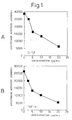

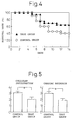








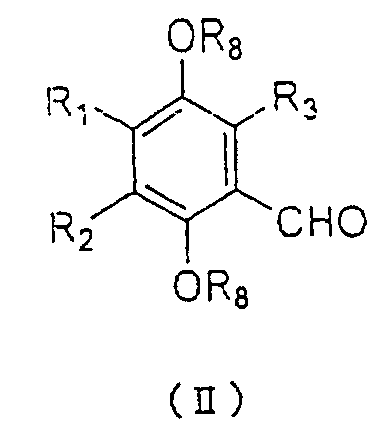

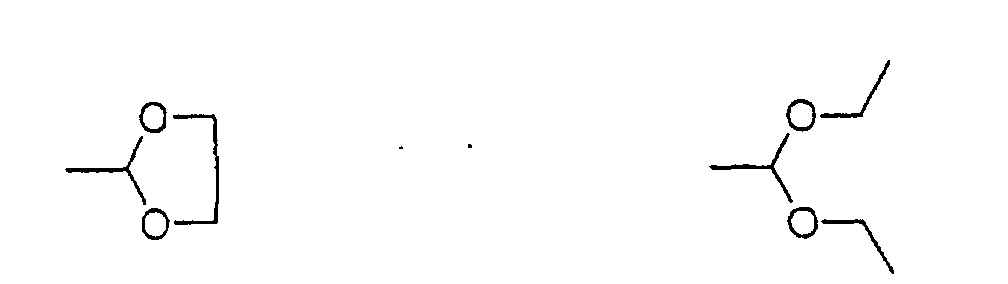


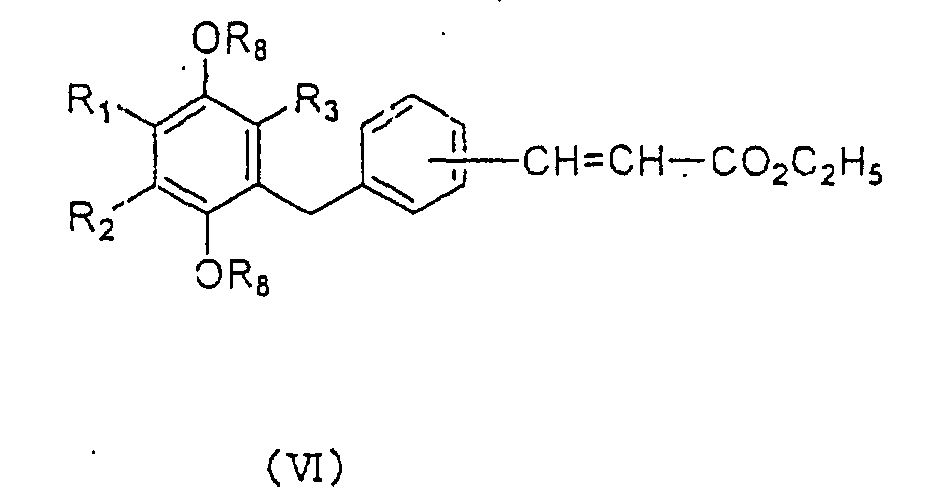
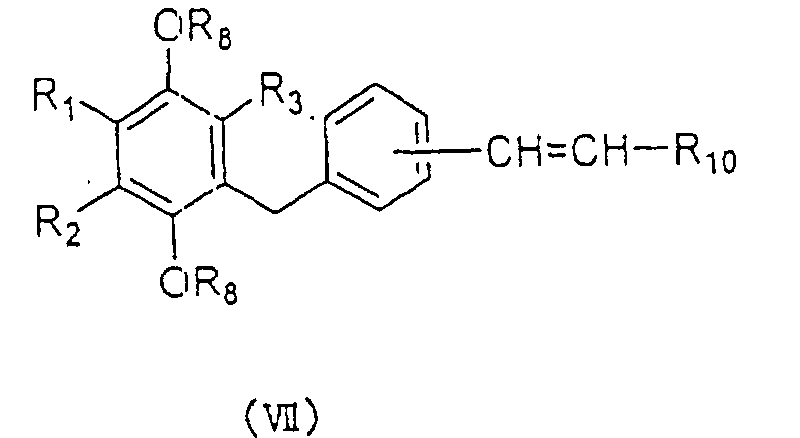
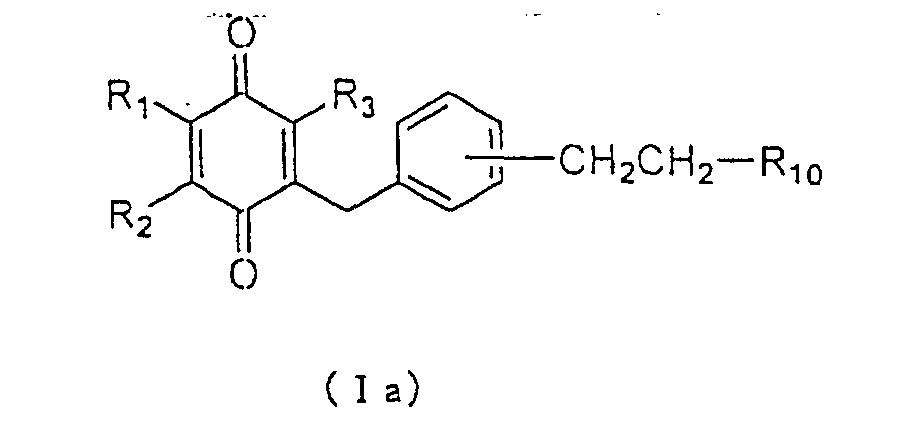

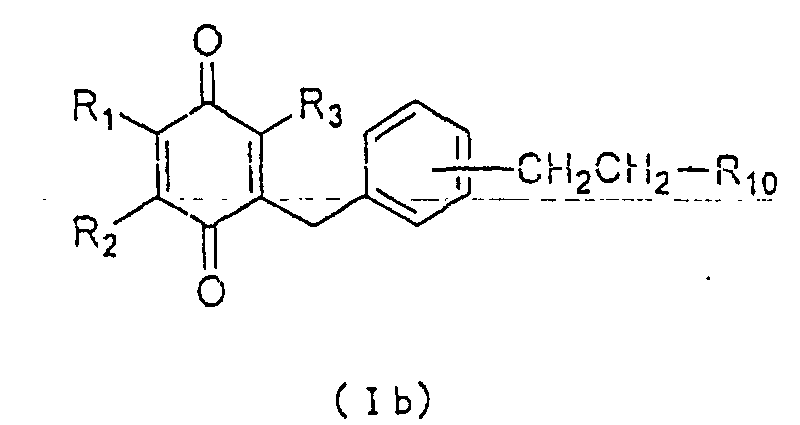


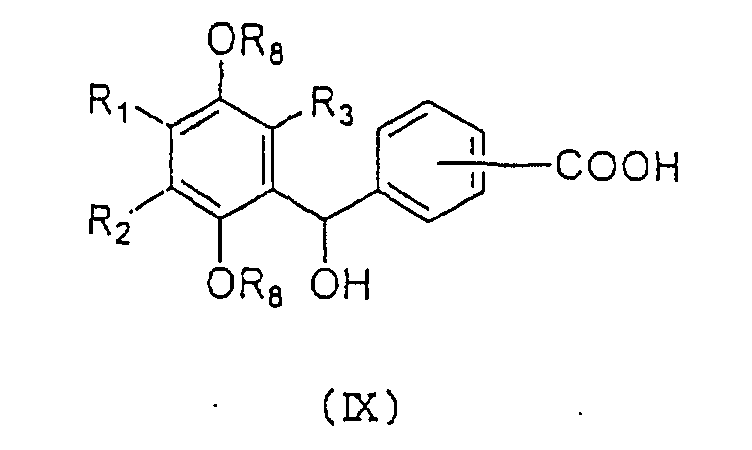



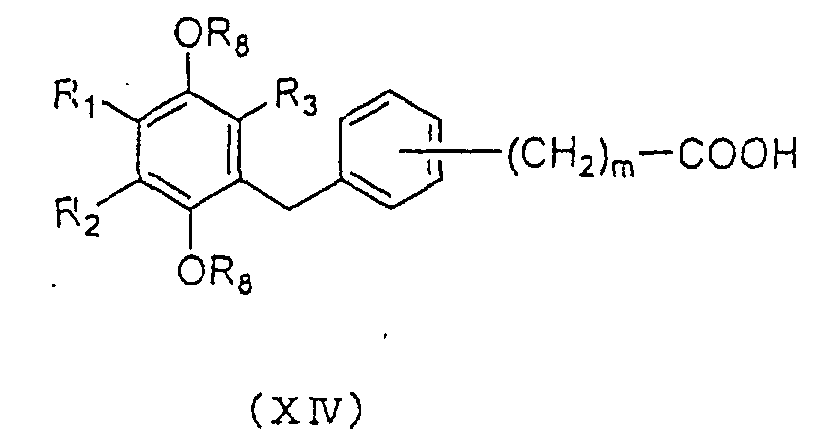
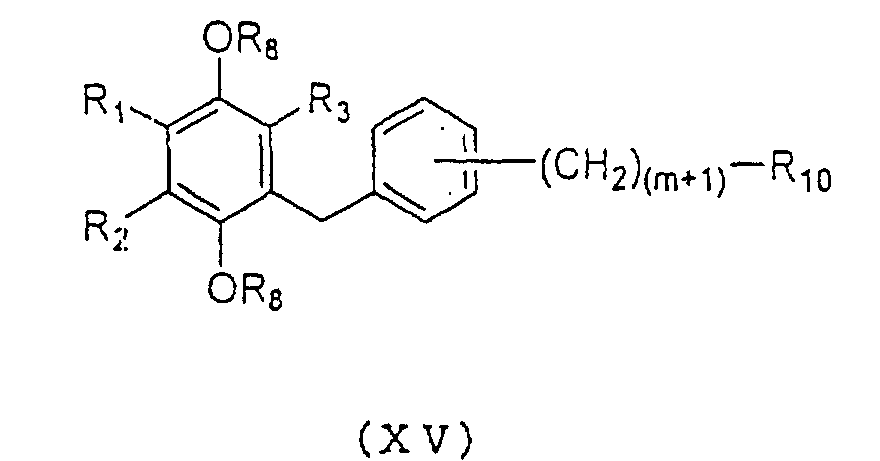
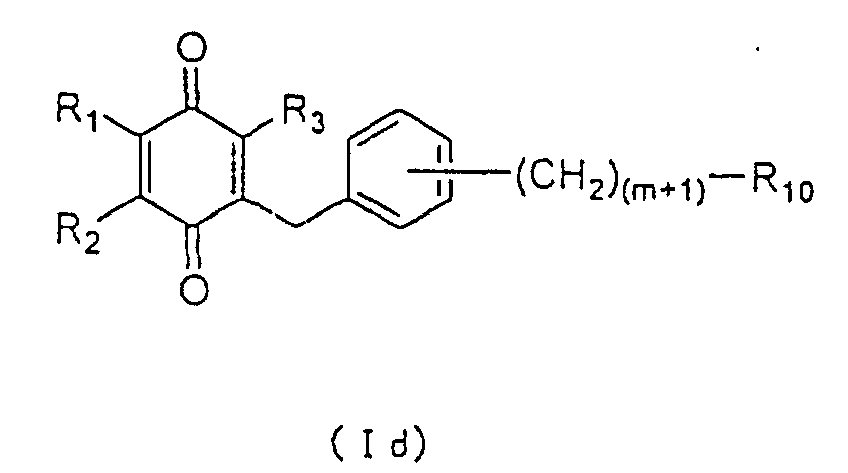
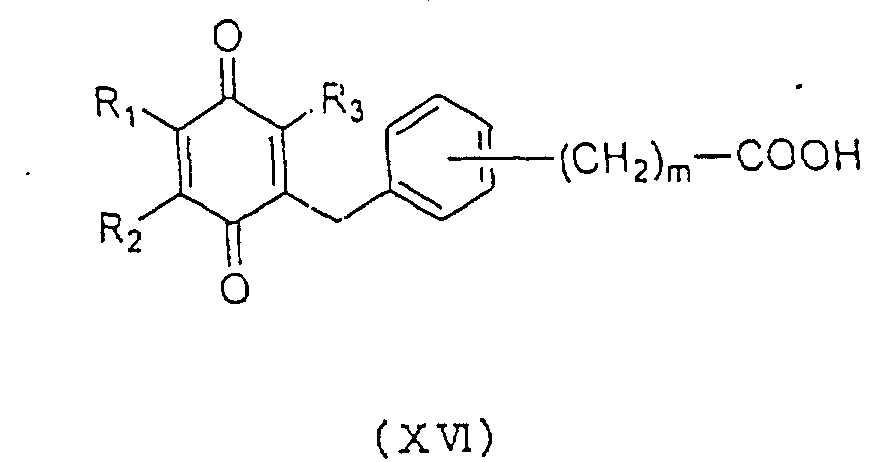
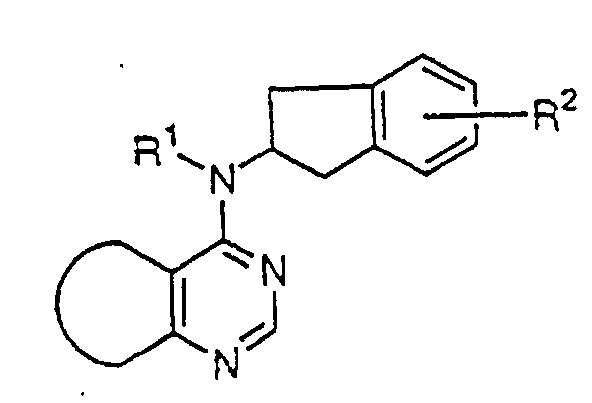
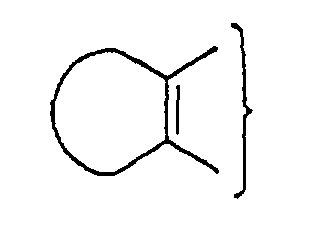
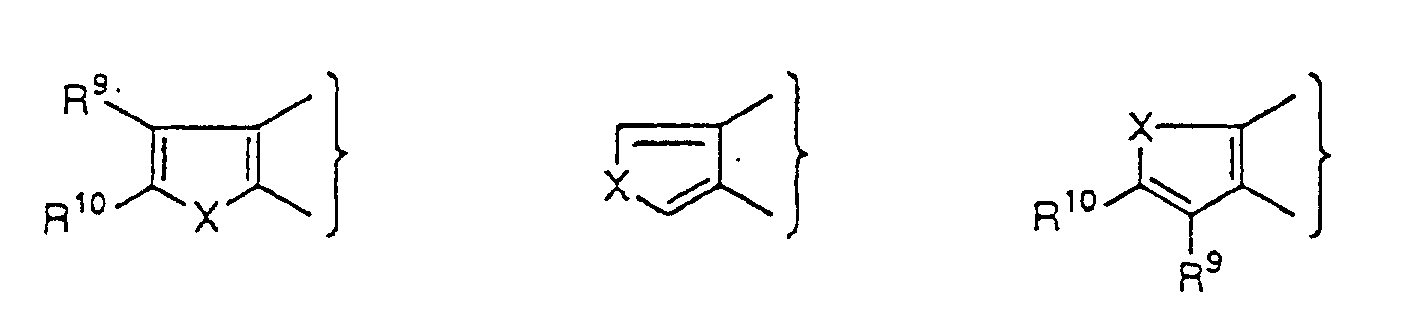




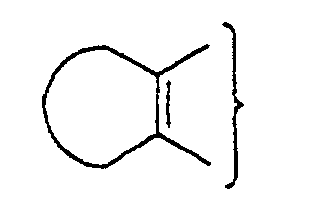





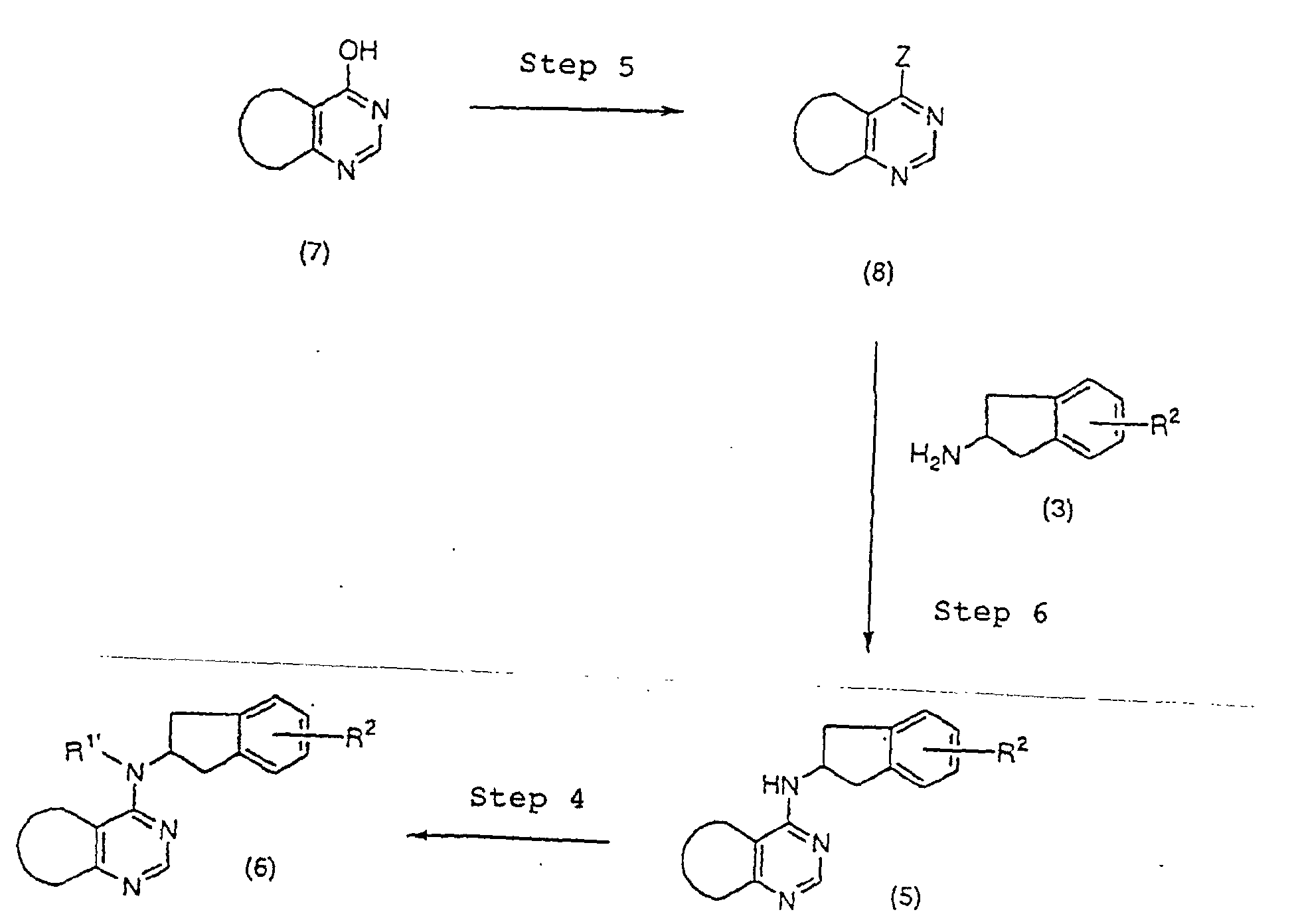
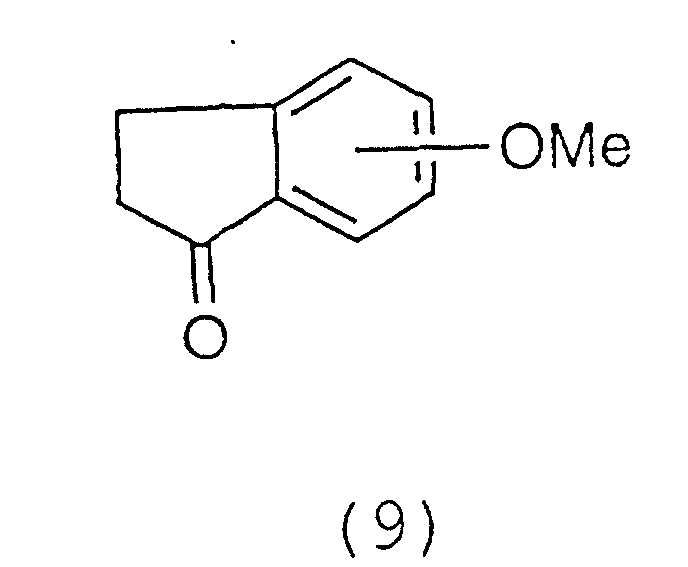
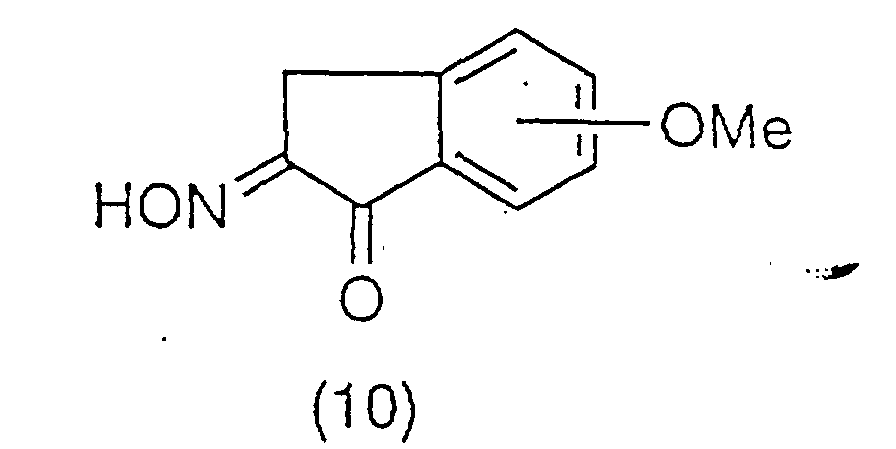
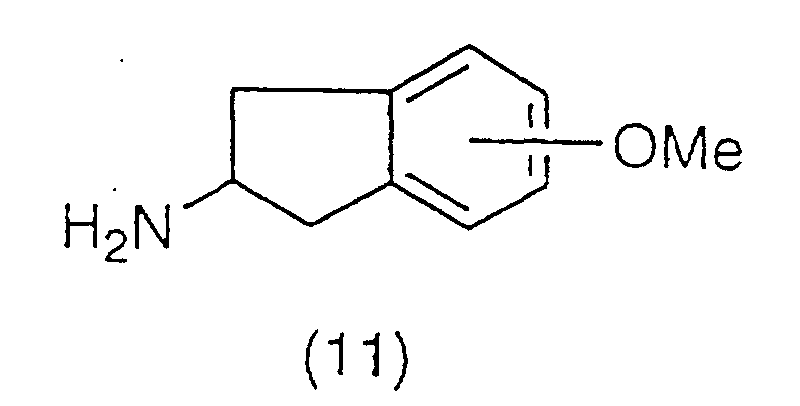


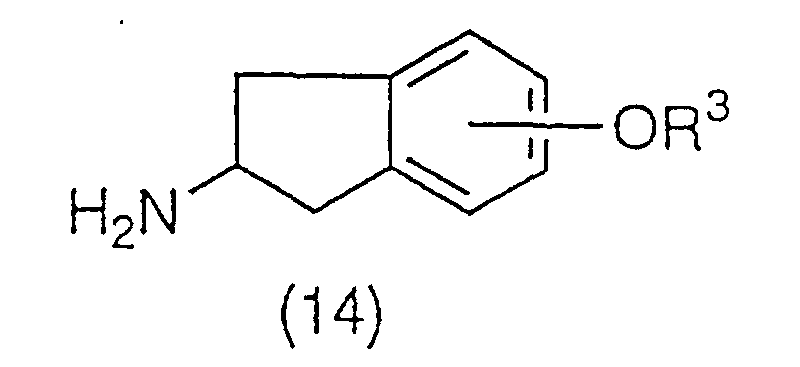
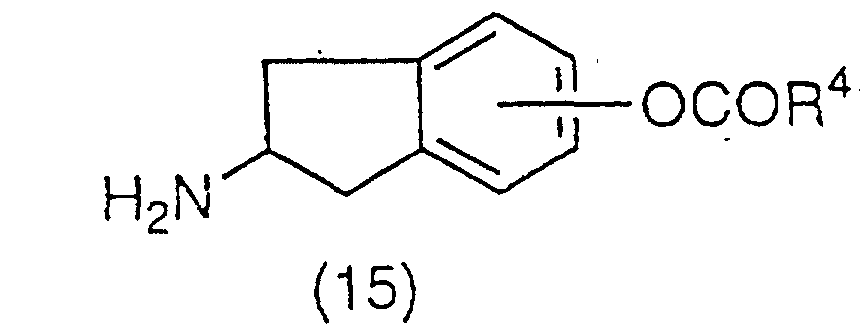

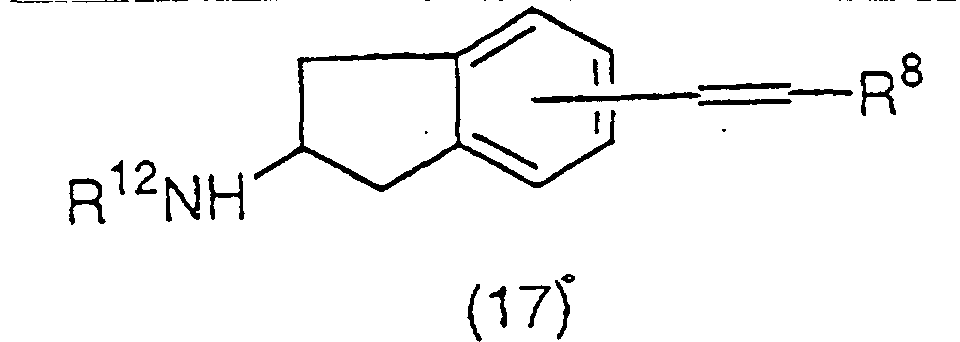
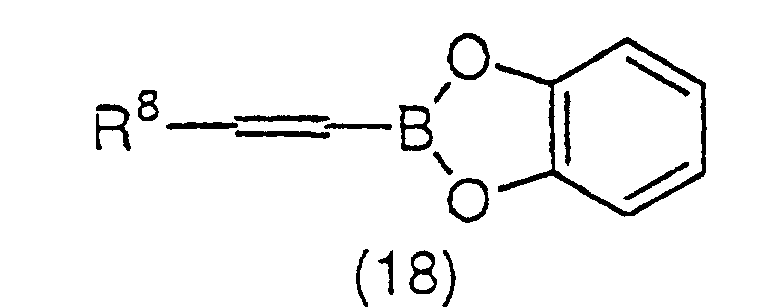
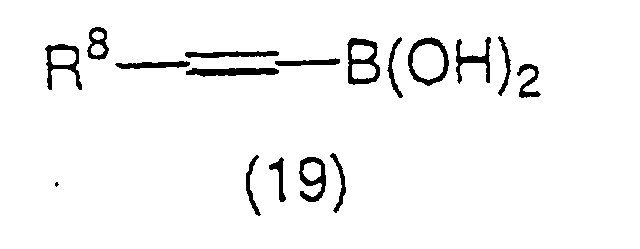
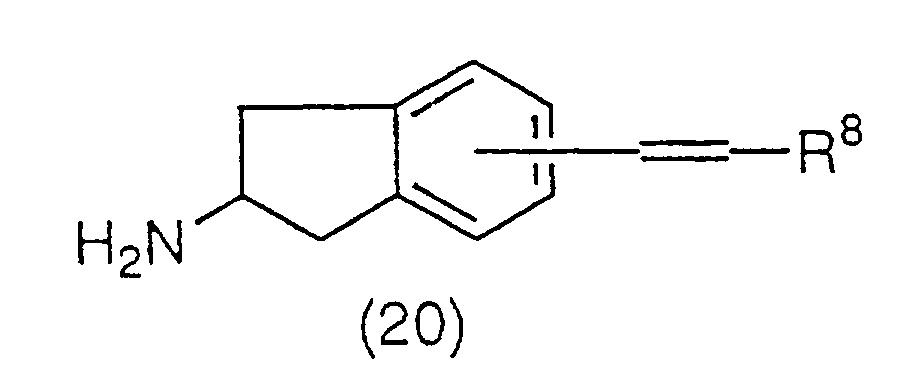
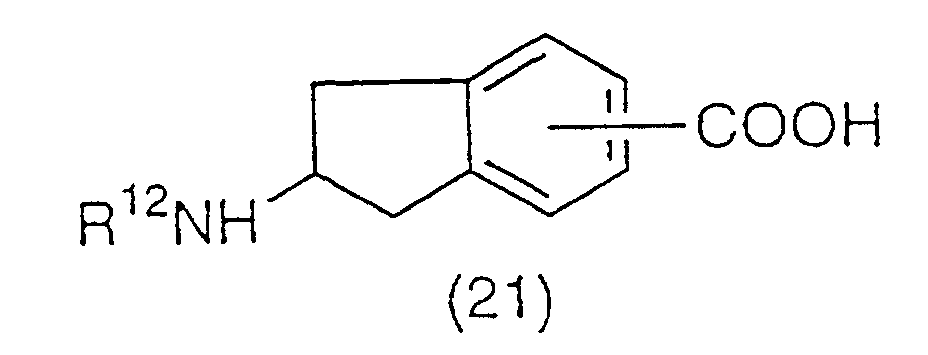
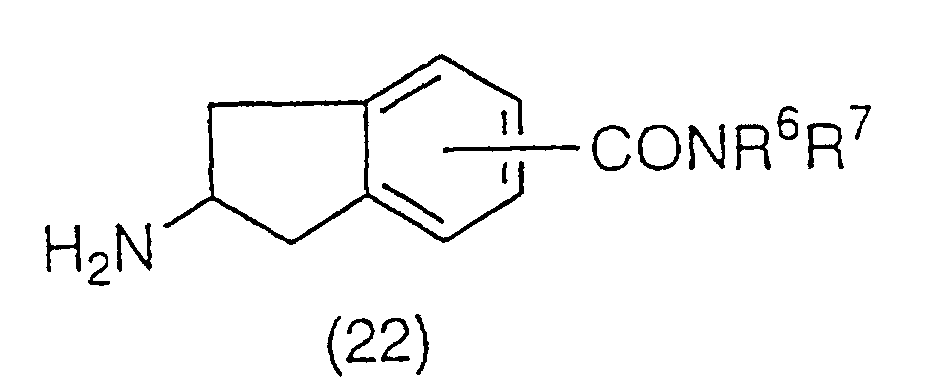
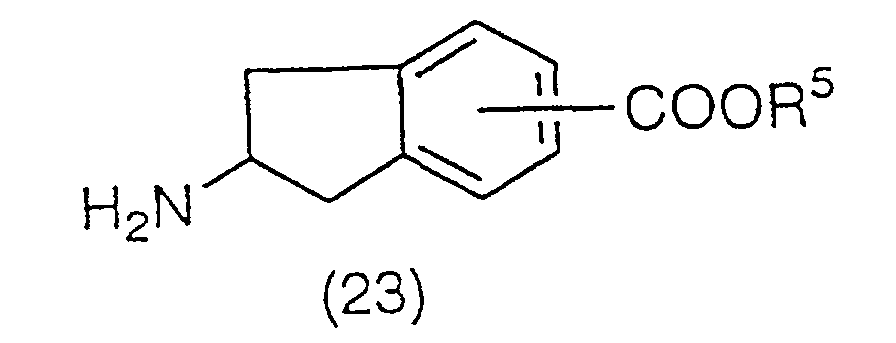


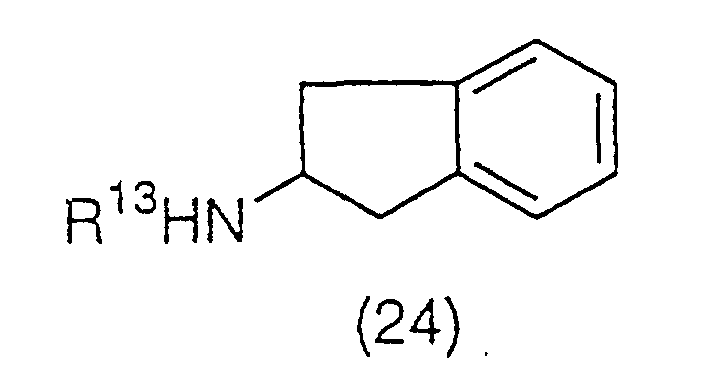
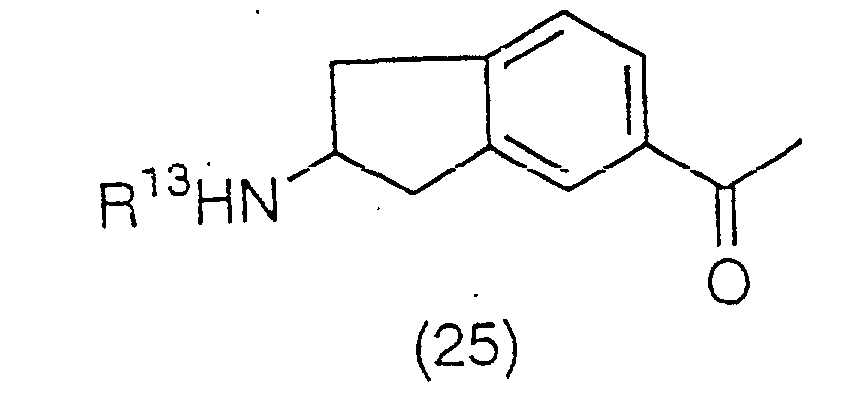
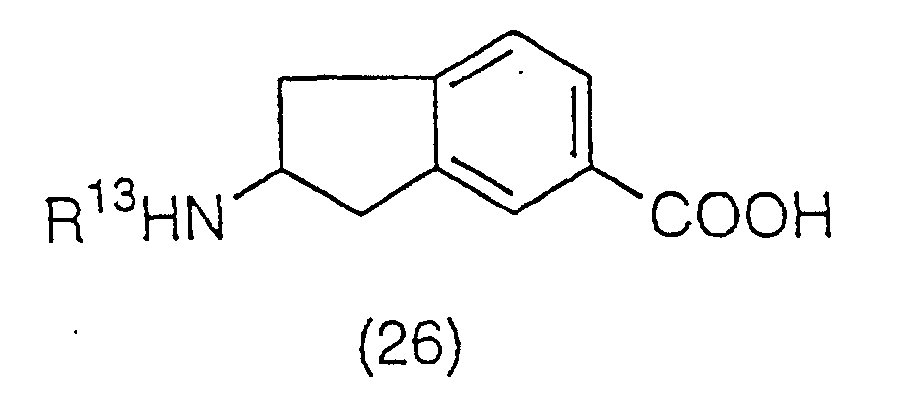

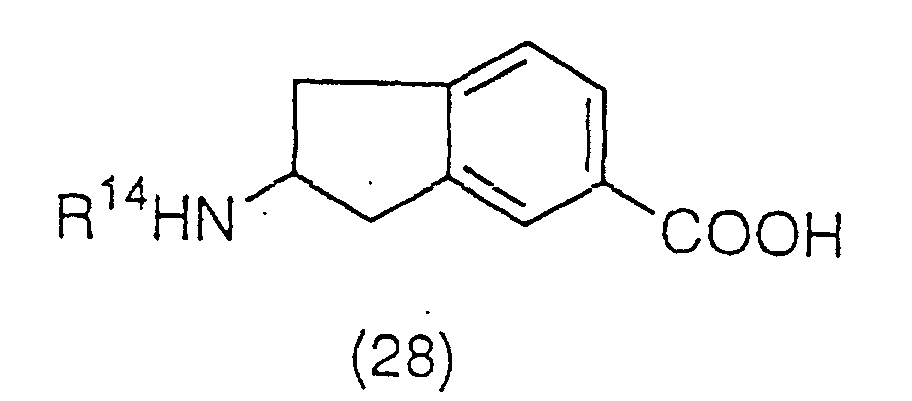
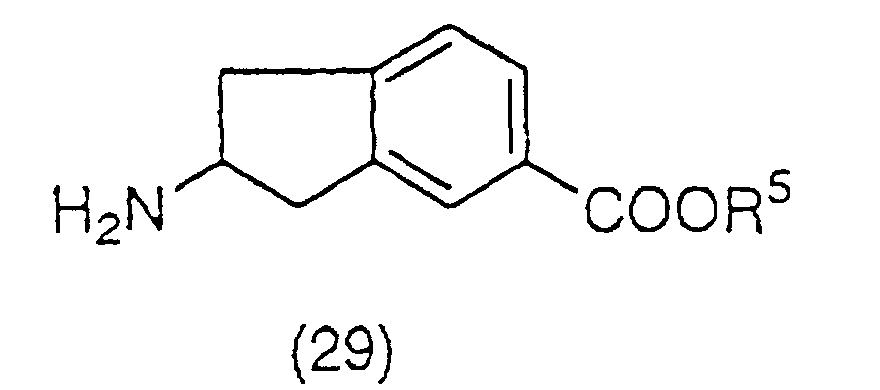
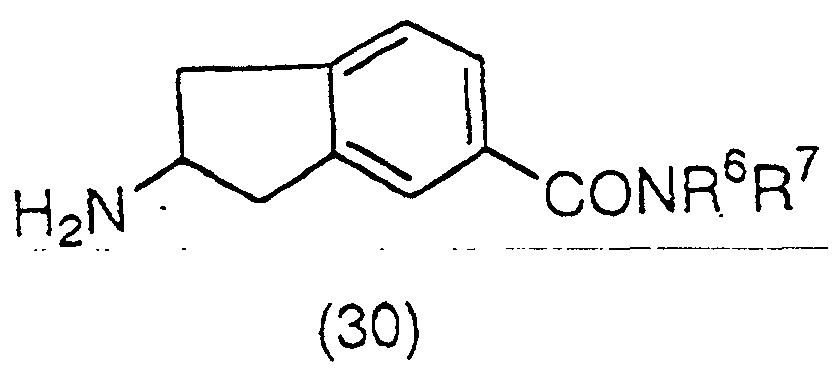

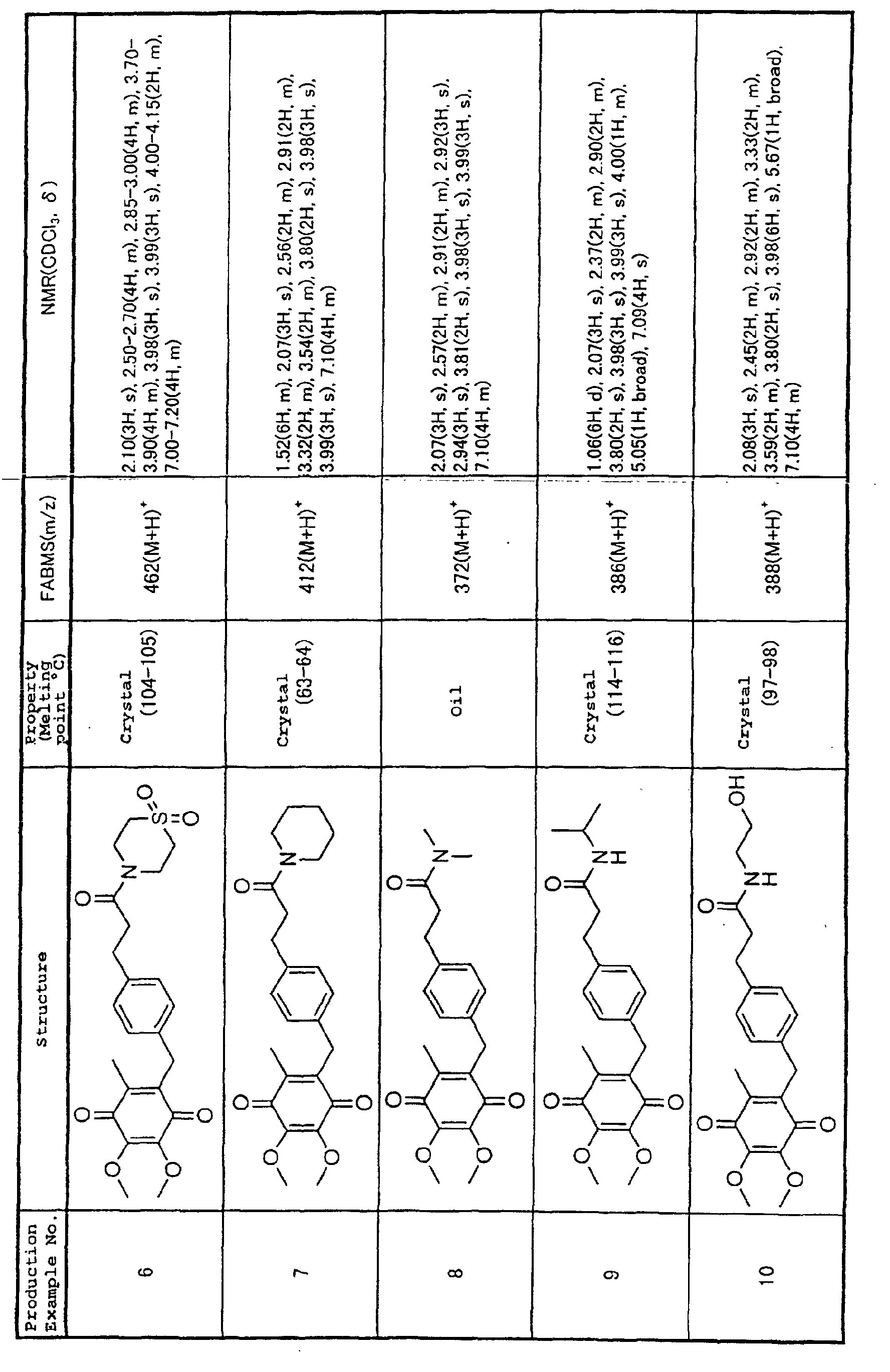


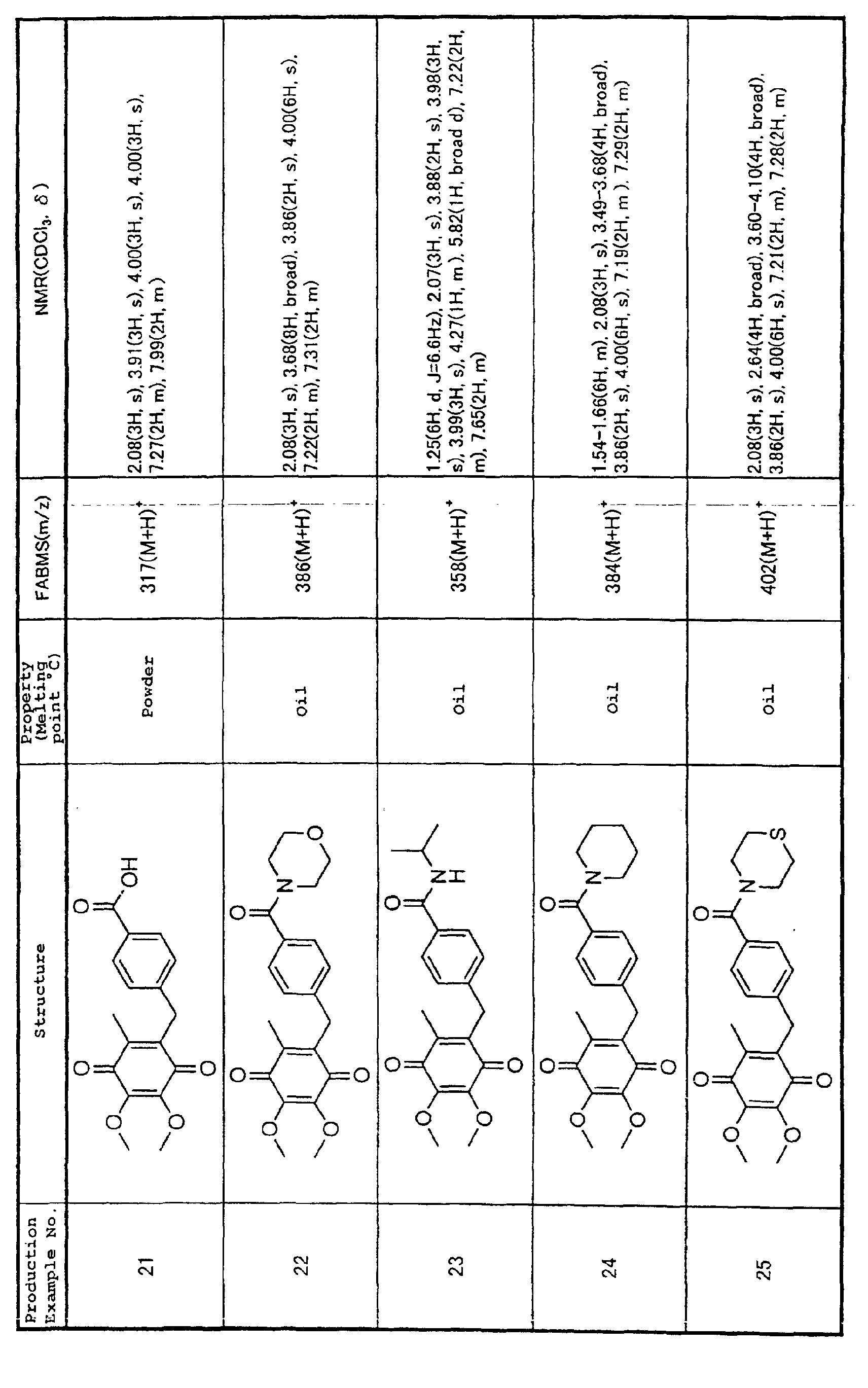


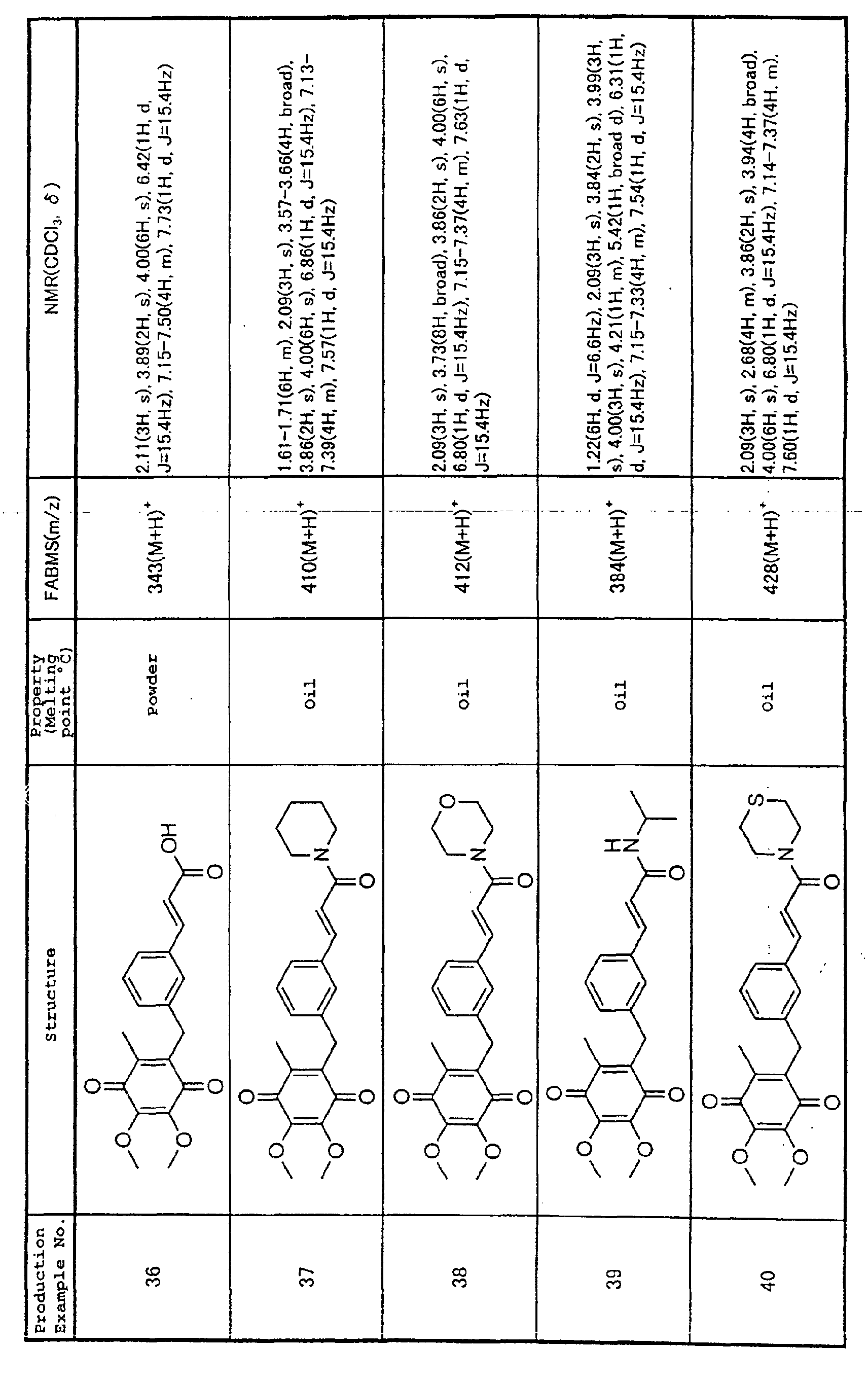
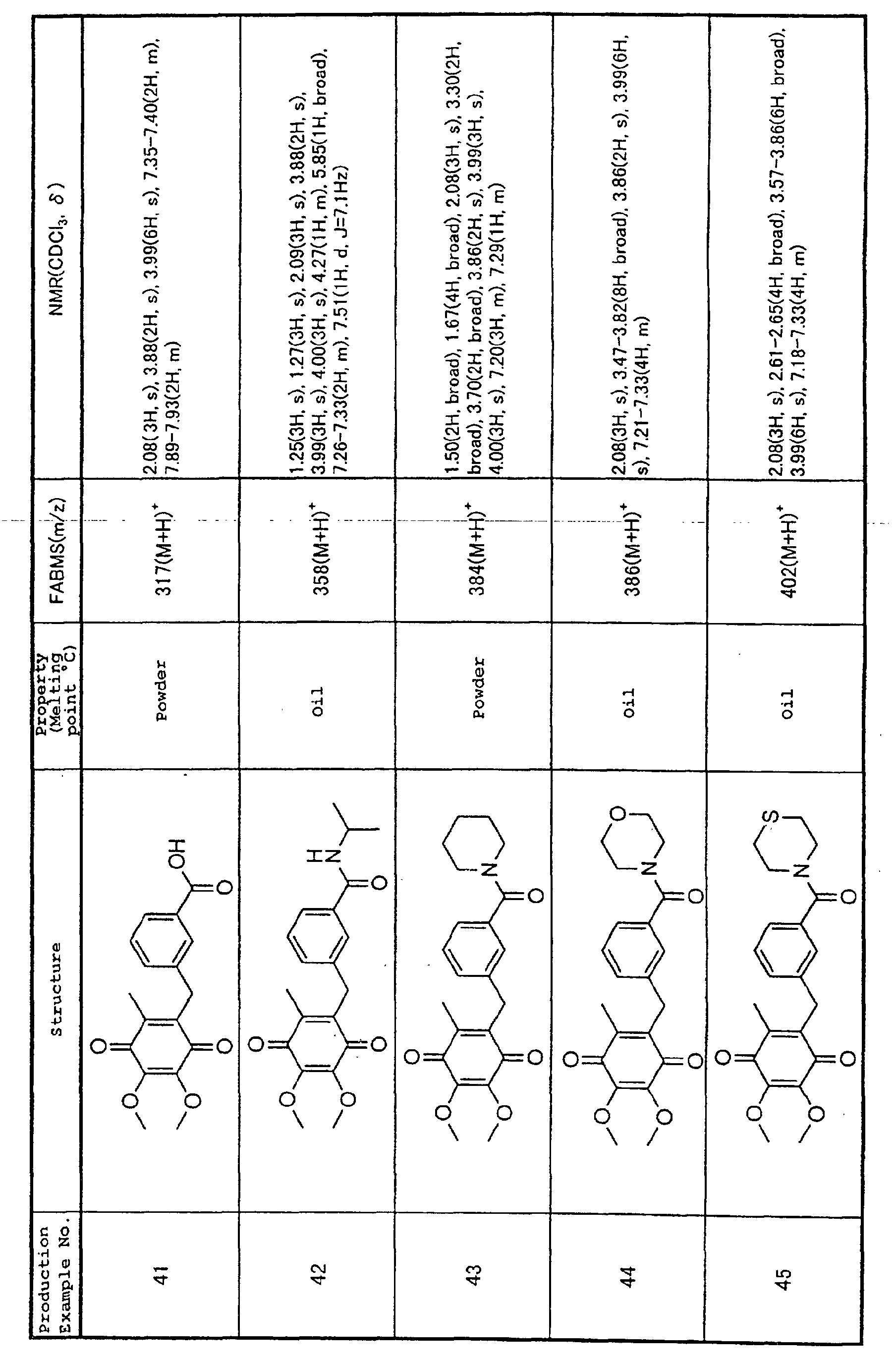
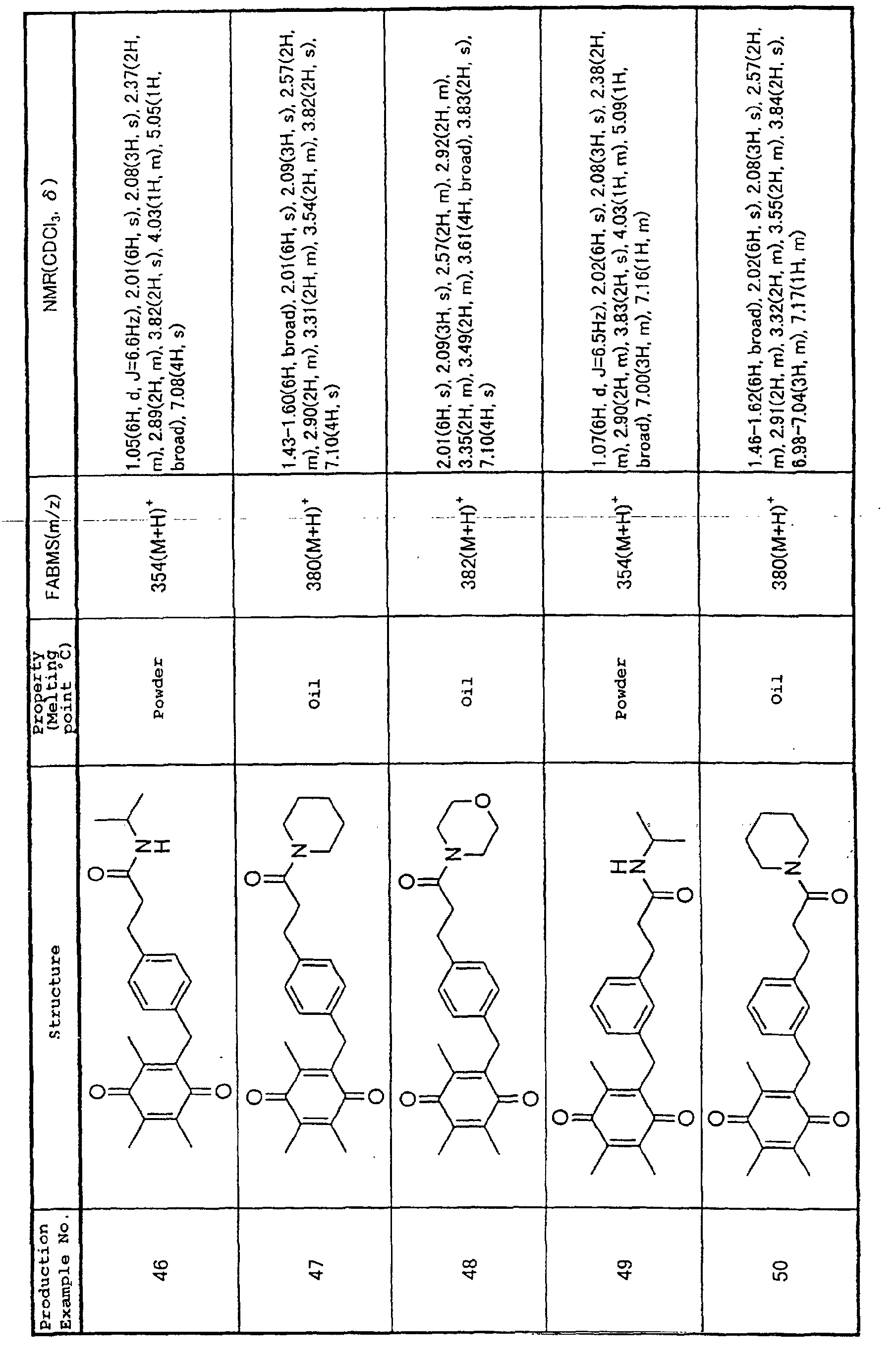

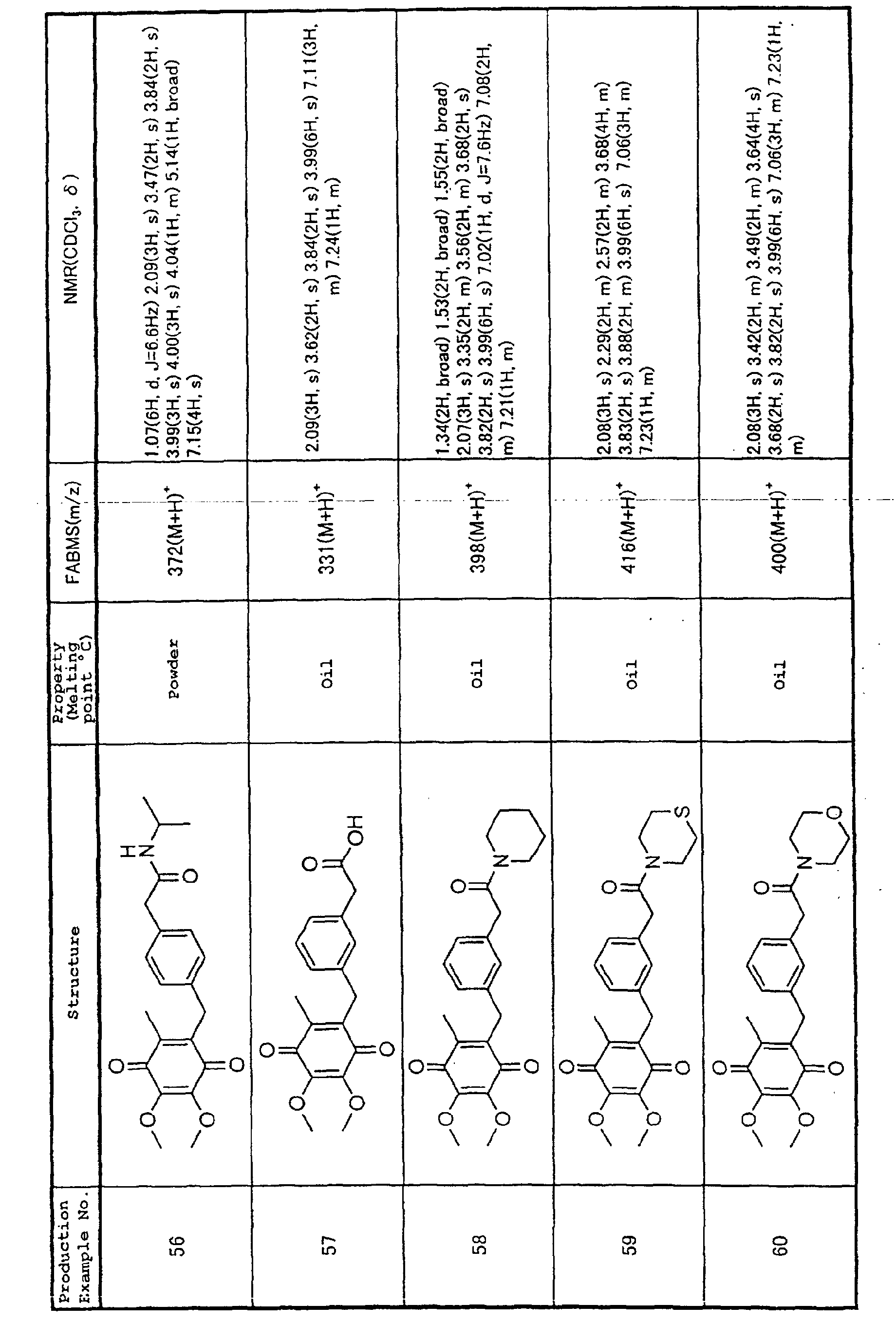
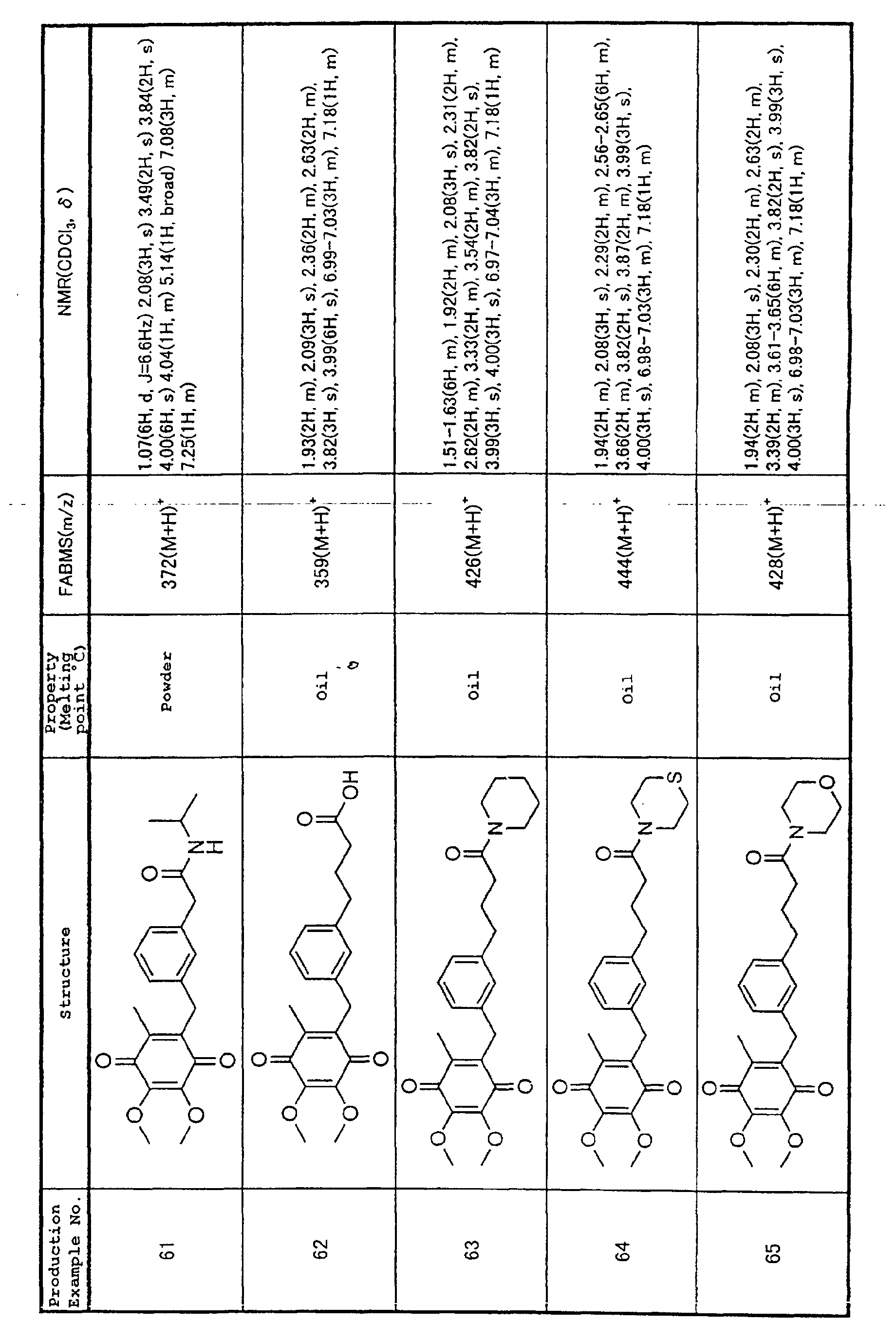

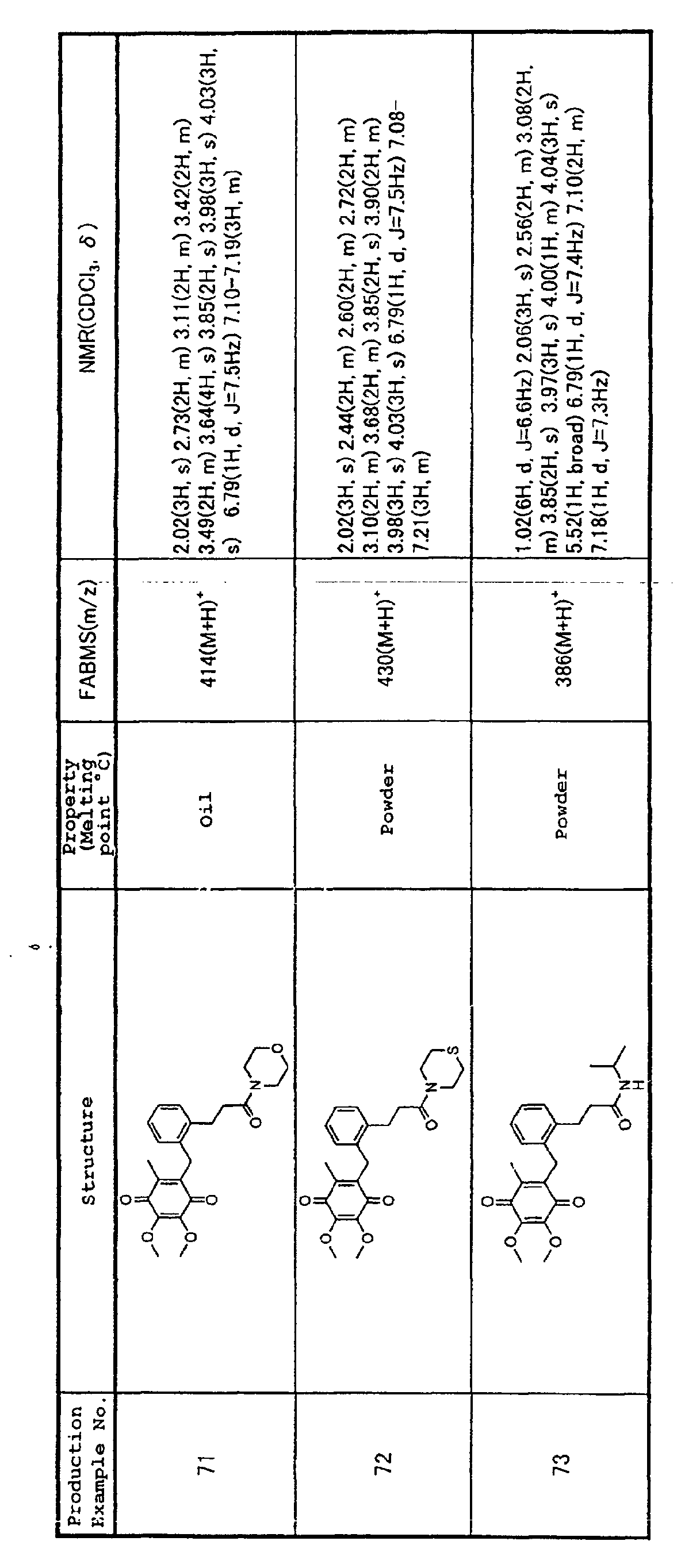
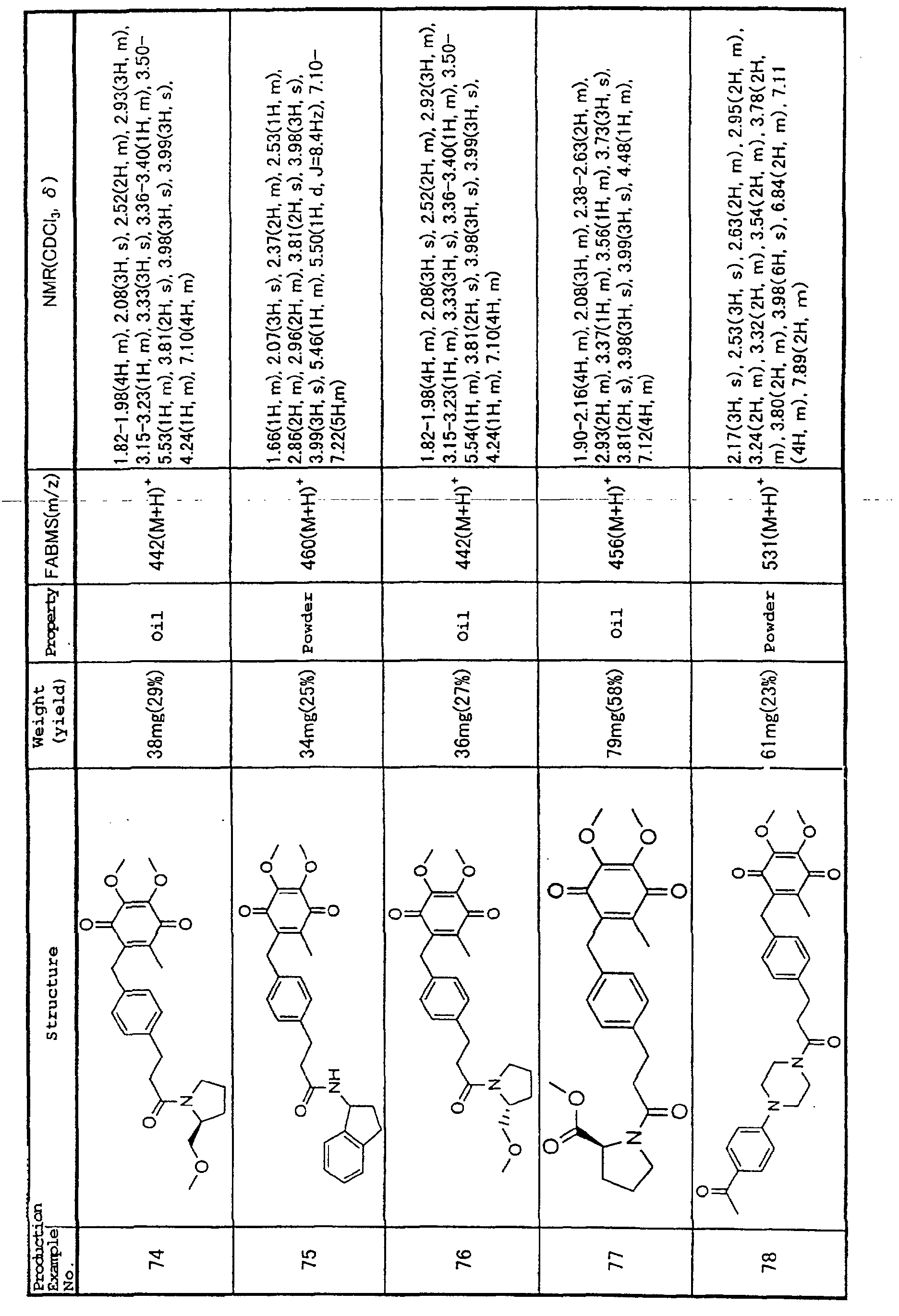
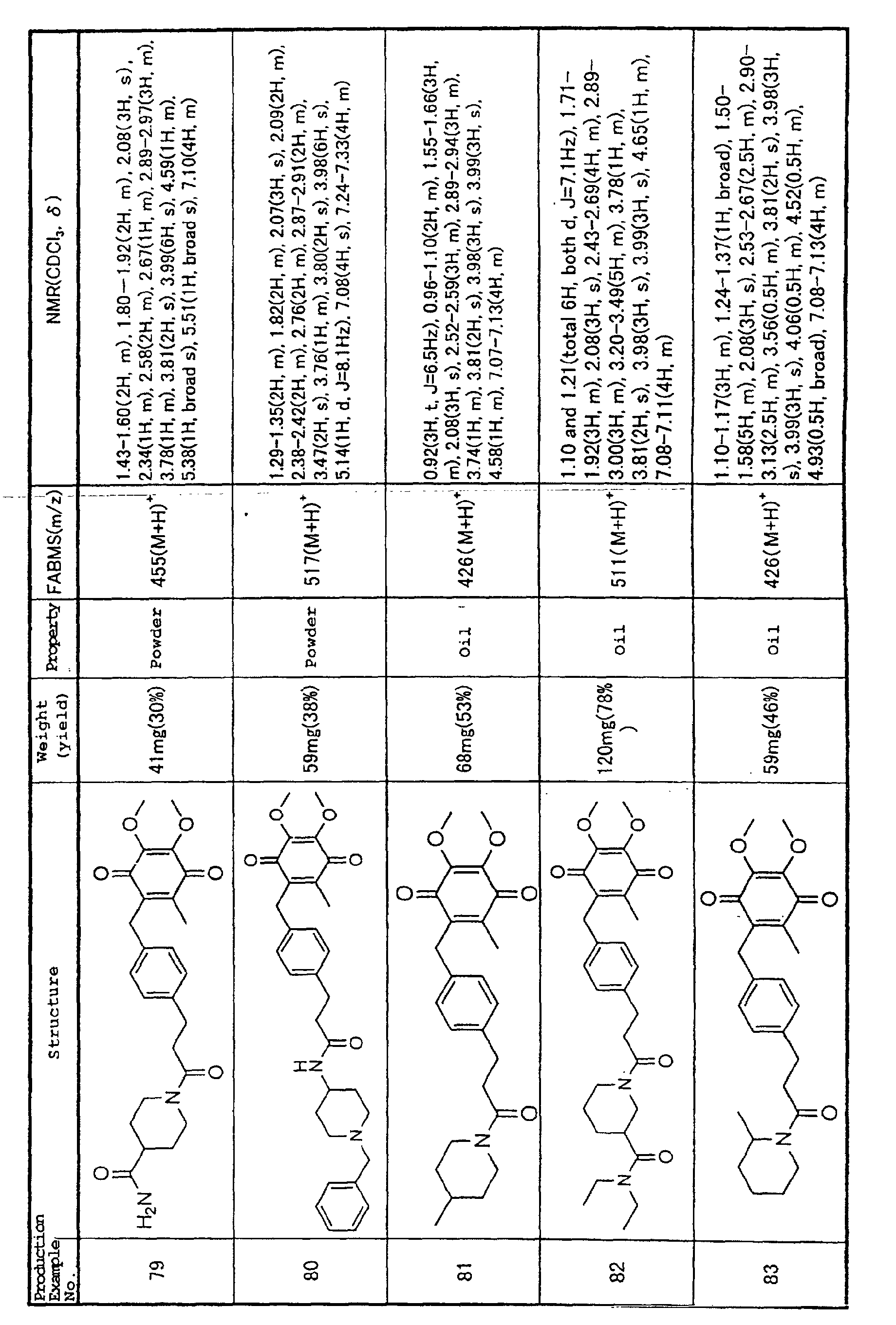
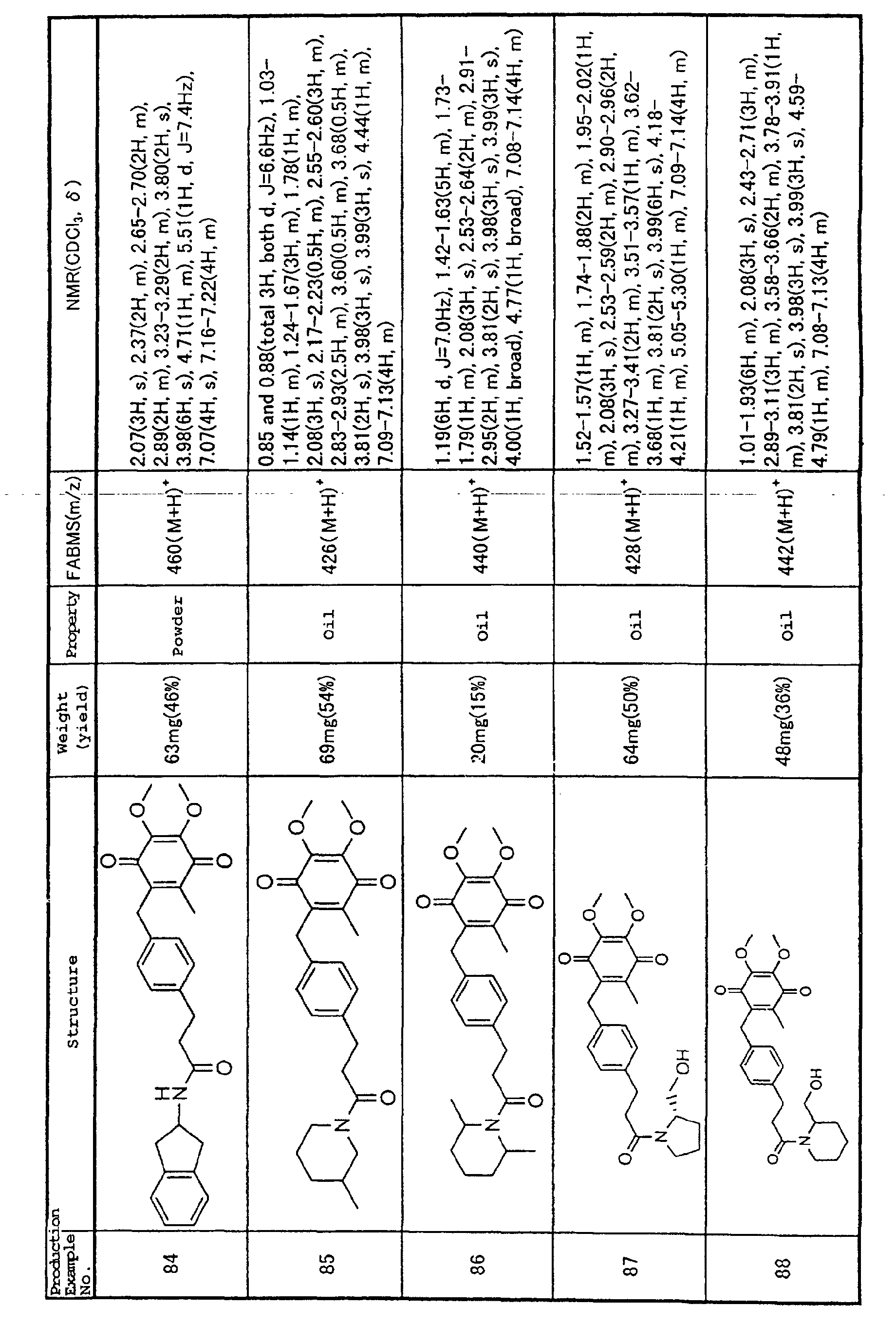
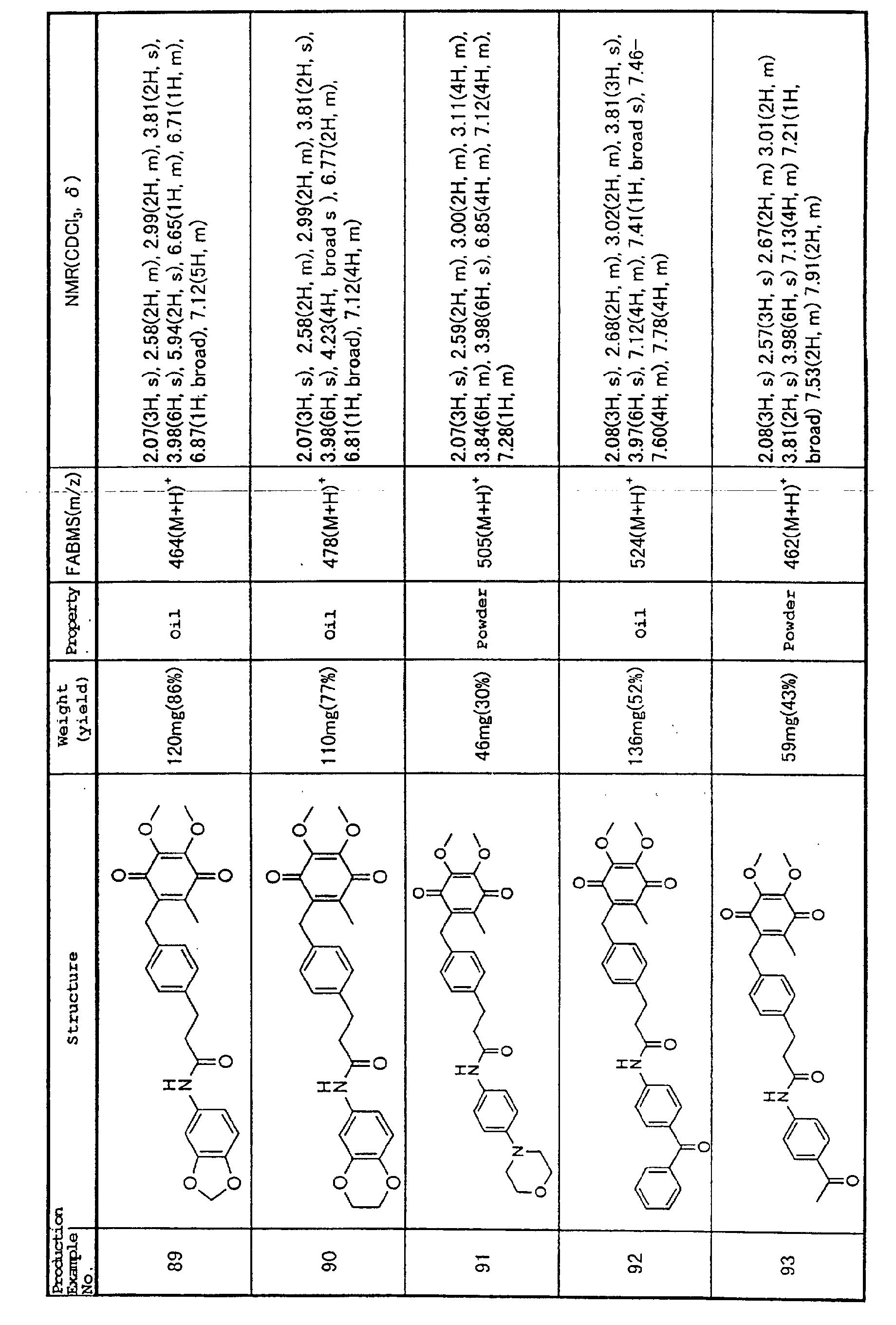
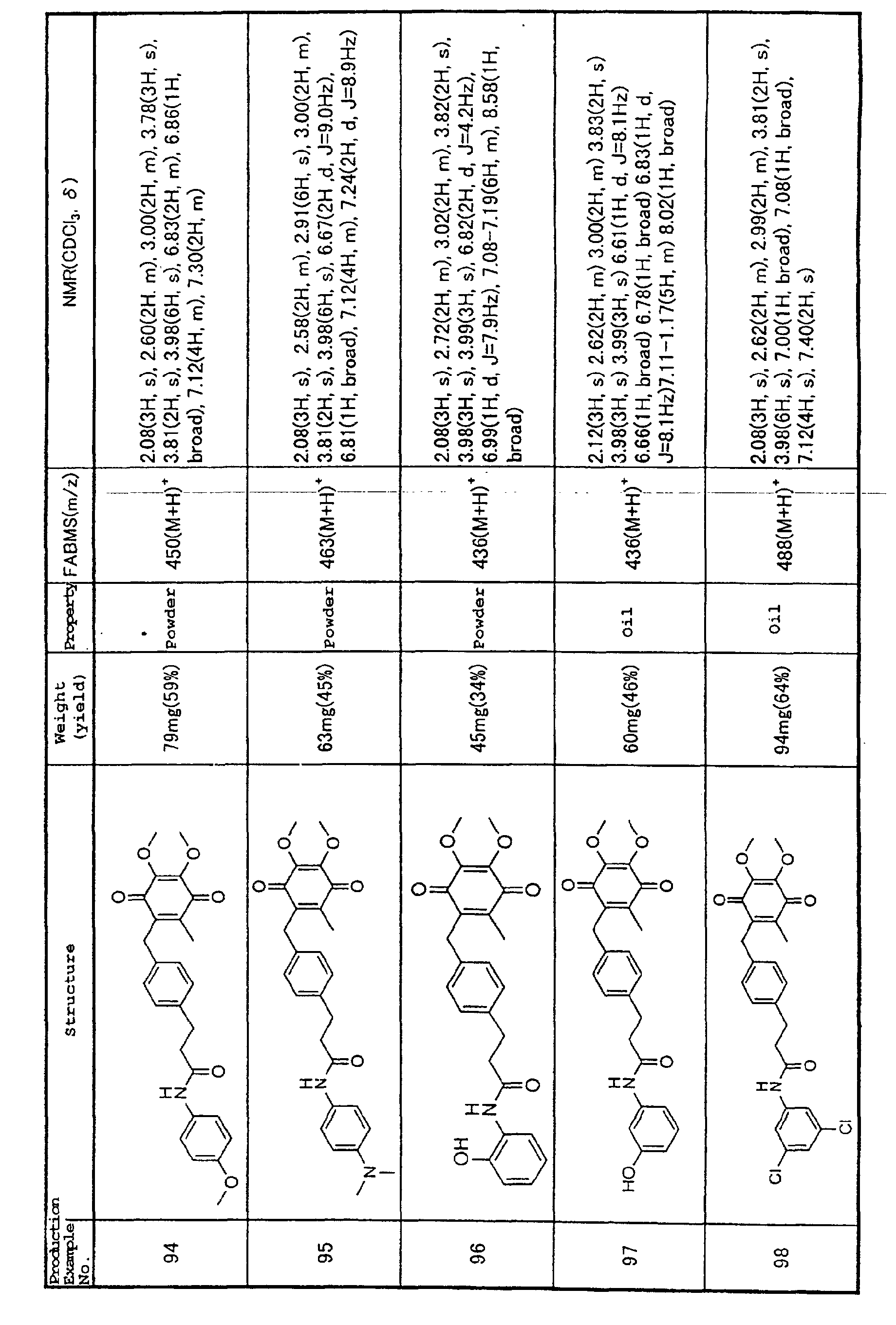
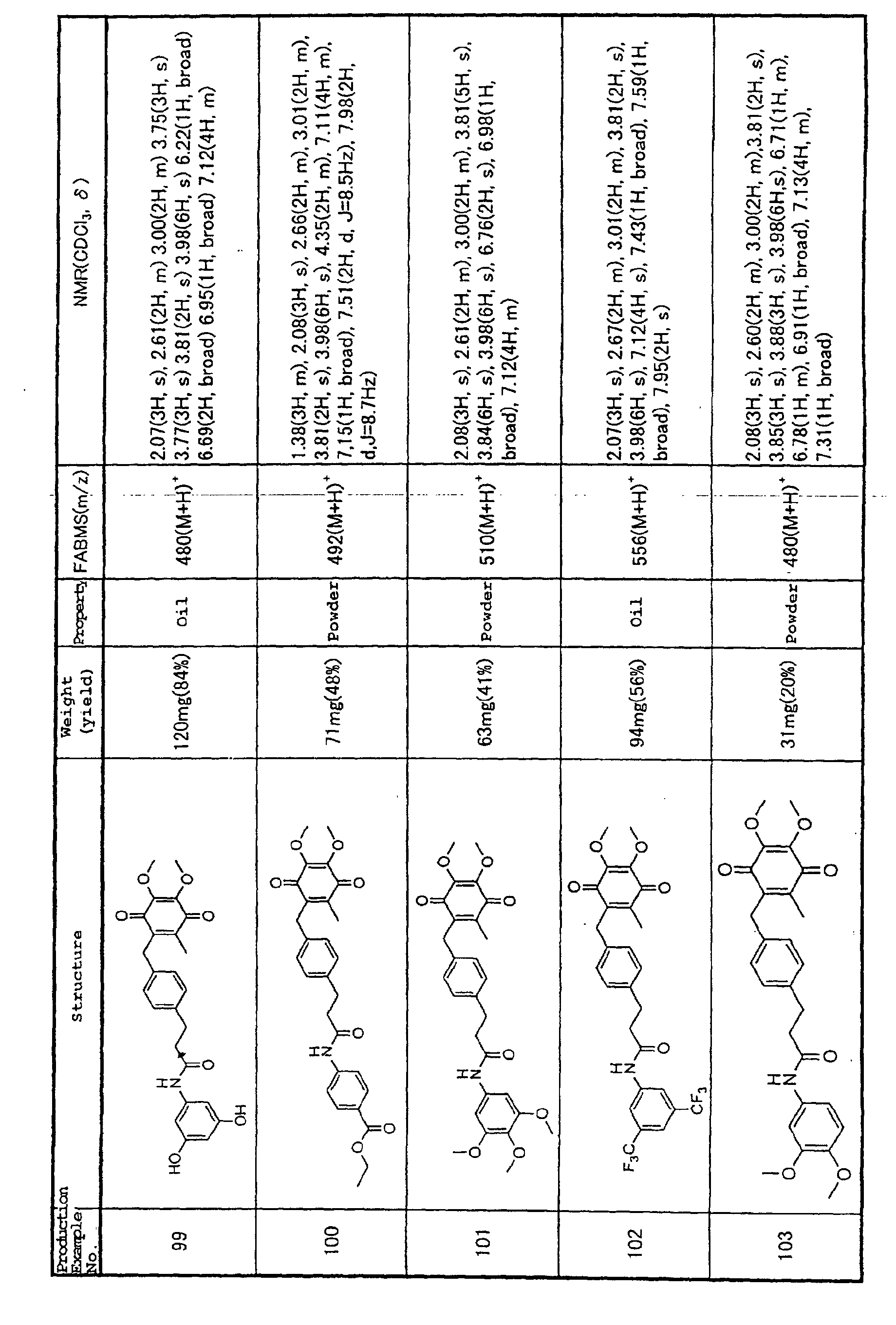
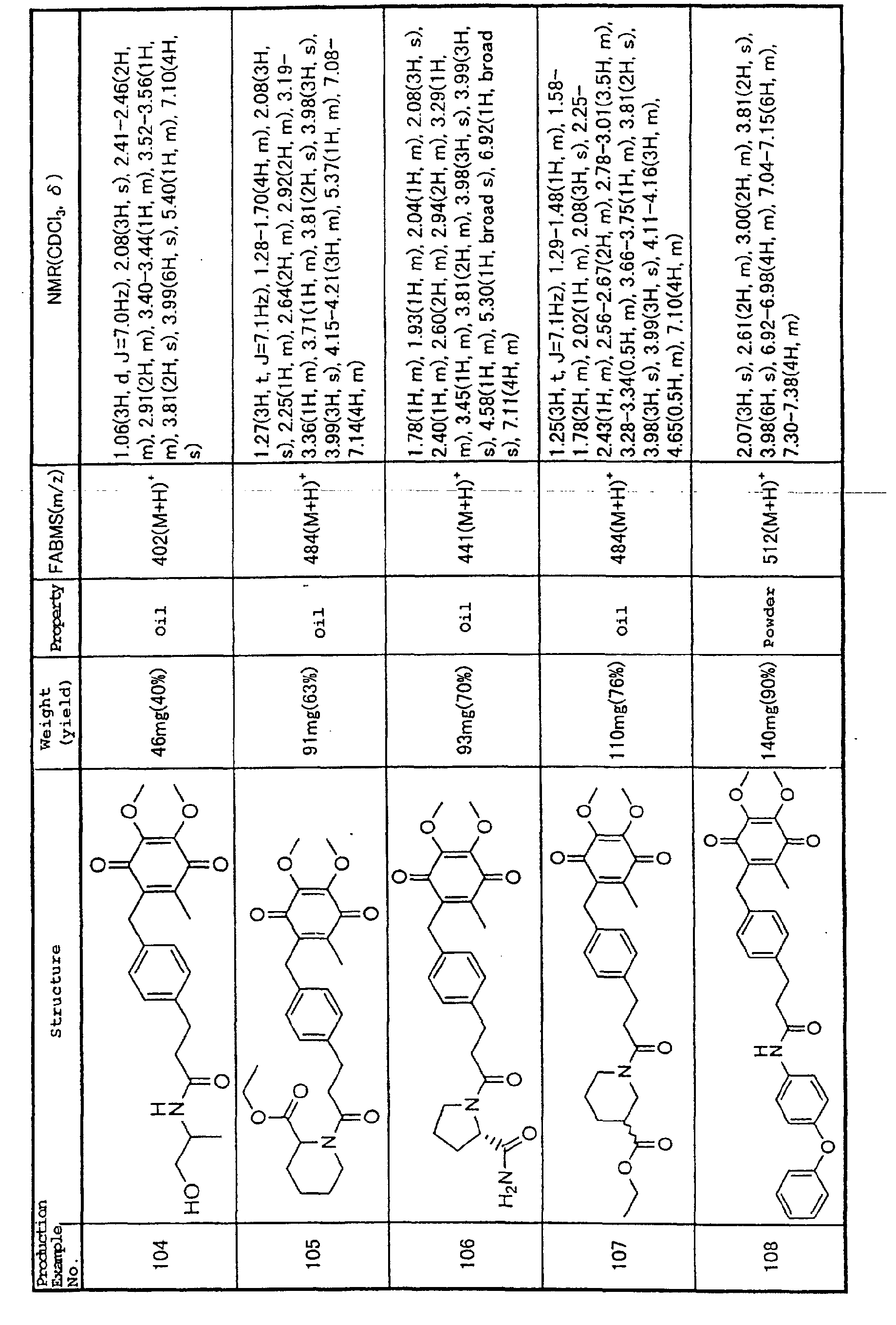


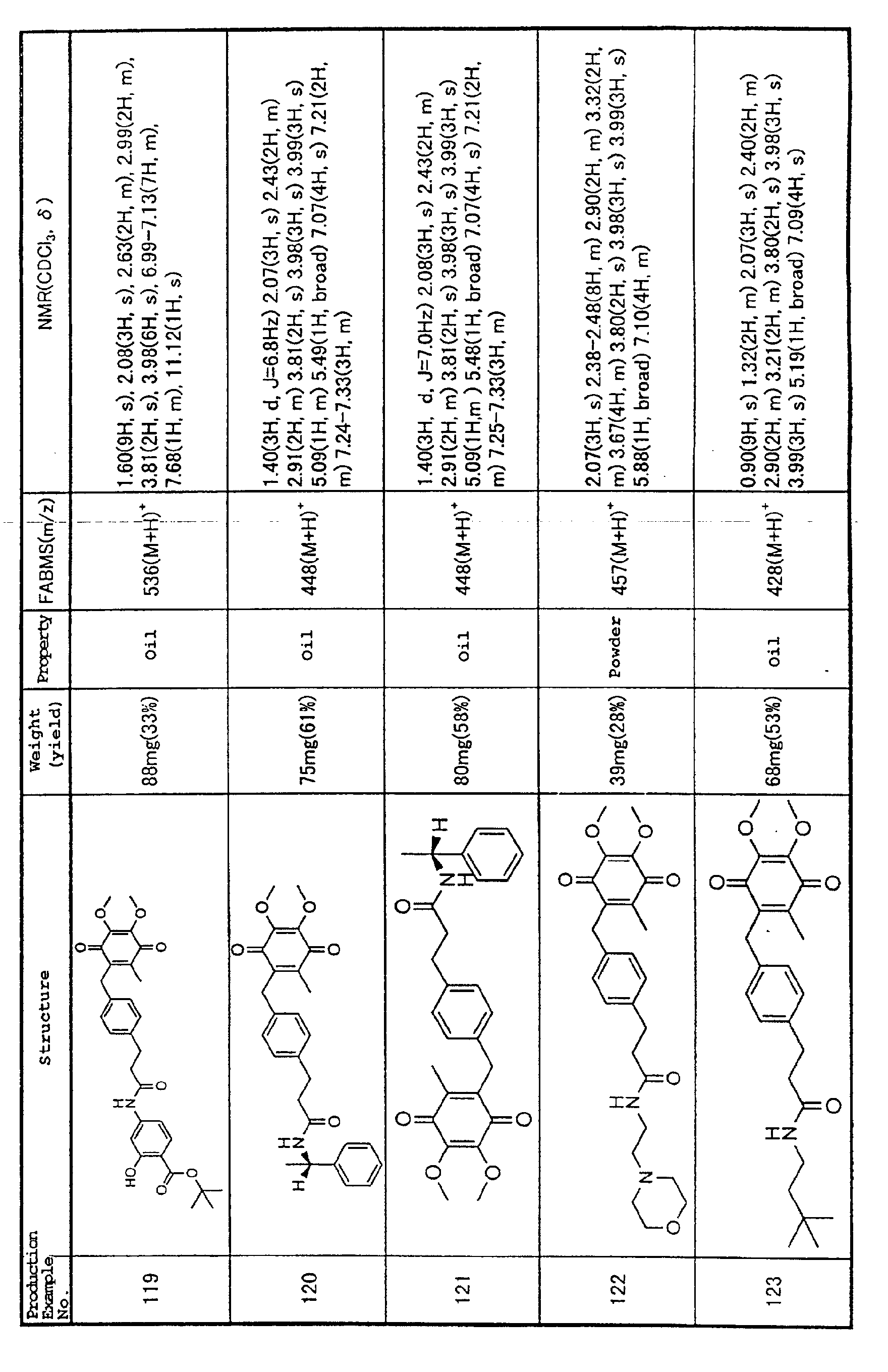


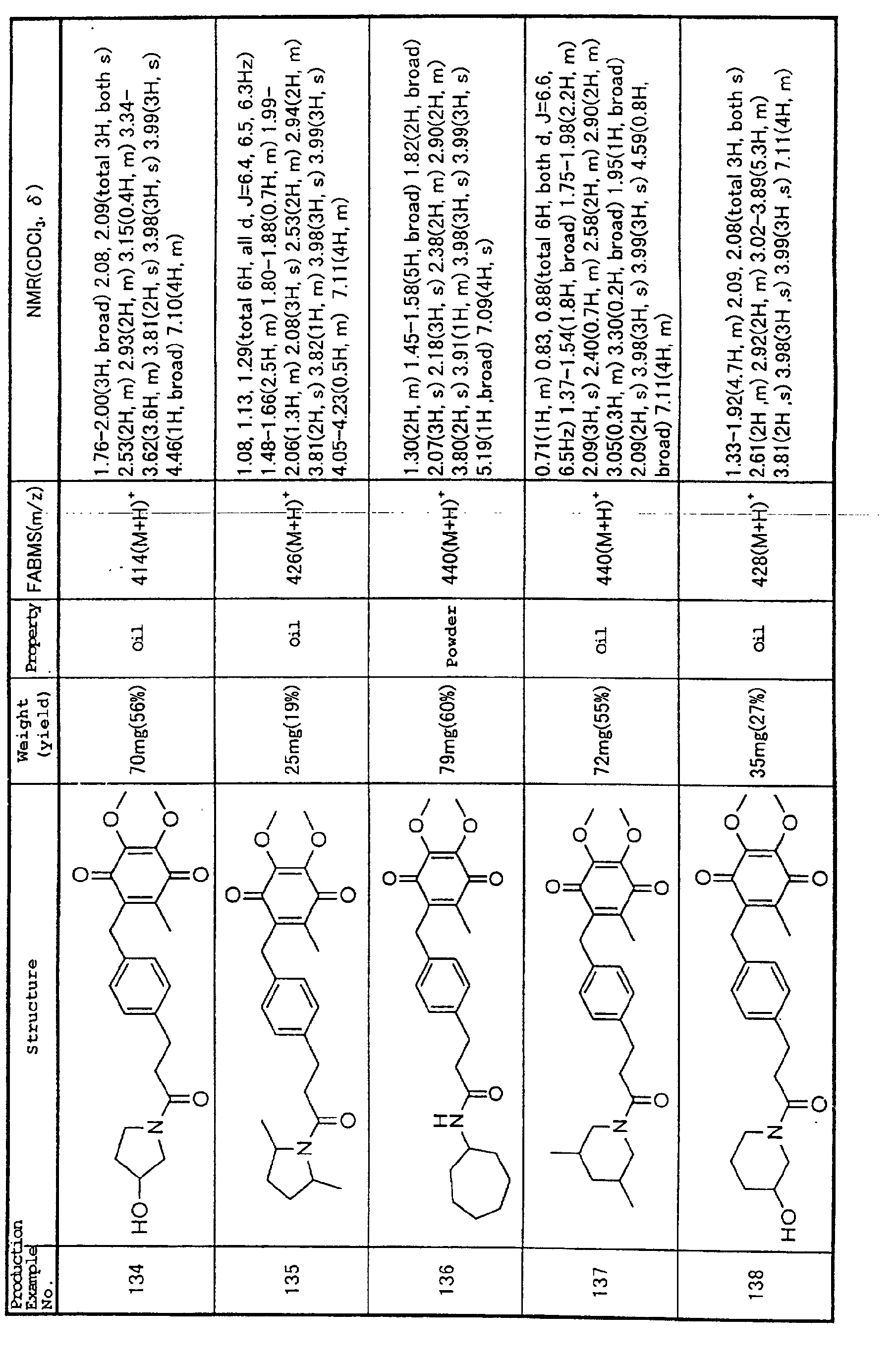
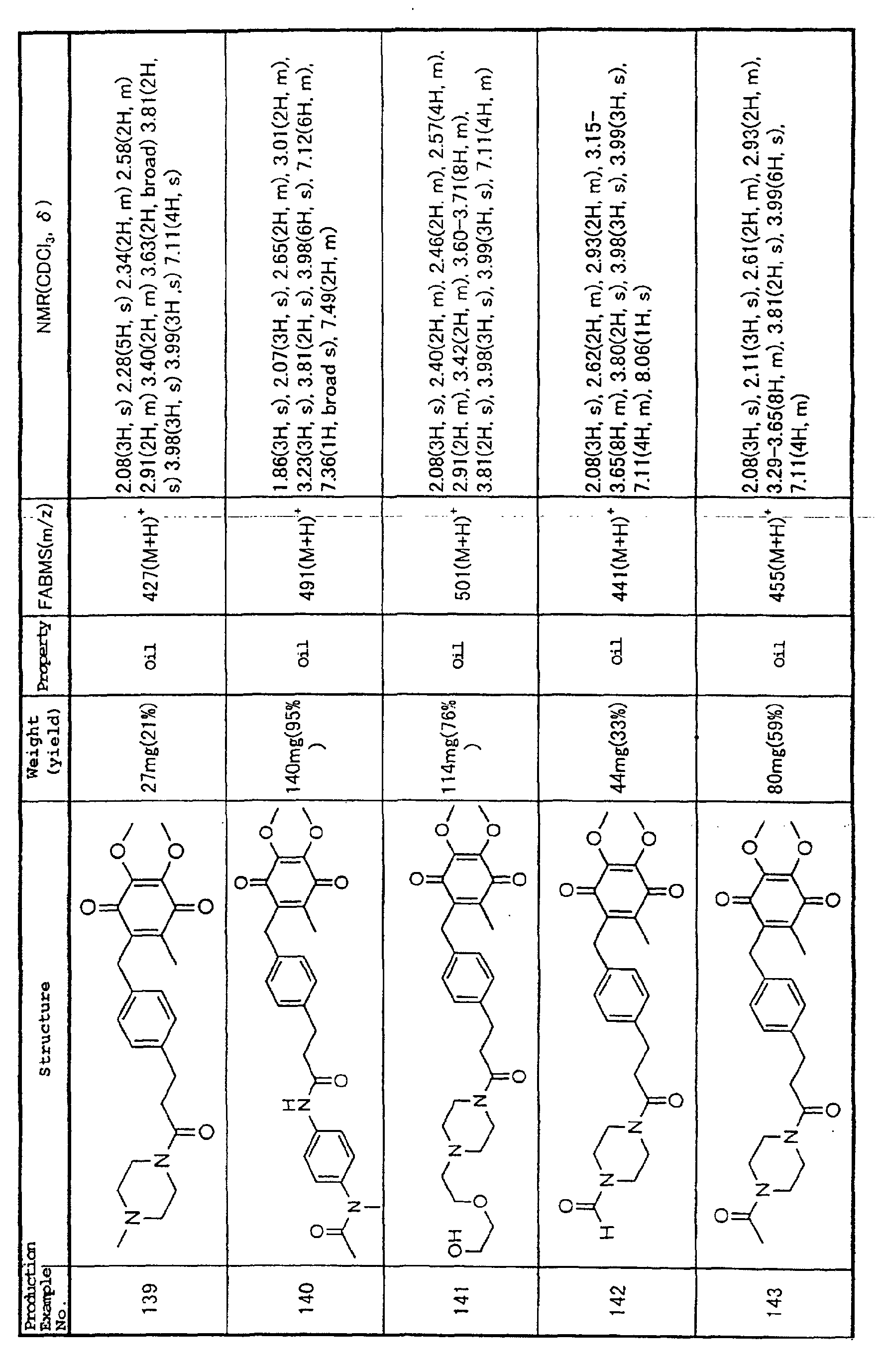

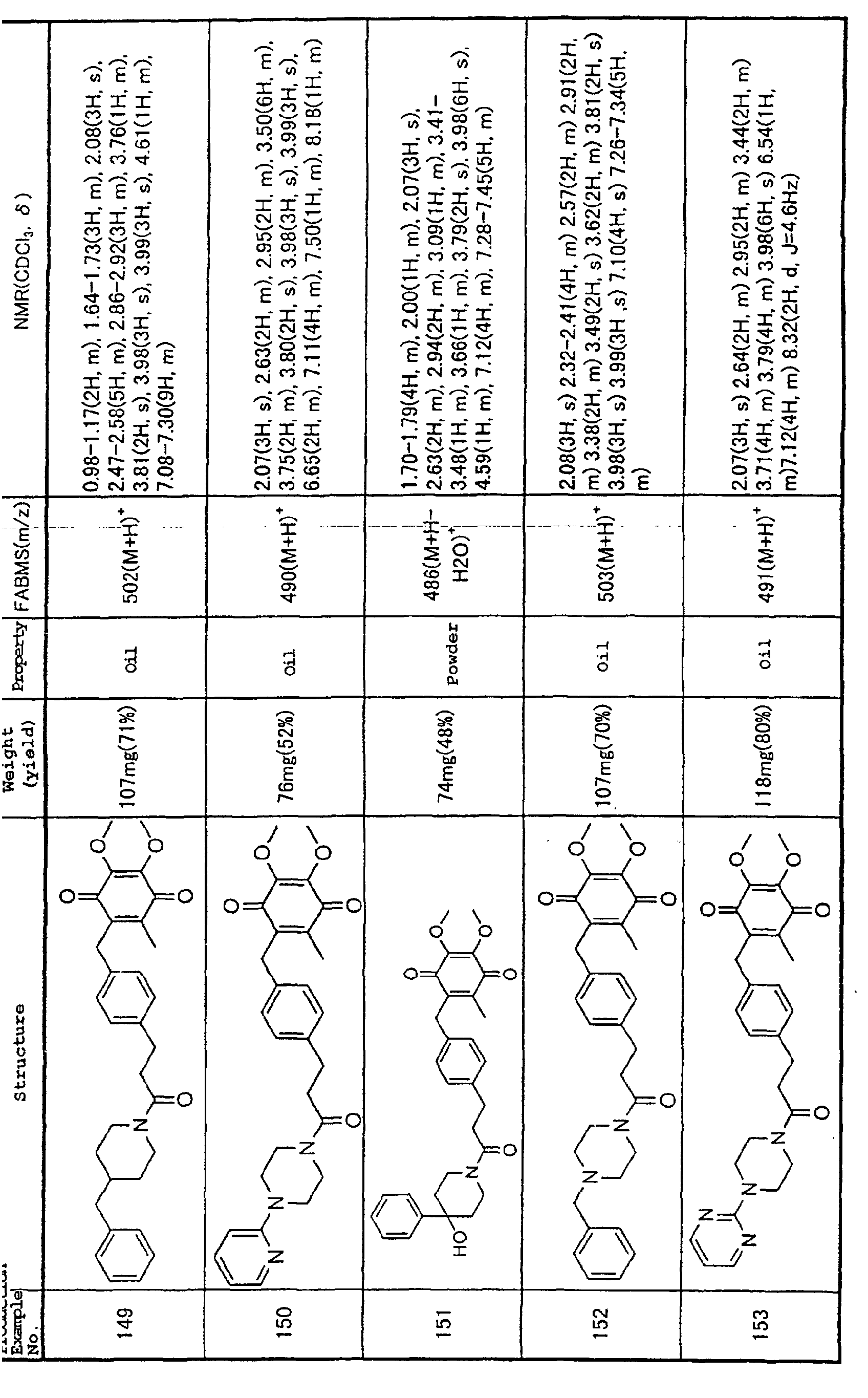

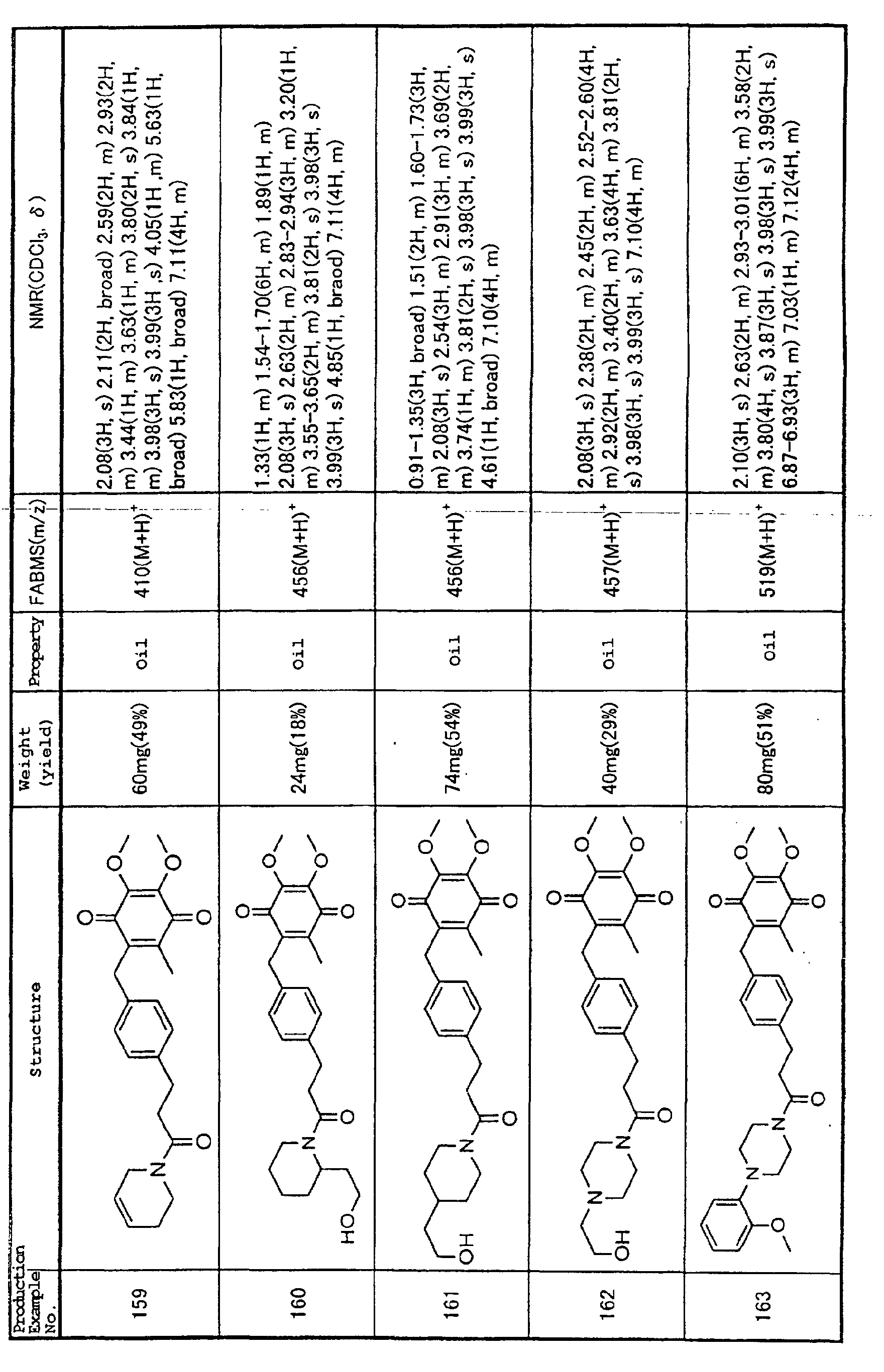
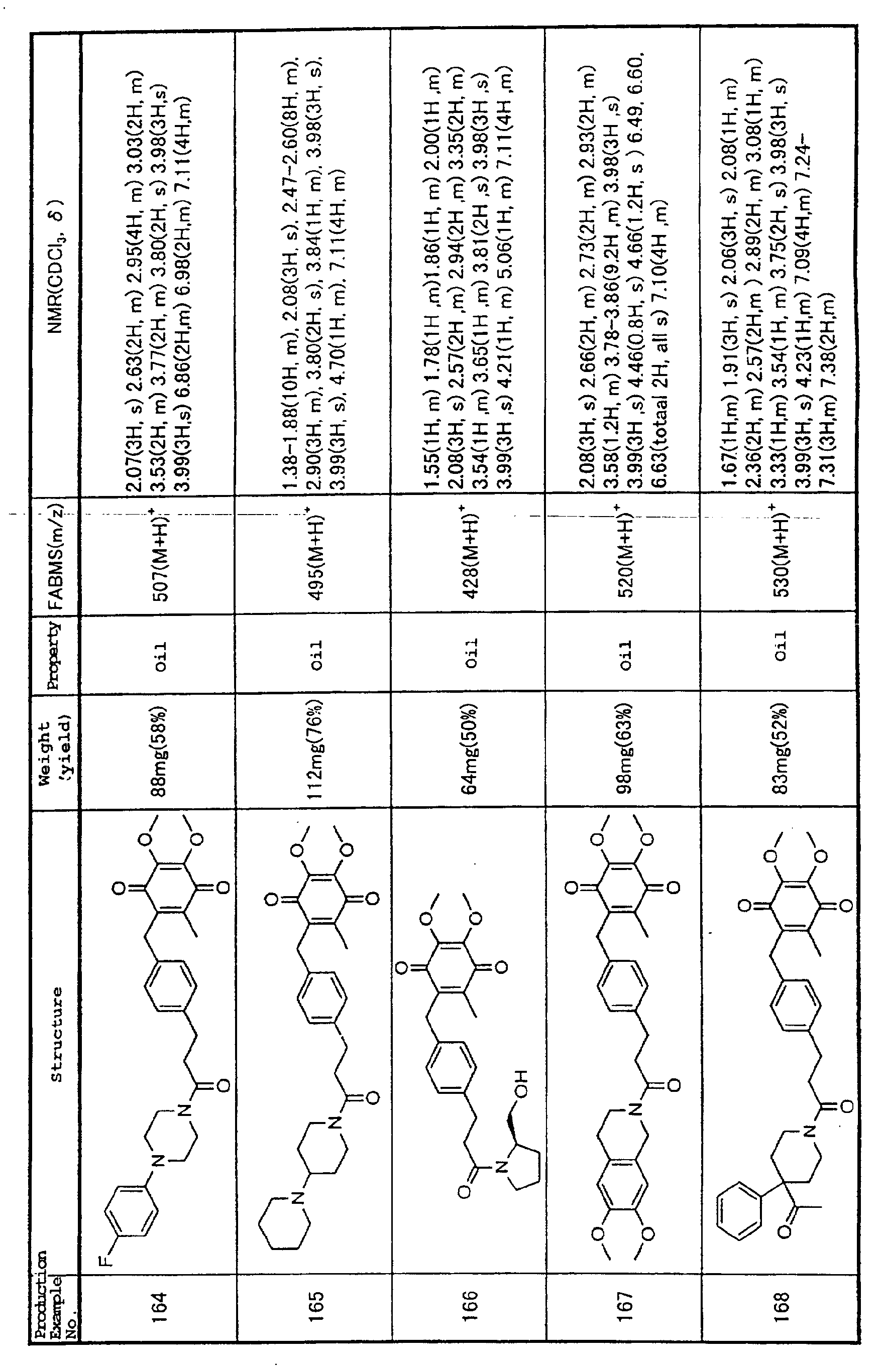
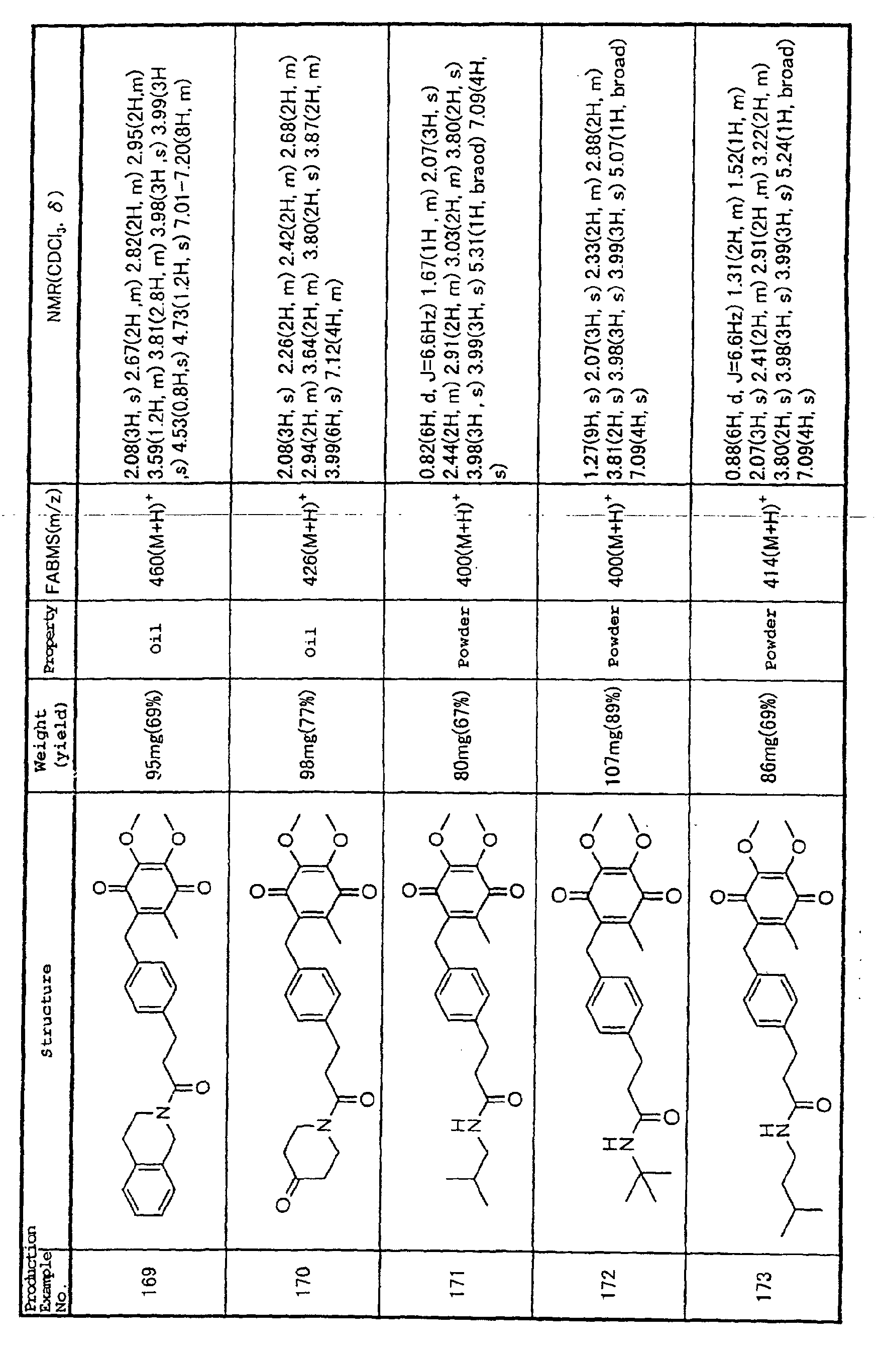
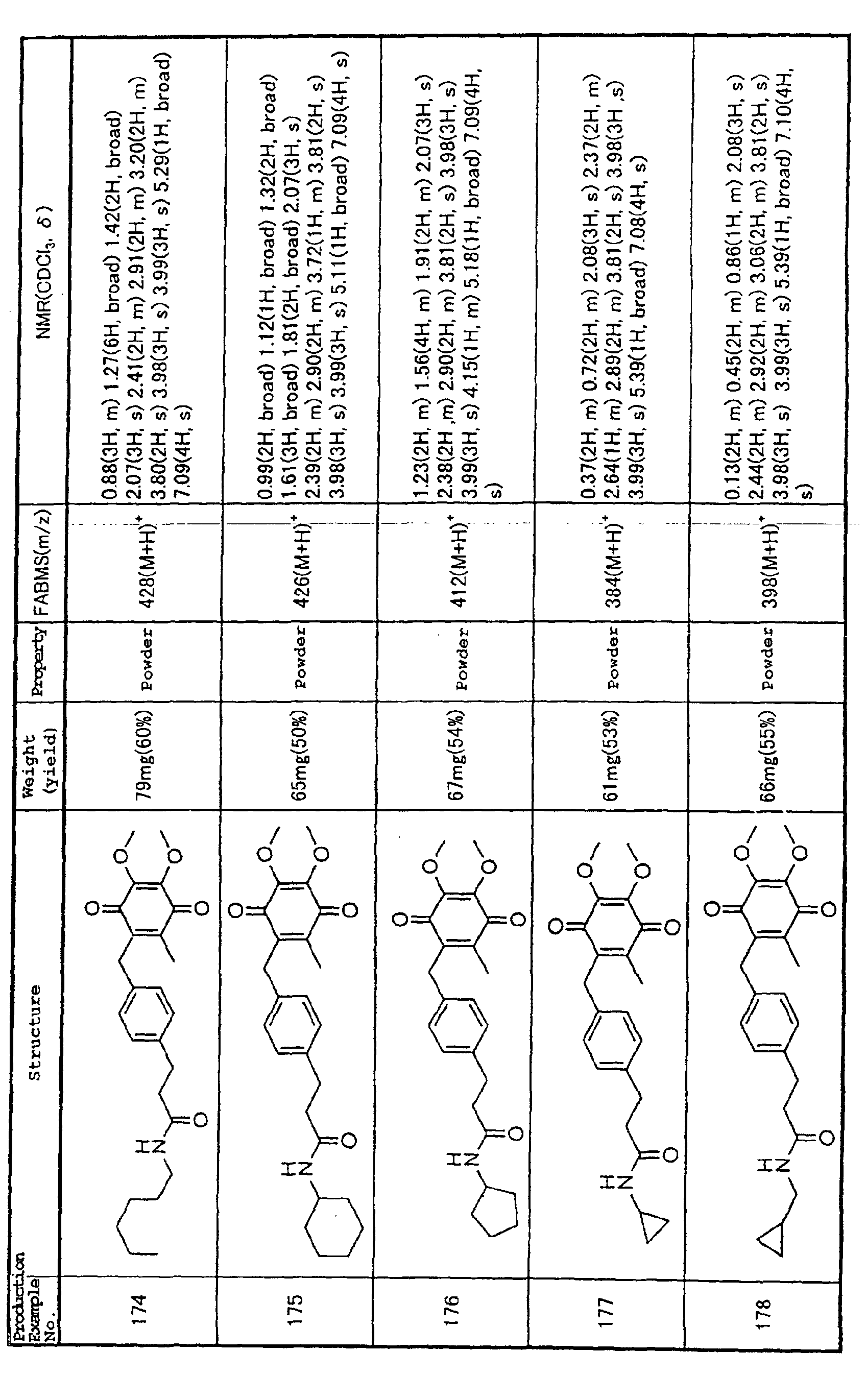
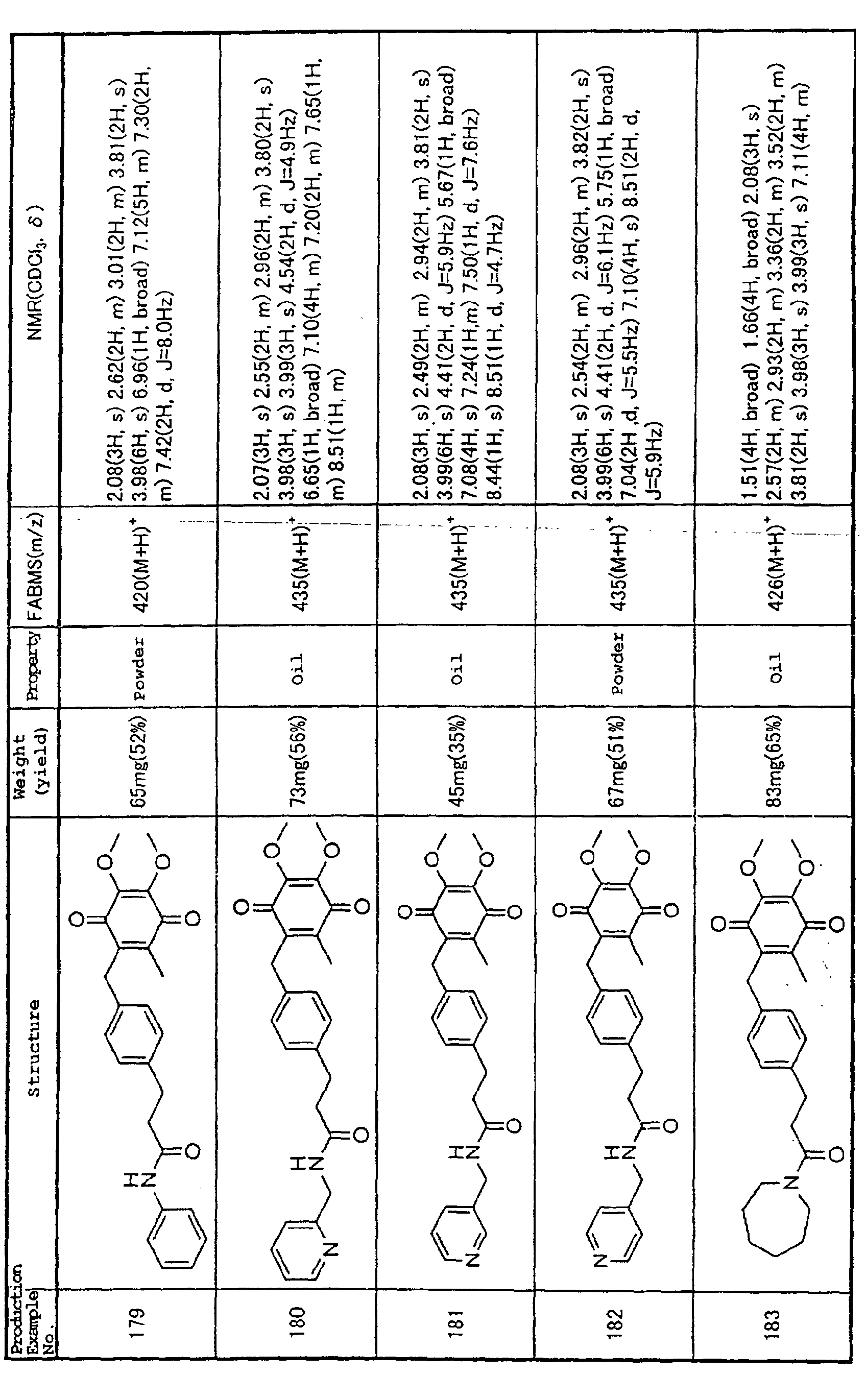
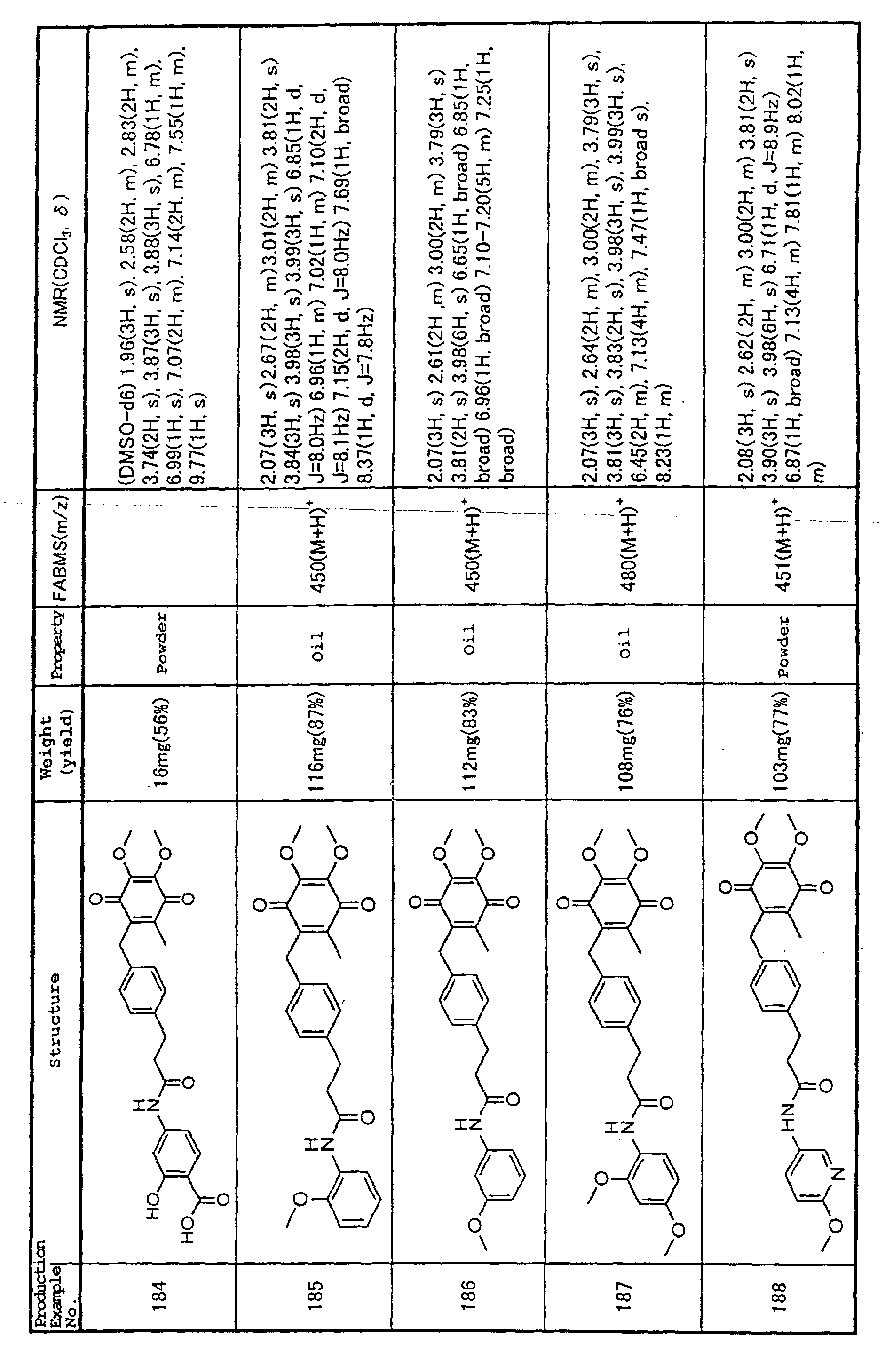

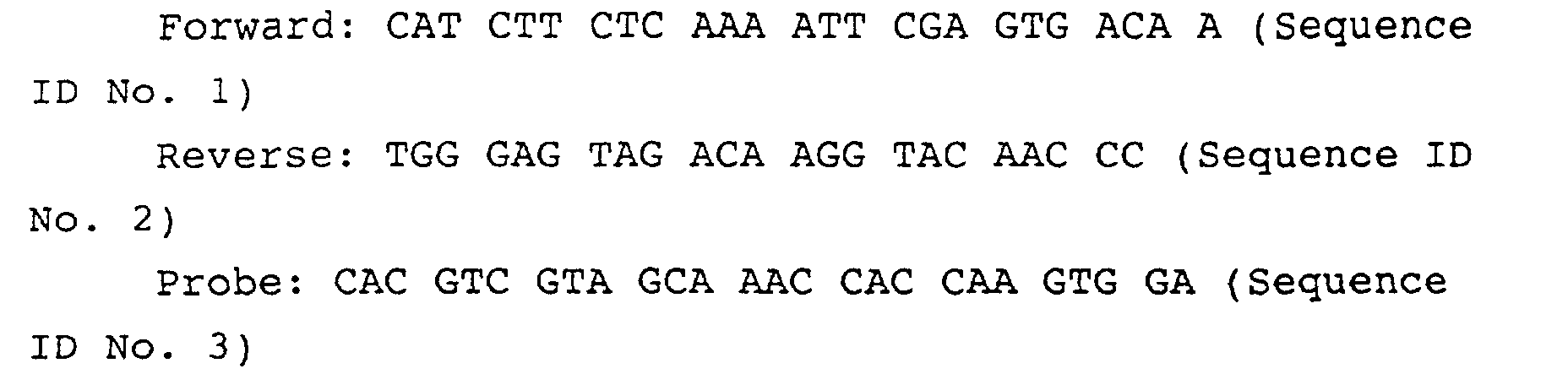
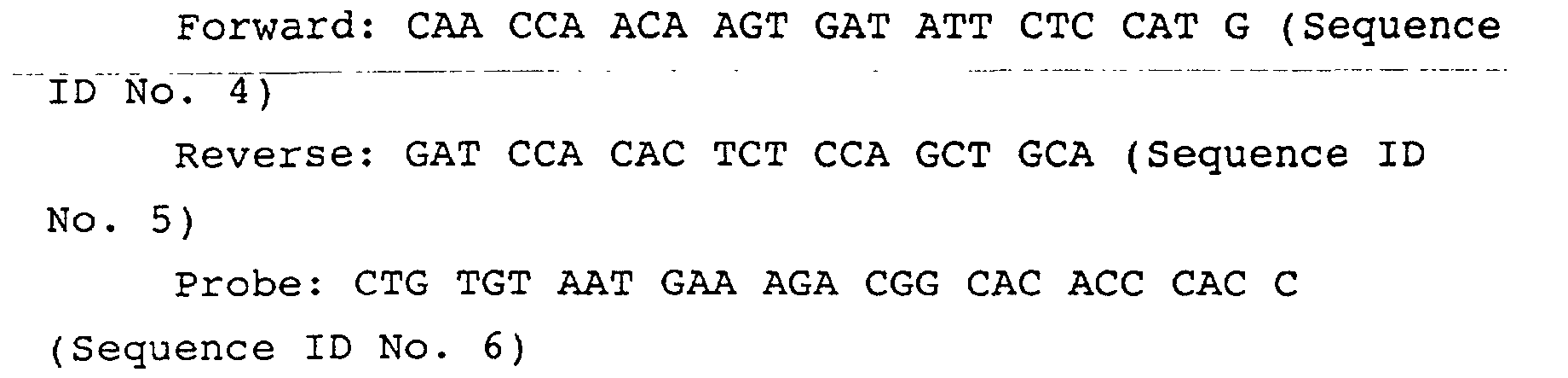
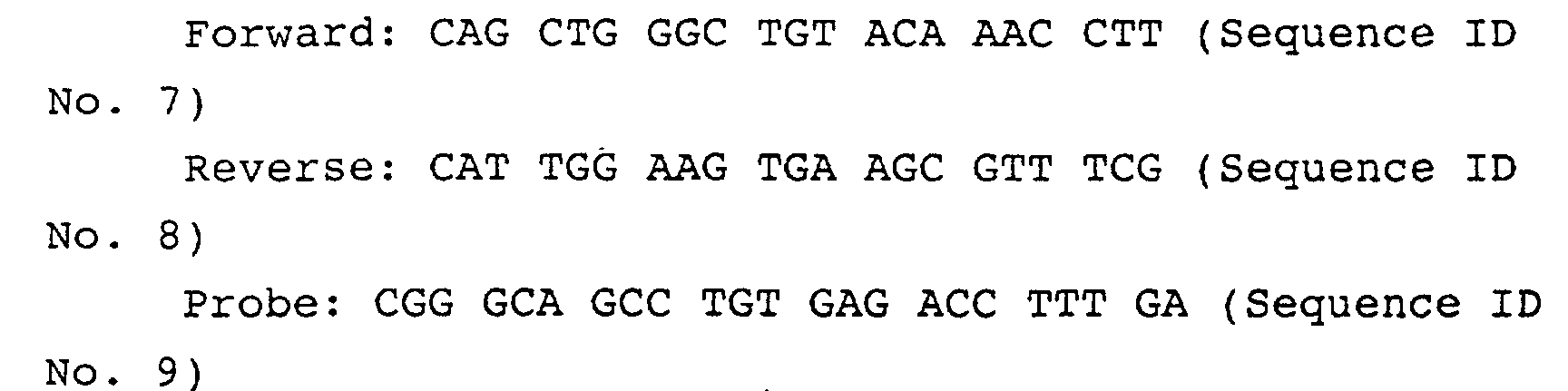
 or its hydroquinone form, or a pharmaceutically acceptable salts thereof.R1, R2 and R3 are each independently a hydrogen atom, an alkyl group having 1 to 5 carbons or an alkoxy group having 1 to 5 carbons;R4 is a hydrogen atom, a hydroxymethyl group, an alkyl group, or a carboxyl group which is optionally esterified or amidated;Z is
 and n is an integer from 0 to 6
 R1 represents a hydrogen atom or an alkyl group having 1 to 4 carbons, andR2 represents a hydrogen atom,a -OR3 group [in the group, R3 represents a hydrogen atom, an alkyl group having 1 to 7 carbons, an optionally substituted phenyl group, an optionally substituted bicyclic unsaturated or partially saturated hydrocarbon ring group having 9 to 11 carbons, an optionally substituted aralkyl group having 7 to 11 carbons, or a -(CH2)n A group (n is 0, or an integer of 1, 2 or 3, and A is a heterocyclic group)],a -OCOR4 group [in the group, R4 represents a hydrogen atom, an alkyl group having 1 to 7 carbons, an optionally substituted phenyl group, an optionally substituted bicyclic unsaturated or partially saturated hydrocarbon ring group having 9 to 11 carbons, an optionally substituted aralkyl group having 7 to 11 carbons, or a -(CH2)n A group (n is 0, or an integer of 1, 2 or 3, and A is a heterocyclic group)],a -COOR5 group [in the group, R5 represents a hydrogen atom, an alkyl group having 1 to 7 carbons, an optionally substituted phenyl group, an optionally substituted bicyclic unsaturated or partially saturated hydrocarbon ring group having 9 to 11 carbons, an optionally substituted aralkyl group having 7 to 11 carbons, or a -(CH2)n A group (n is 0, or an integer of 1, 2 or 3, and A is a heterocyclic group)],a -CONR6R7 group [in the group, R6 and R7, which may be the same or different, each represent a hydrogen atom, an alkyl group having 1 to 7 carbons, an optionally substituted phenyl group, an optionally substituted bicyclic unsaturated or partially saturated hydrocarbon ring group having 9 to 11 carbons, an optionally substituted aralkyl group having 7 to 11 carbons, or a -(CH2)n A group (n is 0, or an integer of 1, 2 or 3, and A is a heterocyclic group), or R6 and R7, together with the nitrogen atom to which they are attached, represent a heterocyclic group that may further contain a nitrogen atom, an oxygen atom, or a surface atom], ora -CH=CHR8 group (in the group, R8 represents an alkyl group having 1 to 4 carbons or an optionally substituted phenyl group), andrepresents a skeleton selected from the group consisting of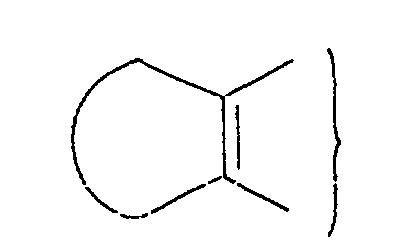


 wherein, R9 and R10, which may be the same or different, each represent a hydrogen atom, a halogen atom, a nitro group, a cyano group, a hydroxyl group, an optionally substituted amino group, an optionally esterified or amidated carboxyl group, an alkyl group having 1 to 4 carbons, an alkyloxy group having 1 to 4 carbons, an optionally substituted phenyl group, an optionally substituted aralkyl group having 7 to 11 carbons or an optionally substituted heterocyclic group, or R9 and R10 together form
 and X represents an oxygen atom or a sulfur atom, or a pharmaceutically acceptable salt thereof.