EP1170320B1 - Compositions de fluoropolyèthers réticulables - Google Patents
Compositions de fluoropolyèthers réticulables Download PDFInfo
- Publication number
- EP1170320B1 EP1170320B1 EP01305796A EP01305796A EP1170320B1 EP 1170320 B1 EP1170320 B1 EP 1170320B1 EP 01305796 A EP01305796 A EP 01305796A EP 01305796 A EP01305796 A EP 01305796A EP 1170320 B1 EP1170320 B1 EP 1170320B1
- Authority
- EP
- European Patent Office
- Prior art keywords
- parts
- composition
- composition according
- weight
- silica filler
- Prior art date
- Legal status (The legal status is an assumption and is not a legal conclusion. Google has not performed a legal analysis and makes no representation as to the accuracy of the status listed.)
- Expired - Lifetime
Links
- 239000000203 mixture Substances 0.000 title claims description 43
- 229920001971 elastomer Polymers 0.000 title claims description 23
- VYPSYNLAJGMNEJ-UHFFFAOYSA-N Silicium dioxide Chemical compound O=[Si]=O VYPSYNLAJGMNEJ-UHFFFAOYSA-N 0.000 claims description 66
- 239000000377 silicon dioxide Substances 0.000 claims description 32
- 239000000945 filler Substances 0.000 claims description 22
- 150000001875 compounds Chemical class 0.000 claims description 20
- 239000007788 liquid Substances 0.000 claims description 16
- 150000003961 organosilicon compounds Chemical class 0.000 claims description 11
- XUIMIQQOPSSXEZ-UHFFFAOYSA-N Silicon Chemical group [Si] XUIMIQQOPSSXEZ-UHFFFAOYSA-N 0.000 claims description 10
- 239000003054 catalyst Substances 0.000 claims description 10
- 238000001746 injection moulding Methods 0.000 claims description 10
- 238000002156 mixing Methods 0.000 claims description 9
- 125000003342 alkenyl group Chemical group 0.000 claims description 8
- 125000003903 2-propenyl group Chemical group [H]C([*])([H])C([H])=C([H])[H] 0.000 claims description 7
- 125000004435 hydrogen atom Chemical group [H]* 0.000 claims description 7
- 125000002496 methyl group Chemical group [H]C([H])([H])* 0.000 claims description 7
- 238000000465 moulding Methods 0.000 claims description 7
- 125000001997 phenyl group Chemical group [H]C1=C([H])C([H])=C(*)C([H])=C1[H] 0.000 claims description 7
- 229910052710 silicon Inorganic materials 0.000 claims description 6
- 238000006459 hydrosilylation reaction Methods 0.000 claims description 5
- 230000003197 catalytic effect Effects 0.000 claims description 4
- 239000001257 hydrogen Substances 0.000 claims description 4
- 229910052739 hydrogen Inorganic materials 0.000 claims description 4
- 238000000034 method Methods 0.000 claims description 4
- 238000002360 preparation method Methods 0.000 claims description 4
- 239000004615 ingredient Substances 0.000 claims 1
- 238000004519 manufacturing process Methods 0.000 claims 1
- -1 chloropropyl Chemical group 0.000 description 8
- 238000012935 Averaging Methods 0.000 description 7
- YXFVVABEGXRONW-UHFFFAOYSA-N Toluene Chemical compound CC1=CC=CC=C1 YXFVVABEGXRONW-UHFFFAOYSA-N 0.000 description 6
- BASFCYQUMIYNBI-UHFFFAOYSA-N platinum Substances [Pt] BASFCYQUMIYNBI-UHFFFAOYSA-N 0.000 description 6
- 229920000642 polymer Polymers 0.000 description 6
- RIOQSEWOXXDEQQ-UHFFFAOYSA-N triphenylphosphine Chemical compound C1=CC=CC=C1P(C=1C=CC=CC=1)C1=CC=CC=C1 RIOQSEWOXXDEQQ-UHFFFAOYSA-N 0.000 description 6
- 125000000391 vinyl group Chemical group [H]C([*])=C([H])[H] 0.000 description 6
- 229920002554 vinyl polymer Polymers 0.000 description 6
- 230000000704 physical effect Effects 0.000 description 5
- 239000000126 substance Substances 0.000 description 5
- 239000002253 acid Substances 0.000 description 4
- 125000004432 carbon atom Chemical group C* 0.000 description 4
- 125000005647 linker group Chemical group 0.000 description 4
- 239000003921 oil Substances 0.000 description 4
- 125000006551 perfluoro alkylene group Chemical group 0.000 description 4
- 125000005010 perfluoroalkyl group Chemical group 0.000 description 4
- 239000002904 solvent Substances 0.000 description 4
- 229940045985 antineoplastic platinum compound Drugs 0.000 description 3
- 238000005259 measurement Methods 0.000 description 3
- 229910052697 platinum Inorganic materials 0.000 description 3
- 150000003058 platinum compounds Chemical class 0.000 description 3
- 230000002787 reinforcement Effects 0.000 description 3
- 125000001424 substituent group Chemical group 0.000 description 3
- XLYOFNOQVPJJNP-UHFFFAOYSA-N water Substances O XLYOFNOQVPJJNP-UHFFFAOYSA-N 0.000 description 3
- UQSXHKLRYXJYBZ-UHFFFAOYSA-N Iron oxide Chemical compound [Fe]=O UQSXHKLRYXJYBZ-UHFFFAOYSA-N 0.000 description 2
- 239000000654 additive Substances 0.000 description 2
- 125000000217 alkyl group Chemical group 0.000 description 2
- 125000002947 alkylene group Chemical group 0.000 description 2
- PNEYBMLMFCGWSK-UHFFFAOYSA-N aluminium oxide Inorganic materials [O-2].[O-2].[O-2].[Al+3].[Al+3] PNEYBMLMFCGWSK-UHFFFAOYSA-N 0.000 description 2
- 125000004122 cyclic group Chemical group 0.000 description 2
- 229910021485 fumed silica Inorganic materials 0.000 description 2
- 238000010438 heat treatment Methods 0.000 description 2
- FFUAGWLWBBFQJT-UHFFFAOYSA-N hexamethyldisilazane Chemical compound C[Si](C)(C)N[Si](C)(C)C FFUAGWLWBBFQJT-UHFFFAOYSA-N 0.000 description 2
- 239000000463 material Substances 0.000 description 2
- 229910052751 metal Inorganic materials 0.000 description 2
- 239000002184 metal Substances 0.000 description 2
- 238000011417 postcuring Methods 0.000 description 2
- 230000003014 reinforcing effect Effects 0.000 description 2
- 229910052703 rhodium Inorganic materials 0.000 description 2
- 239000010948 rhodium Substances 0.000 description 2
- 239000004065 semiconductor Substances 0.000 description 2
- 239000000243 solution Substances 0.000 description 2
- 229910052723 transition metal Inorganic materials 0.000 description 2
- 150000003624 transition metals Chemical class 0.000 description 2
- BUCJHJXFXUZJHL-UHFFFAOYSA-N 1-ethylcyclohexan-1-ol Chemical compound CCC1(O)CCCCC1 BUCJHJXFXUZJHL-UHFFFAOYSA-N 0.000 description 1
- QYLFHLNFIHBCPR-UHFFFAOYSA-N 1-ethynylcyclohexan-1-ol Chemical compound C#CC1(O)CCCCC1 QYLFHLNFIHBCPR-UHFFFAOYSA-N 0.000 description 1
- 125000001731 2-cyanoethyl group Chemical group [H]C([H])(*)C([H])([H])C#N 0.000 description 1
- CEBKHWWANWSNTI-UHFFFAOYSA-N 2-methylbut-3-yn-2-ol Chemical compound CC(C)(O)C#C CEBKHWWANWSNTI-UHFFFAOYSA-N 0.000 description 1
- NECRQCBKTGZNMH-UHFFFAOYSA-N 3,5-dimethylhex-1-yn-3-ol Chemical compound CC(C)CC(C)(O)C#C NECRQCBKTGZNMH-UHFFFAOYSA-N 0.000 description 1
- HMVBQEAJQVQOTI-UHFFFAOYSA-N 3,5-dimethylhex-3-en-1-yne Chemical compound CC(C)C=C(C)C#C HMVBQEAJQVQOTI-UHFFFAOYSA-N 0.000 description 1
- HFYAEUXHCMTPOL-UHFFFAOYSA-N 3-Methyl-1-penten-3-ol Chemical compound CCC(C)(O)C=C HFYAEUXHCMTPOL-UHFFFAOYSA-N 0.000 description 1
- GRGVQLWQXHFRHO-UHFFFAOYSA-N 3-methylpent-3-en-1-yne Chemical compound CC=C(C)C#C GRGVQLWQXHFRHO-UHFFFAOYSA-N 0.000 description 1
- MQSZOZMNAJHVML-UHFFFAOYSA-N 3-phenylbut-1-yn-1-ol Chemical compound OC#CC(C)C1=CC=CC=C1 MQSZOZMNAJHVML-UHFFFAOYSA-N 0.000 description 1
- 238000004438 BET method Methods 0.000 description 1
- JVGNGTVYTSGFIU-UHFFFAOYSA-N CC(CCCC1)C1C(CCC1)CC1[Si](C)(C)C Chemical compound CC(CCCC1)C1C(CCC1)CC1[Si](C)(C)C JVGNGTVYTSGFIU-UHFFFAOYSA-N 0.000 description 1
- OKTJSMMVPCPJKN-UHFFFAOYSA-N Carbon Chemical compound [C] OKTJSMMVPCPJKN-UHFFFAOYSA-N 0.000 description 1
- 239000004970 Chain extender Substances 0.000 description 1
- 239000004593 Epoxy Substances 0.000 description 1
- VGGSQFUCUMXWEO-UHFFFAOYSA-N Ethene Chemical compound C=C VGGSQFUCUMXWEO-UHFFFAOYSA-N 0.000 description 1
- 239000005977 Ethylene Substances 0.000 description 1
- UFHFLCQGNIYNRP-UHFFFAOYSA-N Hydrogen Chemical compound [H][H] UFHFLCQGNIYNRP-UHFFFAOYSA-N 0.000 description 1
- NFHFRUOZVGFOOS-UHFFFAOYSA-N Pd(PPh3)4 Substances [Pd].C1=CC=CC=C1P(C=1C=CC=CC=1)C1=CC=CC=C1.C1=CC=CC=C1P(C=1C=CC=CC=1)C1=CC=CC=C1.C1=CC=CC=C1P(C=1C=CC=CC=1)C1=CC=CC=C1.C1=CC=CC=C1P(C=1C=CC=CC=1)C1=CC=CC=C1 NFHFRUOZVGFOOS-UHFFFAOYSA-N 0.000 description 1
- KJTLSVCANCCWHF-UHFFFAOYSA-N Ruthenium Chemical compound [Ru] KJTLSVCANCCWHF-UHFFFAOYSA-N 0.000 description 1
- 150000001298 alcohols Chemical class 0.000 description 1
- 150000001336 alkenes Chemical class 0.000 description 1
- 125000003545 alkoxy group Chemical group 0.000 description 1
- HSFWRNGVRCDJHI-UHFFFAOYSA-N alpha-acetylene Natural products C#C HSFWRNGVRCDJHI-UHFFFAOYSA-N 0.000 description 1
- 239000003963 antioxidant agent Substances 0.000 description 1
- 125000003710 aryl alkyl group Chemical group 0.000 description 1
- 125000003118 aryl group Chemical group 0.000 description 1
- 125000000732 arylene group Chemical group 0.000 description 1
- 229920005601 base polymer Polymers 0.000 description 1
- 125000001797 benzyl group Chemical group [H]C1=C([H])C([H])=C(C([H])=C1[H])C([H])([H])* 0.000 description 1
- 125000004369 butenyl group Chemical group C(=CCC)* 0.000 description 1
- 125000000484 butyl group Chemical group [H]C([*])([H])C([H])([H])C([H])([H])C([H])([H])[H] 0.000 description 1
- 229910052799 carbon Inorganic materials 0.000 description 1
- 239000006229 carbon black Substances 0.000 description 1
- NQZFAUXPNWSLBI-UHFFFAOYSA-N carbon monoxide;ruthenium Chemical compound [Ru].[Ru].[Ru].[O+]#[C-].[O+]#[C-].[O+]#[C-].[O+]#[C-].[O+]#[C-].[O+]#[C-].[O+]#[C-].[O+]#[C-].[O+]#[C-].[O+]#[C-].[O+]#[C-].[O+]#[C-] NQZFAUXPNWSLBI-UHFFFAOYSA-N 0.000 description 1
- 229910000420 cerium oxide Inorganic materials 0.000 description 1
- 125000001309 chloro group Chemical group Cl* 0.000 description 1
- 125000004218 chloromethyl group Chemical group [H]C([H])(Cl)* 0.000 description 1
- 239000003086 colorant Substances 0.000 description 1
- 230000000052 comparative effect Effects 0.000 description 1
- 230000006835 compression Effects 0.000 description 1
- 238000007906 compression Methods 0.000 description 1
- 238000007796 conventional method Methods 0.000 description 1
- 238000004132 cross linking Methods 0.000 description 1
- 239000003431 cross linking reagent Substances 0.000 description 1
- 125000004093 cyano group Chemical group *C#N 0.000 description 1
- 125000000392 cycloalkenyl group Chemical group 0.000 description 1
- 125000000113 cyclohexyl group Chemical group [H]C1([H])C([H])([H])C([H])([H])C([H])(*)C([H])([H])C1([H])[H] 0.000 description 1
- 125000002704 decyl group Chemical group [H]C([H])([H])C([H])([H])C([H])([H])C([H])([H])C([H])([H])C([H])([H])C([H])([H])C([H])([H])C([H])([H])C([H])([H])* 0.000 description 1
- 235000013870 dimethyl polysiloxane Nutrition 0.000 description 1
- 239000000975 dye Substances 0.000 description 1
- RTZKZFJDLAIYFH-UHFFFAOYSA-N ether Substances CCOCC RTZKZFJDLAIYFH-UHFFFAOYSA-N 0.000 description 1
- 125000001495 ethyl group Chemical group [H]C([H])([H])C([H])([H])* 0.000 description 1
- 238000005187 foaming Methods 0.000 description 1
- 125000006038 hexenyl group Chemical group 0.000 description 1
- 125000004051 hexyl group Chemical group [H]C([H])([H])C([H])([H])C([H])([H])C([H])([H])C([H])([H])C([H])([H])* 0.000 description 1
- 150000002430 hydrocarbons Chemical group 0.000 description 1
- 125000002887 hydroxy group Chemical group [H]O* 0.000 description 1
- 230000001771 impaired effect Effects 0.000 description 1
- 238000002347 injection Methods 0.000 description 1
- 239000007924 injection Substances 0.000 description 1
- 229910052741 iridium Inorganic materials 0.000 description 1
- GKOZUEZYRPOHIO-UHFFFAOYSA-N iridium atom Chemical compound [Ir] GKOZUEZYRPOHIO-UHFFFAOYSA-N 0.000 description 1
- 125000000555 isopropenyl group Chemical group [H]\C([H])=C(\*)C([H])([H])[H] 0.000 description 1
- 150000002736 metal compounds Chemical class 0.000 description 1
- 238000012986 modification Methods 0.000 description 1
- 230000004048 modification Effects 0.000 description 1
- 125000001624 naphthyl group Chemical group 0.000 description 1
- 229910000510 noble metal Inorganic materials 0.000 description 1
- 125000002347 octyl group Chemical group [H]C([*])([H])C([H])([H])C([H])([H])C([H])([H])C([H])([H])C([H])([H])C([H])([H])C([H])([H])[H] 0.000 description 1
- 125000000962 organic group Chemical group 0.000 description 1
- 150000001367 organochlorosilanes Chemical class 0.000 description 1
- 125000005375 organosiloxane group Chemical group 0.000 description 1
- BMMGVYCKOGBVEV-UHFFFAOYSA-N oxo(oxoceriooxy)cerium Chemical compound [Ce]=O.O=[Ce]=O BMMGVYCKOGBVEV-UHFFFAOYSA-N 0.000 description 1
- 125000004430 oxygen atom Chemical group O* 0.000 description 1
- 229910052763 palladium Inorganic materials 0.000 description 1
- KDLHZDBZIXYQEI-UHFFFAOYSA-N palladium Substances [Pd] KDLHZDBZIXYQEI-UHFFFAOYSA-N 0.000 description 1
- 150000002941 palladium compounds Chemical class 0.000 description 1
- 125000000286 phenylethyl group Chemical group [H]C1=C([H])C([H])=C(C([H])=C1[H])C([H])([H])C([H])([H])* 0.000 description 1
- 239000000049 pigment Substances 0.000 description 1
- 229920000435 poly(dimethylsiloxane) Polymers 0.000 description 1
- 238000006116 polymerization reaction Methods 0.000 description 1
- 125000004368 propenyl group Chemical group C(=CC)* 0.000 description 1
- 125000001436 propyl group Chemical group [H]C([*])([H])C([H])([H])C([H])([H])[H] 0.000 description 1
- MHOVAHRLVXNVSD-UHFFFAOYSA-N rhodium atom Chemical compound [Rh] MHOVAHRLVXNVSD-UHFFFAOYSA-N 0.000 description 1
- 229910052707 ruthenium Inorganic materials 0.000 description 1
- 238000007789 sealing Methods 0.000 description 1
- 229920002379 silicone rubber Polymers 0.000 description 1
- 239000004945 silicone rubber Substances 0.000 description 1
- 238000001179 sorption measurement Methods 0.000 description 1
- 230000008719 thickening Effects 0.000 description 1
- 125000003944 tolyl group Chemical group 0.000 description 1
Classifications
-
- C—CHEMISTRY; METALLURGY
- C08—ORGANIC MACROMOLECULAR COMPOUNDS; THEIR PREPARATION OR CHEMICAL WORKING-UP; COMPOSITIONS BASED THEREON
- C08G—MACROMOLECULAR COMPOUNDS OBTAINED OTHERWISE THAN BY REACTIONS ONLY INVOLVING UNSATURATED CARBON-TO-CARBON BONDS
- C08G65/00—Macromolecular compounds obtained by reactions forming an ether link in the main chain of the macromolecule
- C08G65/02—Macromolecular compounds obtained by reactions forming an ether link in the main chain of the macromolecule from cyclic ethers by opening of the heterocyclic ring
- C08G65/32—Polymers modified by chemical after-treatment
- C08G65/329—Polymers modified by chemical after-treatment with organic compounds
- C08G65/336—Polymers modified by chemical after-treatment with organic compounds containing silicon
-
- C—CHEMISTRY; METALLURGY
- C08—ORGANIC MACROMOLECULAR COMPOUNDS; THEIR PREPARATION OR CHEMICAL WORKING-UP; COMPOSITIONS BASED THEREON
- C08G—MACROMOLECULAR COMPOUNDS OBTAINED OTHERWISE THAN BY REACTIONS ONLY INVOLVING UNSATURATED CARBON-TO-CARBON BONDS
- C08G65/00—Macromolecular compounds obtained by reactions forming an ether link in the main chain of the macromolecule
- C08G65/002—Macromolecular compounds obtained by reactions forming an ether link in the main chain of the macromolecule from unsaturated compounds
- C08G65/005—Macromolecular compounds obtained by reactions forming an ether link in the main chain of the macromolecule from unsaturated compounds containing halogens
- C08G65/007—Macromolecular compounds obtained by reactions forming an ether link in the main chain of the macromolecule from unsaturated compounds containing halogens containing fluorine
-
- C—CHEMISTRY; METALLURGY
- C08—ORGANIC MACROMOLECULAR COMPOUNDS; THEIR PREPARATION OR CHEMICAL WORKING-UP; COMPOSITIONS BASED THEREON
- C08G—MACROMOLECULAR COMPOUNDS OBTAINED OTHERWISE THAN BY REACTIONS ONLY INVOLVING UNSATURATED CARBON-TO-CARBON BONDS
- C08G65/00—Macromolecular compounds obtained by reactions forming an ether link in the main chain of the macromolecule
- C08G65/02—Macromolecular compounds obtained by reactions forming an ether link in the main chain of the macromolecule from cyclic ethers by opening of the heterocyclic ring
- C08G65/04—Macromolecular compounds obtained by reactions forming an ether link in the main chain of the macromolecule from cyclic ethers by opening of the heterocyclic ring from cyclic ethers only
- C08G65/22—Cyclic ethers having at least one atom other than carbon and hydrogen outside the ring
- C08G65/223—Cyclic ethers having at least one atom other than carbon and hydrogen outside the ring containing halogens
- C08G65/226—Cyclic ethers having at least one atom other than carbon and hydrogen outside the ring containing halogens containing fluorine
-
- C—CHEMISTRY; METALLURGY
- C08—ORGANIC MACROMOLECULAR COMPOUNDS; THEIR PREPARATION OR CHEMICAL WORKING-UP; COMPOSITIONS BASED THEREON
- C08K—Use of inorganic or non-macromolecular organic substances as compounding ingredients
- C08K3/00—Use of inorganic substances as compounding ingredients
- C08K3/34—Silicon-containing compounds
- C08K3/36—Silica
Definitions
- This invention relates to a curable fluoropolyether base rubber composition which is suited for liquid injection molding and cures into products having good mechanical properties.
- linear fluoropolyether compounds containing at least two alkenyl groups per molecule and having a perfluoroalkyl ether structure in their backbone are used in a variety of applications owing to the excellent characteristics of the perfluoroalkyl ether structure.
- silica fillers including dry silica (known as fumed silica) and wet silica (known as precipitated silica) are commonly used in silicone rubber for reinforcement purposes
- blending such silica filler in the curable fluoropolyether base rubber can remarkably improve the mechanical properties of the cured product thereof.
- the blending of silica filler provides fluoropolyether base rubber compositions with a good balance of heat resistance, chemical resistance, solvent resistance, water repellency, oil repellency, and weather resistance. The resultant compositions perform well in most applications.
- An object of the invention is to provide a liquid curable fluoropolyether base rubber composition which is amenable to liquid injection molding and cures into products having good mechanical properties.
- the present invention provides a curable fluoropolyether base rubber composition
- a curable fluoropolyether base rubber composition comprising
- the linear fluoropolyether compound used herein as a base polymer in the composition is one containing at least two alkenyl groups in a molecule and having a divalent perfluoroalkyl ether structure in its backbone.
- the alkenyl groups may be attached either directly to both ends of the backbone of the linear fluoropolyether compound or to the backbone through a divalent linking group such as -CH 2 -, -CH 2 O- or -Y-NR-CO-.
- Y is -CH 2 - or a group of the following structural formula: (the bond may be at o, m or p-position) and R is hydrogen, methyl, phenyl or allyl.
- the perfluoroalkyl ether structure in the linear fluoropolyether compound includes those of the following general formula: -(Rf-O) q - wherein Rf is a straight or branched perfluoroalkylene group of 1 to 6 carbon atoms, preferably 1 to 3 carbon atoms, and letter q is an integer of 1 to 500, preferably 2 to 400, more preferably 10 to 200.
- Examples of the recurring units -(Rf-O)- are shown below.
- -CF 2 O-, -CF 2 CF 2 O-, -CF 2 CF 2 CF 2 O-, and -CH(CF 3 )CF 2 O- are preferred.
- the perfluoroalkyl ether structure may consist of recurring units -(Rf-O)- of one type or recurring units of two or more types.
- linear fluoropolyether compound (A) are those of the following general formula (1).
- X is independently selected from among -CH 2 - , -CH 2 O- and -Y-NR-CO-, letter p is independently equal to 0 or 1, r is an integer of 2 to 6, and m and n are integers of 0 to 200, preferably 5 to 100.
- Y is -CH 2 - or a group of the following structural formula: (the bond may be at o, m or p-position), and R is hydrogen, methyl, phenyl or allyl.
- These linear fluoropolyether compounds have a molecular weight of about 400 to 100,000 and preferably about 1,000 to 50,000.
- linear fluoropolyether compounds may be used alone or in admixture of two or more.
- the filler (B) used for the reinforcement of the curable fluoropolyether base rubber composition is particulate silica. It should have a specific surface area of at least 100 m 2 /g as measured by the hydrogen adsorption BET method. From the molding standpoint, the silica filler should have a bulk density of at least 100g/l, preferably at least 120 or 130g/l. Too low a bulk density detracts from the reinforcing effect. The bulk density is not more than 200g/l, preferably not more than 180 or 160g/l. Too high a density leads to undesirable thickening. Overall, this choice is found to help avoid an increase in viscosity when the filler is blended.
- the silica filler may be either dry silica known as fumed silica or wet silica known as precipitated silica.
- the silica filler may be treated with organochlorosilanes, silazane compounds and cyclic silazane compounds which react with hydroxyl groups attached to silicon atoms on silica surfaces.
- the silica filler may be hydrophobized on the surface with dimethylpolysiloxanes having a low degree of polymerization.
- An appropriate amount of the silica filler (B) blended is 10 to 50 parts, and preferably 15 to 30 parts by weight per 100 parts by weight of component (A). Less than 10 parts of component (B) fails to achieve sufficient reinforcement whereas more than 50 parts of component (B) invites an excessive rise of viscosity and is difficult to compound.
- the organosilicon compound (C) functions as a crosslinking agent and chain extender for component (A).
- organosilicon compound is useful as long as it has at least two hydrogen atoms each bound to a silicon atom, that is, hydrosilyl (SiH) groups in a molecule.
- SiH hydrosilyl
- organosilicon compounds having at least one monovalent perfluorooxyalkyl group, monovalent perfluoroalkyl group, divalent perfluorooxyalkylene group or divalent perfluoroalkylene group as well as at least two, preferably at least three hydrosilyl groups (or SiH groups) are preferred.
- the perfluorooxyalkyl, perfluoroalkyl, perfluorooxyalkylene and perfluoroalkylene groups include the groups of the following general formulae.
- monovalent perfluoroalkyl groups C m F 2m+1 - m is an integer of 1 to 20, preferably 2 to 10.
- divalent perfluoroalkylene groups -C m F 2m - m is an integer of 1 to 20, preferably 2 to 10.
- -(CF 2 O) m -(CF 2 CF 2 O) n -CF 2 - m and n each are an integer of 1 to 50.
- perfluoro(oxy)alkyl and perfluoro(oxy)alkylene groups each may be attached either directly to a silicon atom or to a silicon atom through a divalent linking group.
- the divalent linking group is an alkylene group, arylene group or a mixture thereof, which may further have an ether bond oxygen atom, amide bond or carbonyl bond. Such divalent linking groups of 2 to 12 carbon atoms are preferred.
- Illustrative examples thereof include -CH 2 CH 2 -, -CH 2 CH 2 CH 2 -, -CH 2 CH 2 CH 2 OCH 2 -, -CH 2 CH 2 CH 2 -NH-CO-, -CH 2 CH 2 CH 2 -N(Ph)-CO-, -CH 2 CH 2 CH 2 -N(CH 3 )-CO-, and -CH 2 CH 2 CH 2 -O-CO- wherein Ph is phenyl.
- the organosilicon compound (C) may have a monovalent substituent attached to a silicon atom.
- Exemplary monovalent substituents are substituted or unsubstituted hydrocarbon groups of 1 to 20 carbon atoms including alkyl groups such as methyl, ethyl, propyl, butyl, hexyl, cyclohexyl, octyl and decyl; alkenyl groups such as vinyl and allyl; aryl groups such as phenyl, tolyl, and naphthyl; aralkyl groups such as benzyl and phenylethyl; and substituted ones of these groups in which some of the hydrogen atoms are replaced by chlorine atoms, cyano groups or the like, such as chloromethyl, chloropropyl, and cyanoethyl.
- alkyl groups such as methyl, ethyl, propyl, butyl, hexyl, cyclohexyl, octyl and decyl
- alkenyl groups such as vinyl and allyl
- the organosilicon compound (C) may be cyclic, chainlike or three-dimensional network.
- the number of silicon atoms in the molecule of the organosilicon compound is not critical although it desirably has about 2 to about 60 silicon atoms, and especially about 3 to about 30 silicon atoms.
- organosilicon compound examples are given below. They may be used alone or in admixture of two or more.
- Me is methyl and Ph is phenyl.
- n is an integer of 1 to 10, averaging to 6.
- S is n is an integer of 1 to 30, m is an integer of 1 to 30, and n+m is 2 to 60, averaging to 2 to 50.
- S is n is an integer of 1 to 30, m is an integer of 1 to 30, and n+m is 2 to 60, averaging to 2 to 50.
- n is an integer of 1 to 60, averaging at 3 to 50.
- n is an integer of 1 to 60, averaging at 3 to 50.
- n is an integer of 1 to 60, averaging at 3 to 50.
- Component (C) is blended in an effective amount to cure component (A).
- component (C) having hydrosilyl groups is blended in such an amount that preferably 0.5 to 5 mol, and more preferably 1 to 2 mol of hydrosilyl groups (or SiH) groups may be present per mol of alkenyl groups (e.g., vinyl, allyl or cycloalkenyl) in the entire composition, especially component (A).
- Less amounts of component (C) may achieve an insufficient degree of crosslinking. Excessive amounts of component (C) may allow chain lengthening to become preferential, inviting short cure, foaming, and losses of heat resistance and compression set.
- the amount of component (C) blended is usually 0.1 to 50 parts by weight per 100 parts by weight of component (A). The amount can be determined with conventional skill.
- the hydrosilylation catalyst (D) is preferably selected from transition metals, for example, platinum group metals such as Pt, Rh and Pd, and compounds of transition metals. Most of these compounds are noble metal compounds which are expensive. Platinum compounds are thus used because they are readily available.
- platinum compounds include chloroplatinic acid, complexes of chloroplatinic acid with olefins such as ethylene, complexes of chloroplatinic acid with alcohols and vinylsiloxanes, and platinum supported on silica, alumina or carbon though not limited thereto.
- platinum group metal compounds other than the platinum compounds include rhodium, ruthenium, iridium, and palladium compounds, for example, RhCl(PPh 3 ) 3 , RhCl(CO)(PPh 3 ) 2 , RhCl(C 2 H 4 ) 2 , Ru 3 (CO) 12 , IrCl(CO)(PPh 3 ) 2 , and Pd(PPh 3 ) 4 wherein Ph denotes phenyl.
- the amount of the catalyst used is not critical. A catalytic amount can achieve a desired curing rate. The catalytic amount varies depending on the form and concentration of the catalyst, that is, whether or not the catalyst is supported on a carrier such as silica or alumina and whether or not the catalyst is diluted with a solvent. From the economical aspect and to obtain satisfactory cured products, the platinum group metal compound is preferably added in an amount of 0.1 to 1,000 parts, more preferably 0.1 to 500 parts by weight calculated as the platinum group metal per million parts by weight of the entire curable composition.
- additives may be added to the inventive composition in addition to the above essential components (A) to (D).
- optional additives include regulators of the hydrosilylation catalyst, for example, acetylene alcohols such as 1-ethyl-1-hydroxycyclohexane, 3-methyl-1-butyn-3-ol, 3,5-dimethyl-1-hexyn-3-ol, 3-methyl-1-penten-3-ol, and phenylbutynol, as well as 3-methyl-3-penten-1-yn and 3,5-dimethyl-3-hexen-1-yn; tackifiers, for example, organosiloxanes having alkoxy, epoxy or SiH groups in the molecule such as the compound shown below; pigments such as iron oxide, cerium oxide and carbon black; colorants, dyes, and antioxidants.
- regulators of the hydrosilylation catalyst for example, acetylene alcohols such as 1-ethyl-1-hydroxycyclohexane, 3-methyl-1-butyn-3-o
- the rubber composition of the invention is formulated as a single composition having all the essential components (A) to (D) incorporated therein, that is, of one part type.
- the rubber composition is formulated to two part type, for example, one part containing a part of (A), a part of (B) and (C) and the other part containing the balance of (A), the balance of (B) and (D) whereupon the two parts are mixed on use and not curable until so mixed.
- composition thus obtained is liquid.
- preferred viscosity at 25°C as measured according to JISK7117 is at least 50 Pa.s, more preferably at least 100 or 200 Pa ⁇ s.
- the viscosity is preferably not more than 2000 Pa ⁇ s, more preferably not more than 1500 or 1000 Pa ⁇ s.
- the composition will cure when it is allowed to stand at room temperature or by heating. Often, the composition is preferably cured by heating at a temperature from room temperature (e.g., 10-30°C) to about 180°C for about 5 minutes to about 24 hours.
- room temperature e.g. 10-30°C
- composition of the invention can be molded by any conventional method although the well-known liquid injection molding technique is advantageously applicable to the composition having a viscosity within the above-defined range.
- the curable fluoropolyether base rubber compositions cure into products having good or improved . mechanical properties as well as water repellency, oil repellency, solvent resistance, chemical resistance, and weather resistance.
- the compositions are useful in a wider variety of applications and suitable for use as molded rubber parts such as diaphragms and sealing parts (e.g., O-rings, gaskets and grommets) where chemical resistance and oil resistance are required when such parts are used in chemical plants, business machines (e.g., copiers and printers), automotive and aircraft, semiconductor devices, medical equipment, analytic instruments, etc.
- composition was formulated as two-part type consisting of Parts A and B shown below.
- Parts A and B of the liquid fluoropolyether composition were measured for viscosity according to JIS K7117. The results are shown in Table 1.
- Table 2 shows rubber physical properties of the two-part composition.
- a measurement sample was prepared by blending Parts A and B in a weight ratio of 1:1, intimately mixing them in vacuum, press molding into a sheet at 150°C for 10 minutes, and post-curing the sheet in an oven at 200°C for 4 hours. Physical properties of the cured rubber were measured according to JIS K6251 and K6253.
- Parts A and B were prepared as in Example 1 except that Base 4 was used instead of Base 2.
- Parts A and B of the liquid fluoropolyether composition were measured for viscosity according to JIS K7117. The results are also shown in Table 1.
- Table 2 shows rubber physical properties of the two-part composition.
- a measurement sample was prepared by blending Parts A and B in a weight ratio of 1:1, intimately mixing them in vacuum, press molding into a sheet at 150°C for 10 minutes, and post-curing the sheet in an oven at 200°C for 4 hours. Physical properties of the cured rubber were measured according to JIS K6251 and K6253. Viscosity (Pa ⁇ s) Part A Part B Example 1 630 480 CE1 2160 5340 Rubber physical properties Hardness (Durometer Type A) Tensile strength (Mpa) Elongation at break (%) Example 1 51 10.8 480 CE1 49 9.6 390
- compositions loaded with a silica filler having a specific surface area of at least 100 m 2 /g and a bulk density of 100 to 200 g/l are prevented from viscosity rise due to filler loading, suited for liquid injection molding, and give cured parts having improved mechanical properties.
- curable fluoropolyether base rubber composition which is restrained from increasing viscosity due to filler loading, is liquid injection moldable and cures into products having improved mechanical properties.
- the cured products possess water repellency, oil repellency, solvent resistance, chemical resistance and weather resistance inherent to fluoropolyether base rubber.
Landscapes
- Chemical & Material Sciences (AREA)
- Health & Medical Sciences (AREA)
- Chemical Kinetics & Catalysis (AREA)
- Medicinal Chemistry (AREA)
- Polymers & Plastics (AREA)
- Organic Chemistry (AREA)
- General Chemical & Material Sciences (AREA)
- Compositions Of Macromolecular Compounds (AREA)
Claims (10)
- Composition de caoutchouc à base de fluoropolyéther durcissable comprenant(A) 100 parties en poids d'un composé d'un fluoropolyéther linéaire contenant au moins deux groupes alcényles par molécule et ayant une structure perfluoroalkyl éther dans son squelette.(B) 10 à 50 parties en poids d'une charge de silice ayant une aire superficielle spécifique d'au moins 100 m2/g et une densité apparente de 100 à 200 g/l,(C) une quantité efficace pour durcir le composant(A) d'un composé d'organosilicium ayant au moins deux atomes d'hydrogène, chacun lié à un atome de silicium par molécule, et(D) une quantité catalytique d'un catalyseur d'hydrosilylation.
- Composition de la revendication 1 où le composé de fluoropolyéther linéaire (A) est de la formule générale (1) qui suit:où X est indépendamment -CH2-, -CH2O- ou -Y-NR-CO- où Y est -CH2- ou un groupe de la formule de structure qui suit:
 et R est hydrogène, méthyle, phényle ou allyle.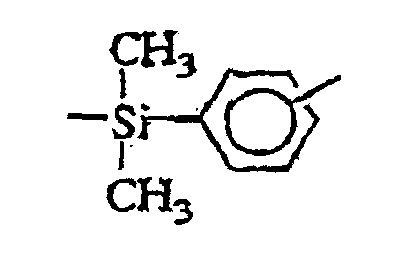
les indices p sont indépendamment 0 ou 1, r est un entier de 2 à 6, et m et n sont chacun un entier de 0 à 200. - Composition de la revendication 1 ou 2 ayant une viscosité de 50 à 2000 Pa.s à 25°C.
- Composition selon l'une quelconque des revendications précédentes dans laquelle la charge de silice (B) a une densité apparente d'au moins 120g/l.
- Composition selon l'une quelconque des revendications précédentes dans laquelle la charge de silice (B) a une densité apparente de pas plus de 180g/l.
- Composition selon l'une quelconque des revendications précédentes dans laquelle la quantité de la charge de silice (B) mélangée est de 15 à 30 parties en poids pour 100 parties en poids du composant (A).
- Composition selon l'une quelconque des revendications 1 à 6 à utiliser dans un moulage par injection liquide.
- Méthode comprenant la préparation d'une composition selon l'une quelconque des revendications 1 à 7, en mélangeant ces ingrédients.
- Méthode de production d'un article moulé, en moulant une composition selon l'une quelconque des revendications 1 à 7.
- Méthode selon la revendication 9 dans laquelle le moulage est un moulage par injection liquide.
Applications Claiming Priority (2)
| Application Number | Priority Date | Filing Date | Title |
|---|---|---|---|
| JP2000204049 | 2000-07-05 | ||
| JP2000204049A JP4016239B2 (ja) | 2000-07-05 | 2000-07-05 | 硬化性フルオロポリエーテル系ゴム組成物 |
Publications (2)
| Publication Number | Publication Date |
|---|---|
| EP1170320A1 EP1170320A1 (fr) | 2002-01-09 |
| EP1170320B1 true EP1170320B1 (fr) | 2003-11-26 |
Family
ID=18701375
Family Applications (1)
| Application Number | Title | Priority Date | Filing Date |
|---|---|---|---|
| EP01305796A Expired - Lifetime EP1170320B1 (fr) | 2000-07-05 | 2001-07-04 | Compositions de fluoropolyèthers réticulables |
Country Status (4)
| Country | Link |
|---|---|
| US (1) | US6759467B2 (fr) |
| EP (1) | EP1170320B1 (fr) |
| JP (1) | JP4016239B2 (fr) |
| DE (1) | DE60101292T2 (fr) |
Families Citing this family (25)
| Publication number | Priority date | Publication date | Assignee | Title |
|---|---|---|---|---|
| JP3858966B2 (ja) * | 2000-11-30 | 2006-12-20 | 信越化学工業株式会社 | 硬化性フルオロポリエーテル系ゴム組成物 |
| JP3858970B2 (ja) * | 2001-05-02 | 2006-12-20 | 信越化学工業株式会社 | 硬化性フルオロポリエーテル系ゴム組成物 |
| US6815492B2 (en) | 2001-08-29 | 2004-11-09 | Shin-Etsu Chemical Co., Ltd. | Rubber parts for aircraft |
| US6841647B2 (en) | 2001-11-06 | 2005-01-11 | National Starch And Chemical Investment Holding Corporation | Fluid resistant silicone encapsulant |
| JP3985133B2 (ja) | 2001-12-21 | 2007-10-03 | 信越化学工業株式会社 | チキソ性含フッ素硬化性組成物及びこれを用いた封止物 |
| EP2085408B1 (fr) | 2002-03-14 | 2012-01-18 | Daikin Industries, Ltd. | Composition durcissable en copolymère fluoré et objet durci |
| JP2004043590A (ja) * | 2002-07-10 | 2004-02-12 | Shin Etsu Chem Co Ltd | 硬化性組成物及び電気・電子部品 |
| JP4243827B2 (ja) | 2002-08-15 | 2009-03-25 | 信越化学工業株式会社 | 硬化性フルオロポリエーテル系ゴム組成物及びゴム製品 |
| JP4133214B2 (ja) * | 2002-10-25 | 2008-08-13 | 信越化学工業株式会社 | 硬化性組成物 |
| JP4231997B2 (ja) * | 2002-11-19 | 2009-03-04 | 信越化学工業株式会社 | 硬化性フルオロポリエーテル系ゴム組成物及びゴム製品 |
| JP2004331896A (ja) * | 2003-05-12 | 2004-11-25 | Shin Etsu Chem Co Ltd | 硬化性フルオロポリエーテルゴム組成物及びゴム製品 |
| JP2005113004A (ja) | 2003-10-08 | 2005-04-28 | Shin Etsu Chem Co Ltd | 半導体装置 |
| US20070191554A1 (en) * | 2006-02-13 | 2007-08-16 | Shin-Etsu Chemical Co., Ltd. | Curable fluoropolyether compositions and integral molded resin/rubber articles |
| JP5035555B2 (ja) * | 2008-04-09 | 2012-09-26 | 信越化学工業株式会社 | 室温硬化性フルオロポリエーテルゴム組成物及びその硬化物 |
| JP5282635B2 (ja) * | 2009-04-10 | 2013-09-04 | 信越化学工業株式会社 | 含フッ素硬化性組成物及びその製造方法 |
| JP5146690B2 (ja) | 2009-09-09 | 2013-02-20 | 信越化学工業株式会社 | 室温硬化性フルオロポリエーテル系ゴム組成物及びその硬化物 |
| WO2014110329A1 (fr) * | 2013-01-11 | 2014-07-17 | E. I. Du Pont De Nemours And Company | Sels d'ammonium quaternaire de perfluoroalcoxy servant à préparer des perfluoropolyéthers |
| JP5935749B2 (ja) * | 2013-04-25 | 2016-06-15 | 信越化学工業株式会社 | ロール用付加硬化型ゴム組成物、イオン導電性ゴムロール及び電子写真式画像形成装置 |
| JP6892626B2 (ja) * | 2014-06-11 | 2021-06-23 | 日産化学株式会社 | シリル基を有するパーフルオロポリエーテルを含む硬化性組成物 |
| JP6395518B2 (ja) * | 2014-09-01 | 2018-09-26 | キヤノン株式会社 | 液体吐出ヘッドの製造方法 |
| JP6565723B2 (ja) * | 2015-02-04 | 2019-08-28 | 信越化学工業株式会社 | 光硬化性フルオロポリエーテル系ゴム組成物及びその硬化物、並びにその硬化方法 |
| WO2020110680A1 (fr) | 2018-11-28 | 2020-06-04 | 信越化学工業株式会社 | Composition de caoutchouc à base de perfluoropolyéther, objet durci obtenu à partir de cette dernière et produit comprenant ladite composition |
| WO2022059623A1 (fr) * | 2020-09-16 | 2022-03-24 | Agc株式会社 | Composition, substrat doté d'une couche de surface, procédé de production d'un substrat doté d'une couche de surface, composé et procédé de production de composé |
| JP7048713B1 (ja) * | 2020-12-18 | 2022-04-05 | 三菱電線工業株式会社 | フッ素ゴム組成物及びそれを用いて形成されたゴム成形品 |
| EP4656667A1 (fr) * | 2024-05-28 | 2025-12-03 | Shin-Etsu Chemical Co., Ltd. | Composition durcissable |
Family Cites Families (13)
| Publication number | Priority date | Publication date | Assignee | Title |
|---|---|---|---|---|
| US2727876A (en) * | 1952-03-06 | 1955-12-20 | Du Pont | Composition and process |
| US2805955A (en) * | 1952-04-22 | 1957-09-10 | Columbia Southern Chem Corp | Silica composition and production thereof |
| US3658749A (en) * | 1970-06-16 | 1972-04-25 | Celanese Corp | Modified oxymethylene polymers |
| DE2729244A1 (de) * | 1977-06-29 | 1979-01-04 | Degussa | Faellungskieselsaeure |
| DE2929587C2 (de) * | 1979-07-21 | 1981-08-27 | Degussa Ag, 6000 Frankfurt | Hydrophobe Füllstoff-Mischung, Verfahren zu deren Herstellung und deren Verwendung |
| FR2497524B1 (fr) * | 1981-01-07 | 1985-12-13 | Rhone Poulenc Spec Chim | |
| US4382057A (en) * | 1981-12-04 | 1983-05-03 | General Electric Company | Silicone rubber compositions for liquid injection molding machines |
| FR2557121B1 (fr) * | 1983-12-21 | 1986-10-10 | Rhone Poulenc Spec Chim | Compositions elastomeriques organopolysiloxaniques vulcanisables a chaud a caracteristiques physiques ameliorees |
| US5665846A (en) * | 1995-01-23 | 1997-09-09 | Shin-Etsu Chemical Co., Ltd. | Fluorinated amide compounds and curable compositions |
| JP3239717B2 (ja) * | 1995-09-29 | 2001-12-17 | 信越化学工業株式会社 | 硬化性組成物 |
| JP3475760B2 (ja) * | 1997-12-24 | 2003-12-08 | 信越化学工業株式会社 | 硬化性組成物及びゲル硬化物 |
| JP3646775B2 (ja) * | 1999-03-02 | 2005-05-11 | 信越化学工業株式会社 | 硬化性フルオロポリエーテル系ゴム組成物 |
| JP3654338B2 (ja) * | 1999-09-03 | 2005-06-02 | 信越化学工業株式会社 | 含フッ素硬化性組成物 |
-
2000
- 2000-07-05 JP JP2000204049A patent/JP4016239B2/ja not_active Expired - Fee Related
-
2001
- 2001-07-03 US US09/897,479 patent/US6759467B2/en not_active Expired - Lifetime
- 2001-07-04 DE DE60101292T patent/DE60101292T2/de not_active Expired - Fee Related
- 2001-07-04 EP EP01305796A patent/EP1170320B1/fr not_active Expired - Lifetime
Also Published As
| Publication number | Publication date |
|---|---|
| DE60101292D1 (de) | 2004-01-08 |
| JP2002020615A (ja) | 2002-01-23 |
| DE60101292T2 (de) | 2004-09-09 |
| EP1170320A1 (fr) | 2002-01-09 |
| US6759467B2 (en) | 2004-07-06 |
| US20020019483A1 (en) | 2002-02-14 |
| JP4016239B2 (ja) | 2007-12-05 |
Similar Documents
| Publication | Publication Date | Title |
|---|---|---|
| EP1170320B1 (fr) | Compositions de fluoropolyèthers réticulables | |
| EP1217025B1 (fr) | Compositions de fluoropolyèthers réticulables | |
| EP1033387B1 (fr) | Compositions de fluoropolyéthers réticulables | |
| JP3666575B2 (ja) | 硬化性フルオロポリエーテルゴム組成物 | |
| EP1223194B1 (fr) | Compositions élastomères fluorés réticulables, leur production et leur utilisation | |
| EP1555297A1 (fr) | Compositions caoutchouteuses de fluoropolyéther à moulage par injection | |
| US20010018491A1 (en) | Curable composition | |
| EP2368942A1 (fr) | Composition durcissable contenant du fluor et article en caoutchouc | |
| US6441079B2 (en) | Curable fluoropolyether base rubber compositions | |
| EP1614718A1 (fr) | Compositions de fluoropolyéthers réticulables, leurs préparation et utilisation | |
| EP2108672A1 (fr) | Compositions de caoutchouc au fluoropolyéther durcissable à température ambiante et produit durci | |
| JP5110280B2 (ja) | 硬化性フルオロポリエーテル系ゴム組成物 | |
| US6528562B2 (en) | Curable fluoropolyether rubber compositions | |
| US20030225200A1 (en) | Curable fluoropolyether rubber compositions and rubber articles | |
| US20020137842A1 (en) | Curable fluoropolyether base rubber compositions | |
| EP0811651A2 (fr) | Compositions durcissables | |
| JP3525810B2 (ja) | 硬化性液状フルオロポリエーテル系ゴム組成物の製造方法 | |
| JP2002327110A (ja) | 硬化性フルオロポリエーテル系ゴム組成物 | |
| JP3674680B2 (ja) | 硬化性フルオロポリエーテルゴム組成物 | |
| JP2010143975A (ja) | 硬化性フルオロポリエーテル系ゴム組成物 | |
| EP1247830B1 (fr) | Compositions fluorées et reticulables, leur preparation et usage |
Legal Events
| Date | Code | Title | Description |
|---|---|---|---|
| PUAI | Public reference made under article 153(3) epc to a published international application that has entered the european phase |
Free format text: ORIGINAL CODE: 0009012 |
|
| AK | Designated contracting states |
Kind code of ref document: A1 Designated state(s): AT BE CH CY DE DK ES FI FR GB GR IE IT LI LU MC NL PT SE TR Kind code of ref document: A1 Designated state(s): DE FR GB |
|
| AX | Request for extension of the european patent |
Free format text: AL;LT;LV;MK;RO;SI |
|
| 17P | Request for examination filed |
Effective date: 20020412 |
|
| AKX | Designation fees paid |
Free format text: DE FR GB |
|
| GRAH | Despatch of communication of intention to grant a patent |
Free format text: ORIGINAL CODE: EPIDOS IGRA |
|
| GRAS | Grant fee paid |
Free format text: ORIGINAL CODE: EPIDOSNIGR3 |
|
| GRAA | (expected) grant |
Free format text: ORIGINAL CODE: 0009210 |
|
| AK | Designated contracting states |
Kind code of ref document: B1 Designated state(s): DE FR GB |
|
| REG | Reference to a national code |
Ref country code: GB Ref legal event code: FG4D |
|
| REF | Corresponds to: |
Ref document number: 60101292 Country of ref document: DE Date of ref document: 20040108 Kind code of ref document: P |
|
| REG | Reference to a national code |
Ref country code: IE Ref legal event code: FG4D |
|
| ET | Fr: translation filed | ||
| PLBE | No opposition filed within time limit |
Free format text: ORIGINAL CODE: 0009261 |
|
| STAA | Information on the status of an ep patent application or granted ep patent |
Free format text: STATUS: NO OPPOSITION FILED WITHIN TIME LIMIT |
|
| 26N | No opposition filed |
Effective date: 20040827 |
|
| REG | Reference to a national code |
Ref country code: IE Ref legal event code: MM4A |
|
| PGFP | Annual fee paid to national office [announced via postgrant information from national office to epo] |
Ref country code: GB Payment date: 20050629 Year of fee payment: 5 |
|
| PGFP | Annual fee paid to national office [announced via postgrant information from national office to epo] |
Ref country code: DE Payment date: 20050630 Year of fee payment: 5 |
|
| PGFP | Annual fee paid to national office [announced via postgrant information from national office to epo] |
Ref country code: FR Payment date: 20050708 Year of fee payment: 5 |
|
| PG25 | Lapsed in a contracting state [announced via postgrant information from national office to epo] |
Ref country code: GB Free format text: LAPSE BECAUSE OF NON-PAYMENT OF DUE FEES Effective date: 20060704 |
|
| PG25 | Lapsed in a contracting state [announced via postgrant information from national office to epo] |
Ref country code: DE Free format text: LAPSE BECAUSE OF NON-PAYMENT OF DUE FEES Effective date: 20070201 |
|
| GBPC | Gb: european patent ceased through non-payment of renewal fee |
Effective date: 20060704 |
|
| REG | Reference to a national code |
Ref country code: FR Ref legal event code: ST Effective date: 20070330 |
|
| PG25 | Lapsed in a contracting state [announced via postgrant information from national office to epo] |
Ref country code: FR Free format text: LAPSE BECAUSE OF NON-PAYMENT OF DUE FEES Effective date: 20060731 |