BACKGROUND OF THE INVENTION
1.Field of the Invention
The invention relates to an EGR (Exhaust Gas Recirculation)
system for an internal combustion engine which is operable to
recirculate at least a portion of an exhaust gas from an exhaust
system to an intake air system of the engine, for the purpose of
reducing nitrogen oxides (NOx) emissions.
2.Description of Related Art
Exhaust gas recirculation (EGR) is performed as one of
conventional techniques for purifying exhaust gas discharged from
an internal combustion engine for a motor vehicle. According to
the EGR technique, at least a portion of the exhaust gas
containing CO2, which has a heat capacity larger than that of N2
in the atmosphere, is reintroduced into a combustion chamber of
the engine so as to lower a combustion temperature and, thus, to
decrease an amount of nitrogen oxides (NOx) produced by the
combustion. The EGR technique is widely used for reducing NOx
emissions in diesel engines in which combustion is performed in
the presence of excessive air. The EGR, however, is likely to
increase an amount of smoke emitted in the exhaust gas. The
engine is provided with an EGR system including an exhaust gas
recirculation passage (EGR passage) for communication between an
exhaust passage and an intake air passage, and an EGR valve
disposed in the EGR passage. The operation of the EGR system is
controllable by suitably opening and closing the EGR valve.
In the EGR system, at least a portion of the exhaust gas is
reintroduced into an intake air of the engine as described above.
Reintroducing the expanded exhaust gas at a high temperature into
the intake air may decrease an amount of new air fed to the
engine, and increase the combustion chamber temperature. As a
result, the amount of NOx cannot be sufficiently reduced, and the
amount of smoke is increased. The aforementioned problem may be
solved by providing the EGR system with an EGR cooler adapted to
cool the exhaust gas flowing from the exhaust passage to the
intake air. Hereinafter, the exhaust gas flowing from the
exhaust passage to be reintroduced into the intake air is
referred to as an "EGR gas".
In the EGR cooler, however, the lower the temperature of the
EGR gas becomes, the more a mist of the EGR gas is generated.
Particles of the resultant mist adhere to the inside of the EGR
cooler, and clog the EGR cooler. Particularly, in the state
where the EGR gas is at a relatively lower temperature than
usual, e.g., during a low-load engine operation, its temperature
is further decreased in the EGR cooler. This may further promote
clogging of the EGR cooler with the mist particles.
The EGR system is operable to reintroduce the EGR gas into the
intake air with the aid of a pressure difference between an
exhaust pressure and an intake pressure. In this respect, the
EGR cooler disposed in the EGR passage serves to resist the EGR
gas flowing through the EGR passage, thus decreasing the flow
rate of the EGR gas. Particularly in the internal combustion
engine with a supercharger for the engine, since the exhaust
pressure is increased as well as the intake air pressure, the
pressure difference therebetween is reduced. In this case, the
reduction of the pressure difference by the EGR cooler reaches
the level that cannot be ignored. Meanwhile, in order to satisfy
the requirement of the recent trend of further improvement in the
exhaust-gas purifying capacity of the engine, the EGR is required
to be performed even at a high intake air pressure during a high-load
engine operation. Therefore, the EGR system generally needs
to take a measure such that a sufficient pressure difference
between the exhaust pressure and the intake pressure can be
ensured.
In the EGR system, it is further required to purify the EGR gas
so as to prevent clogging of the EGR valve, EGR cooler and
compressor of the turbocharger, and contamination of the inside
of the internal combustion engine.
SUMMARY OF THE INVENTION
It is an object of the invention to provide an exhaust gas
recirculation (EGR) system for an internal combustion engine,
which is capable of reducing an amount of mist particles
generated in an EGR cooler, allowing a large amount of EGR gas to
be recirculated by keeping a pressure difference between an
exhaust pressure and an intake air pressure within a broader
range of engine operating conditions including a high-load engine
operating condition, and permitting recirculation of purified EGR
gas.
To accomplish the above and/or other objects, the principle of
the invention provides an EGR system for an internal combustion
engine provided with cooling means disposed in an EGR passage,
for cooling an EGR gas, an EGR-gas compressor which is disposed
in the EGR passage upstream of the cooling means and is operable
to compress the EGR gas, an EGR-gas turbine which is disposed in
the EGR passage downstream of the cooling means and is operable
to expand the EGR gas, and driving means for driving the EGR-gas
compressor and the EGR-gas turbine.
According to one preferred form of the invention, the EGR
passage communicates an exhaust passage downstream of a turbine
of a supercharger for the internal combustion engine with an
intake passage upstream of a compressor of the supercharger.
According to another preferred form of the invention, the EGR
passage communicates an exhaust passage downstream of a
particulate filter with an intake passage upstream of a
compressor of a supercharger for the internal combustion engine.
BRIEF DESCRIPTION OF THE DRAWINGS
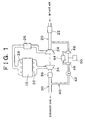
Fig. 1 is a schematic diagram of an internal combustion engine
incorporating an EGR system according to one preferred embodiment
of the invention;
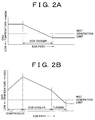
Fig. 2A is a graph showing a change in an EGR gas temperature
in a conventional EGR system;
Fig. 2B is a graph showing a change in an EGR gas temperature
in the EGR system of the invention;
Fig. 3 is a schematic diagram of a first embodiment of driving
means for driving an EGR-gas compressor and an EGR-gas turbine
incorporated in the EGR system of the invention;
Fig. 4 is a schematic diagram of a second embodiment of the
driving means for driving the EGR-gas compressor and turbine
incorporated in the EGR system of the invention;
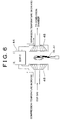
Fig. 5 is a schematic diagram of a third embodiment of the
driving means for driving the EGR-gas compressor and turbine
incorporated in the EGR system of the invention; and
Fig. 6 is a schematic diagram of a fourth embodiment of the
driving means for driving the EGR-gas compressor and turbine
incorporated in the EGR system of the invention.
DETAILED DESCRIPTION OF PREFERRED EMBODIMENTS
Preferred embodiments of the invention will be described with
reference to the accompanying drawings.
Fig. 1 schematically shows a diesel engine with a supercharger
incorporating an EGR system according to the preferred embodiment
of the invention. The diesel engine includes an engine body 10
provided with a plurality of cylinders each performing combustion
therein, and an intake air passage 20 for supplying an intake air
required for the combustion to the engine body 10. Described in
detail, the engine is provided with the intake air passage 20, an
air cleaner 22, a compressor 24 of the supercharger, an
intercooler 26, and an intake manifold 28. The intake air
supplied to the engine body 10 through the intake air passage 20
is filtered by the air cleaner 22, compressed by the compressor
24, cooled by the intercooler 26, and then introduced to the
intake manifold 28. The intake manifold 28 serves to deliver the
intake air to the plurality of cylinders of the engine body 10.
An exhaust gas generated in each of the cylinders is discharged
through an exhaust passage 30. Specifically, the exhaust passage
30 is connected with an exhaust manifold 32, a turbine 34 of the
supercharger and a diesel particulate filter (DPF) 36. The
exhaust gas discharged from each cylinder is collected in the
exhaust manifold 32. The collected exhaust gas is forced to pass
through the turbine 34 that is connected coaxially with the
compressor 24, purified by the DPF 36, and then finally
discharged.
The diesel engine is adapted to perform combustion in the
presence of excessive air. Accordingly, emissions of
HC(hydrocarbons) and CO(carbon monoxide) as incomplete combustion
components are reduced. On the contrary, however, emissions of
particulates and nitrogen oxides (NOx) produced by a reaction
between nitrogen in the atmosphere and unburned oxygen are
increased in the exhaust gas. The emitted particulates are
formed as a composite of black smoke (dry soot) as a major
component, soluble organic fraction (SOF), sulfates (sulfate
mists) and the like. Therefore the particulate-emission rate
cannot be reduced by merely improving combustion capacity of the
internal combustion engine. Then the DPF 36 is provided in the
exhaust passage 30 to lower the particulate emission by trapping
the particulates therein.
The diesel engine of the invention is equipped with an EGR
system intended to reduce the NOx emissions. The EGR system
includes an EGR passage 40 extending between the exhaust passage
30 and the intake air passage 20 so as to circulate the exhaust
gas for reintroducing a portion of the exhaust gas, i.e., an EGR
gas to the intake air. An EGR valve 42 is provided in the EGR
passage 40 to adjust a flow rate of the EGR gas to be
recirculated. An EGR cooler 44 is also provided in the EGR
passage 40 for cooling the EGR gas. In the present embodiment,
the EGR cooler 44 may be formed as a heat exchanger using cooling
water.
In the conventional EGR system, as shown in Fig. 2A, when the
EGR gas passes through the EGR cooler 44, the EGR gas temperature
decreases to be lower than a temperature limit below which the
mist is generated. Therefore, the EGR gas mist is generated in
the EGR cooler 44 and the mist particles adhere to the inside
thereof. As a result, the EGR cooler 44 of the EGR gas is
clogged. The aforementioned clogging problem may be solved by
providing an EGR-gas compressor 46 in the EGR passage 40 upstream
of the EGR cooler 44 so as to temporarily increase the
temperature of the EGR gas flowing into the EGR cooler 44. As is
understood from the graph of Fig. 2B, when the EGR gas passes
through the EGR cooler 44, the EGR gas temperature is effectively
kept higher than the limit temperature, thus reducing an amount
of the mist particles of the EGR gas generated in the EGR cooler
44.
The EGR system of the present embodiment further includes an
EGR-gas turbine 48 disposed in the EGR passage 40 downstream of
the EGR cooler 44. The EGR-gas turbine 48 is adapted to expand
the EGR gas delivered from the EGR cooler 44. Referring to Fig.
2B, expanding the EGR gas may decrease the EGR-gas temperature to
the degree corresponding to a temperature increment of the EGR-gas
compressed by the EGR-gas compressor 24. Since the EGR-gas
turbine 48 rotates at a high revolution speed, no clogging
occurs.
In the EGR system of this embodiment, the temperature of the
EGR gas is increased by compressing the EGR gas in the EGR-gas
compressor 46 so as to prevent generation of the mist particles
in the EGR cooler 44. The temperature increment of the EGR-gas
compressed by the EGR-gas compressor 46 can be effectively
compensated by a temperature decrement of the EGR-gas expanded by
the EGR-gas turbine 48. In the end, the EGR system of the
present embodiment makes it possible to recirculate the EGR gas
cooled by the EGR cooler 44 to the intake air passage 20.
Therefore, volumetric efficiency of the engine can be enhanced,
and output characteristics, fuel economy, and exhaust gas
purifying capacity of the engine can be improved. It should be
appreciated that the EGR-gas turbine 48 and the EGR-gas
compressor 46 are coaxially disposed with each other and are
mechanically driven by driving means 50 such that the EGR gas
increasingly flows through the EGR passage 40 without using an
intake air throttle valve nor exhaust throttle valve.
Fig. 3 shows a first embodiment of the driving means 50 for
driving the EGR-gas compressor 46 and the EGR-gas turbine 48.
According to the first embodiment of the driving means 50, at
least one of rotating members of the internal combustion engine,
e.g., camshaft, timing belt, pulley, is utilized to drive the
EGR-gas compressor 46 and the EGR-gas turbine 48. Fig. 4 shows a
second embodiment of the driving means 50 in which the driving
means 50 is embodied by utilizing a power of the exhaust gas
discharged from the engine. Namely, rotation of the supercharger
consisting of the turbine 34 and the compressor 24 is utilized to
drive the EGR-gas compressor 46 and the EGR-gas turbine 48.
Fig 5 shows a third embodiment of the driving means 50 in which
an electric motor independent of the internal combustion engine
is utilized to drive the EGR-gas compressor 46 and the EGR-gas
turbine 48. Fig. 6 shows a fourth embodiment of the driving
means 50 which is embodied by utilizing a lubrication system of
the internal combustion engine. That is, the EGR-gas compressor
46 and the EGR-gas turbine 48 are driven by a power of oil jet.
Meanwhile, the EGR technique provides a recirculation of the
exhaust gas into the intake air, by utilizing a pressure
difference between an exhaust pressure and an intake air
pressure. In this respect, the EGR cooler 44 functions as a
resistance to the EGR gas flowing through the EGR passage 40, and
reduces the pressure difference between the exhaust pressure and
the intake air pressure. To compensate such decrease in the
pressure difference, the EGR system of the present embodiment is
arranged such that the EGR passage 40 extends in communication
between the exhaust passage 30 downstream of the turbine 34 of
the supercharger and the intake air passage 20 upstream of the
compressor 24 of the supercharger, as is apparent from Fig. 1.
Namely, the pressure of the portion downstream of the turbine 34
is lower than that of the portion upstream of the turbine 34.
However, the intake air passage upstream of the compressor 24 is
at a low pressure corresponding to be the atmospheric pressure,
making it possible to keep sufficient pressure difference.
Therefore, the EGR system of the embodiment may be operated
during a high-load engine operation at a high intake air
pressure.
Referring to Fig. 1, the EGR passage 40 extends in
communication between the exhaust passage 30 downstream of the
DPF 36 and the intake air passage 20 EGR-gas upstream of the
compressor 24 of the supercharger. This arrangement makes it
possible to perform recirculation of purified EGR gas, thus
preventing conventionally experienced problems such as clogging
of the EGR valve 42, the EGR cooler 44 and the compressor 24 of
the supercharger, and contamination of the inside of the internal
combustion engine.
As is understood from the foregoing description, the EGR system
of the invention is capable of performing the EGR gas by
preventing generation of the mist particles of the EGR gas in the
EGR cooler, and is operable of performing a desired amount of EGR
gas within a broader range of engine operating conditions
including the high-load engine operation condition. Further, the
EGR system of the invention makes it possible to recirculate
purified EGR gases, thus preventing problems of clogging of the
EGR system components and the internal combustion engine or the
like.
The EGR system for an internal combustion engine according to
the present invention includes a cooling means 44 disposed in an
EGR passage 40 for cooling an EGR gas, an EGR-gas compressor 46
disposed in the EGR passage 40 upstream of the cooling means 44
for compressing the EGR gas, an EGR-gas turbine 48 disposed in
the EGR passage 40 downstream of the cooling means 44 for
expanding the EGR gas, and driving means 50 for driving the EGR-gas
compressor and turbine 46,48. The EGR passage 40 extends in
communication between the exhaust passage 30 downstream of a
turbine 34 of a supercharger for the engine and the intake air
passage 20 upstream of a compressor 24 of the supercharger. When
the EGR system is equipped with a diesel particulate filter 36,
the EGR passage 40 is connected to a portion of the exhaust
passage 30 downstream of the particulate filter 36.