EP1190988A2 - Bismuth-containing laser markable compositions and methods of making and using same - Google Patents
Bismuth-containing laser markable compositions and methods of making and using same Download PDFInfo
- Publication number
- EP1190988A2 EP1190988A2 EP01118512A EP01118512A EP1190988A2 EP 1190988 A2 EP1190988 A2 EP 1190988A2 EP 01118512 A EP01118512 A EP 01118512A EP 01118512 A EP01118512 A EP 01118512A EP 1190988 A2 EP1190988 A2 EP 1190988A2
- Authority
- EP
- European Patent Office
- Prior art keywords
- bismuth
- laser
- substrate
- compounds
- marked
- Prior art date
- Legal status (The legal status is an assumption and is not a legal conclusion. Google has not performed a legal analysis and makes no representation as to the accuracy of the status listed.)
- Granted
Links
Images






Classifications
-
- C—CHEMISTRY; METALLURGY
- C09—DYES; PAINTS; POLISHES; NATURAL RESINS; ADHESIVES; COMPOSITIONS NOT OTHERWISE PROVIDED FOR; APPLICATIONS OF MATERIALS NOT OTHERWISE PROVIDED FOR
- C09C—TREATMENT OF INORGANIC MATERIALS, OTHER THAN FIBROUS FILLERS, TO ENHANCE THEIR PIGMENTING OR FILLING PROPERTIES ; PREPARATION OF CARBON BLACK ; PREPARATION OF INORGANIC MATERIALS WHICH ARE NO SINGLE CHEMICAL COMPOUNDS AND WHICH ARE MAINLY USED AS PIGMENTS OR FILLERS
- C09C1/00—Treatment of specific inorganic materials other than fibrous fillers; Preparation of carbon black
-
- C—CHEMISTRY; METALLURGY
- C09—DYES; PAINTS; POLISHES; NATURAL RESINS; ADHESIVES; COMPOSITIONS NOT OTHERWISE PROVIDED FOR; APPLICATIONS OF MATERIALS NOT OTHERWISE PROVIDED FOR
- C09C—TREATMENT OF INORGANIC MATERIALS, OTHER THAN FIBROUS FILLERS, TO ENHANCE THEIR PIGMENTING OR FILLING PROPERTIES ; PREPARATION OF CARBON BLACK ; PREPARATION OF INORGANIC MATERIALS WHICH ARE NO SINGLE CHEMICAL COMPOUNDS AND WHICH ARE MAINLY USED AS PIGMENTS OR FILLERS
- C09C1/00—Treatment of specific inorganic materials other than fibrous fillers; Preparation of carbon black
- C09C1/62—Metallic pigments or fillers
- C09C1/64—Aluminium
-
- B—PERFORMING OPERATIONS; TRANSPORTING
- B41—PRINTING; LINING MACHINES; TYPEWRITERS; STAMPS
- B41M—PRINTING, DUPLICATING, MARKING, OR COPYING PROCESSES; COLOUR PRINTING
- B41M5/00—Duplicating or marking methods; Sheet materials for use therein
- B41M5/26—Thermography ; Marking by high energetic means, e.g. laser otherwise than by burning, and characterised by the material used
- B41M5/262—Thermography ; Marking by high energetic means, e.g. laser otherwise than by burning, and characterised by the material used recording or marking of inorganic surfaces or materials, e.g. glass, metal, or ceramics
-
- B—PERFORMING OPERATIONS; TRANSPORTING
- B41—PRINTING; LINING MACHINES; TYPEWRITERS; STAMPS
- B41M—PRINTING, DUPLICATING, MARKING, OR COPYING PROCESSES; COLOUR PRINTING
- B41M5/00—Duplicating or marking methods; Sheet materials for use therein
- B41M5/26—Thermography ; Marking by high energetic means, e.g. laser otherwise than by burning, and characterised by the material used
- B41M5/267—Marking of plastic artifacts, e.g. with laser
-
- C—CHEMISTRY; METALLURGY
- C01—INORGANIC CHEMISTRY
- C01G—COMPOUNDS CONTAINING METALS NOT COVERED BY SUBCLASSES C01D OR C01F
- C01G23/00—Compounds of titanium
-
- C—CHEMISTRY; METALLURGY
- C01—INORGANIC CHEMISTRY
- C01G—COMPOUNDS CONTAINING METALS NOT COVERED BY SUBCLASSES C01D OR C01F
- C01G25/00—Compounds of zirconium
-
- C—CHEMISTRY; METALLURGY
- C01—INORGANIC CHEMISTRY
- C01G—COMPOUNDS CONTAINING METALS NOT COVERED BY SUBCLASSES C01D OR C01F
- C01G29/00—Compounds of bismuth
-
- C—CHEMISTRY; METALLURGY
- C01—INORGANIC CHEMISTRY
- C01G—COMPOUNDS CONTAINING METALS NOT COVERED BY SUBCLASSES C01D OR C01F
- C01G33/00—Compounds of niobium
-
- C—CHEMISTRY; METALLURGY
- C01—INORGANIC CHEMISTRY
- C01G—COMPOUNDS CONTAINING METALS NOT COVERED BY SUBCLASSES C01D OR C01F
- C01G49/00—Compounds of iron
- C01G49/0018—Mixed oxides or hydroxides
-
- C—CHEMISTRY; METALLURGY
- C01—INORGANIC CHEMISTRY
- C01P—INDEXING SCHEME RELATING TO STRUCTURAL AND PHYSICAL ASPECTS OF SOLID INORGANIC COMPOUNDS
- C01P2002/00—Crystal-structural characteristics
- C01P2002/04—Compounds with a limited amount of crystallinty, e.g. as indicated by a crystallinity index
-
- C—CHEMISTRY; METALLURGY
- C01—INORGANIC CHEMISTRY
- C01P—INDEXING SCHEME RELATING TO STRUCTURAL AND PHYSICAL ASPECTS OF SOLID INORGANIC COMPOUNDS
- C01P2002/00—Crystal-structural characteristics
- C01P2002/70—Crystal-structural characteristics defined by measured X-ray, neutron or electron diffraction data
-
- C—CHEMISTRY; METALLURGY
- C01—INORGANIC CHEMISTRY
- C01P—INDEXING SCHEME RELATING TO STRUCTURAL AND PHYSICAL ASPECTS OF SOLID INORGANIC COMPOUNDS
- C01P2002/00—Crystal-structural characteristics
- C01P2002/80—Crystal-structural characteristics defined by measured data other than those specified in group C01P2002/70
- C01P2002/82—Crystal-structural characteristics defined by measured data other than those specified in group C01P2002/70 by IR- or Raman-data
-
- C—CHEMISTRY; METALLURGY
- C01—INORGANIC CHEMISTRY
- C01P—INDEXING SCHEME RELATING TO STRUCTURAL AND PHYSICAL ASPECTS OF SOLID INORGANIC COMPOUNDS
- C01P2002/00—Crystal-structural characteristics
- C01P2002/80—Crystal-structural characteristics defined by measured data other than those specified in group C01P2002/70
- C01P2002/84—Crystal-structural characteristics defined by measured data other than those specified in group C01P2002/70 by UV- or VIS- data
-
- C—CHEMISTRY; METALLURGY
- C01—INORGANIC CHEMISTRY
- C01P—INDEXING SCHEME RELATING TO STRUCTURAL AND PHYSICAL ASPECTS OF SOLID INORGANIC COMPOUNDS
- C01P2004/00—Particle morphology
- C01P2004/60—Particles characterised by their size
- C01P2004/61—Micrometer sized, i.e. from 1-100 micrometer
-
- C—CHEMISTRY; METALLURGY
- C01—INORGANIC CHEMISTRY
- C01P—INDEXING SCHEME RELATING TO STRUCTURAL AND PHYSICAL ASPECTS OF SOLID INORGANIC COMPOUNDS
- C01P2004/00—Particle morphology
- C01P2004/60—Particles characterised by their size
- C01P2004/62—Submicrometer sized, i.e. from 0.1-1 micrometer
-
- C—CHEMISTRY; METALLURGY
- C01—INORGANIC CHEMISTRY
- C01P—INDEXING SCHEME RELATING TO STRUCTURAL AND PHYSICAL ASPECTS OF SOLID INORGANIC COMPOUNDS
- C01P2004/00—Particle morphology
- C01P2004/80—Particles consisting of a mixture of two or more inorganic phases
-
- C—CHEMISTRY; METALLURGY
- C01—INORGANIC CHEMISTRY
- C01P—INDEXING SCHEME RELATING TO STRUCTURAL AND PHYSICAL ASPECTS OF SOLID INORGANIC COMPOUNDS
- C01P2006/00—Physical properties of inorganic compounds
- C01P2006/60—Optical properties, e.g. expressed in CIELAB-values
-
- C—CHEMISTRY; METALLURGY
- C01—INORGANIC CHEMISTRY
- C01P—INDEXING SCHEME RELATING TO STRUCTURAL AND PHYSICAL ASPECTS OF SOLID INORGANIC COMPOUNDS
- C01P2006/00—Physical properties of inorganic compounds
- C01P2006/60—Optical properties, e.g. expressed in CIELAB-values
- C01P2006/62—L* (lightness axis)
-
- C—CHEMISTRY; METALLURGY
- C01—INORGANIC CHEMISTRY
- C01P—INDEXING SCHEME RELATING TO STRUCTURAL AND PHYSICAL ASPECTS OF SOLID INORGANIC COMPOUNDS
- C01P2006/00—Physical properties of inorganic compounds
- C01P2006/60—Optical properties, e.g. expressed in CIELAB-values
- C01P2006/63—Optical properties, e.g. expressed in CIELAB-values a* (red-green axis)
-
- C—CHEMISTRY; METALLURGY
- C01—INORGANIC CHEMISTRY
- C01P—INDEXING SCHEME RELATING TO STRUCTURAL AND PHYSICAL ASPECTS OF SOLID INORGANIC COMPOUNDS
- C01P2006/00—Physical properties of inorganic compounds
- C01P2006/60—Optical properties, e.g. expressed in CIELAB-values
- C01P2006/64—Optical properties, e.g. expressed in CIELAB-values b* (yellow-blue axis)
-
- C—CHEMISTRY; METALLURGY
- C01—INORGANIC CHEMISTRY
- C01P—INDEXING SCHEME RELATING TO STRUCTURAL AND PHYSICAL ASPECTS OF SOLID INORGANIC COMPOUNDS
- C01P2006/00—Physical properties of inorganic compounds
- C01P2006/90—Other properties not specified above
-
- Y—GENERAL TAGGING OF NEW TECHNOLOGICAL DEVELOPMENTS; GENERAL TAGGING OF CROSS-SECTIONAL TECHNOLOGIES SPANNING OVER SEVERAL SECTIONS OF THE IPC; TECHNICAL SUBJECTS COVERED BY FORMER USPC CROSS-REFERENCE ART COLLECTIONS [XRACs] AND DIGESTS
- Y10—TECHNICAL SUBJECTS COVERED BY FORMER USPC
- Y10T—TECHNICAL SUBJECTS COVERED BY FORMER US CLASSIFICATION
- Y10T428/00—Stock material or miscellaneous articles
- Y10T428/24—Structurally defined web or sheet [e.g., overall dimension, etc.]
- Y10T428/24802—Discontinuous or differential coating, impregnation or bond [e.g., artwork, printing, retouched photograph, etc.]
-
- Y—GENERAL TAGGING OF NEW TECHNOLOGICAL DEVELOPMENTS; GENERAL TAGGING OF CROSS-SECTIONAL TECHNOLOGIES SPANNING OVER SEVERAL SECTIONS OF THE IPC; TECHNICAL SUBJECTS COVERED BY FORMER USPC CROSS-REFERENCE ART COLLECTIONS [XRACs] AND DIGESTS
- Y10—TECHNICAL SUBJECTS COVERED BY FORMER USPC
- Y10T—TECHNICAL SUBJECTS COVERED BY FORMER US CLASSIFICATION
- Y10T428/00—Stock material or miscellaneous articles
- Y10T428/31—Surface property or characteristic of web, sheet or block
Definitions
- the present invention relates to addition, pigment or colorant materials which may be used for laser marking, and more particularly relates to bismuth-containing laser markable compositions, and methods of making and using such compositions.
- This invention relates to the use of bismuth-containing compounds as an additive, pigment or colorant.
- the bismuth containing compounds are useful in substrates comprising organic chemical compositions such as plastics, rubbers and the like, and coating compositions such as paints, printing inks and the like.
- the bismuth-containing compounds are also useful in inorganic chemical composition substrates such as glass enamels, porcelain enamels and the like.
- the present bismuth-containing compounds may be used in such compositions to impart unique properties such as the ability to make high contrast laser marks and/or color changing interactions with laser beams, unique electronic properties and high IR reflectance.
- An aspect of the present invention is to provide a pigment of the formula Bi x MyO z , where M is at least one metal selected from Zn, Ti, Fe, Cu, Al, Zr, P, Sn, Sr, Si, Y, Nb, La, Ta, Pr, Ca, Mg, Mo, W, Sb, Cr, Ba and Ce, x is from about 0.3 to about 70, y is from about 0.05 to about 8, and z is from about 1 to about 100.
- a further aspect of the present invention is to provide a laser markable compound comprising an oxide of bismuth and at least one additional metal selected from Zn, Ti, Fe, Cu, Al, Zr, P, Sn, Sr, Si, Y, Nb, La, Ta, Pr, Ca, Mg, Mo, W, Sb, Cr, Ba and Ce.
- Another aspect of the present invention is to provide a laser markable substrate comprising a substrate material and a bismuth-containing compound dispersed in the substrate material.
- a further aspect of the present invention is to provide laser marked substrate comprising a substrate material, a bismuth-containing compound dispersed in the substrate material, and a laser-marked portion of the bismuth-containing compound providing a contrasting mark on the substrate material.
- Another aspect of the present invention is to provide a method of making a laser markable compound comprising the steps of mixing bismuth oxide or precursors thereof with at least one additional metal oxide or precursors thereof, and heating the mixture, preferable at a temperature in the range of about 700 to about 1250.
- a further aspect of the present invention is to provide a method of making a laser markable substrate comprising dispersing a bismuth-containing compound in a substrate material.
- Another aspect of the present invention is to provide a method of laser marking an article comprising providing a substrate including a bismuth-containing compound and irradiating at least a portion of the substrate with a laser to form a marking thereon.
- FIGs. 1a and 1b schematically illustrate a laser marking operation in accordance with an embodiment of the invention.
- a substrate 10 includes particles 12 of the present bismuth-containing compounds dispersed therein.
- a portion 14 of the substrate 10 that has been irradiated with a laser beam appears as a marking which contrasts with the unmarked portion of the substrate.
- the contrasting marked portion has different visual characteristics in comparison with the rest of the substrate, e.g., a different lightness value and/or a different color value. This contrast results from the interaction of the laser beam with the bismuth-containing compound particles.
- the particles of the laser marking compounds may interact with the laser energy by scattering, reflecting or absorbing the energy, and a chemical reaction may occur with the substrate material, e.g., paint or plastic material matrix.
- the reactions may occur under reducing conditions such that the bismuth-containing compounds change to a state of reduced oxygen content.
- the term "laser markable compound” means a compound that can be dispersed in a substrate and provide a contrasting mark on the substrate after the region has been irradiated by a laser.
- the resultant marked region contrasts with the non-irradiated region, e.g., the marking may have a different lightness value and/or color value compared with the non-irradiated region.
- the laser markable compounds preferably provide contrasting marks having different lightness values )L as determined by the standard CIELAB scale.
- the difference in lightness values )L between the marked and unmarked regions typically has an absolute value of greater than about 10.
- the absolute value of )L is greater than about 20, more preferably greater than about 25. In a particularly preferred embodiment, the absolute value of )L is about 30 or higher.
- substrate means any material in which the present bismuth-containing compounds may be incorporated, including coatings and bulk materials in various forms.
- the bismuth-containing compounds may be dispersed homogeneously or non-homogeneously in the substrate.
- the present laser markable compounds comprise Bi and at least one additional metal.
- the compounds are oxides of Bi and the additional metal(s), but may alternatively comprise oxide-free compounds, hydrates, carbonates, sulfates, sulfides or other compounds containing the bismuth and additional metal(s).
- the additional metals are preferably Zn, Ti, Fe, Cu, Al, Zr, P, Sn, Sr, Si, Y, Nb, La, Ta, Pr, Ca, Mg., Mo, W, Sb, Cr, Ba and Ce.
- Preferred laser markable bismuth-containing oxide compounds of the present invention are of the formula Bi x M y O z , where M is at least one metal selected from Zn, Ti, Fe, Cu, Al, Zr, P, Sn, Sr, Si, Y, Nb, La, Ta, Pr, Ca, Mg, Mo, W, Sb, Cr, Ba and Ce. Particularly preferred metals include Zn, Si, Zr, Al and Sn.
- x is from about 0.3 to about 70
- y is from about 0.05 to about 8
- z is from about 1 to about 100. More preferably, x is from about 2 to about 64, y is from about 0.3 to about 4, and z is from about 2 to about 98.
- Preferred ratios of x/y are greater than 2 or 3. More preferred ratios of x/y are greater than about 5 or 10, more preferably greater than about 20.
- the bismuth-containing compounds are typically provided in particulate form having average particle sizes from about 0.5 to about 40 micron, preferably from about 0.8 to about 4 micron.
- the bismuth-containing compounds are provided in the substrate in sufficient amounts to provide laser marks of sufficient contrast. Furthermore, the compounds may be provided in sufficient amounts for coloring purposes.
- the bismuth-containing compounds preferably comprise from about 0.1 to about 70 weight percent of the substrate, more preferably from about 2 to about 50 weight percent.
- the laser markable compounds are selected such that they exhibit sufficiently high contrast laser marking qualities.
- the present compounds are preferably formed by high temperature reaction of bismuth oxide and other metal oxide(s).
- the unique compounds are then used as a pigment type material in the substrate, e.g., paints and plastics.
- the laser marking contrast properties are greatly enhanced.
- the heat build-up is also greatly reduced due to unique IR reflecting properties, and electronic properties may be improved.
- the bismuth-containing laser markable compounds may be made by mixing Bi metal oxides and additional metal oxides or precursors thereof, such as nitrates, carbonates, sulfates, etc, and heating the mixture and grinding the materials.
- Other methods of making the laser markable compounds include wet chemical precipitation reactions, sol gel reaction, and vapor phase reactions to make the compounds or coatings on the surfaces of the compounds.
- paints may be made by conventional mixing operations using cowles, horizontal mills, bead mills, shakers, attritors and the like.
- the bismuth-containing compounds may be mixed into plastic and other substrates using conventional extruders, molding equipment, brabenders and the like.
- Uses of the present bismuth-containing laser markable compounds include many applications such as plastic and paint applications for the automotive, architectural and electronics industries, and other industrial and military applications.
- One of the unique properties of coatings which include the present bismuth-based materials is the ability to produce high contrast marks upon irradiation by a laser beam.
- Use of the present compounds in combination with, e.g., paint and plastic chemistries allows for extremely high contrast marks to be formed by the laser. These marks can be used for decorative or identification purposes.
- Plastic or rubber substrate compositions that can be colored and marked according to this invention are based upon polymeric materials that can be natural or synthetic. Examples include natural resins, rubber, chlororubber, casein, oil-modified alkyd resins, viscose, cellulose acetate, cellulose propionate, cellulose acetobutyrate, nitrocellulose, or other cellulose ethers or esters. Synthetic organic polymers produced by polymerization, polyaddition, or polycondensation in thermosetting or thermoplastics can also be colored by this invention.
- Examples are polyethylene, polystyrene, polypropylene, polyisobutylene, polyvinylchloride, polyvinylacetate, polyacrylonitrile, poly acrylic acid, other polyolefins and substituted polyolefins, as well as methyacrylic acid esters, butadiene, as well as co polymers of the above mentioned.
- Examples from polyaddition and polycondensation resins are the condensation products of formaldehyde with phenols, phenolic resins, urea, thiourea, and melamine, amino resins, polyesters, polyamides, polycarbonates, and/or silicones. These polymers can be present individually or as mixtures as plastic material or melts spun into fibers.
- ком ⁇ онентs or binders for laquers, paints, or printing inks such as linseed oil, nitrocellulose, melamine resins, acrylic resins, ureaformaldehyde resins and the like.
- the pigmentary use of the present bismuth-containing compounds in other coatings or materials such as carbon-carbon composites may also provide advantages with regard to IR reflection.
- a plastic body as a substrate which would contain the pigment (such as vinyl siding) and/or any substrate (glass, ceramic, metal, plastic, composite) having thereon an organic coating or paint which would contain and utilize the high contrast laser markability, electronic properties, or low heat build-up properties of the bismuth containing pigments.
- Another use of the present bismuth-containing compounds is in glass-ceramic enamels for applications such as colored borders around glass sheets used for automobiles to enhance appearance and to prevent UV degradation of underlying adhesives.
- Architectural, container and other glass or ceramic decorative applications where the compounds are stable and can impart desirable property improvements are also possible in accordance with the present invention.
- Glass-ceramic enamel compositions may comprise from 1 to 70 wt% of the bismuth-containing compounds, such as ZnBi 38 O 60 , and from 30 to 99 wt% solid glass frit compositions, or a combination of two or more frits. Additional oxide pigments may be added to the enamel compositions such as CuCr 2 O 4 ,(CO,Fe)(Fe,Cr) 2 O 4 and the like.
- Printable enamel paste may be made from 60 to 85 wt% of above solids power, plus 15 to 40 wt% of a suitable carrying vehicle or medium which can be, e.g., screen printed, roll coated or sprayed.
- Such glass-ceramic enamels may be applied to automotive glass substrates, architectural glass substrates, container glass substrates, and/or metal substrates.
- a sample designated 267-010a was made from 59.3g Bi 2 O 3 and 40.7g TiO 2 .
- the powders were mixed together and heated at 2,110 °F for eight hours.
- the sample was ground into a fine powder which had an off white or pastel yellow color.
- X-ray diffraction identified Bi 2 Ti 4 O 11 as the main crystalline phase.
- a sample designated 267-011a was made from 79.5g Bi 2 O 3 and 20.5g TiO 2 .
- the powders were mixed together and heated at 2,110 °F for eight hours.
- the sample was ground into a fine powder which had an off white color.
- X-ray diffraction identified Bi 4 Ti 3 O 12 as the main crystalline phase.
- a sample designated 267-012b was made from 98.31g Bi 2 O 3 and 1.69g TiO 2 .
- the powders were mixed together and melted at 1832 °F for ten minutes, and then poured into water.
- the sample was ground into a fine powder which had an off white color.
- X-ray diffraction identified Bi 12 TiO 20 as the main crystalline phase.
- a sample designated 267-013a was made from 97.2g Bi 2 O 3 and 2.8g TiO 2 .
- the powders were mixed together and melted in a crucible at 1,832 °F for ten minutes and then poured into a water bath.
- the sample was ground into a fine powder which had a pastel yellow color.
- X-ray diffraction identified Bi 12 TiO 20 as the main crystalline phase.
- Additional bismuth titanate compounds for high contrast laser marking may include Bi 8 TiO 14 , Bi 2 Ti 2 O 7 , Bi 20 TiO 32 and other crystalline, partially crystalline and amorphous compounds.
- a sample designated 267-016b was made from 97.2g Bi 2 O 3 and 2.8g Fe 2 O 3 .
- the powders were mixed together and melted in a crucible at 1,652 °F for 10 minutes, 1,832 °F for ten minutes, and then poured into a water bath.
- the sample was ground into a fine powder which had a yellow-orange color. X-ray diffraction identified only an amorphous phase present.
- Additional bismuth ferrite compounds for high contrast laser marking may include Bi 2 Fe 4 O 9 , BiFeO 3 , Bi 3.43 Fe 0.57 O 6 , Bi 24 Fe 2 O 39 , Bi 25 FeO 40 , Bi 46 Fe 2 O 72 , Bi 36 Fe 2 O 57 and other crystalline, partially crystalline and amorphous compounds.
- a sample designated 267-022a was made from 99.1g Bi 2 O 3 and 0.9g Al 2 O 3 .
- the powders were mixed together and melted in a crucible at 1,832 °F for ten minutes, and then poured into a water bath.
- the sample was ground into a fine powder which had a light yellow color.
- X-ray diffraction identified Bi 2 O 3 and Bi 24 Al 2 O 39 phases present.
- Additional bismuth aluminate compounds for high contrast laser marking may include AlBiO 3 , Al 4 Bi 2 O 9 , Bi 48 Al 2 O 75 and other crystalline, partially crystalline and amorphous compounds.
- a sample designated 267-024a was made from 95.7g Bi 2 O 3 and 4.3g ZrO 2 .
- the powders were mixed together and melted in a crucible at 1,832 °F for ten minutes, and then poured into a water bath.
- the sample was ground into a fine powder which had a yellow-orange color.
- X-ray diffraction identified Bi 2 O 3 , ZrO 2 and Bi 24 Al 2 O 39 phases present.
- a sample designated 267-024b was made from 54.0g Bi 2 O 3 and 46.0g ZrO 2 .
- the powders were mixed together and heated on a mullite plate at 1,652 °F for seven hours.
- the sample was ground into a fine powder which had a yellow-orange-tan color.
- X-ray diffraction identified Bi 2 O 3 , ZrO 2 , Bi 12 SiO 20 and SiO 2 phases present. Based on stochiometry, the expected phase is Bi 2 Zr 3 O 9 . However, this phase is not in the xrd computer database.
- a sample designated 267-024c was made from 71.6g Bi 2 O 3 and 28.4g ZrO 2 .
- the powders were mixed together and heated on a mullite plate at 1,652 °F for seven hours.
- the sample was ground into a fine powder which had a yellow-orange color.
- X-ray diffraction identified Bi 2 O 3 , ZrO 2 and Bi 12 SiO 20 phases present. Based on stochiometry, the expected phase is Bi 4 Zr 3 O 12 . However, this phase is not in the xrd computer database.
- Bismuth phosphate compounds for high contrast laser marking may include BiP 5 O 14 , Bi(PO 3 ) 3 , BiPO 4 , Bi 2 P 4 O 13 , Bi 4 P 2 O 11 , Bi 3 PO 7 , Bi 5 PO 10 , Bi 12 P 2 O 23 , Bi 23 P 4 O 44.5 , Bi 3.69 P 0.31 O 6.31 , Bi 7.68 P 0.32 O 12.32 and other crystalline, partially crystalline, and amorphous compounds.
- a sample designated 267-036a was made from 50.8g Bi 2 O 3 and 49.2g SnO 2 .
- the powders were ground together in water for 1.5 hour to mix thoroughly, and then dried at 220 °F. Powders were heated together at 1,958 °F for seven hours. The sample was ground into a fine powder which had a tannish off-white color. X-ray diffraction identified Bi 2 Sn 2 O 7 and SnO 2 phases present.
- a sample designated 267-038a was made from 99.0g Bi 2 O 3 and 1.0g SnO 2 .
- the powders were mixed together and melted in a crucible at 1,832 °F for twenty minutes, and then poured into a water bath.
- the sample was ground into a fine powder which had an orange-yellow color.
- X-ray diffraction identified Bi 12 SiO 20 and SiO 2 phases present.
- Additional bismuth stannate compounds for high contrast laser marking may also include Bi 2 Sn 3 O 9 , Bi 12 SnO 20 , Bi 3.94 Sn 0.06 O 6.02 , Bi 64 SnO 98 , Bi 7 Sn 0.1 O 10.7 and other crystalline, partially crystalline and amorphous compounds.
- a sample designated 267-047a was made from 87.1g Bi 2 O 3 and 12.9g SrCO 3 .
- the powders were mixed together and melted in a crucible at 1,832 °F for ten minutes, 2,000 °F for ten minutes, 2,100 °F for one minute, and then poured into a water bath.
- the sample was ground into a fine powder which had an yellow color.
- X-ray diffraction identified crystalline Bi 2 O 3 and SrSiO 3 phases present, and an amorphous phase present.
- Additional strontium bismuth oxide compounds for high contrast laser marking may include Sr 6 Bi 2 O 9 , Sr 3 Bi 2 O 6 , Sr 2 Bi 2 O 5 , Sr 3 BiO 5.4 , Sr 3 BiO z , Sr 1.5 Bi 0.5 O 2.75 , Sr 1.2 Bi 0.8 O 3 , Sr 0.9 Bi 1.1 O 2.55 , Sr 3 Bi 4 O 9 , Sr 0.74 Bi 1.26 O 2.63 , SrBi 2 O 4 , Sr 2.25 Bi 6.75 O 12.38 , SrBi 4 O 7 , Sr 0.19 Bi 0.81 O 1.4 , Sr 0.16 Bi 3.84 O 5.92 and other crystalline, partially crystalline and amorphous compounds.
- a sample designated 267-049a was made from 83.8g Bi 2 O 3 and 16.2g Y 2 O 3 .
- the powders were mixed together and melted in a crucible at 1,832 °F for ten minutes and then 2,200 °F for ten minutes.
- the sample was ground into a fine powder which had an orangish yellow color.
- X-ray diffraction identified crystalline Y 0.285 Bi 0.715 O 1.5 and Bi 2 O 3 phases present.
- Additional yittrium bismuth oxide compounds for high contrast laser marking include BiYO 3 , Bi 1.5 Y 0.5 O 3 , Bi 0.67 Y 0.33 O 1.5 , Bi 1.55 Y 0.45 O 3 , Bi 1.87 Y 0.13 O 3 , Bi 1.9 Y 0.1 O 3 , Bi 19 YO 30 and other crystalline, partially crystalline and amorphous compounds.
- a sample designated 267-059a was made from 98.8g Bi 2 O 3 and 1.2g Nb 2 O 5 .
- the powders were mixed thoroughly together and heated in a crucible at 1,832 °F for ten minutes, 2,000 °F for ten minutes, and then water quenched.
- the sample was ground into a fine powder which had a slight orange color.
- X-ray diffraction identified crystalline Bi 5.6 Si 0.5 O 9.4 , Bi 2 O 3 and/or BiO phases as possibly being present.
- Additional bismuth niobate compounds for high contrast laser marking may include Bi 3 Nb 17 O 47 , Bi 2 Nb 10 O 28 , Bi 8 Nb 18 O 57 , BiNbO 4 , Bi 5 Nb 3 O 15 , Bi 1.70 Nb 0.30 O 3.30 , Bi 12 Nb 0.29 O 18.7 , Bi 7.84 Nb 0.16 O 12.16 and other crystalline, partially crystalline and amorphous compounds.
- a sample designated 267-063a was made from 48.8g Bi 2 O 3 and 51.2g La 2 O 3 .
- the powders were mixed thoroughly by wet milling together in an alumina mill and media and then dried at 220 °F.
- the sample was heated on a mullite plate at 1,742 °F for twenty four hours and then air quenched.
- the sample was ground into a fine powder which had a yellow orange color.
- X-ray diffraction identified crystalline BiLa 2 O 4.5 and Bi 8 La 10 O 27 phases as being present.
- Additional bismuth lanthanum oxide compounds for high contrast laser marking may include Bi 0.92 La 1.08 O 3.03 , Bi 0.4 La 0.6 O 1.5 , BiLa 2 O 4.5 and other crystalline, partially crystalline and amorphous compounds.
- a sample designated 267-064a was made from 97.6g Bi 2 O 3 and 2.4g Ta 2 O 5 .
- the powders were mixed thoroughly by wet milling together in an alumina mill and media and then dried at 220 °F.
- the sample was heated on a mullite plate at 1,418 °F for twenty-four hours and then air quenched.
- the sample was ground into a fine powder which had a yellow orange color.
- X-ray diffraction identified crystalline Bi 7.8 Ta 0.2 O 12.20 as a major phase and Bi 2 O 3 , Bi 24 Al 2 O 39 and SiO 2 minor phases as being present.
- Additional bismuth tantalum oxide compounds for high contrast laser marking may include Bi 3.0 TaO 7.0 , BiTaO 4 , BiTa 7 O 19 and other crystalline, partially crystalline and amorphous compounds.
- a sample designated 267-068a was made from 74.6g Bi 2 O 3 and 25.4g Pr 2 O 3 .
- the powders were mixed thoroughly and then heated on a mullite plate at 1,565 °F for five hours and then quenched in liquid nitrogen.
- the sample was ground into a fine powder which had a yellow green color.
- X-ray diffraction identified crystalline Bi 1.35 Pr 0.65 O 3 as a major phase and Bi 2 O 3 and SiO 2 minor phases as being present.
- a sample designated 267-068b was made from 94.7g Bi 2 O 3 and 5.3g Pr 2 O 3 .
- the powders were mixed thoroughly and then heated on a mullite plate at 1,490 °F for five hours and then quenched in liquid nitrogen.
- the sample was ground into a fine powder which had a yellowish tan color.
- X-ray diffraction identified crystalline Bi 1.854 Pr 0.146 O 3 as a major phase and Bi 2 O 3 and Bi 12 SiO 20 minor phases as being present.
- a sample designated 267-069a was made from 96.5g Bi 2 O 3 and 3.5g Pr 2 O 3 .
- the powders were mixed thoroughly and then heated on a mullite plate at 1,454 °F for five hours and then quenched in liquid nitrogen.
- the sample was ground into a fine powder which had a yellowish tan color.
- X-ray diffraction identified crystalline Bi 1.904 Pr 0.096 O 3 as a major phase and Bi 2 O 3 and Bi 12 SiO 20 minor phases as being present.
- Additional bismuth praseodymium oxide compounds for high contrast laser marking may include other crystalline, partially crystalline, and amorphous compounds.
- a sample designated 267-075a was made from 90.3g Bi 2 O 3 and 9.7g CaCO 3 .
- the powders were mixed thoroughly and the sample was heated on a mullite plate at 1,562 °F for seven hours and then air quenched.
- the sample was ground into a fine powder which had a yellow orange-brown color.
- X-ray diffraction identified Bi 2 O 3 , Bi 24 Al 2 O 39 , Ca(OH) 2 and Bi 1.6 Ca 0.4 O 2.8 phases as being present.
- Additional bismuth calcium oxide compounds for high contrast laser marking may include Bi 6 Ca 7 O 16 , Bi 2 Ca 2 O 5 , Bi 1.09 Ca 0.91 O 2.55 , Bi 10 Ca 7 O 22 , Bi 6 Ca 4 O 13 , Bi 2 CaO 4 , Bi 14 Ca 5 O 26 , Bi 3.11 Ca 0.89 O 5.56 , Bi 1.6 Ca 0.4 O 2.8 and other crystalline, partially crystalline and amorphous compounds.
- a sample designated 174-115e was made from 97.7g Bi 2 O 3 and 2.3g ZnO. The powders were mixed thoroughly and the sample was heated in a cordierite sagger at 1,380 °F for sixty-five hours. The sample was ground into a fine powder which had an off white color. X-ray diffraction identified the ZnBi 38 O 60 phase as being present.
- Additional bismuth zinc oxide compounds for high contrast laser marking may include Bi 48 ZnO 73 , Bi 7.65 Zn 0.35 O 11.83 , BiZn 38 O 58 and other crystalline, partially crystalline and amorphous compounds.
- a sample designated 174-115c was made from 97.9g Bi 2 O 3 and 2.1g SiO 2 .
- the powders were mixed thoroughly and the sample was heated in a cordierite sagger at 1,530 °F for fourteen hours.
- the sample was ground into a fine powder which had an off white color.
- X-ray diffraction identified Bi 12 SiO 20 , Bi 2 O 3 and Bi 2 SiO 5 phases as being present.
- Additional bismuth silicate compounds for high contrast laser marking may include Bi 4 Si 3 O 12 and other crystalline, partially crystalline and amorphous compounds.
- bismuth cuprate compounds for high contrast laser marking may include Bi 2 CuO 4 and other crystalline, partially crystalline and amorphous compounds.
- bismuth magnesium oxide compounds for high contrast laser marking may include Bi 12 MgO 19 , Bi 18 Mg 8 O 36 and other crystalline, partially crystalline and amorphous compounds.
- Bismuth-containing compounds such as those described in the preceding examples, may be used in accordance with the present invention to produce laser marks on or in various types of substrates.
- a selected portion of the substrate comprising the bismuth-containing compound is irradiated with a beam to form a permanent marking therein or thereon.
- the irradiated portion of the substrate surface may comprise from about 0.1 to about 99 percent of the total surface area of the substrate, typically from about 1 to about 95 percent.
- a laser is preferably used to selectively irradiate the substrate. However, other forms of focused energy may be used in accordance with the present invention.
- Irradiation may be achieved by moving a laser beam over a stationary substrate using conventional beam steering methods, by moving the substrate in relation to the laser beam and/or by masking the substrate.
- Laser irradiation is typically achieved by directing the beam directly against the surface of the substrate to be marked, but may also be achieved by directing the beam through the rear side of a sufficiently transparent substrate.
- Suitable lasers for use in accordance with the present invention include neodymium:yttrium aluminum garnet (Nd:YAG) lasers, carbon dioxide (CO 2 ) lasers, diode lasers, excimer lasers and the like.
- Typical YAG lasers emit light in the near-infrared spectrum at wavelengths of 1064 nm. Such lasers typically have continuous power outputs of from about 1 to about 50 watts, and can be operated in a pulsed mode at typical peak powers of from about 1 watt to about 45 kilowatts. For pulsed mode operation, frequencies of from about 1 to about 64,000 pulses/second may be used.
- Typical CO 2 lasers emit light in the far-infrared region of the spectrum, with intensity spikes at wavelengths of 9.8 and 10.6 microns. Such CO 2 lasers typically operate at a continuous output power of from about 1 to about 40 watts.
- the size of the laser spot that impinges the substrate is typically greater than 0.1 micron in diameter, preferably from about 40 to about 500 microns, and more preferably from about 50 to about 125 microns.
- the speed at which the laser beam travels across the surface of the substrate preferably ranges from 0 to about 100 inches/second (up to about 250 cm/second), more preferably from about 1 or 2 to about 20 inches/second (about 2.5 or 5 to 50 cm/second) for most thicknesses and compositions.
- the laser beam may be projected with a seam overlap of 0 to 100 percent, preferably from about 10 to about 90 percent for many applications.
- the laser parameters are controlled in order to provide sufficient localized heating of the bismuth-containing compound, while avoiding unwanted damage to the substrate.
- the laser beam may be used to create discrete symbols or designs or, alternatively, may be serially indexed across the surface of the substrate to create multiple symbols or designs at the same time.
- a word may be created by separately making each letter of the word with the laser, or by rastering the laser across the entire word to form all of the letters at the same time.
- a single laser beam may be used for marking in accordance with the present invention. Alternatively, two or more laser beams may be used.
- the surface of the substrate may be exposed to any desired type of atmosphere.
- the atmosphere may comprise air at atmospheric, sub-atmospheric or super-atmospheric pressures.
- the atmosphere may comprise an inert gas such as nitrogen, argon or carbon dioxide, an oxidizing atmosphere such as air or oxygen, a reducing atmosphere such as hydrogen or carbon monoxide, or a vacuum. Oxidizing or reducing gases can be used in a combination with inert gases.
- Laser marking tests were performed using several bismuth-containing compounds of the present invention. The following application and laser marking procedures were used in laser marking tests.
- YAG laser marking For YAG laser marking, the following parameters were used: 10,000 pulses/second; 20 inches per second; 32 amps power; 0.005 dot size; and 40 percent seam overlap.
- CO 2 laser marking the following parameters were used: 50 percent of 35 watt power; 36 inches/minute; and 500 dpi.
- Table 1 lists the color values of each epoxy coating sample before and after laser marking.
- the standard CIELAB L*a*b* system was used to define the color of the samples.
- the a* value describes the red or green value of the pigment, with a positive a* value designating red, and a negative a* value designating green.
- the b* value represents the blue or yellow value, with a positive b* value designating yellow and a negative b* value designating blue.
- the )L*, )a* and )b* values represent the difference in the L*, a* and b* values between the unmarked and marked samples.
- the )E* values are a measure of the combined difference in lightness and color values between the unmarked and marked samples.
- Epoxy Coating Laser Mark Contrast Sample ID L* a* b* )L* )a* )b* )E* White 267-010A 87.88 -0.36 4.38 267-010A Marked 62.45 1.51 6.39 -25.43 1.87 2.00 25.58 White 267-010A' 89.99 -0.22 4.40 267-010A' Marked 63.86 1.46 6.22 -26.13 1.67 1.82 26.25 White 267-011A 87.87 -0.97 7.89 267-011A Marked 60.66 1.71 7.45 -27.21 2.68 -0.44 27.35 Light Yellow 267-12B 86.24 -5.59 18.96 267-128 Marked 53.42 2.07 9.08 -32.82 7.67 -9.87 35.12 Light Yellow 267-013A 88.25 -5
- Table 1 illustrate the high contrast between the marked and unmarked epoxy coating samples incorporating the bismuth-containing compositions, in comparison with a coating sample containing a standard TiO 2 pigment designated R960 in Table 1.
- the )L values from the samples comprising the present bismuth-containing compositions are over 20, and in many cases over 30.
- Table 2 lists the color values of each plastic sample before and after laser marking.
- Table 2 illustrate the high contrast between the marked and unmarked plastic samples incorporating the bismuth-containing compositions.
- the )L values are greater than 20, and most are over 30 or 40.
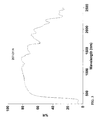
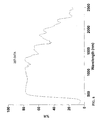
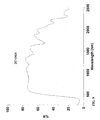
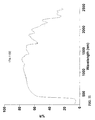
- an advantageous property of the compounds is good infrared reflectance. These infrared reflective properties were tested versus various other commercial pigments, and the measurements have shown that the present compositions exhibit low heat buildup properties. Thus, for reduced heat build-up in applications such as architectural, military, marine vessel paint, automotive paint and vinyl siding applications, the present bismuth-containing compounds have a very wide use potential.
- Table 3 illustrates low heat build up properties for the darker color shades, which is comparable to the lighter TiO 2 . Comparable IR reflectance performance is also shown in Table 3 for the present bismuth-containing compounds in comparison with standard 10401 and 10408 pigments used in the vinyl siding industry, which are known to be good for IR reflecting and heat build-up.
Landscapes
- Chemical & Material Sciences (AREA)
- Organic Chemistry (AREA)
- Inorganic Chemistry (AREA)
- Optics & Photonics (AREA)
- Physics & Mathematics (AREA)
- Ceramic Engineering (AREA)
- Environmental & Geological Engineering (AREA)
- General Life Sciences & Earth Sciences (AREA)
- Life Sciences & Earth Sciences (AREA)
- Engineering & Computer Science (AREA)
- Geology (AREA)
- Inorganic Compounds Of Heavy Metals (AREA)
- Thermal Transfer Or Thermal Recording In General (AREA)
- Laser Beam Processing (AREA)
- Compounds Of Iron (AREA)
- Pigments, Carbon Blacks, Or Wood Stains (AREA)
- Manufacturing Of Electric Cables (AREA)
Abstract
Description
| Epoxy Coating Laser Mark Contrast | |||||||
| Sample ID | L* | a* | b* | )L* | )a* | )b* | )E* |
| White 267-010A | 87.88 | -0.36 | 4.38 | ||||
| 267-010A Marked | 62.45 | 1.51 | 6.39 | -25.43 | 1.87 | 2.00 | 25.58 |
| White 267-010A' | 89.99 | -0.22 | 4.40 | ||||
| 267-010A' Marked | 63.86 | 1.46 | 6.22 | -26.13 | 1.67 | 1.82 | 26.25 |
| White 267-011A | 87.87 | -0.97 | 7.89 | ||||
| 267-011A Marked | 60.66 | 1.71 | 7.45 | -27.21 | 2.68 | -0.44 | 27.35 |
| Light Yellow 267-12B | 86.24 | -5.59 | 18.96 | ||||
| 267-128 Marked | 53.42 | 2.07 | 9.08 | -32.82 | 7.67 | -9.87 | 35.12 |
| Light Yellow 267-013A | 88.25 | -5.52 | 23.19 | ||||
| 267-013A Marked | 54.20 | 1.86 | 9.64 | -34.05 | 7.37 | -13.56 | 37.38 |
| Yellow 267-016B | 77.48 | 2.78 | 46.39 | ||||
| 267-016B Marked | 53.73 | 2.03 | 21.98 | -23.76 | -0.76 | -24.41 | 34.07 |
| Yellow 267-022A | 85.76 | -7.82 | 21.46 | ||||
| 267-022A Marked | 58.75 | -1.66 | 14.00 | -27.01 | 6.15 | -7.46 | 28.69 |
| Yellow 267-024A | 86.37 | -6.44 | 38.04 | ||||
| 267-024A Marked | 47.96 | 1.57 | 13.03 | -38.41 | 8.01 | -25.01 | 46.53 |
| Light Yellow 267-038A | 87.57 | -3.30 | 13.46 | ||||
| 267-038A Marked | 57.84 | 1.36 | 9.28 | -29.72 | 4.66 | -4.17 | 30.38 |
| Light Yellow 267-047A | 89.05 | -5.66 | 13.68 | ||||
| 267-047A Marked | 53.03 | 2.07 | 6.73 | -36.02 | 7.73 | -6.96 | 37.49 |
| Yellow 267-049A | 84.46 | -5.38 | 36.02 | ||||
| 267-049A Marked | 60.62 | -1.19 | 19.56 | -23.84 | 4.19 | -16.45 | 29.27 |
| Light Yellow 267-059A | 87.99 | -8.25 | 22.84 | ||||
| 267-059A Marked | 52.12 | 0.01 | 11.73 | -35.87 | 8.26 | -11.11 | 38.45 |
| White 174-115E | 88.80 | -2.39 | 8.38 | ||||
| 174-115E Marked | 49.80 | 2.78 | 6.91 | -38.99 | 5.17 | -1.47 | 39.36 |
| White 174-115C | 86.34 | -1.17 | 4.38 | ||||
| 174-115C Marked | 53.00 | 2.06 | 2.68 | -33.34 | 3.22 | -1.71 | 33.54 |
| White R960 | 95.46 | -0.99 | 2.23 | ||||
| R960 Marked | 91.38 | -0.89 | 2.47 | -4.07 | 0.10 | 0.24 | 4.08 |
| Plastic Laser Mark Contrast | |||||||
| Sample ID | L* | a* | b* | )L* | )a* | )b* | )E* |
| 179-115E Unmarked | 81.0 | -0.75 | 11.58 | ||||
| 179-115E Marked | 38.5 | 1.63 | 4.12 | -42.46 | 2.38 | -7.46 | 43.18 |
| 267-010A Unmarked | 84.1 | 1.03 | 9.87 | ||||
| 267-010A Marked | 56.9 | 1.88 | 6.62 | -27.16 | 0.85 | -3.25 | 27.37 |
| 267-010A' Unmarked | 83.2 | 1.54 | 10.12 | ||||
| 267-010A' Marked | 59.3 | 2.00 | 6.81 | -23.88 | 0.46 | -3.31 | 24.12 |
| 267-011A Unmarked | 86.7 | -0.18 | 10.78 | ||||
| 267-011A Marked | 52.5 | 2.01 | 6.05 | -34.25 | 2.19 | -4.73 | 34.65 |
| 267-012B Unmarked | 81.5 | -3.71 | 20.64 | ||||
| 267-012B Marked | 36.9 | 2.28 | 4.48 | -44.62 | 5.99 | -16.16 | 47.83 |
| 267-013A Unmarked | 86.1 | -5.16 | 23.18 | ||||
| 267-013A Marked | 48.2 | 1.11 | 6.80 | -37.89 | 6.27 | -16.38 | 41.75 |
| 267-016B Unmarked | 75.9 | 4.11 | 45.11 | ||||
| 267-016B Marked | 42.8 | 1.34 | 7.95 | -33.14 | -2.77 | -37.16 | 49.87 |
| 267-022A Unmarked | 83.3 | -5.38 | 23.76 | ||||
| 267-022A Marked | 37.8 | 2.23 | 4.28 | -45.51 | 7.61 | -19.48 | 50.08 |
| 267-024A Unmarked | 82.9 | -4.05 | 35.10 | ||||
| 267-024A Marked | 35.2 | 2.04 | 3.46 | -47.68 | 6.09 | -31.64 | 57.54 |
| 267-038A Unmarked | 86.0 | -2.08 | 15.55 | ||||
| 267-038A Marked | 44.0 | 1.29 | 2.89 | -42.04 | 3.37 | -12.66 | 44.03 |
| 267-047A Unmarked | 85.8 | -3.57 | 14.99 | ||||
| 267-047A Marked | 49.6 | 0.96 | 6.40 | -36.19 | 4.53 | -8.59 | 37.47 |
| 267-049A Unmarked | 84.6 | -3.55 | 37.92 | ||||
| 267-049A Marked | 50.2 | -0.21 | 10.58 | -34.37 | 3.33 | -27.34 | 44.04 |
| 267-059A Unmarked | 87.1 | -6.67 | 27.10 | ||||
| 267-059A Marked | 41.8 | 1.48 | 4.40 | -45.29 | 8.15 | -22.70 | 51.31 |
| Heat Build-Up Results | |||||
| Sample | |||||
| Carbon Black | 72.3 | 216.1 | 143.8 | ||
| R960 TiO2 | 73.3 | 134.6 | 61.3 | 4.61 | 56.1 |
| 267-010-A | 73.5 | 135.9 | 62.4 | 46.5 | 56.6 |
| 267-010-A | 73.4 | 138.9 | 65.5 | 47.5 | 57.8 |
| 267-011-A | 72.9 | 138.1 | 65.2 | 47.3 | 57.5 |
| 174-115-E | 73.3 | 140.2 | 66.9 | 48 | 58.4 |
| 267-012-B | 73.2 | 140.3 | 67.1 | 48 | 58.4 |
| 267-016-B | 72.8 | 139.7 | 66.9 | 47.8 | 58.2 |
| 10401 NiSbTi | 72.9 | 136.9 | 64 | 46.9 | 57.1 |
| 10408 CrSbTi | 73 | 138.9 | 65.9 | 47.6 | 57.8 |
Claims (17)
- A pigment of the formula BixMyOz, where M is at least one metal selected from Zn, Ti, Fe, Cu, Al, Zr, P, Sn, Sr, Si, Y, Nb, La, Ta, Pr, Ca, Mg, Mo, W, Sb, Cr, Ba and Ce, x is from about 0.3 to about 70, y is from about 0.05 to about 8, z is from about 1 to about 100, and the ratio of x to y is greater than 2.
- The pigment of Claim 1, wherein the ratio of x to y is greater than 10.
- The pigment of Claim 1 or 2, wherein M comprises Zn, Si, Zr, Al or Sn.
- A laser markable compound comprising an oxide of bismuth and at least one additional metal selected from Zn, Ti, Fe, Cu, Al, Zr, P, Sn, Sr, Si, Y, Nb, La, Ta, Pr, Ca, Mg, W, Sb, Cr, Ba and Ce..
- The laser markable compound of Claim 4, wherein the compound is of the formula BixMyOz, where M is at least one metal selected from Zn, Ti, Fe, Cu, Al, Zr, P, Sn, Sr, Si, Y, Nb, La, Ta, Pr, Ca, Mg, Mo, W, Sb, Cr, Ba and Ce, x is from about 0.3 to about 70, y is from about 0.05 to about 8, and z is from about 1 to 100.
- The laser markable compound of Claim 5, wherein the ratio of x to y is greater than 2, preferable greater than 10.
- The laser markable compound of Claim 5, wherein M comprises Zn, Si, Zr, Al or Sn.
- A laser markable substrate comprising:a substrate material; anda bismuth-containing compound dispersed in the substrate material.
- The laser markable substrate of Claim 8, wherein the bismuth-containing compound comprises an oxide of bismuth and at least one additional metal according to any of the claims 4 to 7.
- The laser markable substrate of Claim 8, wherein the bismuth-containing compound comprises from about 0.1 to about 70 weight percent of the substrate.
- A laser marked substrate comprising:a substrate;a bismuth-containing compound dispersed in the substrate; anda laser-marked portion of the substrate exhibiting a contrasting mark compared with a non-laser marked portion of the substrate.
- The laser marked substrate of Claim 11, wherein the laser-marked portion and the non-laser marked portion of the substrate have a different lightness value )L of greater than about 20.
- The laser marked substrate of Claim 12, wherein the laser-marked portion and the non-laser marked portion of the substrate have a different lightness value )L of greater than about 40.
- The laser marked substrate of Claim 12, wherein the bismuth-containing compound comprises the formula BixMyOz, according to any of the claims 4 to 7.
- A method of making a laser markable compound comprising:mixing bismuth oxide or precursors thereof with at least one additional metal oxide or precursors thereof; andheating the mixture.
- The method of Claim 15, wherein the compound comprises the formula BixMyOz, where M is at least one metal selected from Zn, Ti, Fe, Cu, Al, Zr, P, Sn, Sr, Si, Y, Nb, La, Ta, Pr, Ca, Mg, Mo, W, Sb, Cr, Ba and Ce, x is from about 0.3 to about 70, y is from about 0.05 to about 8, and z is from about 1 to 100.
- A method of laser marking an article comprising:providing a substrate including a bismuth-containing compound according to any of the claims 4 to 7 andirradiating at least a portion of the substrate with a laser to form a marking thereon.
Applications Claiming Priority (2)
| Application Number | Priority Date | Filing Date | Title |
|---|---|---|---|
| US668134 | 2000-09-22 | ||
| US09/668,134 US6503316B1 (en) | 2000-09-22 | 2000-09-22 | Bismuth-containing laser markable compositions and methods of making and using same |
Publications (3)
| Publication Number | Publication Date |
|---|---|
| EP1190988A2 true EP1190988A2 (en) | 2002-03-27 |
| EP1190988A3 EP1190988A3 (en) | 2003-11-19 |
| EP1190988B1 EP1190988B1 (en) | 2008-09-10 |
Family
ID=24681149
Family Applications (1)
| Application Number | Title | Priority Date | Filing Date |
|---|---|---|---|
| EP01118512A Expired - Lifetime EP1190988B1 (en) | 2000-09-22 | 2001-08-01 | Bismuth-containing laser markable compositions and methods of making and using same |
Country Status (7)
| Country | Link |
|---|---|
| US (2) | US6503316B1 (en) |
| EP (1) | EP1190988B1 (en) |
| JP (1) | JP2002206062A (en) |
| KR (1) | KR100840519B1 (en) |
| AT (1) | ATE407913T1 (en) |
| DE (1) | DE60135718D1 (en) |
| TW (1) | TW546256B (en) |
Cited By (16)
| Publication number | Priority date | Publication date | Assignee | Title |
|---|---|---|---|---|
| WO2004050380A1 (en) * | 2002-12-03 | 2004-06-17 | Schreiner Group Gmbh & Co. Kg | Laser-writable film |
| US7169471B1 (en) | 2003-02-06 | 2007-01-30 | Emd Chemicals, Inc. | Laser-marking additive |
| EP2050720A1 (en) * | 2007-10-16 | 2009-04-22 | Mondi Business Paper Services AG | Laser and thermally writable surface coating for materials |
| EP2269833A1 (en) | 2004-10-15 | 2011-01-05 | Ticona GmbH | Laser-markable molding masses, products obtained therefrom and method for laser marking |
| WO2011050934A2 (en) | 2009-10-29 | 2011-05-05 | Dsm Ip Assets B.V. | Laser-marking additive |
| WO2011083100A1 (en) * | 2010-01-05 | 2011-07-14 | Basf Se | Transparent, laser-writable polyurethane |
| CN103496968A (en) * | 2013-09-26 | 2014-01-08 | 桂林理工大学 | Low-temperature sintered microwave dielectric ceramic Bi38ZnO58 and its preparation method |
| WO2014060099A2 (en) | 2012-10-19 | 2014-04-24 | Merck Patent Gmbh | Microspheres |
| US8790769B2 (en) | 2010-01-05 | 2014-07-29 | Basf Se | Transparent, laser-inscribable polyurethane |
| WO2015106788A1 (en) * | 2014-01-16 | 2015-07-23 | Merck Patent Gmbh | Pigments based on bismuth compounds |
| WO2015197162A1 (en) | 2014-06-23 | 2015-12-30 | Merck Patent Gmbh | Microspheres |
| CN105612122A (en) * | 2013-10-11 | 2016-05-25 | 默克专利股份有限公司 | Pigments based on bismuth compounds |
| CN106833640A (en) * | 2017-02-22 | 2017-06-13 | 广东工业大学 | A kind of fluorescent material and preparation method thereof |
| DE102016210160A1 (en) | 2016-06-08 | 2017-12-14 | Weilburger Coatings Gmbh | Aqueous composition for producing a laser-markable coating and laser-marked coating |
| DE102016219858A1 (en) | 2016-10-12 | 2018-04-12 | Weilburger Coatings Gmbh | A method of making a coating having markings on a surface or part of a surface of an article |
| WO2022069664A1 (en) | 2020-10-01 | 2022-04-07 | Basf Se | eTPE LASER MARKING |
Families Citing this family (50)
| Publication number | Priority date | Publication date | Assignee | Title |
|---|---|---|---|---|
| US6933331B2 (en) * | 1998-05-22 | 2005-08-23 | Nanoproducts Corporation | Nanotechnology for drug delivery, contrast agents and biomedical implants |
| US6344271B1 (en) * | 1998-11-06 | 2002-02-05 | Nanoenergy Corporation | Materials and products using nanostructured non-stoichiometric substances |
| US6652967B2 (en) * | 2001-08-08 | 2003-11-25 | Nanoproducts Corporation | Nano-dispersed powders and methods for their manufacture |
| DE10136479A1 (en) * | 2001-07-27 | 2003-02-06 | Merck Patent Gmbh | Colored labeling and marking of plastics and paints |
| US6855426B2 (en) * | 2001-08-08 | 2005-02-15 | Nanoproducts Corporation | Methods for producing composite nanoparticles |
| US7708974B2 (en) * | 2002-12-10 | 2010-05-04 | Ppg Industries Ohio, Inc. | Tungsten comprising nanomaterials and related nanotechnology |
| JP4582387B2 (en) * | 2003-08-29 | 2010-11-17 | 東罐マテリアル・テクノロジー株式会社 | Laser marking material |
| EP1664919A2 (en) | 2003-09-08 | 2006-06-07 | Laser Projection Technologies, Inc. | 3d projection with image recording |
| US20060000814A1 (en) * | 2004-06-30 | 2006-01-05 | Bo Gu | Laser-based method and system for processing targeted surface material and article produced thereby |
| DE102004050481A1 (en) * | 2004-10-15 | 2006-04-27 | Chemische Fabrik Budenheim Kg | Use of tin phosphates |
| WO2006065611A1 (en) | 2004-12-14 | 2006-06-22 | Polyone Corporation | Use of bismuth oxides for laser markings in thermoplastic polyurethane compounds |
| US7832233B2 (en) * | 2005-05-18 | 2010-11-16 | Ferro Corporation | Method of making staged burnout enamels for second surface firing of multilayer glass structures |
| CN101263004B (en) * | 2005-09-14 | 2013-03-27 | 费罗公司 | Extended firing range enamels to produce frost effects |
| JP5028012B2 (en) * | 2006-01-17 | 2012-09-19 | 大日本塗料株式会社 | Environment-friendly yellow pigment |
| JP4946128B2 (en) * | 2006-03-28 | 2012-06-06 | 旭硝子株式会社 | Method for producing bismuth niobate fine particles |
| WO2008014309A2 (en) * | 2006-07-25 | 2008-01-31 | Ferro Corporation | Special effect pigments |
| DE102006038043A1 (en) | 2006-08-14 | 2008-02-21 | Chemische Fabrik Budenheim Kg | Laser inscribable polymer material |
| US20080090396A1 (en) * | 2006-10-06 | 2008-04-17 | Semiconductor Energy Laboratory Co., Ltd. | Light exposure apparatus and method for making semiconductor device formed using the same |
| CN101260250B (en) * | 2007-02-26 | 2015-12-02 | 科学与工业研究委员会 | Yellow organic dye and preparation method thereof |
| US7749321B2 (en) * | 2007-06-28 | 2010-07-06 | E. I. Du Pont De Nemours And Company | Black pigment compositions, thick film black pigment compositions, conductive single layer thick film compositions, and black and conductive electrodes formed therefrom |
| US7714217B2 (en) | 2007-12-21 | 2010-05-11 | Innovatech, Llc | Marked precoated strings and method of manufacturing same |
| US8231927B2 (en) | 2007-12-21 | 2012-07-31 | Innovatech, Llc | Marked precoated medical device and method of manufacturing same |
| US8048471B2 (en) * | 2007-12-21 | 2011-11-01 | Innovatech, Llc | Marked precoated medical device and method of manufacturing same |
| US8231926B2 (en) * | 2007-12-21 | 2012-07-31 | Innovatech, Llc | Marked precoated medical device and method of manufacturing same |
| JP5227733B2 (en) * | 2008-10-15 | 2013-07-03 | 東罐マテリアル・テクノロジー株式会社 | Bismuth oxide additive for laser marking and method for producing the same |
| US20100092700A1 (en) * | 2008-10-15 | 2010-04-15 | James Carroll | Heavy metal-free laser marking pigment |
| US20100155218A1 (en) * | 2008-12-12 | 2010-06-24 | University Of South Carolina | Novel Photocatalysts that Operate Under Visible Light |
| JP5471404B2 (en) * | 2009-12-18 | 2014-04-16 | 東洋インキScホールディングス株式会社 | Laminate for laser marking |
| JP2011140126A (en) * | 2010-01-05 | 2011-07-21 | Nissha Printing Co Ltd | Decorative sheet having partially transparent thin metal film |
| CA2806394A1 (en) | 2010-07-28 | 2012-02-02 | Jagdip Thaker | Reaction-based laser marking compositions, system and methods |
| US8900652B1 (en) | 2011-03-14 | 2014-12-02 | Innovatech, Llc | Marked fluoropolymer surfaces and method of manufacturing same |
| JP6016494B2 (en) * | 2011-12-19 | 2016-10-26 | 三井金属鉱業株式会社 | Composite oxide powder, aqueous dispersion and oil dispersion |
| US9776210B2 (en) | 2012-03-01 | 2017-10-03 | Ferro Corporation | Laser absorbing compounds |
| CN104093520B (en) | 2012-03-01 | 2017-07-04 | 费罗公司 | laser absorbing compound |
| WO2014025539A1 (en) | 2012-08-08 | 2014-02-13 | Ferro Corporation | Laser marking compositions and related methods |
| US10266444B2 (en) | 2012-12-14 | 2019-04-23 | Ferro Corporation | Method of making multilayer glass structure |
| WO2014188828A1 (en) * | 2013-05-20 | 2014-11-27 | 東罐マテリアル・テクノロジー株式会社 | Bismuth oxide-based additive for laser marking |
| US9782796B2 (en) | 2013-07-30 | 2017-10-10 | Owens-Brockway Glass Container Inc. | Selective color striking of color-strikable articles |
| JP6417651B2 (en) * | 2013-09-27 | 2018-11-07 | 大日本印刷株式会社 | Shrink material for packaging, shrink label for packaging using the same, and shrink label laser printing body for packaging |
| US9683107B2 (en) | 2014-04-02 | 2017-06-20 | Ferro Corporation | Copper oxide infrared pigment |
| US9187617B1 (en) | 2014-06-04 | 2015-11-17 | Ferro Corporation | Nickel-free green pigment |
| EP3181643A1 (en) | 2015-12-14 | 2017-06-21 | Cappelle Pigments nv | A coated bismuth oxy halide-based pigment |
| US10513457B2 (en) | 2016-02-18 | 2019-12-24 | Prince Minerals Italy S.R.L. | Ceramic ink for automotive glass |
| CN106543379B (en) * | 2016-10-17 | 2018-12-07 | 常州大学 | Can laser labelling organic/inorganic hydrogel and its preparation and application |
| EP3363649A1 (en) * | 2017-02-20 | 2018-08-22 | Clariant Plastics & Coatings Ltd | Antimony free composition for laser marking thermoplastic compounds |
| KR102160747B1 (en) * | 2018-10-23 | 2020-09-28 | 주식회사 레진텍 | Color changing material by amplified single wavelength light, resin composion containing this material, manufacturing method thereof, and lighting method thereof |
| CN110615481B (en) * | 2019-09-19 | 2020-11-20 | 北京科技大学 | A kind of silica type Bi24Al2-xMnxO39 grass green inorganic pigment and preparation method |
| CN113667180B (en) * | 2021-09-09 | 2023-02-28 | 珠海市恒誉科技有限公司 | Laser marking auxiliary agent and preparation method thereof |
| CN114014648B (en) * | 2021-12-01 | 2023-05-19 | 北京科技大学 | A bismuth oxide ferroelectric thin film with atomic thickness and its preparation process |
| CN116178787B (en) * | 2023-01-09 | 2025-02-14 | 河南大学 | Application of tin bismuth oxide as flame retardant |
Family Cites Families (71)
| Publication number | Priority date | Publication date | Assignee | Title |
|---|---|---|---|---|
| US3531391A (en) | 1969-04-24 | 1970-09-29 | Ppg Industries Inc | Use of oxides of manganese in electrodepositable compositions |
| US3874883A (en) | 1972-07-07 | 1975-04-01 | American Metal Climax Inc | Corrosion inhibiting pigment and method of making same |
| US3819252A (en) | 1972-12-21 | 1974-06-25 | American Cyanamid Co | Additives that increase the stability of electrochromic films in electrochromic devices |
| US4156613A (en) | 1976-06-05 | 1979-05-29 | Bayer Aktiengesellschaft | Anti-corrosion pigments |
| US4327283A (en) | 1979-09-24 | 1982-04-27 | Rca Corporation | Workpiece with machine-readable marking recessed therein and method of making same |
| US4388118A (en) | 1982-03-15 | 1983-06-14 | Mobay Chemical Corporation | Black pigment free of heavy metals |
| US4541340A (en) | 1982-07-02 | 1985-09-17 | Markem Corporation | Process for forming permanent images using carrier supported inks containing sublimable dyes |
| DE3315849A1 (en) * | 1982-07-17 | 1984-01-19 | Bayer Ag, 5090 Leverkusen | METHOD FOR PRODUCING BISMUTOXIDE / CHROMDIOXIDE MIXED-PHASE PIGMENTS |
| IL66817A0 (en) | 1982-09-16 | 1982-12-31 | Gaz Moshe | Special visual and sound effects in cinematography using beam lasers on positive and negative copies |
| US4515867A (en) | 1982-09-20 | 1985-05-07 | Rca Corporation | Method for ablating a coded marking into a glass workpiece and product thereof |
| US4469521A (en) | 1982-09-29 | 1984-09-04 | Union Carbide Corporation | Corrosion inhibitive pigments |
| US4710404A (en) | 1985-07-10 | 1987-12-01 | Nl Chemicals, Inc. | Solvent-free coating composition and process for protecting a surface from corrosion |
| AU584563B2 (en) | 1986-01-31 | 1989-05-25 | Ciba-Geigy Ag | Laser marking of ceramic materials, glazes, glass ceramics and glasses |
| JPH0688148B2 (en) | 1986-08-08 | 1994-11-09 | マツダ株式会社 | Laser engraving method on goods |
| KR910000826B1 (en) | 1986-11-14 | 1991-02-09 | 미쓰비시덴기 가부시기가이샤 | Method of laser marking |
| DE3731398A1 (en) | 1987-09-18 | 1989-04-06 | Zeiss Carl Fa | METHOD FOR GENERATING A MARKING AND / OR MARKING ON AN EYEWEAR LENS |
| GB8726482D0 (en) | 1987-11-12 | 1987-12-16 | Bicc Plc | Marking flourocarbon surfaces |
| JPH01185372A (en) | 1988-01-18 | 1989-07-24 | Nippon Kayaku Co Ltd | Water-insoluble black coloring matter |
| JP2701293B2 (en) | 1988-03-03 | 1998-01-21 | 大日本インキ化学工業株式会社 | Laser marking material and marking method |
| JPH01222994A (en) | 1988-03-03 | 1989-09-06 | Dainippon Ink & Chem Inc | Laser marking material and marking method |
| US4854957A (en) | 1988-04-13 | 1989-08-08 | Corning Incorporated | Method for modifying coloration in tinted photochromic glasses |
| JPH02165001A (en) | 1988-12-19 | 1990-06-26 | Mitsutoyo Corp | Block gauge |
| US5080718A (en) | 1989-02-23 | 1992-01-14 | Engelhard Corporation | Inorganic pigments of the empirical formula Ax By Cz |
| EP0391848B1 (en) | 1989-04-06 | 1993-09-01 | Ciba-Geigy Ag | Laser lettering of ceramic materials, glazes, glass ceramics and glasses |
| EP0413664B1 (en) | 1989-08-18 | 1995-03-22 | Ciba-Geigy Ag | Laser-marking of plastic objects in any form by means of special effects |
| US5063137A (en) | 1989-11-09 | 1991-11-05 | Dainippon Ink And Chemicals, Inc. | Laser-marking method and resin composition for laser-marking |
| ATE97891T1 (en) | 1989-12-15 | 1993-12-15 | Schott Glaswerke | PROCESS FOR THE MANUFACTURE OF LARGE-SCALE DECORATIONS ON GLASS, GLASS-CERAMIC OR CERAMIC AND DECORATED GLASS-CERAMIC PLATES. |
| US5061341A (en) | 1990-01-25 | 1991-10-29 | Eastman Kodak Company | Laser-ablating a marking in a coating on plastic articles |
| DE4003255A1 (en) | 1990-02-03 | 1991-08-08 | Bayer Ag | BLACK MANGANESE IRON PIGMENT, METHOD FOR THE PRODUCTION AND USE THEREOF |
| US5006175A (en) | 1990-02-27 | 1991-04-09 | Engelhard Corporation | High infra red reflecting brown rutile pigment compositions |
| JP2899346B2 (en) | 1990-02-27 | 1999-06-02 | ユニチカ株式会社 | Composite material with good laser marking properties |
| GB9005872D0 (en) | 1990-03-15 | 1990-05-09 | British Aerospace | A laser markable white pigment composition |
| JP2873249B2 (en) | 1990-11-28 | 1999-03-24 | 日本ペルノックス株式会社 | Resin composition that can be marked black by laser beam irradiation |
| US5336312A (en) * | 1991-04-24 | 1994-08-09 | Ferro Corporation | Bismuth-containing colorants |
| DE4121789A1 (en) | 1991-07-02 | 1993-01-07 | Bayer Ag | TEMPERATURE-STABLE BLACK PIGMENT, PROCESS FOR ITS PRODUCTION AND USE THEREOF |
| DE4140118A1 (en) | 1991-12-05 | 1993-06-09 | Bayer Ag, 5090 Leverkusen, De | SPINEL BLACK PIGMENT BASED ON COPPER CHROME MANGANE MIXED OXIDS, METHOD FOR THE PRODUCTION AND USE THEREOF |
| DE4212429A1 (en) | 1992-04-14 | 1993-10-21 | Klaus Kunzmann | Arrangement for baking markings into glass article - using laser beam of selected wavelength not absorbed by glass |
| US5397686A (en) | 1993-03-22 | 1995-03-14 | Northrop Grumman Corporation | Laser marking system and method for temporarily marking a surface |
| US5637244A (en) | 1993-05-13 | 1997-06-10 | Podarok International, Inc. | Method and apparatus for creating an image by a pulsed laser beam inside a transparent material |
| DE4326314A1 (en) | 1993-08-05 | 1995-02-09 | Ver Glaswerke Gmbh | Process for labeling a built-in car glass |
| US5740941A (en) | 1993-08-16 | 1998-04-21 | Lemelson; Jerome | Sheet material with coating |
| DE4327620A1 (en) | 1993-08-17 | 1995-02-23 | Merck Patent Gmbh | Stabilized, conductive pigment |
| GB2281129B (en) | 1993-08-19 | 1997-04-09 | United Distillers Plc | Method of marking a body of glass |
| JPH0760464A (en) | 1993-08-23 | 1995-03-07 | Namiki Precision Jewel Co Ltd | Laser marking method for transparent substrate |
| US5523125A (en) | 1993-08-27 | 1996-06-04 | Lisco, Inc. | Laser engraving and coating process for forming indicia on articles |
| TW314534B (en) | 1993-09-01 | 1997-09-01 | Hoechst Ag | |
| DE69418056T2 (en) | 1993-11-09 | 1999-11-11 | Markem Corp., Keene | TRANSMISSION PRINT MATERIAL |
| JPH07237350A (en) | 1994-02-28 | 1995-09-12 | Gunma Toobi:Kk | Marked vitreous and marking method |
| US5560845A (en) | 1994-02-28 | 1996-10-01 | E. I. Du Pont De Nemours And Company | Laser marking of fluoropolymer composition |
| JPH07266695A (en) | 1994-03-30 | 1995-10-17 | Rohm Co Ltd | Electronic component and marking method thereof |
| JPH0831682A (en) | 1994-07-12 | 1996-02-02 | Tdk Corp | Laser marking electronic component and manufacturing method thereof |
| US5584922A (en) | 1994-09-14 | 1996-12-17 | Ciba-Geigy Corporation | Stir-in organic pigments |
| US5554335A (en) | 1995-02-22 | 1996-09-10 | Laser Light Technologies, Inc. | Process for engraving ceramic surfaces using local laser vitrification |
| US5543269A (en) | 1995-04-04 | 1996-08-06 | Eastman Kodak Company | Image writing on ceramics |
| FR2732917B1 (en) | 1995-04-11 | 1997-06-13 | Essilor Int | METHOD FOR LASER MARKING OF A GLASS OBJECT, AND GLASS OBJECT, IN PARTICULAR MOLDING SHELL FOR OPHTHALMIC LENS, THUS MARKED |
| US5760367A (en) | 1995-05-16 | 1998-06-02 | Engraving Technologies, Inc. | Apparatus and method of engraving indicia on gemstones, and gemstones, produced thereby |
| US5609778A (en) | 1995-06-02 | 1997-03-11 | International Business Machines Corporation | Process for high contrast marking on surfaces using lasers |
| US5801356A (en) | 1995-08-16 | 1998-09-01 | Santa Barbara Research Center | Laser scribing on glass using Nd:YAG laser |
| US5714420A (en) * | 1995-12-08 | 1998-02-03 | Cerdec Corporation - Drakenfeld Products | Partially crystallizing ceramic enamel composition containing bismuth silicate, and use thereof |
| US5853955A (en) | 1995-12-11 | 1998-12-29 | Mcdonnell Douglas Corp. | Substrates and methods for laser marking same |
| TW363016B (en) | 1996-01-08 | 1999-07-01 | Nippon Kayaku Kk | Laser marking article having two or more layers of thin films on the surface thereof, method for laser marking of the article and ground composition for use in laser marking |
| US5761111A (en) | 1996-03-15 | 1998-06-02 | President And Fellows Of Harvard College | Method and apparatus providing 2-D/3-D optical information storage and retrieval in transparent materials |
| US5747217A (en) | 1996-04-03 | 1998-05-05 | Minnesota Mining And Manufacturing Company | Laser-induced mass transfer imaging materials and methods utilizing colorless sublimable compounds |
| US5750318A (en) | 1996-12-16 | 1998-05-12 | Eastman Kodak Company | Laser imaging element |
| US5783507A (en) | 1997-01-16 | 1998-07-21 | Cerdec Corporation | Partially crystallizing lead-free enamel composition for automobile glass |
| US5866644A (en) | 1997-03-17 | 1999-02-02 | General Electric Company | Composition for laser marking |
| US5804342A (en) | 1997-07-29 | 1998-09-08 | Eastman Kodak Company | Method of bar-code printing on ceramic members |
| US6075223A (en) | 1997-09-08 | 2000-06-13 | Thermark, Llc | High contrast surface marking |
| US6238847B1 (en) | 1997-10-16 | 2001-05-29 | Dmc Degussa Metals Catalysts Cerdec Ag | Laser marking method and apparatus |
| WO2000037362A1 (en) * | 1998-12-18 | 2000-06-29 | Dmc?2¿ Degussa Metals Catalysts Cerdec Ag | Bismuth manganese oxide pigments |
| US6221147B1 (en) | 1998-12-18 | 2001-04-24 | Cerdec Aktiengesellschaft Keramischre Farben | Bismuth manganese oxide pigments |
-
2000
- 2000-09-22 US US09/668,134 patent/US6503316B1/en not_active Expired - Lifetime
-
2001
- 2001-08-01 DE DE60135718T patent/DE60135718D1/en not_active Expired - Lifetime
- 2001-08-01 AT AT01118512T patent/ATE407913T1/en not_active IP Right Cessation
- 2001-08-01 EP EP01118512A patent/EP1190988B1/en not_active Expired - Lifetime
- 2001-09-19 TW TW090123089A patent/TW546256B/en not_active IP Right Cessation
- 2001-09-21 KR KR1020010058696A patent/KR100840519B1/en not_active Expired - Fee Related
- 2001-09-25 JP JP2001290602A patent/JP2002206062A/en active Pending
-
2002
- 2002-12-18 US US10/322,923 patent/US6680121B2/en not_active Expired - Fee Related
Cited By (28)
| Publication number | Priority date | Publication date | Assignee | Title |
|---|---|---|---|---|
| WO2004050380A1 (en) * | 2002-12-03 | 2004-06-17 | Schreiner Group Gmbh & Co. Kg | Laser-writable film |
| US7169471B1 (en) | 2003-02-06 | 2007-01-30 | Emd Chemicals, Inc. | Laser-marking additive |
| EP2269833A1 (en) | 2004-10-15 | 2011-01-05 | Ticona GmbH | Laser-markable molding masses, products obtained therefrom and method for laser marking |
| AT511161A3 (en) * | 2007-10-16 | 2012-09-15 | Mondi Ag | LASER AND THERMALLY DESIGNABLE SURFACE COATING FOR MATERIALS |
| EP2050720A1 (en) * | 2007-10-16 | 2009-04-22 | Mondi Business Paper Services AG | Laser and thermally writable surface coating for materials |
| WO2009049883A1 (en) * | 2007-10-16 | 2009-04-23 | Mondi Business Paper Services Ag | Laser and thermally writeable surface coating for materials |
| AT511161B1 (en) * | 2007-10-16 | 2013-03-15 | Mondi Ag | LASER AND THERMALLY DESIGNABLE SURFACE COATING FOR MATERIALS |
| US9150702B2 (en) | 2009-10-29 | 2015-10-06 | Dsm Ip Assets B.V. | Laser-marking additive |
| WO2011050934A2 (en) | 2009-10-29 | 2011-05-05 | Dsm Ip Assets B.V. | Laser-marking additive |
| WO2011050934A3 (en) * | 2009-10-29 | 2011-08-25 | Dsm Ip Assets B.V. | Laser-marking additive |
| WO2011083100A1 (en) * | 2010-01-05 | 2011-07-14 | Basf Se | Transparent, laser-writable polyurethane |
| US8790769B2 (en) | 2010-01-05 | 2014-07-29 | Basf Se | Transparent, laser-inscribable polyurethane |
| WO2014060099A2 (en) | 2012-10-19 | 2014-04-24 | Merck Patent Gmbh | Microspheres |
| CN103496968A (en) * | 2013-09-26 | 2014-01-08 | 桂林理工大学 | Low-temperature sintered microwave dielectric ceramic Bi38ZnO58 and its preparation method |
| RU2663424C2 (en) * | 2013-10-11 | 2018-08-06 | Мерк Патент Гмбх | Bismuth compound based pigments |
| CN105612122A (en) * | 2013-10-11 | 2016-05-25 | 默克专利股份有限公司 | Pigments based on bismuth compounds |
| US9890287B2 (en) | 2014-01-16 | 2018-02-13 | Merck Patent Gmbh | Pigments |
| WO2015106788A1 (en) * | 2014-01-16 | 2015-07-23 | Merck Patent Gmbh | Pigments based on bismuth compounds |
| TWI660917B (en) * | 2014-01-16 | 2019-06-01 | 德商麥克專利有限公司 | Pigments |
| DE102014008962A1 (en) | 2014-06-23 | 2016-01-07 | Merck Patent Gmbh | microspheres |
| US10689505B2 (en) | 2014-06-23 | 2020-06-23 | Merck Patent Gmbh | Microspheres |
| WO2015197162A1 (en) | 2014-06-23 | 2015-12-30 | Merck Patent Gmbh | Microspheres |
| WO2017211888A1 (en) | 2016-06-08 | 2017-12-14 | Weilburger Coatings Gmbh | Aqueous composition for producing a laser-markable coating, and laser-marked coating |
| DE102016210160A1 (en) | 2016-06-08 | 2017-12-14 | Weilburger Coatings Gmbh | Aqueous composition for producing a laser-markable coating and laser-marked coating |
| WO2018069413A1 (en) | 2016-10-12 | 2018-04-19 | Weilburger Coatings Gmbh | Method for producing a coating having markings on a surface or a part of a surface of an object |
| DE102016219858A1 (en) | 2016-10-12 | 2018-04-12 | Weilburger Coatings Gmbh | A method of making a coating having markings on a surface or part of a surface of an article |
| CN106833640A (en) * | 2017-02-22 | 2017-06-13 | 广东工业大学 | A kind of fluorescent material and preparation method thereof |
| WO2022069664A1 (en) | 2020-10-01 | 2022-04-07 | Basf Se | eTPE LASER MARKING |
Also Published As
| Publication number | Publication date |
|---|---|
| ATE407913T1 (en) | 2008-09-15 |
| US20030108723A1 (en) | 2003-06-12 |
| US6503316B1 (en) | 2003-01-07 |
| DE60135718D1 (en) | 2008-10-23 |
| JP2002206062A (en) | 2002-07-26 |
| US6680121B2 (en) | 2004-01-20 |
| KR100840519B1 (en) | 2008-06-24 |
| EP1190988B1 (en) | 2008-09-10 |
| EP1190988A3 (en) | 2003-11-19 |
| TW546256B (en) | 2003-08-11 |
| KR20020033044A (en) | 2002-05-04 |
Similar Documents
| Publication | Publication Date | Title |
|---|---|---|
| US6680121B2 (en) | Bismuth-containing laser markable compositions and methods of making and using same | |
| EP1162175B1 (en) | Rare earth manganese oxide pigments | |
| EP1140704B1 (en) | Bismuth manganese oxide pigments | |
| US6221147B1 (en) | Bismuth manganese oxide pigments | |
| US6416868B1 (en) | Alkaline earth-manganese oxide pigments | |
| US6485557B1 (en) | Manganese vanadium oxide pigments | |
| EP1847512B1 (en) | Infrared reflecting black pigment, coating material and resin composition | |
| JP5372463B2 (en) | Alkaline earth manganese oxide pigments | |
| JP2010095396A (en) | Bismuth oxide-based additive for laser marking and production method of the same | |
| Acharjee et al. | A review of various ceramic pigment preparation and characterization methodologies for applications | |
| KR102954773B1 (en) | Near-infrared curable ink composition, near-infrared curable film, method for manufacturing near-infrared curable product | |
| JPH06279023A (en) | New colored inorganic pigment based on rare earth element and method for synthetic production thereof | |
| US20010038815A1 (en) | Process for the preparation of a rare-earth metal sulphide of beta form, the rare-earth metal being lanthanum, cerium, praseodymium, samarium or neodymium | |
| US6758894B1 (en) | Strontium iron manganese black pigment | |
| EP3720643B1 (en) | Laser marking composition comprising carbide, nitride or silicide enhancers and laser marking method using said composition |
Legal Events
| Date | Code | Title | Description |
|---|---|---|---|
| PUAI | Public reference made under article 153(3) epc to a published international application that has entered the european phase |
Free format text: ORIGINAL CODE: 0009012 |
|
| 17P | Request for examination filed |
Effective date: 20010801 |
|
| AK | Designated contracting states |
Kind code of ref document: A2 Designated state(s): AT BE CH CY DE DK ES FI FR GB GR IE IT LI LU MC NL PT SE TR |
|
| AX | Request for extension of the european patent |
Free format text: AL;LT;LV;MK;RO;SI |
|
| PUAL | Search report despatched |
Free format text: ORIGINAL CODE: 0009013 |
|
| AK | Designated contracting states |
Kind code of ref document: A3 Designated state(s): AT BE CH CY DE DK ES FI FR GB GR IE IT LI LU MC NL PT SE TR |
|
| AX | Request for extension of the european patent |
Extension state: AL LT LV MK RO SI |
|
| RIC1 | Information provided on ipc code assigned before grant |
Ipc: 7B 41M 5/26 B Ipc: 7B 41M 5/24 B Ipc: 7C 01G 29/00 A Ipc: 7C 09C 1/00 B |
|
| RAP1 | Party data changed (applicant data changed or rights of an application transferred) |
Owner name: FERRO GMBH |
|
| AKX | Designation fees paid |
Designated state(s): AT BE CH CY DE DK ES FI FR GB GR IE IT LI LU MC NL PT SE TR |
|
| 17Q | First examination report despatched |
Effective date: 20050509 |
|
| 17Q | First examination report despatched |
Effective date: 20050509 |
|
| GRAP | Despatch of communication of intention to grant a patent |
Free format text: ORIGINAL CODE: EPIDOSNIGR1 |
|
| GRAJ | Information related to disapproval of communication of intention to grant by the applicant or resumption of examination proceedings by the epo deleted |
Free format text: ORIGINAL CODE: EPIDOSDIGR1 |
|
| GRAP | Despatch of communication of intention to grant a patent |
Free format text: ORIGINAL CODE: EPIDOSNIGR1 |
|
| GRAS | Grant fee paid |
Free format text: ORIGINAL CODE: EPIDOSNIGR3 |
|
| GRAA | (expected) grant |
Free format text: ORIGINAL CODE: 0009210 |
|
| AK | Designated contracting states |
Kind code of ref document: B1 Designated state(s): AT BE CH CY DE DK ES FI FR GB GR IE IT LI LU MC NL PT SE TR |
|
| REG | Reference to a national code |
Ref country code: GB Ref legal event code: FG4D |
|
| REG | Reference to a national code |
Ref country code: CH Ref legal event code: EP |
|
| REG | Reference to a national code |
Ref country code: IE Ref legal event code: FG4D |
|
| REF | Corresponds to: |
Ref document number: 60135718 Country of ref document: DE Date of ref document: 20081023 Kind code of ref document: P |
|
| PG25 | Lapsed in a contracting state [announced via postgrant information from national office to epo] |
Ref country code: FI Free format text: LAPSE BECAUSE OF FAILURE TO SUBMIT A TRANSLATION OF THE DESCRIPTION OR TO PAY THE FEE WITHIN THE PRESCRIBED TIME-LIMIT Effective date: 20080910 Ref country code: AT Free format text: LAPSE BECAUSE OF FAILURE TO SUBMIT A TRANSLATION OF THE DESCRIPTION OR TO PAY THE FEE WITHIN THE PRESCRIBED TIME-LIMIT Effective date: 20080910 |
|
| NLV1 | Nl: lapsed or annulled due to failure to fulfill the requirements of art. 29p and 29m of the patents act | ||
| PG25 | Lapsed in a contracting state [announced via postgrant information from national office to epo] |
Ref country code: BE Free format text: LAPSE BECAUSE OF FAILURE TO SUBMIT A TRANSLATION OF THE DESCRIPTION OR TO PAY THE FEE WITHIN THE PRESCRIBED TIME-LIMIT Effective date: 20080910 |
|
| PG25 | Lapsed in a contracting state [announced via postgrant information from national office to epo] |
Ref country code: ES Free format text: LAPSE BECAUSE OF FAILURE TO SUBMIT A TRANSLATION OF THE DESCRIPTION OR TO PAY THE FEE WITHIN THE PRESCRIBED TIME-LIMIT Effective date: 20081221 |
|
| PG25 | Lapsed in a contracting state [announced via postgrant information from national office to epo] |
Ref country code: PT Free format text: LAPSE BECAUSE OF FAILURE TO SUBMIT A TRANSLATION OF THE DESCRIPTION OR TO PAY THE FEE WITHIN THE PRESCRIBED TIME-LIMIT Effective date: 20090210 Ref country code: NL Free format text: LAPSE BECAUSE OF FAILURE TO SUBMIT A TRANSLATION OF THE DESCRIPTION OR TO PAY THE FEE WITHIN THE PRESCRIBED TIME-LIMIT Effective date: 20080910 |
|
| PLBE | No opposition filed within time limit |
Free format text: ORIGINAL CODE: 0009261 |
|
| STAA | Information on the status of an ep patent application or granted ep patent |
Free format text: STATUS: NO OPPOSITION FILED WITHIN TIME LIMIT |
|
| PG25 | Lapsed in a contracting state [announced via postgrant information from national office to epo] |
Ref country code: DK Free format text: LAPSE BECAUSE OF FAILURE TO SUBMIT A TRANSLATION OF THE DESCRIPTION OR TO PAY THE FEE WITHIN THE PRESCRIBED TIME-LIMIT Effective date: 20080910 |
|
| 26N | No opposition filed |
Effective date: 20090611 |
|
| PG25 | Lapsed in a contracting state [announced via postgrant information from national office to epo] |
Ref country code: IT Free format text: LAPSE BECAUSE OF FAILURE TO SUBMIT A TRANSLATION OF THE DESCRIPTION OR TO PAY THE FEE WITHIN THE PRESCRIBED TIME-LIMIT Effective date: 20080910 |
|
| PG25 | Lapsed in a contracting state [announced via postgrant information from national office to epo] |
Ref country code: SE Free format text: LAPSE BECAUSE OF FAILURE TO SUBMIT A TRANSLATION OF THE DESCRIPTION OR TO PAY THE FEE WITHIN THE PRESCRIBED TIME-LIMIT Effective date: 20081210 |
|
| PG25 | Lapsed in a contracting state [announced via postgrant information from national office to epo] |
Ref country code: MC Free format text: LAPSE BECAUSE OF NON-PAYMENT OF DUE FEES Effective date: 20090831 |
|
| REG | Reference to a national code |
Ref country code: CH Ref legal event code: PL |
|
| GBPC | Gb: european patent ceased through non-payment of renewal fee |
Effective date: 20090801 |
|
| PG25 | Lapsed in a contracting state [announced via postgrant information from national office to epo] |
Ref country code: CH Free format text: LAPSE BECAUSE OF NON-PAYMENT OF DUE FEES Effective date: 20090831 Ref country code: LI Free format text: LAPSE BECAUSE OF NON-PAYMENT OF DUE FEES Effective date: 20090831 |
|
| REG | Reference to a national code |
Ref country code: FR Ref legal event code: ST Effective date: 20100430 |
|
| PG25 | Lapsed in a contracting state [announced via postgrant information from national office to epo] |
Ref country code: IE Free format text: LAPSE BECAUSE OF NON-PAYMENT OF DUE FEES Effective date: 20090801 Ref country code: FR Free format text: LAPSE BECAUSE OF NON-PAYMENT OF DUE FEES Effective date: 20090831 |
|
| PG25 | Lapsed in a contracting state [announced via postgrant information from national office to epo] |
Ref country code: GR Free format text: LAPSE BECAUSE OF FAILURE TO SUBMIT A TRANSLATION OF THE DESCRIPTION OR TO PAY THE FEE WITHIN THE PRESCRIBED TIME-LIMIT Effective date: 20081211 |
|
| PG25 | Lapsed in a contracting state [announced via postgrant information from national office to epo] |
Ref country code: GB Free format text: LAPSE BECAUSE OF NON-PAYMENT OF DUE FEES Effective date: 20090801 |
|
| PG25 | Lapsed in a contracting state [announced via postgrant information from national office to epo] |
Ref country code: LU Free format text: LAPSE BECAUSE OF NON-PAYMENT OF DUE FEES Effective date: 20090801 |
|
| PG25 | Lapsed in a contracting state [announced via postgrant information from national office to epo] |
Ref country code: TR Free format text: LAPSE BECAUSE OF FAILURE TO SUBMIT A TRANSLATION OF THE DESCRIPTION OR TO PAY THE FEE WITHIN THE PRESCRIBED TIME-LIMIT Effective date: 20080910 |
|
| PG25 | Lapsed in a contracting state [announced via postgrant information from national office to epo] |
Ref country code: CY Free format text: LAPSE BECAUSE OF FAILURE TO SUBMIT A TRANSLATION OF THE DESCRIPTION OR TO PAY THE FEE WITHIN THE PRESCRIBED TIME-LIMIT Effective date: 20080910 |
|
| PGFP | Annual fee paid to national office [announced via postgrant information from national office to epo] |
Ref country code: DE Payment date: 20200819 Year of fee payment: 20 |
|
| REG | Reference to a national code |
Ref country code: DE Ref legal event code: R071 Ref document number: 60135718 Country of ref document: DE |