EP1198520B1 - Method for reducing mold deposit formation during molding of polyamides and composition therefor - Google Patents
Method for reducing mold deposit formation during molding of polyamides and composition therefor Download PDFInfo
- Publication number
- EP1198520B1 EP1198520B1 EP00941416A EP00941416A EP1198520B1 EP 1198520 B1 EP1198520 B1 EP 1198520B1 EP 00941416 A EP00941416 A EP 00941416A EP 00941416 A EP00941416 A EP 00941416A EP 1198520 B1 EP1198520 B1 EP 1198520B1
- Authority
- EP
- European Patent Office
- Prior art keywords
- polyamide
- polyamides
- amine
- copper
- composition
- Prior art date
- Legal status (The legal status is an assumption and is not a legal conclusion. Google has not performed a legal analysis and makes no representation as to the accuracy of the status listed.)
- Expired - Lifetime
Links
Classifications
-
- C—CHEMISTRY; METALLURGY
- C08—ORGANIC MACROMOLECULAR COMPOUNDS; THEIR PREPARATION OR CHEMICAL WORKING-UP; COMPOSITIONS BASED THEREON
- C08L—COMPOSITIONS OF MACROMOLECULAR COMPOUNDS
- C08L77/00—Compositions of polyamides obtained by reactions forming a carboxylic amide link in the main chain; Compositions of derivatives of such polymers
-
- C—CHEMISTRY; METALLURGY
- C08—ORGANIC MACROMOLECULAR COMPOUNDS; THEIR PREPARATION OR CHEMICAL WORKING-UP; COMPOSITIONS BASED THEREON
- C08K—Use of inorganic or non-macromolecular organic substances as compounding ingredients
- C08K3/00—Use of inorganic substances as compounding ingredients
- C08K3/16—Halogen-containing compounds
-
- C—CHEMISTRY; METALLURGY
- C08—ORGANIC MACROMOLECULAR COMPOUNDS; THEIR PREPARATION OR CHEMICAL WORKING-UP; COMPOSITIONS BASED THEREON
- C08K—Use of inorganic or non-macromolecular organic substances as compounding ingredients
- C08K5/00—Use of organic ingredients
- C08K5/04—Oxygen-containing compounds
- C08K5/13—Phenols; Phenolates
-
- C—CHEMISTRY; METALLURGY
- C08—ORGANIC MACROMOLECULAR COMPOUNDS; THEIR PREPARATION OR CHEMICAL WORKING-UP; COMPOSITIONS BASED THEREON
- C08K—Use of inorganic or non-macromolecular organic substances as compounding ingredients
- C08K5/00—Use of organic ingredients
- C08K5/16—Nitrogen-containing compounds
- C08K5/17—Amines; Quaternary ammonium compounds
- C08K5/18—Amines; Quaternary ammonium compounds with aromatically bound amino groups
-
- C—CHEMISTRY; METALLURGY
- C08—ORGANIC MACROMOLECULAR COMPOUNDS; THEIR PREPARATION OR CHEMICAL WORKING-UP; COMPOSITIONS BASED THEREON
- C08L—COMPOSITIONS OF MACROMOLECULAR COMPOUNDS
- C08L77/00—Compositions of polyamides obtained by reactions forming a carboxylic amide link in the main chain; Compositions of derivatives of such polymers
- C08L77/06—Polyamides derived from polyamines and polycarboxylic acids
-
- C—CHEMISTRY; METALLURGY
- C08—ORGANIC MACROMOLECULAR COMPOUNDS; THEIR PREPARATION OR CHEMICAL WORKING-UP; COMPOSITIONS BASED THEREON
- C08K—Use of inorganic or non-macromolecular organic substances as compounding ingredients
- C08K2201/00—Specific properties of additives
- C08K2201/014—Additives containing two or more different additives of the same subgroup in C08K
-
- C—CHEMISTRY; METALLURGY
- C08—ORGANIC MACROMOLECULAR COMPOUNDS; THEIR PREPARATION OR CHEMICAL WORKING-UP; COMPOSITIONS BASED THEREON
- C08L—COMPOSITIONS OF MACROMOLECULAR COMPOUNDS
- C08L53/00—Compositions of block copolymers containing at least one sequence of a polymer obtained by reactions only involving carbon-to-carbon unsaturated bonds; Compositions of derivatives of such polymers
-
- Y—GENERAL TAGGING OF NEW TECHNOLOGICAL DEVELOPMENTS; GENERAL TAGGING OF CROSS-SECTIONAL TECHNOLOGIES SPANNING OVER SEVERAL SECTIONS OF THE IPC; TECHNICAL SUBJECTS COVERED BY FORMER USPC CROSS-REFERENCE ART COLLECTIONS [XRACs] AND DIGESTS
- Y02—TECHNOLOGIES OR APPLICATIONS FOR MITIGATION OR ADAPTATION AGAINST CLIMATE CHANGE
- Y02P—CLIMATE CHANGE MITIGATION TECHNOLOGIES IN THE PRODUCTION OR PROCESSING OF GOODS
- Y02P20/00—Technologies relating to chemical industry
- Y02P20/50—Improvements relating to the production of bulk chemicals
- Y02P20/582—Recycling of unreacted starting or intermediate materials
Definitions
- This invention relates to polyamides, and more particularly to an improvement in thermally stabilized polyamide molding resins and compositions. Still more particularly, this invention is directed to thermally stabilized, impact modified polyamide injection molding formulations having a reduced tendency toward burning and discoloration in the molded part. The invention may be further described as directed to a method for reducing mold burning of injection molding formulations comprising impact modified, partially aromatic polyamides containing a copper halide heat stabilizer.
- Polyamides generally exhibit a balance of thermal, strength and stiffness properties which make them suitable for many applications. The resins are particularly attractive for use in applications where resistance to chemical and thermal attack is required. Aliphatic polyamides, termed nylons, generally are readily processed thermally and have gained wide acceptance in the molding arts and in the extrusion arts, including fiber spinning and film extrusion.
- Partially aromatic polyamides and copolyamides have been developed for use in high temperature applications, and crystalline and semi-crystalline copolyamides comprising at least about 40 mole% partially aliphatic terephthalamide units are known for their particularly good thermal properties and performance in demanding environments.
- polyamides typically have relatively high melting points e.g., 290°C or higher, and the degradation temperatures for some do not greatly exceed their melting points; accordingly, requirements for melt processing and molding these polyamides are more rigorous and complex than those for polyamides such as nylon 6,6, melting at 260-265°C.
- the aliphatic segments of high temperature, partially aromatic polyamides are subject to the same thermal-oxidative decomposition processes, and the thermal stabilizers for aliphatic polyamides have also been found useful with these polyamides.
- partially aromatic polyamides generally require higher processing temperatures and otherwise are likely'to be subjected to more severe conditions.
- Stabilizers commonly employed with aliphatic polyamides may partially decompose thermally during processing at these elevated temperatures and form gaseous products that detrimentally affect the properties or appearance of molded and extruded goods. Where substantial degradation occurs, these byproducts may also result in splay formation in molded articles. Methods and compositions for overcoming these difficulties are disclosed in the art.
- Partially aromatic polyamide molding resin formulations may further include additional resin components such as impact modifiers, flow improvers.
- Modifiers in wide commercial use for these purposes include polyolefins and modified polyolefins.
- Polyolefin modifiers are known to be sensitive to thermal oxidative attack, becoming crosslinked and severely degraded when subjected to the high temperatures generally employed when molding partially aromatic polyamides.
- copper compounds such as are found in the heat stabilizers commonly used with polyamides tend to accelerate the thermal decomposition of olefin-based resin modifiers.
- injection molding of intricate, detailed parts requires the use of cavity molds with many small or narrow spaces.
- the molds are supplied with vents positioned to allow air displaced by the molten resin, as well as any entrained gases and gaseous decomposition products, to escape from these areas of the mold cavity so that the molten resin may completely fill the mold.
- Thermal decomposition byproducts together with small amounts of other volatile components, for example, processing aids, stabilizers or other low molecular weight solids, may be entrained by the escaping gases, carried into the vents and become deposited on cooler surfaces within these passages.
- processing aids, stabilizers or other low molecular weight solids may be entrained by the escaping gases, carried into the vents and become deposited on cooler surfaces within these passages.
- This invention is directed to methods for providing copper stabilized, impact modified polyamide molding resin formulations comprising a high temperature, partially aromatic polyamide and to improved impact modified polyamide injection molding resin formulations having a reduced tendency toward burning and discoloration in the molded part.
- Injection molding formulations according to the invention exhibit excellent thermal stability, together with a reduced rate of accumulation of mold deposits, thereby increasing the time between mold cleanings and reducing the occurrence of burned or discolored molded goods.
- the invented formulations are particularly useful in the manufacture of injection molded and extruded goods intended for extended use in demanding environments and at elevated temperatures and where resistance to chemical and thermal attack is an important consideration.
- the impact modified polyamide injection molding resins and compositions of this invention comprise a partially aromatic polyamide together with a polyolefin-based impact modifier, a copper-containing stabilizer composition and a low volatility, high molecular weight organic compound selected from hindered phenols and secondary aryl amines.
- Partially aromatic polyamides useful in the practice of this invention contain units derived from one or more aliphatic diamines and one or more aromatic dicarboxylic acids, including copolymers containing such units. More particularly, the polyamides suitable for use in the practice of this invention include the various linear, thermoplastic, high temperature, partially aromatic polyamides and copolymer analogs thereof, frequently termed partially aromatic nylons, that require high processing temperatures and are thus difficult to melt process without deterioration. Polyamides that are crystalline or crystallizable are preferred, and particularly preferred are the crystalline or semi-crystalline, high temperature copolyamides comprising terephthalamides of aliphatic diamines.
- Such copolyamides typically comprise as structural units terephthalamides of one or more C 4 -C 14 aliphatic diamines such as hexamethylene diamine, including diamines having one or more C 1 -C 4 alkyl substituents attached to the hydrocarbon portion.
- these copolyamides may further comprise as structural units one or more additional diamides of such aliphatic diamines, for example diamides derived from aromatic dicarboxylic acids or related compounds such as isophthalic acid, naphthalene dicarboxylic acid, as well as diamides derived from aliphatic diamines and C 4 -C 14 aliphatic dicarboxylic acids or related compounds such as diamide units derived from adipic acid, sebacic acid, cyclohexane dicarboxylic acid and similar dicarboxylic acids.
- diamides derived from aromatic dicarboxylic acids or related compounds such as isophthalic acid, naphthalene dicarboxylic acid, as well as diamides derived from aliphatic diamines and C 4 -C 14 aliphatic dicarboxylic acids or related compounds
- crystallizability of polyterephthalamides may be affected by the presence of additional structural units such as, for example, isophthalamide units, and the presence of such units in the copolymer at high levels may cause the polyterephthalamide to be noncrystallizable and thereby amorphous.
- additional structural units such as, for example, isophthalamide units
- polyamides comprising terephthalamide units are known in the art, and copolyamides comprising a combination of hexamethylene terephthalamide units and hexamethylene adipamide units, optionally including hexamethylene isophthalamide units, are known. Particularly desirable for use in the practice of this invention are copolyamides comprising at least 40 mole% hexamethylene terephthalamide units, the balance being hexamethylene adipamide units, either alone or in combination with up to 30 mole% hexamethylene isophthalamide units. Also useful for these purposes are the crystallizable polyamides comprising terephthalamides of two or more diamines such as hexamethylene diamine and 2-methyl-pentamethylene diamine.
- the polyamide component of the invented compositions may be a crystallizable polyamide comprising at least 40 mole%, preferably from 40 to 100 mole%, recurring aliphatic diamine terephthalamide units which may be further described as represented by the following structural formula: wherein R comprises at least one aliphatic hydrocarbyl radical.
- aliphatic radicals R in the above formula will comprise at least one C 4 -C 14 aliphatic hydrocarbyl radical, more particularly, at least one straight chain, branched or cyclic, substituted or unsubstituted aliphatic radical having from 4 to 14 carbon atoms.
- Polyamides comprising such radicals exhibit good crystallinity and desirable high temperature properties, together with melting and thermal degradation temperatures making them well suited for melt processing and fabricating in injection molding and extrusion operations.
- R in the formula comprises a hexamethylene radical, either alone or as mixture with additional aliphatic 4 to 14 carbon atom radicals.
- the preferred polyamide components will have a melting point of at least 270°C as a result of the high content of terephthalamide units; still more preferred are polyamide components melting at 290°C to 330°C.
- polyamides suitable for use in this invention may be more particularly described as crystallizable or semi-crystalline partially aromatic polyamides of fast or intermediate crystallization rate comprising recurring units corresponding to structural formulas A, B and C as shown below in proportions of 40 to 100 mole% A, 0 to 35 mole% B and 0 to 60 mole% C.
- R comprises at least one aliphatic hydrocarbyl radical as described hereinabove, and may represent a mixture of aliphatic 4 to 14 carbon radicals; the mole ratio of the units A, B and C may lie in the range of 40-100:35-0:60-0.
- Such polyamides typically have melting points of 280 to 350°C, preferably 290 to 330°C, glass transition temperatures (T g ) of 80 to 130°C, preferably 90 to 130°C and inherent viscosities generally ranging 0.7 to 1.4 dl/g, with 0.8 to 1.2 dl/g being preferred from the standpoint of properties of molded parts and ease of molding.
- polyamides comprising two of the units A, B and C shown above, such as those with mole ratios of A:B:C in the range of 30-70:30-0:55-0; including for example, polyamides containing A, B and C units at ratios of 45:0:55, 60:0:40, 65:0:35, 65:25:10 and 55:0:45. While terpolymers with minor amounts of the isophthalamide component B, for example in mole ratios such as 50:5:45, 40:5:55 and 70:30:0, may be found particularly desirable for use where lower melt temperatures will be encountered.
- copolymers comprising terephthalamide units may also be found useful.
- copolymers comprising terephthalamide units and units derived from lactams such as, for example, copolymers of hexamethylene terephthalamide and caprolactam and terpolymers comprising hexamethylene terephthalamide, hexamethylene adipamide and units derived from caprolactam.
- Suitable partially aromatic polyamide and copolyamide resins are fully described in, for example, U. S. Patents 4,831,108; 5,112,685; 4,163,101 and RE34,447, and in U. S. Patents 5,288,793, 5,378,800; 5,322,923 and 5,218,082.
- Partially aromatic polyamides are readily prepared using processes known and described in the art such as, for example, the continuous and batch processes set forth in U. S. Patents 4,603,193; RE34,447 and 5,387,645.
- polyphthalamide as set forth in ASTM D5336-93 is reserved for polyamides wherein the combined content of terephthalamide and isophthalamide units is at least 60 mole%. However, through common use in the art the term has become widely associated with any polyamide that contains phthalamide units, irrespective of the amount of such units or whether the units are terephthalamide or isophthalamide units.
- the molecular weight of the polyamide will be generally selected to meet the requirements of the particular end use envisioned and of the processing methods contemplated for the fabrication, according to practices widely known in the resin arts.
- fiber grade polyamides will be best suited when fiber and filament uses are contemplated, while those identified by the art as extrusion grade and injection molding grade resins will be employed for those uses.
- Suitable resins may be further described as generally having inherent viscosities (IV) greater than about 0.6, preferably greater than about 0.7, more preferably greater than 0.8 when measured at 30°C in a 60/40 phenol/tetrachloroethylene (TCE) mixture at a concentration of 0.4 g/dl.
- TCE phenol/tetrachloroethylene
- Injection molding formulations according to the invention further comprise at least one polyolefin-based impact modifier.
- the impact modifiers commonly employed in the art for use with polyamides may generally be described as rubbery polyolefins and modified polyolefins, and more particularly as functionalized polyolefins.
- Functionalized block copolymers for example, a maleic anhydride-modified block copolymer comprising polymerized styrene blocks and olefinic rubber blocks wherein the polymerized styrene content is from 5 to 50 weight percent, preferably from 10 to 35 weight percent, provide desirable improvements in toughness.
- the rubber blocks of the modified block copolymer may comprise ethylene/propylene, ethylene/butylene or ethylene/pentylene polymer blocks or combinations thereof. Proportions of ethylene and propylene, butylene or pentylene units in these blocks can vary widely. Such blocks may also contain minor amounts of ethylenic unsaturation, preferably no more than 15 weight percent unsaturation inasmuch as higher levels may lead to inadequate thermal stability of the functionalized block copolymers.
- the functionalized block copolymer suitably comprises from 0.1 to 10 weight percent pendant succinic anhydride groups, with 0.5 to 5 weight percent being preferred. Although still lower levels may be employed, low levels may lead to inadequate incorporation of the modifying component into the polyphthalamide component. Levels greater than 5 wt.% generally do not provide appreciable benefits, and are thus not preferred.
- These pendant groups are bonded predominantly to one or more of the secondary or tertiary carbons of the propylene, butylene or pentylene groups or to benzylic carbons of the styrene groups.
- the block copolymer is a hydrogenated block copolymer comprising one or more polymerizable vinyl aromatic monomers such as styrene, alpha methylstyrene, vinyl toluene, vinyl naphthalene, and one or more conjugated diene monomers copolymerizable therewith.
- Suitable copolymers include block copolymers of styrene and 1,3-butadiene or isoprene hydrogenated to have residual unsaturation of up to 10% of its original unsaturation content.
- the rubber blocks comprise ethylene/butylene polymer blocks with proportions of ethylene and butylene units varying depending on the relative levels of 1,2 and 1,4 addition of the diene in the unhydrogenated copolymer. It also is preferred that the pendant succinic anhydride groups result from reaction of such a hydrogenated block copolymer with maleic anhydride.
- a specific example of a preferred functionalized rubbery impact modifier suitable for use according to the present invention is a styrene/ethylene/butylene-styrene block copolymer with pendant succinic anhydride groups, which is available commercially as Kraton® FG1901X rubber from Shell Chemical Company.
- the modifier may also be described as a maleic anhydride-grafted, hydrogenated styrene-butadiene block copolymer, or as a maleated SEBS.
- This product contains about 29 weight percent polymerized styrene, about 2 weight percent pendant succinic anhydride groups and has a glass transition temperature of its hydrogenated, polymerized butadiene block of about -42°C.
- the functionalized block copolymer can be prepared by any suitable technique. According to one such method disclosed in the art, styrene-butadiene block copolymers having 7 to 100 percent 1,2-microstructure are prepared by polymerization of styrene and 1,3-butadiene with sequential or incremental addition of monomers or by coupling techniques. The monomers preferably are utilized so as to provide 10 to 50, and more preferably, 10 to 35 weight percent polymerized styrene in the block copolymer.
- Hydrogenation of such copolymers can be conducted by known techniques, for example by hydrogenation of the block copolymer dissolved in a hydrocarbon solvent, such as cyclohexane, in the presence of Raney nickel, noble metal or soluble transition metal catalysts.
- the hydrogenation is conducted substantially to eliminate residual unsaturation in the diene block of the block copolymer although a small amount of residual unsaturation, e.g. up to 10 percent of the original unsaturation content, may remain in the hydrogenated product.
- the hydrogenated product comprising styrene and ethylene/butylene blocks, then is grafted to provide 0.5 to 5 weight percent pendant succinic anhydride groups by reaction with maleic anhydride.
- this reaction is conducted using a free radical initiator.
- the grafting reaction can be conducted in solution or in the melt. Similar techniques can be utilized for preparation and hydrogenation of styrene-isoprene or styrene-butadiene-isoprene co- or terpolymers and grafting of the hydrogenated polymers. Other suitable methods, such as those wherein pendant succinic anhydride groups are bonded predominantly to benzylic carbons of styrene units of the block copolymer, are also disclosed in the art.
- Alternative functionalized rubbery impact modifiers that may also be used in the practice of the invention include ethylene polymers, ethylene-higher alpha-olefin polymers and ethylene-higher alpha-olefin-diene polymers that have been provided with reactive functionality by being grafted or copolymerized with suitable reactive carboxylic acids or their derivatives such as, for example, acrylic acid, methacrylic acid, maleic anhydride or their esters, and preferably will have a tensile modulus up to 50,000 psi determined according to ASTM D-638.
- Suitable higher alpha-olefins include C 3 to C 8 alpha-olefins such as, for example, propylene, butene-1, hexene-1 and styrene, with propylene being preferred.
- copolymers having structures comprising such units may also be obtained by hydrogenation of suitable homopolymers and copolymers of polymerized 1,3 diene monomers.
- polybutadienes having varying levels of pendant vinyl units are readily obtained, and these may be hydrogenated to provide ethylene-butene copolymer structures.
- hydrogenation of polyisoprenes may be employed to provide equivalent ethylene-isobutylene copolymers.
- Suitable dienes for use in the preparation of ethylene-alpha-olefin-diene terpolymers are non-conjugated dienes having 4 to 24 carbon atoms, examples of which include 1,4-hexadiene, dicyclopentadiene and alkylidene norbornenes such as 5-ethylidene-2-norbornene.
- Mole fractions of ethylene units and higher alpha-olefin units in the ethylene-higher alpha-olefin copolymer rubbers generally range from 40:60 to 95:5.
- Ethylene-propylene copolymers having 70 to 95 mole percent ethylene units and 5 to 30 mole percent propylene units are preferred among these.
- the diene unit content can range up to 10 mole percent with 1 to 5 mole percent being preferred.
- the corresponding block copolymers comprising two or more polymeric blocks, each formed of one or more monomers selected from ethylene and the higher alpha-olefin.
- the functionalized polyolefins will generally further comprise 0.1 to 10 weight percent functional groups.
- suitable, commercially-produced functionalized polyolefins include maleic anhydride-functionalized ethylene-propylene copolymer rubber comprising about 0.6 weight percent pendant succinic anhydride groups, identified as EXXELOR® VA 1801 from Exxon Chemical company; and maleic anhydride-functionalized ethylene-propylene-diene monomer terpolymer rubber comprising about 1 weight percent pendant succinic anhydride groups, identified as ROYALTUF 465 from the Uniroyal Company.
- the invented blends will comprise to 50 parts, preferably from 5 to 50 parts by weight of the modifier components, based on a total of 100 parts by weight of the stabilized polyamide component.
- the blends may be described in the alternative as comprising from 50 to 95 wt% of the polyphthalamide component and from 50 to 5 wt% of the aforesaid modifier component.
- the relative amounts of the modifier components will be selected to achieve a desirable combination of impact, strength, processability and stiffness properties at reduced cost. Generally, the amount employed will be selected to be lowest quantity necessary to provide the desired improvement impact properties, and will preferably lie in the range of from 2.5 to 40 wt% of the blend. Although greater quantities of the modifier may be employed, little if any further improvement in impact will be realized, and the goal of minimizing costs will thus be defeated by use of such higher levels.
- preferred proportions are 70 to 85 wt% polyphthalamide component, and 10 to 30 wt% functionalized polyolefins modifier, based on the total weight of resin components.
- preferred proportions are 70 to 85 wt% polyphthalamide component, and 10 to 30 wt% functionalized polyolefins modifier, based on the total weight of resin components.
- the polyamide molding resin formulations according to the practice of this invention will further include a copper-containing stabilizer.
- Copper-containing stabilizers that may be used for these purposes may be further characterized as comprising a copper compound soluble in the polyamide and an alkali metal halide.
- the stabilizer is a copper(I) salt, for example cuprous acetate, cuprous stearate, a cuprous organic complex compound such as copper acetylacetonate, a cuprous halide, and an alkali metal halide.
- the stabilizer is a copper halide selected from copper iodide and copper bromide and an alkali metal halide selected from the group consisting of the iodides and bromides of lithium, sodium and potassium.
- Stabilizing formulations comprising copper(I) iodide and potassium iodide are particularly useful in the practice of the invention.
- the amount of the copper-containing stabilizer will be selected according to the practice in the art to provide a level of from 50 to 1000 parts per million by weight (ppm) copper relative to the polyamide present.
- the weight ratio of the alkali metal halide to copper(I) halide will preferably lie in the range of from 2.5:1 to 20:1, and most preferably from 8:1 to 10:1.
- the combined weight of copper compound and alkali metal halide in the stabilized polyamide will amount to 0.01 to 2.5 wt%, preferably from 0.1 to 1.5 wt%, based on the combined weight of polyamide and copper-containing stabilizer.
- the polyamide molding resin formulations of this invention will further comprise a high molecular weight organic compound having low volatility capable of reducing the rate of accumulation of mold deposits during injection molding of the formulation.
- the high molecular weight organic compound will selected from the group consisting of secondary aryl amines and hindered phenols and may be further characterized as having a molecular weight of at least 260 g/m, together with a 10% weight loss temperature as determined by thermogravimetric analysis (TGA) of at least 290 °C, more preferably at least 300 °C and most preferably at least 310 °C.
- TGA weight loss will be determined according to ASTM D 3850-94, using a heating rate of 10 °C/min. in air purge stream, with an appropriate flow rate of 0.8 mL/s.
- secondary aryl amine an amine compound that contains two substituents chemically bound to a nitrogen atom where at least one, and preferably both substituents, are aromatic.
- at least one of the aromatic substituents such as, for example, a phenyl, naphthyl or heteroaromatic group, is substituted with at least one substituent, preferably containing 1 to 20 carbon atoms.
- the secondary aryl amines preferred for use in the practice of this invention are those having a molecular weight of at least 260, and a low volatility, characterized by a 10% TGA weight loss temperature of at least 290 °C, more preferably at least 300 °C and most preferably at least 310 °C.
- suitable secondary aryl amines include 4,4' di( ⁇ , ⁇ -dimethyl-benzyl)diphenylamine available commercially as Naugard 445 from Uniroyal Chemical Company, Middlebury, CT; the secondary aryl amine condensation product of the reaction of diphenylamine with acetone, available commercially as Aminox from Uniroyal Chemical Company; and para-(paratoluenesulfonylamido) diphenylamine also available from Uniroyal Chemical Company as Naugard SA.
- Other suitable secondary aryl amines include N,N'-di-(2-naphthyl)-p-phenylenediamine, available from ICI Rubber Chemicals, Calcutta, India.
- hindered phenol an organic compound containing at least one phenol group wherein the aromatic moiety is substituted at least one and preferably at both positions directly adjacent to the carbon having the phenolic hydroxyl group as a substituent.
- the substituents adjacent the hydroxyl group are alkyl radicals suitably selected from alkyl groups having from 1 to 10 carbon atoms, and preferably will be tertiary butyl groups.
- the molecular weight of the hindered phenol is suitably at least 260, preferably at least 500, more preferably at least 600.
- hindered phenols having low volatility particularly at the processing temperatures employed for molding the formulations, and may be further characterized as having a 10% TGA weight loss temperature of at least 290 °C, more preferably at least 300 °C and most preferably at least 310 °C.
- Suitable hindered phenol compounds include, for example, tetrakis (methylene (3,5-di-(tert)-butyl-4-hydroxyhydrocinnimate)) methane, available commercially as Irganox 1010 from CIBA Specialty Chemicals, Tarrytown, N.Y. and N,N'-hexamethylene bis (3,5-di-(tert)-butyl-4-hydroxyhydro-cinnamamide) also available from CIBA Specialty Chemicals as Irganox 1098.
- hindered phenols include 1,3,5-trimethyl-2,4,6-tris(3,5-di-(tert)-butyl-4-hydroxybenzyl) benzene and 1,6-hexamethylene bis (3,5-di-(tert)-butyl-4-hydroxy hydrocinnamate), both available from CIBA Specialty Chemicals as Irganox 1330 and 259, respectively.
- the amount of hindered phenol or secondary aryl amine employed in the molding resin formulation will be an amount effective to reduce the rate of accumulation of mold deposits, thereby reducing burning or discoloration during molding.
- the amount will lie in the range of from 0.01 to 3.0 wt.%, preferably from 0.1 to 2.0 wt.%, based on the weight of polyamide present in the composition.
- the stabilized compositions of the present invention may be further compounded to include up to 60 wt% of various additives to improve or modify various chemical and physical properties.
- additives include flame retardants, additional stabilizers and anti-oxidants, processing aids such as Teflon or polyethylene (PE) wax or the like, colorants, fillers and reinforcing agents.
- processing aids such as Teflon or polyethylene (PE) wax or the like
- colorants such as Teflon or polyethylene (PE) wax or the like
- colorants such as Teflon or polyethylene (PE) wax or the like
- colorants such as Teflon or polyethylene (PE) wax or the like
- colorants such as Teflon or polyethylene (PE) wax or the like
- colorants such as Teflon or polyethylene (PE) wax or the like
- colorants such as Teflon or polyethylene (PE) wax or the like
- colorants such as Teflon or polyethylene (PE) wax or the like
- colorants
- Representative filler materials include particulate and powdered forms of calcium silicate, silica, clays, talc, mica, carbon black, titanium dioxide, wollastonite, polytetrafluoroethylene, graphite, alumina trihydrate, sodium aluminum carbonate, baryte and the like.
- the appropriate types and levels of such additives will depend on processing techniques and on the end use of the resultant product, and can be determined by those skilled in the art.
- compositions may be used in the production of injection molded articles, or fabricated into articles using any of a variety of processes and methods well-known and widely practiced in the fabricating arts, e.g. melt spinning of fibers, extrusion of sheet, tubing or film and the like.
- the compositions may also be used as matrix materials or binders for composite or laminated structures and may be further compounded with from 5 to 60 wt% of one or more fillers including reinforcing fillers for use in providing molded articles intended for use in severe environments.
- Formulations according to this invention may be compounded using any of the variety of compounding and blending methods well-known and commonly used in the resin compounding arts.
- the polyamide and stabilizer, and fillers and modifying components may be used in powder, pellet or other suitable form.
- the components will be melt compounded at temperatures effective to render the resinous components molten using a high shear mixer, e.g., a twin-screw extruder, to obtain a desirably uniform blend.
- the components may be first combined in solid form, such as powder or pellets, prior to melt compounding to facilitate mixing.
- Particulates, fibers and other additives may be incorporated into one or more of the components prior to combining with the remaining components, or the components may be physically mixed in powder or pellet form using conventional dry-blending methods and then extrusion compounded.
- Plasticating the resin in a compounding extruder and feeding the additives, particulates or fibers to the molten composition through a port in the extruder as is also commonly practiced in the art may be found useful in compounding the compositions of this invention.
- a large, steam-heated, stainless steel, stirred salt reactor is charged with the monomers and, when appropriate, water to provide an aqueous mixture of reactants such that the final polymers have the approximate mole ratios shown below.
- the mole ratio of total diamine (hexamethylene diamine) to total acids is selected in each case to provide polyamides having an amine-rich or an amine-poor stoichiometry as desired, and acetic acid may be added as a capping agent in appropriate amounts to achieve a specified level of amine end groups. Since the polymerizations are run without recycle of volatiles, excess reactant, particularly acetic acid and diamines, is employed to offset volatilization losses.
- the catalyst sodium hypophosphite or phosphorous acid
- the catalyst is added to the reactor either as a solid or aqueous solution at levels to provide 400 ppm (NaH 2 PO 3 ) or 125 ppm (H 3 PO 3 ) phosphorus in the final polymer and the reactor is then sealed, purged with nitrogen, pressurized to about 2.8 kg/cm 2 (40 psig) with nitrogen, heated to about 120°C and held at that temperature.
- Contents of the salt reactor are pumped continuously to a jacketed, oil-heated concentrator fitted with a Research Control Valve to vent volatiles, and maintained under pressure of 11.3-13.1 kg/cm 2 (160-185 psig) while heating the contents to 220-225 °C.
- the water content of the reaction mixture exiting the concentrator is reduced to less than 15 wt% using a residence time of about 15 minutes.
- the reaction mixture is continuously pumped from the concentrator to and through two oil-heated, stainless steel preheaters, arranged in series.
- the melt temperature at the exit of the first preheater is selectably maintained at 279-290 °C and in the second at 282-293 °C; a Research Control Valve is used to maintain the pressure in the preheaters at about 127 kg/cm 2 (1800 psig).
- the reaction mixture exits the preheater continuously through the Research Control Valve into a jacketed tubular reactor at a pressure of about 7 kg/cm 2 (100 psig) heated to wall temperature of 325-345°C by circulating heat exchange fluid through the heating jacket.
- the reaction mixture is passed through another Research Control Valve to exit the reactor with a melt temperature maintained at not less than 310°C, and is introduced onto the screws of a Werner and Pfleiderer Corporation ZSK-30, vented, twin-screw extruder using a vent vacuum at the downstream (die end) port.
- the finished polymer is extruded through a strand die into a water bath at a through-put rate of 5.8-6.4 kg/hr and then chopped into pellets.
- compositions and properties of the polyamide resins are summarized below.
- the mole ratios of the dicarboxylic acid units TA, IA and AA are given, together with the amounts of acid and amine endgroups as determined analytically for each of the resins, the I.V. (inherent viscosity) and Tg of the resins.
- Hexamethylene diamine is the diamine used.
- the molded articles were analyzed for inherent viscosity and for acid and amine endgroups, and were subjected to mechanical testing and.thermal oxidative aging.
- Acid endgroup concentration was determined by dissolving 0.2 g polymer in ca. 6 ml o-cresol at 100°C, cooling, adding 4 to 6 ml of benzyl alcohol and 50 ⁇ l formaldehyde to the polymer solution, and titrating by potentiometric titration, using 0.1 N KOH in methanol.
- Amine endgroup concentration was determined by dissolving 0.4 g polymer in ca. 12 ml hexafluoroisopropanol at 50 °C, cooling, adding 0.1 ml water and titrating potentiometrically with 0.1 N HCl in water.
- HDT heat distortion temperature
- Tensile testing was carried out according to standard ASTM test procedures. For thermal-oxidative aging, the tensile specimens were aged in a circulating air oven at the indicated temperature for varying periods, using five tensile specimens for five to seven time periods. The tensile specimens were then tensile-tested at room temperature, and the data analyzed by fit to a cubic equation. The time period, in hours, for 50% loss in tensile strength was determined by interpolation.
- Shots until Burn The number of molding cycles, under standardized molding conditions, needed to produce objectionable part burning/discoloration.
- Formulations were injection molded using a single gated, 1/4 x 1/2 x 5 3/8 inch bar mold with a restricted (0.005mm x 4.75 mm) vent.
- the temperature of the melt was 320 °C, of the tool 60 °C for unfilled resins (140 °C was used for molding glass fiber filled resins), and the average injection speed was 1.75 inches per second. Molding was continued until initial part burning occurred, and the number of cycles or "shots" was recorded.
- the components used in preparing the molding formulations of the following examples include:
- the filled polyamide formulation according to the invention comprising impact modified polyamide resin, copper stabilizer and a low volatility secondary aryl amine (Aryl Amine 1, TGA weight loss 300 °C), set forth as Example 1, will be seen to exhibit substantial long term thermal stability, together with a reduction in vent-clogging byproducts, as shown by the high value for "Shots until Burn".
- Aryl Amine 1, TGA weight loss 300 °C secondary aryl amine
- High molecular weight hindered phenol compounds may not be as effective as secondary aryl amines for these purposes; a copper stabilized formulation according to the invention containing a high imolecular weight hindered phenol will be seen to also exhibit good long term stability, but a lesser reduction in mold vent-clogging byproducts. Compare "Shots until Burn” values for Example 2 and C-2.
- formulations according to the invention comprising an unfilled, copper-stabilized, impact modified polyamide and a hindered phenol, together with three additional Control Examples are summarized in Table 2.
- the formulations were compounded on a ZSK 40 twin screw extruder at 350°C, pelletized, and dried in a vacuum oven for 12 hr.
- the pelletized resins were injection molded to provide ASTM 1/16 in. flex bars and type 4 tensile bars using a 300 ton Toyo molding machine; the tool was heated to approximately 120 °C with circulating hot oil.
- the filled polyamide formulation according to the invention comprising impact modified polyamide resin, copper stabilizer and high molecular weight, low volatility hindered phenol, set forth as Examples 3 and 4, will be seen to exhibit substantial long term thermal stability, together with a moderate reduction in vent-clogging byproducts. Compare the values for "Shots until Burn" for Examples 3 and 4 with Control Example C-5.
- the invention will thus be seen to be a composition
- a composition comprising a high temperature partially aromatic polyamide together with an impact modifier, a copper-containing stabilizer and a high molecular weight compound having low volatility selected from the group consisting of hindered phenols and secondary aryl amines, and including molded articles comprising the invented formulation.
- the hindered phenols and secondary aryl amines preferred for use in the practice of this invention will have a molecular weight of at least 260 g/m, and have a 10% weight loss temperature as determined by thermogravimetric analysis (TGA) of at least 290 °C, more preferably at least 300 °C and most preferably at least 310 °C.
- TGA thermogravimetric analysis
- the invention further contemplates a method for improving the thermal oxidative stability of copper-stabilized, impact modified partially aromatic polyamides by incorporating therein from 0.01 to 3.0 wt.%, preferably from 0.1 to 2.0 wt.%, based on the weight of polyamide present in the composition, of a low volatility secondary aryl amine or hindered phenol.
- the invented formulations exhibit improved injection molding characteristics, as demonstrated by a significant increase in the number of molding cycles that may be accomplished before sufficient mold vent-clogging deposits form to plug the vents and cause part burning and discoloration.
- the molding characteristics may be further improved by including an improved partially aromatic polyamide having no more than 50 ⁇ equivalents of amine end groups per gram of polyamide.
- the improved partially aromatic polyamide useful in the practice of this invention will have a low level of amine end groups or, conversely, a high level of acid and/or end capped groups.
- polyamides are prepared by condensation reactions of diamines such as hexamethylene diamine with dicarboxylic acids such as adipic acid, terephthalic acid.
- Polyamides may also be produced from suitable monomeric compounds having both amine and carboxylic acid functionality, such as by polymerization of caprolactam or of an amino acid.
- the resulting polyamides generally will contain amine terminal groups and carboxylic acid terminal groups.
- the resulting resin When prepared using a stoichiometric balance of diamine and dicarboxylic acid, absent side reactions occurring during the polymerization, the resulting resin will have a substantial balance of amine and carboxylic end groups. Where an excess of one of the monomers is employed, or where reactive endcapping agents are added, one end group may predominate. For example, polymerizing a diamine-rich monomer mixture will result in a polymer with a greater number of amine end groups and a lower number of carboxylic acid end groups. Polymerizing an acid-rich monomer mixture will result in a polymer with a greater number of carboxylic acid end groups, and a reduced level of amine end groups. Alternatively, an amine-reactive endcapping agent such as acetic acid may be employed to react with a portion of the terminal amine functionality present, thereby reducing the proportion of amine end groups in the resulting polyamide.
- an amine-reactive endcapping agent such as acetic acid may be employed to react with a
- the total number of endgroups including those that bear the endcapping agent if one is used, will be a function of the degree of polymerization, more particularly a function of the number average molecular weight of the final polymer.
- the degree of polymerization at completion will be determined by the extent of the imbalance or by the amount of capping agent; therefore, only a minor excess of monomer or small amounts of capping agent, generally on the order of up to 5 mole%, preferably no more than 2 mole%, will be employed in order to avoid reducing the polymer molecular weight to an undesirably low level.
- partially aromatic polyamides will have a number average molecular weight in the range of 9,000 and 14,000 g/m, and thus will contain from about 140 to 220 ⁇ eq/g total end groups.
- Typical end-capping agents for amine end groups are the nonfunctional carboxylic acids such as, for example C-1 to C-8 monocarboxylic acids. Specific examples include formic acid, acetic acid, propionic acid, benzoic acid. These acid end-capping agents may be added to the reaction mixture used to prepare the polyamide as the acid or in the anhydride, ester, or acid halide form. Other agents for end-capping amines such as phthalic acid are also known in the art.
- the preferred level of amine end groups in the polyamide will be low, generally no greater than 25% of all endgroups or no greater than 50 microequivalents per gram ( ⁇ eq/g), preferably no greater than 25 ⁇ eq/g.
- ⁇ eq/g microequivalents per gram
- Partially aromatic polyamides with amine endgroup levels of from 25 ⁇ eq/g to as low as 10 ⁇ eq/g or even 5 ⁇ eq/g are useful in the practice of this invention, as are polyamides without detectable levels of amine end groups.
- Polyamides having a low level of amine end groups together with the desired molecular weight may conveniently be produced through use of an acid-rich stoichiometry as described, together with an appropriate molar amount of amine-reactive endcapping agent.
- the combined level of acid end groups and endcapped terminal groups in the resulting polymer will then be comparatively high. It is known that deamination and other side reactions occur in the condensation reactions used to make partially aromatic polyamides and these may introduce additional molecular weight-limiting terminating species as well as cause branching and crosslinking.
- the high temperatures used in the polymerization process may cause loss of a certain portion of the diamine added due to volatilization. Consequently, it is convenient to start with a sufficient amount of diamine to compensate for any such loss. Then, it is desirable to carefully control the polymerization process and to achieve a high degree of completion in order to provide polyamides having the intended molecular weight together with the desired level of amine end groups.
- T(m) 305 °C
- T(g) 122 °C.
- Intrinsic viscosity in Phenol/TCE (ISO 307) 0.82
- amine end-groups 40 ⁇ eq/g
- acid end groups 91 ⁇ eq/g
- T(g) 122 °C.
- T(m) 305 °C
- T(g) 122 °C.
- Intrinsic viscosity in Phenol/TCE (ISO 307) 0.91
- amine end-groups 40 ⁇ eq/g
- acid end groups 86 ⁇ eq/g
- Tg 122 °C.
- Example 5 The formulations of Example 5 and the Control Examples, summarized in Table 3, were compounded on a ZSK 40 twin screw extruder at 350°C, pelletized, and dried in a vacuum oven for 12 hr.
- the pelletized resins were injection molded to provide ASTM 1/16 in. flex bars and type 4 tensile bars using a 300 ton Toyo molding machine; the tool was heated to approximately 120°C with circulating hot oil.
- Example 5 comprising a low amine endgroup polyamide resin, PPA-3, together with a copper containing stabilizer and a hindered phenol, will be seen to exhibit substantial long term thermal stability, together with a reduction in vent-clogging byproducts, as shown by the good value for "Shots until Burn".
- copper-containing stabilizers provide impact modified polyamides with long term heat stability, whether the amine endgroups are high as in PPA-3 or low as in PPA-4, demonstrated by "Time to 50% tensile loss” values obtained for these formulations upon oven aging at 210 °C.
- the presence of the copper compound in these impact modified formulations significantly increases the production of mold vent-clogging byproducts, leading to rapid clogging of vents as demonstrated by the values for "Shots until Burn". See Control Examples C-1, C-2 and C-9 and also compare C-10 and C-11.
- a reduced amine endgroup level affords only a small improvement in the molding characteristics of these copper stabilized formulations, as will be apparent from a comparison of the "Shots to Burn" values for Control Example C-10 with C-2, and of Control Example C-11 with C-9.
- a lowered amine endgroup level improves the molding characteristics of copper-stabilized, impact modified polyamide resin formulations, as demonstrated by a lower production of mold vent-clogging byproducts, which in turn increases the number of molding operations that may be accomplished before burned parts are produced and lengthening the time between mold cleanings.
- the invention may thus be further described and characterized as also directed to a high temperature partially aromatic polyamide containing aliphatic diamine terephthalamide units, said polyamide having less than 50 microequivalents per gram ( ⁇ eq/g), preferably less than 25 ⁇ eq/g, still more preferably less than 20 ⁇ eq/g amine endgroups, for use in molding resin formulations together with an impact modifier, a copper-containing stabilizer and a high molecular weight compound selected from secondary aryl amines and hindered phenols, and to molded articles comprising the invented formulation.
- ⁇ eq/g microequivalents per gram
- the invention further contemplates a method for improving the thermal oxidative stability of copper-stabilized, impact modified partially aromatic polyamides by reducing the amine endgroup content of the polyamide to less than 40 ⁇ eq/g, preferably less than 30 ⁇ eq/g, still more preferably less than 20 ⁇ eq/g.
- the invented formulations exhibit improved injection molding characteristics, as demonstrated by a significant increase in the number of molding cycles that may be accomplished before mold vent-clogging deposits form in amounts sufficient to plug the vents and cause part burning and discoloration.
- the invented compositions may further comprise, in addition to the fillers and reinforcement as set forth herein before, conventional additives such as pigments, dyes, lubricants, processing aids, light and heat stabilizers, and the like, known for use with high temperature polyamides.
- conventional additives such as pigments, dyes, lubricants, processing aids, light and heat stabilizers, and the like, known for use with high temperature polyamides.
- the invented compositions may also be further compounded to form blends with additional polymers and resins as is well known in the art.
Landscapes
- Chemical & Material Sciences (AREA)
- Health & Medical Sciences (AREA)
- Chemical Kinetics & Catalysis (AREA)
- Medicinal Chemistry (AREA)
- Polymers & Plastics (AREA)
- Organic Chemistry (AREA)
- Compositions Of Macromolecular Compounds (AREA)
- Injection Moulding Of Plastics Or The Like (AREA)
- Manufacture Of Macromolecular Shaped Articles (AREA)
- Moulds For Moulding Plastics Or The Like (AREA)
Abstract
Description
- This invention relates to polyamides, and more particularly to an improvement in thermally stabilized polyamide molding resins and compositions. Still more particularly, this invention is directed to thermally stabilized, impact modified polyamide injection molding formulations having a reduced tendency toward burning and discoloration in the molded part. The invention may be further described as directed to a method for reducing mold burning of injection molding formulations comprising impact modified, partially aromatic polyamides containing a copper halide heat stabilizer.
- Polyamides generally exhibit a balance of thermal, strength and stiffness properties which make them suitable for many applications. The resins are particularly attractive for use in applications where resistance to chemical and thermal attack is required. Aliphatic polyamides, termed nylons, generally are readily processed thermally and have gained wide acceptance in the molding arts and in the extrusion arts, including fiber spinning and film extrusion.
- Partially aromatic polyamides and copolyamides have been developed for use in high temperature applications, and crystalline and semi-crystalline copolyamides comprising at least about 40 mole% partially aliphatic terephthalamide units are known for their particularly good thermal properties and performance in demanding environments. However, such polyamides typically have relatively high melting points e.g., 290°C or higher, and the degradation temperatures for some do not greatly exceed their melting points; accordingly, requirements for melt processing and molding these polyamides are more rigorous and complex than those for polyamides such as nylon 6,6, melting at 260-265°C.
- Fabricating high temperature, partially aromatic polyamides for the production of molded articles, extruded profile goods, laminates, particularly when filled, requires processing the resin at temperatures very near the resin decomposition temperature, together with severe shear stress during molding or extrusion operations. Good resin thermal stability is critically important to attaining good properties in the molded part as well as to maintaining those properties in a variety of uses, particularly in demanding environments.
- The art of stabilizing resins against deterioration through exposure to thermal oxidative environments is well-developed. The decomposition of aliphatic polyamides has been the subject of a great many studies, and numerous additives have been proposed for improving their thermal oxidative resistance, both during processing and while in use. Stabilizers act to inhibit the oxidation processes, preserving the aliphatic polyamide chain intact. Stabilizer compositions comprising copper(I) halide and an alkali metal halide are described in the art for use with polyamides, and the use of complex compounds comprising copper salts and diamines has also been disclosed. Heat stabilizers, comprising combinations of copper halides, alkali metal halides and phosphorus compounds have been employed for use in polyamide molding resins.
- The aliphatic segments of high temperature, partially aromatic polyamides are subject to the same thermal-oxidative decomposition processes, and the thermal stabilizers for aliphatic polyamides have also been found useful with these polyamides. However, partially aromatic polyamides generally require higher processing temperatures and otherwise are likely'to be subjected to more severe conditions. Stabilizers commonly employed with aliphatic polyamides may partially decompose thermally during processing at these elevated temperatures and form gaseous products that detrimentally affect the properties or appearance of molded and extruded goods. Where substantial degradation occurs, these byproducts may also result in splay formation in molded articles. Methods and compositions for overcoming these difficulties are disclosed in the art.
- Partially aromatic polyamide molding resin formulations may further include additional resin components such as impact modifiers, flow improvers. Modifiers in wide commercial use for these purposes include polyolefins and modified polyolefins. Polyolefin modifiers are known to be sensitive to thermal oxidative attack, becoming crosslinked and severely degraded when subjected to the high temperatures generally employed when molding partially aromatic polyamides. Moreover, copper compounds such as are found in the heat stabilizers commonly used with polyamides tend to accelerate the thermal decomposition of olefin-based resin modifiers.
- Importantly, injection molding of intricate, detailed parts requires the use of cavity molds with many small or narrow spaces. The molds are supplied with vents positioned to allow air displaced by the molten resin, as well as any entrained gases and gaseous decomposition products, to escape from these areas of the mold cavity so that the molten resin may completely fill the mold. Thermal decomposition byproducts, together with small amounts of other volatile components, for example, processing aids, stabilizers or other low molecular weight solids, may be entrained by the escaping gases, carried into the vents and become deposited on cooler surfaces within these passages. In the molding of copper stabilized, high temperature polyamide formulations, this problem appears to be particularly exacerbated by the presence of olefinic modifiers.
- During extended molding operations using copper stabilized, impact modified polyamides these deposits build up over time and form a solid, intractable residue within the vent passages that clogs or plugs the vents. Escape of the hot gases and decomposition byproducts is then blocked, causing flaws, voids and visible imperfections including discoloration or "burn" marks and other unacceptable cosmetic flaws in the molded parts. The molding operation must then be halted while the mold is cleaned. Moreover, because the refractory, intractable residues produced in molding these polyamide formulations are difficult to remove without damage to the cavity surfaces, a costly replating or other refinishing of the mold cavity may then be necessary.
- Methods and compositions for providing copper stabilized, impact modified, high temperature polyamide resin formulations that will undergo injection molding without producing unacceptable levels of vent-clogging deposits are clearly needed by the resin molding art. Such improvement in polyamide molding formulations would provide a significant reduction in costs by significantly extending the time between mold cleanings, thereby avoiding the need for frequent shutdown of the molding operation.
- This invention is directed to methods for providing copper stabilized, impact modified polyamide molding resin formulations comprising a high temperature, partially aromatic polyamide and to improved impact modified polyamide injection molding resin formulations having a reduced tendency toward burning and discoloration in the molded part.
- Injection molding formulations according to the invention exhibit excellent thermal stability, together with a reduced rate of accumulation of mold deposits, thereby increasing the time between mold cleanings and reducing the occurrence of burned or discolored molded goods. The invented formulations are particularly useful in the manufacture of injection molded and extruded goods intended for extended use in demanding environments and at elevated temperatures and where resistance to chemical and thermal attack is an important consideration.
- The impact modified polyamide injection molding resins and compositions of this invention comprise a partially aromatic polyamide together with a polyolefin-based impact modifier, a copper-containing stabilizer composition and a low volatility, high molecular weight organic compound selected from hindered phenols and secondary aryl amines.
- Partially aromatic polyamides useful in the practice of this invention contain units derived from one or more aliphatic diamines and one or more aromatic dicarboxylic acids, including copolymers containing such units. More particularly, the polyamides suitable for use in the practice of this invention include the various linear, thermoplastic, high temperature, partially aromatic polyamides and copolymer analogs thereof, frequently termed partially aromatic nylons, that require high processing temperatures and are thus difficult to melt process without deterioration. Polyamides that are crystalline or crystallizable are preferred, and particularly preferred are the crystalline or semi-crystalline, high temperature copolyamides comprising terephthalamides of aliphatic diamines. Such copolyamides typically comprise as structural units terephthalamides of one or more C4-C14 aliphatic diamines such as hexamethylene diamine, including diamines having one or more C1-C4 alkyl substituents attached to the hydrocarbon portion. In addition to the terephthalamide units, these copolyamides may further comprise as structural units one or more additional diamides of such aliphatic diamines, for example diamides derived from aromatic dicarboxylic acids or related compounds such as isophthalic acid, naphthalene dicarboxylic acid, as well as diamides derived from aliphatic diamines and C4-C14 aliphatic dicarboxylic acids or related compounds such as diamide units derived from adipic acid, sebacic acid, cyclohexane dicarboxylic acid and similar dicarboxylic acids. It is well known that the crystallizability of polyterephthalamides may be affected by the presence of additional structural units such as, for example, isophthalamide units, and the presence of such units in the copolymer at high levels may cause the polyterephthalamide to be noncrystallizable and thereby amorphous. Hence, where a high degree of crystallinity in the polyamide and rapid crystallization are important considerations, it will be desirable to avoid the use of additional diamide units that are known to lessen crystallizability or to employ such units at a level that will not prevent crystallization.
- A variety of polyamides comprising terephthalamide units are known in the art, and copolyamides comprising a combination of hexamethylene terephthalamide units and hexamethylene adipamide units, optionally including hexamethylene isophthalamide units, are known. Particularly desirable for use in the practice of this invention are copolyamides comprising at least 40 mole% hexamethylene terephthalamide units, the balance being hexamethylene adipamide units, either alone or in combination with up to 30 mole% hexamethylene isophthalamide units. Also useful for these purposes are the crystallizable polyamides comprising terephthalamides of two or more diamines such as hexamethylene diamine and 2-methyl-pentamethylene diamine.
- In greater detail, the polyamide component of the invented compositions may be a crystallizable polyamide comprising at least 40 mole%, preferably from 40 to 100 mole%, recurring aliphatic diamine terephthalamide units which may be further described as represented by the following structural formula:wherein R comprises at least one aliphatic hydrocarbyl radical.

- Preferably, aliphatic radicals R in the above formula will comprise at least one C4-C14 aliphatic hydrocarbyl radical, more particularly, at least one straight chain, branched or cyclic, substituted or unsubstituted aliphatic radical having from 4 to 14 carbon atoms. Polyamides comprising such radicals exhibit good crystallinity and desirable high temperature properties, together with melting and thermal degradation temperatures making them well suited for melt processing and fabricating in injection molding and extrusion operations. Specific examples of suitable aliphatic radicals include tetramethylene, hexamethylene, dodecamethylene, as well as their alkyl-substituted analogs such as 2-methylpentamethylene, 2,4-dimethylhexamethylene, and cyclic analogs such as p-cyclohexyl and the like. Most preferably, R in the formula comprises a hexamethylene radical, either alone or as mixture with additional aliphatic 4 to 14 carbon atom radicals. The preferred polyamide components will have a melting point of at least 270°C as a result of the high content of terephthalamide units; still more preferred are polyamide components melting at 290°C to 330°C.
- The polyamides suitable for use in this invention may be more particularly described as crystallizable or semi-crystalline partially aromatic polyamides of fast or intermediate crystallization rate comprising recurring units corresponding to structural formulas A, B and C as shown below in proportions of 40 to 100 mole% A, 0 to 35 mole% B and 0 to 60 mole% C.


- In the above formulas, R comprises at least one aliphatic hydrocarbyl radical as described hereinabove, and may represent a mixture of aliphatic 4 to 14 carbon radicals; the mole ratio of the units A, B and C may lie in the range of 40-100:35-0:60-0.
- More preferred among such polyamides are those wherein the mole ratio of the units A, B and C lies in the range of 40-90:35-0:50-5, and still more preferable are those within the range of 40-70:30-0:50-5, because such compositions exhibit excellent thermal and mechanical properties. Such polyamides typically have melting points of 280 to 350°C, preferably 290 to 330°C, glass transition temperatures (Tg) of 80 to 130°C, preferably 90 to 130°C and inherent viscosities generally ranging 0.7 to 1.4 dl/g, with 0.8 to 1.2 dl/g being preferred from the standpoint of properties of molded parts and ease of molding.
- Especially preferred among such polyamides are those wherein R in the above formulas comprises hexamethylene. Also highly suitable as the polyamide component of the invented compositions are polyamides comprising two of the units A, B and C shown above, such as those with mole ratios of A:B:C in the range of 30-70:30-0:55-0; including for example, polyamides containing A, B and C units at ratios of 45:0:55, 60:0:40, 65:0:35, 65:25:10 and 55:0:45. While terpolymers with minor amounts of the isophthalamide component B, for example in mole ratios such as 50:5:45, 40:5:55 and 70:30:0, may be found particularly desirable for use where lower melt temperatures will be encountered.
- Other copolymers comprising terephthalamide units may also be found useful. For example, copolymers comprising terephthalamide units and units derived from lactams such as, for example, copolymers of hexamethylene terephthalamide and caprolactam and terpolymers comprising hexamethylene terephthalamide, hexamethylene adipamide and units derived from caprolactam.
- Suitable partially aromatic polyamide and copolyamide resins are fully described in, for example, U. S. Patents 4,831,108; 5,112,685; 4,163,101 and RE34,447, and in U. S. Patents 5,288,793, 5,378,800; 5,322,923 and 5,218,082. Partially aromatic polyamides are readily prepared using processes known and described in the art such as, for example, the continuous and batch processes set forth in U. S. Patents 4,603,193; RE34,447 and 5,387,645. The term "polyphthalamide" as set forth in ASTM D5336-93 is reserved for polyamides wherein the combined content of terephthalamide and isophthalamide units is at least 60 mole%. However, through common use in the art the term has become widely associated with any polyamide that contains phthalamide units, irrespective of the amount of such units or whether the units are terephthalamide or isophthalamide units.
- The molecular weight of the polyamide will be generally selected to meet the requirements of the particular end use envisioned and of the processing methods contemplated for the fabrication, according to practices widely known in the resin arts. For example, fiber grade polyamides will be best suited when fiber and filament uses are contemplated, while those identified by the art as extrusion grade and injection molding grade resins will be employed for those uses. Suitable resins may be further described as generally having inherent viscosities (IV) greater than about 0.6, preferably greater than about 0.7, more preferably greater than 0.8 when measured at 30°C in a 60/40 phenol/tetrachloroethylene (TCE) mixture at a concentration of 0.4 g/dl. Although there is no particular upper limit for molecular weight to be suitable for use in these compositions, very high molecular weight polyamides, those with an inherent viscosity as great as 2.0 or even greater, may be extremely difficult to process thermally, and hence will not be preferred.
- Injection molding formulations according to the invention further comprise at least one polyolefin-based impact modifier.
- The impact modifiers commonly employed in the art for use with polyamides may generally be described as rubbery polyolefins and modified polyolefins, and more particularly as functionalized polyolefins. Functionalized block copolymers, for example, a maleic anhydride-modified block copolymer comprising polymerized styrene blocks and olefinic rubber blocks wherein the polymerized styrene content is from 5 to 50 weight percent, preferably from 10 to 35 weight percent, provide desirable improvements in toughness.
- The rubber blocks of the modified block copolymer may comprise ethylene/propylene, ethylene/butylene or ethylene/pentylene polymer blocks or combinations thereof. Proportions of ethylene and propylene, butylene or pentylene units in these blocks can vary widely. Such blocks may also contain minor amounts of ethylenic unsaturation, preferably no more than 15 weight percent unsaturation inasmuch as higher levels may lead to inadequate thermal stability of the functionalized block copolymers.
- The functionalized block copolymer suitably comprises from 0.1 to 10 weight percent pendant succinic anhydride groups, with 0.5 to 5 weight percent being preferred. Although still lower levels may be employed, low levels may lead to inadequate incorporation of the modifying component into the polyphthalamide component. Levels greater than 5 wt.% generally do not provide appreciable benefits, and are thus not preferred. These pendant groups are bonded predominantly to one or more of the secondary or tertiary carbons of the propylene, butylene or pentylene groups or to benzylic carbons of the styrene groups. Preferably, the block copolymer is a hydrogenated block copolymer comprising one or more polymerizable vinyl aromatic monomers such as styrene, alpha methylstyrene, vinyl toluene, vinyl naphthalene, and one or more conjugated diene monomers copolymerizable therewith. Suitable copolymers include block copolymers of styrene and 1,3-butadiene or isoprene hydrogenated to have residual unsaturation of up to 10% of its original unsaturation content. In such hydrogenated styrene-butadiene block copolymers the rubber blocks comprise ethylene/butylene polymer blocks with proportions of ethylene and butylene units varying depending on the relative levels of 1,2 and 1,4 addition of the diene in the unhydrogenated copolymer. It also is preferred that the pendant succinic anhydride groups result from reaction of such a hydrogenated block copolymer with maleic anhydride. These and other suitable functionalized rubbery block copolymer impact modifiers and methods for their preparation are described in the art.
- A specific example of a preferred functionalized rubbery impact modifier suitable for use according to the present invention is a styrene/ethylene/butylene-styrene block copolymer with pendant succinic anhydride groups, which is available commercially as Kraton® FG1901X rubber from Shell Chemical Company. The modifier may also be described as a maleic anhydride-grafted, hydrogenated styrene-butadiene block copolymer, or as a maleated SEBS. This product contains about 29 weight percent polymerized styrene, about 2 weight percent pendant succinic anhydride groups and has a glass transition temperature of its hydrogenated, polymerized butadiene block of about -42°C. Onset of thermal degradation of this material occurs between 270°C and 315°C., as determined by Thermal Gravimetric Analysis, and the manufacturer's literature (MSDS 2,898-1, dated June 22, 1987) states that in processing, temperature should not be allowed to exceed 550°F (287°C).
- The functionalized block copolymer can be prepared by any suitable technique. According to one such method disclosed in the art, styrene-butadiene block copolymers having 7 to 100 percent 1,2-microstructure are prepared by polymerization of styrene and 1,3-butadiene with sequential or incremental addition of monomers or by coupling techniques. The monomers preferably are utilized so as to provide 10 to 50, and more preferably, 10 to 35 weight percent polymerized styrene in the block copolymer. Hydrogenation of such copolymers can be conducted by known techniques, for example by hydrogenation of the block copolymer dissolved in a hydrocarbon solvent, such as cyclohexane, in the presence of Raney nickel, noble metal or soluble transition metal catalysts. The hydrogenation is conducted substantially to eliminate residual unsaturation in the diene block of the block copolymer although a small amount of residual unsaturation, e.g. up to 10 percent of the original unsaturation content, may remain in the hydrogenated product. The hydrogenated product, comprising styrene and ethylene/butylene blocks, then is grafted to provide 0.5 to 5 weight percent pendant succinic anhydride groups by reaction with maleic anhydride. Preferably, this reaction is conducted using a free radical initiator. The grafting reaction can be conducted in solution or in the melt. Similar techniques can be utilized for preparation and hydrogenation of styrene-isoprene or styrene-butadiene-isoprene co- or terpolymers and grafting of the hydrogenated polymers. Other suitable methods, such as those wherein pendant succinic anhydride groups are bonded predominantly to benzylic carbons of styrene units of the block copolymer, are also disclosed in the art.
- Alternative functionalized rubbery impact modifiers that may also be used in the practice of the invention include ethylene polymers, ethylene-higher alpha-olefin polymers and ethylene-higher alpha-olefin-diene polymers that have been provided with reactive functionality by being grafted or copolymerized with suitable reactive carboxylic acids or their derivatives such as, for example, acrylic acid, methacrylic acid, maleic anhydride or their esters, and preferably will have a tensile modulus up to 50,000 psi determined according to ASTM D-638. Suitable higher alpha-olefins include C3 to C8 alpha-olefins such as, for example, propylene, butene-1, hexene-1 and styrene, with propylene being preferred. Alternatively, copolymers having structures comprising such units may also be obtained by hydrogenation of suitable homopolymers and copolymers of polymerized 1,3 diene monomers. For example, polybutadienes having varying levels of pendant vinyl units are readily obtained, and these may be hydrogenated to provide ethylene-butene copolymer structures. Similarly, hydrogenation of polyisoprenes may be employed to provide equivalent ethylene-isobutylene copolymers.
- Suitable dienes for use in the preparation of ethylene-alpha-olefin-diene terpolymers are non-conjugated dienes having 4 to 24 carbon atoms, examples of which include 1,4-hexadiene, dicyclopentadiene and alkylidene norbornenes such as 5-ethylidene-2-norbornene. Mole fractions of ethylene units and higher alpha-olefin units in the ethylene-higher alpha-olefin copolymer rubbers generally range from 40:60 to 95:5. Ethylene-propylene copolymers having 70 to 95 mole percent ethylene units and 5 to 30 mole percent propylene units are preferred among these. In terpolymers comprising polymerized diene monomer, the diene unit content can range up to 10 mole percent with 1 to 5 mole percent being preferred. Also suitable are the corresponding block copolymers comprising two or more polymeric blocks, each formed of one or more monomers selected from ethylene and the higher alpha-olefin. The functionalized polyolefins will generally further comprise 0.1 to 10 weight percent functional groups. Specific examples of suitable, commercially-produced functionalized polyolefins include maleic anhydride-functionalized ethylene-propylene copolymer rubber comprising about 0.6 weight percent pendant succinic anhydride groups, identified as EXXELOR® VA 1801 from Exxon Chemical company; and maleic anhydride-functionalized ethylene-propylene-diene monomer terpolymer rubber comprising about 1 weight percent pendant succinic anhydride groups, identified as ROYALTUF 465 from the Uniroyal Company.
- The invented blends will comprise to 50 parts, preferably from 5 to 50 parts by weight of the modifier components, based on a total of 100 parts by weight of the stabilized polyamide component. The blends may be described in the alternative as comprising from 50 to 95 wt% of the polyphthalamide component and from 50 to 5 wt% of the aforesaid modifier component.
- Generally, improvement in room temperature impact properties will be observed at low levels, generally from 2.5 up to 10 wt% of the functionalized polyolefin, while highly ductile, very high impact resin formulations may be produced when the level of functionalized polyolefin is further increased, up to levels of 15 to 30 wt%. As the level of functionalized rubbery polyolefin is further increased there is a marked reduction in rigidity for the formulations as reflected in modulus properties, and this loss in rigidity, together with a reduction in other mechanical properties including tensile properties and toughness, will defeat the goal of providing improved ductility while maintaining an excellent property balance of mechanical properties. However, for particular end uses such as in applications where retention of mechanical properties at extremely low temperature, and particularly where good low temperature ductility and impact are important, formulations with levels of impact modifier as great as 25 to 30 wt% may be desirable even though there is a concomitant loss in toughness.
- The relative amounts of the modifier components will be selected to achieve a desirable combination of impact, strength, processability and stiffness properties at reduced cost. Generally, the amount employed will be selected to be lowest quantity necessary to provide the desired improvement impact properties, and will preferably lie in the range of from 2.5 to 40 wt% of the blend. Although greater quantities of the modifier may be employed, little if any further improvement in impact will be realized, and the goal of minimizing costs will thus be defeated by use of such higher levels. For maximum impact strength with a desirable combination of high tensile strength and flexural modulus, preferred proportions are 70 to 85 wt% polyphthalamide component, and 10 to 30 wt% functionalized polyolefins modifier, based on the total weight of resin components.
- For maximum impact strength with a desirable combination of high tensile strength and flexural modulus, preferred proportions are 70 to 85 wt% polyphthalamide component, and 10 to 30 wt% functionalized polyolefins modifier, based on the total weight of resin components.
- The polyamide molding resin formulations according to the practice of this invention will further include a copper-containing stabilizer. Copper-containing stabilizers that may be used for these purposes may be further characterized as comprising a copper compound soluble in the polyamide and an alkali metal halide. More preferably, the stabilizer is a copper(I) salt, for example cuprous acetate, cuprous stearate, a cuprous organic complex compound such as copper acetylacetonate, a cuprous halide, and an alkali metal halide. Preferably, the stabilizer is a copper halide selected from copper iodide and copper bromide and an alkali metal halide selected from the group consisting of the iodides and bromides of lithium, sodium and potassium. Stabilizing formulations comprising copper(I) iodide and potassium iodide are particularly useful in the practice of the invention.
- The amount of the copper-containing stabilizer will be selected according to the practice in the art to provide a level of from 50 to 1000 parts per million by weight (ppm) copper relative to the polyamide present. The weight ratio of the alkali metal halide to copper(I) halide will preferably lie in the range of from 2.5:1 to 20:1, and most preferably from 8:1 to 10:1. Generally, the combined weight of copper compound and alkali metal halide in the stabilized polyamide will amount to 0.01 to 2.5 wt%, preferably from 0.1 to 1.5 wt%, based on the combined weight of polyamide and copper-containing stabilizer.
- The polyamide molding resin formulations of this invention will further comprise a high molecular weight organic compound having low volatility capable of reducing the rate of accumulation of mold deposits during injection molding of the formulation. Preferably the high molecular weight organic compound will selected from the group consisting of secondary aryl amines and hindered phenols and may be further characterized as having a molecular weight of at least 260 g/m, together with a 10% weight loss temperature as determined by thermogravimetric analysis (TGA) of at least 290 °C, more preferably at least 300 °C and most preferably at least 310 °C. For the purposes of this invention, TGA weight loss will be determined according to ASTM D 3850-94, using a heating rate of 10 °C/min. in air purge stream, with an appropriate flow rate of 0.8 mL/s.
- By secondary aryl amine is meant an amine compound that contains two substituents chemically bound to a nitrogen atom where at least one, and preferably both substituents, are aromatic. Preferably, at least one of the aromatic substituents, such as, for example, a phenyl, naphthyl or heteroaromatic group, is substituted with at least one substituent, preferably containing 1 to 20 carbon atoms. The secondary aryl amines preferred for use in the practice of this invention are those having a molecular weight of at least 260, and a low volatility, characterized by a 10% TGA weight loss temperature of at least 290 °C, more preferably at least 300 °C and most preferably at least 310 °C.
- Examples of suitable secondary aryl amines include 4,4' di(α,α-dimethyl-benzyl)diphenylamine available commercially as Naugard 445 from Uniroyal Chemical Company, Middlebury, CT; the secondary aryl amine condensation product of the reaction of diphenylamine with acetone, available commercially as Aminox from Uniroyal Chemical Company; and para-(paratoluenesulfonylamido) diphenylamine also available from Uniroyal Chemical Company as Naugard SA. Other suitable secondary aryl amines include N,N'-di-(2-naphthyl)-p-phenylenediamine, available from ICI Rubber Chemicals, Calcutta, India.
- By hindered phenol is meant an organic compound containing at least one phenol group wherein the aromatic moiety is substituted at least one and preferably at both positions directly adjacent to the carbon having the phenolic hydroxyl group as a substituent. The substituents adjacent the hydroxyl group are alkyl radicals suitably selected from alkyl groups having from 1 to 10 carbon atoms, and preferably will be tertiary butyl groups. The molecular weight of the hindered phenol is suitably at least 260, preferably at least 500, more preferably at least 600. Most preferred are hindered phenols having low volatility, particularly at the processing temperatures employed for molding the formulations, and may be further characterized as having a 10% TGA weight loss temperature of at least 290 °C, more preferably at least 300 °C and most preferably at least 310 °C.
- Suitable hindered phenol compounds include, for example, tetrakis (methylene (3,5-di-(tert)-butyl-4-hydroxyhydrocinnimate)) methane, available commercially as Irganox 1010 from CIBA Specialty Chemicals, Tarrytown, N.Y. and N,N'-hexamethylene bis (3,5-di-(tert)-butyl-4-hydroxyhydro-cinnamamide) also available from CIBA Specialty Chemicals as Irganox 1098. Other suitable hindered phenols include 1,3,5-trimethyl-2,4,6-tris(3,5-di-(tert)-butyl-4-hydroxybenzyl) benzene and 1,6-hexamethylene bis (3,5-di-(tert)-butyl-4-hydroxy hydrocinnamate), both available from CIBA Specialty Chemicals as Irganox 1330 and 259, respectively.
- The amount of hindered phenol or secondary aryl amine employed in the molding resin formulation will be an amount effective to reduce the rate of accumulation of mold deposits, thereby reducing burning or discoloration during molding. Suitably, the amount will lie in the range of from 0.01 to 3.0 wt.%, preferably from 0.1 to 2.0 wt.%, based on the weight of polyamide present in the composition.
- The stabilized compositions of the present invention may be further compounded to include up to 60 wt% of various additives to improve or modify various chemical and physical properties. Examples of such additives include flame retardants, additional stabilizers and anti-oxidants, processing aids such as Teflon or polyethylene (PE) wax or the like, colorants, fillers and reinforcing agents. Suitable as reinforcing agents are glass fibers and carbon fibers including graphitic fibers. Metal fibers, alumina and aluminum silicate fibers, aluminum oxide fibers, rock wool fibers may also be found useful for particular applications. Representative filler materials include particulate and powdered forms of calcium silicate, silica, clays, talc, mica, carbon black, titanium dioxide, wollastonite, polytetrafluoroethylene, graphite, alumina trihydrate, sodium aluminum carbonate, baryte and the like. The appropriate types and levels of such additives will depend on processing techniques and on the end use of the resultant product, and can be determined by those skilled in the art.
- The invented compositions may be used in the production of injection molded articles, or fabricated into articles using any of a variety of processes and methods well-known and widely practiced in the fabricating arts, e.g. melt spinning of fibers, extrusion of sheet, tubing or film and the like. The compositions may also be used as matrix materials or binders for composite or laminated structures and may be further compounded with from 5 to 60 wt% of one or more fillers including reinforcing fillers for use in providing molded articles intended for use in severe environments.
- Formulations according to this invention may be compounded using any of the variety of compounding and blending methods well-known and commonly used in the resin compounding arts. Conveniently, the polyamide and stabilizer, and fillers and modifying components, if any, may be used in powder, pellet or other suitable form. Preferably, the components will be melt compounded at temperatures effective to render the resinous components molten using a high shear mixer, e.g., a twin-screw extruder, to obtain a desirably uniform blend. The components may be first combined in solid form, such as powder or pellets, prior to melt compounding to facilitate mixing. Particulates, fibers and other additives may be incorporated into one or more of the components prior to combining with the remaining components, or the components may be physically mixed in powder or pellet form using conventional dry-blending methods and then extrusion compounded. Plasticating the resin in a compounding extruder and feeding the additives, particulates or fibers to the molten composition through a port in the extruder as is also commonly practiced in the art may be found useful in compounding the compositions of this invention.
- The present invention will be better understood by consideration of the following examples provided to demonstrate particular embodiments thereof.
- The polyamides used in the following examples are summarized below. A continuous process useful in preparing polyamides may be generally described and summarized as follows:
- A large, steam-heated, stainless steel, stirred salt reactor is charged with the monomers and, when appropriate, water to provide an aqueous mixture of reactants such that the final polymers have the approximate mole ratios shown below. The mole ratio of total diamine (hexamethylene diamine) to total acids is selected in each case to provide polyamides having an amine-rich or an amine-poor stoichiometry as desired, and acetic acid may be added as a capping agent in appropriate amounts to achieve a specified level of amine end groups. Since the polymerizations are run without recycle of volatiles, excess reactant, particularly acetic acid and diamines, is employed to offset volatilization losses. The catalyst, sodium hypophosphite or phosphorous acid, is added to the reactor either as a solid or aqueous solution at levels to provide 400 ppm (NaH2PO3) or 125 ppm (H3PO3) phosphorus in the final polymer and the reactor is then sealed, purged with nitrogen, pressurized to about 2.8 kg/cm2 (40 psig) with nitrogen, heated to about 120°C and held at that temperature.
- Contents of the salt reactor are pumped continuously to a jacketed, oil-heated concentrator fitted with a Research Control Valve to vent volatiles, and maintained under pressure of 11.3-13.1 kg/cm2 (160-185 psig) while heating the contents to 220-225 °C. The water content of the reaction mixture exiting the concentrator is reduced to less than 15 wt% using a residence time of about 15 minutes. The reaction mixture is continuously pumped from the concentrator to and through two oil-heated, stainless steel preheaters, arranged in series. The melt temperature at the exit of the first preheater is selectably maintained at 279-290 °C and in the second at 282-293 °C; a Research Control Valve is used to maintain the pressure in the preheaters at about 127 kg/cm2 (1800 psig).
- The reaction mixture exits the preheater continuously through the Research Control Valve into a jacketed tubular reactor at a pressure of about 7 kg/cm2 (100 psig) heated to wall temperature of 325-345°C by circulating heat exchange fluid through the heating jacket. The reaction mixture is passed through another Research Control Valve to exit the reactor with a melt temperature maintained at not less than 310°C, and is introduced onto the screws of a Werner and Pfleiderer Corporation ZSK-30, vented, twin-screw extruder using a vent vacuum at the downstream (die end) port. The finished polymer is extruded through a strand die into a water bath at a through-put rate of 5.8-6.4 kg/hr and then chopped into pellets.
- The compositions and properties of the polyamide resins are summarized below. The mole ratios of the dicarboxylic acid units TA, IA and AA (terephthalyl, isophthalyl and adipyl) are given, together with the amounts of acid and amine endgroups as determined analytically for each of the resins, the I.V. (inherent viscosity) and Tg of the resins. Hexamethylene diamine is the diamine used.
- The molded articles were analyzed for inherent viscosity and for acid and amine endgroups, and were subjected to mechanical testing and.thermal oxidative aging.
- Inherent Viscosity Determination: Polymer, 0.100 g, was dissolved in 25 ml of 60:40 phenol:tetrachloroethane at 120 - 130°C. Efflux times of this solution and the solvent were determined using a Type 1C Cannon Ubbelohde Viscometer immersed in a constant temperature bath at 30 °C.
- The inherent viscosity in the units of dl/g was calculated from:
- Acid endgroup concentration was determined by dissolving 0.2 g polymer in ca. 6 ml o-cresol at 100°C, cooling, adding 4 to 6 ml of benzyl alcohol and 50 µl formaldehyde to the polymer solution, and titrating by potentiometric titration, using 0.1 N KOH in methanol.
- Amine endgroup concentration was determined by dissolving 0.4 g polymer in ca. 12 ml hexafluoroisopropanol at 50 °C, cooling, adding 0.1 ml water and titrating potentiometrically with 0.1 N HCl in water.
- HDT (heat distortion temperature) was determined according to ASTM D-648 Method A.
- Retention of Tensile Properties (Time to 50% tensile loss): Tensile testing was carried out according to standard ASTM test procedures. For thermal-oxidative aging, the tensile specimens were aged in a circulating air oven at the indicated temperature for varying periods, using five tensile specimens for five to seven time periods. The tensile specimens were then tensile-tested at room temperature, and the data analyzed by fit to a cubic equation. The time period, in hours, for 50% loss in tensile strength was determined by interpolation.
- Retained E (%): Tensile test bars were aged at 155 °C for 1000 hr. (circulating air oven). Elongation at break was determined by ASTM D 638 - 97, and compared with the elongation at break value for unaged specimens; calculated as % retention.
- Shots until Burn: The number of molding cycles, under standardized molding conditions, needed to produce objectionable part burning/discoloration. Formulations were injection molded using a single gated, 1/4 x 1/2 x 5 3/8 inch bar mold with a restricted (0.005mm x 4.75 mm) vent. The temperature of the melt was 320 °C, of the tool 60 °C for unfilled resins (140 °C was used for molding glass fiber filled resins), and the average injection speed was 1.75 inches per second. Molding was continued until initial part burning occurred, and the number of cycles or "shots" was recorded.
- The components used in preparing the molding formulations of the following examples include:
- PPA 1: Partially aromatic polyamide having a TA/IA/AA ratio = 65/25/10, prepared with a high level of amine endgroups substantially according to the process set forth above. T(m) = 305 °C, T(g) = 122 °C. Intrinsic viscosity in Phenol/TCE (ISO 307) = 0.87, amine end-groups = 79 µeq/g, acid-end groups = 37 µeq/g, T(g) = 122° C.
- PPA 2: Partially aromatic polyamide having a TA/IA/AA ratio = 65/25/10, prepared with a high level of amine endgroups substantially according to the process set forth above. T(m) = 305 °C, T(g) = 122 °C. Intrinsic viscosity in Phenol/TCE (ISO 307) = 1.0, amine end-groups = 79 µeq/g, acid end group = 38 µeq/g, T(g) = 122 °C.
- Modifier 1: Maleic-anhydride grafted LLDPE, obtained as Fusabond MB 226 D from DuPont, Wilmington, Delaware. Melting point = 122 °C, Melt Index (190 °C, 2.16 kg) = 1.5.
- Modifier 2: Hydrogenated SEBS (graft maleic anhydride) block copolymer, obtained as Kraton FG 1901X from Shell Chemical Co., Houston, TX.
- Aryl Amine 1: 4,4' di(α,α-dimethyl-benzyl)diphenylamine, obtained as Naugard® 445 from Uniroyal Chemical, Middlebury, CT. TGA wt. loss temp. (10%)=300 °C.
- Aryl Amine 2: N, N'-diphenyl- p-phenylenediamine, obtained as Naugard J from Uniroyal Chemical, Middlebury, CT. TGA wt. loss temp. (10%)=254 °C.
- Hindered phenol: Tetrakis (methylene (3,5-di-(tert)-butyl-4-hydroxyhydrocinnimate)) methane, obtained as Irganox 1010 from Ciba Specialty Chemicals (Tarrytown, NY). TGA wt. loss temp. (10%)=328 °C.
- Cu Stabilizer 1: Pelletized blend of 8.5% Cul, 85.0% KI and 6.5% magnesium stearate, obtained as ASC-300 from Mallinckrodt (St. Louis, MO).
- Cu Stabilizer 2: Pelletized blend of 6.3% Cul, 60.7% KI, 24.6% Talc and 8.4% magnesium stearate, obtained as ASC-200 from Mallinckrodt (St. Louis, MO).
- Gray Pigments: A (25:1) mixture of titanium dioxide (Kronos 2220, from Kronos, Inc., TX) and carbon black (Black Pearls 880, from Cabot Corp., MA).
- Glass Fibers: Chopped glass fiber, 10 micron diameter, amino-silane size treated, obtained as Certain Teed 994 from Vetrotex Certain Teed Corp., (Valley Forge, Pa.).
-
- The molding formulations of Examples 1 and 2 and Control Examples C-1 and C-2, summarized in Table 1, were compounded on a ZSK 40 twin screw extruder at 350° C, pelletized, and dried in a vacuum oven for 12 hr. The pelletized resins were injection molded to provide ASTM Type 1, 1/8 in. tensile bars. A 300 ton Toyo molding machine was used. The tool was heated to approximately 140 °C with circulating hot oil.
C-1 C-2 Ex. 1 Ex. 2 PPA-2 pbw 63.7 63.1 62.85 62.85 Modifier 2 pbw 3.3 3.3 3.3 3.3 Hindered Phenol pbw -- -- -- 0.25 Aryl Amine 1 pbw -- -- 0.25 -- Cu Stabilizer 2 pbw -- 0.6 0.6 0.6 Time to 50% tensile loss hr 690 1205 1275 1240 Shots until Burn >600 185 >600 260 Note: All formulations contain 33.0 pbw glass fiber; see text. - It will be apparent from a consideration of the long term thermal stability of the glass fiber-filled polyamide resin formulations set forth in Table 1, as represented by "Time to 50% tensile loss" values, that impact modified formulations containing no copper stabilizer exhibit poor long term thermal stability. Even so, these unstabilized formulations allow a large number of molding cycles or "shots" without clogging of the vents due to production of mold vent-clogging byproducts, demonstrated by the high values for "Shots until Burn".
- Adding a copper-containing stabilizer to impact modified polyamide formulations will be seen to have significantly improved the long term thermal stability of the formulation; compare "Time to 50% tensile loss" values for C-2 and C-1. However, the production of mold vent-clogging byproducts was also significantly increased, leading to rapid clogging of vents; compare the values for "Shots until Burn" for Control Example C-2 with C-1.
- The filled polyamide formulation according to the invention comprising impact modified polyamide resin, copper stabilizer and a low volatility secondary aryl amine (Aryl Amine 1, TGA weight loss 300 °C), set forth as Example 1, will be seen to exhibit substantial long term thermal stability, together with a reduction in vent-clogging byproducts, as shown by the high value for "Shots until Burn".
- High molecular weight hindered phenol compounds may not be as effective as secondary aryl amines for these purposes; a copper stabilized formulation according to the invention containing a high imolecular weight hindered phenol will be seen to also exhibit good long term stability, but a lesser reduction in mold vent-clogging byproducts. Compare "Shots until Burn" values for Example 2 and C-2.
- Thus it will be seen that adding a high molecular weight, low volatility secondary aryl amine or hindered phenol to copper-stabilized impact modified polyamides affords an improvement in molding characteristics, demonstrated by a lower production of mold vent-clogging byproducts and a concomitant increase in the number of molding shots before burned parts are produced.
- Additional examples of formulations according to the invention comprising an unfilled, copper-stabilized, impact modified polyamide and a hindered phenol, together with three additional Control Examples are summarized in Table 2. The formulations were compounded on a ZSK 40 twin screw extruder at 350°C, pelletized, and dried in a vacuum oven for 12 hr. The pelletized resins were injection molded to provide ASTM 1/16 in. flex bars and type 4 tensile bars using a 300 ton Toyo molding machine; the tool was heated to approximately 120 °C with circulating hot oil.
C-4 C-5 C-6 3 4 PPA-1 pbw 82.6 81.6 81.45 81.45 81.35 Modifier 1 pbw 15.0 15.0 15.0 15.0 15.0 Aryl Amine 2 pbw -- -- 0.15 -- -- Hindered Phenol pbw -- -- -- 0.15 0.25 Cu Stabilizer 1 pbw -- 1.0 1.0 1.0 1.0 HTDA, °C 120 120 120 120 120 Retained E % <2 40 45 40 42 Shots until Burn 2867 275 200 800 1085 Notes: All formulations contain 1.2 pbw processing aids and 1.2 pbw gray pigment. - It will again be seen from a consideration of the long term thermal stability of the unfilled polyamide resin formulations set forth in Table 2, as represented by the "Retained E" values, that impact modified polyamide compositions having no copper-containing stabilizer exhibit poor long term thermal stability. However, these unstabilized formulations will be seen to also have a low production of mold vent-clogging byproducts and thus allowing a large number of molding cycles or "shots" without causing clogging of the vents, as shown by the high values for "Shots until Burn". See Control Example C-4.
- Adding only a copper-containing stabilizer to the formulation substantially improved the long term thermal stability; however, the production of mold vent-clogging byproducts also substantially increased, leading to rapid clogging of the vents. Compare the values for "Shots until Burn" for Control Example C-5 with C-4.
- Adding a volatile aryl amine (Aryl Amine 2, MW = 236 g/m, TGA weight loss 254 °C) to the copper-stabilized impact modified polyamide formulation will be seen to provide no improvement in molding characteristics. The "Shots until Burn" values for the formulation, and hence the length of time between mold cleanings, remain unacceptably low. Compare Control Example C-6 with C-4 and C-5.
- The filled polyamide formulation according to the invention comprising impact modified polyamide resin, copper stabilizer and high molecular weight, low volatility hindered phenol, set forth as Examples 3 and 4, will be seen to exhibit substantial long term thermal stability, together with a moderate reduction in vent-clogging byproducts. Compare the values for "Shots until Burn" for Examples 3 and 4 with Control Example C-5.
- The invention will thus be seen to be a composition comprising a high temperature partially aromatic polyamide together with an impact modifier, a copper-containing stabilizer and a high molecular weight compound having low volatility selected from the group consisting of hindered phenols and secondary aryl amines, and including molded articles comprising the invented formulation. The hindered phenols and secondary aryl amines preferred for use in the practice of this invention will have a molecular weight of at least 260 g/m, and have a 10% weight loss temperature as determined by thermogravimetric analysis (TGA) of at least 290 °C, more preferably at least 300 °C and most preferably at least 310 °C. The invention further contemplates a method for improving the thermal oxidative stability of copper-stabilized, impact modified partially aromatic polyamides by incorporating therein from 0.01 to 3.0 wt.%, preferably from 0.1 to 2.0 wt.%, based on the weight of polyamide present in the composition, of a low volatility secondary aryl amine or hindered phenol. The invented formulations exhibit improved injection molding characteristics, as demonstrated by a significant increase in the number of molding cycles that may be accomplished before sufficient mold vent-clogging deposits form to plug the vents and cause part burning and discoloration.
- The molding characteristics may be further improved by including an improved partially aromatic polyamide having no more than 50 µ equivalents of amine end groups per gram of polyamide.
- The improved partially aromatic polyamide useful in the practice of this invention will have a low level of amine end groups or, conversely, a high level of acid and/or end capped groups. Generally, polyamides are prepared by condensation reactions of diamines such as hexamethylene diamine with dicarboxylic acids such as adipic acid, terephthalic acid. Polyamides may also be produced from suitable monomeric compounds having both amine and carboxylic acid functionality, such as by polymerization of caprolactam or of an amino acid. The resulting polyamides generally will contain amine terminal groups and carboxylic acid terminal groups. When prepared using a stoichiometric balance of diamine and dicarboxylic acid, absent side reactions occurring during the polymerization, the resulting resin will have a substantial balance of amine and carboxylic end groups. Where an excess of one of the monomers is employed, or where reactive endcapping agents are added, one end group may predominate. For example, polymerizing a diamine-rich monomer mixture will result in a polymer with a greater number of amine end groups and a lower number of carboxylic acid end groups. Polymerizing an acid-rich monomer mixture will result in a polymer with a greater number of carboxylic acid end groups, and a reduced level of amine end groups. Alternatively, an amine-reactive endcapping agent such as acetic acid may be employed to react with a portion of the terminal amine functionality present, thereby reducing the proportion of amine end groups in the resulting polyamide.
- It is necessary that only a relatively minor excess of the monomer, whether diamine or dicarboxylic acid, or of an endcapping agent be employed in the polymerization. The total number of endgroups, including those that bear the endcapping agent if one is used, will be a function of the degree of polymerization, more particularly a function of the number average molecular weight of the final polymer. As is well understood in the condensation polymer arts, the degree of polymerization at completion will be determined by the extent of the imbalance or by the amount of capping agent; therefore, only a minor excess of monomer or small amounts of capping agent, generally on the order of up to 5 mole%, preferably no more than 2 mole%, will be employed in order to avoid reducing the polymer molecular weight to an undesirably low level.
- For partially aromatic polyamides, wherein the end groups are typically composed of amine, carboxylic acid and non-functional "end cap", the sum total of end-groups for a linear polymer is given by the formula:
- For the preferred IV range of 0.8 to 1.2, partially aromatic polyamides will have a number average molecular weight in the range of 9,000 and 14,000 g/m, and thus will contain from about 140 to 220 µeq/g total end groups.
- Typical end-capping agents for amine end groups are the nonfunctional carboxylic acids such as, for example C-1 to C-8 monocarboxylic acids. Specific examples include formic acid, acetic acid, propionic acid, benzoic acid. These acid end-capping agents may be added to the reaction mixture used to prepare the polyamide as the acid or in the anhydride, ester, or acid halide form. Other agents for end-capping amines such as phthalic acid are also known in the art.
- For use in the practice of this invention, the preferred level of amine end groups in the polyamide will be low, generally no greater than 25% of all endgroups or no greater than 50 microequivalents per gram (µeq/g), preferably no greater than 25 µeq/g. Partially aromatic polyamides with amine endgroup levels of from 25 µeq/g to as low as 10 µeq/g or even 5 µeq/g are useful in the practice of this invention, as are polyamides without detectable levels of amine end groups.
- Polyamides having a low level of amine end groups together with the desired molecular weight may conveniently be produced through use of an acid-rich stoichiometry as described, together with an appropriate molar amount of amine-reactive endcapping agent. The combined level of acid end groups and endcapped terminal groups in the resulting polymer will then be comparatively high. It is known that deamination and other side reactions occur in the condensation reactions used to make partially aromatic polyamides and these may introduce additional molecular weight-limiting terminating species as well as cause branching and crosslinking. The high temperatures used in the polymerization process may cause loss of a certain portion of the diamine added due to volatilization. Consequently, it is convenient to start with a sufficient amount of diamine to compensate for any such loss. Then, it is desirable to carefully control the polymerization process and to achieve a high degree of completion in order to provide polyamides having the intended molecular weight together with the desired level of amine end groups.
- The following improved polyamides PPA-3 and PPA-4, with low amine endgroup levels, (amine-poor polyamides) were used to provide additional formulations for testing.
- PPA 3 (amine poor): Partially aromatic polyamide corresponding to the polyamide identified as PPA-1, but with a low level of amine endgroups, having a TA/IA/AA ratio = 65/25/10, prepared with a low level of amine endgroups substantially according to the process set forth above. T(m) = 305 °C, T(g) = 122 °C. Intrinsic viscosity in Phenol/TCE (ISO 307) = 0.82, amine end-groups = 40 µeq/g, acid end groups = 91 µeq/g, T(g) = 122 °C.
- PPA 4 (amine poor): Partially aromatic polyamide corresponding to the polyamide identified as PPA-2, but with a low level of amine endgroups, having a TA/IA/AA ratio = 65/25/10, prepared with a low level of amine endgroups substantially according to the process set forth above. T(m) = 305 °C, T(g) = 122 °C. Intrinsic viscosity in Phenol/TCE (ISO 307) = 0.91, amine end-groups = 40 µeq/g, acid end groups = 86 µeq/g, Tg=122 °C.
- The formulations of Example 5 and the Control Examples, summarized in Table 3, were compounded on a ZSK 40 twin screw extruder at 350°C, pelletized, and dried in a vacuum oven for 12 hr. The pelletized resins were injection molded to provide ASTM 1/16 in. flex bars and type 4 tensile bars using a 300 ton Toyo molding machine; the tool was heated to approximately 120°C with circulating hot oil.
Example: C-4 C-7 C-8 Ex. 5 PPA-1 pbw 82.6 81.1 -- -- PPA-3 pbw -- -- 81.1 80.85 Modifier 1 pbw 15.0 15.0 15.0 15.0 Hindered phenol pbw -- -- -- 0.25 Cu Stabilizer 1 pbw -- 1.5 1.5 1.5 HTDA, °C 120 120 120 120 Retained E % <2 54 51 48 Shots until Burn: 2867 200 405 2000 Notes: All formulations contain 1.2 pbw processing aids and 1.2 pbw gray pigment. - It will be seen from a consideration of the long term thermal stability of the resin formulations set forth in Table 3, as represented by the "Retained E" values, that the impact modified compositions comprising a resin with a high level of amine end-groups, PPA-1, and containing no copper stabilizer, exhibit poor long term thermal stability. See Control Example C-4. Impact modified formulations containing only the copper stabilizer exhibit substantially improvement in long term thermal stability. It will be seen that the production of mold vent-clogging byproducts is substantially increased, leading to rapid clogging of the vents and shortened times before cleaning, as represented by the values for "Shots until Burn". See Control Example C-7.
- Impact modified compositions comprising a low amine endgroup polyamide resin, PPA-3, together with only a copper stabilizer will be seen to be somewhat improved in a reduced level of mold vent-clogging byproducts. However, the "Shots until Burn" values, and hence the length of time between mold cleanings, remain unacceptably low. See Control Example C-8.
- The impact modified formulation of Example 5 comprising a low amine endgroup polyamide resin, PPA-3, together with a copper containing stabilizer and a hindered phenol, will be seen to exhibit substantial long term thermal stability, together with a reduction in vent-clogging byproducts, as shown by the good value for "Shots until Burn".
- Thus it will be seen that reducing the level of amine eridgroups in the polyamide affords a modest improvement in molding characteristics for copper-stabilized impact modified polyamides, demonstrated by a lower production of mold vent-clogging byproducts and a concomitant increase in the number of molding shots before burned parts are produced. However, the further addition of a hindered phenol markedly improves the molding characteristics of the formulation in the same direction.
- The formulations shown in Table 2 were compounded on a ZSK 40 twin screw extruder at 350 °C, pelletized, and dried in a vacuum oven for 12 h. ASTM 1/8 in. type 1 tensile bars were molded on a 300 ton Toyo molding machine; the tool was heated to approximately 140 °C with circulating hot oil. The tensile bars were tested according to ASTM D638 before and after heat aging at 210 °C. (circulating air oven),
Example: C-1 C-2 C-9 Ex. 2 C-10 C-11 Ex.6 PPA-2 pbw 63.7 63.1 62.0 62.85 -- -- -- PPA-4 pbw -- -- -- -- 63.1 62.0 61.75 Modifier 2 pbw 3.3 3.3 3.3 3.3 3.3 3.3 3.3 Hindered phenol pbw -- -- -- 0.25 -- -- 0.25 Cu Stabilizer 2 pbw -- 0.6 1.7 0.6 0.6 1.7 1.7 Time to 50% tensile loss hr 690 1205 1540 1240 875 1160 1175 Shots until Burn: >600 185 173 260 280 255 >600 Note: All formulations contain 33.0 pbw glass fiber; see text. - Again it will be seen that copper-containing stabilizers provide impact modified polyamides with long term heat stability, whether the amine endgroups are high as in PPA-3 or low as in PPA-4, demonstrated by "Time to 50% tensile loss" values obtained for these formulations upon oven aging at 210 °C. However, the presence of the copper compound in these impact modified formulations significantly increases the production of mold vent-clogging byproducts, leading to rapid clogging of vents as demonstrated by the values for "Shots until Burn". See Control Examples C-1, C-2 and C-9 and also compare C-10 and C-11.
- A reduced amine endgroup level affords only a small improvement in the molding characteristics of these copper stabilized formulations, as will be apparent from a comparison of the "Shots to Burn" values for Control Example C-10 with C-2, and of Control Example C-11 with C-9.
- Adding a hindered phenol to formulations comprising a polyamide with low level of amine endgroups, PPA-4 markedly reduced the production of mold vent clogging byproducts, thereby significantly extending the length of time between mold cleanings, as represented by the values for "Shots until Burn". Compare Example 6 with C-11.
- Thus it will be seen that a lowered amine endgroup level improves the molding characteristics of copper-stabilized, impact modified polyamide resin formulations, as demonstrated by a lower production of mold vent-clogging byproducts, which in turn increases the number of molding operations that may be accomplished before burned parts are produced and lengthening the time between mold cleanings.
- The invention may thus be further described and characterized as also directed to a high temperature partially aromatic polyamide containing aliphatic diamine terephthalamide units, said polyamide having less than 50 microequivalents per gram (µeq/g), preferably less than 25 µeq/g, still more preferably less than 20 µeq/g amine endgroups, for use in molding resin formulations together with an impact modifier, a copper-containing stabilizer and a high molecular weight compound selected from secondary aryl amines and hindered phenols, and to molded articles comprising the invented formulation. The invention further contemplates a method for improving the thermal oxidative stability of copper-stabilized, impact modified partially aromatic polyamides by reducing the amine endgroup content of the polyamide to less than 40 µeq/g, preferably less than 30 µeq/g, still more preferably less than 20 µeq/g. The invented formulations exhibit improved injection molding characteristics, as demonstrated by a significant increase in the number of molding cycles that may be accomplished before mold vent-clogging deposits form in amounts sufficient to plug the vents and cause part burning and discoloration.
- Although the invention has been described and illustrated by way of specific embodiments set forth herein, still further modifications and variations will be readily apparent to those skilled in the resin formulating and composite fabricating art. For example, the invented compositions may further comprise, in addition to the fillers and reinforcement as set forth herein before, conventional additives such as pigments, dyes, lubricants, processing aids, light and heat stabilizers, and the like, known for use with high temperature polyamides. The invented compositions may also be further compounded to form blends with additional polymers and resins as is well known in the art.
- These and other such variations and modifications will be readily apparent to those skilled in the polymer arts and thus are contemplated as lying within the scope of the invention which is defined solely by the appended claims.
Claims (9)
- An injection moldable composition comprising(a) high temperature, partially aromatic polyamide comprising aliphatic diamine terephthalamide units represented by the following structural formula:wherein R comprises at least one C2-C14 aliphatic hydrocarbyl radical;
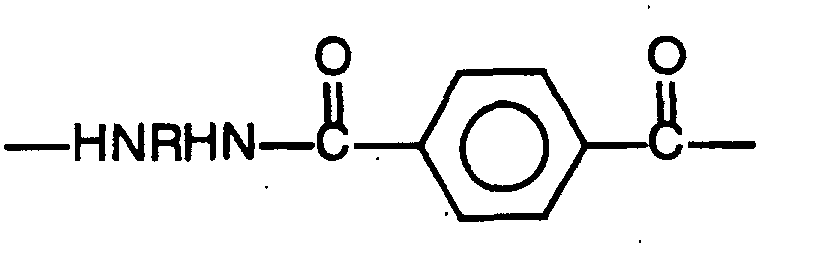 (b) an olefinic impact modifier;(c) from 0.01 to 2 wt%, based on total weight of the composition, of a copper-containing thermal stabilizer formulation comprising an alkali metal halide and a copper (I) halide in a weight ratio of from 2.5:1 to 20:1; and(d) from 0.01 to 3 wt%, based on total weight of the composition, of at least one compound selected from secondary aryl amines and hindered phenols.
 - The composition of Claim 1 wherein said modifier is selected from functionalized polyolefins and pendant succinic anhydride-functionalized block copolymers comprising polymerized styrene blocks and rubber blocks comprising ethylene/propylene, ethylene/butylene or ethylene/pentylene polymer blocks or a combination thereof.
- The composition of Claim 1 wherein said compound has a molecular weight of at least 260 g/m and a 10% wt. loss temperature of at least 290 °C, as determined by TGA according to ASTM D 3850-94.
- The composition of Claim 1 wherein said compound is a secondary aryl amine having a 10% TGA wt. loss temperature of at least 300 °C.
- A composition according to any of the preceding claims further comprising from 5 to 60 wt% filler.
- A composition according to any of the preceding claims wherein the amine endgroup level of said aromatic polyamide is in the range of from 0 to 50 µeq/g.
- An injection molded article or extruded article comprising a composition according to any of the preceding claims.
- A high temperature, partially aromatic polyamide having an amine endgroup level in the range of from 0 to 50 µeq/g.
- A method for improving the thermal stability of an impact modified high temperature polyamide formulation comprising a high temperature, partially aromatic polyamide, an olefinic impact modifier and a copper-containing thermal stabilizer, said method comprising compounding said formulation with from 0.01 to 3.0 wt%, based on total weight, of a compound selected from the group consisting of secondary aryl amines and hindered phenols, said compound having a molecular weight greater than 260 g/m and a TGA 10% wt. loss temperature greater than 290 °C.
Applications Claiming Priority (3)
| Application Number | Priority Date | Filing Date | Title |
|---|---|---|---|
| US14043599P | 1999-06-18 | 1999-06-18 | |
| US140435P | 1999-06-18 | ||
| PCT/US2000/016395 WO2000078869A1 (en) | 1999-06-18 | 2000-06-15 | Method for reducing mold deposit formation during molding of polyamides and composition therefor |
Publications (2)
| Publication Number | Publication Date |
|---|---|
| EP1198520A1 EP1198520A1 (en) | 2002-04-24 |
| EP1198520B1 true EP1198520B1 (en) | 2003-12-03 |
Family
ID=22491200
Family Applications (1)
| Application Number | Title | Priority Date | Filing Date |
|---|---|---|---|
| EP00941416A Expired - Lifetime EP1198520B1 (en) | 1999-06-18 | 2000-06-15 | Method for reducing mold deposit formation during molding of polyamides and composition therefor |
Country Status (9)
| Country | Link |
|---|---|
| US (1) | US6518341B1 (en) |
| EP (1) | EP1198520B1 (en) |
| JP (2) | JP4683802B2 (en) |
| AT (1) | ATE255619T1 (en) |
| AU (1) | AU5612300A (en) |
| CA (1) | CA2377494C (en) |
| DE (1) | DE60006968T2 (en) |
| ES (1) | ES2211563T3 (en) |
| WO (1) | WO2000078869A1 (en) |
Families Citing this family (21)
| Publication number | Priority date | Publication date | Assignee | Title |
|---|---|---|---|---|
| WO2001098402A1 (en) * | 2000-06-22 | 2001-12-27 | General Electric Company | Polycarbonate composition with reduced mold deposits |
| DE60216854T2 (en) | 2001-06-05 | 2007-09-06 | KURARAY CO., LTD, Kurashiki | polyamide composition |
| EP2277675B1 (en) * | 2003-08-19 | 2012-04-04 | Solvay Specialty Polymers USA, LLC. | Impact-modified polyamide hollow body |
| KR20070046797A (en) * | 2004-07-01 | 2007-05-03 | 솔베이 어드밴스트 폴리머스 엘.엘.씨. | Aromatic Polyamide Compositions and Products Made therefrom |
| CN101506286B (en) | 2006-08-23 | 2011-09-21 | 巴斯夫欧洲公司 | Polyamide molding materials with improved thermal aging and hydrolysis stability |
| EP2412757B1 (en) * | 2010-07-30 | 2013-11-13 | Ems-Patent Ag | Polyamide moulding composition for producing moulded articles with a soft touch surface and corresponding articles |
| CN103403076A (en) * | 2011-02-24 | 2013-11-20 | 罗地亚(中国)投资有限公司 | Use of calcium hypophosphite as a filler to improve the mechanical properties of polyamide compositions |
| US20120279605A1 (en) * | 2011-05-04 | 2012-11-08 | E.I. Du Pont De Nemours And Company | Polyamide compositions for the inner layer of a multi-layer tubular article and articles incorporating same |
| RU2648086C2 (en) * | 2012-09-25 | 2018-03-22 | Мицубиси Гэс Кемикал Компани, Инк. | Fiber reinforced polyamide polymeric material |
| KR101583233B1 (en) | 2012-12-28 | 2016-01-07 | 제일모직 주식회사 | Polyamide resin compositions and articles including the same |
| SG11201507449WA (en) | 2013-03-15 | 2015-10-29 | Ascend Performance Materials Operations Llc | Polymerization coupled compounding process |
| US9982133B2 (en) * | 2013-07-23 | 2018-05-29 | Rhodia Operations | Polyamide composition |
| CN105705565B (en) | 2013-11-14 | 2018-06-01 | Ems 专利股份公司 | Polyamide molding compounds for large molded parts |
| EP3130627B1 (en) * | 2014-04-09 | 2018-07-11 | Asahi Kasei Kabushiki Kaisha | Polyamide resin composition |
| CN109517152B (en) * | 2017-09-20 | 2020-08-11 | 四川大学 | High-temperature self-crosslinking flame-retardant smoke-suppression anti-dripping copolyester based on benzamide structure and preparation method and application thereof |
| KR102240967B1 (en) * | 2017-12-31 | 2021-04-16 | 롯데첨단소재(주) | Thermoplastic resin composition and article produced therefrom |
| CN110283311B (en) * | 2019-06-26 | 2021-09-24 | 平顶山神马帘子布发展有限公司 | Production system and production method for reducing copper precipitation in nylon 66 industrial yarn production |
| EP3919562A1 (en) * | 2020-06-02 | 2021-12-08 | LANXESS Deutschland GmbH | Polyamide-based products |
| EP3919563A1 (en) * | 2020-06-02 | 2021-12-08 | LANXESS Deutschland GmbH | Polyamide-based products |
| EP4567072A1 (en) * | 2022-08-05 | 2025-06-11 | Kuraray Co., Ltd. | Polyamide resin composition, extrusion-molded body, and production method for extrusion-molded body |
| JP2024042363A (en) * | 2022-09-15 | 2024-03-28 | 三井化学株式会社 | Polyamide resin composition and molded product thereof |
Family Cites Families (14)
| Publication number | Priority date | Publication date | Assignee | Title |
|---|---|---|---|---|
| DE2516565B2 (en) * | 1975-04-16 | 1979-06-28 | Basf Ag, 6700 Ludwigshafen | Process for stabilizing polyamides |
| JPS57123254A (en) * | 1981-01-23 | 1982-07-31 | Mitsubishi Chem Ind Ltd | Polyamide resin composition |
| JPH07107127B2 (en) * | 1986-10-21 | 1995-11-15 | 三井石油化学工業株式会社 | Polyamide composition |
| FR2637901B1 (en) * | 1988-10-13 | 1990-12-14 | Rhone Poulenc Chimie | PROCESS FOR THE PREPARATION OF AMORPHOUS POLYAMIDES BASED ON AROMATIC DICARBOXYLIC ACIDS AND ALIPHATIC DIAMINES |
| FR2643377B1 (en) * | 1989-02-21 | 1992-09-11 | Rhone Poulenc Chimie | PROCESS FOR THE PREPARATION OF SEMI-AROMATIC POLYAMIDES COMPRISING RESIDUES OF AROMATIC DICARBOXYLIC ACID (S) AND ALKYLPENTAMETHYLENEDIAMINE |
| US5436294A (en) * | 1990-09-20 | 1995-07-25 | Amoco Corporation | Polyphthalamide blends |
| JPH04220460A (en) * | 1990-12-20 | 1992-08-11 | Asahi Chem Ind Co Ltd | Heat-resistant polyamide composition |
| DE4112324A1 (en) * | 1991-04-16 | 1992-10-22 | Basf Ag | STABILIZED THERMOPLASTIC PARTICULAR POLYAMIDE MOLDING |
| JP2634528B2 (en) * | 1991-12-27 | 1997-07-30 | 矢崎総業株式会社 | connector |
| US5447980A (en) * | 1993-09-16 | 1995-09-05 | Amoco Corporation | Stabilized polyamide fiber |
| JP3242781B2 (en) * | 1994-02-16 | 2001-12-25 | 株式会社クラレ | Polyamide resin |
| MX9606273A (en) * | 1994-06-17 | 1998-03-31 | Allied Signal Inc | Articles comprising extruded polyamide-grafted low density polyethylene blends. |
| JPH0881554A (en) * | 1994-09-12 | 1996-03-26 | Toyobo Co Ltd | Polyamide resin and its composition |
| US5763561A (en) * | 1996-09-06 | 1998-06-09 | Amoco Corporation | Polyamide compositions having improved thermal stability |
-
2000
- 2000-06-15 EP EP00941416A patent/EP1198520B1/en not_active Expired - Lifetime
- 2000-06-15 JP JP2001505621A patent/JP4683802B2/en not_active Expired - Fee Related
- 2000-06-15 WO PCT/US2000/016395 patent/WO2000078869A1/en not_active Ceased
- 2000-06-15 US US09/594,329 patent/US6518341B1/en not_active Expired - Lifetime
- 2000-06-15 ES ES00941416T patent/ES2211563T3/en not_active Expired - Lifetime
- 2000-06-15 DE DE60006968T patent/DE60006968T2/en not_active Expired - Lifetime
- 2000-06-15 AU AU56123/00A patent/AU5612300A/en not_active Abandoned
- 2000-06-15 AT AT00941416T patent/ATE255619T1/en not_active IP Right Cessation
- 2000-06-15 CA CA002377494A patent/CA2377494C/en not_active Expired - Fee Related
-
2010
- 2010-10-21 JP JP2010236350A patent/JP2011012283A/en active Pending
Also Published As
| Publication number | Publication date |
|---|---|
| AU5612300A (en) | 2001-01-09 |
| DE60006968D1 (en) | 2004-01-15 |
| DE60006968T2 (en) | 2004-10-21 |
| CA2377494A1 (en) | 2000-12-28 |
| JP2011012283A (en) | 2011-01-20 |
| ATE255619T1 (en) | 2003-12-15 |
| JP4683802B2 (en) | 2011-05-18 |
| US6518341B1 (en) | 2003-02-11 |
| CA2377494C (en) | 2007-05-15 |
| WO2000078869A1 (en) | 2000-12-28 |
| JP2003503534A (en) | 2003-01-28 |
| EP1198520A1 (en) | 2002-04-24 |
| ES2211563T3 (en) | 2004-07-16 |
Similar Documents
| Publication | Publication Date | Title |
|---|---|---|
| EP1198520B1 (en) | Method for reducing mold deposit formation during molding of polyamides and composition therefor | |
| US5387645A (en) | Polyphthalamide composition | |
| EP2670805B1 (en) | Melt-blended thermoplastic composition | |
| EP0561886B1 (en) | Terephthalic acid copolyamides | |
| US5962628A (en) | Partially aromatic polyamides having improved thermal stability | |
| US5436294A (en) | Polyphthalamide blends | |
| EP2402385A1 (en) | Method for producing polyamide resin | |
| EP3201274B1 (en) | Thermoplastic polymer composition having improved mechanical properties | |
| KR20020008202A (en) | High-molecular polyamide composition with improved flow behaviour | |
| KR20130041355A (en) | Heat― and light―stabilised polyamide composition | |
| KR20190083365A (en) | A filled composition comprising polyphenylene sulfide (PPS) and polyamide 6 (PA6) | |
| CN116157472B (en) | Terminal-modified polyamide resin, process for producing the same, composition and molded article | |
| JP6843698B2 (en) | Polyamide composition and molded product | |
| JP2005344065A (en) | Polyphenylene ether resin composition | |
| CA2051767C (en) | Polyphthalamide composition | |
| JP5079733B2 (en) | Polyamide composition | |
| US5084518A (en) | Polyketone polymer blends of a linear alternating polymer of carbon monoxide and at least one ethylenically unsaturated hydrocarbon with an amorphous polyamide | |
| CA3129447A1 (en) | Hydrolysis resistant polyamides | |
| WO1998014510A1 (en) | Color stable flame retarded polyamide resin | |
| JP2640369B2 (en) | Polyamide resin composition | |
| JP2023028726A (en) | Polyamide composition and molded article | |
| US5643995A (en) | Method for improving the processabilty of polyphthalamides | |
| US5635558A (en) | Polyamide-polyarlene sulfide blends | |
| JP2515915B2 (en) | Method for producing polyamide resin | |
| JP3106658B2 (en) | Method for producing polyamide resin |
Legal Events
| Date | Code | Title | Description |
|---|---|---|---|
| EUG | Se: european patent has lapsed | ||
| PUAI | Public reference made under article 153(3) epc to a published international application that has entered the european phase |
Free format text: ORIGINAL CODE: 0009012 |
|
| 17P | Request for examination filed |
Effective date: 20020116 |
|
| AK | Designated contracting states |
Kind code of ref document: A1 Designated state(s): AT BE CH CY DE DK ES FI FR GB GR IE IT LI LU MC NL PT SE |
|
| AX | Request for extension of the european patent |
Free format text: AL;LT;LV;MK;RO;SI |
|
| RIN1 | Information on inventor provided before grant (corrected) |
Inventor name: BERSTED, BRUCE, H. Inventor name: KUMAR, SAI, R. Inventor name: HURLEY, JAMES, M. |
|
| GRAH | Despatch of communication of intention to grant a patent |
Free format text: ORIGINAL CODE: EPIDOS IGRA |
|
| GRAS | Grant fee paid |
Free format text: ORIGINAL CODE: EPIDOSNIGR3 |
|
| GRAA | (expected) grant |
Free format text: ORIGINAL CODE: 0009210 |
|
| AK | Designated contracting states |
Kind code of ref document: B1 Designated state(s): AT BE CH CY DE DK ES FI FR GB GR IE IT LI LU MC NL PT SE |
|
| PG25 | Lapsed in a contracting state [announced via postgrant information from national office to epo] |
Ref country code: FI Free format text: LAPSE BECAUSE OF FAILURE TO SUBMIT A TRANSLATION OF THE DESCRIPTION OR TO PAY THE FEE WITHIN THE PRESCRIBED TIME-LIMIT Effective date: 20031203 Ref country code: CY Free format text: LAPSE BECAUSE OF FAILURE TO SUBMIT A TRANSLATION OF THE DESCRIPTION OR TO PAY THE FEE WITHIN THE PRESCRIBED TIME-LIMIT Effective date: 20031203 |
|
| REG | Reference to a national code |
Ref country code: GB Ref legal event code: FG4D |
|
| RIN1 | Information on inventor provided before grant (corrected) |
Inventor name: KUMAR, SAI, R. Inventor name: HURLEY, JAMES, M. Inventor name: BERSTED, BRUCE, H. |
|
| REG | Reference to a national code |
Ref country code: CH Ref legal event code: EP |
|
| REG | Reference to a national code |
Ref country code: IE Ref legal event code: FG4D |
|
| REF | Corresponds to: |
Ref document number: 60006968 Country of ref document: DE Date of ref document: 20040115 Kind code of ref document: P |
|
| PG25 | Lapsed in a contracting state [announced via postgrant information from national office to epo] |
Ref country code: GR Free format text: LAPSE BECAUSE OF FAILURE TO SUBMIT A TRANSLATION OF THE DESCRIPTION OR TO PAY THE FEE WITHIN THE PRESCRIBED TIME-LIMIT Effective date: 20040303 Ref country code: DK Free format text: LAPSE BECAUSE OF FAILURE TO SUBMIT A TRANSLATION OF THE DESCRIPTION OR TO PAY THE FEE WITHIN THE PRESCRIBED TIME-LIMIT Effective date: 20040303 |
|
| REG | Reference to a national code |
Ref country code: SE Ref legal event code: TRGR |
|
| REG | Reference to a national code |
Ref country code: CH Ref legal event code: NV Representative=s name: E. BLUM & CO. PATENTANWAELTE |
|
| LTIE | Lt: invalidation of european patent or patent extension |
Effective date: 20031203 |
|
| PGFP | Annual fee paid to national office [announced via postgrant information from national office to epo] |
Ref country code: AT Payment date: 20040611 Year of fee payment: 5 Ref country code: IE Payment date: 20040611 Year of fee payment: 5 |
|
| PGFP | Annual fee paid to national office [announced via postgrant information from national office to epo] |
Ref country code: LU Payment date: 20040616 Year of fee payment: 5 |
|
| REG | Reference to a national code |
Ref country code: ES Ref legal event code: FG2A Ref document number: 2211563 Country of ref document: ES Kind code of ref document: T3 |
|
| ET | Fr: translation filed | ||
| PGFP | Annual fee paid to national office [announced via postgrant information from national office to epo] |
Ref country code: BE Payment date: 20040813 Year of fee payment: 5 |
|
| PLBE | No opposition filed within time limit |
Free format text: ORIGINAL CODE: 0009261 |
|
| STAA | Information on the status of an ep patent application or granted ep patent |
Free format text: STATUS: NO OPPOSITION FILED WITHIN TIME LIMIT |
|
| 26N | No opposition filed |
Effective date: 20040906 |
|
| PGFP | Annual fee paid to national office [announced via postgrant information from national office to epo] |
Ref country code: MC Payment date: 20050526 Year of fee payment: 6 |
|
| PG25 | Lapsed in a contracting state [announced via postgrant information from national office to epo] |
Ref country code: AT Free format text: LAPSE BECAUSE OF NON-PAYMENT OF DUE FEES Effective date: 20050615 Ref country code: IE Free format text: LAPSE BECAUSE OF NON-PAYMENT OF DUE FEES Effective date: 20050615 Ref country code: LU Free format text: LAPSE BECAUSE OF NON-PAYMENT OF DUE FEES Effective date: 20050615 |
|
| PG25 | Lapsed in a contracting state [announced via postgrant information from national office to epo] |
Ref country code: BE Free format text: LAPSE BECAUSE OF NON-PAYMENT OF DUE FEES Effective date: 20050630 |
|
| REG | Reference to a national code |
Ref country code: IE Ref legal event code: MM4A |
|
| PGFP | Annual fee paid to national office [announced via postgrant information from national office to epo] |
Ref country code: SE Payment date: 20060607 Year of fee payment: 7 |
|
| PG25 | Lapsed in a contracting state [announced via postgrant information from national office to epo] |
Ref country code: MC Free format text: LAPSE BECAUSE OF NON-PAYMENT OF DUE FEES Effective date: 20060630 |
|
| PGFP | Annual fee paid to national office [announced via postgrant information from national office to epo] |
Ref country code: ES Payment date: 20070717 Year of fee payment: 8 |
|
| REG | Reference to a national code |
Ref country code: CH Ref legal event code: PFA Owner name: SOLVAY ADVANCED POLYMERS, LLC Free format text: SOLVAY ADVANCED POLYMERS, LLC#4500 MCGINNIS FERRY ROAD#ALPHARETTA, GA 30005 (US) -TRANSFER TO- SOLVAY ADVANCED POLYMERS, LLC#4500 MCGINNIS FERRY ROAD#ALPHARETTA, GA 30005 (US) |
|
| PGFP | Annual fee paid to national office [announced via postgrant information from national office to epo] |
Ref country code: GB Payment date: 20070613 Year of fee payment: 8 |
|
| BERE | Be: lapsed |
Owner name: *SOLVAY ADVANCED POLYMERS LLC Effective date: 20050630 |
|
| PG25 | Lapsed in a contracting state [announced via postgrant information from national office to epo] |
Ref country code: PT Free format text: LAPSE BECAUSE OF NON-PAYMENT OF DUE FEES Effective date: 20040503 |
|
| PGFP | Annual fee paid to national office [announced via postgrant information from national office to epo] |
Ref country code: IT Payment date: 20070614 Year of fee payment: 8 |
|
| EUG | Se: european patent has lapsed | ||
| PG25 | Lapsed in a contracting state [announced via postgrant information from national office to epo] |
Ref country code: SE Free format text: LAPSE BECAUSE OF NON-PAYMENT OF DUE FEES Effective date: 20070616 |
|
| GBPC | Gb: european patent ceased through non-payment of renewal fee |
Effective date: 20080615 |
|
| PG25 | Lapsed in a contracting state [announced via postgrant information from national office to epo] |
Ref country code: GB Free format text: LAPSE BECAUSE OF NON-PAYMENT OF DUE FEES Effective date: 20080615 |
|
| REG | Reference to a national code |
Ref country code: ES Ref legal event code: FD2A Effective date: 20080616 |
|
| PG25 | Lapsed in a contracting state [announced via postgrant information from national office to epo] |
Ref country code: IT Free format text: LAPSE BECAUSE OF NON-PAYMENT OF DUE FEES Effective date: 20080615 |
|
| PG25 | Lapsed in a contracting state [announced via postgrant information from national office to epo] |
Ref country code: ES Free format text: LAPSE BECAUSE OF NON-PAYMENT OF DUE FEES Effective date: 20080616 |
|
| REG | Reference to a national code |
Ref country code: FR Ref legal event code: PLFP Year of fee payment: 17 |
|
| PGFP | Annual fee paid to national office [announced via postgrant information from national office to epo] |
Ref country code: NL Payment date: 20160510 Year of fee payment: 17 |
|
| PGFP | Annual fee paid to national office [announced via postgrant information from national office to epo] |
Ref country code: FR Payment date: 20160516 Year of fee payment: 17 |
|
| REG | Reference to a national code |
Ref country code: NL Ref legal event code: MM Effective date: 20170701 |
|
| PG25 | Lapsed in a contracting state [announced via postgrant information from national office to epo] |
Ref country code: NL Free format text: LAPSE BECAUSE OF NON-PAYMENT OF DUE FEES Effective date: 20170701 |
|
| REG | Reference to a national code |
Ref country code: FR Ref legal event code: ST Effective date: 20180228 |
|
| PG25 | Lapsed in a contracting state [announced via postgrant information from national office to epo] |
Ref country code: FR Free format text: LAPSE BECAUSE OF NON-PAYMENT OF DUE FEES Effective date: 20170630 |
|
| PGFP | Annual fee paid to national office [announced via postgrant information from national office to epo] |
Ref country code: CH Payment date: 20180614 Year of fee payment: 19 |
|
| PGFP | Annual fee paid to national office [announced via postgrant information from national office to epo] |
Ref country code: DE Payment date: 20190604 Year of fee payment: 20 |
|
| REG | Reference to a national code |
Ref country code: CH Ref legal event code: PL |
|
| PG25 | Lapsed in a contracting state [announced via postgrant information from national office to epo] |
Ref country code: CH Free format text: LAPSE BECAUSE OF NON-PAYMENT OF DUE FEES Effective date: 20190630 Ref country code: LI Free format text: LAPSE BECAUSE OF NON-PAYMENT OF DUE FEES Effective date: 20190630 |
|
| REG | Reference to a national code |
Ref country code: DE Ref legal event code: R071 Ref document number: 60006968 Country of ref document: DE |