EP1258484A1 - Novel isoxazole and thiazole compounds and use thereof as drugs - Google Patents
Novel isoxazole and thiazole compounds and use thereof as drugs Download PDFInfo
- Publication number
- EP1258484A1 EP1258484A1 EP01904545A EP01904545A EP1258484A1 EP 1258484 A1 EP1258484 A1 EP 1258484A1 EP 01904545 A EP01904545 A EP 01904545A EP 01904545 A EP01904545 A EP 01904545A EP 1258484 A1 EP1258484 A1 EP 1258484A1
- Authority
- EP
- European Patent Office
- Prior art keywords
- compound
- methyl
- group
- atom
- amino
- Prior art date
- Legal status (The legal status is an assumption and is not a legal conclusion. Google has not performed a legal analysis and makes no representation as to the accuracy of the status listed.)
- Granted
Links
- 0 CC(*)C(*NC)=*C(*O)=O Chemical compound CC(*)C(*NC)=*C(*O)=O 0.000 description 4
- KMOGENOKRSEJPC-KCJKMRFZSA-M CC(c1ccccc1)OC(N/C(/C(C)=N)=C(\c1cccc(C)c1)/[O-])=O Chemical compound CC(c1ccccc1)OC(N/C(/C(C)=N)=C(\c1cccc(C)c1)/[O-])=O KMOGENOKRSEJPC-KCJKMRFZSA-M 0.000 description 1
- GXCRYSSVQMVZGB-UHFFFAOYSA-N CC(c1ccccc1)OC(Nc1c(-c(cc2)ccc2C#N)[o]nc1C)=O Chemical compound CC(c1ccccc1)OC(Nc1c(-c(cc2)ccc2C#N)[o]nc1C)=O GXCRYSSVQMVZGB-UHFFFAOYSA-N 0.000 description 1
- LRQVROCAGPCGDV-QFRBVFJMSA-M CC(c1ccccc1Cl)OC(N/C(/C(C)=N)=C(\c(cc1)ccc1OC(F)(F)F)/[O-])=O Chemical compound CC(c1ccccc1Cl)OC(N/C(/C(C)=N)=C(\c(cc1)ccc1OC(F)(F)F)/[O-])=O LRQVROCAGPCGDV-QFRBVFJMSA-M 0.000 description 1
- RHHIEPIPYLRKSV-UHFFFAOYSA-N CC(c1ccccc1Cl)OC(Nc1c(-c(cc2)ccc2OC)[o]nc1C)=O Chemical compound CC(c1ccccc1Cl)OC(Nc1c(-c(cc2)ccc2OC)[o]nc1C)=O RHHIEPIPYLRKSV-UHFFFAOYSA-N 0.000 description 1
- HFBFYBHXJYAQGB-UHFFFAOYSA-N CC(c1ccccc1Cl)OC(Nc1c(-c(cc2)ccc2[N+]([O-])=O)[o]nc1C)=O Chemical compound CC(c1ccccc1Cl)OC(Nc1c(-c(cc2)ccc2[N+]([O-])=O)[o]nc1C)=O HFBFYBHXJYAQGB-UHFFFAOYSA-N 0.000 description 1
- KDDOTUUQTQCTQE-UHFFFAOYSA-O CC(c1ccccc1Cl)OC(Nc1c(-c2ccc[oH+]2)[o]nc1C)=O Chemical compound CC(c1ccccc1Cl)OC(Nc1c(-c2ccc[oH+]2)[o]nc1C)=O KDDOTUUQTQCTQE-UHFFFAOYSA-O 0.000 description 1
Images




Classifications
-
- C—CHEMISTRY; METALLURGY
- C07—ORGANIC CHEMISTRY
- C07D—HETEROCYCLIC COMPOUNDS
- C07D275/00—Heterocyclic compounds containing 1,2-thiazole or hydrogenated 1,2-thiazole rings
- C07D275/02—Heterocyclic compounds containing 1,2-thiazole or hydrogenated 1,2-thiazole rings not condensed with other rings
- C07D275/03—Heterocyclic compounds containing 1,2-thiazole or hydrogenated 1,2-thiazole rings not condensed with other rings with hetero atoms or with carbon atoms having three bonds to hetero atoms with at the most one bond to halogen, e.g. ester or nitrile radicals, directly attached to ring carbon atoms
-
- A—HUMAN NECESSITIES
- A61—MEDICAL OR VETERINARY SCIENCE; HYGIENE
- A61P—SPECIFIC THERAPEUTIC ACTIVITY OF CHEMICAL COMPOUNDS OR MEDICINAL PREPARATIONS
- A61P13/00—Drugs for disorders of the urinary system
- A61P13/12—Drugs for disorders of the urinary system of the kidneys
-
- A—HUMAN NECESSITIES
- A61—MEDICAL OR VETERINARY SCIENCE; HYGIENE
- A61P—SPECIFIC THERAPEUTIC ACTIVITY OF CHEMICAL COMPOUNDS OR MEDICINAL PREPARATIONS
- A61P25/00—Drugs for disorders of the nervous system
-
- A—HUMAN NECESSITIES
- A61—MEDICAL OR VETERINARY SCIENCE; HYGIENE
- A61P—SPECIFIC THERAPEUTIC ACTIVITY OF CHEMICAL COMPOUNDS OR MEDICINAL PREPARATIONS
- A61P29/00—Non-central analgesic, antipyretic or antiinflammatory agents, e.g. antirheumatic agents; Non-steroidal antiinflammatory drugs [NSAID]
-
- A—HUMAN NECESSITIES
- A61—MEDICAL OR VETERINARY SCIENCE; HYGIENE
- A61P—SPECIFIC THERAPEUTIC ACTIVITY OF CHEMICAL COMPOUNDS OR MEDICINAL PREPARATIONS
- A61P35/00—Antineoplastic agents
-
- A—HUMAN NECESSITIES
- A61—MEDICAL OR VETERINARY SCIENCE; HYGIENE
- A61P—SPECIFIC THERAPEUTIC ACTIVITY OF CHEMICAL COMPOUNDS OR MEDICINAL PREPARATIONS
- A61P35/00—Antineoplastic agents
- A61P35/04—Antineoplastic agents specific for metastasis
-
- A—HUMAN NECESSITIES
- A61—MEDICAL OR VETERINARY SCIENCE; HYGIENE
- A61P—SPECIFIC THERAPEUTIC ACTIVITY OF CHEMICAL COMPOUNDS OR MEDICINAL PREPARATIONS
- A61P43/00—Drugs for specific purposes, not provided for in groups A61P1/00-A61P41/00
-
- A—HUMAN NECESSITIES
- A61—MEDICAL OR VETERINARY SCIENCE; HYGIENE
- A61P—SPECIFIC THERAPEUTIC ACTIVITY OF CHEMICAL COMPOUNDS OR MEDICINAL PREPARATIONS
- A61P9/00—Drugs for disorders of the cardiovascular system
- A61P9/10—Drugs for disorders of the cardiovascular system for treating ischaemic or atherosclerotic diseases, e.g. antianginal drugs, coronary vasodilators, drugs for myocardial infarction, retinopathy, cerebrovascula insufficiency, renal arteriosclerosis
-
- C—CHEMISTRY; METALLURGY
- C07—ORGANIC CHEMISTRY
- C07D—HETEROCYCLIC COMPOUNDS
- C07D261/00—Heterocyclic compounds containing 1,2-oxazole or hydrogenated 1,2-oxazole rings
- C07D261/02—Heterocyclic compounds containing 1,2-oxazole or hydrogenated 1,2-oxazole rings not condensed with other rings
- C07D261/06—Heterocyclic compounds containing 1,2-oxazole or hydrogenated 1,2-oxazole rings not condensed with other rings having two or more double bonds between ring members or between ring members and non-ring members
- C07D261/10—Heterocyclic compounds containing 1,2-oxazole or hydrogenated 1,2-oxazole rings not condensed with other rings having two or more double bonds between ring members or between ring members and non-ring members with hetero atoms or with carbon atoms having three bonds to hetero atoms with at the most one bond to halogen, e.g. ester or nitrile radicals, directly attached to ring carbon atoms
- C07D261/14—Nitrogen atoms
-
- C—CHEMISTRY; METALLURGY
- C07—ORGANIC CHEMISTRY
- C07D—HETEROCYCLIC COMPOUNDS
- C07D413/00—Heterocyclic compounds containing two or more hetero rings, at least one ring having nitrogen and oxygen atoms as the only ring hetero atoms
- C07D413/02—Heterocyclic compounds containing two or more hetero rings, at least one ring having nitrogen and oxygen atoms as the only ring hetero atoms containing two hetero rings
- C07D413/04—Heterocyclic compounds containing two or more hetero rings, at least one ring having nitrogen and oxygen atoms as the only ring hetero atoms containing two hetero rings directly linked by a ring-member-to-ring-member bond
-
- C—CHEMISTRY; METALLURGY
- C07—ORGANIC CHEMISTRY
- C07D—HETEROCYCLIC COMPOUNDS
- C07D413/00—Heterocyclic compounds containing two or more hetero rings, at least one ring having nitrogen and oxygen atoms as the only ring hetero atoms
- C07D413/02—Heterocyclic compounds containing two or more hetero rings, at least one ring having nitrogen and oxygen atoms as the only ring hetero atoms containing two hetero rings
- C07D413/12—Heterocyclic compounds containing two or more hetero rings, at least one ring having nitrogen and oxygen atoms as the only ring hetero atoms containing two hetero rings linked by a chain containing hetero atoms as chain links
Definitions
- the present invention relates to novel isoxazole and thiazole compounds (hereinafter referred to as an "azole compound”) or salt thereof.
- the azole compound of the present invention is useful as a lysophosphatidic acid (LPA) receptor antagonist and as a therapeutic or preventive agent for cell proliferative diseases, inflammatory diseases, kidney diseases, and cerebral or peripheral nerve disorders.
- LPA lysophosphatidic acid
- Lysophosphatidic acid is a bioactive lysophospholipid which exists in organisms in very small amounts and is produced and released when various cells including platelets are stimulated by bioactive substances such as cytokines (J. Biol. Chem. 270: 12949 (1995); J. Biol. Chem. 267: 10988 (1992)). Therefore, it is believed that LPA concentration is elevated at sites of inflammation, hemorrhage or the like. Actually, it has been clarified that 2 to 20 ⁇ M of LPA is contained in blood serum and, in the case of a model of intracerebral hemorrhage, the LPA concentration in cerebral spinal fluid has been reported to be elevated to about 3 ⁇ M (J. Neurochem.
- LPA concentration in human arteriosclerotic lesions was also reported (Proc. Natl. Acad. Sci. USA 96: 6931 (1999)). Further, elevated LPA concentration has been reported in the ascites of patients with peritoneal disseminated ovarian carcinoma and in the blood of patients with multiple myeloma (Lipids 34: 17 (1999); Gynecol. Oncol. 98: 71 (364)). While a site of action of LPA had not been heretofore clarified, the receptor specific for LPA was recently identified (Biochem. Biophys. Res. Commun.
- LPA lipoprotein phosphatidylcholine
- cellproliferation for example, cellproliferation, migration/invasion and platelet aggregation
- cellproliferation promoting activity the effect of LPA has been reported in, for example, smooth muscle cells (Am. J. Physiol. 267: C204 (1994); Atherosclerosis 130: 121 (1997)), renal mesangial cells (Clinical Sci. 96: 431 (1999)), stellate cells of liver (Biochem. Biophys. Res. Commun.
- LPA has been reported as a causative agent in neurite retraction and cell death in neural cells,in particular, the possibility of LPA to be associated with neurodestruction after hemorrhage (J. Neurochem. 61: 340 (1993); J. Neurochem. 70: 66 (1998)).
- the search for an agent to inhibit LPA-induced cell activation is considered the key elements leading to the prevention and treatment of restenosis after percutaneous transluminal coronary angioplasty (PTCA), arteriosclerosis, artery obstructions, malignant and benign proliferative diseases, various inflammatory diseases, kidney diseases, proliferation of tumor cells, invasion and metastasis of carcinomas, cerebral or periphery nerve disorders and the like.
- PTCA percutaneous transluminal coronary angioplasty
- the object of the present invention is to provide a novel azole compound having an excellent LPA receptor antagonistic action and the application thereof to medicines.
- the present inventors have conducted concentrated studies in order to develop a novel agent for inhibiting diseases caused by LPA and, as a result, found that a novel azole compound would inhibit actions effected through an LPA receptor. This has led to the completion of the present invention.
- the present invention comprises the following.
- the present invention provides an azole compound represented by general formula [1] or salt thereof: wherein
- the present invention provides the azole compound represented by formula [1] or salt thereof, wherein R1 is a halogen atom or lower alkyl optionally substituted by one or more substituents selected from the group consisting of (I) alkyloxy, (II) alkylthio, (III) alkylamino, (IV) cyano, (V) nitro, (VI) cyclic amino, and (VII) a halogen atom; and R2 is aryl or aromatic heterocycle optionally substituted by one or more substituents selected from the group consisting of:
- the present invention provides the azole compound represented by formula [1] or salt thereof, wherein R1 is aryl or aromatic heterocycle optionally substituted by one or more substituents selected from the group consisting of:
- the present invention provides the azole compound represented by general formula [2] or salt thereof: wherein
- the present invention provides the azole compound represented by formula [2] or salt thereof, wherein
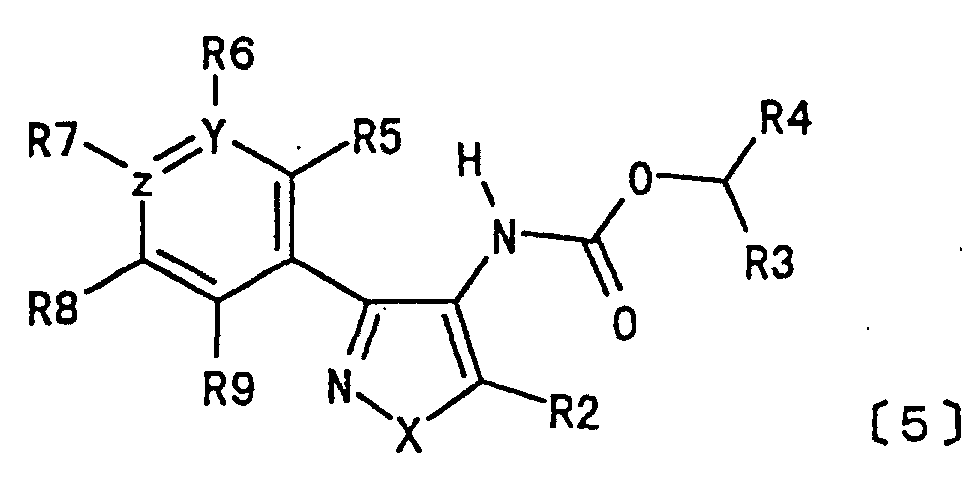
- the present invention provides the azole compound represented by formula [5] or salt thereof: wherein
- the present invention provides the azole compound represented by formula [5] or salt thereof, wherein
- the present invention provides the azole compound represented by formula [2] or [5] or salt thereof, wherein R4 is phenyl optionally substituted by one or more substituents selected from the group consisting of (I) a halogen atom, (II) optionally halogenated lower alkyl, (III) optionally halogenated alkyloxy, (IV) optionally halogenated alkylthio, (VIII) acylamino, (X) hydroxy, (XI) nitro, (XII) cyano, (XIII) amino, (XIV) monoalkylamino or dialkylamino, (XX) alkyloxycarbonyl or aryloxycarbonyl, (XXI) acyl, (XXII) carboxyl, and (XXV) cyclic amino.
- R4 is phenyl optionally substituted by one or more substituents selected from the group consisting of (I) a halogen atom, (II) optionally
- the present invention provides the azole compound represented by formula [2] or [5] or salt thereof, wherein R4 is a nonsubstituted phenyl, 2-chlorophenyl, 2-bromophenyl, or 2-fluorophenyl.
- the present invention provides a lysophosphatidic acid (LPA) receptor antagonist comprising, as an active ingredient, the above novel azole compound or salt thereof.
- LPA lysophosphatidic acid
- the present invention provides a therapeutic or preventive agent for cell proliferative diseases comprising, as an active ingredient, the above novel azole compound or salt thereof.
- the present invention provides a therapeutic or preventive agent for inflammatory diseases comprising, as an active ingredient, the above novel azole compound or salt thereof.
- the present invention provides a therapeutic or preventive agent for kidney diseases comprising, as an active ingredient, the above novel azole compound or salt thereof.
- the present invention provides a therapeutic or preventive agent for cerebral or peripheral nerve disorders comprising, as an active ingredient, the above novel azole compound or salt thereof.
- the present invention provides a therapeutic or preventive agent for artery obstructions comprising, as an active ingredient, the above novel azole compound or salt thereof.
- the present invention provides an antitumor agent comprising, as an active ingredient, the above novel azole compound or salt thereof.
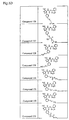
- Fig. 1A to Fig. 1I show structures of Compound 103 to Compound 169 (in Examples 103 to 169 below).
- Fig. 2A and Fig. 2B show the inhibitory action of Compound 115 against the proliferation of cultured carcinoma cells by LPA.
- Fig. 2A shows the inhibition of the proliferation of human brain tumor cells and
- Fig. 2B shows the inhibition of the proliferation of human ovarian carcinoma cells.
- halogen atom examples include, but not limited to, the following.
- halogen atom examples include a fluorine atom, a chlorine atom, a bromine atom, and an iodine atom.
- alkyl examples include straight chain or branched C 1-20 alkyl such as methyl, ethyl, n-propyl, isopropyl, n-butyl, isobutyl, sec-butyl, tert-butyl, pentyl, hexyl, heptyl, octyl, nonyl, decyl, undecyl, dodecyl, tridecyl, tetradecyl, pentadecyl, hexadecyl, heptadecyl, octadecyl, nonadecyl, and eicosyl.
- C 1-20 alkyl such as methyl, ethyl, n-propyl, isopropyl, n-butyl, isobutyl, sec-butyl, tert-butyl, pentyl, hexyl, heptyl, o
- cycloalkyl examples include C 3-6 cycloalkyl such as cyclopropyl, cyclobutyl, cyclopentyl, and cyclohexyl.
- alkoxy examples include straight chain or branched C 1-20 alkoxy such as methoxy, ethoxy, n-propoxy, isopropoxy, n-butoxy, isobutoxy, sec-butoxy, tert-butoxy, pentyloxy, hexyloxy, heptyloxy, and octyloxy.
- aryl examples include phenyl, tolyl, and naphthyl.
- aryloxy examples include aryl-O- such as phenoxy, tolyloxy, and naphthyloxy.
- heterocycle examples include aromatic heterocycle and nonaromatic heterocycle, for example, four- to seven-membered or fused heterocycle containing at least one hetero atom selected from an oxygen atom, a nitrogen atom, and a sulfur atom such as azetidinyl, thienyl, furyl, pyrrolyl, imidazolyl, pyrazolyl, thiazolyl, isothiazolyl, oxazolyl, isoxazolyl, furazanyl, pyrrolidinyl, pyrrolinyl, imidazolydinyl, imidazolinyl, pyrazolydinyl, pyrazolinyl, 1,3,4-oxadiazolyl, 1,2,3-thiadiazolyl, 1,2,4-thiadiazolyl, 1,3,4-thiadiazolyl, 1,2,3-triazolyl, 1,2,4-triazolyl, tetrazolyl, thiatriazolyl, pyri
- acyl examples include acyl such as formyl, C 2-12 alkanoyl such as acetyl or propionyl, aroyl such as benzoyl or naphthoyl, and heterocyclic carbonyl such as nicotinoyl, thenoyl, pyrrolidino carbonyl, or furoyl.
- monoalkylamino or dialkylamino examples include mono- or di-straight chain or branched C 1-6 alkylamino such as methylamino, ethylamino, n-propylamino, isopropylamino, n-butylamino, sec-butylamino, tert-butylamino, pentylamino, hexylamino, dimethylamino, diethylamino, di-n-propylamino, ethylmethylamino, methyl n-propylamino, and butylethylamino.
- C 1-6 alkylamino such as methylamino, ethylamino, n-propylamino, isopropylamino, n-butylamino, sec-butylamino, tert-butylamino, pentylamino, hexylamino, dimethylamino,
- cyclic amino examples include five- to nine-membered cyclic amino optionally containing, in addition to a nitrogen atom, 1 to 3 hetero atoms such as an oxygen atom or a sulfur atom, for example, pyrrolidino, piperidino, morpholino, and iomorpholino.
- lower alkyl examples include straight chain or branched C 1-6 alkyl such as methyl, ethyl, n-propyl, isopropyl, n-butyl, sec-butyl, isobutyl, tert-butyl, and pentyl.
- R3 and R4 may form a five- to ten-membered cyclic structure together with a carbon atom to which they bind.
- Such structures include, for example, optionally substituted saturated or unsaturated monocyclic or fused polycyclic hydrocarbon and monocyclic or fused heterocycle containing hetero atoms such as a nitrogen atom, an oxygen atom, or a sulfur atom, such as cyclohexenyl, indanyl, or tetrahydronaphthyl.
- the salt of the compound of the present invention includes conventional salt, for example, salt of a basic group such as amino or salt of an acidic group such as carboxyl.
- a salt of basic group include: salt with mineral acid such as hydrochloric acid, sulfuric acid, nitric acid, and phosphoric acid; salt with organic carboxylic acid such as formic acid, acetic acid, trichloroacetic acid, trifluoroacetic acid, oxalic acid, fumaric acid, maleic acid, citric acid, and tartaric acid; and salt with sulfonic acid such as methanesulfonic acid, benzenesulfonic acid, p-toluenesulfonic acid, and naphthalenesulfonic acid.
- Examples of a salt of acidic group include: salt with alkali metal such as sodium and potassium; salt with alkaline earth metal such as calcium and magnesium; ammonium salt; and salt with nitrogen-containing organic base such as trimethylamine, triethylamine, tributylamine, N,N-dimethylaniline, N-methylpiperidine, N-methylmorpholine, diethylamine, dicyclohexylamine, dibenzylamine, pyridine, guanidine, hydrazine, and quinine.
- the salt of the compound of the present invention preferably includes pharmaceutically acceptable salt of, for example, hydrochloric acid, sulfuric acid, nitric acid, phosphoric acid, formic acid, acetic acid, oxalic acid, fumaric acid, maleic acid, citric acid, sulfonic acid, and tartaric acid.
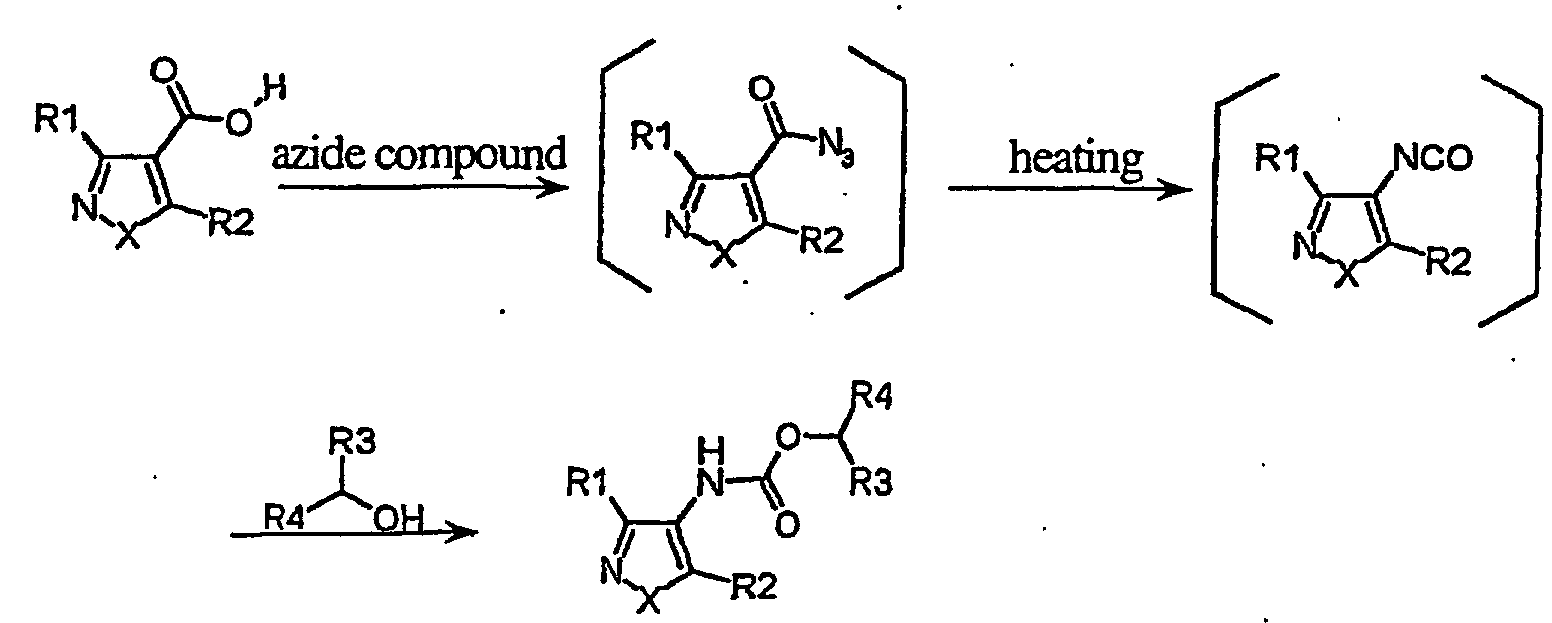
- the azole compound represented by general formula [1] can be produced utilizing the Curtius rearrangement shown in the following Reaction path (T).
- the starting material an azole carboxylic acid
- a suitable solvent e.g., toluene
- an azide compound e.g., diphenyl phosphoryl azide
- the isocyanate was reacted with a suitable alcohol to produce carbamate (Reaction path (I)).
- R1, R2, R3, and R4 are as defined above.
- the starting material which is necessary for synthesizing the compound of the present invention, is commercially available or can be produced by the Reaction path (II) shown below (Synthesis, 1994, (9), 898 and thereinafter and Heterocycles, 1995, (41), 175 and thereinafter) or a conventional method shown in Reaction path (III).
- R1 and R2 are as defined above and R13 represents straight chain or branched lower alkyl.
- R1, R2, and R13 are as defined above.
- the compounds and the salts thereof according to the present invention are useful as an antagonist on lysophosphatidic acid (LPA) receptor and exhibit excellent actions as preventive and therapeutic agents for restenosis after percutaneous transluminal coronary angioplasty (PTCA), arteriosclerosis, artery obstruction, malignant and benign proliferative diseases, various inflammatory diseases, kidney diseases, proliferation of tumor cells, invasion and metastasis of carcinoma, cerebral or periphery nerve disorders and the like.
- PTCA percutaneous transluminal coronary angioplasty
- arteriosclerosis artery obstruction
- malignant and benign proliferative diseases various inflammatory diseases
- kidney diseases proliferation of tumor cells
- invasion and metastasis of carcinoma cerebral or periphery nerve disorders and the like.
- pharmaceutic aids such as an excipient, a carrier, and a diluent, which are commonly used in the preparation of formulations, may be suitably mixed.
- the compound can be orally or parenterally administered through conventional forms, for example, tablets, powders, granules, pills, suspensions, capsules, syrups, emulsions, liquid formulations, powder formulations, suppositories, ointments, patches, or injections.
- the method of administration, the dosage, and the frequency of administration can be suitably selected depending on the age, weight, and symptom of the patient.
- the administration can be orally or parenterally carried out (for example, by injection, drip infusion, percutaneous administration, or administration at rectal site) in the range of 0.1 to 5,000 mg, preferably in the range of 1 to 1,000 mg, per day to an adult, in a single dose or several separate doses.
- carriers usable herein include: excipients such as lactose, saccharose, sodium chloride, glucose, starch, calcium carbonate, kaolin, crystalline cellulose, calcium hydrogenphosphate, and alginic acid; binders such as simple syrup, liquid glucose, a starch solution, a gelatin solution, polyvinyl alcohol, polyvinyl ether, polyvinyl pyrrolidone, carboxymethylcellulose, shellac, methylcellulose, ethylcellulose, sodium alginate, gum Arabic, hydroxypropylmethylcellulose, hydroxypropylcellulose, water, and ethanol; disintegrating agents such as dried starch, alginic acid, agar powder, starch, crosslinking polyvinylpyrrolidone, crosslinking carboxymethylcellulose sodium, carboxymethylcellulose calcium, and sodium starch glycolate;
- excipients such as lactose, saccharose, sodium chloride, glucose, starch, calcium carbonate, kaolin, crystalline cellulose, calcium hydrogenphosphate,
- conventional coatings may be applied to make tablets, for example, a sugar-coated tablet, a gelatin-encapsulated tablet, a gastric coated tablet, an enteric coated tablet, or a water-soluble film-coated tablet.
- the capsule form can be prepared through mixing with various carriers as mentioned above, followed by filling into a hard gelatin capsule, a soft capsule or the like.
- the liquid formulation can be an aqueous or oleaginous suspension, a solution, a syrup, or an elixir and can be prepared in accordance with conventional methods using conventional additives.
- a suitable absorbefacient can be added as a carrier, for example, polyethylene glycol, cocoa butter, lanoline, higher alcohol, esters of higher alcohol, gelatin, semi-synthetic glyceride, or Witepsol (registered trademark: Dynamite Novel).
- examples of carriers usable herein include: diluents such as water, ethyl alcohol, macrogol, propylene glycol, citric acid, acetic acid, phosphoric acid, lactic acid, sodium lactate, sulfuric acid, and sodium hydroxide; pH adjusters and buffers such as sodium citrate, sodium acetate, and sodium phosphate; and stabilizers such as sodium pyrosulfite, ethylenediaminetetraacetic acid, thioglycolic acid, and thiolactic acid.
- diluents such as water, ethyl alcohol, macrogol, propylene glycol, citric acid, acetic acid, phosphoric acid, lactic acid, sodium lactate, sulfuric acid, and sodium hydroxide
- pH adjusters and buffers such as sodium citrate, sodium acetate, and sodium phosphate
- stabilizers such as sodium pyrosulfite, ethylenediaminetetraacetic acid, thioglycolic acid, and
- salt, glucose, mannitol, or glycerin may be contained in a medical formulation in a sufficient amount to prepare an isotonic solution and a conventional solubilizer, soothing agent, local anesthetic or the like may be added.
- a commonly used base, stabilizer, wetting agent, preservative and the like are optionally compounded and, in accordance with a conventional method, mixed and prepared.
- bases usable herein include white petrolatum, polyethylene, paraffin, glycerin, cellulose derivative, polyethylene glycol, silicon, and bentonite.
- Preservatives usable herein include methyl p-hydroxybenzoate, ethyl p-hydroxybenzoate, and propyl p-hydroxybenzoate.
- Acetaldoxime 500 mg was dissolved in dimethylformamide (2 ml), and under ice cooling, N-bromosuccinimide (1.66 g) dissolved in dimethylformamide (4 ml) was added dropwise. The mixture was stirred at 0°C for 30 minutes, a methanol solution comprising ethyl benzoylacetate (3.26 g) and metallic sodium (700 mg) was added thereto, and the mixture was stirred at that temperature for 1 hour. After the completion of the reaction, distilled water was added thereto, and the reaction product was extracted by liquid separation using ethyl acetate and washed with saturated solution of sodium chloride.
- Methyl 3-oxobutanoate (29.4 g) was dissolved in methanol (30 ml), then a 40%-methylamine-methanol solution (32 ml) was added dropwise at room temperature, and the mixture was stirred for 1 hour. After the completion of the reaction, the reaction solution as such was concentrated, and then dried using a vacuum pump to obtain methyl 3-(methylamino)-2-butenoate (31.8 g, yield 97%). Subsequently, methyl 3-(methylamino)-2-butenoate (1.0 g) was dissolved in tetrahydrofuran (15 ml) and pyridine (0.63 ml) was added dropwise at room temperature.
- m-toluyl chloride (1.22 ml) was added dropwise and the mixture was stirred at room temperature for 1 hour.
- distilled water was added, and the reaction product was extracted by liquid separation using ether and then washed with a saturated saline solution.
- the product was dried over sodium sulfate to concentrate and the residue was dried using a vacuum pump. Subsequently, the residue was dissolved in an acetic acid (15 ml). Then, hydroxylamine hydrochloride (0.54 g) was added at room temperature, and the product was heated under reflux for 30 minutes.
- reaction product was allowed to cool at room temperature, distilled water was added thereto, and the product was extracted by liquid separation using chloroform and washed with saturated aqueous solution of sodium chloride. The product was dried over sodium sulfate to concentrate and the residue was purified by silica gel column chromatography using a hexane-acetone elution system. Thus, the title compound 27 (65.9 mg, yield 53.3%) was obtained.
- Methyl 3-oxobutanoate (29.4 g) was dissolved in methanol (30.0 ml), and a 40%-methylamine-methanol solution (32.0 ml) was added dropwise at room temperature. The mixture was stirred for 1 hour. After the completion of the reaction, the reaction solution as such was concentrated, and then dried using a vacuum pump. Thus, methyl 3-(methylamino)-2-butenoate (31.8 g, yield 97%) was obtained. Subsequently, methyl 3-(methylamino)-2-butenoate (5.38 g) was dissolved in tetrahydrofuran (100 ml), and pyridine (5.0 ml) was added dropwise at room temperature.
- Methyl 5-[4-(chloromethyl)phenyl]-3-methyl-4-isoxazole carboxylic acid (4.82 g) was dissolved in anhydrous toluene (100.0 ml). Subsequently, diphenylphosphoryl azide (5.0 ml) and triethylamine (2.9 ml) were added at room temperature, and the mixture was stirred at 120°C for 30 minutes. After the product was allowed to stand at room temperature, 1-(2-chlorophenyl)-1-ethanol (2.9 ml) was added and the mixture was stirred again at 120°C for 2 hours.
- reaction product was allowed to cool at room temperature, and distilled water was then added thereto, and the product was extracted by liquid separation using chloroform, and then washed with saturated aqueous solution of sodium chloride.
- the product was dried over sodium sulfate to concentrate and the residue was purified through a column using a hexane-acetone elution system.
- 1-(2-chlorophenyl)ethyl N-5-[4-chloromethyl]phenyl]-3-methyl-4-isoxazolylcarbamate (3.81 g, yield 49.0%) was obtained.
- the human EDG-2 expression plasmid was introduced into HepG2 cells by electroporation. After the introduction, culturing was continued while exchanging selective media every 3 to 4 days, thereby obtaining an expressed colony. Regarding these cells, Ca-influx and cell-proliferation by LPA, level of [ 3 H] LPA binding and the like were inspected to select a cell line which highly expresses human EDG-2 (human EDG-2/HepG2). The obtained cell line was used to assay the activity in the following Examples 104 and 105.
- Each test compound was added to the cell suspension followed by the addition of LPA, thereby examining the inhibitory activity of the test compound on the function of LPA for elevating the intracellular Ca 2+ level.
- the elevation of intracellular Ca 2+ level by LPA without the addition of test compounds was set as 100% and resting Ca 2+ level before the addition of LPA was set as 0%, thereby determining the concentration of 50% inhibition for the elevation of intracellular Ca 2+ level (IC 50 value).
- IC 50 value concentration of 50% inhibition for the elevation of intracellular Ca 2+ level
- bovine serum-containing DMEM Dulbecco's modified eagle medium
- the compounds of the present invention significantly inhibit the incorporation of [ 3 H] thymidine into the cells. This indicates that the compounds of the present invention possess an inhibitory property against cell proliferation.
- the compounds shown in Table 2 are simple representative examples.
- Other compounds shown in Table 1 also inhibit the incorporation of [ 3 H] tymidine in the same manner as described above.
- Peripheral arterial obstructions including clinical arteriosclerosis obliterans (ASO) are, in common, chronic diseases, which often cause ulcer or necrosis in lower limbs, and lesions are worsened by arterial thrombotic infarcts upstream of the lesions. Therefore, the target of the treatment for the above diseases is to inhibit the progress and to eliminate the ischemic symptoms.
- Antiplatelet drugs and anticoagulants are often used therefor. Since lysophosphatidic acids (LPA) are known to be released from activated platelets, the compounds according to the present invention can be sufficiently expected to exhibit therapeutic effects on the above diseases.
- ID3016511 (Compound 115), which is one of the compounds according to the present invention, is selected as an example and administered daily to a rat model of lactic acid induced peripheral circulatory disturbance used as an animal model of peripheral arterial obstruction to examine the drug's therapeutic effect.
- 13-week old Wister male rats were used in test groups of 10 rats. Each rat was fixed in a face-up position under anesthesia by 40 mg/kg of intraperitoneally administered pentobarbital sodium. The left femoral region was then incised and 0.1 ml of 5% lactic acid solution was administered into the femoral artery. Adhesives were applied dropwise at the lactic acid administered site for blood stanching. Thereafter, a penicillin G solution was added dropwise to prevent infections and the incised part was sutured.
- Test compound ID3016511 which is a white powder and has poor solubility in water, was suspended in an aqueous solution of 0.5% carboxymethylcellulose sodium (0.5%CMC-Na) and test solutions of a maximal dosage of 60 mg/5 ml/kg (body weight) and a low dosage of 20 mg/5 ml/kg (body weight) were prepared. The solvent and the test solution were orally administered. Administration was carried out 2 hours before lactic acid administration and, thereafter, twice a day at an interval of at least 7 hours for 13 days repeatedly. Ticlopidine (Sigma) at the dosage of 300 mg/5 ml/kg (body weight) was used as a positive control material with the aid of an aqueous solution of 0.5% CMC-Na.
- the positive control material was administered 3 hours before the lactic acid administration, and it was repeatedly orally administered twice a day for 13 days in the same way as the above test compound. The progress of lesion on legs and feet was observed 3, 7, and 14 days after the lactic acid administration and the results were scored from 0 to 4 based on the following criteria:
- the results of this test are shown in Table 3. The test results are indicated by the average ⁇ the standard error.
- the significant difference between the control group and the test material group was assayed by the non-parametric Dunnet's test.
- the significant difference between the control group and the positive control material group was assayed by the non-parametric Wilcoxon's test.
- the lesion index of the control group was 2.5 ⁇ 0.5 at three days after lactic acid administration, 4.3 ⁇ 0.9 at seven days after the administration, and 7.7 ⁇ 1.5 at fourteen days after the administration. In the group of repeated administration of 20 mg/kg of ID3016511 for 14 days, the equivalent level of progress with the control group was observed in the lesion.
- Compound 115 inhibited the proliferation of carcinoma cells in a concentration dependent manner at a concentration of 0.3 ⁇ M or higher.
- the present invention provides a formulation comprising an azole compound having an antagonistic action on an LPA receptor and a pharmaceutically acceptable salt thereof.
- the formulation exhibits excellent preventive and therapeutic properties against restenosis after percutaneous transluminal coronary angioplasty (PTCA), arteriosclerosis, artery obstruction, malignant and benign proliferative diseases, various inflammatory diseases, kidney diseases, proliferation of tumor cells, carcinoma invasion/metastasis, brain or periphery nerve disorders and the like.
- PTCA percutaneous transluminal coronary angioplasty
Landscapes
- Chemical & Material Sciences (AREA)
- Organic Chemistry (AREA)
- Health & Medical Sciences (AREA)
- Veterinary Medicine (AREA)
- Chemical Kinetics & Catalysis (AREA)
- General Chemical & Material Sciences (AREA)
- Medicinal Chemistry (AREA)
- Nuclear Medicine, Radiotherapy & Molecular Imaging (AREA)
- Pharmacology & Pharmacy (AREA)
- Life Sciences & Earth Sciences (AREA)
- Animal Behavior & Ethology (AREA)
- General Health & Medical Sciences (AREA)
- Public Health (AREA)
- Bioinformatics & Cheminformatics (AREA)
- Engineering & Computer Science (AREA)
- Urology & Nephrology (AREA)
- Vascular Medicine (AREA)
- Cardiology (AREA)
- Heart & Thoracic Surgery (AREA)
- Oncology (AREA)
- Biomedical Technology (AREA)
- Neurology (AREA)
- Neurosurgery (AREA)
- Pain & Pain Management (AREA)
- Rheumatology (AREA)
- Pharmaceuticals Containing Other Organic And Inorganic Compounds (AREA)
- Heterocyclic Carbon Compounds Containing A Hetero Ring Having Nitrogen And Oxygen As The Only Ring Hetero Atoms (AREA)
- Nitrogen And Oxygen Or Sulfur-Condensed Heterocyclic Ring Systems (AREA)
- Plural Heterocyclic Compounds (AREA)
Abstract
Description
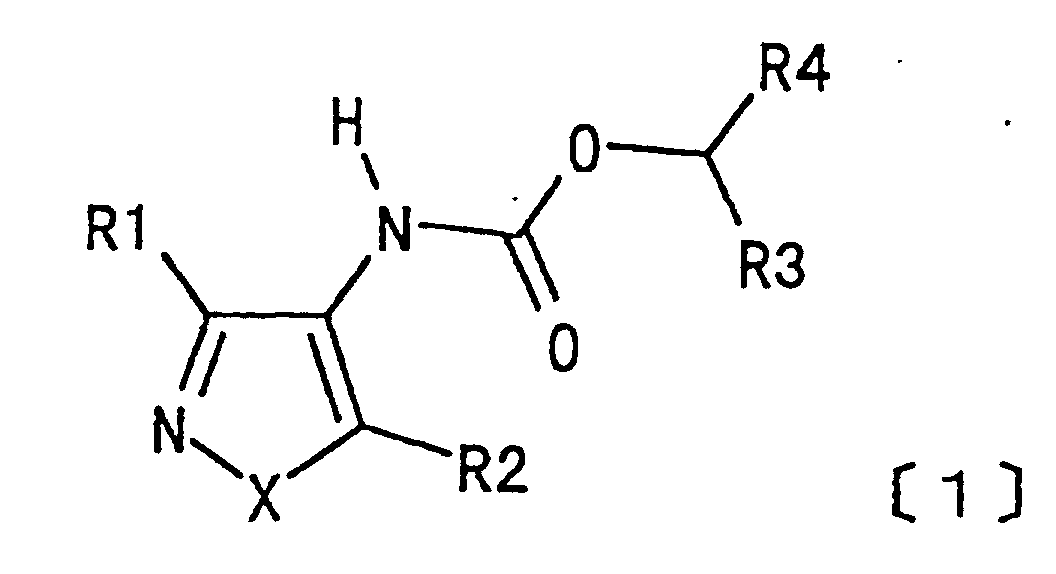
X represents an oxygen atom or a sulfur atom,
provided that, when R3 is a hydrogen atom, R4 represents a group other than methyl.
R2 is aryl or aromatic heterocycle optionally substituted by one or more substituents selected from the group consisting of:
R1 is aryl or aromatic heterocycle optionally substituted by one or more substituents selected from the group consisting of:

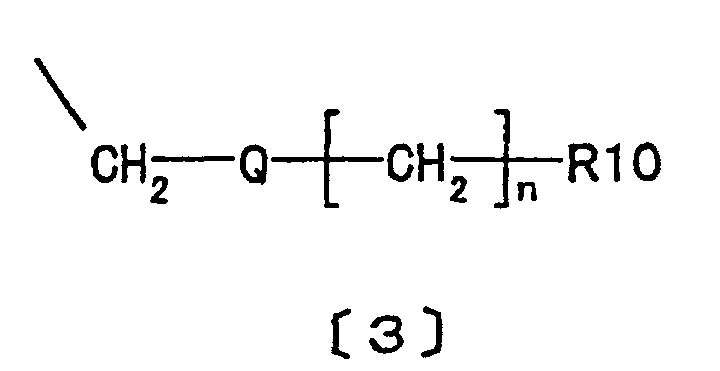
- n is 0 to 5;
- Q is an oxygen atom, a sulfur atom, sulfinyl, or sulfonyl; and
- R10 is selected from the group consisting of a hydrogen atom, a halogen atom, alkyl, alkyloxy, alkylthio, monoalkylamino or dialkylamino, aryloxy, arylthio, cyano, nitro, carboxyl, alkyloxycarbonyl or aryloxycarbonyl, carbamoyl, monoalkylcarbamoyl or dialkylcarbamoyl, acyl, aryl, cyclic amino, and heterocycle,
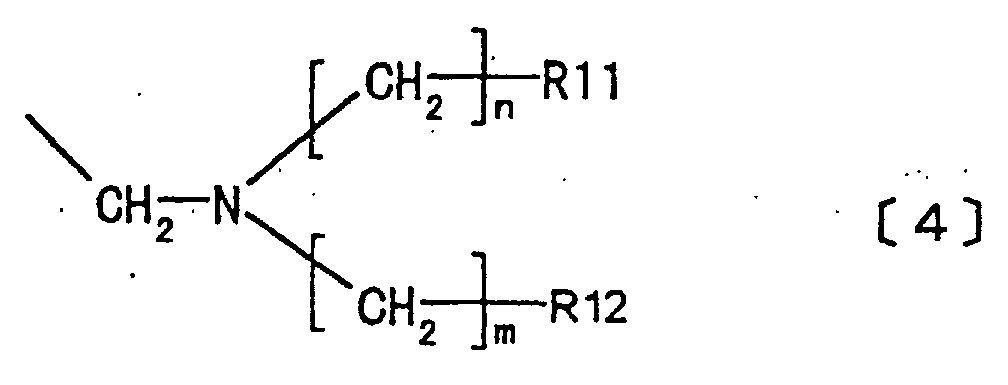
- n and m are each 0 to 5; and
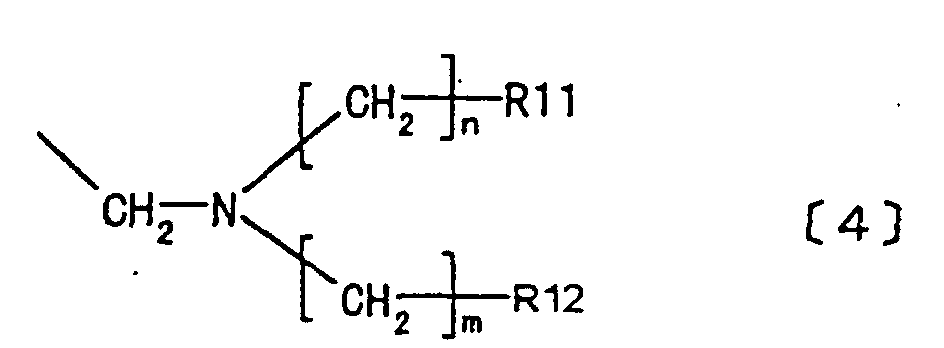
- R11 and R12 are each independently selected from the group consisting of a hydrogen atom, a halogen atom, alkyl, alkyloxy, alkylthio, monoalkylamino or dialkylamino, aryloxy, arylthio, hydroxy, cyano, nitro, carboxyl, alkyloxycarbonyl or aryloxycarbonyl, carbamoyl, monoalkylcarbamoyl or dialkylcarbamoyl, acyl, aryl, cyclic amino, and heterocycle; or R11 and R12 may together form a five- to nine-membered heterocycle containing, in addition to a nitrogen atom, 1 to 3 oxygen atoms or sulfur atoms.

- n is 0 to 5;
- Q is an oxygen atom, a sulfur atom, sulfinyl, or sulfonyl; and
- R10 is selected from the group consisting of a hydrogen atom, a halogen atom, alkyl, alkyloxy, alkylthio, monoalkylamino or dialkylamino, aryloxy, arylthio, cyano, nitro, carboxyl, alkyloxycarbonyl or aryloxycarbonyl, carbamoyl, monoalkylcarbamoyl or dialkylcarbamoyl, acyl, aryl, cyclic amino, and heterocycle,
- n and m are each 0 to 5; and
- R11 and R12 are each independently selected from the group consisting of a hydrogen atom, a halogen atom, alkyl, alkyloxy, alkylthio, monoalkylamino or dialkylamino, aryloxy, arylthio, hydroxy, cyano, nitro, carboxyl, alkyloxycarbonyl or aryloxycarbonyl, carbamoyl, monoalkylcarbamoyl or dialkylcarbamoyl, acyl, aryl, cyclic amino, and heterocycle; or R11 and R12 may together form a five- to nine-membered heterocycle containing, in addition to a nitrogen atom, 1 to 3 oxygen atoms or sulfur atoms.


1H-NMR (CDCl3, 400 MHz): δ7.39-7.65 (5H, m), 6.23-6.47 (2H, m), 4.55-4.58 (3H, m), 1.61 (3H, s)
Mass spectrometry (FD-MS): 298 (M+)

1H-NMR (CDCl3, 400 MHz): δ7.61 (7H, d, J = 6.83Hz), 7.39 (2H, m), 4.91 (3H, bs), 2.17 (3H, bs)
Mass spectrometry (ESI-MS): 309(M++1)

1H-NMR (CDCl3, 400 MHz): δ7.00-7.85 (9H, m), 6.15-6.25 (2H, m), 2.23 (3H, s), 1.30-1.70 (3H, m)
Mass spectrometry (FD-MS): 356(M+)
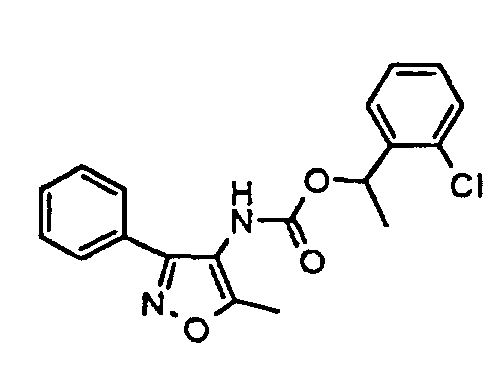
1H-NMR (CDCl3, 400 MHz): δ7.25-7.80 (9H, m), 6.19 (1H, bs), 5.88 (1H, bs), 2.40 (3H, s), 1.52-1.65 (3H, m)
Mass spectrometry (FD-MS): 356CM+)
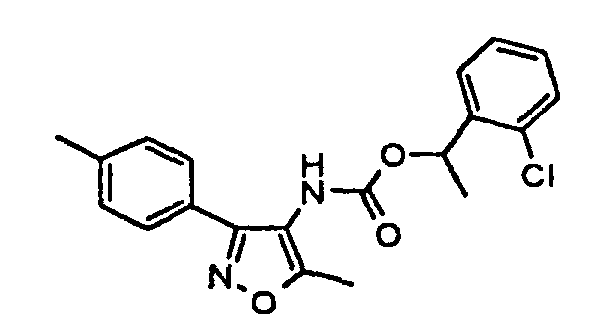
1H-NMR (CDCl3, 400 MHz): δ7.20-7.70 (8H, m), 6.18 (1H, bs), 5.87 (1H, bs), 2.40 (3H, s), 2.39 (3H, s), 1.50-1.64 (3H, m)
Mass spectrometry (FD-MS): 371(M+)

Mass spectrometry (FD-MS): 401 (M+)

1H-NMR (CDCl3, 400 MHz): δ7.40-7.80 (10H, m), 6.00 (1H, bs), 5.22 (2H, s), 2.27 (3H, s)
Mass spectrometry (FD-MS): 308 (M+)

1H-NMR (CDCl3, 400 MHz): δ7.00-7.70 (8H, m), 6.18 (1H, bs), 5.96 (1H, bs), 4.73 (2H, s), 2.39 (3H, s), 1.50-1.78 (3H, m)
Mass spectrometry (FD-MS): 386 (M+)
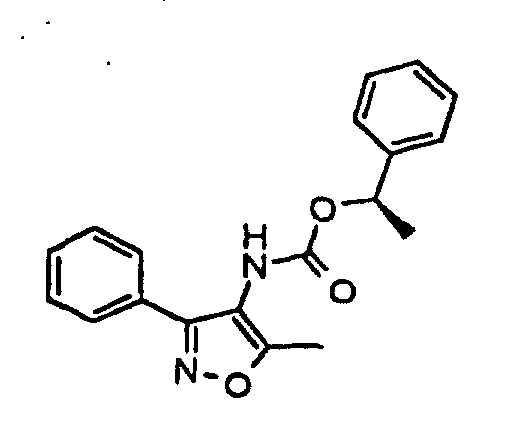
1H-NMR (CDCl3, 400 MHz): δ7.00-7.70 (10H, m), 5.85 (1H, bs), 2.37 (3H, s), 1.58 (3H, bs)
Mass spectrometry (FD-MS): 322 (M+)
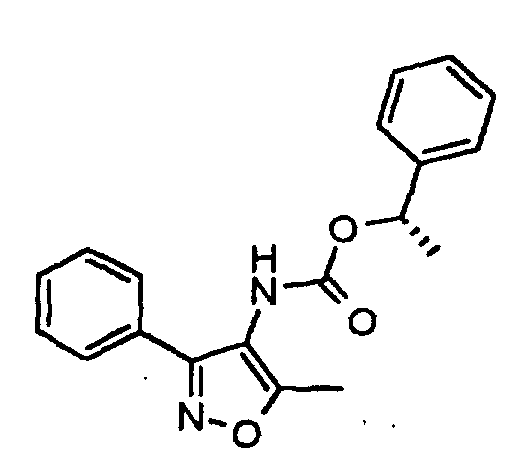
1H-NMR (CDCl3, 400 MHz): δ7.00-7.70 (10H, m), 5.85 (1H, bs), 2.37 (3H, s), 1.58 (3H, bs)
Mass spectrometry (FD-MS): 322 (M+)

1H-NMR (CDCl3, 400 MHz): δ7.00-7.80 (8H, m), 6.18 (1H, bs), 5.87 (1H, bs), 2.41 (3H, s), 1.50-1.65 (3H, m)
Mass spectrometry (FD-MS): 440 (M+)
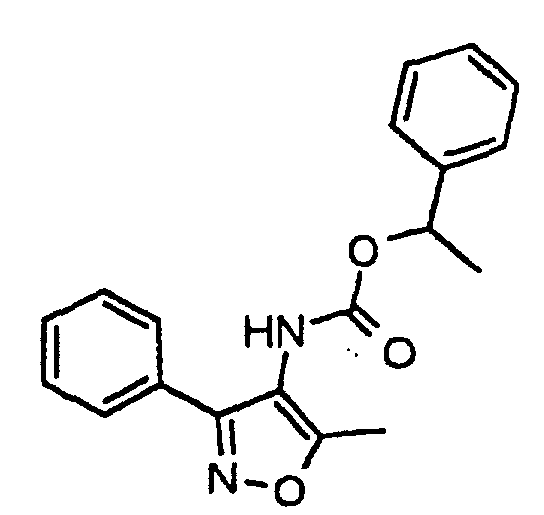
1H-NMR (CDCl3, 400 MHz): δ7.00-7.70 (10H, m), 5.85 (1H, bs), 2.38 (3H, s), 1.52-1.66 (3H, m)
Mass spectrometry (FD-MS): 322 (M+)
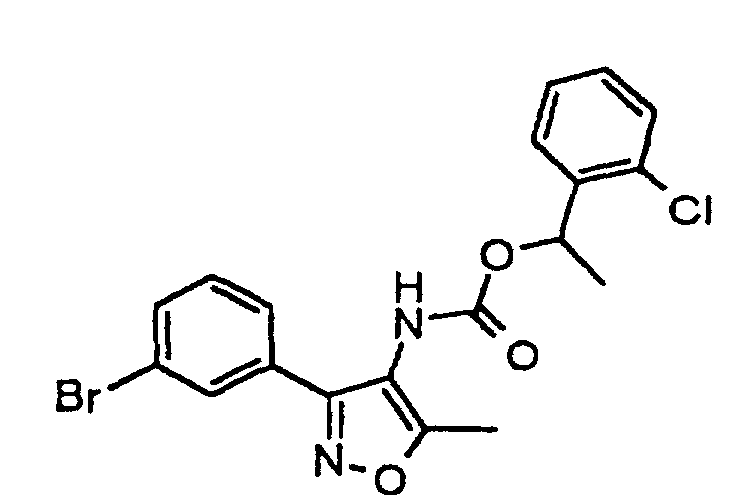
1H-NMR (CDCl3, 400 MHz): δ7.85 (1H, s), 7.26-7.60 (7H, M), 6.18 (1H, bs), 5.88 (1H, bs), 2.40 (3H, s), 1.50-1.65 (3H, m)
Mass spectrometry (FD-MS): 436 (M+)

1H-NMR (CDCl3, 400 MHz): δ7.00-7.70 (9H, m), 6.05 (1H, bs), 5.84 (1H, bs), 2.38 (3H, s), 2.38 (3H, s), 1.54 (3H, bs)
Mass spectrometry (FD-MS): 336 (M+)

1H-NMR (CDCl3, 400 MHz): δ7.98 (1H, s), 7.86 (1H, d, J = 7.6 Hz), 7.71 (1H, d, J = 8.0 Hz), 7.20-7.58 (5H, m), 6.19 (1H, bs), 5.89 (1H, bs), 2.42 (3H, s), 1.50-1.65 (3H, m)
Mass spectrometry (FD-MS): 424 (M+)

1H-NMR (CDCl3, 400 MHz): δ7.07-7.70 (8H, m), 6.18 (1H, bs), 5.85 (1H, bs), 2.40 (3H, s), 1.50-1.65 (3H, m)
Mass spectrometry (FD-MS): 374 (M+)

1H-NMR (CDCl3, 400 MHz): δ7.00-7.72 (9H, m), 6.19 (1H, bs), 5.88 (1H, bs), 2.41 (3H, s), 1.52-1.65 (3H, m)
Mass spectrometry (FD-MS): 356 (M+)

Mass spectrometry (FD-MS): 356 (M+)
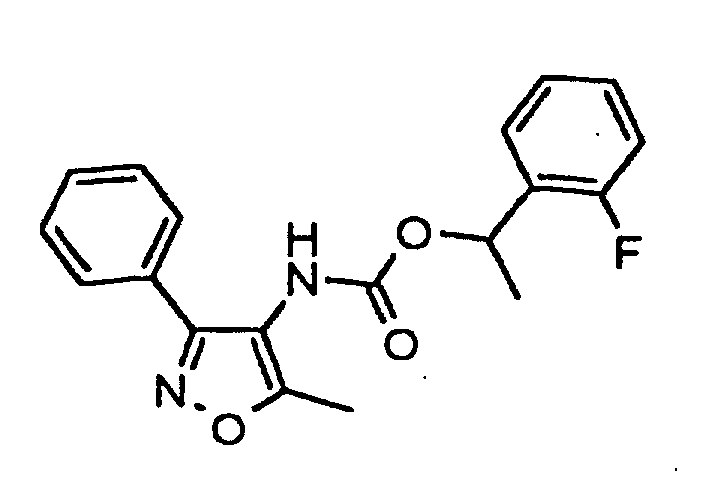
1H-NMR (CDCl3, 400 MHz): δ6.80-7.70 (9H, m), 6.08 (1H, bs), 5.87 (1H, bs), 2.37 (3H, s), 1.50-1.70 (3H, m)
Mass spectrometry (ESI-MS): 341, 342 (M++1)
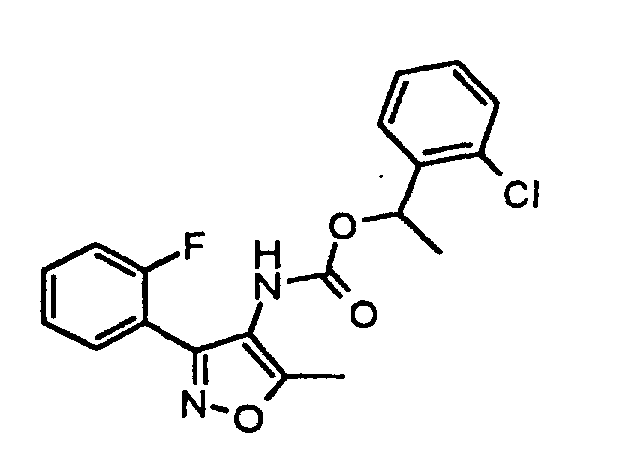
1H-NMR (CDCl3, 400 MHz): δ7.16-7.65 (8H, m), 6.05-6.15 (2H, m), 2.41 (3H, s), 1.50-1.58 (3H, m)
Mass spectrometry (FD-MS): 374 (M+)
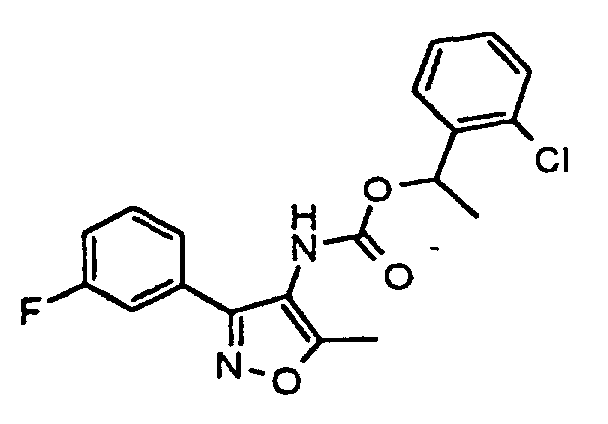
1H-NMR (CDCl3, 400 MHz): δ7.00-7.50 (8H, m), 6.18 (1H, bs), 5.89 (1H, bs), 2.40 (3H, s), 1.50-1.65 (3H, m)
Mass spectrometry (FD-MS): 374 (M+)
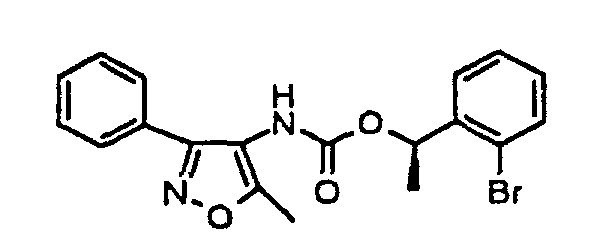
1H-NMR (CDCl3, 400 MHz): δ6.75-7.70 (9H, m), 6.06 (1H, bs), 5.81 (1H, bs), 2.33 (3H, s), 1.20-1.70 (3H, m)
Mass spectrometry (FD-MS): 400, 402 (M+)
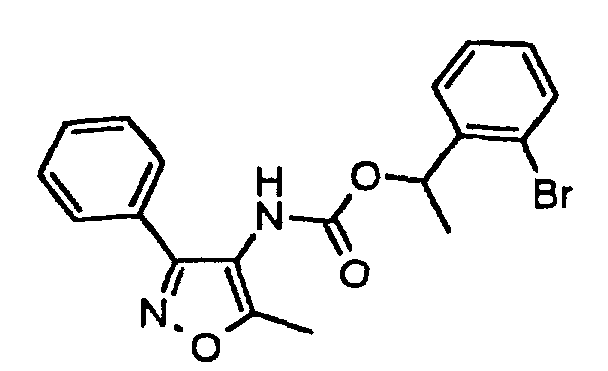
1H-NMR (CDCl3, 400 MHz): δ6.80-7.70 (9H, m), 6.11 (1H, bs), 5.86 (1H, bs), 2.38 (3H, s), 1.45-1.62 (3H, m)
Mass spectrometry (ESI-MS): 403 (M++1)
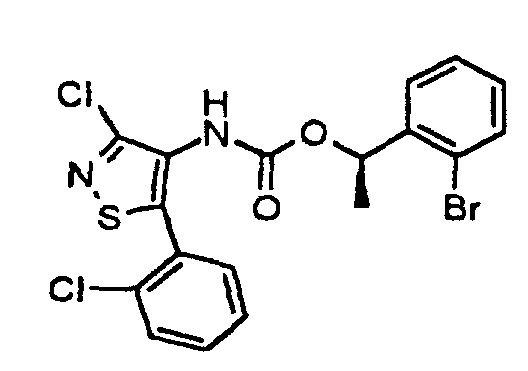
1H-NMR (CDCl3, 400 MHz): δ7.10-7.52 (8H, m), 6.21 (1H, bs), 5.99 (1H, q, J = 6.5 Hz), 1.40-1.50 (3H, m)
Mass spectrometry (FD-MS): 470, 472 (M+)
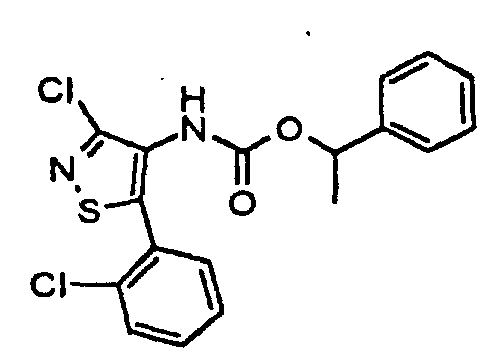
1H-NMR (CDCl3, 400 MHz): δ7.20-7.60 (9H, m), 6.21 (1H, bs), 5.73 (1H, q, J = 6.6 Hz), 1.40-1.50 (3H, m)
Mass spectrometry (FD-MS): 392 (M+)

1H-NMR (CDCl3, 400 MHz): δ6.98-7.50 (8H, m), 5.97 (1H, q, J = 6.6 Hz), 1.45-1.52 (3H, m)
Mass spectrometry (FD-MS): 410 (M+)
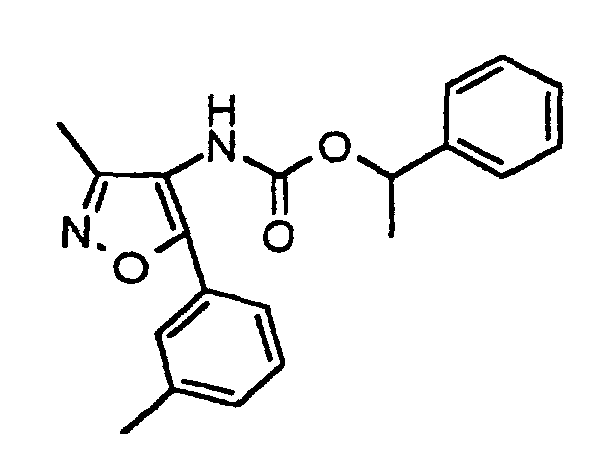
1H-NMR (CDCl3, 400 MHz): δ7.20-7.60 (9H, m), 5.89 (2H, bs), 2.36 (3H, s), 2.23 (3H, s), 1.50-1.65 (3H, m)
Mass spectrometry (ESI-MS): 337 (M++1)

1H-NMR (CDCl3, 400 MHz): δ7.23-7.65 (8H, m), 6.18-6.28 (1H, m), 5.98 (1H, bs), 2.38 (3H, s), 2.26 (3H, s), 1.50-1.57 (3H, m)
Mass spectrometry (ESI-MS): 371 (M++1)

1H-NMR (CDCl3, 400 MHz): δ7.10-7.60 (9H, m), 6.22 (1H, q, J = 6.5 Hz), 6.03 (1H, bs), 2.25 (3H, s), 1.50-1.70 (3H, m)
Mass spectrometry (ESI-MS): 341 (M++1)
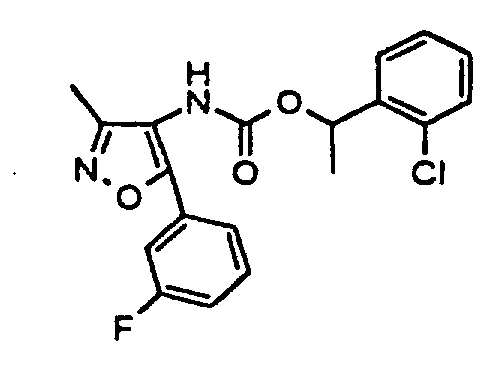
1H-NMR (CDCl3, 400 MHz): δ7.09-7.58 (8H, m), 5.87 (1H, q, J = 6.6 Hz), 2.22 (3H, s), 1.50-1.69 (3H, m)
Mass spectrometry (ESI-MS): 375 (M++1)

1H-NMR (CDCl3, 400 MHz): δ7.50 (1H, s), 7.23-7.40 (5H, m), 6.82 (1H, s), 6.45-6.60 (1H, m), 6.26 (1H, bs), 5.87 (1H, q, J = 6.6 Hz), 2.24 (3H, s), 1.50-1.70 (3H, m)
Mass spectrometry (ESI-MS): 313 (M++1)
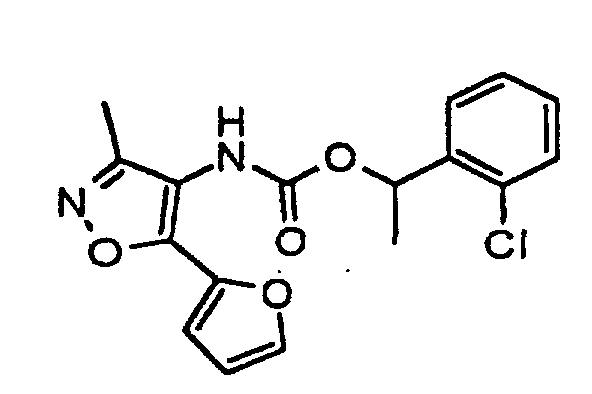
1H-NMR (CDCl3, 400 MHz): δ7.53-7.57 (1H, m), 7.20-7.40 (4H, m), 6.86 (1H, s), 6.53 (1H, dd, J = 1.7 Hz, J = 3.4 Hz), 6.21 (1H, q, J = 6.5 Hz), 2.27 (3H, s), 1.50-1.60 (3H, m)
Mass spectrometry (ESI-MS): 347 (M++1)
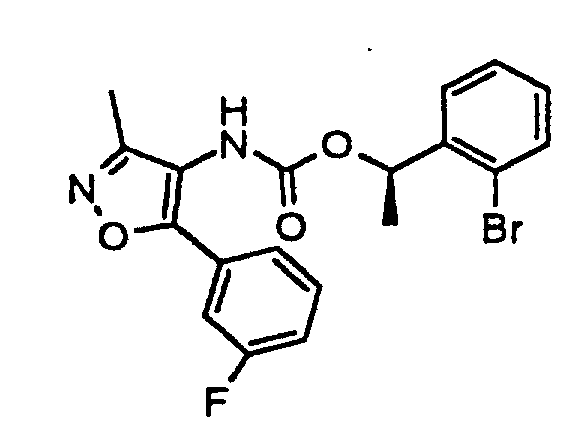
1H-NMR (CDCl3, 400 MHz): δ7.06-7.60 (8H, m), 6.16 (1H, q, J = 6.5 Hz), 6.08 (1H, bs), 2.25 (3H, s), 1.50-1.70 (3H, m)
Mass spectrometry (ESI-MS): 419, 421 (M++1)
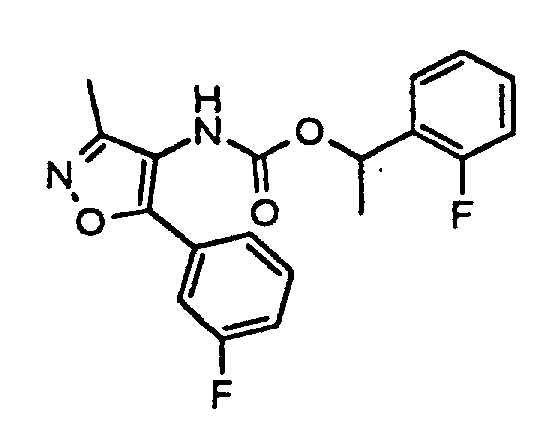
1H-NMR (CDCl3, 400 MHz): δ7.00-7.60 (8H, m), 6.00-6.18 (2H, m), 2.24 (3H, s), 1.50-1.70 (3H, m)
Mass spectrometry (ESI-MS): 359 (M++1)

1H-NMR (CDCl3, 400 MHz): δ7.00-7.80 (9H, m), 5.85 (1H, q, J = 6.6 Hz), 2.21 (3H, s), 1, 45-1.65 (3H, m)
Mass spectrometry (ESI-MS): 407 (M++1)
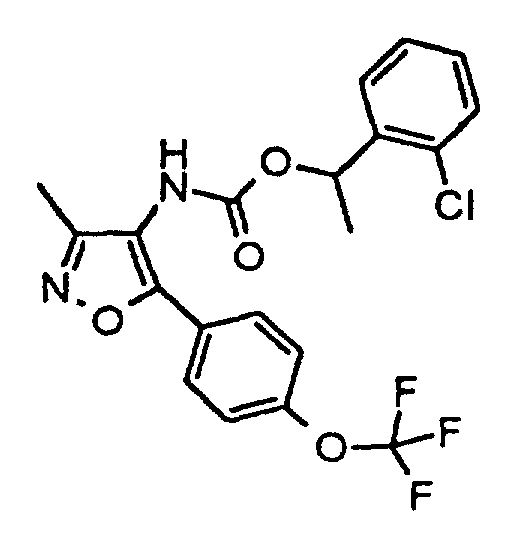
1H-NMR (CDCl3, 400 MHz): δ7.72 (2H, bs), 6.80-7.50 (6H, m), 6.15 (1H, q, J = 6.5 Hz), 5.90 (1H, bs), 2.19 (3H, s), 1.42-1.60 (3H, m)
Mass spectrometry (ESI-MS): 441 (M++1)

1H-NMR (CDCl3, 400 MHz): δ7.62 (2H, bs), 7.15-7.45 (7H, m), 5.80-5.92 (2H, m), 2.39 (3H, s), 2.21 (3H, s), 1.50-1.67 (3H, m)
Mass spectrometry (ESI-MS): 337 (M++1)

1H-NMR (CDCl3, 400 MHz): δ7.65 (2H, bs), 6.90-7.60 (6H, m), 6.21 (1H, q, J = 6.4 Hz), 5.98 (1H, bs), 2.40 (3H, s), 2.24 (3H, s), 1.50-1.70 (3H, m)
Mass spectrometry (ESI-MS): 371 (M++1)

1H-NMR (CDCl3, 400 MHz): δ7.71 (1H, s), 7.20-7.65 (7H, m), 6.16 (1H, q, J = 6.6 Hz), 5.91 (1H, bs), 2.19 (3H, s), 1.40-1.60 (3H, m)
Mass spectrometry (ESI-MS): 391 (M++1)
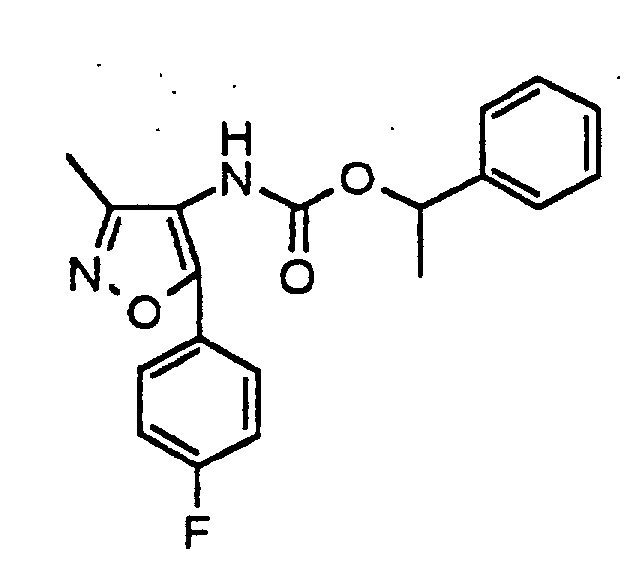
1H-NMR (CDCl3, 400 MHz): δ7.70 (2H, bs), 7.00-7.50 (7H, m), 5.80-5.95 (2H, m), 2.22 (3H, s)1.50-1.65 (3H, m)
Mass spectrometry (ESI-MS): 341 (M++1)
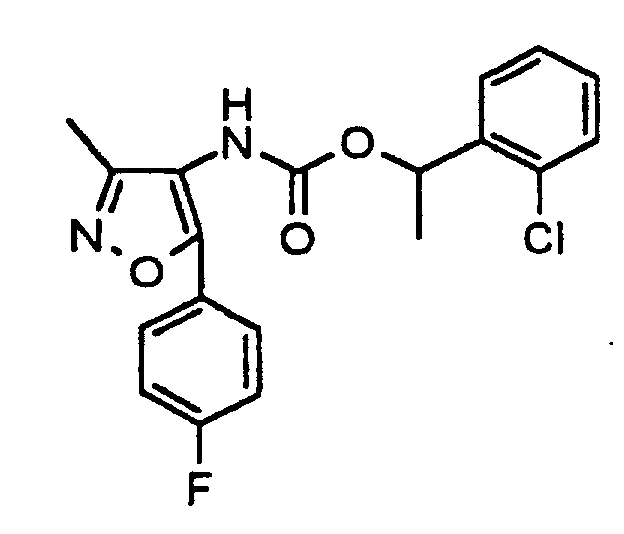
1H-NMR (CDCl3, 400 MHz): δ7.75 (2H, bs), 6.80-7.60 (6H, m), 6.22 (1H, q, J = 6.5 Hz), 5.96 (1H, bs), 2.25 (3H, s), 1.50-1.65 (3H, m)
Mass spectrometry (ESI-MS): 375 (M++1)
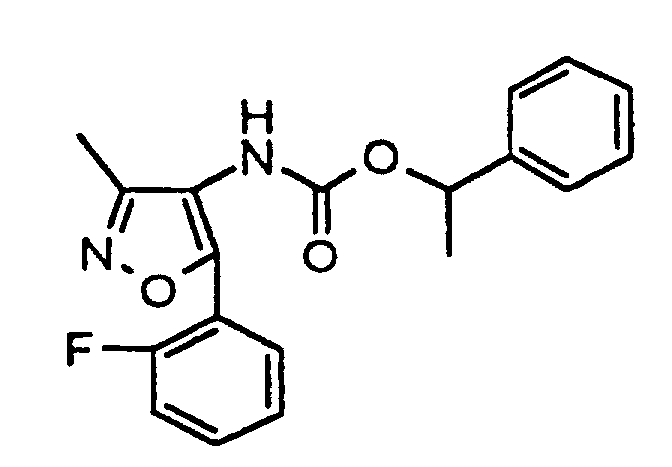
1H-NMR (CDCl3, 400 MHz): δ7.64-7.70 (1H, m), 7.13-7.50 (8H, m), 6.18 (1H, bs), 5.82 (1H, q, J = 6.6 Hz), 2.27 (3H, s), 1.56 (3H, bs)
Mass spectrometry (ESI-MS): 341 (M++1)

1H-NMR (CDCl3, 400 MHz): δ7.65-7.72 (1H, m), 7.15-7.50 (7H, m), 6.12-6.25 (2H, m), 2.29 (3H, s), 1.50-1.60 (3H, m)
Mass spectrometry (ESI-MS): 375 (M++1)

1H-NMR (CDCl3, 400 MHz): δ7.72 (2H, bs), 6.90-7.55 (6H, m), 6.10 (1H, q, J = 6.6 Hz), 5.91 (1H, bs), 2.19 (3H, s), 1.40-1.60 (3H, m)
Mass spectrometry (ESI-MS): 485 (M++1)

1H-NMR (CDCl3, 400 MHz): δ7.65-7.80 (2H, m), 6.90-7.45 (6H, m), 6.06 (1H, q, J = 6.7 Hz), 5.89 (1H, bs), 2.18 (3H, s), 1.43-1.65 (3H, m)
Mass spectrometry (ESI-MS): 425 (M++1)
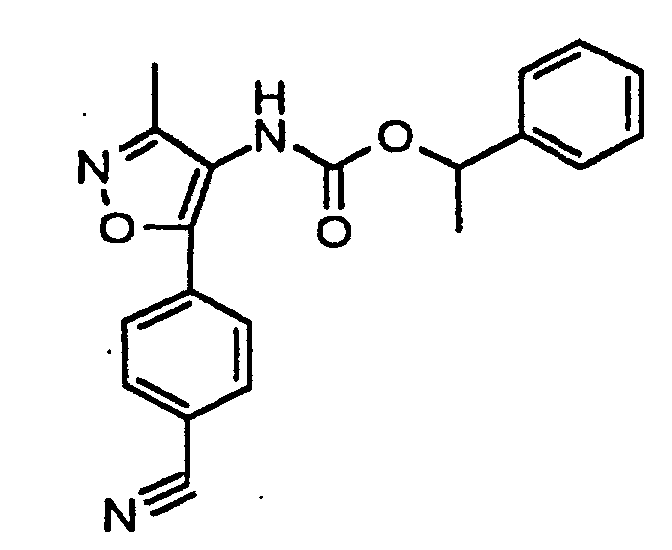
1H-NMR (CDCl3, 400 MHz): δ7.75-7.85 (2H, m), 7.63-7.68 (3H, m), 7.25-7.50 (4H, m), 5.99 (1H, bs), 5.86 (1H, q, J = 6.6 Hz), 2.24 (3H, s), 1.50-1.67 (3H, m)
Mass spectrometry (ESI-MS): 348 (M++1)

1H-NMR (CDCl3, 400 MHz): δ7.20-7.95 (8H, m), 6.22 (1H, q, J = 6.6 Hz), 6.02 (1H, bs), 2.27 (3H, s), 1.50-1.70 (3H, m)
Mass spectrometry (FD-MS): 381 (M+)

1H-NMR (CDCl3, 400 MHz): δ6.90-7.76 (8H, m), 6.13 (1H, q, J = 6.6 Hz), 6.01 (1H, bs), 2.39 (3H, s), 2.23 (3H, s like), 1.53-1.72 (3H, m)
Mass spectrometry (ESI-MS): 415 (M++1)

1H-NMR (CDCl3, 400 MHz): δ6.90-7.75 (8H, m), 6.15 (1H, q, J = 6.4 Hz), 6.02 (1H, bs), 2.39 (3H, s), 2.24 (3H, s), 1.50-1.70 (3H, m)
Mass spectrometry (ESI-MS): 355 (M++1)

1H-NMR (CDCl3, 400 MHz): δ7.68 (2H, bs), 7.20-7.55 (4H, m), 6.92 (2H, d, J = 9.0 Hz), 5.95 (1H, bs), 3.83 (3H, s), 2.21 (3H, s), 1.35-1.65 (3H, m)
Mass spectrometry (ESI-MS): 387, 389 (M++1)
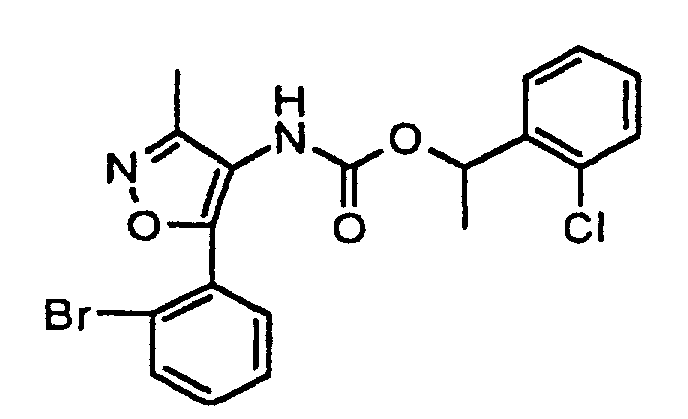
1H-NMR (CDCl3, 400 MHz): δ7.65-7.70 (1H, m), 7.16-7.50 (7H, m), 6.12 (1H, q, J = 6.5 Hz), 6.00-6.25 (1H, m), 2.28 (3H, s), 1.52 (3H, bs)
Mass spectrometry (ESI-MS): 435, 437 (M++1)

1H-NMR (CDCl3, 400 MHz): δ6.90-7.60 (5H, m), 6.84 (1H, d, J = 8.3 Hz), 6.20 (1H, q, J = 6.5 Hz), 5.98-6.08 (3H, m), 2.22 (3H, s), 1.35-1.70 (3H, m)
Mass spectrometry (ESI-MS): 401 (M++1)

1H-NMR (CDCl3, 400 MHz): δ7.55-7.68 (2H, m), 7.18-7.50 (6H, m), 6.16 (1H, q, J = 6.5 Hz), 5.92 (1H, bs), 2.19 (3H, s), 1.40-1.60 (3H, m)
Mass spectrometry (ESI-MS): 441 (M++1)

1H-NMR (CDCl3, 400 MHz): δ8.13-8.18 (2H, m), 7.75-7.85 (2H, m), 7.00-8.00 (5H, m), 5.92 (1H, bs), 5.80 (1H, q, J = 6.6 Hz), 2.19 (3H, s), 1.40-1.65 (3H, m)
Mass spectrometry (ESI-MS): 368 (M++1)

1H-NMR (CDCl3, 400 MHz): δ8.18-8.23 (2H, m), 7.80-7.90 (2H, m), 7.15-7.50 (4H, m), 6.16 (1H, q, J = 6.6 Hz), 2.22 (3H, s), 1.40-1.62 (3H, m)
Mass spectrometry (ESI-MS): 402 (M++1)

1H-NMR (CDCl3, 400 MHz): δ7.08-7.60 (8H, m), 5.65-6.00 (2H, m), 2.22 (3H, s), 1.52-1.70 (3H, m)
Mass spectrometry (ESI-MS): 329 (M++1)
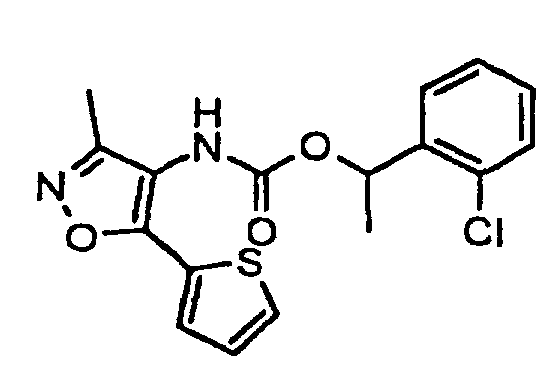
1H-NMR (CDCl3, 400 MHz): δ7.00-7.65 (7H, m), 6.22 (1H, q, J = 6.6 Hz), 5.98 (1H, bs), 2.25 (3H, s), 1.50-1.70 (3H, m)
Mass spectrometry (ESI-MS): 363 (M++1)
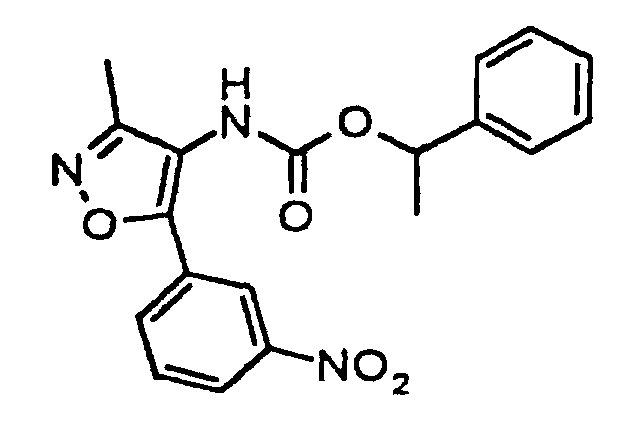
1H-NMR (CDCl3, 400 MHz): δ8.59-8.62 (1H, m), 8.20-8.27 (1H, m), 8.00-8.05 (1H, m), 7.58 (1H, dd, J = 8.1 Hz), 7.20-7.40 (5H, m), 6.00 (1H, bs), 5.85 (1H, q, J = 6.6 Hz), 2.24 (3H, s), 1.45-1.70 (3H, m)
Mass spectrometry (ESI-MS): 368 (M++1)
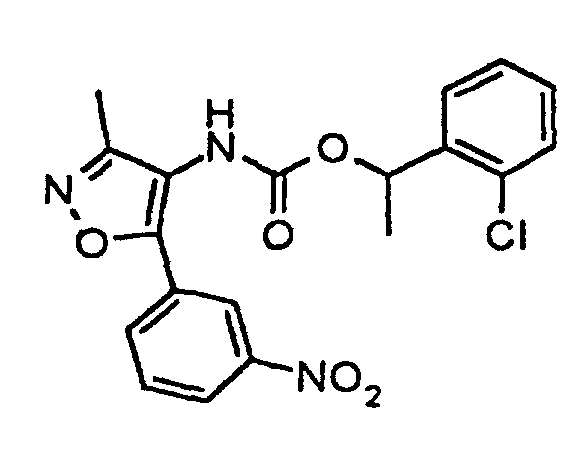
1H-NMR (CDCl3, 400 MHz): δ8.58 (1H, dd, J = 2.0 Hz), 8.18-8.23 (1H, m), 8.00-8.05 (1H, m), 7.56 (1H, dd, J = 8.0 Hz), 7.15-7.35 (4H, m), 6.16 (1H, q, J = 6.6 Hz), 2.22 (3H, s), 1.30-1.67 (3H; m)
Mass spectrometry (ESI-MS): 402 (M++1)
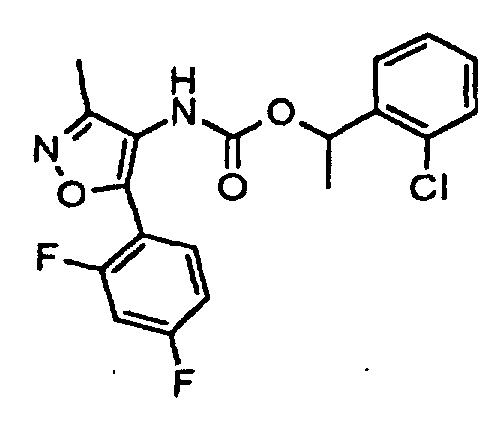
1H-NMR (CDCl3, 400 MHz): δ7.61-7.69 (1H, m), 7.20-7.50 (4H, m), 6.86-7.03 (2H, m), 6.14 (1H, q, J = 6.6 Hz), 6.05-6.20 (1H, m), 2.26 (3H, s), 1.45-1.65 (3H, m)
Mass spectrometry (ESI-MS): 393 (M++1)

1H-NMR (CDCl3, 400 MHz): δ8.66 (2H, d, J = 5.2 Hz), 7.57 (2H, bs), 7.25-7.50 (5H, m), 6.05 (1H, bs), 5.87 (1H, q, J = 6.5 Hz), 2, 25 (3H, s), 1.50-1.70 (3H, m)
Mass spectrometry (ESI-MS): 324 (M++1)
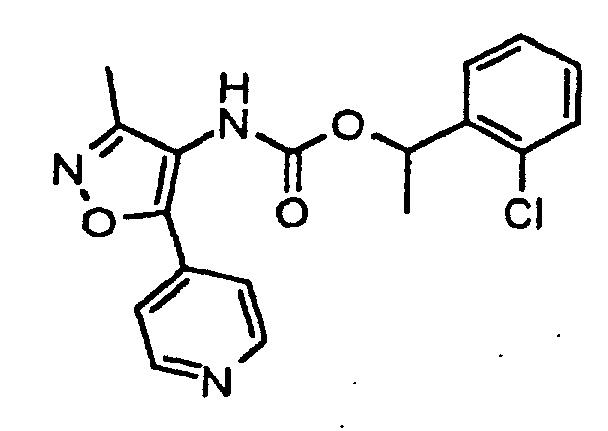
1H-NMR (CDCl3, 400 MHz): δ8.69 (2H, d, J = 5.6 Hz), 7.25-7.70 (6H, m), 6.23 (1H, q, J = 6.5 Hz), 6.14 (1H, bs), 2.28 (3H, s), 1.55-1.70 (3H, m)
Mass spectrometry (ESI-MS): 358, 360 (M++1)
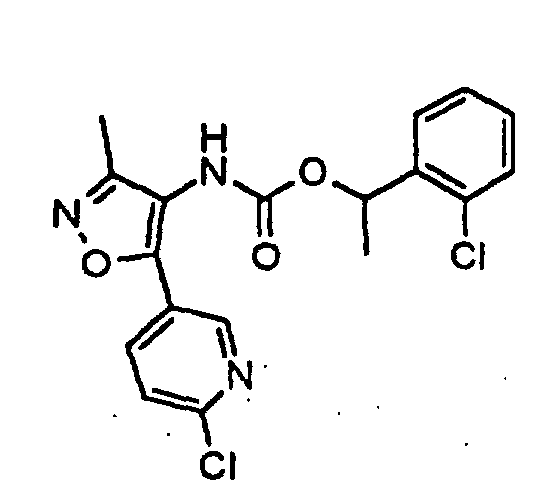
1H-NMR (CDCl3, 400 MHz): δ8.79 (1H, s), 7.92-8.00 (1H, m), 7.25-7.50 (5H, m), 6.19 (1H, q, J = 6.5 Hz), 5.99 (1H, bs), 2.25 (3H, s), 1.45-1.65 (3H, m)
Mass spectrometry (ESI-MS): 392, 394 (M++1)
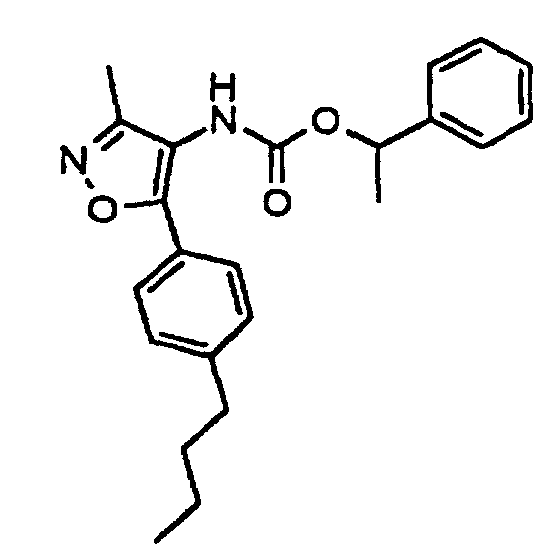
1H-NMR (CDCl3, 400 MHz): δ7.18-7.70 (9H, m), 5.65-6.00 (2H, m), 2.62 (2H, t, J = 7.7 Hz), 2.19 (3H, s), 1.29-1.70 (7H, m), 0.92 (3H, t, J = 7.3 Hz)
Mass spectrometry (ESI-MS): 379 (M++1)

1H-NMR (CDCl3, 400 MHz): δ6.90-7.70 (8H, m), 6.15 (1H, q, J = 6.4 Hz), 5.91 (1H, bs), 2.58 (2H, t, J = 7.7 Hz), 2.18 (3H, s), 1.20-1.60 (7H, m), 0.87 (3H, t, J = 7.3 Hz)
Mass spectrometry (ESI-MS): 413, 415 (M++1)
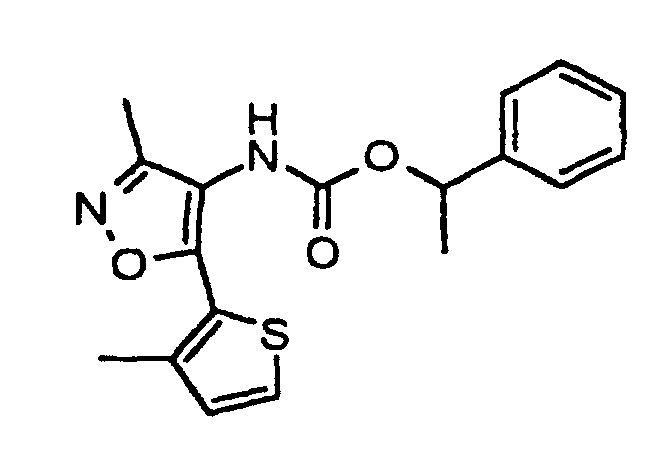
1H-NMR (CDCl3, 400 MHz): δ7.25-7.50 (6H, m), 6.72-6.78 (1H, m), 5.80-5.95 (1H, m), 2.50 (3H, s like), 2.20 (3H, s), 1.5-1.68 (3H, m)
Mass spectrometry (ESI-MS): 343 (M++1)
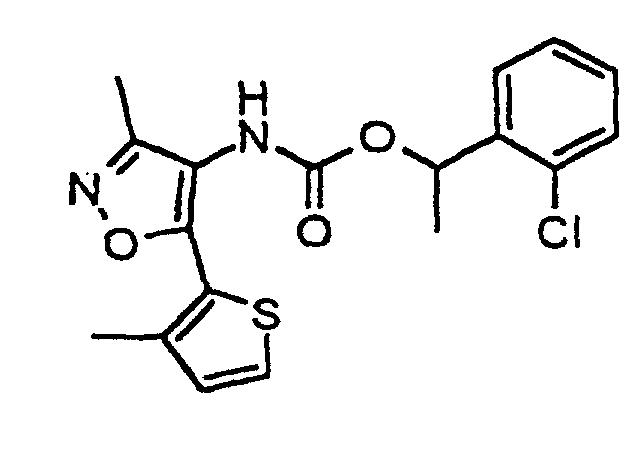
1H-NMR (CDCl3, 400 MHz): δ7.00-7.65 (5H, m), 6.75-6.80 (1H, m), 6.22 (1H, q, J = 6.5 Hz), 5.94 (1H, bs), 2.58 (3H, s like), 2.23 (3H, s), 1.55-1.65 (3H, m)
Mass spectrometry (ESI-MS): 377, 379 (M++1)

1H-NMR (CDCl3, 400 MHz): δ7.76 (1H, bs), 7.10-7.50 (5H, m), 6.66 (1H, bs), 6.15 (1H, q, J = 6.6 Hz), 5.86 (1H, bs), 2.16 (3H, s), 1.54 (3H, bs)
Mass spectrometry (ESI-MS): 347 (M++1)
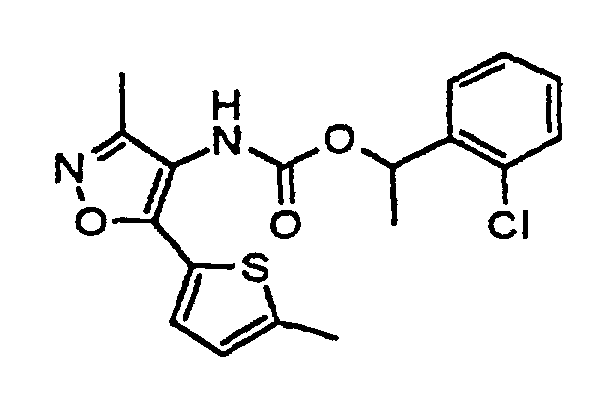
1H-NMR (CDCl3, 400 MHz): δ7.20-7.55 (5H, m), 6.93 (1H, d, J = 5.1 Hz), 6.21 (1H, q, J = 6.5 Hz), 5.95 (1H, s), 2.49 (3H, s), 2.25 (3H, s), 1.50-1.60 (3H, m)
Mass spectrometry (ESI-MS): 377 (M++1)

1H-NMR (CDCl3, 400 MHz): δ7.20-7.85 (8H, m), 6.23 (1H, q, J = 6.8 Hz), 6.04 (1H, bs), 4.58 (2H, s), 2.26 (3H, s), 1.50-1.70 (3H, m)
Mass spectrometry (ESI-MS): 405, 407 (M++1)
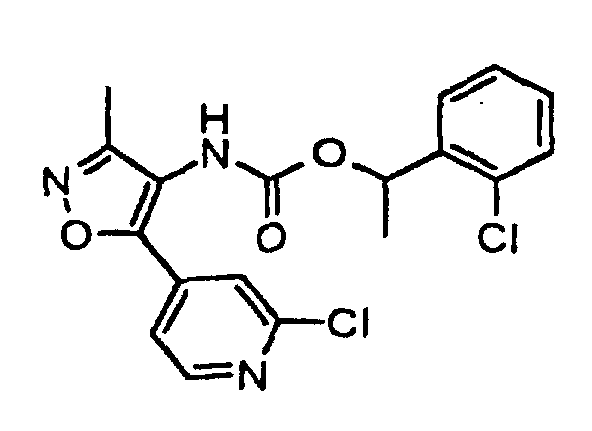
1H-NMR (CDCl3, 400 MHz): δ8.39 (1H, d, J = 5.4 Hz), 7.20-7.55 (5H, m), 7.62 (1H, s), 6.16 (1H, q, J = 6.6 Hz), 6.00 (1H, bs), 2.21 (3H, s), 1.35-1.65 (3H, m)
Mass spectrometry (ESI-MS): 392, 394 (M++1)

1H-NMR (CDCl3, 400 MHz): δ87.10-7.50 (9H, m), 5.85-5.95 (1H, m), 5.17 (1H, bs), 2.44 (3H, s), 2.16 (3H, s), 1.36 (3H, d, J = 6.3 Hz)
Mass spectrometry (ESI-MS): 438, 439 (M++1)

1H-NMR (CDCl3, 400 MHz): δ7.20-7.55 (4H, m), 6.75-6.80 (1H, m), 6.43 (1H, d, J = 3.6 Hz), 6.20 (1H, q, J = 6.5 Hz), 2.24 (3H, s), 1.45-1.70 (3H, m)
Mass spectrometry (ESI-MS): 427 (M++1)

1H-NMR (CDCl3, 400 MHz): δ7.69 (2H, bs), 6.75-7.50 (6H, m), 6.15 (1H, q, J = 6.4 Hz), 5.95 (1H, bs), 4.53 (2H, s), 2.18 (3H, s), 1.45-1.62 (3H, m)
Mass spectrometry (ESI-MS): 405 (M++1)
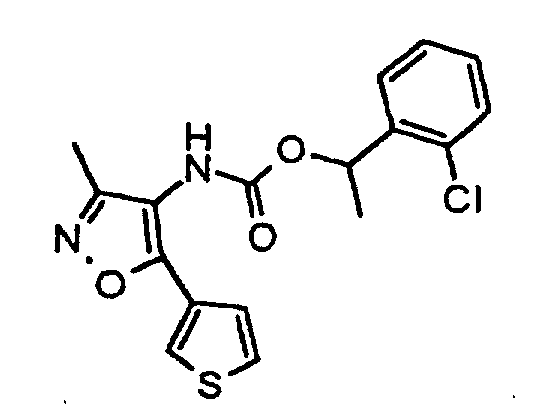
1H-NMR (CDCl3, 400 MHz): δ7.75 (1H, bs), 7.00-7.60 (6H, m), 6.22 (1H, q, J = 6.4 Hz), 5.98 (1H, bs), 2.24 (3H, s), 1.50-1.70 (3H, m)
Mass spectrometry (ESI-MS): 361 (M++1)
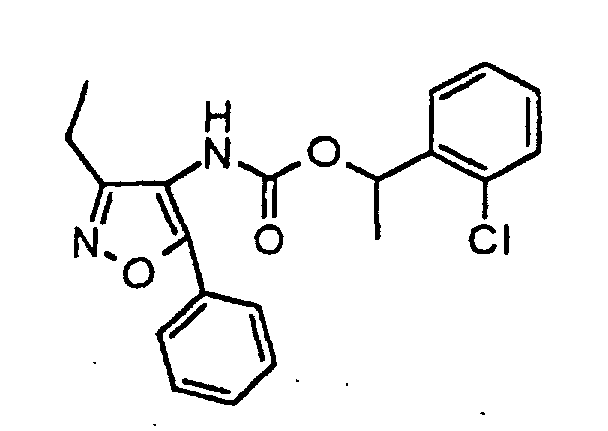
1H-NMR (CDCl3, 400 MHz): δ6.75-7.85 (9H, m), 6.12-6.25 (1H, m), 5.97 (1H, bs), 2.64 (2H, m), 1.52-1.65 (2H, m), 1.28 (3H, t, J = 7.6 Hz)
Mass spectrometry (ESI-MS): 371 (M++1)

1H-NMR (CDCl3, 400 MHz): δ7.85 (2H, bs), 7.69 (H, d, J = 8.3 Hz), 7.25-7.55 (4H, m), 6.21 (1H, q, J = 6.6 Hz), 6.01 (1H, bs), 2.67 (2H, q, J = 7.6 Hz), 1.31 (3H, t, J = 7.6 Hz)
Mass spectrometry (ESI-MS): 394, 396 (M+-1)
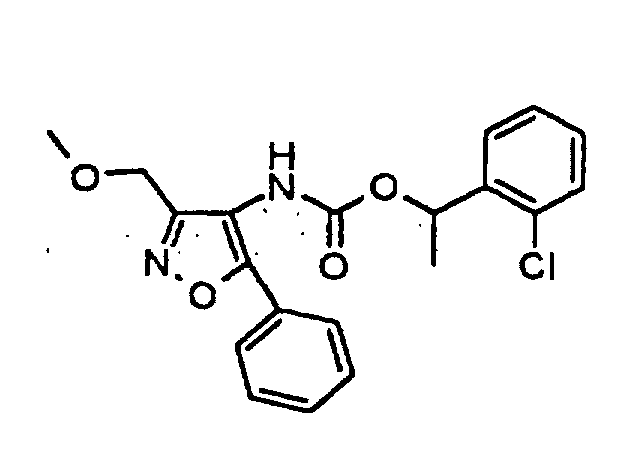
1H-NMR (CDCl3, 400 MHz): δ7.20-7.78 (9H, m), 6.05-6.19 (1H, m), 4.43-4.60 (2H, m), 3.31 (3H, s), 1.40-1.50 (3H, m)
Mass spectrometry (ESI-MS): 387, 389 (M++1)
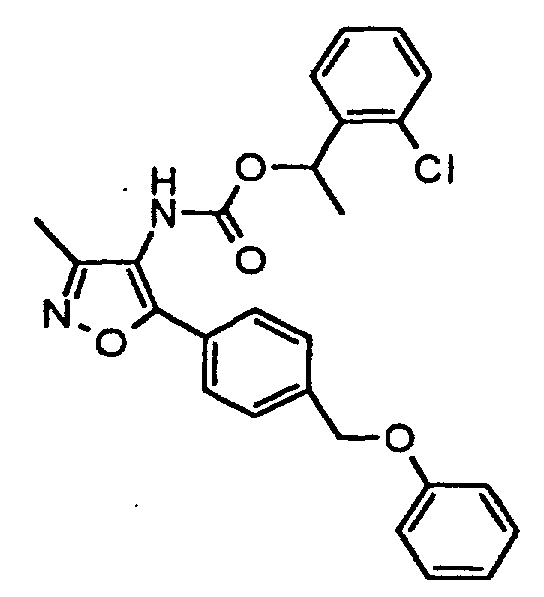
1H-NMR (CDCl3, 400 MHz): δ7.76 (2H, bs), 7.43-7.55 (3H, m), 7.25-7.43 (6H, m), 6.95-7.02 (2H, m), 6.22 (1H, q, J = 6.6 Hz), 6.00 (1H, bs), 5.11 (1H, s), 4.60 (1H, s), 2.56 (3H, s), 1.50-1.70 (3H, m)
Mass spectrometry (ESI-MS): 463 (M++1)

1H-NMR (CDCl3, 400 MHz): δ7.18-7.60 (10H, m), 6.00-6.15 (2H, m), 2.33 (3H, s)
Mass spectrometry (ESI-MS): 375 (M++1)

1H-NMR (CDCl3, 400 MHz): δ7.00-7.75 (10H, m), 5.00-6.30 (4H, m), 2.37 (3H, s)
Mass spectrometry (ESI-MS): 335 (M++1)
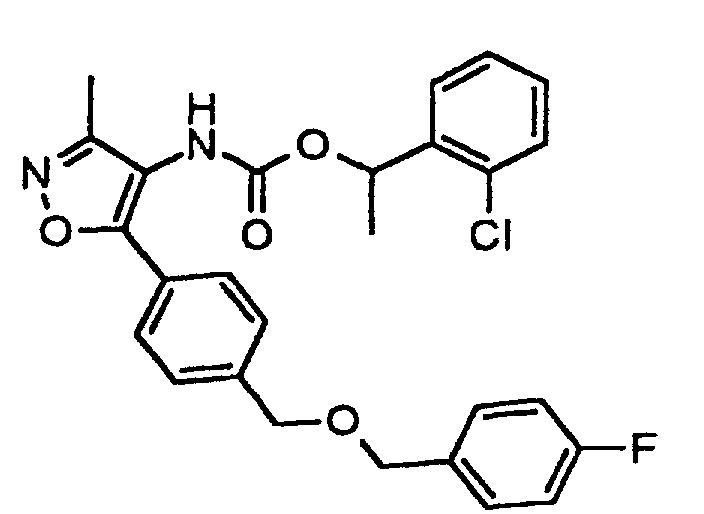
1H-NMR (CDCl3, 400 MHz): δ6.90-7.80 (12H, m), 6.15-6.25 (1H, m), 5.98 (1H, bs), 4.50-4.58 (4H, m), 2.13-2.17 (3H, s), 1.20-1.70 (3H, m)
Mass spectrometry (ESI-MS): 495 (M++1)

1H-NMR (CDCl3, 400 MHz): δ6.85-7.80 (11H, m), 6.19 (1H, q, J = 6.6 Hz), 4.65 (2H, s), 4.59 (2H, s), 2.23 (3H, s), 1.47-1.65 (3H, m)
Mass spectrometry (ESI-MS): 513 (M++1)
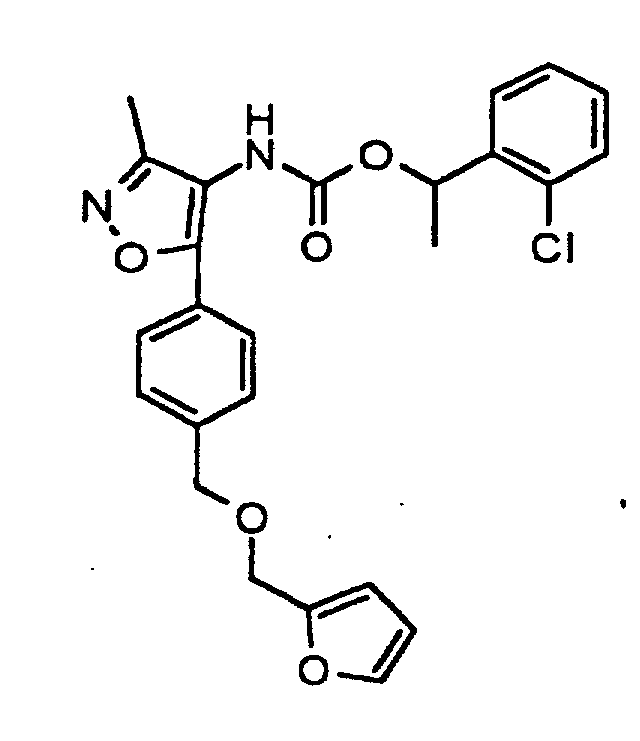
1H-NMR (CDCl3, 400 MHz): δ6.80-7.80 (9H, m), 6.31-6.36 (2H, m), 6.20 (1H, q, J = 6.5 Hz), 5.98 (1H, bs), 4.56 (2H, s), 4.50 (2H, s), 2.23 (3H, s), 1.48-1.65 (3H, m)
Mass spectrometry (ESI-MS): 467 (M++1)

1H-NMR (CDCl3, 400 MHz): δ6.80-7.80 (10H, m), 6.43 (1H, s), 6.20 (1H, q, J = 6.5 Hz), 4.54 (3H, s), 4.43 (3H, s), 2.23 (3H, s), 1.45-1.70 (3H, m)
Mass spectrometry (ESI-MS): 467 (M++1)

1H-NMR (CDCl3, 400 MHz): δ7.00-7.80 (9H, m), 6.22 (1H, bs), 6.06 (1H, q, J = 6.7 Hz), 2.20 (3H, s)
Mass spectrometry (ESI-MS): 402 (M++1)
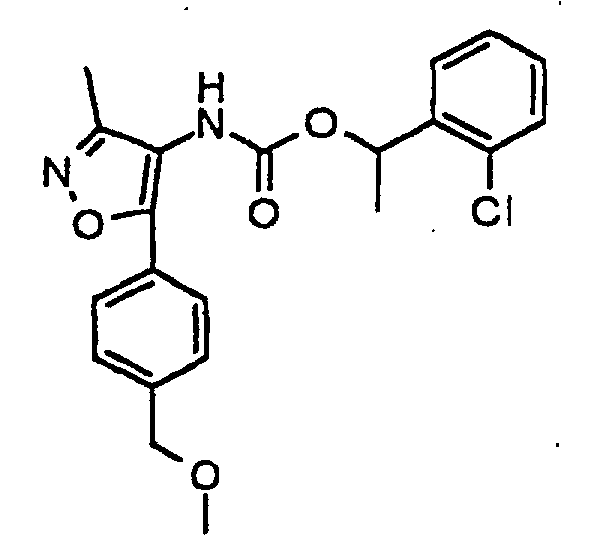
1H-NMR (CDCl3, 400 MHz): δ6.80-7.75 (8H, m), 6.15 (1H, q, J = 6.5 Hz), 5.93 (1H, bs), 4.43 (2H, s), 3.35 (3H, s), 2.18 (3H, s), 1.30-1.60 (3H, m)
Mass spectrometry (ESI-MS): 401 (M++1)

1H-NMR (CDCl3, 400 MHz): δ6.98-7.80 (8H, m), 6.00-6.25 (2H, m), 3.71 (4H, t, J = 4.4 Hz), 3.52 (2H, s), 2.41-2.47 (2H, m), 2.24 (3H, s), 1.35-1.70 (3H, m)
Mass spectrometry (ESI-MS): 454 (M++1)

1H-NMR (CDCl3, 400 MHz): δ6.95-7.80 (8H, m), 5.95-6.25 (2H, m), 3.64-3.74 (2H, m), 3.49 (2H, s), 2.64-2.72 (2H, m), 2.24 (3H, s), 1.55-1.82 (5H, m), 1.13 (6H, d, J = 6.4 Hz)
Mass spectrometry (ESI-MS): 484 (M++1)

1H-NMR (CDCl3, 400 MHz): δ8.49-8.55 (1H, m), 6.95-7.80 (11H, m), 6.50 (1H, bs), 6.21 (1H, q, J = 6.3 Hz), 3.85 (2H, s), 2.97-3.10 (4H, m), 2.23 (3H, s), 1.62 (3H, bs)
Mass spectrometry (ESI-MS): 491, 493 (M++1)
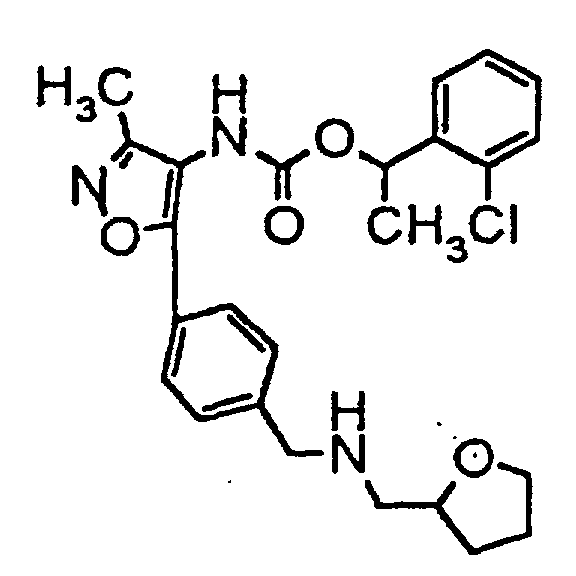
1H-NMR (CDCl3, 400 MHz): δ6.95-7.80 (8H, m), 6.53 (1H, bs), 6.21 (1H, q, J = 6.2 Hz), 3.99-4.07 (1H, m), 3.80-3.87 (3H, m), 3.70-3.78 (1H, m), 2.59-2.73 (2H, m), 2.23 (3H, s), 1.83-2.00 (4H, m), 1.35-1.75 (3H, m)
Mass spectrometry (ESI-MS): 470, 472 (M++1)
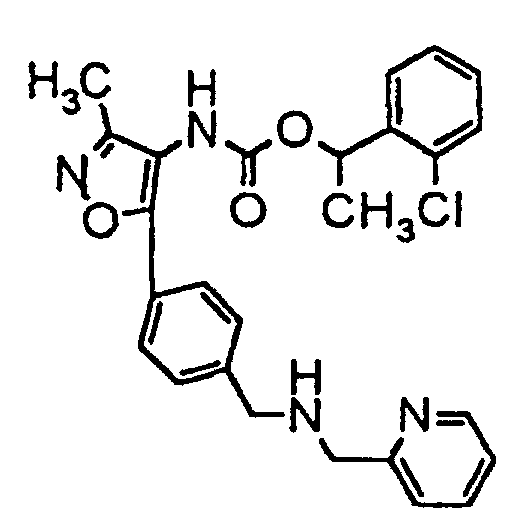
1H-NMR (CDCl3, 400 MHz): δ8.54-8.58 (1H, m), 6.90-7.75 (11H, m), 6.64 (1H, bs), 6.21 (1H, q, J = 6.4 Hz), 3.91 (2H, s), 3.86 (2H, s), 2.22 (3H, s), 1.30-1.70 (3H, m)
Mass spectrometry (ESI-MS): 477, 479 (M++1)
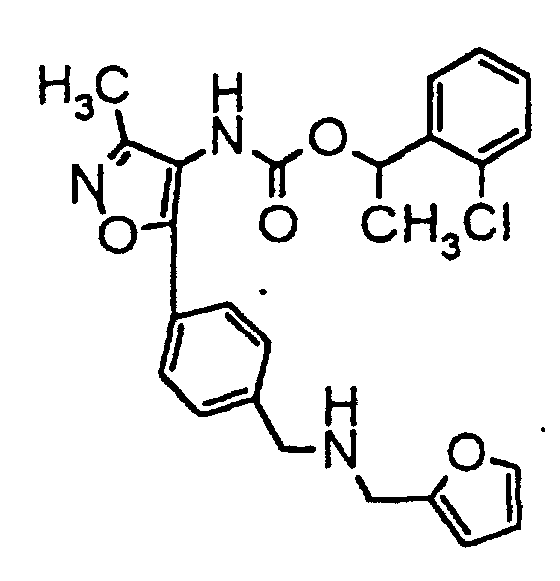
1H-NMR (CDCl3, 400 MHz): δ6.95-7.80 (8H, m), 5.98-6.35 (4H, m), 3.81 (2H, s), 3.79 (2H, s), 2.24 (3H, s), 1.30-1.75 (3H, m)
Mass spectrometry (ESI-MS): 466, 468 (M++1)

1H-NMR (CDCl3, 400 MHz): 7.60 (2H, m), 7.36 (3H, m), 2.34 (3H, s), 1.59 (9H, m)
Mass spectrometry (FD-MS): 298 (M+)
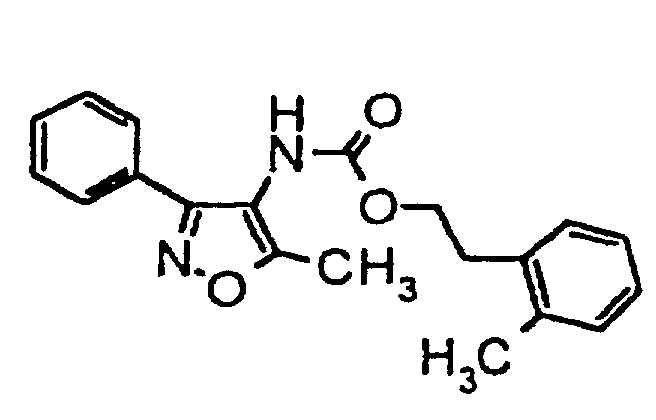
H-NMR (CDCl3, 400 MHz): 7.59 (2H, dd, J = 4.17 Hz, J = 5.61 Hz), 7.38 (2H, dd, J = 3.42 Hz, J = 5.61 Hz), 7.09 (5H, m), 3.78 (2H, t, J = 6.83 Hz), 2.83 (2H, t, J = 6.83 Hz), 2.34 (3H, bs), 2.27 (3H, s)
Mass spectrometry (FD-MS): 336 (M+)
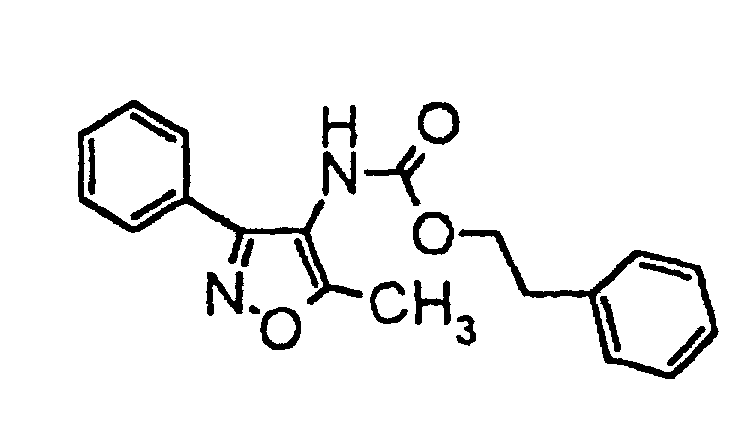
H-NMR (CDCl3, 400 MHz): 7.37 (2H, m), 7.25 (2H, m), 7.18 (6H, m), 3.80 (2H, t, J = 6.59 Hz), 2.81 (2H, t, J = 6.59 Hz), 2.32 (3H, s), 2.18 (3H, bs)
Mass spectrometry (FD-MS): 322 (M+)
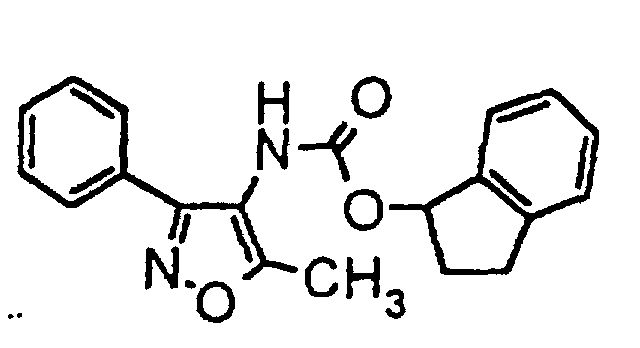
Mass spectrometry (FD-MS): 334(M+)

Mass spectrometry (FD-MS): 348(M+)
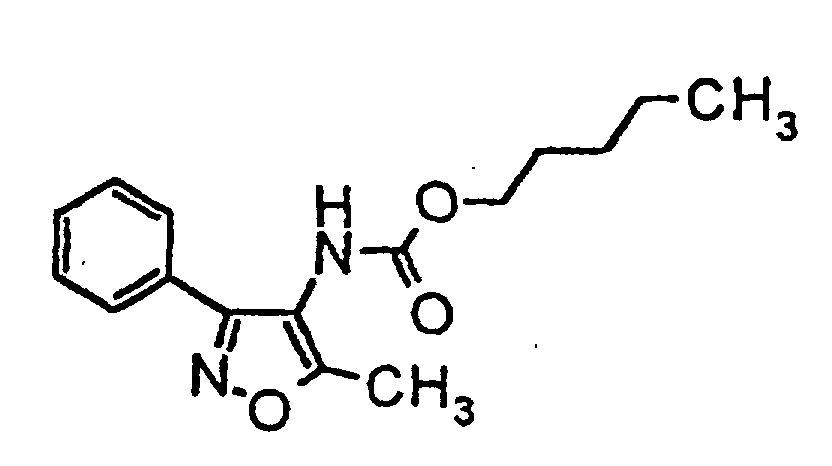
Mass spectrometry (FD-MS): 288(M+)

1H-NMR (CDCl3, 400 MHz): δ7.61 (2H, bs), 7.39 (3H, m), 4.11 (2H, m), 3.36 (3H, s), 1.49 (3H, m), 0.83 (6H, bs)
Mass spectrometry (FD-MS): 288 (M+)
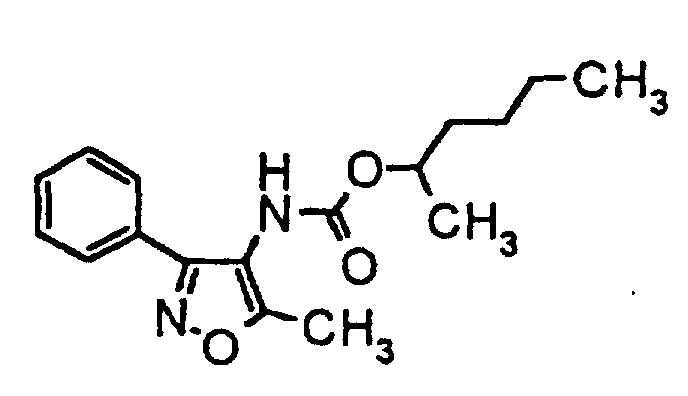
1H-NMR (CDCl3, 400 MHz): δ7.59 (2H, bs), 7.36 (3H, m), 4.65 (1H, m), 2.33 (3H, s), 1.21 (8H, m), 0.77 (4H, m)
Mass spectrometry (FD-MS): 302 (M+)
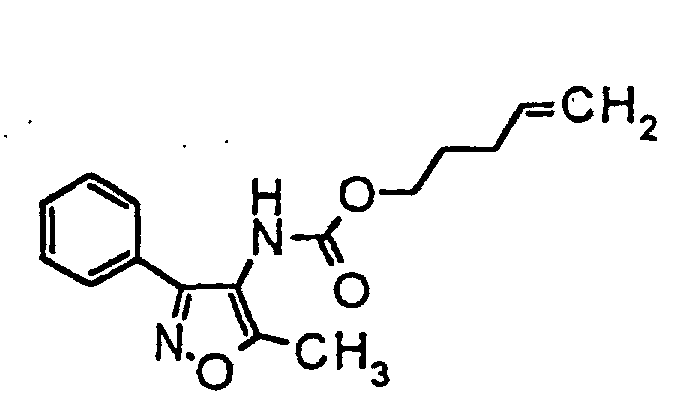
1H-NMR (CDCl3, 400 MHz): δ7.61 (2H, bs), 7.39 (3H, m), 4.93 (3H, m), 4.09 (2H, m), 2.36 (3H, s), 2.10 (2H, m), 1.73 (2H, m)
Mass spectrometry (FD-MS): 286 (M+)
1H-NMR (CDCl3, 400 MHz): δ8.51 (1H, d, J = 4.9 Hz), 7.00-7.69 (11H, m), 6.50 (1H, bs), 6.21 (1H, q, J = 6.3 Hz), 3.85 (2H, s), 2.99-3.01 (4H, m), 2.23 (3H, s), 1.40-1.70 (3H, m)
Mass spectrometry (ESI-MS): 491 (M++1)
Mass spectrometry (ESI-MS): 470,472 (M++1)
Mass spectrometry (ESI-MS): 477, 479 (M++1)
Mass spectrometry (ESI-MS): 466, 468 (M++1)
Mass spectrometry (ESI-MS): 483 (M++1)
Mass spectrometry (ESI-MS): 431(M++1)
Mass spectrometry (ESI-MS): 456 (M++1)
Mass spectrometry (ESI-MS): 491, 493 (M++1)
Mass spectrometry (ESI-MS): 491, 493 (M++1)
Mass spectrometry (ESI-MS): 432, 434 (M++1)
Mass spectrometry (ESI-MS): 486, 488 (M++1)
Mass spectrometry (ESI-MS): 492,494 (M++1)
Mass spectrometry (ESI-MS): 489 (M++1)
Mass spectrometry (ESI-MS): 414, 416 (M++1)
Mass spectrometry (ESI-MS): 445 (M++1)
Mass spectrometry (ESI-MS): 475 (M++1)
Mass spectrometry (ESI-MS): 489 (M++1)
Mass spectrometry (ESI-MS): 447 (M++1)
Mass spectrometry (ESI-MS): 483 (M++23)
Mass spectrometry (ESI-MS): 518 (M++1)
Mass spectrometry (ESI-MS): 465 (M++23), 443 (M++1)
Mass spectrometry (ESI-MS): 529 (M++23)
Mass spectrometry (ESI-MS): 497 (M++23)
Mass spectrometry (ESI-MS): 554 (M++23)
Mass spectrometry (ESI-MS): 423 (M++23)
Mass spectrometry (ESI-MS): 437 (M++23)
Mass spectrometry (ESI-MS): 497 (M++23)
Mass spectrometry (ESI-MS): 469 (M++23)
Mass spectrometry (ESI-MS): 454 (M++23)
Mass spectrometry (ESI-MS): 529 (M++23)
Mass spectrometry (ESI-MS): 513 (M++23)
Mass spectrometry (ESI-MS): 499 (M++23)
Mass spectrometry (ESI-MS): 492 (M++23)
Mass spectrometry (ESI-MS): 507 (M++23)
Mass spectrometry (ESI-MS): 474 (M++1), 496 (M++23)
Mass spectrometry (ESI-MS): 562 (M++23)
Mass spectrometry (ESI-MS): 487 (M+-1), 511 (M++23)
Mass spectrometry (ESI-MS): 441 (M+-1), 465 (M++23)
Mass spectrometry (ESI-MS): 505 (M+-1), 529 (M++23)
Mass spectrometry (ESI-MS): 468 (M+-1), 492 (M++23)
Mass spectrometry (ESI-MS): 445 (M++1)
Mass spectrometry (ESI-MS): 488 (M++1), 510 (M++23)
Mass spectrometry (ESI-MS): 503 (M++1), 525 (M++23)
Mass spectrometry (ESI-MS): 489(M++1), 511(M++23)
Mass spectrometry (ESI-MS): 475 (M++1), 497 (M++23)
Mass spectrometry (ESI-MS): 539 (M++1)
Mass spectrometry (ESI-MS): 417, 419 (M++1), 441 (M++23)
Mass spectrometry (ESI-MS): 509, 511 (M+-1)
Mass spectrometry (ESI-MS): 523 (M+-1)
Mass spectrometry (ESI-MS): 511 (M++23)
Mass spectrometry (ESI-MS): 497 (M++23)
Mass spectrometry (ESI-MS): 387 (M+-1)
Mass spectrometry (ESI-MS): 495 (M++23)
Mass spectrometry (ESI-MS): 481 (M++23)
Mass spectrometry (ESI-MS): 509, 511 (M++1)
Mass spectrometry (ESI-MS): 473 (M-1) 497 (M++23)
Mass spectrometry (ESI-MS): 401 (M+-1)
Mass spectrometry (ESI-MS): 425 (M++1), 445, 447 (M++23)
Mass spectrometry (ESI-MS): 531, 532 (M++23)
Mass spectrometry (ESI-MS): 493 (M+-1)
Mass spectrometry (ESI-MS): 437 (M+-1)
Mass spectrometry (ESI-MS): 485 (M+-1), 509 (M++23)
Mass spectrometry (ESI-MS): 521 (M+-1), 545 (M++23)
Mass spectrometry (ESI-MS): 471 (M+-1), 495 (M++23)
Mass spectrometry (ESI-MS): 495 (M++23)
Mass spectrometry (ESI-MS): 491 (M+-1)
| Compound No. | IC50(µM) |
| Compound 1 | 100 |
| Compound 2 | 30 to 100 |
| Compound 3 | 3 |
| Compound 4 | 3 |
| Compound 5 | 10 to 30 |
| Compound 6 | 10 |
| Compound 7 | 30 |
| Compound 8 | 3 to 10 |
| Compound 9 | 10 to 30 |
| Compound 10 | 100 to |
| Compound 11 | 10 to 30 |
| Compound 12 | 30 to 100 |
| Compound 13 | 30 |
| Compound 14 | 30 to 100 |
| Compound 15 | 30 |
| Compound 16 | 3 to 10 |
| Compound 17 | 3 |
| Compound 18 | 3 |
| Compound 19 | 3 to 10 |
| Compound 20 | 3 |
| Compound 21 | 3 |
| Compound 22 | 3 to 10 |
| Compound 23 | 10 |
| Compound 24 | 100 |
| Compound 25 | 30 to 100 |
| Compound 26 | 100 |
| Compound 27 | 30 |
| Compound 28 | 10 to 30 |
| Compound 29 | 10 |
| Compound 30 | 3 to 10 |
| Compound 31 | 10 |
| Compound 32 | 3 |
| Compound 33 | 3 to 10 |
| Compound 34 | 10 |
| Compound 35 | 3 to 10 |
| Compound 36 | 3 to 10 |
| Compound 37 | 30 |
| Compound 38 | 10 |
| Compound 39 | 10 |
| Compound 40 | 10 |
| Compound 41 | 3 to 10 |
| Compound 42 | 10 |
| Compound 43 | 3 to 10 |
| Compound 44 | 3 |
| Compound 45 | 3 |
| Compound 46 | 3 to 10 |
| Compound 47 | 1 |
| Compound 48 | 3 to 10 |
| Compound 49 | 10 to 30 |
| Compound 50 | 10 to 30 |
| Compound 51 | 10 to 30 |
| Compound 52 | 30 |
| Compound 53 | 30 |
| Compound 54 | 10 to 30 |
| Compound 55 | 3 to 10 |
| Compound 56 | 3 to 10 |
| Compound 57 | 3 |
| Compound 58 | 10 |
| Compound 59 | 3 to 10 |
| Compound 60 | 1 to 3 |
| Compound 61 | 3 to 10 |
| Compound 62 | 3 |
| Compound 63 | 30 |
| Compound 64 | 10 to 30 |
| Compound 65 | 10 to 30 |
| Compound 66 | 10 |
| Compound 67 | 3 |
| Compound 68 | 3 to 10 |
| Compound 69 | 3 to 10 |
| Compound 70 | 1 to 3 |
| Compound 71 | 3 |
| Compound 72 | 10 to 30 |
| Compound 73 | 1 to 3 |
| Compound 74 | 1 to 3 |
| Compound 75 | 3 to 10 |
| Compound 76 | 1 to 3 |
| Compound 77 | 1 to 3 |
| Compound 78 | 30 |
| Compound 79 | 3 |
| Compound 80 | 1 to 3 |
| Compound 81 | 30 to 100 |
| Compound 82 | 10 to 30 |
| Compound 83 | 10 |
| Compound 84 | 3 to 10 |
| Compound 85 | 3 to 10 |
| Compound 86 | 1 to 3 |
| Compound 87 | 3 |
| Compound 88 | 3 to 10 |
| Compound 89 | 10 to 30 |
| Compound 90 | 10 |
| Compound 91 | 10 to 30 |
| Compound 92 | 10 to 30 |
| Compound 93 | 3 to 10 |
| Compound 94 | 30 to 100 |
| Compound 95 | 30 to 100 |
| Compound 96 | 30 to 100 |
| Compound 97 | 30 to 100 |
| Compound 98 | 30 to 100 |
| Compound 99 | 30 to 100 |
| Compound 100 | 30 to 100 |
| Compound 101 | 30 to 100 |
| Compound 102 | 30 to 100 |
| Compound 103 | 10 |
| Compound 104 | 10 to 30 |
| Compound 105 | 10 to 30 |
| Compound 106 | 3 to 10 |
| Compound 107 | 3 to 10 |
| Compound 108 | 3 to 10 |
| Compound 109 | 10 to 30 |
| Compound 110 | 10 to 30 |
| Compound 111 | 10 to 30 |
| Compound 112 | 10 to 30 |
| Compound 113 | 10 to 30 |
| Compound 114 | 10 to 30 |
| Compound 115 | 1 to 3 |
| Compound 116 | 30 to 100 |
| Compound 117 | 3 to 10 |
| Compound 118 | 1 to 3 |
| Compound 119 | 3 to 10 |
| Compound 120 | 3 to 10 |
| Compound 121 | 3 to 10 |
| Compound 122 | 3 to 10 |
| Compound 123 | 3 to 10 |
| Compound 124 | 10 to 30 |
| Compound 125 | 10 to 30 |
| Compound 126 | 3 to 10 |
| Compound 127 | 3 to 10 |
| Compound 128 | 3 to 10 |
| Compound 129 | 3 to 10 |
| Compound 130 | 3 to 10 |
| Compound 131 | 3 |
| Compound 132 | 3 |
| Compound 133 | 10 |
| Compound 134 | 3 to 10 |
| Compound 135 | 3 to 10 |
| Compound 136 | 3 to 10 |
| Compound 137 | 3 to 10 |
| Compound 138 | 3 to 10 |
| Compound 139 | 10 |
| Compound 140 | 3 to 10 |
| Compound 141 | 3 to 10 |
| Compound 142 | 3 to 10 |
| Compound 143 | 3 to 10 |
| Compound 144 | 1 to 3 |
| Compound 145 | 3 to 10 |
| Compound 146 | 3 to 10 |
| Compound 147 | 3 to 10 |
| Compound 148 | 10 to 30 |
| Compound 149 | 10 to 30 |
| Compound 150 | 3 |
| Compound 151 | 3 to 10 |
| Compound 152 | 3 to 10 |
| Compound 153 | 3 to 10 |
| Compound 154 | 3 to 10 |
| Compound 155 | 3 to 10 |
| Compound 156 | 10 |
| Compound 157 | 3 |
| Compound 158 | 3 to 10 |
| Compound 159 | 3 |
| Compound 160 | 3 to 10 |
| Compound 161 | 3 to 10 |
| Compound 162 | 3 to 10 |
| Compound 163 | 3 to 10 |
| Compound 164 | 3 to 10 |
| Compound 165 | 3 to 10 |
| Compound 166 | 10 |
| Compound 167 | 3 to 10 |
| Compound 168 | 3 to 10 |
| Compound 169 | 3 to 10 |
| Compound No. | Inhibition of proliferation IC50 (µM) |
| Compound 4 | 1 |
| Compound 20 | 1 |
| Compound 32 | 1 |
| Compound 47 | 0.3 |
| Compound 62 | 3 |
| Compound 67 | 1 |
| Compound 71 | 1 |
| Compound 103 | 0.3 |
| Compound 104 | 3 |
| Compound 105 | 1 |
| Compound 106 | 1 to 3 |
| Compound 107 | 0.03 to 0.1 |
| Compound 108 | 0.1 to 0.3 |
| Compound 109 | 1 to 3 |
| Compound 110 | 0.3 to 1 |
| Compound 111 | 1 to 3 |
| Compound 112 | 0.3 to 1 |
| Compound 113 | 0.1 to 0.3 |
| Compound 114 | 0.3 to 1 |
| Compound 115 | 0.01 to 0.03 |
| Compound 116 | 0.3 to 1 |
| Compound 117 | 0.03 to 0.1 |
| Compound 118 | 0.1 to 0.3 |
| Compound 119 | 0.1 to 0.3 |
| Compound 120 | 0.1 to 0.3 |
| Compound 121 | 0.03 to 0.1 |
| Compound 122 | 0.1 to 0.3 |
| Compound 123 | 0.1 to 0.3 |
| Compound 124 | 0.1 to 0.3 |
| Compound 125 | 0.1 to 0.3 |
| Compound 126 | 0.01 to 0.03 |
| Compound 127 | 0.1 to 0.3 |
| Compound 128 | 0.1 to 0.3 |
| Compound 129 | 0.3 to 1 |
| Compound 130 | 0.3 to 1 |
| Compound 132 | 0.3 to 1 |
| Compound 133 | 0.1 to 0.3 |
| Compound 134 | 0.1 to 0.3 |
| Compound 135 | 0.1 to 0.3 |
| Compound 136 | 0.1 to 0.3 |
| Compound 137 | 0.1 to 0.3 |
| Compound 138 | 0.1 to 0.3 |
| Compound 139 | 0.03 to 0.1 |
| Compound 140 | 0.3 to 1 |
| Compound 141 | 0.3 to 1 |
| Compound 142 | 0.3 |
| Compound 143 | 0.1 to 0.3 |
| Compound 144 | 0.03 to 0.1 |
| Compound 145 | 0.3 to 1 |
| Compound 146 | 0.03 to 0.3 |
| Compound 147 | 0.03 to 0.1 |
| Compound 148 | 0.1 to 0.3 |
| Compound 149 | 0.03 |
| Compound 150 | 0.1 to 0.3 |
| Compound 151 | 0.1 |
| Compound 152 | 0.3 |
| Compound 153 | 0.3 |
| Compound 154 | 0.1 to 0.3 |
| Compound 156 | 0.3 to 1 |
| Compound 157 | 0.3 to 1 |
| Compound 158 | 1 |
| Compound 159 | 0.3 |
| Compound 161 | 1 to 3 |
| Compound 162 | 0.03 to 0.1 |
| Compound 163 | 0.03 to 0.1 |
| Compound 164 | 0.3 to 1 |
| Compound 165 | 0.1 to 0.3 |
| Compound 166 | 0.1 |
| Compound 167 | 0.03 to 0.1 |
| Compound 168 | 1 |
| Compound 169 | 1 to 3 |
| Effects of ID3016511 and ticlopidine on lactic acid induced peripheral circulatory disturbance in rats | |||||
| Score of lesion | |||||
| Drug | Dosage | Number of animals | Number of days after lactic acid injection | ||
| (mg/kg, twice/day) | 3 | 7 | 14 | ||
| | 10 | 2.5 ± 0.5 | 4.3 ± 0.9 | 7.7 + 1.5 | |
| ID3016511 | 20 | 10 | 2.6 ± 0.8 | 4.3 ± 1.0 | 6.9 ± 1.4 |
| 60 | 10 | 1.1 ± 0.4 | 1.9 ± 0.5 | 3.2 ± 0.7 | |
| Ticlopidine | 300 | 10 | 0.4 ± 0.2 | 1.2 ± 0.4 | 1.6 ± 0.4 |
Claims (17)
- A compound represented by general formula [1] or salt thereof:wherein
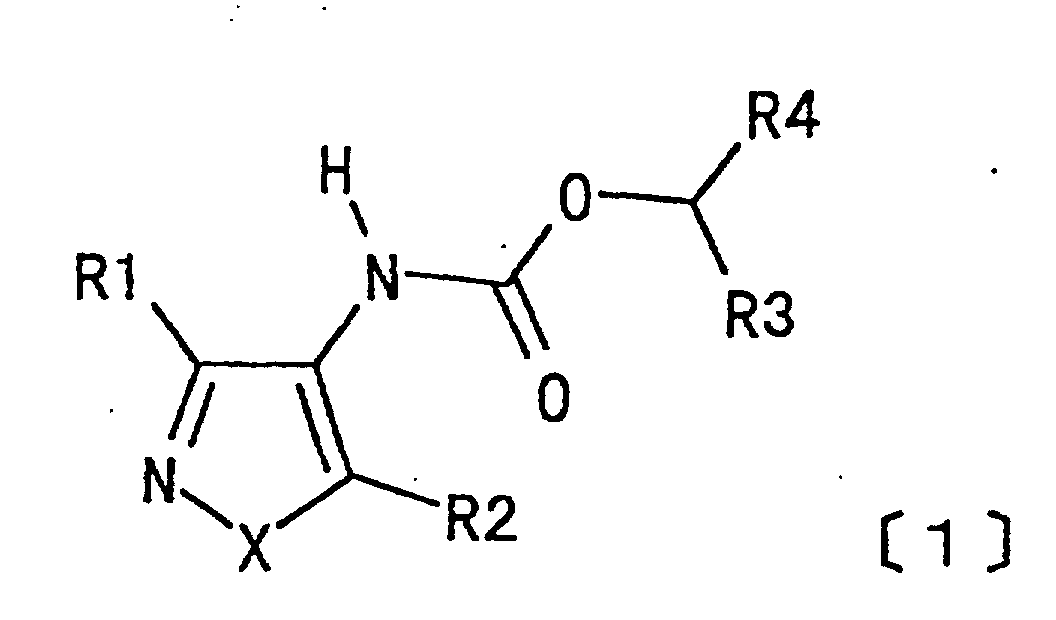 alternativily, R3 and R4 may form a five- to ten-membered cyclic structure together with a carbon atom to which they bind; andR1 represents an optionally substituted alkyl, aryl, heterocycle, alkyloxy, aryloxy, alkylthio, arylthio, or a halogen atom;R2 represents an optionally substituted alkyl, aryl, heterocycle, alkyloxy, aryloxy, or a halogen atom;R3 represents a hydrogen atom, lower alkyl, or alkyl halide;R4 represents a group selected from the group consisting of (I) optionally substituted phenyl, aryl, or heterocycle, (II) substituted or nonsubstituted alkyl, and (III) substituted or nonsubstituted alkenyl,
X represents an oxygen atom or a sulfur atom,
provided that, when R3 is a hydrogen atom, R4 represents a group other than methyl. - The compound or salt thereof according to claim 1, whereinR1 is a halogen atom or lower alkyl optionally substituted by one or more substituents selected from the group consisting of: (I) alkyloxy, (II) alkylthio, (III) alkylamino, (IV) cyano, (V) nitro, (VI) cyclic amino, and (VII) a halogen atom; andR2 is aryl or aromatic heterocycle optionally substituted by one or more substituents selected from the group consisting of:(I) a halogen atom;(II) lower alkyl optionally substituted by one or more substituents selected from the group consisting of (1) hydroxy, (2) thiol, (3) amino, (4) alkyloxy, (5) alkylthio, (6) alkylsulfinyl, (7) alkylsulfonyl, (8) monoalkylamino or dialkylamino, (9) acyloxy, (10) acylthio, (11) acylamino, (12) aryloxy, (13) arylthio, (14) arylsulfinyl, (15) arylsulfonyl, (16) arylamino, (17) alkylsulfonylamino or arylsulfonylamino, (18) alkylureide or arylureide, (19) alkyloxycarbonylamino or aryloxycarbonylamino, (20) alkylaminocarbonyloxy or arylaminocarbonyloxy, (21) carboxyl, (22) nitro, (23) heterocycle, (24) cyano, (25) cyclic amino, and (26) a halogen atom;(III) optionally halogenated alkyloxy; (IV) optionally halogenated alkylthio; (V) cycloalkyl; (VI) aryl; (VII) aryloxy; (VIII) acylamino; (IX) acyloxy; (X) hydroxy; (XI) nitro (XII) cyano; (XIII) amino; (XIV) monoalkylamino or dialkylamino; (XV) arylamino; (XVI) alkylsulfonylamino or arylsulfonylamino; (XVII) alkylureide or arylureide; (XVIII) alkyloxycarbonylamino or aryloxycarbonylamino; (XIX) alkylaminocarbonyloxy or arylaminocarbonyloxy; (XX) alkyloxycarbonyl or aryloxycarbonyl; (XXI) acyl; (XXII) carboxyl; (XXIII) carbamoyl; (XXIV) monoalkylcarbamoyl or dialkylcarbamoyl; (XXV) cyclic amino; and (XXVI) alkylsulfonyl or arylsulfonyl.
- The compound or salt thereof according to claim 1, whereinR1 is aryl or aromatic heterocycle optionally substituted by one or more substituents selected from the group consisting of:(I) a halogen atom;(II) lower alkyl optionally substituted by one or more substituents selected from the group consisting of (1) hydroxy, (2) thiol, (3) amino, (4) alkyloxy, (5) alkylthio, (6) alkylsulfinyl, (7) alkylsulfonyl, (8) monoalkylamino or dialkylamino, (9) acyloxy, (10) acylthio, (11) acylamino, (12) aryloxy, (13) arylthio, (14) arylsulfinyl, (15) arylsulfonyl, (16) arylamino, (17) alkylsulfonylamino or arylsulfonylamino, (18) alkylureide or arylureide, (19) alkyloxycarbonylamino or aryloxycarbonylamino, (20) alkylaminocarbonyloxy or arylaminocarbonyloxy, (21) carboxyl, (22) nitro, (23) heterocycle, (24) cyano, (25) cyclic amino, and (26) a halogen atom;(III) optionally halogenated alkyloxy; (IV) optionally halogenated alkylthio; (V) cycloalkyl; (VI) aryl; (VII) aryloxy; (VIII) acylamino; (IX) acyloxy; (X) hydroxy; (XI) nitro; (XII) cyano; (XIII) amino; (XIV) monoalkylamino or dialkylamino; (XV) arylamino; (XVI) alkylsulfonylamino or arylsulfonylamino; (XVII) alkylureide or arylureide; (XVIII) alkyloxycarbonylamino or aryloxycarbonylamino; (XIX) alkylaminocarbonyloxy or arylaminocarbonyloxy; (XX) alkyloxycarbonyl or aryloxycarbonyl; (XXI) acyl; (XXII) carboxyl; (XXIII) carbamoyl; (XXIV) monoalkylcarbamoyl or dialkylcarbamoyl; (XXV) cyclic amino; and (XXVI) alkylsulfonyl or arylsulfonyl; andR2 is a halogen atom or lower alkyl optionally substituted by one or more substituents selected from the group consisting of (I) alkyloxy, (II) alkylthio, (III) alkylamino, (IV) cyano, (V) nitro, (VI) cyclic amino, and (VII) a halogen atom.
- The compound or salt thereof according to claim 2 or 3, wherein X is an oxygen atom.
- The compound or salt thereof according to claim 2, wherein the compound is represented by general formula [2]:wherein
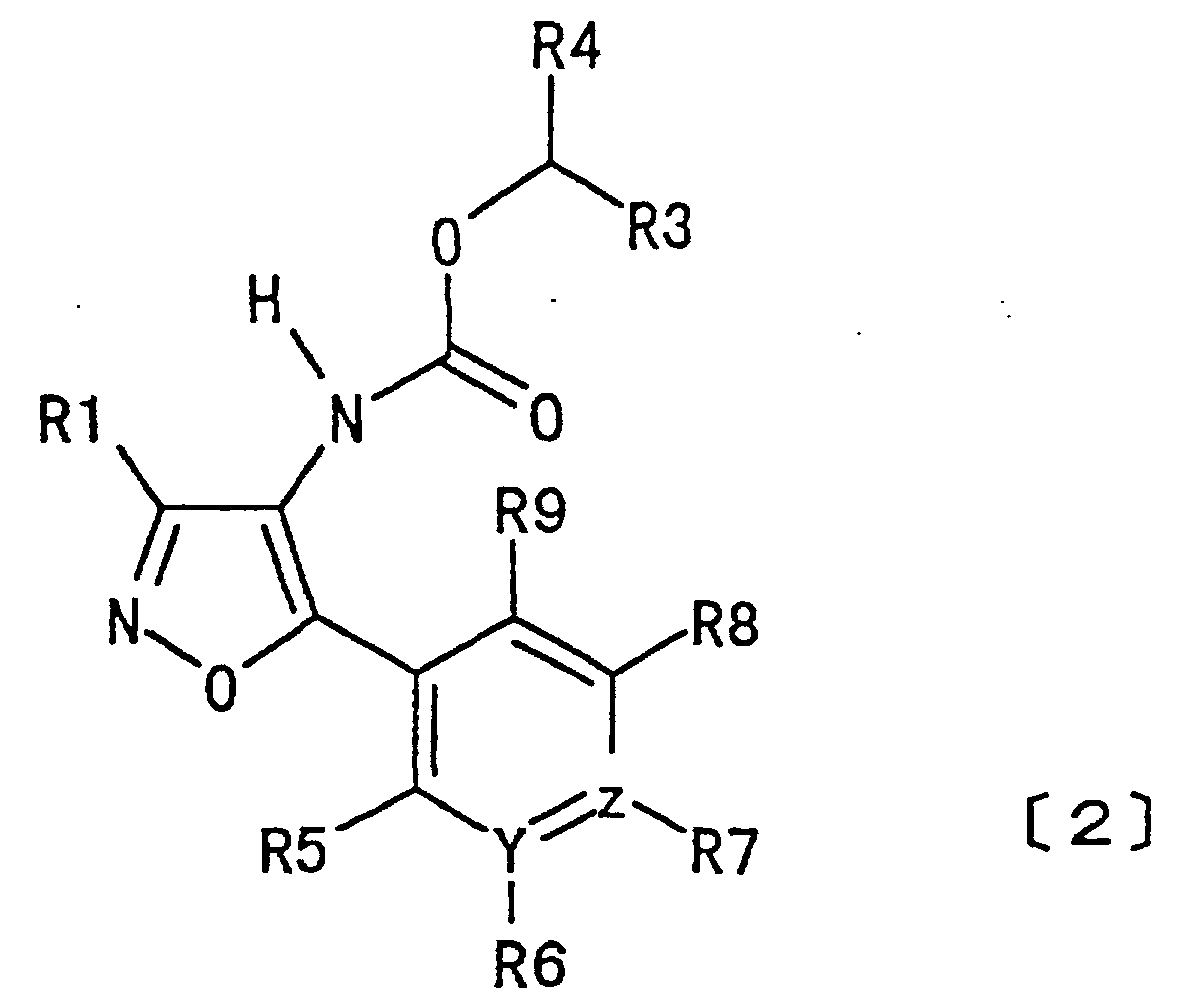 provided that, when Y is a nitrogen atom, R6 is absent, and when Z is a nitrogen atom, R7 is absent.R1, R3, and R4 are as defined above;Y and Z are each independently a carbon atom or a nitrogen atom; andR5, R6, R7, R8, and R9 are each independently a group selected from(I) a hydrogen atom;(II) a halogen atom;(III) lower alkyl optionally substituted by one or more substituents selected from the group consisting of: (1) hydroxy, (2) amino, (3) alkyloxy, (4) alkylthio, (5) alkylsulfinyl, (6) alkylsulfonyl, (7) monoalkylamino or dialkylamino, (8) acyloxy, (9) acylamino, (10) aryloxy, (11) arylthio, (12) arylsulfinyl, (13) arylsulfonyl, (14) arylamino, (15) alkylsulfonylamino or arylsulfonylamino, (16) alkylureide or arylureide, (17) alkyloxycarbonylamino or aryloxycarbonylamino, (18) alkylaminocarbonyloxy or arylaminocarbonyloxy, (19) cyano, (20) cyclic amino, and (21) a halogen atom;(IV) optionally halogenated alkyloxy, (V) cycloalkyi, (VI) aryl, (VII) aryloxy, (VIII) acylamino, (IX) acyloxy, (X) hydroxy, (XI) nitro, (XII) cyano, (XIII) amino, (XIV) monoalkylamino or dialkylamino, (XV) arylamino, (XVI) alkylsulfonylamino or arylsulfonylamino, (XVII) alkylureide or arylureide, (XVIII) alkyloxycarbonylamino or aryloxycarbonylamino, (XIX) alkylaminocarbonyloxy or arylaminocarbonyloxy, (XX) alkyloxycarbonyl or aryloxycarbonyl, (XXI) acyl, (XXII) carboxyl, (XXIII) carbamoyl, (XXIV) monoalkylcarbamoyl or dialkylcarbamoyl, (XXV) cyclic amino, and (XXVI) alkylsulfonyl or arylsulfonyl,
 - The compound or salt thereof according to claim 5, whereinat least one of R6 and R7 is a halogen atom, chloromethyl, hydroxymethyl, cyano, trifluoromethoxy, a group represented by formula [3]:R1 is methyl or ethyl;R3 is hydrogen atom, methyl, or trifluoromethyl;R4 is phenyl optionally substituted by one or more substituents selected from the group consisting of: (I) a halogen atom, (II) optionally halogenated lower alkyl, (III) optionally halogenated alkyloxy, (IV) optionally halogenated alkylthio, (V) cycloalkyl, (VI) aryl, (VII) aryloxy, (VIII) acylamino, (VIX) acyloxy, (X) hydroxy, (XI) nitro, (XII) cyano, (XIII) amino, (XIV) monoalkylamino or dialkylamino, (XV) arylamino, (XVI) alkylsulfonylamino or arylsulfonylamino, (XVII) alkylureide or arylureide, (XVIII) alkyloxycarbonylamino or aryloxycarbonylamino, (XIX) alkylaminocarbonyloxy or arylaminocarbonyloxy, (XX) alkyloxycarbonyl or aryloxycarbonyl, (XXI) acyl; (XXII) carboxyl, (XXIII) carbamoyl, (XXIV) monoalkylcarbamoyl or dialkylcarbamoyl, (XXV) cyclic amino, and (XXVI) alkylsulfonyl or arylsulfonyl;Y and Z are a carbon atom; andwherein
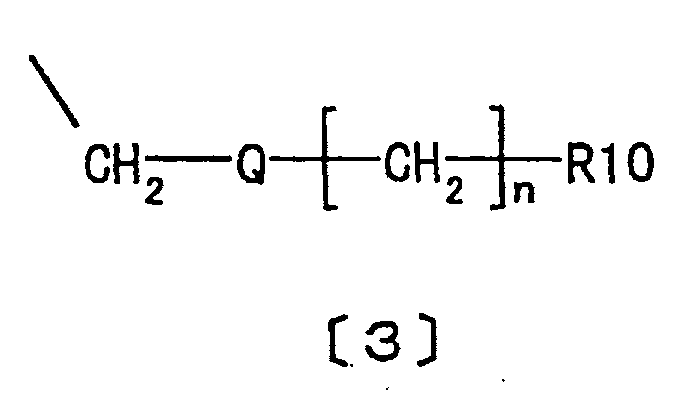 or a group represented by formula [4]:n is 0 to 5;Q is an oxygen atom, a sulfur atom, sulfinyl, or sulfonyl; andR10 is a group selected from the group consisting of a hydrogen atom, a halogen atom, alkyl, alkyloxy, alkylthio, monoalkylamino or dialkylamino, aryloxy, arylthio, cyano, nitro, carboxyl, alkyloxycarbonyl or aryloxycarbonyl, carbamoyl, monoalkylcarbamoyl or dialkylcarbamoyl, acyl, aryl, cyclic amino, and heterocycle,wherein
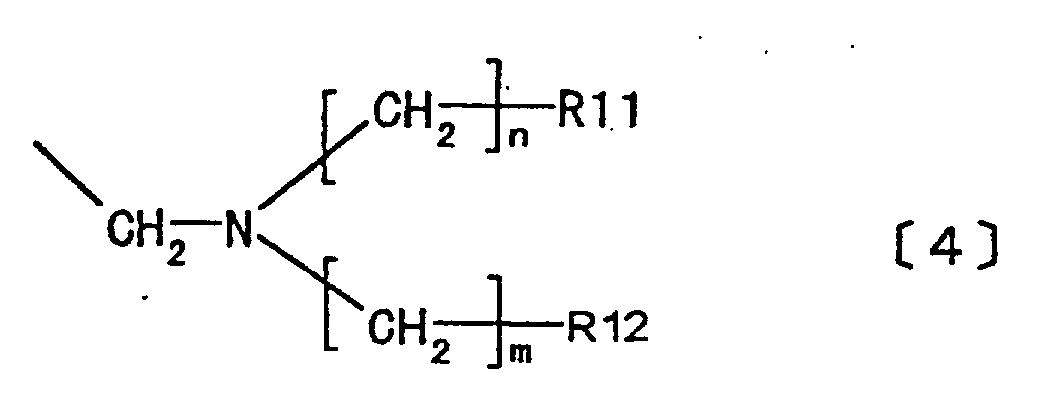 n and m are each 0 to 5; andR11 and R12 are each independently a group selected from the group consisting of a hydrogen atom, a halogen atom, alkyl, alkyloxy, alkylthio, monoalkylamino or dialkylamino, aryloxy, arylthio, hydroxy, cyano, nitro, carboxyl, alkyloxycarbonyl or aryloxycarbonyl, carbamoyl, monoalkylcarbamoyl or dialkylcarbamoyl, acyl, aryl, cyclic amino, and heterocycle; or R11 and R12 may together form a five- to nine-membered heterocycle containing, in addition to a nitrogen atom, 1 to 3 oxygen atoms or sulfur atoms.
 - The compound or salt thereof according to claim 3, wherein the compound is represented by general formula [5]:wherein
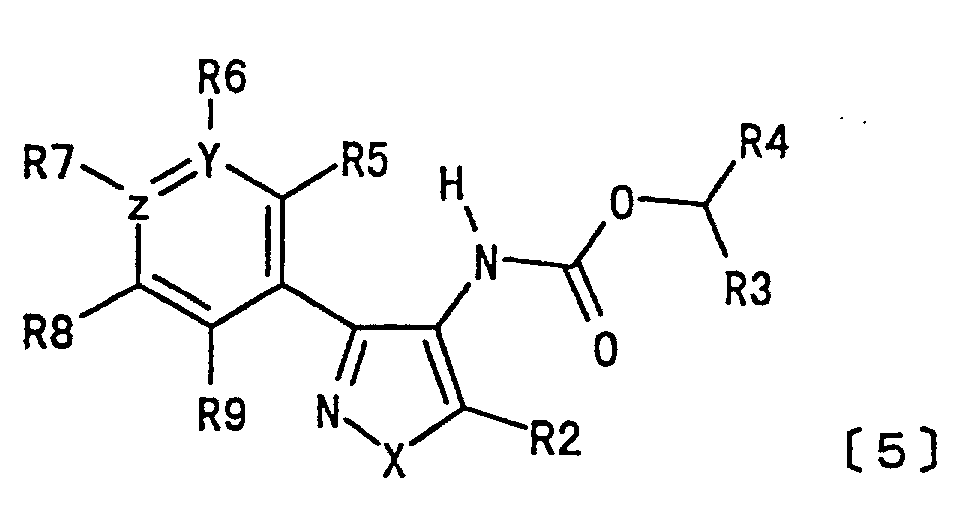 provided that, when Y is a nitrogen atom, R6 is absent, and when Z is a nitrogen atom, R7 is absent.R2, R3, and R4 are as defined above;Y and Z are each independently a carbon atom or a nitrogen atom;R5, R6, R7, R8, and R9 are each independently selected from the group consisting of:(I) a hydrogen atom;(II) a halogen atom;(III) lower alkyl optionally substituted by one or more substituents selected from the group consisting of (1) hydroxy, (2) amino, (3) alkyloxy, (4) alkylthio, (5) alkylsulfinyl, (6) alkylsulfonyl, (7) monoalkylamino or dialkylamino, (8) acyloxy, (9) acylamino, (10) aryloxy, (11) arylthio, (12) arylsulfinyl, (13) arylsulfonyl, (14) arylamino, (15) alkylsulfonylamino or arylsulfonylamino, (16) alkylureide or arylureide, (17) alkyloxycarbonylamino or aryloxycarbonylamino, (18) alkylaminocarbonyloxy or arylaminocarbonyloxy, (19) cyano, (20) cyclic amino, and (21) a halogen atom;(IV) optionally halogenated alkyloxy; (V) cycloalkyl; (VI) aryl; (VII) aryloxy; (VIII) acylamino; (IX) acyloxy; (X) hydroxy; (XI) nitro; (XII) cyano; (XIII) amino; (XIV) monoalkylamino or dialkylamino; (XV) arylamino; (XVI) alkylsulfonylamino or arylsulfonylamino; (XVII) alkylureide or arylureide; (XVIII) alkyloxycarbonylamino or aryloxycarbonylamino; (XIX) alkylaminocarbonyloxy or arylaminocarbonyloxy; (XX) alkyloxycarbonyl or aryloxycarbonyl; (XXI) acyl; (XXII) carboxyl; (XXIII) carbamoyl; (XXIV) monoalkylcarbamoyl or dialkylcarbamoyl; (XXV) cyclic amino; and (XXVI) alkylsulfonyl or arylsulfonyl;
 - The compound or salt thereof according to claim 7, whereinat least one of R6 and R7 is a halogen atom, chloromethyl, hydroxymethyl, cyano, trifluoromethoxy, a group represented by formula [3]:R2 is methyl or ethyl;R3 is a hydrogen atom, methyl, or trifluoromethyl;R4 is phenyl optionally substituted by one or more substituents selected from the group consisting of (I) a halogen atom, (II) optionally halogenated lower alkyl, (III) optionally halogenated alkyloxy, (IV) optionally halogenated alkylthio, (V) cycloalkyl, (VI) aryl, (VII) aryloxy, (VIII) acylamino, (VIX) acyloxy, (X) hydroxy, (XI) nitro, (XII) cyano, (XIII) amino, (XIV) monoalkylamino or dialkylamino, (XV) arylamino, (XVI) alkylsulfonylamino or arylsulfonylamino, (XVII) alkylureide or arylureide, (XVIII) alkyloxycarbonylamino or aryloxycarbonylamino, (XIX) alkylaminocarbonyloxy or arylaminocarbonyloxy, (XX) alkyloxycarbonyl or aryloxycarbonyl, (XXI) acyl, (XXII) carboxyl, (XXIII) carbamoyl, (XXIV) monoalkylcarbamoyl or dialkylcarbamoyl, (XXV) cyclic amino, and (XXVI) alkylsulfonyl or arylsulfonyl;Y and Z are each independently a carbon atom; andwherein
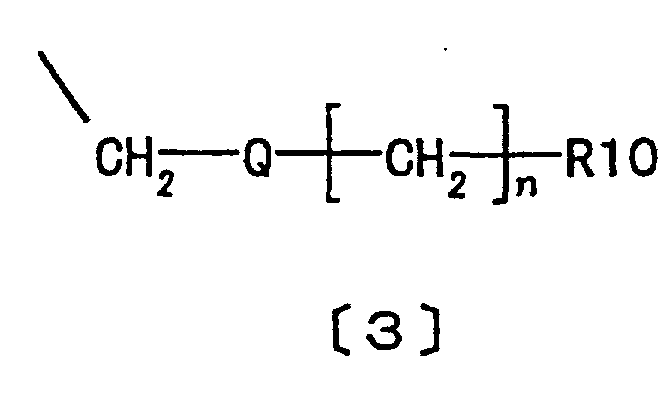 or a group represented by formula [4]:n is 0 to 5;Q is an oxygen atom, a sulfur atom, sulfinyl, or sulfonyl; andR10 is a group selected from the group consisting of a hydrogen atom, a halogen atom, alkyl, alkyloxy, alkylthio, monoalkylamino or dialkylamino, aryloxy, arylthio, cyano, nitro, carboxyl, alkyloxycarbonyl or aryloxycarbonyl, carbamoyl, monoalkylcarbamoyl or dialkylcarbamoyl, acyl, aryl, cyclic amino, and heterocycle,wherein
 n and m are each 0 to 5; andR11 and R12 are each independently a group selected from the group consisting of a hydrogen atom, a halogen atom, alkyl, alkyloxy, alkylthio, monoalkylamino or dialkylamino, aryloxy, arylthio, hydroxy, cyano, nitro, carboxyl, alkyloxycarbonyl or aryloxycarbonyl, carbamoyl, monoalkylcarbamoyl or dialkylcarbamoyl, acyl, aryl, cyclic amino, and heterocycle; or R11 and R12 may together form a five- to nine-membered heterocycle containing, in addition to a nitrogen atom, 1 to 3 oxygen atoms or sulfur atoms.
 - The compound or salt thereof according to any one of claims 5 to 8,, wherein
R4 is phenyl optionally substituted by one or more substituents selected from the group consisting of (I) a halogen atom, (II) optionally halogenated lower alkyl, (III) optionally halogenated alkyloxy, (IV) optionally halogenated alkylthio, (VIII) acylamino, (X) hydroxy, (XI) nitro, (XII) cyano, (XIII) amino, (XIV) monoalkylamino or dialkylamino, (XX) alkyloxycarbonyl or aryloxycarbonyl, (XXI) acyl, (XXII) carboxyl, and (XXV) cyclic amino. - The compound or salt thereof according to any one of claims 5 to 8, wherein R4 is nonsubstituted phenyl, 2-chlorophenyl, 2-bromophenyl, or 2-fluorophenyl.
- A lysophosphatidic acid (LPA) receptor antagonist comprising, as an active ingredient, the compound or salt thereof according to any one of claims 1 to 10.
- A therapeutic or preventive agent for cell proliferative diseases comprising, as an active ingredient, the compound or salt thereof according to any one of claims 1 to 10.
- A therapeutic or preventive agent for inflammatory diseases comprising, as an active ingredient, the compound or salt thereof according to any one of claims 1 to 10.
- A therapeutic or preventive agent for kidney diseases comprising, as an active ingredient, the compound or salt thereof according to any one of claims 1 to 10.
- A therapeutic or preventive agent for cerebral or peripheral nerve disorders comprising, as an active ingredient, the compound or salt thereof according to any one of claims 1 to 10.
- A therapeutic or preventive agent for artery obstructions comprising, as an active ingredient, the compound or salt thereof according to any one of claims 1 to 10.
- An antitumor agent comprising, as an active ingredient, the compound or salt thereof according to any one of claims 1 to 10.
Priority Applications (1)
| Application Number | Priority Date | Filing Date | Title |
|---|---|---|---|
| CY20091100377T CY1110263T1 (en) | 2000-02-18 | 2009-03-31 | NEW COMPOUNDS OF ISOXAZOL AND THIAZOL AND USE AS MEDICINES |
Applications Claiming Priority (3)
| Application Number | Priority Date | Filing Date | Title |
|---|---|---|---|
| JP2000041922 | 2000-02-18 | ||
| JP2000041922 | 2000-02-18 | ||
| PCT/JP2001/001173 WO2001060819A1 (en) | 2000-02-18 | 2001-02-19 | Novel isoxazole and thiazole compounds and use thereof as drugs |
Publications (3)
| Publication Number | Publication Date |
|---|---|
| EP1258484A1 true EP1258484A1 (en) | 2002-11-20 |
| EP1258484A4 EP1258484A4 (en) | 2003-04-23 |
| EP1258484B1 EP1258484B1 (en) | 2009-01-14 |
Family
ID=18565067
Family Applications (1)
| Application Number | Title | Priority Date | Filing Date |
|---|---|---|---|
| EP01904545A Expired - Lifetime EP1258484B1 (en) | 2000-02-18 | 2001-02-19 | Novel isoxazole and thiazole compounds and use thereof as drugs |
Country Status (11)
| Country | Link |
|---|---|
| US (1) | US6964975B2 (en) |
| EP (1) | EP1258484B1 (en) |
| AT (1) | ATE420878T1 (en) |
| AU (1) | AU2001232340A1 (en) |
| CY (1) | CY1110263T1 (en) |
| DE (1) | DE60137405D1 (en) |
| DK (1) | DK1258484T3 (en) |
| ES (1) | ES2320320T3 (en) |
| PT (1) | PT1258484E (en) |
| TW (1) | TWI288136B (en) |
| WO (1) | WO2001060819A1 (en) |
Cited By (21)
| Publication number | Priority date | Publication date | Assignee | Title |
|---|---|---|---|---|
| US7288558B2 (en) | 2001-02-08 | 2007-10-30 | Ono Pharmaceuticals Co., Ltd. | Pharmaceutical composition for treatment for urinary diseases comprising LPA receptor regulator |
| WO2009046804A1 (en) * | 2007-10-05 | 2009-04-16 | Merck Patent Gmbh | Imidazole derivatives |
| US7524638B1 (en) | 2003-06-27 | 2009-04-28 | Osi Pharmaceuticals, Inc. | Methods for identification of modulators of OSGPR114 or OSGPR78 activity, and their use in the treatment of disease |
| WO2009135590A1 (en) * | 2008-05-05 | 2009-11-12 | Sanofi-Aventis | Acylamino-substituted fused cyclopentanecarboxylic acid derivatives and their use as pharmaceuticals |
| GB2466121A (en) * | 2008-12-15 | 2010-06-16 | Amira Pharmaceuticals Inc | Isoxazolyl antagonists of lysophosphatidic acid receptors |
| WO2011053948A1 (en) | 2009-11-02 | 2011-05-05 | Sanofi-Aventis | Acylamino-substituted cyclic carboxylic acid derivatives and their use as pharmaceuticals |
| US8058300B2 (en) | 2009-06-03 | 2011-11-15 | Amira Pharmaceuticals, Inc. | Polycyclic antagonists of lysophosphatidic acid receptors |
| US8217066B2 (en) | 2009-10-01 | 2012-07-10 | Amira Pharmaceuticals, Inc. | Compounds as lysophosphatidic acid receptor antagonists |
| US8362057B2 (en) | 2005-08-01 | 2013-01-29 | MERCK Patent Gesellschaft mit beschränkter Haftung | Imidazolecarboxamide derivatives as fructose-1,6-bisphosphatase inhibitors, and pharmaceutical compositions comprising same |
| US8455499B2 (en) | 2008-12-11 | 2013-06-04 | Amira Pharmaceuticals, Inc. | Alkyne antagonists of lysophosphatidic acid receptors |
| US8541587B2 (en) | 2011-04-05 | 2013-09-24 | Amira Pharmaceuticals, Inc. | Lysophosphatidic acid receptor antagonists |
| US8592402B2 (en) | 2009-08-04 | 2013-11-26 | Amira Pharmaceuticals, Inc. | Compounds as lysophosphatidic acid receptor antagonists |
| US8664220B2 (en) | 2009-10-01 | 2014-03-04 | Amira Pharmaceuticals, Inc. | Polycyclic compounds as lysophosphatidic acid receptor antagonists |
| WO2014145873A3 (en) * | 2013-03-15 | 2014-12-18 | Epigen Biosciences, Inc. | Heterocyclic compounds useful in the treatment of disease |
| CN104788343A (en) * | 2014-01-16 | 2015-07-22 | 同济大学 | Ortho-substituted allyl carbamate compound and preparation method thereof |
| RU2649398C2 (en) * | 2012-12-28 | 2018-04-03 | Убе Индастриз, Лтд. | Halogen substituted heterocyclic compound |
| WO2019126084A1 (en) * | 2017-12-19 | 2019-06-27 | Bristol-Myers Squibb Company | Isoxazole o-linked carbamoyl cyclohexyl acids as lpa antagonists |
| US10662172B2 (en) | 2017-12-19 | 2020-05-26 | Bristol-Myers Squibb Company | Triazole N-linked carbamoyl cyclohexyl acids as LPA antagonists |
| US11261180B2 (en) | 2017-12-19 | 2022-03-01 | Bristol-Myers Squibb Company | Cyclohexyl acid isoxazole azoles as LPA antagonists |
| US11319309B2 (en) | 2017-12-19 | 2022-05-03 | Bristol-Myers Squibb Company | Cyclohexyl acid isoxazole azines as LPA antagonists |
| US11447475B2 (en) | 2017-12-19 | 2022-09-20 | Bristol-Myers Squibb Company | Isoxazole N-linked carbamoyl cyclohexyl acids as LPA antagonists |
Families Citing this family (52)
| Publication number | Priority date | Publication date | Assignee | Title |
|---|---|---|---|---|
| US8022058B2 (en) | 2000-05-10 | 2011-09-20 | The Trustees Of Columbia University In The City Of New York | Agents for preventing and treating disorders involving modulation of the RyR receptors |
| US7718644B2 (en) | 2004-01-22 | 2010-05-18 | The Trustees Of Columbia University In The City Of New York | Anti-arrhythmic and heart failure drugs that target the leak in the ryanodine receptor (RyR2) and uses thereof |
| US7312044B2 (en) | 2003-03-07 | 2007-12-25 | The Trustees Of Columbia University In The City Of New York | Type 1 ryanodine receptor-based methods |
| US7879840B2 (en) | 2005-08-25 | 2011-02-01 | The Trustees Of Columbia University In The City Of New York | Agents for preventing and treating disorders involving modulation of the RyR receptors |
| US7393652B2 (en) | 2000-05-10 | 2008-07-01 | The Trustees Of Columbia University In The City Of New York | Methods for identifying a chemical compound that directly enhances binding of FKBP12.6 to PKA-phosphorylated type 2 ryanodine receptor (RyR2) |
| JP2004529100A (en) | 2001-01-30 | 2004-09-24 | ユニバーシティ オブ バージニア パテント ファウンデーション | Agonists and antagonists of sphingosine-1-phosphate receptor |
| US20040171582A1 (en) * | 2001-07-17 | 2004-09-02 | Shinji Nakade | Pancreatic juice secretion regulators comprising lpa receptor controller |
| AU2003241833A1 (en) * | 2002-05-28 | 2003-12-12 | Ono Pharmaceutical Co., Ltd. | Beta-ALANINE DERIVATIVE AND USE THEREOF |
| US7300917B2 (en) | 2002-06-26 | 2007-11-27 | Ono Pharmaceuticals Co., Ltd. | Remedy for chronic disease |
| US7361368B2 (en) * | 2002-06-28 | 2008-04-22 | Advanced Cardiovascular Systems, Inc. | Device and method for combining a treatment agent and a gel |
| US7241790B2 (en) | 2002-07-30 | 2007-07-10 | University Of Virginia Patent Foundation | Compounds active in spinigosine 1-phosphate signaling |
| US7820682B2 (en) | 2002-10-03 | 2010-10-26 | Ono Pharmaceutical Co., Ltd. | LPA receptor antagonist |
| US7544678B2 (en) | 2002-11-05 | 2009-06-09 | The Trustees Of Columbia University In The City Of New York | Anti-arrythmic and heart failure drugs that target the leak in the ryanodine receptor (RyR2) |
| US8383158B2 (en) | 2003-04-15 | 2013-02-26 | Abbott Cardiovascular Systems Inc. | Methods and compositions to treat myocardial conditions |
| US8821473B2 (en) | 2003-04-15 | 2014-09-02 | Abbott Cardiovascular Systems Inc. | Methods and compositions to treat myocardial conditions |
| JP4692281B2 (en) * | 2003-08-05 | 2011-06-01 | 味の素株式会社 | New azole compounds |
| US7638637B2 (en) | 2003-11-03 | 2009-12-29 | University Of Virginia Patent Foundation | Orally available sphingosine 1-phosphate receptor agonists and antagonists |
| US8710045B2 (en) | 2004-01-22 | 2014-04-29 | The Trustees Of Columbia University In The City Of New York | Agents for preventing and treating disorders involving modulation of the ryanodine receptors |
| US7754703B2 (en) | 2005-02-14 | 2010-07-13 | University Of Virginia Patent Foundation | Cycloalkane-containing sphingosine 1-phosphate agonists |
| US9539410B2 (en) | 2005-04-19 | 2017-01-10 | Abbott Cardiovascular Systems Inc. | Methods and compositions for treating post-cardial infarction damage |
| US8828433B2 (en) * | 2005-04-19 | 2014-09-09 | Advanced Cardiovascular Systems, Inc. | Hydrogel bioscaffoldings and biomedical device coatings |
| US20080125745A1 (en) | 2005-04-19 | 2008-05-29 | Shubhayu Basu | Methods and compositions for treating post-cardial infarction damage |
| US7704990B2 (en) | 2005-08-25 | 2010-04-27 | The Trustees Of Columbia University In The City Of New York | Agents for preventing and treating disorders involving modulation of the RyR receptors |
| JP2009528274A (en) | 2006-01-27 | 2009-08-06 | ユニバーシティ オブ バージニア パテント ファンデーション | Treatment of neuropathic pain |
| JP2009526073A (en) | 2006-02-09 | 2009-07-16 | ユニバーシティ オブ バージニア パテント ファンデーション | Bicyclic sphingosine-1-phosphate receptor analogs |
| US9242005B1 (en) | 2006-08-21 | 2016-01-26 | Abbott Cardiovascular Systems Inc. | Pro-healing agent formulation compositions, methods and treatments |
| US8741326B2 (en) | 2006-11-17 | 2014-06-03 | Abbott Cardiovascular Systems Inc. | Modified two-component gelation systems, methods of use and methods of manufacture |
| US9005672B2 (en) | 2006-11-17 | 2015-04-14 | Abbott Cardiovascular Systems Inc. | Methods of modifying myocardial infarction expansion |
| JP2010510249A (en) | 2006-11-21 | 2010-04-02 | ユニバーシティ オブ バージニア パテント ファンデーション | Sphingosine = 1-tetralin analog having 1-phosphate agonist activity |
| AU2007323557A1 (en) | 2006-11-21 | 2008-05-29 | University Of Virginia Patent Foundation | Benzocycloheptyl analogs having sphingosine 1-phosphate receptor activity |
| CA2669104A1 (en) | 2006-11-21 | 2008-05-29 | University Of Virginia Patent Foundation | Hydrindane analogs having sphingosine 1-phosphate receptor agonist activity |
| TWI450898B (en) * | 2008-07-04 | 2014-09-01 | Sigma Tau Res Switzerland Sa | Aryl isoxazole compounds with antitumoural activities |
| US8722014B2 (en) * | 2009-05-01 | 2014-05-13 | Washington University | 1 H-[1, 2, 3] triazole substituted amino acids and uses thereof |
| KR101678255B1 (en) | 2009-09-25 | 2016-11-21 | 아스텔라스세이야쿠 가부시키가이샤 | Substituted amide compound |
| WO2011159635A1 (en) * | 2010-06-15 | 2011-12-22 | Amira Pharmaceuticals, Inc. | Lysophosphatidic acid receptor antagonist for the treatment of dermal conditions |
| WO2011159632A1 (en) * | 2010-06-15 | 2011-12-22 | Amira Pharmaceuticals, Inc. | Lysophosphatidic acid receptor antagonists for the treatment of conditions or diseases of the eye |
| WO2012002527A1 (en) * | 2010-07-02 | 2012-01-05 | あすか製薬株式会社 | HETEROCYCLIC COMPOUND, AND p27 KIP1 DEGRADATION INHIBITOR |
| DK2648726T3 (en) | 2010-12-07 | 2018-07-16 | Amira Pharmaceuticals Inc | POLYCYCLIC LPA1 ANTAGONIST AND APPLICATIONS THEREOF |
| US8785442B2 (en) * | 2011-01-30 | 2014-07-22 | Curegenix, Inc. | Compound as antagonist of lysophosphatidic acid receptor, composition, and use thereof |
| CA2835438A1 (en) * | 2011-05-25 | 2012-11-29 | Intermune, Inc. | Pirfenidone and anti-fibrotic therapy in selected patients |
| JP2014525932A (en) | 2011-08-15 | 2014-10-02 | インターミューン, インコーポレイテッド | Lysophosphatide acid receptor antagonist |
| WO2013070879A1 (en) | 2011-11-10 | 2013-05-16 | Bristol-Myers Squibb Company | Methods for treating spinal cord injury with lpa receptor antagonists |
| JP2015504307A (en) | 2011-11-22 | 2015-02-12 | インターミューン, インコーポレイテッド | Methods for diagnosing and treating idiopathic pulmonary fibrosis |
| JP2015521183A (en) * | 2012-05-18 | 2015-07-27 | サノフイ | Pyridine derivatives and their use in the treatment of conditions associated with pathological thrombus formation |
| EA038294B1 (en) * | 2013-05-24 | 2021-08-05 | Эпиджен Байосайенсиз, Инк. | Heterocyclic compounds useful in the treatment of diseases |
| RU2689315C2 (en) * | 2014-06-27 | 2019-05-27 | Убе Индастриз, Лтд. | Halogen substituted heterocyclic compound salt |
| AU2016270373A1 (en) | 2015-06-05 | 2018-01-04 | Vertex Pharmaceuticals Incorporated | Triazoles for the treatment of demyelinating diseases |
| WO2018106643A1 (en) | 2016-12-06 | 2018-06-14 | Vertex Pharmaceuticals Incorporated | Heterocyclic azoles for the treatment of demyelinating diseases |
| WO2018106641A1 (en) | 2016-12-06 | 2018-06-14 | Vertex Pharmaceuticals Incorporated | Pyrazoles for the treatment of demyelinating diseases |
| WO2018106646A1 (en) | 2016-12-06 | 2018-06-14 | Vertex Pharmaceuticals Incorporated | Aminotriazoles for the treatment of demyelinating diseases |
| EP3807254A4 (en) * | 2018-06-18 | 2022-03-23 | Epigen Biosciences, Inc. | HETEROCYCLIC COMPOUNDS USEFUL IN THE TREATMENT OF DISEASE |
| CA3185111A1 (en) * | 2020-07-16 | 2022-01-20 | Elisabetta Armani | Amido cyclohexane acid derivatives as lpa receptor inhibitors |
Family Cites Families (5)
| Publication number | Priority date | Publication date | Assignee | Title |
|---|---|---|---|---|
| AU1090795A (en) * | 1993-11-12 | 1995-05-29 | Cell Therapeutics, Inc. | Method for preventing tissue injury from hypoxia |
| US5861359A (en) * | 1995-07-25 | 1999-01-19 | Fmc Corporation | Herbicidal phenylmethoxphenyl heterocycles |
| AU5328598A (en) | 1996-12-18 | 1998-07-15 | Medical Research Council | Lysophosphatidic acid acyltransferase gene and its use |
| SE9904044D0 (en) * | 1999-11-09 | 1999-11-09 | Astra Ab | Compounds |
| GB0003256D0 (en) * | 2000-02-11 | 2000-04-05 | Darwin Discovery Ltd | Heterocyclic compounds and their therapeutic use |
-
2001
- 2001-02-19 PT PT01904545T patent/PT1258484E/en unknown
- 2001-02-19 WO PCT/JP2001/001173 patent/WO2001060819A1/en not_active Ceased
- 2001-02-19 US US10/204,173 patent/US6964975B2/en not_active Expired - Fee Related
- 2001-02-19 DE DE60137405T patent/DE60137405D1/en not_active Expired - Lifetime
- 2001-02-19 TW TW090103844A patent/TWI288136B/en not_active IP Right Cessation
- 2001-02-19 AT AT01904545T patent/ATE420878T1/en active
- 2001-02-19 EP EP01904545A patent/EP1258484B1/en not_active Expired - Lifetime
- 2001-02-19 ES ES01904545T patent/ES2320320T3/en not_active Expired - Lifetime
- 2001-02-19 AU AU2001232340A patent/AU2001232340A1/en not_active Abandoned
- 2001-02-19 DK DK01904545T patent/DK1258484T3/en active
-
2009
- 2009-03-31 CY CY20091100377T patent/CY1110263T1/en unknown
Cited By (55)
| Publication number | Priority date | Publication date | Assignee | Title |
|---|---|---|---|---|
| US7288558B2 (en) | 2001-02-08 | 2007-10-30 | Ono Pharmaceuticals Co., Ltd. | Pharmaceutical composition for treatment for urinary diseases comprising LPA receptor regulator |
| US7879566B2 (en) | 2003-06-27 | 2011-02-01 | Osi Pharmaceuticals, Inc. | Methods for the identification of modulators of OSGPR114 or OSGPR78 activity, and their use in the treatment of disease |
| US7524638B1 (en) | 2003-06-27 | 2009-04-28 | Osi Pharmaceuticals, Inc. | Methods for identification of modulators of OSGPR114 or OSGPR78 activity, and their use in the treatment of disease |
| US8362057B2 (en) | 2005-08-01 | 2013-01-29 | MERCK Patent Gesellschaft mit beschränkter Haftung | Imidazolecarboxamide derivatives as fructose-1,6-bisphosphatase inhibitors, and pharmaceutical compositions comprising same |
| WO2009046804A1 (en) * | 2007-10-05 | 2009-04-16 | Merck Patent Gmbh | Imidazole derivatives |
| CN101809001B (en) * | 2007-10-05 | 2012-12-12 | 默克专利有限公司 | Imidazole derivatives |
| US8445530B2 (en) | 2008-05-05 | 2013-05-21 | Sanofi | Acylamino-substituted fused cyclopentanecarboxylic acid derivatives and their use as pharmaceuticals |
| AU2009243756B2 (en) * | 2008-05-05 | 2013-06-27 | Sanofi-Aventis | Acylamino-substituted fused cyclopentanecarboxylic acid derivatives and their use as pharmaceuticals |
| CN105418450A (en) * | 2008-05-05 | 2016-03-23 | 赛诺菲-安万特 | Acylamino-substituted fused cyclopentanecarboxylic acid derivatives and their use as pharmaceuticals |
| WO2009135590A1 (en) * | 2008-05-05 | 2009-11-12 | Sanofi-Aventis | Acylamino-substituted fused cyclopentanecarboxylic acid derivatives and their use as pharmaceuticals |
| US8362073B2 (en) | 2008-05-05 | 2013-01-29 | Sanofi | Acylamino-substituted fused cyclopentanecarboxylic acid derivatives and their use as pharmaceuticals |
| US8802720B2 (en) | 2008-05-05 | 2014-08-12 | Sanofi | Acylamino-substituted fused cyclopentanecarboxylic acid derivatives and their use as pharmaceuticals |
| US9328071B2 (en) | 2008-05-05 | 2016-05-03 | Sanofi | Acylamino-substituted fused cyclopentanecarboxylic acid derivatives and their use as pharmaceuticals |
| US8455499B2 (en) | 2008-12-11 | 2013-06-04 | Amira Pharmaceuticals, Inc. | Alkyne antagonists of lysophosphatidic acid receptors |
| EP2358688A4 (en) * | 2008-12-15 | 2012-05-02 | Amira Pharmaceuticals Inc | Antagonists of lysophosphatidic acid receptors |
| CN102245584A (en) * | 2008-12-15 | 2011-11-16 | 艾米拉制药公司 | Antagonists of lysophosphatidic acid receptors |
| US8440707B2 (en) | 2008-12-15 | 2013-05-14 | Amira Pharmaceuticals, Inc. | Antagonists of lysophosphatidic acid receptors |
| US8048902B2 (en) | 2008-12-15 | 2011-11-01 | Amira Pharmaceuticals, Inc. | Antagonists of lysophosphatidic acid receptors |
| GB2466121B (en) * | 2008-12-15 | 2010-12-08 | Amira Pharmaceuticals Inc | Antagonists of lysophosphatidic acid receptors |
| WO2010077883A2 (en) | 2008-12-15 | 2010-07-08 | Amira Pharmaceuticals, Inc. | Antagonists of lysophosphatidic acid receptors |
| GB2466121A (en) * | 2008-12-15 | 2010-06-16 | Amira Pharmaceuticals Inc | Isoxazolyl antagonists of lysophosphatidic acid receptors |
| KR101323054B1 (en) * | 2008-12-15 | 2013-10-29 | 아미라 파마슈티칼스 인코포레이티드 | Antagonists of lysophosphatidic acid receptors |
| TWI415841B (en) * | 2008-12-15 | 2013-11-21 | Amira Pharmaceuticals Inc | Antagonists of lysophosphatidic acid receptors |
| US8273780B2 (en) | 2009-06-03 | 2012-09-25 | Amira Pharmaceuticals, Inc. | Polycyclic antagonists of lysophosphatidic acid receptors |
| US8058300B2 (en) | 2009-06-03 | 2011-11-15 | Amira Pharmaceuticals, Inc. | Polycyclic antagonists of lysophosphatidic acid receptors |
| CN105061346A (en) * | 2009-06-03 | 2015-11-18 | 艾米拉医药股份有限公司 | Polycyclic antagonists of lysophosphatidic acid receptors |
| US8592402B2 (en) | 2009-08-04 | 2013-11-26 | Amira Pharmaceuticals, Inc. | Compounds as lysophosphatidic acid receptor antagonists |
| US9624182B2 (en) | 2009-10-01 | 2017-04-18 | Amira Pharmaceuticals, Inc. | Compounds as lysophosphatidic acid receptor antagonists |
| US8217066B2 (en) | 2009-10-01 | 2012-07-10 | Amira Pharmaceuticals, Inc. | Compounds as lysophosphatidic acid receptor antagonists |
| US8778983B2 (en) | 2009-10-01 | 2014-07-15 | Amira Pharmaceuticals, Inc. | Polycyclic compounds as lysophosphatidic acid receptor antagonists |
| US10000456B2 (en) | 2009-10-01 | 2018-06-19 | Amira Pharmaceuticals, Inc. | Polycyclic compounds as lysophosphatidic acid receptor antagonists |
| US8664220B2 (en) | 2009-10-01 | 2014-03-04 | Amira Pharmaceuticals, Inc. | Polycyclic compounds as lysophosphatidic acid receptor antagonists |
| US9090573B2 (en) | 2009-10-01 | 2015-07-28 | Amira Pharmaceuticals, Inc. | Compounds as lysophosphatidic acid receptor antagonists |
| US9018383B2 (en) | 2009-11-02 | 2015-04-28 | Sanofi | Acylamino-substituted cyclic carboxylic acid derivatives and their use as pharmaceuticals |
| US8618304B2 (en) | 2009-11-02 | 2013-12-31 | Sanofi | Acylamino-substituted cyclic carboxylic acid derivatives and their use as pharmaceuticals |
| WO2011053948A1 (en) | 2009-11-02 | 2011-05-05 | Sanofi-Aventis | Acylamino-substituted cyclic carboxylic acid derivatives and their use as pharmaceuticals |
| CN103596947A (en) * | 2011-04-05 | 2014-02-19 | 艾米拉医药股份有限公司 | 3- or 5 - bi phenyl - 4 - ylisoxazole - based compounds useful for the treatment of fibrosis, pain, cancer and respiratory, allergic, nervous system or cardiovascular disorders |
| US8541587B2 (en) | 2011-04-05 | 2013-09-24 | Amira Pharmaceuticals, Inc. | Lysophosphatidic acid receptor antagonists |
| RU2649398C2 (en) * | 2012-12-28 | 2018-04-03 | Убе Индастриз, Лтд. | Halogen substituted heterocyclic compound |
| RU2756506C2 (en) * | 2012-12-28 | 2021-10-01 | Убе Индастриз, Лтд. | Halogen-substituted heterocyclic compound |
| CN105142635B (en) * | 2013-03-15 | 2021-07-27 | 艾匹根生物技术有限公司 | Heterocyclic compounds useful in the treatment of disease |
| WO2014145873A3 (en) * | 2013-03-15 | 2014-12-18 | Epigen Biosciences, Inc. | Heterocyclic compounds useful in the treatment of disease |
| AU2014232383B2 (en) * | 2013-03-15 | 2019-01-17 | Epigen Biosciences, Inc. | Heterocyclic compounds useful in the treatment of disease |
| CN105142635A (en) * | 2013-03-15 | 2015-12-09 | 艾匹根生物技术有限公司 | Heterocyclic compounds useful in treatment of disease |
| CN104788343A (en) * | 2014-01-16 | 2015-07-22 | 同济大学 | Ortho-substituted allyl carbamate compound and preparation method thereof |
| WO2019126084A1 (en) * | 2017-12-19 | 2019-06-27 | Bristol-Myers Squibb Company | Isoxazole o-linked carbamoyl cyclohexyl acids as lpa antagonists |
| US11008300B2 (en) | 2017-12-19 | 2021-05-18 | Bristol-Myers Squibb Company | Triazole n-linked carbamoyl cyclohexyl acids as LPA antagonists |
| CN112041316A (en) * | 2017-12-19 | 2020-12-04 | 百时美施贵宝公司 | Isoxazole O-linked carbamoylcyclohexyl acids as LPA antagonists |
| US10662172B2 (en) | 2017-12-19 | 2020-05-26 | Bristol-Myers Squibb Company | Triazole N-linked carbamoyl cyclohexyl acids as LPA antagonists |
| US11180488B2 (en) | 2017-12-19 | 2021-11-23 | Bristol-Myers Squibb Company | Isoxazole o-linked carbamoyl cyclohexyl acids as LPA antagonists |
| US11261180B2 (en) | 2017-12-19 | 2022-03-01 | Bristol-Myers Squibb Company | Cyclohexyl acid isoxazole azoles as LPA antagonists |
| US11319309B2 (en) | 2017-12-19 | 2022-05-03 | Bristol-Myers Squibb Company | Cyclohexyl acid isoxazole azines as LPA antagonists |
| US11447475B2 (en) | 2017-12-19 | 2022-09-20 | Bristol-Myers Squibb Company | Isoxazole N-linked carbamoyl cyclohexyl acids as LPA antagonists |
| US11697646B2 (en) | 2017-12-19 | 2023-07-11 | Bristol-Myers Squibb Company | Triazole N-linked carbamoyl cyclohexyl acids as LPA antagonists |
| US12195444B2 (en) | 2017-12-19 | 2025-01-14 | Bristol-Myers Squibb Company | Triazole n-linked carbamoyl cyclohexyl acids as LPA antagonists |
Also Published As
| Publication number | Publication date |
|---|---|
| EP1258484B1 (en) | 2009-01-14 |
| EP1258484A4 (en) | 2003-04-23 |
| ATE420878T1 (en) | 2009-01-15 |
| PT1258484E (en) | 2009-04-03 |
| US20030114505A1 (en) | 2003-06-19 |
| TWI288136B (en) | 2007-10-11 |
| AU2001232340A1 (en) | 2001-08-27 |
| DK1258484T3 (en) | 2009-04-20 |
| CY1110263T1 (en) | 2015-01-14 |
| DE60137405D1 (en) | 2009-03-05 |
| US6964975B2 (en) | 2005-11-15 |
| ES2320320T3 (en) | 2009-05-21 |
| WO2001060819A1 (en) | 2001-08-23 |
Similar Documents
| Publication | Publication Date | Title |
|---|---|---|
| US6964975B2 (en) | Isoxazole and thiazole compounds and use thereof as medicine | |
| US11447475B2 (en) | Isoxazole N-linked carbamoyl cyclohexyl acids as LPA antagonists | |
| KR102702231B1 (en) | Pyrazole O-linked carbamoyl cyclohexyl acid as an LPA antagonist | |
| KR102698386B1 (en) | Pyrazole N-linked carbamoyl cyclohexyl acid as an LPA antagonist | |
| CN113307772B (en) | Human plasma kallikrein inhibitors | |
| KR102756639B1 (en) | Cyclohexyl isoxazole azoles as LPA antagonists | |
| KR102828422B1 (en) | Cyclohexyl isoxazole azine as an LPA antagonist | |
| KR102697358B1 (en) | Isoxazole O-linked carbamoyl cyclohexyl acid as an LPA antagonist | |
| KR102725744B1 (en) | Cyclohexyl pyrazole azine as an LPA antagonist | |
| KR102726939B1 (en) | Cyclohexyl pyrazole azoles as LPA antagonists | |
| JP7412424B2 (en) | Oxabicycloic acid as an LPA antagonist | |
| JPWO2001060819A1 (en) | Novel isoxazole and thiazole compounds and their pharmaceutical uses |
Legal Events
| Date | Code | Title | Description |
|---|---|---|---|
| PUAI | Public reference made under article 153(3) epc to a published international application that has entered the european phase |
Free format text: ORIGINAL CODE: 0009012 |
|
| 17P | Request for examination filed |
Effective date: 20020904 |
|
| AK | Designated contracting states |
Kind code of ref document: A1 Designated state(s): AT BE CH CY DE DK ES FI FR GB GR IE IT LI LU MC NL PT SE TR |
|
| AX | Request for extension of the european patent |
Free format text: AL;LT;LV;MK;RO;SI |
|
| RIC1 | Information provided on ipc code assigned before grant |
Ipc: 7C 07D 275/02 B Ipc: 7C 07D 413/10 B Ipc: 7A 61P 29/00 B Ipc: 7A 61K 31/4409 B Ipc: 7A 61K 31/42 B Ipc: 7C 07D 413/12 A Ipc: 7C 07D 275/03 B Ipc: 7A 61P 35/00 B Ipc: 7A 61K 31/5377 B Ipc: 7A 61K 31/4439 B Ipc: 7C 07D 413/04 B Ipc: 7A 61P 13/12 B Ipc: 7C 07D 261/14 B Ipc: 7A 61K 31/425 B |
|
| A4 | Supplementary search report drawn up and despatched |
Effective date: 20030310 |
|
| 17Q | First examination report despatched |
Effective date: 20070405 |
|
| RAP1 | Party data changed (applicant data changed or rights of an application transferred) |
Owner name: KIRIN PHARMA KABUSHIKI KAISHA |
|
| GRAP | Despatch of communication of intention to grant a patent |
Free format text: ORIGINAL CODE: EPIDOSNIGR1 |
|
| GRAS | Grant fee paid |
Free format text: ORIGINAL CODE: EPIDOSNIGR3 |
|
| GRAA | (expected) grant |
Free format text: ORIGINAL CODE: 0009210 |
|
| RAP1 | Party data changed (applicant data changed or rights of an application transferred) |
Owner name: KYOWA HAKKO KIRIN CO., LTD. |
|
| AK | Designated contracting states |
Kind code of ref document: B1 Designated state(s): AT BE CH CY DE DK ES FI FR GB GR IE IT LI LU MC NL PT SE TR |
|
| REG | Reference to a national code |
Ref country code: GB Ref legal event code: FG4D |
|
| REG | Reference to a national code |
Ref country code: CH Ref legal event code: EP |
|
| REG | Reference to a national code |
Ref country code: CH Ref legal event code: NV Representative=s name: E. BLUM & CO. AG PATENT- UND MARKENANWAELTE VSP |
|
| REG | Reference to a national code |
Ref country code: IE Ref legal event code: FG4D |
|
| REF | Corresponds to: |
Ref document number: 60137405 Country of ref document: DE Date of ref document: 20090305 Kind code of ref document: P |
|
| REG | Reference to a national code |
Ref country code: PT Ref legal event code: SC4A Free format text: AVAILABILITY OF NATIONAL TRANSLATION Effective date: 20090325 |
|
| REG | Reference to a national code |
Ref country code: SE Ref legal event code: TRGR |
|
| REG | Reference to a national code |
Ref country code: DK Ref legal event code: T3 |
|
| REG | Reference to a national code |
Ref country code: GR Ref legal event code: EP Ref document number: 20090400962 Country of ref document: GR |
|
| REG | Reference to a national code |
Ref country code: ES Ref legal event code: FG2A Ref document number: 2320320 Country of ref document: ES Kind code of ref document: T3 |
|
| PLBE | No opposition filed within time limit |
Free format text: ORIGINAL CODE: 0009261 |
|
| STAA | Information on the status of an ep patent application or granted ep patent |
Free format text: STATUS: NO OPPOSITION FILED WITHIN TIME LIMIT |
|
| 26N | No opposition filed |
Effective date: 20091015 |
|
| PGFP | Annual fee paid to national office [announced via postgrant information from national office to epo] |
Ref country code: DK Payment date: 20110210 Year of fee payment: 11 Ref country code: MC Payment date: 20110214 Year of fee payment: 11 Ref country code: IE Payment date: 20110218 Year of fee payment: 11 |
|
| PGFP | Annual fee paid to national office [announced via postgrant information from national office to epo] |
Ref country code: SE Payment date: 20110214 Year of fee payment: 11 Ref country code: TR Payment date: 20110127 Year of fee payment: 11 Ref country code: FI Payment date: 20110214 Year of fee payment: 11 Ref country code: NL Payment date: 20110216 Year of fee payment: 11 Ref country code: AT Payment date: 20110214 Year of fee payment: 11 Ref country code: LU Payment date: 20110225 Year of fee payment: 11 Ref country code: PT Payment date: 20110210 Year of fee payment: 11 |
|
| PGFP | Annual fee paid to national office [announced via postgrant information from national office to epo] |
Ref country code: GR Payment date: 20110218 Year of fee payment: 11 |
|
| PGFP | Annual fee paid to national office [announced via postgrant information from national office to epo] |
Ref country code: GB Payment date: 20110201 Year of fee payment: 11 Ref country code: BE Payment date: 20110211 Year of fee payment: 11 |
|
| PGFP | Annual fee paid to national office [announced via postgrant information from national office to epo] |
Ref country code: CY Payment date: 20110203 Year of fee payment: 11 |
|
| PGFP | Annual fee paid to national office [announced via postgrant information from national office to epo] |
Ref country code: FR Payment date: 20120105 Year of fee payment: 12 |
|
| PGFP | Annual fee paid to national office [announced via postgrant information from national office to epo] |
Ref country code: CH Payment date: 20120124 Year of fee payment: 12 |
|
| PGFP | Annual fee paid to national office [announced via postgrant information from national office to epo] |
Ref country code: DE Payment date: 20120227 Year of fee payment: 12 |
|
| PGFP | Annual fee paid to national office [announced via postgrant information from national office to epo] |
Ref country code: IT Payment date: 20120209 Year of fee payment: 12 |
|
| REG | Reference to a national code |
Ref country code: PT Ref legal event code: MM4A Free format text: LAPSE DUE TO NON-PAYMENT OF FEES Effective date: 20120820 |
|
| BERE | Be: lapsed |
Owner name: KYOWA HAKKO KIRIN CO., LTD. Effective date: 20120228 |
|
| REG | Reference to a national code |
Ref country code: NL Ref legal event code: V1 Effective date: 20120901 |
|
| PG25 | Lapsed in a contracting state [announced via postgrant information from national office to epo] |
Ref country code: MC Free format text: LAPSE BECAUSE OF NON-PAYMENT OF DUE FEES Effective date: 20120229 |
|
| REG | Reference to a national code |
Ref country code: GR Ref legal event code: ML Ref document number: 20090400962 Country of ref document: GR Effective date: 20120905 |
|
| PG25 | Lapsed in a contracting state [announced via postgrant information from national office to epo] |
Ref country code: CY Free format text: LAPSE BECAUSE OF NON-PAYMENT OF DUE FEES Effective date: 20120219 Ref country code: FI Free format text: LAPSE BECAUSE OF NON-PAYMENT OF DUE FEES Effective date: 20120219 Ref country code: SE Free format text: LAPSE BECAUSE OF NON-PAYMENT OF DUE FEES Effective date: 20120220 |
|
| REG | Reference to a national code |
Ref country code: DK Ref legal event code: EBP |
|
| REG | Reference to a national code |
Ref country code: IE Ref legal event code: MM4A |
|
| PG25 | Lapsed in a contracting state [announced via postgrant information from national office to epo] |
Ref country code: GR Free format text: LAPSE BECAUSE OF NON-PAYMENT OF DUE FEES Effective date: 20120905 Ref country code: PT Free format text: LAPSE BECAUSE OF NON-PAYMENT OF DUE FEES Effective date: 20120820 |
|
| REG | Reference to a national code |
Ref country code: AT Ref legal event code: MM01 Ref document number: 420878 Country of ref document: AT Kind code of ref document: T Effective date: 20120219 |
|
| PG25 | Lapsed in a contracting state [announced via postgrant information from national office to epo] |
Ref country code: BE Free format text: LAPSE BECAUSE OF NON-PAYMENT OF DUE FEES Effective date: 20120228 |
|
| PG25 | Lapsed in a contracting state [announced via postgrant information from national office to epo] |
Ref country code: IE Free format text: LAPSE BECAUSE OF NON-PAYMENT OF DUE FEES Effective date: 20120219 Ref country code: AT Free format text: LAPSE BECAUSE OF NON-PAYMENT OF DUE FEES Effective date: 20120219 Ref country code: NL Free format text: LAPSE BECAUSE OF NON-PAYMENT OF DUE FEES Effective date: 20120901 |
|
| PGFP | Annual fee paid to national office [announced via postgrant information from national office to epo] |
Ref country code: ES Payment date: 20120130 Year of fee payment: 12 |
|
| REG | Reference to a national code |
Ref country code: CH Ref legal event code: PL |
|
| GBPC | Gb: european patent ceased through non-payment of renewal fee |
Effective date: 20130219 |
|
| PG25 | Lapsed in a contracting state [announced via postgrant information from national office to epo] |
Ref country code: LI Free format text: LAPSE BECAUSE OF NON-PAYMENT OF DUE FEES Effective date: 20130228 Ref country code: CH Free format text: LAPSE BECAUSE OF NON-PAYMENT OF DUE FEES Effective date: 20130228 Ref country code: DK Free format text: LAPSE BECAUSE OF NON-PAYMENT OF DUE FEES Effective date: 20120229 |
|
| REG | Reference to a national code |
Ref country code: FR Ref legal event code: ST Effective date: 20131031 |
|
| REG | Reference to a national code |
Ref country code: DE Ref legal event code: R119 Ref document number: 60137405 Country of ref document: DE Effective date: 20130903 |
|
| PG25 | Lapsed in a contracting state [announced via postgrant information from national office to epo] |
Ref country code: IT Free format text: LAPSE BECAUSE OF NON-PAYMENT OF DUE FEES Effective date: 20130219 |
|
| PG25 | Lapsed in a contracting state [announced via postgrant information from national office to epo] |
Ref country code: DE Free format text: LAPSE BECAUSE OF NON-PAYMENT OF DUE FEES Effective date: 20130903 Ref country code: FR Free format text: LAPSE BECAUSE OF NON-PAYMENT OF DUE FEES Effective date: 20130228 Ref country code: GB Free format text: LAPSE BECAUSE OF NON-PAYMENT OF DUE FEES Effective date: 20130219 |
|
| PG25 | Lapsed in a contracting state [announced via postgrant information from national office to epo] |
Ref country code: TR Free format text: LAPSE BECAUSE OF NON-PAYMENT OF DUE FEES Effective date: 20120219 Ref country code: LU Free format text: LAPSE BECAUSE OF NON-PAYMENT OF DUE FEES Effective date: 20120219 |
|
| REG | Reference to a national code |
Ref country code: ES Ref legal event code: FD2A Effective date: 20140911 |
|
| PG25 | Lapsed in a contracting state [announced via postgrant information from national office to epo] |
Ref country code: ES Free format text: LAPSE BECAUSE OF NON-PAYMENT OF DUE FEES Effective date: 20130220 |