EP1300139A2 - Particules d'excipient de médicament convenant à l'application d'un médicament propre aux tissus - Google Patents
Particules d'excipient de médicament convenant à l'application d'un médicament propre aux tissus Download PDFInfo
- Publication number
- EP1300139A2 EP1300139A2 EP03000323A EP03000323A EP1300139A2 EP 1300139 A2 EP1300139 A2 EP 1300139A2 EP 03000323 A EP03000323 A EP 03000323A EP 03000323 A EP03000323 A EP 03000323A EP 1300139 A2 EP1300139 A2 EP 1300139A2
- Authority
- EP
- European Patent Office
- Prior art keywords
- drug carrier
- carrier particles
- particles according
- drug
- apoe
- Prior art date
- Legal status (The legal status is an assumption and is not a legal conclusion. Google has not performed a legal analysis and makes no representation as to the accuracy of the status listed.)
- Withdrawn
Links
Images


Classifications
-
- A—HUMAN NECESSITIES
- A61—MEDICAL OR VETERINARY SCIENCE; HYGIENE
- A61K—PREPARATIONS FOR MEDICAL, DENTAL OR TOILETRY PURPOSES
- A61K9/00—Medicinal preparations characterised by special physical form
- A61K9/48—Preparations in capsules, e.g. of gelatin, of chocolate
- A61K9/50—Microcapsules having a gas, liquid or semi-solid filling; Solid microparticles or pellets surrounded by a distinct coating layer, e.g. coated microspheres, coated drug crystals
- A61K9/51—Nanocapsules; Nanoparticles
- A61K9/5107—Excipients; Inactive ingredients
- A61K9/513—Organic macromolecular compounds; Dendrimers
- A61K9/5138—Organic macromolecular compounds; Dendrimers obtained by reactions only involving carbon-to-carbon unsaturated bonds, e.g. polyvinyl pyrrolidone, poly(meth)acrylates
-
- A—HUMAN NECESSITIES
- A61—MEDICAL OR VETERINARY SCIENCE; HYGIENE
- A61K—PREPARATIONS FOR MEDICAL, DENTAL OR TOILETRY PURPOSES
- A61K9/00—Medicinal preparations characterised by special physical form
- A61K9/48—Preparations in capsules, e.g. of gelatin, of chocolate
- A61K9/50—Microcapsules having a gas, liquid or semi-solid filling; Solid microparticles or pellets surrounded by a distinct coating layer, e.g. coated microspheres, coated drug crystals
- A61K9/5073—Microcapsules having a gas, liquid or semi-solid filling; Solid microparticles or pellets surrounded by a distinct coating layer, e.g. coated microspheres, coated drug crystals having two or more different coatings optionally including drug-containing subcoatings
-
- A—HUMAN NECESSITIES
- A61—MEDICAL OR VETERINARY SCIENCE; HYGIENE
- A61P—SPECIFIC THERAPEUTIC ACTIVITY OF CHEMICAL COMPOUNDS OR MEDICINAL PREPARATIONS
- A61P25/00—Drugs for disorders of the nervous system
-
- B—PERFORMING OPERATIONS; TRANSPORTING
- B01—PHYSICAL OR CHEMICAL PROCESSES OR APPARATUS IN GENERAL
- B01D—SEPARATION
- B01D29/00—Filters with filtering elements stationary during filtration, e.g. pressure or suction filters, not covered by groups B01D24/00 - B01D27/00; Filtering elements therefor
- B01D29/11—Filters with filtering elements stationary during filtration, e.g. pressure or suction filters, not covered by groups B01D24/00 - B01D27/00; Filtering elements therefor with bag, cage, hose, tube, sleeve or like filtering elements
- B01D29/114—Filters with filtering elements stationary during filtration, e.g. pressure or suction filters, not covered by groups B01D24/00 - B01D27/00; Filtering elements therefor with bag, cage, hose, tube, sleeve or like filtering elements arranged for inward flow filtration
-
- B—PERFORMING OPERATIONS; TRANSPORTING
- B01—PHYSICAL OR CHEMICAL PROCESSES OR APPARATUS IN GENERAL
- B01D—SEPARATION
- B01D29/00—Filters with filtering elements stationary during filtration, e.g. pressure or suction filters, not covered by groups B01D24/00 - B01D27/00; Filtering elements therefor
- B01D29/50—Filters with filtering elements stationary during filtration, e.g. pressure or suction filters, not covered by groups B01D24/00 - B01D27/00; Filtering elements therefor with multiple filtering elements, characterised by their mutual disposition
- B01D29/52—Filters with filtering elements stationary during filtration, e.g. pressure or suction filters, not covered by groups B01D24/00 - B01D27/00; Filtering elements therefor with multiple filtering elements, characterised by their mutual disposition in parallel connection
-
- B—PERFORMING OPERATIONS; TRANSPORTING
- B01—PHYSICAL OR CHEMICAL PROCESSES OR APPARATUS IN GENERAL
- B01D—SEPARATION
- B01D29/00—Filters with filtering elements stationary during filtration, e.g. pressure or suction filters, not covered by groups B01D24/00 - B01D27/00; Filtering elements therefor
- B01D29/96—Filters with filtering elements stationary during filtration, e.g. pressure or suction filters, not covered by groups B01D24/00 - B01D27/00; Filtering elements therefor in which the filtering elements are moved between filtering operations; Particular measures for removing or replacing the filtering elements; Transport systems for filters
-
- B—PERFORMING OPERATIONS; TRANSPORTING
- B01—PHYSICAL OR CHEMICAL PROCESSES OR APPARATUS IN GENERAL
- B01J—CHEMICAL OR PHYSICAL PROCESSES, e.g. CATALYSIS OR COLLOID CHEMISTRY; THEIR RELEVANT APPARATUS
- B01J8/00—Chemical or physical processes in general, conducted in the presence of fluids and solid particles; Apparatus for such processes
- B01J8/005—Separating solid material from the gas/liquid stream
- B01J8/006—Separating solid material from the gas/liquid stream by filtration
-
- B—PERFORMING OPERATIONS; TRANSPORTING
- B01—PHYSICAL OR CHEMICAL PROCESSES OR APPARATUS IN GENERAL
- B01J—CHEMICAL OR PHYSICAL PROCESSES, e.g. CATALYSIS OR COLLOID CHEMISTRY; THEIR RELEVANT APPARATUS
- B01J8/00—Chemical or physical processes in general, conducted in the presence of fluids and solid particles; Apparatus for such processes
- B01J8/18—Chemical or physical processes in general, conducted in the presence of fluids and solid particles; Apparatus for such processes with fluidised particles
- B01J8/20—Chemical or physical processes in general, conducted in the presence of fluids and solid particles; Apparatus for such processes with fluidised particles with liquid as a fluidising medium
- B01J8/22—Chemical or physical processes in general, conducted in the presence of fluids and solid particles; Apparatus for such processes with fluidised particles with liquid as a fluidising medium gas being introduced into the liquid
-
- C—CHEMISTRY; METALLURGY
- C10—PETROLEUM, GAS OR COKE INDUSTRIES; TECHNICAL GASES CONTAINING CARBON MONOXIDE; FUELS; LUBRICANTS; PEAT
- C10G—CRACKING HYDROCARBON OILS; PRODUCTION OF LIQUID HYDROCARBON MIXTURES, e.g. BY DESTRUCTIVE HYDROGENATION, OLIGOMERISATION, POLYMERISATION; RECOVERY OF HYDROCARBON OILS FROM OIL-SHALE, OIL-SAND, OR GASES; REFINING MIXTURES MAINLY CONSISTING OF HYDROCARBONS; REFORMING OF NAPHTHA; MINERAL WAXES
- C10G2/00—Production of liquid hydrocarbon mixtures of undefined composition from oxides of carbon
- C10G2/30—Production of liquid hydrocarbon mixtures of undefined composition from oxides of carbon from carbon monoxide with hydrogen
- C10G2/32—Production of liquid hydrocarbon mixtures of undefined composition from oxides of carbon from carbon monoxide with hydrogen with the use of catalysts
- C10G2/34—Apparatus, reactors
- C10G2/342—Apparatus, reactors with moving solid catalysts
- C10G2/343—Apparatus, reactors with moving solid catalysts according to the "moving-bed" method
-
- B—PERFORMING OPERATIONS; TRANSPORTING
- B01—PHYSICAL OR CHEMICAL PROCESSES OR APPARATUS IN GENERAL
- B01D—SEPARATION
- B01D2201/00—Details relating to filtering apparatus
- B01D2201/04—Supports for the filtering elements
- B01D2201/0469—Filter tubes connected to collector tubes
- B01D2201/0484—Filter tubes connected to collector tubes suspended from collector tubes at the upper side of the filter elements
-
- Y—GENERAL TAGGING OF NEW TECHNOLOGICAL DEVELOPMENTS; GENERAL TAGGING OF CROSS-SECTIONAL TECHNOLOGIES SPANNING OVER SEVERAL SECTIONS OF THE IPC; TECHNICAL SUBJECTS COVERED BY FORMER USPC CROSS-REFERENCE ART COLLECTIONS [XRACs] AND DIGESTS
- Y10—TECHNICAL SUBJECTS COVERED BY FORMER USPC
- Y10S—TECHNICAL SUBJECTS COVERED BY FORMER USPC CROSS-REFERENCE ART COLLECTIONS [XRACs] AND DIGESTS
- Y10S977/00—Nanotechnology
- Y10S977/902—Specified use of nanostructure
- Y10S977/904—Specified use of nanostructure for medical, immunological, body treatment, or diagnosis
- Y10S977/906—Drug delivery
Definitions
- the invention relates to drug carrier particles for Tissue-specific drug application, especially for the central one Nervous system (CNS).
- CNS central one Nervous system
- the therapy of diseases of the CNS is complicated by the blood-brain barrier, one of the most important and impermeable physiological barriers in the organism.
- the vascular endothelium of the brain capillaries is primarily regarded as the morphological substrate of the blood-brain barrier, since the intercellular gaps between the endothelial cells are bridged by tight cell-cell connections ("tight junctions").
- the endothelial cells are also enclosed by a gapless basement membrane. The lack of fenestration, the absence of pores and a low pinocytotic activity are typical of the tissue.
- the blood vessels in the area of the CNS are covered by a close-lying layer of glial cells (Thews, G., Mutschler, E., Vaupel, P., Anatomy, Physiology and Pathophysiology of Humans, 3rd ed., Scientific Publishing Company , Stuttgart, 1989; Borchard, G., in: Müller, RH, Hildebrand, G. (ed.), Pharmaceutical Technology: Modern Pharmaceutical Forms.ticianliche Verlagsgesellschaft, Stuttgart, 1997, 291-296).
- the brain can therefore only be reached from the blood by lipophilic pharmaceuticals with a low molecular weight (MW ⁇ 500) (Pardridge, WM, J. Control. Rel., 39, 281-286, 1996).
- the blood-brain barrier is normally not permeable.
- the blood-brain barrier can be physically bypassed with invasive techniques, for example by implanting a drug carrier system in the brain (Domb, AJ, Ringel, I., in: Flanagan, TR, Emerich, DF, Winn, SR (ed.), Providing Pharmacological Access to the Brain. Academic Press, Inc., New York, 1994, 169-187; Friden, PM, J. Control. Rel., 46, 117-128, 1996).
- invasive techniques for example by implanting a drug carrier system in the brain (Domb, AJ, Ringel, I., in: Flanagan, TR, Emerich, DF, Winn, SR (ed.), Providing Pharmacological Access to the Brain. Academic Press, Inc., New York, 1994, 169-187; Friden, PM, J. Control. Rel., 46, 117-128, 1996).
- a disadvantage of these techniques is that they are associated with a surgical procedure and therefore have not established themselves as a common treatment method.
- the pharmacological strategies for drug transport through the blood-brain barrier include measures to increase the lipophilicity of drugs (Chekhonin, VP, Kabanov, AV, Zhirkov, YA, Morozov, GV, FEBS Lett., 287, 149-152, 1991) , Disadvantages of these methods are that "new drug entities" arise for which extensive cost-intensive toxicological studies have to be carried out, that these methods are only practical for relatively small molecules and that they are of low efficiency (Friden, PM, J. Control. Rel ., 46, 117-128, 1996; Pardridge, WM, J. Control. Rel., 39, 281-286, 1996).
- tissue-specific drug application for example in the CNS
- drugs are incorporated into particulate drug carriers such as nanoparticles, microparticles, emulsions and liposomes and processing into particulate drug forms such as hydrosols, nanocrystals and nanosuspensions.
- particulate drug carriers such as nanoparticles, microparticles, emulsions and liposomes
- processing into particulate drug forms such as hydrosols, nanocrystals and nanosuspensions.
- endothelia is even more difficult due to their size (usually »30 nm) than for drug molecules (size in the ⁇ ngström range).
- liposomes generally have a very limited ability to penetrate through the blood-brain barrier (Gennuso, R., Spigelman, MK, Chinol, M., Zappulla, RA, Nieves, J., Vallabhajosula, S., Paciucci , PA, Goldsmith, SJ, Holland, JF, Cancer Invest. , 11, 118-128, 1993; Boado, RJ, Adv. Drug Deliv. Rev., 15, 73-107, 1995; Boado, RJ, Proceed. Intern Symp. Control. Rel. Bioact. Mater., 24, 223-224, 1997; Pardridge, WM, J. Control. Rel., 39, 281-286, 1996).
- Alyautdin et al. Published their first success with regard to the application of a drug to the CNS with particulate carriers. (Alyautdin, RN, Gothier, D., Petrov, VE, Kharkevich, DA, Kreuter, J., Eur. J. Pharm. Biopharm., 41, 44-48, 1995). They demonstrated a dose-dependent analgesic effect in the "tail flick test" on mice for iv applied polybutyl cyanoacrylate (PBCA) nanoparticles, on the surface of which the analgesic substance dalargin was bound by adsorption.
- PBCA polybutyl cyanoacrylate
- the hexapeptide Dalargin (Tyr-D-Ala-Gly-Phe-Leu-Arg) is a Leu-enkephalin analogue and has a central analgesic effect as an opioid receptor agonist. Dalargin cannot normally cross the blood-brain barrier.
- particulate drug carriers - in contrast to, for example, molecular conjugates - lies in addition to the high transport capacity in the possibility of transporting many drugs with different physicochemical properties and molecular weights via the choice of carrier matrix (e.g. polymer, lipid, phospholipid) and the manufacturing conditions of the particles to be able to (Borchard, G., in: Müller, RH, Hildebrand, G. (ed.), Pharmaceutical Technology: Modern Pharmaceutical Forms.ticianliche Verlagsgesellschaft, Stuttgart, 1997, 291-296).
- carrier matrix e.g. polymer, lipid, phospholipid
- the invention is therefore based on the object of drug carrier particles to create who are able to cross the blood-brain barrier to overcome and desired drug ingredients in the To introduce CNS.
- polymers are the particulate material itself (nanosuspensions, hydrosols), solid lipids, liquid Lipids, o / w emulsions, w / o / w emulsions or phospholipid vesicles suitable.
- Drug carrier particles which by binding a (also naturally recognition protein occurring in the blood to the particle surface, preferably apolipoprotein E, or by binding Several recognition proteins that are modified can be drugs transport specifically to the target tissue, in particular to the central nervous system (CNS).
- the recognition proteins are adsorbed on the particle surface, covalently bound to it or by targeted modification of the particle surface (chemical, physically, adsorption of the adsorption of the recognition protein mediating molecules) preferentially adsorbed.
- the adsorption of the recognition proteins can be carried out before the Drugs are carried out or - after appropriate modification the surface of the drug carrier - also in vivo in Body.
- Physiological recognition proteins present in the body in particular apolipoprotein E, preferentially adsorb applied drug carriers, especially on with special Surfactants or polymers modified carriers, for example brought into the body by intravenous application may have been.
- the recognition protein can be unspecific or specific Adsorption bound to the surface of the particles.
- the recognition protein can be covalently attached to the surface of the Particles are bound.
- a binding is made to Particles with reactive surface groups, especially epoxy or Aldehyde groups, or after activation of the particle surface with activators, especially carbodiimide, N-ethoxycarbonyl-2-ethoxy-1,2-dihydroquinoline, Glutardialdehyde, bromocyanine, meta-periodate (Na salt or K salt), tosyl chloride and chloroformate causes.
- This can bind the recognition proteins can be effected via their amino groups.
- the recognition protein can by preferential adsorption be bound to the surface of the particles. It can the preferential adsorption from protein solutions or by The particles come into contact with plasma, serum or blood, whereby the latter can also take place ex vivo or in vivo.
- the surface of the particles can preferably be preferred to the Adsorption by introducing functional groups, in particular Hydroxyl, carboxyl, amino, hydroxyethyl, epoxy or Aldehyde groups and their derivatives are chemically modified or by physical treatment with plasma, in particular plasma etching, for the introduction of hydroxyl groups in the properties to be changed.
- functional groups in particular Hydroxyl, carboxyl, amino, hydroxyethyl, epoxy or Aldehyde groups and their derivatives are chemically modified or by physical treatment with plasma, in particular plasma etching, for the introduction of hydroxyl groups in the properties to be changed.
- the surface can be modified by adsorption of substances that lead to preferential adsorption of the recognition protein lead, the modifying substance in Relationship to drug particles in a weight based Quantity from 0.01 part to 10 modifying substance per 1 part Particles, preferably 0.1 to 10 parts modifying substance per 1 part of particles, and in particular 1 part of modifying Substance is used per 1 part of particle.
- Suitable substances include in particular surfactants, especially ethoxylated surfactants, preferably polyethylene glycol fatty acid esters and polyethylene glycol fatty alcohol ether, preferably polyetylene glycol sorbitan fatty acid ester and polyethylene glycol fatty acid glycerides, preferred Tween® 20, 40, 60 and 80 or Cremophor® EL and RH40.
- surfactants especially ethoxylated surfactants, preferably polyethylene glycol fatty acid esters and polyethylene glycol fatty alcohol ether, preferably polyetylene glycol sorbitan fatty acid ester and polyethylene glycol fatty acid glycerides, preferred Tween® 20, 40, 60 and 80 or Cremophor® EL and RH40.
- Polymers in particular polymers, are also suitable, for example from the poloxamers and poloxamines, celluloses and their Derivatives, preferably methyl cellulose, hydroxyethyl cellulose, Hydroxypropyl methyl cellulose, hydroxypropyl cellulose, carboxymethyl cellulose sodium as well as xanthan, polyvinyl alcohol, polyvinyl pyrrolidone, Polyacrylic acids, polyethylene glycols, polyethylene glycol-containing Block copolymers, starch and derivatives, Dextran and derivatives, polyethyleneimine and gelatin.
- the recognition protein is preferably a natural one in the blood occurring recognition protein.
- Preferred recognition proteins are apolipoprotein E, apolipoprotein A-I, A-II, A-IV, B, C-II, C-III, D, H and / or J.
- the recognition protein is preferred Apolipoprotein E, which in combination with one or more other recognition proteins can be present, in particular with Apolipoprotein A-I, A-II, A-IV, B, C-II, C-III, D, H and / or J, and / or with albumin.
- Apo C-II, Apo C-III, Apo A-IV, Apo-E are preferably single or used in combinations of 2 or 3 or 4 apolipoproteins.
- the recognition protein is, based on the drug carrier, generally in an amount of 0.001 to 40% by weight, in particular from 0.01 to 30% by weight and preferably from 0.1 to 15% by weight used.
- Apolipoprotein (Apo) E There are various receptors for apolipoprotein (Apo) E which belong to the family of LDL receptors (Schneider, WJ, Nimpf, J., Curr. Opin. Lipid., 4, 205-209, 1993).
- ApoE receptors are also found at the blood-brain barrier. According to current knowledge, the uptake of lipoproteins via cellular LDL receptors in the cerebrospinal fluid is exclusively mediated by ApoE. ApoE is mainly synthesized and secreted in the astrocytes. These cells also express LDL receptors (Boyles, JK, Pitas, RE, Wilson, E., Mahley, RW, Taylor, JM, J. Clin. Invest., 76, 1501-1513, 1985; Weisgraber, KH, Roses, AD, Strittmatter, J., Curr. Opin. Lipid ., 5, 110-116, 1994).
- Particles were used to demonstrate the function of ApoE, on the surface of which ApoE is not adsorbed from plasma.
- PBCA polybutyl cyanoacrylate
- the correct conformation of the adsorbed recognition protein is essential for transport to the target tissue, here the CNS.
- the recognition protein - if possible - on the particles are not covalently bound as this is for each In drug form, a new toxicity study is required for approval makes.
- the bond is technologically simpler Adsorption to the surface.
- Pre-adsorbed ApoE could follow intravenous administration possibly from other plasma proteins from the particle surface to be ousted. About this possible repression process To simulate and analyze the plasma protein adsorption patterns determined by PBCA particles on their surface ApoE had previously been bound by adsorption. Readsorb Arthurs ApoE remained on the plasma even after subsequent incubation Get the surface (example 3).
- analgesic effect results from a receptor-mediated Process at the blood-brain barrier. Therefore, on ApoE adsorbed on the surface is in a conformation, which allows binding to an ApoE receptor. this applies for pre-adsorbed or covalently bound ApoE as well as for for ApoE molecules by adsorption from plasma onto the particle surface reach.
- PBCA particles with pre-adsorbed ApoE were examined in the "tail-flick test" on mice with regard to their potential to transport dalargin through the blood-brain barrier and to produce an analgesic effect. Unmodified PBCA particles were unable to cross the blood-brain barrier after iv application (Alyautdin, RN, Gothier, D., Petrov, VE, Kharkevich, DA, Kreuter, J., Eur. J. Pharm.
- the recognition protein or proteins can be unmodified on the surface Particles are adsorbed (Example 2, PBCA particles) or alternatively after previous modification of the surface (Example 2, PBCA particles modified by adsorbed surfactant).
- PBCA particles PBCA particles modified by adsorbed surfactant.
- surfactants such as ApoE Enrich on the surface (e.g. Tween, Example 2), so that in A CNS effect occurs in vivo (Table 1).
- the recognition proteins can be adsorbed ex vivo (e.g. from ApoE solution, plasma, serum, blood) in order to To produce CNS effect (Example 1). After targeted modification the particle surface for preferential adsorption of ApoE can also do this in vivo after contact with blood (Table 1).
- the affinity of the recognition protein is not sufficient, to adsorb to the surface to a sufficient extent.
- the recognition proteins can be functional Groups of the surface are covalently bound, whereby the binding to the surface takes place via molecular segments that not required for binding to the target tissue receptor (in the case of ApoE e.g. the C-terminal domain).
- Examples 5 and 6 indicate the covalent binding of a recognition protein the surface of a polymer nanoparticle.
- the part of the molecule binding to the receptor contain.
- the table below shows examples of relevant activation and coupling reagents for chemical-covalent coupling of the protein listed on the carrier matrix.
- particle biomolecule Substance * COOH -NH 2nd Carbodiimide (water soluble) (1-ethyl-3- (3-dimcthylaminopropyl) carbodiimide hydrochloride) COOH -NH 2nd EEDQ (N-ethuxycarbonyl-2-ethoxy-1,2-dihydroquinoline) -NH 2nd -NH 2nd Glulardialdchyd -OH (in aq.) -NH 2nd Bromocyanine (BrOCN) -CH 2 -CH 2 -OH -NH 2nd meta-periodate (Na / K) JO 4 -OH (in org.LM) -NH 2nd tosyl -OH (in org.LM) -NH 2nd Chlorameisen Acidester So-called "ready to use" particles
- ApoE solutions 50 mg ApoE in 160 ⁇ l NH 4 HCO 3 buffer (10 mM), pH 7.5, Calbiochem-Novabiochem, Nottingham, UK) were each in 500 ⁇ l of a 6 percent suspension (m / V) of unmodified and incubated with Tween® 80 modified PBCA particles for 3 h at 37 ° C (Tamada and Ikada, 1993). The particles were separated from the dispersion medium by centrifugation and washed four times. The adsorbed ApoE was described by Hochstrasser et al. (Hochstrasse, DF, Harrington, MG, Hochstrasser, A.-C., Miller, MJ, Merril, CR, Anal.
- Biochem., 173, 424-435, 1988 desorbed the solubilizing solutions from the particle surface.
- 80 ⁇ l of the protein-containing solutions were applied to the tube gels of the 1st dimension of the 2-DE.
- the adsorbed ApoE was detected by two-dimensional electrophoresis (2-DE) according to Blunk (Blunk, T., Hochstrasser, DF, Sanchez, J.-C., Müller, BW, Müller, RH, Electrophoresis, 14, 1382-1387, 1994).
- Fig. 1 shows the resulting ApoE spots on the 2-DE gels the unmodified and modified with Tween® 80 PBCA particles. The enrichment of ApoE is on the unmodified Particles highest.
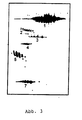
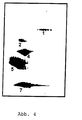
- PBCA particles There were plasma protein adsorption patterns from PBCA particles determined that no analgesic effect of darlagin in the CNS mediated.
- Fig. 3 shows that with unmodified PBCA particles gel obtained. No ApoE was detected.
- Fig. 4 shows the PBCA particle modified with Poloxamer 407 Gel. No ApoE was also detected and thus shown that there is no CNS activity in the absence of ApoE.
Landscapes
- Chemical & Material Sciences (AREA)
- Health & Medical Sciences (AREA)
- Chemical Kinetics & Catalysis (AREA)
- Engineering & Computer Science (AREA)
- Bioinformatics & Cheminformatics (AREA)
- Organic Chemistry (AREA)
- Veterinary Medicine (AREA)
- Animal Behavior & Ethology (AREA)
- Public Health (AREA)
- General Health & Medical Sciences (AREA)
- Life Sciences & Earth Sciences (AREA)
- Medicinal Chemistry (AREA)
- Pharmacology & Pharmacy (AREA)
- Epidemiology (AREA)
- Oil, Petroleum & Natural Gas (AREA)
- Biomedical Technology (AREA)
- General Chemical & Material Sciences (AREA)
- Nanotechnology (AREA)
- Combustion & Propulsion (AREA)
- Physics & Mathematics (AREA)
- Optics & Photonics (AREA)
- Neurology (AREA)
- Neurosurgery (AREA)
- Nuclear Medicine, Radiotherapy & Molecular Imaging (AREA)
- Medicinal Preparation (AREA)
- Medicines That Contain Protein Lipid Enzymes And Other Medicines (AREA)
Applications Claiming Priority (3)
| Application Number | Priority Date | Filing Date | Title |
|---|---|---|---|
| DE19745950A DE19745950A1 (de) | 1997-10-17 | 1997-10-17 | Arzneistoffträgerpartikel für die gewebespezifische Arzneistoffapplikation |
| DE19745950 | 1997-10-17 | ||
| EP98955425A EP1023052B1 (fr) | 1997-10-17 | 1998-10-13 | Particules d'excipient de medicament convenant a l'application d'un medicament propre aux tissus |
Related Parent Applications (2)
| Application Number | Title | Priority Date | Filing Date |
|---|---|---|---|
| EP98955425A Division EP1023052B1 (fr) | 1997-10-17 | 1998-10-13 | Particules d'excipient de medicament convenant a l'application d'un medicament propre aux tissus |
| EP98955425A Division-Into EP1023052B1 (fr) | 1997-10-17 | 1998-10-13 | Particules d'excipient de medicament convenant a l'application d'un medicament propre aux tissus |
Publications (2)
| Publication Number | Publication Date |
|---|---|
| EP1300139A2 true EP1300139A2 (fr) | 2003-04-09 |
| EP1300139A3 EP1300139A3 (fr) | 2004-01-28 |
Family
ID=7845860
Family Applications (2)
| Application Number | Title | Priority Date | Filing Date |
|---|---|---|---|
| EP98955425A Expired - Lifetime EP1023052B1 (fr) | 1997-10-17 | 1998-10-13 | Particules d'excipient de medicament convenant a l'application d'un medicament propre aux tissus |
| EP03000323A Withdrawn EP1300139A3 (fr) | 1997-10-17 | 1998-10-13 | Particules d'excipient de médicament convenant à l'application d'un médicament propre aux tissus |
Family Applications Before (1)
| Application Number | Title | Priority Date | Filing Date |
|---|---|---|---|
| EP98955425A Expired - Lifetime EP1023052B1 (fr) | 1997-10-17 | 1998-10-13 | Particules d'excipient de medicament convenant a l'application d'un medicament propre aux tissus |
Country Status (8)
| Country | Link |
|---|---|
| US (1) | US6288040B1 (fr) |
| EP (2) | EP1023052B1 (fr) |
| JP (1) | JP2002521311A (fr) |
| AT (1) | ATE249209T1 (fr) |
| AU (2) | AU1227299A (fr) |
| CA (1) | CA2308236A1 (fr) |
| DE (2) | DE19745950A1 (fr) |
| WO (1) | WO1999020256A2 (fr) |
Cited By (3)
| Publication number | Priority date | Publication date | Assignee | Title |
|---|---|---|---|---|
| DE102007006663A1 (de) * | 2007-02-10 | 2008-08-21 | Lts Lohmann Therapie-Systeme Ag | Transport von Arzneistoffen über die Blut-Hirn-Schranke mittels Apolipoproteinen |
| EP1392255B1 (fr) * | 2001-05-05 | 2011-06-08 | LTS LOHMANN Therapie-Systeme AG | Nanoparticules constituees d'une proteine a apolipoproteine e couplee et servant a traverser la barriere sang-cerveau et procedes pour leur production |
| WO2015081096A3 (fr) * | 2013-11-26 | 2015-07-16 | The Brigham And Women's Hospital, Inc. | Nanoparticules ciblant les récepteurs pour une administration de médicament médiée par transcytose améliorée |
Families Citing this family (42)
| Publication number | Priority date | Publication date | Assignee | Title |
|---|---|---|---|---|
| AU3176097A (en) | 1997-06-13 | 1998-12-30 | Medinova Medical Consulting Gmbh | Drug targeting system, method of its preparation and its use |
| DE19745950A1 (de) * | 1997-10-17 | 1999-04-22 | Dds Drug Delivery Service Ges | Arzneistoffträgerpartikel für die gewebespezifische Arzneistoffapplikation |
| US6979456B1 (en) | 1998-04-01 | 2005-12-27 | Jagotec Ag | Anticancer compositions |
| ES2211151T3 (es) | 1998-08-19 | 2004-07-01 | Skyepharma Canada Inc. | Dispersiones acuosas inyectables de propofol. |
| KR20020012215A (ko) * | 1999-05-07 | 2002-02-15 | 파르마솔 게엠베하 | 지질 매트릭스-약물 컨쥬게이트로부터 조제된 활성성분의투여 제어를 위한 약물 운반체 |
| CA2373239A1 (fr) * | 1999-05-20 | 2000-11-30 | Pharmasol Gmbh | Adjuvant a stabilite et biocompatibilite optimisees pour l'augmentation de la reponse immunitaire humorale et cellulaire |
| EP1100475A1 (fr) * | 1999-06-02 | 2001-05-23 | Medinova Medical Consulting Gmbh | Utilisation de nanoparticules chargees de medicament dans le traitement anticancereux |
| US20040126900A1 (en) * | 2001-04-13 | 2004-07-01 | Barry Stephen E | High affinity peptide- containing nanoparticles |
| DE10240035A1 (de) | 2002-08-30 | 2004-03-11 | Rehm, Bernd H.A., PD Dr.rer.nat. | Biogene Polyester-Partikel definierter Größe mit funktionalisierten Oberflächen:Herstellungsverfahren und pharmazeutische Zubereitungen, in denen diese enthalten sind |
| CN101284136A (zh) * | 2002-12-03 | 2008-10-15 | 布朗歇特洛克菲勒神经科学研究所 | 传输物质穿过血脑屏障的人工低密度脂蛋白载体 |
| US7803400B2 (en) | 2002-12-03 | 2010-09-28 | Blanchette Rockefeller Neurosciences Institute | Artificial low-density lipoprotein carriers for transport of substances across the blood-brain barrier |
| EP2314285B2 (fr) | 2003-02-14 | 2019-09-18 | Children's Hospital & Research Center at Oakland | Véhicule pour l'administration de médicaments lipophiliques et les méthodes pour son utilisation |
| WO2004105799A1 (fr) * | 2003-05-29 | 2004-12-09 | Toudai Tlo, Ltd. | Micelle polymere stabilisee |
| US9492400B2 (en) | 2004-11-04 | 2016-11-15 | Massachusetts Institute Of Technology | Coated controlled release polymer particles as efficient oral delivery vehicles for biopharmaceuticals |
| DE102005007374A1 (de) * | 2005-02-17 | 2006-08-24 | Universität Ulm | Nanopartikel und deren Verwendung |
| US9267937B2 (en) | 2005-12-15 | 2016-02-23 | Massachusetts Institute Of Technology | System for screening particles |
| ES2776100T3 (es) | 2006-03-31 | 2020-07-29 | Massachusetts Inst Technology | Sistema para el suministro dirigido de agentes terapéuticos |
| US8367113B2 (en) | 2006-05-15 | 2013-02-05 | Massachusetts Institute Of Technology | Polymers for functional particles |
| WO2007150030A2 (fr) | 2006-06-23 | 2007-12-27 | Massachusetts Institute Of Technology | Synthèse microfluidique de nanoparticules organiques |
| US8821943B2 (en) * | 2006-09-12 | 2014-09-02 | Board Of Regents Of The University Of Nebraska | Methods and compositions for targeted delivery of therapeutic agents |
| US8124598B2 (en) * | 2006-09-14 | 2012-02-28 | Sharon Sageman | 7-keto DHEA for psychiatric use |
| US9217129B2 (en) | 2007-02-09 | 2015-12-22 | Massachusetts Institute Of Technology | Oscillating cell culture bioreactor |
| WO2008124632A1 (fr) | 2007-04-04 | 2008-10-16 | Massachusetts Institute Of Technology | Nanoparticules assistées par des composés amphiphiles pour délivrance ciblée |
| EP2182978A4 (fr) * | 2007-07-20 | 2012-03-21 | Sanomune Inc | Kallikréine tissulaire destinée au traitement de maladies associées à la protéine amyloïde |
| US20100160274A1 (en) * | 2007-09-07 | 2010-06-24 | Sharon Sageman | 7-KETO DHEA for Psychiatric Use |
| EP2630966B1 (fr) | 2007-10-12 | 2017-04-19 | Massachusetts Institute of Technology | Nano-technologie de vaccin |
| US9550827B2 (en) | 2007-10-19 | 2017-01-24 | The Regents Of The University Of California | Methods for ameliorating and preventing central nervous system inflammation |
| EP2070521A1 (fr) | 2007-12-10 | 2009-06-17 | Bayer Schering Pharma Aktiengesellschaft | Nanoparticules à surface modifiée |
| WO2009158678A1 (fr) | 2008-06-27 | 2009-12-30 | Children's Hospital & Research Center At Oakland | Véhicule d'administration d'acide nucléique lipophile et ses procédés d'utilisation |
| US8591905B2 (en) | 2008-10-12 | 2013-11-26 | The Brigham And Women's Hospital, Inc. | Nicotine immunonanotherapeutics |
| US8343497B2 (en) | 2008-10-12 | 2013-01-01 | The Brigham And Women's Hospital, Inc. | Targeting of antigen presenting cells with immunonanotherapeutics |
| US8343498B2 (en) | 2008-10-12 | 2013-01-01 | Massachusetts Institute Of Technology | Adjuvant incorporation in immunonanotherapeutics |
| US8277812B2 (en) | 2008-10-12 | 2012-10-02 | Massachusetts Institute Of Technology | Immunonanotherapeutics that provide IgG humoral response without T-cell antigen |
| CA2762653A1 (fr) | 2009-05-27 | 2010-12-02 | Selecta Biosciences, Inc. | Composes agents immunomodulateurs-polymeres |
| AU2011258165B2 (en) | 2010-05-26 | 2016-11-17 | Selecta Biosciences, Inc. | Dose selection of adjuvanted synthetic nanocarriers |
| WO2012061717A1 (fr) | 2010-11-05 | 2012-05-10 | Selecta Biosciences, Inc. | Composés nicotiniques modifiés et procédés associés |
| JP2014521687A (ja) | 2011-07-29 | 2014-08-28 | セレクタ バイオサイエンシーズ インコーポレーテッド | 体液性および細胞傷害性tリンパ球(ctl)免疫応答を生成する合成ナノキャリア |
| US20130315891A1 (en) | 2012-05-25 | 2013-11-28 | Matthew Charles | Formulations of human tissue kallikrein-1 for parenteral delivery and related methods |
| EP2854841B1 (fr) | 2012-06-04 | 2017-02-22 | Diamedica Inc. | Isoformes de glycosylation de la kallikréine-1 tissulaire d'origine humaine |
| WO2015042170A1 (fr) | 2013-09-17 | 2015-03-26 | Wayne State University | Compositions et utilisations de combinaisons d'indoles associés à dim et de composés anti-androgène sélectionnés |
| CN110446501A (zh) | 2017-03-09 | 2019-11-12 | 代阿麦迪卡股份有限公司 | 组织激肽释放酶1的剂型 |
| US20230143984A1 (en) * | 2020-03-20 | 2023-05-11 | Heidelberg University | Colloidal carrier systems for transfer of agents to a desired site of action |
Family Cites Families (15)
| Publication number | Priority date | Publication date | Assignee | Title |
|---|---|---|---|---|
| EP0238645A1 (fr) * | 1985-10-03 | 1987-09-30 | Biotechnology Research Partners, Ltd. | Nouveaux systemes d'administration de medicaments a base de lipoproteines |
| CH677886A5 (fr) * | 1989-06-26 | 1991-07-15 | Hans Georg Prof Dr Weder | |
| WO1991004753A1 (fr) * | 1989-10-02 | 1991-04-18 | Cetus Corporation | Conjugues d'oligonucleotides non codants et leurs emplois therapeutiques |
| DE4018325A1 (de) * | 1990-06-08 | 1991-12-12 | Nattermann A & Cie | Bestimmung der abbaurate von lipoproteinen und apoproteinen |
| AU652778B2 (en) * | 1990-10-15 | 1994-09-08 | Quest International B.V. | Treatment composition |
| FR2677272B1 (fr) * | 1991-06-05 | 1995-03-03 | Biovecteurs As | Vecteur particulaire a tropisme selectif, procede de preparation et composition pharmaceutique. |
| DE4120760A1 (de) * | 1991-06-24 | 1993-03-04 | 3 M Medica Gmbh | Traegersysteme fuer arzneimittel |
| BR9201168A (pt) * | 1992-04-02 | 1994-04-12 | Zerbini E J Fundacao | Microemulsoes usadas como velculo para carregar quimioterapicos as celulas neoplasicas |
| WO1995000126A1 (fr) * | 1993-06-22 | 1995-01-05 | Sandoz Ltd. | Microspheres d'albumine a surface modifiee et compositions pharmaceutiques les contenant |
| DE4407898A1 (de) * | 1994-03-09 | 1995-09-14 | Hoechst Ag | Nanopartikel, enthaltend einen Wirkstoff und ein Polyketalweinsäureamid, Verfahren zu ihrer Herstellung und Verwendung derselben |
| GB9406094D0 (en) * | 1994-03-28 | 1994-05-18 | Univ Nottingham And University | Polymer microspheres and a method of production thereof |
| TW520297B (en) * | 1996-10-11 | 2003-02-11 | Sequus Pharm Inc | Fusogenic liposome composition and method |
| US6313089B1 (en) * | 1997-08-20 | 2001-11-06 | Duke University | Complexes of apolipoprotein E and ciliary neurotrophic factor (CNTF) and methods of use |
| WO1999016460A2 (fr) * | 1997-09-30 | 1999-04-08 | Duke University | Complexes d'apolipoproteine e/facteur de croissance et procedes d'utilisation |
| DE19745950A1 (de) * | 1997-10-17 | 1999-04-22 | Dds Drug Delivery Service Ges | Arzneistoffträgerpartikel für die gewebespezifische Arzneistoffapplikation |
-
1997
- 1997-10-17 DE DE19745950A patent/DE19745950A1/de not_active Withdrawn
-
1998
- 1998-10-13 WO PCT/EP1998/006429 patent/WO1999020256A2/fr not_active Ceased
- 1998-10-13 US US09/529,600 patent/US6288040B1/en not_active Expired - Fee Related
- 1998-10-13 EP EP98955425A patent/EP1023052B1/fr not_active Expired - Lifetime
- 1998-10-13 DE DE59809588T patent/DE59809588D1/de not_active Expired - Fee Related
- 1998-10-13 CA CA002308236A patent/CA2308236A1/fr not_active Abandoned
- 1998-10-13 EP EP03000323A patent/EP1300139A3/fr not_active Withdrawn
- 1998-10-13 AU AU12272/99A patent/AU1227299A/en not_active Abandoned
- 1998-10-13 AT AT98955425T patent/ATE249209T1/de not_active IP Right Cessation
- 1998-10-13 JP JP2000516655A patent/JP2002521311A/ja not_active Withdrawn
-
2003
- 2003-02-25 AU AU2003200687A patent/AU2003200687A1/en not_active Abandoned
Cited By (3)
| Publication number | Priority date | Publication date | Assignee | Title |
|---|---|---|---|---|
| EP1392255B1 (fr) * | 2001-05-05 | 2011-06-08 | LTS LOHMANN Therapie-Systeme AG | Nanoparticules constituees d'une proteine a apolipoproteine e couplee et servant a traverser la barriere sang-cerveau et procedes pour leur production |
| DE102007006663A1 (de) * | 2007-02-10 | 2008-08-21 | Lts Lohmann Therapie-Systeme Ag | Transport von Arzneistoffen über die Blut-Hirn-Schranke mittels Apolipoproteinen |
| WO2015081096A3 (fr) * | 2013-11-26 | 2015-07-16 | The Brigham And Women's Hospital, Inc. | Nanoparticules ciblant les récepteurs pour une administration de médicament médiée par transcytose améliorée |
Also Published As
| Publication number | Publication date |
|---|---|
| AU2003200687A8 (en) | 2003-05-01 |
| DE19745950A1 (de) | 1999-04-22 |
| AU1227299A (en) | 1999-05-10 |
| WO1999020256A3 (fr) | 1999-08-19 |
| EP1023052A2 (fr) | 2000-08-02 |
| EP1300139A3 (fr) | 2004-01-28 |
| ATE249209T1 (de) | 2003-09-15 |
| US6288040B1 (en) | 2001-09-11 |
| DE59809588D1 (de) | 2003-10-16 |
| CA2308236A1 (fr) | 1999-04-29 |
| AU2003200687A1 (en) | 2003-05-01 |
| JP2002521311A (ja) | 2002-07-16 |
| WO1999020256A2 (fr) | 1999-04-29 |
| EP1023052B1 (fr) | 2003-09-10 |
Similar Documents
| Publication | Publication Date | Title |
|---|---|---|
| EP1023052B1 (fr) | Particules d'excipient de medicament convenant a l'application d'un medicament propre aux tissus | |
| EP0605497B1 (fr) | Excipient constitue de particules lipidiques solides dites nanospheres lipidiques solides (sln) | |
| EP1194123B1 (fr) | Procede pour la production douce de microparticules et de nanoparticules extra-fines | |
| DE69230254T2 (de) | Herstellung von Mikropartikeln | |
| DE3024858C2 (de) | Verfahren zur Herstellung einer anhaltend freigebenden pharmazeutischen Zubereitung eines festen Medikamentenmaterials | |
| Kaur et al. | Potential of solid lipid nanoparticles in brain targeting | |
| US9248101B2 (en) | Method for the gentle production of ultrafine particle suspensions and ultrafine particles and the use thereof | |
| JP2003524654A (ja) | ナノカプセルカプセル化システムおよび方法 | |
| DE102005011786A1 (de) | Verfahren zur Herstellung ultrafeiner Submicron-Suspensionen | |
| EP1176949A2 (fr) | Particules lipidiques a base de melanges de lipides liquides et solides et procede pour les produire | |
| WO2010106063A2 (fr) | Matériaux composites chargés en produits thérapeutiques et de diagnostics comprenant des nanoparticules polymères et des fibres polymères | |
| WO2007025767A2 (fr) | Complexe nanoparticulaire d'inclusion et de charge pour formulations pharmaceutiques | |
| WO2007104422A2 (fr) | Nanoparticules chargées d'agent actif, à base de protéines hydrophiles | |
| Borbás et al. | Effect of formulation additives on drug transport through size-exclusion membranes | |
| Mazumder et al. | Satranidazole-loaded chitosan/locust bean gum/xanthan gum polysaccharide composite multiunit pellets for colon targeting: in vitro–in vivo investigation | |
| EP0948321B1 (fr) | Preparation sous forme d'un compose materiau matriciel-matiere auxiliaire renfermant eventuellement une matiere active | |
| Aneja et al. | Targeted drug delivery with nanosponges and nanocrystals: innovations, formulation strategies, and applications | |
| DE102005017777A1 (de) | Verfahren zur schonenden Herstellung von hochfeinen Partikelsuspensionen | |
| DE19945203A1 (de) | Fest-flüssig (halbfeste) Lipidpartikel (Nano-Compartiment-Carrier-NCC) und Verfahren zur Herstellung hochkonzentrierter Lipidpartikel | |
| Rani et al. | Design, fabrication, optimization and characterization of memantine-loaded biodegradable PLGA nanoscaffolds for treatment of Alzheimer’s disease | |
| Hapse et al. | Nanotechnology Based Approaches For Enhancements of Bioavailability of Sustain Release Formulation. | |
| DE19749897C1 (de) | Zubereitung in Form eines Lipid-Hilfsstoff-Compounds und/oder eines Lipid-Wirkstoff-Compounds und Verfahren zu dessen Herstellung sowie dessen Verwendung zur Herstellung von Tabletten und/oder anderen größeren Matrixeinheiten | |
| Srirat et al. | In Vitro and In Silico Evaluation of Turmeric Extracts for Anticholinesterase Effects and their Topical Formulation for Future Application in Alzheimer’s Disease | |
| Dario et al. | Nanocarrier-based drug delivery for mild cognitive impairment: Extracellular vesicles and carbon nanotubes as emerging therapeutic tools | |
| Jadhao et al. | PHARMACEUTICAL SCIENCES |
Legal Events
| Date | Code | Title | Description |
|---|---|---|---|
| PUAI | Public reference made under article 153(3) epc to a published international application that has entered the european phase |
Free format text: ORIGINAL CODE: 0009012 |
|
| 17P | Request for examination filed |
Effective date: 20030108 |
|
| AC | Divisional application: reference to earlier application |
Ref document number: 1023052 Country of ref document: EP Kind code of ref document: P |
|
| AK | Designated contracting states |
Kind code of ref document: A2 Designated state(s): AT BE CH CY DE DK ES FI FR GB GR IE IT LI LU MC NL PT SE Designated state(s): AT BE CH CY DE DK ES FI FR GB GR IE IT LI LU MC NL PT SE |
|
| AX | Request for extension of the european patent |
Extension state: AL LT LV MK RO SI |
|
| PUAL | Search report despatched |
Free format text: ORIGINAL CODE: 0009013 |
|
| AK | Designated contracting states |
Kind code of ref document: A3 Designated state(s): AT BE CH CY DE DK ES FI FR GB GR IE IT LI LU MC NL PT SE |
|
| AX | Request for extension of the european patent |
Extension state: AL LT LV MK RO SI |
|
| AKX | Designation fees paid |
Designated state(s): AT BE CH CY DE DK ES FI FR GB GR IE IT LI LU MC NL PT SE |
|
| AXX | Extension fees paid |
Extension state: RO Payment date: 20030108 Extension state: MK Payment date: 20030108 Extension state: LV Payment date: 20030108 Extension state: LT Payment date: 20030108 Extension state: AL Payment date: 20030108 |
|
| STAA | Information on the status of an ep patent application or granted ep patent |
Free format text: STATUS: THE APPLICATION IS DEEMED TO BE WITHDRAWN |
|
| 18D | Application deemed to be withdrawn |
Effective date: 20040729 |