EP1300472A1 - Verfahren zur Prüfung der Wirkung von Nahrungsmittel, eine Resistenz gegen Kolonisation durch Bakterien zuerzeugen - Google Patents
Verfahren zur Prüfung der Wirkung von Nahrungsmittel, eine Resistenz gegen Kolonisation durch Bakterien zuerzeugen Download PDFInfo
- Publication number
- EP1300472A1 EP1300472A1 EP01203745A EP01203745A EP1300472A1 EP 1300472 A1 EP1300472 A1 EP 1300472A1 EP 01203745 A EP01203745 A EP 01203745A EP 01203745 A EP01203745 A EP 01203745A EP 1300472 A1 EP1300472 A1 EP 1300472A1
- Authority
- EP
- European Patent Office
- Prior art keywords
- microorganism
- substance
- volunteers
- diet
- bacterium
- Prior art date
- Legal status (The legal status is an assumption and is not a legal conclusion. Google has not performed a legal analysis and makes no representation as to the accuracy of the status listed.)
- Withdrawn
Links
- 238000000034 method Methods 0.000 title claims abstract description 52
- 230000000694 effects Effects 0.000 title claims abstract description 18
- 230000002496 gastric effect Effects 0.000 title claims abstract description 8
- 238000012360 testing method Methods 0.000 title claims abstract description 8
- 235000015097 nutrients Nutrition 0.000 title claims description 5
- 244000005700 microbiome Species 0.000 claims abstract description 72
- 239000000126 substance Substances 0.000 claims abstract description 46
- 239000011575 calcium Substances 0.000 claims abstract description 35
- 229910052791 calcium Inorganic materials 0.000 claims abstract description 35
- OYPRJOBELJOOCE-UHFFFAOYSA-N Calcium Chemical compound [Ca] OYPRJOBELJOOCE-UHFFFAOYSA-N 0.000 claims abstract description 34
- 208000015181 infectious disease Diseases 0.000 claims abstract description 29
- 241000894006 Bacteria Species 0.000 claims abstract description 25
- 241000282414 Homo sapiens Species 0.000 claims abstract description 18
- 210000001035 gastrointestinal tract Anatomy 0.000 claims abstract description 17
- 230000001717 pathogenic effect Effects 0.000 claims abstract description 15
- 244000052616 bacterial pathogen Species 0.000 claims abstract description 12
- 206010017964 Gastrointestinal infection Diseases 0.000 claims abstract description 8
- 230000009286 beneficial effect Effects 0.000 claims abstract description 7
- 210000004347 intestinal mucosa Anatomy 0.000 claims abstract description 7
- 229940126578 oral vaccine Drugs 0.000 claims abstract description 7
- 230000002238 attenuated effect Effects 0.000 claims abstract description 6
- 241000588724 Escherichia coli Species 0.000 claims abstract description 5
- 208000019836 digestive system infectious disease Diseases 0.000 claims abstract description 5
- 230000000688 enterotoxigenic effect Effects 0.000 claims abstract description 4
- 235000005911 diet Nutrition 0.000 claims description 53
- 230000037213 diet Effects 0.000 claims description 49
- 210000003608 fece Anatomy 0.000 claims description 8
- 235000013305 food Nutrition 0.000 claims description 7
- 239000006041 probiotic Substances 0.000 claims description 5
- 235000018291 probiotics Nutrition 0.000 claims description 5
- 230000000529 probiotic effect Effects 0.000 claims description 4
- 239000003814 drug Substances 0.000 claims description 3
- 244000000010 microbial pathogen Species 0.000 claims description 3
- 239000003963 antioxidant agent Substances 0.000 claims description 2
- 230000003078 antioxidant effect Effects 0.000 claims description 2
- 150000001720 carbohydrates Chemical class 0.000 claims description 2
- 239000003995 emulsifying agent Substances 0.000 claims description 2
- 239000000147 enterotoxin Substances 0.000 claims description 2
- 231100000655 enterotoxin Toxicity 0.000 claims description 2
- 235000007983 food acid Nutrition 0.000 claims description 2
- 239000002778 food additive Substances 0.000 claims description 2
- 235000013373 food additive Nutrition 0.000 claims description 2
- 229910052500 inorganic mineral Inorganic materials 0.000 claims description 2
- 150000002632 lipids Chemical class 0.000 claims description 2
- 238000004519 manufacturing process Methods 0.000 claims description 2
- 239000011707 mineral Substances 0.000 claims description 2
- 235000010755 mineral Nutrition 0.000 claims description 2
- 239000002417 nutraceutical Substances 0.000 claims description 2
- 235000021436 nutraceutical agent Nutrition 0.000 claims description 2
- 235000013406 prebiotics Nutrition 0.000 claims description 2
- 239000003755 preservative agent Substances 0.000 claims description 2
- 108090000623 proteins and genes Proteins 0.000 claims description 2
- 102000004169 proteins and genes Human genes 0.000 claims description 2
- 235000013343 vitamin Nutrition 0.000 claims description 2
- 239000011782 vitamin Substances 0.000 claims description 2
- 229940088594 vitamin Drugs 0.000 claims description 2
- 229930003231 vitamin Natural products 0.000 claims description 2
- 150000003722 vitamin derivatives Chemical class 0.000 claims description 2
- 208000024891 symptom Diseases 0.000 abstract description 7
- 230000000813 microbial effect Effects 0.000 abstract description 5
- 241000700605 Viruses Species 0.000 abstract description 4
- 241000233866 Fungi Species 0.000 abstract description 3
- 235000012041 food component Nutrition 0.000 abstract description 2
- 244000000036 gastrointestinal pathogen Species 0.000 abstract description 2
- 239000005417 food ingredient Substances 0.000 abstract 1
- 235000013336 milk Nutrition 0.000 description 6
- 239000008267 milk Substances 0.000 description 6
- 210000004080 milk Anatomy 0.000 description 6
- 159000000007 calcium salts Chemical class 0.000 description 5
- 230000029142 excretion Effects 0.000 description 5
- 239000000203 mixture Substances 0.000 description 5
- 244000052769 pathogen Species 0.000 description 5
- 208000004998 Abdominal Pain Diseases 0.000 description 4
- 241000186660 Lactobacillus Species 0.000 description 4
- 150000001875 compounds Chemical class 0.000 description 4
- 230000000378 dietary effect Effects 0.000 description 4
- 239000000902 placebo Substances 0.000 description 4
- 229940068196 placebo Drugs 0.000 description 4
- 241000894007 species Species 0.000 description 4
- 238000002255 vaccination Methods 0.000 description 4
- 229960005486 vaccine Drugs 0.000 description 4
- 206010012735 Diarrhoea Diseases 0.000 description 3
- 241000282412 Homo Species 0.000 description 3
- 206010028813 Nausea Diseases 0.000 description 3
- 206010037660 Pyrexia Diseases 0.000 description 3
- 206010047700 Vomiting Diseases 0.000 description 3
- 239000003242 anti bacterial agent Substances 0.000 description 3
- 239000008280 blood Substances 0.000 description 3
- 210000004369 blood Anatomy 0.000 description 3
- 230000036541 health Effects 0.000 description 3
- 230000000968 intestinal effect Effects 0.000 description 3
- 239000007788 liquid Substances 0.000 description 3
- 239000003550 marker Substances 0.000 description 3
- 230000008693 nausea Effects 0.000 description 3
- 238000011002 quantification Methods 0.000 description 3
- 230000009467 reduction Effects 0.000 description 3
- 210000003296 saliva Anatomy 0.000 description 3
- 239000007787 solid Substances 0.000 description 3
- 210000002700 urine Anatomy 0.000 description 3
- 230000008673 vomiting Effects 0.000 description 3
- IJGRMHOSHXDMSA-UHFFFAOYSA-N Atomic nitrogen Chemical compound N#N IJGRMHOSHXDMSA-UHFFFAOYSA-N 0.000 description 2
- 241000186000 Bifidobacterium Species 0.000 description 2
- OKTJSMMVPCPJKN-UHFFFAOYSA-N Carbon Chemical compound [C] OKTJSMMVPCPJKN-UHFFFAOYSA-N 0.000 description 2
- 208000002881 Colic Diseases 0.000 description 2
- 241000224466 Giardia Species 0.000 description 2
- 206010019233 Headaches Diseases 0.000 description 2
- 240000001929 Lactobacillus brevis Species 0.000 description 2
- 241001465754 Metazoa Species 0.000 description 2
- 241000607142 Salmonella Species 0.000 description 2
- 241000191940 Staphylococcus Species 0.000 description 2
- 241000194017 Streptococcus Species 0.000 description 2
- 235000009499 Vanilla fragrans Nutrition 0.000 description 2
- 244000263375 Vanilla tahitensis Species 0.000 description 2
- 235000012036 Vanilla tahitensis Nutrition 0.000 description 2
- 229940088710 antibiotic agent Drugs 0.000 description 2
- 230000005875 antibody response Effects 0.000 description 2
- 239000000427 antigen Substances 0.000 description 2
- 102000036639 antigens Human genes 0.000 description 2
- 108091007433 antigens Proteins 0.000 description 2
- 230000001580 bacterial effect Effects 0.000 description 2
- 230000003115 biocidal effect Effects 0.000 description 2
- VTYYLEPIZMXCLO-UHFFFAOYSA-L calcium carbonate Substances [Ca+2].[O-]C([O-])=O VTYYLEPIZMXCLO-UHFFFAOYSA-L 0.000 description 2
- 230000008859 change Effects 0.000 description 2
- 230000001332 colony forming effect Effects 0.000 description 2
- 235000011950 custard Nutrition 0.000 description 2
- 238000001514 detection method Methods 0.000 description 2
- 231100000869 headache Toxicity 0.000 description 2
- 229940039696 lactobacillus Drugs 0.000 description 2
- 235000021194 placebo diet Nutrition 0.000 description 2
- 238000002360 preparation method Methods 0.000 description 2
- 238000007619 statistical method Methods 0.000 description 2
- UCSJYZPVAKXKNQ-HZYVHMACSA-N streptomycin Chemical compound CN[C@H]1[C@H](O)[C@@H](O)[C@H](CO)O[C@H]1O[C@@H]1[C@](C=O)(O)[C@H](C)O[C@H]1O[C@@H]1[C@@H](NC(N)=N)[C@H](O)[C@@H](NC(N)=N)[C@H](O)[C@H]1O UCSJYZPVAKXKNQ-HZYVHMACSA-N 0.000 description 2
- 229920001817 Agar Polymers 0.000 description 1
- QGZKDVFQNNGYKY-UHFFFAOYSA-O Ammonium Chemical compound [NH4+] QGZKDVFQNNGYKY-UHFFFAOYSA-O 0.000 description 1
- 241000193830 Bacillus <bacterium> Species 0.000 description 1
- 208000034309 Bacterial disease carrier Diseases 0.000 description 1
- 241000606125 Bacteroides Species 0.000 description 1
- 241001134770 Bifidobacterium animalis Species 0.000 description 1
- 241000186016 Bifidobacterium bifidum Species 0.000 description 1
- 241001312342 Bifidobacterium gallinarum Species 0.000 description 1
- 241001608472 Bifidobacterium longum Species 0.000 description 1
- 241000186015 Bifidobacterium longum subsp. infantis Species 0.000 description 1
- 241000186153 Bifidobacterium magnum Species 0.000 description 1
- 241001468229 Bifidobacterium thermophilum Species 0.000 description 1
- -1 Ca2+ ions Chemical class 0.000 description 1
- UXVMQQNJUSDDNG-UHFFFAOYSA-L Calcium chloride Chemical compound [Cl-].[Cl-].[Ca+2] UXVMQQNJUSDDNG-UHFFFAOYSA-L 0.000 description 1
- 241000589876 Campylobacter Species 0.000 description 1
- 229920001268 Cholestyramine Polymers 0.000 description 1
- 241000193403 Clostridium Species 0.000 description 1
- 241000224483 Coccidia Species 0.000 description 1
- 241000223935 Cryptosporidium Species 0.000 description 1
- 241000224431 Entamoeba Species 0.000 description 1
- 241000588921 Enterobacteriaceae Species 0.000 description 1
- 241000194033 Enterococcus Species 0.000 description 1
- 101710146739 Enterotoxin Proteins 0.000 description 1
- 241000186394 Eubacterium Species 0.000 description 1
- 241000192125 Firmicutes Species 0.000 description 1
- 241000250507 Gigaspora candida Species 0.000 description 1
- 108010043121 Green Fluorescent Proteins Proteins 0.000 description 1
- 102000004144 Green Fluorescent Proteins Human genes 0.000 description 1
- DGAQECJNVWCQMB-PUAWFVPOSA-M Ilexoside XXIX Chemical compound C[C@@H]1CC[C@@]2(CC[C@@]3(C(=CC[C@H]4[C@]3(CC[C@@H]5[C@@]4(CC[C@@H](C5(C)C)OS(=O)(=O)[O-])C)C)[C@@H]2[C@]1(C)O)C)C(=O)O[C@H]6[C@@H]([C@H]([C@@H]([C@H](O6)CO)O)O)O.[Na+] DGAQECJNVWCQMB-PUAWFVPOSA-M 0.000 description 1
- 206010061598 Immunodeficiency Diseases 0.000 description 1
- 241000588748 Klebsiella Species 0.000 description 1
- 240000001046 Lactobacillus acidophilus Species 0.000 description 1
- 241000186713 Lactobacillus amylovorus Species 0.000 description 1
- 241000218492 Lactobacillus crispatus Species 0.000 description 1
- 241000186840 Lactobacillus fermentum Species 0.000 description 1
- 241000509544 Lactobacillus gallinarum Species 0.000 description 1
- 241000186606 Lactobacillus gasseri Species 0.000 description 1
- 241001561398 Lactobacillus jensenii Species 0.000 description 1
- 241001468157 Lactobacillus johnsonii Species 0.000 description 1
- 241000186871 Lactobacillus murinus Species 0.000 description 1
- 241000186605 Lactobacillus paracasei Species 0.000 description 1
- 240000006024 Lactobacillus plantarum Species 0.000 description 1
- 241000186604 Lactobacillus reuteri Species 0.000 description 1
- 241000186869 Lactobacillus salivarius Species 0.000 description 1
- 241000194036 Lactococcus Species 0.000 description 1
- 201000010538 Lactose Intolerance Diseases 0.000 description 1
- 241001245510 Lambia <signal fly> Species 0.000 description 1
- 241000192132 Leuconostoc Species 0.000 description 1
- 241000186781 Listeria Species 0.000 description 1
- 108060001084 Luciferase Proteins 0.000 description 1
- 239000005089 Luciferase Substances 0.000 description 1
- 102000015728 Mucins Human genes 0.000 description 1
- 108010063954 Mucins Proteins 0.000 description 1
- 102000003896 Myeloperoxidases Human genes 0.000 description 1
- 108090000235 Myeloperoxidases Proteins 0.000 description 1
- 241000714209 Norwalk virus Species 0.000 description 1
- 241000191992 Peptostreptococcus Species 0.000 description 1
- ZLMJMSJWJFRBEC-UHFFFAOYSA-N Potassium Chemical compound [K] ZLMJMSJWJFRBEC-UHFFFAOYSA-N 0.000 description 1
- 241000186429 Propionibacterium Species 0.000 description 1
- 241000588769 Proteus <enterobacteria> Species 0.000 description 1
- 241000589516 Pseudomonas Species 0.000 description 1
- 241000702670 Rotavirus Species 0.000 description 1
- 241000224003 Sarcocystis Species 0.000 description 1
- 241000607768 Shigella Species 0.000 description 1
- 241001591005 Siga Species 0.000 description 1
- 241001533587 Spironucleus Species 0.000 description 1
- 241000223996 Toxoplasma Species 0.000 description 1
- 241001502500 Trichomonadida Species 0.000 description 1
- 241000364021 Tulsa Species 0.000 description 1
- 241000607598 Vibrio Species 0.000 description 1
- 241000607734 Yersinia <bacteria> Species 0.000 description 1
- 230000002378 acidificating effect Effects 0.000 description 1
- 230000006978 adaptation Effects 0.000 description 1
- 239000008272 agar Substances 0.000 description 1
- 238000010171 animal model Methods 0.000 description 1
- 229940069428 antacid Drugs 0.000 description 1
- 239000003159 antacid agent Substances 0.000 description 1
- 238000013459 approach Methods 0.000 description 1
- 230000004888 barrier function Effects 0.000 description 1
- 108010005774 beta-Galactosidase Proteins 0.000 description 1
- 102000005936 beta-Galactosidase Human genes 0.000 description 1
- 239000003613 bile acid Substances 0.000 description 1
- 239000012620 biological material Substances 0.000 description 1
- VSGNNIFQASZAOI-UHFFFAOYSA-L calcium acetate Chemical compound [Ca+2].CC([O-])=O.CC([O-])=O VSGNNIFQASZAOI-UHFFFAOYSA-L 0.000 description 1
- 239000001639 calcium acetate Substances 0.000 description 1
- 229960005147 calcium acetate Drugs 0.000 description 1
- 235000011092 calcium acetate Nutrition 0.000 description 1
- 235000010216 calcium carbonate Nutrition 0.000 description 1
- 239000001110 calcium chloride Substances 0.000 description 1
- 229910001628 calcium chloride Inorganic materials 0.000 description 1
- 235000011148 calcium chloride Nutrition 0.000 description 1
- 239000001506 calcium phosphate Substances 0.000 description 1
- 235000011010 calcium phosphates Nutrition 0.000 description 1
- 239000002775 capsule Substances 0.000 description 1
- 150000001722 carbon compounds Chemical class 0.000 description 1
- 150000001768 cations Chemical class 0.000 description 1
- 230000001413 cellular effect Effects 0.000 description 1
- 235000014510 cooky Nutrition 0.000 description 1
- 231100000135 cytotoxicity Toxicity 0.000 description 1
- 230000003013 cytotoxicity Effects 0.000 description 1
- 235000014113 dietary fatty acids Nutrition 0.000 description 1
- 235000021004 dietary regimen Nutrition 0.000 description 1
- 229940079593 drug Drugs 0.000 description 1
- 239000002702 enteric coating Substances 0.000 description 1
- 238000009505 enteric coating Methods 0.000 description 1
- 230000007717 exclusion Effects 0.000 description 1
- 238000002474 experimental method Methods 0.000 description 1
- 239000000194 fatty acid Substances 0.000 description 1
- 229930195729 fatty acid Natural products 0.000 description 1
- 150000004665 fatty acids Chemical class 0.000 description 1
- 230000002550 fecal effect Effects 0.000 description 1
- 239000000796 flavoring agent Substances 0.000 description 1
- 235000019634 flavors Nutrition 0.000 description 1
- 238000009472 formulation Methods 0.000 description 1
- 235000015203 fruit juice Nutrition 0.000 description 1
- 210000003736 gastrointestinal content Anatomy 0.000 description 1
- 239000005090 green fluorescent protein Substances 0.000 description 1
- 244000005709 gut microbiome Species 0.000 description 1
- 235000021137 habitual diet Nutrition 0.000 description 1
- 229960003444 immunosuppressant agent Drugs 0.000 description 1
- 239000003018 immunosuppressive agent Substances 0.000 description 1
- 230000002779 inactivation Effects 0.000 description 1
- 230000001524 infective effect Effects 0.000 description 1
- 230000002757 inflammatory effect Effects 0.000 description 1
- 210000000936 intestine Anatomy 0.000 description 1
- 230000009545 invasion Effects 0.000 description 1
- 101150066555 lacZ gene Proteins 0.000 description 1
- JCQLYHFGKNRPGE-FCVZTGTOSA-N lactulose Chemical compound OC[C@H]1O[C@](O)(CO)[C@@H](O)[C@@H]1O[C@H]1[C@H](O)[C@@H](O)[C@@H](O)[C@@H](CO)O1 JCQLYHFGKNRPGE-FCVZTGTOSA-N 0.000 description 1
- 229960000511 lactulose Drugs 0.000 description 1
- PFCRQPBOOFTZGQ-UHFFFAOYSA-N lactulose keto form Natural products OCC(=O)C(O)C(C(O)CO)OC1OC(CO)C(O)C(O)C1O PFCRQPBOOFTZGQ-UHFFFAOYSA-N 0.000 description 1
- 239000008141 laxative Substances 0.000 description 1
- 229940125722 laxative agent Drugs 0.000 description 1
- 244000005706 microflora Species 0.000 description 1
- 229940051875 mucins Drugs 0.000 description 1
- 229910052757 nitrogen Inorganic materials 0.000 description 1
- 229910017464 nitrogen compound Inorganic materials 0.000 description 1
- 150000002830 nitrogen compounds Chemical class 0.000 description 1
- 210000000056 organ Anatomy 0.000 description 1
- 235000016046 other dairy product Nutrition 0.000 description 1
- 230000035515 penetration Effects 0.000 description 1
- 238000007747 plating Methods 0.000 description 1
- 230000008092 positive effect Effects 0.000 description 1
- 239000011591 potassium Substances 0.000 description 1
- 229910052700 potassium Inorganic materials 0.000 description 1
- 230000002265 prevention Effects 0.000 description 1
- 230000001737 promoting effect Effects 0.000 description 1
- 230000001681 protective effect Effects 0.000 description 1
- 230000001105 regulatory effect Effects 0.000 description 1
- 238000013207 serial dilution Methods 0.000 description 1
- 210000002966 serum Anatomy 0.000 description 1
- 239000011734 sodium Substances 0.000 description 1
- 229910052708 sodium Inorganic materials 0.000 description 1
- 230000000638 stimulation Effects 0.000 description 1
- 210000002784 stomach Anatomy 0.000 description 1
- 229960005322 streptomycin Drugs 0.000 description 1
- 238000001356 surgical procedure Methods 0.000 description 1
- 230000004083 survival effect Effects 0.000 description 1
- 239000000725 suspension Substances 0.000 description 1
- 231100000331 toxic Toxicity 0.000 description 1
- 230000002588 toxic effect Effects 0.000 description 1
- QORWJWZARLRLPR-UHFFFAOYSA-H tricalcium bis(phosphate) Chemical class [Ca+2].[Ca+2].[Ca+2].[O-]P([O-])([O-])=O.[O-]P([O-])([O-])=O QORWJWZARLRLPR-UHFFFAOYSA-H 0.000 description 1
- 235000013311 vegetables Nutrition 0.000 description 1
- 230000003612 virological effect Effects 0.000 description 1
- 239000011800 void material Substances 0.000 description 1
- XLYOFNOQVPJJNP-UHFFFAOYSA-N water Substances O XLYOFNOQVPJJNP-UHFFFAOYSA-N 0.000 description 1
Images
Classifications
-
- C—CHEMISTRY; METALLURGY
- C12—BIOCHEMISTRY; BEER; SPIRITS; WINE; VINEGAR; MICROBIOLOGY; ENZYMOLOGY; MUTATION OR GENETIC ENGINEERING
- C12Q—MEASURING OR TESTING PROCESSES INVOLVING ENZYMES, NUCLEIC ACIDS OR MICROORGANISMS; COMPOSITIONS OR TEST PAPERS THEREFOR; PROCESSES OF PREPARING SUCH COMPOSITIONS; CONDITION-RESPONSIVE CONTROL IN MICROBIOLOGICAL OR ENZYMOLOGICAL PROCESSES
- C12Q1/00—Measuring or testing processes involving enzymes, nucleic acids or microorganisms; Compositions therefor; Processes of preparing such compositions
- C12Q1/02—Measuring or testing processes involving enzymes, nucleic acids or microorganisms; Compositions therefor; Processes of preparing such compositions involving viable microorganisms
- C12Q1/04—Determining presence or kind of microorganism; Use of selective media for testing antibiotics or bacteriocides; Compositions containing a chemical indicator therefor
- C12Q1/10—Enterobacteria
Definitions
- the present invention relates to a method for testing in humans the effect of nutrients on the colonisation or infection by gastrointestinal microorganisms.
- Food-borne infections or gastrointestinal infections are highly prevalent in man. In the Netherlands on average 10% of the population suffers from a food-borne infection at least once in a year. For travellers to tropical regions this percentage can even reach up to 80%. Usually, after a few days of diarrhoea, abdominal cramps, nausea, fever and/or vomiting the patient recovers from the infection. However, in people with reduced resistance, such as new-borns, the elderly and immunocompromised subjects, gastrointestinal infections may lead to live-threatening complications. Treatment of food-borne infections with antibiotics is often not very effective. Moreover, bacterial pathogens are increasingly becoming resistant to these compounds.
- one alternative approach is to adapt the diet to increase the resistance of the human subjects to food-borne infections.
- the composition of the ingested food largely determines the content of the gastrointestinal tract, which, in turn, affects (1) the survival of bacterial pathogens during its passage through the gastrointestinal tract, (2) the beneficial and protective microflora, and (3) the barrier function of the intestinal mucosa.
- the present invention relates to a method for testing the effect of a dietary substance on the resistance to microbial infection of the human gastrointestinal tract.
- the method comprises the steps of (a) acquiring at least two of human volunteers; (b) separating the volunteers into two or more groups; (c) putting each group on a different diet whereby the diets differ at least in the amount of the substance present in the diet; (d) oral administration of a viable microorganism to the volunteers, while the volunteers are on the diet; (e) determining on the volunteers a clinical parameter indicative of the presence of the microorganism in the gastrointestinal tract while the volunteers are on the diet (f) comparing the clinical parameter indicative of the presence of the microorganism in the gastrointestinal tract, between the different groups to determine the effect of the substance on the colonisation or infection of the human gastrointestinal tract by the microorganism.
- the effect of the substance on the colonisation or infection by the microorganism is preferably determined by measuring the effect of the substance on a clinical parameter associated with the administration of the microorganism, or rather, a parameter indicative of the presence of the microorganism in the gastrointestinal tract.
- a given substance may reduce or increase the clinical parameter or the substance may not affect the clinical symptoms.
- the substance may influence the duration of the deviation of the clinical parameter indicative of the presence of the microorganism in the gastrointestinal tract as compared to the normal value of the parameter in subjects in which the microorganism is not present.
- the clinical parameter may be a clinical symptom associated with infection or colonisation by the microorganism, such as e.g. a gastrointestinal pathogen. Such clinical symptoms may e.g.
- microorganisms include diarrhoea, nausea, headache, abdominal pain or cramps, fever, vomiting and perspiration.
- Further clinical parameters that may be used to determine the effect of the substance on the colonisation or infection by the microorganism include e.g. an antibody response against the microorganism's antigens.
- a preferred clinical parameter to be determined is the colonisation resistance to the microorganism.
- the colonisation resistance to a microorganism usually a bacterium, is inversely proportional to the excretion of the microorganism in faeces over time.
- the colonisation resistance against pathogens therefore preferably is as high as possible.
- a preferred method of the invention is a method for testing the effect of a substance on the colonisation resistance of a microorganism in humans, wherein the method comprises the steps of: (a) acquiring at least two of human volunteers; (b) separating the volunteers into two or more groups; (c) putting each group on a different diet whereby the diets differ at least in the amount of the substance present in the diet; (d) oral administration of the microorganism to the volunteers, while the volunteers are on the diet; (e) determining the amount of the microorganism in a faecal sample obtained from the volunteers while the volunteers are on the diet; and, (f) comparing the amounts of the microorganism in the faecal samples between the different groups to determine the effect of the substance on the colonisation resistance to the microorganism.
- the volunteers are preferably included on the basis of informed consent and preferably are healthy.
- the volunteers may either be male or female although per individual study, preferably volunteers of one and the same sex are included.
- the volunteers preferably have a minimum age of 20 or 21 years and preferably a maximum age of 50, 55 or 60 years.
- the volunteers are included on the basis of a more narrow range of ages, e.g. differing no more than 5, 10, 15 or 20 years in age.
- the volunteers may further be asked to keep a diary in order to verify that the diets are faithfully followed.
- the numbers of volunteers to be included per group is determined by power analysis. For that purpose the smallest difference of clinical relevance and the usual amount of variability (of continuous variables) needs to be specified. Power analysis calculates the sample size necessary to have a high probability of obtaining a statistically significant result if that is a true difference. Methods for power analysis are known per se to the skilled person (see e.g. Dawson-Saunders B and Trapp RG. Basic & clinical biostatistics, pp 275-276; 1994 sec edition; Appleton & Lange, Norwalk, Connecticut).
- the substance to be tested preferably is a substance suitable for human consumption.
- the substance may be a compound or may be a composition comprising one or more compounds.
- the substance is or comprises a nutrient or a food-additive such as a carbohydrate, a protein, a lipid, a mineral a vitamin, an antioxidant, a preserving agent, an emulsifying agent, a food acid, a prebiotic, a nutraceutical or one or more (potentially) probiotic bacterial strains, and the like.
- the substance may also be a complete food product, comprising one or more of the aforementioned substances.
- each group of volunteers is put on a different diet whereby the diets differ at least in the amount of the substance present in the diet.
- the amount of the substance in the diet of the group put on the diet with the highest amount of the substance differs at least by a factor 2, 5, 10, 50, 100, 1000 with the amount of the substance in the diet of the group put on the diet with the lowest amount of the substance.
- the amount in the respective diets may at least differ by a factor 10 4 , 10 6 , 10 8 , or 10 10 .
- the amount of the substance in the diet of the group put on the diet with the lowest amount of the substance may be below the detection limit or the diet may be completely void of the substance.
- the volunteers are preferably put on the diets at least 1, 2, 4, 7, 15 days or 1 month prior to the administration of the microorganism. Likewise, the volunteers are preferably kept on the diets at least 1, 2, 4, 7, 15 days or 1 month subsequent to the administration of the microorganism.
- the lengths of time of the diets prior to and after the administration of the microorganism will depend on both the substance and the microorganism to be tested. Some indication of the optimal length of time may be obtained in e.g. a pilot experiment using a limited number of volunteers or, although less reliable, in an animal model.
- the microorganism to be tested in the method of the invention may be a virus, a bacterium, a fungus, or a protozoan microorganism.
- the microorganism may be a cellular or unicellular microorganism.
- the microorganism is a pathogen capable of infecting the human gastrointestinal tract.
- a non-virulent, attenuated and/or non-pathogenic strain of the pathogen is administered in the method in order to at least avoid health risks to the volunteers and preferably also to avoid inconvenience, i.e. preferably the strain to be administered in the method will only cause mild or no clinical symptoms in the volunteers.
- the microorganism preferably carries a marker to facilitate its detection in faeces.
- the marker allows to isolate or identify the microorganism directly from faeces.
- Suitable markers include antibiotic resistance, the capability to grow on a particular carbon- and/or nitrogen compound as sole carbon- and/or nitrogen source, auxothropic markers or screenable markers such as Green Fluorescent Protein, Luciferase or ⁇ -galactosidase (lacZ).
- the microorganism is a bacterium.
- the bacterium preferably is a bacterium capable of colonising the human intestine, at least temporarily.
- the bacterium may be a pathogenic or a non-pathogenic bacterium and may be a Gram-positive or Gram-negative bacterium.
- the non-pathogenic bacterium to be applied in the method of the invention preferably is a non-pathogenic beneficial bacterium capable of colonising the intestinal mucosa, preferably with health promoting properties, a so-called probiotic.
- an enterotoxigenic Escherichia coli is used.
- ETEC enterotoxigenic Escherichia coli
- a variant ETEC strain is used that does not produce enterotoxin and that may be used as live oral vaccine against pathogenic ETECs, such as e.g. ETEC strain E1392-75-2A as described in Tacket and Levine, (1997), in: "New generation vaccines", Eds. M.M. Levine, G.C. Woodrow, J.B. Kaper and G.S Cobon, Marcel Dekker, Inc. New York.
- ETEC strain E1392-75-2A was deposited on September 27, 2001 and assigned accession number CBS 109740.
- Other live oral vaccines that may be used in the method of the invention are reviewed by M.M.
- gastrointestinal pathogenic bacteria which may be applied in the method of the invention include species belonging to the genus, Bacillus, Bacteroides, , Campylobacter, Clostridium, Escherichia coli, Klebsiella, Listeria, Proteus, Pseudomonas, Salmonella, Shigella, Staphylococcus, Streptococcus, Vibrio, and Yersinia. Again, these pathogenic bacteria are preferably used in attenuated, non-virulent or non-pathogenic form and are often available as live oral vaccines.
- non-pathogenic Gram-positive bacteria examples include e.g. bacteria that belong to a genus selected from the group consisting of Lactobacillus, Lactococcus, Leuconostoc, Streptococcus, Bifidobacterium, Eubacterium, Propionibacterium, Enterococcus, Staphylococcus, and Peptostreptococcus
- a further preferred bacterium to be applied in the method of the invention is a Lactobacillus or Bifidobacterium species selected from the group consisting of L. reuteri, L. fermentum, L. acidophilus, L. crispatus, L. gasseri, L. johnsonii, L.
- the microorganism may also be an intestinal virus, such as e.g. Norwalk virus or rotavirus, a (pathogenic) fungus capable of infecting the gastrointestinal tract, such as e.g. Candida species, or one of the (gastro)intestinal protozoa, such as e.g. Cryptosporidium, Trichomonads, Histamonas, Spironucleus, Entamoeba, Coccidia, Toxoplasma, Sarcocystis and Giardia ( Giardia lambia ).
- intestinal virus such as e.g. Norwalk virus or rotavirus
- a (pathogenic) fungus capable of infecting the gastrointestinal tract such as e.g. Candida species
- one of the (gastro)intestinal protozoa such as e.g. Cryptosporidium, Trichomonads, Histamonas, Spironucleus, Entamoeba, Coccidia, Toxoplasm
- a single microbial strain may be tested.
- two or more different microbial strains or species may be tested simultaneously.
- the bacterium is preferably orally administered.
- preferably at least 10 6 , 10 8 , or 10 10 CFU (Colony Forming Units) or viable cells, per microbial strain or species are administered.
- the microorganism is a virus preferably at least 10 6 , 10 8 , or 10 10 PFU (Plaque Forming Units) per viral strain or species are administered.
- the microorganism may be administered in any form suitable for human consumption
- the microorganism is administered in a drinkable liquid, preferably the liquid has a pleasant flavour that masks any disagreeable taste of the microorganism or the medium it was grown in, such as e.g.
- the microorganisms may be administered in a solid or semisolid form, such as e.g. mixed in a food product or in a capsule with e.g. an enteric coating.
- the microorganism may be supplied in the liquid form, e.g. a suspension, as well as in a solid form, e.g. as freeze-dried microorganisms.
- the quantity of the microorganism excreted in the faeces is determined in faecal samples obtained from the volunteers at least once and preferably while the volunteers are still on the diet.
- the amount of the excreted microorganism is followed over time by collecting faecal samples from the volunteers at various time points subsequent to the administration of the microorganism and determining the quantity of the microorganism in the samples.
- samples are collected at regular intervals of preferably 1, 2, 3, or 7 days.
- faecal samples are collected from the volunteers in order to establish the absence of the microorganism to be tested.
- Quantification of the microorganism in the faecal samples may be performed by a number of methods known in the art per se. Usually the microorganism is quantified by plating several serial dilutions of the faecal samples on appropriate solid (agar) media. Preferably the medium allows for direct selection of the microorganism. These methods allow to determine the concentration of the microorganism in a faecal sample. Preferably also the total amount of excreted faeces is determined such that the total amount of excreted microorganism may be calculated. The results of the quantification may be subjected to a statistical analysis, preferably using a software for statistical analysis such as e.g. StatisticaTM (1999, StatSoft Inc. Tulsa, OK, USA).
- a software for statistical analysis such as e.g. StatisticaTM (1999, StatSoft Inc. Tulsa, OK, USA).
- the amounts of the microorganism in the faecal samples are compared between the different groups to determine the effect of the substance on the colonisation resistance against the microorganism.
- the substance may thus increase, decrease or not affect the colonisation resistance to the microorganism tested.
- Faecal samples may further be analysed for Lactobacilli ; Enterobacteriaceae ; cations such as sodium, potassium, ammonium as a measure for % wet weight; mucine; soluble bile acids; soluble fatty acids; and cytotoxicity of faecal water, inflammatory markers (like myeloperoxidase).
- Urine samples may be analysed for calcium. Blood samples may be analysed for IgM, IgG and IgA against the microorganism tested and/or saliva samples may be analysed for sIgA against the microorganism tested.
- the invention relates to a method for preventing or reducing the severity of a gastrointestinal infection by a Gram-negative pathogenic bacterium, wherein the method comprises increasing the gastrointestinal calcium concentration.
- the method preferably prevents or reduces the severity of clinical symptoms caused by the infection by the Gram-negative bacterium.
- Such clinical symptoms e.g. include diarrhea, nausea, headache, abdominal pain, fever, vomiting, perspiration, an antibody response against the bacterium's antigens and colonisation resistance to the bacterium.
- the gastrointestinal calcium concentration is increased by an increased enteral or oral intake of calcium.
- the calcium is preferably administered in a therapeutically effective amount, i.e. an amount that is effective in preventing or reducing the infection.
- the subject in which the infection is to be prevented or in which the severity of the infection is to be reduced is put on a diet with an increased calcium content, whereby the diet contains at least 200, 400, 800, 1200, 1600, or 2000 mg of calcium per day.
- the increased calcium is taken for at least 2 - 7 days.
- the increased calcium is preferably taken during the entire period that a person is at risk of being infected.
- the increased gastrointestinal calcium is achieved by enteral or oral administration of a supply of calcium, i.e. a composition that is capable of releasing Ca 2+ ions upon administration.
- the supply of calcium may also be incorporated into a diet.
- the supply of calcium is suitable for human consumption, i.e. is physiologically acceptable, which will usually mean that it is not toxic or otherwise harmful to human or animals when administered orally.
- the supply of calcium is a calcium salt, preferably a soluble calcium salt, or a calcium salt soluble in the acidic stomach.
- preferred calcium salts include e.g. calcium carbonates, calcium acetate, calcium chloride, or calcium phosphates.
- the invention relates to the use of calcium in the manufacture of a medicament for use in any of the above methods of treatment to prevent or reduce the severity of a gastrointestinal infection by a Gram-negative pathogenic bacterium.
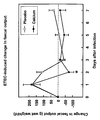
- the volunteers were vaccinated by the oral administration of a live ETEC vaccine (strain E1392-75-2A, dose 10 10 colony-forming units). Before and after the vaccination the volunteers kept a diary to record their intake of foods and drinks (3x24 h) and possible discomfort due to the vaccination.
- the following biological materials were collected: blood, saliva, faeces, urine. Faecal samples collected after vaccination were analysed for ETEC excretion to determine intestinal ETEC colonisation.
- the ETEC strain used was streptomycin-resistant and could be cultured selectively. Additionally, faecal samples were analysed for several other infection-related parameters (e.g. relative faecal dry weight, mucins). Specific immune reponses to the ETEC strain administered were determined in blood and saliva. Both faeces and urine were analysed for calcium to check compliance of the volunteers to the dietary protocol.
Landscapes
- Chemical & Material Sciences (AREA)
- Life Sciences & Earth Sciences (AREA)
- Health & Medical Sciences (AREA)
- Organic Chemistry (AREA)
- Engineering & Computer Science (AREA)
- Zoology (AREA)
- Wood Science & Technology (AREA)
- Proteomics, Peptides & Aminoacids (AREA)
- Analytical Chemistry (AREA)
- Toxicology (AREA)
- Immunology (AREA)
- Microbiology (AREA)
- Molecular Biology (AREA)
- Biophysics (AREA)
- Physics & Mathematics (AREA)
- Biotechnology (AREA)
- Biochemistry (AREA)
- Bioinformatics & Cheminformatics (AREA)
- General Engineering & Computer Science (AREA)
- General Health & Medical Sciences (AREA)
- Genetics & Genomics (AREA)
- Medicines Containing Material From Animals Or Micro-Organisms (AREA)
Priority Applications (2)
| Application Number | Priority Date | Filing Date | Title |
|---|---|---|---|
| EP01203745A EP1300472A1 (de) | 2001-10-02 | 2001-10-02 | Verfahren zur Prüfung der Wirkung von Nahrungsmittel, eine Resistenz gegen Kolonisation durch Bakterien zuerzeugen |
| PCT/NL2002/000636 WO2003029483A1 (en) | 2001-10-02 | 2002-10-02 | A method for testing the effect of nutrients on colonisation resistance of humans |
Applications Claiming Priority (1)
| Application Number | Priority Date | Filing Date | Title |
|---|---|---|---|
| EP01203745A EP1300472A1 (de) | 2001-10-02 | 2001-10-02 | Verfahren zur Prüfung der Wirkung von Nahrungsmittel, eine Resistenz gegen Kolonisation durch Bakterien zuerzeugen |
Publications (1)
| Publication Number | Publication Date |
|---|---|
| EP1300472A1 true EP1300472A1 (de) | 2003-04-09 |
Family
ID=8181007
Family Applications (1)
| Application Number | Title | Priority Date | Filing Date |
|---|---|---|---|
| EP01203745A Withdrawn EP1300472A1 (de) | 2001-10-02 | 2001-10-02 | Verfahren zur Prüfung der Wirkung von Nahrungsmittel, eine Resistenz gegen Kolonisation durch Bakterien zuerzeugen |
Country Status (2)
| Country | Link |
|---|---|
| EP (1) | EP1300472A1 (de) |
| WO (1) | WO2003029483A1 (de) |
Cited By (11)
| Publication number | Priority date | Publication date | Assignee | Title |
|---|---|---|---|---|
| US9433651B2 (en) | 2013-06-05 | 2016-09-06 | Rebiotix, Inc. | Microbiota restoration therapy (MRT), compositions and methods of manufacture |
| US9463208B2 (en) | 2010-02-01 | 2016-10-11 | Rebiotix, Inc. | Bacteriotherapy for clostridium difficile colitis |
| US9511099B2 (en) | 2013-06-05 | 2016-12-06 | Rebiotix, Inc. | Microbiota restoration therapy (MRT), compositions and methods of manufacture |
| US9511100B2 (en) | 2013-06-05 | 2016-12-06 | Rebiotix, Inc. | Microbiota restoration therapy (MRT), compositions and methods of manufacture |
| US9694039B2 (en) | 2013-06-05 | 2017-07-04 | Rebiotix, Inc. | Microbiota restoration therapy (MRT), compositions and methods of manufacture |
| US9782445B2 (en) | 2013-06-05 | 2017-10-10 | Rebiotix, Inc. | Microbiota restoration therapy (MRT), compositions and methods of manufacture |
| US10226431B2 (en) | 2015-06-09 | 2019-03-12 | Rebiotix, Inc. | Microbiota restoration therapy (MRT) compositions and methods of manufacture |
| US10383901B2 (en) | 2013-06-05 | 2019-08-20 | Rebiotix, Inc. | Microbiota restoration therapy (MRT), compositions and methods of manufacture |
| US10799539B2 (en) | 2015-06-09 | 2020-10-13 | Rebiotix, Inc. | Microbiota restoration therapy (MRT) compositions and methods of manufacture |
| US10828340B2 (en) | 2015-06-09 | 2020-11-10 | Rebiotix, Inc. | Microbiota restoration therapy (MRT) compositions and methods of manufacture |
| US10905726B2 (en) | 2015-06-09 | 2021-02-02 | Rebiotix, Inc. | Microbiota restoration therapy (MRT) compositions and methods of manufacture |
Families Citing this family (1)
| Publication number | Priority date | Publication date | Assignee | Title |
|---|---|---|---|---|
| WO2007137584A1 (en) | 2006-05-30 | 2007-12-06 | Antibodyshop A/S | Methods and devices for rapid assessment of severity of injury |
-
2001
- 2001-10-02 EP EP01203745A patent/EP1300472A1/de not_active Withdrawn
-
2002
- 2002-10-02 WO PCT/NL2002/000636 patent/WO2003029483A1/en not_active Ceased
Non-Patent Citations (4)
| Title |
|---|
| BHUTTA ET AL: "Dietary Management of Persistent Diarrhea : Comparison of a Traditional rice-Lentil Based Diet with Soy Formula", PEDIATRICS, vol. 88, no. 5, 1991, pages 1010 - 1018, XP008004046 * |
| BOVEE-OUDENHOVEN I M ET AL: "DIETARY CALCIUM PHOSPHATE STIMULATES INTESTINAL LACTOBACILLI AND DECREASES THE SEVERITY OF A SALMONELLA INFECTION IN RATS", JOURNAL OF NUTRITION, WISTAR INSTITUTE OF ANATOMY AND BIOLOGY, PHILADELPHIA, PA,, US, vol. 129, no. 3, March 1999 (1999-03-01), pages 607 - 612, XP000933603, ISSN: 0022-3166 * |
| DUPONT HERBERT L ET AL: "Zaldaride maleate, an intestinal calmodulin inhibitor, in the therapy of travelers' diarrhea.", GASTROENTEROLOGY, vol. 104, no. 3, 1993, pages 709 - 715, XP008004015, ISSN: 0016-5085 * |
| MEER VAN DER R ET AL: "MILK PRODUCTS AND INTESTINAL HEALTH", INTERNATIONAL DAIRY JOURNAL, ELSEVIER APPLIED SCIENCE, BARKING,, GB, vol. 8, no. 3, March 1998 (1998-03-01), pages 163 - 170, XP000933639, ISSN: 0958-6946 * |
Cited By (34)
| Publication number | Priority date | Publication date | Assignee | Title |
|---|---|---|---|---|
| US11446337B2 (en) | 2010-02-01 | 2022-09-20 | Rebiotix, Inc. | Bacteriotherapy for clostridium difficile colitis |
| US9463208B2 (en) | 2010-02-01 | 2016-10-11 | Rebiotix, Inc. | Bacteriotherapy for clostridium difficile colitis |
| US12303537B2 (en) | 2010-02-01 | 2025-05-20 | Ferring Microbiome Inc. | Bacteriotherapy for clostridium difficile colitis |
| US12102655B2 (en) | 2010-02-01 | 2024-10-01 | Rebiotix Inc. | Bacteriotherapy for clostridium difficile colitis |
| US9629881B2 (en) | 2010-02-01 | 2017-04-25 | Rebiotix, Inc. | Bacteriotherapy for clostridium difficile colitis |
| US11986500B2 (en) | 2010-02-01 | 2024-05-21 | Rebiotix Inc | Bacteriotherapy for clostridium difficile colitis |
| US11944654B2 (en) | 2010-02-01 | 2024-04-02 | Rebiotix, Inc. | Bacteriotherapy for clostridium difficile colitis |
| US10471107B2 (en) | 2013-06-05 | 2019-11-12 | Rebiotix, Inc. | Microbiota restoration therapy (MRT), compositions and methods of manufacture |
| US10624932B2 (en) | 2013-06-05 | 2020-04-21 | Rebiotix, Inc. | Microbiota restoration therapy (MRT), compositions and methods of manufacture |
| US9511099B2 (en) | 2013-06-05 | 2016-12-06 | Rebiotix, Inc. | Microbiota restoration therapy (MRT), compositions and methods of manufacture |
| US10383901B2 (en) | 2013-06-05 | 2019-08-20 | Rebiotix, Inc. | Microbiota restoration therapy (MRT), compositions and methods of manufacture |
| US9511100B2 (en) | 2013-06-05 | 2016-12-06 | Rebiotix, Inc. | Microbiota restoration therapy (MRT), compositions and methods of manufacture |
| US10391129B2 (en) | 2013-06-05 | 2019-08-27 | Rebiotix, Inc. | Microbiota restoration therapy (MRT), compositions and methods of manufacture |
| US10434126B2 (en) | 2013-06-05 | 2019-10-08 | Rebiotix, Inc. | Microbiota restoration therapy (MRT), compositions and methods of manufacture |
| US10434124B2 (en) | 2013-06-05 | 2019-10-08 | Rebiotix, Inc. | Microbiota restoration therapy (MRT), compositions and methods of manufacture |
| US10434125B2 (en) | 2013-06-05 | 2019-10-08 | Rebiotix, Inc. | Microbiota restoration therapy (MRT), compositions and methods of manufacture |
| US9433651B2 (en) | 2013-06-05 | 2016-09-06 | Rebiotix, Inc. | Microbiota restoration therapy (MRT), compositions and methods of manufacture |
| US10493111B2 (en) | 2013-06-05 | 2019-12-03 | Rebiotix, Inc. | Microbiota restoration therapy (MRT), compositions and methods of manufacture |
| US10603341B2 (en) | 2013-06-05 | 2020-03-31 | Rebiotix, Inc. | Microbiota restoration therapy (MRT), compositions and methods of manufacture |
| US10610547B2 (en) | 2013-06-05 | 2020-04-07 | Rebiotix, Inc. | Microbiota restoration therapy (MRT), compositions and methods of manufacture |
| US9782445B2 (en) | 2013-06-05 | 2017-10-10 | Rebiotix, Inc. | Microbiota restoration therapy (MRT), compositions and methods of manufacture |
| US10688137B2 (en) | 2013-06-05 | 2020-06-23 | Rebiotix, Inc. | Microbiota restoration therapy (MRT), compositions and methods of manufacture |
| US9642880B2 (en) | 2013-06-05 | 2017-05-09 | Rebiotix, Inc. | Microbiota restoration therapy (MRT), compositions and methods of manufacture |
| US9675648B2 (en) | 2013-06-05 | 2017-06-13 | Rebiotix, Inc. | Microbiota restoration therapy (MRT), compositions and methods of manufacture |
| US11554143B2 (en) | 2013-06-05 | 2023-01-17 | Rebiotix, Inc. | Microbiota restoration therapy (MRT), compositions and methods of manufacture |
| US9694039B2 (en) | 2013-06-05 | 2017-07-04 | Rebiotix, Inc. | Microbiota restoration therapy (MRT), compositions and methods of manufacture |
| US10905726B2 (en) | 2015-06-09 | 2021-02-02 | Rebiotix, Inc. | Microbiota restoration therapy (MRT) compositions and methods of manufacture |
| US11642381B2 (en) | 2015-06-09 | 2023-05-09 | Rebiotix, Inc. | Microbiota restoration therapy (MRT) compositions and methods of manufacture |
| US11654164B2 (en) | 2015-06-09 | 2023-05-23 | Rebiotix, Inc. | Microbiota restoration therapy (MRT) compositions and methods of manufacture |
| US10828340B2 (en) | 2015-06-09 | 2020-11-10 | Rebiotix, Inc. | Microbiota restoration therapy (MRT) compositions and methods of manufacture |
| US10799539B2 (en) | 2015-06-09 | 2020-10-13 | Rebiotix, Inc. | Microbiota restoration therapy (MRT) compositions and methods of manufacture |
| US12036250B2 (en) | 2015-06-09 | 2024-07-16 | Rebiotix Inc. | Microbiota restoration therapy (MRT) compositions and methods of manufacture |
| US10391064B2 (en) | 2015-06-09 | 2019-08-27 | Rebiotix, Inc. | Microbiota restoration therapy (MRT) compositions and methods of manufacture |
| US10226431B2 (en) | 2015-06-09 | 2019-03-12 | Rebiotix, Inc. | Microbiota restoration therapy (MRT) compositions and methods of manufacture |
Also Published As
| Publication number | Publication date |
|---|---|
| WO2003029483A1 (en) | 2003-04-10 |
Similar Documents
| Publication | Publication Date | Title |
|---|---|---|
| KR101840239B1 (ko) | 장 염증의 치료에 사용하기 위한 프로바이오틱 조성물 | |
| Rosenfeldt et al. | Effect of probiotics on gastrointestinal symptoms and small intestinal permeability in children with atopic dermatitis | |
| JP4011532B2 (ja) | ビフィズス菌およびそれを含有する製剤 | |
| RU2279282C2 (ru) | Средство для профилактики и/или лечения нежелательной воспалительной активности и профилактики рака | |
| ES2427138T3 (es) | Cepas de Lactobacillus plantarum como agentes hipocolesterolémicos | |
| KR101353692B1 (ko) | 프로바이오틱 및 프리바이오틱 성분 및 무기 염을 락토페린과 함께 포함하는 조성물 | |
| RU2332224C1 (ru) | ПРИМЕНЕНИЕ ТЕРАПЕВТИЧЕСКИ ЭФФЕКТИВНОГО КОЛИЧЕСТВА Bb-12 И LGG ДЛЯ ИЗГОТОВЛЕНИЯ ЛЕКАРСТВЕННОГО СРЕДСТВА ДЛЯ ПРЕДОТВРАЩЕНИЯ ИЛИ ЛЕЧЕНИЯ РЕСПИРАТОРНЫХ ИНФЕКЦИЙ И ОСТРОГО СРЕДНЕГО ОТИТА У МЛАДЕНЦЕВ | |
| KR102825170B1 (ko) | 프로바이오틱 비피도박테리움 브레베 균주 및 상기 균주를 포함하는 조성물 | |
| US7678370B2 (en) | Methods of preventing peritonitis by administering lactic acid bacterium | |
| CN109480231A (zh) | 抗幽门螺杆菌的组合物及其应用 | |
| JP4996780B2 (ja) | シュウ酸塩関連疾患を予防するためのシュウ酸塩分解微生物またはシュウ酸塩分解酵素 | |
| CN105142654A (zh) | 肠小型生物群中的毛螺菌科和与体重的关联 | |
| EP1300472A1 (de) | Verfahren zur Prüfung der Wirkung von Nahrungsmittel, eine Resistenz gegen Kolonisation durch Bakterien zuerzeugen | |
| US6841149B1 (en) | Probiotic mixture intended for monogastric animals to control intestinal flora populations | |
| FI113057B (fi) | Menetelmä hiivojen kasvun estämiseksi | |
| ES2400187T3 (es) | Bacterias lácticas y su uso en la prevención de la diarrea | |
| US20180099011A1 (en) | Compositions and Methods for Treating Irritable Bowel Syndrome and Related Disorders | |
| US9272007B2 (en) | Strain of L. bulgaricus capable of inhibiting the adhesion of H. pylori strains to epithelial cells | |
| Marteau | Living drugs for gastrointestinal diseases: the case for probiotics | |
| Hoppe et al. | Commercially available human probiotic microorganisms | |
| Botes | Survival of probiotic lactic acid bacteria in the intestinal tract, their adhesion to epithelial cells and their ability to compete with pathogenic microorganisms | |
| Code | HMF® Multi Strain | |
| Parkarwar | A Comprehensive Review and Application of Probiotics in Dentistry | |
| CN114796287A (zh) | 一种可预防龋齿和清新口腔的益生菌粉及其应用 | |
| Class et al. | Patent application title: Strain of L. Bulgaricus Capable of Inhibiting the Adhesion of H. Pylori Strains to Epithelial Cells Inventors: Peggy Garault (Montlhery, FR) Peggy Garault (Montlhery, FR) Gaëlle Quere (Villebon Sur Yvette, FR) Raphaëlle Bourdet-Sicard (Palaiseau, FR) Raphaëlle Bourdet-Sicard (Palaiseau, FR) Raphaëlle Bourdet-Sicard (Palaiseau, FR) Francis Megraud (Bordeaux, FR) Assignees: COMPAGNIE GERVAIS DANONE |
Legal Events
| Date | Code | Title | Description |
|---|---|---|---|
| PUAI | Public reference made under article 153(3) epc to a published international application that has entered the european phase |
Free format text: ORIGINAL CODE: 0009012 |
|
| AK | Designated contracting states |
Kind code of ref document: A1 Designated state(s): AT BE CH CY DE DK ES FI FR GB GR IE IT LI LU MC NL PT SE TR Designated state(s): AT BE CH CY DE DK ES FI FR GB GR IE IT LI LU MC NL PT SE TR |
|
| AX | Request for extension of the european patent |
Extension state: AL LT LV MK RO SI |
|
| AKX | Designation fees paid | ||
| REG | Reference to a national code |
Ref country code: DE Ref legal event code: 8566 |
|
| STAA | Information on the status of an ep patent application or granted ep patent |
Free format text: STATUS: THE APPLICATION IS DEEMED TO BE WITHDRAWN |
|
| 18D | Application deemed to be withdrawn |
Effective date: 20031010 |