EP1316562A2 - Composition comprenant un adduit Polyethylene glycol (PEG)-Protein - Google Patents
Composition comprenant un adduit Polyethylene glycol (PEG)-Protein Download PDFInfo
- Publication number
- EP1316562A2 EP1316562A2 EP03003388A EP03003388A EP1316562A2 EP 1316562 A2 EP1316562 A2 EP 1316562A2 EP 03003388 A EP03003388 A EP 03003388A EP 03003388 A EP03003388 A EP 03003388A EP 1316562 A2 EP1316562 A2 EP 1316562A2
- Authority
- EP
- European Patent Office
- Prior art keywords
- peg
- protein
- mpeg
- proteins
- modified
- Prior art date
- Legal status (The legal status is an assumption and is not a legal conclusion. Google has not performed a legal analysis and makes no representation as to the accuracy of the status listed.)
- Withdrawn
Links
Images






Classifications
-
- A—HUMAN NECESSITIES
- A61—MEDICAL OR VETERINARY SCIENCE; HYGIENE
- A61K—PREPARATIONS FOR MEDICAL, DENTAL OR TOILETRY PURPOSES
- A61K47/00—Medicinal preparations characterised by the non-active ingredients used, e.g. carriers or inert additives; Targeting or modifying agents chemically bound to the active ingredient
- A61K47/50—Medicinal preparations characterised by the non-active ingredients used, e.g. carriers or inert additives; Targeting or modifying agents chemically bound to the active ingredient the non-active ingredient being chemically bound to the active ingredient, e.g. polymer-drug conjugates
- A61K47/51—Medicinal preparations characterised by the non-active ingredients used, e.g. carriers or inert additives; Targeting or modifying agents chemically bound to the active ingredient the non-active ingredient being chemically bound to the active ingredient, e.g. polymer-drug conjugates the non-active ingredient being a modifying agent
- A61K47/56—Medicinal preparations characterised by the non-active ingredients used, e.g. carriers or inert additives; Targeting or modifying agents chemically bound to the active ingredient the non-active ingredient being chemically bound to the active ingredient, e.g. polymer-drug conjugates the non-active ingredient being a modifying agent the modifying agent being an organic macromolecular compound, e.g. an oligomeric, polymeric or dendrimeric molecule
- A61K47/59—Medicinal preparations characterised by the non-active ingredients used, e.g. carriers or inert additives; Targeting or modifying agents chemically bound to the active ingredient the non-active ingredient being chemically bound to the active ingredient, e.g. polymer-drug conjugates the non-active ingredient being a modifying agent the modifying agent being an organic macromolecular compound, e.g. an oligomeric, polymeric or dendrimeric molecule obtained otherwise than by reactions only involving carbon-to-carbon unsaturated bonds, e.g. polyureas or polyurethanes
- A61K47/60—Medicinal preparations characterised by the non-active ingredients used, e.g. carriers or inert additives; Targeting or modifying agents chemically bound to the active ingredient the non-active ingredient being chemically bound to the active ingredient, e.g. polymer-drug conjugates the non-active ingredient being a modifying agent the modifying agent being an organic macromolecular compound, e.g. an oligomeric, polymeric or dendrimeric molecule obtained otherwise than by reactions only involving carbon-to-carbon unsaturated bonds, e.g. polyureas or polyurethanes the organic macromolecular compound being a polyoxyalkylene oligomer, polymer or dendrimer, e.g. PEG, PPG, PEO or polyglycerol
-
- G—PHYSICS
- G01—MEASURING; TESTING
- G01N—INVESTIGATING OR ANALYSING MATERIALS BY DETERMINING THEIR CHEMICAL OR PHYSICAL PROPERTIES
- G01N30/00—Investigating or analysing materials by separation into components using adsorption, absorption or similar phenomena or using ion-exchange, e.g. chromatography or field flow fractionation
- G01N30/02—Column chromatography
- G01N30/26—Conditioning of the fluid carrier; Flow patterns
- G01N30/38—Flow patterns
- G01N30/42—Flow patterns using counter-current
Definitions
- the present invention relates to a process for fractionating polyethylene glycol-protein adducts.
- Polyethylene glycol is a long chain, linear synthetic polymer composed of ethylene oxide units, HO(CH 2 CH 2 O) n CH 2 CH 2 OH, in which n can vary to provide compounds with molecular weights from 200-20,000. It is non-toxic and has been administered orally and intravenously to humans (PEG-adenosine deaminase for severe combined immunodeficiency disease; PEG-asparaginse for acute lynmphoblastic leukaemia; PEG-superoxide dimutase for oxygen toxicity (3-7)). PEG can be coupled to proteins following appropriate derivatisation of the OH groups of the PEG.
- the NH 2 groups of lysine side chains are particularly accessible sites and either few or many sites can be modified.
- PEG-modified proteins Given adequate technology for their production, PEG-modified proteins have numerous therapeutic and other applications. Many proteins of potential clinical use have extremely short half lives necessitating administration by continuous infusion (an expensive, unpleasant and potentially hazardous procedure). PEG modification extends plasma half lives and has been used to increase the bio-availability of enzymes (see below). Reduction of antigenicity of proteins is also produced by PEG modification and this will extend their clinical use allowing more protracted administration. In addition, with proteins having pleiotropic biological effects, PEG modification creates products with a new spectrum of activities, because of differential loss of separate biological properties. With antibodies, for example, PEG modification dissociates antibody binding and complement fixing activities. PEG modification also alters biochemical and physical properties of proteins in ways that may increase their usefulness (e.g. increased solubility; increased resistance to proteolytic degradation; altered kinetics, pH and/or temperature optima and changed substrate specificity of enzymes. This covalent modification of proteins has a number of consequences:-
- Coupling of PEG to proteins is usually achieved by activation of the hydroxyl groups of PEG with a suitable reagent that can be fully substituted by nucleophilic groups in the protein (mainly lysine E-amino groups) (27).
- Cyanuric chloride has been the most widely used agent for activation of PEG and this requires a very basic pH for the subsequent coupling step with the protein to be modified (28,27).
- 1,1'-carbonyldiimidazole requires very long times for the coupling step (14) and using phenylchloroformates does not avoid the need for basic pH (25).
- Tresyl chloride (2,2,2,-trifluoroethane-sulphonyl chloride) has proved useful for activating agarose and other solid supports carrying hydroxyl groups so that they may be coupled to proteins.
- the attraction of this method is that coupling to proteins takes place quickly and under very mild conditions (28,29).
- MPEG monomethoxyPEG
- MPEG monomethoxyPEG
- An advantage over previous techniques is that the reaction mixture is innocuous and does not have to be removed before the PEG-protein is used.
- the invention therefore provides a process for fractionating a mixture of PEG-protein adducts comprising partitioning the PEG-protein adducts in a PEG-containing aqueous biphasic system.
- the process further comprises the step of recovering a PEG-protein adduct of pre-determined degree of PEG substitution from one phase of the biphasic system.
- any PEG protein adduct mixture may be fractionated in accordance with the invention, it is preferred to use adducts of monomethoxyPEG preferably those formed by reaction of the protein with tresyl monomethoxyPEG, (TMPEG).
- unreacted TMPEG is destroyed or the adduct forming reaction is quenched, by addition of lysine or albumin.
- Partitioning may be performed batchwise or continuously, for instance by counter currents of the two phases and may be repeated to obtain additional fractionation.
- This method uses preparative-scale phase partitioning in conjunction with countercurrent distribution to fractionate PEG-proteins substituted to different degrees by PEG.
- Proteins have many potential clinical roles and we cannot therefore give extensive examples here.
- PEG has been used to modify many classes of proteins including enzymes, antibodies, peptide hormones, growth factors, and cytokines.
- the increasing production of proteins for clinical use using recombinant DNA techniques greatly increases the availability of such proteins for clinical and other uses.
- the haemopoietic growth factors for example, have a dramatic effect in reducing the cytopenias induced by chemo- and radiotherapy (31-33).
- Differentiation factors and cytokines are also showing promise in the therapy of neoplasia, both through direct anti-tumour effects and by modulating host response (reviewed in 4,5).
- Bio-active peptides are also undergoing clinical trials and the use of peptide hormones (e.g. insulin) is well established).
- the methods described allow analysis of the relationship between PEG-protein ratios and biological properties so that the best ratio of substitution can be selected.
- the analytical method also gives essential information for the design of a preparation scheme for manufacturing and/or fractionating PEG-protein adducts of the desired degree of substitution (i.e. with the desired biological properties).
- the method also has potential research applications.
- the range of substitutions which promotes (or inhibits) a specific property can be established.
- biochemically for example by peptide mapping
- the locations of the amino acids modified at the various degrees of substitution This will vary as the molar ratio in the coupling step is increased with the most to the least readily modified acceptor site. This will allow determination of which locations on the protein are associated with individual biological properties.
- TMPEG tresylated monomethoxypolyethylene glycol
- MPEG (Mr 5000, Union Carbide, USAO was dissolved in benzene (B.P. 79-80°C) and the water-organic azeotrope (B.P. 65°C) was distilled off. MPEG was recovered by removal of solvent under reduced pressure, and was finally dried by leaving overnight at room temperature under vacuum.
- TMPEG was suspended in methanol-HCL mixture (250:1) and allowed to precipitate at -20°C for 8 hr.
- the white solid produced was collected at 0°C and the filtrate checked for pyridine content (255 nm). This procedure was repeated by using methanol-HCl (1000:1) as washing mixture until no pyridine could be detected. Finally, the pyridine free TMEG (12-14 g; 65-75% yield) was dried under vacuum for several hours at room temperature.
- the sulphur content of the white solid obtained was 0.5%.
- Theoretical content of 1 tresyl group per molecule of MPEG is 0.62% considering an average molecular weight of 5000 for the activated polymer. Therefore, approximately 80% of hydroxyl groups in the MPEG were transformed into tresyl esters.
- Tresylated MPEG was shown to be stable when stored at room temperature up to 3 months.
- TMPEG samples taken from one batch of the product at different times since the production were reacted with BSA.
- the product MPEG-BSA was analysed by partitioning in aqueous PEG-dextran two-phase systems. Partition coefficients, K, of MPEG-BSA samples obtained during that period were within the range 0.9-1.2 (Log K) indicating stability of the TMPEG preparation.
- Bovine serum albumin (98-99%, Sigma Chemical Co. (U.S.A) was used. Coupling was carried out at room temperature in sodium phosphate buffer (pH 7.5) containing sodium chloride (see details at the bottom legend for each figure). Appropriate volumes of protein and TMPEG solutions made up in the correponding coupling buffer were mixed and left under gentle stirring at room temperature. At intervals samples were withdrawn and analysed as described below.
- Counter-current distribution (CCD) of albumin and MPEG-modified albumin was carried out in a phase system formed by 4.75% (w/w) PEG, 4.75% (w/w) Dx and 0.15 M sodium chloride buffered with 0.01 M sodium phosphate pH 6.8.
- the phase system was prepared by mixing required quantities of 40% (w/w) PEG-6000 (Lot 9159110, BDH, UK), 20% (w/w) Dx-T500 (Lot MI 02434, Pharmacia, Sweden), 0.6 M sodium chloride, 0.44 M sodium phosphate buffer pH 6.8 and distilled water. Once the top and bottom phases had separated at 25°C until required.
- a automatic thin-layer counter-current distribution apparatus BIOSHEF TLCCD MK2 constructed at the University of Sheffield (UK) was used (40).
- Distribution rotor consists on 60 cavities which were filled as follows: 0.823 ml of bottom phase and 0.823 ml of top phase were loaded into cavities 2 to 30 and 32 to 60. Cavities 1 and 31 were filled with 0.823 ml of bottom phase and 0.823 ml of top phase of biphasic system containing sample. This was prepared from the same stock solutions as the bulk system but replacing the distilled water by a solution containing the relevant protein and was made up immediately before running the experiment. The settling time 7 min and the shaking time 25 secs.
- the content of the cavities were collected directly into plastic tubes. Contents of each alternate cavities were diluted with 0.8 ml of 0.15 M sodium chloride buffered with 0.01 M sodium phosphate pH 6.8 to break the phase system. Protein concentration was then measured by the Bradford assay to obtain the distribution profile. The remaining tubes, which still contained two phases were used to determine the partition coefficients of the protein by measuring the protein concentrations in the top and bottom phases.
- BSA was chosen as a well-characterised protein with 60 lysyl residues per molecule (41).
- the protein was incubated with TMPEG at room temperature in 0.2 M sodium phosphate buffer pH 7.5 containing 0.5 M sodium chloride.
- the final concentration of BSA was 1.5 mg/ml and the molar ratio TMPEG to lysyl residues was 16 to 1.
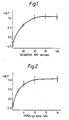
- Partition coefficient, K, of the protein was measured after 30,60,90 and 120 min of incubation. As it is shown in figure 1, K increases as the incubation of BSA and TMPEG proceed for the first hour and then reach a "plateau". The increase in K indicates that the MPEG has been linked to the BSA; the surface of the protein become more PEG-like and as a consequence is directed towards the PEG-rich top phase of the biphasic system.
- Partitioning in aqueous two-phase systems provides a means of analysing qualitatively and quantitatively the coupling of TMPEG to albumin without requiring any purification of the complex MPEG-albumin (see material and methods). This is of considerable advantage over other methods in which the adduct MPEG-protein must be separated from the unreacted MPEG (44).
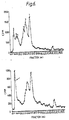
- K for the modified protein K pL
- K p .K L n K p + n logK L
- log K pL log K p + n logK L
- a linear relationship between log of partition coefficient for the modified protein and the number of molecules of ligand attached is then predicted with a slope and intercept of log K L and log K p , respectively.
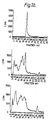
- FIG. 4 shows CCD profiles of albumin, MPEG-modified albumins 1 & 2. These two last were obtained by incubation of albumin with TMPEG by using TMPEG:lys molar ratios of 2 to 1 and 16 to 1, respectively. Partition coefficients for the protein present in each fraction are also shown.
- Unmodified albumin is distributed between fractions 7 and 13, to the left of the CCD train (Fig. 4 top).
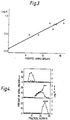
- the position of the distribution peak on the left hand side of the CCD train means albumin partitions in favour of the bottom phase of the biphasic system (i.e. low partition coefficient), in agreement with the observations in single tube partitioning (Figs.1 and 2).
- the constant value for the partition coefficient of the unmodified albumin all along the distribution peak (Fig. 4, top) is consistent with homogeneity of the protein preparation.
- MPEG-albumin 1 shows a CCD profile between fractions 14 and 26 (Fig. 4, middle) towards the right of that for unmodified albumin (Fractions 7-15, fig 4, top).
- This result reflects the higher partition coefficient obtained in single tube partition obtained in single tube partitions for modified albumin compared with unmodified albumin (Figs.1 and 2).
- the partition coefficient of albumin present in any of the fractions between fractions 14 and 26 was higher than that for the unmodified albumin (Fig.4, middle and top).
- the former partition coefficients were not constant as in the case of unmodified albumin, but increased progressively from the left-hand side to the right-hand side of the distribution profile (Fig. 4, middle). Because of the relationship between the partition coefficient and the degree of modification (Fig. 3), this heterogeneity of partitioning indicates that MPEG-albumin, consists of a mixture of albumins modified with MPEG-modified albumins can be fractioned by counter-current distribution on the basis of the degree of modification.
- the CCD profile for MPEG-modified albumin 2 (TMPEG:Lys molar ratio of 16 to 1), which showed the highest partition coefficient in single tubes (Fig. 2), was located towards the right of the CCD train, between fractions 23 and 28 (Fig.4, bottom).
- the partition coefficients of albumin present in these fractions (Fig.4, bottom) was higher than those corresponding to albumin in fractions 1 to 23 (Fig. 4, top and middle).
- MPEG-modified albumins located in fractions 24 and 26 have the same partition coefficient independently of being present in either the complex MPEG-albumin 1 , (Fig.4, middle) or MPEG-albumin 2 (Fig. 4, bottom).
- the protein granulocyte-macrophage colony stimulating factor gm-CSF was coupled to MPEG as described for albumin.
- a range of PEG:lysine molar ratios was used for the coupling reaction (10:1 to 1000:1). This protein has 6 lysines so that species with 1 to 6 substitutions are theoretically possible.
- Commercially labelled gm-CSF-I 125 (Amersham) which is biologically active was used for these experiments.
- the FPLC profiles of similar experiments in which the molar ratio was changed (see Example 4 below) establish that progressive substitution does take place with increasing molar ratios.
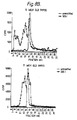
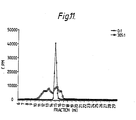
- Figure 10a and b shows that with CCD there is a clear discrimination of modified material from unmodified wheres with FPLC with an "aged" TMPEG preparation there was considerable overlap, and no clear resolution between modified and unmodified material.
- modified gm-CSF eluted both faster and slower than the unmodified material ( Figure 11a and b).
- Samples were taken from FPLC fractions of a modified sample (prepared at TMPEG:lysine 305:1), eluting a) faster than, b) with and c) slower than the unmodified material.
- Gm-CSF has many different biological activities, we chose to use its priming of f-met-leu-phe induced neutrophil oxidative burst activity (assessed by nitroblue tetrazolium reduction). Fractions were exposed to human peripheral blood neutrophils with FMLP in microtitre plates.
- This example illustrates the need for precise control of, or fractionation of, the PEG-protein species being produced to achieve the desired biological activity.
- Elution buffers varied, e.g. for some applications coupling buffer (0.05M sodium phosphate pH7.% containing 0.125M NaCl) was used. Where cells were to be exposed directly to eluate, phosphate buffered saline pH 7.3 and circa 285mOsm was used. Proteins were detected by absorption at wavelength 280mm if sufficiently abundant, or by detection of radio-label (I 125 ).
- polyacrylamide gel was used with a stacking gel. Samples were mixed with equal volume of loading buffer and then the resultant mixture was denatured by placing in a water -bath at 100oC for 1 minute. 40ul of the denatured mixture was loaded per well and electrophoresis was carried out at 150 Volts; maximum current. The gel was dried onto Whatman No 1 filter paper and the gel was then autoradiographed at -70oC with a rare earth intensifying screen. The film was developed e.g. after a 4 day exposure.
- PMN Polymorphonuclear leucocytes
- FIG. 5 Phase-partitioning of I 125 labelled recombinant human gm-CSF (rHu-gmCSF) was performed in a PEG/dextran system after TMPEG exposure to biologically active and denatured (boiled) protein.
- log K is curvilinear with respect to the coupling ratio (TMPEG:lysine). The latter determines the degree of modification (number of lysine groups reacted).
- Figure 7 FPLC of two different batches of rHu-gmCSF-I 125 .
- PEG modified rHu-gmCSF (exposed to 305:1 TMPEG:lysine) runs both faster and slower than the unmodified material, demonstrating that no clear relationship between apparent molecular weight and number of lysine residues modified by PEG exists on FPLC.
- Neutrophil priming activity of rHu-gm-CSF measured by NET reduction (see text) and normalised for the amount of protein present by expressing with respect to I 125 (c.p.m.) per fraction.
- Fractions from FPLC of unmodified (crosshatched) and 305:1 modified rHu-gm-CSF (hatched) allow comparison of biological activity.
- the modified material contains species with no activity and with higher activity than unmodified material.
Landscapes
- Health & Medical Sciences (AREA)
- Animal Behavior & Ethology (AREA)
- Veterinary Medicine (AREA)
- Chemical & Material Sciences (AREA)
- Medicinal Chemistry (AREA)
- Pharmacology & Pharmacy (AREA)
- Epidemiology (AREA)
- Life Sciences & Earth Sciences (AREA)
- Engineering & Computer Science (AREA)
- Bioinformatics & Cheminformatics (AREA)
- General Health & Medical Sciences (AREA)
- Public Health (AREA)
- Peptides Or Proteins (AREA)
- Medicinal Preparation (AREA)
- Medicines That Contain Protein Lipid Enzymes And Other Medicines (AREA)
- Medicines Containing Antibodies Or Antigens For Use As Internal Diagnostic Agents (AREA)
- Pharmaceuticals Containing Other Organic And Inorganic Compounds (AREA)
- Polyethers (AREA)
- Jellies, Jams, And Syrups (AREA)
Applications Claiming Priority (4)
| Application Number | Priority Date | Filing Date | Title |
|---|---|---|---|
| GB8824591 | 1988-10-20 | ||
| GB888824591A GB8824591D0 (en) | 1988-10-20 | 1988-10-20 | Fractionation process |
| EP89912002A EP0439508B1 (fr) | 1988-10-20 | 1989-10-20 | Produits d'addition de polyethylene glycol (peg)- proteine, et procede pour le fractionnement desdits |
| EP96105184A EP0727437A3 (fr) | 1988-10-20 | 1989-10-20 | Produits d'addition PEG-proteine |
Related Parent Applications (1)
| Application Number | Title | Priority Date | Filing Date |
|---|---|---|---|
| EP96105184A Division EP0727437A3 (fr) | 1988-10-20 | 1989-10-20 | Produits d'addition PEG-proteine |
Publications (2)
| Publication Number | Publication Date |
|---|---|
| EP1316562A2 true EP1316562A2 (fr) | 2003-06-04 |
| EP1316562A3 EP1316562A3 (fr) | 2003-12-17 |
Family
ID=10645511
Family Applications (4)
| Application Number | Title | Priority Date | Filing Date |
|---|---|---|---|
| EP03003388A Withdrawn EP1316562A3 (fr) | 1988-10-20 | 1989-10-20 | Composition comprenant un adduit Polyethylene glycol (PEG)-Protein |
| EP89912002A Expired - Lifetime EP0439508B1 (fr) | 1988-10-20 | 1989-10-20 | Produits d'addition de polyethylene glycol (peg)- proteine, et procede pour le fractionnement desdits |
| EP96105184A Withdrawn EP0727437A3 (fr) | 1988-10-20 | 1989-10-20 | Produits d'addition PEG-proteine |
| EP96105185A Withdrawn EP0727438A3 (fr) | 1988-10-20 | 1989-10-20 | Produits d'addition PEG et GM-CSF |
Family Applications After (3)
| Application Number | Title | Priority Date | Filing Date |
|---|---|---|---|
| EP89912002A Expired - Lifetime EP0439508B1 (fr) | 1988-10-20 | 1989-10-20 | Produits d'addition de polyethylene glycol (peg)- proteine, et procede pour le fractionnement desdits |
| EP96105184A Withdrawn EP0727437A3 (fr) | 1988-10-20 | 1989-10-20 | Produits d'addition PEG-proteine |
| EP96105185A Withdrawn EP0727438A3 (fr) | 1988-10-20 | 1989-10-20 | Produits d'addition PEG et GM-CSF |
Country Status (7)
| Country | Link |
|---|---|
| US (2) | US6384195B1 (fr) |
| EP (4) | EP1316562A3 (fr) |
| JP (2) | JP3195336B2 (fr) |
| AT (1) | ATE164851T1 (fr) |
| DE (1) | DE68928638T2 (fr) |
| GB (1) | GB8824591D0 (fr) |
| WO (1) | WO1990004606A1 (fr) |
Families Citing this family (96)
| Publication number | Priority date | Publication date | Assignee | Title |
|---|---|---|---|---|
| GB8824591D0 (en) | 1988-10-20 | 1988-11-23 | Royal Free Hosp School Med | Fractionation process |
| IE912365A1 (en) * | 1990-07-23 | 1992-01-29 | Zeneca Ltd | Continuous release pharmaceutical compositions |
| US5595732A (en) * | 1991-03-25 | 1997-01-21 | Hoffmann-La Roche Inc. | Polyethylene-protein conjugates |
| ZA933926B (en) * | 1992-06-17 | 1994-01-03 | Amgen Inc | Polyoxymethylene-oxyethylene copolymers in conjuction with blomolecules |
| US5382657A (en) * | 1992-08-26 | 1995-01-17 | Hoffmann-La Roche Inc. | Peg-interferon conjugates |
| US5336923A (en) * | 1992-12-31 | 1994-08-09 | Honeywell, Inc. | Varactor diode having a stepped capacitance-voltage profile |
| US5449720A (en) * | 1993-05-24 | 1995-09-12 | Biotech Australia Pty Limited | Amplification of the VB12 uptake system using polymers |
| GB9317618D0 (en) * | 1993-08-24 | 1993-10-06 | Royal Free Hosp School Med | Polymer modifications |
| US5880131A (en) * | 1993-10-20 | 1999-03-09 | Enzon, Inc. | High molecular weight polymer-based prodrugs |
| US5446090A (en) * | 1993-11-12 | 1995-08-29 | Shearwater Polymers, Inc. | Isolatable, water soluble, and hydrolytically stable active sulfones of poly(ethylene glycol) and related polymers for modification of surfaces and molecules |
| CN1229385C (zh) * | 1994-03-31 | 2005-11-30 | 安姆根有限公司 | 刺激巨核细胞生长和分化的组合物及方法 |
| US5795569A (en) * | 1994-03-31 | 1998-08-18 | Amgen Inc. | Mono-pegylated proteins that stimulate megakaryocyte growth and differentiation |
| US5629384A (en) * | 1994-05-17 | 1997-05-13 | Consiglio Nazionale Delle Ricerche | Polymers of N-acryloylmorpholine activated at one end and conjugates with bioactive materials and surfaces |
| US20030053982A1 (en) | 1994-09-26 | 2003-03-20 | Kinstler Olaf B. | N-terminally chemically modified protein compositions and methods |
| US5824784A (en) | 1994-10-12 | 1998-10-20 | Amgen Inc. | N-terminally chemically modified protein compositions and methods |
| GB9502540D0 (en) * | 1995-02-09 | 1995-03-29 | Zeneca Ltd | Compounds |
| DE69800640T2 (de) * | 1997-01-29 | 2001-07-05 | Polymasc Pharmaceuticals Plc, London | Pegylationsverfahren |
| ES2245114T3 (es) | 1998-08-06 | 2005-12-16 | Mountain View Pharmaceuticals, Inc. | Conjugados de peg-oxidasa de urato y su uso. |
| DK1656952T3 (da) | 1998-10-16 | 2014-01-20 | Biogen Idec Inc | Polyalkylenglycolkonjugater af interferon beta-1A og anvendelser deraf |
| PT1783222E (pt) | 1998-10-23 | 2012-07-26 | Kirin Amgen Inc | Péptidos diméricos de trombopoietina que simulam a ligação ao receptor mpl e têm actividade trombopoiética |
| SK11672002A3 (sk) | 2000-01-10 | 2002-12-03 | Maxygen Holdings Ltd. | Polypeptidový konjugát, spôsob jeho výroby, farmaceutický prostriedok s jeho obsahom a jeho použitie |
| DE60138364D1 (de) | 2000-02-11 | 2009-05-28 | Bayer Healthcare Llc | Gerinnungsfaktor vii oder viia konjugate |
| DE10029520A1 (de) * | 2000-06-21 | 2002-01-17 | Merck Patent Gmbh | Beschichtung für metallische Implantatmaterialien |
| EP2080771A3 (fr) | 2001-02-27 | 2010-01-06 | Maxygen Aps | Nouvelles molécules de type interféron beta |
| JP4073183B2 (ja) * | 2001-08-01 | 2008-04-09 | 株式会社日立製作所 | Pbフリーはんだを用いた混載実装方法及び実装品 |
| RU2362807C2 (ru) | 2002-06-21 | 2009-07-27 | Ново Нордиск Хелт Кэр Аг | Конъюгат полипептида фактора vii, способ его получения, его применение и содержащая его фармацевтическая композиция |
| DE60332358D1 (de) * | 2002-09-09 | 2010-06-10 | Hanall Pharmaceutical Co Ltd | Protease-resistente modifizierte interferon alpha polypeptide |
| US8129330B2 (en) | 2002-09-30 | 2012-03-06 | Mountain View Pharmaceuticals, Inc. | Polymer conjugates with decreased antigenicity, methods of preparation and uses thereof |
| JP2004138397A (ja) * | 2002-10-15 | 2004-05-13 | Kyowa Hakko Kogyo Co Ltd | 特定部位に集積する化合物のスクリーニング方法 |
| EA008866B1 (ru) | 2002-12-26 | 2007-08-31 | Маунтин Вью Фамэсьютикэлс, Инк. | ПОЛИМЕРНЫЙ КОНЪЮГАТ МОДИФИКАЦИЙ ИНТЕРФЕРОНА-β, ФАРМАЦЕВТИЧЕСКИЕ ПРОДУКТЫ НА ЕГО ОСНОВЕ И СПОСОБ ИХ ПОЛУЧЕНИЯ |
| NZ541122A (en) * | 2002-12-26 | 2008-09-26 | Mountain View Pharmaceuticals | Polymer conjugates of cytokines, chemokines, growth factors, polypeptide hormones and antagonists thereof with preserved receptor-binding activity |
| ATE459647T1 (de) | 2003-04-15 | 2010-03-15 | Glaxosmithkline Llc | Humane il-18 substitutionsmutanten und deren konjugate |
| DE602004029173D1 (de) | 2003-10-10 | 2010-10-28 | Novo Nordisk As | Il-21-derivate |
| EP2633866A3 (fr) | 2003-10-17 | 2013-12-18 | Novo Nordisk A/S | Thérapie combinée |
| EP2327724A3 (fr) | 2004-02-02 | 2011-07-27 | Ambrx, Inc. | Polypeptides d'hormone de croissance humaine et leur utilisations |
| US20070053845A1 (en) * | 2004-03-02 | 2007-03-08 | Shiladitya Sengupta | Nanocell drug delivery system |
| JP2007526322A (ja) * | 2004-03-02 | 2007-09-13 | マサチューセッツ インスティテュート オブ テクノロジー | ナノセル薬物送達系 |
| RU2311930C2 (ru) * | 2004-04-30 | 2007-12-10 | Закрытое акционерное общество "ВЕРОФАРМ" | Пэгилированный интерферон для борьбы с вирусной инфекцией |
| KR101699142B1 (ko) | 2004-06-18 | 2017-01-23 | 암브룩스, 인코포레이티드 | 신규 항원-결합 폴리펩티드 및 이의 용도 |
| WO2006010057A2 (fr) | 2004-07-08 | 2006-01-26 | Amgen Inc. | Peptides therapeutiques |
| CA2573262C (fr) * | 2004-07-16 | 2015-02-10 | Nektar Therapeutics Al, Corporation | Conjugues de fraction gm-csf et polymere |
| JP2008507280A (ja) | 2004-07-21 | 2008-03-13 | アンブレツクス・インコーポレイテツド | 非天然コードアミノ酸を用いた生合成ポリペプチド |
| US7593924B2 (en) * | 2004-09-20 | 2009-09-22 | Microsoft Corporation | Method, system, and apparatus for receiving and responding to knowledge interchange queries |
| JP2008525473A (ja) | 2004-12-22 | 2008-07-17 | アンブレツクス・インコーポレイテツド | 修飾されたヒト成長ホルモン |
| WO2006099445A2 (fr) * | 2005-03-14 | 2006-09-21 | Massachusetts Institute Of Technology | Nanocellules pour le diagnostic et le traitement de maladies et troubles |
| HUE052976T2 (hu) | 2005-04-11 | 2021-06-28 | Horizon Pharma Rheumatology Llc | Urát-oxidáz variáns formái és azok alkalmazása |
| WO2007009208A1 (fr) * | 2005-06-02 | 2007-01-25 | Cangene Corporation | Gm-csf humain modifie au poly(ethylene glycol) qui presente une activite biologique accrue |
| EP1893632B1 (fr) | 2005-06-17 | 2015-08-12 | Novo Nordisk Health Care AG | Reduction et derivation séléctives de proteines facteur vii comprenant au moins une cysteine non native |
| KR100735784B1 (ko) * | 2005-07-20 | 2007-07-06 | 재단법인 목암생명공학연구소 | 인간 과립구콜로니자극인자 변이체 및 이의 화학적 접합물 |
| EP1951890A4 (fr) | 2005-11-16 | 2009-06-24 | Ambrx Inc | Procedes et compositions comprenant des acides amines non naturels |
| WO2007102562A1 (fr) * | 2006-03-01 | 2007-09-13 | Keio University | Nouvel agent antithrombotique |
| CN101622270B (zh) | 2006-04-12 | 2014-01-01 | 萨文特医药公司 | 用阳离子表面活性剂纯化蛋白质的方法 |
| US9283260B2 (en) | 2006-04-21 | 2016-03-15 | Amgen Inc. | Lyophilized therapeutic peptibody formulations |
| KR20090013816A (ko) | 2006-05-24 | 2009-02-05 | 노보 노르디스크 헬스 케어 악티엔게젤샤프트 | 연장된 생체내 반감기를 갖는 인자 ⅸ 유사체 |
| US7981425B2 (en) | 2006-06-19 | 2011-07-19 | Amgen Inc. | Thrombopoietic compounds |
| CN106008699A (zh) | 2006-09-08 | 2016-10-12 | Ambrx公司 | 经修饰的人类血浆多肽或Fc骨架和其用途 |
| JP2008069073A (ja) * | 2006-09-12 | 2008-03-27 | Yokohama Tlo Co Ltd | ラクトフェリン複合体及びその製造方法 |
| CA2682147C (fr) | 2007-03-30 | 2017-08-08 | Ambrx, Inc. | Polypeptides fgf-21 modifies, et leurs utilisations |
| ES2559353T3 (es) | 2007-07-26 | 2016-02-11 | Amgen, Inc | Enzimas lecitina-colesterol aciltransferasa modificadas |
| MX2010005317A (es) | 2007-11-20 | 2010-06-02 | Ambrx Inc | Polipeptidos de insulina modificados y sus usos. |
| NZ586947A (en) | 2008-02-08 | 2012-11-30 | Ambrx Inc | Modified leptin polypeptides and their uses |
| PT2318029T (pt) | 2008-07-23 | 2018-01-10 | Ambrx Inc | Polipéptidos de g-csf bovino modificados e suas utilizações |
| MX2011003272A (es) | 2008-09-26 | 2011-04-28 | Ambrx Inc | Polipeptidos de eritropoyetina animal modificados y sus usos. |
| PE20110480A1 (es) | 2008-09-26 | 2011-07-01 | Ambrx Inc | Microorganismos y vacunas dependientes de replicacion de aminoacidos no naturales |
| US8696759B2 (en) | 2009-04-15 | 2014-04-15 | DePuy Synthes Products, LLC | Methods and devices for implants with calcium phosphate |
| US20100268227A1 (en) * | 2009-04-15 | 2010-10-21 | Depuy Products, Inc. | Methods and Devices for Bone Attachment |
| HUP1200205A3 (en) | 2009-06-25 | 2012-09-28 | Savient Pharmaceuticals | Method and kits for perdicting infusion reaction risk and antibody-mediated low of response by monitoring serum uric acid during pegylated uricare therapy |
| JP2013515081A (ja) | 2009-12-21 | 2013-05-02 | アンブルックス,インコーポレイテッド | 修飾されているブタのソマトトロピンポリペプチドおよびそれらの使用 |
| NZ600361A (en) | 2009-12-21 | 2014-06-27 | Ambrx Inc | Modified bovine somatotropin polypeptides and their uses |
| US8475536B2 (en) * | 2010-01-29 | 2013-07-02 | DePuy Synthes Products, LLC | Methods and devices for implants with improved cement adhesion |
| CA2791841C (fr) | 2010-03-05 | 2023-01-03 | Rigshospitalet | Molecules chimeriques inhibitrices d'activation du complement |
| EP2569331A1 (fr) | 2010-05-10 | 2013-03-20 | Perseid Therapeutics LLC | Polypeptides inhibiteurs de vla4 |
| MA34521B1 (fr) | 2010-08-17 | 2013-09-02 | Ambrx Inc | Polypeptides de relaxine modifiés et leurs utilisations |
| US9567386B2 (en) | 2010-08-17 | 2017-02-14 | Ambrx, Inc. | Therapeutic uses of modified relaxin polypeptides |
| TWI480288B (zh) | 2010-09-23 | 2015-04-11 | Lilly Co Eli | 牛顆粒細胞群落刺激因子及其變體之調配物 |
| EP2726502A1 (fr) | 2011-07-01 | 2014-05-07 | Bayer Intellectual Property GmbH | Polypeptides de fusion de relaxine et leurs utilisations |
| PL2859017T3 (pl) | 2012-06-08 | 2019-07-31 | Sutro Biopharma, Inc. | Przeciwciała zawierające swoiste dla miejsca, niewystępujące naturalnie reszty aminokwasowe, sposoby ich wytwarzania i sposoby ich zastosowania |
| WO2014004639A1 (fr) | 2012-06-26 | 2014-01-03 | Sutro Biopharma, Inc. | Protéines de fc modifiées, comprenant des résidus d'acides aminés non naturels spécifiques de site, leurs conjugués, leur préparation et leurs procédés d'utilisation |
| HRP20220455T1 (hr) | 2012-08-31 | 2022-05-27 | Sutro Biopharma, Inc. | Modificirane aminokiseline koje sadrže azid grupu |
| WO2014137161A1 (fr) * | 2013-03-05 | 2014-09-12 | 한미약품 주식회사 | Procédé de préparation amélioré pour la production à haut débit d'un conjugué polypeptidique physiologiquement actif |
| ES2865473T3 (es) | 2013-07-10 | 2021-10-15 | Sutro Biopharma Inc | Anticuerpos que comprenden múltiples residuos de aminoácidos no naturales sitio-específicos, métodos para su preparación y métodos de uso |
| EP3055298B1 (fr) | 2013-10-11 | 2020-04-29 | Sutro Biopharma, Inc. | Acides aminés modifiés comprenant des groupes fonctionnels de tétrazine, procédés de préparation et procédés d'utilisation associés |
| SMT202100388T1 (it) | 2014-10-24 | 2021-09-14 | Bristol Myers Squibb Co | Polipeptidi fgf-21 modificati e loro usi |
| CN110234340A (zh) | 2016-11-11 | 2019-09-13 | 好利恩风湿病制药有限责任公司 | 泼尼松和尿酸酶分子的组合疗法及其用途 |
| US20200237881A1 (en) | 2019-01-30 | 2020-07-30 | Horizon Pharma Rheumatology Llc | Reducing immunogenicity to pegloticase |
| CN110637027B (zh) | 2017-02-08 | 2024-08-30 | 百时美施贵宝公司 | 包含药代动力学增强子的修饰的松弛素多肽及其用途 |
| HRP20240016T1 (hr) | 2018-09-11 | 2024-03-29 | Ambrx, Inc. | Konjugati polipeptida interleukina-2 i njihove uporabe |
| WO2020082057A1 (fr) | 2018-10-19 | 2020-04-23 | Ambrx, Inc. | Conjugués polypeptidiques d'interleukine-10, dimères de ceux-ci et leurs utilisations |
| CN109030669A (zh) * | 2018-10-31 | 2018-12-18 | 苏州赛分科技有限公司 | 一种分离peg修饰蛋白样品中游离peg的高效液相色谱方法 |
| JP7695885B2 (ja) | 2019-02-12 | 2025-06-19 | アンブルックス,インコーポレイテッド | 抗体-tlrアゴニストコンジュゲートを含有する組成物、その方法、及び使用 |
| CN112394115A (zh) * | 2019-08-19 | 2021-02-23 | 鲁南制药集团股份有限公司 | 一种聚乙二醇化重组粒细胞刺激因子peg俢饰度的检测方法 |
| WO2021183832A1 (fr) | 2020-03-11 | 2021-09-16 | Ambrx, Inc. | Conjugués polypeptidiques d'interleukine-2 et leurs procédés d'utilisation |
| EP4199968A1 (fr) | 2020-08-20 | 2023-06-28 | Ambrx, Inc. | Conjugués anticorps-agonistes de tlr, procédés et utilisations de ceux-ci |
| US20250161471A1 (en) | 2021-04-03 | 2025-05-22 | Feng Tian | Anti-her2 antibody-drug conjugates and uses thereof |
| US12269875B2 (en) | 2023-08-03 | 2025-04-08 | Jeff R. Peterson | Gout flare prevention methods using IL-1BETA blockers |
| WO2026043823A2 (fr) | 2024-08-19 | 2026-02-26 | Sutro Biopharma, Inc. | Anticorps comprenant des résidus d'acides aminés non naturels spécifiques à un site, leurs procédés de préparation et leurs utilisations |
Family Cites Families (18)
| Publication number | Priority date | Publication date | Assignee | Title |
|---|---|---|---|---|
| US4179337A (en) * | 1973-07-20 | 1979-12-18 | Davis Frank F | Non-immunogenic polypeptides |
| US4415665A (en) | 1980-12-12 | 1983-11-15 | Pharmacia Fine Chemicals Ab | Method of covalently binding biologically active organic substances to polymeric substances |
| JPS58225025A (ja) * | 1982-06-24 | 1983-12-27 | Nippon Chem Res Kk | 効力持続性組成物 |
| EP0098110B1 (fr) * | 1982-06-24 | 1989-10-18 | NIHON CHEMICAL RESEARCH KABUSHIKI KAISHA also known as JAPAN CHEMICAL RESEARCH CO., LTD | Composition à action prolongée |
| WO1985003934A1 (fr) * | 1984-03-06 | 1985-09-12 | Takeda Chemical Industries, Ltd. | Proteine modifiee chimiquement et son procede de preparation |
| EP0154316B1 (fr) * | 1984-03-06 | 1989-09-13 | Takeda Chemical Industries, Ltd. | Lymphokine chimiquement modifiée et son procédé de préparation |
| US4758512A (en) | 1984-03-06 | 1988-07-19 | President And Fellows Of Harvard College | Hosts and methods for producing recombinant products in high yields |
| US4766106A (en) * | 1985-06-26 | 1988-08-23 | Cetus Corporation | Solubilization of proteins for pharmaceutical compositions using polymer conjugation |
| SE462100B (sv) * | 1985-08-08 | 1990-05-07 | Perstorp Ab | Komposition och dess anvaendning i ett tvaa- eller flerfassystem |
| US5078996A (en) * | 1985-08-16 | 1992-01-07 | Immunex Corporation | Activation of macrophage tumoricidal activity by granulocyte-macrophage colony stimulating factor |
| JPS63146828A (ja) * | 1986-07-18 | 1988-06-18 | Chugai Pharmaceut Co Ltd | 安定な顆粒球コロニ−刺激因子含有製剤 |
| GR871067B (en) * | 1986-07-18 | 1987-11-19 | Chugai Pharmaceutical Co Ltd | Process for producing stable pharmaceutical preparation containing granulocyte colony stimulating factor |
| US4904584A (en) * | 1987-12-23 | 1990-02-27 | Genetics Institute, Inc. | Site-specific homogeneous modification of polypeptides |
| US4847325A (en) * | 1988-01-20 | 1989-07-11 | Cetus Corporation | Conjugation of polymer to colony stimulating factor-1 |
| JP2958019B2 (ja) * | 1988-05-06 | 1999-10-06 | 住友製薬株式会社 | ポリエチレングリコール誘導体、修飾ペプチドおよびその製造方法 |
| GB8824591D0 (en) | 1988-10-20 | 1988-11-23 | Royal Free Hosp School Med | Fractionation process |
| US5349052A (en) * | 1988-10-20 | 1994-09-20 | Royal Free Hospital School Of Medicine | Process for fractionating polyethylene glycol (PEG)-protein adducts and an adduct for PEG and granulocyte-macrophage colony stimulating factor |
| US5166322A (en) * | 1989-04-21 | 1992-11-24 | Genetics Institute | Cysteine added variants of interleukin-3 and chemical modifications thereof |
-
1988
- 1988-10-20 GB GB888824591A patent/GB8824591D0/en active Pending
-
1989
- 1989-10-20 EP EP03003388A patent/EP1316562A3/fr not_active Withdrawn
- 1989-10-20 JP JP51118589A patent/JP3195336B2/ja not_active Expired - Fee Related
- 1989-10-20 EP EP89912002A patent/EP0439508B1/fr not_active Expired - Lifetime
- 1989-10-20 AT AT89912002T patent/ATE164851T1/de not_active IP Right Cessation
- 1989-10-20 EP EP96105184A patent/EP0727437A3/fr not_active Withdrawn
- 1989-10-20 DE DE68928638T patent/DE68928638T2/de not_active Expired - Fee Related
- 1989-10-20 EP EP96105185A patent/EP0727438A3/fr not_active Withdrawn
- 1989-10-20 WO PCT/GB1989/001261 patent/WO1990004606A1/fr not_active Ceased
-
1999
- 1999-01-21 US US09/234,493 patent/US6384195B1/en not_active Expired - Fee Related
- 1999-01-25 JP JP11016055A patent/JPH11315098A/ja active Pending
-
2002
- 2002-03-12 US US10/094,995 patent/US20020127244A1/en not_active Abandoned
Also Published As
| Publication number | Publication date |
|---|---|
| EP0727438A2 (fr) | 1996-08-21 |
| JP3195336B2 (ja) | 2001-08-06 |
| ATE164851T1 (de) | 1998-04-15 |
| EP0727438A3 (fr) | 1997-03-05 |
| EP0727437A3 (fr) | 1997-01-08 |
| US20020127244A1 (en) | 2002-09-12 |
| EP0439508A1 (fr) | 1991-08-07 |
| WO1990004606A1 (fr) | 1990-05-03 |
| EP0439508B1 (fr) | 1998-04-08 |
| US6384195B1 (en) | 2002-05-07 |
| EP0727437A2 (fr) | 1996-08-21 |
| JPH04501260A (ja) | 1992-03-05 |
| DE68928638D1 (de) | 1998-05-14 |
| DE68928638T2 (de) | 1998-08-20 |
| GB8824591D0 (en) | 1988-11-23 |
| JPH11315098A (ja) | 1999-11-16 |
| EP1316562A3 (fr) | 2003-12-17 |
Similar Documents
| Publication | Publication Date | Title |
|---|---|---|
| US6384195B1 (en) | Process for fractionating polyethylene glycol (PEG) —protein adducts and an adduct of PEG and granulocyt-macrophage colony stimulating factor | |
| US5880255A (en) | Process for fractionating polyethylene glycol (PEG)-protein adducts and an adduct of PEG and granulocyte-macrophage colony stimulating factor | |
| Hooftman et al. | Poly (ethylene glycol) s with reactive endgroups. II. Practical consideration for the preparation of protein-PEG conjugates | |
| da Silva Freitas et al. | Biochemical and biophysical characterization of lysozyme modified by PEGylation | |
| Miron et al. | A simplified method for the preparation of succinimidyl carbonate polyethylene glycol for coupling to proteins | |
| Koumenis et al. | Modulating pharmacokinetics of an anti-interleukin-8 F (ab′) 2 by amine-specific PEGylation with preserved bioactivity | |
| Veronese et al. | The impact of PEGylation on biological therapies | |
| Veronese et al. | Surface modification of proteins activation of monomethoxy-polyethylene glycols by phenylchloroformates and modification of ribonuclease and superoxide dismutase | |
| Santos et al. | Protein PEGylation for the design of biobetters: from reaction to purification processes | |
| da Silva Freitas et al. | Chemical and enzymatic site specific PEGylation of hGH | |
| Hinds et al. | Synthesis and characterization of poly (ethylene glycol)− insulin conjugates | |
| Manjula et al. | Site-specific PEGylation of hemoglobin at Cys-93 (β): correlation between the colligative properties of the PEGylated protein and the length of the conjugated PEG chain | |
| Roberts et al. | Attachment of degradable poly (ethylene glycol) to proteins has the potential to increase therapeutic efficacy | |
| EP0714402B1 (fr) | Modification de polymere | |
| EP1260582B1 (fr) | Conjugues du facteur ix et d'un polymere biocompatible | |
| Payne et al. | Product development issues for PEGylated proteins | |
| Morpurgo et al. | Conjugates of peptides and proteins to polyethylene glycols | |
| US8597635B2 (en) | Interferon alpha-2B modified by polyethylene glycol and methods of preparation thereof | |
| Maiser et al. | Optimization of random PEGylation reactions by means of high throughput screening | |
| Ritter et al. | Glycosylation site-targeted PEGylation of glucose oxidase retains native enzymatic activity | |
| Molek et al. | Separation of PEGylated α‐lactalbumin from unreacted precursors and byproducts using ultrafiltration | |
| Moosmann et al. | Aldehyde PEGylation kinetics: A standard protein versus a pharmaceutically relevant single chain variable fragment | |
| Akbarzadehlaleh et al. | The effect of length and structure of attached polyethylene glycol chain on hydrodynamic radius, and separation of PEGylated human serum albumin by chromatography | |
| Benedek et al. | HPLC of proteins and peptides in the pharmaceutical industry | |
| US8597634B2 (en) | Interferon alpha-2a modified by polyethylene glycol and methods of preparation thereof |
Legal Events
| Date | Code | Title | Description |
|---|---|---|---|
| PUAI | Public reference made under article 153(3) epc to a published international application that has entered the european phase |
Free format text: ORIGINAL CODE: 0009012 |
|
| 17P | Request for examination filed |
Effective date: 20030214 |
|
| AC | Divisional application: reference to earlier application |
Ref document number: 0439508 Country of ref document: EP Kind code of ref document: P Ref document number: 0727437 Country of ref document: EP Kind code of ref document: P |
|
| AK | Designated contracting states |
Designated state(s): AT BE CH DE FR GB IT LI LU NL SE |
|
| RIN1 | Information on inventor provided before grant (corrected) |
Inventor name: FISHER, DEREK Inventor name: FRANCIS, GILLIAN E. Inventor name: DELGADO, CRISTINA |
|
| PUAL | Search report despatched |
Free format text: ORIGINAL CODE: 0009013 |
|
| AK | Designated contracting states |
Kind code of ref document: A3 Designated state(s): AT BE CH DE FR GB IT LI LU NL SE |
|
| AKX | Designation fees paid |
Designated state(s): AT BE CH DE FR GB IT LI LU NL SE |
|
| STAA | Information on the status of an ep patent application or granted ep patent |
Free format text: STATUS: THE APPLICATION IS DEEMED TO BE WITHDRAWN |
|
| 18D | Application deemed to be withdrawn |
Effective date: 20040504 |