EP1355964B1 - Polymeres presentant un systeme de traitement - Google Patents
Polymeres presentant un systeme de traitement Download PDFInfo
- Publication number
- EP1355964B1 EP1355964B1 EP01993639A EP01993639A EP1355964B1 EP 1355964 B1 EP1355964 B1 EP 1355964B1 EP 01993639 A EP01993639 A EP 01993639A EP 01993639 A EP01993639 A EP 01993639A EP 1355964 B1 EP1355964 B1 EP 1355964B1
- Authority
- EP
- European Patent Office
- Prior art keywords
- polymer
- monomer
- vinyl
- chelating
- conjugated diene
- Prior art date
- Legal status (The legal status is an assumption and is not a legal conclusion. Google has not performed a legal analysis and makes no representation as to the accuracy of the status listed.)
- Expired - Lifetime
Links
Classifications
-
- C—CHEMISTRY; METALLURGY
- C08—ORGANIC MACROMOLECULAR COMPOUNDS; THEIR PREPARATION OR CHEMICAL WORKING-UP; COMPOSITIONS BASED THEREON
- C08C—TREATMENT OR CHEMICAL MODIFICATION OF RUBBERS
- C08C1/00—Treatment of rubber latex
- C08C1/14—Coagulation
-
- C—CHEMISTRY; METALLURGY
- C08—ORGANIC MACROMOLECULAR COMPOUNDS; THEIR PREPARATION OR CHEMICAL WORKING-UP; COMPOSITIONS BASED THEREON
- C08F—MACROMOLECULAR COMPOUNDS OBTAINED BY REACTIONS ONLY INVOLVING CARBON-TO-CARBON UNSATURATED BONDS
- C08F236/00—Copolymers of compounds having one or more unsaturated aliphatic radicals, at least one having two or more carbon-to-carbon double bonds
- C08F236/02—Copolymers of compounds having one or more unsaturated aliphatic radicals, at least one having two or more carbon-to-carbon double bonds the radical having only two carbon-to-carbon double bonds
- C08F236/04—Copolymers of compounds having one or more unsaturated aliphatic radicals, at least one having two or more carbon-to-carbon double bonds the radical having only two carbon-to-carbon double bonds conjugated
-
- C—CHEMISTRY; METALLURGY
- C08—ORGANIC MACROMOLECULAR COMPOUNDS; THEIR PREPARATION OR CHEMICAL WORKING-UP; COMPOSITIONS BASED THEREON
- C08L—COMPOSITIONS OF MACROMOLECULAR COMPOUNDS
- C08L13/00—Compositions of rubbers containing carboxyl groups
- C08L13/02—Latex
Definitions
- compositions of the present invention relate to polymer compositions useful in a wide variety of fields, including making elastomeric articles of manufacture.
- compositions of the present invention are useful in crosslinkable films, coatings, adhesives, gaskets and the like.
- the compositions are particularly useful when there is a need to avoid using conventional cure systems, namely sulfur-based systems.
- US-A-5362798 discloses latex binders having very low or nil amounts of aldehyde, specifically formaldehyde.
- the binders are prepared from conjugated diene monomers and vinyl-substituted aromatic monomers with effective amounts of ⁇ -ketoesters, and show good stability.
- US-A-4421889 describes dispersion paints having improved wet adhesion which comprise aqueous plastics dispersions, the polymer content of which includes monomeric units of an acetoacetic acid ester of an unsaturated alcohol, typically vinyl or allyl alcohol, or a diester of a dihydroxy compound in which one acyl radical is acetoacetyl and the other acyl radical is an acrylic or methacrylic radical.
- Allergies and sensitization is particularly a problem in medical gloves made from polymer latex compositions.
- Latex gloves are preferred since they can be made light, thin, flexible, tight-fitting, and substantially impermeable to a variety of liquids and gases. It is often desirable that the gloves possess adequate physical properties such as tensile strength and elongation, and are comfortable to the wearer. It is also desirable that the gloves possess adequate aesthetic properties with respect to drape and softness, provide a good barrier to microbial penetration, and be substantially odorless. A combination of high tensile strength and elongation combined with a low modulus is typically preferred.
- PVC poly(vinylchloride)
- polymers that can be cured in the absence of sulfur and accelerators.
- Such polymers should have the desirable characteristics of the conventional polymers, maintain the desired aesthetic and physical properties (e.g., high tensile strength and elongation properties); and obviate the undesirable features of polymers, that occur when using conventional sulfur-based cure systems, namely blooming, copper staining, allergies and sensitization to accelerator residues, and potential contamination in articles of manufacture sensitive to sulfur or accelerator residues.
- the present invention provides a polymer composition capable of being cured or crosslinked in the absence or without the use of conventional sulfur and accelerator cure systems and/or accelerators.
- the polymer is formed from at least one olefinically unsaturated monomers, and includes a conjugated diene monomer.
- Such polymer includes additional functionality provided by a chelating monomer.
- a suitable chelating monomer is an acetoacetoxy functionalized monomer.
- a polymer comprising olefinically unsaturated monomers, wherein the polymer contains at least one conjugated diene monomer and a chelating monomer, wherein said chelating monomer has the structure wherein Z is or Y", and Y, Y' and Y" are independently selected from NRR', OR or R wherein R and R' are independently selected from hydrogen and aliphatic, alicyclic, aromatic and heteroaromatic groups and at least one of Y, Y' and Z contains an olefinic unsaturation.
- Such a polymer can then be crosslinked with a polyvalent metal ion crosslinking agent without the use of sulfur-based curing agents and/or accelerators.
- a polyvalent metal ion crosslinking agent is a film to form various elastomeric articles of manufacture such as gloves, condoms, and finger cots.
- Another use of such a polymer is as a binding agent in articles of manufacture such as gaskets.
- the polymer composition is formed from olefinically unsaturated monomers wherein the polymer contains at least one conjugated diene monomer and additional functionality provided by a chelating monomer.
- Suitable conjugated diene monomers include, C 4 to C 9 dienes such as, for example, butadiene monomers such as 1,3-butadiene and 2-methyl-1,3-butadiene. Blends or copolymers of the diene monomers can also be used.
- a particularly preferred conjugated diene is 1,3-butadiene.
- the polymer may also optionally include other olefinically unsaturated monomers.
- Suitable olefinically unsaturated monomers include ⁇ , ⁇ -unsaturated carboxylic acids, their anhydrides, and their aliphatic alicyclic, aromatic and heteroaromatic (partial) ester or (partial) amides such that the carbon skeletons of the base alcohols and amines of the esters and amides contain from about 1 to 20 carbon atoms in their carbon skeletons.
- Suitable olefinically unsaturated monomers include ⁇ , ⁇ -unsaturated nitriles, vinyl aromatics, vinyl halides, and vinyl esters of aliphatic carboxylic acids having between about 2 and 20 carbon atoms, and vinyl ethers of aliphatic, alicyclic, aromatic, and heteroaromatic alcohols having from 1 to 18 carbon atoms.
- Sutiable ⁇ , ⁇ -unsaturated carboxylic acids include itaconic, maleic, fumaric, and preferably acrylic and methacrylic acid.
- Suitable esters or amides include methyl (meth)acrylate, ethyl (meth)acrylate, propyl (meth)acrylate, isopropyl (meth)acrylate, butyl (meth)acrylate, sec -butyl (meth)acrylate, tert -butyl(meth)acrylate, 2-ethylhexyl (meth)acrylate, glycidyl (meth)acrylate, hydroxyethyl (meth)acrylate, hydroxypropyl (meth)acrylate, hydroxybutyl (meth)acrylate, ⁇ -carboxyethyl acrylate, monomethyl maleate, dimethyl maleate, monooctyl maleate, monomethyl itaconate, dimethyl itaconate, di(ethylene glycol) maleate, di(ethylene glycol) itaconate, 2-hydroxyethyl methyl fumarate, ethylene glycol di(meth)acrylate, hexamethylene glycol
- Suitable vinylaromatic monomers include styrene, ⁇ -methylstyrene, p-methylstyrene, p-methoxystyrene, vinlytoluene, chlorostyrene, vinyl benzylchloride, vinyl pyridine, and vinyl napthalene.
- Suitable vinyl halides include vinyl chloride and vinylidene chloride.
- Suitable unsaturated nitriles include acrylonitrile and methacrylonitrile.
- the chelating monomer contains a chelating functionality with the structure wherein Z is or Y", and Y, Y' and Y" are independently selected from the group consisting of NRR', OR or R wherein R and R' are independently selected from the group consisting of hydrogen and aliphatic, alicyclic, aromatic and heteroaromatic groups and at least one of Y, Y' and Z contains an olefinic unsaturation.
- a chelating monomer permits incorporation into the polymer chain through the olefinic unsaturation.
- Suitable chelating monomers include esters of acetylacetic and diacetylacetic acids such as acetoacetoxyethyl (meth)acrylate, acetoacetoxypropyl (meth)acrylate, diacetoacetoxyethyl (meth)acrylate, diacetoacetoxypropyl (meth)acrylate, vinyl acetoacetate, vinyl diacetoacetate, allyl acetoacetate, and allyl diacetoacetate.
- One method of preparing the polymer is to use emulsion polymerization so that the polymer is obtained in the form of a polymer latex. Conventional free radical initiation systems used in emulsion polymerization may be used in preparing these polymer latices.
- initiation systems include, for example, peroxidic and diazo compounds such as ammonium persulfate, potassium persulfate, sodium persulfate, tert -butyl hydroperoxide, hydrogen peroxide, peroxydiphosphates, 4,4'-azobis(4-cyanovaleric acid), 2,2'-azobisisobutyronitrile, as well as redox systems known to one skilled in the art.
- peroxidic and diazo compounds such as ammonium persulfate, potassium persulfate, sodium persulfate, tert -butyl hydroperoxide, hydrogen peroxide, peroxydiphosphates, 4,4'-azobis(4-cyanovaleric acid), 2,2'-azobisisobutyronitrile, as well as redox systems known to one skilled in the art.
- surfactants and emulsifying agents can be employed in making the polymer.
- Polymerizable surfactants that can be incorporated into the polymer also can be used.
- anionic surfactants can be selected from the broad class of sulfonates, sulfates, ethersulfates, sulfosuccinates, and phosphates, the selection of which will be readily apparent to anyone skilled in the art.
- Nonionic surfactants may also be used to improve film and glove characteristics, and may be selected from the family of alkylphenoxypoly(ethyleneoxy)ethanols where the alkyl group typically varies from C 7 -C 18 and the ethylene oxide units vary from 4-100 moles.
- Various preferred surfactants in this class include the ethoxylated octyl and nonyl phenols. Ethoxylated alcohols are also desirable surfactants.
- a typical anionic surfactant is selected from the diphenyloxide disulfonate family, such as benzenesulfonic acid, dodecyloxydi-, disodium salt.
- a polymeric stabilizer may be used in the composition of the invention.
- Additional ingredients which may be used include, but are not limited to, other chelating agents (e.g., ethylenediaminetetraacetic acid), dispersants (e.g., salts of condensed naphthalenesulfonic acid); buffering agents (e.g., ammonium hydroxide); and polymerization inhibitors (e.g., hydroquinone).
- chelating agents e.g., ethylenediaminetetraacetic acid
- dispersants e.g., salts of condensed naphthalenesulfonic acid
- buffering agents e.g., ammonium hydroxide
- polymerization inhibitors e.g., hydroquinone
- Chain transfer agents e.g., carbon tetrachloride, butyl mercaptan, bromotrichloromethane and t-dodecyl mercaptan
- the polymer is crosslinked with addition of a source of polyvalent metal ions.
- Suitable polyvalent metal ions include Al 3+ , Ba 2+ , Ca 2+ , Co 2+ , Co 3+ , Cu 2+ , Fe 2+ , Fe 3+ , Mg 2+ , Mn 2+ , Mn 3+ , Mn 4+ , Ni 2+ Pb 2+ , Pb 4+ , Sn 2+ , Sn 4+ , Sr 2+ , Ti 2+ , Ti 3+ , Ti 4+ , Zn 2+ , Zr 4+ .
- Polyvalent metal ion crosslinking agents known to be effective in the ionic crosslinking of carboxylated polymers such as zinc, calcium, lead, and magnesium oxides are particularly useful in polymers containing chelating and carboxylic functionalities. Both ionic crosslinking and crosslinking by chelation can occur with these polymers.
- the polymer composition comprises 5 to 99.9 percent by weight of at least one olefinically unsaturated monomer, and from 0.1 to 30 percent by weight of the composition of the chelating monomer.
- the polyvalent metal ion crosslinking agent is added in the amount of from 0.1 to 45 percent by weight of polymer.
- the invention also relates to a crosslinked film formed from a polymer described herein above.
- Numerous articles of manufacture can be formed from the crosslinked film and polymer latex composition according to the process of the invention.
- Such latex articles generally include those which are typically made from natural rubber and which contact the human body.
- the films can be made into self-supported or form stable articles.
- the films are mechanically self-supporting without significant deformation, i.e., it can maintain its dimensions (e.g., length, thickness, circumference) against gravity without any exterior support such as a mold.
- the article could be supported, e.g., lined, if additional support is desired.
- Exemplary articles of manufacture include, but are not limited to, gloves, condoms, medical devices, catheter tubes, bags, balloons, and blood pressure bags. Exemplary techniques are described in U.S. Pat. No. 5,084,514 to Szczechura et al.
- the polymer latex composition is prepared by emulsion polymerization.
- the composition can be compounded with one or more crosslinkers along with antioxidants, fillers, and other ingredients.
- the compounding or mixing may be done in any suitable manner.
- the resulting latex composition typically has a tensile strength greater than 1500 psi and an elongation at break greater than 400%.
- the article of manufacture can be made in any suitable manner.
- suitable forms or molds in the shape of a hand are heated in an oven, and are optionally immersed or dipped into a coagulant.
- a suitable coagulant includes, for example, a solution of a metal salt, preferably calcium nitrate, in water or alcohol.
- the form is then withdrawn from the coagulant, and the excess liquid is permitted to dry. As a result, a residual coating of coagulant is left on the form.
- the form coated with the coagulant is then immersed or dipped into the polymer dispersion containing the polymer composition of the present invention.
- the latex coagulates and forms a film on the form. The amount of time the form is immersed in the latex typically determines the thickness of the film. The longer the dwell time, the thicker the film.
- the form is then removed from the latex, and is immersed in a water bath to remove the coagulant and some of the surfactant.
- the latex coated form is then placed in a drying oven at a temperature preferably between 60°C and 100°C to remove water from the film.
- a drying oven at a temperature preferably between 60°C and 100°C to remove water from the film.
- the mold is placed in a curing oven preferably at a temperature between 100°C and 170°C for 5 to 30 minutes. If desired, the same oven can be used for drying and curing, and the temperature can be increased with time.
- the cured glove is removed from the form. It may be powdered or postprocessed for ease of removal and for ease of donning.
- the glove preferably has a thickness ranging from 3 mil to 20 mil.
- the crosslinked film and article of manufacture produced in accordance with the invention can contain additional (at least a second) polymeric films in contact thereto so as to form composite structures.
- additional polymeric films may be achieved by techniques which are known in the art.
- the polymeric films may be formed on the crosslinked film and article by coating, spraying, or "overdipping".
- the resulting materials may then be dried and cured in accordance with known and accepted techniques.
- the additional polymeric films may be formed from a wide number of materials including, neoprene, nitriles, urethanes, acrylics, polybutadiene, and polyisoprene. Mixtures of the above may also be used.
- the additional polymeric films may be present in a variety of configurations.
- an additional film may be positioned above the crosslinked film.
- an additional film may be positioned below the crosslinked film.
- the crosslinked film may be located between two additional films. The configurations of different films may be selected as desired by the skilled artisan.
- the crosslinked film of the invention may be used in conjunction with other conventional materials, such as textile substrate which may be present in the form of an article such as a glove, for example.
- textile substrate which may be present in the form of an article such as a glove, for example.
- supported gloves are well known in the art.
- the crosslinked film typically covers or is lined by the textile substrate, although other configurations are possible.
- the term "textile" is to be broadly interpreted and may be formed from a variety of synthetic and natural materials such as, nylon, polyester, and cotton. Blends and mixtures thereof may also be used.
- Fiber-based gaskets are currently manufactured on a paper machine, using either a Fourdriner or Cylinder machine. Various fibers, fillers, and latex are incorporated depending on the end-performance requirements, the selection of which will be within the skill of one in the art.
- the primary purpose of a gasket is to seal or provide a barrier to the interfaces of imperfect or incompatible parts. The proper gasket selection is made after a careful review of the conditions the gasket is likely to encounter. This includes the condition on the flange being sealed, the amount of torque placed on the flange, the fluids that the gasket may encounter and the temperature at which the gasket is exposed.
- a curative is incorporated to cross-link the polymer under elevated temperatures.
- the specific crosslink temperature can be obtained during a secondary treatment to the gasket before shipping, or it may be obtained once the gasket is in place.
- the conventional cure package consists of sulfur, accelerator, and zinc oxide (vulcanizing package). While this cure package is effective in providing the required performance properties, it also has several negative features associated with the use of sulfur. Namely, excess sulfur blooms to the surface of the gasket with time. This causes a dusty residue that interferes with post treatments such as a release coat, laminating adhesive, or trade-marking. Additionally, excess sulfur is a nuisance to plant workers during the post-curing process when excessive smoke and fumes are generated.
- Excessive sulfur also inhibits the cure mechanism of post-added silicone beading. Excess sulfur does not improve the overall cure of the gasket and is a negative expense. Thus use of the polymer of the present invention obviates the need to use sulfur in the cure package.
- the temperature of the reactor was raised to 49°C (120°F) and 0.07 phm potassium persulfate added. After 420 minutes the temperature of the reactor was raised to 52°C (125°F) and after 510 minutes it was further raised to 53°C (127°F). At 555 minutes, 0.25 phm di-tertamylhydroquinone and 0.17 phm ammonium hydroxide were added. Conversion was determined to be 89.1%. The latex was diluted to 35% solids and then concentrated to 43.5% solids. The pH was adjusted to 7.1 using ammonium hydroxide. The viscosity was measured to be 0.03 N s m -2 (30 cPs).
- the latex was further compounded by adding 1phr (active parts per hundred parts latex solids) of the ammonium salt of linear dodecylbenzene sulfonic acid, 1 phr of Rotec SPL and 1.75 phr zinc oxide.
- the pH was adjusted to 8.5 with ammonium hydroxide.
- the latex was coagulated onto metal plates by preheating the metal plate to 70°C and then immersing the metal plate in a 35% ethanolic calcium nitrate solution.
- the plates were partially dried and then immersed into the latex and removed after approximately 10 seconds.
- the plates were allowed to air dry for 60 seconds and the placed in a bath of warm flowing water for 4 minutes.
- the plates were placed in a 70°C oven for 30 minutes and than a 135°C oven for 15 minutes.
- the plates were allowed to cool and films removed. After conditioning overnight at 21°C (70°F) and 50% R.H., tensile properties were measured using ASTM D-412 and are given in Table 1 below.
- a set of gloves was prepared from the latex compound described in Example 1.
- a second set of gloves was prepared using the same procedure using a conventional latex in the absence of a conventional cure system.
- the latex used was Tylac® 69077 compounded with 0.5 phr of the ammonium salt of dodecylbenzene sulfonic acid, 1.75 phr zinc oxide, and ammonia to pH 8.5.
- a third set of gloves was also prepared from Tylac® 68077 compounded as above but also including a conventional cure system consisting of 0.25 phr zinc dibutyl dithiocarbamate and 0.5 phr sulfur. The gloves were worn under similar conditions to evaluate durability.
- the gloves prepared using the conventional latex in the absence of a conventional cure system failed (e.g., split, tear, or developed holes) after approximately 1.5-2.5 hours.
- the gloves made from conventionally cured latex or the latex described in the Example did not fail during the 4 hours that they were worn.
- the temperature of the reactor was raised to 41°C (105°F) and 0.025 phm of potassium persulfate was added. The following temperature adjustments were made: 43°C (110°F) at 30 minutes, 46°C (115°F) at 1.25 hrs, 49°C (120°F) at 2 hours, 52°C (125°F) at 7 hours, 54°C (130°F) at 8 hours and 60°C (140°F) at 9.5 hours.
- the 0.72 phm of triethanolamine and 0.25 phm of ditertamylhydorquinone were added and the conversion determined to be 91.7%.
- the pH was adjusted to 7.3 using triethanolamine, and the latex was concentrated to 44.4% solids. The viscosity of the latex as determined to be 0.044 N s m -2 (44 cPs).
- a polymer latex was prepared as in Example 2 using 0.8 phm of tert -dodecylmercaptan rather than 0.6 phm. The final conversion was determined to be 90.4%. The pH was adjusted to 7.5 and the latex was concentrated to 45% solids. The viscosity was 0.04 N s m -2 (40 cPs).
- a polymer latex was prepared as in Example 2 using 1 phm of tert -dodecylmercaptan rather than 0.6 phm. The final conversion was determined to be 90.7%. The pH was adjusted to 7.2 and the latex was concentrated to 43.1% solids. The viscosity was 0.026 N s m -2 (26 cPs).
- the latices described in Examples 3 and 4 were compounded by adding 1.5 phr sodium dodecylbenzene sulfonate, 0.2 phr Vancide TH, 1 phr Rotec SPL, demineralized water (to 30% solids), triethanolamine (to pH 8.7 - 9.0), and 1.75 phr zinc oxide.
- Tylac® 68077 A commercial carboxylated nitrile latex used in glove applications Tylac® 68077 was compounded with demineralized water (to 30% solids), 0.5 phr sodium dodecylbenzene sulfonate, triethanolamine (to pH 8.7-9.0) and 1.75 phr zinc oxide (labeled 68077).
- Another compound (labeled 68077-S) also contained a sulfur cure system consisting of 0.25 phr zinc dibutyl dithiocarbamate and 0.5 phr sulfur.
- the compounded latices were coagulated onto ceramic plates by preheating the plates to 70°C and then immersing the plates in 40% aqueous calcium nitrate.
- the plates were removed and allowed to dry 1 minute before being immersed in the latex for approximately 10 seconds.
- the plates were removed and allowed to air dry for approximately 1 minute before being placed in a bath of warm flowing water for 4 minutes. They were then placed in a 70°C oven for 30 minutes, followed by 15 minutes in a 135°C oven. The plates were allowed to cool and the films were removed. After conditioning overnight in a controlled environment room at 21°C (70°F), and 50% R.H., tensile properties were measured using ASTM D-412.
- a polymer latex was prepared as in Example 4 except the final conversion was determined to be 90.3%.
- the pH was adjusted to 7.45, and it was concentrated to 43.6%.
- the viscosity was determined to be 0.032 N s m -2 (32 cPs).
- a typical gasket recipe contains approximately 11% fiber, 65% filler, 16% latex (includes cure package), and 8% miscellaneous ingredients (flocculants, retention aids, and antioxidants).
- the fibers and fillers are slurried in water to approximately 1.5% consistency.
- the latex is added to the slurried fiber/filler mix and is chemically destabilized onto the fiber/filler surfaces. This process binds the ingredients together.
- the slurry is then pumped to the head box and drained on the forming wire. Additional water is removed through heated drying cans.
- the gaskets were prepared using the procedure above, except a hand sheet forming headbox was used to drain the water from the slurry.
- the gaskets were dried on a rotating drum drier for 10 minutes at 93°C (200°F) and then subsequently cured in a forced air oven for 10 minutes at 177°C (350°F).
- the chemical used for destabilization was alum. Alum was added until the aqueous solution became clear; a level of approximately 40 weight percent on the basis of latex solids.
- test strips are blotted with high absorbency blotting paper, weighted and caliper recorded.
- Tensile strength is determined using a standard tensile tester with a clamp separation of 10.16 cm (4") and an extension rate of 15.24 cm (6")/minute.
- Gaskets were prepared as described above without the use of a sulfur cure package using the lattices prepared as described in Examples 2, 3, and 6. Crosslinking by chelation results from metal salts introduced in the gasket preparation procedure.
- a series of control gaskets were made as described above using the sulfur based cure system.
- the control gaskets were made using Tylac® 68520-00, Tylac® 68513-00, commercial lattices used in gasketing applications.
- Table 4 contains a summary of the tensile data from these gaskets both dry and after fluid testing.
- the gaskets prepared according to this invention provide suitable performance without use of a sulfur cure package.
Landscapes
- Chemical & Material Sciences (AREA)
- Health & Medical Sciences (AREA)
- Chemical Kinetics & Catalysis (AREA)
- Medicinal Chemistry (AREA)
- Polymers & Plastics (AREA)
- Organic Chemistry (AREA)
- General Chemical & Material Sciences (AREA)
- Compositions Of Macromolecular Compounds (AREA)
- Addition Polymer Or Copolymer, Post-Treatments, Or Chemical Modifications (AREA)
- Manufacture Of Macromolecular Shaped Articles (AREA)
- Polyesters Or Polycarbonates (AREA)
- Investigating Or Analyzing Materials By The Use Of Ultrasonic Waves (AREA)
Claims (14)
- Polymère comprenant des monomères insaturés de manière oléfinique, caractérisé en ce que le polymère contient au moins un monomère diène conjugué et un monomère de chélation, où ledit monomère de chélation a la structureoù Z est
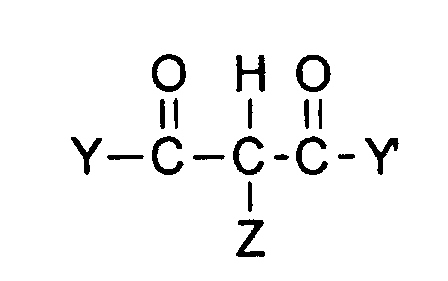 ou Y", et Y, Y' et Y" sont indépendamment choisis parmi NRR', OR ou R où R et R' sont indépendamment choisis parmi les groupes hydrogène et aliphatique, alicyclique, aromatique et hétéroaromatique et au moins un de Y, Y' et Z contient une insaturation oléfinique.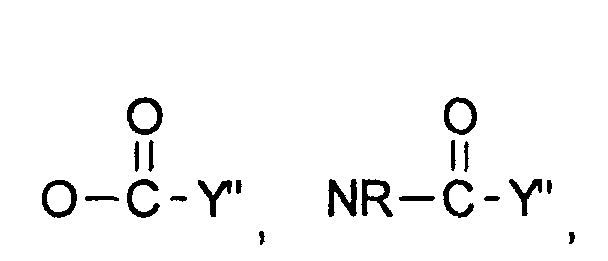
- Polymère selon la revendication 1, caractérisé en ce que le monomère de chélation est un monomère acétoacétoxy ou diacétoacétoxy.
- Polymère selon la revendication 2, caractérisé en ce que le monomère acétoacétoxy est choisi parmi les esters d'acides acétylacetique et diacétylacétique.
- Polymère selon la revendication 1, 2 or 3, caractérisé en ce que ledit polymère est réticulé avec un agent de réticulation à ion métal polyvalent.
- Polymère selon l'une des revendications 1 à 4, caractérisé en ce que le monomère diène conjugué est un diène C4 à C9.
- Polymère selon la revendication 5, caractérisé en ce que le diène C4 à C9 est un 1,3-butadiène.
- Polymère selon l'une des revendications précédentes, caractérisé en ce que en plus de l'ajout du monomère diène conjugué et de la fonctionnalité de chélation, le polymère contient un monomère nitrile α,β-insaturé.
- Polymère selon l'une des revendications précédentes, caractérisé en ce qu'en plus du monomère diène conjugué et de la fonctionnalité de chélation, le polymère contient un monomère d'acide carboxylique α,β-insaturé et des anhydrides ou des esters aliphatiques, alicycliques, aromatiques et hétéroaromatiques (partiel) de ceux-ci, où le squelette de carbone des alcools de base des esters contient de 1 à 20 atomes de carbone.
- Polymère selon l'une des revendications 1 à 7, caractérisé en ce qu'en plus du monomère diène conjugué et de la fonctionnalité de chélation, le polymère contient un monomère aromatique vinyle.
- Polymère selon la revendication 9, caractérisé en ce que monomère aromatique vinyle est choisi parmi le styrène, α-méthylstyrène, toluène de vinyle, chlorostyrène, chlorure de benzyle vinyle, pyridine de vinyle, naphtalène de vinyle, p-méthylstyrène, p-méthoxystyrène, et des mixtures et mélanges de ceux-ci.
- Polymère selon l'une des revendications 1 à 7, caractérisé en ce qu'en plus du monomère diène conjugué et de la fonctionnalité de chélation, le polymère contient un monomère supplémentaire choisi parmi les amides (partiels) d'un monomère acide carboxylique α,β-insaturé, où le squelette carbone de l'amine de base des amides contient de 1 à 20 atomes de carbone, des halogénures de vinyle, ou l'ester de vinyle des acides carboxyliques aliphatiques ayant de 2 à 20 atomes de carbone.
- Composition de latex polymère comprenant un polymère selon l'une des revendications précédentes.
- Gant comprenant la composition latex polymère selon la revendication 12.
- Procédé de réalisation d'un objet manufacturé, la méthode comprenant les étapes de:(a) mise en contact d'un moule sous la forme de l'objet manufacturé avec un polymère comme revendiqué dans l'une des revendications 1 à 11; et(b) traitement de la composition polymère utilisant un agent de réticulation à ion métal polyvalent pour réticuler la composition polymère pour former l'objet manufacturé.
Applications Claiming Priority (3)
| Application Number | Priority Date | Filing Date | Title |
|---|---|---|---|
| US711225 | 1991-06-06 | ||
| US09/711,225 US6624274B1 (en) | 2000-11-09 | 2000-11-09 | Polymers having novel cure system |
| PCT/US2001/046748 WO2002038640A2 (fr) | 2000-11-09 | 2001-11-08 | Polymeres presentant un nouveau systeme de traitement |
Publications (2)
| Publication Number | Publication Date |
|---|---|
| EP1355964A2 EP1355964A2 (fr) | 2003-10-29 |
| EP1355964B1 true EP1355964B1 (fr) | 2005-03-30 |
Family
ID=24857232
Family Applications (1)
| Application Number | Title | Priority Date | Filing Date |
|---|---|---|---|
| EP01993639A Expired - Lifetime EP1355964B1 (fr) | 2000-11-09 | 2001-11-08 | Polymeres presentant un systeme de traitement |
Country Status (7)
| Country | Link |
|---|---|
| US (1) | US6624274B1 (fr) |
| EP (1) | EP1355964B1 (fr) |
| JP (1) | JP2004521154A (fr) |
| AT (1) | ATE292152T1 (fr) |
| AU (1) | AU2002227257A1 (fr) |
| DE (1) | DE60109818T2 (fr) |
| WO (1) | WO2002038640A2 (fr) |
Families Citing this family (28)
| Publication number | Priority date | Publication date | Assignee | Title |
|---|---|---|---|---|
| AU2003269586A1 (en) * | 2002-11-11 | 2004-06-03 | Wrp Asia Pacific Sdn. Bhd. | A synthetic latex composition |
| US20040132886A1 (en) * | 2003-01-06 | 2004-07-08 | Jian Tao | Accelerator free nitrile gloves |
| US20050113527A1 (en) * | 2003-11-21 | 2005-05-26 | Perrella Frank W. | Crosslinking polymer composition |
| US20060052513A1 (en) | 2004-09-09 | 2006-03-09 | Soren Butz | Polymer latex suitable for the preparation of dip-molded articles |
| US20060057320A1 (en) * | 2004-09-10 | 2006-03-16 | At Tech, Inc. | Accelerator-free carboxylated latex compositions and articles |
| US8158691B2 (en) | 2005-04-04 | 2012-04-17 | Polymer Latex Gmbh & Co. Kg | Aqueous reinforced rubber dispersions and their use for making latex foams |
| US8250672B2 (en) * | 2005-05-13 | 2012-08-28 | Kimberly-Clark Worldwide, Inc. | Exterior-coated nitrile rubber article having natural rubber characteristics |
| US8117672B2 (en) | 2005-05-13 | 2012-02-21 | Kimberly-Clark Worldwide Inc. | Nitrile rubber article having natural rubber characteristics |
| MY147739A (en) * | 2005-07-20 | 2013-01-15 | Diptech Pte Ltd | Elastomeric films and gloves |
| US20070100081A1 (en) * | 2005-11-03 | 2007-05-03 | Dow Reichhold Specialty Latex Llc | Polymer compositions having novel cure systems and method of making articles with same |
| US8222362B2 (en) | 2006-08-10 | 2012-07-17 | Polymerlatex Gmbh | Latex with reduced odor |
| US20090013446A1 (en) * | 2007-07-11 | 2009-01-15 | Dow Reichhold Specialty Latex, Llc | Elastomeric items with desirable strength and comfort properties |
| DE102008059742A1 (de) | 2007-12-07 | 2009-07-02 | Bangkok Synthetics Co., Ltd. | Alternative Vernetzungstechnologie |
| KR101126583B1 (ko) * | 2008-09-26 | 2012-03-29 | 주식회사 엘지화학 | 황 및 가황 촉진제를 포함하지 않는 고무장갑용 라텍스 수지 조성물 및 그 조성물을 이용한 딥 성형물 제조방법 |
| ES2487528T3 (es) | 2009-02-05 | 2014-08-21 | Diptech Pte Limited | Producción de films elastómeros |
| WO2011068394A1 (fr) | 2009-12-01 | 2011-06-09 | Kossan Sdn Bhd | Caoutchouc élastomère et produits en caoutchouc sans emploi d'accélérateurs de vulcanisation ni de soufre |
| AU2016341849B9 (en) | 2015-10-18 | 2020-12-17 | Allegiance Corporation | Water-based hydrogel blend coating and method of application to elastomeric articles |
| US10280281B2 (en) | 2016-02-04 | 2019-05-07 | Eastman Chemical Company | Processes for forming vulcanizable elastomeric formulations and vulcanized elastomeric articles |
| US11021581B2 (en) | 2016-02-04 | 2021-06-01 | Eastman Chemical Company | Durable elastomeric compositions employing cyclododecasulfur as a vulcanizing agent |
| US10011663B2 (en) | 2016-02-04 | 2018-07-03 | Eastman Chemical Company | Vulcanizing composition containing cyclododecasulfur and improved cyclododecasulfur compound |
| US10000380B2 (en) | 2016-03-02 | 2018-06-19 | Eastman Chemical Company | Method for the manufacture of polymeric sulfur |
| US11059722B2 (en) | 2016-03-02 | 2021-07-13 | Eastman Chemical Company | Method for the manufacture of cyclododecasulfur |
| CA3056913C (fr) * | 2017-03-28 | 2024-03-05 | Zeon Corporation | Procede de production d'un caoutchouc nitrile carboxyle |
| KR102527053B1 (ko) * | 2017-07-25 | 2023-04-27 | 이스트만 케미칼 컴파니 | 가황성 탄성중합체 제형 및 가황된 탄성중합체 물품의 형성 방법 |
| GB2580910A (en) * | 2019-01-28 | 2020-08-05 | Synthomer Uk Ltd | Self-supported elastomeric film having self-healing properties made from a polymer latex |
| US11988601B2 (en) * | 2020-06-08 | 2024-05-21 | Kimberly-Clark Worldwide, Inc. | Method for determining residual carbamate compounds on an elastomeric article |
| MY209663A (en) * | 2021-04-07 | 2025-07-29 | Synthomer Sdn Bhd | Polymer latex composition |
| CN117580873A (zh) * | 2021-07-09 | 2024-02-20 | 阿朗新科德国有限责任公司 | 含有乙酰乙酰氧基烷基的丁腈橡胶及作为正、阴极粘合剂的用途 |
Family Cites Families (28)
| Publication number | Priority date | Publication date | Assignee | Title |
|---|---|---|---|---|
| US2527162A (en) | 1946-03-26 | 1950-10-24 | Standard Oil Dev Co | Interpolymers of a styrene, an acrylonitrile, and a conjugated diolefin |
| US2574894A (en) | 1947-11-17 | 1951-11-13 | Phillips Petroleum Co | Beta-thioalkyl mercaptan promoter-modifiers for conjugated diolefin polymerizations |
| US2575135A (en) | 1947-12-19 | 1951-11-13 | Phillips Petroleum Co | Metal mercaptides as modifiers in emulsion polymerization |
| US2922781A (en) | 1955-02-22 | 1960-01-26 | Polymer Corp | Process for polymerizing a conjugated diolefin in the presence of an unsaturated dimer of alphamethylstyrene |
| US3174953A (en) | 1958-11-28 | 1965-03-23 | Phillips Petroleum Co | Polymerization control |
| GB1134265A (en) * | 1966-09-06 | 1968-11-20 | Ici Ltd | Hardenable compositions comprising copolymers containing acetoacetate groups |
| US4421889A (en) | 1975-08-08 | 1983-12-20 | Hoechst Aktiengesellschaft | Aqueous dispersion paints and process for making the same |
| US5026860A (en) | 1983-08-29 | 1991-06-25 | Minnesota Mining And Manufacturing Company | Bidentate chelating monomers and polymers |
| US5143971A (en) | 1986-10-20 | 1992-09-01 | The B.F. Goodrich Company | Rubbery carboxylated acrylate polymer, latex, and preparation thereof |
| US5338565A (en) | 1987-07-17 | 1994-08-16 | Robin R. T. Shlenker | Method of forming a membrane, especially a latex membrane, having a biocide barrier |
| US4963623A (en) | 1989-01-11 | 1990-10-16 | Ortho Pharmaceutical (Canada) Ltd. | Natural rubber latex film products with improved tear resistance |
| US5039750A (en) | 1989-01-11 | 1991-08-13 | Ortho Pharmaceutical Ltd. | Natural rubber latex film products with improved tear resistance |
| GB8908885D0 (en) | 1989-04-19 | 1989-06-07 | Ws R Grace & Co Conn | Sealing containers |
| WO1991002759A1 (fr) * | 1989-08-14 | 1991-03-07 | Avery International Corporation | Polymeres d'emulsion adhesifs et sensibles a la pression presentant une activite excellente a temperature ambiante et a temperature basse |
| GB9000436D0 (en) | 1990-01-09 | 1990-03-07 | Shell Int Research | Process for shortstopping an emulsion polymerization |
| US5014362A (en) | 1990-05-11 | 1991-05-14 | Tillotson Corporation | Elastomeric covering material and hand glove made therewith |
| US5045611A (en) | 1990-06-25 | 1991-09-03 | Xerox Corporation | Processes for the preparation of polymers |
| US5241006A (en) | 1990-10-24 | 1993-08-31 | Minnesota Mining And Manufacturing Company | Printable transparency |
| US5084514A (en) | 1990-11-14 | 1992-01-28 | Reichhold Chemicals, Inc. | Latex gloves with improved donnability |
| US5195537A (en) | 1991-05-10 | 1993-03-23 | Tillotson Corporation | Elastomeric condom |
| US5284157A (en) | 1991-07-26 | 1994-02-08 | Ortho Pharmaceutical Corporation | Elastomeric film products with improved chemical resistance |
| US5206319A (en) | 1991-08-19 | 1993-04-27 | Mitsui Toatsu Chemicals, Inc. | Process for preparing a toner resin, toner resin prepared thereby and toner composition containing particles of the toner resin |
| US5284607A (en) | 1991-11-22 | 1994-02-08 | Johnson & Johnson Medical, Inc. | Process for forming powder-free medical gloves |
| US5370900A (en) | 1992-10-05 | 1994-12-06 | Johnson & Johnson Medical, Inc. | Thin-fingered medical glove |
| US5362798A (en) * | 1993-03-24 | 1994-11-08 | Gencorp Inc. | Low-formaldehyde latex binder |
| US5484840A (en) | 1993-12-21 | 1996-01-16 | Binkley; Jesse A. | Textile sizes containing ultrafine-sized aqueous polymeric dispersions |
| US5910533A (en) | 1997-08-04 | 1999-06-08 | Reichhold Chemicals, Inc. | Elastomeric material for rubber articles |
| US6369154B1 (en) | 1999-07-26 | 2002-04-09 | Reichhold, Inc. | Compositions suitable for making elastomeric articles of manufacture |
-
2000
- 2000-11-09 US US09/711,225 patent/US6624274B1/en not_active Expired - Fee Related
-
2001
- 2001-11-08 WO PCT/US2001/046748 patent/WO2002038640A2/fr not_active Ceased
- 2001-11-08 DE DE60109818T patent/DE60109818T2/de not_active Expired - Lifetime
- 2001-11-08 EP EP01993639A patent/EP1355964B1/fr not_active Expired - Lifetime
- 2001-11-08 AT AT01993639T patent/ATE292152T1/de not_active IP Right Cessation
- 2001-11-08 JP JP2002541970A patent/JP2004521154A/ja active Pending
- 2001-11-08 AU AU2002227257A patent/AU2002227257A1/en not_active Abandoned
Also Published As
| Publication number | Publication date |
|---|---|
| WO2002038640A3 (fr) | 2002-09-19 |
| WO2002038640A2 (fr) | 2002-05-16 |
| US6624274B1 (en) | 2003-09-23 |
| AU2002227257A1 (en) | 2002-05-21 |
| DE60109818D1 (de) | 2005-05-04 |
| JP2004521154A (ja) | 2004-07-15 |
| ATE292152T1 (de) | 2005-04-15 |
| EP1355964A2 (fr) | 2003-10-29 |
| DE60109818T2 (de) | 2006-02-02 |
Similar Documents
| Publication | Publication Date | Title |
|---|---|---|
| EP1355964B1 (fr) | Polymeres presentant un systeme de traitement | |
| EP1002011B1 (fr) | Matiere elastomere pour articles en caoutchouc | |
| US20090292081A1 (en) | Alternative Crosslinking Technology | |
| CA2574819C (fr) | Latex polymere adapte a la fabrication d'articles moules au trempe | |
| EP3587487A1 (fr) | Composition de latex | |
| EP1198509B1 (fr) | Compositions adaptees a la fabrication d'articles manufactures elastomeres | |
| AU741891B2 (en) | Elastomeric material for rubber articles | |
| WO2022197175A1 (fr) | Composition de latex polymère | |
| EP3875531B1 (fr) | Composition de latex pour moulage par immersion, son procédé de production, et produit moulé par immersion produit à l'aide de celle-ci | |
| US20070100081A1 (en) | Polymer compositions having novel cure systems and method of making articles with same | |
| US20020117815A1 (en) | Gaskets utilizing polymers having a novel cure system | |
| KR20230164028A (ko) | 중합체 라텍스 조성물 | |
| MXPA00001225A (en) | Elastomeric material for rubber articles |
Legal Events
| Date | Code | Title | Description |
|---|---|---|---|
| PUAI | Public reference made under article 153(3) epc to a published international application that has entered the european phase |
Free format text: ORIGINAL CODE: 0009012 |
|
| 17P | Request for examination filed |
Effective date: 20030609 |
|
| AK | Designated contracting states |
Kind code of ref document: A2 Designated state(s): AT BE CH CY DE DK ES FI FR GB GR IE IT LI LU MC NL PT SE TR |
|
| AX | Request for extension of the european patent |
Extension state: AL LT LV MK RO SI |
|
| RIN1 | Information on inventor provided before grant (corrected) |
Inventor name: SUDDABY, KEVIN, GRANT |
|
| 17Q | First examination report despatched |
Effective date: 20031202 |
|
| RTI1 | Title (correction) |
Free format text: POLYMERS HAVING CURE SYSTEM |
|
| GRAP | Despatch of communication of intention to grant a patent |
Free format text: ORIGINAL CODE: EPIDOSNIGR1 |
|
| GRAP | Despatch of communication of intention to grant a patent |
Free format text: ORIGINAL CODE: EPIDOSNIGR1 |
|
| GRAS | Grant fee paid |
Free format text: ORIGINAL CODE: EPIDOSNIGR3 |
|
| GRAA | (expected) grant |
Free format text: ORIGINAL CODE: 0009210 |
|
| AK | Designated contracting states |
Kind code of ref document: B1 Designated state(s): AT BE CH CY DE DK ES FI FR GB GR IE IT LI LU MC NL PT SE TR |
|
| PG25 | Lapsed in a contracting state [announced via postgrant information from national office to epo] |
Ref country code: IT Free format text: LAPSE BECAUSE OF FAILURE TO SUBMIT A TRANSLATION OF THE DESCRIPTION OR TO PAY THE FEE WITHIN THE PRESCRIBED TIME-LIMIT;WARNING: LAPSES OF ITALIAN PATENTS WITH EFFECTIVE DATE BEFORE 2007 MAY HAVE OCCURRED AT ANY TIME BEFORE 2007. THE CORRECT EFFECTIVE DATE MAY BE DIFFERENT FROM THE ONE RECORDED. Effective date: 20050330 Ref country code: CH Free format text: LAPSE BECAUSE OF FAILURE TO SUBMIT A TRANSLATION OF THE DESCRIPTION OR TO PAY THE FEE WITHIN THE PRESCRIBED TIME-LIMIT Effective date: 20050330 Ref country code: FI Free format text: LAPSE BECAUSE OF FAILURE TO SUBMIT A TRANSLATION OF THE DESCRIPTION OR TO PAY THE FEE WITHIN THE PRESCRIBED TIME-LIMIT Effective date: 20050330 Ref country code: AT Free format text: LAPSE BECAUSE OF FAILURE TO SUBMIT A TRANSLATION OF THE DESCRIPTION OR TO PAY THE FEE WITHIN THE PRESCRIBED TIME-LIMIT Effective date: 20050330 Ref country code: LI Free format text: LAPSE BECAUSE OF FAILURE TO SUBMIT A TRANSLATION OF THE DESCRIPTION OR TO PAY THE FEE WITHIN THE PRESCRIBED TIME-LIMIT Effective date: 20050330 Ref country code: NL Free format text: LAPSE BECAUSE OF FAILURE TO SUBMIT A TRANSLATION OF THE DESCRIPTION OR TO PAY THE FEE WITHIN THE PRESCRIBED TIME-LIMIT Effective date: 20050330 Ref country code: BE Free format text: LAPSE BECAUSE OF FAILURE TO SUBMIT A TRANSLATION OF THE DESCRIPTION OR TO PAY THE FEE WITHIN THE PRESCRIBED TIME-LIMIT Effective date: 20050330 Ref country code: TR Free format text: LAPSE BECAUSE OF FAILURE TO SUBMIT A TRANSLATION OF THE DESCRIPTION OR TO PAY THE FEE WITHIN THE PRESCRIBED TIME-LIMIT Effective date: 20050330 |
|
| REG | Reference to a national code |
Ref country code: GB Ref legal event code: FG4D |
|
| REG | Reference to a national code |
Ref country code: CH Ref legal event code: EP |
|
| REF | Corresponds to: |
Ref document number: 60109818 Country of ref document: DE Date of ref document: 20050504 Kind code of ref document: P |
|
| REG | Reference to a national code |
Ref country code: IE Ref legal event code: FG4D |
|
| PG25 | Lapsed in a contracting state [announced via postgrant information from national office to epo] |
Ref country code: DK Free format text: LAPSE BECAUSE OF FAILURE TO SUBMIT A TRANSLATION OF THE DESCRIPTION OR TO PAY THE FEE WITHIN THE PRESCRIBED TIME-LIMIT Effective date: 20050630 Ref country code: GR Free format text: LAPSE BECAUSE OF FAILURE TO SUBMIT A TRANSLATION OF THE DESCRIPTION OR TO PAY THE FEE WITHIN THE PRESCRIBED TIME-LIMIT Effective date: 20050630 |
|
| PG25 | Lapsed in a contracting state [announced via postgrant information from national office to epo] |
Ref country code: ES Free format text: LAPSE BECAUSE OF FAILURE TO SUBMIT A TRANSLATION OF THE DESCRIPTION OR TO PAY THE FEE WITHIN THE PRESCRIBED TIME-LIMIT Effective date: 20050711 |
|
| PG25 | Lapsed in a contracting state [announced via postgrant information from national office to epo] |
Ref country code: PT Free format text: LAPSE BECAUSE OF FAILURE TO SUBMIT A TRANSLATION OF THE DESCRIPTION OR TO PAY THE FEE WITHIN THE PRESCRIBED TIME-LIMIT Effective date: 20050908 |
|
| REG | Reference to a national code |
Ref country code: CH Ref legal event code: PL |
|
| NLV1 | Nl: lapsed or annulled due to failure to fulfill the requirements of art. 29p and 29m of the patents act | ||
| PG25 | Lapsed in a contracting state [announced via postgrant information from national office to epo] |
Ref country code: IE Free format text: LAPSE BECAUSE OF NON-PAYMENT OF DUE FEES Effective date: 20051108 Ref country code: CY Free format text: LAPSE BECAUSE OF FAILURE TO SUBMIT A TRANSLATION OF THE DESCRIPTION OR TO PAY THE FEE WITHIN THE PRESCRIBED TIME-LIMIT Effective date: 20051108 |
|
| PG25 | Lapsed in a contracting state [announced via postgrant information from national office to epo] |
Ref country code: LU Free format text: LAPSE BECAUSE OF NON-PAYMENT OF DUE FEES Effective date: 20051130 Ref country code: MC Free format text: LAPSE BECAUSE OF NON-PAYMENT OF DUE FEES Effective date: 20051130 |
|
| PLBE | No opposition filed within time limit |
Free format text: ORIGINAL CODE: 0009261 |
|
| STAA | Information on the status of an ep patent application or granted ep patent |
Free format text: STATUS: NO OPPOSITION FILED WITHIN TIME LIMIT |
|
| 26N | No opposition filed |
Effective date: 20060102 |
|
| ET | Fr: translation filed | ||
| REG | Reference to a national code |
Ref country code: IE Ref legal event code: MM4A |
|
| PG25 | Lapsed in a contracting state [announced via postgrant information from national office to epo] |
Ref country code: SE Free format text: LAPSE BECAUSE OF FAILURE TO SUBMIT A TRANSLATION OF THE DESCRIPTION OR TO PAY THE FEE WITHIN THE PRESCRIBED TIME-LIMIT Effective date: 20050630 |
|
| REG | Reference to a national code |
Ref country code: GB Ref legal event code: 732E Free format text: REGISTERED BETWEEN 20090129 AND 20090204 |
|
| REG | Reference to a national code |
Ref country code: GB Ref legal event code: 732E Free format text: REGISTERED BETWEEN 20090212 AND 20090218 |
|
| REG | Reference to a national code |
Ref country code: FR Ref legal event code: TP |
|
| PGFP | Annual fee paid to national office [announced via postgrant information from national office to epo] |
Ref country code: DE Payment date: 20101101 Year of fee payment: 10 |
|
| PGFP | Annual fee paid to national office [announced via postgrant information from national office to epo] |
Ref country code: GB Payment date: 20101129 Year of fee payment: 10 |
|
| PGFP | Annual fee paid to national office [announced via postgrant information from national office to epo] |
Ref country code: FR Payment date: 20111021 Year of fee payment: 11 |
|
| GBPC | Gb: european patent ceased through non-payment of renewal fee |
Effective date: 20121108 |
|
| REG | Reference to a national code |
Ref country code: FR Ref legal event code: ST Effective date: 20130731 |
|
| REG | Reference to a national code |
Ref country code: DE Ref legal event code: R119 Ref document number: 60109818 Country of ref document: DE Effective date: 20130601 |
|
| PG25 | Lapsed in a contracting state [announced via postgrant information from national office to epo] |
Ref country code: DE Free format text: LAPSE BECAUSE OF NON-PAYMENT OF DUE FEES Effective date: 20130601 |
|
| PG25 | Lapsed in a contracting state [announced via postgrant information from national office to epo] |
Ref country code: GB Free format text: LAPSE BECAUSE OF NON-PAYMENT OF DUE FEES Effective date: 20121108 Ref country code: FR Free format text: LAPSE BECAUSE OF NON-PAYMENT OF DUE FEES Effective date: 20121130 |