EP1358868A2 - Composition cosmétique pour favoriser la pousse et/ou empecher ou retarder la chute des cheveux - Google Patents
Composition cosmétique pour favoriser la pousse et/ou empecher ou retarder la chute des cheveux Download PDFInfo
- Publication number
- EP1358868A2 EP1358868A2 EP03290990A EP03290990A EP1358868A2 EP 1358868 A2 EP1358868 A2 EP 1358868A2 EP 03290990 A EP03290990 A EP 03290990A EP 03290990 A EP03290990 A EP 03290990A EP 1358868 A2 EP1358868 A2 EP 1358868A2
- Authority
- EP
- European Patent Office
- Prior art keywords
- saturated
- chosen
- phenyl
- branched
- linear
- Prior art date
- Legal status (The legal status is an assumption and is not a legal conclusion. Google has not performed a legal analysis and makes no representation as to the accuracy of the status listed.)
- Withdrawn
Links
- LEXFDPUGPVOYJN-UHFFFAOYSA-N Cc(cc1)ccc1NC(C[n]1nnc(-c2cc(C(F)(F)F)ccc2)n1)=O Chemical compound Cc(cc1)ccc1NC(C[n]1nnc(-c2cc(C(F)(F)F)ccc2)n1)=O LEXFDPUGPVOYJN-UHFFFAOYSA-N 0.000 description 1
- IYKUKODFOCZDMF-UHFFFAOYSA-N O=C(Cc1n[n](-c2ccccc2)nn1)c1ccccc1 Chemical compound O=C(Cc1n[n](-c2ccccc2)nn1)c1ccccc1 IYKUKODFOCZDMF-UHFFFAOYSA-N 0.000 description 1
- XVXNNCXKMQIBSV-UHFFFAOYSA-N O=C(c1ccccc1)Nc(nc1CC(C2)c3ccccc3Cl)ncc1C2=O Chemical compound O=C(c1ccccc1)Nc(nc1CC(C2)c3ccccc3Cl)ncc1C2=O XVXNNCXKMQIBSV-UHFFFAOYSA-N 0.000 description 1
Images


Classifications
-
- A—HUMAN NECESSITIES
- A61—MEDICAL OR VETERINARY SCIENCE; HYGIENE
- A61K—PREPARATIONS FOR MEDICAL, DENTAL OR TOILETRY PURPOSES
- A61K8/00—Cosmetics or similar toiletry preparations
- A61K8/18—Cosmetics or similar toiletry preparations characterised by the composition
- A61K8/30—Cosmetics or similar toiletry preparations characterised by the composition containing organic compounds
- A61K8/49—Cosmetics or similar toiletry preparations characterised by the composition containing organic compounds containing heterocyclic compounds
-
- A—HUMAN NECESSITIES
- A61—MEDICAL OR VETERINARY SCIENCE; HYGIENE
- A61K—PREPARATIONS FOR MEDICAL, DENTAL OR TOILETRY PURPOSES
- A61K8/00—Cosmetics or similar toiletry preparations
- A61K8/18—Cosmetics or similar toiletry preparations characterised by the composition
- A61K8/30—Cosmetics or similar toiletry preparations characterised by the composition containing organic compounds
- A61K8/49—Cosmetics or similar toiletry preparations characterised by the composition containing organic compounds containing heterocyclic compounds
- A61K8/494—Cosmetics or similar toiletry preparations characterised by the composition containing organic compounds containing heterocyclic compounds with more than one nitrogen as the only hetero atom
-
- A—HUMAN NECESSITIES
- A61—MEDICAL OR VETERINARY SCIENCE; HYGIENE
- A61K—PREPARATIONS FOR MEDICAL, DENTAL OR TOILETRY PURPOSES
- A61K8/00—Cosmetics or similar toiletry preparations
- A61K8/18—Cosmetics or similar toiletry preparations characterised by the composition
- A61K8/30—Cosmetics or similar toiletry preparations characterised by the composition containing organic compounds
- A61K8/49—Cosmetics or similar toiletry preparations characterised by the composition containing organic compounds containing heterocyclic compounds
- A61K8/494—Cosmetics or similar toiletry preparations characterised by the composition containing organic compounds containing heterocyclic compounds with more than one nitrogen as the only hetero atom
- A61K8/4953—Cosmetics or similar toiletry preparations characterised by the composition containing organic compounds containing heterocyclic compounds with more than one nitrogen as the only hetero atom containing pyrimidine ring derivatives, e.g. minoxidil
-
- A—HUMAN NECESSITIES
- A61—MEDICAL OR VETERINARY SCIENCE; HYGIENE
- A61P—SPECIFIC THERAPEUTIC ACTIVITY OF CHEMICAL COMPOUNDS OR MEDICINAL PREPARATIONS
- A61P17/00—Drugs for dermatological disorders
- A61P17/14—Drugs for dermatological disorders for baldness or alopecia
-
- A—HUMAN NECESSITIES
- A61—MEDICAL OR VETERINARY SCIENCE; HYGIENE
- A61P—SPECIFIC THERAPEUTIC ACTIVITY OF CHEMICAL COMPOUNDS OR MEDICINAL PREPARATIONS
- A61P43/00—Drugs for specific purposes, not provided for in groups A61P1/00-A61P41/00
-
- A—HUMAN NECESSITIES
- A61—MEDICAL OR VETERINARY SCIENCE; HYGIENE
- A61Q—SPECIFIC USE OF COSMETICS OR SIMILAR TOILETRY PREPARATIONS
- A61Q19/00—Preparations for care of the skin
-
- A—HUMAN NECESSITIES
- A61—MEDICAL OR VETERINARY SCIENCE; HYGIENE
- A61Q—SPECIFIC USE OF COSMETICS OR SIMILAR TOILETRY PREPARATIONS
- A61Q7/00—Preparations for affecting hair growth
-
- A—HUMAN NECESSITIES
- A61—MEDICAL OR VETERINARY SCIENCE; HYGIENE
- A61K—PREPARATIONS FOR MEDICAL, DENTAL OR TOILETRY PURPOSES
- A61K2800/00—Properties of cosmetic compositions or active ingredients thereof or formulation aids used therein and process related aspects
- A61K2800/74—Biological properties of particular ingredients
- A61K2800/78—Enzyme modulators, e.g. Enzyme agonists
- A61K2800/782—Enzyme inhibitors; Enzyme antagonists
-
- A—HUMAN NECESSITIES
- A61—MEDICAL OR VETERINARY SCIENCE; HYGIENE
- A61K—PREPARATIONS FOR MEDICAL, DENTAL OR TOILETRY PURPOSES
- A61K2800/00—Properties of cosmetic compositions or active ingredients thereof or formulation aids used therein and process related aspects
- A61K2800/80—Process related aspects concerning the preparation of the cosmetic composition or the storage or application thereof
- A61K2800/92—Oral administration
Definitions
- the present invention relates to the use of compounds for the preparation of compositions intended to induce or stimulate the growth of keratin fibers and especially human hair and eyelashes.
- the invention relates to new compounds to combat hair loss and / or promote regrowth of hair. It also relates to a cosmetic treatment method for combating against the fall of keratin fibers, such as hair or eyelashes and / or promote growth of keratin fibers, especially the growth or regrowth of hair, in particular to maintain and / or increase the hair density in the man.
- hair growth and renewal is mainly determined by the activity of the hair follicles and their environment cutaneous and / or connective. Their activity is cyclical and essentially comprises three phases, namely the anagen phase, the catagen phase and the telogen phase.
- the active anagen phase or growth phase which lasts several years and during which the hair lengthens, is followed by a very short and transient catagen phase which lasts a few weeks.
- the terminal phase called telogen, which lasts a few months, corresponds to a period of rest of the follicle and the hair ends up falling out. After this resting phase, a new follicle is regenerated on site and a new cycle begins again.
- the hair is therefore constantly renewed, and of the approximately 150,000 hairs that has a hair, at any moment, about 10% of them are at rest and will therefore be replaced in a few months.
- Natural hair loss or loss can be estimated, on average, at a few one hundred hairs per day for a normal physiological state. This process of permanent physical renewal undergoes a natural evolution during the aging, hair becomes thinner, their cycles shorter
- alopecia also covers a whole family of damage to the hair follicle, the final consequence of which is the partial or general permanent loss of hair. It is more particularly about androgenic alopecia. In a significant number of cases, early hair loss occurs in genetically predisposed subjects, it is then andro-chrono-genetic alopecia; this form of alopecia especially concerns men.
- hair loss can be strongly accentuated or cause cycles of highly disturbed follicles.
- compositions comprising very diverse active ingredients, such as 2,4-diamino 6-piperidinopyrimidine 3-oxide or "Minoxidil” described in US patents 4,139,619 and US 4,596,812 or else its many derivatives such as those described for example in patent applications EP 0353123, EP 0356271, EP 0408442, EP 0522964, EP 0420707, EP 0459890, EP 0519819.
- active ingredients such as 2,4-diamino 6-piperidinopyrimidine 3-oxide or "Minoxidil” described in US patents 4,139,619 and US 4,596,812 or else its many derivatives such as those described for example in patent applications EP 0353123, EP 0356271, EP 0408442, EP 0522964, EP 0420707, EP 0459890, EP 0519819.
- PGF2 ⁇ analogs have the property of causing hair and eyelash growth in humans and animals (Murray A and Johnstone MD, 1997. Am J Opht , 124 (4), 544-547).
- a prostaglandin E2 analogue (viprostol) has the property of increasing hair density (Roenigk HH., 1988. Clinic Dermatol , 6 (4), 119 -121).
- Patent WO 98/33497 describes pharmaceutical compositions containing prostaglandins or prostaglandin derivatives intended to combat hair loss in humans. Prostaglandins of type A2, F2 ⁇ and E2 are preferred.
- prostaglandins are molecules with a very short biological half-life time and acting in an autocrine or paracrine fashion, this reflecting a labile character due to a very active local metabolism of prostaglandins (Narumiya S et al ., 1999, Physiol Rev , 79 (4), 1193-1226).
- Hair stem keratins represent a family (Langbein et al., 2001, J. Biol. Chem. 276: 35123-35132) distinct from that expressed in the epidermis, as the markers differentiation such that keratins K1 and K10 are not expressed in the hair follicle and in particular in the external sheath (Lenoir et al., 1988, Dev. Biol. 130: 610-620), than trichohyaline (O'Guin et al., 1992, J. Invest. Dermatol.
- keratin K6irs are expressed in the hair follicle in particular in the internal sheath but not in the epidermis, and that type 1 cyclooxygenase, if it is expressed in the epidermis, is not in the keratinocytes of the hair follicle but in the dermal papilla (Michelet. Et al., 1997, J. Invest. Dermatol. 108: 205-209).
- the subject of the present invention is a composition, in particular cosmetic, containing at least one inhibitor of 15-hydroxy prostaglandin dehydrogenase and physiologically acceptable excipients, in particular from a cosmetological point of view.
- the subject of the invention is therefore the cosmetic use of at least one 15-PGDH inhibitor in or for the preparation of a composition intended to increase the density of keratin fibers and in particular of the hair, and / or reduce heterogeneity of their diameter and / or favor their growth.
- a subject of the invention is also the cosmetic use of at least one 15-PGDH inhibitor in a cosmetic composition for caring for or making up human eyelashes or for the preparation of a care composition and / or treatment of human eyelashes, for or intended to induce and / or stimulate the growth of eyelashes and / or increase their density.
- This composition thus makes it possible to maintain the eyelashes in good condition and / or to improve their appearance.
- 15-PGDH is a key enzyme in the deactivation of prostaglandins, in particular PGF2 ⁇ , and PGE2, which are important mediators of hair growth and survival.
- 15-PGDH type 1 meets the EC 1.1.1.141 classification and is NAD + dependent. She was isolated from pork kidney; in particular, its inhibition by a thyroid hormone, tri-iodo thyronine, has been observed at doses much higher than physiological doses.
- 15-PGDH type 2 is NADP dependent. In what follows, the expression 15-PGDH may designate one or the other form of the enzyme, or both.
- 15-PGDH has never been demonstrated in the dermal papilla, and it has never been proposed to use a 15PGDH inhibitor to maintain and / or increase the capillary density and / or to reduce the heterogeneity of hair diameters in men.
- 15-PGDH inhibitor is meant within the meaning of the invention any substance, simple or complex compound, of natural or synthetic origin, capable of inhibiting or decreasing the activity of the 15-PGDH enzyme, and / or capable of inhibiting, decreasing or slowing down the reaction catalyzed by this enzyme.
- the inhibitor is a specific inhibitor of 15-PGDH type 1.
- heterogeneity of hair diameters is meant a wide variation in hair diameters on the same area of the scalp; some hair having a physiological diameter close to 100 ⁇ m, others having, in the immediate vicinity of this hair, a reduced diameter (fine hair). So by “reducing heterogeneity diameters” “means increasing the diameter of fine hair.
- hair density By increasing the hair density is meant increasing the number of keratin fibers, hair or eyelashes per cm 2 of skin or scalp.
- a composition according to the invention will comprise excipients suitable for administration to the skin area or keratin fiber targeted, and especially the scalp, hair or eyelashes.
- the environment in which will be found the 15-PGDH inhibitor according to the invention can be anhydrous or aqueous.
- the composition will for example include a cosmetologically acceptable medium which may be consisting of water or at least one solvent chosen from organic solvents hydrophilic, lipophilic organic solvents, amphiphilic organic solvents and their mixtures, in particular a mixture of water and at least one of the solvents supra.
- the composition which can be used according to the invention may in particular be in the form of an aqueous, hydroalcoholic or oily solution or of dispersion of the lotion or serum type, of emulsions of liquid or semi-liquid consistency of the milk type, obtained by dispersing a fatty phase in an aqueous phase (O / W) or vice versa (W / O) or multiple, of a free or compacted powder to be used as it is or to be incorporated in a physiologically acceptable medium, or suspensions or emulsions of soft consistency of the aqueous or anhydrous cream or gel type, or of microcapsules or microparticles, or of vesicular dispersions of ionic and / or nonionic type.
- compositions can thus be in the form of an ointment, a tincture, a cream, an ointment, a powder, a patch, a soaked tampon, a solution, an emulsion or a vesicular dispersion, a lotion, a gel, a spray, suspension, shampoo, aerosol or foam. It can be anhydrous or aqueous. It can also consist of solid preparations constituting soaps or cleaning bars. These compositions are prepared according to the usual methods.
- composition which can be used according to the invention may in particular consist of a composition for hair care, and in particular a shampoo or a conditioner shampoo, in particular bi-weekly or weekly application, a lotion styling, a treatment lotion, a hair care lotion for example daily or bi-weekly application, a styling cream or gel, lotions restructuring products for hair, mask, etc.
- the cosmetic composition according to the invention will preferably be a cream, a hair lotion, shampoo or conditioner, hair mascara or for lashes.
- composition to which applies the invention may be in the form of a mascara, pigmented or not, to be applied to brush or comb on eyelashes, eyebrows, hair, or on the hairs of beard or mustache.
- the composition can be provided under form of aqueous lotion or oily suspension.
- the composition may be in the form of capsules, granules, syrups drinkable or tablets.
- compositions which can be used according to the invention are those conventionally used in the fields considered.
- the aqueous phase contains water and optionally an ingredient miscible in any proportion with water such as lower alcohols C 1 to C 8 such as ethanol, isopropanol, polyols such as propylene glycol, glycerol, sorbitol or acetone or ether.
- lower alcohols C 1 to C 8 such as ethanol, isopropanol, polyols such as propylene glycol, glycerol, sorbitol or acetone or ether.
- the proportion of the fatty phase can range from 2 to 80%, especially from 5% to 80% by weight, and preferably from 5% to 50% by weight relative to the total weight of the composition.
- the oils, waxes, emulsifiers and co-emulsifiers used in the composition in the form of an emulsion are chosen from those conventionally used in the field cosmetic.
- the emulsifier and the co-emulsifier are present in the composition, in a proportion ranging from 0.1, in particular from 0.3% to 30% by weight, preferably from 0.5 to 20% by weight, and better still 1 to 8% relative to the total weight of the composition.
- the emulsion can, in addition, contain lipid vesicles and in particular liposomes.
- the fatty phase can represent more than 90% of the total weight of the composition.
- the composition will comprise microspheres, nanospheres, liposomes, oleosomes or nanocapsules, in which at least one agent 15-PGDH inhibitor will be encapsulated.
- agent 15-PGDH inhibitor will be encapsulated. Examples of such formulations are described in particular in patents EP199636, EP 375520, EP447318, EP557489, WO 97/12602, EP1151741 or US 5,914,126.
- microspheres can be prepared according to the method described in patent application EP 0 375 520.
- the nanospheres may be in the form of an aqueous suspension and be prepared according to the methods described in patent applications FR 0015686 and FR 0101438.
- Oleosomes consist of an oil-in-water emulsion formed by globules oily provided with a lamellar liquid crystal coating dispersed in a phase aqueous (see patent applications EP 0 641 557 and EP 0 705 593).
- the 15PGDH inhibitor can also be encapsulated in nanocapsules consisting of a lamellar coating obtained from a silicone surfactant such as described in patent application EP 0 780 115; nanocapsules can also be prepared on the basis of water-dispersible sulfonic polyesters according, for example, to technique described in patent application FR 0113337.
- the composition is a solution or aqueous, alcoholic or hydro-alcoholic suspension and better a solution or water / ethanol suspension.
- the alcohol fraction can represent from 5% to 99.9% and better from 8% to 80%.
- the composition is a wax-in-water dispersion or of wax in oil, a gelled oil, an aqueous gel, pigmented or not.
- composition according to the invention may also contain adjuvants customary in the cosmetic field, such as hydrophilic or lipophilic gelling agents or thickeners, hydrophilic or lipophilic additives, preservatives, antioxidants, solvents, perfumes, fillers, filters, odor absorbers electrolytes, neutralizers, UV blocking agents such as sunscreens, film-forming polymers, cosmetic and pharmaceutical active agents with beneficial action for the skin or keratin fibers and coloring matters , soluble or not in the medium.
- adjuvants customary in the cosmetic field such as hydrophilic or lipophilic gelling agents or thickeners, hydrophilic or lipophilic additives, preservatives, antioxidants, solvents, perfumes, fillers, filters, odor absorbers electrolytes, neutralizers, UV blocking agents such as sunscreens, film-forming polymers, cosmetic and pharmaceutical active agents with beneficial action for the skin or keratin fibers and coloring matters , soluble or not in the medium.
- the amounts of these various adjuvants are those conventionally used in the cosmetic field, and in particular from 0.01 to 50% of the total weight of the composition, for example from 0.01% to 20%, in particular less than or equal to 10% of the total weight of the composition, and in particular greater than or equal to 0.1%.
- These adjuvants can be introduced into the fatty phase, into the aqueous phase and / or into spherules, vesicles or lipid microspheres, such as liposomes.
- the fatty phase can contain fatty or oily compounds, liquid at room temperature (25 ° C) and atmospheric pressure (760 mm Hg), generally called oils.
- oils may or may not be compatible with each other and form a macroscopically homogeneous liquid fatty phase or a two- or three-phase system.
- the fatty phase can, in addition to oils, contain waxes, gums, lipophilic polymers, "pasty" or viscous products containing solid parts and liquid parts.
- mineral oils mineral oils
- vegetable oils liquid fraction of shea butter, sunflower oil, soybean oil, wheat oil
- animal oils perhydrosqualene
- synthetic oils Purcellin oil, fatty acid esters
- silicone oils or waxes linear or cyclic polydimethylsiloxanes, cyclomethicone, phenyltrimethicone
- fluorinated oils perfluoro
- Fatty alcohols and free fatty acids can be added to these oils and waxes.
- emulsifiers which can be used in the invention, there may be mentioned for example glycerol stearate or laurate, sorbitol stearates or oleates, alkyl dimethiconecopolyol (with alkyl ⁇ 8) and their mixtures; polyoxyethylenated sorbitol stearate or oleate, for example polysorbate 60 and the mixture of PEG-6 / PEG-32 / Glycol Stearate sold under the name Tefose® 63 by the company Gattefosse, polyethylene glycol monostearate or monolaurate, dimethiconecopolyols and their mixtures.
- solvents which can be used in the invention mention may be made of lower alcohols, in particular ethanol and isopropanol, propylene glycol.
- hydrophilic gelling agents which can be used in the invention, mention may be made of polymers carboxyvinyls (carbomer), acrylic copolymers such as copolymers acrylates / alkylacrylates, polyacrylamides, polysaccharides such as hydroxypropylcellulose, natural gums and clays, and as gelling agents lipophilic, there may be mentioned modified clays such as Bentones®, salts metallic fatty acids such as aluminum stearates and hydrophobic silica, ethylcellulose, polyethylene.
- carboxyvinyls carboxyvinyls
- acrylic copolymers such as copolymers acrylates / alkylacrylates
- polyacrylamides polysaccharides
- polysaccharides such as hydroxypropylcellulose, natural gums and clays
- gelling agents lipophilic there may be mentioned modified clays such as Bentones®, salts metallic fatty acids such as aluminum stearates and hydrophobic silica, ethy
- the inhibitor agent (s) are present at a concentration greater than or equal to 10 -3 %, in particular from 0.001% to 5% w / v relative to the composition, more preferably from 0.01 to 2%.
- concentration greater than or equal to 10 -3 % in particular from 0.001% to 5% w / v relative to the composition, more preferably from 0.01 to 2%.
- concentration used being generally greater than or equal to that for which 100% inhibition of 15-PGDH is observed in vitro.
- the concentration of 15-PGDH inhibiting agent will in particular be 50 to 500 times greater than the concentration for which 100% inhibition of 15-PGDH has been observed in vitro, for example we will use concentrations of approximately 100 times that corresponding total inhibition in vitro.
- 15PGDH inhibitors may be determined by those skilled in the art job; the inhibiting agent will in particular be chosen from traxanox, its salts and esters.
- the composition will include at least one specific inhibitor of PGDH; through specific inhibitor means an active which has little or no inhibitor of synthesis prostaglandins, in particular the synthesis of PGF2 ⁇ or PGE2.
- specific inhibitor means an active which has little or no inhibitor of synthesis prostaglandins, in particular the synthesis of PGF2 ⁇ or PGE2.
- the 15PGDH inhibitor will be little or no inhibitor of the prostaglandin synthase (PGF synthase).
- PGF synthase is also expressed in the dermal papilla. Maintaining an effective amount of prostaglandins at the site of action therefore results from a complex biological balance between the synthesis and the degradation of these molecules. The exogenous supply of compounds inhibiting catabolism will therefore be less effective if this activity is combined with an inhibition of synthesis. In addition to or replacement of this exogenous contribution, the applicant has now demonstrated that it is possible to promote the maintenance of an endogenous pool of prostaglandins, and therefore the maintenance or even the increase in the density of keratin fibers, in particular of hair density, as well as maintaining the quality of keratin fibers, in particular hair.
- the choice of other agents active on the inhibition of 15-PGDH according to the present invention can be made by a person skilled in the art by implementing a simple test using potential candidates. This test will consist in comparing the kinetics of a reaction catalyzed by this enzyme, in a reaction medium comprising a substrate of the enzyme and possible co-substrates, in the presence or not of the compound whose role of inhibitor is to be evaluated.
- 15-PGDH; the reaction conditions are those adapted to the reaction and are the same for the measurement in the presence or in the absence of the compound or of the substance to be tested. For this, for example, the enzyme 15-PGDH is brought into contact at a final concentration of 7.
- the same reaction is carried out, but by adding the compound to be tested to the medium at the start of the reaction.
- the maximum rate of enzymatic reaction per unit of time (Vmax) measured in the presence of the compound is compared to that of the control without compound, and the percentage of inhibition is determined [100- (Vmax test X 100) / Vmax control] .
- the compounds noted as 15PGDH inhibitors are then tested for their capacity to inhibit PGF synthase. For this, for example, the enzyme PGFS is brought into contact at a final concentration of 25.
- IC50 is the concentration of the compound for which Vmax is reduced by 50%.
- the activity of compounds showing a selective inhibition of 15-PGDH within the meaning of the present invention can also be demonstrated by measuring the level of prostaglandins in a cell model mimicking the enzymatic environment of the hair papilla. This makes it possible to evaluate the effectiveness of a selective 15-PGDH inhibitor on the protection of prostaglandins in a complex biological system producing the different types of enzymes involved in the metabolism of these molecules. For example, a culture of promonocytes, which are precursors of macrophages under certain conditions, is used, a very widespread model for studying the metabolism of prostaglandins.
- the phorbol esters cause in 24h00 the differentiation of the promonocyte line U937 into macrophages; this differentiation is accompanied by the induction of 15-PGDH.
- LPS lipopolysaccharide extracted from bacterial wall
- stimulation of these macrophages with LPS induces (at 100 ng / ml) in 6 hours the PGHS-2 (or COX-2), responsible enzyme (as well as COX-1) of the synthesis of PGH2, precursor (among others) via PGFS, of PGF2 ⁇ .
- macrophage precursors are cultured in a suitable medium in the presence of a compound which stimulates their differentiation and the induction of 15-PGDH and then stimulates prostaglandin production by these cells, for example by LPS in extract or purified form; the 2 nd step is performed in presence or absence of test compound.
- concentrations of prostaglandins, in particular of PGF2 ⁇ obtained in the presence of the 15-PGDH inhibitor compound to be tested are compared with that of the control containing only the 15-PGDH inducer, this measurement being able to be carried out by any known method of those skilled in the art, in particular by enzyme-linked immunosorbent assay.
- the quantity of PGF2 ⁇ measured is therefore the result of the two enzymatic activities for which the compounds tested are more or less active: that of PGFS which leads to the synthesis of PGF2 ⁇ and that of 15-PGDH which leads to degradation.
- PGFS non-selective 15-PGDH inhibitor
- 15-PGDH 15-PGDH
- the compounds for which the level of PGF2 ⁇ observed are at least 5% higher, preferably at least 10%, than that of the control (inducer of prostaglandin synthesis alone) therefore have a protective role for prostaglandin F2 ⁇ .
- the concentration of prostaglandins with the compound to be tested is at least 20%, or even 30%, greater than that of the control.
- Such compounds are in particular certain acetyl-tetrazoles, salified or not, endowed surprising activity favorable to the improvement of hair density.
- the Applicant has indeed found that these compounds are inhibitors of 15-hydroxy prostaglandin dehydrogenase.
- the invention also relates to the use of at least one tetrazolic compound of formula (I) or (II) or tautomeric form or of one of its salts, as defined above, as an agent for inducing and / or stimulate the growth of human hair and / or curb their fall and / or increase their density.
- the invention also relates to the cosmetic use of at least one tetrazolic compound of formula (I) or (II) or of one of its salts in a cosmetic composition for human hair care to reduce hair loss. hair and / or increase its density.
- It also relates to the use of at least one tetrazolic compound of formula (I) or one of its salts for the preparation of a hair composition for humans, intended to induce and / or stimulate the growth of hair and / or curb their fall and / or increase their density.
- the invention also relates to the cosmetic use of at least one tetrazolic compound of formula (I) or (II) or one of its salts in a composition human hair care cosmetic or for the preparation of a composition human capillary intended for / or for treating androgenic alopecia. So this composition allows to maintain in good condition the hair and / or fight against the fall natural hair of men.
- Another subject of the invention is the use of at least one tetrazolic compound of formula (I) or (II) or one of its salts as an inhibitor of 15-hydroxy prostaglandin dehydrogenase. It also relates to the use of at least one tetrazolic compound of formula (I) or (II) or of one of its salts for the manufacture of a composition intended to treat disorders linked to 15-hydroxy prostaglandin dehydrogenase in humans.
- the compounds of formula (I) or (II) in salified form or not, exhibit an inhibitory activity of 15-PGDH which is superior to the inhibitory activity of PGF synthase.
- the use of the term compound of formula (I) or (II) must be understood as meaning both the compound of formula (I) and of formula (II), in acid form or basic only as salt.
- composition may contain one or more compounds of formula (I), one or more compounds of formula (II) or a mixture of compounds of formula (I) and formula (II).
- This or these compounds may be cis or trans isomers or a mixture cis / trans isomers. They can also be in tautomeric form. They can be also enantiomers and / or diastereoisomers or a mixture of these isomers, in particular a racemic mixture.
- hydrocarbon cycle is meant within the meaning of the invention a cycle containing only carbon-carbon bonds to form the cycle.
- the cycles used for R 1 to R 4 in formulas (I) and (II) independently have from 4 to 7 atoms and better still from 5 to 6 atoms. They can be saturated or unsaturated. They can, moreover, be alone or joined to another cycle with the same chemical structure or not.
- R 1 and R 2 optionally include a or several heteroatoms such as S, N, O or their associations.
- heterocycles used for A 1 and A 2 in formulas (I) and (II) comprise one or more heteroatoms such as S, N, O or their associations. They also contain, independently, from 4 to 7 atoms and better still from 5 to 6 atoms. In addition, they can be saturated or unsaturated.
- saturated hydrocarbon rings which can be used in formulas (I) or (II), mention may be made of the cyclopentyl or cyclohexyl radical.
- heterocycle mention may be made of pyridine, piperidine, morpholine, pyrrole, furan, thiazole rings.
- unsaturated hydrocarbon rings mention may be made of the phenyl, naphthyl radical.
- these rings can be substituted by one or more substituents having the definition indicated above for A 1 , A 2 , A 3 , A 4 , A 5 and A 6 , depending on whether it is R 1 , R 2 , R 3 , R 4 , R 5 , R ' 5 , R " 5 , R"' 5 , R 6 , R ' 6 , R " 6 , R 7 , R' 7 , R" 7 or R "' 7 .
- linear or branched C1-C20 alkyl radical means the radicals acyclic from the removal of a hydrogen atom from the molecule of a hydrocarbon, linear or branched having from 1 to 20 carbon atoms and in particular methyl, ethyl, propyl, isopropyl, butyl, isobutyl, tert-butyl, pentyl radicals, hexyl, heptyle, octyl and their corresponding position isomers.
- alkyl radical (saturated) which can be used in the invention, mention may be made of the radicals methyl, ethyl, n-butyl, iso-propyl, n-hexyl.
- halogen atom chlorine, fluorine, iodine or bromine, especially chlorine.
- the compounds of formula (I) or (II) are in isolated form, that is to say non-polymeric.
- the substituents A 1 , A 2 , A 3 , A 4 , A 5 and A 6 can be located in any position of the ring carrying it and in particular in position adjacent to the group carrying the tetrazole ring.
- At least one of R 1 and R 2 represents a hydrogen atom, a halogen atom and in particular a fluorine or chlorine atom.
- R 1 and R 2 represent hydrogen.
- R 3 represents NR 6 R ′ 6 or an aryl radical, and in a particular embodiment a naphthyl or phenyl radical, optionally substituted by the substituent A 3 .
- a 3 represents OR 9 .
- R 6 represents hydrogen and R ′ 6 an aryl radical, in particular phenyl, optionally substituted by the group OR 9 .
- R 9 represents a C 1 -C 20 and better C 1 -C 10 alkyl radical, linear or branched, saturated and for example the methyl radical.
- R 4 represents an aryl radical and in particular a naphthyl or phenyl radical.
- inorganic salts which can be used according to the invention, there may be mentioned the sodium or potassium salts as well as the zinc (Zn 2+ ), calcium (Ca 2+ ), copper (Cu 2+ ), iron (Fe 2+ ), strontium (Sr 2+ ), magnesium (Mg 2+ ) and manganese (Mn 2+ ); hydroxides and carbonates.
- organic salts which can be used according to the invention are for example the tri-ethanolamine salts, mono-ethanolamine, di-ethanolamine, hexadecylamine, N, N, N ', N'-tetrakis- (hydroxy-propyl-2) ethylene diamine, tris-hydroxymethyl aminomethane.
- the compounds of formula (I) or (II), salified or not, can be manufactured so known.
- the compounds (I) of the invention can be prepared by a method described in the literature: D. Moderhack et al., J. Chem. Soc. Perkin Trans. 1, 2001, 720-728.
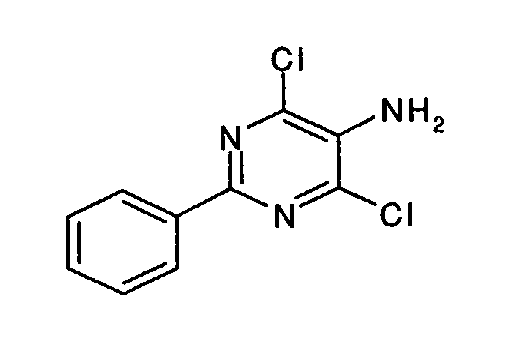
- the reaction scheme is as follows:
- the reaction scheme can be as follows:
- the effective amount of a compound of formula (I) or (II) or one of its salts corresponds to the quantity necessary to obtain the desired result (i.e. to increase hair density). Those skilled in the art are therefore able to assess this effective amount which depends on the nature of the compound used, on the person to whom we apply it, and from the time of this application.
- the quantities of the different ingredients of the composition are given in percentage by weight relative to the total weight of the composition.
- the compound of formula (I) or one of its salts can be used in an amount representing from 10 -3 % to 5% of the total weight of the composition and preferably in an amount representing from 10 -2 % to 2% of the total weight of the composition, for example from 0.5 to 2%.
- composition of the invention can be for cosmetic or pharmaceutical use.
- the composition of the invention is for cosmetic use.
- the composition must contain a physiologically acceptable non-toxic medium and may be applied to the skin, integuments or lips of humans.
- Cosmetic means within the meaning of the invention a composition of appearance, odor and pleasant touch.
- the compound of formula (I) or (II), salified or not, can be used in a composition to be ingested, injected or applied to the skin (on any skin area treated).
- the compound of formula (I) or (I) can be used by the oral route in an amount of 0.1 to 300 mg per day, for example 5 to 10 mg / day.
- a preferred composition of the invention is a composition for cosmetic use and particular for topical application on the skin, and more particularly on the scalp.
- the compositions according to the invention also comprise at least one agent beneficial for the hair such as in particular silicones, vegetable, animal, mineral or synthetic oils, waxes, ceramides, pseudoceramides, cationic polymers, sunscreens, vitamins.
- agent beneficial for the hair such as in particular silicones, vegetable, animal, mineral or synthetic oils, waxes, ceramides, pseudoceramides, cationic polymers, sunscreens, vitamins.
- the silicones which can be used in accordance with the invention are in particular polyorganosiloxanes which are insoluble in the composition and can be in the form of oils, waxes, resins or gums.
- Organopolysiloxanes are further defined in Walter NOLL's "Chemistry and Technology of Silicones" (1968) Academy Press. They can be volatile or non-volatile.
- the 15PGDH inhibiting agents will be the invention, combined with other active compounds to promote regrowth and / or limit hair loss.
- These compounds may in particular be chosen from lipoxygenase inhibitors as described in EP648488, bradykinin inhibitors described in particular in EP 845700, prostaglandins and their derivatives in particular those described in WO 98/33497, WO 95/11003, JP 97-100091 , JP 96134242, prostaglandin receptor agonists or antagonists, non-prostanoic prostaglandin analogs as described in EP 1175891 and EP1175890, WO 01/74307, WO 01/74313, WO 01/74314, WO 01/74315 or WO 01 / 72268.
- Agents promoting hair growth which may be present in the compositions according to the invention include vasodilators, antiandrogens, cyclosporins and their analogs, antimicrobials, antifungals, anti-inflammatories with the exception of selective inhibitors of prostaglandin H synthase 1 or COX-1, tri-terpenes, alone or as a mixture.
- Vasodilators such as potassium channel agonists including minoxidil and its derivatives, aminexil and the compounds described in US Patents 3,382,247, 5,756,092, 5,772,990, 5,769,043, 5,466,694, 5,437,058, 4,973,474, chromakalim and diaxozide or nicorandil can thus be present in the compositions.
- the antiandrogens which can be used in particular include the 5 ⁇ reductase inhibitors, such as finasteride and the compounds described in US 5 516779, cyprosterone acetate, azelaic acid, its salts and derivatives and the compounds described in US 5 480913, flutamide and the compounds described in US Patents 5,411,981, 5,565,467 and 4,910,226.
- 5 ⁇ reductase inhibitors such as finasteride and the compounds described in US 5 516779, cyprosterone acetate, azelaic acid, its salts and derivatives and the compounds described in US 5 480913, flutamide and the compounds described in US Patents 5,411,981, 5,565,467 and 4,910,226.
- the anti-microbial compounds can be chosen from selenium derivatives, ketoconazole, octopirox, triclocarban, triclosan, pyrithione zinc, itraconazole, asian acid, hinokitiol, mipirocin, and the compounds described in EP680745, clinycin hydrochloride, benzoyl or benzyl peroxide and minocycline.
- the anti-inflammatory drugs may be chosen from specific inhibitors of Cox-2 such as, for example, NS-398 and DuP-697 (B.
- compositions may also be chosen from the group comprising aminexil and its derivatives, 6-O - [(9Z, 12Z) -octadéc- 9,12-dienoyl] hexapyranose as described in FR027293, FR0212828, benzlakonium chloride, benzethonium chloride, phenol, estradiol, chlorpheniramine maleate, chlorophyllin derivatives, cholesterol, cysteine, methionine, benzyl nicotinate, menthol, oil peppermint, calcium panthotenate, panthenol, resorcinol, protein kinase C inhibitors, prostaglandin H synthase 1 or COX-1 activators as described in FR2732597 glycosidase inhibitors, glycosaminoglycanase inhibitors, d esters pyroglutamic acid, hexos
- the PGDH inhibitor agent will be associated with an active compound to promote the growth and / or limit the fall of hair capable of being metabolized by this enzyme.
- certain compounds conventionally used to promote growth and / or delay or prevent hair loss have less activity due to the presence of 15PGDH by decreasing the accelerated concentration and / or disappearance of the substances from the site of action.
- compositions can now be obtained with enhanced efficacy, by combining an active compound to promote growth and / or delay or prevent hair loss, which can be metabolized by 15PGDH and a 15PGDH inhibitor as defined above. We will get thus a synergistic action of the active ingredients to promote the growth and / or delay or prevent hair loss in these compositions.
- composition will for example additionally contain at least one compound chosen from prostaglandins, in particular prostaglandin PGE1, PGE2, their salts, their esters, their analogs and their derivatives, in particular those described in WO 98/33497, WO 95/11003, JP 97-100091, JP 96134242, in particular agonists of prostaglandin receptors.
- prostaglandins in particular prostaglandin PGE1, PGE2, their salts, their esters, their analogs and their derivatives, in particular those described in WO 98/33497, WO 95/11003, JP 97-100091, JP 96134242, in particular agonists of prostaglandin receptors.
- the composition according to the invention will comprise at least one 15-PGDH inhibitor as defined above and at least one prostaglandin or a prostaglandin derivative such as, for example, prostaglandins of series 2, in particular PGF 2 ⁇ and PGE 2 under saline form or in the form of precursors, in particular esters (for example isopropyl esters), their derivatives such as 16.16 dimethyl PGE2, 17 phenyl PGE2, 16.16 dimethyl PGF2 ⁇ , 17 phenyl PGF2 ⁇ prostaglandins of series 1 like 11 deoxy prostaglandin E1, 1 deoxy prostaglandin E1 in saline or ester form, their analogs in particular latanoprost, travoprost, fluprostenol, unoprostone, bimatoprost, cloprostenol, viprostol, butaprost, misoprostol, their salts or their esters.
- prostaglandin or a prostaglandin derivative such as, for
- the composition contains at least one agonist of the FP receptor as described for example in WO03 / 009820 or a prostanoic or non-prostanoic agonist of the EP2 and / or EP4 receptors in particular as described in EP 1175892.
- compositions according to the invention may also contain agents penetration accelerators. These compounds are known to those skilled in the art and improve the passage of agents to the site of action; they will be classically present in the compositions at concentrations greater than or equal to 0.01%, in particular from 0.1 to 20% and preferably from 0.1 to 5%. Compounds of this type usable are for example urea and the compounds cited in the application WO01 / 74313.
- the invention relates to a treatment method cosmetic to promote growth and / or decrease, prevent or delay the fall hair, characterized in that the activity and / or expression of 15-PGDH by the hair follicle, comprising the administration of at least one inhibitor 15-PGDH
- This process will be adapted in particular to maintain or increase the capillary density of the hair and decrease the heterogeneity of the capillary diameter, in physiological cases where these parameters are disturbed, transiently.
- the administration of the 15PGDH inhibitor agent (s) will in particular carried out in the form of a composition as defined above.
- Administration of the 15PGDH inhibitor or of the composition containing it in the process according to the invention can be carried out by any route, in particular oral. However, the method is preferably carried out by topical administration, in if you.
- the PGDH inhibitors used in the process according to the invention are such as previously defined; in particular, at least one 15-PGDH inhibitor will be used specific, ie little or no PGFS inhibitor.
- a prostaglandin and / or a prostaglandin derivative is also administered, such as for example the prostaglandins of series 2, in particular PGF 2 ⁇ and PGE 2 in the form of salines or esters ( isopropyl esters), their derivatives such as 16.16 dimethyl PGE2, 17 phenyl PGE2, 16.16 dimethyl PGF2 ⁇ , 17 phenyl PGF2 ⁇ prostaglandins of series 1 such as 11 deoxy prostaglandin E1, 1 deoxy prostaglandin E1 in saline or ester form, their analogs in particular latanoprost, fluprostenol, unoprostone, bimatoprost, cloprostenol, viprostol, butaprost, misoprostol in saline or ester form, such as travoprost.
- the prostaglandins of series 2 in particular PGF 2 ⁇ and PGE 2 in the form of salines or esters ( isopropy
- the 15PGDH inhibitor agent (s) may be applied alone or as a mixture, and optionally in combination with other active agents to promote growth and / or delay or prevent hair loss, or penetration accelerators as defined above.
- the present invention also relates to a method of treatment hair and / or scalp cosmetic, intended to stimulate the growth of human hair and / or curb its loss, characterized in that it consists of apply to the hair and / or scalp a cosmetic composition comprising an effective amount of at least one 15-PGDH inhibitor compound, per example of formula (I) or (II) or of a salt thereof, to leave the latter in contact with the hair and / or scalp, and optionally to rinse hair and / or leather Scalp.
- This treatment process has the characteristics of a cosmetic process in the extent that it improves the aesthetics of hair by giving it a more great vigor and an improved appearance. In addition, it can be used daily For many months.
- between 5 and 500 ⁇ l are administered of a solution or composition as defined above, comprising between 0.001% and 5% inhibitor.
- the invention relates to the use of at least one 15PGDH inhibitor as defined above, for the preparation of a composition intended to reduce hair loss and / or to promote hair regrowth in a mammal, and in particular in humans.
- Said composition will also contain physiologically acceptable excipients, suitable for topical or systemic administration.
- the 15PGDH inhibitors will in particular be used according to the invention for the preparation of compositions, in particular pharmaceutical, dermatological or cosmetic, in combination with excipients known to those skilled in the art. All the variants of the cosmetic compositions described in the foregoing can be adapted to the preparation of said composition.
- compositions of the invention are intended to prevent, reduce or slow hair loss, in particular for the treatment of alopecia, in particular androgenetic alopecia; Androgenetic alopecia is distinct from autoimmune alopecia such as alopecia areata.
- Example 1 Demonstration of the Expression of 15PGDH and PGFS mRNA in Fibroblasts of Cultured Hair Dermal Papillae
- Hair follicles originating from a lifting of voluntary donors are dissected according to the method described in patent B. Bernard / O. Gaillard FR2736721A1 of 17/01/97; US5712169A dated 28/01/98.
- the isolated follicles are placed in immersion in a petri dish containing 20 ml of culture medium 199 Gibco reference 31153-018, Life technologie, BP 96, Cergy Pontoise Cedex, supplemented with 1% (v / v) of a solution of Gibco antibiotics reference 15240-096.
- a first passage is carried out after 3 weeks of incubation without the medium having been previously replaced.
- the medium is eliminated, 1 ml of Gibco trypsin solution reference 25050-022 is introduced into the petri dish, the dish is replaced in the 4 minute incubator.
- the cells papilla fibroblasts thus resuspended in the trypsin solution (microscopic control) are introduced into a 15 ml tube, reference Falcon, 352097, Becton Dickinson, Chemin des sources, BP 37, Meylan 38241, containing 10 ml of medium 199 previously used (containing 20% fetal calf serum).
- the supernatant is removed and the cell pellet taken up in 5 ml of medium 199 previously used (here containing 10% fetal calf serum).
- medium 199 previously used (here containing 10% fetal calf serum).
- the cell suspension is introduced into a 35 mm diameter petri dish and replaced in the incubator (37 ° C, 5% CO2).
- the passages according to P2, P3, P4 are carried out according to the same principle. These are carried out once the cells have reached confluence.
- RNAs from fibroblasts of dermal papillae (carried out on passages P3 or P4, 35 mm dish at confluence) is carried out according to the protocol and with the reagents of the QuickPrepr mRNA kit (Pharmacia Biotech, Brussels, Belgium).
- the following protocol will be applied for each sample (a cell culture at confluence in a 35 mm diameter dish) studied.
- the cell culture supernatant is removed and replaced with 800 ⁇ l of lysis buffer, the lysate obtained is recovered and introduced into a 1.5 ml polypropylene microtube (tube 1).
- 1 ml of Oligo (dT-18) cellulose microsphere suspension is introduced into a 1.5 ml microtube (tube 2) and centrifuged at 14,000 rpm for 1 minute. The supernatant is removed. The contents of tube 1 are then introduced into tube 2, the microspheres are resuspended in the lysate by gentle agitation of the tube for 3 minutes. The polyA + RNAs fixed on the microspheres are isolated from the contaminants by washing. The tube is centrifuged at 14,000 rpm for 1 minute, the supernatant is removed and replaced with 1 ml of washing buffer (high salt buffer). The microspheres are resuspended as before and the tube is gently shaken for 1 minute.
- washing buffer high salt buffer
- the tube is centrifuged at 14,000 rpm for 1 minute, the supernatant is again removed and replaced with 1 ml of low salt buffer. A total of five washes with the low salt buffer followed by three washes with the high salt buffer will be performed.
- the content of the third wash (microspheres + buffer) is introduced onto a microcolumn containing a base filter (microspin TM column) placed in a 1.5 ml microtube. The whole is centrifuged at 14000 rpm for 1 minute. The microcolumn is collected and placed in a 1.5 ml microtube.
- the polyA + messenger RNAs are then eluted with a total final volume of 0.4 ml of elution buffer previously brought to 65 ° C.
- 1 ⁇ l (of a 1/10 dilution in sterile distilled water) of complementary DNAs thus obtained is subjected in a buffered medium to a polymerization reaction in chain (PCR), in the presence of pairs of specific primers (grading 40 ng / ml), TAQ Polymerase and nucleotides according to supplier's data.
- PCR polymerization reaction in chain
- the specific primers of the sequences of interest which will be used are obtained by custom synthesis by Genset SA, rue Robert and Sonia Delaunay, Paris.
- the first pair of primers hybridizing on the sequence coding for a ubiquitous protein ( ⁇ actin).
- the second pair of primers hybridizing to the sequence coding for hydroxyprostaglandin dehydrogenase.
- Amplified fragment 1096 base pairs.
- Amplified fragment 706 base pairs.
- Prostaglandin F synthase Genbank accession number: AB018580
- Amplified fragment 1061 base pairs.
- the tube is placed in an apparatus for PCR and the following cycles are programmed. 4 'at 95 ° C 1 cycle 30 "at 94 ° C 1 'at 54 ° C 35 cycles 1 'at 72 ° C 7 'at 72 ° C 1 cycle
- Example 2 Cloning from fibroblasts of hair dermal papillae then purification of PGFS and PGDH.
- the Taq Polymerase used according to the manufacturer's data (Pfu Turbo r DNA Polymerase), Stratagene cloning systems, 11011 North Torrey Pines Road, La Jolla, CA 92037.
- Competent bacteria of type BL21DE3plys will be used for the transformation with construction (pGEX4T3 / 15-PGDH), bacteria BL21DE3 competent for transformation with construction (pGEX 2T / PGFS). These two strains are marketed by the company Stratagene. The transformations are carried out according to a conventionally applied protocol such as described for example in the Fast-Link TM DNA ligation kit previously used.
- the infected bacteria are selected (white colonies) after deposition and culture 24 hours at 37 ° C of a fraction of these transformation products on LB-Agar medium poured into a petri dish (L-2897, Sigma-Aldrich, L'isle D'Abeau Chesne, BP 701, 38297, Saint Quentin Fallavier) containing 100 ⁇ g / ml of ampicillin.
- a colony from the “transformation 15-PGDH” petri dish is removed and introduced into 250 ml of LB medium (L-3022, Sigma-Aldrich, L'isle D'Abeau Chesne, BP 701, 38297, Saint Quentin Fallavier) containing 100 ⁇ g / ml ampicillin, the flask is incubated with shaking at 4 p.m. at 37 ° C. The same procedure is carried out in another bottle, for a colony from the “PGFS transformation” petri dish. After 4:00 p.m., each of the bottles is placed in an Erlenmeyer flask containing 2.5 L of LB medium containing 100 ⁇ g / ml of ampicillin.
- the Erlenmeyer flasks are incubated for an additional 24 hours with shaking at room temperature (20-25 ° C).
- the bacterial suspensions (grouped in fractions of 40 ml in a polypropylene tube) are blocked in ice and subjected to ultrasound (Vibra cell 20 kHz, 72434, Bioblock scientific, Parc d'Innovation, BP111, 67403 Illkirch) with the probe immersed in each tube 15 seconds (6 shocks of 15 seconds per tube). Each tube is centrifuged at 4 ° C 16,000 rpm for 1 hour.
- the supernatants are collected and introduced into a polypropylene tube containing 1 ml of Gluthatione-Sepharose r 4B (40 ml of supernatant for 1 ml of Gluthatione-Sepharose r 4B) previously washed according to the manufacturer's recommendations (Amersham Pharmacia Biotech, 12 avenue des Tropiques , ZA Courtaboeuf, 91944 Les Ulis).
- the tubes are placed vertically on a rotary shaker, rotating 10 revolutions per minute for 1 hour at room temperature (20-25 ° C),.
- a thrombin Protease suspension is reconstituted at 1 unit / ⁇ l in PBS according to the manufacturer's recommendations (Amersham Pharmacia Biotech, 12 avenue des Tropiques, ZA Courtaboeuf, 91944 Les Ulis).
- Amplitude is introduced into each tube containing 1 ml of Gluthatione-Sepharose r 4B, 950 ⁇ l of PBS and 50 ⁇ l of reconstituted thrombin suspension. These are agitated in a slightly inclined position at 4:00 p.m. at 250 rpm. After 4:00 p.m. the tubes are centrifuged at 3000 rpm for 5 min, the supernatants are collected.
- the enzyme obtained is at a concentration of 0.3 mg / ml and blocked at - 80 ° C. This suspension is thawed and stored in ice.
- Preparation of a 100 mM Tris buffer pH 7.4 containing 0.1 mM of dithiothreitol (D5545, Sigma-Aldrich, L'isle D'Abeau Chesne, BP 701, 38297, Saint Quentin Fallavier), 1.5 mM of ⁇ -NAD (N6522, Sigma-Aldrich, L'isle D'Abeau Chesne, BP 701, 38297, Saint Quentin Fallavier), 50 ⁇ M Prostaglandin E 2 (P4172, Sigma-Aldrich, L'isle D'Abeau Chesne, BP 701, 38297, Saint Quentin Fallavier).
- a stock solution titrating 1 mM is prepared in absolute ethanol brought to 40 ° C, the bottle is placed in an ultrasonic tank to facilitate the solubilization of the product.
- 0.950 ml of this buffer (previously brought to 37 ° C) is introduced into the cell of a spectrophotometer (Perkin-Elmer, Lambda 2) thermostatically controlled at 37 ° C, the measurement wavelength of which is adjusted to 340 nm.
- 0.05 ml of enzyme suspension at 37 ° C are introduced into the tank concomitantly with the recording (drop in optical density at 340 nm). The maximum reaction speed is noted.
- the test values (molecules) are compared with the control value (without molecule), the results are expressed in% of the control value.
- test values (containing the compounds (I) or (II)) are compared to the control value (without compound (I) or (II)) according to the protocol described in Example 3; the results indicated represent the% of inhibition for a given concentration of compound (I) or (II).
- the compounds tested are specific inhibitors of 15PGDH. As such, they will therefore allow a reduction in hair loss, in particular natural.
- Example 6 Demonstration of the efficacy of a specific 15PGDH inhibitor on cell model
- the present study aims to evaluate this selection of compounds in a model cellular. This will tell us about the penetration of the active ingredient into the cytosol and its efficacy as a selective 15-PGDH inhibitor under experimental conditions more complex than a simple reaction medium.
- J-2 Culture of U937 (CRL-1593 American Type Cells Collection) in RPMI 1640 medium + 10% fetal calf serum + 2 mM L-Glutamine + Antibiotics at 37 ° C under 5% CO 2 .
- J-1 Preparation of a suspension of U937 (1.10 6 cells / ml) in RPMI 1640 medium + 10% fetal calf serum + 2 mM Glutamine + Antibiotics + 10 nM PMA (phorbol 12 myristate 13 acetate), introduction of 200 ⁇ l / well of this suspension in a 96-well dish (3 wells per molecule and per concentration to be tested + corresponding controls). Incubation 36h00 at 37 ° C under 5% CO 2 .
- compositions are obtained by the usual techniques commonly used in the cosmetic or pharmaceutical field.
- This lotion is applied to the scalp, once or twice a day, at the rate of 1 ml per application, gently massaging the scalp to penetrate the active ingredient. The hair is then dried in the open air.
Landscapes
- Health & Medical Sciences (AREA)
- Life Sciences & Earth Sciences (AREA)
- Veterinary Medicine (AREA)
- Public Health (AREA)
- General Health & Medical Sciences (AREA)
- Animal Behavior & Ethology (AREA)
- Dermatology (AREA)
- Birds (AREA)
- Epidemiology (AREA)
- Medicinal Chemistry (AREA)
- Nuclear Medicine, Radiotherapy & Molecular Imaging (AREA)
- General Chemical & Material Sciences (AREA)
- Chemical Kinetics & Catalysis (AREA)
- Chemical & Material Sciences (AREA)
- Bioinformatics & Cheminformatics (AREA)
- Engineering & Computer Science (AREA)
- Pharmacology & Pharmacy (AREA)
- Organic Chemistry (AREA)
- Cosmetics (AREA)
- Pharmaceuticals Containing Other Organic And Inorganic Compounds (AREA)
- Medicines That Contain Protein Lipid Enzymes And Other Medicines (AREA)
- Medicinal Preparation (AREA)
Abstract
Description
La phase terminale, dite télogène, qui dure quelques mois, correspond à une période de repos du follicule et le cheveu finit par tomber. Après cette phase de repos un nouveau follicule est régénéré, sur place, et un nouveau cycle recommence.
Il s'agit plus particulièrement de l'alopécie androgénique. Dans un nombre important de cas, la chute précoce des cheveux survient chez des sujets prédisposés génétiquement, il s'agit alors d'alopécie andro-chrono-génétique ; cette forme d'alopécie concerne notamment les hommes.
Le brevet WO 98/33497 décrit des compositions pharmaceutiques contenant des prostaglandines ou des dérivés de prostaglandines destinées à lutter contre la chute des cheveux chez l'homme. Les prostaglandines du type A2, F2α et E2 sont préférées.
L'invention a ainsi pour objet l'utilisation cosmétique d'au moins un inhibiteur de 15-PGDH dans ou pour la préparation d'une composition destinée à augmenter la densité des fibres kératiniques et notamment des cheveux, et/ou réduire l'hétérogénéité de leur diamètre et/ou favoriser leur pousse.
L'invention a encore pour objet l'utilisation cosmétique d'au moins un inhibiteur de 15-PGDH dans une composition cosmétique de soin ou de maquillage des cils d'être humain ou pour la préparation d'une composition de soin et/ou de traitement des cils d'être humain, pour ou destinée à induire et/ou stimuler la croissance des cils et/ou augmenter leur densité. Cette composition permet ainsi de maintenir en bon état les cils et/ou d'améliorer leur aspect.
Dans ce qui suit, l'expression 15-PGDH pourra désigner l'une ou l'autre forme de l'enzyme, ou les deux.
Cependant on n'avait jamais mis en évidence la présence de 15-PGDH dans la papille dermique, et il n'avait jamais été proposé d'utiliser un inhibiteur de 15PGDH pour maintenir et/ou augmenter la densité capillaire et/ou pour réduire l'hétérogénéité des diamètres de cheveux chez l'homme.
Avantageusement, l'inhibiteur est un inhibiteur spécifique de la 15-PGDH de type 1.
Ces compositions sont préparées selon les méthodes usuelles.
La phase grasse peut contenir des composés gras ou huileux, liquides à température ambiante (25°C) et pression atmosphérique (760 mm de Hg), généralement appelés huiles. Ces huiles peuvent être compatibles ou non entre elles et former une phase grasse liquide macroscopiquement homogène ou un système bi- ou triphasique.
La phase grasse peut, en plus des huiles, contenir des cires, des gommes, des polymères lipophiles, des produits "pâteux" ou visqueux contenant des parties solides et des parties liquides.
Comme émulsionnants utilisables dans l'invention, on peut citer par exemple le stéarate ou laurate de glycérol, les stéarates ou oléates de sorbitol, les alkyl diméthiconecopolyol (avec alkyle ≥ 8) et leurs mélanges; le stéarate ou oléate de sorbitol polyoxyéthyléné, par exemple le polysorbate 60 et le mélange de PEG-6/PEG-32/Glycol Stéarate vendu sous la dénomination de Tefose® 63 par la société Gattefosse, le monostéarate ou monolaurate de polyéthylène glycol, les diméthiconecopolyols et leurs mélanges.
En complément ou remplacement de cet apport exogène, la demanderesse a maintenant mis en évidence qu'il est possible de favoriser le maintien d'un pool endogène de prostaglandines, et donc le maintien voire l'augmentation de la densité des fibre kératiniques, notamment de la densité capillaire, ainsi que le maintien de la qualité des fibres kératiniques, en particulier de cheveux.
A cet égard, des composés adaptés à la mise en oeuvre de l'invention sont les composés répondant aux formules suivantes:

Pour cela, par exemple, on met en présence l'enzyme 15-PGDH à une concentration finale de 7. 10-3 mg/ml, son co-substrat (β-NAD) et un substrat (PGE2) aux concentrations correspondant aux conditions classiquement mises en oeuvre pour ce test tel que décrit par exemple par Cho et Taï, (Inhibition of NAD-dependent 15-hydroxyprostaglandin dehydrogenase (15-PGDH) by cyclooxygenase inhibitors and chemopreventive agents. Prostaglandins, Leukotrienes and Essential Fatty Acids, 2002 , 67(6) : 461-465) , par exemple 1,5 mM de β-NAD et 50µM de prostaglandine E2. On mesure la vitesse de réaction à 37°C pendant 1 minute. On réalise la même réaction, mais en ajoutant dans le milieu en début de réaction le composé à tester. On compare la vitesse maximale de réaction enzymatique par unité de temps (Vmax) mesurée en présence du composé à celle du témoin sans composé, et l'on détermine le pourcentage d'inhibition [100-(Vmax essai X 100) / Vmax témoin].
Les composés notés inhibiteurs de la 15PGDH sont alors testés pour leur capacité à inhiber la PGF synthase. Pour cela, par exemple, on met en présence l'enzyme PGFS à une concentration finale de 25. 10-3 mg/ml, son co-substrat (le β-NADPH2) et un substrat (par exemple la phénanthrène quinone) aux concentrations classiquement mises en oeuvre pour ce test tel que décrit par exemple par Suzuki et al. ( cDNA cloning, expression and mutagenesis study of liver-type prostaglandin F synthase. J Biol Chem, 1999, 274(1) : 241-248), c'est à dire 100 µM de β-NADPH2 et 20 µM de phénanthrène quinone. On mesure la vitesse maximale de réaction par unité de temps à 37°C. On réalise la même réaction, mais en ajoutant dans le milieu en début de réaction le composé à tester. On compare la vitesse maximale de réaction enzymatique avec le composé à celle du témoin sans composé, et l'on détermine le pourcentage d'inhibition [100-(Vmax essai X 100) / Vmax témoin].
En effet, les esters de phorbol (PMA 10 nM) provoquent en 24h00 la différenciation de la lignée de promonocytes U937 en macrophages; cette différenciation s'accompagne par l'induction de la 15-PGDH. (Tong et Tai, Biochim Biophys Acta, 2000; 1497 : 61-68).
Par ailleurs, une stimulation de ces macrophages par du LPS (lipopolysaccharide extrait de paroi bactérienne) induit (à 100 ng/ml) en 6h00 la PGHS-2 (ou COX-2), enzyme responsable (au même titre que COX-1) de la synthèse de PGH2, précurseur (entre autres) via la PGFS ,de PGF2α. (Arias-Negrete et al., 1995. Biochem Biophys Res Commun, 208(2), 582-589).
Dans une 1ère étape, on cultive des précurseurs de macrophages dans un milieu adapté, en présence d'un composé stimulant leur différenciation et l'induction de la 15-PGDH, puis on stimule la production de prostaglandines par ces cellules, par exemple par des LPS sous forme d'extrait ou purifiés; cette 2nde étape est effectuée en présence ou non du composé à tester. On compare les concentrations de prostaglandines, en particulier de PGF2α obtenues en présence du composé inhibiteur de 15-PGDH à tester, à celle du témoin ne contenant que l'inducteur de 15-PGDH, cette mesure pouvant s'effectuer par toute méthode connue de l'homme du métier, notamment par dosage immuno-enzymatique. Au moment du dosage la quantité de PGF2α mesurée est donc la résultante des deux activités enzymatiques pour lesquelles les composés testés sont plus ou moins actifs : celle de la PGFS qui conduit à la synthèse de PGF2α et celle de la 15-PGDH qui conduit à la dégradation. En présence d'un inhibiteur non sélectif de la 15-PGDH (inhibiteur aussi de PGFS) on assistera à une baisse de PGF2α (correspondant à une baisse de la synthèse par action du produit sur la PGFS). En présence d'un inhibiteur sélectif de la 15-PGDH on assistera à une augmentation de PGF2α qui correspond à la baisse de la dégradation. Les composés pour lesquels le taux de PGF2α observé sont supérieurs d'au moins 5%, de préférence d'au moins 10% à celle du témoin (inducteur de la synthèse de prostaglandine seul) ont donc un rôle protecteur de la prostaglandine F2α. Avantageusement, pour les composés adaptés à la mise en oeuvre de l'invention la concentration de prostaglandines avec le composé à tester est supérieure ou égale d'au moins 20%, voire même de 30% à celle du témoin.


- R1 et R2 sont indépendamment choisis parmi l'hydrogène, les halogènes, OR5, SR5, NR5R'5, COOR5, COR5, CONR5R'5, CF3, CN, NR5COR'5, SO2R5, SO2NR5R'5, NR5SO2R'5, CSR5, OCOR5, COSR5, SCOR5, CSNR5R'5, NR5CONR'5R"5, NR5C(=NR'5)NR"5R"'5, NR5CSR'5, NR5CSNR'5R"5, les radicaux alkyle en C1-C20, linéaires ou ramifiés, et les cycles de 4 à 7 atomes, contenant éventuellement au moins un hétéroatome, ces cycles pouvant être séparés ou accolés, les radicaux alkyle et les cycles étant, en outre, saturés ou non, et éventuellement substitués par au moins un substituant A1, où R5, R'5, R"5 et R"5 désignent indépendamment l'hydrogène, un radical alkyle en C1-C20, linéaire ou ramifié, ou un cycle hydrocarboné de 4 à 7 atomes, le cycle hydrocarboné ou le radical alkyle étant saturé ou non et éventuellement substitué par au moins un substituant A2 ;
- R3 est choisi parmi l'hydrogène, OR6, SR6, NR6R'6, CF3, NR6COR'6, NR6SO2R'6, NR6CONR'6R"6, NR6CSR'6, NR6CSNR'6R"6, les radicaux alkyle en C1-C20, linéaires
- R4 est choisi parmi l'hydrogène, COOR7, CONR7R'7, SO2R7, SO2NR7R'7, COR7, CSR7, COSR7, CSNR7R'7, les radicaux alkyle en C1-C20, linéaires ou ramifiés, et les cycles hydrocarbonés de 4 à 7 atomes, séparés ou accolés, les radicaux alkyle et les cycles hydrocarbonés étant, en outre, saturés ou non et éventuellement substitués par au moins un substituant A5 ; R4 peut, en outre, représenter, dans le cas de la formule (II), un halogène, OR7, SR7, NR7R'7, CF3, CN, NR7COR'7, NR7SO2R'7, OCOR7, SCOR7, NR7CONR'7R"7, NR7C(=NR'7)NR"7R"'7, NR7CSR'7 ou NR7CSNR'7R"7, avec R7, R'7, R"7 et R"'7 désignant indépendamment l'hydrogène, un radical alkyle en C1-C20, linéaire ou ramifié, ou un cycle hydrocarboné de 4 à 7 atomes, le radical alkyle ou le cycle hydrocarboné étant saturé ou non et éventuellement substitué par au moins un substituant A6 ;
- A1 et A2 sont indépendamment choisis parmi les halogènes, les hétérocycles comportant de 4 à 7 atomes et au moins un hétéroatome, OR8, SR8, NR8R'8, COOR8, CONR8R'8, CF3, CN, NR8COR'8, SO2R8, SO2NR8R'8, NR8SO2R'8, COR8, CSR8, OCOR8, COSR8, SCOR8, CSNR8R'8, NR8CONR'8R"8, NR8C(=NR'8)NR"8R"'8, NR8CSR'8, NR8CSNR'8R"8 ;
- A3 et A4 sont indépendamment choisis parmi les halogènes, R9, OR9, SR9, NR9R'9, COOR9, CONR9R'9, CF3, CN, NR9COR'9, SO2R9, SO2NR9R'9, NR9SO2R'9, CSR9, OCOR9, COSR9, SCOR9, CSNR9R'9, NR9CONR'9R"9, NR9C(=NR'9)NR"9R'''9, NR9CSR'9, NR9CSNR'9R"9 ;
- A5 et A6 sont indépendamment choisis parmi les halogènes, R10, OR10, SR10, NR10R'10, CF3, CN, NR10COR'10, SO2R10, SO2NR10R'10, NR10SO2R'10, CSR10, OCOR10, SCOR10, CSNR10R'10, NR10CONR'10R"10, NR10C(=NR'10)NR"10R"'10, NR10CSR'10, NR10CSNR'10R"10 ;
- R8, R'8, R"8, R'"8, R9, R'9, R"9, R"'9, R10, R'10, R"10 et R"'10 désignant indépendamment l'hydrogène, un radical alkyle en C1-C20, linéaire ou ramifié, saturé ou non, un cycle hydrocarboné de 4 à 7 atomes, saturé ou non, ou un radical benzyle.
L'invention se rapporte encore à l'utilisation cosmétique d'au moins un composé tétrazolique de formule (I) ou (II) ou de l'un de ses sels dans une composition cosmétique de soin capillaire d'être humain pour réduire la chute des cheveux et/ou augmenter leur densité. Elle a encore pour objet l'utilisation d'au moins un composé tétrazolique de formule (I) ou de l'un de ses sels pour la préparation d'une composition capillaire pour être humain, destinée à induire et/ou stimuler la croissance des cheveux et/ou freiner leur chute et/ou augmenter leur densité.
Avantageusement, les composés de formule (I) ou (II), sous forme salifiée ou non, présentent une activité inhibitrice de la 15-PGDH qui est supérieure à l'activité d'inhibition de la PGF synthase.
Dans la suite du texte, et sauf mention exprès, l'emploi du terme composé de formule (I) ou (II) doit être compris comme signifiant aussi bien le composé de formule (I) ou de formule (II), sous forme acide ou basique que sous forme de sel.
Selon l'invention, les cycles employés pour R1 à R4 dans les formules (I) et (II) comportent indépendamment de 4 à 7 atomes et mieux de 5 à 6 atomes. Ils peuvent être saturés ou insaturés. Ils peuvent, de plus, être seuls ou accolés à un autre cycle de même structure chimique ou non. En outre, R1 et R2 comportent éventuellement un
ou plusieurs hétéroatomes tels que S, N, O ou leurs associations.
- R1 et R2 sont indépendamment choisis parmi l'hydrogène, les halogènes, OR5, SR5, NR5R'5, COOR5, CF3, CN, les radicaux alkyle en C1-C20, linéaires ou ramifiés, et les cycles de 4 à 7 atomes, contenant éventuellement au moins un hétéroatome, ces cycles pouvant être séparés ou accolés, les radicaux alkyle et les cycles étant, en outre, saturés ou non, où R5 et R'5 désignent indépendamment l'hydrogène, un radical alkyle en C1-C20, linéaire ou ramifié, ou un cycle hydrocarboné de 4 à 7 atomes, le cycle hydrocarboné ou le radical alkyle étant saturé ou non ;
- R3 est choisi parmi l'hydrogène, OR6, SR6, NR6R'6, CF3, les radicaux alkyle en C1-C20, linéaires ou ramifiés, et les cycles hydrocarbonés de 4 à 7 atomes, séparés
- R4 est choisi parmi l'hydrogène, COOR7, CSR7, les radicaux alkyle en C1-C20, linéaires ou ramifiés, et les cycles hydrocarbonés de 4 à 7 atomes, séparés ou accolés, les radicaux alkyle et les cycles hydrocarbonés étant, en outre, saturés ou non ; R4 peut, en outre, représenter, dans le cas de la formule (II), un halogène, OR7, SR7, NR7R'7, CF3, CN , avec R7 et R'7, désignant indépendamment l'hydrogène, un radical alkyle en C1-C20, linéaire ou ramifié, ou un cycle hydrocarboné de 4 à 7 atomes, le radical alkyle ou le cycle hydrocarboné étant saturé ou non, éventuellement substitué par au moins un substituant choisi parmi OR10, SR10, NR10R'10, CF3, avec R10 et R'10 désignant un radical alkyle en C1-C20 linéaire ou ramifié, saturé ou non;
- A3 et A4 sont indépendamment choisis parmi les halogènes, R9, OR9, SR9, NR9R'9, COOR9, CF3, avec R9 et R'9, désignant indépendamment l'hydrogène, un radical alkyle en C1-C20, linéaire ou ramifié, saturé ou non, un cycle hydrocarboné de 4 à 7 atomes, saturé ou non, ou un radical benzyle.
- R3 est choisi parmi l'hydrogène, OR6, SR6, NR6R'6, CF3, les radicaux alkyle en
C1-C20, linéaires ou ramifiés, et les cycles hydrocarbonés de 4 à 7 atomes, séparés
ou accolés, les radicaux alkyle et les cycles hydrocarbonés étant, en outre, saturés
ou non et éventuellement substitués par au moins un substituant A3, avec R6 et R'6
désignant indépendamment l'hydrogène, un radical alkyle en C1-C20, linéaire ou
ramifié, ou un cycle hydrocarboné de 4 à 7 atomes, le radical alkyle ou le cycle
hydrocarboné étant saturé ou non et éventuellement substitué par au moins un
substituant A4 ;
- R4 est choisi parmi l'hydrogène, les radicaux alkyle en C1-C20, linéaires ou ramifiés, et les cycles hydrocarbonés de 4 à 7 atomes, séparés ou accolés, les radicaux alkyle et les cycles hydrocarbonés étant, en outre, saturés ou non éventuellement substitué par au moins un substituant choisi parmi OR10, SR10, NR10R'10, CF3, avec R10 et R'10 désignant un radical alkyle en C1-C20 linéaire ou ramifié, saturé ou non;
- A3 et A4 sont indépendamment choisis parmi R9, OR9, SR9, NR9R'9, COOR9, avec R9 et R'9, désignant indépendamment l'hydrogène, un radical alkyle en C1-C20, linéaire ou ramifié, saturé ou non, un cycle hydrocarboné de 4 à 7 atomes, saturé ou non, ou un radical benzyle.


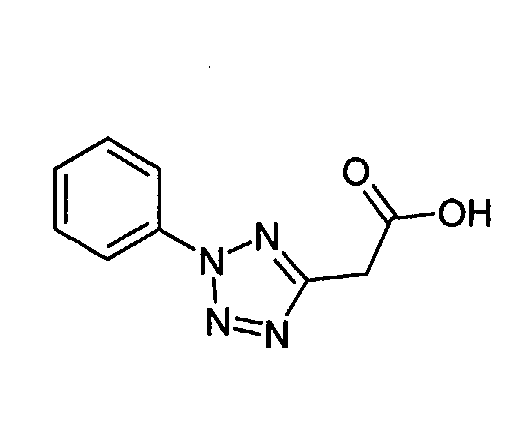


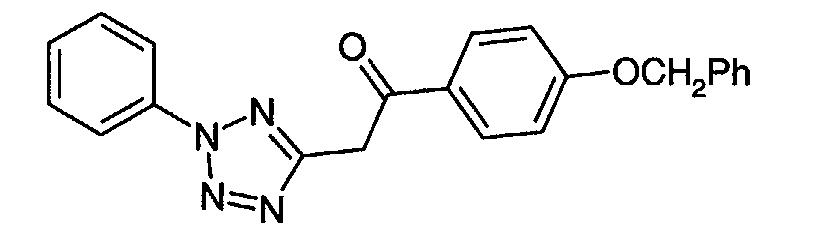


Le schéma réactionnel est le suivant:

Le schéma réactionnel peut être le suivant:

Les silicones utilisables conformément à l'invention sont en particulier des polyorganosiloxanes insolubles dans la composition et peuvent se présenter sous forme d'huiles, de cires, de résines ou de gommes.
Les organopolysiloxanes sont définis plus en détail dans l'ouvrage de Walter NOLL "Chemistry and Technology of Silicones" (1968) Academie Press. Elles peuvent être volatiles ou non volatiles.
Des agents favorisant la pousse du cheveux pouvant être présents dans les compositions selon l'invention incluent les vasodilatateurs, les antiandrogènes, les cyclosporines et leurs analogues, les anti-microbiens, les antifongiques, les anti-inflammatoires à l'exception des inhibiteurs sélectif de la prostaglandine H synthase 1 ou COX-1, les tri-terpènes, seuls ou en mélange.
Les vasodilatateurs tels que les agonistes des canaux potassium incluant le minoxidil et ses dérivés, l'aminexil et les composés décrits dans les brevets US 3 382247, 5 756092, 5 772990, 5 760043, 5 466694, 5 438058, 4 973474, la chromakalim et le diaxozide ou le nicorandil peuvent ainsi être présents dans les compositions.
Les anti-androgènes utilisables incluent notamment les inhibiteurs de 5α réductase, comme le finastéride et les composés décrits dans US 5 516779, l'acétate de cyprostérone, l'acide azélaïque, ses sels et ses dérivés et les composés décrits dans US 5 480913, le flutamide et les composés décrits dans les brevets US 5 411981, 5 565467 et 4 910226.
Les composés anti-microbiens peuvent être choisis parmi les dérivés du sélénium, le kétoconazole, l'octopirox, le triclocarban, le triclosan, le pyrithione zinc, l'itraconazole, l'acide asiatique, l'hinokitiol, mipirocine, et les composés décrits dans EP680745, le chlorhydrate de clinycine, le peroxyde de benzoyle ou de benzyl et la minocycline. Les anti-inflammatoires pourront être choisis parmi les inhibiteurs spécifiques de la Cox-2 comme par exemple le NS-398 et le DuP-697 (B.Batistini et al., DN&P 1994 ; 7(8) :501-511) et/ou les inhibiteurs des lipoxygénases, notamment de 5-lipoxygénase comme par exemple le zileuton (F.J.Alvarez & R.T.Slade, Pharmaceutical Res. 1992 ; 9(11) :1465-1473).
D'autres composés actifs pour favoriser la pousse et/ou limiter la chute des cheveux présents dans les compositions pourront également être choisi dans le groupe comprenant l'aminexil et ses dérivés, le 6-O-[(9Z, 12Z)-octadéc-9,12-diénoyl]hexapyranose tels que décrits dans FR027293, FR0212828, chlorure de benzlakonium, chlorure de benzethonium, phénol, oestradiol, maléate de chlorphéniramine, les dérivés de chlorophylline, cholestérol, cystéine, méthionine, nicotinate de benzyle, menthol, huile de menthe poivrée, panthoténate de calcium, panthénol, résorcinol, les inhibiteurs de la protéine kinase C, les activateurs de la prostaglandine H synthase 1 ou COX-1 tels que décrits dans FR2732597 les inhibiteurs de la glycosidase, les inhibiteurs de glycosaminoglycanase, les esters d'acide pyroglutamique, les acides hexosaccharidiques ou acyl-hexosaccharique, éthylènes aryl substitués, les amino acides N-acylés, les flavonoïdes, les dérivés et analoogues d'ascomycine, les antagonistes d'histamine, les triterpènes comme l'acide ursolique et les composés décrits dans US 5529769, US 5468888, US 5631282, les saponines, les inhibiteurs de protéoglycanase, les agonistes et antagonistes d'estrogènes, pseudotèrines, les cytokines et les promoteurs de facteurs de croissance, les inhibiteurs d'IL-1 ou d'IL-6, les promoteurs d'IL-10, les inhibiteurs de TNF, les vitamines, comme la vitamine D, les analogues de la vitamine B12 et le panthoténol, les hydroxyacides, benzophénones, les acides gras estérifiés tels que décrits dans FR027293, FR0212828 et l'hydantoïne.
De manière préférée, la composition contient au moins un agoniste du récepteur FP tel que décrit par exemple dans WO03/009820 ou un agoniste prostanoïque ou non prostanoïque des récepteurs EP2 et/ou EP4 notamment tel que décrit dans EP 1175892.
Le ou les agents inhibiteurs de la 15PGDH pourront être appliqués seuls ou en mélange, et éventuellement en association avec d'autres agents actifs pour favoriser la pousse et/ou retarder ou empêcher la chute des cheveux, ou des accélérateurs de pénétration tels que définis précédemment.
On peut, par exemple, appliquer la composition contenant une quantité efficace d'un composé inhibiteur de 15-PGDH, par exemple de formule (I) ou (II), salifié ou non, le soir, garder celle-ci au contact toute la nuit et éventuellement effectuer un shampooing le matin. Ces applications peuvent être renouvelées quotidiennement pendant un ou plusieurs mois suivant les individus.
Selon l'un de ses modes de réalisation, les compositions de l'invention sont destinées à prévenir, diminuer ou ralentir la chute des cheveux, notamment au traitement de l'alopécie, en particulier de l'alopécie androgénétique; l'alopécie androgénétique est distincte des alopécies auto-immunes telle que alopecia areata.
Les follicules isolés sont placés en immersion dans une boite de pétri contenant 20 ml de milieu de culture 199 Gibco référence 31153-018, Life technologie, BP 96, Cergy Pontoise Cedex, supplémenté à 1% (v/v) d'une solution d'antibiotiques Gibco référence 15240-096.
A l'aide de deux aiguilles, référence NN-2516R, Terumo europe N.V. Leuven, Belgique montées chacune sur une seringue de 1ml, référence BS-01N, Terumo, 15 papilles dermiques sont extraites des bulbes folliculaires.
Ces 15 papilles sont introduites dans une boite de pétri de 35 mm de diamètre contenant 2 ml de milieu 199 précédemment utilisé contenant 20 % de sérum de veau foetal Gibco, référence 10091-130. La boite est ensuite placée dans un incubateur thermostaté à 37°C sous 5% de CO2.
Après centrifugation 5 min à 1500 tours par minute, le surnageant est éliminé et le culot cellulaire repris par 5 ml de milieu 199 précédemment utilisé (contenant ici 10% de sérum de veau foetal).
La suspension cellulaire est introduite dans une boite de pétri de 35 mm de diamètre et replacée dans l'incubateur (37°C, 5% de CO2).
Les passages suivant P2,P3,P4 sont réalisés selon le même principe. Ceux-ci sont effectués dès lors que les cellules ont atteint la confluence.
Pour chaque échantillon (une culture cellulaire à confluence dans une boite de 35 mm de diamètre) mis à l'étude, le protocole suivant sera appliqué.
Le surnageant de culture cellulaire est éliminé et remplacé par 800 µl de tampon de lyse, le lysat obtenu est récupéré et introduit dans un microtube en polypropylène de 1,5 ml (tube 1).
1 ml de suspension de microsphères Oligo(dT-18) cellulose est introduit dans un microtube de 1,5 ml (tube 2) et centrifugé à 14000 trs/min pendant 1 minute. Le surnageant est éliminé. Le contenu du tube 1 est alors introduit dans le tube 2, les microsphères sont remise en suspension dans le lysat par agitation douce du tube pendant 3 minutes.
Les ARNs polyA+ fixés sur les microsphères sont isolés des contaminants par des lavages. Le tube est centrifugé à 14000 trs/min pendant 1 minute, le surnageant est éliminé et remplacé par 1 ml de tampon de lavage (high salt buffer). Les microsphères sont remises en suspension comme précédemment et le tube est agité doucemment pendant 1 minute. Le tube est centrifugé à 14000 trs/min pendant 1 minute, le surnageant est à nouveau éliminé et remplacé par 1ml de low salt buffer.
Au total cinq lavages avec le low salt buffer suivis de trois lavages avec le high salt buffer seront ainsi effectués.
Le contenu du troisième lavage (microsphères + tampon) est introduit sur une microcolonne contenant un filtre à la base (colonne microspin™) placée dans un microtube de 1,5 ml. L'ensemble est centrifugé à 14000 trs/min pendant 1 minute. La microcolonne est récupérée et placée dans un microtube de 1,5 ml. Les ARN messagers polyA+ sont alors élués par un volume final total de 0,4 ml de tampon d'élution préalablement porté à 65°C.
Le tube contenant les ARNms sont placés à 65°C pendant 10 minutes puis dans la glace pendant 5 minutes, sont ensuite introduits :
Le premier couples d'amorces s'hybridant sur la séquence codant pour une protéine ubiquitaire (la βactine). Le deuxième couple d'amorces s'hybridant sur la séquence codant pour la 15 hydroxyprostaglandine déshydrogénase.




*Une solution tamponnée de nucléotides est réalisée par mélange de 171 µl d'eau distillée stérile, 24,5 µl de tampon 10X du kit et 20 µl de mélange de nucléotides (dNTP) du kit.
Sont introduits dans un microtube adapté à la PCR :
| 4' à 95°C | 1 cycle |
| 30" à 94°C | |
| 1' à 54°C | 35 cycles |
| 1' à 72°C | |
| 7' à 72°C | 1 cycle |
Ajout de 50 ml de tampon 1X TAE, Amresco, Solon, OHIO 44139, USA.
L'agarose en suspension est porté à ébullition puis introduit dans une cuve contenant une goutte de bromure d'éthydium (25 µg), Amresco, Solon, OHIO 44139, USA.
Un "peigne" permettant le dépôt des échantillons est placé à une extrémité de la cuve. Après 30 minutes de refroidissement (température de la pièce), 20 µl des résultats de PCRs sont introduits individuellement dans un puits du gel, de même que 10 µl d'un mélange de standards de poids moléculaires (Amplisize ™, molecular Ruler, 170-8200, Bio-Rad laboratories 2000 Alfred Nobel Dr., Hercules, CA 94547, USA)..
L'ensemble est soumis en immersion dans un large excès de tampon TAE 1X à un champ électrique de 100 volts pendant 45 minutes.
Actine = 1096 paires de bases; 15-PGDH = 706 paires de bases; PGFS = 1061 paires de bases.
Les échantillons 1,2,3 proviennent de cultures différentes de fibroblastes de papilles dermiques de cheveux humains.
On constate que la 15-PGDH est exprimée dans les différents échantillons, avec une bande de PM caractéristique à 706 pb
On constate que la PGFS est exprimée dans les différents échantillons, avec une bande de PM caractéristique 1061 pb
Des couples d'amorces (synthétisé par Genset) auxquels ont été ajoutés des séquences codant pour des sites de restrictions ont été choisis pour la 15-PGDH (n° d'accession Genbank = NM_000860) et pour la PGFS (N°d'accession Genbank = AB018580).




Température d'hybridation 50°C, temps d'élongation 2 min, 25 cycles au total pour la PGFS, amplimère attendu 989 pb.
15-PGDH
Ligation dans un vecteur pGEX 4T3 (Amersham Pharmacia biotech, 12 avenue des Tropiques, ZA Courtaboeuf, 91944 Les Ulis) préalablement digéré (BamH1 / Xho1) et purifié, suivant les indications du fabricant du kit Fast-Link™ DNA ligation kit, Epicentre, 1202 Ann Street, Wl 53713.
Il est procédé de même dans un autre flacon, pour une colonie issue de la boite de pétri « transformation PGFS »
Après 16h00, chacun des flacons est introduit dans un erlen contenant 2,5 L de milieu LB contenant 100 µg/ml d'ampicilline. Ces deux erlens sont incubés sous agitation à 37°C pendant 3h00 à 4h00 (jusqu'à ce que la densité optique mesurée à 630 nm soit comprise entre 0,6-0,9.
Ajout d'isopropyl β-D thiogalactopyranoside (IPTG), (16758, Sigma-Aldrich, L'isle D'Abeau Chesne, BP 701, 38297, Saint Quentin Fallavier) tel que la concentration finale titre 0,1 mM.
Les cultures ainsi obtenues sont centrifugées (par fraction de 250 ml) à 5000 trs/min pendant 7 minutes, les culots sont repris avec 3 ml de tampon phosphate 10 mM pH = 7,00 (4°C) contenant un mélange d'inhibiteurs de protéases (protease inhibitor cocktail set I 539131, Calbiochem-Novabiochem Corporation, 10394 Pacific center Court, San Diego, CA 92121). Les suspensions bactériennes (regroupées en fractions de 40 ml dans un tube en polypropylène) sont bloquées dans la glace et soumis aux ultrasons (Vibra cell 20 kHz, 72434, Bioblock scientific, Parc d'innovation, BP111, 67403 Illkirch) la sonde étant plongée dans chaque tube 15 secondes (6 chocs de 15 secondes par tube). Chaque tube est centrifugé à 4°C 16000 trs/minutes pendant 1h00.
Les tubes sont placés verticalement sur un agitateur rotatif, rotation 10 tours par minutes pendant 1h00 à la température de la pièce (20-25°C), les.
Les tubes sont centrifugés 1000 trs/min pendant 3 minutes, le surnageant est éliminé
Sont introduits dans chacun des tubes 40 ml d'un tampon phosphate 10 mM pH = 7,00. Après agitation douce (retournement) les tubes sont à nouveau centrifugés 3 minutes à 1000 trs/min.
L'opération est réaliseé 5 fois. Un sixième lavage est réalisé avec 40 ml de tampon phosphate salin pH = 7,2 (PBS, Bio-Merieux S , 69280 Marcy-l'Etoile). Après centrifugation le surnageant est à nouveau éliminé.
Sont introduits dans chaque tube contenant 1 ml de Gluthatione-Sepharoser 4B, 950 µl de PBS et 50 µl de suspension de thrombine reconstituée. Ceux-ci sont agités en position légéremment inclinée 16h00 à 250 trs/min. Après 16h00 les tubes sont centrifugés à 3000 trs/min pendant 5min, les surnageants sont recueillis. Une évaluation de la quantité de protéine est effectuée en suivant la procédure de dosage Bio-Rad DC Protein Assay (Bio-Rad Laboratories, 2000 Alfred Nobel Dr, Hercules, CA 94547).
Ainsi pour la 15-PGDH comme pour la PGFS on obtient entre 0,2 et 5 mg de protéine par ml, 1 mg /ml le plus souvent.
Les suspensions protéiques ainsi obtenues sont diluées respectivement dans du PBS additionné de 10% de glycérol et du PBS telle que les concentrations protéiques finales titrent 0,2 mg /ml pour la 15-PGDH et 0,5 mg/ml pour la PGFS.
Les suspensions sont bloquées à -80°C jusqu'à utilisation.
Préparation d'un tampon Tris 100 mM pH = 7,4 contenant 0,1 mM de dithiothreitol (D5545, Sigma-Aldrich, L'isle D'Abeau Chesne, BP 701, 38297, Saint Quentin Fallavier), 1,5 mM de β-NAD (N6522, Sigma-Aldrich, L'isle D'Abeau Chesne, BP 701, 38297, Saint Quentin Fallavier), 50 µM de Prostaglandine E2 (P4172, Sigma-Aldrich, L'isle D'Abeau Chesne, BP 701, 38297, Saint Quentin Fallavier).
Dans la cuve d'un spectrophotomètre (Perkin-Elmer, Lambda 2) thermostaté à 37°C dont la longueur d'onde de mesure est réglée à 340 nm sont introduits 0,965 ml de ce tampon (préalablement porté à 37°C). 0,035 ml de suspension enzymatique à 37°C sont introduits dans la cuve concommitament à l'enregistrement (augmentation de la densité optique à 340 nm).
La vitesse maximale de réaction est relevée.
Les valeurs essais (molécules) sont comparées à la valeur témoin (sans molécule), les résultats sont exprimés en % de la valeur témoin.
Préparation dans un flacon brun (abri de la lumière) d'un tampon Tris 100 mM pH = 6,5 contenant 20 µM de 9,10 phénanthrène quinone* (P2896, Sigma-Aldrich, L'isle D'Abeau Chesne, BP 701, 38297, Saint Quentin Fallavier) et 100 µM de β-NADPH (N1630, Sigma-Aldrich, L'isle D'Abeau Chesne, BP 701, 38297, Saint Quentin Fallavier).
* Une solution mère titrant 1 mM est préparée dans de l'éthanol absolu portée à 40°C , le flacon est placé dans une cuve à ultrason pour faciliter la solubilisation du produit.
Dans la cuve d'un spectrophotomètre (Perkin-Elmer, Lambda 2) thermostaté à 37°C dont la longueur d'onde de mesure est réglée à 340 nm sont introduits 0,950 ml de ce tampon (préalablement porté à 37°C). 0,05 ml de suspension enzymatique à 37°C sont introduits dans la cuve concomitamment à l'enregistrement (baisse de la densité optique à 340 nm).
La vitesse maximale de réaction est relevée.
Les valeurs essais (molécules) sont comparées à la valeur témoin (sans molécule), les résultats sont exprimés en % de la valeur témoin.
| à 50 µM | % Inhibition 15-PGDH | % Inhibition PGFS |
| Molecule A : 5-amino-4,6-dichloro-2-phenyl-pyrimidine | 43 | 5 |
| Molécule B : N-[7-(2-Chloro-phenyl)-5-oxo-5,6,7,8-tetrahydro-quinazolin-2-yl]-benzamide | 57 | 10 |

- N-(2-methoxyphenyl)-2-[5-phenyl-2H-tetrazol-2-yl]acetamide (composé 4)
- 1-phenyl-2-(2-phenyl-2H-tetrazol-5-yl) ethanone (composé 1)
- N-(4-methylphenyl)-2-{5-[3-(trifluoromethyl)phenyl]-2H-tetrazol-2-yl} acetamide (composé R29A)

J-1. Préparation d'une suspension de U937 (1.106 cellules / ml) dans le milieu RPMI 1640 + 10% sérum de veau foetal + 2 mM Glutamine + Antibiotiques + 10 nM PMA (phorbol 12 myristate 13 acetate), introduction de 200 µl/puits de cette suspension dans une boite de 96 puits (3 puits par molécule et par concentration à tester + témoins correspondants). Incubation 36h00 à 37°C sous 5% de CO2.
J0. Elimination des surnageants (les cellules ont adhéré : contrôle microscopique), et introduction dans chaque puits de 100 µl de RPMI 1640 + 2 mM L-Glutamine + 10 ng LPS (sauf témoin absolu) + la molécule à tester à la concentration désirée (ici 5 et 25 µM).
Incubation 6h00 à 37°C sous 5% de CO2.
Les solutions mères de molécules à tester sont à 25 mM dans le DMSO.
Tous les puits contiendront la même quantité finale de DMSO.
| Référence Molécule (5µM) | % du témoin |
| Composé 1 : 1-phenyl-2-(2-phenyl-2H-tetrazol-5-yl)ethanone | + 16 |
| N-(4-methylphenyl)-2-{5-[3-(trifluoromethyl)phenyl]-2H-tetrazol-2-yl}acetamide: | + 46 |
| Composé 4 : N-(2-methoxyphenyl)-2-(5-phenyl-2H-tetrazol-2-yl)acetamide | + 6 |
Les compositions ci-après sont obtenues par les techniques habituelles couramment utilisées dans le domaine cosmétique ou pharmaceutique.
- Composé 1 0,80 g
- Propylène glycol 10,00 g
- Alcool isopropylique qsp 100,00 g On applique cette lotion sur le cuir chevelu, une à deux fois par jour, à raison d'1 ml par application, en massant légèrement le cuir chevelu pour faire pénétrer l'actif. La chevelure est ensuite séchée à l'air libre. Cette lotion permet de diminuer la chute des cheveux et de favoriser leur repousse.
- Composé 4 1,00 g
- Propylène glycol 30,00 g
- Alcool éthylique 40,00 g
- Eau qsp 100,00 g
Claims (37)
- Utilisation d' au moins un inhibiteur de la 15-hydroxy prostaglandine déshydrogénase (15-PGDH) dans ou pour la préparation d'une composition destinée à stimuler ou induire la croissance et/ou à diminuer la chute et/ou augmenter la densité et/ou réduire l'hétérogénéité du diamètre des fibres kératiniques chez l'être humain..
- Utilisation selon la revendication 1, caractérisée en ce que les fibres kératiniques sont choisies parmi les cheveux, les poils et les cils.
- Utilisation selon l'une des revendications 1 ou 2, caractérisée en ce que l'inhibiteur de la 15-PGDH est un inhibiteur spécifique de la 15-PGDH.
- Utilisation selon la revendication 3, caractérisée en ce que le rapport entre l'activité inhibitrice de la 15-PGDH et l'activité inhibitrice de la prostaglandine F synthase (PGF synthase) est supérieur à 1.
- Utilisation selon l'une des revendications 1 à 4, caractérisée en ce que la composition est une composition cosmétique qui contient en outre des excipients cosmétologiquement acceptables.
- Utilisation d'au moins un inhibiteur de la 15-PGDH selon l'une des revendications 1 à 5, caractérisé en ce que l'inhibiteur est au moins un composé tétrazolique des formule (I) ou (II) ou l'un de ses sels,
 dans lesquelles :
 R1 et R2 sont indépendamment choisis parmi l'hydrogène, les halogènes, OR5, SR5, NR5R'5, COOR5, COR5, CONR5R'5, CF3, CN, NR5COR'5, SO2R5, SO2NR5R'5, NR5SO2R'5, CSR5, OCOR5, COSR5, SCOR5, CSNR5R'5, NR5CONR'5R"5, NR5C(=NR'5)NR"5R"'5, NR5CSR'5, NR5CSNR'5R"5, les radicaux alkyle en C1-C20, linéaires ou ramifiés, et les cycles de 4 à 7 atomes, contenant éventuellement au moins un hétéroatome, ces cycles pouvant être séparés ou accolés, les radicaux alkyle et les cycles étant, en outre, saturés ou non, et éventuellement substitués par au moins un substituant A1, où R5, R'5, R"5 et R"'5 désignent indépendamment l'hydrogène, un radical alkyle en C1-C20, linéaire ou ramifié, ou un cycle hydrocarboné de 4 à 7 atomes, le cycle hydrocarboné ou le radical alkyle étant saturé ou non et éventuellement substitué par au moins un substituant A2 ;R3 est choisi parmi l'hydrogène, OR6, SR6, NR6R'6, CF3, NR6COR'6, NR6SO2R'6, NR6CONR'6R"6, NR6CSR'6, NR6CSNR'6R"6, les radicaux alkyle en C1-C20, linéaires ou ramifiés, et les cycles hydrocarbonés de 4 à 7 atomes, séparés ou accolés, les radicaux alkyle et les cycles hydrocarbonés étant, en outre, saturés ou non et éventuellement substitués par au moins un substituant A3, avec R6, R'6 et R"6 désignant indépendamment l'hydrogène, un radical alkyle en C1-C20, linéaire ou ramifié, ou un cycle hydrocarboné de 4 à 7 atomes, le radical alkyle ou le cycle hydrocarboné étant saturé ou non et éventuellement substitué par au moins un substituant A4 ;R4 est choisi parmi l'hydrogène, COOR7, CONR7R'7, SO2R7, SO2NR7R'7, COR7, CSR7, COSR7, CSNR7R'7, les radicaux alkyle en C1-C20, linéaires ou ramifiés, et les cycles hydrocarbonés de 4 à 7 atomes, séparés ou accolés, les radicaux alkyle et les cycles hydrocarbonés étant, en outre, saturés ou non et éventuellement substitués par au moins un substituant A5 ; R4 peut, en outre, représenter, dans le cas de la formule (II), un halogène, OR7, SR7, NR7R'7, CF3, CN, NR7COR'7, NR7SO2R'7, OCOR7, SCOR7, NR7CONR'7R"7, NR7C(=NR'7)NR"7R"'7, NR7CSR'7 ou NR7CSNR'7R"7, avec R7, R'7, R"7 et R"'7 désignant indépendamment l'hydrogène, un radical alkyle en C1-C20, linéaire ou ramifié, ou un cycle hydrocarboné de 4 à 7 atomes, le radical alkyle ou le cycle hydrocarboné étant saturé ou non et éventuellement substitué par au moins un substituant A6 ;A1 et A2 sont indépendamment choisis parmi les halogènes, les hétérocycles comportant de 4 à 7 atomes et au moins un hétéroatome, OR8, SR8, NR8R'8, COOR8, CONR8R'8, CF3, CN, NR8COR'8, SO2R8, SO2NR8R'8, NR8SO2R'8, COR8, CSR8, OCOR8, COSR8, SCOR8, CSNR8R'8, NR8CONR'8R"8, NR8C(=NR'8)NR"8R"'8, NR8CSR'8, NR8CSNR'8R"8 ;A3 et A4 sont indépendamment choisis parmi les halogènes, R9, OR9, SR9, NR9R'9, COOR9, CONR9R'9, CF3, CN, NR9COR'9, SO2R9, SO2NR9R'9, NR9SO2R'9, CSR9, OCOR9, COSR9, SCOR9, CSNR9R'9, NR9CONR'9R"9, NR9C(=NR'9)NR"9R"'9, NR9CSR'9, NR9CSNR'9R"9 ;A5 et A6 sont indépendamment choisis parmi les halogènes, R10, OR10, SR10, NR10R'10, CF3, CN, NR10COR'10, SO2R10, SO2NR10R'10, NR10SO2R'10, CSR10, OCOR10, SCOR10, CSNR10R'10, NR10CONR'10R"10, NR10C(=NR'10)NR"10R"'10, NR10CSR'10, NR10CSNR'10R"10;R8, R'8, R"8, R"'8, R9, R'9, R"9, R"'9, R10, R'10, R"10 et R"'10 désignant indépendamment l'hydrogène, un radical alkyle en C1-C20, linéaire ou ramifié, saturé ou non, un cycle hydrocarboné de 4 à 7 atomes, saturé ou non, ou un radical benzyle.
 - Utilisation d'au moins un composé de formule (I) ou (II) selon la revendication 6, caractérisé en ce queR1 et R2 sont indépendamment choisis parmi l'hydrogène, les halogènes, OR5, SR5, NR5R'5, COOR5, CF3, CN, les radicaux alkyle en C1-C20, linéaires ou ramifiés, et les cycles de 4 à 7 atomes, contenant éventuellement au moins un hétéroatome, ces cycles pouvant être séparés ou accolés, les radicaux alkyle et les cycles étant, en outre, saturés ou non, où R5 et R'5 désignent indépendamment l'hydrogène, un radical alkyle en C1-C20, linéaire ou ramifié, ou un cycle hydrocarboné de 4 à 7 atomes, le cycle hydrocarboné ou le radical alkyle étant saturé ou non ;R3 est choisi parmi l'hydrogène, OR6, SR6, NR6R'6, CF3, les radicaux alkyle en C1-C20, linéaires ou ramifiés, et les cycles hydrocarbonés de 4 à 7 atomes, séparés ou accolés, les radicaux alkyle et les cycles hydrocarbonés étant, en outre, saturés ou non et éventuellement substitués par au moins un substituant A3, avec R6 et R'6 désignant indépendamment l'hydrogène, un radical alkyle en C1-C20, linéaire ou ramifié, ou un cycle hydrocarboné de 4 à 7 atomes, le radical alkyle ou le cycle hydrocarboné étant saturé ou non et éventuellement substitué par au moins un substituant A4 ;R4 est choisi parmi l'hydrogène, COOR7, CSR7, les radicaux alkyle en C1-C20, linéaires ou ramifiés, et les cycles hydrocarbonés de 4 à 7 atomes, séparés ou accolés, les radicaux alkyle et les cycles hydrocarbonés étant, en outre, saturés ou non ; R4 peut, en outre, représenter, dans le cas de la formule (II), un halogène, OR7, SR7, NR7R'7, CF3, CN , avec R7 et R'7, désignant indépendamment l'hydrogène, un radical alkyle en C1-C20, linéaire ou ramifié, ou un cycle hydrocarboné de 4 à 7 atomes, le radical alkyle ou le cycle hydrocarboné étant saturé ou non, éventuellement substitué par au moins un substituant choisi parmi OR10, SR10, NR10R'10, CF3, avec R10 et R'10 désignant un radical alkyle en C1-C20 linéaire ou ramifié, saturé ou non;A3 et A4 sont indépendamment choisis parmi les halogènes, R9, OR9, SR9, NR9R'9, COOR9, CF3, avec R9 et R'9, désignant indépendamment l'hydrogène, un radical alkyle en C1-C20, linéaire ou ramifié, saturé ou non, un cycle hydrocarboné de 4 à 7 atomes, saturé ou non, ou un radical benzyle.
- Utilisation d'au moins un composé selon la revendication 6 caractérisé en ce que dans la formule (I) ou (II)R3 est choisi parmi l'hydrogène, OR6, SR6, NR6R'6, CF3, les radicaux alkyle en C1-C20, linéaires ou ramifiés, et les cycles hydrocarbonés de 4 à 7 atomes, séparés ou accolés, les radicaux alkyle et les cycles hydrocarbonés étant, en outre, saturés ou non et éventuellement substitués par au moins un substituant A3, avec R6 et R'6 désignant indépendamment l'hydrogène, un radical alkyle en C1-C20, linéaire ou ramifié, ou un cycle hydrocarboné de 4 à 7 atomes, le radical alkyle ou le cycle hydrocarboné étant saturé ou non et éventuellement substitué par au moins un substituant A4 ;R4 est choisi parmi l'hydrogène, les radicaux alkyle en C1-C20, linéaires ou ramifiés, et les cycles hydrocarbonés de 4 à 7 atomes, séparés ou accolés, les radicaux alkyle et les cycles hydrocarbonés étant, en outre, saturés ou non éventuellement substitué par au moins un substituant choisi parmi OR10, SR10, NR10R'10, CF3, avec R10 et R'10 désignant un radical alkyle en C1-C20 linéaire ou ramifié, saturé ou non;A3 et A4 sont indépendamment choisis parmi R9, OR9, SR9, NR9R'9, COOR9, avec R9 et R'9, désignant indépendamment l'hydrogène, un radical alkyle en C1-C20, linéaire ou ramifié, saturé ou non, un cycle hydrocarboné de 4 à 7 atomes, saturé ou non, ou un radical benzyle.
- Utilisation selon l'une des revendications 6 à 8 caractérisée en ce que l'un au moins des R1 et R2 représentent un atome d'hydrogène ou un atome d'halogène.
- Utilisation selon l'une des revendications 6 à 9, caractérisée en ce que R3 représente NR6R'6 ou un radical aryle, éventuellement substitué par le substituant A3.
- Utilisation selon l'une des revendications 6 à 10, caractérisée en ce que R3 représente un radical naphtyle ou un radical phényle, éventuellement substitué par OR9.
- Utilisation selon la revendication précédente, caractérisée en ce que R4 représente un radical aryle et notamment un radical naphtyle ou un radical phényle.
- Utilisation selon l'une des revendications 6 à 12, caractérisée en ce que R6 représente l'hydrogène et R'6 un radical aryle, en particulier phényle, éventuellement substitué par le groupe OR9.
- Utilisation selon l'une des revendications 6 à 13, caractérisée en ce que R9 représente un radical alkyle en C1-C20 et mieux en C1-C10, linéaire ou ramifié, saturé.
- Utilisation selon l'une des revendications 6 à 14, caractérisée en ce que le sel du composé de formule (I) ou (II) est un sel choisi parmi les sels de sodium, de potassium, les sels de zinc (Zn2+), de calcium (Ca2+), de cuivre (Cu2+), de fer (Fe2+), de strontium (Sr2+), de magnésium (Mg2+), de manganèse (Mn2+), les sels de tri-éthanolamine, mono-éthanolamine, di-éthanolamine, hexadécylamine, N,N,N',N'-tétrakis-(hydroxypropyl-2) éthylène di-amine, tris-hydroxyméthyl aminométhane, les hydroxydes et les carbonates.
- Utilisation selon l'une des revendications 6 à 15, caractérisée en ce que le composé de formule (I) ou (II) est choisi parmi :1-phenyl-2-(2-phenyl-2H-tetrazol-5-yl)ethanone:
 1-(2-methoxyphenyl)-2-(2-phenyl-2H-tetrazol-5-yl)ethanone
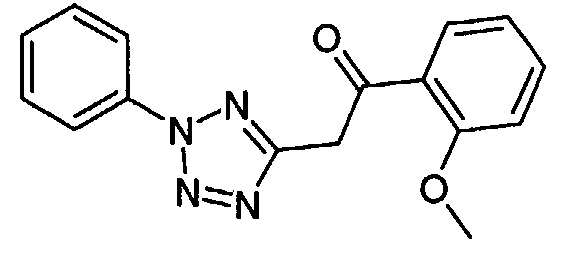 N-(4-methylphenyl)-2-{5-[3-(trifluoromethyl)phenyl]-2H-tetrazol-2-yl}acetamide:
 N-(2-phenyl)-2-(5-phenyl-2H-tetrazol-2-yl)acetamide
 N-(2-methoxyphenyl)-2-(5-phenyl-2H-tetrazol-2-yl)acetamide:
- Utilisation selon l'une des revendications 1 à 16, caractérisée en ce que la composition est destinée à la voie orale.
- Utilisation selon l'une des revendications 1 à 16, caractérisé en ce que la composition est une composition cosmétique ou dermatologique destinée à une application par la voie topique.
- Utilisation selon la revendication 18, caractérisé en ce que la composition est destinée à une application sur le cuir chevelu.
- Utilisation selon l'une des revendications 1 à 19, caractérisé en ce que l'inhibiteur de 15-PGDH est présent à une concentration allant de 10-3 à 5%, par rapport au poids total de la composition.
- Composition cosmétique ou pharmaceutique, contenant au moins un inhibiteur de 15-hydroxyprostaglandine déshydrogénase (15-PGDH) tel que défini dans au moins une des revendications 1 à 20, et des excipients physiologiquement acceptables.
- Composition selon la revendication 21, caractérisée en ce que l'inhibiteur de 15-PGDH est un composé de formule (I) ou (II), tel que défini selon l'une des revendications 6 à 16.
- Composition selon l'une des revendications 21 ou 22, caractérisé en ce que l'inhibiteur de 15-PGDH est un inhibiteur spécifique de 15-PGDH, qui est peu ou pas inhibiteur de PGFS.
- Composition selon au moins l'une des revendications 21 à 23, caractérisé en ce que l'inhibiteur de 15-PGDH est choisi parmiMolécule A:
5-amino-4,6-dichloro-2-phenyl-pyrimidine Molécule B:
N-[7-(2-Chloro-phenyl)-5-oxo-5,6,7,8-tetrahydro-quinazolin-2-yl]-benzamide1-phenyl-2-(2-phenyl-2H-tetrazol-5-yl)ethanone: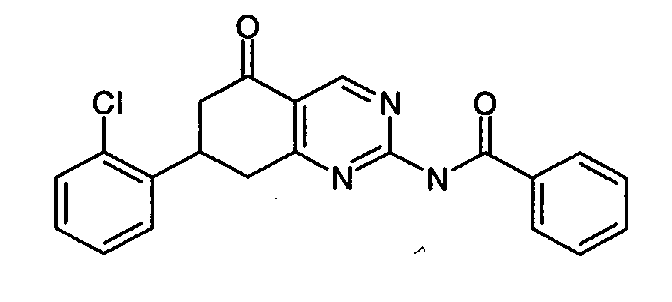 N-(4-methylphenyl)-2-{5-[3-(trifluoromethyl)phenyl]-2H-tetrazol-2-yl}acetamide:
 N-(2-methoxyphenyl)-2-(5-phenyl-2H-tetrazol-2-yl)acetamide:

- Composition selon l'une des revendications 21 à 24, caractérisée en ce que l'inhibiteur de 15-PGDH est présent à une concentration de 0,001% à 5% p/v.
- Composition selon l'une des revendications 21 à 25, caractérisée en ce qu'elle comprend un milieu cosmétologiquement acceptable constitué d'eau ou d'au moins un solvant choisi parmi les solvants organiques hydrophiles, les solvants organiques lipophiles, les solvants organiques amphiphiles et leurs mélanges.
- Composition selon l'une au moins des revendications 21 à 26, caractérisé en ce qu'au moins un inhibiteur de la 15-hydroxy prostaglandine déshydrogénase est encapsulé dans une structure choisie parmi les microsphères, les nanosphères, les oléosomes ou les nanocapsules.
- Composition selon l'une des revendications 21 à 27, caractérisé en ce qu'elle contient d'autres ingrédients choisis parmi les solvants, les épaississants ou gélifiants de phase aqueuse ou de phase huileuse, les matières colorantes solubles dans le milieu de la composition, les charges, les pigments, les antioxydants, les conservateurs, les parfums, les électrolytes, les neutralisants, les agents bloqueurs d'U.V., les actifs cosmétiques et pharmaceutiques, leurs mélanges.
- Composition selon au moins l'une des revendications 21 à 28 caractérisé en ce qu'elle contient en outre au moins un agent accélérateur de pénétration.
- Composition selon au moins l'une des revendications 21 à 29, caractérisée en ce qu'elle comprend en outre au moins un agent actif pour favoriser la croissance et/ou retarder ou empêcher la chute des cheveux qui n'est pas un inhibiteur sélectif de la 15-PGDH.
- Composition selon au moins l'une des revendications 21 à 30, caractérisé en ce qu'elle comprend en outre au moins une prostaglandine et/ou un dérivé et/ou un analogue de prostaglandine.
- Composition selon la revendication 31, caractérisé en ce qu'elle comprend au moins un composé choisi parmi les prostaglandines de la série 2 dont notamment PGF 2 α et PGE 2 sous forme salines ou sous forme de précurseurs, notamment des esters tels que les isopropyl esters, le 16,16 dimethyl PGE2, le 17 phényl PGE2, le 16,16 diméthyle PGF2α, le 17 phényl PGF2α, les prostaglandines de la série 1 tel que le 11 déoxy prostaglandine E1, le 1 déoxy prostaglandine E1 sous forme salines ou esters, le latanoprost, le travoprost, le fluprostenol, l'unoprostone, le bimatoprost, le cloprosténol, le viprostol, le butaprost, le misoprostol, cicaprost, l'iloprost, l'isocarbacycline, le beraprost, leurs sels ou leurs esters, les esters du récepteur de la prostaglandine D2 tel le BW245C ((4S)-(3-[(3R,S)-3-cyclohexyl-3-isopropyl]-2,5-dioxo)4-imidazolidine-heptanoic acid), le BW246C ((4R)-(3-[(3R,S)-3-cyclohexyl-3-isopropyl]-2,5-dioxo)4-imidazolidineheptanoic acid), les esters du récepteur aux thromboxanes A2 (TP) tel le I-BOP ([1S-[1a,2a(Z), 3b(1E,3S),4a]]-7-[3-[3-hydroxy-4-[4-(iodophenoxy)-1-butenyl]-7-oxabicyclo[2.2.1]hept-2-yl]-5-heptenoic acid), ou leurs mélanges.
- Composition selon l'une au moins des revendications 21 à 32, caractérisée en ce qu'elle comprend en outre au moins un agoniste prostanoïque ou non prostanoïque des récepteurs EP2 et/ou EP4.
- Procédé de traitement cosmétique pour maintenir et /ou augmenter la densité des fibres kératiniques et/ou empêcher et/ou retarder la chute des fibres kératiniques chez l'être humain, caractérisé en ce qu'il comprend l'administration d'au moins un inhibiteur de la 15-hydroxy prostaglandine déshydrogénase tel que défini dans l'une des revendications précédentes, ou d'une composition selon l'une des revendications 21 à 33 ou susceptible d'être préparée selon l'une des revendications 1 à 20.
- Procédé de traitement cosmétique selon la revendication34, caractérisé en ce que les fibres kératiniques sont choisi parmi les cheveux et les cils.
- Procédé de traitement cosmétique selon l'une des revendications 34 ou 35, caractérisé en ce que l'administration de l'inhibiteur de 15-PGDH ou de la composition le contenant est effectuée par voie orale.
- Procédé de traitement cosmétique selon l'une des revendications 34 ou 35, caractérisé en ce que l'inhibiteur de 15-PGDH ou la composition le contenant sont appliqués par voie topique, sur les cheveux et/ou le cuir chevelu et/ou les cils.
Applications Claiming Priority (4)
| Application Number | Priority Date | Filing Date | Title |
|---|---|---|---|
| FR0205067A FR2838641B1 (fr) | 2002-04-23 | 2002-04-23 | Composition cosmetique, procede de traitement cosmetique et preparation d'une composition pour favoriser la pousse et/ou empecher ou retarder la chute des cheveux |
| FR0205067 | 2002-04-23 | ||
| FR0213461 | 2002-10-28 | ||
| FR0213461A FR2846230B1 (fr) | 2002-10-28 | 2002-10-28 | Composition capillaire contenant un compose tetrazolique, son utilisation pour stimuler ou induire la pousse des cheveux et/ou freiner leur chute |
Publications (2)
| Publication Number | Publication Date |
|---|---|
| EP1358868A2 true EP1358868A2 (fr) | 2003-11-05 |
| EP1358868A3 EP1358868A3 (fr) | 2003-11-19 |
Family
ID=29217325
Family Applications (1)
| Application Number | Title | Priority Date | Filing Date |
|---|---|---|---|
| EP03290990A Withdrawn EP1358868A3 (fr) | 2002-04-23 | 2003-04-23 | Composition cosmétique pour favoriser la pousse et/ou empecher ou retarder la chute des cheveux |
Country Status (4)
| Country | Link |
|---|---|
| EP (1) | EP1358868A3 (fr) |
| JP (2) | JP4340545B2 (fr) |
| CA (1) | CA2482711A1 (fr) |
| WO (1) | WO2003090699A1 (fr) |
Cited By (7)
| Publication number | Priority date | Publication date | Assignee | Title |
|---|---|---|---|---|
| WO2005051335A1 (fr) * | 2003-11-25 | 2005-06-09 | The Gillette Company | Reduction de la pousse des poils grace a l'application d'un agoniste de recepteur dp de prostaglandine |
| FR2869224A1 (fr) * | 2004-04-22 | 2005-10-28 | Oreal | Compose 2-oxy-acetamide, ses utilisations et compositions pour stimuler ou induire la pousse des fibres keratiniques et/ou freiner leur chute |
| WO2005107687A1 (fr) * | 2004-04-22 | 2005-11-17 | L'oreal | Compose 2-oxy-acetamide ses utilisations et compositions pour stimuler ou induire la pousse des fibres keratiniques et/ou freiner leur chute |
| FR2881427A1 (fr) * | 2005-01-31 | 2006-08-04 | Oreal | Derives de 3-sulfanylpropanamide, composition les contenant et leur utilisation pour stimuler la pousse des cheveux et des cils et/ou freiner leur chute et/ou limiter leur depigmentation |
| WO2006079568A3 (fr) * | 2005-01-31 | 2006-10-26 | Oreal | Utilisation de derives de 3-sulfanylpropanamide pour stimuler la croissance des cheveux et des cils et/ou pour arreter leur chute et/ou limiter leur depigmentation |
| WO2011073281A1 (fr) | 2009-12-16 | 2011-06-23 | Laboratoires Expanscience | Composition comprenant au moins un sucre en c7 pour le traitement de l'alopécie, pour le traitement cosmétique des phanères, et pour le soin des cheveux, cils ou ongles |
| EP2564841A1 (fr) | 2007-08-28 | 2013-03-06 | Galderma Research & Development | Utilisation de travoprost pour traiter la chute des cheveux |
Families Citing this family (6)
| Publication number | Priority date | Publication date | Assignee | Title |
|---|---|---|---|---|
| EP1594438B1 (fr) * | 2003-02-12 | 2013-07-17 | L'Oréal | Utilisation d'un inhibiteur de 15-hydroxy prostaglandine déshydrogénase pour favoriser la pigmentation de la peau ou des phanères |
| WO2007023841A1 (fr) * | 2005-08-25 | 2007-03-01 | Taisho Pharmaceutical Co., Ltd. | Préparation d'agent pour la croissance des cheveux |
| FR2941150B1 (fr) | 2009-01-16 | 2013-01-11 | Oreal | Produit pour la prevention ou le traitement du blanchissement des cheveux. |
| CA3125900A1 (fr) | 2019-01-08 | 2020-07-16 | Kyorin Pharmaceutical Co., Ltd. | Inhibiteur de 15-pgdh |
| JP2024506858A (ja) | 2021-02-02 | 2024-02-15 | リミナル・バイオサイエンシーズ・リミテッド | Gpr84アンタゴニストおよびその使用 |
| JP2025527247A (ja) * | 2022-08-02 | 2025-08-20 | リミナル・バイオサイエンシーズ・リミテッド | アリール-トリアゾリル及び関連するgpr84アンタゴニストならびにそれらの使用 |
Family Cites Families (15)
| Publication number | Priority date | Publication date | Assignee | Title |
|---|---|---|---|---|
| US3468874A (en) * | 1967-04-10 | 1969-09-23 | R & L Molecular Research Ltd | 6 - tetrazolylacetamido penicillanic and 7-tetrazolylacetamido cephalosporanic acids |
| GB1449810A (en) * | 1972-12-05 | 1976-09-15 | Fisons Ltd | Benzo-or naphtho-dipyran-di-n-tetrazolyl- -carboxamide derivative methods for their production and compositions containing them |
| JPS5516432B2 (fr) * | 1974-05-28 | 1980-05-01 | ||
| JPH0597631A (ja) * | 1991-03-15 | 1993-04-20 | Sunstar Inc | 養毛剤組成物 |
| JP3102141B2 (ja) * | 1992-05-29 | 2000-10-23 | 東レ株式会社 | 養毛育毛剤 |
| JPH0826937A (ja) * | 1994-07-12 | 1996-01-30 | Daimu Internatl Kk | 養毛剤 |
| US5690944A (en) * | 1994-12-20 | 1997-11-25 | Chesebrough-Pond's Usa Co., Division Of Conopco, Inc. | Cosmetic compositions containing lactate dehydrogenase inhibitors |
| FR2730744B1 (fr) * | 1995-02-17 | 1997-03-21 | Oreal | Test de matieres actives sur cheveux epiles |
| ATE266397T1 (de) * | 1997-02-04 | 2004-05-15 | Murray A Johnstone | Verfahren zur förderung des haarwuchses und entwicklung des haarsystems |
| AU742787B2 (en) * | 1997-07-09 | 2002-01-10 | Androsolutions, Inc. | Improved methods and compositions for treating male erectile dysfunction |
| WO2000047172A1 (fr) * | 1999-02-10 | 2000-08-17 | Taisho Pharmaceutical Co., Ltd. | Agent de stimulation de la croissance capillaire et recherche systematique de substances ayant cet effet |
| EP1254901A4 (fr) * | 2000-01-26 | 2003-03-05 | Ono Pharmaceutical Co | Composes cycliques a 5 chainons, contenant de l'azote, et medicaments contenant ces composes comme ingredients actifs |
| CN1366458A (zh) * | 2000-03-31 | 2002-08-28 | 东丽株式会社 | 毛发生长和毛发形成调节剂 |
| FR2812192B1 (fr) * | 2000-07-28 | 2003-01-31 | Oreal | Utilisation d'antagonistes de recepteur des prostaglandines ep-3 comme agent cosmetique permettant d'attenuer, de diminuer ou d'arreter la chute des cheveux et des poils |
| JP2001253808A (ja) * | 2001-03-28 | 2001-09-18 | Kanebo Ltd | 養毛化粧料 |
-
2003
- 2003-04-23 CA CA002482711A patent/CA2482711A1/fr not_active Abandoned
- 2003-04-23 EP EP03290990A patent/EP1358868A3/fr not_active Withdrawn
- 2003-04-23 WO PCT/FR2003/001285 patent/WO2003090699A1/fr not_active Ceased
- 2003-04-23 JP JP2003587338A patent/JP4340545B2/ja not_active Expired - Fee Related
-
2008
- 2008-12-04 JP JP2008310076A patent/JP2009149637A/ja not_active Withdrawn
Cited By (7)
| Publication number | Priority date | Publication date | Assignee | Title |
|---|---|---|---|---|
| WO2005051335A1 (fr) * | 2003-11-25 | 2005-06-09 | The Gillette Company | Reduction de la pousse des poils grace a l'application d'un agoniste de recepteur dp de prostaglandine |
| FR2869224A1 (fr) * | 2004-04-22 | 2005-10-28 | Oreal | Compose 2-oxy-acetamide, ses utilisations et compositions pour stimuler ou induire la pousse des fibres keratiniques et/ou freiner leur chute |
| WO2005107687A1 (fr) * | 2004-04-22 | 2005-11-17 | L'oreal | Compose 2-oxy-acetamide ses utilisations et compositions pour stimuler ou induire la pousse des fibres keratiniques et/ou freiner leur chute |
| FR2881427A1 (fr) * | 2005-01-31 | 2006-08-04 | Oreal | Derives de 3-sulfanylpropanamide, composition les contenant et leur utilisation pour stimuler la pousse des cheveux et des cils et/ou freiner leur chute et/ou limiter leur depigmentation |
| WO2006079568A3 (fr) * | 2005-01-31 | 2006-10-26 | Oreal | Utilisation de derives de 3-sulfanylpropanamide pour stimuler la croissance des cheveux et des cils et/ou pour arreter leur chute et/ou limiter leur depigmentation |
| EP2564841A1 (fr) | 2007-08-28 | 2013-03-06 | Galderma Research & Development | Utilisation de travoprost pour traiter la chute des cheveux |
| WO2011073281A1 (fr) | 2009-12-16 | 2011-06-23 | Laboratoires Expanscience | Composition comprenant au moins un sucre en c7 pour le traitement de l'alopécie, pour le traitement cosmétique des phanères, et pour le soin des cheveux, cils ou ongles |
Also Published As
| Publication number | Publication date |
|---|---|
| JP2005529886A (ja) | 2005-10-06 |
| JP2009149637A (ja) | 2009-07-09 |
| JP4340545B2 (ja) | 2009-10-07 |
| EP1358868A3 (fr) | 2003-11-19 |
| CA2482711A1 (fr) | 2003-11-06 |
| WO2003090699A1 (fr) | 2003-11-06 |
Similar Documents
| Publication | Publication Date | Title |
|---|---|---|
| US7320967B2 (en) | Cosmetic composition, method of cosmetic treatment and preparation of a composition for promoting the growth and/or preventing or delaying the loss of hair | |
| EP1594438B1 (fr) | Utilisation d'un inhibiteur de 15-hydroxy prostaglandine déshydrogénase pour favoriser la pigmentation de la peau ou des phanères | |
| JP2009149637A (ja) | 毛髪の成長を促進し及び/又は抜毛を防止又は遅延化するための化粧品組成物 | |
| EP2564841B1 (fr) | Utilisation de travoprost pour traiter la chute des cheveux | |
| EP1545708A2 (fr) | Compose heterocyclique pour stimuler ou induire la pousse des cheveux ou des cils et/ou freiner leur chute, composition le contenant, ses utilisations | |
| EP1558203B1 (fr) | Composition capillaire contenant un compose styryl-pyrazole | |
| FR2838641A1 (fr) | Composition cosmetique, procede de traitement cosmetique et preparation d'une composition pour favoriser la pousse et/ou empecher ou retarder la chute des cheveux | |
| FR2847160A1 (fr) | Composition capillaire contenant un compose pyrasol-carboxamide, son utilisation pour stimuler la pousse des cheveux et/ou freiner leur chute | |
| FR2860431A1 (fr) | Composition capillaire ou de mascara contenant un compose azoique, son utilisation pour stimuler ou induire la pousse des cheveux ou des cils et/ou freiner leur chute | |
| FR2850864A1 (fr) | Utilisation d'un inhibiteur de 15-hydroxy prostaglandine deshydrogenase pour favoriser la pigmentation de la peau ou des phaneres | |
| FR2881427A1 (fr) | Derives de 3-sulfanylpropanamide, composition les contenant et leur utilisation pour stimuler la pousse des cheveux et des cils et/ou freiner leur chute et/ou limiter leur depigmentation | |
| FR2891543A1 (fr) | Composes phenyl-furyl-methyl-thiazolidine-2,4-diones ou phenyl-thienyl-methyl-thiazolidine-2,4-diones ; utilisations pour stimuler ou induire la pousse des fibres keratiniques et/ou freiner leur chute ; compositions le contenant | |
| EP1739083A1 (fr) | Composés benzylidène-1,3-thiazolidine-2,4-diones, leurs utilisations et compositions pour stimuler ou induire la pousse des fibres kératiniques et/ou freiner leur chute et/ou augmenter leur densité. | |
| EP1738742A2 (fr) | Composés benzyl-1,3-thiazolidine-2,4-diones , leurs utilisations et compositions pour stimuler ou induire la pousse des fibres kératiniques et/ou freiner leur chute | |
| WO2006040445A1 (fr) | Procédé de traitement cosmétique des fibres kératiniques, et utilisation cosmétique d'un modulateur de transglutaminase. | |
| EP1738741A2 (fr) | Utilisation de composés benzylidène-1,3-thiazolidine-2,4-diones pour favoriser et/ou induire et/ou stimuler la pigmentation des matières kératiniques et/ou limiter leur dépigmentation et/ou leur blanchiment. | |
| FR2928545A1 (fr) | Utilisation d'inhibiteurs de monoamines oxydases pour la pigmentation capillaire | |
| FR2891457A1 (fr) | Utilisation de composes phenyl-furyl-methyl-thiazolidine-2,4 dione ou phenyl-thienyl-methyl-thiazolidine-2,4-diones pour favoriser et/ou induire et/ou stimuler la pigmentation des matieres keratiniques et/ou limiter leur depigmentation et/ | |
| FR2928543A1 (fr) | Utilisation d'inhibiteurs de la xanthine oxydase pour la pigmentation capillaire | |
| FR2849773A1 (fr) | Composition capillaire contenant un 2-alkylidene aminooxy-acetamide, son utilisation pour stimuler la pousse des cheveux et/ou freiner leur chute | |
| FR2916350A1 (fr) | Utilisation d'agonistes du recepteur du thromboxame pour moduler la croissance pilaire | |
| FR2846230A1 (fr) | Composition capillaire contenant un compose tetrazolique, son utilisation pour stimuler ou induire la pousse des cheveux et/ou freiner leur chute | |
| FR2860432A1 (fr) | Composition capillaire contenant un derive de pyrimidine, son utilisation pour stimuler la pousse des fibres keratiniques et/ou freiner leur chute | |
| FR2846232A1 (fr) | Composition capillaire contenant un compose styryl-pyrazole, son utilisation pour stimuler ou induire la pousse des cheveux et/ou freiner leur chute | |
| FR2876281A1 (fr) | Procede de traitement cosmetique des fibres keratiniques, et utilisation cosmetique d'un modulateur de transglutaminase |
Legal Events
| Date | Code | Title | Description |
|---|---|---|---|
| PUAI | Public reference made under article 153(3) epc to a published international application that has entered the european phase |
Free format text: ORIGINAL CODE: 0009012 |
|
| PUAL | Search report despatched |
Free format text: ORIGINAL CODE: 0009013 |
|
| AK | Designated contracting states |
Kind code of ref document: A2 Designated state(s): AT BE BG CH CY CZ DE DK EE ES FI FR GB GR HU IE IT LI LU MC NL PT RO SE SI SK TR |
|
| AX | Request for extension of the european patent |
Extension state: AL LT LV MK |
|
| RIC1 | Information provided on ipc code assigned before grant |
Ipc: 7A 61K 7/48 B Ipc: 7A 61K 7/06 A |
|
| AK | Designated contracting states |
Kind code of ref document: A3 Designated state(s): AT BE BG CH CY CZ DE DK EE ES FI FR GB GR HU IE IT LI LU MC NL PT RO SE SI SK TR |
|
| AX | Request for extension of the european patent |
Extension state: AL LT LV MK |
|
| 17P | Request for examination filed |
Effective date: 20040519 |
|
| AKX | Designation fees paid |
Designated state(s): AT BE BG CH CY CZ DE DK EE ES FI FR GB GR HU IE IT LI LU MC NL PT RO SE SI SK TR |
|
| 17Q | First examination report despatched |
Effective date: 20061222 |
|
| STAA | Information on the status of an ep patent application or granted ep patent |
Free format text: STATUS: THE APPLICATION IS DEEMED TO BE WITHDRAWN |
|
| 18D | Application deemed to be withdrawn |
Effective date: 20101103 |