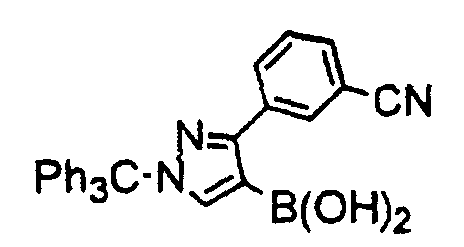
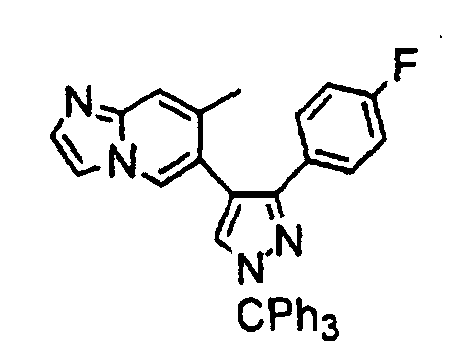
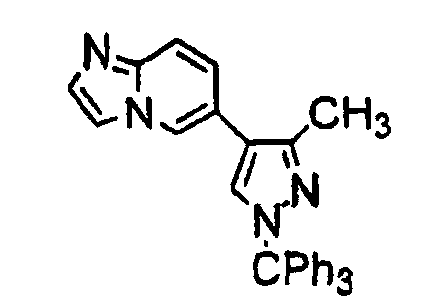
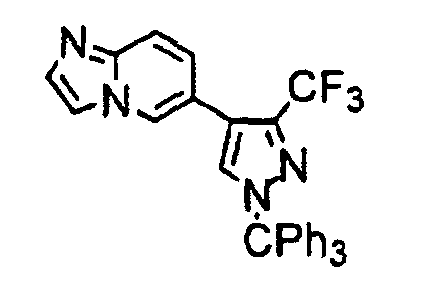
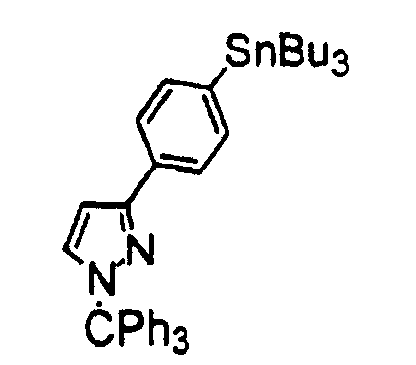
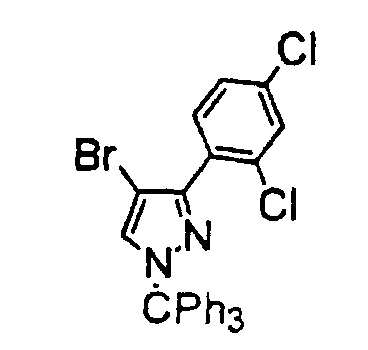
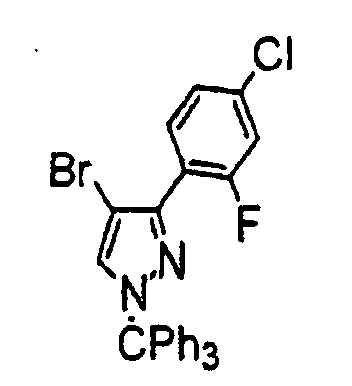
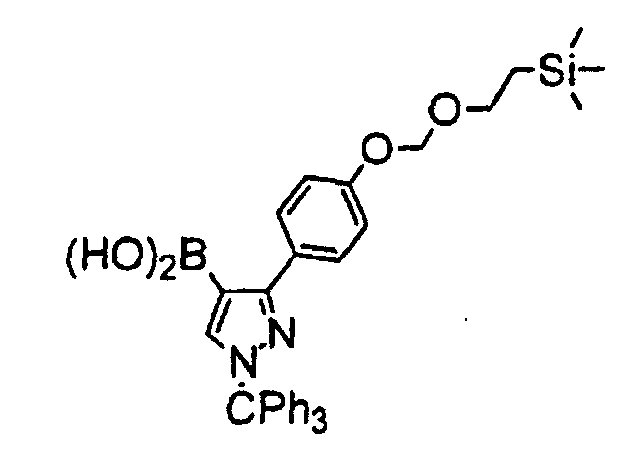
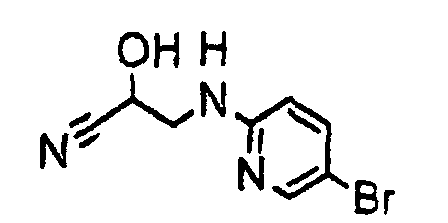
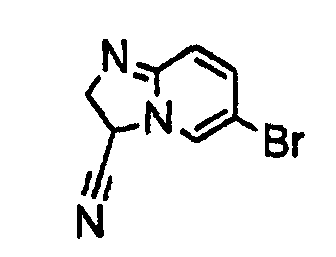
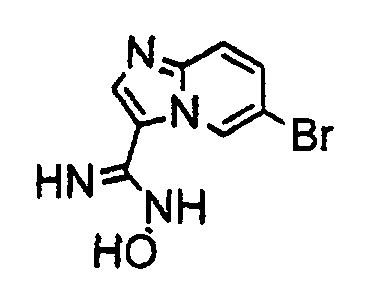
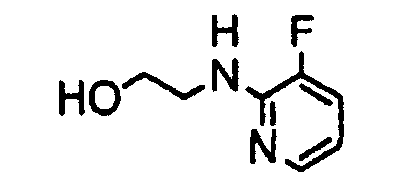
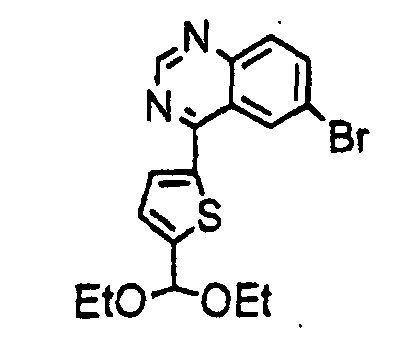
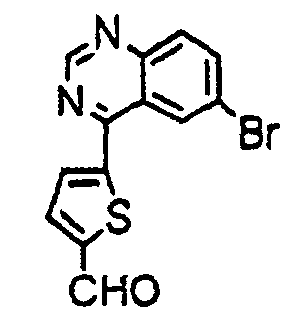
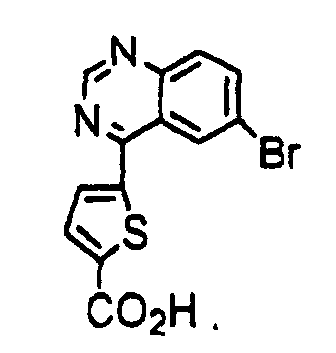
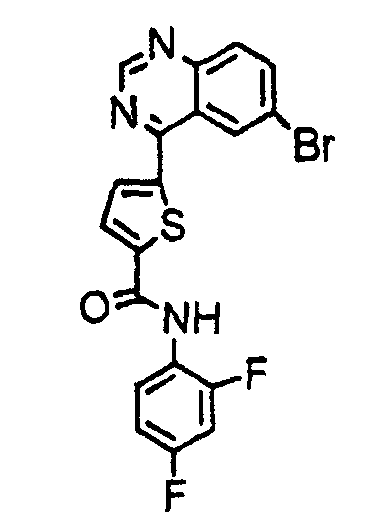
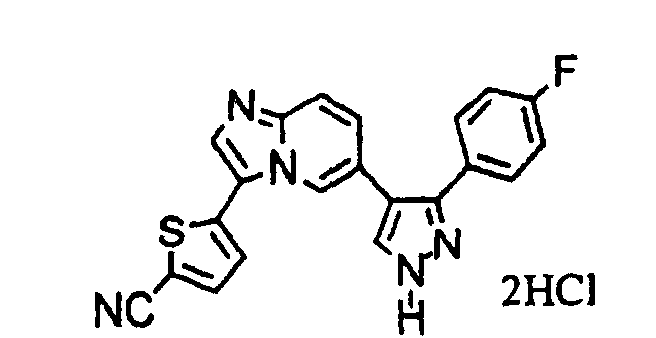
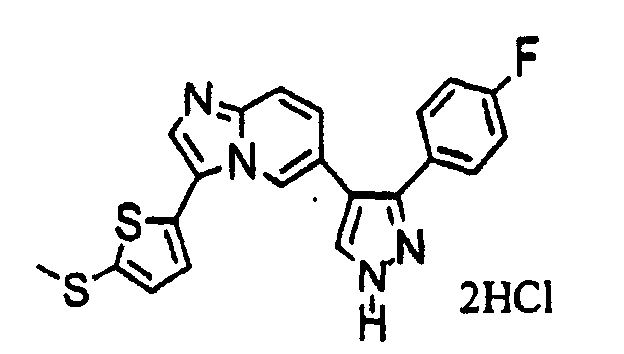
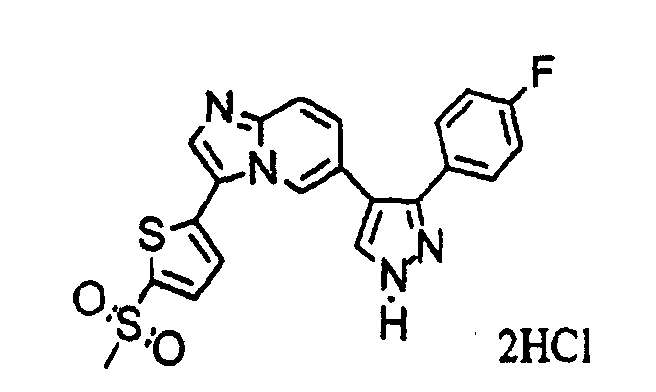
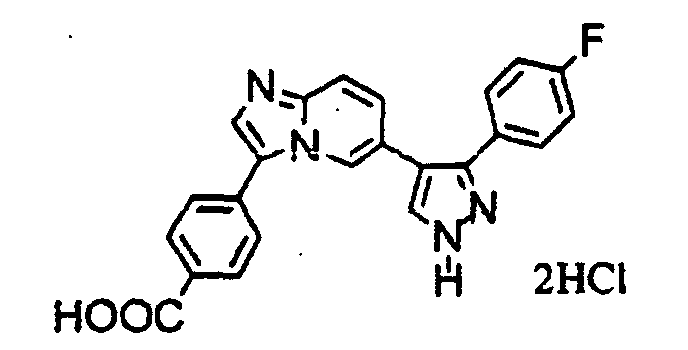
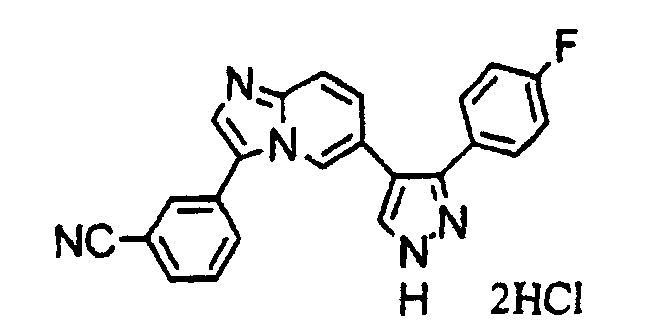
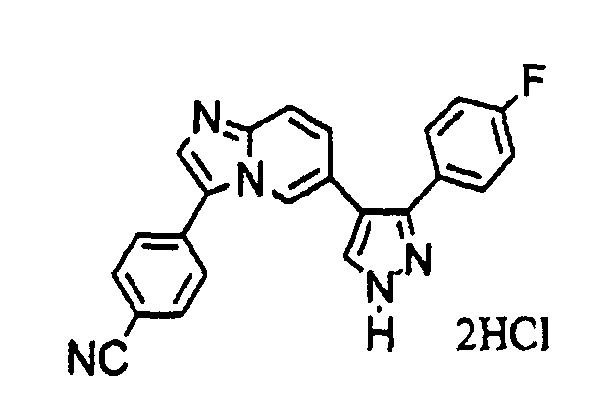
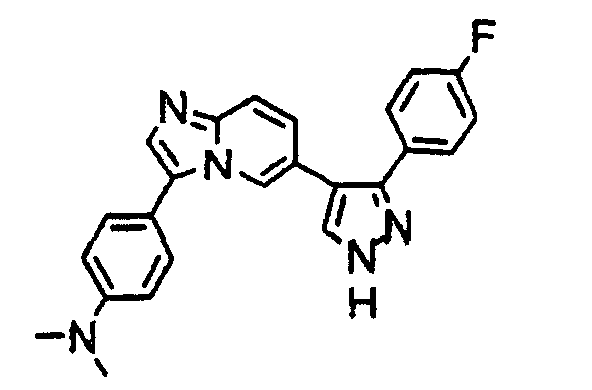
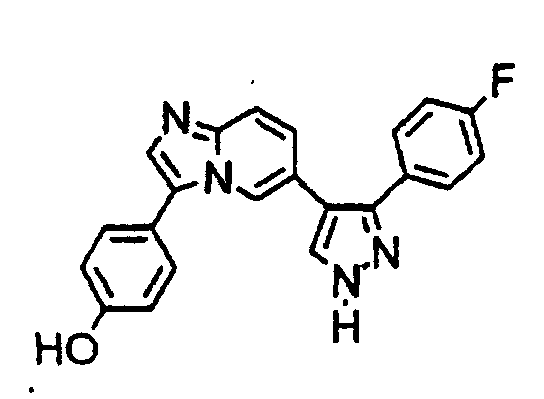
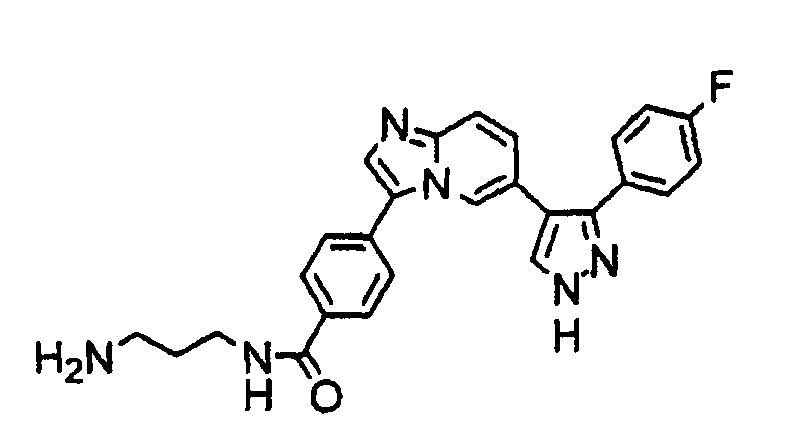
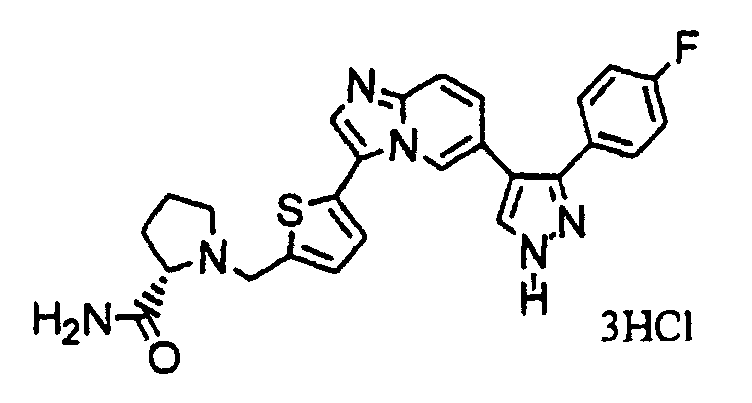
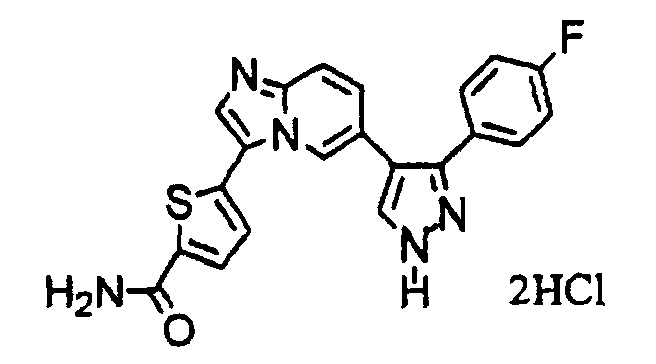
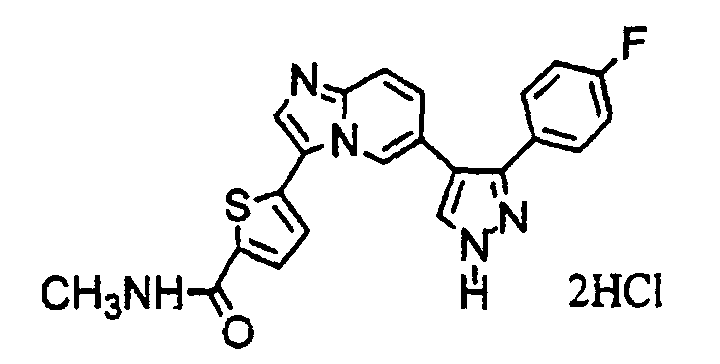
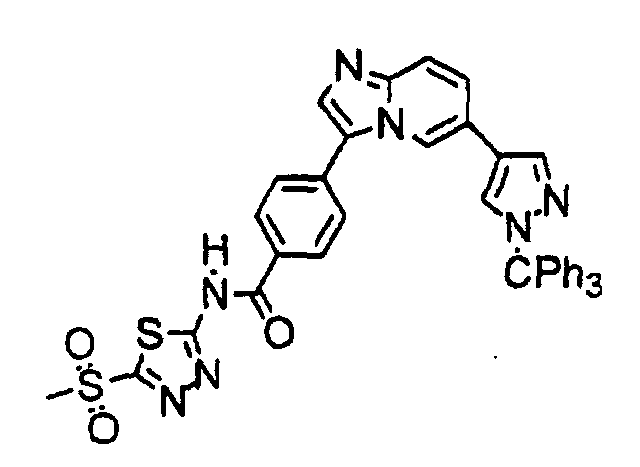
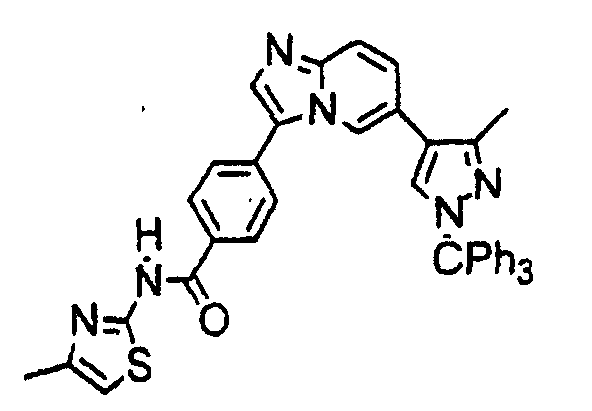
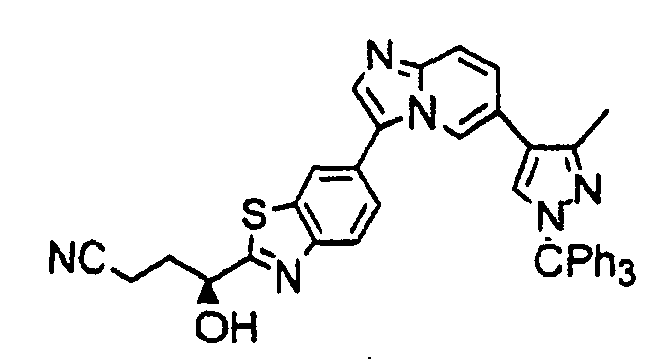
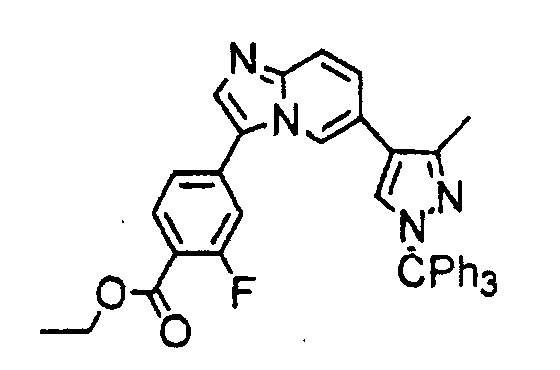
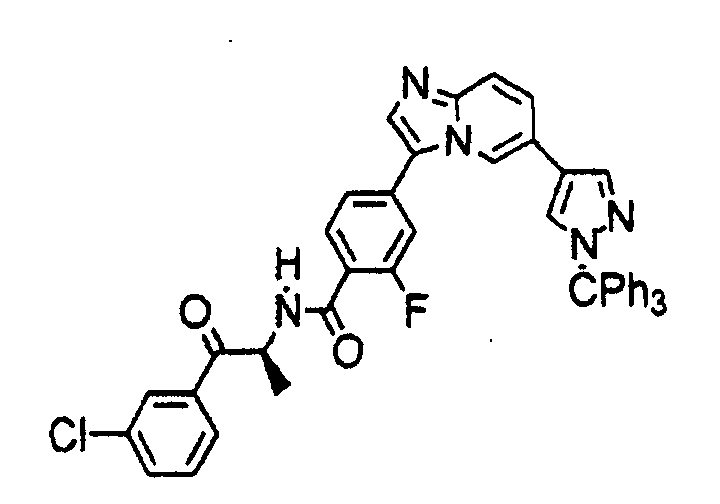
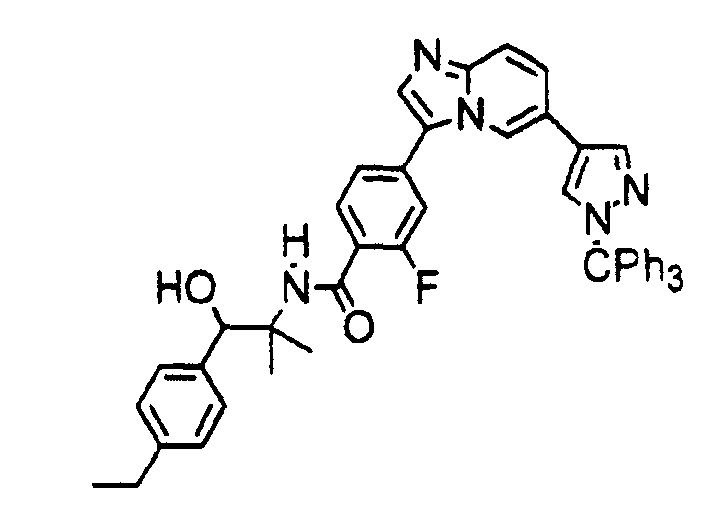
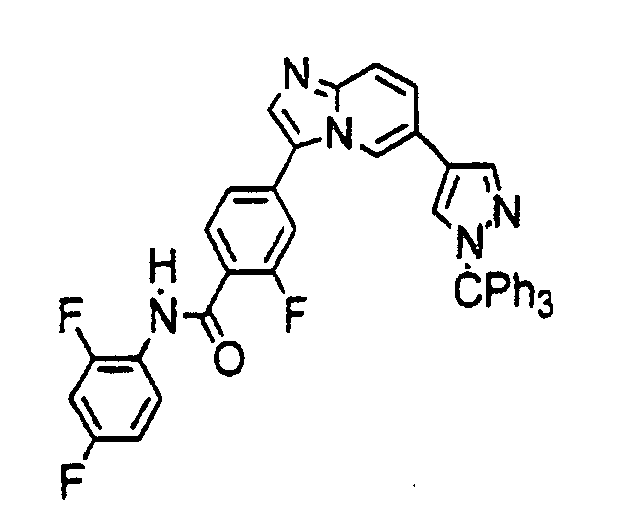
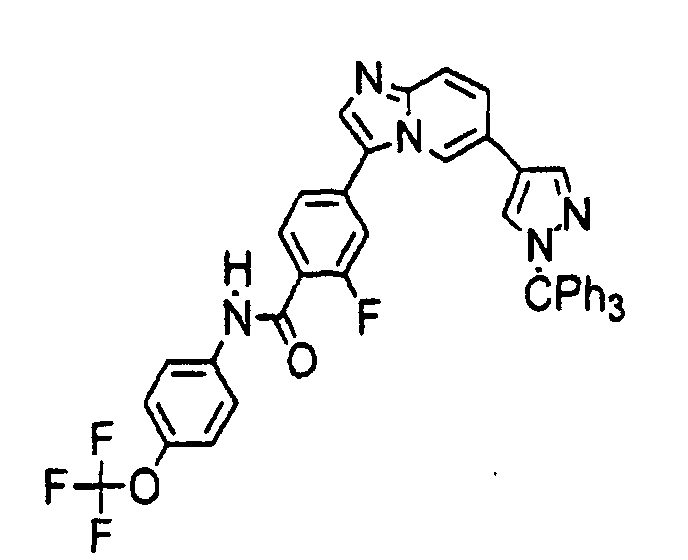
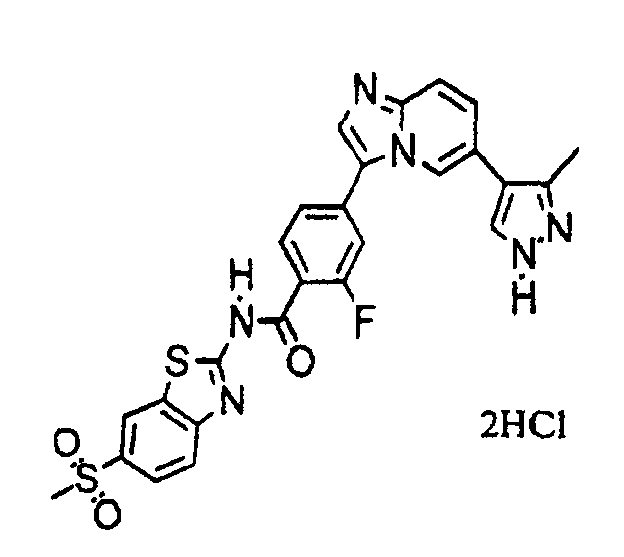
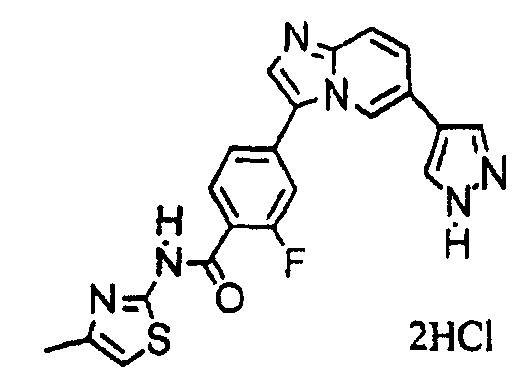
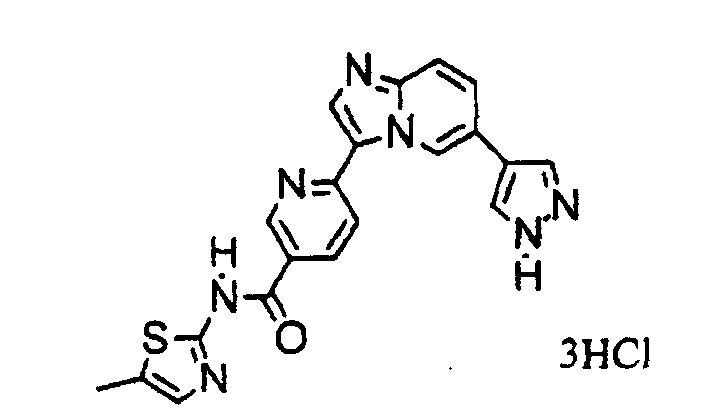
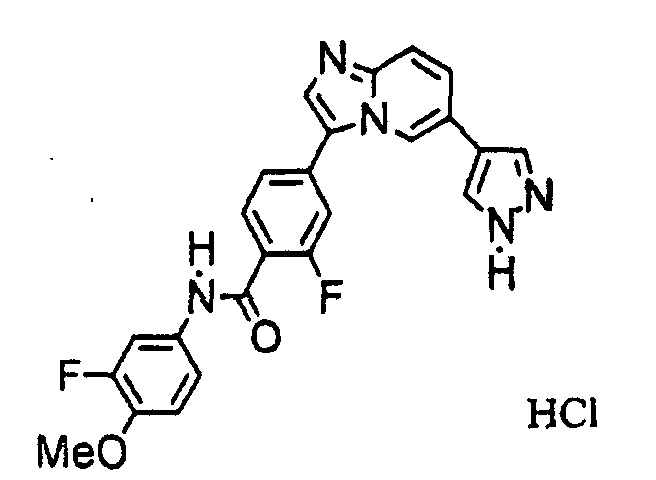
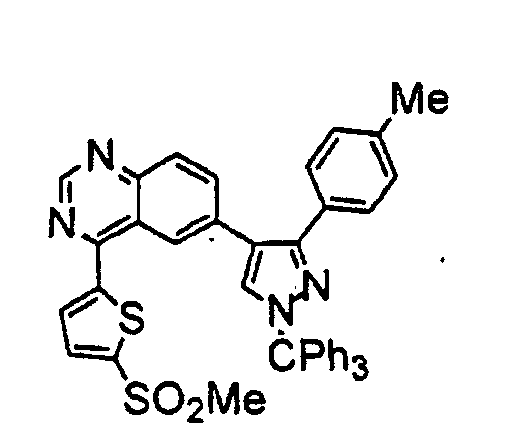
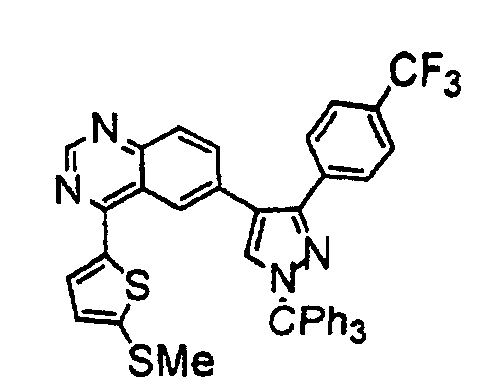
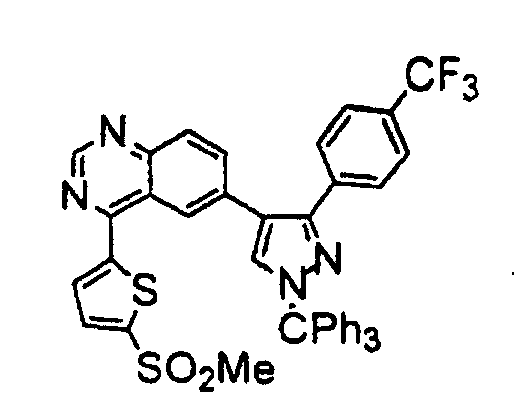
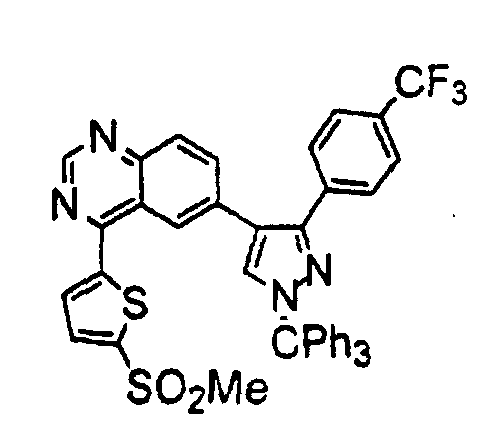
Technical Field
The present invention relates to a novel
nitrogen-containing condensed cyclic compound having an
inhibitory action on activation of STAT6.
Prior Art
The degree of onset of allergic diseases (for example
bronchial asthma, atopic dermatitis, pollinosis, etc.) is
raising mainly on advanced nations, and these diseases come to
be a socially important problem. By extensive study in recent
years, it is recognized that allergic inflammations caused by
immunocompetent cells are a fundamental morbid state of allergic
diseases. Lymphocytes called helper T cells play an important
role in balance/homeostasis in the immune system, and are
classified into helper I type T cells (Th1) and helper II type
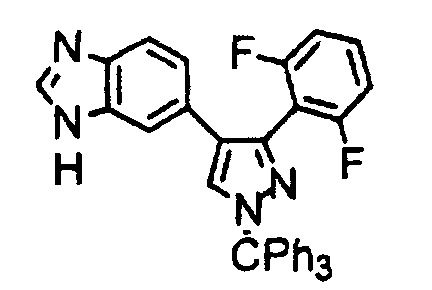
T cells (Th2), depending on a pattern of cytokine secreted
(Mosmann et al., J. Immunol. 136: 2348, 1986). It is known that
Th1 cells are involved in cellular immune response, and also
that Th2 cells produce cytokines such as interleukin (IL)-4,
IL-5, IL-10 and IL-13, to activate humoral immune response. It
is reported that the balance between Th1 and Th2 in patients
with allergic diseases such as bronchial asthma, atopic
dermatitis, etc. inclines Th2 to predominance in many cases.
Cytokines such as IL-5, IL-3, etc. secreted from Th2 act on
eosinophils, to promote their infiltration, and thus Th2
predominance is regarded as one factor causing not only immediate
type allergic reaction but also delayed type allergic reaction.
Many allergic diseases are IgE-dependent allergies.
Immunologically, a definite correlation between a disease such
as asthma or atopic dermatitis and total IgE level in serum or
antigen-specific IgE antibody level. It is estimated that
antigen-specific IgE produced by B cells upon sensitization with
allergen binds to high-affinity IgE receptor on mast cells, and
the degranulation of the mast cells, upon being exposed again
to allergen, is triggered by the binding of the allergen to IgE,
to induce immediate type allergic diseases. IL-4 and IL-13 i.e.
cytokines produced by Th2 cells play a major role in activation
of B cells producing IgE antibody, class switch of B cell, growth
of mast cells, and promotion of histamine secretion. It is also
estimated that the Th2 type cytokines play a major role in
activation of Th2 cells themselves, and it is reported that for
example IL-4 acts on differentiation of peripheral naive T cells
into Th2, to form a state of Th2 predominance, and Th2 itself
also induces immune reaction by secretion of IL-4 and IL-13.
Thus, Th2 cells and IgE antibody participate closely in allergic
inflammations in bronchial asthma, and especially Th2 cells are
notified as cells regulating allergic reaction.
At present, steroid inhalations come to be used as a base
drug in clinical therapy of bronchial asthma, and there are cases
where use of oral steroids is unavoidable in control of morbid
states, or inhalations are not suitable because of inadequate
respiratory functions. On one hand, steroids have the problem
of side effects, and thus administration thereof to infants and
old people poor in resistance should be careful, and even for
oral steroids, there are some patients with hardly controlled
steroid resistance. Further, steroids are often used in therapy
of atopic dermatitis, but long-term administration should be
careful because of the problem of side effects.
The STAT (signal transduction and activator of
transcription) family members are intracellular proteins
containing an SH2 (Src homology 2) region and play fundamental
roles in relaying intracellular signals elicited by cytokines
into a nucleus (Darnell J. et al., Science,
264, 1415-1421 (1994)),
and these proteins themselves function as transcriptional
factors. Among STAT proteins, STAT6 is known as an important
transcriptional factor transmitting signals of IL-4 and IL-13
(Quelle F W et al., Mol. Cell. Biol,
15, 3336 (1995)), and blocking
of a signal transduction pathway via STAT6 is considered very
effective in invalidating the action of IL-4 and IL-13. For
example, it is reported that when STAT6 is inhibited, the
up-regulation of IgE receptor is inhibited (Izuhara K., J. Biol.
Chem.
271, 619 (1996)). Further, it is reported that
respiratory-tract inflammations accompanied by infiltration
with eosinophils by sensitization with an antigen, and an
increase in respiratory-tract hypersensitivity, are not
recognized in STAT6 knockout mice (Arimoto, T et al., J. Exp.
Med.,
187, 16537, 1998; Kuperman D et al., J. Exp. Med.,
187,
939, 1998). Accordingly, a compound having an inhibitory action
on activation of STAT6 can be expected to break in many aspects
a complicated chain participating in onset and progress of
allergic diseases (for example bronchial asthma, allergic
rhinitis, atopic dermatitis, etc.) and to be useful in treatment
and prevention of allergic diseases. In particular, use of an
STAT6 activation inhibitor in treatment of bronchial asthma is
expected to bring about various actions based on blocking of
signals of IL-4 and IL-13, such as inhibitory action on production
of IgE antibody and anti-inflammatory action, and expected to
not only exhibit effects in a broad range from atopic to
inflammatory diseases but also provide a new therapeutic method
for steroid-resistant patients. Further, the STAT6 activation
inhibitor also acts on the balance and regulation in the immune
system, and can thus be expected to be useful in prevention and
treatment of autoimmune diseases, various infections, acquired
immunodeficiency syndrome (AIDS), malignant tumors etc.
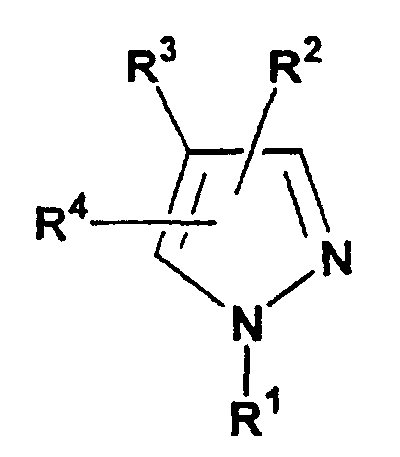
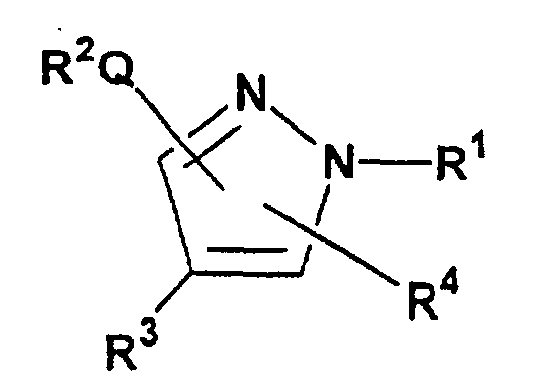
On the other hand, (3) there are the following reports on
pyrazole derivatives.
However, none of the pyrazole derivatives are provided with
a description or suggestion of the relationship thereof with
STAT6.Further, there is no description of compounds having
a nitrogen-containingcomplexaromatic heterocyclic group added
to the 4-position of the pyrazole ring, said aromatic group being
substituted with a cyclic group such as a cycloalkyl group,
aromatic group or a non-aromatic heterocyclic group.
The compound having an inhibitory action on activation of
STAT6 can be expected to exhibit various actions such as
inhibition of IgE antibody production, anti-inflammatory action,
etc. by blocking IL-4 and IL-13 signals. Further, the compound
having an inhibitory action on activation of STAT6 can not only
exhibit effects of preventing and treating a broad range of
diseases from atopic to inflammatory diseases but also provide
a new therapeutic method for steroid-resistant patients by
enabling a reduction in the amount of steroids having possible
side effects. Accordingly, the compound having an inhibitory
action on activation of STAT6 is desired as a medicine as a
substitute for conventional therapeutic medicines such as
steroids for allergic diseases, but none of the compound having
an excellent inhibitory action on activation of STAT6 and acting
clinically and effectively with sufficient pharmacological
activity, safety and movement in the body as a pharmaceutical
preparation has been found.
Disclosure of the Invention
In view of the foregoing, the present inventors made
extensive study for the purpose of providing a compound having
a more excellent inhibitory action on activation of STAT6 and
pharmaceutical composition thereof, and as a result, they found
that the "nitrogen-containing condensed cyclic compound having
a pyrazolyl group as a substituent group and a pharmaceutical
composition thereof" having a novel structure have an excellent
inhibitory action on activation of STAT6, and the present
invention was thereby completed.
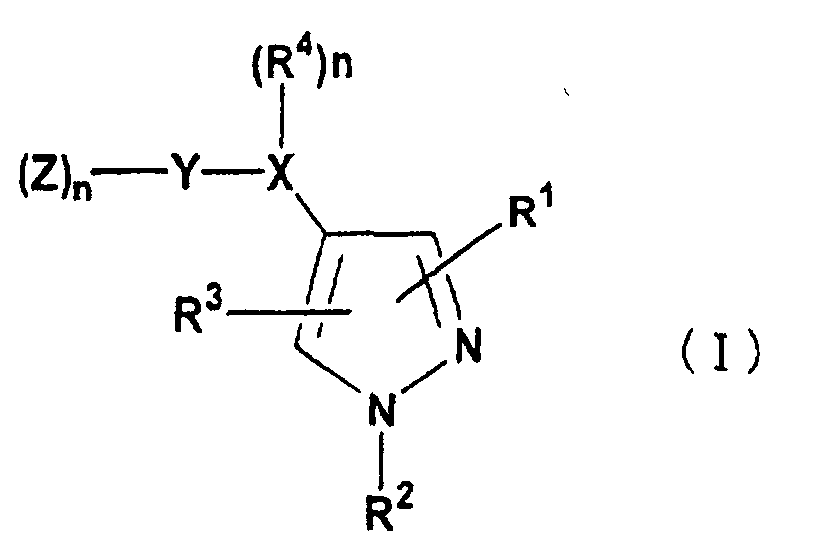
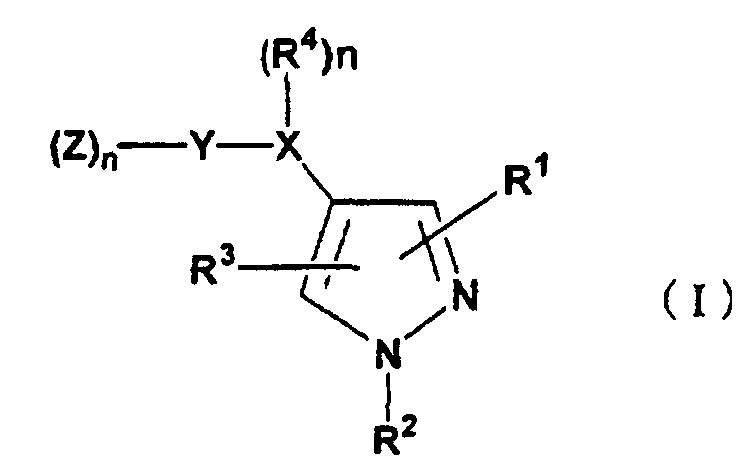
The present invention relates to:
Y represents a C3-8 cycloalkyl group, a C4-8 cycloalkenyl
group, a 5- to 14-membered non-aromatic heterocyclic group, a
C6-14 aromatic hydrocarbon cyclic group, a 5- to 14-membered
aromatic heterocyclic group, a condensed cyclic group consisting
of a benzene ring and a 5- to 7-membered non-aromatic ring, or
a condensed cyclic group consisting of a 5- to 6-membered aromatic
heterocyclic ring and a 5- to 7-membered non-aromatic ring;
(Z)n are n (Z) groups bound to Y, whereupon n is 0, 1, 2
or 3, Z groups are bound to an atom constituting the cyclic group
Y and independently represent a group selected from (1) hydrogen
atom, (2) amino group, (3) halogen atom, (4) hydroxyl group,
(5) nitro group, (6) cyano group, (7) azido group, (8) formyl
group, (9) hydroxyamino group, (10) sulfamoyl group, (11)
guanodino group, (12) oxo group, (13) C2-6 alkenyl group, (14)
C1-6 alkoxy group, (15) C1-6 alkylhydroxyamino group, (16)
halogenated C1-6 alkyl group, (17) halogenated C2-6 alkenyl group,
(18) formula -M1-M2-M3 wherein:
M1 and M2 each represent a single bond, - (CH2)m-, -CHR5CHR6-,
-(CH2)m-CR5R6-(CH2)n-, -CR5=CR6-, -C≡C-, -CR5=CR6-CO-,
-(CH2)m-O-(CH2)n-, -O-(CH2)n-CR5R6-, -(CH2)m-S-(CH2)n-,
-SO(CH2)m-, -SO2(CH2)m-, -CO(CH2)m-, -COO-, -CONR7-, -CONR7CHR8-,
-CONR7-CR5R6-, -CONR7-(CH2)m-, -NR7-, -NR7CO-CR5R6-,
-NR7CO-CR5R6-CO-, -NR7CO-(CH2)m-, -NR7SO2(CH2)m-, -SO2NR7-(CH2)m-,
-SO2NR7-CR5R6-, -NR7CONR8-, or -NR7CSNR8- whereupon n and m are
independently 0, 1, 2 or 3, or (19) a group selected from (a)
C6-14 aromatic hydrocarbon cyclic group, (b) C3-14 cycloalkyl group,
(c) C4-14 cycloalkenyl group, (d) 5- to 14-membered aromatic
heterocyclic group, or (e) 4- to 14-membered non-aromatic
heterocyclic group, each of which may be substituted with 4 or
less groups selected from the substituent group Q, M3 represents (i) hydrogen atom, (ii) oxo group, (iii)
halogen atom, (iv) hydroxyl group, (v) amino group, (vi) cyano
group, (vii) nitro group, (viii) azido group, (viv) cyano group,
(x) carboxyl group, (xi) C1-6 alkyl group, (xii) halogenated C1-6
alkyl group, (xiii) C1-6 alkyl group substituted with a hydroxyl
or cyano group, (xiv) C2-6 alkenyl group, (xv) C2-6 alkynyl group,
(xvi) halogenated C2-6 alkenyl group, (xvii) halogenated C1-6
alkoxy group, (xviii) -OR7, (xviv) -NR7R8, (xx) -NR7COR8, (xxi)
-COR7, (xxii) -CONR7R8, (xxiii) -SOR7, (xxiv) -SO2R7, (xxv)
- NR7SO2R8, (xxvi) -SO2NR7R8, (xxvii) methylene dioxy group,
(xxviii) ethylene dioxy group, or (xxviv) (a) C3-8 cycloalkyl
group, (b) C4-8 cycloalkenyl group, (c) 5- to 14-membered
non-aromatic heterocyclic group, (d) C6-14 aromatic hydrocarbon
cyclic group, (e) 5- to 14-membered aromatic heterocyclic group,
(f) phenoxy group, (g) heteroallyoxy group or (h) C3-8
cycloalkyloxy group, which may be substituted with 4 or less
groups selected from the substituent group Q;
the substituent group Q represents an oxo group, halogen
atom, hydroxyl group, amino group, cyano group, nitro group,
azido group, cyano group, carboxyl group, C
1-6 alkyl group,
halogenated C
1-6 alkyl group, C
1-6 alkyl group substituted with
a hydroxyl or cyano group, C
2-6 alkenyl group, C
2-6 alkynyl group,
halogenated C
2-6 alkenyl group, halogenated C
1-6 alkoxy group,
-OR
7, -OCH
2CONR
7R
8, -NR
7R
8, -NR
7COR
8, -COR
7, -CONR
7R
8, -SOR
7, -SO
2R
7,
-NR
7SO
2R
8, -SO
2NR
7R
8, methylene dioxy group or ethylene dioxy
group;
R
1 represents (1) hydrogen atom, (2) halogen atom, (3)
hydroxyl group, (4) nitro group, (5) cyano group, (6) halogenated
C
1-6 alkyl group, (7) C
2-6 alkyl group substituted with a hydroxyl
or cyano group, (8) C
2-6 alkenyl group, or (9) formula -L
1-L
2-L
3
whereupon 1) -L
1 represents a single bond, -(CH
2)
m-,
-(CH
2)
m-CR
5R
6-(CH
2)
n-, -CR
5=CR
6-, -CH=CR
5-CO-, -(CH
2)
m-O-(CH
2)
n-,
-CO(CH
2)
m-, -COO-, -NR
7-, -CO-NR
7-, -NR
7CO-, -NR
7CO-(CH
2)
m-,
-NR
7CONR
8-, whereupon n and m are independently 0, 1, 2 or 3,
or (a) C
3-8 cycloalkyl group, (b) C
4-8 cycloalkenyl group, (c)
5- to 14-membered non-aromatic heterocyclic group, (d) C
6-14
aromatic hydrocarbon cyclic group or (e) 5- to 14-membered
aromatic heterocyclic group, which may be substituted with 4
or less substituent groups selected from the substituent group
Q;
2) L2 represents a single bond, -(CH2)m-, -CR5R6-,
-(CH2)m-CR5R6-(CH2)n-, -CR5=CR6-, -C≡C-, -CR=CR5-CO-, -O-, -S-,
-SO-, -SO2-, -SO2-(CH2)m-, -(CH2)m-O-(CH2)n-, -O-(CH2)n-CR5R6-,
-CO-(CH2)m-, -COO-, -NR7-, -CO-NR7-, -CO-NR7(CH2)m-, -NR7CO-,
-NR7CO-(CH2)m-, -NR7SO2-, -SO2NR7-, -NR7CONR8-, or -NR7CSNR8-
whereupon n and m are independently 0, 1, 2 or 3, or (a) C3-8
cycloalkyl group, (b) C4-8 cycloalkenyl group, (c) 5- to
14-membered non-aromatic heterocyclic group, (d) C6-14 aromatic
hydrocarbon cyclic group or (e) 5- to 14-membered aromatic
heterocyclic group which may be substituted with 4 or less
substituent groups selected from the substituent group Q; 3) L3 represents (i) hydrogen atom, (ii) oxo group, (iii)
halogen atom, (iv) hydroxyl group, (v) amino group, (vi) cyano
group, (vii) nitro group, (viii) azido group, (viv) cyano group,
(x) carboxyl group, (xi) C1-6 alkyl group, (xii) halogenated C1-6
alkyl group, (xiii) C1-6 alkyl group substituted with a hydroxyl
or cyano group, (xiv) C2-6 alkenyl group, (xv) C2-6 alkynyl group,
(xvi) halogenated C2-6 alkenyl group, (xvii) halogenated C1-6
alkoxy group, (xviii) -OR7, (xviv) -NR7R8, (xx) -NR7COR8, (xxi)
-COR7, (xxii) -CONR7R8, (xxiii) -SOR7, (xxiv) -SO2R7, (xxv)
-NR7SO2R8, (xxvi) -SO2NR7R8, (xxvii) methylene dioxy group,
(xxviii) ethylene dioxy group, or (xxviv) (a) C3-8 cycloalkyl
group, (b) C4-8 cycloalkenyl group, (c) 5- to 14-membered
non-aromatic heterocyclic group, (d) C6-14 aromatic hydrocarbon
cyclic group, (e) 5- to 14-membered aromatic heterocyclic group,
(f) phenoxy group, (g) heteroallyoxy group or (h) C3-8
cycloalkyloxy group, which may be substituted with 4 or less
groups selected from the substituent group Q;
R2 represents a hydrogen atom or a group for protecting
pyrazole nitrogen,
R3 represents a hydrogen atom, halogen atom, cyano group,
amino group, C1-4 alkyl group or halogenated C1-4 alkyl group,
the above-mentioned R5 and R6 are the same or different and
each represent 1) hydrogen atom, 2) halogen atom, 3) hydroxyl
group, 4) cyano group, 5) C1-6 alkyl group, 6) C1-6 alkyl group
substituted with a halogen atom, hydroxy group or cyano group,
7) C3-8 cycloalkyl group, 8) phenyl group which may be substituted
with 3 or less groups selected from the substituent group Q,
9) 5- to 6-membered aromatic heterocyclic group which may be
substituted with 3 or less groups selected from the substituent
group Q, or 10) C3-8 cycloalkyl group formed by combining R5 with
R6, and
the above-mentioned R7 and R8 are the same or different and
each represent a hydrogen atom, C1-6 alkyl group, halogenated
C1-6 alkyl group, C3-8 cycloalkyl group, phenyl group or 5- to
6-membered aromatic heterocyclic group); 2) the compound according to 1), a salt thereof or a hydrate
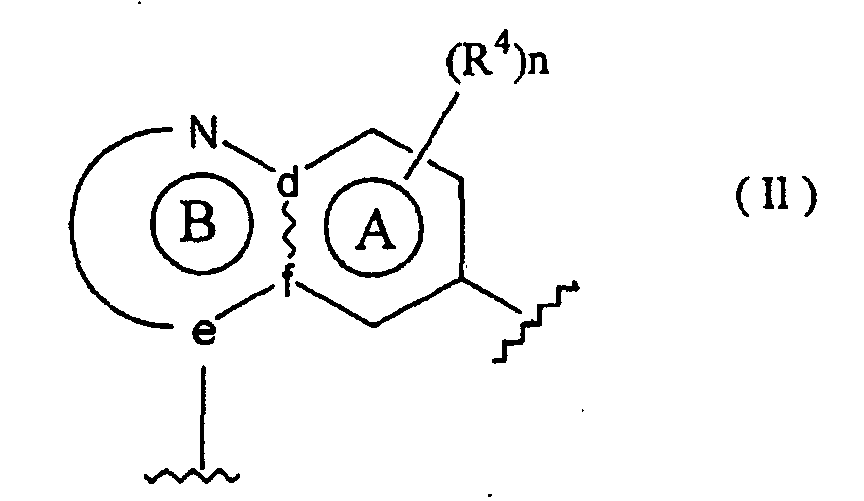
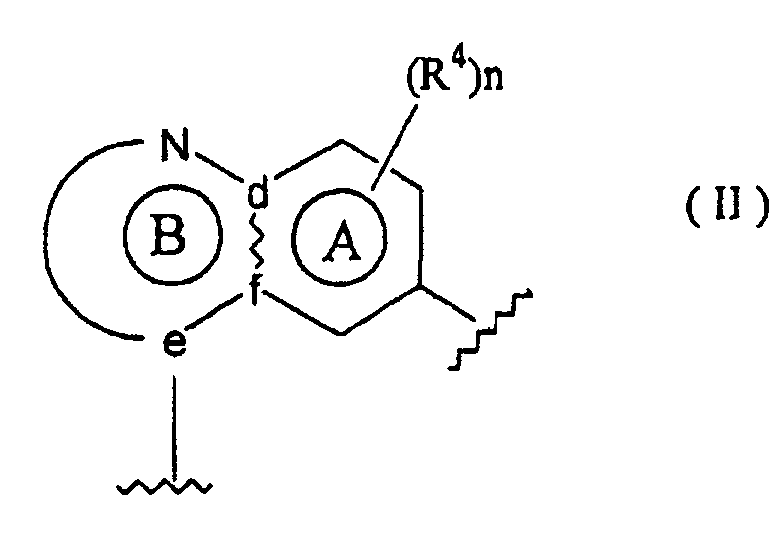
of them, wherein in the formula (I), X is a nitrogen-containing
condensed aromatic heterocyclic group represented by the formula
(II):
(wherein rings A and B are combined to form a 9- to 10-membered
nitrogen-containing condensed aromatic heterocyclic group, and
have (R4)n as substituent groups, whereupon n in the substituent
groups (R4)n is 0, 1 or 2, the substituent groups R4 independently
represent a hydrogen atom, halogen atom, cyano group, hydroxyl
group, amino group, C1-6 alkyl group, halogenated C1-6 alkyl group,
C2-6 alkenyl group, C1-6 alkylsulfonyl group, C1-6
alkylsulfonylamino group, C1-6 alkylsulfinyl group, N-(C1-6
alkyl)amino group, N,N-di(C1-6 alkyl)amino group, C1-6 alkoxy
group, C1-6 alkylthio group, carbamoyl group, N-(C1-6
alkyl)carbamoyl group, N,N-di(C1-6 alkyl)carbamoyl group,
sulfamoyl group, phenyl group, heteroaryl group, phenoxy group,
heteroaryloxy group, phenyl C1-6 alkylamino group or heteroaryl
C1-6 alkylamino group, each of which is bound to an atom
constituting ring A and/or ring B, provided that when the
10-membered nitrogen-containing condensed aromatic
heterocyclic group formed by the rings A and B is a quinazoline
ring, and simultaneously R4 is an amino group, N- (C1-6 alkyl)amino
group and/or N,N-di(C1-6 alkyl)amino group, R4 is not bound to
the atom at the 2-position of the quinazolinyl ring,
the ring A represents a 6-membered aromatic hydrocarbon
cyclic group or a 6-membered aromatic heterocyclic group;
the ring B represents a 5- or 6-membered nitrogen-containing
aromatic heterocyclic group, and may contain 1, 2 or 3 heteroatoms
selected from a nitrogen atom, an oxygen atom and a sulfur atom,
d, f and e are adjacent in this order, are the same or different
and represent a carbon atom or a nitrogen atom, provided that
d and e do not simultaneously represent a nitrogen atom, and
when e represents a nitrogen atom, d and f each represent a carbon
atom, and
the ring A binds to the 4-position of the pyrazole ring,
and the ring B binds via e to Y in the formula (I)); 3) the compound according to 1) or 2), a salt thereof or
a hydrate of them, wherein in the formula (I), X is an
imidazo[1,2-a]pyridine cyclic group, benzimidazole cyclic
group, quinazoline cyclic group, quinoline cyclic group, or
2,1-benzisoxazole cyclic ring; 4) the compound according to 2) or 3), a salt thereof or
a hydrate of themwherein in the formula (II), n in the substituent
groups (R4)n is 0, 1 or 2, and the substituent groups R4
independently represent a hydrogen atom, halogen atom, cyano
group, hydroxyl group, amino group, a C1-6 alkyl group, a
halogenated C1-6 alkyl group, an N-(C1-6 alkyl) amino group or a
C1-6 alkoxy group; 5) the compound according to 1) or 2), a salt thereof or
a hydrate of them, wherein in the formula (I), X is an
imidazo[1,2-a]pyridine cyclic group, benzimidazole cyclic
group, quinazoline cyclic group, quinoline cyclic group, or
2,1-benzisoxazole cyclic ring, n in the substituent groups (R4)n
is 0, 1 or 2, and the substituent groups R4 independently represent
a hydrogen atom, halogen atom, cyano group, hydroxyl group, amino
group, a C1-6 alkyl group, a halogenated C1-6 alkyl group, an N-(C1-6
alkyl) amino group or a C1-6 alkoxy group, and Y is a C5-6 cycloalkyl
group, C5-7 cycloalkenyl group, phenyl group, naphthyl group,
monocyclic or bicyclic 5- to 10-membered non-aromatic
heterocyclic group, monocyclic or bicyclic 5- to 14-membered
aromatic heterocyclic group, a condensed cyclic group of a
benzene ring and a 5- to 7-membered non-aromatic ring, or a
condensed cyclic group of a 5- to 6-membered aromatic
heterocyclic ring and a 5- to 7-membered non-aromatic ring; 6) the compound according to 4) or 5), a salt thereof or
a hydrate of them, wherein in the formula (I), R2 is a hydrogen
atom, trityl group, tetrahydropyranyl group,
t-butyldimethylsilyl group, t-butoxycarbonyl group or
pivaloyloxymethyl group,
R3 is a hydrogen atom,
n in the substituent groups (R4)n is 0, 1 or 2, and the
substituent groups R4 independently represent a hydrogen atom,
halogen atom, cyano group, carbamoyl group, C1-6 alkyl group or
halogenated C1-6 alkyl group; 7) the compound according to 5) or 6), a salt thereof or
a hydrate thereof, wherein in the formula (I), X is an
imidazo[1,2-a]pyridine cyclic group, benzimidazole cyclic
group, quinazoline cyclic group, quinoline cyclic group, or
2,1-benzisoxazole cyclic ring,
Y is a 5- to 7-membered cyclic group containing 0, 1 or
2 nitrogen atoms, which is saturated or has one double bond in
the cycle, a phenyl group, a monocyclic or bicyclic 5- to
14-membered aromatic heterocyclic ring, and binds to X via a
carbon or nitrogen atom on Y,
n in the substituent groups (R4)n is 0, 1 or 2, the substituent
groups R4 independently represent a hydrogen atom, halogen atom,
carbamoyl group or C1-6 alkyl group,
R2 is a hydrogen atom or trityl group, and
R3 is a hydrogen atom; 8) the compound according to any one of 5) to 7), a salt
thereof or a hydrate thereof, wherein R1 represents (1) hydrogen,
(2) halogen atom, (3) nitro group, (4) cyano group, (5) C1-6 alkyl
group, (6) C2-6 alkenyl group, (7) halogenated C1-6 alkyl group,
(8) C2-6 alkenyl group substituted with a hydroxyl or cyano group,
(9) -CONR7R8, (10) -NR7R8, (11) -(CH2)mR9, (12) -(CH2)m-O-(CH2)n-R9,
(13) -COOR7 whereupon n and m independently represent 0, 1, 2
or 3, R7 and R8 are the same or different and each represent
a hydrogen atom, C1-6 alkyl group or C3-8 cycloalkyl group, and
R9 groups are the same or different and represent a hydrogen
atom, C1-6 alkyl group, hydroxyl group, cyano group, or 1) C3-8
cycloalkyl group, 2) C4-8 cycloalkenyl group, 3) phenyl group,
4) 5- to 10-membered non-aromatic heterocyclic group, 5) 5- to
6-membered aromatic heterocyclic ring, each of which may be
substituted with 4 or less groups selected independently from
the substituent group P1, or (14) (a) C3-8 cycloalkyl group, (b)
C3-8 cycloalkenyl group, (c) 5- to 10-membered non-aromatic
heterocyclic group, (d) phenyl group or (e) 5- to 10-membered
aromatic heterocyclic group which may be arbitrarily substittued
with 3 or less groups selected independently from the substituent
group P1 and with 1 or less group selected independently from
the substituent group P2,
the above-mentioned substituent group P1 represents an oxo
group, halogen atom, hydroxyl group, amino group, cyano group,
nitro group, azido group, cyano group, carboxyl group, C1-6 alkyl
group, halogenated C1-6 alkyl group, C1-6 alkyl group substituted
with a hydroxyl or cyano group, C2-6 alkenyl group, C2-6 alkynyl
group, halogenated C2-6 alkenyl group, halogenated C1-6 alkoxy
group, -OR7, -NR7R8, -NR7COR8, -COR7, -CONR7R8, -SOR7, -SO2R7,
-NR7SO2R8, or -SO2NR7R8, whereupon R7 and R8 are the same or
different and each represent a hydrogen atom, C1-6 alkyl group
or C3-8 cycloalkyl group, and
the substituent group P2 represents -CH2NR7R8, -OCH2CONR7R8,
-O-(CH2)m-R10, -NR7COR10, -NR7COOR10, C3-7 cycloalkyl group, C4-7
cycloalkenyl group, phenyl group, 5- to 6-membered aromatic
heterocyclic group, 5- to 7-membered non-aromatic heterocyclic
group, C3-7 cycloalkyloxy group, phenoxy group, heteroallyloxy
group, methylene dioxy group or ethylene dioxy group, whereupon
m is 0, 1, 2 or 3, R7 and R8 are the same or different and each
represent a hydrogen atom, C1-6 alkyl group or C3-8 cycloalkyl
group, R10 represents a hydrogen atom, C1-6 alkyl group, C3-8
cycloalkyl group, phenyl group, 5- to 10-membered non-aromatic
heterocyclic group, or 5- to 6-membered aromatic heterocyclic
group; 9) the compound according to any one of 5) to 8), a salt
thereof or a hydrate thereof, wherein in the formula (I), (Z)n
represent n (Z) groups bound to Y, n is 0, 1, 2 or 3, Z groups
independently represent (1) hydrogen atom, (2) amino group, (3)
halogen atom, (4) hydroxyl group, (5) nitro group, (6) cyano
group, (7) a zido group, (8) formyl group, (9) hydroxyamino group,
(10) sul f amoyl group, (11) guanodino group, (12) oxo group, (13)
C2-6 alkenyl group, (14) C1-6 alkoxy group, (15) C1-6
alkylhydroxyamino group, (16) halogenated C1-6 alkyl group, (17)
halogenated C2-6 alkenyl group, (18) C3-6 alkynyl group, (19)
formula -J-R11 wherein J is a single bond, -(CH2)m-, -CHR5CHR6-,
-(CH2)m-CR5R6-(CH2)n-, -CR5=CR6-, -C≡C-, -CR5=CR6-CO-,
-(CH2)m-O-(CH2)n-, -O-(CH2)n-CR5R6-, -(CH2)m-S-(CH2)n-,
-SO(CH2)m-, -SO2(CH2)m-, -CO(CH2)m-, -COO-, -CONR7-, -CONR7CHR5-,
-CONR7-CR5R6-, -CONR7-(CH2)m-, -NR7-, -NR7CO-CR5R6-,
NR7CO-CR5R6-CO-, -NR7CO-(CH2)m-, -NR7SO2(CH2)m-, -SO2NR7-(CH2)m-,
-SO2NR7-CR5R6-, -NR7CONR8-, or -NR7CSNR8- whereupon n and m are
independently 0, 1, 2 or 3, or R5 and R6 are the same or different
and each represent 1) hydrogen atom, 2) halogen atom, 3) hydroxyl
group, 4) cyano group, 5) C1-6 alkyl group, 6) C1-6 al kyl group
substituted with a halogen atom, hydroxy group or cyano group,
7) C3-8 cycloalkyl group, 8) phenyl group which may be substituted
with 3 or less groups selected from the substituent group Q,
9) 5- to 6-membered aromatic heterocyclic group which may be
substituted with 3 or less groups selected from the substituent
group Q, or 10) C3-8 cycloalkyl group formed by combining R5 with
R6, and R7 and R8 are the same or different and each represent
a hydrogen atom, C1-6 alkyl group or C3-8 cycloalkyl group, R11
represents a hydrogen atom, halogen atom, hydroxyl group, cyano
group, carboxyl group, C1-6 alkyl group, C1-6 alkoxy group,
halogenated C1-6 alkyl group, C3-8 cycloalkyl group, C3-8
cycloalkenyl group, phenyl group, 5- to 6-membered aromatic
heterocyclic group or 5- to 6-membered non-aromatic heterocyclic
group, provided that each of the C3-8 cycloalkyl group, C3-8
cycloalkenyl group, phenyl group, 5- to 6-membered aromatic
heterocyclic group and 5- to 6-membered non-aromatic
heterocyclic group may be arbitrarily substituted with 3 or less
substituent groups selected independently from the substituent
group P3 and with 1 or less substituent group selected
independently from the substituent group P4,
the above-mentioned substituent group P3 represents an oxo
group, halogen atom, hydroxyl group, amino group, cyano group,
nitro group, azido group, cyano group, carboxyl group, C1-6 alkyl
group, halogenated C1-6 alkyl group, C1-6 alkyl group substituted
with a hydroxyl or cyano group, C2-6 alkenyl group, C2-6 alkynyl
group, halogenated C2-6 alkenyl group, halogenated C1-6 alkoxy
group, -OR7, -NR7R8, -NR7COR8, -COR7, -CONR7R8, -SOR7, -SO2R7,
-NR7SO2R8, or -SO2NR7R8, whereupon R7 and R8 are the same or
different and each represent a hydrogen atom, C1-6 alkyl group
or C3-8 cycloalkyl group, and
the substituent group P4 represents a C3-7 cycloalkyl group,
C4-7 cycloalkenyl group, phenyl group, 5- to 6-membered aromatic
heterocyclic group, 5- to 7-membered non-aromatic heterocyclic
group, C3-7 cycloalkyloxy group, phenoxy group, heteroaryloxy
group, methylene dioxy group or ethylene dioxy group, each of
which is a group binding to the cyclic group Y; 10) the compound according to any one of 5) to 9), a salt
thereof or a hydrate of them, wherein in the formula (I), R1
is (1) hydrogen, (2) halogen atom, (3) nitro group, (4) cyano
group, (5) C1-6 alkyl group, (6) C2-6 alkenyl group, (7) halogenated
C1-6 alkyl group, (8) phenyl group, (9) 5- to 6-membered aromatic
heterocyclic group, (10) 5- to 7-membered non-aromatic
heterocyclic group, provided that (8) phenyl group, (9) 5- to
6-membered aromatic heterocyclic group and (10) 5- to 7-membered
non-aromatic heterocyclic group may be substituted arbitrarily
with 3 or less substituent groups selected independently from
the substituent group P5 and with 1 or less substituent group
selected independently from the substituent group P6,
the substituent group P5 represents an oxo group, halogen
atom, hydroxyl group, amino group, cyano group, nitro group,
azido group, cyano group, carboxyl group, C1-6 alkyl group,
halogenated C1-6 alkyl group, C1-6 alkyl group substituted with
a hydroxyl or cyano group, C2-6 alkenyl group, C2-6 alkynyl group,
halogenated C2-6 alkenyl group, halogenated C1-6 alkoxy group,
-OR7, -OCH2CONR7R8, -NR7R8, -NR7COR8, -COR7, -CONR7R8, -SOR7, -SO2R8,
-NR7SO2R8 or -SO2NR7R8 whereupon R7 and R8 are the same or different
and each represent a hydrogen atom, C1-6 alkyl group or C3-8
cycloalkyl group,
the substituent group P6 represents a C3-7 cycloalkyl group,
C4-7 cycloalkenyl group, phenyl group, 5- to 6-membered aromatic
heterocyclic group, 5- to 7-membered non-aromatic heterocyclic
group, C3-7 cycloalkyloxy group, phenoxy group, heteroaryloxy
group, methylene dioxy group or ethylene dioxy group; and
R2, R3 and R4 are hydrogen atoms; 11) the compound according to any one of 1) to 10), a salt
thereof or a hydrate of them, wherein in the formula (I), X is
an imidazo [1,2-a]pyridine cyclic group, and Y is a phenyl group,
pyridyl group, thienyl group, thiazolyl group, pyrazolyl group,
1,2,4-thiadiazolyl group, 1,2,4-oxadiazolyl group,
1,3,4-thiadiazolyl group, 1,3,4-oxadiazolyl group or
benzothiazolyl group; 12) the compound according to any one of 1) to 10), a salt
thereof or a hydrate of them, wherein in the formula (I), X is
a quinazoline cyclic group, and Y is a phenyl group, pyridyl
group, thienyl group, furyl group, imidazolyl group, pyrazolyl
group, 1,3,4-thiadiazolyl group, 1,3,4-oxadiazolyl group,
piperidinyl group, piperazinyl group or homopiperazinyl group; 13) the compound according to 1) represented by the formula
(I), a salt thereof or a hydrate thereof, wherein the compound
is the one selected from:
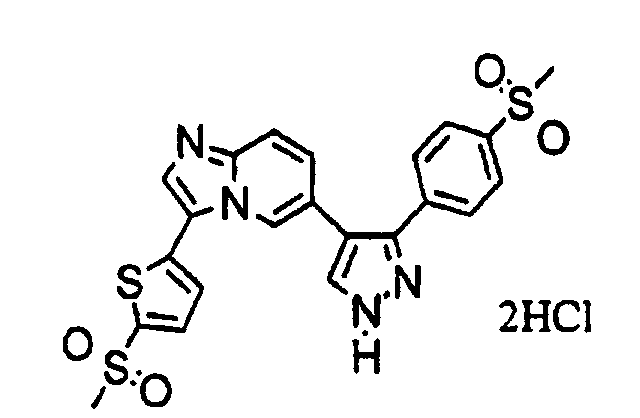
6-[3-(4-fluorophenyl)-1H-4-pyrazolyl]-3-[5-(methylsulfonyl)-2-thienyl]imidazo[1,2-a]pyridine
hydrochloride, 6-[3-(2,4-difluorophenyl)-1H-pyrazol-4-yl]-3-(5-methylsulfonylthiophen-2-yl)imidazo[1,2-a]
pyridine, 6-[3-(2,6-difluorophenyl)-1H-pyrazol-4-yl]-3-(5-methylsulfonylthiazol-2-yl)imidazo[1,2-a]
pyridine,
3-(5-cyclopropyl[1,3,4]oxadiazol-2-yl)-6-[3-(2,4-difluorophenyl)-1H-pyrazol-4-yl]imidazo[1,2-a]
pyridine,
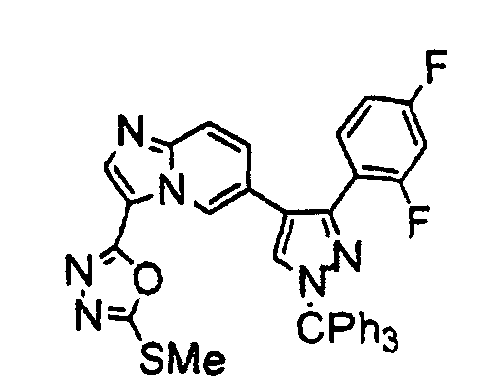
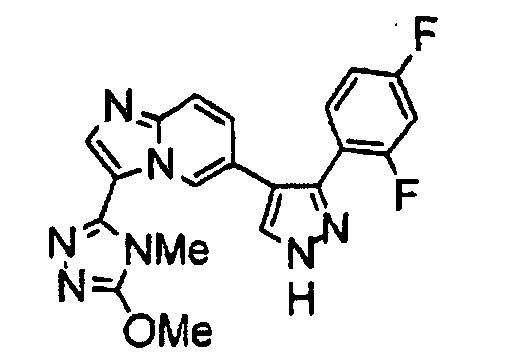
6-[3-(2,4-difluorophenyl)-1H-pyrazol-4-yl]-3-(5-methoxy[1,3,4]oxadiazol-2-yl)imidazo[1,2-a]
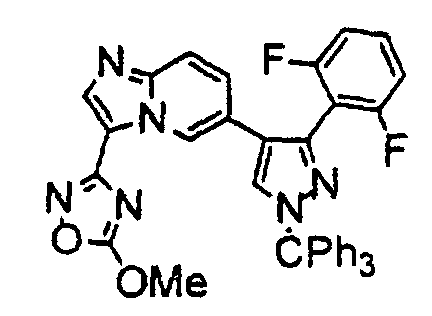
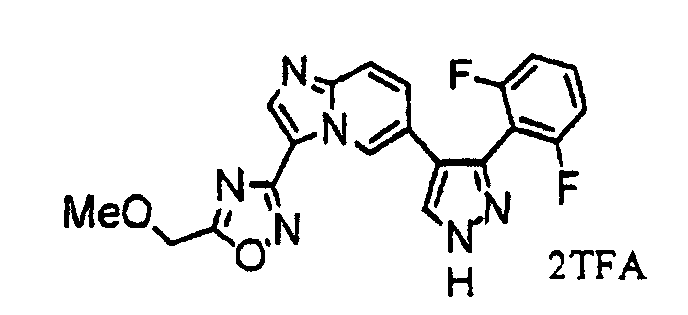
pyridine, 6-[3-(2,6-difluorophenyl)-1H-pyrazol-4-yl]-3-(5-methoxy[1,2,4]-oxadiazol-3-yl)imidazo[1,2-a]
pyridine, 3-(5-cyclopropyl[1,2,4]oxadiazol-3-yl)-6-[3-(4-fluorophenyl)-1H-4-pyrazolyl]-imidazo[1,2-a]pyridine
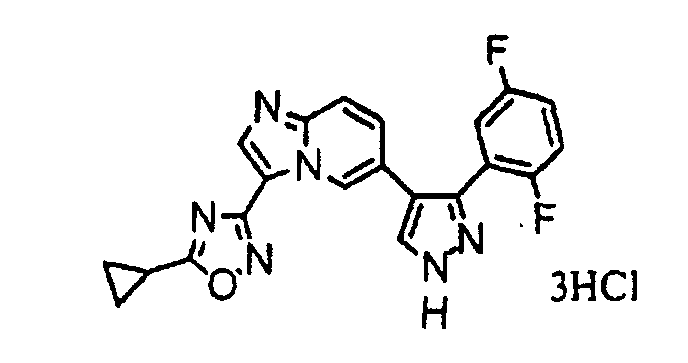
hydrochloride, 3-(5-cyclopropyl-[1,2,4]oxadiazol-3-yl)-6-[3-(2,4-difluorophenyl)-1H-4-pyrazolyl]-imidazo[1,2-a]pyridine
trihydrochloride, 3-(5-cyclopropyl-[1,2,4]oxadiazol-3-yl)-6-[3-(2-fluoro-4-methoxyphenyl)-1H-4-pyrazolyl]-imidazo[1,2-a]pyridine
trihydrochloride, 3-(5-cyclopropyl[1,2,4]oxadiazol-3-yl)-6-[3-(2-fluorophenyl)-1H-4-pyrazolyl]-imidazo[1,2-a]pyridine
trihydrochloride,
6-[3-(4-cyclopentyloxy-2-fluorophenyl)-1H-4-pyrazolyl]-3-(5-cyclopropyl-[1,2,4]oxadiazol-3-yl)-imidazo[1,2-a]-pyridine
trihydrochloride, 3-(5-cyclopropyl-[1,2,4]-oxadiazol-3-yl)-6-[3-(2,6-difluorophenyl)-1H-4-pyrazolyl]-imidazo[1,2-a]pyridine
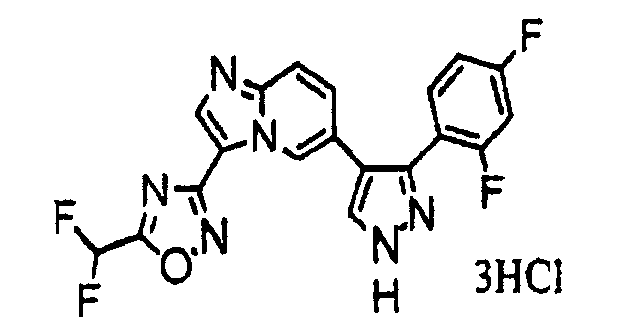
trihydrochloride, 6-[3-(2,4-difluorophenyl)-1H-4-pyrazolyl]-3-(5-difluoromethyl[1,2,4]oxadiazol-3-yl)-imidazo[1,2-a]pyridine
trihydrochloride, 3-(5-difluoromethyl-[1,2,4]oxadiazol-3-yl)-6-[3-(2-fluorophenyl)-1H-4-pyrazolyl]-imidazo[1,2-a]-pyridine
trihydrochloride, 6-[3-(2,6-difluorophenyl)-1H-4-pyrazolyl]-3-(5-difluoromethyl-[1,2,4]oxadiazol-3-yl)-imidazo[1,2-a]pyridine
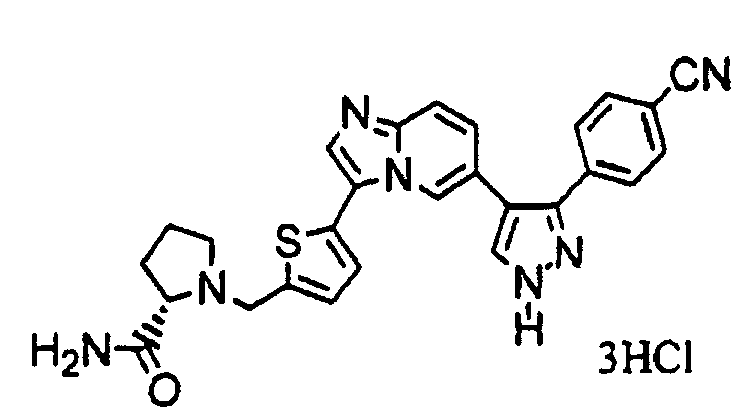
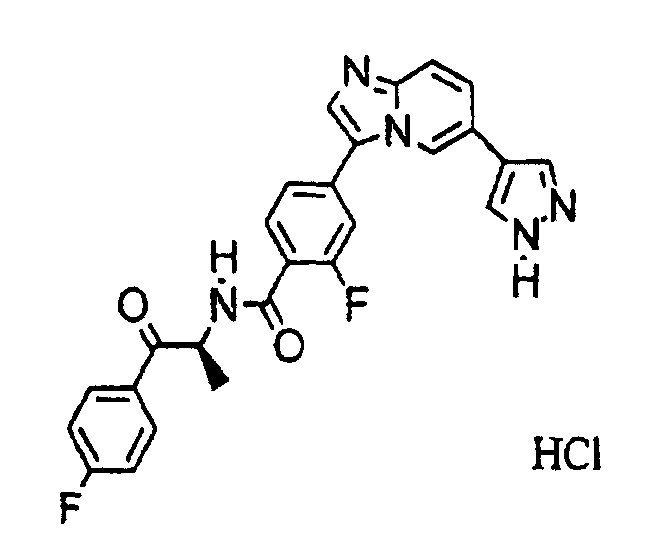
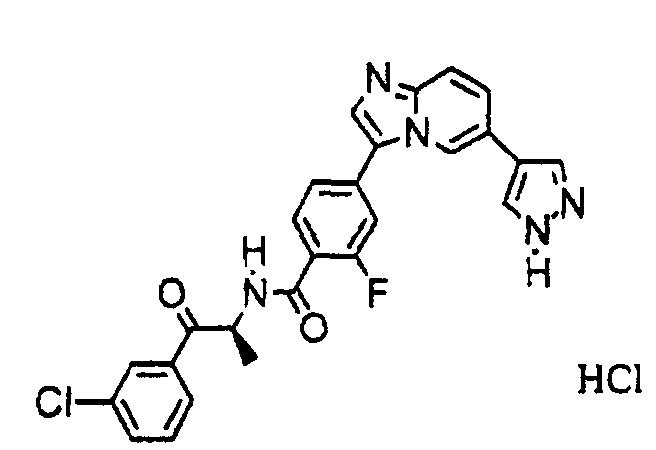
trihydrochloride, N1-[(1S)-2-(4-fluorophenyl)-1-methyl-2-oxoethyl]-2-fluoro-4-[6-(1H-4-pyrazolyl)imidazo[1,2-a]pyridin-3-yl]benzamide
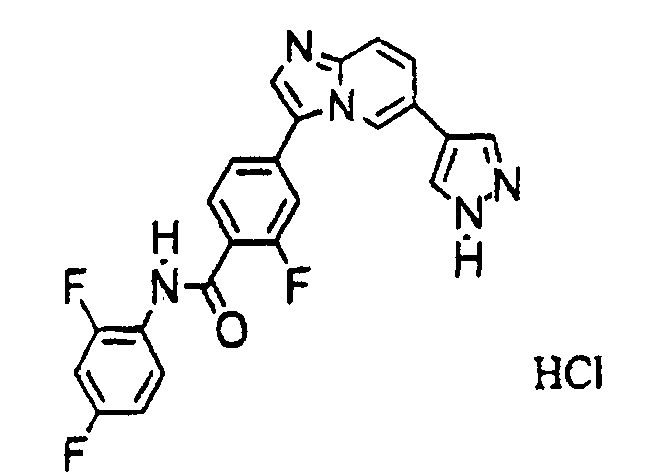
hydrochloride, N1-(2,4-difluorophenyl)-2-fluoro-4-[6-(1H-4-pyrazolyl)imidazo[1,2-a]pyridin-3-yl]benzamide
hydrochloride, N1-(5-chloro-2-pyridyl)-2-fluoro-4-[6-(1H-4-pyrazolyl)imidazo[1,2-a]pyridin-3-yl]benzamide
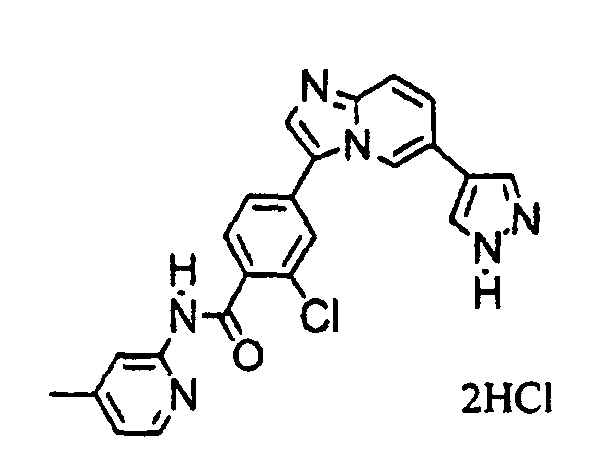
dihydrochloride, N1-(4-methyl-2-pyridyl)-2-fluoro-4-[6-(1H-4-pyrazolyl)imidazo[1,2-a]pyridin-3-yl]benzamide
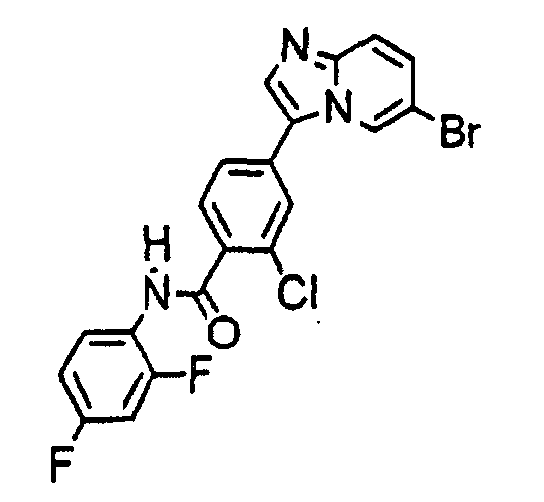
dihydrochloride, N1-(2,4-difluorophenyl)-2-chloro-4-[6-(1H-4-pyrazolyl)imidazo[1,2-a]pyridin-3-yl]benzamide
hydrochloride, N1-(5-vinyl-2-pyridyl)-2-fluoro-4-[6-(1H-4-pyrazolyl)imidazo[1,2-a]pyridin-3-yl]benzamide
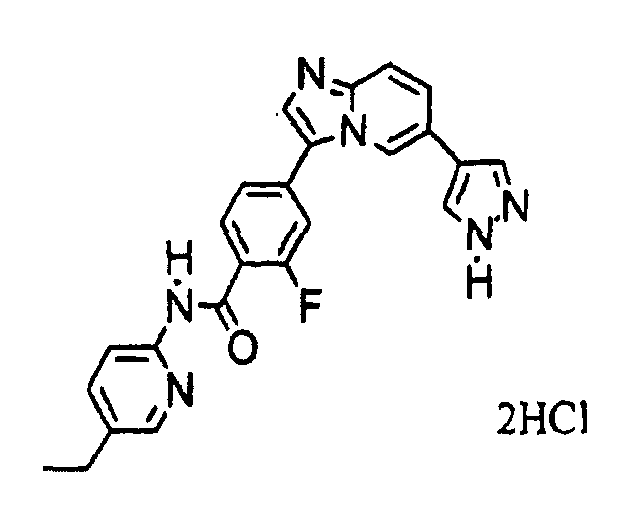
dihydrochloride, N1-(5-ethyl-2-pyridyl)-2-fluoro-4-[6-(1H-4-pyrazolyl)imidazo[1,2-a]pyridin-3-yl]benzamide
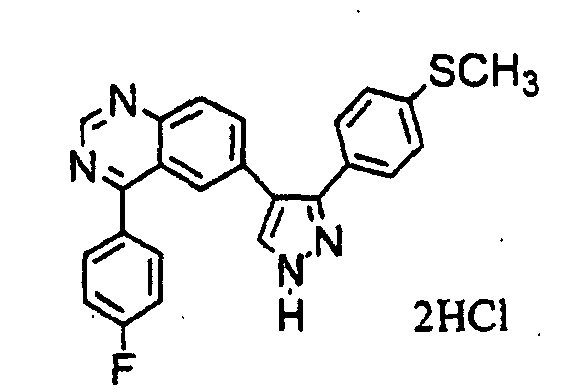
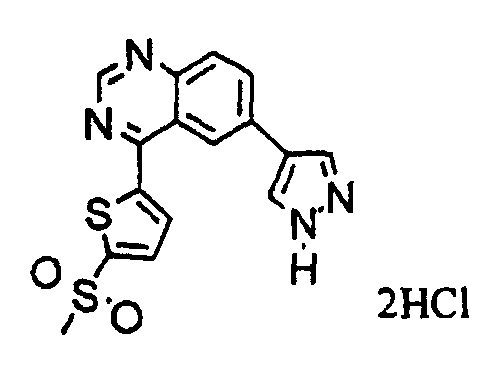
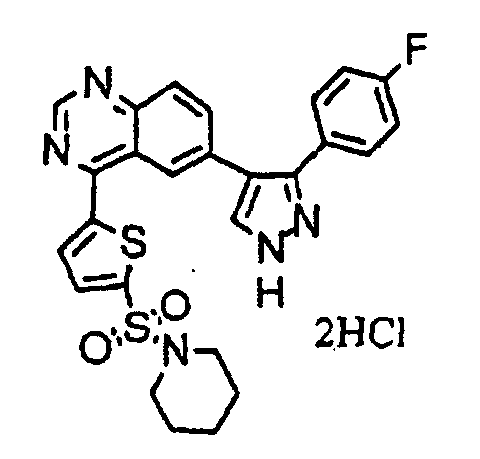
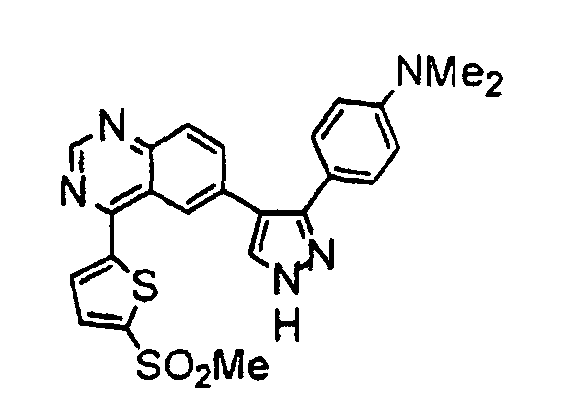
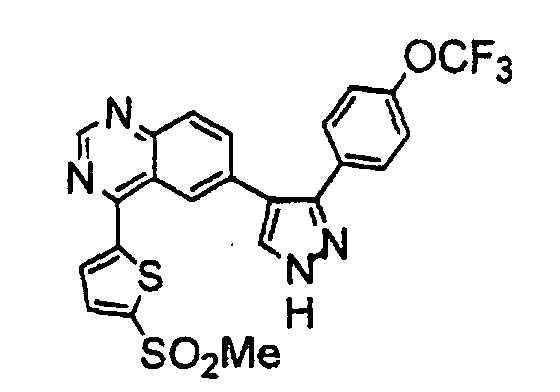
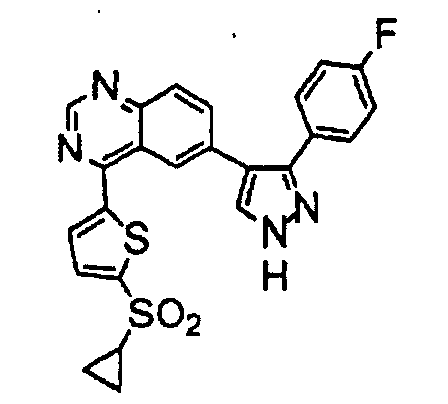
dihydrochloride, 6-[3-(4-fluorophenyl)-1H-4-pyrazolyl]-4-[5-(methylsulfonyl)-2-thienyl]quinazoline
dihydrochloride,
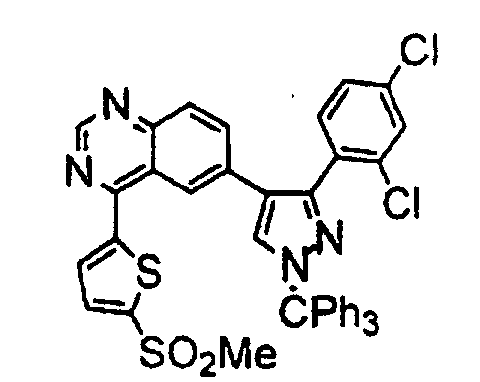
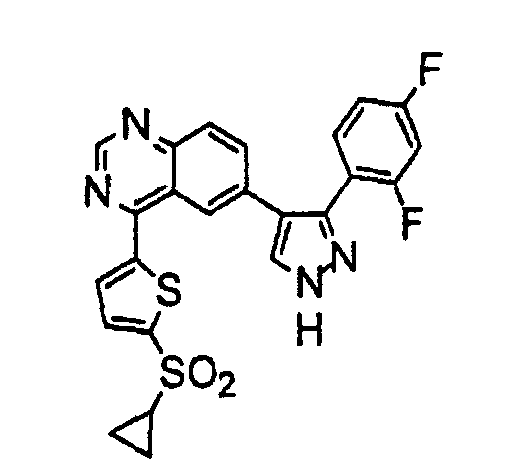
6-[3-(2,4-difluorophenyl)-1H-pyrazol-4-yl]-4-(5-methylsulfonylthiophen-2-yl)
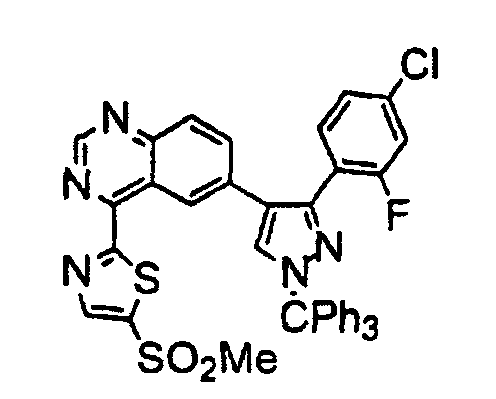
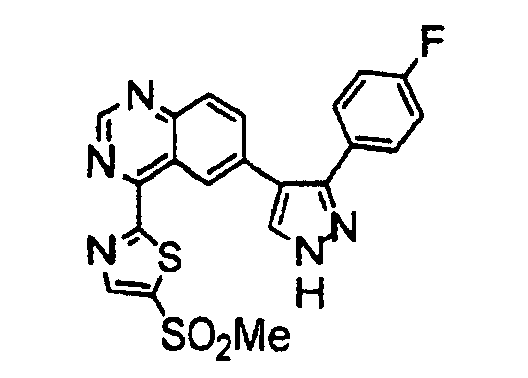
quinazoline, 6-[3-(4-chloro-2-fluorophenyl)-1H-pyrazol-4-yl]-4-(5-methylsulfonylthiazol-2-yl)
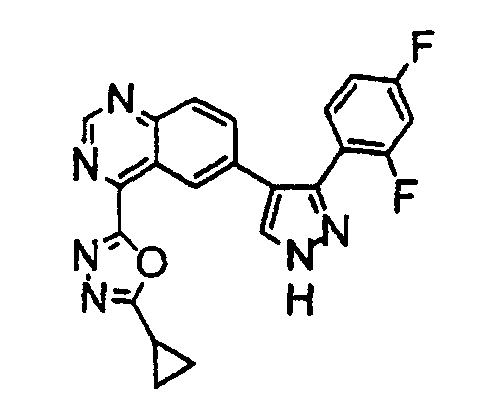
quinazoline, 4-(5-cyclopropyl[1,3,4]oxadiazol-2-yl)-6-[3-(2,4-difluorophenyl)-1H-pyrazol-4-yl]
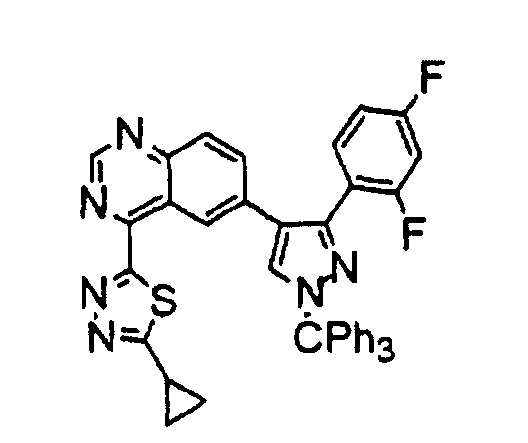
quinazoline, 4-(5-cyclopropyl[1,3,4]thiadiazol-2-yl)-6-[3-(2,4-difluorophenyl)-1H-pyrazol-4-yl]
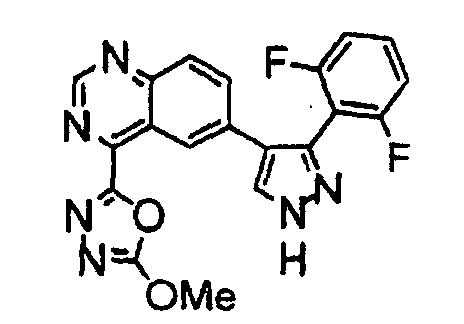
quinazoline, 6-[3-(2,6-difluorophenyl)-1H-pyrazol-4-yl]-4-(5-methoxy[1,3,4]-oxadiazol-2-yl)
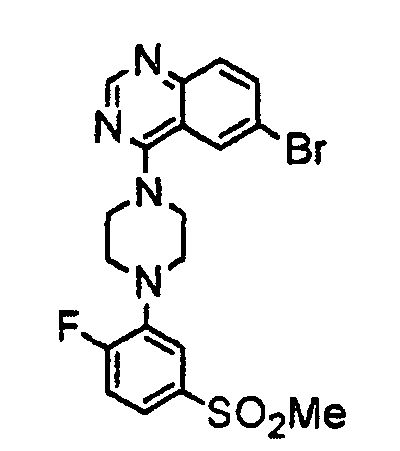
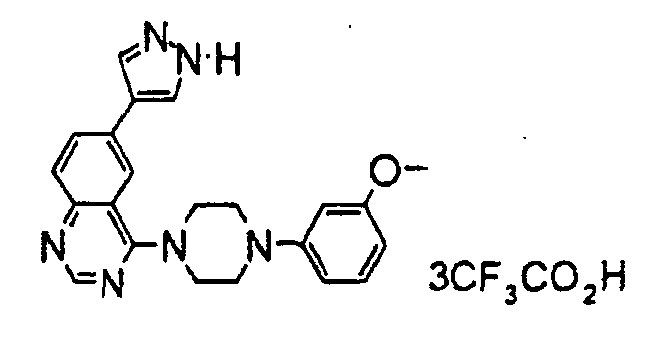
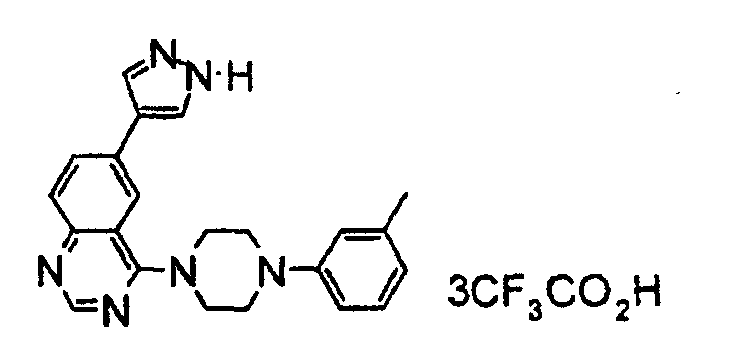
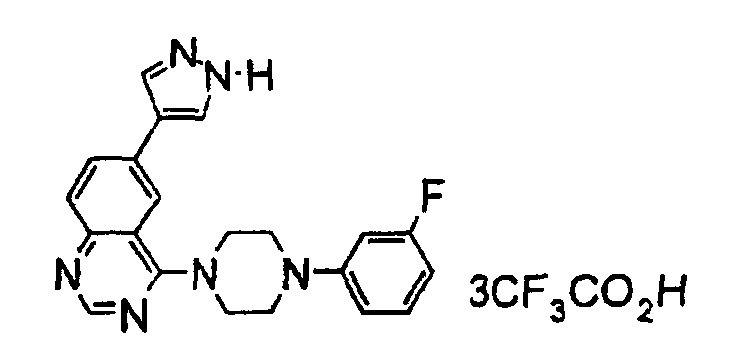
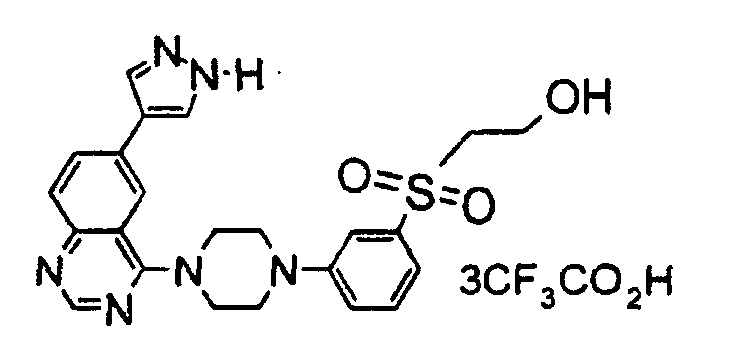
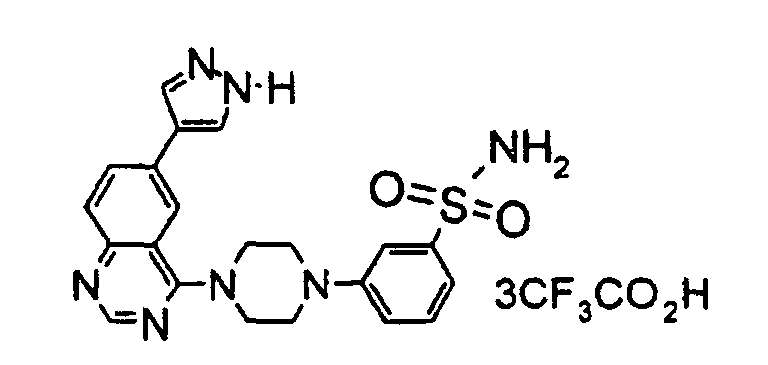
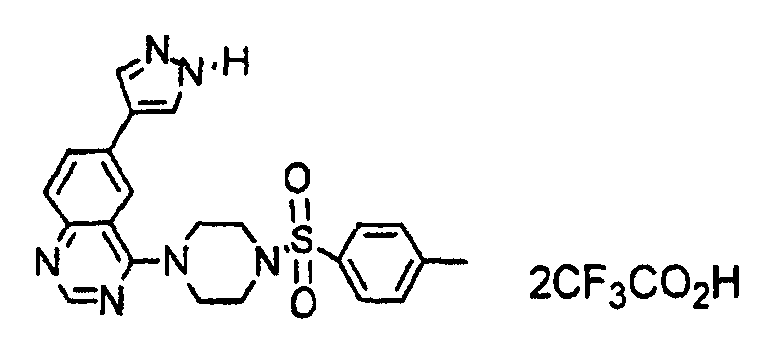
quinazoline, 6-(1H-pyrazol-4-yl)-4-(4-m-tolylpiperazin-1-yl)-quinazoline
tri-trifluoroacetate,
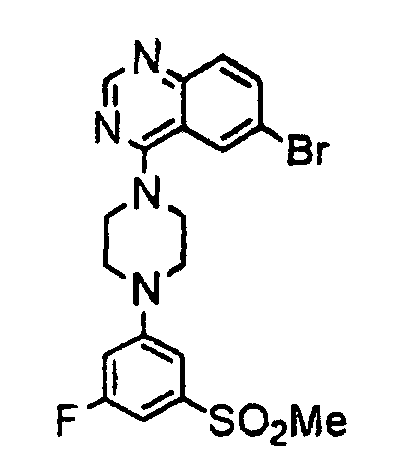
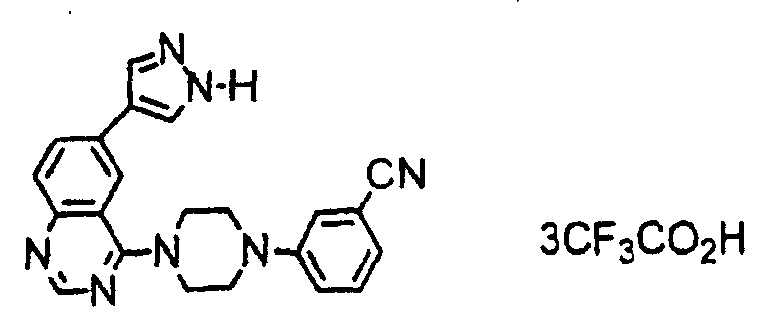
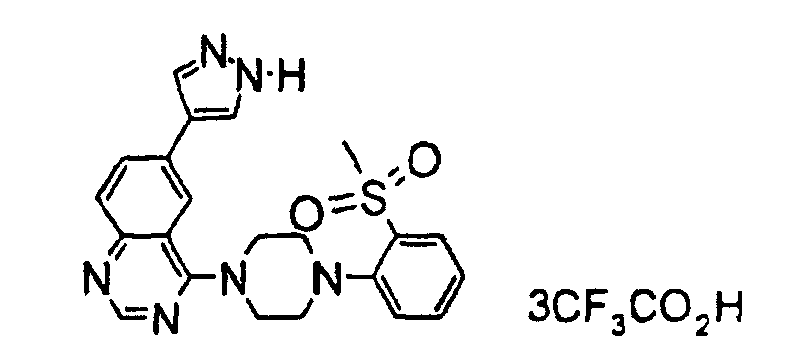
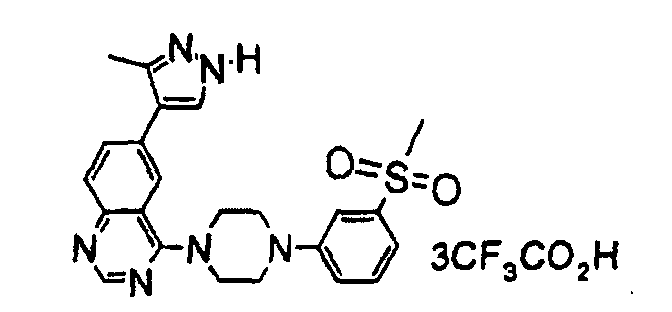
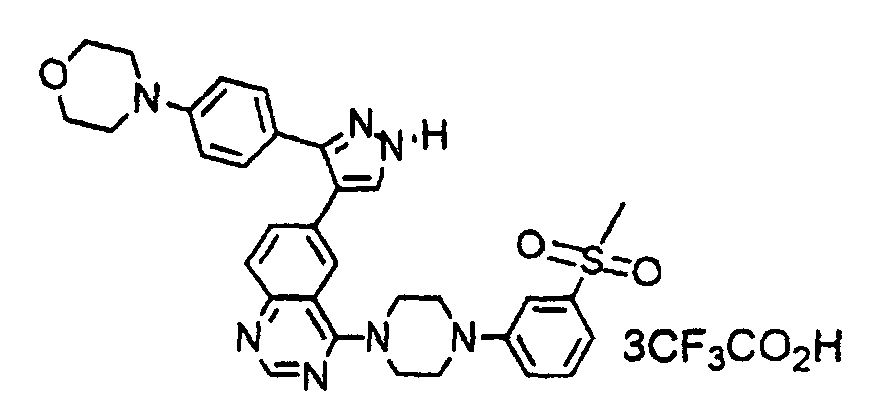
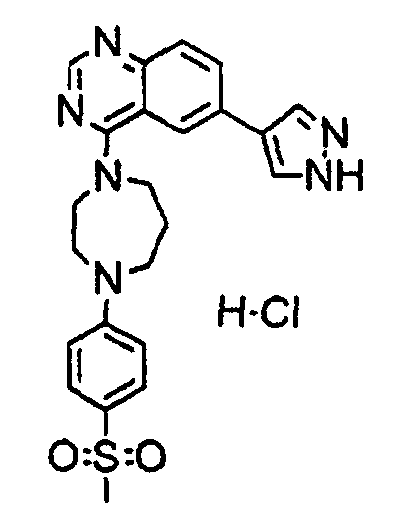
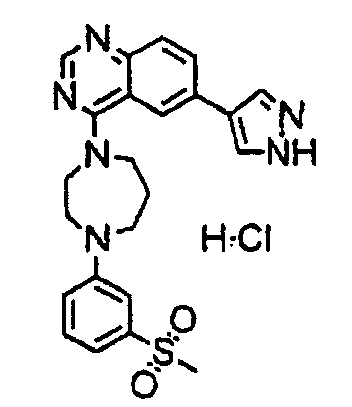
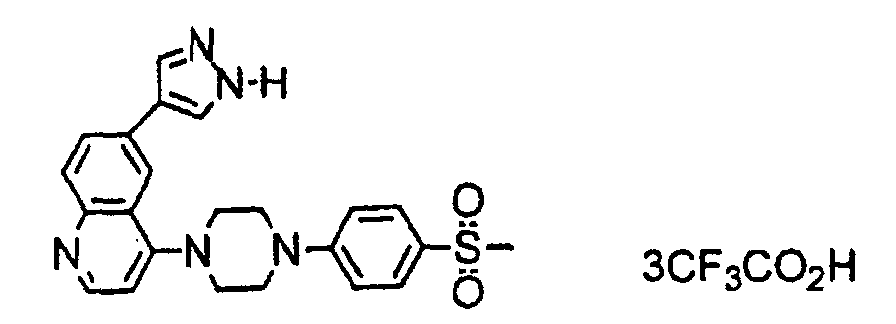
4-[4-(3-methylsulfonylphenyl)piperazin-1-yl]-6-(1H-pyrazol-4-yl)quinazoline
tri-trifluoroacetate, and 4-[4-(3-cyclopropylsulfonylphenyl)piperazin-1-yl]-6-(1H-pyrazol-4-yl)quinazoline
tri-trifluoroacetate; 14) a compound useful for synthesizing the compound
represented by the formula (I) in 1) to 13), which is represented
by the formula (III):
(wherein Ra represents a trityl group, tetrahydropyranyl group,
t-butyldimethylsilyl group, trimethylsilylethoxysilyl group,
t-butoxycarbonyl group or pivaloyloxymethyl group,
Rb is (1) chlorine, (2) nitro group, (3) cyano group, (4)
C1-6 alkyl group, (5) C2-6 alkenyl group, (6) C1-6 alkyl group
substituted with 3 or less fluorine atoms, (7) C1-6 alkyl group
substituted with a hydroxyl group, (8) C1-3 alkyl carboxylate,
or (9) formula -W-Rb1 wherein W represents 1) phenyl group, 2)
5- to 6-membered aromatic heterocyclic group or 3) 5- to
6-membered non-aromatic heterocyclic group, each of which may
be arbitrarily substituted with 3 or less substituent groups
selected from the substituent group Q7, and Rb1 represents (i)
hydrogen atom, (ii) halogen atom, (iii) nitro group, (iv) cyano
group, (v) C2-6 alkenyl group, (vi) C1-6 alkoxy group, (vii)
halogenated C1-6 alkoxy group, (viii) C1-3 alkoxy C1-3 alkyloxy
group, and (viv) (a) C3-8 cycloalkyl group, (c) 5- to 7-membered
non-aromatic heterocyclic group, (d) phenyl group, (e) 5- to
6-membered aromatic heterocyclic group, (f) phenoxy group, (g)
heteroallyoxy group, (h) C3-8 cycloalkyloxy group, each of which
may be substituted with 3 or less groups selected from the
substituent group Q7,
Q7 represents (1) halogen atom, (2) nitro group, (3) cyano
group, (4) C1-6 alkyl group, (5) C2-6 alkenyl group, (6) C1-6 alkyl
group substituted with 3 or less fluorine atoms, (7) C1-6 alkyl
group substituted with a hydroxyl group, or (8) C1-3 alkyl
carboxylate,
Re and Rf each represent a hydrogen atom or C1-3 alkyl group,
or Re and Rf are combined to form a propylene chain or a
tetramethylethylene chain, which together with a boron atom and
an oxygen atom, forms a cyclic borate); 15) a pharmaceutical composition comprising a compound
represented by the following formula (I), a salt thereof or a
hydrate of them, and a pharmaceutically acceptable carrier:
(in the formula, X represents a nitrogen-containing condensed
aromatic heterocyclic group and has (R4)n as substituent groups
whereupon n is 0, 1, 2 or 3, and the substituent groups R4
independently represent a hydrogen atom, halogen atom, cyano
group, hydroxyl group, amino group, C1-6 alkyl group, halogenated
C1-6 alkyl group, C2-6 alkenyl group, C1-6 alkylsulfonyl group,
C1-6 alkylsulfonylamino group, C1-6 alkylsulfinyl group, N-(C1-6
alkyl) amino group, N,N-di(C1-6 alkyl)amino group, C1-6 alkoxy
group, C1-6 alkylsulfanyl group, carbamoyl group, N-(C1-6
alkyl)carbamoyl group, N,N-di(C1-6 alkyl)carbamoyl group,
sulfamoyl group, phenyl group, heteroaryl group, phenoxy group,
heteroallyloxy group, phenyl C1-6 alkylamino group or heteroaryl
C1-6 alkylamino group, which is bound to an atom constituting
X;
Y represents a C3-8 cycloalkyl group, a C4-8 cycloalkenyl
group, a 5- to 14-membered non-aromatic heterocyclic group, a
C6-14 aromatic hydrocarbon cyclic group, a 5- to 14-membered
aromatic heterocyclic group, a condensed cyclic group consisting
of a benzene ring and a 5- to 7-membered non-aromatic ring, or
a condensed cyclic group consisting of a 5- to 6-membered aromatic
heterocyclic ring and a 5- to 7-membered non-aromatic ring;
(Z)n are n (Z) groups bound to Y, whereupon n is 0, 1, 2
or 3, Z groups are bound to an atom constituting the cyclic group
Y and independently represent a group selected from (1) hydrogen
atom, (2) amino group, (3) halogen atom, (4) hydroxyl group,
(5) nitro group, (6) cyano group, (7) azido group, (8) formyl
group, (9) hydroxyamino group, (10) sulfamoyl group, (11)
guanodino group, (12) oxo group, (13) C2-6 alkenyl group, (14)
C1-6 alkoxy group, (15) C1-6 alkylhydroxyamino group, (16)
halogenated C1-6 alkyl group, (17) halogenated C2-6 alkenyl group, (18) formula -M1-M2-M3 wherein:
M1 and M2 each represent a single bond, -(CH2)m-, -CHR5CHR6-,
-(CH2)m-CR5R6-(CH2)n-, -CR5=CR6-, -C≡C-, -CR5=CR6-CO-,
-(CH2)m-O-(CH2)n-, -O-(CH2)n-CR5R6-, -(CH2)m-S-(CH2)n-,
-SO(CH2)m-, -SO2(CH2)m-, -CO(CH2)m-, -COO-, -CONR7-, -CONR7CHR8-,
-CONR7-CR5R6-, -CONR7-(CH2)m-, -NR7-, -NR7CO-CR5R6-,
-NR7CO-CR5R6-CO-, -NR7CO-(CH2)m-, -NR7SO2(CH2)m-, -SO2NR7-(CH2)m-,
-SO2NR7-CR5R6-, -NR7CONR8-, or -NR7CSNR8- whereupon n and m are
independently 0, 1, 2 or 3, or (19) a group selected from (a)
C6-14 aromatic hydrocarbon cyclic group, (b) C3-14 cycloalkyl group,
(c) C4-14 cycloalkenyl group, (d) 5- to 14-membered aromatic
heterocyclic group, or (e) 4- to 14-membered non-aromatic
heterocyclic group, each of which may be substituted with 4 or
less groups selected from the substituent group Q, M3 represents (i) hydrogen atom, (ii) oxo group, (iii)
halogen atom, (iv) hydroxyl group, (v) amino group, (vi) cyano
group, (vii) nitro group, (viii) azido group, (viv) cyano group,
(x) carboxyl group, (xi) C1-6 alkyl group, (xii) halogenated C1-6
alkyl group, (xiii) C1-6 alkyl group substituted with a hydroxyl
or cyano group, (xiv) C2-6 alkenyl group, (xv) C2-6 alkynyl group,
(xvi) halogenated C2-6 alkenyl group, (xvii) halogenated C1-6
alkoxy group, (xviii) -OR7, (xviv) -NR7R8, (xx) -NR7COR8, (xxi)
-COR7, (xxii) -CONR7R8, (xxiii) -SOR7, (xxiv) -SO2R7, (xxv)
-NR7SO2R8, (xxvi) -SO2NR7R8, (xxvii) methylene dioxy group,
(xxviii) ethylene dioxy group, or (xxviv) (a) C3-8 cycloalkyl
group, (b) C4-8 cycloalkenyl group, (c) 5- to 14-membered
non-aromatic heterocyclic group, (d) C6-14 aromatic hydrocarbon
cyclic group, (e) 5- to 14-membered aromatic heterocyclic group,
(f) phenoxy group, (g) heteroallyoxy group or (h) C3-8
cycloalkyloxy group, which may be substituted with 4 or less
groups selected from the substituent group Q;
the substituent group Q represents an oxo group, halogen
atom, hydroxyl group, amino group, cyano group, nitro group,
azido group, cyano group, carboxyl group, C
1-6 alkyl group,
halogenated C
1-6 alkyl group, C
1-6 alkyl group substituted with
a hydroxyl or cyano group, C
2-6 alkenyl group, C
2-6 alkynyl group,
halogenated C
2-6 alkenyl group, halogenated C
1-6 alkoxy group,
-OR
7, -OCH
2CONR
7R
8, -NR
7R
8, -NR
7COR
8, -COR
7, -CONR
7R
8, -SOR
7, -SO
2R
7,
-NR
7SO
2R
8, -SO
2NR
7R
8, methylene dioxy group or ethylene dioxy group
(wherein R
7 and R
8 are the same as or different from each other
and each represents a hydrogen atom, a C
1-6 alkyl group or a C
3-8
cyloalkyl group);
R
1 represents (1) hydrogen atom, (2) halogen atom, (3)
hydroxyl group, (4) nitro group, (5) cyano group, (6) halogenated
C
1-6 alkyl group, (7) C
2-6 alkyl group substituted with a hydroxyl
or cyano group, (8) C
2-6 alkenyl group, or (9) formula -L
1-L
2-L
3
whereupon 1) -L
1 represents a single bond, -(CH
2)
m-,
-(CH
2)
m-CR
5R
6-(CH
2)
n-, -CR
5=CR
6-, -CH=CR
5-CO-, -(CH
2)
m-O-(CH
2)
n-,
-CO(CH
2)
m-, -COO-, -NR
7-, -CO-NR
7-, -NR
7CO-, -NR
7CO-(CH
2)
m-,
-NR
7CONR
8-, whereupon n and m are independently 0, 1, 2 or 3,
or (a) C
3-8 cycloalkyl group, (b) C
4-8 cycloalkenyl group, (c)
5- to 14-membered non-aromatic heterocyclic group, (d) C
6-14
aromatic hydrocarbon cyclic group or (e) 5- to 14-membered
aromatic heterocyclic group, which may be substituted with 4
or less substituent groups selected from the substituent group
Q;
- 2) L2 represents a single bond, -(CH2)m-, -CR5R6-,
-(CH2)m-CR5R6-(CH2)n-, -CR5=CR6-, -C≡C-, -CR=CR5-CO-, -O-, -S-,
-SO-, -SO2-, -SO2-(CH2)m-, -(CH2)m-O-(CH2)n-, -O-(CH2)n-CR5R6-,
-CO-(CH2)m-, -COO-, -NR7-, -CO-NR7-, -CO-NR7(CH2)m-, -NR7CO-,
-NR7CO-(CH2)m-, -NR7SO2-, -SO2NR7-, -NR7CONR8-, or -NR7CSNR8-
whereupon n and m are independently 0, 1, 2 or 3, or (a) C3-8
cycloalkyl group, (b) C4-8 cycloalkenyl group, (c) 5- to
14-membered non-aromatic heterocyclic group, (d) C6-14 aromatic
hydrocarbon cyclic group or (e) 5- to 14-membered aromatic
heterocyclic group, which may be substituted with 4 or less
substituent groups selected from the substituent group Q;
- 3) L3 represents (i) hydrogen atom, (ii) oxo group, (iii)
halogen atom, (iv) hydroxyl group, (v) amino group, (vi) cyano
group, (vii) nitro group, (viii) azido group, (viv) cyano group,
(x) carboxyl group, (xi) C1-6 alkyl group, (xii) halogenated C1-6
alkyl group, (xiii) C1-6 alkyl group substituted with a hydroxyl
or cyano group, (xiv) C2-6 alkenyl group, (xv) C2-6 alkynyl group,
(xvi) halogenated C2-6 alkenyl group, (xvii) halogenated C1-6
al koxy group, (xviii) -OR7, (xviv) -NR7R8, (xx) -NR7COR8, (xxi)
-COR7, (xxii) -CONR7R8, (xxiii) -SOR7, (xxiv) -SO2R7, (xxv)
-NR7SO2R8, (xxvi) -SO2NR7R8, (xxvii) methylene dioxy group,
(xxviii) ethylene dioxy group, or (xxviv) (a) C3-8 cycloalkyl
group, (b) C4-8 cycloalkenyl group, (c) 5- to 14-membered
non-aromatic heterocyclic group, (d) C6-14 aromatic hydrocarbon
cyclic group, (e) 5- to 14-membered aromatic heterocyclic group,
(f) phenoxy group, (g) heteroallyoxy group or (h) C3-8
cycloalkyloxy group, each of which may be substituted with 4
or less groups selected from the substituent group Q;
R2 represents a hydrogen atom;
R3 represents a hydrogen atom, halogen atom, cyano group,
amino group, C1-4 alkyl group or halogenated C1-4 alkyl group,
the above-mentioned R5 and R6 are the same or different and
each represent 1) hydrogen atom, 2) halogen atom, 3) hydroxyl
group, 4) cyano group, 5) C1-6 alkyl group, 6) C1-6 alkyl group
substituted with a halogen atom, hydroxy group or cyano group,
7) C3-8 cycloalkyl group, 8) phenyl group which may be substituted
with 3 or less groups selected from the substituent group Q,
9) 5- to 6-membered aromatic heterocyclic group which may be
substituted with 3 or less groups selected from the substituent
group Q, or 10) C3-8 cycloalkyl group formed by combining R5 with
R6, and
the above-mentioned R7 and R8 are the same or different and
each represent a hydrogen atom, C1-6 alkyl group, halogenated
C1-6 alkyl group, C3-8 cycloalkyl group, phenyl group or 5- to
6-membered aromatic heterocyclic group);
16) the pharmaceutical composition according to 15),
wherein in the formula (I), X is a nitrogen-containing condensed
aromatic heterocyclic group represented by the following formula
(II):
(in the formula (II), rings A and B are combined to form a 9-to
10-membered nitrogen-containing condensed aromatic
heterocyclic group, and have (R4)n as substituent groups,
whereupon n in the substituent groups (R4)n is 0, 1 or 2, the
substituent groups R4 independently represent a hydrogen atom,
halogen atom, cyano group, hydroxyl group, amino group, C1-6 alkyl
group, halogenated C1-6 alkyl group, C2-6 alkenyl group, C1-6
alkylsulfonyl group, C1-6 alkylsulfonylamino group, C1-6
alkylsulfinyl group, N-(C1-6 alkyl) amino group, N,N-di(C1-6
alkyl) amino group, C1-6 alkoxy group, C1-6 alkylthio group,
carbamoyl group, N-(C1-6 alkyl)carbamoyl group, N,N-di(C1-6
alkyl)carbamoyl group, sulfamoyl group, phenyl group,
heteroaryl group, phenoxy group, heteroaryloxy group, phenyl
C1-6 alkylamino group or heteroaryl C1-6 alkylamino group, each
of which is bound to an atom constituting ring A and/or ring
B, provided that when the 10-membered nitrogen-containing
condensed aromatic heterocyclic group formed by the rings A and
B is a quinazoline ring, and simultaneously R4 is an amino group,
N-(C1-6 alkyl) amino group and/or N, N-di (C1-6 alkyl) amino group,
R4 is not bound to the atom at the 2-position of the quinazolinyl
ring,
the ring A represents a 6-membered aromatic hydrocarbon
cyclic group or a 6-membered aromatic heterocyclic group;
the ring B represents a 5- or 6-membered nitrogen-containing
aromatic heterocyclic group, andmay contain 1, 2 or 3 heteroatoms
selected from a nitrogen atom, an oxygen atom and a sulfur atom,
d, f and e are adjacent in this order, are the same or different
and represent a carbon atom or a nitrogen atom, provided that
d and e do not simultaneously represent a nitrogen atom, and
when e represents a nitrogen atom, d and f each represent a carbon
atom, and
the ring A binds to the 4-position of the pyrazole ring,
and the ring B binds via e to Y in the formula (I)); 17) the pharmaceutical composition according to 15) or 16),
which is an STAT6 activation inhibitor; 18) the pharmaceutical composition according to 15) or 16),
which is an IL-4 and/or IL-13 signal transduction inhibitor; 19) the pharmaceutical composition according to any one
of 15) to 18), which is a prophylactic or therapeutic agent for
allergic diseases; 20) the pharmaceutical composition according to any one
of 15) to 18), which is a prophylactic or therapeutic agent for
allergic rhinitis; 21) the pharmaceutical composition according to any one
of 15) to 18), which is a prophylactic or therapeutic agent for
bronchial asthma; 22) the pharmaceutical composition according to any one
of 15) to 18), which is a prophylactic or therapeutic agent for
atopic dermatitis; 23) the pharmaceutical composition according to any one
of 15) to 18), which is a prophylactic or therapeutic agent for
pollinosis, digestive organ allergies, hives, hypersensitivity
pneumonitis, pulmonary Aspergillosis, eosinophil leukemia,
parasitism, eosinophilia, eosinophil pneumonia, and/or
eosinophil gastroenteritis; 24) the pharmaceutical composition according to any one
of 15) to 18), which is an improver for an allergic constitution; 25) the pharmaceutical composition according to 15) or 16),
which is a prophylactic or therapeutic agent for autoimmune
diseases, systemic erythematosus, viral infections, bacterial
infections, obesity, bulimia, malignant tumors or acquired
immunodeficiency syndrome (AIDS); 26) a method of preventing and treating diseases against
which (a) an inhibitory action on activation of STAT6 and/or
(b) an inhibitory action on transduction of IL-4 and/or IL-13
signals is effective, which comprises administering a
pharmacologically active amount of the compound according to
any one of 1) to 13) represented by the formula (I), a salt thereof
or a hydrate of them to a patient; and 27) use of a pharmacologically active amount of the compound
according to any one of 1) to 13) represented by the formula
(I), a salt thereof or a hydrate of them, for producing a
prophylactic or therapeutic agent for diseases against which
(a) an inhibitory action on activation of STAT6 and/or (b) an
inhibitory action on transduction of IL-4 and/or IL-13 signals
is effective.
The present invention provides a method of preventing and
treating allergic diseases, which comprises administering a
pharmacologically active amount of a compound represented by
the formula (I), or a salt thereof or a hydrate thereof described
in any of the above-mentioned 1) to 13) to a patient. The present
invention also provides use of a pharmacologically active amount
of a compound represented by the formula (I), or a salt thereof
or a hydrate thereof described in any of the above-mentioned
1) to 13) in producing a prophylactic and therapeutic agent for
allergic diseases. Further, the present invention provides a
method of preventing and treating autoimmune diseases, systemic
erythematosus, viral infections, bacterial infections, obesity,
bulimia, malignant tumors, and acquired immunodeficiency
syndrome (AIDS), which comprises administering a
pharmacologically active amount of a compound represented by
the general formula (I), or a salt thereof or a hydrate thereof
described in any of the above-mentioned 1) to 13) to a patient.
Furthermore, the present invention provides use of a
pharmacologically active amount of a compound represented by
the general formula (I), or a salt thereof or a hydrate thereof
described in any of the above-mentioned 1) to 13) in producing
a prophylactic and therapeutic agent for autoimmune diseases,
systemic erythematosus, viral infections, bacterial infections,
obesity, bulimia, malignant tumors, or acquired
immunodeficiency syndrome (AIDS).
The structural formulae of the compound in the present
specification may, for convenience' sake, indicate a certain
isomer, but this inventionencompasses all possible isomers which
can occur in the structures of the compound, for example geometric
isomer, optical isomer based on asymmetrical carbon,
stereoisomer and tautomer, as well as a mixture of such isomers,
and the compound of the invention may be any isomers or a mixture
thereof without limitation to the formulae shown for convenience'
sake. In the compound, there may be crystal polymorphism, and
the compound is not limited and may be in a single crystal form
or a mixed crystal form. The compound (I) of the present
invention and salts thereof may be anhydrides or hydrates.
Salts or hydrates of the compound of the present invention
are preferably pharmacologically acceptable salts.
Now, the terms used in the present invention are described.
The "nitrogen-containing condensed aromatic heterocyclic
group" represented by X refers to a bicyclic or tricyclic
condensed aromatic heterocyclic group containing at least one
nitrogen atom, which may contain a heteroatom selected from the
group consisting of a sulfur atom and an oxygen atom and may
be substituted with a substituent group. The
nitrogen-containing condensed aromatic heterocyclic group
includes, for example, an optionally substituted benzotriazolyl
group, benzimidazolyl group, indolyl group, isoindolyl group,
indolizinyl group, purinyl group, indazolyl group, quinolyl
group, isoquinolyl group, quinolyl group, quinolizyl group,
naphthyridinyl group, quinoxalyl group, quinazolinyl group,
cinnolinyl group, puteridinyl group, imidazotriazinyl group,
pyrazinopyridazinyl group, acridinyl group, phenanthridinyl
group, carbazolyl group, carbazolinyl group, pyrimidinyl group,
phenanthrolinyl group, phenacynyl group, imidazopyridinyl
group, imidazopyrimidinyl group, pyrazolopyridinyl group,
pyrazolopyridinyl group, benzothiazolyl group, benzimidazolyl
group, benzthiadiazolyl group, phenothiazinyl group,
isoxazolyl group, furazanylgroup, phenoxazinylgroup, oxazolyl
group, benzisoxazolyl group, isoxazoyl group, benzoxazolyl
group, oxadiazolyl group, pyrazoloxazolyl group,
imidazothiazolyl group, thienofuranyl group, furopyrrolyl
group, pyridoxazinyl group etc., preferably a group represented
by the general formula (II), and more preferable X is an
imidazo[1,2-a]pyridine ring (imidazo[1,2-a]pyridinyl group),
benzimidazole ring (benzimidazolyl group), quinazoline ring
(quinazolinyl group), quinoline ring (quinolyl group), and
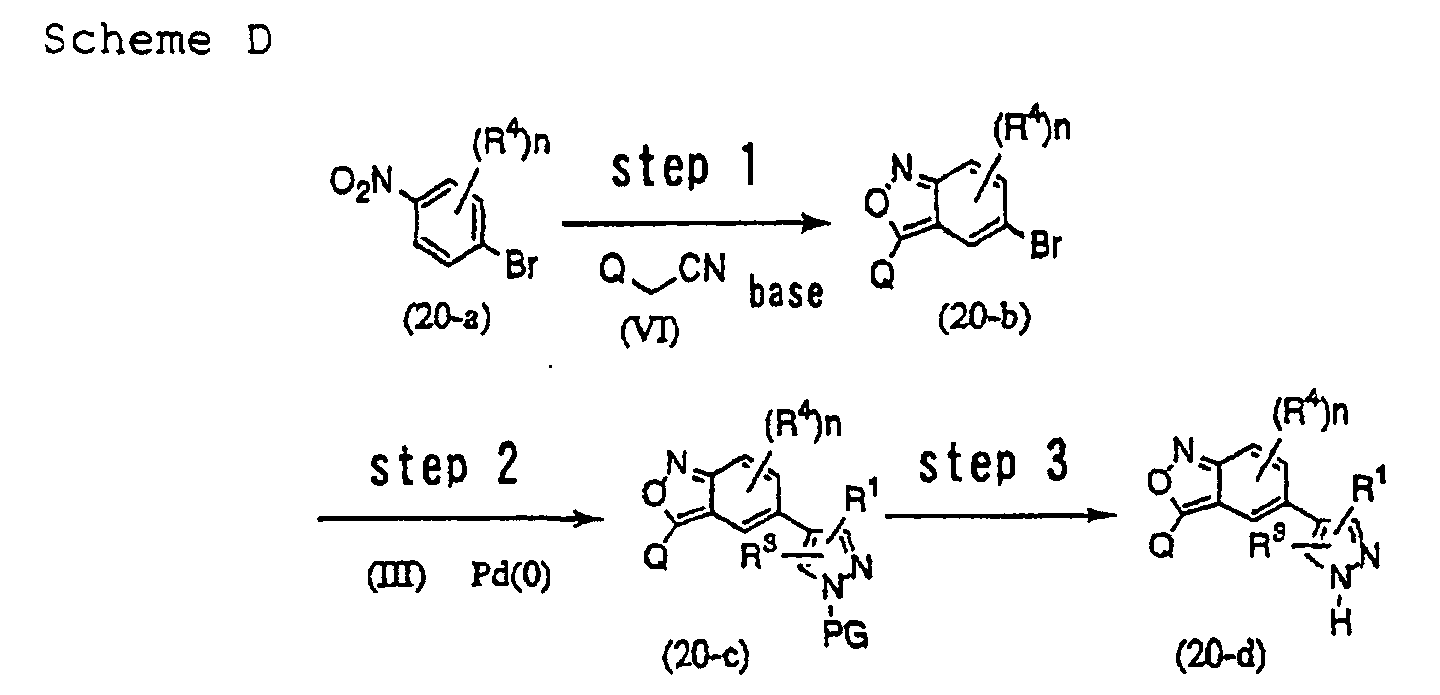
2,1-benzisoxazole ring (2,1-benzisoxazolyl group).

The "C3-8 cycloalkyl group" refers to a cycloalkyl group
composed of 3 to 8 carbon atoms, and examples thereof include
a cyclopropyl group, cyclobutyl group, cyclopentyl group,
cyclohexyl group, cycloheptyl group, cyclooctyl group, etc.
The "C3-8 cycloalkenyl group" refers to a C3-8 cycloalkenyl
group composed of 3 to 8 carbon atoms, and examples thereof include
cyclopropen-1-yl, cyclopropen-3-yl, cyclobuten-1-yl,
cyclobuten-3-yl, 1,3-cyclobutadien-1-yl, cyclopenten-1-yl,
cyclopenten-3-yl, cyclopenten-4-yl, 1,3-cyclopentadien-1-yl,
1,3-cyclopentadien-2-yl, 1,3-cyclopentadien-5-yl,
cyclohexen-1-yl, cyclohexen-3-yl, cyclohexen-4-yl,
1,3-cyclohexadien-1-yl, 1,3-cyclohexadien-2-yl,
1,3-cyclohexadien-5-yl, 1,4-cyclohexadien-3-yl,
1,4-cyclohexadien-1-yl, cyclohepten-1-yl, cyclohepten-3-yl,
cyclohepten-4-yl, cyclohepten-5-yl, 1,3-cyclohepten-2-yl,
1,3-cyclohepten-1-yl, 1,3-cycloheptadien-5-yl,
1,3-cycloheptadien-6-yl, 1,4-cycloheptadien-3-yl,
1,4-cycloheptadien-2-yl, 1,4-cycloheptadien-1-yl,
1,4-cycloheptadien-6-yl, 1,3,5-cycloheptatrien-3-yl,
1,3,5-cycloheptatrien-2-yl, 1,3,5-cycloheptatrien-1-yl,
1,3,5-cycloheptatrien-7-yl, cycloocten-1-yl, cycloocten-3-yl,
cycloocten-4-yl, cycloocten-5-yl, 1,3-cyclooctadien-2-yl,
1,3-cyclooctadien-1-yl, 1,3-cyclooctadien-5-yl,
1,3-cyclooctadien-6-yl, 1,4-cyclooctadien-3-yl,
1,4-cyclooctadien-2-yl, 1,4-cyclooctadien-1-yl,
1,4-cyclooctadien-6-yl, 1,4-cyclooctadien-7-yl,
1,5-cyclooctadien-3-yl, 1,5-cyclooctadien-2-yl,
1,3,5-cyclooctatrien-3-yl, 1,3,5-cyclooctatrien-2-yl,
1,3,5-cyclooctatrien-1-yl, 1,3,5-cyclooctatrien-7-yl,
1,3,6-cyclooctatrien-2-yl, 1,3,6-cyclooctatrien-1-yl,
1,3,6-cyclooctatrien-5-yl, 1,3,6-cyclooctatrien-6-yl group,
etc.
The "5- to 14-membered non-aromatic heterocyclic group"
refers to a monocyclic, bicyclic or tricyclic, 5- to 14-membered
non-aromatic heterocyclic group containing at least one
heteroatom selected from the group consisting of a nitrogen atom,
a sulfur atom and an oxygen atom. Specific examples of this
group include a pyrrolidinyl group, piperidyl group,
1,2,3,6-tetrahydropyridine, piperazinyl group,
homopiperazinyl group, morpholinyl group, thiomorphonyl group,
tetrahydrofuryl group, tetrahydropyranyl group, aziridinyl
group, oxiranyl group, oxathioranyl group,
tetrahydroisothiazole group etc. The non-aromatic
heterocyclic group includes a thiomorphonyl-1,1-dioxide group,
tetrahydroisothiazole-1,1-dioxide group, a group derived from
a pyridone ring, and a non-aromatic condensed ring (for example,
a group derived from a phthalimide ring, succinimide ring etc.).
The "5- to 7-membered non-aromatic ring" refers to a
cycloalkyl group composed of 5 to 7 carbon atoms, a cycloalkenyl
group composed of 5 to 7 carbon atoms or a monocyclic 5- to
7-membered non-aromatic heterocyclic group containing at least
one nitrogen atom, sulfur atom and oxygen atom.
The "C6-14 aromatic hydrocarbon cyclic group" refers to an
aromatic hydrocarbon cyclic group composed of 6 to 14 carbon
atoms, and includes a monocyclic group and a condensed ring such
as bicyclic group, tricyclic group, etc. Specific examples of
this group include a phenyl group, indenyl group, 1-naphthyl
group, 2-naphthyl group, azulenyl group, heptalenyl group,
biphenyl group, indacenyl group, acenaphthyl group, fluorenyl
group, phenalenyl group, phenanthrenyl group, anthracenyl group,
cyclopentacyclooctenyl group, benzocyclooctenyl group, etc.
The "5- to 14-membered aromatic heterocyclic group",
"heteroaryl group" and "heteroaryl" refer to a monocyclic,
bicyclic or tricyclic, 5- to 14-membered aromatic heterocyclic
group containing at least one heteroatom selected from the group
consisting of a nitrogen atom, a sulfur atom and an oxygen atom.
Specific examples of this group include nitrogen-containing
aromatic heterocyclic groups such as pyrrolyl group, pyridyl
group, pyridazinyl group, pyrimidinyl group, pyrazinyl group,
triazolyl group, tetrazolyl group, benzotriazolyl group,
pyrazolyl group, imidazolyl group, benzimidazolyl group,
indolyl group, isoindolyl group, indolizinyl group, purinyl
group, indazolyl group, quinolyl group, isoquinolyl group,
quinolizyl group, phthalazyl group, naphthyridinyl group,
quinoxalyl group, quinazolinyl group, cinnolinyl group,
puteridinyl group, imidazotriazinyl group, pyrazinopyridazinyl
group, acridinyl group, phenanthridinylgroup, carbazolyl group,
carbazolynyl group, pyrimidinyl group, phenanthrolinyl group,
phenacynyl group, imidazopyridinyl group, imidazopyrimidinyl
group, pyrazolopyridinyl group, pyrazolopyridinyl group, etc.;
sulfur-containing aromatic heterocyclic groups such as thienyl
group, benzothienyl group, etc.; oxygen-containing aromatic
heterocyclic groups such as furyl group, pyranyl group,
cyclopentapyranyl group, benzofuryl group, isobenzofuryl group,
etc.; and aromatic heterocyclic group containing two or more
heteroatoms, such as thiazolyl group, isothiazolyl group,
thiadiazoyl group, benzothiazolyl group, benzthiadiazolyl
group, phenothiazinyl group, isoxazolyl group, furazanyl group,
phenoxazinyl group, oxazolyl group, isoxazoyl group,
benzoxazolyl group, oxadiazolyl group, pyrazoloxazolyl group,
imidazothiazolyl group, thienofuranyl group, furopyrrolyl
group, pyridoxazinyl group, etc.
The "halogen atom" is, for example, a fluorine atom, chlorine
atom, bromine atom, iodine atom or the like, preferably a fluorine
atom, chlorine atom or bromine atom.
The "C1-6 alkyl group" refers to a linear or branched alkyl
group containing 1 to 6 carbon groups, and examples thereof
include a methyl group, ethyl group, n-propyl group, iso-propyl
group, n-butyl group, iso-butyl group, sec-butyl group,
tert-butyl group, n-pentyl group, 1,1-dimethyl propyl group,
1,2-dimethyl propyl group, 2,2-dimethyl propyl group, 1-ethyl
propyl group, 2-ethyl propyl group, n-hexyl group,
1-methyl-2-ethyl propyl group, 1-ethyl-2-methyl propyl group,
1,1,2-trimethyl propyl group, 1-propyl propyl group, 1-methyl
butyl group, 2-methyl butyl group, 1,1,-dimethyl butyl group,
1,2-dimethyl butyl group, 2,2-dimethyl butyl group,
1,3-dimethyl butyl group, 2,3-dimethyl butyl group, 2-ethyl
butyl group, 2-methyl pentyl group, 3-methyl pentyl group, etc.,
more preferably a methyl group, ethyl group, n-propyl group,
iso-propyl group, n-butyl group, iso-butyl group, sec-butyl
group, tert-butyl group, n-pentyl group etc.
The "C2-6 alkenyl group" refers to a linear or branched
alkenyl group containing 2 to 6 carbon atoms, and examples thereof
include a vinyl group, allyl group, 1-propenyl group, 2-propenyl
group, isopropenyl group, 2-methyl-1-propenyl group,
3-methyl-1-propenyl group, 2-methyl-2-propenyl group,
3-methyl-2-propenyl group, 1-butenyl group, 2-butenyl group,
3-butenyl group, 1-pentenyl group, 1-hexenyl group,
1,3-hexanedienyl group, 1,6-hexanedienyl group, etc.
The "C2-6 alkynyl group" refers to an alkynyl group containing
2 to 6 carbon atoms, and preferable examples thereof include
an ethynyl group, 1-propynylgroup, 2-propynyl group, 1-butynyl
group, 2-butynyl group, 3-butynyl group, 3-methyl-1-propynyl
group, 1-ethynyl-2-propynyl group, 2-methyl-3-propynyl group,
1-pentynyl group, 1-hexynyl group, 1,3-hexanediynyl group,
1,6-hexanediynyl group, etc.
The "halogenated C1-6 alkyl group" refers to a linear or
branched alkyl group containing 1 to 6 carbon atoms and
substituted with a fluorine atom, chlorine atom, bromine atom
or iodine atom, and preferable examples thereof include a
fluoromethyl group, difluoromethyl group, trifluoromethyl
group, chloromethyl group, bromomethyl group, tetrafluoroethyl
group, 2,2,2-trifluoroethyl group, 2-chloroethyl group, etc.
The "C1-6 alkoxy group" refers to a linear or branched alkoxy
group containing 1 to 6 carbon atoms, and preferable examples
thereof include a methoxy group, ethoxy group, n-propoxy group,
iso-propoxy group, sec-propoxy group, n-butoxy group,
iso-butoxy group, sec-butoxy group, tert-butoxy group,
n-pentyloxy group, iso-pentyloxy group, sec-pentyloxy group,
n-hexoxy group, iso-hexoxy group, 1,1-dimethyl propyloxy group,
1,2-dimethyl propoxy group, 2,2-dimethyl propyloxy group,
2-ethyl propoxy group, 1-methyl-2-ethyl propoxy group,
1-ethyl-2-methyl propoxy group, 1,1,2-trimethyl propoxy group,
1,1,2-trimethyl propoxy group, 1,1-dimethyl butoxy group,
1,2-dimethyl butoxy group, 2,2-dimethyl butoxy group,
2,3-dimethyl butyloxy group, 1,3-dimethyl butyloxy group,
2-ethyl butoxy group, 1,3-dimethyl butoxy group, 2-methyl
pentoxy group, 3-methyl pentoxy group, hexyloxy group, etc.
The "halogenated C1-6 alkoxy group" refers to a linear or
branched alkoxy group containing 1 to 6 carbon atoms whose
alkyl-moiety hydrogen atom is substituted with a fluorine atom,
chlorine atom, bromine atom or iodine atom, and preferable
examples thereof include a fluoromethyloxy group,
difluoromethoxy group, trifluoromethoxy group,
tetrafluoroethoxy group etc.
The "pyrazole-protecting group" is not particularly
limited, and insofar as it is any group usually known in organic
synthesis as a group for protecting nitrogen in a pyrazole ring,
and examples thereof include a substituted or unsubstituted
alkanoyl group such as formyl group, acetyl group, chloroacetyl
group, dichloroacetyl group, propionyl group, phenylacetyl
group, phenoxyacetyl group, thienylacetyl group etc.; a
substituted or unsubstituted lower oxy carbonyl group such as
benzyloxy carbonyl group, t-butoxy carbonyl group,
p-nitrobenzyloxy carbonyl group etc.; alkanoyloxy alkyl group
such as isobutanoyloxy methyl group, pivaloyloxy methyl group,
pivaloyloxy ethyl group etc.; cycloalkyl carbonyloxy alkyl group
such as cyclohexane carbonyloxy methyl group, cyclohexane
carbonyloxy ethyl group etc. ; substituted lower alkyl group such
as t-butyl group, 2,2,2-trichloroethyl group, trityl group,
p-methoxybenzyl group, p-nitrobenzyl group, diphenyl methyl
group etc. ; substituted silyl group such as trimethyl silyl group,
t-butyl dimethyl silyl groupetc. ; substituted silyl alkoxyalkyl
group such as trimethyl silyl methoxy methyl group, t-butyl
dimethyl silyl methoxy methyl group, t-butyl dimethyl silyl
ethoxy methyl group etc.; substituted or unsubstituted
benzylidene group such as benzylidene group, salicylidene group,
p-nitrobenzylidene group, m-chlorobenzylidene group,
3,5-di(t-butyl)-4-hydroxybenzylidene group; and
tetrahydropyranyl group.
In the present specification, the term "hetero" refers
specifically to an oxygen atom, sulfur atom, nitrogen atom,
phosphorus, arsenic, antimony, silicon, germanium, tin, lead,
boron and mercury, preferably an oxygen atom, sulfur atom,
nitrogen atom and phosphorus, more preferably an oxygen atom,
sulfur atom and nitrogen atom.
The "salts" used in the present specification is not
particularly limited insofar as these are pharmacologically
acceptable salts formed from the compound of the present
invention, and examples thereof include addition salts of
inorganic acids such as hydrochloride, sulfate, carbonate,
bicarbonate, hydrobromate, hydroiodate etc.; addition salts of
organic carboxylic acids such as acetate, maleate, lactate,
tartrate, trifluoroacetete etc.; addition salts of organic
sulfonic acid such as methane sulfonate, hydroxymethane
sulfonate, hydroxyethane sulfonate, benzene sulfonate, toluene
sulfonate, taurine salt; etc.; addition salts of amines such
as trimethylamine salt, triethylamine salt, pyridine salt,
procaine salt, picoline salt, dicyclohexylamine salt,
N,N'-dibenzylethylene diamine salt, N-methyl glucamine salt,
diethanol amine salt, triethanol amine salt,
tris (hydroxymethylamino) methane salt, phenethyl benzyl amine
salt etc.; addition salts of alkali metals, such as sodium salt,
potassium salt etc.; and addition salts of amino acids, such
as arginine salt, lysine salt, serine salt, glycine salt,
aspartate, glutamate, etc.
The compound represented by the general formula (I) in this
invention, or a salt thereof or a hydrate thereof can be
synthesized by a conventional method, for example by any of
Production Methods A to E below.
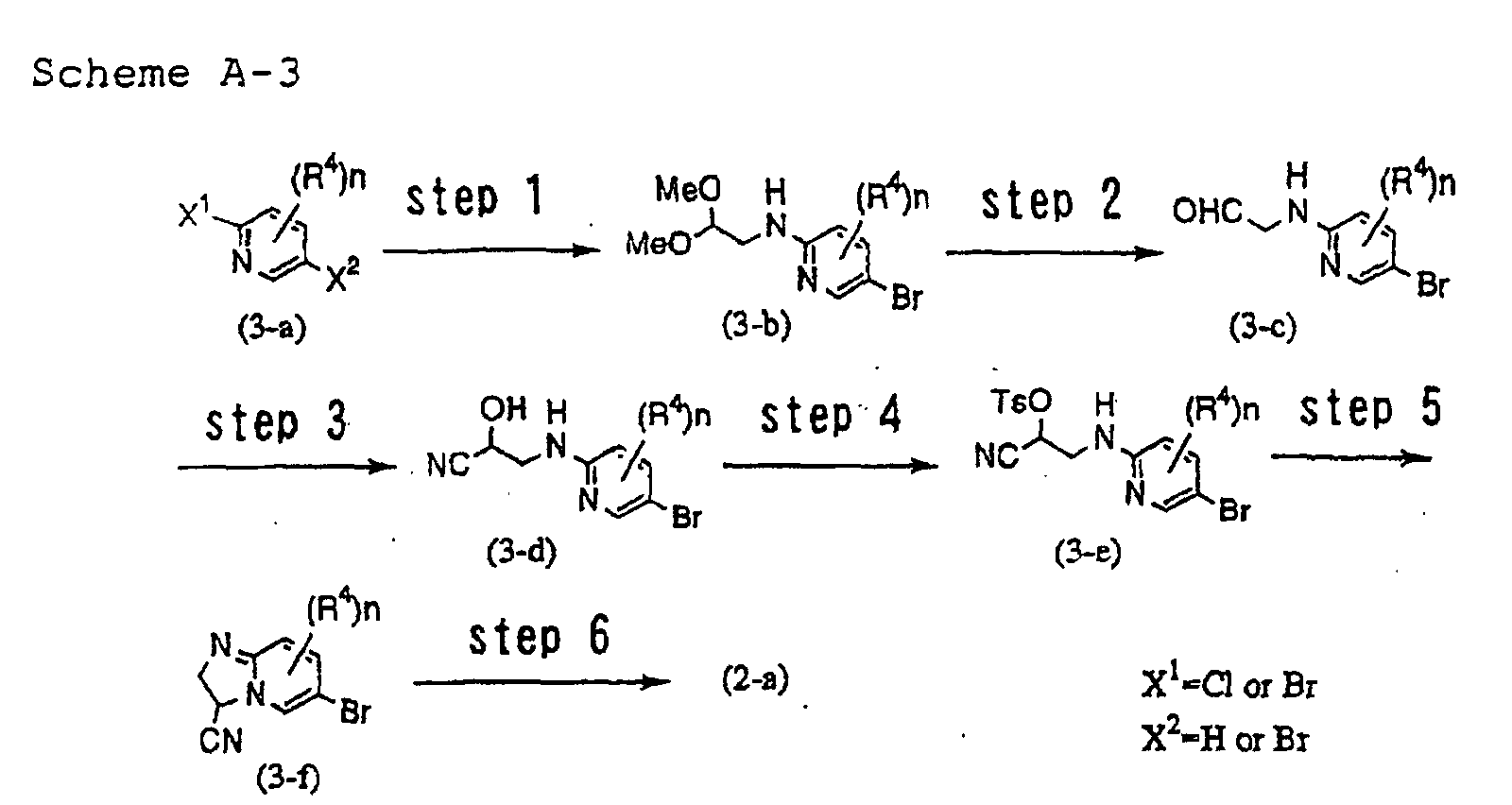
The compound of the general formula (I) wherein X
(nitrogen-containing condensed aromaticheterocyclicgroup) is
an imidazo [1, 2-a]pyridine ring can be synthesized by Production
Method A.
Production Method A
In the reaction scheme, each symbol represents the same
group as defined above. However, Q represents ring Y [(Z)n-Y-]
whichmaybe arbitrarily substituted with the above-defined (Z)n
( = substituent groups Z wherein n is 0, 1, 2 or 3), the ring
Y represents an aryl group or heteroaryl group. PG represents
an amino group-protecting group such as a trityl group,
tetrahydropyranyl group etc., and L represents trialkyl tin,
boric acid, or a group represented by cyclic or non-cyclic borate.
X1 represents a chloro or bromo group, and X2 represents a hydrogen
atom or bromo group.
(1-a) can be synthesized according to a method described
in M. Yamanaka et al., Chem. Pharm. Bull., 39, 1556 (1991) or
a method of synthesizing it from (1-f) through steps 5 to 7
described later.
Step 1 is a method of position-selectively halogenating
Compound (1-a). (1-b) can be obtained by adding
N-iodosuccinimide in a solvent such as dimethyl formamide,
alcohol, dichloromethane or chloroform under ice-cooling to a
temperature of up to 60°C. These solvents may contain water.
Step 2 is a step of introducing ring Q (ring Y [(Z)n-Y-]
which may be arbitrarily substituted by the above-defined (Z) n)
by cross-coupling Q-L with the imidazopyridine ring in the
presence of a palladium (0) catalyst by Suzuki reaction or Stille
reaction. Preferable examples of the Pd catalyst include, but
are not limited to, catalysts such as tetrakistriphenylphosphine
palladium, dichlorobis(tri-o-tolylphoshine)palladium and
dichloro[1,1'-bis(diphenylphosphino)ferrocene palladium and
catalysts such as a combination of trisdibenzylidene acetone
dipalladium (Pd2(dba)3) or palladium acetate and various
phosphine ligands such as tri-t-butyl phosphine and
2-(di-t-butylphoshino)diphenyl. By using Q-L in a ratio of
0.9-1.2 to (1-b) while regulating the reaction temperature, Q-L
can be reacted position-selectively with iodine in (1-b), to
introduce the ring Q. When Q-L is a trialkyl tin derivative
such as tributyl tin, (1-c) can be obtained by heating in the
presence of the palladium catalyst at 60 to 180°C in a reaction
solvent such as xylene, toluene, N,N-dimethylformamide, or
1,4-dioxane or a solvent mixture thereof, preferably at 70 to
120°C under nitrogen atmosphere. Further, cesium fluoride,
potassium fluoride, lithium chloride, tetrabutyl ammonium
chloride or cuprous iodide can also be added as additives. When
Q-L is a boric acid derivative, (1-c) can be obtained by heating
at 60 to 120°C under nitrogen atmosphere or by heating under
reflux, in the presence of the palladium catalyst in a mixture
consisting of a solvent selected from 1,2-dimethoxyethane,
ethanol, toluene, 1,4-dioxane and tetrahydrofuran or a solvent
mixture thereof and an aqueous solution of potassium carbonate,
sodium carbonate, potassium phosphate, barium sulfate or
potassium fluoride. When Q-L is a borate derivative, (1-c) can
be obtained by heating in the presence of the palladium catalyst
at 70 to 180°C in the presence of an inorganic base such as potassium
carbonate, sodium carbonate, potassium phosphate and barium
sulfate in a solvent such as 1,4-dioxane, tetrahydrofuran,
N,N-dimethylformamide etc., preferably at 80 to 120°C under
nitrogen atmosphere.
Step 3 is a reaction of introducing the pyrazole derivative
represented by the formula (III) into the imidazopyridine ring.
The reaction conditions are the same as in step 2.
Step 4 is a step of removing the protecting group on the
pyrazole ring. The pyrazole ring is deprotected by reaction
with 0.5 to 5 N aqueous hydrochloric acid in a solvent such as
1,4-dioxane, tetrahydrofuran or methanol or a solvent mixture
thereof or by reaction with 0.5 to 5 N hydrochloric acid/methanol,
hydrochloric acid/ethanol or hydrochloric acid/ethyl acetate
in the solvent mixture, or by heating at room temperature to
50°C with trifluoroacetic acid in a dichloromethane solvent,
whereby (1-e) can be obtained.
The starting material (1-a) can also be synthesized in the
following manner.
Step 5 is a method of substituting Compound (1-f) with
2-aminoethanol. By heating at 80 to 130°C with or without a
solvent such as dimethyl sulfoxide or alcohol, (1-g) can be
obtained. When Compound (1-f) wherein X2 is a hydrogen atom
[X2 = H], a brominating step is additionally carried out. That
is, (1-f) is reacted with a brominating agent such as bromine
or N-bromosuccinimide under ice-cooling to room temperature in
a solvent such as N,N-dimethylformamide, alcohol, acetonitrile
etc., whereby (1-g) can be obtained
Step 6 is a method of constructing a dihydroimidazopyridine
ring by cyclization reaction. By reaction with thionyl chloride
under ice-cooling to room temperature in an inert solvent such
as toluene or xylene and subsequent reaction under heating at
100°C or under reflux, (1-h) can be obtained.
Step 7 is a method of synthesizing an imidazopyridine ring
by oxidation reaction. Compound (1-h) is reacted with
2,3-dichloro-5,6-dicyano-1,4-benzoquinone atroomtemperature
or by heating under reflux, in a solvent such as tetrahydrofuran,
diethyl ether or 1,4-dioxane, whereby (1-a) can be obtained.
Alternatively, (1-a) can be obtained by reacting manganese
dioxide with (1-h) under heating reflux in a solvent such as
acetone, toluene or chloroform.
When the substituent group Q at the 3-position of the
imidazo[1,2-a]pyridine ring of Compound (1-c) in the scheme A-1
is a 1,2,4-oxadiazole ring, 1,3,4-oxadiazole ring or
1,3,4-thiadiazole ring, each of which has a substituent group,
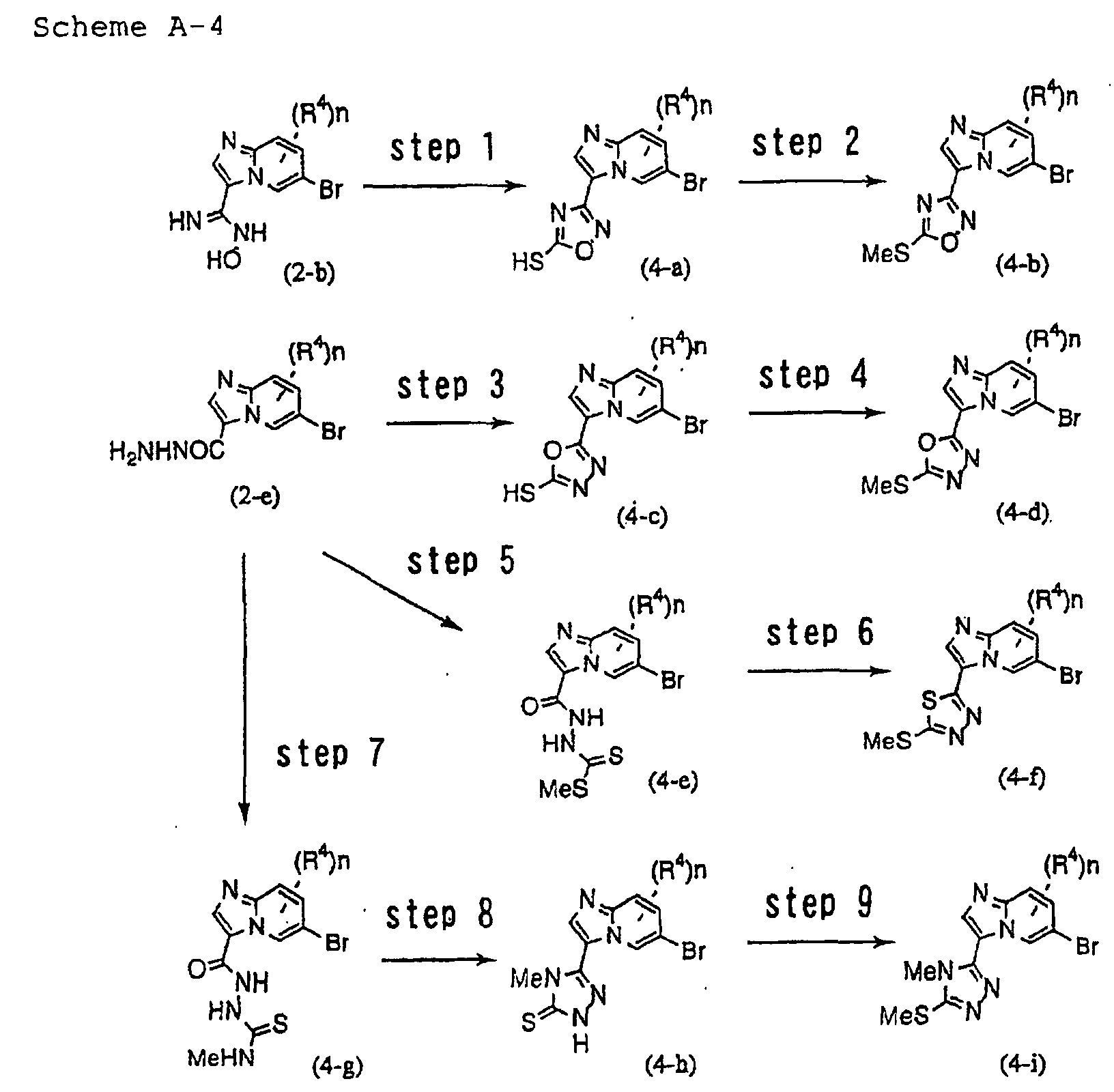
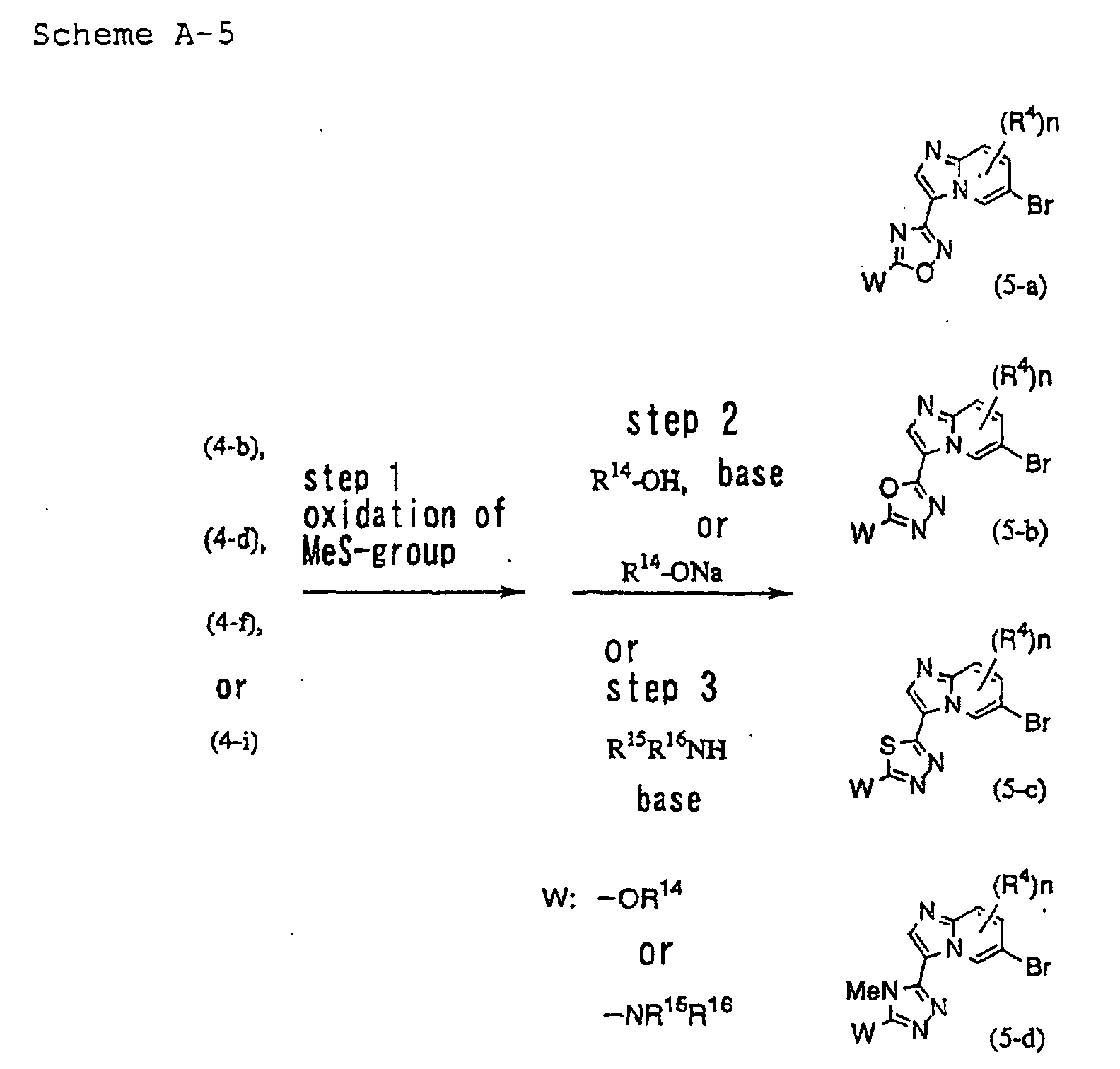
Compound (1-c) can be synthesized according to schemes A-2, A-4
and A-5.
In the reaction schemes, each symbol represents the same
group as defined above. However, R12 represents a lower alkyl
or a hydrogen atom, R13 represents an optionally substituted
alkyl group, an optionally substituted C3-8 cycloalkyl group,
an optionally substituted aryl group or an optionally substituted
heteroaryl group.
The 1,2,4-oxadiazole ring can be synthesized from (1-b)
by the reactions in steps 1 to 3.
Step 1 is a method of position-selectively introducing a
cyano group, in which Compound (1-b) is reacted with isopropyl
magnesium bromide at a temperature from 0°C to room temperature
in a solvent such as diethyl ether or tetrahydrofuran to prepare
a Grignard reagent which is then reacted at the same temperature
with p-toluenesulfonyl cyanide, whereby (2-a) can be obtained.
Step 2 is a method of synthesizing hydroxy amidine.
Compound (2-a) is reacted with hydroxylamine hydrochloride by
heating under reflux in the presence of potassium t-butyl oxide
in a solvent mixture of toluene and alcohol, whereby (2-b) can
be obtained.
Step 3 is a method of constructing a 1,2,4-oxadiazole ring,
in which one of the following 3 methods can be used depending
on the type of the substituent group R13. The first method is
a method according to A. R. Gangloff et al., Tetrahydron Letters,
42, 1441 (2001), and various acid chlorides [R13-COCl] or acid
anhydrides [(R13-CO)O] are allowed to act at 0°C to room
temperature on (2-b) in the presence of an organic amine such
as N,N-diisopropyl ethylamine or triethylamine in a solvent such
as tetrahydrofuran, N,N-dimethylformamide, acetonitrile,
dichloromethane or chloroform thereby acylating the hydroxyl
group, followed by heating from room temperature to a temperature
causing reflux with tetrabutyl ammonium fluoride in a
tetrahydrofuran solvent, whereby (2-c) can be obtained. The
second method involves allowing sodium hydride to act on (2-b)
at room temperature to 50°C in a tetrahydrofuran solvent and
then reacting the product with an ester [R13-COOR12] by heating
under reflux to give (2-c). The third method is a method
described in R. F. Poulain et al., Tetrahedron Letters, 42, 1495
(2001), and a carboxylic acid [R13-COOH] and (2-b) are subjected
to esterification under condensation reactions and then to
cyclization reaction under heating, whereby (2-c) can be
obtained.
The 1,3,4-oxadiazole ring can be synthesized from (1-b)
by the reactions in steps 4 to 7.
Step 4 is a step of selectively converting iodine in (1-b)
into an ethyl ester, in which (1-b) is treated with isopropyl
magnesium halide in an anhydrous solvent such as diethyl ether
and tetrahydrofuran, to prepare a Grignard reagent which is then
reacted with ethyl chlorocarbonate or diethyl carbonate, whereby
(2-d) can be obtained.
Step 5 is a step of converting the ester in (2-d) into a
hydrazinoester, in which (2-d) and hydrazine monohydrate are
heated from room temperature to 150°C in an alcohol such as
methanol, ethanol etc. or an organic solvent such as benzene
or ethyl acetate or in the absence of a solvent, to give (2-e) .
Step 6 is a step of acylating the terminal amino group of
the hydrazino group in (2-e). (2-e) is reacted with an acid
chloride [R13-COCl] at -50°C to 100°C in the presence of a base
such as sodium bicarbonate, triethylamine or pyridine in a
solvent such as N,N-dimethylformamide, tetrahydrofuran,
pyridine or dichloromethane, whereby (2-f) can be obtained.
Step 7 is a step of constructing a 1,3,4-oxadiazole ring
from (2-f). (2-f) is reacted with phosphorus oxychloride in
a solvent such as acetonitrile or in the absence of a solvent,
or reacted with trifluoromethane sulfonic anhydride in the
presence of a base such as pyridine, triethylamine etc. in a
solvent such as dichloromethane, tetrahydrofuran etc., whereby
(2-g) can be obtained.
The 1,3,4-thiadiazole ring can be synthesized from (2-f)
by the reaction in step 8.
Step 8 is a step of forming a 1, 3, 4-thiadiazole ring, wherein
(2-h) can be obtained by reacting (2-f) with a Lawsson reagent
at 80 to 140°C in a solvent such as benzene, toluene, xylene
etc.
Each of (2-c), (2-g) and (2-h) is reacted in the same manner
as in the steps 3 and 4 in the scheme A-1, whereby the compounds
of the general formula (I) wherein the ring Y is 1, 2, 4-oxadiazole,
1,3,4-oxadiazole or 1,3,4-thiadiazole can be obtained.
(2-a) in the scheme A-2 can also be synthesized by the method
in scheme A-3.
In the reaction scheme, each symbol represents the same
group as defined above.
According to a method described in D. E. Podhorez et al.,
J. Heterocyclic Chem., 28, 971 (1991), (2-a) can be synthesized
from (3-a).
Step 1 is a method of substituting Compound (3-a) with
aminoacetaldehyde dimethyl acetal. By heating at 80°C to 130°C
in the absence of a solvent or in a solvent such as dimethyl
sulfoxide or alcohol, (3-b) can be obtained. When Compound (3-a)
wherein X2 is a hydrogen atom [X2 = H] is used, a brominating
step is further conducted. That is, (3-b) can be obtained by
acting a bromating agent such as bromine or N-bromosuccinimide
in a solvent such as N,N-dimethylformamide, alcohol,
acetonitrile etc. under conditions of ice-cooling or room
temperature.
Step 2 is a method of hydrolyzing the acetal under acidic
conditions. Compound (3-b) is reacted with 0.5 to 5 N
hydrochloric acid at room temperature to 70°C in a solvent such
as tetrahydrofuran, diethyl ether or alcohol, whereby (3-c) can
be obtained.
Step 3 is a method of introducing a cyano group to synthesize
cyanohydrin. Compound (3-c) is reacted at 0°C to room
temperature with an organic solvent solution of diethyl aluminum
cyanide in a solvent such as tetrahydrofuran, diethyl ether or
toluene, whereby (3-d) can be obtained.
Step 4 is a method of introducing a p-toluene sulfonyl group
into the hydroxyl group. Compound (3-d) is reacted with
p-toluene sulfonyl chloride at 0°C to room temperature in the
presence of an organic amine such as N, N-diisopropyl ethylamine
or triethylamine in a solvent such as tetrahydrofuran,
N,N-dimethylformamide, acetonitrile, dichloromethane or
chloroform, whereby (3-e) can be obtained.
Step 5 is a method of constructing a dihydroimidazopyridine
ring by cyclization reaction. Compound (3-e) is heated under
reflux in a solvent such as tetrahydrofuran,
N,N-dimethylformamide, acetonitrile or toluene, whereby (3-f)
can be obtained.
Step 6 is a method of synthesizing imidazopyridine by
oxidation reaction. Compound (3-f) is reacted with
2,3-dichloro-5,6-dicyano-1,4-benzoquinone at room temperature
or at a temperature under heating reflux, in a solvent such as
tetrahydrofuran, diethyl ether or 1,4-dioxane, whereby (2-a)
can be obtained. Alternatively, (3-f) may be reacted with
manganese dioxide by heating under reflux in a solvent such as
acetone, toluene or chloroform, whereby (2-a) can be obtained.
The compounds of the general formula (1-c) in the scheme
A-1, wherein the substituent group Q at the 3-position of the
imidazo[1,2-a]pyridine ring is a 1,2,4-oxadiazole ring,
1,3,4-oxadiazole ring, 1,3,4-thiadiazole ring or
1,3,4-triazole ring, each of which is substituted with an
alkylsulfanyl group, can be synthesized according to scheme A-4.
In the reaction scheme, each symbol represents the same
group as defined above.
Step 1 is a step of converting (2-b) into a 1,2,4-oxadiazole
ring having a thiol group at the 5-position. (2-b) is heated
under reflux in the presence of carbon disulfide and a base such
as sodium hydroxide, potassium hydroxide etc. in a solvent such
as hydrous methanol or ethanol, whereby (4-a) can be obtained.
Step 2 is a step of converting the thiol group in (4-a)
into a methylsulfanyl group, wherein (4-a) is reacted at 0°C
to room temperature with methyl iodide in the presence of base
such as potassium carbonate or sodium hydride in a solvent such
as N,N-dimethylformamide or tetrahydrofuran, whereby (4-b) can
be obtained. By reacting (4-a) with an optionally substituted
alkyl halide in place of methyl iodide, the corresponding alkyl
sulfanyl group can be introduced.
Steps 3 and 4 are the same reactions as in steps 1 and 2
respectively, and when (4-e) is used as the starting material,
the 1,3,4-oxadiazole ring (4-c) having a thiol group at the
5-position can be obtained in step 3, and (4-d) can be obtained
by alkylating the thiol group in step 4.
Step 5 is a step of converting the hydrazino group in (4-e)
into a thiosemicarbazide group. (4-e) is reacted with carbon
disulfide at 0°C to room temperature in the presence of a base
such as potassium hydroxide, sodium hydroxide etc. in a solvent
such as methanol, ethanol etc., and then treated with methyl
iodide, whereby (4-e) can be obtained.
Step 6 is a step of constructing a 1, 3, 4-thiadiazole ring
by dehydrating condensation reaction of (4-e). By heating (4-e)
together with a dehydrating agent such as p-toluenesulfonic acid
monohydrate under reflux in a solvent such as benzene, toluene
etc., (4-f) can be obtained.
Step 7 is a step of converting the hydrazino group in (4-e)
into a thiosemicarbazide group, in which (4-e) is reacted at
room temperature to 80°C with methyl isocyanate in the presence
or absence of a base such as potassium hydroxide, sodium hydroxide
etc. in a solvent such as methanol, ethanol etc., whereby (4-g)
can be obtained.
Step 8 is a step of constructing a 1, 2, 4-triazole ring from
(4-g). By heating (4-g) under reflux in an aqueous sodium
carbonate solution, (4-h) can be obtained.
Step 9 is a step of converting the thiol group into a
methylsulfanyl group, and is identical with step 2. By reaction
with methyl iodide, (4-i) is obtained, and by reaction with
various kinds of alkyl halides, their corresponding
alkylsulfanyl group can be obtained.
(4-b), (4-d), (4-f) and (4-i) are reacted in the same manner
as in steps 3 and 4 in the scheme A-1, whereby the compounds
of the general formula (I) wherein the ring Y is 1,2,4-oxadiazole,
1,3,4-oxadiazole, 1,3,4-thiadiazole or 1,3,4-triazole, each of
which is substituted with an alkylsulfanyl group, can be
obtained.
The compounds of the general formula (1-c) in the scheme
A-1, wherein the substituent group Q at the 3-position of the
imidazo[1,2-a]pyridine ring is a 1,2,4-oxadiazole ring,
1,3,4-oxadiazole ring, 1,3,4-thiadiazole ring and
1,3,4-triazole ring, each of which is substituted with an alkoxy
or amino group, can be synthesized according to scheme A-5.
In the reaction scheme, each symbol represents the same
group as defined above. However, W represents OR14 or NR15R16.
R14 and R15 each represent an optionally substituted alkyl group,
an optionally substituted C3-8 cycloalkyl group, an optionally
substituted aryl group or an optionally substituted heteroaryl
group, and R16 is a hydrogen atom, a lower alkyl or an optionally
substituted C3-8 cycloalkyl group. In NR15R16, R15 and R16 may be
combined to form a heterocyclic ring.
Step 1 is a step of oxidizing the methylsulfanyl group in
the general formulae (4-b), (4-d), (4-f) and (4-i) in the scheme
A-4 into a methylsulfinyl group or methanesulfonyl group, and
by reaction with m-chloroperbenzoic acid at 0°C to room
temperature in a halogenated hydrocarbon solvent such as
dichloromethane, dichloroethane etc. or by oxidization with
oxone in water-containing methanol or water-containing
tetrahydrofuran, the corresponding methanesulfinyl or
methanesulfonyl compound to the starting material is obtained.
Either oxide can be used in the subsequent step.
Steps 2 and 3 are steps of substituting the methanesulfinyl
group or methanesulfonyl group obtained in step 1 with an al koxy
group (OR14) or an amine (NR15R16). Step 2 is a step of reacting
R14-OH at room temperature to 70°C in the presence of a base such
as methylamine, triethylamine etc. in a solvent such as alcohol
or tetrahydrofuran, whereby ether (5-a), (5-b), (5-c) or (5-d)
corresponding to the starting material can be obtained.
Alternatively, the desired product can be obtained in a solvent
such as N,N-dimethylformamide or alcohol by reacting R14-OH and
sodium alkoxide prepared from sodium hydride.
Step 3 is a reaction of reacting an amine (R15R16NH) at room
temperature to 70°C in the presence of a base such as methylamine,
triethylamine etc. in a solvent such as alcohol or
tetrahydrofuran, whereby the amine (5-a), (5-b), (5-c) or (5-d)
corresponding to the starting material can be obtained.
(5-a), (5-b), (5-c) and (5-d) are reacted in the same ma nner
as in steps 3 and 4 in the scheme A-1, whereby the compounds
of the general formula (I) wherein the ring Y is 1, 2, 4-oxadiazole,
1,3,4-oxadiazole, 1,3,4-thiadiazole or 1,3,4-triazole
substituted with an alkoxy group or an amide derivative can be
obtained.
The compounds of the general formula (1-d) in the scheme
A-1, wherein the substituent group Q at the 3-position of the
imidazo[1,2-a]pyridine ring can be represented by a
1,2,4-oxadiazole ring substituted with an alkylsulfanyl group,
alkoxy group or amino group can also be synthesized by the method
shown in scheme A-6.
In the scheme, each symbol represents the same group as
defined above. However, R14 and R15 each represent an optionally
substituted alkyl group, an optionally substituted C3-8
cycloalkyl group, an optionally substituted aryl group or an
optionally substituted heteroaryl group, and R16 is a hydrogen
atom, a lower alkyl group or an optionally substituted C3-8
cycloalkyl group. In NR15R16, R15 and R16 may be combined to form
a heterocyclic ring. PG represents a protective group such as
a trityl group, tetrahydropyranyl group etc., and (III)
represents the structural formula shown in the scheme A-1.
Step 1 is the same reaction as in step 3 in the scheme A-1,
and by cross-coupling (2-d) in the scheme A-2 with (III), (6-a)
can be obtained.
Step 2 corresponds to step 5 in the scheme A-7, and steps
3 and 4 are steps which are identical with steps 3 and 4 in the
scheme A-4, respectively. (6-a) can be converted in steps 2,
3 and 4 into (6-d) having a 1,2,4-oxadiazole ring substituted
with an alkylsulfanyl group. Step 5 is a step of oxidizing the
methanesulfanyl group, which is carried out under the same
conditions as in step 4 in the scheme A-4, to give (6-e). Step
6 is a reaction step of substituting the methanesulfinyl group
ormethylsulfonylgroupin (6-e) withanalkoxygroup (R14O group),
and by the same reaction as in step 2 in the scheme A-5, Compound
( 6-f) having a 1, 2, 4-dioxadiazole ring substituted with the R14O
group can be obtained. Step 7 is a step of substitution with
an amino group (R15R16N group), and Compound (6-g) having a
1,2,4-oxadiazole ring substituted with R15R16N can be obtained
from (6-e) by the same reaction as in step 3 in the scheme A-5.
(6-d), (6-f) and (6-g) can be subjected to deprotection of
pyrazole by the same method as in step 4 in the scheme A-1, whereby
the compounds of the general formula (1-e) in the scheme A-1,
wherein the substituent group Q at the 3-position of the
imidazo[1,2-a]pyridine ring can be represented by a
1,2,4-oxadiazole ring substituted with an alkylsulfanyl group,
R14O group or R15R16N group can be obtained.
The compounds represented by the general formula (1-d) in
the scheme A-1 can also be synthesized by a method in scheme
A-7 or A-8.
In the reaction scheme, each symbol represents the same
group as defined above. However, Q represents ring Y [(Z)n-Y-]
which may be arbitrarily substituted with the above-defined (Z) n
( = substituent groups Z wherein n is 0, 1, 2 or 3), and the
ring Y represents an aryl group or heteroaryl group. PG
represents a protecting group such as a trityl group,
tetrahydropyranyl group etc., and (II) and (III) refer to the
structural formulae shown in the scheme A-1.
This method is a method wherein the imidazopyridine ring
is bound to the pyrazole ring to give (7-a), and then the ring
Y [(Z)n-Y-] which may be arbitrarily substituted with (Z)n is
introduced into the imidazopyridine ring. Step 1 can be carried
out in the same manner as step 3 in the scheme A-1. Step 2 is
a step of halogenating the 3-position of the imidazopyridine
ring, and the corresponding iodide, bromide or chloride (7-b)
can be obtained by adding a 1- to 1.2-fold excess of
N-iodosuccinimide, N-bromosuccinimide or N-chlorosuccinimide
in a solvent such as dimethylformamide, alcohol, dichloromethane
or chloroform under ice-cooling or a temperature up to 60°C.
These solvents may also contain water. Alternatively, the
iodide or bromide can be obtained by adding a 1- to 1.2-fold
excess of iodine or bromine in a solvent such as dimethylformamide,
alcohol, water, acetic acid etc. under ice-cooling. This
reaction can also be carried out in the presence of a base such
as sodium bicarbonate or potassium bicarbonate. Step 3 can be
carried out in the same manner as in step 2 in the scheme A-1,
but when the halogen atom at the 3-position of the imidazopyridine
ring in (7-b) is chlorine, coupling reaction using
2- (di-t-butylphosphino) diphenyl as a ligand for the palladium
catalyst can be carried out at room temperature to a temperature
of 80°C by a method described in J. P. Wolfe and S. L. Buchwald,
Angew. Chem. Int. Ed. 1999, 38, 2413.
Alternatively, the compounds represented by the general
formula (1-e) in the scheme A-1 can be obtained by deprotecting
(7-b) in the same method as in step 4 in the scheme A-1 and then
cross-coupling the product under the same conditions as in the
method in step 2 in the scheme A-1.
In the reaction scheme, each symbol represents the same
group as defined above. However, Q represents ring Y [(Z)n-Y-]
which may be arbitrarily substituted with the above-defined (Z) n
( = substituent groups Z wherein n is 0, 1, 2 or 3), and the
ring Y represents an aryl group, a heteroaryl group, or a
non-aromatic cyclocyclic group having a double bond in the cycle.
When the ring Y represents a non-aromatic cyclocylic group having
a double bond in the cycle, the binding position of Br, I or
OTf in Q-Br (I, OTf) shall be that of a vinyl type substituent
group. PG represents a protecting group such as a trityl group,
tetrahydropyranyl group etc., and L represents a group
represented by trialkyl tin, boric acid, or cyclic or non-cyclic
borate.
The method in the scheme A-8 is a method wherein a trialkyl
tin derivative, boric acid derivative or borate derivative (8-a)
of the imidazopyridine ring is synthesized and reacted with a
halide or triflate of Q [ring Y ((Z)n-Y-) which may be arbitrarily
substituted with (Z)n], that is, (Z)n-Y-Br (I, OTf). By this
method, the compound represented by the general formula (1-d)
in the scheme A-1, wherein the ring Y is a non-aromatic cyclocyclic
group, can also be synthesized.
Step 1 is (1) a process of preparing a Grignard reagent
bylithiolationof (7-b) withn-butyl lithiumortransmetallation
thereof with isopropyl magnesium halide and then adding
tri-n-butyl tin chloride to synthesize a tributyl tin derivative,
(2) a process of heating (7-b) together with bis(tri-n-butyl
tin) in the presence of tetrakistriphenyl phosphine palladium
in a toluene or xylene solution to synthesize a tributyl tin
derivative, (3) a process of preparing a Grignard reagent by
lithiolation of (7-b) with n-butyl lithiumorby adding isopropyl
magnesium halide, then adding triisopropyl boronate, and
hydrolyzing the product to synthesize a boric acid derivative,
or (4) a process of synthesizing a boronate by a method described
in T. Ishiyama et al., J. Org. Chem., 60, 7508 (1995).
Step 2 is a step of cross-coupling the imidazopyridine ring
with Q-Br (I, OTf), in which (1-d) can be synthesized under the
same conditions as in step 2 in the scheme A-1.
Alternatively, the pyrazole ring can be constructed through
the route shown in the scheme A-8 from the imidazo [1,2-a]pyridine
carboxy aldehyde (9-a) as the starting material by a method
disclosed in JP-A 8-183787.
In the reaction scheme, each symbol represents the same
group as defined above. However, Q represents ring Y [(Z)n-Y-]
which may be arbitrarily substituted with the above-defined (Z) n
( = substituent groups Z wherein n is 0, 1, 2 or 3), and the
ring Y represents an aryl group or heteroaryl group. (II) refers
to the structural formula shown in the scheme A-1.
In this method, the aldehyde (9-a) is reacted with (IV)
in the presence of a base such as sodium hydride or sodiummethoxide
in a solvent not inhibiting the reaction, such as
N,N-dimethylformamide, tetrahydrofuran or alcohol, or the
aldehyde (9-a) is subjected to Wittig reaction with a compound
represented by (V), to synthesize an olefin (9-b), followed by
reacting (9-b) at low temperatures with n-butyl lithium and
trimethylsilyl diazomethane by a method descried in T. Aoyama
et al., Tetrahedron Letters, 25, 433 (1984), to construct a
pyrazole ring (9-c). The desilylation for synthesis of (9-d)
can be accomplished by a usual method, for example by treatment
with tetrabutyl ammonium fluoride. The halogenation can be
carried out in the same manner as in step 1 in the scheme A-1.
Whichever of the desilylation or halogenation is first conducted,
(9-d) can be obtained. The reaction for introduction of the
ring Q by cross-coupling of (9-d) can be carried out under the
same conditions as in step 2 in the scheme A-1.
When X (nitrogen-containing condensed aromatic
heterocyclic group) in the general formula (I) is a benzimidazole
ring, Production Method B can be used for synthesis.
Production Method B
In the reaction scheme, each symbol represents the same
group as defined above. However, Q represents ring Y [(Z)n-Y-]
which may be arbitrarily substituted with the above-defined (Z) n
( = substituent groups Z wherein n is 0, 1, 2 or 3), and the
ring Y represents an aryl group or heteroaryl group. (III) refers
to the structural formula defined in the scheme A-1, and PG
represents a protecting group such as a trityl group,
tetrahydropyranyl group etc.
Step 1 is a step of introducing Q (ring Y[(Z)n-Y-] which
may be arbitrarily substituted with (Z) n) into nitrogen of the
benzimidazole. When the ring Y has an electron-withdrawing
substituent group such as a nitro group, carbonyl group etc.
or when the ring Y is an electron-deficient ring such as pyridine,
(10-b) can be synthesized by heating (10-a) and an aryl halide
orheteroaryl halide (VI) at roomtemperature to 180°C, preferably
at 60 to 140°C, in the presence of a base such as triethylamine
orpotassium carbonate in a solvent such as N, N-dimethylformamide
or dimethyl sulfoxide.
Alternatively, (10-b) can be synthesized by reacting (10-a)
with arylboronic acid Q-B(OH)2, Cu(OAc)2 and a base such as
pyridine at room temperature to 60°C, according to a method of
P. Y. S. Lam et al., Tetrahedron Letters 39, 2941 (1998). The
reaction product is obtained as a mixture of (10-b) and its
positional isomers, and can be separated by purification on a
column after the reaction in step 1 or by purification on a column
in step 2.
Step 2 is a step of coupling (10-b) with a pyrazole derivative
(III) by a palladium catalyst, and step 3 is a step of deprotecting
the pyrazole-protecting group, and the respective steps can be
carried out in the same manner as in steps 3 and 4 in the scheme
A-1, respectively. By these steps, the compounds represented
by the general formulae (10-c) and (10-d) can be obtained.
(10-c) can also be synthesized through the route shown in
the scheme B-2.
In the reaction scheme, each symbol represents the same
group as defined above. However, Q represents ring Y [(Z)n-Y-]
which maybe arbitrarily substituted with the above-defined (Z) n
( = substituent groups Z wherein n is 0, 1, 2 or 3), and the
ring Y represents an aryl group or heteroaryl group. PG
represents an amino group-protecting group such as a trityl group,
tetrahydropyranyl group etc. POM represents a
pivaloyloxymethyl group.
Step 1 is a step of protecting nitrogen of the benzimidazole
with a pivaloyloxymethyl group. (11-a) can be synthesized by
reacting (10-a) with pivaloyloxymethyl chloride in the presence
of a base such as triethylamine or potassium carbonate in a solvent
such as N,N-dimethylformamide.
Step 2 is a step identical with step 3 in the scheme A-1.
Step 3 is a step of deprotecting the pivaloyloxymethyl group,
in which the group is hydrolyzed by reaction with an aqueous
alkaline solution of sodium hydroxide, potassium hydroxide or
lithium hydroxide in a solvent such as alcohol or
tetrahydrofuran.
Step 4 is a step of introducing the substituent group Q
into the benzimidazole to give (10-c), and this step can be carried
out in the same manner as in step 1 in the scheme B-1, starting
from (11-c), an aryl halide or heteroaryl halide represented
by Q-Cl (Br, F) or an aryl boronic acid and heteroaryl boronic
acid represented by Q-B(OH)2. The positional isomers of (10-c)
formed by the reaction can be separated by purification
procedures with a column.
The compound of the general formula (10-b) in the scheme
B-1 can also be synthesized by the route shown in the scheme
B-3.
In the reaction scheme, each symbol represents the same
group as defined above. However, Q represents ring Y [(Z)n-Y-]
which may be arbitrarily substituted with the above-defined (Z) n
( = substituent groups Z wherein n is 0, 1, 2 or 3), and the
ring Y represents an aryl group or heteroaryl group.
Step 1 is a reaction of aminating Q [arylhalide (or triflate)
or heteroaryl halide (or triflate)] with (12-a). This reaction
can be carriedout according to a method described in S. L. Buchwald
et al., J. Org. Chem. 65, 1144-1157 (2000), J. Org. Chem. 65,
1158-1174 (2000) or M. Nishiyama et al., Tetrahydron Letters
39, 617-620 (1998). The palladium catalyst includes, but is
not limited to, catalyst systems comprising trisdibenzylidene
acetone dipalladium [Pd2(dba)3] or palladium acetate combined
with a ligand selected from tri-t-butyl phosphine,
2-(di-t-butylphosphino)diphenyl and
2,2'-bis(diphenylphoshino)-1,1'-binaphthyl (BINAP). The
usable base includes cesium carbonate, t-butoxy sodium and
potassium phosphate. (12-b) can be obtained by heating (12-a)
and Q-Br (Cl or OTf) at 60 to 140°C in the presence of the palladium
catalyst and the base in a solvent such as toluene, xylene,
1,2-dimethoxyethane or 1,4-dioxane.
Step 2 is reduction of the nitro group, in which (12-b)
is heated under stirring at 50°C to a reflux temperature with
iron powder in the presence of ammonium chloride in a solvent
such as methanol, ethanol or water or in a solvent mixture thereof,
or is catalytically reduced with palladium-carbon, platinum,
or Raney nickel as the catalyst in a solvent such as methanol,
ethanol or ethyl acetate under hydrogen atmosphere, whereby
(12-c) can be obtained.
Step 3 is a bromating step in which (12-c) can be obtained
by adding N-bromosuccinimide under ice-cooling to room
temperature in a solvent such as N, N-dimethylformamide, methanol
or ethanol.
Step 4 is a step of constructing a benzimidazole ring, in
which (12-d), together with ethyl o-formate or methyl o-formate,
is heated under reflux to give (10-d).
The compounds represented by the general formula (10-b)
in the scheme B-1 can also be synthesized by the method shown
in the scheme B-4. By this synthesis method, the compound of
the general formula (I) wherein X (nitrogen-containing condensed
aromatic heterocyclic ring) is benzimidazole, and the ring Y
is a non-aromatic cyclocyclic ring, can be obtained.
In the reaction scheme, each symbol represents the same
group as defined above. However, Q represents ring Y [(Z)n-Y-]
which may be arbitrarily substituted with the above-defined (Z) n
(=substituent groups Z wherein n is 0, 1, 2 or 3), and the ring
Y represents an aryl group, a heteroaryl group, or a non-aromatic
cyclocyclic group.
Step 1 shows a step of aminating, with Q-NH2, the
1-fluoro-2-nitrobenzene derivative which may arbitrarily have
substituent groups (R4)n (n =0, 1 or 2). When Q is a
nitrogen-containing non-aromatic cyclocyclic group such as
4-aminopiperazine or 3-amino-8-azabicyclo[3,2,1]octane,
hydrogen in the secondary amine in the ring shall be substituted
with the substituent group Z. (13-a) and Q-NH2 are heated at
80 to 120°C in the presence of a base such as potassium carbonate,
sodium hydride or triethylamine in a solvent such as
N,N-dimethylformamide or dimethyl sulfoxide, whereby (13-b) is
obtained.
Steps 2, 3 and 4 are reactions steps identical with steps
2, 3 and 4 in the scheme B-3 respectively. By these steps, (13-c),
(13-d) and (13-e) are obtained from (13-b). When the ring Y
is an aryl group or heteroaryl group, (13-e) is identical with
the general formula (10-b) in the scheme B-1. By steps identical
with the steps 2 and 3 in the scheme B-1, the compound of the
general formula (10-d) in the scheme B-1 can be obtained from
(13-e).
The compound of the general formula (I) wherein X
(nitrogen-containing condensed aromatic heterocyclic group) is
benzimidazole having a substituent group at the 2-position can
be synthesized according to the scheme B-5 or B-6.
In the reaction scheme, each symbol represents the same
group as defined above. However, Q represents ring Y [(Z)n-Y-]
which may be arbitrarily substituted with the above-defined (Z)n
( = substituent groups Z wherein n is 0, 1, 2 or 3), and the
ring Y represents an aryl group, a heteroaryl group, or a
non-aromatic cyclocyclic group. R17 represents an optionally
substituted alkyl group, an optionally substituted C3-8
cycloalkyl group, an optionally substituted aryl group or an
optionally substituted heteroaryl group.
Step 1 is a method of synthesizing, from (13-d), (14-a)
substituted with R17 at the 2-position of benzimidazole, and
(14-a) can be synthesized by reaction with a carboxylic acid
(R17-COOH) and a derivative thereof. The major synthesis method
includes (a) a method of heating with R17-C(O-lower alkyl group) 3
under reflux, (b) a method which comprises reacting an acid
chloride (R17-COCl) in the presence of a base such as triethylamine
in a solvent such as dichloromethane, tetrahydrofuran and
pyridine (c) to form an amide of (14-a) with R17-COOH and heating
the product in the presence of an acid catalyst such as
p-toluenesulfonic acid in toluene or benzene as the solvent,
to dehydrate it to form a condensed ring, and (c) a method of
dehydrating cyclization by heating together with an aldehyde
(R17-CHO) in the presence of an acid catalyst such as hydrochloric
acid or sulfuric acid in an alcohol solvent.
Step 2 is a coupling reaction of (14-a) with the structural
formula (III) shown in the scheme A-1 in the presence of palladium
as the catalyst, and (14-b) can be obtained by the same reaction
as in step 2 in the scheme B-1.
Step 3 is a step of deprotecting the pyrazole, and the
compound represented by the general formula (14-c) can be
obtained by the same method as in step 3 in the scheme B-1.
The compound of the general formula (I) wherein X
(nitrogen-containing condensed aromatic heterocyclic group) is
benzimidazole substituted at the 2-position with a substituent
group such as a sulfanyl group, alkoxy group or amino group can
also be synthesized according to the scheme B-6.
In the reaction scheme, each symbol represents the same
group as defined above. However, Q represents ring Y [(Z)n-Y-]
which may be arbitrarily substituted with the above-defined (Z) n
( = substituent groups Z wherein n is 0, 1, 2 or 3), and the
ring Y represents an aryl group or a heteroaryl group. W
represents OR18 or NR19R20. R18 and R19 each represent an optionally
substituted alkyl group, an optionally substituted C3-8
cycloalkyl group, an optionally substituted aryl group or an
optionally substituted heteroaryl group, and R20 is a hydrogen
atom, a lower alkyl or an optionally substituted C3-8 cycloalkyl
group. In NR19R20, R19 and R20 may be combined to form a heterocyclic
ring.
Step 1 is a step of synthesizing benzimidazole having a
thiol group at the 2-position, and (15-b) is obtained by heating
(15-a) together with carbon disulfide and potassium hydroxide
in methanol or ethanol. Step 2 is a step of alkylating the thiol
to synthesize a thioether, in which (15-c) is obtainedby reacting
(15-b) with ethyl iodide under ice-cooling or at roomtemperature
in the presence of a base such as sodium hydride in
N,N-dimethylformamide. Steps 3 and 4 are respectively steps
identical with steps 2 and 1 in the scheme B-1, to give (15-d)
and (15-e) respectively.
Step 5 is a step of oxidizing the alkylsulfanyl group into
an alkylsulfonyl group, and this step can be carried out in the
same manner as in step 1 in the scheme A-5. By oxidization of
(15-e), (15-f) is obtained.
Steps 6 and 7 show, respectively, steps of substituting
the ethenesulfonyl group in (15-f) with an alkoxy group (OR18)
or an amine (NR19R20). Step 6 shows the same reaction conditions
as in step 2 in the scheme A-5, to convert (15-f) into ether
(15-g) wherein W is OR18.
Step 7 shows the same reaction conditions as in step 3 in
the scheme A-5, to convert (15-f) into amine derivative (15-g)
wherein W is NR19R20.
Step 8 is a step of deprotecting the pyrazole, and this
step can be carried out in the same manner as in step 3 in the
scheme B-1, to give (15-h).
The compounds of the general formula (I) wherein X
(nitrogen-containing condensed aromatic heterocyclic group) is
quinazoline or quinoline can be synthesized according to
Production Method C.
Production Method C
In the reaction scheme, each symbol represents the same
group as defined above. However, G represents N or CH, and Q
represents ring Y [(Z)n-Y-] which may be arbitrarily substituted
with the above-defined (Z)n ( = substituent groups Z wherein
n is 0, 1, 2 or 3). (III) refers to the structural formula of
the pyrazole derivative shown in the scheme A-1. PG represents
a protecting group such as a trityl group, tetrahydropyranyl
group etc., and L represents a group represented by trialkyl
tin, boric acid, or cyclic or non-cyclic borate.
Step 1 is a step of introducing the substituent group Q
into (16-a). When Q-H is a cyclic amine derivative such as
piperidine, piperazine or homopiperazine, (16-b) is synthesized
by method 1) in step 1, or in the case of cross-coupling with
Q-L, (16-b) is synthesized by method 2) in step 1. The method
1) in step 1 is a reaction wherein (16-b) is obtained by reacting
Q-H with (16-a) at room temperature or under heating to a
temperature up to 150°C in the presence of a base such as potassium
carbonate or triethylamine in a solvent not inhibiting the
reaction, such as N,N-dimethylformamide, N-methyl pyrrolidone
or dimethyl sulfoxide. The method 2) in the step 1 is the same
reaction as in step 2 in the scheme A-1, and by coupling (16-a)
with Q-L under suitable temperature control in the presence of
palladium catalyst, Q can be introduced selectively into the
4-position of the quinazoline ring. This method can be applied
to the case where the structural formula (16-a) is quinazoline
(G = N).
Step 2 is a step of palladium-catalyzed cross-coupling
reaction of (16-b) with the pyrazole derivative (III), to give
(16-c) by the same method as in step 3 in A-1. Step 3 is a step
of deprotecting the pyrazole-protecting group, to give (16-d)
by the same reaction as in step 4 in the scheme A-1.
(16-c) can also be synthesized according to the route shown
in the scheme C-2.
In the reaction scheme, each symbol represents the same
group as defined above. However, G represents N or CH, and Q
represents ring Y [(Z)n-Y-] which maybe arbitrarily substituted
with the above-defined (Z)n ( = substituent groups Z wherein
n is 0, 1, 2 or 3). (III) refers to the structural formula of
the pyrazole derivative shown in the scheme A-1. PG represents
a protecting group such as a trityl group, tetrahydropyranyl
group etc., and L represents a group represented by trialkyl
tin, boric acid, or cyclic or non-cyclic borate.
This is a method of previously binding a pyrazole ring to
(17-a) as the starting material and then introducing the
substituent group Q.
Step 1 is the same reaction as in step 3 in the scheme A-1,
whereby (17-b) can be obtained.
Step 2 is a reaction for converting the hydroxyl group in
(17-b) into a triflate group, and by reaction with
trifluoromethanesulfonic anhydride at -70°C to a temperature
up to 20°C or by reaction with N-phenyl-bis(trifluoromethane
sulfonimide) in the presence of a base such as triethylamine
or sodium hydride, (17-c) can be obtained.
Step 3 is a method of introducing the substituent group
Q into (17-c), and is the same step as in 1) or 2) in step 1
in the scheme C-1. In this case, this step can also be applied
regardless of whether (17-a) is a quinazoline ring (G = N) or
a quinoline ring (G = CH), whereby (16-c) can be synthesized.
The compounds of the general formula (I) wherein X
(nitrogen-containing condensed aromatic heterocyclic group) is
a quinazoline ring and Y is a 1,3,4-oxadiazole ring or
1, 3, 4-thiadiazole ring can be synthesized according to the route
in the scheme C-3.
In the reaction scheme, each symbol represents the same
group as defined above. However, Q represents ring Y [(Z)n-Y-]
which may be arbitrarily substituted with the above-defined (Z) n
( = substituent groups Z wherein n is 0, 1, 2 or 3). U represents
O or S. (III) refers to the structural formula of the pyrazole
derivative shown in the scheme A-1. R21 represents an ops
tionally substituted alkyl group, an optionally substituted C3-8
cycloalkyl group, an optionally substituted aryl group or an
optionally substituted heteroaryl group. PG represents a
protecting group such as a trityl group, tetrahydropyranyl group
etc.
(18-a) can be synthesized according to a method described
in W. L. F. Armarego et al., J. Chem. Soc. (B), 452 (1967).
Step 1 is a step of converting the ammonium carboxylate
of (18-a) into the corresponding methyl carbonate. (18-b) can
be obtained by heating (18-a) in methanol under reflux in the
presence of a catalytic amount of sulfuric acid.
Steps 2 and 3 are carried out under the same conditions
as in the steps 5 and 6 in the scheme A-2, to give the compounds
represented by the general formulae (18-c) and (18-d)
respectively.
Step 4 is a step of cyclizing a 1,3,4-oxadiazole ring in
(18-d), and this step is carried out in the same manner as in
step 7 in the scheme A-2, to give (18-e).
Step 5 is a step of cyclizing a 1,3,4-thiadiazole ring in
(18-d), and this step is carried out under the same conditions
as in step 8 in the scheme A-2, to give (18-f).
Step 6 is a step of palladium-catalyzed cross-coupling
reaction of (18-e) or (18-f) with the pyrazole derivative (III),
and step 7 is a step of deprotecting the pyrazole-protecting
group, and the respective groups are carried out according to
the same methods as in steps 3 and 4 in the scheme A-1, respectively.
The compounds represented by the general formulae (18-g) and
(18-h) can be obtained in steps 6 and 7, respectively.
The compounds of the general formulae (18-e) and (18-f)
in the scheme C-3, wherein the substituent group R
21 is a sulfanyl
group, alkoxy group or amino group, can be synthesized according
to the scheme C-4.
In the reaction scheme, each symbol represents the same
group as defined above. However, U represents oxygen or sulfur,
R22 and R23 each represent an optionally substituted alkyl group,
an optionally substituted C3-8 cycloalkyl group, an optionally
substituted aryl group or an optionally substituted heteroaryl
group, and R24 represents a hydrogen atom, a lower alkyl or an
optionally substituted C3-8 cycloalkyl group. In NR23R24, R23 and
R24 may be combined to form a heterocyclic ring.
Step 1 is a step of converting (18-c) in the scheme C-3
into a 1,2,4-oxadiazole ring having a thiol group at the
5-position, and step 2 is a step of methylating the thiol group
with methyl iodide. These steps can be carried out in the same
manner as in steps 3 and 4 in the scheme A-4, to give (19-b).
By reaction with an optionally substituted alkyl halide in place
of methyl iodide in step 2, the corresponding alkyl sulfanyl
group can be introduced.
Steps 3 and 4 are steps of constructing a 1,2,4-thiadiazole
ring having a thiol group at the 5-position, and these steps
can be carried out under the same conditions as in the steps
5 and 6 in the scheme A-4, to give (19-d).
Step 5 is a step of oxidizing the methanesulfanyl group
in (19-b) or (19-d), and this step be carried out under the same
conditions as in step 1 in the scheme A-5, wherein depending
on the degree of oxidation, a methanesulfinyl group or
methylsulfonyl group (19-e) corresponding to the starting
material can be obtained. Both the methanesulfinyl group and
methylsulfonyl group can be used in the subsequent substitution
reaction.
Step 6 shows a step of substitution with an alkoxy group,
in which a 1,2,4-oxadiazole ring substituted with an alkoxy group,
and a 1,2,4-thiadiazole ring (19-f), can be obtained under the
same conditions as in step 2 in the scheme A-5.
Step 7 is a step of substitution with an amino group, in
which a 1,2,4-oxadiazole ring substituted with an amino group,
and a 1,2,4-thiadiazole ring (19-g), can be obtained under the
same conditions as in step 3 in the scheme A-5.
(19-b), (19-d), (19-f) and (19-g) can be subjected to
coupling reaction with the pyrazole derivative (III) under the
same conditions as in steps 6 and 7 in the scheme C-3 and then
to deprotection of the pyrazole-protecting group, whereby the
compounds of the general formula (I) wherein X is quinazoline,
and the ring Y is a 1,2,4-oxadiazole ring or a 1,2,4-thiadiazole
ring, each of which is substituted with an alkylsulfanyl group,
an alkoxy group or an amino group can be obtained.
The compounds of the general formula (I) wherein X
(nitrogen-containing condensed aromatic heterocyclic group) is
2,1-benzoisoxazole can be synthesized according to Production
Method D.
Production Method D
In the reaction scheme, each symbol represents the same
group as defined above. PG represents a protecting group such
as a trityl group, tetrahydropyranyl group etc., and (III) refers
to the structural formula shown in the scheme A-1. Q represents
ring Y [(Z)n-Y-] which may be arbitrarily substituted with the
above-defined (Z)n ( = substituent'groups Z wherein n is 0, 1,
2 or 3), and Q in the structural formula (VI) represents an aryl
group or heteroaryl group.
Step 1 is a step of synthesizing a benzoisoxazole ring
containing Q, according to a method described in J. S. Baum et
al., J. Org. Chem., 52, 2983 (1987).
(20-b) can be obtained by reacting (20-a) with (VI) under
ice-cooling or at a temperature of up to 40°C in the presence
of a base such as potassium t-butoxide, sodium methoxide or
potassium hydroxide in an alcohol such as t-butanol or methanol
or in a solvent mixture of an alcohol and tetrahydrofuran. Steps
2 and 3 indicate the same reactions as in steps 3 and 4 shown
in the scheme A-1, respectively.
The pyrazole derivative (III) substituted with R1 or R3
at the 3- or 5-position, which is used in Production Methods
A, B, C and D, can be synthesized according to Production Method
E.
Production Method E
The pyrazole having an optionally substituted aryl group
or an optionally substituted heteroaryl group at the 3-position,
having a protective group at the 1-position and being substituted
with a halogen atom at the 4-position, can be synthesized
according to the scheme E-1.
In the reaction scheme, R1 represents an optionally
substituted aryl group or an optionally substituted heteroaryl
group, and R25 represents a lower alkyl group. PG represents
a protecting group such as a trityl group, tetrahydropyranyl
group etc., and Hal represents a halogen atom such as bromine
or iodine.
Step 1 is a step of heating (21-a) and N, N-dimethylformamide
dimethyl acetal or N, N-dimethylformamide diethyl acetal at 80°C
or at a temperature of up to reflux temperature, to give (21-b).
Step 2 is a step of reacting hydrazine monohydrate with
(21-b) to construct a pyrazole ring. (21-c) is obtained (a)
by heating together with hydrazine monohydrate in ethanol under
reflux or (b) by stirring under ice-cooling or at a temperature
of up to room temperature in a solvent such as methanol or ethanol
with a small amount of acetic acid.
Step 3 is a step of halogenating the 4-position of pyrazole,
in which (21-d) is obtained by reacting (21-c) at 0 to 100°C
in a solvent such as N,N-dimethylformamide with
N-bromosuccinimide or N-iodosuccinimide added.
Step 4 is a step of introducing a protecting group into
the pyrazole, and this step can be carried out under generally
known suitable conditions depending on the type of the protecting
group. When e.g. a trityl group is to be introduced, (21-d)
is reacted at room temperature to 100°C in the presence of a
base such as triethylamine in N,N-dimethylformamide as the
solvent, whereby (21-e) can be obtained. When a
tetrahydropyranyl group is to be introduced, (21-d) is reacted
with an acid catalyst such as 3,4-dihydro-2H-pyran,
p-toluenesulfonic acid etc. in a solvent such as tetrahydrofuran
at room temperature to 50°C, whereby (21-e) can be obtained.
Positional isomers formed by introducing the protecting group
can be separated by purification using silica gel column
chromatography or by recrystallization. Whichever of the step
of halogenating (21-c) and the step of introducing the
substituent group is first conducted, (21-e) can be obtained;
for example, it can be obtained by introducing the protecting
group into (21-c) by the method in step 4 and subsequent
halogenation by the method in step 3.
Pyrazole substituted at the 3-position with a substituent
group other than an aryl or heteroaryl group, having a protecting
group at the 1-position, and substituted with a halogen atom
at the 4-position can be synthesized according to the scheme
E-2 or E-3.
In the reaction schemes, R26 and R27 each represent an
optionally branched lower alkyl group. PG represents a
protecting group such as a trityl group, tetrahydropyranyl group
etc., and Hal represents a halogen such as bromine or iodine.
The above schemes show methods of synthesizing pyrazole
derivatives which have a protective group at the 1-position of
the pyrazole, are substituted with a halogen atom at the
4-position, and have [a] alkyl group, [b] halogen atom and [c]
nitro group at the 3-position.
For [a], step 1 is a step of halogenating the 4-position
of pyrazole, and step 2 is a step of introducing a protecting
group, in which the same reactions as in steps 3 and 4 in the
scheme E-1 are carried out to give (22-c). Regardless of the
type of the substituent group at the 3-position of pyrazole,
the method of introducing the protecting group can be carried
out in the same manner as in step 2.
Step 3 for [b] is a step of chlorinating the 3-position
of pyrazole, in which (22-d) is heated together with
N-chlorosuccinimide at 60 to 80°C in N, N-dimethylformamide to
give (22-e), followed by introducing a protecting group into
it to give (22-f).
Step 4 for [c] is a step of nitrating the 3-position of
pyrazole, and this step is carried out according to a method
described in Janssen et al., J. Org. Chem., 36, 3081 (1971).
That is, a commercial compound (22-g) is heated at 140 to 150°C
in anisole, to give a compound (22-h) whose nitro group is
rearranged. Step 5 is a step of halogenating the 4-position
of pyrazole, and this step can be carried out in the same manner
as in step 1. In step 2, a protecting group can be introduced
to give (22-j) .
Pyrazole having a carboxylate or a derivative thereof at
the 3-position, having a protecting group at the 1-position and
being substituted with a halogen atom at the 4-position can be
synthesized according to the scheme E-3.
Scheme E-3
In the reaction scheme, R28 and R29 each represent an aryl
or heteroaryl group which may be substituted with a lower alkyl
group, a halogen atom or a lower alkoxy group. PG represents
a protecting group such as a trityl group, tetrahydropyranyl
group etc.
(23-e) can be synthesized according to a method described
in M. D. Erion and M. Rydzewsk, Nucleosides & Nucleotides, 16,
315-337 (1997).
Step 1 is a step of protecting the 1-position of pyrazole
in (23-a) with a benzenesulfonyl group, in which (23-a) is heated
together with benzenesulfonyl chloride in the presence of a base
to give (23-b).
Step 2 is a step of lithiolating the 5-position of pyrazole
in (23-b) with phenyl lithium or t-butyl lithium at -70°C to
0°C in anhydrous ether and then reacting the product with methyl
chlorocarbonate at -70°C to 0°C to introduce a methoxycarbonyl
group, whereby (23-c) can be obtained.
Step 3 is a reaction for deprotecting the benzenesulfonyl
group, in which (23-c) is heated together with an alkali or a
water-containing solvent, to give (23-d). In step 4, a suitable
protecting group can be introduced to give (23-e).
Steps 5, 6 and 7 are steps of lithiolating (23-b) and then
reacting the product with (a) ketone R24R25CO, (b) aldehyde R24CHO,
and (c) acid chloride R24COCl, respectively. (23-g), (23-i) and
(23-k) are obtained respectively by conversion of the protecting
groups on the respective products (23-f), (23-h) and (23-j) under
the same conditions as in steps 3 and 4, followed by step 8
(deprotection) and step 2 (introduction of protecting group)
in the same manner as in [d].
The pyrazole derivative (III) used in Production Method
A, B, C or D can be synthesized according to scheme E-4 from
pyrazole substituted at the 4-position with a halogen atom
synthesized according to schemes E-1, E-2 and E-3.
In the reaction scheme, each symbol represents the same
group as defined above. PG represents a protecting group such
as a trityl group, tetrahydropyranyl group etc., and Hal
represents a bromine or iodine atom. L represents trialkyl tin,
boric acid, or a cyclic or non-cyclic boronate.
The compounds represented by the general formula (24-a),
which are substituted with a halogen atom at the 3-position of
pyrazole, can be converted into boronic acid, boronate or
trialkyl tin derivatives represented by the general formula (III).
The boronic acid can be synthesized by method (a), the boronate
by methods (a) and (b) or by method (c), and the trialkyl tin
by method (d).
The method (a) is a method of treating (24-a) with n-butyl
lithium or isopropyl magnesium bromide, then reacting it with
triisopropyl borate and hydrolyzing the ester with water or
aqueous ammonium chloride to give boronic acid (24-b).
The method (b) is a method of reacting the boronic acid
(24-b) with 1, 3-propane diol in a solvent such as dichloromethane
or diethyl ether to synthesize the boronate (24-c).
The method (c) is a method of synthesizing the boronate
(24-f) directly from (24-a), and this method can be carried out
according to a method described in Miyaura et al., J. Org. Chem.,
60,7508-7510(1995). That is, (24-a), bis(pinacolate)diboron,
a weak base such as potassium acetate, and a palladium catalyst
such as
dichloro[1,1'-bis(diphenylphosphino)ferrocene]palladium
(PdCl2(dppf)) are heated in a solvent such as
N,N-dimethylformamide or dimethyl sulfoxide to give (24-d).
The method (d) is a method of synthesizing tri-n-butyl tin
derivative (24-e), in which (24-a) is treated with n-butyl
lithium or isopropyl magnesium bromide at -70°C to room
temperature and then reacted with tri-n-butyl tin chloride to
give (24-e). Alternatively, (24-a) is heated together with
bis(tri-n-butyl tin) at 60 to 140°C in the presence of
tetrakis(triphenylphosphine)palladium as the catalyst in
toluene or xylene as the solvent to give (24-e).
After the above reactions, the product can be purified by
column chromatography using e.g. silica gel or absorptive resin
and by recrystallization from a suitable solvent by a usual
treatment method.
The dose of the pharmaceutical preparation of the present
invention is varied depending on the severeness of symptoms,
age, sex, body weight, administration form, and the type of
disease, and usually the pharmaceutical preparation is
administered daily in one portion or in divided portions into
a man in a dose of 100 µg to 10 g/day.
The administration form of the pharmaceutical preparation
according to the present invention is not particularly limited,
and the pharmaceutical preparation can be administered orally
or parenterally by a conventionally used method.
To prepare the pharmaceutical preparation, ordinarily used
excipients, binders, lubricants, coloring agents, taste and odor
correctives and if necessary stabilizers, emulsifiers,
absorption promoters and surfactants can be used, and ingredients
used generally as starting materials for pharmaceutical
preparations can be blended in a usual manner for manufacturing.
These ingredients include e.g. sugars (lactose, glucose,
sucrose etc.), sugar alcohols (mannitol, erythritol etc.),
silicic acid (silicic anhydride, magnesium metasilicate
aluminate, etc.), animal and vegetable oils (soybean oil,
synthetic glyceride etc.), hydrocarbons (liquid paraffin,
squalene, solid paraffin etc.) ester oils (octyldodecyl
myristate, isopropyl myristate etc.), higher alcohols
(cetostearyl alcohol, behenyl alcohol etc.), silicon oil,
surfactants (polyoxyethylene fatty ester, sorbitan fatty ester,
glycerin fatty ester, polyoxyethylene sorbitan fatty ester,
polyoxyethylene hardened castor oil, polyoxyethylene
polyoxypropylene block copolymer etc.), water-soluble polymers
(hydroxy propyl cellulose, hydroxy propyl methyl cellulose,
carboxyvinyl polymer, polyvinyl pyrrolidone, methyl cellulose
etc.) and polyvalent alcohols (glycerin, propylene glycol,
dipropylene glycol, sorbitol etc.). If necessary, lower
alcohols (ethanol, isopropanol etc.) and pure water are added,
and for pH adjustment, inorganic acids (hydrochloric acid,
phosphoric acid etc.), alkali metal salts of inorganic acids
(sodium phosphate, etc.), inorganic bases (sodium hydroxide,
etc.), organic acids (lower fatty acids, citric acid, lactic
acid, etc.), alkali metal salts of organic acids (sodium citrate,
sodiumlactate) and organic bases (arginine, ethanolamine, etc.)
can be used. If necessary, a preservative, an antioxidant etc.
can be added.
According to the present invention, there can be provided
a compound having a more excellent inhibitory action on
activation of STAT6 and a pharmaceutical composition thereof.
Pharmacological experimental examples showing significant
effects are shown below.
Experimental Examples
The inhibitory action of the present compound on activation
of STAT6 was evaluated according to the following experiments.
1) Construction of a STAT6 reporter gene
An oligonucleotide of SEQ ID NO:1 in which three
STAT6-binding regions on a human immunoglobulin germline ε gene
promoter had been linked was mixed with its complementary chain,
thermally denatured and annealed, and 5'- and 3'-ends thereof
were cleaved with restriction enzymes Kpn I (Code No. 1068A,
Takara Shuzo) and Xba I (Code No. 1093A, Takara Shuzo)
respectively, and the resulting fragment was cloned into a Kpn
I/Xba I site of pUG-BGH-PLAP vector (described in Molecular
Pharmacology,
49:860-873, 1996). To induce a basic
transcriptional factor, a TK promoter region of herpes virus
was cloned into an Xba I/Hind III (Code No. 1060A, Takara Shuzo)
site of the pUG-BGH-PLAP vector. To obtain a stably expressing
cell strain, a neomycin resistance gene (PGK-neo expression
cassette) was integrated with an Sal I (Code No. 1080A, Takara
Shuzo) of this vector. Cloning of the TK promoter and PGK-neo
expression cassette was carried out according to Molecular
Pharmacology,
49:860-873, 1996.
The underlined sites are a Kpn I recognition site and Xba I
recognition site respectively.
An oligonucleotide of SEQ ID NO:2 containing an initiation
codon of STAT6 gene and an oligonucleotide of SEQ ID NO:3
containing a stop codon were used, and total RNA was prepared
from human peripheral blood cells by using RNeasy Mini kit (Code
No. 74104, OIAGEN). Then, cDNA was prepared by reverse
transcription reaction using Takara RNA LA PCR kit (Code No.
RR012A, Takara Shuzo) and then subjected to PCR reaction with
primers of SEQ ID NOS:2 and 3, to amplify the STAT6 gene.
The underlined site is an EcoR I recognition site.
The underlined site is an Xho I recognition site.
The PCR product was digested with EcoR I (Code No. 1040A,
Takara Shuzo) and Xho I (1094A, Takara Shuzo), and the digested
fragment was isolated on an agarose gel. The isolated fragment
was integrated into a vector fragment obtained by digesting
pcDNA3.1 (+) (Code No. U790-20, Invitrogen) vector with EcoRI/Xho
I.
3) Introduction of the gene and preparation of a stably expressing
cell strain
Human fetal kidney-derived 293 cells (American Type Culture
Collection), 3.0×10⁵ cells, were spread on a Falcon tissue culture
6-well plate (Code No. 35-3046, Becton Dickinson) and cultured
overnight. 1.5 µg of the prepared STAT6 reporter gene, 1.5 µg
of the STAT6 gene and 20 µl of lipofectamine (Code No. 18324-012,
GIBCO BRL) were mixed in 0.3 ml OPTI-MEM medium (Code No.
31985-070) and left at room temperature for 20 minutes.
Thereafter, 1.2 ml OPTI-MEM mediumwas further added to the cells
washed with OPTI-MEM medium not containing fetal bovine serum,
and the cells were cultured for 2 hours. 1.5 ml medium containing
fetal bovine serum was added thereto, and the cells were cultured
for additional 19 hours. The medium was exchanged with a fresh
one, and Geneticin (Code No. G-5013, SIGMA) was added at a
concentration of 1 mg/ml, and the cells were cultured, and
chemical-resistant cells were selected. The resulting
chemical-resistant cells were floated in a medium containing
1 mg/ml Geneticin, then spread at a density of 0.5 cell/well
on a 96-well microplate (Code No. 35-3072, Becton Dickinson)
and cloned to give a clone expressing alkali phosphatase in
response to IL-4.
4) Inhibitory test on STAT6 activation
The cells stably expressing the STAT6 gene and STAT6 reporter
gene and expressing alkali phosphatase in response to IL-4 were
spread at a density of 5000 cells/180 µl/well on a 96-well
microplate (Code No. 35-3072, Becton Dickinson) and cultured
overnight. On the next day, 10 mM of the present compound (used
after dissolved in dimethyl sulfoxide and diluted to a dimethyl
sulfoxide concentration of 0.1% or less with a medium), and 1
ng/ml human recombinant IL-4 (Code No. 407635, CALBIOCHEM) were
added to a final volume of 200 µl/well and cultured for 16 hours,
and the supernatant was recovered, and the recovered solution
was treated at 65°C for 10 minutes. Then, 100 µl carbonate buffer
(16 mM NaHCO3, 12 mM Na2CO3, 0.8 mM MgSO4) was added to each well
of a fluorescence measurement black plate (Code No. TS-1001,
Dainippon Seiyaku), and 10 µl of the thermally treated culture
supernatant was added to each well. Further, 50 µl Lumistain
(Code No. R02-ES, K.K. Genome Science Kenkyusho) was added to
each well and left at room temperature for 1 hour. The alkali
phosphatase activity was measured by using MicroLumat (EG&G
BERTHOLD).
Assuming that the alkali phosphatase activity induced by
stimulation with IL-4 in the absence of the present compound
was 100%, the degree of inhibition (%) of the present compound
was calculated according to the equation below, and the
concentration of the present compound (IC
50) at which the alkali
phosphatase activity induced by IL-4 was inhibited by 50% was
determined.
Degree of inhibition (%)=(E-B)/(C-B)×100
Tables 1 and 2 show the concentration of the present compound
(IC
50) at which the alkali phosphatase activity induced by IL-4
was inhibited by 50%.
| Ex. No. | Inhibitory
activity IC50 | Ex. No. | Inhibitory
activity IC50 |
| 70 | ++ | 583 | |
| 71 | ++ | 584 | +++ |
| 77 | +++ | 605 | +++ |
| 78 | +++ | 589 | +++ |
| 87 | +++ | 592 | +++ |
| 92 | +++ | 596 | +++ |
| 101 | ++ | 598 | +++ |
| 102 | ++ | 601 | +++ |
| 108 | +++ | 622 | +++ |
| 109 | +++ | 623 | +++ |
| 115 | +++ | 626 | +++ |
| 120 | +++ | 628 | +++ |
| 148 | +++ | 629 | +++ |
| 203 | ++ | 632 | |
| 212 | +++ | 644 | +++ |
| 224 | +++ | 648 | ++ |
| 227 | ++ | 652 | +++ |
| 230 | +++ | 655 | ++ |
| 239 | +++ | 661 | +++ |
| 254 | ++ | 663 | +++ |
| 261 | | 669 | +++ |
| 265 | ++ | 670 | ++ |
| 287 | ++ | 672 | +++ |
| 534 | +++ | 674 | +++ |
| 539 | +++ | 676 | ++ |
| 549 | +++ | 678 | +++ |
| 555 | +++ | 680 | +++ |
| 556 | +++ | 681 | +++ |
| 561 | +++ | 688 | +++ |
| 562 | +++ | 689 | +++ |
| 557 | +++ | 697 | ++ |
| 576 | +++ | 698 | ++ |
| 580 | +++ | 699 | ++ |
| Ex. No. | Inhibitory
activity IC50 | Ex. No. | Inhibitory
activity IC50 |
| 700 | | 903 | |
| 701 | | 904 | |
| 705 | | 905 | + |
| 706 | | 906 | + |
| 707 | | 907 | ++ |
| 712 | | 908 | +++ |
| 725 | | 909 | ++ |
| 727 | | 910 | +++ |
| 728 | | 911 | +++ |
| 729 | | 913 | +++ |
| 845 | | 914 | +++ |
| 850 | | 921 | +++ |
| 855 | | 923 | +++ |
| 856 | | 936 | +++ |
| 866 | | 934 | +++ |
| 869 | | 946 | +++ |
| 872 | | 951 | ++ |
| 873 | | 952 | +++ |
| 876 | | 955 | +++ |
| 880 | | 957 | ++ |
| 883 | | 963 | +++ |
| 896 | | 964 | +++ |
| 887 | | 967 | +++ |
| 889 | | 971 | + |
| 890 | | 976 | +++ |
| 892 | | 978 | +++ |
| 895 | | 993 | ++ |
| 894 | | 1000 | +++ |
| 897 | | 1002 | ++ |
| 899 | | 1007 | ++ |
| 900 | | 1032 | ++ |
| 901 | | 1034 | ++ |
| 902 | | 1070 | ++ |
As shown in Tables 1 and 2, the concentrations of the present
compounds (IC50) at which alkali phosphatase was inhibited by
50% were very low.
It is evident that the present compounds have extremely
excellent inhibitory actions on transduction of IL-4 signal and
on activation of STAT6.
Production Examples
Production Example 1
3-(4-Fluerophenyl)-1H-pyrazole
25 g 4'-fluoroacetophenone and 24 g N,N-dimethylformamide
dimethyl acetal were heated for 6 hours under reflux,
concentrated and evaporated into dryness to give 34.3 g of a
reddish brown solid. The product was dissolved in 150 mL ethanol,
and 9.9 mL hydrazine monohydrate was added thereto and heated
at 70°C for 2 hours. The reaction solution was poured into water,
extracted with ethyl acetate and dried over magnesium sulfate,
and the solvent was evaporated. The product was recrystallized
from ethyl acetate and hexane to give 24.5 g pale yellow crystals.
1H-NMR (CDCl3)
δ: 6.57(d, J=2. 4Hz, 1H), 7.05-7.12(m, 2H), 7.60(d, J=2. 4Hz, 1H),
7.70-7.76(m, 2H)
Production Example 2
3-[4-(Methylsulfanyl)phenyl]-1H-pyrazole
8.5 g of the title compound (colorless crystals) was obtained
from 10 g 4-(methylthio)acetophenone in the same manner as in
Production Example 1.
1H-NMR (CDCl3)
δ:2.52 (s, 3H), 6.59(d, J=2.4Hz, 1H), 7.30 (dt, J=8.8, 2Hz, 2H),
7.61(d, J=2.4Hz, 1H), 7.68(brd, J=8.4Hz, 2H)
Production Example 3
3-(4-Methoxyphenyl)-1H-pyrazole
24.6 g 4'-methoxyacetophenone and 43.5 mL
N,N-dimethylformamide dimethyl acetal were heated for 24 hours
under reflux, concentrated into dryness and recrystallized from
ethyl acetate/hexane to give 12.9 g pale yellow solid. The
product was dissolved in 130 mL ethanol, and 5.4 mL acetic acid
and 4.6 mL hydrazine monohydrate were added thereto under
ice-cooling and stirred overnight at room temperature. After
removing methanol, a sodium bicarbonate solution was added
thereto, and the reaction solution was extracted with ethyl
acetate. The organic layer was dried over magnesium sulfate
and then purified by NH silica gel column chromatography (ethyl
acetate/hexane) to give 8.5 g of the title compound (colorless
solid.
1H-NMR (DMSO-d6)
δ:3.75(s, 3H), 6.58(s, 1H), 6.94(d, J=8.6Hz, 2H), 7.65-7.77(m,
3H)
Production Example 4
3-(4-Chlorophenyl)-1H-pyrazole
22. 5 g of the title compound (colorless solid) was obtained
from 26.2 g 4'-chloroacetophenone in the same manner as in
Production Example 3.
1H-NMR (DMSO-d6)
δ: 6.72 (d, J=2.0Hz, 1H), 7.44(d, J=8.0Hz, 2H), 7.70-7.88(m, 3H)
Production Example 5
3-(3,4-Dimethoxyphenyl)-1H-pyrazole
17.5 g of the title compound (colorless solid) was obtained
from 24 g 3',4' -dimethoxyacetophenone in the same manner as in
Production Example 3.
1H-NMR (DMSO-d6)
δ: 3.73(s, 3H), 3.77(s, 3H), 6.60(s, 1H), 6.95(d, J=8.4Hz, 1H),
7.28(d, J=8.4Hz, 1H), 7.35(s, 1H), 7.62(s, 1H)
Production Example 6
4-(1H-3-Pyrazolyl)benzonitrile
8.5 g of the title compound (colorless solid) was obtained
from 10 g 4-acetylbenzonitrile in the same manner as in Production
Example 3.
1H-NMR (CDCl3)
δ: 6.71(d, J=2.4Hz, 1H), 7.66(d, J=2.4Hz, 1H), 7.68-7.72(m,
2H), 7.89-7.93(m, 2H)
Production Example 7
3-(1H-3-Pyrazolyl)benzonitrile
3.8 g of the title compound (colorless solid) was obtained
from 5.1 g 3-acetylbenzonitrile in the same manner as in
Production Example 3.
1H-NMR (CDCl3)
δ: 6.67(s, 1H), 7.48-7.55(m, 1H), 7.60 (d, J=8.6Hz, 1H), 7.66 (s,
1H), 8.04(d, J=8.6Hz, 1H), 8.09 (s, 1H)
Production Example 8
4-Bromo-3-(4-fluorophenyl)-1H-pyrazole
24 g 3-(4-fluorophenyl)pyrazole was dissolved in 150 mL
N,N-dimethylformamide, then 28 g N-bromosuccinimide was added
thereto little by little, and the mixture was stirred for 2 hours.
An aqueous sodium thiosulfate solution and an aqueous sodium
dicarbonate solution were added thereto and stirred for 1 hour,
and the formed solid was collected by filtration. The product
was dissolved in ethyl acetate, dried over magnesium sulfate,
and then purified by silica gel column chromatography (ethyl
acetate). The resulting solid was crystallized from diethyl
ether/hexane, to give 33.6 g colorless crystals.
1H-NMR (CDCl3)
δ: 7.10-7.17(m, 2H), 7.62(d, J=2.4Hz, 1H), 7.73-7.79(m, 2H)
Production Example 9
4-Bromo-3-[4-(methylsulfanyl)phenyl)-1H-pyrazole
8.9 g of the title compound (colorless crystals) was obtained
from 8.5 g 3-[4-(methylsulfanyl)phenyl)-1H-pyrazole in the same
manner as in Production Example 8.
1H-NMR (CDCl3)
δ: 2.53(s, 3H), 7.33 (dt, J=8.4, 2.4Hz, 2H), 7.64(s, 1H), 7.70(dt,
J=8.4, 2.4Hz, 2H)
Production Example 10
4-Bromo-3-(4-methoxyphenyl)-1H-pyrazole
17.5 g of the title compound (colorless crystals) was
obtained from 10.8 g 3-(4-methyoxyphenyl)-1H-pyrazole
(reaction time: 24 hours) in the same manner as in Production
Example 8.
1H-NMR(CDCl3)
δ: 3. 83 (s, 3H), 6.92 (d, J=8.6Hz, H), 7.54(s, 1H), 7.66 (d, J=8.6Hz,
2H)
Production Example 11
4-Bromo-3-(4-chlorophenyl)-1H-pyrazole
Solid obtained from 222.5 g 3-(4-chlorophenyl)-1H-pyrazole
in the same manner as in Production Example 8 was purified by
silica gel column chromatography (hexane/ethyl acetate) to give
27.6 g of the title compound (colorless crystals).
1H-NMR (DMSO-d6)
δ: 7.53(d, J=8.6Hz, 2H), 7.81(d, J=8.6Hz, 2H), 7.97(br, 1H)
Production Example 12
4-Bromo-3-(3,4-dimethoxyphenyl)-1H-pyrazole
16.8 g of the title compound (colorless crystals;
recrystallization solvent, methanol/ethyl acetate) was
obtained from 17.5 g 3-(3, 4-dimethoxyphenyl) -1H-pyrazole in the
same manner as in Production Example 8.
1H-NMR(CDCl3)
δ: 3.91(s, 3H), 3.92(s, 3H), 6.93(d, J=8.4Hz, 1H), 7.30-7.36(m,
2H), 7.61(s, 1H)
Production Example 13
4-(4-Iodo-1H-3-pyrazolyl)benzonitrile
6.82 g of the title compound was obtained as colorless
crystals from 4.25 g 4-(1H-3-pyrazolyl)benzonitrile and 6 g
N-iodosuccinimide in the same manner as in Production Example
8.
1H-NMR (CDCl3)
δ: 7.73-7.77(m, 2H), 7.74(s, 1H), 7.96-8.00(m, 2H)
Production Example 14
3-(4-Iodo-1H-3-pyrazolyl)benzonitrile
6.98 g of the title compound was obtained from 3.77 g
3-(1H-3-pyrazolyl)benzonitrile and 7.97 g N-iodosuccinimidein
the same manner as in Production Example 14.
1H-NMR (CDCl3)
δ: 7.53-7.60(m, 1H), 7.67(d, J=8.6Hz, 1H), 7.72(s, 1H),
8.01-8.13(m, 2H)
Production Example 15
4-Bromo-3-(4-fluorophenyl)-1-trityl-1H-pyrazole
33.6 g 4-bromo-3-(4-fluorophenyl)-1H-pyrazole, 25.4 mL
triethylamine and 45 g triphenyl methyl chloride were heated
at 70°C for 5 hours in 200 mL N,N-dimethylformamide. Ethyl
acetate was added thereto, and formed precipitates were removed
by filtration. The filtrate was concentrated and then purified
by NH silica gel column chromatography
(hexane/dichloromethane/ethyl acetate) to give 46.7 g colorless
crystals.
1H-NMR (DMSO-d6)
δ: 7.08-7.13(m, 6H), 7.23-7.30(m, 2H), 7.34-7.41(m, 9H),
7.58(s,1H), 7.74-7.79(m, 2H)
Production Example 16
4-Bromo-3-[4-(methylsulfanyl)phenyl)-1-trityl-1H-pyrazole
13.5 g of the title compound (colorless solid) was obtained
from 7.7 g 4-bromo-3-[4-(methylsulfanyl)phenyl]pyrazole in the
same manner as in Production Example 15.
1H-NMR (CDCl3)
δ: 2.49(s, 1H), 7.15-7.20(m, 6H), 7.24-7.28(m, 2H), 7.30-7.34(m,
9H), 7.36(s, 1H) 7.81-7.85(m, 2H)
Production Example 17
4-Bromo-3-(4-methoxyphenyl)-1-trityl-1H-pyrazole
17.0 g of the title compound (colorless solid) was obtained
from 17.5 g 4-bromo-3-(4-methoxyphenyl)-1H-pyrazole by the same
method as in Production Example 15 (eluent in silica gel
chromatography: hexane/ethyl acetate).
1H-NMR(CDCl3)
δ: 3.81(s, 3H), 6.89-6.94 (m, 2H), 7.16-7.21 (m, 6H), 7.26-7.34 (m,
9H), 7.35(s, 1H), 7.80-7.85(m, 2H)
Production Example 18
4-Bromo-3-(4-chlorophenyl)-1-trityl-1H-pyrazole
36.8 g of the title compound (colorless crystals;
recrystallization solvent, hexane/ethyl acetate) was obtained
from 27.6 g 4-bromo-3-(4-chlorophenyl)-1H-pyrazole by the same
method as in Production Example 15.
1H-NMR(CDCl3)
δ: 7.15-7.20(m, 6H), 7.30-7.36(m, 11H), 7.38(s, 1H), 7.81-7.86 (m,
2H)
sProduction Example 19
4-Bromo-3-(3,4-dimethoxyphenyl)-1-trityl-1H-pyrazole
15.0 g of the title compound (colorless solid) was obtained
from 16.8 g 4-bromo-3-(3,4-dimethylphenyl)-1H-pyrazole by the
same method as in Production Example 15 (eluent in silica gel
chromatography: dichloromethane/ethyl acetate).
1H-NMR (CDCl3)
δ: 3.88(s, 6H), 6.89(d, J=8.4Hz, 1H), 7.16-7.22(m, 6H),
7.30-7.35(m, 9H), 7.36 (s,1H), 7.45(d, J=2.0Hz, 1H), 7.49(dd,
J=8.4, 2.0Hz, 1H)
Production Example 20
4-(4-Iodo-1-trityl-1H-3-pyrazolyl)benzonitrile
10 g of the title compound was obtained as crystals from
6.8 g 4-(9-iodo-1H-3-pyrazolyl)benzonitrile by the same method
as in Production Example 15.
1H-NMR (CDCl3)
δ: 7.14-7.20(m, 6H), 7.28-7.36(m, 9H), 7.46(s, 1H), 7.64-7.68(m,
2H), 7.99-8.03(m, 2H)
Production Example 21
3-(4-Iodo-1-trityl-1H-3-pyrazolyl)benzonitrile
7.98 g of the title compound was obtained from 6.98 g
3-(4-iodo-1H-3-pyrazolyl)benzonitrile by the same method as in
Production Example 15.
1H-NMR (DMSO-d6)
δ: 7.07-7.12(m, 6H), 7.33-7.41(m, 9H), 7.56 (s, 1H), 7.66(dt,
J=8.0, 0.6Hz, 1H), 7.86(dt, J=8.0, 1. 6Hz, 1H), 8.03(dt, J=8.0,
1.6Hz, 1H), 8.08(dt, J=1.6, 0.6Hz, 1H)
Production Example 22
4-Bromo-3-methyl-1-trityl-1H-pyrazole
31.9 g of the title compound (colorless crystals;
recrystallization solvent, ethyl acetate) was obtained from 15.3
g 4-bromo-3-methyl-1H-pyrazole by the same method as in
Production Example 15.
Production Example 23
4-Bromo-3-trifluoromethyl-1-trityl-1H-pyrazole
20.9 g of the title compound was obtained as colorless
crystals from 11.6 g 4-bromo-3-trifluoromethyl-1H-pyrazole by
the same method as in Production Example 15.
1H-NMR (CDCl3)
δ: 7.09(m, 6H), 7.33(m, 9H), 7.38(s, 1H)
Production Example 24
Methyl 4-bromo-1-trityl-1H-3-pyrazole carboxylate
5.29 g of the title compound (colorless crystals;
recrystallization solvent, dichloromethane/hexane) was
obtained by the same method as in Production Example 15 from
4.5 g 4-bromo-1H-3-pyrazole carboxylate synthesized by a method
describedbyM. D. Erion, R. M. Rydzewski: Nucleoside & Nucleotide,
16, 315 (1997).
1H-NMR (CDCl3)
δ: 3.88(s, 3H), 7.09-7.14(m, 6H), 7.29-7.36(m, 9H), 7.38(s,
1H)
Production Example 25
3-(4-Fluorophenyl)-1-trityl-1H-4-pyrazolylboronic acid
47.5 g 4-bromo-3-(4-fluorophenyl)-1-trityl-1H-pyrazole
was dissolved in 400 mL anhydrous tetrahydrofuran, and then 40.7
mL solution of 1. 6 M n-butyl lithium in hexane was added dropwise
thereto at -70°C. The mixture was stirred for 30 minutes, 17.2
mL triisopropyl borate was added dropwise thereto, and the
mixture was stirred at -70°C for 1 hour and at -40°C for 1 hour.
The temperature was increased to 0°C, 50 mL aqueous saturated
ammonium chloride solution was added thereto and stirred for
30 minutes, and water was added to the reaction solution which
was then extracted with ethyl acetate. The extract was dried
over magnesium sulfate, the solvent was removed under reduced
pressure, and upon addition of toluene to the resulting oil,
colorless crystals were formed. The crystals were collected
by filtration, to give 31 g of the title compound.
1H-NMR (DMSO-d6)
δ: 6.70-6.77(m, 2H), 7.05-7.11(m, 6H), 7.15(d, J=0.8Hz, 1H),
7.22(d, J=0.8Hz, 1H), 7.28-7.36(m, 9H), 7.41(s, 1H), 7.72-7.78(m,
2H)
Production Example 26
3-[4-(Methylsulfanyl)phenyl]-1-trityl-1H-4-pyrazolylboronic
acid
8.5 g of the title compound was obtained as colorless
crystals from 10 g
4-bromo-3-[4-(methylsulfanyl)phenyl]-trityl-1H-pyrazole in
the same manner as in Production Example 25.
1H-NMR (DMSO-d6)
δ: 2.31(s, 3H), 6.88(dt, J=8.8, 2.0Hz, 2H), 7.05-7.11(m, 6H),
7.13-7.17(m, 1H), 7.21-7.24(m, 1H), 7.27-7.36(m, 9H), 7.43(s,
1H), 7.72(dt, J=8.8, 2.0Hz, 2H)
Production Example 27
3-(4-Methoxyphenyl)-1-trityl-1H-4-pyrazolylboronic acid
4.8 g of the title compound (colorless crystals) was obtained
from 17 g 4-bromo-3-(4-methoxyphenyl)-1-trityl-1H-pyrazole in
the same manner as in Production Example 25.
1H-NMR (DMSO-d6)
δ: 3.72(s, 3H), 6.87(d, J=8.6Hz, 2H), 7.06-7.40 (m, 17H), 7.66(d,
J=8.6Hz, 2H), 7.68(s, 1H)
Production Example 28
3-(4-Chlorophenyl)-1-trityl-1H-4-pyrazolylboronic acid
24.2 g of the title compound (amorphous) was obtained from
24.9 g 4-bromo-3-(4-chlorophenyl)-1-trityl-1H-pyrazole in the
same manner as in Production Example 25.
1H-NMR (DMSO-d6)
δ: 6.99(d, J=8.6Hz, 2H), 7.06-7.12(m, 6H), 7.26-7.40(m, 10H),
7.43(s, 1H), 7.74(d, J=8.8Hz, 1H), 7.78(d, J=8.6Hz, 2H)
Production Example 29
3-(3,4-Dimethoxyphenyl)-1-trityl-1H-4-pyrazolylboronic acid
9.5 g of the title compound (colorless crystals) was obtained
from 15 g
4-bromo-3-(3,4-dimethoxyphenyl)-1-trityl-1H-pyrazole in the
same manner as in Production Example 25.
1H-NMR (DMSO-d6)
δ: 3.71(s, 3H), 3.72 (s, 3H), 6.89 (d, J=8.4Hz, 1H), 7.04-7.40(m,
18H), 7.51(d, J=1.6Hz, 1H), 7.68(s, 1H)
Production Example 30
3-Methyl-1-trityl-1H-4-pyrazolylboronic acid
13.6 g 4-bromo-3-methyl-1-trityl-1H-pyrazole was reacted
in the same manner as in Production Example 25, and then the
product was crystallized from tetrahydrofuran, 2-propanol and
water, to give 12.5 g of the title compound as colorless crystals.
1H-NMR (DMSO-d6)
δ: 2.22(d, J=3.0Hz, 3H), 6.99-7.05(m, 6H), 7.28-7.37(m, 9H),
7.60(s, 1H), 7.71(d, J=3.0Hz, 1H), 8.25(s, 1H)
Production Example 31
3-Trifluoromethyl-1-trityl-1H-4-pyrazolylboronic acid
11.4 g of the title compound was obtained as colorless
crystals from 13.7 g
4-bromo-3-trifluoromethyl-1-trityl-1H-pyrazole (compound in
Production Example 23) in the same manner as in Production Example
25.
1H-NMR (CDCl3)
δ: 4.68(s, 1H), 7.10 (m, 6H), 7.31(m, 9H), 7.72 (s, 1H), 7.87(s,
1H)
Production Example 32
3-(4-Cyanophenyl)-1-trityl-1H-4-pyrazolylboronic acid
17.2 mL of 0.75 M isopropyl magnesium bromide was added
dropwise at -40°C into a solution of 6 g
4-(4-iodo-1-trityl-1H-3-pyrazolyl)benzonitrile in
tetrahydrofuran, and the mixture was stirred for 30 minutes.
Subsequently, 3.3 mL triisopropyl borate was added dropwise
thereto at -40°C ad stirred at -10°C for 2 hours. The temperature
of the reaction mixture was raised to room temperature, 20 mL
saturated ammonium chloride solution was added thereto, and the
mixture was stirred for 30 minutes. After extraction with ethyl
acetate, the organic layer was washed with water and brine and
dried over magnesium sulfate, and the solvent was removed. By
recrystallization from toluene/hexane (2 : 1), 3.45 g of the
title compound was obtained as colorless crystals.
1H-NMR (DMSO-d6)
δ: 7.05-7.11(m, 6H), 7.13-7.17(m, 1H), 7.20-7.24(m, 1H),
7.29-7.38(m, 11H), 7.43(s, 1H), 7.94(dt, J=8.4, 2.0Hz, 2H)
Production Example 33
3-(3-Cyanophenyl)-1-trityl-1H-4-pyrazolylboronic acid
0.78 g of the title compound (colorless crystals) was
obtained from 2.0 g
3-(4-iodo-1-trityl-1H-3-pyrazolyl)benzonitrile in the same
manner as in Production Example 32.
1H-NMR (DMSO-d6)
δ: 7.05-7.12(m, 6H), 7.28-7.41(m, 10H), 7.53(t, J=7.8Hz, 1H),
7.73(dt, J=1.6, 7.8Hz, 1H), 7.84(s, 1H), 7.97(br, 1H), 8.01(dt,
J=7.8, 1.6Hz, 1H), 8.17(s, 1H)
Production Example 34
6-[3-(4-Fluorophenyl)-1-trityl-1H-pyrazolyl]imidazo[1,2-a]-pyridine
2.2 g 6-bromoimidazo[1,2-a]pyridine, 6 g
3-(4-fluorophenyl)-1-trityl-1H-4-pyrazolylboronic acid
(compound in Production Example 25), and 647 mg tetrakistriphenyl
phosphine palladium were heated in a solution mixture of 30 mL
ethanol, 30 mL toluene and 17 mL of 2 N aqueous sodium carbonate
at 80°C for 2 hours in a stream of nitrogen. The reaction solution
was cooled to room temperature, ethyl acetate was added thereto,
and the organic layer was dried over magnesium sulfate. After
filtration, the organic solvent was evaporated, and the residue
was dissolved in dichloromethane and purified by NH silica gel
(hexane/ethyl acetate). The resultingsolid wasrecrystallized
from ethyl acetate/hexane, to give 4. 65 g of the title compound
as colorless crystals.
1H-NMR (CDCl3)
δ: 6.93-7.00(m, 2H), 7.02(dd, J=9.2, 2.0Hz, 1H), 7.21-7.28(m,
6H), 7.32-7.37(m, 9H), 7.40(s, 1H), 7.44-7.49(m, 2H), 7.49(dd,
J=1.6, 0.8Hz, 1H), 7.53(dt, J=9.2, 0.8Hz, 1H), 7.66(d, J=1.6Hz,
1H), 8.01(dd, J=2.0, 0.8Hz, 1H)
Production Example 35
6-[3-(4-Fluorophenyl)-1-trityl-1H-4-pyrazolyl]-7-methylimidazo[1,2-a]pyridine
1.85 g of the title compound (colorless crystals;
recrystallization solvent, ethyl acetate/diethyl ether) was
obtained from 1.2 g 6-bromo-7-methylimidazo[1,2-a] pyridine and
3.06 g 3-(4-fluorophenyl)-1-trityl-1H-4-pyrazolylboronic acid
(compound in Production Example 25) in the same manner as in
Production Example 34.
1H-NMR (CDCl3)
δ: 2.02 (s, 3H), 6.86-6.92 (m, 2H), 7.22-7.29(m, 6H), 7.28(s, 1H),
7.32-7.37(m, 9H), 7.40-7.45(m, 2H), 7.46(d, J=0.8, 1H), 7.47(dd,
J=1.6, 0.8Hz, 1H), 7.57(d, J=1.6Hz, 1H), 8.00(s, 1H)
Production Example 36
6-{3-[4-(Methylsulfanyl)phenyl]-1-trityl-1H-4-pyrazolyl}imidazo[1,2-a]pyridine
4 g of the title compound was obtained as an amorphous from
1.5 g 6-bromoimidazo[1,2-a]pyridine and 4 g
3-[4-(methylsulfanyl)phenyl]-1-trityl-1H-4-pyrazolylboronic
acid (compound in Production Example 26) in the same manner as
in Production Example 34.
1H-NMR (CDCl3)
δ: 2.46(s, 3H), 7.05(dd, J=9.2, 2.0Hz, 1H), 7.15(dt, J=8.8, 2.0Hz,
2H), 7.22-7.28(m, 6H), 7.31-7.36(m, 9H), 7.39(s, 1H), 7.43(dt,
J=8.8, 2.0Hz, 2H), 7.49(dd, J=1.2, 0.8Hz, 1H), 7.53(dt, J=9.2,
0.8Hz, 1H), 7.60(d, J=1.2Hz, 1H), 8.03(dd, J=2.0, 0.8Hz, 1H)
Production Example 37
6-(3-Methyl-1-trityl-1H-4-pyrazolyl)imidazo[1,2-a]pyridine
2.94 g of the title compound was obtained as colorless
crystals from 1.9 g 6-bromoimidazo[1,2-a]pyridine and 4.4 g
3-methyl-1-trityl-1H-4-pyrazolylboronic acid (compound in
Production Example 30) by the same method as in Production Example
34.
1H-NMR (DMSO-d6)
δ: 2.33(s, 3H), 7.09-7.14(m, 6H), 7.26(dd, J=9.1, 1.8Hz, 1H),
7.30-7.40(m, 9H), 7.51(d, J=9.1Hz, 1H), 7.49-7.54(m, 1H),
7.59(br, 1H), 7.89(brs, 1H), 8.61(brs, 1H)
Production Example 38
6-(3-Trifluoromethyl-1-trityl-1H-4-pyrazolyl)imidazo[1,2-a]pyridine
226 mg of the title compound (pale yellow amorphous) was
obtained from 88 mg 6-bromoimidazo[1,2-a]pyridine and 245 mg
3-trifluoromethyl-1-trityl-1H-4-pyrazolylboronic acid
(compound in Production Example 31) by the same reaction as in
Production Example 34.
1H-NMR (CDCl3)
δ: 7.14(m, 7H), 7.35(m, 9H), 7.46(d, J=1. 6Hz, 1H), 7.58(m, 1H),
7.61(dd, J=9. 2, 0.8Hz, 1H), 7.64(d, J=1. 6Hz, 1H), 8.16(dd, J=1. 6,
0.8Hz, 1H)
Production Example 39
6-[3-(4-Fluorophenyl)-1-trityl-1H-4-pyrazolyl]-3-iodoimidazo[1,2-a]pyridine
5 g 6-[3-(4-fluorophenyl)-1-trityl-1H-pyrazolyl]imidazo[1,2-a]pyridine
obtained in Production
Example 34 was dissolved in 50 mL N,N-dimethylformamide, then
2.3 g N-iodosuccinimide was added thereto little by little at
room temperature, and the mixture was stirred for 1 hour. An
aqueous sodium thiosulfate solution and an aqueous sodium
dicarbonate solution were added thereto and stirred for 1 hour,
the reaction solution was extracted with ethyl acetate, the
extract was washed with water, and the organic layer was dried
over magnesium sulfate. The organic layer was purified by
passing it through an NH silica gel column, and then
recrystallized from ethyl acetate/hexane, to give 6 g of the
title compound as colorless crystals.
1H-NMR (CDCl3)
δ: 6.95-7.02(m, 2H), 7.08(dd, J=9.2, 1.6Hz, 1H), 7.23-7.29(m,
6H), 7.33-7.38(m, 9H) 7.43-7.49(m, 2H), 7.48(s, 1H), 7.50(dt,
J=9.2, 0.8Hz, 1H), 7.67(s, 1H), 7.97(dd, J=1.6, 0.8Hz, 1H)
Production Example 40
3-Bromo-6-[3-(4-fluorophenyl)-1-trityl-1H-4-pyrazolyl]-7-methylimidazo[1,2-a]pyridine
1.44 g of the title compound was obtained as colorless
crystals from 1.5 g 6-[3-(4-fluorophenyl)-1-trityl-1H-4-pyrazolyl]-7-methylimidazo[1,2-a]pyridine
(compound in
Production Example 35) and 0.57 g N-bromosuccinimide in the same
manner as in Production Example 39.
1H-NMR (CDCl3)
δ: 2.02(s, 3H), 6.87-6.93(m, 2H), 7.23-7.29(m, 6H), 7.32(s, 1H),
7.33-7.37(m, 9H) 7.38-7.43(m, 2H), 7.46(s, 1H), 7.57(s, 1H),
7.96(s, 1H)
Production Example 41
3-Iodo-6-(3-methyl-1-trityl-1H-4-pyrazolyl)imidazo[1,2-a]py
ridine
3.03 g of the title compound was obtained as colorless
crystals from 2.84 g 6-(3-methyl-1-trityl-1H-4-pyrazolyl)imidazo[1,2-a]pyridine
(compound in Production
Example 37) and 1.54 g N-iodosuccinimide in the same manner as
in Production Example 39.
1H-NMR (CDCl3)
δ: 2. 46 (s, 3H), 7.18-7.24(m, 8H), 7.31-7.36(m, 9H), 7.45 (s, 1H),
7.56(dt, J=9.2, 1. 2Hz, 1H), 7.68(s, 1H), 8.10(dd, J=1.6, 1.2Hz,
1H)
Production Example 42
3-Iodo-6-{3-[4-(methylsulfanyl)phenyl]-1-trityl-1H-4-pyrazolyl}imidazo[1,2-a]pyridine
2.7 g of the title compound was obtained as a colorless
amorphous from 2.3 g 6-{3-[4-(methylsulfanyl)phenyl]-1-trityl-1H-4-pyrazolyl)imidazo[1,2-a]pyridine
(compound in
Production Example 36) and 0.99 g N-iodosuccinimide in the same
manner as in Production Example 39.
1H-NMR (CDCl3)
δ: 2. 45 (s, 3H), 7.10(dd, J=9. 2, 1.6Hz, 1H), 7.17(dt, J=8.8, 2.0Hz,
2H), 7.24-7.30(m, 6H), 7.32-7.37(m, 9H), 7.41(dt, J=8.8, 2.0Hz,
2H), 7.46(s, 1H), 7.50(dd, J=9.2, 0.8Hz, 1H), 7.66(s, 1H),
7.98(dd, J=1.6, 0.8Hz, 1H)
Production Example 43
3-Iodo-6-{3-[4-(methylsulfonyl)phenyl]-1-trityl-1H-4-pyrazolyl}imidazo[1,2-a]pyridine
1.7 g 3-iodo-6-{3-[4-(methylsulfanyl)phenyl]-1-trityl-1H-4-pyrazolyl}imidazo[1,2-a]pyridine
obtained in
Example 42 was dissolved in a solvent mixture of 30 mL
tetrahydrofuran and 30 mL methanol, and then 20 mL aqueous
solution of 3.1 g oxone was added in divided portions thereto.
The mixture was stirred at room temperature for 2 hours, then
water was added thereto, and the reaction solution was extracted
with ethyl acetate and dried overmagnesium sulfate. The product
was purified by NH silica gel (hexane/ethyl acetate) to give
1.67 g of the title compound as a colorless amorphous.
1H-NMR (CDCl3)
δ: 3.03(s, 3H), 7.07(dd, J=9.2, 1.6Hz, 1H), 7.23-7.28(m, 6H),
7.35-7.39(m, 9H), 7.52(s, 1H), 7.54(dd, J=9.2, 0.8Hz, 1H), 7.69(s,
1H), 7.70(dt, J=8.8, 2.0Hz, 2H), 7.85(dt, J=8.8, 2.0Hz, 2H),
7.98(dd, J=1.6, 0.8Hz, 1H)
Production Example 44
3-Iodo-6-(3-trifluoromethyl-1-trityl-1H-4-pyrazolyl)imidazo[1,2-a]pyridine
251 mg of the title compound (colorless crystals) was
obtained from 222 mg 6-(3-trifluoromethyl-1-trityl-1H-4-pyrazolyl)imidazo[1,2-a]pyridine
obtained in Production
Example 38 and 111 mg N-iodosuccinimide.
1H-NMR (CDCl
3)
δ: 7.14(m, 7H), 7.35(m, 9H), 7.50 (d, J=0.8Hz, 1H), 7.61(dd, J=9. 2,
1.2Hz, 1H), 7.71(s, 1H), 8.16(dd, J=2.0, 1.2Hz, 1H)
Production Example 45
3 g 2-(methylsulfanyl)thiophene was dissolved in 20 mL
N,N-dimethylformamide, and 4.23 g N-bromosuccinimide was added
in divided portions thereto under ice-cooling. The mixture was
stirred for 1 hour, then an aqueous sodium thiosulfate solution
and an aqueous sodium bicarbonate solution water were added
thereto, and the reaction solution was extracted with ethyl
acetate and washed with water. The product was dried over
magnesium sulfate and purified by silica gel (hexane/ethyl
acetate) to give 4.54 g of the title compound (oil).
1H-NMR (CDCl3)
δ: 2.44(s, 3H), 6.87(d, J=4.0Hz, 1H), 6.91(d, J=4.0Hz, 1H)
Production Example 46
Tributyl[5-(methylsulfanyl)-2-thienyl]stannane
4.5 g 2-bromo-5-(methylsulfanyl)thiophene obtained in
Production Example 45 was dissolved in 50 mL dry diethyl ether,
and 14.6 mL n-butyl lithium (1. 59 M hexane solution) was added
dropwise thereto at -70°C. The mixture was stirred for 1 hour,
then 6.26 mL tributyltin (IV) chloridewasaddeddropwisethereto
and stirred for 30 minutes. The temperature of the reaction
solution was raised to room temperature, then water was added
to the reaction solution which was then extracted with diethyl
ether and dried over magnesium sulfate. The reaction product
was purified by neutral alumina (solvent: diethyl ether) to give
9.65 g of the title compound as an oil.
1H-NMR (CDCl3)
δ: 0.89(t, J=7.2Hz, 9H), 1.06-1.12(m, 6H), 1.33(sext, J=7.2Hz,
6H), 1.51-1.60(m, 6H) 2.50(s, 1H), 7.02 (d, J=3. 4Hz, 1H), 7.15(d,
J=3.4Hz, 1H)
Production Example 47
Tributyl[5-(diethoxymethyl)-2-thienyl]stannane
17.1 g of the title compound was obtained as an oil from
8 g 5-bromo-2-thiophenecarboxyaldehyde diethyl acetal in the
same manner as in Production Example 46.
1H-NMR (CDCl3)
δ: 0.89(t, J=7.2Hz, 9H), 1.05-1.1(m, 6H), 1.25(t, J=6.8Hz, 6H),
1.27-1.38(m, 6H) 1.50-1.60(m, 6H), 3.54-3.72(m, 4H), 5.78(d,
J=0.8H, 1H), 7.04(d, J=3.4Hz, 2H), 7.18(dd, J=3.4, 0.8Hz, 1H)
Production Example 48
6-(3-Methyl-1-trityl-1H-4-pyrazolyl)-3-(1,1,1-tributylstannyl)imidazo[1,2-a]pyridine
1.17 mL n-butyl lithium (1.5 M hexane solution) was added
dropwise at -70°C to a tetrahydrofuran solution of 906 mg
3-iodo-6-(3-methyl-1-trityl-1H-4-pyrazolyl)imidazo[1,2-a]py
ridine obtained in Production Example 41, then the mixture was
stirred for 30 minutes, and 0.07 mL tributyltin chloride was
added thereto and stirred for 1 hour. An aqueous saturated
antimony chloride solution was added to the reaction solution
which was then extracted with ethyl acetate and purified by NH
silica gel chromatography (hexane/ethyl acetate) to give 500
mg of the title compound as an oil.
1H-NMR (CDCl3)
δ: 0.91(t, J=7.2Hz, 9H), 1.07-1.15 (m, 6H), 1.34 (sext. J=7.2Hz,
6H), 1.53-1.65(m, 6H), 2.41(s, 3H), 7.16(dd, J=9.6, 1.2Hz, 1H),
7.17-7.24(m, 6H), 7.30-7.37(m, 9H), 7.93 (s, 1H), 7.56(s, 1H),
7.58(dd, J=9.6, 0.8Hz, 1H), 8.10(dd, J=1.2, 0.8Hz, 1)
Production Example 49
6-Bromo-3-iodoimidazo[1,2-a]pyridine
10.7 g N-iodosuccinimide was added in divided portions to
100 mL solution of 9 g 6-bromoimidazo[1,2-a]pyridine in
N,N-dimethylformamide, and the mixture was stirred for 2 hours.
An aqueous sodium thiosulfate solution was added thereto and
stirred for 1 hour, water was added thereto, and the formed
crystals were collected by filtration. The product was
recrystallized from tetrahydrofuran/ethanol to give 13.5 g of
the title compound (colorless crystals).
1H-NMR (CDCl3)
δ: 7.29(dd, J=9.2, 2.0Hz, 1H), 7.51(dd, J=9.2, 0.8Hz, 1H), 7.70 (s,
1H), 8.28(dd, J=2.0, 0.8Hz, 1H)
Production Example 50
6-Bromo-3-(4-methoxyphenyl)imidazo[1,2-a]pyridine
0.81 mL 1, 3-propane diol was added to a suspension of 1. 69
g 4-methoxyphenylboronic acid in 15 mL diethyl ether, and the
mixture was stirred a room temperature for 1 hour. Formed water
was removed, and the organic solvent was evaporated, whereby
an oil was obtained. 2.7 g 6-bromo-3-iodoimidazo[1,2-a]pyridine
(compound in Production Example 49), 3.5 g potassium
phosphate, 483 mg tetrakistriphenyl phosphine palladium and 40
mL N, N-dimethylformamide were added thereto and heated at 90°C
for 3 hours under nitrogen atmosphere. Insolubleswere filtered
off, the solvent was removed, and the residue was purified by
NH silica gel column chromatography (hexane/ethyl acetate) to
give 2 g of the title compound as an oil.
1H-NMR (CDCl3)
δ: 3.89(s, 3H), 7.07(dt, J=8.8, 2.0Hz, 2H), 7.25(dd, J=9.2, 1. 6Hz,
1H), 7.45(dt, J=8.8, 2.0Hz, 2H), 7.59(dd, J=9.2, 0.8Hz, 1H),
7.63(s, 1H), 7.98(dd, J=1.6, 0.8Hz, 1H)
MS m/e (ESI)303(MH+)
Production Example 51
Methyl 4-(6-bromoimidazo[1,2-a]pyridin-3-yl)benzoate
2.3 g methyl 4-(4,4,5,5-tetramethyl-1,3,2-dioxaborolan-2-yl)benzoate
prepared according to T. Ishiyama
et al., J. Org. Chem., 60, 7508 (1995), 2.0 g
6-bromo-3-iodoimidazo[1,2-a]pyridine (compound in Production
Example 49), 2. 5 g potassiumphosphate, 360 mg tetrakistriphenyl
phosphine palladium and 30 mL N, N-dimethylformamide were heated
at 100°C under nitrogen atmosphere. Insolubles were filtered
off, the solvent was removed, and the residue was purified by
NH silica gel column chromatography (hexane/ethyl acetate) and
recrystallized from ethyl acetate to give 1.39 g of the title
compound (colorless crystals).
1H-NMR (CDCl3)
δ: 3.97(s, 3H), 7.32(dd, J=9.6, 2.0Hz, 1H), 7.62(d, J=9.6Hz,
1H), 7.65(dt, J=8.8, 2.0Hz, 2H), 7.79(br.s, 1H), 8.21(dt, J=8.8,
2.0Hz, 2H), 8.50(br.s, 1H)
Production Example 52
4-(6-Bromoimidazo[1,2-a]pyridin-3-yl)benzamide
228 mg of the title compound was obtained as colorless
crystals in the same manner as in Production Example 51 from
1.31 g 4-(4,4,5,5-tetramethyl-1,3,2-dioxaborolan-2-yl)benzamide
and 1 g 6-bromo-3-iodoimidazo[1,2-a]pyridine
(compound in Production Example 49).
1H-NMR (CDCl3)
δ: 5.75(br.s, 1H), 6.18(br.s, 1H), 7.31(dd, J=9. 6, 1.6Hz, 1H),
7.61(d, J=9. 6Hz, 1H), 7.66(d, J=8.8, 2H), 7.76(s, 1H), 7.99(d,
J=8.8, 2H), 8.47(dd, J=1.6, 0.4Hz, 1H)
Production Example 53
4-(6-Bromoimidazo[1,2-a]pyridin-3-yl)-1-benzene sulfonamide
187 mg of the title compound was obtained as colorless
crystals (recrystallized from ethyl acetate/methanol) from 900
mg 4-(4,4,5,5-tetramethyl-1,3,2-dioxaborolan-2-yl)benzene
sulfonamide and 646 mg 6-bromo-3-iodoimidazo[1,2-a]pyridine
(compound in Production Example 49).
MS m/e (ESI) 352 (MH+)
Production Example 54
4-(6-Bromoimidazo[1,2-a]pyridin-3-yl)benzoic acid
1.39 g methyl 4-(6-bromoimidazo[1,2-a]pyridin-3-yl)
benzoate obtained in Production Example 51 was dissolved in
20 mL tetrahydrofuran and 10 mL methanol, then 4 mL of 2 N aqueous
sodium hydroxide was added thereto, and the mixture was stirred
at room temperature for 2 hours. After neutralization with 2
N hydrochloric acid, water was added thereto and the precipitated
crystals were collected by filtration and washed with ethanol
to give 1.21 g of the title compound (colorless crystals).
1H-NMR (DMSO-d6)
δ: 7.45(dd, J=9.6, 2.0Hz, 1H), 7.67(dd, J=9.6, 0.8Hz, 1H),
7.83(dt, J=8.4, 2.0Hz, 2H) 7.92 (s, 1H), 8.07(dt, J=8.4, 2.0Hz,
2H), 8.76(dd, J=2.0, 0.8Hz, 1H)
Production Example 55
N1-(3-Aminopropyl)-4-(6-bromoimidazo[1,2-a]pyridin-3-yl)benzamide
500 mg 4-(6-bromoimidazo[1,2-a]pyridin-3-yl)benzoic acid
obtained in Production Example 54, 302 mg t-butyl-N-(3-aminopropyl)carbamate,
317 mg 1-ethyl-3-(3-dimethylaminopropyl)carbodiimide
hydrochloride and 224 mg
1-oxybenzotriazole were left overnight in
N,N-dimethylformamide at room temperature. After the solvent
was removed, the residue was purified by NH silica gel (ethyl
acetate) to give 730 mg colorless amorphous. 440 mg of this
product was dissolved in 15 mL trifluoroacetic acid and left
at room temperature for 1 hour. The trifluoroacetic acid was
removed, then an aqueous sodium bicarbonate solution was added
thereto, and the precipitated crystals were collected by
filtration. The product wasrecrystallizedfrom ethanoltogive
264 mg of the title compound as colorless crystals.
1H-NMR (DMSO-d6)
δ: 1.60(quint, J=6.8Hz, 2H), 2.59(t, J=6.8Hz, 2H), 3.29(br. s,
2H), 3.30-3.36(m, 2H), 7.42 (dd, J=9. 6, 1. 6Hz, 1H), 7.67 (dd, J=9.6
0.8Hz, 1H), 7.78(dt, J=8.8, 2.0Hz, 2H), 7.88 (s, 1H), 8.65(t,
J=6.8Hz, 1H), 8.47(dd, J=1.6, 0.8Hz, 1H)
Production Example 56
N1-[3-(Acetylamino)propyl]-4-(6-imidazo[1,2-a]pyridin-3-yl)benzamide
0.025 mL acetic anhydride was added to a solution of 50
mg N-1-(3-aminopropyl)-4-(6-bromoimidazo[1,2-a]pyridin-3-yl)
benzamide obtained in Production Example 55 in 0.5 mL pyridine
under ice-cooling, and the mixture was stirred for 1 hour. Water
was added thereto, and the precipitated crystals were collected
by filtration and dried to give 38 mg of the title compound
(colorless crystals).
1H-NMR (DMSO-d6)
δ: 1.64(quint, 6.8Hz, 2H), 1.80(s, 3H), 3.08(q, 6.8Hz, 2H),
3.28(q. 6.8Hz, 2H), 7.44 (dd, 9.6, 1.6Hz, 1H), 7.67(dd, J=9.6,
0.8Hz, 1H), 7.79(dt, J=8.4, 2.0Hz, 2H), 7.87(t, J=5.6Hz, 1H),
7.88(s, 1H), 7.99(dt, J=8.4, 2.0Hz, 2H), 8.56(t, J=5.6Hz 1H),
8.71(dd, J=1.6, 0.8Hz, 1H)
Production Example 57
2-(6-Bromoimidazo[1,2-a]pyridin-3-yl)-1,3-thiazole
4.3 g 2-(1,1,1-tributylstannyl)-1,3-thiazole, 3.23 g
6-bromo-3-iodoimidazo[1,2-a]pyridine (compound in Production
Example 49) and 578 mg tetrakistriphenyl phosphine palladium
were heated at 110°C for 10 hours in xylene. The solvent was
removed, and the residue was purified by an NH silica gel column
(solvent: hexane/dichloromethane/ethyl acetate) and
recrystallized from ethyl acetate to give 2.06 g of the title
compound as colorless crystals.
1H-NMR (CDCl3)
δ: 7.30(d, J=3.2Hz, 1H), 7.41(dd, J=9.6, 1.6Hz, 1H), 7.61(dd,
J=9.6, 0.4Hz, 1H), 7.90 (d, J=3.2Hz, 1H), 8.12(s, 1H), 9.91(dd,
J=1.6, 0.4Hz, 1H)
Production Example 58
6-Bromo-3-[5-(methylsulfanyl)-2-thienyl]imidazo[1,2-a]pyridine
2 g of the title compound was obtained as a yellow oil from
4.65 g tributyl[5-(methylsulfanyl)-2-thienyl]stannane
(compound in Production Example 46) and 3.10 g
6-bromo-3-iodoimidazo[1,2-a]pyridine (compound in Production
Example 49).
1H-NMR (CDCl3)
δ: 2.57(s, 3H), 7.13(d, J=3.6Hz, 1H), 7.15(d, J=3.6Hz, 1H),
7.29(dd, J=9. 6, 1. 6Hz, 1H), 7.56 (dd, J=9.6, 0.8Hz, 1H), 7.72(s,
1H), 8.49(dd, J=1.6, 0.8Hz, 1H)
Production Example 59
6-Bromo-3-[5-(methylsulfonyl)-2-thienyl]imidazo[1,2-a]pyridine
14 mL aqueous solution of 5.84 g oxone was added to a solution
of 1.5 g 6-bromo-3-[5-(methylsulfanyl)-2-thienyl]imidazo[1,2-a]
pyridine obtained in Production Example 58 in a solvent mixture
of 20 mL tetrahydrofuran and 20 mL methanol, and the mixture
was stirred for 5 hours. The reaction solution was treated with
an aqueous sodium bicarbonate solution and an aqueous sodium
thiosulfate solution, then extracted with ethyl acetate and dried
over magnesium sulfate. The residue was purified by NH silica
gel column chromatography (ethyl acetate) to give 461 mg of the
title compound as a yellow solid.
1H-NMR (CDCl3)
δ: 3.27(s, 3H), 7.33(d, J=3.6Hz, 1H), 7.38(dd, J=9.6, 2.0Hz,
1H), 7.56 (dd, J=9. 6, 0.8Hz, 1H), 7.81(d, J=3.6Hz, 1H), 7.86(s,
1H), 8.52(dd, J=1.6, 0.8Hz, 1H)
Production Example 60
5-(6-Bromoimidazo[1,2-a]pyridin-3-yl)-2-thiophene carboxy
aldehyde
4.2 g 6-bromo-3-[5-(diethoxymethyl)-2-thienyl]imidazo[1,2-a]pyridine
was obtained as a brown oil in
the same manner as in Production Example 57 from 7 g
tributyl[5-(diethoxymethyl)-2-thienyl]stannane (compound in
Production Example 47) and 4 g 6-bromo-3-iodoimidazo[1,2-a]pyridine
(compound in Production Example 49).
4 g 6-bromo-3-[5-(diethoxymethyl)-2-thienyl]imidazo[1,2-a]pyridine
was dissolved in 20 mL
tetrahydrofuran and 20 mL methanol, then 5 mL of 2 N hydrochloric
acid was added thereto, and the mixture was stirred at room
temperature for 1 hour. The reaction solution was adjusted to
pH 11 with an aqueous sodium bicarbonate solution and extracted
with dichloromethane. The extract was purified by silica gel
column chromatography (dichloromethane/ethyl acetate) to give
2.3 g of the title compound as yellow crystals.
1H-NMR (CDCl3)
δ: 7.38(dd, J=9.6, 1.6Hz, 1H), 7.43(d, J=3.6Hz, 1H), 7.63(dd,
J=9. 6, 0.8Hz, 1H), 7.86(d, J=3. 6Hz, 1H), 7.93(s, 1H), 8.64(dd,
J=1.6, 0.8Hz, 1H), 7.96(s, 1H)
Production Example 61
(2S)-1-{[5-(6-Bromoimidazo[1,2-a]pyridin-3-yl)-2-thienyl]methyl}tetrahydro-1H-2-pyrrole
carboxyamide
0.06 mL acetic acid and 276 mg sodium triacetoxyborohydride
were added to a solution of 300 mg 5-(6-bromoimidazo[1,2-a]pyridin-3-yl)-2-thiophene
carboxy aldehyde obtained in
Production Example 60 and 126 mg L-proline amide in
tetrahydrofuran, and the mixture was stirred at room temperature
for 12 hours under nitrogen atmosphere. After an aqueous
solution of sodium bicarbonate was added, the reaction solution
was extracted with ethyl acetate and dried over magnesium sulfate.
After the solvent was removed, the residue was crystallized from
ethyl acetate/methanol/diethyl ether to give 315 mg of the title
compound as colorless crystals.
1H-NMR (CDCl3)
δ: 1.80-1.90(m, 1H), 1.94-2.05(m, 1H), 2.22-2.33(m, 1H),
2.45-2.55(m, 1H), 3.20-3.34 (m, 2H), 3.86(d, J=14.0Hz, 1H),
4.12 (d, J=14.0Hz, 1H), 5.39(s, 1H), 7.02 (d, J=3. 6Hz, 1H), 7.13 (d,
J=3.6Hz, 1H), 7.20-7.30(br.s, 2H), 7.29(dd, J=9.6, 2.0Hz, 1H),
7.58(dd, J=9.6, 0.8Hz, 1H), 7.72(s, 1H), 8.49(dd, J=2.0, 0.8Hz,
1H)
Production Example 62
4-{[5-(6-Bromoimidazo[1,2-a]pyridin-3-yl)-2-thienyl]methyl}
morpholine
The title compound, 310 mg, was obtained as colorless
crystals from 300 mg 5-(6-bromoimidazo[1,2-a]pyridin-3-yl)-2-thiophene
carboxy aldehyde (compound in Production
Example 60) and 90 mg morpholine in the samemanner as in Product ion
Example 61.
1H-NMR (CDCl3)
δ: 2.57(br. s, 4H), 3.73-3.79(m, 6H), 7.02(d, J=3.6Hz, 1H),
7.13(d, J=3. 6Hz, 1H), 7.28(dd, J=9. 6, 2.0Hz, 1H), 7.56 (dd, J=9. 6,
0.4Hz, 1H), 7.72(s, 1H), 8.49(dd, J=2.0, 0.4Hz, 1H)
Production Example 63
6-Bromo-3-(2-pyridyl)imidazo[1,2-a]pyridine
The title compound, 784 mg, was obtained as white crystals
from 1.29 g 6-bromo-3-iodoimidazo[1,2-a]pyridine (compound in
Production Example 49) and 1.77 g 2-(tri-n-butylstannyl)-pyridine
in the same manner as in Production Example 57.
1H-NMR (CDCl3)
δ: 7.19(ddd, J=4.8, 2.0, 2.0Hz, 1H), 7.36(dd, J=9.6, 2.0Hz, 1H),
7.59(dd, J=9.6, 0.8Hz, 1H), 7.75(m, 2H), 8.13(s, 1H), 8.29(1H,
dd, J=2.0, 0.8Hz, 1H), 10.16(brs, 1H)
Production Example 64
Mixture of (6-bromo-1H-benzo[d]imidazol-1-yl)methyl pivalate
and (5-bromo-1H-benzo[d]imidazol-1-yl)methyl pivalate in a
ratio of 1:1
0.76 g of 6-bromo-1H-benzo[d]imidazole was dissolved in
10 mL N, N-dimethylformamide, and 0.61 mL chloromethyl pivalate
and 0.69 g potassium carbonate were added thereto, and the mixture
was stirred at room temperature for one day under nitrogen
atmosphere. After water and an aqueous saturated solution of
ammoniumchloride were added, the reaction solutionwas extracted
with ethyl acetate, and the organic layer was washed with brine
and dried over sodium sulfate. The solvent was evaporated,
whereby 1.17 g of the title compound was obtained as a pale
skin-colored solid.
1H-NMR (CDCl3)
δ: 1.14(s, 4.5H), 1.16(s, 4.5H), 6.07(s, 1H), 6.09(s, 1H),
7.42-7.48(m, 1.5H), 7.65-7.73(m, 1H), 7.95-7.97(m, 0.5H),
8.07(s, 0.5H), 8.08(s, 0.5H)
Production Example 65
6-[3-(4-Fluorophenyl)-1-trityl-1H-4-pyrazolyl]-1H-benzo[d]imidazole
0.88 g mixture of {6-[3-(4-fluorophenyl)-1-trityl-1H-4-pyrazolyl]-1H-benzo[d]imidazol-1-yl}methyl
pivalate and {5-[3-(4-fluorophenyl)-1-trityl-1H-4-pyrazolyl]-1H-benzo[d]imidazol-1-yl}methyl
pivalate in a ratio
of 1:1 was obtained as a colorless amorphous by the same method
as in Production Example 34 from 0.6 g mixture of
(6-bromo-1H-benzo[d]imidazol-1-yl)methyl pivalate and
(5-bromo-1H-benzo[d]imidazol-1-yl)methyl pivalate in a ratio
of 1:1 obtained in Production Example 64 and 1.3 g of
3-(4-fluorophenyl)-1-trityl-1H-4-pyrazolylboronic acid
(compound in Production Example 25). The product was dissolved
in 10 mL methanol, and 84 mg sodium hydride was added thereto,
and the mixture was stirred at room temperature for 1.5 hours.
After water was added, the reaction solution was extracted with
diethyl ether, and the organic layer was washed with brine and
dried over sodium sulfate. The solvent was evaporated, and then
the residue was purified by silica gel chromatography (ethyl
acetate/methanol) to give 0.64 g of the title compound as a
colorless amorphous.
1H-NMR (CDCl3)
δ: 6.84-6.91(m, 2H), 7.12-7.46(m, 21H), 7.91-7.95(m, 1H)
MS m/e(ESI) 521 (MH+)
Production Example 66
[1-(4-Fluorophenyl)-1H-benzo[d]imidazol-6-yl]methanol
A mixture of 5 g methyl 1H-benzo[d]imidazole-6-carboxylate,
7.9 g 4-fluorophenylboronic acid, 7.7 g copper (II) acetate,
4.6 mL pyridine, 10.5 g 4 Å molecular sieves and 100 mL dry
dichloromethane was stirred at room temperature for 24 hours.
The mixture was filtered through Celite, the solvent was
evaporated, and the residue was purified by silica gel
chromatography (hexane/ethyl acetate) to give 4.4 g of
1-(4-fluorophenyl)-1H-benzo[d]imidazole-6-carboxylate as
colorless crystals. This product was dissolved in 45 mL
tetrahydrofuran, and 0.62 g lithium aluminum hydride was added
thereto with stirring under ice-cooling and stirred at room
temperature for 4 hours under nitrogenatmosphere. The reaction
solution was added to iced water and extracted with ethyl acetate,
and the organic layer was washed with brine and dried over sodium
sulfate. After the solvent was evaporated, the residue was
purified by silica gel chromatography (hexane/ethyl acetate)
to give 1.24 g of the title compound as colorless crystals.
1H-NMR (DMSO-d6)
δ: 4.45-4.65(br, 2H), 5.20-5.25(m, 1H), 7.23(d, J=8.4Hz, 1H),
7.43-7.52(m, 3H), 7.66-7.74(m, 3H), 8.46(d, J=1.6Hz, 1H)
Production Example 67
1-(4-Fluorophenyl)-1H-benzo[d]imidazole-6-carboaldehyde
1.88 g [1-(4-fluorophenyl)-1H-benzo[d]imidazol-6-yl]methanol
obtained in Production Example 66 and 8.1 g manganese
dioxide were stirred in 80 mL acetone at room temperature for
8 hours. The reaction mixture was filtered through Celite, and
the solvent was evaporated, whereby 1. 62 g of the title compound
was obtained as colorless crystals.
1H-NMR (DMSO-d6)
δ: 7.48-7.54(m, 2H), 7.77-7.82(m, 2H), 7.85(dd, J=8.4, 1.6Hz,
1H), 7.93(d, J=8.4Hz, 1H), 8.10-8.13(m, 1H), 8.79(s, 1H), 10.05(s,
1H)
Production Example 68
1-(4-Fluorophenyl)-1H-benzo[d]imidazole-6-carboxylic acid
1.62 g of 1-(4-fluorophenyl)-1H-benzo[d]imidazole-6-carboaldehyde
obtained in Production Example 67 was dissolved
in 33 mL dimethylacetamide, and 16.5 mL water, 5.25 g sodium
chlorite, 5.26 g sodium dihydrogen phosphate dihydrate and 3.44
mL 2-methyl-2-butene were added thereto and stirred at room
temperature for 1 hour. After water and 1 N aqueous hydrochloric
acid were added, the reaction mixture was extracted with ethyl
acetate. The organic layer was washed with an aqueous solution
of sodium thiosulfate and brine, and dried over sodium sulfate.
The solvent was evaporated to give 0.42 g of the title compound
as colorless crystals.
1H-NMR (DMSO-d6)
δ: 7.48-7.54(m, 2H), 7.74-7.79(m, 2H), 7.84(d, J=8.8Hz, 1H),
7.90(dd, J=8.8, 1.6Hz, 1H), 8.05(d, J=1.6Hz, 2H), 8.71(s, 1H)
Production Example 69
1-(4-Fluorophenyl)-1H-benzo[d]imidazol-6-amine
0.38 g 1-(4-fluorophenyl)-1H-benzo[d]imidazole-6-carboxylic
acid obtained in Production Example 68, 15 mL
t-butanol, 0.25 mL triethylamine and 0.38 mL diphenyl phosphoryl
azide were heated for 2. 5 hours under reflux. After water, an
aqueous saturated solution of sodium bicarbonate and an aqueous
saturated solution of ammonium chloride were added, the reaction
mixture was extracted with ethyl acetate. The organic layer
was washed with brine and dried over sodium sulfate. After the
solvent was evaporated, the residue was purified by silica gel
chromatography (hexane/ethyl acetate) to give 0.17 g t-butyl
N-[1-(4-fluorophenyl)-1H-benzo[d]imidazol-6-yl] carbamate.
This product was dissolved in 4 mL dichloromethane, then 4 mL
trifluoroacetic acid was added thereto, and the mixture was
stirred at room temperature for 1 hour. After water was added,
the reaction mixture was neutralized with an aqueous saturated
solution of sodium bicarbonate and then extracted with
dichloromethane, and the organic layer was dried over sodium
sulfate. The solvent was evaporated to give 0.11 g of the title
compound as a pale brown oil.
1H-NMR (DMSO-d6)
δ: 5. 06 (br, 2H), 6.55-6.67(m, 2H), 7.33-7.47 (m, 3H), 7.58-7.65(m,
2H), 8.10(s, 1H)
Production Example 70
1-(4-Fluorophenyl)-6-iodo-1H-benzo[d]imidazole
A mixture of 0.11 g of 1-(4-fluorophenyl)-1H-benzo[d]imidazol-6-amine
obtained in Production Example 69, 94
mg copper (I) iodide, 0.2 mL methylene iodide, 0.2 mL isoamyl
nitrite and 4 mL tetrahydrofuran was heated for 6 hours under
reflux. The reaction mixture was filtered through Celite, the
solvent was evaporated, and then the residue was purified by
silica gel chromatography (hexane/ethyl acetate) to give 72 mg
of the title compound as yellow crystals.
1H-NMR (DMSO-d6)
δ: 7.40-7.50(m, 2H), 7.50-7.60 (m, 2H), 7.66-7.75 (m, 2H), 7.83 (s,
1H), 8.47(s, 1H)
Production Example 71
6-Bromo-1H-benzo[d]imidazole-2-thiol
6.7 g of 4-bromo-1,2-benzenediamine obtained by reducing
5-bromo-2-nitroaniline was dissolved in 50 mL methanol, then
4.4 mL carbon disulfide was added thereto, a solution of 1.3
g potassium hydroxide in 40 mL ethanol was added little by little
thereto, and the mixture was heated for 3.5 hours under reflux.
The reaction mixture was made weakly acidic by adding iced water
and acetic acid, and the precipitated crystals were filtered
and washed with water to give 7.1 g of the title compound as
colorless crystals.
1H-NMR (DMSO-d6)
δ: 7.06(d, J=9.2Hz, 1H), 7.23-7.27(m, 2H)
Production Example 72
6-Bromo-2-(ethylsulfanyl)-1H-benzo[d]imidazole
8.0 g of 6-bromo-1H-benzo[d]imidazole-2-thiol obtained in
Production Example 17 was dissolved in 85 mL
N,N-dimethylformamide, 1.46 g sodium hydride was added thereto
under ice-cooling, the mixture was stirred for 15 minutes, 3.0
mL ethyl iodide was added thereto, and the mixture was stirred
under ice-cooling for 1 hour. Water was added to the reaction
mixture which was then extracted with ethyl acetate. The organic
layer was washed with water and brine and dried over sodium sulfate.
The solvent was evaporated, and the residue was purified by silica
gel chromatography (hexane/ethyl acetate) to give 8.1 g of the
title compound as skin-colored crystals.
1H-NMR (DMSO-d6)
δ: 1.33(t, J=9.0Hz, 3H), 3.25(q, J=9.0Hz, 2H), 7.20(d, J=9.2Hz,
1H), 7.34(d, J=9.2Hz, 1H), 7.59(s, 1H)
Production Example 73
2-(Ethylsulfanyl)-6-[3-(4-fluorophenyl)-1-trityl-1H-4-pyrazolyl]-1H-benzo[d]imidazole
11.8 g mixture of [6-bromo-2-(ethylsulfanyl)-1H-benzo[d]imidazol-1-yl]methyl
pivalate and [5-bromo-2-(ethylsulfanyl)-1H-benzo[d]imidazol-1-yl]methyl
pivalate in a
ratio of 1: 1 was obtained as pale yellow solid by the same method
as in Production Example 64 from 8.1 g 6-bromo-2-(ethylsulfanyl)-1H-benzo[d]imidazole
obtained in Production
Example 72. 7.2 g of the title compound was obtained as a
colorless amorphous by the same method as in Production Example
65 from 6.9 g of the above product and 10 g 3-(4-fluorophenyl)-1-trityl-1H-4-pyrazolylboronic
acid (compound
in Production Example 25).
1H-NMR (CDCl3)
δ: 1.38(t, J=9.0Hz, 3H), 3.25(q, J=9.0Hz, 2H), 6.84-6.9(m, 2H),
7.00-7.07(m, 2H), 7.22-7.33(m, 16H), 7.37(s, 1H), 7.40-7.45(m,
2H)
Production Example 74
6-Bromo-4-(4-methylpiperazin-1-yl)quinoline
A mixture of 485 mg 6-bromo-4-chloroquinoline, 1.1 mL
N-methyl piperazine, 415 mg potassium carbonate and 10 mL
N,N-dimethylformamide was stirred at 130°C for 8 hours. Ethyl
acetate and water were added to the reaction solution, and the
organic layer was separated. The organic layer was washed with
water and brine and dried over anhydrous magnesium sulfate. The
drying agent was filtered off, and the filtrate was evaporated.
The residue was purified by silica gel column chromatography
(hexane/ethyl acetate) to give 502 mg of the title compound as
pale yellow crystals.
1H-NMR (CDCl3)
δ: 2.44(s, 3H), 2.73(m, 4H), 3.25(m, 4H), 6.88(d, J=5.2Hz, 1H),
7.71(dd, J=8.8, 2.0Hz, 1H), 7.91(d, J=8.8Hz, 1H), 8.14 (d, J=2.0Hz,
1H), 8.72(d, J=5.2Hz, 1H)
Production Example 75
4-(6-Bromo-4-quinolyl) morpholine
122 mg 6-bromo-4-chloroquinoline and 0.13 mL morpholine
were reacted by the same method as in Production Example 74 to
give 68 mg of the title compound as a colorless oil.
1H-NMR (CDCl3)
δ: 3.21(m, 4H), 4.00(m, 4H), 6.88 (d, J=5.2Hz, 1H), 7.72(dd, J=8.8,
2.0Hz, 1H), 7.92 (d, J=8.8Hz, 1H), 8.16(d, J=2.0Hz, 1H), 8.77(d,
J=5.2Hz, 1H)
Production Example 76
6-Bromo-4-[4-(3-trifluoromethylphenyl)piperazin-1-yl]quinoline
243 mg 6-bromo-4-chloroquinoline and 691 mg 1-[3-(triphenylmethyl)phenyl]piperazine
were reacted by the same
method as in Production Example 74 to give 188 mg of the title
compound as a pale yellow amorphous.
1H-NMR (CDCl3)
δ: 3. 38 (m, 4H), 3. 54 (m, 4H), 6.94 (d, J=4.8Hz, 1H), 7.16(m, 2H),
7.22(s, 1H), 7.41 (t, J=8.0Hz, 1H), 7.75(dd, J=9.2, 2.4Hz), 7.95(d,
J=9.2Hz, 1H), 8.21(d, J=2.4Hz, 1H), 8.77(d, J=4.8Hz, 1H)
Production Example 77
6-Bromo-4-[4-(2-pyridyl)piperazin-1-yl]quinoline
291 mg 6-bromo-4-chloroquinoline and 0.91 mL
4-(2-pyridyl)piperazine were reacted by the same method as in
Production Example 74 to give 373 mg of the title compound as
a colorless oil.
1H-NMR (CDCl3)
δ: 3. 33 (m, 4H), 3. 83 (m, 4H), 6.71(m, 1H), 6.76 (dd, J=8.8, 2.0Hz,
1H), 6.92 (d, J=4.8Hz, 1H), 7.55 (td, J=8.8, 2.0Hz, 1H), 7.74(dd,
J=8.8, 2.0Hz, 1H), 7.92(d, J=8.8)Hz, 1H), 8.23(d, J=2.0Hz, 1H),
8.25(m, 1H), 8.75(d, J=4.8Hz, 1H)
Production Example 78
t-Butyl 4-(6-bromo-4-quinolyl)-1-piperazine carboxylate
A mixture of 243 mg 6-bromo-4-chloroquinoline, 373 mg
t-butyl 1-piperazine carboxylate, 0.28 mL triethylamine and 10
mL dimethyl sulfoxide was stirred at 80°C overnight. Ethyl
acetate and water were added to the reaction solution, and the
organic layer was separated, washed twice with water and then
with brine and dried over anhydrous magnesium sulfate. The
drying agent was filtered off, and the filtrate was evaporated.
The residue was purified by silica gel column chromatography
(hexane/ethyl acetate) to give 282 mg of the title compound as
a pale yellow oil.
1H-NMR (CDCl3)
δ: 1.50(s, 9H), 3.16(m, 4H), 3.53(m, 4H), 6.87(d, J=5.2Hz, 1H),
7.73(dd, J=8.8, 2.0Hz, 1H), 7.93(d, J=8.8Hz, 1H), 8.15(d, J=2.0Hz,
1H), 8.73(d, J=5.2Hz, 1H)
Production Example 79
6-Bromo-4-piperazin-1-yl-quinoline
A mixture of 197 mg t-butyl 4-(6-bromo-4-quinolyl)-1-piperazine
carboxylate obtained in Production Example 78, 2 mL
trifluoroacetic acid and 3 mL dichloromethane was stirred at
room temperature overnight. The reaction solution was cooled
and basified with 5 N aqueous sodium hydroxide. Then, ethyl
acetate and water were added thereto, and the organic layer was
separated. The aqueous layer was extracted with ethyl acetate,
and the combined organic layer was washed with brine and dried
over anhydrous magnesium sulfate. The drying agent was filtered
off, and the filtrate was evaporated, to give 157 mg of the title
compound as a pale yellow oil.
1H-NMR (CDCl3)
δ: 3.18(s, 8H), 6.87(d, J=5.2Hz, 1H), 7.71(dd, J=8.8, 2.0Hz,
1H), 7.92 (d, J=8.8Hz, 1H), 8.16(d, J=2.0Hz, 1H), 8.73 (d, J=5. 2Hz,
1H)
Production Example 80
N,N-Dimethyl-4-(6-bromo-4-quinolyl)-1-piperazine
carboxamide
While 5 mL solution of 72 mg of 6-bromo-4-piperazin-1-yl-quinoline
obtained in Production Example 79 and 75 mg
triethylamine in dichloromethane was stirred in a stream of
nitrogen, 34 µL N,N-dimethylcarbamoyl chloride was added thereto.
Then, the mixture was stirred at room temperature for 1 hour.
Ethyl acetate and water were added thereto, and the organic layer
was separated, washed with water and brine and dried over
anhydrous magnesium sulfate. The drying agent was filtered off,
and the filtrate was evaporated, and the residue was purified
by silica gel column chromatography (hexane/ethyl acetate), to
give 70 mg of the title compound as a colorless oil.
1H-NMR (CDCl3)
δ: 2.90(s, 6H), 3.22(m, 4H), 3.54(m, 4H), 6.87(d, J=5.2Hz, 1H),
7.73(dd, J=8.8, 2.0Hz, 1H), 7.93(d, J=8.8Hz, 1H), 8.16(d, J=2.0Hz,
1H), 8.74(d, J=5.2Hz, 1H)
Production Example 81
N,N-Dimethyl-4-(6-bromo-4-quinolyl)-1-piperazine
sulfonamide
72 mg 6-bromo-4-piperazin-1-yl-quinoline obtained in
Production Example 78 and 45 µL N,N-dimethylcarbamoyl chloride
were reacted by the same method as in Production Example 80,
to give 71 mg of the title compound as a colorless oil.
1H-NMR (CDCl3)
δ: 2.91(s, 6H), 3.25(m, 4H), 3.55(m, 4H), 6.89(d, J=4.8Hz, 1H),
7.74 (dd, J=8.8, 2.0Hz, 1H), 7.94(d, J=8.8Hz, 1H), 8.12 (d, J=2.0Hz,
1H), 8.75(d, J=5.2Hz, 1H)
Production Example 82
1-(6-Bromo-4-quinolyl)-4-piperidyl methyl ether
A mixture of 500 mg 6-bromo-4-chloroquinoline, 330 mg
4-methoxypiperidine monohydrochloride, 0.57 mL triethylamine
and 10 mL N,N-dimethylformamide was stirred at 130°C for 8 hours.
Ethyl acetate and water were added to the reaction solution,
and the organic layer was separated. The organic layer was washed
with water and brine and dried over sodium sulfate, and the solvent
was evaporated. The residue was purified by silica gel column
chromatography (hexane/ethyl acetate) to give 516mg of the title
compound as a pale yellow oil.
1H-NMR (CDCl3)
δ: 1.85-1.98(m, 2H), 2.08-2.20(m, 2H), 2.97-3.08(m, 2H),
3.38-3.55(m, 6H), 6.85(d, J=5.0Hz, 1H), 7.70(d, J=8.6Hz, 1H),
7.90(d, J=8.6Hz, 1H), 8.12(s, 1H), 8.69(d, J=5.0Hz, 1H)
Production Example 83
6-Bromo-4-[(3S,4S)-3,4-dimethoxytetrahydro-1H-1-pyrrolyl]quinoline
697 mg 6-bromo-4-chloroquinoline and 482 mg (3S,4S)-3,4-dimethoxytetrahydro-1H
pyrrole monohydrochloride were reacted
by the same method as in Production Example 82, to give 346 mg
of the title compound as pale brown crystals.
1H-NMR (CDCl3)
δ: 3.42(s, 6H), 3.60(d, J=8.6Hz, 2H), 3.90-4.00(m, 4H), 6.50(d,
J=5.0Hz, 1H), 7.65(d, J=8.2Hz, 1H), 7.86(d, J=8.2Hz, 1H), 8.31(s,
1H), 8.51(d, J=5.0Hz, 1H)
Production Example 84
6-Bromo-4-[(3R)-3-methoxytetrahydro-1H-1-pyrrolyl]quinoline
500 mg 6-bromo-4-chloroquinoline and 300 mg (3R) -3-methoxy
pyrrolidine monohydrochloride were reacted by the same method
as in Production Example 82, to give 284 mg of the title compound
as a yellow oil.
1H-NMR (CDCl3)
δ: 2.00-2.15(m, 1H), 2.20-2. 30 (m, 1H), 3.39(s, 3H), 3.60-3.71(m,
2H), 3. 83-3. 92 (m, 2H), 4.10-4.16(m, 1H), 6.47 (d, J=7.4Hz, 1H),
7.64(d, J=8.4Hz, 1H), 7.83(d, J=8.4Hz, 1H), 8.33(s, 1H), 8.48(d,
J=7.4Hz, 1H)
Production Example 85
6-Bromo-4-[4-(2-pyridyloxy)piperidino]quinoline
500 mg 6-bromo-4-chloroquinoline and 540 mg
2-(4-piperidyloxy)pyridine dihydrochloride were reacted by the
same method as in Production Example 82, to give 629 mg of the
title compound as an orange oil.
1H-NMR (CDCl3)
δ: 2.08-2.16(m, 2H), 2.28-2.35(m, 2H), 3.14-3.20(m, 2H),
3.45-3.55(m, 2H), 5.33-5.40(m, 1H), 6.74-6.79(m, 1H),
6.84-6.88(m, 1H), 6.90(d, J=4.8Hz, 1H), 7.56-7.62(m, 1H),
7.72 (dd, J=8.8, 2.2Hz, 1H), 7.92 (d, J=8.8Hz, 1H), 8.14-8.19(m,
2H), 8.72 (d, J=4.8Hz, 1H)
Production Example 86
Ethyl 1-(6-bromo-4-quinolyl)-4-piperidine carboxylate
500 mg 6-bromo-4-chloroquinoline and 340 mg ethyl
4-piperidine carboxylate were reacted by the same method as in
Production Example 74, to give 480 mg of the title compound as
a yellow oil.
1H-NMR (CDCl3)
δ: 1.30(t, J=8.8Hz, 3H), 2.01-2.20(m, 4H), 2.50-2.62(m, 1H),
2.85-2.95(m, 2H), 3.52-3.60(m, 2H), 4.22(q, J=8.8Hz, 2H), 6.85(d,
J=4.8Hz, 1H), 7.72 (d, J=8.8Hz, 1H), 7.92 (d, J=8.8Hz, 1H), 8.13(s,
1H), 8.71(d, J=4.8Hz, 1H)
Production Example 87
N4,N4-Dimethyl-1-(6-bromo-4-quinolyl)-4-piperidine
carboxamide
480 mg ethyl 1-(6-bromo-4-quinolyl)-4-piperidine
carboxylate obtained in Production Example 86 was dissolved in
10 mL ethanol, then a solution of 110 mg lithium hydroxide in
5 mL water was added thereto, and the mixture was stirred at
85°C for 8 hours. After water was added, the solution was made
weakly acidic and the resulting crystals were filtered and washed
with diethyl ether to give 280 mg 1-(6-bromo-4-quinolyl)-4-piperidine
carboxylic acid as colorless crystals. This product
was dissolved in 4 mL tetrahydrofuran, and 0.17 mL triethylamine
and 0.064 mL isobutyl chlorocarbonate were added thereto under
stirring with cooling on ice and stirred under nitrogen
atmosphere for 1 hour. 4 mL of 50% aqueous dimethylamine was
added thereto and stirred at room temperature for 1.5 hours.
After water was added, the reaction mixture was extracted with
ethyl acetate, and the solvent was evaporated. The residue was
purified by silica gel column chromatography (ethyl
acetate/methanol), to give 81 mg of the title compound as a pale
yellow amorphous.
1H-NMR (CDCl3)
δ: 1.87-1.98(m, 2H), 2.13-2.25(m, 2H), 2.72-2.93(m, 3H), 3.00(s,
3H), 3. 12 (s, 3H), 3. 60-3. 68 (m, 2H), 6.85 (d, J=4. 8Hz, 1H), 7.71 (d,
J=8.8Hz, 1H), 7.91(d, J=8.8Hz, 1H), 8.16(s, 1H), 8.71 (d, J=4.8Hz,
1H)
Production Example 88
6-Bromo-4-{4-[4-(methylsulfanyl)phenoxy]piperidino}quinoline
420 mg 6-bromo-4-chloroquinoline and 473 mg
4-[4-(methylsulfanyl)phenoxy]piperidine monohydrochloride
were reacted by the same method as in Production Example 82,
to give 494 mg of the title compounds a brown oil.
1H-NMR (CDCl3)
δ: 2.05-2.17(m, 2H), 2.20-2.30(m, 2H), 2.46 (s, 3H), 3.10-3.20(m,
2H), 3.40-3.49(m, 2H), 4.51-4.61(m, 1H), 6.87-6.94(m, 3H),
7.26-7.30(m, 2H), 7.73(d, J=8.8Hz, 1H), 7.91(d, J=8.8Hz, 1H),
8.13(s, 1H), 8.72(d, J=4.8Hz, 1H)
Production Example 89
6-Bromo-4-{4-[4-(methylsulfonyl)phenoxy]piperidino}quinoline
424 mg of the title compound was obtained as a pale yellow
amorphous by the same method as in Production Example 43 from
494 mg 6-bromo-4-{4-[4-(methylsulfanyl)phenoxy]piperidino}quinoline
obtained in Production Example 88 and 1.42 g oxone.
1H-NMR (CDCl3)
δ: 1.90-2.02(m, 2H), 2.17-2.27(m, 2H), 3.04(s, 3H), 3.05-3.48(m,
4H), 4.83-4.91(m, 1H), 7.08(d, J=4.8Hz, 1H), 7.20-7.27(m, 2H),
7.80-7.90(m, 4H), 8.11(s, 1H), 8.70(d, J=4.8Hz, 1H)
MS m/e (ESI) 462 (MH+)
Production Example 90
6-(3-Methyl-1-trityl-1H-4-pyrazolyl)-4-quinolinol
While a mixture of 1.79 g 6-bromo-4-quinolinol, 3.83 g
3-methyl-1H-4-pyrazolylboronic acid, 4.8 g sodium carbonate,
30 mL toluene and 60 mL ethanol was stirred in a stream of nitrogen,
280 mg tetrakis (triphenylphosphine) palladium was added thereto,
and then this mixture was heated for 6 hours under reflux in
a stream of nitrogen. The reaction solution was cooled to room
temperature, then ethyl acetate and water were added, and the
organic layer was separated. The organic layer was evaporated,
and methanol and toluene were added to the residues which were
then subjected to azeotropic distillation, ethyl acetate was
added thereto, and the resulting crystals were collected. The
crystals were dried in hot air at 60°C for 20 hours, whereby
3.14 g of the title compound was obtained as pale reddish brown
crystals.
1H-NMR (CDCl3)
δ: 2.40(s, 3H), 6.26(d, J=7.2Hz, 1H), 7.20(m, 7H), 7.30(m, 9H),
7.49(m, 2H), 7.59(dd, J=8.8, 2.0Hz, 1H), 8.30(d, J=2.0Hz, 1H),
9.95(brs, 1H)
Production Example 91
6-(3-Methyl-1-trityl-1H-pyrazolyl)-4-quinolyl
trifluoromethane sulfonate
While 30 mL suspension of 1 g sodium hydride (about 60%)
in N,N-dimethylformamide was stirred in a stream of nitrogen
at room temperature, 50 ml solution of 3.91 g 6-(3-methyl-1-trityl-1H-4-pyrazolyl)-4-quinolinol
obtained in Production
Example 90 in N,N-dimethylformamide was added thereto little
by little. Then, the reaction solution was stirred at 40°C for
30 minutes and cooled to room temperature, and 6 g
N-phenyltrifluoromethane sulfonimide was added in a solid form
and stirred for 1 hour. The reaction solution was cooled, then
ethyl acetate, an aqueous saturated solution of sodium
bicarbonate and water were added thereto, and the organic layer
was separated. The organic layer was washed with water and then
with brine and dried over anhydrous magnesium sulfate. The
drying agent was filtered off, and after the filtrate was
evaporated, the residue was purified by silica gel column
chromatography (hexane/ethyl acetate) to give 3.57 g of the title
compound as a colorless amorphous.
1H-NMR (CDCl3)
δ: 2.54(s, 3H), 7.26 (m, 7H), 7.34(m, 8H), 7.39(d, J=5.2Hz, 1H),
7.57 (s, 1H), 7.82(dd, J=8.8, 2.0Hz, 1H), 8.02 (d, J=2.0Hz, 1H),
8.13(d, J=8.8Hz, 1H), 8.89(d, J=5.2Hz, 1H)
Production Example 92
6-(3-Trifluoromethyl-1-trityl-1H-4-pyrazolyl)-4-quinolinol
840 mg of the title compound was obtained as pale yellow
crystals from 448 mg 6-bromo-4-quinolinol and 1.01 g
3-trifluoromethyl-1H-4-pyrazolylboronic acid by the same
method as in Production Example 90.
1H-NMR (CDCl3)
δ: 6.28(d, J=7.6Hz, 1H), 7.15(m, 7H), 7.32(m, 8H), 7.44(d,
J=8.8Hz, 1H), 7.53(d, J=0.8Hz, 1H), 7.62(d, J=7.6Hz, 1H), 7.67(dd,
J=8.8, 2.0Hz, 1H), 8.29(d, J=2.0Hz, 1H)
Production Example 93
6-(3-Trifluoromethyl-1-trityl-1H-4-pyrazolyl)-4-quinolyl
trifluoromethane sulfonate
840 mg 6-(3-trifluoromethyl-1-trityl-1H-4-pyrazolyl)-4-quinolinol
obtained in Production Example 94 and 864 mg
N-phenyltrifluoromethane sulfonimide were reacted in the same
manner as in Production Example 91, to give 525 mg of the title
compound as a colorless amorphous.
1H-NMR (CDCl3)
δ: 7.18(m, 7H), 7.36 (m, 8H), 7.43(d, J=5.2Hz, 1H), 7.56 (s, 1H),
7.84(dd, J=8.8, 2.0Hz, 1H), 8.06 (d, J=2.0Hz, 1H), 8.17(d, J=8.8Hz,
1H), 8.95(d, J=5.2Hz, 1H)
Production Example 94
6-[3-(4-Fluorophenyl)-1-trityl-1H-4-pyrazolyl]-4-quinolinol
560 mg 6-bromo-4-quinolinol and 1.68 g 3-(4-fluorophenyl-1-trityl-1H-4-pyrazolylboronic
acid were reacted
in the same manner as in Production Example 90, to give 1.4 g
of the title compound as white crystals.
1H-NMR (CDCl3)
δ: 6.23(d, J=7.2Hz, 1H), 6.85 (t, J=8.8Hz, 2H), 7.15-7.38(m, 19H),
7.46(m, 1H), 7.50(s, 1H), 8.27(d, J=1.6Hz, 1H), 10.65(br, 1H)
Production Example 95
6-[3-(4-Fluorophenyl)-1-trityl-1H-4-pyrazolyl]-4-quinolyl
trifluoromethane sulfonate
548 mg 6-[3-(4-fluorophenyl)-1-trityl-1H-4-pyrazolyl]-4-quinolinol
obtained in Production Example 94 and
536 mg N-phenyltrifluoromethane sulfonimide were reacted in the
same manner as in Production Example 91, to give 539 mg of the
title compound as a colorless amorphous.
1H-NMR (CDCl3)
δ: 6.98(m, 2H), 7.28(m, 7H), 7.35 (m, 9H), 7.43(m, 2H), 7.53(s,
1H), 7.69(dd, J=8.8, 2.0Hz, 1H), 7.87(d, J=2.0Hz, 1H), 8.06 (d,
J=8.8Hz, 1H), 8.90(d, J=5.2Hz, 1H)
Production Example 96
6-Bromo-4-(2-thienyl)quinazoline
0.6 g 6-bromo-4-chloroquinazoline was dissolved in 18 mL
toluene, and 0.82 mL tri-n-butyl(2-thienyl)stannane and 0.14
g tetrakis(triphenylphosphine)palladium (0) were added thereto
and stirred at 80°C for 24 hours under nitrogen atmosphere. After
the solvent was evaporated, the residue was purified by silica
gel chromatography (hexane/ethyl acetate), to give 0.29 g of
the title compound as yellow crystals.
1H-NMR (CDCl3)
δ: 7.30(t, J=4.4Hz, 1H), 7.70(d, J=5.2Hz, 1H), 7.85(d, J=3.6Hz,
1H), 7.97-8.00(m, 2H), 8.66(m, 1H), 9.28(s, 1H)
Production Example 97
6-Bromo-4-(4-fluorophenyl)quinazoline
0.25 g of the title compound was obtained as colorless
crystals from 1.2 g 6-bromo-4-chloroquinazoline and 1.99 mL
4-fluoro-(tri-n-butylstannyl) benzene by the same method as in
Example 96.
1H-NMR (CDCl3)
δ: 7.46(t, J=8.6Hz, 2H), 7.85(d, J=5.4Hz, 1H), 7.87(d, J=5.4Hz,
1H), 8.04(d, J=8.4Hz, 1H), 8.13-8.19(m, 2H), 9.37(s, 1H)
Production Example 98
6-Bromo-4-[4-(methylsulfanyl)phenyl]quinazoline
0.83 g 4-(methylthio)phenylboronic acid was dissolved in
10 mL diethyl ether, and 0.36 mL 1, 3-propanediol was added thereto
and stirred at room temperature for 1 hour. Formed water was
removed by decantation, toluene was added to the reaction
solution, and the solvent was evaporated. To the resulting oil
were added 20 mL N,N-dimethylformamide, 1.1 g 6-bromo-4-chloroquinazoline,
0.26 g tetrakis(triphenylphosphine)
palladium (0) and 1.44 g potassium phosphate, and the mixture
was stirred at 70°C for 5 hours under nitrogen atmosphere. After
water was added, the reaction solution was extracted with ethyl
acetate, and the organic layer was washed with brine and dried
over sodium sulfate. The solvent was evaporated, and the residue
was purified by silica gel column chromatography (hexane/ethyl
acetate) to give 0.62 g of the title compound as colorless
crystals.
1H-NMR (DMSO-d6)
δ: 2.56(s, 3H), 7.49(d, J=8.6Hz, 2H), 7.76(d, J=8.6Hz, 2H),
8.03(d, J=8.8Hz, 1H), 8.17 (dd, J=8.8, 2. 2Hz, 1H), 8.20(d, J=2. 2Hz,
1H), 9.36(s, 1H)
Production Example 99
6-Bromo-4-[4-(methylsulfonyl)phenyl] quinazoline
0.51 g of the title compound was obtained as pale
skin-colored crystals by the same method as in Production Example
43 from 0.62 g 6-bromo-4-[4-(methylsulfanyl)phenyl]quinazoline
obtained in Production Example 98 and 2.3 g oxone.
1H-NMR (DMSO-d6)
δ: 3.33(m, 3H), 8.03-8.23(m, 8H), 9.44(s, 1H)
Production Example 100
6-Bromo-4-[5-(methylsulfanyl)-2-thienyl]quinazoline
0.89 g of the title compound was obtained as yellow crystals
by the same method as in Production Example 96 from 1.0 g
6-bromo-4-chloroquinazoline and 1.8 g tributyl[5-(methylsulfanyl)-2-thienyl]stannane
obtained in Production
Example 46.
1H-NMR (DMSO-d6)
δ: 2.65(s, 3H), 7.23(d, J=4.0Hz, 1H), 7.96(d, J=9.2Hz, 1H),
8.03(d, J=4.0Hz, 1H), 8.15(dd, J=9.2, 2.0Hz, 1H), 8.60(br, 1H),
9.17(s, 1H)
Production Example 101
6-Bromo-4-[5-(methylsulfonyl)-2-thienyl]quinazoline
From 0.89 g 6-bromo-4-[5-(methylsulfanyl)-2-thienyl]quinazoline
obtained in Production Example 100, 0.81
g of the title compound was obtained as dark orange crystals
by oxidizing its methyl sulfanyl group in the same manner as
in Production Example 43.
1H-NMR (DMSO-d6)
δ: 3.47(s, 3H), 7.96(d, J=4.2Hz, 1H), 8.05(d, J=9.0Hz, 1H),
8.20 (d, J=4.2Hz, 1H), 8.23 (dd, J=9.0, 2.0Hz, 1H), 8.62 (d, J=2.0Hz,
1H), 9.35(s, 1H)
Production Example 102
6-Bromo-4-(4-methoxyphenyl)quinazoline
0.17 g of the title compound was obtained as colorless
crystals by the same method as in Production Example 98 from
0.23 g 4-methoxyphenylboronic acid and 0.3 g
6-bromo-4-chloroquinazoline.
1H-NMR (DMSO-d6)
δ: 3.86(s, 3H), 7.18(d, J=6.6Hz, 2H), 7.79(d, J=6.6Hz, 2H),
8.01(d, J=8.8Hz, 1H), 8.15(dd, J=8.8, 2.4Hz, 1H), 8.21(d, J=2.4Hz,
1H), 9.33(s, 1H)
Production Example 103
6-[3-(4-Fluorophenyl)-1-trityl-1H-4-pyrazolyl]-4-quinazolinol
44 mg of the title compound was obtained as colorless
crystals by the same method as in Production Example 90 from
100 mg 6-bromo-4-quinazolinol and 400 mg 3-(4-fluorophenyl)-1-trityl-1H-4-pyrazolylboronic
acid (compound in Production
Example 25).
1H-NMR (DMSO-d6)
δ: 7.13-7.21(m, 8H), 7.32-7.42(m, 11H), 7.55-7.60(m, 2H), 7.65(s,
1H), 7.92 (dd, J=2. 3, 0.4Hz, 1H), 8.05(s, 1H)
Production Example 104
6-[3-(4-Fluorophenyl)-1-trityl-1H-4-pyrazolyl]-4-quinazolinyl
trifluoromethane sulfonate
0.39 g of the title compound was obtained as a yellow oil
by the same method as in Production Example 91 from 0.73 g
6-[3-(4-fluorophenyl)-1-trityl-1H-4-pyrazolyl]-4-quinazolinol
obtained in Production Example 103 and 0.57 g
N-phenyltrifluoromethane sulfonimide.
1H-NMR (DMSO-d6)
δ:7.13-7.45(m, 19H), 7.65-7.80(m, 3H), 8.03(s, 1H), 8.46(s, 1H)
Production Example 105
Mixture of 6-(6-bromo-1H-benzo[d]imidazol-1-yl)-3-pyridyl
cyanide and 6-(5-bromo-1H-benzo[d]imidazol-1-yl)-3-pyridyl
cyanide in a ratio of 1:1
A mixture of 2 g 5-bromo-1H-benzo[d]imidazole, 1.39 g
6-chloro-3-pyridyl cyanide, 2.81 g potassium carbonate and 20
mL N,N-dimethylformamide was stirred at 100°C for 4 hours under
nitrogen atmosphere. After water was added, the reaction
mixture was extracted with ethyl acetate, and the organic layer
was washed with water and brine and dried over sodium sulfate.
The solvent was evaporated, to give 2. 85 g of the title compound
as a pale skin-colored solid.
1H-NMR (DMSO-d6)
δ: 7.50 (dd, J=8.6, 2.0Hz, 0.5H), 7.54(dd, J=8.6, 2.0Hz, 0.5H),
7.72 (d, J=8.6Hz, 0.5H), 7.97 (d, J=2.0Hz, 0.5H), 8.17 (dd, J=8.8,
2.6Hz, 0.5H), 8.18(dd, J=8.8, 2.6Hz, 0.5H), 8.34(d, J=8.6Hz,
0.5H), 8.54(dd, J=8.8, 0.8Hz, 0.5H), 8.55(dd, J=8.8, 0.8Hz, 0.5H),
8.60 (d, J=2.0Hz, 0.5H), 9.06(dd, J=2. 6, 0.8Hz, 0.5H), 9.09(dd,
J=2.6, 0.8Hz, 0.5H), 9.13(s, 0.5H), 9.14(s, 0.5H)
Production Example 106
6-Bromo-4-{4-[3-(trifluoromethyl)phenyl]piperazin-1-yl}quinazoline
A mixture of 300 mg 6-bromo-4-chloroquinazoline, 350 mg
1-[3-(trifluoromethyl)phenyl]piperazine, 0.18 mL
triethylamine and 5 mL N, N-dimethylformamide was stirred at room
temperature for 4 hours. After the solvent was evaporated, the
residue was purified by silica gel column chromatography
(hexane/ethyl acetate) to give a yellow oil. This product was
crystallized from diethyl ether to give 360 mg of the title
compound as pale yellow crystals.
1H-NMR (CDCl3)
δ: 3.45-3.50(m, 4H), 3. 93-3. 97 (m, 4H), 7.11-7.20(m, 3H), 7.41(t,
J=8.0Hz, 1H), 7.81(dd, J=8.8, 0.4Hz, 1H), 7.84(dd, J=8.8, 2.0Hz,
1H), 8.08(dd, J=2.0, 0.4Hz, 1H), 8.78(s, 1H)
Production Example 107
1-(6-Bromo-4-quinazolinyl)-4-(4-chlorophenyl)-4-piperidinol
500 mg of the title compound was obtained as colorless
crystals from 300 mg 6-bromo-4-chloroquinazoline and 417 mg
4-(4-chlorophenyl)-4-piperidinol by the same method as in
Production Example 106.
1H-NMR (CDCl3)
δ:1.88-1.96(m, 2H), 2.23-2.34(m, 2H), 3.68-3.78(m, 2H),
4.24-4.33(m, 2H), 7.36(dt, J=8.8, 2.0Hz, 2H), 7.48(dt, J=8.8,
2.0Hz, 2H), 7.77(d, J=8.8Hz, 1H), 7.81(dd, J=8.8, 2.0Hz, 1H),
8.05(d, J=2.0Hz, 1H), 8.72(s, 1H)
Production Example 108
4-[1-(6-Bromo-4-quinazolinyl)-4-piperidyl]-1-butanol
349 mg of the title compound was obtained as a pale brown
solid from 315 mg 6-bromo-4-chloroquinazoline and 310 mg
4-(4-piperidyl)-1-butanol by the same method as in Production
Example 106.
1H-NMR (CDCl3)
δ:1.32-1.50(m, 5H), 1.52-1.70(m, 4H), 1.89(dd, J=10.0, 2.0Hz,
2H), 3.13(dt, J=13.2, 2.0Hz, 2H), 3.68(t, J=6.8Hz, 2H), 4.34(d,
J=13.2Hz, 2H), 7.76-7.80 (m, 2H), 7.98(d, J=2.0Hz, 1H), 8.69(s,
1H)
Production Example 109
5-Bromo-3-(4-fluorophenyl)benzo[c]isoxazole
13 g 1-bromo-4-nitrobenzene, 7.68 mL 2-(4-fluorophenyl)-acetonitrile
and 3.9 g sodium hydroxide were stirred in 130 mL
ethanol at 40°C for 24 hours. After the reaction solution was
left and cooled, water was added thereto and the reaction solution
was extracted with ethyl acetate. The organic solvent was washed
with brine and dried over sodium sulfate. The solvent was
evaporated, and the residue was purified by silica gel column
chromatography (hexane/ethyl acetate) and then recrystallized
from hexane/ethyl acetate to give 2.9 g of the title compound
as pale brown crystals.
1H-NMR (CDCl3)
δ: 7.25-7.31(m, 2H), 7.38(dd, J=9.5, 1.6Hz, 1H), 7.53(dd, J=9.5,
0.8Hz, 1H), 7.96-8.05(m, 3H)
Production Example 110
5-(1H-3-pyrazolyl)-2-thiophene carbonitrile
3.78 g of the title compound (yellow solid) was obtained
from 4.2 g of 5-acetylthiophene-2-carbonitrile by the same method
as in Production Example 3.
1H-NMR (DMSO-d6)
δ: 6.80 (d, J=2.2Hz, 1H), 7.53(d, J=4.2Hz, 1H), 7.85(d, J=2. 2Hz,
1H), 7.91(d, J=4.2Hz, 1H)
Production Example 111
Methyl 5-(1H-3-pyrazolyl)-2-thiophene carboxylate
27.4 g of the title compound (pale skin-colored solid) was
obtained from 25.7 g of methyl 5-acetyl-2-thiophene carboxylate
by the same method as in Production Example 3.
1H-NMR (CDCl3)
δ: 3.91(s, 3H), 6.60(d, J=2.4Hz, 1H), 7.32(d, J=3.8Hz, 1H),
7.66(d, J=2.4Hz, 1H), 7.76(d, J=3.8Hz, 1H)
Production Example 112
5-(4-Iodo-1H-3-pyrazolyl)-2-thiophene carbonitrile
5.72 g of the title compound was obtained as pale yellow
crystals from 3.78 g of 5-(1H-3-pyrazolyl)-2-thiophene
carbonitrile and 5.2 g N-iodosuccinimide by the same method as
in Production Example 8.
1H-NMR (DMSO-d
6)
δ: 7.77(d, J=4.0Hz, 1H), 7.96(d, J=4.0Hz, 1H), 8.09(s, 1H)
Production Example 113
7.34 g of the title compound was obtained as a colorless
solid from 5.72 g of 5-(4-iodo-1H-3-pyrazolyl)-2-thiophene
carbonitrile by the same method as in Production Example 15.
1H-NMR (DMSO-d6)
δ: 7.03-7.10(m, 6H), 7.33-7.41(m, 9H), 7.59(s, 1H), 7.74(d,
J=4.0Hz, 1H), 7.94(d, J=4.0Hz, 1H)
Production Example 114
Methyl 5-(1-trityl-1H-3-pyrazolyl)-2-thiophene carboxylate
44.7 g of the title compound was obtained as pale yellow
crystals from 27.4 g of methyl 5-(1H-3-pyrazolyl)-2-thiophene
carboxylate by the same method as in Production Example 15.
1H-NMR(CDCl3)
δ: 3. 86 (s, 3H), 6.48 (d, J=2. 6Hz, 1H), 7.16-7.21(m, 6H), 7.27(d,
J=4.0Hz, 1H), 7.28(d, J=2.6Hz, 1H), 7.28-7.34(m, 9H), 7.71(d,
J=4.0Hz, 1H)
Production Example 115
Methyl 5-(4-iodo-1-trityl-1H-3-pyrazolyl)-2-thiophene
carboxylate
20 g methyl 5-(1-trityl-1H-3-pyrazolyl)-2-thiophene
carboxylate and 10.6 g N-iodosuccinimide were stirred in 200
mL N,N-dimethylformamide at 80°C for 24 hours. Additional
N-iodosuccinimide, 10.6 g, was added thereto and stirred at 80°C
for 24 hours, and then an aqueous solution of sodium thiosulfate
and an aqueous solution of sodium bicarbonate were added thereto
and stirred for 1 hour, and the formed solid was collected by
filtration. The solid was dissolved in dichloromethane and
dried over magnesium sulfate, and the solvent was removed,
whereby 24.5 g of the title compound was obtained as colorless
crystals.
1H-NMR(CDCl3)
δ: 3.87(d, J=0.4Hz, 3H), 7.13-7.19(m, 6H), 7.29(d, J=4.0Hz, 1H),
7.30-7.36(m, 9H), 7.40(d, J=0.4Hz, 1H), 7.73(d, J=4.0Hz, 1H)
Production Example 116
3-(5-Cyano-2-thienyl)-1-trityl-1H-4-pyrazolylboronic acid
1.22 g of the title compound (colorless crystals) was
obtained from 3.5 g of 5-(4-iodo-1-trityl-1H-3-pyrazolyl)-2-thiophene
carbonitrile in the same manner as in Production
Example 32.
1H-NMR (DMSO-d6)
δ: 7.03-7.10(m, 6H), 7.30-7.41(m, 10H), 7.85(d, J=4.0Hz, 1H),
7.89(s, 1H), 8.06(d, J=4.0Hz, 1H), 8.20(br, 1H)
Production Example 117
Methyl 5-[4-(4,4,5,5-tetramethyl-1,3,2-dioxaborolan-2-yl)-1-trityl-1H-3-pyrazolyl]-2-thiophen
carboxylate
10 g methyl 5-(4-iodo-1-trityl-1H-3-pyrazolyl)-2-thiophen
carboxylate, 5.7 g bis(pinacolate) diboron, 0.7 g
[1,1'-bis(diphenylphosphino)ferrocene] dichloropalladium
(II), 0.7 g dichloromethane adduct (1 : 1) and 5.1 g potassium
acetate were stirred in 250 mL dimethyl sulfoxide at 80°C for
4 hours. Additional bis(pinacolate) diboron, 3 g, was added
thereto and stirred for 24 hours. Water and ethyl acetate were
added thereto, thereactionmixturewas filteredthoroughCelite,
and the filtrate was extracted with ethyl acetate. The organic
layer was dried over magnesium sulfate and then purified by silica
gel column chromatography to give 2.73 g of the title compound
(colorless crystals; recrystallization solvent, diethyl
ether/hexane).
1H-NMR(CDCl3)
δ: 1.32(s, 12H), 3.85(s, 3H), 7.13-7.19(m, 6H), 7.28-7.34(m,
9H), 7.69(s, 1H), 7.71(d, J=4.0Hz, 1H), 7.98(d, J=4.0Hz, 1H)
Production Example 118
1-[4-(2-Trimethylsilanylethoxymethoxy)phenyl]ethanone
While 30 mL solution of 2.72 g 4-hydroxyacetophenone and
5.2 mL diisopropyl ethylamine in dichloromethane was stirred
under ice-cooling in a stream of nitrogen, 4.2 mL
2-(trimethylsilyl)ethoxymethyl chloride was added thereto.
Then, the reaction solution was stirred at room temperature for
4 hours. The reaction solution was evaporated, then ethyl
acetate and water were added to the residue, the organic layer
was separated, washed with brine and dried over anhydrous sodium
sulfate. The drying agent was filtered off, the filtrate was
concentrated, and the resulting residue was purified by silica
gel column chromatography (hexane/ethyl acetate) to give 5.22
g of the title compound as a colorless oil.
1H-NMR (CDCl3)
δ: 0.05(s, 9H), 1.95(m, 2H), 2.57(s, 3H), 3.76(m, 2H), 5.28(s,
2H), 7.08(m, 2H), 7.94(m, 2H)
Production Example 119
3-[4-(2-Trimethylsilanylethoxymethoxy)phenyl]-1H-pyrazole
5.22 g of the title compound was obtained as pale reddish
brown oil from 5.22 g 1-[4-(2-trimethylsilanylethoxymethoxy)-phenyl]ethanone
(compound in Production Example 118) by the same
method as in Production Example 3.
1H-NMR (CDCl3)
δ: 0.05(s, 9H), 0.96 (m, 2H), 3. 76 (m, 2H), 5.24(s, 2H), 6.54(d,
J=2.0Hz, 1H), 7.09(m, 2H), 7.59(d, J=2.0Hz, 1H), 7.66(m, 2H)
Production Example 120
2-(1H-Pyrazol-3-yl)pyridine
6.61 g of the title compound was obtained as yellowish brown
crystals from 6.06 g 2-acetyl pyridine by the same method as
in Production Example 3.
1H-NMR (CDCl3)
δ: 6.80(d, J=2.0Hz, 1H), 7.24(m, 1H), 7.66(d, J=2.0Hz, 1H),
7.74(m, 2H), 8.68(m, 1H)
Production Example 121
2-Bromo-5-(1H-pyrazol-3-yl)pyridine
3. 14 g of the title compound was obtained as yellowish brown
crystals from 3.58 g 3-acetyl-6-bromopyridine by the same method
as in Production Example 3.
1H-NMR (CDCl3)
δ: 6.66 (d, J=2.4Hz, 1H), 7.52 (d, J=8.0Hz, 1H), 7.66 (d, J=2.4Hz,
1H), 7.96(dd, J=8.0, 2.4Hz, 1H), 8.79(d, J=2.4Hz, 1H)
Production Example 122
3-(4-Nitrophenyl)-1H-pyrazole
7.55 g of the title compound was obtained as yellowish brown
crystals from 8.26 g 4'-nitroacetophenone by the same method
as in Production Example 3.
1H-NMR (CDCl3)
δ: 6.75(d, J=2.0Hz, 1H), 7.68(d, J=2.0Hz, 1H), 7.97(d, J=8.8Hz,
2H), 8.28(d, J=8.8Hz, 2H)
Production Example 123
3-(3,4-Difluorophenyl)-1H-pyrazole
5.05 g of the title compound was obtained as pale yellow
crystals from 4.68 g 3',4'-difluoroacetophenone by the same
method as in Production Example 3.
1H-NMR (CDCl3)
δ: 6.56(d, J=2.0Hz, 1H), 7.18(m, 1H), 7.48(m, 1H), 7.60(m, 2H)
Production Example 124
3-(2,4-Difluorophenyl)-1H-pyrazole
5.76 g of the title compound was obtained as pale brown
crystals from 4.68 g 2',4'-difluoroacetophenone by the same
method as in Production Example 3.
1H-NMR (CDCl3)
δ: 6.69(d, J=2.0Hz, 1H), 6.93(m, 2H), 7.64(d, J=2.0Hz, 1H),
7.83(m, 1H)
Production Example 125
3-(4-Bromophenyl)-1H-pyrazole
16.74 g of the title compound was obtained as pale yellow
crystals from 17.28 g 4'-bromoacetophenone by the same method
as in Production Example 3.
1H-NMR (CDCl3)
δ: 6.60(d, J=2.0Hz, 1H), 7.51(d, J=8.8Hz, 2H), 7.63(m, 3H)
Production Example 126
3-p-Tolyl-1H-pyrazole
4. 59 g of the title compound was obtained as a reddish brown
oil from 4.03 g 4'-methylacetophenone by the same method as in
Production Example 3.
1H-NMR (CDCl3)
δ: 2.38(s, 3H), 6.57(d, J=2.4Hz, 1H), 7.22(d, J=8.8Hz, 2H),
7.60(d, J=2.4Hz, 1H), 7.63(d, J=8.8Hz, 2H)
Production Example 127
3-(4-Trifluoromethylphenyl)-1H-pyrazole
5.82 g of the title compound was obtained as pale reddish
brown crystals from 5.12 g 4'-(trifluoromethyl)acetophenone by
the same method as in Production Example 3.
1H-NMR (CDCl3)
δ: 6.69(d, J=2.4Hz, 1H), 7.66(m, 3H), 7.90(d, J=8.8Hz, 2H)
Production Example 128
3-(4-Trifluoromethyoxyphenyl)-1H-pyrazole
6.86 g of the title compound was obtained as pale reddish
brown crystals from 5.62 g 4'-(trifluoromethoxy)acetophenone
by the same method as in Production Example 3.
1H-NMR (CDCl3)
δ: 6.62(d, J=2.4Hz, 1H), 7.25(m, 2H), 7.62(d, J=2.4Hz, 2H),
7.79(m, 2H)
Production Example 129
3-(2,4-Dichlorophenyl)-1H-pyrazole
7.1 g of the title compound was obtained as pale brown
crystals from 5.67 g 2',4'-dichloroacetophenone by the same
method as in Production Example 3.
1H-NMR (CDCl3)
δ: 6.76(d, J=2.4Hz, 1H), 7.28(dd, J=8.4, 2.0Hz, 1H), 7.49(d,
J=2.4Hz, 1H), 7.64(m, 2H)
Production Example 130
3-(4-Chloro-2-fluorophenyl)-1H-pyrazole
14. 39 g of the title compound was obtained as reddish white
crystals from 12.51 g 4'-chloro-2'-fluoroacetophenone by the
same method as in Production Example 3.
1H-NMR (CDCl3)
δ: 6.73(t, J=2.4Hz, 1H), 7.20(m, 2H), 7.65(d, J=2.4Hz, 1H),
7.81(td, J=8.0, 0.8Hz, 1H)
Production Example 131
3-[4-(2-Trimethylsilanylethoxymethoxy)phenyl]-1-trityl-1H-pyrazole
9.45 g of the title compound was obtained as a pale brown
oil from 5.22 g 3-[4-(2-trimethylsilanylethoxymethoxy)phenyl]-1H-pyrazole
(compound in Production Example 119) was obtained
by the same method as in Production Example 15.
1H-NMR (CDCl3)
δ: 0.05(s, 9H), 0.96(m, 2H), 3.76(m, 2H), 5.23(s, 2H), 6.47(d,
J=2.0Hz, 1H), 7.03(m, 2H), 7.20(m, 6H), 7.31(m, 10H), 7.73(m,
2H)
Production Example 132
2-(1-Trityl-1H-pyrazol-3-yl)pyridine
12.61 g of the title compound was obtained as pale brown
crystals from 6.61 g 2-(1H-pyrazol-3-yl)pyridine (compound in
Production Example 120) by the same method as in Production
Example 15.
1H-NMR (CDCl3)
δ: 6.93(d, J=2.0Hz, 1H), 7.13-7.40(m, 17H), 7.64(ddd, J=7.6,
7.6, 1.6Hz, 1H), 7.96(d, J=7.6Hz, 1H), 8.59(m, 1H)
Production Example 133
2-Bromo-5-(1-trityl-1H-pyrazol-3-yl)pyridine
6.74 g of the title compound was obtained as pale brown
crystals from 3.14 g 5-bromo-2-(1H-pyrazol-3-yl)pyridine
(compound in Production Example 121) by the same method as in
Production Example 15.
1H-NMR (CDCl3)
δ: 6.57(d, J=2.4Hz, 1H), 7.19(m, 6H), 7.32(m, 9H), 7.35(d,
J=2.4Hz, 1H), 7.44(dd, J=8.4, 0.8Hz, 1H), 7.94(dd, J=8.4, 2. 4Hz,
1H), 8.72(dd, J=2.4, 0,8Hz, 1H)
Production Example 134
2-Methoxy-5-(1-trityl-1H-pyrazol-3-yl)pyridine
A mixture of 933 mg 2-bromo-5-(1-trityl-1H-pyrazol-3-yl)pyridine
(compound in Production Example 133), 2.3 mL sodium
methoxide (25% methanol solution), 5 mL methanol and 15 mL
N,N-dimethylformamide was stirred overnight at 100°C. Ethyl
acetate, tetrahydrofuran and water were added to the reaction
solution, and the organic layer was separated, washed twice with
water and thenwith brine and dried over anhydrous sodium sulfate.
The drying agent was filtered off, and the filtrate was evaporated.
819 mg crude product of the title compound was obtained as pale
brown crystals.
1H-NMR (CDCl3)
δ: 3.93(s, 3H), 6.48(d, J=2.4Hz, 1H), 6.73(dd, J=8.4, 0.8Hz,
1H), 7.20(m, 6H), 7.31(m, 10H), 7.98(dd, J=8.4, 2.4Hz, 1H),
8.55(dd, J=2.4, 0.8Hz, 1H)
Production Example 135
3-(4-Nitrophenyl)-1-trityl-1H-pyrazole
15.52 g of the title compound was obtained as pale brown
crystals from 7.55 g 3-(4-nitrophenyl)-1H-pyrazole (compound
in Production Example 122) by the same method as in Production
Example 15.
1H-NMR (CDCl3)
δ: 6.65(d, J=2.0Hz, 1H), 7.18(m, 6H), 7.33(m, 9H), 7.38(d,
J=2.0Hz, 1H), 7.92(d, J=8.8Hz, 2H), 8.20(d, J=8.8Hz, 2H)
Production Example 136
3-(3,4-Difluorophenyl)-1-trityl-1H-pyrazole
2.58 g of the title compound was obtained as pale brown
crystals from 5.05 g 3-(3,4-difluorophenyl)-1H-pyrazole
(compound in Production Example 123) by the same method as in
Production Example 15.
1H-NMR (CDCl3)
δ: 6.47(d, J=2.0Hz, 1H), 7.11(m, 1H), 7.17(m, 6H), 7.30 (m, 10H),
7.46(m, 1H), 7.58(m, 1H)
Production Example 137
3-(2,4-Difluorophenyl)-1-trityl-1H-pyrazole
7.54 g of the title compound was obtained as pale brown
crystals from 5.76 g 3-(2,4-difluorophenyl)-1H-pyrazole
(compound in Production Example 124) by the same method as in
Production Example 15.
1H-NMR (CDCl3)
δ: 6.65 (d, J=2. 4Hz, 1H), 6.84(m, 2H), 7.20(m, 6H), 7.31(m, 10H),
7.91(m, 1H)
Production Example 138
3-(4-Bromophenyl)-1-trityl-1H-pyrazole
32.71 g of the title compound was obtained as pale brown
crystals from 6.74 g 3-(4-bromophenyl)-1H-pyrazole (compound
in Production Example 125) by the same method as in Production
Example 15.
1H-NMR (CDCl3)
δ: 6.51(d, J=2.4Hz, 1H), 7.20(m, 6H), 7.29(m, 10H), 7.45(d,
J=8.8Hz, 2H), 7.65(d, J=8.8Hz, 2H)
Production Example 139
2-Methoxy-5-[4-(1-trityl-1H-pyrazol-3-yl)phenyl]pyridine
1. 02 g of the title compound was obtained as a white solid
by the same reaction as in Production Example 34 from 2.23 g
3-(4-bromophenyl)-1-trityl-1H-pyrazole (compound in
Production Example 138) and 1.1 g 2-methoxy-5-pyridylboronic
acid.
1H-NMR (CDCl3)
δ: 3.98(s, 3H), 6.58(d, J=2.4Hz, 1H), 6.82(dd, J=8.4, 0.8Hz,
1H), 7.22(m, 6H), 7.32 (m, 10H), 7.52 (d, J=8.4Hz, 2H), 7.80 (dd,
J=8.4, 2.4Hz, 1H), 7.87(d, J=8.4Hz, 2H), 8.40(dd, J=2.4, 0.8Hz,
1H)
Production Example 140
3-(4-Tributylstannylphenyl)-1-trityl-1H-pyrazole
15.2 g crude product of the title compound was obtained
as a reddish brown oil from 9.31 g 3-(4-bromophenyl)-1-trityl-1H-pyrazole
(compound in Production Example 138) by the
same method as in Production Example 46.This product was used
in the following reaction without purification.
Production Example 141
Methyl 4'-(1-trityl-1H-pyrazol-3-yl) biphenyl-2-carboxylate
1. 56 g of the title compound was obtained as white crystals
from 4.46 g 3-(4-tributylstannylphenyl)-1-trityl-1H-pyrazole
(compound in Production Example 140) and 645 mg methyl
2-bromobenzoate in the same manner as in Production Example 57.
1H-NMR (CDCl3)
δ: 3.66(s, 3H), 6.57(d, J=2.4Hz, 1H), 7.22(m, 6H), 7.31(m, 12H),
7.39(m, 2H), 7.52(ddd, J=7.6, 7.6, 1.2Hz, 1H), 7.83(m, 3H)
Production Example 142
Methyl 4'-(1-trityl-1H-pyrazol-3-yl)biphenyl-4-carboxylate
1.16 g of the title compound was obtained as pale yellow
crystals from 3.65 g 3-(4-tributylstannylphenyl)-1-trityl-1H-pyrazole
(compound in Production Example 140) and 645 mg methyl
4-bromobenzoate by the same method as in Production Example 57.
1H-NMR (CDCl3)
δ: 3. 93 (s, 3H), 6.59 (d, J=2.4Hz, 1H), 7.23(m, 6H), 7.32 (m, 10H),
7.63(d, J=8.8Hz, 2H), 7.68(d, J=8.8Hz, 2H), 7.90(d, J=8.8Hz,
2H), 8.10(d, J=8.8Hz, 2H)
Production Example 143
3-p-Tolyl-1-trityl-1H-pyrazole
6.94 g of the title compound was obtained as pale brown
crystals from 4.59 g 3-p-tolyl-1H-pyrazole (compound in
Production Example 126) by the same method as in Production
Example 15.
1H-NMR (CDCl3)
δ: 2.35(s, 3H), 6.50(d, J=2.4Hz, 1H), 7.16(d, J=8.0Hz, 2H),
7.21(m, 6H), 7.27 (d, J=2. 4Hz, 1H), 7.30(m, 9H), 7.69(d, J=8.0Hz,
2H)
Production Example 144
3-(4-Trifluoromethylphenyl)-1-trityl-1H-pyrazole
6.48 g of the title compound was obtained as pale brown
crystals from 5.82 g 3-(4-trifluoromethylphenyl)-1H-pyrazole
(compound in Production Example 127) by the same method as in
Production Example 15.
1H-NMR (CDCl3)
δ: 6.59(d, J=2.4Hz, 1H), 7.20(m, 6H), 7.32(m, 9H), 7.34(d,
J=2.4Hz, 1H), 7.59(d, J=8.4Hz, 2H), 7.89(d, J=8.4Hz, 2H)
Production Example 145
3-(4-Trifluoromethoxyphenyl)-1-trityl-1H-pyrazole
12.44 g of the title compound was obtained as pale yellow
crystals from 6.86 g 3-(4-trifluoromethoxyphenyl)-1H-pyrazole
(compound in Production Example 128) by the same method as in
Production Example 15.
1H-NMR (CDCl3)
δ: 6.52(d, J=2.4Hz, 1H), 7.19(m, 8H), 7.31(m, 10H), 7.80(d,
J=8.8Hz, 2H)
Production Example 146
3-(2,4-Dichlorophenyl)-1-trityl-1H-pyrazole
8.39 g of the title compound was obtained as pale brown
crystals from 7.10 g 3-(2,4-dichlorophenyl)-1H-pyrazole
(compound in Production Example 129) by the same method as in
Production Example 15.
1H-NMR (CDCl3)
δ: 6.77(d, J=2.8Hz, 1H), 7.19(m, 7H), 7.32(m, 9H), 7.34(d,
J=2.8Hz, 1H), 7.42(d, J=2.0Hz, 1H), 7.69(d, J=8.4Hz, 1H)
Production Example 147
3-(4-Chloro-2-fluorophenyl)-1-trityl-1H-pyrazole
11.08 g of the title compound was obtained as pale brown
crystals from 14.39 g 3-(4-chloro-2-fluorophenyl)-1H-pyrazole
(compound in Production Example 130) by the same method as in
Production Example 15.
1H-NMR (CDCl3)
δ: 6.67(m, 1H), 7.09(ddd, J=8.4, 2.0, 0.4Hz, 1H), 7.13(dd, J=11.2,
2.0Hz, 1H), 7.18(m, 6H), 7.32(m, 10H), 7.89(t, J=8.4Hz, 1H)
Production Example 148
4-Bromo-3-[4-(2-Trimethylsilanylethoxymethoxy)phenyl]-1-trityl-1H-pyrazole
10.05 g of the title compound was obtained as a pale yellow
oil from 9.45 g 3-[4-(2-trimethylsilanylethoxymethoxy)-phenyl]-1-trityl-1H-pyrazole
(compound in Production Example
131) by the same method as in Production Example 8.
1H-NMR (CDCl3)
δ: 0.05(s, 9H), 0.96(m, 2H), 3.74(m, 2H), 5.24(s, 2H), 7.04(d,
J=8.8Hz, 2H), 7.16(m, 6H), 7.33(m, 10H), 7.80(d, J=8.8Hz, 2H)
Production Example 149
2-(4-Bromo-1-trityl-1H-pyrazol-3-yl)pyridine
13.13 g of the title compound was obtained as pale yellow
crystals from 12.61 g 2-(1-trityl-1H-pyrazol-3-yl)pyridine
(compound in Production Example 132) by the same method as in
Production Example 8.
1H-NMR (CDCl3)
δ: 7.20 (m, 7H), 7.30(m, 9H), 7.43(s, 1H), 7.66 (ddd, J=7.6, 7.6,
1.6Hz, 1H), 7.81(d, J=8.0Hz, 1H), 8.69(m, 1H)
Production Example 150
5-(4-Bromo-1-trityl-1H-pyrazol-3-yl)-2-methoxy pyridine
646 mg of the title compound was obtained as pale brown
crystals from 817 mg 2-methoxy-5-(1-trityl-1H-pyrazol-3-yl)pyridine
(compound in Production Example 134) by the same
method as in Production Example 8.
1H-NMR (CDCl3)
δ: 3.96(s, 3H), 6.75(dd, J=8.8, 0.4Hz, 1H), 7.17(m, 6H), 7.32(m,
9H), 7.39(s, 1H), 8.04(dd, J=8.4, 2.4Hz, 1H), 8.72(dd, J=2.4,
0.4Hz, 1H)
Production Example 151
4-Bromo-3-(4-nitrophenyl)-1-trityl-1H-pyrazole
5.42 g of the title compound was obtained as pale brown
crystals from 4.66 g 3-(4-nitrophenyl)-1-trityl-1H-pyrazole
(compound in Production Example 135) by the same method as in
Production Example 8.
1H-NMR (CDCl3)
δ: 7.15(m, 6H), 7.33(m, 9H), 7.45(s, 1H), 8.10(d, J=8.8Hz, 2H),
8.23(d, J=8.8Hz, 2H)
Production Example 152
4-(4-Bromo-1-trityl-1H-pyrazol-3-yl)phenylamine
While a mixture of 2.08 g iron powder, 192 mg ammonium
chloride, 50 mL ethanol and 18 mL water was stirred at 50°C,
5.42 g 4-bromo-3-(4-nitrophenyl)-1-trityl-1H-pyrazole
(compound in Production Example 151) in a solid form was added
thereto little by little. Then, this reaction solution was
heated for 3 hours under reflux. Insolubles were filtered off,
and the filtrate was evaporated. Ethyl acetate and
tetrahydrofuran were added to the residue which were then washed
with water and brine and dried over anhydrous sodium sulfate.
The drying agent was f iltered off, and the filtrate was evaporated.
5.32 g crude product of the title compound was obtained as a
pale yellowish brown amorphous.
1H-NMR (CDCl3)
δ: 3. 70 (br, 2H), 6.68(d, J=8.8Hz, 2H), 7.20(m, 6H), 7.30 (m, 10H),
7.70(m, 2H)
Production Example 153
[4-(4-Bromo-1-trityl-1H-pyrazol-3-yl)phenyl]dimethylamine
2.54 g sodium triacetoxy borohydride was added little by
little at room temperature to a mixture of 1.44 g
4-(4-bromo-1-trityl-1H-pyrazol-3-yl)phenylamine (compound in
Production Example 152), 0.61 mL of 37% formamide and 40 mL
1,2-dichloroethane, and the mixture was stirred for 3 days.
Ethyl acetate and an aqueous saturated sodium bicarbonate
solution were added to the reaction solution and stirred, then
water was added thereto, and the organic layer was separated.
The organic layer was washed with brine and dried over anhydrous
sodium sulfate. The drying agent was filtered off, and the
filtrate was evaporated, and diisopropyl ether was added to the
resulting residues which were then triturated, and the crystals
were collected by filtration. The crystals were dried over a
vacuum pump, to give 1.18 g of the title compound as pale brown
crystals.
1H-NMR (CDCl3)
δ: 2.97(s, 6H), 6.63(d, J=8.8Hz, 2H), 7.18(m, 6H), 7.31(m, 10H),
7.80(d, J=8.8Hz, 2H)
Production Example 154
4-[4-(4-Bromo-1-trityl-1H-pyrazol-3-yl)phenyl]morpholine
A mixture of 2.4 g 4-(4-bromo-1-trityl-1H-pyrazol-3-yl)phenylamine
(compound in Production Example 152), 0.7 mL
2-bromoethyl ether, 80 mg sodium iodide, 1.52 g potassium
carbonate and 50 mL N,N-dimethylformamide was stirred at 80°C
for 3 days. Ethyl acetate and water were added to the reaction
solution, then water was added thereto, and the organic layer
was separated, washed with an aqueous saturated solution of
sodium bicarbonate, water and brine and dried over anhydrous
sodium sulfate. The drying agent was filtered off, and the
filtrate was evaporated. The resulting residue was purified
by NH silica gel column chromatography (ethyl acetate/hexane)
to give 1.21 g of the title compound as a pale yellow amorphous.
1H-NMR (CDCl
3)
δ: 3.18(t, J=4.8Hz, 4H), 3. 86 (t, J=4.8Hz, 4H), 6.92 (d, J=8.8Hz,
2H), 7.18(m, 6H), 7.31(m, 10H), 7.82(d, J=8.8Hz, 2H)
Production Example 155
2. 61 g of the title compound was obtained as white crystals
from 2.58 g 3-(3,4-difluorophenyl)-1-trityl-1H-pyrazole
(compound in Production Example 136) by the same method as in
Production Example 8.
1H-NMR (CDCl3)
δ: 7.15(m, 7H), 7.33(m, 9H), 7.40(s, 1H), 7.65(m, 1H), 7.72(m,
1H)
Production Example 156
4-Bromo-3-(2,4-difluorophenyl)-1-trityl-1H-pyrazole
8.44 g of the title compound was obtained as pale brown
crystals from 7.53 g 3-(2,4-difluorophenyl)-1-trityl-1H-pyrazole
(compound in Production Example 137) by the same method
as in Production Example 8.
1H-NMR (CDCl3)
δ: 6.88(m, 2H), 7.18(m, 6H), 7.31(m, 9H), 7.40(s, 1H), 7.43(m,
1H)
Production Example 157
5-[4-(4-Bromo-1-trityl-1H-pyrazol-3-yl)phenyl]-2-methoxypyridine
1.15 g of the title compound was obtained as a colorless
amorphous from 1.02 g 2-methoxy-5-[4-(1-trityl-1H-pyrazol-3-yl)phenyl]pyridine
(compound in Production Example 139) by the
same method as in Production Example 8.
1H-NMR (CDCl3)
δ: 3. 98 (s, 3H), 6.82 (dd, J=8.8, 0.8Hz, 1H), 7.20(m, 6H), 7.33(m,
9H), 7.40(s, 1H), 7.55(d, J=8.8Hz, 2H), 7.81(dd, J=8.8, 2.4Hz,
1H), 7.99(d, J=8.8Hz, 2H), 8.41(dd, J=2.4, 0.8Hz, 1H)
Production Example 158
Methyl 4'-(4-bromo-1-trityl-1H-pyrazol-3-yl)biphenyl]-2-carboxylate
1.67 g of the title compound was obtained as a pale yellow
amorphous from 1.56 g methyl 4'-(1-trityl-pyrazol-3-yl)biphenyl-2-carboxylate
(compound in Production Example 141)
by the same method as in Production Example 8.
1H-NMR (CDCl3)
δ: 3.67(s, 3H), 7.21(m, 6H), 7.33(m, 11H), 7.40(m, 3H), 7.53(ddd,
J=7.6, 7.6, 1.6Hz, 1H), 7.82(dd, J=7.6, 1.2Hz, 1H), 7.96 (d,
J=8.8Hz, 2H)
Production Example 159
Methyl 4'-(4-bromo-1-trityl-1H-pyrazol-3-yl)biphenyl-4-carboxylate
1.24 g of the title compound was obtained as a colorless
amorphous from 1.15 g methyl 4'-(1-tritylpyrazol-3-yl)biphenyl-4-carboxylate
(compound in Production Example 142)
by the same method as in Production Example 8.
1H-NMR (CDCl3)
δ: 3.94(s, 3H), 7.20(m, 6H), 7.33 (m, 9H), 7.41(s, 1H), 7.65(d,
J=8.8Hz, 2H), 7.68 (d, J=8.8Hz, 2H), 8.02 (d, J=8.4Hz, 2H), 8.10(d,
J=8.4Hz, 2H)
Production Example 160
4-Bromo-3-p-tolyl-1-trityl-1H-pyrazole
7.97 g of the title compound was obtained as pale brown
crystals from 6.94 g 3-p-tolyl-1-trityl-1H-pyrazole (compound
in Production Example 143) by the same method as in Production
Example 8.
1H-NMR (CDCl3)
δ: 2.36 (s, 3H), 7.19(m, 8H), 7.31(m, 9H), 7.34(s, 1H), 7.77 (d,
J=8.0Hz, 2H)
Production Example 161
4-Bromo-3-(4-trifluoromethylphenyl)-1-trityl-1H-pyrazole
7.53 g of the title compound was obtained as pale brown
crystals from 6.48 g 3-(4-trifluoromethylphenyl)-1-trityl-1H-pyrazole
(compound in Production Example 144) by the same method
as in Production Example 8.
1H-NMR (CDCl3)
δ: 7.17 (m, 6H), 7.31(m, 9H), 7.40(s, 1H), 7.63(d, J=8.4Hz, 2H),
8.03(d, J=8.4Hz, 2H)
Production Example 162
4-Bromo-3-(4-trifluoromethoxylphenyl)-1-trityl-1H-pyrazole
13.9 g of the title compound was obtained as pale brown
crystals from 12.44 g 3-(4-trifluoromethoxyphenyl)-1-trityl-1H-pyrazole
(compound in Production Example 145) by the
same method as in Production Example 8.
1H-NMR (CDCl3)
δ: 7.16(m, 6H), 7.20(d, J=8.8Hz, 2H), 7.31(m, 9H), 7.40(s, 1H),
7.92(d, J=8.8Hz, 2H)
Production Example 163
4-Bromo-3-(2,4-dichlorophenyl)-1-trityl-1H-pyrazole
9.41 g of the title compound was obtained as pale brown
crystals from 8.39 g 3-(2,4-dichlorophenyl)-1-trityl-1H-pyrazole
(compound in Production Example 146) by the same method
as in Production Example 8.
1H-NMR (CDCl3)
δ: 7.19(m, 6H), 7.25(dd, J=8.4, 2.0Hz, 1H), 7.32(m, 10H), 7.43(s,
1H), 7.46(d, J=2.0Hz, 1H)
Production Example 164
4-Bromo-3-(4-chloro-2-fluorophenyl)-1-trityl-1H-pyrazole
11.93 g of the title compound was obtained as pale brown
crystals from 11.08 g 3-(4-chloro-2-fluorophenyl)-1-trityl-1H-pyrazole
(compound in Production Example 147) by the
same method as in Production Example 8.
1H-NMR (CDCl3)
δ: 7.17(m, 8H), 7.33(m, 9H), 7.41(m, 2H)
Production Example 165
3-[4-(2-Trimethylsilanylethoxymethoxy)phenyl]-1-trityl-1H-4-pyrazolylboronic
acid
3.72 g crude product of the title compound was obtained
as a colorless amorphous compound from 4.1 g 4-bromo-3-[4-(2-trimethylsilanylethoxymethoxy)phenyl]-1-trityl-1H-pyrazole
(compound in Production Example 148) in the same manner as in
Production Example 25. This product was used in the subsequent
reaction without purification.
Production Example 166
3-(2-Pyridyl)-1-trityl-1H-4-pyrazolylboronic acid
3.75 g crude product of the title compound was obtained
as pale brown crystals from 4.66 g
2-(4-bromo-1-trityl-1H-pyrazol-3-yl)pyridine (compound in
Production Example 149) in the same manner as in Production
Example 25. This product was used in the subsequent reaction
without purification.
1H-NMR (CDCl3)
δ: 7.12-7.40(m, 18H), 7.72(ddd, J=7.6, 7.6, 2.0Hz, 1H), 7.80(s,
1H), 8.16(d, J=8.0Hz, 1H), 8.49(dt, J=5.2, 0.8Hz, 1H)
Production Example 167
3-(2-Methoxypyridin-5-yl)-1-trityl-1H-4-pyrazolylboronic
acid
728 mg crude product of the title compound was obtained
as pale brown crystals from 644 mg
5-(4-bromo-1-trityl-1H-pyrazol-3-yl)-2-methoxy pyridine
(compound in Production Example 150) in the same manner as in
Production Example 25. This product was used in the subsequent
reaction without purification.
1H-NMR (CDCl3)
δ: 3. 94 (s, 3H), 4.35(brs, 2H), 6.76 (dd, J=8.4, 0.8Hz, 1H), 7.17 (m,
6H), 7.31 (m, 9H), 7.68(s, 1H), 7.83(dd, J=8.4, 2.4Hz, 1H), 8.44(d,
J=2.0Hz, 1H)
Production Example 168
3-(4-Nitrophenyl)-4-(4,4,5,5-tetramethyl-1,3,2-dioxaborolan-2-yl)-1-trityl-1H-pyrazole
While a mixture of 1.52 g bis(pinacolate) diboron, 1.47
g potassium acetate, 206 mg
[1,1'-bis(diphenylphosphino)ferrocene] dichloropalladium
(II) and 20 mL N,N-dimethylformamide was stirred at room
temperature in a stream of nitrogen, 20 mL suspension of 2.55
g 4-bromo-3-(4-nitrophenyl)-1-trityl-1H-pyrazole (compound in
Production Example 151) in N,N-dimethylformamide was added
thereto, and then the mixture was stirred at 85°C for 5 hours.
The reaction solution was partitioned by adding ethyl acetate
and water. Insolubles in the organic layer were filtered off,
and the filtrate was washed twice with water and then with brine
and dried over anhydrous sodium sulfate. The drying agent was
filtered off, and the filtrate was evaporated. The resulting
residue was purified by silica gel column chromatography (ethyl
acetate/hexane) to give 1.05 g of the title compound as white
crystals.
1H-NMR (CDCl3)
δ: 1.30(s, 12H), 7.15(m, 6H), 7.33(m, 9H), 7.76(s, 1H), 8.14(q,
J=8.8Hz, 4H)
Production Example 169
3-(4-Dimethylaminophenyl)-1-trityl-1H-4-pyrazolylboronic
acid
1.06 g crude product of the title compound was obtained
as pale brown crystals from 1.18 g
[4-(4-bromo-1-trityl-1H-pyrazol-3-yl)phenyl]dimethylamine
(compound in Production Example 153) in the same manner as in
Production Example 25. This product was used in the subsequent
reaction without purification.
1H-NMR (CDCl3)
δ: 2. 96 (s, 3H), 4.35 (brs, 1H), 7.13-7.36(m, 15H), 6.75(d, J=8.8Hz,
2H), 7.44(d, J=8.8Hz, 2H), 7.66(s, 1H)
Production Example 170
3-[4-(Morpholine-4-yl)phenyl]-1-trityl-1H-4-pyrazolylboronic acid
1.32 g crude product of the title compound was obtained
as pale brown crystals from 1.49 g
4-[4-(4-bromo-1-trityl-1H-pyrazol-3-yl)phenyl]morpholine
(compound in Production Example 154) in the same manner as in
Production Example 25. This product was used in the subsequent
reaction without purification.
1H-NMR (CDCl3)
δ: 3.15(t, J=4.8Hz, 4H), 3.83(t, J=4.8Hz, 4H), 4.37(s, 2H),
6.93(d, J=8.8Hz, 2H), 7.12-7.40(m, 15H), 7.49(d, J=8.8Hz, 2H),
7.67(s, 1H)
Production Example 171
3-(3,4-Difluorophenyl)-1-trityl-1H-4-pyrazolylboronic acid
2.52 g crude product of the title compound was obtained
as a pale brown amorphous from 2.61 g
4-bromo-3-(3,4-difluorophenyl)-1-trityl-1H-pyrazole
(compound in Production Example 155) in the same manner as in
Production Example 25. This product was used in the subsequent
reaction without purification.
1H-NMR (CDCl3)
δ: 4.33(s, 1H), 7.12-7.38(m, 16H), 7.47(m, 2H), 7.66(s, 1H),
7.68(s, 1H)
Production Example 172
3-(2,4-Difluorophenyl)-1-trityl-1H-4-pyrazolylboronic acid
3.19 g crude product of the title compound was obtained
as a pale brown amorphous from 3.5 g
4-bromo-3-(2,4-difluorophenyl)-1-trityl-1H-pyrazole
(compound in Production Example 156) in the same manner as in
Production Example 25. This product was used in the subsequent
reaction without purification.
Production Example 173
3-[4-(6-Methoxypyridin-3-yl)phenyl]-1-trityl-1H-pyrazolylboronic
acid
1.01 g crude product of the title compound was obtained
as a pale yellow amorphous from 1.15 g
5-[4-(4-bromo-1-trityl-1H-pyrazol-3-yl)phenyl]-2-methoxypyr
idine (compound in Production Example 157) in the same manner
as in Production Example 25. This product was used in the
subsequent reaction without purification.
1H-NMR (CDCl3)
δ: 3.97(s, 3H), 4.55(s, 1H), 6.82(dd, J=8.4, 0.8Hz, 1H),
7.18-7.36(m, 15H), 7.56(d, J=8.4Hz, 2H), 7.69(d, J=8.4Hz, 2H),
7.72 (s, 1H), 7.80(dd, J=8.4, 2. 4Hz, 1H), 8.40(dd, J=2.4, 0.8Hz,
1H)
Production Example 174
Methyl 4'-[4-(4,4,5,5-tetramethyl-1,3,2-dioxaborclan-2-yl)-1-trityl-1H-pyrazol-3-yl]biphenyl-2-carboxylate
847 mg of the title compound was obtained as a colorless
amorphous from 1.66 g methyl 4'-(4-bromo-1-trityl-1H-pyrazol-3-yl)biphenyl]-2-carboxylate
(compound in Production
Example 158) in the same manner as in Production Example 168.
1H-NMR (CDCl3)
δ: 1.30(s, 12H), 3.65(s, 3H), 7.20(m, 6H), 7.28(d, J=8.8Hz, 2H),
7.30(m, 9H), 7.39(m, 2H), 7.51(ddd, J=7.6, 7.6, 1. 6Hz, 1H),
7.79(dd, J=7.6, 1.6Hz, 1H), 7.97(d, J=8.8Hz, 2H)
Production Example 175
Methyl 4'-[4-(4,4,5,5-tetramethyl-1,3,2-dioxaborolan-2-yl)-1-trityl-1H-pyrazol-3-yl]biphenyl-4-carboxylate
240 mg of the title compound was obtained as a colorless
amorphous from 1.24 g methyl
4'-(4-bromo-1-trityl-1H-pyrazol-3-yl)biphenyl-4-carboxylate
(compound in Production Example 159) in the same manner as in
Production Example 168.
1H-NMR (CDCl3)
δ: 1.30 (s, 12H), 3. 93 (s, 3H), 7.20 (m, 6H), 7.30 (m, 9H), 7.60 (d,
J=8.8Hz, 2H), 7.69(d, J=8.8Hz, 2H), 7.73(s, 1H), 8.04(d, J=8.8Hz,
2H), 8.09(d, J=8.8Hz, 2H)
Production Example 176
3-p-Tolyl-1-trityl-1H-4-pyrazolylboronic acid
3.23 g crude product of the title compound was obtained
as a pale brown amorphous from 3.36 g
4-bromo-3-p-tolyl-1-trityl-1H-pyrazole (compound in
Production Example 160) in the same manner as in Production
Example 25. This product was used in the subsequent reaction
without purification.
1H-NMR (CDCl3)
δ: 2.36(s, 3H), 4.36(s, 2H), 7.13-7.36(m, 17H), 7.47(d, J=8.0Hz,
2H), 7.69(s, 1H)
Production Example 177
3-(4-Trifluoromethylphenyl)-1-trityl-1H-4-pyrazolylboronic
acid
3.6 g crude product of the title compound was obtained as
a pale brown amorphous from 3.73 g
4-bromo-3-(4-trifluoromethylphenyl)-1-trityl-1H-pyrazole
(compound in Production Example 161) in the same manner as in
Production Example 25. This product was used in the subsequent
reaction without purification.
1H-NMR (CDCl3)
δ: 4.32(s, 1H), 7.13-7.38(m, 15H), 7.65(d, J=8.0Hz, 2H), 7.71(s,
1H), 7.77(d, J=8.0Hz, 2H)
Production Example 178
3-(4-Trifluoromethoxylphenyl)-1-trityl-1H-4-pyrazolylboronic
acid
3.78 g crude product of the title compound was obtained
as a pale brown amorphous from 3.85 g
4-bromo-3-(4-trifluoromethoxylphenyl)-1-trityl-1H-pyrazole
(compound in Production Example 162) in the same manner as in
Production Example 25. This product was used in the subsequent
reaction without purification.
1H-NMR (CDCl3)
δ: 4.30(s, 2H), 7.14-7.38(m, 17H), 7.66(d, J=8.4Hz, 2H), 7.70(s,
1H)
Production Example 179
3-(2,4-Dichlorophenyl)-1-trityl-1H-4-pyrazolylboronic acid
3.29 g crude product of the title compound was obtained
as a pale brown amorphous from 3.74 g
4-bromo-3-(2,4-dichlorophenyl)-1-trityl-1H-pyrazole
(compound in Production Example 163) in the same manner as in
Production Example 25. This product was used in the subsequent
reaction without purification.
1H-NMR (CDCl3)
δ: 4.08(s, 1H), 7.14-7.36(m, 18H), 7.73(s, 1H)
Production Example 180
3-(4-Chloro-2-fluorophenyl)-1-trityl-1H-4-pyrazolylboronic acid
3.46 g crude product of the title compound was obtained
as a pale brown amorphous from 3.62 g
4-bromo-3-(4-chloro-2-fluorophenyl)-1-trityl-1H-pyrazole
(compound in Production Example 164) in the same manner as in
Production Example 25. This product was used in the subsequent
reaction without purification.
1H-NMR (CDCl3)
δ: 4.24(s, 1H), 7.14-7.38(m, 18H), 7.42(d, J=8.4Hz, 1H), 7.69(s,
1H)
Production Example 181
6-[3-(Pyridin-2-yl)-1-trityl-1H-pyrazol-4-yl]imidazo[1,2-a]pyridine
233 mg of the title compound was obtained as a colorless
amorphous from 79 mg of 6-bromoimidazo[1,2-a]pyridine and 345
mg of 3-(2-pyridyl)-1-trityl-1H-4-pyrazolylboronic acid
(compound in Production Example 166) by the same reaction as
in Production Example 34.
1H-NMR (CDCl3)
δ: 7.12(dd, J=9. 6, 1.6Hz, 1H), 7.18(m, 2H), 7.22-7.38(m, 15H),
7.47(s, 1H), 7.50 (s, 1H), 7.57(d, J=1.6Hz, 1H), 7.66 (ddd, J=7.6,
7.6, 1. 6Hz, 1H), 7.78(m, 1H), 8.36(d, J=1.6Hz, 1H), 8.46(m, 1H)
Production Example 182
3-(2-Fluoro-4-methoxyphenyl)-1H-pyrazole
3.69 g of the title compound (yellow oil) was obtained from
5.08 g of 2'-fluoro-4'-methoxyacetophenone by the same method
as in Production Example 3.
1H-NMR (CDCl3)
δ: 3.84(s, 3H), 6.63(dd, J=2.0, 2.0Hz, 1H), 6.72(dd, J=13.2,
2.4Hz, 1H), 6.78(dd, J=8.8, 2.4Hz, 1H), 7.63(d, J=2.0Hz, 1H),
7.70(dd, J=8.8, 8.8Hz, 1H)
Production Example 183
4-Bromo-3-(2-fluoro-4-methoxyphenyl)-1H-pyrazole
4.62 g of the title compound (colorless crystals) was
obtained from 3.69 g of 3-(2-fluoro-4-methoxyphenyl)-1H-pyrazole
in the same manner as in Production Example 8.
1H-NMR (CDCl3)
δ: 3.89(s, 3H), 6.74(dd, J=13.2, 2.4Hz, 1H), 6.81(ddd, J=8.8,
2.4, 0.4Hz, 1H), 7.63(s, 1H), 7.79(dd, J=8.8, 8.8Hz, 1H)
Production Example 184
4-Bromo-3-(2-fluoro-4-methoxyphenyl)-1-trityl-1H-pyrazole
7.72 g of the title compound (colorless solid) was obtained
from 4.62 g of 4-bromo-3-(2-fluoro-4-methoxyphenyl)-1H-pyrazole
by the same method as in Production Example 15.
1H-NMR (CDCl3)
δ: 3.81(s, 3H), 6.65-6.73(m, 2H), 7.15-7.38(m, 16H), 7.39(s,
1H)
Production Example 185
3-(2-Fluoro-4-methoxyphenyl)-4-(4,4,5,5-tetramethyl[1,3,2]dioxaborolan-2-yl)-1-trityl-1H-pyrazole
A solution of 1.0 g 4-bromo-3-(2-fluoro-4-methoxyphenyl)-1-trityl-1H-pyrazole
obtained in Production
Example 184, 0.58 g potassium acetate, 0.65 g
bis(pinacolate)diboron, and 80 mg
1,1'-[bis(diphenylphosphino)ferrocene] dichloropalladium
(II) in 9 ml dimethyl sulfoxide was heated at 80°C for 5 hours
under nitrogen atmosphere. Water and ethyl acetate were added
thereto, the reaction mixture was filtered through Celite, and
the organic layer was washed with water and brine. The reaction
solution was dried over anhydrous sodium sulfate, the solvent
was removed, and the resulting residue was purified by silica
gel column chromatography (hexane/ethyl acetate) to give 227
mg of the title compound (colorless crystals).
1H-NMR (CDCl3)
δ: 1.24(s, 6H), 1.26(s, 6H), 3.80(s, 3H), 6.61(dd, J=12.0, 2.4Hz,
1H), 6.65(dd, J=7.6, 2.4Hz, 1H), 7.15-7.37(m, 15H), 7.41(dd,
J=8.0, 8.0Hz, 1H), 7.65(s, 1H)
Production Example 186
3-(2-Fluoro-4-methylphenyl)-1H-pyrazole
54 mL solution of 5.0 g 1-bromo-2-fluoro-4-methylbenzene,
10 g tributyl(1-ethoxyvinyl)tin and 1.53 g
tetrakis(triphenylphosphine) palladium in toluene was heated at
120°C for 2 hours. After cooling to room temperature, the
reaction mixture was diluted with ethyl acetate, 10% aqueous
potassium fluoride solution was added thereto and stirred for
30 minutes, and formed insolubles were filtered off through
Celite. The organic layerwaswashedwith water, thenhydrolyzed
by vigorously stirring it together with 5 N aqueous hydrochloric
acid, and the organic layer was further washed with water and
brine. The solution was dried over anhydrous sodium sulfate,
then the solvent was removed, and the resulting residue was
purified by silica gel column chromatography (hexane/ethyl
acetate) to give 4.61 g of 2'-fluoro-4'-methylacetophenone
(yellow oil) as a crude product. From 4.61 g crude
2'-fluoro-4'-methylacetophenone, 4.1 g of the title compound
(yellow oil) was obtained by the same method as in Production
Example 3.
1H-NMR (CDCl3)
δ: 2.32(d, J=1.2Hz, 3H), 6.56(d, J=2.4Hz, 1H), 7.04(dd, J=8.8,
8.8Hz, 1H), 7.39-7.45 (m, 1H), 7.50-7.57 (m, 1H), 7.61 (d, J=2.4Hz,
1H)
Production Example 187
4-Bromo-3-(2-fluoro-4-methylphenyl)-1H-pyrazole
5.0 g of the title compound (yellow oil) was obtained from
4.1 g of 3-(2-fluoro-4-methylphenyl)-1H-pyrazole in the same
manner as in Production Example 8.
1H-NMR (CDCl3)
δ: 2.33(s, 3H), 7.08(dd, J=8.8, 8.8Hz, 1H), 7.53-7.61(m, 2H),
7.62 (s, 1H)
Production Example 188
4-Bromo-3-(2-fluoro-4-methylphenyl)-1-trityl-1H-pyrazole
5.53 g of the title compound (colorless solid) was obtained
from 5.0 g of 4-bromo-3-(2-fluoro-4-methylphenyl)-1H-pyrazole
in the same manner as in Production Example 15.
1H-NMR (CDCl3)
δ: 2.28(s, 3H), 7.00(dd, J=8.8, 8.8Hz, 1H), 7.14-7.40(m, 17H),
7.64-7.69(m, 1H)
Production Example 189
4'-Fluoro-2'-(2-methoxyethoxy)acetophenone
A solution of 1.75 g 2-methoxy ethanol in tetrahydrofuran
(23 mL) was added dropwise to a suspension of 0.84 g of 60% sodium
hydride in tetrahydrofuran (21 mL), and subsequently a solution
of 3. 0 g 2',4' -difluoroacetophenone in tetrahydrofuran (19 mL)
was added dropwise thereto. The temperature of the mixture was
increased to room temperature, then the mixture was stirred for
24 hours, water was carefully added thereto, and the reaction
mixture was extracted with ethyl acetate. The organic layer
was washed with brine and then dried over anhydrous sodium sulfate,
the solvent was removed, and the resulting residue was purified
by silica gel column chromatography (hexane/ethyl acetate) to
give 2.84 g of the title compound (yellow oil).
1H-NMR (CDCl3)
δ: 2.63(s, 3H), 3.44(s, 3H), 3.78-3.83(m, 2H), 4.16-4.21(m, 2H),
6.61-6.74(m, 2H), 7.83(dd, J=8.8, 7.2Hz, 1H)
Production Example 190
3-[4-Fluoro-2-(2-methoxyethoxy)phenyl]-1H-pyrazole
2. 81 g of the title compound (yellow oil) was obtained from
2.84 g of 4'-fluoro-2'-(2-methoxyethoxy)acetophenone by the
same method as in Production Example 3.
1H-NMR (CDCl3)
δ: 3.58(s, 3H), 3.82-3.91(m, 2H), 4.24-4.32(m, 2H), 6.57(d,
J=2.0Hz, 1H), 6.70-6.82 (m, 2H), 7.59 (d, J=2.0Hz, 1H), 7.62(dd,
J=8.8, 6.8Hz, 1H)
Production Example 191
4-Bromo-3-[4-fluoro-2-(2-methoxyethoxy)phenyl]-1H-pyrazole
3. 97 g of the title compound (yellow oil) was obtained from
2.81 g of 3-[4-fluoro-2-(2-methoxyethoxy)phenyl]-1H-pyrazole
in the same manner as in Production Example 8.
1H-NMR (CDCl3)
δ: 3.57(s, 3H), 3.75-3.90(m, 2H), 4.20-4.35(m, 2H), 6.74(dd,
J=10.4, 2.4Hz, 1H), 6.82(dd, J=6.8, 2.4Hz, 1H), 7.58(s, 1H),
8.05(dd, J=8.8, 6.8Hz, 1H)
Production Example 192
4-Bromo-3-[4-fluoro-2-(2-methoxyethoxy)phenyl]-1-trityl-1H-pyrazole
4. 64 g of the title compound (colorless solid) was obtained
from 3.97 g of 4-bromo-3-[4-fluoro-2-(2-methoxyethoxy)phenyl]-1H-pyrazole
by the same method as in
Production Example 15.
1H-NMR (CDCl3)
δ: 3.33(s, 3H), 3.67(t, J=5.2Hz, 2H), 4.08(t, J=5.2Hz, 2H),
6.54-6.72(m, 2H), 7.15-7.36(m, 16H), 7.37(s, 1H)
Production Example 193
3-[4-Fluoro-2-(2-methoxyethoxy)phenyl]-4-(4,4,5,5-tetramethyl-[1,3,2]dioxaborolan-2-yl)-1-trityl-1H-pyrazole
400 mg of the title compound was obtained from 1.5 g of
4-bromo-3-[4-fluoro-2-(2-methoxyethoxy)phenyl]-1-trityl-1H-pyrazole
in the same manner as in Production Example 185.
1H-NMR (CDCl3)
δ: 1.18(s, 6H), 1.26(s, 6H), 3.28(s, 3H), 3.55(t, J=5.2Hz, 2H),
3.96(t, J=5.2Hz, 2H), 6.60-6.70(m, 2H), 7.15-7.38(m, 16H),
7.66(s, 1H)
Production Example 194
3-(2-Fluorophenyl)-1H-pyrazole
4.17 g of the title compound (yellow oil) was obtained from
3.25 g of 2'-fluoroacetophenone by the same method as in
Production Example 3.
1H-NMR (CDCl3)
δ: 6.74(dd, J=2.0, 2.0Hz, 1H), 7.17(ddd, J=11.6, 8.0, 1.2Hz,
1H), 7.21(ddd, J=7.6, 7.6, 1.2Hz, 1H), 7.28-7.34(m, 1H), 7.66 (d,
J=2.0Hz, 1H), 7.82(ddd, J=7.6, 7.6, 1.6Hz, 1H)
Production Example 195
4-Bromo-3-(2-fluorophenyl)-1H-pyrazole
6.04 g of the title compound (yellow oil) was obtained from
4.17 g of 3-(2-fluorophenyl)-1H-pyrazole in the same manner as
in Production Example 8.
1H-NMR (CDCl3)
δ: 7.21(ddd, J=11.2, 8.0, 1.2Hz, 1H), 7.27(ddd, J=8.0, 8.0, 1.2Hz,
1H), 7.39-7.45(m, 1H), 7.67(s, 1H), 7.89(ddd, J=8.0, 8.0, 1. 6Hz,
1H)
Production Example 196
4-Bromo-3-(2-fluorophenyl)-1-trityl-1H-pyrazole
7.41 g of the title compound (slightly yellow solid) was
obtained from 6.04 g of 4-bromo-3-(2-fluorophenyl)-1H-pyrazole
in the same manner as in Production Example 15.
1H-NMR (CDCl3)
δ: 7.09-7.40 (m, 18H), 7.42(s, 1H), 7.47(ddd, J=7.6, 7.6, 1. 6Hz,
1H)
Production Example 197
3-(2-Fluorophenyl)-1-trityl-1H-4-pyrazolylboronic acid
0.79 g of the title compound (colorless amorphous) was
obtained from 2.0 g of
4-bromo-3-(2-fluorophenyl)-1-trityl-1H-pyrazole in the same
manner as in Production Example 25.
1H-NMR (CDCl3)
δ: 4.23(d, J=1.2Hz, 1H), 7.11-7.41(m, 18H), 7.46(ddd, J=7.6,
7.6, 1.6Hz, 1H), 7.71(s, 1H)
Production Example 198
4'-Cyclopentyloxy-2'-fluoroacetophenone
A suspension of 2.5 g 4'-hydroxy-2'-fluoroacetophenone,
2.0 mL cyclopentane bromide and 7.9 g cesium carbonate in
acetonitrile (35 mL) was heated for 1 hour under reflux and then
heated at 70°C for 15 hours. Further, 1. 0 mL cyclopentane bromide
was added thereto, and the mixture was heated for 3 hours under
reflux. The reaction mixture was diluted with ethyl acetate,
washed with water and brine and dried over anhydrous sodium
sulfate, and the solvent was removed, whereby 3.65 g of the title
compound in a crude state (yellow oil) was obtained.
1H-NMR (CDCl3)
δ: 1.57-2.00(m, 8H), 2.58(d, J=5.2Hz, 3H), 4.75-4.83(m, 1H),
6.57(dd, J=13. 2, 2.4Hz, 1H), 6.70 (dd, J=8.8, 2.4Hz, 1H), 7.85(dd,
J=8.8, 8.8Hz, 1H)
Production Example 199
2'-Fluoro-4'-(2-methoxyethoxy)acetophenone
3.27 g of the title compound (yellow oil) was obtained from
2.52 g of 4'-hydroxy-2'-fluoroacetophenone and 1.9 mL
2-bromoethyl methyl ether in the same manner as in Production
Example 198.
1H-NMR (CDCl3)
δ: 2.59(d, J=5.2Hz, 3H), 3.45(s, 3H), 3.74-3.79(m, 2H),
4.13-4.19(m, 2H), 6.55 (dd, J=13.2, 2. 4Hz, 1H), 6.76 (dd, J=8.8,
2.4Hz, 1H), 7.87(dd, J=8.8, 8.8Hz, 1H)
Production Example 200
3-(4-Cyclopentyloxy-2-fluorophenyl)-1H-pyrazole
3.47 g of the title compound (yellow oil) was obtained from
3.65 g of 4'-cyclopentyloxy-2'-fluoroacetophenone by the same
method as in Production Example 3.
1H-NMR (CDCl3)
δ: 1.58-1.99(m, 8H), 4.72-4.82(m, 1H), 6.61(dd, J=2. 0, 2.0Hz,
1H), 6.68(dd, J=13.6, 2.4Hz, 1H), 6.73(dd, J=8.8, 2.4Hz, 1H),
7.59-7.71(m, 2H)
Production Example 201
3-[2-Fluoro-4-(2-methoxyethoxy)phenyl)-1H-pyrazole
3.48 g of the title compound (yellow oil) was obtained from
3.27 g of 2'-fluoro-4'-(2 -methoxyethoxy)acetophenone by the
same method as in Production Example 3.
1H-NMR (CDCl3)
δ: 3.46(s, 3H), 3.74-3.79(m, 2H), 4.12-4.17(m, 2H), 6.63(dd,
J=2.0, 2.0Hz, 1H), 6.74(dd, J=13.6, 2.4Hz, 1H), 6.80(dd, J=8.8,
2.4Hz, 1H), 7.62(d, J=2.0Hz, 1H), 7.69(dd, J=8.8, 8.8Hz, 1H)
Production Example 202
4-Bromo-3-(4-cyclopentyloxy-2-fluorophenyl)-1H-pyrazole
5.42 g of the title compound in a crude state (yellow oil)
was obtained from 3.47 g of
3-(4-cyclopentyloxy-2-fluorophenyl)-1H-pyrazole in the same
manner as in Production Example 8.
1H-NMR (CDCl3)
δ: 1.50-2.02(m, 8H), 4.74-4.85(m, 1H), 6.70(dd, J=13.2, 2.4Hz,
1H), 6.77(dd, J=8.8, 2.4Hz, 1H), 7.62(s, 1H), 7.77(dd, J=8.8,
8.8Hz, 1H)
Production Example 203
4-Bromo-3-[2-fluoro-4-(2-methoxyethoxy)phenyl]-1H-pyrazole
5.01 g of the title compound in a crude state (yellow oil)
was obtained from 3.48 g of
3-[2-fluoro-4-(2-methoxyethoxy)phenyl]-1H-pyrazole in the
same manner as in Production Example 8.
1H-NMR (CDCl3)
δ: 3.46(s, 3H), 3.74-3.80(m, 2H), 4.13-4.18(m, 2H), 6.78(dd,
J=13.2, 2.4Hz, 1H), 6.84(dd, J=8.8, 2.4Hz, 1H), 7.63(s, 1H),
7.80(dd, J=8.8, 8.8Hz, 1H)
Production Example 204
4-Bromo-3-(4-cyclopentyloxy-2-fluorophenyl)-1-trityl-1H-pyrazole
5.52 g of the title compound (slightly yellow solid) was
obtained from 5.42 g of 4-bromo-3-(4-cyclopentyloxy-2-fluorophenyl]-1H-pyrazole
by the same method as in Production
Example 15.
1H-NMR (CDCl3)
δ: 1.45-1.98(m, 8H), 4.70-4.78(m, 1H), 6.61-6.69(m, 2H),
7.14-7.37(m, 16H), 7.38(s, 1H)
Production Example 205
4-Bromo-3-[2-fluoro-4-(2-methoxyethoxy)phenyl]-1-trityl-1H-pyrazole
3.79 g of the title compound (colorless amorphous) was
obtained from 5.01 g of
4-bromo-3-[2-fluoro-4-(2-methoxyethoxy)phenyl]-1H-pyrazole
by the same method as in Production Example 15.
1H-NMR (CDCl3)
δ: 3.45(s, 3H), 3.72-3.77(m, 2H), 4.09-4. 14 (m, 2H), 6.67-6.76(m,
2H), 7.02-7.42(m, 17H)
Production Example 206
3-(4-Cyclopentyloxy-2-fluorophenyl)-1-trityl-1H-4-pyrazolylboronic
acid
118 mg of the title compound (pale yellow amorphous) was
obtained from 500 mg of
4-bromo-3-(4-cyclopentyloxy-2-fluorophenyl)-1-trityl-1H-pyr
azole in the same manner as in Production Example 25.
1H-NMR (CDCl3)
δ: 1.45-1.98(m, 8H), 4.70-4.78(m, 1H), 6.62-6.71(m, 2H),
7.14-7.41(m, 16H), 7.69(s, 1H)
Production Example 207
3-[2-Fluoro-4-(2-methoxyethoxy)phenyl]-1-trityl-1H-4-pyrazolylboronic
acid
147 mg of the title compound (colorless amorphous) was
obtained from 500 mg of
4-bromo-3-[2-fluoro-4-(2-methoxyethoxy)phenyl]-1-trityl-1H-pyrazole
in the same manner as in Production Example 25.
1H-NMR (CDCl3)
δ: 3.45(s, 3H), 3.68-3.80(m, 2H), 4.08-4.18(m, 2H), 6.67-6.80(m,
2H), 7.10-7.41(m, 16H), 7.69(s, 1H)
Production Example 208
3-(2,6-Difluorophenyl)-1H-pyrazole
5.62 g of the title compound (yellow solid) was obtained
from 5.0 g of 2', 6'-difluoroacetophenone by the same method as
in Production Example 3.
1H-NMR (CDCl3)
δ: 6.83(dd, J=4.4, 2.0Hz, 1H), 6.99-7.08(m, 2H), 7.28(dddd, J=8.0,
8.0, 6.0, 6.0Hz, 1H), 7.71(d, J=2.0Hz, 1H)
Production Example 209
4-Bromo-3-(2,6-difluorophenyl)-1H-pyrazole
10.11 g of the title compound in a crude state (yellow oil)
was obtained from 5. 62 g of 3-(2, 6-difluorophenyl) -1H-pyrazole
in the same manner as in Production Example 8.
1H-NMR (CDCl3)
δ: 6.99-7.07(m, 2H), 7.42(dddd, J=8.4, 8.4, 6.4, 6.4Hz, 1H),
7.72(s, 1H)
Production Example 210
4-Bromo-3-(2,6-difluorophenyl)-1-trityl-1H-pyrazole
9.84 g of the title compound (slightly yellow solid) was
obtained from 10.11 g of
4-bromo-3-(2,6-difluorophenyl)-1H-pyrazole by the same method
as in Production Example 15.
1H-NMR (CDCl3)
δ: 6.90-6.98(m, 2H), 7.11-7.38(m, 16H), 7.45(s, 1H)
Production Example 211
3-(2,6-Difluorophenyl)-1-trityl-1H-4-pyrazolylboronic acid
1. 0 g of the title compound (colorless crystals) was obtained
from 3.0 g of 4-bromo-3-(2,6-difluorophenyl)-1-trityl-1H-pyrazole
in the same manner as in Production Example 25.
1H-NMR (CDCl3)
δ: 4.19(s, 1H), 6.92-7.00(m, 2H), 7.12-7.38(m, 16H), 7.73(s,
1H)
Production Example 212
3-(2,5-Difluorophenyl)-1H-pyrazole
5.64 g of the title compound (yellow solid) was obtained
from 5.2 g of 2',5' -difluoroacetophenone by the same method as
in Production Example 3.
1H-NMR (CDCl3)
δ: 6.71-6.83(m, 1H), 6.92-7.03(m, 1H), 7.06-7.17(m, 1H),
7.48-7.63(m, 1H), 7.66(d, J=2.4Hz, 1H)
Production Example 213
4-Bromo-3-(2,5-difluorophenyl)-1H-pyrazole
11.83 g of the title compound in a crude state (yellow oil)
was obtained from 5.64 g of 3-(2,5-difluorophenyl)-1H-pyrazole
in the same manner as in Production Example 8.
1H-NMR (CDCl3)
δ: 7.05-7.22(m, 2H), 7.50-7.66(m, 1H), 7.68(s, 1H)
Production Example 214
4-Bromo-3-(2,5-difluorophenyl)-1-trityl-1H-pyrazole
6.07 g of the title compound (slightly yellow solid) was
obtained from 11.53 g of 4-bromo-3-(2,5-difluorophenyl)-1H-pyrazole
by the same method as in Production Example 15.
1H-NMR (CDCl3)
δ: 6.90-7.12(m, 2H), 7.13-7.40(m, 16H), 7.42(s, 1H)
Production Example 215
3-(2,5-Difluorophenyl)-1-trityl-1H-4-pyrazolylboronic acid
1.68 g of the title compound (pale brown crystals) was
obtained from 6.07 g of 4-bromo-3-(2,5-difluorophenyl)-1-trityl-1H-pyrazole
in the same manner as in Production Example
25.
1H-NMR (CDCl3)
δ: 4.16(s, 1H), 6.90-7.40(m, 18H), 7.70(s, 1H)
Production Example 216
3-Iodo-6-[3-(pyridin-2-yl)-1-trityl-1H-pyrazol-4-yl]imidazo[1,2-a]pyridine
218 mg of the title compound was obtained as a colorless
amorphous from 231 mg of
6-[3-(pyridin-2-yl)-1-trityl-1H-pyrazol-4-yl]imidazo[1,2-a]
pyridine (compound in Production Example 181) by the same
reaction as in Production Example 39.
1H-NMR (CDCl3)
δ: 7.12(dd, J=9.2, 1. 6Hz, 1H), 7.20(m, 1H), 7.23-7.38(m, 15H),
7.46(dd, J=9.2, 1.2Hz, 1H), 7.56(s, 1H), 7.64(s, 1H), 7.67(ddd,
J=8.0, 8.0, 2.0Hz, 1H), 7.79(dt, J=8.0, 1.2Hz, 1H), 8.55 (m, 1H),
8.68(dd, J=1.6, 1.2Hz, 1H)
Production Example 217
5-Methylsulfanyl-2-tributylstannylthiazole
2.96 g crude product of the title compound was obtained
as dark green oil from 979 mg 5-methylsulfanylthiazole [compound
described by D. S. Noyce, S. A. Fike in J. Org. Chem., 38, 3318
(1973)] under the same conditions as in Production Example 46.
This product was used in the subsequent reaction without
purification.
Production Example 218
6-Bromo-3-(5-methylsulfanylthiazol-2-yl)imidazo[1,2-a]-pyridine
538 mg of the title compound was obtained as white crystals
from 1.5 g of 5-methylsulfanyl-2-tributylstannylthiazole
(compound in Production Example 217) and 1.32 g of
6-bromo-3-iodoimidazo[1,2-a]pyridine (compound in Production
Example 49) by the same reaction as in Production Example 57.
1H-NMR (CDCl3)
δ: 2.54(s, 3H), 7.42(dd, J=9.6, 2.0Hz, 1H), 7.61(dd, J=9.6, 0.8Hz,
1H), 7.74(s, 1H), 8.06(s, 1H), 9.82(dd, J=2.0, 0.8Hz, 1H)
Production Example 219
Methyl 4'-(4-imidazo[1,2-a]pyridin-6-yl-1-trityl-1H-pyrazol-3-yl)biphenyl-2-carboxylate
144 mg of the title compound was obtained as a pale brown
amorphous from 217 mg of 6-bromoimidazo[1,2-a]pyridine and 845
mg of methyl 4'-[4-(4,4,5,5-tetramethyl-1,3,2-dioxaborolan-2-yl)-1-trityl-1H-pyrazol-3-yl]biphenyl-2-carboxylate
(compound in Production Example 174) by the same reaction as
in Production Example 51.
1H-NMR (CDCl3)
δ: 3.66(s, 3H), 7.10(dd, J=9.2, 1.6Hz, 1H), 7.23(d, J=8.4Hz,
2H), 7.27(m, 6H), 7.35(m, 9H), 7.42(s, 1H), 7.44-7.58(m, 5H),
7.60 (d, J=1. 2Hz, 1H), 7.66 (m, 2H), 7.66 (dd, J=7.6, 1.6Hz, 1H),
8.05(dd, J=1.6, 0.8Hz, 1H)
Production Example 220
[1-(6-Bromoquinolin-4-yl)piperidin-4-yl]-(4-fluorophenyl)methanone
43 mg of the title compound was obtained from 120 mg of
6-bromo-4-chloroquinoline and 130 mg of
(4-fluorophenyl)-piperidin-4-yl-methanone hydrochloride in
the same manner as in Production Example 82.
1H-NMR(CDCl3)
δ: 2.05-2.24(m, 4H), 2.97-3.05(m, 2H), 3.44-3.59(m, 1H),
3.62-3.70(m, 2H), 6.89(d, J=5.0Hz, 1H), 7.16-7.21(m, 2H),
7.72(dd, J=9.2, 2.4Hz, 1H), 7.92(d, J=9.2Hz, 1H), 8.01-8.06(m,
2H), 8.15(d, J=2.4Hz, 1H), 8.73(d, J=5.0Hz, 1H)
Production Example 221
6-Bromo-4-[4-(2-methylsulfanylphenoxy)piperidin-1-yl]quinoline
743 mg of the title compound was obtained from 600 mg of
6-bromo-4-chloroquinoline and 670 mg of
4-[2-(methylsulfanyl)phenoxy]piperidine hydrochloride by the
same method as in Production Example 82.
1H-NMR (CDCl3)
δ: 2.15-2.29(m, 4H), 2.44 (s, 3H), 3.16-3.21(m, 2H), 3.48-3.54 (m,
2H), 4.68-4.75(m, 1H), 6.91-6.93(m, 2H), 6.99 (td, J=7.6, 1.4Hz,
1H), 7.11-7.17(m, 2H), 7.71(dd, J=9.2, 2.4Hz, 1H), 7.91(d,
J=9.2Hz, 1H), 8.15(d, J=2.4Hz, 1H), 8.72(d, J=4.4Hz, 1H)
Production Example 222
6-Bromo-4-[4-(2-methylsulfonylphenoxy)piperidin-1-yl]quinoline
351 mg of the title compound was obtained by the same method
as in Production Example 43 from 743 mg of 6-bromo-4-[4-(2-methylsulfanylphenoxy)piperidin-1-yl]quinoline
obtained in
Production Example 221 and 2.1 g oxone.
1H-NMR (CDCl3)
δ: 2.22-2.39(m, 4H), 3. 17-3. 24 (m, 2H), 3.27(s, 3H), 3.50-3.59(m,
2H), 4.86-4.91(m, 1H), 6.95 (d, J=5.0Hz, 1H), 7.10-7.15(m, 2H),
7.58-7.63(m, 1H), 7.73(dd, J=8.8, 2.4Hz, 1H), 7.92(d, J=8.8Hz,
1H), 8.03(dd, J=8.0, 1. 6Hz, 1H), 8.15(d, J=2.4Hz, 1H), 8.74(d,
J=5.0Hz, 1H)
Production Example 223
t-Butyl 4-[hydroxy-(4-methylsulfanylphenyl)-methyl]piperidine-1-carboxylate
380 mg of 1-bromo-4-methylsulfanyl benzene was dissolved
in 10 mL anhydrous tetrahydrofuran, and 1.24 mL solution of 1.59
M n-butyl lithium in hexane was added dropwise thereto at -70°C.
After the mixture was stirred for 1 hour, 3 mL solution of 400
mg t-butyl 4-formyl-piperidine-1-carboxylate in anhydrous
tetrahydrofuran was added dropwise thereto, and the mixture was
stirred at -70°C for 2 hours. The temperature of the reaction
mixture was increased gradually to 0°C, then water and an ammonium
chloride solution were added thereto, and the reaction mixture
was extracted with ethyl acetate. The extract was dried over
magnesium sulfate and purified by silica gel column
chromatography (ethyl acetate/hexane) to give 150 mg of the title
compound as a colorless amorphous.
1H-NMR (CDCl3)
δ: 1.06-1.29(m, 3H), 1.44(s, 9H), 1. 67-1.77 (m, 1H), 1.93-1.97(m,
1H), 2.49(s, 3H), 2.52-2.66(m, 2H), 4.00-4.40(m, 2H), 4.45(dd,
J=7.6, 2.0Hz, 1H), 7.20-7.25(m, 4H)
Production Example 224
(4-Methylsulfanylphenyl)piperidin-4-yl-methanone
hydrochloride
150 mg of t-butyl 4-[hydroxy-(4-methylsulfanylphenyl)-methyl]-piperidine-1-carboxylate
(compound in Production
Example 223) was dissolved in 4 mL dichloromethane, and 2 ml
solution of 0.047 mL oxalyl chloride in dichloromethane was added
dropwise thereto at -70°C. After the mixture was stirred for
1 hour, 2 mL of 0.079 mL dimethyl sulfoxide in dichloromethane
was added dropwise thereto, and the mixture was stirred at -70°C
for 2 hours. 0.3 mL triethylamine was added thereto, then the
temperature of the mixture was increased to room temperature,
water was added thereto, and the reaction mixture was extracted
with dichloromethane. The organic layer was dried over
anhydrous sodium sulfate, the solvent was evaporated, and the
residue was purified by silica gel column chromatography
(hexane/ethyl acetate), to give 99 mg of t-butyl
(4-methylsulfanylbenzoyl)piperidine-1-carboxylate as
colorless oil. 5 mL solution of 4 N hydrogen chloride in ethyl
acetate was added thereto and left for 1 hour. The solvent was
removed, and the precipitated crystals were washed with ethyl
acetate/ether, to give 74 mg of the title compound as colorless
crystals.
1H-NMR (DMSO-d6)
δ: 1.69-1.80(m, 2H), 1.86-1.96(m, 2H), 2.55(s, 3H), 2.98-3.06(m,
2H), 3.26-3.38(m, 2H), 3.67-3.76(m, 1H), 7.37-7.42(m, 2H),
7.91-7.96(m, 2H), 8.79 (brs, 2H)
Production Example 225
[1-(6-Bromoquinolin-4-yl)piperidin-4-yl]-(4-methylsulfanylphenyl)methanone
57 mg of the title compound was obtained from 70 mg of
6-bromo-4-chloroquinoline and 74 mg
(4-methylsulfanylphenyl)piperidin-4-yl-methanone
hydrochloride (compound in Production Example 224) by the same
reaction as in Production Example 82.
1H-NMR (CDCl3)
δ: 2.05-2.24(m, 4H), 2.55(s, 3H), 2.97-3.05(m, 2H), 3.46-3.52(m,
1H), 3.62-3.68(m, 2H), 6.89(d, J=4.8Hz, 1H), 7.29-7.33(m, 2H),
7.72(dd, J=9.2, 2.4Hz, 1H), 7.90-7.94(m, 3H), 8.15(d, J=2.4Hz,
1H), 8.73 (d, J=4.8Hz, 1H)
Production Example 226
t-Butyl 4-[hydroxy-(2-methylsulfanylphenyl)-methyl]piperidine-1-carboxylate
150 mg of the title compound was obtained as a colorless
amorphous from 570 mg of 1-bromo-2-methylsulfanyl benzene and
600 mg of t-butyl 4-formylpiperidine-1-carboxylate by the same
method as in Production Example 223.
1H-NMR (CDCl3)
δ: 1.24-1.50(m, 3H), 1.41(s, 9H), 1.79-1.87(m, 2H), 2.48(s, 3H),
2.52-2.68(m, 2H), 4.00-4.40(m, 2H), 4.92(dd, J=6.2, 4.0Hz, 1H),
7.17-7.30(m, 3H), 7.40-7.44(m, 1H)
Production Example 227
(2-Methylsulfanylphenyl)piperidin-4-yl-methanone
hydrochloride
233 mg of the title compound was obtained as colorless
crystals from 535 mg of t-butyl
4-[hydroxy-(2-methylsulfanylphenyl)-methyl]-piperidine-1-carboxylate
(compound in Production Example 226) by the same
reaction as in Production Example 224.
1H-NMR (DMSO-d6)
δ: 1.69-1.80(m, 2H), 1.84-1.96(m, 2H), 2.40(s, 3H), 2. 94-3. 06 (m,
2H), 3.24-3.32(m, 2H), 3.64-3.73(m, 1H), 7.27-7.31(m, 1H),
7.43-7.47(m, 1H), 7.54-7.59(m, 1H), 7.94-7.97(m, 1H)
Production Example 228
[1-(6-Bromoquinolin-4-yl)piperidin-4-yl]-(2-methylsulfanylphenyl)methanone
176 mg of the title compound was obtained as pale yellow
crystals from 220 mg of 6-bromo-4-chloroquinoline and 233 mg
of (2-methylsulfanylphenyl)piperidin-4-yl-methanone
hydrochloride (compound in Production Example 227) by the same
reaction as in Production Example 82.
1H-NMR (CDCl3)
δ: 2.05-2.24(m, 4H), 2.48(s, 3H), 2.94-3.01(m, 2H), 3.43-3.51(m,
1H), 3.60-3.66(m, 2H), 6.88 (d, J=5.0Hz, 1H), 7.22-7.26(m, 1H),
7.39 (d, J=7.2Hz, 1H), 7.47-7.51 (m, 1H), 7.70-7.75 (m, 2H), 7.91(d,
J=8.8Hz, 1H), 8.14(d, J=2.4Hz, 1H), 8.72(d, J=5.0Hz, 1H)
Production Example 229
6-Bromo-4-[4-(3-methylsulfanylphenoxy)piperidin-1-yl]quinoline
96 mg of the title compound was obtained from 98 mg of
6-bromo-4-chloroquinoline and 100 mg of
4-(3-methylsulfanylphenoxy)piperidine hydrochloride by the
same reaction as in Production Example 82.
1H-NMR (CDCl3)
δ: 2.09-2.17(m, 2H), 2.22-2.30(m, 2H), 2.50(s, 3H), 3.13-3.19(m,
2H), 3.43-3.50(m, 2H), 4.58-4.64(m, 1H), 6.73-6.76(m, 1H),
6.85-6.88(m, 2H), 6.90(d, J=4.8Hz, 1H), 7.23(t, J=8.0Hz, 1H),
7.72 (dd, J=9. 0, 2.2Hz, 1H), 7.92 (d, J=9.0Hz, 1H), 8.15(d, J=2.2Hz,
1H), 8.72(d, J=4.8Hz, 1H)
Production Example 230
Methyl 4'-[4-(3-iodoimidazo[1,2-a]pyridin-6-yl)-1-trityl-1H-pyrazol-3-yl]biphenyl-2-carboxylate
134 mg of the title compound was obtained as a colorless
amorphous from 142 mg of methyl 4'-(4-imidazo[1,2-a]pyridin-6-yl-1-trityl-1H-pyrazol-3-yl)biphenyl-2-carboxylate
(compound in Production Example 219) by the same reaction as
in Production Example 39.
1H-NMR (CDCl3)
δ: 3. 66 (s, 3H), 7.15(dd, J=9.2, 1. 6Hz, 1H), 7.27(m, 9H), 7.36 (m,
11H), 7.48 (s, 1H), 7.51 (dd, J=9.2, 0.8Hz, 1H), 7.54(d, J=8.4Hz,
2H), 7.66(s, 1H), 7.80(dd, J=7.6, 0.8Hz, 1H), 8.04(dd, J=1.6,
0.8Hz, 1H)
Production Example 231
2-(3-Chloro-2-pyridinylamino)ethanol
After 11.46 g of 2,3-dichloropyridine and 9.8 mL
2-aminoethanol were heated at 100°C for 24 hours, an aqueous
saturated sodium bicarbonate solution was added thereto, and
the reaction mixture was extracted with ethyl acetate. The
extract was washed with brine, the organic layer was dried over
anhydrous sodium sulfate, the solvent was removed, and the
resulting crude product was purified by silica gel column
chromatography (ethyl acetate/hexane) to give 2.1 g of the title
compound (yellow oil).
1H-NMR (CDCl3)
δ: 3. 63-3. 68 (m, 2H), 3.84(t, J=4.8Hz, 2H), 4.48(brs, 1H),
5.45(brs, 1H), 6.57(dd, J=8.0, 5.2Hz, 1H), 7.48(d, J=8.0Hz, 1H),
7.97(d, J=5.2Hz, 1H)
Production Example 232
2-(5-Bromo-3-chloro-2-pyridinylamino)ethanol
2.1 g of 2-(3-chloro-2-pyridinylamino)ethanol was
dissolved in 25 mL dichloromethane, and 2.3 g N-bromosuccinimide
was added little by little thereto at 0°C and stirred for 1.5
hours. The reaction mixture was diluted with ethyl acetate and
then washed with an aqueous saturated sodium bicarbonate and
brine, the organic layer was dried over anhydrous sodium sulfate,
and the solvent was removed, whereby 3.17 g of the title compound
(yellow oil) was obtained.
1H-NMR (CDCl3)
δ: 3. 63-3.76 (m, 2H), 3.86(t, J=4.8Hz, 2H), 5.58(brs, 1H), 7.65(d,
J=2.0Hz, 1H), 8.05(d, J=2.0Hz, 1H)
Production Example 233
6-Bromo-8-chloro-2,3-dihydroimidazo[1,2-a]pyridine
3.17 g of 2-(5-bromo-3-chloro-2-pyridinylamino)ethanol
was suspended in 25 mL xylene, and 4.5 mL thionyl chloride was
added dropwise thereto at room temperature and stirred for 14
hours at 100°C. Formed solid was collected by filtration and
washed with ethyl acetate to give 2.3 g hydrochloride of the
title compound. This product was basified by adding an aqueous
saturated sodium bicarbonate solution, and then extracted with
ethyl acetate and dichloromethane. The organic layer was dried
over anhydrous sodium sulfate, and the solvent was removed,
whereby 2. 08 g of the title compound (yellow solid) was obtained.
1H-NMR (CDCl3)
δ: 4.00-4.16(m, 4H), 7.00 (d, J=2.0Hz, 1H), 7.08(d, J=2.0Hz, 1H)
Production Example 234
6-Bromo-8-chloroimidazo[1,2-a]pyridine
2.08 g of
6-bromo-8-chloro-2,3-dihydroimidazo[1,2-a]pyridine was
dissolved in 36 mL acetone, and together with 9.1 g of manganese
dioxide, the mixture was heated for 9 hours under reflux. The
reaction solution was cooled to room temperature, filtered
through Celite and washed with ethyl acetate. The solvent was
removed, and the resulting crude product was purified by NH silica
gel column chromatography (ethyl acetate/hexane) to give 1.27
g of the title compound (pale yellow crystals).
1H-NMR (CDCl3)
δ: 7.38(d, J=1.2Hz, 1H), 7.63(s, 1H), 7.70(s, 1H), 8.25(d,
J=1.2Hz, 1H)
Production Example 235
8-Chloro-6-[3-(4-fluorophenyl)-1-trityl-1H-4-pyrazolyl]imidazo[1,2-a]pyridine
929 mg of the title compound (pale yellow amorphous) was
obtained from 400 mg of 6-bromo-8-chloroimidazo[1,2-a]pyridine
and 853 mg of 3-(4-fluorophenyl)-1-trityl-1H-4-pyrazolylboronic
acid (compound in Production Example 25) in
the same manner as in Production Example 34.
1H-NMR (CDCl3)
δ: 6.95-7.02(m, 2H), 7.14(d, J=1.2Hz, 1H), 7.21-7.29(m, 6H),
7.32-7.40(m, 9H), 7.42(s, 1H), 7.43-7.49(m, 2H), 7.54(d, J=1.2Hz,
1H), 7.65(d, J=1.2Hz, 1H), 7.93(d, J=1.2Hz, 1H)
Production Example 236
8-Chloro-6-[3-(4-fluorophenyl)-1-trityl-1H-4-pyrazolyl]-3-iodoimidazo[1,2-a]pyridine
1.01 g of the title compound was obtained as a pale brown
amorphous from 929 mg of 8-chloro-6-[3-(4-fluorophenyl)-1-trityl-1H-4-pyrazolyl]imidazo[1,2-a]pyridine
(compound in
Production Example 235) and 395 mg of N-iodosuccinimide in the
same manner as in Production Example 39.
1H-NMR (CDCl3)
δ: 6.98-7.05(m, 2H), 7.22(d, J=1.2Hz, 1H), 7.23-7.30(m, 6H),
7.33-7.41(m, 9H), 7.43-7.48(m, 2H), 7.49(s, 1H), 7.71(s, 1H),
7.89(d, J=1.2Hz, 1H)
Production Example 237
8-Chloro-6-(1-trityl-1H-4-pyrazolyl]imidazo[1,2-a]pyridine
820 mg of the title compound (white amorphous) was obtained
from 400 mg of 6-bromo-8-chloroimidazo[1,2-a]pyridine
(compound in Production Example 234) and 674 mg of
1-trityl-1H-4-pyrazolylboronic acid in the same manner as in
Production Example 34.
1H-NMR (CDCl3)
δ: 7.16-7.22 (m, 7H), 7.31-7.40(m, 10H), 7.62 (s, 1H), 7.65-7.68 (m,
1H), 7.90(s, 1H), 8.14-8.18(m, 1H)
Production Example 238
8-Chloro-3-iodo-6-(1-trityl-1H-4-pyrazolyl)imidazo[1,2-a]pyridine
0.86 g of the title compound was obtained as a pale brown
amorphous from 820 mg of 8-chloro-6-(1-trityl-1H-4-pyrazolyl)imidazo[1,2-a]pyridine
(compound in Production
Example 237) in the same manner as in Production Example 39.
1H-NMR (CDCl3)
δ: 7.17-7.24(m, 6H), 7.33-7.40(m, 9H), 7.39(d, J=1.6Hz, 1H),
7.67(s, 1H), 7.73(s, 1H), 7.95(s, 1H), 8.11(d, J=1.6Hz, 1H)
Production Example 239
(5-Bromo-2-pyridinyl)-(2,2-dimethoxyethyl)amine
After 50 g of 2,5-dibromopyridine and 50 mL
aminoacetaldehyde dimethyl acetal were heated at 130°C for 8
hours, an aqueous saturated sodiumbicarbonate solutionwas added
thereto, and the reaction mixture was extracted with ethyl
acetate. The extract was washed with brine, the organic layer
was dried over anhydrous sodium sulfate, the solvent was removed,
and the resulting crude product was purified by silica gel column
chromatography (ethyl acetate/hexane), to give 23.53 g of the
title compound (pale yellow oil).
1H-NMR (CDCl3)
δ: 3.42(s, 6H), 3.45(dd, J=5.6, 5.6Hz, 2H), 4.53(t, J=5.6Hz,
1H), 4.60-4.72(m, 1H), 6.34(d, J=8.8Hz, 1H), 7.46(dd, J=8.8,
2.4Hz, 1H), 8.11(d, J=2.4Hz, 1H)
Production Example 240
3-(5-Bromo-2-pyridinylamino)-2-hydroxypropionitrile
23.53 g of (5-bromo-2-pyridinyl)-(2,2-dimethoxyethyl)amine
was dissolved in 180 mL tetrahydrofuran,
then 180 mL of 1 N hydrochloric acid was added thereto and heated
at 70°C for 3.5 hours, and the reaction mixture was basified
by adding an aqueous saturated sodium bicarbonate solution and
extracted with ethyl acetate. The extract was washed with brine,
the organic layer was dried over anhydrous sodium sulfate, and
the solvent was removed, whereby 11.8 g crude aldehyde was
obtained. Subsequently, the crude aldehyde was dissolved in
110 mL toluene, and 83 mL of 1.0 M diethyl aluminum cyanide in
toluene was slowly added dropwise thereto at 0°C and stirred
at room temperature for 18 hours. The reaction solution was
poured into ice, and insolubles were separated by filtration
through Celite and washed with ethyl acetate. The organic layer
was washed with an aqueous saturated sodium bicarbonate solution
and brine and dried over anhydrous sodium sulfate, the solvent
was removed, and the resulting crude product was purified by
silica gel column chromatography (ethyl acetate/hexane) to give
7.2 g of the title compound (yellow oil).
1H-NMR (CDCl3)
δ: 3.57-3.73(m, 1H), 3.81-3.92(m, 1H), 4.62-4.78(m, 1H),
5.00-5.14(m, 1H), 6.53(d, J=8.8Hz, 1H), 7.57(dd, J=8.8, 2.4Hz,
1H), 8.08(d, J=2.4Hz, 1H)
Production Example 241
2-(5-Bromo-2-pyridinylamino)-1-cyanoethyl toluene-4-sulfonate
7.2 g of 3-(5-bromo-2-pyridinylamino)-2-hydroxypropionitrile
was dissolved in 60 mL dichloromethane,
and 7.8 mL diisopropyl ethylamine and 6.3 g of 4-toluenesulfonic
acid chloride were added thereto, and while the temperature of
the mixture was gradually increased to room temperature, the
mixture was stirred for 2 hours. An aqueous saturated sodium
bicarbonate solution was poured into the reaction mixture which
was then extracted with ethyl acetate and washed with brine,
then the organic layer was dried over anhydrous sodium sulfate,
the solvent was removed, and the resulting crude product was
purified by silica gel column chromatography (ethyl
acetate/hexane) to give 7.64 g of the title compound (yellow
oil).
1H-NMR (CDCl3)
δ: 2.44(s, 3H), 3.66-3.75(m, 1H), 3.91-3.98(m, 1H), 4.65-4.75(m,
1H), 5.39(dd, J=8.0, 3.2Hz, 1H), 6.28(d, J=8.8Hz, 1H), 7.30(d,
J=8.0Hz, 2H), 7.46(dd, J=8.8, 2.4Hz, 1H), 7.76(d, J=8.0Hz, 2H),
8.04(d, J=2.4Hz, 1H)
Production Example 242
6-Bromo-2,3-dihydroimidazo[1,2-a]pyridine-3-carbonitrile
7.64 g of 2-(5-bromo-2-pyridinylamino)-1-cyanoethyl
toluene-4-sulfonate was dissolved in 76 mL acetonitrile, and
the mixture was heated for 15 hours under reflux. After the
solvent was removed, an aqueous saturated sodium bicarbonate
was poured into the reaction product which was then extracted
with dichloromethane, and the organic layer was dried over
anhydrous sodium sulfate and filtered through NH silica gel.
The solvent was removed, whereby 3.83 g of the title compound
(yellow solid) was obtained.
1H-NMR (CDCl3)
δ: 4.24(dd, J=14.8, 8.4Hz, 1H), 4.33(dd, J=14.8, 12.0Hz, 1H),
4.94(dd, J=12.0, 8.4Hz, 1H), 6.33(d, J=10.0Hz, 1H), 6.85(dd,
J=10.0, 2.0Hz, 1H), 7.16(d, J=2.0Hz, 1H)
Production Example 243
6-Bromoimidazo[1,2-a]pyridine-3-carbonitrile
Method 1) 3.83 g of 6-bromo-2,3-dihydroimidazo[1,2-a]pyridine-3-carbonitrile
synthesized in
Production Example 242 was dissolved in 34 mL 1,4-dioxane, and
the solution together with 4.3 g of 2,3-dichloro-5,6-dicyano-1,4-benzoquinone
was heated at 90°C for 2 hours. The
reaction solution was diluted with ethyl acetate, insolubles
were filtered off with Celite, and the filtrate was washed with
an aqueous saturated sodium bicarbonate solution and brine. The
organic layer was dried over anhydrous sodium sulfate and
filtered throughNH silica gel. The solvent was removed, whereby
3.24 g of the title compound (brown solid) was obtained.
1H-NMR (CDCl3)
δ: 7.53(dd, J=9.2, 1.6Hz, 1H), 7.68(dd, J=9.2, 0.4Hz, 1H), 8.15(s,
1H), 8.51-8.54(m, 1H)
Method 2) 80 g of 6-bromo-3-iodoimidazo[1,2-a]pyridine
(compound in Production Example 49) was dissolved in 500 mL
tetrahydrofuran, and 273 mL of 1.0 M isopropyl magnesium bromide
in tetrahydrofuran was slowly added dropwise thereto at 0°C and
stirred for 30 minutes, and 380 mL of 68 g 4-toluenesulfonyl
cyanide in tetrahydrofuran was added dropwise slowly over 1 hour,
and the mixture was stirred for additional 1.5 hours. The
reaction solution was poured into iced water, diluted with ethyl
acetate and filtered through Celite. The organic layer was
separated, and the aqueous layer was extracted with ethyl acetate,
and the collected organic layer was washed with brine. The
organic layer was dried over anhydrous sodium sulfate and
filtered through NH silica gel. Solid obtained by removing the
solvent was triturated with diethyl ether, collected by
filtration and washed with hexane to give 39.4 g of the title
compound (brown solid).
Production Example 244
6-Bromo-N-hydroxyimidazo[1,2-a]pyridine-3-carboxyamidine
39.4 g of 6-bromoimidazo[1,2-a]pyridine-3-carbonitrile
was suspended in a solvent mixture of 710 mL toluene and 90 mL
methanol, and the solution together with 13.6 g hydroxylamine
hydrochloride and 22 g potassium t-butyl oxide was heated for
2.5 hours under reflux. Solid obtained by removing the solvent
was suspended in methanol, and water was added thereto. The
resulting precipitates were collected by filtration, washed with
water and dried, whereby 35.3 g of the title compound (dark brown
solid) was obtained as a mixture with impurities.
1H-NMR (DMSO-d6)
δ: 6.12(brs, 2H), 7.49(dd, J=9.6, 2.0Hz, 1H), 7.67(d, J=9.6Hz,
1H), 8.15(s, 1H), 8.59(d, J=2.0Hz, 1H), 9.95(s, 1H)
Production Example 245
6-Bromo-3-(5-phenyl-[1,2,4]oxadiazol-3-yl)imidazo[1,2-a]pyridine
34 mg of 6-bromo-N-hydroxyimidazo[1,2-a]pyridine-3-carboxyamidine
(compound in Production Example 244) was
suspended in 1 mL dichloromethane, and 35 µL diisopropyl
ethylamine and 17 µL benzoyl chloride were added thereto at 0°C
and stirred for 1 hour. An aqueous saturated sodium bicarbonate
solution was added thereto, and the reaction mixture was
extracted with a solvent mixture of ethyl acetate and
tetrahydrofuran and washed with brine. The organic layer was
dried over anhydrous sodium sulfate, and the solvent was removed,
whereby 43 mg intermediate was obtained.
Subsequently, the resulting intermediate was dissolved in
4 mL tetrahydrofuran, and 0.12 mL of 1.0 M tetrabutyl ammonium
fluoride in tetrahydrofuran was added dropwise thereto, and the
mixture was stirredat room temperature for 3 hours. The reaction
mixture was diluted with ethyl acetate, washed with water and
brine and dried over anhydrous sodium sulfate, the solvent was
removed, and the resulting crude product was purified by silica
gel column chromatography (ethyl acetate/hexane) to give 13 mg
of the title compound (yellow solid).
1H-NMR (CDCl3)
δ: 7.49(dd, J=9. 6, 2.0Hz, 1H), 7.56-7.68(m, 3H), 7.69(dd, J=9. 6,
0.8Hz, 1H), 8.23-8.29(m, 2H), 8.47(s, 1H), 8.41-8.45(m, 1H)
Production Example 246
6-Bromo-3-(5-methyl-[1,2,4]oxadiazol-3-yl)imidazo[1,2-a]pyridine
33 mg of the title compound (pale yellow amorphous) was
obtained from 120 mg of 6-bromo-N-hydroxyimidazo[1,2-a]pyridine-3-carboxyamidine
(compound in Production Example
244) by using 53 µL acetic anhydride as an acylating agent in
the same reaction as in Production Example 245.
1H-NMR (CDCl3)
δ: 2. 71 (s, 3H), 7.47(dd, J=9. 6, 2.0Hz, 1H), 7.67(dd, J=9. 6, 0.8Hz,
1H), 8.35(s, 1H), 9.34(dd, J=2.0, 0.8Hz, 1H)
Production Example 247
2-(3-Fluoro-2-pyridinylamino)ethanol
12.8 g of 2-chloro-3-aminopyridine was suspended in 120
mL of 60% aqueous hexafluorophosphoric acid, and 9.0 g sodium
nitrite was added little by little thereto at 0°C to precipitate
crystals. The crystals were collected by filtration and washed
with diethyl ether to give 15.75 g diazonium salt.
Subsequently, the diazonium salt was suspended in 100 mL
xylene and heated at 85°C for 3 hours, 28 mL triethylamine was
added thereto, and the reaction mixture was diluted with an
aqueous saturated sodium bicarbonatesolution and then extracted
with ethyl acetate. The extract was washed with brine, and the
organic layer was dried over anhydrous sodium sulfate and then
filtered through silica gel. The ethyl acetate was removed,
and to the resulting xylene solution was added 6.0 mL
2-aminoethanol, and the mixture was heated at 130°C for 10 hours.
Then, the same procedure as in Production Example 231 was carried
out, whereby 385 mg of the title compound (yellowoil) was obtained
as a mixture.
1H-NMR (CDCl3)
δ: 3.60-3.68(m, 2H), 3.84(t, J=4.8Hz, 2H), 6.52-6.60(m, 1H),
7.12-7.20(m, 1H), 7.80-7.85(m, 1H)
Production Example 248
6-Bromo-8-fluoro-2,3-dihydroimidazo[1,2-a]pyridine
245 mg of 2-(5-bromo-3-fluoropyridin-2-ylamino) ethanol
was obtained as a mixture in the same manner as in Production
Example 232 from 385 mg of 2-(3-fluoro-2-pyridinylamino) ethanol
obtained in Production Example 247.Subsequently, 87 mg of the
title compound (yellow solid) was obtained in the same manner
as in Production Example 233.
1H-NMR (CDCl3)
δ: 3.97-4.17(m, 4H), 6.63(dd, J=10.0, 2.0Hz, 1H), 6.98 (d, J=2.0Hz,
1H)
Production Example 249
6-Bromo-8-fluoxoimidazo[1,2-a]pyridine
46 mg of the title compound (pale yellow crystals) was
obtained from 87 mg of 6-bromo-8-fluoro-2,3-dihydroimidazo[1,2-a]pyridine
in the same manner as in
Production Example 234.
1H-NMR (CDCl3)
δ: 7.03(dd, J=9.6, 1.6Hz, 1H), 7.63(d, J=3.6Hz, 1H), 7.67(s,
1H), 8.12-8.15(m, 1H)
Production Example 250
8-Fluoro-6-[3-(4-fluorophenyl)-1-trityl-1H-4-pyrazolyl]imidazo[1,2-a]pyridine
110 mg of the title compound (pale yellow amorphous) was
obtained from 46 mg of 6-bromo-8-fluoroimidazo[1,2-a]pyridine
and 115 mg of 3-(4-fluorophenyl)-1-trityl-1H-4-pyrazolylboronic
acid (compound in Production Example 25) in
the same manner as in Production Example 34.
1H-NMR (CDCl3)
δ: 6.75(dd, J=11.2, 1.6Hz, 1H), 6.96-7.03(m, 2H), 7.21-7.29(m,
6H), 7.32-7.40(m, 9H), 7.42(s, 1H), 7.42-7.45(m, 2H), 7.55(dd,
J=3.2, 1.2Hz, 1H), 7.63(d, J=1.2Hz, 1H), 7.84(d, J=1.6Hz, 1H)
Production Example 251
8-Fluoro-6-[3-(4-fluorophenyl)-1-trityl-1H-4-pyrazolyl]-3-iodoimidazo[1,2-a]pyridine
118 mg of the title compoundwas obtained as a white amorphous
from 110 mg of 8-fluoro-6-[3-(4-fluorophenyl)-1-trityl-1H-4-pyrazolyl]imidazo[1,2-a]pyridine
(compound in Production
Example 250) in the same manner as in Production Example 39.
1H-NMR (CDCl3)
δ: 6.86 (dd, J=10.8, 1.2Hz, 1H), 6.98-7.05(m, 2H), 7.22-7.30(m,
6H), 7.32-7.42(m, 9H), 7.43-7.48(m, 2H), 7.48(s, 1H), 7.68(s,
1H), 7.80(d, J=1.2Hz, 1H)
Production Example 252
6-Bromo-8-methylimidazo[1,2-a]pyridine
6.17 g of the title compound (pale yellow crystals) was
obtained from 5.0 g of 2-amino-3-methyl-5-bromopyridine by a
method described in M. Yamanaka et al., Chem. Pharm. Bull., 39,
1556 (1991).
1H-NMR (CDCl3)
δ: 2.61(s, 3H), 7.06(s, 1H), 7.54(s, 1H), 7.61(s, 1H), 8.17(s,
1H)
Production Example 253
6-[3-(4-Fluorophenyl)-1-trityl-1H-4-pyrazolyl]-8-methylimidazo[1,2-a]pyridine
813 mg of the title compound (colorless crystals) was
obtained from 396mg of 6-bromo-8-methylimidazo[1,2-a]pyridine
and 925 mg of 3-(4-fluorophenyl)-1-trityl-1H-4-pyrazolylboronic
acid (compound in Production Example 25) in
the same manner as in Production Example 34.
1H-NMR (CDCl3)
δ: 6.84(brs, 1H), 6.93-6.99(m, 2H), 7.21-7.28(m, 6H),
7.31-7.38 (m, 9H), 7.39 (s, 1H), 7.46-7.51(m, 3H), 7.59 (d, J=1. 6Hz,
1H), 7.88(brs, 1H)
Production Example 254
6-[3-(4-Fluorophenyl)-1-trityl-1H-4-pyrazolyl)-3-iodo-8-methylimidazo[1,2-a]pyridine
904 mg of the title compound was obtained as a colorless
amorphous from 813 mg of 6-[3-(4-fluorophenyl)-1-trityl-1H-4-pyrazolyl]-8-methyl-imidazo[1,2-a]pyridine
(compound in
Production Example 253) in the same manner as in Production
Example 39.
1H-NMR (CDCl3)
δ: 6.88-6.92(m, 1H), 6.94-7.02(m, 2H), 7.23-7.30(m, 6H),
7.32-7.40(m, 9H), 7.44-7.50(m, 3H), 7.65(d, J=1.6Hz, 1H),
7.83-7.85(m, 1H)
Production Example 255
6-Bromo-3-(5-cyclopropyl-[1,2,4]oxadiazol-3-yl)imidazo[1,2-a]pyridine
170 mg of the title compound (pale yellow amorphous) was
obtained from 295 mg of 6-bromo-N-hydroxyimidazo[1,2-a]-pyridine-3-carboxyamidine
(compound in Production Example 244)
by using 0.115 mL cyclopropane carbonyl chloride as an acylating
agent in the same reaction as in Production Example 245.
1H-NMR (CDCl3)
δ: 1.27-1.42(m, 4H), 2.26-2.34(m, 1H), 7.44(dd, J=9.6, 2.0Hz,
1H), 7.65(dd, J=9.6, 0.8Hz, 1H), 8.31(s, 1H), 9.31(dd, J=2.0,
0.8Hz, 1H)
Production Example 256
6-Bromo-3-[5-(2-phenylcyclopropyl)-[1,2,4]oxadiazol-3-yl]imidazo[1,2-a]pyridine
115 mg of the title compound (colorless crystals) was
obtained from 202 mg of
6-bromo-N-hydroxyimidazo[1,2-a]pyridine-3-carboxyamidine
(compound in Production Example 244) by using 0.14 mL
trans-2-phenylcyclopropane carbonyl chloride as an acylating
agent in the same reaction as in Production Example 245.
1H-NMR (CDCl3)
δ: 1.78 (ddd, J=8.8, 6.8, 5.2Hz, 1H), 1. 97 (ddd, J=8.8, 5. 2, 5.2Hz,
1H), 2.55(ddd, J=8.8, 5.2, 4.4Hz, 1H), 2.85(ddd, J=8.8, 6.8,
4.4Hz, 1H), 7.16-7.38(m, 5H), 7.45(dd, J=9.6, 2.0Hz, 1H),
7.66 (dd, J=9. 6, 0.8Hz, 1H), 8.34(s, 1H), 9. 33 (dd, J=2. 0, 0.8Hz,
1H)
Production Example 257
8-Chloro-6-[3-(2,4-difluorophenyl)-1-trityl-1H-4-pyrazolyl]imidazo[1,2-a]pyridine
301 mg of the title compound (pale yellow amorphous) was
obtained from 200 mg of 6-bromo-8-chloroimidazo[1,2-a]pyridine
(compound in Production Example 234) and 1.2 g of
3-(2,4-difluorophenyl)-1-trityl-1H-4-pyrazolylboronic acid
(compound in Production Example 172) in the same manner as in
Production Example 34.
1H-NMR (CDCl3)
δ: 6.76-6.83(m, 1H), 6.87-6.94(m, 1H), 7.08(d, J=1.2Hz, 1H),
7.17-7.27(m, 6H), 7.30-7.47(m, 10H), 7.50(d, J=1.2Hz, 1H),
7.51(s, 1H), 7.61-7.64(m, 1H), 7.82-7.85(m, 1H)
Production Example 258
8-Chloro-6-[3-(2,4-difluorophenyl)-1-trityl-1H-4-pyrazolyl]-3-iodoimidazo[1,2-a]pyridine
337 mg of the title compound was obtained as a pale brown
amorphous from 301 mg of
8-chloro-6-[3-(2,4-difluorophenyl)-1-trityl-1H-4-pyrazolyl]
imidazo[1,2-a]pyridine (compound in Production Example 257) in
the same manner as in Production Example 39.
1H-NMR (CDCl3)
δ: 6.79-6.86(m, 1H), 6.90-6.97(m, 1H), 7.19(d, J=1.2Hz, 1H),
7.22-7.50(m, 16H), 7.59(s, 1H), 7.68(s, 1H), 7.78(d, J=1. 2Hz,
1H)
Production Example 259
6-Bromo-3-(5-isopropyl-[1,2,4]oxadiazol-3-yl)imidazo[1,2-a]pyridine
238 mg of the title compound (colorless amorphous) was
obtained from 510 mg of 6-bromo-N-hydroxyimidazo[1,2-a]-pyridine-3-carboxyamidine
(compound in Production Example 244)
by using 0.25 mL isobutyric acid chloride as an acylating agent
in the same reaction as in Production Example 245.
1H-NMR (CDCl3)
δ: 1.49(d, J=6.8Hz, 6H), 3.27-3.39(m, 1H), 7.45(dd, J=9. 6, 2.0Hz,
1H), 7.66(dd, J=9.6, 0.8Hz, 1H), 8.37(s, 1H), 9.35(dd, J=2.0,
0.8Hz, 1H)
Production Example 260
6-Bromo-3-(5-propyl-[1,2,4]oxadiazol-3-yl)imidazo[1,2-a]pyridine
167 mg of the title compound (colorless amorphous) was
obtained from 510 mg of
6-bromo-N-hydroxyimidazo[1,2-a]pyridine-3-carboxyamidine
(compound in Production Example 244) by using 0.25 mL butyric
acid chloride as an acylating agent in the same reaction as in
Production Example 245.
1H-NMR (CDCl3)
δ: 1.08(t, J=7.2Hz, 3H), 1. 89-1. 99(m, 2H), 2.97(t, J=7.2Hz, 2H),
7.46(dd, J=9.6, 2.0Hz, 1H), 7.66(dd, J=9.6, 0.8Hz, 1H), 8.36(s,
1H), 9.35(dd, J=2.0, 0.8Hz, 1H)
Production Example 261
6-Bromo-3-(5-difluoromethyl-[1,2,4]oxadiazol-3-yl)imidazol[1,2-a]pyridine
2.0 mL N,N-diisopropylethylamine, 715 mg of
2-(1H-benzotriazol-1-yl)-1,1,3,3-tetramethyluronium
tetrafluoroborateand60mg of 1-hydroxybenzotriazole were added
in this order to a solution of 0.14 mL difluoroacetic acid in
N,N-dimethylformamide (8 mL), and further 510 mg of
6-bromo-N-hydroxyimidazo[1,2-a]pyridine-3-carboxyamidine
(compound in Production Example 244) was added thereto, and the
mixture was stirred at room temperature for 1 hour and then at
100°C for 5 hours. After addition of water, the reaction mixture
was extracted with ethyl acetate, then the organic layer was
washed with water and brine and dried over anhydrous sodium
sulfate, the solvent was removed, and the resulting residue was
purified by silica gel column chromatography (hexane/ethyl
acetate) to give 258 mg of the title compound (colorless
amorphous).
1H-NMR (CDCl3)
δ: 6.92 (t, J=52.0Hz, 1H), 7.52 (dd, J=9.6, 2.0Hz, 1H), 7.71 (dd,
J=9.6, 0.8Hz, 1H), 8.43(s, 1H), 9.29(dd, J=2.0, 0.8Hz, 1H)
Production Example 262
6-Bromo-3-[5-(2-methylpropenyl)-[1,2,4]oxadiazol-3-yl]imidazo[1,2-a]pyridine
91 mg of the title compound (colorless amorphous) was
obtained from 300 mg of
6-bromo-N-hydroxyimidazo[1,2-a]pyridine-3-carboxyamidine
(compound in Production Example 244) by using 0.16 mL
3, 3-dimethylacrylic acid chloride as an acylating agent in the
same reaction as in Production Example 245.
1H-NMR (CDCl3)
δ: 2.11(s, 3H), 2.39(s, 3H), 6.33-6.37(m, 1H), 7.45(dd, J=9.6,
2.4Hz, 1H), 7.66(dd, J=9.6, 0.8Hz, 1H), 8.37(s, 1H), 9.40(dd,
J=2.4, 0.8Hz, 1H)
Production Example 263
6-Bromo-3-(5-methoxymethyl-[1,2,4]oxadiazol-3-yl)imidazo[1,2-a]pyridine
A suspension of 300 mg 6-bromo-N-hydroxyimidazo[1,2-a]pyridine-3-carboxyamidine
(compound in Production
Example 244), 1.5 g of 4 Å molecular sieve powder and 60 mg of
60% sodium hydride in 5 mL tetrahydrofuran was stirred at 50°C
for 30 minutes, then 0.21 mL ethyl methoxyacetate was added
thereto, and the mixture was heated for 2 hours under reflux.
The reaction mixture was diluted with water and ethyl acetate
and filtered through Celite, and the organic layer was washed
with water and brine. The solution was dried over anhydrous
sodium sulfate, the solvent was removed, and the resulting
residue was purified by silica gel column chromatography
(hexane/ethyl acetate) to give 135 mg of the title compound
(colorless amorphous).
1H-NMR (CDCl3)
δ: 3.59(s, 3H), 4.80(s, 2H), 6.33-6.37 (m, 1H), 7.48(dd, J=9. 6,
2.0Hz, 1H), 7.68(dd, J=9.6, 0.8Hz, 1H), 8.41(s, 1H), 9.34(dd,
J=2.0, 0.8Hz, 1H)
Production Example 264
1-[3-(6-Bromoimidazo[1,2-a]pyridin-3-yl)-[1,2,4]oxadiazol-5-ylmethyl]-pyrrolidine-2-one
160 mg of the title compound (colorless amorphous) was
obtained from 300 mg of 6-bromo-N-hydroxyimidazo[1,2-a]-pyridine-3-carboxyamidine
(compound in Production Example 244)
by using 0.24 mL methyl 2-oxo-1-pyrrolidine acetate as an
acylating agent in the same reaction as in Production Example
263.
1H-NMR (CDCl3)
δ: 2.12-2.24(m, 2H), 2.47-2.56(m, 2H), 3.58-3.65(m, 2H), 4.84(s,
2H), 7.48(dd, J=9.6, 2.0Hz, 1H), 7.67(dd, J=9.6, 0.8Hz, 1H),
8.36(s, 1H), 9.30(dd, J=2.0, 0.8Hz, 1H)
Production Example 265
[3-(6-Bromoimidazo[1,2-a]pyridin-3-yl)-[1,2,4]oxadiazol-5-ylmethyl]-dimethylamine
159 mg of the title compound (colorless amorphous) was
obtained from 310 mg of 6-bromo-N-hydroxyimidazo[1,2-a]-pyridine-3-carboxyamidine
(compound in Production Example 244)
by using 0.26 mL N, N-dimethylglycine ethyl ester as an acylating
agent in the same reaction as in Production Example 263.
1H-NMR (CDCl3)
δ: 2.45(s, 6H), 3.91(s, 2H), 7.47 (dd, J=9.2, 2.0Hz, 1H), 7.67(d,
J=9.2Hz, 1H), 8.41(s, 1H), 9.35(brs, 1H)
Production Example 266
3-(5-Benzyl)-[1,2,4]oxadiazol-3-yl)-6-bromoimidazo[1,2-a]-pyridine
348 mg of the title compound (colorless crystals) was
obtained from 690 mg of
6-bromo-N-hydroxyimidazo[1,2-a]pyridine-3-carboxyamidine
(compound in Production Example 244) by using 0.66 mL methyl
phenylacetate as an acylating agent in the same reaction as in
Production Example 263.
1H-NMR (CDCl3)
δ: 4.34(s, 2H), 7.29-7.43(m, 5H), 7.45(dd, J=9.6, 2.0Hz, 1H),
7.65(dd, J=9.6, 0.8Hz, 1H), 8.36(s, 1H), 9.32(dd, J=2.0, 0.8Hz,
1H)
Production Example 267
6-Bromo-3-[5-(3,3,3-trifluoropropyl)-[1,2,4]oxadiazol-3-yl]-imidazo[1,2-a]pyridine
423 mg of the title compound (colorless crystals) was
obtained from 600 mg of
6-bromo-N-hydroxyimidazo[1,2-a]pyridine-3-carboxyamidine
(compound in Production Example 244) by using 600 mg ethyl
4,4,4-trifluorobutyrate as an acylating agent in the same
reaction as in Production Example 263.
1H-NMR (CDCl3)
δ: 2.72-2.87(m, 2H), 3.27(t, J=8.0Hz, 2H), 7.48(dd, J=9.6, 2.0Hz,
1H), 7.67(d, J=9.6Hz, 1H), 8.36(s, 1H), 9.31(d, J=2.0Hz, 1H)
Production Example 268
6-[3-(2,6-Difluorophenyl)-1-trityl-1H-4-pyrazolyl]imidazo[1,2-a]pyridine
2.89 g of the title compound (pale yellow amorphous) was
obtained from 1.0 g of 6-bromoimidazo[1,2-a]pyridine and 4.0
g of 3-(2,6-difluorophenyl)-1-trityl-1H-4-pyrazolylboronic
acid (compound in Production Example 211) in the same manner
as in Production Example 34.
1H-NMR (CDCl3).
δ: 6.86-6.95(m, 2H), 6.97(dd, J=9.2, 2.4Hz, 1H), 7.21-7.51(m,
19H), 7.56(s, 1H), 7.90-7.93(m, 1H)
Production Example 269
6-[3-(2,6-Difluorophenyl)-1-trityl-1H-4-pyrazolyl)-3-iodoimidazo[1,2-a]pyridine
3.08 g of the title compound was obtained as a pale brown
amorphous was obtained from 2.89 g of 6-[3-(2,6-difluorophenyl)-1-trityl-1H-4-pyrazolyl]imidazo[1,2-a]pyridine
(compound in
Production Example 268) and 1.2 g of N-iodosuccinimide in the
same manner as in Production Example 39.
1H-NMR (CDCl3)
δ: 6.90-7.00(m, 2H), 7.09(dd, J=9.2, 2.0Hz, 1H), 7.22-7.42(m,
16H), 7.46(d, J=9.2Hz, 1H), 7.61(s, 1H), 7.64(s, 1H), 7.85-7.88(m,
1H)
Production Example 270
6-[3-(2-Fluorophenyl)-1-trityl-1H-4-pyrazolyl]imidazo|[1,2-a]pyridine
2.49 g of the title compound (pale yellow amorphous) was
obtained from 1.0 g of 6-bromoimidazo[1,2-a]pyridine and 4.0
g of 3-(2-fluorophenyl)-1-trityl-1H-4-pyrazolylboronic acid
(compound in Production Example 197) in the same manner as in
Production Example 34.
1H-NMR (CDCl3)
δ: 6.96(dd, J=9.2, 1.6Hz, 1H), 6.98-7.04(m, 1H), 7.14(ddd, J=8.0,
8.0, 1.2Hz, 1H), 7.22-7.40(m, 17H), 7.41-7.47(m, 2H), 7.50(s,
1H), 7.56(d, J=0.8Hz, 1H), 7.90-7.93(m, 1H)
Production Example 271
6-[3-(2-Fluorophenyl)-1-trityl-1H-4-pyrazolyl]-3-iodoimidazo[1,2-a]pyridine
2.73 g of the title compound was obtained as a pale brown
amorphous from 2.49 g of 6-(3-(2-fluorophenyl)-1-trityl-1H-4-pyrazolyl]imidazo[1,2-a]pyridine
(compound in Production
Example 270) and 1.2 g of N-iodosuccinimide in the same manner
as in Production Example 39.
1H-NMR (CDCl3)
δ: 6.92-7.10(m, 2H), 7.14-7.20(m, 1H), 7.24-7.43(m, 16H),
7.44-7.50(m, 2H), 7.58(s, 1H), 7.61(s, 1H), 7.85-7.89(m, 1H)
Production Example 272
2-(4-Difluoromethoxyphenyl)-4,4,5,5-tetramethyl[1,3,2]dioxaborolan
2.83 g of the title compound was obtained as a yellow oil
from 3. 0 g of 4-(difluoromethoxy) bromobenzene in the same manner
as in Production Example 185.
1H-NMR (CDCl3)
δ: 1.35(s, 12H), 6.54(t, J=73.2Hz, 1H), 7.09(d, J=8.4Hz, 2H),
7.80 (d, J=8.4Hz, 2H)
Production Example 273
Methyl 6-[3-(4-fluorophenyl)-1-trityl-1H-pyrazol-4-yl]imidazo[1,2-a]pyridine-3-carboxylate
20 ml solution of 2.5 g 6-[3-(4-fluorophenyl)-1-trityl-1H-4-pyrazolyl]-3-iodoimidazo[1,2-a]pyridine
(compound in Production Example 39) in anhydrous tetrahydrofuran
was cooled to -70°C or less in a dry ice/acetone bath in a stream
of nitrogen, and 3 mL n-butyl lithium (1. 57 M hexane solution)
was added thereto little by little. The mixture was stirred
for 50 minutes under the same conditions and then a suitable
amount of dry ice was added thereto, and while the temperature
of the mixture was increased gradually to room temperature, the
mixture was stirred overnight. Diethyl ether, water, 1N aqueous
sodium hydroxide were added to the reaction solution, and the
aqueous layer was separated. The organic layer was extracted
with 1 N aqueous sodium hydroxide, and the combined aqueous layer
was cooled and simultaneously neutralized with ammonium
chloride.
This aqueous layer was extracted with ethyl acetate, and
the organic layer was washed with brine and dried over anhydrous
sodium sulfate. The drying agent was filtered off, and the
filtrate was evaporated. 2.18 g crude product of
6-[3-(4-fluorophenyl)-1-trityl-1H-pyrazol-4-yl]imidazo[1,2-a]pyridine-3-carboxylic
acid was obtained as a pale brown
amorphous. A mixture of this carboxylic acid, 0.38 mL
dimethylsulfuric acid, 650 mg sodium bicarbonate and 30 mL
acetone was heated for 4 hours under reflux. Ethyl acetate and
water were added to the reaction solution, and then the organic
layer was separated, washed with water and brine and dried over
anhydrous sodium sulfate. The drying agent was filtered off,
and the filtrate was evaporated. The resulting residue was
purified by silica gel column chromatography (ethyl
acetate/hexane) to give 742 mg of the title compound as a colorless
amorphous.
1H-NMR (CDCl3)
δ: 3.89(s, 3H), 6.96(t, J=8.8Hz, 2H), 7.25(m, 7H), 7.35(m, 9H),
7.43(m, 2H), 7.47(s, 1H), 7.62(dd, J=9.2, 1.2Hz, 1H), 8.28(s,
1H), 9.20(dd, J=1.6, 1.2Hz, 1H)
Production Example 274
6-[3-(4-Fluorophenyl)-1-trityl-1H-pyrazol-4-yl]imidazo[1,2-a]pyridine-3-carboxylic
acid hydrazide
A mixture of 740 mg methyl
6-[3-(4-fluorophenyl)-1-trityl-1H-pyrazol-4-yl]imidazo[1,2-a]pyridine-3-carboxylate
(compound in Production Example 273),
0.32 mL hydrazine monohydrate and 20 mL ethanol was heated for
6 hours under reflux. The reaction solution was evaporated,
and the resulting residue was purified by NH silica gel column
chromatography (ethyl acetate/hexane) to give 283 mg of the title
compound as a color amorphous.
1H-NMR (CDCl3)
δ: 4.04(br, 2H), 6.95(t, J=8.8Hz, 2H), 7.19(dd, J=9.2, 1.6Hz,
1H), 7.25(m, 6H), 7.30(brs, 1H), 7.35(m, 9H), 7.43(m, 2H), 7.46(s,
1H), 7.59(dd, J=9.2, 1.2Hz, 1H), 8.01(s, 1H), 9.31(dd, J=1.6,
1.2Hz, 1H)
Production Example 275
Ethyl 6-bromoimidazo[1,2-a]pyridine-3-carboxylate
A mixture of 9.69 g 6-bromo-3-iodoimidazo[1,2-a]pyridine
(compound in Production Example 49) and 450 mL anhydrous
tetrahydrofuran was added little by little to 4.5 mL isopropyl
magnesium bromide (0.75 M tetrahydrofuran solution) under
ice-cooling in a stream of nitrogen. Then, this reaction
solution was returned to room temperature and stirred for 1.5
hours. The reaction solution was cooled to -60°C or less in
a dry ice/acetone bath, 50 mL solution of 4.5 mL ethyl
chlorocarbonate in anhydrous tetrahydrofuran was added dropwise
thereto over 30 minutes, and the temperature of the reaction
solution was increased to 0°C. After saturated sodium
bicarbonate was added to the reaction solution, ethyl acetate
and water were added thereto, andthe organic layer was separated.
The aqueous layer was saturated with common salt and then
extracted with ethyl acetate. The combined organic layer was
washed with brine and then dried over anhydrous sodium sulfate.
The drying agent was filtered off, and the filtrate was evaporated.
The resulting residue was purified by NH silica gel column
chromatography (ethyl acetate/hexane) to give 5.09 g of the title
compound as white crystals.
1H-NMR (CDCl3)
δ: 1.43(t, J=7.2Hz, 3H), 4.43(q, J=7.2Hz, 2H), 7.49(dd, J=9.2,
2.0Hz, 1H), 7.63(dd, J=9.2, 0,8Hz, 1H), 8.27(s, 1H), 9.49(dd,
J=2.0, 0.8Hz, 1H)
Production Example 276
6-Bromoimidazo[1,2-a]pyridine-3-carboxylic acid hydrazide
A mixture of 1.94 g ethyl
6-bromoimidazo[1,2-a]pyridine-3-carboxylate, 6 mL hydrazine
monohydrate and 20 mL ethanol was heated for 1 hour under reflux.
The precipitated crystals were collected by filtration, washed
with ethanol and dried under reduced pressure by a vacuum pump
to give 1.71 g of the title compound as pale yellow crystals.
1H-NMR (DMSO-d6)
δ: 4.50(brs, 2H), 7.59(dd, J=9.6, 2.0Hz, 1H), 7.72(dd, J=9.6,
0.8Hz, 1H), 8.30(s, 1H), 9.62(dd, J=2.0, 0.8Hz, 1H), 9.86(brs,
1H)
Production Example 277
6-Bromo-3-(5-cyclopropyl[1,3,4]thiadiazol-2-yl)imidazo[1,2-a]pyridine
0.22 mL cyclopropane carbonyl chloride was added at room
temperature to a mixture of 510 mg
6-bromoimidazo[1,2-a]pyridine-3-carboxylic acid hydrazide
(compound in Production Example 276), 202 mg sodium bicarbonate,
15 mL tetrahydrofuran and 15 mL water, and the mixture was stirred
overnight. The organic layer was separated by adding saturated
sodium bicarbonate, common salt and tetrahydrofuran to the
reaction solution. The aqueous layer was further extracted with
tetrahydrofuran, and the combined organic layer was washed with
brine and then dried over anhydrous sodium sulfate. The drying
agent was filtered off, and the filtrate was evaporated.
Diisopropyl ether was added to the resulting residues, and the
formed crystals were collected by filtration and dried under
reduced pressure by a vacuum pump. 606 mg crude product of
cyclopropane carboxylic acid N'-(6-bromoimidazo[1,2-a]-pyridine-3-carbonyl)hydrazide
was obtained as pale brown
crystals. A mixture of 200 mg of this carboxylic acid hydrazide
derivative, 250 mg Lawesson' s reagent and 20 mL anhydrous toluene
was heated for 1 hour under reflux. The reaction solution was
evaporated, and the resulting residue was purified by NH silica
gel column chromatography (ethyl acetate/hexane) to give 48 mg
of the title compound as a white solid.
1H-NMR (CDCl3)
δ: 1.21-1.33(m, 4H), 2.45(m, 1H), 7.47(dd, J=9.2, 2.0Hz, 1H),
7.63(dd, J=9.2, 0.8Hz, 1H), 8.02(s, 1H), 9.89(dd, J=2.0, 0.8Hz,
1H)
Production Example 278
6-Bromo-3-(5-cyclopropyl[1,3,4]oxadiazol-2-yl)imidazo[1,2-a]pyridine
Amixture of 200 mg crude product of cyclopropane carboxylic
acid N'-(6-bromoimidazo[1,2-a]pyridine-3-carbonyl)hydrazide
obtained in the synthesis process in Production Example 277,
3 mL phosphorus oxychloride and 5 mL acetonitrile was heated
for 2 hours under reflux. The reaction solution was evaporated;
and ethyl acetate and water were added to the residues which
were then poured into a mixture of iced water and saturated sodium
bicarbonate. The organic layer was separated, washed with brine
and dried over anhydrous sodium sulfate. The drying agent was
filtered off, and the filtrate was evaporated. The resulting
residue was purified by NH silica gel column chromatography
(ethyl acetate/hexane) to give 50 mg of the title compound as
a white solid.
1H-NMR (CDCl3)
δ: 1.25(m, 4H), 2.28(m, 1H), 7.50(dd, J=9.6, 1.6Hz, 1H), 7.67(dd,
J=9.6, 0.8Hz, 1H), 8.19(s, 1H), 9.60(dd, J=2.0, 0.8Hz, 1H)
Production Example 279
6-Bromo-3-(5-methylsulfanyl[1,3,4]oxadiazol-2-yl)imidazo[1,2-a]pyridine
A mixture of 1 g 6-bromoimidazo[1,2-a]pyridine-3-carboxylic
acid hydrazide (compound in Production Example 276),
0.24 mL carbon disulfide, 157 mg sodium hydroxide, 15 mL ethanol
and 15 mL water was heated for 5 hours under reflux. The reaction
solution was poured into a mixture of iced water and an aqueous
saturated ammonium chloride solution, and the precipitated
crystals were collected by filtration. 1 N hydrochloric acid
was added to the filtrate, and the resulting crystals were also
collected byfiltration. The combined crystals were dried under
reduced pressure by a vacuum pump, to give 1.12 g crude product
of 5-(6-bromoimidazo[1,2-a]pyridin-3-yl)[1,3,4]oxadiazole-2-thiol
as pale brown crystals. 60 µL methyl iodide was added
to a mixture of 258 mg of this thiol derivative, 242 mg potassium
carbonate and 30 mL N,N-dimethylformamide under ice-coolingd
water in a stream of nitrogen, and the mixture was stirred for
10 minutes. Ethyl acetate and water were added to the reaction
solution, and the organic layer was separated. The aqueous layer
was saturated with common salt and then extracted with ethyl
acetate. The combined organic layer was washed twice with water
and then with brine and dried over anhydrous sodium sulfate.
The drying agent was filtered off, and the filtrate was evaporated.
Hexane was added to the resulting residues, the crystals were
collected by filtration and dried under reduced pressure with
a vacuum pump. 245 mg of the title compound was obtained as
pale brown crystals.
1H-NMR (CDCl3)
δ: 2.81(s, 3H), 7.52 (dd, J=9. 2, 2.0Hz, 1H), 7.68(dd, J=9. 6, 0.8Hz,
1H), 8.22(s, 1H), 9.55(dd, J=2.0, 0.8Hz, 1H)
Production Example 280
6-Bromo-3-(5-methoxy[1,3,4]oxadiazol-2-yl)imidazo[1,2-a]pyridine
1.16 g of m-chloroperbenzoic acid was added to a mixture
of 981 mg 6-bromo-3-(5-methylsulfanyl[1,3,4]oxadiazol-2-yl)
imidazo [1,2-a]pyridine (compound in Production Example 279)
and 30 mL dichloromethane under ice-coolingd water, then retuned
to room temperature and stirred overnight. Ethyl acetate and
an aqueous saturated sodium thiosulfate solution were added to
the reaction solution, and the mixture was stirred. The organic
layer was separated, washed twice with an aqueous saturated
sodium bicarbonate solution and then with brine and dried over
anhydrous sodium sulfate. The drying agent was filtered off,
and the filtrate was evaporated. 995 mg crude product of a
mixture of 6-bromo-3-(5-methanesulfinyl[1,3,4]oxadiazol-2-yl)imidazo[1,2-a]pyridine
and 6-bromo-3-(5-methylsulfonyl[1,3,4]oxadiazol-2-yl)imidazo[1,2-a]pyridine
was obtained as pale brown crystals. A mixture of 150 mg of
this mixture, 90 µL methylamine (30% methanol solution) and 10
mLmethanol was stirred at roomtemperature for 10 minutes. Ethyl
acetate, tetrahydrofuran and water were added to the reaction
solution, and the organic layer was separated. The aqueous layer
was saturated with common salt and then extracted with ethyl
acetate. The combined organic layer was washed with brine and
then dried over anhydrous sodium sulfate. The drying agent was
filtered off, and the filtrate was evaporated. The resulting
residue was purified by NH silica gel column chromatography
(ethyl acetate/hexane) to give 121 mg of the title compound as
a white solid.
1H-NMR (CDCl3)
δ: 4.28(s, 3H), 7.49(dd, J=9. 6, 2.0Hz, 1H), 7.66(dd, J=9. 6, 0.8Hz,
1H), 8.14(s, 1H), 9.50(dd, J=2.0, 0.8Hz, 1H)
Production Example 281
6-Bromo-3-(5-isopropoxy[1,3,4]oxadiazol-2-yl)imidazo[1,2-a]pyridine
A mixture consisting of 60 mg crude product of a mixture
of 6-bromo-3-(5-methanesulfinyl[1,3,4]oxadiazol-2-yl)imidazo[1,2-a]pyridine
and 6-bromo-3-(5-methylsulfonyl[1,3,4]oxadiazol-2-yl)imidazo[1,2-a]pyridine
obtained in the synthesis process in Production Example 280,
2 mL isopropyl alcohol, 0.3 mL triethylamine and 3 mL anhydrous
tetrahydrofuran was heated overnight under reflux. An aqueous
saturated ammonium chloride solution, ethyl acetate and water
were added to the reaction solution, and the organic layer was
separated, washed with brine and dried over anhydrous sodium
sulfate. The drying agent was filtered off, and the filtrate
was evaporated. The resulting residue was purified by NH silica
gel column chromatography (ethyl acetate/hexane) to give 33 mg
of the title compound as a white solid.
1H-NMR (CDCl3)
δ: 1.54(d, J=6.4Hz, 6H), 5.24(m, 1H), 7.48(dd, J=9.6, 2.0Hz,
1H), 7.66(dd, J=9.6, 0.8Hz, 1H), 8.13(s, 1H), 9.52(dd, J=2.0,
0.8Hz, 1H)
Production Example 282
6-Bromo-3-[5-(2-methoxyethoxy)[1,3,4]oxadiazol-2-yl]imidazo[1,2-a]pyridine
56 mg of the title compound was obtained as a white solid
by the same reaction as in Production Example 281 from 60 mg
crude product of a mixture of 6-bromo-3-(5-methanesulfinyl[1,3,4]oxadiazol-2-yl)imidazo[1,2-a]pyridine
and 6-bromo-3-(5-methylsulfonyl[1,3,4]oxadiazol-2-yl)
imidazo [1, 2-a] pyridine obtained in the synthesis process in
Production Example 280 and 2 mL 2-methoxyethanol.
1H-NMR (CDCl3)
δ: 3.46(s, 3H), 3. 84 (m, 2H), 4.73(m, 2H), 7.49(dd, J=9. 6, 2.0Hz,
1H), 7.67(dd, J=9.6, 0.8Hz, 1H), 8.13(s, 1H), 9.49(dd, J=2.0,
0.8Hz, 1H)
Production Example 283
Ethyl 6-[3-(2,4-difluorophenyl)-1-trityl-1H-pyrazol-4-yl]imidazo[1,2-a]pyridine-3-carboxylate
665 mg of the title compound was obtained as a colorless
amorphous from 286 mg of ethyl 6-bromoimidazo[1,2-a]-pyridine-3-carboxylate
(compound in Production Example 275) and
1.5 g of 3-(2,4-difluorophenyl)-1-trityl-1H-4-pyrazolylboronic
acid (compound in Production Example 172) by
the same reaction as in Production Example 34.
1H-NMR (CDCl3)
δ: 1.37(t, J=7.2Hz, 3H), 4.35(q, J=7.2Hz, 2H), 6.76(m, 1H),
6.89(m, 1H), 7.18(dd, J=9.2, 1.6Hz, 1H), 7.25(m, 6H), 7.35(m,
9H), 7.43 (m, 1H), 7.56(s, 1H), 7.58(dd, J=9. 2, 0.8Hz, 1H), 8.25(s,
1H), 9.13(dd, J=1.6, 0.8Hz, 1H)
Production Example 284
6-[3-(2,4-Difluorophenyl)-1-trityl-1H-pyrazol-4-yl]imidazo[1,2-a]pyridine-3-carboxylic
acid hydrazide
195 mg of the title compound was obtained as pale brown
crystals from 306 mg of ethyl 6-[3-(2,4-difluorophenyl)-1-trityl-1H-pyrazol-4yl]imidazo[1,2-a]pyridine-3-carboxylate
(compound in Production Example 283) by the same reaction as
in Production Example 274.
1H-NMR (CDCl3)
δ: 4.01(brs, 2H), 6.75 (m, 1H), 6.89(m, 1H), 7.14(dd, J=9.2, 1. 6Hz,
1H), 7.25(m, 6H), 7.35(m, 9H), 7.43(m, 1H), 7.55(dd, J=9. 2, 1.2Hz,
1H), 7.56(s, 1H), 7.97(s, 1H), 9.24(dd, J=1.6, 1.2Hz, 1H)
Production Example 285
6-Bromo-3-(5-methylsulfanyl[1,3,4]thiadiazol-2-yl)imidazo[1,2-a]pyridine
66 mg potassium hydroxide (powder) was added to a mixture
of 306 mg of 6-bromoimidazo[1,2-a]pyridine-3-carboxylic acid
hydrazide (compound in Production Example 276), 195 mg carbon
disulfide and 12 mL methanol under cooling with ice-water, and
the mixture was stirred for 2. 5 hours. Then, the reaction mixture
was returned to room temperature, and 4 hours later, 75 µL methyl
iodide was added thereto and stirred overnight. Ethyl acetate
and water were added to the reaction solution, and the organic
layer was separated, then washed with an aqueous saturated sodium
bicarbonate solution and brine and dried over anhydrous sodium
sulfate. The drying agent was filtered off, and the filtrate
was evaporated. 243 mg crude product of methyl N'-(6-bromoimidazo[1,2-a]pyridine-3-carbonyl)hydrazine
carbodithioate was obtained as pale yellow crystals. A mixture
of this compound, 255 mg p-toluenesulfonic acid monohydrate and
15 mL toluene was heated for 1.5 hours under reflux. Ethyl
acetate, tetrahydrofuran and water were added to the reaction
solution which was then basified with sodium bicarbonate. The
organic layer was separated, washed with brine and dried over
anhydrous sodium sulfate. The drying agent was filtered off,
and the filtrate was evaporated. The resulting residue was
purified by NH silica gel column chromatography (ethyl
acetate/hexane) to give 20 mg of the title compound as a white
solid.
1H-NMR (CDCl3)
δ: 2.88(s, 3H), 7.49(dd, J=9. 6, 2.0Hz, 1H), 7.65(dd, J=9. 6, 0.8Hz,
1H), 8.02(s, 1H), 9.85(dd, J=2.0, 0.8Hz, 1H)
Production Example 286
6-Bromo-3-(5-methoxy[1,3,4]thiadiazol-2-yl)imidazo|[1,2-a]pyridine
9 mg of the title compound was obtained as a pale yellow
amorphous from 18 mg of 6-bromo-3-(5-methylsulfanyl[1,3,4]thiadiazol-2yl)imidazo[1,2-a]pyridine
(compound in
Production Example 285) by the same reaction as in Production
Example 280.
1H-NMR (CDCl3)
δ: 4.28(s, 3H), 7.46(dd, J=9.6, 2.0Hz, 1H), 7.65(dd, J=9.6, 0.8Hz,
1H), 7.93(s, 1H), 9.80(dd, J=2.0, 0.8Hz, 1H)
Production Example 287
6-Bromo-3-(4-methyl-5-methylsulfanyl-4H-[1,2,4]triazol-3-yl)imidazo[1,2-a]pyridine
82 µL methyl isocyanate and 0.6 mL of 2 N aqueous sodium
hydroxide were added in this order to a mixture of 306 mg
6-bromoimidazo[1,2-a]pyridine-3-carboxylic acid hydrazide
(compound in Production Example 276) and 5 mL ethanol at room
temperature, and then the mixture was stirred for 2 days.
Saturated ammonium chloride and water were added to the reaction
solution, and the resulting crystals were collected by filtration,
washed water and dried overnight with hot air at 70°C. The
crystals were triturated with ethyl acetate and diisopropyl ether,
collected by filtration and dried under reduced pressure with
a vacuum pump. 283 mg crude product of
1-(6-bromoimidazo[1,2-a]pyridine-3-carboxyl)-4-methylthiose
micarbazide was obtained as pale brown crystals. A mixture of
this compound and 10 mL of 5% aqueous sodium carbonate was heated
for 1.5 hours under reflux. Saturated ammonium chloride was
added to the reaction solution, and the crystals were collected
by filtration, washed with water, and dried under reduced
pressure with a vacuum pump. 208 mg crude product of
5-(6-bromoimidazo[1,2-a]pyridin-3-yl)-4-methyl-2,4-dihydro
[1,2,4]triazole-3-thione was obtained as pale yellow crystals.
50 µL methyl iodide was added to a mixture consisting of this
compound, 187 mg potassium carbonate and 15 mL
N, N-dimethylformamide under ice-coolingd water in a stream of
nitrogen, and the mixture was stirred overnight. Ethyl acetate,
tetrahydrofuran and water were added to the reaction solution,
and the organic layer was separated. The aqueous layer was
saturated with common salt and then extracted with ethyl acetate.
The combined organic layer was washed twice with water and then
with brine and dried over anhydrous sodium sulfate. The drying
agent was filtered off, and the filtrate evaporated. The
resulting residue was purified by NH silica gel column
chromatography (ethyl acetate/hexane) to give 107 mg of the title
compound as pale yellow crystals.
1H-NMR (CDCl3)
δ: 2.82 (s, 3H), 3.77(s, 3H), 7.45 (dd, J=9. 6, 2.0Hz, 1H), 7.63(dd,
J=9.6, 0.8Hz, 1H), 7.99(s, 1H), 9.75(dd, J=2.0, 0.8Hz, 1H)
Production Example 288
6-Bromo-3-(5-methoxy-4-methyl-4H-[1,2,4]triazol-3-yl)-imidazo[1,2-a]pyridine
35 mg of the title compound was obtained as a pale brown
amorphous from 50 mg of 6-bromo-3-(4-methyl-5-methylsulfanyl-4H-[1,2,4]triazol-3-yl)imidazo[1,2-a]pyridine
(compound in
Production Example 287) by the same reaction as in Production
Example 280.
1H-NMR (CDCl3)
1H-NMR (CDCl3)
δ: 3.64(s, 3H), 4.25(s, 3H), 7.44 (dd, J=9. 6, 1.6Hz, 1H), 7.62 (d,
J=9.6Hz, 1H), 7.95(s, 1H), 9.79(brs, 1H)
Production Example 289
6-Bromo-3-(5-methylsulfanyl[1,2,4]oxadiazol-3-yl)imidazo[1,2-a]pyridine
77 mg of the title compound was obtained as a white solid
from 1.02 g of 6-bromo-N-hydroxyimidazo[1,2-a]pyridine-3-carboxyamidine
(compound in Production Example 244) by the same
reaction as in Production Example 279.
1H-NMR (CDCl3)
δ: 2.85(s, 3H), 7.44(dd, J=9. 6, 2.0Hz, 1H), 7.65(dd, J=9. 6, 0.8Hz,
1H), 8.45(s, 1H), 9.84(dd, J=2.0, 0.8Hz, 1H)
Production Example 290
6-Bromo-3-(5-methoxy[1,2,4]oxadiazol-3-yl)imidazo|[1,2-a]pyridine
12 mg of the title compound was obtained as a colorless
amorphous from 105 mg of 6-bromo-3-(5-methylsulfanyl[1,2,4]oxadiazol-3-yl)imidazo|[1,2-a]pyridine
(compound in
Production Example 289) by the same reaction as in Production
Example 280.
1H-NMR (CDCl3)
δ: 4.28(s, 3H), 7.43(dd, J=9. 6, 1. 6Hz, 1H), 7.63(dd, J=9. 6, 0.8Hz,
1H), 8.34(s, 1H), 9.85(dd, J=1.6, 0.8Hz, 1H)
Production Example 291
6-(1-Trityl-1H-4-pyrazolyl)imidazo[1,2-a]pyridine
8.9 g of the title compound was obtained from 4.6 g of
6-bromoimidazo[1,2-a]pyridine and 10 g of
1-trityl-1H-4-pyrazolylboronic acid by the same method as in
Production Example 34.
1H-NMR (DMSO-d6)
δ: 7.18-7.22(m, 6H), 7.24(dd, J=9.6, 1. 6Hz, 1H), 7.32-7.37(m,
9H), 7.55-7.61(m, 3H), 7.62(d, J=0.8Hz, 1H), 7.91(d, J=0.8Hz,
1H), 8.22(dd, J=1.6, 0.8Hz, 1H)
Production Example 292
3-Bromo-6-(1-trityl-1H-4-pyrazolyl)imidazo[1,2-a]pyridine
6.2 g of the title compound (pale yellow crystals) was
obtained from 6.4 g of
6-(1-trityl-1H-4-pyrazolyl)imidazo[1,2-a]pyridine (compound
in Production Example 291) and 2.88 g N-bromosuccinimide in the
same manner as in Production Example 39.
1H-NMR (CDCl3)
δ: 7.18-7.23(m, 6H), 7.29(dd, J=9.2, 1.8Hz, 1H), 7.33-7.38(m,
9H), 7.58 (dd, J=9. 2, 0.8Hz, 1H), 7.60(s, 1H), 7.66(d, J=1.0Hz,
1H), 7.95(d, J=1.0Hz, 1H), 8.15(dd, J=1.8, 0.8Hz, 1H)
Production Example 293
3-(1,1,1-Tributylstannyl)-6-(1-trityl-1H-4-pyrazolyl)imidazo[1,2-a]pyridine
6.7 g of the title compound was obtained as a pale brown
viscous material by the same reaction as in Production Example
48 from 5.1 g of 3-bromo-6-(1-trityl-1H-4-pyrazolyl)imidazo[1,2-a]pyridine
obtained in Production
Example 292.
1H-NMR (CDCl3)
δ: 0.86(t, J=7.2Hz, 9H), 1.16-1.21 (m, 6H), 1.34(sext. J=7.2Hz,
6H), 1.50-1.59 (m, 6H), 7.18-7.24(m, 7H), 7.32-7.37(m, 9H),
7.56 (s, 1H), 7.58(d, J=0.8Hz, 1H), 7.60 (dd, J=9.2, 0.8Hz, 1H),
7.88(d, J=0.8Hz, 1H), 8.13(dd, J=1.6, 0.8Hz, 1H)
Production Example 294
6-[3-(4-Fluorophenyl)-1-trityl-1H-4-pyrazolyl]-3-(1,1,1-tributylstannyl)imidazo[1,2-a]pyridine
1.78 g of the title compound was obtained as a pale yellow
amorphous from 4 g of 6-[3-(4-fluorophenyl)-1-trityl-1H-4-pyrazolyl]-3-iodoimidazo[1,2-a]pyridine
(compound in
Production Example 39) in the same manner as in Production Example
48.
1H-NMR (CDCl3)
δ: 0.84(t, J=7.2Hz, 9H), 1.00-1.05(m, 6H), 1.21-1.32(m, 6H),
1.41-1.51(m, 6H), 6.94-6.99(m, 2H), 7.04(dd, J=8.8, 2.4Hz, 1H),
7.22-7.29(m, 6H), 7.31-7.37(m, 9H), 7.39(s, 1H), 7.45-7.49(m,
2H), 7.55(s, 1H), 7.57 (dd, J=8.8, 0.8Hz, 1H), 7.65-7.87(m, 1H)
Production Example 295
4-[(5-Iodo-2-thienyl)sulfanyl]butane nitrile
2.3 g of thiophen-2-thiol, 3.0 g of 4-bromobutyronitrile
and 5.5 g of potassium carbonate were stirred in
N,N-dimethylformamide at room temperature to give 3.4 g of
4-(2-thienylsulfanyl)butane nitrile. 3.4 g of
4-(2-thienylsulfanyl)butane nitrile was reacted with 5.4 g of
N-iodosuccinimide in N,N-dimethylformamide, whereby 5.5 g of
the title compound was obtained as a pale yellow oil.
1H-NMR (CDCl3)
δ: 1.95(quint., J=7.0Hz, 2H), 2.52(t, J=7.0Hz, 2H), 2.87(t,
J=7.0Hz, 2H), 6.83 (dd, J=3. 6, 0.8Hz, 1H), 7.21(dd, J=3. 6, 0.8Hz,
1H)
Production Example 296
4-[5-(1,1,1-Tributylstannyl)-2-thienyl]sulfanyl]butane
nitrile
5.0 mL isopropyl magnesium bromine (0.75 M tetrahydrofuran
solution) was added dropwise to a solution of 1.0 g
4-[(5-iodo-2-thienyl)sulfanyl]butane nitrile obtained in
Production Example 295 in dry tetrahydrofuran (20 mL), then the
mixture was stirred for 1 hour, and 0.88 mL tributyltin chloride
was added thereto and stirred at -40°C for 3 hours. An aqueous
saturated ammonium chloride solution was added to the reaction
solution which was then extracted with ethyl acetate and purified
by NH silica gel chromatography (hexane/ethyl acetate) to give
1.7 g of the title compound as a pale brown oil.
1H-NMR (CDCl3)
δ: 0.90(t, J=7.2Hz, 9H), 1.08-1.13 (m, 6H), 1.33(sext. J=7.2Hz,
6H), 1.51-1.60 (m, 6H), 1.94(quint., J=7.0Hz, 2H), 2.53(t,
J=7.0Hz, 2H), 2.89(t, J=7.0Hz, 2H), 7.04(d, J=3.6, 0.4Hz, 1H),
7.21(d, J=3.6, 0.4Hz, 1H)
Production Example 297
4-(6-Iodo-1,3-benzothiazol-2-yl)butane nitrile
1.1 g of 4-(6-amino-1,3-benzothiazol-2-yl)butane nitrile
synthesized according to a method described in JP-A 5-194440,
2 mL isoamyl nitrite, 0.96 g of copper (I) iodide and 2 mL
diiodomethane were heated in tetrahydrofuran at 80°C for 1 hour.
After the solvent was removed, the residue was purified by NH
silica gel column to give 888 mg of the title compound as colorless
crystals.
1H-NMR (CDCl3)
δ: 2.29(quint, J=7.2Hz, 2H), 2.56(t, J=7.2Hz, 2H), 3.26(t,
J=7.2Hz, 2H), 7.70(d, J=8.8Hz, 1H), 7.76(dd, J=8.8, 1. 6Hz, 1H),
8.19 (d, J=1.6Hz, 1H)
Production Example 298
(5S)-5-(6-Iodo-1,3-benzothiazol-2-yl)tetrahydro-2-furanone
3.8 g of the title compound was obtained as pale reddish
orange crystals by the same method as in Production Example 297
from 5.6 g of
(5S)-5-(6-amino-1,3-benzothiazol-2-yl)tetrahydro-2-furanone
synthesized according to a method described in JP-A 5-194440.
1H-NMR (CDCl3)
δ: 2.64-2.74(m, 3H), 2.82-2.90(m, 1H), 5. 81-5. 85 (m, 1H), 7.75 (dd,
J=8.8, 0.4Hz, 1H), 7.80(dd, J=8.8, 1.6Hz, 1H), 8.27(dd, J=1.6,
0.4Hz, 1H)
Production Example 299
(4S)-4-Hydroxy-4-(6-iodo-1,3-benzothiazol-2-yl)butane amide
750 mg of
(5S)-5-(6-iodo-1,3-benzothiazol-2-yl)tetrahydro-2-furanone
obtained in Production Example 298 was dissolved in a solvent
mixture of 2 mL acetonitrile and 2 mL tetrahydrofuran, then 2
mL of 28% ammonia water was added thereto, and the mixture was
stirred at room temperature for 1 hour. Water was added thereto,
and the reaction solution was extracted with ethyl acetate, and
the organic layer was dried over magnesium sulfate. The solvent
was removed, and the residue was recrystallized from
ethanol/ethyl acetate/hexane, whereby 765 mg of the title
compound was obtained as pale orange crystals.
1H-NMR (CDCl3)
δ: 2.26-2.36(m, 1H), 2.42-2.51(m, 1H), 2.56(t, J=6.0Hz, 2H),
5.14-5.20(m, 1H), 5.51(brs, 1H), 5.65(brs, 1H), 5.79(d, 4.4Hz,
1H), 7.69(d, J=8.8Hz, 1H), 7.75(dd, J=8.8, 1.6Hz, 1H), 8.25(d,
J=1.6Hz, 1H)
Production Example 300
(4S)-4-Hydroxy-4-(6-iodo-1,3-benzothiazol-2-yl)butane
nitrile
0.33 mL trifluoroacetic anhydride was added to a solution
of 556 mg of (4S)-4-hydroxy-4-(6-iodo-1,3-benzothiazol-2-yl)
butane amide obtained in Production Example 299 and 0.25 mL
pyridine in tetrahydrofuran under ice-cooling, and the mixture
was stirred for 2 hours. Water was added thereto, the reaction
solution was then extracted with ethyl acetate, and the organic
layer was dried over magnesium sulfate and purified by NH silica
gel chromatography. The product was recrystallized from
ethanol/ethyl acetate/hexane, to give 390 mg of the title
compound as colorless crystals.
1H-NMR (CDCl3)
δ: 2.20-2.30(m, 1H), 2.37-2.47(m, 1H), 2.53-2.62(m, 1H),
2.64-2.74 (m, 1H), 3. 22 (d, J=5.2Hz, 1H), 5.19-5.25(m, 1H), 7.72 (d,
J=8.4Hz, 1H), 7.79(dd, J=8.4, 1.6Hz, 1H), 8.25(d, J=1.6Hz, 1H)
Production Example 301
N1-Methyl-N1-(4-methyl-1,3-thiazol-2-yl)-4-iodo-1-benzene
sulfonamide
760 mg of
N1-(4-methyl-1,3-thiazol-2-yl)-4-iodo-1-benzene sulfonamide
obtained by reacting 4-iodobenzenesulfonyl chloride with
2-amino-4-methylthiazole in pyridine was dissolved in a solvent
mixture of 5 mL methanol and 3 mL tetrahydrofuran, then 1.1 mL
(trimethylsilyl)diazomethane (2 M hexane solution) was added
thereto, and the mixture was stirred for 1 hour. The solvent
was evaporated and purified with an NH silica gel column, to
give 335 mg of the title compound as a pale yellow solid.
1H-NMR (CDCl3)
δ: 2.28(d, J=1.2, 3H), 3.41(s, 3H), 6.53(d, J=1.2Hz, 1H),
7.49-7.53(m, 2H), 7.82-7.87(m, 2H)
Production Example 302
4-{[4-Chloro(methyl)anilino]sulfonyl}phenylboronic acid
From 407 mg N1-(4-chlorophenyl)-N1-methyl-4-iodo-1-benzene
sulfonamide obtained by reacting 4-iodobenzenesulfonyl
chloride with 4-chloro-N-methyl aniline in the presence of
triethylamine in N,N-dimethylformamide, 310 mg of the title
compound was obtained as colorless crystals by the same method
as in Production Example 25.
1H-NMR (DMSO-d6)
δ: 3.12(s, 3H), 7.09-7.15(m, 2H), 7.38-7.44(m, 2H), 7.47(d,
J=8.0Hz, 2H), 7.94(d, J=8.0Hz, 2H), 8.39(s, 2H)
Production Example 303
(3R)-1-[(4-Iodophenyl)sulfonyl]tetrahydro-1H-3-pyrrole
3.0 g of 4-iodobenzenesulfonyl chloride, 2.71 g
(R)-(-)-3-pyrrolidinol hydrochloride and 4.2 g sodium
bicarbonate were vigorously stirred overnight in a water/ethyl
acetate solvent. The solvent in the organic layer was evaporated,
and the product was crystallized from ethyl acetate/ether, to
give 3.1 g of the title compound.
1H-NMR (CDCl3)
δ: 1.82-1.90(m, 1H), 1.92-2.02(m, 1H), 3.21-3.28(m, 1H),
3.32-3.46(m, 3H), 4.38-4.45(m, 1H), 7.54-7.57(m, 2H),
7.86-9.93(m, 2H)
Production Example 304
Ethyl 4-(6-bromoimidazo[1,2-a]pyridin-3-yl)-2-fluorobenzoate
From 4.4g of ethyl 2-fluoro-4-(4,4,5,5-tetramethyl-1,3,2-dioxaborolan-2-yl)benzoate
prepared from ethyl
4-bromo-2-fluorobenzoate by a method of T. Ishiyama et al., J.
Org. Chem., 60, 7508 (1995) and 3.2 g of
6-bromo-3-iodoimidazo[1,2-a]pyridine (compound in Production
Example 49), 1.6 g of the title compound (colorless crystals)
was obtained by the same method as in Production Example 51.
1H-NMR (CDCl3)
δ: 1.44(t, J=7.2Hz, 3H), 4.44(q, J=7.2Hz, 2H), 7.34(dd, J=9.6,
1. 6Hz, 1H), 7.35(dd, J=11.6, 1. 6Hz, 2H), 7.62(dd, J=9.6, 0.8Hz,
1H), 7.80(s, 1H), 8.12(dd, J=8.0, 8.0Hz, 1H), 8.50(dd, J=1.6,
0.8Hz, 1H)
Production Example 305
N1-(4-Methyl-1,3-thiazol-2-yl)-4-(6-bromoimidazo[1,2-a]
pyridin-3-yl)benzamide
159 mg of 4-(6-bromoimidazo[1,2-a]pyridin-3-yl)benzoic
acid (compound in Production Example 54), 58 mg of
2-amino-4-methyl-1,3-thiazole, 243 mg
benzotriazol-1-yloxy-tris(dimethylamino)phosphonium
hexafluorophosphate and 83 µL triethylamine were reacted
overnight in 4 mL dichloromethane. The reaction solution was
purified by an NH silica gel column, to give 100 mg of the title
compound (pale yellow crystals; recrystallization solvent,
ethyl acetate-methanol).
1H-NMR (CDCl3)
δ: 2. 34 (d, J=0.8Hz, 3H), 6.62 (d, J=0.8Hz, 1H), 7.33(dd, J=9. 6,
1.6Hz, 1H), 7.62 (dd, J=9. 6, 0.8Hz, 1H), 7.70-7.75(m, 2H), 7.81 (s,
1H), 8.07-9.02(m, 2H), 8.51(dd, J=1.6, 0.8Hz, 1H)
Production Example 306
N1-[5-(Methylsulfanyl)-1,3,4-thiadiazol-2-yl]-4-(6-bromoimidazo[1,2-a]pyridin-3-yl)benzamide
178 mg of the title compound was obtained as a brown solid
in the same manner as in Production Example 305 from 159 mg of
4-(6-bromoimidazo[1,2-a]pyridin-3-yl)benzoic acid (compound
in Production Example 54) and 49 mg of 2-amino-5-(methylthio)-1,3,4-thiadiazole.
1H-NMR (CDCl3)
δ: 2.78(s, 3H), 7.44(dd, J=9. 6, 2.0Hz, 1H), 7.66(dd, J=9. 6, 0.4Hz,
1H), 7.74-7.79(m, 2H), 7.82 (s, 1H), 8.23-8.28 (m, 2H), 8.55(dd,
J=2.0, 0.4Hz, 1H)
Production Example 307
N1-[5-(Methylsulfonyl)-1,3,4-thiadiazol-2-yl]-4-(6-bromoimidazo[1,2-a]pyridin-3-yl)benzamide
74 mg of the title compound was obtained as a pale yellow
solid in the same manner as in Production Example 59 from 150
mg of N1-[5-(methylsulfanyl)-1,3,4-thiadiazol-2-yl]-4-(6-bromoimidazo[1,2-a]pyridin-3-yl)benzamide
(compound in
Production Example 306) and 1.5 g oxone.
1H-NMR (CDCl3)
δ: 3.58(s, 3H), 7.50 (dd, J=9. 6, 2.0Hz, 1H), 7.71(dd, J=9.6, 0.8Hz,
1H), 7.94-7.99(m, 2H), 8.02(s, 1H), 8.31-8.36(m, 2H), 8.83(dd,
J=2.0, 0.8Hz, 1H)
Production Example 308
Ethyl 2-chloro-4-(4,4,5,5-tetramethyl-[1,3,2]dioxaborolan-2-yl)-benzoate
7.76 g of the title compound was obtained from 7.2 g of
ethyl 4-bromo-2-chloro-benzoate prepared according to a method
of T. Ishiyama et al., J. Org. Chem., 60, 7508 (1995).
1H-NMR (CDCl3)
δ: 1.35(s, 12H), 1.40(t, J=7.2Hz, 3H), 4.40(q, J=7.2Hz, 2H),
7.69 (dd, J=7.5, 0.9Hz, 1H), 7.76 (d, J=7.5Hz, 1H), 7.86 (d, J=0.9Hz,
1H)
Production Example 309
Ethyl 4-(6-bromo-imidazo[1,2-a]pyridin-3-yl)-2-chlorobenzoate
2. 45 g of the title compound was obtained by the same method
as in Production Example 304 from 3.0 g of
6-bromo-3-iodo-imidazo[1,2-a]pyridine (compound in Production
Example 49) and 7.76 g of ethyl 2-chloro-4-(4,4,5,5-tetramethyl-[1,3,2]dioxaborolan-2-yl)
benzoate (compound in
Production Example 308).
1H-NMR (CDCl3)
δ: 1.43(t, J=7.0Hz, 3H), 4.44(q, J=7.0Hz, 2H), 7.32(dd, J=9. 5,
1.9Hz, 1H), 7.51(dd, J=8.1, 1.7Hz, 1H), 7.59(dd, J=9.5, 0.8Hz,
1H), 7.64(d, J=1.7Hz, 1H), 7.76(s, 1H), 8.00(d, J=8.1, 1H),
8.44(dd, J=1.9, 0.8Hz, 1H)
Production Example 310
4-(6-Bromo-imidazo[1,2-a]pyridin-3-yl)-2-chlorobenzoic acid
2.45 g of ethyl 4-(6-bromo-imidazo[1,2-a]pyridin-3-yl)-2-chlorobenzoate
obtained in Production Example 309 was dissolved
in 60 mL solvent mixture of tetrahydrofuran and methanol (1:1),
then 9.7 mL of 2 N sodium hydroxide was added thereto, and the
mixture was left at room temperature for 24 hours. After half
of the solvent was removed, the reaction solution was neutralized
under ice-cooling. The precipitated crystals were collected
by filtration, and after addition of ethanol, the crystals were
heated in a water bath, cooled and collected by filtration,
whereby 1.8 g of the title compound was obtained as colorless
crystals.
1H-NMR (DMSO-d6)
δ: 7.48(dd, J=9.4, 2.0Hz, 1H), 7.69(dd, J=9.4, 0.8Hz, 1H),
7.78 (dd, J=8.0, 1.6Hz, 1H), 7.89 (d, J=1. 6Hz, 1H), 7.95(d, J=8.0Hz,
1H), 7.97(s, 1H), 8.80 (dd, J=2.0, 0.8Hz, 1H)
Production Example 311
4-(6-Bromo-imidazo[1,2-a]pyridin-3-yl)-2-chloro]-N-(2,4-difluoro-phenyl)benzamide
150 mg of 4-(6-bromo-imidazo[1,2-a]pyridin-3-yl)-2-chloro-benzoic
acid obtained in Production Example 310 and 1.25
mL thionyl chloride were heated for 1 hour under reflux, and
an excess of thionyl chloride was evaporated. The resulting
acid chloride, together with 55 mg of 2, 4-difluorophenylamine
and 0.12 mL triethylamine, was stirred in a tetrahydrofuran
solvent (6 mL) at room temperature for 5 hours. The reaction
solution was purified by NH silica gel column chromatography
(ethyl acetate/hexane) to give 42 mg of the title compound as
colorless crystals.
1H-NMR (CDCl3)
δ: 6.90-7.01(m, 2H), 7.34 (dd, J=9.5, 1.8Hz, 1H), 7.61(dd, J=8.1,
1.9Hz, 1H), 7.62(dd, J=9.5, 0.8Hz, 1H), 7.67(d, J=1.9Hz, 1H),
7.78(s, 1H), 8.02(d, J=8.1Hz, 1H), 8.28(brs, 1H), 8.42-8.49(m,
2H)
Production Example 312
4-(6-Bromo-imidazo[1,2-a]pyridin-3-yl)-2-chloro|-N-(2,6-difluorophenyl)benzamide
An acid chloride of 4-(6-bromo-imidazo[1,2-a]pyridin-3-yl)-2-chloro-benzoic
acid obtained in Production Example 310,
prepared from 200 mg of the compound obtained in Production
Example 310 and 1.7 mL thionyl chloride, and 80 mg of
2, 6-difluorophenylamine, were stirred for 5 hours in a solution
mixture (9 mL) of dichloromethane and water containing 0.14 g
sodium bicarbonate (3 : 1). The reaction solution was purified
by NH silica gel column chromatography (ethyl acetate), to give
48 mg of the title compound (colorless crystals;
recrystallization solvent, diethyl ether/hexane).
1H-NMR (CDCl3)
δ: 7.04(dd, J=8.4, 8.4Hz, 2H), 7.23-7.34(m, 1H), 7.34(dd, J=9. 3,
1.8Hz, 1H), 7.59(brs, 1H), 7.62 (d, J=9. 3Hz, 1H), 7.67(brs, 1H),
7.77(brs, 2H), 8.07(br, 1H), 8.46(brs, 1H)
Production Example 313
1-(2,4-Difluorophenyl)-cyclopropyl amine
1.14 g of the title compound was obtained as a colorless
oil from 5 g of (2,4-difluorophenyl)-acetonitrile by a method
described in United States Patent 6,291,677.
1H-NMR (CDCl3)
δ: 0.84-0.87(m, 2H), 0.97-1.10(m, 2H), 1.82(brs, 2H),
6.75-6.82(m, 2H), 7.22-7.29(m, 1H)
Production Example 314
1-(3,4-Dichlorophenyl)-cyclopropyl amine
2.63 g of the title compound was obtained as a colorless
oil from 5 g of (3,4-dichlorophenyl)-acetonitrile by a method
described in United States Patent 6,291,677.
1H-NMR (CDCl3)
δ: 0.95-0.99(m, 2H), 1.08-1.12(m, 2H), 1.79 (brs, 2H), 7.08 (dd,
J=8.6, 2.2Hz, 1H), 7.35(d, J=8.6Hz, 1H), 7.40(d, J=2.2Hz, 1H)
Production Example 315
1-(4-Fluorophenyl)-cyclopropyl amine
0.27 g of the title compound was obtained as a colorless
oil from 5 g of (4-fluorophenyl)-acetonitrile by a method
described in United States Patent 6,291,677.
1H-NMR (CDCl3)
δ: 0.91-0.95(m, 2H), 1.02-1.06(m, 2H), 1.79(brs, 2H),
6.95-7.02(m, 2H), 7.24-7.30(m, 2H)
Production Example 316
1-(3-Chlorophenyl)-cyclopropyl amine
2.57 g of the title compound was obtained as a colorless
oil from 5 g of (3-chlorophenyl)-acetonitrile by a method
described in United States Patent 6,291,677.
1H-NMR (CDCl3)
δ: 0.96-0.99(m, 2H), 1.07-1.11(m, 2H), 1.83(brs, 2H),
7.11-7.18(m, 2H), 7.22(d, J=7.6Hz, 1H), 7.29(t, J=2.0Hz, 1H)
Production Example 317
1-(3,4-Difluorophenyl)-cyclopropyl amine
1. 73 g of the title compound was obtained as a pale yellow
oil from 5 g of (3,4-difluorophenyl)-acetonitrile by a method
described in United States Patent 6,291,677.
1H-NMR (CDCl3)
δ: 0.92-0.96(m, 2H), 1.05-1.09(m, 2H), 1.80(brs, 2H),
6.96-7.14(m, 3H)
Production Example 318
1-(4-Trifluoromethylphenyl)-cyclopropyl amine
1.85 g of the title compound was obtained as a colorless
oil from 4.83 g of (4-trifluoromethylphenyl)-acetonitrile by
a method described in United States Patent 6,291,677.
1H-NMR (CDCl3)
δ: 1.01-1.05(m, 2H), 1.13-1.17(m, 2H), 1.86(brs, 2H), 7.38(d,
J=8.4Hz, 2H), 7.55(d, J=8.4Hz, 2H)
Production Example 319
(2S)-2-Amino-1-(4-fluorophenyl)propan-1-one
A solution of 2.32 g t-butyl N-{(1S)-2-[methoxy(methyl)amino]-1-methyl-2-oxoethyl}carbamate
in
tetrahydrofuran was added dropwise under ice-cooling to a
tetrahydrofuran solution of Grignard reagent prepared from 5.2
g of 1-bromo-4-fluorobenzene and 1 g magnesium. The mixture
was stirred at 5°C for 2 hours, then poured into an aqueous
saturated ammonium chloride solution and extracted with ethyl
acetate. The extract was purified by silica gel column, to give
2.6 g of t-butyl N-{(1S)-2-(4-fluorophenyl)-1-methyl-2-oxoethyl]carbamate
as colorless oil. This product was treated
with 4 N hydrochloric acid/ethyl acetate, to give 1.73 g of the
title compound as colorless crystals.
1H-NMR (DMSO-d6)
δ: 1.43(d, J=7.2Hz, 3H), 5.13(q, J=7.2Hz, 1H), 7.41-7.49 (m, 2H),
8.13-8.21(m, 2H), 8.47(brs, 2H)
Production Example 320
(2S)-2-Amino-1-(3-chlorophenyl)propan-1-one
1.64 g of the title compound was obtained as colorless
crystals in the same manner as in Production Example 319 from
5.7 g Grignard reagent of 1-bromo-3-chlorobenzene and 2.32 g
of t-butyl N-{(1S)-2-[methoxy(methyl)amino]-1-methyl-2-oxoethyl)carbamate.
1H-NMR (DMSO-d6)
δ: 1.41(d, J=7.2Hz, 3H), 5.16(q, J=7.2Hz, 1H), 7.65(t, J=8.0Hz,
1H), 7.83(ddd, J=8.0, 2.0, 1.2Hz, 1H), 8.03(ddd, J=8.0, 1.2,
1.2Hz, 1H), 8.10(dd, J=2. 0, 2.0Hz, 1H), 8.42(brs, 2H)
Production Example 321
Benzyl N-[2-(2-fluoro-4-methylphenyl)-1,1-dimethyl-2-oxyethyl]carbamate
2.58 mL n-butyl lithium (1.59 M hexane solution) was added
dropwise to a solution of 809 mg 4-bromo-3-fluorotoluene in
tetrahydrofuran at -70°C. After the mixture was stirred for
30 minutes, a solution of benzyl N-{2-[methoxy(methyl)amino]-1,3-dimethyl-2-oxyethyl}carbamate
in
tetrahydrofuran was added dropwise thereto and stirred -40°C
for 1 hour. An aqueous saturated ammonium solution was added
thereto, and the reaction solution was extracted with ethyl
acetate and purified by silica gel chromatography, to give 253
mg of the title compound as an oil.
1H-NMR (CDCl3)
δ: 1.61(s, 6H), 2.36(s, 3H), 4.92(s, 2H), 5.49(brs, 1H), 6.84(d,
J=11.6Hz, 1H), 6.96(br.d, J=8.0Hz, 1H), 7.15-7.20(m, 2H),
7.26-7.32(m, 3H), 7.32-7.45(m, 1H)
Production Example 322
(2R)-2-Amino-1-(3-chlorophenyl)propan-1-one
1.1 g of the title compound was obtained as colorless
crystals in the same manner as in Production Example 319 from
4.0 g Grignard reagent of 1-bromo-3-chlorobenzene and 1.6 g of
t-butyl N-{(1R)-2-[methoxy(methyl)amino]-1-methyl-2-oxyethyl}carbamate.
1H-NMR (DMSO-d6)
δ: 1.41(d, J=7.2Hz, 3H), 5.16(q, J=7.2Hz, 1H), 7.65(t, J=8.0Hz,
1H), 7.83(ddd, J=8.0, 2.0, 1.2Hz, 1H), 8.03(ddd, J=8.0, 1.2,
1.2Hz, 1H), 8.10(dd, J=2.0, 2.0Hz, 1H), 8.42(brs, 2H)
Production Example 323
N1-(2,4-Difluorophenyl)-4-bromo-2-fluorobenzamide
284 µL oxalyl chloride was added to a suspension of 356
mg 4-bromo-2-fluorobenzoic acid in dichloromethane in the
presence of a catalytic amount of N,N-dimethylformamide, and
the mixture was stirred for 30 minutes. The reaction mixture
was evaporated, and the resulting acid chloride was dissolved
in 3 mL dichloromethane and then added dropwise to a solution
mixture of 232mg 2, 4-difluoroaniline, 550mg sodium bicarbonate,
5 mL water and 5 mL dichloromethane, and the mixture was vigorously
stirred at room temperature for 1 hour. The organic layer was
concentrated and purified by NH silica gel column, to give 400
mg of the title compound as colorless crystals.
1H-NMR (CDCl3)
δ: 6.79-6.97(m, 2H), 7.41(dd, J=11. 6, 2.0Hz, 1H), 7.49(dd, J=8.4,
2.0Hz, 1H), 8.06(dd, J=8.4, 8.4Hz, 1H), 8.37-8.44(m, 1H), 8.57(br,
1H)
Production Example 324
N1-[3-(Methylsulfonyl)phenyl]-4-bromo-2-fluorobenzamide
460 mg of N1-[3-(methylsulfanyl)phenyl]-4-bromo-2-fluorobenzamide
obtained in the same manner as in Production
Example 32 from 4-bromo-2-fluorobenzoic acid and
3-(methylthio)aniline was stirred for 1.5 hours together with
1.23 g oxone in 15 mL tetrahydrofuran, 10 mL methanol and 10
mLwater. The reaction solution was extracted with ethyl acetate
and purified by NH silica gel column to give 500 mg of the title
compound.
1H-NMR (CDCl3)
δ: 3.10(s, 3H), 7.44(dd, J=11.6, 1.6Hz, 1H), 7.51(dd, J=8.4,
2.0Hz, 1H), 7.60(dd, J=8.0, 8.0Hz, 1H), 7.75(ddd, J=8.0, 2.0,
0.8Hz, 1H), 8.05(ddd, J=8.0, 2.0, 0.8Hz, 1H), 8.07(dd, J=8.4,
8.4Hz, 1H), 8.19(dd, J=2.0, 2.0Hz, 1H), 8.54(br. 1H)
Production Example 325
N1-[2-(Methylsulfonyl)phenyl]-4-bromo-2-fluorobenzamide
634 mg of the title compound was obtained as colorless
crystals from 600 mg N1-[2-(methylsulfanyl)phenyl]-4-bromo-2-fluorobenzamide
and 2.17 g oxone in the same manner as in
Production Example 324.
1H-NMR (CDCl3)
δ: 3.10(s, 3H), 7.35 (ddd, J=8.0, 8.0, 1.2Hz, 1H), 7.42 (dd, J=10.8,
2.0Hz, 1H), 7.49(ddd, J=8.4, 2.0, 0.4Hz, 1H), 7.71(ddd, J=8.0,
8.0, 2.0Hz, 1H), 7.97(d, J=8.0Hz, 1H), 8.0(dd, J=8.0, 1.2Hz,
1H), 8.60(dd, J=8.4, 0.4Hz, 1H), 10.3(br, 1H)
Production Example 326
5-Vinylpyridin-2-yl amine
4.13 g 5-bromopyridin-2-yl amine, 7.95 g
tributyl(vinyl)tin and 1.38 g
tetrakis(triphenylphosphine)palladium were heated in 70 mL
xylene at 120°C for 3 hours under nitrogen atmosphere. The
solvent was removed, and the residue was purified by silica gel
column chromatography (hexane/ethyl acetate), to give 1.3 g of
the title compound as pale yellow crystals.
1H-NMR (CDCl3)
δ: 4.50(brs, 2H), 5.11(dd, J=10.8Hz, 0.8Hz, 1H), 5.56(dd, J=17.6,
0.8Hz, 1H), 8.47(d, J=8.4Hz, 1H), 6.58(dd, J=17.6, 10.8Hz, 1H),
7.56(dd, J=8.4, 2.4Hz, 1H), 8.05(d, J=2.4Hz, 1H)
Production Example 327
5-Ethylpyridin-2-yl amine
0.25 g 5-vinylpyridin-2-yl amine (compound in Production
Example 326) and 0.1 g of 10% palladium-carbon were stirred in
5 mL ethyl acetate at room temperature for 2 hours under hydrogen
atmosphere. The reaction solution was purified by NH silica
gel column chromatography (ethyl acetate), to give 0.24 g of
the title compound as a pale yellow oil.
1H-NMR (CDCl3)
δ: 1.18(t, J=7.2Hz, 3H), 2.51(q, J=7.2Hz, 2H), 4.26(brs, 2H),
6.46(d, J=8.4Hz, 1H), 7.29(dd, J=8.4Hz, 1.8Hz, 1H), 7.91(d,
J=1.8Hz, 1H)
Production Example 328
4-Bromo-2-fluoro-N-(5-vinylpyridin-2-yl)benzamide
108 mg of the title compound was obtained as colorless
crystals from 250 mg 4-bromo-2-fluorobenzoic acid and 150 mg
5-vinylpyridin-2-yl amine (compound in Production Example 326)
by the same method as in Production Example 323.
1H-NMR (CDCl3)
δ: 5.34(dd, J=11.1Hz, 0.8Hz, 1H), 5.78(dd, J=17.8Hz, 0.8Hz, 1H),
6.69(dd, J=17.8Hz, 11.1Hz, 1H), 7.42(dd, J=11. 2Hz, 1. 6Hz, 1H),
7.48(dd, J=8.6Hz, 1.6Hz, 1H), 7.83(dd, J=8.8Hz, 2.1Hz, 1H),
8.04 (dd, J=8.6, 8.6Hz, 1H), 8.33 (d, J=2.1Hz, 1H), 8.33 (d, J=8.8Hz,
1H), 8.98 (br, 1H)
Production Example 329
4-Bromo-N-(5-ethylpyridin-2-yl)-2-fluorobenzamide
102 mg of the title compound was obtained as colorless
crystals from 250 mg 4-bromo-2-fluorobenzoic acid and 153 mg
5-ethylpyridin-2-yl amine (compound in Production Example 327)
by the same method as in Production Example 323.
1H-NMR (CDCl3)
δ: 1.26(t, J=7.4Hz, 3H), 2.51(q, J=7.4Hz, 2H), 7.41 (dd, J=11.4Hz,
1.9Hz, 1H), 7.47(dd, J=8.4Hz, 1.9Hz, 1H), 7.60 (dd, J=8.2Hz,
2.4Hz, 1H), 8.04(dd, J=8.4, 8.4Hz, 1H), 8.17(d, J=2.4Hz, 1H),
8.26(d, J=8.2Hz, 1H), 8.91(br, 1H)
Production Example 330
6-[3-(2,6-Difluorophenyl)-1-trityl-1H-4-pyrazolyl]-1H-benzo[d]imidazole
From 2.0 g of the compound in Production Example 64 and
3.89 g 3-(2,6-difluorophenyl)-1-trityl-1H-pyrazolylboronic
acid (compound in Production Example 211), 2.95 g of a 1:1 mixture
of {6-[3-(2,6-difluorophenyl)-1-trityl-1H-4-pyrazolyl]-1H-benzo[d]imidazol-1-yl}methylpivalate
and
{5-[3-(2,6-difluorophenyl)-1-trityl-1H-4-pyrazolyl]-1H-benz
o[d]imidazol-1-yl}methylpivalate was obtained as a colorless
solid by the same method as in Production Example 34. This
product was dissolved in 45 mL solvent mixture of methanol and
dichloromethane (2 : 1), then 260 mg sodium hydride was added
thereto, and the reaction mixture was stirred at room temperature
for 3.0 hours. Water was added thereto, and the reaction mixture
was extracted with ethyl acetate and purified by NH silica gel
chromatography (ethyl acetate). By recrystallization from
ethyl acetate/hexane, 2. 63 g of the title compound was obtained
as colorless crystals.
1H-NMR (CDCl3)
δ: 6.96-7.00(m, 1H), 7.14-7.24(m, 9H), 7.35-7.46(m, 10H),
7.49-7.58(m, 1H), 7.70(s, 1H), 8.14(s, 1H)
Production Example 331
Ethyl 2-fluoro-4-(2-nitrophenylamino)benzoate
1.0 g ethyl 4-bromo-2-fluorobenzoate, 0.56 g
2-nitroaniline, 1.85 g cesium carbonate, 37 mg
tris(dibenzylideneacetone)-dipalladium (0), 38 mg
2,2'-bis(diphenylphosphino)-1,1'-binaphthyl (racemic
mixture) and 15 mL toluene were stirred at 100°C for 24 hours
under nitrogen atmosphere. Water was added thereto, then the
reaction mixture was extracted with ether, and the organic layer
was dried over sodium sulfate. After the solvent was evaporated,
the residue was purified by NH silica gel chromatography (ethyl
acetate/hexane). By recrystallization from ethyl
acetate/hexane, 0.95 g of the title compound was obtained as
yellow crystals.
1H-NMR (CDCl3)
δ: 1.40(t, J=7.0Hz, 3H), 4.39(q, J=7.0Hz, 2H), 6.94-7.20(m, 3H),
7.47-7.55(m, 2H), 7.93-8.00(m, 1H), 8.21-8.25(m, 1H), 9.42(brs,
1H)
Production Example 332
Ethyl 4-(2-amino-phenylamino)-2-fluoro-benzoate
200 mg ethyl 2-fluoro-4-(2-nitrophenylamino)benzoate
(compound in Production Example 331), 180 mg iron powder, 350
mg ammonium chloride and 8 mL solution mixture of methanol and
water (5 : 3) were stirred at 100°C for 1 hour. Insolubles were
filtered off with Celite, and'water was added to the filtrate
which was then extracted with dichloromethane. The extract was
purified by NH silica gel chromatography (ethyl acetate), to
give 179 mg of the title compound as pale brown crystals.
1H-NMR (DMSO-d6)
δ: 1.26(t, J=7.2Hz, 3H), 4.22(q, J=7.2Hz, 2H), 4.89(brs, 2H),
6.27(dd, J=14.4, 2.1Hz, 1H), 6.50 (dd, J=8.8, 2.1Hz, 1H), 6.58(td,
J=7.6, 1.6Hz, 1H), 6.78 (dd, J=8.0, 1. 6Hz, 1H), 6.90-7.03(m, 2H),
7.65(t, J=8.8Hz, 1H), 8.18(brs, 1H)
Production Example 333
Ethyl 4-(2-amino-5-bromo-phenylamino)-2-fluoro-benzoate
179 mg ethyl 4-(2-amino-phenylamino)-2-fluoro-benzoate
(compound in Production Example 332) was dissolved in 4 mL
N,N-dimethylformamide, and 116 mg N-bromosuccinimide was added
thereto under ice-cooling and stirred for 2 hours. An aqueous
sodium thiosulfate solution and an aqueous sodium bicarbonate
solution were added thereto and stirred for 1 hour, and the
reaction mixture was extracted with ethyl acetate. The extract
was purified by NH silica gel chromatography (ethyl
acetate/hexane), to give 157 mg of the title compound as a red
oil.
1H-NMR (CDCl3)
δ: 1.37(t, J=7.2Hz, 3H), 4.34(q, J=7.2Hz, 2H), 3.78(brs, 2H),
5.55 (brs, 1H), 6.35(dd, J=13.2, 2.6Hz, 1H), 6.49(dd, J=8.4, 2. 6Hz,
1H), 6.71(d, J=8.4Hz, 1H), 7.20(dd, J=8.4, 2.0Hz, 1H), 7.26(brs,
1H), 7.81(t, J=8.4Hz, 1H)
Production Example 334
Ethyl 4-(6-bromo-1H-benzo[d]imidazol-1-yl)-2-fluoro-benzoate
917 mg ethyl 4-(2-amino-5-bromo-phenylamino)-2-fluoro-benzoate (compound
in Production Example 333) and 7 mL triethoxymethane were stirred
at 140°C for 3 hours. The solvent was evaporated, and the residue
was purified by NH silica gel chromatography (ethyl
acetate/hexane). By recrystallization from ethyl
acetate/hexane, 734 mg of the title compound was obtained as
pale pink crystals.
1H-NMR (CDCl3)
δ: 1. 44 (t, J=7.0Hz, 3H), 4.34(q, J=7.0Hz, 2H), 7.34(dd, J=10.8,
2.0Hz, 1H), 7.39(ddd, J=8.2, 2.0, 0.4Hz, 1H), 7.49(dd, J=8.6,
1.7Hz, 1H), 7.40(d, J=1.7Hz, 1H), 7.75(d, J=8.6Hz, 1H), 8.12(s,
1H), 8.19(t, J=8.2Hz, 1H)
Production Example 335
5-Bromo-2-fluorophenylamine
3.0 g of 5-bromo-2-fluoronitrobenzene, 3.8 g iron powder
and 7.3 g ammonium chloride were heated at 80°C for 2 hours in
a solution mixture of 30 mL methanol and 30 mL water. The reaction
mixture was filtered through Celite, the methanol was evaporated,
and the reaction mixture was diluted with water and extracted
with ethyl acetate. The extract was washed with brine, and the
organic layer was dried over anhydrous sodium sulfate and
filtered through a column with a small amount of silica gel.
The solvent was evaporated to give 2.43 g of the title compound
(yellow oil).
1H-NMR (CDCl3)
δ: 3.78(brs, 2H), 6.75-6.80 (m, 1H), 6.84(dd, J=10.8, 8.4Hz, 1H),
6.90(dd, J=8.4, 2.4Hz, 1H)
Production Example 336
Benzhydrylidene-(5-bromo-2-fluorophenyl)-amine
While a solution of 2.43 g 5-bromo-2-fluorophenylamine
(compound in Production Example 335), 2.6 g benzophenone and
122 mg 4-toluenesulfonic acid in 50 ml toluene was azeotropically
dehydrated, the mixture was heated for 6 hours under reflux.
The reaction mixture was diluted with ethyl acetate and washed
with brine, the organic layer was dried over anhydrous sodium
sulfate, the solvent was removed, and the resulting crude product
was purified by silica gel column chromatography (ethyl
acetate/hexane) to give 1.91 g of the title compound (colorless
oil).
1H-NMR (CDCl3)
δ: 6.77(dd, J=10.6, 8.8Hz, 1H), 6.92(dd, J=6.8, 2.4Hz, 1H),
6.98(ddd, J=8.8, 4.4, 2.4Hz, 1H), 7.11-7.19(m, 2H), 7.27-7.37(m,
3H), 7.38-7.54(m, 3H), 7.71-7.82(m, 2H)
Production Example 337
Benzhydrylidene-(2-fluoro-5-methylsulfanylphenyl)-amine
2.2 mL n-butyl lithium (2.66 M hexane solution) was added
dropwise to a solution of 1.85 g
benzhydrylidene-(5-bromo-2-fluorophenyl)-amine (compound in
Production Example 336) in 10 mL tetrahydrofuran at -70°C, then
the mixture was stirred for 15 minutes, a solution of 0.53 mL
methyl sulfide in 5 mL tetrahydrofuran was added dropwise thereto,
and the mixture was stirred at 0°C for 2 hours. An aqueous
saturated ammonium chloride solution was added thereto, and the
reaction mixture was diluted with water, extracted with ethyl
acetate and washed with brine. The organic layer was dried over
anhydrous sodium sulfate, the solvent was removed, and the
resulting crude product was purified by silica gel column
chromatography (ethyl acetate/hexane) to give 1. 24 g of the title
compound (colorless oil).
1H-NMR (CDCl3)
δ: 2.31(s, 3H), 6.67-6.96(m, 3H), 7.13-7.19(m, 2H), 7.25-7.36(m,
3H), 7.38-7.54(m, 3H), 7.74-7.82(m, 2H)
Production Example 338
2-Fluoro-5-methylsulfonylphenylamine
A solution of 1.06 g
benzhydrylidene-(2-fluoro-5-methylsulfanylphenyl)-amine
(compound in Production Example 337), 116 mg tetra-n-propyl
ammonium perruthenium, 1.5 g N-methylmorpholine-N-oxide and 2
g of 4 Å molecular sieve powder in 10 mL acetonitrile was stirred
at room temperature for 19 hours, then 55 mg tetra-n-propyl
ammonium perruthenate and 0.4 g N-methyl morpholine-N-oxide were
added thereto, and the mixture was stirred for 3 hours. The
reaction mixture was diluted with ethyl acetate and filtered
through Celite, and the solvent was evaporated, whereby 1.8 g
crude product was obtained. For hydrolysis, this product was
then dissolved in a solvent mixture of 20 mL tetrahydrofuran
and 5 mL of 1 N hydrochloric acid and stirred at room temperature
for 1.5 hours. The reaction mixture was neutralized by adding
an aqueous saturated sodium bicarbonate solution, then extracted
with ethyl acetate and washed with brine. The organic layer
was dried over anhydrous sodium sulfate, the solvent was removed
and the resulting crude product was purified by silica gel column
chromatography (ethyl acetate/hexane) to give 432 mg of the title
compound (colorless oil).
1H-NMR (CDCl3)
3.02(s, 3H), 4.08(brs, 2H), 7.12(dd, J=10.8, 8.4Hz, 1H),
7.23-7.30(m, 1H), 7.35(dd, J=8.4, 2.0Hz, 1H)
Production Example 339
1-(2-Fluoro-5-methylsulfonylphenyl)piperazine
10 mL solution of 432 mg
2-fluoro-5-methylsulfonylphenylamine (compound in Production
Example 338) and 490 mg bis(2-chloroethyl)amine hydrochloride
in 1,2-dichlorobenzene was stirred at 200°C for 9 hours. The
reaction mixture was neutralized by adding an aqueous saturated
sodium bicarbonate solution and then extracted with
dichloromethane. The organic layer was dried over anhydrous
sodium sulfate, the solvent was removed, and the resulting crude
product was purified by NH silica gel column chromatography
(ethyl acetate/hexane) to give 230 mg of the title compound (dark
brown solid).
1H-NMR (CDCl3)
3.05(s, 3H), 3.03-3.08(m, 4H), 3.09-3.14(m, 4H), 7.17(dd, J=12.0,
8.4Hz, 1H), 7.47(dd, J=8.4, 2.4Hz, 1H), 7.51(ddd, J=8.4, 4.4,
2.4Hz, 1H),
Production Example 340
6-Bromo-4-[4-(2-fluoro-5-methylsulfonylphenyl)piperazin-1-yl]quinazoline
A mixture of 115 mg 6-bromo-4-quinazoline, 115 mg
1-(2-fluoro-5-methylsulfonylphenyl)piperazine (compound in
Production Example 339), 123 mg potassium carbonate and 2 mL
N,N-dimethylformamide was stirred at room temperature for 2 hours.
Upon addition of water to the reaction solution, crystals were
precipitated. The crystals were further washed with water and
dried to give 165mg of the title compound as pale yellow crystals.
1H-NMR (CDCl3)
δ: 3.06(s, 3H), 3.35-3.44(m, 4H), 3.92-3.99(m, 4H), 7.24(dd,
J=12.0, 8.4Hz, 1H), 7.51-7.60(m, 2H), 7.81(d, J=8.4Hz, 1H),
7.85(dd, J=8.4, 2.0Hz, 1H), 8.06(d, J=2.0Hz, 1H), 8.78(s, 1H)
Production Example 341
3-Fluoro-5-iodophenylamine
3.2 g crude title compound (yellow oil) was obtained from
3.0 g of 3-fluoro-5-iodonitrobenzene by the same reaction as
in Production Example 335.
1H-NMR (CDCl3)
δ: 3.78(brs, 2H), 6.28-6.35(m, 1H), 6.75-6.84(m, 2H)
Production Example 342
Benzhydrylidene-(3-fluoro-5-iodophenyl)-amine
0.75 g of the title compound (yellow oil) was obtained from
3.2 g of 3-fluoro-5-iodophenylamine (compound in Production
Example 341) by the same reaction as in Production Example 336.
1H-NMR (CDCl3)
δ: 6.36-6.43(m, 1H), 6.86-6.92(m, 1H), 6.96-7.02(m, 1H),
7.08-7.16(m, 2H), 7.28-7.54(m, 6H), 7.68-7.76(m, 2H)
Production Example 343
Benzhydrylidene-(3-fluoro-5-methylsulfanylphenyl)-amine
215 mg of the title compound (yellow oil) was obtained from
0.75 g of benzhydrylidene-(3-fluoro-5-iodophenyl)-amine
(compound in Production Example 342) by the same reaction as
in Production Example 337.
1H-NMR (CDCl3)
δ: 2.30(s, 3H), 6.18-6.24(m, 1H), 6.34-6.38(m, 1H), 6.50-6.55(m,
1H), 7.08-7.16(m, 2H), 7.24-7.35(m, 3H), 7.37-7.52(m, 3H),
7.68-7.77(m, 2H)
Production Example 344
3-Fluoro-5-methylsulfonylphenylamine
81 mg of the title compound (yellow oil) was obtained from
215 g of
benzhydrylidene-(3-fluoro-5-methylsulfanylphenyl)-amine
(compound in Production Example 343) by the same reaction as
in Production Example 338.
1H-NMR (CDCl3)
3.03(s, 3H), 4.11(brs, 2H), 6.52-6.63(m, 1H), 6.90-7.05(m, 2H),
Production Example 345
1-(3-Fluoro-5-methylsulfonylphenyl)piperazine
81 mg of the title compound (yellow oil) was obtained from
81 mg of 3-fluoro-5-methylsulfonylphenylamine (compound in
Production Example 344) by the same reaction as in Production
Example 339.
1H-NMR (CDCl3)
2.99-3.08(m, 4H), 3.04(s, 3H), 3.21-3.27(m, 4H), 6.67(ddd,
J=12.0, 2.0, 2.0Hz, 1H), 7.01(ddd, J=7.6, 2.0, 2.0Hz, 1H),
7.18-7.23(m, 1H),
Production Example 346
6-Bromo-4-[4-(3-fluoro-5-methylsulfonylphenyl)piperazin-1-yl]quinazoline
95 mg of the title compound (pale yellow crystals) was
obtained from 60 mg of 6-bromo-4-chloroquinazoline and 58 mg
of 1-(3-fluoro-5-methylsulfonylphenyl)piperazine (compound in
Production Example 345) by the same reaction as in Production
Example 340.
1H-NMR (CDCl3)
δ: 3.07(s, 3H), 3.50-3.58(m, 4H), 3.80-4.00(m, 4H), 6.80-6.87(m,
1H), 7.07-7.11(m, 1H), 7.24-7.29(m, 1H), 7.81(d, J=8.4Hz, 1H),
7.85(dd, J=8.4, 1.6Hz, 1H), 8.03-8.09(m, 1H), 8.78(s, 1H)
Production Example 347
1-[4-(Methylsulfonyl)phenyl]-1,4-diazepam hydrobromide
1 g of 1-bromo-4-(methylsulfonyl)benzene obtained by
oxidizing 1-bromo-4-(methylsulfanyl)benzene with oxone, and
2.13 g homopiperazine, were reacted at 150°C for about 5 hours.
An excess of homopiperazine in the reaction solution was
evaporated, and the resulting residue was washed with ether to
give 350 mg of the title compound.
1H-NMR (DMSO-d6)
δ: 1.99-2.07(m, 2H), 2.98-3.02(m, 2H), 3.08(s, 3H), 3.22(dd,
J=5.2,4.8Hz, 2H), 3.59(dd, J=6.0, 6.0Hz, 2H), 3.73-3.79(m, 2H),
6.97(d, J=9.2Hz, 2H), 7.97(d, J=9.2Hz, 2H)
Production Example 348
4-[4-(6-Bromo-4-quinazolinyl)-1,4-diazepam-1-yl]phenyl
methylsulfone
203 mg of the title compound was obtained from 150 mg of
1-[4-(methylsulfonyl)phenyl]-1,4-diazepam hydrobromide
(compound in Production Example 347) and 144 mg of
6-bromo-4-quinazoline by the same reaction as in Production
Example 340.
1H-NMR (DMSO-d6)
δ: 2.22-2.28(m, 2H), 3.01(s, 3H), 3.72(dd, J=5.6, 5.6Hz, 2H),
3.90(dd, J=5.6, 5. 6Hz, 2H), 3.93(dd, J=5.6, 5.6Hz, 2H),
4.10-4.16(m, 2H), 6.79(d, J=9.0Hz, 2H), 7.73(d, J=9.0Hz, 2H),
7.74 (d, J=9.2Hz, 1H), 7.80 (d,J=9.2,2.0Hz, 1H), 8.08(d, J=2.0Hz,
1H), 8.63(s, 1H)
Production Example 349
3-[4-(6-Bromo-4-quinazolinyl)-1,4-diazepam-1-yl]phenyl
methylsulfone
220 mg tris(dibenzylideneacetone)dipalladium, 584 mg of
2,2'-bis(diphenylphosphino)-1,1'-binaphthyl, 1.46 g cesium
carbonate and 13 mL toluene were added to 750 mg of
1-bromo-3-methylsulfonylbenzene obtained by oxidizing
1-bromo-3-methylsulfanylbenzene with oxone, and 2.0 g
homopiperazine, and the mixture was heated at 100°C for about
10 hours. The reaction solution was concentrated and purified
by silica gel column chromatography to give
1-[3-(methylsulfonyl)nil]-1,4-diazepam. From 208 mg of this
compound and 150 mg of 6-bromo-4-chloroquinazoline, 176 mg of
the title compound was obtained by the same method as in Production
Example 340.
1H-NMR (CDCl3)
δ: 2.27(dddd, J=4.8, 4.8, 4.8, 4.8Hz, 2H), 3.00(s, 3H), 3.70 (dd,
J=4.8, 4.8Hz, 2H), 3. 89 (dd, J=4.8, 4.8Hz, 2H), 3.90 (dd, J=4.8,
4.8Hz, 2H), 4.15(dd, J=4.8, 4.8Hz, 2H), 6.96 (dd, J=7.2, 2.8Hz,
1H), 7.20(d, J=7.0Hz, 1H), 7.38(dd, J=7.2, 7.2Hz, 1H), 7.48(dd,
J=7.2, 2.8Hz, 1H), 7.71(d, J=9. 6Hz, 1H), 7.78 (dd, J=9.6, 2.0Hz,
1H), 8.08(d, J=2.0Hz, 1H), 8.62(s, 1H),
Production Example 350
2-[4-(6-Bromo-4-quinazolinyl)-1,4-diazepam-1-ylphenyl]
methylsulfone
191 mg of the title compound was obtained by the same method
as in Production Example 340 from 150 mg of
1-[2-(methylsulfonyl)phenyl]-1,4-diazepam hydrochloride and
109 mg of 6-bromo-4-chloroquinazoline.
1H-NMR (CDCl3)
δ: 2.32-2.37(m, 2H), 3.23-3.27(m, 2H), 3.27(s, 3H), 3.48(dd,
J=6.0, 6.0Hz, 2H), 4.14(dd, J=6.0, 6.0Hz, 2H), 4.21-4.22 (m, 2H),
7.36(ddd, J=8.0, 8.0, 1.8Hz, 1H), 7.40(dd, J=8.0, 1.6Hz, 1H),
7.63(ddd, J=8.0, 8.0, 1. 6Hz, 1H), 7.76(d, J=9.0Hz, 1H), 7.80(dd,
J=9.0, 1.8Hz, 1H), 8.09(dd, J=8.0, 1.6Hz, 1H), 8.15(d, J=1.8Hz,
1H), 8.65(s, 1H)
Production Example 351
6-Bromo-4-(4-phenylpiperazin-1-yl)quinazoline
288 mg of the title compound was obtained by the same method
as in Production Example 340 from 200 mg of 1-phenyl piperazine
and 150 mg of 6-bromo-4-chloroquinazoline.
1H-NMR (CDCl3)
δ: 3.42(dd, J=5.2, 5.2Hz, 2H), 3.42(dd, J=5.2, 5.2Hz, 2H),
3.95(dd, J=5.2, 5.2Hz, 2H), 3.95(dd, J=5.2, 5.2Hz, 2H),
6.93-6.95(m, 2H), 7.29-7.43(m, 3H), 7.80 (d, J=9.2, 1H), 7.83 (dd,
J=9.2, 2.0Hz, 1H), 8.08(d, J=2.0Hz, 1H), 8.76(s, 1H)
Production Example 352
6-Bromo-4-[4-(3-chlorophenyl)piperazin-1-yl]quinazoline
491 mg of the title compound was obtained by the same method
as in Production Example 340 from 958 mg of
1-(3-chlorophenyl)piperazine hydrochloride and 1.0 g of
6-bromo-4-chloroquinazoline.
1H-NMR (CDCl3)
δ: 3.43(dd, J=5.2, 5.2Hz, 2H), 3.43(dd, J=5.2, 5.2Hz, 2H),
3. 93 (dd, J=5.2, 5.2Hz, 2H), 3. 93 (dd, J=5. 2, 5. 2Hz, 2H), 6.85 (ddd,
J=8.4, 2.4, 2.4Hz, 1H), 6.88(ddd, J=8.4, 2.4, 2.4Hz, 1H), 6.95(dd,
J=2. 4, 2.4Hz, 1H), 7.24(dd, J=8.4, 8.4Hz, 1H), 7.81(d, J=8.8Hz,
1H), 7.84(dd, J=8.8, 2.0Hz, 1H), 8.07(d, J=2.0Hz, 1H), 8.78(s,
1H)
Production Example 353
4-(1,4'-Biperidinyl)-1'-yl-6-bromoquinazoline
424 mg of the title compound was obtained by the same method
as in Production Example 340 from 414 mg of 1,4'-biperidinyl
and 300 mg of 6-bromo-4-chloroquinazoline.
1H-NMR (CDCl3)
δ: 1.50-1.43 (m, 2H), 1.66-1.58 (m, 2H), 1. 81-1.72 (m, 2H), 2.01 (d,
J=5.2Hz, 2H), 2.57(m, 6), 3.14(dd, J=12.4, 12.4Hz, 2H), 4.38(d,
J=12.4Hz, 2H), 7.27(s, 1H), 7.75(d, J=8.8Hz, 1H), 7.79(d, J=8.8Hz,
1H), 8.00(s, 1H), 8.71(s, 1H)
Production Example 354
t-Butyl 4-(3-cyano-4-fluorophenyl)-1-piperazinecarboxylate
1.24 g of 2,2'-bis(diphenylphosphino)-1,1'-binaphthyl and
229 mg of tris(dibenzylideneacetone)dipalladium were dissolved
in toluene and stirred at 80°C for 10 minutes. The reaction
mixture was returned to room temperature, and 2.28 g cesium
carbonate, 1.0 g 5-bromo-2-fluorobenzonitrile and 1. 09 g t-butyl
1-piperazine carboxylate were added thereto and stirred at 80°C
for 12 hours. The reaction solution was purified by silica gel
column chromatography to give the title compound.
1H-NMR (CDCl3)
δ: 7.11-7.16(m, 2H), 7.03-7.08(m, 1H), 3.58-3.61(m, 4H),
3.08-3.10(m, 4H), 1.49(s, 9H)
Production Example 355
2-Fluoro-5-piperazin-1-yl-benzonitrile
Trifluoroacetic acid was added to 500 mg of t-butyl
4-(3-cyano-4-fluorophenyl)-1-piperazinecarboxylate
(compound in Production Example 354) and stirred at room
temperature for several hours. After the reaction solution was
cooled on ice, ammonia water was added thereto and stirred, the
aqueous layer was extracted with dichloromethane, and all the
organic layer was combined, dried and concentrated to give 340
mg of the title compound.
1H-NMR (CDCl3)
δ: 3.04-3.15(m, 8H), 7.03-7.06(m, 1H), 7.08-7.16(m, 2H)
Production Example 356
5-[4-(6-Bromo-4-quinazolinyl)piperazin-1-yl]-2-fluorobenzonitrile
200 mg of the title compound was obtained from 340 mg of
2-fluoro-5-piperazin-1-yl-benzonitrile (compound in
Production Example 355) and 403 mg of 6-bromo-4-chloroquinazoline
by the same method as in Production Example
340.
1H-NMR (CDCl3)
δ: 3.35-3.40(m, 4H), 3. 85-3. 88 (m, 4H), 7.10-7.22(m, 3H), 7.82(d,
J=8.8Hz, 1H), 7.85(dd, J=8.8, 2.0Hz, 1H), 8.06 (d, J=2.0Hz, 1H),
8.78(s, 1H)
Production Example 357
t-Butyl 4-(1,3-benzodioxol-5-yl)-1-piperazinecarboxylate
300 mg of the title compound was obtained from 1.0 g of
5-bromo-1,3-benzodioxol and 1.2 g t-butyl
1-piperazinecarboxylate by the same method as in Production
Example 354.
1H-NMR (CDCl3)
δ: 1.50(s, 9H), 2.99-3.01(m, 4H), 3. 56-3. 59 (m, 4H), 5.92(s, 2H),
6.38 (dd, J=8.4, 2. 4Hz, 1H), 6.57 (d, J=2.4Hz, 1H), 6.74 (d, J=8.4Hz,
1H)
Production Example 358
1-(1,3-Benzodioxol-5-yl)piperazine
204 mg of the title compound was obtained from 300 mg of
t-butyl 4-(1,3-benzodioxol-5-yl)-1-piperazinecarboxylate
(compound in Production Example 357) and trifluoroacetic acid
by the same method as in Production Example 355.
1H-NMR (CDCl3)
δ: 3.02(bd, 8H), 5.90(s, 2H), 6.36 (dd, J=8.4, 2.4Hz, 1H), 6.56(d,
J=2.4Hz, 1H), 6.72(d, J=8.4Hz, 1H)
Production Example 359
4-[4-(1,3-Benzodioxol-5-yl)piperazin-1-yl]|-6-bromoquinazoline
250 mg of the title compound was obtained from 200 mg of
1-(1,3-benzodioxol-5-yl)piperazine (compound in Production
Example 358) and 197 mg of 6-bromo-4-chloroquinazoline by the
same method as in Production Example 340.
1H-NMR (CDCl3)
δ: 3.27(dd, J=4.8, 4.8Hz, 2H), 3.27(dd, J=4.8, 4.8Hz, 2H),
3.92(dd, J=4.8, 4.8Hz, 2H), 3.92(dd, J=4.8, 4.8Hz, 2H), 5.93(s,
2H), 6.43(dd, J=8.4, 2.4Hz, 1H), 6.61(d, J=2.4Hz, 1H), 6.75(d,
J=8.4Hz, 1H), 7.79(d, J=9.2Hz, 1H), 7.82(dd, J=9.2, 1. 6Hz, 1H),
8.06(d, J=1.6Hz, 1H), 8.76(s, 1H)
Production Example 360
t-Butyl 4-[(2-methoxy-3-pyridyl)methyl]-1-piperazinecarboxylate
813 mg of the title compound was obtained from 400 mg of
3-(chloromethyl)-2-methoxy pyridine and 56B mg of t-butyl
1-piperazinecarboxylate by the same method as in Production
Example 340.
1H-NMR (CDCl3)
δ: 1.45(s, 9H), 2.42-2.44(m, 4H), 3.43-3.45(m, 4H), 3.51(s, 2H),
3.94(s, 3H), 6.87 (dd, J=7.2, 7.2Hz, 1H), 7.63(dd, J=7.2, 2.0Hz,
1H), 8.06(dd, J=7.2, 2.0Hz, 1H)
Production Example 361
1-[(2-Methoxy-3-pyridyl)methyl]piperazine
572 mg of the title compound was obtained from 813 mg of
t-butyl 4-[(2-methoxy-3-pyridyl)methyl)-1-piperazinecarboxylate
(compound in Production Example 360) and
trifluoroacetic acid by the same method as in Production Example
355.
1H-NMR (CDCl3)
δ: 2.40-2.50(bd, 4H), 2.89-2.91(m, 4H), 3.49(s, 2H), 3.94(s,
3H), 6.86(dd, J=7.2, 4.8Hz, 1H), 7.65(d, J=7.2Hz, 1H), 8.05(d,
J=4.8Hz, 1H)
Production Example 362
3-{[4-(6-Bromo-4-quinazolyl)piperazin-1-yl]methyl}-2-pyridyl
methyl ether
373 mg of the title compound was obtained from 200 mg of
1-[(2-methoxy-3-pyridyl)methyl)piperazine (compound in
Production Example 361) and 197 mg of 6-bromo-4-chloroquinazoline
by the same method as in Production Example
340.
1H-NMR (CD3OD)
δ: 2.66-2.70(m, 4H), 3.61(bd, 2H), 3.85-3.90(m, 4H), 3.95(s,
3H), 6.95-6.98(m, 1H), 7.71(d, J=9.2Hz, 1H), 7.75(d, J=9.2Hz,
1H), 7.89-7.92(m, 1H), 8.05-8.06(m, 1H), 8.13(s, 1H), 8.58(s,
1H)
Production Example 363
t-Butyl 4-(6-bromo-4-quinazolyl)-1-piperazinecarboxylate
2.8 g of the title compound was obtained from 1.67 g of
t-butyl 1-piperazinecarboxylate and 2.0 g of
6-bromo-4-chloroquinazoline by the same method as in Production
Example 340.
1H-NMR (CDCl3)
δ: 1.52(s, 9H), 3.64-3.75(m, 8H), 7.78(d, J=8.8Hz, 1H), 7.81(dd,
J=8.8, 2.0Hz, 1H), 8.01(d, J=2.0Hz, 1H), 8.74(s, 1H)
Production Example 364
6-Bromo-4-piperazin-1-yl-quinazoline
2.0 g of the title compound was obtained from 2.80 g of
t-butyl 4-(6-bromo-4-quinazolyl)-1-piperazinecarboxylate
(compound in Production Example 363) by the same method as in
Production Example 355.
1H-NMR (CDCl3)
δ: 3.00-3.10(m, 4H), 3.70-3.80(m, 4H), 7.75(dd, J=10, 2.0Hz,
1H), 7.79(dd, J=10, 0.8Hz, 1H), 8.00(dd, J=2.0, 0.8Hz, 1H),
8.75(s, 1H)
Production Example 365
Methyl 3-[4-(6-bromo-4-quinazolinyl)piperidino]benzoate
2.89 g of the title compound was obtained from 1.41 g of
methyl 3-piperazin-1-yl-benzoate and 1.56 g of
6-bromo-4-chloroquinazoline by the same method as in Production
Example 340.
1H-NMR (CDCl3)
δ: 3.42-3.50(m, 4H), 3.86-3.98(m, 7H), 7.17(d, J=8.0Hz, 1H),
7.37 (dd, J=8.0, 8.0Hz, 1H), 7.57(d, J=8.0Hz, 1H), 7.65(bd, 1H),
7.79(d, J=9.2Hz, 1H), 7.83 (d, J=9.2Hz, 1H), 8.07(s, 1H), 8.77(s,
1H)
Production Example 366
1-(4-Methylsulfonylphenyl)piperazine
A mixture of 3.0 g 1-bromo-4-methylsulfonyl benzene, 3.3
g piperazine and 470 mg tetrabutyl ammonium iodide was stirred
at 120°C to 140°C for 5 hours. Water was added to the mixture,
then insolubles were filtered off, the filtrate was extracted
with dichloromethane. The organic layer was washed with brine
and dried over anhydrous magnesium sulfate. The solvent was
evaporated, and the residue was purified by NH silica gel column
chromatography, to give 2.8 g of the title compound as a white
solid.
1H-NMR (CDCl3)
δ: 3.00(s, 3H), 3.02(m, 4H), 3.31(m, 4H), 6.92(d, J=8.6Hz, 2H),
7.98(d, J=8.6Hz, 2H),
Production Example 367
1-(2-Methylsulfonylphenyl)piperazine
A mixture of 2.0 g 1-(2-methanesulfanylphenyl)piperazine,
11.8 g oxone and 200 mL methanol was stirred at room temperature
for 14 hours. After the mixture was concentrated, an aqueous
saturated sodium bicarbonate solution was added thereto, and
the reaction mixture was extracted with dichloromethane. The
organic layer was washed with brine and dried over anhydrous
magnesium sulfate. The solvent was evaporated, and the residue
was purified by NH silica gel column chromatography, to give
2.5 g of the title compound as a pale yellow solid.
1H-NMR (CDCl3)
δ: 3.00(s, 8H), 3.38(s, 3H), 7.32(t, J=8.0Hz, 1H), 7.40(d,
J=8.0Hz, 1H), 7.62(t, J=8.0Hz, 1H), 8.07(d, J=8.0Hz, 1H),
sProduction Example 368
1-(3-Methylsulfonylphenyl)piperazine
120 mg of the title compound was obtained as a white solid
from 1.0 g 1-bromo-3-methylsulfonyl benzene, 1.2 g piperazine
and 150 mg tetrabutyl ammonium iodide in the same manner as in
Production Example 366.
1H-NMR (CDCl3)
δ: 3.04(s, 3H), 3.04(m, 4H), 3.22 (m, 4H), 7.12(m, 1H), 7.34(m,
1H), 7.39-7.44(m, 2H)
Production Example 369
6-Bromo-4-[5-(morpholine-4-sulfonyl)-thiophen-2-yl]quinazoline
0.18 mL chlorosulfonic acid and 0.19 mL thionyl chloride
were added to 0.1 g of 6-bromo-4-(2-thienyl)quinazoline
(compound in Production Example 96) under ice-cooling in a stream
of nitrogen, and the mixture was heated for 13 hours at 60°C,
then neutralized by adding water and a sodium bicarbonate
solution and extracted with dichloromethane. 5-(6-Bromoquinazolin-4-yl)-thiophen-2-sulfonyl
chloride obtained
by drying the organic layer over anhydrous sodium sulfate was
dissolved in 3 mL tetrahydrofuran, then 0.3 mL morpholine was
added thereto, and the mixture was stirred at room temperature
for 1 hour. The solvent was removed, and the positional isomers
were separated and purified by silica gel column chromatography
(ethyl acetate/hexane) to give 57 mg of the title compound
(colorless crystals).
1H-NMR (CDCl3)
δ: 3.15-3.25(m, 4H), 3.79-3.87(m, 4H), 7.67(d, J=4.0Hz, 1H),
7.85 (d, J=4.0Hz, 1H), 8.03(d, J=8.6Hz, 1H), 8.06 (dd, J=8.6, 1.8Hz,
1H), 8.57(d, J=1.8Hz, 1H), 9.33(s, 1H)
Production Example 370
5-(6-Bromoquinazolin-4-yl)-thiophen-2-sulfonic acid
dimethylamide
137 mg of the title compound was obtained as pale yellow
crystals from 250 mg of 6-bromo-4-(2-thienyl)quinazoline
(compound in Production Example 96) and 4.7 mL dimethylamine
by the same reaction as in Production Example 369.
1H-NMR(CDCl3)
δ: 2.87(s, 6H), 7.68(d, J=4.0Hz, 1H), 7.84(d, J=4.0Hz, 1H),
8.03(dd, J=8.8, 0.6Hz, 1H), 8.05(dd, J=8.8, 2.0Hz, 1H), 8.58(dd,
J=2.0, 0.6Hz, 1H), 9.33(s, 1H)
Production Example 371
6-Bromo-4-[5-(piperidin-1-sulfonyl)-thiophen-2-yl]quinazoline
152 mg of the title compound was obtained as pale yellow
crystals from 250 mg of 6-bromo-4-(2-thienyl)quinazoline
(compound in Production Example 96) and 0.93 mL piperidine by
the same reaction as in Production Example 369.
1H-NMR (CDCl3)
δ: 1. 46-1. 54 (m, 2H), 1. 68-1. 78 (m, 4H), 3.13-3.20 (m, 4H), 7.64 (d,
J=4.0Hz, 1H), 7.82 (d, J=4.0Hz, 1H), 8.02(dd, J=8.8, 0.7Hz, 1H),
8.05(dd, J=8.8, 1. 8Hz, 1H), 8.58 (dd, J=1. 8, 0.7Hz, 1H), 9.33(s,
1H)
Production Example 372
6-Bromo-4-[5-(pyrrolidine-1-sulfonyl)-thiophen-2-yl]quinazoline
127 mg of the title compound was obtained as pale orange
crystals from 250 mg of 6-bromo-4-(2-thienyl)quinazoline
(compound in Production Example 96) and 0.79 mL pyrrolidine by
the same reaction as in Production Example 369.
1H-NMR (CDCl3)
δ: 1.80-1.90(m, 4H), 3.37-3.44(m, 4H), 7.71(d, J=4.0Hz, 1H),
7.83(d, J=4.0Hz, 1H), 8.02 (d, J=8.8Hz, 1H), 8.05(dd, J=8.8, 1.7Hz,
1H), 8.58(d, J=1.7Hz, 1H), 9.33(s, 1H)
Production Example 373
6-Bromo-4-[5-(4-methylpiperazine-1-sulfonyl)-thiophen-2-yl)quinazoline
149 mg of the title compound was obtained as colorless
crystals from 250 mg of 6-bromo-4-(2-thienyl)quinazoline
(compound in Production Example 96) and 1.05 mL 1-methyl
piperazine by the same reaction as in Production Example 369.
1H-NMR (CDCl3)
δ: 2.32(s, 3H), 2.54-2.59(m, 4H), 3.18-3.27(m, 4H), 7.65(d,
J=4.0Hz, 1H), 7.82 (d, J=4.0Hz, 1H), 8.02(dd, J=9.0, 0.8Hz, 1H),
8.06(dd, J=9.0, 1. 7Hz, 1H), 8.55(dd, J=1.7, 0.8Hz, 1H), 9.32 (s,
1H)
Production Example 374
5-(6-Bromoquinazolin-4-yl)-thiophen-3-sulfonic acid
(2-dimethylaminoethyl)amide
24 mg of the title compound was obtained as a yellow amorphous
from 131 mg of 6-bromo-4-(2-thienyl)quinazoline (compound in
Production Example 96) and 0.42 mL N,N-dimethylethylene diamine
by the same reaction as in Production Example 369.
1H-NMR(CDCl3)
δ: 2.13(s, 6H), 2.38-2.43(m, 2H), 3.08-3.14(m, 2H), 7.98-8.08(m,
3H), 8.23-8.27(m, 1H), 8.55-8.58(m, 1H), 9.31(s, 1H)
Production Example 375
5-(6-Bromoquinazolin-4-yl)-thiophen-2-sulfonic acid
(2-dimethylaminoethyl)amide
57 mg of the title compound was obtained as a pale brown
amorphous from 131 mg of 6-bromo-4-(2-thienyl)quinazoline
(compound in Production Example 96) and 0.42 mL
N,N-dimethylethylene diamine by the same reaction as in
Production Example 369.
1H-NMR (CDCl3)
δ: 2.16(s, 6H), 2.42-2.47(m, 2H), 3.16-3.20(m, 2H), 7.72-7.81 (m,
2H), 7.95-8.07(m, 2H), 8.57(brs, 1H), 9.33(s, 1H)
Production Example 376
5-(6-Bromoquinazolin-4-yl)-thiophen-2-sulfonic acid
(2-dimethylaminoethyl)-methyl-amide
131 mg of the title compound was obtained as a pale brown
amorphous from 131 mg of 6-bromo-4-(2-thienyl)quinazoline
(compound in Production Example 96) and 0.50 mL
N,N,N'-trimethylethylene diamine by the same reaction as in
Production Example 369.
1H-NMR (CDCl3)
δ: 2.29(s, 6H), 2. 54-2. 59 (m, 2H), 2. 95 (s, 3H), 3. 22-3. 27 (m, 2H),
7.68(d, J=4.0Hz, 1H), 7.81(d, J=4.0Hz, 1H), 7.99-8.07(m, 2H),
8.57(d, J=1.6Hz, 1H), 9.32(s, 1H)
Production Example 377
5-(6-Bromoquinazolin-4-yl)-thiophen-2-sulfonyl chloride
14.4 mL chlorosulfonic acid and 14.42 mL thionyl chloride
were added to 7.78 g of 6-bromo-4-(2-thienyl)quinazoline
(compound in Production Example 96) under ice-cooling in a stream
of nitrogen, and the mixture was heated at 60°C for 16 hours,
then poured into iced water, neutralized by adding a sodium
bicarbonate solution and extracted with dichloromethane. The
organic layer was dried over anhydrous sodium sulfate. The
residue was recrystallized from ether/hexane, to give 2.47 g
of the title compound (pale skin-colored crystals).
1H-NMR (CDCl3)
δ: 7.84(d, J=4.0Hz, 1H), 8.01(d, J=4.0Hz, 1H), 8.04-8.09(m, 2H),
8.53-8.55(m, 1H), 9.37(s, 1H)
Production Example 378
5-(6-Bromoquinazolin-4-yl)-thiophen-2-sulfonic acid
methylphenylamide and 5-(6-bromoquinazolin-4-yl)-thiophen-3-sulfonic
acid methylphenylamide
142 mg of the title compounds were obtained as a mixture
of orange amorphous positional isomers from 131 mg of
6-bromo-4-(2-thienyl)quinazoline (compound in Production
Example 96) and 0.42 mL N-methylaniline by the same reaction
as in Production Example 369.
1H-NMR (CDCl3)
δ: 3.30(s, 1.05H), 3.36(s, 1.95H), 7.22-7.42(m, 6H), 7.67(d,
J=1.6Hz, 0.35H), 7.77(d, J=4.4Hz, 0.65H), 7.98-8.06(m, 2H),
8.31(dd, J=2.0, 0.8Hz, 0.35H), 8.54(dd, J=2.0, 0.8Hz, 0.65H),
9.30(s, 0.35H), 9.32(s, 0.65H)
Production Example 379
5-(6-Bromoquinazolin-4-yl)-thiophen-2-sulfonic acid
methylamide
800 mg of 5-(6-bromoquinazolin-4-yl)-thiophen-2-sulfonyl
chloride (compound in Production Example 377) was dissolved in
15 mL tetrahydrofuran, and 1.78 mL methylamine was added thereto
and stirred at room temperature for 1 hour. The solvent was
removed, and the residue was purified by silica gel column
chromatography (ethyl acetate/hexane), to give 752 mg of the
title compound (pale skin-colored crystals).
1H-NMR (CDCl3)
δ: 2.61(s, 3H), 7.74(d, J=4.0Hz, 1H), 7.98(brs, 1H), 8.06(d,
J=9.1Hz, 1H), 8.16(d, J=4.0Hz, 1H), 8.24(dd, J=2.1, 9.1Hz, 1H),
8.66(d, J=2.1Hz, 1H), 9.35(s, 1H)
Production Example 380
6-Bromo-4-(5-diethoxymethylthiophen-2-yl)quinazoline
2.73 g of the title compound was obtained as yellow oil
from 3.5 g of 6-bromo-4-chloroquinazoline and 6.5 g of
tributyl[5-(diethoxymethyl)-2-thienyl]stannane (compound in
Production Example 47) by the same reaction as in Production
Example 96.
1H-NMR(CDCl3)
δ: 1.29(t, J=6.8Hz, 6H), 3.60-3.80(m, 4H), 5.83(s, 1H), 7.25(d,
J=4.0Hz, 1H), 7.40(d, J=4.0Hz, 1H), 7.95(dd, J=8.8, 0.7Hz, 1H),
7.98(dd, J=8.8, 2.0Hz, 1H), 8.64(dd, J=2. 0, 0.7Hz, 1H), 9.26(s,
1H)
Production Example 381
5-(6-Bromoquinazolin-4-yl)thiophen-2-carboaldehyde
2.6 g of 6-bromo-4-(5-diethoxymethylthiophen-2-yl)quinazoline
(compound in Production Example 380) was
dissolved in 10 mL dichloromethane, then 5 mL trifluoroacetic
acid was added thereto, and the mixture was stirred at room
temperature for 3 hours, neutralized by adding water and a sodium
bicarbonate solution, and extracted with dichloromethane. The
organic layer was dried over anhydrous sodium sulfate, and the
solvent was evaporated, whereby 2.07 g of the title compound
was obtained as pale yellow crystals.
1H-NMR (CDCl3)
δ: 7.89(d, J=4.0Hz, 1H), 7.92(d, J=4.0Hz, 1H), 8.00-8.11(m, 2H),
8.58(dd, J=1.6, 0.8Hz, 1H), 9.36(s, 1H), 10.05(s, 1H)
Production Example 382
5-(6-Bromoquinazolin-4-yl)thiophen-2-carboxylic acid
A solution of 2.19 g silver nitrate in 40 mL water and a
solution of 1.96 g 5-(6-bromoquinazolin-4-yl)thiophen-2-carboaldehyde
(compound in Production Example 381) in 20 mL
dimethyl sulfoxide were added little by little successively to
a solution of 1.0 g sodium hydroxide in 40 mL water under
ice-cooling, and the mixture was stirred at room temperature
for 24 hours. The reaction solution was filtered through Celite
and acidified with hydrochloric acid, and the precipitated
crystals were filtered. This product was recrystallized from
dichloromethane/methanol/ether, to give 1.7 g of the title
compound as pale yellow crystals.
1H-NMR (DMSO-d6)
δ: 7.87(d, J=4.0Hz, 1H), 8.06 (d, J=8.8Hz, 1H), 8.10(d, J=4.0Hz,
1H), 8.23(dd, J=8.8, 2.0Hz, 1H), 8.64(d, J=2.0Hz, 1H), 9. 35 (s,
1H)
Production Example 383
5-(6-Bromoquinazolin-4-yl)thiophen-2-carboxylic acid (2,4-difluorophenyl)amide
300 mg of 5-(6-bromoquinazolin-4-yl)thiophen-2-carboxylic
acid (compound in Production Example 382) was
dissolved in 4 mL tetrahydrofuran, then 0.37 mL triethylamine
and 0.14 mL isobutyl chlorocarbonate were added thereto under
ice-cooling, and the mixture was stirred for 1 hour under nitrogen
atmosphere. This mixture was added to a solution of 1.15 g
2,4-difluorophenylamine in 10 mL tetrahydrofuran and stirred
at room temperature for 1 hour. Further, the reaction mixture
was stirred at 70°C for 3 hours, then water was added thereto,
the reaction mixture was extracted with ethyl acetate, and the
solvent was evaporated. The residue was washed with ether to
give 171 mg of the title compound as pale yellow crystals.
1H-NMR (DMSO-d6)
δ: 7.13-7.20 (m, 1H), 7.38-7.46(m, 1H), 7.59-7.67(m, 1H), 8.07(d,
J=8.8Hz, 1H), 8.18(d, J=4.2Hz, 1H), 8.19(d, J=4.2Hz, 1H), 8.24 (dd,
J=8.8, 1.8Hz, 1H), 8.64(d, J=1.8Hz, 1H), 9.35(s, 1H), 10.45(s,
1H)
Production Example 384
5-(6-Bromoquinazolin-4-yl)thiophen-2-carboxylic acid
thiazol-2-yl amide
40 mg of the title compound was obtained as yellow crystals
from 300 mg of 5-(6-bromoquinazolin-4-yl)thiophen-2-carboxylic
acid (compound in Production Example 382) and 0.9 g of
2-aminothiazole by the same reaction as in Production Example
383.
1H-NMR (DMSO-d6)
δ: 7.27-7.33(m, 1H), 7.59(d, J=3.8Hz, 1H), 8.07(d, J=8.8Hz, 1H),
8.19(d, J=3.8Hz, 1H), 8.24(dd, J=8.8, 2.2Hz, 1H), 8.30-8.38 (m,
1H), 8.68(d, J=2. 2Hz, 1H), 9.36(s, 1H)
Production Example 385
Ethyl 4-(6-chloroquinazolin-4-yl)-2-fluorobenzoate
0.74 g 4,6-dichloroquinazoline, 4.3 g ethyl 2-chloro-4-(4,4,5,5-tetramethyl-[1,3,2]dioxaborolan-2-yl)|-benzoate
prepared according to T. Ishiya et al., J. Org. Chem., 60, 7508
(1995), 1.2 g potassium phosphate, 210 mg tetrakistriphenyl
phosphine palladium and 30 mL N,N-dimethylformamide were heated
at 90°C under nitrogen satmosphere. Water was added thereto,
and the reaction mixture was extracted with ethyl acetate. The
organic layer was washed with water and brine and dried over
sodium sulfate. The solvent was evaporated, and the residue
was purified by NH silica gel column chromatography (ethyl
acetate) and further by silica gel column chromatography
(hexane/ethyl acetate), to give 0.81 g of the title compound
(colorless crystals).
1H-NMR (CDCl3)
δ: 1.45(t, J=7.0Hz, 3H), 4.47(q, J=7.0Hz, 2H), 7.55-7.63(m, 2H),
7.89(dd, J=8.9, 2.2Hz, 1H), 8.02 (d, J=2.2Hz, 1H), 8.11(d, J=8.9Hz,
1H), 8.14-8.20(m, 1H), 9.40(s, 1H)
Production Example 386
4-(6-Chloroquinazolin-4-yl)-2-fluorobenzoic acid
465 mg of the title compound was obtained as colorless
crystals from 0.7 g of ethyl 4-(6-chloroquinazolin-4-yl)-2-fluorobenzoate
(compound in Production Example 385) by the same
reaction as in Production Example 310.
1H-NMR (DMSO-d6)
δ: 7.72(dd, J=8.0, 1.6Hz, 1H), 7.77(dd, J=11.2, 1.6Hz, 1H),
8.05-8.20(m, 4H), 9.44(s, 1H)
Production Example 387
4-(6-Chloroquinazolin-4-yl) N-cyclopropyl-2-fluorobenzamide
0.2 g 4-(6-chloroquinazolin-4-yl)-2-fluorobenzoic acid
(compound in Production Example 386), 41 mg cyclopropylamine
and 0.12 mL triethylamine were dissolved in 6 mL dichloromethane,
then 320 mg benzotriazol-1-yloxytris(dimethylamino)-phosphonium
hexafluorophosphate was added thereto, and the
mixture was stirred at room temperature for 3 hours. The reaction
solution was purified by NH silica gel column chromatography
(hexane/ethyl acetate) and then recrystallized from
methanol/ethyl acetate/ether, to give 162 mg of the title
compound as colorless crystals.
1H-NMR (CDCl3)
δ: 0.66-0.72(m, 2H), 0.91-0.97(m, 2H), 2.96-3.04(m, 1H),
6.87-6.93(m, 1H), 7.56(dd, J=12.0, 1. 6Hz, 1H), 7.66(dd, J=8.0,
1.6Hz, 1H), 7.88(dd, J=8.8, 1.8Hz, 1H), 8.01(d, J=1.8Hz, 1H),
8.10(d, J=8.8Hz, 1H), 8.34(t, J=8.0Hz, 1H), 9.40(s, 1H)
Production Example 388
Ethyl 5-(6-chloroquinazolin-4-yl)-2-fluorobenzoate
1.84 g of the title compound was obtained as pale yellow
crystals by the same reaction as in Production Example 385 from
5.9 g of ethyl 2-fluoro-5-(4,4,5,5-tetramethyl[1,3,2]dioxaborolan-2-yl)-benzoate
prepared according to T.
Ishiya et al., J. Org. Chem., 60, 7508 (1995) and 0.9 g
4,6-dichloroquinazoline.
1H-NMR (CDCl3)
δ: 1.42(t, J=7.0Hz, 3H), 4.45(q, J=7.0Hz, 2H), 7.39(dd, J=10.0,
8.4Hz, 1H), 7.89(dd, J=9.1, 1.9Hz, 1H), 7.92-7.97(m, 1H), 8.02 (d,
J=1.9Hz, 1H), 8.10(d, J=9.1Hz, 1H), 8.37(dd, J=6.8, 2.4Hz, 1H),
9.40(s, 1H)
Production Example 389
t-Butyl 4-[hydroxy-(5-methylsulfanylthiophen-2-yl)-methyl]-piperidine-1-carboxylate
1.2 g of 2-bromo-5-(methylsulfanyl)thiophen (compound in
Production Example 45) was dissolved in 20 mL anhydrous
tetrahydrofuran, and 3.72 mL solution of 1. 59 M n-butyl lithium
in hexane was added dropwise thereto at -70°C. After the mixture
was stirred for 1 hour, 6 ml solution of 1.2 g t-butyl
4-formyl-piperidine-1-carboxylate in anhydrous
tetrahydrofuran was added dropwise thereto and stirred at -70°C
for 2 hours. The temperature of the reaction solution was
gradually increased to 0°C, water and an ammonium chloride
solution were added thereto, and the reaction solution was
extracted with ethyl acetate. The extract was dried over
magnesium sulfate and purified by silica gel column
chromatography (ethyl acetate/hexane), to give 1.41 g of the
title compound as pale pink crystals.
1H-NMR(CDCl3)
δ: 1.10-1.30(m, 2H), 1.35-1.42(m, 1H), 1.43(s, 9H), 1.69-1.80(m,
1H), 1.94-2.03(m, 1H), 2.47(s, 3H), 2.55-2.73(m, 2H),
4.00-4.23(m, 2H), 4.54(dd, J=7.6, 3.2Hz, 1H), 6.77(d, J=3.4Hz,
1H), 6.92(d, J=3.4Hz, 1H)
Production Example 390
(5-Methylsulfanylthiophen-2-yl)piperidin-4-yl-methanone
hydrochloride
1.41 g of t-butyl 4-[hydroxy-(5-methylsulfanylthiophen-2-yl)-methyl]-piperidine-1-carboxylate
(compound in Production
Example 389) was dissolved in 40 mL acetone, and 14 g manganese
dioxide was added thereto and stirred at room temperature for
24 hours. The reaction mixture was filtered through Celite,
then the solvent was removed to give 1.14 g t-butyl 4-(5-methylsulfanylthiophen-2-carbonyl)piperidine-1-carboxylate,
5 mL of 4 N hydrogen chloride in ethyl acetate was added thereto,
and the mixture was left for 1 hour. The solvent was removed,
and the precipitated crystals were washed with ethyl
acetate/ether, to give 0.75 g of the title compound as colorless
crystals.
1H-NMR (DMSO-d6)
δ: 1.73-1.96 (m, 4H), 2.65(s, 3H), 2.94-3.04(m, 2H), 3.26-3.38(m,
2H), 3.54-3.64(m, 1H), 7.16(d, J=4.0Hz, 1H), 8.00(d, J=4.0Hz,
1H), 9.03(brs, 2H)
Production Example 391
[1-(6-Bromoquinazolin-4-yl)piperidin-4-yl]-(5-methylsulfanylthiophen-2-yl)methanone
A mixture of 220 mg 6-bromo-4-chloroquinazoline, 250 mg
(5-methylsulfanylthiophen-2-yl)piperidin-4-yl-methanone
hydrochloride (compound in Production Example 390), 0.31 mL
triethylamine and 4 mL tetrahydrofuran was stirred at room
temperature for 4 hours. Insolubles were filtered off, the
solvent was evaporated, and the residue was purified by SiO2
silica gel column chromatography (hexane/ethyl acetate), to give
304 mg pale yellow crystals as pale yellow crystals.
1H-NMR(CDCl3)
δ: 2.02-2.18(m, 4H), 2. 62 (s, 3H), 3. 25-3. 34 (m, 2H), 3.35-3.44(m,
1H), 4.32-4.40 (m, 2H), 6.96 (d, J=3.8Hz, 1H), 7.69(d, J=3.8Hz,
1H), 7.77(d, J=8.8Hz, 1H), 7.80(dd, J=8.8, 1. 8Hz, 1H), 8.02 (d,
J=1.8Hz, 1H), 8.73(s, 1H)
Production Example 392
5-(6-Chloroquinazolin-4-yl)-2-fluoro-benzoic acid
694 mg of the title compound was obtained as colorless
crystals from 940 mg of ethyl 5-(6-chloroquinazolin-4-yl)-2-fluorobenzoate
(compound in Production Example 388) by the same
reaction as in Production Example 310.
1H-NMR (DMSO-d6)
δ: 7.60(dd, J=10.6, 8.8Hz, 1H), 8.06(d, J=2.0Hz, 1H), 8.08-8.13(m,
2H), 8.16(d, J=8.8Hz, 1H), 8.28(dd, J=6.8, 2.4Hz, 1H), 9.41(s,
1H)
Production Example 393
5-(6-Chloroquinazolin-4-yl)-N-(2,4-difluorophenyl)-2-fluoro-benzamide
72 mg of the title compound was obtained as colorless
crystals from 100 mg of 2-fluoro-5-[6-(1-trityl-1H-pyrazol-4-yl)-quinazolin-4-yl]benzoic
acid (compound in Production
Example 392) and 43 mg of 2,4-difluorophenylamine by the same
method as in Production Example 311.
1H-NMR(CDCl3)
δ: 6.84-6.92 (m, 2H), 7.41 (dd, J=11.6, 8.8Hz, 1H), 7.83 (dd, J=9. 0,
1.8Hz, 1H), 7.90-7.96(m, 1H), 7.97(d, J=1.8Hz, 1H), 8.05(d,
J=9.0Hz, 1H), 8.34-8.42(m, 1H), 8.53(dd, J=7.2, 2.4Hz, 1H),
8.62-8.70 (m, 1H), 9.33(s, 1H)
Production Example 394
3-[1-(6-Bromoquinazolin-4-yl)piperidin-4-yloxy]-benzonitrile
81 mg of the title compound was obtained as a colorless
amorphous from 100 mg of 6-bromo-4-chloroquinazoline and 88 mg
of 3-(piperidin-4-yloxy)benzonitrile by the same reaction as
in Production Example 391.
1H-NMR(CDCl3)
δ: 2.00-2.09(m, 2H), 2.15-2.24(m, 2H), 3.72-3.78(m, 2H),
3.97-4.05(m, 2H), 4.65-4.71(m, 1H), 7.17-7.22(m, 2H),
7.26-7.29(m, 1H), 7.38-7.43(m, 1H), 7.78(dd, J=8.6, 0.6Hz, 1H),
7.82 (dd, J=8.6, 1. 9Hz, 1H), 8.02 (dd, J=1. 9, 0.6Hz, 1H), 8.75(s,
1H)
Production Example 395
[1-(6-Bromoquinazolin-4-yl)piperidin-4-yl]-(4-fluorophenyl)methanone
53 mg of the title compound was obtained as a colorless
amorphous from 100 mg of 6-bromo-4-chloroquinazoline and 100
mg of (4-fluorophenyl)-piperidin-4-yl-methanonehydrochloride
by the same reaction as in Production Example 391.
1H-NMR(CDCl3)
δ: 2.04-2.12(m, 4H), 3.30-3.38(m, 2H), 3.55-3.64(m, 1H),
4.33-4.40(m, 2H), 7.17-7.22(m, 2H), 7.78(d, J=8.6Hz, 1H),
7.81(dd, J=8.6, 2.0Hz, 1H), 8.01-8.06(m, 3H), 8.75(s, 1H)
Production Example 396
6-Bromo-4-[4-(4-methylsulfanylphenoxy)piperidin-1-yl]quinazoline
863 mg of the title compound was obtained as colorless
crystals from 600 mg of 6-bromo-4-chloroquinazoline and 640 mg
of 4-[4-(methylsulfanyl)phenoxy]piperidine hydrochloride by
the same reaction as in Production Example 391.
1H-NMR(CDCl3)
δ: 1.99-2.07(m, 2H), 2.12-2.20(m, 2H), 2.46(s, 3H), 3.70-3.77(m,
2H), 3.96-4.03(m, 2H), 4.59-4.65(m, 1H), 6.89-6.93(m, 2H),
7.26-7.30(m, 2H), 7.77 (d, J=9.0Hz, 1H), 7.80 (dd, J=9. 0, 1. 9Hz,
1H), 8.02(dd, J=1.9, 0.8Hz, 1H), 8.73(s, 1H)
Production Example 397
6-Bromo-4-[4-(4-methylsulfonylphenoxy)piperidin-1-yl]quinazoline
670 mg of the title compound was obtained as a colorless
amorphous from 863 mg of 6-bromo-4-[4-(4-methylsulfanylphenoxy)piperidin-1-yl]quinazoline
(compound
in Production Example 396) and 2.47 g oxone by the same reaction
as in Production Example 43.
1H-NMR(CDCl3)
δ: 2.01-2.11 (m, 2H), 2.16-2.26(m, 2H), 3.05(s, 3H), 3.73-3.82(m,
2H), 3.96-4.03(m, 2H), 4.75-4.82(m, 1H), 7.05-7.10(m, 2H),
7.79(d, J=8.8Hz, 1H), 7.82(dd, J=8.8, 1.8Hz, 1H), 7.88-7.92(m,
2H), 8.02(d, J=1.8Hz, 1H), 8.75(s, 1H)
Production Example 398
2-Bromo-5-(ethylsulfanyl)thiophen
4.05 g of the title compound was obtained as a pale yellow
oil from 2.8 g 2-(ethylsulfanyl) thiophen by the same method as
in Production Example 45.
1H-NMR (CDCl3)
δ: 1.26(t, J=7.2Hz, 3H), 2.76(q, J=7.2Hz, 2H), 2.44(s, 3H),
6.88(d, J=4.0Hz, 1H), 6.92(d, J=4.0Hz, 1H)
Production Example 399
Tributyl[5-(ethylsulfanyl)-2-thienyl]stannane
8.45 g crude product of the title compound was obtained
as a pale yellow oil from 4.04 g 2-bromo-5-(ethylsulfanyl)thiophen
(compound in Production Example 398)
by the same method as in Production Example 46.This product
was used in the subsequent reaction without purification.
Production Example 400
6-Bromo-4-(5-ethylsulfanylthiophen-2-yl)quinazoline
538 mg of the title compound was obtained as yellow crystals
from 730 mg 6-bromo-4-chloroquinazoline and 1.3 g tributyl[5-(ethylsulfanyl)-2-thienyl]stannane
(compound in Production
Example 399) by the same method as in Production Example 96.
1H-NMR (CDCl3)
δ: 1.40(t, J=7.2Hz, 3H), 3.03(q, J=7.2Hz, 2H), 7.20(t, J=4.0Hz,
1H), 7.71(d, J=4.0Hz, 1H), 7.94(dd, J=9.2, 0.8Hz, 1H), 7.98(dd,
J=9.2, 2.0Hz, 1H), 8.61(dd, J=2.0, 0.8Hz, 1H), 9.23(s,, 1H)
Production Example 401
6-Bromo-4-(5-methylsulfanylthiazol-2-yl)quinazoline
64 mg of the title compound was obtained as yellow crystals
from 77 mg 6-bromo-4-chloroquinazoline and 178 mg
5-methylsulfanyl-2-tributylstannyl thiazole (compound in
Production Example 217) by the same method as in Production
Example 96.
1H-NMR (CDCl3)
δ: 2.65(s, 3H), 7.92(s, 1H), 7.93(d, J=9.2Hz, 1H), 8.01(dd, J=9.2,
2.0Hz, 1H), 9.28(s, 1H), 9.92(dd, J=2.0, 0.8Hz, 1H)
Production Example 402
2-Bromo-5-(methylsulfanyl)furan
831 mg crude product of the title compound was obtained
as a colorless oil from 2.69 g 2-(methylsulfanyl) furan by the
same method as in Production Example 45.
1H-NMR (CDCl3)
δ: 2.40(s, 3H), 6.28(d, J=3.2Hz, 1H), 6.43(d, J=3.2Hz, 1H)
Production Example 403
Tributyl[5-(methylsulfanyl)-2-furyl)stannane
1.42 g crude product of the title compound was obtained
as a pale yellow oil from 830 mg 2-bromo-5-(methylsulfanyl) furan
(compound in Production Example 402) by the same method as in
Production Example 46.This product was used in the subsequent
reaction without purification.
Production Example 404
6-Bromo-4-(5-methylsulfanylfuran-2-yl)quinazoline
92 mg of the title compound was obtained as a yellow solid
from 365 mg 6-bromo-4-chloroquinazoline and 665 mg
tributyl[5-(methylsulfanyl)-2-furyl]stannane (compound in
Production Example 403) by the same method as in Production
Example 96.
1H-NMR (CDCl3)
δ: 2.65(s, 3H), 6.59(d, J=3.2Hz, 1H), 7.59(d, J=3.2Hz, 1H),
7.90(d, J=8.8Hz, 1H), 7.96(dd, J=9.2, 2.0Hz, 1H), 9.06(d, J=2.0Hz,
1H), 9.23(s, 1H)
Production Example 405
4-Bromo-3-nitro-1-trityl-1H-pyrazole
1.42 mL bromine was added at room temperature to a mixture
of 3.13 g 3-nitro-1H-pyrazole (compound described in Janssen
et al., J. Org. Chem., 36, 3081 (1971)) and 60 mL acetic acid,
and the mixture was stirred for 6 hours. Iced water was added
to the reaction solution which was then neutralized with 5 N
aqueous sodium hydroxide and an aqueous saturated ammonium
chloride solution. By adding ethyl acetate and water, the
aqueous layer was separated. The aqueous layer was saturated
with common salt and extracted with ethyl acetate. The combined
organic layer was washed with an aqueous brine and then dried
over anhydrous sodium sulfate. The drying agent was filtered
off, and the filtrate was evaporated. 5.41 g crude product of
4-bromo-3-nitro-1H-pyrazole was obtained as pale brown crystals.
From this compound, 11.05 g of the title compound was obtained
as pale brown crystals by the same method as in Production Example
15.
1H-NMR (CDCl3)
δ: 7.10(m, 6H), 7.27-7.40(m, 9H), 7.46(s, 1H)
Production Example 406
3-Nitro-4-tributylstannyl-1-trityl-1H-pyrazole
12 mg tetrakis(triphenylphosphine)palladium was added at
room temperature to a mixture of 434 mg 4-bromo-3-nitro-1-trityl-1H-pyrazole
(compound in Production Example 405), 1.26
mL 1, 1, 1, 2, 2, 2-hexabutyldistannane and 10 mL toluene in a stream
of nitrogen, and the mixture was heated for 4 hours under reflux.
Insolubles were filtered off, and the filtrate was evaporated.
The resulting residue was purified by silica gel column
chromatography (ethyl acetate/hexane) to give 130 mg of the title
compound as a white product.
1H-NMR (CDCl3)
δ: 0.84(t, J=7.2Hz, 9H), 1.03(m, 6H), 1.24(sext, J=7.2Hz, 6H),
1.43(m, 6H), 7.14(m, 7H), 7.33(m, 9H)
Production Example 407
2-(3-Chloropropylsulfanyl)thiophene
2.7 mL 1-bromo-3-chloropropane was added to a mixture of
2 mL thiophen-2-thiol, 5.86 g potassium carbonate and 40 mL
N,N-dimethylformamide under ice-cooling and then stirred at room
temperature for 2 hours. Ethyl acetate and water were added
to the reaction solution, and the organic layer was separated,
washed with water plus brine (×2) and then with brine and dried
over anhydrous sodium sulfate. The drying agent was filtered
off, and the filtrate was evaporated. The resulting residue
was purified by silica gel column chromatography (hexane) to
give 4.19 g of the title compound as a pale yellow oil.
1H-NMR (CDCl3)
δ: 2.04(m, 2H), 2.93(t, J=6.8Hz, 2H), 3.67(t, J=6.4Hz, 2H),
6.98 (dd, J=5. 6, 3. 6Hz, 1H), 7.13(dd, J=3. 6, 1.2Hz, 1H), 7.36(dd,
J=5.6, 1.2Hz, 1H)
Production Example 408
2-Bromo-5-(3-chloropropylsulfanyl)thiophene
1.91 g of the title compound was obtained as a pale yellow
oil from 1.54 g 2-(3-chloropropylsulfanyl)thiophen (compound
in Production Example 407) by the same method as in Production
Example 45.
1H-NMR (CDCl3)
δ: 2.04(m, 2H), 2.90(t, J=6.8Hz, 2H), 3.68(t, J=6.4Hz, 2H),
6.93(m, 2H)
Production Example 409
Tributyl[5-(3-chloropropylsulfanyl)-2-thienyl]stannane
1.37 g crude product of the title compound was obtained
as a pale yellow oil from 815 mg 2-bromo-5-(3-chloropropylsulfanyl)thiophen
(compound in Production Example
408) by the same method as in Production Example 46.This product
was used in the subsequent reaction without purification.
Production Example 410
6-Bromo-4-[5-(3-chloropropylsulfanyl)thiophen-2-yl]quinazoline
217 mg of the title compound was obtained as a yellow oil
from 487 mg 6-bromo-4-chloroquinazolin and 964 mg
tributyl[5-(3-chloropropylsulfanyl)-2-thienyl]stannane
(compound in Production Example 409) by the same method as in
Production Example 96.
1H-NMR (CDCl3)
δ: 2.18(m, 2H), 3.15(t, J=6.8Hz, 2H), 3.71(t, J=6.4Hz, 2H),
7.24(d, J=4.0Hz, 1H), 7.72(d, J=4.0Hz, 1H), 7.97(dd, J=8.8, 0.4Hz,
1H), 7.99(dd, J=8.8, 2.0Hz, 1H), 8.61(dd, J=2.0, 0.4Hz, 1H),
9.25(s, 1H)
Production Example 411
6-Bromo-4-[5-(3-chloropropane-1-sulfonyl)thiophen-2-yl]quinazoline
200 mg of the title compound was obtained as a pale yellow
solid from 215 mg 6-bromo-4-[5-(3-chloropropylsulfanyl)-thiophen-2-yl]quinazoline
(compound in Production Example 410)
by the same method as in Production Example 59.
1H-NMR (CDCl3)
δ: 2.36(m, 2H), 3.48(t, J=6.8Hz, 2H), 3.70(t, J=6.4Hz, 2H),
7.84 (d, J=4.0Hz, 1H), 7.85(d, J=4.0Hz, 1H), 8.05(m, 2H), 8.55(dd,
J=2.0, 0.8Hz, 1H), 9.35(s, 1H)
Production Example 412
6-Bromo-4-(5-cyclopropanesulfonyl)thiophen-2-yl]quinazoline
A mixture of 198 mg 6-bromo-4-[5-(3-chloropropane-1-sulfonyl)thiophen-2-yl]quinazoline
(compound in Production
Example 411), 93 mg tetrabutyl ammonium iodide, 925 mg sodium
hydroxide, 5 mL benzene, 5 mL acetone and 10 mL water was heated
overnight under reflux. The reaction solution was poured into
a mixture of iced water and ethyl acetate, the organic layer
was separated and then washed with an aqueous saturated sodium
thiosulfate solution, saturated sodium bicarbonate, and brine
and dried over anhydrous sodium sulfate. The drying agent was
filtered off, and the filtrate was evaporated. The resulting
residue was purified by silica gel column chromatography (ethyl
acetate/hexane) to give 148 mg of the title compound as pale
yellow crystals.
1H-NMR (CDCl3)
δ: 1.18(m, 2H), 1.48(m, 2H), 2.70(m, 1H), 7.82(d, J=4.0Hz, 1H),
7.83(d, J=4.0Hz, 1H), 8.04(m, 2H), 8.57(dd, J=2.0, 0.8Hz, 1H),
9.34 (s, 1H)
Production Example 413
Methyl 6-bromoquinazolin-4-carboxylate
A mixture of 36.83 g 5-bromoisatin and 55 mL of 20% potassium
hydroxide was stirred at 40°C for 10 minutes. The reaction
solution was evaporated at 40°C or less, and ethanol was added
to the residues which were then concentrated. Ethanol was added
to the residues, and the crystals were collected by filtration
and dried under reduced pressure with a vacuum pump. 39.25 g
crude product of potassium 5-bromoisatate was obtained as
yellowish brown crystals. To a mixture of 27.97 g of this
potassium salt and 18.2 g sodium formate under ice-coolingd water
in a stream of nitrogen was added 150 mL acetic formic anhydride
(prepared from acetic anhydride and formic acid). While this
reaction solution was gradually returned to room temperature,
the solution was stirred for 2 days. The crystals were collected
by filtration, washed with water and dried under reduced pressure
with a vacuum pump. 22.01 g crude product of 5-bromo-N-formylisatin
was obtained as yellow crystals. Amixture of 3.05
g of this compound and 13 mL of 1 N sodium hydroxide was stirred
at 30°C for 10 minutes. 26 mL water was added thereto, and while
the reaction solution was stirred under ice-coolingd water, 8
mL of 2 N hydrochloric acid was added thereto, and the precipitated
crystals were collectedby filtration. Amixture of the crystals
and 20 mL ammonia (2 M ethanol solution) was stirred in a sealed
tube at 100°C for 2.5 hours. The reaction solution was evaporated,
then diethyl ether was added to the residues, and the crystals
were collected by filtration and dried under reduced pressure
with a vacuum pump. 2.18 g crude product of ammonium
6-bromoquinazoline-4-carboxylate was obtained as brown
crystals. A mixture of this salt, 0.67 mL conc. sulfuric acid
and 50 mL methanol was heated for 4 hours under reflux. The
reaction solution was basified with saturated sodium bicarbonate,
and by adding ethyl acetate and water, the organic layer was
separated. The aqueous layer was extracted with ethyl acetate,
and the combined organic layer was washed with brine and dried
over anhydrous sodium sulfate. The drying agent was filtered
off, and the filtrate was evaporated. The resulting residue
was purified by silica gel column chromatography (ethyl
acetate/hexane) to give 983 mg of the title compound as pale
brown crystals.
1H-NMR (CDCl3)
δ: 4.15(s, 3H), 8.02(d, J=9.2Hz, 1H), 8.07(dd, J=8.8, 2.0Hz,
1H), 8.97(dd, J=2.0, 0.8Hz, 1H), 9.47(s, 1H)
Production Example 414
6-Bromoquinazoline-4-carboxylic acid hydrazide
A mixture of 961 mg methyl
6-bromoquinazoline-4-carboxylate (compound in Production
Example 413), 0.9 mL hydrazine monohydrate and 70 mL methanol
was stirred at room temperature for 30 minutes, and the
precipitated crystals were collected by filtration. The
filtrate was evaporated to give additional crystals. The title
compound, 838 mg in total, was obtained as pale yellow crystals.
1H-NMR (CDCl3)
δ: 4.20(brs, 2H), 7.97(d, J=9.2Hz, 1H), 8.04(dd, J=9.2, 2.4Hz,
1H), 9.19(brs, 1H), 9.32(s, 1H), 9.65(dd, J=2.4, 0.8Hz, 1H)
Production Example 415
6-Bromo-4-(5-cyrclopropyl[1,3,4]oxadiazol-2-yl)quinazoline
0.4 mL cyclopropane carbonyl chloride was added to a mixture
of 796 mg of 6-bromoquinazoline-4-carboxylic acid hydrazide
(compound in Production Example 414), 380 mg sodiumbicarbonate,
15 mL tetrahydrofuran and 15 mL water, and the mixture was stirred
at room temperature for 1 hour. 130 mg sodium bicarbonate and
0.13 mL cyclopropane carbonyl chloride werefurtheradded thereto,
and the mixture was stirred overnight. An aqueous saturated
sodium bicarbonate solution, common salt and tetrahydrofuran
were added to the reaction solution, and the organic layer was
separated, washed with brine and dried over anhydrous sodium
sulfate. The drying agent was filtered off, and the filtrate
was evaporated. Diisopropyl ether was added to the resulting
residues, and the crystals were collected by filtration and dried
under reduced pressure with a vacuum pump. 996 mg crude product
of cyclopropane carboxylic acid N'-(6-bromoquinazoline-4-carbonyl)
hydrazide was obtained as pale brown crystals. A
mixture of 450 mg of this carboxylic acid hydrazide derivative,
0.24 mL pyridine and 20 mL anhydrous dichloromethane was cooled
to -10°C or less with ice/ethanol/dry ice in a stream of nitrogen,
and 0.48 mL trifluoromethanesulfonic anhydride was added little
by little to the reaction solution. The reaction solution was
stirred at the same temperature for 30 minutes, then stirred
at about 0°C under ice-coolingd water for 40 minutes and then
at room temperature for 1 hour. An aqueous saturated sodium
bicarbonate solution, ethyl acetate and water were added to the
reaction solution, and the organic layer was separated, washed
with an aqueous saturated ammonium chloride solution and brine,
and then dried over anhydrous sodium sulfate. The drying agent
was filtered off, and the filtrate was evaporated. The resulting
residue was purified by silica gel column chromatography (ethyl
acetate/hexane) to give 282 mg of the title compound as a yellowish
brown solid.
1H-NMR (CDCl3)
δ: 1.28-1.42(m, 4H), 2. 37 (m, 1H), 8.02(d, J=9. 2Hz, 1H), 8.08(dd,
J=9.2, 2.4Hz, 1H), 9.49(s, 1H), 9.68(dd, J=2.4, 0.4Hz, 1H)
Production Example 416
6-Bromo-4-(5-cyclopropyl[1,3,4]thiadiazol-2-yl)quinazoline
108 mg of the title compound was obtained as while crystals
by the same method as in Production Example 277 from 182 mg
cyclopropane carboxylic acid N'-(6-bromoquinazoline-4-carbonyl)hydrazide
obtained in the synthesis process in
Production Example 415.
1H-NMR (CDCl3)
δ: 1. 33 (m, 4H), 2.53(m, 1H), 7.98(d, J=9. 2Hz, 1H), 8.05(dd, J=9. 2,
2.4Hz, 1H), 9.34(s, 1H), 9.90(dd, J=2.4, 0.4Hz, 1H)
Production Example 417
6-Bromo-4-(5-methylsulfanyl[1,3,4]oxadiazol-2-yl)quinazoline
1.32 g of the title compound was obtained as pale reddish
brown crystals from 1. 34 g 6-bromoquinazoline-4-carboxylic acid
hydrazide (compound in Production Example 414) by the same method
as in Production Example 279.
1H-NMR (CDCl3)
δ: 2.88(s, 3H), 8.03(d, J=8.8Hz, 1H), 8.09(dd, J=8.8, 2.0Hz,
1H), 9.49(s, 1H), 9.66(dd, J=2.0, 0.4Hz, 1H)
Production Example 418
6-Bromo-9-(5-methoxy[1,3,4]oxadiazol-2-yl)quinazoline
71 mg of the title compound was obtained as a pale brown
solid from 6-bromo-4-(5-methylsulfanyl[1,3,4]oxadiazol-2-yl)
quinazoline (compound in Production Example 417) by the same
method as in Production Example 280.
1H-NMR (CDCl3)
δ: 4.37(s, 3H), 8.01(d, J=8.8Hz, 1H), 8.08(dd, J=9.2, 2.0Hz,
1H), 9.46(s, 1H), 9.61(dd, J=2.0, 0.4Hz, 1H)
Production Example 419
6-Bromo-4-(1-methyl-1H-pyrazol-4-yl)quinazoline
393 mg crude product of
6-bromo-4-(1-trityl-1H-pyrazol-4-yl)quinazoline was obtained
as a pale yellow amorphous by the same method as in Production
Example 96 from 365 mg 6-bromo-4-chloroquinazoline and 1.14 g
4-tributylstannyl-1-trityl-1H-pyrazole. A mixture of 391 mg
of this compound, 7.2 mL of 5 N hydrochloric acid, 10 mL
tetrahydrofuran and 10 mL methanol was stirred at room
temperature for 2 hours. The reaction solution was cooled and
basified with 5 N aqueous sodium hydroxide, then ethyl acetate
and water were added thereto, and the organic layer was separated.
The aqueous layer was saturated with common salt and then
extracted with ethyl acetate. The combined organic layer was
washed with brine and dried over anhydrous sodium sulfate. The
drying agent was filtered off, the filtrate was evaporated, the
resulting residue was triturated with ethyl acetate and
diisopropyl ether, and the crystals were collectedby filtration.
The crystals were dried under vacuum to give 135 mg crude product
of 6-bromo-4-(1H-pyrazol-4-yl)quinazoline as pale yellow
crystals. 30 mg sodium hydride was suspended in 5 mL
N,N-dimethylformamide, and while the suspension was stirred
under ice-coolingd water in a stream of nitrogen, 5 mL of 130
mg of this compound in N, N-dimethylformamide was added thereto
and stirred for 15 minutes, and 44 µl methyl iodide was added
thereto and stirred overnight. Water and ethyl acetate were
added to the reaction solution, and the organic layer was
separated. The aqueous layer was saturated with common salt
and then extracted with ethyl acetate. The combined organic
layer was washed with water (×2) and brine and dried over anhydrous
sodium sulfate. The drying agent was filtered off, and the
filtrate was evaporated. The resulting residue was purified
by NH silica gel column chromatography (ethyl acetate/hexane)
to give 98 mg of the title compound as pale yellow crystals.
1H-NMR (CDCl3)
δ: 4.07(s, 3H), 7.94(dd, J=9.2, 0.4Hz, 1H), 7.98(dd, J=9.2, 2.0Hz,
1H), 8.12(s, 1H), 8.15(s, 1H), 8.49(dd, J=2.0, 0.8Hz, 1H), 9.25(s,
1H)
Production Example 420
6-Bromo-4-(1-methyl-1H-imidazol-4-yl)quinazoline
143 mg of the title compound was obtained as a yellowish
brown amorphous from 584 mg 6-bromo-4-chloroquinazoline and 1.13
g 4-tributylstannyl-1-methyl-1H-imidazole by the same method
as in Production Example 96.
1H-NMR (CDCl3)
δ: 3.84(s, 3H), 7.64(d, J=1.2Hz, 1H), 7.86(d, J=9.2Hz, 1H),
7.93(dd, J=9.2, 2.0Hz, 1H), 7.98(d, J=1.6Hz, 1H), 9.19(s, 1H),
9.94(d, J=2.4Hz, 1H)
Production Example 421
6-Bromo-4-(3-methylpyrazol-1-yl)quinazoline
60 mg of the title compound was obtained as a white solid
from 73 mg 6-bromo-4-chloroquinazoline and 30 mg
3-methyl-1H-imidazole by the same method as in Production Example
96.
1H-NMR (CDCl3)
δ: 2.48(s, 3H), 6.38(dd, J=2.8, 0.4Hz, 1H), 7.90(d, J=8.8Hz,
1H), 7.97(dd, J=8.8, 2.4Hz, 1H), 8.71(dd, J=2.8, 0.4Hz, 1H),
9.05(s, 1H), 9.86(dd, J=2.4, 0.8Hz, 1H)
Production Example 422
6-Bromo-4-(4-methylpyrazol-1-yl)quinazoline
63 mg of the title compound was obtained as a white solid
from 100 mg 6-bromo-4-chloroquinazoline and 41 mg 4-methyl-1H-imidazole
by the same method as in Production Example 96.
1H-NMR (CDCl3)
δ: 2.21(s, 3H), 7.77(s, 1H), 7.90(d, J=8.8Hz, 1H), 7.97 (dd, J=8.8,
2.4Hz, 1H), 8.55(s, 1H), 9.05(s, 1H), 9.81(d, J=2.4Hz, 1H)
Production Example 423
6-Bromo-4-(4-methylimidazol-1-yl)quinazoline
75 mg of the title compound was obtained as a pale yellow
solid from 243 mg 6-bromo-4-chloroquinazoline and 148 mg
4-methyl-1H-imidazole by the same method as in Production Example
96.
1H-NMR (CDCl3)
δ: 2.38(s, 3H), 7.39(t, J=1.2Hz, 1H), 8.03(dd, J=9.2, 0.8Hz,
1H), 8.07(dd, J=9. 2, 2.0Hz, 1H), 8.19(d, J=1.2Hz, 1H), 8.38(dd,
J=2.0, 0.8Hz, 1H), 9.10(s, 1H)
Production Example 424
6-Bromo-4-(4-phenylpiperidin-1-yl)quinazoline
114 mg of the title compound was obtained as a colorless
oil from 98 mg 6-bromo-4-chloroquinazoline and 78 mg 4-phenyl
piperidine by the same method as in Production Example 96.
1H-NMR (CDCl3)
δ: 1.92-2.08(m, 4H), 2.88(m, 1H), 3.26(m, 2H), 4.48(m, 2H),
7.26 (m, 3H), 7.35(m, 2H), 7.77 (d, J=8.8Hz, 1H), 7.81(dd, J=9. 2,
2.0Hz, 1H), 8.05(d, J=2.0Hz, 1H), 8.74(s, 1H)
Production Example 425
6-Bromo-4-[4-(2-methoxyphenyl)piperidin-1-yl]quinazoline
90 mg crude product of the title compound was obtained as
pale yellow crystals from 50 mg 6-bromo-4-chloroquinazoline and
47 mg 4-(2-methoxyphenyl)piperidine by the same method as in
Production Example 96.
1H-NMR (CDCl3)
δ: 1.88-1.98(m, 2H), 2.85(m, 2H), 3.85(s, 3H), 4.02(m, 2H),
4.46(m, 2H), 5.89(m, 1H), 6.91(dd, J=8.4, 1.2Hz, 1H), 6.95(ddd,
J=7.6, 7.2, 1.2Hz, 1H), 7.19(dd, J=7.6, 2.0Hz, 1H), 7.28(m, 1H),
7.76(d, J=8.8Hz, 1H), 7.79(dd, J=8.8, 2.0Hz, 1H), 8.08(dd, J=2.0,
0.4Hz, 1H), 8.70(s, 1H)
Production Example 426
6-Bromo-4-[4-(4-methoxyphenyl)piperidin-1-yl]quinazoline
182 mg crude product of the title compound was obtained
as a pale yellow oil from 100 mg 6-bromo-4-chloroquinazoline
and 94 mg 4-(4-methoxyphenyl)piperidine by the same method as
in Production Example 96.
1H-NMR (CDCl3)
δ: 1.88-2.08(m, 4H), 2.84(m, 1H), 3.26(m, 2H), 3.80(s, 3H),
4.46(m, 2H), 6.89(d, J=8.8Hz, 2H), 7.20(d, J=8.8Hz, 2H), 7.76 (d,
J=8.8Hz, 1H), 7.80 (dd, J=9.2, 2.0Hz, 1H), 8.04(d, J=2.0Hz, 1H),
8.74 (s, 1H)
Production Example 427
3-Piperazin-1-yl-benzonitrile di-trifluoroacetate
A mixture of 2.0 g 3-bromo-benzonitrile, 2.5 g
1-Boc-piperazine, 1. 5 g sodium t-butoxide, 50 mg (+)-BINAP, 30
mg trisdibenzylidene acetone dipalladium and 50 ml toluene was
stirred at 80°C for 3 hours. The mixture was cooled to room
temperature, ethyl acetate was added thereto, and the organic
layer was washed with brine. The organic layer was dried over
magnesium sulfate, the solvent was evaporated, and the residue
was stirred in 20 mL trifluoroacetic acid at room temperature
for 20 minutes. The trifluoroacetic acid was evaporated, and
the residue was purified by silica gel column chromatography
to give 110 mg of the title compound as a dark brown solid.
1H-NMR (CDCl3)
δ: 3.38(m, 4H), 3.48(m, 4H), 7.12-7.16(m, 2H), 7.25(d, J=8.0,
1H), 7.41(t, J=8.0, 1H)
The compounds in Production Examples 428 to 433 were
synthesized from a bromobenzene derivative and 1-Boc-piperazine
by a similar procedure to that of Production Example 427.
Production Example 428
1-(3-Piperazin-1-yl-phenyl)ethanone·dihydrochloride
1H-NMR (DMSO-d6)
δ: 2.56(s, 3H), 3.19(m, 4H), 3.43(m, 4H), 7.22-7.48(m, 4H)
Production Example 429
N,N-Dimethyl-4-piperazin-1-yl-benzene sulfonamide
1H-NMR (DMSO-d6)
δ: 2.51(s, 6H), 2.81(m, 4H), 3.22(m, 4H), 7.04(d, J=8.4, 2H),
7.49(d, J=8.4, 2H)
Production Example 430
N,N-Dimethyl-3-piperazin-1-yl-benzene sulfonamide
1H-NMR (DMSO-d6)
δ: 2.58(s, 6H), 3.04(m, 4H), 3.26(m, 4H), 7.10-7.16(m, 2H),
7.27(d, J=8.4, 1H), 7.47(t, J=8.4, 1H)
Production Example 431
1-[3-(2-Methylpropane-2-sulfonyl)phenyl]piperazine
1H-NMR (CDCl3)
δ: 1.38(s, 9H), 3.01(m, 4H), 3.20(m, 4H), 7.12-7.42(m, 4H
Production Example 432
2-(3-Piperazin-1-yl-benzenesulfonyl)ethanol
1H-NMR (CDCl3)
δ: 3. 02 (m, 4H), 3.22 (m, 4H), 3.63(m, 2H), 4.00 (m, 2H), 7.15(d,
J=8.0Hz, 1H), 7.33(d, J=8.0Hz, 1H), 7.38(s, 1H), 7.49(t, J=8.0Hz,
1H)
Production Example 433
1-(3-Methoxymethylphenyl)piperazine di-trifluoroacetate
1H-NMR (DMSO-d6)
δ: 3.20(m, 4H), 3.25(s, 3H), 3.32(m, 4H), 4.34(s, 2H), 6.80(d,
J=8.0Hz, 1H), 6.86-6.92(m, 2H), 7.22(t, J=8.0Hz, 1H)
Production Example 434
1-(3-Cyclopropylphenyl)piperazine di-trifluoroacetate
34 g of 3-cyclopropyl bromobenzene was synthesized from
50 g of 3-bromoacetophenone by a method described in J. Org.
Chem., 41, 2263 (1976), and 2 9 of this product was used to prepare
520 mg of the title compound as a white solid by the method
described in Production Example 427.
1H-NMR (DMSO-d6)
δ: 0.63(m, 2H), 0.90(m, 2H), 1.83(m, 1H), 3.20(m, 4H), 3.30(m,
4H), 6.54(d, J=8.0Hz, 1H), 6.68(s, 1H), 6.72(d, J=8.0Hz, 1H),
7.10(t, J=8.0Hz, 1H)
Production Example 435
1-(3-Cyclopropylsulfonylphenyl)piperazine
di-trifluoroacetate
2.1 g of 3-(cyclopropylsulfonyl)bromobenzene was
synthesized from 10 g of 3-bromobenzenethiol by a method
described in J. Org. Chem., 50, 1327 (1985), and this starting
material was used to prepare 480 mg of the title compound as
a dark brown oil by the method described in Production Example
427.
1H-NMR (CDCl3)
δ: 0.55-0.65(m, 4H), 2.24(m, 1H), 3.01(m, 4H), 3.20(m, 4H),
7.08(m, 1H), 7.30-7.40(m, 3H)
Production Example 436
3-Amino-N-cyclopropyl-benzene sulfonamide
A mixture of 2.0 g 3-nitrobenzene sulfonyl chloride, 1.8
g cyclopropyl amine and 50 mL tetrahydrofuran was stirred for
30 minutes under ice-cooling. Water was added to the mixture
which was then extracted with ethyl acetate. The organic layer
was washed with brine and dried over anhydrous magnesium sulfate.
The solvent was evaporated, then the residue was dissolved in
100 mL solvent mixture of tetrahydrofuran and methanol, 50 mg
of 10% palladium-carbon was added thereto, and the mixture was
hydrogenated at ordinary pressure for 12 hours. The reaction
mixture was filtered through Celite, and the solvent was
evaporated, whereby 1.5 g of the title compound was obtained
as a pale yellow solid.
1H-NMR (CDCl3)
δ: 0.55-0.68(m, 4H), 2.22(m, 1H), 3.93(s, 2H), 4.93(s, 1H),
6.85(m, 1H), 7.18(t, J=1.6Hz, 1H), 7.22-7.30(m, 2H)
Production Example 437
1-3-(Cyclopropylamino)sulfonyl phenyl piperazine
A mixture of 2.1 g 3-(cyclopropylamino) sulfonyl aniline,
2.0 g bis(2-chloroethyl)amine hydrochloride and 100 mL
1,2-dichlorobenzene was stirred at 190°C to 200°C for 3 hours.
The mixture was cooled to room temperature, and an aqueous
saturated sodium bicarbonate solution was added to the mixture
which was then extracted with dichloromethane. The organic
layer was washed with brine and then dried over anhydrous
magnesium sulfate. The solvent was evaporated, and the residue
was purified by NH silica gel column chromatography to give 60
mg of the title compound as a pale brown oil.
1H-NMR (CDCl3)
δ: 1.00(m, 2H), 1.34(m, 2H), 2.46(m, 1H), 3.02(m, 4H), 3.22(m,
4H), 7.12(m, 1H), 7.30(m, 1H), 7.36-7.42(m, 2H)
The compound in Production Example 438 was synthesized from
an aniline derivative in the same manner as in Production Example
437.
Production Example 438
1-(3-Nitro)phenylpiperazine
1H-NMR (CDCl3)
δ: 3.03(m, 4H), 3.23(m, 4H), 7.18(m, 1H), 7.36(t, J=8.0Hz, 1H),
7.62-7.72(m, 2H)
Production Example 439
1-(3-Methylsulfonylmethylphenyl)piperazine
4.8 g of 1-methylsulfanylmethyl-3-nitrobenzene was
synthesized from 5.0 g 3-bromomethylnitrobenzene and sodium
thiomethoxide by a method known in the art, and this compound
was oxidized by the method described in Production Example 367,
to give 4.2 g of 1-methylsulfonylmethyl-3-nitrobenzene. This
compound was catalytically reduced by the method described in
Production Example 436, and the same procedure as in Production
Example 437 was carried out to give 2.8 g of the title compound
as a white solid.
1H-NMR (CDCl3)
δ: 2.74(s, 3H), 3.0 (m, 4H), 3.18(m, 4H), 4.20(s, 2H), 6.83(d,
J=8.0Hz, 1H), 6.92-6.96(mt, 2H), 7.8(t, J=8.0Hz, 1H)
Production Example 440
1-(3-Methoxybenzyl)piperazine
A mixture of 2.0 g 3-methoxy benzylchloride, 2.9 g 1-Boc
piperazine, 5 mL triethylamine, and 20 mL tetrahydrofuran was
stirred at room temperature for 20 minutes. The mixture was
concentrated, and the residue was added to 20 mL trifluoroacetic
acid and stirred at room temperature for 20 minutes. The
trifluoroacetic acid was evaporated, and the residue was
suspended in methanol and neutralized with an aqueous saturated
sodium bicarbonate solution. The solvent was evaporated, and
the residue was suspended in dichloromethane and purified by
NH silica gel chromatography to give 2.4 g of the title compound
as a white solid.
1H-NMR (CDCl3)
δ: 2.68 (m, 4H), 3.15(m, 4H), 3.81(s, 3H), 4.20(s, 2H),
6.80-6.90s(m, 3H), 7.24(t, J=8.0Hz, 1H)
The compounds in Production Examples 441 to 443 were
synthesized from a halogen derivative and 1-t-butoxycarbonyl
piperazine by the same procedure as in Production Example 440.
Production Example 441
(3-Methoxyphenyl)piperazin-1-yl-methanone
1H-NMR (DMSO-d6)
δ: 2.52-2.71 (m, 4H), 3.15-3.52(m, 4H), 3.74(s, 3H), 4.20(s,
2H), 6.83-6.90(m, 2H), 6.97(dd, J=2.0, 8.0Hz, 1H), 7.32(t,
J=8.0Hz, 1H)
Production Example 442
1-(Toluene-4-sulfonyl)piperazine
1H-NMR (DMSO-d6)
δ: 2.42(s, 3H), 2.88-2.98 (m, 8H), 7.32(d, J=8.4Hz, 2H), 7.62(d,
J=8.4Hz, 1H)
Production Example 443
1-[4-(Piperazin-1-sulfonyl)phenyl]ethanone
1H-NMR (CDCl3)
δ: 2.66 (s, 3H), 2.90-3.04 (m, 8H), 7.84(d, J=8.0Hz, 2H), 8.08(d,
J=8.0Hz, 1H)
Production Example 444
2-Fluoro-4-methylsulfanylphenol
5 g of 4-bromo-2-fluoro-1-methoxymethoxybenzene was
dissolved in 50 mL anhydrous tetrahydrofuran, and 13.4 mL n-butyl
lithium (1.59 M hexane solution) was added dropwise thereto at
-70°C. After the mixture was stirred for 1 hour, 2.1 ml dimethyl
sulfide was added dropwise thereto and stirred at -70°C for 1
hour, and after the temperature of the reaction solution was
raised to 0°C, the solution was stirred for 1 hour. An aqueous
saturated ammonium chloride solution was added thereto, the
mixture was stirred for 30 minutes, and water added to the mixture
which was then extracted with ethyl acetate. The extract was
dried over sodium sulfate and purified by silica gel
chromatography (hexane/ethyl acetate) to give 3.67 g of
2-fluoro-1-methoxymethoxy-4-methylsulfanyl benzene. 4 mL
solution of 4 N hydrogen chloride in ethyl acetate was added
to this reaction product and left for 1 hour. Water was added
to the product which was then extracted with ethyl acetate and
purified by silica gel chromatography (hexane/ethyl acetate)
to give 1.01 g of the title compound as a colorless oil.
1H-NMR (CDCl3)
δ: 2.45(s, 3H), 5.14(brs, 1H), 6.98(t, J=8.4Hz, 1H), 6.99 (ddd,
J=8.4, 2.1, 0.8Hz, 1H), 7.06(dd, J=11.2, 2.1Hz, 1H)
Production Example 445
4-Fluoro-2-methylsulfanylphenol
1.10 g of the title compound was obtained as a pale yellow
oil from 5.26 g of 2-bromo-4-fluoro-1-methoxymethoxybenzene by
the same reaction as in Production Example 444.
1H-NMR (CDCl3)
δ: 2.36(s, 3H), 6.31(s, 1H), 6.89-6.97 (m, 2H), 6.99 (ddd, J=8.0,
2.8, 0.4Hz, 1H)
Production Example 446
4-(2-Fluoro-4-methylsulfanylphenoxy)piperidine
hydrochloride
A solution of 1.01 g 2-fluoro-4-methylsulfanyl phenol
(compound in Production Example D088), 1.28 g t-butyl
4-hydroxy-1-piperidinecarboxylate, 2.5 g triphenylphosphine
and 4.2 g diethyl azodicarboxylate (40% toluene solution) in
anhydrous tetrahydrofuran (30 mL) was heated for 8 hours under
reflux in a stream of nitrogen. Water was added thereto, the
reaction mixture was extracted with ethyl acetate, and the
extract was dried over sodium sulfate and purified by silica
gel chromatography (hexane/ethyl acetate) to give 1.41 g t-butyl
4-(2-fluoro-4-methylsulfanylphenoxy)piperidine-1-carboxylat
e. 5 mL of 4 N hydrogen chloride in ethyl acetate was added
to this product and left for 1 hour. The solvent was removed,
and the precipitated crystals were washed with ethyl
acetate-ether to give 780 mg of the title compound as colorless
crystals.
1H-NMR (DMSO-d6)
δ: 1.81-1.91(m, 2H), 2.05-2.13(m, 2H), 2.28(s, 3H), 3.01-3.08(m,
2H), 3.17-3.23(m, 2H), 4.56-4.62(m, 1H), 7.05(ddd, J=8.8, 2. 4,
1.2Hz, 1H), 7.20-7.27(m, 2H), 9.02(brs, 2H)
Production Example 447
4-(4-Fluoro-2-methylsulfanylphenoxy)piperidine
hydrochloride
726 mg of the title compound was obtained as colorless
crystals from 1.1 g of 4-fluoro-2-methylsulfanylphenol
(compound in Production Example 445) by the same method as in
Production Example 446.
1H-NMR (DMSO-d6)
δ: 1.85-1.91(m, 2H), 2.03-2.10(m, 2H), 2.41(s, 3H), 3.06-3.10(m,
2H), 3.12-3.23(m, 2H), 4.66-4.72(m, 1H), 6.92 (td, J=8.4, 2. 8Hz,
1H), 7.01(dd, J=9.4, 2.8Hz, 1H), 7.08(dd, J=9.4, 4.8Hz, 1H),
9.02(brs, 1H), 9.13(brs, 1H)
Production Example 448
6-Bromo-4-[4-(2-fluoro-4-methylsulfanylphenoxy)piperidin-1-yl]quinoline
302 mg of the title compound was obtained as a pale yellow
amorphous from 300 mg of 6-bromo-4-chloroquinoline and 330 mg
of 4-(2-fluoro-4-methylsulfanylphenoxy)piperidine
hydrochloride (compound in Production Example 446) by the same
reaction as in Production Example 82.
1H-NMR (CDCl3)
δ: 2.11-2.27(m, 4H), 2.47(s, 3H), 3.10-3.18(m, 2H), 3.43-3.52(m,
2H), 4.50-4.59(m, 1H), 6.86-6.92(m, 2H), 6.97-7.02(m, 2H),
7.72(dt, J=6.8,.2.2Hz, 1H), 7.92(dd, J=8.8, 2. 2Hz, 1H), 8.13(d,
J=2.2Hz, 1H), 8.71-8.73(m, 1H)
Production Example 449
6-Bromo-4-[4-(4-fluoro-2-methylsulfanylphenoxy)piperidin-1-yl]quinoline
318 mg of the title compound was obtained as a colorless
amorphous from 300 mg of 6-bromo-4-chloroquinoline and 330 mg
of 4-(2-fluoro-4-methylsulfanylphenoxy)piperidine
hydrochloride (compound in Production Example 447) by the same
reaction as in Production Example 82.
1H-NMR (CDCl3)
δ: 2.11-2.27(m, 4H), 2.42(s, 3H), 3.14-3.21(m, 2H), 3.46-3.54(m,
2H), 4.59-4.63(m, 1H), 6.75-6.87(m, 3H), 6.91(d, J=5. 2Hz, 1H),
7.71 (dd, J=8.8, 2.0Hz, 1H), 7.91 (d, J=8.8Hz, 1H), 8.15 (d, J=2.0Hz,
1H), 8.72(d, J=5.2Hz, 1H)
Production Example 450
[1-(6-Bromo-quinolin-4-yl)-piperidin-4-yl]-(5-methylsulfanylthiophen-2-yl)methanone
206 mg of the title compound was obtained as a pale orange
amorphous from 230 mg of 6-bromo-4-chloroquinoline and 250 mg
of (5-methylsulfanylthiophen-2-yl)piperidin-4-yl-methane
hydrochloride (compound in Production Example 390) by the same
reaction as in Production Example 82.
1H-NMR (CDCl3)
δ: 2.05-2.11(m, 2H), 2.18-2.28(m, 2H), 2.63(s, 3H), 2.97(td,
J=12.2, 2.4Hz, 2H), 3.25-3. 33 (m, 1H), 3. 62-3. 68 (m, 2H), 6.88 (d,
J=5.0Hz, 1H), 6.96(d, J=4.0Hz, 1H), 7.63(d, J=4.0Hz, 1H), 7.72(dd,
J=8.8, 2.2Hz, 1H), 7.91(d, J=8.8Hz, 1H), 8.14(d, J=2.2Hz, 1H),
8.72(d, J=5.0Hz, 1H)
Production Example 451
t-Butyl 4-[hydroxy-(3-methylsulfanylphenyl)-methyl]-piperidine-1-carboxylate
740 mg of the title compound was obtained as colorless oil
from 950 mg of 1-bromo-3-methylsulfanylbenzene and 1.0 g of
t-butyl 4-formyl-piperidine-1-carboxylate by the same method
as in Production Example 223.
1H-NMR (CDCl3)
δ: 1.21-1.30(m, 2H), 1.44 (s, 9H), 1.55-1.77(m, 2H), 1.90-1.97(m,
1H), 2.49(s, 3H), 2.50-2.77(m, 2H), 3.99-4.22(m, 2H), 4.35(d,
J=7.2Hz, 1H), 7.03-7.07(m, 1H), 7.15-7.22(m, 2H), 7.24-7.29(m,
1H)
Production Example 452
(3-Methylsulfanylphenyl)-piperidin-4-yl-methanone
hydrochloride
66 mg of the title compound was obtained as colorless
crystals from 689 mg of t-butyl
4-[4-hydroxy-(3-methylsulfanylphenyl)-methyl]-piperidine-1-carboxylate
(compound in Production Example 451) by the same
reaction as in Production Example 390.
1H-NMR (DMSO-d6)
δ: 1.66-1.79(m, 2H), 1.88-1.97(m, 2H), 2.54(s, 3H), 2.99-3.07(m,
2H), 3.29-3.37(m, 2H), 3.72-3.81(m, 1H), 7.48-7.57(m, 2H),
7.75-7.80(m, 2H)
Production Example 453
[1-(6-Bromoquinolin-4-yl)piperidin-4-yl]-(3-methylsulfanylphenyl)methanone
66 mg of the title compound was obtained as a colorless
amorphous from 62 mg of 6-bromo-4-chloroquinoline and 66 mg of
(3-methylsulfanylphenyl)-piperidin-4-yl-methanone
hydrochloride (compound in Production Example 452) by the same
reaction as in Production Example 82.
1H-NMR (CDCl3)
δ: 2.04-2.23(m, 4H), 2.55(s, 3H), 2.97-3.04(m, 2H), 3.46-3.54 (m,
1H), 3. 62-3. 68 (m, 2H), 6.89 (d, J=5.0Hz, 1H), 7.42(t, J=7.6Hz,
1H), 7.45-7.49(m, 1H), 7.70-7.74(m, 2H), 7.86(t, J=1.8Hz, 1H),
7.91(d, J=8.8Hz, 1H), 8.14(d, J=2.4Hz, 1H), 8.73(d, J=5.0Hz,
1H)
Production Example 454
t-Butyl 4-(4-trifluoromethylsulfanyl-phenoxy)piperidine-1-carboxylate
A solution of 2 g 4-trifluoromethylsulfanyl-phenol, 2.07
g t-butyl 4-hydroxy-1-piperidinecarboxylate, 3.2 g triphenyl
phosphine and 5.4 g diethyl azodicarboxylate (40% toluene
solution) in anhydrous tetrahydrofuran (40 mL) was heated for
24 hours under reflux in a stream of nitrogen. Water was added
thereto, and the reaction solution was extracted with ethyl
acetate, dried over sodium sulfate, and purified by NH silica
gel chromatography (hexane/ethyl acetate) to give 3.07 g of the
title compound.
1H-NMR (CDCl3)
δ: 1.46(s, 9H), 1.71-1.80(m, 2H), 1.87-1.96(m, 2H), 3.32-3.40(m,
2H), 3.54-3.73(m, 2H), 4.48-4.52(m, 1H), 6.89-6.94(m, 2H),
7.53-7.58(m, 2H)
Production Example 455
4-(4-Trifluoromethylsulfonylphenoxy)piperidine
hydrochloride
2.55 g sodium periodate and 0.4 mg ruthenium (III) chloride
hydrate were added to 60 mL solution mixture (carbon
tetrachloride/acetonitrile/water = 1 : 1 : 2) of 1.5 g t-butyl
4-(4-trifluoromethylsulfanyl-phenoxy)piperidine-1-carboxyla
te (compound in Production Example 454) with stirring under
ice-cooling, and the mixture was stirred at room temperature
for 1 hour. Water and a sodium bicarbonate solution were added
thereto, and the reaction solution was extracted with ethyl
acetate, dried over sodium sulfate and purified by silica gel
chromatography (hexane/ethyl acetate) to give 1.3 g t-butyl
4-(4-trifluoromethylsulfonylphenoxy)piperidine-1-carboxylate.
2 mL solution of 4 N hydrogen chloride in ethyl
acetate was added thereto and left for 1 hour. The solvent was
removed, and the precipitated crystals were washed with ethyl
acetate/ether to give 965 mg of the title compound as colorless
crystals.
1H-NMR (DMSO-d6)
δ: 1.87-1.96(m, 2H), 2.14-2.20(m, 2H), 3.06-3.12(m, 2H),
3.21-3.27(m, 2H), 4.91-4.97(m, 1H), 7.40-7.43(m, 2H),
8.03-8.07(m, 2H), 9.11(brs, 2H)
Production Example 456
6-Bromo-4-[4-(4-trifluoromethylsulfonylphenoxy)piperidin-1-yl]quinoline
297 mg of the title compound was obtained as a colorless
amorphous from 290 mg of 6-bromo-4-chloroquinoline and 400 mg
of 4-(4-trifluoromethylsulfonylphenoxy)piperidin
hydrochloride (compound in Production Example 455) by the same
reaction as in Production Example 82.
1H-NMR (CDCl3)
δ: 2.14-2.23(m, 2H), 2.29-2.37(m, 2H), 3.17-3.24(m, 2H),
3.43-3.51(m, 2H), 4.77-4.81(m, 1H), 6.91(d, J=4.8Hz, 1H),
7.14-7.17(m, 2H), 7.73(dd, J=8.8, 2. 2Hz, 1H), 7.93(d, J=8.8Hz,
1H), 7.97-8.01(m, 2H), 8.14(d, J=2.2Hz, 1H), 8.74(d, J=4.8Hz,
1H)
Production Example 457
1-(6-Bromoquinolin-4-yl)piperidine-4-carboxylic acid
(4-fluorophenyl)amide
0.34 mL triethylamine and 0.13 mL isobutyl chloroformate
were added to a solution of 50 mg
1-(6-bromo-4-quinolyl)-4-piperidinecarboxylic acid in
tetrahydrofuran (5 mL) with stirring under ice-cooling, and the
mixture was stirred for 0.5 hour in a stream of nitrogen. To
this solution was added a solution of 1.5 mL 4-fluoroaniline
in tetrahydrofuran (8 mL), and the mixture was stirred at 60°C
for 2 hours. Water was added to the reaction mixture which was
then extracted with ethyl acetate, and the organic layer was
dried over anhydrous sodium sulfate and purified by NH silica
gel column chromatography (ethyl acetate/hexane) to give 73 mg
of the title compound as pale purple crystals.
1H-NMR (CDCl3)
δ: 1.94-2.05(m, 4H), 2.55-2.65(m, 1H), 2.84-2.95(m, 2H),
3.53-3.62(m, 2H), 7.09(d, J=5.2Hz, 1H), 7.12-7.19(m, 2H),
7.63-7.69(m, 2H), 7.83(dd, J=9. 2, 2.0Hz, 1H), 7.91(d, J=9. 2Hz,
1H), 8.10(d, J=2.0Hz, 1H), 8.73(d, J=5.2Hz, 1H), 10.06(brs,
1H)
Production Example 458
1-(6-Bromoquinolin-4-yl)piperidine-4-carboxylic acid
(4-fluorophenyl)methylamide
10 mg sodium hydride was added to a solution of 100 mg
1-(6-bromoquinolin-4-yl)piperidine-4-carboxylic acid
(4-fluorophenyl)amide (compound in Production Example 457) in
3 mL N,N-dimethylformamide, then the mixture was stirred for
15 minutes, 15 µL iodomethane was added thereto under ice-cooling,
and the mixture was stirred for 3.5 hours. Water was added to
the reaction solution which was then extracted with ethyl acetate,
and the organic layer was dried over anhydrous sodium sulfate
and purified by NH silica gel column chromatography (ethyl
sacetate) to give 92 mg of the title compound.
1H-NMR (CDCl3)
δ: 1.74-1.83(m, 2H), 2.15-2.26(m, 2H), 2.38-2.46(m, 1H),
2.55-2.64 (m, 2H), 3.28(s, 3H), 3. 47-3.56 (m, 2H), 6.74(d, J=5.0Hz,
1H), 7.12-7.24(m, 4H), 7.69(dd, J=8.8, 2.4Hz, 1H), 7.88(d,
J=8.8Hz, 1H), 8.12(d, J=2.4Hz, 1H), 8.73(d, J=5.0Hz, 1H)
Production Example 459
1-(6-Bromoquinolin-4-yl)piperidine-4-carboxylic acid
thiazol-2-yl amide
208 mg of the title compound was obtained as pale
skin-colored crystals from 400 mg of 1-(6-bromo-4-quinolyl)-4-piperidinecarboxylic
acid and 2.1 g 2-amino-thiazole by the same
method as in Production Example 457.
1H-NMR (CDCl3)
δ: 1.94-2.08(m, 4H), 2.74-2.84(m, 1H), 2.85-2.95(m, 2H),
3.52-3.60(m, 2H), 7.09(d, J=5.2Hz, 1H), 7.23(d, J=3.4Hz, 1H),
7.49(d, J=3.4Hz, 1H), 7.83(dd, J=9.2, 2.4Hz, 1H), 7.91(d, J=9.2Hz,
1H), 8.09(d, J=2.4Hz, 1H), 8.73(d, J=5.2Hz, 1H), 12.23(brs, 1H)
Production Example 460
3-{[4-(6-Bromo-4-quinolyl)piperazin-1-yl]methyl}-2-pyridyl
methyl ether
15 mg of the title compound was obtained from 200 mg of
1-[(2-methoxy-3-pyridyl)methyl)piperazine (Production
Example 361) and 234 mg 6-bromo-4-chloroquinoline by the same
method as in Production Example 82.
1H-NMR (CD3OD)
δ: 2.76-2.86(m, 4H), 3.22-3.30(m, 4H), 3.66(s, 2H), 3. 99 (s, 3H),
6.86(dd, J=4.8, 2.0Hz, 1H), 6.90(dd, J=4.8, 4.8Hz, 1H), 7.70(dd,
J=9.2, 2.0Hz, 1H), 7.91(d, J=9.2Hz, 1H), 8.09(bd, 2H), 8.15(d,
J=2.0Hz, 1H), 8.71(d, J=4. 8Hz, 1H)
Production Example 461
5-Bromo-2-(4-fluorobenzyl)-2,3-dihydroisoindol-1-one
A mixture of 458 mg methyl 4-bromo-2-methylbenzoate, 427
mg N-bromosuccinimide, 25 mg α,α'-azobisisobutyronitrile and
10 mL carbon tetrachloride was heated for 30 minutes under reflux.
50 mg N-bromosuccinimide was added thereto, and the mixture was
further heated for 30 minutes under reflux. The reaction
solution was cooled, insolubles were filtered off, and the
filtrate was evaporated. 773 mg crude product of methyl
4-bromo-2-bromomethylbenzoate was obtained as a pale yellow oil.
A mixture of this compound, 546 mg 4-fluorobenzyl amine, 0.34
mL triethylamine and 10 mL methanol was heated for 2 days under
reflux. The reaction solution was cooled, and the precipitated
crystals were collected by filtration and dried under reduced
pressure with a vacuum pump, to give 219 mg of the title compound
as pale brown crystals.
1H-NMR (CDCl3)
δ: 4.24(s, 2H), 4.75(s, 2H), 7.03(m, 2H), 7.27(m, 2H), 7.55(dd,
J=1.6, 0.4Hz, 1H), 7.62(dd, J=8.0, 1.6Hz, 1H), 7.75(d, J=8.0Hz,
1H)
Production Example 462
5-Bromo-2-(4-methylpyridin-2-yl)-2,3-dihydroisoindol-1-one
155 mg of the title compound was obtained as pale brown
crystals by the same method as in Production Example 461 from
1.84 g of the crude product of methyl 4-bromo-2-bromomethylbenzoate
obtained in the synthesis process in
Production Example 461 and 811 mg 2-amino-4-picoline.
1H-NMR(CDCl3)
δ: 2.43(s, 3H), 5.08(s, 2H), 6.91(m, 1H), 7.64(dd, J=8.0, 1.6Hz,
1H), 7.71(d, J=1.6Hz, 1H), 7.79(d, J=8,0Hz, 1H), 8.25(d, J=4.8Hz,
1H), 8.47(d, J=1.2Hz, 1H)
Production Example 463
5-Bromo-2-(5-chloropyridin-2-yl)-2,3-dihydroisoindol-1-one
218 mg of the title compound was obtained as pale brown
crystals by the same method as in Production Example 461 from
3.68 g of the crude product of methyl 4-bromo-2-bromomethylbenzoate
obtained in the synthesis process in
Production Example 461 and 1.93 g 2-amino-5-chloropyridine.
1H-NMR(CDCl3)
δ: 5.05(s, 2H), 7.65(dd, J=8.4, 1.2Hz, 1H), 7.72(d, J=1.2Hz,
1H), 7.73 (dd, J=8.8, 2.4Hz, 1H), 7.79 (d, J=8.4Hz, 1H), 8.34(dd,
J=2.4, 0.4Hz, 1H), 8.63(dd, J=8.8, 0.4Hz, 1H)
Production Example 464
2-(4-Fluorobenzyl)-5-tributylstannyl-2,3-dihydroisoindol-1-one
102 mg of the title compound was obtained as a pale brown
oil from 100 mg 5-bromo-2-(4-fluorobenzyl)-2,3-dihydroisoindol-1-one
(compound in Production Example 4 61), 0.4
mL 1,1,1,2,2,2-hexabutyl distannane and 10 mg
tetrakis(triphenylphosphine)palladium by the same method as in
Production Example 406.
1H-NMR(CDCl3)
δ: 0.87(t, J=7.2Hz, 9H), 1.07(m, 6H), 1.31(sext, J=7.2Hz, 6H),
1.52(m, 6H), 4.25(s, 2H), 4.77(s, 2H), 7.01(t, J=8.8Hz, 2H),
7.29(m, 2H), 7.49(d, J=0.8Hz, 1H), 7.56(dd, J=7.6, 0.4Hz, 1H),
7.82(dd, J=7.6, 0.8Hz, 1H)
Production Example 465
2-(4-Methylpyridin-2-yl)-5-tributylstannyl-2,3-dihydroisoindol-1-one
153 mg of the title compound was obtained as a colorless
oil from 155 mg 5-bromo-2-(4-methylpyridin-2-yl)-2,3-dihydroisoindol-1-one
(compound in Production Example 462),
0.65 mL 1,1,1,2,2,2-hexabutyl distannane and 14 mg
tetrakis(triphenylphosphine)palladium by the same method as in
Production Example 406.
1H-NMR(CDCl3)
δ: 0.90(t, J=7.2Hz, 9H), 1.13(m, 6H), 1.36(sext, J=7.2Hz, 6H),
1.55(m, 6H), 5.08(s, 2H), 6.90 (d, J=5.2Hz, 1H), 7.59(d, J=7.6Hz,
1H), 7.63(s, 1H), 7.85(d, J=7.2Hz, 1H), 8.25(d, J=5.2Hz, 1H),
8.50(s, 1H)
Production Example 466
2-(5-Chloropyridin-2-yl)-5-tributylstannyl-2,3-dihydroisoindol-1-one
202 mg of the title compound was obtained as a colorless
oil from 216 mg 5-bromo-2-(5-chloropyridin-2-yl)-2,3-dihydroisoindol-1-one
(compound in Production Example 463),
0.85 mL 1,1,1,2,2,2-hexabutyl distannane and 17 mg
tetrakis(triphenylphosphine)palladium by the same method as in
Production Example 406.
1H-NMR (CDCl3)
δ: 0.88(t, J=7.2Hz, 9H), 1.13(m, 6H), 1.35(sext, J=7.2Hz, 6H),
1.57(m, 6H), 5.06(s, 2H), 7.61(d, J=7.2Hz, 1H), 7.64(d, J=0.8Hz,
1H), 7.72(dd, J=9. 2, 2.4Hz, 1H), 7.85(d, J=7.6Hz, 1H), 8.34(dd,
J=2.4, 0.8Hz, 1H), 8.67(dd, J=9.2, 0.8Hz, 1H)
Production Example 467
Ethyl (2-methoxyethoxy)acetate
150 mL solution of 10 g (2-methoxyethoxy)acetic acid and
1 mL conc. sulfuric acid in ethanol was heated for 3 hours under
reflux, and then the solvent was removed. The resulting residue
was diluted with ethyl acetate and washed with an aqueous
saturated sodium bicarbonate solution and brine. The organic
layer was dried over anhydrous sodium sulfate, and then the
solvent was removed, whereby 9.5 g of the title compound
(colorless oil) was obtained.
1H-NMR (CDCl3)
δ: 1.28(t, J=7.2Hz, 3H), 3.89(s, 3H), 3.56-3.64(m, 2H),
3.70-3.78(m, 2H), 4.15(s, 2H), 4.22(q, J=7.2Hz, 2H), 7.48(d,
J=8.0Hz, 1H), 7.97(d, J=5.2Hz, 1H)
Production Example 468
6-Bromo-3-[5-(2-methoxyethoxymethyl)-[1,2,4]oxadiazol-3yl]-imidazo[1,2-a]pyridine
170 mg of the title compound (colorless crystals) was
obtained from 300 mg of 6-bromo-N-hydroxyimidazo[1,2-a]-pyridine-3-carboxyamidine
(compound in Production Example 244)
by using 290 mg ethyl (2-methoxyethoxy) acetate as an acylating
agent in the same reaction as in Production Example 263.
1H-NMR (CDCl3)
δ: 3.41(s, 3H), 3. 64-3. 68 (m, 2H), 3.85-3.90(m, 2H), 4.93(s, 2H),
7.47(dd, J=9.2, 1.6Hz, 1H), 7.67(d, J=9.2Hz, 1H), 8.39(s, 1H),
9.32-9.34(m, 1H)
Production Example 469
6-Bromo-3-[5-(2-morpholin-4-ylethyl)-[1,2,4]oxadiazol-3-yl]-imidazo[1,2-a]pyridine
158 mg of the title compound (pale yellow crystals) was
obtained from 300 mg of 6-bromo-N-hydroxyimidazo[1,2-a]-pyridine-3-carboxyamidine
(compound in Production Example 244)
by using 0.29 mL methyl 3-morpholin-4-ylpropionate as an
acylating agent in the same reaction as in Production Example
263.
1H-NMR (CDCl3)
δ: 2.52-2.60(m, 4H), 2.94(t, J=7.2Hz, 2H), 3.19(t, J=7.2Hz, 2H),
3.66-3.74(m, 2H), 7.46(dd, J=9.2, 2.0Hz, 1H), 7.66(dd, J=9.2,
0.8Hz, 1H), 8.35(s, 1H), 9.34(dd, J=2.0, 0.8Hz, 1H)
Production Example 470
(5-Chloropyridin-2-yl)-(2-nitrophenyl)amine
9.9 g potassium hydroxide powder and 5.0 g
1-fluoro-2-nitrobenzene were added little by little in this order
to a solution of 5.8 g 5-chloro-2-aminopyridine in dimethyl
sulfoxide (100 mL), and the mixture was stirred at 20°C for 4
hours under nitrogen atmosphere. The reaction solution was
poured into iced water and extracted with ethyl acetate. The
organic layer was washed with water and brine and dried over
sodium sulfate. The solvent was evaporated, and the residue
was purified by NH silica gel column chromatography (ethyl
acetate/hexane) and recrystallized from ethyl acetate/hexane,
to give 6.02 g of the title compound as orange crystals.
1H-NMR (CDCl3)
δ: 6.92(dd, J=8.7, 0.8Hz, 1H), 6.97-7.01(m, 1H), 7.56-7.62(m,
2H), 8.24(dd, J=8.4, 1. 6Hz, 1H), 8.29(d, J=1.7Hz, 1H), 8.70(dd,
J=8.7, 1.7Hz, 1H), 10.19(brs, 1H)
Production Example 471
N-(5-Chloropyridin-2-yl)benzene-1,2-diamine
3.91 g of the title compound was obtained as colorless
crystals from 6.02 g (5-chloropyridin-2-yl)-(2-nitrophenyl)amine
(compound in Production Example 470) by the
same procedure as in Production Example 332 and subsequent
recrystallization from ethyl acetate/hexane.
1H-NMR (DMSO-d6)
δ: 3.83(brs, 2H), 6.18(brs, 1H), 6.36(dd, J=9.2, 0.8Hz, 1H),
6.78(td, J=7.6, 1.2Hz, 1H), 6.82(dd, J=7.8, 1.4Hz, 1H),
7.08-7.17(m, 2H), 7.38(dd, J=9.2, 2.5Hz, 1H), 8.10(dd, J=2.6,
0.6Hz, 1H)
Production Example 472
4-Bromo-N2-(5-chloropyridin-2-yl)benzene-1,2-diamine
2 g of N-(5-chloropyridin-2-yl)benzene-1,2-diamine
(compound in Production Example 471) was dissolved in 40 mL
N,N-dimethylformamide, then 1.45 g of N-bromosuccinimide was
added little by little to the solution under ice-cooling, and
the mixture was stirred for 1 hour. Anaqueoussodiumthiosulfate
solution and an aqueous sodium bicarbonate solution were added
thereto, and the mixture was stirred for 1 hour and then extracted
with ethyl acetate. The extract was purified by NH silica gel
chromatography (ethyl acetate/hexane) to give 621 mg of the title
compound as a dark red oil.
1H-NMR (CDCl
3)
δ: 3.82(brs, 2H), 6.09(brs, 1H), 6.41(dd, J=8.9, 0.6Hz, 1H),
6.70(d, J=8.6Hz, 1H), 7.18 (dd, J=8.6, 2. 2Hz, 1H), 7.33(d, J=2.2Hz,
1H), 7.42(dd, J=8.9, 2.5Hz, 1H), 8.12(dd, J=2.5, 0.6Hz, 1H)
Production Example 473
367 mg of the title compound was obtained as dark purple
crystals from 647 mg 4-bromo-N2-(5-chloropyridin-2-yl)benzene-1,2-diamine
(compound in Production Example 472) by
the same procedure as in Production Example 334.
1H-NMR (CDCl3)
δ: 7.48(dd, J=8.6, 1.8Hz, 1H), 7.51(d, J=8.7Hz, 1H), 7.73(d,
J=8.6Hz, 1H), 7.90 (dd, J=8.7, 2.5Hz, 1H), 8.28(d, J=1.8Hz, 1H),
8.47(s, 1H), 8.59(d, J=2.5Hz, 1H)
Example 1
6-[3-(4-Fluorophenyl)-1-trityl-1H-4-pyrazolyl]-3-[4-(methylsulfanyl)phenyl]
imidazo[1,2-a]pyridine
150 mg 6-[3-(4-fluorophenyl)-1-trityl-1H-4-pyrazolyl]-3-iodoimidazo[1,2-a]pyridine
obtained in
Production Example 39, 53 mg 4-methylthiophenylboronic acid,
13 mg tetrakis (triphenylphosphine) palladium and 96 mg potassium
carbonate powder were heated at 80 to 90°C for 4 hours in a solution
mixture of 1 mL toluene, 1.5 mL ethanol and 0.3 mL water in a
stream of nitrogen. The solvent was removed, and the residue
was purified by an NH silica gel column (hexane/ethyl acetate)
to give 138 mg of the title compound as a colorless solid.
1H-NMR (CDCl3)
δ: 2.45 (s, 3H), 7.02-7.04 (m, 2H), 7.12 (dd, J=9. 2, 2.0Hz, 1H),
7.19 (dt, J=8.0, 2.0Hz, 2H), 7.21-7.26 (m, 8H), 7.31-7.36 (m,
9H), 7.44 (d, J=0.8Hz, 1H), 7.44-7.49 (m, 2H), 7.63 (d, J=0.8Hz,
1H), 7.64 (d, J=8.0Hz, 1H), 8.02 (s, 1H)
Example 2
6-[3-(4-Fluorophenyl)-1-trityl-1H-4-pyrazolyl]-3-[4-(methoxyphenyl)-7-methylimidazo[1,2-a]pyridine
158 mg of the title compound was obtained as colorless
crystals from 200 mg 3-bromo-6-[3-(4-fluorophenyl)-1-trityl-1H-4-pyrazolyl]-7-methylimidazo[1,2-a]pyridine
and 62 mg
4-methoxyphenylboronic acid by the same method as in Example
1.
1H-NMR (CDCl3)
δ: 2.08 (s, 3H), 3.86 (s, 3H), 6.90-6.97 (m, 2H), 6.97 (dt, J=8.8,
2.0Hz, 2H), 7.21-7.25 (m, 6H), 7.28 (s, 1H), 7.30-7.35 (m, 11H),
7.41-7.48 (m, 2H), 7.47 (t, J=0.8Hz, 1H), 7.56 (s, 1H), 8.04
(s, 1H)
Example 3
6-[3-(4-Fluorophenyl)-1-trityl-1H-4-pyrazolyl)-3-(2-thienyl)imidazo[1,2-a]pyridine
4.41 g 6-[3-(4-fluorophenyl)-1-trityl-1H-4-pyrazolyl]-3-iodoimidazo[1,2-a]pyridine
obtained in
Production Example 39, 1 g 2-thienyboronic acid and 340 mg
tetrakis (triphenylphosphine)palladium were heated at 80°C for
3 hours in a solution mixture of 10 mL of 2 N aqueous sodium
carbonate, 15mL ethanol and 15mL toluene. The reaction solution
was extracted with dichloromethane and dried over magnesium
sulfate, the solvent was removed, and the residue was purified
by NH silica gel column chromatography
(dichloromethane/hexane/ethyl acetate) to give 3 g of the title
compound as colorless crystals (recrystallization solvent:
methanol/ethanol).
1H-NMR (CDCl3)
δ: 6.96 (dd, J=3.6, 1.2Hz, 1H), 6.97-7.04(m, 2H), 7.09(dd, J=5.2,
3.6Hz, 1H), 7.11(dd, J=9.2, 1. 6Hz, 1H), 7.21-7.27(m, 6H),
7.31-7.37 (m, 9H), 7.36(dd, J=5.2, 1.2Hz, 1H), 7.43-7.49(m, 2H),
7.45(s, 1H), 7.58(dd, J=9.2, 0.8Hz, 1H), 7.71(s, 1H), 8.17(dd,
J=1. 6, 0.8Hz, 1H)
Example 4
3-(5-Bromo-2-thienyl)-6-[3-(4-fluorophenyl)-1-trityl-1H-4-pyrazolyl]imidazo[1,2-a]pyridine
160 mg N-bromosuccinimide was added to 5 mL solution of
500 mg 6-[3-(4-fluorophenyl)-1-trityl-1H-4-pyrazolyl]-3-(2-thienyl)imidazo[1,2-a]pyridine
obtained in Example 3 in
N, N-dimethylformamide, and the mixture was stirred for 1 hour.
An aqueous sodium thiosulfate solution was added thereto and
stirred for 3.0 minutes, and the reaction solution was extracted
with ethyl acetate and dried over magnesium sulfate. The residue
was purified by NH silica gel column chromatography
(hexane/dichloromethane/ethyl acetate) to give 612 mg of the
title compound as pale yellow crystals.
1H-NMR (CDCl3)
δ: 6.70 (d, J=4.0Hz, 1H), 7.02 (dt, J=8.8, 2.0Hz, 2H), 7.04 (d,
J=4.0Hz, 1H), 7.13 (dd, 9.2, 1.6Hz, 1H), 7.22-7.27 (m, 6H),
7.32-7.37 (m, 9H), 7.43-7.48 (m, 2H), 7.46 (s, 1H), 7.58 (dd,
J=9.2, 0.8Hz, 1H), 7.67 (s, 1H), 8.09 (dd, J=1.6, 0.8Hz, 1H)
Example 5
3-(5-Chloro-2-thienyl)-6-[3-(4-fluorophenyl)-1-trityl-1H-4-pyrazolyl]imidazo[1,2-a]pyridine
80 mg 6-[3-(4-fluorophenyl)-1-trityl-1H-4-pyrazolyl]-3-iodoimidazo[1,2-a]pyridine
obtained in Production Example 39
and 27 mg 5-chloro-2-thienylboronic acid were reacted in the
same manner as in Example 3, to give 70 mg of the title compound
as a pale yellow amorphous.
1H-NMR (CDCl3)
δ: 6.71(d, J=4.0Hz, 1H), 6.90(d, J=4.0Hz, 1H), 7.02(m, 2H),
7.13(dd, J=9.2, 1.6Hz, 1H), 7.24(m, 7H), 7.34(m, 8H), 7.44(m,
3H), 7.58(d, J=9.2Hz, 1H), 7.66(s, 1H), 8.08(brs, 1H)
Example 6
4-{6-[3-(4-Fluorophenyl)-1-trityl-1H-4-pyrazolyl]imidazo[1,2-a]pyridin-3-yl}benzoic
acid
80 mg 6-[3-(4-fluorophenyl)-1-trityl-1H-4-pyrazolyl]-3-iodoimidazo[1,2-a]pyridine
obtained in Production Example 39
and 27 mg 4-carboxyphenylboronic acid were reacted in the same
manner as in Example 3, to give 28 mg of the title compound as
a pale yellow solid.
1H-NMR (CDCl3)
δ: 7.14-7.26(m, 7H), 7.36 (m, 11H), 7.48(m, 4H), 7.62(d, J=9.2Hz,
1H), 7.76(s, 1H), 7.82(s, 1H), 7.91(d, J=8.4Hz, 1H), 8.25(brs,
1H)
Example 7
N,N-Dimethyl-4-{6-[3-(4-fluorophenyl)-1-trityl-1H-4-pyrazolyl]imidazo[1,2-a]pyridin-3-yl}aniline
129 mg 6-[3-(4-fluorophenyl)-1-trityl-1H-4-pyrazolyl]-3-iodoimidazo[1,2-a]pyridine
obtained in
Production Example 39 and 43 mg 4-(dimethylamino)phenylboronic
acid were reacted in the same manner as in Example 3, to give
109 mg of the title compound as a pale yellow amorphous.
1H-NMR (CDCl3)
δ: 3.00(s, 6H), 6.70(d, J=8.8Hz, 2H), 7.04(m, 3H), 7.14(d,
J=8.8Hz, 2H), 7.22(m, 7H), 7.32(m, 8H), 7.42(s, 1H), 7.47(m,
2H), 7.55(s, 1H), 7.56(dd, J=9.2, 0.4Hz, 1H), 8.01(brs, 1H)
Example 8
3-(4-Fluorophenyl)-6-(3-trifluoromethyl-1-trityl-1H-4-pyrazolyl)imidazo[1,2-a]pyridine
100 mg 3-iodo-6-(3-trifluoromethyl-1-trityl-1H-4-pyrazolyl)imidazo[1,2-a]pyridine
obtained in Production
Example 44 and 30 mg 4-fluorophenylboronic acid were reacted
in the same manner as in Example 3, to give 88 mg of the title
compound as a colorless amorphous.
1H-NMR (CDCl3)
δ: 7.15(m, 7H), 7.23(m, 2H), 7.34(m, 9H), 7.46(d, J=0.8Hz, 1H),
7.53(m, 2H), 7.65(dd, J=9.2, 1.2Hz, 1H), 7.67(s, 1H), 8.33(brs,
1H)
Example 9
3-(4-Fluorophenyl)-6-{3-[4-(methylsulfonyl)phenyl)-1-trityl-1H-4-pyrazolyl}imidazo[1,2-a]pyridine
268 mg 3-iodo-6-{3-[4-(methylsulfonyl)phenyl]-1-trityl-1H-4-pyrazolyl}imidazo[1,2-a]pyridine
obtained in
Production Example 43, 64 mg 4-fluorophenylboronic acid and 22
mg tetrakis(triphenylphosphine)palladium were heated at 85°C
for 3 hours in a solution mixture of 1 mL toluene, 1. 5 mL ethanol
and 0.6 ml of 2 N aqueous sodium carbonate under nitrogen
atmosphere. The reaction solution was dried over magnesium
sulfate, the solvent was removed, and the residue was purified
by NH silica gel column chromatography (hexane/ethyl acetate)
to give 233 mg of the title compound as colorless crystals
(recrystallization solvent: ethyl acetate).
1H-NMR (CDCl3)
δ: 3.04 (s, 3H) 7.09 (dd, J=9.2, 1.6Hz, 1H) 7.13 (dt, J=8.4,
2.0Hz, 2H) 7.19-7.25 (m, 6H) 7.27-7.32 (m, 2H) 7.32-7.37 (m,
9H) 7.46 (s, 1H) 7.63 (dd, J=9.2, 0.8Hz) 7.64 (s, 1H) 7.72 (dt,
J=8.8, 2.0Hz, 2H) 7.88 (dt, J=8.8, 2.0Hz, 2H) 8.01 (dd, J=1.6Hz,
0.8Hz, 1H)
Example 10
4-{6-[3-(4-Fluorophenyl)-1-trityl-1H-4-pyrazolyl]imidazo[1,2-a]pyridin-3-yl}benzamide
222 mg of 4-(4,4,5,5-tetramethyl-1,3,2-dioxaborolan-2-yl)benzamide
prepared according to T. Ishiyama et al., J. Org.
Chem., 60, 7508 (1995), 323 mg of 6-[3-(4-fluorophenyl)-1-trityl-1H-pyrazolyl]-3-iodoimidazo[1,2-a]pyridine
(compound
in Production Example 39), 200 mg tripotassium phosphate, 30
mg tetrakis(triphenylphosphine)palladium and 30 mL
N,N-dimethylformamide were heated at 75°C for 3 hours under
nitrogen atmosphere. The solvent was removed, and the residue
was purified by NH silica gel chromatography (hexane/ethyl
acetate) to give 138 mg of the title compound (film).
1H-NMR (CDCl3)
δ: 7.02-7.09 (m, 2H), 7.18-7.25 (m, 7H), 7.31-7.36 (m, 9H), 7.37
(dt, J=8.4, 2.0Hz, 2H), 7.44-7.50 (m, 2H), 7.47 (s, 1H), 7.67
(d, J=9.6Hz, 1H), 7.73 (s, 1H), 7.81 (dt, J=8.4, 2.0Hz, 2H),
8.08 (s, 1H)
Example 11
4-{6-[3-(4-Fluorophenyl)-1-trityl-1H-4-pyrazolyl]imidazo[1,2-a]pyridin-3-yl}-1-benzene
sulfonamide
198 mg of the title compound (film) was obtained in the
same manner as in Example 10 from 226 mg of 4-(4,4,5,5-tetramethyl-1,3,2-dioxaborolan-2-yl)benzene
sulfonamide and
240 mg of 6-[3-(4-fluorophenyl)-1-trityl-1H-4-pyrazolyl]-3-iodoimidazo[1,2-a]pyridine
(compound in Production Example
39).
1H-NMR (CDCl3)
δ: 4.96 (s, 2H), 7.01-7.08 (m, 2H), 7.19 (dd, J=9.2, 1.6Hz, 1H),
7.20-7.26 (m, 6H), 7.30-7.37 (m, 9H), 7.42 (dt, J=8.8, 2.0Hz,
2H), 7.44-7.49(m, 2H), 7.47 (s, 1H), 7.65 (dd, J=9.2, 0.8Hz,
1H), 7.73 (s, 1H), 7.91 (dt, J=8.8, 2.0Hz, 2H), 7.08 (dd, J=1.6
0.8Hz, 1H)
Example 12
4-(6-{3-[4-(Methylsulfonyl)phenyl)-1-trityl-1H-4-pyrazolyl}imidazo[1,2-a]pyridin-3-yl)benzonitrile
213 mg of the title compound (film) was obtained in the
same manner as in Example 10 from 137 mg of 4-(4,4,5,5-tetramethyl-1,3,2-dioxaborolan-2-yl)benzonitrile
and 283 mg of
3-iodo-6-{3-[4-(methylsulfonyl)phenyl]-1-trityl-1H-4-pyrazolyl)imidazo[1,2-a]pyridine
(compound in Production
Example 43).
1H-NMR (CDCl3)
δ: 3.03 (s, 3H), 7.16 (dd, J=9.2, 1. 6Hz, 1H), 7.20-7.25 (m, 6H),
7.31-7.40 (m, 9H), 7.45 (dt, J=8.0, 2.0Hz, 2H), 7.48 (s, 1H),
7.67 (d, J=9.2Hz, 1H), 7.69-7.74 (m, 4H), 7.77 (s, 1H), 7.89
(dt, J=8.0, 2.0Hz, 2H), 8.10-8.12 (m, 1H)
Example 13
N1-Methyl-4-(6-{3-[4-(methylsulfonyl)phenyl]-1-trityl-1H-4-pyrazolyl}imidazo[1,2-a]pyridin-3-yl)benzamide
184 mg of the title compound (colorless crystals;
recrystallization solvent, methanol) was obtained in the same
manner as in Example 10 from 137 mg of N1-methyl-4-(4,4,5,5-tetramethyl-1,3,2-dioxaborolan-2-yl)benzamide
and 283 mg of
3-iodo-6-{3-[4-(methylsulfonyl)phenyl]-1-trityl-1H-4-pyrazolyl}imidazo[1,2-a]pyridine
(compound in Production
Example 43).
1H-NMR (CDCl3)
δ: 3. 03 (d, J=4.8HZ, 3H), 3.14 (s, 3H), 6.93-6.99 (m, 1H), 7.18
(dt, J=8.4, 2.0Hz, 2H), 7.18-7.25 (m, 7H), 7.31-7.39 (m, 9H),
7.58 (s, 1H), 7.65 (dd, J=9.2, 0.8Hz, 1H), 7.67 (s, 1H), 7.77
(dt, J=8.4, 2.0Hz, 2H), 7.81 (dt, J=8.4, 2.0Hz, 2H), 7.92 (dd,
J=1.6, 0.8Hz, 1H), 8.01 (dt, J=8.4, 2.0Hz, 2H)
Example 14
4-{6-[3-(4-Fluorophenyl)-1-trityl-1H-4-pyrazolyl]imidazo[1,2-a]pyridin-3-yl}phenol
While a mixture of 129 mg of
6-[3-(4-fluorophenyl)-1-trityl-1H-4-pyrazolyl]-3-iodoimidaz
o[1,2-a]pyridine obtained in Production Example 39, 53 mg of
4-(4,4,5,5-tetramethyl-1,3,2-dioxaborolan-2-yl)phenol, 64 mg
of tripotassium phosphate and 10 mL N,N-dimethylformamide was
stirred in a stream of nitrogen, 10 mg of
1,1'-[bis(diphenylphosphino)-ferrocene]dichloropalladium
(II) was added thereto, and the mixture was stirred at 80°C for
3 hours. 20 mg of
4-(4,4,5,5-tetramethyl-1,3,2-dioxaborolan-2-yl)phenol and 10
mg of 1,1'-[bis(diphenylphosphino)-ferrocene]-dichloropalladium
(II) were added thereto, and the mixture was
stirred for 3 hours. The reaction solution was cooled, water
was added thereto, the solution was extracted with ethyl acetate,
and the organic layer was dried over anhydrous sodium sulfate.
The drying agent was filtered off, and the concentrated residue
was purified by silica gel column chromatography (hexane/ethyl
acetate) to give 86 mg of the title compound as a white solid.
1H-NMR (CDCl3)
δ: 6.73(s, 1H), 6.87 (d, J=8.4Hz, 2H), 7.01(m, 2H), 7.11 (dd, J=9.2,
1.6Hz, 1H), 7.13(d, J=8.4Hz, 2H), 7.21(m, 7H), 7.32(m, 8H),
7.43(s, 1H), 7.45(m, 2H), 7.58(s, 1H), 7.59(dd, J=9.2, 0.8Hz,
1H), 8.00(dd, J=1.6, 0.8Hz, 1H)
Example 15
3-(4-{6-[3-(4-Fluorophenyl)-1-trityl-1H-4-pyrazolyl]imidazo[1,2-a]pyridin-3-yl}phenoxy)propyl
azide
A mixture of 184 mg 4-{6-[3-(4-fluorophenyl)-1-trityl-1H-4-pyrazolyl]imidazo[1,2-a]pyridin-3-yl}phenol
obtained in Example 14, 0.3 mL 1-bromo-3-chloropropane, 250 mg
potassium carbonate, and 10 mL acetone was heated for 1 hour
under reflux. The reaction solution was diluted with ethyl
acetate, then washed with water and brine and dried over anhydrous
sodium sulfate. The drying agent was filtered off, and the
filtrate was concentrated, and 195 mg sodium azide and 10 mL
N,N-dimethylformamide were added to the resulting residue and
heated at 80°C for 4 hours. Ethyl acetate and water were added
to the reaction solution, and the organic layer was separated,
washed twice with water and then with brine, and dried over
anhydrous sodium sulfate. The drying agent was filtered off,
the filtrate was concentrated, and the residue was purified by
silica gel column chromatography (hexane/ethyl acetate), to give
184 mg of the title compound as a pale brown amorphous.
1H-NMR (CDCl3)
δ: 2.10 (m, 2H), 3. 55 (m, 2H), 4.09(m, 2H), 6.90(d, J=8.4Hz, 2H),
7.03(m, 2H), 7.09(dd, J=9.2, 1.2Hz, 1H), 7.22(m, 9H), 7.32(m,
8H), 7.43(s, 1H), 7.45(m, 2H), 7.58(s, 1H), 7.58(d, J=9.2Hz,
1H), 7.99(brs, 1H)
Example 16
3-(4-{6-[3-(4-Fluorophenyl)-1-trityl-1H-4-pyrazolyl]imidazo[1,2-a]pyridin-3-yl}phenoxy)propylamine
A solution of 351 mg 3-(4-{6-[3-(4-fluorophenyl)-1-trityl-1H-4-pyrazolyl]imidazo[1,2-a]pyridin-3-yl}phenoxy)-propyl
azide obtained in Example 15 in 10 mL tetrahydrofuran
was stirred at room temperature in a stream of nitrogen, 0.15
mL n-butyl phosphine was added thereto and stirred for 2 hours.
Then, 2 mL water was added thereto and further stirred for 4
hours. Ethyl acetate and anhydrous sodium sulfate were added
to the reaction solution and stirred. The drying agent was
filtered off, the filtrate was concentrated, and the residue
was subjected to silica gel column chromatography. By gradual
elution with an eluent from hexane:ethyl acetate=1:1 (v/v) to
ethyl acetate:methanol 100:1 (v/v), 287 mg of the title compound
was obtained as a pale brown amorphous.
1H-NMR (CDCl3)
δ: 1.97(m, 2H), 2.96(m, 2H), 4.09(m, 2H), 6.90(d, J=8.8Hz, 2H),
7.03(m, 2H), 7.08(dd, J=9.6, 1.6Hz, 1H), 7.19(d, J=8.8Hz, 2H),
7.22(m, 7H), 7.33(m, 8H), 7.43(s, 1H), 7.45(m, 2H), 7.57(s, 1H),
7.58(dd, J=9.6, 0.8Hz, 1H), 7.99(dd, J=1.6, 1.2Hz, 1H)
Example 17
N-[3-(4-{6-[3-(4-Fluorophenyl)-1-trityl-1H-4-pyrazolyl]imidazo[1,2-a]pyridin-3-yl}phenoxy)propyl]acetamide
While 5 mL solution of 37 mg 3-(4-{6-[3-(4-Fluorophenyl)-1-trityl-1H-4-pyrazolyl]imidazo[1,2-a]pyridin-3-yl}phenoxy)-propylamine
obtained in Example 16 and 20 mg triethylamine in
dichloromethane was stirred under ice-coolingd water in a stream
of nitrogen, 9 µL acetic anhydride was added thereto and stirred
for 1 hour. An aqueous saturated sodium bicarbonate solution
and ethyl acetate were added to the reaction solution, the organic
layer was separated, washed with brine and dried over anhydrous
sodium sulfate. The drying agent was filtered off, the filtrate
was concentrated, and the residue was purified by NH silica gel
column chromatography (hexane/ethyl acetate) to give 30 mg of
the title compound as a colorless oil.
1H-NMR (CDCl3)
δ: 2.00(s, 3H), 2.06(m, 2H), 3.49(m, 2H), 4.08(m, 2H), 5.80(brs,
1H), 6.88 (d, J=8.4Hz, 2H), 7.03(m, 2H), 7.10(dd, J=9.2, 1. 2Hz,
1H), 7.19(d, J=8.4Hz, 2H), 7.22(m, 7H), 7.33(m, 8H), 7.44(s,
1H), 7.46(m, 2H), 7.58(s, 1H), 7.59(d, J=9.2 Hz, 1H), 7.98(brs,
1H)
Example 18
Methyl 4-{[3-(4-{6-[3-(4-Fluorophenyl)-1-trityl-1H-4-pyrazolyl]imidazo[1,2-a]pyridin-3-yl}phenoxy)propyl]amino}4-oxobutanoate
41 mg of 3-(4-{6-[3-(4-fluorophenyl)-1-trityl-1H-4-pyrazolyl]imidazo[1,2-a]pyridin-3-yl}phenoxy)propylamine
obtained in Example 16 and 12 µL methyl 4-chloro-4-oxobutyrate
were reacted in the same manner as in Example 17, to give 24
mg of the title compound as a colorless amorphous.
1H-NMR (CDCl3)
δ: 2.04(m, 2H), 2.51(m, 2H), 2.70(m, 2H), 3.50(m, 2H), 3.67(s,
3H), 4.07(m, 2H), 5. 95 (brs, 1H), 6.89(d, J=8.8Hz, 2H), 7.03(t,
J=8.8, 2H), 7.09(dd, J=9.2, 1.2Hz, 1H), 7.19(d, J=8.8Hz, 2H),
7.22(m, 7H), 7.33 (m, 8H), 7.44(s, 1H), 7.46 (m, 2H), 7.57(s, 1H),
7.58(d, J=9.2 Hz, 1H), 7.98(brs, 1H)
Example 19
4-{6-[3-(4-Fluorophenyl)-1-trityl-1H-4-pyrazolyl]imidazo[1,2-a]pyridin-3-yl}aniline
150 mg of 6-[3-(4-fluorophenyl)-1-trityl-1H-4-pyrazolyl]-3-iodoimidazo[1,2-a]pyridine
obtained in
Production Example 39, 80 mg 4-(4,4,5,5-tetramethyl-1,3,2-dioxaborolan-2-yl)aniline,
and 15 mg
tetrakis(triphenylphosphine)palladium were reacted in the same
manner as in Example 14, to give 108 mg of the title compound
as a pale yellow amorphous.
1H-NMR (CDCl3)
δ: 6.67(d, J=8.4Hz, 2H), 6.99∼7.08 (m, 5H), 7.22 (m, 7H), 7.32
(m, 8H), 7.42 (s, 1H), 7.46 (m, 2H), 7.54 (s, 1H), 7.56 (dd,
J=9.2, 1.2Hz, 1H), 7.99 (dd, J=1.6, 1.2Hz, 1H)
Example 20
N-(4-{6-[3-(4-Fluorophenyl)-1-trityl-1H-4-pyrazolyl]-imidazo[1,2-a]pyridin-3-yl}phenyl)methane
sulfonamide
While 7 mL solution of 68 mg 4-{6-[3-(4-fluorophenyl)-1-trityl-1H-4-pyrazolyl]imidazo[1,2-a]pyridin
-3-yl}aniline obtained in Example 19 and 34 mg triethylamine
in dichloromethane was stirred in a stream of nitrogen, 20 µL
methylsulfonyl chloride was added thereto. Then, the mixture
was stirred at room temperature for 3 hours. Water was added
to the reaction solution which was then extracted with ethyl
acetate, and the organic layer was washed with brine and dried
over anhydrous sodium sulfate. The drying agent was filtered
off, and the concentrated residue was purified by silica gel
column chromatography (hexane/ethyl acetate) to give 52 mg of
the title compound as a pale yellow amorphous.
1H-NMR (CDCl3)
δ: 3.46 (s, 3H), 7.06 (m, 2H), 7.19 (dd, J=9.2, 1. 6Hz, 1H), 7.24
(m, 8H), 7.34 (m, 11H), 7.47 (m, 2H), 7.49 (s, 1H), 7.66 (d,
J=9.2Hz, 1H), 7.69 (s, 1H), 8.08 (brs, 1H)
Example 21
2-{6-[3-(4-Fluorophenyl)-1-trityl-1H-4-pyrazolyl]imidazo[1,2-a]pyridin-3-yl}-1,3-thiazole
550 mg of 6-[3-(4-fluorophenyl)-1-trityl-1H-4-pyrazolyl]-3-iodoimidazo[1,2-a]pyridine
obtained in
Production Example 39, 382 mg of 2-(1,1,1-tributylstannyl)-1,3-thiazole
and 50 mg
tetrakis(triphenylphosphine)palladium were heated in 15 mL
xylene at 120°C for 2 hours under nitrogen atmosphere. The
solvent was removed, and the residue was purified by NH silica
gel column chromatography (hexane/ethyl acetate), to give 452
mg of the title compound (colorless crystals; recrystallization
solvent, methanol).
1H-NMR (CDCl3)
δ: 6.97 (dt, J=8.8, 2.0Hz, 2H), 7.22 (dd, J=9.2, 2.0Hz, 1H),
7.24-9.29 (m, 7H), 7.32-7.38 (m, 9H), 7.45-7.50 (m, 2H), 7.52
(s,1H), 7.65 (d, J=9.2, 1H), 7.74 (d, J=3.2Hz, 1H) 8.10 (s, 1H),
9.57 (dd, J=1.6, 0.8Hz, 1H)
Example 22
6-[3-(4-Fluorophenyl)-1-trityl-1H-4-pyrazolyl]-3-(2-pyridyl)imidazo[1,2-a]pyridine
194 mg of 6-[3-(4-fluorophenyl)-1-trityl-1H-4-pyrazolyl]-3-iodoimidazo[1,2-a]pyridine
obtained in
Production Example 39 and 0.17 mL 2-(tri-n-butylstannyl)-pyridine
were reacted in the same manner as in Example 21, to
give 149 mg of the title compound as a colorless amorphous.
1H-NMR (CDCl3)
δ: 6.95(m, 2H), 7.13(m, 2H), 7.26(m, 7H), 7.33(m, 8H), 7.49(m,
3H), 7.59(dd, J=9.2, 1. 2Hz, 1H), 7.68(m, 2H), 8.10(s, 1H),
8.41(ddd, J=5.2, 1.2, 1.2Hz, 1H), 9.80(dd, J=1.2, 0.8Hz, 1H)
Example 23
6-[3-(4-Fluorophenyl)-1-trityl-1H-4-pyrazolyl]-3-(6-methoxy-2-pyridyl)imidazo[1,2-a]pyridine
162 mg of 6-[3-(4-fluorophenyl)-1-trityl-1H-4-pyrazolyl]-3-iodoimidazo[1,2-a]pyridine
obtained in
Production Example 39 and 300 mg of 2-methoxy-6-(tri-n-butylstannyl)pyridine
were reacted in the same manner as in
Example 21, to give 108 mg of the title compound as a colorless
amorphous.
1H-NMR (CDCl3)
δ: 3.63(s, 3H), 6.59 (d, J=8.0Hz, 1H), 6.95 (m, 2H), 7.11(dd, J=9.2,
1.6Hz, 1H), 7.23(m, 7H), 7.32(d, J=8.0Hz, 1H), 7.34(m, 8H),
7.42(s, 1H), 7.50(m, 2H), 7.59(dd, J=9. 2, 0.4Hz, 1H), 7.61(t,
J=8.0Hz, 1H), 8.11(s, 1H), 9.90(brs, 1H)
Example 24
6-[3-(4-Fluorophenyl)-1-trityl-1H-4-pyrazolyl]-3-(2-pyrimidinyl)imidazo[1,2-a]pyridine
129 mg of 6-[3-(4-fluorophenyl)-1-trityl-1H-4-pyrazolyl]-3-iodoimidazo[1,2-a]pyridine
obtained in
Production Example 39 and 133 mg of 2-(tri-n-butylstannyl)-pyrimidine
were reacted in the same manner as in Example 21,
to give 96 mg of the title compound as a colorless amorphous.
1H-NMR (CDCl3)
δ: 6.98(m, 2H), 7.03(dd, J=9.2, 1. 6Hz, 1H), 7.26 (m, 7H), 7.35(m,
9H), 7.42(s, 1H), 7.47(m, 2H), 7.50(t, J=0.8Hz, 1H), 7.54(dd,
J=9.2, 1.2Hz, 1H), 7.62 (d, J=1.2Hz, 1H), 8.02(dd, J=1.6, 1.2Hz,
1H), 8.54(d, J=5.2Hz, 1H)
Example 25
6-[3-(4-Fluorophenyl)-1-trityl-1H-4-pyrazolyl]-3-[5-(2-pyridyl)-2-thienyl]imidazo[1,2-a]pyridine
150 mg of
3-(5-bromo-2-thienyl)-6-[3-(4-fluorophenyl)-1-trityl-1H-4-p
yrazolyl]imidazo[1,2-a]pyridine obtained in Example 4 and 0.13
mL of 2-(tri-n-butylstannyl)pyridine were reacted in the same
manner as in Example 21, to give 137 mg of the title compound
as a yellow amorphous.
1H-NMR (CDCl3)
δ: 6.97(d, J=4.0Hz, 1H), 7.01(m, 2H), 7.13(dd, J=9.2, 1.6Hz,
1H), 7.24(m, 7H), 7.34(m, 8H), 7.47(m, 3H), 7.53(d, J=4.0Hz,
1H), 7.60(d, J=9.2Hz, 1H), 7.64-7.75(m, 3H), 7.79(s, 1H),
8.32(brs, 1H), 8.59(d, J=4.4Hz, 1H)
Example 26
6-[3-(4-(Methylsulfonyl)phenyl]-1-trityl-1H-4-pyrazolyl]-3-(2-thienyl)imidazo[1,2-a]pyridine
155 mg of the title compound was obtained as a pale brown
film in the same manner as in Example 21 from 160 mg of
3-iodo-6-{3-[4-(methylsulfonyl)phenyl]-1-trityl-1H-4-pyrazolyl}imidazo[1,2-a]pyridine
obtained in Production
Example 43 and 153 mg of 2-(tributylstannyl)thiophene.
1H-NMR (CDCl3)
δ: 3.10(s, 3H) 7.01(dd, J=3.6, 0.8Hz, 1H) 2. 12 (dd, J=5.2, 3.6Hz,
1H) 7.18-7.26 (m, 7H) 7.33-7.38 (m, 9H) 7.41(dd, J=5.2, 1.2Hz,
1H) 7.51 (s, 1H) 7.71(dt, J=8.8, 2.0Hz, 2H) 7.73 (d, J=9.2Hz,
1H) 7.74 (s, 1H) 7.88 (dt, J=8.8, 2.0Hz, 2H) 8.16-8.18 (m,1H)
Example 27
2-(6-{3-[4-(Methylsulfonyl)phenyl]-1-trityl-1H-4-pyrazolyl}imidazo[1,2-a]pyridin-6-yl)-1,3-thiazole
130 mg of the title compound was obtained as colorless
crystals (recrystallization solvent: ethyl acetate) in the same
manner as in Example 21 from 141 mg of
3-iodo-6-{3-[4-(methylsulfonyl)phenyl]-1-trityl-1H-4-pyrazolyl]imidazo[1,2-a]pyridine
obtained in Production
Example 43 and 86 mg of 2-(1,1,1-tributylstannyl)-1,3-thiazole.
1H-NMR (CDCl3)
δ: 3.00 (s, 3H) 7.20 (dd, J=9.6, 1.6Hz, 1H) 7.23-7.40 (m, 7H)
7.33-7.41 (m, 9H) 7.56 (s, 1H) 7.67 (d, J=9.6Hz, 1H) 7.72 (dt,
J=8.0, 1.6Hz, 2H) 7.74 (d, J=2.8Hz 1H) 7.84 (dt, J=8.0, 1.6Hz,
2H) 8.12 (s, 1H) 9.59 (dd, J=1.6, 0.4Hz, 1H)
Example 28
6-{3-[4-(Methylsulfonyl)phenyl]-1-trityl-1H-4-pyrazolyl]-3-[5-(methylsulfonyl)-2-thienyl]imidazo[1,2-a]pyridine
113 mg of 3-[5-(methylsulfanyl)-2-thienyl]-6-{3-[4-(methylsulfonyl)phenyl]-1-trityl-1H-4-pyrazolyl}imidazo[1,2-a]pyridine
was obtained as a pale yellow film by the same
reaction as in Example 21 from 177 mg of 3-iodo-6-{3-[4-(methylsulfonyl)phenyl]-1-trityl-1H-4-pyrazolyl}imidazo[1,2-a]pyridine
obtained in Production Example 43 and 126 mg
of tributyl[5-(methylsulfanyl)-2-thienyl]stannane (compound
in Production Example 46). The product was dissolved in 2 mL
solvent mixture of tetrahydrofuran and methanol (1/1), then 0.5
mLwater containing 197 mg oxone was added thereto, and the mixture
was stirred for 2 hours. The reaction mixture was extracted
with ethyl acetate and purified by NH silica gel (hexane/ethyl
acetate) to give 98 mg of the title compound as film.
1H-NMR (CDCl3)
δ: 3.04 (s, 3H) 3.23 (s, 3H) 7.02 (dd, J=4.0, 0.8Hz, 1H) 7.21-7.30
(m, 7H) 7.33-7.39 (m, 9H) 7.53 (s, 1H) 7.68-7.73 (m, 4H) 7.85
(s, 1H) 7.88 (dt, J=8.0, 2.0Hz, 2H) 8.19 (t, J=0.8Hz, 1H)
Example 29
6-[3-(4-Fluorophenyl)-1-trityl-1H-4-pyrazolyl]-3-[5-(methylsulfanyl)-2-thienyl]imidazo[1,2-a]pyridine
736 mg 3-(4-fluorophenyl)-1-trityl-1H-4-pyrazolylboronic
acid (compound in Production Example 25), 550
mg 6-bromo-3-[5-(methylsulfanyl)-2-thienyl]imidazo[1,2-a]-pyridine
(compound in Production Example 58) and 100 mg
tetrakis(triphenylphosphine)palladium were stirred at 80°C for
3 hours in a solution mixture of 5 mL toluene, 5 mL ethanol and
2. 5 mL of 2 N aqueous sodium carbonate under nitrogen atmosphere.
The reaction solution was extracted with ethyl acetate, the
organic layer was dried over magnesium sulfate, the solvent was
removed, and the resulting residue was purified by NH silica
gel column chromatography (hexane/ethyl acetate) to give 685
mg of the title compound (pale greenish yellow crystals;
recrystallization solvent, ethyl acetate/methanol).
1H-NMR (CDCl3)
δ: 2.52 (s, 3H) 6.79 (d, J=3.6Hz, 1H) 7.01 (tt, J=8.8, 2.0Hz,
2H) 7.02 (d, J=3.6Hz, 1H) 7.13 (dd, 9.2, 1.6Hz, 1H) 7.22-7.28
(m, 6H) 7.31-7.38 (m, 9H) 7.44-7.49 (m, 2H) 7.46 (s, 1H) 7.58
(dd, J=9.2, 0.8Hz, 1H) 7.68 (s, 1H) 8.16 (dd, J=1.6, 0.8Hz, 1H)
Example 30
6-[3-[4-(Fluorophenyl)-1-trityl-1H-4-pyrazolyl]-3-[5-(methylsulfinyl)-2-thienyl]imidazo[1,2-a]pyridine
2 mL aqueous solution of 142 mg oxone was added to a solution
mixture of 150 mg 6-[3-(4-fluorophenyl)-1-trityl-1H-4-pyrazolyl]-3-[5-(methylsulfanyl)-2-thienyl]imidazo[1,2-a]-pyridine
obtained in Example 29, 3 mL tetrahydrofuran and 3 mL
methanol, and the mixture was stirred for 30 minutes. The
reaction mixture was treated with an aqueous sodium thiosulfate
solution, extracted with ethyl acetate, and purified by NH silica
gel column chromatography (hexane/ethyl acetate), to give 173
mg of the title compound as a colorless solid.
1H-NMR (CDCl3)
δ: 2.96 (s, 3H) 6.91 (d, J=3.6Hz, 1H) 6.99-7.07 (m, 2H) 7.19
(dd, J=9.2, 1.2Hz, 1H) 7.22-7.28 (m, 6H) 7.32-7.39 (m, 9H)
7.43-7.50 (m, 2H) 7.44 (d, J=3.6Hz, 1H) 7.48 (s, 1H) 7.63 (dd,
J=9.2, 0.4Hz, 1H) 7.78 (s, 1H) 8.16 (dd, J=1.2, 0.4Hz, 1H)
Example 31
6-[3-[4-(Fluorophenyl)-1-trityl-1H-4-pyrazolyl]-3-[5-(methylsulfonyl)-2-thienyl]imidazo[1,2-a]pyridine
490 mg of the title compound (colorless crystals;
recrystallization solvent, ethyl acetate/methanol) was
obtained by the same reaction as in Example 30 from 518 mg
6-[3-(4-fluorophenyl)-1-trityl-1H-4-pyrazolyl]-3-[5-(methylsulfanyl)-2-thienyl]imidazo[1,2-a]pyridine
obtained
in Example 29 and 1.0 g oxone.
1H-NMR (CDCl3)
δ: 3.22 (s, 3H) 6.93 (d, J=4.0Hz, 1H) 7.00-7.07 (m, 2H) 7.21-7.27
(m, 7H) 7.30-7.38 (m, 9H) 7.43-7.48 (m, 2H) 7.50 (s, 1H)
7.65 (d, J=4.0Hz, 1H) 7.67 (dd, J=9.2, 0.8Hz, 1H) 7.82 (s, 1H)
8.17 (dd, J=1.6, 0.8Hz, 1H)
Example 32
4-(4-{3-[5-(Methylsulfonyl)-2-thienyl]imidazo[1,2-a]-pyridin-6-yl}-1-trityl-1H-3-pyrazolyl)benzonitrile
110 mg of the title compound (film) was obtained in the
same manner as in Example 29 from 85 mg of 3-(4-cyanophenyl)-1-trityl-1H-4-pyrazolylboronic
acid (compound in Production
Example 32) and 53.6 mg of 6-bromo-3-[5-(methylsulfonyl)-2-thienyl]imidazo[1,2-a]pyridine
(compound in Production Example
59).
1H-NMR (CDCl3)
δ: 3.24 (s, 3H) 7.09 (d, J=3.6Hz, 1H) 7.20-7.26 (m, 7H) 7.33-7.39
(m, 9H) 7.50 (s, 1H) 7.61 (s, 4H) 7.70 (d, J=3.2Hz, 1H) 7.71
(d, J=9.2Hz, 1H) 7.86 (s, 1H) 8.20 (s, 1H)
Example 33
4-{6-[3-(4-Cyanophenyl)-1-trityl-1H-4-pyrazolyl]imidazo[1,2-a]pyridin-3-yl}benzamide
103 mg of the title compound (film) was obtained in the
same manner as in Example 29 from 95 mg of 3-(4-cyanophenyl)-1-trityl-1H-4-pyrazolylboronic
acid (compound in
Production Example 32) and 48 mg of 4-(6-bromoimidazo[1,2-a]-pyridin-3-yl)benzamide
(compound in Production Example 52).
1H-NMR (CDCl3)
δ: 7.14 (dd, J=9.2, 1.6Hz, 1H) 7.18-7.24 (m, 6H) 7.31-7.38 (m,
9H) 7.44 (dt, J=8.4, 2.0Hz, 2H) 7.48 (s, 1H) 7.59-7.66 (m, 4H)
7.67 (dd, J=9.2, 0.8Hz, 1H) 7.86 (dt, J=8.4, 2.0Hz, 2H) 8.08
(dd, 1.6, 0.8Hz, 1H)
Example 34
(2S)-1-[(5-{6-[3-(4-Fluorophenyl)-1-trityl-1H-4-pyrazolyl]imidazo[1,2-a]pyridin-3-yl}-2-thienyl)methyl]-tetrahydro-1H-2-pyrrole
carboxyamide
132 mg of the title compound (film) was obtained in the
same manner as in Example 29 from 81 mg of
3-(4-fluorophenyl)-1-trityl-1H-4-pyrazolylboronic acid
(compound in Production Example 25) and 61 mg of (2S)-1-{[5-(6-bromoimidazo[1,2-a]pyridin-3-yl)-2-thienyl]methyl}tetrahydro-1H-2-pyrrole
carboxyamide (compound in Production
Example 61).
1H-NMR (CDCl3)
δ: 1.78-1.89 (m, 2H) 1.92-2.01 (m, 1H) 2.18-2.31 (m, 1H) 2.42-2.50
(m, 1H) 3.15-3.20 (m, 1H) 3.24 (dd, J=10.0, 5.2Hz, 1H) 3.77 (d,
J=14.4Hz, 1H) 4.04 (d, J=14.4Hz, 1H) 5.32 (d, J=5.2Hz, 1H) 6.75
(d, J=3.2Hz, 1H) 6.87 (d, J=3.2Hz, 1H) 6.97-7.04 (m, 2H) 7.14
(d, J=9.2Hz, 1H) 7.14-7.20 (m, 1H) 7.20-7.27 (m, 6H) 7.31-7.38
(m, 9H) 7.44-7.49 (m, 2H) 7.47 (s, 1H) 7.61 (d, J=9.2Hz, 1H)
7.68 (s, 1H) 8.15 (s, 1H)
Example 35
(2S)-1-[(5-{6-[3-(4-Cyanophenyl)-1-trityl-1H-4-pyrazolyl]-imidazo[1,2-a]pyridin-3-yl}-2-thienyl)methyl]tetrahydro-1H-2-pyrrole
carboxyamide
254 mg of the title compound (film) was obtained in the
same manner as in Example 29 from 186 mg of 3-(4-cyanophenyl)-1-trityl-1H-4-pyrazolylboronic
acid (compound in Production
Example 32) and 128 mg of (2S)-1-{[5-(6-bromoimidazo[1,2-a]pyridin-3-yl)-2-thienyl]methyl}tetrahydro-1H-2-pyrrole
carboxyamide (compound in Production Example 61).
1H-NMR (CDCl3)
δ: 1.77-1.88 (m, 2H) 1.92-1.21 (m, 1H) 2.20-2.31 (m, 1H) 2.43-2.52
(m, 1H) 3.16-3.22 (m, 1H) 3.25 (dd, J=9.6, 5.2Hz, 1H) 3.81 (d,
J=14.0Hz, 1H) 4.06 (d, J=14.0Hz, 1H) 5.31 (d, J=5.2Hz, 1H) 6.82
(d, J=3.6Hz, 1H) 6.91 (d, J=3.6Hz, 1H) 7.11 (dd, J=9.2, 1.6Hz,
1H) 7.14-7.26 (m, 7H) 7.32-7.48 (m, 9H) 7.49 (s, 1H) 7.56-7.66
(m, 5H) 7.71 (s, 1H) 8.17 (dd, J=1.6, 1.2Hz, 1H)
Example 36
(2S)-1-[(5-{6-[3-(4-Cyanophenyl)-1-trityl-1H-4-pyrazolyl]imidazo[1,2-a]pyridin-3-yl}-2-thienyl)methyl]-tetrahydro-1H-2-pyrrole
carbonitrile
While 144 mg of (2S)-1-[(5-{6-[3-(4-cyanophenyl)-1-trityl-1H-4-pyrazolyl]imidazo[1,2-a]pyridin-3-yl}-2-thienyl)methyl]tetrahydro-1H-2-pyrrole
carboxyamide obtained
in Example 35 was cooled in 1 mL tetrahydrofuran under ice-cooling,
0.05 mL pyridine and 0.57 mL trifluoroacetic anhydride were added
thereto, and the mixture was stirred for 30 minutes. The solvent
was removed, and the residue was purified with an NH silica gel
column (hexane/ethyl acetate) to give 116 mg of the title compound
(film).
1H-NMR (CDCl3)
δ: 1.88-2.10 (m, 2H) 2.10-2.28 (m, 2H) 2.60-2.70 (m, 1H) 3.01-3.08
(m, 1H) 3.83 (dd, J=7.2, 2.8Hz, 1H) 3.95 (d, J=14.0Hz, 1H) 4.07
(d, J=14.0Hz, 1H) 6.88 (d, J=3.6, 1H) 7.00 (d, J=3.6, 1H) 7.10
(dd, J=9.2, 0.8Hz, 1H) 7.20-7.27 (m, 6H) 7.31-7.40 (m, 9H) 7.48
(s, 1H) 7.57 (d, J=8.0Hz, 2H) 7.60-7.65 (m, 3H) 7.71 (s, 1H)
7.80 (t, J=0.8Hz, 1H)
Example 37
(2S)-1-({5-[6-(3-Trifluoromethyl-1-trityl-1H-4-pyrazolyl)-imidazo[1,2-a]pyridin-3-yl]-2-thienyl}methyl)tetrahydro-1H-2-pyrrole
carboxyamide
130 mg of the title compound (film) was obtained in the
same manner as in Example 29 from 101 mg of 3-trifluoromethyl-1-trityl-1H-4-pyrazolylboronic
acid (compound in Production
Example 31) and 82 mg of (2S)-1-({5-(6-bromoimidazo[1,2-a]-pyridin-3-yl)-2-thienyl}methyl)tetrahydro-1H-2-pyrrole
carboxyamide (compound in Production Example 61).
1H-NMR (CDCl3)
δ: 1.78-1.90 (m, 2H) 1.93-2.03 (m, 1H) 2.21-2. 33 (m, 1H) 2.44-2.54
(m, 1H) 3.20-3.32 (m, 2H) 3.84 (d, J=14.0Hz, 1H) 4.12 (d, J=14.0Hz,
1H) 5.36 (d, J=5.2Hz, 1H) 7.00 (d, J=3.2Hz, 1H) 7.12 (d, J=3.2Hz,
1H) 7.13-7.40 (m, 17H) 7.50 (s, 1H) 7.65 (d, J=9.2Hz, 1H) 7.74
(s, 1H) 8.51 (s, 1H)
Example 38
4-({5-[6-(3-Methyl-1-trityl-1H-4-pyrazolyl)imidazo[1,2-a]pyridin-3-yl]-2-thienyl}methyl)morpholine
190 mg of the title compound (film) was obtained in the
same manner as in Example 29 from 150 mg of
3-methyl-1-trityl-1H-4-pyrazolylboronic acid (compound in
Production Example 30) and 113 mg of
4-{[5-(6-bromoimidazo[1,2-a]pyridin-3-yl)-2-thienyl]methyl}
morpholine (compound in Production Example 62).
1H-NMR (CDCl3)
δ: 2.42 (s, 3H) 2.59 (br. s, 4H) 3.72-3.82 (m, 6H) 7.20-7.40
(m, 1H) 7.13 (d, J=3.6Hz, 1H) 7.17-7.37 (m, 16H) 7.35 (br. s,
1H) 7.63 (dd, J=9.2 0.8Hz, 1H) 7.73 (s, 1H) 7.83 (dd, J=1.6,
0.8Hz, 1H)
Example 39
1-({5-[6-(3-Methyl-1-trityl-1H-4-pyrazolyl)imidazo[1,2-a]pyridin-3-yl]-2-thienyl}methyl)-4-piperidine
carboxyamide
225 mg of the title compound (film) was obtained in the
same manner as in Example 29 from 184 mg of 4-{[5-(6-bromoimidazo[1,2-a]pyridin-3-yl)-2-thienyl]methyl}-morpholine
(compound in Production Example 62) and 161 mg of
1-{[5-(6-bromoimidazo[1,2-a]pyridin-3-yl)-2-thienyl]-methyl}-4-piperidine
carboxyamide obtained by the same reaction
as in Production Example 61 from 5-(6-bromoimidazo[1,2-a]-pyridin-3-yl)-2-thiophene
carboxy aldehyde and isonipecotic
acid amide.
1H-NMR (CDCl3)
δ: 1.73-1.86 (m, 2H) 1.86-1.97 (m, 2H) 2.06-2.24 (m, 3H) 2.42
(s, 3H) 3.02-3.10 (m, 2H) 3.78 (s, 2H) 5.27 (br. s, 1H) 5.48 (br.
s, 1H) 6.96-7.02 (m, 1H) 7.10 (d, J=3.6Hz, 1H) 7.17 (dd, J=8.8,
2.0Hz, 1H) 7.17-7.24 (m, 6H) 7.30-7.35 (m, 9H) 7.44 (s, 1H) 7.61
(dd, J=8.8, 0.8Hz, 1H) 7.72 (s, 1H) 8.42 (dd, J=1.6, 0.8Hz, 1H)
Example 40
1-({5-[6-(3-Methyl-1-trityl-1H-4-pyrazolyl)imidazo[1,2-a]-pyridin-3-yl]-2-thienyl}methyl)-4-piperidine
carbonitrile
100 mg of the title compound (colorless crystals;
recrystallization solvent, ethyl acetate-diethyl ether) was
obtained by the same reaction as in Example 36 from 125 mg of
1-({5-[6-(3-methyl-1-trityl-1H-4-pyrazolyl)imidazo[1,2-a]-pyridin-3-yl]-2-thienyl}methyl)-4-piperidine
carboxyamide
obtained in Example 39.
1H-NMR (CDCl3)
δ: 1.84-2.06 (m, 4H) 2.35-2.60 (m, 2H) 2.42 (s, 3H) 2.64-2.80
(m, 3H) 3.78 (s, 2H) 6.96-7.03 (m, 1H) 7.12 (d, J=3.6Hz, 1H)
7.18 (dd, J=9.2, 1.6Hz, 1H) 7.18-7.23 (m, 6H) 7.30-7.38 (m, 9H)
7.44 (s, 1H) 7.63 (d, J=9.2Hz, 1H) 7.72 (s, 1H) 8.42 (dd, J=1.6,
0.4Hz, 1H)
Example 41
6-(3-Methyl-1-trityl-1H-4-pyrazolyl)-3-[5-(methylsulfonyl)-2-thienyl]imidazo[1,2-a]pyridine
86 mg of the title compound (film) was obtained in the same
manner as in Example 29 from 69 mg of 3-methyl-1-trityl-1H-4-pyrazolylboronic
acid (compound in Production Example 30) and
54 mg of 6-bromo-3-[5-(methylsulfonyl)-2-thienyl]imidazo[1,2-a]pyridine
(compound in Production Example 59).
1H-NMR (CDCl3)
δ: 2.43 (s, 3H) 3.26 (s, 3H) 6.80-7.40 (m, 17H) 7.45 (s, 1H)
7.73 (d, J=9.2Hz, 1H) 7.79 (d, J=3.6Hz, 1H) 7.87 (s, 1H) 8.38
(t, J=0.8Hz, 1H)
Example 42
4-[6-(3-Methyl-1-trityl-1H-4-pyrazolyl)imidazo[1,2-a]pyridin-3-yl)-1-benzene
sulfonamide
86 mg of the title compound (film) was obtained in the same
manner as in Example 29 from 69 mg of 3-methyl-1-trityl-1H-4-pyrazolylboronic
acid (compound in Production Example 30) and
52.8 mg of 4-(6-bromoimidazo[1,2-a]pyridin-3-yl)-1-benzene
sulfonamide (compound in Production Example 53).
1H-NMR (DMSO-d6)
δ: 2.35 (s, 3H) 7.12-7.16 (m, 6H) 7.32-7.41 (m, 9H) 7.43 (dd,
J=9.2, 1.6Hz, 1H) 7.46 (s, 2H) 7.67 (dd, J=9.2, 0.8Hz, 1H) 7.74
(s, 1H) 7.89 (s, 1H) 7.92-7.98 (m, 4H) 8.57 (dd, J=1.6, 0.8Hz,
1H)
Example 43
N1-(3-Aminopropyl)-4-{6-[3-(4-fluorophenyl)-1-trityl-1H-4-pyrazolyl]imidazo[1,2-a]pyridin-3-yl}benzamide
400 mg of the title compound (film) was obtained in the
same manner as in Example 29 from 302 mg of 3-(4-fluorophenyl)-1-trityl-1H-4-pyrazolylboronic
acid (compound in Production
Example 25) and 210 mg of N-1-(3-aminopropyl)-4-(6-bromoimidazo[1,2-a]pyridin-3-yl)benzamide
(compound in
Production Example 55).
1H-NMR (CDCl3)
δ: 1.79 (quint, J=6.0Hz, 2H) 2.99 (t, J=6.0Hz, 2H) 3.64 (q, J=6.0Hz,
2H) 7.01-7.08 (m, 2H) 7.14 (dd, J=9.2, 1.6Hz, 1H) 7.20-7.25 (m,
6H) 7.31-7.36 (m, 11H) 7.44 (s, 1H) 7.45-7.50 (m, 2H) 7.61 (dd,
J=9.2, 0.8Hz, 1H) 7.70 (s, 1H) 7.80 (d, J=8.4Hz, 2H) 8.05 (t,
J=6.0Hz, 1H) 8.09(t, J=1.6Hz, 1H)
Example 44
N1-[3-(Acetylamino)propyl]-4-[6-(3-methyl-1-trityl-1H-4-pyrazolyl)imidazo[1,2-a]pyridin-3-yl]benzamide
65 mg of the title compound (film) was obtained by the same
reaction as in Example 29 from 43.8 mg of
3-methyl-1-trityl-1H-4-pyrazolylboronic acid (compound in
Production Example 30) and 38 mg of
N1-[3-(acetylamino)propyl]-4-(6-imidazo[1,2-a]pyridin-3-yl)benzamide
(compound in Production Example 56).
1H-NMR (CDCl3)
δ: 1.72-1.79 (m, 2H) 2.07 (s, 3H) 2.38 (s, 3H) 3.41 (q, J=6.0Hz,
2H) 3.53(q, J=6.0Hz, 2H) 6.05 (t, J=6.0Hz, 1H) 7.16-7.23 (m,
6H) 7.29-7.35 (m, 10H) 7.40 (s, 1H) 7.56 (t, J=6.0Hz, 1H) 7.65
(d, J=9.6Hz, 1H) 7.67 (dt, J=8.4, 2.0Hz, 2H) 7.74 (s, 1H) 8.40
(dd, J=8.4, 2.0Hz, 2H) 8.34 (s, 1H)
Example 45
Methyl 4-[3-(1,3-thiazol-2-yl)imidazo[1,2-a]pyridin-6-yl]-1-trityl-1H-3-pyrazole
carboxylate
A solution of 223 mg methyl 4-bromo-1-trityl-1H-3-pyrazole
carboxylate obtained in Production Example 24, 147 mg potassium
acetate, 140 mg bis(pinacolate)diboron, and 20 mg
1,1'-[bis(diphenylphosphino)-ferrocene]dichloropalladium
(II) in 3 mL dimethyl sulfoxide was heated at 80°C for 12 hours
under nitrogen atmosphere. Water was added to the reaction
solution which was then extracted with diethyl ether, and the
solvent was removed, whereby 250 mg residue containing methyl
4-(4,4,5,5-tetramethyl-1,3,2-dioxaborolan-2-yl)-1-trityl-1H-pyrazole
carboxylate were obtained. This product, together
with 110 mg 2-(6-bromoimidazo[1,2-a]pyridin-3-yl)-1,3-thiazole
obtained in Production Example 57, 160 mg tripotassium
phosphate, and 23 mg tetrakis(triphenylphosphine)palladium,
was stirred in 6 mL N,N-dimethylformamide at 90°C for 2 hours
under nitrogen atmosphere. The solvent was removed, and the
residue was purified by NH silica gel column chromatography
(hexane/ethyl acetate) and recrystallized from ethyl
acetate/diethyl ether to give 118 mg of the title compound (pale
yellow crystals).
1H-NMR (CDCl3)
δ: 3.81 (s, 1H), 7.18-7.25 (m,6H), 7.26 (d, J=3.2Hz, 1H),
7.33-7.39 (m, 9H), 7.41 (dd, J=9.2, 1.2Hz, 1H), 7.49 (s, 1H),
7.68 (d, J=9.2, 1H), 7.84 (d, J=3.2Hz, 1H), 8.13 (s, 1H), 9.74-9.76
(m, 1H)
Example 46
4-{4-[3-(2-Pyridyl)imidazo[1,2-a]pyridin-6-yl]-1-trityl-1H-3-pyrazolyl}
benzoic acid
430 mg 6-bromo-3-(2-pyridyl)imidazo[1,2-a]pyridine
obtained in Production Example 63, 1. 07 g of the mixture of methyl
4-[4-(4,4,5,5-trimethyl-1,3,2-dioxaborolan-2-yl)-1-trityl-1H-3-pyrazolyl]
benzoate and ethyl 4-[4-(4,4,5,5-trimethyl-1,3,2-dioxaborolan-2-yl)-1-trityl-1H-3-pyrazolyl]
benzoate,
and 91 mg tetrakis(triphenylphosphine)palladium were reacted
in the same manner as in Example 10, and to the resulting ester
were added 2.2 mL of 1 N aqueous sodium hydroxide and ethanol,
and the mixture was stirred overnight at roomtemperature. Ethyl
acetate, an aqueous saturated ammonium chloride solution, and
water were added to the reaction solution, and the organic layer
was separated, washed with brine and dried over anhydrous sodium
sulfate. The drying agent was filtered off, the filtrate was
evaporated, and the residue was recrystallized from
methanol/dichloromethane/diisopropyl ether, to give 219 mg of
the title compound as white crystals.
1H-NMR (DMSO-d6)
δ: 7.20(m, 7H), 7.37(m, 10H), 7.56(d, J=8.0Hz, 2H), 7.65(d,
J=9. 6Hz, 1H), 7.75(s, 1H), 7.80(td, J=8.0, 2.0Hz, 1H), 7.88 (d,
J=8.0Hz, 2H), 7.92(d, J=8.0Hz, 1H), 8.23(m, 1H), 8.35(s, 1H),
9.79(brs, 1H)
Example 47
4-{4-[3-(2-Pyridyl)imidazo[1,2-a]pyridin-6-yl]-1-trityl-1H-3-pyrazolyl}
benzamide
125 mg benzotriazol-1-yloxytripyrrolidinophosphonium
hexafluorophosphate, 1-hydroxy-1H-benzotriazole monohydrate,
83 mg diisopropylethylamine, and 18 mg ammonium chloride were
added in this order to a mixture of 100 mg 4-{4-[3-(2-pyridyl)imidazo[1,2-a]pyridin-6-yl]-1-trityl-1H-3-pyrazolyl
} benzoic acid obtained in Example 46 and 3 mL
N,N-dimethylformamide, and the mixture was stirred at room
temperature for 2 hour. Ethyl acetate and water were added to
the reaction solution, the organic layer was separated, the
solvent was evaporated, and the residue was purified by NH silica
gel column chromatography (hexane/ethyl acetate) to give 114
mg of the title compound as a colorless amorphous.
1H-NMR (CDCl3)
δ: 7.10(ddd, J=4.8, 2.0, 2.0Hz, 1H), 7.15(dd, J=9.6, 1.6Hz, 1H),
7.27(m, 7H), 7.35(m, 8H), 7.52 (s, 1H), 7.61(m, 3H), 7.68(m, 4H),
8.10(s, 1H), 8.38(m, 1H), 9.82(dd, J=1.6, 0.8Hz, 1H)
Example 48
Morpholino(4-{4-[3-(2-pyridyl)imidazo[1,2-a]pyridin-6-yl]-1-trityl-1H-3-pyrazolyl}phenyl)methanone
17 mg N-methyl morpholine and 13 mg
1-hydroxy-1H-benzotriazole monohydrate were added in this order
at room temperature to a mixture of 50 mg
4-{4-[3-(2-pyridyl)imidazo[1,2-a]pyridin-6-yl]-1-trityl-1H-3-pyrazolyl}
benzoic acid obtained in Example 46, 7.7 mg
morpholine, 17 mg 1-ethyl-3-(3-dimethylaminopropyl)-carbodiimide
hydrochloride and 8 mL N,N-dimethylformamide.
Ethyl acetate and water were added to the reaction solution,
and the organic layer was separated, washed twice with water
and then with brine and dried over anhydrous sodium sulfate.
The drying agent was filtered off, the filtrate was evaporated,
and the residue was purified by NH silica gel column
chromatography (hexane/ethyl acetate) to give 52 mg of the title
compound as a colorless amorphous.
1H-NMR (CDCl3)
δ: 3.63(br, 8H), 7.13(ddd, J=4.8, 1. 2, 1.2Hz, 1H), 7.17(dd, J=9. 6,
1.6Hz, 1H), 7.27(m, 7H), 7.32(d, J=8.0Hz, 2H), 7.35(m, 8H),
7.51(s, 1H), 7.59(d, J=8.0Hz, 2H), 7.60(d, J=9. 6Hz, 1H), 7.69(m,
2H), 8.10(s, 1H), 8.46(d, J=5.2Hz, 1H), 9.83(brs, 1H)
Example 49
4-{4-[3-(2-Pyridyl)imidazo[1,2-a]pyridin-6-yl)-1-trityl-1H-3-pyrazolyl}aniline
A mixture of 100 mg
4-{4-[3-(2-pyridyl)imidazo[1,2-a]pyridin-6-yl]-1-trityl-1H-3-pyrazolyl}
benzoic acid obtained in Example 48, 44 mg diphenyl
phosphoryl azide, 23 mg potassium carbonate, and 4 mL
N,N-dimethylformamide was stirred at 80°C for 6 hours. Ethyl
acetate and water were added to the reaction solution, and the
organic layer was separated, washed twice with water and then
with brine, and dried over anhydrous sodium sulfate. The drying
agent was filtered off, the filtrate was evaporated, and the
residue was purified by NH silica gel column chromatography
(ethyl acetate/methanol), to give 30 mg of the title compound
as a pale yellow amorphous.
1H-NMR (CDCl3)
δ: 6.59(d, J=8.0Hz, 2H), 7.12(m, 1H), 7.19(dd, J=9.6, 1.2Hz,
1H), 7.22∼7.38(m, 17H), 7.44(s, 1H), 7.57(d, J=9.2Hz, 1H),
7.69(m, 2H), 8.09(s, 1H), 8.49(d, J=4.8Hz, 1H), 9.81(brs, 1H)
Example 50
N-(4-{4-[3-(2-Pyridyl)imidazo[1,2-a]pyridin-6-yl]-1-trityl-1H-3-pyrazolyl}phenyl)methane
sulfonamide
26 mg
4-{4-[3-(2-pyridyl)imidazo[1,2-a]pyridin-6-yl]-1-trityl-1H-3-pyrazolyl}aniline
obtained in Example 49 and 9 µL methyl
sulfonyl chloride were reacted in the same manner as in Example
20, to give 14 mg of the title compound as a colorless amorphous.
1H-NMR (CDCl3)
δ: 3.33 (s, 3H), 7.12(ddd, J=4.8, 2. 0, 2.0Hz, 1H), 7.24(m, 11H),
7.35(m, 8H), 7.49(s, 1H), 7.64(d, J=9.2Hz, 1H), 7.69(m, 3H),
8.13(s, 1H), 8.50(m, 1H), 9.80(brs, 1H)
Example 51
6-[3-(4-Fluorophenyl)-1H-4-pyrazolyl]-3-[4-(methylsulfanyl)phenyl]imidazo[1,2-a]pyridine
dihydrochloride
A mixture of 136 mg 6-[3-(4-fluorophenyl)-1-trityl-1H-4-pyrazolyl]-3-[4-(methylsulfanyl)phenyl]
imidazo[1,2-a]pyridine obtained in Example 1, 3 mL
tetrahydrofuran, 3 mL methanol and 4 mL of 5 N hydrochloric acid
was left at room temperature for 3 hours. The mixture was washed
with 4 mL diethyl ether, and then the aqueous layer was neutralized
with 5 N sodium hydroxide, and solid formed by adding water was
collectedby filtration. The solid were washed with water, dried
and suspended in methanol, and 5 N hydrochloric acid/methanol
was added thereto to give a transparent solution (pH 1).
Colorless crystals formed by adding ether were collected to give
83 mg of the title compound.
1H-NMR (DMSO-d6)
δ: 2.56(s, 3H) 7.23-7.31 (m, 2H) 7.37(dt, J=8.4, 2.0Hz, 2H) 7.50
(dt, 8.0, 2.0Hz, 2H) 7.49-7.55(m, 2H) 7.92 (dd, J=9.2, 1.6Hz,
1H) 7.92 (dd, J=9.2, 0.8Hz, 1H) 8.21 (s, 1H) 8.30 (s, 1H) 8.38
(s, 1H)
MS m/e (ESI) 401 (MH+)
Example 52
3-(2-Fluorophenyl)-6-[3-(4-fluorophenyl)-1H-4-pyrazolyl]imidazo[1,2-a]pyridine
dihydrochloride
A mixture of 20 mg 2-fluorophenylboronic acid, 40 mg
6-[3-(4-fluorophenyl)-1-trityl-1H-4-pyrazolyl]-3-iodoimidazo[1,2-a]pyridine
(compound in Production Example 39),
2 mg tetrakis (triphenylphosphine)palladium, 1 mL of 2 N aqueous
sodium carbonate, 1 mL ethanol and 1 mL toluene was heated at
90°C for 5 hours. The reaction solution was extracted with 2
mL ethyl acetate, and the solvent was removed in a stream of
nitrogen. 1.2 mL tetrahydrofuran, 1.25 mL methanol, and 2 mL
of 5 N hydrochloric acid were added to the residue and left at
room temperature for 2 hours. The mixture was washed with 4
mL diethyl ether, and the aqueous layer was neutralized with
5 N sodium hydroxide and extracted with ethyl acetate. The
solvent was removed, and the residue was dissolved in dimethyl
sulfoxide and purified by high performance liquid chromatography
(WAKO PAK ODS column; solvent, water/acetonitrile/0.1 %
trifluoroacetic acid). The product was converted into its
corresponding hydrochloride by adding aqueous hydrochloric acid
and drying it under reduced pressure, to give 8 mg of the title
compound as a colorless solid.
MS m/e (ESI) 373 (MH+)
Example 53
3-(3-Fluorophenyl)-6-[3-(4-fluorophenyl)-1H-4-pyrazolyl]imidazo[1,2-a]pyridine
dihydrochloride
The title compound (colorless solid, 7 mg) was obtained
from 40 mg of the compound in Production Example 39 and 20 mg
2-fluorophenylboronic acid in the same manner as in Example 52.
MS m/e (ESI) 373 (MH+)
Example 54
3-(4-Fluorophenyl)-6-[3-(4-fluorophenyl)-1H-4-pyrazolyl]imidazo[1,2-a]pyridine
dihydrochloride
The title compound (colorless solid, 18 mg) was obtained
from 40 mg of the compound in Production Example 39 and 20 mg
4-fluorophenylboronic acid in the same manner as in Example 52.
MS m/e (ESI) 373 (MH+)
Example 55
6-[3-(4-Fluorophenyl)-1H-4-pyrazolyl]-3-[2-(trifluoromethyl)phenyl]imidazo[1,2-a]pyridine
dihydrochloride
The title compound (colorless solid, 12 mg) was obtained
from 40 mg of the compound in Production Example 39 and 20 mg
2-(trifluoromethyl)phenylboronic acid in the same manner as in
Example 52.
MS m/e (ESI) 423 (MH+)
Example 56
6-[3-(4-Fluorophenyl)-1H-4-pyrazolyl]-3-[3-(trifluoromethyl)phenyl]imidazo[1,2-a]pyridine
dihydrochloride
The title compound (colorless solid, 13 mg) was obtained
from 40 mg of the compound in Production Example 39 and 20 mg
3-(trifluoromethyl)phenylboronic acid in the same manner as in
Example 52.
MS m/e (ESI) 423 (MH+)
Example 57
6-[3-(4-Fluorophenyl)-1H-4-pyrazolyl]-3-[4-(trifluoromethyl)phenyl]imidazo[1,2-a]pyridine
dihydrochloride
The title compound (colorless solid, 13 mg) was obtained
from 40 mg of the compound in Production Example 39 and 20 mg
4-(trifluoromethyl)phenylboronic acid in the same manner as in
Example 52.
MS m/e (ESI) 423 (MH+)
Example 58
6-[3-(4-Fluorophenyl)-1H-4-pyrazolyl]-3-(2-methoxyphenyl)imidazo[1,2-a]pyridine
dihydrochloride
The title compound (colorless solid, 13 mg) was obtained
from 40 mg of the compound in Production Example 39 and 20 mg
2-methoxyphenylboronic acid in the same manner as in Example
52.
MS m/e (ESI) 385 (MH+)
Example 59
6-[3-(4-Fluorophenyl)-1H-4-pyrazolyl]-3-(3-methoxyphenyl)-imidazo[1,2-a]pyridine
dihydrochloride
The title compound (colorless solid, 13 mg) was obtained
from 40 mg of the compound in Production Example 39 and 20 mg
3-methoxyphenylboronic acid in the same manner as in Example
52.
MS m/e (ESI) 385 (MH+)
Example 60
3-(2-Chlorophenyl)-6-[3-(4-fluorophenyl)-1H-4-pyrazolyl]imidazo[1,2-a]pyridine
dihydrochloride
The title compound (colorless solid, 14 mg) was obtained
from 40 mg of the compound in Production Example 39 and 20 mg
2-chlorophenylboronic acid in the same manner as in Example 52.
MS m/e (ESI) 389 (MH+)
Example 61
3-(3-Chlarophenyl)-6-[3-(4-fluorophenyl)-1H-4-pyrazolyl]-imidazo[1,2-a]pyridine
dihydrochloride
The title compound (colorless solid, 16 mg) was obtained
from 40 mg of the compound in Production Example 39 and 20 mg
3-chlorophenylboronic acid in the same manner as in Example 52.
MS m/e (ESI) 389 (MH+)
Example 62
3-(4-Chlorophenyl)-6-[3-(4-fluorophenyl)-1H-4-pyrazolyl]-imidazo[1,2-a]pyridine
dihydrochloride
The title compound (colorless solid, 15 mg) was obtained
from 40 mg of the compound in Production Example 39 and 20 mg
4-chlorophenylboronic acid in the same manner as in Example 52.
MS m/e (ESI) 389 (MH+)
Example 63
3-(3,4-Dimethoxyphenyl)-6-[3-(4-fluorophenyl)-1H-4-pyrazolyl]imidazo[1,2-a]pyridine
dihydrochloride
The title compound (colorless solid, 11 mg) was obtained
from 40 mg of the compound in Production Example 39 and 20 mg
3,4-dimethoxyphenylboronic acid in the same manner as in Example
52.
MS m/e (ESI) 415 (MH+)
Example 64
6-[3-(4-Fluorophenyl)-1H-4-pyrazolyl]-3-(3-thienyl)-imidazo[1,2-a]pyridine
The title compound (pale yellow solid, 4 mg) was obtained
from 40 mg of the compound in Production Example 39 and 20 mg
3-thienyboronic acid in the same manner as in Example 52.
MS m/e (ESI) 361 (MH+)
Example 65
6-[3-(4-Fluorophenyl)-1H-4-pyrazolyl]-3-(3-furyl)imidazo[1,2-a]pyridine
The title compound (colorless solid, 16 mg) was obtained
from 40 mg of the compound in Production Example 39 and 20 mg
3-furylboronic acid in the same manner as in Example 52.
MS m/e (ESI) 361 (MH+)
Example 66
6-[3-(4-Fluorophenyl)-1H-4-pyrazolyl]-3-(4-methoxyphenyl)-imidazo[1,2-a]pyridine
dihydrochloride
1.21 g of 6-[3-(4-fluorophenyl)-1-trityl-1H-4-pyrazolyl]-3-(4-methoxyphenyl)imidazo[1,2-a]pyridine
was
obtained as colorless crystals in the same manner as in Example
29 from 0.8 g of 6-bromo-3-(4-methoxyphenyl)imidazo[1,2-a]-pyridine
(compound in Production Example 50) and 1.42 g of the
compound in Production Example 39. The product was subjected
to deprotection of the trityl group and converted into the
corresponding hydrochloride by the same method as in Example
51 to give 835 mg of the title compound as colorless crystals.
1H-NMR (DMSO-d6)
δ: 3.83 (s, 3H), 7.04 (dt, J=8.8, 2.4Hz, 2H), 7.21-7.28 (m, 2H),
7.43-7.51 (m, 4H), 7.91 (dd, J=9.2, 1. 6Hz, 1H), 8.01 (dd, J=9. 2,
1.2Hz, 1H), 8.19 (s, 1H), 8.21 (dd, J=1. 6, 1.2Hz, 1H), 8.29 (s,
1H)
MS m/e (ESI) 385 (MH+)
Example 67
6-[3-(4-Fluorophenyl)-1H-4-pyrazolyl]-3-(4-methoxyphenyl)-7-methylimidazo[1,2-a]pyridine
dihydrochloride
150 mg of 6-[3-(4-fluorophenyl)-1-trityl-1H-4-pyrazolyl]-3-[(4-methoxyphenyl)-7-methylimidazo[1,2-a]-pyridine
obtained in Example 2 was dissolved in 1 mL
dichloromethane, then3mLtrifluoroaceticacidwasaddedthereto,
and the mixture was left at room temperature for 2 hours. The
solvent was concentrated to 1 mL, then the concentrate was
neutralizedbyaddinganaqueous sodium carbonate solution, ethyl
acetate was added thereto, and the organic layer was dried over
magnesium sulfate. solid obtained by removing the solvent was
washed with diethyl ether and suspended in methanol. The
solution was acidified by adding 4 N hydrochloric acid/ethyl
acetate, diethyl ether was added thereto, and the formed
colorless crystals were collected to give 88 mg of the title
compound.
1H-NMR (DMSO-d6)
δ: 2.16 (s, 3H), 3.84 (s, 3H), 7.11 (dt, J=8.8, 2.4Hz, 2H),
7.14-7.21 (m, 2H), 7.43-7.50 (m, 2H), 7.56 (dt, J=8.8, 2.4Hz,
2H), 7.93 (s, 1H), 7.94 (s, 1H), 8.30 (s, 1H), 8.32 (s, 1H)
Example 68
6-[3-(4-Fluorophenyl)-1H-4-pyrazolyl]-3-(2-thienyl)imidazo[1,2-a]pyridine
dihydrochloride
1.62 g of 6-[3-(4-fluorophenyl)-1-trityl-1H-4-pyrazolyl]-3-(2-thienyl)imidazo[1,2-a]pyridine
obtained in
Example 3 was dissolved in 20 mL tetrahydrofuran and 10 mL methanol,
then 18 mL of 5 N hydrochloric acid was added thereto, and the
mixture was left at room temperature for 3 hours. The reaction
solution was washed with diethyl ether, and the aqueous layer
was adjusted to pH 12 by adding 18 mL of 5 N sodium hydroxide
and an aqueous sodium carbonate solution. The solution was
extracted twice with ethyl acetate, and the organic layer was
dried over magnesium sulfate. The drying agent was removed,
the solvent was removed, and the residue was recrystallized from
methanol/diethyl ether to give 926 mg colorless crystals. The
crystals were dissolved in a solution mixture of methanol and
tetrahydrofuran (1 : 1) and acidified by adding 10N hydrochloric
acid/methanol. The solvent was removed, and the residue was
recrystallized from methanol and diethyl ether to give 1.0 g
of the title compound as colorless crystals.
1H-NMR (DMSO-d6)
δ: 8.20-8.28(m, 3H), 7.44(dd, J=3.6, 1.2Hz, 1H), 7.47-7.54(m,
2H), 7.79(dd, J=9.2, 1.2Hz, 1H), 7.85(dd, J=5.2Hz, 0.8Hz, 1H),
7.96(dd, J=9.2Hz, 0.8Hz, 1H), 8.21(s, 1H), 8.36(s, 1H), 8.39(t,
J=1.2Hz, 1H)
Example 69
2-{6-[3-(4-Fluorophenyl)-1H-4-pyrazolyl]imidazo[1,2-a]-pyridin-3-yl}-1,3-thiazole
trihydrochloride
265 mg of the title compound (colorless solid) was obtained
in the same manner as in Example 68 from 250 mg 2-{6-[3-(4-fluorophenyl)-1-trityl-1H-4-pyrazolyl]imidazo[1,2-a]-pyridin-3-yl}-1,3-thiazole
obtained in Example 21.
1H-NMR (DMSO-d6)
δ: 7.20-7.28(m, 2H), 7.49-7.55(m, 2H), 7.78(d, J=9.6Hz, 1H),
7.86(d, J=3.2Hz, 1H), 7.89(d, J=3.2Hz, 1H), 7.96(d, J=9.6Hz,
1H), 8.18(s, 1H), 8.78(s, 1H), 9.67(s, 1H)
MS m/e (ESI) 362 (MH+)
Example 70
3-(5-Chloro-2-thienyl)-6-[3-(4-fluorophenyl)-1H-4-pyrazolyl]imidazo[1,2-a]pyridine
dihydrochloride
22 mg of the title compound was obtained as colorless
crystals in the same manner as in Example 68 from 68 mg
3-(5-chloro-2-thienyl)-6-[3-(4-fluorophenyl)-1-trityl-1H-4-pyrazolyl]imidazo[1,2-a]pyridine
obtained in Example 5.
1H-NMR (DMSO-d6)
δ: 7.22 (m, 2H), 7.29 (dd, J=4.0, 1. 2Hz, 1H), 7.37 (dd, J=4.0, 1.2Hz,
1H), 7.47(m, 2H), 7.92(dd, J=9.2, 1.2Hz, 1H), 8.02(d, J=9.6Hz,
1H), 8.22(s, 1H), 8.36(d, J=1.2Hz, 1H), 8.48(s, 1H)
Example 71
5-{6-[3-(4-Fluorophenyl)-1H-4-pyrazolyl]imidazo[1,2-a]-pyridin-3-yl}-2-thiophene
carboxynitrile dihydrochloride
276 mg 3-(5-bromo-2-thienyl)-6-[3-(4-fluorophenyl)-1-trityl-1H-4-pyrazolyl]imidazo[1,2-a]pyridine
obtained in
Example 4, 118 mg zinc cyanide and 93 mg
tetrakis(triphenylphosphine)palladium werestirred at 100°C for
1. 5 hours in xylene. Ethyl acetate was added thereto, insolubles
were filtered off, and the solvent was removed. The residue
was purified by NH silica gel column chromatography (hexane/ethyl
acetate), to give 290 mg 5-{6-[3-(4-fluorophenyl)-1-trityl-1H-4-pyrazolyl]imidazo[1,2-a]pyridin-3-yl)-2-thiophene
carboxynitrile (film). This product was subjected to
deprotection of the trityl group and converted into the
corresponding hydrochloride by the same method as in Example
68, to give 121 mg of the title compound (colorless crystals;
recrystallization solvent, methanol).
1H-NMR (DMSO-d6)
δ: 7.21-7.28 (m, 2H), 7.47-7.54 (m, 2H), 7.64 (d, J=4.0Hz, 1H),
7.70 (d, J=9.2Hz, 1H), 7.92 (d, J=9.2Hz, 1H) 8.10 (d, J=4.0Hz,
1H), 8.19 (s, 1H), 8.41 (s, 1H), 8.44-8.47 (m, 1H)
Example 72
6-[3-(4-Fluorophenyl)-1H-4-pyrazolyl]-3-[5-(methylsulfanyl)-2-thienyl)]imidazo[1,2-a]pyridine
dihydrochloride
87 mg of the title compound was obtained as pale greenish
yellow crystals in the same manner as in Example 68 from 167
mg 6-[3-(4-fluorophenyl)-1-trityl-1H-4-pyrazolyl]-3-[5-(methylsulfanyl)-2-thienyl)]imidazo[1,2-a]pyridine
obtained in Example 29.
1H-NMR (DMSO-d6)
δ: 2.59 (s, 3H), 7.21 (d, 4.0Hz, 1H), 7.21-7.28 (m, 2H), 7.37
(d, J=4.0Hz, 1H), 7.47-7.54 (m, 2H), 7.84 (dd, J=9.2, 1.2,Hz,
1H), 7.98 (d, J=9.2Hz, 1H), 8.22 (s, 1H), 8.39 (s, 1H), 8.40
(s, 1H)
MS m/e (ESI) 407 (MH+)
Example 73
6-[3-(4-Fluorophenyl)-1H-4-pyrazolyl]-3-[5-(methylsulfinyl)-2-thienyl)]imidazo[1,2-a]pyridine
dihydrochloride
77 mg of the title compound was obtained as pale brown
crystals in the same manner as in Example 68 from 170 mg
6-[3-[4-(fluorophenyl)-1-trityl-1H-4-pyrazolyl]-3-[5-(methylsulfinyl)-2-thienyl)]imidazo[1,2-a]pyridine
obtained
in Example 30.
1H-NMR (DMSO-d6)
δ: 2.98 (s, 3H), 7.18-7.27 (m, 2H), 7.46-7.53 (m, 2H), 7.51(d,
J=3.6Hz, 1H), 7.65 (d, J=3. 6Hz, 1H), 7.70 (d, J=9. 6Hz, 1H), 7.92
(d, J=9.6Hz, 1H), 8.17 (s, 1H), 8.38 (s, 1H), 8.44 (s, 1H)
Example 74
6-[3-(4-Fluorophenyl)-1H-4-pyrazolyl]-3-[5-(methylsulfonyl)-2-thienyl)]imidazo[1,2-a]pyridine
dihydrochloride
208 mg of the title compound was obtained as colorless
crystals (recrystallization solvent: acetonitrile/diethyl
ether) in the same manner as in Example 68 from 490 mg
6-[3-[4-(fluorophenyl)-1-trityl-1H-4-pyrazolyl]-3-[5-(methylsulfonyl)-2-thienyl)]imidazo[1,2-a]pyridine
obtained
in Example 31.
1H-NMR (DMSO-d6)
δ: 3.43 (s, 3H), 7.21-7.28 (m, 2H), 7.48-7.54 (m, 2H), 7.60 (d,
J=3.6Hz, 1H), 7.63 (dd, J=8.8, 1.6Hz, 1H), 7.90 (d, J=3.6Hz,
1H), 7.90 (dd, J=8.8, 0.8Hz, 1H), 8.17 (s, 1H), 8.38 (s, 1H),
8.50 (dd, J=1.6, 0.8Hz, 1H)
MS m/e (ESI) 439 (MH+)
Example 75
4-{6-[3-(4-Fluorophenyl)-1H-4-pyrazolyl]imidazo[1,2-a]-pyridin-3-yl}benzoate
dihydrochloride
5 mg of the title compound was obtained as pale green
scrystals in the same manner as in Example 68 from 25 mg
4-{6-[3-(4-fluorophenyl)-1-trityl-1H-4-pyrazolyl]imidazo[1,2-a]pyridin-3-yl}benzoic
acid obtained in Example 6.
1H-NMR (DMSO-d6)
δ: 7.23(d, J=8.4Hz, 2H), 7.49(m, 2H), 7.69(d, J=7.6Hz, 2H),
7.89(d, J=9.6Hz, 1H), 8.03(m, 3H), 8.19(s, 1H), 8.40(s, 1H),
8.47(s, 1H)
Example 76
3-{6-[3-(4-Fluorophenyl)-1H-4-pyrazolyl]imidazo[1,2-a]-pyridin-3-yl}benzonitrile
dihydrochloride
46 mg 3-cyanophenylboronic acid and 161 mg
6-[3-(4-fluorophenyl)-1-trityl-1H-4-pyrazolyl]-3-iodoimidazo[1,2-a]pyridine
(compound in Production Example 39)
were reacted in the same manner as in Example 3, to give 136
mg 3-{6-[3-(4-fluorophenyl)-1-trityl-1H-4-pyrazolyl]imidazo[1,2-a]pyridin-3-yl}
benzonitrile as
colorless crystals. This product was subjected to deprotection
of the trityl group and converted into the corresponding
hydrochloride by the same method as in Example 68, to give 90
mg of the title compound as colorless crystals.
1H-NMR (DMSO-d6)
δ: 7.18-7.26 (m, 2H), 7.48-7.54 (m, 2H), 7.74 (t, 8.0Hz, 1H),
7.85 (dd, J=9.2, 1.6Hz, 1H), 7.95 (dt, J=8.0, 1.6Hz, 1H), 8.04
(dd, J=9.2, 1.2Hz, 1H), 8.06 (dt, J=8.0, 1.6Hz, 1H), 8.17 (s,
1H), 8.20 (t, J=1.6Hz, 1H), 8.47 (s, 1H), 8.49 (dd, J=1. 6, 1.2Hz,
1H)
MS m/e (ESI) 380 (MH+)
Example 77
4-{6-[3-(4-Fluorophenyl)-1H-4-pyrazolyl]imidazo[1,2-a]-pyridin-3-yl}benzonitrile
dihydrochloride
76 mg 4-{6-[3-(4-fluorophenyl)-1-trityl-1H-4-pyrazolyl]imidazo[1,2-a]pyridin-3-yl}benzonitrile
(colorless crystals) was obtained by the same reaction as in
Example 10 from 54 mg 4-(4,4,5,5-tetramethyl-1,3,2-dioxaborolan-2-yl)benzonitrile
and 130 mg 6-[3-(4-fluorophenyl)-1-trityl-1H-4-pyrazolyl]-3-iodoimidazo[1,2-a]
pyridine (compound in Production Example 39). The product was
subjected to deprotection of the trityl group and converted into
the corresponding hydrochloride by the same method as in Example
68, to give 37 mg of the title compound as colorless crystals.
1H-NMR (DMSO-d6)
δ: 7.21-7.29 (m, 2H), 7.47-7.54 (m, 2H), 7.79 (dd, J=9.2, 1.2Hz,
1H) 7.83 (dt, J=8.4, 1.6Hz, 2H), 7.99 (dd, J=9.2, 0.4Hz, 1H),
8.00 (dt, J=8.4, 1.6Hz, 2H), 8.18 (s, 1H), 8.44 (s, 2H)
MS m/e (ESI) 380 (MH+)
Example 78
4-{6-[3-(4-Fluorophenyl)-1H-4-pyrazolyl]imidazo[1,2-a]-pyridin-3-yl}benzamide
dihydrochloride
60 mg of the title compound was obtained as colorless
crystals in the same manner as in Example 68 from 138 mg
4-{6-[3-(4-fluorophenyl)-1-trityl-1H-4-pyrazolyl]imidazo[1,2-a]pyridin-3-yl}benzamide
(compound in Example 10).
1H-NMR (DMSO-d6)
δ: 7.21-7.28 (m, 2H), 7.49-7.55 (m, 2H), 7.56 (brs, 1H), 7.71
(d, J=8.4Hz, 2H), 7.87 (dd, J=9. 2, 1.2Hz, 1H), 8.03 (d, J=8.4Hz,
2H), 8.05 (d, J=9.2Hz, 1H), 8.17 (brs, 1H), 8.19 (s, 1H), 8.46
(s, 1H), 8.48 (s, 1H)
MS m/e (ESI) 398 (MH+)
Example 79
4-{6-[3-(4-Fluorophenyl)-1H-4-pyrazolyl]imidazo[1,2-a]pyridin-3-yl}-1-benzenesulfonamide
dihydrochloride
185 mg 4-{6-[3-(4-fluorophenyl)-1-trityl-1H-4-pyrazolyl]imidazo[1,2-a]pyridin-3-yl}-1-benzene
sulfonamide
obtained in Example 11 was dissolved in 3. 5 mL solvent mixture
of tetrahydrofuran and methanol (1 : 1), then 3.5 mL of 5 N
hydrochloric acid was added thereto, and the mixture was stirred
at roomtemperature for 3 hours. The reaction solution was washed
with 4 mL diethyl ether, and the aqueous layer was evaporated
into dryness under reduced pressure (azeotropic evaporation with
ethanol). The residue was recrystallized from ethanol and
diethyl ether to give 123 mg of the title compound as colorless
crystals.
1H-NMR (DMSO-d6)
δ: 7.23-7.30 (m, 2H), 7.50-7.57 (m, 2H), 7.57 (s, 2H), 7.82 (dd,
J=9.2, 1. 2Hz, 1H), 7.83 (dt, J=8.4, 2.0Hz, 2H), 7.96 (dt, J=8.4,
2.0Hz, 2H), 8.03 (d, J=9.2Hz, 1H), 8.17 (s, 1H), 8.49 (s, 1H),
8.53 (t, J=1.2Hz, 1H)
Example 80
6-[3-(4-Fluorophenyl)-1H-4-pyrazolyl]-3-(2-pyridyl)imidazo[1,2-a]pyridine
147 mg 6-[3-(4-fluorophenyl)-1-trityl-1H-4-pyrazolyl]-3-(2-pyridyl)imidazo[1,2-a]pyridine
obtained in
Example 22, 1. 8 mL of 5 N hydrochloric acid, 4 ml tetrahydrofuran
and 4 mL methanol were stirred overnight at room temperature.
The reaction solution was cooled and then basified with 5 N aqueous
sodium hydroxide, followed by adding ethyl acetate and water
to separate an organic layer. The organic layer was washed with
water and brine and dried over anhydrous sodium sulfate. The
drying agent was filtered off, the filtrate was evaporated, the
residue was triturated with dichloromethane, and the crystals
were separated by filtration. This product was dried under
vacuum to give 39 mg of the title compound as colorless crystals.
1H-NMR (DMSO-d6)
δ: 7.11-7.36(m, 4H), 7.50(m, 2H), 7.68(d, J=9.2Hz, 1H), 7.83 (m,
2H), 7.95(dd, J=8.0, 0.8Hz, 1H), 8.15(s, 1H), 8.38(m, 1H),
9.84(brs, 1H), 13.20(brs, 1H)
Example 81
N,N-Dimethyl-4-{6-[3-(4-fluorophenyl)-1H-4-pyrazolyl]imidazo[1,2-a]pyridin-3-yl}aniline
47 mg of the title compound was obtained as white crystals
by the same method as in Example 80 from 107 mg N,N-dimethyl-4-{6-[3-(4-fluorophenyl)-1-trityl-1H-4-pyrazolyl]imidazo[1,2-a]pyridin-3-yl}aniline
obtained in Example 7.
1H-NMR (CDCl3)
δ: 3.01(s, 6H), 6.73(d, J=8.8Hz, 2H), 7.12(m, 3H), 7.19(d,
J=8.8Hz, 2H), 7.47(m, 2H), 7.58(s, 1H), 7.60(dd, J=9.2, 0.4Hz,
1H), 7.73(s, 1H), 8.11(brs, 1H)
Example 82
6-[3-(4-Fluorophenyl)-1H-4-pyrazolyl]-3-(2-pyrimidinyl)imidazo[1,2-a]pyridine
18 mg of the title compound was obtained as white crystals
by the same method as in Example 80 from 93 mg 6-[3-(4-fluorophenyl)-1-trityl-1H-4-pyrazolyl]-3-(2-pyrimidinyl)-imidazo[1,2-a]pyridine
obtained in Example 24.
1H-NMR (CDCl3)
δ: 7.07(m, 3H), 7.46(m, 2H), 7.54(s, 1H), 7.58(d, J=9.6Hz, 1H),
7.64(d, J=1.2Hz, 1H), 7.73(s, 1H), 8.07(dd, J=1.6, 1.2Hz, 1H)
Example 83
4-{6-[3-(4-Fluorophenyl)-1H-4-pyrazolyl]imidazo[1,2-a]pyridin-3-yl}phenol
36 mg of the title compound was obtained as pale gray crystals
by the same method as in Example 80 from 84 mg
4-{6-[3-(4-fluorophenyl)-1-trityl-1H-4-pyrazolyl]imidazo[1,2-a]pyridin-3-yl}phenol
obtained in Example 14.
1H-NMR (DMSO-d6)
δ: 6.79(d, J=8.0Hz, 2H), 7.14-7.37(m, 5H), 7.49(m, 2H), 7.57(s,
1H), 7.59 (d, J=9.2Hz, 1H), 8.06(s, 1H), 8.13(brs, 1H), 9.73 (brs,
1H)
Example 84
N-(4-{6-[3-(4-Fluorophenyl)-1H-4-pyrazolyl]imidazo[1,2-a]pyridin-3-yl}phenyl)methane
sulfonamide
A mixture of 71 mg N-(4-{6-[3-(4-fluorophenyl)-1-trityl-1H-4-pyrazolyl]imidazo[1,2-a]pyridin-3-yl}phenyl)-methane
sulfonamide obtained in Example 20, 0.36 mL
trifluoroacetic acid and 5 mL dichloromethane was stirred
overnight at room temperature. The reaction solution was cooled
and made weakly alkaline with 5 N aqueous sodium hydroxide,
followed by adding ethyl acetate and water to separate an organic
layer. The organic layer was washed with brine and dried over
anhydrous sodium sulfate. The drying agent was filtered off,
the filtrate was evaporated, the residue was triturated with
diethyl ether, and the crystals were separated by filtration.
This product was dried under vacuum to give 33 mg of the title
compound as a white solid.
1H-NMR (DMSO-d6)
δ: 3.55(s, 3H), 7.20(m, 3H), 7.28∼7.40(m, 2H), 7.53(m, 4H.),
7.65(m, 2H), 7.86 (s, 1H), 8.16(brs, 1H), 8.34(s, 1H), 13.18(brs,
1H)
Example 85
6-[3-(4-Fluorophenyl)-1H-9-pyrazolyl]-3-(6-methoxy-2-pyridyl)imidazo[1,2-a]pyridine
22 mg of the title compound was obtained as a white solid
in the same method as in Example 84 by treating, with
trifluoroacetic acid, 54 mg 6-[3-(4-fluorophenyl)-1-trityl-1H-4-pyrazolyl]-3-(6-methoxy-2-pyridyl)imidazo[1,2-a]pyridine
obtained in Example 23.
1H-NMR (CDCl3)
δ: 3.80(s, 3H), 6.62 (d, J=8.4Hz, 1H), 7.05(m, 2H), 7.13(dd, J=9.2,
1. 6Hz, 1H), 7.33(d, J=7.6Hz, 1H), 7.48(m, 2H), 7.63(m, 2H),
7.74(s, 1H), 8.13(s, 1H), 9.90(brs, 1H)
Example 86
3-(4-{6-[3-(4-Fluorophenyl)-1H-4-pyrazolyl]imidazo[1,2-a]pyridin-3-yl}phenoxy)propylamine
157 mg of the title compound was obtained as white crystals
by the same method as in Example 80 from 287 mg 3-(4-{6-[3-(4-fluorophenyl)-1-trityl-1H-4-pyrazolyl]imidazo[1,2-a]-pyridin-3-yl}phenoxy)propylamine
obtained in Example 16.
1H-NMR (DMSO-d6)
δ: 1.80(m, 2H), 2.70(m, 2H), 4.06(m, 2H), 6.95(d, J=8.8Hz, 2H),
7.16-7.30(m, 3H), 7.33(d, J=8.8Hz, 2H), 7.49(m, 2H), 7.60(dd,
J=9.6, 0.4Hz, 1H), 7.62(s, 1H), 8.04(s, 1H), 8.08(s, 1H)
Example 87
N-[3-(4-{6-[3-(4-Fluorophenyl)-1H-4-pyrazolyl]imidazo[1,2-a]pyridin-3-yl}phenoxy)propyl]acetamide
11 mg of the title compound was obtained as gray crystals
by the same method as in Example 84 from 29 mg N-[3-(4-{6-[3-(4-fluorophenyl)-1-trityl-1H-4-pyrazolyl]imidazo[1,2-a]-pyridin-3-yl}phenoxy)propyl]acetamide
obtained in Example 18.
1H-NMR (CDCl3)
δ: 2.01(s, 3H), 2.06(t, J=6.4Hz, 2H), 3.50(m, 2H), 4.09(t,
J=6.4Hz, 2H), 5.81(brs, 1H), 6.92(d, J=8.4Hz, 2H), 7.12(t,
J=8.4Hz, 2H), 7.16(dd, J=9.2, 1.2Hz, 1H), 7.24(d, J=8.4Hz, 2H),
7.28(m, 1H), 7.46(m, 2H), 7.64(d, J=9.2 Hz, 1H), 7.74(s, 1H),
8.06(brs, 1H)
Example 88
Methyl 4-{[3-(4-{6-[3-(4-Fluorophenyl)-1H-4-pyrazolyl]imidazo|[1,2-a]pyridin-3-yl}phenoxy)propyl]amino}-4-oxobutanoate
9 mg of the title compound was obtained as white solid by
the same method as in Example 84 from 24 mg methyl
4-{[3-(4-{6-[3-(4-fluorophenyl)-1-trityl-1H-4-pyrazolyl]imidazo[1,2-a]pyridin-3-yl)phenoxy)propyl]amino}-4-oxobutanoate
obtained in Example 18.
1H-NMR (CDCl3)
δ: 2.06(m, 2H), 2.50(m, 2H), 2.70(m, 2H), 3.50(m, 2H), 3.68(s,
3H), 4.08(m, 2H), 5.96(brs, 1H), 6.93(d, J=8.8Hz, 2H), 7.13(m,
3H), 7.25(m, 2H), 7.46(m, 2H), 7.61(s, 1H), 7.63(d, J=9.2 Hz,
1H), 7.74(s, 1H), 8.06(brs, 1H)
Example 89
N1-(3-Aminopropyl)-4-{6-[3-(4-fluorophenyl)-1H-4-pyrazolyl]imidazo[1,2-a]pyridin-3-yl}benzamide
A solution of 50 mg N1-(3-aminopropyl)-4-{6-[3-(4-fluorophenyl)-1-trityl-1H-4-pyrazolyl]imidazo[1,2-a]-pyridin-3-yl}benzamide
obtained in Example 43 in a solvent
mixture of 1.5 mL tetrahydrofuran, 1.5 mL methanol and 1.5 mL
of 5 N hydrochloric acid was left at room temperature for 1 hour.
The mixture was washed with ethyl acetate, and the aqueous layer
was basified with 5 N aqueous sodium hydroxide. Water was added
thereto, and the formed solid was collected and recrystallized
from ethanol/diethyl ether to give 15 mg of the title compound
as colorless crystals.
1H-NMR (DMSO-d6)
δ: 1.60(quint, J=6.8Hz, 2H), 2.60(t, J=6.8Hz, 2H), 3.32(t,
J=6.8Hz, 2H), 7.21(dd, J=9.2, 1. 6Hz, 1H), 7.22-7.30(m, 2H),
7.48-7.54(m, 2H), 7.58(d, J=8.4Hz, 2H), 7.64(d, J=9.2Hz, 1H),
7.83(s, 1H), 7.88(d, J=8.4Hz, 2H), 8.06(s, 1H), 8.30(s, 1H),
8.62(t, J=6.0Hz, 1H)
MS m/e (ESI) 455 (MH+)
Example 90
N1-[3-(Acetylamino)propyl]-4-{6-[3-(4-fluorophenyl)-1H-4-pyrazolyl]imidazo[1,2-a]pyridin-3-yl}benzamide
0.014 mL acetic anhydride was added to a solution mixture
of 50 mg N1-(3-aminopropyl)-4-{6-[3-(4-fluorophenyl)-1-trityl-1H-4-pyrazolyl]imidazo[1,2-a]pyridin-3-yl}benzamide
obtained in Example 43, 0.4 mL tetrahydrofuran and 0.2 mL pyridine
under ice-cooling. The mixture was stirred at room temperature
for 1 hour, water was added thereto, and the mixture was stirred
for 30 minutes. The solvent was evaporated, and the residue
was purified by NH silica gel column chromatography (acetic
acid/methanol) to give 53 mg N1-[3-(acetylamino)propyl]-4-{6-[3-(4-fluorophenyl)-1-trityl-1H-4-pyrazolyl]imidazo[1,2-a]pyridin-3-yl}benzamide.
This product was subjected to
deprotection of the trityl group in the same manner as in Example
89, to give 27 mg of the title compound (colorless crystals;
recrystallization solvent, methanol/diethyl ether).
1H-NMR (DMSO-d6)
δ: 1.65(quint, J=6.8Hz, 2H), 1.80(s, 3H), 3.09(q, J=6.8Hz, 2H),
3.27(q, J=6.8Hz, 2H), 7.17-7.26(m, 2H), 7.32(t, J=5.6Hz, 1H),
7.47-7.54(m, 2H), 7.59(d, J=8.0, 2H), 7.64(d, J=8.8Hz, 1H),
7.83(s, 1H), 7.84-7.91(m, 3H), 8.16(s, 1H), 8.30 (s, 1H), 8.52 (t,
J=5.6Hz, 1H)
MS m/e (ESI) 497(MH+)
Example 91
N1-{3-[(Methylsulfonyl)amino]propyl)-4-{6-[3-(4-fluorophenyl)-1H-4-pyrazolyl)imidazo[1,2-a]pyridin-3-yl}benzamide
0.009 mL methyl sulfonyl chloride was added to a solution
mixture of 67 mg of N1-(3-aminopropyl)-4-{6-[3-(4-fluorophenyl)-1-trityl-1H-4-pyrazolyl]imidazo[1,2-a]-pyridin-3-yl)benzamide
obtained in Example 43, 0.4 mL
tetrahydrofuran and 0.017 mL triethylamine under ice-cooling.
The mixture was stirred at room temperature for 30 minutes, the
solvent was evaporated, and the residue was purified by NH silica
gel column chromatography (acetic acid/methanol) to give 51 mg
N4-{6-[3-(4-fluorophenyl)-1-trityl-1H-4-pyrazolyl]imidazo[1,2-a]pyridin-3-yl}-1-[3-(methylsulfonylamino)propyl]-1-[3-(methylsulfonylamino)propyl]benzamide.
This product was
subjected to deprotection of the trityl group and converted into
the corresponding hydrochloride by the same method as in Example
68, to give 30 mg of the title compound as an amorphous.
1H-NMR (DMSO-d6)
δ: 1.74(quint, J=7.6Hz, 2H), 2.89(s, 3H), 2.97-3.03(m, 2H),
3.30-3.36(m, 2H), 7.03 (t, J=5.6Hz, 1H), 7.19-7.26 (m, 2H),
7.46-7.53 (m, 2H), 7.69 (d, J=8.4Hz, 2H), 7.81(d, J=9.6Hz, 1H),
7.97 (d, J=8.4Hz, 2H), 7.99 (d, J=9.6Hz, 1H), 8.17 (s, 1H), 8.42(s,
1H), 8.43(s, 1H), 8.65(t, J=5.6Hz, 1H)
MS m/e (ESI) 533 (MH+)
Example 92
(2S)-1-[(5-{6-[3-(4-Fluorophenyl)-1H-4-pyrazolyl]imidazo[1,2-a]pyridin-3-yl}-2-thienyl)methyl]tetrahydro-1H-2-pyrrole
carboxyamide trihydrochloride
75 mg of the title compound was obtained as pale brown solid
by the same method as in Example 79 from 130 mg
(2S)-1-[(5-{6-[3-(4-fluorophenyl)-1-trityl-1H-4-pyrazolyl]-imidazo[1,2-a]pyridin-3-yl}-2-thienyl)methyl]tetrahydro-1H-2-pyrrole
carboxyamide obtained in Example 34.
1H-NMR (DMSO-d6)
δ: 1.80-1.88(m, 2H), 2.00-2.15(m, 1H), 2.45-2.56(m, 1H),
3.27-3.38(m, 1H), 3. 50-3. 60 (m, 1H), 4.28(t, J=8.0Hz, 1H), 4. 65
(d, J=16.0Hz, 1H), 4.75(d, J=16.0Hz, 1H), 7.27-7.36(m, 2H),
7.40(d, J=3.6Hz, 1H), 7.44(d, J=3.6Hz, 1H), 7.45-7.55(m, 2H),
7.70(s, 1H), 7.81(d, J=9.6Hz, 1H), 8.01(d, J=9.6Hz, 1H), 8.19(s,
1H), 8.20(s, 1H), 8.41(s, 1H), 8.48(s, 1H)
MS m/e (ESI) 487 (MH+)
Example 93
6-[3-(4-Fluorophenyl)-1H-4-pyrazolyl]-3-[5-(2-pyridyl)-2-thienyl]imidazo[1,2-a]pyridine
trihydrochloride
66 mg of the title compound was obtained as yellow crystals
by the same method as in Example 68 from 135 mg 6-[3-(4-fluorophenyl)-1-trityl-1H-4-pyrazolyl]-3-(5-(2-pyridyl)-2-thienyl]imidazo[1,2-a]pyridine
obtained in Example 25.
1H-NMR (DMSO-d6)
δ: 7.19(t, J=8.8Hz, 2H), 7.37(m, 1H), 7.49(m, 2H), 7.55(d,
J=4.0Hz, 1H), 7.92(m, 2H), 7.94(d, J=4.0Hz, 1H), 8.04(m, 2H),
8.23(s, 1H), 8.56(m, 3H)
Example 94
5-{6-[3-(4-Fluorophenyl)-1-trityl-1H-4-pyrazolyl]imidazo[1,2-a]pyridin-3-yl}-2-thiophene
carboxamide
A mixture of 200 mg 6-[3-(4-fluorophenyl)-1-trityl-1H-4-pyrazolyl]-3-(1,1,1-tributylstannyl)imidazo[1,2-a]-pyridine
prepared from 6-[3-(4-fluorophenyl)-1-trityl-1H-4-pyrazolyl]-3-iodoimidazo[1,2-a]pyridine
(compound in
Production Example 39) and tributyltin chloride by the same
method as in Production Example 48, 51 mg 5-bromo-2-thiophene
carboxamide, 14 mg tetrakis(triphenylphosphine)palladium and
3 mL xylene was stirred at 120°C for 2 hours under nitrogen
atmosphere. The solvent was evaporated, and the residue was
purified by silica gel chromatography (ethyl acetate/methanol)
to give 37 mg of the title compound as a colorless amorphous.
1H-NMR (CDCl3)
δ: 6.92 (d, J=3.6Hz, 1H), 7.00-7.06 (m, 2H), 7.18 (dd, J=9.3,
1.6Hz, 1H), 7.20-7.50 (m, 20H), 7.60-7.64 (m, 1H), 8.22 (brs,
1H)
MS m/e (ESI) 646 (MH+)
Example 95
5-{6-[3-(4-Fluorophenyl)-1H-4-pyrazolyl]imidazo[1,2-a]|pyridin-3-yl}-2-thiophene
carboxamide dihydrochloride
18 mg of the title compound was obtained as colorless
crystals by the same method as in Example 67 from 37 mg
5-{6-[3-(4-fluorophenyl)-1-trityl-1H-4-pyrazolyl]imidazo[1,2-a]pyridin-3-yl}-2-thiophene
carboxamide obtained in
Example 94.
1H-NMR (DMSO-d6)
δ: 7.16-7.24 (m, 2H), 7.45 (d, J=3.8Hz, 1H), 7.46-7.52 (m, 2H),
7.72-7.88 (m, 1H), 7.84 (d, J=3.8Hz, 1H), 7.91-8.00 (m, 1H),
8.19 (brs, 2H), 8.51(s, 1H)
MS m/e (ESI) 404 (MH+)
Example 96
N2-Methyl-5-{6-[3-(4-fluorophenyl)-1H-4-pyrazolyl]imidazo[1,2-a]pyridin-3-yl}-2-thiophene
carboxamide dihydrochloride
23 mg of N2-methyl-5-{6-[3-(4-fluorophenyl)-1-trityl-1H-4-pyrazolyl]imidazo[1,2-a]pyridin-3-yl}-2-thiophene
carboxamide was obtained as a colorless amorphous in the same
manner as in Production Example 94 from 370 mg 6-[3-(4-fluorophenyl)-1-trityl-1H-4-pyrazolyl]-3-(1,1,1-tributylstannyl)imidazo[1,2-a]pyridine
and 110 mg
N2-methyl-5-bromo-2-thiophene carboxamide. The product was
subjected to deprotection of the trityl group and converted into
the corresponding hydrochloride by the same method as in Example
67 to give 14 mg of the title compound as colorless crystals.
1H-NMR (DMSO-d6)
δ: 2.78 (s, 3H), 7.17-7.25 (m, 2H), 7.44(d, J=3.8Hz, 1H),
7.45-7.52 (m, 2H), 7.76(d, J=8.8Hz, 1H), 7.82(d, J=3.8Hz, 1H),
7.96(d, J=8.8Hz, 1H), 8.18(br, 1H,), 8.46(brs, 1H), 8.48(s, 1H),
8.74 (d, J=4.4Hz, 1H)
MS m/e (ESI) 418 (MH+)
Example 97
N2,N2-Dimethyl-5-{6-[3-(4-fluorophenyl)-1H-4-pyrazolyl]imidazo[1,2-a]pyridin-3-yl}-2-thiophene
carboxamide
dihydrochloride
23 mg of N2,N2-dimethyl-5-{6-[3-(4-fluorophenyl)-1-trityl-1H-4-pyrazolyl]imidazo[1,2-a]pyridin-3-yl}-2-thiophene
carboxamide was obtained as a colorless amorphous in
the same manner as in Production Example 94 from 370 mg
6-[3-(4-fluorophenyl)-1-trityl-1H-4-pyrazolyl)-3-(1,1,1-tributylstannyl)imidazo[1,2-a]pyridine
and 120 mg N2,N2-dimethyl-5-bromo-2-thiophene
carboxamide. The product swas
subjected to deprotection of the trityl group and converted into
the corresponding hydrochloride by the same method as in Example
67 to give 15 mg of the title compound as colorless crystals.
1H-NMR (DMSO-d6)
δ: 3.00-3.30(br, 6H), 7.21(t, J=8.4Hz, 2H), 7.47(d, J=3.6Hz,
1H), 7.44-7.52(m, 2H), 7.56(d, J=3.6Hz, 1H), 7.81(dd, J=1.6Hz,
J=9.2Hz, 1H), 7.97(d, J=9.2Hz, 1H), 8.20(s, 1H), 8.46(s, 1H),
8.47(s, 1H)
MS m/e (ESI) 432 (MH+)
Example 98
6-[3-(4-Fluorophenyl)-1-trityl-1H-4-pyrazolyl]-3-[6-(4-methylpiperazin-1-yl)-2-pyridyl]imidazo[1,2-a]pyridine
190 mg 1-methyl-4-(6-tributylstannyl-2-pyridyl)-piperazine
obtained from 1-(6-bromo-2-pyridyl)-4-methyl
piperazine and tributyltin chloride by the same method as in
Production Method 46 was reacted in the same manner as in Example
21 with 129 mg 6-[3-(4-fluorophenyl)-1-trityl-1H-4-pyrazolyl]-3-iodoimidazo[1,2-a]pyridine
obtained in Production Example 39,
to give 91 mg of the title compound as a colorless amorphous.
1H-NMR (CDCl3) δ: 2.20(s, 3H), 2.33(m, 4H), 3.45(m, 4H), 6.59(d,
J=8.4Hz, 1H), 6.93(t, J=8.8Hz, 2H), 7.06(m, 2H), 7.24(m, 7H),
7.35(m, 8H), 7.41(s, 1H), 7.46-7.59(m, 3H), 7.66(m, 1H), 8.08(s,
1H), 9.78(brs, 1H)
Example 99
6-[3-(4-Fluorophenyl)-1H-4-pyrazolyl]-3-[6-(4-methylpiperazin-1-yl)-2-pyridyl]imidazo[1,2-a]pyridine
39 mg of the title compound was obtained as white crystals
by the same method as in Example 80 from 89 mg
6-[3-(4-fluorophenyl)-1-trityl-1H-4-pyrazolyl]-3-[6-(4-methylpiperazin-1-yl)-2-pyridyl]imidazo[1,2-a]pyridine
obtained in Example 98.
1H-NMR (CDCl3)
δ: 2.35(s, 3H), 2.54(m, 4H), 3. 60 (m, 4H), 6.56 (d, J=8.8Hz, 1H),
7.05(m, 3H), 7.10(d, J=7.6Hz, 1H), 7.48(m, 2H), 7.57(m, 2H),
7.71(s, 1H), 8.09(s, 1H), 9.91(brs, 1H)
Example 100
6-{6-[3-(4-Fluorophenyl)-1H-4-pyrazolyl]imidazo[1,2-a]
pyridin-3-yl)-1,2-dihydro-2-pyridinone
A mixture of 54 mg
6-[3-(4-fluorophenyl)-1-trityl-1H-4-pyrazolyl]-3-(6-methoxy-2-pyridyl)imidazo[1,2-a]pyridine
obtained in Example
23, 2 mL of 48% hydrobromic acid and 2 mL acetic acid was stirred
at room temperature for 4 hours and then heated for 10 minutes
under reflux. The reaction solution was cooled and neutralized
with 5 N aqueous sodium hydroxide, and the precipitated solid
was collected by filtration, washed with water and air-dried.
Then, the solid was triturated with diethyl ether, collected
by filtration and dried in vacuo to give 5.4 mg of the title
compound as white crystals.
MS m/e (ESI) 372 (MH+)
Example 101
3-(4-Fluorophenyl)-6-{3-[4-(methylsulfonyl)phenyl]-1H-4-pyrazolyl}imidazo[1,2-a]pyridine
dihydrochloride
156 mg of the title compound was obtained as colorless
crystals by the same method as in Example 68 from 228 mg
3-(4-fluorophenyl)-6-{3-[4-(methylsulfonyl)phenyl]-1-trityl-1H-4-pyrazolyl}imidazo[1,2-a]pyridine
obtained in
Example 9.
1H-NMR (DMSO-d6)
δ: 3.28 (s, 3H), 7.3-7.42 (m, 2H), 7.62-7.68 (m, 2H), 7.67(dt, J=8.4,
2.0Hz, 2H), 7.85(dd, J=9. 2, 1. 6Hz, 1H), 7.96 (dt, J=8.4, 2.0Hz,
2H), 8.05(dd, J=9.2, 0.8Hz, 1H), 8.25(s, 1H), 8.37(s, 2H)
MS m/e (ESI) 439 (MH+)
Example 102
4-6-{3-[4-(Methylsulfonyl)phenyl]-1H-4-pyrazolyl}imidazo[1,2-a]pyridin-3-yl)benzonitrile
dihydrochloride
123 mg of the title compound was obtained as colorless
crystals by the same method as in Example 79 from 212 mg
4-(6-{3-[4-(methylsulfonyl)phenyl]-1-trityl-1H-4-pyrazolyl}imidazo[1,2-a]pyridin-3-yl)benzonitrile
obtained
in Example 12.
1H-NMR (DMSO-d6)
δ: 3.28(s, 3H), 7.75-7.81(m, 3H), 7.84(dt, J=8.4, 2.0Hz, 2H),
7.96 (dt, J=8.4, 2.0Hz, 2H), 8.00(dt, J=8.4, 2.0Hz, 2H), 8.01(dd,
J=9. 2, 0.8Hz, 1H) 8.23(s, 1H), 8.46(s, 1H), 8.55(dd, J=1. 6, 0.8Hz,
1H)
MS m/e (ESI) 440 (MH+)
Example 103
N1-Methyl-4-(6-{3-[4-(methylsulfonyl)phenyl]-1H-4-pyrazolyl}|||imidazo[1,2-a]pyridin-3-yl)benzonitrile
dihydrochloride
102 mg of the title compound was obtained as colorless
crystals by the same method as in Example 79 from 184 mg
N1-methyl-4-(6-{3-[4-(methylsulfonyl)phenyl]-1-trityl-1H-4-pyrazolyl}imidazo[1,2-a]pyridin-3-yl)benzamide
obtained in
Example 13.
1H-NMR (DMSO-d6)
δ: 2.82(d, J=4.8Hz, 3H), 3.27(s, 3H), 7,71(d, J=9.2Hz, 1H),
7.75-7.81(m, 4H), 7.92-8.20(m, 5H), 8.23(s, 1H), 8.41(s, 1H),
5.56(q, J=4.8Hz, 1H), 8.59(s, 1H)
MS m/e (ESI) 472 (MH+)
Example 104
6-{3-[4-(Methylsulfonyl)phenyl]-1H-4-pyrazolyl}-3-(2-thienyl)imidazo[1,2-a]pyridine
dihydrochloride
66 mg of the title compound was obtained as colorless
crystals by the same method as in Example 79 from 150 mg
6-{3-[4-(methylsulfonyl)phenyl]-1-trityl-1H-4-pyrazolyl]-3-(2-thienyl)imidazo[1,2-a]pyridine
obtained in Example 26.
1H-NMR (DMSO-d6)
δ: 3.27(s, 3H), 7.26(dd, J=5.2, 4.0Hz, 1H), 7.47(d, J=4.0Hz,
1H), 7.76 (d, J=8.0Hz, 2H), 7.83 (d, J=5. 2Hz, 1H), 7.85(d, J=9. 2Hz,
1H), 7.94(d, J=8.0Hz, 2H), 8.02(d, J=9.2Hz, 1H), 8.29(s, 1H),
8.45(s, 2H)
Example 105
2-(6-{3-[4-(Methylsulfonyl)phenyl]-1H-4-pyrazolyl}imidazo[1,2-a]pyridin-3-yl)-1,3-thiazole
trihydrochloride
82 mg of the title compound was obtained as colorless
crystals by the same method as in Example 79 from 125 mg
2-(6-{3-[4-(methylsulfonyl)phenyl]-1-trityl-1H-4-pyrazolyl}imidazo[1,2-a]pyridin-6-yl)-1,3-thiazole
obtained
in Example 27.
1H-NMR (DMSO-d6)
δ: 3.21(s, 3H), 7.73-7.78(m, 2H), 7.85-7.96(m, 5H), 8.03(d,
J=9.6Hz, 1H), 8.28(s, 1H), 8.93(s, 1H), 8.72(s, 1H)
MS m/e (ESI) 422 (MH+)
Example 106
6-{3-[4-(Methylsulfonyl)phenyl]-1H-4-pyrazolyl}-3-[5-(methylsulfonyl)-2-thienyl]imidazo[1,2-a]pyridine
dihydrochloride
56 mg of the title compound was obtained as pale yellow
crystals by the same method as in Example 79 from 95 mg
6-{3-[4-(methylsulfonyl)phenyl]-1-trityl-1H-4-pyrazolyl}-3-[5-(methylsulfonyl)-2-thienyl)imidazo[1,2-a]pyridine
obtained in Example 28.
1H-NMR (DMSO-d6)
δ: 3.24(s, 3H), 3.41(s, 3H), 7.61(d, J=9.6Hz, 1H), 7.62(d,
J=4.0Hz, 1H), 7.73(dt, J=8.4, 2.0Hz, 2H), 7.88-7.94(m, 4H),
8.21(s, 1H), 8.43(s, 1H), 8.60(t, J=1.6Hz, 1H)
MS m/e (ESI) 499 (MH+)
Example 107
4-(4-{3-[5-(Methylsulfonyl)2-thienyl]imidazo[1,2-a]pyridin-3-yl}-1H-3-pyrazolyl)benzonitrile
dihydrochloride
63 mg of the title compound was obtained as pale yellow
crystals in the same manner as in Example 79 from 110 mg
4-(4-{3-[5-(methylsulfonyl)-2-thienyl]imidazo[1,2-a]-pyridin-3-yl}-1-trityl-1H-3-pyrazolyl)benzonitrile
obtained
in Example 32.
1H-NMR (DMSO-d6)
δ: 3.43(s, 3H), 7.66(dt, J=8.0, 2.0Hz, 2H), 7.70(d, J=4.0Hz,
1H), 7.73(dd, J=9.2, 1.6Hz, 1H), 7.83(dt, J=8.0, 2.0Hz, 2H),
7.93 (d, J=4.0Hz, 1H), 7.99(dd, J=9.2, 0.8Hz, 1H), 8.22 (s, 1H),
8.57(s, 1H), 8.62(dd, J=1.6, 0.8Hz, 1H)
MS m/e (ESI) 446 (MH+)
Example 108
4-{6-[3-(4-Cyanophenyl)-1H-4-pyrazolyl]imidazo[1,2-a]-pyridin-3-yl}benzamide
dihydrochloride
61 mg of the title compound was obtained as colorless
crystals in the same manner as in Example 79 from 103 mg
4-{6-[3-(4-cyanophenyl)-1-trityl-1H-4-pyrazolyl]imidazo[1,2-a]pyridin-3-yl)benzamide
obtained in Example 33.
1H-NMR (DMSO-d6)
δ: 7.55(s, 1H), 7.67(dt, J=8.4, 1.6Hz, 2H), 7.72-7.78(m, 3H),
7.84(d, J=8.4Hz, 2H), 8.10(d, J=9. 2Hz, 1H), 8.02(dt, J=8.4, 1.6Hz,
2H), 8.14(s, 1H), 8.21(s, 1H), 8.47(s, 1H), 8.57(s, 1H)
MS m/e (ESI) 405 (MH+)
Example 109
(2S)-1-{[(5-{6-[3-(4-Cyanophenyl)-1H-4-pyrazolyl]imidazo[1,2-a]pyridin-3-yl}-2-thienyl)methyl]tetrahydro-1H-2-pyrrole
carboxyamide trihydrochloride
68 mg of the title compound was obtained as colorless
crystals in the same manner as in Example 79 from 100 mg
(2S)-1-{[(5-{6-[3-(4-cyanophenyl)-1-trityl-1H-4-pyrazolyl]-imidazo[1,2-a]pyridin-3-yl}-2-thienyl)methyl]tetrahydro-1H-2-pyrrole
carboxyamide obtained in Example 35.
1H-NMR (DMSO-d6)
δ: 1.77-1.94(m, 2H), 2.00-2.12(m, 1H), 2.40-2.55(m, 1H),
3.25-3.45(m, 1H), 3.48-3.60(m, 1H), 4.25(t, J=8.0Hz, 1H), 4.63(d,
J=13.6Hz, 1H), 4.74(d, J=13.6Hz, 1H), 7.43(d, J=3.2Hz, 1H),
7.47(d, J=3.2Hz, 1H), 7.64-7.74(m, 2H), 7.66(d, J=8.0Hz, 2H),
7.83(d, J=8.0Hz, 2H), 7.97(d, J=9.2Hz, 1H), 8.14(s, 1H), 8.23(s,
1H), 8.42(s, 1H), 8.47(s, 1H)
MS m/e (ESI) 494 (MH+)
Example 110
(2S)-1-{[(5-{6-[3-(4-Cyanophenyl)-1H-4-pyrazolyl]imidazo
[1,2-a]pyridin-3-yl}-2-thienyl)methyl]tetrahydro-1H-2-pyrrole
carbonitrile
35 mg of the title compound was obtained as colorless
crystals by the same method as in Example 84 from 110 mg
(2S)-1-{[(5-{6-[3-(4-cyanophenyl)-1-trityl-1H-4-pyrazolyl]-imidazo[1,2-a]pyridin-3-yl}-2-thienyl)methyl]tetrahydro-1H-2-pyrrole
carbonitrile obtained in Example 36.
1H-NMR (CDCl3)
δ: 1.90-2.05(m, 2H), 2.10-2.26(m, 2H), 2.63-2.71(m, 1H),
3.00-3.08(m, 1H), 3.83(dd, J=7.6, 2.8Hz, 1H), 3.97(d, J=14.0Hz,
1H), 4.08(d, J=14.0Hz, 1H), 6.96 (d, J=3. 6Hz, 1H), 7.03(d, J=3. 6Hz,
1H), 7.16 (dd, J=9. 2, 1. 6Hz, 1H), 7.62-7.68 (m, 4H), 7.71(d, 9.2Hz,
1H), 7.76(s, 1H), 7.79(s, 1H), 8.30(dd, J=1.6, 0.8Hz, 1H)
MS m/e (ESI) 476 (MH+), 449(M-26)
Example 111
2-{6-[3-(4-Methoxyphenylphenyl)-1H-4-pyrazolyl]imidazo[1,2-a]pyridin-6-yl}-1,3-thiazole
trihydrochloride
120 mg 2-{6-[3-(4-methoxyphenylphenyl)-1-trityl-1H-4-pyrazolyl]imidazo[1,2-a]pyridin-6-yl}-1,3-thiazole
was
obtained as a colorless amorphous by the same reaction as in
Example 29 from 50 mg of
2-(6-bromoimidazo[1,2-a]pyridin-3-yl)-1,3-thiazole
(compound in Production Example 57) and 110 mg of
3-(4-methoxyphenyl)-1-trityl-1H-4-pyrazolylboronic acid
(compound in Production Example 27). The product was subjected
to deprotection of the trityl group and converted into the
corresponding hydrochloride by the same method as in Example
79, to give 37 mg of the title compound as colorless crystals.
1H-NMR (DMSO-d6)
δ: 3.75(s, 3H), 6.95(d, J=8.6Hz, 2H), 7.39(d, J=8.6Hz, 2H),
7.85(d, J=3.2Hz, 1H), 7.86(d, J=9.2Hz, 1H), 7.90(d, J=3.2Hz,
1H), 7.98(d, J=9.2Hz, 1H), 8.09(s, 1H), 8.89(s, 1H), 9.72(s,
1H)
MS m/e(ESI)374(MH+)
Example 112
2-{6-[3-(3,4-Dimethoxyphenylphenyl)-1H-4-pyrazolyl]imidazo[1,2-a]pyridin-3-yl}-1,3-thiazole
trihydrochloride
50 mg of 2-(6-bromoimidazo[1,2-a]pyridin-3-yl)-1,3-thiazole
(compound in Production Example 57) and 110 mg of
3-(3,4-dimethoxyphenyl)-1-trityl-1H-4-pyrazolylboronic acid
(compound in Production Example 29) were reacted in the same
manner as in Example 29, to give 85 mg 2-{6-[3-(3,4-dimethoxyphenylphenyl)-1-trityl-1H-4-pyrazolyl]imidazo[1,2-a]pyridin-3-yl}-1,3-thiazole
as a colorless amorphous.
This product was subjected to deprotection of the trityl group
and converted into the corresponding hydrochloride by the same
method as in Example 79, to give 32 mg of the title compound
as colorless crystals.
1H-NMR (DMSO-d6)
δ: 3.62(s, 3H), 3.76(s, 3H), 6.95(s, 2H), 7.07(s, 1H), 7.83(d,
J=3.2Hz, 1H), 7.90(d, J=3.2Hz, 1H), 7.91(dd, J=1.6, 9.2Hz, 1H),
7.98(d, J=9.2Hz, 1H), 8.11(s, 1H), 8.88(s, 1H), 9.73(s, 1H)
MS m/e (ESI) 404 (MH+)
Example 113
4-{4-[3-(2-Pyridyl)imidazo[1,2-a]pyridin-6-yl]-1H-3-pyrazolyl}
benzoic acid
20 mg of the title compound was obtained as colorless
crystals in the same manner as in Example 84 from 40 mg
4-{4-[3-(2-pyridyl)imidazo[1,2-a]pyridin-6-yl]-1-trityl-1H-3-pyrazolyl}
benzoic acid obtained in Example 46.
1H-NMR (DMSO-d6)
δ: 7.18(dd, J=6.0, 5.2Hz, 1H), 7.28(brd, J=8.4Hz, 1H), 7.37(d,
J=8.0Hz, 2H), 7.65 (d, J=9. 6Hz, 1H), 7.82 (m, 4H), 7.93(d, J=8.0Hz,
1H), 8.35(s, 1H), 8.42(d, J=4.4Hz, 1H), 9.88(brs, 1H)
Example 114
4-{4-[3-(2-Pyridyl)imidazo[1,2-a]pyridin-6-yl]-1H-3-pyrazolyl}
benzamide
19 mg of the title compound was obtained as white solid
in the same manner as in Example 84 from 112 mg 4-{4-[3-(2-pyridyl)imidazo[1,2-a]pyridin-6-yl]-1-trityl-1H-3-pyrazolyl}
benzamide obtained in Example 47.
1H-NMR (DMSO-d6)
δ: 7.10(ddd, J=5.2, 0.8, 0.8Hz, 1H), 7.33 (m, 2H), 7.55 (d, J=8.4Hz,
2H), 7.68(dd, J=9.6, 0.8Hz, 1H), 7.83 (m, 3H), 7.95 (d, J=8.4Hz,
2H), 8.35(d, J=4.4Hz, 1H), 8.37(s, 1H), 9.87(brs, 1H)
Example 115
Morpholino(4-{4-[3-(2-pyridyl)imidazo[1,2-a]pyridin-6-yl]-1H-3-pyrazolyl}phenyl)methanone
21 mg of the title compound was obtained as a white solid
from 50 mg morpholino(4-{4-[3-(2-pyridyl)imidazo[1,2-a]-pyridin-6-yl]-1-trityl-1H-3-pyrazolyl}phenyl)methanone
obtained in Example 48.
1H-NMR (CDCl3)
δ: 7.10(ddd, J=5.2, 0.8, 0.8Hz, 1H), 7.33(m, 2H), 7.55(d, J=8.4Hz,
2H), 7.68(dd, J=9. 6, 0.8Hz, 1H), 7.83(m, 3H), 7.95(d, J=8.4Hz,
2H), 8.35(d, J=4.4Hz, 1H), 8.37(s, 1H), 9.87(brs, 1H)
Example 116
N-(4-{4-[3-(2-Pyridyl)imidazo[1,2-a]pyridin-6-yl]-1H-3-pyrazolyl}phenyl)
methane sulfonamide
5.2 mg of the title compound was obtained as a white solid
in the same manner as in Example 84 from 14 mg N-(4-{4-[3-(2-pyridyl)imidazo[1,2-a]pyridin-6-yl]-1-trityl-1H-3-pyrazolyl}phenyl)methane
sulfonamide obtained in Example 48.
1H-NMR (CDCl3)
δ: 3.30(s, 3H), 7.08(q, J=4.4Hz, 1H), 7.13(dd, J=9.2, 1.2Hz,
1H), 7.26 (d, J=8.0Hz, 2H), 7.61(d, J=8.0Hz, 2H), 7.67(m, 2H),
7.75(s, 1H), 8.10(s, 1H), 8.48(d, J=4.8Hz, 1H), 9.98(brs, 1H)
Example 117
3-(2-Pyridyl)-6-[3-(3-pyridyl)-1H-4-pyrazolyl]imidazo[1,2-a]pyridine
3-(2-Pyridyl)-6-[3-(3-pyridyl)-1-trityl-1H-4-pyrazolyl]imidazo[1,2-a]pyridine,
obtained in the same manner
as in Example 29 by reacting 55 mg
6-bromo-3-(2-pyridyl)imidazo[1,2-a]pyridine obtained in
Production Example 63 with 173 mg
3-(3-pyridyl)-1-trityl-1H-4-pyrazolylboronic acid, was
subjected to deprotection of the trityl group in the same manner
as in Example 84, to give 36 mg of the title compound as colorless
crystals.
1H-NMR (CDCl3)
δ: 7.13(m, 1H), 7.20(dd, J=9.2, 1.6Hz, 1H), 7.27(m, 1H), 7.67(d,
J=9.2, 0.8Hz, 1H), 7.71(m, 2H), 7.84(dt, J=8.0, 2.0Hz, 1H),
7.86(s, 1H), 8.15(s, 1H), 8.45(m, 1H), 8.59(dd, J=4.8, 1.6Hz,
1H), 8.87(d, J=1.6Hz, 1H), 9.98(s, 1H)
Example 118
3-(4-Fluorophenyl)-6-(3-trifluoromethyl-1H-4-pyrazolyl)-imidazo[1,2-a]pyridine
30 mg of the title compound was obtained as colorless
crystals in the same manner as in Example 84 from 86 mg
3-(4-fluorophenyl)-6-(3-trifluoromethyl-1-trityl-1H-4-pyrazolyl)imidazo[1,2-a]pyridine
obtained in Example 8.
1H-NMR (DMSO-d6)
δ: 7.37(m, 3H), 7.73 (m, 4H), 8.33(s, 1H), 8.43(s, 1H), 13. 85 (brs,
1H)
Example 119
(2S)-1-({5-[6-(3-Trifluoromethyl-1H-4-pyrazolyl)imidazo[1,2-a]pyridin-3-yl]-2-thienyl}methyl)tetrahydro-1H-2-pyrrole
carboxyamide trihydrochloride
77 mg of the title compound was obtained as colorless
crystals by the same method as in Example 67 from 130 mg
(2S)-1-({5-[6-(3-trifluoromethyl-1-trityl-1H-4-pyrazolyl)-imidazo[1,2-a]pyridin-3-yl]-2-thienyl}methyl)tetrahydro-1H-2-pyrrole
carboxyamide obtained in Example 37.
1H-NMR (DMSO-d6)
δ: 1.80-1.97(m, 2H), 2.00-2.14(m, 1H), 2.40-2.50(m, 1H),
3.23-3.62 (m, 2H), 4.16-4.24(m, 1H), 4.63(d, J=13.6Hz, 1H),
4.73(d, J=13.6Hz, 1H), 7.46(d, J=3.6Hz, 1H), 7.58(d, J=3.6Hz,
1H), 7.65-7.76 (m, 2H), 7.96 (d, J=9. 2Hz, 1H), 8.02 (s, 1H), 8.21 (s,
1H), 8.406(s, 1H), 8.60(s, 1H)
MS m/e (ESI) 461 (MH+)
Example 120
(2S)-1-({5-[6-(3-Methyl-1H-4-pyrazolyl)imidazo[1,2-a]pyridin-3-yl]-2-thienyl}methyl)tetrahydro-1H-2-pyrrole
carboxyamide trihydrochloride
146 mg (2S)-1-({5-[6-(3-methyl-1-trityl-1H-4-pyrazolyl)imidazo[1,2-a]pyridin-3-yl]-2-thienyl}methyl)-tetrahydro-1H-2-pyrrole
carboxyamide (film) was obtained in the
same manner as in Example 29 from 110 mg
3-methyl-1-trityl-1H-4-pyrazolylboronic acid (compound in
Production Example 30) and 82 mg (2S)-1-{[5-(6-bromoimidazo[1,2-a]pyridin-3-yl)-2-thienyl]methyl}tetrahydro-1H-2-pyrrole
carboxyamide (compound in Production
Example 61). The product was subjected to deprotection of the
trityl group in the same manner as in Example 79, to give 74
mg of the title compound as colorless crystals.
1H-NMR (DMSO-d6)
δ: 1.0-1.98(m, 2H), 2.02-2.17(m, 1H), 2. 42 (s, 3H), 3.03-3.70(m,
3H), 4.26(t, J=8.0Hz, 1H), 4.67(d, J=13.6Hz, 1H), 4.78(d,
J=13.6Hz, 1H), 7.51(d, J=3.6Hz, 1H), 7.66-7.72(m, 2H),
8.00-8.12(m, 4H), 8.40(s, 1H), 8.58(s, 1H)
MS m/e (ESI) 407 (MH+)
Example 121
1-({5-[6-(3-Methyl-1H-4-pyrazolyl)imidazo[1,2-a]pyridin-3-yl]-2-thienyl}methyl)-4-piperidine
carboxyamide
trihydrochloride
33 mg of the title compound was obtained as colorless
crystals in the same manner as in Example 79 from 125 mg
1-({5-[6-(3-methyl-1-trityl-1H-4-pyrazolyl)imidazo[1,2-a]-pyridin-3-yl]-2-thienyl}methyl)-4-piperidine
carboxyamide
obtained in Example 39.
MS m/e (ESI) 421 (MH+)
Example 122
1-({5-[6-(3-Methyl-1H-4-pyrazolyl)imidazo[1,2-a]pyridin-3-yl]-2-thienyl}methyl)-4-piperidine
carbonitrile
trihydrochloride
35 mg of the title compound was obtained as colorless
crystals in the same manner as in Example 79 from 100 mg
1-({5-[6-(3-methyl-1-trityl-1H-4-pyrazolyl)imidazo[1,2-a]-pyridin-3-yl]-2-thienyl}methyl)-4-piperidine
carbonitrile
obtained in Example 40.
MS m/e (ESI) 403 (MH+)
Example 123
4-({5-[6-(3-Methyl-1H-4-pyrazolyl)imidazo[1,2-a]pyridin-3-yl]-2-thienyl}methyl)morpholine
trihydrochloride
112 mg of the title compound was obtained as colorless
crystals in the same manner as in Example 79 from 190 mg
4-{(5-[6-(3-methyl-1-trityl-1H-4-pyrazolyl)imidazo[1,2-a]-pyridin-3-yl]-2-thienyl)methyl)morpholine
obtained in Example
38.
1H-NMR (DMSO-d6)
δ: 2.43 (s, 3H), 3.05-3.20(m, 2H), 3.30-3.40(m, 2H), 3.80-4.05(m,
4H), 4.68(s, 2H), 7.64(d, J=3.6Hz, 1H), 7.74(d, J=3.6Hz, 1H),
8.06-8.12(m, 2H), 8.19(d, J=9.6Hz, 1H), 8.54(s, 1H), 8.67(s,
1H)
Example 124
6-(3-Methyl-1H-4-pyrazolyl)-3-[5-(methylsulfonyl)-2-thienyl]imidazo[1,2-a]pyridine
dihydrochloride
38 mg of the title compound was obtained as colorless
crystals in the same manner as in Example 79 from 85 mg
6-(3-methyl-1-trityl-1H-4-pyrazolyl)-3-[5-(methylsulfonyl)-2-thienyl]imidazo[1,2-a]pyridine
obtained in Example 41.
1H-NMR (DMSO-d6)
δ: 2.42(s, 3H), 3.46(s, 3H), 7.86(d, J=4.0Hz, 1H), 8.00(d,
J=4.0Hz, 1H), 8.00-8.07(m, 3H), 8.49(s, 1H), 8.67(t, J=0.8Hz,
1H)
MS m/e (ESI) 359 (MH+)
Example 125
4-[6-(3-Methyl-1H-4-pyrazolyl)imidazo[1,2-a]pyridin-3-yl]-1-benzene
sulfonamide dihydrochloride
40 mg of the title compound was obtained as colorless
crystals in the same manner as in Example 79 from 68 mg
4-[6-(3-methyl-1-trityl-1H-4-pyrazolyl)imidazo[1,2-a]
pyridin-3-yl]-1-benzene sulfonamide obtained in Example 42.
1H-NMR (DMSO-d6)
δ: 2.40(s, 3H), 7.58(s, 2H), 8.01-8.08 (m, 5H), 8.11(d, J=9.2Hz,
1H), 8.19(dd, J=9.2, 1. 6Hz, 1H), 8.55(s, 1H), 8.69(s, 1H)
MS m/e (ESI) 354 (MH+)
Example 126
N1-[3-(Acetylamino)propyl]-4-[6-(3-methyl-1H-4-pyrazolyl)imidazo[1,2-a]pyridin-3-yl]benzamide
12 mg of the title compound was obtained as colorless
crystals in the same manner as in Example 89 from 65 mg
N1-[3-(acetylamino)propyl]-4-[6-(3-methyl-1-trityl-1H-4-pyrazolyl)imidazo[1,2-a]pyridin-3-yl]benzamide
obtained in
Example 44.
1H-NMR (DMSO-d6)
δ: 1.64(quint, J=6.8Hz, 2H), 1.79(s, 3H), 2.37(brs, 3H),
3. 05-3.12 (m, 2H), 3. 24-3. 32 (m, 2H), 7.49(dd, J=9. 2, 1. 6Hz, 1H),
7.70 (d, J=9.2Hz, 1H), 7.76 (brs, 1H), 7.82 (d, J=8.0Hz, 2H), 7.85 (s,
1H), 7.87(t, J=5.2Hz, 1H), 7.99(d, J=8.0Hz, 2H), 8.50(s, 1H),
8.55(t, J=5.6Hz, 1H)
MS m/e (ESI) 417 (MH+)
Example 127
(2S)-1-({5-[6-(3-Methyl-1H-4-pyrazolyl)imidazo[1,2-a]-pyridin-3-yl]-2-thienyl}carbonyl)tetrahydro-1H-2-pyrrole
carboxyamide trihydrochloride
140 mg of 6-(3-methyl-1-trityl-1H-4-pyrazolyl)-3-(1,1,1-tributylstannyl)imidazo[1,2-a]pyridine
obtained in
Production Example 48 and 45 mg of (2S)-1-{[5-(6-bromoimidazo[1,2-a]pyridin-3-yl)-2-thienyl]carbonyl}tetrahydro-1H-2-pyrrole
carboxyamide were reacted in the same manner as in Example
96, whereby 95 mg of (2S)-1-({5-[6-(3-methyl-1-trityl-1H-4-pyrazolyl)imidazo[1,2-a]pyridin-3-yl]-2-thienyl}carbonyl)-tetrahydro-1H-2-pyrrole
carboxyamide was obtained as film.
This product was subjected to deprotection of the trityl group
in the same manner as in Example 79, to give 48 mg of the title
compound as colorless crystals.
MS m/e (ESI) 421 (MH+)
Example 128
Methyl 4-[3-(1,3-thiazol-2-yl)imidazo[1,2-a]pyridin-6-yl]-1H-3-pyrazole
carboxylate
18 mg of the title compound was obtained as a colorless
solid in the same manner as in Example 84 from 50 mg methyl
4-[3-(1,3-thiazol-2-yl)imidazo[1,2-a]pyridin-6-yl]-1-trityl-1H-3-pyrazole
carboxylate obtained in Example 45.
1H-NMR (DMSO-d6)
δ: 3. 76 (s, 3H), 7.53-7.70(m, 1H), 7.76(d, J=3. 6Hz, 1H), 7.79(s,
1H), 7.97 (d, J=3.6Hz, 1H), 8.18-8.28((m, 1H), 8.35(s, 1H), 9.73(s,
1H)
MS m/e (ESI) 326 (MH+)
Example 129
4-{3-(5-(Methylsulfonyl)-2-thienyl]imidazo[1,2-a]pyridin-6-yl)-1H-3-pyrazole
carboxylate dihydrochloride
360 mg of methyl 4-{3-(5-(methylsulfonyl)-2-thienyl)-imidazo[1,2-a]pyridin-6-yl}-1-trityl-1H-3-pyrazole
carboxylate was obtained as a colorless solid in the same manner
as in Example 45 from 600mgmethyl 4-(4,4,5,5-tetramethyl-1, 3, 2-dioxaborolan-2-yl)-1-trityl
1H-pyrazole carboxylate and 214 mg
6-bromo-3-[5-(methylsulfonyl)-2-thienyl]imidazo[1,2-a]pyridine
obtained
in Production Example 59. The product was dissolved in 2 mL
tetrahydrofuran and 1 mL methanol, 0.75 mL of 2 N sodium hydroxide
was added thereto, and the mixture was stirred at room temperature
for 1 hour. The reaction solution was neutralized with 0.75
mL of 2 N hydrochloric acid and extracted with ethyl acetate,
and the solvent was evaporated, whereby 320 mg
4-{3-(5-(methylsulfonyl)-2-thienyl)imidazo[1,2-a]pyridin-6-yl}-1-trityl-1H-3-pyrazole
carboxylic acid was obtained as
colorless crystals. 34 mg 4-{3-[5-(methylsulfonyl)-2-thienyl]imidazo[1,2-a]pyridin-6-yl}-1-trityl-1H-3-pyrazole
carboxylic acid was subjected to deprotection of the trityl group
in the same manner as in Example 79, to give 15 mg of the title
compound as colorless crystals.
1H-NMR (DMSO-d6)
δ: 3.46(s, 3H), 7.81(d, J=4.4Hz, 1H), 7.96(d, J=9.2Hz, 1H),
7.97(d, J=4.4Hz, 1H), 8.03(d, 9.2Hz, 1H), 8.22(s, 1H), 8.44(s,
1H), 9.18(s, 1H)
MS m/e (ESI) 389 (MH+)
Example 130
4-{3-[5-(Methylsulfonyl)-2-thienyl]imidazo[1,2-a]pyridin-6
yl}-1H-3-pyrazole carboxamide dihydrochloride
A mixture of 40 mg 4-{3-[5-(methylsulfonyl)-2-thienyl]imidazo[1,2-a]pyridin-6-yl}-1-trityl-1H-3-pyrazole
carboxylic acid, 37 mg 1-ethyl-3-(3-dimethylaminopropyl)-carbodiimide
hydrochloride, 26 mg 1-oxybenzotriazole, 17 mg
ammonium chloride, 0.077 mL triethylamine and 3 mL
N,N-dimethylformamide was left overnight at room temperature.
The solvent was evaporated, and the residue was purified by NH
silica gel column chromatography (ethyl acetate/methanol) to
give 22 mg 4-{3-[5-(methylsulfonyl)-2-thienyl]imidazo[1,2-a]-pyridin-6-yl}-1-trityl-1H-3-pyrazole
carboxamide as colorless
crystals. This product was subjected to deprotection of the
trityl group in the same manner as in Example 79, to give 14
mg of the title compound as colorless crystals.
1H-NMR (DMSO-d6)
δ: 3.48(s, 3H), 7.51(s, 1H), 7.78(s, 1H), 7.88(d, J=4.0Hz, 1H),
7.99(d, J=9.2Hz, 1H), 8.00(d, J=4.0Hz, 1H), 8.17(d, J=9.2Hz,
1H), 8.44(s, 1H), 8.52(s, 1H), 9.60(s, 1H)
MS m/e (ESI) 388 (MH+)
Example 131
4-{3-[5-(Methylsulfonyl)-2-thienyl]imidazo[1,2-a]pyridin-6-yl}-1H-3-pyrazole
carbonitrile dihydrochloride
78 mg 4-{3-[5-(methylsulfonyl)-2-thienyl]imidazo[1,2-a]pyridin-6-yl}-1-trityl-1H-3-pyrazole
carboxamide
obtained in the process of synthesizing the compound in Example
130, 0.044 mL trifluoroacetic anhydride and 0.035 mL pyridine
were reacted in the same manner as in Example 36, to give 72
mg 4-{3-[5-(methylsulfonyl)-2-thienyl]imidazo[1,2-a]-pyridin-6-yl}-1-trityl-1H-3-pyrazole
carbonitrile as pale
yellow crystals. This product was subjected to deprotection
of the trityl group in the same manner as in Example 84, to give
22 mg of the title compound as pale yellow crystals.
1H-NMR (DMSO-d6)
δ: 3.41(s, 3H), 7.69(dd, J=9.2, 1.6Hz, 1H), 7.74(d, J=4.0Hz,
1H), 7.87(d, J=9.2Hz, 1H), 7.92(d, 4.0Hz, 1H), 8.07(s, 1H),
8.62(s, 1H), 8.92(s, 1H)
MS m/e (ESI) 370 (MH+)
Example 132
(4-{3-[5-(Methylsulfonyl)-2-thienyl]imidazo[1,2-a]pyridin-6-yl}-1H-3-pyrazole)
(morpholino)methanone dihydrochloride
40 mg 4-{3-[5-(methylsulfonyl)-2-thienyl]imidazo[1,2-a]pyridin-6-yl}-1-trityl-1H-3-pyrazole
carboxylic acid
obtained in the process of synthesizing the compound in Example
129, 6 µL morpholine, 13.4 mg 1-ethyl-3-(3-dimethylaminopropyl)carbodiimide
hydrochloride, and 9.4 mg
1-oxybenzotriazole were stirred for 5 hours in 3 mL
N,N-dimethylformamide. The solvent was evaporated, and the
residue was purified by NH silica gel column chromatography
(ethyl acetate/methanol) to give 30 mg (4-{3-[5-(methylsulfonyl)-2-thienyl]imidazo[1,2-a]pyridin-6-yl}-1-trityl-1H-3-pyrazole)
(morpholino)methanone as pale brown
crystals. This product was subjected to deprotection of the
trityl group in the same manner as in Example 79, to give 18
mg of the title compound as colorless crystals.
1H-NMR (DMSO-d6)
δ: 3.40-3.80(m, 8H), 3.46(s, 3H), 7.76(d, J=3.6Hz, 1H), 7.97(s,
2H), 8.03(d, J=3.6Hz, 1H), 8.40(s, 1H), 8.48(s, 1H), 8.90(s,
1H)
MS m/e (ESI) 458 (MH+)
Example 133
N3-Cyclopentyl-4-{3-[5-(methylsulfonyl)-2-thienyl]imidazo[1,2-a]pyridin-6-yl}-1H-3-pyrazole
carboxyamide
dihydrochloride
40 mg N3-cyclopentyl-4-{3-[5-(methylsulfonyl)-2-thienyl]imidazo|[1,2-a]pyridin-6-yl}-1-trityl-1H-3-pyrazole
carboxyamide was obtained as a pale brown film by the same method
as in Example 132 from 40 mg 4-{3-[5-(methylsulfonyl)-2-thienyl]imidazo[1,2-a]pyridin-6-yl}-1-trityl-1H-3-pyrazole
carboxylic acid and 5.9 mg cyclopentylamine. The product was
subjected to deprotection of the trityl group in the same manner
as in Example 79, to give 22 mg of the title compound as colorless
crystals.
1H-NMR (DMSO-d6)
δ: 1.44-1.60(m, 4H), 1.60-1.74(m, 2H), 1.78-1.92(m, 2H), 3.46(s,
3H), 4.14-4.24(m, 1H), 7.86(d, 4.0Hz, 1H), 7.98(d, J=9. 6Hz, 1H),
8.01(d, J=4.0Hz, 1H), 8.14(d, J=9.6Hz, 1H), 8.25(d, J=7.6Hz,
1H), 8.42(s, 1H), 8.50(s, 1H), 9.40(s, 1H)
MS m/e (ESI) 456 (MH+)
Example 134
1-(4-Fluorophenyl)-6-[3-(4-fluorophenyl)-1H-4-pyrazolyl]-1H-benzo[d]imidazol
dihydrochloride
A solution mixture of 0.3 g 6-[3-(4-fluorophenyl)-1-trityl-1H-4-pyrazolyl]-1H-benzo[d]imidazole
obtained in
Production Example 65, 0.16 g 4-fluorophenylboronic acid, 0.16
g copper (II) acetate, 0.093 mL pyridine, 0.21 g of 4 Å molecular
sieves and 6 mL dichloromethane were stirred at room temperature
for 96 hours. The reaction mixture was filtered through Celite,
the solvent was evaporated, and the residue was purifiedby silica
gel chromatography (hexane/ethyl acetate) to give 33 mg
1-(4-fluorophenyl)-6-[3-(4-fluorophenyl)-1-trityl-1H-4-pyrazolyl]-1H-benzo[d]imidazol
as colorless oil. Thisproduct
was subjected to deprotection of the trityl group in the same
manner as in Example 84 and then purified by NAM silica gel
chromatography (NAM 200H silica gel, manufactured by NAM
Kenkyusho Co., Ltd.) (ethyl acetate/methanol). The residue was
dissolved in methanol, then 4 N hydrochloric acid/ethyl acetate
was added thereto, and the solvent was evaporated, whereby 19
mg of the title compound was obtained as colorless crystals.
1H-NMR (CD3OD)
δ: 7.18-7.25 (m, 2H), 7.40-7.53 (m, 5H), 7.68-7.73(m, 3H), 7.78 (dd,
J=8.6, 1.4 Hz, 1H), 7.95(d, J=8.6Hz, 1H), 8.17(s, 1H)
Example 135
1-(4-Fluorophenyl)-6-(1H-4-pyrazolyl)-1H-benzo[d]imidazol
dihydrochloride
1-(4-Fluorophenyl)-6-(1-trityl-1H-4-pyrazolyl)-1H-benzo[d]imidazole,
40 mg, was obtained by the same method as
in Example 29 from 30 mg 1-(4-fluorophenyl)-6-iodo-1H-benzo[d]imidazole
obtained in Production Example 70 and 47 mg
1-trityl-1H-4-pyrazolylboronic acid. The product was
subjected to deprotection of the trityl group in the same manner
as in Example 84 and then purif ied by NAM silica gel chromatography
(ethyl acetate/methanol). The residue was dissolved in
methanol, then 2 mL of 4 N hydrochloric acid/ethyl acetate was
added thereto, and the solvent was evaporated, whereby 17 mg
of the title compound was obtained as colorless crystals.
1H-NMR (DMSO-d6)
δ: 7.43-7.58(m, 4H), 7.67-7.78(m, 5H), 8.44(s, 1H)
MS m/e (ESI) 279 (MH+)
Example 136
1-(4-Fluorophenyl)-6-(3-methyl-1H-4-pyrazolyl)-1H-benzo[d]imidazole
dihydrochloride
21 mg of the title compound was obtained as colorless
scrystals by the same method as in Example 135 from 30 mg
1-(4-fluorophenyl)-6-iodo-1H-benzo[d]imidazole obtained in
Production Example 70 and 49 mg 3-methyl-1-trityl-1H-4-pyrazolylboronic
acid (compound in Production Example 30).
1H-NMR (DMSO-d6)
δ: 2.36(s, 3H), 7.52-7.60(m, 2H), 7.63(s, 1H), 7.70(dd, J=9.2,
1.2Hz, 1H), 7.87-7.92(m, 2H), 7.94 (d, J=9.2Hz, 1H), 7.97(s, 1H),
9.65(s, 1H)
Example 137
2-(Ethylsulfanyl)-1-(4-fluorophenyl)-6-[3-(4-fluorophenyl)
1H-4-pyrazolyl]-1H-benzo[d]imidazole dihydrochloride
A solution mixture of 7.2 g 2-(ethylsulfanyl)-6-[3-(4-fluorophenyl)-1-trityl-1H-4-pyrazolyl]-1H-benzo[d]imidazole
obtained in Production Example 73, 3. 5 g 4-fluorophenylboronic
acid, 3.4 g copper (II) acetate, 2.0 mL pyridine, 4.6 g of 4
Å molecular sieves and 140 mL dichloromethane was stirred at
roomtemperature for 96 hours. The reaction mixture was filtered
through Celite, the solvent was evaporated, and the residue was
purified by silica gel chromatography (hexane/ethyl acetate)
to give 1. 06 g 2-(ethylsulfanyl)-1-(4-fluorophenyl)-6-[3-(4-fluorophenyl)-1-trityl-1H-4-pyrazolyl]-1H-benzo[d]imidazole
as colorless crystals. 30 mg of 2-(ethylsulfanyl)-1-(4-fluorophenyl)-6-[3-(4-fluorophenyl)-1-trityl-1H-4-pyrazolyl]-1H-benzo[d]imidazole
was subjected to deprotection
of the trityl group and converted into the corresponding
hydrochloride by the same method as in Example 67, to give 13
mg of the title compound as colorless crystals.
1H-NMR (DMSO-d6)
δ: 1.35(t, J=7.6Hz, 3H), 3.28(q, J=7.6Hz, 2H), 6.83(s, 1H),
7.14-7.21(m, 3H), 7.33-7.42(m, 4H), 7.46-7.52(m, 2H), 7.57(d,
J=8.4Hz, 1H), 7.89(s, 1H)
MS m/e (ESI) 433 (MH+)
Example 138
2-(Ethylsulfonyl)-1-(4-fluorophenyl)-6-[3-(4-fluorophenyl)-1-trityl-1H-4-pyrazolyl]-1H-benzo[d]imidazole
1.03 g 2-(ethylsulfanyl)-1-(4-fluorophenyl)-6-[3-(4-fluorophenyl)-1-trityl-1H-4-pyrazolyl]-1H-benzo[d]imidazole
synthesized in the method described in Example 136 was dissolved
in 17 mL dichloromethane, then 1. 2 g 3-chloroperbenzoacetic acid
was added thereto under ice-cooling, and the mixture was stirred
at room temperature for 2 hours. An aqueous saturated sodium
bicarbonate solution was added to the reaction solution which
was then extracted with dichloromethane, and the organic layer
was dried over sodium sulfate. The solvent was evaporated, and
the residue was purified by silica gel chromatography
(hexane/ethyl acetate) to give 1.05 g of the title compound as
a pale brown amorphous.
1H-NMR (DMSO-d6)
δ: 1.23(t, J=7.6Hz, 3H), 3.56(q, J=7.6Hz, 2H), 6.83(br, 1H),
7.08-7.18(m, 8H), 7.26-7.40(m, 11H), 7.50-7.56(m, 3H),
7.60-7.63(m, 1H), 7.66-7.71(m, 1H), 7.81-7.85(m, 1H),
7.86-7.90(m, 1H)
Example 139
1-(4-Fluorophenyl)-6-[3-(4-fluorophenyl)-1H-4-pyrazolyl]-2-methoxy-1H-benzo[d]imidazole
50 mg 2-(ethylsulfonyl)-1-(4-fluorophenyl)-6-(3-(4-fluorophenyl)-1-trityl-1H-4-pyrazolyl]-1H-benzo[d]imidazole
obtained in Example 138 was dissolved in 0.5 mL tetrahydrofuran
and 3 mL methanol, then 28 mg sodium hydride was added thereto,
and the mixture was heated for 3 hours under reflux under nitrogen
atmosphere. After the reaction mixture was cooled, water and
ethyl acetate were added thereto, and the organic layer was washed
with brine and dried over sodium sulfate. The solvent was
evaporated, and the residue was purified by silica gel
chromatography (hexane/ethyl acetate) to give
1-(4-fluorophenyl)-6-[3-(4-fluorophenyl)-1-trityl-1H-4-pyrazolyl]-2-methoxy-1H-benzo[d]imidazole.
This product was
subjected to deprotection of the trityl group in the same manner
as in Example 84 and then purified by NAM silica gel chromatography
(ethyl acetate/methanol), to give 18 mg of the title compound
as colorless crystals.
1H-NMR (DMSO-d6)
δ: 4.08(s, 3H), 6.84-6.88 (m, 1H), 7.06-7.18(m, 2H), 7.20-7.52(m,
8H), 7.95(br, 1H)
MS m/e(ESI) 403(MH+)
Example 140
1-(4-Fluorophenyl)-6-[3-(4-fluorophenyl)-1H-4-pyrazolyl]-1H-benzo[d]imidazol-2-ol
dihydrochloride
15 mg 1-(4-fluorophenyl)-6-[3-(4-fluorophenyl)-1H-4-pyrazolyl]-2-methoxy-1H-benzo[d]imidazole
obtained in Example
139 was dissolved in methanol, then 2 mL of 4 N hydrochloric
acid/ethyl acetate was added thereto, and the solvent was
evaporated. The residue was crystallized from methanol/ether
and then washed with ethyl acetate to give 12 mg of the title
compound as colorless crystals.
1H-NMR (DMSO-d6)
δ: 6.70(s, 1H), 6.97-7.04(m, 2H), 7.16-7.29(m, 4H), 7.36-7.46(m,
4H), 7.84(s, 1H), 11.15(s, 1H)
MS m/e (ESI) 389 (MH+)
Example 141
2-Ethoxy-1-(4-fluorophenyl)-6-[3-(4-fluorophenyl)-1H-4-pyrazolyl]-1H-benzo[d]imidazole
20 mg of the title compound was obtained as colorless
crystals by the same method as in Example 139 from 50 mg
2-(ethylsulfonyl)-1-(4-fluorophenyl)-6-[3-(4-fluorophenyl)-1-trityl-1H-4-pyrazolyl]-1H-benzo[d]imidazole
obtained in
Example 138, 0.5 mL tetrahydrofuran, 3 mL ethanol and 28 mg sodium
hydride.
1H-NMR (DMSO-d6)
δ: 1.34(t, J=7.2Hz, 3H), 4.52(q, J=7.2Hz, 2H), 6.85-6.89(m, 1H),
7.06-7.18(m, 2H), 7.20-7.52(m, 8H), 7.95(br, 1H)
MS m/e(ESI) 417 (MH+)
Example 142
N2-Benzyl-1-(4-fluorophenyl)-6-[3-(4-fluorophenyl)-1H-4-pyrazolyl]-1H-benzo[d]imidazol-2-amine
1 mL benzyl amine was added to 40 mg 2-(ethylsulfonyl) -1-(4-fluorophenyl)-6-[3-(4-fluorophenyl)-1-trityl-1H-4-pyrazolyl]-1H-benzo[d]imidazole
obtained in Example 138, and
then stirred at 150°C for 24 hours. The reaction product was
purified by silica gel chromatography (hexane/ethyl acetate)
to give 26 mg N2-benzyl-1-(4-fluorophenyl)-6-[3-(4-fluorophenyl)-1-trityl-1H-4-pyrazolyl]-1H-benzo[d]imidazol-2-amine.
This product was subjected to deprotection of the
trityl group in the same manner as in Example 84 and then purified
by NAM silica gel chromatography (ethyl acetate/hexane), to give
18 mg of the title compound as colorless crystals.
1H-NMR (DMSO-d6)
δ: 4.49-4.53(m, 2H), 6.54-6.58(m, 1H), 6.90-7.02(m, 2H),
7.08-7.50(m, 14H)
MS m/e(ESI) 478 (MH+)
Example 143
1-(4-Fluorophenyl)-6-[3-(4-fluorophenyl)-1H-4-pyrazolyl]-2-[(2-methyl-3-pyridyl)oxy]-1H-benzo[d]imidazole
40 mg 2-(ethylsulfonyl)-1-(4-fluorophenyl)-6-[3-(4-fluorophenyl)-1-trityl-1H-4-pyrazolyl]-1H-benzo[d]imidazole
obtained in Example 138 was dissolved in 2 mL
N,N-dimethylformamide, then 6.8 mg sodium hydride was added
thereto and stirred for 20 minutes, and 3 mL 2-methyl-3-pyridinol
was added thereto and stirred at 80°C for 3 hours. Water was
added thereto, and the reaction solution was extracted with ethyl
acetate, and the organic layer was washed with water and brine
and dried over sodium sulfate. The solvent was evaporated, and
the residue was purified by silica gel chromatography
(hexane/ethyl acetate) to give 1-(4-fluorophenyl)-6-[3-(4-fluorophenyl)-1-trityl-1H-4-pyrazolyl]-2-[(2-methyl-3-pyridyl)oxy]-1H-benzo[d]imidazole.
This product was
subjected to deprotection of the trityl group by the same method
as in Example 84 and then purified by NAM silica gel chromatography
(ethyl acetate/methanol), to give 6 mg of the title compound
as colorless crystals.
MS m/e (ESI) 480 (MH+)
Example 144
1-(4-Fluorophenyl)-6-[3-(4-fluorophenyl)-1H-4-pyrazolyl]-2-(2-piperazin-1-yl-ethoxy)-1H-benzo[d]imidazole
13 mg of the title compound was obtained as colorless
crystals by the same procedure as in Example 143 from 50 mg
2-(ethylsulfonyl)-1-(4-fluorophenyl)-6-[3-(4-fluorophenyl)-1-trityl-1H-4-pyrazolyl]-1H-benzo[d]imidazole
obtained in
Example 138, 2 mL N, N-dimethylformamide, 8.5 mg sodium hydroxide
and 28 mg 2-piperazin-1-yl-1-ethanol.
1H-NMR (DMSO-d6)
δ: 2.26-2.36(br, 4H), 2.57-2.68(m, 6H), 4.55-4.60(m, 2H),
6.88-6.91(m, 1H), 7.07-7.24(m, 3H), 7.27-7.52(m, 8H)
MS m/e(ESI) 501(MH+)
Example 145
6-[3-(4-Fluorophenyl)-1H-4-pyrazolyl]-1-(2-pyridyl)-1H-benzo[d]imidazole
0.32 g 6-[3-(4-fluorophenyl)-1-trityl-1H-4-pyrazolyl]-1H-benzo[d]imidazole
obtained in Production Example 65, 0.42
g potassium carbonate, and 1. 73 mL 2-bromopyridine were stirred
at 30°C for 30 hours in 6 mL N,N-dimethylformamide. Water, an
aqueous ammonium chloride solution, and ethyl acetate were added
thereto, and the organic layer was washed with water and brine.
The solvent was evaporated, and then the residue was purified
by silica gel chromatography (hexane/ethyl acetate) to give 0.3
g 6-[3-(4-fluorophenyl)-1-trityl-1H-4-pyrazolyl]-1-(2-pyridyl)-1H-benzo[d]imidazole.
This product was subjected to
deprotection of the trityl group by the same method as in Example
84, and the resulting solid was purified by NAM silica gel
chromatography (ethyl acetate/methanol), to give 51 mg of the
title compound as colorless crystals.
1H-NMR (DMSO-d6)
δ: 7.10-7.30(m, 3H), 7.38-7.50(m, 4H), 7.71(d, J=8.0Hz, 1H),
7.85(d, J=8.0Hz, 1H), 7.98-8.05(m, 1H), 8.16(s, 1H), 8.46-8.52(m,
1H), 8.93(s, 1H)
MS m/e(ESI)356(MH+)
Example 146
6-(6-{3-[4-(Methylsulfonyl)phenyl]-1H-4-pyrazolyl}-1H-benzo[d]imidazol-1-yl)nicotinamide
trihydrochloride
0.2 g of the mixture of 6-(6-bromo-1H-benzo[d]imidazol-1-yl)
nicotinic acid amide and 6-(5-bromo-1H-benzo[d]imidazol-1-yl)
nicotinic acid amide as positional isomers in a ratio of 1:1,
prepared from 5-bromo-1H-benzo[d]imidazole and
6-chloronicotinic acid amide by the same method as in Production
Example 105, and 0.36 g 3-[4-(methylsulfanyl)phenyl]-1-trityl-1H-4-pyrazolylboronic
acid (compound in Production
Example 26), were reacted in the same manner as in Example 29,
to give 0.39 g brown amorphous as a mixture of
6-(6-{3-[4-(methylsulfanyl)phenyl]-1-trityl-1H-4-pyrazolyl}
-1H-benzo[d]imidazol-1-yl)nicotinamide and 6-(5-{3-[4-(methylsulfanyl)phenyl]-1-trityl-1H-4-pyrazolyl}-1H-benzo[d]imidazol-1-yl)nicotinamide.
This product was dissolved in
10 mL tetrahydrofuran and 5 mL methanol, then a solution of 0.17
g oxone in 3 mL water was added thereto, and the mixture was
stirred at room temperature for 2 hours. Water and an aqueous
sodium thiosulfate solution were added thereto, the reaction
solut ion was stirred for 0.5 hour and extracted with ethyl acetate,
and the organic layer was washed with brine and dried over sodium
sulfate. The solvent was evaporated, and then the residue was
purified by NAM silica gel chromatography
(dichloromethane/methanol) to separate the positional isomer
to give 0.14 g 6-(6-{3-[4-(methylsulfinyl)phenyl]-1-trityl-1H-4-pyrazolyl}-1H-benzo[d]imidazol-1-yl)nicotinamide
as a
colorless amorphous. This product was dissolved in 6 mL
tetrahydrofuran and 3 mL methanol, then a solution of 0.13 g
oxone in 2 mL water was added thereto, and the mixture was stirred
at room temperature for 2 hours. Water and an aqueous sodium
thiosulfate solution were added thereto, the reaction solution
was stirred for 0.5 hour and extracted with ethyl acetate, and
the organic layer was washed with brine and dried over sodium
sulfate. The solvent was removed, whereby 0.15 g 6-(6-{3-[4-(methylsulfonyl)phenyl]-1-trityl-1H-4-pyrazolyl}-1H-benzo[d]imidazol-1-yl)nicotinamide
was obtained as a colorless
amorphous. This product was subjected to deprotection of the
trityl group and converted into the corresponding hydrochloride
by the same method as in Example 67, to give 62 mg of the title
compound as colorless crystals.
1H-NMR (DMSO-d6)
δ: 3.23(s, 3H), 7.30-7.34(m, 1H), 7.64-7.70(m, 4H), 7.84-7.90(m,
2H), 8.04(s, 1H), 8.09(d, J=8.4Hz, 1H), 8.34-8.38(m, 1H),
8.45-8.49(m, 1H), 9.05-9.07(m, 1H)
MS m/e(ESI)459(MH+)
Example 147
6-(6-{3-[4-(Methylsulfonyl)phenyl]-1H-4-pyrazolyl}-1H-benzo[d]imidazol-1-yl)-3-pyridyl
cyanide trihydrochloride
0.2 g of the mixture of
6-(6-bromo-1H-benzo[d]imidazol-1-yl)-3-pyridyl cyanide and
6-(5-bromo-1H-benzo[d]imidazol-1-yl)-3-pyridyl cyanide as
positional isomers in a ratio of 1 : 1, obtained in Production
Example 105, and 0.38 g
3-[4-(methylsulfanyl)phenyl]-1-trityl-1H-4-pyrazolylboronic
acid (compound in Production Example 26), were reacted in the
same manner as in Example 29, and the isomers were separated
by silica gel chromatography (ethyl acetate/methanol) to give
0.17 g 6-(6-{3-[4-(methylsulfanyl)phenyl]-1-trityl-1H-4-pyrazolyl-1H-benzo[d]imidazol-1-yl}-3-pyridyl
cyanide as a
colorless amorphous. This product was oxidized with oxone by
the same manner as in Example 29, to give 0.17 g of
6-(6-{3-[4-(methylsulfonyl)phenyl]-1-trityl-1H-4-pyrazolyl}-1H-benzo[d]imidazol-1-yl)-3-pyridyl
cyanide as a
pale brown amorphous. This product was subjected to
deprotection of the trityl group and converted into the
corresponding hydrochloride by the same method as in Example
67, to give 42 mg of the title compound as colorless crystals.
1H-NMR (DMSO-d6)
δ: 3.21(s, 3H), 7.32(dd, J=8.4, 1.6Hz, 1H), 7.64-7.70(m, 2H),
7.76(d, J=8.4Hz, 1H), 7.86-7.89(m, 2H), 8.05(s, 1H), 8.16(dd,
J=8.8, 0.8Hz, 1H), 8.32(d, J=1.6Hz, 1H), 8.53(dd, J=8.8, 2.2Hz,
1H), 8.88(dd, J=2.2, 0.8Hz, 1H), 9.25(s, 1H)
MS m/e (ESI) 441 (MH+)
Example 148
6-{6-[3-(4-Cyanophenyl)-1H-4-pyrazolyl]-1H-benzo[d]imidazol-1-yl}nicotinonitrile
trihydrochloride
The mixture of
6-(6-bromo-1H-benzo[d]imidazol-1-yl)-3-pyridyl cyanide and
6-(5-bromo-1H-benzo[d]imidazol-1-yl)-3-pyridyl cyanide as
positional isomers in a ratio of 1 : 1, obtained in Production
Example 105, and 0.32 g 3-(4-cyanophenyl)-1-trityl-1H-4-pyrazolylboronic
acid (compound in Production Example 32), were
reacted in the same manner as in Example 29, and the isomers
were separated by silica gel chromatography (hexane/ethyl
acetate) to give 6-{6-[3-(4-cyanophenyl)-1-trityl-1H-4-pyrazolyl]-1H-benzo|[d]imidazol-1-yl}nicotinonitrile
as a
colorless amorphous. This product was subjected to
deprotection of the trityl group and converted into the
corresponding hydrochloride by the same method as in Example
67, to give 52 mg of the title compound as colorless crystals.
1H-NMR (DMSO-d6)
δ:7.27(dd, J=8.0, 1.4Hz, 1H), 7.59(d, J=8.6Hz, 2H), 7.75(d,
J=8.0Hz, 1H), 7.79(d, J=8.6Hz, 2H), 8.03(s, 1H), 8.18 (d, J=8.6Hz,
1H), 8.34(d, J=1.4Hz, 1H), 8.55(dd, J=8.6, 2.4Hz, 1H), 8.91(d,
J=2.4Hz, 1H), 9.26(s, 1H)
MS m/e(ESI)388(MH+)
Example 149
N3,N3-Dimethyl-6-{6-[3-(4-cyanophenyl)-1H-4-pyrazolyl]-1H-benzo[d]imidazol-1-yl}nicotinamide
trihydrochloride
A mixture of N3,N3-dimethyl-6-(6-bromo-1H-benzo[d]-imidazol-1-yl)nicotinamide
and N3,N3-dimethyl-6-(5-bromo-1H-benzo[d]imidazol-1-yl)|nicotinamide
as positional isomers in
a ratio of 1:1, synthesized in the same manner as in Production
Example 105 from N3,N3-dimethyl-6-chloronictinamide and
5-bromo-1H-benzo[d]imidazole, and 0.24 g 3-(4-cyanophenyl)-1-trityl-1H-4-pyrazolylboronic
acid (compound in Production
Example 32), were reacted in the same manner as in Example 29,
to give a mixture of N3,N3-dimethyl-6-{6-[3-(4-cyanophenyl)-1H-4-pyrazolyl]-1-trityl-1H-benzo[d]imidazol-1-yl}nicotinamide
and N3,N3-dimethyl-6-{5-[3-(4-cyanophenyl)-1H-4-pyrazolyl]-1-trityl-1H-benzo[d]imidazol-1-yl}nicotinamide
as a colorless amorphous. This product was
subjected to deprotection of the trityl group in the same manner
as in Example 84, and then the isomers were separated by reverse
phase liquid chromatography (WAKO PAK ODS column; eluent,
water/acetonitrile/0.1% trifluoroacetic acid). 4 N
hydrochloric acid/ethyl acetate was added to a methanol solution
of the product and then the solvent was evaporated, to give the
product as hydrochloride, whereby 42 mg of the title compound
was obtained as colorless crystals.
1H-NMR (DMSO-d6)
δ: 2.98(s, 3H), 3.02(s, 3H), 7.33(d, J=8.8Hz, 1H), 7.61(d,
J=8.4Hz, 2H), 7.76-7.83(m, 3H), 8.02(d, J=8.4Hz, 1H), 8.07(s,
1H), 8.14 (dd, J=8.4, 2. 2Hz, 1H), 8.28(s, 1H,), 8.53(d, J=2.2Hz,
1H), 9.44(s, 1H)
MS m/e(ESI) 434 (MH+)
Example 150
6-{6-[3-(4-Fluorophenyl)-1H-4-pyrazolyl]-1H-benzo[d]imidazol-1-yl}-3-pyridylcyanide
trihydrochloride
The mixture (1.97 g) of
6-(6-bromo-1H-benzo[d]imidazol-1-yl)-3-pyridyl cyanide and
6-(5-bromo-1H-benzo[d]imidazol-1-yl)-3-pyridyl cyanide as
positional isomers in a ratio of 1 : 1, obtained in Production
Example 105, and 3.54 g 3-(4-fluorophenyl)-1-trityl-1H-4-pyrazolylboronic
acid (compound in Example 25), were reacted
in the same manner as in Example 29, and the isomers were separated
by silica gel chromatography (hexane/ethyl acetate) to give 1. 94
g 6-{6-[3-(4-fluorophenyl)-1-trityl-1H-4-pyrazolyl]-1H-benzo[d]imidazol-1-yl}-3-pyridyl
cyanide as a pale brown
amorphous. This product was subjected to deprotection of the
trityl group and converted into the corresponding hydrochloride
by the same method as in Example 67, to give 0.95 g of the title
compound as colorless crystals.
1H-NMR (DMSO-d6)
δ: 7.16-7.24(m, 2H), 7.33 (dd, J=1. 6Hz, J=8.2Hz, 1H), 7.40-7.46(m,
2H), 7.75(d, J=8.2Hz, 1H), 8.00(s, 1H), 8.19(d, J=8.6Hz, 1H),
8.33(d, J=1. 6Hz, 1H), 8.58(dd, J=8.6, 2.2Hz, 1H), 8.92(d,
J=2.2Hz, 1H), 9.47(s, 1H)
MS m/e(ESI)381(MH+)
Example 151
6-{6-[3-(3-Cyanophenyl)-1H-4-pyrazolyl]-1H-benzo[d]imidazol-1-yl}nicotinonitrile
trihydrochloride
34 mg of the title compound was obtained as colorless
crystals by the same procedure as in Example 150 from 0.15 g
sof the mixture of
6-(6-bromo-1H-benzo[d]imidazol-1-yl)-3-pyridyl cyanide and
6-(5-bromo-1H-benzo[d]imidazol-1-yl)-3-pyridyl cyanide as
positional isomers in a ratio of 1 : 1, obtained in Production
Example 105, and 0.27 g 3-(3-cyanophenyl)-1-trityl-1H-4-pyrazolylboronic
acid (compound in Production Example 33).
1H-NMR (DMSO-d6)
δ: 7.20-7.30(m, 1H), 7.50-7.58 (m, 1H), 7.67-7.88 (m, 4H), 8.03(s,
1H), 8.16(d, J=8.8Hz, 1H), 8.32(s, 1H), 8.50-8.59(m, 1H), 8.89(s,
1H), 9.19(s, 1H)
Example 152
5-{6-[3-(4-Fluorophenyl)-1H-4-pyrazolyl]-1H-benzo[d]imidazol-1-yl}-2-thienylmethylsulfone
dihydrochloride
24.5 mg of the title compound was obtained as colorless
crystals by the same procedure as in Example 150 from 0.14 g
mixture of 5-(6-bromo-1H-benzo[d]imidazol-1-yl)-2-thienyl
methyl sulfone and 5-(5-bromo-1H-benzo[d]imidazol-1-yl)-2-thienyl
methyl sulfone as positional isomers in a ratio of
1:1 and 0.23 g 3-(4-fluorophenyl)-1-trityl-1H-4-pyrazolylboronic
acid (compound in Production Example 25).
1H-NMR (DMSO-d6)
δ: 3.42(s, 3H), 7.16-7.23(m, 2H), 7.32(dd, J=1.2Hz, J=8.4Hz,
1H), 7.40-7.46(m, 2H), 7.57 (d, J=4.0Hz, 1H), 7.58(s, 1H), 7.77 (d,
J=8.4Hz, 1H), 7.87(d, J=4.0Hz, 1H), 8.03(s, 1H), 9.00(s, 1H)
MS m/e(ESI) 439 (MH+)
Example 153
4-[6-(3-Methyl-1-trityl-1H-4-pyrazolyl)-4-quinolyl]phenol
A mixture of 180 mg 6-(3-methyl-1-trityl-1H-pyrazolyl)-4-quinolyl
trifluoromethane sulfonate obtained in Production
Example 91, 80 mg 4-(4,4,5,5-tetramethyl-1,3,2-dioxaborolan-2-yl)phenol,
83 mg potassium carbonate, 18 mg
tetrakis(triphenylphosphine)palladium and 15 mL
1, 2-dimethoxyethane was heated overnight under reflux in a stream
of nitrogen. The reaction solution was cooled, then ethyl
acetate and water were added thereto, and the organic layer was
separated, washed with brine and dried over anhydrous sodium
sulfate. The drying agent was filtered off, the filtrate was
evaporated, and the residue was purified by silica gel column
chromatography (hexane/ethyl acetate), to give 9.6 g of the title
compound as a colorless amorphous.
1H-NMR (CDCl3)
δ: 2.35(s, 3H), 7.20(m, 7H), 7.31(m, 9H), 7.46(m, 3H), 7.61(m,
2H), 7.72(dd, J=8.8, 2.0Hz, 1H), 7.75(d, J=2.0Hz, 1H), 8.13(d,
J=8.8Hz, 1H), 8.90(d, J=4.4Hz, 1H)
Example 154
6-(3-Methyl-1-trityl-1H-pyrazolyl)-4-(2-pyridyl)quinoline
While a mixture of 67 mg 6-(3-methyl-1-trityl-1H-4-pyrazolyl)-4-quinolyl
trifluoromethane sulfonate obtained in
Production Example 91, 74 mg 2-(tri-n-butylstannyl) pyridine and
10 mL xylene was stirred in a stream of nitrogen, 10 mg
tetrakis(triphenylphosphine)palladium was added thereto, and
then the mixture was stirred at 120°C for 5 hours. Further,
30 mg 2-(tri-n-butylstannyl)pyridine and 5 mg
tetrakis(triphenylphosphine)palladium were added thereto, and
the reaction mixture was stirred for 3 hours under the same
conditions. The reaction solution was cooled, then ethyl
acetate and anhydrous sodium sulfate were added thereto, and
the mixture was stirred. The drying agent was filtered off,
the filtrate was evaporated, and the residue was purified by
silica gel column chromatography (hexane/ethyl acetate) to give
35 mg of the title compound as a colorless amorphous.
1H-NMR (CDCl3)
δ: 2.40(s, 3H), 7.20(m, 7H), 7.30(m, 8H), 7.43(ddd, J=7.6, 7.6,
1.2Hz, 1H), 7.49(s, 1H), 7.51(d, J=4.4Hz, 1H), 7.65(m, 1H),
7.71(dd, J=8.8, 2.0Hz, 1H), 7.89(td, J=7.6, 1. 6Hz, 1H), 8.12(d,
J=8.8Hz, 1H), 8.16(d, J=2.0Hz, 1H), 8.82 (m, 1H), 8.93 (d, J=4.4Hz,
1H)
Example 155
4-[5-(Methylsulfanyl)-2-thienyl]-6-(3-methyl-1-trityl-1H-4-pyrazolyl)quinoline
240 mg 6-(3-methyl-1-trityl-1H-4-pyrazolyl)-4-quinolyl
trifluoromethane sulfonate obtained in Production Example 91
and 300 mg tributyl(5-methylsulfanyl)-2-thienyl]stannane
(compound in Production Example 46) were reacted in the same
manner as in Example 154, to give 69 mg of the title compound
as a pale yellow amorphous.
1H-NMR (CDCl3)
δ: 2.49 (s, 3H), 2. 60 (s, 3H), 7.16(d, J=3. 6Hz, 1H), 7.22(m, 8H),
7.32 (m, 8H), 7.39(d, J=4.4Hz, 1H), 7.52(s, 1H), 7.71(dd, J=8.8,
2.0Hz, 1H), 8.09(d, J=8.8Hz, 1H), 8.29(d, J=2.0Hz, 1H), 8.83(d,
J=4.4Hz, 1H)
Example 156
4-[5-(Methylsulfonyl)-2-thienyl]-6-(3-methyl-1-trityl-1H-4-pyrazolyl)quinoline
1 mL aqueous solution of 86 mg oxone was added at room
temperature to a solution of 67 mg
4-[5-(methylsulfanyl)-2-thienyl]-6-(3-methyl-1-trityl-1H-4-pyrazolyl)
quinoline obtained in Example 155 in tetrahydrofuran,
and the mixture was stirred for 1 hour. Further, 60 mg oxone
was added thereto and stirred overnight. An aqueous saturated
sodium thiosulfate solution was added to the reaction solution,
and the mixture was stirred. Then, ethyl acetate, an aqueous
saturated sodium bicarbonate solution and water were added
thereto, and the organic layer was separated, washed with brine
and dried over anhydrous sodium sulfate. The drying agent was
filtered off, the filtrate was evaporated, and the residue was
purified by silica gel column chromatography (hexane/ethyl
acetate), to give 35 mg of the title compound as a pale yellow
amorphous.
1H-NMR (CDCl3)
δ: 2.46(s, 3H), 3.28(s, 3H), 7.20(m, 7H), 7.33(m, 8H), 7.39(d,
J=3. 6Hz, 1H), 7.43(d, J=4.4Hz, 1H), 7.52(s, 1H), 7.76 (dd, J=8.8,
2.0Hz, 1H), 7.82 (d, J=3.6Hz, 1H), 8.09(d, J=2.0Hz, 1H), 8.14(d,
J=8.8Hz, 1H), 8.91(d, J=4.4Hz, 1H)
Example 157
4-(5-Methylsulfanyl-2-thienyl)-6-(3-trifluoromethyl-1-trityl-1H-4-pyrazolyl)quinoline
261 mg
6-(3-trifluoromethyl-1-trityl-1H-pyrazolyl)-4-quinolyl
trifluoromethane sulfonate obtained in Production Example 93
and 300 mg tributyl(5-methylsulfanyl-2-thienyl)stannane were
reacted in the same manner as in Example 154, to give 106 mg
of the title compound as a pale yellow amorphous.
1H-NMR (CDCl3)
δ: 2.60(s, 3H), 7.18(m, 7H), 7.34 (m, 9H), 7.41(d, J=4.4Hz, 1H),
7.51 (d, J=1.2Hz, 1H), 7.70 (dd, J=8.8, 2.0Hz, 1H), 8.12 (d, J=8.8Hz,
1H), 8.36(d, J=2.0Hz, 1H), 8.87(d, J=4.4Hz, 1H)
Example 158
4-(5-Methylsulfonyl-2-thienyl)-6-(3-trifluoromethyl-1-trityl-1H-4-pyrazolyl)quinoline
104 mg
4-(5-methylsulfanyl-2-thienyl)-6-(3-trifluoromethyl-1-trity
1-1H-4-pyrazolyl)quinoline obtained in Example 157 and 253 mg
oxone were reacted in the same manner as in Example 156, to give
60 mg of the title compound as a pale yellow amorphous.
1H-NMR (CDCl3)
δ: 3.28(s, 3H), 7.17 (m, 7H), 7.35(m, 8H), 7.38 (d, J=3. 6Hz, 1H),
7.46 (d, J=4.4Hz, 1H), 7.53(s, 1H), 7.73(dd, J=8.8, 2.0Hz, 1H),
7.82(d, J=3.6Hz, 1H), 8.17(d, J=8.8Hz, 1H), 8.20(d, J=2.0Hz,
1H), 8.95(d, J=4.4Hz, 1H)
Example 159
6-[3-(4-Fluorophenyl)-1-trityl-1H-4-pyrazolyl]-4-(2-pyridyl)quinoline
6-[3-(4-fluorophenyl)-1-trityl-1H-4-pyrazolyl]-4-quinolyl
trifluoromethane sulfonate obtained in Production Example 95
and 109 mg 2-(tri-n-butylstannyl)pyridine were reacted in the
same manner as in Example 154, to give 65 mg of the title compound
as a colorless amorphous.
1H-NMR (CDCl3)
δ: 6.93(m, 2H), 7.24(m, 7H), 7.31(m, 10H), 7.40(m, 2H), 7.46(d,
J=4.4Hz, 1H), 7.50(s, 1H), 7.65(m, 2H), 7.85(d, J=1.6Hz, 1H),
8.09(d, J=8.8Hz, 1H), 8.63(m, 1H), 8.92(d, J=4.4Hz, 1H)
Example 160
6-[3-(4-Fluorophenyl)-1-trityl-1H-9-pyrazolyl]-4-(5-methylsulfanyl-2-thienyl)quinoline
272 mg 6-[3-(4-fluorophenyl)-1-trityl-1H-4-pyrazolyl]-4-quinolyl
trifluoromethane sulfonate obtained in
Production Example 104 and 335 mg tributyl(5-methylsulfanyl-2-thienyl)stannane
(compound in Production Example 46) were
reacted in the same manner as in Example 154, to give 84 mg of
the title compound as a pale yellow amorphous.
1H-NMR (CDCl3)
δ: 2.55(s, 3H), 6.72(d, J=3.6Hz, 1H), 6.94(d, J=3.6Hz, 1H),
7.00(m, 2H), 7.25(m, 8H), 7.33 (m, 8H), 7.44(m, 2H), 7.51(s, 1H),
7.66 (dd, J=8.8, 2.0Hz, 1H), 8.06(d, J=2.0Hz, 1H), 8.07(d, J=8.8Hz,
1H), 8.81(d, J=4.8Hz, 1H)
Example 161
6-[3-(4-Fluorophenyl)-1-trityl-1H-4-pyrazolyl]-4-(5-methylsulfonyl-2-thienyl)quinoline
82 mg 6-[3-(4-fluorophenyl)-1-trityl-1H-4-pyrazolyl]-4-(5-methylsulfanyl-2-thienyl)
quinoline obtained in Example 160
and 230 mg oxone were reacted in the same manner as in Example
156, to give 39 mg of the title compound as a pale yellow amorphous.
1H-NMR (CDCl3)
δ: 3.23(s, 3H), 6.83 (d, J=3. 6Hz, 1H), 7.02(m, 2H), 7.25(m, 7H),
7.34(m, 8H), 7.37(d, J=4.4Hz, 1H), 7.42(m, 2H), 7.53(s, 1H),
7.57(d, J=3.6Hz, 1H), 7.72(dd, J=8.8, 2.0Hz, 1H), 7.87(d, J=2.0Hz,
1H), 8.12(d, J=8.8Hz, 1H), 8.88(d, J=4.4Hz, 1H)
Example 162
4-[6-(3-Methyl-1H-4-pyrazolyl)-4-quinolyl]phenol
A mixture of 9.5 mg 4-[6-(3-methyl-1-trityl-1H-4-pyrazolyl)-4-quinolyl]phenol
obtained in Example 153, 0.13 mL
of 5 N hydrochloric acid, 1 mL tetrahydrofuran, and 1 mL methanol
was stirred overnight at room temperature. The reaction
solution was cooled and then neutralized with 2 N aqueous sodium
hydroxide and an aqueous saturated sodium bicarbonate solution.
Then, ethyl acetate and water were added thereto, the organic
layer was separated, the solvent was evaporated, and the residue
was purified by silica gel column chromatography (hexane/ethyl
acetate) to give 4 mg of the title compound as a colorless
amorphous.
1H-NMR (CDCl3)
δ: 2.39(s, 3H), 7.27(d, J=4.4Hz, 1H), 7.41(m, 2H), 7.56(m, 2H),
7.66(s, 1H), 7.68(d, J=2.0Hz, 1H), 7.78(dd, J=8.8, 2.0Hz, 1H),
8.15(d, J=8.8Hz, 1H), 8.87(d, J=4.4Hz, 1H)
Example 163
6-(3-Methyl-1H-4-pyrazolyl)-4-(2-pyridyl)quinoline
dihydrochloride
A mixture of 33 mg
6-(3-methyl-1-trityl-1H-pyrazolyl)-4-(2-pyridyl)quinoline
obtained in Example 154, 0.48 mL of 5 N hydrochloric acid, 3
mL tetrahydrofuran, and 3 mL methanol was stirred overnight at
room temperature. The reaction solution was cooled with iced
water and basified with 5 N aqueous sodium hydroxide, then ethyl
acetate and water were added thereto, and the organic layer was
separated. The organic layer was washed with brine and dried
over anhydrous sodium sulfate. The drying agent was filtered
off, and the filtrate was evaporated. The residue was dissolved
in ethyl acetate, and 0.15 mL of 4 N hydrochloric acid/ethyl
acetate was added thereto. The reaction solution was evaporated,
then ethyl acetate was added to the residue, and the formed
crystals were separated by filtration to give 19 mg of the title
compound as yellow crystals.
1H-NMR (DMSO-d6)
δ: 2.40(s, 3H), 7.71(m, 1H), 8.05(d, J=7.6Hz, 1H), 8.16(m, 3H),
8.35(d, J=8.8Hz, 1H), 8.46(s, 1H), 8.48(dd, J=8.8, 1.2Hz, 1H),
8.92(dd, J=4.8, 0.8Hz, 1H), 9.29(dd, J=5.6, 1.6Hz, 1H)
Example 164
6-(3-Methyl-1H-4-pyrazolyl)-4-(5-methylsulfonyl-2-thienyl)quinoline
hydrochloride
A mixture of 33 mg 4-[5-(methylsulfonyl)-2-thienyl]-6-(3-methyl-1-trityl-1H-4-pyrazolyl)quinoline
obtained in
Example 156, 0.5 mL trifluoroacetic acidand 2 mL dichloromethane
was stirred overnight at room temperature. The reaction
solution was cooled with iced water and basified with 5 N aqueous
sodium hydroxide, then ethyl acetate and water were added thereto,
and the organic layer was separated. The aqueous layer was
saturated with common salt and then extracted with ethyl acetate,
and the combined organic layer was dried over anhydrous sodium
sulfate. The drying agent was filtered off, and the filtrate
was evaporated. The residue was dissolved in methanol, and 0.15
mL of 4 N hydrochloric acid/ethyl acetate was added thereto.
The reaction solution was evaporated, then ethyl acetate was
added to the residue, and the formed crystals were separated
by filtration to give 13 mg of the title compound as a pale yellow
solid.
1H-NMR (DMSO-d6)
δ: 2.40(s, 3H), 3.45(s, 3H), 7.79(d, J=4.8Hz, 1H), 7.79(d,
J=4.0Hz, 1H), 7.98 (d, J=4.0Hz, 1H), 8.02(s, 1H), 8.12(dd, J=8.8,
2.0Hz, 1H), 8.19(s, 1H), 8.20 (d, J=8.8Hz, 1H), 8.99 (d, J=4.8Hz,
1H)
Example 165
4-(5-Methylsulfonyl 2-thienyl)-6-(3-trifluoromethyl-1H-4-pyrazolyl)quinoline
A mixture of 58 mg 4-(5-methylsulfonyl
2-thienyl)-6-(3-trifluoromethyl-1-trityl-1H-4-pyrazolyl)qui
noline obtained in Example 158, 1 mL trifluoroacetic acid and
3 mL dichloromethane was stirred overnight at room temperature.
The reaction solution was cooled with iced water and basified
with 5 N aqueous sodium hydroxide, then ethyl acetate and water
were added thereto, and the organic layer was separated. The
aqueous layer was then extracted with ethyl acetate, and the
combined organic layer was washed with water and an aqueous brine
and dried over anhydrous sodium sulfate. The drying agent was
filtered off, and the filtrate was evaporated. The residue was
triturated with diethyl ether, and the crystals were separated
by filtration to give 18 mg of the title compound as pale yellow
crystals.
1H-NMR (CDCl3)
δ: 3.29(s, 3H), 7.40(d, J=3.6Hz, 1H), 7.49(d, J=4.4Hz, 1H),
7.84(m, 3H), 8.21(d, J=2.0Hz, 1H), 8.25(d, J=8.8Hz, 1H), 8.99(d,
J=4.4Hz, 1H)
Example 166
6-[3-(4-Fluorophenyl)-1H-4-pyrazolyl]-4-(2-pyridyl)quinoline
63 mg 6-[3-(4-fluorophenyl)-1-trityl-1H-4-pyrazolyl]-4-(2-pyridyl)quinoline
obtained in Example 159 and 0.82 mL of 5
N hydrochloric acid were reacted in the same manner as in Example
162, to give 20 mg of the title compound as a colorless amorphous.
1H-NMR (CDCl3)
δ: 7.01(m, 2H), 7.37(m, 4H), 7.49(d, J=4.4Hz, 1H), 7.72(m, 2H),
7.78(s, 1H), 7.92(d, J=1.SHz, 1H), 8.14(d, J=8.8Hz, 1H), 8.69(d,
J=4.8Hz, 1H), 8.96(d, J=4.4Hz, 1H)
Example 167
6-[3-(4-Fluorophenyl)-1H-4-pyrazolyl]-4-(5-methylsulfonyl-2-thienyl)quinoline
39 mg 6-[3-(4-fluorophenyl)-1-trityl-1H-4-pyrazolyl]-4-(5-methylsulfonyl
2-thienyl)quinoline obtained in Example 167
and 0.5 mL trifluoroacetic acid were reacted in the same manner
as in Example 165, to give 14 mg of the title compound as pale
yellow crystals.
1H-NMR (CDCl3)
δ: 3.25(s, 3H), 6.93(d, J=4.0Hz, 1H), 7.09(m, 2H), 7.42(m, 3H),
7.63(d, J=4.0Hz, 1H), 7.79(dd, J=8.8, 1.6Hz, 1H), 7.83(s, 1H),
7.94(d, J=1.6Hz, 1H), 8.17(d, J=8.8Hz, 1H), 8.92(d, J=4.4Hz,
1H)
Example 168
4-(4-Methylpiperazin-1-yl)-6-(3-methyl-1-trityl-1H-4-pyrazolyl)quinoline
A mixture of 153 mg 6-bromo-4-(4-methylpiperazin-1-yl)quinoline
obtained in Production Example 74, 239 mg
3-methyl-1-trityl-1H-4-pyrazolylboronic acid (compound in
Production Example 30), 152 mg sodium carbonate, 5 mL toluene,
10 mL ethanol and 15 mg tetrakis(triphenylphosphine)palladium
was heated for 3 hours under reflux in a stream of nitrogen.
Ethyl acetate and anhydrous magnesium sulfate were added to the
reaction solution, and the mixture was stirred. The drying agent
was filtered off, the filtrate was evaporated, and the residue
was purified by silica gel column chromatography (hexane/ethyl
acetate) to give 248 mg of the title compound as a colorless
amorphous.
1H-NMR (CDCl3)
δ: 2.45(s, 3H), 2.55(s, 3H), 2.70(m, 4H), 3.39(m, 4H), 6.84(d,
J=5.2Hz, 1H), 7.23(m, 7H), 7.34(m, 8H), 7.52(s, 1H), 7.64(dd,
J=8.8, 2.0Hz, 1H), 7.99(d, J=8.8Hz, 1H), 8.00(d, J=2.0Hz, 1H),
8.67(d, J=5.2Hz, 1H)
Example 169
4-(4-Methylpiperazin-1-yl)-6-(1-trityl-1H-4-pyrazolyl)quinoline
153 mg 6-bromo-4-(4-methylpiperazin-1-yl)quinoline
obtained in Production Example 74 and 230 mg
1-trityl-1H-4-pyrazolylboronic acid were reacted in the same
manner as in Example 168, to give 187 mg of the title compound
as a pale yellow amorphous.
1H-NMR (CDCl3)
δ: 2.44(s, 3H), 2.69(m, 4H), 3.26(m, 4H), 6.82(d, J=5.2Hz, 1H),
7.23(m, 7H), 7.34(m, 8H), 7.71(dd, J=8.8,2.0Hz, 1H), 7.72(s,
1H), 7.99(d, J=8.8Hz, 1H), 8.02(d, J=2.0Hz, 1H), 8.07(s, 1H),
8.65(d, J=5.2Hz, 1H)
Example 170
4-(4-Methylpiperazin-1-yl)-6-(3-trifluoromethyl-1-trityl-1H-4-pyrazolyl)quinoline
62 mg 6-bromo-4-(4-methylpiperazin-1-yl)quinoline
obtained in Production Example 74 and 425 mg
3-trifluoromethyl-1-trityl-1H-4-pyrazolylboronic acid were
reacted in the same manner as in Example 168, to give 126 mg
of the title compound as a pale yellow amorphous.
1H-NMR (CDCl3)
δ: 2.42(s, 3H), 2.70(m, 4H), 3.27(m, 4H), 6.86(d, J=5.2Hz, 1H),
7.20(m, 7H), 7.35(m, 8H), 7.52(s, 1H), 7.58(dd, J=8.8,2.0Hz,
1H), 8.01(d, J=8.8Hz, 1H), 8.12(d, J=2.0Hz, 1H), 8.70(d, J=5.2Hz,
1H)
Example 171
6-(3,5-Dimethyl-1-trityl-1H-pyrazolyl)-4-(4-methylpiperazin-1-yl)quinoline
46 mg 6-bromo-4-(4-methylpiperazin-1-yl)quinoline
obtained in Production Example 74 and 97 mg
3,5-dimethyl-1-trityl-1H-4-pyrazolylboronic acid were reacted
in the same manner as in Example 168, to give 77 mg of the title
compound as a white solid.
1H-NMR (CDCl3)
δ: 2.31(s, 3H), 2.42(s, 3H), 2.68(m, 4H), 3.28(m, 4H), 6.84(d,
J=4.8Hz, 1H), 7.21(m, 7H), 7.30(m, 8H), 7.55(dd, J=8.8,1.6Hz,
1H), 7.83 (d, J=1.6Hz, 1H), 8.03(d, J=8.8Hz, 1H), 8.70 (d, J=4.8Hz,
1H)
Example 172
6-[3-(4-Fluorophenyl)-1-trityl-1H-pyrazolyl]-4-(4-methylpiperazin-1-yl)quinoline
189 mg 6-bromo-4-(4-methylpiperazin-1-yl)quinoline
obtained in Production Example 74 and 360 mg
3-(4-fluorophenyl)-1-trityl-1H-4-pyrazolylboronic acid
(compound in Production Example 25) were reacted in the same
manner as in Example 168, to give 373 mg of the title compound
as a colorless amorphous.
1H-NMR (CDCl3)
δ: 2.34(s, 3H), 2.38(m, 4H), 3.05(m, 4H), 6.78(d, J=5.2Hz, 1H),
6.97(m, 2H), 7.27(m, 7H), 7.35(m, 8H), 7.49(s, 1H), 7.50(m,2H),
7.58 (dd, J=8.8,2.0Hz, 1H), 7.77(d, J=2.0Hz, 1H), 7.97 (d, J=8.8Hz,
1H), 8.65(d, J=5.2Hz, 1H)
Example 173
4-{4-[4-(4-Methylpiperazin-1-yl)-6-quinolyl]-1-trityl-1H-3-pyrazolyl}benzonitrile
46 mg 6-bromo-4-(4-methylpiperazin-1-yl)quinoline
obtained in Production Example 74 and 72 mg 3-(4-cyanophenyl) -1-trityl-1H-4-pyrazolylboronic
acid (compound in Production
Example 32) were reacted in the same manner as in Example 168,
to give 44 mg of the title compound as a colorless amorphous.
1H-NMR (CDCl3)
δ: 2.34(s, 3H), 2.39 (m, 4H), 3.08(m, 4H), 6.81 (d, J=5.2Hz, 1H),
7.27(m, 7H), 7.36(m, 8H), 7.51(s, 1H), 7.55(d, J=8.4Hz, 2H),
7.56(dd, J=8.8, 2.0Hz, 1H), 7.66(d, J=8.4Hz, 2H), 7.77(d, J=2.0Hz,
1H), 7.99(d, J=8.8Hz, 1H), 8.68(d, J=5.2Hz, 1H)
Example 174
4-[6-(3-Trifluoromethyl-1-trityl-1H-4-pyrazolyl)-4-quinolyl]morpholine
66 mg 4-(6-bromo-4-quinolyl)morpholine obtained in
Production Example 75 and 125 mg
3-trifluoromethyl-1-trityl-1H-4-pyrazolylboronic acid
(compound in Production Example 31) were reacted in the same
manner as in Example 168, to give 124 mg of the title compound
as a white solid.
1H-NMR (CDCl3)
δ: 3.23(m, 4H), 3. 96 (m, 4H), 6.87(d, J=5.2Hz, 1H), 7.19 (m, 7H),
7.36(m, 8H), 7.53(s, 1H), 7.59(dd, J=8.8,2.0Hz, 1H), 8.02(d,
J=8.8Hz, 1H), 8.15(d, J=2.0Hz, 1H), 8.73(d, J=5.2Hz, 1H)
Example 175
4-[4-(3-Trifluoromethylphenyl)piperazin-1-yl]-6-(1-trityl-1H-4-pyrazolyl)quinoline
100 mg 6-bromo-4-{4-[3-[trifluoromethyl)phenyl]-piperazin-1-yl}quinoline
obtained in Production Example 76 and
244 mg 1-trityl-1H-4-pyrazolylboronic acid were reacted in the
same manner as in Example 168, to give 106 mg of the title compound
as a pale yellow amorphous.
1H-NMR (CDCl3)
δ: 3.40(m, 4H), 3.46(m, 4H), 6.89(d, J=5. 2Hz, 1H), 7.18(m, 2H),
7.22(m, 7H), 7.33(m, 8H), 7.44(m, 2H), 7.73(s, 1H), 7.76(dd,
J=8.8,1.6Hz, 1H), 8.03(d, J=8.8Hz, 1H), 8.06(d, J=1.6Hz, 1H),
8.07(s, 1H), 8.70(d, J=5.2Hz, 1H)
Example 176
6-(3-Methyl-1-trityl-1H-4-pyrazolyl)-4-[4-(3-trifluoromethylphenyl)piperazin-1-yl]quinoline
72 mg 6-bromo-4-[4-(3-trifluoromethylphenyl)-piperazin-1-yl]quinoline
obtained in Production Example 76 and
79 mg 3-methyl-1-trityl-1H-4-pyrazolylboronic acid were
reacted in the same manner as in Example 168, to give 117 mg
of the title compound as a pale yellow amorphous.
1H-NMR (CDCl3)
δ:2.55(s, 3H), 3.40(m, 4H), 3.49(m, 4H), 6.90(d, J=4.8Hz, 1H),
7.17(m, 2H), 7.23(m, 7H), 7.31(m, 8H), 7.43(m, 2H), 7.53(s, 1H),
7.68(dd, J=8.8,1.6Hz, 1H), 8.03(d, J=8.8Hz, 1H), 8.04(d, J=1.6Hz,
1H), 8.71(d, J=4.8Hz, 1H)
Example 177
6-(3-Methyl-1-trityl-1H-4-pyrazolyl-4-[4-(2-pyridyl)piperazin-1-yl]quinoline
92 mg 6-bromo-4-[4-(2-pyridyl)piperazin-1-yl]quinoline
obtained in Production Example 77 and 138 mg
3-methyl-1-trityl-1H-4-pyrazolylboronic acid were reacted in
the same manner as in Example 168, to give 150 mg of the title
compound as a pale yellow amorphous.
1H-NMR (CDCl3)
δ: 2. 56 (s, 3H), 3.36 (m, 4H), 3. 80 (m, 4H), 6.71(m, 1H), 6.74 (d,
J=8.4Hz, 1H), 6.88(d, J=5.2Hz, 1H), 7.24(m, 7H), 7.32(m, 8H),
7.53(s, 1H), 7.55(m, 1H), 7.66(dd, J=8.8,2.0Hz, 1H), 8.02(d,
J=8.8Hz, 1H), 8.08 (d, J=2.0Hz, 1H), 8.26(m, 1H), 8.69(d, J=5.2Hz,
1H)
Example 178
4-[4-(6-Methoxy-2-pyridyl)piperazin-1-yl)-6-(3-methyl-1-trityl-1H-4-pyrazolyl)quinoline
A mixture of 250 mg
6-(3-methyl-1-trityl-1H-pyrazolyl)-4-quinolyl
trifluoromethane sulfonate obtained in Production Example 91,
230 mg 4-(6-methoxy-2-pyridyl)piperazine trihydrochloride, 170
mg triethylamine and 10 mL dimethylformamide was stirred at 80°C
overnight. The reaction solution wascooledto room temperature,
then ethyl acetate and water were added thereto, and the organic
layer was separated, washed with water and brine, and dried over
anhydrous magnesium sulfate. The drying agent was filtered off,
the filtrate was evaporated, and the residue was purified by
silica gel column chromatography (hexane/ethyl acetate) to give
232 mg of the title compound as white crystals.
1H-NMR (CDCl3)
δ: 2.55(s, 3H), 3.35(m, 4H), 3.78(m, 4H), 3.91(s, 3H), 6.16(d,
J=8.0Hz, 1H), 6.27(d, J=8.0Hz, 1H), 6.89(d, J=4.8Hz, 1H), 7.24(m,
7H), 7.32(m, 8H), 7.48(t, J=8.0Hz, 1H), 7.54(s, 1H), 7.66(dd,
J=8.8,1.6Hz, 1H), 8.02(d, J=8.8Hz, 1H), 8.08(d, J=1.6Hz, 1H),
8.70(d, J=4.8Hz, 1H)
Example 179
4-[6-(3-Methyl-1-trityl-1H-4-pyrazolyl)-4-quinolyl]-1-piperazine
carboxamide
A mixture of 150 mg
6-(3-methyl-1-trityl-1H-pyrazolyl)-4-quinolyl
trifluoromethane sulfonate obtained in Production Example 91,
83 mg 1-piperazinecarboxamide hydrochloride, 105 mg
triethylamine and 10 mL anhydrous tetrahydrofuran was heated
overnight under reflux. Then, 5 mL dimethyl sulfoxide was added
to the reaction solution, and the solution was stirred at 80°C
for 2 days. The reaction solution was cooled to room temperature,
then ethyl acetate, water and brine were added thereto, and the
organic layer was separated, washed twice with water and then
with brine, and dried over anhydrous magnesium sulfate. The
drying agent was evaporated, and the residue was purified by
silica gel column chromatography (hexane/ethyl acetate), to give
96 mg of the title compound as a pale yellow amorphous.
1H-NMR (CDCl3)
δ: 2.55(s, 3H), 3.24(m, 4H), 3.68(m, 4H), 4.60(brs, 2H), 6.85(d,
J=5.2Hz, 1H), 7.24(m, 7H), 7.33 (m, 8H), 7.53 (s, 1H), 7.65(dd,
J=8.8,1.6Hz, 1H), 8.00(d, J=1.6Hz, 1H), 8.01(d, J=8.8Hz, 1H),
8.70(d, J=5.2Hz, 1H)
Example 180
N-Ethyl-4-[6-(3-methyl-1-trityl-1H-pyrazolyl)-9-quinolyl]-1-piperazine
carboxamide
200 mg 6-(3-methyl-1-trityl-1H-pyrazolyl)-4-quinolyl
trifluoromethane sulfonate obtained in Production Example 91
and 129 mg N1-ethyl-1-piperazine carboxamide hydrochloride were
reacted in the same manner as in Example 179, to give 120 mg
of the title compound as a colorless amorphous.
1H-NMR (CDCl3)
δ: 1.20(t, J=7.2Hz, 3H), 2.53(s, 3H), 3.23(m, 4H), 3.34(m, 2H),
3.63(m, 4H), 4.50(m, 1H), 6.84(d, J=5.2Hz, 1H), 7.24(m, 7H),
7.33(m, 8H), 7.52(s, 1H), 7.65(dd, J=8.8,2.0Hz, 1H), 8.00(d,
J=8.8Hz, 1H), 8.01(d, J=2.0Hz, 1H), 8.68(d, J=5.2Hz, 1H)
Example 181
N-Phenyl-4-[6-(3-methyl-1-trityl-1H-pyrazolyl)-4-quinolyl]-1-piperazine
carboxamide
150 mg 6-(3-methyl-1-trityl-1H-pyrazolyl)-4-quinolyl
trifluoromethane sulfonate obtained in Production Example 91
and 121 mg N1-phenyl-1-piperazine carboxamide hydrochloride
were reacted in the same manner as in Example 179, to give 120
mg of the title compound as a pale yellow solid.
1H-NMR (CDCl3)
δ: 2.55(s, 3H), 3. 29 (m, 4H), 3.76(m, 4H), 6.43(brs, 1H), 6.87(d,
J=5.2Hz, 1H), 7.08(m, 1H), 7.22-7.40(m, 19H), 7.53(s, 1H),
7.66(dd, J=8.8,2.0Hz, 1H), 8.02(d, J=8.8Hz, 1H), 8.03(d, J=2.0Hz,
1H), 8.71(d, J=5.2Hz, 1H)
Example 182
N,N-Dimethyl-4-[6-(3-methyl-1-trityl-1H-pyrazolyl)-4-quinolyl]-1-piperazine
carboxamide
180 mg 6-(3-methyl-1-trityl-1H-pyrazolyl)-4-quinolyl
trifluoromethane sulfonate obtained in Production Example 91
and 116 mg N1,N1-dimethyl-1-piperazine carboxamide
hydrochloride were reacted in the same manner as in Example 179,
to give 38 mg of the title compound as a colorless amorphous.
1H-NMR (CDCl3)
δ: 2.54(s, 3H), 2.92(s, 6H), 3.25(m, 4H), 3. 50 (m, 4H), 6.84 (d,
J=5.2Hz, 1H), 7.24(m, 7H), 7.33(m, 8H), 7.52(s, 1H), 7.65(dd,
J=8.8,2.0Hz, 1H), 8.01(d, J=8.8Hz, 1H), 8.02(d, J=2.0Hz, 1H),
8.68(d, J=5.2Hz, 1H)
Example 183
N,N-Dimethyl-4-[6-(3-methyl-1-trityl-1H-pyrazolyl)-4-quinolyl]-1-piperazine
sulfonamide
180 mg 6-(3-methyl-1-trityl-1H-pyrazolyl)-4-quinolyl
trifluoromethane sulfonate obtained in Production Example 91
and 116 mg N1,N1-dimethyl-1-piperazine sulfonamide
hydrochloride were reacted in the same manner as in Example 179,
to give 40 mg of the title compound as a pale yellow amorphous.
1H-NMR (CDCl3)
δ: .54(s, 3H), 2.91(s, 6H), 3.29(m, 4H), 3.51(m, 4H), 6.85(d,
J=5.2Hz, 1H), 7.24(m, 7H), 7.33(m, 8H), 7.50(s, 1H), 7.68(dd,
J=8.8,2.0Hz, 1H), 7.95(d, J=2.0Hz, 1H), 8.02(d, J=8.8Hz, 1H),
8.69(d, J=5.2Hz, 1H)
Example 184
Ethyl 2-4-[6-(3-methyl-1-trityl-1H-4-pyrazolyl)-4-quinolyl]piperazin-1-ylacetate
300 mg 6-(3-methyl-1-trityl-1H-pyrazolyl)-4-quinolyl
trifluoromethane sulfonate obtained in Production Example 91
and 130 mg ethyl 2-piperazin-1-ylacetate were reacted in the
same manner as Example 179, to give 259 mg of the title compound
as a colorless amorphous.
1H-NMR (CDCl3)
δ: 1.31(t, J=7.2Hz, 3H), 2.53(s, 3H), 2.87(m, 4H), 3.32(m, 4H),
3.36(s, 2H), 4.23(q, J=7.2Hz, 2H), 6.84(d, J=5. 2Hz, 1H), 7.25(m,
7H), 7.33 (m, 8H), 7.51(s, 1H), 7.64(dd, J=8.8, 2.4Hz, 1H), 7.99(d,
J=8.8Hz, 1H), 8.00(d, J=2.4Hz, 1H), 8.67(d, J=5.2Hz, 1H)
Example 185
N,N-Dimethyl-4-[6-(3-trifluoromethyl-1-trityl-1H-4-pyrazolyly-4-quinolyl]-1-piperazine
carboxamide
68 mg N,N-dimethyl-4-(6-bromo-4-quinolyl)-1-piperazine
carboxamide obtained in Production Example 80 and 103 mg
3-trifluoromethyl-1-trityl-1H-4-pyrazolylboronic acid
(compound in Production Example 31) were reacted in the same
manner as in Example 168, to give 116 mg of the title compound
as a colorless amorphous.
1H-NMR (CDCl3)
δ: 2. 90 (s, 6H), 3.22 (m, 4H), 3.52 (m, 4H), 6.86 (d, J=4.8Hz, 1H),
7.19(m, 7H), 7.36(m, 8H), 7.53(s, 1H), 7.59(dd, J=8.8, 2.0Hz,
1H), 8.02 (d, J=8.8Hz, 1H), 8.14 (d, J=2.0Hz, 1H), 8.72 (d, J=4.8Hz,
1H)
Example 186
N,N-Dimethyl-4-[6-(3-trifluoromethyl-1-trityl-1H-4-pyrazolyl)-4-quinolyl]-1-piperazine
sulfonamide
69 mg N,N-dimethyl-4-(6-bromo-4-quinolyl)-1-piperazine
sulfonamide obtained in Production Example 81 and 95 mg
3-trifluoromethyl-1-trityl-1H-4-pyrazolylboronic acid
(compound in Production Example 31) were reacted in the same
manner as in Example 168, to give 109 mg of the title compound
as a colorless amorphous.
1H-NMR (CDCl3)
δ: 2.92(s, 6H), 3.28(m, 4H), 3.53 (m, 4H), 6.87 (d, J=4. 8Hz, 1H),
7.19(m, 7H), 7.36(m, 8H), 7.53 (s, 1H), 7.60 (dd, J=8.8, 2.0Hz,
1H), 8.03 (d, J=8.8Hz, 1H), 8.10(d, J=2.0Hz, 1H), 8.73 (d, J=4.8Hz,
1H)
Example 187
6-(3-Methyl-1-trityl-1H-4-pyrazolyl)-4-piperazin-1-yl-quinoline
275 mg 6-bromo-4-piperazin-1-yl-quinoline obtained in
Production Example 79 and 344 mg 3-methyl-1-trityl-1H-4-pyrazolylboronic
acid (compound in Production Example 30) were
reacted in the same manner as in Example 168, to give 323 mg
of the title compound as a white solid.
1H-NMR (CDCl3)
δ: 2.54(s, 3H), 3.12-3.26(m, 8H), 6.84(d, J=5.2Hz, 1H), 7.24(m,
7H), 7.33(m, 8H), 7.52(s, 1H), 7.63(dd, J=8.8, 2.0Hz, 1H), 7.99(d,
J=8.8Hz, 1H), 8.03(d, J=2.0Hz, 1H), 8.67(d, J=5.2Hz, 1H)
Example 188
4-Piperazin-1-yl-6-(3-trifluoromethyl-1-trityl-1H-4-pyrazolyl)quinoline
2.08 g crude 6-bromo-4-piperazin-l-yl-quinoline obtained
in Production Example 79 and 1.76 g
3-trifluoromethyl-1-trityl-1H-4-pyrazolylboronic acid
(compound in Production Example 31) were reacted in the same
manner as in Example 168, to give 1.22 g of the title compound
as a pale yellow solid.
1H-NMR (CDCl3)
δ: 3.12-3.26(m, 8H), 6.85(d, J=5.2Hz, 1H), 7.20 (m, 7H), 7.36 (m,
8H), 7.53(s, 1H), 7.58 (dd, J=8.8, 1.6Hz, 1H), 8.01(d, J=8.8Hz,
1H), 8.15(d, J=1.6Hz, 1H), 8.70 (d, J=5.2Hz, 1H)
Example 189
4-[6-(3-Methyl-1-trityl-1H-4-pyrazolyl)-4-quinolyl]-1-pyrazine
sulfonamide
A mixture of 54 mg 6-(3-methyl-1-trityl-1H-4-pyrazolyl)-4-piperazin-1-yl-quinoline
obtained in Example 187,
96 mg sulfamide, and 5 mL dioxane was heated for 4 hours under
reflux. The reaction solution was evaporated, then ethyl
acetate and water were added to the residue, and the organic
layer was separated, then washed with brine and dried over
anhydrous magnesium sulfate. The solvent was evaporated, and
the residue was purified by silica gel column chromatography
(hexane/ethyl acetate) to give 45 mg of the title compound as
a white solid.
1H-NMR (CDCl3)
δ: 2.54(s, 3H), 3.20-3.38(m, 8H), 6.95(s, 2H), 7.00(d, J=4.8Hz,
1H), 7.15(m, 7H), 7.37(m, 8H), 7.67(s, 1H), 7.72(dd, J=8.8, 1.6Hz,
1H), 7.90 (d, J=8.8Hz, 1H), 7.91 (d, J=1.6Hz, 1H), 8.65(d, J=4.8Hz,
1H)
Example 190
2-{4-[6-(3-Methyl-1-trityl-1H-4-pyrazolyl)-4-quinolyl]piperazin-1-yl}acetamide
A mixture of 54 mg 6-(3-methyl-1-trityl-1H-4-pyrazolyl)-4-piperazin-1-yl-quinoline
obtained in Example 187, 9.4 mg
2-chloroacetamide, 16 mg potassium carbonate and 3 mL
dimethylformamide was stirred at 115°C for 5 hours. 3 mg of
2-chloroacetamide was added thereto, and the mixture was stirred
at the same temperature for 3 hours. Ethyl acetate and water
were added to the reaction solution, and the organic layer was
separated, then washed twice with water and then with brine and
dried over anhydrous magnesium sulfate. The solvent was
evaporated, and the residue was purified by silica gel column
chromatography (hexane/ethyl acetate) to give 41 mg of the title
compound as a colorless amorphous.
1H-NMR (CDCl3)
δ: 2.45(s, 3H), 2.75(m, 4H), 3.09(s, 2H), 3.20(m, 4H), 5.49(br,
1H), 6.76(d, J=4.8Hz, 1H), 6.94(br, 1H), 7.16(m, 7H), 7.25(m,
8H), 7.44(s, 1H), 7.59(dd, J=8.8, 2.0Hz, 1H), 7.89(d, J=2.0Hz,
1H), 7.93(d, J=8.8Hz, 1H), 8.60(d, J=4.8Hz, 1H)
Example 191
N,N-Dimethyl-2-{4-[6-(3-methyl-1-trityl-1H-4-pyrazolyl)-4-quinolyl]piperazin-1-yl}acetamide
80 mg 6-(3-methyl-1-trityl-1H-4-pyrazolyl)-4-piperazin-1-yl-quinoline
obtained in Example 187 and 27 mg
N,N-dimethyl-2-chloroacetamide were reacted in the same manner
as in Example 190, to give 84 mg of the title compound as a pale
yellow amorphous.
1H-NMR (CDCl3)
δ: 2.53(s, 3H), 2. 84 (m, 4H), 2.99(s, 3H), 3.12 (s, 3H), 3.30(m,
4H), 3.33(s, 2H), 6.84(d, J=5.2Hz, 1H), 7.25(m, 7H), 7.34(m,
8H), 7.51(s, 1H), 7.63(dd, J=8.8, 2.0Hz, 1H), 7.99 (d, J=8.8Hz,
1H), 8.00(d, J=2.0Hz, 1H), 8.66(d, J=5.2Hz, 1H)
Example 192
N-(2-{4-[6-(3-Methyl-1-trityl-1H-4-pyrazolyl)-4-quinolyl]
piperazin-1-yl}ethyl)phthalimide
A mixture of 80 mg 6-(3-methyl-1-trityl-1H-4-pyrazolyl)-4-piperazin-1-yl-quinoline
obtained in Example 187,
46 mg N-(2-bromoethyl)phthalimide, 19 mg sodium carbonate, and
8 mL acetonitrile was heated overnight under reflux. Ethyl
acetate and water were added to the reaction solution, and the
organic layer was separated, washed with brine and dried over
anhydrous sodium sulfate. The solvent was evaporated, and the
residue was purified by silica gel column chromatography
(hexane/ethyl acetate) to give 61 mg of the title compound as
a colorless amorphous.
1H-NMR (CDCl3)
δ: 2.53(s, 3H), 2.78(m, 6H), 3.20(m, 4H), 3.90(m, 2H), 6.79(d,
J=4.8Hz, 1H), 6.94(br, 1H), 7.24(m, 7H), 7.33(m, 8H), 7.51(s,
1H), 7,63(dd, J=8.8, 2.0Hz, 1H), 7.73 (m, 2H), 7.87 (m, 2H), 7.98 (d,
J=2.0Hz, 1H), 7.98(d, J=8.8Hz, 1H), 8.64(d, J=4.8Hz, 1H)
Example 193
Morpholino{4-[6-(3-trifluoromethyl-1-trityl-1H-pyrazolyl)-4-quinolyl]piperazin-1-yl}methanone
While a solution of 118 mg
4-piperazin-1-yl-6-[3-(trifluoromethyl)-1-trityl-1H-4-pyraz
olyl] quinoline obtained in Example 188 and 61 mg triethylamine
in dichloromethane was stirred under ice-cooling in a stream
of nitrogen, 35 µL 4-morpholine carbonyl chloride was added
thereto, and the mixture was stirred overnight at room
temperature. Ethyl acetate and water were added to the reaction
solution, and the organic layer was separated, washed with brine
and dried over anhydrous sodium sulfate. The solvent was
evaporated, and the residue was purified by silica gel column
chromatography (hexane/ethyl acetate) to give 125 mg of the title
compound as a colorless amorphous.
1H-NMR (CDCl3)
δ: 3.22 (m, 4H), 3.35 (m, 4H), 3. 56 (m, 4H), 3. 73 (m, 4H), 6.85 (d,
J=5.2Hz, 1H), 7.19(m, 7H), 7.36(m, 8H), 7.54(d, J=0.8Hz, 1H),
7.59(dd, J=8.8, 2.0Hz, 1H), 8.02 (d, J=8.8Hz, 1H), 8.15(d, J=2.0Hz,
1H), 8.72(d, J=5.2Hz, 1H)
Example 194
Tetrahydro-1H-1-pyrrolyl{4-[6-(3-trifluoromethyl-1-trityl-1H-pyrazolyl)-4-quinolyl]piperazin-1-yl}methanone
118 mg 4-piperazin-1-yl-6-(3-trifluoromethyl-1-trityl-1H-4-pyrazolyl)
quinoline obtained in Example 188 and 33
µL 1-pyrrolidine carbonyl chloride were reacted in the same
manner as in Example 193, to give 126 mg of the title compound
as a colorless amorphous.
1H-NMR (CDCl3)
δ: 1.86(m, 4H), 3.22(m, 4H), 3.43(m, 4H), 3.56(m, 4H), 6.85(d,
J=5.2Hz, 1H), 7.19(m, 7H), 7.36(m, 8H), 7.53(s, 1H), 7.59(dd,
J=8.8, 2.0Hz, 1H), 8.02(d, J=8.8Hz, 1H), 8.15(d, J=2.0Hz, 1H),
8.72(d, J=5.2Hz, 1H)
Example 195
1H-1-Imidazolyl{4-[6-(3-methyl-1-trityl-1H-pyrazolyl)-4-quinolyl]piperazin-1-yl}methanone
While 8 mL aqueous solution of 110 mg N,N-carbonyl
diimidazole and 0.24 mL N-methyl morpholine in anhydrous
tetrahydrofuran was stirred at room temperature in a stream of
nitrogen, an anhydrous tetrahydrofuran solution of 321 mg
6-(3-methyl-1-trityl-1H-4-pyrazolyl)-4-piperazin-1-yl-quinoline
obtained in Example 187 was added thereto little by
little, and the mixture was stirred for 4 hours under the same
conditions. Ethyl acetate and water were added to the reaction
solution, and the organic layer was separated, washed with brine
and dried over anhydrous sodium sulfate. The drying agent was
filtered off, the filtrate was evaporated, and the residue was
triturated with diethyl ether to give 353 mg of the title compound
as white crystals.
1H-NMR (CDCl3)
δ: 2.53(s, 3H), 3. 32 (m, 4H), 3.90(m, 4H), 6.87 (d, J=4.8Hz, 1H),
7.16(d, J=1.2Hz, 1H), 7.24(m, 8H), 7.33(m, 8H), 7.52(s, 1H),
7.67 (dd, J=8.8, 2.0Hz, 1H), 7.95(d, J=1.2Hz, 1H), 7.98 (d, J=2.0Hz,
1H), 8.03(d, J=8.8Hz, 1H), 8.72(d, J=4.8Hz, 1H)
Example 196
{4-[6-(3-Methyl-1-trityl-1H-4-pyrazolyl)-4-quinolyl]-piperazin-1-yl}morpholinomethanone
A mixture of 100 mg 1H-1-imidazolyl{4-[6-(3-methyl-1-trityl-1H-pyrazolyl)-4-quinolyl]piperazin-1-yl}methanone
obtained in Example 195 and 1 mL morpholine was stirred overnight
at 140°C. Ethyl acetate and water were added to the reaction
solution, and the organic layer was separated, washed with brine
and dried over anhydrous sodium sulfate. The solvent was
evaporated, and the residue was purified by silica gel column
chromatography (hexane/ethyl acetate) to give 96 mg of the title
compound as a pale yellow solid.
1H-NMR (CDCl3)
δ: 2.53(s, 3H), 3.23(m, 4H), 3.35(m, 4H), 3.55(m, 4H), 3.73(m,
4H), 6.84(d, J=5.2Hz, 1H), 7.24(m, 7H), 7.33(m, 8H), 7.52(s,
1H), 7.65(dd, J=8.8, 2.0Hz, 1H), 8.01(d, J=2.0Hz, 2H), 8.01(d,
J=8.8Hz, 1H), 8.68(d, J=5.2Hz, 1H)
Example 197
N-[2-(Dimethylamino)ethyl]-4-[6-(3-methyl-1-trityl-1H-4-pyrazolyl)-4-quinolyl]-1-piperazine
carboxamide
60 mg 1H-1-imidazolyl{4-[6-(3-methyl-1-trityl-1H-pyrazolyl)-4-quinolyl]piperazin-1-yl}methanone
obtained in
Example 195 and 1 mL N,N-dimethylethylene diamine were reacted
in the same manner as in Example 196, to give 29 mg of the title
compound as a pale yellow oil.
1H-NMR (CDCl3)
δ: 2.29(s, 6H), 2.51(m, 2H), 2.65(s, 3H), 3.23(m, 4H), 3. 38 (m,
2H), 3.65(m, 4H), 5.45(brs, 1H), 6.84(d, J=5.2Hz, 1H), 7.24(m,
7H), 7.33(m, 8H), 7.51 (s, 1H), 7.65 (dd, J=8.8, 2.0Hz, 1H), 8.01 (d,
J=2.0Hz, 1H), 8.01(d, J=8.8Hz, 1H), 8.69(d, J=5.2Hz, 1H)
Example 198
N-[2-(Dimethylamino)ethyl]-N1-methyl-4-[6-(3-methyl-1-trityl-1H-4-pyrazolyl)-4-quinolyl]-1-piperazine
carboxamide
100 mg 1H-1-imidazolyl{4-[6-(3-methyl-1-trityl-1H-pyrazolyl)-4-quinolyl]piperazin-1-yl}methanone
obtained in
Example 195 and 1 mL N,N,N'-trimethylethylene diamine were
reacted in the same manner as in Example 196, to give 69 mg of
the title compound as a pale brown amorphous.
1H-NMR (CDCl3)
δ: 2.28(s, 6H), 2.53(m, 2H), 2.53(s, 3H), 2.95(s, 3H), 3.25(m,
4H), 3.37(m, 2H), 3.50(m, 4H), 5.45(brs, 1H), 6.84(d, J=5.2Hz,
1H), 7.24(m, 7H), 7.33(m, 8H), 7.52(s, 1H), 7.64(dd, J=8.8, 2.0Hz,
1H), 8.00 (d, J=8.8Hz, 1H), 8.02 (d, J=2.0Hz, 1H), 8.69 (d, J=5.2Hz,
1H)
Example 199
4-(4-Methylpiperazin-1-yl)-6-(3-methyl-1H-4-pyrazolyl)quinoline
dihydrochloride
247 mg 4-(4-methylpiperazin-1-yl)-6-(3-methyl-1-trityl-1H-4-pyrazolyl)quinoline
obtained in Example 168 and 3.4 mL of
5 N hydrochloric acid were reacted in the same manner as in Example
163, to give 147 mg of the title compound as yellow crystals.
1H-NMR (DMSO-d6)
δ: 2.86(s, 3H), 3.37-3.65(m, 6H), 4.30(m, 2H), 7.40(d, J=6.4Hz,
1H), 8.02(d, J=1.6Hz, 1H), 8.14(s, 1H), 8.21(dd, J=8.8, 1.6Hz,
1H), 8.26(d, J=8.8Hz, 1H), 8.84(d, J=6.4Hz, 1H), 11.75(brs, 1H)
Example 200
4-(4-Methylpiperazin-1-yl)-6-(1H-4-pyrazolyl)quinoline
dihydrochloride
186 mg 4-(4-methylpiperazin-1-yl)-6-(1-trityl-1H-4-pyrazolyl)quinoline
obtained in Example 169 and 2.6 mL of 5 N
hydrochloric acid were reacted in the same manner as in Example
163, to give 127 mg of the title compound as yellow crystals.
1H-NMR (D2O)
δ: 2.89(s, 3H), 3.38(m, 2H), 3.59(m, 4H), 4.10(m, 2H), 7.08(d,
J=7.2Hz, 1H), 7.71 (d, J=8.8Hz, 1H), 7.77 (d, J=2.0Hz, 1H), 7.83 (dd,
J=8.8, 2.0Hz, 1H), 8.03(s, 1H), 8.39(d, J=7.2Hz, 1H)
Example 201
4-(4-Methylpiperazin-1-yl)-6-(3-fluoromethyl-1H-4-pyrazolyl)quinoline
123 mg 4-(4-methylpiperazin-1-yl)-6-(3-trifluoromethyl-1-trityl-1H-4-pyrazolyl)quinoline
obtained
in Example 170 and 0.7 mL trifluoroacetic acid were reacted in
the same manner as in Example 165, to give 35 mg of the title
compound as pale yellow crystals.
1H-NMR (CDCl3)
δ: 2.44(s, 3H), 2.75(m, 4H), 3.35(m, 4H), 6.90(d, J=4.8Hz, 1H),
7.70(dd, J=8.8,2.0Hz, 1H), 7.85(s, 1H), 8.10(d, J=8.8Hz, 1H),
8.17(d, J=2.0Hz, 1H), 8.74(d, J=4.8Hz, 1H)
Example 202
6-(3,5-Dimethyl-1H-4-pyrazolyl)-4-(4-methylpiperazin-1-yl)quinoline
dihydrochloride
75 mg 6-(3,5-dimethyl-1-trityl-1H-pyrazolyl)-4-(4-methylpiperazin-1-yl)quinoline
obtained in Example 171 and 1
mL of 5 N hydrochloric acid were reacted in the same manner as
in Example 163, to give 147 mg of the title compound as pale
yellow crystals.
1H -NMR(DMSO-d6)
δ: 2.31(s, 6H), 2.81(s, 3H), 3.40(m, 2H), 3.58(m, 2H), 3.85(m,
2H), 4.21(m, 2H), 7.40(d, J=6.8Hz, 1H), 7.92(d, J=1.6Hz, 1H),
8.04(dd, J=8.8, 1.6Hz, 1H), 8.27(d, J=8.8Hz, 1H), 8.86(d, J=6.8Hz,
1H), 11.75(brs, 1H)
Example 203
6-[3-(4-Fluorophenyl)-1H-4-pyrazolyl]-4-(4-methylpiperazin-1-yl)quinoline
dihydrochloride
371 mg 6-[3-(4-fluorophenyl)-1-trityl-1H-pyrazolyl]-4-(4-methylpiperazin-1-yl)quinoline
obtained in Example 172 and
4.5 mL of 5 N hydrochloric acid were reacted in the same manner
as in Example 163, to give 201 mg of the title compound as pale
yellow crystals.
1H -NMR(DMSO-d6)
δ: 2.75(s, 3H), 3.18(m, 2H), 3. 39 (m, 2H), 3. 72 (m, 2H), 4.05(m,
2H), 7.24(t, J=8.0Hz, 2H), 7.34(d, J=6.4Hz, 1H), 7.45(m, 2H),
7.85(d, J=8.8Hz, 1H), 7.89(s, 1H), 8.18(m, 2H), 8.81(d, J=6.4Hz,
1H), 11.85(brs, 1H)
Example 204
4-{4-[4-(4-Methylpiperazin-1-yl)-6-quinolyl]-1H-3-pyrazolyl}benzonitrile
42 mg 4-{4-[4-(4-methylpiperazin-1-yl)-6-quinolyl]-1-trityl-1H-3-pyrazolyl}benzonitrile
obtained in Example 173 and
0.21 mL trifluoroacetic acid were reacted in the same manner
as in Example 165, to give 17 mg of the title compound as white
crystals.
1H-NMR (CDCl3)
δ:2.35(s, 3H), 2.43(m, 4H), 3.11(m, 4H), 6.84(d, J=5.2Hz, 1H),
7.66(m, 5H), 7.83(d, J=2.0Hz, 1H), 7.83(s, 1H), 8.06(d, J=8.4Hz,
1H), 8.71(d, J=5.2Hz, 1H)
Example 205
4-[6-(3-Trifluoromethyl-1H-4-pyrazolyl)-4-quinolyl
morpholine
122 mg 4-[6-(3-trifluoromethyl-1-trityl-1H-4-pyrazolyl)-4-quinolyl]morpholine
obtained in Example 174 and
1. 5 mL trifluoroacetic acid were reacted in the same manner as
in Example 165, to give 57 mg of the title compound as pale yellow
crystals.
1H-NMR (DMSO-d6)
δ: 3.12(m, 4H), 3.84(m, 4H), 7.02(d, J=5.2Hz, 1H), 7.79(dd, J=8.8,
2.0Hz, 1H), 7.99(d, J=8.8Hz, 1H), 8.07(d, J=2.0Hz, 1H), 8.40(s,
1H), 8.70(d, J=5.2Hz, 1H)
Example 206
6-(1H-4-Pyrazolyl)-4-[4-(3-trifluoromethylphenyl)piperazin-1-yl]quinoline
dihydrochloride
104 mg 4-[4-(3-trifluoromethylphenyl)piperazin-1-yl]-6-(1-trityl-1H-4-pyrazolyl)quinoline
obtained in Example 175 and
1.2 mL of 5 N hydrochloric acid were reacted in the same manner
as in Example 163, to give 74 mg of the title compound as yellowish
orange crystals.
1H-NMR (DMSO-d6)
δ: 3. 60 (m, 4H), 4.05(m, 4H), 7.10(d, J=8.0Hz, 1H), 7.22(m, 3H),
7.47(t, J=8.0Hz, 1H), 8.11(d, J=8.8Hz, 1H), 8.28(m, 4H), 8.64(d,
J=6.8Hz, 1H)
Example 207
6-(3-Methyl-1H-4-pyrazolyl)-4-[4-(3-trifluoromethylphenyl)-piperazin-1-yl]quinoline
dihydrochloride
115 mg 6-(3-methyl-1-trityl-1H-4-pyrazolyl)-4-[4-(3-trifluoromethylphenyl)piperazin-1-yl]quinoline
obtained in
Example 176 and 1.3 mL of 5 N hydrochloric acid were reacted
in the same manner as in Example 163, to give 68 mg of the title
compound as yellowish orange crystals.
1H-NMR (DMSO-d6)
δ: 2. 52 (s, 3H), 3. 59 (m, 4H), 4.03(m, 4H), 7.10(d, J=8.0Hz, 1H),
7.22 (m, 3H), 7.47(t, J=8.0Hz, 1H), 8.14(m, 4H), 8.67(d, J=7.2Hz,
1H)
Example 208
6-(3-Methyl-1H-4-pyrazolyl)-4-[4-(2-pyridyl)piperazin-1-yl]quinoline
148 mg 6-(3-methyl-1-trityl-1H-4-pyrazolyl-4-[4-(2-pyridyl)piperazin-1-yl]quinoline_obtained
in Example 177 and
1.9 mL of 5 N hydrochloric acid were reacted in the same manner
as in Example 162, to give 60 mg of the title compound as pale
yellow crystals.
1H-NMR (CDCl3)
δ: 2.60 (s, 3H), 3. 39 (m, 4H), 3.83(m, 4H), 6.71(dd, J=7.6, 5.2Hz,
1H), 6.75(d, J=8.8Hz, 1H), 6.92(d, J=5.2Hz, 1H), 7.55(m, 1H),
7.77(dd, J=8.8,2.0Hz, 1H), 7.82(s, 1H), 8.10(m, 2H), 8.24(m,
1H), 8.74(d, J=5.2Hz, 1H)
Example 209
4-[4-(6-Methoxy-2-pyridyl)piperazin-1-yl]-6-(3-methyl-1H-4-pyrazolyl)quinoline
trihydrochloride
120 mg 4-[4-(6-methoxy-2-pyridyl)piperazin-1-yl)-6-(3-methyl-1-trityl-1H-4-pyrazolyl)quinoline
obtained in
Example 178 and 1.4 mL of 5 N hydrochloric acid were reacted
in the same manner as in Example 163, to give 87 mg of the title
compound as pale yellow crystals.
1H-NMR (DMSO-d6)
δ: 2.48(s, 3H), 3.77(s, 3H), 3.81(m, 4H), 4.03(m, 4H), 6.09(d,
J=8.0Hz, 1H), 6.34(d, J=8.0Hz, 1H), 7.21(d, J=7.2Hz, 1H), 7.50(t,
J=8.0Hz, 1H), 8.06 (d, J=2.0Hz, 1H), 8.09(s, 1H), 8.14(m, 2H),
8.66(d, J=7.2Hz, 1H)
Example 210
4-[6-(3-Methyl-1H-4-pyrazolyl)-4-quinolyl]-1-piperazine
carboxamide
94 mg 4-[6-(3-methyl-1-trityl-1H-4-pyrazolyl)-4-quinolyl]-1-piperazine
carboxamide obtained in Example 179 and
1.3 mL of 5 N hydrochloric acid were reacted in the same manner
as in Example 162, to give 23 mg of the title compound as a pale
yellow solid.
1H-NMR (DMSO-d6)
δ:2.47(s, 3H), 3.11(m, 4H), 3.58(m, 4H), 6.10(brs, 2H), 6.98(d,
J=5.2Hz, 1H), 7.86(dd, J=8.8, 2.0Hz, 1H), 7.94(m, 3H), 8.62(d,
J=5.2Hz, 1H)
Example 211
N-Ethyl-4-[6-(3-methyl-1H-4-pyrazolyl)-4-quinolyl]-1-piperazine
carboxamide dihydrochloride
118 mg N-ethyl-4-[6-(3-methyl-1-trityl-1H-pyrazolyl)-4-quinolyl]-1-piperazine
carboxamide obtained in Example 180 and
1. 5 mL of 5 N hydrochloric acid were reacted in the same manner
as in Example 163, to give 72 mg of the title compound as a pale
yellow solid.
1H-NMR (DMSO-d6)
δ:1.00(t, J=7.2Hz, 3H), 2.51(s, 3H), 3.06(m, 2H), 3.58(m, 4H),
3.87(m, 4H), 7.16(m, 1H), 8.07(s, 1H), 8.11(m, 3H), 8.64(d,
J=6.8Hz, 1H)
Example 212
N-Phenyl-4-[6-(3-methyl-1H-4-pyrazolyl)-4-quinolyl]-1-piperazine
carboxamide dihydrochloride
63 mg N1-phenyl-4-[6-(3-methyl-1-trityl-1H-pyrazolyl)-4-quinolyl)-1-piperazine
carboxamide obtained in
Example 181 and 0.7 mL of 5 N hydrochloric acid were reacted
in the same manner as in Example 163, to give 30 mg of the title
compound as pale yellow crystals.
1H-NMR (DMSO-d6)
δ:2.50(s, 3H), 3. 80 (m, 4H), 3.98 (m, 4H); 6.94 (t, J=7.2Hz, 1H),
7.22 (m, 3H), 7.48(d, J=7.6Hz, 1H), 8.10(m, 4H), 8.66 (d, J=6.8Hz,
1H), 8.70(s, 1H)
Example 213
N,N-Dimethyl-4-[6-(3-methyl-1H-4-pyrazolyl)-4-quinolyl]-1-piperazine
carboxamide
38 mg N,N-dimethyl 4-[6-(3-methyl-1-trityl-1H-pyrazolyl)-4-quinolyl]-1-piperazine
carboxamide obtained in
Example 182 and 0.2 mL trifluoroacetic acid were reacted in the
same manner as in Example 165, to give 16 mg of the title compound
as pale yellow crystals.
1H-NMR (CDCl3)
δ: 2.55(s, 3H), 2.91(s, 6H), 3.28(m, 4H), 3.53(m, 4H), 6.88(d,
J=5. 2Hz, 1H), 7.77(dd, J=8.8,2.0Hz, 1H), 7.80(s, 1H), 8.04(d,
J=2.0Hz, 1H), 8.10(d, J=8.8Hz, 1H), 8.73(d, J=5.2Hz, 1H)
Example 214
N,N-Dimethyl-4-[6-(3-methyl-1H-4-pyrazolyl)-4-quinolyl]-1-piperazine
sulfonamide
37 mg N,N-dimethyl-4-[6-(3-methyl-1-trityl-1H-pyrazolyl)-4-quinolyl]-1-piperazine
sulfonamide obtained in
Example 183 and 0.2 mL trifluoroacetic acid were reacted in the
same manner as in Example 165, to give 16 mg of the title compound
as pale yellow crystals.
1H-NMR (CDCl3)
δ:2.54(s, 3H), 2.91(s, 6H), 3.31(m, 4H), 3.55(m, 4H), 6.90(d,
J=5.2Hz, 1H), 7.77(dd, J=8.8,2.0Hz, 1H), 7.79(s, 1H), 7.98(d,
J=2.0Hz, 1H), 8.11(d, J=8.8Hz, 1H), 8.74(d, J=5.2Hz, 1H)
Example 215
Ethyl 2-{4-[6-(3-methyl-1H-4-pyrazolyl)-4-quinolyl]piperazin-1-yl}acetate
A mixture of 257 mg ethyl 2-4-[6-(3-methyl-1-trityl-1H-4-pyrazolyl)-4-quinolyl]piperazin-1-ylacetate
obtained in
Example 184, 1.5 mL trifluoroacetic acid and 5 mL dichloromethane
was stirred overnight at room temperature. The reaction
solution was cooled with iced water and basified with 5 N aqueous
sodium hydroxide, then ethyl acetate and water were added thereto,
and the organic layer was separated. The solvent was evaporated,
and the residue was purified by silica gel column chromatography
(hexane/ethyl acetate) to give 61 mg of the title compound as
a colorless amorphous.
1H-NMR (CDCl3)
δ:1.30(t, J=7.2Hz, 3H), 2. 55 (s, 3H), 2. 90 (m, 4H), 3.34(m, 6H),
4.23(q, J=7.2Hz, 2H), 6.88(d, J=5.2Hz, 1H), 7.74 (dd, J=8.8, 2.0Hz,
1H), 7.80(s, 1H), 8.02(d, J=2.0Hz, 1H), 8.08(d, J=8.8Hz, 1H),
8.71(d, J=5.2Hz, 1H)
Example 216
2-{4-[6-(3-Methyl-1H-4-pyrazolyl)-4-quinolyl]piperazin-1-yl}acetic
acid
In the procedure in Example 215, the compound in Example
215 was extracted, and the aqueous layer was adjusted to about
pH 7 with 2 N aqueous sodium hydroxide and 2 N hydrochloric acid
and left at room temperature for 4 days. The precipitated
crystals were collected by filtration and washed with water,
to give 63 mg of the title compound as pale yellow crystals.
1H-NMR (DMSO-d6)
δ:2.48(s, 3H), 3.07(m, 4H), 3.60(s, 2H), 3.73(m, 4H), 7.18(d,
J=6.4Hz, 1H), 7.96(s, 1H), 8.03(m, 3H), 8.67(d, J=6.4Hz, 1H)
Example 217
N,N-Dimethyl-4-[6-(3-trifluoromethyl-1H-4-pyrazolyl)-4-quinolyl]-1-piperazine
carboxamide hydrochloride
114 mg N,N-dimethyl-4-[6-(3-trifluoromethyl-1-trityl-1H-4-pyrazolyl)-4-quinolyl]-1-piperazine
carboxamide
obtained in Example 185 and 1 mL trifluoroacetic acid were reacted
in the same manner as in Example 164, to give 51 mg of the title
compound as pale yellow crystals.
1H-NMR (DMSO-d6)
δ:2.77(s, 6H), 3.40(m, 4H), 3.86(m, 4H), 7.18(d, J=7.2Hz, 1H),
8.02(d, J=9.2Hz, 1H), 8.12(s, 1H), 8.13(d, J=9.2Hz, 1H), 8.45(s,
1H), 8.70(d, J=7.2Hz, 1H)
Example 218
N,N-Dimethyl-4-[6-(3-trifluoromethyl-1H-4-pyrazolyl)-4-quinolyl]-1-piperazine
sulfonamide
107 mg N1,N1-dimethyl-4-[6-(3-trifluoromethyl-1-trityl-1H-4-pyrazolyl)-4-quinolyl]-1-piperazine
sulfonamide
obtained in Example 186 and 1 mL trifluoroacetic acid were reacted
in the same manner as in Example 165, to give 46 mg of the title
compound as pale yellow crystals.
1H-NMR (CDCl3)
δ:2.90(s, 6H), 3.31(m, 4H), 3.55 (m, 4H), 6.91(d, J=4.8Hz, 1H),
7.73(dd, J=8.8,2.0Hz, 1H), 7.87(s, 1H), 8.13(d, J=8.8Hz, 1H),
8.14(s, 1H), 8.78(d, J=4.8Hz, 1H)
Example 219
4-[6-(3-Methyl-1H-4-pyrazolyl)-4-quinolyl]-1-pyrazine
sulfonamide
40 mg 4-[6-(3-methyl-1-trityl-1H-4-pyrazolyl)-4-quinolyl]-1-pyrazine
sulfonamide obtained in Example 189 and
0.5 mL of 5 N hydrochloric acid were reacted in the same manner
as in Example 162, to give 14 mg of the title compound as white
crystals.
1H-NMR (DMSO-d6)
δ:2.48(s, 3H), 3.39(m, 8H), 6.93(s, 1H), 7.01(d, J=4.8Hz, 1H),
7.86(dd, J=8.8, 1.2Hz, 1H), 7.93(m, 2H), 8.65(d, J=4.8Hz, 1H)
Example 220
2-{4-[6-(3-Methyl-1H-4-pyrazolyl)-4-quinolyl]piperazin-1-yl}acetamide
39 mg 2-{4-[6-(3-methyl-1-trityl-1H-4-pyrazolyl)-4-quinolyl]piperazin-1-yl}acetamide
obtained in Example 190 and
1 mL trifluoroacetic acid were reacted in the same manner as
in Example 165, to give 8 mg of the title compound as a pale
yellow solid.
1H-NMR (DMSO-d6)
δ:2.48(s, 3H), 2.71(m, 4H), 2.98(s, 2H), 3.23(m, 4H), 6.97(d,
J=4.8Hz, 1H), 7.17(s, 1H), 7.26 (s, 1H), 7.84(dd, J=8.8, 2.0Hz,
1H), 7.93(m, 2H), 8.62(d, J=4.8Hz, 1H)
Example 221
N,N-Dimethyl-2-{4-[6-(3-methyl-1H-4-pyrazolyl)-4-quinolyl]piperazin-1-yl}acetamide
82 mg N,N-dimethyl-2-{4-[6-(3-methyl-1-trityl-1H-4-pyrazolyl)-4-quinolyl]piperazin-1-yl}acetamide
obtained in
Example 191 and 1 mL trifluoroacetic acid were reacted in the
same manner as in Example 165, to give 8 mg of the title compound
as pale yellow crystals.
1H-NMR (CDCl3)
δ:2.53(s, 3H), 2.86(m, 4H), 2.99(s, 3H), 3.12(s, 3H), 3.33(m,
6H), 6.87(d, J=4.8Hz, 1H), 7.74(dd, J=8.8, 2.0Hz, 1H), 7.79(s,
1H), 8.02 (d, J=2.0Hz, 1H), 8.08(d, J=8.8Hz, 1H), 8.70(d, J=4. 8Hz,
1H)
Example 222
2-{4-[6-(3-Methyl-1H-4-pyrazolyl)-4-quinolyl]pyrazin-1-yl}ethylamine
trihydrochloride
A mixture of 59 mg
N-(2-{4-[6-(3-methyl-1-trityl-1H-4-pyrazolyl)-4-quinolyl]
1-pyrazin-1-yl}ethyl)phthalimide obtained in Example 192, 8 µL
hydrazine monohydrate and 3 mL ethanol was heated for 3 hours
under reflux. Insolubles were filtered off, and the filtrate
was evaporated, and the resulting crude amine derivative was
reacted with 0.64 mL of 5 N hydrochloric acid in the same method
as in Example 163, to give 32 mg of the title compound as pale
yellow crystals.
1H-NMR (DMSO-d6)
δ:2.51(s, 3H), 3.38(m, 2H), 3.48(m, 2H), 7.38(d, J=6.8Hz, 1H),
8.01(s, 1H), 8.09(s, 1H), 8.21(m, 2H), 8.48(m, 2H), 8.83(d,
J=6.8Hz, 1H)
Example 223
Morpholino{4-[6-(3-trifluoromethyl-1H-4-pyrazolyl)-4-quinolyl]piperazin-1-yl}methanone
123 mg morpholino{4-[6-(3-trifluoromethyl-1-trityl-1H-pyrazolyl)-4-quinolyl]piperazin-1-yl)methanone
obtained in
Example 193 and 1. 5 mL trifluoroacetic acid were reacted in the
same manner as in Example 165, to give 66 mg of the title compound
as a pale yellow amorphous.
1H-NMR (CDCl3)
δ:3.25(m, 4H), 3.36(m, 4H), 3.57(m, 4H), 3.72(m, 4H), 6.90(d,
J=4.8Hz, 1H), 7.72 (dd, J=8.8, 2.0Hz, 1H), 7.86(d, J=0.8Hz, 1H),
8.12(d, J=8.8Hz, 1H), 8.18(d, J=2.0Hz, 1H), 8.77(d, J=4.8Hz,
1H)
Example 224
Tetrahydro-1H-1-pyrrolyl{4-[6-(3-trifluoromethyl-1H-pyrazolyl)-4-quinolyl]piperazin-1-yl}methanone
124 mg tetrahydro-1H-1-pyrrolyl{4-[6-(3-trifluoromethyl-1-trityl-1H-pyrazolyl)-4-quinolyl]piperazin
-1-yl}methanone obtained in Example 194 and 1.5 mL
trifluoroacetic acid were reacted in the same manner as in Example
165, to give 58 mg of the title compound as a pale colorless
amorphous.
1H-NMR (CDCl3)
δ:1.88(m, 4H), 3.27(m, 4H), 3.45 (m, 4H), 3. 59 (m, 4H), 6.89 (d,
J=5.2Hz, 1H), 7.72 (dd, J=8.8, 2.0Hz, 1H), 7.84(s, 1H), 8.10(d,
J=8.8Hz, 1H), 8.18(d, J=2.0Hz, 1H), 8.76(d, J=5.2Hz, 1H)
Example 225
4-[6-(3-Methyl-1H-4-pyrazolyl)-4-quinolyl]piperazin-1-yl
(morpholino)methanone hydrochloride
90 mg 4-[6-(3-methyl-1-trityl-1H-4-pyrazolyl)-4-quinolyl]piperazin-1-yl-(morpholino)methanone
obtained in
Example 196 and 1 mL of 5 N hydrochloric acid were reacted in
the same manner as in Example 163, to give 36 mg of the title
compound as a yellow solid.
1H-NMR (CDCl3)
δ:2.48(s, 3H), 3.19(m, 4H), 3.50(m, 4H), 3.58(m, 4H), 3.88(m,
4H), 7.16(d, J=6.8Hz, 1H), 8.09(m, 4H), 8.66(d, J=6.8Hz, 1H)
Example 226
N-[2-(Dimethylamino)ethyl]-4-[6-(3-methyl-1H-4-pyrazolyl)-4-quinolyl]-1-piperazine
carboxamide
27 mg N-[2-(dimethylamino)ethyl]-4-[6-(3-methyl-1-trityl-1H-4-pyrazolyl)-4-quinolyl]-1-piperazine
carboxamide
obtained in Example 197 and 0.32 mL of 5 N hydrochloric acid
were reacted in the same manner as in Example 162, to give 1.6
mg of the title compound as a pale yellow solid.
MS m/e(ESI) 408 (MH+)
Example 227
N-[2-(Dimethylamino)ethyl]-N-methyl-4-[6-(3-methyl-1H-4-pyrazolyl)-4-quinolyl]-1-piperazine
carboxamide
dihydrochloride
67 mg N-[2-(dimethylamino)ethyl]-N-methyl-4-[6-(3-methyl-1-trityl-1H-4-pyrazolyl)-4-quinolyl]-1-piperazine
carboxamide obtained in Example 198 and 0.72mL of 5 N hydrochloric
acid were reacted in the same manner as in Example 163, to give
37 mg of the title compound as pale yellow crystals.
1H-NMR (DMSO-d6)
δ:2.48(s, 3H), 2.74(s, 3H), 2.75(s, 3H), 2.89(s, 3H), 3.25(m,
2H), 3.53(m, 6H), 3.90(m, 4H), 7.17(d, J=6.8Hz, 1H), 8.10(m,
4H), 8.66(d, J=6.8Hz, 1H)
Example 228
6-[3-(4-Fluorophenyl)-1H-4-pyrazolyl]-4-(4-methoxypiperidino)quinoline
dihydrochloride
15 mg of 1-(6-bromo-4-quinolyl)-4-piperidyl methyl ether
obtained in Production Example 82 and 31 mg
3-(4-fluorophenyl)-1-trityl-1H-4-pyrazolylboronic acid
(compound in Production Example 25) were reacted in the same
manner as in Example 168, to give
6-[3-(4-fluorophenyl)-1-trityl-1H-4-pyrazolyl]-4-(4-methoxy
piperidino)quinoline. This product was reacted with 1.5 mL of
5 N hydrochloric acid in the same manner as in Example 163, to
give 12 mg of the title compound as pale yellow crystals.
1H-NMR (DMSO-d6)
δ:1.37-1.50(br, 2H ), 1.70-1.80(br, 2H), 3.10-3.70(m, 8H),
7.11(d, J=6.6Hz, 1H), 7.14-7.28(m, 2H ), 7.36-7.50(m, 2H ),
7.73(s, 1H), 7.90-8.14(m, 3H), 8.58(d, J=6.6Hz, 1H)
Example 229
4-(4-Methoxypiperidino)-6-(1H-4-pyrazolyl)quinoline
dihydrochloride
15 mg of 1-(6-bromo-4-quinolyl)-4-piperidyl methyl ether
obtained in Production Example 82 and 25 mg 1-trityl-1H-4-pyrazolylboronic
acid were reacted in the same manner as in
Example 168, to give 4-(4-methoxypiperidino)-6-(1-trityl-1H-4-pyrazolyl)quinoline.
Then, this product was subjected to
deprotection of the trityl group and converted into the
corresponding hydrochloride in the same manner as in Example
163, to give 9 mg of the title compound as pale yellow crystals.
1H-NMR (DMSO-d6)
δ:1.68-1.84(br, 2H), 2.00-2.16(br, 2H), 3.00-4.06(m, 8H),
7.10-7.22(m, 1H), 7.96-8.36(m, 5H), 8.52-8.64(m, 1H)
Example 230
4-(4-Methoxypiperidino)-6-(3-methyl-1H-4-pyrazolyl)quinoline
dihydrochloride
105 mg of 1-(6-bromo-4-quinolyl)-4-piperidyl methyl ether
obtained in Production Example 82 and 180 mg 3-methyl-1-trityl-1H-4-pyrazolylboronic
acid (compound in Production
Example 30) were reacted in the same manner as in Example 168,
to give 4-(4-methoxypiperidino)-6-(3-methyl-1-trityl-1H-4-pyrazolyl)quinoline.
This product was subjected to
deprotection of the trityl group in the same manner as in Example
162, and the resulting solid was purified by NAM silica gel
chromatography (methanol/ethyl acetate). The residue was
dissolved in methanol, then 2 mL of 4 N hydrochloric acid/ethyl
acetate was added thereto, and the solvent was evaporated,
whereby 88 mg of the title compound was obtained as pale yellow
crystals.
1H-NMR (DMSO-d6)
δ:1.67-1.80(br, 2H), 2.02-2.13(br, 2H), 2.40-2.52(br, 3H),
2.93-3.01(m, 2H), 3.25-3.47(m, 6H), 6.94(d, J=4.6Hz, 1H),
7.78-7.98(m, 4H), 8.59(d, J=4.6Hz, 1H)
MS m/e (ESI) 323 (MH+)
Example 231
4-(4-Methoxypiperidino)-6-[3-(trifluoromethyl)-1H-4-pyrazolyl]quinoline
dihydrochloride
120 mg of 1-(6-bromo-4-quinolyl)-4-piperidyl methyl ether
obtained in Production Example 82 and 190 mg
3-trifluoromethyl-1-trityl-1H-4-pyrazolylboronic acid
(compound in Production Example 31) were reacted in the same
manner as in Example 168, to give
4-(4-methoxypiperidino)-6-[3-(trifluoromethyl)-1-trityl-1H-4-pyrazolyl]quinoline.
This product was subjected to
deprotection of the trityl group and converted into the
corresponding hydrochloride in the same manner as in Example
164, to give 76 mg of the title compound as colorless crystals.
1H-NMR (DMSO-d6)
δ: 1.67-1.77(br, 2H), 2.02-2.20(br, 2H), 3.30(s, 3H),
3.54-3.65(m, 3H), 3.87-3.95(m, 2H), 7.22(d, J=7.0Hz, 1H),
7.98-8.06(m, 2H), 8.13(d, J=8.8Hz, 1H), 8.44(s,1H), 8.65(d,
J=7.0Hz, 1H)
MS m/e (ESI) 377 (MH+)
Example 232
4-[(3S,4S)-3,4-dimethoxytetrahydro-1H-1-pyrrolyl]-6-(3-methyl-1H-4-pyrazolyl)quinoline
dihydrochloride
4-[(3S,4S)-3,4-dimethoxytetrahydro-1H-1-pyrrolyl]-6-(3-methyl-1-trityl-1H-4-pyrazolyl)quinoline
was obtained by
the same method as in Example 168 from 110 mg of 6-bromo-4-[(3S,4S)-3,4-dimethoxytetrahydro-1H-1-pyrrolyl]quinoline
obtained in Production Example 83 and 180 mg
3-methyl-1-trityl-1H-4-pyrazolylboronic acid (compound in
Production Example 30). Then, the product was subjected to
deprotection of the trityl group and converted into the
corresponding hydrochloride in the same manner as in Example
164, to give 90 mg of the title compound as colorless crystals.
1H-NMR (DMSO-d6)
δ:2.50(s, 3H), 3.35(s, 6H), 3.90-4.15(m, 6H), 6.79(d, J=7.0Hz,
1H), 8.05-8.19(m, 2H), 8.29(s, 1H), 8.41(s, 1H), 8.45(d, J=7.0Hz,
1H)
MS m/e(ESI) 339(MH+)
Example 233
4-[(3S,4S)-3,4-Dimethoxytetrahydro-1H-1-pyrrolyl]-6-(1H-4-pyrazolyl)quinoline
dihydrochloride
4-[(3S,4S)-3,4-Dimethoxytetrahydro-1H-1-pyrrolyl]-6-(1
-trityl-1H-4-pyrazolyl)quinoline was obtained by the same
method as in Example 168 from 120 mg of 6-bromo-4-[(3S,4S)-3,4-dimethoxytetrahydro-1H-1-pyrrolyl]quinoline
obtained in Production Example 83 and 190 mg
1-trityl-1H-4-pyrazolylboronic acid. Then, the product was
subjected to deprotection of the trityl group and converted into
the corresponding hydrochloride in the same manner as in Example
164, to give 103 mg of the title compound as colorless crystals.
1H-NMR(CD3OD)
δ:3.46(s, 6H), 3.90-4.10(m, 4H), 4.16-4.21(m, 2H ), 6.84(d,
J=7.4Hz, 1H), 7.89(d, J=8.8Hz, 1H), 8.23(dd, J=2.0Hz, J=8.8Hz,
1H), 8.29(d, J=7.4Hz, 1H), 8.54(s, 2H), 8.68(d, J=2.0Hz, 1H)
MS m/e (ESI) 325 (MH+)
Example 234
4-[(3S,4S)-3,4-Dimethoxytetrahydro-1H-1-pyrrolyl]-6-[3-(4-fluorophenyl)-1H-4-pyrazolyl]quinoline
dihydrochloride
4-[(3S,4S)-3,4-Dimethoxytetrahydro-1H-1-pyrrolyl]-6-[3-(4-fluorophenyl)-1-trityl-1H-4-pyrazolyl]quinoline
was
obtained in the same manner as in Example 168 from 106 mg of
6-bromo-4-[(3S,4S)-3,4-dimethoxytetrahydro-1H-1-pyrrolyl]quinoline
obtained in Production Example 8 and 211 mg
3-(4-fluorophenyl)-1-trityl-1H-4-pyrazolylboronic acid.
Then, the product was subjected to deprotection of the trityl
group and converted into the corresponding hydrochloride in the
same manner as in Example 164, to give 90 mg of the title compound
as colorless crystals.
1H-NMR (DMSO-d6)
δ:3.40(s, 6H), 3.42-3.54(m, 2H), 3.67-3.73(m, 2H), 3. 94 (br, 2H),
6.73 (d, J=7.2Hz, 1H), 7.18-7.30(m, 2H), 7.47-7.55(m, 2H), 7.85(d,
J=8.8Hz, 1H), 8.02-8.16(m, 3H ), 8.24(d, J=7.2Hz, 1H)
MS m/e (ESI) 419(MH+)
Example 235
4-[(3R)-3-Methoxytetrahydro-1H-1-pyrrolyl]-6-[3-(trifluoromethyl)-1H-4-pyrazolyl]quinoline
dihydrochloride
4-[(3R)-3-Methoxytetrahydro-1H-1-pyrrolyl]-6-[3-(trifluoromethyl)-1-trityl-1H-4-pyrazolyl]quinoline
was
obtained in the same manner as in Example 168 from 100 mg
6-bromo-4-[(3R)-3-methoxytetrahydro-1H-1-pyrrolyl]quinoline
obtained in Production Example 84 and 165mg 3-trifluoromethyl-1-trityl-1H-4-pyrazolylboronic
acid. Then, the product was
subjected to deprotection of the trityl group and converted into
the corresponding hydrochloride in the same manner as in Example
164, to give 68 mg of the title compound as pale yellow crystals.
1H-NMR (DMSO-d6)
δ:2.02-2.14(m, 1H), 2.20-2.34(m, 1H), 3.28(s, 3H), 3. 80-4.26 (m,
5H), 6.80(d, J=7.2Hz, 1H), 7.97(d, J=9.0Hz, 1H), 8.07(d, J=9.0Hz,
1H), 8.40-8.44(s, 2H), 8.46(d, J=7.2Hz, 1H)
MS m/e (ESI) 363 (MH+)
Example 236
4-[(3R)-3-Methoxytetrahydro-1H-1-pyrrolyl]-6-(3-methyl-1H-4-pyrazolyl)quinoline
dihydrochloride
4-[(3R)-3-Methoxytetrahydro-1H-1-pyrrolyl]-6-(3-methyl-1-trityl-1H-4-pyrazolyl)quinoline
was obtained in the
same manner as in Example 168 from 100 mg
6-bromo-4-[(3R)-3-methoxytetrahydro-1H-1-pyrrolyl]quinoline
obtained in Production Example 84 and 144 mg
3-methyl-1-trityl-1H-4-pyrazolylboronic acid (compound in
Production Example 30). Then, the product was subjected to
deprotection of the trityl group and converted into the
corresponding hydrochloride in the same manner as in Example
164, to give 58 mg of the title compound as pale yellow crystals.
1H-NMR (DMSO-d6)
δ:2.02-2.14(m, 1H), 2.20-2.34 (m, 1H), 2.47(s, 3H), 3.28(s, 3H),
3.90-4.30(m, 5H), 6.76(d, J=7.2Hz, 1H), 7.98-8.10(m, 3H),
8.38-8.46(m, 2H)
MS m/e(ESI) 309(MH+)
Example 237
6-(3-Methyl-1H-4-pyrazolyl)-4-[4-(2-pyridyloxy)piperidino]quinoline
dihydrochloride
6-(3-Methyl-1-trityl-1H-4-pyrazolyl)-4-[4-(2-pyridyloxy)
piperidino] quinoline was obtained in the same manner
as in Example 168 from 120 mg 6-bromo-4-[4-(2-pyridyloxy)piperidino]quinoline
obtained in Production Example
85 and 140 mg 3-methyl-1-trityl-1H-4-pyrazolylboronic acid.
Then, the product was subjected to deprotection of the trityl
group and converted into the corresponding hydrochloride in the
same manner as in Example 164, to give 91 mg of the title compound
as colorless crystals.
1H-NMR (DMSO-d6)
δ: 1.90-2.02(m, 2H), 2. 21-2. 32 (m, 2H), 2. 50 (s, 3H), 3.72-3.83(m,
2H), 3.95-4.10(m, 2H), 5.34-5.42(m, 1H), 6.88(d, J=8.4Hz, 1H),
6.99-7.02(m, 1H), 7.24(d, J=6.8Hz, 1H), 7.72-7.79 (m, 1H), 8.04(s,
1H), 8.12-8.21(m, 4H), 8.65(d, J=6.8Hz, 1H)
Example 238
N4,N4-Dimethyl-1-[6-(3-methyl-1H-4-pyrazolyl)-4-quinolyl]-4-piperidine
carboxamide dihydrochloride
N4,N4-Dimethyl-1-[6-(3-methyl-1-trityl-1H-4-pyrazolyl)-4-quinolyl]-4-piperidine
carboxamide was obtained
in the same manner as in Example 168 from 81 mg
N4,N4-dimethyl-1-(6-bromo-4-quinolyl)-4-piperidine
carboxamide obtained in Production Example 87 and 99 mg
3-methyl-1-trityl-1H-4-pyrazolylboronic acid. Then, the
product was subjected to deprotection of the trityl group and
converted into the corresponding hydrochloride in the same manner
as in Example 164, to give 62 mg of the title compound as pale
yellow crystals.
1H-NMR (DMSO-d6)
δ:1.76-1.90(m, 4H), 2.48(s, 3H), 2. 82 (s, 3H), 3.07(s, 3H),
3.00-3.14(m, 1H), 3.50-3.60(m, 2H), 4.13-4.25(m, 2H),
7.14-7.20(m, 1H), 7.96-8.14(m, 4H), 8.56-8.63(m, 1H)
MS m/e (ESI) 364 (MH+)
Example 239
6-(3-Methyl-1H-4-pyrazolyl)-4-{4-[4-(methylsulfonyl)phenoxy]piperidino}quinoline
dihydrochloride
6-(3-Methyl-1-trityl-1H-4-pyrazolyl)-4-{4-[4-(methylsulfonyl)phenoxy]piperidino}quinoline
was obtained in
the same manner as in Example 168 from 50 mg 6-bromo-4-{4-[4-(methylsulfonyl)phenoxy]piperidino}quinoline
obtained in
Production Example 89 and 52 mg 3-methyl-1-trityl-1H-4-pyrazolylboronic
acid (compound in Production Example 30).
Then, the product was subjected to deprotection of the trityl
group and converted into the corresponding hydrochloride in the
same manner as in Example 164, to give 32 mg of the title compound
as pale yellow crystals.
1H-NMR (DMSO-d6)
δ:1.92-2.20(m, 2H), 2.22-2.31(m, 2H), 2.49(s, 3H), 3.16(s, 3H),
3.75-3.84(m, 2H), 3.98-4.06(m, 2H), 4.95-5.02(m, 1H),
7.22-7.28 (m, 3H), 7.82-7.88(m, 2H), 8.04(s, 1H), 8.10(s, 1H),
8.13-8.17(m, 2H), 8.64(d, J=6.8Hz, 1H)
MS m/e (ESI) 463 (MH+)
Example 240
6-[3-(4-Fluorophenyl)-1-trityl-1H-4-pyrazolyl]-4-(2-thienyl)quinazoline
0.2 g of the title compound was obtained as yellow crystals
in the same manner as in Example 168 from 0.1 g
6-bromo-4-(2-thienyl)quinazoline obtained in Production
Example 96 and 0.2 g 3-(4-fluorophenyl)-1-trityl-1H-4-pyrazolylboronic
acid (compound in Production Example 25).
1H-NMR (CDCl3)
δ:7.08-7.00(m, 4H), 7.30-7.22(m, 6H), 7.38-7.30(m, 9H),
7.49-7.44(m, 2H), 7.85-7.54(m, 2H), 7.85(dd, J=8.4, 1. 6Hz, 1H),
8.02(d, J=8.4Hz, 1H), 8.23(d, J=1. 6Hz, 1H), 9.19(s, 1H)
Example 241
4-(2-Thienyl)-6-(1-trityl-1H-4-pyrazolyl)quinazoline
89 mg of the title compound was obtained as colorless
crystals in the same manner as in Example 168 from 50 mg
6-bromo-4-(2-thienyl)quinazoline obtained in Production
Example 96 and 80 mg 1-trityl-1H-4-pyrazolylboronic acid.
1H-NMR (CDCl3)
δ:7.19-7.28(m, 7H), 7.33-7.38(m, 9H), 7.68(d, J=5.2Hz, 1H),
7.77(s, 1H), 7.84-7.87(m, 1H), 7.96(dd, J=2.0, J=8.6Hz, 1H),
8.04(d, J=8.6Hz, 1H), 8.07(s, 1H), 8.53(d, J=2.0Hz, 1H), 9.21(s,
1H)
Example 242
4-(4-Fluorophenyl)-6-[3-(4-fluorophenyl)-1-trityl-1H-4-pyrazolyl]quinazoline
150 mg of the title compound was obtained as a pale yellow
amorphous in the same manner as in Example 168 from 96 mg
6-bromo-4-(4-fluorophenyl)quinazoline obtained in Production
Example 97 and 210 mg 3-(4-fluorophenyl)-1-trityl-1H-4-pyrazolylboronic
acid (compound in Production Example 25).
1H-NMR (CDCl3)
δ:7.14-7.42(m, 21H), 7.50-7.54(m, 2H), 7.66-7.67(m, 1H), 7.82(s,
1H), 7.82-7.85(m, 2H), 9.23(s, 1H)
Example 243
4-(4-Fluorophenyl)-6-{3-[4-(methylsulfanyl)phenyl]-1-trityl-1H-4-pyrazolyl}quinazoline
230 mg of the title compound was obtained as a yellow
amorphous in the same manner as in Example 168 from 100 mg
6-bromo-4-(4-fluorophenyl)quinazoline obtained in Production
Example 97 and 240 mg 3-[4-(methylsulfanyl)phenyl]-1-trityl-1H-4-pyrazolylboronic
acid (compound in Production Example 26).
1H-NMR (DMSO-d6)
δ:2.50(s, 3H), 7.07-7.18(m, 8H), 7.29(s, 3H), 7.32-7.40(m, 10H),
7.47-7.52 (m, 2H), 7.69(br, 1H), 7.78(s, 1H), 8.00-8.08(m, 2H),
9.25(s, 1H)
Example 244
4-(4-Fluorophenyl)-6-{3-[4-(methylsulfonyl)phenyl]-1-trityl-1H-4-pyrazolyl}quinazoline
200 mg of 4-(4-fluorophenyl)-6-{3-[4-(methylsulfanyl)-phenyl]-1-trityl-1H-4-pyrazolyl}quinazoline
obtained in
Example 243 was oxidized by the same method as in Example 156,
to give 160 mg of the title compound as pale brown crystals.
1H-NMR (CDCl3)
δ:3.05(s, 3H), 7.08-7.15(m, 2H), 7.20-7.25(m, 6H), 7.32-7.38(m,
9H), 7.50-7.55(m, 3H), 7.66-7.69(m, 2H), 7.84-7.92(m, 4H),
8.12-8.17(m, 1H), 9.33(s, 1H)
Example 245
6-[3-(4-Fluorophenyl)-1-trityl-1H-4-pyrazolyl]-4-(2-pyridyl)quinazoline
13 mg of the title compound was obtained as a pale yellow
amorphous by the same method as in Example 154 from 100 mg
6-[3-(4-fluorophenyl)-1-trityl-1H-4-pyrazolyl]-4-quinolyl
trifluoromethane sulfonate obtained in Production Example 95
and 85 mg tri-n-butyl(2-pyridyl)stannane.
1H-NMR (CDCl3)
δ: 6.90-6.96(m, 2H), 7.23-7.45(m, 18H), 7.57 (s, 1H), 7.78-7.88(m,
2H), 7.97-8.01(m, 2H), 8.52-8.55(m, 1H), 8.59-8.60(m, 1H),
9.34(s, 1H)
MS m/e (ESI) 610 (MH+)
Example 246
6-[3-(4-Fluorophenyl)-1H-4-pyrazolyl]-4-(2-pyridyl)quinazoline
dihydrochloride
72 mg of the title compound was obtained as orange crystals
(recrystallization solvent: methanol/ether) by the same method
as in Example 163 from 100 mg 6-[3-(4-fluorophenyl)-1-trityl-1H-4-pyrazolyl]-4-(2-thienyl)
quinazoline and 2.2 mL of 5 N
hydrochloric acid.
1H-NMR (DMSO-d6)
δ:7.09(t, J=4.2Hz, 1H), 7.24-7.32(m, 3H), 7.48-7.51(m,
2H),7.92(d, J=4.2Hz, 1H), 8.02(d, J=8.8Hz, 1H), 8.08(dd, J=8.8,
1.6Hz, 1H), 8.20(d, J=1.6Hz, 1H), 8.23(s, 1H), 9.16(s, 1H)
Example 247
6-(1H-4-Pyrazolyl)-4-(2-thienyl)quinazoline dihydrochloride
38 mg of the title compound was obtained as yellow crystals
by the same method as in Example 163 from 89 mg 4-(2-thienyl)-6-(1-trityl-1H-4-pyrazolyl)
quinazoline obtained in Example 241.
1H-NMR (DMSO-d6)
δ:7.36-7.38(m, 1H), 7.99(d, J=5.6Hz, 1H), 8.04(d, J=9.2Hz,
1H),8.21(d, J=4.0Hz, 1H), 8.34-8.36(m, 3H), 8.60-8.63(m, 1H),
9.16(s, 1H)
Example 248
4-(4-Fluorophenyl)-6-[3-(4-fluorophenyl)-1H-4-pyrazolyl]quinazoline
dihydrochloride
95 mg of the title compound was obtained as yellow crystals
by the same method as in Example 163 from 150 mg
4-(4-fluorophenyl)-6-[3-(4-fluorophenyl)-1-trityl-1H-4-pyrazolyl]quinazoline
obtained in Example 242.
1H-NMR (DMSO-d6)
δ:7.17-7.24(m, 4H), 7.38-7.42(m, 2H), 7.56-7.60(m, 2H),
7.72-7.73(m, 1H), 8.06-8.09(m, 2H), 8.15(s, 1H), 9.27(s, 1H)
Example 249
4-(4-Fluorophenyl)-6-{3-[4-(methylsulfanyl)phenyl]-1H-4-pyrazolyl}quinazoline
dihydrochloride
11 mg of the title compound was obtained as yellow crystals
by the same procedure as in Example 163 from 25 mg
4-(4-fluorophenyl)-6-{3-[4-(methylsulfanyl)phenyl]-1-trityl-1H-4-pyrazolyl}quinazoline
obtained in Example 243.
1H-NMR (DMSO-d6)
δ:2.51(s, 3H), 7.14-7.37(m, 6H), 7.53-7.62(m, 2H), 7.68-7.77(m,
1H), 8.04-8.10(m, 3H), 9.26(s, 1H)
Example 250
4-(4-Fluorophenyl)-6-{3-[4-(methylsulfonyl)phenyl]-1H-4-pyrazolyl}quinazoline
dihydrochloride
68 mg of the title compound was obtained as yellow crystals
by the same method as in Example 163 from 160 mg
4-(4-fluorophenyl)-6-{3-[4-(methylsulfonyl)phenyl]-1-trityl-1H-4-pyrazolyl}quinazoline
obtained in Example 244.
1H-NMR (DMSO-d6)
δ:3.26(s, 3H), 7.18-7.25(m, 2H), 7.55-7.61(m, 2H), 7.68-7.72(m,
2H), 7.73(d, J=1.6Hz, 1H), 7.94-7.97(m, 2H), 8.05-8.12(m, 2H),
8.19(s, 1H), 9.29(s, 1H)
Example 251
6-[3-(4-Fluorophenyl)-1H-4-pyrazolyl]-4-(2-pyridyl)quinazoline
13 mg 6-[3-(4-fluorophenyl)-1-trityl-1H-4-pyrazolyl]-4-(2-pyridyl)quinazoline
obtained in Example 245 was subjected
to deprotection of the trityl group in the same manner as in
Example 165 and further purified by NAM silica gel chromatography
(ethyl acetate/methanol) to give 5 mg of the title compound as
pale yellow crystals.
1H-NMR (CDCl3)
δ:7.01-7.07(m, 2H), 7.40-7.48(m, 3H), 7.83-7.93(m, 3H),
8.02-8.09(m, 2H), 8.61-8.64(m, 1H), 8.74(d, J=2.0Hz, 1H),
9.37(s, 1H)
MS m/e (ESI) 368 (MH+)
Example 252
6-[3-(4-Fluorophenyl)-1H-4-pyrazolyl]-4-[4-(methylsulfonyl)phenyl]quinazoline
dihydrochloride
60 mg 6-bromo-4-[4-(methylsulfonyl)phenyl]quinazoline
obtained in Production Example 98 and 90 mg
3-(4-fluorophenyl)-1-trityl-1H-4-pyrazolylboronic acid
(compound in Production Example 25) were reacted in the same
manner as in Example 168, to give 130 mg
6-[3-(4-fluorophenyl)-1-trityl-1H-4-pyrazolyl]-4-[4-(methylsulfonyl)phenyl]quinazoline
as pale orange oil. This
product was subjected to deprotection of the trityl group and
converted into the corresponding hydrochloride in the same manner
as in Example 164, to give 69 mg of the title compound as yellow
crystals.
1H-NMR (DMSO-d6)
δ:3.28(s, 3H), 7.18-7.29(m, 2H), 7.39-7.43(m, 2H), 7.69(s, 1H),
7.78-7.83(m, 2H), 7.90-7.97(m, 3H), 8.09(s, 2H), 9.33(s, 1H)
MS m/e(ESI) 477 (MH+ MeOH adduct)
Example 253
6-[3-(4-Fluorophenyl)-1H-4-pyrazolyl]-4-[5-(methylsulfonyl)-2-thienyl]quinazoline
dihydrochloride
6-[3-(4-Fluorophenyl)-1-trityl-1H-4-pyrazolyl)-4-[5-(methylsulfonyl)-2-thienyl]quinazoline
was obtained by the
same method as in Example 168 from 60 mg
6-bromo-4-[5-(methylsulfonyl)-2-thienyl]quinazoline
obtained in Production Example 101 and 87 mg
3-(4-fluorophenyl)-1-trityl-1H-4-pyrazolylboronic acid
(compound in Production Example 25). The product was subjected
to deprotection of the trityl group and converted into the
corresponding hydrochloride in the same manner as in Example
164, to give 39 mg of the title compound as orange crystals.
1H-NMR (DMSO-d6)
δ:3.45(s, 3H), 7.23-7.32(m, 2H), 7.44(d, J=4.0Hz, 1H),
7.45-7.52(m, 2H), 7.73(d, J=4.0Hz, 1H), 8.06(s, 2H), 8.18(s,
1H), 8.25(s, 1H), 9.24(s, 1H)
MS m/e(ESI) 483(MH+ MeOH adduct)
Example 254
6-[3-(4-Fluorophenyl)-1H-4-pyrazolyl]-4-[4-(methoxyphenyl)-quinazoline
dihydrochloride
6-[3-(4-Fluorophenyl)-1-trityl-1H-4-pyrazolyl]-4-(4-methoxyphenyl)quinazoline
was obtained by the same method as
in Example 168 from 25 mg 6-bromo-4-(4-methoxyphenyl)-quinazoline
obtained in Production Example 102 and 43 mg
3-(4-fluorophenyl)-1-trityl-1H-4-pyrazolylboronic acid
(compound in Production Example 25). The product was subjected
to deprotection of the trityl group and converted into the
corresponding hydrochloride in the same manner as in Example
164, to give 15 mg of the title compound as yellow crystals.
1H-NMR (DMSO-d6)
δ:3.83(s, 3H), 6.89-6.94(m, 2H), 7.22-7.28(m, 2H), 7.40-7.52(m,
4H), 7.78-7.81(m, 1H), 8.02-8.14(m, 3H), 9.22(s, 1H)
MS m/e (ESI) 397 (MH+), 429 (MH+ MeOH adduct)
Example 255
6-(3-Methyl-1H-4-pyrazolyl)-4-[5-(methylsulfonyl)-2-thienyl]quinazoline
dihydrochloride
6-(3-Methyl-1-trityl-1H-4-pyrazolyl)-4-[5-(methylsulfonyl)-2-thienyl)quinazoline
was obtained by the
same method as in Example 168 from 110 mg
6-bromo-4-[5-(methylsulfonyl)-2-thienyl]quinazoline
obtained in Production Example 101 and 130 mg
3-methyl-1-trityl-1H-4-pyrazolylboronic acid (compound in
Production Example 30). The product was subjected to
deprotection of the trityl group and converted into the
corresponding hydrochloride in the same manner as in Example
164, to give 42 mg of the title compound as orange crystals.
1H-NMR (DMSO-d6)
δ:2.50(s, 3H), 3.47(s, 3H), 7.94-7.98(m, 1H), 8.10-8.16(m, 2H),
8.21-8.23(m, 1H), 8.26-8.30(m, 1H), 8.41-8.44(m, 1H), 9.26(s,
1H)
Example 256
4-[5-(Methylsulfonyl)-2-thienyl]-6-(1H-4-pyrazolyl)quinazoline
dihydrochloride
4-[5-(Methylsulfonyl)-2-thienyl]-6-(1-trityl-1H-4-pyrazolyl)quinazoline
was obtained by the same method as in
Example 168 from 110 mg 6-bromo-4-[5-(methylsulfonyl)-2-thienyl]quinazoline
obtained in Production Example 101 and 130
mg 1-trityl-1H-4-pyrazolylboronic acid. The product was
subjected to deprotection of the trityl group and converted into
the corresponding hydrochloride in the same manner as in Example
164, to give 78 mg of the title compound as orange crystals.
1H-NMR (DMSO-d6)
δ:3.48(s, 3H), 7.95 (d, J=4.2Hz, 1H), 8.07-8.11(m, 1H), 8.29(d,
J=4.2Hz, 1H), 8.39(s, 2H),8.40-8.42(m, 1H), 8.55(d, J=2.0Hz,
1H), 9.23(s, 1H)
Example 257
4-[5-(Methylsulfonyl)-2-thienyl]-6-[3-(trifluoromethyl)-1H-4-pyrazolyl]quinazoline
dihydrochloride
9-[5-(Methylsulfonyl)-2-thienyl]-6-[3-(trifluoromethyl)-1-trityl-1H-4-pyrazolyl]quinazoline
was
obtained by the same method as in Example 168 from 100 mg
6-bromo-4-[5-(methylsulfonyl)-2-thienyl]quinazoline
obtained in Production Example 101 and 140 mg
3-trifluoromethyl-1-trityl-1H-4-pyrazolylboronic acid
(compound in Production Example 31). The product was subjected
to deprotection of the trityl group and converted into the
corresponding hydrochloride in the same manner as in Example
164, to give 42 mg of the title compound as orange crystals.
1H-NMR (DMSO-d6)
δ:3.97(s, 3H), 7.97(d, J=3.8Hz, 1H), 8.14(d, J=3.8Hz, 1H),
8.15-8.21(m, 2H), 8.49(s, 1H), 8.53(s, 1H), 9.32(s, 1H)
MS m/e (ESI) 457(MH+ MeOH adduct)
Example 258
4-(4-{4-[5-(Methylsulfonyl)-2-thienyl]-6-quinazolinyl}-1H-3
-pyrazolyl)benzonitrile dihydrochloride
4-(4-{4-[5-(Methylsulfonyl)-2-thienyl]-6-quinazolinyl}
-1-trityl-1H-3-pyrazolyl)benzonitrile was obtained by the same
method as in Example 168 from 100 mg
6-bromo-4-[5-(methylsulfonyl)-2-thienyl]quinazoline
obtained in Production Example 101 and 150 mg
3-(4-cyanophenyl)-1-trityl-1H-4-pyrazolylboronic acid
(compound in Production Example 32). The product was subjected
to deprotection of the trityl group and converted into the
corresponding hydrochloride in the same manner as in Example
164, to give 67 mg of the title compound as yellow crystals.
1H-NMR (DMSO-d6)
δ:3.44(s, 3H), 7.58-7.66(m, 3H), 7.78(d, J=4.0Hz, 1H), 7.87(d,
J=8.0Hz, 2H), 7.99(dd, J=8.8Hz, 1.6Hz, 1H), 8.07(d, J=8.8Hz,
1H), 8.23(d, J=1.6Hz, 1H), 8.31(s, 1H), 9.27(s, 1H)
Example 259
3-(4-{4-[5-(Methylsulfonyl)-2-thienyl]-6-quinazolinyl}-1H-3-pyrazolyl)benzonitrile
dihydrochloride
3-(4-{4-[5-(Methylsulfonyl)-2-thienyl]-6-quinazolinyl)-1-trityl-1H-3-pyrazolyl)benzonitrile
was
obtained by the same method as in Example 168 from 120 mg
6-bromo-4-[5-(methylsulfonyl)-2-thienyl]quinazoline
obtained in Production Example 101 and 180 mg
3-(3-cyanophenyl)-1-trityl-1H-4-pyrazolylboronic acid
(compound in Production Example 33). Then, the product was
subjected to deprotection of the trityl group and converted into
the corresponding hydrochloride in the same manner as in Example
164, to give 84 mg of the title compound as yellow crystals.
1H-NMR (DMSO-d6)
δ:3.46(s, 3H), 7.52(d, J=3.6Hz, 1H), 7.58-7.64(m, 1H),
7.72-7.79(m, 2H), 7.86-7.94(m, 2H), 8.01-8.09(m, 2H),
8.18-8.22(m, 1H), 8.33(s, 1H), 9.26(s, 1H)
Example 260
6-[3-(4-Methoxyphenyl)-1H-4-pyrazolyl]-4-[5-(methylsulfonyl)-2-thienyl]quinazoline
dihydrochloride
94 mg 6-[3-(4-methoxyphenyl)-1-trityl-1H-4-pyrazolyl]-4-[5-(methylsulfanyl)-2-thienyl]quinazoline
was
obtained by the same method as in Example 168 from 60 mg
6-bromo-4-[5-(methylsulfanyl)-2-thienyl]quinazoline
obtained in Production Example 100 and 110 mg
3-(4-methoxyphenyl)-1-trityl-1H-4-pyrazolylboronic acid
(compound in Production Example 27). The product was oxidized
by the same method as in Example 156, to give 82 mg
6-[3-(4-methoxyphenyl)-1-trityl-1H-4-pyrazolyl]-4-[5-(methylsulfonyl)-2-thienyl]quinazoline.
Then, this product
was subjected to deprotection of the trityl group and converted
into the corresponding hydrochloride in the same manner as in
Example 164, to give 31 mg of the title compound as yellow crystals.
1H-NMR (DMSO-d6)
δ:3.44(s, 3H), 3.79(s, 3H), 7.03(d, J=8.4Hz, 2H), 7.33(d,
J=4.0Hz, 1H), 7.37 (d, J=8.4Hz, 2H), 7.64(d, J=4.0Hz, 1H), 8.05(d,
J=8.8Hz, 1H), 8.11(dd, J=8.8Hz, 1.8Hz, 1H), 8.18(d, J=1.8Hz,
2H), 9.22(s, 1H)
MS m/e(ESI) 463 (MH+)
Example 261
6-[3-(3,4-Dimethoxyphenyl)-1H-4-pyrazolyl]-4-[5-(methylsulfonyl)-2-thienyl]quinazoline
dihydrochloride
The title compound was synthesized according to the
synthesis process in Example 261. 6-[3-(3,4-Dimethoxyphenyl)-1-trityl-1H-4-pyrazolyl]-4-[5-(methylsulfanyl)-2-thienyl]quinazoline
was obtained by the
same method as in Example 168 from 60 mg 6-bromo-4-[5-(methylsulfanyl)-2-thienyl]quinazoline
obtained in Production
Example 100 and 110 mg 3-(3,4-dimethoxyphenyl)-1-trityl-1H-4-pyrazolylboronic
acid (compound in Production Example 29). The
product was oxidized by the same method as in Example 156, and
the resulting 6-[3-(3,4-dimethoxyphenyl)-1-trityl-1H-4-pyrazolyl]-4-[5-(methylsulfonyl)-2-thienyl]quinazoline
was
subjected to deprotection of the trityl group and converted into
the corresponding hydrochloride in the same manner as in Example
164, to give 31 mg of the title compound as orange crystals.
1H-NMR (DMSO-d6)
δ:3.45(s, 3H), 3.61(s, 3H), 3.79(s, 3H), 6.94(dd, J=8.4, 1. 6Hz,
1H), 7.00-7.05(m, 2H), 7.36(d, J=3.8Hz, 1H), 7.62(d, J=3.8Hz,
1H), 8.06(d, J=9.0Hz, 1H), 8.15(dd, J=9.0, 1.8Hz, 1H), 8.22(s,
1H ), 8.24(d, J=1.8Hz, 1H), 9.22(s, 1H)
MS m/e (ESI) 525 (MH+ MeOH adduct)
Example 262
4-{4-[3-(Trifluoromethyl)phenyl]piperazin-1-yl}}-6-(1-trityl-1H-4-pyrazolyl)quinazoline
174 mg of the title compound was obtained as colorless
crystals by the same method as in Example 168 from 110 mg
6-bromo-4-{4-[3-(trifluoromethyl)phenyl]piperazin-1-yl}quinazoline
obtained in Production Example 106 and 120 mg
1-trityl-1H-4-pyrazolylboronic acid.
1H-NMR (DMSO-d6)
δ:3.40-3.48(m, 4H), 3.92-4.05(m, 4H), 7.10-7.25(m, 9H),
7.30-7.38(m, 9H), 7.43(t, J=8.0Hz, 1H), 7.71(d, J=0.8Hz, 1H),
7.85(dd, J=8.8, 1.6Hz, 1H), 7.92(d, J=1.6Hz, 1H), 7.95-8.04 (br,
1H), 8.02 (d, J=0.8Hz, 1H), 8.72 (s, 1H)
Example 263
4-(4-Chlorophenyl)-1-[6-(1-trityl-1H-4-pyrazolyl)-4-quinazolyl]-4-piperidinol
185 mg of the title compound was obtained as a pale yellow
solid by the same method as in Example 168 from 100 mg
1-(6-bromo-4-quinazolinyl)-4-(4-chlorophenyl)-4-piperidinol
obtained in Example 107 and 110 mg 1-trityl-1H-4-pyrazolyl-boronic
acid.
1H-NMR (DMSO-d6)
δ:1.85-1.93(m, 2H), 2.19-2.29(m, 2H), 3.63-3.75(m, 2H),
4.26-4.37(m, 2H), 7.16-7.25(m, 6H), 7.26-7.35(m, 9H), 7.39 (dt.,
J=8.8, 2.0Hz, 2H), 7.48 (dt, J=8.8, 2.0Hz, 2H), 7.68(d, J=0.8Hz,
1H), 7.82(dd, J=8.4, 2.0Hz, 1H), 7.87-7.95(m, 1H), 7.79(d,
J=2.0Hz, 1H), 8.01(d, J=0.8Hz, 1H), 8.68(s, 1H)
Example 264
4-{1-[6-(1-Trityl-1H-4-pyrazolyl)-4-quinazolyl]-4-piperidyl}-1-butanol
165 mg of the title compound was obtained as an oil by the
same method as in Example 168 from 100 mg 4-[1-(6-bromo-4-quinazolinyl)-4-piperidyl]-1-butanol
obtained in Production
Example 108 and 114 mg 1-trityl-1H-4-pyrazolylboronic acid.
1H-NMR (DMSO-d6)
δ:1.32-1.70(m, 9H), 1.83-1.91(m, 2H), 3.09(t, J=14.0Hz, 2H),
3.66-3.73(m, 2H), 4.60-4.72(m, 2H), 7.19-7.25(m, 6H),
7.32-7.38(m, 9H), 7.69(d, J=0.8Hz, 1H), 7.78(dd, J=8.8, 2.0Hz,
1H), 7.82-7.90(br 1H), 7.86 (d, J=2.0Hz, 1H), 8.02 (d, J=0.8Hz,
1H), 8.64(s, 1H)
Example 265
6-(1H-4-Pyrazolyl)-4-{4-[3-(trifluoromethyl)phenyl]piperazin-1-yl}quinazoline
trihydrochloride
From 160 mg 4-{4-[3-(trifluoromethyl)phenyl]piperazin-1-yl}-6-(1-trityl-1H-4-pyrazolyl)quinazoline
obtained in
Example 262 and 2 mL of 5 N hydrochloric acid, 98 mg of the title
compound was obtained as pale yellow crystals by deprotection
of the trityl group and conversion into the corresponding
hydrochloride in the same manner as in Example 163.
1H-NMR (DMSO-d6)
δ: 3.62-3.68(m, 4H), 4.40-4.46(m, 4H), 7.09(d, J=8.0Hz, 1H),
7.163(s, 1H), 7.21(dd, J=8.0, 0.8Hz, 1H), 7.48 (t, J=8.0Hz, 1H),
7.90(d, J=8.8Hz, 1H), 8.30-8.35(m, 3H), 8.88(s, 1H)
Example 266
4-(4-Chlorophenyl)-1-[6-(1H-4-pyrazolyl)-4-quinazolyl}-4-piperidinol
dihydrochloride
From 180 mg 4-(4-chlorophenyl)-1-[6-(1-trityl-1H-4-pyrazolyl)-4-quinazolyl]-4-piperidinol
obtained in Example 263
and 2 mL of 5 N hydrochloric acid, 77 mg of the title compound
was obtained as pale yellow crystals by deprotection of the trityl
group and conversion into the corresponding hydrochloride in
the same manner as in Example 163.
1H-NMR (DMSO-d6)
δ:1.82-1.89(m, 4H), 2.15-2.30(m, 4H), 7.41(dt, J=8.8, 2.0Hz,
2H), 7.57(dt, J=8.8, 2.0Hz, 2H), 7.86(d, J=9.2Hz, 1H),
8.26-8.32(m, 4H), 8.81(s, 1H)
Example 267
4-{1-[6-(1H-4-pyrazolyl)-4-quinazolyl]-4-piperidyl)-1-butanol
dihydrochloride
From 160 mg 4-{1-[6-(1-trityl-1H-4-pyrazolyl)-4-quinazolyl]
-4-piperidyl}-1-butanol obtained in Example 264 and
2 mL of 5 N hydrochloric acid, 98 mg of the title compound was
obtained as pale yellow crystals by deprotection of the trityl
group and conversion into the corresponding hydrochloride in
the same manner as in Example 163.
1H-NMR (DMSO-d6)
δ:1.23-1.48(m, 8H), 1.68-1.81(m, 1H), 1.90-1.99(m, 2H), 3.40(t,
J=6.4Hz, 2H), 3.59(brs, 2H), 7.77(brs, 2H), 7.87(d, J=8.8Hz,
1H), 8.18(d, J=1.6Hz, 1H), 8.27(s, 2H), 8.29(dd, J=8.8, 1.6Hz,
1H), 8.78(s, 1H)
Example 268
4-(4-Methylpiperazin-1-yl)-6-(1H-4-pyrazolyl)quinazoline
A mixture of 20 mg 6-bromo-4-chloroquinazoline, 10 mg
1-methylpiperazine, 15 µL triethylamine and 1 mL tetrahydrofuran
was stirred for 1 hour. The solvent was removed in a stream
of nitrogen, and 40 mg 1-trityl-1H-4-pyrazolylboronic acid, 2
mg tetrakis(triphenylphoshine)palladium, 1 mL of 2 N aqueous
sodium carbonate, 1 mL ethanol and 1 mL toluene was added thereto,
and the mixture was stirred overnight at 85°C. The solvent was
removed, and 0.5 mL dichloromethane and 0.5 mL trifluoroacetic
acid were added to the residue and left for 2 hours. The solvent
was evaporated, 0.5 mL dimethyl sulfoxide was added thereto,
insolubles were filtered off, and the filtrate was purified by
high performance liquid chromatography (WAKO PAK ODS column;
solvent, water/acetonitrile/0.1% trifluoroacetic acid) to give
16.3 mg of the title compound.
MS m/e (ESI) 295 (MH+)
The compounds in Examples 269 to 292 were synthesized from
20 mg 6-bromo-4-chloroquinazoline and 10 mg amine as the starting
materials by the same method as in Example 268.
Example 269
6-(1H-4-Pyrazolyl)-4-(1,2,3,4-tetrahydro-2-isoquinolyl)quinazoline
Yield: 9.0 mg
Example 270
4-(4-Benzylpiperazin-1-yl)-6-(1H-4-pyrazolyl)quinazoline
Yield: 1.4 mg
Example 271
1-[6-(1H-4-Pyrazolyl)-4-quinazolinyl]-4-piperinone
Yield: 3.0 mg
Example 272
1-[6-(1H-4-Pyrazolyl)-4-quinazolinyl]-3-piperidinol
Yield: 7.1 mg
Example 273
4-(2-Methyl-1-aziranyl)-6-(1H-4-pyrazolyl)quinazoline
Yield: 7.8 mg
Example 274
4-[4-(1,3-Benzodioxol-5-ylmethyl)piperazin-1-yl]-6-(1H-4-pyrazolyl)quinazoline
Yield: 6.7 mg
Example 275
4-[4-(2,4-Difluorobenzyl)piperazin-1-yl]-6-(1H-4-pyrazolyl)quinazoline
Yield: 6.0 mg
Example 276
4-[4-(4-Methoxybenzyl)piperazin-1-yl]-6-(1H-4-pyrazolyl)quinazoline
Yield: 6.1 mg
Example 277
4-[4-(4-Fluorophenethyl)piperazin-1-yl]-6-(1H-4-pyrazolyl)quinazoline
Yield: 3.8 mg
Example 278
2-{4-[6-(1H-4-Pyrazolyl)-4-quinazolinyl]piperidino}aniline
Yield: 10.2 mg
Example 279
(4-Chlorophenyl){4-[6-(1H-4-pyrazolyl)-4-quinazolinyl]piperazin-1-yl}methanone
Yield: 0.41 mg
Example 280
1-[6-(1H-4-Pyrazolyl)-4-quinazolinyl]-piperidylamine
Yield: 1.76 mg
Example 281
N1-{1-[6-(1H-4-Pyrazolyl)-4-quinazolinyl]-4-piperidyl}benzamide
Yield: 4.2 mg
Example 282
N-(4-Fluorophenyl)-N{1-[6-(1H-4-pyrazolyl)-4-quinazolinyl]-4-piperidyl}amine
Yield: 2.59 mg
Example 283
N,N-Dimethyl-N'-1-[6-(1H-4-pyrazolyl)-4-quinazolinyl]-4-piperidyl}sulfamide
Yield: 0.89 mg
Example 284
4-(4-Benzyl-2-methylpiperazin-1-yl)-6-(1H-4-pyrazolyl)quinazoline
Yield: 5.1 mg
Example 285
4-(4-Phenethylpiperazin-1-yl)-6-(1H-4-pyrazolyl)quinazoline
Yield: 6.0 mg
Example 286
4-{4-[6-(1H-4-Pyrazolyl)-4-quinazolinyl]piperidino}phenol
Yield: 1.62 mg
Example 287
4-[4-(2-Chlorophenyl)piperazin-1-yl]-6-(1H-4-pyrazolyl)quinazoline
Yield: 3.2 mg
Example 288
N1,N1-Dimethyl-4-[6-(1H-4-pyrazolyl)-4-quinazolinyl]-1-piperazine
sulfonamide
Yield: 4.2 mg
Example 289
N-[4-({4-[6-(1H-4-Pyrazolyl)-4-quinazolinyl]piperazin-1-yl}methyl)phenyl]methane
sulfonamide
Yield: 8.2 mg
Example 290
N-[4-({4-[6-(1H-4-Pyrazolyl)-4-quinazolinyl]piperazin-1-yl}carbonyl)phenyl]methane
sulfonamide
Yield: 2.33 mg
Example 291
7-({4-[6-(1H-4-Pyrazolyl)-4-quinazolinyl]piperazin-1-yl}carbonyl)-1,2,3,4,-tetrahydro-2λ6,1-benzothiazine-2,2-dione
Yield: 4.1 mg
Example 292
N-[4-({1-[6-(1H-4-Pyrazolyl)-4-quinazolinyl]-4-piperidyl}sulfonyl)phenyl]methane
sulfonamide
Yield: 6.5 mg
Example 293
4-(4-Methylpiperazin-1-yl)-6-(3-methyl-1H-4-pyrazolyl)quinazoline
A mixture of 20 mg 6-bromo-4-chloroquinazoline, 10 mg
1-methyl piperazine, 15 µL triethylamine, and 1 mL
tetrahydrofuran was stirred for 1 hour. The solvent was removed
in a stream of nitrogen, and 40 mg 3-methyl-1-trityl-1H-4-pyrazolylboronic
acid (compound in Production Example 30), 2
mg tetrakis (triphenylphosphine)palladium, 1 mL of 2 N aqueous
sodium carbonate, 1 mL ethanol and 1 mL toluene were added to
the residue, and the mixture was stirred overnight at 85°C. The
solvent was removed, and 0.5 mL dichloromethane and 0.5 mL
trifluoroacetic acid were added to the residue and left for 2
hours. The solvent was evaporated, 0.5 mL dimethyl sulfoxide
was added thereto, insolubles were removed by filtration, and
the filtrate was purified by high performance liquid
chromatography (WAKO PAK ODS column; solvent,
water/acetonitrile/0.1 % trifluoroacetic acid), to give 16.5
mg of the title compound.
MS m/e (ESI) 309 (MH+)
The compounds in Examples 294 to 313 were synthesized from
20 mg 6-bromo-4-chloroquinazoline and 10 mg amine as the starting
materials by the same method as in Example 293.
Example 294
6-(3-Methyl-1H-4-pyrazolyl)-4-(1,2,3,4-tetrahydro-2-isoquinolyl)quinazoline
Yield: 5.8 mg
Example 295
4-(4-Benzylpiperazin-1-yl)-6-(3-methyl-1H-4-pyrazolyl)quinazoline
Yield: 24.1 mg
Example 296
1-[6-(3-Methyl-1H-4-pyrazolyl)-4-quinazolinyl]-4-piperinone
Yield: 10.1 mg
Example 297
1-[6-(3-Methyl-1H-4-pyrazolyl)-4-quinazolinyl]-3-piperidinol
Yield: 9.6 mg
Example 298
6-(3-Methyl-1H-4-pyrazolyl)-4-{4-[3-(trifluoromethyl)phenyl]piperazin-1-yl}quinazoline
Yield: 21.9 mg
Example 299
4-(2-Methyl-1-aziranyl)-6-(3-methyl-1H-4-pyrazolyl)quinazoline
Yield: 16.3 mg
Example 300
4-[4-(1,3-Benzodioxol-5-ylmethyl)piperazin-1-yl]-6-(3-methyl-1H-4-pyrazolyl)quinazoline
Yield: 2.94 mg
Example 301
4-[4-(2,4-Difluorobenzyl)piperazin-1-yl]-6-(3-methyl-1H-4-pyrazolyl)quinazoline
Yield: 7.5 mg
Example 302
4-[4-(4-Methoxybenzyl)piperazin-1-yl]-6-(3-methyl-1H-4-pyrazolyl)quinazoline
Yield: 7.1 mg
Example 303
4-[4-(4-Fluorophenethyl)piperazin-1-yl]-6-(3-methyl-1H-4-pyrazolyl)quinazoline
Yield: 8.8 mg
Example 304
2-{4-[6-(3-Methyl-1H-4-pyrazolyl)-4-quinazolinyl]piperazin-1-yl}aniline
Yield: 1.30 mg
Example 305
Benzo[b]furan-2-yl{4-[6-(3-methyl-1H-4-pyrazolyl)-4-quinazolinyl]piperazin-1-yl}methanone
Yield: 3.7 mg
Example 306
(4-Chlorophenyl){4-[6-(3-methyl-1H-4-pyrazolyl)-4-quinazolinyl]piperazin-1-yl}methanone
Yield: 0.61 mg
Example 307
1-[6-(3-Methyl-1H-4-pyrazolyl)-4-quinazolinyl]piperidylamine
Yield: 7.8 mg
Example 308
N,N-Dimethyl-N'-1-[6-(3-methyl-1H-4-pyrazolyl)-4-quinazolinyl]-4-piperidyl}sulfamide
Yield: 5.4 mg
Example 309
4-[4-(1H-3-Indolyl)piperazino]-6-(3-methyl-1H-4-pyrazolyl)quinazoline
Yield: 0.91 mg
Example 310
4-(4-Benzyl-2-methylpiperazin-1-yl)-6-(3-methyl-1H-4-pyrazolyl)quinazoline
Yield: 3.68 mg
Example 311
6-(3-Methyl-1H-4-pyrazolyl)-4-(4-phenethylpiperazin-1-yl)quinazoline
Yield: 2.14 mg
Example 312
4-[4-(2-Chlorophenyl)piperazin-1-yl]-6-(3-methyl-1H-4-pyrazolyl)quinazoline
Yield: 0.49 mg
Example 313
N-[4-({4-[6-(3-Methyl-1H-4-pyrazolyl)-4-quinazolinyl]piperidyl}methyl)phenyl]methane
sulfonamide
Yield: 5.8 mg
Example 314
4-(4-Methylpiperazin-1-yl)-6-[3-(4-fluorophenyl)-1H-4-pyrazolyl]quinazoline
A mixture of 20 mg 6-bromo-4-chloroquinazoline, 10 mg
1-methyl piperazine, 15 µL triethylamine, and 1 mL
tetrahydrofuran was stirred for 1 hour. The solvent was removed
in a stream of nitrogen, then 45 mg 3-(4-fluorophenyl)-1-trityl-1H-4-pyrazolylboronic
acid (compound in Production
Example 25), 2 mg tetrakis(triphenylphosphine)palladium, 1 mL
of 2 N aqueous sodium carbonate, 1 mL ethanol and 1 mL toluene
were added to the residue, and the mixture was stirred at 85°C
overnight. The solvent was removed, and 0.5 mL dichloromethane
and 0.5 mL trifluoroacetic acid were added to the residue and
left for 2 hours. The solvent was evaporated, 0.6 mL dimethyl
sulfoxide was added thereto, insolubles were removed with a
filter, and the filtrate was purified by high performance liquid
chromatography (WAKO PAK ODS column; solvent,
water/acetonitrile/0.1 % trifluoroacetic acid) to give 15.5 mg
of the title compound.
MS m/e(ESI) 389 (MH+)
Example 315
6-[3-(4-Fluorophenyl)-1H-4-pyrazolyl]-4-(1,2,3,4-tetrahydro-2-isoquinolinyl)quinazoline
Yield: 11.5 mg
The compounds in Examples 315 to 345 were synthesized from
20 mg 6-bromo-4-chloroquinazoline and 10 mg amine as the starting
materials by the same method as in Example 314.
Example 316
4-(4-Benzylpiperazin-1-yl)-6-[3-(4-fluorophenyl)-1H-4-pyrazolyl]quinazoline
Yield: 19.0 mg
Example 317
1-{6-[3-(4-Fluorophenyl)-1H-4-pyrazolyl)-4-quinazolinyl}-4
piperidinone
Yield: 3.6 mg
Example 318
1-{6-[3-(4-Fluorophenyl)-1H-4-pyrazolyl]-4-quinazolinyl}-3-piperidinol
Yield: 14.6 mg
Example 319
(1-{6-[3-(4-Fluorophenyl)-1H-4-pyrazolyl]-4-quinazolinyl}-2-piperidyl)methanol
Yield: 11.2 mg
Example 320
6-[3-(4-Fluorophenyl)-1H-4-pyrazolyl]-4-[4-(3-trifluoromethylphenyl)piperazin-1-yl]quinazoline
Yield: 22.9 mg
Example 321
6-[3-(4-Fluorophenyl)-1H-4-pyrazolyl-4-(2-methyl-1-aziranyl)quinazoline
Yield: 21.1 mg
Example 322
4-[4-(1,3-Benzodioxol-5-ylmethyl)piperazin-1-yl]-6-[3-(4-fluorophenyl)-1H-4-pyrazolyl]quinazoline
Yield: 6.3 mg
Example 323
4-[4-(2,4-Difluorobenzylpiperazin-1-yl)-6-[3-(4-fluorophenyl)-1H-4-pyrazolyl]quinazoline
Yield: 11.3 mg
Example 324
6-[3-(4-Fluorophenyl)-1H-4-pyrazolyl]-4-[4-(4-methoxybenzylpiperazin-1-yl]quinazoline
Yield: 9.5 mg
Example 325
4-[4-(4-Fluorophenethylpiperazin-1-yl)-6-[3-(4-fluorophenyl)-1H-4-pyrazolyl]quinazoline
Yield: 9.1 mg
Example 326
2-(4-{6-[3-(4-Fluorophenyl)-1H-4-pyrazolyl]-4-quinazolinyl}piperazin-1-yl)aniline
Yield: 8.4 mg
Example 327
Benzo[b]furan-2-yl(4-{6-[3-(4-fluorophenyl)-1H-4-pyrazolyl]-4-quinazolinyl}piperazin-1-yl)methanone
Yield: 7.4 mg
Example 328
(4-Chlorophenyl)(4-{6-[3-(4-fluorophenyl)-1H-4-pyrazolyl]-4-quinazolinyl}piperazin-1-yl)methanone
Yield: 5.5 mg
Example 329
3-(Diethylamino)-1-(4-{6-[3-(4-fluorophenyl)-1H-4-pyrazolyl]-4-quinazolinyl}piperazin-1-yl)-1-propane
Yield: 5.9 mg
Example 330
1-{6-[3-(4-fluorophenyl)-1H-4-pyrazolyl]-4-quinazolinyl}-4
piperidylamine
Yield: 8.2 mg
Example 331
N-(1-{6-[3-(4-Fluorophenyl)-1H-4-pyrazolyl]-4-quinazolinyl}-4-piperidyl)benzamide
Yield: 7.0 mg
Example 332
N-(4-Fluorophenyl)-N-(1-{6-[3-(4-fluorophenyl)-1H-4-pyrazolyl]-4-quinazolinyl}-4-piperidyl)amine
Yield: 9.4 mg
Example 333
N,N-Dimethyl-N'-(1-{6-[3-(4-fluorophenyl)-1H-4-pyrazolyl]-4-quinazolinyl}-4-piperidyl)sulfamide
Yield: 6.6 mg
Example 334
4-[4-(1H-3-Indolyl)piperidino]-6-[3-(4-fluorophenyl)-1H-4-pyrazolyl]quinazoline
Yield: 11.8 mg
Example 335
4-(4-Benzyl-2-methylpiperazin-1-yl)-6-[3-(4-fluorophenyl)-1H-4-pyrazolyl]quinazoline
Yield: 11.6 mg
Example 336
6-[3-(4-Fluorophenyl)-1H-4-pyrazolyl]-4-(4-phenylpiperazin-1-yl)quinazoline
Yield: 13.7 mg
Example 337
4-(4-{6-[3-(4-Fluorophenyl)-1H-4-pyrazolyl]-4-quinazolinyl}piperazin-1-yl)benzonitrile
Yield: 8.3 mg
Example 338
4-(4-{6-[3-(4-Fluorophenyl)-1H-4-pyrazolyl]-4-quinazolinyl}piperazin-1-yl)phenol
Yield: 9.1 mg
Example 339
4-[4-(2-Chlorophenyl)piperazin-1-yl]-6-[3-(4-fluorophenyl)-1H-4-pyrazolyl]quinazoline
Yield: 6.3 mg
Example 340
4-(1-{6-[3-(4-Fluorophenyl)-1H-4-pyrazolyl]-4-quinazolinyl}-4-piperidyl)-1-butanol
Yield: 3.8 mg
Example 341
N,N-Dimethyl-4-{6-[3-(4-fluorophenyl)-1H-4-pyrazolyl]-4-quinazolinyl}-1-piperazine
sulfonamide
Yield: 2.7 mg
Example 342
N-{4-[(1-{6-[3-(4-Fluorophenyl)-1H-4-pyrazolyl]-4-quinazolinyl}-4-piperidyl)methyl]phenyl}methane
sulfonamide
Yield: 14.5 mg
Example 343
N-{4-[(1-{6-[3-(4-Fluorophenyl)-1H-4-pyrazolyl]-4
quinazolinyl)-4-piperidyl)carbonyl]phenyl}methane
sulfonamide
Yield: 13.8 mg
Example 344
6-[(1-{6-[3-(4-Fluorophenyl)-1H-4-pyrazolyl]-4-quinazolinyl}-4-piperidyl)carbonyl]-1,2,3,4-tetrahydro-2λ6,1-benzothiadine-2,2-dione
Yield: 11.9 mg
Example 345
N-{4-[(1-{6-[3-(4-Fluorophenyl)-1H-4-pyrazolyl]-4-quinazolinyl}-4-piperidyl)sulfonyl]phenyl}methane
sulfonamide
Yield: 8.4 mg
The structures and MS spectrum data of the compounds in
Examples 269 to 345 are shown in Tables 2 to 8.
131 mg of the title compound was obtained as pale yellow
crystals by the same method as in Example 21 from 100 mg
5-bromo-3-(4-fluorophenyl)benzo[c]isoxazole obtained in
Production Example 109 and 230 mg
3-(4-fluorophenyl)-1-trityl-1H-4-pyrazolylboronic acid
(compound in Production Example 25).
1H-NMR (DMSO-d6)
δ: 7.16-7.24(m, 8H), 7.32-7.45(m, 14H), 7.58(d, J=9.6Hz, 1H),
7.78(s, 1H), 7.82(s, 1H), 7.98-8.04(m, 2H)
Example 347
3-(4-Fluorophenyl)-5-[3-(4-fluorophenyl)-1H-4-pyrazolyl]-benzo[c]isoxazole
28 mg of the title compound was obtained as pale yellow
crystals by deprotection of the trityl group in the same method
as in Example 84 from 58 mg 3-(4-fluorophenyl)-5-[3-(4-fluorophenyl)-1-trityl-1H-4-pyrazolyl]benzo[c]isoxazole
obtained in Example 346 and 1 mL trifluoroacetic acid.
1H-NMR (DMSO-d6)
δ:7.25(dd, J=9.2, 1.2Hz, 1H), 7.20-7.32(m, 2H), 7.38-7.52(m,
4H), 7.60(dd, J=9.2, 0.8Hz, 1H), 7.85(br, 1H), 8.05-8.08(m, 2H),
8.12-8.26(br, 1H)
MS m/e(ESI) 374 (MH+)
Example 348
3-(4-Fluorophenyl)-5-(3-methyl-1H-4-pyrazolyl)benzo[c]-isoxazole
3-(4-Fluorophenyl)-5-(3-methyl-1-trityl-1H-4-pyrazolyl)benzo[c]isoxazole
was obtained as pale yellow
crystals by the same method as in Example 21 from 100 mg
5-bromo-3-(4-fluorophenyl)benzo[c]isoxazole obtained in
Production Example 109 and 94 mg 3-methyl-1-trityl-1H-4-pyrazolylboronic
acid (compound in Production Example 30).
Then, the product was subjected to deprotection of the trityl
group with 1 mL trifluoroacetic acid by the same method as in
Example 84, to give 24 mg of the title compound as pale yellow
crystals.
1H-NMR (DMSO-d6)
δ:2.44(s, 3H), 7.46(m, 2H), 7.64(d, J=9.2Hz, 1H), 7.70(d, J=9.2Hz,
1H), 7.89(s, 2H), 8.14-8.22(m, 2H)
MS m/e(ESI) 294(MH+)
Example 349
3-(4-Fluorophenyl)-5-(1H-4-pyrazolyl)benzo[c]isoxazole
75 mg of 3-(4-fluorophenyl)-5-(1-trityl-1H-4-pyrazolyl)-benzo[c]isoxazole
was obtained as yellow crystals by the same
method as in Example 21 from 50 mg 5-bromo-3-(4-fluorophenyl)-benzo[c]isoxazole
obtained in Production Example 109 and 90 mg
1-trityl-1H-4-pyrazolylboronic acid. The product was
subjected to deprotection of the trityl group with 1 mL
trifluoroacetic acid by the same method as in Example 84, to
give 29 mg of the title compound as pale yellow crystals.
1H-NMR (DMSO-d6)
δ:7.42-7.50(m, 2H), 7.68(d, J=9.5Hz, 1H), 7.80(dd, J=1.6Hz,
J=9.5Hz, 1H), 8.15(s, 1H), 8.18-8.26(m, 4H)
MS m/e(ESI) 280(MH+)
Example 350
N-(4-Methoxybenzyl)-4-[4-(3-pyridin-2-yl)imidazo[1,2-a]pyridin-6-yl)-1-trityl-1H-pyrazol-3-yl]benzamide
139 mg of the title compound was obtained as a colorless
amorphous by the same reaction as in Example 48 from 120 mg
4-(4-[3-(2-pyridyl)imidazo[1,2-a]pyridin-6-yl]-1-trityl-1H-3-pyrazolyl}benzoic
acid (compound in Example 46) and 30 mg
p-methoxybenzylamine.
1H-NMR (CDCl3)
δ: 3.79(s, 3H), 4.55(d, J=4.8Hz, 2H), 6.27(t, J=4.8Hz, 1H),
6.86(d, J=8.8Hz, 2H), 7.07(m, 1H), 7.14(dd, J=9.2, 1.6Hz, 1H),
7.26 (m, 8H), 7.35(m, 9H), 7.50 ( s, 1H), 7.60 (m, 3H), 7.68(m, 4H),
8.09(s, 1H), 8.38(d, J=6.4Hz, 1H), 9.81(dd, J=1.6, 0.8Hz, 1H)
Example 351
3-Pyridin-2-yl-6-(3-pyridin-2-yl-1-trityl-1H-pyrazol-4-yl)
imidazo[1,2-a]pyridine
142 mg of the title compound was obtained as a colorless
amorphous by the same reaction as in Example 29 from 55 mg
6-bromo-3-(2-pyridyl)imidazo[1,2-a]pyridine (compound in
Production Example 63) and 173 mg 3-(2-pyridyl)-1-trityl-1H-4-pyrazolylboronic
acid (compound in Production Example 166).
1H-NMR (CDCl3)
δ: 7.10(m, 1H), 7.16(m, 2H), 7.25-7.40(m, 15H), 7.48(m, 1H),
7.56(m, 2H), 7.68(m, 3H), 7.77(d, J=7.6Hz, 1H), 8.08(s, 1H),
8.42(m, 1H), 10.00(brs, 1H)
Example 352
3-(Pyridin-2-yl)-6-{3-[4-(2-trimethylsilanylethoxymethoxy)phenyl]-1-trityl-1H-pyrazol-4-yl}imidazo[1,2-a]pyridine
1.24 g of the title compound was obtained as a colorless
amorphous by the same reaction as in Example 29 from 548 mg
6-bromo-3-(2-pyridyl)imidazo[1,2-a]pyridine (compound in
Production Example 63) and 2.3 g 3-[4-(2-trimethylsilanylethoxymethoxy)phenyl]-1-trityl-1H-4-pyrazolylboronic
acid (compound in Production Example 165).
1H-NMR (CDCl3)
δ: 0.05(s, 9H), 0.95(m, 2H), 3.74(m, 2H), 5.19(s, 2H), 6.96(d,
J=8.8Hz, 2H), 7.12(ddd, J=6.8, 6.8, 2.0Hz, 1H), 7.20 (dd, J=9.2,
1.6Hz, 1H), 7.23-7.39(m, 15H), 7.98(m, 3H), 7.59(dd, J=9.2, 0.8Hz,
1H), 7.71(m, 2H), 8.11(s, 1H), 8.48(m, 1H), 9.83(dd, J=1.6, 0.8Hz,
1H)
Example 353
4-{4-[3-(Pyridin-2-yl)imidazo[1,2-a]pyridin-6-yl]-2-trityl-1H-pyrazol-3-yl}phenol
A mixture of 1.23 g 3-(pyridin-2-yl)-6-{3-[4-(2-trimethylsilanylethoxymethoxy)phenyl]-1-trityl-1H-pyrazol-4-yl)imidazo[1,2-a]pyridin
(compound in Example 352), 8.5 mL
tetrabutyl ammonium chloride (1 M tetrahydrofuran solution) and
10 mL hexamethyl phosphorous acid triamide was stirred at 80°C
for 2 hours. Ethyl acetate, an aqueous saturated ammonium
chloride solution and water were added to the reaction solution,
and the organic layer was separated. The organic layer was dried
over anhydrous sodium sulfate, the solvent was evaporated, the
resulting residue was triturated with diisopropyl ether, and
the crystals were collected by filtration to give 1.01 g of the
title compound as white crystals.
1H-NMR (CDCl3)
δ: 6.80(d, J=8.4Hz, 2H), 7.15(t, J=6.8Hz, 1H), 7.21(dd, J=9.2,
1.2Hz, 1H), 7.23-7.40(m, 17H), 7.44(s, 1H), 7.53(d, J=9.2Hz,
1H), 7.69(m, 2H), 8.07(s, 1H), 8.54(d, J=4.8Hz, 1H), 9. 82 (brs,
1H)
Example 354
N,N-Dimethyl-2-{4-[4-(3-pyridin-2-ylimidazo[1,2-a]pyridin-6-yl)-1-trityl-1H-pyrazol-3-yl]phenoxy}acetamide
90 mg 4-{4-[3-(pyridin-2-yl)imidazo[1,2-a]pyridin-6-yl]-1-trityl-1H-pyrazol-3-yl}phenol
(compound in Example 353)
and 28 mg 2-chloro-N,N-dimethylacetamide were reacted under the
same conditions as in Example 190, to give 80 mg of the title
compound as a pale yellow amorphous matter.
1H-NMR (CDCl3)
δ: 2.93(s, 3H), 3.03(s, 3H), 4.60(s, 2H), 6.84(d, J=8.0Hz, 2H),
7.11(t, J=6.4Hz, 1H), 7.17(dd, J=9.2, 2.0Hz, 1H), 7.20-7.38(m,
16H), 7.45(m, 2H), 7.57(d, J=9.2Hz, 1H), 7.68(m, 2H), 8.08(s,
1H), 8.44(d, J=4.8Hz, 1H), 9.80(brs, 1H)
Example 355
6-{3-[4-(2-Morpholine-4-ylethoxy)phenyl]-1-trityl-1H-pyrazol-4-yl}-3-(pyridin-2-yl)imidazo[1,2-a]pyridine
90 mg 4-{4-[3-(pyridin-2-yl)imidazo[1,2-a]pyridin-6-yl]-1-trityl-1H-pyrazol-3-yl}phenol
(compound in Example 353)
and 42 mg N-(2-chloroethyl)morpholine hydrochloride were
reacted under the same conditions as in Example 190, to give
63 mg of the title compound as a colorless amorphous matter.
1H-NMR (CDCl3)
δ: 2. 55 (t, J=4.4Hz, 4H), 2.77(t, J=5. 6Hz, 2H), 3. 72 (t, J=4.4Hz,
4H), 4.06(t, J=5.6Hz, 2H), 6.81 (d, J=8.8Hz, 2H), 7.11(ddd, J=6.4,
6.4, 1.6Hz, 1H), 7.17(dd, J=9.2, 1.6Hz, 1H), 7.23-7.38(m, 15H),
7.44(m, 3H), 7.57(d, J=9.2Hz, 1H), 7.68(m, 2H), 8.09(s, 1H),
8.44(m, 1H), 9.81(dd, J=1.6, 0.8Hz, 1H)
Example 356
Dimethyl{4-[4-(3-pyridin-2-ylimidazo[1,2-a]pyridin-6-yl)-1-trityl-1H-pyrazol-3-yl)phenyl}amine
89 mg of the title compound was obtained as a pale yellow
amorphous by the same reaction as in Example 153 from 100 mg
4-{4-[3-(2-pyridyl)imidazo[1,2-a]pyridin-6-yl]-1-trityl-1H-3-pyrazolyl}aniline
(compound in Example 49).
1H-NMR (CDCl3)
δ: 2.91(s, 6H), 6.62 (d, J=8.8Hz, 2H), 7.11(m, 1H), 7.21(dd, J=9. 2,
1.6Hz, 1H), 7.22-7.38(m, 16H), 7.40(m, 2H), 7.56(d, J=9.2Hz,
1H), 7.69(m, 2H), 8.08(s, 1H), 8.46(m, 1H), 9.80(brs, 1H)
Example 357
Morpholine-4-carboxylic acid {4-[4-(3-pyridin-2-ylimidazo[1,2-a]pyridin-6-yl)-1-trityl-1H-pyrazol-3-yl]phenyl}amide
147 mg of the title compound was obtained as a pale brown
amorphous under the same conditions as in Example 193 from 220
mg 4-{4-[3-(2-pyridyl)imidazo[1,2-a]pyridin-6-yl]-1-trityl-1H-3-pyrazolyl}aniline
(compound in Example 49) and 47 µL
4-morpholine carbonyl chloride.
1H-NMR (CDCl3)
δ: 3.46(t, J=4.4Hz, 4H), 3.71(t, J=4.4Hz, 4H), 6.38(s, 1H),
7.11(ddd, J=6.4, 6.4, 1.6Hz, 1H), 7.16(dd, J=9.2, 1.6Hz, 1H),
7.23-7.38(m, 17H), 7.46(m, 3H), 7.57(d, J=9.2Hz, 1H), 7.68(m,
2H), 8.09(s, 1H), 8.49(m, 1H), 9.82(dd, J=1.6, 0.8Hz, 1H)
Example 358
Morpholine-4-carboxylic acid methyl{4-[4-(3-pyridin-2-ylimidazo[1,2-a]pyridin-6-yl)-1-trityl-1H-pyrazol-3-
yl]phenyl}amide
6 mg sodium hydride was suspended in 2 mL
N,N-dimethylformamide, then 3 mL of 64 mg morpholine-4-carboxylic
acid {4-[4-(3-pyridin-2-ylimidazo[1,2-a]-pyridin-6-yl)-1-trityl-1H-pyrazol-3-yl]phenyl}amide
(compound in Example 357) in N,N-dimethylformamide was added
thereto under ice-coolingd water in a stream of nitrogen, and
the reaction solution was returned to room temperature and
stirred for 20 minutes. 7 µL methyl iodide was added thereto
under ice-cooling and stirred for 20 minutes. Water and ethyl
acetate were added to the reaction solution, and the organic
layer was separated and dried over anhydrous sodium sulfate.
The solvent was evaporated, and the resulting residue was
purified by NH silica gel column chromatography (ethyl
acetate/hexane) to give 55 mg of the title compound as a colorless
amorphous.
1H-NMR (CDCl3)
δ: 3.14(t, J=4.4Hz, 4H), 3.18(s, 3H), 3.43(t, J=4.4Hz, 4H),
6.97(d, J=8.4Hz, 2H), 7.13(m, 1H), 7.17(dd, J=9.2, 1.6Hz, 1H),
7.28(m, 6H), 7.35(m, 9H), 7.48(s, 1H), 7.50(d, J=8.4Hz, 2H),
7.60(d, J=9.2Hz, 1H), 7.71(m, 2H), 8.12(s, 1H), 8.47(m, 1H),
9.84(dd, J=1.6, 0.8Hz, 1H)
Example 359
{4-[4-(3-Pyridin-2-ylimidazo[1,2-a]pyridin-6-yl)-1-trityl-1H-pyrazol-3-yl]phenyl}methanol
2 g 6-bromo-3-(2-pyridyl)imidazo[1,2-a]pyridine
(compound in Production Example 63) and 5 g mixture of methyl
4-[4-(4,4,5,5-tetramethyl-1,3,2-dioxaborolan-2-yl)-1-trityl-1H-3-pyrazolyl]benzoate
and ethyl 4-[4-(4, 4,5,5-tetramethyl-1,3,2-dioxaborolan-2-yl)-1-trityl-1H-3-pyrazolyl]benzoate
were reacted in the same manner as in Example
10, whereby 4.54 g mixture of methyl 4-[4-(3-pyridin-2-ylimidazo[1,2-a]pyridin-6-yl)-1-trityl-1H-pyrazol-3-yl]-benzoate
and ethyl 4-[4-(3-pyridin-2-ylimidazo[1,2-a]-pyridin-6-yl)-1-trityl-1H-pyrazol-3-yl]benzoate
was obtained
as a pale yellow amorphous. 638 mg of this ester mixture was
added to 10 mL suspension of 50 mg lithium aluminum hydride in
tetrahydrofuran, and the mixture was stirred at 50°C for 2 hours.
The reaction solution was cooled on iced water, then 220 mg sodium
fluoride and 80 µL water were added thereto, and the reaction
solution was returned to room temperature and stirred for 40
minutes. Insolubles were filtered off, and the filtrate was
evaporated. The residue was purified by NH silica gel column
chromatography (ethyl acetate/hexane) to give 298 mg of the title
compound as white crystals.
1H-NMR (CDCl3)
δ: 4.65(s, 2H), 7.11 (m, 1H), 7.17 (dd, J=9.2, 1.2Hz, 1H),
7.23-7.38(m, 15H), 7.49(s, 1H), 7.53(d, J=8.0Hz, 2H), 7.56(d,
J=9. 2Hz, 1H), 7.68(m, 2H), 8.09(s, 1H), 8.44(m, 1H), 9. 82 (dd,
J=1.6, 0.8Hz, 1H)
Example 360
Dimethyl{4-[4-(3-pyridin-2-ylimidazo[1,2-a]pyridin-6-yl)-1-trityl-1H-pyrazol-3-yl]benzyl}amine
A mixture of 296 mg
{4-[4-(3-pyridin-2-ylimidazo[1,2-a]pyridin-6-yl)-1-trityl-1H-pyrazol-3-yl]phenyl}methanol
(compound in Example 359), 844
mg manganese (IV) oxide and 20 mL chloroform was heated for 1
hour under reflux. The reaction solution was cooled to remove
insolubles, and the filtrate was evaporated. 264 mg crude
product of 4-[4-(3-pyridin-2-ylimidazo[1,2-a]pyridin-6-yl)-1-trityl-1H-pyrazol-3-yl]benzaldehyde
was obtained as a pale
brown amorphous. From 100 mg of this aldehyde derivative and
35 µL dimethylamine (50% aqueous solution), 81 mg of the title
compound was obtained as a colorless amorphous under the same
conditions as in Production Example 153.
1H-NMR (CDCl3)
δ: 2.18(s, 6H), 3.38(s, 2H), 7.11(m, 1H), 7.17(dd, J=9.2, 1. 6Hz,
1H), 7.19(d, J=8.0Hz, 2H), 7.23-7.38(m, 15H), 7.48 (m, 3H), 7.57 (d,
J=9.2Hz, 1H), 7.67(m, 2H), 8.09(s, 1H), 8.44(m, 1H), 9.82(dd,
J=1.6, 0.8Hz, 1H)
Example 361
t-Butyl {4-[4-(3-pyridin-2-ylimidazo[1,2-a]pyridin-6-yl)-1-trityl-1H-pyrazol-3-yl]phenyl}carbaminate
A mixture of 200 mg 4-{4-[3-(2-pyridyl)imidazo[1,2-a]-pyridin-6-yl]-1-trityl-1H-3-pyrazolyl}
benzoic acid (compound
in Example 46), 70 µL diphenylphosphonic acid azide, 33 mg
triethylamine, 2.4 mL t-butyl alcohol, 12 mL toluene, and 3 mL
N,N-dimethylformamide was stirred at 80°C for 4 hours. An
aqueous saturated sodium bicarbonate solution, ethyl acetate
and water were added to the reaction solution, and the organic
layer was separated, washed with brine and dried over anhydrous
sodium sulfate. The drying agent was filtered off, and the
filtrate was evaporated. The resulting residue was purified
by NH silica gel column chromatography (ethyl acetate/hexane)
to give 95 mg of the title compound as a colorless amorphous.
1H-NMR (CDCl3)
δ: 1.50(s, 9H), 6.46(brs, 1H), 7.09(m, 1H), 7.17(dd, J=9.2, 2.0Hz,
1H), 7.23-7.38(m, 17H), 7.45(m, 3H), 7.57(d, J=9.2Hz, 1H), 7.68(m,
2H), 8.09(s, 1H), 8.45(m, 1H), 9.81(dd, J=1.6, 0.8Hz, 1H)
Example 362
t-Butyl methyl {4-[4-(3-pyridin-2-ylimidazo[1,2-a]pyridin-6-yl)-1-trityl-1H-pyrazol-3-yl]phenyl}carbaminate
71 mg of the title compound was obtained as a colorless
amorphous under the same conditions as in Example 358 from 93
mg t-butyl {4-[4-(3-pyridin-2-ylimidazo[1,2-a]pyridin-6-yl)-1-trityl-1H-pyrazol-3-yl]phenyl}carbaminate
(compound in
Example 361).
1H-NMR (CDCl3)
δ: 1.40(s, 9H), 3.20(s, 3H), 7.12 (m, 3H), 7.18(dd, J=9.2, 2.0Hz,
1H), 7.23-7.38 (m, 15H), 7.47(s, 1H), 7.49(d, J=8Hz, 2H), 7.58(d,
J=9.2Hz, 1H), 7.69(m, 2H), 8.10(s, 1H), 8.47(m, 1H), 9.85(dd,
J=1.6, 0.8Hz, 1H)
Example 363
6-[3-(6-Methoxypyridin-3-yl)-1-trityl-1H-pyrazol-9-yl]-3-(pyridin-2-yl)imidazo[1,2-a]pyridine
254 mg of the title compound was obtained as a colorless
amorphous by the same reaction as in Example 29 from 137 mg
6-bromo-3-(2-pyridyl)imidazo[1,2-a]pyridine (compound in
Example 63) and 408 mg 3-(2-methoxypyridin-5-yl)-1-trityl-1H-4-pyrazolylboronic
acid (compound in Production Example 167).
1H-NMR (CDCl3)
δ: 3. 86 (s, 3H), 6.67(d, J=8.8Hz, 1H), 7.11(m, 1H), 7.18(dd, J=9. 2,
2.0Hz, 1H), 7.23-7.38(m, 15H), 7.51(s, 1H), 7.61(d, J=9.2Hz,
1H), 7.70(m, 4H), 8.10(s, 1H), 8.41(m, 1H), 9.83(dd, J=1.6, 0.8Hz,
1H)
Example 364
6-[3-(4-Morpholine-4-ylphenyl)-1-trityl-1H-pyrazol-4-yl]-3-(pyridin-2-yl)imidazo[1,2-a]pyridine
156 mg of the title compound was obtained as a pale brown
amorphous by the same reaction as in Example 29 from 83 mg
6-bromo-3-(2-pyridyl)imidazo[1,2-a]pyridine (compound in
Example 63) and 312 mg 3-[4-(morpholine-4-yl)phenyl]-1-trityl-1H-4-pyrazolylboronic
acid (compound in Production Example
170).
1H-NMR (CDCl3)
δ: 3.11(t, J=4.4Hz, 4H), 3.84(t, J=4.4Hz, 4H), 6.80(d, J=9.2Hz,
2H), 7.11(m, 1H), 7.20(m, 1H), 7.23-7.38(m, 15H), 7.45(m, 3H),
7.57(d, J=9.2Hz, 1H), 7.68(m, 2H), 8.09(s, 1H), 8.46(d, J=4.8Hz,
1H), 9.82(dd, J=1.6, 0.8Hz, 1H)
Example 365
6-{3-[4-(6-Methoxypyridin-3-yl)phenyl]-1-trityl-1H-pyrazol-4-yl}-3-(pyridin-2-yl)imidazo[1,2-a]pyridine
216 mg of the title compound was obtained as a colorless
amorphous by the same reaction as in Example 29 from 83 mg
6-bromo-3-(2-pyridyl)imidazo[1,2-a]pyridine (compound in
Example 63) and 326 mg 3-[4-(6-methoxypyridin-3-yl)phenyl]-1-trityl-1H-4-pyrazolylboronic
acid (compound in Production
Example 173).
1H-NMR (CDCl3)
δ: 3.96(s, 3H), 6.79(dd, J=8.8, 0.8Hz, 1H), 7.10(m, 1H), 7.23 (dd,
J=9.2, 1.6Hz, 1H), 7.24-7.38(m, 15H), 7.43(m, 2H), 7.52(s, 1H),
7.61-7.70(m, 5H), 7.73(dd, J=8.8, 2.4Hz, 1H), 8.10(s, 1H), 8.35(m,
2H), 9.87(dd, J=1.6, 0.8Hz, 1H)
Example 366
Methyl 4-[3-(pyridin-2-yl)imidazo[1,2-a]pyridin-6-yl]-1-trityl-1H-pyrazole-3-carboxylate
274 mg 6-bromo-3-(2-pyridyl)imidazo[1,2-a]pyridine
(compound in Production Example 63) and 625 mg methyl
4-(4,4,5,5-tetramethyl-1,3,2-dioxaborolan-2-yl)-1-trityl-1H-pyrazolecarboxylate
obtained in the synthesis process in
Example 45 were reacted in the same manner as in Example 10,
to give 230 mg of the title compound as a pale yellow amorphous.
1H-NMR (CDCl3)
δ: 3.80(s, 3H), 7.16(m, 1H), 7.22(m, 6H), 7.35(m, 9H), 7.47(m,
2H), 7.66(m, 2H), 7.73(m, 1H), 8.12(s, 1H), 8.60(m, 1H), 10.01(dd,
J=1.6, 0.8Hz, 1H)
Example 367
t-Butyl {4-[3-(pyridin-2-yl)imidazo[1,2-a]pyridin-6-yl)-1-trityl-1H-pyrazol-3-yl}carbaminate
A mixture of 228 mg methyl 4-[3-(pyridin-2-yl)imidazo[1,2-a]pyridin-6-yl]-1-trityl-1H-pyrazole-3-carboxylate
(compound in Example 366), 0.8 mL of 1 N aqueous sodium hydroxide,
5 mL methanol and 3 mL tetrahydrofuran was stirred at 50°C for
4 hours. Saturated ammonium chloride, ethyl acetate and water
were added to the reaction solution, and then the organic layer
was separated, washed with brine and dried over anhydrous sodium
sulfate. The drying agent was filtered off, and the filtrate
was evaporated. The resulting residue was crystallized from
diisopropyl ether, triturated and dried under reduced pressure
with a vacuum pump, to give 172 mg 4-[3-(pyridin-2-yl) imidazo[1,2-a]pyridin-6-yl]-1-trityl-1H-pyrazole-3-carboxylic
acid
as pale brown crystals. From this carboxylic acid derivative,
78 mg of the title compound was obtained as a pale yellow amorphous
under the same conditions as in Example 361.
1H-NMR (CDCl3)
δ: 1.20(s, 9H), 7.14(m, 1H), 7.21(m, 6H), 7.34(m, 10H), 7.54(s,
1H), 7.62(d, J=9.2Hz, 1H), 7.71(m, 2H), 8.10(s, 1H), 8.64(d,
J=4.4Hz, 1H), 10.16(brs, 1H)
Example 368
t-Butyl methyl{4-[3-(pyridin-2-yl)imidazo[1,2-a]pyridin-6-yl]-1-trityl-1H-pyrazol-3-yl)carbaminate
42 mg of the title compound was obtained as a colorless
amorphous under the same conditions as in Example 358 from 76
mg t-butyl {4-[3-(pyridin-2-yl)imidazo[1,2-a]pyridin-6-yl]-1-trityl-1H-pyrazol-3-yl}carbaminate.
1H-NMR (CDCl3)
δ: 1.16(s, 9H), 3.29(s, 3H), 7.15(m, 1H), 7.21(m, 6H), 7.33(m,
10H), 7.54(s, 1H), 7.62(d, J=9.2Hz, 1H), 7.71(m, 2H), 8.11(s,
1H), 8.74(m, 1H), 10.25(brs, 1H)
Example 369
3-(5-Methylsulfanylthiophen-2-yl)-6-[3-(pyridin-2-yl)-1-trityl-1H-pyrazol-9-yl]imidazo[1,2-a]pyridine
171 mg of the title compound was obtained as a pale yellow
amorphous by the same reaction as in Example 21 from 216 mg
3-iodo-6-[3-(pyridin-2-yl)-1-trityl-1H-pyrazol-4-yl]-imidazo[1,2-a]pyridine
(compound in Production Example 216) and
260 mg tributyl[5-(methylsulfanyl)-2-thienyl]stannane
(compound in Production Example 46).
1H-NMR (CDCl3)
δ: 2.53(s, 3H), 7.05(d, J=4.0Hz, 1H), 7.07(d, J=4.0Hz, 1H),
7.20(m, 1H), 7.22-7.38(m, 15H), 7.46(m, 1H), 7.54(m, 2H), 7.67(m,
2H), 7.76(d, J=7.6Hz, 1H), 8.47(m, 1H), 8.84(dd, J=2.0, 0.8Hz,
1H)
Example 370
3-(5-Methylsulfonylthiophen-2-yl)-6-[3-(pyridin-2-yl)-1-trityl-1H-pyrazol-4-yl]imidazo[1,2-a]pyridine
111 mg of the title compound was obtained as a pale yellow
amorphous by the same method as in Production Example 59 from
169 mg 3-(5-methylsulfanylthiophen-2-yl)-6-[3-(pyridin-2-yl)-1-trityl-1H-pyrazol-9-yl]imidazo[1,2-a]pyridine
(compound in Example 369).
1H-NMR (CDCl3)
δ: 3.23(s, 3H), 7.21-7.38(m, 18H), 7.55(s, 1H), 7.60 (dd, J=9. 2,
0.8Hz, 1H), 7.69(ddd, J=8.0, 8.0, 1.6Hz, 1H), 7.72 (d, J=4.4Hz,
1H), 7.80 (d, J=8.0Hz, 1H), 7.83 (s, 1H), 8.48(m, 1H), 8.95 (brs,
1H)
Example 371
3-(5-Methylsulfanylthiophen-2-yl)-6-[3-(9-nitrophenyl)-1-trityl-1H-pyrazol-4-yl]imidazo[1,2-a]pyridine
246 mg of the title compound was obtained as a pale yellow
amorphous by the same reaction as in Example 10 from 260 mg
6-bromo-3-[5-(methylsulfanyl)-2-thienyl]imidazo[1,2-a]-pyridine
(compound in Production Example 58) and 535 mg 3-(4-nitrophenyl)-4-(4,4,5,5-tetramethyl-1,3,2-dioxaborolan-2-yl)-1-trityl-1H-pyrazole
(compound in Production Example
168).
1H-NMR (CDCl3)
δ: 2.49(s, 3H), 6.91(d, J=3.6Hz, 1H), 7.01(d, J=3.6Hz, 1H),
7.11(dd, J=9.2, 1.6Hz, 1H), 7.24(m, 6H), 7.35(m, 9H), 7.49(s,
1H), 7.62(d, J=9.6Hz, 1H), 7.69(d, J=8.8Hz, 2H), 7.72(s, 1H),
8.15(d, J=8.8Hz, 2H), 8.21(d, J=0.8Hz, 1H)
Example 372
4-{4-[3-(5-Methylsulfanylthiophen-2-yl)imidazo[1,2-a]pyridin-6-yl]-1-trityl-1H-pyrazol-3-yl}phenylamine
160 mg of the title compound was obtained as a pale yellow
amorphous by the same reaction as in Production Example 152 from
244 mg 3-(5-methylsulfanylthiophen-2-yl)-6-[3-(4-nitrophenyl)-1-trityl-1H-pyrazol-4-yl)imidazo[1,2-a]-pyridine
(compound in Example 371).
1H-NMR (CDCl3)
δ: 2.47(br, 2H), 2.52(s, 3H), 6.63(d, J=8.4Hz, 2H), 6.79(d,
J=3.6Hz, 1H), 7.04(d, J=3. 6Hz, 1H), 7.16(dd, J=9.2, 1.2Hz, 1H),
7.22-7.38(m, 15H), 7.41(s, 1H), 7.46(m, 1H), 7.54(m, 1H), 7.58(d,
J=9.2Hz, 1H), 7.67(s, 1H), 8.22(brs, 1H)
Example 373
Dimethyl(4-{4-[3-(5-methylsulfanylthiophen-2-yl)imidazo[1,2-a]pyridin-6-yl]-1-trityl-1H-pyrazol-3-yl}phenyl)amine
97 mg of the title compound was obtained as a pale yellow
solid by the same reaction as in Production Example 153 from
158 mg 4-{4-[3-(5-methylsulfanylthiophen-2-yl)imidazo[1,2-a]pyridin-6-yl]-1-trityl-1H-pyrazol-3-yl]phenylamine
(compound in Example 372).
1H-NMR (CDCl3)
δ: 2.50(s, 3H), 2.95(s, 6H), 6.67(d, J=9.2Hz, 2H), 6.76(d,
J=3.6Hz, 1H), 6.95 (d, J=3.6Hz, 1H), 7.17(dd, J=9.2, 1. 6Hz, 1H),
7.25(m, 6H), 7.32(m, 9H), 7.36(d, J=8.8Hz, 2H), 7.47(m, 1H),
7.56(dd, J=9.2, 0.8Hz, 1H), 7.65(s, 1H), 8.24(dd, J=1.6, 0.8Hz,
1H)
Example 374
(4-{4-[3-(5-Methylsulfonylthiophen-2-yl)imidazo[1,2-a]pyridin-6-yl]-1-trityl-1H-pyrazol-3-yl}phenyl)dimethylamine
88 mg of the title compound was obtained as a pale yellow
amorphous by the same method as in Production Example 59 from
95 mg dimethyl(4-{4-[3-(5-methylsulfanylthiophen-2-yl)imidazo[1,2-a]pyridin-6-yl]-1-trityl-1H-pyrazol-3-yl}phenyl)amine
(compound in Example 373).
1H-NMR (CDCl3)
δ: 2.96(s, 6H), 3.20(s, 3H), 6.69(d, J=9.2Hz, 2H), 6.85(d,
J=4.0Hz, 1H), 7.22-7.38(m, 18H), 7.45(s, 1H), 7.57(d, J=4.0Hz,
1H), 7.62(dd, J=9.2, 0.8Hz, 1H), 7.79(s, 1H), 8.24(brs, 1H)
Example 375
t-Butyl (4-{4-[3-(5-methylsulfanylthiophen-2-yl)imidazo[1,2-a]pyridin-6-yl]-1-trityl-1H-pyrazol-3-yl)phenyl)carbaminate
260 mg 6-bromo-3-[5-(methylsulfanyl)-2-thienyl]-imidazo[1,2-a]pyridine
(compound in Production Example 58) and
1 g mixture of methyl 4-[4-(4,4,5,5-tetramethyl-1,3,2-dioxaborolan-2-yl)-1-trityl-1H-3-pyrazolyl]benzoate
and
methyl 4-[4-(4,4,5,5-tetramethyl-1,3,2-dioxaborolan-2-yl)-1-trityl-1H-3-pyrazolyl]benzoate
were reacted in the same
manner as in Example 10, whereby 515 mg mixture of methyl
4-{4-[3-(5-methylsulfanylthiophen-2-yl)imidazo[1,2-a]-pyridin-6-yl)-1-trityl-1H-pyrazol-3-yl}benzoate
and ethyl
4-{4-[3-(5-methylsulfanylthiophen-2-yl)imidazo[1,2-a]-pyridin-6-yl]-1-trityl-1H-pyrazol-3-yl)benzoate
was obtained
as a pale yellow amorphous. A mixture of 300 mg of this ester
derivative, 1.3 mL of 1 N aqueous sodium hydroxide and 7 mL ethanol
was stirred at 50°C for 5 hours. An aqueous saturated ammonium
chloride solution, ethyl acetate, tetrahydrofuran and water were
added to the reaction solution, and the organic layer was
separated. To dissolve insolubles, dichloromethane and
methanol were added to this organic layer which was then dried
over anhydrous sodium sulfate. The drying agent was filtered
off, and the filtrate was evaporated. The resulting residue
was subjected to azeotropic distillation with toluene to give
416 mg crude product of 4-{4-[3-(5-methylsulfanylthiophen-2-yl)imidazo[1,2-a]pyridin-6-yl]-1-trityl-1H-pyrazol-3-yl}benzoic
acid as white crystals. From 414 mg of this carboxylic
acid, 62 mg of the title compound was obtained as a pale yellow
amorphous by the same reaction as in Example 361.
1H-NMR (CDCl3)
δ: 1.50(s, 9H), 2.51(s, 3H), 6.53(brs, 1H), 6.78(d, J=3.6Hz,
1H), 7.01(d, J=3.6Hz, 1H), 7.13(dd, J=9.2, 1.6Hz, 1H),
7.22-7.38(m, 17H), 7.42(m, 3H), 7.56(dd, J=9.2, 0.8Hz, 1H),
7.67(s, 1H), 8.19(dd, J=1.6, 0.8Hz, 1H)
Example 376
t-Butyl methyl(4-{4-[3-(5-methylsulfanylthiophen-2-yl)imidazo[1,2-a]pyridin-6-yl]-1-trityl-1H-pyrazol-3-yl}phenyl)carbaminate
59 mg of the title compound was obtained as a pale brown
amorphous by the same method as in Example 358 from 60 mg t-butyl
(4-{4-[3-(5-methylsulfanylthiophen-2-yl)imidazo[1,2-a]-pyridin-6-yl]-1-trityl-1H-pyrazol-3-yl}phenyl)carbaminate
(compound in Example 375).
1H-NMR (CDCl3)
δ: 1.43(s, 9H), 2.52(s, 3H), 3.25(s, 3H), 6.81(d, J=4.0Hz, 1H),
7.03(d, J=4.0Hz, 1H), 7.14(dd, J=9.2, 1.6Hz, 1H), 7.18(d, J=8.4Hz,
2H), 7.25(m, 6H), 7.33(m, 9H), 7.42(s, 1H), 7.45(d, J=8.4Hz,
2H), 7.57(dd, J=9.2, 0.8Hz, 1H), 7.68(s, 1H), 8.22(d, J=0.8Hz,
1H)
Example 377
t-Butyl methyl(4-{4-[3-(5-methylsulfonylthiophen-2-yl)imidazo[1,2-a]pyridin-6-yl]-1-trityl-1H-pyrazol-3-yl}phenyl)carbaminate
49 mg of the title compound was obtained as a pale brown
amorphous by the same method as in Production Example 59 from
57 mg t-butyl methyl (4-{4-[3-(5-methylsulfanylthiophen-2-yl)-imidazo[1,2-a]pyridin-6-yl]-1-trityl-1H-pyrazol-3-yl}phenyl)carbaminate
(compound in Example 376).
1H-NMR (CDCl3)
δ: 1.45(s, 9H), 3.20 (s, 3H), 3.25(s, 3H), 6.91(d, J=4.0Hz, 1H),
7.24(m, 9H), 7.34 (m, 9H), 7.45(m, 3H), 7.63(dd, J=9. 2, 0.8Hz,
1H), 7.67(d, J=4.0Hz, 1H), 7.81(s, 1H), 8.22(dd, J=1.6, 0.8Hz,
1H)
Example 378
(4-{4-[3-(5-Methylsulfanylthiophen-2-yl)imidazo[1,2-a]pyridin-6-yl]-1-trityl-1H-pyrazol-3-yl}phenyl)methanol
124 mg of the title compound was obtained as a pale yellow
solid by the same method as in Example 359 from 196 mg of the
mixture of methyl 4-{4-[3-(5-methylsulfanylthiophen-2-yl)-imidazo[1,2-a]pyridin-6-yl]-1-trityl-1H-pyrazol-3-yl}benzoa
te and ethyl 4-{4-[3-(5-methylsulfanylthiophen-2-yl)imidazo[1,2-a]pyridin-6-yl}-1-trityl-1H-pyrazol-3-yl]benzoate
obtained in the synthesis process in Example 375.
1H-NMR (CDCl3)
δ: 2.51(s, 3H), 4.71(s, 2H), 6.79(d, J=3.6Hz, 1H), 7.01(d,
J=3.6Hz, 1H), 7.15(dd, J=9.2, 1. 6Hz, 1H), 7.25(m, 8H), 7.34(m,
9H), 7.46(s, 1H), 7.50(d, J=8.4Hz, 2H), 7.57(dd, J=9.2, 0.8Hz,
1H), 7.67(s, 1H), 8.20(dd, J=1.6, 0.8Hz, 1H)
Example 379
Dimethyl(4-{4-[3-(5-methylsulfanylthiophen-2-yl)imidazo[1,2-a]pyridin-6-yl]-1-trityl-1H-pyrazol-3-yl}benzyl)amine
82 mg of the title compound was obtained as a colorless
amorphous by the same method as in Example 360 from 122 mg
(4-{4-[3-(5-methylsulfanylthiophen-2-yl)imidazo[1,2-a]-pyridin-6-yl]-1-trityl-1H-pyrazol-3-yl}phenyl)methanol
(compound in Example 378).
1H-NMR (CDCl3)
δ: 2.24(s, 6H), 2. 50 (s, 3H), 3. 44 (s, 2H), 6.75(d, J=3. 6Hz, 1H),
6.97(d, J=3.6Hz, 1H), 7.14(dd, J=9.2, 1. 6Hz, 1H), 7.25(m, 8H),
7.34(m, 9H), 7.44(s, 1H), 7.45(d, J=8.8Hz, 2H), 7.57(dd, J=9.2,
0.8Hz, 1H), 7.67(s, 1H), 8.19(dd, J=1.6, 0.8Hz, 1H)
Example 380
Dimethyl(4-{4-[3-(5-methylsulfonylthiophen-2-yl)imidazo[1,2-a]pyridin-6-yl]-1-trityl-1H-pyrazol-3-yl}benzyl)amine
62 mg of the title compound was obtained as a pale yellow
amorphous by the same method as in Production Example 59 from
80 mg dimethyl(4-{4-[3-(5-methylsulfanylthiophen-2-yl)-imidazo[1,2-a]pyridin-6-yl]-1-trityl-1H-pyrazol-3-yl}benzyl)amine
(compound in Example 379).
1H-NMR (CDCl3)
δ: 2.22 (s, 6H), 3.20 (s, 3H), 3.44(s, 2H), 6.86 (d, J=4.0Hz, 1H),
7.25(m, 9H), 7.34(m, 9H), 7.45(d, J=8.4Hz, 2H), 7.47(s, 1H),
7.61(d, J=4.0Hz, 1H), 7.63(dd, J=9. 2, 0.8Hz, 1H), 7.81(s, 1H),
8.20(dd, J=1.6, 0.8Hz, 1H)
Example 381
3-(5-Methylsulfanylthiophen-2-yl)-6-[3-(4-Morpholine-4-ylphenyl)-1-trityl-1H-pyrazol-4-yl]imidazo[1,2-a]pyridine
178 mg of the title compound was obtained as a pale brown
amorphous by the same reaction as in Example 29 from 98 mg
6-bromo-3-[5-(methylsulfanyl)-2-thienyl]imidazo[1,2-a]-pyridine
(compound in Example 58) and 3-[4-(morpholine-4-yl)phenyl]-1-trityl-1H-4-pyrazolylboronic
acid (compound in
Production Example 170).
1H-NMR (CDCl3)
δ: 2.52(s, 3H), 3.15(t, J=4.4Hz, 4H), 3.85(t, J=4.4Hz, 4H),
6.77(d, J=4.0Hz, 1H), 6.85(d, J=9.2Hz, 2H), 7.00(d, J=4.0Hz,
1H), 7.16(dd, J=9.2, 1.6Hz, 1H), 7.23-7.38(m, 15H), 7.40(d,
J=9.2Hz, 2H), 7.42(s, 1H), 7.56(dd, J=9.2, 1.2Hz, 1H), 7.67(s,
1H), 8.22(dd, J=1.6, 0.8Hz, 1H)
Example 382
3-(5-Methylsulfonylthiophen-2-yl)-6-[3-(4-Morpholine-4-ylphenyl)-1-trityl-1H-pyrazol-4-yl]imidazo[1,2-a]pyridine
149 mg of the title compound was obtained as a pale brown
amorphous by the same method as in Production Example 59 from
176 mg 3-(5-methylsulfanylthiophen-2-yl)-6-[3-(4-morpholine-4-ylphenyl)-1-trityl-1H-pyrazol-4-yl]imidazo[1,2-a]pyridine
(compound in Example 381).
1H-NMR (CDCl3)
δ: 3.16(t, J=4.8Hz, 4H), 3.21(s, 3H), 3.86(t, J=4.8Hz, 4H),
6.87 (d, J=9.2Hz, 2H), 6.88 (d, J=4.0Hz, 1H), 7.24(m, 7H), 7.33 (m,
9H), 7.40(d, J=8.8Hz, 2H), 7.45(s, 1H), 7.62(dd, J=9.2, 0.8Hz,
1H), 7.63(d, J=4.0Hz, 1H), 7.80(s, 1H), 8.23(dd, J=1.6, 0.8Hz,
1H)
Example 383
6-(3-(2,4-Difluorophenyl)-1-trityl-1H-pyrazol-4-yl)-3-(5-methylsulfanylthiophen-2-yl)imidazo[1,2-a]pyridine
128 mg of the title compound was obtained as a white solid
by the same reaction as in Example 29 from 130 mg
6-bromo-3-[5-(methylsulfanyl)-2-thienyl]imidazo[1,2-a]-pyridine
(compound in Production Example 58) and 467 mg
3-(2,4-difluorophenyl)-1-trityl-1H-4-pyrazolylboronic acid
(compound in Production Example 172).
1H-NMR (CDCl3)
δ: 2. 53 (s, 3H), 6.72 (d, J=4.0Hz, 1H), 6.82 (m, 1H), 6.93 (m, 1H),
7.01(d, J=4.0Hz, 1H), 7.11(dd, J=9. 2, 1. 6Hz, 1H), 7.23(m, 6H),
7.34(m, 9H), 7.42(m, 1H), 7.55(dd, J=9.2, 0.8Hz, 1H), 7.56(s,
1H), 7.66(s, 1H), 8.09(dd, J=1.6, 0.8Hz, 1H)
Example 384
6-[3-(2,4-Difluorophenyl)-1-trityl-1H-pyrazol-4-yl]-3-(5-methylsulfonylthiophen-2-yl)imidazo[1,2-a]pyridine
120 mg of the title compound was obtained as a colorless
amorphous by the same method as in Production Example 59 from
126 mg 6-[3-(2,4-difluorophenyl)-1-trityl-1H-pyrazol-4-yl]-3-(5-methylsulfanylthiophen-2-yl)imidazo[1,2-a]pyridine
(compound in Example 383).
1H-NMR (CDCl3)
δ: 3.23(s, 3H), 6.83(ddd, J=9.2, 9.2, 2.4Hz, 1H), 6.90(d, J=4.0Hz,
1H), 6.98 (m, 1H), 7.20 (dd, J=9. 2, 1.6Hz, 1H), 7.24(m, 6H), 7.34(m,
9H), 7.46 (m, 1H), 7.58 (s, 1H), 7.62 (dd, J=9.2, 0.8Hz, 1H), 7.65(d,
J=4.0Hz, 1H), 7.81(s, 1H), 8.12(dd, J=1.6, 0.8Hz, 1H)
Example 385
6-[3-(2,6-Difluorophenyl)-1-trityl-1H-pyrazol-4-yl]-3-(5-methylsulfanylthiazol-2-yl)imidazo[1,2-a]pyridine
152 mg of the title compound was obtained as a colorless
amorphous by the same reaction as in Example 29 from 98 mg
6-bromo-3-(5-methylsulfanylthiazol-2-yl)imidazo[1,2-a]-pyridine
(compound in Production Example 218) and 280 mg
3-(2,6-difluorophenyl)-1-trityl-1H-4-pyrazolylboronic acid
(compound in Production Example 211).
1H-NMR (CDCl3)
δ: 2.51(s, 3H), 6.93 (dd, J=8.8, 8.4Hz, 1H), 7.22 (dd, J=9. 2, 2.0Hz,
1H), 7.24-7.38(m, 17H), 7.50 (s, 1H), 7.57 (dd, J=9. 2, 0.8Hz, 1H),
7.67(s, 1H), 7.99(s, 1H), 9.43(dd, J=2.0, 0.8Hz, 1H)
Example 386
6-[3-(2,6-Difluorophenyl)-1-trityl-1H-pyrazol-4-yl]-3-(5-methylsulfonylthiazol-2-yl)imidazo[1,2-a]pyridine
152 mg of the title compound was obtained as a colorless
amorphous by the same method as in Production Example 59 from
150 mg 6-[3-(2,6-difluorophenyl)-1-trityl-1H-pyrazol-4-yl]-3-(5-methylsulfanylthiazol-2-yl)imidazo[1,2-a]pyridine
(compound in Example 385).
1H-NMR (CDCl3)
δ: 3.26(s, 3H), 6.95(dd, J=8.4, 8.4Hz, 1H), 7.24-7.40(m, 18H),
7.64(dd, J=9.2, 0.8Hz, 1H), 7.69(s, 1H), 8.05(s, 1H), 8.16(s,
1H), 9.42(dd, J=2.0, 0.8Hz, 1H)
Example 387
Methyl 4'-{4-[3-(4-methoxyphenyl)imidazo[1,2-a]pyridin-6-yl]-1-trityl-1H-pyrazol-3-yl}biphenyl-2-carboxylate
121 mg of the title compound was obtained as a colorless
amorphous by the same reaction as in Example 29 from 132 mg methyl
4'-[4-(3-iodoimidazo[1,2-a]pyridin-6-yl)-1-trityl-1H-pyrazol-3-yl]biphenyl-2-carboxylate
(compound in Production
Example 230) and 40 mg 4-methoxyphenylboronic acid.
1H-NMR (CDCl3)
δ: 3. 62 (s, 3H), 3.77 (s, 3H), 6.89 (d, J=8.8Hz, 2H), 7.13(dd, J=9.6,
1.6Hz, 1H), 7.22-7.39(m, 19H), 7.40(m, 3H), 7.52(ddd, J=7.6,
7.6, 1.6Hz, 1H), 7.58 (m, 4H), 7.80(dd, J=7.6, 1. 6Hz, 1H), 8.14(t,
J=1.2Hz, 1H)
Example 388
Methyl 4'-{4-[3-(4-methoxyphenyl)imidazo[1,2-a]pyridin-6-yl]-1-trityl-1H-pyrazol-3-yl}biphenyl-4-carboxylate
149 mg of the title compound was obtained as a colorless
amorphous by the same reaction as in Example 10 from 123 mg
6-bromo-3-(4-methoxyphenyl)imidazo[1,2-a]pyridine (compound
in Production Example 50) and 238 mg methyl 4'-[4-(4,4,5,5-tetramethyl-1,3,2-dioxaborolan-2-yl)-1-trityl-1H-pyrazol-3-yl]biphenyl-4-carboxylate
(compound in Production Example
175).
1H-NMR (CDCl3)
δ: 3.67(s, 3H), 3.93(s, 3H), 6.76 (d, J=8.8Hz, 2H), 7.14 (dd, J=9. 6,
1.6Hz, 1H), 7.19(d, J=8.8Hz, 2H), 7.24(m, 7H), 7.33(m, 9H),
7.46(s, 1H), 7.62(m, 5H), 7.69(d, J=8.4Hz, 2H), 8.07(brs, 1H),
8.11(d, J=8.4Hz, 2H)
Example 389
Ethyl 7-(4-{6-[3-(4-fluorophenyl)-1-trityl-1H-pyrazol-4-yl]imidazo[1,2-a]pyridin-3-yl}phenoxy)heptanoate
A mixture of 200 mg 4-{6-[3-(4-fluorophenyl)-1-trityl-1H-4-pyrazolyl]imidazo[1,2-a]pyridin-3-yl}phenol
(compound in Example 14), 232 mg ethyl 7-bromoheptanoate, 6 mg
sodium iodate, 68 mg potassium carbonate, and 15 mL
N,N-dimethylformamide was stirred overnight at 80°C. Ethyl
acetate and water were added to the reaction solution, and the
organic layer was separated, then washed with water, an aqueous
saturated sodium thiosulfate, an aqueous solution of sodium
chloride (x2) and brine, and dried over anhydrous sodium sulfate.
The drying agent was filtered off, and the f iltratewas evaporated.
The resulting residue was purified by NH silica gel column
chromatography (ethyl acetate/hexane) to give 157 mg of the title
compound as a pale brown amorphous.
1H-NMR (CDCl3)
δ: 1.26(t, J=7.2Hz, 3H), 1. 43 (m, 2H), 1. 52 (m, 2H), 1.67(m, 2H),
1.82(m, 2H), 2.33(t, J=7.6Hz, 2H), 3.99(t, J=6.4Hz, 2H), 4.14(q,
J=7.2Hz, 2H), 6.88(d, J=8.8Hz, 2H), 7.03(t, J=8.8Hz, 2H), 7.08(dd,
J=9.2, 1.6Hz, 1H), 7.18(d, J=8.8Hz, 2H), 7.21(m, 8H), 7.32(m,
8H), 7.43(s, 1H), 7.47(dd, J=8.8, 5.2Hz, 1H), 7.57(s, 1H),
7.58(dd, J=9.2, 0.8Hz, 1H), 7.99(dd, J=1.6, 0.8Hz, 1H)
Example 390
3-(4-Methoxyphenyl)-6-{3-[4-(2-trimethylsilanylethoxymethoxy)phenyl]-1-trityl-1H-pyrazol
4-yl}imidazo[1,2-a]pyridine
698 mg of the title compound was obtained as a colorless
amorphous by the same reaction as in Example 29 from 364 mg
6-bromo-3-(4-methoxyphenyl)imidazo[1,2-a]pyridine (compound
in Production Example 50) and 1.35 g
3-[4-(2-trimethylsilanylethoxymethoxy)phenyl]-1-trityl-1H-4-pyrazolylboronic
acid (compound in Production Example 165).
1H-NMR (CDCl3)
δ: 0.05(s, 9H), 0.96(t, J=7.2Hz, 2H), 3.77(t, J=7.2Hz, 2H),
3.87(s, 3H), 5.25(s, 2H), 6.93 (d, J=8.8Hz, 2H), 7.04(d, J=9. 2Hz,
2H), 7.13(dd, J=9.2, 1. 6Hz, 1H), 7.24(m, 8H), 7.34(m, 9H), 7.43(m,
3H), 7.59(dd, J=9.2, 0.8Hz, 1H), 7.60(s, 1H), 8.07(dd, J=1.6,
1.2Hz, 1H)
Example 391
4-{4-[3-(4-Methoxyphenyl)imidazo[1,2-a]pyridin-6-yl]-1-trityl-1H-pyrazol-3-yl}phenol
696 mg 3-(4-methoxyphenyl)-6-{3-[4-(2-trimethylsilanylethoxymethoxy)phenyl]-1-trityl-1H-pyrazol-4-yl}imidazo[1,2-a]pyridine
(compound in Example 390) was
reacted in the same manner as in Example 353, to give 553 mg
of the title compound as pale brown crystals.
1H-NMR (CDCl3)
δ: 3. 85 (s, 3H), 6.85 (d, J=8.4Hz, 2H), 6.97 (d, J=8.8Hz, 2H),
7.11(dd, J=9. 2, 1. 6Hz, 1H), 7.20-7.36 (m, 19H), 7.52(d, J=9.2Hz,
1H), 7.56(s, 1H), 8.07(brs, 1H)
Example 392
Ethyl 7-(4-{4-[3-(4-methoxyphenyl)imidazo[1,2-a]-6-yl)-1-trityl-1H-pyrazol-3-yl}phenoxy)heptanoate
187 mg 4-{4-[3-(4-methoxyphenyl)imidazo[1,2-a]-pyridin-6-yl]-1-trityl-1H-pyrazol-3-yl)phenol
(compound in
Example 391) and 214 mg ethyl 7-bromoheptanoate were reacted
in the same manner as in Example 389, to give 162 mg of the title
compound as a colorless amorphous.
1H-NMR (CDCl3)
δ: 1.25(t, J=7.2Hz, 3H), 1.40(m, 2H), 1.48(m, 2H), 1.66(m, 2H),
1.80(m, 2H), 2.30(t, J=7.2Hz, 2H), 3.84(s, 3H), 3.96(t, J=6.4Hz,
2H), 4.12(q, J=7.2Hz, 2H), 6.87(d, J=9.2Hz, 2H), 6.88(d, J=8.8Hz,
2H), 7.11(dd, J=9.6, 1.6Hz, 1H), 7.19(d, J=8.8Hz, 2H), 7.23(m,
6H), 7.32(m, 9H), 7.40(d, J=8.8Hz, 2H), 7.40(s, 1H), 7.56(dd,
J=9.2, 0.8Hz, 1H), 7.57(s, 1H), 8.03(dd, J=1.6, 0.8Hz, 1H)
Example 393
6-[3-(4-Fluorophenyl)-1-trityl-1H-pyrazol-4-yl]-3-(5-methylsulfanyl[1,3,4]oxadiazol-2-yl)imidazo[1,2-a]pyridine
A mixture of 283 mg 6-[3-(4-fluorophenyl)-1-trityl-1H-pyrazol-4-yl]imidazo[1,2-a]pyridine-3-carboxylic
acid
hydrazide (compound in Production Example 274), 38 mg carbon
disulfide, 20 mg sodium hydroxide, 5 mL ethanol and 5 mL water
was heated for 4 hours under reflux. Ethyl acetate,
tetrahydrofuran and an aqueous saturated ammonium chloride
solution were added to the reaction solution, and the organic
layer was separated, washed with brine and dried over anhydrous
sodium sulfate. The drying agent was filtered off, and the
filtrate was evaporated. 285 mg crude product of
5-{6-[3-(4-fluorophenyl)-1-trityl-1H-pyrazol-4-yl]imidazo[1,2-a]pyridin-3-yl}[1,3,4]oxadiazol-2-thiol
was obtained as
pale yellow crystals. To a mixture of this thiol derivative,
128 mg potassium carbonate and 10 mL N, N-dimethylformamide under
ice-coolingd water in a stream of nitrogen was added 32 µL methyl
iodide, and the mixture was stirred for 10 minutes. Ethylacetate
and water were added to the reaction solution, and the organic
layer was separated, washed twice with water and then with brine
and dried over anhydrous sodium sulfate. The drying agent was
filtered off, and the filtrate was evaporated. The resulting
residue was purified by NH silica gel column chromatography
(ethyl acetate/hexane) to give 148 mg of the title compound as
a colorless amorphous.
1H-NMR (CDCl3)
δ: 2.80(s, 3H), 6.95(t, J=8.8Hz, 2H), 7.23(dd, J=9.2, 1.6Hz,
1H), 7.26(m, 6H), 7.35(m, 9H), 7.43(d, J=8.8Hz, 1H), 7.44(d,
J=8.8Hz, 1H), 7.49(s, 1H), 7.66(dd, J=9.2, 0.8Hz, 1H), 8.22(s,
1H), 9.25(dd, J=1.6, 0.8Hz, 1H)
Example 394
3-(5-Cyclopropyl[1,3,4]thiadiazol-2-yl)6-[3-(2,4-difluorophenyl)-1-trityl-1H-pyrazol-4-yl]imidazo[1,2-a]pyridine
67 mg of the title compound was obtained as a colorless
amorphous by the same reaction as in Example 29 from 46 mg
6-bromo-3-(5-cyclopropyl[1,3,4]thiadiazol-2-yl)imidazo[1,2-a]pyridine
(compound in Production Example 277) and 200
mg 3-(2,4-difluorophenyl)-1-trityl-1H-4-pyrazolylboronic
acid (compound in Production Example 172).
1H-NMR (CDCl3)
δ: 1.17-1.32(m, 4H), 2.41(m, 1H), 6.73(m, 1H), 6.88(m, 1H),
7.15(dd, J=9.2, 2.0Hz, 1H), 7.25(m, 6H), 7.35(m, 9H), 7.46(m,
1H), 7.57(dd, J=9.2, 0.8Hz, 1H), 7.58(s, 1H), 7.97(s, 1H),
9.48(dd, J=2.0, 0.8Hz, 1H)
Example 395
3-(5-Cyclopropyl[1,3,4]oxadiazol-2-yl)6-[3-(2,4-difluorophenyl)-1-trityl-1H-pyrazol-4-yl]imidazo[1,2-a]pyridine
61 mg of the title compound was obtained as a colorless
amorphous by the same reaction as in Example 29 from 48 mg
6-bromo-3-(5-cyclopropyl[1,3,4]oxadiazol-2-yl)imidazo[1,2-a]pyridine
(compound in Production Example 278) and 220 mg
3-(2,4-difluorophenyl)-1-trityl-1H-4-pyrazolylboronic acid
(compound in Production Example 172).
1H-NMR (CDCl3)
δ: 1.20(m, 4H), 2.23(m, 1H), 6.74(m, 1H), 6.89(m, 1H), 7.18(dd,
J=9.2, 2.0Hz, 1H), 7.25(m, 6H), 7.33(m, 9H), 7.45(m, 1H), 7.59(s,
1H), 7.61(dd, J=9.2, 0.8Hz, 1H), 8.14(s, 1H), 9.21(dd, J=2.0,
0.8Hz, 1H)
Example 396
6-[3-(2,4-Difluorophenyl)-1-trityl-1H-pyrazol-4-yl]-3-(5
methoxy[1,3,4]oxadiazol-2-yl)imidazo[1,2-a]pyridine
50 mg of the title compound was obtained as a colorless
amorphous by the same reaction as in Example 29 from 32 mg
6-bromo-3-(5-methoxy[1,3,4]oxadiazol-2-yl)imidazo[1,2-a]-pyridine
(compound in Production Example 280) and 152 mg
3-(2,4-difluorophenyl)-1-trityl-1H-4-pyrazolylboronic acid
(compound in Production Example 172).
1H-NMR (CDCl3)
δ: 4.25(s, 3H), 6.74 (m, 1H), 6.89(m, 1H), 7.18(dd, J=9.2, 1.6Hz,
1H), 7.25(m, 6H), 7.33(m, 9H), 7.45(m, 1H), 7.59(s, 1H), 7.61(dd,
J=9.2, 0.8Hz, 1H), 8.10(s, 1H), 9.11(dd, J=1. 6, 0.8Hz, 1H)
Example 397
6-[3-(2,4-Difluorophenyl)-1-trityl-1H-pyrazol-4-yl]-3-(5-isopropoxy[1,3,4]oxadiazol-2-yl)imidazo[1,2-a]pyridine
48 mg of the title compound was obtained as a colorless
amorphous by the same reaction as in Example 29 from 31 mg
6-bromo-3-(5-isopropoxy[1,3,4]oxadiazol-2-yl)imidazo[1,2-a]pyridine
(compound in Production Example 281) and 160 mg
3-(2,4-difluorophenyl)-1-trityl-1H-4-pyrazolylboronic acid
(compound in Production Example 172).
1H-NMR (CDCl3)
δ: 1.51(d, J=6.4Hz, 6H), 5.20(m, 1H), 6.74(m, 1H), 6.89(m, 1H),
7.16(dd, J=9.2, 1.6Hz, 1H), 7.25(m, 6H), 7.35(m, 9H), 7.45(m,
1H), 7.58(s, 1H), 7.60(dd, J=9.2, 0.8Hz, 1H), 8.09(s, 1H),
9.13(dd, J=1.6, 0.8Hz, 1H)
Example 398
6-[3-(2,4-Difluorophenyl)-1-trityl-1H-pyrazol-4-yl]-3-[5-(2-methoxyethoxy)[1,3,4]oxadiazol-2-yl]imidazo[1,2-a]pyridine
109 mg of the title compound was obtained as a colorless
amorphous by the same reaction as in Example 29 from 54 mg
6-bromo-3-[5-(2-methoxyethoxy)[1,3,4]oxadiazol-2-yl]
imidazo[1,2-a]pyridine (compound in Production Example 282)
and 300 mg 3-(2,4-difluorophenyl)-1-trityl-1H-4-pyrazolylboronic
acid (compound in Production Example 172).
1H-NMR (CDCl3)
δ: 3.25(s, 3H), 3.41(m, 2H), 4.68(m, 2H), 6.75(m, 1H), 6.89(m,
1H), 7.18(dd, J=9.2, 1.6Hz, 1H), 7.25(m, 6H), 7.35(m, 9H), 7.46(m,
1H), 7.58(s, 1H), 7.60(dd, J=9.2, 0.8Hz, 1H), 8.09(s, 1H),
9.10(dd, J=1.6, 0.8Hz, 1H)
Example 399
6-[3-(2,4-Fluorophenyl)-1-trityl-1H-pyrazol-4-yl]-3-(5-methylsulfanyl[1,3,4]oxadiazol-2-yl)imidazo[1,2-a]pyridine
213 mg of the title compound was obtained as a pale brown
amorphous by the same reaction as in Example 393 from 193 mg
6-[3-(2,4-difluorophenyl)-1-trityl-1H-pyrazol-4-yl]imidazo[1,2-a]pyridine-3-carboxylic
acid hydrazide (compound in
Production Example 284).
1H-NMR (CDCl3)
δ: 2. 78 (s, 3H), 6.74(m, 1H), 6.89 (m, 1H), 7.20 (dd, J=9.2, 1. 6Hz,
1H), 7.25(m, 6H), 7.33(m, 9H), 7.45(m, 1H), 7.59(s, 1H), 7.62(d,
J=9.2Hz, 1H), 8.18(s, 1H), 9.17(brs, 1H)
Example 400
(5-{6-[3-(2,4-Fluorophenyl)-1-trityl-1H-pyrazol-4-yl]imidazo[1,2-a]pyridin-3-yl}[1,3,4]oxadiazol-2-yl)methylamine
140 mg m-chloroperbenzoic acid was added to a mixture of
211 mg 6-[3-(2,4-fluorophenyl)-1-trityl-1H-pyrazol-4-yl]-3-(5-methylsulfanyl[1,3,4]oxadiazol-2-yl)imidazo[1,2-a]-pyridine
(compound in Example 399) and 10 mL dichloromethane
under ice-coolingd water, and then the mixture was retuned to
room temperature and stirred overnight. Ethyl acetate and an
aqueous saturated sodium thiosulfate solution were added to the
reaction solution and stirred. The organic layer was separated,
washed with an aqueous saturated sodium bicarbonate solution
and brine and dried over anhydrous sodium sulfate. The drying
agent was filtered off, and the filtrate was evaporated. 211
mg crude product of a mixture of 6-[3-(2,4-fluorophenyl)-1-trityl-1H-pyrazol-4-yl]-3-(5-methylsulfinyl[1,3,4]-oxadiazol-2-yl)imidazo[1,2-a]pyridine
and 6-[3-(2,4-fluorophenyl)-1-trityl-1H-pyrazol-4-yl]-3-(5-methylsulfonyl[1,3,4]oxadiazol-2-yl)imidazo[1,2-a]pyridine
was obtained as a greenish brown amorphous. A mixture of 110
mg of this mixture, 4 mL methylamine (2 M tetrahydrofuran
solution), and 6 mL anhydrous tetrahydrofuran was stirred in
a sealed tube at 80°C for 6 hours. The reaction solution was
evaporated, and the residue was purified by NH silica gel column
chromatography (ethyl acetate/hexane) to give 81 mg of the title
compound as a colorless amorphous.
1H-NMR (CDCl3)
δ: 3.10(d, J=4.0Hz, 3H), 4.78(brd, J=4.0Hz, 1H), 6.74(m, 1H),
6.88(m, 1H), 7.13(dd, J=9.6, 1.6Hz, 1H), 7.25(m, 6H), 7.35(m,
9H), 7.43(m, 1H), 7.58(s, 1H), 7.58(dd, J=9. 6, 0.8Hz, 1H), 8.02(s,
1H), 9.17(dd, J=1.6, 0.8Hz, 1H)
Example 401
6-[3-(2,4-Fluorophenyl)-1-trityl-1H-pyrazol-4-yl]-3-(5-methoxy[1,3,4]thiadiazol-2-yl)imidazo[1,2-a]pyridine
11 mg of the title compound was obtained as a colorless
amorphous by the same reaction as in Example 29 from 8 mg
6-bromo-3-(5-methoxy[1,3,4]thiadiazol-2-yl)imidazo[1,2-a]-pyridine
(compound in Production Example 286) and 42 mg
3-(2,4-difluorophenyl)-1-trityl-1H-4-pyrazolylboronic acid
(compound in Production Example 172).
1H-NMR (CDCl3)
δ: 4.24(s, 3H), 6.74(m, 1H), 6.89(m, 1H), 7.16(dd, J=9.2, 2.0Hz,
1H), 7.23-7.38(m, 15H), 7.46(m, 1H), 7.54(m, 1H), 7.58(s, 1H),
7.89(s, 1H), 9.39(dd, J=2.0, 0.8Hz, 1H)
Example 402
6-[3-(2,4-Fluorophenyl)-1-trityl-1H-pyrazol-4-yl]-3-(5-methoxy-4-methyl-4H-[1,2,4]triazol-3-yl)imidazo[1,2-a]pyridine
26 mg of the title compound was obtained as a colorless
amorphous by the same reaction as in Example 29 from 35 mg
6-bromo-3-(5-methoxy-5-methyl-4H-[1,2,4]triazol-3-yl)imidazo[1,2-a]pyridine
(compound in Production Example 288)
and 168 mg 3-(2,4-difluorophenyl)-1-trityl-1H-4-pyrazolylboronic
acid (compound in Production Example 172).
1H-NMR (CDCl3)
δ: 3.60(s, 3H), 4.23(s, 3H), 6.72 (m, 1H), 6.85 (m, 1H), 7.09(dd,
J=9. 2, 2.0Hz, 1H), 7.24(m, 6H), 7.33(m, 9H), 7.42 (m, 1H), 7.55(dd,
J=9.2, 0.8Hz, 1H), 7.57(s, 1H), 7.90(s, 1H), 9.33(dd, J=2.0,
0.8Hz, 1H)
Example 403
6-[3-(2,6-Difluorophenyl)-1-trityl-1H-pyrazol-4-yl]-3-(5-methoxy-[1,2,4]oxadiazol-3-yl)imidazo[1,2-a]pyridine
35 mg of the title compound was obtained as a colorless
amorphous by the same reaction as in Example 29 from 11 mg
6-bromo-3-(5-methoxy[1,2,4]oxadiazol-3-yl)imidazo[1,2-a]-pyridine
(compound in Production Example 290) and 35 mg
3-(2,6-difluorophenyl)-1-trityl-1H-4-pyrazolylboronic acid
(compound in Production Example 211).
1H-NMR (CDCl3)
δ: 4.03(s, 3H), 6.93(t, J=8.0Hz, 2H), 7.22(dd, J=9.2, 2.0Hz,
1H), 7.23-7.38(m, 17H), 7.58 (m, 1H), 7.70 (s, 1H), 8.25(s, 1H),
9.50(brs, 1H)
Example 404
2-{8-Chloro-6-[3-(4-fluorophenyl)-1-trityl-1H-4-pyrazolyl]imidazo[1,2-a]pyridin-3-yl}-1,3-thiazole
137 mg of the title compound was obtained as a yellow
amorphous by reacting 300 mg 8-chloro-6-[3-(4-fluorophenyl)-1-trityl-1H-4-pyrazolyl]-3-iodoimidazo[1,2-a]pyridine
obtained in Production Example 236, with 182 mg 2-(1,1,1-tributylstannyl)-1,3-thiazole
in the same manner as in Example
21.
1H-NMR (CDCl3)
δ: 6.95-7.03(m, 2H), 7.21-7.42(m, 17H), 7.43-7.51 (m, 2H), 7.52(s,
1H), 7.73(d, J=3.2Hz, 1H), 8.12(s, 1H), 9.51(d, J=1.6Hz, 1H)
Example 405
8-Chloro-6-[3-(4-fluorophenyl)-1-trityl-1H-4-pyrazolyl]-3-(2-pyridinyl)imidazo[1,2-a]pyridine
235 mg of the title compound was obtained as a yellow
amorphous by reacting 300 mg 8-chloro-6-[3-(4-fluorophenyl)-1-trityl-1H-4-pyrazolyl]-3-iodoimidazo[1,2-a]pyridine
obtained in Production Example 236, with 179 mg 2-(tri-n-butylstannyl)pyridine
in the same manner as in Example 21.
1H-NMR (CDCl3)
δ: 6.95-7.03(m, 2H), 7.13-7.78(m, 22H), 8.13(s, 1H), 8.39(d,
J=4.0Hz, 1H), 9.76(d, J=1.6Hz, 1H)
Example 406
2-[8-Chloro-6-(1-trityl-1H-4-pyrazolyl)imidazo[1,2-a]pyridin-3-yl]-1,3-thiazole
171 mg of the title compound was obtained as a pale yellow
amorphous by reacting 250 mg 8-chloro-3-iodo-6-(1-trityl-1H-4-pyrazolyl)imidazo[1,2-a]pyridine
obtained in Production
Example 238, with 192 mg 2-(1,1,1-tributylstannyl)-1,3-thiazole
in the same manner as in Example 21.
1H-NMR (CDCl3)
δ: 7.18-7.25(m, 6H), 7.32(d, J=3.2Hz, 1H), 7.33-7.45(m, 9H),
7.48(d, J=1.2Hz, 1H), 7.69(s, 1H), 7.89(d, J=3. 2Hz, 1H), 8.00(s,
1H), 8.14(s, 1H), 9.77(d, J=1.2Hz, 1H)
Example 407
8-Chloro-6-(1-trityl-1H-4-pyrazolyl)-3-(2-pyridinyl)
imidazo[1,2-a]pyridine
87 mg of the title compound was obtained as a yellow amorphous
by reacting 250 mg 8-chloro-3-iodo-6-(1-trityl-1H-4-pyrazolyl)imidazo[1,2-a]pyridine
obtained in Production
Example 238, with 189 mg 2-(tri-n-butylstannyl)pyridine in the
same manner as in Example 21.
1H-NMR (CDCl3)
δ: 7.13-7.43(m, 16H), 7.45(d, J=1.2Hz, 1H), 7.68(s, 1H),
7.73-7.81(m, 2H), 7.99(s, 1H), 8.15(s, 1H), 8.64(d, J=4.8Hz,
1H), 10.05(d, J=1.2Hz, 1H)
Example 408
6-[3-(4-Fluorophenyl)-1-trityl-1H-4-pyrazolyl]-3-(5-phenyl[1,2,4]oxadiazol-3-yl)-imidazo[1,2-a]pyridine
18 mg of the title compound (colorless crystals) was obtained
from 19 mg 3-(4-fluorophenyl)-1-trityl-1H-4-pyrazolylboronic
acid (compound in Production Example 25) and 13 mg 6-bromo-3-(5-phenyl-[1,2,4]oxadiazol-3-yl)imidazo[1,2-a]pyridine
(compound in Production Example 245) by the same reaction as
in Example 29 with 1,2-dimethoxyethane as the solvent.
1H-NMR (CDCl3)
δ: 6.94-7.02(m, 2H), 7.22-7.44(m, 16H), 7.45-7.51(m, 2H), 7.52(s,
1H), 7.56-7.71(m, 4H), 8.20(d, J=8.4Hz, 2H), 8.45(s, 1H),
9.13-9.16(m, 1H)
Example 409
6-[3-(4-Fluorophenyl)-1-trityl-1H-4-pyrazolyl]-3-(5-methyl[1,2,4]oxadiazol-3-yl)-imidazo[1,2-a]pyridine
78 mg of the title compound (white amorphous) was obtained
from 64 mg 3-(4-fluorophenyl)-1-trityl-1H-4-pyrazolylboronic
acid (compound in Production Example 25) and 33 mg 6-bromo-3-(5-methyl-[1,2,4]oxadiazol-3-yl)imidazo[1,2-a]pyridine
(compound in Production Example 246) by the same reaction as
in Example 29 with 1,2-dimethoxyethane as the solvent.
1H-NMR (CDCl3)
δ: 2.66(s, 3H), 6.92-7.00(m, 2H), 7.17-7.42(m, 16H), 7.44-7.49(m,
2H), 7.50(s, 1H), 7.65(d, J=9.6Hz, 1H), 8.33(s, 1H),
9.02-9.06(m, 1H)
Example 410
2-{8-Fluoro-6-[3-(4-fluorophenyl)-1-trityl-1H-4-pyrazolyl]imidazo[1,2-a]pyridin-3-yl}-1,3-thiazole
91 mg of the title compound was obtained as a yellow amorphous
by reacting 118 mg 8-fluoro-6-[3-(4-fluorophenyl)-1-trityl-1H-4-pyrazolyl]-3-iodoimidazo[1,2-a]pyridine
obtained in
Production Example 251, with 80 mg 2-(1,1,1-tributylstannyl)1,3-thiazole
in the same manner as in Example 21.
1H-NMR (CDCl3)
δ: 6.92(dd, J=10.8, 1.2Hz, 1H), 6.95-7.02 (m, 2H), 7.21-7.43 (m,
16H), 7.44-7.51(m, 2H), 7.51(s, 1H), 7.74(d, J=3.2Hz, 1H), 8.09(s,
1H), 9.39(d, J=1.2Hz, 1H)
Example 411
6-[3-(4-Fluorophenyl)-1-trityl-1H-4-pyrazolyl]-3-(2-thiazolyl)imidazo[1,2-a]pyridin-8-carbonitrile
A solution of 213 mg 2-{8-chloro-6-[3-(4-fluorophenyl)-1-trityl-1H-4-pyrazolyl]imidazo[1,2-a]pyridin-3-yl}-1,3-thiazole
obtained in Example 404 in 2 mL N,N-dimethylacetamide,
together with 24 mg zinc cyanide, 6 mg zinc powder, 12 mg
tris(dibenzylidene acetone)dipalladium (0) and 15 mg
diphenylphosphinoferrocene, was heated at 150°C for 5 hours,
and the reagents were added in the same amounts as described
above, and the mixture was heated at 150°C for 10 hours. The
reaction solution was diluted with water and ethyl acetate and
filtered through Celite, and the organic layer was washed with
brine. The solution was dried over anhydrous sodium sulfate,
the solvent was removed, and the resulting crude product was
purified by silica gel column chromatography (ethyl
acetate/hexane) and then recrystallized to give 68 mg of the
title compound (yellow solid).
1H-NMR (CDCl3)
δ: 6.90-7.03(m, 2H), 7.16-7.42(m, 15H), 7.43-7.50(m, 2H), 7.60(s,
1H), 7.68(d, J=3.2Hz, 1H), 8.06(s, 1H), 8.27(d, J=1.2Hz, 1H),
9.68(d, J=1.2Hz, 1H), 9.88-9-93(m, 1H)
Example 412
2-{6-[3-(4-Fluorophenyl)-1-trityl-1H-4-pyrazolyl]-8-methylimidazo[1,2-a]pyridin-3-yl}-1,3-thiazole
118 mg of the title compound was obtained as a pale yellow
amorphous by reacting 195 mg 6-[3-(4-fluorophenyl)-1-trityl-1H-4-pyrazolyl]-3-iodo-8-methylimidazo[1,2-a]pyridine
obtained in Production Example 254, with 132 mg
2-(1,1,1-tributylstannyl)-1,3-thiazole in the same manner as
in Example 21.
1H-NMR (CDCl3)
δ: 2.59(s, 3H), 6.92-6.99 (m, 2H), 7.01(brs, 1H), 7.23(d, J=3.6Hz,
1H), 7.23-7.42(m, 15H), 7.44-7.53(m, 3H), 7.73(d, J=3.6Hz, 1H),
8.07(s, 1H), 9.41(brs, 1H)
Example 413
3-(5-Cyclopropyl-[1,2,4]oxadiazol-3-yl)-6-[3-(4-fluorophenyl)-1-trityl-1H-4-pyrazolyl]-imidazo[1,2-a]pyridine
138 mg of the title compound (pale yellow amorphous) was
obtained from 157 mg 3-(4-fluorophenyl)-1-trityl-1H-4-pyrazolylboronic
acid (compound in Production Example 25) and
89 mg 6-bromo-3-(5-cyclopropyl-[1,2,4]oxadiazol-3-yl)-imidazo[1,2-a]pyridine
(compound in Production Example 255) by
the same reaction as in Example 29 with 1,2-dimethoxyethane as
the solvent.
1H-NMR (CDCl3)
δ: 1.20-1.39(m, 4H), 2.22-2.30(m, 1H), 6.92-7.02(m, 2H), 7.21(dd,
J=9. 6, 2.0Hz, 1H), 7.23-7.43(m, 15H), 7.43-7.48(m, 2H), 7.49(s,
1H), 7.64(d, J=9.6Hz, 1H), 8.30(s, 1H), 9.01-9.05(m, 1H)
Example 414
6-[3-(4-Fluorophenyl)-1-trityl-1H-4-pyrazolyl]-3-[5-(2-phenylcyclopropyl)-[1,2,4]oxadiazol-3-yl]-imidazo[1,2-a]pyridine
107 mg of the title compound (colorless crystals) was
obtained from 105 mg 3-(4-fluorophenyl)-1-trityl-1H-4-pyrazolylboronic
acid (compound in Production Example 25) and
74 mg 6-bromo-3-[5-(2-phenylcyclopropyl)-[1,2,4]oxadiazol-3-yl]imidazo[1,2-a]pyridine
(compound in Production Example 256)
by the same'reaction as in Example 29 with 1,2-dimethoxyethane
as the solvent.
1H-NMR (CDCl3)
δ: 1.75(ddd, J=8.8, 6.8, 5.2Hz, 1H), 1.91(ddd, J=8.8, 5.2, 5.2Hz,
1H), 2.50(ddd, J=8.8, 5.2, 4.4Hz, 1H), 2.80(ddd, J=8.8, 6.8,
4.4Hz, 1H), 6.92-7.00(m, 2H), 7.16-7.41(m, 21H), 7.43-7.48(m,
2H), 7.49(s, 1H), 7.65(dd, J=9.2, 0.8Hz, 1H), 8.32(s, 1H),
9.02-9.05(m, 1H)
Example 415
3-(5-Cyclopropyl-[1,2,4]oxadiazol-3-yl)-6-[3-(2,4-difluorophenyl)-1-trityl-1H-4-pyrazolyl]-imidazo[1,2-a]pyridine
207 mg of the title compound (colorless amorphous) was
obtained from 628 mg 3-(2,4-difluorophenyl)-1-trityl-1H-4-pyrazolylboronic
acid (compound in Production Example 172) and
137 mg 6-bromo-3-(5-cyclopropyl-[1,2,4]oxadiazol-3-yl)-imidazo[1,2-a]pyridine
(compound in Production Example 255) by
the same reaction as in Example 29, with 1,2-dimethoxyethane as
the solvent.
1H-NMR (CDCl3)
δ: 1.20-1.38(m, 4H), 2.20-2.30(m, 1H), 6.72-6.80(m, 1H),
6.86-6.95(m, 1H), 7.18(dd, J=9.6, 2.0Hz, 1H), 7.22-7.48(m, 16H),
7.48-7.64(m, 2H), 8.26(s, 1H), 8.94(brs, 1H)
Example 416
6-[3-(4-Chloro-2-fluorophenyl)-1-trityl-1H-4-pyrazolyl]-3-(5-cyclopropyl-[1,2,4]oxadiazol-3-yl)imidazo[1,2-a]pyridine
317 mg of the title compound (pale yellow amorphous) was
obtained from 807 mg 3-(4-chloro-2-fluorophenyl)-1-trityl-1H-4-pyrazolylboronic
acid (compound in Production Example 180)
and 170 mg 6-bromo-3-(5-cyclopropyl-[1,2,4]oxadiazol-3-yl]imidazo[1,2-a]pyridine
(compound in Porduction Example 255)
by the same reaction as in Example 29 with 1,2-dimethoxyethane
as the solvent.
1H-NMR (CDl3).
δ: 1.23-1.35(m, 4H), 2.21-2.29(m, 1H), 7.04(dd, J=9.6, 2.0Hz,
1H), 7.13-7.21(m,2H), 7.22-7.39(m, 15H), 7.41(dd, J=8.4, 8.4Hz,
1H), 7.59(s, 1H), 7.61(dd, J=9.2, 0.8Hz, 1H), 8.26(s, 1H),
8.92-8-96(m, 1H)
Example 417
8-Chloro-6-[3-(2,4-difluorophenyl)-1-trityl-1H-4-pyrazolyl]-3-[5-(methylsulfanyl)-2-thienyl]imidazo[1,2-a]pyridine
206 mg of the title compound (yellow solid) was obtained
in the same manner as in Production Example 57 from 223 mg
tributyl[5-(methylsulfanyl)-2-thienyl]stannane (compound in
Production Example 46) and 337 mg 8-chloro-6-[3-(2,4-difluorophenyl)-1-trityl-1H-4-pyrazolyl]-3-iodoimidazo[1,2-a]pyridine
(compound in Production Example 258).
1H-NMR (CDCl3)
δ: 2.53(s, 3H), 6.71(d, J=3.6Hz, 1H), 6.79-6.86(m, 1H),
6.90-6.98(m, 1H), 7.00(d, J=3.6Hz, 1H), 7.19-7.46(m, 17H),
7.57(s, 1H), 7.69(s, 1H), 8.00(d, J=1.6Hz, 1H)
Example 418
8-Chloro-6-[3-(2,4-difluorophenyl)-1-trityl-1H-4-pyrazolyl]-3-[5-(methylsulfonyl)-2-thienyl]imidazo[1,2-a]pyridine
178 mg of the title compound (pale yellow amorphous) was
obtained in the same manner as in Example 31 from 206 mg
8-chloro-6-[3-(2,4-difluorophenyl)-1-trityl-1H-4-pyrazolyl]-3-[5-(methylsulfanyl)-2-thienyl]imidazo[1,2-a]-pyridine
obtained in Example 417.
1H-NMR (CDCl3)
δ: 3.22(s, 3H), 6.80-6.87(m, 1H), 6.89(d, J=4.0Hz, 1H),
6.96-6.72(m, 1H), 7.19-7.27(m, 6H), 7.30(d, J=1.2Hz, 1H),
7.32-7.49(m, 9H), 7.42-7.50(m, 1H), 7.59(s, 1H), 7.65(d, J=4.0Hz,
1H), 7.84(s, 1H), 8.01(d, J=1.2Hz, 1H).
Example 419
3-(5-Cyclopropyl-[1,2,4]oxadiazol-3-yl)-6-[3-(4-methoxyphenyl)-1-trityl-1H-4-pyrazolyl]-imidazo[1,2-a]pyridine
140 mg of the title compound (colorless amorphous) was
obtained from 215 mg 3-(4-methoxyphenyl)-1-trityl-1H-4-pyrazolylboronic
acid (compound in Production Example 27) and
95 mg 6-bromo-3-(5-cyclopropyl-[1,2,4]oxadiazol-3-yl)-imidazo[1,2-a]pyridine
(compound in Production Example 255) by
the same reaction as in Example 29 with 1,2-dimethoxyethane as
the solvent.
1H-NMR (CDCl3)
δ: 1.22-1.38(m, 4H), 2.21-2.32(m, 1H), 3.78(s, 3H), 6.80(d,
J=8.8Hz, 2H), 7.22(dd, J=9.2, 1.6Hz, 1H), 7.24-7.39(m, 15H),
7.41(d, J=8.8Hz, 2H), 7.45(s, 1H), 7.62 (d, J=9.2Hz, 1H), 8.29(s,
1H), 9.03(brs, 1H)
Example 420
3-(5-Cyclopropyl-[1,2,4]oxadiazol-3-yl)-6-[3-(2-fluoro-4-methoxyphenyl)-1-trityl-1H-4-pyrazolyl]-imidazo[1,2-a]pyridine
82 mg 6-bromo-3-(5-cyclopropyl-[1,2,4]oxadiazol-3-yl)-imidazo[1,2-a]pyridine
(compound in Production Example 255),
227 mg 3-(2-fluoro-4-methoxyphenyl)-4-(4,4,5,5-tetramethyl[1,3,2]dioxaborolan-2-yl)-1-trityl-1H-pyrazole
(compound in
Production Example 185), 86 mg tripotassium phosphate hydrate
and 31 mg tetrakis(triphenylphosphine)palladium were stirred
at 80°C for 14 hours in 3 mL N, N-dimethylformamide under nitrogen
atmosphere. Water and ethyl acetate were added thereto, then
the reaction solution was filtered through Celite, and the
organic layer was washed with brine. The solution was dried
over anhydrous sodium sulfate, the solvent was removed, and the
resulting residue was purified by NH silica gel column
chromatography (hexane/ethyl acetate) to give 130 mg of the title
compound (colorless oil).
1H-NMR (CDCl3)
δ:1.20-1.37(m, 4H), 2.20-2.29(m, 1H), 3.78(s, 3H), 6.56(dd,
J=11. 6, 2.4Hz, 1H), 6.71(dd, J=8.4, 2.4Hz, 1H), 7.19(dd, J=9. 2,
1.6Hz, 1H), 7.23-7.50(m, 16H), 7.56(s, 1H), 7.58(d, J=9.2Hz,
1H), 8.25(s, 1H), 8.96(brs, 1H)
Example 421
3-(5-Cyclopropyl-[1,2,4]oxadiazol-3-yl)-6-[3-(2-fluoro-4-methylphenyl)-1-trityl-1H-4-pyrazolyl]-imidazo[1,2-a]pyridine
From 1.0 g 4-bromo-3-(2-fluoro-4-methoxyphenyl)-1-trityl-1H-pyrazole
(compound in Production Example 187), 0.97
g crude 3-(2-fluoro-4-methylphenyl)-1-trityl-1H-4-pyrazolyl]boronic
acid was obtained as a colorless amorphous.
Subsequently, 364 mg crude 3-(2-fluoro-4-methylphenyl)-1-trityl-1H-4-pyrazolyl]boronic
acid and 80 mg 6-bromo-3-(5-cyclopropyl-[1,2,4]oxadiazol-3-yl)imidazo[1,2-a]pyridine
(compound in Production Example 255) was reacted in the same
manner as in Example 29 by using 1,2-dimethoxyethane as the
solvent, to give 139 mg of the title compound (colorless
amorphous).
1H-NMR (CDCl3)
δ: 1.22-1.33(m, 4H), 2.18(d, J=2.0Hz, 3H), 2.22-2.30(m, 1H),
6.87(dd, J=8.8, 8.8Hz, 1H), 7.19(dd, J=9.2, 1.6Hz, 1H),
7.22-7.44(m, 17H), 7.47(s, 1H), 7.62(dd, J=9.2, 0.8Hz, 1H),
8.29(s, 1H), 9.00-9.05(m, 1H)
Example 422
3-(5-Cyclopropyl-[1,2,4]oxadiazol-3-yl)-6-{3-[4-fluoro-2-(2-methylethoxy)phenyl]-1-txityl-1H-4-pyrazolyl}-imidazo[1,2-a]pyridine
95 mg of the title compound (colorless amorphous) was
obtained in the same manner as in Example 420 from 70 mg
6-bromo-3-(5-cyclopropyl-[1,2,4]oxadiazol-3-yl)imidazo[1,2-a]pyridine
(compound in Production Example 255) and 400 mg
3-[4-fluoro-2-(2-methoxyethoxy)phenyl]-4-(4,4,5.5-tetramethyl-[1,3,2]dioxaborolan-2-yl)-1-trityl-1H-pyrazole
(compound in Production Example 193).
1H-NMR (CDCl3)
δ: 1.20-1.38(m, 4H), 2.21-2.30(m, 1H), 3.05(s, 3H), 3.20(t,
J=5.2Hz, 2H), 3.82(t, J=5.2Hz, 2H), 6.61(dd, J=10.8, 2.4Hz, 1H),
6.70(ddd, J=8.4, 8.4, 2.4Hz, 1H), 7.20(dd, J=9.2, 1.6Hz, 1H),
7.23-7.43(m, 16H), 7.56(d, J=9.2Hz, 1H), 7.58(s, 1H), 8.23(s,
1H), 8.85-8.87(m, 1H)
Example 423
3-(5-Cyclopropyl-[1,2,4]oxadiazol-3-yl)-6-[3-(2-fluorophenyl)-1-trityl-1H-4-pyrazolyl]-imidazo[1,2-a]pyridine
248 mg of the title compound (colorless amorphous) was
obtained from 265 mg 3-(2-fluorophenyl)-1-trityl-1H-4-pyrazolylboronic
acid (compound in Production Example 197) and
120 mg 6-bromo-3-(5-cyclopropyl-[1,2,4]oxadiazol-3-yl)-imidazo[1,2-a]pyridine
(compound in Production Example 255) by
the same reaction as in Example 29 with 1,2-dimethoxyethane as
the solvent.
1H-NMR (CDCl3)
δ: 1.23-1.33(m, 4H), 2.20-2.28(m, 1H), 6.96-7.03(m, 1H),
7.12-7.17(m, 1H), 7.17(dd, J=9.2, 2.0Hz, 1H), 7.23-7.40(m, 16H),
7.47(ddd, J=7.2, 7.2, 1. 6Hz, 1H), 7.57 (d, J=9. 2Hz, 1H), 7.58(s,
1H), 8.25(s, 1H), 8.94-8.98(m, 1H)
Example 424
6-[3-(4-Cyclopentyloxy-2-fluorophenyl)-1-trityl-1H-4-pyrazolyl]-3-(5-cyclopropyl-[1,2,4]oxadiazol-3-yl)imidazo[1,2-a]pyridine
86 mg of the title compound (colorless amorphous) was
obtained from 118 mg 3-(4-cyclopentyloxy-2-fluorophenyl)-1-trityl-1H-4-pyrazolylboronic
acid (compound in Production
Example 206) and 56 mg 6-bromo-3-(5-cyclopropyl-[1,2,4]-oxadiazol-3-yl)imidazo[1,2-a]pyridine
(compound in Production
Example 255) by the same reaction as in Example 29 with
1,2-dimethoxyethane as the solvent.
1H-NMR (CDCl3)
δ: 1.20-1.36(m, 4H), 1.52-1.93(m, 8H), 2.20-2.28(m, 1H),
4.67-4.74(m, 1H), 6.52(dd, J=12.0, 2.4Hz, 1H), 6.57(dd, J=8.4,
2.4Hz, 1H), 7.19 (dd, J=9.2, 2.0Hz, 1H), 7.23-7.44(m, 16H), 7.56 (s,
1H), 7.58(dd, J=9.2, 0.8Hz, 1H), 8.25(s, 1H), 8.94-8.99(m, 1H)
Example 425
3-(5-Cyclopropyl-[1,2,4]oxadiazol-3-yl)-6-{3-(2-fluoro-4-(2-methoxyethoxy)phenyl]-1-trityl-1H-4-pyrazolyl}-imidazo[1,2-a]pyridine
73 mg of the title compound (colorless amorphous) was
obtained from 147 mg 3-[2-fluoro-4-(2-methoxyethoxy)phenyl]-1-trityl-1H-4-pyrazolylboronic
acid (compound in Production
Example 207) and 71 mg 6-bromo-3-(5-cyclopropyl-[1,2,4]-oxadiazol-3-yl)imidazo[1,2-a]pyridine
(compound in Production
Example 255) by the same reaction as in Example 29 with 1,2-dimethoxyethane
as the solvent.
1H-NMR (CDCl3)
δ: 1. 20-1. 35 (m, 4H), 2.20-2.29(m, 1H), 3.44(s, 3H), 3.71-3.80(m,
2H), 4.06-4.15(m, 2H), 6.58(dd, J=11.6, 2.4Hz, 1H), 6.73(dd,
J=8.4, 2.4Hz, 1H), 7.17 (dd, J=9.2, 2.4Hz, 1H), 7.23-7.42(m, 16H),
7.56(s, 1H), 7.57(d, J=9.2Hz, 1H), 8.25(s, 1H), 8.96 (brs, 1H)
Example 426
3-(5-Cyclopropyl-[1,2,4]oxadiazol-3-yl)-6-[3-(2,6-difluorophenyl)-1-trityl-1H-4-pyrazolyl]-imidazo[1,2-a]pyridine
211 mg of the title compound (colorless amorphous) was
obtained from 275 mg 3-(2,6-difluorophenyl)-1-trityl-1H-4-pyrazolylboronic
acid (compound in Production Example 211) and
120 mg 6-bromo-3-(5-cyclopropyl-[1,2,4]oxadiazol-3-yl)-imidazo[1,2-a]pyridine
(compound in Production Example 255) by
the same reaction as in Example 29 with 1,2-dimethoxyethane as
the solvent.
1H-NMR (CDCl3)
δ: 1.23-1.34(m, 4H), 2.21-2.29(m, 1H), 6.87-6.96(m, 2H), 7.20(dd,
J=9.2, 1.6Hz, 1H), 7.24-7.43(m, 16H), 7.59(dd, J=9.2, 0.8Hz,
1H), 7.65(s, 1H), 8.24(s, 1H), 8.93-8.98(m, 1H)
Example 427
6-[3-(2,4-Difluorophenyl)-1-trityl-1H-4-pyrazolyl]-3-(5-isopropyl-[1,2,4]oxadiazol-3-yl)-imidazo[1,2-a]pyridine
128 mg of the title compound (colorless amorphous) was
obtained from 363 mg 3-(2,4-difluorophenyl)-1-trityl-1H-4-pyrazolylboronic
acid (compound in Production Example 172) and
80 mg 6-bromo-3-(5-isopropyl-[1,2,4]oxadiazol-3-yl)imidazo[1,2-a]
pyridine (compound in Production Example 259) by the same
reaction as in Example 29 with 1,2-dimethoxyethane as the
solvent.
1H-NMR (CDCl3)
δ: 1.45(d, J=6.8Hz, 3H), 3.23-3.35(m, 1H), 6.76(ddd, J=9.2, 9.2,
2.4Hz, 1H), 6.90(ddd, J=8.8, 8.8, 2.4Hz, 1H), 7.18(dd, J=9.2,
2.0Hz, 1H), 7.22-7.48(m, 16H), 7.58-7.65(m, 2H), 8.31(s, 1H),
8.98(brs, 1H)
Example 428
6-[3-(2,4-Difluorophenyl)-1-trityl-1H-4-pyrazolyl]-3-(5-propyl-[1,2,4]oxadiazol-3-yl)-imidazo[1,2-a]pyridine
128 mg of the title compound (colorless amorphous) was
obtained from 330 mg 3-(2,4-difluorophenyl)-1-trityl-1H-4-pyrazolylboronic
acid (compound in Production Example 172) and
80 mg 6-bromo-3-(5-propyl-[1,2,4]oxadiazol-3-yl)imidazo[1,2-a]pyridine
(compound in Production Example 260) by the same
reaction as in Example 29 with 1,2-dimethoxyethane as the
solvent.
1H-NMR (CDCl3)
δ: 1.06(t, J=7.2Hz, 3H), 1.85-1.95(m, 2H), 2.91(t, J=7.2Hz, 2H),
6.77(ddd, J=9. 6, 9. 6, 2.4Hz, 1H), 6.91(ddd, J=8.8, 8.8, 2. 4Hz,
1H), 7.19 (dd, J=9.2, 2.0Hz, 1H), 7.23-7.48 (m, 16H), 7.59-7.64 (m,
2H), 8.30(s, 1H), 8.97(brs, 1H)
Example 429
6-[3-(2,4-Difluorophenyl)-1-trityl-1H-4-pyrazolyl]-3-(5-difluoromethyl-[1,2,4]oxadiazol-3-yl)-imidazo[1,2-a]pyridine
105 mg of the title compound (yellow solid) was obtained
from 444 mg 3-(2,4-difluorophenyl)-1-trityl-1H-4-pyrazolylboronic
acid (compound in Production Example 172) and
100 mg 6-bromo-3-(5-difluoromethyl-[1,2,4]oxadiazol-3-yl)-imidazo[1,2-a]pyridine
(compound in Production Example 261) by
the same reaction as in Example 29 with 1,2-dimethoxyethane as
the solvent.
1H-NMR (CDCl3)
δ: 6.78(ddd, J=9.6, 9.6, 2.4Hz, 1H), 6.86(t, J=52.0Hz, 1H),
6.92(ddd, J=8.4, 8.4, 2.4Hz, 1H), 7.14-7.50(m, 17H), 7.62(s,
1H), 7.66(d, J=9.6Hz, 1H), 8.37(s, 1H), 8.90(brs, 1H)
Example 430
3-(5-Difluoromethyl-[1,2,4]oxadiazol-3-yl)-6-[3-(2-fluorophenyl)-1-trityl-1H-4-pyrazolyl]imidazo[1,2-a]pyridine
132 mg of the title compound (yellow solid) was obtained
from 544 mg 3-(2-fluorophenyl)-1-trityl-1H-4-pyrazolylboronic
acid (compound in Production Example 197) and 156 mg
6-bromo-3-(5-difluoromethyl-[1,2,4]oxadiazol-3-yl)imidazo[1,2-a]pyridine
(compound in Production Example 261) by the same
reaction as in Example 29 with 1,2-dimethoxyethane as the
solvent.
1H-NMR (CDCl3)
δ: 6.85(t, J=52.0Hz, 1H), 6.98-7.05(m, 1H), 7.15-7.22(m, 1H),
7.23-7.44(m, 17H), 7.49(ddd, J=7.2, 7.2, 1.6Hz, 1H), 7.61(s,
1H), 7.64(d, J=9.2Hz, 1H), 8.36(s, 1H), 8.92(brs, 1H)
Example 431
6-[3-(2,6-Difluorophenyl)-1-trityl-1H-4-pyrazolyl]-3-(5-difluoromethyl-[1,2,4]oxadiazol-3-yl)-imidazo[1,2-a]pyridine
105 mg of the title compound (colorless solid) was obtained
from 440 mg 3-(2,6-difluorophenyl)-1-trityl-1H-4-pyrazolylboronic
acid (compound in Production Example 211) and
119 mg 6-bromo-3-(5-difluoromethyl-[1,2,4]oxadiazol-3-yl)
imidazo[1,2-a]pyridine (compound in Production Example 261)
by the same reaction as in Example 29 with 1,2-dimethoxyethane
as the solvent.
1H-NMR (CDCl3)
δ: 6.86(t, J=52.0Hz, 1H), 6.90-7.00(m, 2H), 7.21-7.46(m, 17H),
7.65(d, J=9.2Hz, 1H), 7.68(s, 1H), 8.34(s, 1H), 8.92(brs, 1H)
Example 432
3-(5-Benzyl-[1,2,4]oxadiazol-3-yl)-6-[3-(2,6-difluorophenyl)-1-trityl-1H-4-pyrazolyl]-imidazo[1,2-a]pyridine
65 mg of the title compound (colorless amorphous) was
obtained from 164 mg 3-(2,6-difluorophenyl)-1-trityl-1H-4-pyrazolylboronic
acid (compound in Production Example 211) and
55 mg 6-bromo-3-(5-benzyl-[1,2,4]oxadiazol-3-yl)imidazo[1,2-a]pyridine
(compound in Production Example 266) by the same
reaction as in Example 29 with 1,2-dimethoxyethane as the
solvent.
1H-NMR (CDCl3)
δ: 4.28(s, 2H), 6.85-6.95(m, 2H), 7.19-7.45(m, 22H), 7.59(d,
J=9.2Hz, 1H), 7.65(s, 1H), 8.28 (d, J=1.2Hz, 1H), 8.96(brs, 1H)
Example 433
3-[5-(3,3,3-Trifluoropropyl)-[1,2,4]oxadiazol-3-yl]-6-[3-(2,6-difluorophenyl)-1-trityl-1H-4-pyrazolyl]imidazo[1,2-a]pyridine
83 mg of the title compound (colorless amorphous) was
obtained from 260 mg 3-(2,6-difluorophenyl)-1-trityl-1H-4-pyrazolylboronic
acid (compound in Production Example 211) and
80 mg 6-bromo-3-[5-(3,3,3-trifluoropropyl)-[1,2,4]oxadiazol-3-yl]-imidazo[1,2-a]pyridine
(compound in Production Example
267) by the same reaction as in Example 29 with
1,2-dimethoxyethane as the solvent.
1H-NMR (CDCl3)
δ: 2.68-2.82(m, 2H), 3.16-3.27(m, 2H), 6.88-6.97(m, 2H),
7.21-7.43(m, 17H), 7.62(dd, J=9.2, 0.8Hz, 1H), 7.66(s, 1H),
8.27(d, J=1.2Hz, 1H), 8.92-8.95(m, 1H)
Example 434
3-(5-Cyclopropyl)-[1,2,4]oxadiazol-3-yl)-6-[3-(2,5-difluorophenyl)-1-trityl-1H-4-pyrazolyl]-imidazo[1,2
a]pyridine
92 mg of the title compound (colorless amorphous) was
obtained from 153 mg 3-(2,5-difluorophenyl)-1-trityl-1H-4-pyrazolylboronic
acid (compound in Production Example 215) and
50 mg 6-bromo-3-(5-cyclopropyl-[1,2,4]oxadiazol-3-yl)-imidazo[1,2-a]pyridine
(compound in Production Example 255) by
the same reaction as in Example 29 with 1,2-dimethoxyethane as
the solvent.
1H-NMR (CDCl3)
δ: 1.22-1.34(m, 4H), 2.20-2.28(m, 1H), 6.90-7.04(m, 2H),
7.12-7.50(m, 17H), 7.59(s, 1H), 7.61(d, J=9.2Hz, 1H), 8.26(s,
1H), 8.96(brs, 1H)
Example 435
6-[3-(2,6-Difluorophenyl)-1-trityl-1H-4-pyrazolyl]-3-(2-pyridinyl)imidazo[1,2-a]pyridine
238 mg of the title compound was obtained as a colorless
amorphous by reacting 183 mg 6-[3-(2,6-difluorophenyl)-1-trityl-1H-4-pyrazolyl]-3-iodoimidazo[1,2-a]pyridine
obtained in Production Example 269, with 183 mg 2-(tri-n-butylstannyl)pyridine
in the same manner as in Example 21.
1H-NMR (CDCl3)
δ: 6.85-6.95(m, 2H), 6.97(dd, J=9.2, 1.6Hz, 1H), 7.05-7.12(m,
1H), 7.16(dd, J=9.2, 1.6Hz, 1H), 7.19-7.80(m, 18H), 7.91(s, 1H),
8.06(s, 1H), 8.39(d, J=4.4Hz, 1H), 9.78(brs, 1H)
Example 436
6-[3-(2,6-Difluorophenyl)-1-trityl-1H-4-pyrazolyl]-3-(4-fluorophenyl)imidazo[1,2-a]pyridine
250 mg of the title compound was obtained as colorless
crystals by reacting 300 mg 6-[3-(2,6-difluorophenyl)-1-trityl-1H-4-pyrazolyl]-3-iodoimidazo[1,2-a]pyridine
obtained in Production Example 269, with 76 mg
4-fluorophenylboronic acid in the same manner as in Example 9
with 1,2-dimethoxyethane as the solvent.
1H-NMR (CDCl3)
δ: 6.86-6.96(m, 2H), 7.02-7.20(m, 5H), 7.20-7.44(m, 16H),
7.50-7.64(m, 3H), 7.93(brs, 1H)
Example 437
6-[3-(2-Fluorophenyl)-1-trityl-1H-4-pyrazolyl]-3-(5-isopropyl-[1,2,4]oxadiazol-3-yl)-imidazo[1,2-a]pyridine
203 mg of the title compound (colorless amorphous) was
obtained from 348 mg 3-(2-fluorophenyl)-1-trityl-1H-4-pyrazolylboronic
acid (compound in Production Example 197) and
119 mg 6-bromo-3-(5-isopropyl-[1,2,4]oxadiazol-3-yl)imidazo[1,2-a]pyridine
(compound in Production Example 259)
by the same reaction as in Example 29 with 1,2-dimethoxyethane
as the solvent.
1H-NMR (CDCl3)
δ: 1.45(d, J=6.8Hz, 3H), 3.23-3.32(m, 1H), 6.96-7.03(m, 1H),
7.11-7.20(m, 1H), 7.24-7.42(m, 16H), 7.47(ddd, J=7.2, 7.2, 1.6Hz,
1H), 7.56-7.63(m, 2H), 8.30(s, 1H), 9.00(brs, 1H)
Example 438
3-(4-Fluorophenyl)-6-[3-(2-fluorophenyl)-1-trityl-1H-4-pyrazolyl]imidazo[1,2-a]pyridine
150 mg of the title compound was obtained as colorless
crystals by reacting 200 mg 6-[3-(2-fluorophenyl) -1-trityl-1H-4-pyrazolyl]-3-iodoimidazo[1,2-a]pyridine
obtained in
Production Example 271, with 261 mg 4-fluorophenylboronic acid
in the same manner as in Example 9 with 1,2-dimethoxyethane as
the solvent.
1H-NMR (CDCl3)
δ: 6.97-7.16(m, 6H), 7.17-7.48(m, 18H), 7.56-7.62(m, 3H),
7.91(brs, 1H)
Example 439
6-[3-(4-Chlorophenyl)-1-trityl-1H-pyrazol-4-yl]-3-thiazol-2-yl-imidazo[1,2-a]pyridine
111 mg of the title compound was obtained as colorless
crystals from 50 mg 2-(6-bromoimidazo[1,2-a]pyridin-3-yl)-1,3-thiazole
(compound in Production Example 57) and 148 mg
3-(4-chlorophenyl)-1-trityl-1H-4-pyrazolylboronic acid
(compound in Production Example 28) by the same reaction as in
Example 29.
1H-NMR (CDCl3)
δ: 7.19(dd, J=9.2, 1.4Hz, 1H), 7.22-7.28(m, 10H), 7.33-7.38(m,
8H), 7.42-7.47(m, 2H), 7.51(s, 1H), 7.60-7.64(m, 1H), 7.75(d,
J=3.2Hz, 1H), 8.11(s, 1H), 9.57(br, 1H)
Example 440
5-[4-(3-Thiazol-2-yl-imidazo[1,2-a]pyridin-6-yl)-1-trityl-1H-pyrazol-3-yl]-thiophen-2-carbonitrile
101 mg of the title compound was obtained as colorless
crystals from 50 mg 2-(6-bromoimidazo[1,2-a]pyridin-3-yl)-1,3-thiazole
(compound in Production Example 57) and 107 mg
3-(5-cyano-2-thienyl)-1-trityl-1H-4-pyrazolylboronic acid
(compound in Production Example 116) by the same reaction as
in Example 29.
1H-NMR (CDCl3)
δ: 7.03(d, J=4.0Hz, 1H), 7.20-7.27 (m, 6H), 7.28(d, J=3.2Hz, 1H),
7.33-7.38(m, 10H), 7.40(d, J=4.0Hz, 1H), 7.48(s, 1H), 7.72(d,
J=8.8Hz, 1H), 7.80(d, J=3.2Hz, 1H), 8.16(brs, 1H), 9.70(brs,
1H)
Example 441
6-{3-[5-(1H-Tetrazol-5-yl)-thiophen-2-yl]-1-trityl-1H-pyrazol-4-yl}-3-thiazol-2-yl-imidazo[1,2-a]pyridine
100 mg 5-[4-(3-thiazol-2-yl-imidazo[1,2-a]pyridin-6-yl)-1-trityl-1H-pyrazol-3-yl]-thiophen-2-carbonitrile
(compound in Example 440) was dissolved in 3 mL
N, N-dimethylformamide, and 12 mg sodium azide and 9. 5 mg ammonium
chloride were added thereto and stirred at 100°C for 18 hours
in a stream of nitrogen. 24 mg sodium azide and 19 mg ammonium
chloride were further added thereto and stirred for additional
24 hours. Water was added to the reaction solution which was
then extracted with ethyl acetate and purified by silica gel
column chromatography (ethyl acetate/hexane), to give 60 mg of
the title compound (pale pink solid).
1H-NMR (CDCl3)
δ: 7.05(d, J=3.6Hz, 1H), 7.13-7.24(m, 6H), 7.34-7.44(m, 10H),
7.48(dd, J=9.2, 1.8Hz, 1H), 7.66-7.70(m, 2H), 7.76(dd, J=9.2,
0.8Hz, 1H), 7.81(d, J=3. 6Hz, 1H), 8.32(s, 1H), 9.64(dd, J=1.8,
0.8Hz, 1H)
Example 442
Methyl 5-{4-[3-(1,3-thiazol-2-yl)imidazo[1,2-a]pyridin-6-yl]-1-trityl-1H-3-pyrazolyl}-2-thiophene
carboxylate
1. 6 g methyl 5-[4-(4,4,5,5-tetramethyl-1,3,2-dioxaborolan-2-yl)-1-trityl-1H-3-pyrazolyl]-2-thiophene
carboxylate (compound in Production Example 117), 0.6 g
2-(6-bromoimidazo[1,2-a]pyridin-3-yl)-1,3-thiazole
(compound in Production Example 57), 0.68 g tripotassium
phosphate, 0.12 g tetrakis (triphenylphosphine) palladium and 30
mL N,N-dimethylformamide were heated at 85°C for 2.5 hours under
nitrogen atmosphere. After the solvent was removed, the residue
was purified by silica gel chromatography (hexane/ethyl acetate)
to give 1.2 g of the title compound.
1H-NMR (CDCl3)
δ: 3.83(s, 3H), 7.05(d, J=3. 6Hz, 1H), 7.22-7.28(m, 7H), 7.31(dd,
J=9.1, 1.7Hz, 1H), 7.33-7.40(m, 9H), 7.45(s, 1H), 7.59(d, J=4.0Hz,
1H), 7.69(dd, J=9.1, 1.0Hz, 1H), 7.79 (d, J=3. 6Hz, 1H), 8.15(s,
1H), 9.67(dd, J=1.7, 1.0Hz, 1H)
Example 443
5-{4-[3-(1,3-Thiazol-2-yl)imidazo[1,2-a]pyridin-6-yl]-1-trityl-1H-3-pyrazolyl}-2-thiophene
carboxylic acid
1.20 g methyl 5-{4-[3-(1,3-thiazol-2-yl)imidazo[1,2-a]pyridin-6-yl]-1-trityl-1H-3-pyrazolyl}-2-thiophene
carboxylate obtained in Example 442, 0.16 g lithium hydroxide,
30 mL ethanol and 15 mL water were heated at 85°C for 5 hours.
Under ice-cooling, the reaction solution was neutralized by
adding water and 1 N aqueous hydrochloric acid and then extracted
with ethyl acetate, and the organic layer was dried over anhydrous
sodium sulfate. The drying agent was removed, and the solvent
was concentrated, whereby 1.08 g of the title compound was
obtained as a white solid.
1H-NMR (DMSO-d6)
δ: 7.05(d, J=4.0Hz, 1H), 7.15-7.20(m, 6H), 7.34-7.43(m, 9H),
7.45(dd, J=9.2, 1.7Hz, 1H), 7.51(d, J=4.0Hz, 1H), 7.70(d, J=3.4Hz,
1H), 7.72(s, 1H), 7.76(d, J=9.2Hz, 1H), 7.82(d, J=3.4Hz, 1H),
8.31(s, 1H), 9.60(dd, J=1.7, 1.0Hz, 1H)
Example 444
5-[4-(3-Thiazol-2-yl-imidazo[1,2-a]pyridin-6-yl)-1-trityl-1H-pyrazol-3-yl]-thiophene-2-carboxylic
acid dimethylamide
100 mg 5-{4-[3-(1,3-thiazol-2-yl)imidazo[1,2-a]pyridin-6-yl]-1-trityl-1H-3-pyrazolyl}-2-thiophene
carboxylic acid
(compound in Example 443), together with 66 µL triethylamine
and 25 µL isobutyl chloroformate, was stirred for 30 minutes
in 4 mL tetrahydrofuran under ice-cooling in a stream of nitrogen,
and then 0.79 mL dimethylamine was added thereto and stirred
at room temperature for 3 hours. Water was added to the reaction
solution which was then extracted with ethyl acetate, and the
organic layer was dried over anhydrous sodium sulfate and
purified by NH silica gel column chromatography (ethyl
acetate/hexane) to give 29 mg of the title compound (colorless
solid).
1H-NMR (CDCl3)
δ: 3.12(s, 6H), 6.98(d, J=4.0Hz, 1H), 7.16(d, J=4.0Hz, 1H),
7.22-7.27(m, 7H), 7.33-7.37(m, 10H), 7.44(s, 1H), 7.71(d,
J=9.6Hz, 1H), 7.83(d, J=3.2Hz, 1H), 8.14(s, 1H), 9.68(brs, 1H)
Example 445
Morpholine-4-yl-{5-[4-(3-thiazol-2-yl-imidazo[1,2-a]pyridin-6-yl)-1-trityl-1H-pyrazol-3-yl]-thiophen-2-yl}methanone
47 mg of the title compound was obtained in the same manner
as in Example 444 from 100 mg 5-{4-[3-(1,3-thiazol-2-yl)-imidazo[1,2-a]pyridin-6-yl]-1-trityl-1H-3-pyrazolyl}-2-thio
phene carboxylic acid (compound in Example 443) and 0.14 mL
morpholine.
1H-NMR (CDCl3)
δ: 3.63-3.73(m, 8H), 6.98 (d, J=3.8Hz, 1H), 7.10(d, J=3. 8Hz, 1H),
7.22-7.27(m, 7H), 7.30-7.37(m, 10H), 7.44(s, 1H), 7.66-7.70(m,
1H), 7.82 (d, J=3. 2Hz, 1H), 8.14(s, 1H), 9.67(dd, J=1.8, 1.0Hz,
1H)
Example 446
Pyrrolidine-1-yl-{5-[4-(3-thiazol-2-yl-imidazo[1,2-a]pyridin-6-yl)-1-trityl-1H-pyrazol-3-yl]-thiophen-2-yl}methanone
46 mg of the title compound was obtained in the same manner
as in Example 444 from 100 mg 5-{4-[3-(1,3-thiazol-2-yl)imidazo[1,2-a]pyridin-6-yl]-1-trityl-1H-3-pyrazolyl}-2-thiophene
carboxylic acid (compound in Example 443) and 0.66
mL pyrrolidine.
1H-NMR(CDCl3)
δ: 1.83-2.00(m, 4H), 3.59-3.70(m, 4H), 7.01(d, J=4.0Hz, 1H),
7.23-7.28(m, 8H), 7.30-7.38(m, 10H), 7.44(s, 1H), 7.67 (dd, J=8.8,
0.9Hz, 1H), 7.81(d, J=3.2Hz, 1H), 8.14(s, 1H), 9.66(dd, J=2.0,
0.9Hz, 1H)
Example 447
5-[4-(3-Thiazol-2-yl-imidazo[1,2-a]pyridin-6-yl)-1-trityl
1H-pyrazol-3-yl]-thiophen-2-carboxylic acid cyclopentylamide
70 mg of the title compound was obtained in the same manner
as in Example 444 from 100 mg 5-{4-[3-(1,3-thiazol-2-yl)imidazo[1,2-a]pyridin-6-yl]-1-trityl-1H-3-pyrazolyl}-2-thiophene
carboxylic acid (compound in Example 443) and 0.78
mL cyclopentylamine.
1H-NMR (CDCl3)
δ: 1.37-1.48(m, 2H), 1.59-1.72(m, 4H), 2.00-2.09(m, 2H),
4.25-4.38(m, 1H), 6.98(d, J=4.0Hz, 1H), 7.24-7.28(m, 7H), 7.30(d,
J=4.0Hz, 1H), 7.33-7.38(m, 10H), 7.45(s, 1H), 7.68(dd, J=9.2,
1.1Hz, 1H), 7.81(d, J=3.6Hz, 1H), 8.14(s, 1H), 9.67(dd, J=1.8,
1.1Hz, 1H)
Example 448
3-(3-Fluoro-4-methoxyphenyl)-6-[3-(9-fluorophenyl)-1-trityl-1H-4-pyrazolyl]imidazo[1,2-a]pyridine
180 mg of the title compound was obtained as colorless
crystals in the same manner as in Example 3 from 161 mg
6-[3-(4-fluorophenyl)-1-trityl-1H-4-pyrazolyl]-3-iodoimidazo
[1, 2-a]pyridine (compound in Production Example 39)
and 53 mg 3-fluoro-4-methoxyphenylboronic acid.
1H-NMR (CDCl3)
δ: 3. 95 (s, 3H), 6.92-7.06 (m, 5H), 7.11 (dd, J=9.2, 1.6Hz, 1H),
7.21-7.26 (m, 6H), 7.31-7.35 (m, 9H), 7.44 (s, 1H), 7.44-7.48
(m, 2H), 7.58 (dd, J=9.2, 0.8Hz, 1H), 7.59 (s, 1H), 7.99 (d,
J=1.6, 0.8Hz, 1H)
Example 449
5-{6-[3-(4-Fluorophenyl)-1-trityl-1H-4-pyrazolyl]imidazo[1,2-a]pyridin-3-yl}-1-indanone
111 mg of the title compound was obtained as film in the
same manner as in Example 10 from 84 mg 4-(4, 4, 5, 5-tetramethyl-1,3,2-dioxaborolan-2-yl)-1-indanone
prepared from 5-bromo-1-indanone
by a method of T. Ishiyama et al., J. Org. Chem., 60,
7508 (1995) and 6-[3-(4-fluorophenyl)-1-trityl-1H-4-pyrazolyl]-3-iodoimidazo[1,2-a]pyridine
(compound in
Production Example 39).
1H-NMR (CDCl3)
δ: 2.72-2.76(m, 2H), 3.06-3.11 (m, 2H), 7.03-7.08 (m, 2H), 7.19
(dd, J=9. 2, 1. 6Hz, 1H), 7.21-7.25 (m, 6H), 7.31-7.36 (m, 11H),
7.45(s, 1H), 7.48-7.53 (m, 2H), 7.65 (dd, J=9.2, 1.2Hz, 1H), 7.75
(d, J=7.2Hz, 1H), 7.77(s, 1H), 8.17 (dd, J=1.6, 1.2Hz, 1H)
Example 450
5-(6-{3-[4-(Methylsulfonyl)phenyl)-1-trityl-1H-4-pyrazolyl}
imidazo[1,2-a]pyridin-3-yl)-1-indanone
45 mg of the title compound was obtained as colorless
crystals in the same manner as in Example 10 from 68 mg
4-(4,4,5,5-tetramethyl-1,3,2-dioxaborolan-2-yl)-1-indanone
and 141 mg
3-iodo-6-{3-[4-(methylsulfonyl)phenyl]-1-trityl-1H-4-pyrazo
lyl}imidazo[1,2-a]pyridine (compound in Production Example
43).
1H-NMR (CDCl3)
δ: 2.72-2.77(m, 2H), 3.03(s, 3H), 3.08-3.13 (m, 2H), 7.15 (dd,
J=9.2, 1.6Hz, 1H), 7.20-7.25 (m, 6H), 7.33-7.38 (m, 9H),
7.41-7.45(m, 2H), 7.47(s, 1H), 7.67(dd, J=9.2, 1.2Hz, 1H),
7.73-7.77 (m, 2H), 7.80 (s, 1H), 7.80 (d, J=8.4Hz, 1H), 7.86-7.90 (m,
2H), 8.23 (dd, J=1.6, 1.2Hz, 1H)
Example 451
2-(6-{3-[4-(Methylsulfonyl)phenyl]-1-trityl-1H-4-pyrazolyl}imidazo[1,2-a]pyridin-3-yl)-1,3-benzothiazole
61 mg of the title compound was obtained as colorless
crystals by the same reaction as in Example 21 from 141 mg
3-iodo-6-{3-[4-(methylsulfonyl)phenyl]-1-trityl-1H-4-pyrazolyl}imidazo[1,2-a]pyridine
(compound in Production
Example 43) and 106 mg 2-(1,1,1-tributylstannyl)-1,3-benzothiazole.
1H-NMR (CDCl3)
δ: 2.85(s, 3H), 7.25-7.42(m, 17H), 7.46-7.51(m, 1H), 7.60(s, 1H),
7.70(dd, J=9.2, 0.8Hz, 1H), 7.75-7.79(m, 3H), 7.83-7.89(m, 3H),
8.24(s, 1H), 9.87(dd, J=1.6, 1.2Hz, 1H)
Example 452
4-[(5-{6-[3-(4-Fluorophenyl)-1-trityl-1H-4-pyrazolyl]imidazo[1,2-a]pyridin-3-yl}-2-thienyl)sulfanyl]butane
nitrile
312 mg of the title compound was obtained as a brown viscous
material by the same reaction as in Example 21 from 161 mg
6-[3-(4-fluorophenyl)-1-trityl-1H-4-pyrazolyl]-3-iodoimidazo
[1,2-a]pyridine (compound in Production Example 39)
and 292 mg 4-[5-(1,1,1-tributylstannyl)-2-thienyl]-sulfanyl]butane
nitrile (compound in Production Example 296).
1H-NMR (CDCl3)
δ: 1.99(quint, J=7.2Hz, 2H), 2.55(t, J=7.2Hz, 2H), 2.93(t,
J=7.2Hz, 2H), 6.81(d, J=3.6Hz, 1H), 6.99-7.06(m, 2H), 7.09(d,
J=3.6Hz, 1H), 7.15(dd, J=9.2, 1.6Hz, 1H), 7.22-7.26(m, 6H),
7.32-7.37(m, 9H), 7.45-7.50(m, 3H), 7.59(dd, J=9.2, 1.2Hz, 1H),
7.71(s, 1H), 8.17(dd, J=1.6, 1.2Hz, 1H)
Example 453
4-[(5-{6-[3-(4-Fluorophenyl)-1-trityl-1H-4-pyrazolyl]imidazo[1,2-a]pyridin-3-yl}-2-thienyl)sulfonyl]butane
nitrile
287 mg of the title compound was obtained as film in the
same method as in Example 31 by oxidizing, with 558 mg oxone,
310 mg 4-[(5-{6-[3-(4-fluorophenyl)-1-trityl-1H-4-pyrazolyl]imidazo[1,2-a]pyridin-3-yl}-2-thienyl)sulfanyl]-butane
nitrile obtained in Example 452.
1H-NMR (CDCl3)
δ: 2. 24 (quint, J=7.2Hz, 2H), 2.65(t, J=7.2Hz, 2H), 3.35-3.40(m,
2H), 6.96 (d, J=4.0Hz, 1H), 7.03-7.09(m, 2H), 7.22-7.28(m, 7H),
7.33-7.38 (m, 9H), 7.45-7.50(m, 2H), 7.51(s, 1H), 7.65(d, J=4.0Hz,
1H), 7.65(dd, J=9.2, 1.2Hz, 1H), 7.85(s, 1H), 8.17(dd, J=1.6,
1.2Hz, 1H)
Example 454
4-(6-{6-[3-(4-Fluorophenyl)-1-trityl-1H-4-pyrazolyl]imidazo[1,2-a]pyridin-3-yl}-1,3-benzothiazol-2-yl)butane
nitrile
109 mg of the title compound was obtained as pale yellow
crystals by the same method as in Example 94 from 150 mg
6-[3-(4-fluorophenyl)-1-trityl-1H-4-pyrazolyl]-3-(1,1,1-tributylstannyl)imidazo[1,2-a]pyridine
(compound in
Production Example 294) and 64 mg 4-(6-iodo-1,3-benzothiazol-2-yl)butane
nitrile (compound in Production Example 297).
1H-NMR (CDCl3)
δ: 2.32(quint, J=7.2Hz, 2H), 2.59(t, J=7.2Hz, 2H), 3.31(t,
J=7.2Hz, 2H), 7.02-7.09(m, 2H), 7.16(dd, J=9.2, 1.6Hz, 1H),
7.20-7.24(m, 6H), 7.30-7.35(m, 9H), 7.38 (dd, J=8.4, 2.0Hz, 1H),
7.44(s, 1H), 7.46-7.52(m, 2H), 7.63 (dd, J=9.2, 1.2Hz, 1H), 7.71 (s,
1H), 7.73(d, J=2.0Hz, 1H), 7.95 (d, J=8.4Hz, 1H), 8.10(dd, J=1. 6,
0.8Hz, 1H)
Example 455
(4S)-4-(6-{6-[3-(4-Fluorophenyl)-1-trityl-1H-4-pyrazolyl]
imidazo[1,2-a]pyridin-3-yl}-1,3-benzothiazol-2-yl)-4-hydroxy
butane nitrile
65 mg of the title compound was obtained as a colorless
film by the same method as in Example 94 from 121 mg 6-[3-(4-fluorophenyl)-1-trityl-1H-4-pyrazolyl]-3-(1,1,1-tributylstannyl)imidazo[1,2-a]pyridine
(compound in
Production Example 294) and 45 mg (4S)-4-hydroxy-4-(6-iodo-1,3-benzothiazol-2-yl)butane
nitrile (compound in Production
Example 300).
1H-NMR (CDCl3)
δ: 2.24-2.32(m, 1H), 2.41-2.50(m, 1H), 2.56-2.65(m, 1H),
2.68-2.77(m, 1H), 3.77-3.85(m, 1H), 5.24-5.30(m, 1H),
7.02-7.08(m, 2H), 7.17(dd, J=9. 2, 1.6Hz, 1H), 7.19-7.24(m, 6H),
7.30-7.35(m, 9H), 7.39(dd, J=8.8, 1.6Hz, 1H), 7.45(s, 1H),
7.46-7.51(m, 2H), 7.64 (dd, J=9.2, 0.8Hz, 1H), 7.70 (s, 1H), 7.78 (d,
J=1.2Hz, 1H), 7.96(d, J=8.8Hz, 1H), 8.09(dd, J=1.6, 0.8Hz, 1H)
Example 456
N1-(4-Methyl-1,3-thiazol-2-yl)-4-[6-(1-trityl-1H-4-pyrazolyl)imidazo[1,2-a]pyridin-3-yl]benzamide
45 mg of the title compound was obtained as pale yellow
crystals by the same reaction as in Example 29 from 38 mg
N1-(4-methyl-1,3-thiazol-2-yl)-4-(6-bromoimidazo[1,2-a]-pyridin-3-yl)benzamide
(compound in Production Example 305) and
71 mg 1-trityl-1H-4-pyrazolylboronic acid.
1H-NMR (CDCl3)
δ: 2.38(d, J=0.8Hz, 3H), 6.61(d, J=0.8Hz, 1H), 7.17-7.22(m, 6H),
7.29-7.37 (m, 10H), 7.62 (d, J=0.8Hz, 1H), 7.67(dd, J=9.6, 1.2Hz,
1H), 7.73-7.77(m, 2H), 7.78(s, 1H), 7.88(d, J=0.8Hz, 1H),
8.07-8.11(m, 2H), 8.43(m, 1H)
Example 457
N1-[5-(methylsulfonyl)-1,3,4-thiadiazol-2-yl]-4-[6-(1-trityl-1H-4-pyrazolyl)imidazo[1,2-a]pyridin-3-yl]benzamide
50 mg of the title compound was obtained as pale greenish
yellow crystals by the same reaction as in Example 29 from 72
mg N1-[5-(methylsulfonyl)-1,3,4-thiadiazol-2-yl]-4-(6-bromoimidazo[1,2-a]pyridin-3-yl)benzamide
(compound in
Production Example 307) and 74 mg 1-trityl-1H-4-pyrazolylboronic
acid.
1H-NMR (CDCl3)
δ: 3.43(s, 3H), 7.17-7.22(m, 6H), 7.32-7.37(m, 10H), 7.65(d,
J=0.4Hz, 1H), 7.67(dd, J=9.2, 0.8Hz, 1H), 7.77-7.82(m, 3H),
7.88(d, J=0.8Hz, 1H), 8.24-8.28(m, 2H), 8.47(m, 1H)
Example 458
N1-(2,4-Difluorophenyl)-2-chloro-4-[6-(1-trityl-1H-4-pyrazolyl)imidazo[1,2-a]pyridin-3-yl]benzamide
65 mg of the title compound was obtained by the same reaction
as in Example 29 from 42 mg 4-(6-bromo-imidazo[1,2-a]pyridin-3-yl)-2-chloro-N-(2,4-difluorophenyl)benzamide
(compound in
Production Example 311) and 42 mg 1-trityl-1H-4-pyrazolylboronic
acid.
1H-NMR (CDCl3)
δ: 6.92-7.00(m, 2H), 7.17-7.23(m, 6H), 7.31-7.37(m, 10H),
7.60-7.71(m, 4H), 7.76(s, 1H), 7.89(d, J=0.8Hz, 1H), 8.00(d,
J=8.0Hz, 1H), 8.26-8.30(m, 1H), 8.38(brs, 1H), 8.43-8.51(m, 1H)
Example 459
N1-(2,6-Difluorophenyl)-2-chloro-4-[6-(1-trityl-1H-4-pyrazolyl)imidazo[1,2-a]pyridin-3-yl]benzamide
52 mg of the title compound was obtained by the same reaction
as in Example 29 from 48 mg 4-(6-bromo-imidazo[1,2-a]pyridin-3-yl)-2-chloro-N-(2,6-difluorophenyl)benzamide
(compound in
Production Example 312) and 48 mg 1-trityl-1H-4-pyrazolylboronic
acid.
1H-NMR (CDCl3)
δ: 6.90-7.07(m, 2H), 7.17-7.23(m, 6H), 7.29-7.37(m, 10H),
7.58-7.70(m, 5H), 7.74-7.78(m, 2H), 7.89(d, J=0.8Hz, 1H),
8.02-8.07(m, 1H), 8.37(brs, 1H)
Example 460
N1-(4-Methyl-1,3-thiazol-2-yl)-4-[6-(3-methyl-1-trityl-1H-4-pyrazolyl)imidazo[1,2-a]pyridin-3-yl]benzamide
41 mg of the title compound was obtained as colorless
crystals by the same reaction as in Example 29 from 38 mg
N1-(4-methyl-1,3-thiazol-2-yl)-4-(6-bromoimidazo[1,2-a]-pyridin-3-yl)benzamide
(compound in Production Example 305) and
74 mg 3-methyl-1-trityl-1H-4-pyrazolylboronic acid (compound
in Production Example 30).
1H-NMR (CDCl3)
δ: 2.37(d, J=0.8Hz, 3H), 2.40(s, 3H), 6.61(d, J=0.8Hz, 1H),
7.17-7.25(m, 7H), 7.30-7.35(m, 9H), 7.42(s, 1H), 7.67(dd, J=9. 2,
0.8Hz, 1H), 7.73-7.78(m, 2H), 7.80(s, 1H), 8.05-9.00(m, 2H),
8.37(m, 1H)
Example 461
N1-(4-Chlorophenyl)-N1-methyl-4-[6-(3-methyl-1-trityl-1H-4-pyrazolyl)imidazo[1,2-a]pyridin-3-yl]-1-benzene
sulfonamide
45 mg of the title compound was obtained as colorless
crystals by the same reaction as in Example 3 from 113 mg
3-iodo-6-(3-methyl-1-trityl-1H-4-pyrazolyl)imidazo[1,2-a]-pyridine
obtained in Production Example 41 and 100 mg
4-{[4-chloro(methyl)anilino]sulfonyl}phenylboronic acid
(compound in Production Example 302).
1H-NMR (CDCl3)
δ: 2.40(s, 3H), 3.22(s, 3H), 7.09-7.13(m, 2H), 7.18-7.22(m, 6H),
7.24(dd, J=9.2, 1.6Hz, 1H), 7.28-7.35(m, 11H), 7.42(s, 1H),
7.67(dd, J=9.2, 1.2Hz, 1H), 7.68(s, 4H), 7.79(s, 1H), 8.32(dd,
J=1.6, 1.2Hz, 1H)
Example 462
4-({5-[6-(3-Methyl-1-trityl-1H-4-pyrazolyl)imidazo[1,2-a]pyridin-3-yl]-2-thienyl}sulfanyl)butane
nitrile
20 mg of the title compound was obtained as yellow crystals
(recrystallization solvent: ethyl acetate/diethyl ether) by the
same reaction as in Example 21 from 250 mg 3-iodo-6-(3-methyl-1-trityl-1H-4-pyrazolyl)imidazo[1,2-a]pyridine
(compound in
Production Example 41) and 320 mg 4-[5-(1,1,1-tributylstannyl)-2-thienyl]sulfanyl]butane
nitrile (compound
in Production Example 296).
1H-NMR (CDCl3)
δ: 2.02(quint, J=6.8Hz, 2H), 2.44(s, 3H), 2.56(t, J=6.8Hz, 2H),
2.94(t, J=6.8Hz, 2H), 7.16(d, J=4.0Hz, 1H), 7.18-7.24(m, 8H),
7.31-7.35(m, 9H), 7.4,4(s, 1H), 7.63(dd, J=9.2, 0.8 Hz, 1H),
7.75(s, 1H), 8.40(m, 1H)
Example 463
4-({5-[6-(3-Methyl-1-trityl-1H-4-pyrazolyl)imidazo[1,2-a]pyridin-3-yl]-2-thienyl)sulfonyl)butane
nitrile
140 mg of the title compound was obtained as a colorless
film in the same method as in Example 31 by oxidizing, with 424
mg oxone, 200 mg 4-({5-[6-(3-methyl-1-trityl-1H-4-pyrazolyl)imidazo[1,2-a]pyridin-3-yl]-2-thienyl}sulfanyl)-butane
nitrile obtained in Production Example 462:
1H-NMR (CDCl3)
δ: 2.24(quint, J=7.2Hz, 2H), 2.44(s, 3H), 2.65(t, J=7.2Hz, 2H),
3.35-3.40(m, 2H), 6.96(d, J=4.0Hz, 1H), 7.03-7.09(m, 2H),
7.22-7.28(m, 7H), 7.33-7.38(m, 9H), 7.45-7.50(m, 2H), 7.51(s,
1H), 7.65(d, J=4.0Hz, 1H), 7.65(dd, J=9.2, 1.2Hz, 1H), 7.85(s,
1H), 8.17(dd, J=1.6, 1.2Hz, 1H)
Example 464
N1-Methyl-N1-(4-methyl-1,3-thiazol-2-yl)-4-[6-(3-methyl-1-trityl-1H-4-pyrazolyl)imidazo[1,2-a]pyridin-3-yl]-1-benzene
sulfonamide
110 mg 6-(3-methyl-1-trityl-1H-4-pyrazolyl)-3-(1,1,1-tributylstannyl)
imidazo [1,2-a] pyridine obtained in Production
Example 48, 60 mg N1-methyl-N1-(4-methyl-1,3-thiazol-2-yl)-4-iodo-1-benzene
sulfonamide (compound in Production Example 301)
and 8.7 mg tetrakis (trisphenylphosphine) palladium were heated
in xylene at 110°C for 1 hour. The solvent was filtered off,
and the residue was purified with an NH silica gel column to
give 110 mg of the title compound as film.
1H-NMR (CDCl3)
δ: 2.28(d, J=1.2Hz, 3H), 2.38(s, 3H), 3.48(s, 3H), 6.55(d, 1.2Hz,
1H), 7.17-7.23(m, 6H), 7.23(dd, J=9.2, 1. 6Hz, 1H), 7.29-7.36(m,
9H), 7.41(s, 1H), 7.66(dd, J=9.2, 1.2Hz, 1H), 7.68-7.72(m, 2H),
7.77(s, 1H), 7.93-7.97(m, 2H), 8.31(dd, J=1.6, 1.2Hz, 1H)
Example 465
(3R)-1-({4-[6-(3-Methyl-1-trityl-1H-4-pyrazolyl)imidazo[1,2-a]pyridin-3-yl]phenyl}sulfonyl)tetrahydro-1H-3-pyrrole
71 mg of the title compound was obtained as film in the
same manner as in Example 464 from 110 mg 6-(3-methyl-1-trityl-1H-4-pyrazolyl)-3-(1,1,1-tributylstannyl)imidazo[1,2-a]pyridine
(compound in Production Example 48) and 40 mg
(3R)-1-[(4-iodophenyl)sulfonyl]tetrahydro-1H-3-pyrrole
(compound in Production Example 303).
1H-NMR (CDCl3)
δ: 1. 85-1. 94 (m, 1H), 1.97-2.07(m, 1H), 2. 39 (s, 3H), 3. 30-3. 35 (m,
1H), 3.40-3.54(m, 3H), 4.42-4.48(m, 1H), 7.17-7.22(m, 6H),
7.23(dd, J=9.6, 1.6Hz, 1H), 7.30-7.35(m, 9H), 7.42(s, 1H),
7.66(dd, J=9.6, 1.2Hz, 1H), 7.72-7.76(m, 2H), 7.77(s, 1H),
7.97-8.01(m, 2H), 8.33(dd, J=1.6, 1.2Hz, 1H)
Example 466
4-{6-{6-[3-Methyl-1-trityl-1H-4-pyrazolyl]imidazo[1,2-a]pyridin-3-yl}-1,3-benzothiazol-2-yl}butane
nitrile
77 mg of the title compound was obtained as colorless
crystals in the same manner as in Example 464 from 110 mg
6-(3-methyl-1-trityl-1H-4-pyrazolyl)-3-(1,1,1-tributylstannyl)imidazo[1,2-a]pyridine
(compound in
Production Example 48) and 49 mg 4-(6-iodo-1, 3-benzothiazol-2-yl)butane
nitrile (compound in Production Example 297).
1H-NMR (CDCl3)
δ: 2. 34 (quint. J=7.2Hz, 2H), 2.37(s, 3H), 2. 60 (t, J=7.2Hz, 2H),
3. 33 (t, J=7.2Hz, 2H), 7.17-7.22 (m, 7H), 7.29-7.34 (m, 9H), 7.40(s,
1H), 7.65(dd, J=9.2, 0.8Hz, 1H), 7.68(dd, J=8.4, 2.0Hz, 1H),
7.74(s, 1H), 8.04(dd, J=2.0, 0.4Hz, 1H), 8.11(dd, J=8.4, 0.4Hz,
1H), 8.32(dd, J=1. 6, 0.8Hz, 1H)
Example 467
(4S)-4-Hydroxy-4-{6-[6-(3-methyl-1-trityl-1H-4-pyrazolyl)imidazo[1,2-a]pyridin-3-yl]-1,3-benzothiazol-2-yl}butane
nitrile
65 mg of the title compound was obtained as film in the
same manner as in Example 464 from 121 mg 6-(3-methyl-1-trityl-1H-4-pyrazolyl)-3-(1,1,1-tributylstannyl)imidazo[1,2-a]pyridine
(compound in Production Example 48) and 45 mg
(4S)-4-hydroxy-4-(6-iodo-1,3-benzothiazol-2-yl)butane
nitrile (compound in Production Example 300).
1H-NMR (CDCl3)
δ: 2.24-2.35(m, 1H), 2.37(s, 3H), 2.40-2.52(m, 1H), 2.56-2.66(m,
1H), 2.67-2.78(m, 1H), 3.88-3.98(m, 1H), 5.23-5.30(m, 1H),
7.16-7.24(m, 7H), 7.28-7.35(m, 9H), 7.40(s, 1H), 7.64-7.67(m,
1H), 7.69(dd, J=8.4, 2.0Hz, 1H), 7.72(s, 1H), 8.08(d, J=2.0Hz,
1H), 8.12(d, J=8.4Hz, 1H), 8.31(m, 1H)
Example 468
(5S)-5-{6-[6-(3-Methyl-1-trityl-1H-4-pyrazolyl)imidazo[1,2-a]pyridin-3-yl]-1,3-benzothiazol-2-yl}tetrahydro-2-furanone
100 mg of the title compound was obtained as a pale yellow
solid in the same manner as in Example 464 from 110 mg 6-(3-methyl-1-trityl-1H-4-pyrazolyl)-3-(1,1,1-tributylstannyl)-imidazo[1,2-a]pyridine
(compound in Production Example 48) and
55 mg (5S)-5-(6-iodo-1,3-benzothiazol-2-yl)tetrahydro-2-furanone
(compound in Production Example 298).
1H-NMR (CDCl3)
δ: 2.37(s, 3H), 2.68-2.80(m, 3H), 2.84-2.95(m, 1H), 5.88-5.93(m,
1H), 7.15-7.24(m, 7H), 7.28-7.35(m, 9H), 7.41(s, 1H), 7.66(dd,
J=9.2, 1.2Hz, 1H), 7.72(dd, J=8.4, 2.0Hz, 1H), 7.75(s, 1H),
8.11(dd, J=2.0, 0.4Hz, 1H), 8.16(dd, J=8.4, 0.4Hz, 1H), 8.31(dd,
J=1.6, 1.2Hz, 1H)
Example 469
Ethyl 2-fluoro-4-[6-(3-methyl-1-trityl-1H-4-pyrazolyl)imidazo[1,2-a]pyridin-3-yl]
benzoate
1.21 g of the title compound was obtained as colorless
crystals by the same method as in Example 29 from 726 mg ethyl
4-(6-bromoimidazo[1,2-a]pyridin-3-yl)-2-fluorobenzoate
(compound in Production Example 304) and 921 mg 3-methyl-1-trityl-1H-4-pyrazolylboronic
acid (compound in Production
Example 30).
1H-NMR (CDCl3)
δ: 1.44(t, J=7.2Hz, 3H), 2.41(s, 3H), 4.44(q, J=7.2Hz, 2H),
7.18-7.23(m, 6H), 7.24(dd, J=9. 6, 1. 6Hz, 1H), 7.30-7.35(m, 9H),
7.37(dd, J=11.2, 1.2Hz, 1H), 7.42(s, 1H), 7.44(dd, J=8.0, 1.2HZ,
1H), 7.66(dd, J=9.6, 1.2Hz, 1H), 7.79(s, 1H), 8.09(dd, J=8.0,
8.0Hz, 1H), 8.36(dd, J=1.6, 1.2Hz, 1H)
Example 470
2-Fluoro-4-[6-(3-methyl-1-trityl-1H-4-pyrazolyl)imidazo[1,2-a]pyridin-3-yl]
benzoic acid
1.2 g ethyl 2-fluoro-4-[6-(3-methyl-1-trityl-1H-4-pyrazolyl)imidazo[1,2-a]pyridin-3-yl]
benzoate obtained in
Example 469 was dissolved in a solvent mixture of tetrahydrofuran
and methanol, and 4.5 mL of 2 N aqueous sodium hydroxide was
added thereto and stirred for 5 hours. The reaction solution
was neutralized with 2 N hydrochloric acid, and the formed
colorless solid was washed with water and dried to give 1.1 g
of the title compound.
1H-NMR (CDCl3-CD3OD)
δ: 2.41(s, 3H), 7.15-7.25(m, 6H), 7.29(dd, J=9.2, 1.6Hz, 1H),
7.32-7.38(m, 9H), 7.38(dd, J=11.6, 1.2Hz, 1H), 7.45(dd, J=8.0,
1.2Hz, 1H), 7.45(s, 1H), 7.66(d, J=9.2Hz, 1H), 7.77(s, 1H),
8.13(dd, J=8.0, 8.0Hz, 1H), 8.37(m, 1H)
Example 471
Ethyl 2-fluoro-4-[6-(1-trityl-1H-4-pyrazolyl)imidazo[1,2-a]pyridin-3-yl]
benzoate
1.21 g of the title compound was obtained as colorless
crystals by the same method as in Example 29 from 726 mg ethyl
4-(6-bromoimidazo[1,2-a]pyridin-3-yl)-2-fluorobenzoate
(compound in Production Example 304) and 921 mg
1-trityl-1H-4-pyrazolylboronic acid.
1H-NMR (CDCl3)
δ: 1.44(t, J=7.4Hz, 3H), 4.44(q, J=7.4Hz, 2H), 7.17-7.23(m, 6H),
7.29-7.39(m, 11H), 7.44(dd, J=8.0, 1. 6Hz, 1H), 7.62(d, J=1.2Hz,
1H), 7.67(dd, J=9. 6, 0.8Hz, 1H), 7.77(s, 1H), 7.88(d, J=1.2Hz,
1H), 8.09(dd, J=8.0, 8.0Hz, 1H), 8.41(dd, J=1.6, 0.8Hz, 1H)
Example 472
2-Fluoro-4-[6-(1-trityl-1H-4-pyrazolyl)imidazo[1,2-a]pyridin-3-yl]
benzoic acid
1.1 g of the title compound was obtained as a colorless
solid in the same manner as in Example 470 from 1.2 g ethyl
2-fluoro-4-[6-(1-trityl-1H-4-pyrazolyl)imidazo[1,2-a]-pyridin-3-yl]
benzoate (compound in Example 471).
1H-NMR (CDCl3-CD3OD)
δ: 7.15-7.25(m, 6H), 7.32-7.40(m, 11H), 7.45(dd, J=8.0, 1. 6Hz,
1H), 7.66(d, J=9.2Hz, 1H), 7.66(s, 1H), 7.74(s, 1H), 7.89(s,
1H), 8.14(dd, J=8.0, 8.0Hz, 1H), 8.44(m, 1H)
Example 473
Ethyl 3-fluoro-4-[6-(1-trityl-1H-4-pyrazolyl)imidazo[1,2-a]pyridin-3-yl]
benzoate
400 mg 3-(1,1,1-tributylstannyl)-6-(1-trityl-1H-4-pyrazolyl)imidazo[1,2-a]pyridine
(compound in Production
Example 293), 180 mg ethyl 3-fluoro-4-{[(trifluoromethyl)-sulfonyl]oxy)benzoate,
32 mg tetrakistriphenyl phosphine
palladium, 71 mg lithium chloride and 110 mg cuprous chloride
were stirred in 10 mL N,N-dimethylformamide at 80°C for 5 hours.
The solvent was removed, and the residue was purified by an NH
silica gel column, to give 114 mg of the title compound as a
colorless solid.
1H-NMR (CDCl3)
δ: 1.44(t, J=7.2Hz, 3H), 4.44(q, J=7.2Hz, 2H), 7.15-7.22(m, 6H),
7.31(dd, J=9.2, 1.6Hz, 1H), 7.31-7.36(m, 9H), 7.60(s, 1H),
7.62(dd, J=7.6, 7.6Hz, 1H), 7.67(dd, J=9.2, 0.8Hz, 1H), 7.78(s,
1H), 7.85(d, J=0.4Hz, 1H), 7.92(dd, J=10.8, 1. 6Hz, 1H), 7.98(dd,
J=7.6, 1.6Hz, 1H), 8.07-8.09(m, 1H)
Example 474
3-Fluoro-4-[6-(1-trityl-1H-4-pyrazolyl)imidazo[1,2-a]pyridin-3-yl]}benzoic
acid
100 mg of the title compound was obtained as colorless
crystals in the same manner as in Example 470 from 113 mg ethyl
3-fluoro-4-[6-(1-trityl-1H-4-pyrazolyl)imidazo[1,2-a]-pyridin-3-yl]}
benzoate (compound in Production Example 473).
1H-NMR (CDCl3-CD3OD)
δ: 7.15-7.24(m, 6H), 7.32-7.40(m, 9H), 7.54(d, J=8.8Hz, 1H),
7.65(dd, J=7.6, 7.6Hz, 1H), 7.68(s, 1H), 7.83-7.90(m, 3H),
7.97(dd, J=10.4, 1.6Hz, 1H), 8.04(dd, J=7.6, 1.6Hz, 1H),
8.11-8.14(m, 1H)
Example 475
Methyl 6-[6-(1-trityl-1H-4-pyrazolyl)imidazo[1,2-a]pyridin-3-yl]
nicotinate
219 mg of the title compound was obtained as colorless
crystals in the same manner as in Example 464 from 370 mg
3-(1,1,1-tributylstannyl)-6-(1-trityl-1H-4-pyrazolyl)-imidazo[1,2-a]pyridine
(compound in Production Example 293) and
89 mg methyl 6-chloronicotinate.
1H-NMR (CDCl3)
δ: 3.99(d, J=0.4Hz, 3H), 7.20-7.30(m, 6H), 7.33-7.40(m, 9H),
7.42(dd, J=9.2, 1.6HZ, 1H), 7.69(s, 1H), 7.69(d, J=9.2Hz, 1H),
7.80 (d, J=8.4Hz, 1H), 8.01 (s, 1H), 8.25(d, J=0.8Hz, 1H), 8.30 (ddd,
J=8.4, 2.0, 0.4Hz, 1H), 9.22(d, J=2.0Hz, 1H), 10.2(m, 1H)
Example 476
6-[6-(1-Trityl-1H-4-pyrazolyl)imidazo[1,2-a]pyridin-3-yl]
nicotinic acid
209 mg of the title compound was obtained as colorless
crystals in the same manner as in Example 470 from 217 mg methyl
6-[6-(1-trityl-1H-4-pyrazolyl)imidazo[1,2-a]pyridin-3-yl]
nicotinate (compound in Example 475).
1H-NMR (CDCl3-CD3OD)
δ: 7.20-7.27(m, 6H), 7.33-7.39(m, 9H), 7.44(dd, J=9.6, 0.8Hz,
1H), 7.68(d, J=9.6Hz, 1H), 7.70(s, 1H), 7.80(d, J=8.0Hz, 1H),
8.01(s, 1H), 8.23(s, 1H), 8.33(dd, J=8.0, 2.0Hz, 1H), 9.24(d,
J=2.0Hz, 1H), 10.2(m, 1H)
Example 477
N1-(4-Methyl-1,3-thiazol-2-yl)-2-fluoro-4-[6-(1-trityl-1H-4-pyrazolyl)imidazo[1,2-a]pyridin-3-yl]
benzamide
170 mg 2-fluoro-4-[6-(1-trityl-1H-4-pyrazolyl)imidazo[1,2-a]pyridin-3-yl]
benzoicacid (compound in Example 472) and
34.4 mg 2-amino-4-methyl-1,3-thiazole were allowed to react
overnight with 146 mg benzotriazol-1-yloxy-tris-(dimethylamino)phosphonium
hexafluorophosphate and 50 µL
triethylamine in 6 mL dichloromethane. The reaction solution
was purified by an NH silica gel column, to give 169 mg of the
title compound as colorless crystals (recrystallization
solvent: ethyl acetate).
1H-NMR (CDCl3)
δ: 2.41(d, J=1.2Hz, 3H), 6.63(d, J=1. 2Hz, 1H), 7.17-7.24(m, 6H),
7.32-7.38(m, 10H), 7.45(dd, J=12.8, 1. 6Hz, 1H), 7.59(dd, J=8.4,
1.6Hz, 1H), 7.63(d, J=0.8Hz, 1H), 7.69(dd, J=9.6, 0.4Hz, 1H),
7.82(s, 1H), 7.90(s, 1H), 8.37(dd, J=8.4, 8.4Hz, 1H), 8.44(m,
1H)
Example 478
N1-(5-Methyl-1,3-thiazol-2-yl)-2-fluoro-4-[6-(1-trityl-1H-4-pyrazolyl)imidazo[1,2-a]pyridin-3-yl]
benzamide
123 mg of the title compound was obtained as colorless
crystals in the same manner as in Example 477 from 110 mg of
the compound in Example 472 and 23 mg 2-amino-5-methyl-1,3-thiazole.
1H-NMR (CDCl3)
δ: 2.46(d, J=1.2Hz, 3H), 7.15-7.22(m, 7H), 7.32-7.40(m, 10H),
7.46(dd, J=12.4, 1.6Hz, 1H), 7.58 (dd, J=8.0, 1.6Hz, 1H), 7.66(d,
J=0.8Hz, 1H), 7.67(dd, J=9.6, 0.8Hz, 1H), 7.78(s, 1H), 7.90 (d,
J=0.8Hz, 1H), 8.28(dd, J=8.0, 8.0Hz, 1H), 8.42(m, 1H)
Example 479
N1-(1,3-Thiazol-2-yl)-2-fluoro-4-[6-(1-trityl-1H-4-pyrazolyl)imidazo[1,2-a]pyridin-3-yl]
benzamide
152 mg of the title compound was obtained as colorless
crystals in the same manner as in Example 477 from 150 mg of
the compound in Example 472 and 27 mg 2-amino-1,3-thiazole.
1H-NMR (CDCl3)
δ: 7.08(d, J=3.6Hz, 1H), 7.17-7.23(m, 6H), 7.32-7.38(m, 10H),
7.46(dd, J=13.2, 1.6Hz, 1H ), 7.55(d, J=3.6Hz, 1H), 7.60(dd,
J=8.0, 1.6Hz, 1H), 7.63(d, J=0.8Hz, 1H), 7.69(dd, J=9.2, 0.8Hz,
1H), 7.83(s, 1H), 7.90(d, J=1.2Hz, 1H), 8.38(dd, J=8.0, 8.0Hz,
1H), 8.44(dd, J=1.6, 0.8Hz, 1H)
Example 480
N1-(4-Cyclopropyl-1,3-thiazol-2-yl)-2-fluoro-4-[6-(1-trityl-1H-4-pyrazolyl)imidazo[1,2-a]pyridin-3-yl]
benzamide
100 mg of the title compound was obtained as colorless
crystals in the same manner as in Example 477 from 150 mg of
the compound in Example 472 and 25 mg 2-amino-4-cyclopropyl-1, 3-thiazole.
1H-NMR (CDCl3)
δ: 0.82-0.89(m, 2H), 0.89-0.97(m, 2H), 1.96-2.05(m, 1H), 6.59(d,
J=0.4Hz, 1H), 7.17-7.2.3(m, 6H), 7.32-7.38(m, 10H), 7.45(dd,
J=13. 2, 1.6Hz, 1H), 7.59(dd, J=8.0, 1.6Hz, 1H), 7.63(d, J=0.8Hz,
1H), 7.69(dd, J=9.2, 1.2Hz, 1H), 7.82 (s, 1H), 7.90 (d, J=0.8Hz,
1H), 8.36(dd, J=8.0, 8.0Hz, 1H), 8.43(dd, J=1.6, 1.2Hz, 1H)
Example 481
N1-(1,3-Thiazol-2-yl)-3-fluoro-4-[6-(1-trityl-1H-4-pyrazolyl)imidazo[1,2-a]pyridin-3-yl]
benzamide
20 mg of the title compound was obtained as yellow crystals
by the same reaction as in Example 477 from 40 mg 3-fluoro-4-[6-(1-trityl-1H-4-pyrazolyl)imidazo[1,2-a]pyridin-3-yl]}benzoic
acid (compound in Example 474) and 7.8 mg 2-amino-1,3-thiazole.
1H-NMR (CDCl3)
δ: 7.06(d, J=3.6Hz, 1H), 7.16-7.22(m, 6H), 7.31-7.36(m, 10H),
7.46(d, J=3. 6Hz, 1H), 7.62 (d, J=0.8Hz, 1H), 7.69(dd, J=9.2, 0.8Hz,
1H), 7.72(dd, J=8.0, 8.0Hz, 1H), 7.82(d, J=0.4Hz, 1H), 7.87(d,
J=0.8Hz, 1H), 8.89(dd, J=8.0, 1. 6Hz, 1H), 7.93(dd, J=10.4, 1. 6Hz,
1H), 8.09-8.12(m, 1H)
Example 482
N3-(1,3-Thiazol-2-yl)-6-[6-(1-trityl-1H-4-pyrazolyl)imidazo[1,2-a]pyridin-3-yl]
nicotinic acid amide
66 mg of the title compound was obtained as yellow crystals
by the same reaction as in Example 477 from 100 mg
6-[6-(1-trityl-1H-4-pyrazolyl)imidazo[1,2-a]pyridin-3-yl]
nicotinic acid (compound in Example 476) and 18.3 mg
2-amino-1,3-thiazole.
1H-NMR (CDCl3)
δ: 7.13-7.19(m, 6H), 7.35-7.45(m, 10H), 7.51-7.58(m, 1H),
7.70(dd, J=9.6, 1. 6Hz, 1H), 7.75(dd, J=9.6, 0.8Hz, 1H), 7.91(s,
1H), 8.16(d, J=8.4Hz, 1H), 8.17(s, 1H), 8.50(dd, J=8.4, 2.0Hz,
1H), 8.55(s, 1H), 9.29(d, J=2.0Hz, 1H), 10.2(m, 1H)
Example 483
N3-(5-Methyl-1,3-thiazol-2-yl)-6-[6-(1-trityl-1H-4-pyrazolyl)imidazo[1,2-a]pyridin-3-yl]
nicotinic acid amide
29 mg of the title compound was obtained as colorless
crystals by the same reaction as in Example 477 from 55 mg
6-[6-(1-trityl-1H-4-pyrazolyl)imidazo[1,2-a]pyridin-3-yl]
nicotinic acid (compound in Example 476) and 12 mg
2-amino-5-methyl-1,3-thiazole.
1H-NMR (CDCl3)
δ: 2.44 (d, J=0.8Hz, 3H), 7.10(d, J=0.8Hz, 1H), 7.20-7.27(m, 6H),
7.34-7.40(m, 9H), 7.44 (dd, J=9. 6, 1.6Hz, 1H), 7.70(s, 1H), 7.71(d,
J=9.6Hz, 1H), 7.87(d, J=8.8Hz, 1H), 8.02 (d, 0.8Hz, 1H), 8.27(dd,
J=8.8, 2.0Hz, 1H), 8.28(s, 1H), 9.20(d, J=2.0Hz, 1H), 10.2(m,
1H)
Example 484
N1-(1,3,4-Thiadiazol-2-yl)-2-fluoro-4-[6-(1-trityl-1H-4-pyrazolyl)imidazo[1,2-a]pyridin-3-yl]
benzamide
40 mg of the title compound was obtained as colorless
crystals in the same manner as in Example 477 from 60 mg of the
compound in Example 472 and 10 mg 2-amino-1,3,4-thiadiazole.
1H-NMR (CDCl3)
δ: 7.16-7.23(m, 6H), 7.32-7.39(m, 9H), 7.40(dd, J=9.2, 1.6Hz,
1H), 7.51(dd, J=12.0, 1.2Hz, 1H), 7.61(dd, J=8.0, 1.2Hz, 1H),
7.68(dd, J=9.2, 0.8Hz, 1H), 7.68(d, J=0.4Hz, 1H), 7.80(s, 1H),
7.91 (d, J=0.4Hz, 1H), 8.22 (dd, J=8.0, 8.0Hz, 1H), 8.48 (dd, J=1.6,
0.8Hz, 1H), 8.95(s, 1H)
Example 485
N1-(3-Fluoro-4-methoxyphenyl)-2-fluoro-4-[6-(1-trityl-1H-4-pyrazolyl)imidazo[1,2-a]pyridin-3-yl]
benzamide
27 mg of the title compound was obtained as colorless
crystals in the same manner as in Example 477 from 56 mg of the
compound in Example 472 and 16 mg 3-fluoro-4-methoxyaniline.
1H-NMR (CDCl3)
δ: 3.19(s, 3H), 6.98(dd, J=9.2, 9.2Hz, 1H), 7.17-7.23(m, 6H),
7.28-7.32 (m, 2H), 7.32-7.37(m, 9H), 7.41(dd, J=13.2, 2.0Hz, 1H),
7.56 (dd, J=8.4, 2.0Hz, 1H), 7.63(s, 1H), 7.64(dd, J=12.8, 2.0Hz,
1H), 7.68(dd, J=9.2, 0.8Hz, 1H), 7.79 (s, 1H), 7.88 (d, J=1.6Hz,
1H), 8.32(dd, J=8.4, 8.4Hz, 1H), 8.36-8.44(m, 2H)
Example 486
N1-(4-Fluorobenzyl)-2-fluoro-4-[6-(1-trityl-1H-4-pyrazolyl)
imidazo[1,2-a]pyridin-3-yl] benzamide
55 mg of the title compound was obtained in the same manner
as in Example 477 from 57 mg of the compound in Example 472 and
14 mg 4-fluorobenzylamine.
1H-NMR(CDCl3)
δ: 4.69(d, J=5.6Hz, 2H), 7.03-7.08(m, 2H), 7.16-7.22(m, 6H),
7.29-7.39(m, 13H), 7.52(dd, J=8.4, 1. 8Hz, 1H), 7.61(d, J=1.0Hz,
1H), 7.66 (dd, J=9. 2, 1.0Hz, 1H), 7.76(s, 1H), 7.87(d, J=1.0Hz,
1H), 8.29(t, J=8.4Hz, 1H), 8.39(dd, J=1.6, 1.0Hz, 1H)
Example 487
N1-(3,4-Difluorobenzyl)-2-fluoro-4-[6-(1-trityl-1H-4-pyrazolyl)imidazo[1,2-a]pyridin-3-yl]
benzamide
58 mg of the title compound was obtained in the same manner
as in Example 477 from 57 mg of the compound in Example 472 and
16 mg 3,4-difluorobenzylamine.
1H-NMR (CDCl3)
δ: 4.67(d, J=5.6Hz, 2H), 7.08-7.22(m, 9H), 7.29-7.38(m, 11H),
7.52(dd, J=8.4, 1.4Hz, 1H), 7.61(d, J=0.8Hz, 1H), 7.66(dd, J=9.2,
0.8Hz, 1H), 7.77(s, 1H), 7.87(d, J=0.4Hz, 1H), 8.29(t, J=8.0Hz,
1H), 8.38-8.41(m, 1H)
Example 488
N1-(4-Trifluoromethylbenzyl)-2-fluoro-4-[6-(1-trityl-1H-4
pyrazolyl)imidazo[1,2-a]pyridin-3-yl] benzamide
58 mg of the title compound was obtained in the same manner
as in Example 477 from 57 mg of the compound in Example 472 and
19 mg 4-trifluoromethyl benzylamine.
1H-NMR(CDCl3)
δ: 4.78(d, J=5.6Hz, 2H), 7.16-7.22(m, 6H), 7.29-7.38(m, 11H),
7.49-7.55(m, 3H), 7.61-7.65(m, 3H), 7.67(dd, J=9.6, 0.9Hz, 1H),
7.77 (s, 1H), 7.87 (d, J=0.4Hz, 1H), 8.29(t, J=8.0Hz, 1H), 8.40(dd,
J=1.6, 0.9Hz, 1H)
Example 489
N1-[1-(2,4-Difluorophenyl)cyclopropyl]-2-fluoro-4-[6-(1-trityl-1H-4-pyrazolyl)imidazo[1,2-a]pyridin-3-yl]
benzamide
212 mg of the title compound was obtained in the same manner
as in Example 477 from 250 mg of the compound in Example 472
and 82 mg 1-(2,4-difluorophenyl)-cyclopropyl amine (compound
in Production Example 313).
1H-NMR (CDCl3)
δ: 1.27-1.34(m, 4H), 6.75-6.88(m, 2H), 7.16-7.22(m, 6H),
7.28-7.37(m, 11H), 7.45(dd, J=8.0, 1.8Hz, 1H), 7.52(d, J=13. 6Hz,
1H), 7.60(s, 1H), 7.65(dd, J=9. 6, 0.8Hz, 1H), 7.67-7.74(m, 2H),
7.85(d, J=0.8Hz, 1H), 8.16(t, J=8.4Hz, 1H), 8.35(brs, 1H)
Example 490
N1-[1-(3,4-Difluorophenyl)cyclopropyl]-2-fluoro-4-[6-(1-trityl-1H-4-pyrazolyl)imidazo[1,2-a]pyridin-3-yl]
benzamide
275 mg of the title compound was obtained in the same manner
as in Example 477 from 220 mg of the compound in Example 472
and 87 mg 1-(3,4-dichlorophenyl)-cyclopropyl amine (compound
in Production Example 314).
1H-NMR (CDCl3)
δ: 1.37-1.45(m, 4H), 7.16-7.22(m, 7H), 7.28-7.40(m, 12H), 7.42(d,
J=2.4Hz, 1H), 7.51(dd, J=8.0, 1.6Hz, 1H), 7.61(s, 1H), 7.66 (d,
J=9.2Hz, 1H), 7.76(d, J=0.8Hz, 1H), 7.87(d, J=0.4Hz, 1H), 8.23(t,
J=8.4Hz, 1H), 8.39(brs, 1H)
Example 491
N1-[1-(4-Fluorophenyl)cyclopropyl]-2-fluoro-4-[6-(1-trityl-1H-4-pyrazolyl)imidazo[1,2-a]pyridin-3-yl]
benzamide
255 mg of the title compound was obtained in the same manner
as in Example 477 from 220 mg of the compound in Example 472
and 65 mg 1-(4-fluorophenyl)-cyclopropyl amine (compound in
Production Example 315).
1H-NMR(CDCl3)
δ: 1.37-1.40(m, 4H), 6.97-7.03(m, 2H), 7.16-7.22(m, 6H), 7.30(dd,
J=9.2, 1.6Hz, 1H), 7.31-7.44(m, 12H), 7.49(dd, J=8.0, 1.6Hz,
1H), 7.61(d, J=0.6Hz, 1H), 7.66 (dd, J=9.2, 0.8Hz, 1H), 7.75(s,
1H), 7.86(d, J=0.6Hz, 2H), 8.23(t, J=8.4Hz, 1H), 8.37-8.38(m,
1H)
Example 492
N1-[1-(3-Chlorophenyl)cyclopropyl]-2-fluoro-4-[6-(1-trityl-1H-4-pyrazolyl)imidazo[1,2-a)pyridin-3-yl)
benzamide
278 mg of the title compound was obtained in the same manner
as in Example 477 from 220 mg of the compound in Example 472
and 72 mg 1-(3-chlorophenyl)-cyclopropyl amine (compound in
Production Example 316).
1H-NMR (CDCl3)
δ: 1.41-1.45(m, 4H), 7.16-7.44(m, 21H), 7.51(dd, J=8.0, 1.6Hz,
1H), 7.61(d, J=0.8Hz, 1H), 7.65-7.68(m, 1H), 7.76(s, 1H), 7.87 (d,
J=0.8Hz, 1H), 8.25(t, J=8.4Hz, 1H), 8.37-8.39(m, 1H)
Example 493
N1-[1-(3,4-Difluorophenyl)-cyclopropyl]-2-fluoro-4-[6-(1-trityl-1H-4-pyrazolyl)imidazo[1,2-a]pyridin-3-yl]
benzamide
306 mg of the title compound was obtained in the same manner
as in Example 477 from 220 mg of the compound in Example 472
and 73 mg 1-(3,4-difluorophenyl)-cyclopropyl amine (compound
in Production Example 317).
1H-NMR (CDCl3)
δ: 1.34-1.44(m, 4H), 7.06-7.12(m, 2H), 7.16-7.24(m, 6H),
7.29-7.44(m, 12H), 7.50(dd, J=8.4, 1.6Hz, 1H), 7.61(d, J=0.8Hz,
1H), 7.66(dd, J=9.2, 0.8Hz, 1H), 7.76(s, 1H), 7.86(d, J=0.8Hz,
1H), 8.23(t, J=8.4Hz, 1H), 8.38(dd, J=1.6, 1.2Hz, 1H)
Example 494
N1-[1-(4-Trifluoromethylphenyl)cyclopropyl]-2-fluoro-4-[6-(1-trityl-1H-4-pyrazolyl)imidazo[1,2-a]pyridin-3-yl]
benzamide
284 mg of the title compound was obtained in the same manner
as in Example 477 from 220 mg of the compound in Example 472
and 86 mg 1-(4-trifluoromethylphenyl)-cyclopropyl amine
(compound in Production Example 318).
1H-NMR (CDCl3)
δ: 1.44-1.50(m, 4H), 7.16-7.23(m, 6H), 7.29-7.37(m, 11H),
7.38-7.48(m, 3H), 7.52(dd, J=8.4, 1.4Hz, 1H), 7.57(d, J=8.4Hz,
1H), 7.62(d, J=0.8Hz, 1H), 7.67(dd, J=9. 6, 1.0Hz, 1H), 7.77(s,
1H), 7.87(d, J=0.8Hz, 1H), 8.25(t, J=8.4Hz, 1H), 8.38-8.40(m,
1H)
Example 495
N1-[1-(4-Chlorophenyl)cyclopropyl)-2-fluoro-4-[6-(1-trityl-1H-4-pyrazolyl)imidazo[1,2-a]pyridin-3-yl]
benzamide
35 mg of the title compound was obtained in the same manner
as in Example 477 from 150 mg of the compound in Example 472
and 51 mg 1-(4-chlorophenyl)-1-cyclopropanamine.
1H-NMR (CDCl3)
δ: 2.65(d, J=8.0Hz, 4H), 7.18-7.21(m, 7H), 7.28-7.37(m, 13H),
7.39-7.43(d, J=14Hz, 1H), 7.50(dd, J=8.4, 1.6Hz, 1H), 7.61(d,
J=0.8Hz, 1H), 7.66(dd, J=9.2Hz, 1H), 7.76(s, 1H), 7.86(d, J=0.8Hz,
1H), 8.24(dd, J=8.4, 8.4Hz, 1H), 8.34(m, 1H)
Example 496
N1-(1-Methyl-1-phenylethyl)-2-fluoro-4-[6-(1-trityl-1H-4-pyrazolyl)imidazo[1,2-a]pyridin-3-yl]
benzamide
35 mg of the title compound was obtained in the same manner
as in Example 477 from 150 mg of the compound in Example 472
and 41 mg 1-methyl-1-phenylethylamine.
1H-NMR (CDCl3)
δ: 1. 83 (s, 6H), 7.18-7.22(m, 7H), 7.28-7.39(m, 14H), 7.4 6-7.50 (m,
3H), 7.61(d, J=0.8Hz, 1H), 7.66(d, J=9.2Hz, 1H), 7.75 (s, 1H),
7.87(d, J=0.8Hz, 1H), 8.17(dd, J=8.4, 8.4Hz, 1H), 8.38-8.38(m,
1H)
Example 497
N1-(6-Fluoro-1,3-benzothiazol-2-yl)-2-fluoro-4-[6-(1-trityl-1H-4-pyrazolyl)imidazo[1,2-a]pyridin-3-yl]
benzamide
57 mg of the compound in Example 472 and 20 mg
2-amino-6-fluoro-1,3-benzothiazole were allowed to react with
78 mg benzotriazol-1-yloxy-tris(dimethylamino)phosphonium
hexafluorophosphate and 35 µL N,N-diisopropylethylamine in 6
mL N,N-dimethylformamide at 60°C for 6 hours. The reaction
solution was purified by an NH silica gel column to give 49 mg
of the title compound as colorless crystals (recrystallization
solvent: methanol/diethyl ether).
1H-NMR (CDCl3)
δ: 7.17-7.26(m, 7H), 7.31-7.41(m, 10H), 7.49(dd, J=12.8, 1. 6Hz,
1H), 7.57(dd, J=8.4, 2.4Hz, 1H), 7.63(dd, J=8.4, 1.6Hz, 1H),
7.64(s, 1H), 7.72(br.d, J=9.2Hz, 1H), 7.79(dd, J=9.2, 4.4Hz,
1H), 7.85(s, 1H), 7.90(s, 1H), 8.41 (dd, J=8.4, 8.4Hz, 1H), 8.45(m,
1H)
Example 498
N1-[6-(Trifluoromethoxy)-1,3-benzothiazol-2-yl]-2-fluoro-4-[6-(1-trityl-1H-4-pyrazolyl)imidazo[1,2-a]pyridin-3-yl]
benzamide
63 mg of the title compound was obtained as colorless
crystals in the same manner as in Example 497 from 57 mg of the
compound in Example 472 and 35 mg 2-amino-6-(trifluoromethoxy)-1,3-benzothiazole.
1H-NMR (CDCl3)
δ: 7.17-7.23(m, 6H), 7.32-7.41(m, 11H), 7.50(dd, J=12.8, 1.2Hz,
1H), 7.63(dd, J=8.4, 1.2Hz, 1H), 7.65(s, 1H), 7.70-7.76(m, 2H),
7.84 (d, J=8.4Hz, 1H), 7.85(s, 1H), 7.90 (d, J=0.4Hz, 1H), 8.41(dd,
J=8.4, 8.4Hz, 1H), 8.45(m, 1H)
Example 499
N1-(3-Fluoro-4-methylphenyl)-2-fluoro-4-[6-(1-trityl-1H-4-pyrazolyl)imidazo[1,2-a]pyridin-3-yl]
benzamide
50 mg of the title compound was obtained as colorless
crystals in the same manner as in Example 497 from 56 mg of the
compound in Example 472 and 18 mg 3-fluoro-4-methylaniline.
1H-NMR (CDCl3)
δ: 2.28(d, J=1.6Hz, 3H), 7.15-7.24(m, 8H), 7.31-7.38(m, 10H),
7.42(dd, J=13. 2, 1. 6Hz, 1H), 7.57(dd, J=8.0, 1. 6Hz, 1H), 7.63(dd,
J=11.2, 1. 6HZ, 1H), 7.63(s, 1H), 7.69(d, J=9.2Hz, 1H), 7.80(s,
1H), 7.89(s, 1H), 8.33(dd, J=8.0, 8.0Hz, 1H), 8.43(m, 1H),
8.46(br.d, J=16Hz, 1H)
Example 500
N1-[(1S)-2-(4-Fluorophenyl)-1-methyl-2-oxoethyl]-2-fluoro-4-[6-(1-trityl-1H-4-pyrazolyl)imidazo[1,2-a]pyridin-3-yl]
benzamide
200 mg of the compound in Example 472 and 76 mg
(2S)-2-amino-1-(4-fluorophenyl)propan-1-one hydrochloride
(compound in Production Example 319) were allowed to react with
164 mg benzotriazol-1-yloxy-tris(dimethylamino)phosphonium
hexafluorophosphate and 130 µL N,N-diisopropylethylamine in 10
mL dichloromethane for 3 hours. The reaction solution was
puri fied by a silica gel column to give 277 mg of the title compound
as a colorless film.
1H-NMR (CDCl3)
δ: 1.59(d, J=6.8Hz, 3H), 5.74-5.83(m, 1H), 7.16-7.25(m, 8H),
7.30-7.38(m, 11H), 7.39(dd, J=12.4, 1. 6Hz, 1H), 7.51 (dd, J=8.0,
1.6Hz, 1H), 7.62(s, 1H), 7.87-7.95(m, 2H), 8.08-8.14(m, 2H),
8.25(dd, J=0.8Hz, 1H), 8.41(s, 1H)
Example 501
N1-[(1S)-2-(3-Chlorophenyl)-1-methyl-2-oxoethyl]-2-fluoro-4-[6-(1-trityl-1H-4-pyrazolyl)imidazo[1,2-a]pyridin-3-yl]
benzamide
200 mg of the title compound was obtained as a colorless
film in the same manner as in Example 500 from 150 mg of the
compound in Example 472 and 62 mg (2S)-2-amino-1-(3-chlorophenyl)propan-1-one
hydrochloride (compound in
Production Example 320).
1H-NMR (CDCl3)
δ: 1.59(d, J=7.2Hz, 3H), 5.72-5.81(m, 1H), 7.16-7.23(m, 6H),
7.31-7.37(m, 10H), 7.39(dd, J=12.4, 1.6Hz, 1H), 7.46-7.53(m,
2H), 7.60-7.64(m, 2H), 7.68(dd, J=9.2, 0.8Hz, 1H), 7.77(s, 1H),
7.82-7.90(m, 2H), 7.94(ddd, J=7.6, 1.2, 1.2Hz, 1H), 8.04(dd,
J=1.6, 1.6Hz, 1H), 8.25(dd, J=8.0, 8.0Hz, 1H), 8.40(m, 1H)
Example 502
N1-[2-(2-Fluoro-4-methylphenyl)-1,1-dimethyl-2-oxoethyl]-2-fluoro-4-[6-(1-trityl-1H-4-pyrazolyl)imidazo[1,2-a]pyridin-3-yl]
benzamide
367 mg of the title compound was obtained as colorless
crystals in the same manner as in Example 500 from 338 mg of
the compound in Example 472 and 127 mg
2-amino-1-(2-fluoro-4-methylphenyl)-2-methyl-1-propanone
obtained by catalytically reducing the compound in Production
Example 321, with hydrogen/Pd-C.
1H-NMR (CDCl3)
δ: 1.76(d, J=0.4Hz, 6H), 2.34(s, 3H), 6.85(d, J=12.4Hz, 1H),
6.99-7.04(m, 1H), 7.16-7.23(m, 6H), 7.29-7.40(m, 11H), 7.43(dd,
J=8.4, 1.6Hz, 1H), 7.55(dd, J=7.2, 7.2Hz, 1H), 7.62(d, J=0.8Hz,
1H), 7.68(d, J=9.6Hz, 1H), 7.75(s, 1H), 7.87(d, J=1.2Hz, 1H),
8.04(dd, J=8.0, 8.0Hz, 1H), 8.38(m, 1H)
Example 503
N1-[2-(4-Ethylphenyl)-2-hydroxy-1,1-dimethylethyl]-2-fluoro-4-[6-(1-trityl-1H-9-pyrazolyl)imidazo[1,2-a]pyridin-3-yl]
benzamide
348 mg of the title compound was obtained as colorless
crystals by the same reaction as in Example 500 from 300 mg of
the compound in Example 472 and 150 mg
2-amino-1-(4-ethylphenyl)-2-methyl-1-propanol obtained by
catalytically reducing, with hydrogen/Pd-C, benzyl
N-[2-(4-ethylphenyl)-1,1-dimethyl-2-oxyethyl] carbamate
synthesized in the same manner as in Production Example 321.
1H-NMR (CDCl3)
δ: 1.22(t, J=8.0Hz, 3H), 1.41(s, 3H), 1.59(s, 3H), 2.63(q,
J=8.0Hz, 2H), 4.83(d, J=5.2Hz, 1H), 5.12(d, J=5.2Hz, 1H), 6.78(d,
J=13.2Hz, 1H), 7.13-7.18(m, 2H), 7.18-7.23(m, 6H),7.26-7.38(m,
13H), 7.52(dd, J=8.0, 1. 2Hz, 1H), 7.62 (d, J=0.8Hz, 1H), 7.67 (dd,
J=9.2, 0.8Hz, 1H), 7.76(s, 1H), 7.88(d, J=0.4Hz, 1H), 8.24(dd,
J=8.0, 8.0Hz, 1H), 8.40(m, 1H)
Example 504
N1-[2-(4-Ethylphenyl)-1,1-dimethyl-2-oxoethyl]-2-fluoro-4-[6-(1-trityl-1H-4-pyrazolyl)imidazo[1,2-a]pyridin-3-yl]
benzamide
100 mg N1-(2-(4-ethylphenyl)-2-hydroxy-1,1-dimethylethyl]-2-fluoro-4-[6-(1-trityl-1H-4-pyrazolyl)-imidazo[1,2-a]pyridin-3-yl]
benzamide obtained in Example 503
and 288 mg Dess-Martin reagent were stirred for 15 hours in
dichloromethane. After an aqueous sodium bicarbonate solution
and an aqueous sodium thiosulfate solution were added thereto,
and the reaction solution was extracted with ethyl acetate and
purified by NH silica gel chromatography, to give 92 mg of the
title compound as colorless crystals.
1H-NMR (CDCl3)
δ: 1.23(t, J=7.6Hz, 3H), 1.85(s, 6H), 2.66(q, J=7.6Hz, 2H),
7.16-7.25(m, 8H), 7.30-7.40(m, 11H), 7.45(dd, J=8.4, 1.6Hz, 1H),
7.61(d, J=0.4Hz, 1H), 7.65-7.72(m, 2H), 7.76(s, 1H), 7.87(d,
J=0.4Hz, 1H), 7.98-8.03(m, 2H), 8.09(dd, J=8.4, 8.4Hz, 1H),
8.38(m, 1H)
Example 505
N1-(2,4-Difluorophenyl)-2-fluoro-4-[6-(1-trityl-1H-4-pyrazolyl)imidazo[1,2-a]pyridin-3-yl]
benzamide
215 mg 3-(1,1,1-tributylstannyl)-6-(1-trityl-1H-4-pyrazolyl)imidazo[1,2-a]pyridine
(compound in Production
Example 293), 99 mg N1-(2,4-difluorophenyl)-4-bromo-2-fluorobenzamide
(compound in Production Example 323) and 15 mg
tetrakis (triphenylphosphine) palladium were heated in xylene at
70°C for 3 hours. The solvent was evaporated, and the residue
was purified by an NH silica gel column, to give 80 mg of the
title compound as colorless crystals.
1H-NMR (CDCl3)
δ: 6.92-7.00(m, 2H), 7.17-7.23(m, 6H), 7.31-7.38(m, 10H),
7.43(dd, J=13.2, 1. 6Hz, 1H), 7.57(dd, J=8.0, 1. 6Hz, 1H), 7.63(d,
0.8Hz, 1H), 7.69(dd, 9.2, 1.6Hz, 1H), 7.81(s, 1H), 7.89(d, 0.8Hz,
1H), 8.33(dd, J=8.8, 8.0Hz, 1H), 8.41-8.51(m, 2H), 8.71(br.d,
J=16.4Hz, 1H)
Example 506
N1-[3-(Methylsulfonyl)phenyl]-2-fluoro-4-[6-(1-trityl-1H-4-pyrazolyl)imidazo[1,2-a]pyridin-3-yl]
benzamide
135 mg of the title compound was obtained as colorless
crystals in the same manner as in Example 505 from 150 mg of
the compound in Production Example 293 and 74 mg
N1-[3-(methylsulfonyl)phenyl]-4-bromo-2-fluorobenzamide
(compound in Production Example 324).
1H-NMR (CDCl3)
δ: 3.12(s, 3H), 7.17-7.23(m 6H), 7.30-7.38(m, 10H), 7.45(dd,
J=13.2, 1.2Hz, 1H), 7.59(dd, J=8.0, 1.2Hz, 1H), 7.63(dd, J=8.0,
8.0Hz, 1H), 7.64(d, J=0.8Hz, 1H), 7.69(dd, J=9.6, 0.8Hz, 1H),
7.75-7.79(m, 1H), 7.82(s, 1H), 7.90 (d, J=0.4Hz, 1H), 8.10(ddd,
J=8.4, 2.0, 0.4Hz, 1H), 8.24(dd, J=1.6Hz, 1H), 8.34(dd, J=8.4,
8.4Hz, 1H), 8.44(m, 1H), 8.67(brd, J=16.4Hz, 1H)
Example 507
N1-(5-Chloro-2-pyridyl)-2-fluoro-4-[6-(1-trityl-1H-4-pyrazolyl)imidazo[1,2-a]pyridin-3-yl]
benzamide
130 mg of the title compound was obtained as colorless
crystals in the same manner as in Example 505 from 200 mg of
the compound in Production Example 293 and 130 mg
N1-(5-chloro-2-pyridyl)-4-bromo-2-fluorobenzamide
synthesized in the same manner as in Production Example 323.
1H-NMR (CDCl3)
δ: 7.17-7.23(m, 6H), 7.31-7.38(m, 10H), 7.44(dd, J=12.8, 1.6Hz,
1H), 7.57(dd, J=8.0, 1. 6Hz, 1H), 7.63(s, 1H), 7.69(d, J=9.2Hz,
1H), 7.75(dd, J=8.8, 2.4Hz, 1H), 7.81(s, 1H), 7.89(s, 1H),
8.31(dd, J=8.0, 8.0Hz, 1H), 8.32 (d, J=2. 4HZ, 1H), 8.91(d, J=8.8Hz,
1H), 8.43(s, 1H), 9.12(brd, J=14.8Hz, 1H)
Example 508
N1-(4-Methyl-2-pyridyl)-2-fluoro-4-[6-(1-trityl-1H-4-pyrazolyl)imidazo[1,2-a]pyridin-3-yl]
benzamide
78 mg of the title compound was obtained as colorless
crystals in the same manner as in Example 505 from 195 mg of
the compound in Production Example 293 and 80 mg
N1-(4-methyl-2-pyridyl)-4-bromo-2-fluorobenzamide
synthesized in the same manner as in Production Example 323.
1H-NMR (CDCl3)
δ: 2.43(s, 3H), 6.95(dd, J=4.8, 0.8Hz, 1H), 7.16-7.24(m, 6H),
7.30-7.40(m, 10H), 7.43(dd, J=12.8, 1.6Hz, 1H), 7.57(dd, J=8.0,
1.6Hz, 1H), 7.63(d, J=0.8Hz, 1H), 7.69(dd, J=9.2, 0.8Hz, 1H),
7.80(s, 1H), 7.89(d, J=1. 6Hz, 1H), 8.22(d, J=4.8Hz, 1H), 8.27(s,
1H), 8.31(dd, J=8.0, 8.0Hz, 1H), 8.44(dd, J=1.6, 0.8Hz, 1H),
9.06(brd, J=13.6Hz, 1H)
Example 509
N1-(2-Chloro-6-fluorophenyl)-2-fluoro-4-[6-(1-trityl-1H-4-pyrazolyl)imidazo[1,2-a]pyridin-3-yl]
benzamide
17 mg of the title compound was obtained in the same manner
as in Example 505 from 100 mg of the compound in Production Example
293 and 53 mg 4-bromo-N-(2-chloro-6-fluorophenyl)-2-fluorobenzamide
synthesized in the same method as in Production
Example 323.
1H-NMR (CDCl3)
δ: 7.16-7.23(m, 6H), 7.29-7.37(m, 9H), 7.42-7.48(m, 3H),
7.55-7.58(m, 1H), 7.62 (d, J=0.8Hz, 1H), 7.64-7.72(m, 2H), 7.81(s,
1H), 7.89(d, J=0.8Hz, 1H), 8.18(d, J=15.2Hz, 1H), 8.36(t, J=8.4Hz,
1H), 8.42-8.43(m, 1H)
Example 510
N1-(4-Methyl-2-pyridyl)-2-chloro-4-[6-(1-trityl-1H-4-pyrazolyl)imidazo[1,2-a]pyridin-3-yl]
benzamide
44 mg of the title compound was obtained by the same reaction
as in Example 505 from 150 mg of the compound in Production Example
293 and 68 mg 4-bromo-2-chloro-N-(4-methylpyridin-2-yl)benzamide
synthesized in the same method as in Production
Example 323.
1H-NMR (CDCl3)
δ: 2.36(s, 3H), 6.88(d, J=5.2Hz, 1H), 7.10-7.17(m, 6H),
7.24-7.31(m, 10H), 7.53(dd, J=8.1, 1.7Hz, 1H), 7.55(d, J=0.4Hz,
1H), 7.62(d, J=1.7Hz, 1H), 7.65(d, J=9.2Hz, 1H), 7.69(s, 1H),
7.83(d, J=0.4Hz, 1H), 7.85(d, J=8.1Hz, 1H), 8.09(d, J=5.2Hz,
1H), 8.18(brs, 1H), 8.32(brs, 1H), 8.66(brs, 1H)
Example 511
N1-(5-Fluoro-2-pyridyl)-2-chloro-4-[6-(1-trityl-1H-4-pyrazolyl)imidazo[1,2-a]pyridin-3-yl]
benzamide
36 mg of the title compound was obtained by the same reaction
as in Example 505 from 140 mg of the compound in Production Example
293 and 64 mg 4-bromo-2-chloro-N-(5-fluoropyridin-2-yl)benzamide
synthesized in the same method as in Production
Example 323.
1H-NMR (CDCl3)
δ: 7.10-7.17(m, 6H), 7.32-7.44(m, 9H), 7.58(dd, J=11.4, 2.2Hz,
1H), 7.68(dd, J=9.4, 0.6Hz, 1H), 7.72(d, J=8.0Hz, 1H),
7.80-7.85(m, 2H), 7.89(s, 1H), 7.90(d, J=1.6Hz, 1H), 7.99(d,
J=0.8Hz, 1H), 8.15(d, J=0.8Hz, 1H), 8.24-8.29(m, 1H), 8.40(d,
J=3.2Hz, 1H), 8.70(brs, 1H)
Example 512
N1-(5-Methylisoxazol-3-yl)-2-fluoro-4-[6-(1-trityl-1H-4-pyrazolyl)imidazo[1,2-a]pyridin-3-yl]
benzamide
52 mg of the title compound was obtained in the same manner
as in Example 505 from 150 mg of the compound in Production Example
293 and 4-bromo-2-fluoro-N-(5-methylisoxazol-3-yl)benzamide
synthesized in the same method as in Production Example 323.
1H-NMR (DMSO-d6)
δ: 2.43(d, J=0.8Hz, 3H), 6.76(s, 1H), 7.10-7.17(m, 6H),
7.32-7.44 (m, 9H), 7.58(dd, J=9.6, 1. 6Hz, 1H), 7.66-7.72 (m, 2H),
7.77(dd, J=11. 6, 1.4Hz, 1H), 7.82(t, J=8.0Hz, 1H), 7.92(s, 1H),
8.00(d, J=0.4Hz, 1H), 8.17(d, J=0.4Hz, 1H), 8.75-8.76(m, 1H)
Example 513
N1-(3-Methylisoxazol-5-yl)-2-fluoro-4-[6-(1-trityl-1H-4-
pyrazolyl)imidazo[1,2-a]pyridin-3-yl] benzamide
42 mg of the title compound was obtained in the same manner
as in Example 505 from 150mg of the compound in Production Example
293 and 63 mg 4-bromo-2-fluoro-N-(3-methylisoxazol-5-yl)benzamide
synthesized in the same method as in Production
Example 323.
1H-NMR (DMSO-d6)
δ: 2.24(s, 3H), 6.34(s, 1H), 7.10-7.17(m, 6H), 7.32-7.44(m, 9H),
7.59(dd, J=9.4, 1.6Hz, 1H), 7.68(dd, J=9.4, 0.8Hz, 1H), 7.73(dd,
J=8.0, 1.5Hz, 1H), 7.80(dd, J=11.4, 1.5Hz, 1H), 7.85(t, J=8.0Hz,
1H), 7.93(s, 1H), 8.00(d, J=0.8Hz, 1H), 8.18(d, J=0.8Hz, 1H),
8.77(brs, 1H)
Example 514
N1-(5-Vinyl-2-pyridyl)-2-fluoro-4-[6-(1-trityl-1H-4-pyrazolyl)imidazo[1,2-a]pyridin-3-yl]
benzamide
106 mg of the title compound was obtained in the same manner
as in Example 505 from 240 mg of the compound in Production Example
293 and 108 mg 4-bromo-2-fluoro-N-(5-vinylpyridin-2-yl)benzamide
(compound in Production Example 328).
1H-NMR (CDCl3)
δ: 5. 34 (d, J=11.0Hz, 1H), 5.80(d, J=17.6Hz, 1H), 6.70 (dd, J=17.6,
11.0Hz, 1H), 7.17-7.24(m, 6H), 7.32-7.40(m, 10H), 7.43(dd,
J=12.8, 1.6Hz, 1H), 7.57(dd, J=8.4, 1.6Hz, 1H), 7.62(s, 1H),
7.68(dd, J=8.6, 0.8Hz, 1H), 7.81(s, 1H), 7.86(dd, J=8.8, 2.4Hz,
1H), 7.89(s, 1H), 8.32(t, J=8.4Hz, 1H), 8.36(d, J=2.4Hz, 1H),
8.39(d, J=8.8Hz, 1H), 8.43(s, 1H), 9.12(d, J=14.0Hz, 1H)
Example 515
N1-(5-Ethyl-2-pyridyl)-2-fluoro-4-[6-(1-trityl-1H-4-pyrazolyl)imidazo[1,2-a]pyridin-3-yl]
benzamide
99 mg of the title compound was obtained in the same manner
as in Example 505 from 230 mg of the compound in Production Example
293 and 102 mg 4-bromo-N-(5-ethylpyridin-2-yl)-2-fluorobenzamide
(compound in Production Example 329).
1H-NMR (CDCl3)
δ: 1.27 (t, J=7.6Hz, 3H), 2. 66 (q, J=7.6Hz, 2H), 7.17-7.24 (m, 6H),
7.32-7.38(m, 10H), 7.42(dd, J=13. 0, 1.4Hz, 1H), 7.56(dd, J=8.0,
1.6Hz, 1H), 7.62(s, 1H), 7.62(dd, J=8.5, 2.4Hz, 1H), 7.68(d,
J=9. 2Hz, 1H), 7.80(d, J=0.8Hz, 1H), 7.89(s, 1H), 8.20(d, J=2.4Hz,
1H), 8.31(t, J=8.0Hz, 1H), 8.32(d, J=8.5Hz, 1H), 8.43(s, 1H),
9.05(d, J=13.6Hz, 1H)
Example 516
N1-[4-(Trifluoromethoxy)phenyl]-2-fluoro-4-[6-(1-trityl-1H-4-pyrazolyl)imidazo[1,2-a]pyridin-3-yl]
benzamide
55 mg of the title compound was obtained in the same manner
as in Example 505 from 300 mg of the compound in Production Example
293 and 158 mg N1-[4-(trifluoromethoxy)phenyl]-4-bromo-2-fluorobenzamide
synthesized in the same method as in Production
Example 323.
1H-NMR (CDCl3)
δ: 7.12-7.15(m, 7H), 7.20(d, J=9.2Hz, 2H), 7.25-7.30(m, 9H),
7.36 (dd, J=13.2, 1.6Hz, 1H), 7.51 (dd, J=8.4, 1.6Hz, 1H), 7.56 (d,
J=0.8Hz, 1H), 7.61(dd, J=9. 2, 0.8Hz, 1H), 7.66(d, J=9.2Hz, 1H),
7.73 (s, 1H), 7.82 (d, J=0.8Hz, 1H), 8.27(dd, J=8.4, 8.4Hz, 1H),
8.34-8.36(m, 1H), 8.45(d, J=15.6Hz, 1H)
Example 517
N1-(4-Chloro-2-fluorophenyl)-2-fluoro-4-[6-(1-trityl-1H-4-pyrazolyl)imidazo[1,2-a]pyridin-3-yl]
benzamide
40 mg of the title compound was obtained in the same manner
as in Example 505 from 300 mg of the compound in Production Example
293 and 145 mg N1-(4-chloro-2-fluorophenyl)-4-bromo-2-fluorobenzamide
synthesized in the same method as in Production
Example 323.
1H-NMR (CDCl3)
δ: 7.17-7.22(m, 7H), 7.31-7.36(m, 10H), 7.43 (dd, J=13.2, 1.6Hz,
1H), 7.57(dd, J=8.4, 1.6Hz, 1H), 7.63(d, J=0.8Hz, 1H), 7.68(d,
J=9.2Hz, 1H), 7.80(s, 1H), 7.89 (d, J=0.8Hz, 1H), 8.33(dd, J=8.4,
8.4Hz, 1H), 8.43(m, 1H), 8.50(dd, J=8.4, 8.4Hz, 1H), 8.79(dd,
J=16.8, 3.2Hz, 1H)
Example 518
N1-(2,3-Difluorophenyl)-2-fluoro-4-[6-(1-trityl-1H-4-pyrazolyl)imidazo[1,2-a]pyridin-3-yl]
benzamide
42 mg of the title compound was obtained in the same manner
as in Example 505 from 300 mg of the compound in Production Example
293 and 100 mg N1-(2,3-difluorophenyl)-4-bromo-2-fluorobenzamide
synthesized in the same method as in Production
Example 323.
1H-NMR (CDCl3)
δ: 6.95-7.02 (m, 1H), 7.12-7.22 (m, 8H), 7.31-7.36(m, 9H), 7.44(dd,
J=13.2, 1.6Hz, 1H), 7.58(dd, J=8.4, 1.6Hz, 1H), 7.63(d, J=0.8Hz,
1H), 7.68(d, J=9.2Hz, 1H), 7.81(s, 1H), 7.89(d, J=0.8Hz, 1H),
8.27-8.30(m, 1H), 8.33(dd, J=8.4, 8.4Hz, 1H), 8.43(m, 1H),
8.80-8.84(m, 1H)
Example 519
N1-[4-(Trifluoromethyl)phenyl]-2-fluoro-4-[6-(1-trityl-1H-4-pyrazolyl)imidazo[1,2-a]pyridin-3-yl]
benzamide
50 mg of the title compound was obtained in the same manner
as in Example 505 from 300 mg of the compound in Production Example
293 and 152 mg N1-[4-(trifluoromethyl)phenyl]-4-bromo-2-fluorobenzamide
synthesized in the same method as in Production
Example 323.
1H-NMR (CDCl3)
δ: 7.18-7.22(m, 7H), 7.31-7.36 (m, 10H), 7.44(dd, J=13.2, 1. 6Hz,
1H), 7.58(dd, J=8.4, 1. 6Hz, 1H), 7.63(d, J=0.8Hz, 1H), 7.65(d,
J=8.4Hz, 1H), 7.69(s, 1H), 7.81(s, 1H), 7.84(d, J=8.4Hz, 1H),
8.89(d, J=0.8Hz, 1H), 8.34(dd, J=8.4, 8.4Hz, 1H), 8.43(m, 1H),
8.61-8.65(m, 1H)
Example 520
N1-[2-(Trifluoromethyl)phenyl]-2-fluoro-4-[6-(1-trityl-1H-4-pyrazolyl)imidazo[1,2-a]pyridin-3-yl]
benzamide
50 mg of the title compound was obtained in the same manner
as in Example 505 from 300 mg of the compound in Production Example
293 and 152 mg N1-[2-(trifluoromethyl)phenyl]-4-bromo-2-fluorobenzamide
synthesized in the same method as in Production
Example 323.
1H-NMR (CDCl3)
δ: 7.18-7.21(m, 7H), 7.28-7.35(m, 10H), 7.43(dd, J=13.2, 1.6Hz,
1H), 7.57(dd, J=8.4, 1.6Hz, 1H), 7.62-7.70(m, 4H), 7.81(s, 1H),
7.90(s, 1H), 8.35(dd, J=8.4, 8.4Hz, 1H), 8.43-8.46(m, 2H),
8.98-9.02(m, 1H)
Example 521
N1-(6-Chloro-3-pyridyl)-2-fluoro-4-[6-(1-trityl-1H-4-pyrazolyl)imidazo[1,2-a]pyridin-3-yl]
benzamide
56 mg of the title compound was obtained in the same manner
as in Example 505 from 300 mg of the compound in Production Example
293 and 152 mg N1-(6-chloro-3-pyridyl)-4-bromo-2-fluorobenzamide
synthesized in the same method as in Production
Example 323.
Example 522
5-(4-Chloro-2-fluorophenyl)-3-{4-[6-(1-trityl-1H-4-pyrazolyl)imidazo[1,2-a]pyridin-3-yl]-1,2,4-oxadiazole
56 mg of the title compound was obtained in the same manner
as in Example 505 from 300 mg of the compound in Production Example
293 and 152 mg 3-(4-bromophenyl)-5-(4-chloro-2-fluorophenyl)-1,2,4-oxadiazole.
1H-NMR (DMSO-d6)
δ: 7.18-7.24(m, 7H), 7.30-7.39(m, 10H), 7.61(s, 1H), 7.67(d,
J=9.2Hz, 1H), 7.74(d, J=8.4Hz, 2H), 7.78(s, 1H), 7.88(s, 1H),
8.21(dd, J=8.8, 8.0Hz, 1H), 8.33(d, J=8.4Hz, 2H), 8.45(s, 1H)
Example 523
2-Fluoro-4-[6-(1-trityl-1H-4-pyrazolyl)imidazo[1,2-a]pyridin-3-yl]
aniline
56 mg of the title compound was obtained in the same manner
as in Example 505 from 300 mg of the compound in Production Example
293 and 152 mg 4-bromo-2-fluoro-aniline.
1H-NMR (CDCl3)
δ: 6.91(dd, J=8.8, 8.4Hz, 1H), 7.13(dd, J=8.8, 2.4Hz, 1H),
7.17-7.24(m, 7H), 7.30-7.38(m, 10H), 7.57-7.62(m, 3H), 7.85(s,
1H), 8.28(s, 1H)
Example 524
N-Cyclohexyl-N'-{2-fluoro-4-[6-(1-trityl-1H-4-pyrazolyl)imidazo[1,2-a]pyridin-3-yl]
phenyl} urea
300 mg 2-fluoro-4-[6-(1-trityl-1H-4-pyrazolyl)imidazo[1,2-a]pyridin-3-yl]
aniline (compound in
Example 523) and 1-isocyanate cyclohexane were stirred in toluene
at 80°C for 12 hours, and the reaction solution was purified
by silica gel column chromatography to give the title compound.
MS m/e (ESI) 661 (MH+)
Example 525
N-{2-Fluoro-4-[6-(1-trityl-1H-4-pyrazolyl)imidazo[1,2-a]pyridin-3-yl]
phenyl}-N'-isopropyl urea
300 mg 2-fluoro-4-[6-(1-trityl-1H-4-pyrazolyl)imidazo[1,2-a]pyridin-3-yl]
aniline (compound in
Example 523) and 2-isocyanate propane were stirred in toluene
at 80°C for 12 hours, and the reaction solution was purified
by silica gel column chromatography to give the title compound.
MS m/e (ESI) 621 (MH+)
Example 526
N-(4-Methoxybenzyl)-4-[4-(3-pyridin-2-yl-imidazo[1,2-a]pyridin-6-yl)-1H-pyrazol-3-yl]
benzamide
12 mg of the title compound was obtained as white crystals
in the same method as in Example 84 from 25 mg
N-(4-methoxybenzyl)-4-[4-(3-pyridin-2-yl-imidazo[1,2-a]pyridin-6-yl)-1-trityl-1H-pyrazol-3-yl]
benzamide
(compound in Example 350).
1H-NMR (CDCl3)
δ: 3.80(s, 3H), 4.57(d, J=5.2Hz, 2H), 6.33(brs, 1H), 6.87(d,
J=8.8Hz, 2H), 7.09(dd, J=8.8, 4.4Hz, 1H), 7.15(dd, J=9.2, 1. 6Hz,
1H), 7.60 (m, 2H), 7.70-7.80 (m, 4H), 7.83(s, 1H), 8.13(s, 1H),
8.45(d, J=4.8Hz, 1H), 9.96(brs, 1H)
Example 527
3-Pyridin-2-yl-6-(3-pyridin-2-yl-1H-pyrazol-4-yl)imidazol[1,2-a]pyridine
46 mg of the title compound was obtained as grayish white
crystals in the same method as in Example 84 from 140 mg
3-pyridin-2-yl-6-(3-pyridin-2-yl-1-trityl-1H-pyrazol-4-yl)imidazo[1,2-a]
pyridine (compound in Example 351).
1H-NMR (DMSO-d6)
δ: 7.22(m, 1H), 7.26-7.45(m, 2H), 7.48-7.74 (m, 2H), 7.84(m, 3H),
7.96(m, 1H), 8.30-8.46(m, 2H), 10.00(brs, 1H)
Example 528
4-{4-[3-(Pyridin-2-yl)imidazo[1,2-a]pyridin-6-yl]-1H-pyrazol-3-yl}
phenol
20 mg of the title compound was obtained as grayish white
crystals in the same method as in Example 84 from 80 mg
4-{4-[3-(pyridin-2-yl)imidazo[1,2-a]pyridin-6-yl]-1-trityl-1H-pyrazol-3-yl}
phenol (compound in Example 353).
1H-NMR (DMSO-d6)
δ: 6.75(m, 2H), 7.26(m, 4H), 7.65(d, J=8.8Hz, 1H), 7.82(m, 2H),
7.94 (d, J=8.0Hz, 1H), 8.35(s, 1H), 8.44(brs, 1H), 9. 87 (brs, 1H),
13.20(br, 1H)
Example 529
N,N-Dimethyl-2-{4-[4-(3-pyridin-2-ylimidazo[1,2-a]pyridin-6-yl)-1H-pyrazol-3-yl]phenoxy}
acetamide
22 mg of the title compound was obtained as white crystals
in the same method as in Example 84 from 78 mg
N,N-dimethyl-2-{4-[4-(3-pyridin-2-ylimidazo[1,2-a]pyridin-6
-yl)-1-trityl-1H-pyrazol-3-yl]phenoxy}acetamide (compound in
Example 354).
1H-NMR (CDCl3)
δ: 2. 98 (s, 3H), 3.08(s, 3H), 4.69(s, 2H), 6.94(d, J=8.4Hz, 2H),
7.14(m, 1H), 7.19(dd, J=8.8, 1. 6Hz, 1H), 7.42(d, J=8.4Hz, 2H),
7.62(d, J=8.8Hz, 1H), 7.72(m, 2H), 7.81(s, 1H), 8.13(s, 1H),
8.52(d, J=4.8Hz, 1H), 9.98(dd, J=2.0, 0.8Hz, 1H)
Example 530
6-{3-[4-(2-Morpholine-4-ylethoxy)phenyl]-1H-pyrazol-4-yl}-3-(pyridin-2-yl)imidazo[1,2-a]
pyridine
23 mg of the title compound was obtained as white crystals
in the same method as in Example 84 from 61 mg
6-{3-[4-(2-Morpholine-4-ylethoxy)phenyl]-1-trityl-1H-pyrazol-4-yl}-3-(pyridin-2-yl)imidazo[1,2-a]
pyridine
(compound in Example 355).
1H-NMR (CDCl3)
δ: 2.58(t, J=4.4Hz, 4H), 2.81(t, J=5. 6Hz, 2H), 3.73(t, J=4.4Hz,
4H), 4.11(t, J=5.6Hz, 2H), 6.90(d, J=8.8Hz, 2H), 7.11(m, 1H),
7.17 (dd, J=9.2, 1.6Hz, 1H), 7.41 (d, J=8.8Hz, 2H), 7.61 (dd, J=9. 2,
0.8Hz, 1H), 7.72 (m, 2H), 7.81(s, 1H), 8.13(s, 1H), 8.51(m, 1H),
9.98(dd, J=1.6, 0.8Hz, 1H)
Example 531
4-{4-[3-(2-Pyridyl)imidazo[1,2-a]pyridin-6-yl]-1H-3-pyrazolyl}
aniline
18 mg of the title compound was obtained as pale brown
crystals in the same method as in Example 84 from 60 mg
4-{4-[3-(2-pyridyl)imidazo[1,2-a]pyridin-6-yl]-1-trityl-1H-3-pyrazolyl}
aniline (compound in Example 49).
1H-NMR (CDCl3)
δ: 6.68(d, J=8.4Hz, 2H), 7.14(m, 1H), 7.19(dd, J=9.6, 2.0Hz,
1H), 7.27(d, J=8.4Hz, 2H), 7.60(d, J=9.6Hz, 1H), 7.72(m, 2H),
7.80(s, 1H), 8.12(s, 1H), 8.54(d, J=4.8Hz, 1H), 9.99(brs, 1H)
Example 532
Dimethyl{4-[4-(3-pyridin-2-yl-imidazo[1,2-a]pyridin-6-yl)-1H-pyrazol-3-yl]
phenyl} amine
54 mg of the title compound was obtained as white crystals
in the same method as in Example 84 from 87 mg dimethyl{4-[4-(3-pyridin-2-yl-imidazo[1,2-a]pyridin-6-yl)-1-trityl-1H-pyrazol-3-yl]phenyl)
amine (compound in Example 356).
1H-NMR (CDCl3)
δ: 2. 98 (s, 6H), 6.69(d, J=9.2Hz, 2H), 7.12 (m, 1H), 7.23(dd, J=9.2,
1. 6Hz, 1H), 7.33(d, J=9.2Hz, 2H), 7.60 (d, J=9. 2Hz, 1H), 7.70 (m,
2H), 7.80(s, 1H), 8.12 (m, 1H), 8.53(d, J=4.8Hz, 1H), 10.00 (brs,
1H)
Example 533
Morpholine-4-carboxylic acid {4-[4-(3-pyridin-2-ylimidazo[1,2-a]pyridin-6-yl)-1H-pyrazol-3-yl]
phenyl} amide
37 mg of the title compound was obtained as pale brown
crystals in the same method as in Example 84 from 72 mg
morpholine-4-carboxylic acid
{4-[4-(3-pyridin-2-ylimidazo[1,2-a]pyridin-6-yl)-1-trityl-1H-pyrazol-3-yl]phenyl}amide
(compound in Example 357).
1H-NMR (DMSO-d6)
δ: 3.40(brs, 4H), 3.60(brs, 4H), 6.38(s, 1H), 7.19(m, 1H),
7.23-7.37(m, 3H), 7.38-7.55(m, 2H), 7.65(d, J=9.6Hz, 1H), 7.83(m,
1H), 7.95(d, J=8.0Hz, 1H), 8.36(s, 1H), 8.45(m, 1H), 9.89(m,
1H), 13.30(br, 1H)
Example 534
Morpholine-4-carboxylic acid
methyl{4-[4-(3-pyridin-2-ylimidazo[1,2-a]pyridin-6-yl)-1H-pyrazol-3-yl]
phenyl} amide
23 mg of the title compound was obtained as a colorless
amorphous in the same method as in Example 84 from 53 mg
morpholine-4-carboxylic acid methyl{4-[4-(3-pyridin-2-ylimidazo[1,2-a]pyridin-6-yl)-1-trityl-1H-pyrazol-3-yl]phenyl}amide
(compound in Example 358).
1H-NMR (CDCl3)
δ: 3.17(m, 4H), 3.22(s, 3H), 3. 45 (m, 4H), 7.09(d, J=8.4Hz, 2H),
7.14(m, 1H), 7.19(dd, J=9.2, 1.6Hz, 1H), 7.50(d, J=8.4Hz, 2H),
7.64(d, J=9.2Hz, 1H), 7.73(m, 2H), 7.82(s, 1H), 8.16(s, 1H),
8.52(d, J=5.2Hz, 1H), 10.00(brs, 1H)
Example 535
Dimethyl{4-[4-(3-pyridin-2-ylimidazo[1,2-a]pyridin-6-yl)
1H-pyrazol-3-yl] benzyl} amine
28 mg of the title compound was obtained as white crystals
in the same method as in Example 84 from 78 mg dimethyl{4-[4-(3-pyridin-2-ylimidazo[1,2-a]pyridin-6-yl)-1-trityl-1H-pyrazol
-3-yl]benzyl} amine (compound in Example 360).
1H-NMR (CDCl3)
δ: 2.25(s, 6H), 3.46(s, 2H), 7.10(m, 1H), 7.19 (dd, J=9.2, 1.6Hz,
1H), 7.31(d, J=8.0Hz, 2H), 7.46(d, J=8.0Hz, 2H), 7.61(dd, J=9. 2,
0.8Hz, 1H), 7.72(m, 2H), 7.82(s, 1H), 8.13(s, 1H), 8.49(m, 1H),
9.99(dd, J=1.6, 0.8Hz, 1H)
Example 536
Methyl{4-[4-(3-pyridin-2-ylimidazo[1,2-a]pyridin-6-yl)-1H-pyrazol-3-yl]
phenyl} amine
25 mg of the title compound was obtained as white crystals
in the same method as in Example 84 from 69 mg t-butyl methyl
{4-[4-(3-pyridin-2-ylimidazo[1,2-a]pyridin-6-yl)-1-trityl-1H-pyrazol-3-yl]phenyl}
carbaminate (compound in Example 362).
1H-NMR (CDCl3)
δ: 2.85(s, 3H), 6.59(d, J=8.4Hz, 2H), 7.13(m, 1H), 7.23(dd, J=9.2,
2.0Hz, 1H), 7.28(m, 3H), 7.59(d, J=9.2Hz, 1H), 7.72(m, 2H),
7.80(s, 1H), 8.12(s, 1H), 8.54(d, J=5.2Hz, 1H),
9.99(brs, 1H)
Example 537
6-[3-(6-Methoxypyridin-3-yl)-1H-pyrazol-4-yl]-3-(pyridin-2-yl)imidazo[1,2-a]pyridine
42 mg of the title compound was obtained as white crystals
in the same method as in Example 84 from 126 mg 6-[3-(6-methoxypyridin-3-yl)-1-trityl-1H-pyrazol-4-yl]-3-(pyridin-2-yl)imidazo[1,2-a]pyridine
(compound in Example 363).
1H-NMR (CDCl3)
δ: 3.93(s, 3H), 6.74(d, J=8.8Hz, 1H), 7.13(m, 1H), 7.21(dd, J=9.2,
1.6Hz, 1H), 7.66(d, J=9.2Hz, 1H), 7.72(m, 3H), 7.84(s, 1H),
8.14 (s, 1H), 8.34 (d, J=2.8Hz, 1H), 8.48 (d, J=5. 2Hz, 1H), 9. 97 (dd,
J=1.6, 0.8Hz, 1H)
Example 538
5-[4-(3-Pyridin-2-ylimidazo[1,2-a]pyridin-6-yl)-1H-pyrazol-3-yl]-1H-pyridin-2-one
trihydrochloride
A mixture of 126 mg 6-[3-(6-methoxypyridin-3-yl)-1-trityl-1H-pyrazol-4-yl]-3-(pyridin-2-yl)imidazo[1,2-a]pyridine
(compound in Example 363), 5 mL of 5 N hydrochloric acid and
5 mL ethanol was heated overnight under reflux. The reaction
solution was evaporated, and the residue was subjected to
azeotropic distillation with toluene. The residue was
triturated with methanol and ethyl acetate. The crystals were
collected by filtration and then dried under reduced pressure
with a vacuum pump, to give 66 mg of the title compound as white
crystals.
1H-NMR (DMSO-d6)
δ: 6.38(d, J=9.6Hz, 1H), 7.46(m, 1H), 7.51(dd, J=9.2, 2.4Hz,
1H), 7.57(d, J=2.4Hz, 1H), 8.02(dd, J=7.6, 2.0Hz, 1H), 8.10(m,
3H), 8.19(s, 1H), 8.54(d, J=4.0Hz, 1H), 9.03(s, 1H), 10.11(brs,
1H)
Example 539
6-[3-(4-Morpholine-4-ylphenyl)-1H-pyrazol-4-yl]-3-(pyridin-2-yl)imidazo[1,2-a]pyridine
62 mg of the title compound was obtained as pale yellowish
brown crystals in the same method as in Example 84 from 154 mg
6-[3-(4-Morpholine-4-ylphenyl)-1-trityl-1H-pyrazol-4-y1]-3-(pyridin-2-yl)imidazo[1,2-a]pyridine
(compound in Example
364).
1H-NMR (CDCl3)
δ: 3.18(t, J=4.4Hz, 4H), 3.85(t, J=4.4Hz, 4H), 6.89(d, J=8.8Hz,
2H), 7.13(m, 1H), 7.22 (dd, J=9. 2, 1.6Hz, 1H), 7.39 (d, J=8.8Hz,
2H), 7.61(d, J=9.2Hz, 1H), 7.72(m, 2H), 7.81(s, 1H), 8.13(s,
1H), 8.52(m, 1H), 10.00(brs, 1H)
Example 540
6-{3-[4-(6-Methoxypyridin-3-yl)phenyl]-1H-pyrazol-4-yl}-3-(pyridin-2-yl)imidazo[1,2-a]pyridine
32 mg of the title compound was obtained as white crystals
in the same method as in Example 84 from 100 mg 6-{3-[4-(6-methoxypyridin-3-yl)phenyl]-1-trityl-1H-pyrazol-4-yl}-3-(pyridin-2-yl)imidazo[1,2-a]pyridine
(compound in Example
365).
1H-NMR (CDCl3)
δ: 3.98(s, 3H), 6.82 (dd, J=8.8, 0.8Hz, 1H), 7.09(m, 1H), 7.26(dd,
J=9.2, 1.6Hz, 1H), 7.53(d, J=8.4Hz, 2H), 7.60(d, J=8.4Hz, 2H),
7.66(dd, J=9. 2, 0.8Hz, 1H), 7.70(m, 2H), 7.77(dd, J=4.4, 2.4Hz,
1H), 7.86(s, 1H), 8.14(s, 1H), 8.38(dd, J=2.4, 0.8Hz, 1H), 8.43(d,
J=4.4Hz, 1H), 10.02(dd, J=1.6, 0.8Hz, 1H)
Example 541
5-{4-[4-(3-Pyridin-2-ylimidazo[1,2-a]pyridin-6-yl)-1H-pyrazol-3-yl]phenyl}-1H-pyridin-2-one
A mixture of 114 mg 6-{3-[4-(6-methoxypyridin-3-yl)phenyl]-1-trityl-1H-pyrazol-4-yl}-3-(pyridin-2-yl)imidazo[1,2-a]pyridine
(compound in Example 365), 4 mL of
5 N hydrochloric acid and 4 mL ethanol was heated overnight under
reflux. The reaction solution was basified with 5 N sodium
hydroxide under ice-coolingd water, and the precipitated
crystals were collected by filtration. The crystals were dried
over hot air at 70°C, then dissolved in a mixture of methanol
and dichloromethane and filtered. The filtrate was evaporated,
then ethyl acetate was added to the residue which was then
triturated, and the crystals were collected by filtration and
dried under reduced pressure with a vacuum pump, to give 36 mg
of the title compound as white crystals.
1H-NMR (DMSO-d6)
δ: 6.18(d, J=9.2Hz, 1H), 7.12(m, 1H), 7.34(dd, J=9.2, 1.6Hz,
1H), 7.45(d, J=8.4Hz, 2H), 7.51(d, J=8.4Hz, 2H), 7.60(m, 1H),
7.67(d, J=9.2, 1H), 7.80(m, 2H), 7.94(d, J=8.0Hz, 1H), 7.97 (s,
1H), 8.36(brs, 2H), 9.91(brs, 1H)
Example 542
Methyl {4-[3-(pyridin-2-yl)imidazo[1,2-a]pyridin-6-yl]-1H-pyrazol-3-yl}amine
8 mg of the title compound was obtained as white crystals
in the same method as in Example 84 from 40 mg t-butyl
methyl{4-[3-(pyridin-2-yl)imidazo[1,2-a]pyridin-6-yl]-1-trityl-1H-pyrazol-3-yl}carbaminate
(compound in Example 368).
1H-NMR (CDCl3)
δ: 3.00(s, 3H), 7.17(m, 1H), 7.39 (dd, J=9. 2, 2.0Hz, 1H), 7.59(s,
1H), 7.72(d, J=9.6Hz, 1H), 7.75(m, 2H), 8.14(s, 1H), 8.66(m,
1H), 10.06(brs, 1H)
Example 543
3-(5-Methylsulfonylthiophen-2-yl)-6-[3-(pyridin-2-yl)-1H-pyrazol-4-yl]imidazo[1,2-a]pyridine
27 mg of the title compound was obtained as pale yellow
crystals in the same method as in Example 84 from 109 mg
3-(5-methylsulfonylthiophen-2-yl)-6-[3-(pyridin-2-yl)-1-trityl-1H-pyrazol-4-yl]imidazo[1,2-a]pyridine
(compound in
Example 370).
1H-NMR (CDCl3)
δ: 3.23(s, 3H), 7.28(d, J=3.6Hz, 1H), 7.28(m, 1H), 7.37(dd, J=9.2,
2.0Hz, 1H), 7.45(d, J=8.0Hz, 1H), 7.65 (ddd, J=8.0, 8.0, 2.0Hz,
1H), 7.74(m, 3H), 7.91(s, 1H), 8.57(d, J=1.2Hz, 1H), 8.63(dd,
J=4.8, 0.8Hz, 1H)
Example 544
(4-{4-[3-(5-Methylsulfonylthiophen-2-yl)imidazo[1,2-a]pyridin-6-yl]-1H-pyrazol-3-yl}phenyl)dimethylamine
74 mg of the title compound was obtained as pale yellow
crystals in the same method as in Example 84 from 86 mg
(4-{4-[3-(5-methylsulfonylthiophen-2-yl)imidazo[1,2-a]-pyridin-6-yl]-1-trityl-1H-pyrazol-3-yl}phenyl)dimethylamine
(compound in Example 374).
1H-NMR (CDCl3)
δ: 3.00(s, 6H), 3.21(s, 3H), 6.73(d, J=8.8Hz, 2H), 6.93(d,
J=4.0Hz, 1H), 7.30(d, J=8.8Hz, 2H), 7.37(dd, J=9. 2, 2.0Hz, 1H),
7.59 (d, J=4.0Hz, 1H), 7.68(d, J=9.2, 1H), 7.78 (s, 1H), 7.82 (s,
1H), 8.32(brs, 1H)
Example 545
(4-{4-[3-(5-Methylsulfonylthiophen-2-yl)imidazo[1,2-a]pyridin-6-yl]-1H-pyrazol-3-yl}phenyl)methylamine
21 mg of the title compound was obtained as pale yellow
crystals in the same method as in Example 84 from 48 mg t-butyl
methyl(4-{4-[3-(5-methylsulfonylthiophen-2-yl)imidazo[1,2-a]pyridin-6-yl]-1-trityl-1H-pyrazol-3-yl}phenyl)carbaminate
(compound in Example 377).
1H-NMR (CDCl3)
δ: 2.87(s, 3H), 3.20(s, 3H), 6.65(d, J=8.8Hz, 2H), 6.94(d,
J=4.0Hz, 1H), 7.25(d, J=8.8Hz, 2H), 7.38(dd, J=9.2, 2.0Hz, 1H),
7.63(d, J=4.0Hz, 1H), 7.68(dd, J=9.2, 0.8Hz, 1H), 7.79(s, 1H),
7.82(s, 1H), 8.29(dd, J=2.0, 0.8Hz, 1H)
Example 546
Dimethyl(4-{4-[3-(5-methylsulfonylthiophen-2-yl)imidazo[1,2-a]pyridin-6-yl]-1H-pyrazol-3-yl}benzyl)amine
28 mg of the title compound was obtained as pale yellow
crystals in the same method as in Example 84 from 60 mg
dimethyl(4-{4-[3-(5-methylsulfonylthiophen-2-yl)imidazo[1,2-a]pyridin-6-yl]-1-trityl-1H-pyrazol-3-yl}benzyl)amine
(compound in Example 380).
1H-NMR (CDCl3)
δ: 2.28(s, 6H), 3.22 (s, 3H), 3.50(s, 2H), 6.97 (d, J=4.0Hz, 1H),
7.30(dd, J=9. 6, 1. 6Hz, 1H), 7.37 (d, J=8.4Hz, 2H), 7.42 (d, J=8.4Hz,
2H), 7.65(d, J=4.0Hz, 1H), 7.68(dd, J=9. 6, 0.8Hz, 1H), 7.79(s,
1H), 7.84(s, 1H), 8.29(dd, J=1.6, 0.8Hz, 1H)
Example 547
3-(5-Methylsulfonylthiophen-2-yl)-6-[3-(4-Morpholine-4-ylphenyl)-1H-pyrazol-4-yl]imidazo[1,2-a]pyridine
25 mg of the title compound was obtained as pale yellow
crystals in the same method as in Example 84 from 147 mg
3-(5-methylsulfonylthiophen-2-yl)-6-[3-(4-Morpholine-4-ylphenyl)-1-trityl-1H-pyrazol-4-yl]imidazo[1,2-a]pyridine
(compound in Example 382).
1H-NMR (DMSO-d6)
δ: 3.31(brs, 4H), 3.38(s, 3H), 3.73(m, 4H), 6.96(br, 3H),
7.28-7.42(m, 4H), 7.68(d, J=9.2Hz, 1H), 7.79(d, J=4.0Hz, 1H),
7.98(s, 1H), 8.42(brs, 1H)
Example 548
6-[3-(2,4-Difluorophenyl)-1H-pyrazol-4-yl]-3-(5
methylsulfonylthiophen-2-yl)imidazo[1,2-a]pyridine
52 mg of the title compound was obtained as grayish white
crystals in the same method as in Example 84 from 118 mg
6-[3-(2,4-difluorophenyl)-1-trityl-1H-pyrazol-4-yl]-3-(5-methylsulfonylthiophen-2-yl)imidazo[1,2-a]pyridine
(compound in Example 384).
1H-NMR (DMSO-d6)
δ: 3.40(s, 3H), 7.18-7.26(m, 3H), 7.37(dd, J=9.6, 1.6Hz, 1H),
7.56 (m, 1H), 7.72 (dd, J=9. 6, 0.8Hz, 1H), 8.01(s, 1H), 8.25(brs,
1H), 8.36(brs, 1H), 13.40(brs, 1H)
MS m/e (ESI) 457 (MH+)
Example 549
6-[3-(2,6-Difluorophenyl)-1H-pyrazol-4-yl]-3-(5-methylsulfonylthiazol-2-yl)imidazo[1,2-a]pyridine
78 mg of the title compound was obtained as pale yellow
crystals in the same method as in Example 80 from 146 mg
6-[3-(2,6-difluorophenyl)-1-trityl-1H-pyrazol-4-yl]-3-(5-methylsulfonylthiazol-2-yl)imidazo[1,2-a]pyridine
(compound
in Example 386).
1H-NMR (DMSO-d6)
δ: 3.26 (s, 3H), 7.24-7.36(br, 2H), 7.58-7.68(br, 1H), 7.72(dd,
J=9.6, 2.0Hz, 1H), 7.84(dd, J=9.6, 0.8Hz, 1H), 8.18(s, 1H),
8.40-8.54(br, 1H), 8.51(s, 1H), 9. 30 (brs, 1H), 13. 58 (brs, 1H)
Example 550
4'-{4-[3-(4-Methoxyphenyl)imidazo[1,2-a]pyridin-6-yl]-1H-pyrazol-3-yl}biphenyl-2-carboxylic
acid
A mixture of 119 mg methyl 4'-{4-[3-(4-methoxyphenyl)-imidazo[1,2-a]pyridin-6-yl]-1-trityl-1H-pyrazol-3-yl}biphen
yl-2-carboxylate (compound in Example 387), 0.5 mL of 1N aqueous
sodium hydroxide and 3 mL methanol was heated at 60°C overnight
under reflux. An aqueous saturated ammonium chloride solution,
ethyl acetate, tetrahydrofuran and water were added to the
reaction solution, and the organic layer was separated, washed
with brine and dried over anhydrous sodium sulfate. The drying
agent was filtered off, and the filtrate was evaporated. 134
mg crude product of 4'-{4-[3-(4-methoxyphenyl)imidazo[1,2-a]pyridin-6-yl]-1-trityl-1H-pyrazol-3-yl}biphenyl-2-carboxylic
acid was obtained as a colorless amorphous. From
this compound, 30 mg of the title compound was obtained as white
crystals by the same method as in Example 84.
1H-NMR (DMSO-d6)
δ: 3.69(s, 3H), 6.91(d, J=8.8Hz, 2H), 7.18(m, 1H), 7.24(dd, J=9.2,
1.6Hz, 1H), 7.32-7.52(m, 9H), 7.56-7.64(m, 3H), 8.21(brs, 1H)
Example 551
4'-{4-[3-(4-Methoxyphenyl)imidazo[1,2-a]pyridin-6-yl]-1H-pyrazol-3-yl}biphenyl-4-carboxylic
acid
65 mg of the title compound was obtained as pale white
crystals in the same method as in Example 550 from methyl
4'-{4-[3-(4-methoxyphenyl)imidazo[1,2-a]pyridin-6-yl]-1-trityl-1H-pyrazol-3-yl}biphenyl-4-carboxylate
(compound in
Example 388).
1H-NMR (DMSO-d6)
δ: 3.58 (s, 3H), 6.80 (d, J=8.4Hz, 2H), 7.30(m, 3H), 7.61(m, 5H),
7.85(m, 4H), 8.02(d, J=8.0Hz, 2H), 8.13(s, 1H)
Example 552
Ethyl 7-(4-{6-[3-(4-fluorophenyl)-1H-pyrazol-4-yl]imidazo[1,2-a]pyridin-3-yl}phenoxy)heptanoate
16 mg of the title compound was obtained as white crystals
in the same method as in Example 84 from 40 mg ethyl
7-(4-{6-[3-(4-fluorophenyl)-1-trityl-1H-pyrazol-4-yl]imidazo[1,2-a]pyridin-3-yl}phenoxy)heptanoate
(compound
in Example 389).
1H-NMR (CDCl3)
δ: 1.26(t, J=7.2Hz, 3H), 1.43(m, 2H), 1.52(m, 2H), 1.68(m, 2H),
1.82(m, 2H), 2.33(t, J=7.2Hz, 2H), 4.00(t, J=6.4Hz, 2H), 4.14(q,
J=7.2Hz, 2H), 6.92 (d, J=8.8Hz, 2H), 7.12 (m, 3H), 7.23 (d, J=8.8Hz,
2H), 7.47 (m, 2H), 7.61(s, 1H), 7.62(dd, J=9.2, 0.8Hz, 1H), 7.74(s,
1H), 8.08(s, 1H)
Example 553
7-(4-{6-[3-(4-Fluorophenyl)-1H-pyrazol-4-yl]imidazo[1,2-a]pyridin-3-yl}phenoxy)heptanoic
acid
48 mg of the title compound was obtained as white crystals
in the same method as in Example 550 from 115 mg ethyl
7-(4-{6-[3-(4-fluorophenyl)-1-trityl-1H-pyrazol-4-yl]imidazo[1,2-a]pyridin-3-yl}phenoxy)heptanoate
(compound
in Example 389).
1H-NMR (DMSO-d6)
δ: 1.36(m, 2H), 1.45(m, 2H), 1.54(m, 2H), 1.75(m, 2H), 2.23(t,
J=7.2Hz, 2H), 4.01(t, J=6.4Hz, 2H), 6.97(d, J=8.8Hz, 2H),
7.20-7.32(m, 4H), 7.34(d, J=8.8Hz, 2H), 7.51(m, 2H), 7.62(dd,
J=9.2, 0.8Hz, 1H), 7.63(s, 1H), 8.10(s, 1H)
Example 554
Ethyl 7-(4-{4-[3-(4-methoxyphenyl)imidazo[1,2-a]-6-yl]-1H-pyrazol-3-yl}phenoxy)heptanoate
15 mg of the title compound was obtained as white crystals
in the same method as in Example 84 from 40 mg ethyl
7-(4-{4-[3-(4-methoxyphenyl)imidazo[1,2-a]-6-yl]-1-trityl-1H-pyrazol-3-yl}phenoxy)heptanoate
(compound in Example 392).
1H-NMR (CDCl3)
δ: 1.25(t, J=7.2Hz, 3H), 1.42(m, 2H), 1.46(m, 2H), 1.66(m, 2H),
1. 80 (m, 2H), 2.31(t, J=7.6Hz, 2H), 3. 86 (s, 3H), 3. 96 (t, J=6.4Hz,
2H), 4.13(q, J=7.2Hz, 2H), 6.92 (d, J=8.8Hz, 2H), 6.94(d, J=9. 2Hz,
2H), 7.18(dd, J=9. 2, 1. 2Hz, 1H), 7.25(m, 2H), 7.37(d, J=8.8Hz,
2H), 7.61(m, 2H), 7.73(s, 1H), 8.12(s, 1H)
Example 555
6-[3-(4-Fluorophenyl)-1H-pyrazol-4-yl]-3-(5-methylsulfanyl[1,3,4]oxadiazol-2-yl)imidazo[1,2-a]pyridine
13 mg of the title compound was obtained as white crystals
in the same method as in Example 84 from 30 mg
6-[3-(4-fluorophenyl)-1-trityl-1H-pyrazol-4-yl]-3-(5-methylsulfanyl[1,3,4]oxadiazol-2-yl)imidazo[1,2-a]pyridine
(compound in Example 393).
1H-NMR (DMSO-d6)
δ: 2. 78 (s, 3H), 7.20-7.32 (br, 3H), 7.40(d, J=9.6Hz, 1H), 7.51(m,
2H), 7.83(d, J=9. 6Hz, 1H), 8.37(s, 1H), 9.12(s, 1H)
MS m/e (ESI) 392 (MH+)
Example 556
3-(5-Cyclopropyl[1,3,4]thiadiazol-2-yl)6-[3-(2,4-difluorophenyl)-1H-pyrazol-4-yl]imidazo[1,2-a]pyridine
24 mg of the title compound was obtained as white crystals
in the same method as in Example 84 from 65 mg
3-(5-cyclopropyl[1,3,4]thiadiazol-2-yl)6-[3-(2,4-difluorophenyl)-1-trityl-1H-pyrazol-4-yl]imidazo[1,2-a]-pyridine
(compound in Example 394).
1H-NMR (DMSO-d6)
δ: 1.07(m, 2H), 1.25(m, 2H), 2.56(m, 1H), 7.18(m, 2H),
7.40-7.58(m, 2H), 7.75(d, J=9.2Hz, 1H), 8.23(s, 1H), 8.33(s,
1H), 9.32(s, 1H), 13.40(brs, 1H)
MS m/e (ESI) 421 (MH+)
Example 557
3-(5-Cyclopropyl[1,3,4]oxadiazol-2-yl)6-[3-(2,4-difluorophenyl)-1H-pyrazol-4-yl]imidazo[1,2-a]pyridine
22 mg of the title compound was obtained as white crystals
in the same method as in Example 84 from 59 mg
3-(5-cyclopropyl[1,3,4]oxadiazol-2-yl)6-[3-(2,9-difluorophenyl)-1-trityl-1H-pyrazol-4-yl]imidazo[1,2-a]pyridine
(compound in Example 395).
1H-NMR (CDCl3)
δ: 1.23(m, 4H), 2. 26 (m, 1H), 6.91 (m, 2H), 7.24(dd, J=9.2, 2.0Hz,
1H), 7.42(m, 1H), 7.68(dd, J=9.2, 0.8Hz, 1H), 7.89(s, 1H), 8.19(s,
1H), 9.40(dd, J=2.0, 0.8Hz, 1H)
Example 558
6-[3-(2,4-Difluorophenyl)-1H-pyrazol-4-yl]-3-(5-methoxy[1,3,4]oxadiazol-2-yl)imidazo[1,2-a]pyridine
17 mg of the title compound was obtained as white crystals
in the same method as in Example 84 from 48 mg 6-[3-(2,4-difluorophenyl)-1-trityl-1H-pyrazol-4-yl]-3-(5-methoxy[1,3,4]oxadiazol-2-yl)imidazo[1,2-a]pyridine
(compound in Example 396).
1H-NMR (CDCl3)
δ: 4.28(s, 3H), 6.92 (m, 2H), 7.23(dd, J=9.2, 1.6Hz, 1H), 7.41(m,
1H), 7.68(dd, J=9.2, 0.8Hz, 1H), 7.89(s, 1H), 8.15(s, 1H),
9.30(dd, J=1.6, 0.8Hz, 1H)
MS m/e (ESI) 395(MH+)
Example 559
5-{6-[3-(2,4-Difluorophenyl)-1H-pyrazol-4-yl]imidazo[1,2-a]pyridin-3-yl)-3H-[1,3,4]oxadiazol-2-one
18 mg of the title compound was obtained as white crystals
in the same method as in Example 84 from 46 mg
6-[3-(2,4-difluorophenyl)-1-trityl-1H-pyrazol-4-yl]-3-(5-isopropoxy[1,3,4]oxadiazol-2-yl)imidazo[1,2-a]pyridine
(compound in Example 397).
1H-NMR (DMSO-d6)
δ: 7.14-7.32(m, 2H), 7.48(dd, J=9.2, 2.0Hz, 1H), 7.55(m, 1H),
7.81(dd, J=9.2, 1.2Hz, 1H), 8.17(s, 1H), 8.33(s, 1H), 8.71(s,
1H), 12.65(brs, 1H), 13.44(brs, 1H)
Example 560
6-[3-(2,4-Difluorophenyl)-1H-pyrazol-4-yl]-3-[5-(2-methoxyethoxy)[1,3,4]oxadiazol-2-yl]imidazo[1,2-a]pyridine
17 mg of the title compound was obtained as white crystals
in the same method as in Example 84 from 107 mg 6-[3-(2,4-difluorophenyl)-1-trityl-1H-pyrazol-4-yl]-3-[5-(2-methoxyethoxy)[1,3,4]oxadiazol-2-yl]imidazo[1,2-a]pyridine
(compound in Example 398).
1H-NMR (CDCl3)
δ: 3.46(s, 3H), 3.83(m, 2H), 4.70(m, 2H), 6.91(m, 2H), 7.23(dd,
J=9.2, 1.6Hz, 1H), 7.43(m, 1H), 7.67(m, 1H), 7.88 (s, 1H), 8.14(s,
1H), 9.29(brs, 1H)
Example 561
(5-{6-[3-(2,4-Fluorophenyl)-1H-pyrazol-4-yl]imidazo[1,2-a]pyridin-3-yl}[1,3,4]oxadiazol-2-yl)methylamine
30 mg of the title compound was obtained as white crystals
in the same method as in Example 84 from 79 mg (5-{6-[3-[2,4-fluorophenyl)-1-trityl-1H-pyrazol-4-yl]imidazo[1,2-a]-pyridin-3-yl}[1,3,4]oxadiazol-2-yl)methylamine
(compound in
Example 400).
1H-NMR (DMSO-d6)
δ: 2. 88 (d, J=4. 8Hz, 3H), 7.14-7.34(m, 2H), 7.37(dd, J=9.2, 1.6Hz,
1H), 7.57(m, 1H), 7.73(q, J=4.8Hz, 1H), 7.76(dd, J=9.2, 0.8Hz,
1H), 8.07(s, 1H), 8.14-8.26(br, 1H), 8.05(s, 1H), 13.44(brs,
1H)
Example 562
6-[3-(2,4-Fluorophenyl)-1H-pyrazol-4-yl]-3-(5-methoxy[1,3,4]thiadiazol-2-yl)imidazo[1,2-a]pyridine
3 mg of the title compound was obtained as white crystals
in the same method as in Example 84 from 11 mg 6-[3-(2,4-fluorophenyl)-1-trityl-1H-pyrazol-4-yl]-3-(5-methoxy[1,3,4]thiadiazol-2-yl)imidazo[1,2-a]pyridine
(compound in Example 401).
MS m/e (ESI) 410 (MH+)
Example 563
6-[3-(2,4-Fluorophenyl)-1H-pyrazol-4-yl]-3-(5-methoxy-4-methyl-4H-[1,2,4]triazol-3-yl)imidazo[1,2-a]pyridine
10 mg of the title compound was obtained as white crystals
in the same method as in Example 84 from 24 mg
6-[3-(2,4-fluorophenyl)-1-trityl-1H-pyrazol-4-yl]-3-(5-methoxy-4-methyl-4H-[1,2,4]triazol-3-yl)imidazo[1,2-a]-pyridine
(compound in Example 402).
1H-NMR (DMSO-d6)
δ: 3.56(s, 3H), 4.11(s, 3H), 7.12-7.32(m, 2H), 7.28(dd, J=9.2,
1. 6Hz, 1H), 7.54(m, 1H), 7.70(d, J=9.2, 1H), 8.05-8.28(br, 1H),
8.15(s, 1H), 9.24(brs, 1H), 13.40(brs, 1H)
MS m/e (ESI) 430 (MH+ Na adduct)
Example 564
6-[3-(2,6-Difluorophenyl)-1H-pyrazol-4-yl]-3-(5-methoxy[1,2,4]oxadiazol-3-yl)imidazo[1,2-a]pyridine
9.3 mg of the title compound was obtained as a white solid
in the same method as in Example 84 from 34 mg 6-[3-(2,6-difluorophenyl)-1-trityl-1H-pyrazol-4-yl]-3-(5-methoxy[1,2,4]oxadiazol-3-yl)imidazo[1,2-a]pyridine
(compound in
Example 403).
1H-NMR (CDCl3)
δ: 4.25(s, 3H), 7.00 (m, 2H), 7.32 (dd, J=9.2, 2.0Hz, 1H), 7.41(m,
1H), 7.66(dd, J=9.2, 0.4Hz, 1H), 7.98(s, 1H), 8.31(s, 1H),
9.62(brs, 1H)
Example 565
2-{8-Chloro-6-[3-(4-fluorophenyl)-1H-4-pyrazolyl]imidazo[1,2-a]pyridin-3-yl}-1,3-thiazole
trihydrochloride
60 mg of the title compound (colorless crystals) was obtained
in the same manner as in Example 68 from 137 mg 2-{8-chloro-6-[3-(4-fluorophenyl)-1-trityl-1H-4-pyrazolyl]imidazo[1,2-a]pyridin-3-yl}-1,3-thiazole
obtained in Example 404.
1H-NMR (DMSO-d6)
δ: 7.21-7.29(m, 2H), 7.48-7.57(m, 2H), 7.71-7.83(m, 3H),
8.16-8.22(m, 1H), 8.40-8.49(m, 1H), 9.47-9.52(m, 1H)
MS m/e (ESI) 396 (MH+)
Example 566
8-Chloro-6-[3-(4-fluorophenyl)-1H-4-pyrazolyl]-3-(2-
pyridyl)imidazo[1,2-a]pyridine trihydrochloride
27 mg of the title compound (colorless crystals) was obtained
in the same manner as in Example 68 from 235 mg 8-chloro-6-[3-(4-fluorophenyl)-1-trityl-1H-4-pyrazolyl]-3-(2-pyridinyl)imidazo[1,2-a]pyridine
obtained in Example 405.
1H-NMR (DMSO-d6)
δ: 7.18-7.28(m, 2H), 7.33-7.43(m, 1H), 7.49-7.59(m, 2H),
7.89-8.14(m, 3H), 8.20-8.28(m, 1H), 8.31-8.36(m, 1H),
8.70-8.85(m, 1H), 9.86-9.93(m, 1H)
MS m/e (ESI) 390 (MH+)
Example 567
2-[8-Chloro-6-(1H-4-pyrazolyl)imidazo[1,2-a]pyridin-3-yl]-1,3-thiazole
trihydrochloride
75 mg of the title compound (pale yellow amorphous) was
obtained in the same manner as in Example 68 from 171 mg
2-[8-chloro-6-(1-trityl-1H-4-pyrazolyl)imidazo[1,2-a]pyridin-3-yl]-1,3-thiazole
obtained in Example 406.
1H-NMR (DMSO-d6)
δ: 7.87-7.92(m, 1H), 8.05-8.12(m, 1H), 8.17-8.31(m, 3H),
8.56-8.64(m, 1H), 9.83(s, 1H).
MS m/e (ESI) 302 (MH+)
Example 568
8-[8-Chloro-6-(1H-4-pyrazolyl)-3-(2-pyridinyl)imidazo[1,2-a]pyridine
trihydrochloride
30mg of the title compound (colorless crystals) was obtained
in the same manner as in Example 68 from 87 mg 8-chloro-6-(1-trityl-1H-4-pyrazolyl)-3-(2-pyridinyl)imidazo[1,2-a]-pyridine
obtained in Example 407.
1H-NMR (DMSO-d6)
δ: 7.44-7.51(m, 1H), 7.99-8.08(m, 1H), 8.15(d, J=8.0Hz, 1H),
8.24-8.32(m, 2H), 8.38(s, 1H), 8.79-8.90(m, 2H), 10.26(s, 1H)
MS m/e (ESI) 296 (MH+)
Example 569
6-[3-(4-Fluorophenyl)-1H-4-pyrazolyl]-3-(5-phenyl[1,2,4]oxadiazol-3-yl)-imidazo[1,2-a]pyridine
trihydrochloride
1.2 mg of the title compound (colorless crystals) was
obtained in the same manner as in Example 67 from 18 mg
6-[3-(4-fluorophenyl)-1-trityl-1H-4-pyrazolyl]-3-(5-phenyl[1,2,4]oxadiazol-3-yl)-imidazo[1,2-a]pyridine
obtained in
Example 408.
1H-NMR (DMSO-d6)
δ: 7.20-7.28(m, 2H), 7.52-7.59(m, 2H), 7.62(d, J=9.6Hz, 1H),
7.52(s, 1H), 7.67-7.80(m, 3H), 7.93(d, J=9.6Hz, 1H), 8.11-8.20(m,
3H), 8.61(s, 1H), 9.15(m, 1H)
Example 570
6-[3-(4-Fluorophenyl)-1H-4-pyrazolyl]-3-(5-methyl[1,2,4]oxadiazol-3-yl)-imidazo[1,2-a]pyridine
23 mg of the title compound (colorless crystals) was obtained
in the same manner as in Example 80 from 18 mg
6-[3-(4-fluorophenyl)-1-trityl-1H-4-pyrazolyl]-3-(5-methyl[1,3,4]oxadiazol-3-yl)-imidazo[1,2-a]pyridine
obtained in
Example 409.
1H-NMR (DMSO-d6)
δ: 2.67(s, 3H), 7.14-7.32(m, 2H), 7.42(dd, J=9.2, 2.0Hz, 1H),
7.47-7.57(m, 2H), 7.81(dd, J=9.2, 1.2Hz, 1H), 8.11-8.23(m, 1H),
8.29(s, 1H), 8.98(dd, J=2.0, 1.2Hz, 1H)
MS m/e (ESI) 361 (MH+)
Example 571
2-{8-Fluoro-6-[3-(4-fluorophenyl)-1H-4-pyrazolyl]imidazo[1,2-a]pyridin-3-yl}-1,3-thiazole
trihydrochloride
40 mg of the title compound (slightly brown crystals) was
obtained in the same manner as in Example 68 from 91 mg 2-{8-fluoro-6-[3-(4-fluorophenyl)-1-trityl-1H-4-pyrazolyl]-imidazo[1,2-a]pyridin-3-yl}-1,3-thiazole
obtained in Example
410.
1H-NMR (DMSO-d6)
δ: 7.21-7.32(m, 2H), 7.45(brd, J=12.0Hz, 1H), 7.50-7.59(m, 2H),
7.74-7.84(m, 2H), 8.11-8.19(m, 1H), 8.36(s, 1H), 9. 36 (d, J=1. 6Hz,
1H)
MS m/e (ESI) 380 (MH+)
Example 572
6-[3-(4-Fluorophenyl)-1H-4-pyrazolyl]-3-(2-thiazolyl)imidazo[1,2-a]pyridin-8-carboxyamide
From 68 mg 6-[3-(4-fluorophenyl)-1-trityl-1H-4-pyrazolyl]-3-(2-thiazolyl)imidazo[1,2-a]pyridin-8-carbonitrile
obtained in Example 411, 30 mg of the title compound
(pale yellow crystals) was obtained in the same manner as in
Example 68, under the conditions of which the hydrolysis of the
cyano group simultaneously proceeded.
1H-NMR (DMSO-d6)
δ: 7.19-7.30(m, 2H), 7.50-7.60(m, 2H), 7.78-7.90(m, 2H),
8.11-8.30(m, 3H), 8.56(brs, 1H), 8.24(brs, 1H), 9. 75 (d, J=1. 6Hz,
1H)
MS m/e (ESI) 405 (MH+)
Example 573
2-{6-[3-(4-Fluorophenyl)-1H-4-pyrazolyl]-8-methylimidazo[1,2-a]pyridin-3-yl}-1,3-thiazole
trihydrochloride
30 mg of the title compound (colorless crystals) was obtained
in the same manner as in Example 68 from 118 mg
2-{6-[3-(4-fluorophenyl)-1-trityl-1H-4-pyrazolyl)-8-methylimidazo[1,2-a]pyridin-3-yl}-1,3-thiazole
obtained in
Example 412.
1H-NMR (DMSO-d6)
δ: 2.61(s, 3H), 7.20-7.31(m, 2H), 7.45-7.60 (m, 2H), 7.70-7.93(m,
3H), 8.12-8.24(m, 1H), 8.80-8.98(m, 1H), 9.49-9.57(m, 1H)
MS m/e (ESI) 376 (MH+)
Example 574
3-(5-Cyclopropyl-[1,2,4]oxadiazol-3-yl)-6-[3-(4-fluorophenyl)-1H-4-pyrazolyl]-imidazo[1,2-a]pyridine
trihydrochloride
51 mg of the title compound (colorless crystals) was obtained
in the same manner as in Example 68 from 138 mg
3-(5-cyclopropyl-[1,2,4]oxadiazol-3-yl)-6-[3-(4-fluorophenyl)-1-trityl-1H-4-pyrazolyl]-imidazo[1,2-a]-pyridine
obtained in Example 413.
1H-NMR (DMSO-d6)
δ: 1.14-1.24(m, 2H), 1.28-1.42(m, 2H), 2.40-2.64(m, 1H),
7.16-7.28(m, 2H), 7.44-7.56(m, 2H), 7.60-7.70(m, 1H),
7.88-7.96(m, 1H), 8.13(s, 1H), 8.48-8.59(m, 1H), 9.03(s, 1H)
MS m/e (ESI) 387 (MH+)
Example 575
6-[3-(4-Fluorophenyl)-1H-4-pyrazolyl]-3-[5-(2-phenylcyclopropyl)-[1,2,4]oxadiazol-3-yl]-imidazo[1,2-a]pyridine
45 mg of the title compound (colorlesscrystals) was obtained
in the same manner as in Example 80 from 107 mg
6-[3-(4-fluorophenyl)-1-trityl-1H-4-pyrazolyl]-3-[5-(2-phenylcyclopropyl)-[1,2,4]oxadiazol-3-yl]-imidazo[1,2-a]pyridine
obtained in Example 414.
1H-NMR (CDCl3)
δ: 1.71-1.79(m, 1H), 1.90-1.97(m, 1H), 2.50-2.56(m, 1H),
2.78-2.86(m, 1H), 7.02-7.11(m, 2H), 7.15-7.37(m, 6H),
7.42-7.50(m, 2H), 7.68(d, J=9.2Hz, 1H), 7.83(s, 1H), 8.35(s,
1H), 9.13-9.17(m, 1H)
Example 576
3-(5-Cyclopropyl-[1,2,4]oxadiazol-3-yl)-6-[3-(2,4-difluorophenyl)-1H-4-pyrazolyl]-imidazo[1,2-a]pyridine
trihydrochloride
90 mg of the title compound (colorless crystals) was obtained
in the same manner as in Example 68 from 207 mg
3-(5-cyclopropyl-[1,2,4]oxadiazol-3-yl)-6-[3-(2,4-difluorophenyl)-1-trityl-1H-4-pyrazolyl]-imidazo[1,2-a]-pyridine
obtained in Example 415.
1H-NMR (DMSO-d6)
δ: 1.14-1.22(m, 2H), 1.30-1.38(m, 2H), 2.40-2.49(m, 1H),
7.23(ddd, J=8.4, 8.4, 2.4Hz, 1H), 7.34 (ddd, J=10.0, 10.0, 2.4Hz,
1H), 7.60(ddd, J=8.4, 6.4, 6.4Hz, 1H), 7.81(brd, J=9.6Hz, 1H),
7.94(d, J=9.6Hz, 1H), 8.34(s, 1H), 8.54(s, 1H), 8.92(s, 1H)
MS m/e (ESI) 405 (MH+)
Example 577
6-[3-(4-Chloro-2-fluorophenyl)-1H-4-pyrazolyl]-3-(5-cyclopropyl-[1,2,4]oxadiazol-3-yl)-imidazo[1,2-a]pyridine
trihydrochloride
115 mg of the title compound (colorless amorphous) was
obtained in the same manner as in Example 68 from 317 mg
6-[3-(4-chloro-2-fluorophenyl)-1-trityl-1H-4-pyrazolyl]-3-(5-cyclopropyl-[1,2,4]oxadiazol-3-yl)-imidazo[1,2-a]-pyridine
obtained in Example 416.
1H-NMR (DMSO-d6)
δ: 1.12-1.46(m, 4H), 2.38-2.62(m, 1H), 7.43(dd, J=8.0, 2.0Hz,
1H), 7.52(dd, J=10.9, 2.0Hz, 1H), 7.57(dd, J=8.0, 8.0Hz, 1H),
7.75-7.90(m, 1H), 7.95(brd, J=9.2Hz, 1H), 8.36(s, 1H),
8.51-8.64(m, 1H), 8.93(brs, 1H)
MS m/e (ESI) 421 (MH+)
Example 578
8-Chloro-6-[3-(2,4-difluorophenyl)-1H-4-pyrazolyl]-3-[5-(methylsulfonyl)-2-thienyl]imidazo[1,2-a]pyridine
dihydrochloride
82 mg of the title compound (colorless crystals) was obtained
in the same manner as in Example 68 from 178 mg 8-chloro-6-[3-(2,4-difluorophenyl)-1-trityl-1H-4-pyrazolyl]-3-[5-(methylsulfonyl)-2-thienyl]imidazo[1,2-a]pyridine
obtained
in Example 418.1H-NMR data are those of the salt in a free
form.
1H-NMR (CDCl3)
δ: 3.24(s, 3H), 6.92-6.99(m, 1H), 7.00-7.07(m, 2H), 7.38(d,
J=1.2Hz, 1H), 7.46(ddd, J=8.4, 6.4, 6.4Hz, 1H), 7.70 (d, J=4.0Hz,
1H), 7.85 (s, 1H), 7.88(s, 1H), 8.13(d, J=1.2Hz, 1H)
MS m/e (ESI) 491 (MH+)
Example 579
3-(5-Cyclopropyl-[1,2,4]oxadiazol-3-yl)-6-[3-(4-methoxyphenyl)-1H-4-pyrazolyl]-imidazo[1,2-a]pyridine
trihydrochloride
80 mg of the title compound (colorless crystals) was obtained
in the same manner as in Example 68 from 140 mg 3-(5-cyclopropyl-[1,2,4]oxadiazol-3-yl)-6-[3-(4-methoxyphenyl)-1-trityl-1H-4-pyrazolyl]-imidazo[1,2-a]pyridine
obtained in
Example 419. 1H-NMR data are those of the salt in a free form.
1H-NMR (CDCl3)
δ: 1.22-1.38(m, 4H), 2.23-2.32(m, 1H), 3.83(s, 3H), 6.88-6.95(m,
2H), 7.24 (dd, J=9.2, 1. 6Hz, 1H), 7.35-7.41(m, 2H), 7.65(dd, J=9. 2,
0.8Hz, 1H), 7.81(s, 1H), 8.32(s, 1H), 9.16-9.22(m, 1H)
MS m/e (ESI) 399 (MH+)
Example 580
3-(5-Cyclopropyl-[1,2,4]oxadiazol-3-yl)-6-[3-(2-fluoro-4
methoxyphenyl)-1H-4-pyrazolyl]-imidazo[1,2-a]pyridine
trihydrochloride
25 mg of the title compound (colorless crystals) was obtained
in the same manner as in Example 68 from 130 mg 3-(5-cyclopropyl-[1,2,4]oxadiazol-3-yl)-6-[3-(2-fluoro-4-methoxyphenyl)-1-trityl-1H-4-pyrazolyl]-imidazo[1,2-a]-pyridine
obtained in Example 420.
1H-NMR (DMSO-d6)
δ: 1.12-1.23(m, 2H), 1.30-1.40(m, 2H), 2.48-2.63(m, 1H), 3.83(s,
3H), 6.88-6.96(m, 2H), 7.42(dd, J=8.4, 8.4Hz, 1H), 7.78-7.83(m,
2H), 8.24-8.32(m, 1H), 8.54-8.72(m, 1H), 8.98-9.04(m, 1H)
MS m/e (ESI) 417 (MH+)
Example 581
3-(5-Cyclopropyl-[1,2,4]oxadiazol-3-yl)-6-[3-(2-fluoro-4-methylphenyl)-1H-4-pyrazolyl]-imidazo[1,2-a]pyridine
trihydrochloride
60 mg of the title compound (colorless crystals) was obtained
in the same manner as in Example 68 from 139 mg 3-(5-cyclopropyl-[1,2,4]oxadiazol-3-yl)-6-[3-(2-fluoro-4-methylphenyl)-1-trityl-1H-4-pyrazolyl]-imidazo[1,2-a]-pyridine
obtained in Example 421.
1H-NMR (DMSO-d6)
δ: 1.12-1.23 (m, 2H), 1.27-1.40(m, 2H), 2.23(s, 3H), 2.35-2.55(m,
1H), 7.15(dd, J=8.4, 8.4Hz, 1H), 7.24-7.32 (m, 1H), 7.44-7.54(m,
1H), 7.64-7.75(m, 1H), 7.92(d, J=9.6Hz, 1H), 8.14(s, 1H), 8.55(s,
1H), 9.06(s, 1H)
MS m/e (ESI) 401 (MH+)
Example 582
3-(5-Cyclopropyl-[1,2,4]oxadiazol-3-yl)-6-{3-[4-fluoro-2-(2-methylethoxy)phenyl]-1H-4-pyrazolyl}-imidazo[1,2-a]pyridine
trihydrochloride
15 mg of the title compound (colorlesscrystals) wasobtained
in the same manner as in Example 68 from 95 mg 3-(5-cyclopropyl-[1,2,4]oxadiazol-3-yl)-6-{3-[4-fluoro-2-(2-methylethoxy)phenyl]-1-trityl-1H-4-pyrazolyl}-imidazo[1,2-a]pyridine
obtained in Example 422. 1H-NMR data are those of
the salt in a free form.
1H-NMR (CDCl3)
δ: 1.21-1.38(m, 4H), 2.21-2.32(m, 1H), 3.55(s, 3H), 3.76-3.81(m,
2H), 4.25-4.30(m, 2H), 6.58(ddd, J=8.4, 8.4, 2.4Hz, 1H), 6.76 (dd,
J=10.4, 2. 4Hz, 1H), 7.17(dd, J=8.4, 6.4Hz, 1H), 7.27(dd, J=9. 2,
2.0Hz, 1H), 7.67(d, J=9.2Hz, 1H), 7.75(s, 1H), 8.33(s, 1H),
9.18(brs, 1H)
MS m/e (ESI) 461 (MH+)
Example 583
3-(5-Cyclopropyl-[1,2,4]oxadiazol-3-yl)-6-[3-(2-fluorophenyl)-1H-4-pytrazolyl]-imidazo[1,2-a]pyridine
trihydrochloride
120 mg of the title compound (colorless crystals) was
obtained in the same manner as in Example 68 from 248 mg
3-(5-cyclopropyl-[1,2,4]oxadiazol-3-yl)-6-[3-(2-fluorophenyl)-1-trityl-1H-4-pyrazolyl]-imidazo[1,2-a]-pyridine
obtained in Example 423.
1H-NMR (DMSO-d6)
δ: 1.10-1.22(m, 2H), 1.25-1.38(m, 2H), 2.27-2.45(m, 1H),
7.21-7.28(m, 1H), 7.30(ddd, J=7.2, 7.2, 1.2Hz, 1H), 7.44-7.58(m,
2H), 7.75(dd, J=9. 6, 0.8Hz, 1H), 7.92 (d, J=9. 6Hz, 1H), 8.27(s,
1H), 8.54(s, 1H), 8.93(d, J=0.8Hz, 1H)
MS m/e (ESI) 387 (MH+)
Example 584
6-[3-(4-Cyclopentyloxy-2-fluorophenyl)-1H-4-pyrazolyl]-3-(5-cyclopropyl-[1,2,4]oxadiazol-3-yl)-imidazo[1,2-a]pyridine
trihydrochloride
35mg of the title compound (colorless crystals) was obtained
in the same manner as in Example 68 from 86 mg 6-[3-(4-cyclopentyloxy-2-fluorophenyl)-1-trityl-1H-4-pyrazolyl]-3-(5-cyclopropyl-[1,2,4]oxadiazol-3-yl)-imidazo[1,2-a]-pyridine
obtained in Example 424. 1H-NMR data are those of the
salt in a free form.
1H-NMR (CDCl3)
δ: 1.20-1.37(m, 4H), 1.40-1.98(m, 8H), 2.23-2.32(m, 1H),
4.70-4.80(m, 1H), 6.61-6.72(m, 2H), 7.19-7.32(m, 2H), 7.66(d,
J=9.2Hz, 1H), 7.84(s, 1H), 8.31(s, 1H), 9.13-9.16(m, 1H)
MS m/e (ESI) 471 (MH+)
Example 585
3-(5-Cyclopropyl-[1,2,4]oxadiazol-3-yl)-6-{3-[2-fluoro-4-(2-methoxyethoxy)phenyl]-1H-4-pyrazolyl}-imidazo[1,2-a]pyridine
trihydrochloride
38 mg of the title compound (colorless crystals) was obtained
in the same manner as in Example 68 from 73 mg 3-(5-cyclopropyl-[1,2,4]oxadiazol-3-yl)-6-{3-[2-fluoro-4-(2-methoxyethoxy)phenyl]-1-trityl-1H-4-pyrazolyl}-imidazo[1,2-a]pyridine
obtained in Example 425. 1H-NMR data are those of
the salt in a free form.
1H-NMR (CDCl3)
δ: 1.22-1.37(m, 4H), 2.23-2.42(m, 1H), 3.45(s, 3H), 3.72-3.81(m,
2H), 4.08-4.17(m, 2H), 6.69-6.80 (m, 2H), 7.24(dd, J=9.2, 1.2Hz,
1H), 7.27(d, J=8.4Hz, 1H), 7.65(dd, J=9.2, 0.8Hz, 1H), 7.84(s,
1H), 8.31(s, 1H), 9.13-9.18(m, 1H)
MS m/e (ESI) 461 (MH+)
Example 586
3-(5-Cyclopropyl-[1,2,4]oxadiazol-3-yl)-6-[3-(2,6-difluorophenyl)-1H-4-pyrazolyl]-imidazo[1,2-a]pyridine
trihydrochloride
105 mg of the title compound (colorless crystals) was
obtained in the same manner as in Example 68 from 211 mg
3-(5-cyclopropyl-[1,2,4]oxadiazol-3-yl)-6-[3-(2,6-difluorophenyl)-1-trityl-1H-4-pyrazolyl]-imidazo[1,2-a]pyridine
obtained in Example'426.
1H-NMR (DMSO-d6)
δ: 1.17-1.23(m, 2H), 1.30-1.37(m, 2H), 2.38-2.48(m, 1H),
7.18-7.29(m, 2H), 7.54-7.64(m, 1H), 7.71-7.79(m, 1H), 7.89(d,
J=9.2, 1H), 8.35-8.46(m, 2H), 8.89(s, 1H)
MS m/e (ESI) 405 (MH+)
Example 587
6-[3-(2,4-Difluorophenyl)-1H-4-pyrazolyl]-3-(5-isopropyl[1,2,4]oxadiazol-3-yl)-imidazo[1,2-a]pyridine
trihydrochloride
60mg of the title compound (colorless crystals) was obtained
in the same manner as in Example 68 from 128 mg
6-[3-(2,4-difluorophenyl)-2-trityl-1H-9-pyrazolyl]-3-(5-isopropyl-[1,2,4]oxadiazol-3-yl)-imidazo[1,2-a]pyridine
obtained in Example 427.
1H-NMR (DMSO-d6)
δ: 1.39(d, J=6.8Hz, 6H), 3.37-3.43(m, 1H), 7.18-7.27(m, 1H),
7.30-7.38(m, 1H), 7.55-7.64(m, 1H), 7.74-7.88(m, 1H),
7.91-8.00(m, 1H), 8.29-8.38(m, 1H), 8.53-8.66(m, 1H),
8.93-8.99(m, 1H)
MS m/e (ESI) 407 (MH+)
Example 588
6-[3-(2,4-Difluorophenyl)-1H-4-pyrazolyl]-3-(5-propyl[1,2,4]oxadiazol-3-yl)-imidazo[1,2-a]pyridine
trihydrochloride
54 mg of the title compound (colorless crystals) was obtained
in the same manner as in Example 68 from 128 mg
6-[3-(2,4-difluorophenyl)-1-trityl-1H-4-pyrazolyl]-3-(5-propyl-[1,2,4]oxadiazol-3-yl)-imidazo[1,2-a]pyridine
obtained in Example 428.
1H-NMR (DMSO-d6)
δ: 1.00(t, J=7.2Hz, 3H), 1.75-1.87(m, 2H), 3. 00 (t, J=7.2Hz, 2H),
7.19-7.28(m, 1H), 7.29-7.40(m, 1H), 7.55-7.65(m, 1H), 7.82(d,
J=9.2Hz, 1H), 7.95(d, J=9. 2Hz, 1H), 8.35(s, 1H), 8.58(s, 1H),
8.95(s, 1H)
MS m/e (ESI) 407 (MH+)
Example 589
6-[3-(2,4-Difluorophenyl)-1H-4-pyrazolyl]-3-(5-difluoromethyl-[1,2,4]oxadiazol-3-yl)-imidazo[1,2-a]pyridine
trihydrochloride
50 mg of the title compound (colorless amorphous) was
obtained in the same manner as in Example 68 from 105 mg
6-[3-(2,4-difluorophenyl)-1-trityl-1H-4-pyrazolyl]-3-(5-difluoromethyl-[1,2,4]oxadiazol-3-yl)-imidazo[1,2-a]-pyridine
obtained in Example 429.
1H-NMR (DMSO-d6)
δ: 7.17-7.28(m, 1H), 7.28-7.38(m, 1H), 7.57(t, J=51.6Hz, 1H),
7.59-7.69(m, 1H), 7.70-7.78(m, 1H), 7.93 (d, J=9.2Hz, 1H), 8.34(s,
1H), 8.49-8.55(m, 1H), 8.85(s, 1H)
MS m/e (ESI) 415 (MH+)
Example 590
3-(5-Difluoromethyl-[1,2,4]oxadiazol-3-yl)-6-[3-(2-fluorophenyl)-1H-4-pyrazolyl]-imidazo[1,2-a]pyridine
trihydrochloride
69 mg of the title compound (colorless amorphous) was
obtained in the same manner as in Example 68 from 132 mg
3-(5-difluoromethyl-[1,2,4]oxadiazol-3-yl)-6-[3-(2-fluorophenyl)-1-trityl-1H-4-pyrazolyl]-imidazo[1,2-a]-pyridine
obtained in Example 430.
1H-NMR (DMSO-d6)
δ: 7.22-7.38(m, 2H), 7.48-7.60(m, 2H), 7.57(t, J=52.4Hz, 1H),
7.78(d, J=9. 2Hz, 1H), 7.96(d, J=9.2Hz, 1H), 8.32 (s, 1H), 8.66(m,
1H), 8.91(s, 1H)
MS m/e (ESI) 397 (MH+)
Example 591
6-[3-(2,4-Difluorophenyl)-1H-4-pyrazolyl]-3-(5-difluoromethyl-[1,2,4]oxadiazol-3-yl)-imidazo[1,2-a]pyridine
trihydrochloride
When 105 mg 6-[3-(2,4-difluorophenyl)-1-trityl-1H-4-pyrazolyl]-3-(5-difluoromethyl-[1,2,4]oxadiazol-3-yl)-imidazo[1,2-a]pyridine
obtained in Example 431 was reacted in
the same manner as in Example 68, crystals of the salt in a free
form were formed upon alkalifying the reaction solution, thus
making an extraction procedure unnecessary. The crystals were
converted into the corresponding salt in the same manner as in
Example 68, to give 33 mg of the title compound (colorless
amorphous).
1H-NMR (DMSO-d6)
δ: 7.20-7.32(m, 2H), 7.56 (t, J=51. 6Hz, 1H), 7.56-7.65(m, 1H),
7.70-7.82(m, 1H), 7.88-7.96(m, 1H), 8.43(s, 1H), 8.44-8.53(m,
1H), 8.84(s, 1H)
MS m/e (ESI) 415 (MH+)
Example 592
6-[3-(2,4-Fluorophenyl)-1H-4-pyrazolyl]-3-[5-(2-methylpropenyl)-[1,2,4]oxadiazol-3-yl]-imidazo[1,2-a]pyridine
di-trihydroacetate
A solution of 32 mg (0.10 mmol) of 6-bromo-3-[5-(2-methylpropenyl)-[1,2,4]oxadiazol-3-yl]imidazo[1,2-a]-pyridine
(compound in Production Example 262), 135 mg (0.30
mmol) of 3-(2-fluorophenyl)-1-trityl-1H-4-pyrazolylboronic
acid (compound in Production Example 197) and 0.45 mL of 12 mg
tetrakis(triphenylphosphine)palladium in 2 N aqueous sodium
carbonate and 2.2 mL 1,2-dimethoxyethane was heated at 80°C for
5 hours. 2 mL aqueous saturated sodium bicarbonate solution
was added thereto, the reaction solution was extracted with ethyl
acetate, the organic layer was filtered through a membrane filter,
and the solvent was removed. 1 mL tetrahydrofuran, 1 mL methanol
and 1 mL of 5 N hydrochloric acid were added to the residue and
left overnight at room temperature. The reaction solution was
basified with 5 N aqueous sodium hydroxide and then extracted
with ethyl acetate, the organic layer was filtered through a
membrane filter, and the solvent was removed. The residue was
dissolved by adding 2.1 mL dimethyl sulfoxide and 2 drops of
trifluoroaceticacidandthenpurifiedbyhighperformanceliquid
chromatography (WAKO PAK ODS column; solvent,
water/acetonitrile/0.1% trifluoroacetic acid) to give 12 mg of
the title compound.
MS m/e (ESI) 401 (MH+)
Example 593
6-[3-(2,6-Difluorophenyl)-1H-4-pyrazolyl]-3-[5-(2-methylpropenyl)-[1,2,4]oxadiazol-3-yl]-imidazo[1,2-a]pyridine
di-trifluoroacetate
13 mg of the title compound was obtained in the same manner
as in Example 592 from 32 mg 6-bromo-3-[5-(2-methylpropenyl)-[1,2,4]oxadiazol-3-yl]imidazo[1,2-a]pyridine
(compound in
Production Example 262) and 140 mg 3-(2,6-difluorophenyl)-1-trityl-1H-4-pyrazolylboronic
acid (compound in Production
Example 211).
MS m/e(ESI) 419 (MH+)
Example 594
6-[3-(2-Fluorophenyl)-1H-4-pyrazolyl]-3-(5-methoxymethyl[1,2,4]oxadiazol-3-yl)-imidazo[1,2-a]pyridine
di-trifluoroacetate
7 mg of the title compound was obtained in the same manner
as in Example 128 from 31 mg 6-bromo-3-(5-methoxymethyl[1,2,4]oxadiazol-3-yl)imidazo[1,2-a]pyridine
(compound in
Production Example 263) and 135 mg 3-(2-fluorophenyl)-1-trityl-1H-4-pyrazolylboronic
acid (compound in Production
Example 197).
MS m/e (ESI) 391 (MH+)
Example 595
6-[3-(2,6-Difluorophenyl)-1H-4-pyrazolyl]-3-(5-methoxymethyl-[1,2,4]oxadiazol-3-yl)-imidazo[1,2-a]pyridine
di-trifluoroacetate
9 mg of the title compound was obtained in the same manner
as in Example 128 from 31 mg 6-bromo-3-(5-methoxymethyl[1,2,4]oxadiazol-3-yl)imidazo[1,2-a]pyridine
(compound in
Production Example 263) and 140 mg 3-(2,6-difluorophenyl)-1-trityl-1H-4-pyrazolylboronic
acid (compound in Production
Example 211).
MS m/e(ESI) 409 (MH+)
Example 596
1-(3-{6-[3-(2-Fluorophenyl)-1H-4-pyrazolyl]-imidazo[1,2-a]pyridin-3-yl}-[1,2,4]oxadiazol-5-ylmethyl)-pyrrolidin-2-one
di-trifluoroacetate
3 mg of the title compound was obtained in the same manner
as in Example 128 from 36 mg 1-[3-(6-bromoimidazo[1,2-a]pyridin-3-yl)-[1,2,4]oxadiazol-5-ylmethyl]-pyrrolidin-2-one
(compound in Production Example 264) and 135 mg 3-(2-fluorophenyl)-1-trityl-1H-4-pyrazolylboronic
acid (compound
in Production Example 197).
MS m/e(ESI) 444 (MH+)
Example 597
1-(3-{6-[3-(2,6-Difluorophenyl)-1H-4-pyrazolyl]-imidazo[1,2-a]pyridin-3-yl}-[1,2,4]oxadiazol-5-ylmethyl)-Pyrrolidine-2-one di-trifluoroacetate
9 mg of the title compound was obtained in the same manner
as in Example 128 from 36 mg 1-[3-(6-bromoimidazo[1,2-a]pyridin-3-yl)-[1,2,4]oxadiazol-5-ylmethyl]-pyrrolidin-2-one
(compound in Production Example 264) and 140 mg 3-(2,6-difluorophenyl)-1-trityl-1H-4-pyrazolylboronic
acid
(compound in Production Example 211).
MS m/e(ESI) 462 (MH+)
Example 598
(3-{6-[3-(2-Fluorophenyl)-1H-4-pyrazolyl]-imidazo[1,2-a]pyridin-3-yl}-[1,2,4]oxadiazol-5-ylmethyl)dimethylamine
tri-trifluoroacetate
7 mg of the title compound was obtained in the same manner
as in Example 128 from 32 mg [3-(6-bromoimidazo[1,2-a]pyridin-3-yl)-[1,2,4]oxadiazol-5-ylmethyl]-dimethylamine
(compound in
Production Example 265) and 135 mg 3-(2-fluorophenyl)-1-trityl-1H-4-pyrazolylboronic
acid (compound in Production
Example 197).
MS m/e (ESI) 404 (MH+)
Example 599
(3-{6-[3-(2,6-Difluorophenyl)-1H-4-pyrazolyl)-imidazo[1,2-a]pyridin-3-yl}-[1,2,4]oxadiazol-5-ylmethyl)dimethylamine
tri-trifluoroacetate
14 mg of the title compound was obtained in the same manner
as in Example 128 from 32 mg [3-(6-bromoimidazo[1,2-a]pyridin-3-yl)-[1,2,4]oxadiazol-5-ylmethyl]-dimethylamine
(compound in
Production Example 265) and 140 mg 3-(2,6-difluorophenyl)-1-trityl-1H-4-pyrazolylboronic
acid (compound in Production
Example 211).
MS m/e(ESI) 422 (MH+)
Example 600
3-(5-Benzyl-[1,2,4]oxadiazol-3-yl)-6-[3-(2,6-difluorophenyl)-1H-4-pyrazolyl]-imidazo[1,2-a]pyridine
trihydrochloride
30 mg of the title compound (colorless crystals) was obtained
in the same manner as in Example 68 from 65 mg 3-(5-benzyl[1,2,4]oxadiazol-3-yl)-6-[3-(2,6-difluorophenyl)-1-trityl-1H-4-pyrazolyl]-imidazo[1,2-a]pyridine
obtained in Example 432.
1H-NMR data are those of the salt in a free form.
1H-NMR (CDCl3)
δ: 4.30(s, 2H), 6.94-7.03(m, 2H), 7.23-7.43(m, 7H), 7.66(dd,
J=9.2, 0.8Hz, 1H), 7.95(s, 1H), 8.33(s, 1H), 9.08-9.12(m, 1H)
MS m/e (ESI) 455 (MH+)
Example 601
3-[5-(3,3,3-Trifluoropropyl)-[1,2,4]oxadiazol-3-yl]-6-[3-(2,6-difluorophenyl)-1H-4-pyrazolyl]-imidazo[1,2-a]pyridine
19 mg of the title compound (colorless crystals) was obtained
in the same manner as in Example 68 from 83 mg 3-[5-(3,3,3-trifluoropropyl)-[1,2,4]oxadiazol-3-yl]-6-[3-(2,6-difluorophenyl)-1-trityl-1H-4-pyrazolyl]-imidazo[1,2-a]-pyridine
obtained in Example 433. 1H-NMR data are those of the
salt in a free form.
1H-NMR (CDCl3)
δ: 2.70-2. 83 (m, 2H), 3.17-3.30(m, 2H), 6.95-7.06 (m, 2H), 7.31(dd,
J=9.2, 1.6Hz, 1H), 7.35-7.45(m, 1H), 7.68(d, J=9.2Hz, 1H), 7.97(s,
1H), 8.33(s, 1H), 9.02-9.11(m, 1H)
MS m/e (ESI) 461 (MH+)
Example 602
3-(5-Cyclopropyl)-[1,2,4]oxadiazol-3-yl)-6-[3-(2,5-difluorophenyl)-1H-4-pyrazolyl]-imidazo[1,2-a]pyridine
trihydrochloride
40mgofthetitlecompound (colorless crystals) was obtained
in the same manner as in Example 68 from 92 mg
3-(5-cyclopropyl)-[1,2,4]oxadiazol-3-yl)-6-[3-(2,5-difluorophenyl)-1-trityl-1H-4-pyrazolyl]-imidazo[1,2-a]-pyridine
obtained in Example 434.
1H-NMR (DMSO-d6)
δ: 1.10-1.23(m, 2H), 1.26-1.38(m, 2H), 2.35-2.48(m, 1H),
7.24-7.48(m, 3H), 7.64-7.80(m, 1H), 7.84-7.96(m, 1H),
8.26-8.54(m, 2H), 8.91(brs, 1H)
MS m/e (ESI) 405 (MH+)
Example 603
6-[3-(2,6-Difluorophenyl)-1H-4-pyrazolyl]-3-(2-pyridinyl)imidazo[1,2-a]pyridine
dihydrochloride
40 mg of the title compound (colorless crystals) was obtained
in the same manner as in Example 68 from 238 mg 6-[3-(2,6-difluorophenyl)-1-trityl-1H-4-pyrazolyl]-3-(2-pyridinyl)-imidazo[1,2-a]pyridine
obtained in Example 435.
1H-NMR (DMSO-d6)
δ: 7.14-7.21(m, 2H), 7.22-7.42(m, 1H), 7.50-7.62(m, 1H),
7.83-8.12(m, 4H), 8.32-8.50(m, 2H), 8.80-8.90(m, 1H),
9.83-9.90(m, 1H)
MS m/e (ESI) 374 (MH+)
Example 604
6-[3-(2,6-Difluorophenyl)-1H-4-pyrazolyl]-3-(4-fluorophenyl)imidazo[1,2-a]pyridine
hydrochloride
86mg of the title compound (colorless crystals) was obtained
in the same manner as in Example 68 from 250 mg
6-[3-(2,6-difluorophenyl)-1-trityl-1H-4-pyrazolyl]-3-(4-fluorophenyl)imidazo[1,2-a]pyridine
obtained in Example 436.
1H-NMR (DMSO-d6)
δ: 7.14-7.24(m, 2H), 7.35-7.42(m, 2H), 7.43-7.52(m, 2H),
7.53-7.63(m, 1H), 7.87-8.11(m, 3H), 8.33(d, J=3. 2Hz, 1H), 8.47(d,
J=2.4Hz, 1H)
MS m/e (ESI) 391 (MH+)
Example 605
6-[3-(2-Fluorophenyl)-1H-4-pyrazolyl]-3-(5-isopropyl[1,2,4]oxadiazol-3-yl)-imidazo[1,2-a]pyridine
trihydrochloride
115 mg of the title compound (colorless crystals) was
obtained in the same manner as in Example 68 from 203 mg
6-[3-(2-fluorophenyl)-1-trityl-1H-4-pyrazolyl]-3-(5-isopropyl-[1,2,4]oxadiazol-3-yl)-imidazo[1,2-a]pyridine
obtained in Example 437.
1H-NMR (DMSO-d6)
δ: 1.39(d, J=7.2Hz, 6H), 3.36-3.45(m, 1H), 7.22-7.37(m, 2H),
7.46-7.62(m, 2H), 7.81-7.92(m, 1H), 7.96-8.04(m, 1H), 8.31(brs,
1H), 8.68-8.77(m, 1H), 9.04(brs, 1H)
MS m/e (ESI) 389 (MH+)
Example 606
3-(4-Fluorophenyl)-6-[3-(2-fluorophenyl)-1H-4-pyrazolyl]imidazo[1,2-a]pyridine
hydrochloride
71 mg of the title compound (slightly yellow crystals) was
obtained in the same manner as in Example 68 from 150 mg
3-(4-fluorophenyl)-6-[3-(2-fluorophenyl)-1-trityl-1H-4-pyrazolyl]imidazo[1,2-a]pyridine
obtained in Example 438.
1H-NMR (DMSO-d6)
δ: 7.22-7.40(m, 4H), 7.42-7.58(m, 4H), 7.94-8.06(m, 2H),
8.10(brs, 1H), 8.32-8.40 (m, -2H)
MS m/e (ESI) 373 (MH+)
Example 607
3-Benzo[1,3]dioxol-5-yl-6-[3-(2-fluorophenyl)-1H-4-pyrazolyl]imidazo[1,2-a]pyridine
trifluoroacetate
A solution of 65 mg (0.10 mmol) of 6-[3-(2-fluorophenyl)-1-trityl-1H-4-pyrazolyl]-3-iodoimidazo[1,2-a]pyridine
(compound in Production Example 271), 34 mg (0.20 mmol) of
3,4-methylene dioxyphenylboronic acid, 0.2 mL of 6 mg
tetrakis(triphenylphosphine)palladium in 2 N aqueous sodium
carbonate, and 2 mL 1,2-dimethoxyethane was heated at 85°C for
5 hours. An aqueous saturated sodium bicarbonate solution was
added thereto, the reaction solution was extracted with ethyl
acetate, the organic layer was filtered through a membrane filter,
and the solvent was removed. 1 mL dichloromethane and 2 mL
trifluoroacetic acid were added to the residue and left overnight
at 40°C. The solvent was removed until the trifluoroacetic acid
was reduced to a small volume, then 2 mL dimethyl sulfoxide was
added thereto, and the reaction solution was filtered through
a membrane filter. The filtrate was purified by high performance
liquid chromatography (WAKO PAK ODS column; solvent,
water/acetonitrile/0.1% trifluoroacetic acid) to give 26 mg of
the title compound.
1H-NMR (DMSO-d6)
δ: 6.14(s, 2H), 6.79(brd, J=8.4Hz, 1H), 6.98(d, J=8.4Hz, 1H),
7.00(brs, 1H), 7.17-7.34(m, 2H), 7.41-7.56(m, 2H), 7.79(brd,
J=9.2Hz, 1H), 7.89(d, J=9.2Hx, 1H), 8.00-8.14 (m, 2H)
MS m/e(ESI) 399 (MH+)
Example 608
3-Benzo[1,3]dioxol-5-yl-6-[3-(2,6-difluorophenyl)-1H-4-pyrazolyl]imidazo[1,2-a]pyridine
trifluoroacetate
3 mg of the title compound was obtained in the same manner
as in Example 607 from 67 mg 6-[3-(2,6-difluorophenyl)-1-trityl-1H-4-pyrazolyl]-3-iodoimidazo[1,2-a]pyridine
(compound in Production Example 269) and 34 mg 3,4-methylene
dioxyphenylboronic acid.
MS m/e(ESI) 417 (MH+)
Example 609
3-(3,4-Difluorophenyl)-6-[3-(2-fluorophenyl)-1H-4-pyrazolyl]imidazo[1,2-a]pyridine
trifluoroacetate
7 mg of the title compound was obtained in the same manner
as in Example 607 from 65 mg 6-[3-(2-fluorophenyl)-1-trityl-1H-4-pyrazolyl]-3-iodoimidazo[1,2-a]pyridine
(compound in
Production Example 271) and 32 mg 3,4-difluorophenylboronic
acid.
MS m/e (ESI) 391 (MH+)
Example 610
3-(3,4-Difluorophenyl)-6-[3-(2,6-difluorophenyl)-1H-4-pyrazolyl]imidazo[1,2-a]pyridine
trifluoroacetate
5 mg of the title compound was obtained in the same manner
as in Example 607 from 67 mg 6-[3-(2,6-difluorophenyl)-1-trityl-1H-4-pyrazolyl]-3-iodoimidazo[1,2-a]pyridine
(compound in Production Example 269) and 32 mg
3,4-difluorophenylboronic acid.
MS m/e(ESI) 409 (MH+)
Example 611
3-(3,5-Difluorophenyl)-6-[3-(2-fluorophenyl)-1H-4-pyrazolyl]imidazo[1,2-a]pyridine
trifluoroacetate
11 mg of the title compound was obtained in the same manner
as in Example 607 from 65 mg 6-[3-(2-fluorophenyl)-1-trityl-1H-4-pyrazolyl]-3-iodoimidazo[1,2-a]pyridine
(compound in
Production Example 271) and 32 mg 3,5-difluorophenylboronic
acid.
MS m/e (ESI) 391 (MH+)
Example 612
3-(3,5-Difluorophenyl)-6-[3-(2,6-difluorophenyl)-1H-4-pyrazolyl]imidazo[1,2-a]pyridine
trifluoroacetate
3 mg of the title compound was obtained in the same manner
as in Example 607 from 67 mg 6-[3-(2,6-difluorophenyl)-1-trityl-1H-4-pyrazolyl]-3-iodoimidazo[1,2-a]pyridine
(compound in Production Example 269) and 32 mg
3,5-difluorophenylboronic acid.
MS m/e (ESI) 409 (MH+)
Example 613
3-[4-(Difluoromethoxy)phenyl]-6-[3-(2-fluorophenyl)-1H-4-pyrazolyl]imidazo[1,2-a]pyridine
hydrochloride
200 mg 6-[3-(2-fluorophenyl)-1-trityl-1H-4-pyrazolyl]-3-iodoimidazo[1,2-a]pyridine
obtained in Production Example
271 and 126 mg 2-(4-difluoromethoxyphenyl)-4,4,5,5-tetramethyl
[1, 3, 2]dioxaborolan obtained in Production Example
272 were subjected to coupling reaction in the same manner as
in Example 420 and then to deprotection of the trityl group in
the same manner as in Example 68, to give 95 mg of the title
compound (colorless crystals).
1H-NMR (DMSO-d6)
δ: 7.18-7.60(m, 9H), 7.96-8.08(m, 2H), 8.13(brs, 1H),
8.30-8.40(m, 2H)
MS m/e (ESI) 421 (MH+)
Example 614
3-[4-(Difluoromethoxy)phenyl]-6-[3-(2,6-difluorophenyl)-1H-4-pyrazolyl]imidazo[1,2-a]pyridine
hydrochloride
200 mg 6-[3-(2,6-difluorophenyl)-1-trityl-1H-4-pyrazolyl]-3-iodoimidazo[1,2-a]pyridine
obtained in
Production Example 269 and 122 mg 2-(4-difluoromethoxyphenyl)-4,4,5,5-tetramethyl[1,3,2]dioxaborolan
obtained in Production
Example 272 were subjected to coupling reaction in the same manner
as in Example 420 and then to deprotection of the trityl group
in the same manner as in Example 68, to give 55 mg of the title
compound (colorless crystals).
1H-NMR (DMSO-d6)
δ: 7.11-7.22(m, 2H), 7.32(d, J=8.4Hz, 2H), 7.42(t, J=73.6Hz,
1H), 7.47 (d, J=8.4Hz, 2H), 7.50-7.62 (m, 1H), 7.98-8.12(m, 3H),
8.31(s, 1H), 8.47(brs, 1H)
MS m/e (ESI) 439 (MH+)
Example 615
6-[3-(4-Chlorophenyl)-1H-pyrazol-4-yl)-3-thiazol-2-yl-imidazo[1,2-a]pyridine
dihydrochloride
46 mg of the title compound was obtained as colorless
crystals in the same manner as in Example 67 from 111 mg
6-[3-(4-chlorophenyl)-1-trityl-1H-pyrazol-4-yl]-3-thiazol-2-yl-imidazo[1,2-a]pyridine
(compound in Example 439).
1H-NMR (DMSO-d6)
δ: 7.41-7.51(m, 4H), 7.82-7.92(m, 1H), 7.85(d, J=3.0Hz, 1H),
7.91(d, J=3.0Hz, 1H), 7.99 (d, J=9. 2Hz, 1H), 8.19(s, 1H), 8.88(s,
1H), 9.68(s, 1H)
MS m/e (ESI) 378 (MH+)
Example 616
5-[4-(3-Thiazol-2-yl-imidazo[1,2-a]pyridin-6-yl)-1H-pyrazol-3-yl]-thiophen-2-carbonitrile
dihydrochloride
37 mg of the title compound was obtained as colorless
crystals in the same manner as in Example 68 from 101 mg
5-[4-(3-thiazol-2-yl-imidazo[1,2-a]pyridin-6-yl)-1-trityl-1H-pyrazol-3-yl]-thiophen-2-carbonitrile
(compound in Example
440).
1H-NMR (DMSO-d6)
δ: 7.16(d, J=3.8Hz, 1H), 7.84(d, J=3.8Hz, 1H), 7.88(dd, J=9.1,
1.2Hz, 1H), 7.90(d, J=3.4Hz, 1H), 7.96(d, J=3.4Hz, 1H), 8.03(d,
J=9.1Hz, 1H), 8.26(s, 1H), 8.87(s, 1H), 9.79(s, 1H)
MS m/e (ESI) 375 (MH+)
Example 617
6-{3-[5-(1H-Tetrazol-5-yl)-thiophen-2-yl]-1H-pyrazol-4-yl}-3-thiazol-2-yl-imidazo[1,2-a]pyridine
dihydrochloride
60 mg 6-{3-[5-(1H-tetrazol-5-yl)-thiophen-2-yl]-1-trityl-1H-pyrazol-4-yl}-3-thiazol-2-yl-imidazo[1,2-a]-pyridine
obtained in Example 441 was dissolved in 8.0 mL solvent
mixture of tetrahydrofuran and methanol (1:1), then 3.0 mL of
5 N hydrochloric acid was added thereto, and the mixture was
left at room temperature for 3 hours. Water was poured into
the reaction solution, and the precipitated crystals were
collected by filtration and washed with diethyl ether, to give
14.5 mg of the title compound as pale pink crystals.
1H-NMR (DMSO-d6)
δ: 7.19(brs, 1H), 7.66(dd, J=9.2, 1.6Hz, 1H), 7.68(d, J=3.6Hz,
1H), 7.77(d, J=3. 2Hz, 1H), 7.85(d, J=3.2Hz, 1H), 7.90(d, J=9. 2Hz,
1H), 8.18(brs, 1H), 8.55(s, 1H), 9.74(s, 1H)
MS m/e (ESI) 418 (MH+)
Example 618
5-[4-(3-Thiazol-2-yl-imidazo[1,2-a]pyridin-6-yl)-1H-pyrazol-3-yl]-thiophen-2-carboxylic
acid dimethylamide
dihydrochloride
29 mg 5-[4-(3-thiazol-2-yl-imidazo[1,2-a]pyridin-6-yl)-1-trityl-1H-pyrazol-3-yl]-thiophen-2-carboxylic
acid
dimethylamide obtained in Example 444 was dissolved in 8.0 mL
solvent mixture of tetrahydrofuran and methanol (1:1), then 3. 0
mL of 5 N hydrochloric acid was added thereto, and the mixture
was left at room temperature for 3 hours. The reaction solution
was neutralized, then extracted with ethyl acetate and purified
by NH silica gel column chromatography (ethyl acetate/hexane).
The product was converted into the corresponding hydrochloride
by 4 N hydrogen chloride in ethyl acetate and recrystallized
from methanol/ethyl acetate to give 20 mg of the title compound
as colorless crystals.
1H-NMR (DMSO-d6)
δ: 3.05(brs, 6H), 7.06(d, J=3.8Hz, 1H), 7.34(d, J=3.8Hz, 1H),
7.84(dd, J=9.4, 0.8Hz, 1H), 7.87 (d, J=3.2Hz, 1H), 7.95 (d, J=3.2Hz,
1H), 7.99 (d, J=9.4Hz, 1H), 8.18 (s, 1H), 8.78(s, 1H), 9.78-9.79(m,
1H)
MS m/e (ESI) 421 (MH+)
Example 619
Morpholine-4-yl-{5-[4-(3-thiazol-2-yl-imidazo[1,2-a]-pyridin-6-yl)-1H-pyrazol-3-yl]-thiophen-2-yl}methanone
dihydrochloride
27 mg of the title compound was obtained as colorless
crystals in the same manner as in Example 67 from 47 mg
morpholine-4-yl-{5-[4-(3-thiazol-2-yl-imidazo[1,2-a]-pyridin-6-yl)-1-trityl-1H-pyrazol-3-yl]-thiophen-2-yl}methanone
(compound in Example 445).
1H-NMR (DMSO-d6)
δ: 3.58(brs, 8H), 7.06(d, J=4.0Hz, 1H), 7.29(d, J=4.0Hz, 1H),
7.80(d, J=9.0Hz, 1H), 7.86(d, J=3.4Hz, 1H), 7.94(d, J=3.4Hz,
1H), 7.97(d, J=9.0Hz, 1H), 8.18(s, 1H), 8.74(s, 1H), 9.78(s,
1H)
MS m/e (ESI) 4 63 (MH+)
Example 620
Pyrrolidine-1-yl-{5-[4-(3-thiazol-2-yl-imidazo[1,2-a]pyridin-6-yl)-1H-pyrazol-3-yl]-thiophen-2-yl}methanone
dihydrochloride
10 mg of the title compound was obtained as pale yellow
crystals in the same manner as in Example 68 from 46 mg
pyrrolidin-1-yl-{5-[4-(3-thiazol-2-yl-imidazo[1,2-a]pyridin-6-yl)-1-trityl-1H-pyrazol-3-yl]-thiophen-2-yl}methanone
(compound in Example 446).
1H-NMR (DMSO-d6)
δ: 1.75-1.95(m, 4H), 3.35-3.70(m, 4H), 7.11(d, J=4.0Hz, 1H),
7.46(d, J=4.0Hz, 1H), 7.85-7.94(m, 2H), 7.97(d, J=3.4Hz, 1H),
8.05(d, J=9.2Hz, 1H), 8.21(s, 1H), 8.89(s, 1H), 9.82(s, 1H)
MS m/e (ESI) 447 (MH+)
Example 621
5-[4-(3-Thiazol-2-yl-imidazo[1,2-a]pyridin-6-yl)-1H-pyrazol-3-yl]-thiophen-2-carboxylic
acid cyclopentylamide dihydrochloride
43 mg of the title compound was obtained as colorless
crystals in the same manner as in Example 68 from 70 mg
5-[4-(3-thiazol-2-yl-imidazo[1,2-a]pyridin-6-yl)-1-trityl-1H-pyrazol-3-yl]-thiophen-2-carboxylic
acid cyclopentylamide
(compound in Example 447).
1H-NMR (DMSO-d6)
δ: 1.45-1.60(m, 4H), 1.61-1.77(m, 2H), 1.80-1.93(m, 2H),
4.10-4.21(m, 1H), 7.10(d, J=3.8Hz, 1H), 7.72 (d, J=3.8Hz, 1H),
7.88 (dd, J=9. 3, 1.5Hz, 1H), 7.91 (d, J=3.2Hz, 1H), 7.96 (d, J=3.2Hz,
1H), 8.03(dd, J=9.3, 0.8Hz, 1H), 8.21(s, 1H), 8.36 (d, J=7.2Hz,
1H), 8.86(s, 1H), 9.80(dd, J=1.5, 0.8Hz, 1H)
MS m/e (ESI) 461 (MH+)
Example 622
3-(3-Fluoro-4-methoxyphenyl)-6-[3-(4-fluorophenyl)-1H-4-pyrazolyl]imidazo[1,2-a]pyridine
hydrochloride
89 mg of the title compound was obtained as colorless
crystals by the same method as in Example 79 from 142 mg
3-(3-fluoro-4-methoxyphenyl)-6-[3-(4-fluorophenyl)-1-trityl-1H-4-pyrazolyl]imidazo[1,2-a]pyridine
(compound in
Example 448).
1H-NMR (DMSO-d6)
δ: 3.92(s, 3H), 7.18-7.25(m, 2H), 7.31(dd, J=8.4, 8.4Hz, 1H),
7.33-7.37(m, 1H), 7.45-7.51(m, 3H), 7.89(dd, J=9. 2, 1.6Hz, 1H),
8.01(dd, J=9. 2, 0.8Hz, 1H), 8.19(brs, 1H), 8.29(dd, J=1. 6, 0.8Hz,
1H), 8.31(s, 1H)
MS m/e (ESI) 403 (MH+)
Example 623
5-{6-[3-(4-Fluorophenyl)-1H-4-pyrazolyl]imidazo[1,2-a]pyridin-3-yl}-1-indanone
27 mg of the title compound was obtained (pale yellow
crystals; recrystallization solvent, methanol/diethyl ether)
in the same manner as in Example 80 from 110 mg 5-{6-[3-(4-fluorophenyl)-1-txityl-1H-4-pyrazolyl]imidazo[1,2-a]pyridin-3-yl}-1-indanone
(compound in Example 449).
1H-NMR (CDCl3)
δ: 2.73-2.78(m, 2H), 3.13(dd, J=6.0, 6.0Hz, 2H), 7.11-7.17(m,
2H), 7.25(dd, J=9.2, 1.6Hz, 1H), 7.33-7.37(m, 1H), 7.41-7.43(m,
1H), 7.48-7.53(m, 2H), 7.70(dd, J=9.2, 1.2Hz, 1H), 7.77(s, 1H),
7.78(d, J=8.0Hz, 1H), 7.80(s, 1H), 8.23(dd, J=1.6, 1.2Hz, 1H)
MS m/e (ESI) 409 (MH+)
Example 624
5-(6-{3-[4-(Methylsulfonyl)phenyl]-1H-4-pyrazolyl}imidazo[1,2-a]pyridin-3-yl)-1-indanone
hydrochloride
27 mg of the title compound was obtained as pale yellow
crystals by the same method as in Example 79 from 44 mg
5-(6-{3-[4-(methylsulfonyl)phenyl]-1-trityl-1H-4-pyrazolyl}imidazo[1,2-a]pyridin-3-yl)-1-indanone
(compound
in Example 450).
1H-NMR (DMSO-d6)
δ: 2.66-2.71(m, 2H), 3.10-3.15(m, 2H), 3.22(s, 3H), 7.63(dd,
J=8.0, 1.2Hz, 1H), 7.70-7.78(m, 4H), 7.7.84(s, 1H), 7.88-7.93(m,
2H), 7.99 (d, J=9.2Hz, 1H), 8.20(brs, 1H), 8.42(s, 1H), 8.59(m,
1H)
MS m/e (ESI) 469 (MH+)
Example 625
2-(6-{3-[4-(Methylsulfonyl)phenyl]-1H-4-pyrazolyl}imidazo[1,2-a]pyridin-3-yl)-1,3-benzothiazole
dihydrochloride
33 mg of the title compound was obtained as colorless
crystals by the same method as in Example 79 from 61 mg
2-(6-{3-[4-(methylsulfonyl)phenyl]-1-trityl-1H-4-pyrazolyl)imidazo[1,2-a]pyridin-3-yl)-1,3-benzothiazole
(compound in Example 451).
1H-NMR (DMSO-d6)
δ: 3.00(s, 3H), 7.44(td, J=7.2, 1.2Hz, 1H), 7.50(td, J=7.2, 1.2Hz,
1H), 7.66(dd, J=9.2, 1.2Hz, 1H), 7.77-7.82(m, 3H), 7.87-7.92(m,
2H), 7.93 (d, J=9.2Hz, 1H), 8.13(dd, J=7.2, 0.8Hz, 1H), 8.25(s,
1H), 8.73(s, 1H), 9. 86 (dd, J=1.6, 0.8Hz, 1H)
MS m/e (ESI) 472 (MH+)
Example 626
4-[(5-{6-[3-(4-Fluorophenyl)-1H-9-pyrazolyl)imidazo[1,2-a]pyridin-3-yl}-2-thienyl)sulfonyl]butane
nitrile
hydrochloride
60 mg of the title compound was obtained as colorless
crystals by the same method as in Example 68 from 180 mg
4-[(5-{6-[3-(4-fluorophenyl)-1-trityl-1H-4-pyrazolyl]-imidazo[1,2-a]pyridin-3-yl}-2-thienyl)sulfonyl]butane
nitrile (compound in Example 453).
1H-NMR (DMSO-d6)
δ: 1.92-2.01(m, 2H), 2.66(t, J=7.2Hz, 2H), 3.52-3.58(m, 2H),
7.19-7.26(m, 2H), 7.46-7.52(m, 2H), 7.63(d, J=8.8Hz, 1H), 7.63(d,
J=3.6Hz, 1H), 7.89(d, J=8.8Hz, 1H), 7.91(d, J=3.6Hz, 1H),
8.14(brs, 1H), 8.40(s, 1H), 8.50(s, 1H)
MS m/e(ESI)492(MH+)
Example 627
4-(6-{6-[3-(4-Fluorophenyl)-1H-4-pyrazolyl]imidazo[1,2-a]pyridin-3-yl}-1,3-benzothiazol-2-yl)butane
nitrile
65 mg of the title compound was obtained (colorless crystals;
recrystallization solvent, ethyl acetate) in the same manner
as in Example 80 from 108 mg 4-(6-{6-[3-(4-fluorophenyl)-1-trityl-1H-4-pyrazolyl]imidazo[1,2-a]pyridin-3-yl}-1,3-benzothiazol-2-yl)butane
nitrile (compound in Example 454).
1H-NMR (CDCl3)
δ: 2.33(tt, J=7.2, 7.2Hz, 2H), 2.59(t, J=7.2Hz, 2H), 3.32(t,
J=7.2Hz, 2H), 7.11-7.18(m, 2H), 7.22(dd, J=9.2, 1.6Hz, 1H),
7.41(dd, J=8.8, 1. 6Hz, 1H), 7.46-7.51(m, 2H), 7.69(dd, J=9.2,
0.8Hz, 1H), 7.74(s, 1H), 7.50(s, 1H), 7.79(d, J=1.6Hz, 1H),
7.97 (d, J=8.8Hz, 1H), 8.17(dd, J=1.6, 0.8Hz, 1H)
MS m/e (ESI) 479 (MH+)
Example 628
(4S)-4-(6-{6-[3-(4-Fluorophenyl)-1H-4-pyrazolyl]imidazo[1,2-a]pyridin-3-yl}-1,3-benzothiazol-2-yl)-4-hydroxybutane
nitrile dihydrochloride
27 mg of the title compound was obtained as colorless
crystals by the same method as in Example 68 from 65 mg
(4S)-4-(6-{6-[3-(4-fluorophenyl)-1-trityl-1H-4-pyrazolyl]-imidazo[1,2-a]pyridin-3-yl)-1,3-benzothiazol-2-yl)-4-hydroxybutane
nitrile (compound in Example 455).
1H-NMR (DMSO-d6)
δ: 2.04-2.14(m, 1H), 2.25-2.35(m, 1H), 2.63-2.77(m, 2H),
5.03-5.09(m, 1H), 7.17-7.26(m, 2H), 7.48-7.55(m, 2H), 7.67(dd,
J=8.4, 2.0Hz, 1H), 7.81-7.88(m, 1H), 8.00-8.04(m, 1H), 8.07(d,
8.4Hz),8.18(brs, 1H), 8.38(d, J=2.0Hz, 1H), 8.41(s, 1H), 8.46(m,
1H)
MS m/e (ESI) 495 (MH+)
Example 629
N1-(4-Methyl-1,3-thiazol-2-yl)-4-[6-(1H-4-pyrazolyl)-imidazo[1,2-a]pyridin-3-yl]benzamide
dihydrochloride
31 mg of the title compound was obtained as pale yellow
crystals by the same method as in Example 68 from 43 mg
N1-(4-methyl-1,3-thiazol-2-yl)-4-[6-(1-trityl-1H-4-pyrazolyl)imidazo[1,2-a]pyridin-3-yl]benzamide
(compound in
Example 456).
1H-NMR (DMSO-d6)
δ: 2.34(d, J=1. 2Hz, 3H), 6.88(m, 1H), 7.96-8.00(m, 2H), 8.09(dd,
J=9.2, 0.8Hz, 1H), 8.28-8.37(m, 5H), 8.50(s, 1H), 8.90(m, 1H)
MS m/e(ESI)401(MH+)
Example 630
N1-[5-(Methylsulfonyl)-1,3,4-thiadiazol-2-yl]-4-[6-(1H-4-pyrazolyl)imidazo[1,2-a]pyridin-3-yl]benzamide
dihydrochloride
25 mg of the title compound was obtained as colorless crystal
by the same method as in Example 68 from 50 mg
N1-[5-(methylsulfonyl)-1,3,4-thiadiazol-2-yl]-4-[6-(1-trityl-1H-4-pyrazolyl)imidazo[1,2-a]pyridin-3-yl]benzamide
(compound in Example 457).
1H-NMR (DMSO-d6)
δ: 3.61(s, 3H), 7.99-8.07 (m, 3H), 8.14-8.20(m, 1H), 8.35-8.35(m,
2H), 8.38-8.43(m, 3H), 8.89(m, 1H)
MS m/e (ESI) 466 (MH+)
Example 631
N1-(4-Methyl-1,3-thiazol-2-yl)-4-[6-(3-methyl-1H-4-pyrazolyl)imidazo[1,2-a)pyridin-3-yl]benzamide
dihydrochloride
24 mg of the title compound was obtained as colorless crystal
by the same method as in Example 68 from 40 mg
N1-(4-methyl-1,3-thiazol-2-yl)-4-[6-(3-methyl-1-trityl-1H-4-pyrazolyl)imidazo[1,2-a]pyridin-3-yl]benzamide
(compound
in Example 460).
1H-NMR (DMSO-d6)
δ: 2.31(d, J=1.2Hz, 3H), 2.39(s, 3H), 6.85(s, 1H), 7.96-8.05(m,
2H), 8.05(s, 1H), 8.10(dd, J=9.6, 1.2Hz, 1H), 8.19(dd, J=9.6,
1. 6Hz, 1H), 8.29-8.34(m, 2H), 8.59(s, 1H), 8.67(dd, J=1.6, 0.8Hz,
1H)
MS m/e (ESI) 415 (MH+)
Example 632
N1-(4-Chlorophenyl)-N1-methyl-4-[6-(3-methyl-1H-4-pyrazolyl)imidazo[1,2-a]pyridin-3-yl]-1-benzene
sulfonamide
20 mg of the title compound was obtained as colorless
crystals (recrystallization solvent, ethyl acetate) by the same
method as in Example 80 from 43 mg N1-(4-chlorophenyl)-N1-methyl-4-[6-(3-methyl-1-trityl-1H-4-pyrazolyl)imidazo[1,2-a]pyridin-3-yl]-1-benzene
sulfonamide (compound in Example
461).
1H-NMR (CDCl3)
δ: 2.43(s, 3H), 3.23(s, 3H), 7.09-7.14 (m, 2H), 7.28-7.33(m, 2H),
7.35(dd, J=9.2, 2.0Hz, 1H), 7.67(s, 1H), 7.69-7.72(m, 4H),
7.75(dd, J=9. 2, 0.8Hz, 1H), 7.83(s, 1H), 8.33(dd, J=2. 0, 0.8Hz,
1H)
MS m/e (ESI) 478 (MH+)
Example 633
4-({5-[6-(3-Methyl-1H-4-pyrazolyl)imidazo[1,2-a]pyridin-3-yl]-2-thienyl}sulfonyl)butane
nitrile hydrochloride
51 mg of the title compound was obtained as colorless crystal
by the same method as in Example 68 from 140 mg
4-({5-[6-(3-methyl-1-trityl-1H-4-pyrazolyl)imidazo[1,2-a]pyridin-3-yl]-2-thienyl}sulfonyl)butane
nitrile (compound
in Example 463).
1H-NMR (DMSO-d6)
δ: 1.95-2.02(m, 2H), 2.40(s, 3H), 2.66(t, J=7.2Hz, 2H),
3.57-3.63(m, 2H), 7.89(d, J=4.0Hz, 1H), 8.02(d, J=4.0Hz, 1H),
8.04(s, 1H), 8.05(d, J=10Hz, 1H), 8.09-8.14(m, 1H), 8.57 (s, 1H),
8.68(m, 1H)
MS m/e (ESI) 412 (MH+)
Example 634
N1-Methyl-N1-(4-methyl-1,3-thiazol-2-yl)-4-[6-(3-methyl-1H-4-pyrazolyl)imidazo[1,2-a]pyridin-3-yl]-1-benzene
sulfonamide
39 mg of the title compound was obtained as colorless
crystals (recrystallization solvent, ethyl acetate) by the same
method as in Example 80 from 110 mg N1-methyl-N1-(4-methyl-1, 3-thiazol-2-yl)-4-[6-(3-methyl-1-trityl-1H-4-pyrazolyl)-imidazo[1,2-a]pyridin-3-yl]-1-benzene
sulfonamide (compound
in Example 464).
1H-NMR (CDCl3)
δ: 2.29(d, J=1.2Hz, 3H), 2.42(s, 3H), 3.48(s, 3H), 6.56(d,
J=1.2Hz, 1H), 7.34(dd, J=9.2, 1.6Hz, 1H), 7.66(s, 1H),
7.69-7.77(m, 3H), 7.80(s, 1H), 7.95-7.98(m, 2H), 8.33(dd, J=1.6,
1.2Hz, 1H)
MS m/e (ESI) 465 (MH+)
Example 635
(3R)-1-({4-[6-(3-Methyl-1H-4-pyrazolyl)imidazo[1,2-a]-pyridin-3-yl]phenyl}sulfonyl)tetrahydro-1H-3-pyrrole
hydrochloride
38 mg of the title compound was obtained as a colorless
solid by the same method as in Example 68 from 70 mg
(3R)-1-({4-[6-(3-methyl-1-trityl-1H-4-pyrazolyl)imidazo[1,2-a]pyridin-3-yl]phenyl}sulfonyl)tetrahydro-1H-3-pyrrole
(compound in Example 465).
1H-NMR (DMSO-d6)
δ: 1.61-1.71(m, 1H), 1.71-1.83(m, 1H), 2.36(s, 3H), 3.06-3.12
(m, 1H), 3.22-3.40(m,3H), 4.15-4.21(m, 1H), 7.99-8.40(m, 5H),
8.07(dd, J=9.2, 0.8Hz, 1H), 8.13(dd, J=9. 2, 1.6Hz, 1H), 8.50(s,
1H), 8.63(dd, J=1.6, 0.8Hz, 1H)
MS m/e(ESI)424(MH+)
Example 636
4-{6-{6-[3-Methyl-1H-4-pyrazolyl]imidazo[1,2-a]pyridin-3-yl}-1,3-benzothiazol-2-yl}butane
nitrile
43 mg of the title compound was obtained as colorless
crystals (recrystallization solvent, methanol/diethyl ether)
by the same method as in Example 68 from 70 mg
4-{6-{6-[3-methyl-1-trityl-1H-4-pyrazolyl]imidazo[1,2-a]pyridin-3-yl}-1,3-benzothiazol-2-yl}butane
nitrile
(compound in Example 466).
1H-NMR (DMSO-d6)
δ: 2.151(tt. J=7.2, 7.2Hz, 2H), 2.35(s, 3H), 2.68(t, J=7.2Hz,
2H), 3.28(t, J=7.2Hz, 2H), 7.88(dd, J=8.4, 1.6Hz, 1H),
7.99-8.05(m, 1H), 8.08(dd, J=9.6, 1.2Hz, 1H), 8.16(dd, J=9.6,
1. 6Hz, 1H), 8.19(d, J=8.4Hz, 1H), 8.46(s, 1H), 8.56(d, J=1.6Hz,
1H), 8.66(dd, J=1.6, 1.2Hz, 1H)
MS m/e(ESI)399(MH+)
Example 637
(4S)-4-Hydroxy-4-{6-[6-(3-methyl-1H-4-pyrazolyl)imidazo[1,2-a]pyridin-3-yl]-1,3-benzothiazol-2-yl}butane
nitrile
52 mg of the title compound was obtained as a colorless
solid by the same method as in Example 51 from 80 mg
(4S)-4-{6-[6-(3-methyl-1-trityl-1H-4-pyrazolyl)imidazo[1,2-a]pyridin-3-yl]-1,3-benzothiazol-2-yl}4-hydroxybutane
nitrile (compound in Example 467).
1H-NMR (DMSO-d6)
δ: 2. 03-2. 14 (m, 1H), 2.25-2.35(m, 1H), 2.37(s, 3H), 2. 65-2. 76 (m,
2H), 5.06(dd, J=8.4, 4.8Hz, 1H), 7.91(dd, J=8.4, 1.6Hz, 1H),
8.04 (brs, 1H), 8.11(dd, J=9. 6, 0.4Hz, 1H), 8.19(dd, J=9. 6, 1. 6Hz,
1H), 8.21(d, J=8.4Hz, 1H), 8.49(s, 1H), 8.61(d, J=1.6Hz, 1H),
8.69(dd, J=1.6, 0.4Hz, 1H)
MS m/e (ESI) 415 (MH+)
Example 638
(5S)-5-{6-[6-(3-Methyl-1H-4-pyrazolyl)imidazo[1,2-a]pyridin-3-yl]-1,3-benzothiazol-2-yl}tetrahydro-2-furanone
8 mg of the title compound was obtained as a colorless solid
by the same method as in Example 80 from 30 mg (5S)-5-{6-[6-(3-methyl-1-trityl-1H-4-pyrazolyl)imidazo[1,2-a]pyridin-3-yl]-1,3-benzothiazol-2-yl}tetrahydro-2-furanone
(compound in
Example 468).
1H-NMR (DMSO-d6)
δ: 2.39(s, 3H), 2.69-2.85(m, 4H), 6.01-6.08 (m, 1H), 7.48-7.54(m,
1H), 7.73(d, J=9.6Hz, 1H), 7.67(s, 1H), 7.90(dd, J=8.4, 1.2Hz,
1H), 8.09(m, 1H), 8.18(d, J=8.4Hz, 1H), 8.51-8.60(m, 2H)
MS m/e (ESI) 416 (MH+)
Example 639
N1-(4-Methyl-1,3-thiazol-2-yl)-2-fluoro-4-[6-(3-methyl-1H-4-pyrazolyl)imidazo[1,2-a]pyridin-3-yl] benzamide
dihydrochloride
58 mg 2-fluoro-4-[6-(3-methyl-1-trityl-1H-4-pyrazolyl)imidazo[1,2-a]pyridin-3-yl]
benzoic acid (compound
in Example 470) and 13 mg 2-amino-4-methyl-1,3-thiazole were
allowed to react for 12 hours with 49 mg benzotriazol-1-yloxy-tris
(dimethylamino)phosphonium hexafluorophosphate and
17 µL triethylamine in 2 mL dichloromethane. The reaction
solution was purified by an NH silica gel column to give 59 mg
N1-(4-methyl-1,3-thiazol-2-yl)-2-fluoro-4-[6-(3-methyl-trit
yl-1H-4-pyrazolyl)imidazo[1,2-a]pyridin-3-yl] benzamide as
colorless crystals. This product was subjected to deprotection
of the trityl group by the same method as in Example 68, to give
42 mg of the title compound as pale yellow crystals.
1H-NMR (DMSO-d6)
δ: 2.32(d, J=1.2Hz, 3H), 2.43(s, 3H), 6.89(d, J=1.2Hz, 1H),
7.81 (dd, J=8.0, 1. 2Hz, 1H), 7.92 (dd, J=11.2, 1.2Hz, 1H), 7.99(dd,
J=8.0, 8.0Hz, 1H), 8.09(s, 1H), 8.13(dd, J=9.6, 1.2Hz, 1H),
8.21(dd, J=9. 6, 1. 6Hz, 1H), 8.60 (s, 1H), 8.72(dd, J=1. 6, 1. 2Hz,
1H)
MS m/e (ESI) 433 (MH+)
Example 640
N1-(5-Methyl-1,3-thiazol-2-yl)-2-fluoro-4-[6-(3-methyl-1H-4-pyrazolyl)imidazo[1,2-a]pyridin-3-yl]
benzamide
dihydrochloride
31 mg of the title compound was obtained as pale yellow
crystals in the same manner as in Example 639 from 58 mg of the
compound in Example 470 and 13 mg 2-amino-5-methyl-1, 3-thiazole.
1H-NMR (DMSO-d6)
δ: 2.40(d, J=1.2Hz, 3H), 2.42(s, 3H), 7.25(d, J=1.2HZ, 1H),
7.80 (d, J=8.0, 1,6Hz, 1H), 7.91 (dd, J=11.2, 1. 6Hz, 1H), 7.98 (dd,
J=8.0, 8.0Hz, 1H), 8.07(s, 1H), 8.12(dd, J=9.2, 0.8Hz, 1H),
8.20(dd, J=9.2, 1.6Hz, 1H), 8.58(s, 1H), 8.70(m, 1H)
MS m/e (ESI) 433 (MH+)
Example 641
N1-[5-(t-Butyl)-1,3,4-thiadiazol-2-yl]-2-fluoro-4-[6-(3-methyl-1H-4-pyrazolyl)imidazo[1,2-a]pyridin-3-yl]
benzamide
dihydrochloride
43 mg of the title compound was obtained as colorless
crystals in the same manner as in Example 639 from 58 mg of the
compound in Example 470 and 18 mg 2-amino-5-t-butyl-1,3,4-thiadiazole.
1H-NMR (DMSO-d6)
δ: 1.45(s, 9H), 2. 42 (s, 3H), 7.82(dd, J=8.0, 1. 6Hz, 1H), 7.93(dd,
J=11.2, 1.6Hz, 1H), 8.01(dd, J=8.0, 8.0Hz, 1H), 8.063(s, 1H),
8.11(dd, J=9.2, 0.8Hz, 1H), 8.19(dd, J=9.2, 1. 6Hz, 1H), 8.57(s,
1H), 8.72(dd, J=1.6, 0.8Hz, 1H)
MS m/e(ESI)476(MH+)
Example 642
N1-[5-(Ethylsulfanyl)-1,3,4-thiadiazol-2-yl]-2-fluoro-4-[6-(3-methyl-1H-4-pyrazolyl)imidazo[1,2-a]pyridin-3-yl]
benzamide dihydrochloride
16 mg of the title compound was obtained as colorless
crystals in the same manner as in Example 639 from 28 mg of the
compound in Example 470 and 8.2 mg 2-amino-5-(ethylsulfanyl)-1,3,4-thiadiazole.
1H-NMR (DMSO-d6)
δ: 1.81(t, J=7.2Hz, 3H), 2.42(s, 3H), 3.28(q, J=7.2Hz, 2H),
7.82(dd, J=8.0, 1.6Hz, 1H), 7.94(dd, J=11.2, 1.6Hz, 1H), 8.03(dd,
J=8.0, 8.0Hz, 1H), 8.05(brs, 1H), 8.08(dd, J=9.2, 1.2Hz, 1H),
8.13(dd, J=9.2, 1.2Hz, 1H), 8.52(s, 1H), 8.71(dd, J=1.2, 1.2
Hz, 1H)
MS m/e (ESI) 480 (MH+)
Example 643
N1-[(1R)-2-hydroxy-1-phenylethyl]-2-fluoro-4-[6-(3-methyl-1H-4-pyrazolyl)imidazo[1,2-a]pyridin-3-yl]
benzamide
hydrochloride
40 mg of the title compound was obtained as a colorless
solid in the same manner as in Example 639 from 58 mg of the
compound in Example 470 and 15 mg (R)-(-)-2-phenyl glycinol.
MS m/e (ESI) 456 (MH+)
Example 644
N1-Piperidino-2-fluoro-4-[6-(3-methyl-1H-4-pyrazolyl)imidazo[1,2-a]pyridin-3-yl]
benzamide dihydrochloride
20 mg of the title compound was obtained as colorless
crystals in the same manner as in Example 639 from 58 mg of the
compound in Example 470 and 11 mg 1-aminopiperidine.
1H-NMR (DMSO-d6)
δ: 1.36-1.47(m, 2H), 1.63-1.71(m, 4H), 2.41(s, 3H), 2.95-3.03(m,
4H), 7.75(dd, J=8.0, 1.6Hz, 1H), 7.82(dd, 8.0, 8.0Hz, 1H),
7.84(dd, J=10.8, 1.6Hz, 1H), 8.05(s, 1H), 8.10(d, J=9.2Hz, 1H),
8.18(dd, J=9.2, 1.6Hz, 1H), 8.52(s, 1H), 8.67(s, 1H), 10.09(brs,
1H)
MS m/e (ESI) 419 (MH+)
Example 645
N1-(4-Methyl-2-pyridyl)-2-fluoro-4-[6-(3-methyl-1H-4-pyrazolyl)imidazo[1,2-a]pyridin-3-yl]
benzamide
dihydrochloride
16 mg of the title compound was obtained as colorless
crystals in the same manner as in Example 639 from 58 mg of the
compound in Example 470 and 12 mg 2-amino-4-methylpiperidine.
In this process, the amide-forming reaction was conducted at
60°C for 5 hours.
1H-NMR (DMSO-d6)
δ: 2.40(s, 3H), 2.42(s, 3H), 7.10(d, J=4.8Hz, 1H), 7.79(dd, J=7.6,
1.2HZ, 1H), 7.89(dd, J=10.8, 1.2Hz, 1H), 7.95 (dd, J=7.6, 7.6Hz,
1H), 8.03-8.08(m, 2H), 8.11(d. J=9.2Hz, 1H), 8.18(d, J=9.2Hz,
1H), 8.27(d, J=4.8Hz, 1H), 8.56(s, 1H), 8.69(m, 1H), 11.1(brs,
1H)
MS m/e (ESI) 427 (MH+)
Example 646
N1-[6-(Methylsulfonyl)-1,3-benzothiazol-2-yl]-2-fluoro-4-[6-(3-methyl-1H-4-pyrazolyl)imidazo[1,2-a]pyridin-3-yl]
benzamide dihydrochloride
39 mg of the title compound was obtained as colorless
crystals in the same manner as in Example 639 from 58 mg of the
compound in Example 470 and 23 mg 2-amino-6-(methylsulfonyl)-1,3-benzothiazole.
In this process, the amide-forming reaction
was conducted at 60°C for 5 hours.
1H-NMR (DMSO-d6)
δ: 2.43(s, 3H), 3.29(s, 3H), 7.85(dd, J=8.0, 1.6Hz, 1H), 7.97(dd,
J=11.2, 1.6Hz, 1H), 8.00-8.03(m, 2H), 8.07(brs, 1H), 8.08(dd,
J=8.0, 8.0Hz, 1H), 8.11(dd, J=9.2, 0.8Hz, 1H), 8.18(dd, J=9.2,
1.2Hz, 1H), 8.58(s, 1H), 8.73(dd, J=1.2, 0.8Hz, 1H), 8.74(dd,
J=1.2, 1.2Hz, 1H)
MS m/e (ESI) 547 (MH+)
Example 647
N1-[(1S)-1-Phenylethyl]-2-fluoro-4-[6-(3-methyl-1H-4-pyrazolyl)imidazo[1,2-a]pyridin-3-yl]
benzamide
28 mg of the title compound was obtained as colorless
crystals in the same manner as in Example 639 from 58 mg of the
compound in Example 470 and 12 mg (S)-(-)-1-phenylethylamine.
The product was subjected to deprotection of the trityl group
in the same manner as in Example 68, but the procedure of converting
it into its hydrochloride was not conducted.
1H-NMR (CDCl3)
δ: 1.64(d, J=6.8Hz, 3H), 2.44(s, 3H), 5.34-5.43(m, 1H),
6.98-7.08(m, 1H), 7.25-7.44(m, 7H), 7.51(dd, J=8.8, 1. 6Hz, 1H),
7.67(s, 1H), 7.74(dd, J=8.8, 1.2Hz, 1H), 7.81(s, 1H), 8.26(dd,
J=8.0, 8.0Hz, 1H), 8.35(dd, J=1.6, 1.2Hz, 1H)
MS m/e (ESI) 440 (MH+)
Example 648
N1-[2-(2-Pyridyl)ethyl]-2-fluoro-4-[6-(3-methyl-1H-4-pyrazolyl)imidazo[1,2-a]pyridin-3-yl]
benzamide
28 mg of the title compound was obtained as colorless
crystals in the same manner as in Example 639 from 58 mg of the
compound in Example 470 and 13.5 mg 2-(2-aminoethyl)pyridine.
The product was subjected to deprotection of the trityl group
in the same manner as in Example 68, but the procedure of converting
it into its hydrochloride was not conducted.
1H-NMR (CDCl3)
δ: 2.44(s, 3H), 3.14(t, J=6.4Hz, 2H), 3.91-3.98(m, 2H), 7.19(ddd,
J=7.6, 4.8, 1.2Hz, 1H), 7.21-7.24(m, 1H), 7.33 (dd, J=12.8, 1.6Hz,
1H), 7.34(dd, J=9.2, 1.6Hz, 1H), 7.50(dd, J=8.0, 1.6Hz, 1H),
7.65(ddd, J=8.0, 8.0, 1.6Hz, 1H), 7.67(s, 1H), 7.74 (dd, J=9. 2.,
0.8Hz, 1H), 7.80 (s, 1H), 7.78-7.88 (m, 1H), 8.25(dd, J=8.0, 8.0Hz,
1H), 8.35(dd, J=1.6, 0.8Hz, 1H), 8.57-8.60(m, 1H)
MS m/e (ESI) 441 (MH+)
Example 649
N1-(4-Methyl-1,3-thiazol-2-yl)-2-fluoro-4-[6-(1H-4-pyrazolyl)imidazo[1,2-a]pyridin-3-yl]benzamide
dihydrochloride
122 mg of the title compound was obtained as pale yellow
crystals in the same manner as in Example 79 from 165 mg
N1-(4-methyl-1,3-thiazol-2-yl)-2-fluoro-4-[6-(1-trityl-1H-4-pyrazolyl)imidazo[1,2-a]pyridin-3-yl]
benzamide (compound
in Example 477).
1H-NMR (DMSO-d6)
δ: 2.32(d, J=1.2Hz, 3H), 6.90(d, J=1.2Hz, 1H), 7.78(dd, J=8.0,
1.6Hz, 1H), 7.88(dd, J=10.8, 1.6Hz, 1H), 8.00(dd, J=8.0, 8.0Hz,
1H), 8.08(d, J=9. 6Hz, 1H), 8.28(dd, J=9. 6, 0.8Hz, 1H), 8.33(brs,
2H), 8.50(s, 1H), 8.92(s, 1H)
MS m/e (ESI) 419 (MH+)
Example 650
N1-(5-Methyl-1,3-thiazol-2-yl)-2-fluoro-4-[6-(1H-4-pyrazolyl)imidazo[1,2-a]pyridin-3-yl]benzamide
dihydrochloride
113 mg of the title compound was obtained as colorless
crystals in the same manner as in Example 79 from 152 mg
N1-(5-methyl-1,3-thiazol-2-yl)-2-fluoro-4-[6-(1-trityl-1H-4-pyrazolyl)imidazo[1,2-a]pyridin-3-yl]benzamide
(compound
in Example 478).
1H-NMR (DMSO-d6)
δ: 2.40(d, J=1.2Hz, 3H), 7.25(d, J=1.2Hz, 1H), 7.78(dd, J=8.0,
1.6Hz, 1H), 8.89(dd, J=10.8, 1.6Hz, 1H), 7.99(dd, J=8.0, 8.0Hz,
1H), 8.10(dd, J=9.2, 0.8Hz, 1H), 8.31(dd, J=9.2, 1.2Hz, 1H),
8.33(brs, 2H), 8.52(s, 1H), 8.91(dd, J=1.2, 0.8Hz, 1H)
MS m/e (ESI) 419 (MH+)
Example 651
N1-(1,3-Thiazol-2-yl)-2-fluoro-4-[6-(1H-4-pyrazolyl)-imidazo[1,2-a]pyridin-3-yl]benzamide
dihydrochloride
98 mg of the title compound was obtained as pale yellow
crystals in the same manner as in Example 79 from 150 mg
N1-(1,3-thiazol-2-yl)-2-fluoro-4-[6-(1-trityl-1H-4-pyrazolyl)imidazo[1,2-a]pyridin-3-yl]benzamide
(compound in
Example 479).
1H-NMR (DMSO-d6)
δ: 7.36(d, J=3. 6Hz, 1H), 7.59(d, J=3. 6Hz, 1H), 7.79(dd, J=8.0,
1. 6Hz, 1H), 7.90 (dd, J=11.2, 1. 6Hz, 1H), 8.00(dd, J=8.0, 8.0Hz,
1H), 8.08(d, J=9.2Hz, 1H), 8.25-8.36(m, 3H), 8.51 (s, 1H), 8.92(m,
1H)
MS m/e (ESI) 405 (MH+)
Example 652
N1-(4-Cyclopropyl-1,3-thiazol-2-yl)-2-fluoro-4-[6-(1H-4-pyrazolyl)imidazo[1,2-a]pyridin-3-yl]benzamide
dihydrochloride
61 mg of the title compound was obtained as yellow crystals
in the same manner as in Example 79 from 100 mg N1-(4-cyclopropyl-1,3-thiazol-2-yl)-2-fluoro-4-[6-(1-trityl-1H-4-pyrazolyl)imidazo[1,2-a]pyridin-3-yl]benzamide
(compound in
Example 480).
1H-NMR (DMSO-d6)
δ: 0.77-0.83(m, 2H), 0.86-0.93(m, 2H), 2.00-2.08(m, 1H), 6.92 (s,
1H), 7.77(dd, J=8.0, 1.6Hz, 1H), 7.88(dd, J=10.8, 1.6Hz, 1H),
7.97(dd, J=8.0, 8.0Hz, 1H), 8.08(d, J=9. 6Hz, 1H), 8.29(dd, J=9. 6,
1.2Hz, 1H), 8.33(brs, 2H), 8.51 (s, 1H), 8.92(s, 1H), 12. 7 (brs,
1H)
MS m/e(ESI)445(MH+)
Example 653
N1-(1,3-Thiazol-2-yl)-3-fluoro-4-[6-(1H-4-pyrazolyl)-imidazo[1,2-a]pyridin-3-yl]benzamide
dihydrochloride
15 mg of the title compound was obtained as colorless
crystals in the same manner as in Example 79 from 20 mg
N1-(1,3-thiazol-2-yl)-3-fluoro-4-[6-(1-trityl-1H-4-pyrazolyl)imidazo[1,2-a]pyridin-3-yl]benzamide
(compound in
Example 481).
1H-NMR (DMSO-d6)
δ: 7.36(d, J=3. 6Hz, 1H), 7.62 (d, J=3. 6Hz, 1H), 7.97(dd, J=8.0,
8.0Hz, 1H), 8.10(dd, J=9.2, 0.8Hz, 1H), 8.22 (dd, J=8.0, 2.0Hz,
1H), 8.25(dd, J=10.8, 2.0Hz, 1H), 8.30-8.37(m, 3H), 8.53(s, 1H),
8.78(m, 1H)
MS m/e(ESI)405(MH+)
Example 654
N3-(1,3-Thiazol-2-yl)-6-[6-(1H-4-pyrazolyl)imidazo[1,2-a]pyridin-3-yl]
nicotinic acid amide trihydrochloride
41 mg of the title compound was obtained as colorless
crystals in the same manner as in Example 79 from 65 mg
N3-(1,3-thiazol-2-yl)-6-[6-(1-trityl-1H-4-pyrazolyl)-imidazo[1,2-a]pyridin-3-yl]
nicotinic acid amide (compound in
Example 482).
1H-NMR (DMSO-d6)
δ: 7.35(d, J=1.6Hz, 1H), 7.62(d, J=1.6Hz, 1H), 8.08(d, J=9. 6Hz,
1H), 8.21-8.35(m, 4H), 8.65(dd, J=8.8, 2.0Hz, 1H), 9.03(s, 1H),
9.48(d, J=2.0Hz, 1H), 10.4(s, 1H)
MS m/e (ESI) 388 (MH+)
Example 655
N3-(5-Methyl-1,3-thiazol-2-yl)-6-[6-(1H-4-pyrazolyl)imidazo[1,2-a]pyridin-3-yl]nicotinic
acid amide
trihydrochloride
23 mg of the title compound was obtained as colorless
crystals in the same manner as in Example 79 from 40 mg
N3-(5-methyl-1,3-thiazol-2-yl)-6-[6-(1-trityl-1H-4-pyrazolyl)imidazo[1,2-a]pyridin-3-yl]
nicotinic acid amide
(compound in Example 483).
1H-NMR (DMSO-d6)
δ: 2. 40 (d, J=0.8Hz, 3H), 7.28(d, J=1.6Hz, 1H), 8.09(d, J=9. 2Hz,
1H), 8.25-8.36 (m, 4H), 8.63(dd, J=8.4, 2.0Hz, 1H), 9.05(s, 1H),
9.47(d, J=2.0Hz, 1H), 10.4(s, 1H)
MS m/e (ESI) 402 (MH+)
Example 656
N1-(1,3,4-Thiadiazol-2-yl)-2-fluoro-4-[6-(1H-4-pyrazolyl)imidazo[1,2-a]pyridin-3-yl]benzamide
dihydrochloride
29 mg of the title compound was obtained as colorless
crystals in the same manner as in Example 79 from 40 mg
N1-(1,3,4-thiadiazol-2-yl)-2-fluoro-4-[6-(1-trityl-1H-4-pyrazolyl)imidazo[1,2-a]pyridin-3-yl]
benzamide (compound in
Example 484).
1H-NMR (DMSO-d6)
δ: 7.81(dd, J=8.0, 1. 6Hz, 1H), 7.92(dd, J=11.2, 1. 6Hz, 1H),
8.04(dd, J=8.0, 8.0Hz, 1H), 8.06 (d, J=9.6Hz, 1H), 8.24(d, J=9. 6Hz,
1H), 8.32(brs, 2H), 8.48(s, 1H), 8.92(s, 1H), 9.30(s, 1H),
13.3(brs, 1H)
MS m/e (ESI) 406 (MH+)
Example 657
N1-(3-Fluoro-4-methoxyphenyl)-2-fluoro-4-[6-(1H-4-pyrazolyl)imidazo[1,2-a]pyridin-3-yl]benzamide
hydrochloride
12 mg of the title compound was obtained as colorless
crystals in the same manner as in Example 79 from 25 mg
N1-(3-fluoro-4-methoxyphenyl)-2-fluoro-4-[6-(1-trityl-1H-4-pyrazolyl)imidazo[1,2-a]pyridin-3-yl]benzamide
(compound in
Example 485).
1H-NMR (DMSO-d6)
δ: 3.84(s, 3H), 7.20(dd, J=9.6, 9.6Hz, 1H), 7.46(d, J=9.6Hz,
1H), 7.73(dd, J=13.6, 1.6Hz, 1H), 7.77(dd, J=8.0, 1.6Hz, 1H),
7.88 (dd, J=10.8, 1. 6Hz, 1H), 7.93 (dd, J=8.0, 8.0Hz, 1H), 8.07(d,
J=9. 6Hz, 1H), 8.26(d, J=9. 6Hz, 1H), 8.32 (brs, 2H), 8.46(s, 1H),
8.89(d, J=0.4Hz, 1H), 10.6(s, 1H)
MS m/e (ESI) 446 (MH+)
Example 658
N1-(4-Fluorobenzyl)-2-fluoro-4-[6-(1H-4-pyrazolyl)imidazo[1,2-a]pyridin-3-yl]benzamide
hydrochloride
29 mg of the title compound was obtained as colorless
crystals in the same manner as in Example 68 from 55 mg
N1-(4-fluorobenzyl)-2-fluoro-4-[6-(1-trityl-1H-4-pyrazolyl)imidazo[1,2-a]pyridin-3-yl]benzamide
(compound in
Example 486).
1H-NMR (DMSO-d6)
δ: 4.50(d, J=6.0Hz, 2H), 7.17-7.23(m, 2H), 7.39-7.44(m, 2H),
7.72 (dd, J=8.0, 1.6Hz, 1H), 7.83(dd, J=11.0, 1.8Hz, 1H), 7.90(t,
J=8.0Hz, 1H), 8.08 (dd, J=9. 6, 0.8Hz, 1H), 8.30 (dd, J=9. 6, 1.6Hz,
1H), 8.32 (brs, 2H), 8.48(s, 1H), 8.88-8.89 (m, 1H), 9.04-9.09(m,
1H)
MS m/e (ESI) 430 (MH+)
Example 659
N1-(3,4-Difluorobenzyl)-2-fluoro-4-[6-(1H-4-pyrazolyl)imidazo[1,2-a]pyridin-3-yl]benzamide
hydrochloride
25 mg of the title compound was obtained as colorless
crystals in the same manner as in Example 68 from 58 mg
N1-(3,4-difluorobenzyl)-2-fluoro-4-[6-(1-trityl-1H-4-pyrazolyl)imidazo[1,2-a]pyridin-3-yl]benzamide
(compound in
Example 487).
1H-NMR (DMSO-d6)
δ: 4.67(d, J=5.6Hz, 2H), 7.19-7.25(m, 1H), 7.37-7.48(m, 2H),
7.73 (dd, J=7.8, 0.8Hz, 1H), 7.84(dd, J=10.8, 1. 6Hz, 1H), 7.92(t,
J=7.8Hz, 1H), 8.07(d, J=9.6Hz, 1H), 8.29(dd, J=9. 6, 1.2Hz, 1H),
8.32(s, 2H), 8.47(s, 1H), 8.82(d, J=1.2Hz, 1H), 9.07-9.14(m,
1H)
MS m/e (ESI) 448 (MH+)
Example 660
N1-(4-Trifluoromethylbenzyl)-2-fluoro-4-[6-(1H-4-pyrazolyl)imidazo[1,2-a]pyridin-3-yl]benzamide
hydrochloride
24 mg of the title compound was obtained as colorless
crystals in the same manner as in Example 68 from 58 mg
N1-(4-trifluoromethylbenzyl)-2-fluoro-4-[6-(1-trityl-1H-4-pyrazolyl)imidazo[1,2-a]pyridin-3-yl]benzamide
(compound in
Example 488).
1H-NMR (DMSO-d6)
δ: 4.61(d, J=6.0Hz, 2H), 7.59(d, J=7.6Hz, 2H), 7.71-7.77(m, 3H),
7.84(dd, J=11.2, 1.6Hz, 1H), 7.92(t, J=8.0Hz, 1H), 8.06(d,
J=9.6Hz, 1H), 8.23-8.28(m, 1H), 8.32(brs, 2H), 8.44(s, 1H),
8.88(s, 1H), 9.13-9.19(m, 1H)
MS m/e (ESI) 480 (MH+)
Example 661
N1-[1-(2,4-Difluorophenyl)cyclopropyl]-2-fluoro-4-[6-(1H-4-pyrazolyl)imidazo[1,2-a]pyridin-3-yl]benzamide
hydrochloride
128 mg of the title compound was obtained as colorless
crystals in the same manner as in Example 79 from 212 mg
N1-[1-(2,4-difluorophenyl)cyclopropyl]-2-fluoro-4-[6-(1-trityl-1H-4-pyrazolyl)imidazo[1,2-a]pyridin-3-yl]
benzamide
(compound in Example 489).
1H-NMR (DMSO-d6)
δ: 1.22(brs, 4H), 7.02-7.08(m, 1H), 7.16-7.24(m, 1H),
7.64-7.78(m, 4H), 8.08(dd, J=9.2, 0.8Hz, 1H), 8.28-8.34 (m, 3H),
8.47(s, 1H), 8.82-8.83(m, 1H), 9.23(s, 1H)
MS m/e (ESI) 474 (MH+)
Example 662
N1-[1-(3,4-Difluorophenyl)cyclopropyl)-2-fluoro-4-[6-(1H-4-pyrazolyl)imidazo[1,2-a]pyridin-3-yl]benzamide
hydrochloride
147 mg of the title compound was obtained as colorless
crystals in the same manner as in Example 79 from 275 mg
N1-[1-(3,4-difluorophenyl)cyclopropyl)-2-fluoro-4-[6-(1-trityl-1H-4-pyrazolyl)imidazo-[1,2-a]pyridin-3-yl]
benzamide
(compound in Example 490).
1H-NMR (DMSO-d6)
δ: 1.31-1.41(m, 4H), 7.23(dd, J=8.4, 2.4Hz, 1H), 7.49(d, J=2.4Hz,
1H), 7.58(d, J=8.4Hz, 1H), 7.73(dd, J=8.0, 1.6Hz, 1H),
7.82-7.89(m, 2H), 8.11(dd, J=9.3, 1.0Hz, 1H), 8.33(dd, J=9.3,
1.6Hz, 1H), 8.34 (s, 2H), 8.51(s, 1H), 8.87-8.89 (m, 1H), 9.37(s,
1H)
MS m/e (ESI) 507 (MH+)
Example 663
N1-[1-(4-Fluorophenyl)cyclopropyl]-2-fluoro-4-[6-(1H-4-pyrazolyl)imidazo[1,2-a]pyridin-3-yl]benzamide
hydrochloride
135 mg of the title compound was obtained as colorless
crystals in the same manner as in Example 79 from 255 mg
N1-[1-(4-fluorophenyl)cyclopropyl]-2-fluoro-4-[6-(1-trityl-1H-4-pyrazolyl)imidazo[1,2-a]pyridin-3-yl]
benzamide
(compound in Example 491).
1H-NMR (DMSO-d6)
δ: 1.29(brs, 4H), 7.12-7.18(m, 2H), 7.28-7.36(m, 2H), 7.72 (dd,
J=8.0, 1.6Hz, 1H), 7.80-7.88(m, 2H), 8.10 (dd, J=9. 5, 0.6Hz, 1H),
8.33 (dd, J=9.5, 1.6Hz, 1H), 8.34 (s, 2H), 8.51(s, 1H), 8.87-8.89(m,
1H), 9.29(s, 1H)
MS m/e (ESI) 472 (MH+)
Example 664
N1-[1-(3-Chlorophenyl)-cyclopropyl]-2-fluoro-4-[6-(1H-4-pyrazolyl)imidazo[1,2-a]pyridin-3-yl)benzamide
hydrochloride
120 mg of the title compound was obtained as colorless
crystals in the same manner as in Example 79 from 278 mg
N1-[1-(3-chlorophenyl)cyclopropyl]-2-fluoro-4-[6-(1-trityl-1H-4-pyrazolyl)imidazo[1,2-a]pyridin-3-yl]
benzamide
(compound in Example 492).
1H-NMR (DMSO-d6)
δ: 1.32-1.38(m, 4H), 7.18-7.22(m, 1H), 7.25-7.28 (m, 1H),
7.30-7.33(m, 1H), 7.36(t, J=8.0Hz, 1H), 7.73(dd, J=8.0, 1.6Hz,
1H), 7.81-7.89(m, 2H), 8.10(dd, J=9.4, 1.0Hz, 1H), 8.32(dd, J=9.4,
1. 6Hz, 1H), 8.33 (s, 2H), 8.50(s, 1H), 8.87-8.89 (m, 1H), 9.33(s,
1H)
MS m/e (ESI) 456 (MH+)
Example 665
N1-[1-(3,4-Difluorophenyl)cyclopropyl]-2-fluoro-4-[6-(1H-4-pyrazolyl)imidazo[1,2-a]pyridin-3-yl]benzamide
hydrochloride
144 mg of the title compound was obtained as colorless
crystals in the same manner as in Example 79 from 306 mg
N1-[1-(3,4-difluorophenyl)-cyclopropyl]-2-fluoro-4-[6-(1-trityl-1H-4-pyrazolyl)imidazo[1,2-a]pyridin-3-yl]
benzamide
(compound in Example 493).
1H-NMR (DMSO-d6)
δ: 1.29-1.38(m, 4H), 7.10-7.15(m, 1H), 7.25-7.31(m, 1H),
7.35-7.42(m, 1H), 7.73(dd, J=7.6, 1.6Hz, 1H), 7.81-7.89(m, 2H),
8.11(dd, J=9.2, 0.9Hz, 1H), 8.33 (dd, J=9. 2, 1.5Hz, 1H), 8.34(s,
2H), 8.52(s, 1H), 8.88(dd, J=1.5, 0.9Hz, 1H), 9.34(s, 1H)
MS m/e (ESI) 474 (MH+)
Example 666
N1-[1-(4-Trifluoromethylphenyl)cyclopropyl]-2-fluoro-4-[6-(1H-4-pyrazolyl)imidazo[1,2-a]pyridin-3-yl]benzamide
hydrochloride
151 mg of the title compound was obtained as colorless
crystals in the same manner as in Example 79 from 284 mg
N1-[1-(4-trifluoromethylphenyl)cyclopropyl]-2-fluoro-4-[6-(1-trityl-1H-4-pyrazolyl)imidazo[1,2-a]pyridin-3-yl]
benzamide (compound in Example 494).
1H-NMR (DMSO-d6)
δ: 1. 37-1. 46 (m, 4H), 7.45 (d, J=8.2Hz, 2H), 7.69(d, J=8.2Hz, 2H),
7.74(dd, J=7.8, 1.5Hz, 1H), 7.85(dd, J=10.8, 1.5Hz, 1H), 7.89(t,
J=7.8Hz, 1H), 8.10(dd, J=9. 2, 0.8Hz, 1H), 8.31 (dd, J=9.2, 2.0Hz,
1H), 8.33(s, 2H), 8.50(s, 1H), 8.88-8.89(m, 1H), 9.38(s, 1H)
MS m/e (ESI) 506 (MH+)
Example 667
N1-[1-(4-Chlorophenyl)cyclopropyl)-2-fluoro-4-[6-(1H-4-pyrazolyl)imidazo[1,2-a]pyridin-3-yl]benzamide
hydrochloride
9 mg of the title compound was obtained in the same manner
as in Example 79 from 35 mg N1-[1-(4-chlorophenyl)cyclopropyl]-2-fluoro-4-[6-(1-trityl-1H-4-pyrazolyl)imidazo[1,2-a]pyridin-3-yl]
benzamide (compound in Example 495).
1H-NMR (DMSO-d6)
δ: 3.40-4.00(bd, 4H), 7.28(d, J=8.8Hz, 2H), 7.38(d, J=8.8Hz,
2H), 7.72(dd, J=8.0, 1.6Hz, 1H), 7.83(dd, J=8.0, 1.6Hz, 1H),
7.86 (dd, J=8.0, 8.0Hz, 1H), 8.09(dd, J=9.2, 1.2Hz, 1H), 8.31 (d,
J=9.2Hz, 1H), 8.32(s, 1H), 8.33(s, 1H), 8.45(s, 1H), 8.88(m,
1H), 9.30(s, 1H)
Example 668
N1-(1-Methyl-1-phenylethyl)-2-fluoro-4-[6-(1H-4-pyrazolyl)imidazo[1,2-a]pyridin-3-yl]benzamide
hydrochloride
9 mg of the title compound was obtained in the same manner
as in Example 79 from 35 mg N1-(1-methyl-1-phenylethyl)-2-fluoro-4-[6-(1-trityl-1H-4-pyrazolyl)imidazo[1,2-a]pyridin-3-yl]
benzamide (compound in Example 496).
1H-NMR (DMSO-d6)
δ: 1.64(s, 6H), 7.22 (dd, J=7.2, 7.2Hz, 1H), 7.34 (dd, J=7.2, 7.2Hz,
2H), 7.46(dd, J=7.2, 7.2Hz, 2H), 7.70(dd, J=9.2, 0.8Hz, 1H),
7.77-7.81(m, 2H), 8.07(d, J=13.2Hz, 1H), 8.26-8.32(m, 3H),
8.44(s, 1H), 8.69(s, 1H), 8.85(s, 1H)
Example 669
N1-(6-Fluoro-1,3-benzothiazol-2-yl)-2-fluoro-4-[6-(1H-4
pyrazolyl)imidazo[1,2-a]pyridin-3-yl]benzamide
dihydrochloride
31 mg of the title compound was obtained as pale yellow
crystals in the same manner as in Example 79 from 48 mg
N1-(6-fluoro-1,3-benzothiazol-2-yl)-2-fluoro-4-[6-(1-trityl-1H-4-pyrazolyl)imidazo[1,2-a]pyridin-3-yl]
benzamide
(compound in Example 497).
1H-NMR (DMSO-d6)
δ: 7.36(ddd, J=8.8, 8.8, 2.4Hz, 1H), 7.79-7.87(m, 2H), 7.93(dd,
J=11.2, 1.2Hz, 1H), 7.99(dd, J=8.4, 2.4Hz, 1H), 8.02-8.09(m,
2H), 8.25(d, J=9.2Hz, 1H), 8.28-8.37(br. 2H), 8.48(s, 1H), 8.92(m,
1H), 13.1(brs, 1H)
MS m/e (ESI) 473 (MH+)
Example 670
N1-[6-(Trifluoromethoxy)-1,3-benzothiazol-2-yl]-2-fluoro-4-[6-(1H-4-pyrazolyl)imidazo[1,2-a]pyridin-3-yl]benzamide
dihydrochloride
37 mg of the title compound was obtained as colorless
crystals in the same manner as in Example 79 from 57 mg
N1-[6-(trifluoromethoxy)-1,3-benzothiazol-2-yl]-2-fluoro-4-[6-(1-trityl-1H-4-pyrazolyl)imidazo[1,2-a]pyridin-3-yl]
benzamide (compound in Example 498).
1H-NMR (DMSO-d6)
δ: 7.49 (ddd, J=8.8, 2.8, 0.8Hz, 1H), 7.83 (dd, J=8.0, 1. 6Hz, 1H),
7.88-7.97(m, 2H), 8.04-8.11(m, 2H), 8.22(d, J=1.6Hz, 1H),
8.29(dd, J=9.2, 1.6Hz, 1H), 8.33(brs, 2H), 8.53(s, 1H), 8.93(dd,
J=1.2, 0.8Hz, 1H), 13.2(brs, 1H)
MS m/e (ESI) 539 (MH+)
Example 671
N1-(3-Fluoro-4-methylphenyl)-2-fluoro-4-[6-(1H-4-pyrazolyl)imidazo[1,2-a]pyridin-3-yl]benzamide
hydrochloride
45 mg of the title compound was obtained as colorless
crystals in the same manner as in Example 79 from 65 mg
N1-(3-fluoro-4-methylphenyl)-2-fluoro-4-[6-(1-trityl-1H-4-pyrazolyl)imidazo[1,2-a]pyridin-3-yl]
benzamide (compound in
Example 499).
1H-NMR (DMSO-d6)
δ: 2.22(d, J=1.2Hz, 3H), 7.27(dd, J=8.4, 8.4Hz, 1H), 7.41(dd,
J=8.4, 2.0Hz, 1H), 7.68(dd, J=12. 0, 1. 6Hz, 1H), 7.78(dd, J=7.6,
1. 6Hz, 1H), 7.88 (dd, J=12.0, 1. 2Hz, 1H), 7.93 (dd, J=7.6, 7.6Hz,
1H), 8.08(d, J=8.8Hz, 1H), 8.25-8.38(m, 3H), 8.482(s, 1H), 8.89(s,
1H), 10.7(m, 1H)
MS m/e (ESI) 430 (MH+)
Example 672
N1-[(1S)-2-(4-Fluorophenyl)-1-methyl-2-oxoethyl]-2-fluoro-4-[6-(1H-4-pyrazolyl)imidazo[1,2-a]pyridin-3-yl]benzamide
hydrochloride
270 mg N1-[(1S)-2-(4-fluorophenyl)-1-methyl-2-oxoethyl]-2-fluoro-4-[6-(1-trityl-1H-4-pyrazolyl)imidazo[1,2-a]pyridin-3-yl]
benzamide (compound in Example 500) was
suspended in 5 mL 1,4-dioxane, and a solution of 4 N hydrogen
hydride in 1,4-dioxane was added thereto. After the mixture
was left for 1 hour, hexane and diethyl ether were added thereto,
and the precipitated solid was collected and dried under reduced
pressure. The product was crystallized from ethanol, to give
110 mg of the title compound as pale brown crystals (optical
purity: 74%ee).
1H-NMR (DMSO-d6)
δ: 1.41(d, J=7.2Hz, 3H), 5.49-5.58(m, 1H), 7.37-7.44(m, 2H),
7.71(dd, J=7.6, 1.6Hz, 1H), 7.76-7.84(m, 2H), 8.00(d, J=8.8Hz,
1H), 8.08-8.18(m, 3H), 8.29(brs, 2H), 8.34(s, 1H), 8.84(s, 1H),
8.93-8.98(m, 1H)
MS m/e(ESI)472(MH+)
Example 673
N1-[(1S)-2-(3-Chlorophenyl)-1-methyl-2-oxoethyl]-2-fluoro-4-[6-(1H-4-pyrazolyl)imidazo[1,2-a]pyridin-3-yl]benzamide
hydrochloride
35 mg of the title compound was obtained as colorless
crystals in the same manner as in Example 672 from 100 mg
N1-[(1S)-2-(3-chlorophenyl)-1-methyl-2-oxoethyl]-2-fluoro-4-[6-(1-trityl-1H-4-pyrazolyl)imidazo[1,2-a]pyridin-3-yl)
benzamide (compound in Example 501) (optical purity: 96%ee).
1H-NMR (DMSO-d6)
δ:1.42(d, J=7.2Hz, 3H), 5.45-5.55(m, 1H), 7.61(dd, J=8.0, 8.0Hz,
1H), 7.72(ddd, J=8.0, 8.0, 1.6Hz, 1H), 7.45-7.65(m, 3H),
7.97-8.05 (m, 2H), 8.07(d, J=9.2Hz, 1H), 8.25-8.35(m, 3H), 8.46 (s,
1H), 8.88(m, 1H), 9.05(d, J=6.8Hz, 1H)
MS m/e(ESI)488(MH+)
Example 674
N1-[2-(2-Fluoro-4-methylphenyl)-1,1-dimethyl-2-oxoethyl]-2-fluoro-4-[6-(1-trityl-1H-4-pyrazolyl)imidazo[1,2-a]pyridin-3-yl]benzamide
hydrochloride
151 mg of the title compound was obtained as colorless
crystals in the same manner as in Example 79 from 250 mg
N1-[2-(2-fluoro-4-methylphenyl)-1,1-dimethyl-2-oxoethyl]-2-fluoro-4-[6-(1-trityl-1H-4-pyrazolyl)imidazo[1,2-a]pyridin-3-yl]
benzamide (compound in Example 502).
1H-NMR (DMSO-d6)
δ: 1.59(s, 6H), 2.34(s, 3H), 7.06(d, J=8.0Hz, 1H), 7.11(d,
J=11. 6Hz, 1H), 7.52 (dd, J=8.0, 8.0Hz, 1H), 7.60 (dd, J=8.0, 8.0Hz,
1H), 7.66(dd, J=8.0, 1.6Hz, 1H), 7.76(dd, J=10.8, 1.6Hz, 1H),
8.07(d, J=9.6Hz, 1H), 8.25-8.35(m, 3H), 8.45(s, 1H), 8.83(s,
1H), 9.15(s, 1H)
MS m/e (ESI) 500 (MH+)
Example 675
N1-[2-(4-Ethylphenyl)-2-hydroxy-1,1-dimethylethyl]-2-fluoro-4-[6-(1H-4-pyrazolyl)imidazo[1,2-a]pyridin-3-yl]benzamide
hydrochloride
31 mg of the title compound was obtained as colorless
crystals in the same manner as in Example 79 from 61 mg
N1-[2-(4-ethylphenyl)-2-hydroxy-1,1-dimethylethyl]-2-fluoro-4-[6-(1-trityl-1H-4-pyrazolyl)imidazo[1,2-a]pyridin-3-yl]
benzamide (compound in Example 503).
1H-NMR (DMSO-d6)
δ: 1.18(t, J=7.6Hz, 3H), 1.27(s, 3H), 1.41(s, 3H), 2.59(q,
J=7.6Hz, 2H), 5.03(s, 1H), 7.15-7.20 (m, 2H), 7.28-7.34 (m, 2H),
7.70 (dd, J=8.0, 1.2Hz, 1H), 7.76-7.87 (m, 3H), 8.09(d, J=9. 2Hz,
1H), 8.28-8.37(m, 3H), 8.47(s, 1H), 8.86(s, 1H)
MS m/e(ESI)498(MH+)
Example 676
N1-[2-(4-Ethylphenyl)-1,1-dimethyl-2-oxyethyl]-2-fluoro-4-[6-(1H-4-pyrazolyl)imidazo[1,2-a]pyridin-3-yl]benzamide
hydrochloride
78 mg of the title compound was obtained as colorless
crystals in the same manner as in Example 79 from 120 mg
N1-[2-(4-ethylphenyl)-1,1-dimethyl-2-oxyethyl]-2-fluoro-4-[6-(1-trityl-1H-4-pyrazolyl)imidazo[1,2-a]pyridin-3-yl]
benzamide (compound in Example 504).
1H-NMR (DMSO-d6)
δ: 1.19(t, J=7.6Hz, 3H), 1.60(s, 6H), 2.65(q, J=7.6Hz, 2H),
7.27-7.32(m, 2H), 7.55(dd, J=8.0, 8.0Hz, 1H), 7.66(dd, J=8.0,
1.6Hz, 1H), 7.79(dd, J=10.8, 1.6HZ, 1H), 8.00-8.05(m, 2H),
8.08(dd, J=9.2, 0.8Hz, 1H), 8.27-8.34(m, 3H), 8.46(s, 1H), 8.83(m,
1H), 9.37(s, 1H)
MS m/e (ESI) 497 (MH+)
Example 677
N1-[(1R)-2-(3-Chlorophenyl)-1-methyl-2-oxoethyl]-2-fluoro-4-[6-(1H-4-pyrazolyl)imidazo[1,2-a]pyridin-3-yl]benzamide
hydrochloride
132 mg of the compound in Example 472 and 51 mg
(2R)-2-amino-1-(3-chlorophenyl)propan-1-one (compound in
Example 322) were reacted in the same manner as in Example 500,
and then subjected to deprotection of the trityl group in the
same method as in Example 672, to give 90 mg of the title compound
as colorless crystals (optical purity: 95%ee).
1H-NMR (DMSO-d6)
δ:1.42(d, J=7.2Hz, 3H), 5. 45-5. 55 (m, 1H), 7.61(dd, J=8.0, 8.0Hz,
1H), 7.72(ddd, J=8.0, 8.0, 1.6Hz, 1H), 7.45-7.65(m, 3H),
7.97-8.05(m, 2H), 8.07(d, J=9.2Hz, 1H), 8.25-8.35(m, 3H), 8.46 (s,
1H), 8.88(m, 1H), 9.05(d, J=6.8Hz, 1H)
Example 678
N1-(2,4-Difluorophenyl)-2-fluoro-4-[6-(1H-4-pyrazolyl)imidazo[1,2-a]pyridin-3-yl]benzamide
hydrochloride
55 mg of the title compound was obtained as colorless
crystals in the same manner as in Example 79 from 79 mg
N1-(2,4-difluorophenyl)-2-fluoro-4-[6-(1-trityl-1H-4-pyrazolyl)imidazo[1,2-a]pyridin-3-yl]
benzamide (compound in
Example 505).
1H-NMR (DMSO-d6)
δ: 7.12-7.21(m, 1H), 7.37-7.46(m, 1H), 7.73-7.84(m, 2H), 7.89(d,
J=11.2Hz, 1H), 7.99 (dd, J=7.6, 7.6Hz, 1H), 8.09(d, J=9.2Hz, 1H),
8.30(d, J=9.2Hz, 1H), 8.33(s, 2H), 8.50(s, 1H), 8.90(s, 1H),
10.3(s, 1H)
MS m/e (ESI) 439 (MH+)
Example 679
N1-[3-(Methylsulfonyl)phenyl]-2-fluoro-4-[6-(1H-4-pyrazolyl)imidazo[1,2-a]pyridin-3-yl]benzamide
hydrochloride
80 mg of the title compound was obtained as colorless
crystals in the same manner as in Example 79 from 133 mg
N1-[3-(methylsulfonyl)phenyl]-2-fluoro-4-[6-(1-trityl-1H-4-pyrazolyl)imidazo[1,2-a]pyridin-3-yl]
benzamide (compound in
Example 506).
1H-NMR (DMSO-d6)
δ: 3.24(s, 3H), 7.66-7.74(m, 2H), 7.80(dd, J=7.6, 1.6Hz, 1H),
7.91(dd, J=10.8, 1.6Hz, 1H), 7.98(dd, J=7.6, 7.6Hz, 1H),
8.02-8.07(m, 1H), 8.10(d, J=9.2Hz, 1H), 8.31(dd, J=9.2, 1.6Hz,
1H), 8.34(brs, 2H), 8.44(s, 1H), 8.51(s, 1H), 8.92 (s, 1H), 11. 0 (s,
1H)
MS m/e (ESI) 476 (MH+)
Example 680
N1-(5-Chloro-2-pyridyl)-2-fluoro-4-[6-(1H-4-pyrazolyl)imidazo[1,2-a]pyridin-3-yl]benzamide
dihydrochloride
93 mg of the title compound was obtained as colorless
crystals in the same manner as in Example 79 from 128 mg
N1-(5-chloro-2-pyridyl)-2-fluoro-4-[6-(1-trityl-1H-4-pyrazolyl)imidazo[1,2-a]pyridin-3-yl]
benzamide (compound in
Example 507).
1H-NMR (DMSO-d6)
δ: 7.77(dd, J=8.0, 1.2Hz, 1H), 7.87(dd, J=10.8, 1.2Hz, 1H),
7.95 (dd, J=8.0, 8.0Hz, 1H), 8.02 (dd, J=8.8, 2. 8Hz, 1H), 8.10(dd,
J=9.2, 0.8Hz, 1H), 8.24-8.36(m, 4H), 8.47 (d, J=2. 8Hz, 1H), 8.53(s,
1H), 8.90 (s, 1H), 11.2(s, 1H)
MS m/e (ESI) 433 (MH+)
Example 681
N1-(4-Methyl-2-pyridyl)-2-fluoro-4-[6-(1H-4-pyrazolyl)imidazo[1,2-a]pyridin-3-yl]benzamide
dihydrochloride
55 mg of the title compound was obtained as colorless
crystals in the same manner as in Example 79 from 76 mg
N1-(4-methyl-2-pyridyl)-2-fluoro-4-[6-(1-trityl-1H-4-pyrazolyl)imidazo[1,2-a]pyridin-3-yl]
benzamide (compound in
Example 508).
1H-NMR (DMSO-d6)
δ: 2. 40 (s, 3H), 7.09(dd, J=5. 2, 0.4Hz, 1H), 7.77(dd, J=8.0, 1. 6Hz,
1H), 7.86(dd, J=11.2, 1.6Hz, 1H.), 7.95(dd, J=8.0, 8.0Hz, 1H),
8.07(s, 1H), 8.09(d, J=10.0Hz, 1H), 8.26(d, J=5.2Hz, 1H), 8.29(dd,
J=10.0, 1.2Hz, 1H), 8.33(brs, 2H), 8.50(s, 1H), 8.90(s, 1H),
11.0(s, 1H)
MS m/e(ESI)413(MH+)
Example 682
N1-(2,4-Difluorophenyl)-2-chloro-4-[6-(1H-4-pyrazolyl)imidazo[1,2-a]pyridin-3-yl]benzamide
hydrochloride
26 mg of the title compound was obtained as colorless
crystals in the same manner as in Example 79 from 65 mg
N1-(2,4-difluorophenyl)-2-chloro-4-[6-(1-trityl-1H-4-pyrazolyl)imidazo[1,2-a]pyridin-3-yl]
benzamide (compound in
Example 458).
1H-NMR (DMSO-d6)
δ: 7.13-7.21(m, 1H), 7.36-7.44(m, 1H), 7.78-7.84(m, 1H), 7.86(d,
J=8.0Hz, 1H), 7.92(dd, J=8.0, 1.6Hz, 1H), 8.01(d, J=1. 6Hz, 1H),
8.10(d, J=8.4Hz, 1H), 8.31 (dd, J=8.4, 1.2Hz, 1H), 8.32 (s, 2H),
8.50(s, 1H), 8.87(s, 1H), 10.5(s, 1H)
MS m/e (ESI) 450 (MH+)
Example 683
N1-(2-Chloro-6-fluorophenyl)-2-fluoro-4-[6-(1H-4-pyrazolyl)imidazo[1,2-a]pyridin-3-yl]benzamide
hydrochloride
8 mg of the title compound was obtained as colorless crystals
in the same manner as in Example 79 from 17 mg N1-(2-chloro-6-fluorophenyl)-2-fluoro-4-[6-(1-trityl-1H-4-pyrazolyl)-imidazo[1,2-a]pyridin-3-yl]
benzamide (compound in Example
509).
1H-NMR (DMSO-d6)
δ: 7.36-7.51(m, 3H), 7.76-7.82(m, 1H), 7.90(d, J=11.2Hz, 1H),
7.86-8.02 (m, 1H), 8.08(d, J=9.2Hz, 1H), 8.27-7.37 (m, 3H), 8.50(s,
1H), 8.93(s, 1H), 10.32(s, 1H)
MS m/e (ESI) 450 (MH+)
Example 684
N1-(2,6-Difluorophenyl)-2-chloro-4-[6-(1H-4-pyrazolyl)imidazo[1,2-a]pyridin-3-yl]benzamide
hydrochloride
24 mg of the title compound was obtained as colorless
crystals in the same manner as in Example 79 from 52 mg
N1-(2,6-difluorophenyl)-2-chloro-4-[6-(1-trityl-1H-4-pyrazolyl)imidazo[1,2-a]pyridin-3-yl]
benzamide (compound in
Example 459).
1H-NMR (DMSO-d6)
δ: 7.26(t, J=8.0Hz, 2H), 7.40-7.50(m, 1H), 7.85(d, J=8.0Hz, 1H),
7.94(dd,J=8.0, 1. 2Hz, 1H), 8.03(d, J=1.2Hz, 1H), 8.10(dd, J=9.4,
0.6Hz, 1H), 8.30-8.36(m, 3H), 8.52 (s, 1H), 8.88(s, 1H), 10.45(s,
1H)
MS m/e (ESI) 450 (MH+)
Example 685
N1-(4-Methyl-2-pyridyl)-2-chloro-4-[6-(1H-4-pyrazolyl)imidazo[1,2-a]pyridin-3-yl]benzamide
dihydrochloride
34 mg of the title compound was obtained as colorless
crystals in the same manner as in Example 79 from 44 mg
N1-(4-methyl-2-pyridyl)-2-chloro-4-[6-(1-trityl-1H-4-pyrazolyl)imidazo[1,2-a]pyridin-3-yl]
benzamide (compound in
Example 510).
1H-NMR (DMSO-d6)
δ: 2.43(s, 3H), 7.15(d, J=5.0Hz, 1H), 7.87(d, J=8.0Hz, 1H),
7.92(dd, J=8.0, 1.4Hz, 1H), 8.01(d, J=1.4Hz, 1H), 8.03(brs, 1H),
8.11(d, J=9.2Hz, 1H), 8.28(d, J=5.0Hz, 1H), 8.33 (dd, J=9.2, 1.2Hz,
1H), 8.33(s, 2H), 8.53(s, 1H), 8.87(s, 1H)
MS m/e (ESI) 429 (MH+)
Example 686
N1-(5-Fluoro-2-pyridyl)-2-chloro-4-[6-(1H-4-pyrazolyl)imidazo[1,2-a]pyridin-3-yl]benzamide
dihydrochloride
30 mg of the title compound was obtained as colorless
crystals in the same manner as in Example 79 from 36 mg
N1-(5-fluoro-2-pyridyl)-2-chloro-4-[6-(1-trityl-1H-4-pyrazolyl)imidazo[1,2-a]pyridin-3-yl]
benzamide (compound in
Example 511).
1H-NMR (DMSO-d6)
δ: 7.82-7.88(m, 2H), 7.91(dd, J=8.0, 1.4Hz, 1H), 8.00 (d, J=1.4Hz,
1H), 8.11(dd, J=9.4, 1.0Hz, 1H), 8.25-8.35(m, 4H), 8.41(d,
J=3.2Hz, 1H), 8.53(s, 1H), 8.85-8.86(m, 1H), 11.32(s, 1H)
MS m/e (ESI) 433 (MH+)
Example 687
N1-(5-Methylisoxazol-3-yl)-2-fluoro-4-[6-(1H-4-pyrazolyl)imidazo[1,2-a]pyridin-3-yl]benzamide
dihydrochloride
36 mg of the title compound was obtained as colorless
crystals in the same manner as in Example 79 from 52 mg
N1-(5-methylisoxazol-3-yl)-2-fluoro-4-[6-(1-trityl-1H-4-pyrazolyl)imidazo[1,2-a]pyridin-3-yl]
benzamide (compound in
Example 512).
1H-NMR (DMSO-d6)
δ: 2.44(d, J=1.2Hz, 3H), 6.77(s, 1H), 7.77(dd, J=8.0, 1.6Hz,
1H), 7.86(dd, J=10.8, 1.6Hz, 1H), 7.94(t, J=8.0Hz, 1H), 8.10(dd,
J=9.4, 0.8Hz, 1H), 8.32(dd, J=9.4, 1.6Hz, 1H), 8.33(s, 2H),
8.53(s, 1H), 8.89-8.91(m, 1H), 11.57(s, 1H)
MS m/e (ESI) 403 (MH+)
Example 688
N1-(3-Methylisoxazol-5-yl)-2-fluoro-4-[6-(1H-4-pyrazolyl)imidazo[1,2-a]pyridin-3-yl]benzamide
dihydrochloride
33 mg of the title compound was obtained as colorless
crystals in the same manner as in Example 79 from 42 mg
N1-(3-methylisoxazol-5-yl)-2-fluoro-4-[6-(1-trityl-1H-4-pyrazolyl)imidazo[1,2-a]pyridin-3-yl]
benzamide (compound in
Example 513).
1H-NMR (DMSO-d6)
δ: 2.25(s, 3H), 6.37(s, 1H), 7.79(dd, J=7.9, 1.3Hz, 1H), 7.91(dd,
J=10.8, 1.3Hz, 1H), 7.98(t, J=7.9Hz, 1H), 8.09(d, J=9.4Hz, 1H),
8.30(dd, J=9.4, 1.2Hz, 1H), 8.33(s, 2H), 8.51(s, 1H), 8.91(s,
1H), 12.23(s, 1H)
MS m/e (ESI) 403 (MH+)
Example 689
N1-(5-Vinyl-2-pyridyl)-2-fluoro-4-[6-(1H-4-pyrazolyl)imidazo[1,2-a]pyridin-3-yl]benzamide
dihydrochloride
81 mg of the title compound was obtained as colorless
crystals in the same manner as in Example 79 from 106 mg
N1-(5-vinyl-2-pyridyl)-2-fluoro-4-[6-(1-trityl-1H-4-pyrazolyl)imidazo[1,2-a]pyridin-3-yl]
benzamide (compound in
Example 514).
1H-NMR (DMSO-d6)
δ: 5. 37 (d, J=11.4Hz, 1H), 5.80(d, J=17.6Hz, 1H), 6.70(dd, J=17.6,
11.4Hz, 1H), 7.78(dd, J=8.0, 1.6Hz, 1H), 7.87 (dd, J=10.8, 1.6Hz,
1H), 7.97(t, J=8.0Hz, 1H), 8.09(dd, J=8.8, 1. 6Hz, 1H), 8.12(dd,
J=8.8, 0.8Hz, 1H), 8.22(d, J=9.0Hz, 1H), 8.34(s, 2H), 8.35(dd,
J=9. 0, 2.0Hz, 1H), 8.48(d, J=2.0Hz, 1H), 8.55(s, 1H), 8.90-8.92(m,
1H), 11.16(s, 1H)
MS m/e (ESI) 425 (MH+)
Example 690
N1-(5-Ethyl-2-pyridyl)-2-fluoro-4-[6-(1H-4-pyrazolyl)imidazo[1,2-a]pyridin-3-yl]benzamide
dihydrochloride
60 mg of the title compound was obtained as colorless
crystals in the same manner as in Example 79 from 99 mg
N1-(5-ethyl-2-pyridyl)-2-fluoro-4-[6-(1-trityl-1H-4-pyrazolyl)imidazo[1,2-a]pyridin-3-yl]
benzamide (compound in
Example 515).
1H-NMR (DMSO-d6)
δ: 1.22(t, J=7.6Hz, 3H), 2.65(q, J=7.6Hz, 2H), 7.78(dd, J=8.0,
1. 6Hz, 1H), 7.85(dd, J=8.6, 2.4Hz, 1H), 7.87(dd, J=10.8, 1.6Hz,
1H), 7.98 (t, J=8.0Hz, 1H), 8.22(d, J=9.3Hz, 1H), 8.14(d, J=8.6Hz,
1H), 8.29(d, J=2.4Hz, 1H), 8.34(s, 2H), 8.34(dd, J=9.3, 1.4Hz,
1H), 8.55(s, 1H), 8.90-8.92(m, 1H), 11.16(s, 1H)
MS m/e (ESI) 407 (MH+)
Example 691
N1-[4-(Trifluoromethoxy)phenyl]-2-fluoro-4-[6-(1H-4-pyrazolyl)imidazo[1,2-a]pyridin-3-yl]benzamide hydrochloride
10 mg of the title compound was obtained in the same manner
as in Example 79 from 58 mg N1-[4-(trifluoromethoxy)phenyl]-2-fluoro-4-[6-(1-trityl-1H-4-pyrazolyl)imidazo[1,2-a]pyridin-3-yl]
benzamide (compound in Example 516).
MS m/e (ESI) 482 (MH+)
Example 692
N1-(4-Chloro-2-fluorophenyl)-2-fluoro-4-[6-(1H-4-pyrazolyl)imidazo[1,2-a]pyridin-3-yl]benzamide
hydrochloride
30 mg of the title compound was obtained in the same manner
as in Example 79 from 30 mg N1-(4-chloro-2-fluorophenyl)-2-fluoro-4-[6-(1-trityl-1H-4-pyrazolyl)imidazo[1,2-a]pyridin-3-yl]
benzamide (compound in Example 517).
1H-NMR (CDCl3)
δ:7.37(d, J=8.4Hz, 1H), 7.59(dd, J=13.2, 1.6Hz, 1H), 7.78(dd,
J=8.4, 1.6Hz, 1H), 7.85-7.90(m, 2H), 7.98(dd, J=8.4, 8.4Hz, 1H),
8.08(d, J=9.2Hz, 1H), 8.30 (dd, J=9.2, 0.8Hz, 1H), 8.33(bd, 2H),
8.50(s, 1H), 8.90(s, 1H), 10.4(s, 1H)
Example 693
N1-(2,3-Difluorophenyl)-2-fluoro-4-[6-(1H-4-pyrazolyl)imidazo[1,2-a]pyridin-3-yl]benzamide
hydrochloride
12 mg of the title compound was obtained in the same manner
as in Example 79 from 35 mg N1-(2, 3-difluorophenyl) -2-fluoro-4-[6-(1-trityl-1H-4-pyrazolyl)imidazo[1,2-a]pyridin-3-yl]
benzamide (compound in Example 518).
MS m/e (ESI) 434 (MH+)
Example 694
N1-[4-(Trifluoromethyl)phenyl]-2-fluoro-4-[6-(1H-4-pyrazolyl)imidazo[1,2-a]pyridin-3-yl]benzamide
hydrochloride
15 mg of the title compound was obtained in the same manner
as in Example 79 from 41 mg N1-[4-(trifluoromethyl)phenyl]-2-fluoro-4-[6-(1-trityl-1H-4-pyrazolyl)imidazo[1,2-a]pyridin-3-yl]
benzamide (compound in Example 519).
MS m/e(ESI)466(MH+)
Example 695
N1-[2-(Trifluoromethyl)phenyl]-2-fluoro-4-[6-(1H-4-pyrazolyl)imidazo[1,2-a]pyridin-3-yl]benzamide
hydrochloride
9 mg of the title compound was obtained in the same manner
as in Example 79 from 35 mg N1-[2-(trifluoromethyl)phenyl]-2-fluoro-4-[6-(1-trityl-1H-4-pyrazolyl)imidazo[1,2-a]pyridin-3-yl]
benzamide (compound in Example 520).
MS m/e (ESI) 466 (MH+)
Example 696
N1-(6-Chloro-3-pyridyl)-2-fluoro-4-[6-(1H-4-pyrazolyl)imidazo[1,2-a]pyridin-3-yl]benzamide
hydrochloride
9 mg of the title compound was obtained in the same manner
as in Example 79 from 35 mg N1-(6-chloro-3-pyridyl) -2-fluoro-4-[6-(1-trityl-1H-4-pyrazolyl)imidazo[1,2-a]pyridin-3-yl]
benzamide (compound in Example 521).
1H-NMR (DMSO-d6)
δ: 7.55(d, J=8.8Hz, 1H), 7.78(dd, J=8.0, 1.2Hz, 1H), 7.90(d,
J=10.8Hz, 1H), 7.97 (dd, J=8.0, 7.2Hz, 1H), 8.08(d, J=9. 6Hz, 1H),
8.24 (dd, J=8.8, 2. 4Hz, 1H), 8.29-8.32 (m, 2H), 8.51(s, 1H), 8.78 (d,
J=2.8Hz, 1H), 8.89(d, J=2.4Hz, 1H), 11.0(s, 1H)
MS m/e (ESI) 433 (MH+)
Example 697
5-(4-Chloro-2-fluorophenyl)-3-{4-[6-(1H-4-pyrazolyl)imidazo[1,2-a]pyridin-3-yl]-1,2,4-oxadiazole
hydrochloride
9 mg of the title compound was obtained in the same manner
as in Example 79 from 35 mg 5-(4-chloro-2-fluorophenyl)-3-{4-[6-(1-trityl-1H-4-pyrazolyl)imidazo[1,2-a]pyridin-3-yl]-1,2,4-oxadiazole
(compound in Example 522).
1H-NMR (CD3OD)
δ: 7.47-7.51(m, 2H), 7.63-7.75(m, 3H), 7.81(br, 1H), 7.87(d,
J=8.4Hz, 2H), 7.99(br, 2H), 8.28(dd, J=8.4, 8.0Hz, 1H), 8.39(d,
J=8.4Hz, 2H), 8.67(br, 1H)
MS m/e (ESI) 457 (MH+)
Example 698
N-Cyclohexyl-N'-{2-fluoro-4-[6-(1H-4-pyrazolyl)imidazo[1,2-a]pyridin-3-yl]
phenyl}urea hydrochloride
The title compound was obtained in the same manner as in
Example 79 from N-cyclohexyl-N'-{2-fluoro-4-[6-(1-trityl-1H-4-pyrazolyl)imidazo[1,2-a]pyridin-3-yl]
phenyl} urea
(compound in Example 524).
1H-NMR (DMSO-d6)
δ: 1.14-1.24(m, 4H), 1.26-1.36(m, 2H), 1.48-1.58(m, 1H),
1.60-1.70(m, 2H), 1.76-1.84(m, 2H), 6.76-6.78(m, 1H),
7.46-7.48(m, 1H), 7.63-7.66(m, 1H), 8.01-8.03(m, 1H),
8.22-8.28(m, 4H), 8.44(dd, J=8.4, 8.4Hz, 1H), 8.52 (m, 1H), 8.76 (s,
1H)
Example 699
N-{2-Fluoro-4-[6-(1H-4-pyrazolyl)imidazo[1,2-a]pyridin-3-yl]
phenyl}-N'-isopropylurea hydrochloride
The title compound was obtained in the same manner as in
Example 79 from N-{2-fluoro-4-[6-(1-trityl-1H-4-pyrazolyl)imidazo[1,2-a]pyridin-3-yl]
phenyl}-N'-isopropyl
urea (compound in Example 525).
1H-NMR (DMSO)
δ: 1.10(d, J=6.8Hz, 6H), 3.77(m, 1H), 6.61(d, J=7.6Hz, 1H),
7.42 (d, J=10Hz, 1H), 7.53(dd, J=12.4, 2.0Hz, 1H), 7.56(dd, J=9.2,
1. 6Hz, 1H), 7.65(dd, J=9.2, 1. 6hz, 1H), 7.68(s, 1H), 8.31-8.35(m,
2H), 8.58(bd, 1H)
MS m/e (ESI) 378 (MH+)
Example 700
N1-[9-(Aminosulfonyl)phenyl]-2-fluoro-4-[6-(1H-4-pyrazolyl)imidazo[1,2-a]pyridin-3-yl]benzamide
hydrochloride
165 mg 3-(1,1,1-tributylstannyl)-6-(1-trityl-1H-4-pyrazolyl)imidazo[1,2-a]pyridine
(compound in Production
Example 293), 85 mg N1-[4-(aminosulfonyl)phenyl]-4-bromo-2-fluorobenzamide
synthesized in the same method as in Production
Example 323 and 13 mg tetrakistriphenyl phosphine palladium were
heated in xylene at 70°C for 3 hours. The solvent was evaporated,
and the residue was purified by an NH silica gel column, to give
115 mg N1-[4-(aminosulfonyl)phenyl]-2-fluoro-4-[6-(1-trityl-1H-4-pyrazolyl)imidazo[1,2-a]pyridin-3-yl]
benzamide as
colorless crystals. This product was subjected to deprotection
of the trityl group in the same method as in Example 79, to give
82 mg of the title compound.
1H-NMR (DMSO-d6)
δ: 7.33 (brs, 2H), 7.79 (dd, J=8.0, 1. 6Hz, 1H), 7.81-8.00(m, 6H),
8.09(dd, J=9. 6, 0.8Hz, 1H), 8.30(dd, J=9. 6, 1. 6Hz, 1H), 8.33(brs,
2H), 8.50(s, 1H), 8.90(s, 1H), 10.9(s, 1H)
MS m/e (ESI) 477 (MH+)
Example 701
N1-[2-(Methylsulfonyl)phenyl]-2-fluoro-4-[6-(1H-4-pyrazolyl)imidazo[1,2-a]pyridin-3-yl]benzamide
hydrochloride
14 mg of the title compound was obtained as colorless
crystals in the same manner as in Example 700 from 150 mg of
the compound in Production Example 293 and 74 mg
N1-[2-(methylsulfonyl)phenyl]-4-bromo-2-fluorobenzamide
(compound in Production Example 325).
1H-NMR (DMSO-d6)
δ: 3.36(s, 3H), 7.52(ddd, J=8.0, 8.0, 1.2 Hz, 1H), 7.81-7.87(m,
2H), 7.95(dd, J=8.0, 1.2Hz, 1H), 8.00(dd, J=8.0, 1.6Hz, 1H),
8.07(d, J=9.2Hz, 1H), 8.17(dd, J=8.0, 8.0Hz, 1H), 8.27(d,
J=10.7Hz, 1H), 8.30-8.40 (m, 3H), 8.48(s, 1H), 8.95 (s, 1H), 10.5(d,
J=5.6Hz, 1H)
MS m/e (ESI) 476 (MH+)
Example 702
N1-(5-Methyl-2-pyridyl)-2-fluoro-4-[6-(1H-4-pyrazolyl)
imidazo[1,2-a]pyridin-3-yl]benzamide dihydrochloride
41 mg of the title.compound was obtained as colorless
crystals in the same manner as in Example 700 from 358 mg of
the compound in Production Example 293 and 154 mg
N1-(5-methyl-2-pyridyl)-4-bromo-2-fluorobenzamide
synthesized in the same method as in Production Example 323.
The Stille reaction in this process was carried out in the presence
of 2 mg copper (I) iodide.
1H-NMR (DMSO-d6)
δ:2.40(s, 3H), 7.09(dd, J=5.2, 0.4Hz, 1H), 7.77(dd, J=8.0, 1.6Hz,
1H), 7.86(dd, J=10.8, 1.6Hz, 1H), 7.95(dd, J=8.0, 8.0Hz, 1H),
8.07(s, 1H), 8.08(d, J=9.2Hz, 1H), 8.26(d, J=5.2Hz, 1H), 8.29(dd,
J=9.2, 1.6Hz, 1H), 8.33(brs, 2H), 8.50(s, 1H), 8.90(s, 1H),
11.0(s, 1H)
MS m/e (ESI) 413 (MH+)
Example 703
N1-(5-Fluoro-2-pyridyl)-2-fluoro-4-[6-(1H-4-pyrazolyl)imidazo[1,2-a]pyridin-3-yl]benzamide
dihydrochloride
100 mg of the title compound was obtained'as colorless
crystals in the same manner as in Example 700 from 200 mg of
the compound in Production Example 293 and 88 mg
N1-(5-fluoro-2-pyridyl)-4-bromo-2-fluorobenzamide
synthesized in the same method as in Production Example 323.
1H-NMR (DMSO-d6)
δ: 7.77(dd, J=8.0, 1.2Hz, 1H), 7.82-7.9(m, 2H), 7.95(dd, J=8.0,
8.0Hz, 1H), 8.01(dd, J=9.6, 0.8Hz, 1H), 8.27(dd, J=9.2, 4.0Hz,
1H), 8.31-8.36(m, 3H), 8.42(d, J=3.2Hz, 1H), 8.54(s, 1H), 8.90(m,
1H), 11.2(s, 1H)
MS m/e (ESI) 417 (MH+)
Example 704
N1-(4-Fluorophenyl)-2-fluoro-4-[6-(1H-4-pyrazolyl)imidazo[1,2-a]pyridin-3-yl]benzamide
hydrochloride
92 mg of the title compound was obtained as colorless
crystals in the same manner as in Example 700 from 200 mg of
the compound in Production Example 293 and 87 mg
N1-(4-fluorophenyl)-4-bromo-2-fluorobenzamide synthesized in
the same method as in Production Example 323.
1H-NMR (DMSO-d6)
δ: 7.20-7.28(m, 2H), 7.75-7.83(m, 3H), 7.88(d, J=10.8Hz, 1H),
7.94(dd, J=7.6, 7.6Hz, 1H), 8.08(d, J=9.6Hz, 1H), 8.29 (d, =9.6Hz,
1H), 8.33(br, 2H), 8.49(s, 1H), 8.90(s, 1H), 10.6(s, 1H)
MS m/e (ESI) 416 (MH+)
Example 705
N1-{2-Fluoro-4-[6-(1H-4-pyrazolyl)imidazo[1,2-a]pyridin-3-yl]phenyl}-4-fluorobenzamide
hydrochloride
13 mg of the title compound was obtained as colorless
crystals in the same manner as in Example 700 from 143 mg of
the compound in Production Example 293 and 62 mg
N1-(4-bromo-2-fluorophenyl)-4-fluorobenzamide synthesized
from 4-fluorobenzoyl chloride and 4-bromo-2-fluoroaniline.
The Stille reaction in this process was carried out in the presence
of 3 mg copper (I) iodide.
1H-NMR (DMSO-d6)
δ: 7.38-7.46 (m, 2H), 7.67 (dd, J=8.4, 1.6Hz, 1H), 7.82 (dd, J=10.8,
1.6Hz, 1H), 7.95(dd, KJ=8.4, 8.4Hz, 1H), 8.07-8.215(m, 3H),
8.30(dd, J=9.2, 1.2Hz, 1H), 8.34 (brs, 2H), 8.44(s, 1H), 8.89 (s,
1H), 10.4(s, 1H)
MS m/e(ESI)416(MH+)
Example 706
N1-[3-(Difluoromethoxy)benzyl]-2-fluoro-4-[6-(1H-4-pyrazolyl)imidazo[1,2-a]pyridin-3-yl]benzamide
hydrochloride
90 mg N1-[3-(difluoromethoxy)benzyl]-2-fluoro-4-[6-(1-trityl-1H-4-pyrazolyl)imidazo[1,2-a]pyridin-3-yl]
benzamide
was obtained in the same manner as in Example 477 from 65 mg
of the compound in Example 472 and 21 mg
3-(difluoromethoxy)benzylamine. Subsequently, the product
was subjected to deprotection of the trityl group in the same
manner as in Example 79, to give 40 mg of the title compound
as colorless crystals.
1H-NMR (DMSO-d6)
δ: 4.55(d, J=6.0Hz, 2H), 7.10(dd, J=8.4, 1.6Hz, 1H), 7.18(s,
1H), 7.24(t, J=74Hz, 1H), 7.25(d, J=8.4,Hz, 1H), 7.43(dd, J=8.4,
8.4Hz, 1H), 7.74(dd, J=8.4, 1. 2Hz, 1H), 7.85(dd, J=10.8, 1.6Hz,
1H), 7.91(dd, J=8.0, 8.0, 1H), 8.09(d, J=9.6Hz, 1H), 8.28-8.36m,
3H), 8.49(s, 1H), 8.90(s, 1H), 9.08-9.15(m, 1H)
MS m/e(ESI)478(MH+)
Example 707
N1-[1-(2-Pyridyl)ethyl]-2-fluoro-4-[6-(1H-4-pyrazolyl)imidazo[1,2-a]pyridin-3-yl]benzamide
dihydrochloride
70 mg N1-[1-(2-pyridyl)ethyl]-2-fluoro-4-[6-(1-trityl-1H-4-pyrazolyl)imidazo[1,2-a]pyridin-3-yl]
benzamide was
obtained in the same manner as in Example 477 from 60 mg of the
compound in Example 472 and 14 mg 1-(2-pyridyl)ethylamine. The
product was subjected to deprotection of the trityl group in
the same manner as in Example 68, to give 35 mg of the title
compound as colorless crystals.
1H-NMR (DMSO-d6)
δ: 1.54(d, J=6.8Hz, 3H), 5.24-5.32(m, 1H), 7.42-7.50(br, 1H),
7.58-7.65(m, 1H), 7.74(dd, J=8.0, 1.6Hz, 1H), 7.84(dd, J=11.2,
1. 2Hz, 1H), 7.93(dd, J=8.0, 8.0Hz, 1H), 7.95-8.04(br, 1H), 8.07(d,
J=9.6Hz, 1H), 8.24-8.37(m, 3H), 8.46(s, 1H), 8.62-8.66(m, 1H),
8.88(m, 1H), 9.02-9.08(m, 1H)
MS m/e (ESI) 427 (MH+)
Example 708
N1-[1-(1,3-Benzodioxol-5-yl)ethyl]-2-fluoro-4-[6-(1H-4-pyrazolyl)imidazo[1,2-a]pyridin-3-yl]benzamide
hydrochloride
74 mg N1-[1-(1,3-benzodioxol-5-yl)ethyl]-2-fluoro-4-[6-(1-trityl-1H-4-pyrazolyl)imidazo[1,2-a]pyridin-3-yl]
benzamide was obtained in the same manner as in Example 477 from
57 mg of the compound in Example 472 and 14 mg
1-(1,3-benzodioxol-5-yl)ethylamine. The product was
subjected to deprotection of the trityl group in the same manner
as in Example 79, to give 26 mg of the title compound as colorless
crystals.
1H-NMR (DMSO-d6)
δ: 1.44(d, J=7.2Hz, 3H), 5.05-5.15(m, 1H), 6.00(s, 2H), 6.88(s,
2H), 7.02(s, 1H), 7.70(dd, J=8.0, 1. 6Hz, 1H), 7.76-7.83(m, 2H),
8.00-8.05(m, 1H), 8.17-8.36(m, 3H), 8.39(s, 1H), 8.82-8.89(m,
2H)
MS m/e (ESI) 470 (MH+)
Example 709
N1-(1,3-Benzodioxol-5-yl)-2-fluoro-4-[6-(1H-4-pyrazolyl)imidazo[1,2-a]pyridin-3-yl]benzamide
hydrochloride
45 mg N1-(1,3-benzodioxol-5-yl)-2-fluoro-4-[6-(1-trityl-1H-4-pyrazolyl)imidazo[1,2-a]pyridin-3-yl]
benzamide
was obtained in the same manner as in Example 477 from 57 mg
of the compound in Example 472 and 14 mg
3,4-(methylenedioxy)aniline. Subsequently, the product was
subjected to deprotection of the trityl group in the same manner
as in Example 79, to give 22 mg of the title compound as colorless
crystals.
1H-NMR (DMSO-d6)
δ: 6.03(s, 2H), 6.93(d, J=8.4Hz, 1H), 7.18(dd, J=8.4, 2.0Hz,
1H), 7.44(d, J=2.0Hz, 1H), 7.77(dd, J=7.6, 1. 6Hz, 1H), 7.87(dd,
J=10.8, 1. 6Hz, 1H), 7.92 (dd, J=7.6, 7.6Hz, 1H), 8.09(dd, J=9. 6,
0.8Hz, 1H), 8.28-8.38(m, 3H), 8.50 (s, 1H), 8.90 (s, 1H), 10.5 (s,
1H)
MS m/e (ESI) 442 (MH+)
Example 710
N1-(1,2-Diphenylethyl)-2-fluoro-4-[6-(1H-4-pyrazolyl)-imidazo[1,2-a]pyridin-3-yl]benzamide
hydrochloride
77 mg N1-(1,2-diphenylethyl)-2-fluoro-4-[6-(1-trityl-1H-4-pyrazolyl)imidazo[1,2-a]pyridin-3-yl]
benzamide was
obtained in the same manner as in Example 477 from 57 mg of the
compound in Example 472 and 20 mg 1,2-diphenyl ethylamine.
Subsequently, the product was subjected to deprotection of the
trityl group in the same manner as in Example 68, to give 35
mg of the title compound as colorless crystals.
1H-NMR (CDCl3-CD3OD)
δ: 3.18-3.31(m, 2H), 5.46-5.54(m, 1H), 7.12-7.16(m, 2H),
7.20-7.39(m, 9H), 7.42(dd, J=11.2, 1.2Hz, 1H), 7.51(dd, J=8.0,
1 .2Hz, 1H), 7.91(brs, 2H), 7.99(s, 1H), 8.04(dd, J=9.2, 1.2Hz,
1H), 8.25(ddd, J=8.0, 8.0, 1.2Hz, 1H), 8.39-8.44(m, 2H)
MS m/e (ESI) 502 (MH+)
Example 711
N1-(1-Phenylcyclopentyl)-2-fluoro-4-[6-(1H-4-pyrazolyl)imidazo[1,2-a]pyridin-3-yl]
benzamide
48 mg N1-(1-phenylcyclopentyl)-2-fluoro-4-[6-(1-trityl-1H-4-pyrazolyl)imidazo[1,2-a]pyridin-3-yl]
benzamide was
obtained in the same manner as in Example 477 from 57 mg of the
compound in Example 472 and 16 mg 1-phenylcyclopentylamine.
Subsequently, the product was subjected to deprotection of the
trityl group in the same manner as in Example 89, to give 26
mg of the title compound as colorless crystals.
1H-NMR (CDCl3)
δ: 1.86-1.98(m, 4H), 2.17-2.28(m, 2H), 2.46-2.55(m, 2H),
7.07(br.d, J=14Hz, 1H), 7.21-7.26(m, 1H), 7.32-7.40(m, 3H),
7.44(dd, J=9. 2, 1. 6Hz, 1H), 7.47-7.53(m, 3H), 7.74-7.81(m, 2H),
7.84(brs, 2H), 8.18(dd, 8.4, 8.4Hz, 1H), 8.45(m, 1H)
MS m/e (ESI) 466 (MH+)
Example 712
N1-(4,5-Dihydro-1,3-thiazol-2-yl)-2-fluoro-4-[6-(1H-4-pyrazolyl)imidazo[1,2-a]pyridin-3-yl]benzamide
dihydrochloride
83 mg N1-(4,5-dihydro-1,3-thiazol-2-yl)-2-fluoro-4-[6-(1-trityl-1H-4-pyrazolyl)imidazo[1,2-a]pyridin-3-yl]
benzamide was obtained in the same manner as in Example 477 from
100 mg of the compound in Example 472 and 18 mg
2-amino-4,5-dihydro-1,3-thiazole. Subsequently, the product
was subjected to deprotection of the trityl group in the same
manner as in Example 89, to give 48 mg of the title compound
as colorless crystals.
1H-NMR (DMSO-d6)
δ: 3.32(dd, J=8.0, 8.0Hz, 2H), 3.69(dd, J=8.0, 8.0Hz, 2H), 7.69(dd,
J=8.0, 1.6Hz, 1H), 7.75(dd, J=11.2, 1.6Hz, 1H), 8.05-8.13(m,
2H), 8.26-8.36(m, 3H), 8.47(s, 1H), 8.92(m, 1H)
MS m/e (ESI) 407 (MH+)
Example 713
N1,N1-Dimethyl-2-(4-{6-[3-(4-fluorophenyl)-1H-4-pyrazolyl]imidazo[1,2-a]pyridin-3-yl}phenoxy)acetamide
hydrochloride
58 mg N1,N1-dimethyl-2-(4-{6-[3-(4-fluorophenyl)-1-trityl-1H-4-pyrazolyl]imidazo[1,2-a]pyridin-3-yl}phenoxy)acetamide
was
obtained in the same manner as in Example 94 from 100 mg of
6-[3-(4-fluorophenyl)-1-trityl-1H-4-pyrazolyl]-3-(1,1,1-tributylstannyl)imidazo[1,2-a]pyridine
(compound in
Production Example 294) and 57 mg N1,N1-dimethyl-2-(4-iodophenoxy)acetamide.
Subsequently, the product was
subjected to deprotection of the trityl group in the same manner
as in Example 67, to give 10 mg of the title compound as colorless
crystals.
MS m/e(ESI)456(MH+)
Example 714
Ethyl 6-{6-[3-(4-fluorophenyl)-1-trityl-1H-4-pyrazolyl]-1H-benzo[d]imidazol-1-yl}nicotinate
1.0 g mixture of methyl
6-(6-bromo-1H-benzo[d]imidazol-1-yl}nicotinate and methyl
6-(5-bromo-1H-benzo[d]imidazol-1-yl}nicotinate as positional
isomers in a ratio of 1 : 1 was obtained in the same manner as
in Production Example 105 from methyl 6-chloronicotinate and
5-bromo-1H-benzo[d]imidazole. 1.0 g of this mixture and 1.75
g 3-(4-fluorophenyl)-1-trityl-1H-4-pyrazolylboronic acid
(compound in Production Example 25) were reacted in the same
manner as in Example 2 9, and the positional isomers were separated
by silica gel column chromatography (ethyl acetate/hexane) to
give 734 mg of the title compound.
1H-NMR (CDCl3)
δ: 1.44 (t, J=7.0Hz, 3H), 4.44 (q, J=7.0Hz, 2H), 6.94-7.00(m, 2H),
7.24-7.38(m, 8H), 7.32-7.40(m, 9H), 7.47-7.51(m, 3H), 7.77(d,
J=8.4Hz, 1H), 7.90(d, J=1.2Hz, 1H), 8.38(dd, J=8.4, 2.2Hz, 1H),
8.63(s, 1H), 9.10(dd, J=2.2, 0.8Hz, 1H)
Example 715
6-{6-[3-(4-Fluorophenyl)-1-trityl-1H-4-pyrazolyl]-1H-benzo[d]imidazol-1-yl}nicotinic
acid
659 mg of the title compound was obtained as pale brown
crystals by the same reaction as in Example 443 from 743 mg ethyl
6-{6-[3-(4-fluorophenyl)-1-trityl-1H-4-pyrazolyl]-1H-benzo[d]imidazol-1-yl}nicotinate
(compound in Example 714).
1H-NMR (DMSO-d6)
δ: 7.11-7.24(m, 9H), 7.32-7.44(m, 11H), 7.58(s, 1H), 7.68(d,
J=8.0Hz, 1H), 7.95(d, J=8.4Hz, 1H), 8.20 (d, J=1.2Hz, 1H), 8.38 (dd,
J=8.4, 1.9Hz, 1H), 8.85(d, J=1.9Hz, 1H), 8.63(s, 1H)
Example 716
6-{6-[3-(4-Fluorophenyl)-1-trityl-1H-4-pyrazolyl]-1H-benzo[d]imidazol-1-yl}-N,N-dimethyl-nicotinamide
43 mg of the title compound was obtained by the same method
as in Example 444 from 100 mg
6-{6-[3-(4-fluorophenyl)-1-trityl-1H-4-pyrazolyl]-1H-benzo
[d]imidazol-1-yl}nicotinic acid (compound in Example 715)
and 2.5 mL dimethylamine.
1H-NMR(CDCl3)
δ: 3.09(brs, 3H), 3. 17 (brs, 3H), 6.94-7.00(m, 2H), 7.25-7.30(m,
8H), 7.32-7.36 (m, 9H), 7.47-7.52 (m, 3H), 7.77 (d, J=8.4Hz, 1H),
7.82(d, J=0.8Hz, 1H), 7.89(d, J=8.4, 2.4Hz, 1H), 8.55-8.58(m,
2H)
Example 717
6-{6-[3-(4-Fluorophenyl)-1-trityl-1H-4-pyrazolyl]-1H-benzo[d]imidazol-1-yl}-pyridin-3-yl)-morpholin-4-yl-methanone
36 mg of the title compound was obtained by the same method
as in Example 444 from 100 mg 6-{6-[3-(4-fluorophenyl)-1-trityl-1H-4-pyrazolyl]-1H-benzo[d]imidazol-1-yl}nicotinic
acid (compound in Example 715) and 0.136 mL morpholine.
1H-NMR (CDCl3)
δ: 3.44-4.00(m, 8H), 6.94-7.00(m, 2H), 7.25-7.32(m, 8H),
7.32-7.36(m, 9H), 7.47-7.52(m, 3H), 7.78 (d, J=8.2Hz, 1H), 7.82 (d,
J=1.2Hz, 1H), 7.88(dd, J=8.2, 2.2Hz, 1H), 8.54(dd, J=2.2, 0.4Hz,
1H), 8.58(s, 1H)
Example 718
6-{6-[3-(4-Fluorophenyl)-1-trityl-1H-4-pyrazolyl]-1H-benzo[d]imidazol-1-yl}-pyridin-3-yl)-(3-methoxypyrrolidin-1-yl)
methanone
44 mg of the title compound was obtained by the same method
as in Example 444 from 100 mg 6-{6-[3-(4-fluorophenyl) -1-trityl-1H-4-pyrazolyl]-1H-benzo[d]imidazol-1-yl}nicotinic
acid
(compound in Example 715) and 0.21 g of 3-methoxypyrrolidine
hydrochloride.
1H-NMR(CDCl3)
δ: 1.70-2.24(m, 2H), 3.41(s, 3H), 3.52-3.84(m, 4H), 3.78-4.12
(m, 1H), 6.90-7.00(m, 2H), 7.25-7.32(m, 7H), 7.32-7 .36 (m, 10H),
7.47-7.52(m, 3H), 7.77(d, J=8.4Hz, 1H), 7.84(d, J=1.2Hz, 1H),
7.87-8.02(m, 1H), 8.58(s, 1H), 8.67(dd, J=14.8, 1.6Hz, 1H)
Example 719
Ethyl 2-fluoro-4-[6-(1-trityl-1H-4-pyrazolyl)-1H-benzo[d]imidazol-1-yl)benzoate
534 mg of the title compound was obtained as pale pink
crystals by the same reaction as in Example 29 from 385 mg ethyl
4-(6-bromo-1H-benzo[d]imidazol-1-yl)-2-fluoro-benzoate
(compound in Production Example 334) and 488 mg
1-trityl-1H-4-pyrazolylboronic acid.
1H-NMR (CDCl3)
δ: 1.44(t, J=7.0Hz, 3H), 4.46(q, J=7.0Hz, 2H), 7.18-7.23(m, 6H),
7.30-7.38(m, 10H), 7.39-7.44(m, 2H), 7.59(d, J=1.2Hz, 1H),
7.66(s, 1H), 7.81(d, J=8.8Hz, 1H), 7.94(s, 1H), 8.09(s, 1H),
8.18(t, J=8.4Hz, 1H)
Example 720
2-Fluoro-4-[6-(1-trityl-1H-4-pyrazolyl)-1H-benzo[d]imidazol-1-yl]benzoic
acid
443 mg of the title compound was obtained as pink crystals
by the same reaction as in Production Example 310 from 534 mg
ethyl 2-fluoro-4-[6-(1-trityl-1H-4-pyrazolyl)-1H-benzo[d]imidazol-1-yl}benzoate
(compound in Example 719).
1H-NMR (DMSO-d6)
δ: 7.12-7.18(m, 6H), 7.34-7.42(m, 9H), 7.49(dd, J=8.4, 1.8Hz,
1H), 7.70-7.74(m, 2H), 7.81(dd, J=11.6, 1.8Hz, 1H), 7.87(d,
J=1.2Hz, 1H), 7.88(s, 1H), 8.08(t, J=8.4Hz, 1H), 7.17(s, 1H),
7.61(s, 1H)
Example 721
N1-(4-Methyl-2-pyridyl)-2-fluoro-4-[6-(1-trityl-1H-4-pyrazolyl)-1H-benzo[d]imidazol-1-yl]
benzamide
8 mg of the title compound was obtained by the same reaction
as in Example 497 from 100 mg 2-fluoro-4-[6-(1-trityl-1H-4-pyrazolyl)-1H-benzo[d]imidazol-1-yl]benzoic
acid (compoundin
Example 720) and 21 mg 2-amino-4-methylpyridine.
1H-NMR (CDCl3)
δ: 2.44(s, 3H), 6.94-6.97 (m, 1H), 7.18-7.24 (m, 6H), 7.31-7.36(m,
9H), 7.41-7.46(m, 2H), 7.54(dd, J=8.8, 2.0Hz, 1H), 7.61(d,
J=1.6Hz, 1H), 7.67(s, 1H), 7.83(d, J=8.4Hz, 1H), 7.96(s, 1H),
8.12(d, J=0.8Hz, 1H), 8.22(d, J=5.2Hz, 1H), 8.25(brs, 1H), 8.40(t,
J=8.4Hz, 1H), 8.90-9.04(m, 1H)
Example 722
N1-[(1S)-2-(4-Fluorophenyl-1-methyl-2-oxoethyl)-2-fluoro-4-[6-(1-trityl-1H-4-pyrazolyl)-1H-benzo[d]imidazol-1-yl]
benzamide
40 mg of the title compound was obtained by the same reaction
as in Example 497 from 50 mg 2-fluoro-4-[6-(1-trityl-1H-4-pyrazolyl)-1H-benzo[d]imidazol-1-yl]benzoic
acid (compound in
Example720) and20mg (2S)-2-amino-1-(4-fluorophenyl)propane-1-one
hydrochloride (compound in Production Example 319).
1H-NMR (CDCl3)
δ: 1.59(d, J=6.8Hz, 3H), 5.73-5.82(m, 1H), 7.19-7.25(m, 8H),
7.30-7.36(m, 9H), 7.39(dd, J=10.2, 2.0Hz, 1H), 7.43(dd, J=8.3,
1.6Hz, 1H), 7.48(dd, J=8.4, 2.0Hz, 1H), 7.59(d, J=1.6Hz, 1H),
7.66(d, J=0.6Hz, 1H), 7.82(d, J=8.3Hz, 1H), 7.94(d, J=0.6Hz,
1H), 8.07-8.13(m, 3H), 8.34(t, J=8.4Hz, 1H)
Example 723
6-{6-[3-(4-Fluorophenyl)-1H-4-pyrazolyl]-1H-benzo[d]imidazol-1-yl}-N,N-dimethyl-nicotinamide
43 mg 6-{6-[3-(4-fluorophenyl)-1-trityl-1H-4-pyrazolyl]-1H-benzo[d]imidazol-1-yl)-N,N-dimethyl-nicotinam
ide (compound in Example 716) was dissolved in 8.0 mL solvent
mixture of tetrahydrofuran and methanol (1 : 1), 3.0 mL of 5
N hydrochloric acid was added thereto, and the mixture was left
at room temperature for 3 hours. The reaction solution was
neutralized and then extracted with ethyl acetate. The extract
was purified by silica gel column chromatography (ethyl
acetate/methanol) and recrystallized from methanol/diethyl
ether, to give 24 mg of the title compound as colorless crystals.
1H-NMR (CDCl3)
δ: 3.11(brs, 3H), 3.18(brs, 3H), 7.03-7.09(m, 2H), 7.32-7.35(m,
1H), 7.40(d, J=8.4Hz, 1H), 7.45-7.51(m, 2H), 7.77-7.83(m, 2H),
7.91-7.96(m, 2H), 8.58-8.60(m, 2H)
MS m/e (ESI) 427 (MH+)
Example 724
6-{6-[3-(4-Fluorophenyl)-1H-4-pyrazolyl]-1H-benzo[d]imidazol-1-yl}-pyridin-3-yl)-morpholin-4-yl-methanone
dihydrochloride
36 mg 6-{6-[3-(4-fluorophenyl)-1-trityl-1H-4-pyrazolyl]-1H-benzo[d]imidazol-1-yl}-pyridin-3-yl)-morpholin-4-yl-methanone
(compound in Example 717) was
subjected to deprotection of the trityl group and converted into
the corresponding hydrochloride by the same method as in Example
68 to give 16 mg of the title compound as colorless crystals.
1H-NMR (DMSO-d6)
δ: 3.35-3.75(m, 8H), 7.17-7.24(m, 2H), 7.31(dd, J=8.4, 1.4Hz,
1H), 7.42-7.47(m, 2H), 7.74(d, J=8.4Hz, 1H), 7.98 (s, 1H), 7.99 (dd,
J=8.0, 0.8Hz, 1H), 8.11(dd, J=8.0, 2.2Hz, 1H), 8.25(d, J=1.4Hz,
1H), 8.53(dd, J=2.2, 0.8Hz, 1H), 9.29(s, 1H)
MS m/e (ESI) 469 (MH+)
Example 725
6-{6-[3-(4-Fluorophenyl)-1H-4-pyrazolyl]-1H-benzo[d]imidazol-1-yl}-pyridin-3-yl)-(3-methoxypyrrolidin-1-yl)methanone
dihydrochloride
24 mg of the title compound was obtained as colorless
crystals by the same method as in Example 68 from 44 mg
6-{6-[3-(4-fluorophenyl)-1-trityl-1H-4-pyrazolyl]-1H-benzo[d]imidazol-1-yl}-pyridin-3-yl)-(3-methoxypyrrolidin-1-yl)
methanone (compound in Example 718).
1H-NMR (DMSO-d6)
δ: 1.92-2.60(m, 2H), 3.27(s, 3H), 3.40-3.74(m, 4H), 3. 94-4. 06
(m, 1H), 7.17-7.24(m, 2H), 7.28-7.34(m, 1H), 7.41-7.49(m, 2H),
7.74(dd, J=8.4, 0.4Hz, 1H), 7.94-8.00 (m, 2H), 8.18-8.23(m, 1H),
8.25(dd, J=8.8, 1.0Hz, 1H), 8.62-8.64(m, 1H), 9.30(s, 1H)
MS m/e (ESI) 483 (MH+)
Example 726
N-(2-Dimethylaminoethyl)-6-{6-[3-(4-fluorophenyl)-1H-4-pyrazolyl]-1H-benzo[d]imidazol-1-yl}-N-methyl-nicotinamide
trihydrochloride
32 mg N-(2-dimethylaminoethyl)-6-{6-[3-(4-fluorophenyl)-1-trityl-1H-4-pyrazolyl]-1H-benzo[d]imidazol-1-yl}-N-methyl-nicotinamide
was obtained by the same method as
in Example 444 from 100 mg 6-{6-[3-(4-fluorophenyl)-1-trityl-1H-4-pyrazolyl]-1H-benzo[d]imidazol-1-yl}nicotinic
acid (compound in Example 715) and 0.2 mL N,N,N'-trimethyl
ethylene diamine. The product was subjected to deprotection
of the trityl group and converted into the corresponding
hydrochloride by the same method as in Example 68 to give 23
mg of the title compound as colorless crystals.
1H-NMR (DMSO-d6)
δ: 2.86(br, 6H), 3.05(s, 3H), 3.35-3.42(m, 2H), 3.84-3.91 (m,
2H), 7.17-7.24(m, 2H), 7.25-7.32(m, 1H), 7.43-7.49(m, 2H),
7.74(d, J=8.4Hz, 1H), 7.98(s, 1H), 8.00(dd, J=8.4, 0.8Hz, 1H),
8.24-8.32(m, 2H), 8.65(brs, 1H), 9.16(s, 1H)
MS m/e (ESI) 484 (MH+)
Example 727
1-(5-Chloropyridin-2-yl)-6-[3-(2,6-difluorophenyl)-1H-4-pyrazolyl]-1H-benzo[d]imidazole
trihydrochloride
300 mg 6-[3-(2,6-difluorophenyl)-1-trityl-1H-4-pyrazolyl]-1H-benzo[d]imidazole
(compound in Production
Example 330) and 91 mg 2, 5-dichloropyridine were reacted by the
same method as in Example 145 to give 159 mg mixture of
1-(5-chloropyridin-2-yl)-6-[3-(2,6-difluorophenyl)-1-trityl-1H-4-pyrazolyl]-1H-benzo[d]imidazole
and
1-(5-chloropyridin-2-yl)-5-[3-(2,6-difluorophenyl)-1-trityl-1H-4-pyrazolyl]-1H-benzo[d]imidazole
as positional
isomers. The product was dissolved in 8.0 mL solvent mixture
of tetrahydrofuran and methanol (1 : 1), then 2.0 mL of 5 N
hydrochloric acid was added thereto, and the solution was left
at room temperature for 3 hours. The reaction solution was
neutralized and then extracted with ethyl acetate. Crystals
precipitated by adding dichloromethane were diluted with ether
and then concentrated to separate the positional isomers. 4
N hydrogen chloride solution in ethyl acetate was added thereto,
the solution was concentrated to form the corresponding
hydrochloride which was then dissolved in
dichloromethane/methanol and recrystallized from ethanol/ether,
to give 25 mg of the title compound as colorless crystals.
1H-NMR (DMSO-d6)
δ: 7.22-7.30(m, 2H), 7.45(dd, J=8.6, 1.4Hz, 1H), 7.57-7.65(m,
1H), 7.75(dd, J=8.8, 0.6Hz, 1H), 7.91(dd, J=8.6, 0.4Hz, 1H),
8.08(d, J=1.4Hz, 1H), 8.24(dd, J=8.8, 2. 7Hz, 1H), 8.28(s, 1H),
8.47(dd, J=2.7, 0.6Hz, 1H), 9.33(s, 1H)
MS m/e (ESI) 408(MH+)
Example 728
N1-(4-Methyl-2-pyridyl)-2-fluoro-4-[6-(1H-9-pyrazolyl)-1H-benzo[d]imidazol-1-yl]benzamide
trihydrochloride
5 mg of the title compound was obtained as colorless crystals
in the same manner as in Example 79 from 8 mg N1-(4-methyl-2-pyridyl)-2-fluoro-4-[6-(1-trityl-1H-4-pyrazolyl)-1H-benzo[d]imidazol-1-yl]
benzamide (compound in Example 721).
1H-NMR (DMSO-d6)
δ: 2.42(s, 3H), 7.14(d, J=5.2Hz, 1H), 7.75(dd, J=8.6, 1.6Hz,
1H), 7.82(dd, J=8.0, 1.6Hz, 1H), 7.85(d, J=8.6Hz, 1H),
7.91-7.96(m, 2H), 8.01(t, J=8.0Hz, 1H), 8.03(brs, 1H), 8.20(s,
2H), 8.29(d, J=5.2Hz, 1H), 9.14(brs, 1H)
MS m/e (ESI) 413 (MH+)
Example 729
N1-[(1S)-2-(4-Fluorophenyl-1-methyl-2-oxoethyl)-2-fluoro-4-[6-(1H-4-pyrazolyl)-1H-benzo[d]imidazol-1-yl]benzamide
hydrochloride
40 mg N1-[(1S)-2-(4-fluorophenyl-1-methyl-2-oxoethyl)-2-fluoro-4-[6-(1-trityl-1H-4-pyrazolyl)-1H-benzo[d]imidazol
-1-yl} benzamide (compound in Example 722) was subjected to
deprotection of the trityl group and converted into the
corresponding hydrochloride by the same method as in Example
79 to give 12 mg of the title compound as colorless crystals.
1H-NMR (DMSO-d6)
δ: 1.42(d, J=6.8Hz, 3H), 5.50-5.58(m, 1H), 7.37-7.46(m, 2H),
7.76-7.96(m, 6H), 8.13-8.25(m, 4H), 9.05(d, J=6.8Hz, 1H),
9.31(brs, 1H)
MS m/e (ESI) 472 (MH+)
Example 730
4-[4-(2-Fluoro-5-methylsulfonylphenyl)piperazin-1-yl)-6-(1-trityl-1H-4-pyrazolyl)
quinazoline
211 mg of the title compound was obtained as a colorless
amorphous by reacting 165 mg 6-bromo-4-[4-(2-fluoro-5-methylsulfonylphenyl)piperazin-1-yl]
quinazoline obtained in
Production Example 340, with 138 mg 1-trityl-1H-4-pyrazolylboronic
acid in the same manner as in Example 168.
1H-NMR (CDCl3)
δ: 3.07(s, 3H), 3.32-3.42(m, 4H), 3.90-3.99(m, 4H), 7.18-7.68(m,
18H), 7.70(s, 1H), 7.82(dd, J=8.8, 2.0Hz, 1H), 7.88(d, J=8.8Hz,
1H), 7.91(d, J=2.0Hz, 1H), 8.02(s, 1H), 8.73(s, 1H)
Example 731
4-[4-(3-Fluoro-5-methylsulfonylphenyl)piperazin-1-yl]-6-(1-trityl-1H-4-pyrazolyl)
quinazoline
130 mg of the title compound was obtained as a pale yellow
amorphous by reacting 95 mg 6-bromo-4-[4-(3-fluoro-5-methylsulfonylphenyl)piperazin-1-yl]
quinazoline obtained in
Production Example 346, with 94 mg 1-trityl-1H-4-pyrazolylboronic
acid in the same manner as in Example 168.
1H-NMR (CDCl3)
δ: 3.08(s, 3H), 3.45-3.56(m, 4H), 3.84-3.98(m, 4H), 6.80-6.88(m,
1H), 7.07-7.13(m, 1H), 7.15-7.43(m, 16H), 7.71(s, 1H), 7.83 (dd,
J=8.8, 2.0Hz, 1H), 7.87-7.95(m, 2H), 8.02(s, 1H), 8.74(s, 1H)
Example 732
6-[3-(4-Chlorophenyl)-1-trityl-1H-pyrazol-4-yl]-4-(5-methylsulfanylthiophen-2-yl)
quinazoline
106 mg of the title compound was obtained as colorless
crystals by the same reaction as in Example 9 from 60 mg
6-bromo-4-[5-(methylsulfanyl)-2-thienyl] quinazoline
(compound in Production Example 100) and 148 mg
3-(4-chlorophenyl)-1-trityl-1H-4-pyrazolylboronic acid
(compound in Production Example 28).
1H-NMR(CDCl3)
δ: 2.61(s, 3H), 6.83(d, J=4.0Hz, 1H), 6.89(d, J=4.0Hz, 1H),
7.22-7.28(m, 6H), 7.32-7.40(m, 11H), 7.43-7.47(m, 2H), 7.56(s,
1H), 7.83(dd, J=8.6, 1.8Hz, 1H), 7.98(d, J=8.6Hz, 1H), 8.16(d,
J=1.8Hz, 1H), 9.13(s, 1H)
Example 733
6-[3-(4-Chlorophenyl)-1-trityl-1H-pyrazol-4-yl]-4-(5-methylsulfonylthiophen-2-yl)
quinazoline
78 mg of the title compound was obtained as colorless
crystals by the same reaction as in Production Example 43 from
106 mg 6-[3-(4-chlorophenyl)-1-trityl-1H-pyrazol-4-yl]-4-(5-methylsulfanylthiophen-2-yl)
quinazoline (compound in
Example 732).
1H-NMR (CDCl3)
δ: 3.25(s, 3H), 6.90(d, J=4.0Hz, 1H), 7.22-7.28(m, 6H),
7.32-7.40(m, 11H), 7.42-7.46(m, 2H), 7.58(d, J=4.0Hz, 1H),
7.58(s, 1H), 7.91(dd, J=8.8, 1.8Hz, 1H), 8.07(d, J=8.8Hz, 1H),
8.08(d, J=1.8Hz, 1H), 9.24(s, 1H)
Example 734
6-[3-(4-Fluorophenyl)-1-trityl-1H-pyrazol-4-yl]-4-[5-(morpholine-4-sulfonyl)thiophen-2-yl]
quinazoline
86 mg of the title compound was obtained as yellow crystals
by the same reaction as in Example 9 from 56 mg 6-bromo-4-[5-(morpholine-4-sulfonyl)-thiophen-2-yl]
quinazoline (compound
in Production Example 369) and 74 mg 3-(4-fluorophenyl)-1-trityl-1H-4-pyrazolylboronic
acid (compound in Production
Example 25).
1H-NMR (CDCl3)
δ: 3.12-3.16(m, 4H), 3.79-3.83(m, 4H), 6.94(d, J=4.0Hz, 1H),
7.05-7.12(m, 2H), 7.22-7.30(m, 7H), 7.32-7.38(m, 9H),
7.46-7.53(m, 2H), 7.59 (s, 1H), 7.90 (dd, J=8.8, 0.8Hz, 1H),
8.05(d, J=8.8Hz, 1H), 8.11(d, J=0.8Hz, 1H), 9.23(s, 1H)
Example 735
5-{6-[3-(4-Fluorophenyl)-1-trityl-1H-pyrazol-4-yl]quinazolin-4-yl}thiophen-2-sulfonic
acid dimethylamide
74 mg of the title compound was obtained as yellow crystals
by the same reaction as in Example 9 from 50 mg
5-(6-bromoquinazolin-4-yl)-thiophen-2-sulfonic acid
dimethylamide (compound in Production Example 370) and 73 mg
3-(4-fluorophenyl)-1-trityl-1H-4-pyrazolylboronic acid
(compound in Production Example 25).
1H-NMR (CDCl3)
δ: 2.83(s, 6H), 6.96(d, J=4.0Hz, 1H), 7.40-7.11(m, 2H),
7.23-7.28(m, 6H), 7.34-7.38(m, 10H), 7.45-7.50(m, 2H), 7.58 (s,
1H), 7.90 (dd, J=8.8, 1.8Hz, 1H), 8.05(d, J=8.8Hz, 1H), 8.12(d,
J=1.8 Hz, 1H), 9.23(s, 1H)
Example 736
6-[3-(4-Fluorophenyl)-1-trityl-1H-pyrazol-4-yl]-4-[5-(piperidin-1-sulfonyl)thiophen-2-yl]
quinazoline
79 mg of the title compound was obtained as yellow crystals
by the same reaction as in Example 9 from 50 mg
6-bromo-4-[5-(piperidin-1-sulfonyl)-thiophen-2-yl]
quinazoline (compound in Production Example 371) and 66 mg
3-(4-fluorophenyl)-1-trityl-1H-4-pyrazolylboronic acid
(compound in Production Example 25).
1H-NMR (CDCl3)
δ: 1.46-1. 54 (m, 2H), 1.68-1.78(m, 4H), 3.08-3.15(m, 4H), 6.94(d,
J=4.4Hz, 1H), 7.05-7.11(m, 2H), 7.23-7.28(m, 6H), 7.34-7.38(m,
10H), 7.45-7.50(m, 2H), 7.58(s, 1H), 7.99(dd, J=8.6, 1. 8Hz, 1H),
8.05(d, J=8.6Hz, 1H), 8.12(d, J=1.8Hz, 1H), 9.23(s, 1H)
Example 737
6-[3-(4-Fluorophenyl)-1-trityl-1H-pyrazol-4-yl]-4-[5-(pyrrolidine-1-sulfonyl)thiophen-2-yl]
quinazoline
95 mg of the title compound was obtained as yellow crystals
by the same reaction as in Example 9 from 50 mg
6-bromo-4-[5-(pyrrolidine-1-sulfonyl)-thiophen-2-yl]
quinazoline (compound in Production Example 372) and 69 mg
3-(4-fluorophenyl)-1-trityl-1H-4-pyrazolylboronic acid
(compound in Production Example 25).
1H-NMR (CDCl3)
δ: 1.82-1.90(m, 4H), 3.34-3.41(m, 4H), 6.94(d, J=4.0Hz, 1H),
7.05-7.11(m, 2H), 7.23-7.30(m, 6H), 7.34-7.39(m, 9H), 7.41(d,
J=4.0Hz, 1H), 7.45-7.50(m, 2H), 7.58(s, 1H), 7.89(dd, J=8.8,
1.8Hz, 1H), 8.05(d, J=8.8Hz, 1H), 8.13(d, J=1.8Hz, 1H), 9.23(s,
1H)
Example 738
6-[3-(4-Fluorophenyl)-1-trityl-1H-pyrazol-4-yl]-4-[5-(4-methylpiperazine-1-sulfonyl)thiophen-2-yl]
quinazoline
87 mg of the title compound was obtained as yellow crystals
by the same reaction as in Example 9 from 50 mg
6-bromo-4-[5-(4-methylpiperazine-1-sulfonyl)-thiophen-2-yl]
quinazoline (compound in Production Example 373) and 64 mg
3-(4-fluorophenyl)-1-trityl-1H-4-pyrazolylboronic acid
(compound in Production Example 25).
1H-NMR (CDCl3)
δ: 2.31(s, 3H), 2.51-2.60(m, 4H), 3.13-3.24(m, 4H), 6.91(d,
J=4.0Hz, 1H), 7.06-7.12(m, 2H), 7.23-7.29(m, 6H), 7.34-7.39(m,
10H), 7.45-7.50(m, 2H), 7.58(s, 1H), 7.89 (dd, J=8.7, 1.7Hz, 1H),
8.05(d, J=8.7Hz, 1H), 8.10(d, J=1.7Hz, 1H), 9.22(s, 1H)
Example 739
5-{4-[4-(5-Methylsulfanylthiophen-2-yl)quinazolin-6-yl]-1-trityl-1H-pyrazol-3-yl)thiophen-2-carbonitrile
202 mg of the title compound was obtained as yellow crystals
by the same reaction as in Example 9 from 120 mg
6-bromo-4-[5-(methylsulfanyl)-2-thienyl] quinazoline
(compound in Production Example 100) and 210 mg
3-(5-cyano-2-thienyl)-1-trityl-1H-4-pyrazolylboronic acid
(compound in Production Example 116).
1H-NMR(CDCl3)
δ: 2.63(s, 3H), 7.01(d, J=3.8Hz, 1H), 7.02(d, J=3.8Hz, 1H),
7.20-7.26 (m, 6H), 7.35-7.38(m, 9H), 7.39 (d, J=3.8Hz, 1H), 7.45 (d,
J=3.8Hz, 1H), 7.49(s, 1H), 7.87(dd, J=8.6, 1.8Hz, 1H), 8.05(d,
J=8.6Hz, 1H), 8.38(d, J=1.8Hz, 1H), 9.20(s, 1H)
Example 740
5-{4-[4-(5-Methylsulfonylthiophen-2-yl)quinazolin-6-yl]-1-trityl-1H-pyrazol-3-yl}thiophen-2-carbonitrile
180 mg of the title compound was obtained by the same reaction
as in Production Example 43 from 202 mg
5-{4-[4-(5-methylsulfanylthiophen-2-yl)quinazolin-6-yl]-1-trityl-1H-pyrazol-3-yl}thiophen-2-carbonitrile
(compound in
Production Example 739).
1H-NMR (CDCl3)
δ: 3.27(s, 3H), 7.02(d, J=4.0Hz, 1H), 7.20-7.26(m, 6H),
7.35-7.39(m, 9H), 7.46(d, J=4.0Hz, 1H), 7.51(s, 1H), 7.52(d,
J=4.0Hz, 1H), 7.74(d, J=4.0Hz, 1H), 7.94(dd, J=8.8, 1.8Hz, 1H),
8.14(d, J=8.8Hz, 1H), 8.30(d, J=1.8Hz, 1H), 9.32(s, 1H)
Example 741
5-{6-[3-(4-Fluorophenyl)-1-trityl-1H-pyrazol-4-yl]quinazolin-4-yl}thiophen-3-sulfonic
acid
(2-dimethylaminoethyl)amide
30 mg of the title compound was obtained as yellow crystals
by the same reaction as in Example 9 from 24 mg
5-(6-bromoquinazolin-4-yl)-thiophen-3-sulfonic acid
(2-dimethylaminoethyl)amide (compound in Production Example
374) and 32 mg 3-(4-fluorophenyl)-1-trityl-1H-4-pyrazolylboronic
acid (compound in Production Example 25).
1H-NMR (CDCl3)
δ: 2.04(s, 6H), 2. 31-2. 36 (m, 2H), 2. 98-3. 02 (m, 2H), 6.98-7.03(m,
2H), 7.24-7.30(m, 6H), 7.32-7.38(m, 9H), 7.43-7.49(m, 2H),
7.56(s, 1H), 7.60 (d, J=1.4Hz, 1H), 7.85(dd, J=8.6, 1.8Hz, 1H),
8.03(d, J=8.6Hz, 1H), 8.14(d, J=1.4Hz, 1H), 8.24(d, J=1.8Hz,
1H), 9.24(br, 1H)
Example 742
5-{6-[3-(4-Fluorophenyl)-1-trityl-1H-pyrazol-4-yl]quinazolin-4-yl}thiophen-2-sulfonic
acid
(2-dimethylaminoethyl)amide
83 mg of the title compound was obtained as yellow crystals
by the same reaction as in Example 9 from 57 mg
5-(6-bromoquinazolin-4-yl)-thiophen-2-sulfonic acid
(2-dimethylaminoethyl)amide (compound in Production Example
375) and 75 mg 3-(4-fluorophenyl)-1-trityl-1H-4-pyrazolylboronic
acid (compound in Production Example 25).
1H-NMR (CDCl3)
δ: 2.15(s, 6H), 2.40-2.45(m, 2H), 3.12-3.16(m, 2H), 6.90(d,
J=4.0Hz, 1H), 7.05-7.11(m, 2H), 7.24-7.30(m, 6H), 7.32-7.38(m,
9H), 7.44(d, J=4.0Hz, 1H), 7.45-7.49(m, 2H), 7.57(s, 1H), 7.89(dd,
J=8.8, 1.8Hz, 1H), 8.04(d, J=8.8Hz, 1H), 8.12(d, J=1.8Hz, 1H),
9.22(s, 1H)
Example 743
5-{6-[3-(4-Fluorophenyl)-1-trityl-1H-pyrazol-4-yl]quinazolin-4-yl}thiophen-2-sulfonic
acid
(2-dimethylaminoethyl)methylamide
131 mg 5-(6-bromoquinazolin-4-yl)-thiophen-2-sulfonic
acid (2-dimethylaminoethyl)-methyl-amide (compound in
Production Example 376) and 168 mg 3-(4-fluorophenyl)-1-trityl-1H-4-pyrazolylboronic
acid (compound in Production
Example 25) were subjected to the same reaction as in Example
9, and the isomer was separated and purified by a column to give
66 mg of the title compound as yellow crystals.
1H-NMR (CDCl3)
δ: 2.28(s, 6H), 2.55(t, J=6.8Hz, 2H), 2.91(s, 3H), 3.21(t,
J=6.8Hz, 2H), 6.92(d, J=4.0Hz, 1H), 7.04-7.11(m, 2H),
7.23-7.29(m, 6H), 7.33-7.38(m, 9H), 7.39(d, J=4.0Hz, 1H),
7.45-7.50(m, 2H), 7.58(s, 1H), 7.89(dd, J=8.8, 1.8Hz, 1H),
8.04(d, J=8.8Hz, 1H), 8.12(d, J=1.8Hz, 1H), 9.22(s, 1H)
Example 744
5-{6-[3-Methyl-1-trityl-1H-pyrazol-9-yl]quinazolin-4-yl}thiophen-2-sulfonic
acid (2-dimethylaminoethyl)methylamide
75 mg of the title compound was obtained by the same reaction
as in Example 9 from 50 mg 5-(6-bromoquinazolin-4-yl)-thiophen-2-sulfonic
acid (2-dimethylaminoethyl)-methyl-amide
(compound in Production Example 376) and 53 mg 3-methyl-1-trityl-1H-4-pyrazolylboronic
acid (compound in Production
Example 30).
1H-NMR (CDCl3)
δ: 2.28(s, 6H), 2.54(s, 3H), 2.53-2.59(m, 2H), 2.94(s, 3H),
3.22-3.27(m, 2H), 7.21-7.26(m, 6H), 7.33-7.38(m, 9H), 7.57(s,
1H), 7.67 (d, J=4.0Hz, 1H), 7.80 (d, J=4.0Hz, 1H), 7.93(dd, J=8.6,
2.0Hz, 1H), 8.07(d, J=8.6Hz, 1H), 8.37(d, J=2.0Hz, 1H), 9. 26 (s,
1H)
Example 745
5-{6-[3-(4-Fluorophenyl)-1-trityl-1H-pyrazol-4-yl]quinazolin-4-yl}thiophen-2-sulfonic
acid methylamide
356 mg of the title compound was obtained as a yellow
amorphous by the same reaction as in Example 9 from 200 mg
5-(6-bromoquinazolin-4-yl)-thiophen-2-sulfonic acid
methylamide (compound in Production Example 379) and 303 mg
3-(4-fluorophenyl)-1-trityl-1H-4-pyrazolylboronic acid
(compound in Production Example 25).
1H-NMR(CDCl3)
δ: 2.82(d, J=5.2Hz, 3H), 6.92 (d, J=4.0Hz, 1H), 7.05-7.11(m, 2H),
7.23-7.29(m, 6H), 7.33-7.38(m, 9H), 7.44(d, J=4.0Hz, 1H),
7.45-7.50(m, 2H), 7.58(s, 1H), 7.89(dd, J=8.6, 1.8Hz, 1H),
8.05(d, J=8.6Hz, 1H), 8.11(d, J=1.8Hz, 1H), 9.22(s, 1H)
Example 746
5-{6-[3-(4-Fluorophenyl)-1-trityl-1H-pyrazol-4-yl]quinazolin-4-yl}thiophen-2-sulfonic
acid
(2-chloroethyl)methylamide
314 mg 5-{6-[3-(4-fluorophenyl)-1-trityl-1H-pyrazol-4-yl]quinazolin-4-yl}thiophen-2-sulfonic
acid methylamide
(compound in Example 745) was dissolved in 8 mL
N,N-dimethylformamide, then 21 mg sodium hydride was added
thereto and stirred for 20 minutes, and 0.35 mL
1,2-dichloroethane was added thereto and stirred at room
temperature for 2 hours. Further, 0.35 mL 1,2-dichloroethane
was added thereto and stirred at 60°C for 24 hours. Water was
added to the reaction solution which was then extracted with
ethyl acetate. The organic layer was washed with water and brine
and dried over sodium sulfate. The solvent was evaporated, and
then the residue was purified by silica gel chromatography
(hexane/ethyl acetate) to give 325 mg of the title compound as
a colorless amorphous.
1H-NMR(CDCl3)
δ: 2.98(s, 3H), 3.41-3.46(m, 2H), 3.69-3.73(m, 2H), 6.93(d,
J=4.0Hz, 1H), 7.03-7.11(m, 2H), 7.23-7.29(m, 6H), 7.34-7.38(m,
9H), 7.40(d, J=4.0Hz, 1H), 7.45-7.50 (m, 2H), 7.58 (s, 1H), 7.90 (dd,
J=9.0, 1.8Hz, 1H), 8.05(d, J=9.0Hz, 1H), 8.11(d, J=1.8Hz, 1H),
9.23(s, 1H)
Example 747
5-{6-[3-(4-Fluorophenyl)-1-trityl-1H-pyrazol-4-yl]quinazolin-4-yl}thiophen-2-sulfonic
acid
[2-(4-methoxyphenyl) 2-oxoethyl] methylamide
50 mg 5-{6-[3-(4-fluorophenyl)-1-trityl-1H-pyrazol-4-yl]quinazolin-4-yl}thiophen-2-sulfonic
acid methylamide
(compound in Example 745) was dissolved in 3 mL
N,N-dimethylformamide, then 3.1 mg sodium hydride was added
thereto and stirred at room temperature for 0.5 hour. Under
ice-cooling, a solution of 18 mg 4-methoxyphenacyl bromide in
2 mL N,N-dimethylformamide was added thereto and stirred for
1.0 hour under ice-cooling. Water was added to the reaction
solution which was then extracted with ethyl acetate, and the
organic layer was washed with brine and dried over sodium sulfate.
The solvent was evaporated, and the residue was purifiedby silica
gel column chromatography (ethyl acetate/hexane) to give 47 mg
of the title compound.
1H-NMR (CDCl3)
δ: 2.96(s, 3H), 3.89(s, 3H), 4.59(s, 2H), 6.94 (d, J=4.0Hz, 1H),
6.94-6.99(m, 2H), 7.04-7,10(m, 2H), 7.24-7.30(m, 6H),
7.32-7.38(m, 9H), 7.43(d, J=4.0Hz, 1H), 7.45-7.49(m, 2H), 7.58 (s,
1H), 7.89(dd, J=8.8, 1.8Hz, 1H), 7.96-8.00(m, 2H), 8.05(d,
J=8.8Hz, 1H), 8.15(d, J=1.8Hz, 1H), 9.23(s, 1H)
Example 748
5-{6-[3-(9-Fluorophenyl)-1-trityl-1H-pyrazol-4-yl]quinazolin-4-yl}thiophen-2-sulfonic
acid [2-(4-fluorophenyl)
2-oxoethyl] methylamide
9 mg of the title compound was obtained by the same reaction
as in Example 747 from 50 mg 5-{6-[3-(4-fluorophenyl)-1-trityl-1H-pyrazol-4-yl]quinazolin-4-yl}thiophen-2-sulfonic
acid methylamide (compound in Production Example 745) and 13
mg 4-fluorophenacyl chloride.
1H-NMR (CDCl3)
δ: 2.96(s, 3H), 4.60(s, 2H), 6.93 (d, J=4.0Hz, 1H), 7.04-7.12(m,
2H), 7.14-7.21(m, 2H), 7.24-7.30(m, 6H), 7.32-7.38(m, 9H),
7.43(d, J=4.0Hz, 1H), 7.45-7.49(m, 2H), 7.59(s, 1H), 7.90(dd,
J=8.8, 1. 6Hz, 1H), 8.01-8.07(m, 3H), 8.14 (d, J=1.6Hz, 1H), 9.23(s,
1H)
Example 749
5-{6-[3-(4-Fluorophenyl)-1-trityl-1H-pyrazol-4-yl]quinazolin-4-yl}thiophen-2-sulfonic
acid
[2-(3-methoxyphenyl) 2-oxoethyl] methylamide
50 mg 5-{6-[3-(4-fluorophenyl)-1-trityl-1H-pyrazol-4-yl]quinazolin-4-yl}thiophen-2-sulfonic
acid methylamide
(compound in Example 745) was dissolved in 5 mL tetrahydrofuran,
then 0.07 mL of 1. 0 M lithium bistrimethyl silyl amide was added
thereto under ice-cooling, and the mixture was stirred for 0.5
hour. Under ice-cooling, a solution of 80 mg 3-methoxyphenacyl
bromide in 2 mL tetrahydrofuran was added thereto and stirred
for 1.5 hour. Water was added to the reaction solution which
was then extracted with ethyl acetate, and the organic layer
was washed with brine and dried over sodium sulfate. The solvent
was evaporated, and the residue was purified by silica gel column
chromatography (ethyl acetate/hexane) to give 17 mg of the title
compound.
1H-NMR (CDCl3)
δ: 2.98(s, 3H), 3.86 (s, 3H), 4.65(s, 2H), 6.94 (d, J=4.0Hz, 1H),
7.04-7.10(m, 2H), 7.14-7.18(m, 1H), 7.24-7.30(m, 6H),
7.32-7.38(m, 9H), 7.39-7.57(m, 6H), 7.59(s, 1H), 7.89(dd, J=8.8,
1.8Hz, 1H), 8.05(d, J=8.8Hz, 1H), 8.15(d, J=1.8Hz, 1H), 9.23(s,
1H)
Example 750
5-[6-(1-Trityl-1H-pyrazol-4-yl)quinazolin-4-yl]thiophen-2-carboxylic
acid (2,4-difluorophenyl)amide
122 mg of the title compound was obtained by reacting 100
mg 5-(6-bromoquinazolin-4-yl)thiophen-2-carboxylic acid
(2,4-difluorophenyl) amide (compound in Production Example 383)
with 100 mg 1-trityl-1H-4-pyrazolylboronic acid in the same
manner as in Example 9 (with 3 mL dimethyl sulfoxide and 1 mL
water as the reaction solvent).
1H-NMR (CDCl3)
δ: 6.92-6.99(m, 2H), 7.20-7.28(m, 6H), 7.32-7.38(m, 9H),
7.77-7.80 (m, 2H), 7.84(d, J=4.0Hz, 1H), 7.86-7.89(m, 1H),
7.99(dd, J=8.8, 1.8Hz, 1H), 8.07(d, J=1.2Hz, 1H), 8.07(d, J=8.8Hz,
1H), 8.35-8.43(m, 1H), 8.46(d, J=1.2Hz, 1H), 9.25(s, 1H)
Example 751
5-[6-(1-Trityl-1H-pyrazol-4-yl)quinazolin-4-yl]thiophene-2-carboxylic
acid thiazol-2-ylamide
38 mg of the title compound was obtained by reacting 39
mg 5-(6-bromoquinazolin-4-yl)thiophene-2-carboxylic acid
thiazol-2-ylamide (compound in Production Example 384) with 43
mg 1-trityl-1H-4-pyrazolylboronic acid in the same manner as
in Example 9 (with 3 mL dimethyl sulfoxide and 1 mL water as
the reaction solvent).
1H-NMR (CDCl3)
δ: 7.14-7.19(m, 7H), 7.34-7.45(m, 10H), 7.54-7.58(m, 1H), 8.04
(d, J=8:8Hz, 1H), 8.12(d, J=0.6Hz, 1H), 8.20(d, J=4.0Hz, 1H),
8.31(dd, J=8.8, 1.8Hz, 1H), 8.37(d, J=0.6Hz, 1H), 8.57(d, J=1.8Hz,
1H), 9.23(s, 1H)
Example 752
Ethyl 2-fluoro-4-[6-(1-trityl-1H-pyrazol-4-yl)-quinazolin-4-yl]benzoate
0.64 g ethyl 4-(6-chloroquinazolin-4-yl)-2-fluorobenzoate
(compound in Production Example 385), 1.02 g
1-trityl-1H-4-pyrazolylboronic acid, 0.34 g potassium fluoride,
43 mg palladium (II) acetate, 0.11 g 2-(di-t-butylphosphino)biphenyl,
20 mL N,N-dimethylformamide and 2 mL
water were heated at 70°C for 24 hours under nitrogen atmosphere.
Water was added thereto, the reaction solution was filtered,
and crystals collected by filtration were washed with water.
The crystals were dissolved in dichloromethane, washedwithwater
and dried over sodium sulfate. The solvent was evaporated, and
the residue was purified by NH silica gel column chromatography
(hexane/ethyl acetate), to give 0.82 g of the title compound
(pale yellow crystals).
1H-NMR (CDCl3)
δ: 1.47(t, J=7.2Hz, 3H), 4.48(q, J=7.2Hz, 2H), 7.14-7.24(m, 6H),
7.29-7.37(m, 9H), 7.56-7.64(m, 2H), 7.70(s, 1H), 7.96-8.02(m,
3H), 8.07-8.15(m, 2H), 9.33(s, 1H)
Example 753
2-Fluoro-4-[6-(1-trityl-1H-pyrazol-4-yl)-quinazolin-4-yl]benzoic
acid
0.82 g ethyl 2-fluoro-4-[6-(1-trityl-1H-pyrazol-4-yl)-quinazolin-4-yl]benzoate
(compound in Example 752) was
dissolved in 30 mL solvent mixture of ethanol and water (2:1),
then 0.11 g lithium hydroxide was added thereto, and the mixture
was heated for 5 hours under reflux. The reaction solution was
neutralized under ice-cooling. The solution was extracted with
dichloromethane and recrystallized from ethanol/ether, to give
570 mg of the title compound as pale yellow crystals.
1H-NMR (DMSO-d6)
δ: 7.11-7.17(m, 6H), 7.33-7.42(m, 9H), 7.62-7.66(m, 2H),
7.88-7.95(m, 1H), 7.96(s, 1H), 8.05(d, J=8.8Hz, 1H), 8.09(d,
J=1.8Hz, 1H), 9.20(s, 1H), 8.29(dd, J=8.8, 1.8Hz, 1H), 9.30(s,
1H)
Example 754
2-Fluoro-N-(4-fluorophenyl)-4-[6-(1-trityl-1H-pyrazol-4-yl)quinazolin-4-yl]benzamide
62 mg of the title compound was obtained by the same method
as in Production Example 387 from 100 mg 2-fluoro-4-[6-(1-trityl-1H-pyrazol-4-yl)-quinazolin-4-yl]benzoic
acid
(compound in Example 753) and 19 mg 4-fluorophenylamine.
1H-NMR (CDCl3)
δ: 7.08-7.15(m, 2H), 7.15-7.23(m, 6H), 7.32-7.38(m, 9H),
7.65-7.72(m, 4H), 7.74(dd, J=8.0, 1. 6Hz, 1H), 7.97(d, J=0.8Hz,
1H), 8.00(dd, J=8.8, 2.0Hz, 1H), 8.01-8.05(m, 1H), 8.10(d,
J=8.8Hz, 1H), 8.37(t, J=8.0Hz, 1H), 8.46-8.54(m, 1H), 9.34(s,
1H)
Example 755
2-Fluoro-N-thiazol-2-yl-4-[6-(1-trityl-1H-pyrazol-4-yl)quinazolin-4-yl]
benzamide
42 mg of the title compound was obtained by the same method
as in Production Example 387 from 100 mg 2-fluoro-4-[6-(1-trityl-1H-pyrazol-4-yl)-quinazolin-4-yl]benzoic
acid
(compound in Example 753) and 17.4 mg 2-aminothiazole (in
post-treatment, the reaction solution was diluted with ethyl
acetate, and precipitated crystals were filtered.).
1H-NMR (DMSO-d6)
δ: 7.10-7.17(m, 6H), 7.31-7.42(m, 10H), 7.58(d, J=4.0Hz, 1H),
7.76-7.86(m, 2H), 7.96(t, J=7.6Hz, 1H), 8.00(s, 1H), 8.08(d,
J=9.0Hz, 1H), 8.10(d, J=2.0Hz, 1H), 8.18(s, 1H), 8.31(dd, J=9.0,
2.0Hz, 1H), 9.34(s, 1H)
Example 756
N-Cyclopropyl-4-{6-[3-(2,4-difluorophenyl)-1-trityl-1H-pyrazol-4-yl]quinazolin-4-yl}-2-fluorobenzamide
19 mg of the title compound was obtained by the same reaction
as in Example 752 from 0.1 g 4-(6-chloroquinazolin-4-yl)
N-cyclopropyl-2-fluorobenzamide (compound in Production
Example 387) and 0.36 g 3-(2,4-difluorophenyl)-1-trityl-1H-4-pyrazolylboronic
acid (compound in Production Example 172).
1H-NMR (CDCl3)
δ: 1.20-1.30(m, 4H), 2.97-3.05(m, 1H), 6.66-6.74(m, 1H),
6.84-6.93(m, 2H), 7.19-7.28(m, 6H), 7.30-7.40(m, 11H), 7.62(s,
1H), 7.67(d, J=2.0Hz, 1H), 7.83(d, J=8.8, 2.0Hz, 1H), 8.03(d,
J=8.8Hz, 1H), 8.12(t, J=8.0Hz, 1H), 9.30(s, 1H)
Example 757
Ethyl 2-fluoro-5-[6-(1-trityl-1H-pyrazol-4-yl)-quinazolin-4-yl]benzoate
1.02 g of the title compound was obtained as a colorless
amorphous by the same reaction as in Example 752 from 0.9 g ethyl
5-(6-chloroquinazolin-4-yl)-2-fluorobenzoate (compound in
Production Example 388) and 1.45 g 1-trityl-1H-4-pyrazolylboronic
acid.
1H-NMR (CDCl3)
δ: 1.47(t, J=7.2Hz, 3H), 4.48(q, J=7.2Hz, 2H), 7.16-7.24(m, 6H),
7.30-7.38(m, 10H), 7.72(d, J=0.8Hz, 1H), 7.95-7.80(m, 3H), 8.05
(d, J=1.6Hz, 1H), 8.07(d, J=8.8Hz, 1H), 8.42(dd, J=6.8, 1.6Hz,
1H), 9.31(s, 1H)
Example 758
2-Fluoro-5-[6-(1-trityl-1H-pyrazol-4-yl)-quinazolin-4-yl]benzoic
acid
0.69 g of the title compound was obtained as colorless
crystals by the same reaction as in Production Example 310 from
0.94 g ethyl 2-fluoro-5-[6-(1-trityl-1H-pyrazol-4-yl)-quinazolin-4-yl]benzoate
(compound in Production Example 757).
1H-NMR (DMSO-d6)
δ: 7.10-7.16(m, 6H), 7.33-7.42(m, 9H), 7.51-7.58(m, 1H), 7.99 (s,
1H), 8.06(d, J=8.8Hz, 1H), 8.11(d, J=2.0Hz, 1H), 8.09-8.15(m,
1H), 8.19(s, 1H), 8.28-8.33(m, 2H), 9.29(s, 1H)
Example 759
2-Fluoro-N-thiazol-2-yl-5-[6-(1-trityl-1H-pyrazol-4-yl)quinazolin-4-yl]
benzamide
48 mg of the title compound was obtained by the same method
as in Production Example 387 from 100 mg 2-fluoro-5-[6-(1-trityl-1H-pyrazol-4-yl)-quinazolin-4-yl]benzoic
acid
(compound in Production Example 758) and 17.4 mg 2-aminothiazole.
1H-NMR (CDCl3)
δ: 7.08(d, J=3.6Hz, 1H), 7.16-7.22(m, 6H), 7.28-7.34(m, 9H),
7.47(dd, J=11.4, 8.6Hz, 1H), 7.56(d, J=3.6Hz, 1H), 7.72(d,
J=0.8Hz, 1H), 7.99(d, J=0.8Hz, 1H), 7.98-8.11(m, 4H), 8.68(dd,
J=7.2, 2.4Hz, 1H), 9.32(s, 1H)
Example 760
N-(2,4-Difluorophenyl)-2-fluoro-5-[6-(1-trityl-1H-pyrazol-4-yl)quinazolin-4-yl]
benzamide
68 mg of the title compound was obtained by the same reaction
as in Example 752 from 72 mg 5-(6-chloroquinazolin-4-yl)-N-(2,4-difluorophenyl)-2-fluoro-benzamide
(compound in
Production Example 393) and 93 mg
1-trityl-1H-4-pyrazolylboronic acid.
1H-NMR (CDCl3)
δ: 6.92-7.00(m, 2H), 7.16-7.22(m, 6H), 7.28-7.34(m, 9H), 7.44
(dd, J=11.6, 8.4Hz, 1H), 7.73(d, J=0.8Hz, 1H), 7.99(dd, J=8.6,
2.0Hz, 1H), 7.99(d, J=0.8Hz, 1H), 8.01-8.06(m, 1H), 8.07(d,
J=2.0Hz, 1H), 8.08(d, J=8.6Hz, 1H), 8.42-8.50(m, 1H), 8.65(dd,
J=7.4, 2.2Hz, 1H), 8.70-8.78(m, 1H), 9.32(s, 1H)
Example 761
3-{1-[6-(3-Methyl-1-trityl-1H-pyrazol-4-yl)quinazolin-4-yl]piperazine-4-yloxy}
benzonitrile
93 mg of the title compound was obtained by the same reaction
as in Example 9 from 81 mg 3-[1-(6-bromoquinazolin-4-yl)piperidin-4-yloxy]-benzonitrile
(compound in Production
Example 394) and 92 mg 3-methyl-1-trityl-1H-4-pyrazolylboronic
acid (compound in Production Example 30).
1H-NMR (CDCl3)
δ: 1.90-2.07(m, 2H), 2.15-2.24(m, 2H), 2. 52 (s, 3H), 3. 65-3.72 (m,
2H), 3.97-4.03 (m, 2H), 4.64-4.69(m, 1H), 7.18-7.36(m, 18H),
7.39-7.43(m, 1H), 7.49(s, 1H), 7.73(dd, J=8.8, 2.1Hz, 1H), 7.85
(d, J=2.1Hz, 1H), 7.86(d, J=8.8Hz, 1H), 8.72(s, 1H)
Example 762
(4-Fluorophenyl)-{1-[6-(3-methyl-1-trityl-1H-pyrazol-4-yl)quinazolin-4-yl]piperidin-4-yl}methanone
74 mg of the title compound was obtained by the same reaction
as in Example 9 from 53 mg [1-(6-bromoquinazolin-4-yl)piperidin-4-yl]-(4-fluorophenyl)
methanone (compound in Production
Example 395) and 61 mg 3-methyl-1-trityl-1H-4-pyrazolylboronic
acid (compound in Production Example 30).
1H-NMR (CDCl3)
δ: 2.02-2.11(m, 4H), 2. 51 (s, 3H), 3. 23-3. 31 (m, 2H), 3.55-3.63(m,
1H), 4.35-4.40(m, 2H), 7.18-7.25(m, 8H), 7.29-7.36(m, 9H), 7.48
(s, 1H), 7.73(dd, J=8.8, 2.0Hz, 1H), 7.83-7.87(m, 2H),
8.03-8.08(m, 2H), 8.72(s, 1H)
Example 763
4-[4-(4-Methylsulfonylphenoxy)piperidin-1-yl]-6-(1-trityl-1H-pyrazol-4-yl)
quinazoline
102 mg of the title compound was obtained by the same reaction
as in Example 9 from 80 mg 6-bromo-4-[4-(4-methylsulfonylphenoxy)piperidin-1-yl]
quinazoline (compound
in Production Example 397) and 80 mg 1-trityl-1H-4-pyrazolylboronic
acid.
1H-NMR (CDCl3)
δ: 1.98-2.07(m, 2H), 2.16-2.26(m, 2H), 3. 06 (s, 3H), 3.65-3.74(m,
2H), 3.97-4.06(m, 2H), 4.74-4.80(m, 1H), 7.07-7.11(m, 2H),
7.19-7.24(m, 6H), 7.31-7.37(m, 9H), 7.70(d, J=1.0Hz, 1H), 7.79
(dd, J=8.8, 1.7Hz, 1H), 7.86(d, J=8.8Hz, 1H), 7.88(d, J=1.7Hz,
1H), 7.89-7.93(m, 2H), 8.01(d, J=1.0Hz, 1H), 8.71(s, 1H)
Example 764
4-[4-(4-Methylsulfonylphenoxy)piperidin-1-yl]-6-(3-methyl-1-trityl-1H-pyrazol-4-yl)
quinazoline
126mg of the title compound was obtained by the same reaction
as in Example 9 from 80 mg 6-bromo-4-[4-(4-methylsulfonylphenoxy)piperidin-1-yl]
quinazoline (compound
in Production Example 397) and 83 mg 3-methyl-1-trityl-1H-4-pyrazolylboronic
acid (compound in Production Example 30).
1H-NMR (CDCl3)
δ: 1.98-2.10(m, 2H), 2.18-2.27(m, 2H), 2. 52 (s, 3H), 3.05(s, 3H),
3.66-3.74(m, 2H), 3.97-4.04(m, 2H), 4.74-4.80(m, 1H),
7.07-7.11(m, 2H), 7.20-7.25(m, 6H), 7.31-7.36(m, 9H), 7.49(s,
1H), 7.73(dd, J=8.6, 2.2Hz, 1H), 7.85(d, J=2.2Hz, 1H), 7.87(d,
J=8.6Hz, 1H), 7.89-7.93(m, 2H), 8.73(s, 1H)
Example 765
(5-Methylsulfanylthiophen-2-yl)-{1-[6-(1-trityl-1H-pyrazol-4-yl)quinazolin-4-yl]piperidin-4-yl}
methanone
159 mg of the title compound was obtained as a colorless
amorphous by the same reaction as in Example 9 from 100 mg
[1-(6-bromoquinazolin-4-yl)piperidin-4-yl]-(5-methylsulfanylthiophen-2-yl)methanone
(compound in Production
Example 391) and 103 mg 1-trityl-1H-4-pyrazolylboronic acid.
1H-NMR (CDCl3)
δ: 1.97-2.13(m, 4H), 2.63(s, 3H), 3.19-3.27(m, 2H), 3.34-3.42(m,
1H), 4.32-4.40 (m, 2H), 6.98 (d, J=4.0Hz, 1H), 7.19-7.24(m, 6H),
7.32-7.38(m, 9H), 7.65(d, J=4.0Hz, 1H), 7.68(s, 1H), 7.81(dd,
J=8.8, 1.8Hz, 1H), 7.85(d, J=1.8Hz, 1H), 7.85(d, J=8.8Hz, 1H),
8.01(d, J=0.8Hz, 1H), 8.69(s, 1H)
Example 766
(5-Methylsulfonylthiophen-2-yl)-{1-[6-(1-trityl-1H-pyrazol-4-yl)quinazolin-4-yl]piperidin-4-yl}
methanone
87 mg of the title compound was obtained by the same reaction
as in Production Example 43 from 159 mg (5-methylsulfanylthiophen-2-yl)-{1-[6-(1-trityl-1H-pyrazol-4-yl)quinazolin-4-yl]piperidin-4-yl}
methanone (compound in
Example 765) and 288 mg oxone.
1H-NMR (CDCl3)
δ: 2.03-2.13(m, 4H), 3.24(s, 3H), 3.23-3. 30 (m, 2H), 3.39-3.47(m,
1H), 4.32-4.40 (m, 2H), 7.19-7.24(m, 6H), 7.32-7.38(m, 9H), 7.69
(d, J=0.6Hz, 1H), 7.76(s, 2H), 7.81(dd, J=8.8, 1.6Hz, 1H),
7.84-7.88(m, 2H), 8.01(d, J=0.6Hz, 1H), 8.70(s, 1H)
Example 767
(5-Methylsulfanylthiophen-2-yl)-{1-[6-(3-methyl-1-trityl-1H-pyrazol-4-yl)quinazolin-4-yl]piperidin-4-yl}
methanone
154 mg of the title compound was obtained as a colorless
amorphous by the same reaction as in Example 9 from 100 mg
[1-(6-bromoquinazolin-4-yl)piperidin-4-yl]-(5-methylsulfanylthiophen-2-yl)
methanone (compound in Production
Example 391) and 110 mg 3-methyl-1H-4-pyrazolylboronic acid
(compound in Production Example 30).
1H-NMR (CDCl3)
δ: 1.97-2.15(m, 4H), 2.50(s, 3H), 2.63(s, 3H), 3.18-3.28(m, 2H),
3.33-3.42(m, 1H), 4.34-4.41 (m, 2H), 6.97(d, J=4.0Hz, 1H),
7.19-7.24(m, 6H), 7.30-7.36(m, 9H), 7.47(s, 1H), 7.65(d, J=4.0Hz,
1H), 7.73(dd, J=8.6, 1.8Hz, 1H), 7.83(d, J=1.8Hz, 1H), 7.85(d,
J=8.6Hz, 1H), 8.71(s, 1H)
Example 768
(5-Methylsulfonylthiophen-2-yl)-{1-[6-(3-methyl-1-trityl-1H-pyrazol-4-yl)quinazolin-4-yl]piperidin-4-yl}
methanone
59 mg of the title compound was obtained by the same reaction
as in Production Example 43 from 154 mg
(5-methylsulfanylthiophen-2-yl)-{1-[6-(3-methyl-1-trityl-1H-pyrazol-4-yl)quinazolin-4-yl]piperidin-4-yl}
methanone
(compound in Example 767) and 270 mg oxone.
1H-NMR (CDCl3)
δ: 2.04-2.15(m, 4H), 2.51(s, 3H), 3.24(s, 3H), 3.24-3.30(m, 2H),
3.38-3.47(m, 1H), 4.34-4.41 (m, 2H), 7.20-7.24(m, 6H),
7.30-7.36(m, 9H), 7.49(s, 1H), 7.73(dd, J=8.8, 1.9Hz, 1H),
7.76(brs, 2H), 7.83(d, J=1.9Hz, 1H), 7.86(d, J=8.8Hz, 1H), 8.72(s,
1H)
Example 769
4-(5-Methylsulfanylthiophen-2-yl)-6-[3-(pyridin-2-yl)-1-trityl-1H-pyrazol-4-yl]
quinazoline
224 mg of the title compound was obtained as a yellow
amorphous by the same reaction as in Example 29 from 135 mg
6-bromo-4-[5-(methylsulfanyl)-2-thienyl] quinazoline
(compound in Production Example 100) and 345 mg 3-(2-pyridyl)-1-trityl-1H-4-pyrazolylboronic
acid (compound in Production
Example 166).
1H-NMR (CDCl3)
δ: 2.60(s, 3H), 6.92 (d, J=4.0Hz, 1H), 7.20-7.40(m, 17H), 7.38(s,
1H), 7.23(ddd, J=7.6, 7.6, 1.6Hz, 1H), 7.79(m, 1H), 7.89(dd,
J=8.4, 2.0Hz, 1H), 7.95(d, J=8.8Hz, 1H), 8.49(ddd, J=4.8, 1.6,
0.8Hz, 1H), 8.53(d, J=5.6Hz, 1H), 9.13(s, 1H)
Example 770
4-(5-Methylsulfonylthiophen-2-yl)-6-[3-(pyridin-2-yl)-1-trityl-1H-pyrazol-4-yl]
quinazoline
204 mg of the title compound was obtained as a pale yellow
amorphous by the same method as in Production Example 59 from
222 mg 4-(5-methylsulfanylthiophen-2-yl)-6-[3-(pyridin-2-yl)-1-trityl-1H-pyrazol-4-yl]
quinazoline (compound in Example
769).
1H-NMR (CDCl3)
δ: 3.25(s, 3H), 7.25(m, 7H), 7.35(m, 9H), 7.48(d, J=4.0Hz, 1H),
7.61(s, 1H), 7.62(d, J=4.0Hz, 1H), 7.74(ddd, J=8.0, 7.6, 1. 6Hz,
1H), 7.81(m, 1H), 7.96(dd, J=8.8, 2.0Hz, 1H), 8.03(d, J=8.8Hz,
1H), 8.46(m, 2H), 9.23(s, 1H)
Example 771
t-Butyl (4-{4-[4-(5-methylsulfanylthiophen-2-yl)quinazolin-6-yl]-1-trityl-1H-pyrazol-3-yl}phenyl)carbaminate
215 mg of the title compound was obtained as a yellow
amorphous by the same reaction process as in Example 375 from
270 mg 6-bromo-4-[5-(methylsulfanyl)-2-thienyl] quinazoline
(compound in Production Example 100) and 1.1 g mixture of methyl
4-[4-(4,4,5,5-tetramethyl-1,3,2-dioxaborolan-2-yl)-1-trityl-1H-3-pyrazolyl]benzoate
and ethyl 4-[4-(4,4,5,5-tetramethyl-1,3,2-dioxaborolan-2-yl)-1-trityl-1H-3-pyrazolyl]benzoate.
1H-NMR (CDCl3)
δ: 1.52(s, 9H), 2.58(s, 3H), 6.54(brs, 1H), 6.79(d, J=4.0Hz,
1H), 6.86(d, J=4.0Hz, 1H), 7.22-7.40(m, 15H), 7.42(d, J=8.8Hz,
2H), 7.53(s, 1H), 7.83(dd, J=8.8, 2.0Hz, 1H), 7.96 (d, J=8.8Hz,
1H), 8.19(d, J=1.2Hz, 1H), 9.11(s, 1H)
Example 772
t-Butyl methyl(4-{4-[4-(5-methylsulfanylthiophen-2-
yl)quinazolin-6-yl]-1-trityl-1H-pyrazol-3-yl)phenyl)carbaminate
209 mg of the title compound was obtained as a pale brown
amorphous by the same method as in Example 358 from 213 mg t-butyl
(4-{4-[4-(5-methylsulfanylthiophen-2-yl)quinazolin-6-yl]-1-trityl-1H-pyrazol-3-yl}phenyl)carbaminate
(compound in
Example 771).
1H-NMR (CDCl3)
δ: 1.22(s, 9H), 2.60(s, 3H), 3.26(s, 3H), 6.90(m, 2H),
7.20-7.40(m, 17H), 7.46(d, J=8.4Hz, 2H), 7.52(s, 1H), 7.84(dd,
J=8.8, 2.0Hz, 1H), 7.97(d, J=8.8Hz, 1H), 8.24(d, J=2.0Hz, 1H),
9.13(s, 1H)
Example 773
t-Butyl methyl(4-{4-[4-(5-methylsulfonylthiophen-2-yl)quinazolin-6-yl]-1-trityl-1H-pyrazol-3-yl}phenyl)carbaminate
170 mg of the title compound was obtained as a yellow
amorphous by the same method as in Production Example 59 from
207 mg t-butyl methyl(4-{4-[3-(5-methylsulfanylthiophen-2-yl)quinazolin-6-yl]-1-trityl-1H-pyrazol-3-yl}phenyl)-carbaminate
(compound in Example 772).
1H-NMR (CDCl3)
δ: 1.45(s, 9H), 3.20(s, 3H), 3.27(s, 3H), 6.93(d, J=4.0Hz, 1H),
7.22-7.40(m, 17H), 7.46(d, J=8.4Hz, 2H), 7.54(s, 1H), 7.61(d,
J=4.0Hz, 1H), 7.92(dd, J=8.8, 2.0Hz, 1H), 8.05(d, J=8.8Hz, 1H),
8.15(d, J=1.2Hz, 1H), 9.23(s, 1H)
Example 774
(4-{4-[4-(5-Methylsulfanylthiophen-2-yl)quinazolin-6-yl]-1-trityl-1H-pyrazol-3-yl}phenyl)methanol
126 mg of the title compound was obtained as a yellow solid
by the same method as in Example 359 from 238 mg mixture of methyl
4-{4-[4-(5-methylsulfanylthiophen-2-yl)quinazolin-6-yl]-1-trityl-1H-pyrazol-3-yl}benzoate
and ethyl 4-{4-[4-(5-methylsulfanylthiophen-2-yl)quinazolin-6-yl]-1-trityl-1H-pyrazol-3-yl}benzoate
obtained in the synthesis process in
Example 771.
1H-NMR (CDCl3)
δ: 2.60(s, 3H), 4.72(s, 2H), 6.81(d, J=4.0Hz, 1H), 6.83(d,
J=4.0Hz, 1H), 7.25(m, 6H), 7.34(m, 11H), 7.50(d, J=8.0Hz, 2H),
7.55(s, 1H), 7.84(dd, J=8.8, 2.0Hz, 1H), 7.97(d, J=8.8Hz, 1H),
8.20(d, J=1.6Hz, 1H), 9.12(s, 1H)
Example 775
Dimethyl(4-{4-[4-(5-methylsulfanylthiophen-2-yl)quinazolin-6-yl]-1-trityl-1H-pyrazol-3-yl}benzyl)amine
94 mg of the title compound was obtained as a yellow amorphous
by the same method as in Example 360 from 124 mg
(4-{4-[4-(5-methylsulfanylthiophen-2-yl)quinazolin-6-yl]-1-trityl-1H-pyrazol-3-yl}phenyl)methanol
(compound in Example
774).
1H-NMR (CDCl3)
δ: 2.24(s, 6H), 2. 60 (s, 3H), 3.25(s, 2H), 6.78(d, J=4.0Hz, 1H),
6.81(d, J=4.0Hz, 1H), 7.25(m, 8H), 7.34(m, 9H), 7.45 (d, J=8.4Hz,
2H), 7.53(s, 1H), 7.84 (dd, J=8.4, 1.6Hz, 1H), 7.97(s, 1H), 8.20(d,
J=1.6Hz, 1H), 9.12(s, 1H)
Example 776
Dimethyl(4-{4-[4-(5-methylsulfonylthiophen-2-yl)quinazolin-6-yl]-1-trityl-1H-pyrazol-3-yl}benzyl)amine
77 mg of the title compound was obtained as a yellow amorphous
by the same method as in Production Example 59 from 92 mg
dimethyl(4-{4-[4-(5-methylsulfanylthiophen-2-yl)quinazolin-6-yl]-1-trityl-1H-pyrazol-3-yl}benzyl)amine
(compound in
Example 775).
1H-NMR (CDCl3)
δ: 2.23(s, 6H), 3.22(s, 3H), 3.45(s, 2H), 6.85 (d, J=4.0Hz, 1H),
7.26(m, 6H), 7.31(d, J=8.4Hz, 2H), 7.34(m, 9H), 7.44(d, J=8.0Hz,
2H), 7.49(d, J=4.0Hz, 1H), 7.57(s, 1H), 7.92(dd, J=8.8, 1. 6Hz,
1H), 8.05(d, J=8.4Hz, 1H), 8.13(d, J=2.0Hz, 1H), 9.22(s, 1H)
Example 777
Dimethyl(4-{4-[4-(5-methylsulfanylthiophen-2-yl)quinazolin-6-yl]-1-trityl-1H-pyrazol-3-yl}phenyl)amine
147 mg of the title compound was obtained as a yellow solid
by the same reaction as in Example 29 from 135 mg
6-bromo-4-[5-(methylsulfanyl)-2-thienyl] quinazoline
(compound in Production Example 100) and 379 mg
3-(4-dimethylaminophenyl)-1-trityl-1H-4-pyrazolylboronic
acid (compound in Production Example 169).
1H-NMR (CDCl3)
δ: 2.60(s, 3H), 2.96(s, 6H), 6.71(d, J=8.8Hz, 2H), 6.74(d,
J=4.0Hz, 1H), 6.85(d, J=4.0Hz, 1H), 7.25(m, 6H), 7.33(m, 9H),
7.36 (d, J=8.8Hz, 2H), 7.51(s, 1H), 7.86 (dd, J=8.8, 2.0Hz, 1H),
7.95(d, J=8.8Hz, 1H), 8.26(d, J=1.6Hz, 1H), 9.11(s, 1H)
Example 778
Dimethyl(4-{4-[4-(5-methylsulfonylthiophen-2-yl)quinazolin-6-yl]-1-trityl-1H-pyrazol-3-yl}phenyl)amine
113 mg of the title compound was obtained as a yellowish
brown amorphous by the same method as in Production Example 59
from 145 mg
dimethyl(4-{4-[4-(5-methylsulfanylthiophen-2-yl)quinazolin-6-yl]-1-trityl-1H-pyrazol-3-yl}phenyl)amine
(compound in
Example 777).
1H-NMR (CDCl3)
δ: 2.98(s, 6H), 3.22(s, 3H), 6.72(d, J=8.8Hz, 2H), 6.87(d,
J=4.0Hz, 1H), 7.25(m, 6H), 7.34(m, 11H), 7.42(d, J=4.0Hz, 1H),
7.55(s, 1H), 7.93(dd, J=8.4, 2.0Hz, 1H), 8.03(d, J=8.8Hz, 1H),
8.20(d, J=1.6Hz, 1H), 9.20(s, 1H)
Example 779
6-[3-(2,4-Difluorophenyl)-1-trityl-1H-pyrazol-4-yl]-4-(5-methylsulfanylthiophen-2-yl)quinazoline
196 mg of the title compound was obtained as yellow crystals
by the same reaction as in Example 29 from 169 mg
6-bromo-4-[5-(methylsulfanyl)-2-thienyl] quinazoline
(compound in Production Example 100) and 580 mg
3-(2,4-difluorophenyl)-1-trityl-1H-4-pyrazolylboronic acid
(compound in Production Example 172).
1H-NMR (CDCl3)
δ: 2.62(s, 3H), 6.82(d, J=4.0Hz, 1H), 6.83(m, 1H), 6.87(d,
J=4.0Hz, 1H), 6.98(m, 1H), 7.23(m, 6H), 7.35(m, 9H), 7.49(m,
1H), 7.65(s, 1H), 7.80 (dd, J=8.8, 2.0Hz, 1H), 7.96 (d, J=8.8Hz,
1H), 8.12(d, J=1.6Hz, 1H), 9.12(s, 1H)
Example 780
6-[3-(2,4-Difluorophenyl)-1-trityl-1H-pyrazol-4-yl]-4-(5-methylsulfonylthiophen-2-yl)
quinazoline
203 mg of the title compound was obtained as a pale yellow
amorphous by the same method as in Production Example 59 from
194 mg 6-[3-(2,4-difluorophenyl)-1-trityl-1H-pyrazol-4-yl]-4-(5-methylsulfanylthiophen-2-yl)
quinazoline (compound in
Example 779).
1H-NMR (CDCl3)
δ: 3.25(s, 3H), 6.83 (m, 1H), 6.93 (d, J=4.0Hz, 1H), 7.02 (m, 1H),
7.24(m, 6H), 7.35(m, 9H), 7.50(m, 1H), 7.57(d, J=4.0Hz, 1H),
7.67(s, 1H), 7.88(dd, J=8.8, 1.6Hz, 1H), 8.04(m, 2H), 9.23(s,
1H)
Example 781
4-(5-Methylsulfanylthiophen-2-yl)-6-[3-(4-morpholin-4-ylphenyl)-1-trityl-1H-pyrazol-4-yl]
quinazoline
160 mg of the title compound was obtained as a pale yellow
amorphous by the same reaction as in Example 29 from 101 mg
6-bromo-4-[5-(methylsulfanyl)-2-thienyl] quinazoline
(compound in Production Example 100) and 312 mg
3-[4-(morpholin-4-yl)phenyl]-1-trityl-1H-4-pyrazolylboronic
acid (compound in Production Example 170).
1H-NMR (CDCl3)
δ: 2.60(s, 3H), 3.16(t, J=4.4Hz, 4H), 3.87(t, J=4.4Hz, 4H),
6.83(d, J=4.0Hz, 1H), 6.84(d, J=4.0Hz, 1H), 6.89(d, J=8.8Hz,
2H), 7.26(m, 6H), 7.32(m, 9H), 7.41(d, J=8.8Hz, 2H), 7.52(s,
1H), 7 .85 (dd, J=8.8, 1. 6Hz, 1H), 7.96(d, J=8.8Hz, 1H), 8.24(d,
J=1.6Hz, 1H), 9.11(s, 1H)
Example 782
4-(5-Methylsulfonylthiophen-2-yl)-6-[3-(4-morpholin-4
ylphenyl)-1-trityl-1H-pyrazol-4-yl] quinazoline
133 mg of the title compound was obtained as yellow crystals
by the same method as in Production Example 59 from 158 mg
4-(5-methylsulfanylthiophen-2-yl)-6-[3-(4-morpholin-4-ylphenyl)-1-trityl-1H-pyrazol-4-yl]
quinazoline (compound in
Example 781).
1H-NMR (CDCl3)
δ: 3.18(t, J=4.4Hz, 4H), 3.23(s, 3H), 3.88(t, J=4.4Hz, 4H),
6.88 (d, J=4.0Hz, 1H), 6.91 (d, J=8.8Hz, 2H), 7.26 (m, 6H), 7.34(m,
9H), 7.39(d, J=8.8Hz, 2H), 7.55(d, J=4.0Hz, 1H), 7.56(s, 1H),
7.92 (dd, J=8.8, 2.0Hz, 1H), 8.03 (d, J=8.8Hz, 1H), 8.16 (d, J=2.0Hz,
1H), 9.21(s, 1H)
Example 783
6-(3-Benzo[1,3]dioxol-5-yl-1-trityl-1H-pyrazol-4-yl)-4-(5-methylsulfanylthiophen-2-yl)
quinazoline
70 mg of the title compound was obtained as a pale yellow
amorphous by the same reaction as in Example 29 from 135 mg
6-bromo-4-[5-(methylsulfanyl)-2-thienyl] quinazoline
(compound in Production Example 100) and 474 mg 3-benzo[1,3]-dioxol-5-yl-1-trityl-1H-4-pyrazolylboronic
acid.
1H-NMR (CDCl3)
δ: 2.61(s, 3H), 5.95(s, 2H), 6.81(d, J=8.4Hz, 1H), 6.89(d,
J=4.0Hz, 1H), 6.98(m, 2H), 7.25(m, 6H), 7.34(m, 9H), 7.54(s,
1H), 7.83(dd, J=8.8, 2.0Hz, 1H), 7.97(d, J=8.8Hz, 2H), 8.25(d,
J=1.6Hz, 1H), 9.13(s, 1H)
Example 784
6-(3-Benzo[1,3]dioxol-5-yl-1-trityl-1H-pyrazol-4-yl)-4-(5-methylsulfonylthiophen-2-yl)
quinazoline
48 mg of the title compound was obtained as yellow crystals
by the same method as in Production Example 59 from 68 mg
6-(3-benzo[1,3]dioxol-5-yl-1-trityl-1H-pyrazol-4-yl)-4-(5-methylsulfanylthiophen-2-yl)
quinazoline (compound in Example
783).
1H-NMR (CDCl3)
δ: 3.25(s, 3H), 5.98(s, 2H), 6.81(d, J=8.4Hz, 1H), 6.98 (m, 2H),
7.07(d, J=4.0Hz, 1H), 7.25(m, 6H), 7.35(m, 9H), 7.57(s, 1H),
7.60 (d, J=4.0Hz, 1H), 7.91 (dd, J=8.8, 2.0Hz, 1H), 8.04 (d, J=8.8Hz,
1H), 8.17(d, J=1.6Hz, 1H), 9.23(s, 1H)
Example 785
6-{3-[4-(6-Methoxypyridin-3-yl)phenyl]-1-trityl-1H-pyrazol-4-yl}-4-(5-methylsulfanylthiophen-2-yl)
quinazoline
175 mg of the title compound was obtained as a pale yellow
amorphous by the same reaction as in Example 29 from 101 mg
6-bromo-4-[5-(methylsulfanyl)-2-thienyl]quinazoline
(compound in Production Example 100) and 326 mg
3-[4-(6-methoxypyridin-3-yl)phenyl]-1-trityl-1H-4-pyrazolylboronic
acid (compound in Production Example 173).
1H-NMR (CDCl3)
δ: 2.52(s, 3H), 3.98(s, 3H), 6.61(d, J=4.0Hz, 1H), 6.82 (dd, J=8.8,
0.8Hz, 1H), 6.86(d, J=4.0Hz, 1H), 7.27(m, 6H), 7.35(m, 9H),
7.53 (d, J=8.4Hz, 2H), 7.57 (s, 1H), 7.60 (d, J=8.4Hz, 2H), 7.77 (dd,
J=8.8, 2.4Hz, 1H), 7.88(dd, J=8.8, 2.0Hz, 1H), 7.99(d, J=8.4Hz,
1H), 8.25(d, J=1.6Hz, 1H), 8.39(dd, J=2.4, 0.8Hz, 1H), 9.13(s,
1H)
Example 786
6-{3-[4-(6-Methoxypyridin-3-yl)phenyl]-1-trityl-1H-pyrazol-4-yl)-4-(5-methylsulfonylthiophen-2-yl)
quinazoline
159 mg of the title compound was obtained as a pale yellow
amorphous by the same method as in Production Example 59 from
173 mg 6-{3-[4-(6-methoxypyridin-3-yl)phenyl]-1-trityl-1H-pyrazol-4-yl}-4-(5-methylsulfanylthiophen-2-yl)
quinazoline
(compound in Example 785).
1H-NMR (CDCl3)
δ: 3.15(s, 3H), 3.97(s, 3H), 6.84(dd, J=8.8, 0.8Hz, 1H), 6.92(d,
J=4.0Hz, 1H), 7.27(m, 6H), 7.34(d, J=4.0Hz, 1H), 7.36(m, 9H),
7.57(m, 5H), 7.79(dd, J=8.8, 2.8Hz, 1H), 7.95(dd, J=8.8, 2.0Hz,
1H), 8.08(d, J=8.8Hz, 1H), 8.17(d, J=1. 6Hz, 1H), 8.37(dd, J=2.8,
0.8Hz, 1H), 9.24(s, 1H)
Example 787
4-(5-Methylsulfanylthiophen-2-yl)-6-(3-p-tolyl-1-trityl-1H-pyrazol-4-yl)
quinazoline
260 mg of the title compound was obtained as a yellow
amorphous by the same reaction as in Example 29 from 169 mg
6-bromo-4-[5-(methylsulfanyl)-2-thienyl]quinazoline
(compound in Production Example 100) and 555 mg 3-p-tolyl-1-trityl-1H-4-pyrazolylboronic
acid (compound in Production
Example 176).
1H-NMR (CDCl3)
δ: 2.38(s, 3H), 2.60(s, 3H), 6.71(d, J=4.0Hz, 1H), 6.75(d,
J=4.0Hz, 1H), 7.18(dd, J=8.4, 0.4Hz, 2H), 7.26(m, 6H), 7.35(m,
9H), 7.39(d, J=8.0Hz, 2H), 7.54(s, 1H), 7.85(dd, J=8.8, 2.0Hz,
1H), 7.96(d, J=8.8Hz, 1H), 8.18(d, J=1.6Hz, 1H), 9.12(s, 1H)
Example 788
4-(5-Methylsulfonylthiophen-2-yl)-6-(3-p-tolyl-1-trityl-1H-pyrazol-4-yl)
quinazoline
250 mg of the title compound was obta.ined as a pale yellow
amorphous by the same method as in Production Example 59 from
258 mg 4-(5-methylsulfanylthiophen-2-yl)-6-(3-p-tolyl-1-trityl-1H-pyrazol-4-yl)
quinazoline (compound in Example 787).
1H-NMR (CDCl3)
δ: 2.40(s, 3H), 3.20(s, 3H), 6.75(d, J=4.0Hz, 1H), 7.20(d,
J=8.0Hz, 2H), 7.26(m, 6H), 7.35(m, 9H), 7.38(d, J=8.0Hz, 2H),
7.44(d, J=4.0Hz, 1H), 7.57(s, 1H), 7.92(dd, J=8.8, 2.0Hz, 1H),
8.05(d, J=8.8Hz, 1H), 8.11(d, J=1.6Hz, 1H), 9.22(s, 1H)
Example 789
4-(5-Methylsulfanylthiophen-2-yl)-6-[3-(4-trifluoromethylphenyl)-1-trityl-1H-pyrazol-4-yl]
quinazoline
287 mg of the title compound was obtained as a yellow
amorphous by the same reaction as in Example 29 from 169 mg
6-bromo-4-[5-(methylsulfanyl)-2-thienyl]quinazoline
(compound in Production Example 100) and 747 mg
3-(4-trifluoromethylphenyl)-1-trityl-1H-4-pyrazolylboronic
acid (compound in Production Example 177).
1H-NMR (CDCl3)
δ: 2.58(s, 3H), 6.77(d, J=3.6Hz, 1H), 6.79(d, J=4.0Hz, 1H),
7.26(m, 6H), 7.35(m, 9H), 7.57(s, 1H), 7.64(m, 4H), 7.84(dd,
J=8.8, 2.0Hz, 1H), 8.00 (d, J=8.8Hz, 1H), 8.16(d, J=1.6Hz, 1H),
9.14(s, 1H)
Example 790
4-(5-Methylsulfonylthiophen-2-yl)-6-[3-(4-trifluoromethylphenyl)-1-trityl-1H-pyrazol-4-yl]
quinazoline
262 mg of the title compound was obtained as a pale yellow
solid by the same method as in Production Example 59 from 285
mg 4-(5-methylsulfanylthiophen-2-yl)-6-[3-(4-trifluoromethoxyphenyl)-1-trityl-1H-pyrazol-4-yl]
quinazoline (compound in Example 789).
1H-NMR (CDCl3)
δ: 3.23(s, 3H), 6.87(d, J=4.0Hz, 1H), 7.25(m, 6H), 7.36 (m, 9H),
7.48(d, J=4.0Hz, 1H), 7.59(s, 1H), 7.64(m, 4H), 7.92 (dd, J=8.8,
2.0Hz, 1H), 8.09(m, 2H), 9.25(s, 1H)
Example 791
4-(5-Methylsulfanylthiophen-2-yl)-6-[3-(4-trifluoromethoxyphenyl)-1-trityl-1H-pyrazol-4-yl]
quinazoline
280 mg of the title compound was obtained as a yellow
amorphous by the same reaction as in Example 29 from 169 mg
6-bromo-4-[5-(methylsulfanyl)-2-thienyl]quinazoline
(compound in Production Example 100) and 643 mg
3-(4-trifluoromethoxylphenyl)-1-trityl-1H-4-pyrazolylboronic
acid (compound in Production Example 178).
1H-NMR (CDCl3)
δ: 2.60(s, 3H), 6.83(d, J=4.0Hz, 1H), 6.87(d, J=4.0Hz, 1H),
7.20(dd, J=8.8, 0.8Hz, 2H), 7.23-7.38(m, 15H), 7.55(m, 3H),
7.84(dd, J=8.4, 2.0Hz, 1H), 7.99(d, J=8.8Hz, 1H), 8.19 (d, J=2.0Hz,
1H), 9.15(s, 1H)
Example 792
4-(5-Methylsulfonylthiophen-2-yl)-6-[3-(4-trifluoromethoxyphenyl)-1-trityl-1H-pyrazol-4-yl]
quinazoline
257 mg of the title compound was obtained as a pale yellow
amorphous by the same method as in Production Example 59 from
278 mg 4-(5-methylsulfanylthiophen-2-yl)-6-[3-(4-trifluoromethoxyphenyl)-1-trityl-1H-pyrazol-4-yl]
quinazoline (compound in Example 791).
1H-NMR (CDCl3)
δ: 3.24(s, 3H), 6.94(d, J=4.4Hz, 1H), 7,22(d, J=8.0Hz, 1H),
7.25(m, 7H), 7.36(m, 9H), 7.54(m, 4H), 7.91(dd, J=8.8, 1.6Hz,
1H), 8.08(d, J=8.8Hz, 1H), 8.11(d, J=1.6Hz, 1H), 9.25(s, 1H)
Example 793
6-[3-(2,4-Dichlorophenyl)-1-trityl-1H-pyrazol-4-yl]-4-(5-methylsulfanylthiophen-2-yl)
quinazoline
156 mg of the title compound was obtained as a yellow
amorphous by the same reaction as in Example 29 from 135 mg
6-bromo-4-[5-(methylsulfanyl)-2-thienyl]quinazoline
(compound in Production Example 100) and 653 mg
3-(2,4-dichlorophenyl)-1-trityl-1H-4-pyrazolylboronic acid
(compound in Production Example 179).
1H-NMR (CDCl3)
δ: 2.64(s, 3H), 6.65(d, J=4.0Hz, 1H), 6.93(d, J=4.0Hz, 1H),
7.22-7.38(m, 16H), 7.41(d, J=8.0Hz, 1H), 7.47(d, J=2.0Hz, 1H),
7.71(s, 1H), 7.80(dd, J=8.8, 2.0Hz, 1H), 7.95(d, J=8.8Hz, 1H),
7.99(d, J=2.4Hz, 1H), 9.10(s, 1H)
Example 794
6-[3-(2,4-Dichlorophenyl)-1-trityl-1H-pyrazol-4-yl)-4-(5-methylsulfonylthiophen-2-yl)
quinazoline
148 mg of the title compound was obtained as a yellow
amorphous by the same method as in Production Example 59 from
154 mg 6-[3-(2,4-dichlorophenyl)-1-trityl-1H-pyrazol-4-yl]-4-(5-methylsulfanylthiophen-2-yl)
quinazoline (compound in
Example 793).
1H-NMR (CDCl3)
δ: 3.26(s, 3H), 6.77 (d, J=4.0Hz, 1H), 7.22-7.38(m, 16H), 7.42(d,
J=8.0Hz, 1H), 7.48 (d, J=2.0Hz, 1H), 7.63 (d, J=4.0Hz, 1H), 7.74 (s,
1H), 7.87(dd, J=8.8, 2.0Hz, 1H), 7.91(d, J=1.2Hz, 1H), 8.03(d,
J=8.4Hz, 1H), 9.21(s, 1H)
Example 795
6-[3-(4-Chloro-2-fluorophenyl)-1-trityl-1H-pyrazol-4-yl]-4-(5-methylsulfanylthiophen-2-yl)
quinazoline
234 mg of the title compound was obtained as a yellow
amorphous by the same reaction as in Example 29 from 169 mg
6-bromo-4-[5-(methylsulfanyl)-2-thienyl]quinazoline
(compound in Production Example 100) and 724 mg
3-(4-chloro-2-fluorophenyl)-1-trityl-1H-4-pyrazolylboronic
acid (compound in Production Example 180).
1H-NMR (CDCl3)
δ: 2.63(s, 3H), 6.75(d, J=4.0Hz, 1H), 6.90(d, J=4.0Hz, 1H),
7.12(dd, J=9.6, 2.0Hz, 1H), 7.22-7.38(m, 16H), 7.45(dd, J=8.4,
7.6Hz, 1H), 7.65(s, 1H), 7.81(dd, J=8.8, 2.0Hz, 1H), 7.97(d,
J=8.8Hz, 1H), 8.10(d, J=1,6Hz, 1H), 9.12(s, 1H)
Example 796
6-[3-(4-Chloro-2-fluorophenyl)-1-trityl-1H-pyrazol-4-yl]-4-(5-methylsulfonylthiophen-2-yl)
quinazoline
222 mg of the title compound was obtained as a yellow
amorphous by the same method as in Production Example 59 from
232 mg 6-[3-(4-chloro-2-fluorophenyl)-1-trityl-1H-pyrazol-4-yl]-4-(5-methylsulfanylthiophen-2-yl)
quinazoline (compound
in Example 795).
1H-NMR (CDCl3)
δ: 3.25(s, 3H), 6.88(d, J=4.0Hz, 1H), 7.11(dd, J=9.6, 2.0Hz,
1H), 7.22-7.38(m, 16H), 7.48(dd, J=8.0, 7.6Hz, 1H), 7.61(d,
J=4.0Hz, 1H), 7.67(s, 1H), 7.88(dd, J=8.8, 2.0Hz, 1H), 8.02(d,
J=2.0Hz, 1H), 8.05(d, J=8.8Hz, 1H), 9.23(s, 1H)
Example 797
6-[3-(4-Methylsulfanylphenyl)-1-trityl-1H-pyrazol-4-yl]-4-(5-methylsulfonylthiophen-2-yl)
quinazoline
300 mg of the title compound was obtained as yellow crystals
by the same reaction as in Example 29 from 140 mg
6-bromo-4-[5-(methylsulfonyl)-2-thienyl]quinazoline
(compound in Production Example 101) and 253 mg
3-[4-(methylsulfanyl)phenyl]-1-trityl-1H-4-pyrazolylboronic
acid (compound in Production Example 26).
1H-NMR (CDCl3)
δ: 2.50(s, 3H), 3.24(s, 3H), 6.84(d, J=4.0Hz, 1H), 7.22-7.38(m,
15H), 7.42(d, J=8.0Hz, 2H), 7.48(m, 2H), 7.58(s, 1H), 7.67(m,
1H), 7.92(dd, J=8.8, 2.0Hz, 1H), 8.05(d, J=8.4Hz, 1H), 8.10(d,
J=2.0Hz, 1H), 9.22(s, 1H)
Example 798
4-(5-Ethylsulfanylthiophen-2-yl)-6-[3-(4-fluorophenyl)-1-
trityl-1H-pyrazol-4-yl] quinazoline
270 mg of the title compound was obtained as a yellow
amorphous by the same reaction as in Example 29 from 176 mg
6-bromo-4-(5-ethylsulfanylthiophen-2-yl)quinazoline
(compound in Production Example 400) and 291 mg
3-(4-fluorophenyl)-1-trityl-1H-4-pyrazolylboronic acid
(compound in Production Example 25).
1H-NMR (CDCl3)
δ: 1.38(t, J=7.2Hz, 3H), 2.97(q, J=7.2Hz, 2H), 6.88(d, J=4.0Hz,
1H), 6.93 (d, J=4.0Hz, 1H), 7.06 (t, J=8.8Hz, 2H), 7.26(m, 6H),
7.35 (m, 9H), 7.47(d, J=8.8Hz, 1H), 7.48(d, J=8.8Hz, 1H), 7.55(s,
1H), 7.83 (dd, J=8.8, 2.0Hz, 1H), 7.98 (d, J=8.8Hz, 1H), 8.18(d,
J=2.0Hz, 1H), 9.15(s, 1H)
Example 799
4-(5-Ethanesulfonylthiophen-2-yl)-6-[3-(4-fluorophenyl)-1-trityl-1H-pyrazol-4-yl]
quinazoline
260 mg of the title compound was obtained as a pale yellow
amorphous by the same method as in Production Example 59 from
268 mg 4-(5-ethylsulfanylthiophen-2-yl)-6-[3-(4-fluorophenyl)-1-trityl-1H-pyrazol-4-yl]
quinazoline
(compound in Example 798).
1H-NMR (CDCl3)
δ: 1.40(t, J=7.2Hz, 3H), 3.28(q, J=7.2Hz, 2H), 6.96(d, J=4.0Hz,
1H), 7.07(t, J=8.8Hz, 2H), 7.26(m, 6H), 7.35(m, 9H), 7.46(d,
J=8.8Hz, 1H), 7.47 (d, J=8.8Hz, 1H), 7.52 (d, J=4.0Hz, 1H), 7.58 (s,
1H), 7.90 (dd, J=8.8, 2.0Hz, 1H), 8.05(d, J=8.8Hz, 1H), 8.10(d,
J=2.0Hz, 1H), 9.23(s, 1H)
Example 800
6-[3-(4-Fluorophenyl)-1-trityl-1H-pyrazol-4-yl]-4-(5-methylsulfanylthiazol-2-yl)
quinazoline
65 mg of the title compound was obtained as a yellow amorphous
by the same reaction as in Example 29 from 62 mg
6-bromo-4-(5-methylsulfanylthiazol-2-yl)quinazoline
(compound in Production Example 401) and 124 mg
3-(4-fluorophenyl)-1-trityl-1H-4-pyrazolylboronic acid
(compound in Production Example 25).
1H-NMR (CDCl3)
δ: 2.64(s, 3H), 6.97(t, J=8.8Hz, 2H), 7.27(m, 6H), 7.35 (m, 9H),
7.47(d, J=8.8Hz, 1H), 7.48(d, J=8.8Hz, 1H), 7.61(s, 1H), 7.65(s,
1H), 7.79(dd, J=8.8, 2.0Hz, 1H), 7.93 (d, J=8.8Hz, 1H), 9.20(s,
1H), 9.52(dd, J=2.0, 0.4Hz, 1H)
Example 801
6-[3-(4-Fluorophenyl)-1-trityl-1H-pyrazol-4-yl]-4-(5-methylsulfonylthiazol-2-yl)
quinazoline
59 mg of the title compound was obtained as a pale yellow
amorphous by the same method as in Production Example 59 from
63 mg 6-[3-(4-fluorophenyl)-1-trityl-1H-pyrazol-4-yl]-4-(5-methylsulfanylthiazol-2-yl)
quinazoline (compound in Example
800).
1H-NMR (CDCl3)
δ: 3. 30 (s, 3H), 6.98(t, J=8.8Hz, 2H), 7.27(m, 6H), 7.35 (m, 9H),
7.46 (d, J=8.8Hz, 1H), 7.47 (d, J=8.8Hz, 1H), 7.63 (s, 1H), 7.86 (dd,
J=8.8, 2.0Hz, 1H), 8.00(d, J=8.8Hz, 1H), 8.29(s, 1H), 9.28(s,
1H), 9.42(dd, J=1.6, 0.4Hz, 1H)
Example 802
6-[3-(4-Chloro-2-fluorophenyl)-1-trityl-1H-pyrazol-4-yl]-4-(5-methylsulfanylthiazol-2-yl)
quinazoline
262 mg of the title compound was obtained as a yellow solid
by the same reaction as in Example 29 from 169 mg
6-bromo-4-(5-methylsulfanylthiazol-2-yl)quinazoline
(compound in Production Example 401) and 724 mg
3-(4-fluoro-2-fluorophenyl)-1-trityl-1H-4-pyrazolylboronic
acid (compound in Production Example 180).
1H-NMR (CDCl3)
δ: 2.64(s, 3H), 7.03(dd, J=9.6, 2.0Hz, 1H), 7.22(ddd, J=8.8,
2. 0, 0.8Hz, 1H), 7.27(m, 6H), 7.36 (m, 9H), 7.48(dd, J=8.4, 7.6Hz,
1H), 7.56 (s, 1H), 7.73(s, 1H), 7.82(dd, J=8.8, 2.0Hz, 1H), 7.94 (d,
J=8.8Hz, 1H), 9.18(s, 1H), 9.43(d, J=2.0Hz, 1H)
Example 803
6-[3-(4-Chloro-2-fluorophenyl)-1-trityl-1H-pyrazol-4-yl]-4-(5-methylsulfonylthiazol-2-yl)
quinazoline
159 mg of the title compound was obtained as a yellow solid
by the same method as in Production Example 59 from 260 mg
6-[3-(4-chloro-2-fluorophenyl)-1-trityl-1H-pyrazol-4-yl]-4-(5-methylsulfanylthiazol-2-yl)
quinazoline (compound in
Example 802).
1H-NMR (CDCl3)
δ: 3.30(s, 3H), 7.02(dd, J=9. 6, 2.0Hz, 1H), 7.26(m, 7H), 7.36(m,
9H), 7.49(dd, J=8.0, 7.6Hz, 1H), 7.74(s, 1H), 7.87(dd, J=9.2,
2.0Hz, 1H), 8.00(d, J=8.8Hz, 1H), 8.22(s, 1H), 9.26(s, 1H),
9.34(d, J=2.0Hz, 1H)
Example 804
6-[3-(2,6-Difluorophenyl)-1-trityl-1H-pyrazol-4-yl]-4-(5-methylsulfanylthiazol-2-yl)
quinazoline
111 mg of the title compound was obtained as a yellow solid
by the same reaction as in Example 29 from 104 mg 6-bromo-4-(5-methylsulfanylthiazol-2-yl)quinazoline
(compound in
Production Example 401) and 287 mg 3-(2,6-difluorophenyl)-1-trityl-1H-4-pyrazolylboronic
acid (compound in Production
Example 211).
1H-NMR (CDCl3)
δ: 2.63(s, 3H), 6.92(d, J=8.4Hz, 1H), 6.94(d, J=8.4Hz, 1H),
7.27(m, 7H), 7.36(m, 9H), 7.62(s, 1H), 7.78(s, 1H), 7.79(dd,
J=8.8, 2.0Hz, 1H), 7.91(dd, J=8.8, 0.4Hz, 1H), 9.17(s, 1H),
9.46(d, J=2.0Hz, 1H)
Example 805
6-[3-(2,6-Difluorophenyl)-1-trityl-1H-pyrazol-9-yl]-4-(5-methylsulfonylthiazol-2-yl)
quinazoline
88 mg of the title compound was obtained as a yellow amorphous
by the same method as in Production Example 59 from 109 mg
6-[3-(2,6-difluorophenyl)-1-trityl-1H-pyrazol-4-yl]-4-(5-methylsulfanylthiazol-2-yl)
quinazoline (compound in Example
804).
1H-NMR (CDCl3)
δ: 3.29(s, 3H), 6.94(d, J=8.4Hz, 1H), 6.96(d, J=8.4Hz, 1H),
7.28(m, 7H), 7.36(m, 9H), 7.80(s, 1H), 7.87(dd, J=9.2, 2.0Hz,
1H), 7.99(d, J=8.8Hz, 1H), 8.23(s, 1H), 9.25(s, 1H), 9.36(d,
J=2.0Hz, 1H)
Example 806
6-[3-(4-Fluorophenyl)-1-trityl-1H-pyrazol-4-yl]-4-(5-methylsulfanylfuran-2-yl)
quinazoline
103 mg of the title compound was obtained as a yellowish
brown amorphous by the same reaction as in Example 29 from 92
mg 6-bromo-4-(5-methylsulfanylfuran-2-yl)quinazoline
(compound in Production Example 404) and 194 mg
3-(4-fluorophenyl)-1-trityl-1H-4-pyrazolylboronic acid
(compound in Production Example 25).
1H-NMR (CDCl3)
δ: 2.40(s, 3H), 6.49(d, J=3.6Hz, 1H), 6.97(t, J=8.8Hz, 2H),
7.27(m, 7H), 7.35(m, 9H), 7.47(d, J=8.8Hz, 1H), 7.48(d, J=8.8Hz,
1H), 7.57(s, 1H), 7.74(dd, J=8.8, 2.0Hz, 1H), 7.92 (d, J=8.8Hz,
1H), 8.69(d, J=2.0Hz, 1H), 9.19(s, 1H)
Example 807
6-[3-(4-Fluorophenyl)-1-trityl-1H-pyrazol-4-yl]-4-(5-methylsulfonylfuran-2-yl)
quinazoline
73 mg of the title compound was obtained as a pale yellow
amorphous by the same method as in Production Example 59 from
101 mg 6-[3-(4-fluorophenyl)-1-trityl-1H-pyrazol-4-yl]-4-(5-methylsulfanylfuran-2-yl)
quinazoline (compound in Example
806).
1H-NMR (CDCl3)
δ: 3.08(s, 3H), 6.98(t, J=8.8Hz, 2H), 7.27(m, 8H), 7.35 (m, 9H),
7.45 (d, J=8.8Hz, 1H), 7,46(d, J=8.8Hz, 1H), 7.64(s, 1H), 7.80 (dd,
J=8.8, 2.0Hz, 1H), 7.99(d, J=8.8Hz, 1H), 8.60 (dd, J=2. 0, 0.8Hz,
1H), 9.30(s, 1H)
Example 808
4-(5-Methylsulfanylthiophen-2-yl)-6-(3-nitro-1-trityl-1H-pyrazol-4-yl)
quinazoline
14 mg of the title compound was obtained as a yellow oil
by the same reaction as in Example 96 from 56 mg
6-bromo-4-(5-methylsulfanylthiophen-2-yl]quinazoline
(compound in Production Example 100) and 128 mg
3-nitro-4-tributylstannyl-1-trityl-1H-pyrazole (compound in
Production Example 406).
1H-NMR (CDCl3)
δ: 2.65(s, 3H), 7.13(d, J=4.0Hz, 1H), 7.20 (m, 6H), 7.38 (m, 9H),
7.54 (s, 1H), 7.76 (d, J=4.0Hz, 1H), 7.85(dd, J=8.8, 2.0Hz, 1H),
8.05(d, J=8.8Hz, 1H), 8.59(d, J=1.6Hz, 1H), 9.21(s, 1H)
Example 809
4-(5-Methylsulfonylthiophen-2-yl)-6-(3-nitro-1-trityl-1H-pyrazol-4-yl)
quinazoline
8 mg of the title compound was obtained as a pale yellow
solid by the same method as in Production Example 59 from 13
mg 4-(5-methylsulfanylthiophen)-6-(3-nitro-1-trityl-1H-pyrazol-4-yl)
quinazoline (compound in Example 808).
1H-NMR (CDCl3)
δ: 3.27(s, 3H), 7.20(m, 6H), 7.38(m, 9H), 7.56 (s, 1H), 7.84(d,
J=4.0Hz, 1H), 7.86(d, J=4.0Hz, 1H), 7.91(dd, J=8.8, 2.0Hz, 1H),
8.13(d, J=8.8Hz, 1H), 8.54(d, J=1.6Hz, 1H), 9.32(s, 1H)
Example 810
4-(5-Cyclopropanesulfonylthiophen-2-yl)-6-[3-(4-fluorophenyl)-1-trityl-1H-pyrazol-4-yl]
quinazoline
271 mg of the title compound was obtained as a yellow
amorphous by the same reaction as in Example 29 from 146 mg
6-bromo-4-(5-cyclopropanesulfonyl)thiophen-2-yl]
quinazoline (compound in Production Example 412) and 232 mg
3-(4-fluorophenyl)-1-trityl-1H-4-pyrazolylboronic acid
(compound in Production Example 25).
1H-NMR (CDCl3)
δ: 1.15(m, 2H), 1.45(m, 2H), 2.64(m, 1H), 6.93 (d, J=4.0Hz, 1H),
7.08(t, J=8.8Hz, 2H), 7.26 (m, 6H), 7.35 (m, 9H), 7.46(d, J=8.8Hz,
1H), 7.48(d, J=8.8Hz, 1H), 7.52(d, J=4.0Hz, 1H), 7.58(s, 1H),
7.90(dd, J=8.8, 2.0Hz, 1H), 8.05(d, J=8.8Hz, 1H), 8.10(d, J=1. 6Hz,
1H), 9.23(s, 1H)
Example 811
4-(5-Cyclopropanesulfonylthiophen-2-yl)-6-[3-(2,4-difluorophenyl)-1-trityl-1H-pyrazol-4-yl]
quinazoline
304 mg of the title compound was obtained as a pale yellow
amorphous by the same reaction as in Example 29 from 158 mg
6-bromo-4-(5-cyclopropanesulfonyl)thiophen-2-yl]
quinazoline (compound in Production Example 412) and 653 mg
3-(2,4-difluorophenyl)-1-trityl-1H-4-pyrazolylboronic acid
(compound in Production Example 172).
1H-NMR (CDCl3)
δ: 1.16(m, 2H), 1.45(m, 2H), 2.66(m, 1H), 6.82(m, 1H), 6.93(d,
J=4.0Hz, 1H), 7.01(m, 1H), 7.22-7.38 (m, 15H), 7.51(m, 1H), 7.54 (d,
J=4.0Hz, 1H), 7.67(s, 1H), 7.87 (dd, J=8.8, 2.0Hz, 1H), 8.03(d,
J=8.8Hz, 1H), 8.05(d, J=2.0Hz, 1H), 9.22(s, 1H)
Example 812
4-(5-Methylsulfonylthiophen-2-yl)-6-(3-morpholin-4-ylmethyl-1-trityl-1H-pyrazol-4-yl)
quinazoline
A mixture of 62 mg
6-(3-methyl-1-trityl-1H-4-pyrazolyl)-4-[5-(methylsulfonyl)-2-thienyl]
quinazoline obtained in the synthesis process in
Example 255, 22 mg N-bromosuccinimide, 1 mg
α,α'-azobisisobutyronitrile and 5 mL carbon tetrachloride was
heated for 2 hours under reflux. The reaction solution was cooled,
insolubles were filtered off, and the filtrate was concentrated
under reflux. 83 mg crude product of 6-(3-bromomethy-1-trityl-1H-pyrazol-4-yl)-(5-methylsulfonylthiophen-2-yl)
quinazoline was obtained as a pale yellow oil. A mixture of
this compound, 44 µl morpholine, 30 mg potassium carbonate and
5 mL N,N-dimethylformamide was stirred at 80°C for 2.5 hours.
Ethyl acetate and water were added to the reaction solution,
and the organic layer was separated, washed with water (2x) and
brine and dried over anhydrous sodium sulfate. The drying agent
was filtered off, and the filtrate was evaporated. The resulting
residue was purified by silica gel column chromatography (ethyl
acetate/hexane) to give 36 mg of the title compound as a yellow
oil.
1H-NMR (CDCl3)
δ: 2.36(m, 4H), 3.29(s, 3H), 3.55(m, 4H), 3.65(s, 2H), 7.22(m,
6H), 7.34(m, 9H), 7.63(s, 1H), 7.80(d, J=4.0Hz, 1H), 7.83(d,
J=4.0Hz, 1H), 8.07(d, J=8.4Hz, 1H), 8.20(dd, J=8.8, 1.6Hz, 1H),
8.58(d, J=1.6Hz, 1H), 9.27(s, 1H)
Example 813
6-[3-(2,4-Difluorophenoxymethyl)-1-trityl-1H-pyrazol-4-yl]-4-(5-methylsulfonylthiophen-2-yl)
quinazoline
53 mg of the title compound was obtained as a pale yellow
amorphous by reacting 107 mg 6-(3-bromomethyl-1-trityl-1H-pyrazol-4-yl)-4-(5-methylsulfonylthiophen-2-yl)
quinazoline
obtained in the synthesis process in Example 812, with 23 mg
2,4-difluorophenol obtained in the synthesis process in Example
812.
1H-NMR (CDCl3)
δ: 3.24(s, 3H), 5.30(s, 2H), 6.62(m, 1H), 6.80(m, 2H), 7.16(m,
6H), 7.33(m, 9H), 7.69(d, J=4.0Hz, 1H), 7.70(s, 1H), 7.96(dd,
J=8.8, 2.0Hz, 1H), 8.07(d, J=4.0Hz, 1H), 8.08(d, J=8.8Hz, 1H),
8.81(d, J=2.0Hz, 1H), 9.27(s, 1H)
Example 814
4-(5-Cyclopropyl[1,3,4]oxadiazol-2-yl)-6-[3-(2,4-difluorophenyl)-1-trityl-1H-pyrazol-4-yl]
quinazoline
476 mg of the title compound was obtained as a pale yellow
amorphous by the same reaction as in Example 29 from 282 mg
6-bromo-4-(5-cyclopropyl[1,3,4]oxadiazol-2-yl) quinazoline
(compound in Production Example 415) and 1.24 g
3-(2,4-difluorophenyl)-1-trityl-1H-4-pyrazolylboronic acid
(compound in Production Example 172).
1H-NMR (CDCl3)
δ: 1.24-1.37(m, 4H), 2.31(m, 1H), 6.72(m, 1H), 6.93(m, 1H),
7.27(m, 6H), 7.37(m, 9H), 7.49(m, 1H), 7.72(s, 1H), 7.80(dd,
J=8.8, 2.0Hz, 1H), 7.99 (d, J=8.8Hz, 1H), 9.17(d, J=2.0Hz, 1H),
9.38(s, 1H)
Example 815
4-(5-Cyclopropyl[1,3,4]thiadiazol-2-yl)-6-[3-(2,4-difluorophenyl)-1-trityl-1H-pyrazol-4-yl]
quinazoline
195 mg of the title compound was obtained as yellow crystals
by the same reaction as in Example 29 from 106 mg
6-bromo-4-(5-cyclopropyl[1,3,4]thiadiazol-2-yl)quinazoline
(compound in Production Example 416) and 445 mg
3-(2,4-difluorophenyl)-1-trityl-1H-4-pyrazolylboronic acid
(compound in Production Example 172).
1H-NMR (CDCl3)
δ: 1.22-1.36(m, 4H), 2.50(m, 1H), 6.70(m, 1H), 6.92(m, 1H),
7.27(m, 6H), 7.35(m, 9H), 7.48(m, 1H), 7.71(s, 1H), 7.78(dd,
J=8.8, 2.0Hz, 1H), 7.95(d, J=8.8Hz, 1H), 9.24(s, 1H), 9.40(d,
J=1.6Hz, 1H)
Example 816
6-[3-(2,6-Difluorophenyl)-1-trityl-1H-pyrazol-4-yl]-4-(5-methoxy[1,3,4]oxadiazol-2-yl)
quinazoline
143 mg of the title compound was obtained as a yellow
amorphous by the same reaction as in Example 29 from 69 mg
6-bromo-4-(5-methoxy[1,3,4]oxadiazol-2-yl)quinazoline
(compound in Production Example 418) and 210 mg
3-(2,6-difluorophenyl)-1-trityl-1H-4-pyrazolylboronic acid
(compound in Production Example 211).
1H-NMR (CDCl3)
δ: 4.33(s, 3H), 6.92(d, J=8.4Hz, 1H), 6.94(d, J=8.4Hz, 1H),
7.26-7.38(m, 16H), 7.78(s, 1H), 7.81(dd, J=8.8, 2.0Hz, 1H),
7.97(d, J=8.8Hz, 1H), 9.10(d, J=1.6Hz, 1H), 9.34(s, 1H)
Example 817
6-[3-(2,6-Difluorophenyl)-1-trityl-1H-pyrazol-4-yl]-4-(1-methyl-1H-pyrazol-4-yl)
quinazoline
126 mg of the title compound was obtained as a pale yellow
solid by the same reaction as in Example 29 from 58 mg
6-bromo-4-(1-methyl-1H-pyrazol-4-yl)quinazoline (compound in
Production Example 419) and 186 mg
3-(2,6-difluorophenyl)-1-trityl-1H-4-pyrazolylboronic acid
(compound in Production Example 211).
1H-NMR (CDCl3)
δ: 3.98(s, 3H), 6.95(d, J=8.4Hz, 1H), 6.97(d, J=8.4Hz, 1H),
7.28(m, 6H), 7.35(m, 9H), 7.47(m, 1H), 7.53(s, 1H), 7.68(s, 1H),
7.73(s, 1H), 7.79(dd, J=8.8, 2.0Hz, 1H), 7.94(d, J=8.8Hz, 1H),
8.02(d, J=2.0Hz, 1H), 9.13(s, 1H)
Example 818
6-[3-(2,6-Difluorophenyl)-1-trityl-1H-pyrazol-4-yl]-4-(1-methyl-1H-imidazol-4-yl)
quinazoline
216 mg of the title compound was obtained as a pale yellow
solid by the same reaction as in Example 29 from 141 mg
6-bromo-4-(1-methyl-1H-imidazol-4-yl)quinazoline (compound
in Production Example 420) and 409 mg
3-(2,6-difluorophenyl)-1-trityl-1H-4-pyrazolylboronic acid
(compound in Production Example 211).
1H-NMR (CDCl3)
δ: 3.77(s, 3H), 6.88(d, J=8.4Hz, 1H), 6.90(d, J=8.4Hz, 1H),
7.24-7.38 (m, 16H), 7.40(d, J=1.6Hz, 1H), 7.69(dd, J=8.8, 2.0Hz,
1H), 7.75(d, J=1.6Hz, 1H), 7.76(s, 1H), 7.84(d, J=8.4Hz, 1H),
9.10(s, 1H), 9.40(d, J=2.0Hz, 1H)
Example 819
6-[3-(2,6-Difluorophenyl)-1-trityl-1H-pyrazol-4-yl]-4-(3-methylpyrazol-1-yl)
quinazoline
74 mg of the title compound was obtained as a colorless
amorphous by the same reaction as in Example 29 from 58 mg
6-bromo-4-(3-methylpyrazol-1-yl)quinazoline (compound in
Production Example 421) and 187 mg
3-(2,6-difluorophenyl)-1-trityl-1H-4-pyrazolylboronic acid
(compound in Production Example 211).
1H-NMR (CDCl3)
δ: 2.33(s, 3H), 6.29(d, J=2.8Hz, 1H), 6.86(d, J=8.0Hz, 1H),
6.88 (d, J=8.0Hz, 1H), 7.24-7.38(m, 16H), 7.69(dd, J=8.8, 2.0Hz,
1H), 7.77(s, 1H), 7.86(d, J=8.8Hz, 1H), 8.57(dd, J=2.8, 0.4Hz,
1H), 8.96(s, 1H), 9.39(dd, J=2.0, 0.8Hz, 1H)
Example 820
6-[3-(2,6-Difluorophenyl)-1-trityl-1H-pyrazol-4-yl]-4-(4-methylpyrazol-1-yl)
quinazoline
33 mg of the title compound was obtained as a colorless
amorphous by the same reaction as in Example 29 from 61 mg
6-bromo-4-(4-methylpyrazol-1-yl)quinazoline (compound in
Production Example 422) and 197 mg
3-(2,6-difluorophenyl)-1-trityl-1H-4-pyrazolylboronic acid
(compound in Production Example 211).
1H-NMR (CDCl3)
δ: 2.17(s, 3H), 6.91(d, J=8.4Hz, 1H), 6.93(d, J=8.4Hz, 1H),
7.24-7.38(m, 16H), 7.45(s, 1H), 7.74(dd, J=8.8, 2.4Hz, 1H),
7.75(s, 1H), 7.88(d, J=8.4Hz, 1H), 8.43(s, 1H), 8.95(s, 1H),
9.33(d, J=2.0Hz, 1H)
Example 821
6-[3-(2,6-Difluorophenyl)-1-trityl-1H-pyrazol-4-yl]-4-(4-methylimidazol-1-yl)
quinazoline
32 mg of the title compound was obtained as a colorless
amorphous by the same reaction as in Example 29 from 97 mg
6-bromo-4-(4-methylimidazol-1-yl)quinazoline (compound in
Production Example 423) and 280 mg
3-(2,6-difluorophenyl)-1-trityl-1H-4-pyrazolylboronic acid
(compound in Production Example 211).
1H-NMR (CDCl3)
δ: 2.26(s, 3H), 6.95(m, 3H), 7.24-7.38(m, 16H), 7.70(s, 1H),
7.80(d, J=1.2Hz, 1H), 7.85(m, 2H), 8.02(dd, J=8.8, 0.8Hz, 1H),
9.07(s, 1H)
Example 822
4-(4-Phenylpiperidin-1-yl)-6-(1-trityl-1H-pyrazol-4-yl)
quinazoline
167 mg of the title compound was obtained as white crystals
by the same reaction as in Example 29 from 112 mg
6-bromo-4-(4-phenylpiperidin-1-yl)quinazoline (compound in
Production Example 424) and 162 mg
1-trityl-1H-4-pyrazolylboronic acid.
1H-NMR (CDCl3)
δ: 1.87-2.05(m, 4H), 2.88(m, 1H), 3.20(m, 2H), 4.44(m, 2H),
7.18-7.34(m, 18H), 7.38 (m, 2H), 7.68(d, J=0.8Hz, 1H), 7.82(dd,
J=8.8, 2.0Hz, 1H), 7.85(d, J=8.8Hz, 1H), 7.89(d, J=1.2Hz, 1H),
8.04(d, J=0.8Hz, 1H), 8.70(s, 1H)
Example 823
4-[4-(2-Methoxyphenyl)piperidin-1-yl]-6-(1-trityl-1H-pyrazol-4-yl)
quinazoline
122 mg of the title compound was obtained as a pale yellowish
brown amorphous by the same reaction as in Example 29 from 88
mg 6-bromo-4-[4-(2-methoxyphenyl)piperidin-1-yl]quinazoline
(compound in Production Example 425) and 110 mg
1-trityl-1H-4-pyrazolylboronic acid.
1H-NMR (CDCl3)
δ: 1.63(m, 2H), 2.79(m, 2H), 3.83(s, 3H), 3. 97 (m, 2H), 4.40(m,
2H), 5.92(m, 1H), 6.93(dd, J=8.4, 0.8Hz, 1H), 6.98(ddd, J=7.2,
6.8, 1.2Hz, 1H), 7.20(m, 6H), 7.31(m, 9H), 7.46(m, 1H), 7.67(m,
2H), 7.79(dd, J=8.4, 2.0Hz, 1H), 7.84(d, J=8.4Hz, 1H), 7.96(d,
J=1.6 Hz, 1H), 8.03(d, J=1.2Hz, 1H), 8.67(s, 1H)
Example 824
4-[4-(4-Methoxyphenyl}piperidin-1-yl]-6-(1-trityl-1H-pyrazol-4-yl)
quinazoline
258 mg of the title compound was obtained as a pale yellow
amorphous by the same reaction as in Example 29 from 180 mg
6-bromo-4-[4-(4-methoxyphenyl)piperidin-1-yl]quinazoline
(compound in Production Example 426) and 220 mg
1-trityl-1H-4-pyrazolylboronic acid.
1H-NMR (CDCl3)
δ: 1.83-2.03(m, 4H), 2.80(m, 1H), 3.18(m, 2H), 3.83(s, 3H),
4.43(m, 2H), 6.92(d, J=8.8Hz, 2H), 7.18-7.38(m, 15H), 7.46(m,
1H), 7.68(m, 2H), 7.83(m, 2H), 7.89(d, J=1.6Hz, 1H), 8.03(d,
J=0.8Hz, 1H), 8.69(s, 1H)
Example 825
3-{4-[6-(1-Trityl-1H-pyrazol-4-yl)quinazolin-4-yl]piperazin-1-yl}
phenylamine
3.5 g
4-[4-(3-nitrophenyl)piperazin-1-yl]-6-(1-trityl-1H-pyrazol-4-yl)
quinazoline obtained from 2.4 g
6-bromo-4-chloroquinazoline, 2.0 g
1-(3-nitrophenyl)piperazine and 4.0 g
1-trityl-1H-4-piperazolylboronic acid by the method described
in Example 268 was dissolved in 2 L tetrahydrofuran, then 100
mg of 10% palladium-carbon was added thereto, and the mixture
was hydrogenated for 24 hours at normal pressure. The catalyst
was filtered off, and the solvent was evaporated, whereby 2.5
g of the title compound was obtained as a brown solid.
1H-NMR (CDCl3)
δ: 3. 35 (m, 4H), 3.79 (m, 4H), 6.27-6.33(m, 2H), 6.42(dd, J=1.6,
8.0Hz, 1H), 7.10(t, J=8.0Hz, 1H), 7.20-7.38(m, 15H), 7.70(s,
1H), 7.79-7.92(m, 3H), 8.02(s, 1H), 8.71(s, 1H)
Example 826
2,2-Dimethyl-N-(3-{4-[6-(1-trityl-1H-pyrazol-4-yl)quinazolin-4-yl]piperazin-1-yl}phenyl)
propionamide
A mixture of 100 mg 3-{4-[6-(1-trityl-1H-pyrazol-4-yl)quinazolin-4-yl]piperazin-1-yl}
phenylamine obtained in
Example 825, 30 mg pivaloyl chloride, 50 µl triethylamine and
10 mL N,N-dimethylformamide was stirred at room temperature for
15 minutes. Water was added to the mixture which was then
extracted with ethyl acetate, and the organic layer was washed
with brine and dried over anhydrous magnesium sulfate. The
solvent was evaporated, and the residue was purified by silica
gel column chromatography to give 91 mg of the title compound
as a colorless oil.
1H-NMR (CDCl3)
δ: 1.31(s, 3H), 3.40(m, 4H), 3.88 (m, 4H), 6.72(dd, J=8.0,2.0Hz,
1H), 6.83(dd, J=8.0,2.0Hz, 1H), 7.20-7.38(m, 16H), 7.56(t,
J=2.0Hz, 1H), 7.68(s, 1H), 7.80(dd, J=9.0, 2.0Hz, 1H), 7.86(d,
9.0Hz, 1H), 7.91(d, J=2.0Hz), 8.02(m, 2H), 8.72(s, 1H)
Example 827
4-Piperazin-1-yl-6-(1-trit-yl-1H-pyrazolyl) quinazoline
300 mg of the title compound was obtained in the same manner
as in Example 168 from 300 mg 6-bromo-4-piperazin-1-yl-quinazoline
(compound in Production Example 364) and 581 mg
1-trityl-1H-4-pyrazolylboronic acid.
1H-NMR (CDCl3)
δ: 3.06-3.09(m, 4H), 3.72-3.74(m, 4H), 7.20-7.23(m, 6H),
7.33-7.36(m, 9H), 7.69(d, J=0.8Hz, 1H), 7 .78 (dd, J=8.8, 2.0Hz,
1H), 7.84 (d, J=8.8Hz, 1H), 7.88(d, J=2.0Hz, 1H), 8.01(d, J=0.8Hz,
1H), 8.69(s, 1H)
Example 828
Methyl 3-{4-[6-(1-trityl-1H-4-pyrazolyl)-4-quinazolinyl]-piperazin-1-yl}benzoate
2.0 g of the title compound was obtained in the same manner
as in Example 168 from 1.45 g methyl
[4-(6-bromo-4-quinazolinyl)piperidino]benzoate and 1.50 g
1-trityl-1H-4-pyrazolylboronic acid.
1H-NMR (CDCl3)
δ: 3.42-3.45(m, 4H), 3.88-3.96(m, 7H), 7.17-7.26(m, 6H),
7.32-7.38(m, 10H), 7.44-7.50(m, 1H), 7.58 (m, 1H), 7.64-7.72(m,
3H), 7.83 (dd, J=8.8, 2.0Hz, 1H), 7.88(d, J=8.8Hz, 1H), 7.92 (d,
J=2.0Hz, 1H), 8.73(s, 1H)
Example 829
3-{4-[6-(1-Trityl-1H-pyrazolyl)-4-quinazolinyl]piperazin-1-yl}benzoic
acid
To a solution of 1.0 g methyl
3-[4-(6-bromo-4-quinazolinyl)piperidino]benzoate (compound
in Example 828) in tetrahydrofuran/ethanol was added a 15-fold
equivalent of 2 N aqueous sodium hydroxide, and the mixture was
heated for about 2 hours under reflux. The solution was acidified
with 2 N hydrochloric acid, extracted with dichloromethane, dried,
and then concentrated to give 900 mg of the title compound.
1H-NMR (CDCl3)
δ: 3.00-3.18(m, 4H), 3.48-3.73(m, 4H), 7.06-7.14(m, 6H),
7.14-7.23(m, 9H), 7.33-7.35(m, 1H), 7.44-7.49(m, 1H),
7.52-7.57(m, 3H), 7.62-7.69(m, 3H), 7.88(s, 1H), 8.48(s, 1H)
Example 830
4-[4-(4-Methylsulfonyl)phenyl]-1,4-diazepan-1-yl]-6-(1-trityl-1H-4-pyrazolyl)
quinazoline
16 mg of the title compound was obtained in the same manner
as in Example 168 from 100 mg
4-[4-(6-bromo-4-quinazolinyl)-1,4-diazepan-1-yl]phenyl
methylsulfone (compound in Production Example 348) and 121 mg
1-trityl-1H-4-pyrazolylboronic acid.
1H-NMR (CDCl3)
δ: 1.94-2.00(m, 4H), 3.05(s, 3H), 3.23-3.26(m, 2H), 3.33-3.36(m,
2H), 3.54-3.58(m, 2H), 6.88-6.94(m, 6H), 7.15-7.19 (m, 9H),
7.30(d, J=8.0Hz, 1H), 7.31(d, J=3.2Hz, 1H), 7.36(d, J=8.0Hz,
1H), 7.38 (d, J=8.0Hz, 1H), 7.43(s, 1H), 7.45-7.48 (m, 2H), 7.62 (s,
1H), 7.82(m, 2H)
Example 831
4-{4-(3-Methylsulfonyl)phenyl}-1,4-diazepan-1-yl}-6-(1-trityl-1H-4-pyrazolyl)
quinazoline
15 mg of the title compound was obtained in the same manner
as in Example 168 from 176mg 3-[4-(6-bromo-4-quinazolinyl)-1,4-diazepan-1-yl]phenyl
methylsulfone (compound in Production
Example 349) and 204 mg 1-trityl-1H-4-pyrazolylboronic acid.
1H-NMR (CDCl3)
δ: 2.18-2.21(m, 2H), 3.00(s, 3H), 3. 69-3.72 (m, 2H), 3.84-3.87(m,
4H), 4.10-4.16(m, 2H), 6.96(dd, J=8.8, 2.4Hz, 1H), 7.22-7.25
(m, 8H), 7.34-7.38(m, 10H), 7.67(s, 1H), 7.78 (dd, J=8.8, 2.0Hz,
1H), 7.82 (d, J=8.8Hz, 1H), 7.93 (d, J=2.0Hz, 1H), 8.00(s, 1H),
8.59(s, 1H)
Example 832
4-{4-[2-(Methylsulfonyl)phenyl]-1,4-diazepan-1-yl}-6-
(1-trityl-1H-4-pyrazolyl) quinazoline
166 mg of the title compound was obtained in the same manner
as in Example 168 from 191 mg 2-[4-(6-bromo-4-quinazolinyl) -1, 4-diazepan-1-ylphenyl]
methylsulfone (compound in Production
Example 350) and 232 mg 1-trityl-1H-4-pyrazolylboronic acid.
1H-NMR (CDCl3)
δ: 2.24-2.32(m, 2H), 3.25-3.28(m, 2H), 3.28(s, 3H), 3.47(dd,
J=5.2,5.2Hz, 2H), 4.09-4.12(m, 2H), 4.15-4.20(m, 2H),
7.19-7.22(m, 6H), 7.30-7.33(m, 9H), 7.34-7.41(m, 2H), 7.62(ddd,
J=8.0, 8.0, 1.6Hz, 1H), 7.66(s, 1H), 7.77(dd, J=8.8, 1.6Hz, 1H),
7.83 (d, J=8.8Hz, 1H), 7.98(s, 1H), 8.01(d, J=1. 6Hz, 1H), 8.10(dd,
J=8.0, 1.6Hz, 1H), 8.60(s, 1H)
Example 833
4-(4-Phenyl-piperazin-1-yl)-6-(1-trityl-1H-pyrazol-4-yl)-quinazoline
189 mg of the title compound was obtained in the same manner
as in Example 168 from 288 mg 6-bromo-4-(4-phenylpiperazin-1-yl)
quinazoline (compound in Production Example 351) and 436 mg
1-trityl-1H-4-pyrazolylboronic acid.
1H-NMR (CDCl3)
δ: 3.38(dd, J=5.2, 5.2Hz, 2H), 3.38(dd, J=5.2, 5.2Hz, 2H),
3.91(dd, J=5.2, 5.2Hz, 2H), 3.91(dd, J=5.2, 5.2Hz, 2H), 6.94(dd,
J=8.4, 8.4Hz, 1H), 7.00(d, J=8.4Hz, 2H), 7.20-7.25(m, 6H),
7.38-7.31(m, 11H), 7.71(s, 1H), 7.82(dd, J=8.8, 1.6Hz, 1H),
7.87 (d, J=8.8Hz, 1H), 7.93(d, J=1.6Hz, 1H), 8.03(s, 1H), 8.72(s,
1H)
Example 834
4-[4-(3-Chlorophenyl)piperazin-1-yl]-6-(1-trityl-1H-pyrazolyl)
quinazoline
603 mg of the title compound was obtained in the same manner
as in Example 168 from 491 mg
6-bromo-4-[4-(3-chlorophenyl)piperazino]quinazoline
(compound in Production Example 352) and 708 mg
1-trityl-1H-4-pyrazolylboronic acid.
1H-NMR (CDCl3)
δ: 3.36-3.42(m, 4H), 3.86-3.90(m, 4H), 6.86-6.91(m, 2H), 6.96(s,
1H), 7.15-7.25(m, 10H), 7.30-7.40 (m, 6H), 7.71(s, 1H), 7.84(d,
J=8.8, 2.0Hz, 1H), 7.89(d, J=8.8Hz, 1H), 7.92(d, J=2.0Hz, 1H),
8.04(s, 1H), 8.74(s, 1H)
Example 835
4-1,4'-Bipiperidinyl-1'-yl-6-(1-trityl-1H-pyrazol-4-yl)
quinazoline
200 mg of the title compound was obtained in the same manner
as in Example 168 from 424 mg 4-1,4'-biperidinyl-1'-yl-6-bromoquinazoline
(compound in Production Example 353) and 641
mg 1-trityl-1H-4-pyrazolylboronic acid.
1H-NMR (CDCl3)
δ: 1.45-1.55(m, 2H), 1.61-1.70(m, 4H), 1.70-1.82(m, 2H),
1.92-2.00(m, 2H), 2.58(m, 5H), 3.06(dd, J=12.8, 12.8Hz, 2H),
4.37(d, J=12.8Hz, 2H), 7.25-7.21(m, 6H), 7.34-7.37(m, 9H),
7.70 (s, 1H), 7.79(dd, J=8.8, 1. 6Hz, 1H), 7.83 (d, J=8.8Hz, 1H),
7.87(s, 1H), 8.03(s, 1H), 8.67(s, 1H)
Example 836
2-Fluoro-5-{4-[6-(1-trityl-1H-4-pyrazolyl)-4-quinazolinyl]piperazin-1-yl}
benzonitrile
284 mg of the title compound was obtained in the same manner
as in Example 168 from 200 mg 5-[4-(6-bromoquinazolin-4-yl)piperazin-1-yl]-2-fluorobenzonitrile
(compound in
Production Example 356) and 275 mg
1-trityl-1H-4-pyrazolylboronic acid.
1H-NMR (CDCl3)
δ: 3.33(dd, J=5.2, 5.2Hz, 2H), 3.33(dd, J=5.2, 5.2Hz, 2H),
3.90(dd, J=5.2, 5.2Hz, 2H), 3.90(dd, J=5.2, 5.2Hz, 2H),
7.10-7.24(m, 9H), 7.34-7.36(m, 9H), 7.72(s, 1H), 7.82(dd, J=8.8,
1. 6Hz, 1H), 7.89(d, J=8.8Hz, 1H), 7.91(d, J=1.6Hz, 1H), 8.02 (s,
1H), 8.74(s, 1H)
Example 837
4-[4-(1,3-Benzodioxol-5-yl)piperazin-1-yl]-6-[3-(trifluoromethyl)-1-trityl-1H-4-pyrazolyl]
quinazoline
30 mg of the title compound was obtained in the same manner
as in Example 168 from 62 mg 4-[4-(1,3-benzodioxol-5-yl)piperazin-1-yl]-6-bromoquinazoline
(compound in Production
Example 359) and 106 mg 3-trifluoromethyl-1-trityl-1H-4-pyrazolylboronic
acid (compound in Production Example 31).
1H-NMR (CDCl3)
δ: 3.24-3.30(m, 4H), 3.86-3.92(m, 4H), 5.93(s, 2H), 6.44(dd,
J=8.4, 2.0Hz, 1H), 6.63(d, J=2.0Hz, 1H), 6.76(d, J=8.4Hz, 1H),
7.17-7.20(m, 6H), 7.33-7.37(m, 9H), 7.51(s, 1H), 7.67(dd, J=10,
0.8Hz, 1H), 7.87(d, J=10Hz, 1H), 8.02(d, J=0.8Hz, 1H), 8.74(s,
1H)
Example 838
4-{4-[(2-Methoxy-3-pyridyl)methyl]piperazin-1-yl}-6-(1-trityl-1H-4-pyrazolyl)
quinazoline
220 mg of the title compound was obtained in the same manner
as in Example 168 from 160 mg 3-{[4-(6-bromo-4-quinazolinyl)piperazin-1-yl]methyl}-2-pyridyl
methyl ether
(compound in Production Example 362) and 273 mg
1-trityl-1H-4-pyrazolylboronic acid.
1H-NMR (CDCl3)
δ: 2.61-2.63(m, 4H), 3.54(s, 2H), 3.71-3.73(m, 4H), 3.91(s, 3H),
6.85(dd, J=7.2, 4.8Hz, 1H), 7.13-7.17(m, 6H), 7.26-7.29(m, 9H),
7.61(s, 1H), 7.64(dd, J=7.2, 2.0Hz, 1H), 7.71(dd, J=8.8, 2.0Hz,
1H), 7.77(d, J=8.8Hz, 1H), 7.81(d, J=2.0Hz, 1H), 7.94(s, 1H),
8.04(dd, J=4.8, 2.0Hz, 1H), 8.61(s, 1H)
Example 839
4-[4-(4-Methylbenzyl)piperazin-1-yl]-6-(1-trityl-1H-pyrazolyl)
quinazoline
100 mg 4-piperazin-1-yl-6-(1-trityl-1H-pyrazolyl)
quinazoline (compound in Example 827) and 54 mg 1-chloromethyl-4-methyl
benzene were dissolved in N,N-dimethylformamide, then
79 mg potassium carbonate was added thereto, and the mixture
was stirred for about 5 hours at room temperature. The reaction
solution was concentrated, and the residue was purified by silica
gel column chromatography to give 150 mg of the title compound.
1H-NMR (CDCl3)
δ: 2.58-2.65(m, 4H), 3.57(s, 2H), 3.70-3.80 (m, 4H), 4.56 (s, 3H),
7.13-7.17(m, 6H), 7.19-7.22(m, 2H), 7.27(d, J=8.0Hz, 2H),
7.32-7.35(m, 9H), 7.66(d, J=0.8Hz, 1H), 7.76(dd, J=8.8, 1.2Hz,
1H), 7.82(d, J=8.8Hz, 1H), 7.86(d, J=1.2Hz, 1H), 7.99(d,J=0.8Hz,
1H), 8.66(s, 1H)
Example 840
4-[4-(3-Methylphenyl)piperazin-1-yl]-6-(1-trityl-1H-4-pyrazolyl)
quinazoline
The title compound was obtained by the same method as in
Example 839 from 100 mg 4-piperazin-1-yl-6-(1-trityl-1H-pyrazolyl)
quinazoline (compound in Example 827) and 54 mg
1-bromomethyl-3-methylbenzene.
1H-NMR (CDCl3)
δ: 2.62-2.65(m, 4H), 3.57(s, 2H), 3.75-3.78(m, 4H), 4.56(s, 3H),
7.10-7.25(m, 9H), 7.32-7.35(m, 10H), 7.67(d, J=1.2Hz, 1H),
7.76 (dd, J=8.8, 2. 0Hz, 1H), 7.83(d, J=8.8Hz, 1H), 7.87 (d, J=2.0Hz,
1H), 8.00(d, J=1.2Hz, 1H), 8.67(s, 1H),
Example 841
4-{4-[4-(Methylsulfonyl)benzyl]piperazin-1-yl}-6-(1-trityl-1H-4-pyrazolyl)
quinazoline
96 mg of the title compound was obtained by the same method
as in Example 839 from 100mg 4-piperazin-1-yl-6-(1-trityl-1H-4-pyrazolyl)
quinazoline (compound in Example 827) and 152 mg
4-(methylsulfonyl)benzyl methanesulfonic acid.
1H-NMR (CDCl3)
δ: 2.65-2.67(m, 4H), 3.08(s, 3H), 3.69(s, 2H), 3.78(bd, 4H),
7.20-7.23(m, 6H), 7.33-7.36(m, 9H), 7.62(d, J=8.8Hz, 2H), 7.69(s,
1H), 7.77(dd, J=8.8, 2.0Hz, 1H), 7.84(d, J=8.8Hz, 1H), 7.88(d,
J=2.0Hz, 1H), 7.94(d, J=8.8Hz, 2H), 8.00(s, 1H), 8.69(s, 1H),
Example 842
4-{4-[2-(Methylsulfonyl)benzyl]piperazin-1-yl}-6-(1-trityl-1H-pyrazolyl)
quinazoline
96 mg of the title compound was obtained in the same manner
as in Example 839 from 100 mg 4-piperazin-1-yl-6-(1-trityl-1H-4-pyrazolyl)
quinazoline (compound in Example 827) and 152
mg 2-(methylsulfonyl)benzyl methanesulfonic acid.
1H-NMR (CDCl3)
δ: 2.72-2.78(m, 4H), 3.45(s, 3H), 3.66-3.74(m, 4H), 4.06(s, 2H),
7.21-7.25(m, 6H), 7.34-7.37 (m, 9H), 7.46 (dd, J=7.6, 1.2Hz, 1H),
7.53(ddd, J=7.6, 7.6, 1.2Hz, 1H), 7.62 (ddd, J=7.6, 7.6, 1.2Hz,
1H), 7.70(d, J=0.8Hz, 1H), 7.78(dd, J=8.8, 2.0Hz, 1H), 7.85(d,
J=8.8Hz, 1H), 7.88(d, J=2.0Hz, 1H), 8.01(d, J=0.8Hz, 1H), 8.15(dd,
J=7.6, 1.2Hz, 1H), 8.69(s, 1H)
Example 843
N1-(1,3-Thiazol-2-yl)-3-{4-[6-(1-trityl-1H-4-pyrazolyl)-4-quinazolinyl]piperazin-1-yl}
benzamide
118 mg 3-{4-[6-(1-trityl-1H-4-pyrazolyl)-4-quinazolinyl]piperazin-1-yl)benzoic
acid (compound in Example
828), 18 mg 1, 3-thiazol-2-amine, 20 mg triethylamine and 89 mg
benzotriazol-1-yloxy-tris(dimethylamino)phosphonium
hexafluorophosphate were dissolved in dichloromethane and
stirred for 12 hours. The reaction solution was concentrated
and purified by silica gel column chromatography, to give 150
mg of the title compound.
1H-NMR (CDCl3)
δ: 3.47-3.49(m, 4H), 3.90-3.93(m, 4H), 7.20(d, J=3.6Hz, 1H),
7.19-7.23(m, 7H), 7.33-7.35(m, 9H), 7.40(d, J=7.6Hz, 1H), 7.44(d,
J=3.6Hz, 1H), 7.46(dd, J=7.6, 7.6Hz, 1H), 7.63(m, 1H), 7.71(s,
1H), 7.82(dd, J=8.8, 1.6Hz, 1H), 7.89(d, J=8.8Hz, 1H), 7.93(d,
J=1.6Hz, 1H), 8.03(s, 1H), 8.74(s, 1H)
Example 844
4-[4-(2-Fluoro-5-methylsulfonylphenyl)piperazin-1-yl]-6-(1H-4-pyrazolyl)quinazoline
dihydrochloride
211 mg 4-[4-(2-fluoro-5-methylsulfonylphenyl)piperazin-1-yl]-6-(1-trityl-1H-4-pyrazolyl)
quinazoline obtained in
Example 730 was subjected to deprotection of the trityl group
and converted into the corresponding hydrochloride by the same
method as in Example 163, to give 108 mg of the title compound
as pale yellow crystals.
1H-NMR (DMSO-d6)
δ: 3.25(s, 3H), 3.35-3.54(m, 4H), 4.40-4.50(m, 4H), 7.46-7.61(m,
3H), 7.92(d, J=8.4Hz, 1H), 8.28-8.37(m, 4H), 8.89(s, 1H)
MS m/e (ESI) 453 (MH+)
Example 845
4-[4-(3-Fluoro-5-methylsulfonylphenyl)piperazin-1-yl]-6-(1H-4-pyrazolyl)quinazoline
dihydrochloride
130 mg 4-[4-(3-fluoro-5-methylsulfonylphenyl)piperazin-1-yl]-6-(1-trityl-1H-4-pyrazolyl)quinazoline
obtained in
Example 731 was subjected to deprotection of the trityl group
and converted into the corresponding hydrochloride by the same
method as in Example 163, to give 62 mg of the title compound
as pale yellow crystals. 1H-NMR data are those of the salt in
a free form.
1H-NMR (CDCl3)
δ: 3.07(s, 3H), 3. 50-3. 60 (m, 4H), 3. 90-4. 02 (m, 4H), 6.81-6.89(m,
1H), 7.06-7.12(m, 1H), 7.24-7.30(m, 2H), 7.90-7.99(m, 3H),
8.01(s, 1H), 8.77(s, 1H)
MS m/e (ESI) 453 (MH+)
Example 846
6-[3-(4-Chlorophenyl)-1H-pyrazol-4-yl]-4-(5-methylsulfonylthiophen-2-yl)quinazoline
dihydrochloride
31 mg of the title compound was obtained as orange crystals
by the same reaction as in Example 67 from 78 mg
6-[3-(4-chlorophenyl)-1-trityl-1H-pyrazol-4-yl]-4-(5-methylsulfonylthiophen-2-yl)
quinazoline (compound in Example
733).
1H-NMR (DMSO-d6)
δ: 3.45(s, 3H), 7.42-7.54(m, 5H), 7.73(d, J=4.0Hz, 1H),
8.02-8.09(m, 2H), 8.16-8.20(m, 1H), 8.27(s, 1H), 9.25(s, 1H)
MS m/e (ESI) 499 (MH+ MeOH adduct)
Example 847
6-[3-(4-Chlorophenyl)-1H-pyrazol-4-yl]-4-[5-(morpholine-4-sulfonyl)thiophen-2-yl]quinazoline
dihydrochloride
25 mg of the title compound was obtained as orange crystals
by the same reaction as in Example 68 from 86 mg
6-[3-(4-fluorophenyl)-1-trityl-1H-pyrazol-4-yl]-4-[5-(morpholine-4-sulfonyl)thiophen-2-yl]
quinazoline (compound
in Example 734).
1H-NMR (DMSO-d6)
δ: 2.96-3.04(m, 4H), 3.66-3.74(m, 4H), 7.25-7.32(m, 2H),
7.45-7.58(m, 4H), 8.02-8.10(m, 2H), 8.21(s, 1H), 8.27(s, 1H),
9.23(s, 1H)
MS m/e (ESI) 554 (MH+ MeOH adduct)
Example 848
5-{6-[3-(4-Fluorophenyl)-1H-pyrazol-4-yl]quinazolin-4-yl}thiophen-2-sulfonic
acid dimethylamide dihydrochloride
26 mg of the title compound was obtained as orange crystals
by the same reaction as in Example 68 from 74 mg
5-{6-[3-(4-fluorophenyl)-1-trityl-1H-pyrazol-4-yl]-quinazolin-4-yl}thiophen-2-sulfonic
acid dimethylamide
(compound in Example 735).
1H-NMR (DMSO-d6)
δ: 2.73(s, 6H), 7.23-7.32(m, 2H), 7.45-7.52(m, 3H), 7.54(d,
J=4.0Hz, 1H), 8.05(d, J=8.6Hz, 1H), 8.09(dd, J=8.6, 1. 2Hz, 1H),
8.20(brs, 1H), 8.27(brs, 1H), 9.22(s, 1H)
MS m/e (ESI) 512 (MH+ MeOH adduct)
Example 849
6-[3-(4-Fluorophenyl)-1H-pyrazol-4-yl]-4-[5-(piperidin-1-sulfonyl)thiophen-2-yl]quinazoline
dihydrochloride
26 mg of the title compound was obtained as orange crystals
by the same reaction as in Example 68 from 79 mg
6-[3-(4-fluorophenyl)-1-trityl-1H-pyrazol-4-yl]-4-[5-(piperidin-1-sulfonyl)thiophen-2-yl]
quinazoline (compound in
Example 736).
1H-NMR (DMSO-d6)
δ: 1.38-1.46(m, 2H), 1.56-1.64(m, 4H), 2.96-3.04(m, 4H),
7.24-7.33(m, 2H), 7.45-7.53(m, 4H), 8.05(d, J=8.6Hz, 1H),
8.08(dd, J=8.6, 1. 6Hz, 1H), 8.18-8.22(m, 1H), 8.27(s, 1H), 9.22 (s,
1H)
MS m/e (ESI) 552 (MH+ MeOH adduct)
Example 850
6-[3-(4-Fluorophenyl)-1H-pyrazol-4-yl]-4-[5-(pyrrolidine-1-sulfonyl)thiophen-2-yl]quinazoline
dihydrochloride
34 mg of the title compound was obtained as yellow crystals
by the same reaction as in Example 68 from 95 mg
6-[3-(4-fluorophenyl)-1-trityl-1H-pyrazol-4-yl]-4-[5-(pyrrolidine-1-sulfonyl)thiophen-2-yl]
quinazoline (compound
in Example 737).
1H-NMR (DMSO-d6)
δ: 1.68-1.78(m, 4H), 3.18-3.41(m, 4H), 7.22-7.34(m, 2H),
7.42-7.52(m, 3H), 7.58(d, J=4.4Hz, 1H), 8.02-8.11(m, 2H),
8.19(brs, 1H), 8.27(s, 1H), 9.22(s, 1H)
MS m/e (ESI) 538 (MH+ MeOH adduct)
Example 851
6-[3-(4-Fluorophenyl)-1H-pyrazol-4-yl]-4-[5-(4-methylpiperazine-1-sulfonyl)thiophen-2-yl]quinazoline
dihydrochloride
35 mg of the title compound was obtained as orange crystals
by the same reaction as in Example 68 from 87 mg
6-[3-(4-fluorophenyl)-1-trityl-1H-pyrazol-4-yl]-4-[5-(4-methylpiperazine-1-sulfonyl)thiophen-2-yl]
quinazoline
(compound in Example 738).
1H-NMR (DMSO-d6)
δ: 2.40-2.56(m, 1H), 2.77(brs, 3H), 2.85-2.74(m, 1H),
3.16-3.27(m, 2H), 3.47-3.56(m, 2H), 3.80-3.88(m, 2H),
7.26-7.34(m, 2H), 7.44-7.52(m, 2H), 7.55(d, J=4.0Hz, 1H), 7.62
(d, J=4.0Hz, 1H), 8.02-8.14(m, 2H), 8.21(br, 1H), 8.28(s, 1H),
9.24(s, 1H)
MS m/e (ESI) 535(MH+)
Example 852
5-{4-[4-(5-Methylsulfonylthiophen-2-yl)quinazolin-6-yl]-1H-pyrazol-3-yl}thiophen-2-carbonitrile
dihydrochloride
74 mg of the title compound was obtained as yellow crystals
by the same reaction as in Example 68 from 180 mg 5-{4-[4-(5-methylsulfonylthiophen-2-yl)quinazolin-6-yl]-1-trityl-1H-pyrazol-3-yl}thiophen-2-carbonitrile
(compound in Example
740).
1H-NMR (DMSO-d6)
δ: 3.46(s, 3H), 7.12(brs, 1H), 7.82-7.98(m, 3H), 8.00(dd, J=8.8,
1.6Hz, 1H), 8.13(d, J=8.8Hz, 1H), 8.33(brs, 1H), 8.38(s, 1H),
9.30(s, 1H)
MS m/e (ESI) 486 (MH+ MeOH adduct)
Example 853
5-{6-[3-(4-Fluorophenyl)-1H-pyrazol-4-yl]quinazolin-4-yl}thiophen-3-sulfonic
acid (2-dimethylaminoethyl)amide
trihydrochloride
14 mg of the title compound was obtained as yellow crystals
by the same reaction as in Example 68 from 30 mg
5-{6-[3-(4-fluorophenyl)-1-trityl-1H-pyrazol-4-yl]quinazolin-4-yl}thiophen-3-sulfonic
acid
(2-dimethylaminoethyl)amide (compound in Example 741).
1H-NMR (DMSO-d6)
δ: 2.72-2.77(m, 6H), 3.15-3.23(m, 2H), 3.50-4.00(m, 2H),
7.14-7.22(m, 2H), 7.40-7.46(m, 2H), 7.85(dd, J=8.8, 1. 6Hz, 1H),
8.01(d, J=8.8Hz, 1H), 8.17(d, J=1.2Hz, 1H), 8.26(s, 1H), 8.37
(d, J=1.6Hz, 1H), 8.56(d, J=1.2Hz, 1H), 9.25(s, 1H)
MS m/e (ESI) 523(MH+)
Example 854
5-{6-[3-(4-Fluorophenyl)-1H-pyrazol-4-yl)quinazolin-4-yl}thiophen-2-sulfonic
acid (2-dimethylaminoethyl)amide
trihydrochloride
61 mg of the title compound was obtained as orange crystals
by the same reaction as in Example 68 from 83 mg
5-{6-[3-(4-fluorophenyl)-1-trityl-1H-pyrazol-4-yl]quinazolin-4-yl}thiophen-2-sulfonic
acid
(2-dimethylaminoethyl)amide (compound in Example 742).
1H-NMR (DMSO-d6)
δ: 2.76 (s, 3H), 2.77 (s, 3H), 3.16-3.24(m, 2H), 3. 25-3. 32 (m,
2H), 7.30(t, J=8.8Hz, 2H), 7.39(d, J=4.2Hz, 1H), 7.46-7.52 (m,
2H), 7.59(d, J=4.2Hz, 1H), 8.06(brs, 2H), 8.19(s, 1H), 9.26(s,
1H), 9.22 (s, 1H)
MS m/e (ESI) 523(MH+)
Example 855
5-{6-[3-(4-Fluorophenyl)-1H-pyrazol-4-yl]quinazolin-4-yl}thiophen-2-sulfonic
acid (2-dimethylaminoethyl)methylamide
trihydrochloride
38 mg of the title compound was obtained as pale orange
crystals by the same reaction as in Example 68 from 66 mg
5-{6-[3-(4-fluorophenyl)-1-trityl-1H-pyrazol-4-yl]-quinazolin-4-yl}thiophen-2-sulfonic
acid
(2-dimethylaminoethyl)methylamide (compound in Example 743).
1H-NMR (DMSO-d6)
δ: 2.83(s, 3H), 2.84 (s, 6H), 3.33-3.44(m, 4H), 7.25-7.33(m, 2H),
7.46-7.52(m, 2H), 7.54(d, J=4.0Hz, 1H), 7.66(d, J=4.0Hz, 1H),
8.04-8.11(m, 2H), 8.18-8.22(m, 1H), 8.27(s, 1H), 9.24(s, 1H)
MS m/e (ESI) 537(MH+)
Example 856
5-{6-[3-(4-Fluorophenyl)-1H-pyrazol-4-yl]quinazolin-4-yl}thiophen-2-sulfonic
acid methylphenylamide dihydrochloride
71 mg mixture of 5-(6-bromoquinazolin-4-yl)-thiophen-2-sulfonic
acid methylphenylamide and 5-(6-bromoquinazolin-4-yl)-thiophen-3-sulfonic
acid methylphenylamide (compounds in
Production Example 378) and 90 mg 3-(4-fluorophenyl)-1-trityl-1H-4-pyrazolylboronic
acid (compound in Production Example 25)
were reacted in the same manner as in Example 9, to give 114
mg mixture of 5-{6-[3-(4-fluorophenyl)-1-trityl-1H-pyrazol-4-yl]quinazolin-4-yl}thiophen-2-sulfonic
acid
methylphenylamide and 5-{6-[3-(4-fluorophenyl)-1-trityl-1H-pyrazol-4-yl]quinazolin-4-yl}thiophen-3-sulfonic
acid
methylphenylamide. The product was subjected to the same
reaction as in Example 618, and the positional isomers were
separated and purified by silica gel column chromatography,
dissolved in dichloromethane/methanol, and recrystallized from
ethanol/ether, to give 23 mg of the title compound as orange
crystals.
1H-NMR (DMSO-d6)
δ: 3.25(s, 3H), 7.18-7.52(m, 11H), 8.05(d, J=8.8Hz, 1H), 8.08
(dd, J=8.8, 1.6Hz, 1H), 8.17(d, J=1.6Hz, 1H), 8.26(s, 1H), 9.20(s,
1H)
MS m/e (ESI) 486 (MH+ MeOH adduct)
Example 857
5-{6-[3-(4-Fluorophenyl)-1H-pyrazol-4-yl]quinazolin-4-yl}thiophen-2-sulfonic
acid
methyl-(2-morpholin-4-yl-ethyl)amide trihydrochloride
100 mg
5-{6-[3-(4-fluorophenyl)-1-trityl-1H-pyrazol-4-yl]quinazoli
n-4-yl}thiophen-2-sulfonic acid methylamide (compound in
Example 745), 29 mg 4-(2-chloroethyl)morpholine hydrochloride
and 21 µL triethylamine were reacted in the same manner as in
Example 746, to give 60 mg 5-{6-[3-(4-fluorophenyl)-1-trityl-1H-pyrazol-4-yl]quinazolin-4-yl}thiophen-2-sulfonic
acid
methyl-(2-morpholin-4-yl-ethyl)amide. This product was
subjected to the same reaction as in Example 618, dissolved in
dichloromethane/methanol and recrystallized from ethanol/ether,
to give 45 mg of the title compound as yellow crystals.
1H-NMR (DMSO-d6)
δ: 2.85(s, 3H), 3.06-3.21 (m, 2H), 3.38-3.84 (m, 8H), 3.94-4.03 (m,
2H), 7.24-7.32(m, 2H), 7.46-7.52(m, 2H), 7.54(d, J=4.0Hz, 1H),
7.65(d, J=4.0Hz, 1H), 8.04-8.11(m, 2H), 8.18-8.22(m, 1H), 8.27(s,
1H), 9.23(s, 1H)
MS m/e (ESI) 579 (MH+)
Example 858
5-{6-[3-(4-Fluorophenyl)-1H-pyrazol-4-yl]quinazolin-4-yl}thiophen-2-sulfonic
acid (2-methoxyethyl)-methylamide
dihydrochloride
100 mg 5-{6-[3-(4-fluorophenyl)-1-trityl-1H-pyrazol-4-yl]quinazolin-4-yl}thiophen-2-sulfonic
acid methylamide
(compound in Example 745) and 15 µL 2-chloroethyl methyl ether
were reacted in the same manner as in Example 746, to give 90
mg 5-{6-[3-(4-fluorophenyl)-1-trityl-1H-pyrazol-4-yl]quinazolin-4-yl}thiophen-2-sulfonic
acid
(2-methoxyethyl)-methylamide. This product was subjected to
the same reaction as in Example 618, dissolved in
dichloromethane/methanol and recrystallized from ethanol/ether,
to give 35 mg of the title compound as orange crystals.
1H-NMR (DMSO-d6)
δ: 2.82(s, 3H), 3.20-3.25(m, 2H), 3.23(s, 3H), 3.47-3.52(m, 2H),
7.24-7.32(m, 2H), 7.41-7.52(m, 3H), 7.55(d, J=4.2Hz, 1H), 8.05
(d, J=8.7Hz, 1H), 8.08(dd, J=8.7, 1.8Hz, 1H), 8.18-8.22(m, 1H),
8.26(s, 1H), 9.22(s, 1H)
MS m/e (ESI) 556 (MH+)
Example 859
5-{6-[3-(4-Fluorophenyl)-1H-pyrazol-4-yl]quinazolin-4-yl}thiophen-2-sulfonic
acid cyclopentyl-methylamide
dihydrochloride
100 mg 5-{6-[3-(4-fluorophenyl)-1-trityl-1H-pyrazol-4-yl]quinazolin-4-yl}thiophen-2-sulfonic
acid methylamide
(compound in Example 745) and 17 µL cyclopropyl bromide were
reacted in the same manner as in Example 746, to give 79 mg
5-{6-[3-(4-fluorophenyl)-1-trityl-1H-pyrazol-4-yl]quinazoli
n-4-yl}thiophen-2-sulfonic acid cyclopentyl-methylamide.
This product was subjected to the same reaction as in Example
618, dissolved in dichloromethane/methanol and recrystallized
from ethanol/ether, to give 16 mg of the title compound as yellow
crystals.
1H-NMR (DMSO-d6)
δ: 1.35-1.62(m, 8H), 2.74(s, 3H), 7.24-7.32(m, 2H), 7.42(d,
J=4.2Hz, 1H), 7.45-7.52(m, 2H), 7.54(d, J=4.2Hz, 1H), 8.05(d,
J=8.8Hz, 1H), 8.09(dd, J=8.8, 1. 6Hz, 1H), 8.18(d, J=1.6Hz, 1H),
8.26(s, 1H), 9.22(s, 1H)
MS m/e (ESI) 566 (MH+ MeOH adduct)
Example 860
5-{6-[3-(4-Fluorophenyl)-1H-pyrazol-4-yl]quinazolin-4-yl}thiophen-2-sulfonic
acid benzyl-methylamide dihydrochloride
100 mg 5-{6-[3-(4-fluorophenyl)-1-trityl-1H-pyrazol-4-yl]quinazolin-4-yl}thiophen-2-sulfonic
acid methylamide
(compound in Example 745) and 18 µL benzyl bromide were reacted
in the same manner as in Example 746, to give 64 mg 5-{6-[3-(4-fluorophenyl)-1-trityl-1H-pyrazol-4-yl]quinazolin-4-yl}
thiophen-2-sulfonic acid benzyl-methylamide. This product was
subjected to the same reaction as in Example 618, dissolved in
dichloromethane/methanol and recrystallized from ethanol/ether,
to give 11 mg of the title compound as orange crystals.
1H-NMR (DMSO-d6)
δ: 2.67(s, 3H), 4.23(s, 2H), 7.25-7.40(m, 7H), 7.46-7.53(m, 3H),
7.64(d, J=4.0Hz, 1H), 8.06(d, J=8.4Hz, 1H), 8.09(dd, J=8.4, 1. 2Hz,
1H), 8.22(d, J=1.2Hz, 1H), 8.28(s, 1H), 9.24(s, 1H)
MS m/e (ESI) 588 (MH+ MeOH adduct)
Example 861
5-{6-[3-(4-Fluorophenyl)-1H-pyrazol-4-yl]quinazolin-4-yl}thiophen-2-sulfonic
acid methyl-(2-morpholin-4-yl-2-oxoethyl)amide
dihydrochloride
100 mg 5-{6-[3-(4-fluorophenyl)-1-trityl-1H-pyrazol-4-yl]quinazolin-4-yl}thiophen-2-sulfonic
acid methylamide
(compound in Example 745) and 102 mg 4-(2-chloroacetyl)-morpholine
were reacted in the same manner as in Example 746,
to give 0.43 g 5-{6-[3-(4-fluorophenyl)-1-trityl-1H-pyrazol-4-yl]quinazolin-4-yl}thiophen-2-sulfonic
acid methyl-(2-morpholin-4-yl-2-oxoethyl)amide.
This product was subjected
to the same reaction as in Example 618, dissolved in
dichloromethane/methanol and recrystallized from ethanol/ether,
to give 63 mg of the title compound as orange crystals.
1H-NMR (DMSO-d6)
δ: 2.86(s, 3H), 3.35-3.63(m, 8H), 4.16(s, 2H), 7.27-7.34(m, 2H),
7.44-7.54(m, 3H), 7.63(d, J=4.0Hz, 1H), 8.05(d, J=9.8Hz, 1H),
8.09(dd, J=9.8, 1.2Hz, 1H), 8.23(s, 1H), 8.28(s, 1H), 9.25(s,
1H)
MS m/e (FAB) 593 (MH+ MeOH adduct)
Example 862
5-[6-(3-Methyl-1H-pyrazol-4-yl)quinazolin-4-yl]thiophen-2-sulfonic
acid (2-dimethylaminoethyl)methylamide
trihydrochloride
43 mg of the title compound was obtained as orange crystals
by the same reaction as in Example 68 from 50 mg
5-[6-(3-methyl-1-trityl-1H-pyrazol-4-yl)quinazolin-4-yl]thiophen-2-sulfonic
acid
(2-dimethylaminoethyl)methylamide (compound in Example 744).
1H-NMR (DMSO-d6)
δ: 2.52(s, 3H), 2.84(s, 3H), 2.85(s, 3H), 2.88(s, 3H),
3.34-3.42(m, 2H), 3.43-3.50 (m, 2H), 7.92(d, J=4. 2Hz, 1H), 8.13(s,
1H), 8.16(d, J=4.2Hz, 1H), 8.28-8.33(m, 2H), 8.46(d, J=2.0Hz,
1H), 9.27(s, 1H)
MS m/e (ESI) 457(MH+)
Example 863
5-{6-[3-(4-Fluorophenyl)-1H-pyrazol-4-yl]quinazolin-4-yl}thiophen-2-sulfonic
acid
methyl-[2-(4-methylpiperazin-1-yl)ethyl]amide
tetrahydrochloride
A mixture of 100 mg 5-{6-[3-(4-fluorophenyl)-1-trityl-1H-pyrazol-4-yl]quinazolin-4-yl}thiophen-2-sulfonic
acid
(2 -chloroethyl)methylamide (compound in Example 746), 29 µL
1-methyl piperazine, 72 µl triethylamine and 3 mL
N,N-dimethylformamide was stirred at 110°C for 24 hours. Ethyl
acetate and water were added to the reaction solution, and the
organic layer was separated. The organic layer was washed with
water and brine and dried over sodium sulfate, and the solvent
was evaporated. The residue was purified by NH silica gel column
chromatography (hexane/ethyl acetate) to give 41 mg 5-{6-[3-(4-fluorophenyl)-1-trityl-1H-pyrazol-4-yl]quinazolin-4-yl}thio
phen-2-sulfonic acid methyl-[2-(4-methylpiperazin-1-yl)ethyl]amide.
This product was reacted in the same manner
as in Example 68, to give 28 mg of the title compound as yellow
crystals.
1H-NMR (DMSO-d6)
δ: 2. 80 (brs, 3H), 2.87(s, 3H), 3.48-3. 90 (m, 12H), 7.27-7.34(m,
2H), 7.48-7.56(m, 3H), 7.64(d, J=4.0Hz, 1H), 8.07-8.10(m, 2H),
8.22(brs, 1H), 8.29(brs, 1H), 9.25(s, 1H)
MS m/e (FAB) 592 (MH+)
Example 864
5-{6-[3-(4-Fluorophenyl)-1H-pyrazol-4-yl]quinazolin-4-yl}thiophen-2-sulfonic
acid
[2-(3-methoxypyrrolidin-1-yl)ethyl]methylamide
trihydrochloride
23 mg 5-{6-[3-(4-fluorophenyl)-1-trityl-1H-pyrazol-4-yl]quinazolin-4-yl}thiophen-2-sulfonic
acid
[2-(3-methoxypyrrolidin-1-yl)ethyl]methylamide was obtained
by the same reaction as in Example 863 from 100 mg 5-{6-[3-(4-fluorophenyl)-1-trityl-1H-pyrazol-4-yl]quinazolin-4-yl}thiophen-2-sulfonic
acid (2-chloroethyl)methylamide
(compound in Example 746) and 36 mg 3-methoxypyrrolidine
hydrochloride. The product was reacted in the same manner as
in Example 68, to give 16 mg of the title compound as yellow
crystals.
1H-NMR (DMSO-d6)
δ: 2.85(d, J=4.8Hz, 3H), 3.28(s, 3H), 3.17-4.22(m, 11H),
7.26-7.34(m, 2H), 7.48-7.56(m, 3H), 7.63-7.67(m, 1H), 8.07-8.14
(m, 2H), 8.22(brs, 1H), 8.29(br, 1H), 9.26(s, 1H)
MS m/e (FAB) 593 (MH+)
Example 865
5-{6-[3-(4-Fluorophenyl)-1H-pyrazol-4-yl]quinazolin-4-yl}thiophen-2-sulfonic
acid [2-(4-methoxyphenyl)
2-oxoethyl]methylamide dihydrochloride
30 mg of the title compound was obtained as yellow crystals
by the same reaction as in Example 618 from 47 mg 5-{6-[3-(4-fluorophenyl)-1-trityl-1H-pyrazol-4-yl]quinazolin-4-yl)thiophen-2-sulfonic
acid [2-(4-methoxyphenyl) 2-oxoethyl]
methylamide (compound in Example 747).
1H-NMR (DMSO-d6)
δ: 2.92(s, 3H), 3.86(s, 3H), 4.81(s, 2H), 7.04-7.10(m, 2H),
7.26-7.33(m, 2H), 7.48-7.53(m, 3H), 7.67(d, J=4.0Hz, 1H),
7.97-8.00(m, 2H), 8.04-8.10(m, 2H), 8.25(s, 1H), 8.29(s, 1H),
9.25(s, 1H)
MS m/e (ESI) 646 (MH+ MeOH adduct)
Example 866
5-{6-[3-(4-Fluorophenyl)-1H-pyrazol-4-yl]quinazolin-4-yl}thiophen-2-sulfonic
acid [2-(4-fluorophenyl)
2-oxoethyl]methylamide dihydrochloride
7 mg of the title compound was obtained as orange crystals
by the same reaction as in Example 618 from 9 mg
5-{6-[3-(4-fluorophenyl)-1-trityl-1H-pyrazol-4-yl]quinazolin-4-yl}thiophen-2-sulfonic
acid
[2-(4-fluorophenyl) 2-oxoethyl] methylamide (compound in
Example 748).
1H-NMR (DMSO-d6)
δ: 2.92(s, 3H), 4.88(s, 2H), 7.26-7.33 (m, 2H), 7.36-7.44(m, 2H),
7.47-7.54(m, 3H), 7.67(d, J=4.0Hz, 1H), 8.06-8.12(m, 4H), 8.24
(s, 1H), 8.28(brs, 1H), 9.25(s, 1H)
MS m/e (ESI) 634 (MH+ MeOH adduct)
Example 867
5-{6-[3-(4-Fluorophenyl)-1H-pyrazol-4-yl]quinazolin-4-yl}thiophen-2-sulfonic
acid [2-(3-methoxyphenyl)
2-oxoethyl]methylamide dihydrochloride
4 mg of the title compound was obtained as orange crystals
by the same reaction as in Example 618 from 17 mg 5-{6-[3-(4-fluorophenyl)-1-trityl-1H-pyrazol-4-yl]quinazolin-4-yl}thiophen-2-sulfonic
acid [2-(3-methoxyphenyl) 2-oxoethyl]
methylamide (compound in Example 749).
1H-NMR (DMSO-d6)
δ: 2.93(s, 3H), 3.82(s, 3H), 4.88(s, 2H), 7.24-7.34(m, 3H),
7.44-7.54(m, 5H), 7.59(d, J=7.2Hz, 1H), 7.67(d, J=3.6Hz, 1H),
8.08(brs, 2H), 8.24(s, 1H), 8.28(s, 1H), 9.25(s, 1H)
MS m/e (ESI) 646 (MH+ MeOH adduct)
Example 868
5-{6-[3-(4-Fluorophenyl)-1H-pyrazol-4-yl]quinazolin-4-yl}thiophen-2-sulfonic
acid [2-(2-methoxyphenyl)
2-oxoethyl]methylamide dihydrochloride
30 mg 5-{6-[3-(4-fluorophenyl)-1-trityl-1H-pyrazol-4-yl]quinazolin-4-yl}thiophen-2-sulfonic
acid
[2-(2-methoxyphenyl) 2-oxoethyl]methylamide was obtained by
the same reaction as in Example 749 from 50 mg 5-{6-[3-(4-fluorophenyl)-1-trityl-1H-pyrazol-4-yl]quinazolin-4-yl}thiophen-2-sulfonic
acid methylamide (compound in Example
745) and 80 mg 2-methoxyphenacyl bromide. The product was
reacted in the same manner as in Example 618, to give 2 mg of
the title compound as yellow crystals.
1H-NMR (DMSO-d6)
δ: 2. 93 (s, 3H), 3.95(s, 3H), 4.68(s, 2H), 7.06(t, J=7.5Hz, 1H),
7.23(d, J=8.0Hz, 1H), 7.29(t, J=8.0Hz, 2H), 7.45(d, J=3.4Hz,
1H), 7.50(t, J=8.0Hz, 2H), 7.58(d, J=3.4Hz, 1H), 7.62(t, J=7.5Hz,
1H), 7.69(d, J=8.0Hz, 1H), 8.05-8.16(m, 2H), 8.23(brs, 1H), 8.28
(brs, 1H), 9.25(s, 1H)
MS m/e (FAB) 614 (MH+)
Example 869
5-[6-(1H-Pyrazol-4-yl)quinazolin-4-yl]thiophen-2-carboxylic
acid (2,4-difluorophenyl)amide dihydrochloride
62 mg of the title compound was obtained as pale red crystals
by the same reaction as in Example 67 from 122 mg
5-[6-(1-trityl-1H-pyrazol-4-yl)quinazolin-4-yl]thiophen-2-carboxylic
acid (2,4-difluorophenyl)amide (compound in Example
750).
1H-NMR (DMSO-d6)
δ: 7.13-7.20(m, 1H), 7.38-7.46(m, 1H), 7.59-7.67(m, 1H), 8.10
(d, J=8.8Hz, 1H), 8.19(d, J=4.2Hz, 1H), 8.27(d, J=4.2Hz, 1H),
8.39(s, 2H), 8.39(dd, J=8.8, 2.0Hz, 1H), 8.61(d, J=2.0Hz, 1H),
9.23(s, 1H)
MS m/e (ESI) 466 (MH+ MeOH adduct)
Example 870
5-[6-(1H-Pyrazol-4-yl)quinazolin-4-yl]thiophen-2-carboxylic
acid thiazol-2-ylamide trihydrochloride
15 mg of the title compound was obtained as red crystals
by the same reaction as in Example 67 from 38 mg
5-[6-(1-trityl-1H-pyrazol-4-yl)quinazolin-4-yl]thiophen-2-carboxylic
acid thiazol-2-ylamide (compound in Example 751).
1H-NMR (DMSO-d6)
δ: 7.33(d, J=4.0Hz, 1H), 7.60(d, J=4.0Hz, 1H), 8.10(d, J=8.8Hz,
1H), 8.29(d, J= 4.0Hz, 1H), 8.36-8.43(m, 4H), 8.61(d, J=1.6Hz,
1H), 9.24(s, 1H)
MS m/e (ESI) 437 (MH+ MeOH adduct)
Example 871
2-Fluoro-N-(4-fluorophenyl)-4-[6-(1H-pyrazol-4-
yl)quinazolin-4-yl]benzamide dihydrochloride
62 mg 2-fluoro-N-(4-fluorophenyl)-4-[6-(1-trityl-1H-pyrazol-4-yl)quinazolin-4-yl]
benzamide (compound in Example
754) was dissolved in 8.0 mL solvent mixture of tetrahydrofuran
and methanol (1 : 1), then 6.0 mL of 5 N hydrochloric acid was
added thereto, and the mixture was heated at 40°C for 5 minutes
and left at room temperature for 3 hours. The reaction solution
was neutralized and then extracted with ethyl acetate. 4 N
hydrogen chloride solution in ethyl acetate was added thereto,
and the solution was concentrated to form the corresponding
hydrochloride which was then washed with ether and recrystallized
from dichloromethane/methanol/ethyl acetate, to give 17 mg of
the title compound as pale yellow crystals.
1H-NMR (DMSO-d6)
δ: 7.20-7.27(m, 2H), 7.77-7.83(m, 3H), 7.85(dd, J=10.8, 1.2Hz,
1H), 7.91(t, J=7.2Hz, 1H), 8.13(d, J=8.8Hz, 1H), 8.17(d, J=1.8Hz,
1H), 8.23(brs, 2H), 8.38(dd, J=8.8, 1.8Hz, 1H), 9.34(s, 1H)
MS m/e (ESI) 460 (MH+ MeOH adduct)
Example 872
2-Fluoro-N-thiazol-2-yl-4-[6-(1H-pyrazol-4-yl)quinazolin-4-yl]benzamide
trihydrochloride
15 mg of the title compound was obtained as pale yellow
crystals by the same reaction as in Example 871 from 42 mg
2-fluoro-N-thiazol-2-yl-4-[6-(1-trityl-1H-pyrazol-4-yl)quinazolin-4-yl]
benzamide (compound in Example 755).
1H-NMR (DMSO-d6)
δ: 7.37(d, J=3.2Hz, 1H), 7.60(d, J=3.2Hz, 1H), 7.81(dd, J=7.6,
1.3Hz, 1H), 7.85(dd, J=10.8, 1.3Hz, 1H), 7.99(t, J=7.6Hz, 1H),
8.14(d, J=8.8Hz, 1H), 8.15(d, J=2.0Hz, 1H), 8.23(s, 2H), 8.39
(dd, J=8.8, 2.0Hz, 1H), 9.34(s, 1H)
MS m/e (ESI) 449 (MH+ MeOH adduct)
Example 873
N-Cyclopropyl-4-{6-[3-(2,4-difluorophenyl)-1H-pyrazol-4-yl]quinazolin-4-yl}-2-fluorobenzamide
dihydrochloride
6 mg of the title compound was obtained as yellow crystals
by the same reaction as in Example 67 from 19 mg N-cyclopropyl-4-{6-[3-(2,4-difluorophenyl)-1-trityl-1H-pyrazol-4-yl]-quinazolin-4-yl}-2-fluorobenzamide
(compound in Example 756).
1H-NMR (DMSO-d6)
δ: 0.52-0.78(m, 4H), 2.87-2.94(m, 1H), 7.05-7.27(m, 2H),
7.29-7.35(m, 1H), 7.40-7.50(m, 2H), 7.50-7.63(m, 2H), 8.09(d,
J=8.4Hz, 1H), 7.13(dd, J=8.4, 2.0Hz, 1H), 8.31(s, 1H), 8.49(d,
J=4.0Hz, 1H), 9.30(s, 1H)
MS m/e (ESI) 518 (MH+ MeOH adduct)
Example 874
2-Fluoro-N-thiazol-2-yl-5-[6-(1H-pyrazol-4-yl)quinazolin-4-yl]benzamide
trihydrochloride
14 mg of the title compound was obtained as orange crystals
by the same reaction as in Example 79 from 48 mg
2-fluoro-N-thiazol-2-yl-5-[6-(1-trityl-1H-pyrazol-4-yl)quinazolin-4-yl]
benzamide (compound in Example 759).
1H-NMR (DMSO-d6)
δ: 7.34(d, J=3.4Hz, 1H), 7.57(d, J=3.4Hz, 1H), 7.65(dd, J=10.0,
8.8Hz, 1H), 8.12(d, J=8.8Hz, 1H), 8.10-8.15(m, 1H), 8.20(d,
J=2.0Hz, 1H), 8.22-8.27(m, 3H), 8.38(dd, J=8.8, 2.0Hz, 1H),
9.32(s, 1H)
MS m/e (ESI) 449 (MH+ MeOH adduct)
Example 875
N-(2,4-Difluorophenyl)-2-fluoro-5-[6-(1H-pyrazol-4-yl)quinazolin-4-yl]benzamide
dihydrochloride
42 mg of the title compound was obtained as pale yellow
crystals by the same reaction as in Example 79 from 68 mg
N-(2,4-difluorophenyl)-2-fluoro-5-[6-(1-trityl-1H-pyrazol-4-yl)quinazolin-4-yl]
benzamide (compound in Example 760).
1H-NMR (DMSO-d6)
δ: 7.10-7.18(m, 1H), 7.35-7.44(m, 1H), 7.60-7.64(m, 1H),
7.78-7.87(m, 1H), 8.12(d, J=8.8Hz, 1H), 8.08-8.14(m, 1H), 8.19
(dd, J=6.8, 2.0Hz, 1H), 8.22(d, J=0.8Hz, 1H), 8.24(s, 2H), 8.38
(dd, J=8.8, 2.0Hz, 1H), 9.32(s, 1H)
MS m/e (ESI) 478 (MH+ MeOH adduct)
Example 876
3-{1-[6-(3-Methyl-1H-pyrazol-4-yl)quinazolin-4-yl]piperidin-4-yloxy}
benzonitrile trihydrochloride
43 mg of the title compound was obtained as pale yellow
crystals by the same reaction as in Example 67 from 93 mg
3-{1-[6-(3-methyl-1-trityl-1H-pyrazol-4-yl)quinazolin-4-yl]piperidin-4-yloxy}
benzonitrile (compound in Example 761).
1H-NMR (DMSO-d6)
δ: 1.90-2.07(m, 2H), 2.20-2.30(m, 2H), 2. 51 (s, 3H), 4.12-4.23(m,
2H), 4.38-4.46 (m, 2H), 4.93-5.00(m, 1H), 7.37-7.46(m, 2H),
7.53(t, J=8.0Hz, 1H), 7.59(d, J=1.6Hz, 1H), 7.95(d, J=8.8Hz,
1H), 8.06(s, 1H), 8.09(s, 1H), 8.20(dd, J=8.8, 1.6Hz, 1H), 8.85(s,
1H)
MS m/e (ESI) 411 (MH+)
Example 877
(4-Fluorophenyl)-{1-[6-(3-methyl-1H-pyrazol-4-yl)quinazolin-4-yl]piperidine
4-yl}methanone
trihydrochloride
32 mg of the title compound was obtained as pale yellow
crystals by the same reaction as in Example 67 from 74 mg
(4-fluorophenyl)-{1-[6-(3-methyl-1-trityl-1H-pyrazol-4-yl)quinazolin-4-yl]piperidine
4-yl}methanone (compound in
Example 762).
1H-NMR (DMSO-d6)
δ: 1.80-1.92(m, 2H), 2.05-2.14(m, 2H), 2.47(s, 3H), 3.75-3.95(m,
2H), 3.96-4.05(m, 1H), 4.75-4.90(m, 2H), 7.38-7.45(m, 2H),
7.91(d, J=8.4Hz, 1H), 8.04(s, 1H), 8.07(d, J=1.7Hz, 1H),
8.13-8.17(m, 2H), 8.18(dd, J=8.4, 1.7Hz, 1H), 8.83(s, 1H)
MS m/e (ESI) 416 (MH+)
Example 878
4-[4-(4-Methylsulfonylphenoxy)piperidin-1-yl]-6-(1H-pyrazol-4-yl)quinazoline
trihydrochloride
52 mg of the title compound was obtained as colorless
crystals by the same reaction as in Example 67 from 102 mg
4-[4-(4-methylsulfonylphenoxy)piperidin-1-yl]-6-(1-trityl-1H-pyrazol-4-yl)
quinazoline (compound in Example 763).
1H-NMR (DMSO-d6)
δ: 1.94-2.04(m, 2H), 2.20-2.29(m, 2H), 3.18(s, 3H), 4.17-4.25(m,
2H), 4.35-4.43(m, 2H), 5.00-5.06(m, 1H), 7.28(d, J=9.0Hz, 2H),
7.88(d, J=9.0Hz, 2H), 7.91(s, 1H), 8.22-8.34(m, 4H), 8.82(s,
1H).
MS m/e (ESI) 450 (MH+)
Example 879
4-[4-(4-Methylsulfonylphenoxy)piperidin-1-yl]-6-(3-methyl-1H-pyrazol-4-yl)quinazoline
trihydrochloride
83 mg of the title compound was obtained as colorless
crystals by the same reaction as in Example 67 from 126 mg
4-[4-(4-methylsulfonylphenoxy)piperidin-1-yl]-6-(3-methyl-1-trityl-1H-pyrazol-4-yl)
quinazoline (compound in Example
764).
1H-NMR (DMSO-d6)
δ: 1.95-2.04(m, 2H), 2.23-2. 30 (m, 2H), 2.48(s, 3H), 3.18(s, 3H),
4.17-4.25(m, 2H), 4.37-4.44(m, 2H), 5.00-5.04(m, 1H),
7.25-7.30(m, 2H), 7.85-7.90(m, 2H), 7.94(d, J=8.8Hz, 1H), 8.05
(s, 1H), 8.09(d, J=1.6Hz, 1H), 8.20(dd, J=8.8, 1.6Hz, 1H), 8.85(s,
1H)
MS m/e (ESI) 464 (MH+)
Example 880
(5-Methylsulfonylthiophen-2-yl)-{1-[6-(1H-pyrazol-4-yl)quinazolin-4-yl]piperidin-4-yl}methanone
trihydrochloride
14 mg of the title compound was obtained as yellow crystals
by the same reaction as in Example 67 from 87 mg
(5-methylsulfonylthiophen-2-yl)-{1-[6-(1-trityl-1H-pyrazol-4-yl)quinazolin-4-yl]piperidin-4-yl}
methanone (compound in
Example 766).
1H-NMR (DMSO-d6)
δ: 1.85-1.97(m, 2H), 2.10-2.18 (m, 2H), 3.45(s, 3H), 3.75-3.88(m,
2H), 3.88-3.97(m, 1H), 4.69-4.82 (m, 2H), 7.84(d, J=8.8Hz, 1H),
7.99(d, J=4.0Hz, 1H), 8.20-8.34(m, 5H), 8.80(s, 1H)
MS m/e (ESI) 468 (MH+)
Example 881
(5-Methylsulfonylthiophen-2-yl)-{1-[6-(3-methyl-1H-pyrazol-4-yl)quinazolin-4-yl]piperidin-4-yl}methanone
trihydrochloride
31 mg of the title compound was obtained as yellow crystals
by the same reaction as in Example 67 from 59 mg
(5-methylsulfonylthiophen-2-yl)-{1-[6-(3-methyl-1-trityl-1H-pyrazol-4-yl)quinazolin-4-yl]piperidin-4-yl}
methanone
(compound in Example 768).
1H-NMR (DMSO-d6)
δ: 1. 85-1. 96 (m, 2H), 2.10-2.20 (m, 2H), 2.47(s, 3H), 3.45(s, 3H),
3.73-3.89 (m, 2H), 3.89-3.99(m, 1H), 4.76-4.85(m, 2H), 7.91(d,
J=8.8Hz, 1H), 7.98(d, J=4.0Hz, 1H), 8.03(brs, 1H), 8.07(d,
J=1.6Hz, 1H), 8.18(dd, J=8.8, 1.6Hz, 1H), 7.27(d, J=4.0Hz, 1H),
8.83(s, 1H)
MS m/e (ESI) 482 (MH+)
Example 882
4-(5-Methylsulfonylthiophen-2-yl)-6-[3-(pyridin-2-yl)-1H-pyrazol-4-yl]
quinazoline
95 mg of the title compound was obtained as yellow crystals
by the same method as in Example 84 from 202 mg
4-(5-methylsulfonylthiophen-2-yl)-6-[3-(pyridin-2-yl)-1-trityl-1H-pyrazol-4-yl]
quinazoline (compound in Example 770).
1H-NMR (CDCl3)
δ: 3.26(s, 3H), 7.30(m, 1H), 7.43(d, J=8.0Hz, 1H), 7.63(m, 2H),
7.71(d, J=4.0Hz, 1H), 7.80(s, 1H), 8.06(dd, J=8.8, 2.0Hz, 1H),
8:18(d, J=8.8Hz, 1H), 8.45(d, J=1.2Hz, 1H), 8.67(d, J=4.0Hz,
1H), 9.33(s, 1H)
Example 883
(4-{4-[4-(5-Methylsulfonylthiophen-2-yl)quinazolin-6-yl]-1H-pyrazol-3-yl}phenyl)
methylamine
56 mg of the title compound was obtained as yellow crystals
by the same method as in Example 84 from 168 mg t-butyl
methyl(4-{4-[4-(5-methylsulfonylthiophen-2-yl)quinazolin-6-yl]-1-trityl-1H-pyrazol-3-yl}phenyl)
carbaminate (compound
in Example 773).
1H-NMR (CDCl3)
δ: 2.90(s, 3H), 3.24(s, 3H), 6.67(d, J=8.4Hz, 2H), 7.01(d,
J=4.0Hz, 1H), 7.26 (d, J=8.4Hz, 2H), 7.56(d, J=4.0Hz, 1H), 7.90 (s,
1H), 8.11(m, 2H), 8.23(d, J=1.6Hz, 1H), 9.23(s, 1H)
Example 884
Dimethyl(4-{4-[4-(5-methylsulfonylthiophen-2-yl)quinazolin-6-yl]-1H-pyrazol-3-yl}benzyl)amine
34 mg of the title compound was obtained as yellow crystals
by the same method as in Example 84 from 75 mg
dimethyl(4-{4-[4-(5-methylsulfonylthiophen-2-yl)quinazolin-6-yl]-1-trityl-1H-pyrazol-3-yl}benzyl)amine
(compound in
Example 776).
1H-NMR (CDCl3)
δ: 2.28(s, 6H), 3.24(s, 3H), 3.52 (s, 2H), 7.03(d, J=4.0Hz, 1H),
7.40(d, J=8.4Hz, 2H), 7.43(d, J=8.4Hz, 2H), 7.56(d, J=4.0Hz,
1H), 7.88(s, 1H), 8.02(dd, J=8.8, 2.0Hz, 1H), 8.11(d, J=8.8Hz,
1H), 8.20(d, J=1.2Hz, 1H), 9.26(s, 1H)
Example 885
Dimethyl(4-{4-[4-(5-methylsulfonylthiophen-2-yl)quinazolin-6-yl]-1H-pyrazol-3-yl}phenyl)amine
60 mg of the title compound was obtained as yellow crystals
by the same method as in Example 84 from 111 mg
dimethyl(4-{4-[4-(5-methylsulfonylthiophen-2-yl)quinazolin-6-yl]-1-trityl-1H-pyrazol-3-yl}phenyl)amine
(compound in
Example 778).
1H-NMR (CDCl3)
δ: 3.06(s, 6H), 3.23(s, 3H), 6.77(d, J=9.2Hz, 2H), 6.98(d,
J=4.0Hz, 1H), 7.31 (d, J=8.8Hz, 2H), 7.47(d, J=4.0Hz, 1H), 7.90(s,
1H), 8.10(m, 2H), 8.25(s, 1H), 9.23(s, 1H)
Example 886
6-[3-(2,4-Difluorophenyl)-1H-pyrazol-4-yl]-4-(5-methylsulfonylthiophen-2-yl)
quinazoline
74 mg of the title compound was obtained as pale yellow
crystals by the same method as in Example 84 from 201 mg
6-[3-(2,4-difluorophenyl)-1-trityl-1H-pyrazol-4-yl]-4-(5-methylsulfonylthiophen-2-yl)
quinazoline (compound in Example
780).
1H-NMR (DMSO-d6)
δ: 3.46(s, 3H), 7.30 (m, 3H), 7.59(m, 1H), 7.75(d, J=4.0Hz, 1H),
8.09(m, 3H), 8.50(brs, 1H), 9.23(s, 1H), 13.48(brs, 1H)
Example 887
4-(5-Methylsulfonylthiophen-2-yl)-6-[3-(4-morpholin-4-ylphenyl)-1H-pyrazol-4-yl]
quinazoline
34 mg of the title compound was obtained as yellow crystals
by the same method as in Example 84 from 131 mg
4-(5-methylsulfonylthiophen-2-yl)-6-[3-(4-morpholin-4-ylphenyl)-1-trityl-1H-pyrazol-4-yl]
quinazoline (compound in
Example 782).
1H-NMR (DMSO-d6)
δ: 3.16(m, 4H), 3.45(s, 3H), 3. 75 (m, 4H), 7.02 (m, 2H), 7.28(m,
3H), 7.70(d, J=4.0Hz, 1H), 8.00-8.24(m, 4H), 9.21(s, 1H)
Example 888
6-(3-Benzo[1,3]dioxol-5-yl-1H-pyrazol-4-yl)-4-(5-methylsulfonylthiophen-2-yl)
quinazoline
17 mg of the title compound was obtained as yellow crystals
by the same method as in Example 84 from 46 mg
6-(3-benzo[1,3]dioxol-5-yl-1-trityl-1H-pyrazol-4-yl)-4-(5-methylsulfonylthiophen-2-yl)
quinazoline (compound in Example
784).
1H-NMR (CDCl3)
δ: 3.25(s, 3H), 6.04(s, 2H), 6.90(m, 2H), 6.96(dd, J=8.0, 2.0Hz,
1H), 7.18(d, J=4.0Hz, 1H), 7.65(d, J=4.0Hz, 1H), 7.89(s, 1H),
8.04 (dd, J=8.8, 1. 6Hz, 1H), 8.12 (d, J=8.8Hz, 1H), 8.22 (d, J=1.2Hz,
1H), 9.26(s, 1H)
Example 889
6-{3-[4-(6-Methoxypyridin-3-yl)phenyl]-1H-pyrazol-4-yl}-4-(5-methylsulfonylthiophen-2-yl)
quinazoline
86 mg of the title compound was obtained as yellow crystals
by the same method as in Example 84 from 157 mg
6-{3-[4-(6-methoxypyridin-3-yl)phenyl]-1-trityl-1H-pyrazol-4-yl}-4-(5-methylsulfonylthiophen-2-yl)
quinazoline
(compound in Example 786).
1H-NMR (DMSO-d6)
δ: 3. 88 (s, 3H), 6.91(d, J=8.8Hz, 1H), 7.44(m, 1H), 7.55(m, 4H),
7.69-7.86(m, 3H), 8.07 (m, 4H), 8.25(brs, 1H), 8.36 (m, 1H), 8.54 (m,
1H), 9.24(s, 1H)
Example 890
4-(5-Methylsulfonylthiophen-2-yl)-6-(3-p-tolyl-1H-pyrazol-4-yl)
quinazoline
125 mg of the title compound was obtained as yellow crystals
by the same method as in Example 84 from 248 mg
4-(5-methylsulfonylthiophen-2-yl)-6-(3-p-tolyl-1-trityl-1H-pyrazol-4-yl)
quinazoline (compound in Example 788).
1H-NMR (DMSO-d6)
δ: 2.35(s, 3H), 3.44(s, 3H), 7.20-7.40 (m, 5H), 7.66(d, J=4.0Hz,
1H), 8.01-8.20(m, 3H), 8.34(brs, 1H), 9.22(s, 1H)
Example 891
4-(5-Methylsulfonylthiophen-2-yl)-6-[3-(4-trifluoromethylphenyl)-1H-pyrazol-4-yl]
quinazoline
88 mg of the title compound was obtained as yellow crystals
by the same method as in Example 84 from 260 mg 4-(5-methylsulfonylthiophen-2-yl)-6-[3-(4-trifluoromethylphenyl)-1-trityl-1H-pyrazol-4-yl]
quinazoline (compound in Example 790).
1H-NMR (DMSO-d6)
δ: 3.44(s, 3H), 7.55(d, J=4.0Hz, 1H), 7.69(d, J=4.0Hz., 1H),
7.70(d, J=8.4Hz, 2H), 7.81(d, J=8.0Hz, 2H), 8.05(dd, J=8.8, 2.0Hz,
1H), 8.11(d, J=8.8Hz, 1H), 8.25(d, J=1.6Hz, 1H), 8.33(brs, 1H),
9.28(s, 1H)
Example 892
4-(5-Methylsulfonylthiophen-2-yl)-6-[3-(4-trifluoromethoxyphenyl)-1H-pyrazol-4-yl]
quinazoline
102 mg of the title compound was obtained as yellow crystals
by the same method as in Example 84 from 255 mg
4-(5-methylsulfonylthiophen-2-yl)-6-[3-(4-trifluoromethoxyphenyl)-1-trityl-1H-pyrazol-4-yl]
quinazoline (compound in Example 792).
1H-NMR (DMSO-d6)
δ: 3.45(s, 3H), 7.45(m, 2H), 7.54(d, J=4.0Hz, 1H), 7.59(d,
J=8.4Hz, 2H), 7.72(d, J=4.0Hz, 1H), 8.06(dd, J=8.8, 1.6Hz, 1H),
8.10(d, J=8.8Hz, 1H), 8.24(d, J=1. 6Hz, 1H), 8.26-8.42(br, 1H),
9.27(s, 1H)
Example 893
6-[3-(2,4-Dichlorophenyl)-1H-pyrazol-4-yl]-4-(5-methylsulfonylthiophen-2-yl)
quinazoline
73 mg of the title compound was obtained as yellow crystals
by the same method as in Example 84 from 146 mg 6-[3-(2,4-dichlorophenyl)-1-trityl-1H-pyrazol-4-yl]-4-(5-methylsulfonylthiophen-2-yl)
quinazoline (compound in Example
794).
1H-NMR (DMSO-d6)
δ: 3.48(s, 3H), 7.15(brs, 1H), 7.60(m, 2H), 7.80(d, J=4.0Hz,
1H), 7.95(brs, 1H), 8.08(d, J=8.4Hz, 2H), 8.20(dd, J=8.8, 1. 6Hz,
1H), 8.56(brs, 1H), 9.23(s, 1H)
Example 894
6-[3-(4-Chloro-2-fluorophenyl)-1H-pyrazol-4-yl]-4-(5-methylsulfonylthiophen-2-yl)
quinazoline
101 mg of the title compound was obtained as yellow crystals
by the same method as in Example 84 from 200 mg 6-[3-(4-chloro-2-fluorophenyl)-1-trityl-1H-pyrazol-4-yl]-4-(5-methylsulfonylthiophen-2-yl)
quinazoline (compound in Example
796).
1H-NMR (DMSO-d6)
δ: 3.48(s, 3H), 7.30(d, J=4.0Hz, 1H), 7.51(m, 2H), 7.60(t,
J=8.0Hz, 1H), 7.76(d, J=4.0Hz, 1H), 8.12(m, 3H), 8.52(s, 1H),
9.25(s, 1H), 13.54(brs, 1H)
Example 895
6-[3-(4-Methylsulfanylphenyl)-1H-pyrazol-4-yl]-4-(5-methylsulfonylthiophen-2-yl)
quinazoline
107 mg of the title compound was obtained as yellow crystals
by the same method as in Example 84 from 298 mg
6-[3-(4-methylsulfanylphenyl)-1-trityl-1H-pyrazol-4-yl]-4-(5-methylsulfonylthiophen-2-yl)
quinazoline (compound in
Example 797).
1H-NMR (DMSO-d6)
δ: 2.50(s, 3H), 3.46(s, 3H), 7.35(d, J=4.0Hz, 1H), 7.36-7.44(m,
4H), 7.73(d, J=4.0Hz, 1H), 8.08(d, J=8.8Hz, 1H), 8.12(dd, J=8.8,
1.6Hz, 1H), 8.20(d, J=1.6Hz, 1H), 8.24(brs, 1H), 9.25(s, 1H)
Example 896
4-(5-Ethanesulfonylthiophen-2-yl)-6-[3-(4-fluorophenyl)-1H-pyrazol-4-yl]
quinazoline
128 mg of the title compound was obtained as pale yellow
crystals by the same method as in Example 84 from 258 mg
4-(5-ethanesulfonylthiophen-2-yl)-6-[3-(4-fluorophenyl)-1-trityl-1H-pyrazol-4-yl]
quinazoline (compound in Example 799).
1H-NMR (CDCl3)
δ: 1.40(t, J=7.2Hz, 3H), 3.29(q, J=7.2Hz, 2H), 7.09(d, J=4.0Hz,
1H), 7.16(t, J=8.8Hz, 2H), 7.47(d, J=8.8Hz, 1H), 7.49(d, J=8.8Hz,
1H), 7.58(d, J=4.0Hz, 1H), 7.89(s, 1H), 8.00(dd, J=8.8, 2.0Hz,
1H), 8.12(d, J=8.8Hz, 1H), 8.16(d, J=1.6Hz, 1H), 9.27(s, 1H)
Example 897
6-[3-(4-Fluorophenyl)-1H-pyrazol-4-yl]-4-(5-methylsulfonylthiazol-2-yl)
quinazoline
22 mg of the title compound was obtained as yellow crystals
by the same method as in Example 84 from 56 mg 6-[3-(4-fluorophenyl)-1-trityl-1H-pyrazol-4-yl]-4-(5-methylsulfonylthiazol-2-yl)
quinazoline (compound in Example
801).
1H-NMR (DMSO-d6)
δ: 3.55(s, 3H), 7.17-7.38(m, 2H), 7.49(m, 2H), 8.10(m, 2H),
8.31(brs, 1H), 8.48(s, 1H), 9.37(s, 1H), 9.42(m, 1H),
13.30-13.50(br, 1H)
MS m/e (ESI) 452 (MH+)
Example 898
6-[3-(4-Chloro-2-fluorophenyl)-1H-pyrazol-4-yl]-4-(5-methylsulfonylthiazol-2-yl)
quinazoline
73 mg of the title compound was obtained as yellow crystals
by the same method as in Example 84 from 157 mg
6-[3-(4-chloro-2-fluorophenyl)-1-trityl-1H-pyrazol-4-yl]-4-(5-methylsulfonylthiazol-2-yl)
quinazoline (compound in
Example 803).
1H-NMR (DMSO-d6)
δ: 3.55(s, 3H), 7.48(m, 2H), 7.59(t, J=8.0Hz, 1H), 8.10(d,
J=8.8Hz, 1H), 8.26(dd, J=8.8, 1.6Hz, 1H), 8.35(brs, 1H), 8.50(s,
1H), 9.22(brs, 1H), 9.34(s, 1H), 13.54(brs, 1H)
Example 899
6-[3-(2,6-Difluorophenyl)-1H-pyrazol-4-yl]-4-(5-methylsulfonylthiazol-2-yl)
quinazoline
43 mg of the title compound was obtained as yellow crystals
by the same method as in Example 84 from 86 mg 6-[3-(2,6-difluorophenyl)-1-trityl-1H-pyrazol-4-yl]-4-(5-methylsulfonylthiazol-2-yl)
quinazoline (compound in Example
805).
1H-NMR (DMSO-d6)
δ: 3.58(s, 3H), 7.31(m, 2H), 7.61(m, 1H), 8.11(d, J=9. 2Hz, 1H),
8.31(dd, J=8.8, 2.0Hz, 1H), 8.39(s, 1H), 9.23(brs, 1H), 9.34(s,
1H), 13.61(brs, 1H)
Example 900
6-[3-(4-Fluorophenyl)-1H-pyrazol-4-yl]-4-(5-methylsulfonylfuran-2-yl)
quinazoline
33 mg of the title compound was obtained as yellow crystals
by the same method as in Example 84 from 71 mg 6-[3-(4-fluorophenyl)-1-trityl-1H-pyrazol-4-yl]-4-(5-methylsulfonylfuran-2-yl)
quinazoline (compound in Example
807).
1H-NMR (DMSO-d6)
δ: 3.40(s, 3H), 7.18-7.36(m, 2H), 7.51(m, 4H), 7.90(m, 1H),
8.03(m, 1H), 8.29(s, 1H), 8.58(s, 1H), 9.34(s, 1H),
13.30-13.50(br, 1H)
Example 901
4-(5-Methylsulfonylthiophen-2-yl)-6-(3-nitro-1H-pyrazol-4
yl) quinazoline
3 mg of the title compound was obtained as yellow crystals
by the same method as in Example 84 from 8 mg
4-(5-methylsulfonylthiophen-2-yl)-6-(3-nitro-1-trityl-1H-pyrazol-4-yl)
quinazoline (compound in Example 809).
MS m/e (ESI) 402 (MH+)
Example 902
4-(5-Cyclopropanesulfonylthiophen-2-yl)-6-[3-(4-fluorophenyl)-1H-pyrazol-4-yl]
quinazoline
124 mg of the title compound was obtained as yellow crystals
by the same method as in Example 80 from 269 mg
4-(5-cyclopropanesulfonylthiophen-2-yl)-6-[3-(4-fluorophenyl)-1-trityl-1H-pyrazol-4-yl]
quinazoline
(compound in Example 810).
1H-NMR (CDCl3)
δ: 1.15(m, 2H), 1. 45 (m, 2H), 2. 66 (m, 1H), 7.07(d, J=4.0Hz, 1H),
7.08(t, J=8.8Hz, 2H), 7.48(m, 2H), 7.57(d, J=4.0Hz, 1H), 7.89(s,
1H), 7.99(dd, J=8.8, 2.0Hz, 1H), 8.12(d, J=8.8Hz, 1H), 8.18(d,
J=2.0Hz, 1H), 9.27(s, 1H)
MS m/e (ESI) 477 (MH+)
Example 903
4-(5-Cyclopropanesulfonylthiophen-2-yl)-6-[3-(2,4-difluorophenyl)-1H-pyrazol-4-yl]
quinazoline
101 mg of the title compound was obtained as pale yellow
crystals by the same method as in Example 80 from 302 mg
4-(5-cyclopropanesulfonylthiophen-2-yl)-6-[3-(2,4-difluorophenyl)-1-trityl-1H-pyrazol-4-yl]
quinazoline
(compound in Example 811).
1H-NMR (CDCl3)
δ: 1.15(m, 2H), 1.46(m, 2H), 2. 66 (m, 1H), 6.94(m, 1H), 7.01(m,
1H), 7.16(d, J=4.0Hz, 1H), 7.48(m, 1H), 7.61(d, J=4.0Hz, 1H),
7.94(s, 1H), 7.96(dd, J=8.8, 2.0Hz, 1H), 8.11(d, J=8.4Hz, 1H),
8.17(d, J=2.0Hz, 1H), 9.28(s, 1H)
Example 904
4-(5-Methylsulfonylthiophen-2-yl)-6-(3-morpholin-4-ylmethyl-1H-pyrazol-4-yl)
quinazoline
15 mg of the title compound was obtained as pale yellow
crystals by the same method as in Example 84 from 35 mg
4-(5-methylsulfonylthiophen-2-yl)-6-(3-morpholin-4-ylmethyl-1-trityl-1H-pyrazol-4-yl)
quinazoline (compound in
Example 812).
1H-NMR (CDCl3)
δ: 2.52(m, 4H), 3.28(s, 3H), 3.68(m, 4H), 3.73(s, 2H), 7.85(m,
3H), 8.14(dd, J=8.8, 1.6Hz, 1H), 8.18(d, J=8.8Hz, 1H), 8.42 (brs,
1H), 9.32(s, 1H)
Example 905
6-[3-(2,4-Difluorophenoxymethyl)-1H-pyrazol-4-yl]-4-(5-methylsulfonylthiophen-2-yl)
quinazoline
10 mg of the title compound was obtained as yellow crystals
by the same method as in Example 84 from 51 mg
6-[3-(2,4-difluorophenoxymethyl)-1-trityl-1H-pyrazol-4-yl]-4-(5-methylsulfonylthiophen-2-yl)
quinazoline (compound in
Example 813).
1H-NMR (DMSO-d6)
δ: 3.40(s, 3H), 5.35(s, 2H), 7.03(m, 1H), 7.24(m, 1H), 7.40(m,
1H), 7.46(d, J=4.0Hz, 1H), 8.10 (d, J=4.0Hz, 1H), 8.14 (d, J=9.2Hz,
1H), 8.36(dd, J=8.8, 2.0Hz, 1H), 8.45(br, 1H), 8.63(brs, 1H),
9.28(s, 1H)
Example 906
2,4-Difluorophenyl{4-[4-(5-methylsulfonylthiophen-2-yl)quinazolin-6-yl]-1H-pyrazol-3-ylmethyl}
amine
15 mg sodium hydride was suspended in 2 mL
N,N-dimethylformamide, and 3 mL solution of 41 mg t-butyl
(2,4-difluorophenyl)carbaminate in N,N-dimethylformamide was
added thereto under cooling with iced water in a stream of nitrogen
and stirred for 20 minutes. Then, 3 mL solution of 107 mg
6-(3-bromomethy-1-trityl-1H-pyrazol-4-yl)-(5-methylsulfonylthiophen-2-yl)
quinazoline obtained in the
synthesis process in Example 812 in N,N-dimethylformamide was
added thereto little by little, and the mixture was further
stirred for 20 minutes. Water and ethyl acetate were added to
the reaction solution, and the organic layer was separated, then
washed with water + brine (×2) and brine, and dried over anhydrous
sodium sulfate. The drying agent was filtered off, and the
filtrate was evaporated. The resulting residue was purified
by silica gel column chromatography (ethyl acetate/hexane), to
give 23 mg crude product of 2,4-difluorophenyl{4-[4-(5-methylsulfonylthiophen-2-yl)quinazolin-6-yl]-1-trityl-1H-pyrazol-3-ylmethyl]
carbaminate as a yellow amorphous. From
this compound, 4.8 mg of the title compound was obtained as a
pale yellow amorphous by the same method as in Example 84.
1H-NMR (CDCl3)
δ: 3.23(s, 3H), 4.47(s, 2H), 6.67(m, 1H), 6.77(m, 1H), 6.87(m,
1H), 7.39(d, J=4.0Hz, 1H), 7.74(d, J=4.0Hz, 1H), 7.92(s, 1H),
8.08 (dd, J=8.8, 2.0Hz, 1H), 8.18 (d, J=8.8Hz, 1H), 8.59 (d, J=2.0Hz,
1H), 9.30(s, 1H)
Example 907
4-(5-Cyclopropyl[1,3,4]oxadiazol-2-yl)-6-[3-(2,4-difluorophenyl)-1H-pyrazol-4-yl]
quinazoline
37 mg of the title compound was obtained as yellow crystals
by the same method as in Example 84 from 86 mg
4-(5-cyclopropyl[1,3,4]oxadiazol-2-yl)-6-[3-(2,4-difluorophenyl)-1-trityl-1H-pyrazol-4-yl]
quinazoline
(compound in Example 814).
1H-NMR (CDCl3)
δ: 1.28-1.40(m, 4H), 2. 35 (m, 1H), 6.87-6.97(m, 2H), 7.45(m, 1H),
7.85(dd, J=8.8, 2.0Hz, 1H), 8.03(s, 1H), 8.04(d, J=8.8Hz, 1H),
9.40(d, J=1.6Hz, 1H), 9.43(s, 1H)
MS m/e (ESI) 417(MH+)
Example 908
4-(5-Cyclopropyl[1,3,4]thiadiazol-2-yl)-6-[3-(2,4-difluorophenyl)-1H-pyrazol-4-yl]
quinazoline
73 mg of the title compound was obtained as pale yellow
crystals by the same method as in Example 84 from 193 mg
4-(5-cyclopropyl[1,3,4]thiadiazol-2-yl)-6-[3-(2,4-difluorophenyl)-1-trityl-1H-pyrazol-4-yl]
quinazoline
(compound in Example 815).
1H-NMR (DMSO-d6)
δ: 1.23(m, 2H), 1.33(m, 2H), 2.66(m, 1H), 7.12-7.32(m, 2H),
7.56(m, 1H), 8.07(d, J=8.8Hz, 1H), 8.15(d, J=8.8Hz, 1H),
8.22-8.50 (br, 1H), 9.27(brs, 1H), 9.32 (s, 1H)
Example 909
6-[3-(2,6-Difluorophenyl)-1H-pyrazol-4-yl]-4-(5-methoxy|[1,3,4]oxadiazol-2-yl)
quinazoline
31 mg of the title compound was obtained as yellow crystals
by the same method as in Example 84 from 141 mg 6-[3-(2,6-difluorophenyl)-1-trityl-1H-pyrazol-4-yl]-4-(5-methoxy[1,3,4]oxadiazol-2-yl)
quinazoline (compound in Example 816).
1H-NMR (CDCl3)
δ: 4.33(s, 3H), 7.01(d, J=8.4Hz, 1H), 7.03(d, J=8.4Hz, 1H),
7.42(m, 1H), 7.86(dd, J=8.8, 2.0Hz, 1H), 8.02(d, J=8.8Hz, 1H),
8.11(s, 1H), 9.33(d, J=2.0Hz, 1H), 9.39(s, 1H)
Example 910
6-[3-(2,6-Difluorophenyl)-1H-pyrazol-4-yl]-4-(1-methyl-1H-pyrazol-4-yl)
quinazoline
63 mg of the title compound was obtained as pale yellow
crystals by the same method as in Example 80 from 126 mg
6-[3-(2,6-difluorophenyl)-1-trityl-1H-pyrazol-4-yl]-4-(1-methyl-1H-pyrazol-4-yl)
quinazoline (compound in Example 817).
1H-NMR (DMSO-d6)
δ: 3.94(s, 3H), 7.24(brs, 2H), 7.38(brs, 1H), 7.66(s, 1H), 7.96 (d,
J=8.4Hz, 1H), 8.00(dd, J=8.8, 2.0Hz, 1H), 8.04(s, 1H), 8.20(s,
1H), 8.42-8.60(br, 1H), 9.11(s, 1H), 13.57(brs, 1H)
Example 911
6-[3-(2,6-Difluorophenyl)-1H-pyrazol-4-yl]-4-(1-methyl-1H-imidazol-4-yl)
quinazoline
65 mg of the title compound was obtained as pale yellow
crystals by the same method as in Example 84 from 214 mg 6-[3-(2, 6-difluorophenyl)-1-trityl-1H-pyrazol-4-yl]-4-(1-methyl-1H-imidazol-4-yl)
quinazoline (compound in Example 818).
1H-NMR (DMSO-d6)
δ: 3.76(s, 3H), 7.05-7.36(m, 2H), 7.51(m, 1H), 7.66(s, 1H),
7.87 (d, J=8.8Hz, 1H), 8.02(d, J=8.0Hz, 1H), 8.10(s, 1H), 8.43(s,
1H), 9.03(s, 1H), 9.61(s, 1H), 13.47(brs, 1H)
Example 912
6-[3-(2,6-Difluorophenyl)-1H-pyrazol-4-yl]-4-(3-methylpyrazol-1-yl)
quinazoline
33 mg of the title compound was obtained as pale yellow
crystals by the same method as in Example 84 from 72 mg
6-[3-(2,6-difluorophenyl)-1-trityl-1H-pyrazol-4-yl]-4-(3-methylpyrazol-1-yl)
quinazoline (compound in Example 819).
1H-NMR (CDCl3)
δ: 2.36(s, 3H), 6.31(d, J=2.4Hz, 1H), 6.96(t, J=8.0Hz, 2H),
7.35(m, 1H), 7.79(dd, J=8.8, 2.0Hz, 1H), 7.95 (d, J=8.8Hz, 1H),
8.03(s, 1H), 8.63(d, J=2. 8Hz, 1H), 9. 00 (s, 1H), 9.56(dd, J=1.6Hz,
1H)
Example 913
6-[3-(2,6-Difluorophenyl)-1H-pyrazol-4-yl]-4-(4-methylpyrazol-1-yl)
quinazoline
12 mg of the title compound was obtained as a white solid
by the same method as in Example 84 from 31 mg
6-[3-(2,6-difluorophenyl)-1-trityl-1H-pyrazol-4-yl]-4-(4-methylpyrazol-1-yl)
quinazoline (compound in Example 820).
1H-NMR (CDCl3)
δ: 2.17 (s, 3H), 7.01(t, J=8.0Hz, 2H), 7.41(m, 1H), 7.52(s, 1H),
7.84(dd, J=8.8, 2.0Hz, 1H), 7.95 (d, J=9.2Hz, 1H), 8.05(s, 1H),
8.49(s, 1H), 8.99(s, 1H), 9.48(dd, J=2.0Hz, 1H)
Example 914
6-[3-(2,6-Difluorophenyl)-1H-pyrazol-4-yl]-4-(4-methylimidazol-1-yl)
quinazoline
9 mg of the title compound was obtained as a white solid
by the same method as in Example 84 from 32 mg
6-[3-(2,6-difluorophenyl)-1-trityl-1H-pyrazol-4-yl]-4-(4-methylimidazol-1-yl)
quinazoline (compound in Example 821).
1H-NMR (CDCl3)
δ: 2.32(s, 3H), 7.05(m, 3H), 7.47(m, 1H), 7.87(d, J=1.2Hz, 1H),
7.97(m, 3H), 8.11(d. J=9.2Hz, 1H), 9.12(s, 1H)
Example 915
4-(4-Phenylpiperidin-1-yl)-6-(1H-pyrazol-4-yl) quinazoline
93 mg of the title compound was obtained as white crystals
by the same method as in Example 80 from 165 mg
4-(4-phenylpiperidin-1-yl)-6-(1-trityl-1H-pyrazol-4-yl)
quinazoline (compound in Example 822).
1H-NMR (CDCl3)
δ: 2.05(m, 4H), 2.90(m, 1H), 3.28(m, 2H), 4.51(m, 2H),
7.24-7.38(m, 5H), 7.89(dd, J=8.8, 2.0Hz, 1H), 7.93(dd, J=8.8,
0.4Hz, 1H), 7.95 (brs, 2H), 8.02(dd, J=1. 6, 0.4Hz, 1H), 8.74 (s,
1H)
Example 916
4-[4-(2-Methoxyphenyl)piperidin-1-yl)-6-(1H-pyrazol-4-yl)
quinazoline
33 mg of the title compound was obtained as pale yellow
crystals by the same method as in Example 80 from 120 mg
4-[4-(2-methoxyphenyl)piperidin-1-yl]-6-(1-trityl-1H-pyrazol-4-yl)
quinazoline (compound in Example 823).
1H-NMR (CDCl3)
δ: 1.63(br, 2H), 2.90 (m, 2H), 3.88(s, 3H), 4.06 (m, 2H), 4.48(m,
2H), 5.93(m, 1H), 6.94(m, 2H), 7.21(dd, J=7.6, 2.0Hz, 1H),
7.29(dd, J=8.0, 1.6Hz, 1H), 7.92(m, 4H), 8.06(s, 1H), 8.70(s,
1H)
Example 917
4-[4-(4-Methoxyphenyl)piperidin-1-yl)-6-(1H-pyrazol-4-yl)
quinazoline
82 mg of the title compound was obtained as pale yellow
crystals by the same method as in Example 80 from 256 mg
4-[4-(4-methoxyphenyl)piperidin-1-yl]-6-(1-trityl-1H-pyrazol-4-yl)
quinazoline (compound in Example 824).
1H-NMR (CDCl3)
δ: 1.91-2.10(m, 4H), 2.80(m, 1H), 3.28(m, 2H), 3.80(s, 3H),
4.51(m, 2H), 6.90(d, J=8.8Hz, 2H), 7.22(d, J=8.8Hz, 2H),
7.87-7.98(m, 4H), 8.02 (s, 1H), 8.73(s, 1H)
Example 918
4-[4-(4-Fluorophenyl)piperazin-1-yl]-6-(1H-pyrazol-4-yl)
quinazoline
A compound obtained by the same method as in Example 268
from 200 mg 6-bromo-4-chloroquinazoline, 220 mg
1-(4-fluorophenyl)piperazine and 300 mg 1-trityl-1H-4-pyrazolylboronic
acid was treated with an aqueous saturated
sodium bicarbonate solution and then extracted with ethyl acetate.
The organic layer was washed with brine and then dried over
anhydrous magnesium sulfate. The solvent was evaporated, and
the residue was purified by silica gel column chromatography
to give 120 mg of the title compound as a pale yellow solid.
1H-NMR (DMSO-d6)
δ: 3.40(m, 4H), 4.29(m, 4H), 6.95-7.00(m, 2H), 7.06-7.12(m, 2H),
7.80(d, J=8.6Hz, 1H), 8.24-8.30(m, 4H), 8.80(s, 1H)
The compounds in Examples 919 to 922 were obtained in the
same manner as in Example 918.
Example 919
4-[4-(3-Chlorophenyl)piperazin-1-yl]-6-(1H-pyrazol-4-yl)
quinazoline
1H-NMR (DMSO-d6)
δ: 3. 46 (m, 4H), 3.88(m, 4H), 6.80(dd, J=2.0, 7.6Hz, 1H), 6.94(dd,
J=2.0, 7.6Hz, 1H), 6.99 (t, J=2.0Hz, 1H), 7.24(t, J=7.6Hz, 1H),
7.80(d, J=9.2Hz, 1H), 8.08-8.12(m, 3H), 8.39(s, 1H), 8.59(s,
1H)
Example 920
1-(4-{4-[6-(1H-Pyrazol-4-yl)quinazolin-4-yl]piperazin-1-yl}
phenylethane
1H-NMR (DMSO-d6)
δ: 2.45(s, 3H), 3.65(m, 4H), 3. 95 (m, 4H), 6.99 (d, J=9.0Hz, 2H),
7.79(d, J=8.6Hz, 1H), 7.84(d, J=9.0Hz, 2H), 8.08-8.14(m, 3H),
8.38 (s, 1H), 8.59(s, 1H)
Example 921
N,N-Dimethyl-4-{4-[6-(1H-pyrazol-4-yl)quinazolin-4-yl]piperazin-1-yl}
benzene sulfonamide
1H-NMR (DMSO-d6)
δ: 2.54(s, 6H), 3.65(m, 4H), 3.96(m, 4H), 7.09(d, J=8.4Hz, 2H),
7.56(d, J=8.4Hz, 2H), 7.80(d, J=8.2Hz, 1H), 8.08-8.14(m, 3H),
8.38(s, 1H), 8.59(s, 1H)
Example 922
4-[4-(3-Methoxymethylphenyl)piperazin-1-yl]-6-(1H-pyrazol-4-yl)
quinazoline
1H-NMR (CDCl3)
δ: 3.41(s, 3H), 3.47(m, 4H), 3.95(m, 4H), 4.46(s, 2H), 6.88 (d,
J=8.0Hz, 1H), 6.93 (d, J=8.0Hz, 1H), 7.00(s, 1H), 7.28(t, J=8.0Hz,
1H), 7.88-7.96(m, 4H), 8.02(d, J=1.5Hz, 1H), 8.75(s, 1H)
Example 923
4-[4-(5-Methylsulfonylthiophen-2-yl)piperazin-1-yl]-6-(1H-pyrazol-4-yl)quinazoline
trihydrochloride
4-[4-(5-Methylsulfonylthiophen-2-yl)piperazin-1-yl]-6-(1H-pyrazol-4-yl)
quinazoline obtained by the same method as
in Example 918 from 120 mg 6-bromo-4-chloroquinazoline, 120 mg
1-(5-methylsulfonylthiophen-2-yl) piperazine and 260 mg
1-trityl-1H-4-pyrazolylboronic acid was dissolved in ethyl
acetate and then treated with 4 N hydrogen chloride solution
in ethyl acetate, and the resulting insolubles were collected
to give the title compound as a pale yellow solid.
1H-NMR (DMSO-d6)
δ: 3.19(s, 3H), 3. 60 (m, 4H), 4.39(m, 4H), 6.29 (d, J=4.4Hz, 1H),
7.48(d, J=4.4Hz, 1H), 7.90(d, J=8.6, 1H), 8.24-8.32(m, 4H),
8.85(s, 1H)
The compounds in Example 924 to 926 were obtained by the
same method as in Example 923.
Example 924
6-[3-(2,4-Difluorophenyl)-1H-pyrazol-4-yl]-4-[4-(5-methylsultonylthiophen-2-yl)piperazin-1-yl]quinazoline
trihydrochloride
1H-NMR (DMSO-d6)
δ: 3.20(s, 3H), 3.42(m, 4H), 4.10(m, 4H), 6.25 (d, J=4.2Hz, 1H),
7.26(m, 1H), 7.39(m, 1H), 7.49(d, J=4.2Hz, 1H),7.60(m, 1H),
7.85(s, 1H), 7.90-7.96(m, 2H), 8.23(s, 1H), 8.86(s, 1H)
Example 925
4-[4-(3-Methylsulfonylmethylphenyl)piperazin-1-yl]-6-(1H-pyrazol-4-yl)quinazoline
trihydrochloride
1H-NMR (DMSO-d6)
δ: 1.97(s, 2H), 2.89 (s, 3H), 3.52(m, 4H), 4.41(m, 4H), 6.85 (d,
J=7.8Hz, 1H), 6.94-7.00(m, 2H), 7.27(d, J=7.8Hz, 1H), 7.93 (d,
J=9.2, 1H), 8.30-8.34(m, 4H), 8.85(s, 1H)
Example 926
4-[4-(3-Cyclopropylphenyl)piperazin-1-yl]-6-(1H-pyrazol-4-yl)quinazoline
trihydrochloride
1H-NMR (DMSO-d
6)
δ: 0.67(m, 2H), 0.91(m, 2H), 1.89(m, 1H), 3.55(m, 4H), 4.47(m,
4H), 6.67 (d, J=7.9Hz, 1H), 6.86-6.96(m, 2H), 7.18(t, J=7.9Hz,
1H), 7.99(d, J=9.2, 1H), 8.30-8.36(m, 4H), 8.86(s, 1H)
Using 6-bromo-4-chloroquinazoline and a commercial amine
or an amine obtained in any one of Production Examples 366 to
368 or Production Examples 427 to 443 as the starting materials,
the compounds in Examples 927 to 973 were synthesized by the
same method as in Example 268.
Example 927
4-[4-(3-Methoxyphenyl)piperazin-1-yl]-6-(1H-pyrazol-4-yl)quinazoline
tri-trifluoroacetate
1H-NMR (DMSO-d
6)
δ: 3. 48 (m, 4H), 3.72(s, 3H), 4.36(m, 4H), 6.38(dd, J=2. 2, 8.1Hz,
1H), 6.45(m, 1H), 6.52(dd, J=8.1, 2.2Hz, 1H), 7.14(t, J=8.1Hz,
1H), 7,81(d, J=9.0Hz, 1H), 8.27-8.31(m, 4H), 8.83(s, 1H)
Example 928
4-[4-(2-Methoxyphenyl)piperazin-1-yl]-6-(1H-pyrazol-4-yl)quinazoline
tri-trifluoroacetate
1H-NMR (DMSO-d6)
δ: 3. 20 (m, 4H), 3. 82 (s, 3H), 4.38 (m, 4H), 6.85-7.00(m, 4H), 7.80
(d, J=8.8, 1H), 8.24-8.32(m, 4H), 8.82(s, 1H)
Example 929
4-[4-(4-Methoxyphenyl)piperazin-1-yl]-6-(1H-pyrazol-4-yl)quinazoline
tri-trifluoroacetate
1H-NMR (CD3OD)
δ: 3. 40 (m, 4H), 3.76(s, 3H), 4.57(m, 4H), 6.90 (d, J=8.8Hz, 2H),
7.09(d, J=8.8, 2H),7.82(d, J=8.8Hz, 1H), 8.22(s, 2H), 8.29(dd,
J=1.8, 8.8Hz, 1H), 8.35(d, J=1.8, 1H), 8.67(s, 1H)
Example 930
2-{4-[6-(1H-Pyrazol-4-yl)quinazolin-4-yl]piperazin-1-yl}benzonitrile
tri-trifluoroacetate
1H-NMR (CD3OD)
δ: 3. 42 (m, 4H), 4.60(m, 4H), 7.12-7.24(m, 2H), 7.58-7.70(m, 2H),
7.83(d, J=8.8, 1H), 8.23(s, 2H), 8.30(dd, J=1.8, 8.8Hz, 1H),
8.37(d, J=1.8, 1H), 8.68(s, 1H)
Example 931
4-{4-[6-(1H-Pyrazol-4-yl)quinazolin-4-yl]piperazin-1-yl}benzonitrile
tri-trifluoroacetate
1H-NMR (DMSO-d6)
δ: 3.73(m, 4H), 4.40(m, 4H), 6.94(d, J=8.6Hz, 2H), 7.63(d,
J=8.6Hz, 2H), 7.82(d, J=8.8, 1H), 8.26-8.34(m, 4H), 8.84(s,
1H)
Example 932
3-{4-[6-(1H-Pyrazol-4-yl)quinazolin-4-yl]piperazin-1-yl}benzonitrile
tri-trifluoroacetate
1H-NMR (DMSO-d6)
δ: 3. 60 (m, 4H), 4.32(m, 4H), 7.17(d, J=8.6Hz, 1H), 7.25(dd, J=1.6,
8.6Hz, 1H), 7.32(m, 1H), 7.43(t, J=8 .6Hz, 1H), 7.80(d, J=8.8Hz,
1H), 8.24-8.32(m, 4H), 8.81(s, 1H)
Example 933
6-(1H-Pyrazol-4-yl)-4-(4-o-tolylpiperazin-1-yl)-quinazoline
tri-trifluoroacetate
1H-NMR (DMSO-d6)
δ: 2.34(s, 3H), 3.07(m, 4H), 4.38(m, 4H), 6.96-7.04(m, 2H),
7.12-7.22(m, 2H), 7.81(d, J=8.8Hz, 1H), 8.24-8.32(m, 4H), 8.83(s,
1H)
Example 934
6-(1H-Pyrazol-4-yl)-4-(4-m-tolylpiperazin-1-yl)-quinazoline
tri-trifluoroacetate
1H-NMR (DMSO-d6)
δ: 2.26(s, 3H), 3.45(m, 4H), 4.28(m, 4H), 6.62(d, J=8.0, 1H),
6.72-6.78(m, 2H), 7.12(t, J=8.0Hz, 1H), 7.80(d, J=8.8Hz, 1H),
8.24-8.32(m, 4H), 8.79(s, 1H)
Example 935
6-(1H-Pyrazol-4-yl)-4-(4-p-tolylpiperazin-1-yl)-quinazoline
tri-trifluoroacetate
1H-NMR (DMSO-d6)
δ: 2.20(s, 3H), 3. 39 (m, 4H), 4.32 (m, 4H), 6.86 (d, J=8.5Hz, 2H),
7.06 (d, J=8.5Hz, 2H), 7.80 (d, J=8.8Hz, 1H), 8.24-8.32 (m, 4H),
8.80(s, 1H)
Example 936
6-(1H-Pyrazol-4-yl)-4-(4-pyridin-2-yl-piperazin-1-yl)quinazoline
tri-trifluoroacetate
1H-NMR (DMSO-d6)
δ: 3.90(m, 4H), 4.43(m, 4H), 6.83(t, J=6.2Hz, 1H), 7.04(d,
J=8.6Hz, 1H), 7.78-7.86 (m, 2H), 8.13(d, J=6.2Hz, 1H),
8.26-8.33 (m, 4H), 8.86 (s, 1H)
Example 937
6-(1H-Pyrazol-4-yl)-4-(4-pyridin-4-yl-piperazin-1-yl)quinazoline
tri-trifluoroacetate
1H-NMR (DMSO-d6)
δ: 3.98(m, 4H), 4.43(m, 4H), 7.13(d, J=7.7Hz, 2H), 7.83(d,
J=8.6Hz, 1H), 8.24-8.36(m, 6H), 8.85(s, 1H)
Example 938
6-(1H-Pyrazol-4-yl)-4-(4-pyrazin-2-yl-piperazin-1-yl)quinazoline
tri-trifluoroacetate
1H-NMR (DMSO-d6)
δ: 3.89(m, 4H), 4.33(m, 4H), 7.81(d, J=9.2Hz, 1H), 7.88(d,
J=2.6Hz, 1H), 8.12(m, 1H), 8.24-8.32(m, 5H), 8.85(s, 1H)
Example 939
6-(1H-Pyrazol-4-yl)-4-(4-pyrimidin-2-yl-piperazin-1-yl)quinazoline
tetra-trifluoroacetate
1H-NMR (DMSO-d6)
δ: 4.01(m, 4H), 4.37(m, 4H), 6.71(t, J=4.6Hz, 1H), 7.81(d,
J=9.0Hz, 1H), 8.26-8.32(m, 4H), 8.42(d, J=4.6Hz, 2H), 8.84(s,
1H)
Example 940
4-[4-(2-Fluorophenyl)piperazin-1-yl]-6-(1H-pyrazol-4-yl)quinazoline
tri-trifluoroacetate
1H-NMR (DMSO-d6)
δ: 3.28(m, 4H), 4.32(m, 4H), 6.96-7.20(m, 4H), 7.81 (d, J=9.0Hz,
1H), 8.22-8.34(m, 4H), 8.80(s, 1H)
Example 941
4-[4-(3-Fluorophenyl)piperazin-1-yl]-6-(1H-pyrazol-4-yl)quinazoline
tri-trifluoroacetate
1H-NMR (DMSO-d6)
δ: 3.54(m, 4H), 4.29(m, 4H), 6.55(t, J=8.0Hz, 1H), 6.70-6.79(m,
2H), 7.25(q, J=8.0, 1H), 7.80(d, J=9.2Hz), 8.22-8.34(m, 4H),
8.80(s, 1H)
Example 942
4-[4-(3,5-Difluorophenyl)piperazin-1-yl]-6-(1H-pyrazol-4-
yl)quinazoline tri-trifluoroacetate
1H-NMR (DMSO-d6)
δ: 3. 60 (m, 4H), 4.29(m, 4H), 6.49(m, 1H), 6.60 (dd, J=2.0,11.2Hz,
2H), 7.81(d, J=9.0Hz, 1H), 8.23-8.34(m, 4H), 8.80(s, 1H)
Example 943
4-[4-(4-Chlorophenyl)piperazin-1-yl]-6-(1H-pyrazol-4-yl)quinazoline
tri-trifluoroacetate
1H-NMR (DMSO-d6)
δ: 3.45 (m, 4H), 4.32 (m, 4H), 6.94(d, J=9. 0, 2H), 7.27(d, J=9.0Hz,
2H), 7.80(d, J=9.3Hz, 1H), 8.24-8.30(m, 4H), 8.81(s, 1H)
Example 944
4-[4-(4-Trifluoromethylphenyl)piperazin-1-yl]-6-(1H-pyrazol-4-yl)quinazoline
tri-trifluoroacetate
1H-NMR (DMSO-d6)
δ: 3.67(m, 4H), 4.36(m, 4H), 7.01(d, J=8.4Hz, 2H), 7.55(d,
J=8.4Hz, 2H), 7.81(d, J=8.4Hz, 1H), 8.24-8.30(m, 4H), 8.82(s,
1H)
Example 945
4-[4-(2-Methylsulfonylphenyl)piperazin-1-yl]-6-(1H-pyrazol-4-yl)quinazoline
tri-trifluoroacetate
1H-NMR (DMSO-d6)
δ: 3.15(s, 3H), 3. 20 (m, 4H), 4.38(m, 4H), 7.47(t, J=8.0Hz, 1H),
7.59(d, J=8.0Hz, 1H), 7.74(t, J=8.0Hz, 1H), 7.82(d, J=8.8Hz,
1H), 7.94(d, J=8.0Hz, 1H), 8.24-8.32(m, 4H), 8.84(s, 1H)
Example 946
4-[4-(3-Methylsulfonylphenyl)piperazin-1-yl]-6-(1H-pyrazol-4-yl)quinazoline
tri-trifluoroacetate
1H-NMR (DMSO-d6)
δ: 3.15(s, 3H), 3.64(m, 4H), 4.39(m, 4H), 7.21-7.34(m, 3H),
7.50(t, J=8.0Hz, 1H), 7.81(d, J=8.4Hz, 1H), 8.25-8.34(m, 4H),
8.84(s, 1H)
Example 947
4-[4-(4-Methylsulfonylphenyl)piperazin-1-yl]-6-(1H-pyrazol-4-yl)quinazoline
tri-trifluoroacetate
1H-NMR (DMSO-d6)
δ: 3.09(s, 3H), 3.73(m, 4H), 4.36(m, 4H), 7.01(d, J=9.0Hz, 2H),
7.72 (d, J=9.0Hz, 2H),.7.80(d, J=8.6Hz, 1H), 8.25-8.32(m, 4H),
8.82(s, 1H)
Example 948
4-[4-(3-Isopropylsulfonylphenyl)piperazin-1-yl]-6-(1H-pyrazol-4-yl)quinazoline
tri-trifluoroacetate
1H-NMR (DMSO-d6)
δ: 1.15(d, J=7.0, 1H), 3.42(m, 1H), 3.63(m, 4H), 4.36(m, 4H),
7.18-7.28(m, 3H), 7.51(t, J=8.7Hz, 1H), 7.81(d, J=9.4Hz, 1H),
8.25-8.34(m, 4H), 8.83(s, 1H)
Example 949
4-[4-(3-Cyclopropylsulfonylphenyl)piperazin-1-yl]-6-(1H-pyrazol-4-yl)quinazoline
tri-trifluoroacetate
1H-NMR (DMSO-d6)
δ: 0.98-1.12(m, 4H), 2.85(m, 1H), 3.62(m, 4H), 4.32(m, 4H),
7.22-7.31(m, 3H), 7.50(t, J=7.1Hz, 1H),.7.81(d, J=7.7Hz, 1H),
8.23-8.32(m, 4H), 8.80(s, 1H)
Example 950
4-[4-(3-t-Butylsulfonylphenyl)piperazin-1-yl]-6-(1H-pyrazol-4-yl)quinazoline
tri-trifluoroacetate
1H-NMR (DMSO-d6)
δ: 1.23(s, 9H), 3.60(m, 4H), 4.32(m, 4H), 7.16-7.21(m, 2H),
7.29(d, d=8.0Hz, 1H), 7.51(t, J=8.0Hz, 1H),.7.80(d, J=8.6Hz,
1H), 8.23-8.32(m, 4H), 8.80(s, 1H)
Example 951
2-(3-{4-[6-(1H-Pyrazol-4-yl)quinazolin-4-yl]piperazin-1-yl}benzenesulfonyl)ethanol
tri-trifluoroacetate
1H-NMR (DMSO-d6)
δ: 3.43(t, J=6.8Hz, 2H), 3.60-3.70(m, 6H), 4.37(m, 4H),
7.20-7.32(m, 3H), 7.49(t, J=8.2Hz, 1H), 7.81(d, J=8.4Hz, 1H),
8.23-8.32(m, 4H), 8.83(s, 1H)
Example 952
N-Methyl-3-{4-[6-(1H-pyrazol-4-yl)quinazolin-4-yl]piperazin-1-yl}benzene
sulfonamide tri-trifluoroacetate
1H-NMR (CD3OD)
δ: 2.69(s, 3H), 3.62(m, 4H), 4.56(m, 4H), 7.20-7.50(m, 4H),
7.81(d, J=8.1Hz, 1H), 8.22 (s, 2H), 8.31 (d, J=8.5Hz, 1H), 8.39(s,
1H), 8.68(s, 1H)
Example 953
3-{4-[6-(1H-Pyrazol-4-yl)quinazolin-4-yl]piperazin-1-yl)benzene
sulfonamide tri-trifluoroacetate
1H-NMR (DMSO-d6)
δ: 3.58(m, 4H), 4.33(m, 4H), 7.13(d, J=7.7Hz, 1H), 7.21(d,
J=7.7Hz, 1H), 7.23(s, 2H), 7.33(s, 1H), 7.42(t, J=7.7Hz, 1H),
7.81(d, J=9.0Hz, 1H), 8.24-8.32(m, 4H), 8.81(s, 1H)
Example 954
N-Isopropyl-3-{4-[6-(1H-pyrazol-4-yl)quinazolin-4-yl]piperazin-1-yl}benzene
sulfonamide tri-trifluoroacetate
1H-NMR (DMSO-d6)
δ: 0.93(d, J=6.6Hz, 6H), 3.21(m, 1H), 3.59(m, 4H), 4.37(m, 4H),
7.13(d, J=7.5Hz, 1H), 7.18(d, J=7.5Hz, 1H), 7.27(s, 1H), 7.43(t,
J=7.5Hz, 1H), 7.49(d, J=7.1, 1H), 7.81(d, J=8.6Hz, 1H),
8.24-8.32(m, 4H), 8.83(s, 1H)
Example 955
4-{4-[3-(Piperidine-1-sulfonyl)phenyl]piperazin-1-yl}-6-(1H-pyrazol-4-yl)quinazoline
tri-trifluoroacetate
1H-NMR (DMSO-d6)
δ: 1.30-1.40(m, 2H), 1. 50-1. 58 (m, 4H), 3.59(m, 4H), 4.30(m, 4H),
7.06-7.11(m, 2H), 7.22 (d, J=7.9Hz, 1H), 7.48(t, J=7.9Hz, 1H),
7.80(d, J=8.6Hz, 1H), 8.22-8.32(m, 4H), 8.79(s, 1H)
Example 956
N-Cyclopropyl-3-{4-[6-(1H-pyrazol-4-yl)quinazolin-4-yl]piperazin-1-yl}benzene
sulfonamide tri-trifluoroacetate
1H-NMR (DMSO-d6)
δ: 0.38-0.48(m, 4H), 2.07(m, 1H), 3.59(m, 4H), 4.33(m, 4H),
7.13-7.28(m, 3H), 7.46(t, J=8.0Hz, 1H), 7.78-7.84(m, 2H),
8.20-8.30(m, 3H), 8.80(s, 1H)
Example 957
4-(4-Cyclohexylpiperazin-1-yl)-6-(1H-pyrazol-4-yl)quinazoline
tri-trifluoroacetate
1H-NMR (DMSO-d6)
δ: 1.05-2.15(m, 10H), 3.20-3.80(m, 5H), 4.52(m, 4H), 7.86(d,
J=8.8Hz, 1H), 8.14(s, 1H), 8.22 (d, J=8.8Hz, 1H), 8.30(br.s, 2H),
8.77(s, 1H)
Example 958
1-(3-{4-[6-(1H-Pyrazol-4-yl)quinazolin-4-yl]piperazin-1-yl}phenylethanone
tri-trifluoroacetate
1H-NMR (DMSO-d6)
δ: 2.56(3H, s), 3.57(m, 4H), 4.38(m, 4H), 7.20(m, 1H),
7.38-7.44(m, 3H), 7.82 (d, J=9.5Hz, 1H), 8.26-8.34(m, 4H), 8.84(s,
1H)
Example 959
4-[4-(3-Methylsulfonylphenyl)piperazin-1-yl]-6-(3-methyl-1H-pyrazol-4-yl)quinazoline
tri-trifluoroacetate
1H-NMR (DMSO-d6)
δ: 2.48(3H, s), 3.19(3H, s), 3.63(m, 4H), 4.36(m, 4H), 7.23(d,
J=7.7Hz, 1H), 7.28 (d, J=7.7Hz, 1H), 7.50 (t, J=7.7Hz, 1H), 7.85(d,
J=8.8Hz, 1H), 8.02(s, 1H), 8.14-8.19(m, 2H), 8.85(s, 1H)
Example 960
6-[3-(4-Fluorophenyl)-1H-pyrazol-4-yl]-4-[4-(3-methylsulfonylphenyl)piperazin-1-yl]-quinazoline
tri-trifluoroacetate
1H-NMR (DMSO-d6)
δ: 3.20(3H, s), 3.42(m, 4H), 4.04(m, 4H), 7.16-7.32(m, 5H),
7.44-7.54(m, 3H), 7.80(d, J=8.8Hz, 1H), 7.90(s, 1H), 7.94(d,
J=8.8Hz, 1H), 8.12(s, 1H), 8.83(s, 1H)
Example 961
6-[3-(4-Chlorophenyl)-1H-pyrazol-4-yl]-4-[4-(3-methylsulfonylphenyl)piperazin-1-yl]-quinazoline
tri-trifluoroacetate
1H-NMR (DMSO-d6)
δ: 3.19(3H, s), 3. 38 (m, 4H), 3. 97 (m, 4H), 7.20(d, J=8.0Hz, 1H),
7.29-7.34(m, 2H), 7.44-7.54(m, 5H), 7.81-7.84(m, 2H), 7.99(d,
J=8.8Hz, 1H), 8.15(s, 1H), 8.81(s, 1H)
Example 962
6-[3-(4-Methoxyphenyl)-1H-pyrazol-4-yl]-4-[4-(3-methylsulfonylphenyl)piperazin-1-yl]-quinazoline
tri-trifluoroacetate
1H-NMR (DMSO-d6)
δ: 3.21(3H, s), 3. 37 (m, 4H), 3.72(s, 3H), 3.97(m, 4H), 7.01(d,
J=8.8Hz, 2H), 7.16(d, J=7.9Hz, 1H), 7.27(s, 1H), 7.30 (d, J=7.9Hz,
1H), 7.36(d, J=8.8Hz, 2H), 7.53(t, J=7.9Hz, 1H), 7.81-7.86(m,
2H), 8.01-8.05(m, 2H), 8.82(s, 1H)
Example 963
6-[3-(3,4-Dimethoxyphenyl)-1H-pyrazol-4-yl]-4-[4-(3
methylsulfonylphenyl)piperazin-1-yl]-quinazoline
tri-trifluoroacetate
1H-NMR (DMSO-d6)
δ: 3.22(s, 3H), 3.35(m, 4H), 3.64(s, 3H), 3.72(s, 3H), 3.92(m,
4H), 6.91(d, J=8.2Hz, 1H), 6.98-7.03(m, 2H), 7.16(d, J=8.0Hz,
1H), 7.28-7.33(m, 2H), 7.53 (t, J=8.2Hz, 1H), 7.80-7.86 (m, 2H),
8.01-8.05(m, 2H), 8.80(s, 1H)
Example 964
6-(3-Benzo[1,3]dioxol-5-yl-1H-pyrazol-4-yl)-4-[4-(3-methylsulfonylphenyl)piperazin-1-yl]quinazoline
tri-trifluoroacetate
1H-NMR (DMSO-d6)
δ: 3.21(s, 3H), 3.43(m, 4H), 4.04(m, 4H), 5.99(s, 2H), 6.88(dd,
J=1.6,7.9Hz, 1H), 6.96(d, J=1.6Hz, 1H), 6.99(d, J=7.9Hz, 1H),
7.20(dd, J=2.0,8.0Hz, 1H), 7.30-7.34(m, 2H), 7.52(t, J=7.9Hz,
1H), 7.80(d, J=8.6Hz, 1H), 7.91(s, 1H), 7.97(d, J=8.6Hz, 1H),
8.05(s, 1H), 8.82(s, 1H)
Example 965
3-(4-{4-[4-(3-Methylsulfonylphenyl)piperazin-1-yl]quinazolin-6-yl)-1H-pyrazol-3-yl)benzonitrile
tri-trifluoroacetate
1H-NMR (DMSO-d6)
δ: 3. 20 (s, 3H), 3.40(m, 4H), 4.00(m, 4H), 7.21(d, J=8.2Hz, 1H),
7.28-7.36(m, 2H), 7.52(t, J=8.2Hz, 1H), 7.58-7.76(m, 2H), 7.81(d,
J=9.2Hz, 1H), 7.84-7.92(m, 4H), 8.16(s, 1H), 8.81(s, 1H)
Example 966
4-(4-{4-[4-(3-Methylsulfonylphenyl)piperazin-1-yl]quinazolin-6-yl}-1H-pyrazol-3-yl)benzonitrile
tri-trifluoroacetate
1H-NMR (DMSO-d6)
δ: 3.19(s, 3H), 3.41(m, 4H), 4.05(m, 4H), 7.22(d, J=8.2Hz, 1H),
7.28-7.34(m, 2H), 7.51(t, J=8.2Hz, 1H), 7.63 (d, J=8.4Hz, 2H),
7.80-7.93(m, 5H), 8.20(s, 1H), 8.83(s, 1H)
Example 967
5-(4-{4-[4-(3-Methylsulfonylphenyl)piperazin-1-yl]quinazolin-6-yl}-1H-pyrazol-3-yl)thiophen-2-carbonitrile
tri-trifluoroacetate
1H-NMR (DMSO-d6)
δ: 3.20(s, 3H), 3.40(m, 4H), 4.15 (m, 4H), 7.22 (d, J=8.0Hz, 1H),
7.29(d, J=8.0Hz, 1H), 7.33(s, 1H), 7.50(t, J=8.0Hz, 1H),
7.82-7.92 (m, 3H), 7.99(d, J=8.6Hz, 1H), 8.07(s, 1H), 8.23(s,
1H), 8.84(s, 1H)
Example 968
6-[3-(4-Morpholine-4-ylphenyl)-1H-pyrazol-4-yl]-4-[4-(3-methylsulfonylphenyl)piperazin-1-yl]-quinazoline
tri-trifluoroacetate
1H-NMR (DMSO-d6)
δ: 3.08(m, 4H), 3. 20 (s, 3H), 3.37(m, 4H), 3.63(m, 4H), 3. 99 (m,
4H), 7.00(d, J=9.0Hz, 2H), 7.18(dd, J=2.0, 8.0Hz, 1H),
7.28-7.34(m, 4H), 7.53(t, J=8.0Hz, 1H), 7.81(d, J=8.8Hz, 1H),
7.90(d, J=1.6Hz, 1H), 8.00-8.08(m, 2H), 8.83(s, 1H)
Example 969
4-[4-(3-Methoxybenzyl)piperazin-1-yl]-6-(1H-pyrazol-4-yl]quinazoline
tri-trifluoroacetate
1H-NMR (DMSO-d6)
δ: 3.78 (s, 3H), 3.60-9.00(m, 8H), 4.34 (s, 2H), 7.01-7.13(m, 3H),
7.40(t, J=8.6Hz, 1H), 7.86(d, J=9.0Hz, 1H), 8.20-8.30(m, 4H),
8.81(s, 1H)
Example 970
(3-Methoxyphenyl)-{4-[6-(1H-pyrazol-4-yl)quinazolin-4-yl]piperazin-1-yl}methanone
di-trifluoroacetate
1H-NMR (DMSO-d6)
δ: 3. 78 (s, 3H), 3.60-3.90(m, 4H), 4.20-4.30(m, 4H), 7.01-7.08(m,
3H), 7.39(t, J=7.9Hz, 1H), 7.80(d, J=8.6Hz, 1H), 8.21-8.30(m,
4H), 8.82(s, 1H)
Example 971
4-[4-(Toluene-4-sulfonyl)piperazin-1-yl]-6-(1H-pyrazol-4-yl)quinazoline
di-trifluoroacetate
1H-NMR (DMSO-d6)
δ: 2.35(s, 3H), 3.08(m, 4H), 4.21(m, 4H), 7.43 (d, J=8.6Hz, 2H),
7.63(d, J=8.6Hz, 2H), 7.77 (d, J=8.8Hz, 1H), 8.12-8.27(m, 4H),
8.74(s, 1H)
Example 972
1-(4-{4-[6-(1H-Pyrazol-4-yl)quinazolin-4-yl]piperazine-1-sulfonyl}phenyl)ethanone
di-trifluoroacetate
1H-NMR (DMSO-d6)
δ: 2.61(s, 3H), 3.22(m, 4H), 4.17(m, 4H), 7.77(d, J=8.7Hz, 1H),
7.89 (d, J=8.4Hz, 2H), 8.10(s, 1H), 8.15(d, J=8.4, 2H),. 8.21(d,
J=8.7Hz, 1H), 8.24(s, 2H), 8.71 (s, 1H)
Example 973
4-[4-(3-Nitrophenyl)piperazin-1-yl]-6-(1H-pyrazol-4-yl)quinazoline
tri-trifluoroacetate
1H-NMR (DMSO-d6)
δ: 3. 66 (m, 4H), 4.32(m, 4H), 7.36 (m, 1H), 7.51(t, J=8.1Hz, 1H),
7.57-7.66(m, 2H), 7.81(d, J=9.2Hz, 1H), 8.22-8.30 (m, 4H), 8.81 (s,
1H)
Example 974
3-{4-[6-(1H-Pyrazol-4-yl)quinazolin-4-yl]piperazin-1-yl}
phenylamine
40 mg
3-{4-[6-(1-trityl-1H-pyrazol-4-yl)quinazolin-4-yl]piperazin
-1-yl} phenylamine obtained in Example 825 was deprotected and
purified by the method described in Example 268 to give 18 mg
of the title compound as a brown solid.
1H-NMR (DMSO-d6)
δ: 3. 49 (m, 4H), 4.35 (m, 4H), 6.48-6.70(m, 3H), 7.19(t, J=7.8Hz,
1H), 7.82(d, J=9.2Hz, 1H), 8.24-8.34(m, 4H), 8.82(s, 1H)
Example 975
2,2-Dimethyl-N-(3-{4-[6-(1H-pyrazol-4-yl)quinazolin-4-yl]piperazin-1-yl}
phenyl)propionamide tri-fluoroacetate
91 mg 2,2-dimethyl-N-(3-{4-[6-(1-trityl-1H-pyrazol-4-yl)quinazolin-4-yl]piperazin-1-yl}phenyl)
propionamide
obtained in Example 826 was deprotected and purified by the method
described in Example 268 to give 40 mg of the title compound
as a pale yellow solid.
1H-NMR (DMSO-d6)
δ: 1.21(s, 9H), 3.48(m, 4H), 4.30 (m, 4H), 6.62(d, J=7.9Hz, 1H),
7.09(d, J=7.9Hz, 1H), 7.14(t, J=7.9Hz, 1H), 7.37(s, 1H), 7.80(d,
J=9.3Hz, 1H), 8.20-8.28(m, 4H), 8.80(s, 1H), 9.06(s, 1H)
The compounds in Examples 976 to 993 were synthesized in
the same manner as in Example 975.
Example 976
Cyclopropanecarboxylic acid (3-{4-[6-(1H-pyrazol-4-yl)quinazolin-4-yl]piperazin-1-yl}phenyl)amide
tri-trifluoroacetate
1H-NMR (DMSO-d6)
δ: 0.75(m, 4H), 1.75(m, 1H), 3.46(m, 4H), 4.27 (m, 4H), 6.62(d,
J=8.4Hz, 1H), 6.95 (d, J=8.4Hz, 1H), 7.14 (t, J=8.4Hz, 1H), 7.35(s,
1H), 7.78(d, J=9.0Hz, 1H), 8.20-8.25(m, 4H), 8.77 (s, 1H), 10.08
(s, 1H)
Example 977
Cyclopentanecarboxylic acid (3-{4-[6-(1H-pyrazol-4-yl)quinazolin-4-yl]piperazin-1-yl}phenyl)amide
tri-trifluoroacetate
1H-NMR (CD3OD)
δ: 1.50-2.00(m, 8H), 2.80(m, 1H), 3.50(m, 4H), 4.53 (m, 4H),
6.76(d, J=8.0Hz, 1H), 6.91(d, J=8.0Hz, 1H), 7.20(t, J=8.0Hz,
1H), 7.44(s, 1H), 7.79(d, J=10.0Hz, 1H), 8.22(s, 2H), 8.30(dd,
J=1.8, 10Hz, 1H), 8.37(d, J=1.8Hz, 1H), 8.66(s, 1H), 9.70(s, 1H)
Example 978
1-Phenylcyclopropanecarboxylic acid (3-{4-[6-(1H-pyrazol-4-yl)quinazolin-4-yl]piperazin-1-yl}phenyl)amide
tri-trifluoroacetate
1H-NMR (DMSO-d6)
δ: 1.10(m, 2H), 1.41(m, 2H), 3.50(m, 4H), 4.27 (m, 4H), 6.62(d,
J=8.6Hz, 1H), 6.97(d, J=8.0Hz, 1H), 7.12(t, J=8.0Hz, 1H),
7.20-7.40(m, 6H), 7.79(d, J=9.0Hz, 1H), 8.20-8.30(m, 4H), 8.78(s,
1H), 8.87(s, 1H)
Example 979
2-Phenyl-N-(3-{4-[6-(1H-pyrazol-4-yl)quinazolin-4-yl)piperazin-1-yl}phenyl)acetamide
tri-trifluoroacetate
1H-NMR (DMSO-d6)
δ: 3.44(m, 4H), 3.60(s, 2H), 4.29 (m, 4H), 6.63(d, J=8.2Hz, 1H),
6.97(d, J=8.2Hz, 1H), 7.15(t, J=8.2Hz, 1H), 7.20-7.40(m, 6H),
7.78 (d, J=8.8Hz, 1H), 8.22-8.32(m, J=4H), 8.79(s, 1H), 10.08(s,
1H)
Example 980
Piperidine-3-carboxylic acid (3-{4-[6-(1H-pyrazol-4-yl)quinazolin-4-yl]piperazin-1-yl}phenyl)amide
tri-trifluoroacetate
1H-NMR (DMSO-d6)
δ: 1.60-2.05(m, 5H), 2.70-3.35.(m, 4H), 3.45(m, 4H), 4.26 (m,
4H), 6.66 (d, J=8.0Hz, 1H), 6.99 (d, J=8.0Hz, 1H), 7.17 (t, J=8.0Hz,
1H), 7.28(s, 1H), 7.81(d, J=9.1Hz, 1H), 8.20-8.30 (m, 4H), 8.57(s,
1H), 8.78(s, 1H)
Example 981
N-(3-{4-[6-(1H-Pyrazol-4-yl)quinazolin-4-yl]piperazin-1-yl}phenyl)benzamide
tri-trifluoroacetate
1H-NMR (DMSO-d6)
δ: 3.48(m, 4H), 4.28 (m, 4H), 6.71(m, 1H), 7.18-7.28(m, 3H),
7.50-7.60(m, 3H), 7.80(d, J=9.1Hz, 1H), 7.92-7.96(m, 2H),
8.20-8.30(m, 4H), 8.78(s, 1H), 10.13(s, 1H)
Example 982
2-Fluoro-N-(3-{4-[6-(1H-pyrazol-4-yl)quinazolin-4-yl]piperazin-1-yl}phenyl)benzamide
tri-trifluoroacetate
1H-NMR (DMSO-d6)
δ: 3.48(m, 4H), 4.31 (m, 4H), 6.71(m, 1H), 7.12(d, J=8.2Hz, 1H),
7.21(t, J=8.2Hz, 1H), 7.30(d, J=7.5Hz, 1H), 7.34(d, J=9.3Hz,
1H), 7.55(m, 1H), 7.64(m, 1H), 8 .20-8.30 (m, 4H), 8.80 (s, 1H),
10.30(s, 1H)
Example 983
4-Fluoro-N-(3-{4-[6-(1H-pyrazol-4-yl)quinazolin-4-yl]piperazin-1-yl}phenyl)benzamide
tri-trifluoroacetate
1H-NMR (DMSO-d6)
δ: 3.48(m, 4H), 4.31 (m, 4H), 6.72(m, 1H), 7.20(m, 2H), 7.35(t,
J=8.8Hz, 2H), 7.47(s, 1H), 7.80(d, J=8.4Hz, 1H), 8.01(m, 2H),
8.20-8.30(m, 4H), 8.79(s, 1H), 10.15(s, 1H)
Example 984
3-Fluoro-N-(3-{4-[6-(1H-pyrazol-4-yl)quinazolin-4-yl]piperazin-1-yl}phenyl)benzamide
tri-trifluoroacetate
1H-NMR (DMSO-d6)
δ: 3.48(m, 4H), 4.31 (m, 4H), 6.72(m, 1H), 7.21(m, 2H),
7.40-7.48(m, 2H), 7 .58 (m, 1H), 7.72-7.82(m, 3H), 8.22-8.32(m,
4H), 8.79(s, 1H), 10.20 (s, 1H)
Example 985
3-Trifluoromethyl-N-(3-{4-[6-(1H-pyrazol-4-yl)quinazolin-4-yl]piperazin-1-yl}phenyl)benzamide
tri-trifluoroacetate
1H-NMR (DMSO-d6)
δ: 3.48(m, 4H), 4.31 (m, 4H), 6.71(d, J=8.2Hz, 1H), 7.06(d,
J=8.2Hz, 1H), 7.21(t, J=8.2Hz, 1H), 7.43(s, 1H), 7.64-7.84(m,
5H), 8.22-8.32(m, 4H), 8.79(s, 1H), 10.44 (s, 1H)
Example 986
Pyridine-2-carboxylic acid (3-{4-[6-(1H-pyrazol-4-yl)quinazolin-4-yl]piperazin-1-yl}phenyl)amide
tri-trifluoroacetate
1H-NMR (DMSO-d6)
δ: 3.51(m, 4H), 4.30 (m, 4H), 6.73 (d, J=8.1Hz, 1H), 7.23(d,
J=8.1Hz, 1H), 7.39(d, J=8.1Hz, 1H), 7.59(s, 1H), 7.67(m, 1H),
7.80(d, J=8.4Hz, 1H), 8.06(m, 1H), 8.14(d, J=7.0Hz, 1H),
8.22-8.32(m, 4H), 8.73(m, 1H), 8.79(s, 1H), 10.50 (s, 1H)
Example 987
Thiophene-2-carboxylic acid (3-{4-[6-(1H-pyrazol-4-yl)quinazolin-4-yl]piperazin-1-yl}phenyl]amide
tri-trifluoroacetate
1H-NMR (DMSO-d6)
δ: 3.49(m, 4H), 4.31 (m, 4H), 6.70(d, J=8.0Hz, 1H), 7.22-7.23(m,
3H), 7.42(s, 1H), 7.81(d, J=8.4Hz, 1H), 7.84(d, J=4.0, 1H),
8.00(d, J=4.0, 1H), 8.22-8.32(m, 4H), 8.80(m, 1H), 8.79(s, 1H),
10.12 (s, 1H)
Example 988
Thiophene-3-carboxylic acid (3-{4-[6-(1H-pyrazol-4-yl)quinazolin-4-yl]piperazin-1-yl}phenyl)amide
tri-trifluoroacetate
1H-NMR (DMSO-d6)
δ: 3.49(m, 4H), 4.31 (m, 4H), 6.70(m, 1H), 7.18-7.22(m,
2H),7.45(s, 1H), 7.58-7.66(m, 2H), 7.80(d, J=8.8Hz, 1H), 8.22-8.36(m,
5H), 8.80(m, 1H), 8.79(s, 1H), 9.92 (s, 1H)
Example 989
5-Chlorothiophen-2-carboxylic acid (3-{4-[6-(1H-pyrazol-4-yl)quinazolin-4-yl)piperazin-1-yl}phenyl)amide
tri-trifluoroacetate
1H-NMR (DMSO-d6)
δ: 3.48(m, 4H), 4.31 (m, 4H), 6.71(d, J=8.1Hz, 1H), 7.11(d,
J=8.1Hz, 1H), 7.19-7.27(m, 2H), 7.38(s, 1H), 7.80(d, J=8.1Hz,
1H), 7.89(d, J=4.0Hz, 1H), 8.20-8.32(m, 4H), 8.79(s, 1H), 10.20
(s, 1H)
Example 990
3,5-Dimethylisoxazol-4-carboxylic acid
(3-{4-[6-(1H-pyrazol-4-yl)quinazolin-4-yl]piperazin-1-yl}phenyl)amide
tri-trifluoroacetate
1H-NMR (DMSO-d6)
δ: 2.31(s, 3H), 2. 52 (s, 3H), 3.46(m, 4H), 4.31 (m, 4H), 6.71(d,
J=8.2Hz, 1H), 7.05(d, J=8.2Hz, 1H), 7.21(t, J=8.2Hz, 1H), 7.38(s,
1H), 7.80(d, J=9.1Hz, 1H), 8.20-8.32 (m, 4H), 8.79(s, 1H), 9. 95
(s, 1H)
Example 991
N-(3-{4-[6-(1H-Pyrazol-4-yl)quinazolin-4-yl]piperazin-1-yl}phenyl)benzene
sulfonamide tri-trifluoroacetate
1H-NMR (DMSO-d6)
δ: 3.46(m, 4H), 4.21 (m, 4H), 6.50(d, J=8.2Hz, 1H), 6.60(d,
J=8.2Hz, 1H), 6.66(s, 1H), 7.06(t, J=8.2Hz, 1H), 7.50-7.80(m,
6H), 8.20-8.32(m, 4H), 8.76(s, 1H), 10.12 (s, 1H)
Example 992
N-(3-{4-[6-(1H-Pyrazol-4-yl)quinazolin-4-yl]piperazin-1-yl}phenyl)methyl
sulfonamide tri-trifluoroacetate
1H-NMR (DMSO-d6)
δ: 2.96(s, 3H), 3.46(m, 4H), 4.31 (m, 4H), 6.67(m, 2H), 6.75(s,
1H), 7.19(t, J=8.0Hz, 1H), 7.80(d, J=9.2Hz, 1H), 8.20-8.33(m,
4H), 8.80(s, 1H), 9.60 (s, 1H)
Example 993
Thiophene-2-sulfonic acid
(3-{4-[6-(1H-pyrazol-4-yl)quinazolin-4-yl]piperazin-1-yl}phenyl)amide
tri-trifluoroacetate
1H-NMR (DMSO-d6)
δ: 3.43(m, 4H), 4.36 (m, 4H), 6.50(d, J=8.2Hz, 1H), 6.55(d,
J=8.6Hz, 1H), 6.64(d, J=8.6Hz, 1H), 6.70(s, 1H), 7.08-7.13(m,
2H), 7.4(m, 1H), 7.80(d, J=9.2Hz, 1H), 7.88(m, 1H), 8.25-8.32(m,
4H), 8.83(s, 1H), 10.31 (s, 1H)
Example 994
2,2-N-Trimethyl-N-(3-{4-[6-(1H-pyrazol-4-yl)quinazolin-4-yl]piperazin-1-yl}phenyl)propionamide
tri-trifluoroacetate
A mixture of 20 mg 2,2-dimethyl-N-(3-{4-[6-(1-trityl-1H-pyrazol-4-yl)quinazolin-4-yl]piperazin-1-yl}phenyl)
propionamide obtained in Example A59, 10 mg iodomethane, 3 mg
(60%) sodium hydride and 5 mL tetrahydrofuran was stirred at
room temperature for 15 minutes. Water was added to the reaction
solution which was then extracted with ethyl acetate, and the
organic layer was washed with brine. The organic layer was dried
over anhydrous magnesium sulfate, the solvent was evaporated,
and the residue was deprotected and purified by the method
described in Example 268 to give 2.5 mg of the title compound
as a white solid.
1H-NMR (DMSO-d6)
δ: 0.97(s, 9H), 3.15(s, 3H), 3. 50 (m, 4H), 4.19 (m, 4H), 6.71(d,
J=8.0Hz, 1H), 6.87(s, 1H), 6.94 (d, J=8.0Hz, 1H), 7.28(t, J=8.0Hz,
1H), 7.79(d, J=9.2Hz, 1H), 8.20-8.26(m, 4H), 8.74(s, 1H)
Using a carboxylic acid amine or sulfonic acid amine and
a halogenated alkyl as the starting materials, the compounds
in Examples 995 to 999 were synthesized in the same manner as
in Example 994.
Example 995
Thiophene-2-carboxylic acid methyl-(3-{4-[6-(1H-pyrazol-4-yl)quinazolin-4-yl]piperazin-1-yl}phenyl)amide
tri-trifluoroacetate
1H-NMR (DMSO-d6)
δ: 3.31(s, 3H), 3.51(m, 4H), 4.27 (m, 4H), 6.67(m, 1H), 6.72(d,
J=8.0Hz, 1H), 6.87(m, 1H), 6.93(s, 1H), 6.97(d, J=8.0Hz, 1H),
7.30(t, J=8.0Hz, 1H), 7.61(m, 1H), 7.80(d, J=9.2Hz, 1H), 8.20-8.30(m,
4H), 8.79(s, 1H)
Example 996
N-Methyl-N-(3-{4-[6-(1H-pyrazol-4-yl)quinazolin-4-yl]piperazin-1-yl}phenyl)methyl
sulfonamide
tri-trifluoroacetate
1H-NMR (DMSO-d6)
δ: 2.96(s, 3H), 3.43(m, 4H), 3.52(s, 3H), 4.41 (m, 4H), 6.67(m,
2H), 6.76(s, 1H), 7.19(t, J=8.2Hz, 1H), 7.91(d, J=9.2Hz, 1H),
8.28-8.33(m, 4H), 8.84(s, 1H)
Example 997
N-Cyclopropylmethyl-N-(3-{4-[6-(1H-pyrazol-4-yl)quinazolin-4-yl]piperazin-1-yl}phenyl)methyl
sulfonamide
tri-trifluoroacetate
1H-NMR (DMSO-d6)
δ: 0.02(m, 4H), 0.32(m, 4H), 0.76(m, 1H), 2.89(s, 3H), 3.43(m,
4H), 4.20(m, 4H), 6.77(d, J=7.9Hz, 1H), 6.85(m, 2H), 7.21(t,
J=7.9Hz, 1H), 7.73(d, J=9.0Hz, 1H), 8.16-8.23(m, 4H), 8.71(s,
1H)
Example 998
N-Benzyl-N-(3-{4-[6-(1H-pyrazol-4-yl)quinazolin-4-yl]piperazin-1-yl}phenyl)methyl
sulfonamide
tri-trifluoroacetate
1H-NMR (DMSO-d6)
δ: 3.07(s, 3H), 3.45(m, 4H), 4.28(m, 4H), 4.84(s, 2H), 6.80(m,
2H), 6.89(s, 1H), 7.14-7.28(m, 6H), 7.80(d, J=9.2Hz, 1H),
8.23-8.30(m, 4H), 8.80(s, 1H)
Example 999
N-Methyl-N-(3-{4-[6-(1H-pyrazol-4-yl)quinazolin-4-yl]piperazin-1-yl}phenyl)benzene
sulfonamide
tri-trifluoroacetate
1H-NMR (DMSO-d6)
δ: 3.10(s, 3H), 3.42(m, 4H), 4.28(m, 4H), 6.41(d, J=8.2Hz, 1H),
6.65(s, 1H), 6.86(d, J=8.2Hz, 1H), 7.18(t, J=8.2Hz, 1H),
7.52-7.65(m, 5H), 7.80(d, J=9.2Hz, 1H), 8.23-8.30(m, 4H), 8.80(s,
1H)
Example 1000
4-{4-[3-(1,1-Dioxo-isothiazolidin-2-yl)phenyl]piperazin-1-yl}-6-(1H-pyrazol-4-yl)quinazoline
tri-trifluoroacetate
A mixture of 50 mg 3-{4-[6-(1-trityl-1H-pyrazol-4-yl)quinazolin-4-yl]piperazin-1-yl}
phenylamine obtained in
Example 825, 22 mg 3-chloropropyl sulfonyl chloride, 7 mg sodium
hydride and 1 mL tetrahydrofuran was stirred at room temperature
for 30 minutes. Water was added to the reaction solution which
was then extracted with ethyl acetate, and the organic layer
was washed with brine and dried over anhydrous magnesium sulfate.
The solvent was evaporated, and the residue was deprotected and
purified by the method described in Example 268 to give 22 mg
of the title compound as a white solid.
1H-NMR CDCl3
δ: 2.38(m, 2H), 3. 48 (m, 6H), 3. 73 (t, J=6.4Hz, 2H), 4.32 (m, 4H),
6.62-6.74(m, 3H), 7.22(t, J=8.0Hz, 1H), 8.23-8.32(m, 4H), 8.79
(s, 1H)
Example 1001
4-[4-(4-Methylsulfonyl)phenyl]-1,4-diazepan-1-yl}-6-(1H-4-pyrazolyl)quinazoline
hydrochloride
3 mg of the title compound was obtained from 16 mg
4-[4-(4-methylsulfonyl)phenyl]-1,4-diazepan-1-yl]-6-(1-trityl-1H-4-pyrazolyl)
quinazoline (compound in Example 830)
by the same manner as in Example 164 (recrystallization solvent:
methanol/diethyl ether).
MS m/e(ESI)449(MH+)
Example 1002
4-{4-(3-Methylsulfonyl)phenyl}-1,4-diazepan-1-yl}-6-(1H-4-pyrazolyl)quinazoline
hydrochloride
3 mg of the title compound was obtained from 15 mg
4-{4-(4-methylsulfonyl)phenyl}-1,4-diazepan-1-yl}-6-(1-trityl-1H-4-pyrazolyl)
quinazoline (compound in Example 831)
by the same manner as in Example 164 (recrystallization solvent:
methanol/diethyl ether).
MS m/e (ESI) 449 (MH+)
Example 1003
4-{4-[2-(Methylsulfonyl)phenyl]-1,4-diazepan-1-yl}-6-(1H-4-pyrazolyl)quinazoline
hydrochloride
58 mg of the title compound was obtained from 166 mg
4-{4-[2-(methylsulfonyl)phenyl]-1,4-diazepan-1-yl}-6-(1-trityl-1H-4-pyrazolyl)
quinazoline (compound in Example 832)
by the same manner as in Example 164.
MS m/e(ESI)499(MH+)
Example 1004
4-(4-Phenylpiperazin-1-yl)-6-(1H-4-pyrazolyl)quinazoline
hydrochloride
40 mg of the title compound was obtained from 189 mg
4-(4-phenylpiperazin-1-yl)-6-(1-trityl-1H-4-pyrazolyl)-quinazoline
(compound in Example 833) by the same manner as in
Example 164.
MS m/e (ESI) 357 (MH+)
Example 1005
4-[4-(3-Chlorophenyl)piperazin-1-yl]-6-
(1H-pyrazolyl)quinazoline hydrochloride
250 mg of the title compound was obtained from 603 mg
4-[4-(3-chlorophenyl)piperazin-1-yl]-6-(1-trityl-1H-4-pyrazol)
quinazoline (compound in Example 834) by the same manner
as in Example 164.
1H-NMR (CD3OD)
δ: 1.56(dd, J=5.2, 5.2Hz, 2H), 1.56(dd, J=5.2, 5.2Hz, 2H),
2.05(dd, J=5.2, 5.2Hz, 2H), 2.05(dd, J=5.2, 5.2Hz, 2H), 4.82(dd,
J=8.5, 2.4Hz, 1H), 4.95(dd, J=8.5, 2.4Hz, 1H), 5.02(dd, J=2.4,
2.4Hz, 1H), 5.22(dd, J=8.5, 8.5, 2.4Hz, 1H), 5.83(d, J=8.8Hz,
1H), 6.10-6.19(m, 4H), 6.57(s, 1H)
Example 1006
4-1,4'-Bipiperidinyl-1'-yl-6-(1H-pyrazol-4-yl)quinazoline
hydrochloride
20 mg of the title compound was obtained from 200 mg
4-1,4'-bipiperidinyl-1'-yl-6-(1-trityl-1H-pyrazol-4-yl)
quinazoline (compound in Example 835) by the same manner as in
Example 164.
MS m/e(ESI) 363(MH+)
Example 1007
2-Fluoro-5-{4-[6-(1H-4-pyrazolyl)-4-quinazolinyl]piperazin-1-yl}benzonitrile
hydrochloride
93 mg of the title compound was obtained from 284 mg
2-fluoro-5-{4-[6-(1-trityl-1H-4-pyrazolyl)-4-quinazolinyl]piperazin-1-yl}benzonitrile
(compound in Example
836) by the same manner as in Example 164.
MS m/e(ESI) 400(MH+)
Example 1008
4-[4-(1,3-Benzodioxol-5-yl)piperazin-1-yl]-6-[3-(trifluoromethyl)-1H-4-pyrazolyl]quinazoline
hydrochloride
10 mg of the title compound was obtained from 30 mg
4-[4-(1,3-benzodioxol-5-yl)piperazin-1-yl]-6-[3-(trifluoromethyl)-1-trityl-1H-4-pyrazolyl]
quinazoline
(compound in Example 837) by the same manner as in Example .164.
1H-NMR (CD3OD)
δ: 3.22-3.28(m, 4H), 3.96-4.02(m, 4H), 5.88(s, 2H), 6.45-6.50(m,
1H), 6.64-6.70(m, 1H), 6.72-6.75(m, 1H), 7.87(d, J=10Hz, 1H),
7.93(dd, J=10, 0.8Hz, 1H), 8.11(d, J=0.8Hz, 1H), 8.14(s, 1H),
8.63(s, 1H)
Example 1009
4-{4-[(2-Methoxy-3-pyridyl)methyl]piperazin-1-yl}-6-(1H-4-pyrazolyl)quinazoline
hydrochloride
20 mg of the title compound was obtained from 220 mg
4-{4-[(2-methoxy-3-pyridyl)methyl]piperazin-1-yl}-6-(1-trityl-1H-4-pyrazolyl)
quinazoline (compound in Example 838)
by the same manner as in Example 164.
1H-NMR (CDCl3)
δ: 4.37(s, 2H), 4.48(s, 3H), 6.48-6.52(m, 4H), 7.10-7.13(m, 4H),
7.60-7.62(m, 1H), 7.92-7.94(m, 2H), 7.97-8.00(m, 1H),
8.30-8.32(m, 1H), 8.36-8.44(m, 2H), 8.52(s, 1H), 8.83(s, 1H),
Example 1010
4-[4-(4-Methylbenzyl)piperazin-1-yl]-6-(1H-pyrazolyl)quinazoline
hydrochloride
53 mg of the title compound was obtained from
4-[4-(4-methylbenzyl)piperazin-1-yl]-6-(1-trityl-1H-pyrazol
yl) quinazoline (compound in Example 839) by the same manner
as in Example 164.
MS m/e(ESI) 385(MH+)
Example 1011
4-[4-(3-Methylphenyl)piperazin-1-yl]-6-(1H-4-pyrazolyl)quinazoline
hydrochloride
15 mg of the title compound was obtained from 50 mg
4-[4-(3-methylphenyl)piperazin-1-yl]-6-(1-trityl-1H-4-pyrazolyl)
quinazoline (compound in Example 840) by the same
manner as in Example 164.
MS m/e(ESI) 385(MH+)
Example 1012
4-{4-[4-(Methylsulfonyl)benzyl]piperazin-1-yl}-6-(1H-4-pyrazolyl)quinazoline
hydrochloride
15 mg of the title compound was obtained from 50 mg
4-{4-[4-(methylsulfonyl)benzyl]piperazin-1-yl}-6-(1-trityl-1H-4-pyrazolyl)
quinazoline (compound in Example 841) by the
same manner as in Example 164.
MS m/e(ESI) 449(MH+)
Example 1013
4-{4-[2-(Methylsulfonyl)benzyl]piperazin-1-yl}-6-(1H-pyrazolyl)quinazoline
hydrochloride
10 mg of the title compound was obtained from 40 mg
4-{4-[2-(methylsulfonyl)benzyl]piperazin-1-yl)-6-(1-trityl-1H-pyrazolyl)
quinazoline (compound in Example 842) by the same
manner as in Example 164.
MS m/e(ESI) 449(MH+)
Example 1014
N1-(1,3-Thiazol-2-yl)-3-{4-[6-(1H-4-pyrazolyl)-4-quinazolinyl]piperazin-1-yl}benzamide
hydrochloride
20 mg of the title compound was obtained from 150 mg
N1-(1,3-thiazol-2-yl)-3-{4-[6-(1-trityl-1H-4-pyrazolyl)-4-quinazolinyl]piperazin-1-yl}
benzamide (compound in Example
843) by the same manner as in Example 164.
MS m/e(ESI) 483(MH+)
Example 1015
N1-(4-Fluorophenyl)-3-{4-[6-(1H-pyrazolyl)-4-quinazolinyl]piperazin-1-yl}benzamide
hydrochloride
200 mg 3-{4-[6-(1-trityl-1H-pyrazolyl)-4-quinazolinyl]piperazin-1-yl}
benzoic acid (compound in Example
829), 35 mg 4-fluoroaniline, 46 mg 1-hydroxybenzotriazole and
65 mg 1-ethyl-3-(3-dimethylaminopropyl)-carbodiimide
hydrochloride were dissolved in dichloromethane and stirred for
about 12 hours, and the reaction solution was concentrated and
purified by silica gel column chromatography to give
N1-(4-fluorophenyl)-3-{4-[6-(1-trityl-1H-pyrazolyl)-4-quinazolinyl]piperazin-1-yl}benzamide.
From 177 mg of this compound, 98 mg of the title compound
was obtained by the same method as in Example 164.
1H-NMR (DMSO)
δ: 3. 58-3. 66 (m, 4H), 4.40-4.50(m, 4H), 7.16-7.22(m, 3H), 7.41(s,
1H), 7.42(dd, J=8.8, 8.8Hz, 1H), 7.49(bd, 1H), 7.80(d, J=8.8Hz,
1H), 7.81 (d, J=8.8Hz, 1H), 7.92(d, J=9.2Hz, 1H), 8.33 (d, J=7.2Hz,
4H), 8.87(s, 1H), 10.3(s, 1H)
MS m/e(ESI) 494(MH+)
Example 1016
(4-Fluorophenyl)-{1-[6-(3-trifluoromethyl-1-trityl-1H-pyrazol-4-yl)quinolin-4-yl]piperidin-4-yl}
methanone
51 mg of the title compound was obtained by the same reaction
as in Example 9 from 43 mg [1-(6-bromoquinolin-4-yl)piperidin-4-yl]-(4-fluorophenyl)
methanone (compound in Production Example
220) and 57 mg 3-trifluoromethyl-1-trityl-1H-4-pyrazolylboronic
acid (compound in Production Example 31).
1H-NMR (CDCl3)
δ: 2.02-2.20(m, 4H), 2.95-3.04(m, 2H), 3.44-3.52(m, 1H),
3.66-3.74(m, 2H), 6.87(d, J=5.0Hz, 1H), 7.17-7.23(m, 8H),
7.33-7.38(m, 9H), 7.50 (d, J=0.8Hz, 1H), 7.61(dd, J=8.8, 2.0Hz,
1H), 8.02(d, J=8.8Hz, 1H), 8.03-8.08(m, 3H), 8.71(d, J=5.0Hz,
1H)
Example 1017
(4-Methylsulfonylphenyl)-{1-[6-(3-trifluoromethyl-1-trityl-1H-pyrazol-4-yl)quinolin-4-yl]piperidin-4-yl}
methanone
56 mg [1-(6-bromoquinolin-4-yl)piperidin-4-yl]-(4-methylsulfanylphenyl)
methanone (compound in Production
Example 225) and 69 mg 3-trifluoromethyl-1-trityl-1H-4-pyrazolylboronic
acid (compound in Production Example 31) were
reacted in the same manner as in Example 9, to give 80 mg
(4-methanesulfanylphenyl)-{1-[6-(3-trifluoromethyl-1-trityl-1H-pyrazol-4-yl)quinolin-4-yl]piperidin-4-yl}
methanone as a colorless amorphous. Using this product and 140
mg oxone, 75 mg of the title compound was obtained by the same
reaction as in Production Example 43.
1H-NMR (CDCl3)
δ: 2.05-2.21(m, 4H), 2.97-3.05(m, 2H), 3.11(s, 3H), 3.46-3.56(m,
1H), 3.68-3.74(m, 2H), 6.88 (d, J=5.2Hz, 1H), 7.17-7.23(m, 6H),
7.33-7.38(m, 9H), 7.51(d, J=0.8Hz, 1H), 7.60(dd, J=8.8, 2.0Hz,
1H), 8.02(d, J=8.8Hz, 1H), 8.08(d, J=2.0Hz, 1H), 8.09-8.13(m,
2H), 8.16-8.19(m, 2H), 8.71(d, J=5.2Hz, 1H)
Example 1018
4-[4-(3-Methylsulfonylphenoxy)-piperidin-1-yl]-6-(3-trifluoromethyl-1-trityl-1H-pyrazol-4-yl)
quinoline
96 mg 6-bromo-4-[4-(3-methylsulfanylphenoxy)piperidin-1-yl]
quinoline (compound in Production Example 229) and 120
mg 3-trifluoromethyl-1-trityl-1H-4-pyrazolylboronic acid
(compound in Production Example 31) were reacted in the same
manner as in Example 9, to give 139 mg
4-[4-(3-methanesulfanylphenoxy)-piperidin-1-yl]-6-(3-trifluoromethyl-1-trityl-1H-pyrazol-4-yl)
quinoline as a
colorless amorphous. Using this product and 230 mg oxone, 127
mg of the title compound was obtained by the same reaction as
in Production Example 43.
1H-NMR (CDCl3)
δ: 2.07-2.15(m, 2H), 2.24-2.31(m, 2H), 3.08(s, 3H), 3.15-3.24(m,
2H), 3.43-3.52(m, 2H), 4.67-4.73(m, 1H), 6.90(d, J=4.8Hz, 1H),
7.17-7.27(m, 8H), 7.34-7.39(m, 9H), 7.51-7.56(m, 3H), 7.59(dd,
J=8.6, 1.6Hz, 1H), 8.02(d, J=8.6Hz, 1H), 8.13(d, J=1.6Hz, 1H),
8.72(d, J=4.8Hz, 1H)
Example 1019
1-[6-(3-Trifluoromethyl-1-trityl-1H-pyrazol-9-yl)quinolin-4-yl]-piperidine-4-carboxylic
acid thiazol-2-ylamide
220 mg of the title compound was obtained by the same reaction
as in Example 9 from 191 mg 1-(6-bromoquinolin-4-yl) piperidine-4-carboxylic
acid thiazol-2-ylamide (compound in Production
Example 459) and 250 mg 3-trifluoromethyl-1-trityl-1H-4-pyrazolylboronic
acid (compound in Production Example 31).
1H-NMR (CDCl3)
δ: 2.10-2.28(m, 4H), 2.64-2.73(m, 1H), 2.90-2.98(m, 2H),
3.67-3.77(m, 2H), 6.87(d, J=5.0Hz, 1H), 7.03(d, J=3.6Hz, 1H),
7.17-7.23(m, 6H), 7.34-7.38(m, 9H), 7.48(d, J=3. 6Hz, 1H), 7.52(d,
J=0.8Hz, 1H), 7.60 (dd, J=8.8, 1. 8Hz, 1H), 8.02 (d, J=8.8Hz, 1H),
8.08(d, J=1.8Hz, 1H), 8.72(d, J=5.0Hz, 1H)
Example 1020
4-{4-[4-(Methylsulfonyl)phenyl]-1,4-diazepan-1-yl}-6-[3-(trifluoromethyl)-1-trityl-1H-4-pyrazolyl]
quinoline
205 mg of the title compound was obtained by the same method
as in Example 168 from 139 mg 3-trifluoromethyl-1-trityl-1H-4-pyrazolylboronic
acid (compound in Production Example 31) and
113 mg 4-[4-(6-bromo-4-quinolyl)-1,4-diazepan-1-yl]phenylmethyl
sulfone prepared by the same method as in
Production Example 82 using 1-[4-(methylsulfonyl)phenyl]-1,4-diazepan
hydrobromide.
1H-NMR (CDCl3)
δ: 2.40-2.60(m, 2H), 3.02(s, 3H), 3.34-3.37(m, 2H), 3.53-3.54(m,
2H), 3.74-3.78(m, 2H), 3.87-3. 90 (m, 2H), 6.81(d, J=8.8Hz, 2H),
6.90(d, J=5. 2Hz, 1H), 7 .19-7.22 (m, 6H), 7.34-7.38(m, 9H), 7.53(s,
1H), 7.63(dd, J=8.4, 2.0Hz, 1H), 7.77(d, J=8.8Hz, 2H), 8.03(d,
J=8.4Hz, 1H), 8.12(d, J=2.0Hz, 1H), 8.68(d, J=5.2Hz, 1H)
Example 1021
4-[4-(4-Methylsulfonylphenoxy)piperidin-1-yl]-6-(3-trifluoromethyl-1H-pyrazol-4-yl)quinoline
trihydrochloride
150 mg 6-bromo-4-{4-[4-(methylsulfonyl)phenoxy]piperidino}quinoline
(compound in
Production Example 89) and 180 mg 3-trifluoromethyl-1-trityl-1H-4-pyrazolylboronic
acid (compound in Production
Example 31) were reacted in the same manner as in Example 9,
to give 244 mg 4-[4-(4-methylsulfonylphenoxy)piperidin-1-yl]-6-(3-trifluoromethyl-1-trityl-1H-pyrazol-4-yl)
quinoline.
This product was reacted in the same manner as in Example 67,
to give 130 mg of the title compound as pale yellow crystals.
1H-NMR (DMSO-d6)
δ: 1.91-2.01(m, 2H), 2.22-2.29(m, 2H), 3.18(s, 3H), 3.73-3.81(m,
2H), 3.97-4.05(m, 2H), 4.97-5.03(m, 1H), 7.24-7.32(m, 3H),
7.85-7.89(m, 2H), 8.03(dd, J=8.8, 1. 6Hz, 1H), 8.10(d, J=1.6Hz,
1H), 8.12(d, J=8.8Hz, 1H), 8.46(s, 1H), 8.72(d, J=6.8Hz, 1H)
MS m/e (ESI) 517 (MH+)
Example 1022
4-[4-(4-Methylsulfonylphenoxy)piperidin-1-yl]-6-(1H-pyrazol-4-yl)quinoline
trihydrochloride
80 mg 6-bromo-4-{4-[4-(methylsulfonyl)phenoxy]piperidino}quinoline
(compound in
Production Example 89) and 80 mg 1-trityl-1H-4-pyrazolylboronic
acid were reacted in the same manner as in Example 9, to give
102 mg 4-[4-(4-methylsulfonylphenoxy)piperidin-1-yl]-6-(1-trityl-1H-pyrazol-4-yl)
quinoline. This product was
reacted in the same manner as in Example 67, to give 52 mg of
the title compound as colorless crystals.
1H-NMR (DMSO-d6)
δ: 1.96-2.07(m, 2H), 2.24-2.34(m, 2H), 3.18(s, 3H), 3.80-3.87(m,
2H), 4.02-4.11(m, 2H), 4.97-5.04(m, 1H), 7.25(d, J=7.0Hz, 1H),
7.26-7.31(m, 2H), 7.85-7.91(m, 2H), 8.04(d, J=8.8Hz, 1H), 8.21(d,
J=1.6Hz, 1H), 8.26(dd, J=8.8, 1.6Hz, 1H), 8.30(brs, 2H), 8.63(d,
J=7.0Hz, 1H)
MS m/e (ESI) 449 (MH+)
Example 1023
(4-Fluorophenyl)-{1-[6-(3-trifluoromethyl-1H-pyrazol-4-yl)quinolin-4-yl]piperidin-4-yl}methanone
trihydrochloride
27 mg of the title compound was obtained as pale yellow
crystals by the same reaction as in Example 67 from 51 mg
(4-fluorophenyl)-{1-[6-(3-trifluoromethyl-1-trityl-1H-pyrazol-4-yl)quinolin-4-yl]piperidin-4-yl}
methanone
(compound in Example 1016).
1H-NMR (DMSO-d6)
δ: 1.80-1.94(m, 2H), 1.97-2.08(m, 2H), 3.58-3.69(m, 2H),
3.89-3.99(m, 1H), 4.13-4.25(m, 2H), 7.27(d, J=6.4Hz, 1H),
7.38-7.45(m, 2H), 8.02(dd, J=8.8, 1.6Hz, 1H), 8.08(d, J=1.6Hz,
1H), 8.11(d, J=8.8Hz, 1H), 8.13-8.19(m, 2H), 8.45(brs, 1H),
8.69(d, J=6.4Hz, 1H)
MS m/e (ESI) 469 (MH+)
Example 1024
4-[4-(2-Methylsulfonylphenoxy)piperidin-1-yl]-6-(3-trifluoromethyl-1H-pyrazol-4-yl)quinoline
trihydrochloride
80 mg 6-bromo-4-[4-(2-methylsulfonylphenoxy)-piperidin-1-yl]
quinoline (compound in Production Example 222) and 95 mg
3-trifluoromethyl-1-trityl-1H-4-pyrazolylboronic acid
(compound in Production Example 31) were reacted in the same
manner as in Example 9, to give 124 mg 4-[4-(2-methylsulfonylphenoxy)piperidin-1-yl]-6-(3-trifluoromethyl-1-trityl-1H-pyrazol-4-yl)
quinoline. This product was reacted
in the same manner as in Example 67, to give 70 mg of the title
compound as colorless crystals.
1H-NMR (DMSO-d6)
δ: 2.03-2.12(m, 2H), 2.20-2.31(m, 2H), 3.30(s, 3H), 3.83-4.01(m,
4H), 5.13-5.20(m, 1H), 7.16-7.22(m, 1H), 7.29(d, J=6.8Hz, 1H),
7.47(d, J=8.0Hz, 1H), 7.69-7.75(m, 1H), 7.85(dd, J=8.0, 1. 6Hz,
1H), 8.03(dd, J=8.8, 1.7Hz, 1H), 8.09(d, J=1.7Hz, 1H), 8.12(d,
J=8.8Hz, 1H), 8.46(brs, 1H), 8.71(d, J=6.8Hz, 1H)
MS m/e (ESI) 517 (MH+)
Example 1025
(4-Methylsulfonylphenyl)-{1-[6-(3-trifluoromethyl-1H-pyrazol-4-yl)quinolin-4-yl]piperidin-4-yl}methanone
trihydrochloride
46 mg of the title compound was obtained as colorless
crystals by the same reaction as in Example 67 from 75 mg
(4-methylsulfonylphenyl)-{1-[6-(3-trifluoromethyl-1-trityl-1H-pyrazol-4-yl)quinolin-4-yl]piperidin-4-yl}
methanone
(compound in Example 1017).
1H-NMR (DMSO-d6)
δ: 1.82-1.95(m, 2H), 2.02-2.11(m, 2H), 3.32(s, 3H), 3.59-3.68(m,
2H), 3.95-4.05(m, 1H), 4.14-4.26(m, 2H), 7.27(d, J=6.8Hz, 1H),
8.00-8.16(m, 5H), 8.28(d, J=8.0Hz, 2H), 8.45(brs, 1H), 8.70(d,
J=6.8Hz, 1H)
MS m/e (ESI) 529 (MH+)
Example 1026
(2-Methylsulfonylphenyl)-{1-(6-(3-trifluoromethyl-1H-pyrazol-4-yl)quinolin-4-yl]piperidin-4-yl}methanone
trihydrochloride
70 mg [1-(6-bromoquinolin-4-yl)piperidin-4-yl]-(2-methylsulfanylphenyl)
methanone (compound in Production
Example 228) and 87 mg 3-trifluoromethyl-1-trityl-1H-4-pyrazolylboronic
acid (compound in Production Example 31) were
reacted in the same manner as in Example 9, to give 117 mg
(2-methanesulfanylphenyl)-{1-[6-(3-trifluoromethyl-1-trityl-1H-pyrazol-4-yl)quinolin-4-yl]piperidin-4-yl}
methanone as colorless crystals. This product and 210 mg oxone
were reacted in the same manner as in Example 43 to give 48 mg
(2-methylsulfonylphenyl)-{1-[6-(3-trifluoromethyl-1-trityl-1H-pyrazol-4-yl)quinolin-4-yl]piperidin-4-yl}
methanone.
This product was reacted in the same manner as in Example 67
to give 34 mg of the title compound as pale yellow crystals.
1H-NMR (DMSO-d6)
δ: 1. 83-1. 96 (m, 2H), 2.01-2.09(m, 2H), 3.33(s, 3H), 3.16-3.37(m,
1H), 3.43-3.60(m, 2H), 4.12-4.20(m, 2H), 7.23(d, J=6.6Hz, 1H),
7.76-7.82(m, 2H), 7.86-7.91 (m, 1H), 7.98-8.08(m, 4H), 8.44(brs,
1H), 8.69(d, J=6.6Hz, 1H)
MS m/e (ESI) 529 (MH+)
Example 1027
4-[4-(3-Methylsulfonylphenoxy)-piperidin-1-yl]-6-(3-
trifluoromethyl-1H-pyrazol-4-yl)quinoline trihydrochloride
86 mg of the title compound was obtained as colorless
crystals by the same reaction as in Example 67 from
4-[4-(3-methylsulfonylphenoxy)-piperidin-1-yl]-6-(3-trifluoromethyl-1-trityl-1H-pyrazol-4-yl)
quinoline
(compound in Example 1018).
1H-NMR (DMSO-d6)
δ: 1.90-2.01(m, 2H), 2.20-2.29(m, 2H), 3.25(s, 3H), 3.75-3.83(m,
2H), 3.98-4.06(m, 2H), 4. 96-5.02 (m, 1H), 7.29(d, J=7.0Hz, 1H),
7.39-7.43(m, 1H), 7.50-7.55(m, 2H), 7.58-7.64(m, 1H), 8.03(dd,
J=8.8, 1.6Hz, 1H), 8.11(d, J=1.6Hz, 1H), 8.13(d, J=8.8Hz, 1H),
8.47(brs, 1H), 8.72(d, J=7.0Hz, 1H)
MS m/e (ESI) 517 (MH+)
Example 1028
4-[4-(2-Fluoro-4-methylsulfonylphenoxy)-piperidin-1-yl]-6-(3-trifluoromethyl-1H-pyrazol-4-yl)quinoline
trihydrochloride
105 mg 6-bromo-4-[4-(2-fluoro-4-methylsulfanylphenoxy)piperidin-1-yl]
quinoline (compound in
Production Example 448) and 129 mg 3-trifluoromethyl-1-trityl-1H-4-pyrazolylboronic
acid (compound in Production
Example 31) were reacted in the same manner as in Example 9,
to give 128 mg 4-[4-(2-fluoro-4-methanesulfanylphenoxy)-piperidin-1-yl]-6-(3-trifluoromethyl-1-trityl-1H-pyrazol-4-yl)
quinoline as a colorless amorphous. This product and 211
mg oxone were reacted in the same manner as in Example 43, to
give 91 mg 4-[4-(2-fluoro-4-methanesulfonylphenoxy)-piperidin-1-yl]-6-(3-trifluoromethyl-1-trityl-1H-pyrazol-4-yl)
quinoline. This product was reacted in the same manner as
in Example 67 to give 47 mg of the title compound as pale yellow
crystals.
1H-NMR (DMSO-d6)
δ: 1.93-2.06(m, 2H), 2.20-2.34(m, 2H), 3.24 (s, 3H), 3.70-3.83(m,
2H), 3.94-4.05(m, 2H), 5.03-5.09(m, 1H), 7.30(d, J=7.0Hz, 1H),
7.62(t, J=8.4Hz, 1H), 7.72-7.77(m, 1H), 7.83(dd, J=10.8, 2.2Hz,
1H), 8.03(dd, J=8.8, 1.8Hz, 1H), 8.10-8.13(m, 1H), 8.13(d,
J=8.8Hz, 1H), 8.46(brs, 1H), 8.72(d, J=7.0Hz, 1H)
MS m/e (ESI) 535 (MH+)
Example 1029
4-[4-(4-Fluoro-2-methylsulfonylphenoxy)-piperidin-1-yl]-6-(3-trifluoromethyl-1H-pyrazol-4-yl)quinoline
trihydrochloride
130 mg 6-bromo-4-[4-(4-fluoro-2-methylsulfanylphenoxy)piperidin-1-yl]
quinoline (compound in
Production Example 449) and 160 mg 3-trifluoromethyl-1-trityl-1H-4-pyrazolylboronic
acid (compound in Production
Example 31) were reacted in the same manner as in Example 9,
to give 182 mg 4-[4-(4-fluoro-2-methanesulfanylphenoxy)-piperidin-1-yl]-6-(3-trifluoromethyl-1-trityl-1H-pyrazol-4-yl)
quinoline as a colorless amorphous. This product and 300
mg oxone were reacted in the same manner as in Example 43, to
give 77 mg 4-[4-(4-fluoro-2-methylsulfonylphenoxy)-piperidin-1-yl]-6-(3-trifluoromethyl-1-trityl-1H-pyrazol-4-yl)
quinoline. This product was reacted in the same manner as in
Example 67 to give 46 mg of the title compound as colorless
crystals.
1H-NMR (DMSO-d6)
δ: 2.01-2.11(m, 2H), 2.19-2.30(m, 2H), 3.34(s, 3H), 3.80-3.90(m,
2H), 3. 90-4.00 (m, 2H), 5.10-5.17(m, 1H), 7.28(d, J=6.8Hz, 1H),
7.53(dd, J=9.0, 3.8Hz, 1H), 7.58-7.66(m, 2H), 8.00-8.04(m, 1H),
8.09(s, 1H), 8.10(d, J=8.8Hz, 1H), 8.46(brs, 1H), 8.71(d, J=6.8Hz,
1H)
MS m/e (ESI) 535 (MH+)
Example 1030
(5-Methylsulfonylthiophen-2-yl)-{1-[6-(3-trifluoromethyl-1H-pyrazol-4-yl)quinolin-4-yl]piperidin-4-yl}methanone
trihydrochloride
100 mg [1-(6-bromo-quinolin-4-yl)-piperidin-4-yl]-(5-methylsulfanylthiophen-2-yl)
methanone (compound in Production
Example 450) and 120 mg 3-trifluoromethyl-1-trityl-1H-4-pyrazolylboronic
acid (compound in Production Example 31) were
reacted in the same manner as in Example 9, to give 167 mg
(5-methanesulfanylthiophen-2-yl)-{1-[6-(3-trifluoromethyl-1-trityl-1H-pyrazol-4-yl)quinolin-4-yl]piperidin-4-yl}
methanone as a colorless amorphous. This product and 280 mg
oxone were reacted in the same manner as in Example 43, to give
136 mg (5-methylsulfonylthiophen-2-yl)-{1-[6-(3-trifluoromethyl-1-trityl-1H-pyrazol-4-yl)quinolin-4-yl]piperidin-4-yl}
methanone. This product was reacted in the
same manner as in Example 67 to give 51 mg of the title compound
as colorless crystals.
1H-NMR (DMSO-d6)
δ: 1. 87-1. 98 (m, 2H), 2. 04-2.13 (m, 2H), 3.45(s, 3H), 3.53-3.65 (m,
2H), 3. 82-3. 93 (m, 1H), 4.14-4.22(m, 2H), 7.28(d, J=7.0Hz, 1H),
7.98 (d, J=4.0Hz, 1H), 8.02(dd, J=8.8, 1.6Hz, 1H), 8.08(s, 1H),
8.10 (d, J=8.8Hz, 1H), 8.26 (d, J=4.0Hz, 1H), 8.45(brs, 1H), 8.70 (d,
J=7.0Hz, 1H)
MS m/e (ESI) 535 (MH+)
Example 1031
(3-Methylsulfonylphenyl)-{1-[6-(3-trifluoromethyl-1H-pyrazol-4-yl)quinolin-4-yl]piperidin-4-yl}methanone
trihydrochloride
66 mg [1-(6-bromoquinolin-4-yl)piperidin-4-yl]-(3-methylsulfanylphenyl)
methanone (compound in Production
Example 453) and 82 mg 3-trifluoromethyl-1-trityl-1H-4-pyrazolylboronic
acid (compound in Production Example 31) were
reacted in the same manner as in Example 9, to give 82 mg
(3-methanesulfanylphenyl)-{1-[6-(3-trifluoromethyl-1-trityl-1H-pyrazol-4-yl)quinolin-4-yl]piperidin-4-yl}
methanone as a colorless amorphous. This product and 136 mg
oxone were reacted in the same manner as in Example 43, to give
55 mg (3-methylsulfonylphenyl)-{1-[6-(3-trifluoromethyl-1-trityl-1H-pyrazol-4-yl)quinolin-4-yl]piperidin-4-yl}
methanone. This product was reacted in the same manner as in
Example 67 to give 33 mg of the title compound as pale yellow
crystals.
1H-NMR (DMSO-d6)
δ: 1.84-1.96(m, 2H), 2.02-2.12(m, 2H), 3. 32 (s, 3H), 3.58-3.70(m,
2H), 3.97-4.07(m, 1H), 4.12-4.24(m, 2H), 7.27(d, J=6.8Hz, 1H),
7.88(t, J=8.0Hz, 1H), 7.99-8.03(m, 1H), 8.06-8.11(m, 2H),
8.21-8.25(m, 1H), 8.40-8.48(m, 3H), 8.70(d, J=6.8Hz, 1H)
MS m/e (ESI) 529 (MH+)
Example 1032
4-[4-(2-Fluoro-4-methylsulfonylphenoxy)-piperidin-1-yl]-6-(1H-pyrazol-4-yl)quinoline
trihydrochloride
104 mg 6-bromo-4-[4-(2-fluoro-4-methylsulfanylphenoxy)piperidin-1-yl]quinoline
(compound in
Production Example 448) and 107 mg 1-trityl-1H-4-pyrazolylboronic
acid were reacted in the same manner as in
Example 9, to give 108 mg 4-[4-(2-fluoro-4-methanesulfanylphenoxy)-piperidin-1-yl]-6-(1-trityl-1H-pyrazol-4-yl)
quinoline as a colorless amorphous. This product
and 196 mg oxone were reacted in the same manner as in Example
43, to give 108 mg 4-[4-(2-fluoro-4-methylsulfonylphenoxy)-piperidin-1-yl]-6-(1-trityl-1-1H-pyrazol-4-yl)
quinoline.
This product was reacted in the same manner as in Example 67
to give 20 mg of the title compound as pale yellow crystals.
1H-NMR (DMSO-d6)
δ: 1.98-2.10(m, 2H), 2.26-2.35(m, 2H), 3.24(s, 3H), 3.78-3.87(m,
2H), 4.00-4.10(m, 2H), 5.03-5.10(m, 1H), 7.26 (d, J=6.8Hz, 1H),
7.62(t, J=8.4Hz, 1H), 7.72-7.77(m, 1H), 7.84(dd, J=10.6, 2.2Hz,
1H), 8.05(d, J=8.6Hz, 1H), 8.22(d, J=1. 4Hz, 1H), 8.26(dd, J=8.6,
1.4Hz, 1H), 8.30(brs, 2H), 8.64(d, J=6.8Hz, 1H)
MS m/e (ESI) 467 (MH+)
Example 1033
1-[6-(3-Trifluoromethyl-1H-pyrazol-4-yl)quinolin-4-yl]piperidine-4-carboxylic
acid (4-fluorophenyl)amide
trihydrochloride
73 mg 1-(6-bromoquinolin-4-yl)piperidine-4-carboxylic
acid (4-fluorophenyl)amide (compound in Production Example 457)
and 94 mg 3-trifluoromethyl-1-trityl-1H-4-pyrazolylboronic
acid (compound in Production Example 31) were reacted in the
same manner as in Example 9, to give 54 mg 1-[6-(3-trifluoromethyl-1-trityl-1H-pyrazol-4-yl)quinolin-4-yl]-piperidine-4-carboxylic
acid (4-fluorophenyl)amide. This
product was reacted in the same manner as in Example 67 to give
54 mg of the title compound as pale gray crystals.
1H-NMR (DMSO-d6)
δ: 1.88-2.10(m, 4H), 2.78-2.85(m, 1H), 3.47-3.57(m, 2H),
4.16-4.25(m, 2H), 7.11-7.19(m, 2H), 7.28(d, J=7.0Hz, 1H),
7.62-7.69(m, 2H), 8.03(dd, J=8.8, 1.6Hz, 1H), 8.08(brs, 1H),
8.13(d, J=8.8Hz, 1H), 8.46(brs, 1H), 8.70(d, J=7.0Hz, 1H)
MS m/e (ESI) 484 (MH+)
Example 1034
4-[4-(4-Trifluoromethylsulfonylphenoxy)piperidin-1-yl]-6-(3-trifluoromethyl-1H-pyrazol-4-yl)quinoline
trihydrochloride
150 mg 6-bromo-4-[4-(4-trifluoromethylsulfonylphenoxy)piperidin-1-yl]
quinoline
(compound in Production Example 456) and 160 mg
3-trifluoromethyl-1-trityl-1H-4-pyrazolylboronic acid
(compound in Production Example 31) were reacted in the same
manner as in Example 9, to give 221 mg 4-[4-(4-trifluoromethylsulfonylphenoxy)piperidin-1-yl]-6-(3-trifluoromethyl-1-trityl-1H-pyrazol-4-yl)
quinoline. This
product was reacted in the same manner as in Example 67, to give
106 mg of the title compound as colorless crystals.
1H-NMR (DMSO-d6)
δ: 1.92-2.06(m, 2H), 2.23-2.34(m, 2H), 3.71-3.82(m, 2H),
3.94-4.05(m, 2H), 5.07-5.13(m, 1H), 7.29(d, J=6.8Hz, 1H),
7.43-7.48(m, 2H), 8.01-8.14(m, 5H), 8.46(brs, 1H), 8.72(d,
J=6.8Hz, 1H)
MS m/e (ESI) 571 (MH+)
Example 1035
6-(1H-Pyrazol-4-yl)-4-[4-(4-Trifluoromethylsulfonylphenoxy)piperidin-1-yl]quinoline
trihydrochloride
150 mg 6-bromo-4-[4-(4-trifluoromethylsulfonylphenoxy)piperidin-1-yl]
quinoline
(compound in Production Example 456) and 134 mg
1-trityl-1H-4-pyrazolylboronic acid were reacted in the same
manner as in Example 9, to give 205 mg 6-(1-trityl-1H-pyrazol-4-yl)-4-[4-(4-trifluoromethylsulfonylphenoxy)piperidin-1-yl]
quinoline. This product was reacted in the same manner as
in Example 67, to give 90 mg of the title compound as pale yellow
crystals.
1H-NMR (DMSO-d6)
δ: 2.13-2.24(m, 2H), 2.37-2.48(m, 2H), 3.90-4.00(m, 2H),
4.09-4.19(m, 2H), 5.07-5.15(m, 1H), 7.24(d, J=6.8Hz, 1H),
7.36-7.43(m, 2H), 7.94(d, J=8.8Hz, 1H), 8.01-8.08(m, 2H),
8.20(brs, 2H), 8.23(dd, J=8.8, 1.8Hz, 1H), 8.30(d, J=1.8Hz, 1H),
8.72(d, J=6.8Hz, 1H)
MS m/e (ESI) 503 (MH+)
Example 1036
1-[6-(3-Trifluoromethyl-1H-pyrazol-4-yl)quinolin-4-yl]piperidine-4-carboxylic
acid (4-fluorophenyl)methylamide
trihydrochloride
92 mg 1-(6-bromoquinolin-4-yl)piperidine-4-carboxylic
acid (4-fluorophenyl)methylamide (compound in Production
Example 458) and 114 mg 3-trifluoromethyl-1-trityl-1H-4-pyrazolylboronic
acid (compound in Production Example 31) were
reacted in the same manner as in Example 9, to give 139 mg
1-[6-(3-trifluoromethyl-1-trityl-1H-pyrazol-4-yl)quinolin-4-yl]-piperidine-4-carboxylic
acid
(4-fluorophenyl)methylamide. This product was reacted in the
same manner as in Example 67, to give 80 mg of the title compound
as pale yellow crystals.
1H-NMR (DMSO-d6)
δ: 1.73-1.94(m, 4H), 2.52-2.65(m, 1H), 3.15(s, 3H), 3.19-3.35(m,
2H), 4.01-4.11(m, 2H), 7.18(d, J=6.6Hz, 1H), 7.28-7.38(m, 2H),
7.46-7.55(m, 2H), 7.97-8.04(m, 2H), 8.12(d, J=9.2Hz, 1H),
8.44(brs, 1H), 8.66(d, J=6.6Hz, 1H)
MS m/e (ESI) 498 (MH+)
Example 1037
1-[6-(3-Trifluoromethyl-1H-pyrazol-4-yl)quinolin-4-yl]piperidine-4-carboxylic
acid thiazol-2-ylamide
trihydrochloride
32 mg of the title compound was obtained as pale yellow
crystals by the same reaction as in Example 67 from 220 mg
1-[6-(3-trifluoromethyl-1-trityl-1H-pyrazol-4-yl)quinolin-4-yl]-piperidine-4-carboxylic
acid thiazol-2-ylamide
(compound in Example 1019).
1H-NMR (DMSO-d6)
δ: 1.89-2.01(m, 2H), 2.03-2.12(m, 2H), 2.93-3.02(m, 1H),
3.41-3.70(m, 2H), 4.17-4.27(m, 2H), 7.23(d, J=3. 6Hz, 1H), 7.29(d,
J=6.8Hz, 1H), 7.49(d, J=3. 6Hz, 1H), 8.04(dd, J=8.8, 1. 6Hz, 1H),
8.08 (d, J=1.6Hz, 1H), 8.12 (d, J=8.8Hz, 1H), 8.44 (brs, 1H), 8.71 (d,
J=6.8Hz, 1H)
MS m/e (ESI) 473 (MH+)
Example 1038
1-[6-(3-Trifluoromethyl-1H-pyrazol-4-yl)quinolin-4-yl]piperidine-4-carboxylic
acid methyl-thiazol-2-ylamide
trihydrochloride
100 mg 1-[6-(3-trifluoromethyl-1-trityl-1H-pyrazol-4-yl)quinolin-4-yl]-piperidine-4-carboxylic
acid thiazol-2-ylamide
(compound in Example 1019) was reacted in the same manner
as in Production Example 458, to give 35 mg 1-[6-(3-trifluoromethyl-1-trityl-1H-pyrazol-4-yl)quinolin-4-yl]-piperidine-4-carboxylic
acid methyl-thiazol-2-ylamide. This
product was reacted in the same manner as in Example 67, to give
9 mg of the title compound as pale yellow crystals.
1H-NMR (DMSO-d6)
δ: 1.88-2.02(m, 2H), 2.04-2.13(m, 2H), 3.44-3.65(m, 3H), 3. 80 (s,
3H), 4.14-4.24(m, 2H), 7.28(d, J=6.8Hz, 1H), 7.30(d, J=3.2Hz,
1H), 7.56(d, J=3.2Hz, 1H), 8.02(dd, J=8.8, 1. 6Hz, 1H), 8.09(d,
J=1.6Hz, 1H), 8.11(d, J=8.8Hz, 1H), 8.46(brs, 1H), 8.70(d,
J=6.8Hz, 1H)
MS m/e (ESI) 487 (MH+)
Example 1039
4-{4-[4-(Methylsulfonyl)phenyl]-1,4-diazepan-1-yl}-6-[3-(trifluoromethyl)-1H-4-pyrazolyl]quinoline
hydrochloride
100 mg of the title compound was obtained by the same reaction
as in Example 164 from 205 mg 4-{4-[4-(methylsulfonyl)phenyl]-1,4-diazepan-1-yl}-6-[3-(trifluoromethyl)-1-trityl-1H-4-pyrazolyl]quinoline
(compound in Example 1020).
1H-NMR (DMSO-d6)
δ: 3.30-3.40(m, 4H), 3.48-3.54(m, 2H), 3.74-3.79(m, 2H),
3.88-3.93(m, 2H), 6.97(d, J=9.2Hz, 2H), 6.98(d, J=4.8Hz, 1H),
7.64 (d, J=9. 2Hz, 2H), 7.70 (dd, J=8.4, 2.0Hz, 1H), 7.89(d, J=8.4Hz,
1H), 7.94(bd, 1H), 8.01(bd, 1H), 8.55(d, J=4.8Hz, 1H)
MS m/e(ESI)516(MH+)
Example 1040
3-[(4-{6-[3-(Trifluoromethyl)-1H-4-pyrazolyl]-4-quinolyl}piperazin-1-yl)methyl]-1,2-dihydro-2-pyridinone
hydrochloride
117 mg 4-{4-[(2-methoxy-3-pyridyl)methyl]piperazin-1-yl}-6-(3-(trifluoromethyl)-1-trityl-1H-4-pyrazolyl)
quinoline prepared by the same method as in Example 168 from
100 mg 3-{[4-(6-bromo-4-quinolyl)piperazin-1-yl]methyl}-2-pyridyl
methyl ether (compound in Production Example 460) and
163 mg 3-trifluoromethyl-1-trityl-1H-4-pyrazolylboronic acid
(compound in Production Example 31) was dissolved in acetonitrile,
and 100 mg sodium iodide, 330 µl trimethyl silyl chloride and
1.5 µl water were added thereto and stirred at 65°C for 5 hours.
After the reaction was finished, the reaction solution was poured
into a 1 : 1 mixture of 5% aqueous sodium sulfite solution and
an aqueous saturated sodium chloride solution and then extracted
with ethyl acetate. The solvent was removed, and the resulting
residue was purified by silica gel column chromatography, and
the resulting solid was dissolved in methanol and converted into
the corresponding hydrochloride by 4 N hydrogen chloride solution
in ethyl acetate. The product was recrystallized from
methanol/diethyl ether, to give 20 mg of the title compound.
1H-NMR (DMSO-d6)δ: 3.47(bd, 4H), 3.88(bd, 2H), 4.23(bd, 2H),
6.34(dd, J=6.8, 6.8Hz, 1H), 7.35(d, J=6.8Hz, 1H), 7.56(bd, 1H),
7.93(dd, J=6.8, 2.0Hz, 1H), 8.04 (d, J=8.8Hz, 1H), 8.09 (d, J=2.0Hz,
1H), 8.26(d, J=8.8Hz, 1H), 8.50(s, 1H), 8.85(d, J=6.8Hz, 1H),
12.1(bd, 1H), 14. 1 (bd, 1H)
MS m/e(ESI)455(MH+)
The compounds in Examples 1041 to 1059 were synthesized
by the same procedure as in Example 268 from starting materials,
that is, 6-bromo-4-chloroquinoline, a piperazine derivative
which is commercially available or described in the Production
Examples and a 1-trityl-1H-4-pyrazolylboronic acid derivative
described in the Production Examples. The reaction time for
reacting 6-bromo-4-chloroquinoline with the piperazine
derivative was from 4 to 14 hours.
Example 1041
4-{4-[2-(Methoxyphenyl)piperazin-1-yl]-6-[3-(trifluoromethyl-1H-pyrazol-4-yl)quinoline
tri-trifluoroacetate
1H-NMR (DMSO-d6)
δ: 3.23(m, 4H), 3.81(s, 3H), 3. 90 (m, 4H), 6.88-7.02(m, 4H), 7.29
(d, J=6.7Hz, 1H), 8.01(d, J=8.4Hz, 1H), 8.06(d, J=8.4Hz, 1H),
8.13(s, 1H), 8.46(s, 1H), 8.74(d, J=6.7Hz, 1H)
Example 1042
4-{4-[3-(Methoxyphenyl)piperazin-1-yl]-6-(3-trifluoromethyl-1H-pyrazol-4-yl)quinoline
tri-trifluoroacetate
1H-NMR (DMSO-d6)
δ: 3.45(m, 4H), 3.72(s, 3H), 3.92(m, 4H), 6.40(d, J=8.2Hz, 1H),
6.48(s, 1H), 6.55(d, J=8.2Hz, 1H), 7.15(t, J=8.2Hz, 1H), 7.26
(d, J=6.9Hz, 1H), 8.01(d, J=8.4Hz, 1H), 8.06(d, J=8.4Hz, 1H),
8.16(s, 1H), 8.44(s, 1H), 8.72(d, J=6.9Hz, 1H)
Example 1043
4-[4-(4-Methoxyphenyl)piperazin-1-yl]-6-(3-trifluoromethyl
1H-pyrazol-4-yl)quinoline tri-trifluoroacetate
1H-NMR (CD3OD)
δ: 3.38(m, 4H), 3.76(s, 3H), 4.06(m, 4H), 6.89(d, J=9.2Hz, 2H),
7.04(d, J=9.2Hz, 2H), 7.31(d, J=6.8Hz, 1H), 8.00(d, J=8.6Hz,
1H), 8.08(d, J=8.6Hz, 1H), 8.20(s, 1H), 8.27(s, 1H), 8.57(d,
J=6.8Hz, 1H)
Example 1044
4-[4-(3-Methoxyphenyl)piperazin-1-yl]-6-(1H-pyrazol-4-yl)quinoline
tri-trifluoroacetate
1H-NMR (DMSO-d6)
δ: 3. 50 (m, 4H), 3. 71 (s, 3H), 3. 96 (m, 4H), 6.40(dd, J=8.4, 2.4Hz,
1H), 6.49(t, J=2.4Hz, 1H), 6.56(dd, J=8.4, 2.4Hz, 1H), 7.15(t,
J=8.4Hz, 1H), 7.20(d, J=6.4Hz, 1H), 7.95(d, J=8.8Hz, 1H), 8.
20-8.28(m, 4H), 8.63(d, J=6.4Hz, 1H)
Example 1045
4-[4-(3,5-Dimethoxyphenyl)piperazin-1-yl]-6-(1H-pyrazol-4-yl)quinoline
tri-trifluoroacetate
1H-NMR (DMSO-d6)
δ: 3.50 (m, 4H), 3.72 (s, 6H), 4.00(m, 4H), 6.00(m, 1H), 6.10(m,
2H), 7.20(d, J=6.8Hz, 1H), 7.95(d, J=8.6Hz, 1H), 8.20-8.28(m,
4H), 8.63(d, J=6.8Hz, 1H)
Example 1046
4-(4-o-Tolyl-piperazin-1-yl)-6-(3-trifluoromethyl-1H-pyrazol-4-yl)quinoline
tri-trifluoroacetate
1H-NMR (CD3OD)
δ: 2.39 (s, 3H), 3.20 (m, 4H), 4.07(m, 4H), 7.02 (t, J=7.6Hz, 1H),
7.11(d, J=7.6Hz, 1H), 7.18(t, J=7.6Hz, 1H), 7.21(d, J=7.6Hz,
1H), 7.32(d, J=6.9Hz, 1H), 8.01(d, J=8.6Hz, 1H), 8.08(dd, J=8.6,
2.0Hz, 1H), 8.21(s, 1H), 8.28(d, J=2.0Hz, 1H), 8.56(d, J=6.9Hz,
1H)
Example 1047
4-(4-m-Tolyl-piperazin-1-yl)-6-(3-trifluoromethyl-1H-pyrazol-4-yl)quinoline
tri-trifluoroacetate
1H-NMR (CD3OD)
δ: 2.32(s, 3H), 3.48(m, 4H), 4.07(m, 4H), 6.74(d, J=8.2Hz, 1H),
6.84(d, J=8.2Hz, 1H), 6.87(s, 1H), 7.16(t, J=8.2Hz, 1H), 7.30
(d, J=7.0Hz, 1H), 8.01(d, J=8.8Hz, 1H), 8.08(dd, J=8.8, 2.0Hz,
1H), 8.20(s, 1H), 8.28(d, J=2.0Hz, 1H), 8.56(d, J=7.0Hz, 1H)
Example 1048
4-(4-p-Tolyl-piperazin-1-yl)-6-(3-trifluoromethyl-1H-pyrazol-4-yl)quinoline
tri-trifluoroacetate
1H-NMR (CD3OD)
δ: 2.27(s, 3H), 3.46(m, 4H), 4.07(m, 4H), 6.99(d, J=8.7Hz, 2H),
7.13(d, J=8.7Hz, 2H), 7.31(d, J=7.0Hz, 1H), 8.01(d, J=8.6Hz,
1H), 8.08(dd, J=8.6, 2.0Hz, 1H), 8.20(s, 1H), 8.28(d, J=2.0Hz,
1H), 8.57(d, J=7.0Hz, 1H)
Example 1049
4-(4-m-Tolyl-piperazin-1-yl)-6-(1H-pyrazol-4-yl)quinoline
tri-trifluoroacetate
1H-NMR (DMSO-d6)
δ: 2.27(s, 3H), 3.48(m, 4H), 3.99(m, 4H), 6.63(d, J=7.7Hz, 1H),
6.77(d, J=7.7Hz, 1H), 6.80(s, 1H), 7.14(t, J=7.7Hz, 1H), 7.22
(d, J=7.0Hz, 1H), 7.95(d, J=9.1Hz, 1H), 8.22-8.28(m, 4H), 8.64
(d, J=7.0Hz, 1H)
Example 1050
4-(4-p-Tolyl-piperazin-1-yl)-6-(1H-pyrazol-4-yl)quinoline
tri-trifluoroacetate
1H-NMR (DMSO-d6)
δ: 2.21(s, 3H), 3.42(m, 4H), 3.95(m, 4H), 6.90(d, J=8.5Hz, 2H),
7.07(d, J=8.5Hz, 2H), 7.22(d, J=6.7Hz, 1H), 7.95(d, J=9.3Hz,
1H), 8.21-8.25(m, 4H), 8.64(d, J=6.7Hz, 1H)
Example 1051
4-[4-(3-Methylsulfonylphenyl)piperazin-1-yl]-6-(3-trifluoromethyl-1H-pyrazol-4-yl)
quinoline
1H-NMR (CDCl3)
δ: 3.08(s, 3H), 3.42(m, 4H), 3.55(m, 4H), 6.95(d, J=4.9Hz, 1H),
7.24(m, 1H), 7.42(m, 1H), 7.48(d, J=8.1Hz, 1H), 7.52(m, 1H),
7.73(dd, J=8.5,2.0Hz, 1H), 7.86(s, 1H), 8.13(d, J=8.6Hz, 1H),
8.21(s, 1H), 8.79(d, J=4.9Hz, 1H)
Example 1052
4-[4-(4-Methylsulfonylphenyl)piperazin-1-yl]-6-(3-trifluoromethyl-1H-pyrazol-4-yl)quinoline
tri-trihydrochloride
1H-NMR (DMSO-d6)
δ: 3.09(s, 3H), 3.70 (m, 4H), 4.08(m, 4H), 7.04(d, J=8.6Hz, 2H),
7.20(d, 7.0Hz, 1H), 7.72(d, J=8.6Hz, 2H), 8.03(d, J=9.1Hz, 1H),
8.16(d, J=9.1Hz, 1H), 8.21(s, 1H), 8.44(s, 1H), 8.69(d, J=7.0Hz,
1H)
Example 1053
4-[4-(3-Isopropylsulfonylphenyl)piperazin-1-yl]-6-(3-trifluoromethyl-1H-pyrazol-4-yl)quinoline
tri-trifluoroacetate
1H-NMR (DMSO-d6)
δ: 1.14(d, J=6.8Hz, 3H), 3.20(m, 1H), 3. 58 (m, 4H), 3. 80 (m, 4H),
7.21-7.24(m, 2H), 7.29-7.35(m, 2H), 7.52(t, J=7.5Hz, 1H), 7.97 (m,
1H), 8.05(d, J=9.0Hz, 1H), 8.17(s, 1H), 8.43(s, 1H), 8.72(d,
J=6.4Hz, 1H)
Example 1054
4-[4-(3-Methylsulfonylphenyl)piperazin-1-yl]-6-(1H-pyrazol
4-yl)quinoline tri-trifluoroacetate
1H-NMR (DMSO-d6)
δ: 3.20 (s, 3H), 365(m, 4H), 4.08(m, 4H), 7.21(d, J=7.0Hz, 1H),
7.27-7.31(m, 2H), 7.38(s, 1H), 7.51(t, J=8.0Hz, 1H), 7.98(d,
J=8.8 Hz, 1H), 8.23-8.32(m, 4H), 8.65(d, J=7.0Hz, 1H)
Example 1055
4-[4-(4-Methylsulfonylphenyl)piperazin-1-yl]-6-(1H-pyrazol-4-yl)quinoline
tri-trifluoroacetate
1H-NMR (DMSO-d6)
δ: 3.09(s, 3H), 3.75(m, 4H), 4.13(m, 4H), 7.03(d, J=9.2Hz, 2H),
7.15(d, 7.0Hz, 1H), 7.73(d, J=9.2Hz, 2H), 7.97(d, J=8.8Hz, 1H),
8.25(dd, J=8.8,1.6Hz, 1H), 8.30(s, 1H), 8.31(d, J=1.6Hz, 1H),
8.62(d, J=7.0Hz, 1H)
Example 1056
4-[4-(3-Isopropylsulfonylphenyl)piperazin-1-yl]-6-(1H-pyrazol-4-yl)quinoline
tri-trihydrochloride
1H-NMR (DMSO-d6)
δ: 1.01(d, J=6.4Hz, 3H), 3.58(m, 1H), 3.64(m, 4H), 4.04(m, 4H),
7.18-7.33(m, 4H), 7.52(t, J=8.0Hz, 1H), 7.96(d, J=8.8Hz, 1H),
8.20-8.30 (m, 4H), 8.43(s, 1H), 8.64(d, J=6.4Hz, 1H)
Example 1057
4-[4-(2-Fluoro-5-methylsulfonylphenyl)piperazin-1-yl]-6-(1H-pyrazol-4-yl)quinoline
tri-trifluoroacetate
1H-NMR (DMSO-d6)
δ: 3.23(s, 3H), 347 (m, 4H), 3.93(m, 4H), 7.25(d, J=6.4Hz, 1H),
7.47(m, 1H), 7.55-7.60(m, 2H), 7.97(d, J=8.5Hz, 1H), 8.20-8.24(m,
4H), 8.68(d, J=6.4Hz, 1H)
Example 1058
3-{4-[6-(1H-Pyrazol-4-yl)quinolin-4-yl]piperazin-1-yl}benzene
sulfonamide tri-trifluoroacetate
1H-NMR (CD3OD)
δ: 3.66(m, 4H), 4.15(m, 4H), 7.22-7.26 (m, 2H), 7.38(d, J=8.1Hz,
1H), 7.45(t, J=8.1Hz, 1H), 7.51(s, 1H), 7.96(d, J=8.8Hz, 1H),
8.23(s, 2H), 8.26(dd, J=8.8, 1. 6Hz, 1H), 8.38(d, J=1.6Hz, 1H),
8.49(s, 1H)
Example 1059
N,N-Dimethyl-3-{4-[6-(1H-pyrazol-4-yl)quinolin-4-yl]piperazin-1-yl}benzene
sulfonamide tri-trifluoroacetate
1H-NMR (DMSO-d6)
δ: 2.61(6H, s), 3.63(m, 4H), 4.04(m, 4H), 7.12(d, J=8.0Hz, 1H),
7.15(s, 1H), 7.19 (d, J=6.8Hz, 1H), 7.28(d, J=8.0Hz, 1H), 7.51(t,
J=8.0Hz, 1H), 7.96(d, J=8.8Hz, 1H), 8.20-8.30(m, 3H), 8.64(d,
J=6.8Hz, 1H)
Example 1060
6-[3-(4-Fluorophenyl)-1-trityl-1H-pyrazol-4-yl]-4-(6-methoxypyridin-3-yl)
quinoline
According to Production Example 90, 510 mg
6-bromo-4-(6-methoxypyridin-3-yl) quinoline obtained by the
same method as in Example 154 from 2.0 g 6-bromo-4-quinolyl
trifluoromethane sulfonate and 3.4 g
2-methoxy-5-(tri-n-butylstannyl)pyridine was reacted with
3-(4-fluorophenyl)-1-trityl-1H-4-pyrazolylboronic acid
(compound in Production Example 25), whereby 680 mg of the title
compound was obtained as a pale yellow oil.
1H-NMR (CDCl3)
δ: 4.00(s, 3H), 6.78-6.88(m, 3H), 7.22-7.38(m, 18H), 7.48-7.53(m,
2H), 7.84-7.90(m, 2H), 8.18(d, J=8.4Hz, 1H), 8.23(d, J=2.0Hz,
1H), 8.84(d, J=7.2Hz, 1H)
Example 1061
6-[3-(4-Fluorophenyl)-1H-pyrazol-4-yl]-4-(6-methoxypyridin-3-yl)
quinoline
70 mg 6-[3-(4-fluorophenyl)-1-trityl-1H-pyrazol-4-yl]-4-(6-methoxypyridin-3-yl)
quinoline obtained in Example
1060 was deprotected and purified by the method described in
Example 268 to give 16 mg of the title compound as a pale yellow
solid.
1H-NMR (CD3OD)
δ: 3.97(s, 3H), 6.90(d, J=8.1Hz, 1H), 7.03(t, J=8.8Hz, 2H),
7.41(m, 2H), 7.75(dd, J=8.6, 2.5Hz, 1H), 7.96(d, J=5. 9Hz, 1H),
8.16(d, J=1.6Hz, 1H), 8.20(d, J=2.5Hz, 1H), 8.28-8.30(m, 2H),
8.34(dd, J=8.5,1.6Hz, 1H), 9.07(d, J=5.9Hz, 1H)
Example 1062
5-{6-[3-(4-Fluorophenyl)-1H-pyrazol-4-yl]quinolin-4-yl}
1H-pyridin-2-one trifluoroacetate
A mixture of 70 mg 6-[3-(4-fluorophenyl)-1-trityl-1H-pyrazol-4-yl]-4-(6-methoxypyridin-3-yl)
quinoline obtained in
Example 1060, 20 mL of 6 N hydrochloric acid and 20 mL ethanol
was heated and ref luxed for 14 hours under stirring. The reaction
mixture was cooled to room temperature, neutralized with an
aqueoussaturatedsodium bicarbonatesolutionand extracted with
ethyl acetate. The organic layer was washed with brine and then
dried over anhydrous magnesium sulfate, and the solvent was
evaporated. The residue was purified by LC-MS to give 23 mg
of the title compound as a pale yellow solid.
1H-NMR (DMSO-d6)
δ: 6.41(d, J=8.8Hz, 1H), 7.10(t, J=8.0Hz, 2H), 7.34(m, 2H),
7.42(m, 1H), 7.52(d, J=9.0Hz, 1H), 7.56-7.62 (m, 2H), 7.83(s,
1H), 8.09-8.14(m, 2H), 8.97(d, J=4.5Hz, 1H)
The compounds in Examples 1063 and 1064 were synthesized
in the same manner as in Example 1060 except that the boronic
acid was changed.
Example 1063
4-(6-Methoxypyridin-3-yl)-6-(3-trifluoromethyl-1-trityl-1H-pyrazol-4-yl)
quinoline
1H-NMR (CDCl3)
δ: 4.02(s, 3H), 6.92(d, J=8.8Hz, 1H), 7.14-7.38(m, 16H), 7,47(s,
1H), 7.68(dd, J=8.0,1.6Hz, 1H), 7.76(dd, J=8.5,2.0Hz, 1H),
7.95(d, J=1. 6Hz, 1H), 8.14(d, J=8.8Hz, 1H), 8.32(d, J=2.0Hz,
1H), 8.93(d, J=7.0Hz, 1H)
Example 1064
4-(6-Methoxypyridin-3-yl)-6-(3-methyl-1-trityl-1H-pyrazol-4-yl)
quinoline
1H-NMR (CDCl3)
δ: 2.30(s, 3H), 4.02(s, 3H), 6.86 (d, J=8.8Hz, 1H), 7.20-7.38(m,
16H), 7.52(s, 1H), 7.68(dd, J=8.0,1.6Hz, 1H), 7.88(dd,
J=8.5, 2.0Hz, 1H), 7.98(d, J=1.6Hz, 1H), 8.19(d, J=8.8Hz, 1H),
8.38(d, J=2.0Hz, 1H), 8.88(d, J=7.0Hz, 1H)
Example 1065
4-(6-Methoxypyridin-3-yl)-6-(3-trifluoromethyl-1H-pyrazol-4-yl)
quinoline
A mixture of 210 mg 4-(6-methoxypyridin-3-yl)-6-(3-trifluoromethyl-1-trityl-1H-pyrazol-4-yl)
quinoline obtained
in Example 1063 and 10 mL trifluoroacetic acid was stirred at
room temperature for 1 hour. The trifluoroacetic acid was
evaporated, and an aqueous saturated sodium bicarbonate solution
was added to the residue which was then extracted with ethyl
acetate. The organic layer was washed with brine and dried over
anhydrous magnesium sulfate. The solvent was evaporated, and
the residue was purified by silica gel column chromatography
to give 110 mg of the title compound as a colorless solid.
1H-NMR (CDCl3)
δ: 4.02(s, 3H), 6.94(d, J=8.2Hz, 1H), 7.38(d, J=4.4Hz, 1H),
7.76-7.83(m, 3H), 7.98(d, J=1.8Hz, 1H), 8.24(d, J=8.8Hz, 1H),
8.35(d, J=1.8Hz, 1H), 8.98(d, J=4.4Hz, 1H)
Example 1066
4-(6-Methoxypyridin-3-yl)-6-(3-methyl-1H-pyrazol-4-yl)quinoline
dihydrochloride
A free product obtained by the same procedure as in Example
1065 from 210 mg 4-(6-methoxypyridin-3-yl)-6-(3-methyl-1-trityl-1H-pyrazol-4-yl)
quinoline obtained in Example 1064 was
treated with 4 N hydrogen chloride solution in ethyl acetate
to give 16 mg of the title compound as a pale yellow solid.
1H-NMR (CD3OD)
δ: 2.48(s, 3H), 4.18(s, 3H), 7.37(d, J=7.6Hz, 1H), 8.06(d,
J=6.0Hz, 1H), 8.28(s, 1H), 8.41(d, J=9.0Hz, 1H), 8.50-8.56(m,
3H), 8.73(d, J=1.8Hz, 1H), 9.15(d, J=6.0Hz, 1H)
Example 1067
5-[6-(3-Trifluoromethyl-1H-pyrazol-4-yl)quinolin-4-yl]-1H
pyridin-2-one
80 mg 4-(6-methoxypyridin-3-yl)-6-(3-trifluoromethyl-1H-pyrazol-4-yl)
quinoline obtained in Example
1065 was treated by the method described in Example 1062 to give
27 mg of the title compound as a colorless solid.
1H-NMR (CD3OD)
δ: 6.73 (d, J=8.8Hz, 1H), 7.53(d, J=4.8Hz, 1H), 7.72(d, J=2.4Hz,
1H), 7.84 (dd, J=2.4, 8.8Hz, 1H), 7.93(dd, J=1.6,8.2Hz, 1H), 8.06
(d, J=1.6Hz, 1H), 8.12-8.16 (m, 2H), 8.88(d, J=4.8Hz, 1H)
Example 1068
5-[6-(3-Methyl-1H-pyrazol-4-yl)quinolin-4-yl]-1H-pyridin-2-one
85 mg 4-(6-methoxypyridin-3-yl)-6-(3-methyl-1-trityl-1H-pyrazol-4-yl)
quinoline obtained in Example 1065 was treated
by the method described in Example 1062 to give 16 mg of the
title compound as a colorless solid.
1H-NMR (CD3OD)
δ: 2.31(s, 3H), 6.67(d, J=9.5Hz, 1H), 7.47(d, J=4.6Hz, 1H),
7.81(d, J=2. 7Hz, 1H), 7.96-8.04(m, 4H), 8.14(d, J=8.8Hz, 1H),
8.83(d, J=4.6Hz, 1H)
Example 1069
4-(3-Methylisoxazol-5-yl)-6-(3-trifluoromethyl-1-trityl-1H-pyrazol-4-yl)
quinoline
A mixture of 200 mg 6-(3-trifluoromethyl-1-trityl-1H-pyrazolyl)-4-quinolyl
trifluoromethane sulfonate obtained in
Production Example 93, 170 mg 5-methyl-3-tri-n-butylstannyl
isoxazole, 4 mg tetrakistriphenyl phosphine palladium and 20
mL N, N-dimethylformamide was stirred at 50°C for 20 hours. The
reaction solution was cooled to room temperature, water was added
thereto, and the solution was extracted with ethyl acetate. The
organic layer was washed with brine and dried over anhydrous
magnesium sulfate. The solvent was evaporated, and the residue
was purified by silica gel column chromatography to give 16 mg
of the title compound as a colorless oil.
1H-NMR (CDCl3)
δ: 2.42(s, 3H), 6.66(s, 1H), 7.14-7.40(m, 15H), 7.57(s, 1H),
7.70-7.76(m, 2H), 8.16(d, J=8.4Hz, 1H), 8.40(d, J=1.6Hz, 1H),
8.98(d, J=4.6Hz, 1H)
Example 1070
4-(3-Methylisoxazol-5-yl)-6-(3-trifluoromethyl-1H-pyrazol-
4-yl) quinoline
2.8 mg of the title compound was obtained as a colorless
solid by the same procedure as in Example 1065 from 16 mg
4-(3-methylisoxazol-5-yl)-6-(3-trifluoromethyl-1-trityl-1H-pyrazol-4-yl)
quinoline obtained in Production Example 1069.
1H-NMR (CD3OD)
δ: 2.44(s, 3H), 6.96(s, 1H), 7.86(d, J=4.6Hz, 1H), 7.97(dd,
J=2.0, 8.5Hz, 1H), 8.14-8.20(m, 2H), 8.49(d, J=2.0Hz, 1H), 8.97(d,
J=4.6Hz, 1H)
Example 1071
N,N-Dimethyl-4-[6-(3-trifluoromethyl-1-trityl-1H-pyrazol-4-yl)quinolin-4-yl]
benzene sulfonamide
120 mg of the title compound was obtained as a colorless
oil by the method described in Example 1069 from 300 mg
6-(3-trifluoromethyl-1-trityl-1H-pyrazolyl)-4-quinolyl
trifluoromethane sulfonate obtained in Production Example 93
and 320 mg N,N-dimethyl-4-tri-n-butylstannyl benzene
sulfonamide.
1H-NMR (CDCl3)
δ: 2.80(s, 6H), 7.12-7.40(m, 15H), 7.56(s, 1H), 7.62(d, J=4.6Hz,
1H), 7.72 (d, J=9.0Hz, 2H), 7.85(m, 1H), 7.98-8.02 (m, 3H), 8.32 (d,
J=8.5Hz, 1H), 9.45(d, J=4.6Hz, 1H)
Example 1072
N,N-Dimethyl-4-[6-(3-trifluoromethyl-1H-pyrazol-4-yl)quinolin-4-yl]
benzene sulfonamide
62 mg of the title compound was obtained as a colorless
solid by the method described in Example 1070 from 120 mg
N,N-dimethyl-4-[6-(3-trifluoromethyl-1-trityl-1H-pyrazol-4-yl)quinolin-4-yl]
benzene sulfonamide obtained in Production
Example 1071.
1H-NMR (DMSO-d6)
δ: 2.67(s, 6H), 7.57(d, J=4.3Hz, 1H), 7.80-7.83(m, 3H),
7.91-7.95(m, 3H), 8.17(d, J=8.8Hz, 1H), 8.40(s, 1H), 8.99(d,
J=4.3Hz, 1H)
Example 1073
N-Methoxymethyl-N-methyl-4-[6-(3-trifluoromethyl-1-trityl-1H-pyrazol-4-yl)quinolin-4-yl]
benzene sulfonamide
120 mg of the title compound was obtained as a colorless
oil by the method described in Example 1069 from 300 mg
6-(3-trifluoromethyl-1-trityl-1H-pyrazolyl)-4-quinolyl
trifluoromethane sulfonate obtained in Production Example 93
and 200 mg N-methoxymethyl-N-methyl-4-tri-n-butylstannyl
benzene sulfonamide.
1H-NMR (CDCl3)
δ: 2.90(s, 3H), 3.37(s, 3H), 4.72(s, 2H), 7.12-7.40(m, 16H),
7.48(s, 1H), 7.66(d, J=9.0Hz, 2H), 7.70(m, 1H), 7.88(s, 1H),
7.99(d, J=9.0Hz, 2H), 8.16(d, J=8.5Hz, 1H), 8.96(d, J=4.6Hz,
1H)
Example 1074
N-Methyl-4-[6-(3-trifluoromethyl-1H-pyrazol-4-yl)quinolin-4-yl]
benzene sulfonamide
2.2 mg of the title compound was obtained as a colorless
oil by the method described in Example 1070 from 12 mg
N-methoxymethyl-N-methyl-4-[6-(3-trifluoromethyl-1-trityl-1H-pyrazol-4-yl)quinolin-4-yl]benzene
sulfonamide obtained in
Example 1073.
1H-NMR (CD3OD)
δ: 2.61(s, 3H), 3. 37 (s, 3H), 4.72(s, 2H), 7.56(d, J=4.4Hz, 1H),
7.76(d, J=8.4Hz, 2H), 7.92-7.96(m, 2H), 8.04(d, J=8.4Hz, 2H),
8.17-8.19 (m, 2H), 8.93(d, J=4.4Hz, 1H)
Example 1075
4-[4-(1H-[1,2,3]triazol-4-yl)phenyl]-6-(3-trifluoromethyl-1H-pyrazol-4-yl)
quinoline
A mixture of 520 mg 6-(3-trifluoromethyl-1-trityl-1H-pyrazol-4-yl)-4-{4-[5-trimethylsilanyl-1-(2-trimethylsilanylethoxymethyl)-1H-[1,2,3]triazol-4-yl]phenyl}
quinoline obtained by the method described in Example
1069 from 460 mg 6-(3-trifluoromethyl-1-trityl-1H-pyrazolyl)-4-quinolyl
trifluoromethane sulfonate obtained in Production
Example 93 and 400 mg 5-trimethylsilanyl-1-(2-trimethylsilanylethoxymethyl)-4-(4-tri-n-butylstannylphenyl)-1H-[1,2,3]triazole,
70 mg potassium
fluoride and 5 mL conc. hydrochloric acid was stirred at room
temperature for 20 minutes. The reaction mixture was
neutralized with an aqueous saturated sodium bicarbonate
solution and extracted with ethyl acetate. The organic layer
was washed with brine and then dried over anhydrous magnesium
sulfate. After the solvent was evaporated, the residue was
purified by silica gel column chromatography to give 32 mg of
the title compound as a colorless solid.
1H-NMR (CD3OD)
δ: 7.53(d, J=4.4Hz, 1H), 7.65(d, J=8.4Hz, 2H), 7.90 (dd,
J=2.0,8.5Hz, 1H), 8.02-8.06(m, 3H), 8.09 (d, J=2.0Hz, 1H), 8.15(d,
J=8.5Hz, 1H), 8.28(s, 1H), 8.89(d, J=4.4Hz, 1H)
Example 1076
2-(4-Fluorobenzyl)-5-[6-(1-trityl-1H-pyrazol-4-yl)imidazo[1,2-a]pyridin-3-yl]-2,3-dihydroisoindol-1-one
9.3 mg of the title compound was obtained as a colorless
amorphous by the same reaction as in Example 21 from 95 mg
3-bromo-6-(1-trityl-1H-4-pyrazolyl)imidazo[1,2-a]pyridine
(compound in Production Example 292) and 100 mg
2-(4-fluorobenzyl)-5-tributylstannyl-2,3-dihydroisoindol-1-one
(compound in Production Example 464).
1H-NMR (CDCl3)
δ: 4. 35 (s, 2H), 4.83(s, 2H), 7.05(t, J=8.8Hz, 2H), 7.18(m, 6H),
7.32 (m, 12H), 7.58(m, 2H), 7.66 (dd, J=9.2, 0.8Hz, 1H), 7.69(dd,
J=8.0, 1. 6Hz, 1H), 7.71(s, 1H), 7.84(d, J=1.2Hz, 1H), 8.03(dd,
J=8.0, 0.8Hz, 1H), 8.36(dd, J=1.6, 1.2Hz, 1H)
Example 1077
2-(4-Methylpyridin-2-yl)-5-[6-(1-trityl-1H-pyrazol-4-yl)imidazo[1,2-a]pyridin-3-yl]-2,3-dihydroisoindol-1-one
49 mg of the title compound was obtained as a pale yellow
amorphous by the same reaction as in Example 21 from 148 mg
3-bromo-6-(1-trityl-1H-4-pyrazolyl)imidazo[1,2-a]pyridine
(compound in Production Example 292) and 150 mg
2-(4-methylpyridin-2-yl)-5-tributylstannyl-2,3-dihydroisoindol-1-one
(compound in Production Example 465).
1H-NMR (CDCl3)
δ: 2.45(s, 3H), 5.18(s, 2H), 6.94(dd, J=4.8, 0.8Hz, 1H),
7.14-7.40(m, 16H), 7.61(s, 1H), 7.69(m, 2H), 7.73(s, 1H), 7.79(s,
1H), 7.88 (d, J=0.4Hz, 1H), 8.07 (d, J=8.4Hz, 1H), 8.28 (d, J=5.2Hz,
1H), 8.42(s, 1H), 8.53(d, J=0.4Hz, 1H)
Example 1078
2-(5-Chloropyridin-2-yl)-5-[6-(1-trityl-1H-pyrazol-4-yl)imidazo[1,2-a]pyridin-3-yl]-2,3-dihydroisoindol-1-one
50 mg of the title compound was obtained as a pale yellow
amorphous by the same reaction as in Example 21 from 190 mg
3-bromo-6-(1-trityl-1H-4-pyrazolyl)imidazo[1,2-a]pyridine
(compound in Production Example 292) and 200 mg
2-(5-chloropyridin-2-yl)-5-tributylstannyl-2,3-dihydroisoindol-1-one
(compound in Production Example 466).
1H-NMR (CDCl3)
δ: 5.15(s, 2H), 7.14-7.40(m, 16H), 7.47(m, 1H), 7.56(m, 1H),
7.61(s, 1H), 7.69(m, 2H), 7.74(s, 1H), 7.79 (s, 1H), 7.88(s, 1H),
8.07(d, J=7.6Hz, 1H), 8.42(s, 1H), 8.69(d, J=8.8Hz, 1H)
Example 1079
2-(4-Fluorobenzyl)-5-[6-(1H-pyrazol-4-yl)imidazo[1,2-a]pyridin-3-yl]-2,3-dihydroisoindol-1-one
2.4 mg of the title compound was obtained as white crystals
by the same method as in Example 80 from 9 mg
2-(4-fluorobenzyl)-5-[6-(1-trityl-1H-pyrazol-4-yl)imidazo[1,2,3]pyridin-3-yl]-2,3-dihydroisoindol-1-one
(compound in Production Example 1076).
MS m/e (ESI) 424(MH+)
Example 1080
2-(4-Methylpyridin-2-yl)-5-[6-(1H-pyrazol-4-yl)imidazo[1,2-a]pyridin-3-yl]-2,3-dihydroisoindol-1-one
22 mg of the title compound was obtained as pale yellow
crystals by the same method as in Example 80 from 47 mg
2-(4-methylpyridin-2-yl)-5-[6-(1-trityl-1H-pyrazol-4-yl)imidazo[1,2-a]pyridin-3-yl]-2,3-dihydroisoindol-1-one
(compound in Production Example 1077).
1H-NMR (DMSO-d6)
δ: 2.40(s, 3H), 5.20(s, 2H), 7.04(d, J=4.8Hz, 1H), 7.66(d,
J=9. 2Hz, 1H), 7.73(d, J=9.2Hz, 1H), 7.84-7.98(m, 3H), 8.07(m,
2H), 8.31(m, 2H), 8.41(s, 1H), 8.77(s, 1H), 13.02(brs, 1H)
MS m/e (ESI) 407(MH+)
Example 1081
2-(5-Chloropyridin-2-yl)-5-[6-(1H-pyrazol-4-yl)imidazo[1,2-a]pyridin-3-yl]-2,3-dihydroisoindol-1-one
15 mg of the title compound was obtained as pale yellow
crystals by the same method as in Example 80 from 47 mg
2-(5-chloropyridin-2-yl)-5-[6-(1-trityl-1H-pyrazol-4-yl)imidazo[1,2-a]pyridin-3-yl]-2,3-dihydroisoindol-1-one
(compound in Production Example 1078).
1H-NMR (DMSO-d6)
δ: 5.20(s, 2H), 7.68(d, J=9.2Hz, 1H), 7.75(d, J=9.2Hz, 1H),
7.91(m, 2H), 7.98(d, J=8.4, 1H), 8.05(m, 1H), 8.11(s, 1H),
8.20 (brs, 2H), 8.53(m, 1H), 8.62(d, J=8.8Hz, 1H), 8.79(d, J=0.8Hz,
1H), 13.08(brs, 1H)
MS m/e (ESI) 427(MH+)
Example 1082
6-[3-(2,6-Difluorophenyl)-1H-4-pyrazolyl]-3-[5-(2-methoxyethoxymethyl)-[1,2,4]oxadiazol-3-yl]imidazo[1,2-a]pyridine
trifluoroacetate
60 mg 6-bromo-3-[5-(2-methoxyethoxymethyl)-[1,2,4]oxadiazol-3-yl]-imidazo[1,2-a]pyridine
obtained in
Production Example 468 and 158 mg 3-(2,6-difluorophenyl)-1-trityl-1H-4-pyrazolylboronic
acid (compound in Production
Example 211) were subjected to the same coupling reaction as
in Example 29 with 1,2-dimethoxyethane as the solvent.
Subsequently, the product was subjected to the reaction for
deprotecting the trityl group in the same manner as in Example
68 and then purified by high performance liquid chromatography
(WAKO PAK ODS column; solvent, water/acetonitrile/0.1%
trifluoroacetic acid) to give 29 mg of the title compound
(colorless crystals).
1H-NMR (DMSO-d6)
δ: 3.24(s, 3H), 3.48-3.54(m, 2H), 3.68-3.75(m, 2H), 4.88(s, 2H),
7.14-7.30(m, 2H), 7.48-7.64(m, 3H), 7.81(d, J=9.2Hz, 1H), 8.27(s,
1H), 8.34-8.50(m, 1H), 8.83(brs, 1H)
MS m/e (ESI) 453 (MH+)
Example 1083
6-[3-(2-Fluorophenyl)-1H-4-pyrazolyl]-3-[5-(2-methoxyethoxymethyl)-[1,2,4]oxadiazol-3-yl]imidazo[1,2-a]pyridine
trifluoroacetate
12 mg of the title compound (colorless crystals) wasobtained
in the same manner as in Example 1082 from 60 mg
6-bromo-3-[5-(2-methoxyethoxymethyl)-[1,2,4]oxadiazol-3-yl]-imidazo[1,2-a]pyridine
(compound in Production Example
468) and 152 mg 3-(2-fluorophenyl)-1-trityl-1H-4-pyrazolylboronic
acid (compound in Production Example 197).
MS m/e (ESI) 435 (MH+)
Example 1084
6-[3-(2,6-Difluorophenyl)-1H-4-pyrazolyl]-3-[5-(2-morpholin-4-ylethyl)-[1,2,4]oxadiazol-3-yl]imidazo[1,2-a]pyridine
di-trifluoroacetate
30mg of the title compound (colorless crystals) was obtained
in the same manner as in Example 1082 from 50 mg
6-bromo-3-[5-(2-morpholin-4-ylethyl)-[1,2,4]oxadiazol-3-yl]-imidazo[1,2-a]pyridine
(compound in Production Example
469) and 125 mg 3-(2,6-difluorophenyl)-1-trityl-1H-4-pyrazolylboronic
acid (compound in Production Example 211).
1H-NMR (DMSO-d6)
δ: 3.00-3.33(m, 4H), 3.40-3.59(m, 2H), 3.61-3.76(m, 2H),
3.81-4.20(m, 4H), 7.15-7.28(m, 2H), 7.49-7.66(m, 3H), 7.84(d,
J=9.2Hz, 1H), 8.28(s, 1H), 8.35(brs, 1H), 8.83(s, 1H)
MS m/e (ESI) 478 (MH+)
Example 1085
6-[3-(2-Fluorophenyl)-1H-4-pyrazolyl]-3-[5-(2-morpholin-4-ylethyl)-[1,2,4]oxadiazol-3-yl]imidazo[1,2-a]pyridine
di-trifluoroacetate
15 mg of the title compound (colorless crystals) was obtained
in the same manner as in Example 1082 from 50 mg
6-bromo-3-[5-(2-morpholin-4-ylethyl)-[1,2,4]oxadiazol-3-.
yl]-imidazo[1,2-a]pyridine (compound in Production Example
469) and 120 mg 3-(2-fluorophenyl)-1-trityl-1H-4-pyrazolylboronic
acid (compound in Production Example 197).
MS m/e (ESI) 460 (MH+)
Example 1086
1-(5-Chloropyridin-2-yl)-6-[3-(2,4-difluorophenyl)-1-trityl-1H-4-pyrazolyl]-1H-benzo[d]imidazole
114 mg of the title compound was obtained as a pale purple
amorphous by the same reaction as in Example 29 from 70 mg
6-bromo-1-(5-chloropyridin-2-yl)-1H-benzo[d]imidazole
(compound in Production Example 473) and 320 mg
3-(2,4-difluorophenyl)-1-trityl-1H-4-pyrazolylboronic acid
(compound in Production Example 172).
1H-NMR (CDCl3)
δ: 6.80 (td, J=9. 2, 2. 8Hz, 1H), 6.89-6.94(m, 1H), 7.18 (d, J=8.5Hz,
1H), 7.23(dd, J=8.5, 1. 6Hz, 1H), 7.25-7.38(m, 15H), 7.41-7.46(m,
1H), 7.59(s, 1H), 7.67(d, J=1.6Hz, 1H), 7.72(d, J=8.4Hz, 1H),
7.74(dd, J=8.4, 2.6Hz, 1H), 8.41(d, J=2.6Hz, 1H), 8.46(s, 1H)
Example 1087
1-(5-Chloropyridin-2-yl)-6-[3-(2-fluorophenyl)-1-trityl-1H-4-pyrazolyl]-1H-benzo[d]imidazole
107 mg of the title compound was obtained as pale purple
crystals by the same reaction as in Example 29 from 70 mg
6-bromo-1-(5-chloropyridin-2-yl)-1H-benzo[d]imidazole
(compound in Production Example 473) and 132 mg
3-(2-fluorophenyl)-1-trityl-1H-4-pyrazolylboronic acid
(compound in Production Example 197).
1H-NMR (CDCl3)
δ: 7.05(td, J=9.0, 1.2Hz, 1H), 7.05(dd, J=8.6, 0.6Hz, 1H),
7.18(td, J=7.6, 1.2Hz, 1H), 7.23-7.31(m, 7H), 7.31-7.41(m, 10H),
7.48(td, J=7.6, 2.5Hz, 1H), 7.60(s, 1H), 7.63(d, J=1.2Hz, 1H),
7.66(dd, J=8.6, 2.6Hz, 1H), 7.72(dd, J=8.6, 0.6Hz, 1H), 8.39(dd,
J=2.6, 0.6Hz, 1H), 8.48(s, 1H)
Example 1088
2-Fluoro-N-(5-methylpyridin-2-yl)-4-[6-(1-trityl-1H-4-pyrazolyl)-1H-benzo[d]imidazol-1-yl]
benzamide
34 mg of the title compound was obtained as pale pink crystals
by the same reaction as in Example 477 from 100 mg
2-fluoro-4-[6-(1-trityl-1H-4-pyrazolyl)-1H-benzo[d]imidazol-1-yl]benzoic
acid (compound in Example 720)
and 42 mg 2-amino-5-methylpyridine.
1H-NMR (CDCl3)
δ: 2.35(s, 3H), 7.19-7.24(m, 6H), 7.31-7.38(m, 9H), 7.43(dd,
J=11.2, 2.0Hz, 1H), 7.44(dd, J=8.4, 0.6Hz, 1H), 7.54(dd, J=8.4,
2.0Hz, 1H), 7.58-7.62(m, 2H), 7.66(d, J=0.8Hz, 1H), 7.83(d,
J=8.4Hz, 1H), 7.95(d, J=0.8Hz, 1H), 8.12(s, 1H), 8.18-8.19(m,
1H), 8.29(d, J=8.4Hz, 1H), 8.40(t, J=8.4Hz, 1H), 8.98-9.04(m,
1H)
Example 1089
N-Benzo[1,3]dioxol-5-yl-2-fluoro-4-[6-(1-trityl-1H-4-pyrazolyl)-1H-benzo[d]imidazol-1-yl]
benzamide
44 mg of the title compound was obtained as pale pink crystals
by the same reaction as in Example 477 from 80 mg
2-fluoro-4-[6-(1-trityl-1H-4-pyrazolyl)-1H-benzo[d]imidazol-1-yl]benzoic
acid (compound in Example 720)
and 43 mg 3,4-methylenedioxyaniline.
1H-NMR (CDCl3)
δ: 6.00(s, 2H), 6.82(d, J=8.4Hz, 1H), 6.97(dd, J=8.4, 2.0Hz,
1H), 7.19-7.24(m, 6H), 7.31-7.38(m, 9H), 7.40(dd, J=7.6, 2.0Hz,
1H), 7.43(d, J=2.0Hz, 1H), 7.44(dd, J=8.4, 1.4Hz, 1H), 7.53(dd,
J=8.8, 2.0Hz, 1H), 7.60 (d, J=1.4Hz, 1H), 7.66 (d, J=0.6Hz, 1H),
7.82 (d, J=8.4Hz, 1H), 7.95(d, J=0.6Hz, 1H), 8.11(s, 1H),
8.31-8.38(m, 1H), 8.42(t, J=8.8Hz, 1H)
Example 1090
1-(5-Chloropyridin-2-yl)-6-[3-(2,4-difluorophenyl)-1H-4-pyrazolyl]-1H-benzo[d]imidazole
trihydrochloride
58 mg of the title compound was obtained as pale purple
crystals by the same reaction as in Example 79 from 114 mg
1-(5-chloropyridin-2-yl)-6-[3-(2,4-difluorophenyl)-1-trityl-1H-4-pyrazolyl]-1H-benzo[d]imidazole
(compound in
Example 1086).
1H-NMR (DMSO-d6)
δ: 7.21-7.27(m, 1H), 7.35(td, J=9.6, 2.4Hz, 1H), 7.45(dd, J=8.4,
1.4Hz, 1H), 7.52-7.58(m, 1H), 7.77(d, J=8.4Hz, 1H), 7.99(dd,
J=8.8, 0.4Hz, 1H), 8.10(d, J=1.4Hz, 1H), 8.20(s, 1H), 8.27(dd,
J=8.8, 2.4Hz, 1H), 8.49(d, J=2.4Hz, 1H), 9.51(s, 1H)
MS m/e (ESI) 408 (MH+)
Example 1091
1-(5-Chloropyridin-2-yl)-6-[3-(2-fluorophenyl)-1H-4-pyrazolyl]-1H-benzo[d]imidazole
trihydrochloride
43 mg of the title compound was obtained as pale yellow
crystals by the same reaction as in Example 79 from 107 mg
1-(5-chloropyridin-2-yl)-6-[3-(2-fluorophenyl)-1-trityl-1H-4-pyrazolyl]-1H-benzo[d]imidazole
(compound in Example 1087).
1H-NMR (DMSO-d6)
δ: 7.25-7.30 (m, 1H), 7.33(td, J=7.6, 1.4Hz, 1H), 7.43(dd, J=8.4,
1.4Hz, 1H), 7.48-7.56 (m, 2H), 7.75 (dd, J=8.4, 0.6Hz, 1H), 7.91 (dd,
J=8.8 0.6Hz, 1H), 8.10(d, J=1.4Hz, 1H), 8.17(s, 1H), 8.24(dd,
J=8.8, 2.8Hz, 1H), 8.47(dd, J=2.8, 0.6Hz, 1H), 9.42(s, 1H)
MS m/e (ESI) 390 (MH+)
Example 1092
2-Fluoro-N-(5-methylpyridin-2-yl)-4-[6-(1H-4-pyrazolyl)-1H-benzo[d]imidazol-1-yl]benzamide
trihydrochloride
19 mg of the title compound was obtained as pale pink crystals
by the same reaction as in Example 79 from 34 mg 2-fluoro-N-(5-methylpyridin-2-yl)-4-[6-(1-trityl-1H-4-pyrazolyl)-1H-benzo[d]imidazol-1-yl]
benzamide (compound in Example 1088).
1H-NMR (DMSO-d6)
δ: 2.32(s, 3H), 7.78(dd, J=8.4, 1.2Hz, 1H), 7.77-7.81(m, 1H),
7.82(dd, J=8.0, 2.2Hz, 1H), 7.86(d, J=8.4Hz, 1H), 7.91-7.98 (m,
3H), 8.01(t, J=8.0Hz, 1H), 8.10(d, J=8.4Hz, 1H), 8.21(s, 2H),
8.25-8.26(m, 1H), 9.26(brs, 1H)
MS m/e (ESI) 413 (MH+)
Example 1093
N-Benzo[1,3]dioxol-5-yl-2-fluoro-4-[6-(1H-4-pyrazolyl)-1H-benzo[d]imidazol-1-yl]benzamide
dihydrochloride
25 mg of the title compound was obtained as pale yellow
crystals by the same reaction as in Example 79 from 44 mg
N-benzo[1,3]dioxol-5-yl-2-fluoro-4-[6-(1-trityl-1H-4-pyrazolyl)-1H-benzo[d]imidazol-1-yl]
benzamide (compound in
Example 1089).
1H-NMR (DMSO-d6)
δ: 6.03(s, 2H), 6.93(d, J=8.4Hz, 1H), 7.18(dd, J=8.4, 2.0Hz,
1H), 7.44(d, J=2.0Hz, 1H), 7.70-7.85(m, 4H), 7.89-7.97(m, 3H),
8.19(s, 2H), 9.09(brs, 1H)
MS m/e (ESI) 442 (MH+)